
THE QUESTION
Supplier Relationships: How can you manage relationships with key suppliers in an increasingly volatile global trading environment?










Supplier Relations: How are you managing relationships with key suppliers in an increasingly volatile environment?
In each edition, we invite business leaders from across the food and beverage sector to give their views on the same question

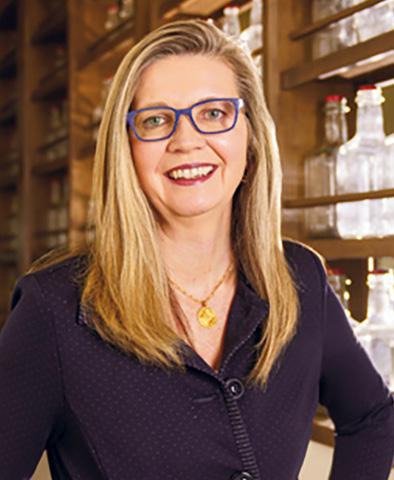
CATHY KING
Executive Vice President of Sales, Wasserstrom
Reliability is the most important form of currency that matters in foodservice. When global markets turn volatile, a standard purchase order isn’t enough to keep a kitchen running.
Managing our suppliers today requires deep operational partnerships. We’ve moved beyond simple purchase orders by implementing stocking programmes that allow us to buy in bulk and hold inventory in our own warehouses.
SASKIA VAN GENDT
Chief Sustainability Officer, Blue Yonder
In the food and beverage industry, volatility is amplified by energy price fluctuations, climate impacts on agriculture, and supply chain disruption. This makes supplier relationships critical, as a significant share of the sector’s environmental footprint sits in Scope 3, spanning farming practices, packaging, logistics, and waste.
Many companies struggle to obtain consistent, comparable data across ingredients, packaging, and logistics partners. Without this, it is difficult to accurately understand the carbon and waste footprint of products or make informed trade-offs when sourcing decisions need to change.
At Blue Yonder, we help companies and their suppliers convert real-time supply chain activity into usable sustainability metrics, enabling carbon, waste, and efficiency to be managed alongside cost and service performance in day-to-day decision-making. This is important in inventory planning and demand forecasting, where food waste and overproduction remain challenging.
We also see more advanced suppliers using sustainability as a competitive differentiator, especially in logistics and cold chain operations, where efficiency improvements directly reduce both emissions and operating costs.
The strongest supplier relationships are built on transparency, shared data, and integrated decisionmaking.
When sustainability is embedded into planning and execution systems, companies can reduce waste, strengthen resilience, and maintain profitability even in volatile conditions.
blueyonder.com

Our suppliers receive predictable order volumes, and our clients get what they need when they need it, whilst better pricing is secured for everyone involved. Price protection through bulk purchasing gives our clients peace of mind against future price increases and inflation.
Transparency is also paramount. We share data through integrated platforms where vendors see the same information we do. We began experimenting with artificial intelligence (AI) a few years ago and now use it to spot disruptions before they affect our business.
Sharing those forecasts lets our partners adjust their production schedules before a shortage occurs. It’s all about being proactive rather than reactive.
www.wasserstrom.com


KARI BARNES Head of Regulatory Standards
Your supply chain partners are only as valuable as your ability to collaborate with them, clearly and quickly. When product specs, formula updates, or compliance documents are trapped in email threads or local drives, you’re adding risk and losing speed.
Teams are now working from shared digital workspaces, where co-manufacturers, suppliers, and internal stakeholders can all access the same source of truth.
Collaboration alone isn’t enough. What matters is controlled collaboration, with version control, approval workflows, and compliance tracking baked in. That’s how you move as one team, even across continents.
tracegains.com



ANDY LAPOINTE
Co-Founder, Traverse Bay Farms
Trust, communication, and loyalty are how we manage vendor relationships. Since starting our company in 2001, we have replaced only three or four suppliers. We share annual projections, set clear expectations, and stay open with vendors, even when we lose an account.
That honesty builds trust. In today’s world, it is easy to price-shop every order, but brands that do this too often usually weaken the relationship and train vendors not to bring them overstock deals or first-call opportunities.
We still follow the standard practice of requesting quotes on new orders, but we are willing to pay a little more for a long-term relationship rather than chase a one-time discount.
That approach paid dividends during the COVID-19 pandemic supply crisis. Whilst many competitors struggled to get raw materials, our vendors often called us first to make sure we were supplied.
That kind of loyalty is not created during a crisis – it is built years before the crisis arrives. www.traversebayfarms.com
GREG TUCKER
Chairman and CEO, Bay Cities
Supplier relationships have always been built on trust, but volatility has made trust a daily test. Tariffs, material shortages, and shifting logistics have compressed timelines and exposed weak links.
We treat suppliers as true partners and an extension of our brand, holding them to the same values and calibre of service that Bay Cities brings to every client. Our Manufacturing Mirror system connects our facilities directly with partner facilities, so we can mirror capacity, share routing, and scale beyond our own four walls. When a disruption hits, we’re already aligned.
Another important factor is data. We’ve weaponised it, and it’s making a significant impact on how we operate and guide partners. With cost model simulations running on Microsoft Power BI and Claude agents, the data is at our fingertips, letting us evaluate supplier scenarios in minutes and make decisions guided by real numbers. The result is faster decisionmaking, ensuring options are modelled before a disruption becomes a crisis.
The strongest supplier relationships are built on transparency, collaboration, and a shared commitment to solving problems. In the food and beverage industry, volatility quickly reveals which partnerships are resilient – and rewards those that have invested in working together long before challenges arise.
www.bay-cities.com


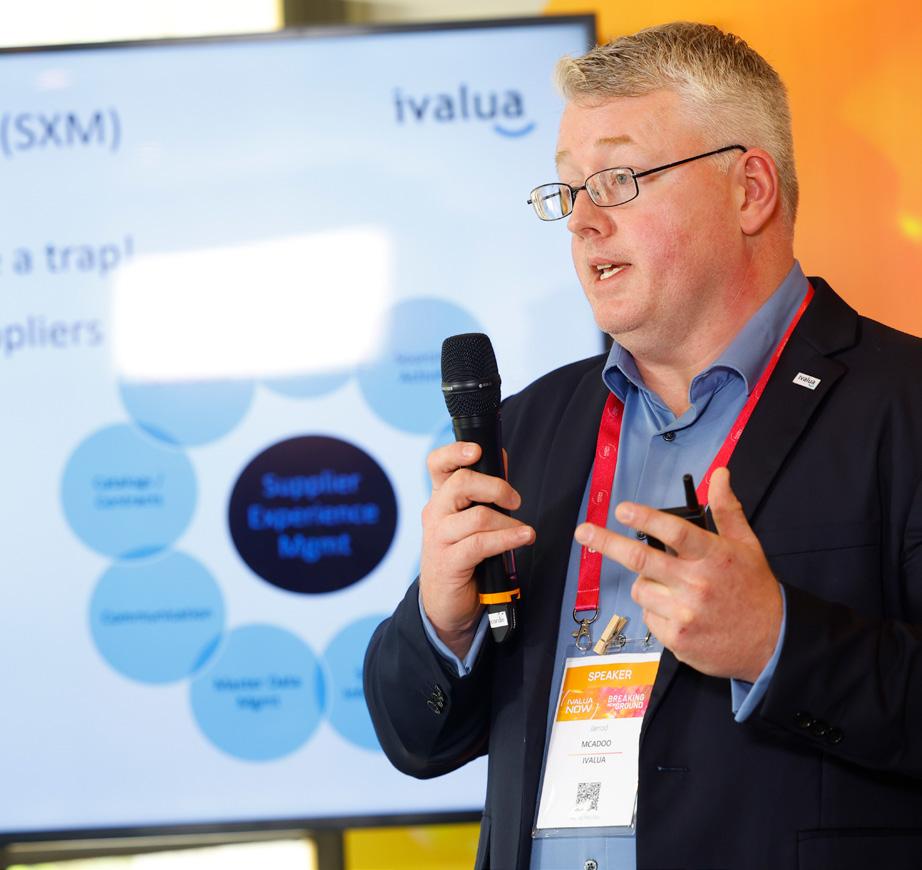
JARROD MCADOO
Director of Product, Ivalua
A trusted, centralised data foundation is critical for managing supplier relationships effectively. Many enterprises still rely on supplier information that is scattered across enterprise resource planning (ERP) software, spreadsheets, contracting systems, and email inboxes. This data fragmentation makes it nearly impossible to measure supplier performance, anticipate risks, or respond quickly to disruption.
The right technology allows procurement teams to unify supplier data, address issues with the data, and gain earlier visibility into potential issues. Once there is a solid, verified foundation, AI tools can assist in monitoring performance indicators, risk signals, and supply constraints to help teams identify vulnerabilities before they affect operations. AI can also accelerate scenario modelling and identify viable alternative suppliers.
But technology alone is not enough. Rationalising your supplier base and building rock-solid, trustbased relations with core suppliers is vital, and automation helps by freeing teams to spend more time strengthening strategic relationships.
In periods of disruption, teams can draw on relationships to secure preferential access to constrained materials, production capacity, or transportation routes. Combining this with the ability to call on a diverse group of trusted suppliers is key to increasing resilience and minimising disruption.
www.ivalua.com

MARK
RODGERS
CEO, Roberts of Port Dinorwic
In today’s unpredictable trading landscape, the most resilient businesses aren’t necessarily the biggest or the best-resourced – they’re the ones that have invested deeply in genuine, trust-based relationships with key customers and suppliers.
Whether you’re a buyer or a supplier, we’re navigating the same storms – fluctuating costs, geopolitical disruption, supply chain shocks, and demand uncertainty. Acknowledging this shared reality and taking a collaborative approach to finding mutually workable solutions is the foundation of a healthier relationship and successful outcome.
Roberts of Port Dinorwic is a people-first company and we value strong supplier relationships that are built on trust. It’s about being open about forecasts and challenges, not just demanding answers from suppliers; honouring commitments, even when it’s commercially inconvenient; and treating every customer and supplier as long-term partners.
When disruption hits, the question isn’t, “Who’s to blame?” – it’s, “How do we solve this together?”. It might mean offering flexible payment terms, finding alternative logistics routes, or co-investing in resilience.
The volatile global trading environment is, in fact, an opportunity to deepen relationships with customers and suppliers rather than weaken them. The strongest supply chains aren’t just efficient – they’re human.
www.roberts-wales.co.uk


SCOTT BROAD
Procurement Director, AVE
In a volatile market, procurement isn’t just about buying well – it’s about proactively anticipating risk, securing supply early and creating options. That might mean dual sourcing, flexible specifications, or timing purchases to enable more stability, better value, and fewer surprises.
A hands-on approach to building direct relationships with producers, including buying trips at source, gives better visibility, stronger negotiating positions, and often access to supply others simply don’t have.
Forward contracting also allows pricing to be locked in with suppliers ahead of inflation cycles, giving clients cost certainty and protecting margins.
Diverse supply chains have become even more important, as over-reliance on a single supplier – no matter how strong they are – increases exposure to disruption.
It’s also advisable to balance local and national suppliers – national for scale, consistency, and buying power; local for flexibility, speed, and often a more tailored, specialist offer. It’s not about choosing one over the other – it’s about using both in the right way.
Seeing supplier relationships as a two-way partnership rather than simply transactional is hugely important right now, opening the door for better communication and engagement, which supports better planning and forward strategies – putting clients in the best position to navigate volatility.
www.a-v-e.com

JANNE KOURI Founder, Loncaro
At Loncaro, we view our suppliers as strategic partners, not just vendors. In today’s environment, supply chain challenges, shifting consumer preferences, and increased competition require brands to be flexible, nimble, and ready to adapt at a moment’s notice. For a growing brand like ours, strong supplier relationships are absolutely essential.
We place a high value on communication and work hard to build genuine partnerships with our co-packers, flavour house, distributors, and other key suppliers. When everyone is aligned and working towards the same goals, we’re able to move faster, solve problems more effectively, and ultimately deliver the best possible product to consumers.
As a growing business, we believe it’s critical to be proactive rather than reactive. Forecasting demand, managing inventory, and securing alternative sourcing

options are all important parts of our strategy.
The beverage industry has changed dramatically since we launched four years ago, and every day brings new opportunities and challenges. That’s why we focus on building relationships based on transparency, trust, and mutual growth.
One of Loncaro’s greatest strengths as an emerging beverage brand is our agility. We can make decisions quickly, adapt to changing conditions, and get creative when challenges arise.
Whilst volatility may be the new normal, we believe strong partnerships, disciplined planning, and open communication position Loncaro to continue growing whilst delivering the premium, all-natural, best-tasting long drink consumers are looking for.
loncaro.com