
Financial Resilience in Saint Vincent and the Grenadines


Financial Resilience in Saint Vincent and the Grenadines

Carla James, Executive Director of the
SVG
Financial Services
Authority, talks us through the organization’s role in managing non-bank financial institutions through risk-based supervision, market oversight, and international cooperation
Writer: Lucy Pilgrim
Project Manager: Joshua Mann
In the past five years, the nonbank financial services sector in Saint Vincent and the Grenadines (SVG) has undergone a significant transformation, marked by a stronger regulatory framework, diversification of entities, and closer alignment with global standards.
The sector has experienced a greater adoption of risk-based supervision as SVG has moved decisively toward a risk-based approach to anti-money laundering (AML), countering the financing of terrorism (CFT), and prudential regulation, therefore ensuring supervisory resources are directed to areas with the greatest vulnerabilities.
This shift has enhanced the resilience of non-bank financial institutions and reinforced compliance with recommendations from the Financial Action Task Force (FATF) and Caribbean Financial Action Task Force (CFATF).
As the single regulatory body responsible for overseeing the country’s non-bank and international financial services sectors, the SVG Financial Services Authority (FSA) now applies structured methodologies for both off-site monitoring and on-site inspections,
embedding risk assessment into its supervisory cycle.
This is in response to the increasing prioritization of AML/ CFT compliance, capacity building of personnel, and push for greater adherence to international standards.
REGULATORY OVERSIGHT
The FSA was established in 2012 as a unified regulator, driven by a founding mission to strengthen oversight, consolidate regulatory functions, and ensure financial integrity.
“Its creation marked a historic milestone, consolidating several separate supervisory bodies into a single autonomous statutory authority. The amalgamation allowed SVG to optimize resources, improve efficiency, and enhance credibility in both domestic and international financial markets,” begins Carla James, Executive Director.
Today, the FSA’s core mandate comprises the regulation and supervision of non-bank and international financial institutions, including insurance companies and intermediaries, credit unions, building societies, friendly societies, pension funds, international banks, mutual funds companies, money services
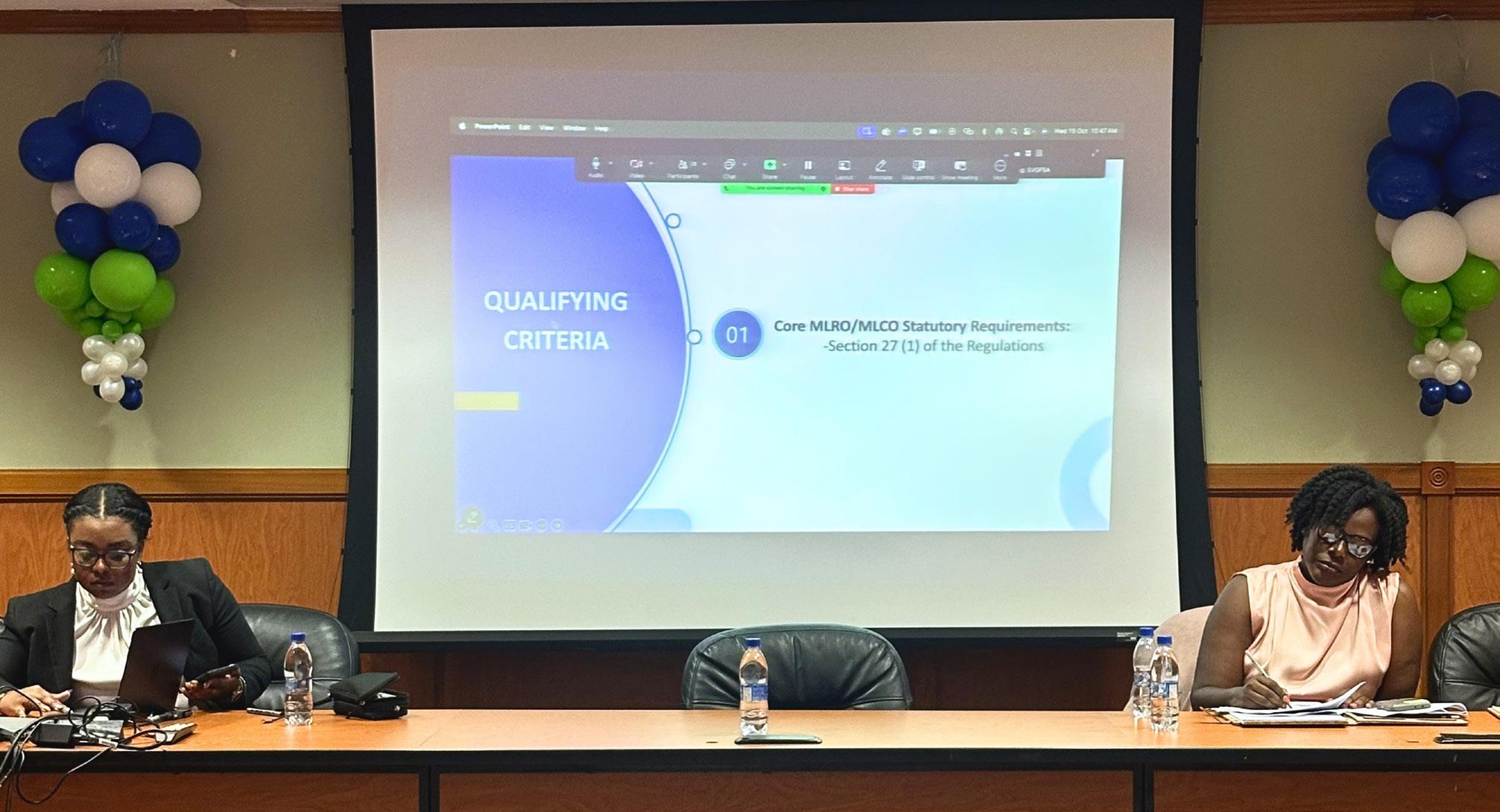
businesses, registered agents, and more recently, virtual asset service providers (VASPs).
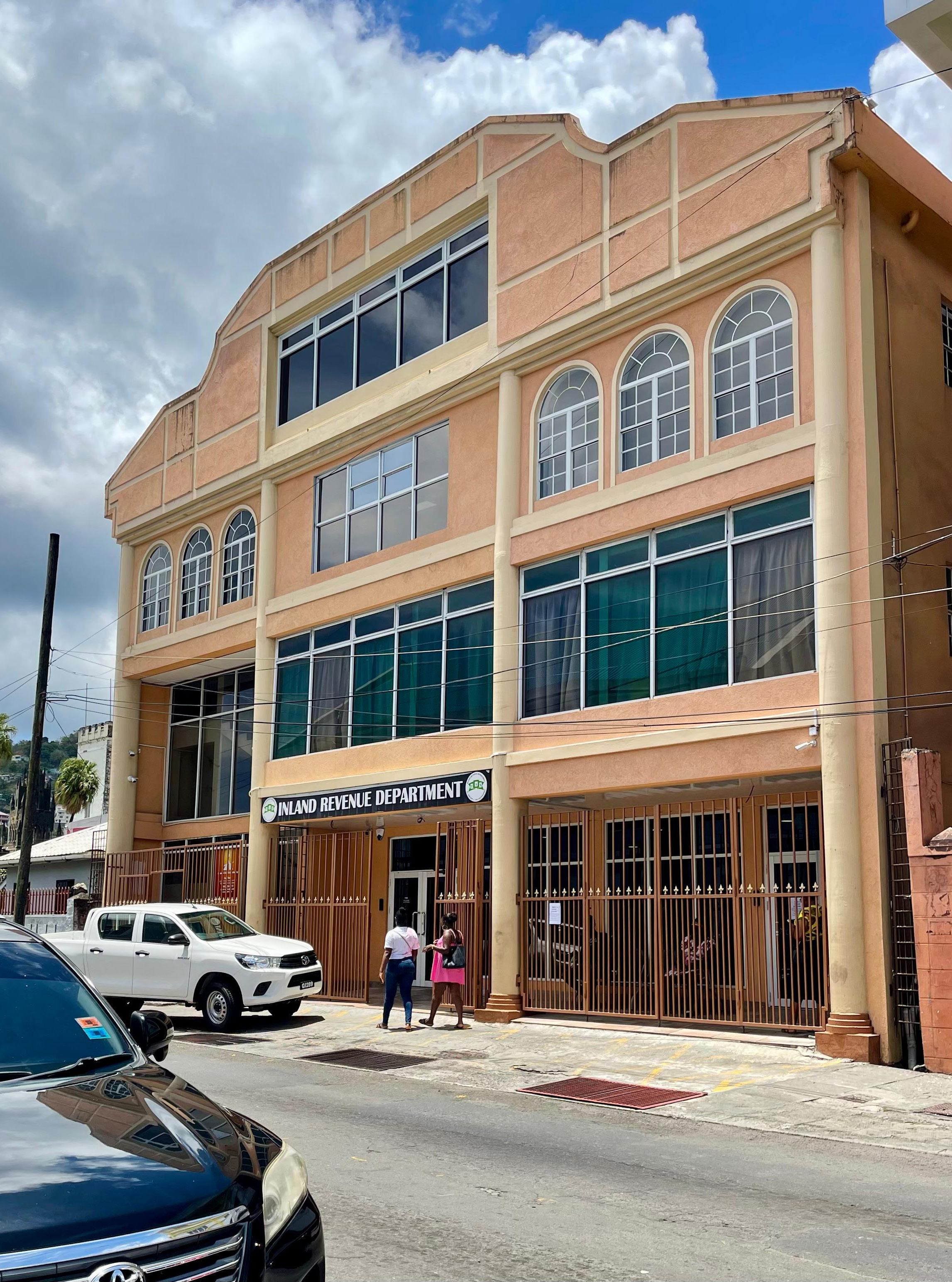
Headquartered in the capital, Kingstown, the Authority possesses a lean but specialized 23-person workforce of regulatory professionals, legal experts, and supervisory officers with strong technical expertise.
The FSA works hard to assist various sector participants with a leading repertoire of products and services, including the licensing and registration of non-bank financial entities, risk-based supervision of AML/CFT and prudential entities, consumer protection and market conduct oversight, and international cooperation and compliance reporting.
Recognizing the rapid growth of digital finance, the FSA has also established regulatory frameworks
“BY WORKING TOGETHER, THE FSA AND ECCB PROMOTE CONFIDENCE IN THE FINANCIAL SYSTEM, ENCOURAGING INVESTMENT AND PARTICIPATION ACROSS THE CARIBBEAN”
– CARLA JAMES, EXECUTIVE DIRECTOR, SVG FINANCIAL SERVICES AUTHORITY
for VASPs, ensuring virtual asset businesses are registered, supervised, and compliant with global AML/CFT standards.
The introduction of these frameworks has positioned the Authority as a forward-looking jurisdiction that embraces innovation while mitigating risks of misuse in digital finance.
A STRONG FINANCIAL HUB
The FSA plays a central role in ensuring SVG remains a credible

and resilient financial hub, which it achieves through active international cooperation and continuous alignment with standards worldwide.
The Authority engages with numerous global industryleading bodies, working with organizations like the CFATF, International Association of Insurance Supervisors (IAIS), and International Organization of Securities Commissions (IOSCO). This ensures the FSA’s frameworks are benchmarked against global best practices.
The FSA is also an active participant in global and regional financial organizations such as the Caribbean Association of Insurance Regulators (CAIR) and Caribbean Association of Pensions Supervisors (CAPS), among others, providing access to technical guidance, peer learning, and best practices.
THE FSA’S DIGITIZATION AND MODERNIZATION INITIATIVES
The Authority is actively pursuing digitization and modernization initiatives to strengthen its supervisory reach and effectiveness. These efforts are designed to ensure it remains agile in overseeing a diverse and evolving financial sector.
DIGITIZATION AND MODERNIZATION INITIATIVES
• INVESTMENT IN REGTECH
– Prioritizing the adoption of RegTech solutions to enhance compliance monitoring, reporting, and risk assessment.
– Automated tools will allow for real-time data analysis, improving the detection of AML/CFT risks and prudential vulnerabilities.
• SYSTEMS MODERNIZATION
– Upgrading supervisory systems to enable integrated risk-based supervision across insurance, credit unions, pensions, money services businesses, and VASPs.
– Modernized platforms will streamline licensing, reporting, and examination processes, reducing administrative burdens for regulated entities.
• DIGITALIZATION OF PROCESSES
– Moving toward fully digital submission and review systems, enabling faster turnaround times and greater transparency.
– Enhanced digital channels will improve stakeholder engagement, allowing members to access guidance, updates, and compliance tools more efficiently.
IMPACT ON REACH AND EFFECTIVENESS
• BROADER COVERAGE – Digital tools expand the Authority’s ability to monitor diverse institutions, including Fintech and VASPs.
• EFFICIENCY GAINS – Automation reduces manual workloads, allowing supervisory staff to focus on high-risk areas.
• TRANSPARENCY AND ACCESSIBILITY – Digitalization improves communication with stakeholders, ensuring regulated entities remain informed and compliant.
• GLOBAL ALIGNMENT – RegTech adoption positions SVG alongside leading jurisdictions, reinforcing its credibility as a modern financial hub.
In addition, the Authority participates in colleges of regulators, particularly for cross-border insurance and financial groups.
“Participation in these organizations allows for information sharing, coordinated supervision, and
harmonized responses to emerging risks across jurisdictions,” James adds.
The Authority also participates in FATF and CFATF mutual evaluations and peer reviews conducted by the Organization for Economic Co-operation and Development
(OECD), using it as an opportunity to strengthen its AML/CFT and international tax regimes and demonstrate compliance with global obligations.
The FSA is also deeply committed to safeguarding the region’s financial standing through risk-based supervision, ensuring supervisory resources are focused on higher-risk institutions and activities, therefore enhancing the Authority’s efficiency and credibility.
In recognition of the ever-evolving financial landscape, the FSA ensures its supervised institutions remain resilient and well-informed by combining outreach and consultation, international engagement, capacity building, and continuous legislative development.
Indeed, regular stakeholder outreach, seminars, compliance briefings, and public education ensure institutions remain informed and prepared.
The FSA also keeps its members up to date by continuously reviewing and updating legislation to reflect global standards and emerging financial technologies, which guarantees the Authority remains competitive while simultansously safeguarding financial integrity.
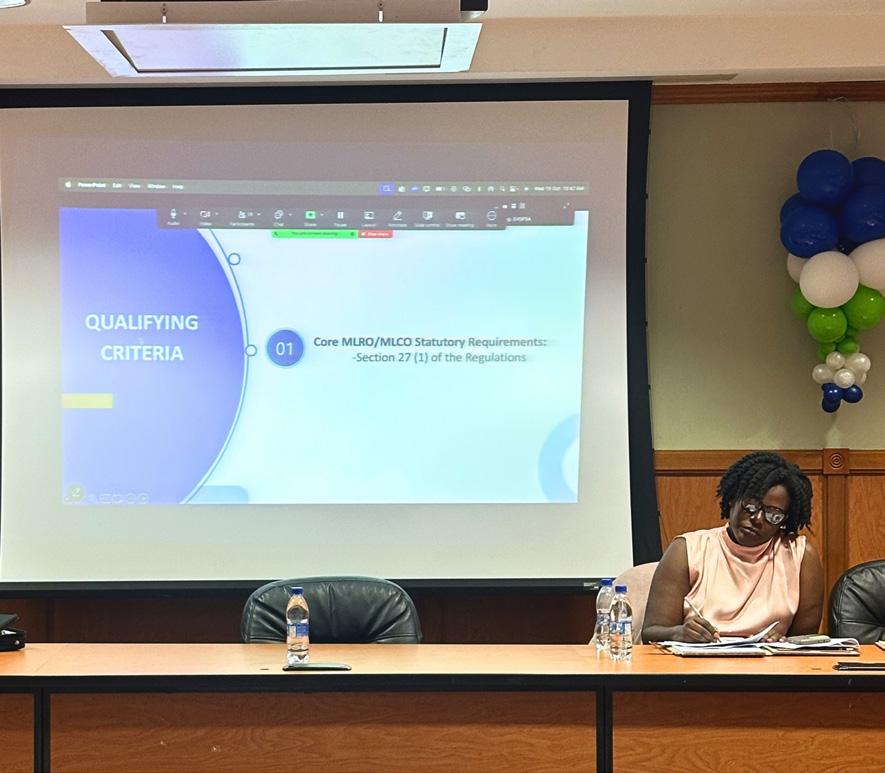
Additionally, the FSA invests in training, workshops, and technical cooperation to ensure its staff and supervised institutions remain equipped to address emerging risks and evolving international standards.
WORKING COLLABORATIVELY
To further strengthen the resilience and credibility of the region’s financial services industry, the FSA works closely with the Eastern Caribbean Central Bank (ECCB).
“This partnership is vital because it bridges the regulation of non-bank financial institutions in line with our mandate with the oversight of the banking sector – which is ECCB’s
mandate – ensuring a more integrated and stable financial system across the Eastern Caribbean Currency Union (ECCU),” James explains.
The collaboration is key for regulatory alignment, as the FSA and ECCB, along with other regional authorities, coordinate to harmonize supervisory practices, ensuring consistency across banks and nonbanking institutions.
“This helps to reduce regulatory gaps and strengthens the overall integrity of the financial system,” James expands.
Furthermore, both organizations emphasize risk-based approaches to AML/CFT and prudential regulation, enhancing the region’s ability to detect and mitigate vulnerabilities.
The collaboration additionally supports ongoing legislative modernization, aligning SVG’s framework with regional and international standards.
“By working together, the FSA and ECCB promote confidence in the financial system, encouraging investment and participation across the Caribbean,” James prides.
The partnership provides the
“AS ADULTS BECOME FINANCIALLY EMPOWERED, DEMAND FOR DIVERSE FINANCIAL SERVICES INCREASES, DRIVING INNOVATION AND DIVERSIFICATION IN THE INDUSTRY”–
– CARLA JAMES,
EXECUTIVE DIRECTOR, SVG FINANCIAL SERVICES AUTHORITY
jurisdiction with numerous tangible benefits, including strengthening regional credibility by demonstrating unified regulatory oversight.
The combined force of the two organizations also encourages innovation while maintaining safeguards, particularly in areas like financial technology (FinTech) and virtual assets. Additionally, it supports financial inclusion by ensuring both banks and non-bank financial institutions operate under robust, modern frameworks.
GROWING AWARENESS AND PARTICIPATION
In order to pave the way for future industry growth, the FSA has made financial literacy for younger
generations a strategic priority, as it recognizes how early education in financial matters can build resilience and support long-term economic stability.
The Authority’s main focus areas include school outreach programs where it delivers interactive lessons on areas of finance like budgeting, saving, insurance, and digital finance, making the world of money more accessible and engaging.
The FSA is equally partnering with the Ministry of Education’s Adult and Continuing Education (ACE) unit to host interactive sessions that educate older generations on financial matters, encouraging advancements and greater participation in the financial industry.

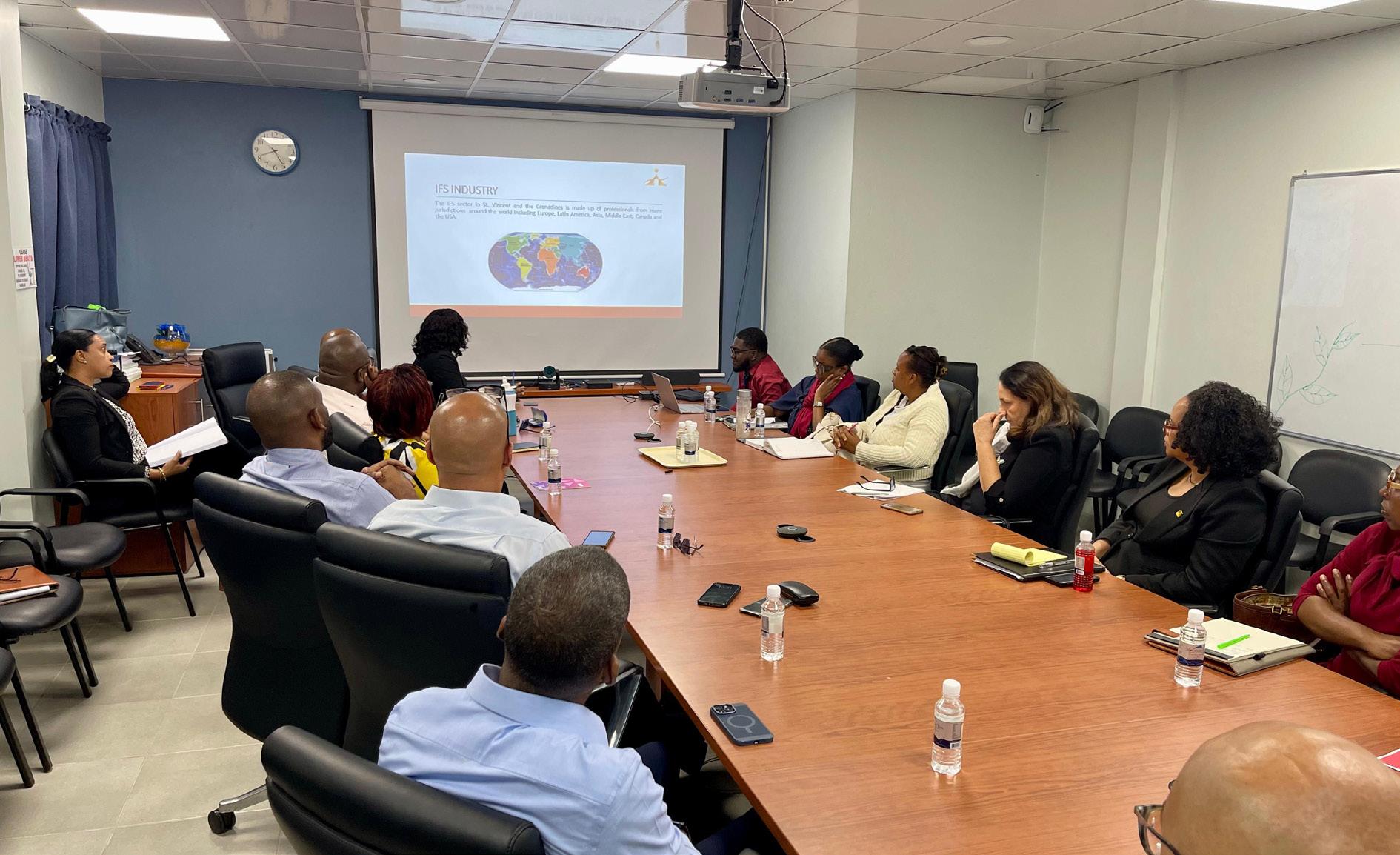
This, in turn, expands the customer base for non-bank institutions such as credit unions, insurance companies, and pension funds, and encourages uptake of modern financial tools, therefore supporting the sector’s modernization and strengthening the integrity of the system.
“Enhanced financial knowledge helps households manage risks, save effectively, and plan for retirement, reducing vulnerability and supporting long-term stability.
“As adults become financially empowered, demand for diverse financial services increases, driving innovation and diversification in the industry,” James attests.
REAFFIRMING ITS POSITION
Continuing its upward trajectory, the FSA has a clear set of priorities to strengthen its role as a modern, credible regulator and expand the reach of the non-bank financial services sector.
The Authority’s key targets for the coming year include strengthening its risk-based approach to supervision, which can be achieved by embedding risk-based methodologies across AML/CFT and prudential oversight, therefore ensuring supervisory resources are focused on high-risk institutions and activities.
The FSA will also roll out new regulatory technology (RegTech) solutions and modernized supervisory systems to improve efficiency, datadriven decision-making, and real-time monitoring, as well as expand digital channels for licensing, reporting, and stakeholder engagement.
The Authority is additionally seeking to strengthen its VASPs framework, positioning SVG as a forward-looking jurisdiction for digital finance and encouraging responsible innovation.
“The FSA will also scale its youthfocused financial literacy initiatives, embedding financial education in
schools and community programs, while also using digital platforms to broaden outreach and improve public awareness of financial services,” James concludes.
These priorities feed into the Authority’s overall targets to expand supervisory coverage, diversify the sector by encouraging new entrants in pensions, insurance, and digital finance, and strengthening the jurisdiction’s standing on the global financial stage.

Tel: +1 (784) 456-2577
+1 (784) 457 2328
+1 (784) 485 6031
info@svgfsa.com fsasvg.com

Tel: +1 (784) 456-2577
+1 (784) 457 2328
+1 (784) 485 6031 info@svgfsa.com fsasvg.com