
KRT Group

Page 1


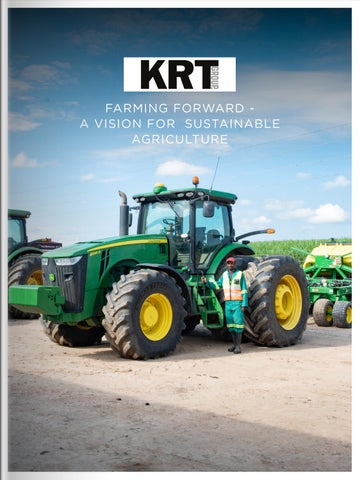
FARMING FORWARDA VISION FOR SUSTAINABLE AGRICULTURE

FARMING FORWARD –A VISION FOR SUSTAINABLE AGRICULTURE

KRT Group is at the forefront of Zambia’s food production revolution, integrating sustainable practices and innovative strategies to enhance operations whilst ensuring long-term resource efficiency. Brendon Cantlay, Executive Chairman, tells us more

As a landlocked country with abundant natural resources, Zambia’s agricultural industry plays a pivotal role in its economic landscape.

A major player in this thriving sector is KRT Group (KRT), a dynamic company that has significantly evolved since its inception.

Established in 1979, KRT has grown from a small 140-hectare (ha) dry-land farm to owning and operating multiple businesses throughout the value chain. Currently, the company manages over 5,000 ha of mostly irrigated primary agriculture, along with associated services, processing, and retail operations. These activities generate over USD$40 million in annual revenue and employ 1,500 people.

In its early years, KRT faced a challenging economic environment characterised by strict foreign exchange controls, bank interest rates exceeding 150 percent, and heavy local currency devaluation, which made sourcing products, equipment, and spares difficult. However, the situation helped build a resilient and adaptable company.

“An exacting situation compelled my father, Douglas Hampton Cantlay, who founded the business, to diversify, as he rarely passed up an opportunity and took risks that paid off. He launched an international transport service that eventually specialised in sugarcane load and haulage within the local sector.

“We also branched out into

various other ventures – such as establishing a maize milling unit for food production in the community and developing a residential real estate division,” introduces Brendon Cantlay, Executive Chairman.

It was at this crucial juncture that B. Cantlay joined the company fulltime, having also contributed during his educational years.

AN INSIGHT INTO OPERATIONS

KRT’s current business units include Kapinga Enterprises Ltd., which focuses on primary agriculture, including sugar cane, wheat, soybeans, avocados, and cattle, as well as real estate, both commercial and residential.

Rolling Thunder International Ltd., meanwhile, provides agricultural services, including farmland preparation and sugar cane harvesting and transportation, whilst Southern Agribusiness Supplies and Services Ltd. offers agricultural retail options, supplying farmers with the necessary inputs and equipment.

Elsewhere, the Eco Beef Ltd. and Bonaventure Premium Meats Ltd. business units specialise in meat processing and packing through abattoirs and butcheries, backed by a highly cohesive shareholder base of leading genetics and breeding cattle farmers.

“Some of the ventures nearly led us to bankruptcy, but I stepped in to stabilise the situation. I later became Executive Chairman, balancing my father’s bold entrepreneurial spirit with a more cautious, corporate approach,” B. Cantlay candidly reveals.

“WE ARE CONSTANTLY ACTIVE IN THE MARKET, DRIVING EFFICIENCY IMPROVEMENTS THROUGH OUR CONTINUED INVESTMENTS IN TECHNOLOGY AND SUSTAINABLE FARMING PRACTICES TO IMPROVE YIELDS, QUALITY, AND REDUCE COSTS”

“This mix of our differing styles has strengthened the business, allowing me to emphasise the importance of returns on investment and risk management.”

B. Cantlay streamlined KRT’s businesses by closing underperforming units and focusing on the core farming business and expanding the meat processing and packing unit, presenting further opportunities.

“We also launched an agricultural retail division for Zambian farmers and grew our agricultural operations through new farm acquisitions. This has all been overseen by a strong executive team known for its integrity, ensuring smooth operations.

“Zambia is a beautiful country with peaceful and welcoming people and culture, and the business and I, as the largest shareholder, are proud Zambians,” he beams.

COULD YOU PROVIDE DETAILS ON

THE PROCESS OF EXPANDING YOUR DAM FOR IRRIGATION? WHAT CHALLENGES DID THE COMPANY FACE DURING THIS PROJECT?

Brendon Cantlay, Executive Chairman: “A comprehensive study of the dam site and its catchment area was conducted to determine the appropriate capacity for this location and the sustainable yield. This was carried out by both South African consulting engineers and Zambian engineers on the ground.

“Based on the feasibility of the impoundment and its sustainable yield, the information was translated into potential cropping capacity and irrigation designs for the Riverdale Farm. We aim to increase the dam capacity from the current 1.3 billion Litres of water to 5.2 billion Litres. This expansion will allow us to double, possibly even triple, the amount of land that can be irrigated.

“There have been various interactions with the regulatory authorities and the community that will be affected by the dam, all of which have been positive due to the significant economic benefit and job creation in the local area.

“Overall, the dam and subsequent expansion of agricultural activities associated with the project have been overwhelmingly positive, as this project will create significant jobs, investment in the local area, and sustainable growth.

“The dam will provide a reliable and secure source of water, maximising benefits for all stakeholders.”

TRANSFORMING THE INDUSTRY

In recent years, the potential to develop the cattle farming business in Zambia has garnered attention, and as the agricultural industry continues to evolve, it’s clear that implementing targeted strategies could maximise its potential.

One pivotal factor is establishing an export market for Zambian

beef. By doing so, farmers would see an increase in the value of their livestock and, therefore, be more likely to invest in their herds, enhancing productivity and profitability.

“The biggest challenge affecting herds has been poor disease control; however, the President of Zambia, Hakainde Hichilema – a successful businessman and one

of the nation’s top cattle farmers - is pro-business and supports the agricultural sector,” B. Cantlay enlightens.

“Things are starting to change; regional exports have begun, and if we manage to penetrate overseas markets, the value of Zambian beef will increase significantly. As a result, farmers will invest more in genetics, pastures, feeding techniques, and disease control, thereby elevating the entire industry.”

In line with these developments, KRT ensures sustainability in its farming practices through a long-term vision of having as little environmental impact as practically possible whilst achieving its economic objectives.

“We maintain a short rotation in our commercial cropping programmes, which is interspersed with growing bio-diverse cover crops which function as green manure and organic mulch for the next crop cycle.

“This is done to reduce monocropping, breaking pest and disease cycles, introducing organic matter, fixing nutrients in the soil for the next crop, and significantly improving soil health,” explains B. Cantlay.

Various practices are also used to minimise the use of inorganic inputs. KRT has a significant supply of organic manure from its cattle feedlotting activities, which is formulated at an aerobic composting facility and used to produce a highquality, nutrient- and organic matterrich compost, applied in conjunction with inorganic fertilisers to meet crops’ micro and macronutrient requirements.

EXPLORING NEW HORIZONS

Regarding future investments, KRT has numerous options within its existing businesses – agriculturally, this could include acquiring additional cropping or ranching farms.

“We are constantly active in the market, driving efficiency improvements through our continued investments in technology and sustainable farming practices to improve yields, quality, and reduce costs,” B. Cantlay enthuses.

“In terms of beef, there is potential for acquisitions of competitors’ businesses or backward integration. Given our strong focus on beef and significant use of pork, chicken, and fish in our butcheries, we may explore opportunities in other sectors outside of beef in the future.”

KRT is leveraging recent technological advancements, revolutionising its approach to crop management and pest control. This method allows chemicals to target specific areas, reducing waste and environmental impact.

Hollard Insurance Zambia Protecting Progress, Ensuring Better Futures

At Hollard Insurance Zambia, we believe a better tomorrow is built on the confidence of being protected today. For over 15 years, we have partnered with individuals and businesses across Zambia, delivering smart, flexible insurance solutions that protect what matters most — from vehicle fleets and commercial assets to homes and personal wellbeing.

Our partnership with KRT Group reflects a shared commitment to resilience, sustainable growth, and meaningful community impact. Together, we support key sectors that fuel Zambia’s economic advancement, including logistics and agribusiness, by providing risk solutions that enable businesses to thrive.

Driven by innovation, guided by integrity, and grounded in trusted service, Hollard Insurance Zambia is committed to safeguarding your ambitions and supporting your journey toward lasting success.

“THE BIGGEST CHALLENGE AFFECTING HERDS HAS BEEN POOR DISEASE CONTROL; HOWEVER, THE PRESIDENT OF ZAMBIA, HAKAINDE HICHILEMA – A SUCCESSFUL BUSINESSMAN AND ONE OF ZAMBIA’S TOP CATTLE FARMERS- IS PRO-BUSINESS AND SUPPORTS THE AGRICULTURAL SECTOR”

– BRENDON CANTLAY, EXECUTIVE CHAIRMAN, KRT

GROUP

“Spray applications are performed using advanced drone technology supplied by Sativa Precision Agriculture – incorporating a 100-litre (L) spraying capacity that remains limited to a small number of countries globally.”

In addition to KRT’s current operations, the company consistently seeks new opportunities. In the agricultural sector, it is particularly focused on value-added processing businesses, aiming to advance beyond primary agriculture.

“We see significant potential in interesting and niche opportunities in this area, similar to what we have already achieved with beef,” he states resolutely.

“Apart from agriculture, I also see the appeal of the insurance industry. This is not a direct area of expertise for us, so we would likely not build it from scratch but acquire a smaller company that brings the necessary expertise, providing access to the insurance float for investment purposes.”

Website: www.hollard.co.zm

Other possibilities for the company include fund management, such as establishing a debt fund focused on lending to farmers, particularly in Zambia.

“Current financing terms, particularly tenures, for farmers are very demanding – typically five years, seven at best – which is unusually short compared to other jurisdictions worldwide. A fund could raise capital and lend it on more realistic tenures, such as 15 to 20 years.

“Along similar lines, I currently run my own private fund outside Zambia, and there may be potential to expand further into investing in public markets, possibly listing our company on the public markets one day,” B. Cantlay outlines.

CULTIVATING SUCCESS

KRT has outlined several key plans and priorities that will guide its strategic initiatives over the next one

to three years, focusing on enhancing operational efficiency, fostering innovation, and ensuring sustainable growth, whilst also addressing the evolving needs of stakeholders and the market.

Indeed, the company aims to implement specific projects and strategies that will not only strengthen its core competencies but also position it for future challenges and opportunities in the industry.

“Over the short- to medium-term, a solid milestone will include hitting USD$50 million in revenue across our businesses. We’ll push for further diversification, too, since we’re so agriculture-heavy, with cattle and

AN INNOVATIVE METHOD FOR OPTIMUM SOIL COMPOSITION

The Johnson-Su composting technique produces a highly beneficial, fungal-dominant compost that inoculates the soil with beneficial microbes, significantly improving soil health, carbon sequestration, and water retention.

Effective Micro-organisms, a blend of naturally occurring microbes, are utilised to improve soil, boost plant health, enhance water quality, and support waste decomposition.

This creates a symbiotic environment, brewed on-site by KRT and inoculated as a further means of improving plant and soil health through a soft,

sugar making up large portions.

“Additionally, we will explore longer-duration debt from development finance institutions or other funds at rates cheaper than those from commercial banks to be utilised for future growth,” declares B. Cantlay.

Finally, KRT’s plans include buying out non-core shareholders that no longer have a vested interest in the long-term development of the business, therefore leaving the company with a core, strategically aligned shareholder base.

“I believe Zambia holds tremendous potential; it’s a peaceful, stable democracy – not just in Africa, but

organic process, reducing the need for hard chemical interventions and fertilisers.

KRT’s fertilisation recommendations are formulated through regular soil sampling, with inputs determined by assessing latent nutrients, influenced by organic composts and cover crops, as well as inorganic inputs.

The company has invested in water probes across all its major fields. This ensures that the water applied is used efficiently for the crop, reducing both water stress and waterlogging, and potentially decreasing nutrient leaching.

This assists KRT in creating the best possible environment for crop production and in maintaining an aerobic soil environment, which boosts soil health and microbial activity.

globally – which is a huge advantage.

“The biggest change I’d propose is to simplify doing business and cut excessive red tape and regulation, as we should not be trying to mirror Western countries’ regulation, as economically and structurally we’re not at that level yet.

With our infrastructure, employment rate, and GDP per capita, it’s currently too burdensome.

“Addressing these limitations, however, would have a significant impact on socioeconomic growth, which is why it remains a top priority. Our team – from junior employees to executive leadership – delivers incredible on-the-ground

value through the hard work that makes our businesses succeed and thrive,” finishes B. Cantlay earnestly.

KRT continues to ensure sustainability in its farming practices through a long-term vision, which ultimately aims to elevate both the agricultural industry and the livelihoods of Zambian farmers, paving the way for a prosperous future.

enquiries@krtzambia.com

www.krt-group.com

Turn static files into dynamic content formats.
Create a flipbook
KRT Group by Outlook Publishing - Issuu