L O S
A N G E L E S
G E N E R A L
M E D I C A L Issue 15
C E N T E R
ST. JOSEPH’S HEALTH SYSTEM
Elevating the patient experience
DIGITAL HEALTH ASSOCIATION www.healthcare-outlook.com
Modernising and transforming health systems
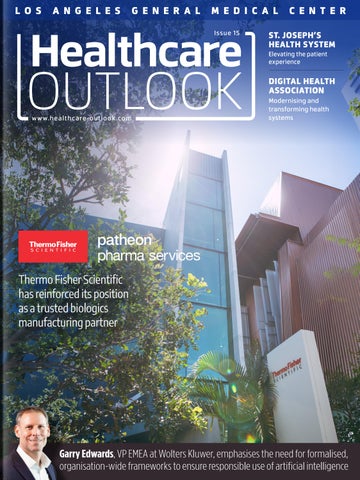
Thermo Fisher Scientific has reinforced its position as a trusted biologics manufacturing partner
Garry Edwards, VP EMEA at Wolters Kluwer, emphasises the need for formalised, organisation-wide frameworks to ensure responsible use of artificial intelligence
GLADSTONE AREA WATER BOARD
COMPAGNIE DES BAUXITES DE GUINÉE
DERICHEBOURG | RHEINMETALL UK
DIGICEL HAITI
CBRE TURBOCAM
TURNER MINING GROUP
HUNTER VALLEY OPERATIONS
L O S
A N G E L E S
G E N E R A L
End-to-end solutions from exploration to extraction
w w w. a f r i c a o u t l o o k m a g . c o m
Issue 120
w w w. a p a c o u t l o o k m a g . c o m
www. northame ricaoutlookmag.com
Issue 81
ALTRAD
w w w. e m e o u t l o o k m a g . c o m
DIGITAL HEALTH ASSOCIATION
Issue 35
PACKSIZE
The pioneering endeavour delivering a new benchmark for golf equipment
www.healthcare-outlook.com
www.mining-outlook.com • Issue 16
Every product deserves a box that fits perfectly
Keeping airlines flying to connect the world
On a coal mining mission to champion sustainable practices
Where technology meets tenacity
Transforming waste into valuable resources
Modernising and transforming health systems
ARGO NATURAL RESOURCES
FORTERRA
REMONDIS BELGIEN
C E N T E R
ST. JOSEPH’S HEALTH SYSTEM
Elevating the patient experience
Issue 72
SAESL
One of Australia’s most recognised industrial service providers
M E D I C A L Issue 15
WEIR
VULCAN MOZAMBIQUE
Harnessing the nation’s rich resources
DANONE ROMANIA
MONTEGO PET NUTRITION
Contributing to a healthier world
A well-loved and innovative pet care brand
VULCAN MOZAMBIQUE
ARGO NATURAL RESOURCES
Pad-Up Creations is determined to provide hygiene products with safety, comfort, and sustainability. Olivia Onyemaobi, Founder and CEO, tells us more
Brendan Tritton, Managing Director and CEO of Valiant Gold, a Western Australian gold company, discusses advancing the restart of two historic mining centres in the Murchison Goldfields
On a mission to be the world’s leading integrated green coal mining operation, Vulcan Mozambique continues to drive the country’s mining space
BUILT FOR THE
GRYDALE
Operator safety through world-class dust management solutions
JOURNEY AHEAD Whether on the road or on the water, Lippert enhances all outdoor recreation adventures
Unearthing coal potential in Australia, Argo Natural Resources champions sustainable mining practices
THE 1-2-1 • THE QUESTION • TURBOCAM
THE THOUGHT LEADER
Panasonic Connect Europe is a vital bridge between the digital and physical worlds. Peer Schumacher, Head of Electronics Manufacturing Solutions, gives his insight
• THE 1-2-1 • THE QUESTION
Phil McKee, Chairman and Founder of Appliance Innovation, explores the company’s approach to automation, driven by a commitment to solving operational challenges in the foodservice sector
CO O P L A N DS B A K E RY • D N AG RA R • B RA K E B U S H
KOLEKTOR CONSTRUCTION
On a mission to be a leading integrated green coal mining operation
M Resources delivers a suite of essential steelmaking raw materials, infrastructure, and mining and logistics services to steelmakers across the globe. Matt Latimore, Founder and President, details the company’s futurefacing approach to investment and market growth
BANNERMAN MINING RESOURCES NAMIBIA
Thermo Fisher Scientific has reinforced its position as a trusted biologics manufacturing partner
Garry Edwards, VP EMEA at Wolters Kluwer, emphasises the need for formalised, organisation-wide frameworks to ensure responsible use of artificial intelligence
Jason Bontempo, CEO of Gladiator Metals, discusses the resurgence of the Whitehorse Copper Belt in Canada’s historic Yukon mining district
VECA ELECTRIC & TECHNOLOGIES
N O F A R
E N E R G Y
R O M A N I A
K I N G S PA N
Family-run, proudly Canadian
DANONE ROMANIA
w w w. s u p p ly c h a i n - o u t l o o k . c o m
W W W .CONST RUCT ION-OUT L OOK.COM • ISSUE 4
Issue 12
Real Estate Solutions of the Future
www.foodbeverage-outl ook.com
Locked and loaded
Bridging the Real and Virtual Worlds
Enhancing all outdoor recreation adventures
Real estate solutions of the future
VP of Sustainable and Regenerative Agriculture, discusses PepsiCo’s collaborative regenerative farming initiative Over the last year, Saulsbury has expanded its position as one of North America’s leading engineering, procurement, and construction contractors
As a subsidiary of Dassault Systèmes, DELMIA is on track to shape the manufacturing industry of the future. We speak to Guillaume Vendroux, CEO Jan Diekmann, Head of Business Development and Manufacturing at Ericsson Enterprise Wireless Solutions, explores how private 5G is transforming the factory floor
Enterprise Wireless Solutions, explores how private 5G is transforming the factory floor Jan Diekmann, Head of Business Development and Manufacturing at Ericsson
Packsize is the global leader in packaging automation. We unbox the company’s right-sized approach with Brian Reinhart, Chief Revenue Officer company’s right-sized approach with Brian Reinhart, Chief Revenue Officer Packsize is the global leader in packaging automation. We unbox the
Johan van Jaarsveld, Managing Director of Montego Pet Nutrition, tells us about the pet care brand’s promise of ‘Better Every Day’ tells us about the pet care brand’s promise of ‘Better Every Day’ Johan van Jaarsveld, Managing Director of Montego Pet Nutrition,
YY Group Holding operates an artificial intelligence-native workforce solutions and integrated facility management platform. CEO, Mike Fu, discusses the company’s established capabilities
Simon Thompson, VP Northern Europe at JAGGAER, explains why artificial intelligence-powered data infrastructure is becoming essential
facility management platform. CEO, Mike Fu, discusses the company’s established capabilities YY Group Holding operates an artificial intelligence-native workforce solutions and integrated
intelligence-powered data infrastructure is becoming essential Simon Thompson, VP Northern Europe at JAGGAER, explains why artificial
procurement, and construction contractors as one of North America’s leading engineering, Over the last year, Saulsbury has expanded its position
We speak to Guillaume Vendroux, CEO track to shape the manufacturing industry of the future. As a subsidiary of Dassault Systèmes, DELMIA is on
and Virtual Worlds Bridging the Real
Issue 2
Margaret Henry,
From humble potatoes to gourmet crisps, SAVOURSMITHS is transforming snacking with bold flavours and a rich family heritage
LIPPERT
CBRE www.sustainabilityoutlookmag.com
Iss ue 9
SAVOURING THE FLAVOUR OF THE CRISP PARADIGM SHIFT
CBRE’s multidimensional perspective helps businesses find greater success with real estate facilities. John Kirkman, Senior Managing Director and Supply Chain Leader, gives us the full story
LOCKHEED MARTIN
Contributing to the nation’s net zero goals
OUTLOOK
Contributing to a healthier world www.mfg-outlook.com
N O R D I C S
GREEN BUILDING COUNCIL OF AUSTRALIA
OSMOW’S SHAWARMA ISSUE 10
initiative regenerative farming PepsiCo’s collaborative Agriculture, discusses and Regenerative VP of Sustainable
a rich family heritage with bold flavours and transforming snacking SAVOURSMITHS is to gourmet crisps, From humble potatoes
adventures outdoor recreation Enhancing all
LIPPERT
SHIFT PARADIGM OF THE CRISP THE FLAVOUR SAVOURING
Locked and loaded
MARTIN LOCKHEED
gives us the full story Director and Supply Chain Leader, John Kirkman, Senior Managing success with real estate facilities. helps businesses find greater CBRE’s multidimensional perspective
Margaret Henry,
TELL US YOUR STORY, AND WE’LL TELL THE WORLD the Future Solutions of Real Estate
www.mfg-outlook.com
www.foodbeverage-outl ook.com
Iss ue 9
Issue 12
healthier world Contributing to a
w w w. s u p p ly c h a i n - o u t l o o k . c o m ISSUE 10
ROMANIA DANONE
Canadian Family-run, proudly
W W W .CONST RUCT ION-OUT L OOK.COM • ISSUE 4
OUTLOOK
www.sustainabilityoutlookmag.com
Issue 2
THE 1-2-1 • THE QUESTION • TURBOCAM
THE THOUGHT LEADER
• THE 1-2-1 • THE QUESTION
CO O P L A N DS B A K E RY • D N AG RA R • B RA K E B U S H
of the future Real estate solutions
CBRE
nation’s net zero goals Contributing to the
AUSTRALIA COUNCIL OF BUILDING GREEN
SHAWARMA OSMOW’S
KOLEKTOR CONSTRUCTION
VECA ELECTRIC & TECHNOLOGIES
N O F A R
E N E R G Y
R O M A N I A
K I N G S PA N
N O R D I C S
Africa Outlook, APAC Outlook, EME Outlook, North America Outlook, Mining Outlook, Healthcare Outlook, Manufacturing Outlook, Supply Chain Outlook, Food & Beverage Outlook, Construction Outlook, and Sustainability Outlook are digital publications aimed at boardroom and hands-on decision-makers, reaching an audience of more than 800,000 people around the world. With original and exclusive content compiled by our experienced editorial team, we look to promote the latest in engaging news, industry trends, and success stories from across the globe. Your company can join the leading industry heavyweights enjoying the free exposure we provide across our platforms with a free marketing brochure, extensive social media saturation, enhanced B2B networking opportunities, and a readymade forum to attract new investment and help you grow your business. Visit www.outpb.com/work-with-us for details on how your company can feature for free in one of our upcoming editions.
www.outpb.com/work-with-us
WELCOME FROM THE EDITOR
SITES AND INSIGHTS
ED I TOR I AL Head of Editorial: Jack Salter jack.salter@outpb.com Deputy Head of Editorial: Lucy Pilgrim lucy.pilgrim@outpb.com
Welcome to our 15th edition of Healthcare Outlook
Senior Editor: Lily Sawyer lily.sawyer@outpb.com
magazine.
Editor: Ed Budds ed.budds@outpb.com
Since we last spoke with Thermo Fisher Scientific
Editor: Rachel Carr rachel.carr@outpb.com
(Thermo Fisher) in 2024, the company has reinforced its position as a trusted biologics manufacturing
Copy Editor: Lauren Kania lauren.kania@outpb.com
P R OD UC TI ON Art Director: Stephen Giles steve.giles@outpb.com Senior Designer: Devon Collins devon.collins@outpb.com Designer: Louisa Martin louisa.martin@outpb.com Production Manager: Alex James alex.james@outpb.com Digital Marketing Director: Fox Tucker fox.tucker@outpb.com Senior Website Content Manager: Oliver Shrouder oliver.shrouder@outpb.com Social Media Executive: Jake Crickmore jake.crickmore@outpb.com Trainee Digital Content Executive: Tara Steele tara.steele@outpb.com
B US I NESS CEO: Ben Weaver ben.weaver@outpb.com Managing Director: James Mitchell james.mitchell@outpb.com Chief Technology Officer: Nick Norris nick.norris@outpb.com Content Director: Neil Perry neil.perry@outpb.com Global Head of Media: Lewis Hammond lewis.hammond@outpb.com Global Media Executive: Kai Boyle-Vennard kai@outpb.com
AD M I NI STR ATI ON Finance Director: Suzanne Welsh suzanne.welsh@outpb.com Finance Manager: Victoria McAllister victoria.mcallister@outpb.com
CONTAC T Healthcare Outlook First Floor, Norvic House, 29-33 Chapelfield Road Norwich, NR2 1RP, United Kingdom. Sales: +44 (0) 1603 804 445 Editorial: +44 (0) 1603 804 431
S U B S C R I P TI ONS Tel: +44 (0) 1603 804 431 jack.salter@outpb.com www.healthcare-outlook.com Follow us on Linkedin: @healthcareoutlook Follow us on X: @OutlookPublish
partner. Our cover star continues to be defined by disciplined growth and technical excellence at its site in Brisbane, Queensland, which specifically focuses on biologics manufacturing. This includes clinical and commercial manufacturing, single-use technologies, and scale-up services for recombinant proteins and monoclonal antibodies. The Brisbane biologics site forms part of a wider global network, allowing customers to access both Australian expertise and Thermo Fisher’s international scale. “My role is to ensure we keep delivering for our customers whilst also building the capability, culture, and resilience of the site for the long-term,” outlines Kym Baker, General Manager, Brisbane Biologics, who we interviewed previously. Our next site is Los Angeles General Medical Center (LA General), recognised as one of the largest public safety-net Level I trauma centres in the US, with a remarkable place in the history of American public healthcare. LA General’s mission is to provide world-class care and education for all in its community. “Our message is simple: safety-net care can be world-class care. At LA General, that is not an aspiration – it is what our teams prove every day,” emphasises CEO, Jorge Orozco. Through a comprehensive approach that integrates a wide range of care and support, St. Joseph’s Health System (St. Joe’s) is transforming medical services. It is one of Canada’s largest mission-based healthcare networks, serving approximately three million people in Ontario, with strategic investments in facilities to address the evolving needs of the community. “We’re not just a hospital; we aim to provide various types of care. Excess land allows us to build facilities cost-effectively, underscoring our commitment to community care,” says President and CEO, Mike Heenan. Before all that, we spotlight New Zealand’s digital healthcare landscape with Stella Ward, CEO of the Digital Health Association. We hope that you enjoy your read. Jack Salter Head of Editorial, Outlook Publishing Healthcare Outlook Issue 15 | 3
12 Pad-Up Creations Restoring Dignity with Sustainable Sanitary Solutions
15 | CONTENTS REGULARS
6 EXPERT EYE Supporting physical and mental health through yoga
H EALT HCA RE INSIGHTS
8 Wolters Kluwer When Right Matters Most Formalised, organisation-wide frameworks
4 | Healthcare Outlook Issue 15
H E A LTH C A R E S P OTL I G H T
Accessibility to sustainable hygiene products
22 Digital Health Association
TOP I C A L F OC U S
Modernising and transforming health systems
16 Dr Engel Naturals Where Skin Recovers Science without excess; care without compromise
HEALTHCARE OUTLOOK CONTENTS
38
F E AT U R E S AS IA PACIFIC
32 Thermo Fisher Scientific
N OR T H A M ER I C A
46 Los Angeles General Medical Center Care Without Compromise World-class care for every member of the community
Biologics Manufacturing of Tomorrow Delivering advanced medicines from Australia to the world
56
56 St. Joseph’s Health System 46
A New Era for Holistic Health Elevating the patient experience
Healthcare Outlook Issue 15 | 5
EXPERT EYE HEALTHCARE
Rethinking Workforce WellBeing Through the Ancient Practice of Yoga
Alison Lewis, Founder of Heart Mind Spirit, discusses how yoga therapy offers a practical, low-cost approach to reducing absenteeism and supporting both physical and mental health across the NHS Writer: Alison Lewis, Founder, Heart Mind Spirit
T
he NHS is facing a period of sustained pressure, with workforce well-being now recognised as central to the delivery of safe, effective patient care. The July 2025 policy paper, Fit for the Future: 10 Year Health Plan for England, places clear emphasis on 6 | Healthcare Outlook Issue 15
staff retention, preventative health, and creating environments where healthcare professionals can thrive Against this backdrop, there is a growing recognition that traditional approaches to workplace well-being may not be enough on their own. Yoga and yoga therapy, alongside other non-traditional therapeutic practices, are increasingly being explored as practical, evidence-informed tools to support NHS staff. Whilst rooted in ancient practice, yoga has evolved into a modern, accessible intervention that can directly address some of the most pressing challenges facing the healthcare workforce today, including chronic stress, burnout, and musculoskeletal strain.
RESPONDING TO THE REALITIES OF HIGH-PRESSURE CLINICAL ENVIRONMENTS Healthcare professionals operate in fast-paced, high-pressure clinical
environments where the physical and emotional demands are constant. Long shifts, repetitive movements, and sustained periods on their feet contribute to common issues such as back pain, joint strain, and fatigue. At the same time, the cognitive and emotional load of patient care can lead to stress, reduced focus, and, ultimately, burnout. Introducing structured team yoga sessions as part of the wellbeing offer for NHS and Social Care departments offers a practical way to respond to these challenges. These sessions can be delivered in accessible formats, including chairbased yoga, making them suitable for busy clinical environments and adaptable to a wide range of physical needs and abilities. Regular participation can support improved physical resilience, reduce musculoskeletal discomfort, and provide staff with simple, effective tools to manage stress during the working day.
EXPERT EYE HEALTHCARE
SUPPORTING FOCUS AND DECISION-MAKING
PERSONALISED YOGA THERAPY
Alongside physical benefits, yoga supports the regulation of the nervous system through practices such as breathwork. These techniques are particularly valuable in high-pressure environments where the ability to reset quickly between tasks can make a meaningful difference. By helping staff regulate their stress response, yoga can improve focus, support clearer decision-making, and enhance overall cognitive performance, all of which are critical in delivering safe, high-quality patient care. There is also a wider cultural benefit to embedding group wellbeing practices within healthcare teams. Delivering yoga in a shared, team-based format can help foster psychological safety, strengthen communication, and build a sense of collective resilience. In environments where teamwork is essential, these outcomes are invaluable for the healthcare leaders responsible for ensuring high standards of care within their departments, whilst protecting the well-being of their staff.
Running alongside group sessions, access to one-to-one yoga therapy offers a more personalised, clinicallyinformed approach. Yoga therapy adapts practices to the individual, supporting both physical and mental health needs through tailored interventions. This may include addressing chronic conditions such as back pain, mobility issues, or respiratory challenges, as well as supporting mental health concerns, including anxiety, burnout, and trauma. Using simple, evidence-based techniques, such as breathwork, gentle movement, and guided relaxation, yoga therapy can help individuals develop sustainable strategies for self-regulation and recovery. Crucially, these are tools that can be integrated into daily routines, making them both practical and scalable within a demanding healthcare setting.
A PREVENTATIVE APPROACH TO WORKFORCE WELL-BEING Rather than responding to illness or burnout after it occurs, interventions like yoga and yoga therapy offer a proactive approach, supporting staff before issues escalate, which aligns closely with the NHS’s increasing focus on preventative health. In doing so, they contribute to reduced absenteeism, improved staff satisfaction, and stronger long-term retention. The 2025 NHS Staff Survey highlighted growing levels of demoralisation and disengagement among healthcare workers. Addressing this is not only a moral imperative but an operational one. When staff feel supported in their health and well-being, there is a direct impact on performance, engagement, and the overall functioning of teams.
A PRACTICAL, LOW-COST ADDITION TO EXISTING STRATEGIES Workplace yoga and yoga therapy represent a low-cost, high-impact addition to existing well-being strategies. They require minimal equipment, can be delivered flexibly, and can be tailored to suit different departments and roles. Importantly, they empower staff with tools they can use independently, both within and beyond the workplace. There is also clear value in combining these approaches with existing NHS well-being initiatives, rather than positioning them as alternatives. Yoga can complement occupational health services, physiotherapy, and mental health support, forming part of a more integrated and holistic well-being offer.
LOOKING AHEAD As the NHS continues to navigate a complex and evolving landscape, supporting the well-being of its workforce will remain a central priority. Integrating accessible, preventative approaches such as yoga and yoga therapy into everyday practice offers a realistic and effective way to support staff, which will ultimately enhance the quality of care delivered to patients.
ABOUT THE EXPERT Alison Lewis is a registered nurse, certified yoga therapist, and Founder of Heart Mind Spirit. Her work explores yoga therapy as an alternative approach to supporting NHS staff experiencing chronic pain, fatigue, stress, and burnout, with a focus on improving workforce resilience, well-being, and performance.
Healthcare Outlook Issue 15 | 7
When Right
MATTERS MOST As healthcare continues to adopt artificial intelligence at an unprecedented rate, governance and policy are struggling to keep up, emphasising the need for formalised, organisation-wide frameworks to ensure the responsible use of the technology. We sit down with Garry Edwards, VP EMEA of Wolters Kluwer – a global leader in information, software solutions, and services for healthcare professionals – to learn more Writer: Lily Sawyer
W
hen it comes to artificial intelligence (AI) adoption across the healthcare industry, the pace of innovation is beginning to outstrip the pace of organisational change. As such, companies are under immense pressure to improve productivity, reduce administrative burden, and address workforce shortages. 8 | Healthcare Outlook Issue 15
“Understandably, there is urgency to adopt AI tools that can help,” opens Garry Edwards, VP EMEA of Wolters Kluwer – a Netherlandsbased information, software, and professional services industry leader. At the same time, organisations need to establish governance frameworks that address AI. This requires cross-functional
coordination amongst clinical leaders, technology teams, compliance officers, and executives – which takes time. The result is a widening gap between how quickly users are adopting AI tools and how quickly organisations are creating policies, oversight structures, and evaluation standards to govern its use.
WOLTERS KLUWER HEALTHCARE INSIGHTS
AUGMENTING CLINICAL EXPERIENCE
This has paved the way for unsanctioned AI tools that may be used in clinical workflows before regulators have fully assessed issues such as transparency, accountability, bias, security, or clinical validation. “These governance concerns are top-of-mind for both clinicians and patients, especially as AI becomes embedded in care delivery,” Edwards remarks. Without proper governance, AI can introduce inconsistency into clinical workflows, expose sensitive patient data, create compliance challenges, and erode trust amongst both clinicians and patients. “In healthcare – where technology increasingly influences care delivery – governance cannot be an afterthought. It needs to evolve alongside the technology itself,” he adds.
As the healthcare sector continues to face workforce shortages, increasing patient demand, and growing administrative complexity, AI is proving valuable. The technology is helping clinicians spend less time searching for information, as well as creating and managing documentation and navigating fragmented workflows, which allows them to focus more attention on patient care. “Some of the most promising use cases involve note creation, information retrieval, clinical and medication decision support, and patient education,” observes Edwards. Clinicians are also increasingly using AI to help surface relevant information more quickly, summarise large volumes of clinical data, and reduce the cognitive burden associated with complex decision-making. “The greatest impact comes when AI reduces administrative friction and streamlines routine tasks,” he asserts. Importantly, the strongest results are occurring when AI is embedded directly within existing clinical workflows rather than adopting entirely new processes. For example, Wolters Kluwer is expanding its clinical decision support capabilities by integrating UpToDate®, its subscription-based medical resource, into leading ambient AI
“In healthcare – where technology increasingly influences care delivery – governance cannot be an afterthought. It needs to evolve alongside the technology itself” – G A R RY E D WA R D S , V P E M E A , W O LT E R S KLUWER
scribe platforms, including both Abridge and Microsoft Dragon Copilot. “The most successful implementations augment clinical expertise and judgement rather than attempting to replace them,” Edwards reflects.
INCREASING CONCERN Despite myriad benefits, the growing use of unauthorised or ‘shadow AI’ tools is becoming an increasing concern across healthcare, posing challenges for organisations seeking to maintain compliance and patient safety. “Most clinicians are not turning to shadow AI because they want to circumvent policy but because they are trying to solve real workflow challenges,” Edwards reveals. When workload pressures mount and clinicians don’t have access to approved solutions that meet their needs, they naturally look for tools that promise speed, convenience, and efficiency. Recent research from Wolters Kluwer around shadow AI found that workflow efficiency is one of the primary reasons why healthcare professionals experiment with unauthorised AI tools. Other drivers include curiosity, ease of access, and the perception that available organisational tools do not yet offer the desired capabilities, with some respondents citing a lack of approved alternatives. “With limited visibility into how these tools are being used, unauthorised systems may not meet institutional standards for privacy, security, validation, or clinical oversight,” he tells us. There are also concerns around patient confidentiality, data residency, regulatory compliance, and the lack of visibility into how information is generated and used within clinical workflows. Healthcare Outlook Issue 15 | 9
“The next phase of healthcare AI will not be defined solely by model sophistication. It will be defined by whether organisations can deploy the technology in ways that are trustworthy, transparent, governed appropriately, and meaningfully integrated into clinical practice” – G A R RY E D WA R D S , V P E M E A , W O LT E R S K L U W E R
10 | Healthcare Outlook Issue 15
WOLTERS KLUWER HEALTHCARE INSIGHTS
“That’s why organisations must move beyond restricting AI use and instead provide trusted, governed alternatives that address clinicians’ needs whilst maintaining appropriate controls,” Edwards insights.
THE NEXT PHASE OF HEALTHCARE AI Looking ahead, Wolters Kluwer
recommends healthcare institutions take certain steps to ensure AI can be adopted responsibly at scale. “Responsible AI adoption requires organisations to think beyond technology implementation and focus on creating an environment where innovation and governance advance together,” details Edwards. First, organisations need formal
FUTURE READY HEALTHCARE SURVEY REPORT Wolters Kluwer’s recent Future Ready Healthcare Survey Report found physicians are optimistic about using generative AI in clinical decision-making and patient care as they become more comfortable with the technology and begin to see tangible benefits. “Over the last year, AI has moved beyond experimentation and is increasingly being viewed as a practical tool that can help clinicians find information faster, improve efficiency, and support more informed decision-making,” Edwards observes. Indeed, physicians are not embracing AI blindly, but linking their confidence to clear expectations around transparency, validation, and human oversight, increasingly recognising that AI can be valuable when grounded in trusted content and designed to support – rather than replace – clinical judgement. In other words, confidence is growing because clinicians are becoming more familiar with the risks and rewards of AI, seeing its potential benefits but also understanding the governance and oversight required to use it responsibly. The survey also highlights how having access to trusted clinical content is fundamental to AI adoption, as trust in the technology depends on trust in the information that underpins it.
governance structures that define oversight, accountability, validation requirements, and acceptable use policies. “Then, they should prioritise trust and transparency, ensuring clinicians understand how AI-generated outputs are created and when human review is required,” he continues. Third, Wolters Kluwer believes adoption efforts should focus on clinically relevant workflows, where AI can deliver measurable value whilst maintaining human oversight. Healthcare leaders need to view trust as a strategic asset – the organisations that will succeed are those that combine innovation with rigorous evaluation, evidence-based content, clinical expertise, and clear governance. Indeed, those that fail to establish these foundations may struggle with clinical adoption, regulatory scrutiny, and diminished confidence in AI-driven initiatives. “The next phase of healthcare AI will not be defined solely by model sophistication. It will be defined by whether organisations can deploy the technology in ways that are trustworthy, transparent, governed appropriately, and meaningfully integrated into clinical practice,” Edwards passionately concludes.
“Clinicians need confidence that the content informing AI-generated responses reflects current evidence, expert judgement, and established clinical practice,” he adds. Wolters Kluwer’s research consistently shows that clinicians desire transparency and a large majority place importance on human validation, source attribution, and traceability. “The emphasis on trusted clinical content reflects a broader reality – healthcare professionals want to understand the evidence behind recommendations and maintain confidence in the tools they use,” Edwards confirms. As AI becomes more embedded in care delivery, organisations will increasingly look for solutions that provide transparency, explainability, and clear links back to source material and expert review processes. “Trust in healthcare AI is not built on technology alone – it is built on confidence in the clinical intelligence, governance processes, and expert oversight that sit behind it,” he affirms.
Healthcare Outlook Issue 15 | 11
PAD-UP CREATIONS AFRICA
Restoring Dignity with Sustainable Sanitary Solutions As the world-leading producer of washable and reusable sanitary pads, Pad-Up Creations is determined to provide hygiene products with safety, comfort, and sustainability. Olivia Onyemaobi, Founder and CEO, tells us more about the award-winning initiative Writer: Lauren Kania
D
riven by a passion for women’s health and well-being, Pad-Up Creation (Pad-Up) is a one-ofits-kind social enterprise dedicated to providing sustainable, innovative menstrual health and hygiene solutions. The organisation is the first certified manufacturer of washable and reusable sanitary pads in Nigeria, designed to be chemical-free, ecofriendly, and durable for over one year of use. “Our initial focus was on girls and women at the lower economic pyramid. Now, we have those more conscious of their health and that of the planet championing the use of our products,” introduces Olivia Onyemaobi, Founder and CEO. The company’s flagship product is the Pad-Up Menstrual Kit – an antimicrobial, reusable sanitary pad. Its expanded product line includes reusable period-padded underwear, baby diapers, adult diapers, incontinence underwear, panty liners, sanitary wipes, menstrual hygiene booklets, and more. 12 | Healthcare Outlook Issue 15
Currently, Pad-Up operates across 21 African countries, having reached over 17.2 million girls and women and provided menstrual hygiene training to more than 837,000 individuals onsite. Supported by a team of 517 staff members and a vast distribution network of over 23,000 women micro-sales agents, the company’s impact is driven by a diverse client base, including corporate organisations, local and international non-governmental organisations (NGOs), government agencies, development organisations, and community-based institutional partners. “In January, we were announced as one of the 2026 Schwab Foundation Award winners, joining a community of 510 social entrepreneurs and innovators that have collectively
improved the lives of over 950 million people in 190 countries,” prides Onyemaobi. The inspiration and drive behind Pad-Up, and its goal to champion accessibility to safe, comfortable, and sustainable hygiene products, stem from Onyemaobi’s own lived experience. “Whilst working in a commercial bank in Nigeria, I found several newspaper publications reporting on the sexual abuse of girls. It was increasing daily, and I felt I needed to challenge that norm, especially having experienced that as a teenager,” she insights. Dedicating her hourly lunch breaks to visiting schools to educate and administer therapy with sexually abused girls to help them overcome their trauma, Onyemaobi found that when revisiting three months later, most of the girls had returned to the men who had initially abused them.
PAD-UP CREATIONS AFRICA
“We conducted private sessions and discovered that over 89 percent of the 1,500 rehabilitated girls said they lack access to sanitary pads and lived with families from low-income backgrounds or who didn’t care how they care or their period,” she explains. “They use unhygienic materials like foam, rags, feathers, sitting on sand for hours to care for their periods, increasing their exposure to infections. Over 73 percent miss school because they
want to avoid bullying.”
DRIVING GENDER EQUITY With a deep understanding of the importance of comfort and reliability, Pad-Up believes in innovation, creativity, and quality, striving to make products women can rely on. “Our mission centres on delivering innovative, sustainable sanitary solutions that do more than just provide a product – they restore dignity,” Onyemaobi enthuses.
The organisation achieves this by leveraging a skilled, motivated workforce and investing in rigorous training and a zero-tolerance approach to quality, ensuring every reusable product meets international health standards. Motivation originates from Pad-Up’s circular economy model, where the team watches manufacturing waste transform into value-added products like soft furniture through the company’s subsidiary, Kommmb Innovations. Equally, Pad-Up recognises the crucial links between access to menstrual products, girls’ education, and long-term social participation. “Access to menstrual products is a fundamental driver of gender equity in education,” details Onyemaobi. Most families are unable to provide menstrual pads on a monthly basis, forcing the girls to improvise with other materials that can lead to infections. Statistics show that one in 10 girls in sub-Saharan Africa misses school during their period, which can amount to a staggering 20 percent of a school year. Such absenteeism often leads to the girls falling behind in core subjects, increasing the rate of sexual abuse, adolescent pregnancy, and early marriages. “Without secondary education, a woman’s long-term earning potential and ability to participate in the formal economy are severely curtailed. Providing a kit that lasts for years, rather than days, breaks this cycle of poverty,” Onyemaobi educates.
“Access to menstrual products is a fundamental driver of gender equity in education” – OLIVIA ONYEMAOBI, FOUNDER AND CEO, PAD-UP CREATIONS
Healthcare Outlook Issue 15 | 13
PAD-UP CREATIONS AFRICA
Can you tell us more about the current investments Pad-Up is working on to integrate self-sanitising technology into your products? Olivia Onyemaobi, Founder and CEO: “We are currently advancing our R&D focus from standard antimicrobial bonding technology toward the integration of selfsanitising material innovations. Recognising that hygiene remains a significant challenge in lowresource settings, even with highquality reusable products, we are prioritising the development and licensing of catalyst-infused textiles. “This ‘self-cleaning’ technology utilises natural sunlight to eliminate bacteria and neutralise odours at a molecular level. By delivering a solution that requires significantly less water and soap to maintain sterility, we directly address a critical pain point for girls in water-scarce regions. This strategic shift not only reinforces our mission to provide world-class sanitary solutions but also establishes a formidable competitive advantage through deeptech material science. We are looking to form partnerships to expand this initiative even further.”
14 | Healthcare Outlook Issue 15
Additionally, the company supports myriad communities by tailoring menstrual health initiatives to local contexts, including the role of women-led distribution networks, digital support systems, and male engagement. Pad-Up’s women-led micro sales agents are empowered local entrepreneurs who understand their community’s cultural nuances. They are trained not only to distribute sanitary pads but also champion menstrual education. For digital support, the company bridges the information gap by using tech-driven platforms to reach remote areas and provide comfort at home. The sales agents can place their orders through the online platform, track delivery, and manage inventory, enabling Pad-Up to give support when needed. To encourage male engagement, the company actively includes men and boys in its advocacy to dismantle ‘period shame’ that leads to social exclusion. “Men are also part of our menstrual hygiene trainers. We have a project called ‘walk in her shoes’ where boys and men are given menstrual pads and asked to wear them throughout the event. They end up becoming the best support system after this first-hand experience,” explains Onyemaobi.
CHALLENGING THE NORM Currently, Pad-Up is working on a variety of projects and objectives in order to advance its footprint. One such initiative that has already had a significant impact is the Period Access project, which was created for the large-scale distribution of free menstrual pads to vulnerable girls thrice a year to help them remain in school. The project is funded by different corporate organisations, private individuals, government, and international organisations.
Continually investing in this project in a strategic effort to support educational retention, Pad-Up sponsored the distribution of over 2,000 free menstrual kits to girls in Prampram, Ghana. “This initiative directly addresses local socio-economic challenges where girls often face pressures to leave school prematurely. By providing sustainable menstrual health solutions, we aim to eliminate a primary barrier to attendance and empower these students to prioritise their academic futures and long-term development,” Onyemaobi notes. Another endeavour is the WePower project, which emphasises the economic side of the company’s mission – training and equipping women in rural areas to become independent distributors and foster financial autonomy. Additionally, the company has recently created Pad-Up Pulse, a comprehensive health education platform designed to help young people navigate their health journey with confidence. The platform has proudly reached over 2.7 million users, including 600,000 boys, and provides interactive games, learning resources, and an artificial intelligence (AI)-powered assistance to answer sensitive questions about reproductive health.
PAD-UP – AT A GLANCE 15 awards 517 staff members 21 countries 12.9 MILLION products distributed 692,000+ girls and women trained in-person 10 years in operation
PAD-UP CREATIONS AFRICA
Pad-Up actively includes men and boys in its advocacy to dismantle ‘period shame’ that leads to social exclusion
Pad-Up staff
Distrubution and awareness campaign
“Our mission centres on delivering innovative, sustainable sanitary solutions that do more than just provide a product – they restore dignity” – OLIVIA ONYEMAOBI, FOUNDER AND CEO, PAD-UP CREATIONS
“Post-quiz surveys show a significant knowledge improvement in nearly two million users, directly combating myths and improving selfconfidence,” enlightens Onyemaobi. In parallel, Pad-Up has launched a menstrual change fellowship to train 70 men and women in menstrual hygiene and reproductive health. With over 5,000 applicants in the first 48 hours, it was immediately evident how people desperately want to contribute to a positive change. “I am also proud to say that my work has been recently recognised by the Schwab Foundation Awards,
which highlight outstanding social entrepreneurs and innovators driving systemic change worldwide. Supporting social innovation in this way is incredibly important, driving inclusive economic progress and creating a more equitable world of entrepreneurs,” announces Onyemaobi.
MAKING PERIODS ACCESSIBLE A challenge that Pad-Up is currently facing is the impact of recent policy considerations, including the taxation of menstrual products and gender inclusion politics.
“Taxation remains a significant barrier, as when menstrual products are treated as luxury goods rather than essentials, it folds inequality into the architecture of public finance. Since 2016, we have been advocating for the removal of VAT and import duties on menstrual health materials across African countries, following the lead of Kenya and Rwanda,” Onyemaobi insights. “Policies must recognise that menstrual health is a matter of workplace and school infrastructure. True inclusion means providing facilities and products as a standard, not an afterthought.” As Pad-Up continues to look towards a future of genuine equality and the destigmatisation of periods, it is focusing on its ‘Vision 5 in 5,’ which comprises being amongst the top five world-leading organisations manufacturing women’s sanitary wares in the next five years. “We are working daily to increase our production capacity to meet the increasing demand and are aiming to connect 50 million girls and women to accessible menstrual pads in the next 14 months,” confidently concludes Onyemaobi. With current distribution spanning nearly two dozen countries, Pad-Up is also working to expand its sales hub to five additional countries by 2027, ensuring a proper coordinated sales distribution and training, whilst finalising the process of signing five franchises by early 2027. Healthcare Outlook Issue 15 | 15
TOPICAL FOCUS DR ENGEL NATURALS
Where Skin
Recovers
Aiming to protect first, perfect later, Dr Engel Naturals is a doctor-led, minimalist skincare company where the goal is to guide the skin back to balance. Dr Mica Engel, Medical Director at Cosmetica London, tells us more about building healthy skin through respect Writer: Lauren Kania
Healthcare Outlook (HO): Firstly, can you outline your background in cosmetic medicine and how your diagnosis with lymphoma reshaped how you came to think about skincare? Dr Mica Engel, Medical Director (ME): For me, medicine has always been about listening – to symptoms, the body, and often what is not being said. I qualified as a doctor in Brazil in 2004, working in general practice and emergency medicine before continuing my studies in preventive medicine in Italy. Almost 20 years ago, I moved to London to complete my postgraduate training in aesthetic medicine, where I had the privilege of learning under Dr Mauricio de Maio, whose approach to facial harmonisation shaped the way I still treat faces today. I later founded Cosmetica London, which has been recognised amongst the city’s top clinics for the last three years. However, the deepest shift in
my thinking came not from a training course, but from becoming the patient. During treatment for lymphoma – chemotherapy and radiotherapy – I learnt quickly that skin is an honest organ that reflects what is happening inside long before we are ready to talk about it.
The lipid matrix that holds the barrier together begins to unravel, the microbiome shifts, and water leaves the skin at a pace you only understand once you have felt it. Products I had confidently recommended to patients for years suddenly stung or simply did nothing. That experience rewrote my whole philosophy. Skin does not need to be bullied into behaving; it needs intelligent support, calm ingredients, and respect. Dr Engel Naturals (D.E.N.) was born from that conviction. Cutaneous side-effects affect an estimated 80-90 percent of patients during chemotherapy and radiotherapy, yet fewer than a handful of skincare ranges are formulated to tolerate that reality. HO: Can you briefly introduce us to D.E.N., including your portfolio of products? ME: D.E.N. was created to bridge the gap between what happens in the clinic and what happens at home. Healthcare Outlook Issue 15 | 17
TOPICAL FOCUS DR ENGEL NATURALS
We spend so much energy refining treatments, yet many people walk out of a consultation and into a bathroom shelf that works against their skin rather than with it. I wanted a doctorled range that made skincare simpler, safer, and more effective in real life. Our collection is built around five essential pillars: cleansing, hydration, antioxidant protection, renewal, and recovery. Amongst our most loved products are the Post-Injectables Protocol, Ceramide Barrier Night Cream, Bioactive Prebiotics Jelly Serum, Microbiome Prebiotics Face Mist, Radiance C Serum, and our Sensitive Skin range. The brand is available through Cosmetica London and online, where product choice can be guided rather than overwhelming. Our clients are wonderfully diverse – busy professionals, new parents, oncology patients, public figures – but they share one thing: they want healthy, elegant skin that lasts, not trends that expire by next Tuesday. HO: Can you tell us more about D.E.N.’s philosophy of respecting the skin barrier, reducing inflammation, and supporting long-term resilience? ME: A great deal of what I see in clinic – redness, breakouts, sensitivity, accelerated ageing – begins with a compromised skin barrier. Modern
18 | Healthcare Outlook Issue 15
skin is often over-treated, overexfoliated, and under-protected. We have somehow normalised irritation as if it were proof that something is working – I strongly disagree. At D.E.N., every product is designed to do at least one of three things: repair the barrier, support the microbiome, or encourage gentle renewal. The Ceramide Barrier Night Cream helps restore that lipid matrix overnight; the Microbiome Prebiotics Face Mist nurtures the ecosystem of roughly one million microorganisms that live on every square centimetre of our skin – organisms that, when balanced, actively defend us; the
Retinol Alternative Serum delivers renewal without the inflammatory drama of stronger actives. I am not interested in quick tricks – I want skin that still looks strong, balanced, and luminous in five and 10 years’ time. The stratum corneum is only around 15 to 20 microns thick – thinner than a sheet of cling film – yet it stands between us and everything the world throws at our skin. A healthy barrier is built from a precise 1:1:1 ratio of ceramides, cholesterol, and free fatty acids. Disrupt that ratio, and you disrupt the skin’s ability to hold water, resist microbes, and recover from insult.
HO: Whilst other formulations chase potency and trends, D.E.N prioritises compatibility. How is your approach rooted in skin physiology, not marketing cycles? ME: Potency can be seductive. A high percentage on a label sounds impressive, but skin does not read marketing copy – it responds to biology. Too many people are trapped in cycles of overuse, irritation, recovery, and then more overuse. The term for what quietly builds underneath all that is inflammaging – chronic, low-grade inflammation that accelerates visible ageing in much the same way it accelerates cardiovascular and metabolic disease elsewhere in the body.
“Skin does not need to be bullied into behaving; it needs intelligent support, calm ingredients, and respect” – DR MICA ENGEL, ME DI C AL DI RE C TOR, COS ME T I C A LONDON
It is often mistaken for progress but is, in fact, the opposite. My philosophy is compatibility first. We formulate at levels that are clinically effective but still respectful of the skin’s natural function. When I develop a product, I ask one simple question: would I feel comfortable recommending this to someone post-treatment, during pregnancy, or going through chemotherapy?
If the answer is no, it does not make the cut. Trends change every season; skin physiology remains gloriously stubborn. Under stress, cortisol directly impairs barrier recovery and can increase transepidermal water loss by up to 40 percent, meaning the same routine that felt fine on a calm week can sting the moment life gets difficult. Healthcare Outlook Issue 15 | 19
TOPICAL FOCUS DR ENGEL NATURALS
HO: Can you expand upon the ingredients used in your products and how they are formulated with intention? HO: How does D.E.N. represent a future for skincare that emphasises a doctor-led, minimalist ideology? ME: I believe the future of skincare will be smarter, not louder. Patients are becoming far more discerning. They do not want 10 steps, 20 actives, and a bathroom shelf that looks like a chemistry escape room; they want products that make sense, fit into real life, and deliver results without unnecessary complexity. D.E.N. is doctor-led because every formula begins with what I have watched, up close, for two decades: stressed skin, sensitive skin, healing skin, ageing skin, and the remarkable ability of skin to recover when supported properly rather than assaulted. Minimalism, for us, is not doing less for the sake of it, but rather removing the noise and keeping only what truly matters. Skin is the body’s largest organ – around 1.8 square metres and roughly 15 percent of our body weight – and increasingly, we understand it as a window into systemic health; inflammation, sleep, stress, and even gut health all leave their fingerprints on the face first. 20 | Healthcare Outlook Issue 15
ME: I love ingredients – but only when they earn their place. We use ceramides and barrier lipids to reinforce the skin’s natural shield; prebiotics and probiotics to nourish the microbiome and calm reactive skin; and antioxidants such as ginkgo biloba and vitamin C to defend against oxidative stress, which remains one of the most consistent daily drivers of premature ageing. Vitamin C is a perfect example of how D.E.N. thinks differently. The wider market is caught in an arms race of ever-higher percentages of L-ascorbic acid – a molecule that is powerful on paper but notoriously unstable and, at the low pH required for it to work, often intolerable. It oxidises in the bottle within weeks, stings on application, and is one of the most common reasons patients quietly abandon their vitamin C long before they ever see a result. Our Radiance C Serum takes a different route. It uses two percent ascorbyl glucoside, a pH-stable vitamin C derivative that the skin’s own enzymes gradually convert into active vitamin C in situ – a steady, lowirritation release rather than a sharp acidic hit. It is then paired with ferulic acid
and vitamin E, a trio chosen for a very specific dermatological reason; together, they stabilise vitamin C and significantly amplify its antioxidant performance against ultraviolet (UV) and environmental damage. The result is real brightening and genuine antioxidant protection, delivered every morning without the redness, pilling, and pH-driven irritation most vitamin C users have learned to accept. Notably, in a landmark Duke University study (Lin et al., 2005), the combination of vitamin C, vitamin E, and ferulic acid was shown to double the photoprotection of vitamin C and E alone and remains the reference formula behind almost every serious antioxidant serum on the market today. For renewal, I favour gentler technologies that encourage healthier skin behaviour without creating unnecessary inflammation. We are equally careful about what we leave
TOPICAL FOCUS DR ENGEL NATURALS
We are also developing new solutions for sensitive, reactive, and barriercompromised skin – an area that remains quietly underserved despite being a daily concern for perhaps one in three patients who walk through our door. Education is the other great priority for me. The relationship between inflammation, stress, sleep, and skin health deserves far more serious attention than it receives on social media. Cortisol, cytokines, and chronobiology are not glamorous words, but they explain more about how skin ages than any single serum ever will. Sometimes, the most effective skincare advice has nothing to do with a bottle.
“I believe the future of skincare will be smarter, not louder” – D R M I C A E N G E L , M E DI C A L DIRECTOR, COS M ET I C A LO N DO N
out: no fragrance, harsh irritants, or ingredients added simply because they are fashionable. Every formula at D.E.N. begins with two questions: what does this skin need, and what can we respectfully leave alone? Up to 80 percent of visible skin ageing is thought to be driven not by the passing of time but by the exposome – UV, pollution, smoke, blue light, stress. The right antioxidant system is less a luxury than a frontline defence. HO: Are there any recent projects or investments that you would like to showcase? ME: One project I am especially proud of is our Post-Injectables Protocol, created specifically for the vulnerable window immediately after an aesthetic treatment – the 48 to 72
hours when skin is most inflamed, permeable and, paradoxically, most likely to be doused in products it cannot tolerate. It has become a cornerstone recommendation not only in our own clinic, but increasingly beyond it. We have also recently introduced TruSculpt at Cosmetica London, expanding our non-invasive body offering with advanced radiofrequency sculpting – a treatment I have especially loved introducing to patients who want meaningful results without downtime. Additionally, we continue to pair in-clinic regenerative treatments with intelligent homecare. The best outcomes rarely happen in one room alone; they happen in the weeks that follow.
HO: Finally, what parting words do you have for those looking to begin their long-term, holistic skincare journey? ME: Skincare is never only about skin. It sits somewhere between medicine, psychology, ritual, and confidence. A product someone reaches for every morning and every evening becomes part of how they begin and end their day – two small, quiet moments of care at either end of a busy life. That carries responsibility, and I never forget it. I am also deeply grateful to my patients, my team, and the clinicians who trust D.E.N. with their clients. No brand is built alone; it is built through many hands, many conversations, and a great deal of care.
HO: Looking ahead, what are your key priorities for the future? ME: My priority is thoughtful growth. I would like to expand D.E.N. into a carefully selected network of clinics and practitioners who share our philosophy of subtle, intelligent care. Growth is exciting, but only when it protects the integrity of the brand. Healthcare Outlook Issue 15 | 21
S P OT L I G H T
ON NEW ZEALAND DIGIT Encompassing a wide range of technologies and applications, digital healthcare is designed to improve outcomes, increase efficiency, and empower patients. New Zealand is embracing this developing landscape by integrating mobile and wearable devices, telemedicine, and IT to support prevention, diagnosis, and treatment Writer: Rachel Carr | Project Manager: Joseph Perfitt 22 | Healthcare Outlook Issue 15
DIGITAL HEALTH ASSOCIATION INDUSTRY SPOTLIGHT
TAL HEALTH O
ver the past 30 years, digital healthcare has evolved considerably to support in-person medical appointments, with notable developments in the 1990s when electronic health records (EHRs) became widely adopted, prompting radical reforms across health systems.
Undergoing a significant transformation, New Zealand (NZ) is actively advancing its cyber medical services through national initiatives, telehealth, secure digital identity, and the integration of artificial intelligence (AI). Moreover, the country is embracing revolutionary advancements to modernise and transform its health systems, including remote patient monitoring, which will facilitate earlier patient discharge and enhance overall care. A unified EHR system will streamline and secure the flow of medical information amongst general practitioners (GPs), specialists, and hospitals. Furthermore, NZ is advancing into the digital age by enhancing its national breast cancer screening programme with innovative technology. The upgrade features a digital platform that allows users to enrol, book, and manage mammogram appointments through secure links or QR codes, making the process more convenient and accessible. These investments are part of a broader strategy to create a more connected and accessible healthcare system, ultimately benefitting both patients and clinicians. Digital healthcare in NZ has been rapidly evolving; the integration of IT into healthcare has facilitated improved data management, sharing, and analysis. Indeed, the nation has made significant progress in adopting health informatics, thereby enhancing patient outcomes and streamlining operations. For example, the COVID-19 pandemic accelerated the adoption of telehealth services, allowing patients to consult healthcare providers remotely. This model has proven especially beneficial for those in rural and underserved areas, improving access to medical advice and treatment. Many healthcare providers now offer online patient portals where individuals can access their medical records, schedule appointments, and communicate with health professionals. This in turn enhances patient engagement and encourages proactive management of health conditions. The NZ government, along with various health organisations, has launched initiatives to promote digital health solutions. Additionally, the use of wearable devices for monitoring health metrics, such as heart rate, physical activity, and sleep patterns, is on the rise. These technologies empower individuals to take charge of their health whilst providing valuable data to healthcare providers. Ultimately, there is a growing movement in NZ towards creating a collaborative health ecosystem in which the public and private sectors work together to innovate and implement digital healthcare solutions for both patients and providers. Healthcare Outlook Issue 15 | 23
Healthcare Outlook (HO): Firstly, could you talk us through the origins of the Digital Health Association, its inception, and initial mission and vision? Stella Ward, CEO (SW): The Digital Health Association (DHA) started in 2002 as New Zealand Health IT (NZHIT). At that point, technology was only beginning to shape healthcare, and the sector itself recognised the need for a coordinated voice to work with government, providers, and policymakers in a fragmented system. The purpose was practical and strategic from day one: to connect industry with decisionmakers and ensure innovation aligned with national health priorities and could actually be adopted. It was about helping businesses not just build technology, but get it into real-world use and scale. The early mission held three ideas: give the sector a strong collective voice, build collaboration across it, and accelerate the uptake of technology to improve care.
INTERVIEW:
D I G I TA L H E A LT H A S S O C I AT I O N
Stella Ward, CEO
24 | Healthcare Outlook Issue 15
Stella Ward, CEO of the Digital Health Association, shares insights into the evolution of digital healthcare in NZ, discussing the association’s mission, the unique strengths of Kiwi HealthTech companies, and the opportunities and challenges they face in global markets
DIGITAL HEALTH ASSOCIATION INDUSTRY SPOTLIGHT
In 2022, we rebranded as DHA to reflect a broader, system-wide view, moving beyond an IT focus to encompass the full span of digital health, including data, interoperability, and patient-centred care. The underlying vision has remained constant: digital innovation can deliver better health outcomes at scale. Our role is to amplify members’ voices, connect them into the health system, and turn innovation into system-wide impact. HO: What specific opportunities and challenges do companies in NZ face in the digital healthcare sector when looking to expand into global markets? SW: NZ HealthTech companies bring real strengths to global markets because we work in a small, integrated health system; they often build solutions that span the entire continuum of care, from primary and community settings through to hospital and aged care. That breadth is attractive overseas, where health systems want connected, end-to-end tools. There is momentum too, with several companies already taking AI-enabled products offshore, backed by a wider government push to grow high-value exports. The challenges are mostly structural. Regulation is the biggest barrier: every major market, whether in the US, UK, European Union (EU), or Australia, has its own compliance rules, which are costly and slow to navigate, especially for smaller firms. Health procurement is also slow, riskaverse, and highly local, so sales cycles are long and need sustained investment. Proving scale is another hurdle. NZ is an excellent testbed, but its size makes it harder to show the largescale deployments international buyers want as proof. That is where industry coordination matters. Through our Healthtech International Industry Group (HIIG), companies receive support to identify export pathways, share insights, and connect with partners, including New Zealand Trade and Enterprise (NZTE). HO: How can companies effectively market their digital healthcare solutions to a wider audience, and what resources or support systems are available to help them transition into international markets? SW: Marketing digital health solutions overseas comes down to credibility, relevance, and relationships. Health buyers care less about features and more about proven outcomes, so the companies that do well can show measurable impact, such as shorter wait times, fewer errors, or better patient outcomes. Solutions co-designed with clinicians and consumers land harder because they signal real-world usability.
DHA MEMBER SUCCESS STORIES • Volpara Health in Wellington (now trading as Lunit) – The standout export story: NZ-founded breast imaging AI, now in 2,000+ healthcare facilities worldwide, reaching approximately 15 million patients a year, with 95 percent of revenue coming from the US, including a five-year contract with the US Department of Defense.
• Orion Health in Auckland – Used by over 70 customers across 25 countries, covering more than 150 million lives, the platform is strongest in NZ, Australia, the UK, and North America. • Chiptech in Christchurch – The company has successfully translated its strong foundation in NZ into sustained international growth. Since entering the UK market in 2019, it has become a leading provider of digital telecare products, supporting over 200,000 users. Chiptech is now expanding its reach further through a new strategic distribution agreement in the Nordics. This is a prime example of an NZ company leveraging proven local deployment, product reliability, and trusted partnerships to capture new markets abroad.
• Groov in Auckland – A strong example of a digital mental health solution in NZ designed for broad accessibility, especially for individuals in rural or underserved communities who may have difficulty accessing in-person support. This free app is available nationwide and has been clinically reviewed as an evidence-based tool to help manage stress, anxiety, and overall well-being. More recently, its Ask Groov feature became Health New Zealand’s first endorsed AI-powered well-being guide for adults, providing people with 24/7 access to trusted, clinically approved support and the ability to escalate to human services when more assistance is needed.
• CyberCX and SSS Cybersecurity in Wellington – These two DHA members are well-positioned to assist the sector in enhancing resilience and building trust. CyberCX is already collaborating with Health New Zealand on security reviews and brings extensive expertise in the health sector, particularly in risk management, testing, and incident response. Meanwhile, SSS Cybersecurity provides agile, locally based cyber services, including managed security, identity protection, and round-the-clock threat detection. Together, they demonstrate the significant capabilities available in NZ to improve cyber maturity across the health system.
Healthcare Outlook Issue 15 | 25
DIGITAL HEALTH ASSOCIATION INDUSTRY SPOTLIGHT
Reference sites and trusted networks are also important; a proven deployment, even in a market the size of NZ, is a powerful proof point when backed by strong clinical evidence and user testimonials. There is a growing set of supports to help companies scale. Within DHA, HIIG connects exporters, shares market insights, and helps members navigate complex procurement processes. We also connect members with NZTE, the Ministry of Business, Innovation, and Employment (MBIE), and the Ministry of Foreign Affairs and Trade (MFAT) so they can access trade networks and market intelligence. Our events, the Digital Health Week Conference, and member channels give companies a platform to showcase results and meet partners and decision-makers. HO: What emerging technologies in AI and robotics should digital healthcare companies focus on, and what key trends in domestic and global markets should they be aware of to remain competitive? SW: AI is the dominant theme in digital health right now, with the clearest opportunities in clinical decision support, administrative automation, and patient navigation. We are already seeing practical uses, such as AI-enabled triage, image analysis, and remote monitoring, that ease pressure on frontline services whilst improving access. Recent moves towards AI-driven digital front doors, especially in mental health, show how these tools can guide people into the system and improve equity of access. Policy now needs to catch up with the economics and the opportunity; AI readiness should be a mandatory design requirement. Building systems without AI capability embedded from the outset will lock in avoidable remediation costs later, whilst getting this right at the design stage is far cheaper and creates one of the strongest available levers to lift clinical productivity in a workforce already under structural pressure. Interoperability sits right alongside AI. The global shift to Fast Healthcare Interoperability Resources (FHIR)based data standards is both a technical necessity and a commercial opportunity.
Sun Group International Hospital and Amalga digital health partnership initiative
“ H E A LT H C A R E I S H E A D I N G T O WA R D S S O M E T H I N G M O R E C O N N E C T E D , I N T E L L I G E N T, A N D P AT I E N T- D R I V E N , W I T H D I G I TA L AT T H E C E N T R E O F H O W C A R E I S ACC E SS E D A N D D E L I V E R E D ” – S T E L L A WA R D , C E O , D I G I TA L H E A LT H A S S O C I AT I O N
Companies that design for interoperability from the start are far better placed to integrate with established systems and scale into markets such as Australia, the UK, and the US. In robotics, global growth in surgical systems, dispensing, and hospital logistics is strong, but it is capitalintensive and heavily regulated. For most NZ companies, the nearer opportunity is in the software layer – the AI tools that support clinical workflows – rather than hardware. Recently, a new scanner technology company, MARS Bioengineering, has received approval from the Food and Drug Administration (FDA) and is entering the international market. The bigger trend, here and globally, is the shift from episodic care to continuous, data-driven health management. Wearables, remote monitoring, and personalised medicine are converging towards more proactive, preventative care. To build sector capability, DHA is launching an AI in Healthcare Community of Practice (CoP) in August and runs a Digital Interoperability CoP to help members work with standards like FHIR and build solutions that scale across borders. HO: Are there any effective strategies the association utilises to demonstrate value to its members and ensure their satisfaction? SW: Demonstrating value comes down to relevance, influence, and access. A big part of that is giving members a direct line into decision-making.
TUHI
Tuhi is our AI clinical scribe developed in partnership with a national health provider in Aotearoa New Zealand, with Māori Data Sovereignty engineered in from the first line of code.
Tuhi listens to the consultation and turns it into accurate clinical documentation - a draft the clinician always reviews and approves. In live national production since September 2024, Tuhi is in daily use by clinicians across Aotearoa - giving each of them back around 60 minutes every session, and giving their patients more of them. Most vendors treat sovereignty as a setting you switch on. We built our whole platform around it.
Wh�t we bring th�t no-one else does 01
02
03
Indigenous at our fore and core
Data sovereignty experts
We know our communities
100% Māori-owned, governed by us, accountable to our hapori (communities).
Your data never leaves Aotearoa or Australia, and never trains anyone else's model. Sovereignty is in Tuhi's architecture, not bolted on after.
A live te reo Māori pipeline and kaupapa Māori design, because technical design and documentation that honours every name, place and person starts with understanding them.
Indigenous-led Sovereign by Design We h�ve time for your he�lth
Let's kōrero. - awadigital.co.nz · lee@awadigital.co.nz
Digital Tech Summit 2025
Through regular engagement with Health New Zealand’s executive leadership and other senior stakeholders, such as ACC, we ensure members’ views are heard at the top. For smaller companies in particular, that kind of access would be very hard to get on their own. Advocacy is the next pillar, which is grounded in member input. DHA helps shape policy and position digital health in the wider system, including input to legislation and structured recommendations to government. Value also shows up in participation. Our Special Interest Groups give members hands-on opportunities to work with peers, providers, and policymakers on shared challenges, moving beyond discussion to real problem-solving. Channels such as the Issues and Opportunities Register give members a structured way to raise concerns and shape the advocacy agenda, whilst quarterly engagement with Health New Zealand, newsletters, and regional events keep members informed and involved. We also complete regular member surveys – our latest one went out in June, and this helps us respond to member needs. The strategy is simple: turn membership into real influence, useful connections, and practical chances to shape the direction of digital health in NZ. HO: How do you see the growth of the digital mental health sector compared to other areas, and how are related services being designed to ensure accessibility for diverse populations, including those in rural or underserved areas? SW: Digital mental health is one of the fastest-growing parts of the sector, driven by rising demand and the clear advantages of digital delivery over long-standing access barriers such as geography, stigma, wait times, and cost. It has grown quickly because it can meet people where they are. DHA supports this through our Digital Mental Health Industry Group, which brings together providers and 28 | Healthcare Outlook Issue 15
technology partners across e-mental health, addiction, and digital well-being. The group offers sector leadership and informed systems thinking, including our submission to the Minister of Mental Health on a national Digital Health Roadmap outlining how these services can scale and reach more people. The design challenge is real. Services have to work for people with different levels of digital literacy and across devices ranging from smartphones to low-bandwidth devices. Accessibility is cultural as well as technical, so co-designing with communities, particularly Māori and Pacific, is critical to meaningful engagement. Our approach is guided by ‘Te Tiriti o Waitangi’, with a focus on participation, partnership, protection, and improving access and outcomes for underserved groups. The key now is making sure investment goes to genuinely inclusive solutions that reach rural communities and people who have faced barriers to care, not just those already well-served. HO: Is the association currently involved in any notable projects, events, or key initiatives that you would like to showcase or bring attention to? SW: A few things stand out right now. The most significant is Budget 2026, which committed NZD$300 million to the Health Digital Investment Plan over its first three years; NZD$35 million for a new electronic patient record for Hato Hone St John; and NZD$153.6 million to cybersecurity across the health system, including primary care. DHA welcomed this as a clear signal that digital health is now treated as critical national infrastructure. The focus shifts to delivery, and our members are well-placed to bring design, integration, and operational expertise to turn that investment into results. We also convene the sector through flagship events: the Digital Health Leadership Forum, Parliamentary Dinner, and HealthTech Week with the Medical Technology Association of New Zealand (MTANZ) and MedTech-iQ; the Tech Users Summit with the Telecommunications Users Association of New Zealand (TUANZ), and the Digital Health Week Conference with Health Informatics New Zealand (HINZ). These bring industry, government, and clinical leaders together to share insight and strengthen connections. We have also strengthened sector alignment through our memorandum of understanding (MoU) with HINZ. The partnership means a more coordinated industry voice and makes it easier for government to engage the right expertise.
DIGITAL HEALTH ASSOCIATION INDUSTRY SPOTLIGHT
“ D I G I TA L M E N TA L H E A LT H I S O N E O F T H E FA S T E S T- G R O W I N G P A R T S O F T H E S E C TO R , D R I V E N BY R I S I N G D E M A N D A N D T H E C L E A R A D VA N TA G E S O F D I G I TA L D E L I V E R Y O V E R L O N G - S TA N D I N G A C C E S S B A R R I E R S S U C H A S G E O G R A P H Y, S T I G M A , WA I T T I M E S , A N D C O S T. I T H A S G R O W N Q U I C K LY B E C A U S E I T C A N M E E T P E O P L E W H E R E THEY ARE” – S T E L L A WA R D , C E O , D I G I TA L H E A LT H A S S O C I AT I O N
Lunit MRI technology
There is a growing focus on system resilience and trust, especially after the independent review of the ManageMyHealth cyber incident. The government’s commitment to act on the review’s 26 recommendations reinforces the point that digital systems are integral to patient safety and continuity of care, areas where DHA is actively engaged. HO: Finally, how do you envisage the digital health sector evolving over the next five years regarding advancements in technology, regulation, and patient engagement shaping healthcare delivery? SW: Over the next five years, we expect the sector to change fast across all three. Regarding technology, AI will become embedded across the system, moving from point solutions to core infrastructure, with greater use in clinical decision support, predictive analytics, and workflow automation, alongside continued growth in remote monitoring and virtual care. These tools will increasingly run on interoperable data platforms, with standards like FHIR letting information flow across providers, which is essential for scaling at home and abroad.
On regulation, expect a shift towards structured, risk-based frameworks for digital health and AI. As these tools move closer to clinical decisions, regulators will focus more on safety, transparency, accountability, and cybersecurity. We are also likely to see more alignment between international regulators, which should help NZ companies enter global markets, provided they build with compliance in mind from the start. Patient engagement will change too, moving from episodic, provider-led care to continuous, consumer-centred health management. People will expect digital access as the default, from booking and triage through to monitoring and personalised support. Digital front doors, AI-driven navigation, and integrated care platforms will become standard. Alongside all of this, equity and inclusive design will matter more, ensuring solutions reach diverse populations, including rural and underserved communities, by designing for varying levels of digital literacy, connectivity, and cultural context from the start. The next phase is about moving from innovation to scale, embedding these tools in the health system in a way that is secure, interoperable, and delivers measurable outcomes. Healthcare is heading towards something more connected, intelligent, and patient-driven, with digital at the centre of how care is accessed and delivered.
admin@dha.org.nz www.dha.org.nz
Healthcare Outlook Issue 15 | 29
Brand new exclusive content, delivered safely to your inbox As organisations worldwide navigate the new healthcare landscape, defined by technological innovation in the wake of the COVID-19 pandemic, now is the time to showcase the strides being taken in this critical sector. A multi-channel brand, Healthcare Outlook brings you the positive developments driven by organisations across the healthcare industry through its various platforms. Discover exclusive content distributed through its website, online magazine, social media campaigns and digital dispatches, delivered safely to your inbox with a bi-weekly newsletter. Through these compelling media channels, Healthcare Outlook continues to foreground the movers and shakers of the industry. To participate as a featured company and join us in this exciting endeavour, contact one of our Project Managers today.
SUBSCRIBE NOW TO THE DIGITAL MAGAZINE
www.healthcare-outlook.com
Biologics Manufacturing of Tomorrow Thermo Fisher Scientific’s progress over the last two years has reinforced its position as a trusted biologics manufacturing partner by expanding its sovereign capability, strengthening ecosystem partnerships, and supporting the delivery of advanced medicines from Australia to the world. We catch up with Kym Baker, General Manager, Brisbane Biologics Writer: Lily Sawyer | Project Manager: Robert Payne
32 | Healthcare Outlook Issue 15
THERMO FISHER SCIENTIFIC ASIA PACIFIC
S
ince we last spoke with Thermo Fisher Scientific (Thermo Fisher) in 2024, its evolution continues to be defined by disciplined growth and technical excellence at its site in Brisbane, Queensland (QLD), underpinned by a very clear purpose – to help its customers bring important biologic medicines to their patients. The site specialises in clinical and commercial manufacturing and single-use biologics technology and sits within Thermo Fisher’s global biologics manufacturing network alongside other major sites in the US and Europe. “My role is to ensure we keep delivering for our customers whilst
also building the capability, culture, and resilience of the site for the longterm,” introduces Kym Baker, General Manager, Brisbane Biologics. For Baker, this means balancing dayto-day operational performance with strategic priorities such as workforce development, quality, maturity, digital enablement, safety, customer engagement, and continued future growth. “Over the past two years, our focus here in Brisbane has been on strengthening the site’s role as a trusted advanced manufacturing partner,” she insights. As such, the company’s activities in the QLD capital have continued
to support Thermo Fisher’s wider scale-up and the organic growth of its advanced manufacturing services for recombinant proteins and monoclonal antibodies. The site also reinforces the systems, talent, and cross-functional collaboration required to operate in a highly regulated biologics environment, alongside seeking multiple regulatory approvals to support its commercial programmes. With Brisbane located in a highly collaborative biomedical ecosystem, it benefits from its proximity to research institutes, hospitals, universities, and translational partners. Healthcare Outlook Issue 15 | 33
THERMO FISHER SCIENTIFIC ASIA PACIFIC
These local institutions give Thermo Fisher a real opportunity to contribute not only as a manufacturer, but as a partner in Australia’s broader life sciences and sovereign capability agenda. “A major part of our work has been building stronger ecosystem connections,” Baker confirms.
can offer substantial savings for companies looking to take their products into the clinic at costcompetitive rates within Australia, with the added security of a strong regulatory framework,” she emphasises. The Brisbane biologics site,
HEALTHIER, CLEANER, SAFER On a mission to enable its customers to make the world healthier, cleaner, and safer, Thermo Fisher continues to provide scientific technologies across the life sciences, healthcare, applied sciences, diagnostics, environmental, industrial, and research markets in Australia. Through the Patheon™ pharma services brand, the company offers contract development and manufacturing services across the drug development journey. Indeed, the Brisbane site is specifically focused on biologics manufacturing, including clinical and commercial manufacturing, single-use technologies, and scale-up services for recombinant proteins and monoclonal antibodies. “Our client base includes pharmaceutical and biotechnology (biotech) companies, emerging biotech innovators, research organisations, universities, government agencies, and customers working across research and applied science, clinical development, and commercial manufacturing,” Baker specifies. More than 50 percent of Thermo Fisher’s Brisbane client base is Asia Pacific (APAC)-focused, though global clients are increasingly choosing Australia to leverage the R&D tax incentives and Clinical Trial Notification scheme, alongside Thermo Fisher’s PPD™ clinical research business, which supports trials across the entire development lifecycle. “Together, these incentives 34 | Healthcare Outlook Issue 15
therefore, forms part of a wider global network, allowing customers to access both Australian expertise and Thermo Fisher’s international scale.
GROWING DEMAND Having continued to evolve rapidly over the past few years, Australia’s
permitting the intellectual property (IP) to also remain here, which is critical for the industry.”
Can you explain why university integration and STEM collaborations across government, industry, and academia are so important? Kym Baker, General Manager, Brisbane Biologics: “Collaboration is essential because no single organisation can build the future of healthcare alone. “The path from discovery to patient impact requires universities, hospitals, government, industry, manufacturers, regulators, investors, and skilled talent to work together. “In QLD, we are fortunate to be part of a biomedical ecosystem that is naturally collaborative. TRI is an example of that model, bringing together partners including Metro South Health, The University of Queensland, Queensland University of Technology, and Mater Research. “The Brisbane site’s proximity to this type of translational environment is extremely valuable because it helps connect early-stage science with the realities of development, scale-up, quality, and manufacturing. “We have historically manufactured products spun off from the University of Queensland for clinical trials, therefore translating and maintaining sovereign capability and
Recent examples of Thermo Fisher’s broader collaborations include: • Memorandums of understanding (MoUs) – The company has signed MoUs with both the University of Queensland and Griffith University, focused on advancing innovation across health, biotech, and translational research. The partnerships are anchored in key health and knowledge precincts to support industry-led growth, workforce capability, high-value jobs, and stronger local-to-global innovation pathways. • STEM focus – Thermo Fisher supports several schools with work experience opportunities and universities in STEM, alongside offering work-integrated learning internships supporting key student bodies and an Australia and New Zealand (ANZ) graduate programme. This intervention matters because not only does it help students and researchers excel in their field, but grants the industry early access to emerging talent. For the company’s Brisbane site, for example, STEM collaboration is especially important because it requires scientists, engineers, operators, supply chain experts, and leaders who truly understand advanced biologics manufacturing.
healthcare and life sciences industry has witnessed a growing demand for advanced therapies, biologics, personalised precision medicines, diagnostics, digital health, and more resilient supply chains post the COVID-19 pandemic. At the same time, the healthcare system faces ongoing challenges when it comes to workforce shortages, rising demand, cost pressures, digital disruption, and the need to modernise infrastructure and care models. From a biopharmaceutical manufacturing perspective, the opportunity is clear – Australia has world-class research, strong clinical capability supporting 10 percent of global Phase 1 clinical trials, a trusted regulatory environment, and a growing appetite to translate discovery into commercial and clinical outcomes. “The challenge now is ensuring that promising scientific discoveries do not stall because of gaps in scale-ups,
“When people feel connected to the purpose of the work and supported by their teams, they are more willing to learn, contribute ideas, and step into greater responsibility” – KYM BAKER , GENER A L M A N A G E R, BRI S BA N E BI O LO G I C S , TH E RM O FI S H E R S C I E N TI FI C
manufacturing capabilities, capital, or workforce capacity,” Baker urges. Australia’s sovereign capability has also become more prominent in recent years, with ongoing global disruptions reinforcing the importance of being able to manufacture critical medicines, vaccines, diagnostics, and other health technologies closer to home. Indeed, the National Reconstruction Fund Corporation has highlighted how sovereign control over vaccine platforms, diagnostic reagents, and medical device manufacturing helps Australia
be better prepared for health crises and less dependent on fragile global supply chains. “For QLD specifically, the opportunity is significant,” she reflects. Equipped with a highly integrated biomedical sector, the state brings together clinical care, research, manufacturing, and global industry partners with health precincts, connecting hospitals, universities, research institutes, and industry. “That is exactly the kind of environment where advanced manufacturing can thrive,” Baker adds. Healthcare Outlook Issue 15 | 35
Engineering Efficiency and Containment in Modern Therapeutic Manufacturing The rapid evolution of biopharmaceutical pipelines driven by biologics, cell and gene therapies, and high-potency compounds has placed unprecedented demands on manufacturing systems. Facilities are under continuous pressure to improve speedto-market, ensure operator safety, and maintain strict contamination control, all while navigating increasingly complex regulatory expectations. Within this environment, the importance of engineered containment and single-use technologies has expanded significantly. These solutions are no longer viewed as incremental improvements; they are now critical enablers of modern therapeutic manufacturing. ILC Dover, an Ingersoll Rand business, has been at the forefront of this shift, supporting life sciences manufacturers with engineered solutions designed to improve process efficiency and mitigate risk across the production lifecycle.
Rising Complexity in Bioprocessing
Biopharmaceutical manufacturing is undergoing a structural transformation. Therapeutic modalities have evolved from traditional small molecules to include monoclonal antibodies, antibody-drug conjugates (ADCs), mRNA-based therapeutics,
and personalised cell and gene therapies. Each of these modalities introduces distinct processing and containment challenges. For example, highly potent active pharmaceutical ingredients (HPAPIs) require robust containment strategies to protect operators and prevent environmental exposure. At the same time, advanced biologics manufacturing demands strict control of sterile conditions to avoid cross-contamination and ensure product integrity. This convergence of potency and sterility requirements has increased reliance on flexible containment solutions and closed processing systems. Manufacturers are seeking technologies that can maintain high levels of control while supporting operational agility.
The Role of Single-Use Technologies
Single-use systems have become a cornerstone of modern bioprocessing strategies. Their adoption is driven by several well-documented benefits, including reduced cleaning validation requirements, faster turnaround times, and improved flexibility in multi-product facilities.
In powder and liquid handling applications, singleuse solutions also offer significant advantages in minimising cross-contamination risk and enabling safer handling of hazardous materials. These capabilities are particularly important in facilities working with potent compounds or small-batch, high-value therapeutics. However, the shift toward single-use is not without challenges. Integration into existing workflows, material compatibility, waste management considerations, and operator training all require careful planning. As a result, manufacturers increasingly look to solution providers not only for products but also for expertise in system design and implementation.
Containment as a Process Enabler
Historically, containment has often been treated as a compliance requirement and necessary component of facility design to meet occupational safety standards. Today, this perspective is changing. Containment is increasingly viewed as a process enabler that can directly impact productivity and product quality. Advanced containment systems, including flexible isolators and closed transfer solutions, allow manufacturers to handle potent or sensitive materials without compromising process efficiency. By reducing exposure risks and minimising contamination pathways, these technologies support more consistent and reliable operations. In addition, well-designed containment solutions can streamline workflows by reducing the need for extensive personal protective equipment (PPE) and simplifying material transfer steps. This can translate into shorter process times and improved operator ergonomics factors that are gaining importance as labour shortages and operational efficiency remain key industry concerns.
Integration Across the Workstream
One of the key challenges in modern manufacturing is ensuring that individual process improvements translate into overall efficiency gains. Optimising a single unit operation in isolation can sometimes create bottlenecks elsewhere in the workflow. To address this, there is growing emphasis on integrated solutions that consider the full manufacturing workstream, from material handling and upstream processing to downstream purification and final fill. Providers with a systems-level understanding of bioprocessing are better positioned to identify interdependencies and design solutions that align with end-to-end process requirements.
This approach helps minimise disruptions, improve scalability, and support more seamless technology transfer between development and commercial manufacturing. ILC Dover has positioned itself within this context as a provider of integrated solutions, leveraging experience across multiple process stages to support holistic workflow optimisation.
Supporting Advanced Therapies
The rise of advanced therapies, including cell and gene treatments, is introducing new technical and operational challenges. These therapies often involve small batch sizes, high product value, and complex handling requirements, making traditional large-scale manufacturing approaches less applicable.
Flexible, modular systems are therefore essential. Single-use containment solutions can support the scalability and adaptability needed for these therapies, enabling manufacturers to operate efficiently while maintaining stringent quality standards. In addition, the handling of viral vectors, genetically modified cells, and highly potent compounds requires precise control of both containment and sterility. This places further emphasis on engineered solutions that can meet dual requirements without adding unnecessary complexity to the process.
Digitalisation and Future Manufacturing Trends
Looking ahead, several key trends are expected to shape the future of therapeutic manufacturing: • • • •
Digital integration and process analytics to improve visibility and control Modular facility design to support flexible production capacity Sustainability considerations, particularly in relation to single-use systems Expansion of decentralised and regional manufacturing models
These trends will further increase the need for adaptable, efficient, and integrated solutions. Manufacturers will require technologies that not only meet current demands but can also evolve alongside changing production paradigms.
Balancing Innovation and Compliance
As innovation accelerates, regulatory expectations continue to evolve in parallel. Agencies are placing greater emphasis on risk-based approaches, quality by design (QbD), and lifecycle management.
This creates a dynamic environment in which manufacturers must continuously balance innovation with compliance. Engineering solutions that are robust, validated, and well-documented play a critical role in achieving this balance. Solution providers that can demonstrate a deep understanding of regulatory requirements while delivering technologies that enhance performance will remain key partners in the industry.
Conclusion
The expansion of GLP 1 therapies, alongside continued innovation in advanced modalities, is redefining expectations for pharmaceutical manufacturing. Contract development and manufacturing organisations (CDMOs) are at the centre of this shift, facing increasing pressure to deliver both scalability and flexibility while maintaining stringent standards for safety, quality, and regulatory compliance. For CDMOs, this challenge is particularly acute. Facilities must support a diverse client base, manage multiple products with varying containment requirements, and scale production rapidly from
clinical batches to commercial volumes - often within the same infrastructure. This places greater emphasis on adaptable technologies that can streamline changeovers, reduce cross-contamination risk, and ensure consistent performance across campaigns. Containment and single-use technologies have emerged as key enablers in this environment. They allow CDMOs to operate closed, flexible systems that can be deployed quickly, reconfigured efficiently, and validated with reduced complexity. This not only improves operational efficiency but also enhances the ability to meet tight client timelines and evolving regulatory expectations. Within this context, ILC Dover supports CDMOs by providing engineered solutions specifically designed for multi-product, high-mix manufacturing environments. Its portfolio of flexible containment systems and single-use technologies enables safe handling of both high-potency and high-volume materials, while minimising downtime associated with cleaning and changeover. By integrating containment into single-use workflows, ILC Dover helps CDMOs achieve: • • • •
Improved facility utilisation through faster batch turnaround Reduced risk of cross-contamination across client programmes Scalable solutions that transition from development to commercial manufacturing Enhanced operator safety and process consistency
About ILC Dover, Part of Ingersoll Rand Today, ILC Dover (an Ingersoll Rand business) delivers a broad portfolio that includes flexible containment systems, single-use bioprocessing solutions, bulk packaging, inflatable structures, and personal protective equipment. These solutions are designed to protect people, products, and critical infrastructure in hazardous conditions, supporting industries that require high levels of safety, contamination control, and operational efficiency Driven by innovation and customer-centric design, ILC Dover partners with organisations globally to solve complex technical challenges - particularly in life sciences manufacturing and advanced aerospace applications - while enabling safer, more efficient processes.
Equally important, ILC Dover’s partnership-driven approach aligns with the CDMO business model. By working closely with customers to understand process requirements and facility constraints, the company helps design solutions that integrate seamlessly into existing operations rather than requiring extensive reconfiguration. As therapeutic pipelines continue to diversify, spanning high-growth products such as GLP 1 therapies alongside advanced modalities, CDMOs will play an increasingly critical role in global manufacturing capacity. Supporting this evolution requires technologies that combine flexibility, containment, and efficiency within a unified framework. Through its expertise in engineered containment and single-use systems, ILC Dover is positioned to support CDMOs in meeting these demands, enabling more agile operations, improved scalability, and the reliable delivery of life-saving therapies to patients worldwide.
CONTACT US
THERMO FISHER SCIENTIFIC ASIA PACIFIC
CULTURE AND COLLABORATION
retaining IP within the country.
How does the sovereign manufacturing of medicinal products enable Thermo Fisher to contribute to a strong Australian pipeline? Kym Baker, General Manager, Brisbane Biologics: Sovereign manufacturing matters because medicines are not just commercial products; they are a critical health infrastructure. “The COVID-19 pandemic, geopolitical disruption, and global supply chain constraints have all demonstrated how important it is for countries like Australia to have local capability in areas such as vaccines, biologics, diagnostics, and advanced therapies to prevent supply disruptions. “For Australia, sovereign manufacturing supports health security, economic resilience, skilled jobs, and the ability to translate local research into patient outcomes and a pathway to
40 | Healthcare Outlook Issue 15
“It also provides emerging biotech companies with a stronger translational pathway to move from discovery to clinical trials and, eventually, commercial supply. “The Brisbane site contributes by providing specialised biologics manufacturing capability within Australia. “Our work in clinical and commercial manufacturing, singleuse biologics technology, and scale-up for recombinant proteins and monoclonal antibodies helps strengthen the bridge between Australian innovation and global patient impact. “We also contribute to the ecosystem by developing people. A strong pipeline is not only about products; it is about talent. “By building advanced manufacturing skills locally and collaborating with universities, research institutes, government, and industry partners, we help ensure Australia has the capability to support the next generation of medicines.”
Guided by Thermo Fisher’s ethos that culture and collaboration can provide the ideal infrastructure for advanced manufacturing success, Baker believes they are the ‘secret sauce’ to how the company has operated and conducted business successfully so far. “Advanced manufacturing is often discussed in terms of equipment, facilities, automation, and technology. Whilst these are critical, they are not enough on their own. The real infrastructure is culture – how people communicate, solve problems, make decisions, escalate risks, learn from mistakes, and work across functions,” she highlights. Being situated on a hospital campus only adds to this culture, with the company’s staff reminded every day of why they come to work – to make a difference and manufacture lifesaving medicines for its clients’ patients. “In biologics manufacturing, success depends on quality, consistency, discipline, and trust. A strong culture ensures that every person understands the importance of the work – from the production floor to quality assurance, engineering, supply chain, technical operations, and customer-facing teams.” This kind of collaboration also reduces friction, as Baker believes that when they are relationshipdriven, teams can move faster without compromising on quality. “They can identify risks earlier, respond to customer needs more effectively, and maintain the level of transparency required in a highly regulated environment,” she points out. At Thermo Fisher’s Brisbane site, culture is not separate from performance, but the enabler of it – helping the company operate safely, meet customer expectations, support compliance, and continue improving.
Driving Innovation in Fluid Management
Watson-Marlow Fluid Technology Solutions (WMFTS) is a world leader in peristaltic pumps and associated fluid path technologies. Dedicated to innovative fluid management solutions that help customers run more efficient, safe, and reliable processes – ensuring accurate metering, dosing, transfer and filling while reducing downtime and cost.
We are experienced problem solvers in fluid management and manufacturers of bioprocessing equipment. Our solutions optimise cell culture processes by tightly controlling critical process parameters and maximising cell viability - driving consistent performance across workflows. Our validation testing services team develops rigorous, industry-standard validation studies in collaboration with fully qualified partners. Together, we deliver customised regulatory and compliance solutions that help you meet quality assurance standards with confidence accelerating time to approval and maximising operational efficiency.
+61 (2) 8787 1400 | info.au@wmfts.com | wmfts.com/en-au LinkedIn: watson-marlowfluid-technology-solutions
Defining purpose As a company that takes pride in the purpose of its work, Thermo Fisher understands that every decision it makes ultimately connects to someone’s health and quality of life – despite not always being able to see the patient at the end of the process. The Brisbane site is a strong example of what the company can offer in this context – scientific capability, manufacturing discipline, trusted quality systems, and a collaborative ecosystem. “Our opportunity now is to keep building on that foundation so that more Australian science can move through translation, development, manufacturing, and clinical trials to deliver a global impact,” Baker reflects.
42 | Healthcare Outlook Issue 15
CONNECTED TO THE CAUSE With a leadership structure built around cross-functional accountability, at Thermo Fisher’s biologics manufacturing site, no single function can succeed in isolation. “Manufacturing, quality, engineering, supply chain, technical operations, environment, health, and safety (EHS), finance, human resources (HR), and customer-facing and commercial teams all need to be aligned,” Baker details. As General Manager, her role is to create clarity around priorities, remove barriers, and ensure teams are connected to both the site strategy and Thermo Fisher’s broader mission. “We rely on leaders who are technically strong, commercially aware, client and quality-focused, and people-centred,” she states. A relationship-driven culture has been essential to the company’s lasting success because it encourages
open communication and trust, and has been critical in helping Thermo Fisher to develop future leaders. “In a complex manufacturing environment, issues need to be raised early and solved collaboratively. That requires psychological safety, mutual respect, and a shared commitment to doing the right thing for both our customers and patients. “When people feel connected to the purpose of the work and supported by their teams, they are more willing to learn, contribute ideas, and step into greater responsibility,” Baker continues. She goes on to highlight Thermo Fisher’s ongoing efforts in workforce development, STEM engagement, internships, work-integrated learning, and university collaborations. “These initiatives are critical to building the skills Australia needs for advanced manufacturing and biopharmaceutical innovation,” Baker prides.
THERMO FISHER SCIENTIFIC ASIA PACIFIC
Quantity Meets Quality Manufacturing timelines are shrinking. Quality expectations aren’t.
Charles River Laboratories’ suite of QC and biosafety testing products and services can help streamline workflows, accelerate release decisions, and maintain compliance, so you can bring safe, effective therapeutics to patients faster.
Partner with us
“Our focus is to remain close to customers, understand their programmes deeply, and partner with them to provide solutions that support both immediate milestones and long-term product strategies” – KY M B A KE R, GE N E RAL MAN A GER , BR ISBANE BIOLOGICS, T HERMO FI S H E R S C I E N TI FI C
STRONG REPUTATION Historically, Thermo Fisher’s Brisbane site has made a continuous and widely acknowledged contribution to biologics manufacturing in Australia. “The site has a strong reputation, including its recognition as the International Society for Pharmaceutical Engineering’s 2014 Facility of the Year award for Process Innovation early in its lifecycle,” she smiles. More recent accolades include the facility being awarded Best Biologics contract manufacturing organisations (CMO) in Australasia by IMAPAC in
2023 during the Asia Pacific Biologics CMO Excellence Awards. In this way, the company remains focused on clinical and commercial biologics manufacturing using singleuse technology. Another important theme to highlight, Thermo Fisher’s location alongside the Translational Research Institute (TRI) on the campus of the Princess Alexandra Hospital – QLD’s second-largest hospital – places the company within one of Australia’s leading health and medical research environments.
Funded by the QLD government and TRI, the adjacent ENTRI facility adds flexible current good manufacturing practice (cGMP) capability and will further strengthen the ecosystem’s translational manufacturing output, helping to accelerate the translation of new therapies into clinical trials. “That proximity reflects the strength of the local biomedical precinct and the importance of connecting research, clinical translation, and manufacturing from research through to translation and commercial manufacturing,” Baker emphasises. The APAC region continues to be strategically important to Thermo Fisher’s overall scientific growth trajectory due to its scientific growth, expanding healthcare needs, strong clinical research activity, and increasing demand for high-quality biopharmaceutical development and manufacturing services. Healthcare Outlook Issue 15 | 43
“For customers, the priorities are consistent – quality, reliability, speed, regulatory confidence, technical expertise, supply chain resilience, and transparent communication,” she distinguishes. Indeed, emerging biotechs need partners who can help them scale, whilst larger pharmaceutical companies require dependable networks that can support complex global programmes and research organisations that need access to technologies and services that help move science forwards.
FUTURE PRIORITIES Due to its combination of local capability and global scale, Thermo 44 | Healthcare Outlook Issue 15
THERMO FISHER SCIENTIFIC ASIA PACIFIC
highest standards of safety, quality, and compliance,” Baker asserts. Thermo Fisher is also focused on building capability, which includes investing in its people, leadership, technical depth, digital tools, process improvement, and forging stronger connections with the wider Australian biomedical ecosystem. More broadly, it will continue to support customers across the life sciences and healthcare value chain. “Our goal is to help customers move faster and more confidently, whether they are conducting research, developing future medicines or diagnostics, running clinical trials, scaling biologics, or bringing medicines to patients,” she passionately concludes.
Fisher possesses a distinct advantage. “The Brisbane site provides highly specialised biologics manufacturing capability in Australia, whilst our broader network gives customers access to international expertise, technologies, and pathways across development, manufacturing, clinical research, and commercialisation,” Baker insights. Having grown significantly over the last two years, the company has increased capacity supply by 40 percent to meet continued client demand ahead. “Our focus is to remain close to customers, understand their programmes deeply, and partner with them to provide solutions that
support both immediate milestones and long-term product strategies,” she confirms. Looking ahead, Thermo Fisher’s future priorities are centred on quality, customer success, operational excellence, talent development, and sustainable organic growth to meet the growing need for sovereign biomanufacturing. For the Brisbane site, this means continuing to strengthen its position as a trusted biologics manufacturing partner of choice in the APAC region. “We want to ensure the site remains ready to support complex customer programmes, from clinical development through to commercial manufacturing, whilst maintaining the
Tel: +61 7 3896 2800; +1 919 226 3200 pharmaservices@thermofisher.com
thermofisher.com/patheon Healthcare Outlook Issue 15 | 45
LOS ANGELES GENERAL MEDICAL CENTER NORTH AMERICA
CARE WITHOUT
COMPROMISE Through innovation, education, and an unwavering commitment to equitable care, Los Angeles General Medical Center continues to redefine what public healthcare can achieve. We speak with CEO, Jorge Orozco, about the hospital’s legacy, future vision, and mission to deliver world-class care for every member of the community Writer: Lily Sawyer | Project Manager: Ben Weaver
H
aving grown up locally in Boyle Heights, Los Angeles (LA), and volunteered at Los Angeles General Medical Center (LA General) as a teenager, for Jorge Orozco, now CEO of the hospital, his connection to healthcare is both personal and professional. “LA General is where my own family received care and a place our community has turned to for generations in moments of crisis, healing, and hope,” he opens. His early experiences at the hospital gave Orozco a firsthand view of the compassion, skill, and dedication required to care for a community, and showed him healthcare is not only about treating illness but building trust and dignity. Indeed, having served at Rancho Los Amigos National Rehabilitation Center for almost three decades prior to his appointment at LA General, Orozco’s
experience transitioning from a volunteer to patient care provider to hospital leader continues to guide him today. It is for this reason that he has never forgotten what it feels like to stand at a bedside and support a patient and is dedicated to keeping the patient, family, caregiver, and community at the center of every decision. For Orozco, leadership in public healthcare is about more than managing hospitals but honoring their history and value to the community and building a future worthy of the people who depend on them.
BUILT TO SERVE Recognized as one of the largest public safety-net Level I trauma centers in the US, LA General has a remarkable place in the history of American public healthcare. Healthcare Outlook Issue 15 | 47
LOS ANGELES GENERAL MEDICAL CENTER NORTH AMERICA
In the 1960s and 1970s, LA General was one of the largest hospitals in the nation with 2,500 beds. Over time, and as healthcare evolved, the center became smaller in bed count but more advanced, specialized, and efficient. Today, LA General remains the largest public hospital west of Texas with 600 beds, operated by Health Services Los Angeles County. “Our mission is clear – to provide world-class care and education for all in our community,” Orozco states. LA General is the linchpin of the region’s public healthcare safety net, unique not only in size but in the breadth and complexity of services concentrated on one campus. “Because we have fewer beds than we once did, we have had to evolve with improved patient flow, redesigned services, expanded outpatient and virtual care, strengthened care coordination, and become more efficient in how we use every bed, resource, and clinical team,” he explains. This evolution has made the center 48 | Healthcare Outlook Issue 15
“ O U R M I SS I O N I S C L E A R – TO P R OV I D E W O R L D - C L A S S C A R E A N D E D U C AT I O N F O R ALL IN OUR COMMUNITY” – JORGE OROZCO, CEO, LOS ANGELES GENERAL MEDICAL CENTER
not only smaller than its historical footprint, but stronger and more agile and innovative. “This combination makes LA General essential to the entire healthcare ecosystem: the place other systems depend on when patients need the highest level of care or specialized public-sector services regardless of insurance status, income, language, immigration status, or circumstance,” Orozco notes. In this way, public hospitals do more than care for the underserved; they stabilize the entire region in times of need, and LA General is always there as a hospital of first-class care. “Our message is simple: safety-net care can be world-class care. At LA General, that is not an aspiration – it is what our teams prove every day,” he emphasizes.
SHAPING TOMORROW’S LEADERS With education deeply embedded in LA General’s DNA, it has been a teaching hospital, innovation center, and training ground for some of the best and brightest healthcare professionals in the nation for more than a century. Generations of physicians, nurses, residents, fellows, allied health professionals, and healthcare leaders have trained at the center, with many going on to shape the future of medicine either locally, nationally, or globally. “We are a teaching hospital in the truest sense. Learning is not limited to classrooms or conference rooms; it happens at the bedside, in the emergency department
LOS ANGELES GENERAL MEDICAL CENTER NORTH AMERICA
WHAT WOULD YOU SAY TRULY DEFINES LA GENERAL? Jorge Orozco, CEO: “I would like to recognize the people of LA General. Hospitals are often defined by their size, specialties, rankings, technology, and awards. Those things matter, and we are proud of them, but what truly defines LA General is the people who choose to serve here. “The staff are mission driven, coming to work every day with a deep sense of purpose – to care for the people of LA, especially those with the greatest needs and fewest resources. “For them, this is not just a job – it is a calling. They have a commitment to serve patients who may have nowhere else to turn and fulfill our mission of providing world-class care and education for all. “Our teams care for patients on the hardest days of their lives. They care for people who have survived trauma, violence, homelessness, serious illness, poverty, and years of limited access to medical attention. “They care for families in crisis, newborns fighting for life, burn survivors, patients in custody, and individuals facing extraordinary medical and social challenges. And they do it with skill, compassion, dignity, and an extraordinary sense of purpose. “Public healthcare is often described by what it lacks – funding, space, staffing, and resources. But LA General is also a story of abundance – a place of great talent, courage, innovation, humanity, resilience, and hope. “What happens here every day is remarkable. Our teams save lives, train the future, advance science, redesign care, and stand in the gap for an entire region. “They do not lower the standard because our patients face complex challenges – they raise the standard because our patients deserve the very best. “LA General is more than a hospital, but a promise to LA – that no matter who you are, where you come from, what language you speak, what you earn, or what barriers you face, you will be met with care, dignity, and excellence. “That is the true story of LA General – a story our mission-driven workforce writes every single day.”
(ED), operating rooms, clinics, on inpatient units, and in the moments when teams come together to solve complex problems for patients who need us most,” Orozco impassions. LA General’s long-standing academic partnership with the Keck School of Medicine of USC has allowed it to train the next generation of physicians across nearly every specialty and subspecialty. It also has a deep connection to the
LA County College of Nursing and Allied Health, which has educated nurses for generations. “We also serve as an important training environment for military medical teams, including US Navy personnel, who come here to learn from our experience with high-acuity trauma, emergency care, and complex public-sector medicine,” he adds. A combination of excellence, urgency, innovation, and vision has
made LA General a powerful force for good, caring for patients with complex medical, social, cultural, and economic needs. “While they learn advanced medicine, they also learn humility, teamwork, equity, communication, and service, and see firsthand that world-class care must also be compassionate, culturally responsive, and accessible to all,” Orozco points out. Healthcare Outlook Issue 15 | 49
LOS ANGELES GENERAL MEDICAL CENTER NORTH AMERICA
COULD YOU TELL US MORE ABOUT THE SAFER@HOME PROGRAM? Jorge Orozco, CEO: “Safer@Home began during the COVID-19 pandemic, when LA General had to think differently about how to protect hospital capacity while continuing to care for patients safely. “Today, it has grown into a fully remote care model that allows carefully selected patients to receive hospitallevel care at home for conditions that most hospitals would continue to manage in an inpatient setting. “Patients remain connected to their care team through remote monitoring, virtual follow-up, and 24/7 clinical support. For me, Safer@Home represents the best kind of innovation – compassionate, practical, costconscious, and designed around the real lives of our patients. “It improves access, frees hospital beds for patients who need them most, and reflects our responsibility to use public resources and taxpayer dollars wisely.”
He believes the future of healthcare at LA General is shaped by the people it trains, which is why education is not separate from its mission, but central to it. “When someone trains at LA General, they leave with more than technical expertise – they leave with a sense of purpose, commitment to equity, and the understanding that healthcare is not only about treating disease, but restoring dignity, reducing disparities, and strengthening communities,” Orozco remarks.
INNOVATION IN ACTION Managing a high volume of demand while continuing to deliver first-class care and positive patient outcomes, LA General remains focused on the people behind the numbers. Serving some of the most medically and socially complex patients in LA – such as those facing chronic disease, homelessness, or immigration-related barriers – it requires more than traditional hospital operations. “This requires teamwork, innovation, disciplined systems, and a relentless focus on quality and safety.
We are constantly redesigning care around the needs of our patients, many of whom face barriers that extend far beyond the hospital walls,” Orozco explains. With one of the busiest EDs in the US and having had a decrease in the number of inpatient beds over the years, LA General has had to find new and innovative ways to provide care – and its teams have risen to the challenge. “Over the past several years, we have made significant progress in quality, safety, access, and
LOS ANGELES GENERAL MEDICAL CENTER NORTH AMERICA
A Partnership Built to Last For more than 40 years, Morrison Healthcare has proudly partnered with LA General Medical Center to support patients, caregivers, and the community. From daily meal service to staff celebrations and special milestones, we've been honored to help create moments of comfort, connection, and appreciation throughout the hospital. Together, we remain committed to delivering exceptional hospitality and nourishing those who dedicate their lives to caring for others.
www.morrisonhealthcare.com
operational performance,” he reports. Indeed, its teams have strengthened care coordination, improved patient flow, reduced hospital-acquired infections, advanced surgical efficiency, and expanded models of care that allow patients to receive the right medical attention in the right setting. “Safer@Home is LA General’s fully remote care-at-home model, allowing carefully selected patients to receive hospital-level care at home for conditions most hospitals would continue to manage in an inpatient setting. “This national, award-winning care model allows selected patients to receive fully remote, hospital-level care at home while remaining closely connected to their LA General care team.” Published studies show that this model reduces length-of-stay by up to four days per patient, decreases revisits, and does not increase
“ S A F E R @ H O M E I S L A G E N E R A L ’ S F U L LY R E M O T E C A R E - AT- H O M E M O D E L , A L L O W I N G C A R E F U L LY S E L E C T E D P AT I E N T S T O R E C E I V E H O S P I TA L - L E V E L C A R E AT H O M E F O R C O N D I T I O N S M O S T H O S P I TA L S W O U L D C O N T I N U E T O M A N A G E I N A N I N P AT I E N T SETTING” – JORGE OROZCO, CEO, LOS ANGELES GENERAL MEDICAL CENTER
complications, saving the hospital thousands of dollars. Other examples of LA General’s ongoing innovation are its ED SWIFT team, which has helped to reduce length of stay, and its work to transform the operating room.
CULTURE OF EXCELLENCE LA General’s quality outcomes have earned it consecutive Leapfrog “A” Hospital Safety Grades, reduced key hospital-acquired infections, improved mortality outcomes, and
strengthened care across multiple service lines. “The key to our success is our culture – quality is not one department’s job, it is everyone’s responsibility. In a hospital like ours, excellence has to be collective,” Orozco asserts. As such, LA General does not lower expectations because its patients face extraordinary challenges – it raises its standards because they deserve extraordinary care. Healthcare Outlook Issue 15 | 51
LOS ANGELES GENERAL MEDICAL CENTER NORTH AMERICA
The hospital was also recently designated as a Magnet® institution by the American Nurses Credentialing Center (ANCC) and listed among Forbes Top Hospitals rankings, recognitions which mean a great deal to LA General as they affirm what the
hospital strives to prove every day – public safety-net hospitals can deliver care at the highest level. The Magnet® designation from ANCC is one of the most respected honors in healthcare, reflecting nursing excellence and a culture that
empowers nurses to lead change. For LA General, the recognition is a tribute to its nursing workforce, whose skills, compassion, resilience, and commitment to patients meet some of the most complex medical and social needs in the city. “Our nurses are extraordinary. They care for all manner of patients, including those who may have delayed care for years because of poverty, lack of insurance, immigration-related barriers, or limited access to the healthcare system – to deliver nationally recognized outcomes in that environment is remarkable,” he praises. As such, LA General’s nursing teams have also earned prestigious professional recognition, including unit-level honors such as the American Association of Critical-Care Nurses’ (AACN) Beacon Award for Excellence for their specialty nursing care. “These awards matter because
LOS ANGELES GENERAL MEDICAL CENTER NORTH AMERICA
they are not based on image; they are granted on evidence-based practice, healthy work environments, nursing workforce strength, and patient outcomes,” Orozco urges. Being recognized among Forbes’ top hospitals is also meaningful because it places LA General in a national conversation about quality, value, safety, patient outcomes, and patient experience, and is particularly powerful for a public safety-net medical center. “Our patients deserve the same level of excellence as patients anywhere else in the country, and these achievements show that we are delivering on that promise,” he affirms. Orozco does not consider these awards as a ‘finish line’ but proof the hospital is moving in the right direction and motivated to keep improving.
“Recognition lifts the pride of our workforce, strengthens community trust, and sends an important message nationally: public hospitals not only matter – they lead. At LA General, excellence is not reserved for the few – this is our promise to everyone who comes through our doors,” Orozco says.
BEYOND THE HOSPITAL WALLS Transforming its campus through significant investment and development over the last two years, LA General is reimagining what a public healthcare campus can be for the community. “Our vision is to create a more integrated environment where medical care, behavioral health, recovery, housing, wellness, education, prevention, and
community services are connected,” Orozco explains. In this way, Orozco believes health does not begin or end inside the hospital’s walls – it is shaped by housing, nutrition, food security, mental health, transportation, safety, family support, and economic opportunity. “Our campus transformation reflects that reality, such as The Wellness Center which is an important example of this broader vision,” he says. It gives patients, families, staff, and community members access to services that support health beyond the clinical visit – including nutrition education, wellness programs, prevention resources, community classes, and support that helps people make healthier choices in their daily lives. Healthcare Outlook Issue 15 | 53
LOS ANGELES GENERAL MEDICAL CENTER NORTH AMERICA
LA GENERAL’S SERVICES
• Highly specialized services for some of the most medically and socially complex patients in
As one of the largest public safety-net Level 1 trauma centers in the US, LA General has a wide plethora of services on offer to serve the surrounding communities, comprising:
Southern California. It also provides services that many hospitals are not designed or resourced to support at this scale, including:
• Trauma care
• Care for patients experiencing homelessness
• Emergency care
• Patients with severe trauma or burns
• Inpatient and outpatient services
• Individuals in custody who require hospital-level
• Primary and specialty care
care
• Women’s health
• Patients with complex behavioral health needs
• Pediatrics
• Individuals without insurance
• Neonatal intensive care
• Patients facing immigration-related barriers
• Burn care
• Families who rely on the hospital because they
• Stroke care • Behavioral health
may have nowhere else to turn LA General is also home to the largest leprosy clinic in the US outside of Louisiana, reflecting its
• Psychiatric emergency services
long-standing role in caring for rare, complex, and
• Surgical care
healthcare system.
For many of LA General’s patients, this type of resource is essential to the continuum of care as it helps to bridge the gap between medical treatment and long-term health. The Restorative Care Village is another major part of this work, bringing together services that help patients recover, stabilize, and transition safely after hospitalization. For patients experiencing homelessness, behavioral health challenges, substance-use disorders, or complex medical needs, this type of integrated model can be life-changing. The broader Healthy Village vision for the historic hospital campus is equally exciting as it creates an opportunity to honor the history of this iconic institution while building a future that is more connected to the community. “We want the campus to be a 54 | Healthcare Outlook Issue 15
highly specialized conditions within the public
place of healing, housing, learning, wellness, prevention, recovery, and opportunity.” This is the future of public healthcare – not only treating illness but creating conditions that allow people and communities to thrive. “At LA General, our goal is to create a true continuum of care — one that supports patients before, during, and after they come through our doors,” Orozco highlights.
NAVIGATING UNCERTAINTY With potential changes to Medicaid funding creating additional pressures for healthcare organizations across the US, LA General is preparing to navigate these challenges while continuing to deliver exceptional care. “Safety-net hospitals across the country are facing tremendous financial pressure, and LA General is no exception.”
Because the hospital cares for a large Medi-Cal and uninsured population, changes to Medicaid funding have a direct impact on its ability to provide care. Guided by a core principle to protect patient care, LA General is taking a disciplined approach to cost management, workforce planning, operational efficiency, and revenue improvement. Across LA Health Services, efforts have included reducing reliance on contract labor, managing overtime, standardizing supplies and labs, improving billing and collections, expanding telehealth where appropriate, and redesigning care to reduce avoidable utilization. “But we also must be honest. Public healthcare cannot simply cut its way out of a funding challenge of this magnitude. “Safety-net hospitals are essential
LOS ANGELES GENERAL MEDICAL CENTER NORTH AMERICA
infrastructure because we serve patients who would otherwise go without care and provide services the broader healthcare system depends on – trauma, emergency care, burn care, behavioral health, teaching, disaster response, and care for medically complex populations,” Orozco tells us. As such, LA General’s responsibility is to be both innovative and steadfast as it continues improving efficiency, but the center will also continue advocating for sustainable investment in public healthcare. “At LA General, exceptional care is not optional. It is our commitment to the community,” he prides.
THE ROAD AHEAD Looking ahead over the next two years, LA General’s key priorities include remaining focused on access, quality, workforce innovation, and
campus transformation. First, the hospital must protect access to care for the communities that depend on it. Second, LA General must continue strengthening quality and safety, building on the progress that earned it Magnet®, Forbes, and consecutive Leapfrog ‘A’ Hospital Safety Grades. “Third, we must support our workforce. The people of LA General are our greatest asset, and their wellbeing, professional growth, and sense of purpose are essential to our future. “I am also excited about innovations that bring advanced care to patients who have historically faced barriers,” Orozco says. LA General’s Safer@Home fully remote care-at-home model, meanwhile, is helping selected patients receive effective care outside of a traditional hospital setting.
Campus transformation will also remain a major priority for the hospital, with the development of a more integrated health, housing, behavioral health, and wellness environment around the site having the potential to become a national model for public healthcare. “The next two years will not be easy, but they will be important. We have a rare opportunity to show what public healthcare can become when excellence, equity, innovation, and community are aligned,” Orozco confidently concludes.
Tel: 323-409-6899 (Office of Public Relations)
lageneralpio@dhs.lacounty.gov
LA General Medical Center Healthcare Outlook Issue 15 | 55
A NEW ERA OF HOLISTIC H E A LT H C A R E
St. Joseph’s Health System is transforming medical services through a comprehensive approach that integrates a wide range of care and support. President and CEO, Mike Heenan, examines how its strategic investments in facilities address the evolving needs of the community Writer: Rachel Carr | Project Manager: Ben Weaver 56 | Healthcare Outlook Issue 15
ST. JOSEPH’S HEALTH SYSTEM NORTH AMERICA
S
t. Joseph’s Health System (St. Joe’s) is one of Canada’s largest mission-based healthcare networks, dedicated to improving health outcomes through a compassionate, holistic approach. Affiliated with McMaster University and Mohawk College, and sponsored by the Diocese of Hamilton, the hospital system serves approximately three million people in Ontario, across areas such as Hamilton, Kitchener,
Waterloo, Guelph, and Brantford. “As an academic health system, we offer a full range of services, from primary and acute care to specialty mental health and addictions, along with long-term, home, and hospice care, and rehabilitation,” introduces Mike Heenan, President and CEO. “Additionally, we have a housing division, which is one of the many benefits that position us as an integrated health system rather than a
standalone hospital,” he continues. Indeed, St. Joe’s’ integrated method allows it to provide coordinated care from birth to the end of life, including palliative care in the community. The system includes about 1,800 beds split equally between long-term care homes (LTCHs) and the hospital, which has 400 mental health beds, with the remainder distributed across medical, surgical, and obstetrics departments. Healthcare Outlook Issue 15 | 57
ST. JOSEPH’S HEALTH SYSTEM NORTH AMERICA
With a workforce of 10,000 and an annual budget of about CAD$1.3 billion, St. Joe’s has a robust research division that dedicates CAD$52 million annually to research. Furthermore, the hospital is taking steps to continually enhance efficiency and foster innovation. “We are streamlining governance and management by consolidating operations across sites that currently operate independently,” informs Heenan. “Ultimately, this corporate renewal initiative aims to create a unified board and management team, focusing on governance and backoffice operations to elevate the patient experience in services such as maternity and long-term care.”
INTEGRATED CARE St. Joe’s is proud to be the lead for mental health, addictions, renal, respirology, eye care, and palliative care within Ontario’s regional health planning structure. 58 | Healthcare Outlook Issue 15
“When individuals experience a mental health crisis, they initially go to St. Joseph’s Healthcare Hamilton (SJHH). Here, our integrated approach enables us to provide emergency care and connect patients to specialty services for conditions such as schizophrenia, mood disorders, bipolar disorder, or addiction. “We triage and stabilize patients before directing them to the
necessary regional programs,” Heenan explains. Similarly, for renal issues identified by a family doctor, patients are referred to the kidney clinic at SJHH. “Our goal is to maintain the patient’s kidney function until a potential transplant or dialysis is needed, providing continuous care from diagnosis through specialized treatment without transferring
As an academic health science center, what advancements or innovations has SJHH achieved in its specialized fields? Mike Heenan, President and CEO: “Firstly, we perform the most cancer surgeries regionally. “Specifically, our comprehensive robotic surgery program – specializing in orthopedics like knee and hip procedures, urology, gynecological, lung, and bariatric surgeries – often leads to better patient outcomes. This success allows us to work with private companies to implement advanced systems. “Furthermore, this method allows surgeons to operate from a console, similar to a video game, resulting in fewer incisions, reduced blood loss, quicker recoveries, limited ICU stays, and longer-lasting benefits for the surgeon. “Robotic surgery also helps extend surgeons’ careers; our specialized bariatric surgeon believes it could add seven years to his practice, improving our ability to recruit and retain top talent. “In addition, while traditional therapy is crucial within our mental health and addictions program, we are adopting the latest in medical technology. Using deep and repetitive transcranial stimulation, clinicians gently scan and stimulate the brain to treat depression, mood disorders, and addictions. “Adopting technology is essential for effectively diagnosing and managing mental health and addiction issues.”
“ W E’ R E N O T J U S T A H O S P I TAL; W E AI M T O P R O V I D E VA R I O U S T Y P E S O F C A R E . E X C E S S L AN D AL L OW S U S T O B U I L D FA C I L I T I E S C O S T - E F F E C T I V E LY, U N D E R S C O R I N G O U R COMMITMENT TO COMMUNITY CARE” – M I K E H E E N A N , P R E S I D E N T A N D C E O, S T. J O S E P H ’ S H E A LT H S Y S T E M
patients to other facilities.” The home care division, meanwhile, offers significant advantages through integrated services that meet the growing demand for mental health support at home. Equally, for patients requiring home dialysis, whether it’s hemodialysis or peritoneal dialysis, the hospital can send home care nurses or provide personal support workers (PSWs).
“Importantly, we also offer palliative care at home, allowing patients to receive support without admission to our hospices. As such, integration enhances the overall care we deliver,” Heenan elaborates.
ADVANCING HEALTHCARE THROUGH EXPANSION Investment in St. Joe’s’ Neonatal Intensive Care Unit (NICU), a new
Psychiatric Emergency Service (PES) emergency room (ER), and a new Reactivation Care Unit (RCU) will address urgent patient needs. “There are three key projects that impact our continuum of care. The NICU is important because we deliver around 3,500 babies annually – about nine each day. It will expand to accommodate this need. “Furthermore, we’re renovating the unit to improve infection control, privacy, and provide parents with some alone time,” outlines Heenan. These upgrades will not only increase capacity but also support anxious parents with newborns facing challenges, helping to stabilize their infants and promote a healthy future. In addition, the PES ER at SJHH is expanding from 11 to 22 beds. Healthcare Outlook Issue 15 | 59
ST. JOSEPH’S HEALTH SYSTEM NORTH AMERICA
A COMMITMENT TO COMPASSION While advancing technologies in mental health and robotic surgery, the hospital’s mission remains to care for everyone, including the unhoused, as demonstrated by the fact SJHH discharges a homeless patient every two hours. “We have partnerships and programs to prevent discharges during the harsh winter. Each day, we manage 12 vulnerable patients, providing wraparound services and support without judgment, as homelessness can stem from various issues like economic hardship or domestic problems. “We’ve even had homeless individuals delivering babies here. We strive to provide comprehensive care, ensuring that those in need, including people living in bus shelters, receive the support they require. Balancing technology with compassion is crucial to our work,” Heenan emphasizes mindfully.
60 | Healthcare Outlook Issue 15
“The current facility, built 25 years ago, needs urgent renewal. With support from the Ontario government, the new space will offer increased privacy, enhanced safety features, and a consultation room for families, which we currently lack. Moreover, patients can arrive voluntarily with family support or be brought in by police for safety. “This expansion will provide dignity to those struggling with mental health and addictions and will double our capacity to support individuals in need,” he enthuses. Finally, the RCU at one of the LTCHs will provide 57 post-acute care beds that will serve both St. Joe’s and other regional hospital patients. “We are partnering with Hamilton Health Sciences to offer transitional care for patients completing their acute medical or surgery stays. This facility will support patients before
they return home or move to another care facility. “The advantage of our set-up is that we repurposed an empty floor and collaborated with the Ontario government for renovations, allowing us to integrate hospital services within the LTCH,” explains Heenan.
STRENGTHENING SAFETY In Canada, 61 percent of nurses experience workplace violence, with 50 percent occurring in ERs. According to the World Health Organization (WHO), eight to 38 percent of healthcare workers globally have been assaulted in the past year. Therefore, addressing this issue is a priority at St. Joe’s. “The board and senior leadership closely monitor reported incidents and lost time due to injuries. Over the last three years, we’ve seen a 44.4 percent increase in reported
ST. JOSEPH’S HEALTH SYSTEM NORTH AMERICA
“ E A C H D AY, W E M A N A G E 1 2 V U L N E R A B L E PAT I E N T S , P R O V I D I N G W R A PA R O U N D SERVICES AND SUPPORT WITHOUT J U D G M E N T, A S H O M E L E S S N E S S C A N S T E M F R O M VA R I O U S I S S U E S L I K E E C O N O M I C HARDSHIP OR DOMESTIC PROBLEMS” – M I K E H E E N A N , P R E S I D E N T A N D C E O, S T. J O S E P H ’ S H E A LT H S Y S T E M
incidents of verbal, physical, and racial abuse, indicating that staff feel more comfortable reporting issues. “The good news is that even with that increase in reporting, our workplace is safer with a 43.7 percent decrease in lost time injuries,” notes
Heenan. St. Joe’s actively encourages reporting, and its key initiatives include fostering an open culture, allowing staff to enter patient rooms in pairs for added safety, and implementing training to assess and
manage challenging situations. “Security measures have been enhanced with additional guards and cameras, and room designs now include two exits for emergencies,” he urges. Later in the year, St. Joe’s’ home care division will introduce new technology that allows visiting nurses to check in via their phones when arriving at and leaving a home. “If a nurse feels threatened during an interaction, they can press a button to call for help, as our staff work in various environments. “In the ER, they are familiar with the layout and one another, but home care is different,” acknowledges Heenan. Healthcare Outlook Issue 15 | 61
ST. JOSEPH’S HEALTH SYSTEM NORTH AMERICA
PERFORMANCE PROGRESS St. Joe’s has shown significant progress in research and performance metrics, as highlighted by improved patient-doctor communication and a notably low mortality rate. The Research Institute of SJHH, established around 15 years ago, has successfully risen in the rankings to 21st a 40 among Canadian research hospitals, up from 27th just five years ago. “We aim to break into the top 20, particularly since we are affiliated with McMaster University, one of Canada’s top five universities. Additionally, our annual research funding has increased from CAD$27 million to CAD$52 million, reflecting our expanding research footprint,” reports Heenan. St. Joe’s conducts research across various fields, including surgery, medicine, emergency medicine, respirology, ophthalmology, and 62 | Healthcare Outlook Issue 15
mental health, with a particular focus on addictions and renal care. This diverse approach allows the hospital to apply innovative research findings directly to patient care. In addition to research, St. Joe’s is a high-performing healthcare provider due to its focus on quality improvement. At its main hospital site, St. Joe’s has Ontario’s best ER wait time compared to other teaching hospitals, seeing a doctor within 2.5 hours compared to an average of 4.3 hours. The hospital also has a low mortality rate post-major surgery at 1.1 percent compared to an Ontario average of 1.6 percent. In its LTCHs, the system has improved the percentage of residents experiencing pain from a high of 2.3 percent five years ago to 1.2 percent in 2025-26. This score is ahead of both the Ontario and Canadian
benchmarks of 4.6 percent and 5.5 percent. The system has also reduced LTCH resident transfers to the emergency department (ED) from a high of 22 percent five years ago to 16.3 percent in 2025–26, which is ahead of the Canadian benchmark of 22 percent. Moreover, St. Joe’s’ home care division has just launched a new program in Kitchener-Waterloo called Hospital to Home, which ensures a nurse visits a patient within the required 24 hours after hospital discharge 100 percent of the time.
TRANSFORMING LAND INTO LIFELINES Plans are underway to develop up to 75 acres of unused land owned by St. Joe’s through various community projects. “We are fortunate enough to operate on private, charitable land
ST. JOSEPH’S HEALTH SYSTEM NORTH AMERICA
At St. Joseph’s Home Care, care is more than a service — it is our mission. Through personal and community support, nursing care and specialized services, our team brings unstoppable compassion to every person we see.
• Nursing care • Personal support services • Foot care • Fall prevention education • Companionship Our mission guides us. Your trust drives us. Nothing stops us. Phone: 905-522-6887 | www.stjosephshomecare.ca
as a publicly funded health system, allowing us to consider how we use it in a way that aligns with our mission. “Furthermore, we have excess land in areas such as Kitchener-Waterloo and Guelph, as well as in some of the communities we serve, including Brantford and Stony Creek. We are currently exploring partnerships with developers to use these lands for ongoing service,” announces Heenan. For instance, in Guelph, with a population of approximately 400,000, St. Joe’s plans to establish a 160-bed LTCH. This facility will include an Indigenous health component with designated beds for the care of Indigenous peoples. Importantly, the design will be led by Indigenous communities rather than St. Joe’s, granting them the opportunity to shape their own care environment. “Health systems worldwide
are facing rising costs and reimbursements as public funds become tighter. To address this, we are considering utilizing some of our land to generate revenue streams. “Moreover, with no shareholders, any financial returns will be reinvested back into care services. This unique advantage allows us to explore various models for sustainable growth,” he tells us. St. Joe’s has utilized its lands for meaningful projects, such as two hospices – one in Brantford and another in Dundas, Hamilton – to care for both elderly and young individuals. “We’re not just a hospital; we aim to provide various types of care. Excess land allows us to build facilities cost-effectively, underscoring our commitment to community care,” Heenan ardently concludes.
Tel: 905-522-1155, ext. 33418
sjhs.ca Healthcare Outlook Issue 15 | 63
Insights. Experience. Results.
Developing highperformance organizations
Accelerating Care Pathways
Implementing digital care innovation
Optimizing efficiency in healthcare delivery
Every day, we put our expertise and creativity to work, helping healthcare providers rapidly transform to meet today’s growing challenges, and inspiring new possibilities for integrated and equitable care.
Learn more about Integrated Health Solutions www.medtronic.ca/ihs