A Montana Department of Transportation maintenance employee in Big Sky is here to stay. James Dalpiaz moved to Big Sky in December 2025 after local organizations teamed up to subsidize his rent. The partnership helps to address response times ans safety to local roadways.
WORLD CUP FANS GATHER IN BIG SKY
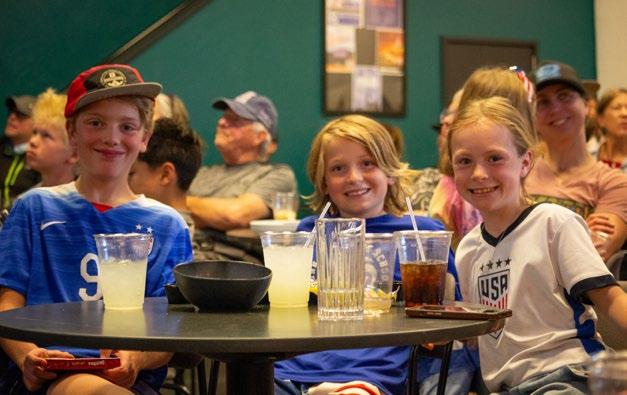
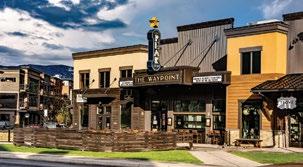
The World Cup has finally returned to home soil in the U.S., Mexico and Canada. Doug Hare, the director of Big Sky Futbol Club, wanted to get the Big Sky soccer community together to watch games and support the U.S. national team. The result is watch parties at The Waypoint with the game played on a large projector screen and all of the televisions.
COUNTY ENDS ICE AGREEMENT
Gallatin County commissioners voted June 16 to end the county’s 287(g) agreement with U.S. Immigration and Customs Enforcement following months of public outreach, written testimony and an ongoing lawsuit challenging the program’s approval.
FIRE
ACADEMY GRADUATES THREE RECRUITS
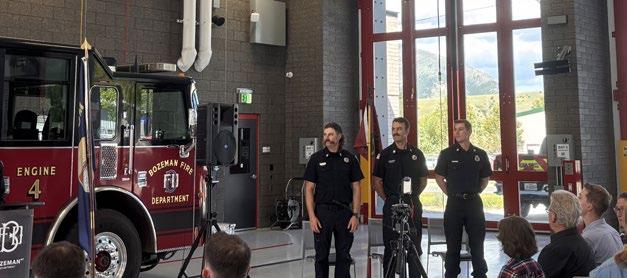
On Thursday, June 18, the Gallatin Valley Fire Academy held a graduation ceremony at Fire Station 1 in Bozeman. Graduates Blake Martin, Nic Magliocco and Luca Rodoni completed a rigorous 10-week program led by the Bozeman Fire Department, Central Valley Fire District and Big Sky Fire Department.
MANAGING WILDFIRE SMOKE RISK
ON THE COVER:
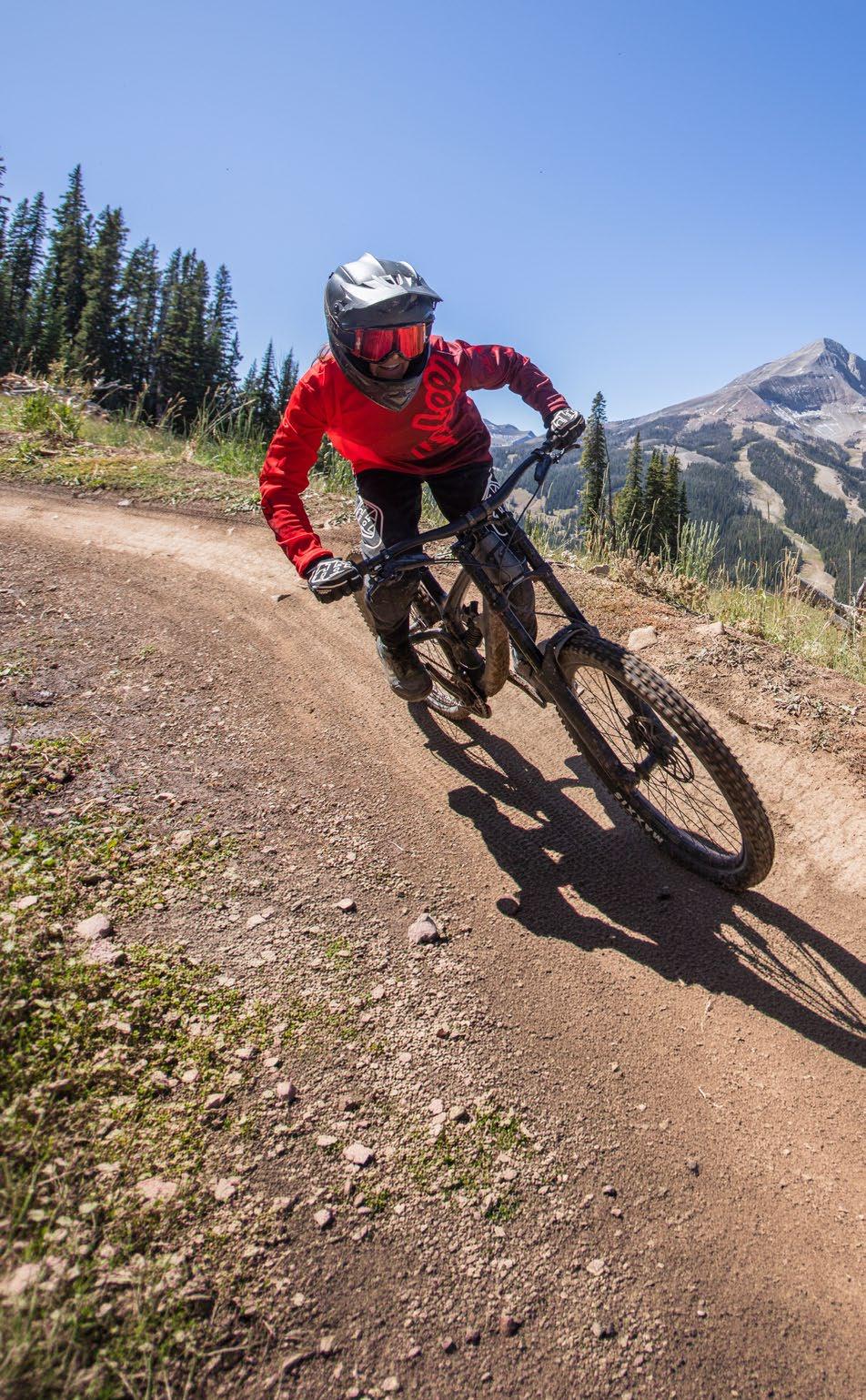
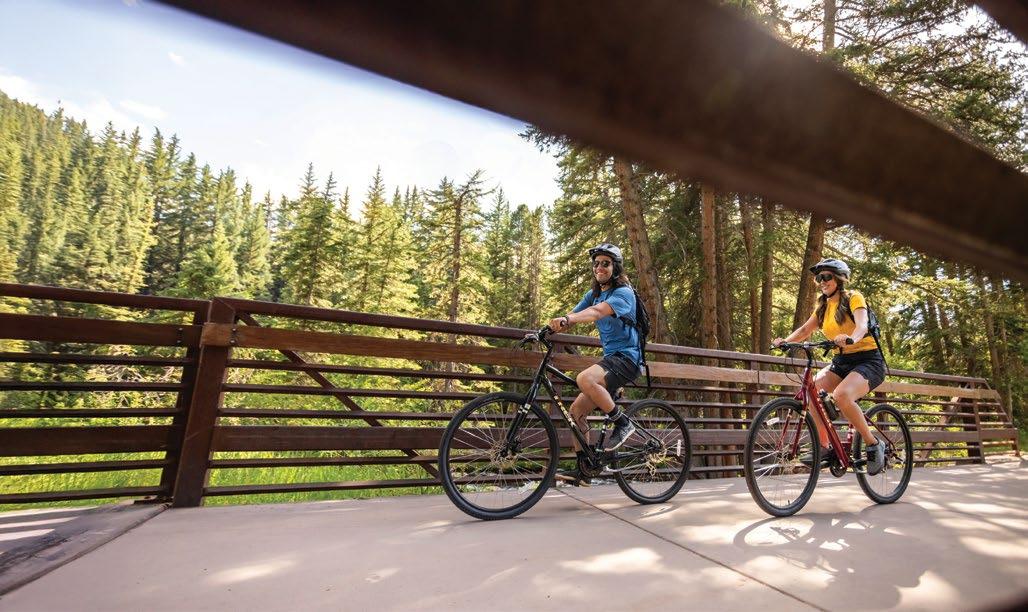
Big Sky Resort opened for the summer season on Saturday, June 13. Since then, mountain bikers have taken to the trails with views of Big Sky’s mountains behind them. PHOTO BY KIRBY GRUBAUGH FOR BIG SKY RESORT
EDITORIAL POLICIES
EDITORIAL POLICY
Outlaw Partners, LLC is the sole owner of Explore Big Sky. EBS reserves the right to edit all submitted material. Printed material reflects the opinion of the author and is not necessarily the opinion of Outlaw Partners or its editors. EBS will not publish anything discriminatory or in bad taste.
EBS welcomes obituaries written by family members or from funeral homes. To place an obituary, please submit 500 words or less to media@theoutlawpartners.com.
SCAN FOR
As wildfire season ramps up across the West, smoke is becoming an increasingly familiar part of summer in Big Sky. This installment of Wildfire Wire by Mel Crichton explores the health impacts of wildfire smoke, offers practical tips for staying safe during smoky conditions and encourages residents to prepare before air quality deteriorates.
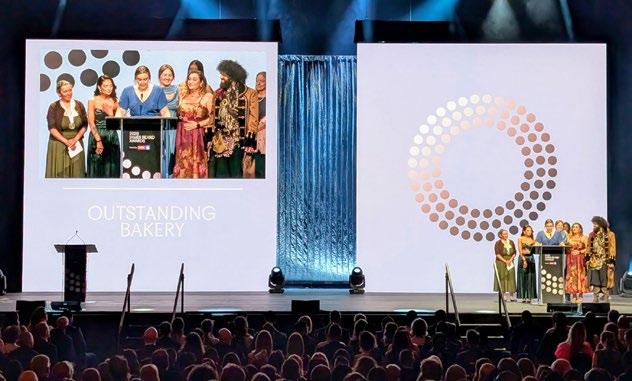
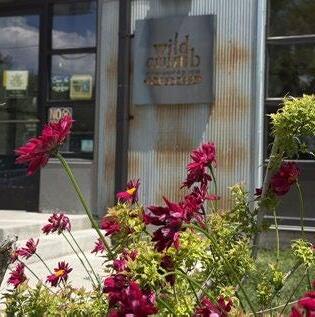
WILD CRUMB WINS JAMES BEARD AWARD
Winners of the James Beard Awards—the culinary equivalent to the Grammys or Oscars—were announced on Monday, June 15, and for the first time, a Montana establishment took one of the top honors. Bozeman’s Wild Crumb Bakery was named Outstanding Bakery, securing its place in the annals of Montana food history.
LETTERS TO THE EDITOR
Letters to the editor allow EBS readers to express views and share how they would like to effect change. These are not Thank You notes. Letters should be 250 words or less, respectful, ethical, accurate, and proofread for grammar and content. We reserve the right to edit letters and will not publish individual grievances about specific businesses or letters that are abusive, malicious or potentially libelous. Include: full name, address, phone number and title. Submit to media@outlaw.partners.
ADVERTISING DEADLINE
For the July 9th issue: July 1st, 2026
CORRECTIONS
Please report errors to media@outlaw.partners.
OUTLAW PARTNERS & EXPLORE BIG SKY P.O. Box 160250, Big Sky, MT 59716 (406) 995-2055 • media@theoutlawpartners.com
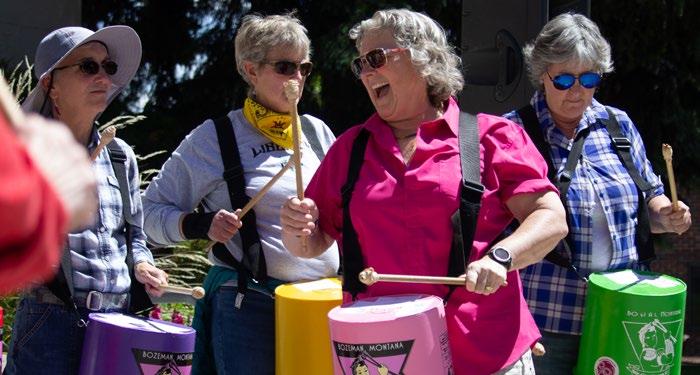
Indivisible Bozeman held a "rise up and sing" rally at the Gallatin County Courthouse on Sunday, June 14 that also addressed ICE holds in Gallatin County. Pictured are the Buckets of Justice and Equity drum group about 10 minutes before the event began.
PHOTO BY JEN CLANCEY
BRIEFS NEWS IN BRIEF
CHILD CYCLIST KILLED IN BOZEMAN CRASH
EBS STAFF
A 9-year-old girl died the morning of Wednesday, June 17, after being struck by a vehicle while riding her bicycle on Griffin Drive in Bozeman.
The crash occurred around 10:52 a.m. in the 300 block of East Griffin Drive, just west of North Rouse Avenue. According to a press release from the Bozeman Police Department, who is handling the investigation, the girl was riding westbound on the south side of Griffin Drive when she turned abruptly northbound across the road into the path of an oncoming vehicle. The driver stopped immediately and is cooperating with investigators, as did several who witnessed the accident.
“It is with heavy hearts that we share this update,” Bozeman Police Chief Jim Veltkamp stated in the release. “The loss of a child is a tragedy. Our deepest condolences go out to the friends, family, and truly the entire community, as we are all impacted by this loss.”
The Bozeman Police Department is leading the investigation with assistance from the Montana Highway Patrol. Anyone with information is asked to contact Detective Jenkins at (406) 582-2224 or Spencer.Jenkins@ bozemanmt.gov. A GoFundMe has been established to help the family.
BIG SKY SKI EDUCATION FOUNDATION HOSTS ANNUAL SWING INTO SUMMER CHARITY GOLF TOURNAMENT JUNE 27
EBS STAFF
The Big Sky Ski Education Foundation will hold its annual Swing Into Summer Charity Golf Tournament this Saturday, June 27, at the Big Sky Resort Golf Course. Check-in begins at 8:30 a.m. with a shotgun start at 10 a.m. The four-person scramble format will feature flag prizes, longest drive, closest to the pin, longest putt, straightest drive and top-three team awards. Proceeds from the event will benefit more than 150 athletes across BSSEF's Alpine, Nordic and Freeride programs.
“We are so excited for the Swing Into Summer Charity Golf Tournament this Saturday at the Big Sky Resort Golf Course, an event that celebrates exactly who we are: a community built around skiing, coming together to support the next generation of local athletes,” said Jessie Lepel, business manager and alpine coach at BSSEF. She thanked Big Sky Resort and Big Sky Build for their support.
All golfers will receive a complimentary lunch, drink tokens and a custom swag bag. Strings and mulligans will be available for purchase at registration. Highlights include a chipping contest into a raft for a chance to win prizes donated by GoPro, and a raffle.
Those interested in registering as an individual, team or sponsor can sign up at bssef.com/golf-tournament.
‘LIVING WITH WILDLIFE’ PRESENTATION IN GALLATIN GATEWAY JUNE 30
EBS STAFF
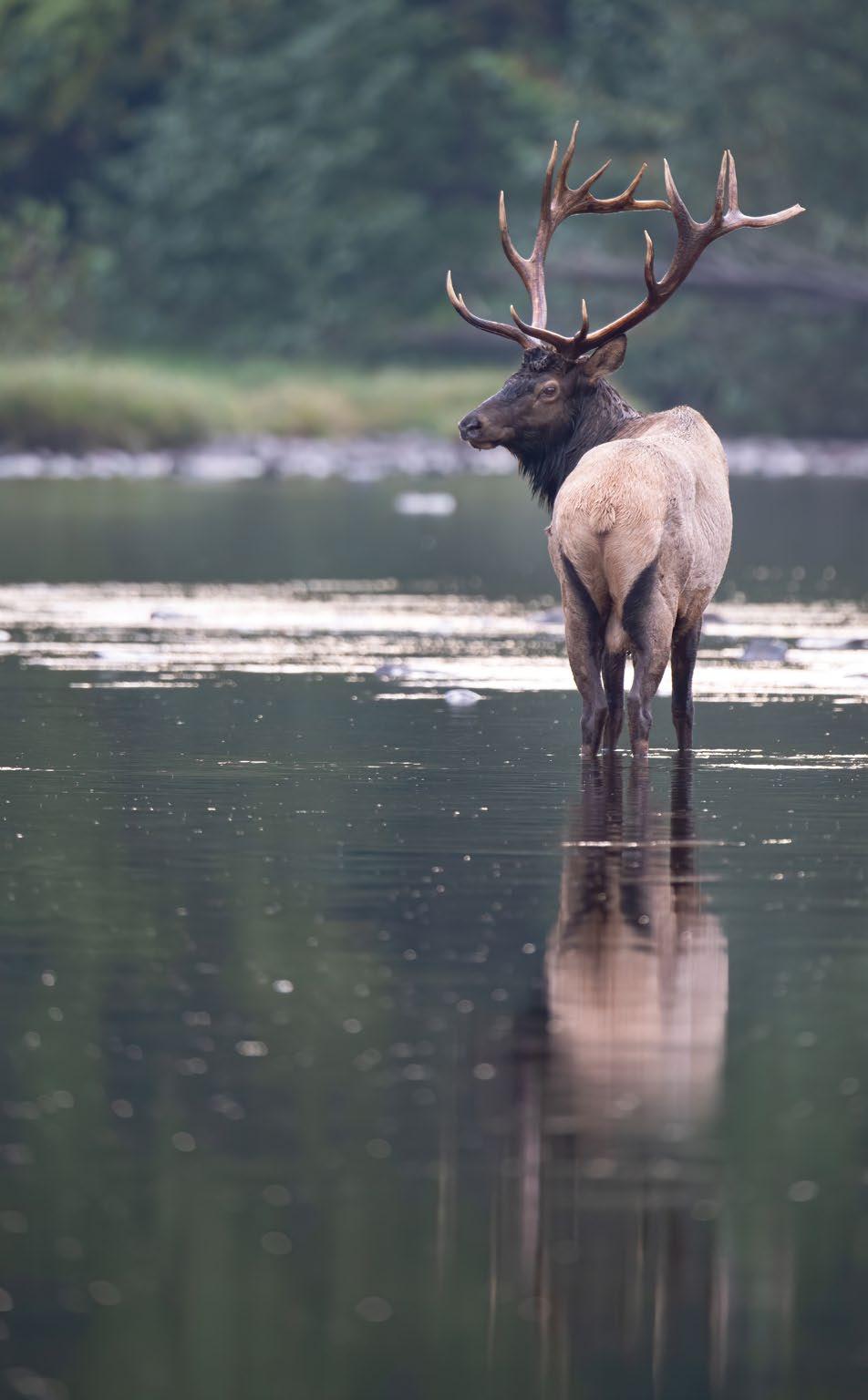
Residents of Gallatin Gateway are familiar with the population of elk that frequently cross U.S. Highway 191, and the unfortunate casualties that come with a growing population around them. Local residents, or those interested in wildlife movement in the Greater Yellowstone Ecosystem, are invited to learn more about statistics and characteristics of the Gallatin Gateway elk herd at a June 30 presentation.
Titled “Living With Wildlife: Movements of the Gallatin Gateway elk herd,” the presentation will be held at the Gallatin Gateway Community Center on June 30 at 6:30 p.m.
“This presentation highlights the collaboration between Montana FWP, nonprofits and local community members on the wildlife movements of the elk population in the vicinity of Gallatin Gateway for the past three years,” stated April Craighead, executive director of the Craighead Institute, and one of the event’s organizers. “It will also touch on other issues of living with wildlife in our community.”
Featuring guest speakers Julie Cunningham and Noah Starling of Montana Fish, Wildlife and Parks, the night will include data and information about the local Gallatin Gateway elk herd and other wildlife in the Greater Yellowstone Ecosystem.
The Gallatin Gateway Community Center is located at 145 Mill St. The event is expected to run until 9 p.m.
Aurora Operations, Inc. seeks Sr. LiDAR Sys. Eng. in Bozeman, MT to lead validation of LiDAR modules for AVs.
Email resumes to jobs@aurora.tech using REF#000487.
HISTORIC CRAIL RANCH OPENS FOR SUMMER SEASON MUSEUM WILL BE HOME BASE
FOR EVENTS INCLUDING COMMUNITY POTLUCKS AND WILDFLOWER FESTIVAL
BY JEN CLANCEY
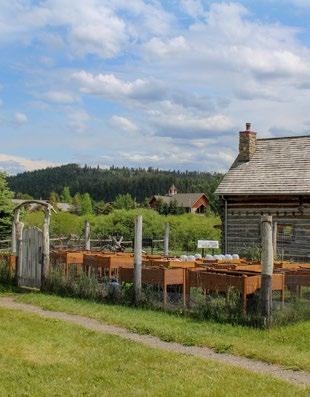
BIG SKY—Locals and visitors can step into Big Sky’s history as the Historic Crail Ranch opens for the summer season on Saturday, June 20.
The museum is a program of Big Sky Community Organization and is located near Big Sky’s Meadow Village at 2100 Spotted Elk Rd. Free to visit and featuring one of the oldest homesteads in Big Sky, the property’s three historic cabins are preserved as they may have looked in the early 20th century.
HCR offers free guided tours of the property and will host local events like the Community Potluck Series on the third Sunday of each month. The first potluck is this weekend, Sunday, June 21 where Aaron Young will play live music, Big Sky Community Organization will set up lawn games and cook kebabs for potluck participants. Following potlucks will be on July 19, Aug. 16 and Sept. 20.
In early July, local nonprofit Grow Wild will also have its annual Big Sky Wildflower Festival at
the Crail Gardens.The July 7-11 festival features yoga, photography, art, birding, crafting, climate education and guided hikes.
This year, the museum will also host a Big Sky Fiber Arts Fair on July 19, a popular event on the museum grounds before the COVID-19 pandemic. The fair coincides with local arts events throughout the third week of July, including the Big Sky Artisan Festival on July 18.
According to Holly Studt, the HCR coordinator, the week will begin with a display of challenge quilts at the Arts Council of Big Sky building in Town Center. The display will spur Big Sky’s own challenge quilt for the Gallatin Canyon Women’s Club under the theme of “Postcards of the Past,” and the week will end on Sunday, July 19 HRC’s Big Sky Fiber Arts Fair.
Later in the summer, HRC will host a Crail Ranch Bake Sale on August 16 and a Fall Festival on Sept. 20.
The community garden at Historic Crail Ranch. PHOTO BY CARLI JOHNSON
NEW COORDINATOR BRINGS FRESH ENERGY TO BIG SKY FARMERS MARKET
BY LESLIE KILGORE
BIG SKY—The Big Sky Farmers Market is back for another summer season, bringing local food, art, music and community gatherings to Big Sky Town Center every Wednesday evening, June through September.
Leading the market for the first time this year is Julia Wilder, the new Town Center events coordinator. Originally from Charleston, South Carolina, Wilder brings experience working with small businesses, environmental organizations, indoor farming operations and farmers' markets. Before jumping into her new role, she worked as an event coordinator at Montage Big Sky.
Now overseeing one of Big Sky’s most beloved summer activities, Wilder is focused on supporting local vendors, creating meaningful community connections and continuing to grow the market while honoring its long-standing traditions.
Explore Big Sky caught up with Wilder to learn more about her first season leading the market and what visitors can expect this summer.
Explore Big Sky: What attracted you to leading the Big Sky Farmers Market?
Julia Wilder: I’ve always been passionate about supporting local businesses and being involved in my community. I’ve experienced farmers' markets as a vendor myself, and I love the connections they create between makers, entrepreneurs and community members. One of my goals is to continue growing those connections while expanding the market’s reach, especially by attracting more produce vendors and increasing access to fresh, local goods.
EBS: What have you learned about the market’s history and impact on the community?
JW: I’ve learned how deeply valued the market is by locals. There’s a real sense of pride from both vendors and attendees. Erik Morrison has been a tremendous resource in sharing the market’s history, and it’s clear this has become one of Big Sky’s most cherished and family-friendly summer traditions.
EBS: What’s new for the 2026 season?
JW: We’re welcoming several new vendors this year, including local entrepreneurs launching new businesses. We’re also expanding live music offerings around Town Center and partnering with YES Compost as part of our goal to move toward a zero-waste market.
EBS: How are you balancing some of the market’s traditions with new ideas?
JW: Our long-standing vendors are the heart of the market, and supporting them remains a top priority.
At the same time, we’re creating opportunities for new vendors and more interactive experiences that encourage people to connect and engage with the community.
EBS: What role do you think the farmers' market plays in supporting local businesses?
JW: The market provides an important platform for local farmers, artists and small businesses.
In a place like Big Sky, it reminds people how many incredible products and services are available right here in our community and encourages residents and visitors to shop local.
EBS: Can you tell us about this year’s vendor lineup?
JW: We have a great mix of returning vendors and newcomers, including woodworkers, artists, jewelry makers and food vendors from Big Sky, West Yellowstone and beyond. About 220 vendors will participate throughout the season, and more than half are local to the Big Sky community.
EBS: Going forward this season, how do you hope people experience the market each week?
JW: I hope visitors discover something, or someone new every week. Whether it’s meeting a vendor,
trying a new product, or starting a conversation, those connections are what make small-town communities special.
EBS: What challenges and opportunities come with organizing a market in Big Sky?
JW: Weather, traffic and coordinating with more than 200 vendors all require flexibility and planning.
But the opportunity to bring people together in such a beautiful setting makes it all worthwhile.
EBS: How has the community responded so far this season?
JW: The response has been overwhelmingly positive from both vendors and attendees. As a first-year market manager, that support has meant a lot, and I’m especially grateful to Erik Morrison and the team that helped make the transition possible.
EBS: What is your vision for the future of the market?
JW: I want the market to continue growing as an inclusive, vibrant space that reflects the diversity of our community. I’d love to expand the variety of vendors, particularly produce growers, and introduce more interactive experiences that help people connect with the stories behind local businesses.
EBS: What should first-time visitors expect?
JW: Visitors can expect a welcoming atmosphere filled with local goods, food, music and great people.
Every Wednesday, Town Center comes alive, and it’s a wonderful opportunity to experience the energy and creativity of the Big Sky community.
Julia Wilder is Town Center’s new Big Sky Farmer’s Market coordinator. PHOTO COURTESY OF JULIA WILDER
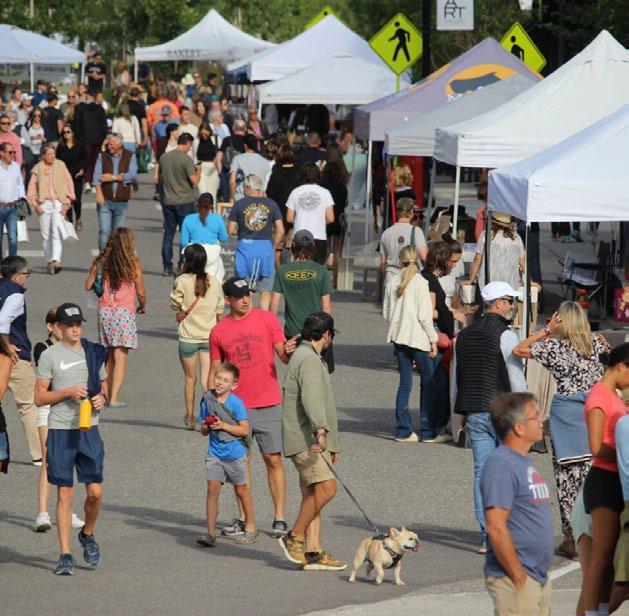
The Big Sky Farmers Market is a summer tradition in Town Center. PHOTO BY JACK REANEY
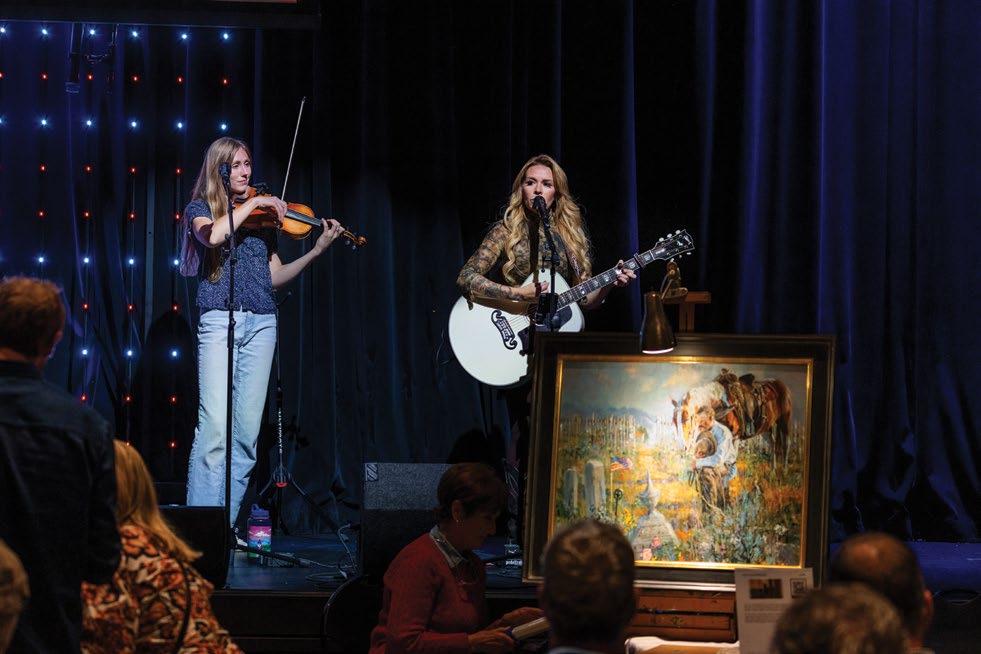
• DRINK SPECIALS • DOOR PRIZES
• LIVE MUSIC
LOCAL BSRAD DEVOTES $200K FOR TEDD/TIF CONSULTANTS
RESORT TAX APPROVES BUDGET ADDITION FOR HIRING FINANCING DISTRICT CONSULTANTS
BY JEN CLANCEY
BIG SKY—Big Sky Resort Area District will hire consultants to complete reports for a potential creation of a Targeted Economic Development District, or TEDD, in Big Sky. On June 10, Resort Tax amended its budget to attach $200,000 for the hiring effort, a result of discussions about how to fund local infrastructure projects.
A TEDD, which couples with a tax increment financing district, or TIF, would help fund transportation, water and sewer, and wildfire management—priorities that Kevin Germain, board director, listed in the meeting. How a potential TEDD/TIF in Big Sky could look—from boundaries to timeline—is still in discussion, but board members state it is an important tool to find infrastructure projects, especially after contributing to initiatives like the Cold Smoke housing development.
“That used a lot of our power,” Germain said. “And so when we look at the financial resources that Resort Tax has, it’s very limited to address these major, major community challenges that we see coming down the pipeline.”
Among those costly projects is a remaining $10 million needed for a major canyon sewer project
and a failing septic system in the Firelight neighborhood. To find a solution, BSRAD and the Big Sky Chamber of Commerce, Big Sky Community Housing Trust and water and sewer entities have met in a legislative subcommittee to discuss finance tools.
“ And so as we’ve been working with this legislative committee, the tool of targeted economic development districts that use tax increment financing has risen to the top as something that our community should really, really explore,” Germain said.
TEDD and TIF have been used in ButteSilver Bow and Missoula counties, Kalispell and Bozeman. Locally, the Gallatin Canyon Water and Sewer District has faced challenges for its proposal of a TEDD/ TIF to fund part of its $50 million project, despite leaders saying it’s a key part of funding for the project.
BSRAD shared a similar sentiment on June 10 about a broader TEDD/TIF idea that could support more Big Sky projects, including the canyon sewer. Board member John Zirkle voiced his reasoning for the upfront cost of $200,000 for the district.
“We understand that $200,000 is a lot. You know, that could be an appropriation for another organization, so we don’t take it lightly,” Zirkle said. He shared that projects outlined in Big Sky’s Capital Improvement Plan have price tags that Resort Tax can’t cover on its own.
“We’ve been looking at where [the] meaningful dollars [are] out there so we can get a lot of this infrastructure done. And this is it,” Zirkle said. “We hope that with the success of efforts like SB260 and the housing infrastructure process that you can trust us with these dollars, for them to come back into the community in a meaningful way.”
Other approved budget changes on June 10 included $95,000 for the BSFD Interlocal Agreement after BSRAD agreed to provide further funding to the fire department, and $150,000 set aside for the Big Sky Transportation District, as BSRAD expects a request from the local transportation entity to help fund a staff position in Big Sky.
Plans and priorities for a potential TEDD/TIF are expected to be discussed in future BSRAD meetings.
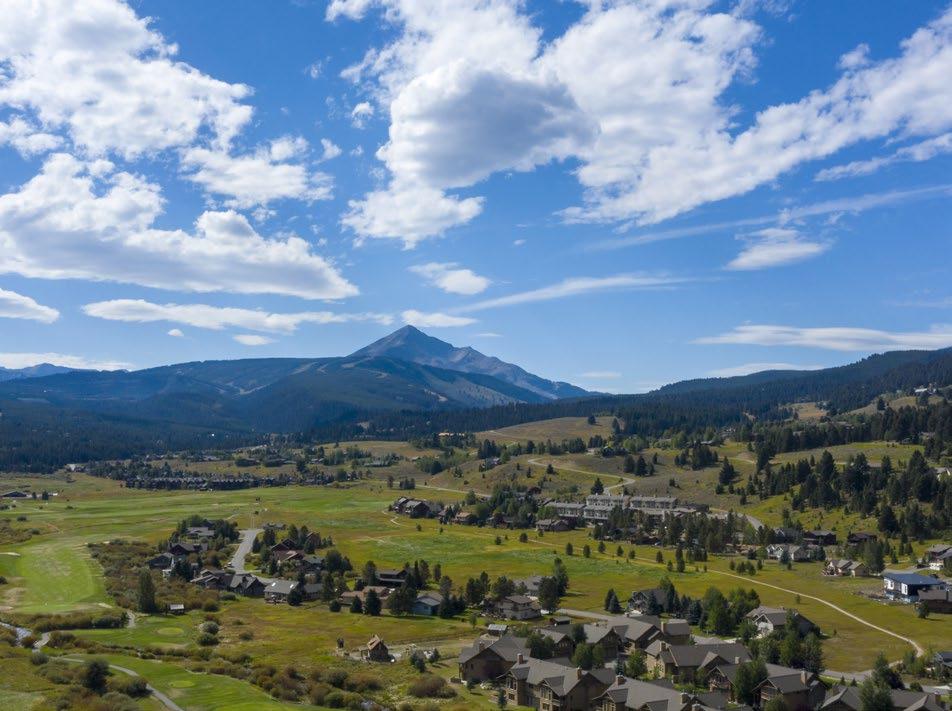
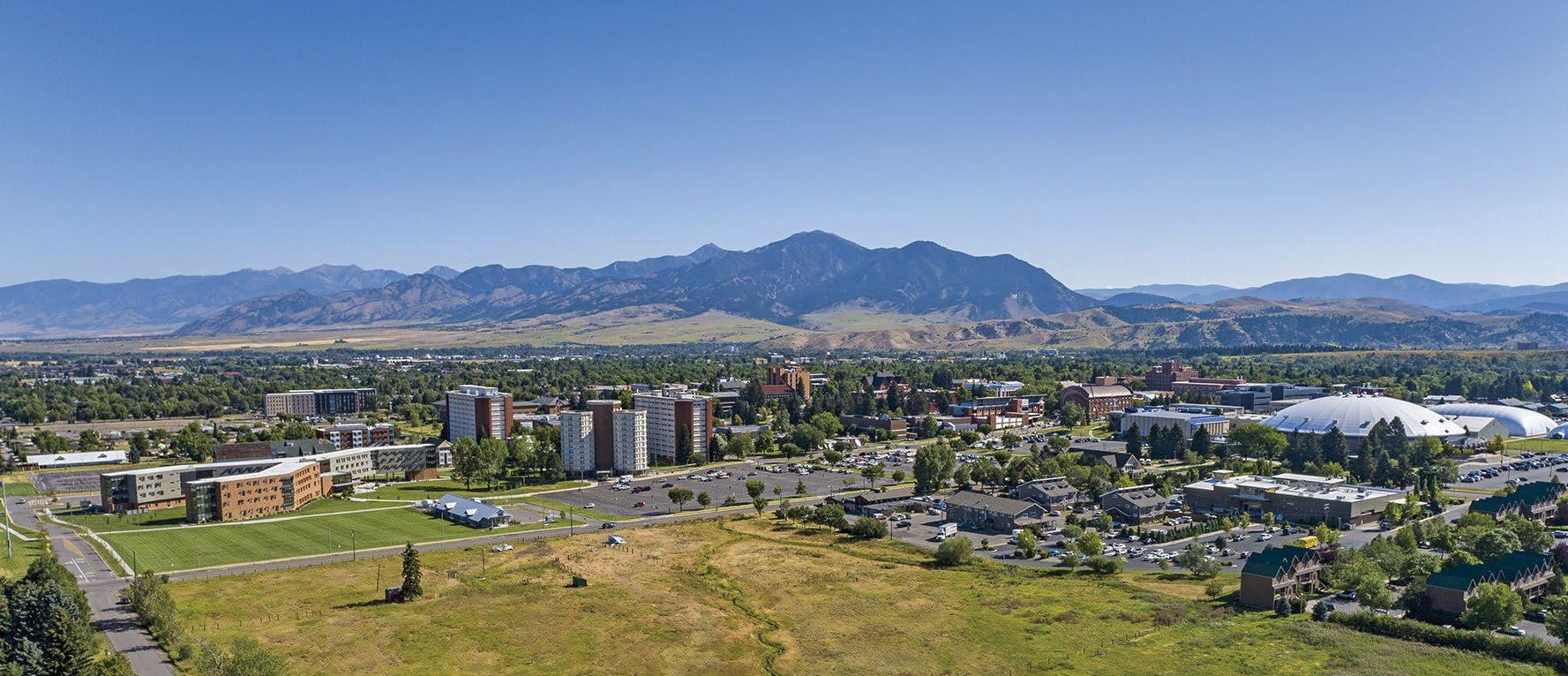
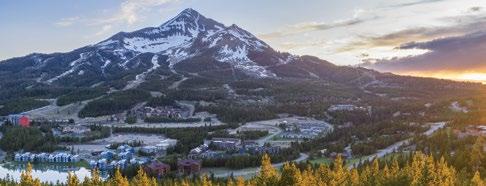
An aerial view of Big Sky. OUTLAW PARTNERS PHOTOS
NEW YEAR-ROUND MDT EMPLOYEE LEARNS BIG SKY’S HIGHWAYS
INSTEAD OF TWO WEEK ROTATING STINTS, LOCAL ORGANIZATIONS PARTNER TO SUBSIDIZE YEAR-ROUND
EMPLOYEE’S
RENT
BY JEN CLANCEY
BIG SKY—In the winter, James Dalpiaz is able to predict how his day will look as soon as he wakes up.
“I pretty much know when I’m going to be in a plow truck when I wake up and look out my window,” Dalpiaz said. That’s because Dalpiaz is the Montana Department of Transportation’s first employee who lives year-round in Big Sky.
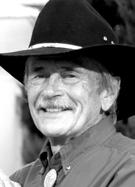
Dalpiaz moved to Big Sky in December 2025 after seven local organizations teamed up to subsidize his rent. It’s a partnership that helps to address response times to Montana Highway 64 and U.S. Highway 191 issues—from slideoffs, to patching, to plowing.
Brad Niva, CEO of the Big Sky Chamber of Commerce, explained that Dalpiaz can track problems like potholes and guardrail repairs along MT 64 because he stays in the community.
“He kind of, quote unquote, ‘owns the road’ now, and knows what’s happening,” Niva explained. Any regular Gallatin Canyon driver will also recognize Niva’s name from the Gallatin Canyon Road Conditions Facebook page, where he updates members about MDT projects going on in the canyon that week. The line of communication between Niva and MDT’s regional maintenance crew is what opened conversations about affordability in Big Sky.
MDT employees are required to live within 45 miles of the communities they maintain. Often, they can afford to live right in the towns and cities, Josh Ritchie, MDT’s Bozeman maintenance chief explained.
“But this wasn’t the case for Big Sky,” Ritchie said. “It was just a struggle, almost impossible. So this employee housing, where we’re getting help from the community, is really something that’s different than we’re doing in a lot of different areas.”
Big Sky Resort Area District, the Big Sky Chamber, Big Sky Community Housing Trust, Lone Mountain Land Company, Big Sky Resort, Big Sky Owners Association and the Big Sky Transportation District have all contributed funds to pay a portion of Dalpiaz’ rent so he can live here year round. Before then, MDT would bring maintenance employees to Big Sky and rotate them out every two weeks, just as they had begun to learn Big Sky’s challenging terrain.
Ritchie and Niva agree that this model of subsidizing rent for MDT employees can be used in places with similar cost of living struggles, like Whitefish. Niva also thinks it’s a good try-out to inspire subsidizing rent for other workers in Big Sky, like teachers and nurses.
“I think that’s something that we as a community could continue to look at … this worked, and so now we’ll see what we can do in the future,” Niva said.
Dalpiaz isn’t alone in maintaining U.S. 191 and MT 64. Maintenance technicians Katie Purcell and Matt Workman, work with Crew Leader Charlie Totten, Superintendent Cody Johnston, and Section Supervisor Josh WIlliams to take care of highways. Totten explained that the job varies everyday.
“ We do a lot of maintenance, but we do something different every day, and it’s always to help the road and help the community,” Totten said. Repairing the potholes, guardrails and surviving close calls
Some things to know about MDT maintenance: snow plows are mandated to drive 35 MPH and if they aren’t—for instance on hills with wet snow— they’re going as fast as they can; and as Ritchie
put it, drivers should slow down when crews are working on roads. In a Big Sky conference room with the MDT maintenance crew, Ritchie described the importance of slowing down.
“ We just wanna go home safe,” Ritchie said. “I really worry about the staff out there, especially [on] 191, 64. There’s not much room for them to do their work without interfering with traffic flow. So they’re out there trying to get the work done as soon as they can, but I really worry about their safety.”
According to Josh Williams, speeding and inattentive driving leads to dangerous situations for MDT when they repair roads. He’s worked closely with the Gallatin County Sheriff’s Office to request an officer to oversee work zones.
In 2018, MDT employee and Billings resident Jeff Dyekman was hit and killed by an impaired driver on a worksite. No MDT employees have died at worksites since, but it’s a problem in states throughout the U.S., and employees in the room shared that close calls happen all the time.
“All of our maintenance techs, their lives are really on the line out there doing this kind of job, so it’s really important,” Ritchie said.
The MDT crew hopes to continue strengthening their relationship with the Big Sky community through events like the Big Sky Farmers Market and communication about projects. Dalpiaz reflected on the reason why he was drawn to the unique position in Big Sky.
“The nuances of it interested me a lot, like being … in the community,” Dalpiaz said.
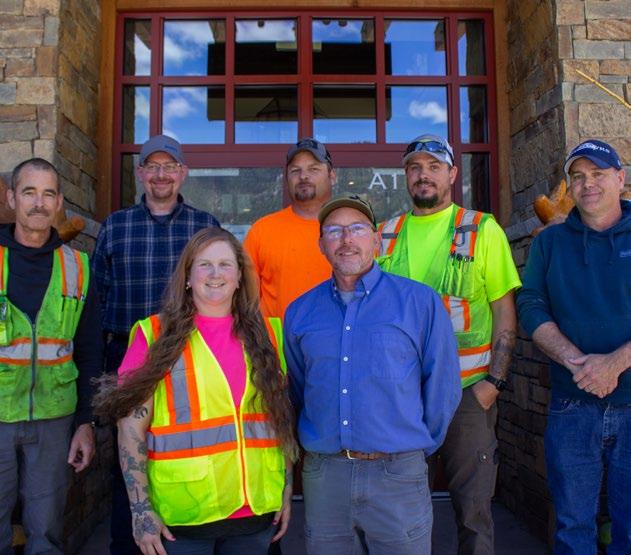
The MDT crew maintaining U.S. Highway 191 and Montana Highway 64 from left to right in the back row: Charlie Totten, Josh Ritchie, Josh Williams, Matt Workman and Cody Johnston. From left to right in the front row: Katie Purcell and James Dalpiaz. PHOTO BY JEN CLANCEY
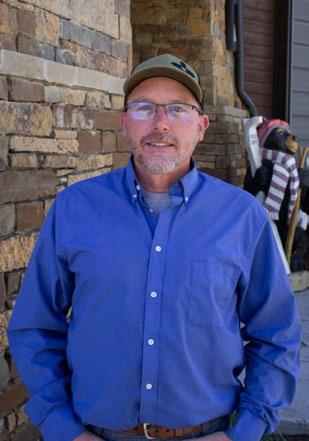
James Dalpiaz in Big Sky. PHOTO BY JEN CLANCEY
4
BIG SKY CHAMBER OF COMMERCE RECOGNIZES OUTSTANDING COMMUNITY MEMBERS AT 29TH ANNUAL BLACK DIAMOND AWARDS
BY CARLI JOHNSON
BIG SKY—The sun shone bright over River House BBQ and Events as Big Sky residents, business leaders and community members gathered on the evening of June 11 to celebrate the 29th annual Black Diamond Awards.
Hosted by the Big Sky Chamber of Commerce, the annual event honors individuals, organizations and businesses that go above and beyond in service to the community. This year's ceremony centered on a single theme: connection.
"At the chamber, connection sits at the heart of everything we do," said Big Sky Chamber Vice President Megan Porter in her opening remarks. "Our mission is to enhance the vitality of the Big Sky business community."
"But connection doesn't belong to the chamber alone," Porter continued. "It's woven into the fabric of Big Sky itself."
Award recipients are selected through a community-driven nomination process. Members of the business community submit nominations recognizing individuals they believe are making a meaningful impact. A committee made up of representatives from the Visit Big Sky Board, the Chamber Board and community leaders then review the nominations and select finalists.
The Emerging Entrepreneur Award was presented to Patrick Griffith of Blue Moon Bakery.
Reflecting on his early days in Big Sky, Griffith said the support he received from community members inspired him to help others feel welcome as they establish themselves in town.
"When I first moved here, I was just slinging pizzas and no one had a clue who I was," Griffith said. "They introduced me to new people and showed me around. I'm extremely excited and honored to be able to help provide that for other people. It's a really cool thing to be part of this community and to be able to introduce some new people to it the way that I was introduced to it."
The Master of Making It Happen Award went to Sarah Blechta of BSRAD and Lone Mountain Management. Although unable to attend in person, Blechta shared a video message expressing gratitude for the recognition and for the community that has supported her work.
In presenting the award, organizers noted a phrase Blechta often repeated during her service on the Resort Tax Board: "We are better together." More than a slogan, they said, it became a guiding principle for her leadership, collaboration and commitment to community.
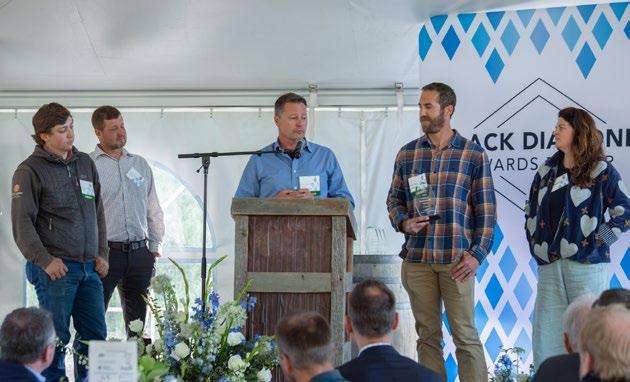
Connection to place was also recognized through the Leader in Sustainability Award, presented to the Lone Mountain Land Company environmental team. Rich Chandler, Kramer Bauer, Loren Franklin and Jeff Cadry accepted the award and thanked the community for recognizing their efforts to help build a more sustainable future for Big Sky.
Presented by Montana Rep. Alanah Griffith, the Steve Johnson Nonprofit Person of the Year Award honors nonprofit leaders who strengthen the fabric of Big Sky by creating opportunities, addressing challenges and improving quality of life for residents, workers and families.
The award was presented to Anna Shipley of the Moonlight Community Foundation. Heather Morris accepted on Shipley's behalf.
"Anna embodies what it means to be a community member, to love and to take care of where you live," Morris said.
The Business Person of the Year Award was presented to the Delzer family of Delzer Diversified. Accepting on behalf of his family, John Delzer reflected on the values that have guided their success.
"Success isn't measured only by victory; it's measured by how you conduct yourself through all of it with honor," Delzer said. "If there's one
thing I've learned, it's that none of us get there by ourselves. We are shaped by our faith and by those who surround us."
Big Sky Resort received the Business of the Year Award. In presenting the honor, organizers described the resort as an economic engine for the community, noting that its impact extends beyond the scale of its investments.
"What makes Big Sky Resort deserving of this award is not simply the scale of its investment, but the vision and execution behind it," Greg Wagner said.
The final two awards of the evening were presented without finalists and included special recognition of each recipient's lasting contributions to the Big Sky community.
The Spirit of Big Sky Award was presented to John Zirkle. Unable to attend in person, Zirkle accepted the honor through a video message recorded along the banks of a river in Budapest, where he reflected on his years in Big Sky and the people who helped shape the community.
"When I think about the spirit of Big Sky, I'm just so grateful to all of you for making it such an amazing, interesting, beautiful place to be," Zirkle said. "And I can't wait to shape the future with you."
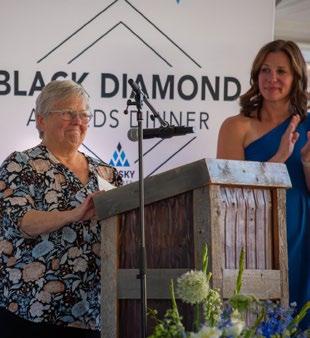
To close the evening, the chamber presented the Chet Huntley Lifetime Achievement Award to Lynn Anderson. The announcement was met with a standing ovation as Anderson accepted the honor and thanked the community for supporting her ideas and initiatives throughout the years, including helping launch the food bank to creating spaces and opportunities that brought people together.
“This recognition does not serve as any form of a finish line, but a renewed invitation from my heart to continue investing in each other with compassion, courage and generosity,” Anderson said in closing.
Lone Mountain Land Company environmental team accepts the award for Leaders in Sustainability at the 29th annual Black Diamond awards. PHOTO BY JACK REANEY
Lynn Anderson accepts the Chet Huntley Lifetime Achievement award for her outstanding contributions to the Big Sky community. PHOTO BY JACK REANEY
BIG SKY SOCCER FANS CHEER ON THE U.S. AT WORLD CUP WATCH PARTY
BIG SKY FUTBOL CLUB, THE WAYPOINT HOSTS WORLD CUP WATCH PARTY
BY JEN CLANCEY
BIG SKY—The last time the U.S. hosted the FIFA World Cup was in 1994. In the crowd of a Washington D.C. game was a 10-year-old Doug Hare with his dad. They traveled from Richmond, Virginia, to see the global soccer competition.
“I still have fond memories of kind of understanding how soccer was such an international game. And the World Cup is just a great introduction to soccer, especially when it’s in your home country,” Hare said.
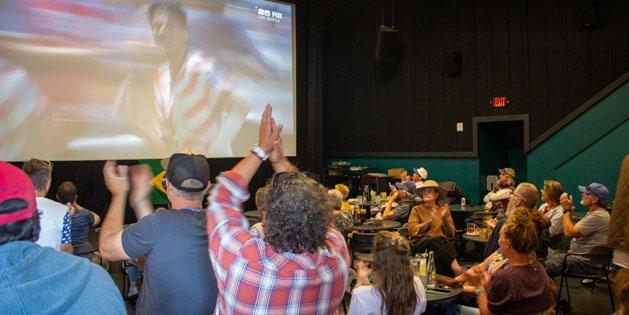
Thirty-two years later, the World Cup has finally returned to home soil in the U.S., Mexico and Canada. Hare, who’s now the director of Big Sky Futbol Club, wanted to get the Big Sky soccer community together to watch games and support the U.S. national team. The result is watch parties at The Waypoint with the game played on a large projector screen and all of the televisions. In a crowd of 80 scattered throughout the bar, Hare sat in one of the front row seats to watch the game.
“It happens once every four years, and it’s the highest level of the game, and people are just super passionate about the World Cup,” Hare said. “This is the most patriotic I’ve felt, you know, in a while.”
Kim Dickerson, the Lone Peak High School girls soccer coach, also experienced the 1986 World Cup happening around her when she was 10 years old in Mexico City. But one of her favorite memories was watching the U.S. Women’s National Team win the 1999 World Cup.
“That was an exciting time because that totally changed the trajectory of women in sports, especially in soccer,” Dickerson said. “That’s when teams started popping up, professional teams, and U.S. women’s soccer players could go and play beyond college.”
Dickerson noted that more kids are getting into playing soccer, apparent in watch parties like this.
“It’s just exciting because in the state of Montana, soccer is growing,” Dickerson said. Locally, the Lone Peak High School soccer teams have been able to compete in the Class A division, and youth
programs like the Big Sky Futbol Club, which instructs well over 100 players in soccer skills and training.
One player, donning a U.S. jersey is Riley Bowman, who Hare described as a “fearless center defender.” She appreciates how the World Cup allows people, even opposing fans, to unite through their love of soccer.
”Even if you’re on different teams, if you go to the games, you can meet, and you can cheer for other teams,” Bowman said. Her coach has reminded her team to form triangles on the field to complete passes, which is something her and her teammates watch for in World Cup games.
Another Big Sky Futbol Club player, Kadel Clark, shared a similar sentiment. Outside of enjoying the games with friends and family, he and his teammates can talk about what they can learn from world-class players. Otherwise, spaces like The Waypoint watch parties allow him to connect with others.
“It’s pretty fun,” Clark said. “I just like watching it with my friends and family.”
Big Sky resident Andy Smith, isn’t a major soccer fan, but he also appreciates the opportunity to spend time with the Big Sky community.
“ I don’t really know most of the rules of the game, but, if it’s an excuse to bring community together, I’m happy to support it,” Smith said. As an athlete more familiar with skiing and mountain biking, Smith will text his friends who play soccer to learn about the game along the way. The U.S. hosting World Cup games is a plus, too.
“I’m excited about that and proud of it,” Smith said.
One highlight of the game happened in the 42nd minute of the game when U.S. player Alex Freeman headed the ball in the back of Australia’s net. It was a favorite moment for Bowman, and brought the score to 2-0, where it stayed for the remainder of the match.
Members of the Lone Peak soccer programs saw the game in person, too. Ava Stout, Lola Morris and Zoe Luchini saw the Seattle-based game with their parents, and the Lone Peak boys soccer coaching duo, Tony Coppola and Jeremy Harder, repped stars and stripes at the Lumen Field.
With the win today, the U.S. team is moving onto the knockout stage of the World Cup.
Susan Tso, Big Sky resident and mom to three soccer players, acknowledged that the U.S. team will need to overcome tough challenges to win the World Cup. However, that doesn’t stop her from hoping.
“That would be a dream for sure,” Tso said.
Fans cheer at The Waypoint in Big Sky after the U.S. Men's National Soccer Team set the score to 1-0 in its June 19 World Cup match against Australia. PHOTO BY JEN CLANCEY
Big Sky Futbol Club players supported the U.S. at the watch party. PHOTO BY JEN CLANCEY
Big Sky locals went to the U.S. vs. Australia World Cup game. From left to right: Jason Luchini, Lola Morris, Zoe Luchini, Mike Stout, Ava Stout and Garin Stout. PHOTO COURTESY OF KIM DICKERSON
TAKE OUR READER SURVEY
EXPLORE BIG SKY WANTS TO HEAR HOW YOU GET YOUR NEWS
Explore Big Sky wants to better understand how you, our readers, consume news. Whether you read Town Crier nightly, listen to our podcast Outlaw Beat, or prefer the old-school print edition, your input is appreciated and will help us deliver the most valuable, timely news for our community.
The morning sun peeks into the bowl on Monday, Feb. 16 after a surprise 5-inch storm coats Lone Mountain.
WHY BIG SKY MAY BE ENTERING ITS NEXT GREAT OPPORTUNITY IN REAL ESTATE
BY ERIC LADD PUBLISHER
“If You Don't Do It This Year, You'll Be One Year Older When You Do.” – Warren Miller
Warren Miller's famous line has inspired generations of skiers, adventurers and dreamers.
For the past 26 years, I've watched that philosophy play out not only on the mountain, but in the Big Sky real estate market.
I've seen people buy when others were fearful and be rewarded. I've watched others spend years waiting for the "perfect" moment, only to discover that perfect moments rarely exist. Markets move. Opportunities come and go. And often, the best decisions are only obvious in hindsight. Today, we find ourselves at one of those moments.
Recent data shows that Montana vacation-home purchases have fallen more than 70% from their 2021 peak, one of the steepest declines in the country. The reasons are straightforward: interest rates rose dramatically from pandemic lows, prices remained elevated and many discretionary buyers stepped to the sidelines.
Across the country, second-home mortgage originations fell from more than 257,000 purchases in 2021 to just over 88,000 in 2025.
The good news is, markets move in cycles. And what we're experiencing today feels less like the beginning of a downturn and more like the end of one.
While interest rates have begun to ease, inventory has increased and buyers have more choices and more negotiating leverage than they've had in years. Most importantly, the buyers who wanted to purchase in 2022, 2023 and 2024 haven't disappeared, they’ve just been waiting for the math to work again.
That pent-up demand is real, and we're beginning to see signs of it returning.
It's also important to separate national headlines from what's actually happening here in Big Sky.
While Montana's vacation-home market experienced a significant pullback from the extraordinary highs of 2021, Big Sky has proven far more resilient. During the winter season of 2018-2019, pre-COVID, Big Sky recorded 168 residential sales between November and April. During the winter of 2025-2026, that number was 138 sales, a decline of approximately 18%.
That's certainly a slowdown, but it's far from the 70% cliff suggested by broader statewide vacationhome statistics. More importantly, values have remained remarkably strong. Median sold price per square foot increased from approximately $370 in the winter of 2018-2019 to roughly $891 this past winter, an increase of more than 140%.
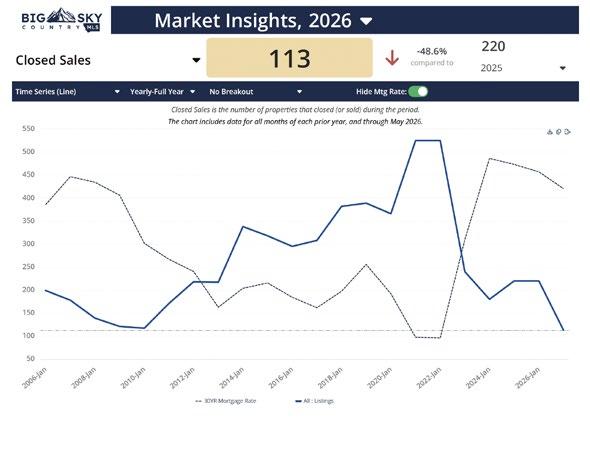
Annual transaction volume tells a similar story. Big Sky recorded 366 residential sales in 2019 compared to 220 in 2025. That represents a decline in activity, but not a collapse in demand. Through the first half of 2026, we're already seeing encouraging signs that activity may continue to improve.
What this tells me is that Big Sky didn't experience a traditional boom-and-bust cycle, but instead, we experienced an extraordinary pandemic-driven surge, followed by a period of normalization as interest rates reset and buyers recalibrated.
The luxury segment, where Big Sky primarily plays, has remained remarkably resilient throughout the correction. While transaction volume slowed, the underlying reasons people want to own here have only become stronger. That's what makes this cycle different.
Twenty-six years ago, Big Sky was still one of the best-kept secrets in the American West. Fast forward to today, and it is a globally recognized destination.
The arrival of Montage Big Sky and One&Only Moonlight Basin has fundamentally elevated awareness of our community. Separate from luxury resorts, they are also global marketing platforms that collectively reach millions of affluent travelers every year through their reservation systems, loyalty networks, travel advisors, luxury publications and international marketing channels.
For decades, communities like Aspen, Colorado, Jackson Hole, Wyoming, and Park City, Utah, benefited from this kind of exposure and today, Big Sky is receiving the same level of attention.
Every day, potential buyers who may never have heard of Big Sky five years ago are discovering our community through some of the most influential hospitality brands in the world. Their investment in Big Sky is a vote of confidence in our future, and their global reach continues to introduce new buyers to the region.
However, destinations are built on more than beautiful homes and luxury resorts; they are built on experiences.
One of the things I am most proud of over the last two decades is watching Big Sky evolve from a seasonal resort town into a vibrant year-round community. Events have played a major role in that transformation. The Big Sky PBR, now celebrating its 15th year and recognized 12 times as PBR Event of the Year, has become one of the premier Western sporting events in North America. Wildlands has brought world-class musicians to our backyard while raising millions of dollars for conservation. Weekly traditions like Music in the Mountains and the Big Sky Farmers Market create gathering places that strengthen the fabric of our community.
These events do more than entertain, they also create memories, build culture and support local businesses and introduce thousands of visitors to Big Sky every year. The strongest real estate markets in America have one thing in common: they become destinations first and real estate markets second.
Since Big Sky crossed that threshold, it has created opportunity for buyers. The best buying opportunities rarely occur when headlines are screaming optimism. They happen when inventory expands, uncertainty creates hesitation and buyers have leverage. Looking back over nearly three decades in this market, many of the most successful purchases were made during periods that felt very much like today.
For sellers however, today's market requires discipline. The days of simply placing a property on the market and expecting multiple offers are largely behind us. Buyers are informed. They understand market conditions. They have access to data and more options than they have had in years.
That means pricing correctly has never been more important. A well-priced property attracts attention, generates showings, and creates competition. An overpriced property often becomes stale, forcing price reductions that ultimately leave
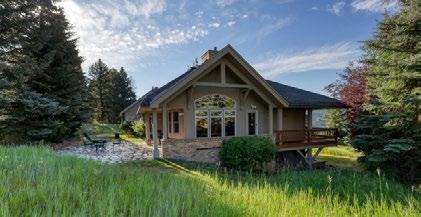
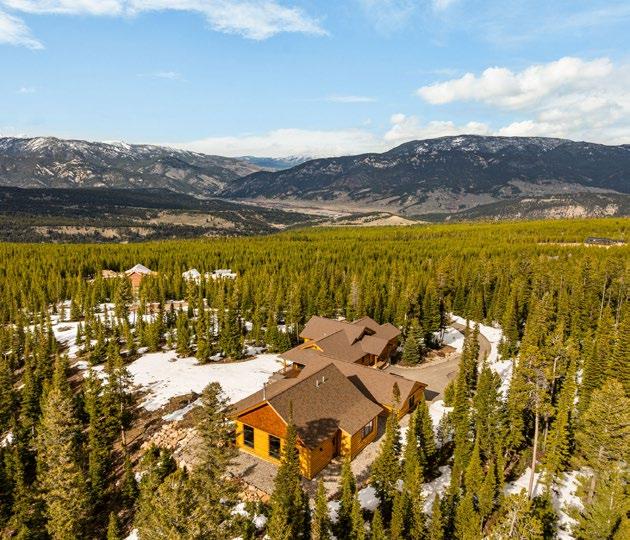
A featured Outlaw Realty listing along Big Sky's beautiful Beaver Creek. OUTLAW PARTNERS PHOTO
sellers worse off than if they had priced accurately from the beginning.
I've often told clients that the market always wins. You can either meet it where it is today or let it bring you there over time. While the outcome is usually the same, the timeline is now making representation more important than ever.
At Outlaw Realty, one of our core beliefs is that knowledge is king. Every week, our team sits down together and reviews the market in detail. We study every meaningful sale, every new listing, pricing adjustments, inventory trends, buyer activity and emerging opportunities across Big Sky, Moonlight Basin, Spanish Peaks, Yellowstone Club, and the greater Gallatin Valley.
After 26 years in this business, I've learned that data alone doesn't create great outcomes. The real value comes from combining market intelligence with local knowledge, relationships, experience and a deep understanding of what makes each property unique.
At Outlaw Realty, we challenge one another every week to understand not only where the market has been, but where it's headed. That discipline helps our sellers price accurately, position their properties effectively, and maximize opportunity. It also helps our buyers recognize value before the broader market catches up.
In today's environment, knowledge isn't just power, it powers tangible results.
After 26 years in Big Sky, I believe we're witnessing a fundamental shift—buyers have opportunities they haven't seen in years, and sellers who price
OP NEWS
honestly and work with experienced professionals can still achieve excellent outcomes.
And the long-term fundamentals of Big Sky—from world-class recreation and conservation values to global hospitality brands, growing air service and community-defining events—have arguably never been stronger.
None of us know exactly when the next chapter of the market begins, but I do know that the best
opportunities are rarely obvious in the moment; they’re usually only obvious in the rearview mirror. As Warren Miller famously reminded us, "If you don't do it this year, you'll be one year older when you do."
That may be as true for buying real estate in Big Sky as it is for skiing a powder day.
Eric Ladd is the founder and CEO of Outlaw Partners and Outlaw Realty, and publisher of Explore Big Sky.
Market insights for 2026. GRAPH COURTESY OF MLS
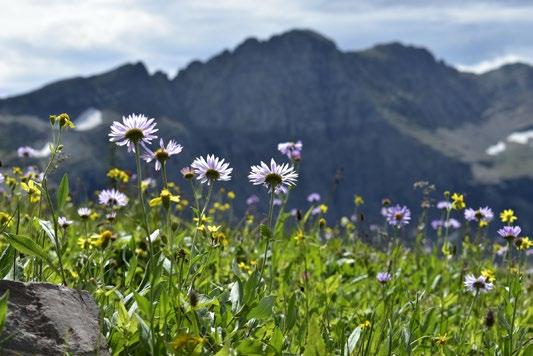
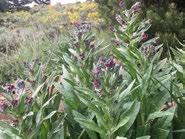
Noxious Weeds Native Plants Habitat
BOZEMAN
GALLATIN COUNTY COMMISSIONERS END DISPUTED 287(G) AGREEMENT AFTER PUBLIC OUTREACH
BY CARLI JOHNSON
Gallatin County commissioners voted Tuesday, June 16 to end the county's 287(g) agreement with U.S. Immigration and Customs Enforcement following months of public outreach, written testimony and an ongoing lawsuit challenging the program's approval.
The decision came during the commission's weekly meeting at the Gallatin County Courthouse, where a large crowd filled the third-floor community room to weigh in on whether commissioners should approve the agreement.
“Montanans deeply value personal freedoms. Everyone here, regardless of immigration status, should have due process,” Caroline Price said in her testimony.
After hearing public comment and reviewing written testimony submitted over the past several months, commissioners Jennifer Boyer and Zach Brown voted unanimously to end the agreement.
The vote follows months of public debate and a lawsuit challenging the county's participation in
the federal 287(g) program. The agreement, signed by former Gallatin County Sheriff Brian Gootkin in 2020, allowed the Gallatin County Detention Center to hold inmates on behalf of ICE. Plaintiffs in the lawsuit argued the arrangement was never formally approved by county commissioners and should therefore be declared void.
However, Tuesday's vote does not end local cooperation with federal immigration authorities.
In a public comment, county sheriff Dan Springer told commissioners that while the 287(g) agreement has not been used since May 2025, a 2021 Montana law requires public safety officers to hold individuals who are subject to a federal immigration detainer request for up to 48 hours.
“I want everyone to understand that with or without the 287(g) program, nothing changes,” Springer said. “We are following state statute.”
More than 20 people spoke during public comment, with most expressing support for withdrawing approval for the agreement. Before the vote, both commissioners reflected on the legal challenge and the extensive public response the issue generated.
"My goal is to maintain the trust and confidence of our community in your local government and law enforcement, and from my perspective this agreement undermines that," Boyer said.
Brown also spoke about the importance of public engagement in the process.
“Community is better served when we work with integrity, trust and respect,” Brown said.
For residents involved in the lawsuit, the vote marked a significant moment after months of advocacy and community organizing.
"I feel relieved that the commissioners withheld approval and that they understand that the community has strong opinions about this," said Julia Shaida, a Gallatin County resident and plaintiff in the lawsuit.
Erin Levy, another plaintiff, said she appreciated the opportunity for public participation throughout the process.
"They really listened and gave opportunities to speak," Levy said.
MORE THAN A FOOTBALL CAMP
TWO MSU BOBCATS INSPIRE THE NEXT GENERATION
BY TACO DOWLER EBS CONTRIBUTOR
The camp is over, the prizes have been won, the autographs have been signed, and the final whistle has blown—yet no one seems to want to leave.
The cones are being picked up and coaches are gathering equipment, but the field is still full. Kids stay a little longer, throwing footballs with new friends they met just hours earlier. Parents stand nearby watching, smiling as they listen to their children retell every moment of the day. For a few hours, the worries and distractions of everyday life seem to disappear.
What remains is something simple: kids being kids, a community coming together and the reminder that sports have a unique ability to bring people together in a way few things can. That element, more than any touchdown, trophy or championship, captures why these camps exist.
Myself, Taco Dowler, and my teammate at Montana State University Football, Adam Jones, started the Taco and Adam Summer Football Camps for youth in the southwest Montana region for the very reason that sports have always been about more than the game itself. And we’ve traveled across Missoula, Billings, and next to Butte, Helena and Great Falls, where we’ve seen the results of those camps in real time.
Sports teaches discipline when nobody is watching. They teach accountability when things don’t go your way. They teach young people how to lead, how to follow, how to compete and how to be part of something bigger than themselves, and long after the scores are forgotten, those lessons remain.
Growing up in Montana, I was fortunate to learn many of those lessons through football. The game opened doors I never imagined possible. It introduced me to mentors, teammates, coaches and lifelong friends. Looking back, the moments that shaped me most weren’t the wins, the statistics or the championships. They were the people who invested in me and the communities that supported me along the way.
The older I get, the more I realize that none of us get where we’re going alone. Every opportunity I’ve had can be traced back to someone who believed in me, encouraged me, coached me or simply showed up. These camps are our attempt to do the same for the next generation.
That’s what these camps are really about.
When people see hundreds of kids running drills, catching passes and competing on the field, they see football. What I see is an opportunity to give something back to the state that gave so much to me.
Montana has a way of raising people to care about their communities. The people here show up for one another. They support local kids, local schools and local teams. Throughout my journey, countless people believed in me long before I had accomplished anything. These camps are one small way to say thank you.
A highlight of the experience has been bringing Montana State players back to their hometowns— there’s something powerful about a young athlete in Billings learning from a Bobcat who grew up in Billings. A kid in Butte seeing a player who once played on the same field. A kid in Missoula realizing that someone from their own community achieved something they dream about.
For many young athletes, dreams become more believable when they can see someone who walked a similar path. I know because I was once that kid.
Growing up, one of my heroes was Montana basketball legend Josh Huestis. I still remember being at one of his high school basketball games. During halftime, I was out on the court shooting three-pointers like every kid dreams of doing. As the players were coming back onto the floor from their halftime meeting, I made a couple shots and started running off the court.
As Josh walked by, he gave me a high five and said, “Good job.” The moment probably lasted five seconds, but I remember every detail of it.
I remember where I was standing, how excited I was, I remember telling my family about it afterward. To him, it was likely a small moment, but to me, it was everything.
Years later, that’s one of the things I think about most when I watch kids at our camps.
For us as Bobcat athletes, the drills, autographs and pictures are all part of the day. But for a young athlete, one conversation, a word of encouragement or one simple interaction can become a memory they carry with them for years.
I was reminded of that after our loss in the National Championship game in Frisco, Texas. As difficult as that day was, I remember seeing a young boy named Henry standing on the field with his dad, Kendall. Henry was emotional after the game, and I stopped to talk with them for a few moments. I told him that we’d be back. At the time, it felt like a simple conversation.
Months later, Kendall reached out and shared something I’ll never forget. He told me that interaction meant far more to Henry than I could have known. In many ways, it reminded me of my own experience with Josh Huestis years earlier. What felt like a small moment to me became a lasting memory for someone else.
Today, Henry and I still stay in touch. I send him birthday messages, and I was fortunate enough to celebrate our National Championship with him the following year, I guess I was telling the truth when I said we would be back! What started as a brief interaction after a heartbreaking loss has grown into a genuine friendship.
Moments like that remind me that sports are ultimately about people and the relations they
Young participants at a Billings football camp.
PHOTO BY JACOB JEWETT
Adam Jones and Taco Dowler hosted football camps for youth across southwest Montana. PHOTO BY JACOB JEWETT
build, and showing up for others when they need it most. To have the opportunity to create moments like that for the next generation is one of the most rewarding and full-circle experiences imaginable.
This summer, more than 1,100 young athletes attended our camps across Montana. Through the support of sponsors, donors and community partners, we were able to provide 154 camp scholarships. That’s 154 families who didn’t have to tell their child, “not this year.” That’s 154 young athletes who got the same opportunity to run onto the field, learn from college athletes, make new friends, and be part of something bigger than themselves.
For Adam and I, that’s what success looks like.
BOZEMAN
One of my favorite moments comes at the end of every camp. Families and campers gather around as my teammates and I hand out awards. One by one, each camper comes forward to receive their award, and before they leave, they’re encouraged to show off a dance move. Without fail, the crowd erupts. Parents laugh, teammates cheer and kids hype each other up. For a few minutes, nobody is worried about being cool. They’re simply enjoying the moment together, and those are the moments that last.
In the days following camp, we received messages from parents across the state. Many shared the same sentiment: their child couldn’t stop talking about camp, and many called it the best day of their life.
As coaches, those messages stay with you.
The impact of sports isn’t always measured by wins and losses. Sometimes it’s measured by confidence, or hope, or by a young person realizing that their dreams might be possible too.
Through the Taco Dowler and Adam Jones Football Camps, we strive to create a sense of belonging for the youth of Montana. I also started the Taco Dowler Youth Foundation, where that mission continues beyond camp day. Whether it’s providing scholarships, supporting youth initiatives, or helping remove barriers for families, the goal remains the same: creating opportunities for kids and making sure they know they belong.
None of this happens alone—the parents, sponsors, volunteers and supporting communities are what ultimately make it possible, and for that, I am incredibly grateful.
Once the field empties and the footballs are packed away, somewhere that night, a kid is sleeping in their camp shirt telling their parents stories from camp for the millionth time. That’s when it becomes more than just football.
Taco Dowler is a wide receiver for the Montana State Bobcats and co-founder of the Taco and Adam Summer Football Camps, and founder of the Taco Dowler Youth Foundation.
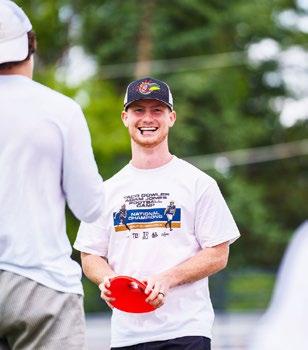
Taco Dowler, wide receiver for the Montana State Bobcats. PHOTO BY JACOB JEWETT
Taco Dowler (right) at a Bozeman football camp. PHOTO BY JACOB JEWETT
BOZEMAN
THREE RECRUITS GRADUATE FROM GALLATIN VALLEY FIRE ACADEMY
BY ANNIE O’NEILL
BOZEMAN—With a polished Bozeman Fire Department truck as the backdrop and supportive family and friends looking on, Bozeman Fire Chief Josh Waldo stood at a podium and addressed the audience with some levity: "The mustaches in this room today are on point."
In Montana, that’s not a far cry from a job requirement.
On Thursday, June 18, the Gallatin Valley Fire Academy held a graduation ceremony at Fire Station 1 in Bozeman. Graduates Blake Martin, Nic Magliocco and Luca Rodoni completed a rigorous 10-week program led by the Bozeman Fire Department, Central Valley Fire District and Big Sky Fire Department.
The recruits’ training included hands-on firefighting, battling live fires, running technical operations and performing search-and-rescue drills, among other skills. Chief Waldo conveyed that the work itself demands not only physical strength but also the ability to work under pressure.
Despite the rigor of the program, Chief Waldo assured the recruits that the learning never stops. "Don't train till you get it right. Train till you can't get it wrong," Waldo said. Despite the grueling training and bruises, each recruit graduated with a smile, ready to carry the tradition forward.
Martin, Magliocco, and Rodoni came to the academy from three very different backgrounds. A teacher, an accountant and professional trumpet player, respectively, the three found common ground in a desire to serve their community.
"We are entering a forest of good, serving the communities where we hope to learn and grow," Magliocco said when speaking on behalf of the graduating class.
After the ceremony, Martin told EBS, "What drew me in is the chance to help others, and to do so in an immediate and active way.”
When asked what they want the community to know about the work they've put in to reach this point, the recruits answered in unison: "It's for them."
The commitment is their driving force.
"That's why we train,” Magliocco said.“Because we'd want someone who shows up to help us to have put in that same amount of effort.”
For the recruits, their training will guide them throughout their careers, but they are also entering with a deep passion for the profession and those they serve.
Three men graduated from the Gallatin Valley Fire Academy. PHOTO BY ANNIE O'NEILL
Shoshone Hotel Condo #1913B, Big Sky
15 Rosebud Loop Unit #127,
11 Speaking Eagle, Big Sky
3040 Two Moons Road, Big Sky
ENVIRONMENT
DISPATCHES FROM THE WILD: SHORTCUT THROUGH YELLOWSTONE: THE HIDDEN COSTS OF TRUCK TRAFFIC ON U.S. 191
BY BENJAMIN ALVA POLLEY EBS COLUMNIST
Many people are unaware that tens of thousands of semi-trucks use the route from Idaho Falls to Belgrade each year as a shortcut, avoiding roughly 50 miles of Interstate 15. Exact numbers vary by segment, but Montana Department of Transportation traffic maps show that U.S. Highway 191 through Gallatin Canyon carries among the highest traffic volumes of any rural highway in the state, with a significant share of that traffic being commercial trucks. As a result, what was once primarily a route for visitors and local traffic has increasingly become a de facto commercial freight corridor.
The consequences for people and wildlife are substantial. Along U.S. 191 and Montana Highway 64, state carcass data from 2008 to 2022 document at least 2,625 white-tailed deer, 625 mule deer, and 312 elk killed by vehicles in Gallatin County alone, with hotspots at the mouth of Gallatin Canyon near Gallatin Gateway and at the junction of U.S. 191 and MT 64 to Big Sky. A separate assessment of wildlife–vehicle conflicts on U.S. 191 and MT 64 found 1,322 documented animal carcasses between 2011 and 2020—and researchers note the true toll is likely far higher, potentially up to eight times the reported number once unobserved deaths are considered.
Bison, an icon of the Greater Yellowstone Ecosystem, are part of that toll. In late December 2022, a semi-truck struck a herd of bison on U.S. 191 just north of West Yellowstone, killing 13 animals in a single collision. This crash occurred on a short stretch of highway along the Madison River that federal transportation researchers have identified as one of the most significant bisonvehicle collision hotspots along Yellowstone’s western boundary. It was not an isolated fluke, but a symptom of a corridor where heavy trucks, wildlife and winter conditions often collide.
Other incidents have highlighted risks to people and rivers. Semi-truck crashes in Gallatin Canyon regularly make local headlines, and hazardous material spills—such as diesel fuel releases near the Gallatin River and inside the wider Yellowstone region—raise questions about what a single major accident could mean for drinking water, blue-ribbon fisheries and recreation. Transportation safety research across the West is detailed: large trucks are disproportionately involved in wildlife-vehicle collisions and highseverity crashes due to their weight, braking distances, and operating speeds, especially on narrow, winding mountain highways.
At the same time, freight volumes are growing. Nationally, ton-miles of freight are projected to increase steadily over the coming decades, driven by e-commerce and just-in-time delivery. In Montana, MDT’s own U.S. 191 Corridor Study from Four
Corners to Beaver Creek documents rising traffic volumes and emphasizes the need to accommodate truck traffic in design concepts. Public comments on that study repeatedly highlight the perception that the canyon is being treated as an interstate shortcut for long-haul trucks rather than a constrained, mixed-use mountain corridor.
Meanwhile, the lack of a modern weigh and inspection facility at Four Corners has left many residents wondering who is actually monitoring weight limits, hours-of-service rules, and compliance with hazardous materials regulations for trucks using U.S. 191. MDT planning documents capture comments from citizens who want more tools to manage heavy trucks in the canyon—up to and including restrictions on interstate throughfreight—and who worry that enforcement has not kept pace with growth.
All of this raises a larger question that deserves a public airing: Should Yellowstone National Park and the U.S. 191 corridor function as a cost-saving shortcut for commercial freight at all?
To answer that, we need more than anecdotes. We need a clear accounting of how many commercial trucks use this route compared to alternatives on I-15 and other state highways, and what share of those are truly “through” trucks versus local deliveries. We need crash and fatality rates along key segments of U.S. 191—including Gallatin Canyon, the Four Corners hub, and the West Yellowstone approach—broken down by vehicle type, time of year and road conditions, building on the crash analyses already compiled for MDT’s corridor study. We need wildlife impacts in concrete terms: carcasses per mile per year, species affected and the economic value of those losses from hunting, tourism and ecosystem services, drawing on existing wildlife and transportation assessments for U.S. 191 and MT 64. And we need the risk profile for the Gallatin River and other waterways from hazmat and fuel spills, and whether current emergency response capacity and regulations are adequate for the volume and type of truck traffic now using this corridor.
Other regions have chosen to act. Across the West, highway agencies are investing in wildlife overpasses and underpasses, fencing, lower speed limits and targeted enforcement on known wildlife and crash hotspots. The U.S. 191 and MT 64 wildlife and transportation studies already identify priority segments where such measures could dramatically reduce collisions and improve safety for both drivers and animals.
The freight industry will argue that restrictions or tighter enforcement on U.S. 191 could increase costs and complicate routing. But that argument assumes the current system is cost-free—which it is not. Today, many of the costs are externalized: onto local communities who live with diesel spills and fatal crashes, onto visitors who share a narrow twolane road with 80,000-pound rigs, and onto wildlife and rivers that have no voice in the debate.
This is why the question of whether U.S. 191 and Yellowstone should function as a trucking shortcut is not just a technical issue—it is a public choice. For a readership that cares deeply about this place, an in-depth, data-driven look at truck traffic, crash statistics, wildlife impacts and policy options along the Idaho Falls-West Yellowstone-GallatinBelgrade corridor would be timely and valuable.
As documented in past reporting, Explore Big Sky is well-positioned to help lead that conversation, grounding it not only in personal experience but in hard numbers and clear-eyed analysis of what we stand to gain—or lose—by continuing to treat a world-class landscape as a cut-through for heavy freight. Reporting that readers and stakeholders should take note of.
Benjamin Alva Polley is a place-based storyteller. His words have been published in Rolling Stone, Esquire, Field & Stream, The Guardian, Men’s Journal, Outside, Popular Science, Sierra, and WWF, among other notable outlets, and are available on his website.
The aftermath of an elk-vehicle collision on Highway 191. PHOTO BY HOLLY PIPPEL
THRIVING LANDSCAPES: ONCE YOU SEE, YOU CAN’T UNSEE
BY ABBY BUTLER EBS COLUMNIST
It’s not uncommon for someone to tell the Grow Wild team that they wished they’d never learned to identify noxious weeds because now it feels like everywhere they look, there one is. Odds are good that we’ll respond with “once you see, you can’t unsee."
While our goal isn’t to taint your nature excursions with visions of oxeye daisy, we can’t help but feel satisfied that there’s another person in Big Sky who can’t ignore the presence of noxious weeds.
According to the Montana Department of Agriculture, noxious weeds are invasive plants that
outcompete native vegetation, reduce biodiversity, degrade wildlife habitat, and negatively impact agriculture, water resources and recreation.
If you’re not tuned in to the pulse of the noxious weed world, you might not know that June 7-13 is Noxious Weed Awareness Week. This statewide campaign is organized annually by MDA’s kNOweeds program to raise public awareness about the impact of noxious weeds and to empower Montanans with actionable steps to prevent their spread.
In honor of that week, we’re highlighting three noxious weeds that are newly emerging threats in Montana and outlining what you can do to prevent them from establishing in Big Sky.
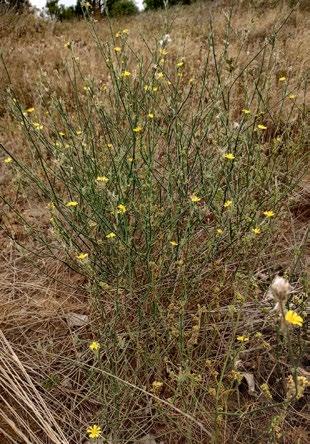
Rush skeletonweed is a deep-rooted perennial— meaning it returns year after year—and spreads rapidly by airborne seeds and underground shoots. Its roots can reach over six feet deep, making management especially difficult. A high-priority species, this weed is new to Montana, and we’re keen to keep it from spreading.
Orange hawkweed
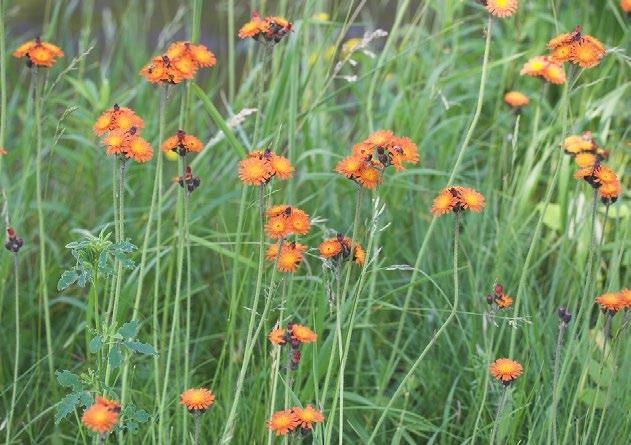
Another noxious weed to keep at bay, orange hawkweed is a perennial that reproduces by seed and rhizomatously. In other words, orange knapweed benefits from an underground creeping root system, capable of forming extremely dense mats that choke out all other vegetation. This is one weed we don’t want here. Key to differentiating it from other native hawkweeds are the short and stiff black hairs covering the stem.
Leafy spurge
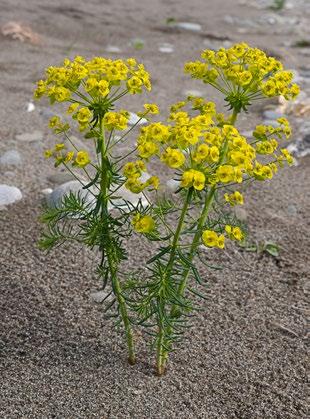
While not a new noxious weed, leafy spurge has yet to get a foothold in Big Sky, and we’d like to keep it that way. Known as one of the most challenging noxious weeds in the state, this perennial has both an extensive, deep root system and seeds that can be expelled up to fifteen feet from the source. It can also regenerate from tiny root fragments, making hand-pulling ineffective.
Now that you’ve been initiated into the noxious weed club, what can you do to ease the suffering?
Report noxious weeds and pull when certain
Reporting new weeds prevents them from spreading further into rangelands, recreation areas and private property. Contact your local county Weed District in Gallatin County or Madison County. Snap a picture and make sure to send them your coordinates with it. A single report can prevent years of future spread.
Next, pull those weeds! Identification is key here. Only pull when you are 100% sure something is noxious. You can get confirmation from a trusted resource like a weed district or Grow Wild.
Schedule a free landowner site visit
Worried about the weeds encroaching onto your property from your neighbor? Or not sure what the plants growing in your yard even are? We’re here to help. Site visits for Big Sky landowners are free and highly effective tools to ease the existential dread brought on by spotting a Canada thistle from your kitchen window.
Practice PlayCleanGo
Whether you’re a biker, hiker, trail runner or avid meanderer, you can prevent the spread of noxious weeds on your favorite trails and public lands. Noxious weed seeds can stow away in mud on your tires and boots, and even in the fur of your dog. Take extra care to clean your gear and furry friends after a day on the trail so you don’t bring an unwanted gift to the next trailhead of your choice.
It’s important to recognize that while we’re all part of the noxious weed problem, we can all be part of the solution. We hope these resources leave you feeling a bit more hopeful about your place in the collective effort to manage noxious weeds in Big Sky.
Abby Butler is the conservation program coordinator at Grow Wild.
Leafy spurge flowering. Note the seed pods that can expel seeds up to 15 feet. PHOTO COURTESY OF SHUTTERSTOCK
Rush skeletonweed flowering. PHOTO BY WALTER FERTIG
Orange hawkweed flowering. PHOTO BY GARY J WOOD
ENVIRONMENT
WILDFIRE WIRE: SMOKE GETS IN YOUR EYES
BY MEL CRICHTON EBS COLUMNIST
Apologies to Jerome Kern, but I needed a smoky title, and it’s wildfire season. With wildfire comes smoke, even when the fire is hundreds of miles away. That’s a fact of life too often seen here in Big Sky.
For decades, Big Sky has been extremely lucky; the nearest recent wildfire has been over 25 miles away. But our risk for wildfire is very high, as we are surrounded by thousands of acres of forest that have not burned in over 100 years. Most healthy forests experience modest burns every 20 to 40 years. We are overdue.
With El Niño and dry forest fuels both stacking up against us, we’re upping the ante on wildfire preparation this year. If you’re reading this EBS issue soon after it’s printed, you still have time to sign up for the free Wildfire Film Fest on Monday, June 29 at The Waypoint. Just go to The Waypoint website to secure your tickets. Videos and clips from Hollywood movies will cover wildfire risks, and how you and your home can survive. You’ll also have a chance to share a brew with local wildfire experts after the presentation.
One thing that won’t be covered is smoke from wildfires. There just isn’t enough time to cover every topic, so Ta-da! You’re getting the smoke part now.
Wildfire smoke can travel hundreds of miles downwind and often settles in Big Sky. The latest forecast is that our local fire risk will peak in July, but Idaho and Utah will be at high risk a month sooner, raising our likelihood of smoky skies. To stay in the know, you can monitor wildfires using
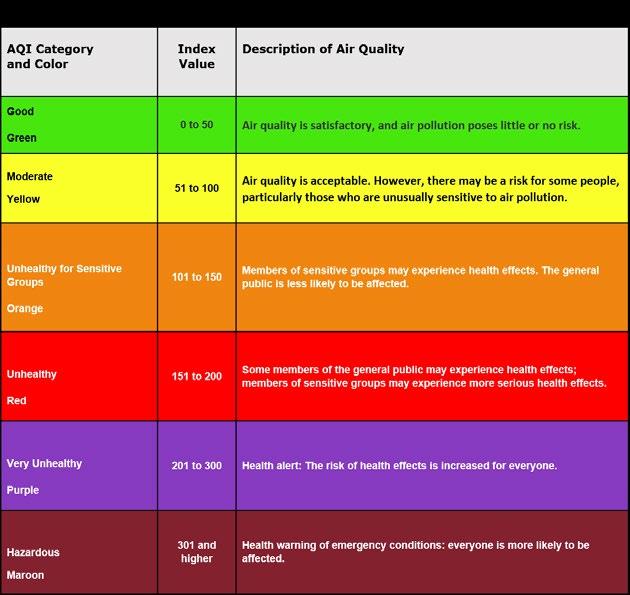
the WatchDuty app. If you’re wondering how healthy our air is, check out the Environmental Protection Agency’s Air Quality Index, or AQI, map at Airnow.gov or Purple Air. Drill in on our area, and you’ll see a number of air monitors near us. If they show green, we’re good. If they are some other color, certain people may experience respiratory issues. People more at risk are young children, older adults and people with chronic illnesses or are pregnant.
If the AQI is too high for you, protect yourself by limiting outdoor activity and staying indoors with windows and doors closed. If you have central heating, run the fan in recirculation mode, and
if you can, upgrade the air filters to the highest MERV rating you can get. MERV 13 is ideal, as the filter can actually remove smoke particles.
If you don’t have central heat, you can create a “clean room” in your home with a HEPA air filter unit. You can either purchase one for about $150 or “do-it-yourself” using a 20-inch box fan and a 20-inch MERV 13 air filter. I bought my materials at Walmart online for less than $50, and assembly instructions are on the EPA website. Just search for “DIY Air Cleaner.”
If you need one in a hurry, the Big Sky Rotary Club stocked five one-room size filter units at the new sheriff’s office across from the Conoco station. Just text your name and “FILTER” to 317-6917736, and we’ll arrange for you to borrow one. Additionally, Big Sky Rotary Club will fabricate a number of DIY units to borrow.
Since smoke events could last for some time, be sure you have ample food and medications for an extended stay indoors. Dig out that old N95 mask from the pandemic days if you need to go out. While isolating indoors, avoid frying or broiling food, smoking, burning candles, or using a fireplace.
Pets are just as sensitive to smoke as humans. Signs of smoke stress include reddish eyes, coughing, open-mouth breathing, reduced appetite and thirst, and disorientation. Pet birds are very sensitive to smoke. If your pet’s symptoms are severe, call the vet.
If you are near the fire itself, be sure you are signed up for county emergency notifications to your phone and have your go-kit ready to go. This information, and a lot more, is available in the Big Sky Wildfire Action Guide, which is available online or at numerous locations around town.
And if you hanker for even more wildfire thrills, there will be a FREE showing of “The Lost Bus”, a Hollywood film about the Paradise fires in California starring Matthew McConaughey and America Ferrara. Reserve a seat for the July 13 showing at the Waypoint website. Let’s hope the only wildfires we see are on-screen this summer.
Mel Crichton acts as neighborhood ambassador coordinator for Fire Adapted Big Sky. He may be reached at kj9c@comcast.net.
The Environmental Protection Agency’s Air Quality Index chart shows how different levels of smoke impact health. IMAGE COURTESY OF EPA
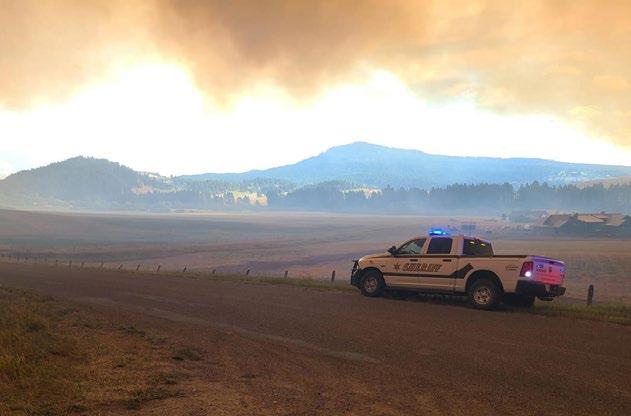
The Bridger Foothills Fire in September 2020 filled Bridger Canyon and parts of Gallatin Valley with wildfire smoke.
PHOTO COURTESY OF THE GALLATIN COUNTY SHERIFF’S OFFICE
& TRails
WHEN HIKING IS TOUTED AS A PIECE OF CAKE
BY MARJORIE “SLIM” WOODRUFF WRITERS ON THE RANGE
Overconfidence can ruin a good hike. When I surf through outdoor sites on social media, here’s the essence of what I usually find: “This hike may be hot, long and occasionally off trail, but it’s rewarding, and route-finding really isn’t that difficult.”
With advice like that assuring what seems a doable hike, it’s probably not surprising that during 2025, Grand Canyon Search and Rescue responded to 848 hiker assists and 232 search and rescue incidents. What’s more, 11 people died. In just the month of May last year, there were 13 rescues in a seven-day stretch.
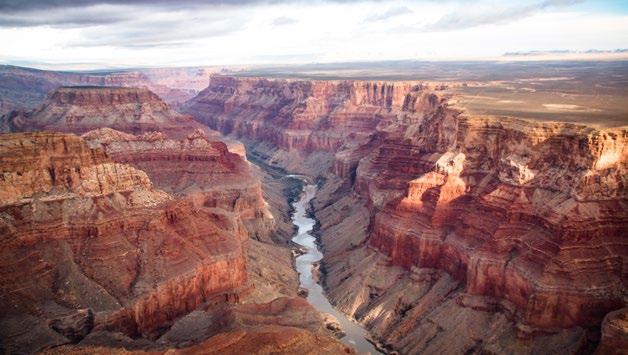
One of the “in” hikes these days is the Grand Canyon rim-to-rim. This involves hiking 21 to 24 miles with almost 10,000 feet of elevation change. This feat requires serious levels of fitness and preparation. Yet on social media, posters encourage complete strangers to go for it, even daring people to try it twice. That would be almost 50 miles.
This seems like telling strangers traveling to Boston to be sure and run the marathon while there. After all, lots of runners do it in four hours.
All of this makes me yearn for a little humility. When I led hikes for my local Sierra Club chapter, I would post that the trail was for experienced hikers. I then got calls from people who had never even laced up their boots before, saying they had read online that someone ran it in three hours, so how hard could it be? Well, I’ve read about climbing K2 without oxygen, but that does not mean anyone can do it.
Online posters always like to brag about what a piece of cake it was for them, so surely an average hiker could do the same thing. But “surely” might turn into finishing a hike at midnight or knocking on the door of the ranger station at 2 a.m., whimpering that they simply cannot go another step. Or they may end up being one of those search and rescues.
No one seems to post that a hike in Grand Canyon
was the gnarliest thing they have ever done, that they almost collapsed on the trail due to heat stroke—a current dange—and thirst.
Print media is often no better. Outdoor magazines tout “Ten trails where you will never see another hiker!” That’s usually because the trail is expertonly, or not really a trail at all. I have met these backpackers far from the madding crowd, and usually they aren’t where they thought they were because they tried but lost the “see no other hikers” route.
Backcountry rangers have told me that they cringe every time one of these articles comes out. Partly because sending novices onto expert routes often
results in calls to SAR, and partly because when hikers get lost, they often construct unnecessary and often misleading trail cairns which then must be removed. Nor does it help that the Park Service isn’t as adequately staffed to help hikers after losing about one-quarter of its permanent staff since January 2025.
Online influencers rarely have skin in the game. Have they even been to the trail they brag about? In cyberspace, one may say anything and there is no way to fact-check. I could post that I was the first woman to hike rim-to-rim with one foot tied behind my back, and no one could prove otherwise.
We need more humble hikers, people who post that a difficult and popular hike is not a creampuff, that it was a long, scary trek and they came out after dark with no flashlights, threw themselves at the feet of the nearest park ranger, and pledged their first born for a drink of water.
I hope humble-hike descriptions may one day be welcome. Most hikers might not want to admit that they could not blithely knock off 20-plus miles with a song on their smiling lips, but they might relish the truth of a posting that went like this: “It was the hardest thing I have done IN MY ENTIRE LIFE, I threw my pack at the nearest dumpster, and I am now going to track down the person who said it was a cakewalk and slap him upside the head.”
I can only hope that this might generate a few “likes.”
Marjorie “Slim” Woodruff, a Grand Canyon educator, is a contributor to Writers on the Range, writersontherange. org, an independent nonprofit dedicated to spurring lively conversation about the West.
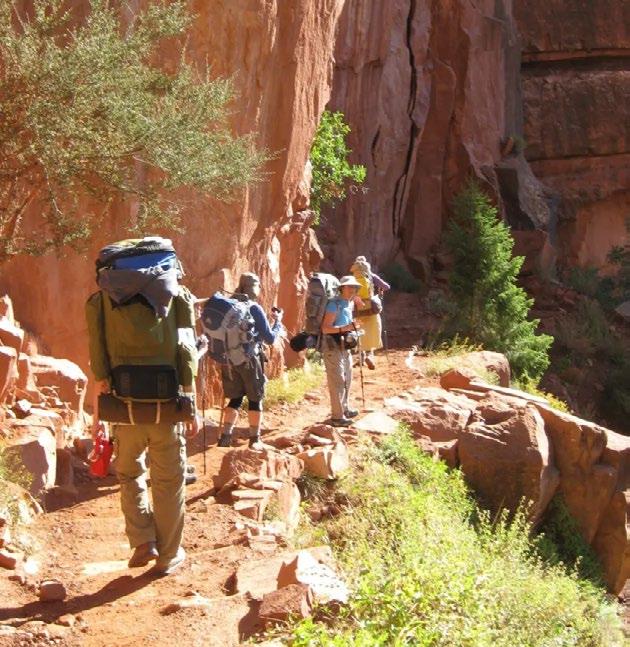
Hikers descending into the Grand Canyon.
PHOTO BY SLIM WOODRUFF
ADOBE
HEALTH BUZZ: THE HOLISTIC MIRROR; WHAT WE SEE, WHAT WE IGNORE HEALTH
BY KALEY BURNS EBS COLUMNIST
Every January, gym memberships surge. Diet plans fly off the shelves. Social media fills with promises of transformation. Yet by spring, many of those ambitions have quietly faded.
The truth is most of us already know what healthier living looks like.
We know that sleep matters. We know that movement matters. We know that excessive sugar, stress, processed foods and sedentary habits take a toll. We know that annual checkups are important and that prevention is easier than treatment.
The challenge is rarely a lack of information. More often, it is a lack of accountability.
In our clinic, we meet people every day who are searching for answers. Many arrive exhausted, burned out, struggling with chronic symptoms or simply feeling less vibrant than they once did.
What we’ve learned is that no treatment can fully compensate for habits that consistently work against health.
Acupuncture can help support the body’s healing
response. IV nutrient therapy can help address deficiencies and support recovery. Naturopathic medicine can help uncover underlying contributors to illness and create personalized wellness plans. These tools can be powerful allies, and we know they are most effective when paired with daily choices that support long-term health.
The most successful patients are not necessarily those who receive the most treatments. They are often the individuals who decide to become active participants in their own health journey.
Health is not built in dramatic moments. It is built through ordinary decisions repeated thousands of times. The walk after dinner when you could sit by a screen. Choosing water instead of a sugary drink. Going to bed earlier. Taking time to prepare a healthy meal. Scheduling preventive care before symptoms become serious.
One of the greatest misconceptions about wellness is that it requires perfection. The goal is not perfection, it is ownership.
Ownership means being honest about where we are. It means acknowledging that while some circumstances are beyond our control, many daily habits remain within our influence. It means recognizing that excuses may provide temporary comfort but rarely produce lasting change.
As a community, we often celebrate major transformations. Yet perhaps we should also
celebrate the quieter victories: the person who lowers their blood pressure through lifestyle changes, the parent who finally prioritizes sleep, the retiree who commits to daily movement or the individual who takes the first step toward addressing a health concern they’ve ignored for years.
The future health of our community will not be determined solely by healthcare providers. It will be shaped by thousands of decisions made each day in homes, workplaces, grocery stores and neighborhoods.
As practitioners, our role is to guide, support, educate and provide tools for healing. But the most important work happens between appointments.
Health is not a destination. It is a relationship we maintain with ourselves.
The mirror does not judge. It simply reflects.
The question is whether we are willing to look honestly at what it shows—and take responsibility for what comes next.
Dr. Kaley Burns is a licensed Naturopathic Physician providing a wide range of services for her clients, including: Naturopathic Medicine, IV Nutrient Therapy, Regenerative Injections, Rejuvenation Therapies, Vitamin Shots, and Nutrition Counseling. She embraces a natural approach to health and aims to similarly inspire and guide others on their health journey.
ADOBE STOCK PHOTO
WILD CRUMB DELIVERS ON OUTSTANDING BAKERY A&E
BY RACHEL HERGETT EBS COLUMNIST
Winners of the James Beard Awards—the culinary equivalent to the Grammys or Oscars— were announced on Monday, June 15, and for the first time, a Montana establishment took one of the top honors. Bozeman’s Wild Crumb Bakery was named Outstanding Bakery in the 2026 awards, securing its place in the annals of Montana food history.
Tuesday, I decided to take in the aftermath. What would Wild Crumb be like the day after the announcement? Would the line that often snakes out the door be even longer than normal?
Maybe the line was prodigious in the morning, but when I arrived at Wild Crumb shortly after 1 p.m., I was admittedly a bit shocked. The line was short enough that it existed entirely inside the building.
Inside though, told the tale. The long, glass-fronted display area—normally stuffed with sandwiches and pastries—was half empty. There was not a croissant to be had. Plain, almond and the entirely craveable variety where the flaky layers encase ham and Gruyère were sold out. Same for the sandwiches and baguettes that are their base (as well as in sandwiches for local eateries like Finks Delicatessen and Grotto Meats).
Wild Crumb, a bakery on the corner of North Wallace Avenue and Peach Street in Bozeman (600 N. Wallace Ave., to be exact), was founded 13 years ago by sisters Lauren Heemstra and Caroline Schweitzer. It now has a staff of 65.
“We could not have made it this far without our passionate and dedicated team—past and present,” general manager Kelsey Ludin said while accepting the award at the ceremony in Chicago on Monday. “…Together we have grown this business and created a special place in the heart of Bozeman.”
The annual awards given by the James Beard Foundation are one of the most prestigious honors
for chefs in the U.S. The Outstanding Bakery award I recognizes “A baker of breads, pastries, or desserts that demonstrates consistent excellence in food, atmosphere, hospitality, and operations,” according to the foundation’s website.
Though many Montana chefs and restaurants have been nominated, Wild Crumb is the first to win a competitive award in the restaurant and chef category. Eduardo Garcia’s Magnolia Network show “Big Sky Kitchen with Eduardo Garcia” received a 2023 James Beard Media Award for Instructional Video Media. The recently closed Pekin Noodle Parlor and Matt’s Place Drive-In, both in Butte, have been recognized with the James Beard America’s Classics Award, which is given to family owned restaurants that have been open more than a decade (most much longer that that) and “serve as an enduring anchor for their communities,” according to the James Beard Foundation’s press release for 2026 winners. Michaelangelo’s owner and executive chef Michael Annandono was a semi-finalist for best chef in the mountain region in 2023.
In the acceptance speech, Ludin also praised the local farmers and producers who provide “highquality ingredients supporting our craft” and read a statement from the owners.
“We learned early on that less is always more, that ingredients, technique and strong food systems are the backbone in excellence and the pursuit of knowledge requires us to always be learning and always listening,” it said.
The latest change, a longstanding request from the customers, is that Wild Crumb is now open on Mondays. The hours are 7 a.m. to 3 p.m. every day. Even on what the staff said was one of the most wildly busy days they have experienced, and even with a stock more depleted than I’ve seen at even its busiest moments, Wild Crumb maintained an impressive selection of breads, cookies, cakes, pies and other treats on Tuesday afternoon.
The grab-and-go shelf was still stocked with the house-made honey maple granola, cookies, meringues and Rice Krispie treats. As I write, I’m daydreaming about the holiday season and the
gooey fluffy peppermint marshmallows. These wrapped treats make ideal gifts, and I have given them as such countless times. It’s still a gift if you give it to yourself, right?
Wild Crumb has also long been my secret weapon when it comes to dinner parties. Sure, I’ll bring dessert. I will bake, on occasion, but often prefer to leave it to the professionals. Why mess with perfection? Enter the holiday gingerbread cake, open layers showcasing its impeccable construction, then topped with festive sugared rosemary and candied oranges. On Tuesday afternoon, one could still grab a rainbow-sprinkle covered cake if a celebration was in order. Or a s’mores cheesecake, mocha cake or chocolate cream pie.
Wild Crumb always feels like a treat to me. I have staple favorites that beg a return visit, but am also repeatedly drawn in by the rotating pastry, bread and croissant selection. Wild Crumb continually delivers the delicious. It seems that when it comes to life and pastry cases, half empty also means half full.
Rachel Hergett is a foodie and cook from Montana. She is arts editor emeritus at the Bozeman Daily Chronicle and has written for publications such as Food Network Magazine and Montana Quarterly. Rachel is also the host of the Magic Monday Show on KGLT-FM and teaches at Montana State University.
The Wild Crumb Bakery team accepted the Outstanding Bakery award at the James Beard Awards in Chicago in June 2026. PHOTO BY BILL BASKIN
Meringue fruit delicacies grace the windows of the bakery’s cases. PHOTO BY RACHEL HERGETT
Wild Crumb is located on the corner of North Wallace Avenue and Peach Street in Bozeman. PHOTO BY RACHEL HERGETT
IT’S TIME TO PROTECT
THE ELK AND DEER HERDS OF GALLATIN GATEWAY AND BIG SKY
3,562
Deer and Elk were killed by vehicles in Gallatin County since 2008.
PRIORITIZE WILDLIFE CROSSING SOLUTIONS. SUPPORT AND DONATE TODAY.
FOURTH OF JULY 2026 EVENTS CALENDAR
SOUTHWEST MONTANA CELEBRATES
AMERICA’S 250TH BIRTHDAY EBS
STAFF
As America celebrates its 250th birthday this Fourth of July, there are many ways to join in on the festivities from fireworks, to rodeos, to live music. Explore Big Sky has compiled a list of events in Big Sky, Bozeman and beyond.
BIG SKY
SATURDAY, JULY 4, 2026
10:00 a.m. 4th of July 5K Fun Run | Big Sky Community Park
1:00 p.m. Dirt Days Downhill Race | Big Sky Resort Basecamp
6:00 p.m. Music in the Mountains: The Tiny Band | Len Hill Park
BOZEMAN
FRIDAY, JULY 3 – SATURDAY, JULY 4, 2026
July 3–4, 7:00 p.m. Valley View Rodeo | Gallatin County Fairgrounds
July 4, 10:00 p.m. City of Bozeman Fireworks Show | Gallatin County Fairgrounds
WEST YELLOWSTONE
SATURDAY, JULY 4, 2026
10:00 a.m. – 5:00 p.m. Farmers Market | Museum of the Yellowstone Lawn
1:00 p.m. Pie on the Porch ($5/slice fundraiser) | Union Pacific Dining Lodge, 220 Yellowstone Ave.