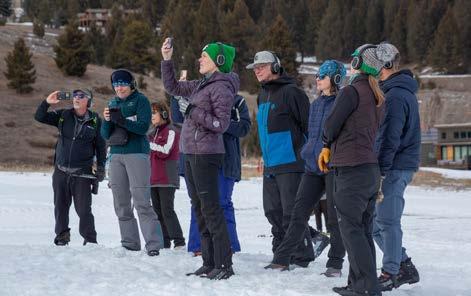
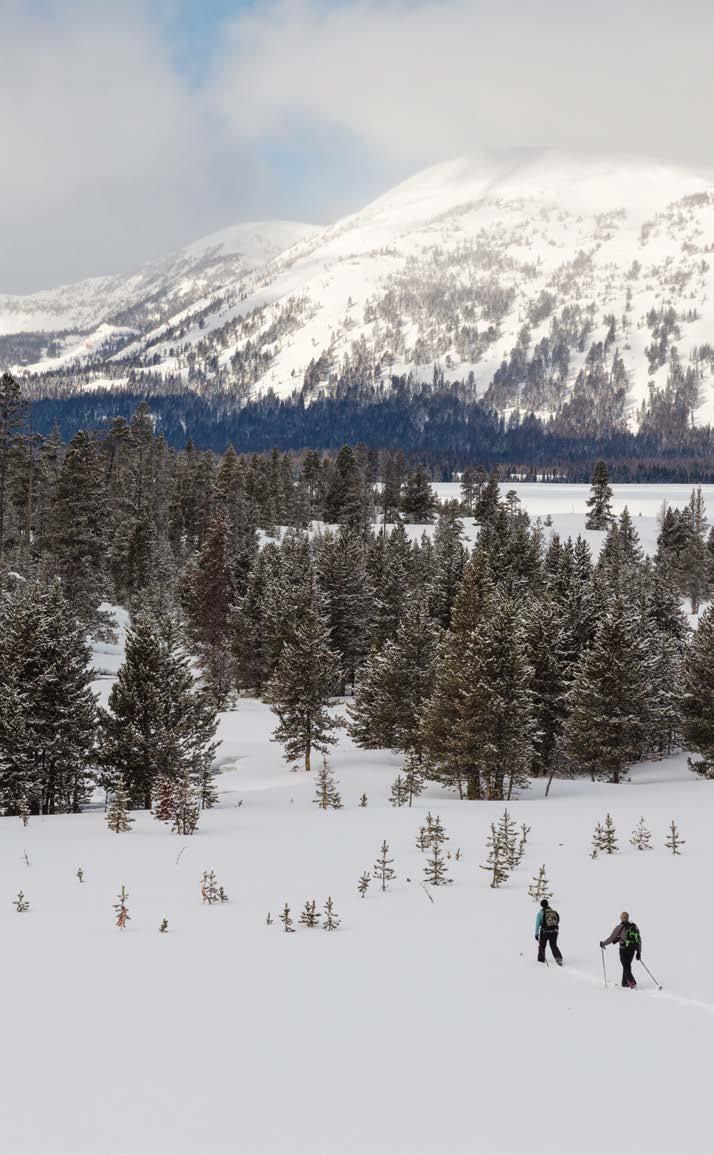
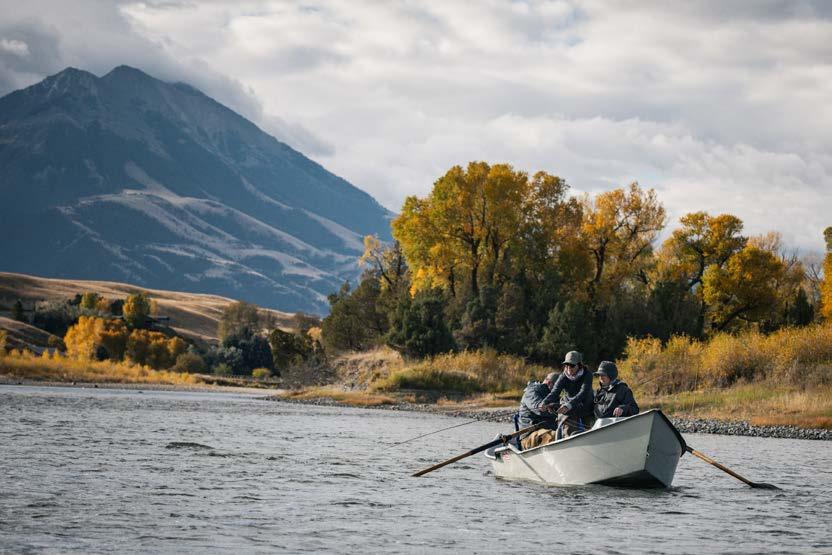
Explore Big Sky - February 5th to February 18th, 2026
Feb, 5 - Feb. 18, 2026
Volume 17 // Issue 4
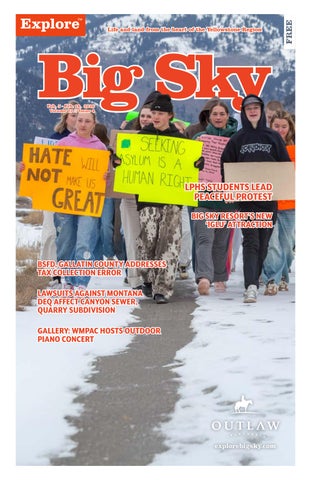
LPHS STUDENTS LEAD PEACEFUL PROTEST
BIG SKY RESORT’S NEW ‘IGLU’ ATTRACTION
BSFD, GALLATIN COUNTY ADDRESSES TAX COLLECTION ERROR
LAWSUITS AGAINST MONTANA DEQ AFFECT CANYON SEWER, QUARRY SUBDIVISION
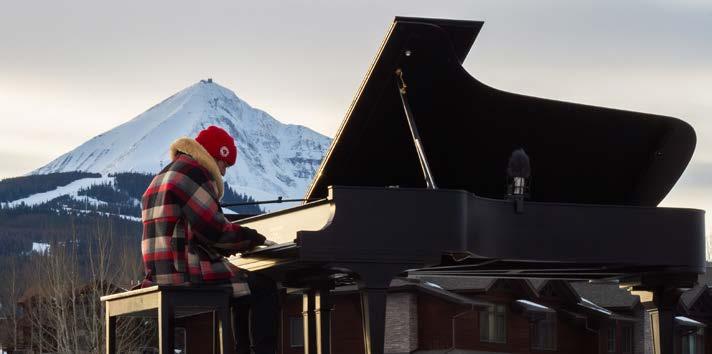
GALLERY: WMPAC HOSTS OUTDOOR PIANO CONCERT
February 5 - February 18, 2026 Volume 17 // Issue 4
Owned and published in Big Sky, Montana
PUBLISHER
Eric Ladd | eric@theoutlawpartners.com
EDITORIAL
VP MEDIA
Mira Brody | mira@theoutlawpartners.com
SENIOR EDITOR
Jack Reaney | jack@theoutlawpartners.com
STAFF WRITER
Jen Clancey | jen@theoutlawpartners.com
LOCAL JOURNALIST
Leslie Kilgore | leslie@theoutlawpartners.com
DIGITAL MEDIA LEAD
Fischer Genau | fischer@theoutlawpartners.com
STAFF WRITER
Carli Johnson | carli@theoutlawpartners.com
CREATIVE
GRAPHIC DESIGNER
Griffin House | griffin@theoutlawpartners.com
SALES AND OPERATIONS
CHIEF OPERATING OFFICER
Josh Timon | josh@theoutlawpartners.com
CHIEF MARKETING OFFICER
Megan Paulson | megan@theoutlawpartners.com
VP DESIGN & PRODUCTION
Hiller Higman | hiller@theoutlawpartners.com
DIRECTOR OF RELATIONSHIPS
Ersin Ozer | ersin@theoutlawpartners.com
MARKETING MANAGER
Tucker Harris | tucker@theoutlawpartners.com
CONTENT MARKETING LEAD
Taylor Owens | taylor.owens@theoutlawpartners.com
SENIOR ACCOUNTANT
Sara Sipe | sara@theoutlawpartners.com
BUSINESS DEVELOPMENT LEAD
Patrick Mahoney | patrick@theoutlawpartners.com
ACCOUNT COORDINATOR
Ellie Boeschenstein | ellie@theoutlawpartners.com
CONTRIBUTORS
Mario Carr, Ali Chipouras, Rachel Hergett, Ashton Hooker, Colton Jacobs, Benjamin Alva Polley, Marjorie “Slim” Woodruff
TABLE OF CONTENTS
LPHS STUDENTS LEAD PEACEFUL PROTEST
Dozens of Lone Peak High School and Ophir Middle School students burst through the double doors with smiles, handwritten signs and extracurricular motivation to protest the controversial presence of U.S. Immigration and Customs Enforcement throughout U.S. cities in recent months.
LAWSUITS AGAINST MONTANA DEQ AFFECT CANYON SEWER, QUARRY SUBDIVISION
On Dec. 29, a Gallatin County District Court judge issued a ruling that the Montana Department of Environmental Quality “failed to take a hard look at water quality impacts” of the Quarry, a Big Sky subdivision under construction on the Gallatin River. The plaintiff, Upper Missouri Waterkeeper, also sued DEQ regarding the proposed Gallatin Canyon sewer project.
BSFD, GALLATIN COUNTY ADDRESSES TAX COLLECTION ERROR
On Feb. 3, the Big Sky Fire Department and Gallatin County joined forces for an informational meeting and Q&A to provide clarity on how a tax miscalculation led to an additional $8.4 million being collected, mistakenly, over the past four fiscal years—money that’s already been allocated or spent, and can’t be refunded to taxpayers.
BIG SKY RESORT’S NEW ‘IGLU’ ATTRACTION
A new attraction brings a bar and family-friendly lounge to the mid-mountain at Big Sky Resort. EBS spoke with project leaders to learn what it takes to bring an authentic European igloo to Montana's ski slopes.
GALLERY: WMPAC HOSTS OUTDOOR PIANO CONCERT
ON THE COVER:
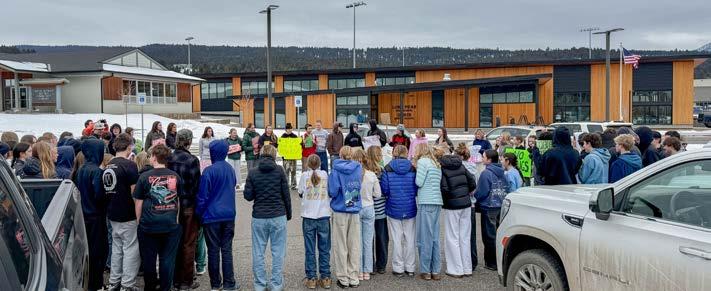
Big Sky students exercised their first amendment rights on a Friday morning. PHOTO BY JACK REANEY (Editor’s note: one sign in this image was blurred by request of the student’s family)
EDITORIAL POLICIES
EDITORIAL POLICY
Outlaw Partners, LLC is the sole owner of Explore Big Sky. EBS reserves the right to edit all submitted material. Printed material reflects the opinion of the author and is not necessarily the opinion of Outlaw Partners or its editors. EBS will not publish anything discriminatory or in bad taste.
EBS welcomes obituaries written by family members or from funeral homes. To place an obituary, please submit 500 words or less to media@theoutlawpartners.com.
On Saturday and Sunday, Jan. 31 and Feb. 1, the Warren Miller Performing Arts Center brought back a popular and unique outdoor show, this time aided by balmy, springlike weather. Pianist Hunter Noack chatted with EBS after the show.
LETTERS TO THE EDITOR
Letters to the editor allow EBS readers to express views and share how they would like to effect change. These are not Thank You notes. Letters should be 250 words or less, respectful, ethical, accurate, and proofread for grammar and content. We reserve the right to edit letters and will not publish individual grievances about specific businesses or letters that are abusive, malicious or potentially libelous. Include: full name, address, phone number and title. Submit to media@outlaw.partners.
ADVERTISING DEADLINE For the Feb. 19th issue: Feb. 11th, 2026
CORRECTIONS Please report errors to media@outlaw.partners.
Shortly before press time on Feb. 4, Montana State University football announced that local multi-sport standout Ebe Grabow is committed to play football for the Bobcats. EBS will cover the story in the following edition. PHOTO BY JACK REANEY
BRIEFS
NEWS IN BRIEF
BOZEMAN RANGER DISTRICT TO REPLACE MARKLEY ‘GREEN’ BRIDGE NEAR BIG SKY
EBS STAFF
The Markley Bridge, well-known by locals as “Green Bridge,” over the Gallatin River in Gallatin Canyon will be replaced this year. Construction is expected to begin in winter or early spring 2026 and continue into summer, the Bozeman Ranger District announced in a Jan. 28 news release.
The bridge is a key access point to the Deer Creek Trailhead north of Big Sky and a popular gathering place for summer river-dippers, bridge-jumpers and anglers.
Green Bridge improvements include widening it to a two-lane structure for safety, while preserving its historic trestle design. Traffic impacts and possible temporary closures of the Deer Creek Trailhead and river access are expected during construction, with coordination by the U.S. Forest Service, Montana Department of Transportation, and Montana Fish, Wildlife and Parks. The project is funded by the Great American Outdoors Act to address deferred maintenance on public lands. Community members are encouraged to contact the ranger district at (406) 522-2520 with questions on the project.
“We acknowledge the importance of the Green Bridge to the public and the Big Sky community,” Bozeman District Ranger Jon Gellings stated in the news release. “While we understand that this project will temporarily limit access to a beloved location, the long-term benefits of a new and safer bridge will ensure continued enjoyment for years to come.”
GALLATIN GATEWAY FIRE DEPARTMENT ADDS TWO AMBULANCES
TO FLEET
EBS STAFF
The Gallatin Gateway Fire Department, a volunteer department located in Gateway serving the Gallatin County region, revealed in a social media post that they’ve added two ambulances to their fleet. The announcement credited hard work from the Fire Chief and board of directors and the department’s focus on “fiscal responsibility” for making it possible to purchase the new rigs.
Each ambulance is equipped with four-wheel drive, a cardiac monitor, stretcher, trauma and medical supplies and oxygen supply. They will be used for quick response to medical emergencies and are ultimately being prepped for longer transport units.
“Our patient care is really going to expand with these two rigs that we’ve got at Gateway Fire, and we are very excited to bring this to the constituents of our fire district,” Captain Ray Mines stated in a video posted to the fire department’s Facebook page.
MDT REMINDS PUBLIC OF 191/64 OPTIMIZATION PLAN, ENCOURAGES FEEDBACK
BY JACK REANEY
In October 2023, the Montana Department of Transportation launched an unprecedented Optimization Plan to collect public feedback and generate actionable and expedited improvements for U.S. Highway 191 between Four Corners and Big Sky. MDT later added Montana Highway 64 (Lone Mountain Trail) to the plan’s scope.
MDT officials initially described the plan as “something different than what MDT has ever done.”
The plan aims to enhance safety, mobility and infrastructure along one of southwest Montana’s most traveled corridors, according to a Jan. 14 MDT press release.
“These projects are about more than roadway changes,” Geno Liva, administrator of MDT’s Butte District which includes Bozeman and Big Sky, stated in the recent release. “They’re about improving reliability, enhancing safety and supporting growth in responsible ways.”
Optimization Plan items include the replacement of bridges near the Lava Lake Trailhead and Spanish Creek, and redesigned turnouts with improved signage. MDT announced in May the possibility of new passing lanes at four locations in the Gallatin Canyon—in his May 14 presentation, Butte District Preconstruction Engineer Brandon Jones said MDT will include several safety features to mitigate the hazards created by passing lanes where the additional passing lane merges back into one lane of traffic.
Other projects include the Big Sky North improvements, unveiled in May 2025 in the wake of a hazardous, pothole-riddled spring on U.S. 191. Big Sky North work includes guardrail embankment repair, subgrade dig outs, milling the existing surface, applying a new overlay, and finishing with a chip seal, upgraded pavement markings, signage and guardrail, according to MDT’s initial announcement. “The purpose of the project is to repair the existing surface, enhance roadway safety features, and prolong the service life of the roadway.”
As MDT makes progress, the agency is reminding the public where up-to-date information can be found: The US 191/MT 64 Optimization Plan website, which includes a link to submit public comment, contacts for project representatives and a story map with more specific details.
MDT encourages the public to reach out to Public Relations manager Kristine Fife via email to subscribe to regular project updates via email, at Kristine@bigskypublicrelations.com. “Together, these efforts represent a continued commitment to keeping the community informed as we work to enhance transportation safety and efficiency for everyone who lives, works, and travels the corridor,” MDT’s January release stated.
BIG SKY STUDENTS ORGANIZE PEACEFUL, ‘EMPOWERING’ WALKOUT TO PROTEST ICE LOCAL
BY JACK REANEY
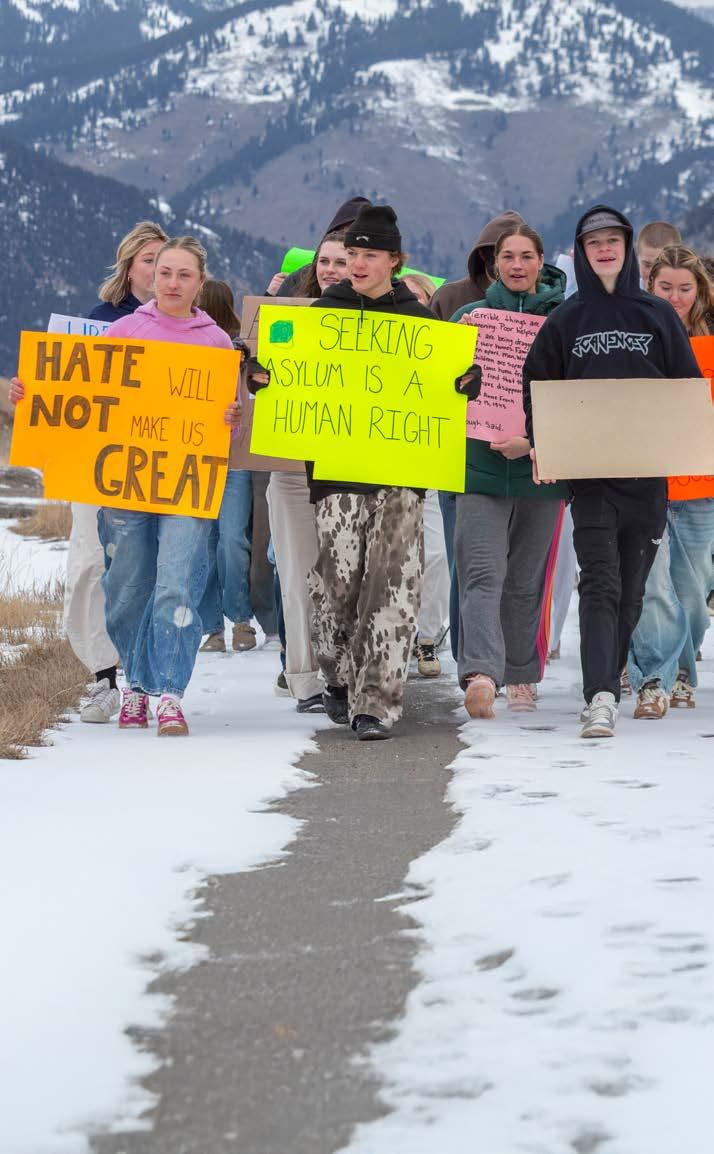
BIG SKY—At 10:30 a.m. on the morning of Jan. 30, dozens of Lone Peak High School and Ophir Middle School students burst through the double doors with smiles, hand-written signs and extracurricular motivation to protest the controversial presence of U.S. Immigration and Customs Enforcement throughout U.S. cities in recent months.
Students led by sophomore Jack Barzizza, and seniors Hana Mittelsteadt and Harper Morris organized a walkout from classes and a 15-minute march on school grounds. The Big Sky School District administration did not provide any leadership or spark the initiative, but did support the students when they announced their plans.
“Not just for this district—I think any time you see students gathering, organizing peacefully… about something that they’re passionate about, is what we want for the future leaders of our country,”
Superintendent Dr. Dustin Shipman told EBS as students marched on the walking path beside U.S. Highway 191, earning scattered honks from trucks. “The kids were really respectful, talked to administration prior to this event. And as you can see or hear, [they’re] quite well organized and peaceful—but passionate.”
After their march, the students circled up in the parking lot and offered the floor to anyone wanting to share thoughts about this polarizing moment in United States history.
“Your voice and opinion is welcomed,” Mittelstaedt told her fellow students. Students cheered as junior Ursula Blyth volunteered to share a few words about the fear felt in schools in cities nationwide, such as Minneapolis, she noted.
“Thank you guys all for showing up and standing up for all the people who are not being treated fairly,” Blyth said.
Morris concluded the huddle. “Just because we’re in a small town doesn’t mean our voices don’t matter and aren’t heard,” she said. “So every little thing we do does help… I’m proud of all of us.”
The students mobilized to Town Center where they’d march alongside local businesses. EBS caught up with Morris and Mittelstaedt as their peers piled into cars.
“I think that so much courage is being gathered and built up around the country, and even in such a small town I can really feel it,” Mittelstaedt said. “And it’s so moving—I didn’t know that this big of a turnout was going to happen.”
Students estimated at least three quarters of the student body chose to participate in the demonstration.
“And it’s just so empowering,” Mittelstaedt said. “I love choosing love first.”
Morris added, “Our community is very centered around togetherness and unity, which is why I think we had such a big turnout. Because we all support each other, we all fight for what we believe in, and we’re not scared to back down from a challenge.”
Big Sky students joined school walkouts across the U.S., from San Jose to Sacramento to nearby Bozeman. Many walkouts were inspired by a national shutdown campaign for Jan. 30, endorsed by University of Minnesota student groups and organizations all over the country.
As for students who did not agree with the purpose, Mittelstaedt explained that organizers respected everyone’s individual viewpoint.
“There’s no judgement or degradation based on those opinions,” Mittelstaedt said. “… Part of our goal today was not to pressure people into doing something that made them uncomfortable, but instead to create a group and a community of support. And that was our main focus.”
PHOTO BY JACK REANEY
PHOTO BY JACK REANEY
LAWSUITS AGAINST DEQ CRITICIZE BIG SKY DEVELOPMENT PROJECTS
DEC. 29 COURT DECISION STATES DEQ DIDN’T TAKE “HARD LOOK” AT IMPACTS OF QUARRY SUBDIVISION; DEC. 17 LAWSUIT CRITICIZES DEQ’S HANDLING OF CANYON SEWER PIPELINE DECISIONS
BY JEN CLANCEY
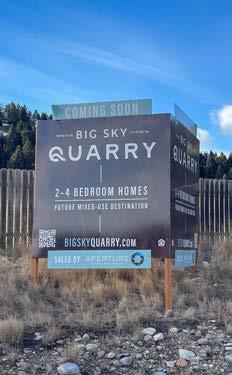
BOZEMAN—Just two days before the new year, a Gallatin County District Court judge issued a ruling that the Montana Department of Environmental Quality “failed to take a hard look at water quality impacts” of the Quarry, a Big Sky subdivision under construction, on the Gallatin River.
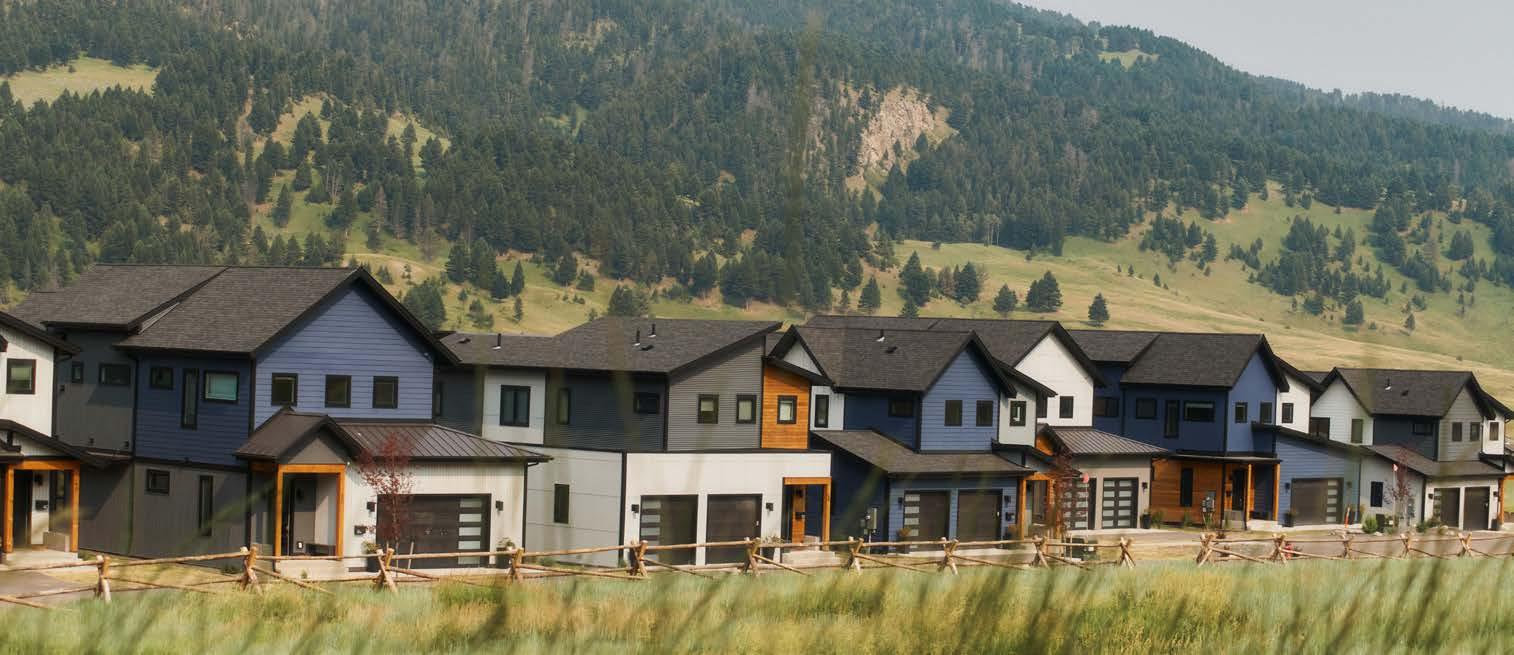
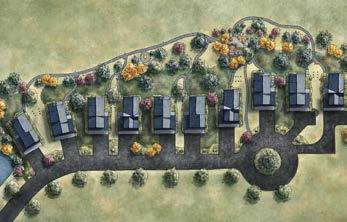
Closing a 2023 lawsuit filed by the nonprofit Upper Missouri River Waterkeeper against the DEQ, the ruling requires DEQ to present a more thorough review of environmental impacts of the first phase of the Quarry’s eight-residence project, which will use septic treatment.
The Quarry—planned for the area along U.S. Highway 191 south of the Conoco and across the highway from the Gallatin River in Big Sky— has faced skepticism since 2018. Conservation groups have questioned its impact on the nearby environment, and the DEQ remains in a second lawsuit by the Waterkeeper for approving phase two. A separate but related sewer development project by the Gallatin Canyon Water and Sewer District in partnership with the Big Sky County Water and Sewer District is also the topic of a lawsuit launched Dec. 17 by the Waterkeeper against DEQ for its approval of a pipeline design variance.
The Dec. 29 court finding decided that the DEQ had not taken a “hard look” at the water quality impacts of the Quarry’s septic systems, which were intended to be temporary infrastructure until the Gallatin Canyon centralized sewer was constructed. Judge Andy Breuner concluded that the approval violated the Montana Constitution by not determining river health impacts, particularly the source of Gallatin River’s algal blooms and how nutrient numbers play a role.
Guy Alsentzer, the executive director of Upper Missouri Waterkeeper, said that this lack of thorough science is a huge disservice to Big Sky.
“The community of Big Sky, it needs clarity and frankly—there’s a right way and a wrong way to do any type of development and to address the liability of wastewater, we need to be shooting for best available treatment and simply getting rid of the liability,” Alsentzer told EBS in a phone call. He described how the court ruling directs governments and agencies to care for the river.
“At the most basic level, it means they need to show through best available science what’s necessary to protect water quality,” Alsentzer said. “And one reasonable opinion could be if a waterway is already polluted and it’s unable to attain its designated uses at law, we probably ought not to be adding any new sources to it until we’ve been able to show.”
The Gallatin River was listed as “impaired” in April 2023.
It’s unknown exactly what the court finding means for the Quarry subdivision’s timeline, or whether DEQ will appeal the court order. Although the
judge sided with Waterkeeper about DEQ not using the best available science to study impact, the approval of the subdivision remains in place, and construction continues.
Scott Altman, developer of the project with Big Sky Rock, LLC., explained that the court cases against the DEQ to challenge the subdivision’s approval have resulted in delays for affordable housing they plan to build. The Quarry subdivision’s twobedroom homes were originally planned to cost $400,000 in 2021, but several years later, inflated labor and materials costs have resulted in the same property going on the market for $800,000. It took two years for DEQ to complete the Quarry approval after a lawsuit against DEQ declared its greenlight of a nearby Big Sky project, the Lazy J South subdivision, unlawful. The Gallatin County Commission also challenged developers to go above required legal standards for septic treatment, and Altman notes the SepticNET technology was later approved by the commission in March 2024—with the caveat that commissioners expect the Quarry to follow its promised plan of eventually transitioning to centralized sewer.
Altman hopes that despite litigation, the Quarry subdivision can still go vertical as planned, with modular homes arriving in summer 2026.
Big Sky water and sewer addresses pipeline lawsuit
Waterkeeper filed a new lawsuit on Dec. 17 against decision-making around a pipeline plan in the Gallatin Canyon Water and Sewer District project. The lawsuit alleges that DEQ didn’t provide public notice or public participation opportunities to weigh in on the pipeline project and the approval of
a potential design change, and the agency did not conduct an environmental review.
The canyon sewer project intends to reduce wastewater pollution in the Gallatin Canyon by bringing hundreds of septic-treated properties onto a centralized sewer system, to be treated at Big Sky’s state-of-the-art Water Resource Recovery Facility.
A letter from the BSCWSD criticized the Waterkeeper lawsuit. The district emphasized that DEQ’s approval of the design change, called a design deviation request, was not an approval of the Gallatin Canyon sewer project. Instead it was a request to conduct an engineering review of spacing of two pipelines beside Montana Highway 64 (Lone Mountain Trail), in preparation of a final design plan.
BSCWSD board member Al Malinoski noted the importance of the engineering review.
“There has to be a process for resolving those questions before a project moves forward. We have been transparent with the community for years, and public involvement is critical—but working through technical engineering details early prevents wasted effort and unnecessary cost,” Malinowski stated in a letter.
According to Alsentzer, the DEQ violated the Montana Environmental Policy Act by splitting its reviews of the sewer project into timeseparated parts.
“Massive infrastructure projects being approved behind closed doors, without public participation, is antithetical to democracy,” Alsentzer stated in a Waterkeeper press release announcing the lawsuit. “DEQ is stacking the deck by considering pieces of a regional wastewater system in isolation. The public deserves—and the Montana Constitution guarantees—a transparent decisionmaking process that reviews the whole picture. DEQ knows well a Big Sky sewer pipeline is integral to a pending new municipal-scale discharge permit application, yet the public is being shut out of any meaningful public participation on critical sewage infrastructure decisions. This is wrong and illegal.”
Despite Waterkeeper’s claims, BSCWSD argues that they’ve been open with the public about the project. In its release, BSCWSD noted that the Gallatin Canyon sewer project has been discussed in public meetings and forums for more than six years, as well as during the 2022 environmental assessment process. The project will continue to be discussed in meetings, and no future phase will occur without additional permitting, environmental review and public comment opportunities, according to BSCWSD.
“It would have been fiscally reckless not to proceed the way we did, but it’s also frustrating to see this portrayed as environmentally irresponsible—when the opposite is true,” board chair Brian Wheeler stated in the letter. “This project is about protecting the canyon. Suggesting otherwise was misleading and disappointing.”
The Quarry subdivision is under construction along U.S. 191. PHOTO BY JACK REANEY
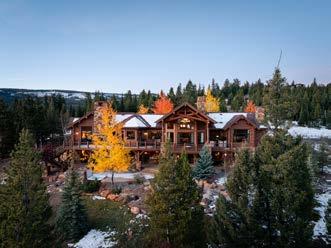
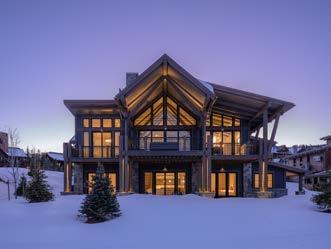
ASPECTS BIG SKY
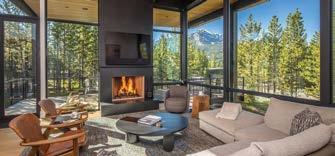
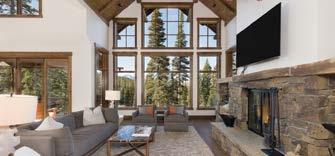
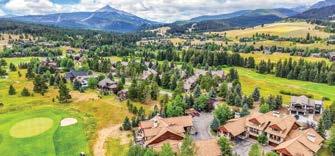
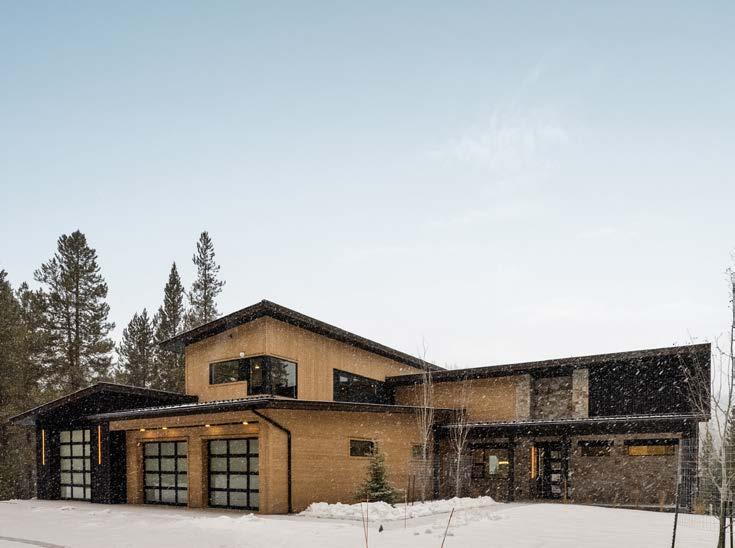
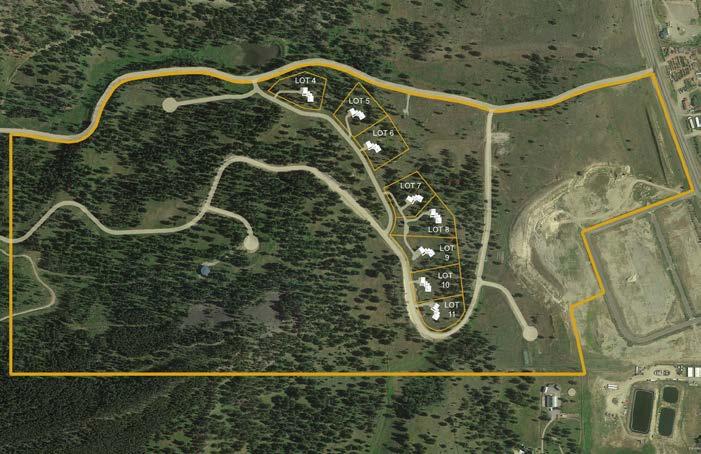
a private 10-home community with incredible investment and lifestyle potential.
Just minutes from world-class skiing at Big Sky Resort and less than an hour to Yellowstone National Park, Aspects offers unmatched access to year-round recreation. These modern three-bedroom homes feature ensuite baths, vaulted ceilings, expansive windows, gourmet kitchens, private hot tubs, and oversized two-car garages—perfect for mountain living. As a branded short-term rental community, the homes have averaged $110,000 in rental revenue over the past year, making ownership both a lifestyle and investment opportunity. With intimate walking paths and thoughtfully crafted gathering areas— including a sauna, firepits, and the canteen—the community blends privacy with connection, creating the ideal basecamp for Big Sky adventure.
LAWSUIT FILED AGAINST 2025 PROPERTY TAX LAW
COMPLEX PROPERTY TAX BILL UNDER FIRE IN LAWSUIT FILED BY CURRENT AND FORMER STATE LEGISLATORS
BY JEN CLANCEY
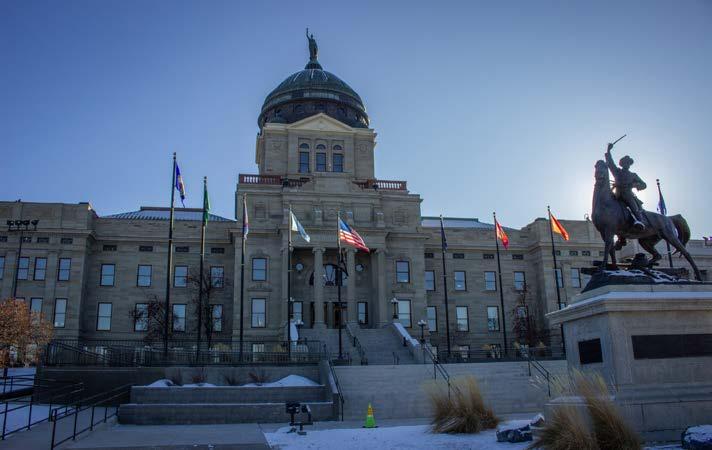
HELENA—A 2025 property tax bill passed in the Montana Legislature is the topic of a lawsuit against the Montana Department of Revenue, its director and the state. Three plaintiffs argue that the way the bill was amended during its time in the House and the Senate was unconstitutional, calling the legislation a “bait-and-switch” to disguise permanent restructuring of Montana’s property taxes under simpler legislation.
The lawsuit filed by Republican legislators Sen. Greg Hertz of Polson, Sen. Tom McGillvray of Billings and former Republican Sen. Keith Regier of Kalispell, states that Senate Bill 542 originally aimed to temporarily freeze property valuations but was transformed through amendments. The final version of the bill provided $90 million in property tax rebates to homeowners, financial support for governments limited by how much they can levy and property tax restructuring.
Documents list two alleged Montana constitutional violations: a breach of the original purpose rule, which aims to maintain a bill’s main purpose as it is amended and goes through the legislative process, and a violation of the single subject appropriations rule, which orders appropriations of dollars to be placed in a separate bill if it’s outside of ordinary expenses.
In statements, Hertz and Regier argue that the bill is negatively impacting longtime Montana
residents, especially those who own second homes, while McGillvray stressed that the bill’s transformation is an example of corruption.
“I’ve heard from many of my constituents who are suffering from the tax shift these bills created,” Hertz stated in an email. “Lifelong Montanans are struggling to figure out how they’re going to afford to pay their massively increased property taxes, and many will likely have to resort to selling their homes and cabins that have been in their families for generations.”
However primary homeowners, even for highly valued property, saw relief. A breakdown of SB 542, and another bill passed in 2025 revising property tax laws, House Bill 231, from Montana State University professor of economics Greg Gilpin, explains that houses valued under $3.2 million will see reduced state property taxes. In reporting by Montana Free Press, taxes in Missoula and Gallatin counties saw property tax bills decrease by at least $1,000 on a median-priced home due to 2025 tax law changes.
Plaintiffs criticize internal messages between Republican Rep. Llew Jones of Conrad and legislative staff, which show discussions of adding one-time cash rebates in amendments to potential property tax bills like SB 542, which had a hearing in the taxation committee about a week later.
The lawsuit argues that the planned changes weren’t mentioned in the committee hearing.
“Senate Bill 542 was Washington DC-style corruption,” Sen. McGillvray wrote in a statement about the lawsuit. “Representative Jones’s internal messages prove he planned the whole scheme 10 days before the hearing. He treated our Constitution as a technical obstacle, not a binding constraint.”
The lawsuit also points to Rep. Jones’ April 29 comments on the House floor in response to rebate costs as an example of logrolling, or bundling up favorable bills with unfavorable ones to pave the way for passage.
“On the rebate deal, I support it because now it’s what it takes to pass the bill, but I actually agree that the rebate in the first probably is unnecessary … but sometimes that’s the cost of doing business up here,” Jones said in April.
Jones was not available for comment at the date of publication.
Debate and discussion continued and the bill was passed through the House 72-27, and later approved as amended alongside HB 231 to end the 2025 legislative session. Both bills became law in May 2025 and enacted the most significant change in property taxation since 2009, according to Gilpin.
The lawsuit was filed in the Gallatin County District Court. Hertz said that they are looking at another lawsuit as well.
The Montana State Capitol on Jan. 25, 2026. PHOTO BY JEN CLANCEY
LOCAL
GALLATIN COUNTY, BSFD OFFICIALS EXPLAIN MISTAKE CAUSING OVERCOLLECTION OF FIRE TAXES
BY JACK REANEY
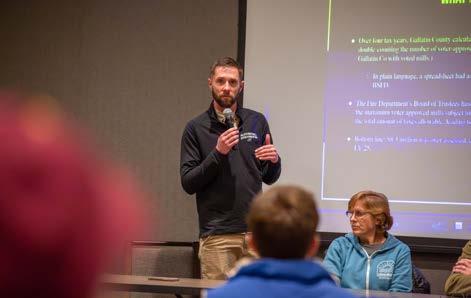
BIG SKY—On Tuesday, Feb. 3, the Big Sky Fire Department and Gallatin County joined forces to provide clarity on a significant tax miscalculation discovered in the final months of 2025.
The Big Sky Fire District received over-collected taxes resulting from a formula error in a Gallatin County spreadsheet. Over the course of four years beginning in fiscal year 2022, erroneous assessments totaled $8.3 million, all of which has been allocated, distributed and spent by BSFD and cannot legally be refunded by Gallatin County to property owners.
Big Sky Fire Chief Dustin Tetrault and Gallatin County Commissioner Zach Brown led with apologies at the public meeting held at The Wilson Hotel in Big Sky.
“Of course this is an unfortunate conversation to be having, and we certainly take responsibility for the mistakes that were made as an organization,” Brown said during an informational presentation. “And we are very sorry... it’s been a learning experience to say the least, for everyone involved.”
Brown explained the complicated tax calculation process that counties must wade through each year, but also reiterated, “At the end of the day... the spreadsheet had a formula error, and it was our fault. Full stop.”
Put simply, Gallatin County double-counted voterapproved mills for Big Sky’s fire tax.
The mistake was obscured by a well-known fact: property values across southwest Montana, and certainly Gallatin County, have skyrocketed during roughly the same period due to increased tourism and real estate demand in the wake of the COVID pandemic.
The county dismissed the jump in fire tax collections as a likely symptom of Big Sky’s rapid growth, Brown explained.
“It’s fair to, I think, everyone involved to remember what was happening in 2022,” Brown said, pointing to a volatile reappraisal cycle, staffing challenges, delayed data from Montana Department of Revenue, and county-wide “chaos and controversy” regarding property taxes.
Big Sky's fire tax collections are usually roughly equal between Madison and Gallatin County properties, in total. But starting in 2022, fire tax collections from Big Sky’s Gallatin County residents began to surge.
Despite growth in property values, “Even that didn’t really quite add up,” Chief Tetrault said, pointing to a graph depicting collections from 2021 to 2024. “So that’s when we really started asking the questions.”
Initially, BSFD believed Madison County was under-collecting taxes. Instead, a review by the Montana Association of Counties discovered that Madison County’s calculations were accurate and Gallatin County was over-collecting.
There’s a nugget of relief for affected taxpayers: fire
tax assessments will decrease by up to 50% this year. But relief for many individuals adds up to a funding cliff for the fire department. Tetrault explained how BSFD will move forward, facing a $2.3 million budget shortfall year-over-year.
Where did the money go?
While it may seem that sudden increased tax revenue would leave the department flush with cash, Tetrault explained that service demands and resource needs have also spiked. Call volume has jumped 70% in the past six years—97.9% of ambulance transports serve non-residents, per Tetrault—and BSFD nearly doubled its staff from 21 to 41 since 2017, when a master plan identified the department was “significantly understaffed,” Tetrault said.
Spending rose with new programs focusing on risk reduction and wildfire prevention, as well as pay increases based on Big Sky’s cost of living, and capital projects including BSFD’s new training facility, fleet upgrades for ambulances and ladder trucks, and the design costs for a third fire station in the Spanish Peaks Mountain Club.
Tetrault pointed out that BSFD revenues and Resort Tax funding enabled the department to afford all of these projects without needing voterapproved bonding. However, the operating budget moving forward is “unsustainable,” he said.
“So what is the financial impact? Significant,” Tetrault said. “... We’ve been able to grow with this community, we’ve been able to meet the service demands of this community, and unfortunately we’re just going to have to take a little bit of a pause while we figure out what’s next here.”
The department is steadfast in four commitments: emergency response standards will not decline; firefighter safety will not decline; BSFD will not cut community programs such as inspections, emergency call boxes and AED stations; and BSFD will not stop its long-term planning, although it may slow.
“We’ve absorbed cuts internally first,” Tetrault said. “We’ve reduced costs before asking the public for
any help, and I think the community deserves to understand these trade-offs that we’re making.”
The department has shaved $542,000 from its operating budget, plus $900,000 from capital projects, according to Tetrault.
BSFD leadership accepted a voluntary 5% wage decrease, the department will not expand to fill four planned firefighter positions to serve its Spanish Peaks station, and the department remains in active negotiations with its firefighter union with the aim of reducing salary, wages and benefits by $800,000 to $1 million in total.
“All of these things—not fun conversations, not fun things to do... it’s a tough time for all of us right now,” Tetrault said, adding that job preservation is the “number one priority” and layoffs would be a last resort.
During Q&A, Tetrault confirmed that BSFD’s organizational structure is comparable to peer communities in the region, and that current staffing levels are not excessive.
The department did choose to move forward with a $1 million acquisition of land beside its training facility. The opportunity for useful, available land beside a training facility was a worthwhile investment, Tetrault said, with plans to build a public safety center for BSFD administration and an improved outpost for the Gallatin County Sheriff’s Office.
BSFD will explore long-term revenue options and will pursue expanded funding from Resort Tax. Brown confirmed that Gallatin County does not have the authority to issue an emergency mill levy.
In the months since the community learned of the tax miscalculation, Tetrault said community members have been understanding of the challenges now faced by BSFD, and desire to learn what happened.
“I’ve been very grateful, I think, [for] the fact that the conversation is forward looking,” Brown said. “And focused on really trying to understand what we can learn from this, and how we improve moving forward.”
Gallatin County Commissioner Zach Brown discusses the tax miscalculation. PHOTO BY JACK REANEY
BIG SKY RESORT’S PARENT COMPANY ANNOUNCES DETAILS ON NEW CHARITY
EBS STAFF
Boyne Resorts, parent company of Big Sky Resort, has announced its vision for the Boyne Forever Foundation, a 501(c)(3) charity launched in 2025.
Locals first learned of the new foundation in November when Big Sky Resort organized an auction to ride the first Explorer Gondola cabins at the lift’s Dec. 20 grand opening. The auction ultimately raised $11,200 as one of the foundation’s first fundraisers.
In a Jan. 21 press release, the company shared more details about the foundation’s goal to unite all 13 of Boyne’s properties under a shared mission to safeguard the environment, invest in surrounding communities and empower staff. The “strategic philanthropic initiative” aims to amplify all 13 resorts’ collective impact and support year-over-year support for local and national causes, marking “a historic milestone for the company,” according to the release.
Stephen Kircher, Boyne CEO and BFF board president, noted that the foundation helps organize and strengthen Boyne’s commitment to its community values held by the family-run business since 1948.
“For nearly eight decades, our family has understood that stewarding these mountain communities, the land, and our people is both a privilege and a responsibility,” Kircher stated in the release. “Through this independent foundation, we are formalizing and reinforcing those commitments:
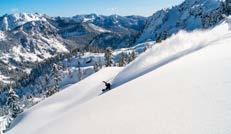
A snowboarder carves bluebird powder at The Summit at Snoqualmie in Washington. PHOTO BY COLTON JACOBS PHOTOGRAPHY / BOYNE RESORTS
profound respect for the environment, advocacy for the communities that host our resorts, and gratitude to the employees and guests who carry this legacy forward.”
The foundation will operate as an independent public charity with funding through corporate sponsorships, employee donations and community donations. Funding requests for environmental initiatives, community projects and scholarship grants will be reviewed on an annual basis, beginning in spring 2026 with awards announced on June 30.
“Hardship grants” for employees and requests for in-kind donations will be reviewed on a rolling basis throughout the year, according to the release.
Michelle Wein, assistant ski patrol director at Boyne Mountain in Michigan, will serve as the foundation’s executive director.
Wein, a Michigan native, grew up skiing at Boyne
Mountain and believes it has shaped her character. Boyne views Wein as an embodiment of the “authentic relationship” between the resorts and their surrounding communities, according to the release.
“The Boyne Forever Foundation is about honoring the legacy of both the places and the people that have shaped the Boyne Resorts family for decades,” Wein stated in the release. “Each resort is unique, but we all share the same values and respect for the heritage sports, natural places and mountain communities that have endured for generations— and ensuring they endure for generations to come.”
Professional snowboarder Zoe Kalapos will serve as an ambassador, and expressed support for the foundation’s goal to ensure future athletes have access to life-changing winter sports. The foundation also announced a partnership with snow grooming machinery company PistenBully, “whose decades-long relationship with Boyne Resorts now extends beyond business as they formally align with the Foundation’s mission,” the release explained. PistenBully reps noted that Boyne operates one of the largest PistenBully fleets in North America.
Grants awarded by the foundation will not be divided equally across Boyne communities, but the foundation “aims for equitable impact” based on community needs, program alignment and available resources, according to the website.
The foundation’s three core pillars provide more detail on the grant categories: environmental, community and staff. The pillars, and the portal to apply for grants, are visible on BFF’s website.
BSFD RESPONDS TO HOUSE FIRE ON LITTLE COYOTE ROAD
DISPLACED RESIDENT PRAISES BIG SKY RESORT, BSFD, LOCAL COMMUNITY
FOR ‘INCREDIBLE’ SUPPORT
BY JACK REANEY AND MIRA BRODY
BIG SKY—The Big Sky Fire Department responded to a structure fire at a private residence on Little Coyote Road at approximately 3 p.m. on the afternoon of Thursday, Jan. 29, according to a press release shared by BSFD shortly after.
Upon arrival, crews identified smoke coming from the eaves of a single-family home and conducted a rapid fire attack inside the structure, where they found the fire had extended into the attic and was spreading quickly. All occupants had safely exited the residence prior to firefighters’ arrival.
The fire was brought under control quickly, with most damage limited to one side of the structure. Multiple Big Sky Fire Department units responded, with mutual aid provided by the Yellowstone Mountain Club Fire District, Gallatin Gateway Fire Department, Bozeman Fire Department, Hyalite Fire Department and the Gallatin County Sheriff’s Office.
The cause of the fire remains under investigation.
‘Overwhelmed with gratitude’
The residents, the Woodgers, are a local family who have lived in Big Sky for nearly three decades. EBS spoke with Sam Woodger, husband and father of
two school-aged sons, whose lives were uprooted by the fire.
The family is unsure how long repairs will take, and do not expect to move back in.
Woodger explained that the home’s owners, Scott and Martha Johnson, were “unbelievable” in their immediate support and helped find a new rental for the family to live. In the interim, Big Sky Resort— Woodger’s employer—provided the family lodging at the resort for a couple nights.
“I can’t say enough—the resort has always been super good to me,” Woodger said, emotional over
the phone. “... Everyone is healthy, and we’re just overwhelmed with gratitude for the community.”
The fire department contained the fire to one side of the home. Still, smoke and water damage, as well as a partial roof collapse, will require lengthy repairs.
“The fire department was super quick, very professional, very helpful,” Woodger said. “They were grabbing things that looked like they’d be important to us, out of the place. And they were really good to the kids. The kids were there, and my oldest had a gaming computer that he was hoping might get salvaged, and they were able to get that out of there... Those guys were so helpful and on it. We’re very fortunate to have that department— every single member was super nice.”
As word spread, Sam and his wife, Amy Woodger have received hundreds of texts and phone calls from community members. Locals have given away kitchenwares, home supplies and other essentials lost in the fire. Woodger, who has worked in the snow removal business, was surprised to hear from former clients offering furniture and favors.
“All the locals have been really helpful... We don’t need anything—all the stuff we lost, it seems like it’s already mostly replaced,” Woodger said. “The community really stepped up.”
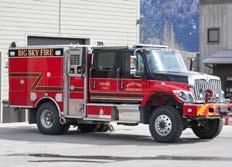
A Big Sky Fire Department engine sits outside the fire station. PHOTO BY JACK REANEY
SPORTS
MT64 HOCKEY ASSOCIATION HOSTS LADIES HOCKEY NIGHTS AT MARTY PAVELICH ICE RINK
BY MARIO CARR EBS CONTRIBUTOR
BIG SKY—With leadership from Katherine Berasi and Logan DuComb, the MT64 Hockey Association is working to revive women’s hockey in Big Sky by providing a safe and welcoming environment to female hockey players of all skill levels and ages. Figure skating coach Abby Skane with the Montana State Figure Skating Club will also attend one more ladies night on Feb. 8.
MT64 is a nonprofit organization operating for its second season on the ice in Big Sky, dedicated to making the sport of hockey more accessible to people of all ages and skills. Ladies night takes place each Sunday from 5:30-6:30 p.m. at the Marty Pavelich Ice Rink.
“No bros, no dudes, no dads, no men, no boys (ladies only),” MT64 wrote in a newsletter.
MT64 will provide the necessary gear for girls to learn, and will work closely with providers in Bozeman on acquiring gear for loan.
“We try to make everyone participate safely and encourage them to be well protected. But you know the first night if they wanna just come out and skate we have some loaner helmets, we possibly have some learner skates, and then we just go from there. And kids, usually the night-of we can get them fully equipped,” said Joseph McFadden, hockey director for MT64.
Ladies hockey night has launched after several coaches and players in the community have seen an increasing need. The female-only space with female coaches is essential for players of all skill levels, and competitiveness to get out on the ice without the pressure of competing with the boys. McFadden himself has a young daughter that is “enthralled” with the game according to coach Berasi.
“There’s great growth in the game right now at the amateur level in Montana with girls or at the collegiate level throughout the United States," McFadden said.
Hockey in Big Sky has gone through a couple changes of the guard since the installation and improvement of the Marty Pavelich Ice Rink, and MT64 wants to ensure the future of female hockey for the community after some girls may have felt left behind.
“When I came here almost two years ago… after previously coaching in Salmon [Idaho] I noticed the lack of support for girls,” Coach Berasi explained.
Coach DuComb who grew up playing hockey in New Jersey and has been playing here in Big Sky since she moved here seven years ago is very excited about more opportunities for kids to learn the game.
“Since I’ve been here there hasn’t been a whole lot of opportunities for kids, and I think over the last two to three years that has changed a lot and it’s really great to be able to have a specific girls practice,” she explained.
In his own words, McFadden explained that while boys and girls can often learn the game together, as they get older it gets to a point where co-ed play is simply not ideal.
“This is kind of our first year of getting all the ladies out on the ice so we’re hoping that it just
grows in numbers and gets the younger girls that played hockey and kind of stopped around age 12, when the boys kinda become unruly and then make it not really that fun for ladies,” McFadden said.
Coach DuComb emphasized that having these ladies only nights, with the goal of increasing opportunities for females in general, should help optimize practices for everyone.
“In the past a lot of these practices have been ageranged from three-year-olds all the way up to the high school boys, and you’re all practicing on the same ice at the same time and it just really isn’t conducive to a good learning environment for any of the ages,” She said.
While there are countless activities in Big Sky to keep busy, everyone made sure to emphasize how special the ice rink in Big Sky really is.
“I’m from Minnesota and we have 1,000 ice rinks there and they’re all inside… I hadn’t skated outside until I came to that rink the first time I coached up there… The coolest part is seeing the sunset over it… every time that you’re there it is incredible,” Coach Skane said.
Three weeks into the ladies night, participation has grown each week, with at least a dozen ladies showing up on Jan. 25. Registration includes becoming a member with USA Hockey, which opens up additional opportunities to women to participate in clinics hosted by the Montana Amateur Hockey Association throughout the state.
A player nicknamed "Brin the Grin" on the ice. PHOTO COURTESY OF JOSEPH MCFADDEN
A youth player nicknamed "Lark the Shark" is ready for practice. PHOTO COURTESY OF JOSEPH MCFADDEN
FROM OPHIR ELEMENTARY, TO THE PROFESSIONAL RODEO ARENA
MISS RODEO MONTANA 2026 FINDS HER PURPOSE IN BIG SKY AND BEYOND
BY LESLIE KILGORE
BIG SKY—Most mornings in Big Sky, Bentley McCullough’s work begins quietly, hands moving in fluid motion as she interprets classroom lessons for a young student at Ophir Elementary School, where she works as an American Sign Language Model. By summer, those same hands will guide the reins as she rides into rodeo arenas across Montana, sash gleaming, American flag flying, representing the state as Miss Rodeo Montana 2026.
For McCullough, the contrast isn’t a contradiction. It’s what motivates her to pursue her dreams in the rodeo world and through education within the deaf community.
“I wanted the opportunity to share my love for interpreting and my love for American Sign Language with a community that may never have seen it before,” she said. “But also on the other side of things, I get the most amazing opportunity to share with the deaf community about rodeo.”
McCullough, 24, grew up far from spotlights on her family’s cattle ranch in Geraldine, north in Montana’s Chouteau County. “I grew up on my family’s ranch, fourth generation. We raised Semital Angus cattle,” she said. Her childhood revolved around agriculture and youth livestock showing at the national level.
“My passions were with showing cattle at a young age,” she said.
McCullough first stepped into a leadership role through agriculture, earning titles with the Montana Angus Association, including Montana Junior Angus Senior Princess and Montana Angus Queen. But becoming a rodeo queen wasn’t on her radar until a summer night at the Livingston Roundup in 2024.
“I was at the rodeo, and the prayer was just shared, and the national anthem was just sung, and that’s when I felt the Lord and his plan for me the most,” she said.
Then she watched Miss Rodeo Montana ride into the arena. “It immediately hit me,” she said. “I thought, I’m going to do that. I know that I can do that.”
She didn’t wait to act. “I Googled it while I was sitting in the stands at that rodeo—what are the requirements to be Miss Rodeo Montana?” she said.
Less than a year later, McCullough was named Miss Rodeo Montana Lady-in-Waiting, and this winter she was officially crowned Miss Rodeo Montana 2026 at the Montana Circuit Finals in Great Falls.
“It was mainly a ceremony for our Montana rodeo community to celebrate a new rodeo queen representing their state, ” McCullough said. The title comes with a demanding year of service. Montana hosts roughly 40 rodeos between June and August, and McCullough expects to attend nearly all of them.
“As a rodeo queen, our number one job is to serve,” she said. “This year is about serving others more than ever.” That service looks different at every event—flag runs, autograph signings, youth activities and more.
“Whatever a rodeo committee needs,” she continued. “If the rodeo committee says, we want you to do two flag runs and then a flip, by golly, I’m going to be doing two flag runs and a flip.”
In addition to her ambassador role, McCullough continues as an active rodeo competitor. She currently competes in regional barrel races. While her schedule is packed, she continues to train and ride whenever possible, balancing competition with her responsibilities representing the Montana rodeo culture.
McCullough’s two worlds collided when she interpreted a rodeo at the Montana Circuit Finals for students from the Montana School for the Deaf and Blind.
“That was truly a dream realized, because I would have never imagined interpreting a rodeo,” she said.
Recently, McCullough traveled to Rapid City, South Dakota, to attend the 100th anniversary of the Sutton Rodeo, one of the country's longestrunning rodeo events. She joined 18 other state titleholder queens, with responsibilities stretching beyond the arena spotlight.
“Our job there really showed what service looks like,” McCullough said. “We were running flags during the performances, setting balloons for the mounted shooting competition, spending time educating FFA students about rodeo and the Western way of life, and a lot more.”
McCullough believes the rodeo community is uniquely open to connection and support.
“The western way of life is such a forgiving and accepting community,” she said. “We are people who include others, and love others, and care for others.”
This winter, McCullough remains rooted in Big Sky, volunteering at the Montana Winter Special Olympics at Moonlight Basin on March 2. Looking ahead, she’ll also prepare to compete for the Miss Rodeo America title in Las Vegas this December, where she plans to incorporate American Sign Language into her speeches.
“Sign language is such a big part of my life,” she said. “It’s really who I am, and that’s really what a pageant’s all about, showing who I am and what I’m passionate about.”
McCullough shared that community support plays a critical role in funding her year of travel, horse care and competition expenses, including her run for Miss Rodeo America.
“I wouldn’t be able to do any of this without the support from my community,” she said. “It really fuels everything from my travel to my horse care to my competitions.”
When asked what living in Big Sky is like compared to growing up on a fourth-generation cattle ranch in Geraldine, she said, “This community has absolutely taken me under their wing, and I feel right at home here, even though it's not where I grew up. The Big Sky community has supported me when I needed it the most.”
McCullough added, “I think a lot of people don't realize that there is a true Montana community here in Big Sky, with people who support one another. Just like in the rodeo culture.”
McCullough will host her fundraising gala this Saturday, Feb. 7, featuring a welcome cocktail hour, dinner, and live and silent auctions at the Hart Ranch in Gallatin Gateway. Tickets and tables are still available; community members can also support the event by donating auction items if they’re unable to attend in person.
Miss Montana Rodeo. PHOTO COURTESY OF BENTLEY MCCULLOUGH
Bentley McCullough doing ASL interpretation at the Montana Pro Rodeo Circuit Finals in Great Falls.
PHOTO COURTESY OF BENTLEY MCCULLOUGH
Now more than ever, accurately setting the rates for your vacation home rental is imperative. To thrive, you need a company with a revenue management team capable of adjusting rates 24/7 based on real-time fluctuations in market demand. Why is pricing so important? If rates are set too low, your home will book but you’ll be leaving money on the table. Set rates too high and you’ll lose bookings altogether.
Natural Retreats has made a massive investment in our Revenue Management team over the years. The result? Greater revenue for our homeowners.
BOZEMAN
DOWNTOWN BOZEMAN PEACE PARK TO HONOR I-HO POMEROY’S ‘SPIRIT OF COMMUNITY’
BY MIRA BRODY
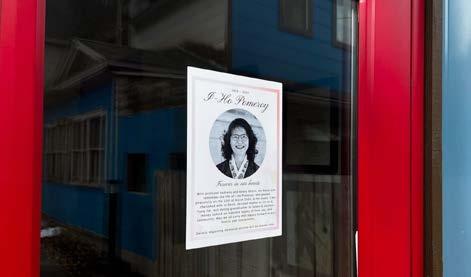
BOZEMAN—I-Ho Pomeroy walked from her restaurant, I-Ho’s Korean Grill, downtown to City Hall where she served a decade as Bozeman City Commissioner, nearly every day.
“That was her thoroughfare,” said Ellie Staley, executive director of the Downtown Bozeman Association. “She was not only a beloved community member, she was such a downtown gal to her core."
When Pomeroy died in March 2024, the community she served sought a way to properly honor her. Staley was approached by City Commissioner Jennifer Madgic with the idea of a pocket park—a way the city could still feel her presence downtown.
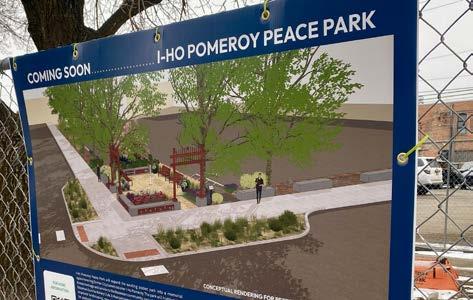
The future I-Ho Pomeroy Peace Park will be located on the corner of North Black Avenue and East Mendenhall Street. It will have seating, bike parking, a peace pole and a cement curb aimed at allowing for safer pedestrian crossing along Mendenhall—a value of not only Pomeroy’s, but of the commission as a whole.
“She was always talking about making Bozeman more bike- and walk-friendly and that's definitely one of our high priorities, and one of my top priorities as a commissioner,” Madgic said.
The park will include artistic motifs of birds, cherry blossoms and tigers, depicting some of Pomeroy’s favorite symbols from her home country of Korea. Two plaques will inform visitors about Pomeroy and her legacy.
“She was really upbeat and optimistic,” said Madgic, who was a fellow commissioner as well as a friend. “She just made you feel good about yourself and put a positive spin on life.”
The peace park broke ground this fall, and there will be a grand opening on Aug. 14 during the summer Art Walk, with public art being another
one of Pomeroy’s passions.
The park was made possible by a series of grants, including the Montana Main Street Program, $100,000 from the Gallatin County Open Space Grant and a match from Urban Renewal Funds. Because the landscaping of the new park helps mitigate stormwater, the City of Bozeman Stormwater Division stepped in to help, and landscape design and general contracting is by Sanbell and Haselsen. Other partnerships include the City of Bozeman, Downtown Bozeman Association, Sweet Pea Festival and the Sunrise Rotary Club, who are donating the peace pole that in eight languages says: May Peace Prevail on Earth.
A noticeable number of people and organizations stepped up to make the park possible, Madgic noted. “I think it’s reflective of who I-Ho was and the impact she had on people,” she said. While “pocket” in size, the park has a full life to
represent. An immigrant from war-ravaged South Korea, Pomeroy first served the food of her home country to the residents of Bozeman from a food cart that often sold out, then established her own restaurant, an establishment that was always tied to her charity efforts; she often used it as an avenue to raise funds for those in need, both locally and internationally.
“I was lucky to serve in Rotary with I-Ho Pomeroy for many years. She held countless fundraisers at her restaurant, I-Ho’s Korean Grill, at which community members and Rotarians served free meals,” said longtime Rotarian Dave Crawford, who recalled the efforts I-Ho’s [restaurant] raised money for, including hurricane, earthquake and flood relief, and even a trip they took together to Kathmandu, Nepal in 2019 to help in schools.
“She was always so much fun to be around with her bright smile and infectious laugh,” Crawford said. The park, he said, will pay homage to Pomeroy’s "spirit of community.”
Elected as Bozeman City Commissioner in 2013, she served three terms until her resignation following her diagnosis of brain cancer in October 2023. She was the first-ever immigrant and person of color on the commission.
Pomeroy’s lasting impact on people’s lives is apparent in the way they describe not only her, but also their relationship with her. It’s not only “my colleague,” it’s also “and friend.”
“Her kindness, her love, her love for Bozeman, her love for people, the way she’d get so excited about fun new things was just absolutely contagious,” Staley said. “The woman’s smile would light up a room.”
“She was truly motivated by doing the right thing,” she added. “She symbolizes what Bozeman truly aspires to be.”
A rendering of the I-Ho Pomeroy Peace Park can be viewed at the park’s location, on the corner of North Black Avenue and East Mendenhall Street. PHOTO BY MIRA BRODY
A photo of Pomeroy can be seen on the door of her restaurant, which is operated by her children. PHOTO BY RACHEL HERGETT
REGIONAL
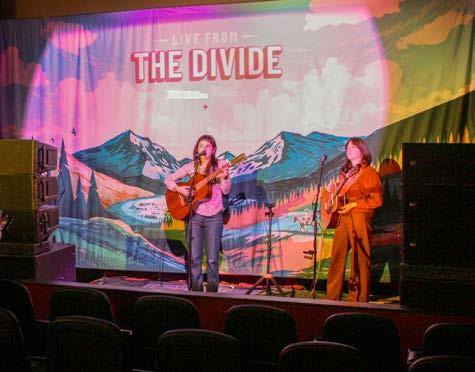
LIVE FROM THE DIVIDE DEBUTS IN LIVINGSTON’S HISTORIC EMPIRE TWIN THEATRE
AFTER 14 YEARS IN BOZEMAN, THE “LISTENING ROOM”-STYLE MUSIC PRODUCTION GROUP CONTINUES LEGACY IN NEW SPACE
BY JEN CLANCEY
LIVINGSTON—The Empire Twin Theatre along Livingston’s quiet downtown strip plays two movies a day, Tuesday through Sunday. While sparse sometimes, drawing from a surrounding population of about 8,000, it’s a staple venue for movie-lovers and event-goers in Livingston. The former Operastyle theater was split in two screens in the ‘80s to allow for more diversity of programming and its current owners, Tyler Erickson and Andrew Feltenstein, said they’re committed to honoring the venue’s lasting legacy.
A partnership with Live from the Divide—a Bozeman-founded live music production company—seemed like the perfect fit.
Live from the Divide has been curating intimate and unique musical performances in the Northeast Neighborhood of Bozeman since its start in 2012. Founder Jason Wickens decided on a change of scenery at Empire Twin Theatre, whose two theaters—a 263-seater, currently completing construction for live music, and a second 105-seater—are eager for the new audience Live from the Divide performances will bring.
Wickens stood on the stage of the smaller theater at a private opening event on Jan. 29, and reflected on his journey bringing live music to southwest Montana.
"Almost every artist who we asked to play … they’ve been waiting for somebody to ask them to come [to Montana],” Wickens said.
Live from the Divide has hosted more than 700 artists in Bozeman since opening in 2012. Their first Empire Twin Theatre concert was on Sunday, Feb. 1 featuring the two-man folk-rock band,
Briscoe. Wickens reflected on how the decision to move from the Bozeman location came at the right time.
“Over the last year, our side of town, it’s just turning into exactly what it needs to turn into,” Wickens said of the Northeast Neighborhood. “You know, you can’t stop the growth … it was more just the right time to come to Livingston and I really feel that way. We’re so grateful to be here.”
In an interview with EBS, Feltenstein and Wickens
described what makes the partnership special, and what’s in store for the future.
"You’re really there and it’s intimate, unlike other venues where you’re always separate from them,” Feltenstein said. “That always spoke to me personally.”
In addition to expanding programming at the Empire Twin Theatre, Feltenstein is also renovating the KPRK radio station building just five minutes away. While the radio studio relocated to Bozeman more than 10 years ago, Feltenstein plans to bring broadcasting back to Park County. He also plans to showcase Live from the Divide performers by recording their live sets and playing them on air.
Wickens thanked Montana hospitality and Bozeman’s audiences for creating enriching experiences for fans as well as performers.
“It wasn’t just our doing, it was the interaction they had with the crowds where they’re like, ‘Holy cow, this is really special,’” Wickens said. “ We’re so grateful for the Bozeman community 'cause man, we are a community-sponsored venue.”
Feltenstein invited folks to come over the hill from Bozeman, see a show, visit historic bars and sites, and grab a bite to eat in one of Livingston’s restaurants.
“It’s another fun, amazing, unique experience that only this part of Montana offers,” Feltenstein said.
The Empire Twin Theatre sign on Jan. 29. PHOTO BY CARLI JOHNSON
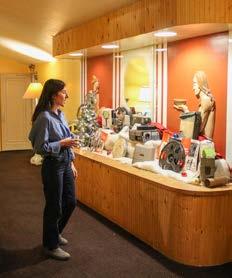
Emily Johnson leads a tour of the historic Empire Twin Theatre on Jan. 29. PHOTO BY CARLI JOHNSON
Ella Rae Cole (left) and Lena Marie Schiffer (right) test out the new space before their performance. PHOTO BY CARLI JOHNSON
BUSINESS
BIG SKY’S NEW IGLU ATTRACTION BRINGS EUROPEAN ALPINE TRADITION
BY JACK REANEY
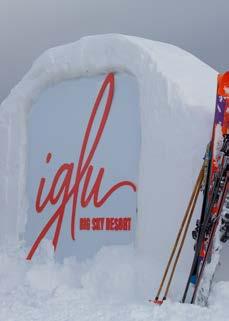
BIG SKY—A mid-mountain igloo with hot and cold drinks, cozy furniture and a familyfriendly aprés ambience is Big Sky Resort’s newest attraction. Iglu opened Jan. 24, and could become a fixture for years.
Big Sky Resort parent company Boyne Resorts continues to focus on giving North American skiing a touch of European alpine tradition. The latest project—somewhat of a surprise, as its construction was overshadowed by a new gondola and Kircliff attraction—aims to show skiers something they’ve never seen before.
“I think [guests] think it’s pretty cool. I would say the biggest reaction is, ‘oh wow,’ when people see it,” resort PR Manager Megan Munley told EBS during a site tour on Jan. 29. “… The care and the work that our team put into building this has been really remarkable, and they did such a good job with all of the details.”
Another Boyne-owned ski area, Sunday River Resort in Maine, has featured an igloo for three years. Big Sky Resort has become the third Boyne resort with an igloo attraction, also joining Boyne Mountain in Michigan, which opened its first igloo on Jan. 13.
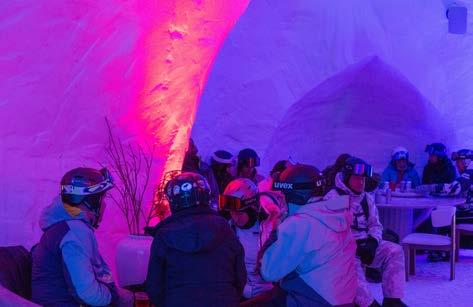
The experience is lively with ample seating, mellow house music, colorfully lit walls and daylight blocked out by door flaps. Details shine, such as the interior bar counter: it’s made of ice blocks, with snow depicting the resort’s logo carved into the ice and backlit sharply in blue. Furniture is curated by Arhaus, a design and furnishing company with a showroom in Bozeman. Ice sculptures are carved by renowned artist Shintaro Okamoto.
Staff rotate in from Westward Social, a resortowned restaurant in the Mountain Village.
“I would say it’s very chill. It’s low-key,” Munley said. Music doesn’t drown out conversation, and it’s not a wild party—at least not yet, as the resort plans for Iglu to be involved with various events including the April 11 pond skim, among the resort’s Spring Series.
How it’s done
The 1,350-square-foot igloo has a capacity of 90 people, and the structure is 100% snow, requiring roughly 4,000 cubic feet in total. No support beams, no metal frame, just a carefully assembled traditional igloo constructed by a 23-year-old Austrian company, Alpeniglu, whose expertise spans Europe.
“This was a challenging project,” said Caleb Teigen, construction manager for Big Sky Resort. “… The unique thing about this is, you go from nothing to, three weeks later, being open.”
While the three-week sprint was demanding, the project’s biggest challenge was receiving permits. Building codes do not recognize snow and ice as common materials, so the resort spent extra time finding an engineering firm willing to take on such a unique medium.
Teigen explained the snow is like working with concrete. Crews begin with a frame and a bubble, and blow man-made snow around the bubble, allowing it to freeze and set overnight. Igloos must be made using man-made snow, as those crystals are more consistent and reliably bondinto a firm structure. The process is repeated until side walls are roughly 12 feet thick, at least. Finally, crews deflate the bubble and begin constructing entrances.
Engineers carefully reviewed the science from Alpeniglu, and determined it’s 100% safe for people to be inside the igloo, Teigen explained. As part of that assurance, the resort must continually monitor roof thickness and perform other regular safety checks. The arch-shaped domes build on ancient
technology, Teigen points out, and the science still works in 2026, making the igloo a solid and trustworthy structure.
Alpeniglu’s portfolio includes over 600 igloos, Teigen said, and he praised owner Benno Reitbauer for being at the forefront of a unique industry. Big Sky Resort is learning from one of the best— should the igloo remain a reoccurring fixture of Big Sky, Teigen’s team will eventually take over the construction.
“They’ll come in, teach our team how to build the igloo, and work with us… for up to three years [and] that fourth year our team would then be able to take it over and build it on our own,” Teigen said.
The igloo site was chosen for views, and also fits in with the increasingly vibrant bowl area including a new gondola, recently built tram, and spring events such as the pond skim.
At the end of the season, resort staff will carefully remove the roof of the igloo, allowing it to safely melt under the summer sun.
“Built entirely from snow, the Iglu at Big Sky is certainly not your average mountain ‘venue’, and that’s rather the point,” Simon Harris, resort VP of food and beverage, stated in writing via email.
“The craftsmanship from our Austrian building partners is superb, and the fact the whole structure is fleeting, is unique in its own right. Inside, our partnership with Arhaus adds an unexpected layer of warmth and luxury, that is befitting of the Big Sky experience.”
Munley and other resort leaders look forward to hearing feedback from guests who experience a new type of ski resort rest stop.
“I think the Iglu offers another touchpoint for guests to experience something that they might not have seen anywhere else in North America,” Munley said.
PHOTO BY JACK REANEY
PHOTO BY JACK REANEY
BY LESLIE KILGORE
Big Sky is built by people willing to learn, adapt and commit for the long haul. Paul Williamson is no exception. His path to Big Sky began on a roof and has since evolved into a leadership role helping guide one of the area’s long-standing businesses, designed specifically for the challenges of a highalpine environment. In this installment of Making It in Big Sky, we talk with the director of business development at Cornerstone Management Services, a company marking 20 years in the community.
This series is part of a paid partnership with the Big Sky Chamber of Commerce. The following answers have been edited for brevity.
Explore Big Sky: When did you first come to Big Sky or Southwest Montana, and what brought you here?
Paul Williamson: I moved here about seven years ago for a mix of professional and personal development. I had an opportunity with Cornerstone Management Services and was also drawn by my outdoor passions–river surfing, skiing, climbing and the overall lifestyle. Big Sky offered a balance of career opportunities and quality of life. I moved here from Louisiana, where I grew up and went to college. I traveled quite a bit before settling here and spent some time in Montana along the way. Once I did, I knew this was where I wanted to be.
EBS: Did you move here for your current role at Cornerstone?
PW: Not initially. I started as a subcontractor focusing on installation work, primarily metal and flat roofing systems. As the company grew, leadership asked if I would be interested in moving into a more office-focused role to help with scaling. Since then, I’ve transitioned through operations and now serve as director of business development.
EBS: Do you live in Big Sky?
PW: I live in Bozeman and commute to Big Sky during the work week. I’ve made that drive for seven years and genuinely enjoy it. The commute gives me time to decompress, listen to music or podcasts and enjoy the scenery.
EBS: You mentioned river surfing. How did you get into that?
PW: Surfing has always been a passion of mine, originally in the ocean. About three years ago, I started learning more about river surfing as a way to continue surfing while living in a landlocked state. Once spring runoff hits, I try to spend as much time on the rivers as possible.
EBS: Is there a river surfing culture here in Big Sky?
PW: Yes, and it’s growing. Most of the established waves are on the Yellowstone River, and there’s been some discussion about potential wave development on the Gallatin. The community is small but welcoming, and it continues to grow each year.
EBS: Can you describe what Cornerstone Management
WILLIAMSON OF CORNERSTONE MANAGEMENT
Services does specifically?
PW: Cornerstone Management Services has been an exterior envelope contractor for 20 years in Big Sky. We focus on longterm, sustainable exterior systems designed and tested specifically for highalpine environments. Our work includes roofing, cold roof design and construction, waterproofing above and below grade, siding and other exterior systems. We also have a full-service maintenance department handling inspections, repairs, snow and ice mitigation and small projects that extend system lifespan. In addition, our in-house research and development team focuses on climate resilience, best practices and long-term performance.
EBS: What is your educational background?
PW: I actually studied public relations. Communications has always been a major interest of mine; how people communicate digitally, verbally and nonverbally. Early in my career, I focused on music festivals and live music, which helped shape my approach to communication and relationship building.
EBS: How did that background and your college major lead you into construction?
PW: I’ve always enjoyed working with my hands and wanted to learn a trade. Trades offer real opportunities for growth, and I wanted to apply that learning in an extreme environment like Big Sky. Over time, my education and hands-on experience came together in my current role.
EBS: How large is the Cornerstone team?
PW: Internally, we have about 30 team members across operations, business development, administration, leadership, marketing and research and development. We also work with five longstanding external teams trained in the Cornerstone way, bringing the total workforce to around 100
installers during peak times.
EBS: How does Cornerstone engage with the Big Sky community?
PW: We wouldn’t be where we are today without the Big Sky community. We sponsor local events, partner with the Big Sky Chamber and support organizations like Big Sky Youth Empowerment. As we celebrate 20 years, giving back and showing appreciation for the Big Sky community is important to us, and especially to our founder and owner, Andy Dreisbach, who lives here and raised his family here.
EBS: Do you see continued growth for the company?
PW: Yes. Big Sky will always be our primary focus, but we’re beginning to expand into the greater Gallatin Valley, including Bozeman and Belgrade. The foundation built here over the last two decades allows us to grow responsibly while maintaining our commitment to this community.
EBS: What’s the best career advice you’ve received?
PW: Work hard, but maintain a healthy work-life balance. Being present and committed at work matters, but so does stepping away to recharge and focus on personal relationships.
EBS: What does a good, no, a great, Montana day look like, with a healthy work-life balance?
PW: It starts with a good cup of coffee, a vinyl record playing and some quiet time before the day begins. After work, it ends with river surfing, time with friends, a home-cooked meal and good music. As long as there’s community, music and time outdoors, that’s what makes a great day for me in Montana.
The Cornerstone Management Services team, including Paul Williamson (second from right). PHOTO COURTESY OF PAUL WILLIAMSON
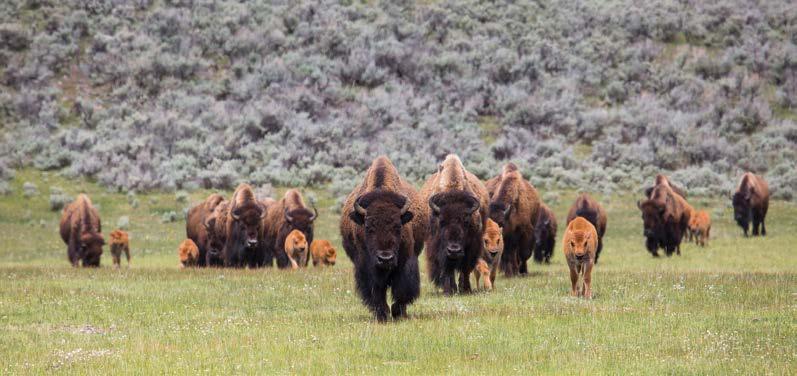
500 years ago, at least 30 million bison roamed the plains. That number is now less than 30,000. The depletion of free range bison has been attributed to:
• Decades of over-exploitation
• Decline in genetic diversity
• Habitat loss
• Human Interaction
Yellowstone National Park boasts the nation's largest free range buffalo herd, but only two others remain - the Henry’s Mountains and Book Cliffs herds, both in southern Utah.
Discover singing, camouflaged, and wildly colorful frogs in habitats filled with live plants and rainforest vibes. Play with hands-on interactives, trigger real frog calls, and get noseto-nose with nature’s most surprising superstars.
Explore every side of these amazing amphibians - their biology, natural history, role in human cultures, importance to ecosystems, and the threats they face in a changing world.
ENVIRONMENT
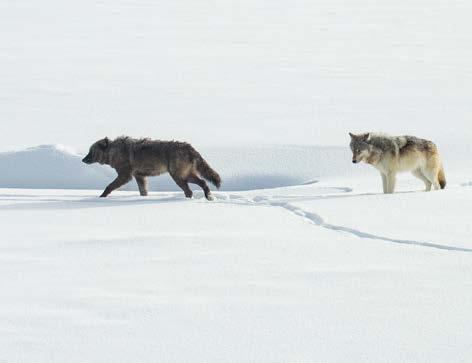
DISPATCHES FROM THE WILD: THE WOLF WARS AREN’T AS POLARIZED AS YOU THINK
BY BENJAMIN ALVA POLLEY EBS COLUMNIST
America’s debates over wildlife, especially wolves, are often framed as bitter battles between two entrenched camps: prowolf environmentalists and anti-wolf rural residents. Scroll through social media or skim the headlines—relating to wolves and beyond—and it can feel like the country is split into warring tribes that can barely occupy the same landscape, much less the same conversation.
But recent research suggests the story is more complicated—and more hopeful.
Two professors from the University of Montana, Associate Professor of Human Dimensions Dr. Alexander L. Metcalf and host of the New Angle Podcast Justin Angle, studied how group identity and misperceptions about others shape residents' attitudes toward gray wolves (Canis lupus) in U.S. states where wolves live. Across two randomized experiments with 2,296 participants, they found that simply reminding people of their political identity—and measuring their assumptions about what “their side” and the “other side” think—can deepen divides, harden attitudes and make conflict over conservation seem inevitable.
They also found that a simple correction to those assumptions can begin to close the gap.
“We need to emphasize identities we share and start there,” Angle wrote in an email to EBS. “This is difficult, especially given an information economy that thrives on division, but I like to think it’s possible. The views we think we hold most strongly are more flexible than we imagine. This is ultimately a call for open-mindedness and curiosity. We’re not as divided as we’re made to think.”
In the first study, they asked people about their views on wolves after activating their political identity. When politics was made salient, people tended to lean into what they believed their group—Democrat (liberals) or Republican (conservatives)—was supposed to think. Those who already supported wolves became more supportive; those who opposed wolves became more opposed. In other words, identity activation pulled people farther apart.
What made this worse was that many respondents held inaccurate beliefs about how polarized their peers really were. They overestimated how much people in their own party hated or loved wolves, and they exaggerated how extreme the “other side” was. These distorted metaperceptions—our beliefs about what others think—fed a sense of “us versus them” that did not fully match reality.
“A lot of political science research frames difference as a function of how we view out-groups,” Angle wrote in the email. “In our study, what we assume
about our own group—and we assume our own group to be more extreme than it is—has more influence on our attitudes than our outgroup views. In other words, it looks like our attitudes about wolves are shaped more by our desire to fit in with our own group rather than by a desire to distance ourselves from outgroups.”
In their second study, they tested whether correcting those misperceptions could make a difference. They shared simple, factual information about what people in their own group actually thought about wolves. This small adjustment—an in-group metaperception correction—helped reduce presumed polarization and weakened the tendency for people to fuse their political identity with their stance on wolves.
The result: attitudes became less extreme, and the sense of inevitable conflict softened.
“I’ve been encouraged by people (agency folks, practitioners, other researchers and some members of the public) starting to wrestle with the notion that the groups they belong to and make assumptions about could be having large effects on their own thoughts, feelings and actions,” Metcalf emailed to EBS. “It’s a difficult concept to internalize, and therefore difficult to incorporate into your work—but I see the wheels turning and the uncomfortability growing in ways that suggest we struck a nerve.”
The lesson for conservation policy makers and practitioners is straightforward but powerful. When we lead with political or cultural identities that we assume are tied to conflict, we may inadvertently deepen divisions and make collaboration harder. Constantly framing wolf management—or any conservation issue—as a battle between red and blue, urban and rural, or “real Americans” and
“coastal elites” risks turning flexible opinions into rigid badges of identity.
“I hope people view identity as dynamic rather than static,” Metcalf wrote. “It’s not that we’re automatically and permanently in these different camps. Instead, we have agency to approach these thorny issues from a variety of perspectives and through a variety of lenses—choosing those perspectives which unite us is likely more important than any facts on the ground.”
Instead, we should invest in communication strategies that correct false narratives about how divided we really are. Sharing accurate, local information about what neighbors and peers actually believe can counter the myth of extreme polarization. Designing identity-informed messages that acknowledge people’s values without weaponizing their group labels can open space for nuanced, shared solutions.
Conservation challenges—from predators like wolves to climate resilience—are long-term, and they demand cooperation across lines of difference. Their findings suggest that conflict is not just about the animals or the policies; it is also about how we see ourselves and one another. If we can temper the stories we tell about who is on which side and how far apart we are, we may find more common ground than the loudest voices would have us believe.
In an era when polarization feels inescapable, that is good news—for people and for wildlife.
Benjamin Alva Polley is a place-based storyteller. His words have been published in Rolling Stone, Esquire, Field & Stream, The Guardian, Men’s Journal, Outside, Popular Science, Sierra, and WWF, among other notable publications, which can be viewed on his website.
Wolves in Yellowstone’s Hayden Valley. PHOTO BY ASHTON HOOKER / NPS
ENVIRONMENT
MUST WATER BE ENHANCED AND ENCASED IN PLASTIC?
BY MARJORIE “SLIM” WOODRUFF WRITERS ON THE RANGE
If someone told me 10 years ago that people would willingly pay over $5 for a one-gallon container of water, I would have scoffed.
Yet here we are buying bottled water even by the cup. People buy teeny bottles that hold less than 8 ounces of water. Then while hiking or traveling, they drink and then toss.
Plastic marked PET and HDPE for are said to be recyclable. Said bottles are shredded and melted into “nurdles,” the picturesque name for plastic pellets used as raw material to make more plastic products.
That sounds promising, but according to the Container Recycling Institute, 70% of all bottles wind up in landfills, the ocean, or littering the landscape. On trails in Grand Canyon National Park, I mostly pick up empty water bottles, each one probably weighing one-third of an ounce. It seems a job that will never be obsolete. Shouldn’t we have learned by now that refilling water bottles is the way to go?
We’ve all learned that plastic is nasty stuff. Yale Climate Connections cautions that each time plastic is melted and remolded it degrades, and recycled plastic is more toxic than “virgin.”
The plastic can be “up-cycled” once into a fleece jacket, but eventually that jacket will get shuffled off to the landfill.
The real reason to drink bottled water is because of its purity, right? Pure fill-in-the-blank spring water. Yet the Los Angeles Times found that about 64% of bottled water is filtered tap water, and Consumer Reports found that bottled water can contain heavy metals and bacteria. A liter of bottled water might contain an average of 240,000 plastic micro-particles.
Even if bottled water comes from a spring, it must still undergo filtration and ozonization, meaning it is no longer “pure” spring water. Most spring water is also said to be minimally treated to maintain its “natural” characteristics, whatever those are.
Let’s talk about the carbon footprint. Is it green behavior to fly water across the country from a remote Pacific island? In areas where water is mined locally, sometimes from public land, are locals concerned about depleted aquifers? Is that water taken for bottling—in effect—stolen?
Then there’s designer water with all kinds of flavoring, hydrogen water, which adds more H2, or oxygen-enriched water. At what point does water become sort-of-or-not-water?
I was once on a VIP tour of a resort in the desert that boasted bespoke water. When those bottles ran out, I offered to refill them, but people told me they would drink nothing from the tap. So I took the bottles into the company van, refilled them from a huge, portable jug that had been filled from whoknows-where but probably the tap, and handed
them back. I was told triumphantly: “See? This water is superior.”
At the beginning of the Bright Angel Trail in Grand Canyon one day, I saw a hiker trying to tie a flat of bottled water onto her pack. I politely ask what the Sam Hill she was doing and was told that she’d been advised to drink a liter of water every hour while hiking. I pointed out that this particular trail was popular in part because potable water was provided at several rest stops along the way. She looked offended: “I do not drink tap water.”
As long ago as 2012 it was widely reported that 20% of the waste stream in national parks was disposable water bottles, leading to sales of bottled water banned in parks. Unfortunately, that ban was rescinded by the federal government in 2017, though parks still encouraged visitors to bring and refill their own bottles. No matter—the parks estimate that most of the waste they dump each year is still plastic bottles.
Who remembers drinking from the garden hose. Anyone? Did your fingernails turn black and fall off? A character in the book, True Grit, proclaimed that he once drank water from a muddy hoof print and was glad to get it. While I might not go that far, I have drunk from a lot of questionable sources, and I’m still here to tell the tale. You might want to try the tap.
Marjorie ‘Slim’ Woodruff is a contributor to Writers on the Range, writersontherange.org, an independent nonprofit dedicated to spurring lively conversation about the West. She is a Grand Canyon educator.
PHOTO COURTESY OF WRITERS ON THE RANGE
IT’S TIME TO PROTECT THE ELK AND DEER HERDS OF GALLATIN GATEWAY AND BIG SKY
3,562
Deer and Elk were killed by vehicles in Gallatin County since 2008.
PRIORITIZE WILDLIFE CROSSING SOLUTIONS. SUPPORT AND DONATE TODAY.
ENVIRONMENT
THRIVING LANDSCAPES: ALPENSCAPES IN ACTION
BY ALI CHIPOURAS EBS COLUMNIST
As we enter peak ski season, many of us are still hoping for more snow. Beyond shaping our ski days, the snowpack we have now also becomes our water supply for summer months—supporting our drinking water, sustaining rivers during drought, impacting our fire season and fueling adventures like rafting the Mad Mile.
That gets us thinking: what can we do besides wish for more snow? In a place as drought-prone as Big Sky, it's never too early to start planning improvements to your yard that are waterwise and more resilient to wildfire, while also supporting native plants and our ecosystem along the way. To help our Big Sky community get there, Alpenscapes is here to support you.
Formed in 2024, Alpenscapes is a partnership between four Big Sky organizations: Big Sky Fire Department, Big Sky SNO, the Gallatin River Task Force and Grow Wild. Together, these partners share one goal: creating appealing, alpineappropriate landscapes that are fire-safe, waterwise, and ecosystem-friendly. Each organization brings deep expertise, and all are united by a shared vision for a more resilient community.
In 2025, that shared mission came to life more vibrantly than ever. The partnership’s reach grew, collaborations strengthened and community engagement deepened.
A year of growth: 2025 successes
Alpenscapes supported the Big Sky community through online and printed resources, homeowner’s associations workshops, community events and partner-led free site visits. These efforts helped community members take practical steps toward fire-safe, water-efficient and wildlifefriendly landscapes.
Grow Wild conducted 37 site visits, covering 272 acres, to help residents identify what's growing in
their yards, address invasive plants and learn about native and waterwise landscaping.
The Gallatin River Task Force doubled their amount of site visits compared to 2024, with half of those visits coming directly from Alpenscapes outreach. These assessments helped residents reduce water use by evaluating irrigation systems, recommending upgrades and offering rebates.
The Big Sky Fire Department conducted 70 home site visits, providing wildfire risk assessments and recommendations to further protect homes and landscapes.
Big Sky SNO supported 12 participants in its newly launched energy audit program, helping homeowners better understand energy efficiency and overall home resilience such as the ability to adapt to more extreme weather like cold snaps, heat waves, wildfire smoke and power disruptions.
Every conversation helped turn big ideas into real, on-the-ground action.
Alpenscapes also continued to grow its educational tools, including the Alpenscapes Landscaping Guidelines and the Plant Recommendations and Noxious Weeds List—practical resources designed to help people choose the right plants, manage water wisely and reduce wildfire risk. Work is also underway on an exciting new project launching in spring 2026 that will bring even more local guidance and inspiration to the community.
Neighborhoods taking action
One of the most powerful ways to create change is at the neighborhood scale. This year, Alpenscapes partnered with several HOAs, including Riverview Apartments and Firelight Owners Association, to support fire-wise, native and waterwise landscaping across entire communities. Because these areas are highly visible and frequently traveled, each improvement becomes a living example of what resilient landscaping can look like. HOA partnerships continue to be one of the most effective pathways for widespread change, proving that resilient yards are not only possible, but beautiful and practical.
Landscape planning starts now
It's never too early to start planning your landscape. Even in winter, you can observe where snow piles up, how water flows when it melts, and which areas struggle or thrive.
Your yard isn't separate from the land around it— it's part of the watershed, part of wildlife habitat and important to your home’s fire safety. Every choice, from plant selection to irrigation and maintenance, makes a difference.
Learn more at Alpenscapes.org.
Ali Chipouras, writing on behalf of Big Sky’s Alpenscapes, is a sustainability and communications consultant with nearly a decade of experience helping organizations and communities in Montana advance their climate and resilience goals.
PHOTO COURTESY OF GROW WILD
PHOTO COURTESY OF GROW WILD
BIG SKY LISTINGS
BIG SKY COMMERCIAL LISTINGS
A&E
‘IN A LANDSCAPE’ RETURNS FOR WINTER PIANO CONCERT
BY JACK REANEY
BIG SKY—On Saturday and Sunday, Jan. 31 and Feb. 1, the Warren Miller Performing Arts Center brought back a popular and unique outdoor show, this time aided by balmy, springlike weather.
“In a Landscape” is a nonprofit music production featuring pianist Hunter Noack, who transports a 1912 Steinway grand piano into various wild spaces, mostly in the Pacific Northwest. He has now performed three times during Big Sky’s winter, and said it’s definitely his coldest venue.
“This is the only winter ‘In a Landscape’ concert we do,” Noack told EBS after his Saturday show. “I love it. My favorite thing is for people to be actually in the landscape, exploring and moving. So, to see people out on cross-country skis, far out, and being in the cool, delightful winter air is a total dream come true.”
Across both shows, 362 attendees experienced music through headsets broadcasting the live concert, and impressive range allowed Nordic skiers to explore Big Sky Resort’s groomed trails.
John Zirkle, WMPAC executive director, said the experience is wonderfully different from a concert in a performing arts center, in which audience members share a very similar experience.
“Skiing is both a social sport and an individual experience. Similarly, listening to piano... I had that little moment, kind of away, looking at the mountain while you [Hunter] were playing Chopin,” Zirkle told EBS. “It’s that kind of ultimate individual connection with the land.”
He believes Noack has “cracked the code” with his unique performance series.
Out here, you can experience a live show in an impossibly intimate way... Kind of the ultimate arts receiving experience,” Zirkle said.
The experience is different for Noack, too. He feels close to listeners trekking in the distance, and enjoys that many aren’t actually watching him— although a solid crowd did gather near the piano to enjoy the majestic display.
“It’s less of me, kind of, performing at a crowd,” he said. “I enjoy that a lot.”
The WMPAC winter series continues Feb. 15, with Scottish Gaelic singer Julie Fowlis, back indoors at the traditional WMPAC concert hall.
Photo gallery by Jack Reaney
44 Ridgeview Loop, Big Sky
35 Low Dog Road, Big Sky
11 Speaking Eagle, Big Sky
A LA CARTE: COOKBOOK ENCOURAGES INTUITIVE EATING
BY RACHEL HERGETT EBS COLUMNIST
The best cookbooks are those that seem to become part of your kitchen. They live on the counter, splayed open to a favorite dish, dogeared pages spotted with remnants of those recipes in progress.
Because of this, I’ve been sitting with Mackenzie Fink’s cookbook, “The Anti-Inflammatory Farmacy: Traditional Wisdom Guided by Science,” for more than a month now. To write about a cookbook, sometimes it is best to live with it a while, to see if it becomes a natural part of your kitchen.
“The Anti-Inflammatory Farmacy” was created for Heroes and Horses, a nonprofit organization serving military veterans that is now based out of the Double H Ranch near Virginia City. Heroes and Horses, according to its website, provides a “transformative experience that addresses the physical, mental, emotional, and spiritual aspects of healing the whole human.” Fink and her husband, Micah, founded the nonprofit in 2014. Three years later, according to a timeline in the book, the Finks realized food played an important role in that healing journey.
“We stopped at a gas station, and he walked out with an energy drink and a Snickers, and it wasn’t even 7 a.m.,” Fink describes in the cookbook’s “Humble Beginnings” section. “My heart sank the way a mother’s would when she sees her child making a choice that doesn’t serve them.”
Prior to that moment, much of the food served to participants was donated, and often consisted of comfort meals volunteers cooked over the campfire. Delicious, sure, but not necessarily nutritious.
Humans lean into comfort. We lean into what we know, which for food in the United States is
so often carbs and processed foods. And we keep turning back to these things until we are able to tune in and feel how specific foods fuel us— or don’t.
You may hear warnings when you’re young, whisperings that some sort of end is coming for these foods, especially from those who have the clarity of age. “I try to stay away from…” the elders whisper. I can’t eat…” I wasn’t listening. I dismissed it as toxic diet culture.
Then, a decade ago, I was diagnosed with an autoimmune disease. I was exhausted and in pain, dragging myself through a blur of doctors and tests. A string of medications were tested, with me as the guinea pig. Most failed to keep my body from attacking itself, or brought side effects that rivaled the pain of the disease itself.
Yet, amid the seemingly unending process to control inflammation in my body, I learned how to listen to it. I now choose what I eat based on how foods make me feel. I, like Fink, have used food to help heal.
“The Anti-Inflammatory Farmacy” is the manual I could have used back then. It details the history of the Heroes and Horses food program, from adopting a Whole30 approach, to developing its own anti-inflammatory approach to food and prepping freeze-dried meals in house for backcountry adventures.
Within its pages, you learn what was once intuitive. You learn how to lean into nutrient-dense whole foods—those with no ingredient list, or minimal ingredients, how to connect food to the earth and those who grow it, and to change your ideas of what makes food “good.” Shockingly, it is not always cheese.
“The Anti-Inflammatory Farmacy” teaches about common inflammatory foods like sugar, dairy and refined grains, then offers 55 recipes that prove food can be just as delicious without those things. It also allows for ample experimentation and substitution.
“Everyone’s inflammatory triggers are different;
there’s no one-size-fits-all approach, which is why incorporating intuitive eating into this way of living is critical,” Fink writes.
I’ve been inspired by “The Anti-Inflammatory Farmacy” to explore my own eating habits further, to make even more small choices that contribute to my overall health and wellness. I’ve replaced my butter and cream filled corn chowder recipe with the book’s equally delicious Chicken Corn Chowder. I’ve replaced pre-packaged chocolate pudding with the book’s Coconut Chia Chocolate Pudding.
This week I’m exploring the soup section, making the Green Velvet Asparagus Bisque and the Toscana Soup, a play on an Olive Garden soup I too loved, but knew was not kind to my guts.
What I most like about the book is Fink’s attitude. It’s real. She doesn’t expect you to forgo cake and ice cream at a birthday party and she doesn’t want following an anti-inflammatory diet to take over your entire life.
“I no longer strive for perfection but instead embrace progress and mindful eating, celebrating small victories, and remembering what a gift it is to be able to taste and experience food as proper nourishment,” Fink writes.
“The Anti-Inflammatory Farmacy” is starting to find its home in my kitchen. It has been marked up and dripped on, and is currently open to the recipe for Nutty Honey Cardamom Granola. This will be my third batch.
“The Anti-Inflammatory Farmacy” is available on the Heroes and Horses website, heroesandhorses.org.
Rachel Hergett is a foodie and cook from Montana. She is arts editor emeritus at the Bozeman Daily Chronicle and has written for publications such as Food Network Magazine and Montana Quarterly. Rachel is also the host of the Magic Monday Show on KGLT-FM and teaches at Montana State University.
PHOTO BY RACHEL HERGETT
COMMUNITY EVENTS CALENDAR
Read the full events calendar, or submit your own community event by scanning the QR code.
MODERN CELTIC MUSIC AT WMPAC
SUNDAY, FEB. 15
WARREN MILLER PERFORMING ARTS CENTER, 7:30 P.M.
Julie Fowlis, award-winning Scottish Gaelic singer, will perform at the WMPAC on Feb. 15. As a folk artist, she’s inspired by Hebridean islands and Highland landscapes, Fowlis has sung on the soundtrack for Disney Pixar’s “Brave” and has won folk singer of the year at the BBC Radio 2 Folk Awards. Tickets start at $22.
Do You or Someone You Know Need Help Getting Sober?
Can’t stop drinking? We get it. Contact Alcoholics Anonymous today! Call 1-833-800-8553 to talk to an AA member or go to a meeting in-person or online. For a full list of meetings visit the website, aa-montana.org, or download the MEETING GUIDE® APP IF YOU HAVE A PROBLEM WITH ALCOHOL, CONTACT AA WE CAN HELP!
ADOBE STOCK PHOTO
Nestled in the heart of Big Sky, Montana, Gallatin Foothills Phase 2 offers a rare opportunity to own a homesite that combines natural beauty, outdoor adventure, and convenient access to local amenities. With spacious lots ranging from 1 to ± 2 acres and over ± 75 acres of open space, this neighborhood is designed to provide privacy, stunning mountain views, and a connection to the outdoors.
Residents will enjoy a professionally built trail system by Terraflow, sledding hills, open space for XC skiing, and access to public lands for activities like snowmobiling, ATV riding, and hiking. The Gallatin River is just 5 minutes away, while Big Sky Town Center and Big Sky Resort are a 10 and 15-minute drive, respectively, creating the ultimate home base for your year-round recreation.
Terraflow Mountain Bike Trail
LAZY J WAREHOUSES
RARE OPPORTUNITY IN BIG SKY,MONTANA
Introducing the latest phase of the Lazy J warehouses— designed to meet all your personal or business storage needs with upgrades inspired by previous owner feedback. Built to withstand Montana’s rugged elements, these units are perfect for protecting your tools, equipment, or recreational gear.
Choose from three layouts ranging from 1,116 to 2,800sqft, each featuring heat, utility sinks with hot and cold water, a 14’ roll-up door, and shared bathroom access. The smaller units are plumbed for a bathroom, with the larger units featuring a full bathroom, a mezzanine space, and a seperate entrance with private parking.
A premium steel package makes each space mezzanineready, maximizing storage while maintaining 13’9” ceiling height on the main level. Conveniently located off Highway 191, these warehouses are ideal for contractors, businesses, or anyone needing extra space for RVs, ATVs, and more.
Over half of the units are already sold—don’t miss out!