Explore Big Sky - December 11th to December 24th, 2025
BIG SKY MEDICAL CENTER CELEBRATES 10 YEARS
COTTONWOOD LOSES TWO BIG SKY LAWSUITS
December 11 - December 24, 2025 Volume 16 // Issue 25
Owned and published in Big Sky, Montana
PUBLISHER
Eric Ladd | eric@theoutlawpartners.com
EDITORIAL
VP MEDIA
Mira Brody | mira@theoutlawpartners.com
SENIOR EDITOR
Jack Reaney | jack@theoutlawpartners.com
STAFF WRITER
Jen Clancey | jen@theoutlawpartners.com
LOCAL JOURNALIST
Leslie Kilgore | leslie@theoutlawpartners.com
DIGITAL MEDIA LEAD
Fischer Genau | fischer@theoutlawpartners.com
SOCIAL MEDIA COORDINATOR
Carli Johnson | carli@theoutlawpartners.com
CREATIVE
GRAPHIC DESIGNER
Radley Robertson | radley@theoutlawpartners.com
SALES AND OPERATIONS
CHIEF OPERATING OFFICER
Josh Timon | josh@theoutlawpartners.com
CHIEF MARKETING OFFICER
Megan Paulson | megan@theoutlawpartners.com
VP DESIGN & PRODUCTION
Hiller Higman | hiller@theoutlawpartners.com
DIRECTOR OF RELATIONSHIPS
Ersin Ozer | ersin@theoutlawpartners.com
MARKETING MANAGER
Tucker Harris | tucker@theoutlawpartners.com
CONTENT MARKETING LEAD
Taylor Owens | taylor.owens@theoutlawpartners.com
SENIOR ACCOUNTANT
Sara Sipe | sara@theoutlawpartners.com
BUSINESS DEVELOPMENT LEAD
Patrick Mahoney | patrick@theoutlawpartners.com
ACCOUNT COORDINATOR
Ellie Boeschenstein | ellie@theoutlawpartners.com
Mario Carr, Kristin Gardner, Janae Hagen, Blake Hempstead, Rachel Hergett, Colter Nuanez, Joseph T. O’Connor, Benjamin Alva Polley, Laura Seyfang CONTRIBUTORS
TABLE OF CONTENTS
COTTONWOOD LOSES TWO BIG SKY LAWSUITS
In October and November, the Montana district of U.S. District Court handed a pair of unfavorable decisions to Cottonwood Environmental Law Center, a Bozeman-based firm with a history of lawsuits against Big Sky entities. Despite winning every case, Big Sky's water and sewer utility has spent $3.4 million on legal defense since 2020.
BIG SKY MEDICAL CENTER CELEBRATES 10 YEARS
With 40,000 emergency department visits, over 300,000 filled prescriptions, 4,000 outpatient psychiatry visits, 150 oncology appointments, more than 50,000 imaging and 175,000 lab tests under its belt, leaders at the Bozeman Health Big Sky Medical Center are looking forward to continued growth in its second decade.
BOBCATS PUSH TOWARD NATIONAL CHAMPIONSHIP
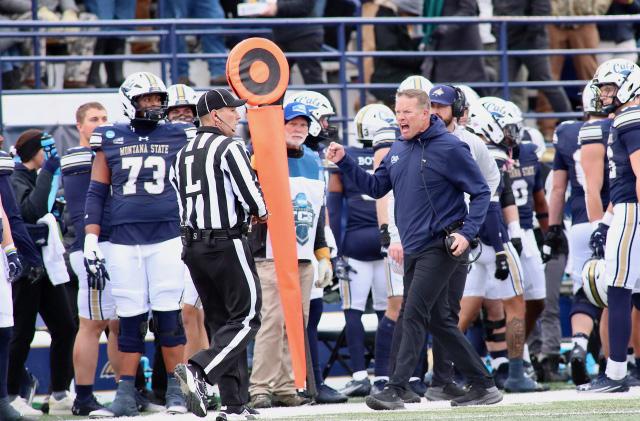
The road to Nashville inched closer as Montana State defeated Yale, 21-13, on Dec. 6. EBS columnist Colter Nuanez describes the unique pressure facing the Bobcats program, through the lens of a dramatic on-field confrontation between player and coach after the Yale victory.
30 YEARS OF BYWOM
By Word of Mouth Bistro, the Big Sky restaurant locally known as “BYWOM," is celebrating 30 years of business in its current restaurant form. Owner John Flach reflects on the journey in an interview with EBS.
CLLC HIRES NEW CEO
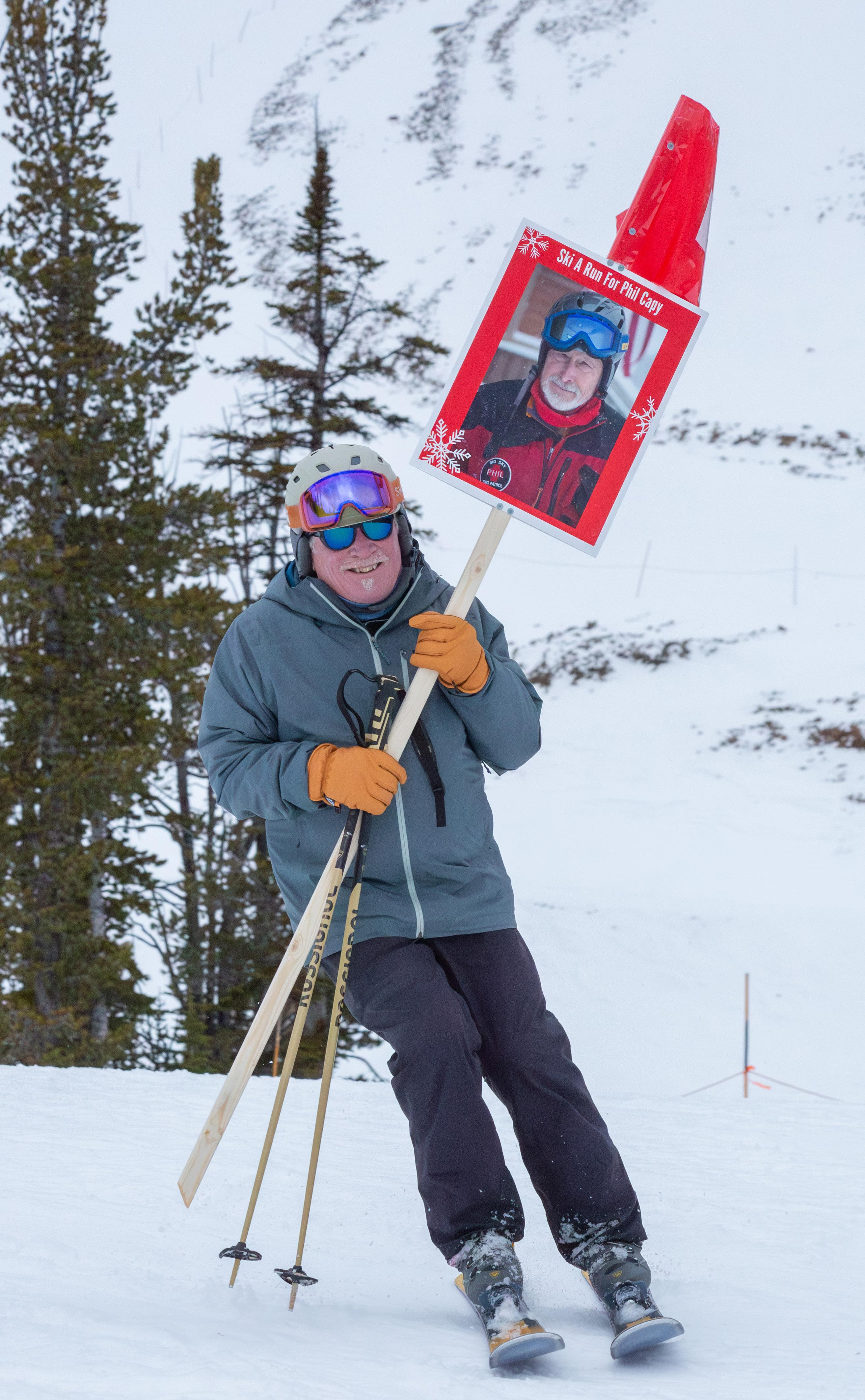
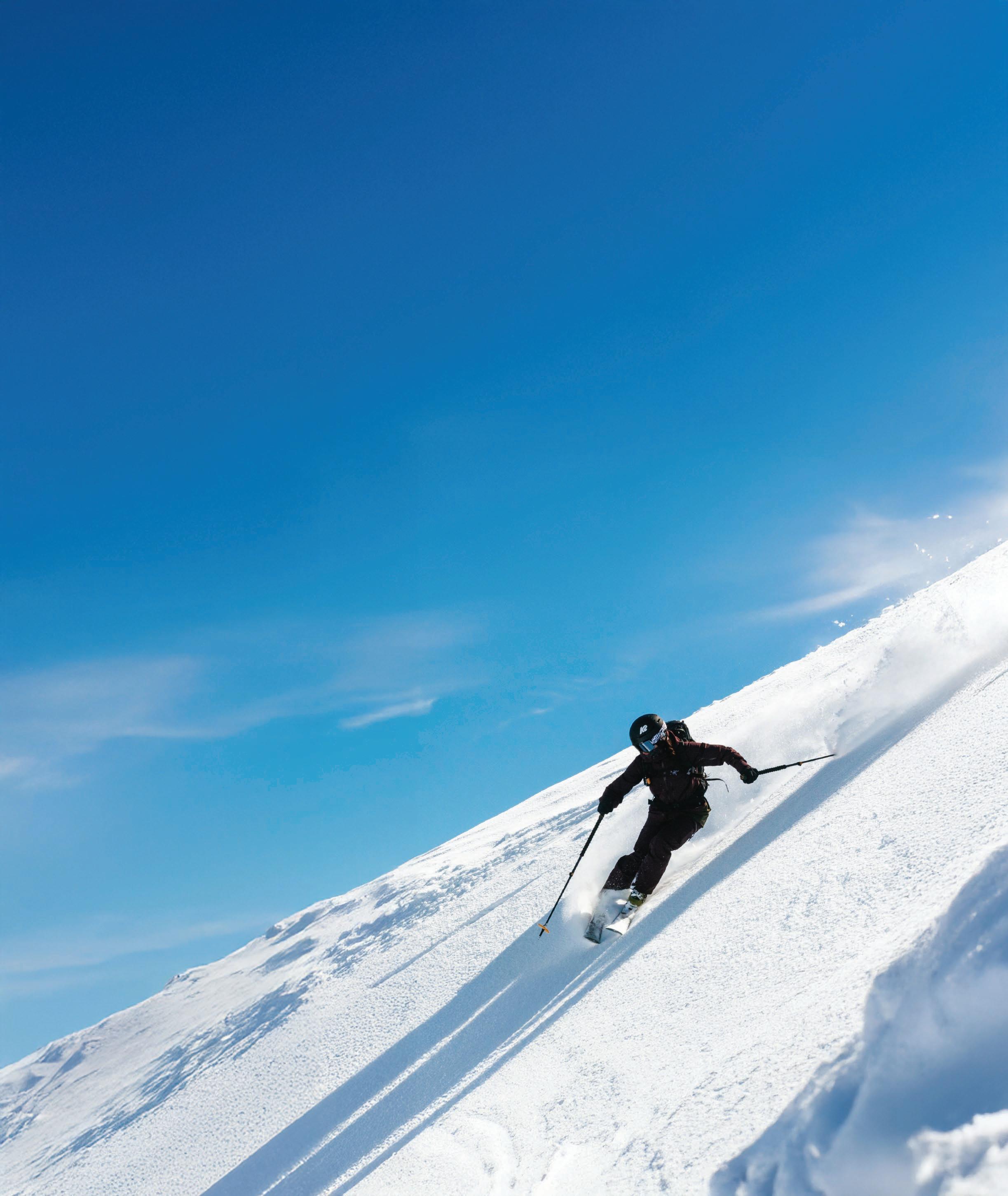
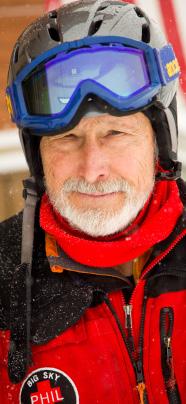
Big Sky Ski Patrol held a celebration of life for former Big Sky Ski Patroller Phil Capy on Dec. 10, including a group ski down Mr. K in his memory. Former patroller Jimbo Humphries
EDITORIAL POLICIES
EDITORIAL POLICY
Outlaw Partners, LLC is the sole owner of Explore Big Sky. EBS reserves the right to edit all submitted material. Printed material reflects the opinion of the author and is not necessarily the opinion of Outlaw Partners or its editors. EBS will not publish anything discriminatory or in bad taste.
EBS welcomes obituaries written by family members or from funeral homes. To place an obituary, please submit 500 words or less to media@theoutlawpartners.com.
The Bozeman-based, globally reaching nonprofit Center for Large Landscape Conservation announced that Brendan Moynahan, the former chief of wildlife conversation for the National Parks Service, will step in as the new CEO starting in January of 2026. Moynahan will be succeeding founder and current CEO Gary Tabor following his retirement.
LOOKING BACK: PHIL CAPY’S SKI PATROL LEGACY
In honor of Phil Capy’s celebration of life and impact on Big Sky Resort Ski Patrol, EBS featured a 2016 profile from sister publication Mountain Outlaw.
LETTERS TO THE EDITOR
Letters to the editor allow EBS readers to express views and share how they would like to effect change. These are not Thank You notes. Letters should be 250 words or less, respectful, ethical, accurate, and proofread for grammar and content. We reserve the right to edit letters and will not publish individual grievances about specific businesses or letters that are abusive, malicious or potentially libelous. Include: full name, address, phone number and title. Submit to media@outlaw.partners.
Local women participated in the annual “Her Gift, Her Creation” performance on Saturday, Dec. 6 at the Warren Miller Performing Arts Center. The annual event promotes artistic expression, community connection and women’s creativity in Big Sky. PHOTO BY DOMINGAS PALMER
BRIEFS
NEWS IN BRIEF
PUBLIC INPUT REQUESTED FOR NEW GVLT BIKEFILL PROJECT
EBS STAFF
After a fundraising campaign that drew more than 800 donors, Gallatin Valley Land Trust, City of Bozeman and Southwest Montana Mountain Bike Association announced that the Bikefill Community Bike Park project has moved into the design phase. The 66-acre park will sit next to Snowfill Recreation Area on city land, creating a combined Snowfill/Bikefill complex of over 100 acres of trails and park space for bike riders of all ages and abilities.
Project partners have selected a locally based design-build team, Integrated Trail Lab of Bozeman and Whitefish-based Terraflow, supported by regional planning, architecture and engineering firms. The community is being asked to help shape the final plan through an online visioning survey as well as a series of public workshops, with the first set for Thursday, Dec. 18, at 7 p.m. at city hall.
Organizers expect to break ground this summer, with some rideable features opening in the fall, as the public-private partnership advances toward construction.
BOZEMAN LIBRARY TO HOST ANNUAL COMMUNITY VIGIL TO MEMORIALIZE UNHOUSED
EBS STAFF
On the winter solstice, Sunday, Dec. 21, Bozeman will host its annual Homeless Persons’ Memorial Vigil at the Bozeman Public Library’s outdoor pavilion at 5:30 p.m. to memorialize those who have experienced homelessness and passed away in 2025.
The annual event is always held on the longest night of the year to remember unhoused people and to call attention to homelessness. The public is encouraged to attend and dress warmly for the event.
The Homeless Persons’ Memorial Vigil is presented in partnership with Bozeman Public Library, Dahl Funeral and Cremation Services, Human Resource Development Council, and the Greater Yellow
SKIER TRIGGERS, IS CARRIED IN AVALANCHE IN NORTH BRIDGERS
EBS STAFF
On Saturday, Nov. 29, a skier triggered an avalanche along the north side of the Bridger Mountains. The skier was caught and carried, deployed their airbag and stopped on the surface of the debris, according to a report by the Gallatin National Forest Avalanche Center. They were able to dig themselves out with no reported injuries.
The avalanche was one of “several slides” that were reported since the snow storm following the Thanksgiving holiday, a GNFAC social media post noted. Recent reports can be found on GNFAC’s website. According to a Dec. 1 avalanche forecast, the main concern right now is wind slabs, as well as buried and persistent weak layers up high.
“Before riding slopes steeper than 30 degrees, look for slopes sheltered from the wind, and dig and probe around to check the depth of the snowpack and assess for potential weak layers,” the DATE forecast report stated.
BELGRADE MAYOR RUSS NELSON TO RETIRE AFTER 22 YEARS
EBS STAFF
On Monday, Dec. 15, the City of Belgrade will host a retirement celebration for Russ Nelson, Belgrade’s longest-serving mayor who completed 11 consecutive two-year terms. The event begins at 7 p.m. at the Belgrade Community Library. Nelson began as interim mayor in August 2003 to replace longtime mayor Lee Stevens, and has since surpassed Stevens’ record for duration of service.
“This is going to be tough for me, but it’s the right time,” Nelson stated in a press release from the City of Belgrade. “In my 22 years as mayor, I’ve been thankful that we’ve had councils that work well together. That has allowed for more things to be done in our city. It has made the job more enjoyable. And I’d like to thank the voters for their confidence in me.”
During Nelson’s two-plus decades of public service, he supported “major” community and infrastructure improvements. Public works projects included traffic light installations on Jackrabbit Lane in 2006, and the East Belgrade Interchange completed in 2015. Both improved traffic flow and connectivity at “pivotal” moments in the city’s expansion, according to the release.
He proudly oversaw the voter-approved permanent levy to fund the Belgrade Police Department, and investments in the Belgrade Community Library and Belgrade Regional Parks, Trails and Recreation District. He also worked with the State Liquor Division to protect Belgrade’s liquor licenses from being consolidated into Bozeman, strengthening Belgrade’s local economy. In addition to his role, he also served the community through the Belgrade Bandits baseball program.
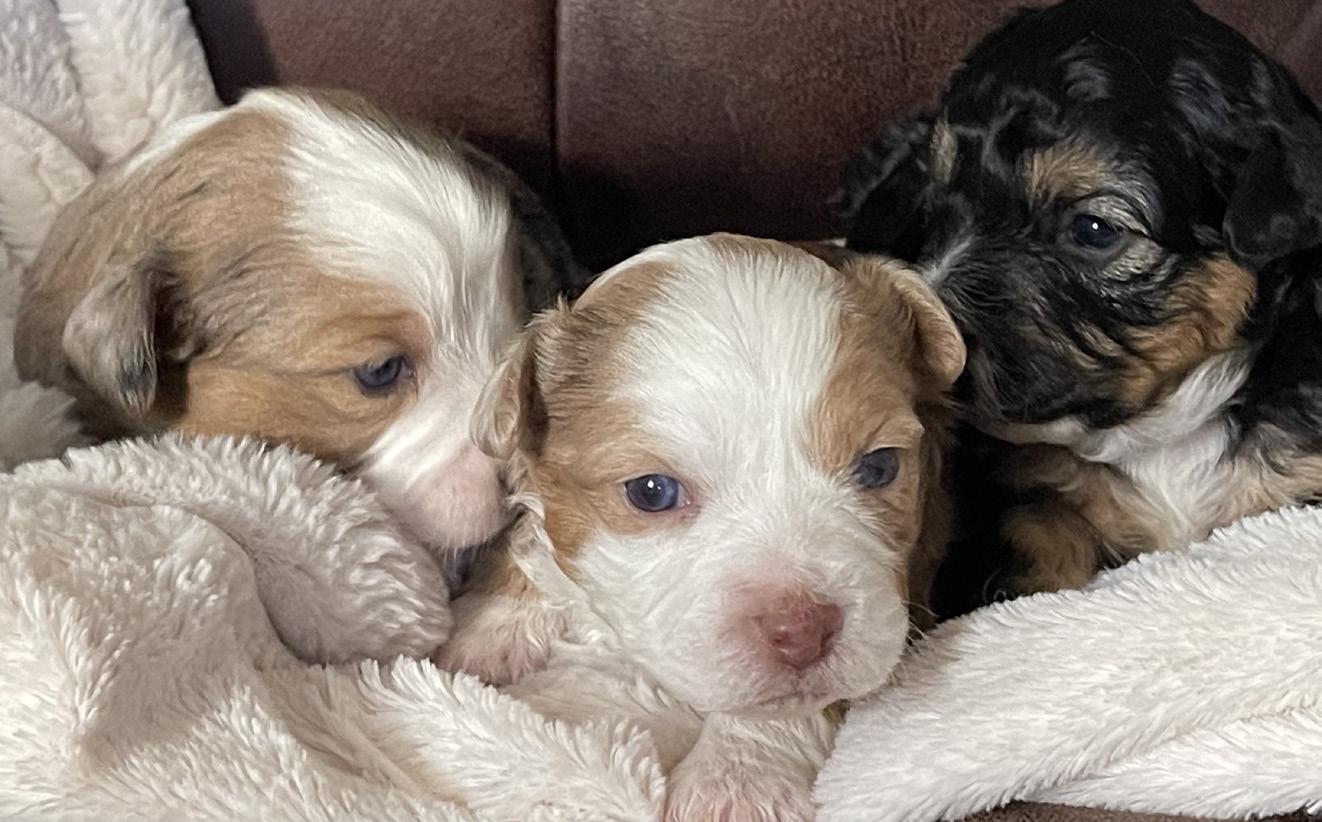
TOY AUSSIE-DOODLE PUPPIES
3 females ready just in time for Christmas. $1,200
Blue Merle, red Merle and black tri. Exceptional breeding. Tails docked and first shots. Located in Billings MT. Call or text for more information and pictures. (208) 540-2667
LETTER FROM THE PUBLISHER REFLECTING ON 2025: BE A PART OF THE SOLUTION
As 2025 comes to a close and I enter my 16th year as publisher of one of Montana’s largest and most trusted media companies, I find myself reflecting on the work, the people and the place that make this newspaper matter. I am incredibly proud of the talented editors, writers, photographers and designers who bring Explore Big Sky to life. This hometown paper is produced by a team that cares deeply about truth, community and helping our region understand itself more clearly.
Over the years, my role as publisher has evolved. Yes, we are charged with delivering quality, thoughtful and truthful journalism. But I’ve realized a bigger responsibility rests with us as well: to help identify the issues that truly shape our future, and to work toward solutions. Increasingly, I see our legacy not only in the stories we tell but in the conversations we spark, the bridges we help build and the problems we refuse to ignore.
Throughout 2025, many of you wrote, called or stopped me in town to talk about the topics keeping you up at night. Truthfully, many of them keep me up too. Here are some I consider the most urgent.
The U.S. Highway 191 and Montana Highway 64 crisis
The ongoing safety saga on U.S. 191 and MT 64 dominated headlines and community discussions this year. With traffic at an all-time high, collisions with wildlife increasing and accident numbers rising, our roads have become a daily source of anxiety for residents, commuters and visitors. Animal migration corridors are choking off. The carcasses on the shoulders tell their own heartbreaking story.
The Montana Department of Transportation is full of good people doing their best, but they are drastically under-resourced, carrying nearly $500 million in backlogged road projects on U.S. 191 alone and navigating layers of bureaucracy that
delay action. This must become a top priority in 2026 and beyond. Until then, the danger remains real and growing.
Part of the solution lies in supporting the organizations and initiatives working tirelessly on this issue. Groups like the Center for Large Landscape Conservation are driving research, partnerships and policy that can help restore wildlife corridors and improve transportation safety. Meanwhile, new state programs, such as Montana’s Wildlife Crossing license plates, offer simple, tangible ways for Montanans to contribute funding toward wildlife-friendly infrastructure.
In the meantime, before long-term fixes arrive, you can be part of the solution: Slow down. Drive
smart. Stay alert. And give the road—and the wildlife that shares it—the respect it deserves.
Every mindful driver makes a difference. Every thoughtful choice behind the wheel can save a life.
The mental health and community violence crisis
This year, my alma mater, Evergreen High School in Colorado, was the site of a shooting. It shook me deeply in a way that statistics alone never could. As I reached out to state and federal delegates seeking ideas, solutions or even sincere engagement, I was struck by the silence. The political landscape has become so polarized that topics like mental health and community violence, issues that should unite us, are instead avoided.
While politics stall, our communities cannot. We must support the local mental health agencies, counselors, nonprofits and crisis teams who are doing the daily work to help our neighbors. We must also give continued respect and support to law enforcement and first responders who protect us, respond to emergencies and bear the emotional toll of these moments.
We must remain vigilant about protecting our public spaces and our schools. Safety is not something we can take for granted. Every one of us has a role: to stay aware, stay engaged and never let our guard down.
If meaningful action is going to happen, it may not come from Washington D.C. It will need to come from local leadership, local voices and local courage. This is a conversation our communities must own, and Explore Big Sky will continue creating space for it.
Protecting our rivers: The GYREAT Act
One of the most encouraging developments this year was the momentum behind protecting two of
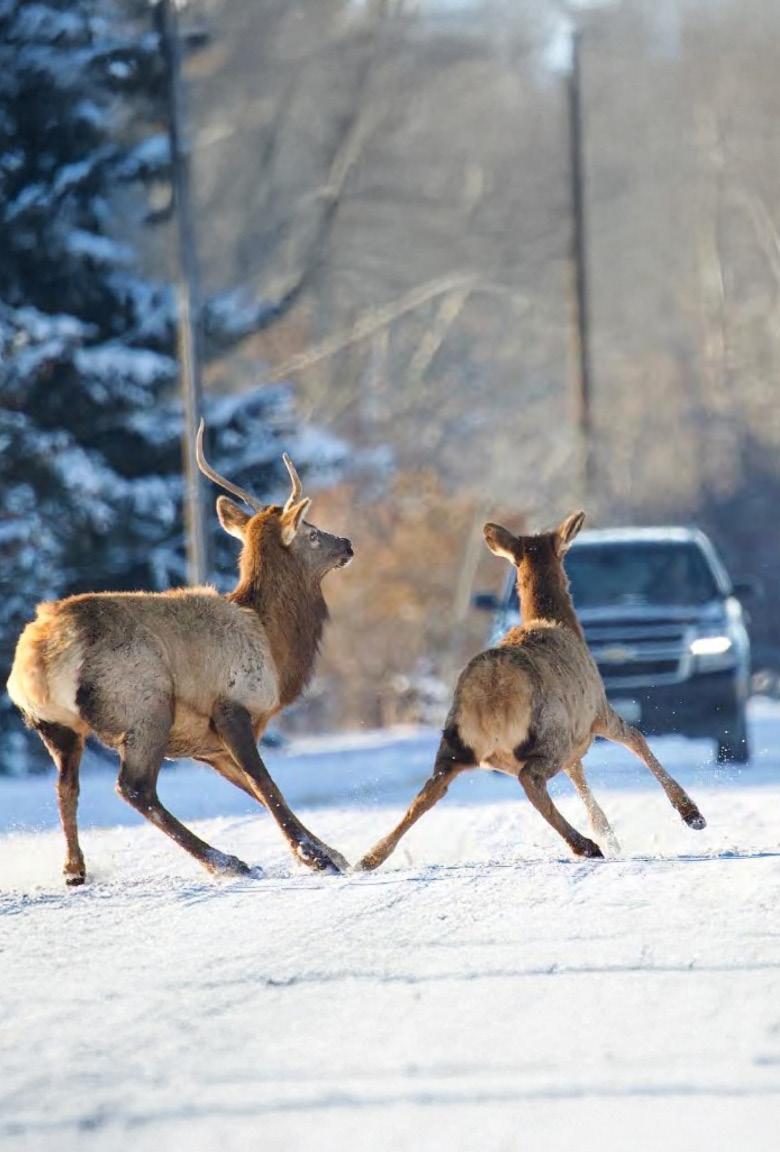
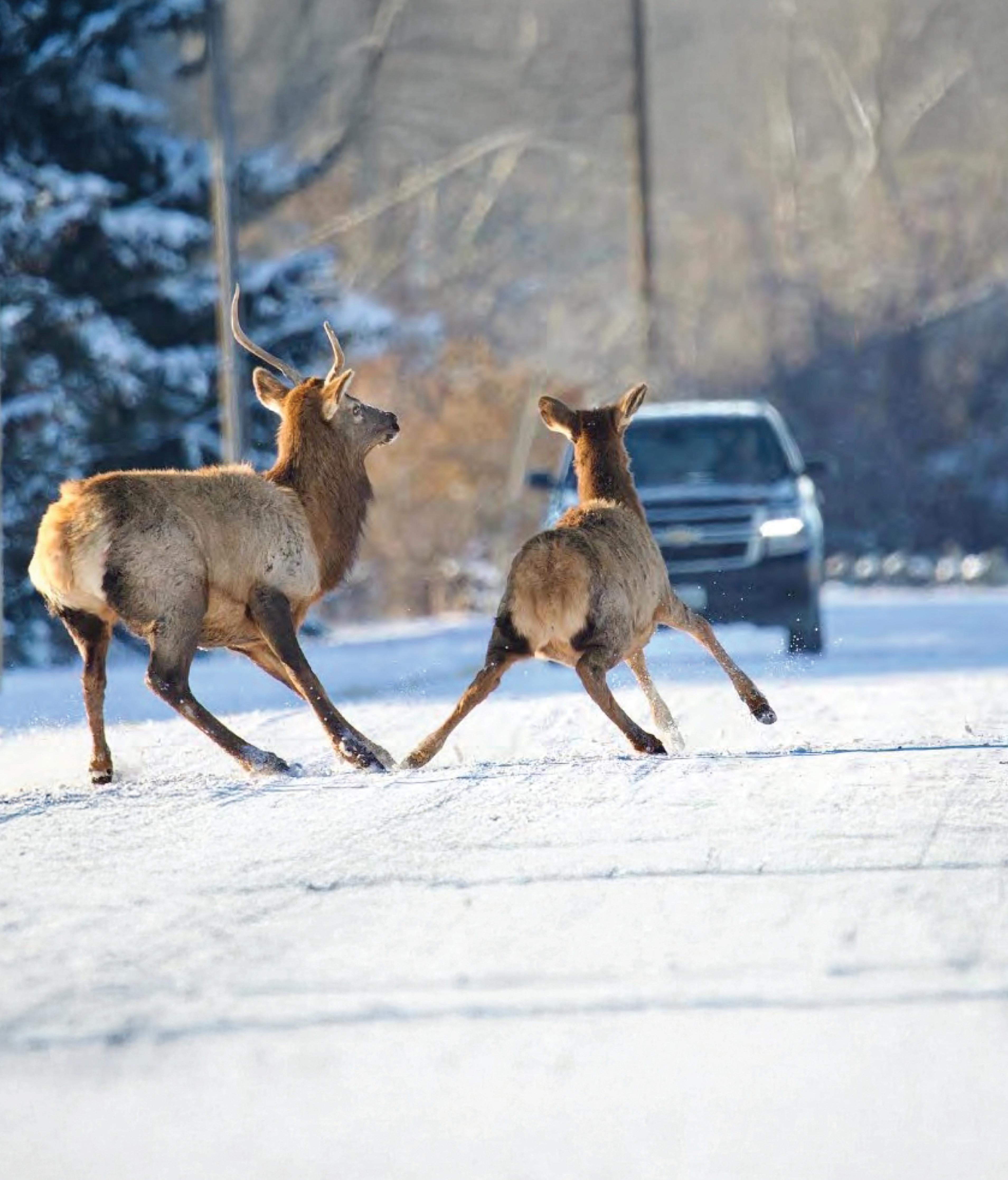
Wildlife-vehicle collisions have increased along major corridors in a growing southwest Montana. PHOTO BY HOLLY PIPPEL
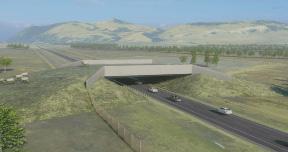
A conceptual rendering of how a potential overpass may look. RENDERING COURTESY OF JACOBS ENGINEERING GROUP INC.
Montana’s most iconic rivers: the Gallatin and the Madison. After years of work from conservation groups, outfitters, local leaders and citizens across the political spectrum, Congressman Ryan Zinke introduced the Greater Yellowstone Recreation Enhancement and Tourism Act in 2025. The bill would grant Wild and Scenic River protection to key stretches of these beloved waters.
The need is clear. These rivers define our landscape, fuel our economy, nurture wildlife and shape our way of life. Yet they remain vulnerable without permanent safeguards.
The bill now sits in Washington, D.C., awaiting a senate sponsor. And so the question becomes: Will Sen. Steve Daines or Sen. Tim Sheehy rise to the moment in 2026 and introduce the companion legislation for this widely supported bipartisan bill?
Protecting our rivers is not a political issue—it is a Montana issue. Let’s hope our elected leaders seize the opportunity.
Growth, identity and the future of southwest Montana
Our region remains one of the fastest-growing in the country. With that growth comes opportunity, but also strain. Housing affordability, cost of living, infrastructure demands and the preservation of our quality of life continue to top the list of concerns.
If 2025 taught us anything, it’s that we cannot simply wait for government—local, state or federal—to sweep in and solve our problems. The responsibility for thoughtful growth and responsible development rests with us—with business owners, land stewards, community leaders and everyday residents who care enough to show up.
IF THERE IS ONE THING I'VE LEARNED OVER THE YEARS, IT’S THIS: WHEN PEOPLE GET INVOLVED AND BRING PASSION, IDEAS AND PERSISTENCE, REAL PROGRESS BECOMES POSSIBLE.
— Eric Ladd
We must build sustainable communities, places where people can live, work and raise families with dignity. That means supporting local businesses, investing in infrastructure that keeps pace with growth and creating housing that serves the people who make this region run. And it means recognizing that “community” includes not just our human neighbors, but our four-legged ones too. The wildlife that moves through our valleys and across our roads is part of the heritage we are all trying to protect.
Growth can lift a community or fracture it. The difference lies in the choices we make and whether we stay committed to the values that drew us here in the first place.
A moment of hope
Even amid these challenges, moments of profound inspiration break through. One of them happened
backstage at this summer’s Wildlands concert, here in Big Sky. Headliner Dave Matthews asked to learn more about the ethos behind Wildlands— why we built it, why conservation is at its core and what we hope it will inspire in the years ahead.
As we talked, he told me something that struck hard: “Greed is killing society. What we need is more people choosing to support each other.”
Later that night, unprompted, he matched our fundraising efforts, bringing the total to more than $1.3 million donated to local conservation initiatives. It was profoundly impactful to witness the generosity of the Matthews family, their management team and the other artists who helped make Wildlands a record-setting night of giving back to a great cause.
That moment reminded me why we do this work. Why community matters. Why hope still has a place here.
Closing thoughts
As we turn the page into 2026, I remain deeply grateful for this community and for each of you who reads this newspaper. Thank you for caring,
for speaking up and for participating in the conversations that shape our region.
And I encourage you—reach out to our editors. Let us know what issues need attention, what stories deserve more coverage and where our reporting can help spark progress. Your voice matters, and we are listening.
If there is one thing I've learned over the years, it’s this: when people get involved and bring passion, ideas and persistence, real progress becomes possible. The most meaningful action happens at the local level where your voice truly carries weight. Sitting back and staying frustrated is no longer an option if we want to see change.
Lean in. Show up. Be part of the solution.
On behalf of the entire Explore Big Sky team, thank you for your trust. Here’s to a safer, stronger, more connected, more compassionate 2026.
Eric Ladd Publisher
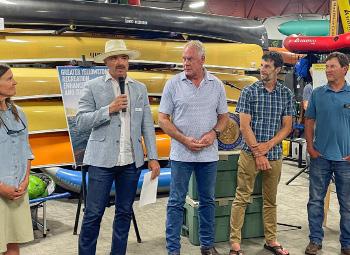
Leaders of conservation groups and Rep. Zinke present the GYREAT Act. PHOTO BY JACK REANEY
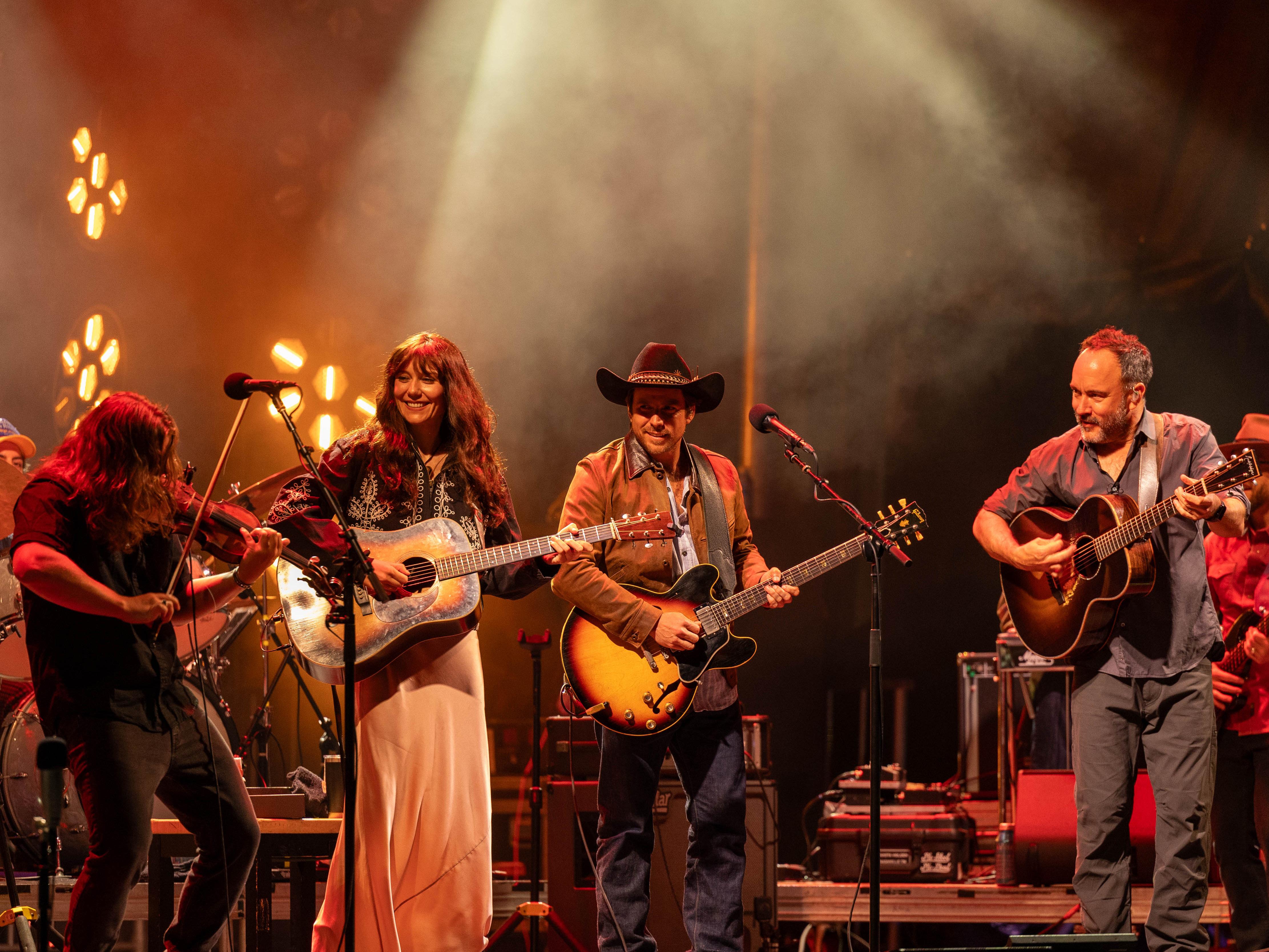
Dave Matthews, Molly Tuttle and Lukas Nelson perform at Wildlands. PHOTO BY LAURA WELLS
LOCAL
COTTONWOOD COMES UP EMPTY ON RACKETEERING, BOYNE LAWSUITS
BOZEMAN LAWYER’S STRING OF FAILED LAWSUITS CONTINUES AGAINST BIG SKY
ENTITIES; JUDGE CALLS RACKETEERING CLAIMS ‘TENUOUS AT BEST’
BY JACK REANEY
BUTTE—In October and November, the Montana district of U.S. District Court handed a pair of unfavorable decisions to Cottonwood Environmental Law Center, a Bozeman-based firm with a history of lawsuits against Big Sky entities. The first of two lawsuits involved racketeering claims against multiple Big Sky companies, business leaders and public officers. Separately, the latter resolved a five-year dispute against Big Sky Resort’s parent company, Boyne Resorts.
In July, U.S. District Judge Brian Morris ordered sanctions on Cottonwood for “pushing a baseless fraud theory” including “reckless misstatements” and “disregard of facts,” against Big Sky’s water and sewer utility despite the theory of fraudulent activity being “debunked multiple times,” according to the July ruling.
Despite the Big Sky County Water and Sewer District now having won each of the four judgements in suits initiated by Cottonwood since 2020, legal defense fees have now reached $3.4 million with burden affecting roughly 3,500 Big Sky ratepayers—approximately $1,000 per customer, according to BSCWSD board chair Brian Wheeler—forcing the district to raise rates and dig into cash reserves amid other costly infrastructure needs.
Rate increases formed the basis of Cottonwood’s argument in the 2025 lawsuit, in which Big
Sky resident, plaintiff, class representative and Cottonwood supporter Monroe Cameron claimed personal injury for “utility bills to cover costs associated with defendants’ unlawful racketeering.” The court found those costs to be partially caused, if at all, “by Cottonwood’s own actions” which triggered numerous costly and unsuccessful lawsuits.
“The court does not see how Cameron has plausibly proven that the alleged increase in his utility bills causally connects, proximately or directly, to defendants’ act of sending allegedly fraudulent data to EPA and DEQ,” the Oct. 9 ruling stated, echoing the defendants’ claim that rates increased due to inflation and other external factors. “The chain of causation between utility rates and the allegedly fraudulent data appears tenuous at best.”
Cottonwood’s complaint, filed on March 21, 2025, alleged that defendants violated the Racketeer Influenced and Corrupt Organizations (RICO) act, claiming, “defendants engaged in wire/mail fraud by sending fraudulent data to state and federal investigators” regarding the volume of effluent exported by BSCWSD to the Spanish Peaks and Yellowstone clubs for lawful disposal. The intention, Cottonwood claimed, was to create “an enterprise with the common purpose of developing unnecessary luxury houses in Big Sky, Montana.”
The fraudulent data allegations in the RICO suit mirror those made in the prior case which Judge Morris found to be “disproven.”
“This lawsuit is exceptionally difficult for me because it named valuable community members personally. For me, this crossed a line given the character of these individuals.”
Brian Wheeler, board chair, Big Sky County Water and Sewer District
“Cameron’s RICO allegation depends upon a finding that the data shared by defendants was fraudulent… The court already assessed in depth the allegations of fraudulent data. The court held in its order in July of 2025 on Cottonwood’s motion to vacate, that the ‘BSWSD did not falsify data,’” the Oct. 9 ruling from Judge Morris stated.
“The Court scrutinizes each of Cottonwood’s assertions and concludes no evidence exists that anyone ‘falsified the data contained in the spreadsheets,’” Morris concluded.
Cottonwood listed the following defendants in the RICO suit: former BSCWSD general manager Ron Edwards; Yellowstone Mountain Club; Spanish Peaks Mountain Club; Lone Mountain Land Company and its parent company CrossHarbor Capital Partners; LMLC representatives Matt Kidd, president, Mike DuCuennois, executive VP of development— DuCuennois also served on the BSCWSD board until 2024—and Rich Chandler, VP of environmental operations. Judge Morris referred to the list of LMLC-associated individuals as “YC Defendants” in the ruling.
The filing argued—without sufficient evidence to convince the court—that DuCuennois was “at the center of the scheme to continue unlawfully approving sewer connections at the Sewer District,” in his roles between LMLC and the BSCWSD board, and that he intended for alleged fraudulent data “to thwart agency investigations” for the benefit of his employer.
Morris stated, “The alleged facts… fail to plausibly allege a RICO violation under either asserted pleading standard. The alleged facts provide no evidence any of the YC Defendants participated in fabricating or sharing fraudulent data.”
BSCWSD board chair Brian Wheeler expressed his disappointment with the accusations against defendants including DuCuennois, calling him an “absolutely incredible” public servant.
“This lawsuit is exceptionally difficult for me because it named valuable community members personally,” Wheeler stated in an email to EBS. “For me, this crossed a line given the character of these individuals.”
In conclusion, Judge Morris granted dismissals to Edwards and the YC Defendants. He dismissed Cameron’s complaint and closed the case.
Wheeler noted that BSCWSD has not contacted Cameron to understand his position,
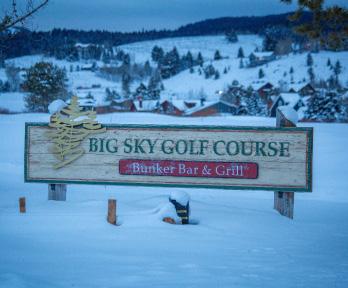
The Bozeman firm lost a pair of lawsuits this fall, one involving irrigation of Big Sky Resort's golf course.
PHOTO BY JACK REANEY
and that Cameron’s complaint is not representative of sentiments held by most district customers.
“Instead of funding a new water tank or drilling wells, reserves are allocated to defending Mr. Cameron’s groundless claims,” Wheeler stated.
Case dismissed against Boyne, Big Sky Resort
Separately, on Nov. 20, a jury ruled unanimously against Cottonwood in a lawsuit stretching back to 2020 which claimed Big Sky Resort over-irrigated its golf course using treated wastewater, resulting in pollution to the Gallatin River.
Initially dismissed in 2022 by U.S. District Court based on lack of proper notice by Cottonwood to Boyne, the U.S. Court of Appeals for the Ninth Circuit reversed the dismissal in November 2023, reviving Cottonwood’s complaint against Boyne.
As with the water and sewer district, Boyne and Big Sky Resort remain undefeated against Cottonwood lawsuits—including an unrelated 2018 lawsuit following a 2015 ski accident involving John Meyer, who separately serves as Cottonwood’s executive director.
Big Sky Resort President and COO Troy
Nedved shared a statement reaffirming the resort’s longstanding pledge to support Big Sky’s status as a community that does not discharge directly into the Gallatin River.
“With the help of the community, Big Sky is now the largest zero discharge community in Montana,” Nedved stated. “The reclaimed water used to irrigate the golf course is significantly cleaner than the water that Bozeman and many other Montana
cities discharge directly into Montana’s rivers. Big Sky Resort thanks the jury for recognizing the resort’s water stewardship efforts and rejecting Cottonwood’s claims.”
Wheeler, who worked for Big Sky Resort for 36 years and still provides consulting, noted the symbiotic partnership between the resort and the district—the district provides services that support the resort and associated community, and the resort helps the district properly recycle treated
wastewater through golf course irrigation and, most recently, snowmaking.
“Big Sky Resort and the Big Sky Water and Sewer District have prevailed in every frivolous lawsuit,” Wheeler stated. “… I’m proud of the community commitment, funding and teamwork necessary to maintain or history as zero-discharge community.”
EBS reached out via email to Meyer for comment on both results. While he did not respond to the three questions asked—including whether he intends to continue suing Big Sky entities in light of recent defeats—he did share an unprompted statement.
“We believe we would have prevailed had the Gallatin River Task Force not taken donations from the defendants and actually stood up for science,” Meyer stated.
In response, GRTF Chief Executive and Science Officer Kristin Gardner emphasized that GRTF has spent the past 15 years working to understand and address harmful nutrients in the West Fork of the Gallatin River.
She explained recent groundwater assessments by the Montana Bureau of Mines and Geology and long-term monitoring by the Gallatin Local Water Quality District, which are providing a better understanding of nutrient sources affecting the Gallatin River, particularly septic infrastructure used in various pockets of the community.
“Independent science and long-term monitoring data guide the work of the Gallatin River Task Force—not donors or litigation,” Gardner stated.
The Big Sky County Water and Sewer District has spent $3.4 million defending itself successfully against Cottonwood lawsuits. PHOTO BY JACK REANEY
BIG SKY MEDICAL CENTER CELEBRATES 10 YEARS
BOZEMAN HEALTH ESTIMATES FIVE MILLION MILES SAVED IN TRAVEL DUE TO CLOSER SERVICES
BY JEN CLANCEY
BIG SKY—A lot can happen in a decade. For the Bozeman Health Big Sky Medical Center, those 10 years included treating patients in the COVID-19 pandemic, and navigating rural health care in a growing community just one hour from one of the nation’s busiest national parks—and for many years, one hour from the nearest hospital.
As snow piled up outside on Thursday evening, Dec. 4, leaders reflected on the medical center’s beginnings and where it’s headed next, from clinic expansion to longer term financing of health services for Big Sky.
BSMC Administrator Kelly Halmes noted that partnerships were key to opening the medical center, and ensuring continued high quality care. She thanked the Big Sky Resort Ski Patrol, the Big Sky Fire Department, Sergeant Dan Haydon and the Gallatin County Sheriff’s Office, the National Park Service and local nonprofit Big Sky Bandage led by Amy Vance.
Halmes noted that the Sheriff’s office has been phenomenal and the best she’s ever worked with and described how closely BSMC has worked with the Big Sky Fire Department to address emergencies.
“Because we are staffed with two nurses and a doc in the ER, they’ll bring a patient in and if we need more hands, they will work with us. They will stay and make sure that they manage that patient with us,” Halmes said. “It’s like, you wanna give the best care every day, you know, [with] minimal resources, to be honest with you and we’re all bringing more resources. They’re bringing in more critical care. We’re bringing in specialties, we’re growing with the town.”
Support from local organizations and leaders was also important to the opening of the BSMC on Dec. 6, 2015. In her speech, Halmes highlighted the Big Sky Chamber of Commerce, Big Sky Resort Area District, Big Sky Community Housing Trust and Big Sky Wellness Coalition. Halmes also celebrated longtime community members like Taylor Middleton, former president and chief operation officer of Big Sky Resort and his wife Barbara Rowley, writer and leader in several local boards and organizations including the Big Sky Broadway program, for their commitment to seeing a medical center in Big Sky come to fruition.
Heidi Marshall, BSMC executive assistant, highlighted the commitment of the facility’s staff to establish high quality care in Big Sky Town Center. She recalled late administrator Tracy Reamy, who relocated to Big Sky with her family to open BSMC.
“To give you a glimpse into what the days were like, just three days before the hospital opened, things were moving at absolute lightning speed. The building wasn’t finished. And the workers were in every part of this hospital working against the clock,” Marshall said.
Despite the flurry of activity, doors opened in 2015, and Marshall recalled the energy of that day,
saying that she and the staff knew they were doing something meaningful.
“I know Tracy is looking over us today filled with pride at how far we’ve come. Those of us who knew Tracy can still hear her infectious laugh and feel her unwavering, all-in energy that defines her,” Marshall said. “Tracy shaped us in ways that we’ll never forget.”
Looking ahead
With 40,000 emergency department visits, over 300,000 filled prescriptions, 4,000 outpatient psychiatry visits, 150 oncology appointments, more than 50,000 imaging and 175,000 lab tests under its belt, leaders at BSMC are looking forward to the next decade.
And this upcoming chapter could be interesting given legislative changes that allow for a new hospital district, or “wellness district,” in Big Sky. BSRAD Executive Director Daniel Bierschwale described the possibility for Big Sky to create its own wellness district to funnel taxpayer dollars into local services, which in the Madison County
portion of Big Sky currently go toward the Madison Valley Hospital District.
“The wellness district isn’t just an administrative change. It’s a long-term investment in Big Sky’s ability to thrive,” Bierschwale said. “It ensures that medical care we depend on today will remain strong, stable, and supportive for decades to come.”
Nikki Howard, a Big Sky resident who testified in support of the legislation that has allowed Big Sky to begin creating a new wellness district, noted how important the medical center has been in her recovery from a traumatic ski injury.
“I genuinely feel so grateful that this community and this institution exists because these people actually care about me and they are listening to me,” Howard said. She said she lives in the Madison County part of Big Sky, but all of her treatment happened outside of MVHD, including care at BSMC—a core argument of Big Sky citizens in the midst of Senate Bill 260 talks.
Residents in May will vote on whether they’d like to create a Big Sky Wellness District. Aside from wellness district efforts, Bozeman Health leaders are already considering what Big Sky needs in the future.
Bozeman Health CEO Kathryn Bertany described how support for BSMC enabled the facility to quickly respond to pandemic needs through quadrupling oxygen capacity, doubling room space and expanding testing. Growth in the next 10 years could look like expansion of the emergency department and adding procedures, according to Bertany.
“We’re continuing to grow as the community grows and tourism grows,” she said, noting the unique responsibility of caring for both residents and the many tourists who access nearby trails, resorts and Yellowstone National Park. This year, Bozeman Health estimated about five million travel miles in the Gallatin Canyon saved due to closer health care services in Big Sky. Bertany hopes that convenience only grows as the medical center expands.
“I hope we double that in the next 10,” Bertany said.
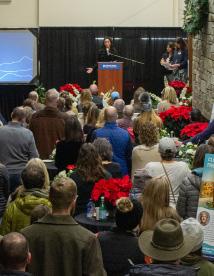
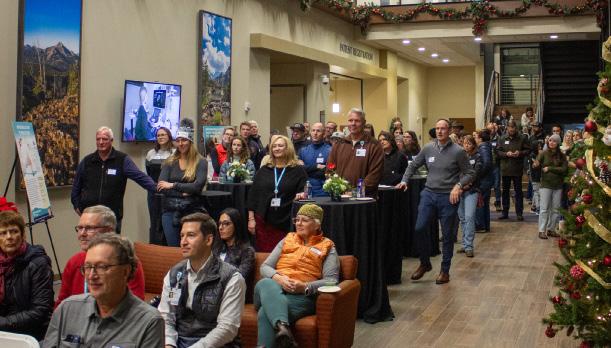
Community members and current and former staff filled the lobby of the Big Sky Medical Center. PHOTO BY JEN CLANCEY
Nikki Howard speaking about her experience in the Bozeman Health system. PHOTO BY JEN CLANCEY
EXPLORER GONDOLA TO OPEN DEC. 20; FIRST CABIN RIDES UP FOR AUCTION
BY JACK REANEY
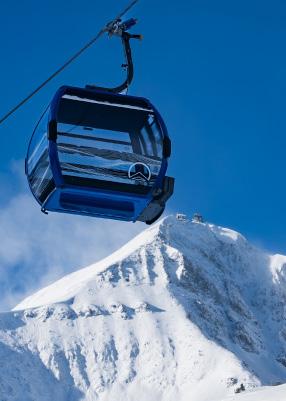
BIG SKY—The Explorer Gondola project remains on schedule at Big Sky Resort, with plans to open on Saturday, Dec. 20 after three years of construction. The Doppelmayr D-Line Explorer Gondola will be the world’s fastest 10-person gondola, with an uphill capacity of 2,850 skiers per hour, according to the resort.
On Dec. 7, the resort announced an auction to raise money for the Boyne Forever Foundation, a philanthropic outlet of Big Sky Resort’s parent company, Boyne Resorts. The 25 winning bidders will earn a seat on the first five gondola cabins, with special mementos and experiences to celebrate their generosity as they ride the two-stage gondola during the resort’s grand opening ceremony.
The auction is open online until Wednesday, Dec. 17 at 6 p.m., with $300 as the minimum bid, ranging up to a $1,250 minimum for a seat in the first cabin.
"We're honored to mark this milestone by investing back into the community,” Michelle Wein, executive director of Boyne Forever Foundation, stated in an email to EBS. “The Boyne Forever Foundation operates as a public charity with a mission to create lasting impact across three pillars: protecting our mountain environments, strengthening our communities, and supporting our team members.”
Replacing the original 1973 Explorer double chair, the Explorer Gondola travels roughly twice the distance at a world-record speed of 7.1 meters per second. PHOTO BY
ANDREW BELLI / BIG SKY RESORT
Wein noted that grant recipients will not be designated in advance, but the foundation has designed a “strategic grantmaking process” that allows nonprofits across its resort regions to apply for funding based on demonstrated need. The foundation’s first grant cycle will open in April
2026, and Wein encourages local nonprofits, school districts, municipalities and Tribal Nations to apply.
The new process deviates slightly from Big Sky Resort’s 2023 first-ride auction for the Lone Peak Tram, which ultimately raised $50,000 to be split between three pre-arranged local nonprofits: Morningstar Learning Center, Gallatin River Task Force and the Big Sky Community Organization. While the process differs, the common thread is the resort’s recent efforts to use exciting infrastructure as a platform to give back.
“This approach allows us to be responsive, equitable, and amplify our impact across all the communities we serve,” Wein stated. “Proceeds from the Explorer Gondola first rides will ensure that as Big Sky grows, our commitment to giving back grows with it."
Auction winners will receive a lift ticket for Dec. 20, surprise mementos at the gondola’s mid-station, a private photographer capturing the journey, an early access ride on the Lone Peak Tram plus “exclusive entry” to the new Kircliff glass summit observatory before the Dec. 20 grand opening, according to an email from Big Sky Resort.
With the gondola complete, the summit of Lone Mountain will be open to pedestrians in both winter and summer, for the first time in Big Sky Resort’s history.
REGIONAL
WEST YELLOWSTONE RESIDENTS TO SECURE 18-UNIT APARTMENT BUILDING FOR AFFORDABLE HOUSING
BY JEN CLANCEY
When the Gibbon Avenue Apartments went up for sale in West Yellowstone a year and a half ago, tenants were nervous. Most, like Andrey Nedelko live there year-round as they operate and work at local businesses in town. The 18unit complex was listed online for $3.9 million in September 2024, which was later reduced to $2.8 million in July this year.
Tenants discussed what they could do to keep their homes for the long-term future. The 2020 Census reported that 307 of the 849 homes in West Yellowstone were “vacant,” a status which includes both short-term rentals and homes used seasonally, recreationally or occasionally. With the help of the West Yellowstone Foundation, NeighborWorks Montana reached out to the tenant leadership team to discuss forming a housing co-op that would keep the beloved apartments in residents’ hands for the foreseeable future.
NeighborWorks Montana is a nonprofit that provides education and financing for Montanans to secure stable, affordable housing. In West Yellowstone, NeighborWorks will help residents of Gibbon Avenue Apartments establish a style of housing that all tenants own and maintain, led by a board of directors including Nedelko as vice president. Housing co-ops can be beneficial in places where cost of living is high, helping reduce monthly expenses and create a stable living option.
The board of directors began leading the formation of the cooperative in July and have met weekly since, to organize the purchase of the building. The purchase is expected to be completed in midDecember, and the land will be under a housing land trust, the first for the town. The Human Resource Development Council will hold the land trust, and also provide technical assistance as needed to the cooperative.
Nedelko owns the restaurant Yogi’s Waffle House and has lived in West Yellowstone for about 16 years. For six of them, he’s lived with his family in the Gibbon Avenue apartment building, which operated on month to month leases. He said he’s very satisfied with his home now.
“You know, it feels absolutely great,” Nedelko said. “We definitely make that place very comfortable for our family to stay and our neighbors are wonderful people, and the area is very safe and sound, so we are very happy.”
Kaia Peterson, executive director of NeighborWorks Montana, explained that West Yellowstone paved the way for a housing co-op like this. Earlier this year, the Town of West Yellowstone established a $500,000 housing fund. That fund’s first investment is the Gibbon Avenue project at $275,000. Outside of town dollars, the project is funded by a variety of sources.
“I think part of why I was really excited about this project is I knew that the community had done
a lot of work to evaluate housing needs and the town was ready for a project,” Peterson said. “And I think in a small town that can be really hard to do, but I've been really impressed with the work that's gone into talking about housing issues, evaluating options, bringing together partners.”
The West Yellowstone Foundation, Montana Board of Housing, Montana Healthcare Foundation and Gallatin Housing Impact Fund are also supporting the effort financially. West Yellowstone Foundation Executive Director Carrie Coan noted that the project is a “huge milestone” for housing in West Yellowstone. She hopes that momentum will carry forward into the 80 Acre project for affordable housing in town.
“Housing is such a huge challenge in so many places, but it's really definitely a unique challenge in resort-like tourism communities like West Yellowstone,” Peterson said.
Alanah Griffith, Montana state representative for Big Sky and West Yellowstone, also submitted a letter of support for the project to the Town Council in October. She noted that residents are willing to give up generating wealth by entering an agreement that assures long-term affordable housing for community members with capped resale values.
“In exchange, they will have stability. This is a real value that they are giving up, in order to have a stable home in West Yellowstone,” Griffith said.
“As you know, a stable, local workforce benefits the community as a whole.”
She encouraged the Town of West Yellowstone to funnel resort tax dollars toward the effort, to help organizers adapt to the quick opportunity to establish affordable options in town. Nearby in Big Sky, the Big Sky Community Housing Trust and Big Sky Resort Tax have been engaged in a significant funding partnership in the near-decade since BSCHT was created. Grants from Resort Tax fund various local housing programs like Good Deeds, as well as large infrastructure projects like the RiverView Apartments and Cold Smoke neighborhood.
Nedelko hopes that this decision will set a precedent for other resort communities to invest in affordable housing.
“I believe that's not only good for us, it's just good for the town of West Yellowstone, which is, I believe, kind of stuck in the ‘70s and ‘80s,” Nedelko said. “… That's why we're here with the fresh blood, trying to bring something new to the town.”
West Yellowstone is still developing plans for its 80 Acre project, a massive investment in long-term affordable housing for its year-round community. Work continues on a new water and sewer facility to accommodate current and future water processing needs of the town.
In the meantime, fast turnarounds on purchases like the Gibbon Avenue Apartments are rare opportunities to acquire affordable housing before breaking ground on new projects.
ADOBE STOCK PHOTO
SPORTS
FOURTEEN LONE PEAK ATHLETES EARN ALL-CONFERENCE, ALL-STATE RECOGNITION FOR FALL 2025
FOOTBALL STANDOUT EBE GRABOW EARNS OFFENSIVE MVP FOR SOUTHERN DIVISION
BY JACK REANEY
BIG SKY—On the heels of the 2025 fall sports season, the Montana High School Association released the selections for its all-conference and all-state teams, following a poll of coaches in each division.
Lone Peak High School earned 14 spots across boys and girls soccer, and football.
“I’m incredibly proud of our student-athletes and the hard work they put in year after year,” LPHS Athletic Director John Hannahs stated in an email to EBS. “It takes every member of the team to achieve success, and seeing several of them earn all-conference and all-state honors is a testament to their talent, work ethic and leadership.”
Girls soccer
The girls soccer team made a historic run to the Class A state semifinal, and saw seven players recognized. Sophomore Maeve McRae and senior Maddie Wilcynski earned spots on the highly selective all-state team, as well as first-team allconference for the eastern division.
Sophomore Lola Morris, senior Harper Morris and senior Poppy Towle were named to second-team all-conference, with honorable mention to junior Sophie Kendrick and sophomore Ava Staudt.
Head coach Kim Dickerson noted it’s the most players recognized in program history and highlighted the “collective effort” by her team to move the needle forward this season.
“These awards are especially meaningful because the selection process is determined by opposing coaches within our division,” Dickerson stated. “Since coaches cannot vote for their own players, the recognition truly reflects the impact our athletes made on the field and how they were viewed by those we competed against… Seeing so many players recognized is a testament to the team’s growth, grit and commitment.”
Boys soccer
On the boys side, the Big Horns enjoyed a successful season and a sixth consecutive playoff berth—the entirety of its program history—but fell to Columbia Falls in the quarterfinal round. Juniors Keegan Luchini and Dudley Davis earned all-state honors, as well as first-team all-conference in the eastern division.
Head coach Tony Coppola credited Luchini for his “silent demeanor and no-nonsense style of play” in addition to excellent field vision and soccer IQ. He credited Davis—who earned the same honors last season—for his field sense, soccer IQ and passionate playing style.
Second-team all-conference selections were sophomore Thaddeus Davis, junior Miles Romney and senior Oliver McGuire.
“In my opinion, [McGuire] was the best goalkeeper in the Eastern Conference this season and was definitely the most improved player on our team,” Coppola stated in an email, also crediting Thad Davis for his flexibility as a utility player and his team-leading eight goals, and Romney for anchoring the defense and stepping in as goalie on occasion.
Coppola emphasized the many team successes resulting from a positive culture, hard work and commitment to the team.
“It took everyone. The dedication and work of the players, coupled with the support of the coaches and the parents are all definitive reasons we had the season we did this year,” Coppola stated. “With 17 players returning next year to the program, our future looks bright and both Coach [Jeremy] Harder and I are very excited for next season.”
Football
Finally, the Big Horn football team advanced to the eight-player state tournament for the third time since 2022, where they fell on the road to Seeley Swan High School. Seniors Ebe Grabow and Will Helms earned all-state honors, and were both selected to play in the annual Bob Cleverly eightplayer football all-star game—senior Matthew Tompkins qualified as an alternate.
Grabow earned first-team all-conference at the wide receiver, kicker, punter, kick return and punt return positions. He also earned second-team allconference at outside linebacker, and was selected as Offensive MVP in the Southern division.
Grabow’s long list of awards, according to head coach Dustin Shipman, “is really a testament to the body of work he has put together over four years at Lone Peak HS. The other coaches in the conference obviously have a great respect for him and the way he plays the game.”
Helms earned second-team all-conference at inside linebacker and fullback.
“I cannot say enough about how thrilled I am for him to be awarded second team on offense and defense; this recognition is something Will really wanted and worked tirelessly in the off-season to make that happen and the other coaches in the conference recognize what an impact season he had,” Shipman stated.
He added that the all-state honor is impressive for both Helms and Grabow, considering the competition in more than 40 eight-player teams across the state.
Will Helms rushes toward the end zone in a blowout victory. PHOTO BY JACK REANEY
Sophomore Maeve McRae takes on a pair of defenders. PHOTO BY JACK REANEY
Keegan Luchini attacks in a homecoming game against Laurel High School. PHOTO BY JACK REANEY
BOBCATS PUSHED BY PASSION, PRESSURE IN PURSUIT OF NATIONAL CHAMPIONSHIP
BY COLTER NUANEZ SKYLINE SPORTS
BOZEMAN—We might not ever really know what lit the fuse that sent Brent Vigen and Julius Davis into a heated argument following Montana State’s second-round victory over Yale at Bobcat Stadium on Saturday, Dec. 6.
A video of the post-game confrontation lasts about two minutes and shows the almost always emotional Davis and his normally even-tempered head coach yelling at each other with plenty of passion and perhaps plenty of anger.
A fervor exists in Bozeman these days. And Saturday after Montana State’s 21-13 win over the upstart Bulldogs, it boiled over. The video went viral and the impassioned argument is the talk of the Treasure State.
But in reality, the moment is probably more indicative of the pressure that exists right now at Montana State, and unlikely a dysfunctional locker room or a brewing schism between head coach and one of the team’s emotional leaders. That pressure comes from the opportunities that Vigen continues to provide himself and because of the opportunity the 2025 Bobcats have to reach a level unattained since 1984.
Vigen addressed the dispute in Monday’s press conference, calling it “a great learning opportunity” and describing MSU’s desire to show respect to every opponent, especially during postgame handshakes which can sometimes become complicated. “It’s my job as the head coach, to do everything I can to protect our program... And in the moment, following that game, it became apparent that our two teams were interacting more than we needed to.
“And in that moment, I wanted to protect Julius Davis, in particular. He was in a situation that I didn’t feel was great for him, and I wanted to get him out of that situation,” Vigen said. “... The relationship that Julius and I have is as strong as anybody on this team.”
Montana State got all it could handle from the sharp, well-prepared and tough Bulldogs. Josh Pitsenberger, Yale’s captain and All-American running back, and the Yale rushing attack helped the visitors manufacture 24 first downs and possess the ball for nearly 34 minutes in a game where Justin Lamson looked scrambled in his reads and MSU only threw for 92 yards.
And while some might see a red flag in No. 2 MSU’s eight-point win at home against an Ivy League team coming off its first-ever playoff victory, followed by a heated exchange between a star player and MSU’s fifth-year head coach, the explosion could be a product of the circumstances that exist right now in the Football Championship Subdivision for one of its top contenders.
Between Montana State’s signature 31-28 victory over then-No. 2 Montana in Missoula on Nov. 22—a victory that booked home games for the ‘Cats throughout the playoffs leading up to the national championship game on Jan. 5 in Nashville, if MSU can keep its 11-game winning streak going—and Saturday afternoon’s slugfest, Vigen’s name has been featured in the coaching carousel for FBS openings around the West.
He was confirmed as a candidate for the head coaching job at Oregon State during MSU’s first-round bye week. Less than 24 hours before Saturday’s second-round game, Washington State opened when Jimmy Rogers bailed for Iowa State after just 11 months in Pullman. Vigen was a candidate to replace Jake Dickert last season at ‘Wazzu before Rogers, who was slated to be Vigen’s defensive coordinator, got the job when South Dakota State lost to North Dakota State in the semifinals and Montana State’s 2024 playoff run was still alive.
That’s why the stakes are so high at Montana State. The football program has never been so strong. MSU has won three of the last four Big Sky Conference titles. Vigen is 37-3 in league games and has led MSU to undefeated marks in league play three times. All three of those undefeated runs through the Big Sky were accentuated by wins over Montana, including Vigen’s first win in Missoula less than a month ago.
The Bobcats have defeated the Grizzlies in seven of the last nine rivalry games. They’ve become
almost unbeatable at home—Vigen has one home loss during the regular season and one loss at home during the playoffs. And they’ve become almost unbeatable, period. MSU has won 58 of the 70 games Vigen has coached in since the beginning of 2021.
You take all that success and the fact that Vigen is a top commodity among FBS job prospects, and you couple it with the fact that North Dakota State lost before the quarterfinal round of the playoffs for the first time ever—and the time is now for a Montana State program that has not won a national title since 1984.
Then you throw in a chippy, smack-talking Yale team that came to Bozeman ready for a fight and you include the fact that Lamson struggled for the first time all season. It’s easy to see how emotions ran high.
Channeling those emotions will be the key if Montana State is to give Vigen and his staff another shot to win it all. Certainly, No. 7 Stephen F. Austin and their former Griz quarterback Sam Vidlak will provide a stiff challenge in Friday night’s nationally televised quarterfinal. If the ‘Cats can get by the Lumberjacks and if Montana can handle South Dakota on Saturday afternoon, a rematch of the fiercest rivalry in the West will descend upon Bozeman on Dec. 20.
A second clash in less than a month will certainly pour gasoline on the already raging rivalry. And with North Dakota State coming out on the wrong end of a 29-28 home loss to Illinois State, it’s certain that there will be a new FCS national champion for the first time since 2023 and a nonNDSU champion for just the fourth time since 2011. The winner of the Cat-Griz rivalry contest, if it happens, will be a giant favorite in Nashville.
For Montana State to be that team and snap a 41-year streak without a banner, channeling emotions—regardless of what’s spurring them on— will be pivotal.
Colter Nuanez has covered the Big Sky Conference for 19 seasons and has directly covered Montana State since 2011. His work can be found at skylinesportsmt.com and he can be reached at Colter.Nuanez@gmail.com.
Brent Vigen shouts in the direction of a referee during Saturday’s game. PHOTO BY BLAKE HEMPSTEAD / SKYLINE SPORTS
Julius Davis ran for 63 yards, including the gamewinning touchdown in the fourth quarter. PHOTO BY BLAKE HEMPSTEAD / SKYLINE SPORTS
LONE PEAK BASKETBALL OPENS WITH WINS AGAINST GARDINER
YOUNG PLAYERS STEP UP FOR BOTH VARSITY SQUADS
BY JACK REANEY
BIG SKY—Lone Peak High School’s basketball teams savored the taste of victory to begin their 2025-26 season, each defeating Gardiner High School on Dec. 6 at home. Gardiner is a nonconference Class C opponent, whereas Lone Peak ascended to Class B in 2023-24 season.
For the girls, wins have been hard to come by. The Big Horns lost all of their regular season games last season before ending a 15-month drought with a thrilling tournament win at the end of a long season.
To begin this season, the Big Horn girls defeated the Bruins, 56-37, even playing short-handed after senior Harper Morris fouled out in the third quarter. They held a comfortable lead for the entire game, thanks to an early burst of scoring from Morris, all-around leadership and grit from fellow senior Maddie Wilcynski, and the surprising emergence of eighth grader Kaydence Rothmeyer.
“Such a relief,” head coach Jessica Bedway said after the win. She explained it’s going to be an interesting year with numerous forfeits due to three of her players’ commitments to travel soccer. The roster includes only seven players, and when junior Sophie Kendrick leaves to study abroad, the team will be down to six. Bedway hopes to schedule additional games to replace some of the forfeitures created by the roster shortage.
While roster size is a challenge, the depth improves with the young, encouraging talent from Rothmeyer, the team’s eighth-grade call-up.
“She had such court presence,” Bedway said. “I can’t say enough. I’m so pleased... the fact that she goes out there as an eighth grader and just handles it, she did so well.”
Rothmeyer reflected on her first varsity-level game, in which she scored 12 points.
“My teammates were really encouraging, and when I made a mistake they just brought me up, and weren’t negative. So I just got more comfortable,” Rothmeyer said.
She’s loved the sport since she began playing in fifth grade. She feels confident in the paint, rebounding and going up for layups through traffic, as she did on Saturday.
Senior Maddie Wilcynski said Rothmeyer was awesome.
“I am so, so proud of her—we’re all so proud. I think she grabbed more rebounds today than any of us did last season... She just came out on fire. She’s been so attentive in practice, too, so coachable.”
Bedway commended Wilcynski for stepping up as a team leader at point guard, keeping her teammates calm and contributing throughout the game. She led Lone Peak with 14 points.
“Maddie Wilcynski had an amazing game... She’s a leader extraordinaire this year,” Bedway said.
Wilcynski wants to support her teammates and make sure every player enjoys both games and practices. She hopes to see every player become more calm and confident on the court.
“I mean, we have such a wide range. Eighth grader to seniors, and everybody’s already working hard,” Wilcynski said. “So just making sure I’m supportive enough of everyone to keep that trend going.”
Bedway added that last year’s goal, to stay composed, continues into this season as the young players look to build experience.
“They’re having fun, that’s most important,” Bedway said.
Boys ‘gut out’ first win
The boys team set their high-water mark in Class B last season, falling one game short of reaching the divisional tournament.
Head coach Al Malinowski said he sees similarities between this year's squad and the 2022-23 squad that made school history with a Class C state tournament run.
While he’s not necessarily predicting a Class B state berth, he said, “if this team comes together and we keep improving, I think there’s an opportunity for us to do a lot.”
During the team’s first two seasons at the challenging Class B level, Malinowski has been pleased to see his players gain composure in the tense final minutes of close games. Last year, season-long experience paid off in the tournament with a comeback victory.
“It’s good to see us gut out a win,” Malinowski said after Saturday’s 66-58 victory. “At the end where they were fouling us, putting us at the free throw line... I thought we made some really smart plays at times.”
He described the talent lost since last season, primarily 2025 graduate Isaac Bedway, who became the school’s second-ever 1,000-point scorer and scored the most career 3-pointers in school history—he reached the milestone in just three seasons. He led the 2024-25 team in rebounds, blocks and scoring and earned Lone Peak’s thirdever all-state selection.
In addition, current senior Oliver McGuire decided not to play this year, and Malinowski noted the team will miss his rebounding and highvolume minutes.
The Big Horns excelled in rebounding on Saturday, to their coach’s surprise, while they struggled to finish baskets.
“We had a lot of shots that we usually see fall that just didn’t, especially our 3-point shooting wasn’t as good as it normally is... They’re gonna start falling. Some might have been first-game jitters, some may have been [fatigue],” coach Malinowski said.
Junior Ryan Malinowski led the team in scoring with 20 points, grabbing nine rebounds. Senior Ebe Grabow scored 17 and poached five steals, and junior Miles Romney put up 15 points—including a nifty reverse layup ahead of the third quarter buzzer—with a team-leading 13 rebounds.
Ryan Malinowski saw good signs.
“We’ve got a lot of young guys who’ve never played varsity before. A lot of those guys stepped it up, and did what we needed them to do,” Ryan said. He added that a main team goal is to get those younger players lots of minutes, helping build their experience to improve the team’s depth throughout the season.
Two such players, junior Townes Laxson and sophomore Steen Mitchell, weren’t shy with their expanded roles.
“We had some big shoes that we needed to fill in from last year, a lot of points and rebounding,” Ryan said. “And both Townes and Steen stepped it up today. Both got a lot of great minutes, looked really good out there, fit with the team great.”
Coach Malinowski said Mitchell is “scrappy, smart and not afraid of the moment,” and Townes had some great moments in the opening game. Mitchell scored five points including a 3-pointer in the first quarter, and Laxson added three points.
The regular season continues on Dec. 18 at West Yellowstone, with Class B competition beginning the following Friday, Dec. 19, as Lone Peak hosts Manhattan High School.
Ryan Malinowski sinks a fadeaway in the second quarter. PHOTO BY JACK REANEY
Maddie Wilcynski leads the Big Horn offense. PHOTO BY JACK REANEY
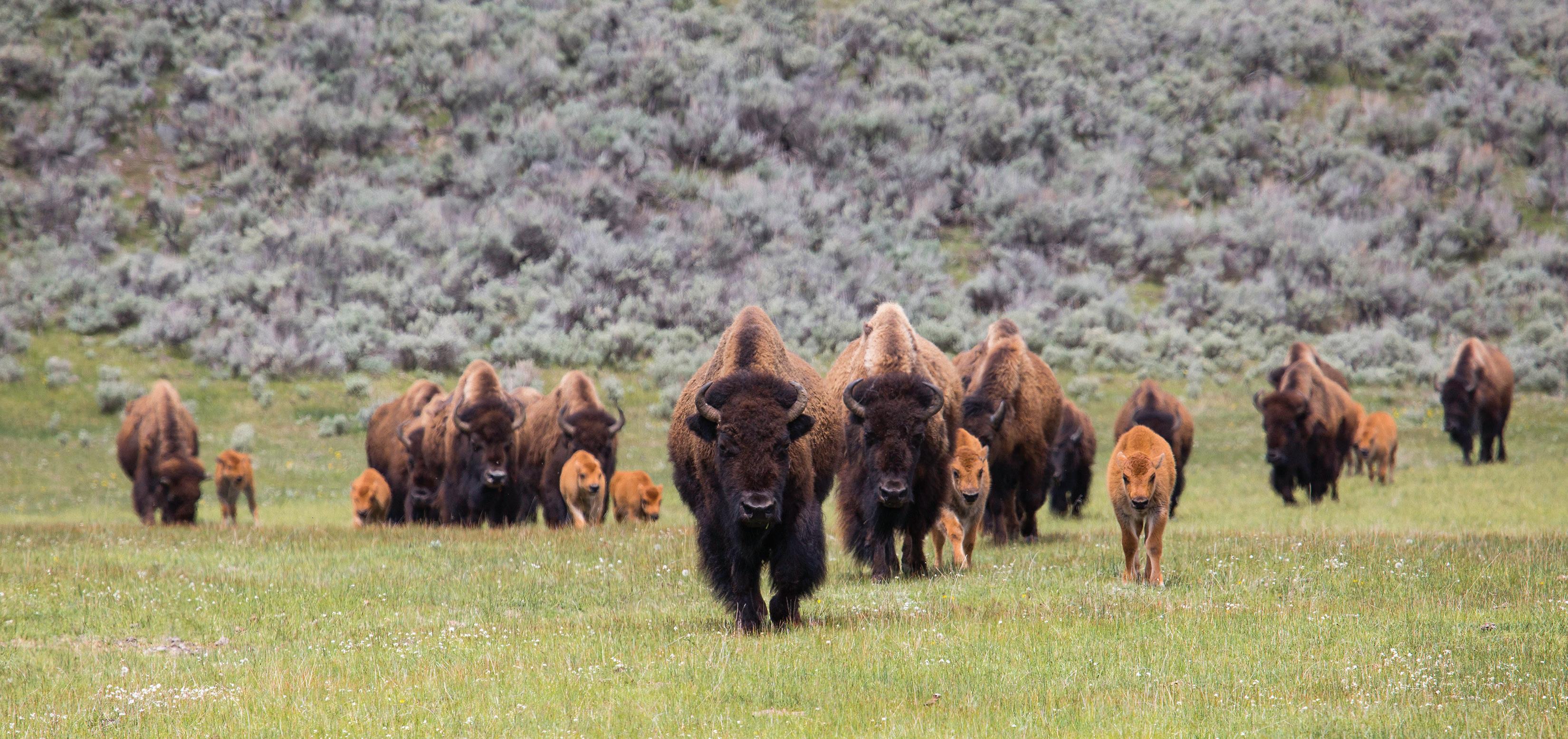
Bison // Bison bison
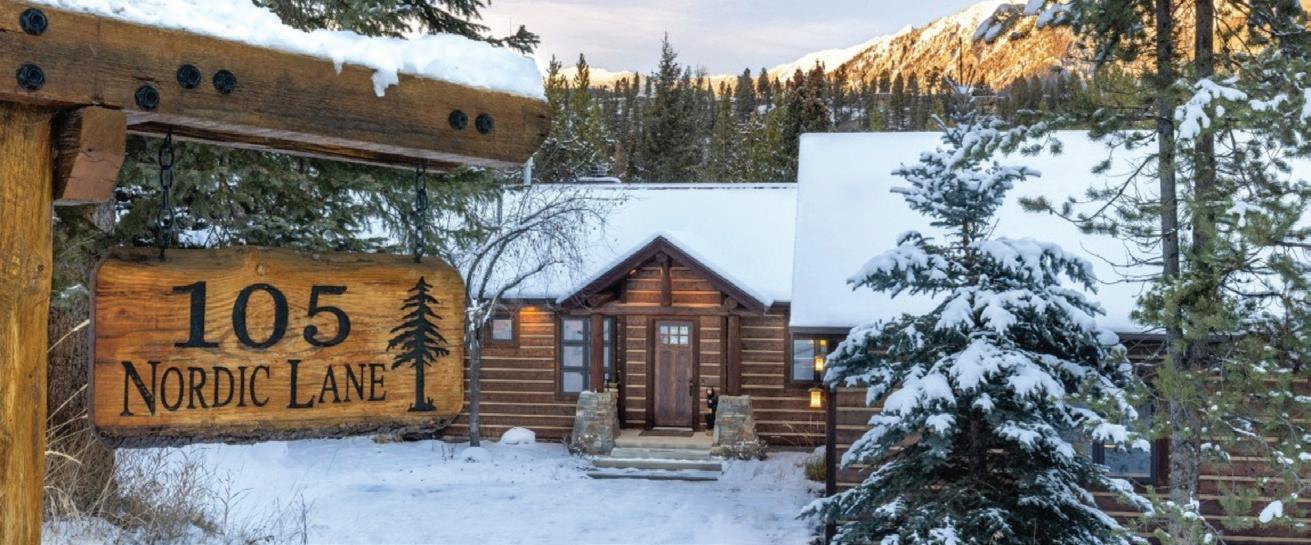
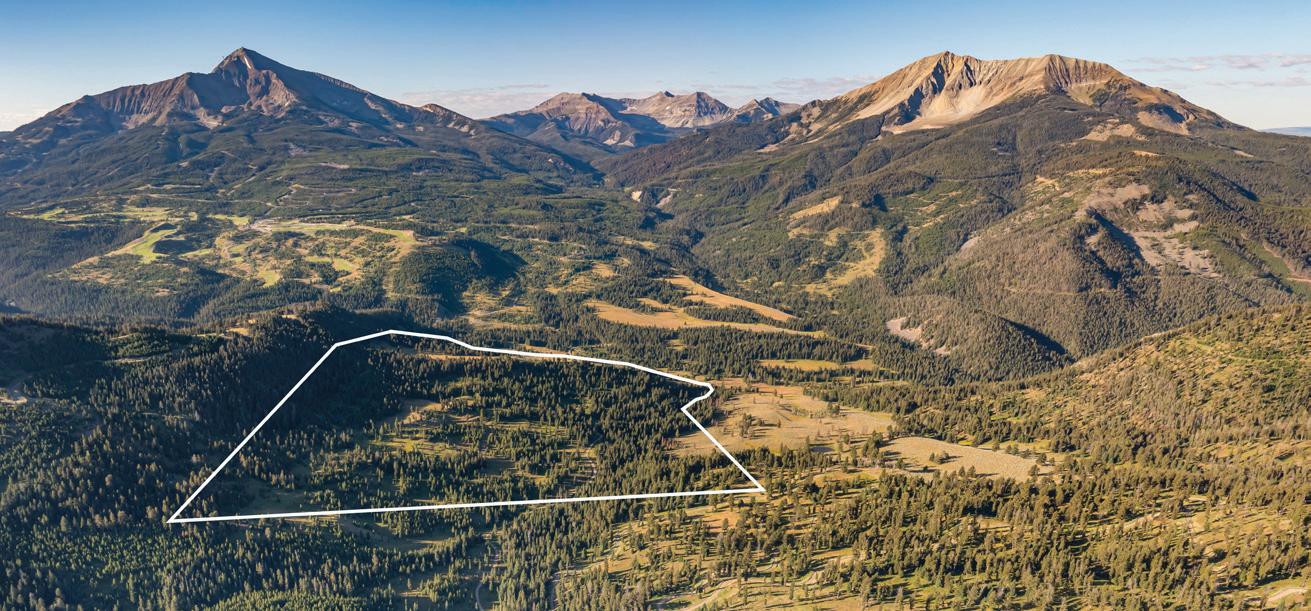
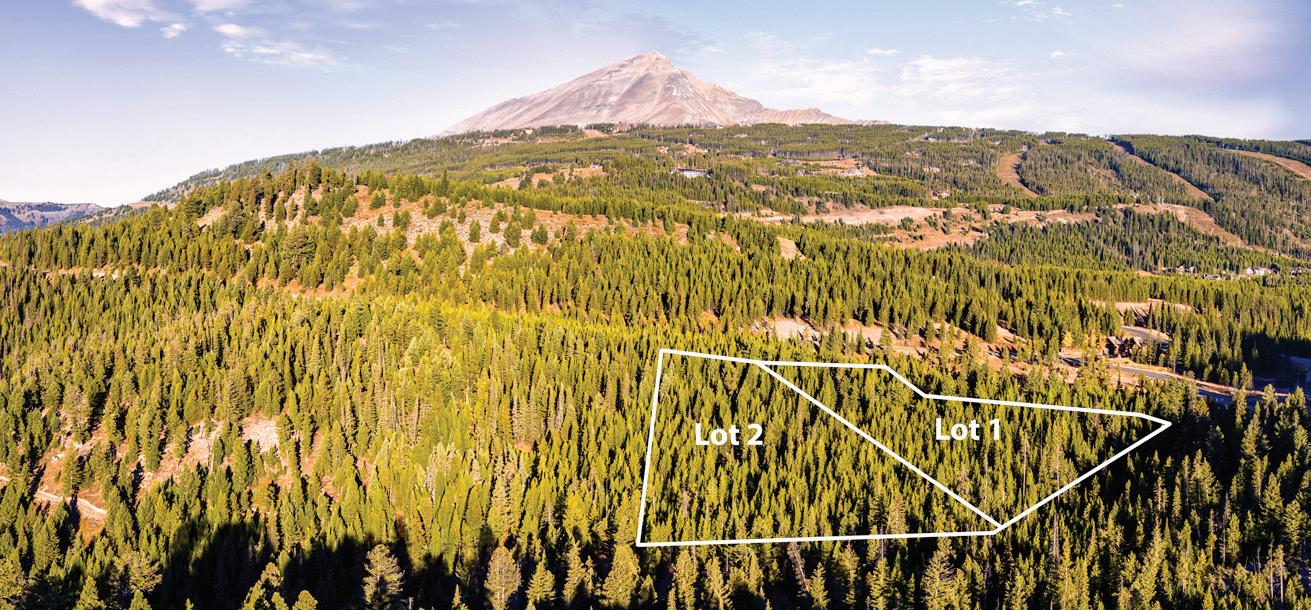
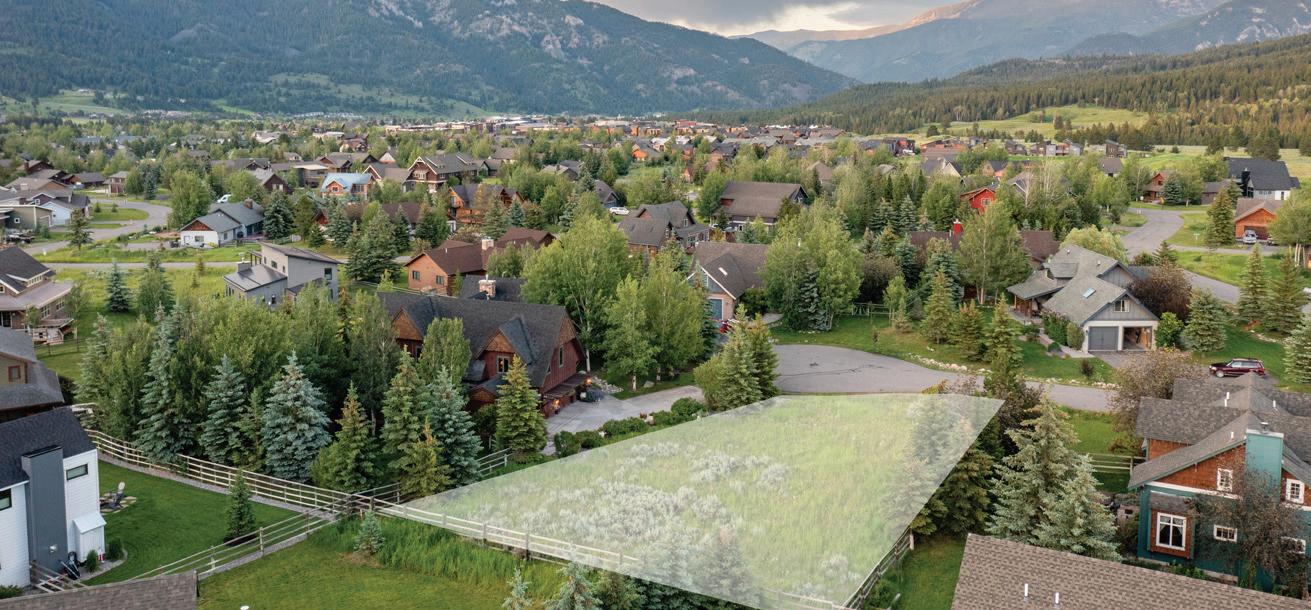
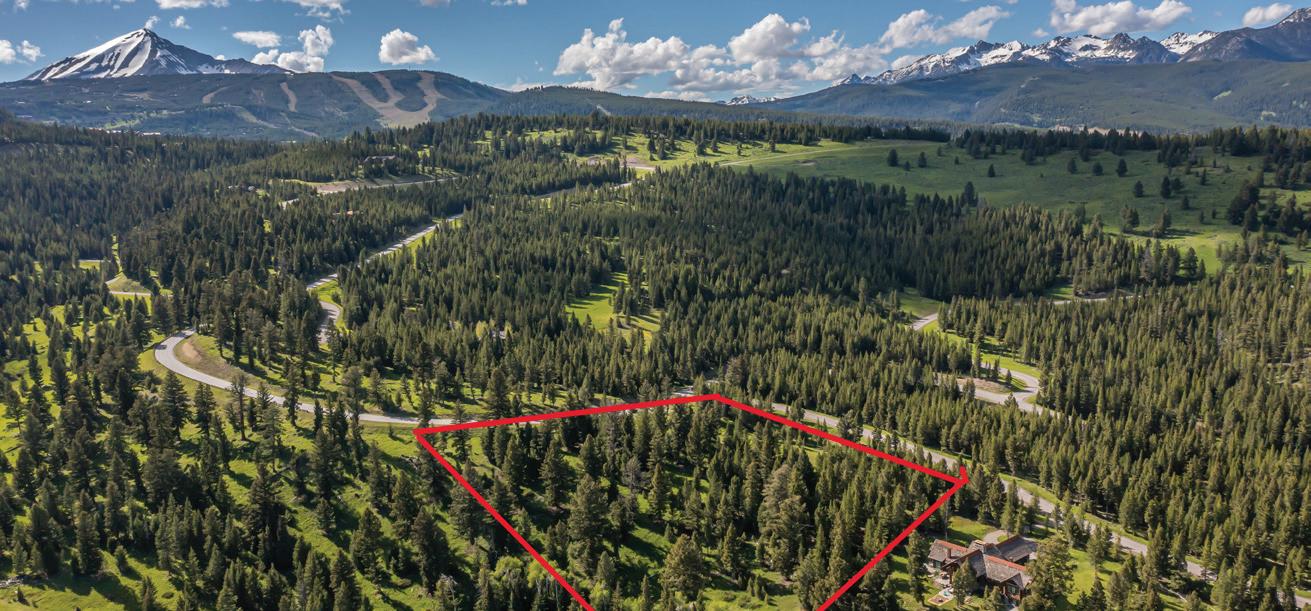
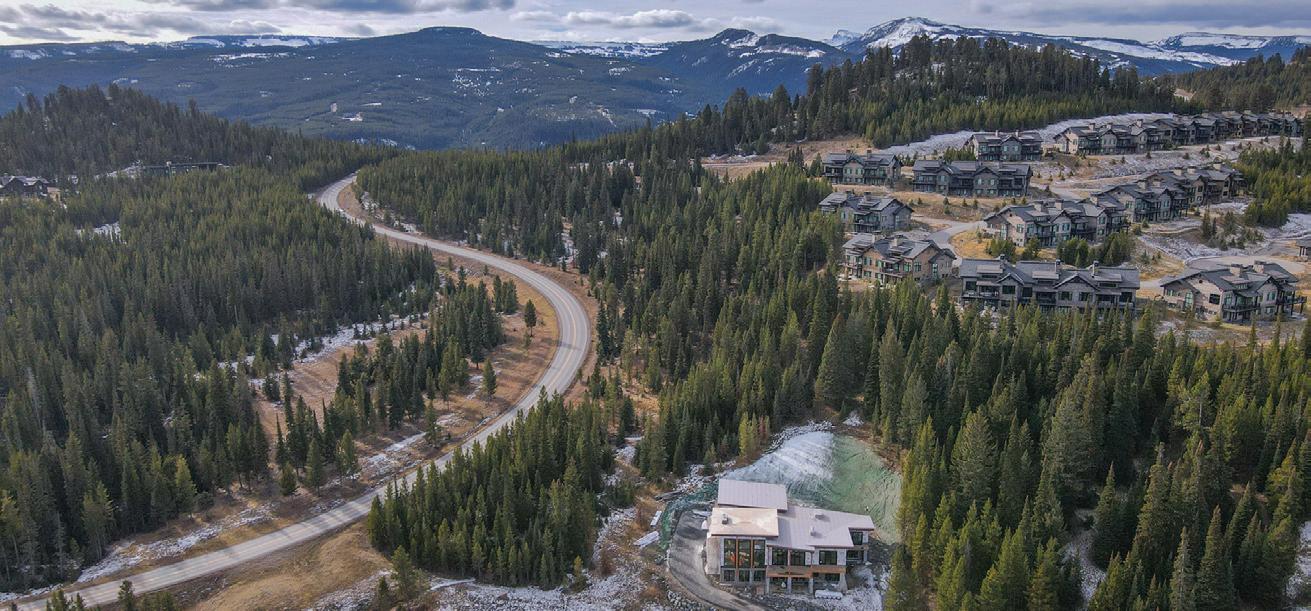
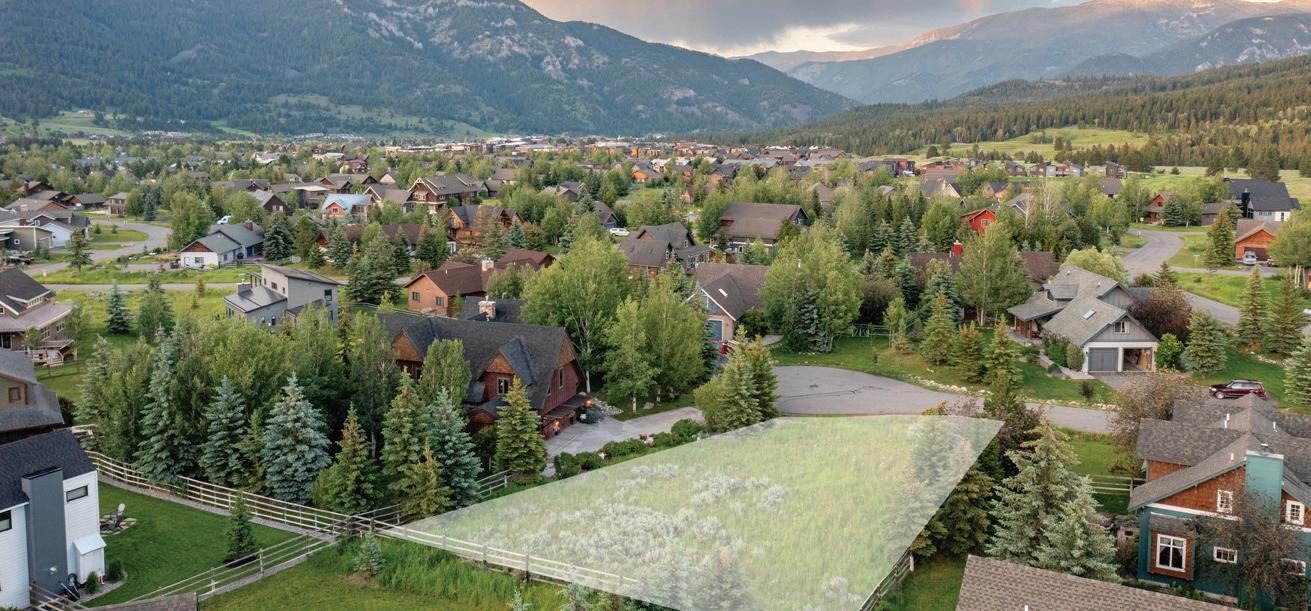
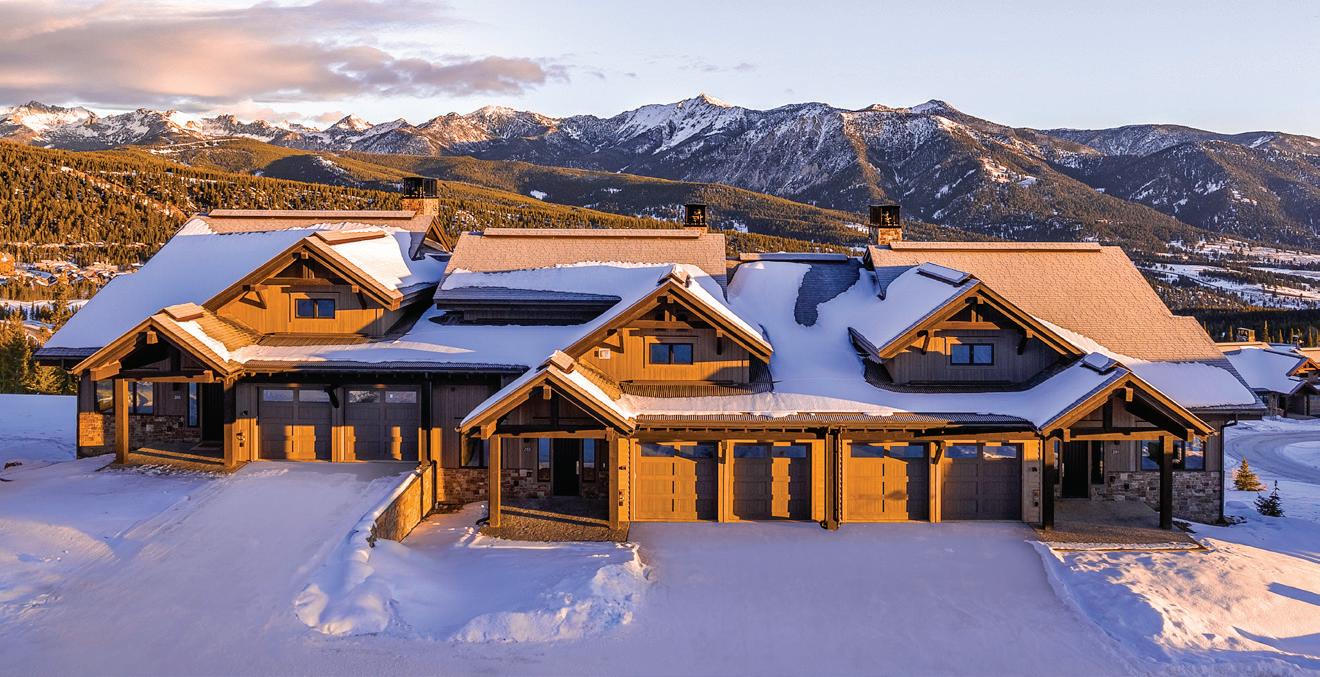
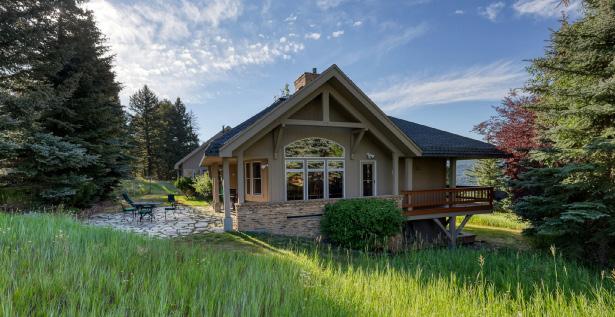
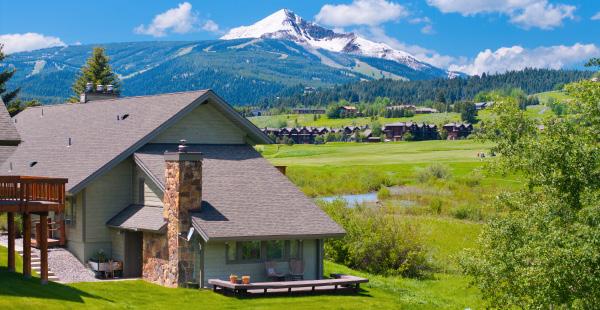
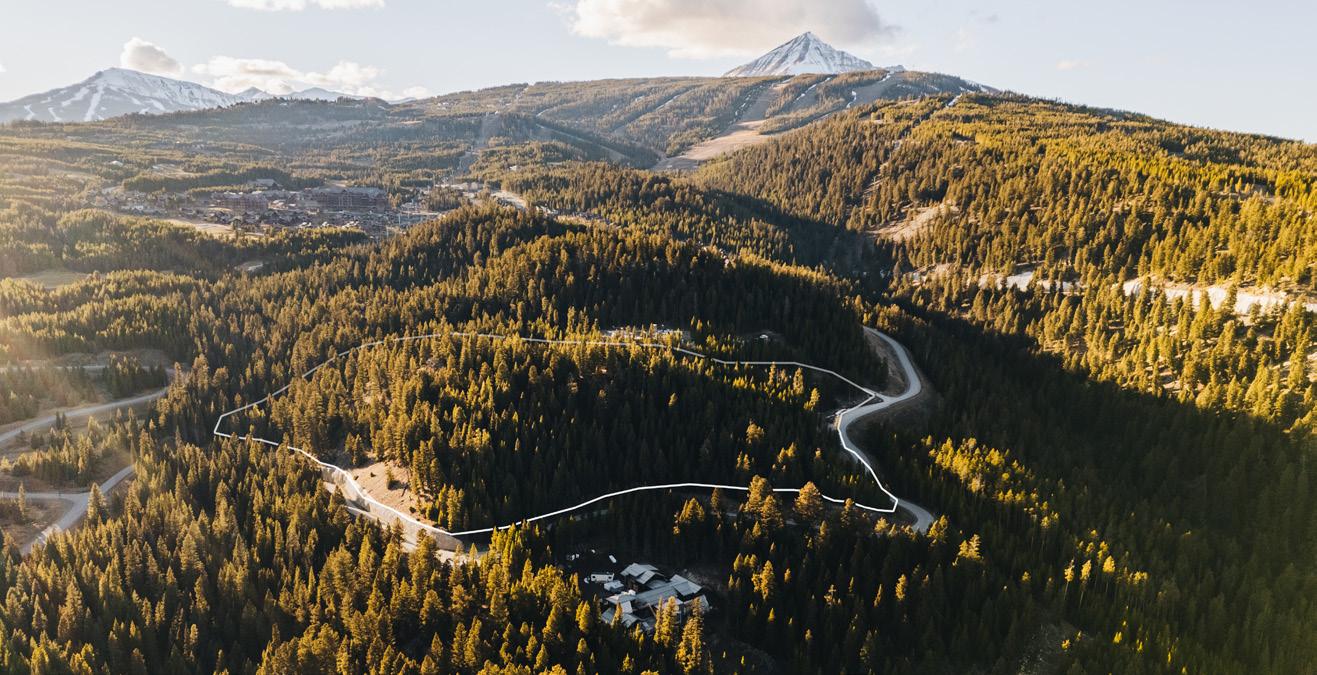
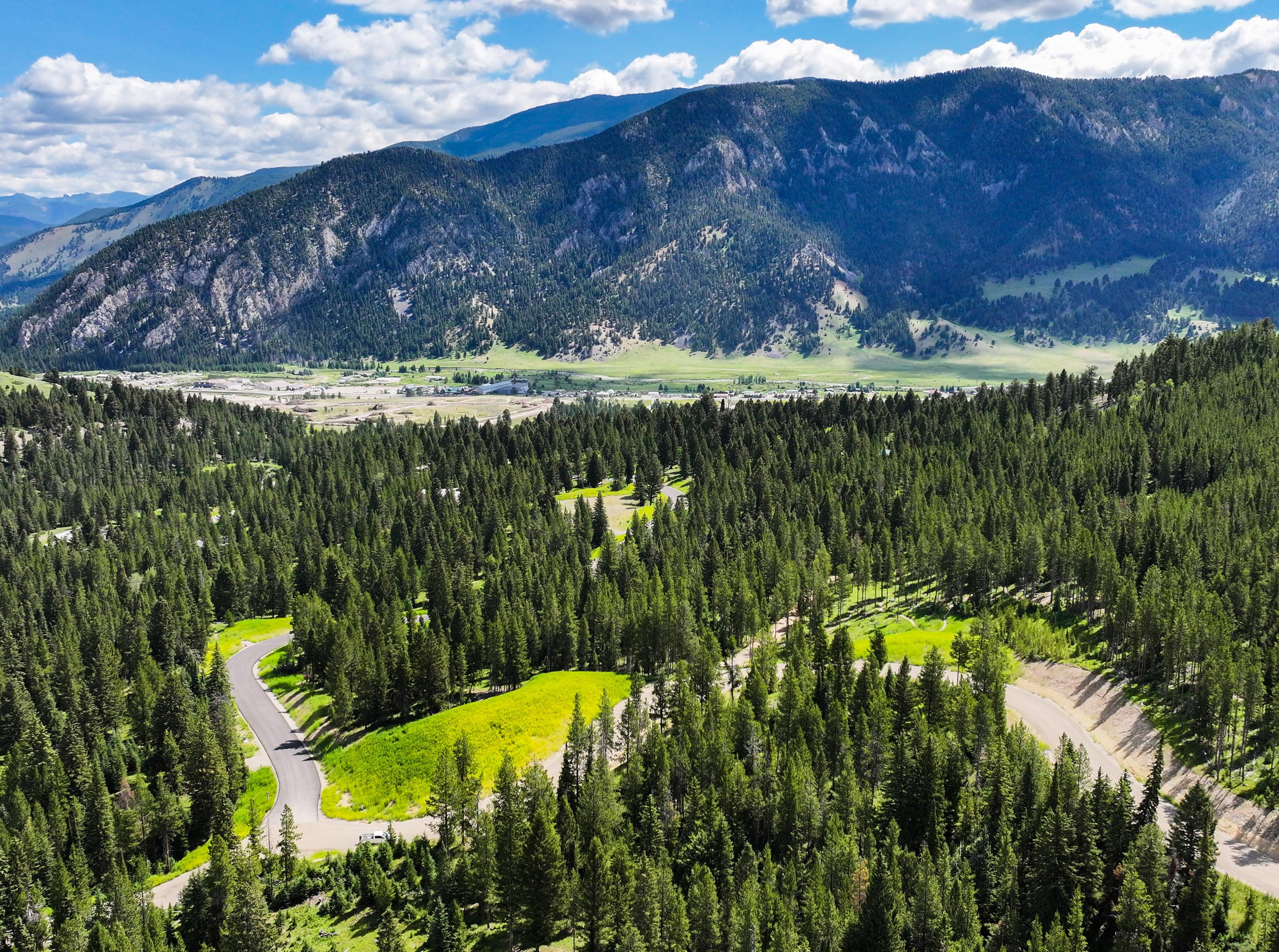
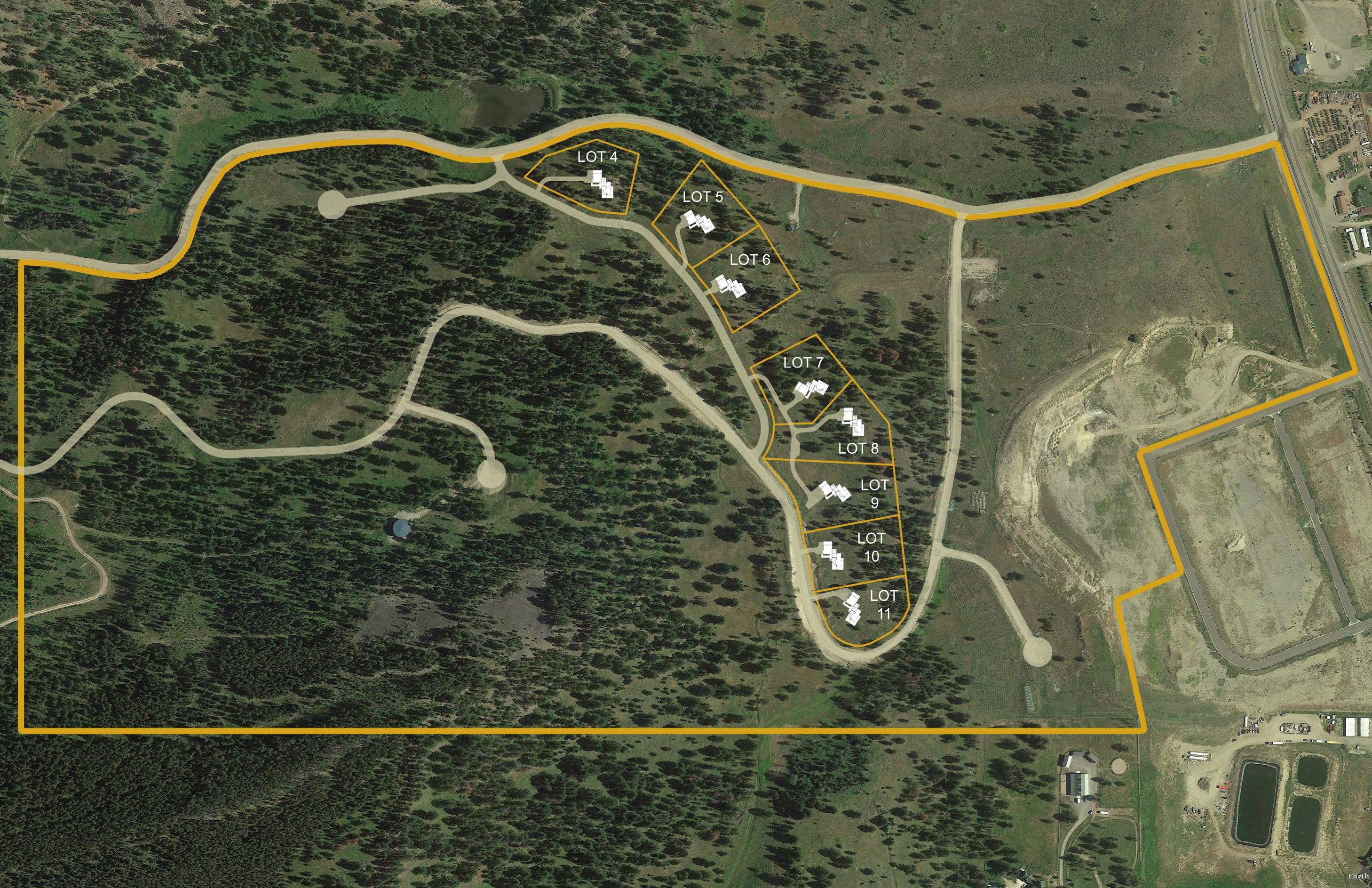
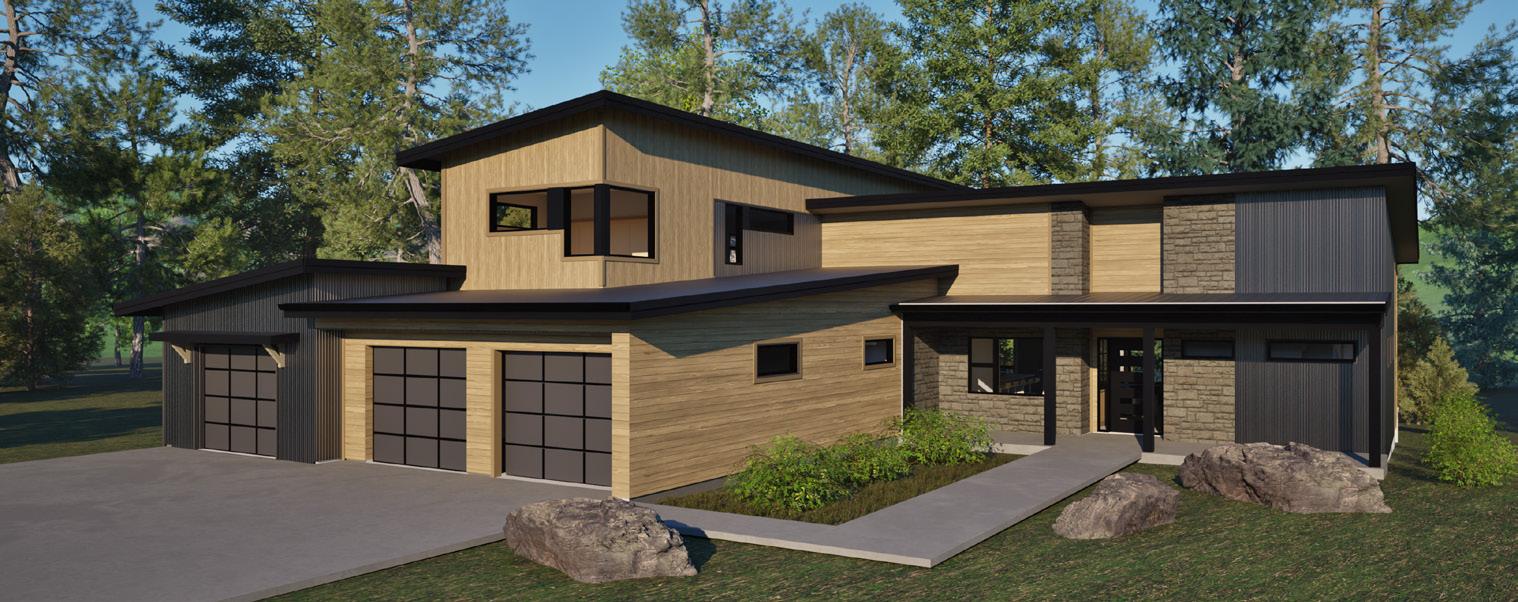
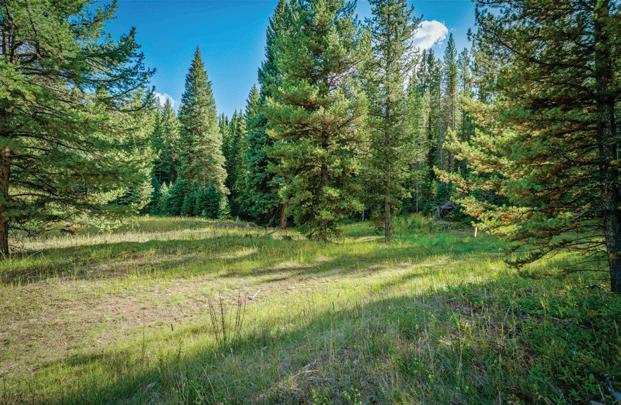
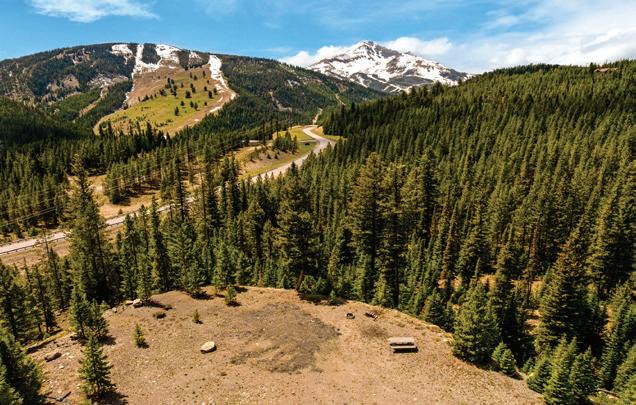
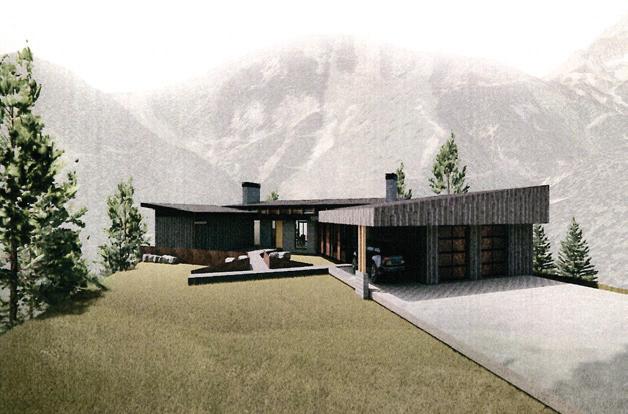
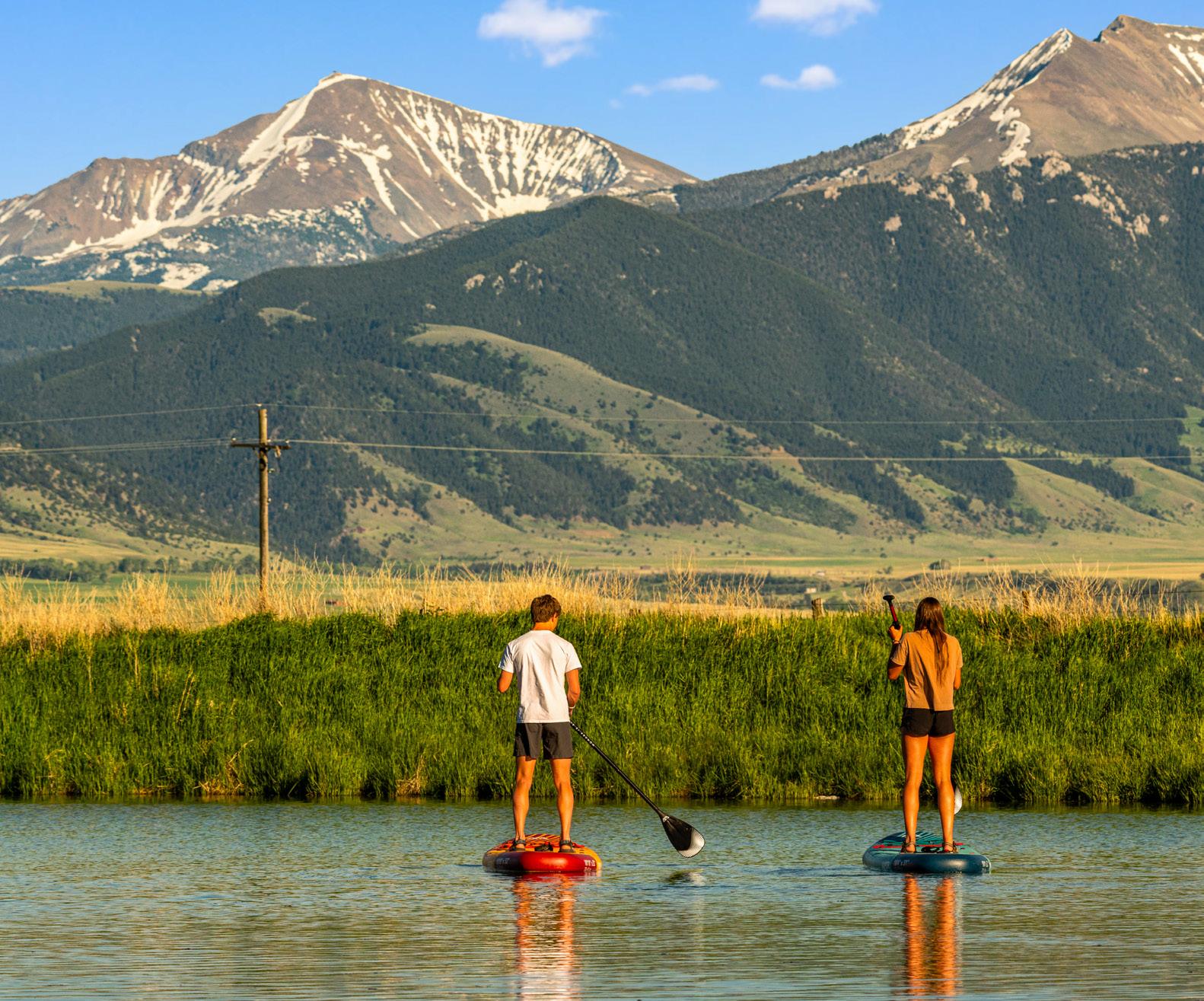
Nestled in the heart of Big Sky, Montana, Gallatin Foothills Phase 2 offers a rare opportunity to own a homesite that combines natural beauty, outdoor adventure, and convenient access to local amenities. With spacious lots ranging from 1 to ± 2 acres and over ± 75 acres of open space, this neighborhood is designed to provide privacy, stunning mountain views, and a connection to the outdoors.
Residents will enjoy a professionally built trail system by Terraflow, sledding hills, open space for XC skiing, and access to public lands for activities like snowmobiling, ATV riding, and hiking. The Gallatin River is just 5 minutes away, while Big Sky Town Center and Big Sky Resort are a 10 and 15-minute drive, respectively, creating the ultimate home base for your year-round recreation.
Terraflow Mountain Bike Trail
LAZY J WAREHOUSES
RARE OPPORTUNITY IN BIG SKY,MONTANA
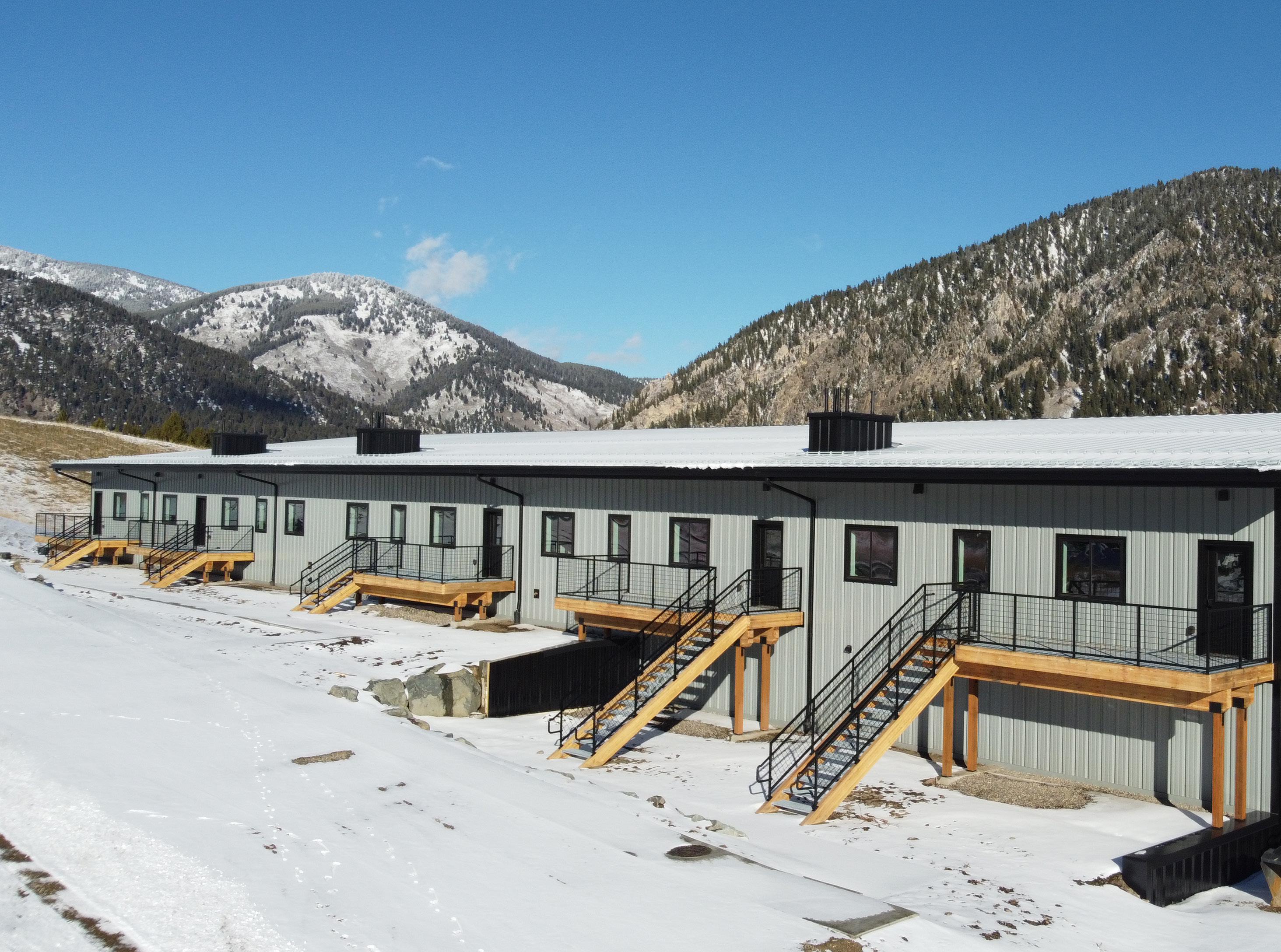
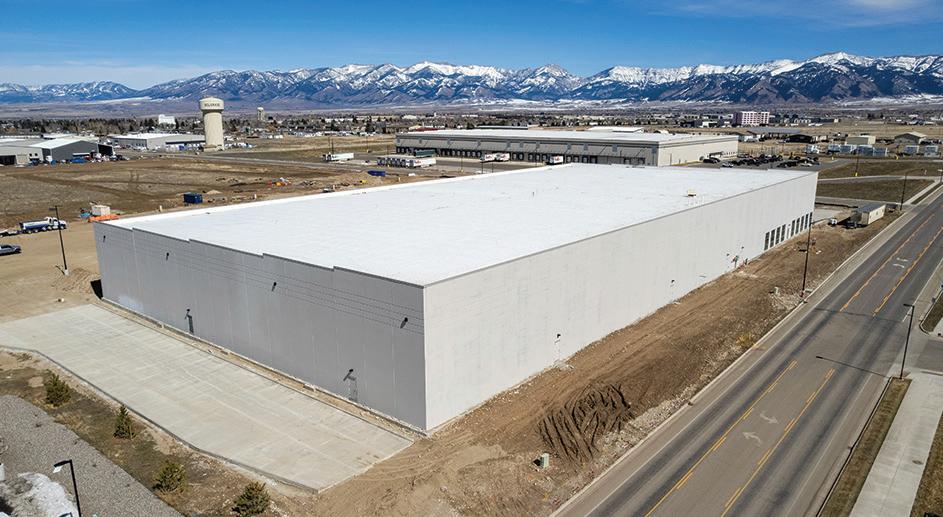
Introducing the latest phase of the Lazy J warehouses— designed to meet all your personal or business storage needs with upgrades inspired by previous owner feedback. Built to withstand Montana’s rugged elements, these units are perfect for protecting your tools, equipment, or recreational gear.
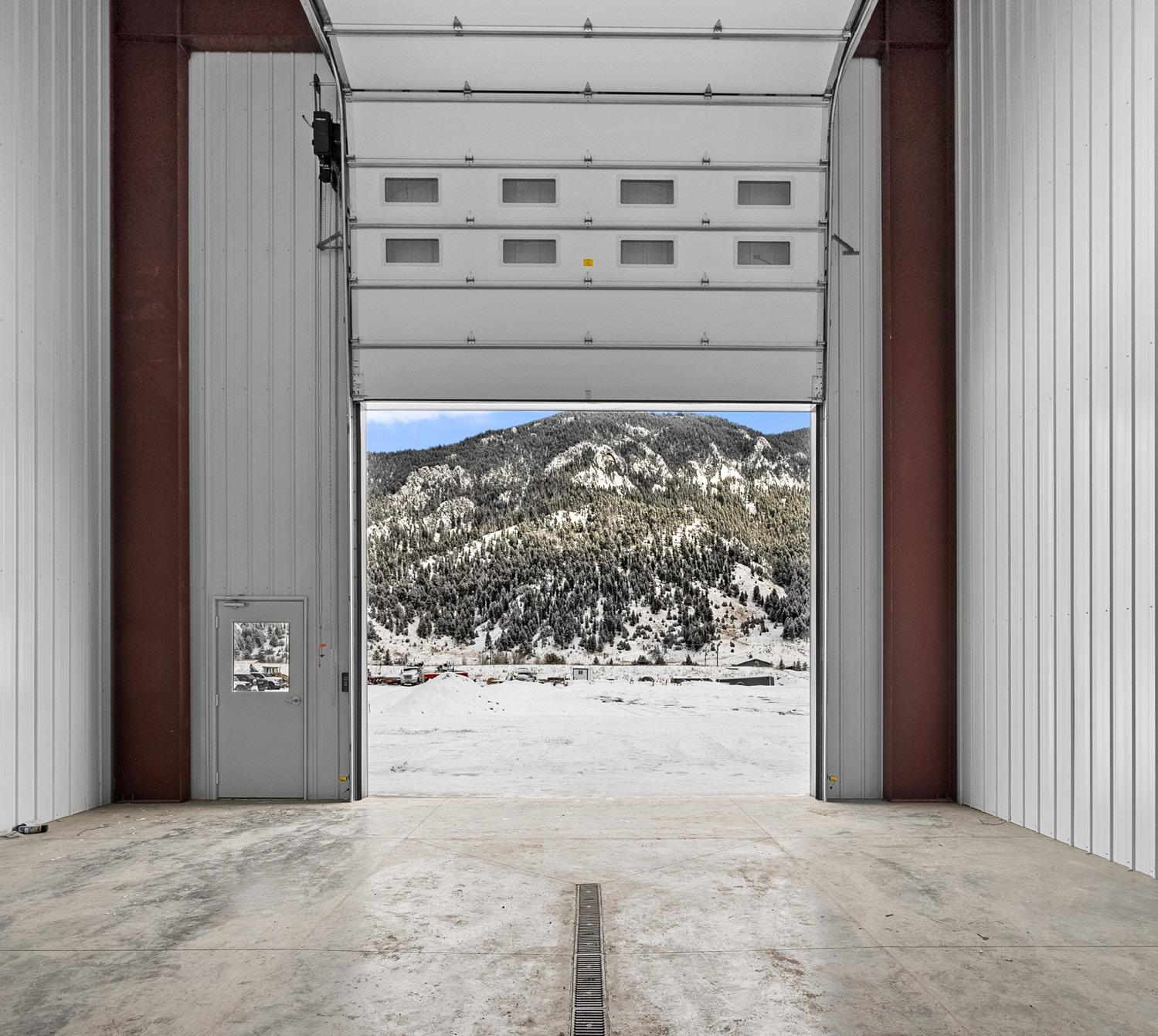
Choose from three layouts ranging from 1,116 to 2,800sqft, each featuring heat, utility sinks with hot and cold water, a 14’ roll-up door, and shared bathroom access. The smaller units are plumbed for a bathroom, with the larger units featuring a full bathroom, a mezzanine space, and a seperate entrance with private parking.
A premium steel package makes each space mezzanineready, maximizing storage while maintaining 13’9” ceiling height on the main level. Conveniently located off Highway 191, these warehouses are ideal for contractors, businesses, or anyone needing extra space for RVs, ATVs, and more.
Over half of the units are already sold—don’t miss out!
BUSINESS
BYWOM CELEBRATES 30-YEAR ANNIVERSARY
ORIGINALLY A DELI FOUNDED IN ‘93, OWNERS PAM AND JOHN FLACH
CELEBRATE
THREE DECADES RUNNING ‘WORD OF MOUTH’ RESTAURANT
BY MARIO CARR
EBS CONTRIBUTOR
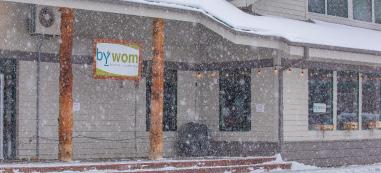
BIG SKY—Taped to the window of By Word of Mouth Bistro, the Big Sky restaurant locally known as “BYWOM,” a small sign informed customers of a brief, celebratory hiatus from Nov. 24 to Dec. 4: “Taking time to SKI & PARTY!”
The break and the party are earned, as the staple celebrates 30 years of business in its current restaurant form. Explore Big Sky stopped by to see BYWOM’s longest-standing employee, Teresa Arneson, and others focused on a deep clean, while owner John Flach sat at a hightop table near the window working on the new winter season menu. The restaurant reopened Friday, Dec. 5, kicking off the winter season with a “Friday Fish Fry” event to celebrate the anniversary—an homage to Flach’s upbringing in Wisconsin. Countless “Best Burger” awards through Best of Big Sky hang on the wall beside the entrance, the key ingredient being love, Flach explained.
“It’s been the same since we put it on the menu,” Flach said.
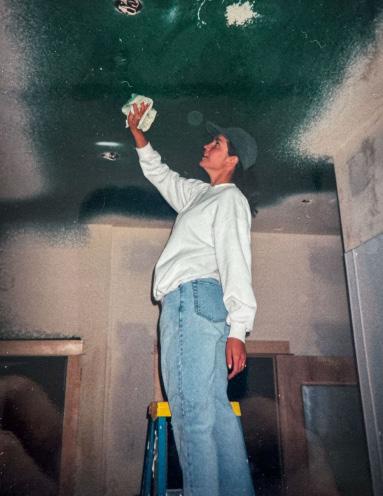
This decades-old business has been steeped in local culture, providing a haven for good times and good food for fellow hardworking people of Big Sky, as well as tourists. John and his wife, Pam, bought BYWOM in November of 1995. At the time, it was only a deli, located in the same building as today, but the Flachs have since expanded into the two units next door. The couple kept the name “By Word Of Mouth”, which the previous owner supposedly borrowed from another restaurant somewhere in Palm Beach, Florida—the Florida owner has even visited Big Sky’s BYWOM a couple of times, John said.
He moved to Big Sky in 1987 for the skiing and eventually met Pam while they were working at Buck’s T-4. He always wanted to start his own restaurant, and kept his burger recipe close to the chest.
“When I was working at Buck’s I thought about putting it on the menu there, but I was like, ‘Nah, I’m just gonna keep this in my back pocket and when I have a chance to do it someplace else, I’ll do it,’” Flach said.
John eventually quit Buck’s, and he and Pam nearly moved on from Big Sky in the mid-1990s. But the right opportunity came about at the perfect time.
“We were trying to figure out what to do… and
this came up. It was well worth it,” John said.
Thirty years later, the Flachs’ youngest son Henry just graduated high school last spring, and is currently “obsessed” with skiing.
“One of the greatest things Pam and I could do was raise our kids here,” John said.
That feeling was emphasized by a quote from their daughter, Emma, when she left for school. John has it memorized.
“It sucks that you guys raised us in Big Sky, cause all we want to do now is come back to Big Sky,” John recalled Emma saying, with a chuckle. He’s thankful that his three adult children have the ability to come home and visit anytime.
While BYWOM has a special place in John’s heart, it’s clear that his family, skiing and all that Big Sky has to offer are his greatest motivations. When asked about his work-life balance, John said there’s no formula—you just do it.
“I’m still here [in the restaurant] way too much, but I was here a lot. That’s why we went to being closed on weekends in 2020… Pam and myself, and all of our friends, were just trying to keep our kids corralled while we were all working, and make the best out of our ski weekends,” he said.
John reminds his kids to stay focused on what they love to do, no matter how frustrating work may be. And he jokingly advises against buying a restaurant.
“Your job pays for your fun, and your fun is what should make your life happy,” he said.
Operations resumed on Friday, Dec. 5.
Pam renovates the space in the 1990s. PHOTOS COURTESY OF BYWOM
BYWOM on a snowy December day after 30 years of local service. PHOTO BY JACK REANEY
BY LESLIE KILGORE
Big Sky is often known as a mountain town that brings together longtime locals, new families, seasonal employees and a steady stream of visitors from around the globe, all shaping the energy of the community’s Town Center. That blend of people is central to the success of Rocky Mountain Toy Company, where owner Sam Rickenbaugh has created a bright, welcoming stop for families looking for gifts, entertainment and a sense of nostalgia. By filling a gap in Big Sky’s retail offerings and becoming part of the community’s year-round rhythm, his shop has grown into a place where vacationers and local kids alike can find something to enjoy.
This series is part of a paid partnership with the Big Sky Chamber of Commerce. The following answers have been edited for brevity.
Explore Big Sky: When did you first come to southwest Montana, or did you grow up here?
Sam Rickenbaugh: I have actually been in Bozeman since I was three years old.
EBS: Oh, so you are a true local.
SR: Yes, I guess you can say I am a true local. I was born in Denver. My parents moved up here in 1999 or 2000, so I've been in the Bozeman area basically since I was born. I had a brief stint at the University of Denver for two years and then decided that living in the city and Denver was not for me, so I transferred back to Montana State and finished up there.
EBS: Did you go to Bozeman High School? I bet you’ve seen the area change quite a bit.
SR: I did go to Bozeman High School and graduated in 2015. And I’ve definitely seen a lot of change in the past 10 to 15 years, let alone the last five years. There's been a huge change, and specifically in Big Sky. My family would come to ski in Big Sky, and there was not a ton going on in the town. We would drive up to the resort, ski, and then head home to Bozeman. Now, it's an incredible, lively community and a place where people can live year-round and support local businesses to thrive.
EBS: Right, for sure. Was that a reason for opening your toy store here in Big Sky?
SR: Yeah, absolutely. I took over the store from the Wests in 2021, right after COVID. In one of our initial meetings, I asked what their growth plan was before they decided to sell. They said they always thought about going to Big Sky because of the recent growth. So that was always in my head for the first three years of being in Bozeman. Then, in our third year, I decided to look into it and realized there were no toy stores or any stores really for kids.
EBS: That’s for sure. Birthday parties were always a scramble for us parents, finding last-minute presents before you arrived.
SR: Right. When I realized how many people are now in Big Sky, either visiting or living here, I knew it would be a great place to have another store.
EBS: And how is it going?
SR: It's been really good. It's definitely a different environment than I'm used to in Bozeman. But that being said, it's great to have that sense of a smaller community, and in a community that really cares about its residents and other businesses. This will be our third Christmas in Big Sky, and I'm really excited to see what the next few years bring.
EBS: That's great. Would you say most of your customers are visitors, locals or a mix of both?
SR: Definitely a mix of both. We definitely get lots of visitors during the busy tourist seasons. But we also have a great sense of local customers. We see a lot of local families who are so excited that we're here. We definitely couldn't do it without the visitors, but our local community in Big Sky is one of the reasons we're still here and able to operate.
EBS: That’s great. Do you see growth for your business, either in Big Sky, Bozeman, or somewhere else?
SR: No real plan right now. I think we're still trying to figure out all of the ins and outs of retail in Big Sky. I really want to focus on making our two stores even better before any other growth. We’re always looking for new community events to start, and we want to have more in-store activities too.
EBS: That’s good to hear. Do you enjoy being a part of both communities and getting to know families in the area?
SR: Definitely. I think there’s a real opportunity at the Big Sky store to do some kid-focused activities and events, particularly during the shoulder seasons. The Big Sky Chamber really focuses on driving traffic into businesses by supporting new events for both tourists and locals during the year. I've seen that evolve and grow even in the two years that I've been here. There are all sorts of new things going on all year-round now.
EBS: How did you acquire the toy store? It’s a unique business to own.
SR: I was 24, and it’s kind of a random story. I was newly graduated from college and working in real estate, and was finding out very quickly that it was not what I wanted to do. I grew up with a retail background; my mom started the store, HeyDay in Bozeman, and my dad owned a Play It Again Sports that was in town as well. The Wests were selling the [toy] store, and I sent it to my mom as kind of a joke, like “how fun would this be?” You know, because my family grew up going there. She
said, “You should seriously consider doing that. I think you'd be really good at it.”
I ended up meeting with the owners, and they were incredible. They were just ready for something new, and it turned out to definitely be a viable business for me. So, I took over from there, and at first I thought it would be like a five-year, you know, get in and really make it incredible, keep its legacy, and then do something else. But I fell in love with the toy industry really quickly. And then, we started a second store, so I really have no plans of leaving the industry anytime soon.
EBS: What do you love most about owning a toy store?
A very hyperlocal toy store at that.
SR: Just going off the local part, we get so many people that come into the store, and they're like, “Wow, it's really cool to see an old-school toy store in a small community.” A lot of people say they don't really see that anymore. Also, everyone is really happy and fun, and excited to be in the store. It’s really our job to tell people what toys are new or fun and what kids are looking for.
EBS: On that note, since it’s the season of giving, what would you say are the top three presents this year for kids?
SR: Oh man, that's always a hard question. I would say Legos are always on that list, and they're such a fun company to work with. Air Tubes have been a really popular one as well this year, and that's for kids 3 and up, It’s basically this really big, almost fan-like thing with these tubes that kids connect and can mix and match and turn them around to make a big maze, and then a little foam ball gets places in the top and it zips around the edge and then pops out the top. So, that toy has been really fun. And then the last one that I always love— which is not necessarily geared towards children but one I think is really fun that both Bozeman and Big Sky customers love—is the Liberty Puzzles that are made in Boulder, Colorado. They’re beautiful puzzles, all wood, which have been a huge hit in the past few years and are a great gift.
EBS: And what were your favorite toys growing up?
SR: I was definitely a big fan of Legos. Playmobiles were great too. I have three siblings, and we spent a lot of time playing with both of those, so I love seeing kids still into them now.
EBS: It sounds like you found your dream job. SR: Yes, and this is a fun time of year to be in the toy business.
EBS: For sure. Merry Christmas, and I hope Santa delivers the wish lists of all your customers this year.
SR: Thanks! You too, and Merry Christmas.
OPINION
HOW YOU CAN SHAPE GALLATIN COUNTY’S GOVERNING RECIPE
BY JANAE HAGEN GUEST COLUMNIST
In a time when so many people might feel like they aren’t sure their individual voice can really move the needle on a political or social issue, Montana’s once-in-adecade—and uniquely Montanan—opportunity for a local government review is here as an outlet where your voice can help to shape the way the county government serves its citizens.
In June 2024, ballots in every city and county in the state of Montana asked if taxpayers wanted to fund a local government review. Gallatin and Madison Counties, Bozeman, and West Yellowstone joined a few dozen other cities and counties around the state whose voters all said, “yep, let’s review it!” Then in November 2024, seven commissioners, including myself, were elected as a non-partisan body to conduct the study for Gallatin County.
Since the election, our commission has been busy: we first had to learn the ins-and-outs of the state constitution and the nuances of the scope of the study. Dan Clark and his team at the Montana State University Local Government Center were instrumental in ensuring we knew how to tackle reviewing the structure of the county’s government.
The study is focused on three elements: the power, form and plan of government. Our state’s constitution from 1972 outlines in detail all of the options within those elements. One way to think about it is that if those three elements make up a unique recipe, the Montana constitution outlines all of the ingredients and recipes for how a local
government can be structured—and there are enough recipes to have quite the potluck spread of dishes.
Up to this point, our commission has been focused on collecting data to determine if our county’s current recipe is meeting the needs of residents, or if it’s ripe for modification. We’ve been seeking insight from county employees and residents about specific things like whether the county’s election of officials should remain partisan or change to non-partisan and whether certain positions should become hired rather than elected, or require specific professional qualifications.
Another key area for feedback, and a theme we heard loud and clear at a November listening session in Big Sky, has been around representation: whether the current three county commissioners adequately cover the entire county, and whether residents may or may not be better served if the commissioners were elected by districts.
Our commission is still mulling over all of the input gathered from interviews with elected officials and department heads, as well as the large data set from our surveys that MSU’s Social Data department conducted on our behalf of county employees and Gallatin County voters.
This winter, our commission is tasked with determining if we think a different recipe for Gallatin County’s government will address the concerns we’ve heard and outline a clear plan of any potential changes for voters.
The report will be complete this spring, and residents will have all summer to unpack it and learn about what, if anything, will be on the ballot next November. Voters have the final say as to whether anything changes.
Next November, if our current study commission does recommend changes, we have a big voter education hurdle to address: simply due to the current form our county operates in, if any change to the structure is proposed, voters have to agree to change the form first before any other changes take effect.
In the 1996 election, county voters said “nope” to changing the form of government, but overwhelmingly voted “yes” to the specific proposed changes. Because the form didn’t change, none of the other voter-approved changes took effect. Our commission is hopeful that history won’t repeat itself in 2026.
We invite you to attend our public meetings on most Fridays at 9:30 a.m. in the Community Room at the courthouse on West Main Street in Bozeman, or join virtually—the link to join is on the calendar of the main page of gallatin. mt.gov. We are also still actively collecting feedback via our public input form on our website, gallatinlocalgovstudy.com.
This is very much a community process and the outcome will better serve Gallatin County residents when more people get involved.
Janae Hagen is a member of the Gallatin County Study Commission and works remotely as a marketing leader for Petco. She moved from Hong Kong to Bozeman five years ago to be closer to the mountains and her family who live in western North Dakota. When she's not geeking out about local government, she's likely fishing with her husband and dog on the Gallatin or Yellowstone; they are expecting their first child in March.
PHOTO BY JEN CLANCEY
OPINION
LIFE-SAVING TOOL IN A BOX: ARE YOU READY TO USE AN AED?
BY LAURA SEYFANG GUEST COLUMNIST
When someone’s heart suddenly stops, every second counts. In those moments, an automated external defibrillator, or AED, can mean the difference between life and death. These small, portable devices are designed to restart a heart that’s gone into cardiac arrest, and they’re simpler to use than most people realize.
An AED works by delivering an electric shock that helps the heart regain its normal rhythm. Once it’s turned on, the device literally talks you through each step—from placing the pads to pressing the shock button if needed. Most models even analyze the heart’s rhythm automatically and only allow a shock when it’s truly necessary. In other words, you can’t hurt someone by trying to help.
In Big Sky there are 37 AEDs scattered between the resorts, schools, BASE and restaurants. Check out the PulsePoint mobile app to see all the locations. Most are marked by a red heart symbol with a lightning bolt. They’re there for you, the bystander, who can take action before emergency responders arrive.
With easy voice instructions and diagrams, anyone—even someone who’s never seen an AED before—can use one with confidence.
Imagine being the reason someone’s parent, friend or teammate gets a second chance at life. That’s the power of an AED. It’s not just a machine; it’s hope
packed into a small plastic case, waiting for someone brave enough to step forward and press “on.”
Combined with hands-only CPR, you can save the life of someone experiencing a cardiac event. Hands-on or citizen CPR can be learned in just a few minutes. It involves manually compressing the heart of an unconscious, non-breathing person by pushing hard and fast on the center of a person’s chest.
Read the Health Buzz column, “Why everyone should learn CPR,” and learn how Explore Big Sky’s publisher, Outlaw Partners, took steps to educate staff members in 2025.
So next time you spot an AED, take note of where it is. You might never need it—but if you do, you’ll be ready to save a life.
Want to be trained in Hands-Only CPR? Contact Big Sky Fire Department firefighter Mike Ketschek via email, mketschek@bigskyfire.org, to get started.
Laura Seyfang is an active community volunteer and officer of the Big Sky Rotary Club, which funds many local AEDs and other safety initiatives like the Gallatin Canyon 911 call boxes.
ADOBE STOCK PHOTO
5
•
ENVIRONMENT EVERY DROP COUNTS: 25 YEARS OF THE GALLATIN RIVER TASK FORCE
BY KRISTIN GARDNER GUEST COLUMNIST
For 25 years, the Gallatin River has been our guide, our inspiration and the heart of a powerful community movement. As we celebrate our 25th anniversary, we are reflecting on the incredible milestones we’ve achieved together and looking forward to the momentum carrying us into the future.
Thanks to the unwavering support of our community, we have spent a quarter-century building grassroots stewardship that has left a lasting impact on the river—on its world renowned fisheries, its critical wildlife habitat, the people who love it and the livelihoods it sustains.
From the powerful roar of spring runoff to the gentler low-flows of late summer, we have stood beside—and often in—the Gallatin, committed to understanding the science, identifying its needs, taking concrete action to protect it and inspiring others to do the same. The milestones we have reached since 2000 are a testament to the power of collective action and the resilience of a community that cares.
Our 25-year journey spans the launch of our water monitoring program in 2000 to advancing highlevel river protections and targeted restoration projects over the past decade. Our accomplishments for the river over the last quarter century are significant, and this is just the beginning.
Science has always driven our work, from establishing pollution reduction goals to shaping sustainable and protective restoration projects along the Gallatin and its tributaries. We have launched programs to reduce community water use, while also advocating for better wastewater management
and recycled water projects that benefit the river.
The Gallatin River Task Force is far more than just a river watch group. Over 25 years, we’ve elevated the value of science, strengthened community and agency partnerships, restored vital streamside habitat, monitored recreation impacts and looked ahead to how we balance use with protection, and growth with responsibility. Woven in between are the stories of collaboration, innovation and a shared commitment to what is possible.
Today, we stand at a pivotal moment with a bold vision for the next 25 years. We do not underestimate the challenges ahead. We also recognize that our community’s strength and deep connection to the river will continue to be a primary driver for meaningful change.
As we close out the year, we invite the community to continue this journey with us. Our new fouryear strategic plan builds boldly on our legacy and accelerates our impact. With continued community support, we will tackle nuisance algae, continue
And through it all, we will continue growing our movement. Expanding our education and outreach programs will continue to be critical to our success. An informed and engaged community is essential to protecting the Gallatin River—its health, its resilience and the benefits it provides to us all. Real, lasting change happens when people understand and care about the cause; our collective, intentional work is the driving force behind every restored river mile, every gallon of clean water conserved and every inspired steward. Only together can we build a stronger, more resilient future for the river.
Please consider making a year-end donation to the task force to help us pursue this important work at gallatinrivertaskforce.org.
Kristin Gardner is the chief executive and science officer of Gallatin River Task Force.
local water conservation efforts and restore 124 acres across 39 river miles to support lasting river health and resilience.
Gallatin River Task Force pebble count. PHOTO BY RICH ADDICKS
PHOTO COURTESY OF GALLATIN RIVER TASK FORCE
CENTER FOR LARGE LANDSCAPE CONSERVATION ANNOUNCES NEW CEO ENVIRONMENT
EBS STAFF
BOZEMAN—The Bozeman-based, globally reaching nonprofit Center for Large Landscape Conservation announced that the former chief of wildlife conversation for the National Parks Service, Brendan Moynahan, will step in as the new CEO starting in January of 2026. Moynahan will be succeeding founder and current CEO Gary Tabor following his retirement.
“Brendan Moynahan combines the expertise, skills and experience that will make him an excellent CEO for CLLC, and is a worthy successor to our founder,” board chair Mary Pearl stated in a press release. “… He possesses all of the critical qualities CLLC needs in its next leader: demonstrated commitment to science, policy and connectivity; a keen understanding of the critical importance that wildlife connectivity plays in communities; and the ability to help CLLC further its work as a leading voice in the U.S. and global connectivity sector.”
Moynahan has spent nearly two decades working in conservation. In his role with the National Park Service, he led the development of the 2020 Bison Conservation Initiative. This effort resulted in a continental-scale metapopulation system, new relationships through shared stewardship with indigenous tribes, and a signed trilateral Letter of Intent to Collaborate on North American Bison
Conservation among the federal governments of the U.S., Canada and Mexico. His work included the coordination and facilitation of approximately 100 natural and cultural resource investigations totaling $10 million in investments.
“I have admired and respected the work of CLLC for years and am deeply grateful for the opportunity to serve as its next CEO,” Moynahan stated in the release. “I look forward to partnering with the staff and board to build upon two decades of conservation results rooted in technical excellence and authentic partnerships.
“It is an honor to succeed Gary Tabor. The sector owes Gary a tremendous thanks for the groundbreaking work he has done to elevate the importance of wildlife conservation and connectivity,” he continued. “I am committed to ensuring CLLC remains a leader in advancing innovative solutions to keep natural and human systems undivided.”
Moynahan’s appointment follows an extensive national and international search led by DSG/ Koya, which began when Tabor announced that he would step down after leading the organization since its inception. Tabor not only founded CLLC but helped to create the field of ecological connectivity. In CLLC, he leaves in place a strong voice and advocate for the needs of wildlife
and communities in this time of unprecedented urbanization and development.
“Congratulations to Brendan Moynahan as he prepares to take on the leadership of CLLC,” Tabor stated in the release. “His experience working with multiple conservation stakeholders … will undoubtedly serve as a tremendous asset to the organization and the sector.”
Prior to his tenure at the NPS, Moynahan was a supervisory wildlife biologist at the National Bison Range Refuge Complex with the U.S. Fish and Wildlife Service, managing a biological program focused on plains bison conservation, migratory birds and remnant Palouse prairie. He also worked as a program manager for the Southeast Alaska Inventory and Monitoring Network in Juneau, Alaska, where he implemented a landscape-scale monitoring program for all national parks in southeast Alaska and established interagency agreements with external partners for seabird, intertidal, hydrologic, oceanographic and environmental contaminants monitoring and research.
Moynahan holds a Ph.D. in Fish and Wildlife Biology from the University of Montana where he received his master’s in resource conservation. He completed a bachelor’s in political science with a focus on environmental policy at Bates College.
THIS TRUMP NOMINEES WANTS TO LIQUIDATE OUR PUBLIC LANDS ENVIRONMENT
BY AARON WEISS WRITERS ON THE RANGE
Do Western senators really care about keeping public lands in public hands? Steve Pearce, President Donald Trump’s nominee to run the Bureau of Land Management, is a litmus test of their commitment.
Throughout his political career, Pearce has worked to privatize and undermine our public lands. As a New Mexico congressman, he co-sponsored several bills to dispose of national public lands. This alone ought to disqualify him from running the agency charged with stewarding 245 million acres for current and future generations.
In a 2012 letter to House leadership, Pearce argued that the federal government owns “vast” land holdings, “most of (which) we do not even need,” and called for a massive sell-off to pay down the national debt. Pearce’s vision for our public lands is not conservation or even balanced management— it’s liquidation.
President Trump has been down this road before: During his first term, he nominated anti-publiclands zealot William Perry Pendley to run the BLM. Pendley never even received a hearing, and the White House dropped the nomination after his record was revealed. Pendley went on to write the public lands chapter of the now-notorious Project 2025 blueprint for a second Trump administration.
Pendley spent his career as a lawyer arguing that the federal government should not own public lands. Steve Pearce has gone even further. From inside
Congress, Pearce spent 14 years undermining public lands, seeking to gut wildlife protections and sell off huge amounts of public land.
Pearce’s nomination comes as our public lands are being attacked from all sides. Over the last 10 months, President Trump has elevated officials such as Interior Secretary Doug Burgum and Agriculture Secretary Brooke Rollins, both of whom view our public lands as nothing more than assets to monetize through drilling, mining and logging.
These officials are currently working to execute Trump’s vision of selling out public assets for private profit. Pearce would accelerate this effort, liquidating lands to the highest bidder—including corporations and luxury developers.
Even by recent standards, Pearce’s public lands record is radical. It is also unpopular. This spring, Utah Republican Senator Mike Lee tried to include a public land sale provision in the sprawling budget bill, framing it as a housing solution. The measure would have mandated the sale of 2-3 million acres of BLM and Forest Service lands.
But Lee’s amendment triggered immediate backlash from hunters, outdoor recreation groups and Western lawmakers. Within days, he abandoned the effort. If the Senate rejected Lee’s market-rate sell-off as radical, it should be easy now to reject a nominee whose goal is to get rid of even more public land.
That brings us to the Senate Stewardship Caucus, co-chaired by a Republican, Tim Sheehy of Montana, and a Democrat, Martin Heinrich of New Mexico. It launched last month to “advance bipartisan efforts to conserve the nation’s lands and waters” with science-based policy. The caucus has
been applauded by hunting, outdoor recreation, and conservation organizations as a promising start for defending public access and wildlife.
Pearce’s nomination is the caucus’s first real test. If its members cannot draw a bright line at a nominee who has worked tirelessly to sell off public lands and weaken laws that protect them, then its vision of “stewardship” is nothing but empty branding.
The stakes are immense. BLM’s multiple-use mandate requires balancing energy, grazing, recreation and conservation under long-term land use plans grounded in science and public input. That mission collapses if the agency’s leader believes we must “reverse this trend of public ownership” of the very lands he is charged with managing.
Westerners understand what happens when responsible stewardship is abandoned. Rural communities lose the long-term economic engine that healthy public lands provide. Hunters, anglers and campers lose access they have relied on for generations.
Steve Pearce’s nomination is a referendum on whether Congress believes our shared lands still belong to all Americans. The Stewardship Caucus and every senator who claims to care about the West’s outdoor heritage should reject Pearce’s nomination. America’s public lands are a unique legacy we pass down to future generations, not a portfolio to liquidate.
Aaron Weiss is a contributor to Writers on the Range, writersontherange.org, an independent nonprofit dedicated to spurring lively conversation about the West. He is deputy director of the Center for Western Priorities and co-host of The Landscape podcast.
Canyon of the Ancients, BLM land, near Cortez Colorado. PHOTO BY DAVID MARSTON
IT’S TIME TO PROTECT THE ELK AND DEER HERDS OF GALLATIN GATEWAY AND BIG SKY
3,562
Deer and Elk were killed by vehicles in Gallatin County since 2008.
PRIORITIZE WILDLIFE CROSSING SOLUTIONS. SUPPORT AND DONATE TODAY.
DISPATCHES FROM THE WILD: ATTACKS TO THE ENDANGERED SPECIES ACT
BY BENJAMIN ALVA POLLEY EBS COLUMNIST
Last year marked the 50th anniversary of the Endangered Species Act—one of the most effective and beloved environmental protections in U.S. history. Signed into law in 1973 with bipartisan support, the ESA has prevented 99% of listed species from going extinct, safeguarding the bald eagle, the gray wolf and countless plants, fish and insects whose roles in our ecosystems are both visible and mysterious. Yet as we celebrated this milestone, the ESA’s very future stands in jeopardy—undermined by a torrent of political attacks from the current administration.
The brilliance of the ESA lies in its simple conviction that the fate of each species is entwined with our own. What good is progress if it is paved over vanishing wildflowers or comes at the expense of the last red wolf? The ESA’s power is not just in its legal language but in its moral clarity: extinction is forever, and to let it happen by apathy or convenience is a civic failure.
But under the current administration, we’ve seen a systematic dismantling: rollbacks to critical habitat designations, relaxed requirements for federal agencies to consult on impacts to listed species, and ongoing efforts to delist grizzlies and other at-risk animals. Dozens of lawsuits now clog the courts, filed by environmental groups desperate to stem the tide. These changes don’t just threaten charismatic megafauna; they undermine the web of life that sustains farms, forests, and fisheries across the nation. Weakening the ESA is not just an
environmental issue—it’s an attack on our children’s inheritance and our nation’s character.
Defenders often invoke the familiar faces saved by the ESA, but its most essential victories are the quiet ones: the frog rescued in a woodland pond, the forgotten prairie grass no bulldozer will level, the stability of an ecosystem we depend on for clean air, clean water and food. When we erode these safeguards, species slip through the cracks. The ESA is our last line of defense against irreversible loss.
On its 50th anniversary, the Endangered Species Act deserves more than celebration. It requires reinvigoration. We must resist weakening its core protections and remind our leaders that Americans overwhelmingly support species conservation. Our
wild legacy isn’t a relic but a living promise—a trust passed down for fifty years and now, more than ever, demanding our strongest defense.
The ESA’s future is up to us. Fifty years from now, let us be the generation remembered not for watching species disappear, but for speaking in their defense—and acting to ensure they’re still here, wild and wondrous, for those who follow in our footsteps.
Benjamin Alva Polley is a place-based storyteller. His words have been published in Rolling Stone, Esquire, Field & Stream, The Guardian, Men’s Journal, Outside, Popular Science, Sierra, and WWF, among other notable publications, which can be viewed on his website.
Wolverines made the ESA list in 2023. ADOBE STOCK PHOTO
A&E
TINWORKS ART TAKES OVER BOZEMAN’S HISTORIC RIALTO THEATRE
BY FISCHER GENAU
BOZEMAN—The Rialto theatre in downtown Bozeman has evolved many times over the last century. The building first served as a storefront and post office in the 1910s, became the Rialto venue in 1924, and, in 2005, shuttered its doors before its restoration and reopening to live entertainment in 2018. This year, it will undergo yet another transformation.
This fall, the Rialto’s owners donated the historic theatre to nonprofit art space Tinworks Art, and Tinworks will take over its programming beginning on Nov. 21 with an installation of the film “Redoubt.” Tinworks plans to turn the Rialto into a year-round cultural space with art installations and exhibits, performances, community gatherings, residencies and artist talks. The Rialto will remain available to be rented out for other film presentations, concerts, or other events.
“It’s such an important, beloved venue,” Jenny Moore, the director at Tinworks Art, told EBS. “We’re really excited to continue all the programming that people love the Rialto for and expand and offer even more.”
The Rialto will still host evening events as it has in the past—Moore said “the good things are staying the same”—while adding new programming and allowing people to visit during the day to watch a film or experience a sound installation. Moore said she hopes that Tinworks at Rialto will become a fixture of downtown Bozeman.
“I’m looking forward to people thinking about it when they’re on Main Street as a place that they want to spend 15 minutes or a couple hours, and that it becomes part of the daily fabric when you’re downtown,” Moore said.
While evening events may be ticketed, Moore said that Tinworks believes art should be accessible for everyone, and admission will be free for its featured
exhibits and installations. The first installation is Matthew Barney’s 2018 film “Redoubt,” a loose adaptation of the Roman myth of Diana that also explores the reintroduction of wolves in the West. The film was shot in Idaho’s Sawtooth Mountains and has no dialogue, with the narrative driven by choreographed sequences and a score by the experimental composer Jonathan Bepler.
“We really hope people will spend some time with it and come back to it like any great artwork,” Moore said. “The more time you spend with it, the more you see.”
The film will play at 12 p.m. and 2:15 p.m. from Thursday through Sunday until Feb. 1, 2026.
Tinworks became involved with the Rialto in 2023, hosting events in advance of Agnes Dennis’ “Wheatfield—An Inspiration” installation at
Tinworks Art’s North Ida Avenue location in Bozeman’s Northeast Neighborhood.
“We wanted to offer the opportunity for the public to learn more about the art before it was on view,” Moore said. “We saw what an incredible response people had to the opportunity to gather around these ideas and what a fantastic space the Rialto is.”
Moore said that the Rialto’s former owners had been longtime supporters of Tinworks who thought it was important to support art in Bozeman. Eventually, the owners asked if Tinworks wanted to take over programming.
“We said, ‘Absolutely,’” Moore said.
Tinworks at Rialto will announce its next six months of programming in January.
The nonprofit art space Tinworks Art is taking over programming for Bozeman’s historic Rialto theatre. PHOTO COURTESY OF DAN ARMSTRONG
still from Matthew Barney’s film “Redoubt.” PHOTO COURTESY OF HUGO GLENDINNING
COMMUNITY EVENTS CALENDAR
Read the full events calendar, or submit your own community event by scanning the QR code.
MONDAY, DEC. 15
PAVELICH ICE RINK, 8 P.M.
On Dec. 15, Big Sky OUT and Recreamos Juntos will hold a free skating night starting at 8 p.m. Attendees are encouraged to dress as their favorite folklore character and the best costume could win a gift from Rocky Mountain Toy Company. Skate rentals are available at East Slope Outdoors and should be rented early.
Do You or Someone You Know Need Help Getting Sober?
Can’t stop drinking? We get it. Contact Alcoholics Anonymous today! Call 1-833-800-8553 to talk to an AA member or go to a meeting in-person or online. For a full list of meetings visit the website, aa-montana.org, or download the MEETING GUIDE® APP IF YOU HAVE A PROBLEM WITH ALCOHOL, CONTACT AA WE CAN HELP!
ADOBE STOCK PHOTO
A LA CARTE: A MAMMOTH WINE
BY RACHEL HERGETT EBS COLUMNIST
I’m no wino.
If I have a glass of wine, it is a whisper of a pour with dinner when someone else orders a bottle. The pairing is key for me; I appreciate the interplay of flavors and how they may contrast or enhance one another.
Otherwise, if I’m honest, I usually take small sips from the glasses of those willing to share. It’s an adult version of Fanum tax—the internet slang term for stealing bits of food from friends. I get to try the wine and do not have to bother with a glass of my own.
The usual victim of said tax is my mother, who happily passes her glass for me to try. It’s a win-win situation for the most part. I get my taste, get to roll the wine around on my tongue and feel it out. And that’s it. There’s more left for others because I didn’t pour myself a glass.
But recently, a wine absolutely floored me in the best of ways. I took my sip, and the wine danced on my tongue in a swirl of complex flavor. I swiftly handed the glass back and stood up. I needed to track down my own. I poured a glass that barely lasted five minutes before I found myself going back for a refill. Then it sadly ran out.
The wine was a bottle my mom had picked up from the Barnard Griffin tasting room in Richland, Washington, while on a trip with friends roughly a decade ago—a 2013 Red Mountain reserve red blend known as the Mammoth II.
“Newly unearthed from the Barnard Griffin Cellar comes this deftly crafted mélange of Cabernet Sauvignon, Petite Verdot and Merlot,” the bottle read, with my mom’s scrawled notes above the label in silver Sharpie adding “decant” and “$60.”
Mom chose to bring the wine to that particular gathering because most everyone else there was a
wino, and it was the last of the bottles from that trip, she said when I asked about it later.
“Sixty dollars was a lot,” she said. “I must have really liked it.”
The wine was a full-bodied red blend with hints of deep berry and the spice, leather or smoke of what my mom calls “dirty wines.” She loves, for example, the richness of a Spanish Rioja, and attributes the flavors to the terroir.
In French, and in wine speak, the “terroir” is how environmental factors affect a crop. This is why grapes of the same varietal taste different based on where they are grown. It makes me think of the Lindsay Lohan “Parent Trap” remake where one twin grew up on a vineyard and states she is “partial to the softer California grape” when drinking a European wine.
Red Mountain—I learn because of my interest in this Mammoth II—is a small designated American Viticultural Area within the larger Yakima Valley and Columbia Valley AVAs. If a wine is labeled with a specific AVA, at least 85% of the grapes must have been grown in that region.
Red Mountain is known for grapes that pack a punch of powerful tannins. The region, which is only 4,040 acres, is entirely southwest facing slopes that seem to hold the grape vines up to the sun during the day—giving Red Mountain longer days and warmer temps than any other part of the Columbia Valley. Its fertile soil is credited to repeated Ice Age flooding of glacial Lake Missoula. “The flood waters redesigned the landscape, configuring the soft mountain slopes and depositing nutrient rich top soils over sand, silt and gravel—as if to anticipate the introduction of wine grapes to the region,” according to a history on the Red Mountain AVA website.
I cannot track down a bottle of the Mammoth II—or III, IV, V, or VI for that matter. So it may just live in my memory. A wine like the Mammoth is special, though I’m now determined to seek out other wines from Red Mountain to compare.
I reach out to Steve Merlino, the beverage manager of The Cave in Big Sky, asking if he has ever had a wine that hit him like a Mammoth. He hasn’t. While he orders the store’s wine, he admits he is also not a wino.
The Cave’s wine section has been revamped and expanded in the last couple years and the store is selling a higher percentage of wine than it ever has. Merlin’s is constantly bringing in new wines based on current trends trickling down from the coasts. But it will probably never see a Mammoth.
Most people in Big Sky are looking for a known wine that can’t miss with a group, like a Jordan Cabernet Sauvignon or Whitehaven Sauvignon blanc, Merlino explains. Name recognition is huge. If he gets too adventurous with the ordering, the wine will sit on the shelves, no matter how much one person may love it.
“What’s good or not is subjective by nature,” Merlino said. “All I can do is try to point people in the right direction.”
I agree that flavor is subjective and the trick is finding what notes in wines speak to you. Others at the table thought the Mammoth was a decent wine. I thought it was the best wine I had ever tasted. And I hope that someday you too will find a wine that hits your palate like a Mammoth.
Rachel Hergett is a foodie and cook from Montana. She is arts editor emeritus at the Bozeman Daily Chronicle and has written for publications such as Food Network Magazine and Montana Quarterly. Rachel is also the host of the Magic Monday Show on KGLT-FM and teaches at Montana State University.
PHOTO BY RACHEL HERGETT
Selection of red wines at The Cave in Big Sky, which, unfortunately, did not feature the elusive Mammoth.
PHOTO BY RACHEL HERGETT
BIG SKY COMMERCIAL LISTINGS
BACK 40
For Explore Big Sky, the Back 40 is a resource: a place where we can delve into subjects and ask experts to share their knowledge. Here, we highlight stories from our flagship sister publication Mountain Outlaw magazine.
FEATURED OUTLAW: PHIL CAPY
BY JOSEPH T. O’CONNOR
Editor's note: This story was originally featured in the Winter 2016 edition of Mountain Outlaw.
It’s been said that ski patrollers work long hours; that they ride chairlifts before dawn, in snowstorms pushed by 80-mph winds; that avalanche control and the term “blaster” are listed in the job description; that a safe return isn’t guaranteed.
Phil Capy doesn’t know for sure, but people have told him he’s the oldest professional ski patroller in the country. This winter marks Capy’s 20th season at Montana’s Big Sky Resort, and he’s been patrolling on and off for the last 54 years. He’s 87.
When Phil Capy was born in April 1928, St. Moritz, Switzerland had just hosted the second Winter Olympic Games—without alpine events. That same year metal edges were first introduced to skis. And Herbert Hoover was elected president.
In 1961 Capy, a Texas native, began his ski patrol career in Vermont at Mount Snow and then at Haystack Mountain. After a decade writing in Hollywood, he moved to Oregon in 1978 and worked as a pro patroller and lead medic at Mt. Bachelor for 17 years. Then he found Montana.
“I love the mountains here,” Capy says. “I can hike and I can ski, and I like looking at them. That drive from Big Sky up to [Bozeman], when you look at Castle Rock, that’s the same beauty you get in Yellowstone. I don’t get tired of looking at that.”
Big Sky Resort employs roughly 105 paid patrollers and 140 volunteers, and this season will again find Capy alongside his comrades patrolling the slopes of Lone Mountain. Capy no longer runs avalanche routes but still patrols the ski area as a rover, checking sleds and rope lines, responding to incidents, and tracking medical supplies. He teaches mass casualty incident training at the resort, and helped write MCI plans for Oregon’s Deschutes County and Gallatin County here in Montana.
While Capy hasn’t dropped into the resort’s famed Big Couloir since 2007, he’s committed to the patrol at least through the 2015-2016 season. “It’s year to year now,” he says. “I just do what I like to do, [and] try not to fall. I’m getting too old for that.”
As a measure of his calculated approach to skiing and life these days, Capy’s only injury in more than 65 years of skiing was a torn thumb ligament after he was knocked over by another skier in 1990.
“Phil is just a legend,” said Big Sky Ski Patrol Director Bob Dixon, who hired Capy in ‘95, the same year the Lone Peak Tram began hauling skiers to the summit. “He’s very focused and very knowledgeable, and extremely experienced—a great role model for the ski patrollers coming up. He should probably be nominated for the [National] Ski Hall of Fame.”
It’s safe to say Capy has squeezed the most out of the last 87 years. He’s been shot down while flying an Army plane in the Korean War; sang in a traveling jazz trio; sailed on the Navy’s first Arctic Ocean icebreaker ship; wrote pilots for TV shows
including “Gunsmoke”; and trekked to Everest base camp.
Capy claims he’s no adrenaline junkie, but he still rides his 1976 BMW motorcycle to work in Big Sky Resort’s maintenance department during the summer. He sometimes rides it to the patrol locker room in winter, affixing a studded rear tire to the bike.
“He’s an all-American, professional badass,” mused fellow Big Sky patroller Patrick Robbins.
Phil Capy answers the front door of his Bozeman home with a grandfatherly smile and a well-kempt white beard. Balding on top, Capy’s snow-white hair is slicked back, feathery wisps peeking out from behind his ears. He stands 5-feet-6-inches tall, but claims he was once 5-foot-8. “I keep shrinking every year,” he says, gripping my hand firmly.
At home, Capy is more prudent than daredevil. He reads spy novels and history books, and listens to jazz and folk music with his partner of nearly 30 years, Linda Herrick. “He likes to cook and bake bread, and if he has enough time he likes to make his own yogurt,” says Herrick, who met Capy in Oregon in 1987. “He’s a very kind and caring person [and] very generous with his laughter. He laughs at all my jokes even if they aren’t very funny.”
Ornate knives and ivory statuettes of Ganesh from India and Nepal decorate a wooden shelf
along one wall of the house. Capy, a 50-plus-year Hindu convert, has visited the region five times. He practices yoga. He’s a vegetarian.
Photos of Nepal treks adorn Capy’s walls—of trips to Annapurna and Everest base camps—along with ski patrol plaques marking 35 years of National Ski Patrol service, and 17 seasons as lead medic and patroller at Mt. Bachelor. A framed image of Lone Mountain, signed by the entire Big Sky patrol at Capy’s 80th birthday celebration in 2008, hangs in his bedroom. In red marker across the top is written, “Phil, you inspire us all.”
Capy had enlisted in the Navy after high school, with hopes of becoming an air crewman at the tail end of World War II. But in 1948, after serving as an engineer and member of the Scouts and underwater demolition team—precursors to the SEALS known as frogmen—Capy completed his service and returned stateside.
In 1950, Capy learned to ski at Vermont’s Bromley Mountain at the age of 21. The Korean War started in June of that year. Capy had earned a pilot’s license on his own, and with the hastiness of U.S. involvement in Korea, the Army was looking for every good man it could get.
During the war, Capy’s Piper J-3 Cub fixed-wing was shot down mid-air. “I could hear the thump, thump, thump on the plate,” he said, referring to enemy fire hitting armored plates retrofitted under the plane to protect the pilot. But as the bullet thumps moved forward, they began piercing the fuel tank and one hit Capy in the wrist. Luckily, he says, it only grazed him.
“I just said, ‘I’m gonna die,’” Capy told me. “It was that serious. We were behind enemy lines.”
As fuel poured out of the tank, Capy thought back on his extensive training in forced landings. He steered the craft back toward the battle line and landed safely in a South Korea field. “I was back flying the next day,” Capy says, running an index finger over the scar on his right wrist. “It taught me an appreciation for life. I’m still alive; friends aren’t. If you can walk away and nobody gets hurt, that’s a good landing.”
Camaraderie runs deep in the military. It’s critical, as well, on any emergency response team. Capy sees these similarities in ski patrol. “What keeps me around is the family. Everybody looks forward to getting back to the ski area just because we get to see each other again.”
It’s 8:30 a.m. at Big Sky Resort, and the blowing snow from a rogue April storm stings the face. Phil Capy peers through yellow lenses and wipes melting snow from his goggles. “PHIL” is scrawled in black Sharpie on the index finger of his worn Kinco work gloves.
“This is what it’s all about,” he says, and, looking over his shoulder, shoves off down the fall line. “Public can’t even get on the lift until 9 a.m.”
With arms akimbo, and balanced on still-steady legs, Capy makes deliberate turns in the fresh snow, and disappears into the storm. He has sleds to check.
PHOTO BY WES OVERVOLD
Noun: wild or rough terrain adjacent to a developed area Origin: shortened form of “back 40 acres”
“Love the variety of this podcast. It covers everything from bear attacks to musicians to skiers to whiskey.”