Apr. 30 - May 13, 2026


Apr. 30 - May 13, 2026
FIRE CHIEF DUSTIN TETRAULT TO RETIRE
LPHS PRODUCES SEVEN COLLEGE ATHLETES
COMMUNITY THEATER TO PERFORM MAY 15
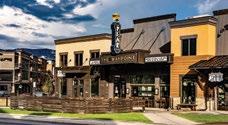
RESTAURANT REVIEW: BUCK'S ROADHOUSE
LANDSCAPING GUIDE ADVISES ON FIRE, WATER, NATIVE PLANTS
April 30 - May 13, 2026
Volume 17 // Issue 10
Owned and published in Big Sky, Montana
PUBLISHER
Eric Ladd | eric@theoutlawpartners.com
EDITORIAL
VP MEDIA
Mira Brody | mira@theoutlawpartners.com
SENIOR EDITOR
Jack Reaney | jack@theoutlawpartners.com
STAFF WRITER
Jen Clancey | jen@theoutlawpartners.com
LOCAL JOURNALIST
Leslie Kilgore | leslie@theoutlawpartners.com
DIGITAL MEDIA LEAD
Fischer Genau | fischer@theoutlawpartners.com
STAFF WRITER
Carli Johnson | carli@theoutlawpartners.com
GRAPHIC DESIGNER
Luke Breum | luke@theoutlawpartners.com
CHIEF OPERATING OFFICER
Josh Timon | josh@theoutlawpartners.com
CHIEF MARKETING OFFICER
Megan Paulson | megan@theoutlawpartners.com
VP DESIGN & PRODUCTION
Hiller Higman | hiller@theoutlawpartners.com
DIRECTOR OF RELATIONSHIPS
Ersin Ozer | ersin@theoutlawpartners.com
MARKETING MANAGER
Tucker Harris | tucker@theoutlawpartners.com
CONTENT MARKETING LEAD
Taylor Owens | taylor.owens@theoutlawpartners.com
SENIOR ACCOUNTANT
Sara Sipe | sara@theoutlawpartners.com
BUSINESS DEVELOPMENT LEAD
Patrick Mahoney | patrick@theoutlawpartners.com
ACCOUNT COORDINATOR
Ellie Boeschenstein | ellie@theoutlawpartners.com
Thad Beaty, Jack Buban, Mel Crichton, Ashley Dodd, Rachel Hergett, Yarrow Kraner, Benjamin Alva Polley, Victoria Smith, Jon Trapp

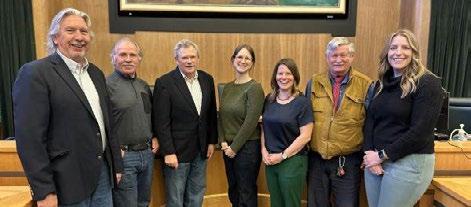
candidates Ryan Busse, Russell Cleveland, Sam Forstag and Matt Rains attended and answered questions related to the current federal administration, their thoughts and initiatives towards the housing crisis, the future of health care in Montana, and more. The primary election takes place June 2. PHOTO
FIRE CHIEF DUSTIN TETRAULT TO RETIRE
Big Sky Fire Department Chief Dustin Tetrault will retire from his role in June or July this year, an April 16 BSFD press release announced. Tetrault has served in public safety for more than 20 years, and dedicated over 10 years to service in Big Sky.
LANDSCAPING GUIDE ADVISES ON FIRE, WATER, NATIVE PLANTS
The partnership Alpenscapes—formed between the local organizations Big Sky Sustainability Network Organization (SNO), Gallatin River Task Force, Big Sky Fire Department and Grow Wild—has released a new guidebook to further promote fire-safe, water-wise and ecosystem-friendly landscaping practices.
LPHS PRODUCES SEVEN COLLEGE ATHLETES
On Wednesday, April 15, seven Lone Peak High School seniors took photos with families, teammates and coaches in the school’s gymnasium, celebrating signing on to continue their athletic careers in college.
COMMUNITY THEATER TO PERFORM MAY 15
On Friday, May 15, the Big Sky Community Theater will perform “Going Off Trail,” a similar production to 2025’s “On the Face of It,” which portrayed local vignettes surrounding Big Sky’s winter culture. “Going Off Trail” will take on summer adventures, as well as Big Sky’s local culture.
RESTAURANT REVIEW: BUCK’S ROADHOUSE
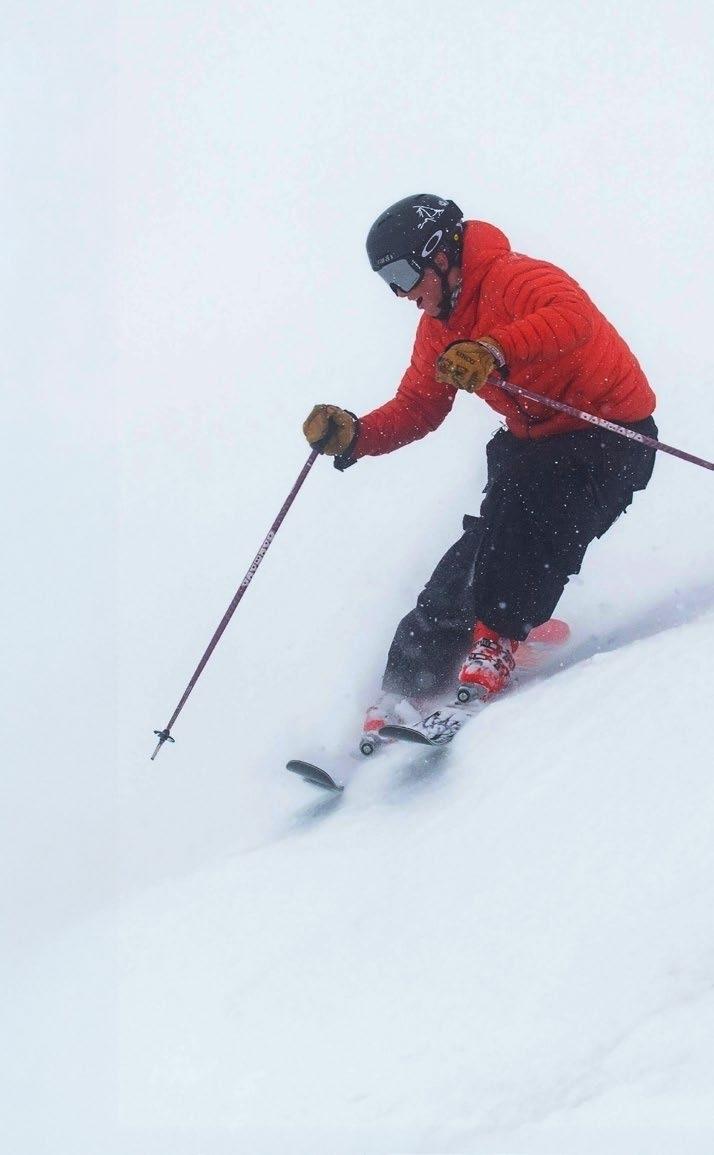
Closing day was socked in, but dozens of hardcore skiers still lapped the tram without much visibility. Local ninth grader Will Goldberg put the pedal to the metal in first gully, trusting instincts over eyesight, for this shot captured around 2 p.m. Sunday, April 26.
PHOTO BY JACK REANEY
EDITORIAL POLICY
Outlaw Partners, LLC is the sole owner of Explore Big Sky. EBS reserves the right to edit all submitted material. Printed material reflects the opinion of the author and is not necessarily the opinion of Outlaw Partners or its editors. EBS will not publish anything discriminatory or in bad taste.
EBS welcomes obituaries written by family members or from funeral homes. To place an obituary, please submit 500 words or less to media@theoutlawpartners.com.
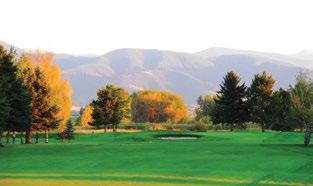
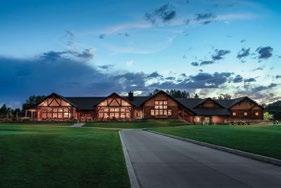
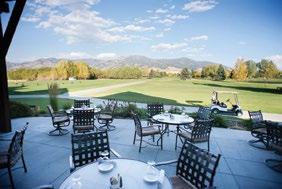
EBS columnist Rachel Hergett visited one of Big Sky’s longest-standing institutions, Buck’s T-4, which recently got a face lift under Lone Mountain Land Company ownership. She writes about the new menu and new features, and reminisces on the history of a Big Sky staple.
LETTERS TO THE EDITOR
Letters to the editor allow EBS readers to express views and share how they would like to effect change. These are not Thank You notes. Letters should be 250 words or less, respectful, ethical, accurate, and proofread for grammar and content. We reserve the right to edit letters and will not publish individual grievances about specific businesses or letters that are abusive, malicious or potentially libelous. Include: full name, address, phone number and title. Submit to media@outlaw.partners.
ADVERTISING DEADLINE
For the May 14th issue: May 6th, 2026
CORRECTIONS
Please report errors to media@outlaw.partners.
OUTLAW PARTNERS & EXPLORE BIG SKY P.O. Box 160250, Big Sky, MT 59716 (406) 995-2055 • media@theoutlawpartners.com ©2026 Explore Big Sky unauthorized reproduction prohibited


A University of Montana survey shows that 81% of Montana voters support permanent protection for the Gallatin and Madison ranges, and 70% support Wild and Scenic designation for the Madison and Gallatin rivers.
The Greater Yellowstone Coalition announced the survey results in an April 23 press release advocating for the Greater Yellowstone Conservation and Recreation Act, developed by the Gallatin Forest Partnership and first proposed in June 2024. GYC asserts that more than 2,500 business owners, outdoor recreation enthusiasts, landowners and conservationists already support the legislation. On the other hand, some believe it falls short with outsized emphasis on human recreation and insufficient Wilderness designation, according to reporting by Mountain Journal.
“The survey released this week shows not only that 80% of those surveyed support this legislation to protect the Gallatin and Madison ranges, but also there is growing support for strengthening protections for public lands across the state,” GYC Montana Conservation Manager Sally Schrank stated in the release.
Separately, GYC highlighted Rep. Ryan Zinke’s 2025 legislation, the Greater Yellowstone Recreation Enhancement and Tourism Act, seeking to protect 98 river miles of the Gallatin and Madison rivers and their tributaries via Wild and Scenic designations. The survey showed 70% of Montanans support the legislation.
“Protecting the Madison and Gallatin Rivers means securing clean drinking water, supporting Montana’s powerful recreation and agriculture economies, and protecting the iconic wildlife of the region,” stated GYC Conservation Director Charles Drimal.
The survey of 515 voters—33% republican, 25% democrat and 42% independent—was conducted by the University of Montana’s Crown of the Continent and Greater Yellowstone Initiative, in collaboration with two third-party research firms. The final report covers numerous topics, such as hunting and fishing access, public lands protections, environmental concerns and climate change views.
“Montanans’ support for protecting the places we all cherish continues to grow,” GYC Executive Director Scott Christensen stated in the release. “The vast majority of voters are so strongly aligned on securing permanent protections for the lands and waters of southwest Montana that it sends a powerful message to our Congressional leaders to unite and get these bills turned into law.”
The City of Bozeman is updating its historic preservation program and is seeking public input as part of the process.
The effort focuses on revisions to the Neighborhood Conservation Overlay District, which has guided development in Bozeman’s historic neighborhoods since 1991. The district includes more than 4,000 properties and nine National Register Historic Districts in and around the city’s downtown.
Originally established to preserve neighborhood character while allowing for thoughtful new development, the NCOD design guidelines were adopted in 2006 and last updated in 2015. According to their website, city officials state the current update aims to align the guidelines with modern best practices in historic preservation while community priorities.
The project also supports Bozeman’s ongoing Local Landmark Project and builds on recommendations from the Historic Preservation Policy and Local Landmark Project Phase 1 Report, adopted by the City Commission in May 2025.
Community engagement will play a central role throughout the process. Residents are encouraged to share feedback on what is working well in historic neighborhoods and where improvements can be made.
An initial open house was held April 13, featuring interactive activities such as mapping exercises and discussion boards. Additional opportunities for public input are expected as the project moves forward.
More information about the NCOD Design Guidelines update, and ways to participate, is available at the city’s engagement website.
EBS STAFF
On Friday, April 17, the Gallatin County Elections Department mailed over 77,500 ballots for the May 5 School and Special Purpose District elections to all active registered voters.
This election will be conducted by mail only, though voters can also deposit ballots at certain locations in the county in person.
School elections are being held in various school districts across the county and includes elections for various special districts including fire, resort area and hospital. Only voters who reside within those boundaries will receive a ballot for this election.
Voters can expect ballots to arrive in mailboxes this weekend or early next week. Sample ballots are available at MyVoterPageMT.com
If you don’t receive your ballot by Wednesday, April 22, the Gallatin County Elections Office advises voters to contact them right away to request a replacement or confirm your registration and eligibility.
Voters returning ballots by mail should send their ballots no later than Friday, April 24 to ensure it arrives by the deadline. Ballots must be received, not postmarked, by 8 p.m. on Election Day, Tuesday, May 5.
In-person ballot drop-off is available at the following locations:
Gallatin County Elections Office – 311 W. Main St., room 210 in Bozeman
Belgrade School District Administration Office – 312 N. Weaver St. Ridge View Elementary School – 117 Green Belt Dr. in Belgrade
BASE Community Center – 285 Simkins Dr. in Big Sky
All locations are open Monday through Friday during regular business hours through Monday, May 4, and from 7 a.m. to 8 p.m. on May 5 Election Day. Voters from any district may drop their ballots off at any of these sites.
A new Montana law, HB 719, now requires voters to include their birth year along with their signature when returning mail ballots. This year’s ballot includes a box for your four-digit birth year. If left blank, your ballot cannot be counted unless corrected by 5 p.m. on May 6. The Elections Office will contact affected voters using information on file to help resolve this issue promptly.

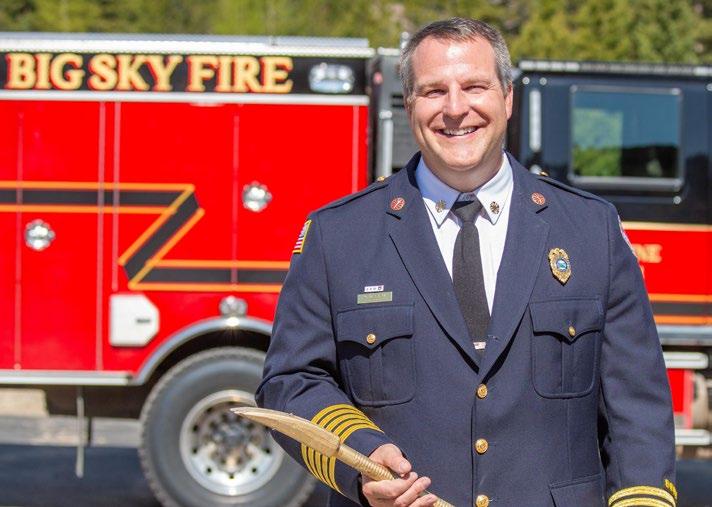
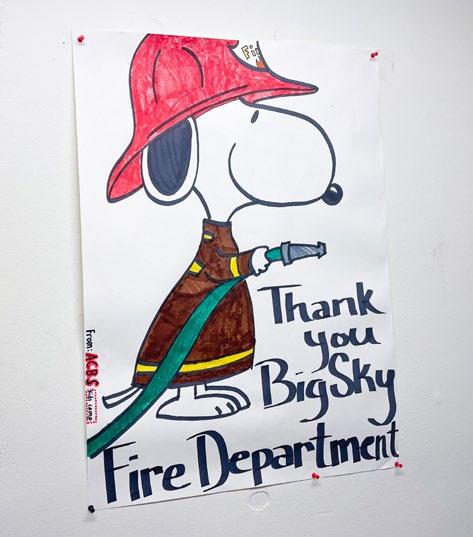
Big Sky Fire Department Chief Dustin Tetrault will retire from his role in June or July this year, an April 16 BSFD press release announced. Tetrault has served in public safety for more than 20 years, and dedicated over 10 years to service in Big Sky.
“Chief Tetrault’s decision comes after a prolonged and ongoing battle with autoimmune-related health complications. Following a nearly monthlong medical leave and a subsequent return to duty under limited work restrictions, he has made the decision, in consultation with his healthcare team and family, to step away from his role to focus on his health,” the release stated.
Tetrault stepped into the role of chief in July 2024 after serving in BSFD for six years, and has been in public service in Big Sky for 11 years, starting in emergency management. Under his leadership, Tetrault has progressed the region’s preparedness
for wildfire incidents, emergency response and community risk reduction.
“It has been an honor to serve this community and lead the dedicated professionals of the Big Sky Fire Department,” Tetrault stated in the release. “This was not an easy decision, but it is the right one at this time.”
His retirement announcement comes at a tumultuous time for the Big Sky Fire Department.
The fire department began pushing for more investigation into its tax collections after seeing revenues surge starting in 2022, and those questions led to the discovery of an $8.3 million overcollection due to a Gallatin County tax error. Since, the fire department made cuts to programs and projects and is solving for a $2.3 million cut in annual tax revenue. In the aftermath, Tetrault and his leadership volunteered salary cuts to assist with cost concerns.
“We are in a challenging time right now, and I recognize that,” Tetrault stated. “But this department has the people, the capability, and the foundation to get through it and come out stronger on the other side.”
During his time as chief, Tetrault also oversaw planning for Station 3 in the Spanish Peaks club, Montana’s first station funded through a Rural Improvement District. He honored employees at the department’s first recognition ceremony in May. He also worked to improve organization development and strategic planning for the department, on top of ensuring transparency about fire department issues in a February public forum.
“During his tenure, he emphasized transparency, accountability, and building systems designed to support both the department and the greater Big Sky Community,” the release stated.
In the coming weeks, the fire department board of trustees will provide updates on leadership change.


SUNDAY, JUNE
WELCOME COCKTAIL HOUR
G-MAN

BY VICTORIA SMITH
EBS CONTRIBUTOR
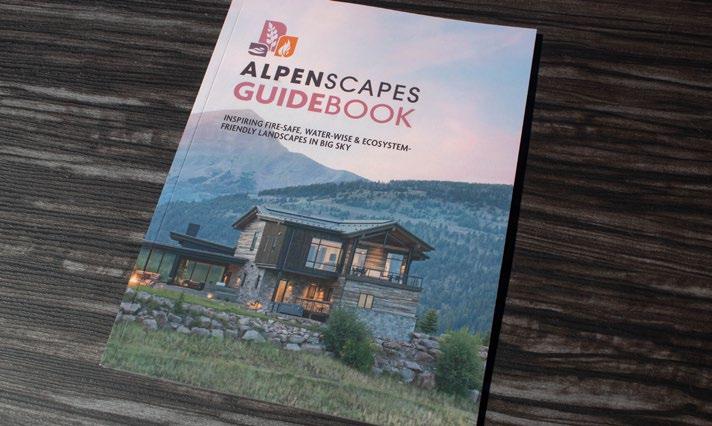
BIG SKY—The partnership Alpenscapes— formed between the local organizations Big Sky Sustainability Network Organization (SNO), Gallatin River Task Force, Big Sky Fire Department and Grow Wild—has released a new guidebook to further promote fire-safe, water-wise and ecosystem-friendly landscaping practices.
The 48-page Alpenscapes Guidebook provides inspiration and guidance on how to implement these practices. Information includes the ways in which fires can spread to homes, how non-native lawns and irrigation practices can affect water usage and how plants can affect the ecosystem. Copies are available for free at various locations such as the Big Sky Fire Department Station 1, Big Sky Thrift, the Big Sky Owners Association office, and BASE Community Center.
“We’re a part of the Greater Yellowstone Ecosystem, and as neighbors or kind of outliers on that ecosystem, it’s incumbent upon us to be responsible stewards of the land,” said Lizzie Peyton, director of community sustainability for Big Sky SNO. “Doing so in a comprehensive and thoughtful way is much more fruitful in the long run than being just targeted about just fire-wise, or just native or just water.”
The guidebook includes visuals, such as various potential landscape designs that consider different elements of living in Big Sky, and a collection of charts that list plants, detailing whether each plant is water-wise, fire-wise and native to Montana, along with its shade and sun tolerance. It also
includes a step-by-step checklist, allowing readers to plan their own landscape through documenting goals and aspects of their property, noting water and fire risks, or sketching a design plan.
Alpenscapes has been planning the guidebook since launching in July 2024. The partnership began to receive funding for the guidebook project in fall 2024 and spring 2025 from Resort Tax, Yellowstone Club Community Foundation and Moonlight Community Foundation.
“One of our primary goals was to make sure we weren’t making a guidebook that just got set on a shelf or maybe got tossed away… We recognize the value and that word of mouth in Big Sky, and the ability to be at a dinner party and see a nice book on somebody’s coffee table,” Peyton said. “… It starts the conversation, and having that conversation constantly crop up is probably the most important way we can market and message this education.”
A digital, downloadable version can be accessed on the Alpenscapes website, and the partnership plans to make physical copies available at more locations.
Anyone interested in additional, in-depth landscaping information can access a comprehensive list of Alpenscapes Landscaping Best Practices, published in summer 2024 on the Alpenscapes website.
History and impact of Alpenscapes: ‘We’re in alignment’
Alpenscapes officially launched in 2024 after signing its initial partnership agreement in
2023. It was created as a result of community members expressing interest in how to tailor their landscaping to more than one area—fire-safe, water-wise and ecosystem-friendly.
“I think the partnership adds value because within those three topics, we have the expert on each of them,” said Ali Chipouras, marketing coordinator for Alpenscapes. “All the partners bring so much knowledge, and a lot of times, we’re working towards the same goal, and just maybe thinking about it from a different perspective.”
Since the launch, organizations involved have noticed impacts of Alpenscapes, particularly in the free site visits that GRTF, BSFD and Grow Wild offer to property owners. These visits focus on identifying ways to conserve water, reduce wildfire risk and identify noxious weeds and native plants.
According to the 2025 “Alpenscapes in Action” report, GRTF saw a 100% increase in site visits in 2025 compared to 2024. In 2025, BSFD conducted 70 home site visits and Grow Wild conducted 37 site visits, totaling 272 acres of local property.
Jennifer Mohler, executive director of Grow Wild, said that prior to the launch of the partnership, she completed 53 site visits in 2023. The following year, she conducted 91 site visits.
“Alpenscapes, for me, did what I was so hoping it could do, which is connect with and engage more landowners,” Mohler said. “And so it was a huge success.”
Peyton said Lone Mountain Land Company and many HOAs have adopted Alpenscapes guidelines
and best practices into their policies. Alpenscapes has also been working with the Firelight Meadows neighborhood, and with Big Sky Community Housing Trust regarding the Cold Smoke workforce housing development.
“When you have a [partnership] that recognizes the importance of collaboration, all the messaging is going in the same direction,” said Jon Trapp, division chief of wildland fire at Big Sky Fire Department. “When we are all saying the same thing, it’s going to be better for the public. We’re in alignment, and we’re going to have better ability to influence change.”
Alpenscapes looks forward to continuing to provide inspiration and guidance, and plans include an upcoming garden day with Wellness in Action, and planting native plants this spring in the newly built firewise crevice garden at Historic Crail Ranch.
“We need to keep pushing the edge of being proactive, informed, engaged because it’s just such an important landscape,” Mohler said. “… Between drought, changing climate, increasing development, we can’t just rest on our laurels and everything is going to be okay.”
Leaders encourage community members to check out the Alpenscapes website, as well as each organization’s website for specific information and programs.
“We want to be here for folks. There’s no right or wrong way to go about using us,” said Jess Olson, GRTF conservation manager. “And if there’s a
BY JACK REANEY
BIG SKY—As expected, the Big Sky Fire District presented its $900,000 ask to the Resort Tax board on April 15, to help with the fire department’s multi-million-dollar budget shortfall.
Initially, a Big Sky Resort Area District board subcommittee recommended funding no additional money, instead earmarking half the ask, $450,000, in case BSFD ultimately runs into a cash flow deficit during fiscal year 2027. The recommendation was based on data showing—in the opinion of the BSRAD subcommittee—that BSFD has sufficient reserves to survive the final third of its three-year, $3.55 million interlocal agreement without any necessary changes to payroll, staffing or services.
“To date, we believe that while there is a deficit, there is enough in [BSFD’s] reserve fund to continue their operations without harming the community or their department,” said BSRAD board member Sarah Blechta.
Over the course of a long discussion, the BSRAD board abandoned that initial recommendation and decided to offer $450,000 outright, plus an additional $225,000 contingent upon BSFD finding $225,000 in matching dollars. With the match, BSFD can receive its preferred $900,000 in additional funding for fiscal year 2027.
The matching dollars must come from any the following sources: Gallatin County government, possibly as a reconciliatory payment from county reserves; the potential Big Sky Wellness District; revenue generated by a potential property tax levy; or a designated withdrawal from BSFD capital reserves.
Leaders from both districts emphasized the importance of working together to ensure firefighters are safe as ever, and Big Sky’s emergency services are not compromised.
“We want to continue to be partners. So thank you guys for coming, I really appreciate it,” Blechta said. “This is one of the most important things we can continue to talk about as a community. We are all in this together… This sucks. Like, this is terrible. Nobody enjoys this. Nobody enjoys that we all paid extra taxes. Nobody enjoys that we’re having to have these discussions.”
Fire district board member Matt Dodd echoed the message, noting that when folks call 911, they expect a prompt response no matter what.
“We live here, and we expect the fire department to help us. Even though we are not a town, we are not a municipality… The way that this works is because we all help each other,” Dodd said.
After hearing the initial recommendation, Dodd pushed back against the notion—offered by board member John Zirkle—that financial documents show BSFD is “a healthy organization that has ample reserves to cover the stated deficits over the next 12 to 14 months” until the districts negotiate their next three-year funding agreement. Or as Blechta put it, “This is not an emergency, this is a dilemma.”
Dodd noted that those financial documents were accurate at a point in time—and the BSRAD board did interpret the financial situation correctly—but
that time has passed. He said the $1.6 million currently available in operating funds is not enough money to provide certainty for the fire district’s ability to pay staff and keep the lights on.
“The biggest challenge, bar none, of our budget is our payroll, staffing, benefits,” Dodd said. As previously reported, 94.65% of BSFD’s current operating budget is dominated by staff payroll and benefits, although Division Chief Jeff Bolton clarified that before the budget conundrum, that ratio was more balanced at 74%. “What I can tell you is that we’re coming to the BSRAD board in good faith, having taken the cuts we could take, operationally.”
After hearing Dodd’s plea, Zirkle suggested the $450,000-plus-$225,000 arrangement, and suggested contingencies for matching funds.
He explained why he included Gallatin County as a potential source of matching funds.
“I want to keep pushing on the county, because I am frustrated by the fact that even though the fire department got extra dollars, Gallatin County has owned up to the fact that they made a spreadsheet error that cost this community this dilemma… some type of symbolic accountability, I really want to press on that,” Zirkle said.
Another potential source, BSFD officials said they plan to pursue a property tax levy, which would require approval from voters.
In public comment, community member Tallie Lancey suggested BSFD sells back the three-acre plot of land that it recently purchased from Lone Mountain Land Company using $1 million cash during the aftermath of the tax miscalculation. The purchase was a controversial move, and BSFD officials have justified the decision based on exceptional timing and long-term opportunity—the land was relatively cheap and adjacent to BSFD’s existing training facility. Lancey suggested forming an agreement with LMLC to purchase the land in the future, once BSFD is financially stable and ready to construct a future public safety center, as planned.
Dodd said the district could discuss that possibility. If BSFD did sell the land, the cash could be used as matching funds to unlock the $225,000 from Resort Tax.
Of course, LMLC—or any other involved buyer— would need to agree to terms.
In addition to matching dollars, other contingencies included BSFD’s mandatory attendance at BSRAD meetings at least once per quarter, and a monthly finance report.
Leaders ended the meeting with smiles and handshakes in mutual confidence that their new funding agreement will ease the pressure of a perplexing and frustrating moment in Big Sky history.
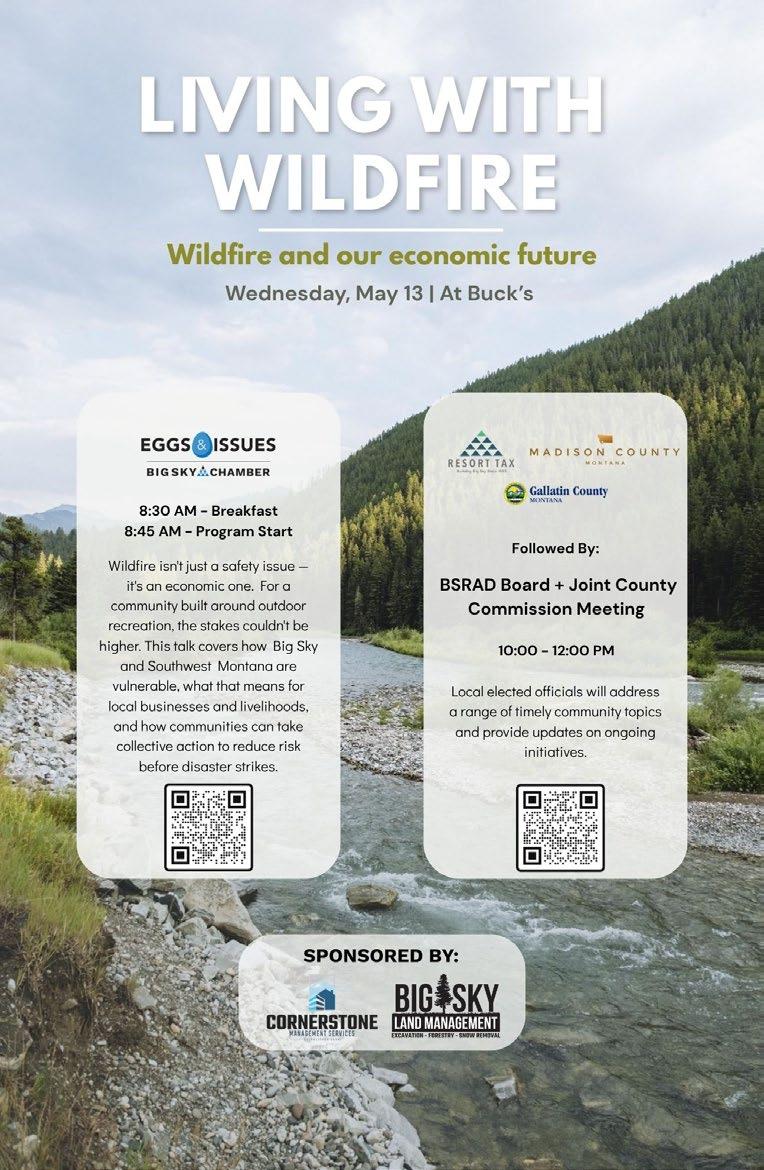
It’s time to hear the proposal for the ballot and the Study Commission’s recommendations— shaped by your input—for the future of Gallatin County government.
JOIN US FOR AN UPDATE:
April 22, 6pm – Three Forks High School Auditorium
April 23, 5pm – West Yellowstone Town Hall
April 27, 6pm – Gallatin Gateway Community Center
April 29, 6pm – Gallatin County Courthouse Community Room*
April 30, 6pm – Wilson Hotel, Big Sky
Visit our website for more information.
*Virtual attendance available

BY JEN CLANCEY
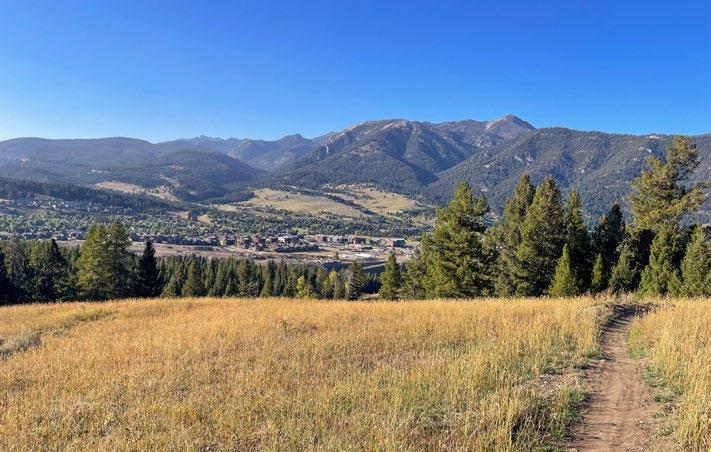
BIG SKY— Grow Wild, the nonprofit that works to conserve Big Sky’s native species, is one step closer to hiring a caretaker for the firs, pines and aspens of Big Sky.
In October 2025, Resort Tax challenged Grow Wild to raise $50,000 in donations for a forestry project to unlock Resort Tax funding. Big Sky Resort Area District had just granted $56,246 to the nonprofit for its operations and Alpenscapes, and gave Grow Wild a deadline to fundraise and present a forest stewardship plan. Five months later in an April 15 Resort Tax meeting, Grow Wild Executive Director Jen Mohler announced that the matching funds of $50,000 had been secured.
The accomplishment puts Grow Wild on track to complete a forestry plan guided by experts, and eventually hire a community forester in Big Sky, potentially within the next year. A community forester would manage forest stewardship, wildfire risk, wildlife habitat, landowner support, and education and community coordination. The need for a forester has become more urgent as Big Sky and surrounding areas experience wildfire risk and drought, Mohler said.
“The urgency, the alarms are going off in terms of drought and wildfire risk,” Mohler told EBS. She said that the East Side wildfire in Red Lodge last week was a glaring siren: “It’s not if, but when it happens in Big Sky.”
A forester is key to proactive management of
the threats to Big Sky’s outdoors, Mohler said. According to Mohler and Jon Trapp, Big Sky Fire Department’s wildland fire chief and partner on the project, a forester’s expertise can guide approaches to a stressed Gallatin River, improving water quality and quantity, and could also address the irony of a landscape without wildfire.
“To just leave it, quote, ‘natural’ is … a false understanding,” Moehler said. “We have prevented wildfires in our forests that are designed and were evolved under fire conditions. We’ve prevented that for so long that we have an unnatural state.”
The lack of wildfires has caused forests to miss out on a burn’s benefits, like new growth and improved habitat for wildlife.
“So when we realize where we are with an overstocked and overgrown forest, we need to have a plan that helps return that species diversity and age class diversity and mosaics on the landscape,” Trapp said in the Resort Tax meeting.
Mohler, with guidance from Lone Mountain Land Company forester Jeff Cadry, the Grow Wild board and Trapp, drafted a plan which will soon be reviewed by contracted professionals covered by the fundraised dollars and BSRAD grant.
Cadry, BSFD, Gallatin County forestry experts, Madison County’s forester Darrell Schulte and contractor Richard Stem, and Grow Wild board members will organize a request for proposals to source bids from qualified candidates who will shape the forestry plan.
“I’m really keen on doing this right and getting the best work out of these folks as possible,” Mohler said of the effort put into the forestry plan. The end product will include an in-depth description of the role of community forester in Big Sky, addressing both community and environmental needs.
A community forester isn’t a cure-all for environmental troubles in Big Sky, Mohler clarified, but they are a missing piece in proactive forest management. She hopes that when experts finalize the forest stewardship plan, community members will continue to step up to fund the position. For her, it’s a long-term commitment to solving issues that could impact community wellbeing, the environment, wildlife and even the local economy.
To reach the $50,000 community donation goal, Grow Wild had conversations and answered questions about a forest stewardship plan and the push for hiring community foresters.
Insurance agencies, real estate companies, a developer, an HOA and private donors contributed to fundraising.
Community engagement will be key in forming a final forest stewardship plan, incorporating residents’ questions and needs into the document, which aims to provide a durable, communitysupported program that addresses unique aspects of the Big Sky landscape. Grow Wild will share community input opportunities as it makes progress on the forestry plan.
BY JACK REANEY
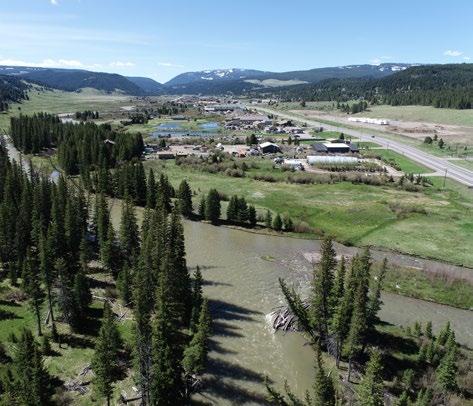
BIG SKY—Under pressure from a $10 million funding gap, Gallatin Canyon sewer project leaders believe regional conservation groups need to be on board. To earn that buy-in, the project may need to spring high above its regulatory hurdle.
In February, the Gallatin County Commission and a coalition of five conservation groups—Upper Missouri Waterkeeper, American Rivers, Greater Yellowstone Coalition, Trout Unlimited and Gallatin River Task Force—each sent letters to the Montana Department of Environmental Quality, urging DEQ to perform a study of the project’s impacts on water availability and quality, local infrastructure, wildlife, recreation, economy, history, culture, tourism and agriculture, as outlined in the Montana Environmental Policy Act.
“A project the scale of the Gallatin County Sewer Project is of great importance to the future of Gallatin County, and because the funding of this infrastructure requires both public and private monies, and because of ongoing water quality issues affecting the many users of the Gallatin River, Gallatin County asks that you ensure a robust study of the proposal—as well as the transparency and public participation required by the MEPA analysis,” the Gallatin County Commission stated in its letter to DEQ.
DEQ Director Sonja Nowakowski responded that DEQ remains committed to ensuring that all aspects of its approvals align with the MEPA, and related standards. The Gallatin Canyon County Water and Sewer District has not yet submitted a full application to DEQ for the canyon sewer project.
Despite Nowakowski’s assurance, project leader Mace Mangold believes that the conservation groups want a “beefed up” environmental assessment before the sewer project is approved—or risk the project getting hung up in litigation against DEQ.
Mangold met with all five of the groups on March 6, and said it was a productive meeting.
“All positive. Definitely, they’re now wrapping their heads around the multi-faceted benefits of the project, which is kind of news to them,” Mangold said at the March 11 Resort Tax board meeting. “They definitely knew that the [canyon area septic systems] were a problem for the past two decades… but the scale at which the project can help solve that problem… that was all kind of a new dynamic.”
Still, hearing the groups’ desire for an exceptionally strong EA, Mangold and WGM Group are taking that matter into their own hands. Mangold noted that $50,000 could achieve the minimum MEPA standards—likely the level of review that DEQ will otherwise perform—but cautioned against relying on the bare minimum, given the public scrutiny toward this project. Instead, he asked Resort Tax for $200,000 in additional funds to allow WGM to work alongside DEQ and amplify the environmental assessment.
“That’s what I heard at the meeting. Make that [EA] a strong backbone to a discharge permit, and the project overall, so that it doesn’t get litigated moving forward,” Mangold said. In particular, he and the Resort Tax board are concerned about litigation from Upper Missouri Waterkeeper, which already sued DEQ over a small deviation request related to the project’s design.
Resort Tax board member Kevin Germain asked if Waterkeeper could first sign off on an EA outline before BSRAD releases funds.
“I just don’t want to fund this, and have [Waterkeeper] say, ‘That wasn’t enough. We want this.’ I don’t want the goalposts to move on us,” Germain said on March 11. “… I just want to make sure that if we vote to fund this, it matches the mark.”
The board voted unanimously to fully fund $200,000 with a stipulation that WGM has a meeting with Waterkeeper to align expectations for a sufficient EA.
“Environmental assessments and transparent public processes are not boxes to check. They are core legal duties of our public agencies, and it’s DEQ’s obligation,” Matt Elsaesser, Waterkeeper deputy director, stated in a follow-up email to EBS. “Our water resources and rivers are too valuable and important to our economy and way of life to leave them to chance… Upper Missouri Waterkeeper supports transparency and a robust and meaningful public decision-making process in accordance with the law, and Montanans expect nothing less.” Mangold explained that the EA document would
still be authored by DEQ, but WGM would aid the state agency by compiling the large volumes of existing science reported by various groups— like Montana Bureau of Mines and Geology, and Gallatin River Task Force—and providing supplemental information to document the goals of the pivotal project.
Germain is still confident the project will succeed, but is frustrated by the challenges it’s faced from environmental groups, especially the Waterkeeper, over the course of 10-plus years since environmental needs compelled the project—the sewer would replace suboptimal septic infrastructure scattered beside the Gallatin River.
“I always thought this was a win-win-win-win… But win-win-win-wins shouldn’t be litigated. So I just want to get some commitment out of the group that was in that room, that we’re going to stop the litigation and support this project moving forward,” Germain said.
Separately, in terms of funding challenges, June 30, 2027 will be decision time.
By that deadline, Resort Tax will decide whether to disengage its $12 million funding commitment drawn from 1% collections. If the project proves to be shovel-ready, the board can decide to uphold its contribution.
“Urgency helps, honestly, on our end. I’m sensing from the canyon district board—it’s now or never,” Mangold said.
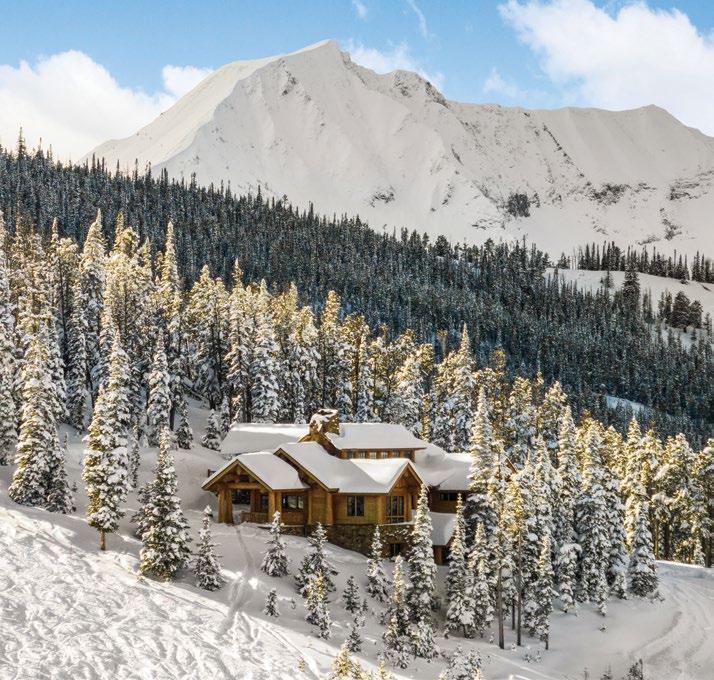
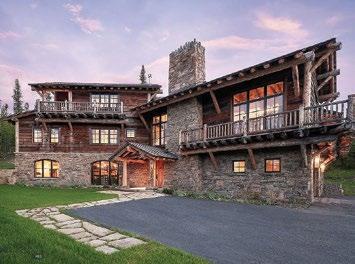


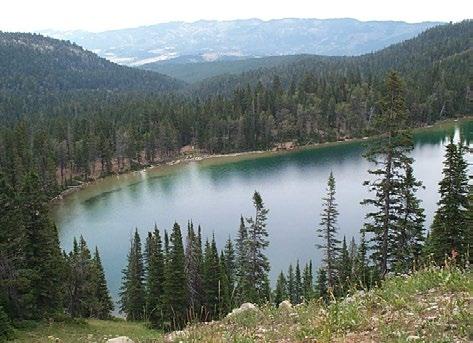
In the coming weeks, the public can expect road closures along Fairy Lake Road as the forest service has begun phased construction.
The seasonal closure of the road is currently in place through the end of June. However, forest users can expect disruptions along Fairy Lake Road during the summer season, according to an email from Emma Spurlock, public engagement officer for the Custer Gallatin National Forest.
“After many years of planning, we are pleased to begin work on important maintenance needs,” Spurlock stated in an email. “Fairy Lake is one of the most popular recreation areas on the Custer Gallatin National Forest, and the opportunity for these improvements is a priority.”
To ensure public and contractor safety, alternative routes will be available. Currently, the alternative route to access Fairy Lake is via Fairy Creek Trail #500 from Battle Ridge Trailhead but users should be advised that this route is longer and can be challenging.


BY LESLIE KILGORE AND FISCHER GENAU
Editor’s note: Outlaw Partners is involved with the Bobcat Works program, and is the publisher of Explore Big Sky.
BOZEMAN— The growing partnership between Montana State University football players and local business leaders continued to gain momentum April 27 at Bobcat Stadium, where community members, coaches and student-athletes gathered to celebrate the expanding impact of the Bobcat Works program.
Held in the Stadium Club overlooking the football field, the event highlighted a unique initiative that pairs players with local and regional businesses for summer internships and professional mentorship opportunities. This summer, more than 20 participants include Taco and Caden Dowler, Justin Lamson, Dane Steel, Zac Crews, Rocky Lencioni, Takhari Carr and Rylan Schlepp.
The program was founded by several former players, and designed to help student-athletes prepare for life after football while strengthening ties between the university and the greater Bozeman community. Head coach Brent Vigen said the initiative has quickly grown from just two participating players in its first year to 20 student-athletes working with more than 20 businesses and organizations this summer, including Big Sky Bravery, First Security Bank, Gallatin County Sheriff’s Office, State Farm and Houser Engineering.
“This can set us apart,” Vigen said, describing the program as a meaningful way to support players beyond their athletic careers. “It’s big work.”
Vigen emphasized that while many players hope to continue football professionally, the program acknowledges the importance of building career skills and relationships long before their playing days end.
“I think for our players, they all aspire to be football players as long as they can be, and those days will ultimately run out, and then what? So anything we can do to enhance those opportunities beyond MSU football is what we want to be able to do. I’m so grateful to all of you who are a part of this,” Vigen said while welcoming the attendees.

Through internships, players gain exposure to professional environments, networking opportunities and interview experience while exploring potential career paths. Vigen said the initiative also helps athletes envision long-term futures in Bozeman by connecting them with business leaders and mentors throughout the community.
“We have many Bobcat fans in this community that want to give back, and ultimately, the hope for this program is that it can set us apart. It’s a testament to how much this place loves you back,” Vigen said.
Montana State running back Adam Jones spoke during the event about how the program changed his perspective on both Bozeman and life after football. Jones participated in the program’s pilot year in 2025.
“I didn’t really understand how special Bozeman was until I started meeting people through this program,” Jones said, thanking mentors and community members for investing time in the players.
Jones added that hearing the career stories of local professionals helped relieve pressure many studentathletes feel about having their futures perfectly mapped out.
Beyond internships, Jones described the relationships formed through Bobcat Works as a genuine support system built on honesty, mentorship and long-term investment in the players as individuals.

“You can reach out and get a genuine answer,” Jones said. “That’s something you can’t find everywhere.”
Among the Bobcats that will follow in Jones’ footsteps this summer are twins Caden and Taco Dowler. The Bobcat stars will both be working for Outlaw Partners with Caden assisting managing broker EJ Daws for Outlaw Realty, while Taco interns for Outlaw Partners COO Josh Timon.
“I’m hoping to honestly just be a sponge for information,” Taco told EBS. “I feel like Outlaw Partners is a little bit of everything in the community around here, and I’m excited to soak everything in and take a lot of notes.”
Another standout player participating in Bobcat Works is quarterback Justin Lamson, who will be interning with Big Sky Bravery.
“I just appreciate what they’re doing and I want to be part of it somehow,” Lamson told EBS.
This summer, players will balance their internships with training for the upcoming football season, and Lamson said he wants to give his full effort to both.
“They’re going to get all they can out of me and it’s going to be great,” Lamson said.
Jon Knokey, a former player and Bobcat Works founder who leads Bridger Capital, called the collaboration between the football program and local businesses something rare and uniquely representative of the Bozeman community.
“How do we bridge the gap between football, academics, and the professional real world? It’s pretty special to pause and share this story with the community, a football program vested in growing its players professionally over the summer, and local businesses coming together to invest their time, networks and energy to help young people thrive,” Knokey said. This summer, Knokey and Bridger Capital will welcome defensive end Jake Vigen as an intern.
As the Bobcat Works program continues to expand, organizers hope it will not only help studentathletes prepare for careers beyond football, but also strengthen lasting connections between the university and the community that supports it.


‘THIS WILL BE YOUR FINAL CHANCE’: COUNTY RESIDENTS CAN LEARN

BY JEN CLANCEY
Over the course of 18 months, the Gallatin County Local Government Study Commission assessed the county’s government and procedures against other options offered by Montana law. In five listening sessions hosted between April 22 and 30, the commission will present its final recommendations for the November 2026 ballot.
The commission of seven, as well as the study, was approved by voters in November 2024. Since, the group has held public meetings and conducted government assessments to form recommendations for improved governance options. Recommendations are presented as a ballot measure for the November election this year. According to an April 20 press release from GCSC, the commission recommends no change to the current form of government, but supports presenting the option to transition county elections from partisan to nonpartisan.
At the listening sessions, the commission will also provide clarity on findings, how public input informed the process and confirm how the study addressed public interests.
“These listening sessions are an opportunity to reflect what we heard from the community, share what’s being proposed, and ensure it aligns with what residents want for the future of Gallatin County Government,” the release stated.
In an April 15 Big Sky Resort Area District board meeting, study commissioner and Resort Tax Director of Economic and Strategic Development Jackie Haines shared more about the proposed recommendation, which required a lot of discussion.
“It was quite a debate and a very split decision,” Haines said, regarding the final decision on recommendations. Two other potential recommendations—to expand the Gallatin County Commission from three to five seats and to change
the power of county government—were outvoted 4-3 by fellow commissioners. Haines said she also fought hard to convince study commissioners that a five-seat county commission would improve representation throughout the county. She encouraged residents to come out to the Big Sky listening session on April 30 at The Wilson Hotel at 6 p.m.
“This will be your final chance to give feedback to the study commissioners and final chance to affect any kind of change to our proposal,” Haines said. The final report is available online and has an accompanying minority report to complement final recommendations. The minority report supports the use of a charter government and expanding the county commission seats to five to boost representation.
On Wednesday, April 22 at 6 p.m., the commission will host its first session at the Three Forks High School Auditorium followed by West Yellowstone Town Hall on Thursday, April 23 at 5 p.m., Gallatin Gateway Community Center at 6 p.m. on Monday, April 27, and Gallatin County Courthouse Community Room at 6 p.m. on Wednesday, April 29 with virtual options available. Big Sky’s session will be the last.
Residents all over the county are encouraged to attend, including those who live in cities with established municipal governments.
“Everyone’s voice plays a vital role in shaping how county government works for our growing and diverse region,” the release stated.






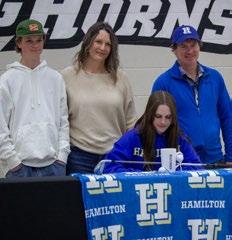
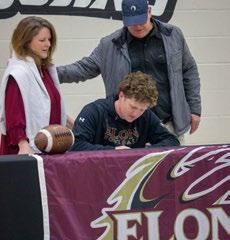
BIG SKY—On Wednesday, April 15, seven Lone Peak High School seniors took photos with families, teammates and coaches in the school’s gymnasium, celebrating signing on to play their sport at an undergraduate institution.
The group was the largest in LPHS history to graduate and move onto play for a college sports team, according to Big Sky School District Athletics Director John Hannahs.
"It’s inspiring for all of us here to see athletes whose passion for their sport drives them not only to pursue it at the collegiate level, but to dedicate the countless hours of hard work necessary to make that opportunity a reality, " Hannahs wrote in an email. "We are very proud of these kids for taking on that challenge."
Photos by Jen Clancey




BY YARROW KRANER GUEST COLUMNIST
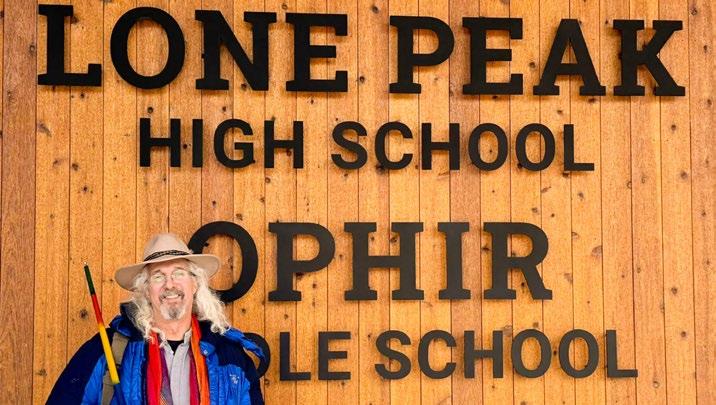
In a place as awe-inspiring as Big Sky, Montana, it’s easy to believe that the mountains themselves are the greatest teachers. But this year, something else powerful happened inside the classrooms of Lone Peak High School—and across the community.
With the support of the Moonlight Community Foundation, HATCH brought four extraordinary global voices to Big Sky. Scientists, explorers, artists and storytellers who have spent their lives pushing the boundaries of what’s possible showed up to share their experiences with local students.
HATCH was founded on a simple but powerful idea: when you connect extraordinary people across disciplines, you accelerate possibility.
Founded in 2004 in Montana, HATCH is now a global community that includes Oscar-winning filmmakers, Grammy-winning artists, founders, policymakers, technologists, astronauts, explorers, social impact innovators, teachers, mentors and next-generation leaders, connecting them to drive collective change and make the world a better place.
Through the Global Voices initiative, that philosophy came to life in a deeply local way, bringing world-class thinkers directly into Lone Peak High School and into the broader Big Sky community.
“I wanted to send a huge thank you for the HATCH Global Voices speaker series,” said LPHS
Principal Dr. Marlo Mitchem. “The speakers were absolutely wonderful—true experts who were so engaging. I loved that they spoke to our students as the intellectual, curious individuals they are. Because the lineup was so diverse, it felt like every student found a speaker they could really connect with. We’re so grateful for the collaboration with HATCH, and we really appreciate the energy you bring to the programming.”
These speakers were curated and invited; they wanted conversations, moments of curiosity, and to provide windows into entirely new ways of seeing the world.
Gregg Treinish discussed “The Power of PurposeDriven Exploration.”
National Geographic named Treinish “Adventurer of the Year” when he completed a 7,800-mile trek along the spine of the Andes Mountains. He founded Adventure Scientists with a passion for exploration and scientific discovery. The nonprofit provides institutions with access to scientific data that can amplify and accelerate solutions to environmental and human health issues.
A marine scientist, filmmaker and explorer, Rosenwaks has spent her life studying and documenting the ocean, from Antarctica to global conservation efforts. Her presence brought the vast, often invisible world beneath the ocean’s surface into sharp focus.
Students didn’t just learn about marine ecosystems, but they felt the urgency, beauty and responsibility of protecting them. Her storytelling made science human, emotional and deeply relevant.
Rosenwaks’ career started conducting groundbreaking research in Antarctica and continued at Duke University, where she earned her master’s degree researching giant bluefin tuna. Alarmed by the changes happening in the oceans, Gaelin founded Global Ocean Exploration Inc. to share her passion for ocean exploration, marine conservation and storytelling. She is a fellow of the Explorers Club and Royal Geographical Society, has appeared as an expert and host on many major networks, and was recently featured on the cover of Outside Magazine.
Treinish shared some incredible aspects of his journey through the wilderness, and through science and discovery. But what resonated most with students wasn’t just the scale of his journeys— it was his mission.
Gregg showed how exploration can serve something larger: gathering critical scientific data to help solve environmental and human health challenges. For students, it reframed adventure— not as escape, but as contribution.
Dr. Luke McKay spoke about “Rethinking Life Itself.”
A biotech scientist, McKay broke down life on Earth and the probability of extraterrestrial life. McKay is fascinated by the overwhelming diversity of life. His work is dedicated to understanding these incredible tiny creatures and, in particular, how they might help us tackle developing environmental catastrophes like climate change. McKay’s research focuses on ancient microbial


evolution and metabolism in extreme environments like Yellowstone National Park, unlocking secrets to the universe and the potential for extraterrestrial life.
His sessions sparked something rare: wonder.
Students were invited to think not just about what we know, but what we don’t yet understand. Questions about climate, biology and even life beyond Earth became invitations to imagine futures they might help shape.
Dave Zaboski brought a different kind of magic, as he discussed “Unlocking Creative Confidence.”
Zaboski, founder of Creatively Speaking, is a classically trained painter, illustrator and animator who contributed to Disney, Sony, and Warner Bros. during the Second Golden Age of Animation. His credits include iconic films like “Beauty and the Beast,” “The Lion King,” “Aladdin,” “Pocahontas,” “Hercules” and “Fantasia 2000,” as well as CG projects like “Stuart Little.”
His message was simple but profound: creativity belongs to everyone.
Through storytelling, humor and vulnerability, he helped students reconnect with their own creative instincts—not as something reserved for artists, but as a vital tool for problem-solving, leadership and self-expression.
He has illustrated acclaimed children’s books with leaders like Deepak Chopra and Ric Edelman, created concept art for film and television, and exhibited fine art internationally—including
painting for the Dalai Lama. A former Silicon Valley tech entrepreneur, Zaboski now leads Creatively Speaking, where he teaches and consults globally—from Esalen to Singularity University—empowering everyone from students to C-suite leaders.
More than inspiration: activation
The goal of Global Voices was never just to inspire. It was to expand horizon lines, and help young people in Big Sky see pathways, possibilities and identities they may not have previously imagined.
It worked. As outlined in the original vision for the program, these kinds of exchanges are designed to do both educate and activate. They build confidence, curiosity and a sense of agency in young people.
“The HATCH network provides a perspective that many of our students simply aren’t accustomed to, and that in itself is a victory,” said Big Sky School District Superintendent Dr. Dustin Shipman. “The more people like the HATCH presenters we can put in front of our students, the higher the likelihood they will become better human beings.”
Students didn’t just listen. They asked questions, they engaged and perhaps they saw reflections of who they could become.
What made this initiative especially powerful was that it didn’t stop at the classroom. Each visit extended into the broader Big Sky community, creating shared experiences across generations. Parents, educators and community members were invited into the same conversations, reinforcing a
culture of curiosity, creativity and connection.
This is how communities evolve, through shared inspiration and expanded perspective.
None of this would have been possible without the vision and generosity of the Moonlight Community Foundation.
Their support didn’t just fund a program—it opened doors and created moments that students may carry for the rest of their lives.
“MCF is proud to partner with Yarrow and the HATCH team, and equally proud to support the students of Big Sky,” said Anna Shipley, MCF executive director. “Thank you for your continued collaboration and for championing these kinds of experiences for Big Sky Kids.”
MCF helped bring the world to Big Sky, and in doing so, helped Big Sky’s next generation see their place in the world.
This is just the beginning. The early impact of Global Voices affirms something we deeply believe at HATCH: When young people are exposed to diverse perspectives and extraordinary lived experiences, they don’t just learn—they transform.
And when that happens in a community like Big Sky, the ripple effects can last for generations.
Yarrow Kraner is a creative alchemist, connector of dots, founder of HATCHexperience.org, and founder of H360.ai.


4







BY ASHLEY DODD GUEST COLUMNIST
As the end of the ski season approaches and the snow stops—and starts, and stops, and starts again—locals emerge with a renewed sense of caution as both bears and mountain bikes reappear from hibernation, and our collective thoughts turn once again to the stage. Fresh off a phenomenal winter schedule of productions and events, the Warren Miller Performing Arts Center will once again host a Big Sky Community Theater original production, “Going Off Trail,” for one night only on Friday, May 15 at 7 p.m. Tickets are available online at warrenmillerpac.org.
The production—written cooperatively by BSCT members Alex Youre, Laura Seyfang, Steve Chernausek, Jonathan Gans, Cindy Fan, Steph Kissell, and Laynee Jones—is a true celebration of collective involvement. In a time where we increasingly begin to feel the push and pull of our community’s inevitable growth and change, this collaboration highlights—and pokes fun of—our need for connection and meaning within our small town. Directed by Jeremy Blyth, this spring’s production features a cast of over 15 local actors,
singers and dancers working together to build upon the success of last year’s original creation, “On the Face of It,” a series of short scenes celebrating and revealing truths about life in a small mountain town.
Whereas the previous production emphasized the trials and tribulations of Big Sky’s long winters, this spectacular and heartfelt sequel will focus on the joys and challenges of the short but glorious summer season.
Following a similar production pattern as “On the Face of It,” BSCT members convened regularly throughout the past six months to discuss potential topics, both funny and poignant. Once the nuggets were mined, the writers got to work creating scripts with heart and humor, substance and sentiment, gravity and giggles. Ideas were crafted, dialogue was refined, and revisions were made until a script full of familiar characters and recognizable moments emerged. Auditions were held in late February and rehearsals were soon under way with actors contributing their own ideas and concepts to help shape the direction of the project. With only a few weeks left until the final production, the cast and crew are busy learning lines and

building sets, adding the final touches on what is sure to be another memorable night of theater and community celebration.
Though not every BSCT event is an original creation, the spirit of community theater thrives on involvement and ideas, onstage and off. The program is in its 13th year of bringing both familiar and unique productions to the Big Sky stage and all are welcomed and encouraged to join. Interested parties may contact me via email, ashleyhegseth@gmail.com, to inquire about future opportunities and events.






Read the full events calendar, or submit your own community event by scanning the QR code.
SATURDAY, MAY 2
MSU BRICK BREEDEN FIELDHOUSE, 10 A.M.
Over 195 artisans and nonprofits will share and sell their work to the local community at the Brick Breeden Fieldhouse on Saturday, May 2. Affordable and functional art to fine, heirloom-quality art will be on sale. VIP tickets are on sale for Friday evening for $10, and early birds can buy a $5 ticket to enter the MADE fair on Saturday at 9 a.m. Free admission to the event starts at 10 a.m. on Saturday.
Attendees are encouraged to bring a nonperishable food item to donate to the Gallatin













BY THAD BEATY GUEST COLUMNIST
When you live in a place like Big Sky, you quickly come to appreciate that it truly takes a village to make this community thrive. It’s also a place where you’re always learning—something new, something unexpected—thanks to the nature of a destination that welcomes people from all over the world. On any given day, you might hear English, French, Spanish and countless other languages woven into the rhythm of daily life.
As a result, there are always fun conversations to have and people to learn from. A few weeks ago, during one of these conversations, one of our Spanish-speaking friends of Mexican heritage clued me in that Cinco de Mayo isn’t a Mexican holiday. What? Are you kidding me? I always thought it was about Mexican Independence Day, a national holiday celebrated across Mexico. But no, it’s something different altogether.
So, we sat down, and I asked a few more questions. This is what I learned.
In 1861, Mexico’s new president, Benito Juárez, took office amidst a financial crisis. The country couldn’t repay debt payments to several European nations. Britain and Spain negotiated and reached a resolution. But France’s Napoleon III saw an
opportunity to expand his empire into Mexican territory. He sent 6,000 troops to Mexico, landing in Veracruz with plans to take control.
On May 5, 1862, French forces marched to invade Puebla, where they were met by Texas-born General Ignacio Zaragoza and his small, ragtag militia, who took a stand and, after a day’s battle, killed over 500 French soldiers, suffered minimal losses of their own, and drove the mighty French into retreat. This battle became the symbolic victory that inspired the resistance movement. Finally, in 1867, after U.S. support and pressure, Napoleon had seen enough and France withdrew.
In 1862, the community of Columbia, California, hosted a celebration to mark the partnership between the U.S. and Mexico and its victory over France. Over time, communities across the U.S. began commemorating the occasion, and Cinco de Mayo evolved into a celebration of MexicanAmerican culture, heritage and shared traditions. Today, it’s less about a single historical moment and more about honoring culture, connection and community.
That spirit feels especially relevant here in Big Sky. At its core, this celebration is about appreciation, for the people who make this place what it is and for the relationships that strengthen our community every day.
So it’s in the spirit of appreciation that the Big Sky community will gather at the Big Sky Center for the Arts on May 5 from 4 to 7:30 p.m. for our

own Cinco de Mayo celebration to recognize our workforce with Mexican heritage. The evening will include a DJ with dance instruction, fresh carne asada, arepas, quesadillas, salsa, a piñata-making station with plenty of candy to stuff inside, and some village building.
The event is hosted by the Arts Council of Big Sky, Lone Mountain Land Company, Big Sky Rotary Club, Beehive Cleaning and Maintenance Services, and Rancho Picante Montana Bison. I hope you will join us for this wonderful community celebration.
Thad Beaty is a musician, composer, and the music and entertainment manager for Lone Mountain Land Company. He lives full time in Big Sky with his musician wife Annie, kids Noura and Hawk, and his mom Giga.

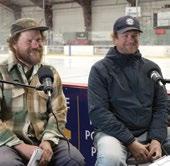

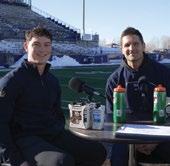
“Love the variety of this podcast. It covers everything from bear attacks to musicians to skiers to whiskey.”


BY RACHEL HERGETT EBS COLUMNIST
For as long as I can remember, Buck’s T-4 set the standard for gathering in Big Sky. Buck’s history begins in 1946, when Buck and Helen Knight opened it as a hunting camp, adding a restaurant and bar in 1950. But over the decades it became so much more.
Buck’s was a social hub for the community, while opening its doors to visitors from around the state and the world. Its dance hall was home to raucous parties and concerts, with guests pregaming in the restaurant and stumbling to its hotel rooms after the festivities. Conferences and wedding spaces were added to the offerings. After the 2020 acquisition by the Lone Mountain Land Company, however, Buck’s future seemed uncertain. Hotel spaces were converted into workforce housing, with additional housing constructed onsite. Then, in fall 2023, the company announced it would not open Buck’s restaurant and bar for the winter season as planned.
But Buck’s is back, baby! The restaurant and bar reopened in December, though the Knights’ “T-4” cattle brand has been dropped from the name. Now called Buck’s Roadhouse, the restaurant is now open to the public for dinner at 5 p.m. Wednesday to Sunday.
I had been dragging my feet about visiting until last week, when Buck’s did what they do best and threw a party. The April 23 event was billed as a “tasting tour” of the renovated event spaces and was mainly for stakeholders and hospitality industry people. I was unsure what to expect. Would Buck’s—a space that holds so many memories—still feel the same?
I walked into an expanded entryway. No longer is there a dark tunnel of a hallway to the bar, but a light-filled space with leather couches for lounging and listening to the live music booked for Thursday evenings. Logs wrapping the lower walls and the collection of taxidermied animals blend with the aesthetic of older spaces like the dining and game
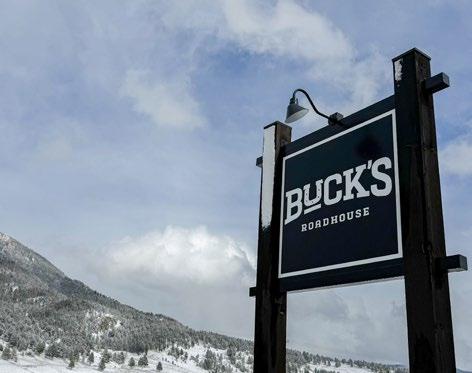
rooms. As I wander through the event spaces and private dining rooms, I hear snippets of history from employees and other guests. One room—I am told as I pause my wine tasting to take pictures of a tableau of taxidermied wood duck—was at one point a fly shop. Now fishing baskets and associated gear nod to that history.
Food-wise, Buck’s chef Cody Rydin said he’s aiming for “good, bountiful feasts.” The focus is centered on big game meats and ingredients local to Montana. This particular party started with passed appetizers, including smoked trout dip and red deer skewers. Yes, the signature red deer—sourced from New Zealand—is back. Most exciting, though, was the take on pigs in a blanket—game sausage wrapped in flaky puff pastry coated in a maple bourbon mustard glaze and topped with fennel seeds.
Next I found a table of focaccia and salads, each more delicious than the last. I’ve opined here about my love for a wedge, but must say it
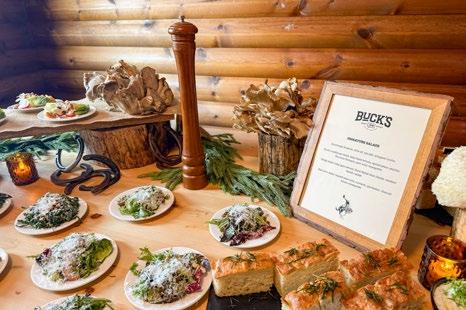
was overshadowed by the signature roadhouse salad with its spiced pears, pepitas and port wine vinaigrette.
Next up was a full, family-style dinner in the Montana Room, with plates of roasted chicken with Meyer lemon, a braised beef shank they call a “Thor’s hammer” served with SporeAttic mushrooms, and an elk tenderloin with Buck’s signature steak sauce. Sides—each better than the last—included a slightly spiced broccolini with Aleppo pepper, crispy fingerling potatoes and fried Brussels sprouts that were slightly sweetened with an agave gastrique. I was not, however, served a popover—the yorkshire-pudding-like pastries that once accompanied Buck’s prime rib. Nor did I see them on the bar, dinner or event catering menus.
Finally, we were ushered into the game room, where a table full of desserts awaited. There was cobbler and cheesecake, bread pudding and lemon tarts. I simply could not eat more to try them all, and had to flag down a server and beg for a covert to-go box. I’ll tell you now that there is not much that can beat Buck’s whiskey caramel apple bread pudding for breakfast.
“Hopefully we have done a good job representing what it is to the community,” said Jimmy Patten, the regional event sales manager for Après Cru, a hospitality company that controls operations at Buck’s Roadhouse, Block 3 and Tips Up.
There are changes, surely. Buck’s physical space feels a little lighter and fresher. The menu updates seem aligned with my possibly alcohol-stunted memory. It is an homage to the area, and ultimately to the hospitality of Buck and Helen Knight.
It’s T-4 no more, but still feels like Buck’s.
Rachel Hergett is a foodie and cook from Montana. She is arts editor emeritus at the Bozeman Daily Chronicle and has written for publications such as Food Network Magazine and Montana Quarterly. Rachel is also the host of the Magic Monday Show on KGLT-FM and teaches at Montana State University.

BY BENJAMIN ALVA POLLEY EBS COLUMNIST
Have you ever wondered just how smart ravens really are? Do you know what connects them to wolves and even lions?
For a long time, we’ve told a simple story about scavengers: they drift around the landscape, lucky opportunists stumbling on carcasses or trailing big predators to a free meal. A new study from Yellowstone National Park, published in Science, flips that narrative on its head and challenges how we think about animal intelligence, wild food webs and even the value of intact predator communities.
Researchers tracked 69 ravens, 20 wolves, and 11 cougars over two-and-a-half years. Led by Matthias-Claudio Loretto, Kristina B. Beck, Douglas W. Smith and Daniel R. Stahler, the team found that ravens are not just freeloaders hanging out at wolf kills. They’re seasoned strategists using what amounts to a mental map of opportunity.
The old hypothesis was straightforward: Ravens follow wolves and other large carnivores across the landscape, using them as walking (or running) food-delivery systems. Field biologists have watched ravens flying with wolf packs, following tracks in snow, and converging quickly on fresh kills. That kind of behavior seems to scream, “Just follow the predator.”
But once scientists actually measured movements with GPS, the reality looked starkly different. In more than 600,000 raven locations and tens of thousands of wolf and cougar locations, there was only one clear case of a raven following a wolf over a long distance. One. If direct following were the main strategy, the data should have been full of such events.
Instead, a different pattern emerged. Ravens were repeatedly making long, purposeful journeys, sometimes over 100 kilometers in a day, back to areas where wolf kills are common. They weren’t shadowing individual wolves so much as revisiting productive places: landscapes that history had taught them were rich in carrion. These included predictable hunting grounds where wolves frequently bring down elk, as well as long-known human food sources like landfills and sewage ponds.
Crucially, ravens oriented toward wolf kill zones with about the same directional precision as they used when flying to stable, human-made food sources. In other words, these birds navigate to an unpredictable resource, a carcass that might or might not be there on any given day, as efficiently as they do to a permanent garbage dump. That strongly suggests something more sophisticated than random searching or casual trailing—they are relying on spatial memory, built over many encounters, to make educated guesses about where food is likely to be.
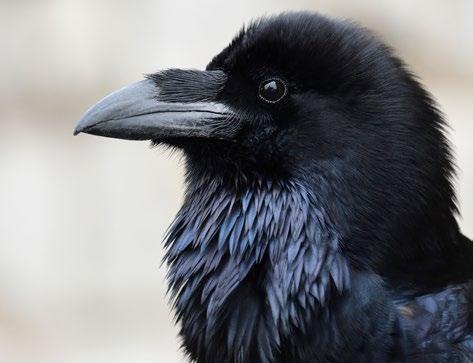
This is more than a fun twist in raven lore. It pushes us to reconsider what it means to be a scavenger in a changing world. When we strip landscapes of large predators, we don’t just remove wolves or cougars; we also dismantle the invisible architecture of opportunity that intelligent scavengers have learned to navigate. The “landscape of fear” for prey, those zones where elk or bison are most likely to die, doubles as a landscape of hope for scavengers like ravens. Eliminate wolves, and that map is blurred, if not erased.The study also highlights an underappreciated blend of brain cognition and ecology. Ravens are already renowned for their problem-solving, planning, and even hints of theory of mind. That’s why many older cultures refer to them as the trickster or the omnipotent god-like clown of the universe. Here we see those abilities deployed at the scale of entire ecosystems. Ravens appear to remember not just a single carcass, but patterns like certain valleys, stream corridors, or open grasslands are where wolves tend to be successful. They then stitch that information together with knowledge of human subsidies, effectively running a mental optimization problem across hundreds of kilometers: Where should I fly today to maximize my odds of a big meal?
There is a humbling lesson here. We often assume that unpredictability in nature forces animals into simple, reactive strategies: follow a cue, chase a smell, tag along with a bigger predator. But this work shows that even when individual events are unpredictable, no one, raven or human, can say exactly where tomorrow’s wolf kill will be—the distribution of those events can be stable enough for memory and learning to matter.
For conservation policy, this should ring alarm bells. We tend to focus on preserving species in isolation: protect the wolf, manage the elk, tolerate the raven.
This study makes clear that intelligence in one species can depend on the behavior and intelligence of another. Ravens’ spatial memory strategies only make sense in a landscape where wolves routinely hunt, where elk and bison die more often in some places than others, and where those patterns persist long enough to be learned.
When we fragment habitat, extirpate predators or heavily manage ungulate populations, we are rewriting the mental maps that wide-ranging animals rely on to survive. A raven that has learned, over the years, that a certain valley is a good bet in late winter may suddenly find that bet no longer pays off once hunting quotas shift or development moves in.
Ultimately, this research is a quiet but powerful argument for thinking in terms of systems and relationships, not just species lists. Intelligent foragers like ravens are reading a complex, multispecies text written across the land: wolf tracks in snow, elk behavior, human garbage, the memory of last year’s lean season. We should be wary of editing that text without understanding the story.
The ravens of greater Yellowstone remind us that even in the harshest winters, survival is not just about sharp beaks or strong wings. It is about memory, navigation, and the ability to learn from the past to gamble on the future. As we continue to reshape the planet, we would do well to remember that we are not the only ones making long-range plans.
Benjamin Alva Polley is a place-based storyteller. His words have been published in Rolling Stone, Esquire, Field & Stream, The Guardian, Men’s Journal, Outside, Popular Science, Sierra, and WWF, among other notable outlets, and are available on his website.












BY JACK BUBAN GUEST COLUMNIST
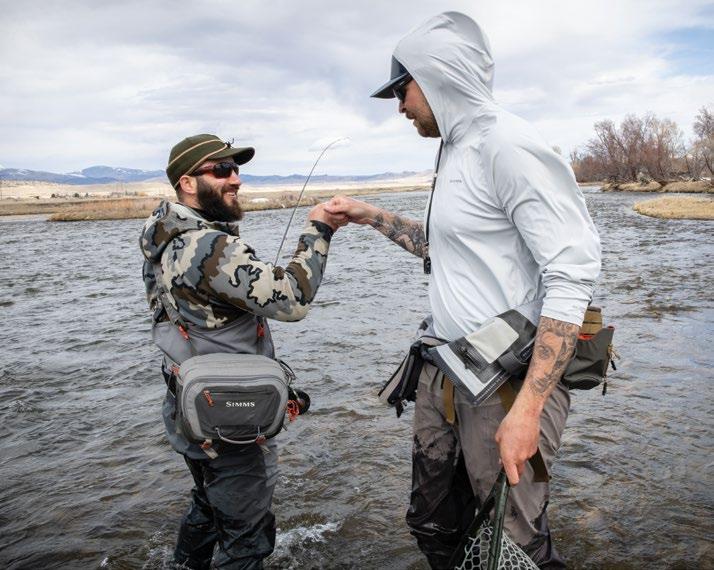
Have you ever wondered how that trout you caught on the Gallatin measures up? Well, with the release of the 2025 Montana Fish, Wildlife and Parks Gallatin River fish count data report, now you have the resources to find out. FWP Fisheries Biologist, Keith Wellstone, visited Big Sky last month to present some of the important findings of the report to a curious local crowd. . What he shared tells a story about the Gallatin River. What we do now and in the future will determine the next chapters of this story and have a lasting impact on the health of our beloved trout and their habitat.
Fish data collection 101
We know that we need science to help us identify what we can’t always see with the plain eye. We need data and reports and numbers to help us decipher more than what we experience in a day on the river catching, or observing, fish behavior and the river’s environment. Determining the size of a population is sometimes difficult, especially for a population of highly mobile organisms like trout. To determine a rough estimate of the total population size, FWP uses a data collection method called mark-recapture.
This method studies the proportion of fish that are captured during a series of two sampling occasions to estimate the size of the full population. Here’s how it works: first, a population sample is captured, and the individual fish are counted and marked before they are released back into the river.
After allowing enough time to elapse for the marked individuals to mix back into the total population—but not so much time that significant births, deaths, immigration or emigration occurs—scientists take a second sample. Since the number of marked individuals represent a certain proportion of the total population, the number of marked fish that are captured again in the second sampling event represent the same proportion in relation to the total population size. This provides a clue for scientists when they make decisions, like conservation measures, based off of the total population size.
Gallatin fish are thriving
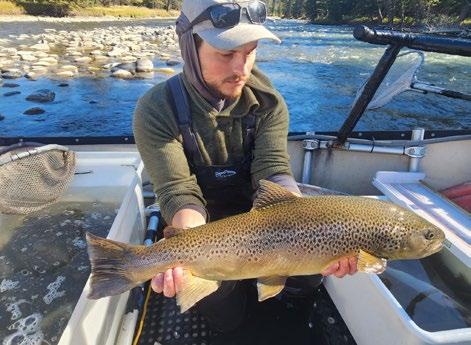
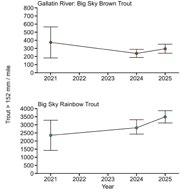
What the recent FWP data and report tells us is that the Upper Gallatin River’s fish population is thriving. In fact, the summary of the significant findings shows us that the Gallatin has an average of over almost 3,800 trout per mile, with the largest recorded brown trout at 26.5” and the average rainbow between 12-18”. This population count is a slight increase from previous years, but numbers are only compared as far back as 2021, as FWP builds a dataset over time.
The 3,785 total number breaks down into 3,491 rainbow trout per mile, and 295 brown trout. With data this close together it’s hard to tell what that says about the condition of the river, though it is worth noting that these are very high
concentrations of trout compared to other stretches of the Gallatin. For example, at a Logan sampling site along the Gallatin, there are only 1,020 trout per mile.Because we know that healthy trout fisheries possess cold, clean water, connected habitat and a diverse array of habitat requirements, we can connect the dots to tell us that a healthy fish population tends towards a healthy environment for those fish.
What makes the Gallatin unique?
Unfortunately, other Montana rivers are not faring quite as well, as we’ve all seen over several years’ worth of hot, dry summers that instill hoot owl and other fishing restrictions on beloved rivers like the Big Hole, the Jefferson and even the Madison. The Gallatin, however, has skirted some of the degradation suffered by other area waterways, and in fact, in their own studies, FWP has even documented a measurable increase in brown and rainbow trout populations over the last four years; a fair indicator of a healthy fishery, and—as of today—–a healthy river.
The Gallatin's resilience can be partially attributed to its headwaters in Yellowstone National Park, which provides cold clean water and an intact ecosystem that supports healthy wild trout
populations. But having a pristine headwater source does not come without obligations, fulfilled in large part by the Gallatin River Task Force. As noted in Board Member Todd Shaw’s recent opinion piece, “water quality monitoring and riparian habitat restoration is critical to ensuring the Gallatin River fisheries remain healthy and sustainable.”The Task Force employs these techniques everyday in ongoing and seasonal work.
If the high-temperature, low-precipitation weather pattern that characterized the winter continues into the spring and summer, however, today’s healthy fish populations could face future impairments, as water quality, air temperature and rising water temperatures come more and more into play. These things have the cumulative ability to negatively impact fishery health even in waterways like the Gallatin.
According to Guy Alsentzer, Director of Upper Missouri Riverkeeper, “trout are the canary in the coal mines of river health”. He reaffirms what we know: that listening to science is the key to building resiliency for our fish, and for the Gallatin.
Advocating for river health is just one piece of how we make a difference, in combination with a science-based plan for restoration, adequate means of funding research and data and applying what we find to our practices for the river. As our rivers face water quality and quantity challenges, pressures from community growth, climate change and increased recreation, it’s critical that we continue to lean on science. Studies like the FWP fish count report can guide our vision and work for a healthy and resilient Gallatin River and the fish who call it home.
Jack Buban is the community engagement manager at Gallatin River Task Force. Buban studied wildlife biology at the University of Georgia and spent time tackling water issues in Alaska and South Carolina before moving to Montana and joining GRTF as a Big Sky Watershed Corps member.
BY MEL CRICHTON EBS COLUMNIST
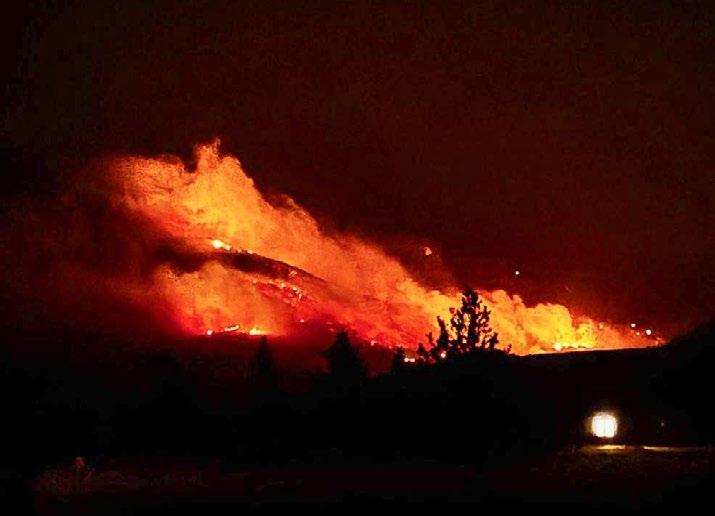
Life has a way of throwing you a curve just when you think you’re cruising along. This month’s column was supposed to be an overview of our wildfire season outlook by Jon Trapp, Big Sky Fire Department wildland fire chief. But Monday night, in the middle of our training session for neighborhood wildfire ambassadors, Jon got a call to deploy immediately to the fire raging south of Red Lodge. Let’s hope everybody is safe over there.
One topic that received a lot of discussion in our training session was homeowner’s insurance—the elephant in the room, the one that almost every neighbor brings up when we visit. Homeowner insurance rates in Big Sky are much higher than they are for an equivalent home in Miles City or even Bozeman because we are in the wildlandurban interface, where residences are at greater risk for wildfire. In fact, you likely know that our probability for property damage caused by wildfire is greater than 96% of all U.S. towns.
Some insurers, especially smaller ones with limited assets, won’t touch a home in the 59716 zip code. Some insurers will “inspect” a home for risk by looking at aerial photography. And the ones who can afford bigger claims, like a Big Sky wildfire
could generate, will actually visit the site before deciding. They all have their risk grading system, and none of them share how their systems work. In the past, the answer has usually been “yes” or “no” with little explanation.
As Wildfire Wire reported last year, the Montana legislature passed two house bills, HB 136 and HB 533, to help the consumer’s home insurance bill. HB 136 allows insurers to offer discounts for owners mitigating wildfire risk on their properties, and HB 533 requires an insurer to provide a reason for denial of insurance, including providing their rating score. But neither of these laws seems to have been aggressively put into effect. To our knowledge, it appears that the companies that do offer mitigation discounts in other wildfire states have not done so in Montana. But our state legislator, Alanah Griffith, says she’s working to find out what’s happening.
One large insurer in Montana recently told its agents that homes considered deniable may become eligible for insurance with the "Wildfire Prepared Home" designation from the Insurance Institute for Business and Home Safety. In some states, that could lead to a rate discount. We don’t know if any insurer has offered discounts for wildfire mitigation.
Companies base their discounts on a self-grading system developed by IBHS. Many of the homes in Big Sky could qualify for a discount if they meet basic requirements. Even if no discounts are available, a homeowner can follow the checklist on the IBHS website, reducing the odds of an ember-
induced home fire, the kind that burns over 80% of homes lost in wildfires nationally. For most Big Sky owners, that means saving not just the house, but the memories and time invested in it.
The wheels of government turn slowly—too slowly if we consider how quickly a wildfire can change our lives. If you are denied insurance, you may contact the state insurance commissioner’s office. And in some cases, owners of fire-mitigated homes have bypassed their local agents to discuss mitigation directly with the insurer’s underwriters. If denied, ask for the rating score as stated in HB 533. The insurer may refuse, but Montana law says you can ask.
If you are not happy that homeowners in other states are getting discounts, or if you need a financial carrot to get you interested in doing some simple mitigation, you need to act. Ask your insurance agent if discounts are being offered. Making communities more resilient benefits all of us—homeowners, insurers and the businesses that rely on the tourists who come to Big Sky to sample the good life.
If you do meet the requirements for a wildfireprepared home, ask your agent for a discount. The sanswer might be “no,” but eventually it will happen. Who knows? Your home might be the first.
Mel Crichton acts as neighborhood ambassador coordinator for Fire Adapted Big Sky. He may be reached at kj9c@comcast.net.
IT’S TIME TO PROTECT THE ELK AND DEER HERDS OF GALLATIN GATEWAY AND BIG SKY
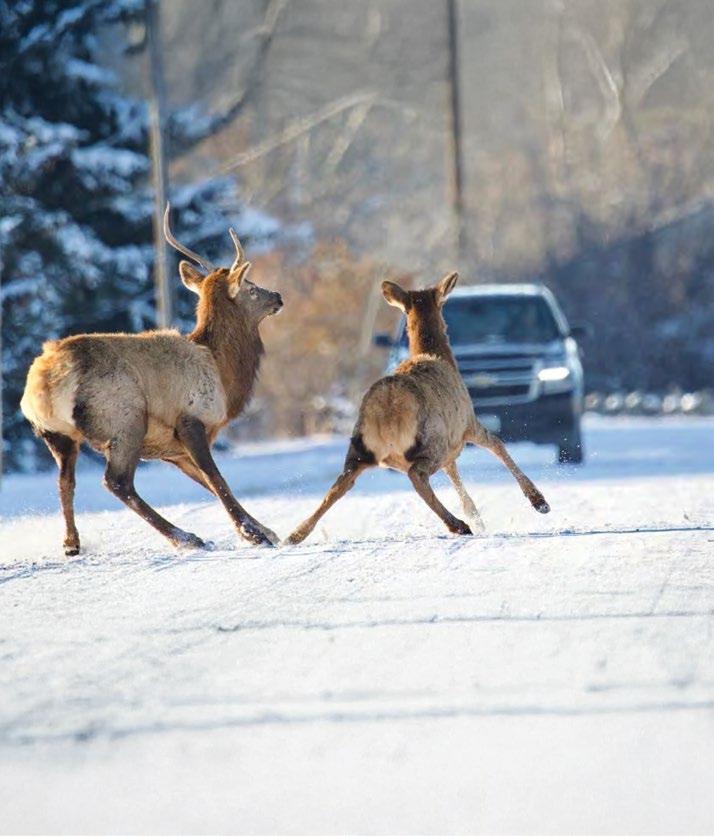
3,562
Deer and Elk were killed by vehicles in Gallatin County since 2008.
PRIORITIZE WILDLIFE CROSSING SOLUTIONS. SUPPORT AND DONATE TODAY.


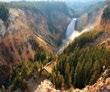
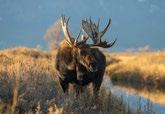
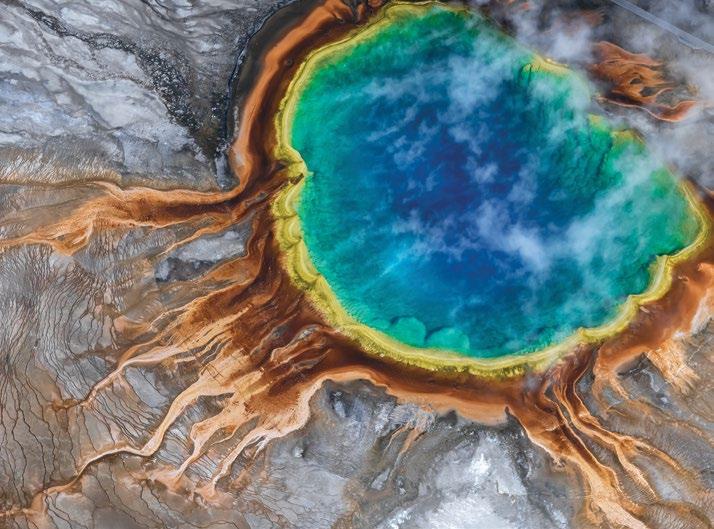







BY TAYLOR OWENS
article
RegenMarket didn’t begin with a business idea, it began with a question. RegenMarket, a membership-based online marketplace for Montana-grown regenerative food shipped directly to consumers, emerged from cofounder Ryan Kulesza’s search for where he could make an impact in the food system.
Early on, he assumed the answer lay in getting more producers to adopt better practices. But as he spent more time learning about agriculture, a different challenge came into focus: many of those producers were already doing the right things— they just didn’t have a way to bring their products to market.
Individual ranchers and farmers, he realized, were each trying to build their own sales platforms from scratch, often without the time, resources or expertise to do so. RegenMarket is a solution to that gap: a collective marketplace designed to handle the marketing and sales side, allowing producers to focus on what they do best.
That mission is rooted in a broader shift toward regenerative agriculture, which Kulesza sees as less of a trend and more of a return to fundamentals. Over the past several decades, he says the food system has drifted away from one of its most important measures: nutritional quality.
Instead, regenerative agriculture centers on producing nutrient-dense food by prioritizing soil health and natural systems. When animals are raised on healthy land and fed nutrient-rich forage, Kulesza explains, the quality of the final product reflects that. In his view, if the core problem in today’s food system is a lack of nutritional density, regenerative practices are designed to solve it.
RegenMarket’s role is to make those products easier to find and trust.
The company works directly with ranchers and farmers, visiting operations in person and building relationships with each producer. That hands-on approach allows them to vet products on behalf of consumers, ensuring that the people behind the food are aligned with the principles they promote.
“We do the vetting for the consumer to some extent,” Kulesza said. “We go out and interview and put boots on the ground with every one of these producers and have a relationship with them.”
Unlike many online food platforms that specialize in a single category, RegenMarket brings together a wide range of products, from beef to poultry and beyond, into one place. The goal is to create a more complete, one-stop marketplace for regeneratively raised food, something Kulesza notes is still relatively rare.
The producers themselves don’t all follow a single formula, but they do share a common direction. RegenMarket looks for partners who are moving away from conventional, input-heavy systems and toward practices that rely less on synthetic additives like hormones or implants. There’s no expectation of perfection, only a commitment to improvement.
Rather than highlighting one standout ranch or farm, Kulesza sees the strength of RegenMarket in its collective.
Each producer brings a slightly different philosophy or method, but all are working toward the same goal: improving the relationship between land, animals and the people who ultimately consume the food. That diversity, he suggests, is part of what makes the model resilient.
Consumers play a critical role in that system as well.
“At the end of the day… these consumers vote with their dollars,” Kulesza said. “If they want cheap food, that’s what they’re going to get and if they want products that are raised with integrity, it’s a chance to show these producers their support.”
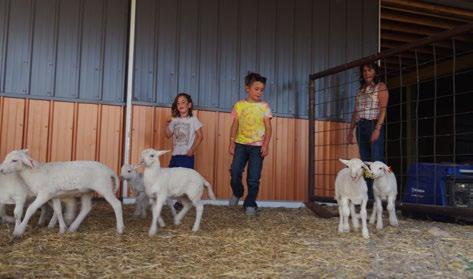
That support has ripple effects—not just economically, but culturally—helping to sustain a network of producers who often work under challenging conditions. As Kulesza points out, the realities of raising livestock are far removed from most people’s daily lives.
“I think the general public has no idea what it takes to raise animals,” he said.
From extreme weather to the constant demands of animal care, the work requires a level of dedication that largely goes unseen. “When it’s 20 below zero and the wind’s blowing sideways… they are outside making sure these animals are okay,” he said. “It’s a hell of a lot of work.”
That effort, and the quality of the food it produces, is beginning to gain recognition beyond the agricultural world. RegenMarket recently reached a milestone that underscores the growing connection between food and health: certain products can now be purchased using Health Savings Account dollars.
For Kulesza, that shift signals something larger.
“The fact that you can now purchase this food using HSA dollars is an acknowledgement from the health care industry of how good this food is,” he said, noting that it places nutrient-dense food in the same broader conversation as medicine.
Even with that momentum, he emphasizes that the success of RegenMarket ultimately comes back to the people who choose to support it, and the producers who make it possible.
“The absence of nutritionally dense food is the problem in our food system,” Kulesza said. “That’s what regenerative agriculture is focused on delivering.”
As the regenerative food movement continues to grow, RegenMarket is positioning itself as a bridge connecting consumers not just to better products, but to the people and practices behind them.






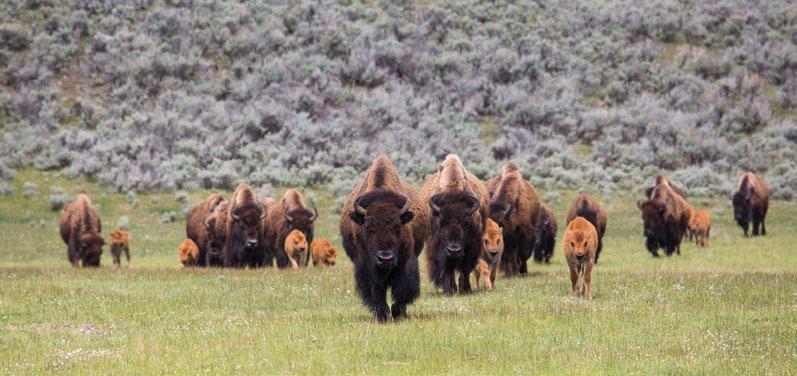
CARLI JOHNSON
Whether it's a Subaru or a brontosaurus, traffic jams have been backing up Gallatin Canyon since the dawn of time.
We’ve all been there—either leaving or heading towards Big Sky—when the brake lights in the distance come into the foreground and suddenly what should have taken an hour turns into three. Bumper to bumper, full-stop, and by the time you get to the scene of the crime, it’s no surprise a damn Subaru was involved.
After spending hours herself stuck in the canyon, Explore Big Sky Staff Writer— and, admittedly, a Subaru driver—Carli Johnson likes to imagine we are not the only species to be plagued by the consequences of a narrow corridor of passage.
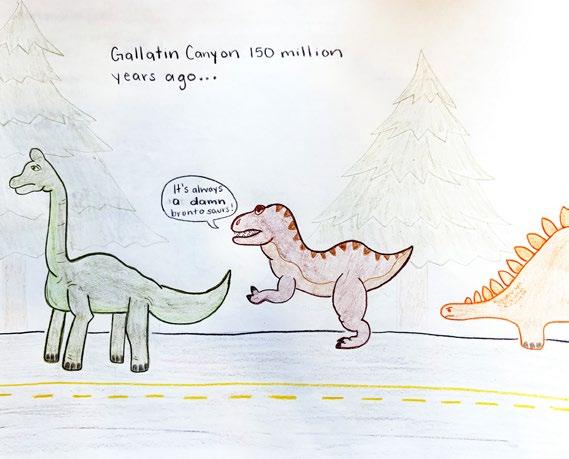
Interaction Yellowstone National Park boasts the nation's largest free range
and
but only two others remain - the Henry’s
in southern Utah.