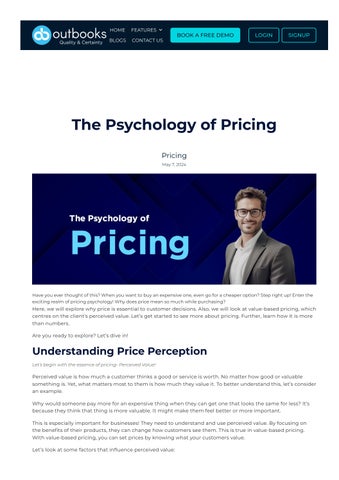

The Psychology of Pricing

Have you ever thought of this? When you want to buy an expensive one, even go for a cheaper option? Step right up! Enter the exciting realm of pricing psychology! Why does price mean so much while purchasing? Here, we will explore why price is essential to customer decisions Also, we will look at value-based pricing, which centres on the client’s perceived value Let’s get started to see more about pricing Further, learn how it is more than numbers
Are you ready to explore? Let’s dive in!
Understanding Price Perception
Let’s begin with the essence of pricing- Perceived Value!
Perceived value is how much a customer thinks a good or service is worth No matter how good or valuable something is Yet, what matters most to them is how much they value it To better understand this, let’s consider an example
Why would someone pay more for an expensive thing when they can get one that looks the same for less? It’s because they think that thing is more valuable It might make them feel better or more important
This is especially important for businesses! They need to understand and use perceived value By focusing on the benefits of their products, they can change how customers see them This is true in value-based pricing With value-based pricing, you can set prices by knowing what your customers value
Let’s look at some factors that influence perceived value:
Pricing May
7, 2024
BOOK A FREE DEMO LOGIN SIGNUP HOME FEATURES BLOGS CONTACT US
Positive reviews
The anchoring effect is a cognitive bias in which first-hand knowledge, like a price, is used to make later decisions For example, a product is first shown to customers at a higher price They think it is useful even if the price goes down later Let’s take this, for instance Some stores might list a higher price next to a lower one
The Art of Pricing: Effective Pricing Strategies for Success
Psychological Pricing
Pricing below round numbers!
Psychology-based price uses people’s cognitive biases to affect their buying choices A popular way to price things is just below the round number For example, it is €9 99 instead of €10 This is also known as charm pricing. It makes the price seem cheaper than it is, even though the difference isn’t that big. Premium pricing involves pricing more for high-end things to make them seem exclusive
Decoy Pricing
Using choices to change people’s minds!
When you use decoy price, you give customers a third option to help them choose For instance, a movie theatre might sell small, medium, or large popcorn, with the medium costing just a bit less than the large Even if the buyer spends more than planned since the medium is available Yet, the big popcorn will appear like a better deal. Decoy pricing uses comparison to guide customers.
Price Bundling
Adding value with packaging!
Price bundling sells many goods and services at a discounted rate when bought in bulk This makes customers feel like they are getting a good deal On the other hand, buyers end up buying unnecessary things Also, it might lower the profit margins of the business
Freemium Model
Finding the sweet spot between free and premium pricing!
It allows users to use a service or product at no cost while charging for additional features This will enable companies to reach more people with the free version Hence, they can profit from a smaller subset paying for premium services Deciding which features to make free and premium is crucial
Psychological Pricing Models
Comparative pricing allows you to present your product as better value by setting its price comparable to competitors Staying ahead in the market is easy with comparative pricing
Odd-even pricing makes you set labelling prices with odd numbers, like €19 99, to show savings Also, it makes the products look cheaper This enhances profit for your business in the long run
Reference pricing means setting prices based on competitors’ charging or facts from the past This helps customers understand what a product is worth
Quality Scarcity
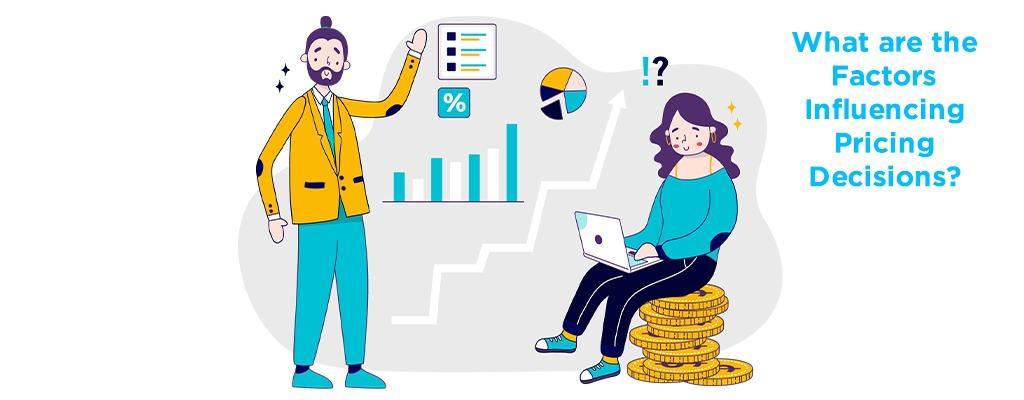
What are the Factors Inuencing Pricing Decisions?
Behavioural Economics
It acknowledges that people often make wrong choices because of cognitive biases In contrast, standard economic theory believes that people make sensible decisions Principles like anchoring, loss aversion, and the framing effect are crucial for price
To shape customer behaviour, businesses use pricing tactics based on behavioural economics People are likelier to buy things they don’t need when they see limited-time deals This is called Fear of Missing Out (FOMO) Subscription pricing works like this. It uses the endowment effect to get people to commit to long-term plans.
Environmental Effects
Customer perceptions of pricing are greatly affected by contextual elements like location, time, etc A similar product sold in a budget shop may seem less expensive than the same one at an upmarket store Another factor affecting how people perceive costs is how they are presented This includes methods like psychological pricing or comparison pricing.
For instance, during peak demand times, ride-sharing apps use surge pricing, which causes fares to increase
Price Elasticity of Demand
The price elasticity of demand quantifies consumers’ responsiveness to price changes. The term elasticity of demand describes how much a product’s demand shifts in reaction to variations in price But inelastic demand happens when it doesn’t change much in response to changes in price
The concept of price elasticity can help businesses enhance their pricing strategy When demand is elastic, for instance, a significant spike in profits might result from a mere price cut In contrast, firms can boost their profit margins by charging higher prices when demand is inelastic This is because there will be little to no impact on demand
Companies can increase their revenue and profit margins by setting prices based on their knowledge of price elasticity!
The Final Thoughts
To sum up, the psychology of pricing provides insights into how customers understand prices This, in turn, impacts their buying choices. Accountants can optimise profits while delivering value to clients by developing pricing strategies based on psychological concepts
One helpful method is value-based pricing, which matches product or service costs with how much the client values them The value-based pricing approach considers the customer’s benefits rather than costs
Because it represents the product or service’s actual value in the eyes of the consumer This can strengthen customer relationships, boost brand loyalty, and promote profitability Even in today’s environment, accountants can secure their future success by putting value first rather than price
Make use of value-based pricing for business success With the right pricing, boost your profits significantly Get started with the Outbooks Proposal Tool to price right and grow your profits!
BY: Outbooks




HOME SIGNUP LOGIN CONTACT Copyright © Outbooks 2024 | All Rights Reserved. Suite 18, Winsor & Newton Building, Whitefriars Avenue, Harrow HA3 5RN Registration No: 10746177 info@outbookscom +44 330 057 8597 CONTACT US Help Center Latest Articles Terms and Conditions 1 RELATED STORIES ◦ When two services offer the same benets, why do some seem to cost more than. OUTBOOKS MAY 8, 2024 Read More Understanding Valuebased Pricing: 101 for Accountants ◦ Are you an accountant trying to decide how much to charge? Tired of making guesswork OUTBOOKS MAY 2, 2024 Read More The Fundamentals of Value-Based Pricing