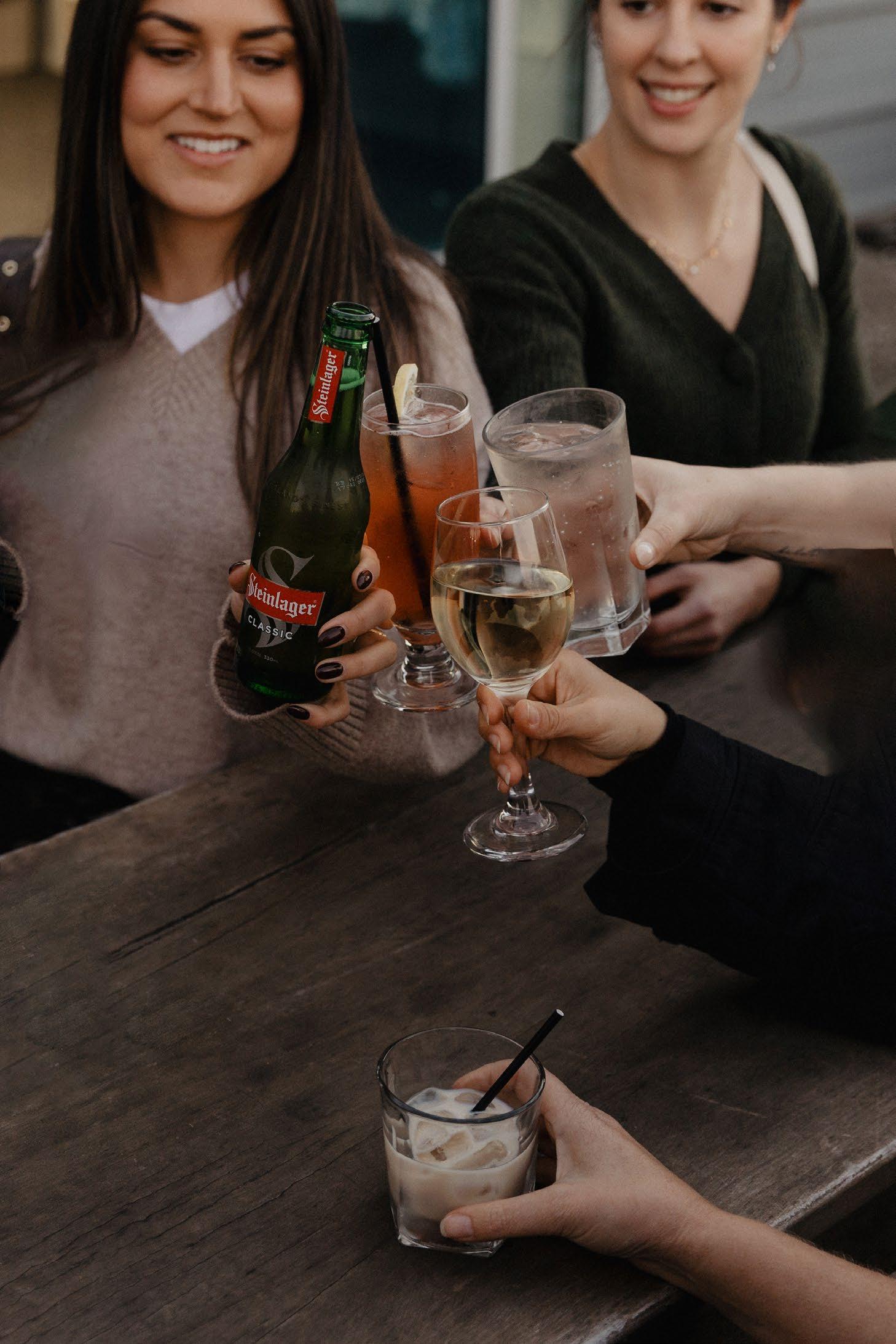
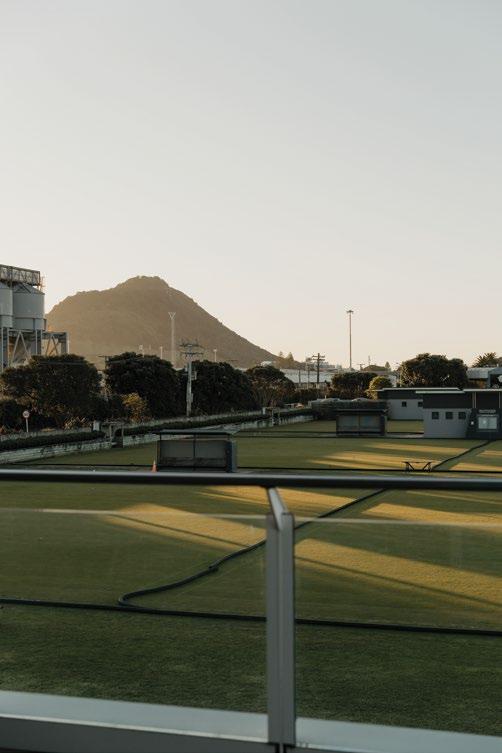
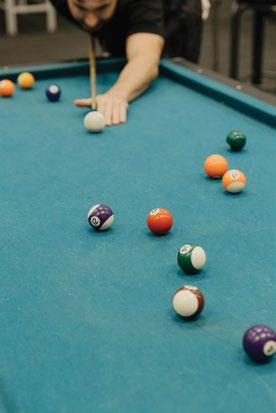
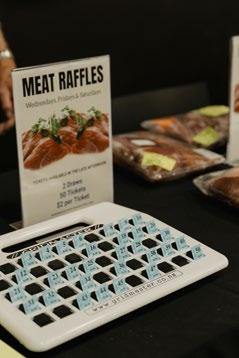
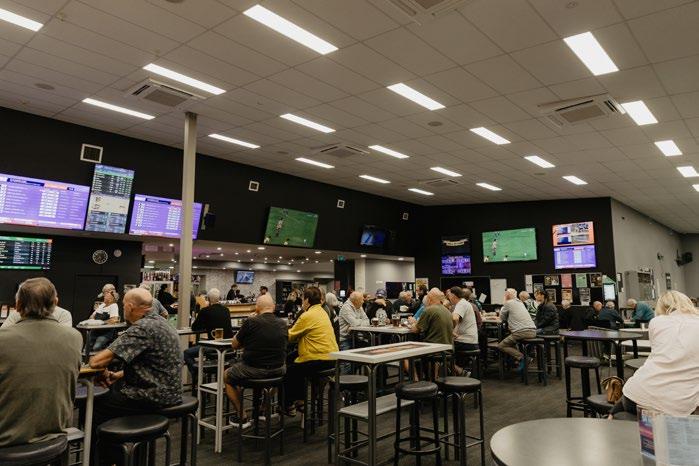
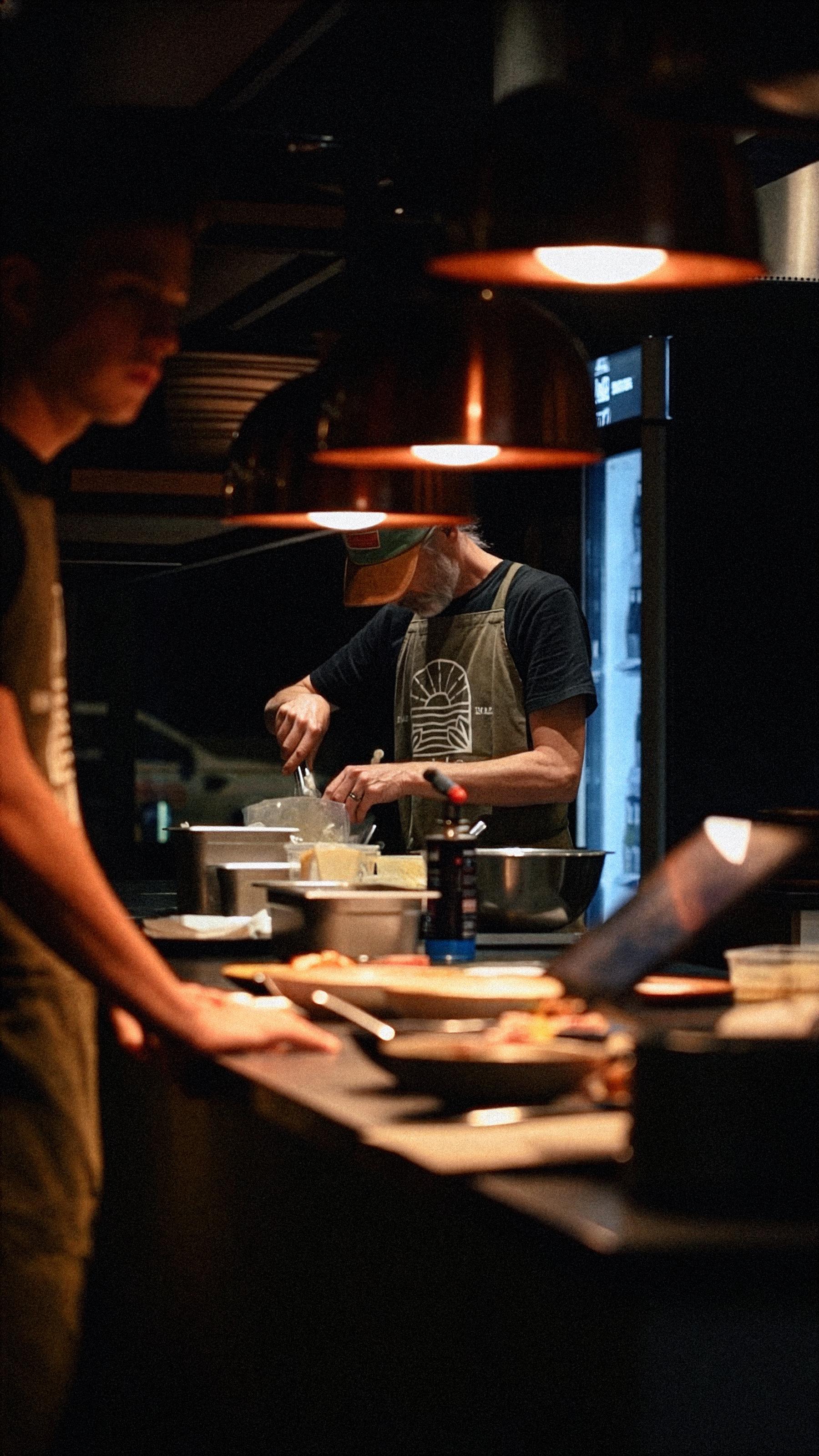
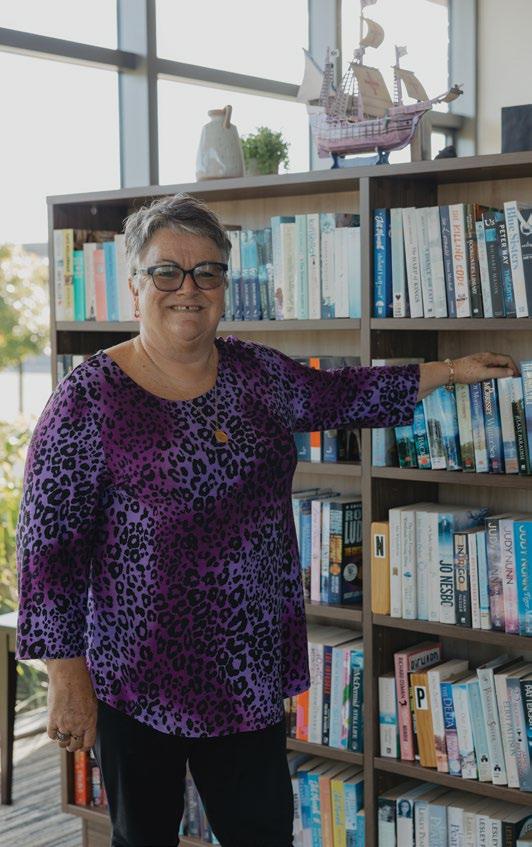
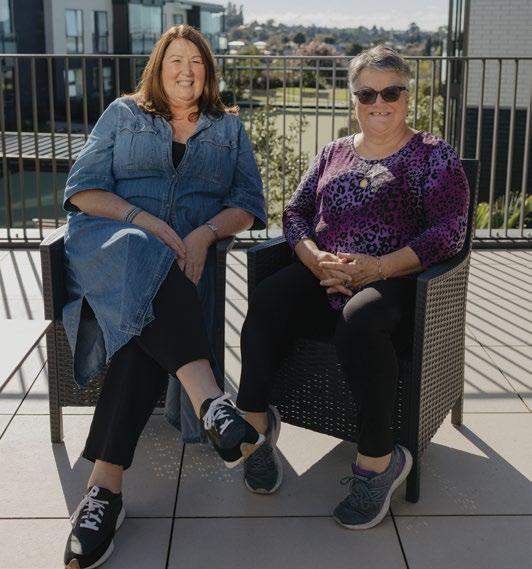
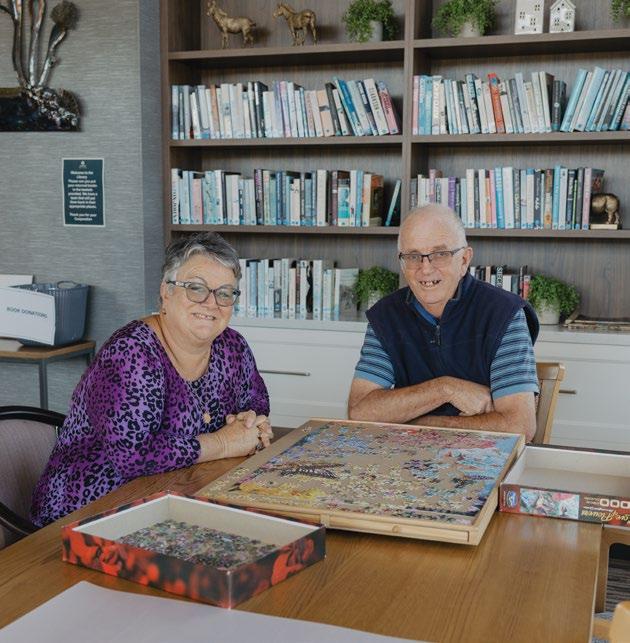
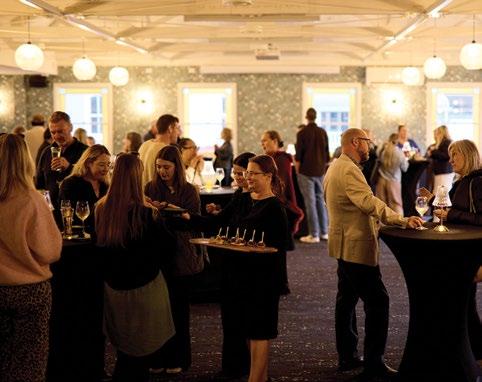
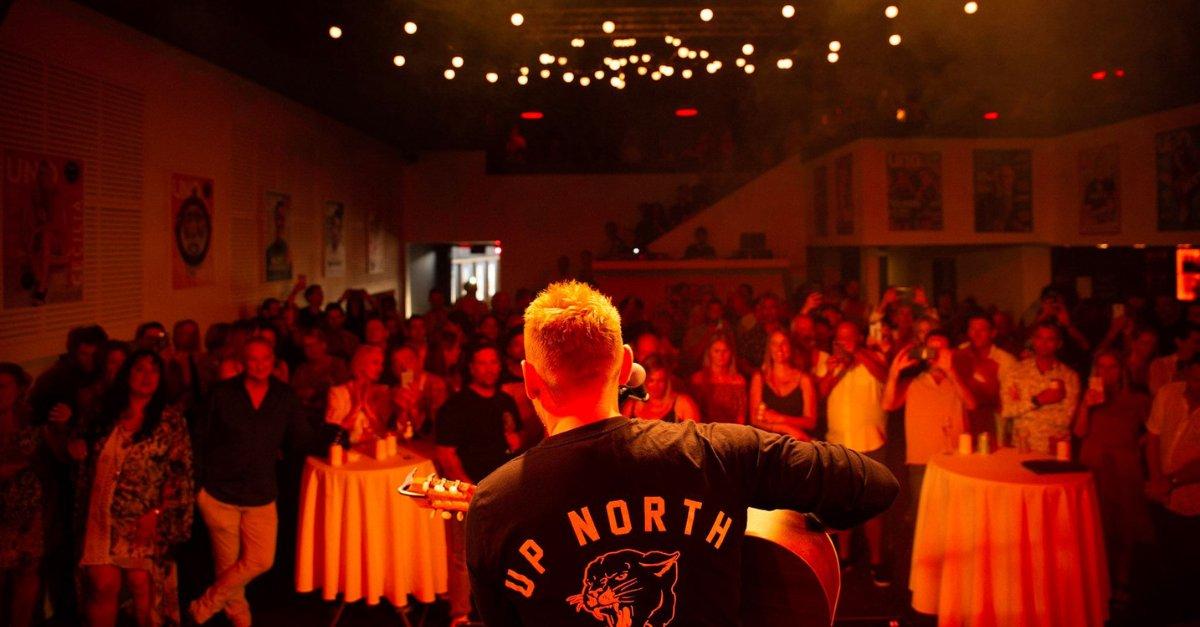
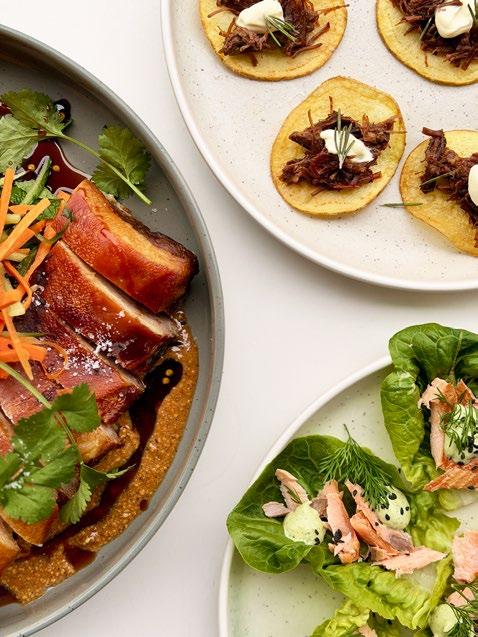
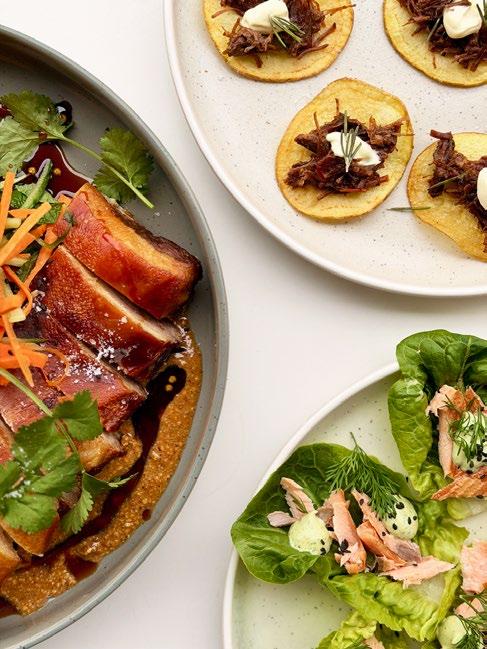
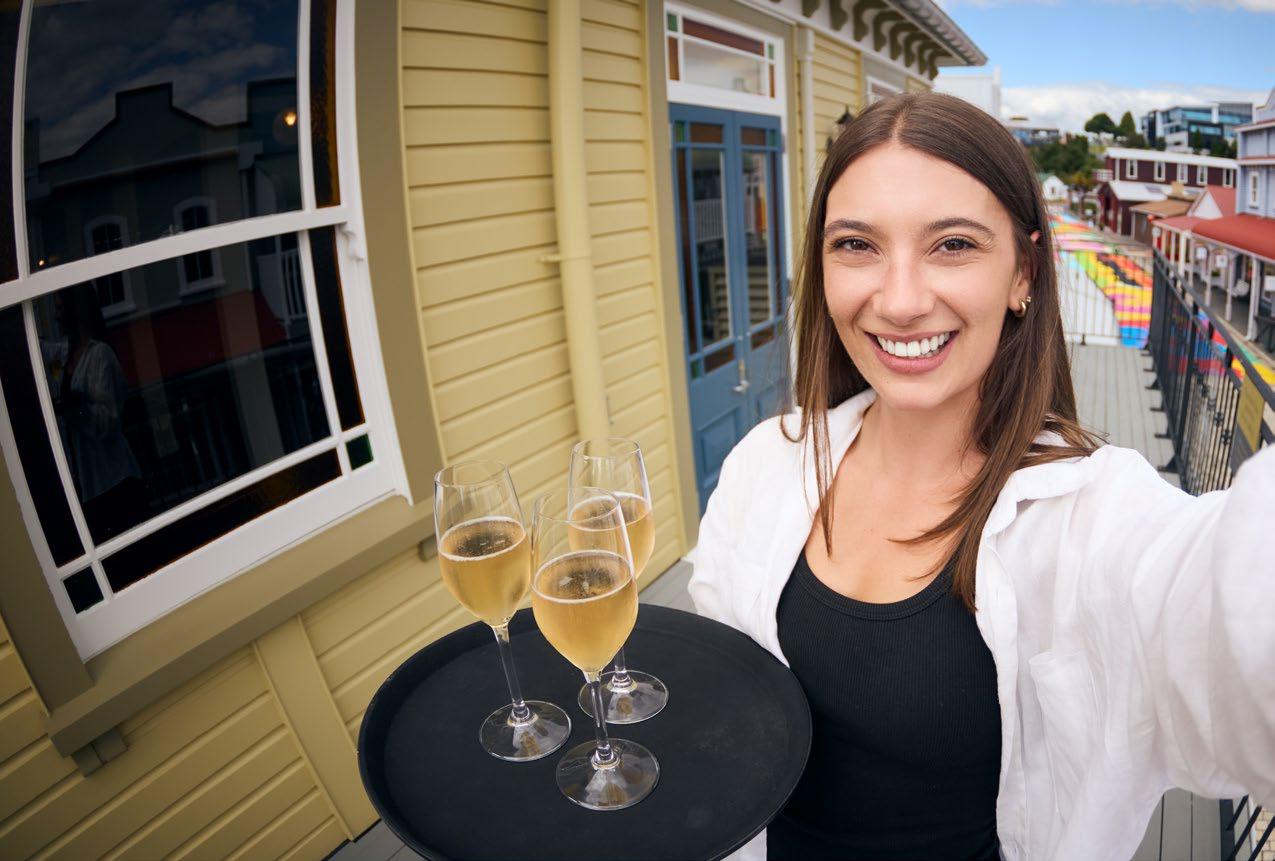
Step inside Club Mount Maunganui and you’ll find more than great facilities — you’ll find friends, fun, and a place where everyone feels at home. Whether you’re here for bowls on the green, a quiet pint, a game of pool, family meals, quiz nights, or live music, there’s always something happening. A sports bar with heart, a restaurant with flavour, and a calendar full of ways to connect — this is your club, your way.
Full membership is just $45 per year and comes with plenty of benefits. Members enjoy discounts and loyalty points, access to the sports bar, TAB, gaming lounge, eight ball, darts, and function hire, as well as a wide range of activities including bowls, pétanque, croquet, indoor bowls, fishing, and punters’ groups. With regular membership draws, raffles, a club van for group outings, and accompanying guests always welcome, Club Mount Maunganui is a place to belong.
New faces always welcome. Come join the fold.
Helping Build Community One Market at a Time
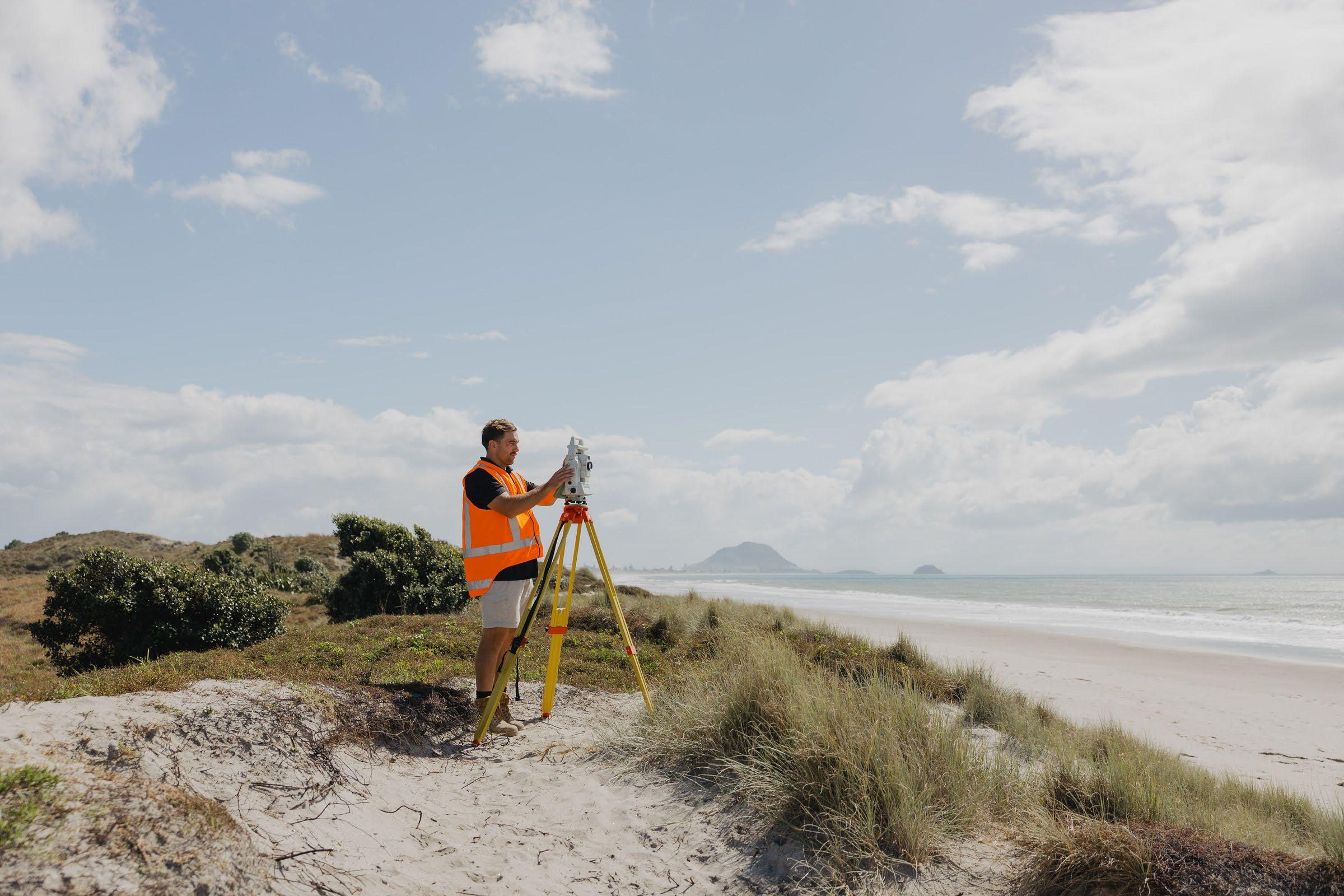
T R U S T E D O N T H E G R O U N D
I N T A U R A N G A
S U R V E Y I N G E N G I N E E R I N G
L A N D D E V E L O P M E N T A D V I C E m c k e n z i e a n d c o . c o . n z
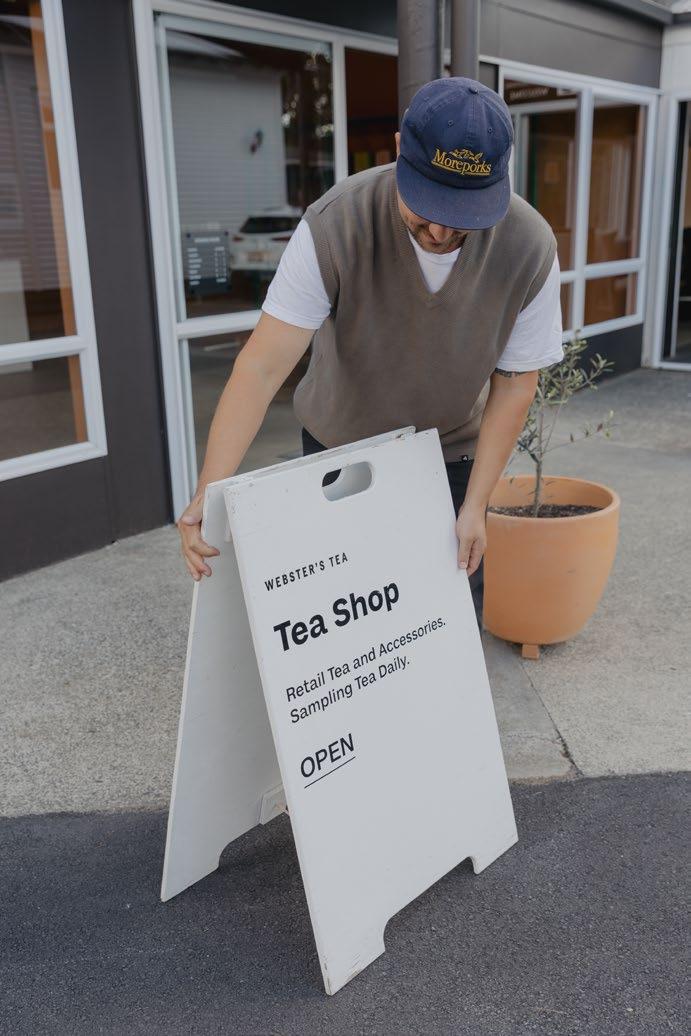
WEBSTER’S TEA
Sample our premium tea, explore the pantry, and find a thoughtful gift or piece for your home. Located on-site with Clarke Rd Kitchen, we’re the perfect destination for a mid-week escape or a relaxed Saturday morning out.
7 Clarke Rd, Te Puna Open Tuesday – Saturday 9am – 3pm websterstea.co.nz
Great hospitality doesn’t happen on its own. It’s built on trust, awareness, and a team that moves together. At Fife Lane, every role matters, and every detail is shared.
We are hiring a small number of front of house professionals to join the team.
Expressions of interest: INFO@FIFELANE.CO.NZ
Founders Rachelle & Christopher Du y
Creative director Christopher Du y
Editor Zoe Hunter zoe@ourplacemagazine.co.nz
Social manager Millie Guest social@ourplacemagazine.co.nz
Advertising inquiries
Rachelle Du y 021 032 7873 rachelle@ourplacemagazine.co.nz
Contributors
Zoe Hunter, Laura Boucher, Jenha Phillips, Rebecca Lee, Kristin Macfarlane, Cherie Metcalfe, Madeleine Hughes, Sonya Korohina, Charlie Rahiri, Christopher Du y
Photographers
Naera Ohia, Cam Neate, Erin Cave, Christopher Du y, Kristin Macfarlane, Ross Campbell, Peter Hlinka, Wayne Tait, Sam Kelway
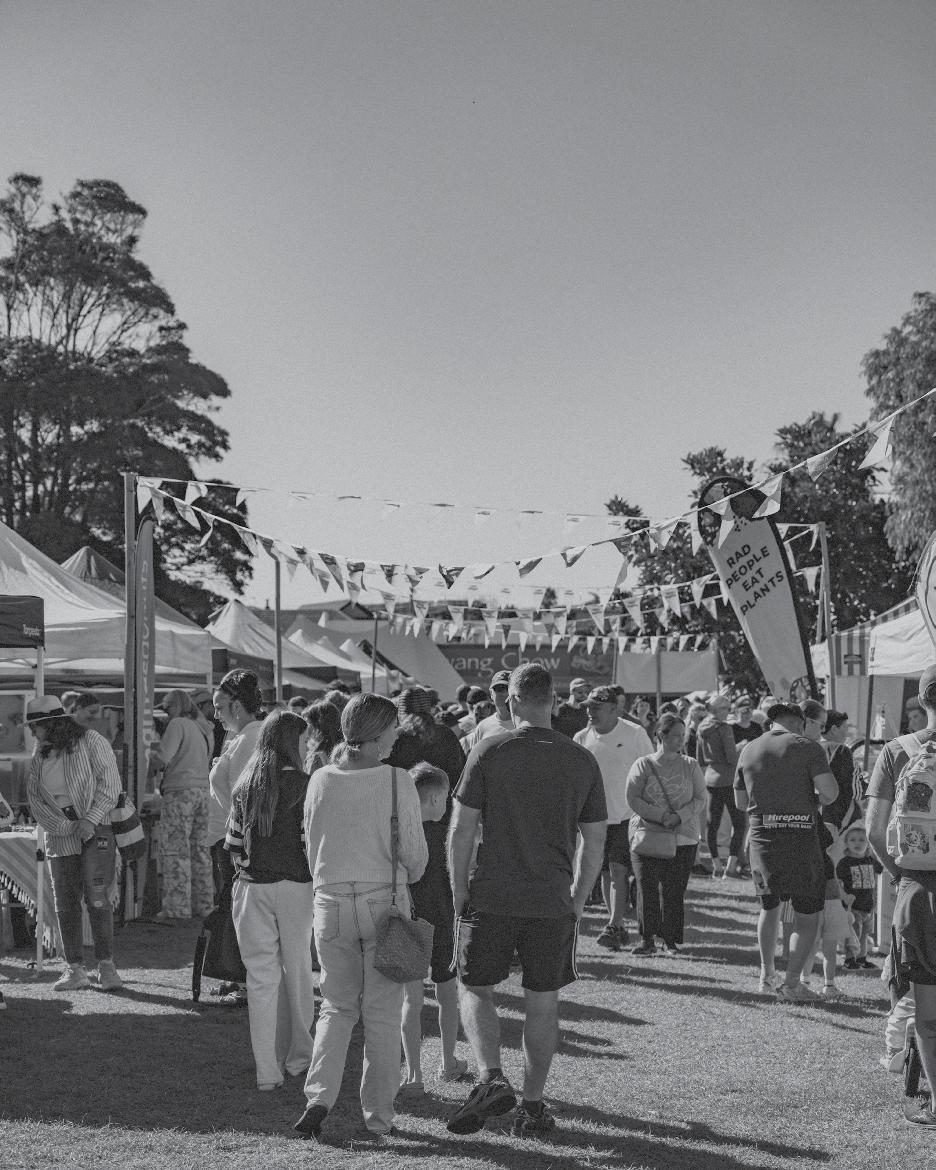
Pick up your copy from The Little Big Markets, plus at selected cafes, restaurants, shops and businesses.
Want to receive regular copies of Our Place for your business to distribute? Email rachelle@ourplacemagazine.co.nz
To tell us about anything happening in your area right now, email zoe@ourplacemagazine.co.nz
Cover & contents
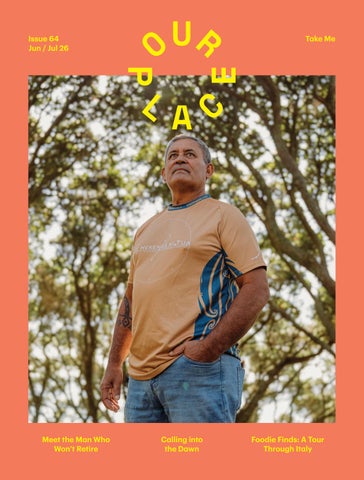
Cover photography: Jack Thatcher by Naera Ohia (page 22). Contents photography: Buddy Mikaere by Cam Neate (page 54).
Follow us @ourplacemagazine ourplacemagazine.co.nz
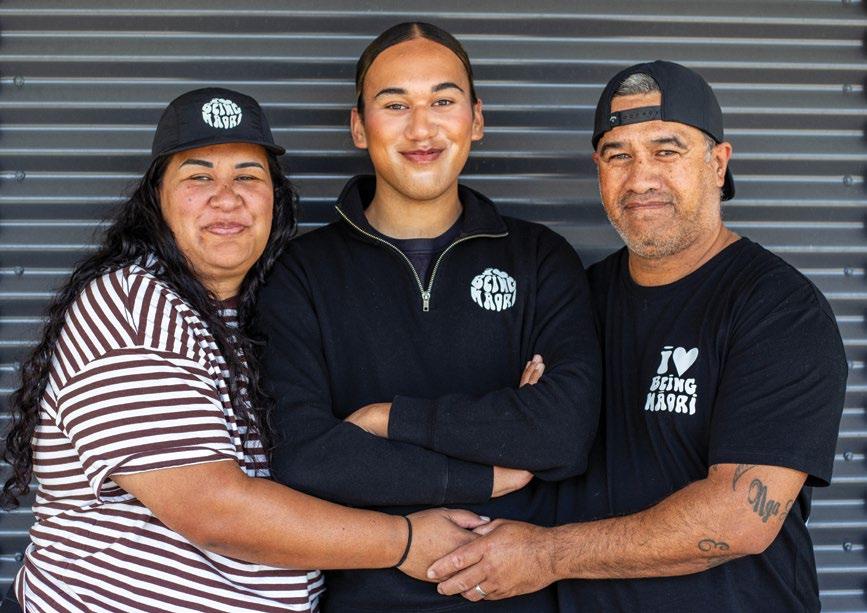
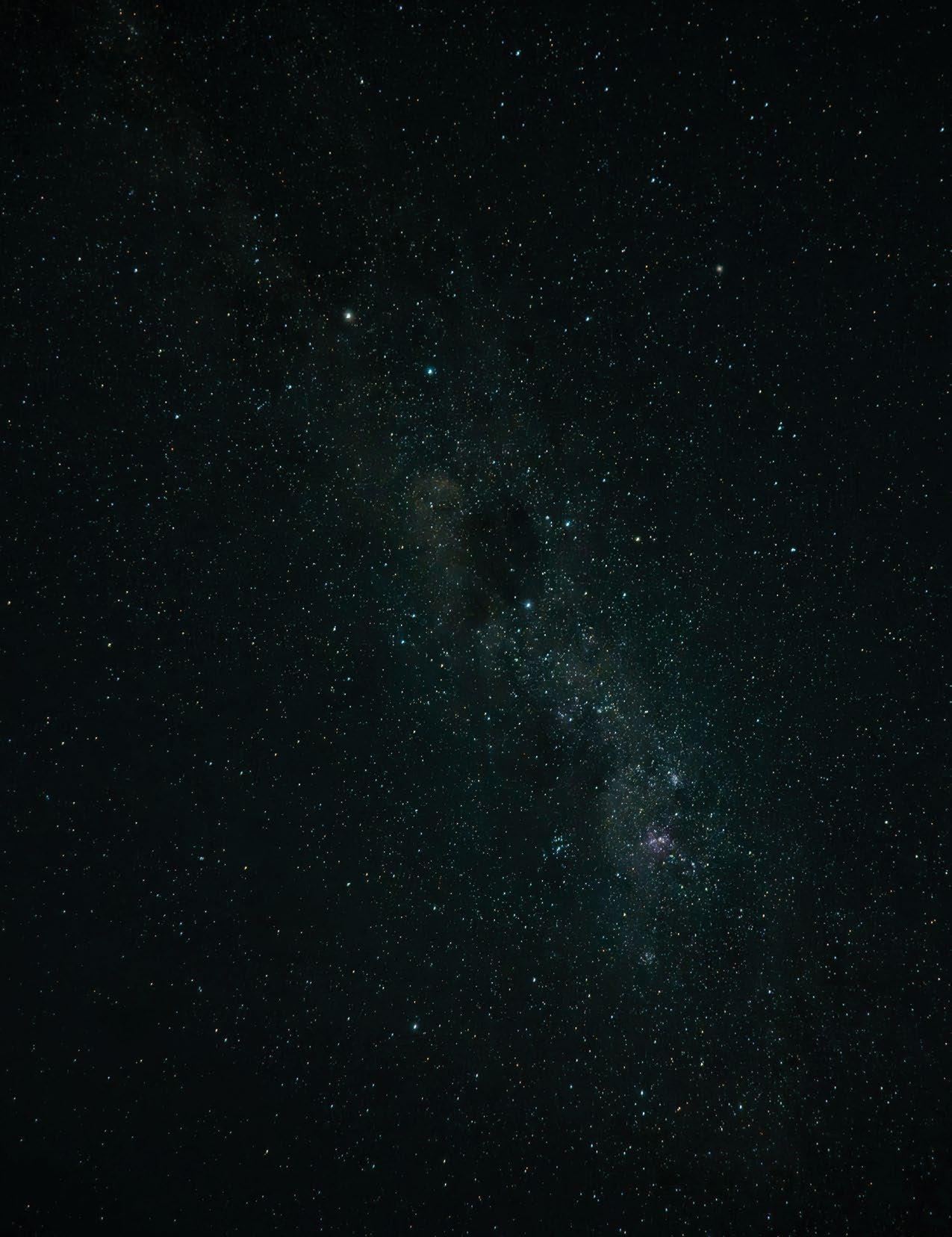
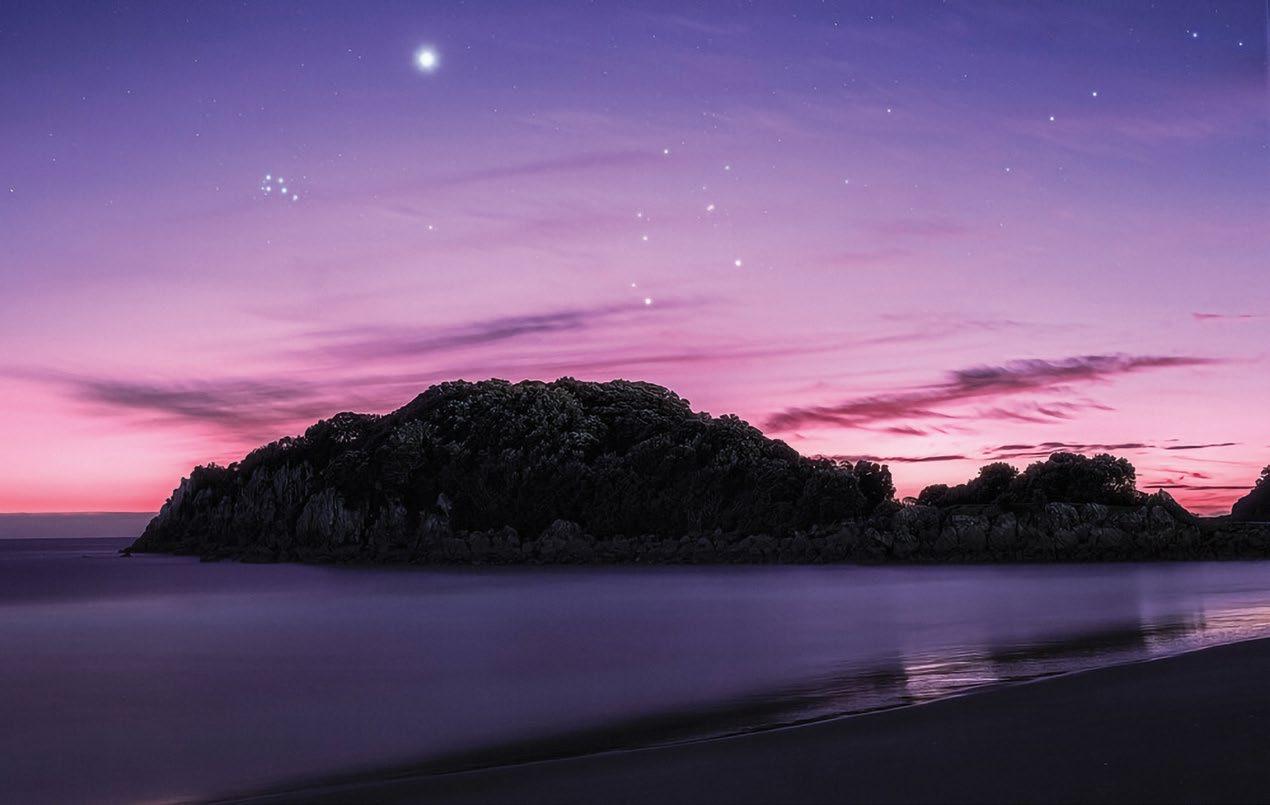
As the stars of Matariki rise again, this special edition honours the stories, traditions, people, and places that make this a meaningful time of remembrance and renewal across Aotearoa.
In our cover story, master celestial navigator Jack Thatcher shares details about a special maumaharatanga (memorial) at Hopukiore (Mt Drury), as part of the rising of the stars this July (22).
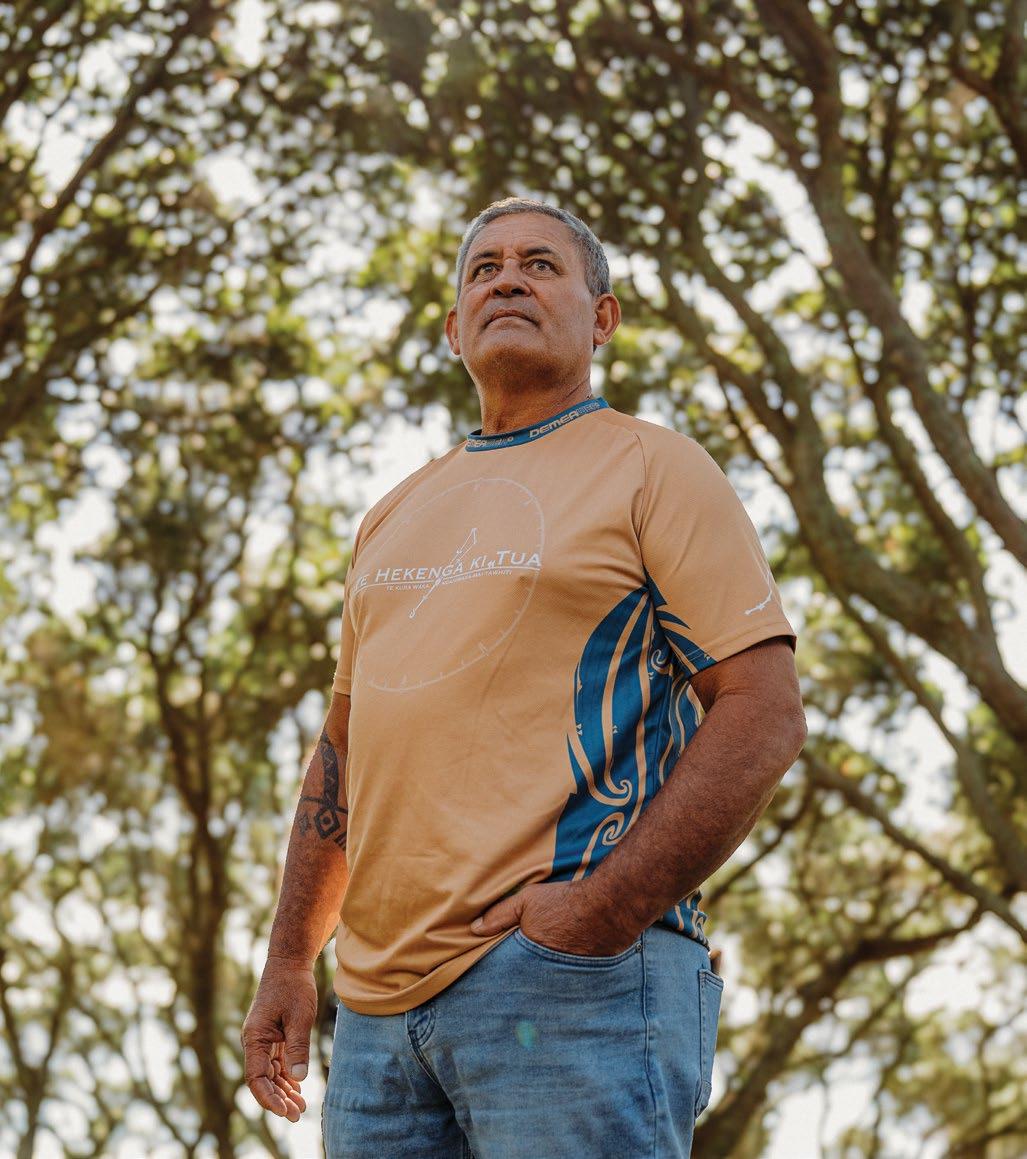
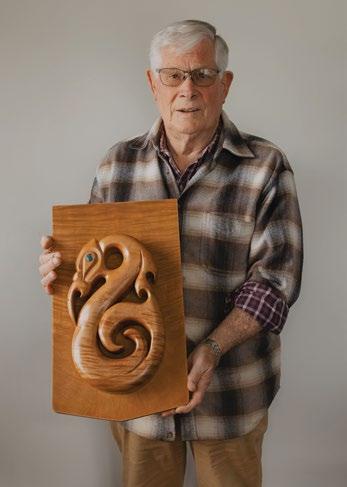
Flick through the pages to our Kōrero feature and you'll discover the story behind master of tradition and trail blazer, Grant Marunui, whose work stretches far beyond the workshop (42). We also meet the man who won't retire, Buddy Mikaere. He grabbed his surfboard and left home at age 17. Almost 60 years later, Buddy hasn’t stopped moving (54).
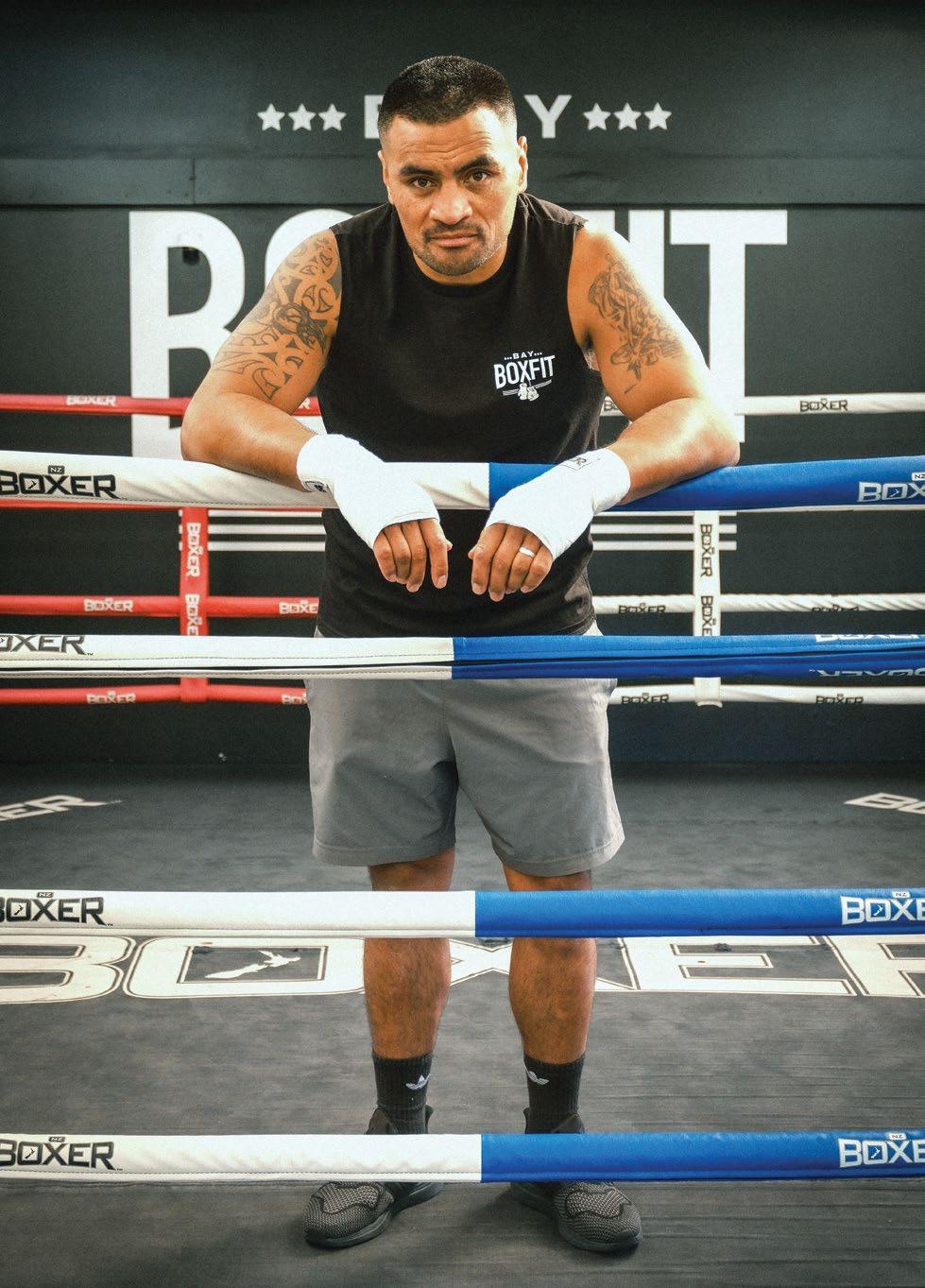
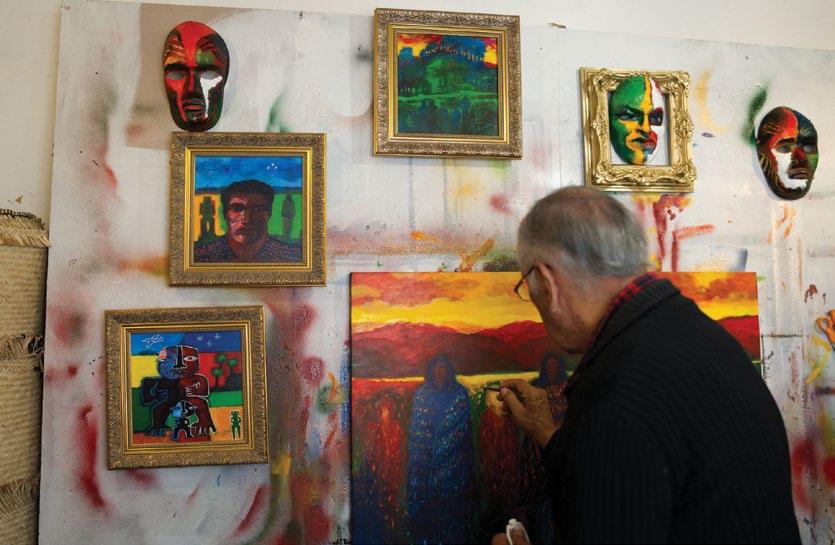
Gunnar Jackson tells writer Laura Boucher why family extends far beyond the bloodlines at Bay Boxfit (64), while we also meet the artists showing their works at the inaugural Threads of Connection Matariki exhibition in Ōmokoroa, including Darcy Nicholas (82).
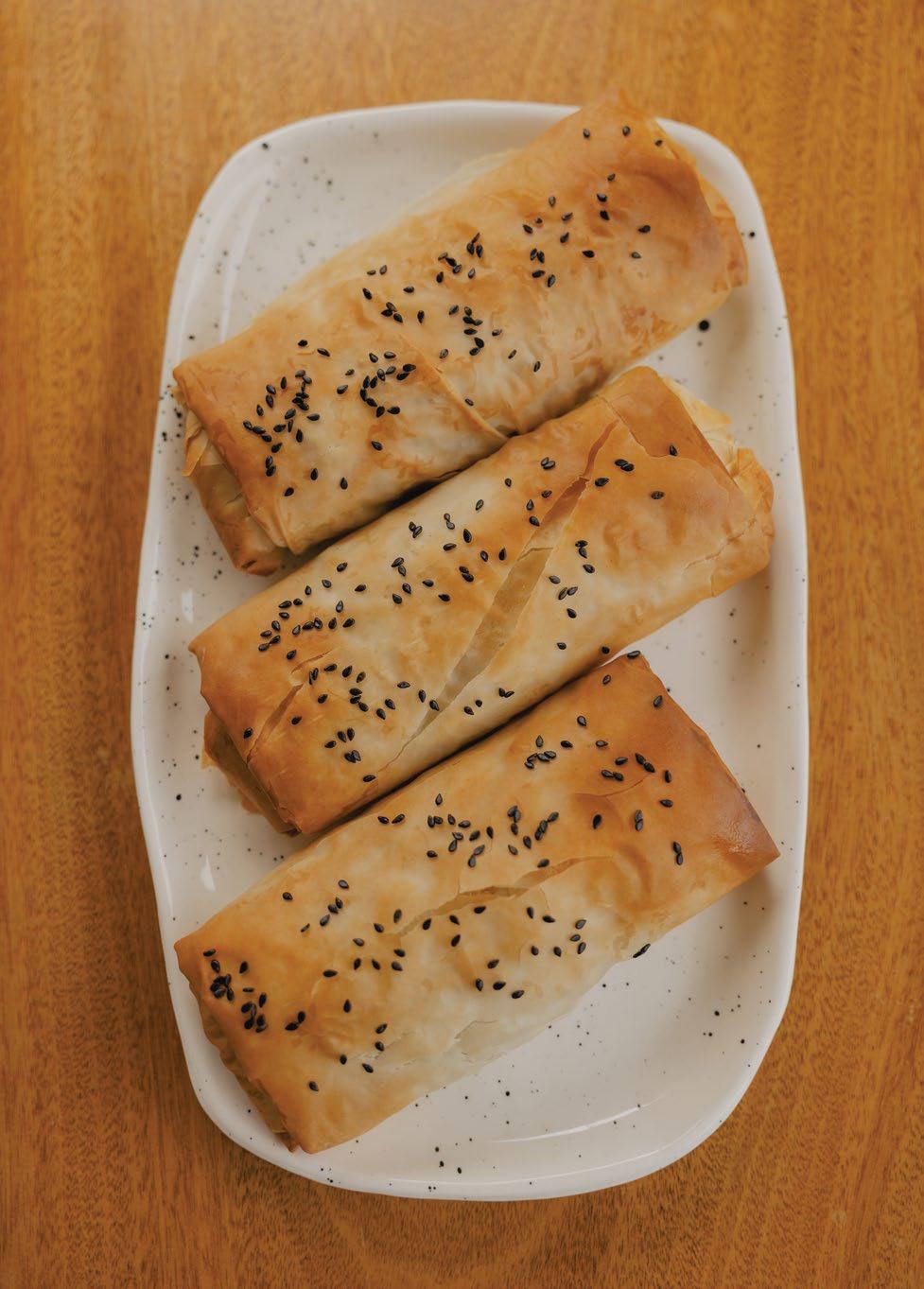
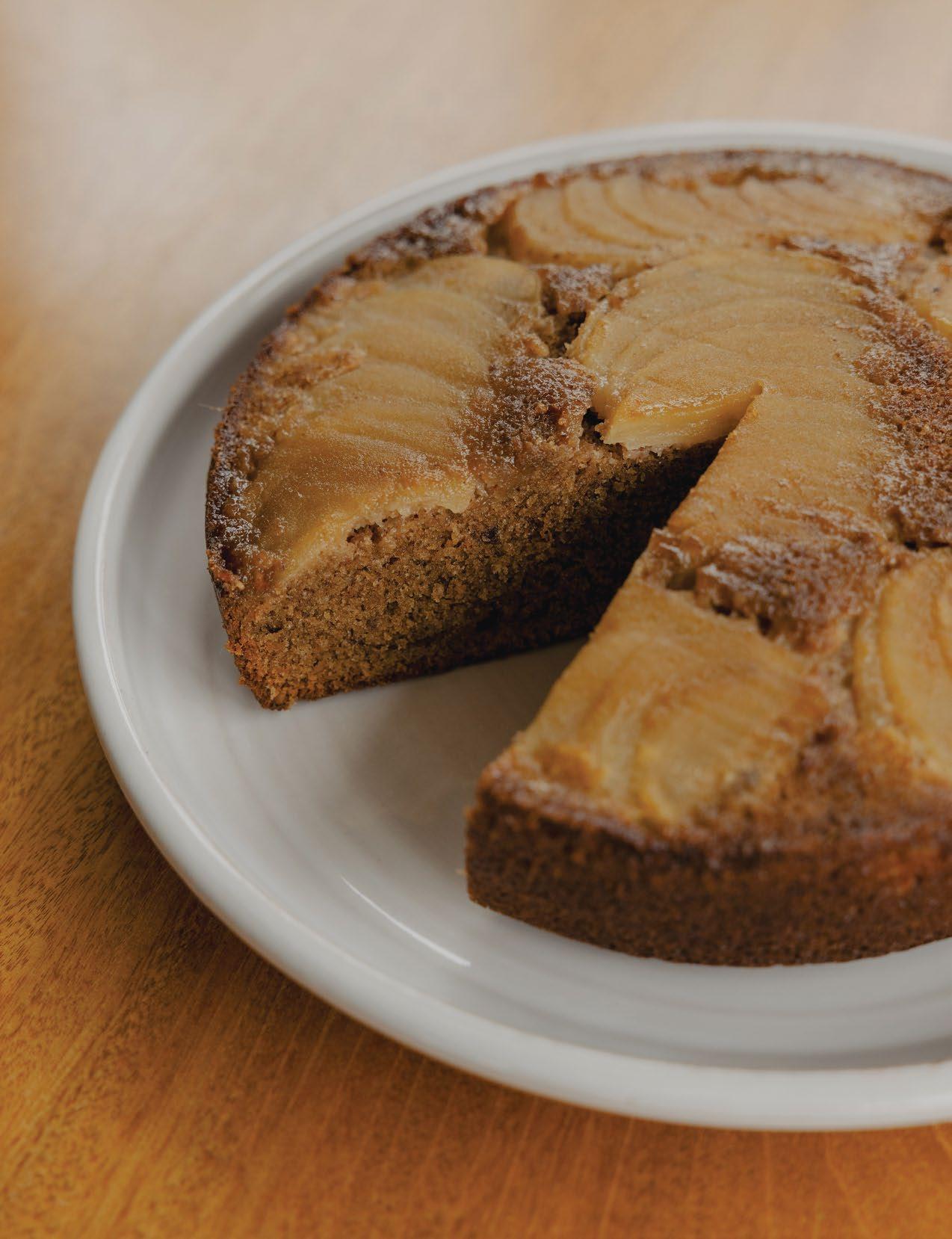
Plus, Chef Madeleine Hughes is working with arguably one of the best winter veggies out, with tasty pumpkin, feta and pistachio pies and an apple, pecan and brown sugar upside down cake (93). While Pepper & Me’s Cherie Metcalfe shares her top plates of her 'dream come true' foodie tour through Italy (113).
Here’s to another issue of sharing the tales, traditions, and trail blazers of our community.
Regards, The Our Place team
Plus with any spend over $5000 receive bonus custom-made whitening trays. *
Scan the QR code to book online or call 07 575 6278.
*Offer available until 31/08/2026
Thrift Shop Ball
What’s Up
Matariki for Tamariki
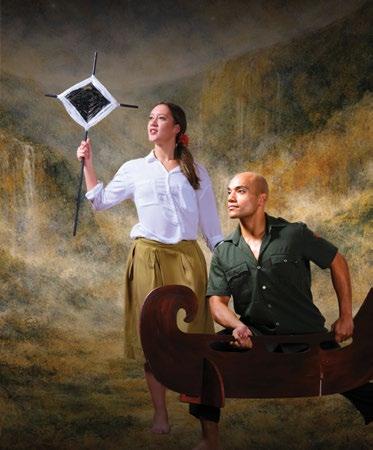
Tauranga whānau will be the first to experience a fun filled, high‑energy adventure that’s embarking on a Te Ika‑a‑Māui Tour during Matariki. The New Zealand Dance Company and Baycourt Community & Arts Centre present Matariki for Tamariki, a joyful celebration of the Māori New Year for intrepid tamariki and their adventurous grown ups, on June 30th. This uplifting tale follows a group of cheeky friends as they explore the ngahere, maunga and moana across Aotearoa. Along the way, the group discover the nine whetū of the Matariki constellation and the roles each star play during the Māori New Year. Created by 2023 New Zealand Arts Laureate Sean MacDonald (Ngāti Kahungunu, Ngāti Raukawa) Matariki For Tamariki perfectly blends storytelling, music and dance that keeps tamariki engaged, while offering parents, caregivers and older audiences plenty to fall in love with.
Where: Addison Theatre, Baycourt. When: Tuesday, June 30th, 6-7pm. Tickets: From $10.75 to $19.96. Book now at baycourt.co.nz
The Thrift Shop Ball returns to Mount Maunganui in August, following a sold out event in 2025. Marking its fifth year, the event has grown into one of the Bay of Plenty’s most distinctive celebrations of sustainable fashion, live music, and immersive performance art. Guests are invited to create outfits entirely from thrifted and pre loved clothing, transforming the venue into a moving display of personal style and storytelling. The night features DJs and performances from Sanoi, Disco Bush, Geo Seato, and Dani VR, with immersive visuals by Paige Visuals, alongside creative fashion activations from Preloved Project’s NOT Vogue and Pia’s Fashion Show with Al. Live music extends the experience into a full night where fashion, music, and identity merge into one immersive environment built on circular fashion. What: Thrift Shop Ball. When: Saturday, August 8th. Where: Totara Street. Doors open 7.30pm. Tickets: www.thriftshopball.co.nz
Sustainability Options
With winter approaching, Sustainability Options is calling on the Bay of Plenty community to help keep whānau warm, dry, and healthy through an urgent 20 Degrees winter donation drive. There is a huge demand to help whānau stay warm this winter. The community can help struggling families by donating clean woollen blankets, duvets, or plug‑in electric heaters. Sustainability Options is a for purpose business sharing free sustainable living advice. It also delivers the Healthy Homes Initiative and the 20 Degrees (repairs and maintenance) programme within the Bay of Plenty. Whether you rent or own a home, they want to help make your home reach a healthy 20 degrees, on a cold winter’s night. For a free home assessment, phone 022 156 1027.
People can donate blankets, duvets, or plug‑in electric heaters at 59 Seventh Ave, Tauranga (Monday to Thursday), or contribute via Givealittle at givealittle.co.nz/cause/20‑degrees‑1
Sunny Side Up
What’s Up
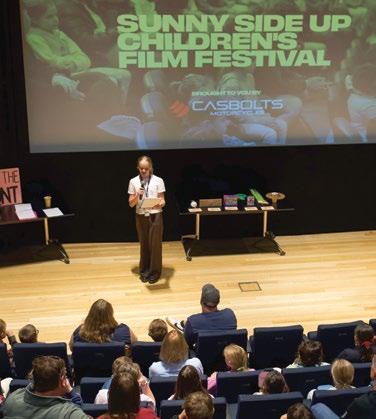
Created and directed by 15 year old Milli Banbury, Sunny Side Up Children’s Film Festival is designed to introduce primary‑aged children to the magic of cinema in a fun and inclusive way. What started in Tauranga in 2022 has now grown into something truly special. After four incredible years in Tauranga, April 2025 saw the festival take on a national tour across Auckland, Christchurch, and Hamilton. The festival includes award winning short films, interactive games, prizes, and plenty of laughter for children and families across the country. Each 90 minute session features carefully curated short films centred around themes of kindness, humour, bravery, and compassion, all hosted in a warm and welcoming environment. Their next event is on July 9th at Tauranga Boys’ College’s Graham Young Youth Theatre, with sessions at 10am and 1pm. sunnysideupchildrensfilmfestival.com @sunnysideupfilmfest_nz sunnysideupfilmfestival
TLBM Matariki
Clay
Discover the inaugural curated boutique ‘Clay’ event at Toi Tauranga Art Gallery this August. The event will feature some of the region’s finest ceramicists for an immersive celebration of earth, heritage and creative expression. Little Big Events is delivering the inaugural curated boutique ‘Clay’ event on August 28th to 30th at Toi Tauranga Art Gallery. The three day event will feature work from renowned New Zealand multidisciplinary Māori artist Tristan Marler, who will be showing his clay work in Tauranga for the first time. The event will also showcase work from a number of local and national artists, including Goodwin Ceramics, JS Ceramics, Kristina Rachacova and more. Plus, there will be hands on workshops for children. What: TLBM presents ‘Clay’ at Toi Tauranga Art Gallery. When: August 28th to 30th.
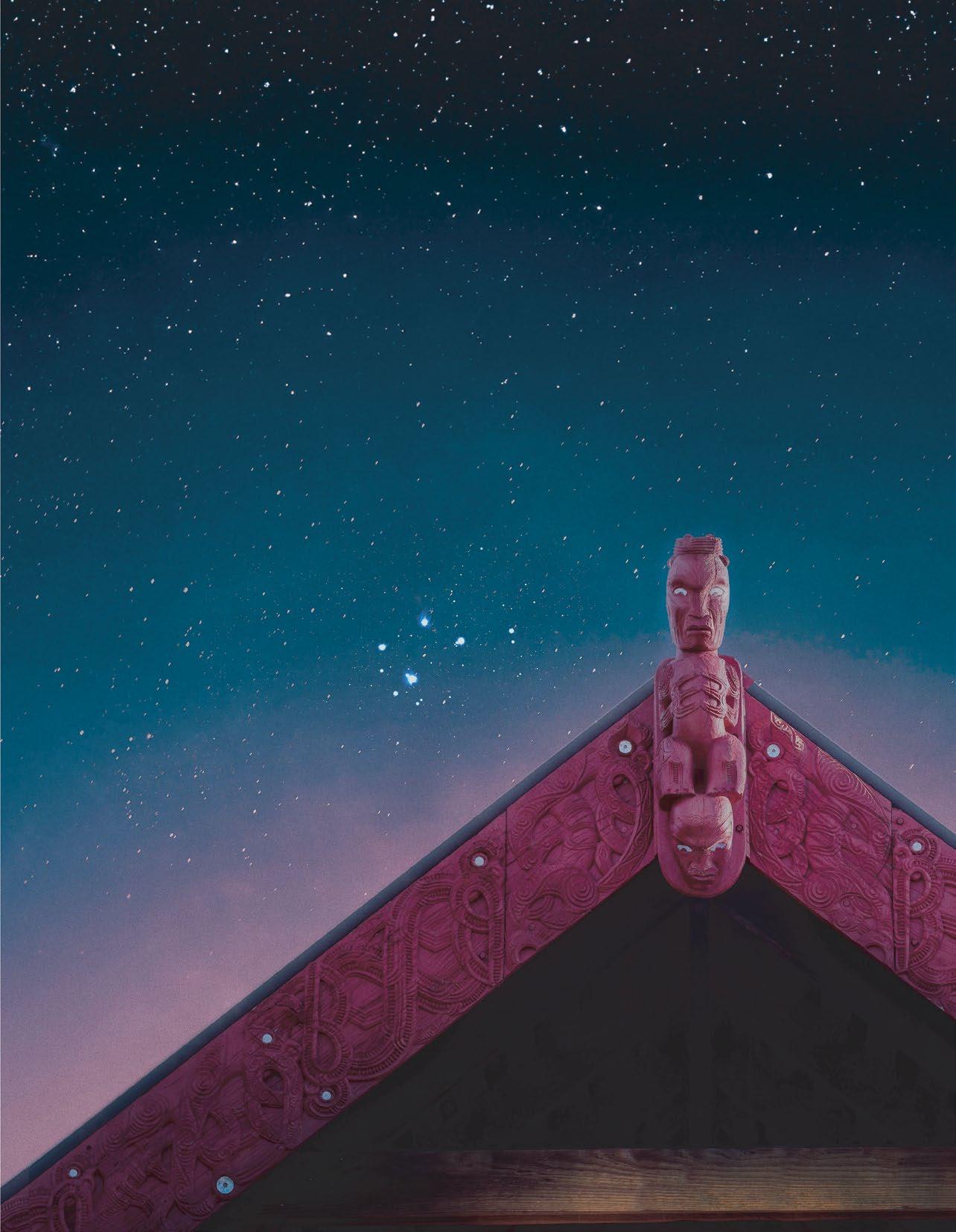
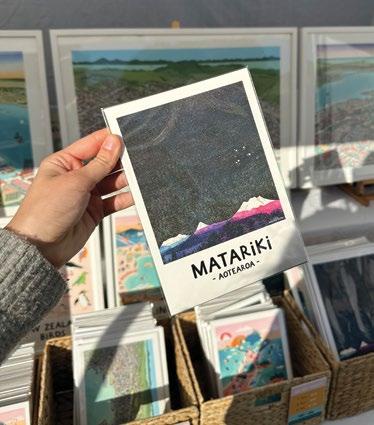
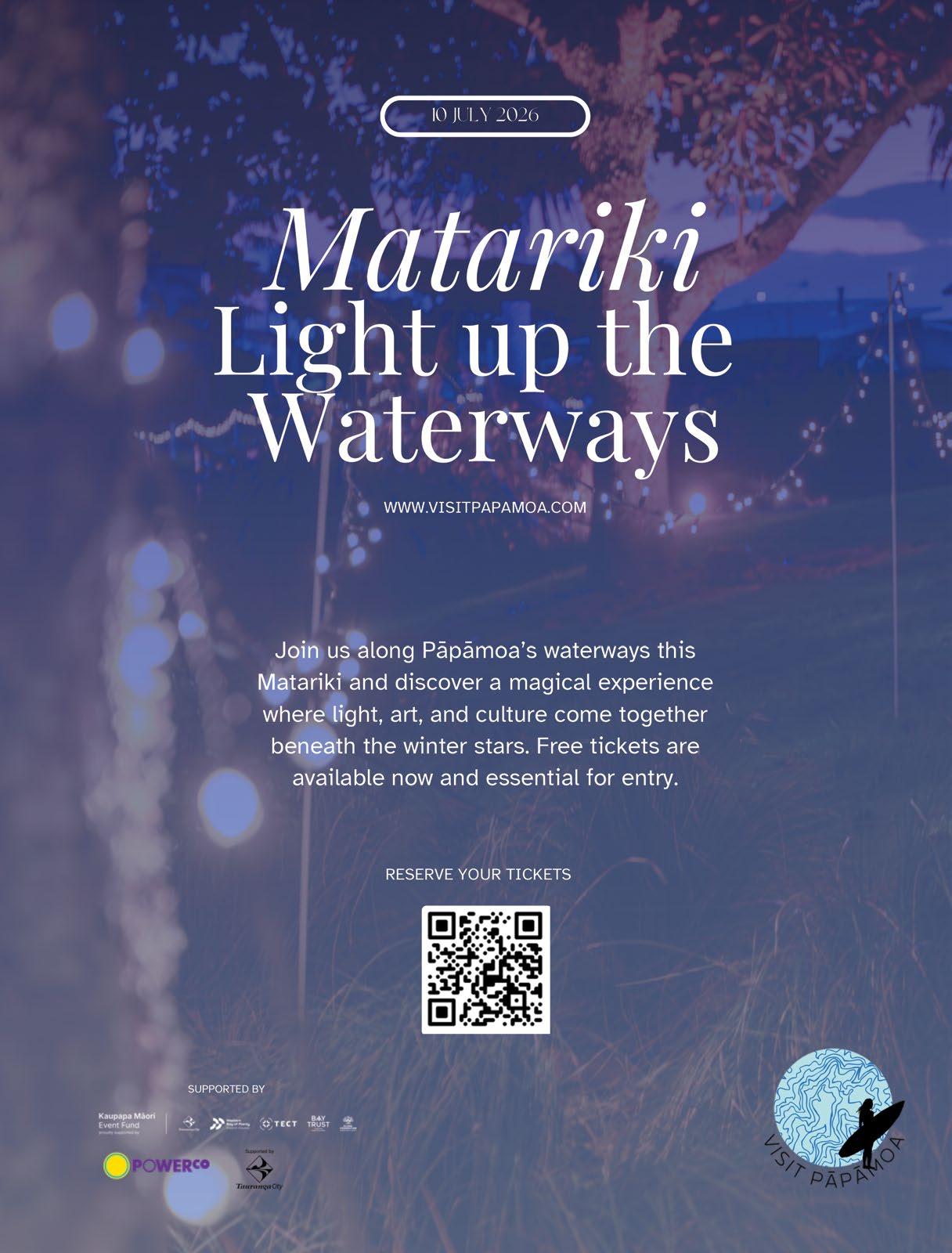
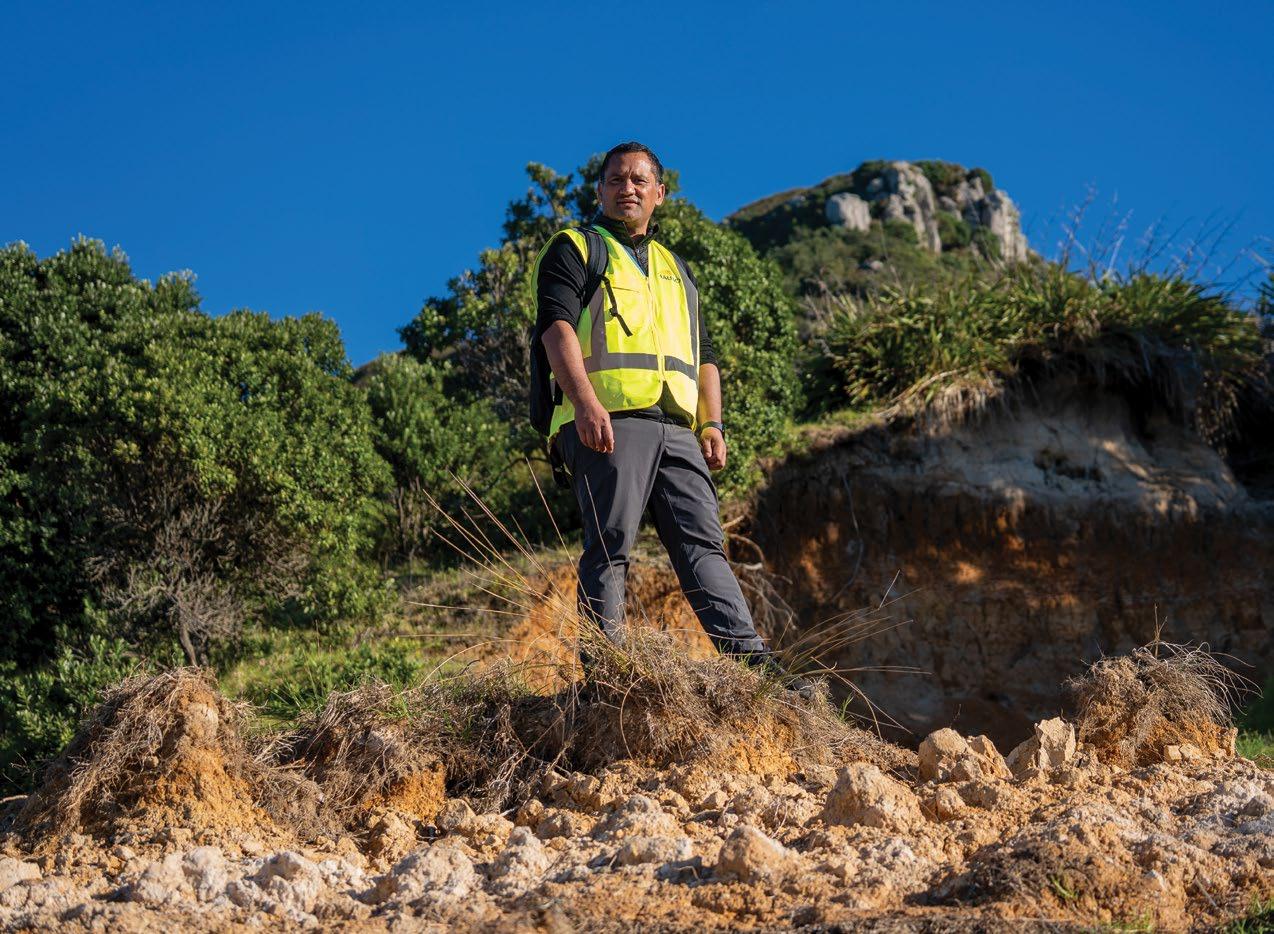
The community is invited to gather at the base of Hopukiore (Mt Drury) in a maumaharatanga (memorial) marking the rising of the stars on July 10th. Organised by Te Puna I Rangiriri Trust, the event will see the 15.8 metre long voyaging canoe Ngahiraka Mai Tawhiti and the paddling canoe Tākitimu Waka Taua arrive at Waikorire, Pilot Bay, before dawn. From the shoreline, a small procession will travel past Mauao to Hopukiore, where a precious pounamu, Paretao, will be placed for people to lay their hands on and remember loved ones. Following the dawn ceremony from 6am 8am, Te Puna I Rangiriri Trust is collaborating with The Little Big Markets to offer Matariki themed workshops at Coronation Park from 10am 2pm. People can also stargaze in the inflatable star dome observatory, take part in traditional kite making and learn how to make a manu tukutuku or manu horewai. matarikitetaurangaongawaka.co.nz
Calling into the Dawn
Words by Zoe Hunter
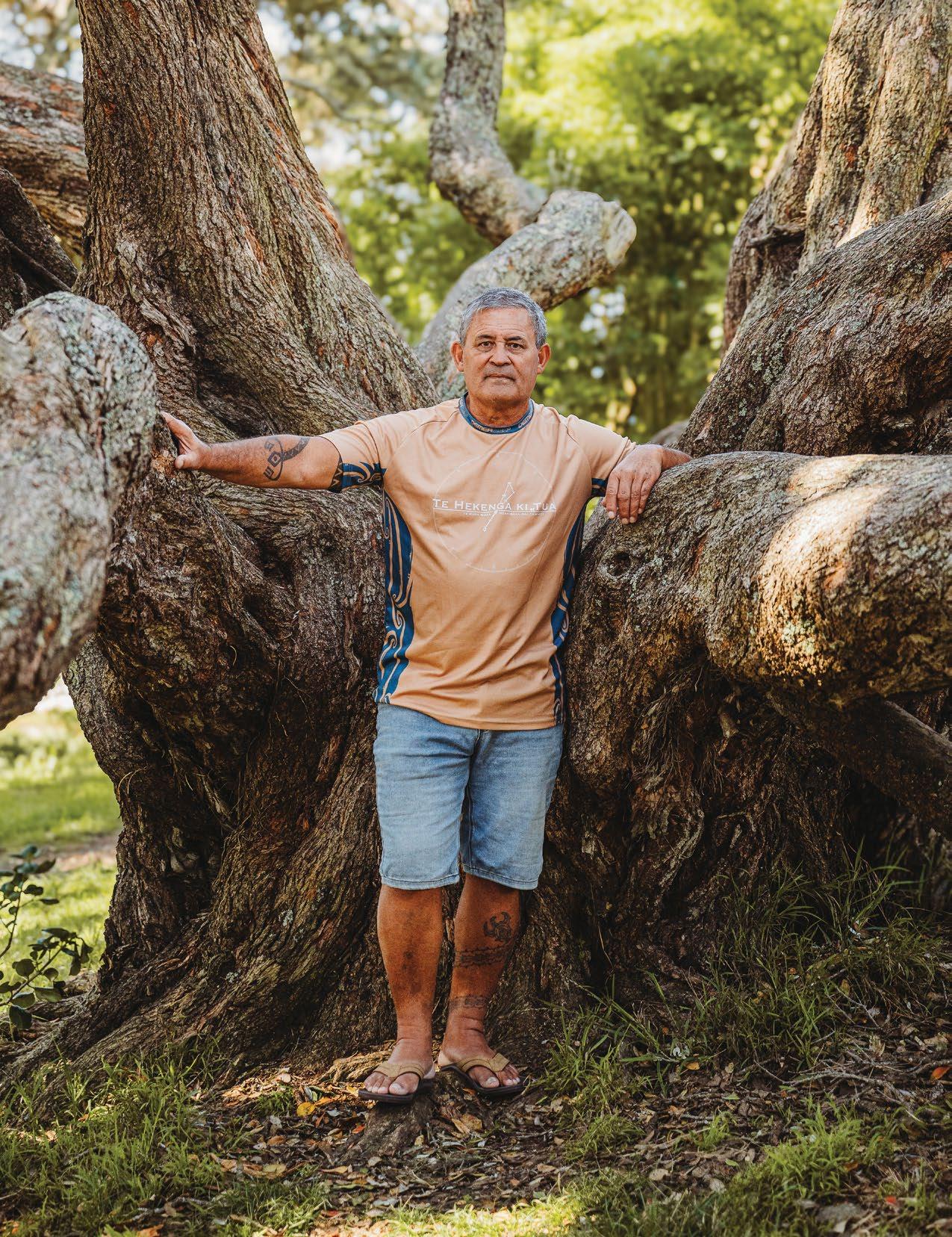
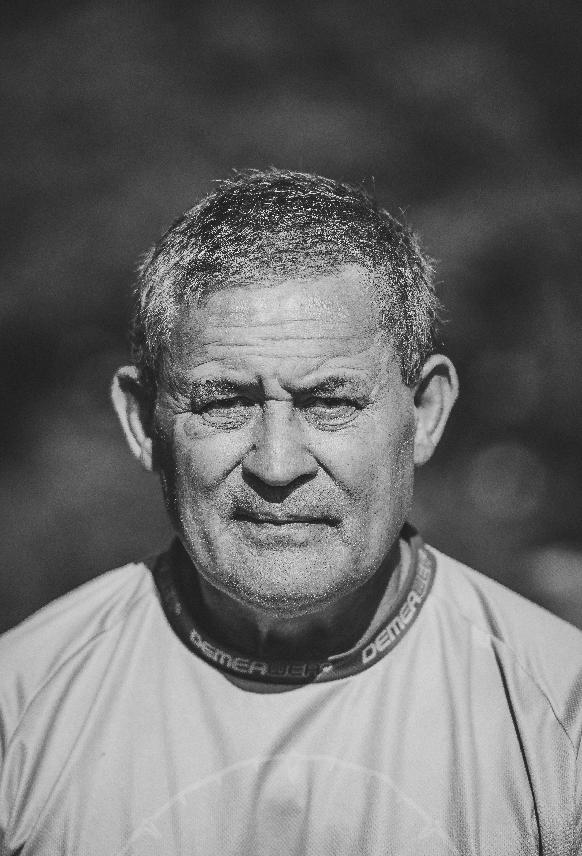
Matariki has become a central part of master navigator Jack Thatcher’s life’s work. This year, he will join in a maumaharatanga at the base of Hopukiore as part of the rising of the stars.
Photography by Naera Ohia
Before the sun rises over Tauranga Moana and the first light kisses Mauao, master navigator Jack Thatcher will close his eyes and rest his hands on the cool pounamu.
Around him, the morning will be quiet and the air still as he breaks the silence with the names of his late māmā and pāpā.
“I call my mum and dad’s name out every year,” he says. “It helps keep their image in my mind and their memory alive.”
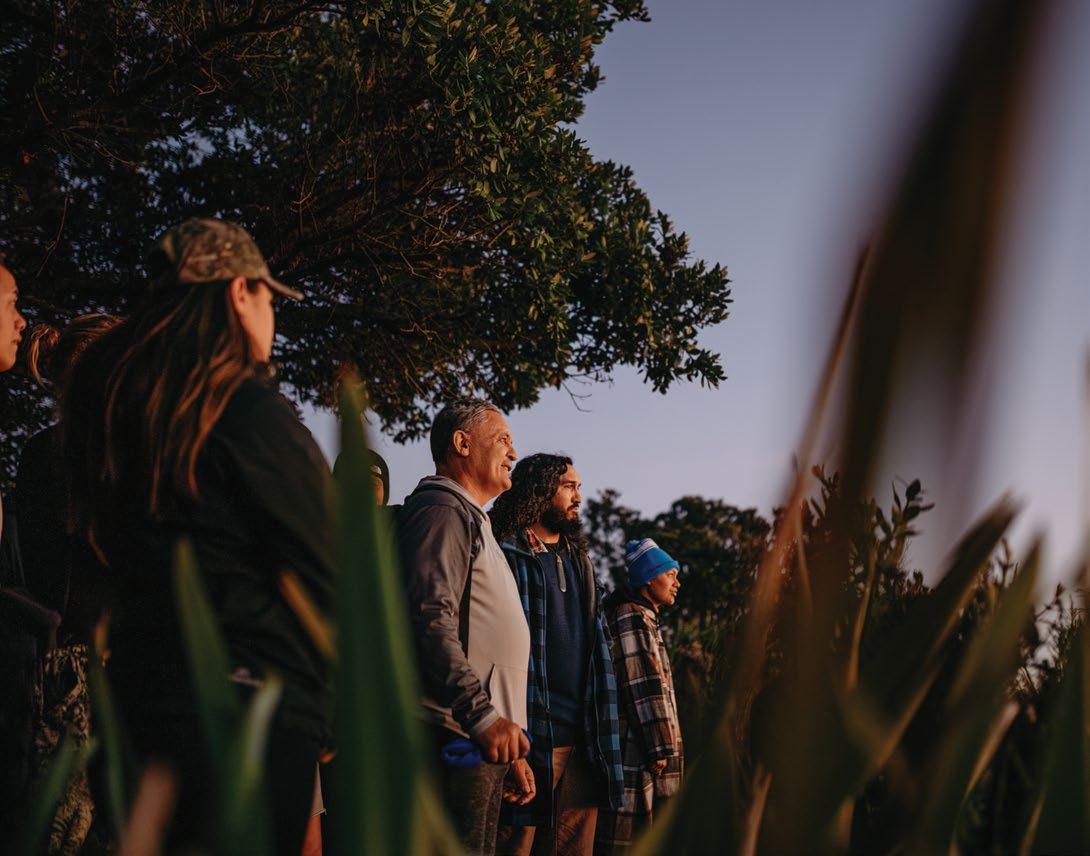
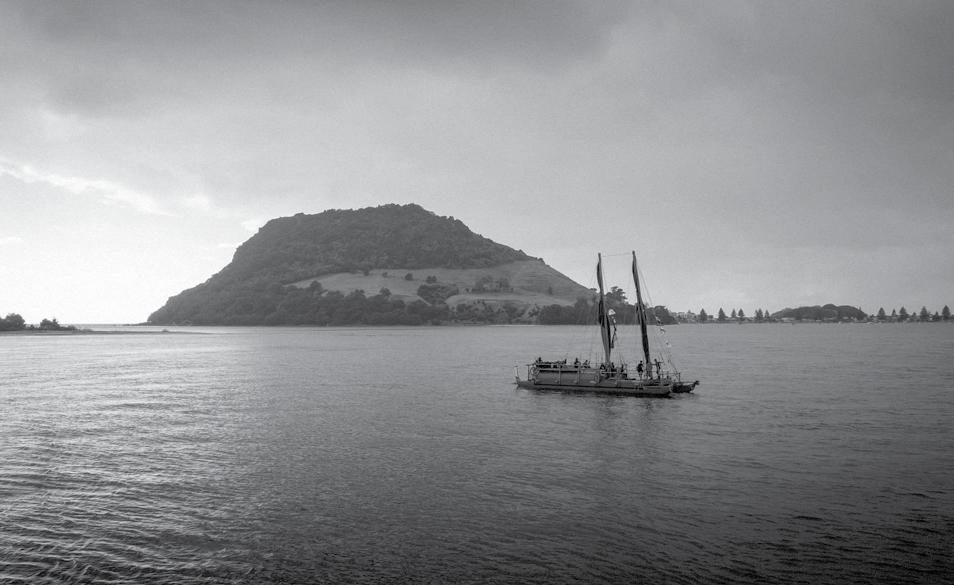
This Matariki, Jack (CNZM) will stand at the base of Hopukiore (Mt Drury), joining others in a maumaharatanga (memorial) as part of the rising of the stars on July 10th in an event organised by Te Puna I Rangiriri Trust.
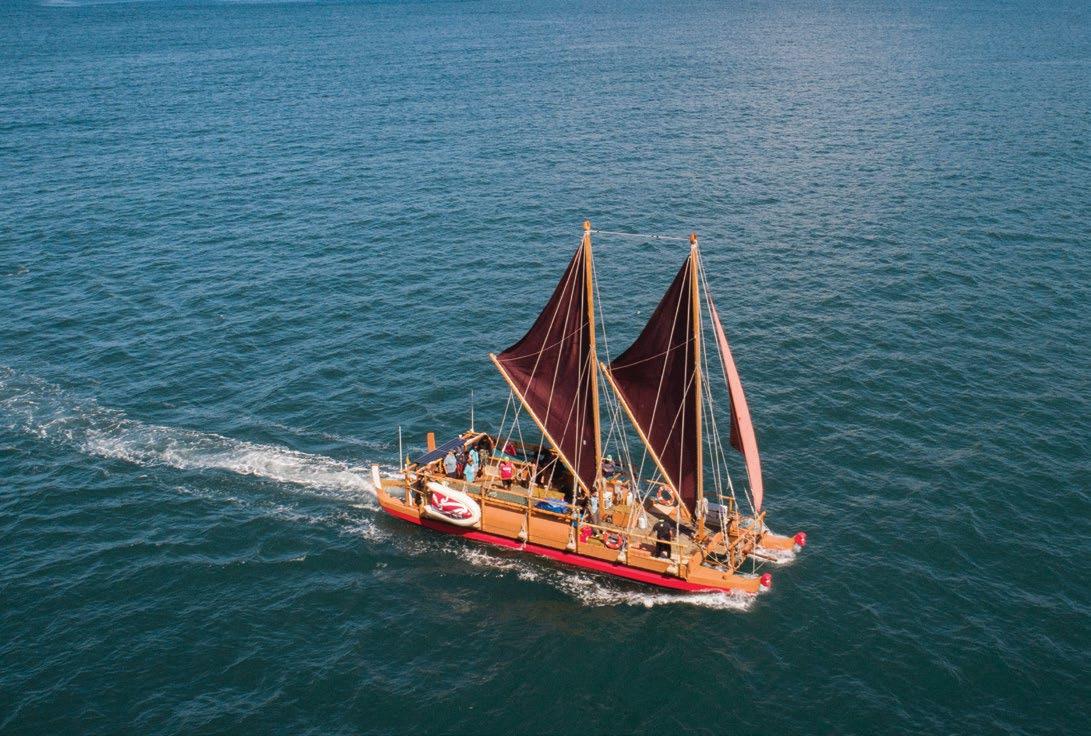
Before dawn, the 15.8 metre-long voyaging canoe Ngahiraka Mai Tawhiti and the paddling canoe Tākitimu Waka Taua will arrive at Waikorire, Pilot Bay.
On board Ngahiraka this Matariki will be a precious pounamu known as Paretao.
The stone also carries a legend of its own.
Gifted by Ngāti Waewae in the South Island, it is
the twin to the pounamu that rests at the summit of Mauao. The two stones will be bound not just by proximity, but through karakia, whakapapa and memory.
From the shoreline, a small procession will form. Members of Te Kura Waka, Jack’s celestial navigation school, along with descendants of the migration waka Tākitimu will make their way past Mauao towards Hopukiore.
Just before the sun rises, Paretao will be placed at the base of Hopukiore. One by one, people will come forward. Hands will be placed gently onto the stone and names will be softly spoken into the morning air.
The ritual is known as karanga mate – a call to acknowledge those who have passed since the last rising of Matariki.
“Anyone who has a loved one, even if they have never done this before, is welcome to call out their names,” Jack says.
“The atmosphere becomes very solemn but also very uplifting.”
“Anyone who has a loved one, even if they have never done this before, is welcome to call out their names.”
He pauses for a moment.
“There are lots of tears, but there is also a lot of smiling because people are remembering their loved ones.”
Typically, many Matariki celebrations begin with a hautapu ceremony – an offering to feed the stars. Instead, this event focuses on remembrance.
“Here, we do things a bit differently. Ururangi (one of the Matariki stars) is ours. We’ve reignited the old tradition of maumaharatanga (rememberence).”
Following the dawn ceremony at 6am-8am, Te Puna I Rangiriri Trust is collaborating with The Little Big Markets to offer Matariki-themed workshops at Coronation Park from 10am-2pm.
Jack’s daughter and Te Puna I Rangiriri Trust
general manager, Aurere Thatcher, says people can also star gaze in the inflatable star dome observatory, take part in traditional kite making and learn how to make a manu tukutuku or manu horewai.
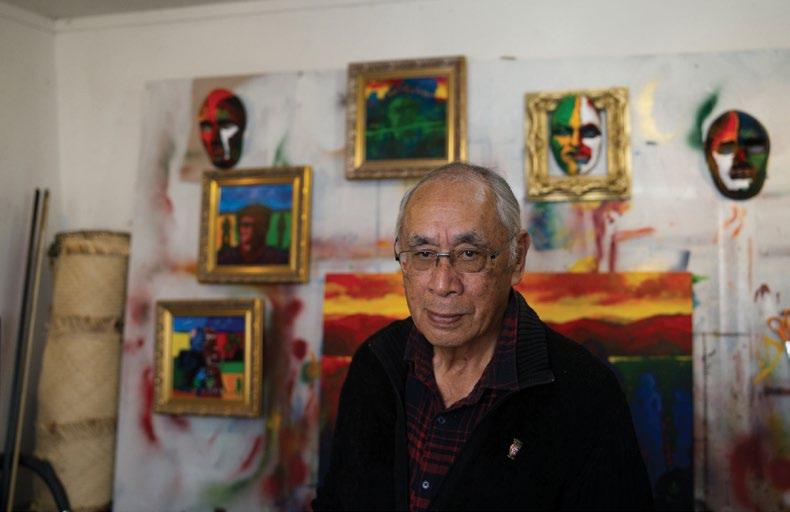
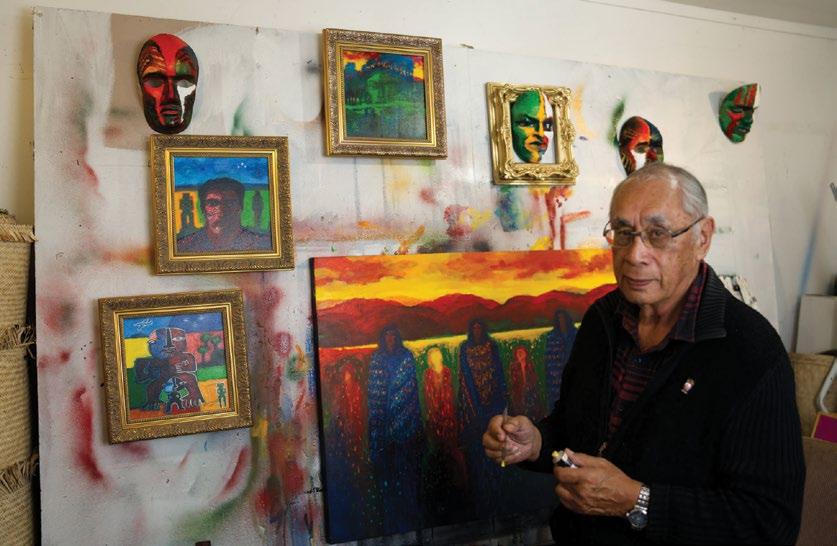
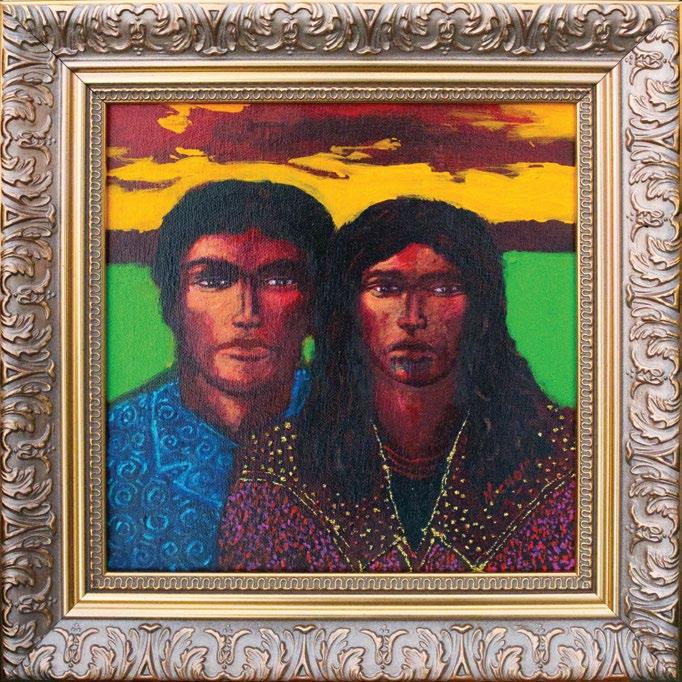
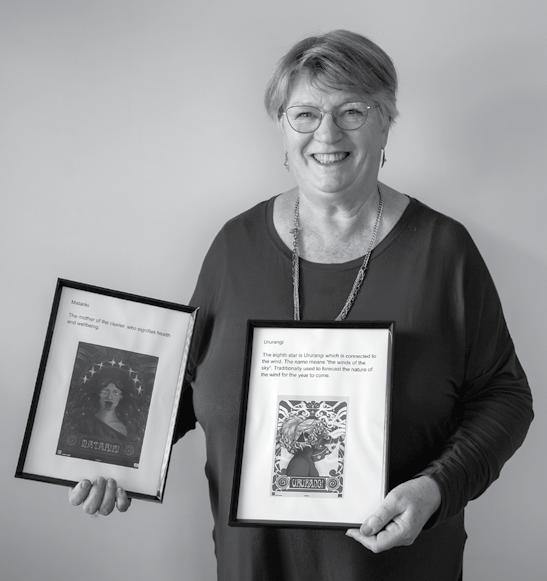
Aurere says the event is usually held on Mauao, but this year the decision was made to move the event following the fatal landslides on the sacred mountain in January.
“We are hoping to invite all of the whānau affected, so it will be special for them too,” she says.
Even here, at the base of Hopukiore, the connection remains.
Tohunga (spiritual leaders) will lead karakia to spiritually link Paretao with its twin stone on Mauao, reinforcing the connection between the two sites.
↖ Jack leads a group up Mauao last year. ↑ Ngahiraka Mai Tawhiti pictured on Tauranga Moana in 2021.
Photograph by Nathan Pettigrew
“The stones connect us to those people who have passed on. That world, te ao kōhatu, is very important to us.”
Jack Thatcher will join others in a maumaharatanga (memorial) at the base of Hopukiore on Matariki.
Matariki has become a central part of Jack Thatcher’s life’s work.
“The stones connect us to those people who have passed on. That world, te ao kōhatu, is very important to us.”
For Jack, that connection is not lost. This year, as he does every year, he will be calling for his mother, Mereaira, and his father, Arthur.
Their names will join many others carried into the morning as the sky begins to change.
Matariki has become a central part of Jack’s life’s work as a trained celestial navigator. But it hasn’t always been that way.
Jack laughs softly at the memory.
Decades after last marking the occasion, Jack attended a Matariki celebration at Kopukairoa in Welcome Bay alongside Te Kura Kaupapa Māori O Otepo (full Māori immersion school).
“When we got there, the kaumātua asked me to talk about Matariki and I didn’t know anything,” he says.
But, while he didn’t yet have the words, he knew the stars. “I said, ‘I can show you Matariki’.”
Jack could already read the night sky – a skill
that would soon shape his path.
“It put me on a parallel pathway,” he says.
In the years since, Jack has dedicated himself to learning, teaching and sharing the meaning of Matariki, leading karakia on Mauao and helping others connect with the maramataka (lunar cycle calendar) and the stars.
Through Te Kura Waka, he now trains the next generation in traditional Pacific navigation, working with hundreds of tamariki across Aotearoa.
“We have some new navigators to recognise this year,” he says.
For Jack, the kaupapa is about more than navigation. It is about connection to the stars, to the past and to each other.
And on Matariki morning, as hands rest on stone and names are called into the dawn, that connection will be felt once again.
Te Kura Waka
Te Puna I Rangiriri Trust matarikitetaurangaongawaka.co.nz
A Private View
Words by Sonya Korohina
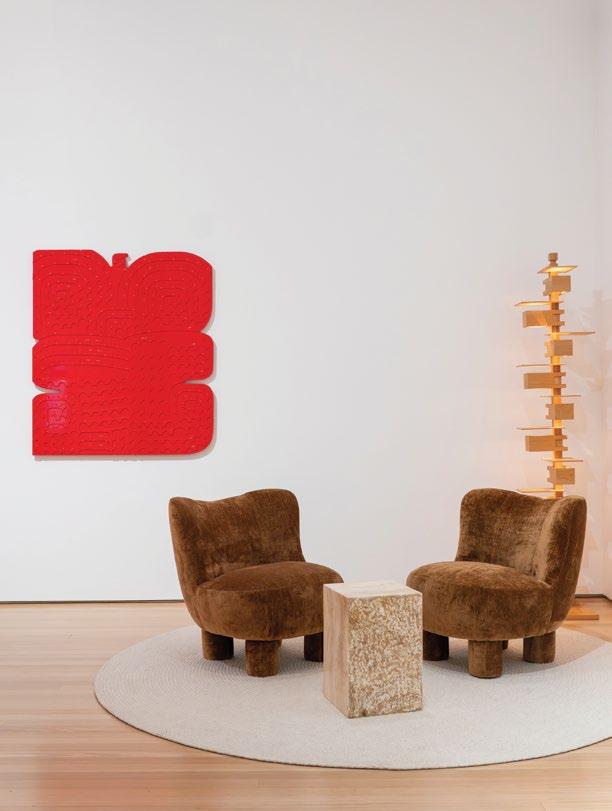
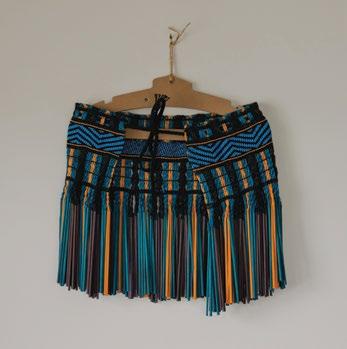
Private View is an exhibition that creates conversations between art, interiors and everyday life, something not often encountered in an art gallery setting...
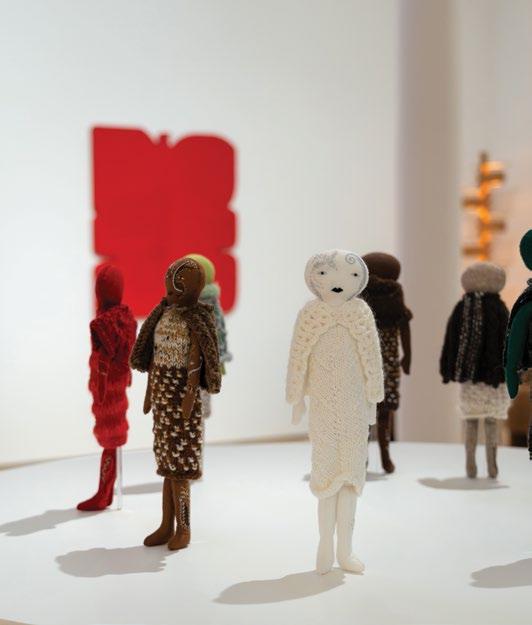
Opener: Ngataiharuru Taepa, Tiki #1, 2009. Furniture – Amier Home. Rug – The Ivy House. Lighting – INLITE. ↑ Te Maari, from the series Manu Figures 2024–2025.
During Covid-19 lockdown, some friends and I formed an art buying group, Toi Ataata, to learn more about contemporary art practice in Aotearoa. Each year, we contribute a fixed amount and purchase artworks by New Zealand artists that are rotated every six months.
What has been unexpected for many is the joy found in living with art at home. Finding a corner with a comfy couch and curling up with a coffee, taking time to slow down, breathe, and gaze…
Buying artworks for Toi Ataata has mostly been through gallerists (artist representatives) or the Aotearoa Art Fair, so that the artist receives a commission from the sale.
A special purchase was a series of figures by artist Te Maari. We had first seen her manu (bird) figures in Toi Tū Toi Ora at the Auckland Art Gallery (2021).
We then met her gallerist, Jacob Rāniera from Mokōpopāki, and began a series of written email correspondences with the artist.
We have never spoken to or met her in person, nor do we know what she looks like. She identifies as New Zealand/English with whakapapa to Te Arawa, Ngāti Whakaue and Ngāti Raukawa.
She’s currently based in Birmingham and creates artefacts based on the stories she receives.
We each sent messages to her about ourselves. I personally over-shared.
There was something about writing to someone I didn’t know, that meant I shared with vulnerability and trust.
A few months later, a package arrived and inside was my manu figure, Rongorongoruru.
Constructed of felt, the ruru
(New Zealand native owl) stands upright with a woven cloak around her shoulders made of hand-spun Shetland and synthetic fibres. Intricately stitched botanicals weave around her legs and arms and dance across her face.
The tiniest of perfect lips, waiting for nightfall to make her melancholic call.
One of my favourite adventures with Toi Ataata was a long lunch in Wellington, where we each pitched and voted on artworks that we had been researching and viewing.
As each proposed work was discussed, doors opened to deeper conversations about popular culture, identity politics, tricky social histories, types of framing, and even the Commonwealth Games (this related to artwork by Ayesha Green of her grandparents where her grandmother is wearing her gold medal, and yes we voted to purchase the work).
Toi Tauranga Art Gallery Promotion
Not everyone likes every artwork (and this expectation is written into the Toi Ataata agreement too).
However, it is fascinating how, after living with a work, respect for the artists’ practice — and sometimes even a love affair with the artwork develops over time.
Private View at Toi Tauranga Art Gallery is an exhibition that creates conversations between art, interiors, and everyday life — something not often encountered in an art gallery setting.
In the Pītau Gallery, three rooms have been created by soft drops of chalk-coloured linen, delineating each space.
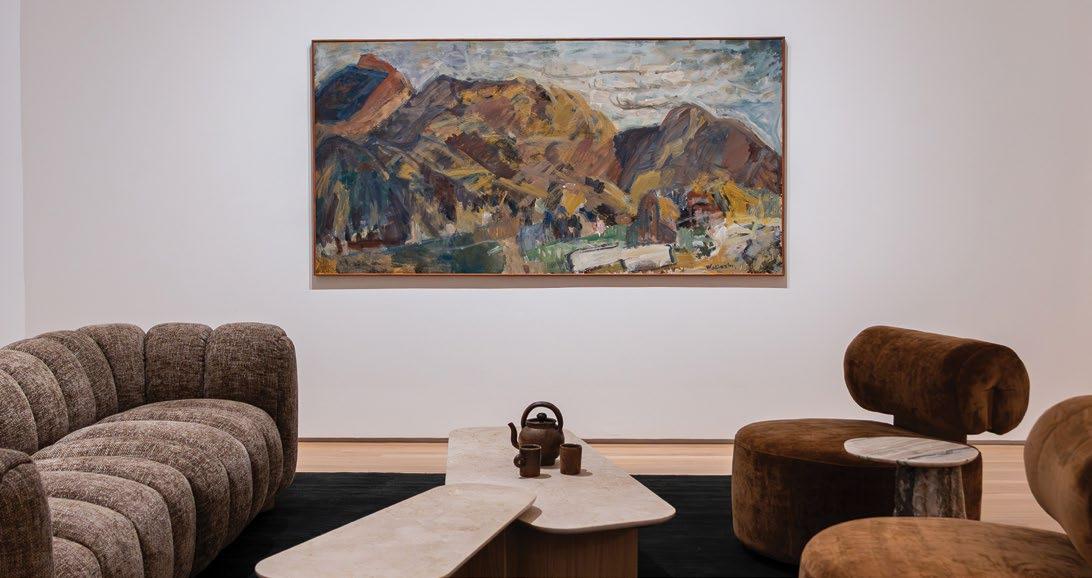
Within the room exhibition co-collaborator and interior designer Kathrine McDonald has expertly-selected rugs, lighting, and furnishings that respond to the surrounding artworks and create a cosy environment you won’t want to leave.
The central space is a living
room where, on the far wall, a 2.4-metre-long Toss Woollaston painting immediately draws the eye. It is an excellent impressionist example of his landscapes of Riwaka, near Nelson with what appears to be a church in the foreground.
He uses a flurry of brushwork and a familiar palette of blue, brown, green, and all tones in between.
Looking away, your gaze then begins to dance around the room, taking in the oversized round forms of the two bronze side chairs and a speckled couch from Amier Home that looks ready to sink into.
Teacups, teapots, bowls, and vases with crunchy, earthy wood-fired glazes by ceramics artist Riccardo Scott sit throughout the space. The room is anchored by a large, deep green floor rug from The Ivy House.
The artworks in the exhibition have been generously loaned from private collections around the Bay of Plenty and from the Toi Tauranga Art
Gallery collection.
Each artwork carries stories of its makers and collectors: The Toss Woollaston painting that was a gift from a father to a daughter; two sisters who met Reuben Paterson in his New York studio as he was making an artwork shimmer; a protest piece by Ralph Hotere that reminds the collector of their brother’s career as an All Black in the 1970s and the political uproars of the time; and many other precious belongings on display, including eight figures by artist Te Maari. Private View is on until midOctober. For those interested in art in the home buying, hanging, lighting, curating with interiors, and more — Toi Tauranga Art Gallery is hosting a range of talks and workshops. Register through the website for updates or follow them on social media.
Mercury Baypark Arena’s new café has Plentie for everyone.
The café inside Mercury Baypark Arena has entered a bold new era. Now known as Plentie, the new space brings a fresh new energy to the heart of one of Tauranga’s busiest venues.
After years of fuelling budding athletes, sideline supporters, conference crowds and event attendees, the café inside Mercury Baypark Arena has undergone its first major upgrade to better cater to its community.
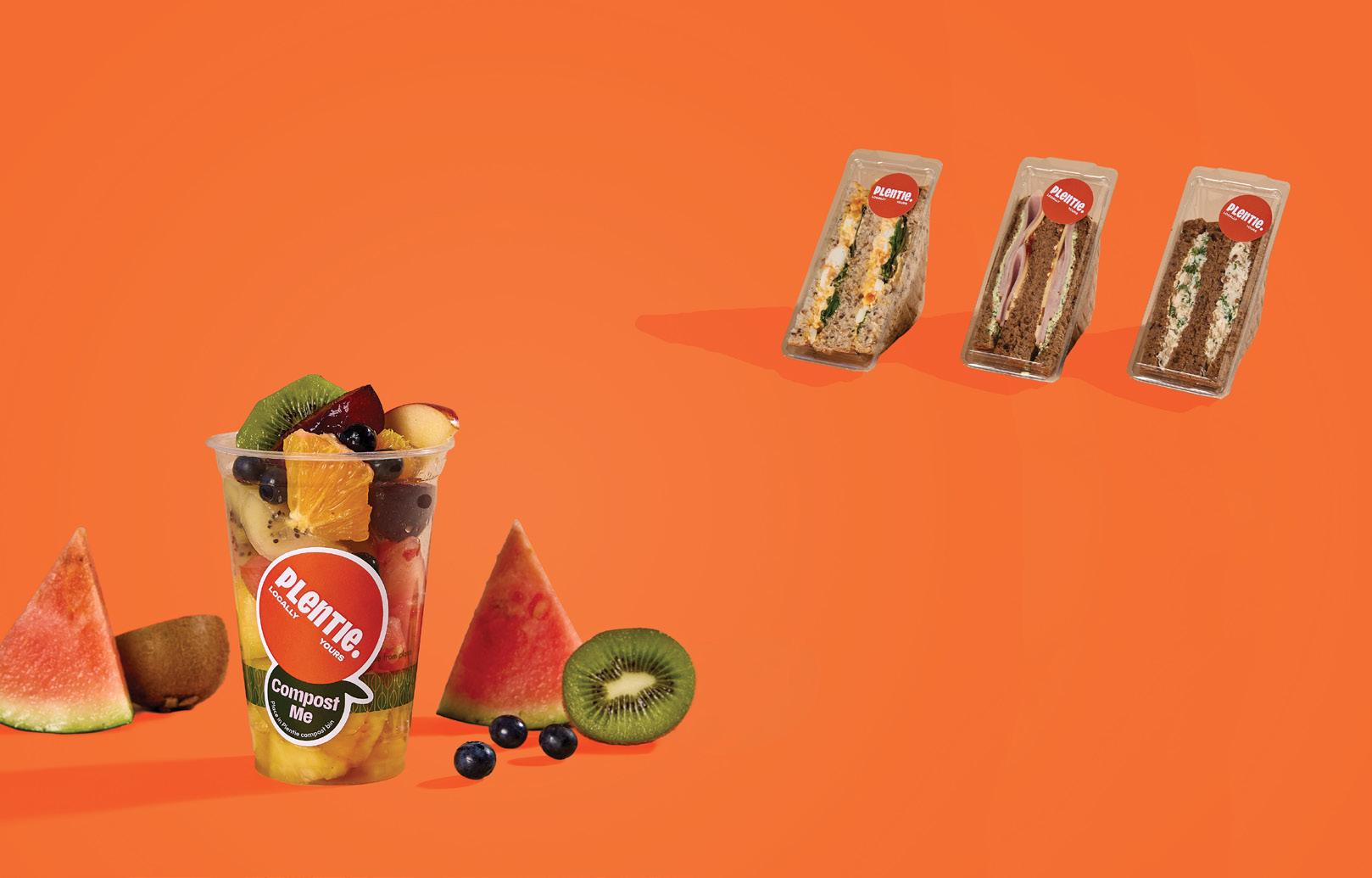
Tucked inside Mercury Baypark Arena, the new Plentie Café is designed for everyone. It is a community-focused cafe offering quick, on-the-go healthy food options such as fresh salads, wraps, sandwiches, fruit, smoothies and more.
The menu features fresh, adaptable options and uses local produce and suppliers where possible, while the coffee is roasted by Mojo.
Rest assured, however, customer favourites such as hot chips remain on the menu.
Whether it is parents grabbing a coffee between games, athletes needing a quick bite before hitting the court or conference attendees looking for a fresh lunch option, Plentie isn’t just a café – it’s a community-focused space where great food, coffee, and conscious choices come together.
Etched in Whakapapa
Words by Zoe Hunter
Discover the inaugural curated boutique ‘Clay’ event featuring some of the region’s finest ceramicists for an immersive celebration of earth, heritage and creative expression.
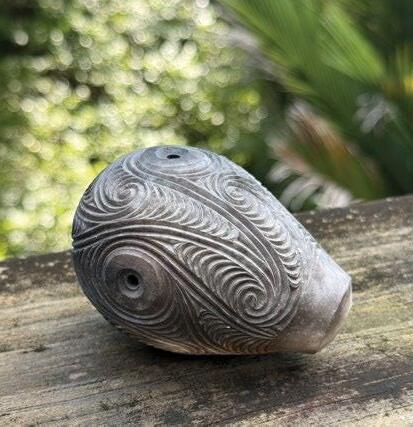
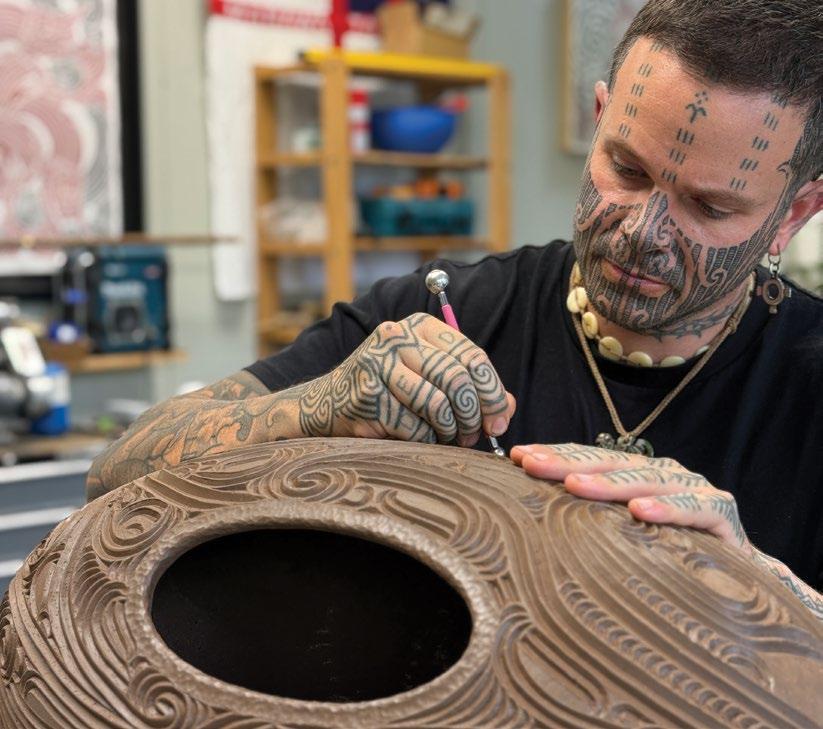
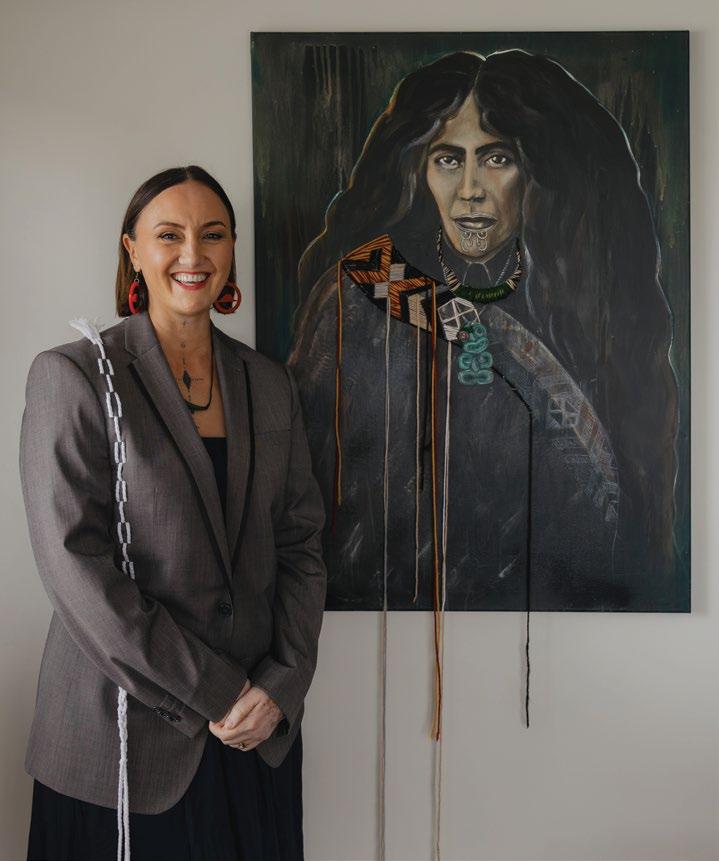
Tristan Marler’s journey with taonga pūoro began at high school with a book, curiosity and a deep pull towards identity. Now, the 34-year-old has found his way back to the traditional Māori musical instrument through the hands of his mother.
The renowned New Zealand multi-disciplinary Māori artist was inspired to work with clay just last year after his mother, Māori ceramic artist Fleur Palmer, introduced him to the artform.
“I’m being mentored by mum, which is pretty cool,” he says.
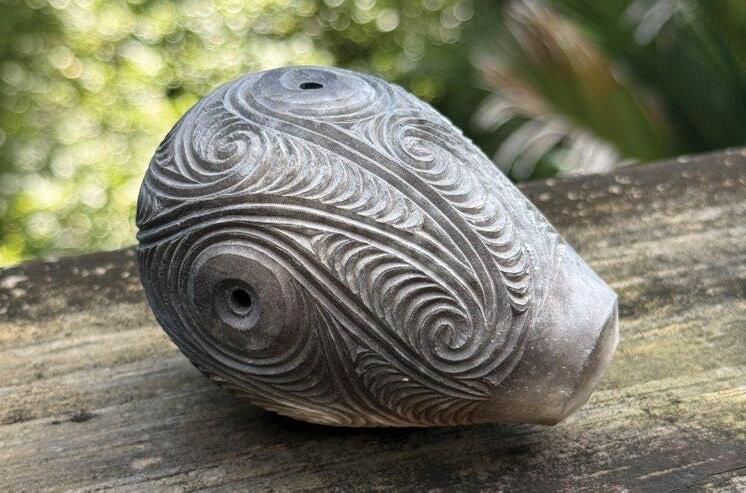
“It was pretty amazing to have come full circle in the inspiration of getting into this pathway and coming back to being able to make taonga pūoro with uku (clay).”
This August, Tristan will be selling his clay work in Tauranga for the first time. Little Big Events is delivering an inaugural curated boutique ‘Clay’ event on August 28th to 30th at Toi Tauranga Art Gallery.
“I don’t know what I will be bringing yet, but I am pretty excited to be in Tauranga,” says Aucklandbased Tristan. The three-day event will feature work from a number of local and national artists, including Goodwin Ceramics, JS Ceramics, Kristina Rachacova and more. Plus, there will be hands-on workshops for children.
Growing up, Tristan (Tao Mauī, Rarawa) says he was always drawn to his taha Māori (identity, heritage and culture). That curiosity sharpened during high school where exposure to toi Māori – through books, exhibitions and museum visits – began to form a creative foundation.
Visual art came first, but it was music that truly captured Tristan’s heart. Traditional Māori instruments in particular held a certain mystery and at the time, resources were scarce. One book, titled Taonga Pūoro, became his guide.
Rather than simply reading it in his own time, Tristan reached out to its authors, which led him to Rotorua’s New Zealand Māori Arts and Crafts Institute (NZMACI) at Te Puia. There, he immersed himself in whakairo rākau (wood carving).
Under the guidance of master carvers, including Clive Fugill and James Rickard, Tristan spent three years learning the discipline, philosophy and responsibility embedded in carving.
“That sort of led me on this whole other path,” Tristan says.
Those early years also planted the seeds that continue to shape his practice today. One of Tristan’s strongest influences lies in what he calls the rare and precious carving traditions of Te Tai Tokerau (Far North).
Compared to other regions, Tristan says there
are far fewer surviving examples of northern carving styles.
“That’s a huge inspiration for me. Seeing these examples and seeing how they can be transferred onto other taonga and other types of carvings whether it be for wharenui or for weapons, is hugely inspiring.”
Among these are waka kōiwi intricately carved burial chests found across Aotearoa but most predominantly in the north. They hold some of the best-preserved examples of distinctive patterns like kirikiore and unaunahi, visual languages that Tristan continues to carry forward in his work.
His time at NZMACI wasn’t just about technique, but discipline. Lessons that didn’t always land at the time have taken on new weight.
“One of the lessons I have learned from Clive was really hard to appreciate at the time being in my 20s,” Tristan admits.
“He would encourage us to record everything, pay attention to what was in the books, and be a good student. I have a lot more appreciation for that now.”
From James Rickard, Tristan learned about scale and momentum.
“He showed us how to do large-scale carvings at speed. Working with toki (adze), scaling up the designs for form or surface patterns or 20m long carving.
“Every kaiako (teacher) had very valuable lessons to teach us.”
He still draws on those teachings daily.
After completing his carving studies, Tristan returned north before eventually relocating to Auckland. A year at Auckland University of Technology exposed him to new materials and processes, as well as some large-scale carving projects.
That included being commissioned by the New Zealand Institute of Architects to carve a whata-ā-rangi (raised storehouse) for the inaugural New Zealand podium at the Venice Architecture Biennale in 2014.
Since then, Tristan has taken on many private painting and carving commissions, including working alongside his hapū to lead a carving project for his Mātihetihe Marae in Mititmiti, north of the Hokianga Harbour.
An unexpected turning point in his career came when highly-respected New Zealand tattoo artist and close friend Thomas McMillan offered him an apprenticeship at his Auckland studio Tomtom Tattoo.
“I hadn’t really thought seriously about tattooing or doing moko. But I just thought it was too good of an opportunity to say no to.”
He accepted, and tā moko (Māori tattoo) became a cornerstone of his work after spending seven years under Thomas’ mentorship.
Opener: Renowned multidisciplinary Aotearoa artist Tristan Marler. → An example of Tristan’s work. Opposite: Larissa Goodwin-Wylie will also be exhibiting.
Now, Tristan has become known as one of the best tā moko artists in the country.
But beyond the technical skill, it has opened up a deeply human dimension to his practice.
“Everybody comes with a different whakapapa, history and story they want to have represented. So, every experience is completely different and sometimes it’s light, sometimes it’s heavy,” he says.
“A really special part of the process is hearing people’s stories and histories and connecting with them on that level. Then being able to interpret their whakapapa and stories through a visual medium that is with them forever. It’s hugely rewarding.”
That same sense of responsibility eventually led him to a personal milestone in receiving his own moko just last year.
“To me, wearing moko is about honouring my whakapapa, representing my Māoritanga and about leaving a legacy for my tamariki that will hopefully inspire them to be proud to be Māori and hold fast to their values.”
It was something he had long wanted since he was at NZMACI, but had delayed the process.
“I always put a limit on myself being fair skinned and not being able to speak Te Reo Māori.”
Over the last 15 years, Tristan has worked steadily to change that, learning Te Reo on and off with renewed motivation coming from his nine-year-old daughter’s journey through kōhanga reo.
“Last year I felt I was comfortable enough in that space. Being able to be someone that could do that mahi for other people and I felt like it was important
that I walked that path first.”
Since stepping away from the structure of a tattoo studio to work independently about six years ago, Tristan established ‘Manawa Tapu’ – a specialised tā moko and toi Māori (Māori art) practice alongside his wife Madison.
There, he has expanded into painting, printmaking, digital design, jewellery and bone carving.
Each medium feeds into the next, blending his knowledge and experience to create bold, visually striking works, drawing on his own whakapapa Māori and seeking to honour the past and explore the future of Toi Māori.
Tristan has even branched out into clothing and commercial design, collaborating with international clothing brands such as Roark and Desmond & Dempsey to create textile patterns.
That includes launching his own range of locally made merino jerseys and recycled swim shorts using traditional Māori kōwhaiwhai designs.
But it’s his return to clay that has brought things full circle. Encouraged by his mother Fleur Palmer, he began learning pottery under her guidance. Some of the first pieces they created together were taonga pūoro.
“We’ve spent a lot of time together with her showing me how to make different things.”
Now based in Tāmaki Makaurau (Auckland), working from his private studio in Titirangi, Tristan continues to evolve while staying anchored in the values that first set him on his path.
At his practice Manawa Tapu, which combines ‘manawa’ (heart or life force) and ‘tapu’ (sacred), his work reflects a philosophy grounded in respect, storytelling and cultural integrity. Whether carved, inked, painted, or shaped from clay, each of his pieces carry a narrative of people, place and whakapapa.
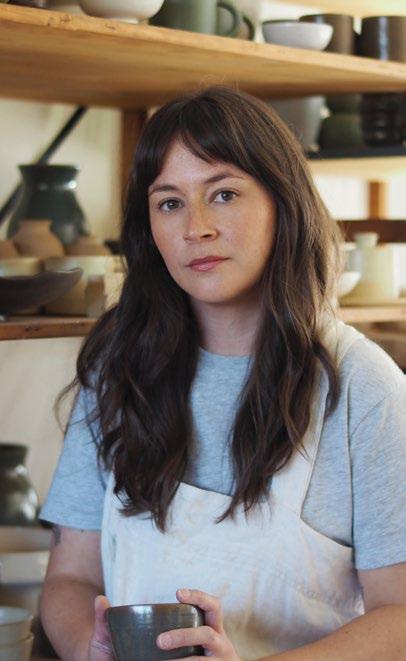
Goodwin Ceramics
Larissa Goodwin-Wylie is an artist and studio potter based in Matamata, where she lives and works with her husband James and their two children.
What inspired you to start working with clay?
I began experimenting with clay at art school, and it’s grown naturally from there. I’m drawn to the long history between humans and clay, we’ve never stopped working with it. That continuity means inspiration can come from any place or time.
What was the first clay item you ever made, and why?
As a child at Papamoa Primary School, we made sea-themed tiles. Mine was a small sculpted crab and I can still picture it clearly. Clay feels quite legitimate when it comes out of the kiln and it’s such a rush to make something and use it.
What do you love about working with clay?
The early stages are incredibly accessible. You don’t need tools, just your hands can create something meaningful. While glazing and firing introduce more complexity, those first gestures are simple and direct. It’s just you and the clay, and I really value that. My current practice is focused on refined forms and a cohesive colour palette, and I’m inspired by other mediums like woodworking or architecture.
What are you most looking forward to about the Clay festival, and why?
I grew up in Tauranga, so it feels special to reconnect with the local community. We’ve often visited the gallery, and it’s exciting to now be part of it.
Together with the other artists, I think we will be able to showcase the diversity of uku/ clay.
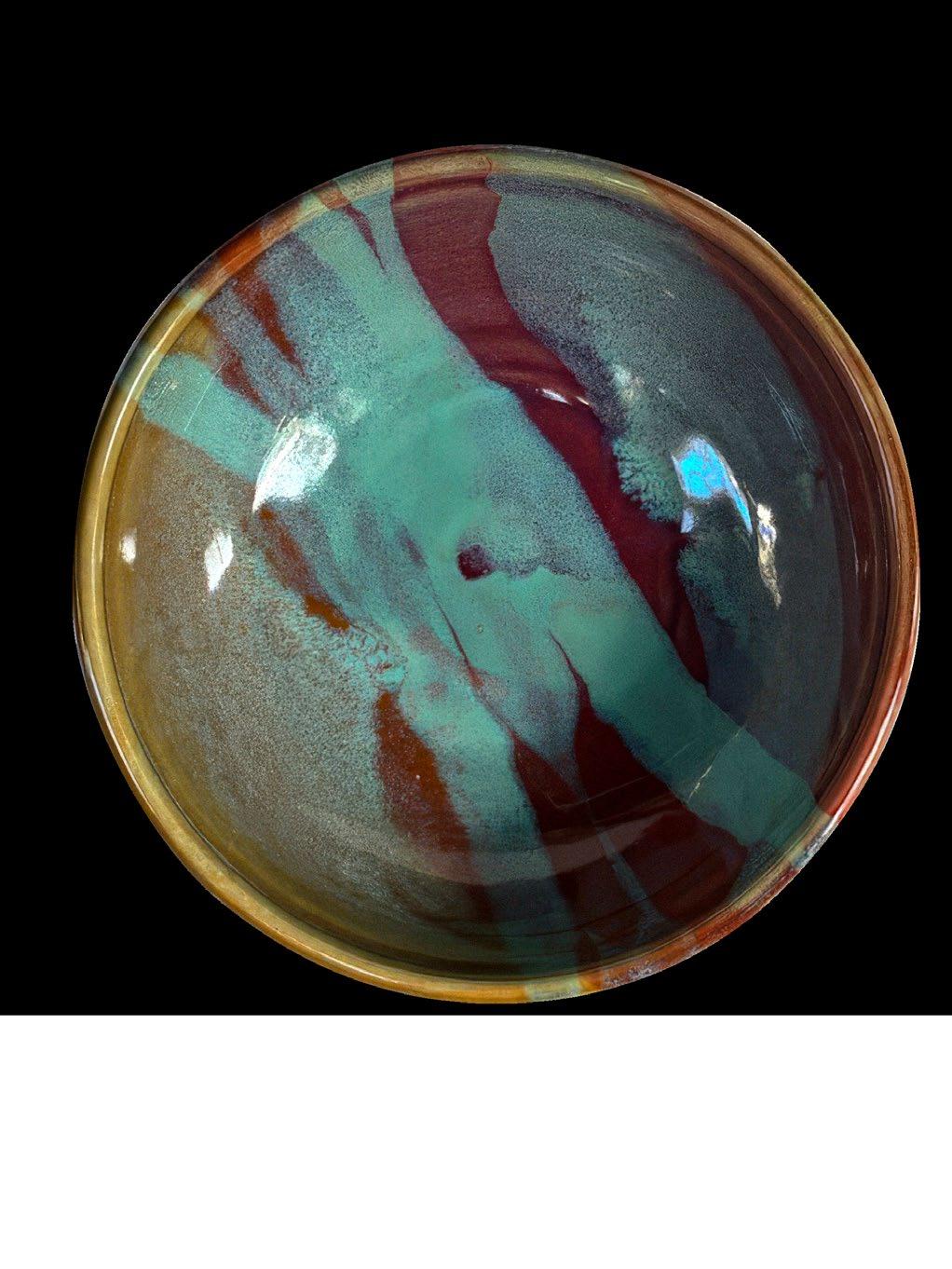
Kristina Rachacova
Handmade pottery in Rotorua.
What inspired you to start working with clay?
I was going through a really tough time and found refuge in touching clay. I would spend most evenings after work going to a local pottery club and learning to throw well-rounded pots through repetition and watching others, as I couldn’t afford the classes. The progression came down to my determination and patience.
What was the first-ever clay item you made, and why?
I would make these tiny little pots and keep them all so I could practice glazing combos. I was excited when they got higher than seven centimetres. My friends still use them for chutney or soy sauce.
What do you love about working with clay?
I love the earthy feel and touch. It’s easy to lose yourself in throwing on the wheel and nothing outside that matters for a moment. From setting a goal a few years back to now being fully into throwing as an expressive painter, I love merging my painting with clay to make these expressive figurative forms.
What are you most looking forward to about the Clay festival, and why?
Being at the gallery is a privilege. It is a wonderful place that celebrates all things art and I love that! I look forward to meeting people. I used to show at The Little Big Markets with my practical wares and I look forward to reconnecting with the Tauranga folks and having a good time.
Carving the Future
Words by Jenha Phillips of Te Puia
Grant Marunui is both a master of tradition and a trail blazer. His work stretches far beyond the workshop. It reaches into forests, laboratories, and research programmes.
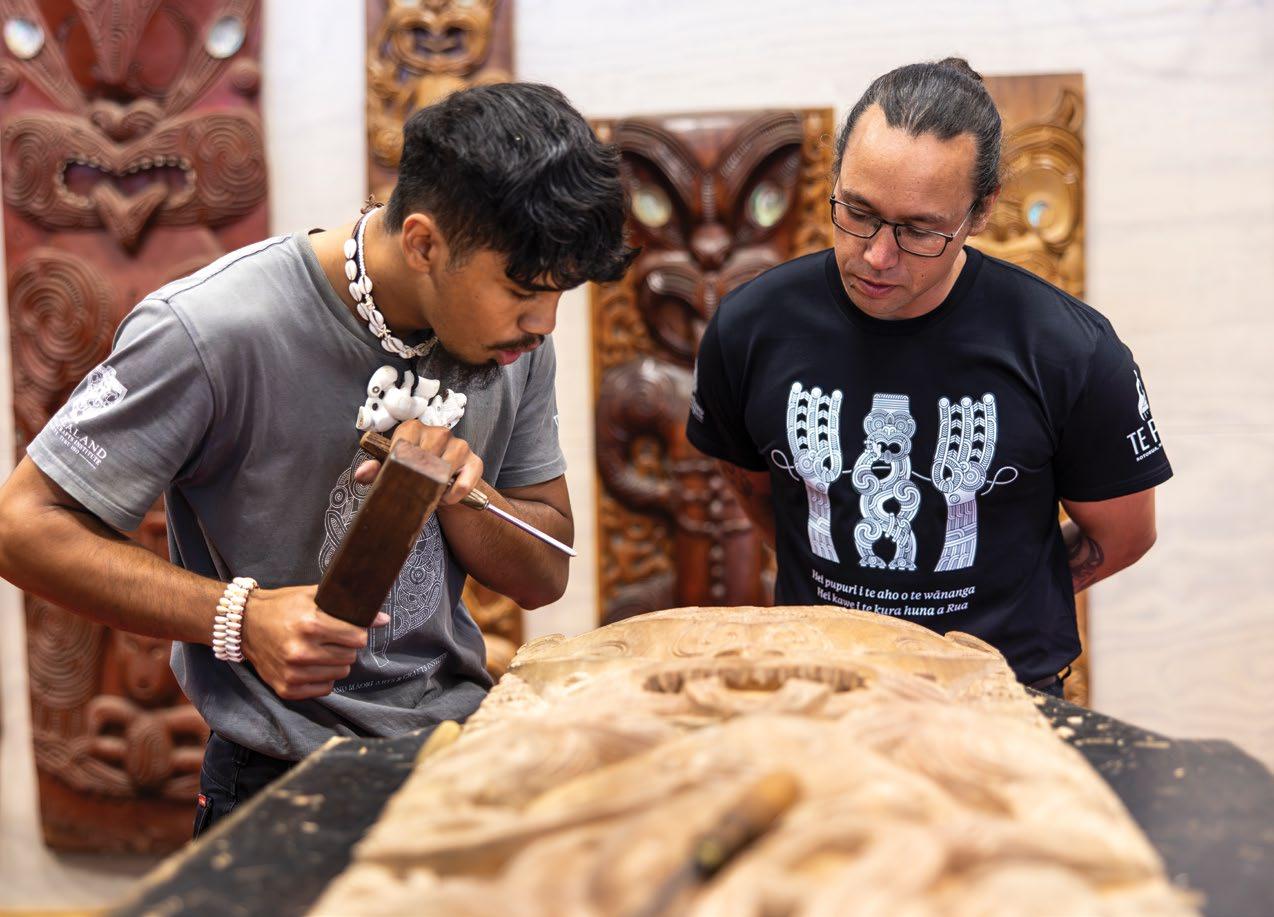
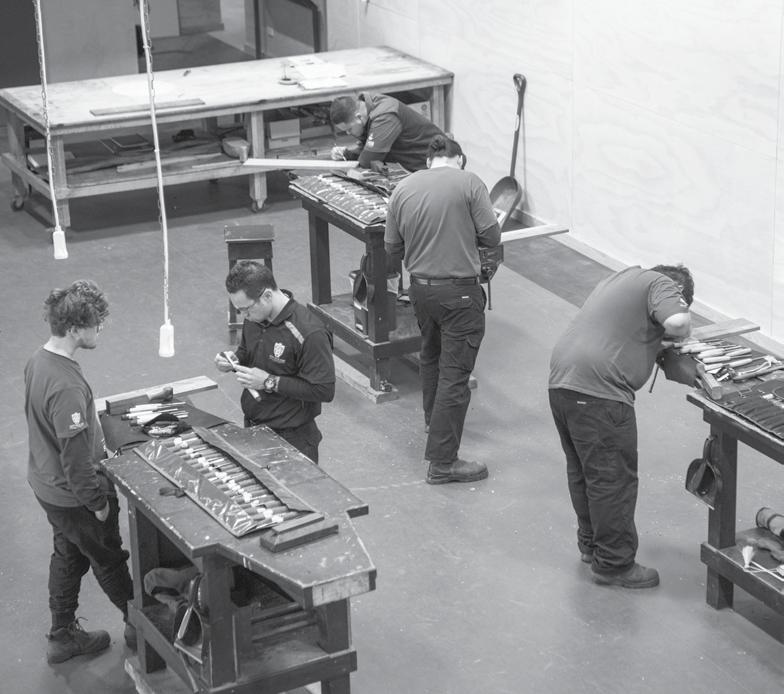
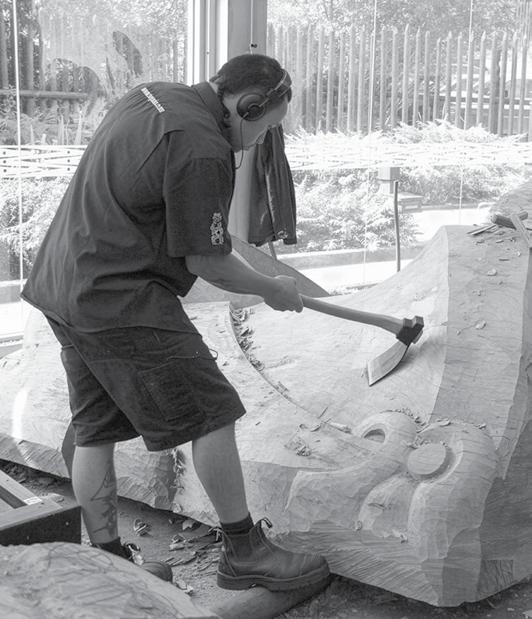
The steady rhythm of chisel and mallet and the concentration of carvers strikes you when stepping inside New Zealand Māori Arts and Crafts Institute’s Whakairo Rākau Wānanga.
The National Wood Carving School is a place steeped in significant history.
Pou of different tribal styles line the back wall and the first ever tumu (head of the school) from 63 years ago, Hōne Te Kāuru Taiapa (MBE), is pictured above.
On the workshop floor, tauira (students) work on their taonga where forms slowly emerge from rākau (wood) –figures drawn from whakapapa.
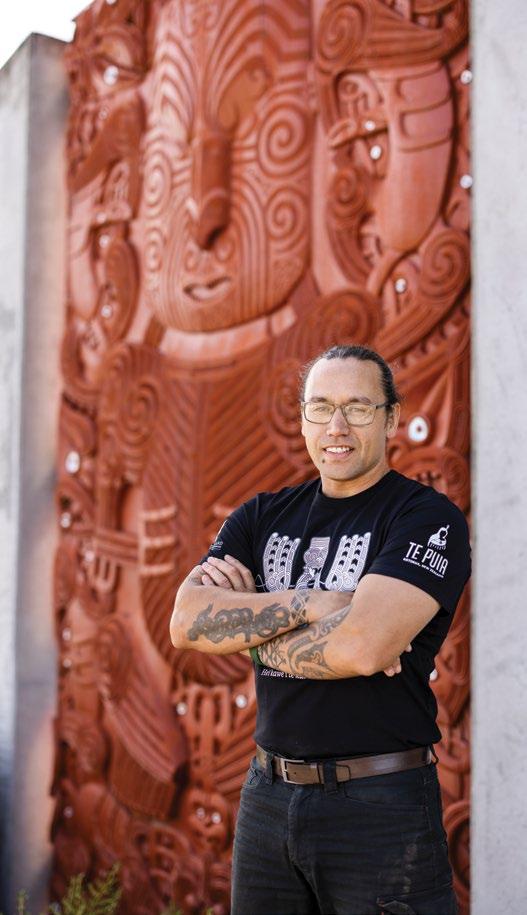
At the centre, standing strong and humble, is Tumu Whakairo Rākau (Head of the Wood Carving School) Grant Marunui (Ngāti Hurungaterangi, Ngāti Te Kahu, Ngāti Rangiteaorere, Ngāti Rongomai, Ngāti Manawa and Rangitāne ki Manawatu, Ngāti Apa ki te Rā Tō, Ngāti Kuia).
Grant is both a master of
tradition and a trail blazer. His work today stretches far beyond the workshop. It reaches into forests, laboratories, and research programmes. Because for Grant, carving is not just about what is made, but what must be protected for the future.
The early journey – forest connection
Whāngai raised by his grandparents in Ngāpuna, Rotorua, Grant lost his father at age 4, and his grandparents at age 14. His teenage years were shaped by sudden change, moving to Waiouru where his stepfather was in the army and his mother raised her 12 children. At age 15, he left school and
Opener: Grant and tauira Kingi. Pictured opposite: Grant as a pouako (tutor).
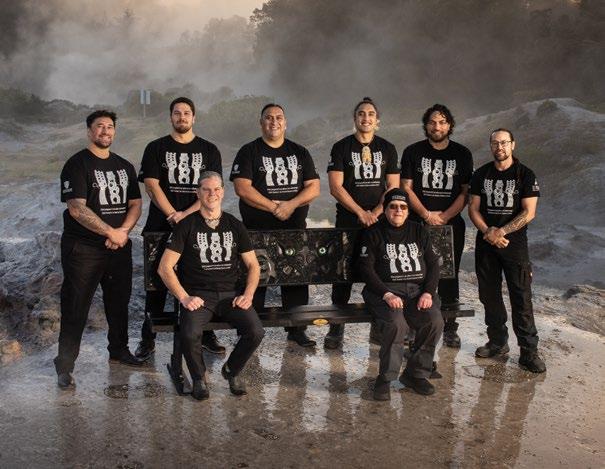
→ Grant and the NZMACI team who worked on carving this All Blacks bench.
entered the forestry workforce with Tweeddale Contracting — cutting scrub, pruning, planting and spraying pine trees in Karioi forest beneath Ruapehu.
It was also a connection to his future wife Ciny. He was working with her brothers, and eventually an easy friendship turned into a lifelong connection.
He returned home to Rotorua in 2007 and a cousin put in a good word for him at Rotorua timber mill Tachikawa Forest Products (NZ) Ltd for a 3.45pm2.15am night shift, which he did for five years.
Grant enrolled in a carpentry course to get a trade under his belt, studying full-time during the day before his night shifts. When Grant and Ciny welcomed their first child, he visited every building site in Rotorua asking for a position.
“But they all had the same answer, ‘We’re laying more people off next week’,” he said. “I remember thinking, ‘I’m trying so hard… why isn’t this working’?”.
As Tachikawa Sawmill was affected by the recession, his work week was reduced to four days, so
Grant leaned on the skill he was known for at school – art.
Self-taught tattooing on a Friday became his entry point into creativity and he practiced on his cousins. Receiving many requests for tā moko, Grant wasn’t confident with what the Māori designs meant. The question of their meaning, and seeking deeper knowledge, led him directly into carving.
The pull of the chisel
At Te Wānanga o Aotearoa carving course, under tutor Shannon Wafer, Grant learnt the foundations of Māori design: kōwhaiwhai, masks – wheku, ruru, kōruru and tekoteko. Grant was hit with an “overwhelming feeling” after receiving his first chisel pack.
“I was searching for the meaning behind the designs in order for me to improve my tattooing. But once I touched the chisel, that was pushed to the side. I can’t explain it… I felt a pull.”
Completing his year-long course, and still juggling his night shift, he applied for the New Zealand Māori Arts and Crafts
Institute (NZMACI) Whakairo Rākau Wānanga.
Brotherhood
In 2012, Grant started as a tauira (student) at NZMACI, embarking on a four-year course with teaching influences including Tumu James Rickard, Tohunga Whakairo Rākau Clive Fugill (CNZM), Albert Te Pou and Tony Thompson.
“Clive has so much knowledge. Having a tutor with 40 years’ experience is a privilege.”
Grant described his time as like a “brotherhood” working on an era of large projects.
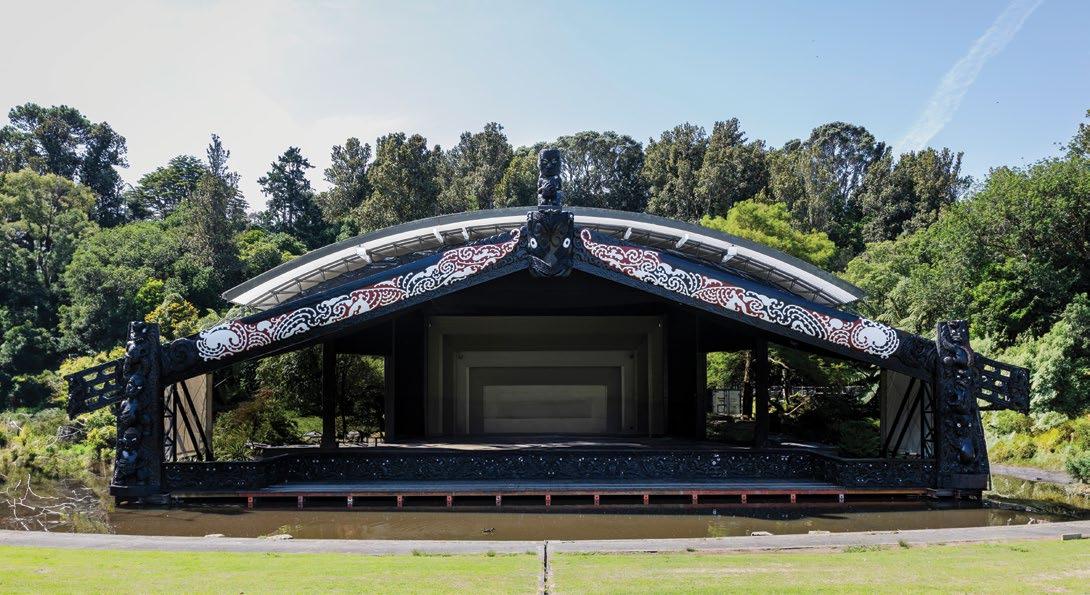
He was in awe of seeing ancient 45,000-year-old kauri logs being passed over the fence and being instructed to carve a 30-metre-wide and 13m-high mahau (stage front) for Māori performing arts festival Te Matatini. It took 26 tonnes of native wood, 15,000 hours and 20 carvers to complete. “It’s hard to believe what we achieved,” Grant said. “Working with the others on it, you create a strong bond,
Photo: Graeme Murray
“I was searching for the meaning behind the designs in order for me to improve my tattooing. But once I touched the chisel, that was pushed to the side. I can’t explain it… I felt a pull.”
Above: Grant working on Te Matatini mahau. Below: The finished project of Te Matatini mahau, which took 26 tonnes of native wood, 15,000 hours and 20 carvers to complete.
and you see the work ethic in a person.”
A key moment was working with Mātanga Alby Te Pou on a double-sided replica of the kūwaha carved by Tene Waitere in 1908.
“Alby taught me how to see. Seeing the figure inside the wood is an important moment – a turning point as a carver.”
In 2016, Grant was employed by NZMACI to be a mātanga (commercial carver) leading the carving of three pou whakairo, weighing 2300kg each and standing up to 7m tall. He then worked as a pouako (lecturer) and was a tutor to the 44th intake until Covid-19 hit in 2020 and the school closed.
“I grabbed all my stuff, put it in the car and just as I was parking in the driveway, I got a phone call…”
Science and mātauranga Māori
Aunty Veronica
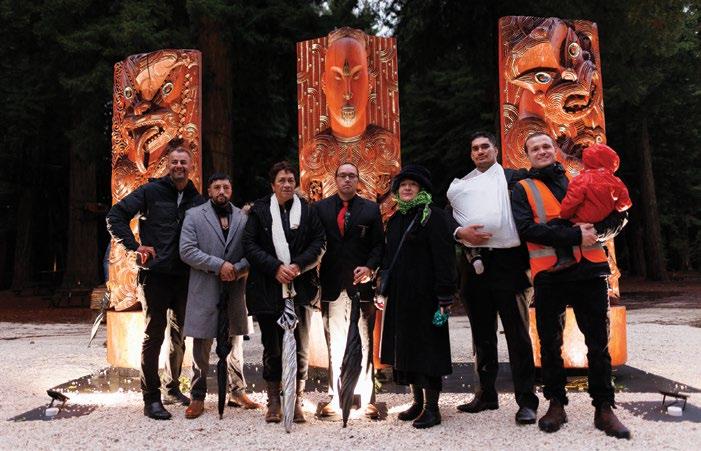
Butterworth (Ngā Hapū e Toru) asked Grant to carve their important ancestors Tuteata and his wife Hapuriri. From these ancestors came each of the hapū – Ngāti Hurungaterangi, Ngāti Taeotu and Ngāti Te Kahu. These carvings now stand as a large kūwaha (doorway) of Tuteata and three smaller pou, along Tītokorangi Drive in the Whakarewarewa Forest. Ngā Hapū e Toru also requested his help with a mana whenua design to be CNC carved
into the three entry peaks at Te Whare Nui o Tuteata – the new Bioeconomy Science Institute Maiangi Taiao building. With these opportunities,
find – and I kept hearing, ‘Those days are over boy’!”
Tōtara, the most prized timber for Māori carving, was becoming harder to source.
Grant’s own business Te Taonga Māori Art was born. Ngā Hapū e Toru and the Bioeconomy Science Institute found a workshop for Grant to work in.
“First, I needed to look for tōtara. I spent two weeks ringing up contacts all over the country for any wood merchant I could
He eventually sourced tōtara from master carver Lyonel Grant.
While carving the three pou, his 6m tall and 2m wide concept drawing for the kūwaha of Tuteata was on the wall.
Bioeconomy Science Institute general manager of Te Ao Māori and science services at the time, Hēmi Rolleston, suggested using rākau being stored in the workshop from the science programme Tōtara Industry Pilot –one of the first harvests of farmed northern tōtara, varying 70–140 years old.
Wood and fibre technician Jamie Agnew said the wood could then be laminated into a waka shape on site.
“We set it up in Jamie’s waka hull framing, glued it, clamped it, and then the scientists organised temperature gauges and moisture thermometers for the curing of the glue as it was winter.”
The carving of Tuteata, alongside Kawana Waititi and Haami Te Aho, took four months to complete and was unveiled alongside the three pou in 2022.
“It was a big day for our people,” Grant said.
“To have our ancestors showcased in a public space such
“To have our ancestors showcased in a public space such as Whakarewarewa Forest and to have people getting familiar with our history – it’s powerful.”
Opposite: Grant in front of the pou whakairo at NZMACI he carved 2300kg and 7m tall. Above (clockwise from left): Tuteata; Hēmi Rolleston, Haami Te Aho, Pauline Tangohau, Grant Marunui, Veronica Butterworth, Kawana Waititi & Will Bamford in front of Hurungaterangi, Te Kahu and Taeotu; Te Whare Nui o Tuteata.
→ Grant, Bioeconomy Science Institute, carvers and the tekoteko research.
as Whakarewarewa Forest and to have people getting familiar with our history – it’s powerful.”
Kāore te Ngahere, Ka Mate te Whenua
In 2023, Grant’s business Te Taonga Māori Art co-led a groundbreaking research programme with portfolio leader Jonathan Kilgour of the Bioeconomy Science Institute, supported by NZMACI.
Kāore te Ngahere, Ka Mate te Whenua is a collaborative carver-led research effort, bringing together mātauranga Māori and science in a shared space.
Its aim is to reduce pressure on tōtara while sustaining carving traditions for future generations.
Through wānanga and practical trials, led by the Bioeconomy Science Institute, the project has explored five key focus areas, including alternative timber species, lamination techniques, residue utilisation, 4D design technologies, carving maintenance and longevity. “Carving is more than craft. It’s culture, identity, and connection to the whenua.
“This research demonstrates what can be achieved when Māori knowledge holders and scientists work together.”
The big return
Grant returned to NZMACI in late-November 2023 as Tumu Whakairo Rākau Wānanga (Head of the Wood Carving School) with his research and a new mindset. “It was different. I already knew the place, it felt like home with more responsibility.”
His main aspiration was to prepare tauira to leave wanting to make a positive impact for their people and communities. He also wanted to show the tauira “we can be scientists too”.
“Science to me is curiosity, risk taking, data collection and understanding insights from the data collected. It’s part of being innovative.”
Kaingaroa Tipu has since offered to work with Grant to understand how plantations could provide carvers with alternative species from the research with the Bioeconomy Science Institute.
Reflecting on his journey, Grant said, “It’s never been an easy road. Some are luckier than others. But I now believe looking back on my life – things will eventually work out. Have a dream and think big, even if you don’t know how you’ll make it work. “Let the magic happen.”
The journey of carving has also connected him more to Māori culture. “Knowing where you’re from, learning your history, you get to know who you really are. Just to have that is a taonga – and when you have your own kids you can share that too.”
As for what’s next – he’s working on an application for another science project with Jonathan and the Bioeconomy Science Institute.
The question this time – what timber got us here? To understand the native timbers from Hawaiki, from the homeland before Aotearoa. He’s preparing a generation to carry carving forward – not just as an art, but as a living knowledge system. nzmaci.com
@nzmaci
The Queen of Steam
Words by Laura Boucher
Photography by Ross Campbell
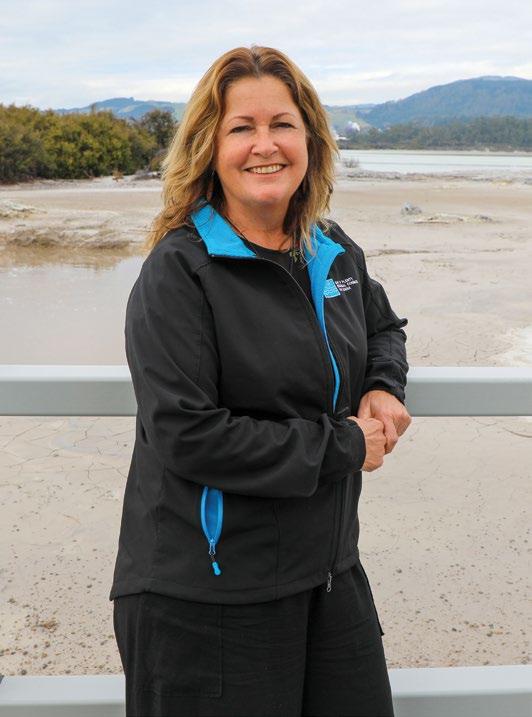
Meet the ‘queen of steam’, Penny Doorman. To her team, she is ‘the glue’ who connects different parts of the organisation together where geothermal is involved. So what exactly does her job entail?
Beneath the Bay of Plenty, geothermal is constantly at work.
Its geothermal systems are dynamic and interconnected, shaping landscapes, supporting livelihoods and holding deep cultural meaning for tangata whenua.
When these systems are healthy, it’s because many moving parts are in careful alignment.
In many ways, Penny Doorman’s work reflects the nature of the resource she helps manage. It is complex, long-term and reliant on science, policy, consents and compliance coming together, alongside strong relationships with tangata whenua, communities, industry and other agencies.
For the past 11 years, Penny has been a constant presence in Bay of Plenty Regional Council’s geothermal programme.
As the programme lead, colleagues describe her as ‘the glue’ – the one who connects different parts of the organisation together where geothermal is involved.
“Geothermal management at the Regional Council is really about coordination,” Penny says.
“There are so many different pieces, and lots of people with deep expertise. My role isn’t to be the expert in everything. It’s to make sure all those parts are working together in the same direction and that we are making good decisions using the best information.”
That direction matters. Geothermal is a taonga resource in the Bay of Plenty: Culturally significant, environmentally complex and economically valuable. Managed well, it can support communities and future development. Managed poorly, it can be irreversibly damaged.
“When I first started, it was like the technical experts were speaking a different language. But I love how geothermal is constantly teaching you something new. No two systems are the same, and you’re always having to bring together different types of knowledge.”
“Geothermal systems can take decades to respond to change. That means you have to be thinking long term, even when the pressure is on to move quickly.”
Before becoming the ‘the queen of steam’, Penny’s influence within the organisation stretches much further back.
Penny began her career at the Regional Council in 1992, straight out of university, where she studied environmental science and completed her thesis on incentives for protecting biodiversity on private land.
Her early work at the Regional Council was in biodiversity, heritage planning and regional parks – fields that grounded her in systems thinking and long-term environmental stewardship.
When she moved into geothermal management, it was a steep learning curve.
“It’s incredibly complex,” she says. “When I first started, it was like the technical experts were speaking a different language. But I love how geothermal is constantly teaching you something new. No two systems are the same, and you’re always having to bring together different types of knowledge.”
That learning doesn’t happen in isolation. Penny credits colleagues, sector partners and tangata whenua with shaping her understanding over the years.
“People have been incredibly generous with their time and knowledge,” she says. “You can’t do this work well unless you’re willing to listen and adapt.”
One collaborative project stands out as special in Penny’s career: Working on the Rotorua Geothermal System Management Plan ‘Ngā Wai
Ariki o Rotorua He Mahere Whakahaere Pūnaha’, a ‘care plan’ and policy document to help guide and inform any future plan changes, and the overall management of the geothermal system in the Rotorua city area.
“It was challenging for everyone involved and it took us a long time,” she says. “But it was also one of the most rewarding pieces of work I’ve been involved in.”
Developed in partnership with tangata whenua, the plan brought together not only decades of science, but also mātauranga Māori and community voices to create a shared approach for managing one of the region’s most well-known geothermal systems.
“We worked hard to reflect Rotorua’s unique situation ,” Penny says. “It was about building understanding together and reflecting what the community told us mattered.”
That partnership-led approach is something Penny is deeply proud of and something she’s seen grow significantly over her career.
“The way council’s work with Māori has
changed enormously since the early 1990s,” she says. “Moving from consultation to engagement, towards genuine partnership has been one of the most important shifts I’ve witnessed.”
At its heart, that speaks to the service of Penny’s work – with the community at its heart.
“I’ve always believed local government exists to represent and serve communities and protect the health of our environment,” she says.
“Our current legislation is grounded in sustainability and I’ve been proud of that. As someone said to me once, we have speeding laws so that people don’t die – and we have regional rules and plans so that our geysers don’t die.”
She’s pragmatic about the challenges – the competing pressures, the difficult conversations, the reality that not everyone will agree with every decision. But she’s unwavering in her belief that careful, evidence-based management is essential.
“A lot of what we do is about enabling good outcomes,” she says. “Sharing information,
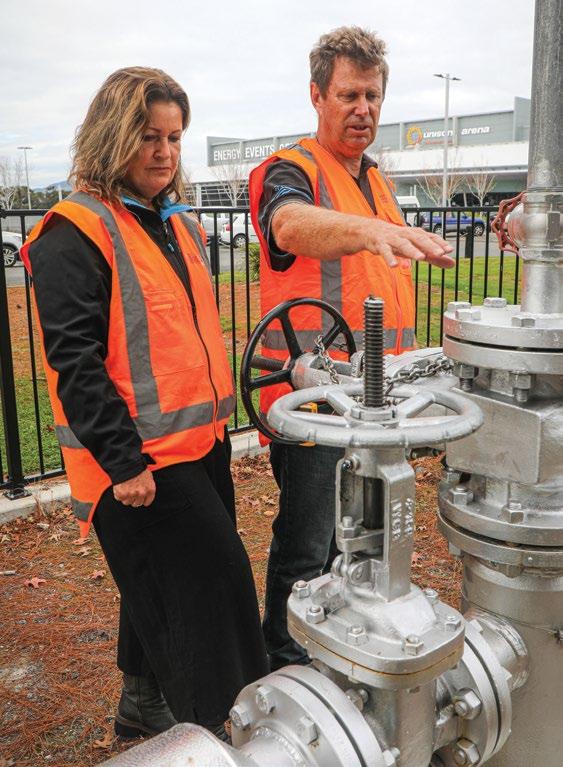
Penny Doorman and Jason Laurent, senior compliance officer, inspecting geothermal infrastructure.
supporting projects, helping people understand the systems they’re working with.”
While much of that work happens quietly, Penny reflects that the impacts of that work today will be seen and felt for generations to come.
“At its core, it’s about sustainable management and reflecting community values. We want to make sure the geothermal resource is still there – and still healthy – for future generations.
“But nothing in nature is fixed and the climate is always changing, which is why good information and adaptive management is so important.
“We rely on long term monitoring, modelling and ongoing assessment, so we can be prepared to change how we manage a system if our understanding changes.”
In this ever-changing environment, Penny remains committed to the same purpose she started with: Looking after the Bay of Plenty, so the steam keeps rising.
boprc.govt.nz
The Man Who Won’t Retire
Words by Rebecca Lee of Manaaki Kaimai Mamaku Trust
Photography by Cam Neate
He grabbed his surfboard and left home at age 17. Almost 60 years later, Buddy Mikaere hasn’t stopped moving.
Most people have bucket lists they want to achieve before they die – sit on a governance board, write a book, plant a forest… you list it, Tauranga’s Buddy Mikaere has done it. And he’s not slowing down.
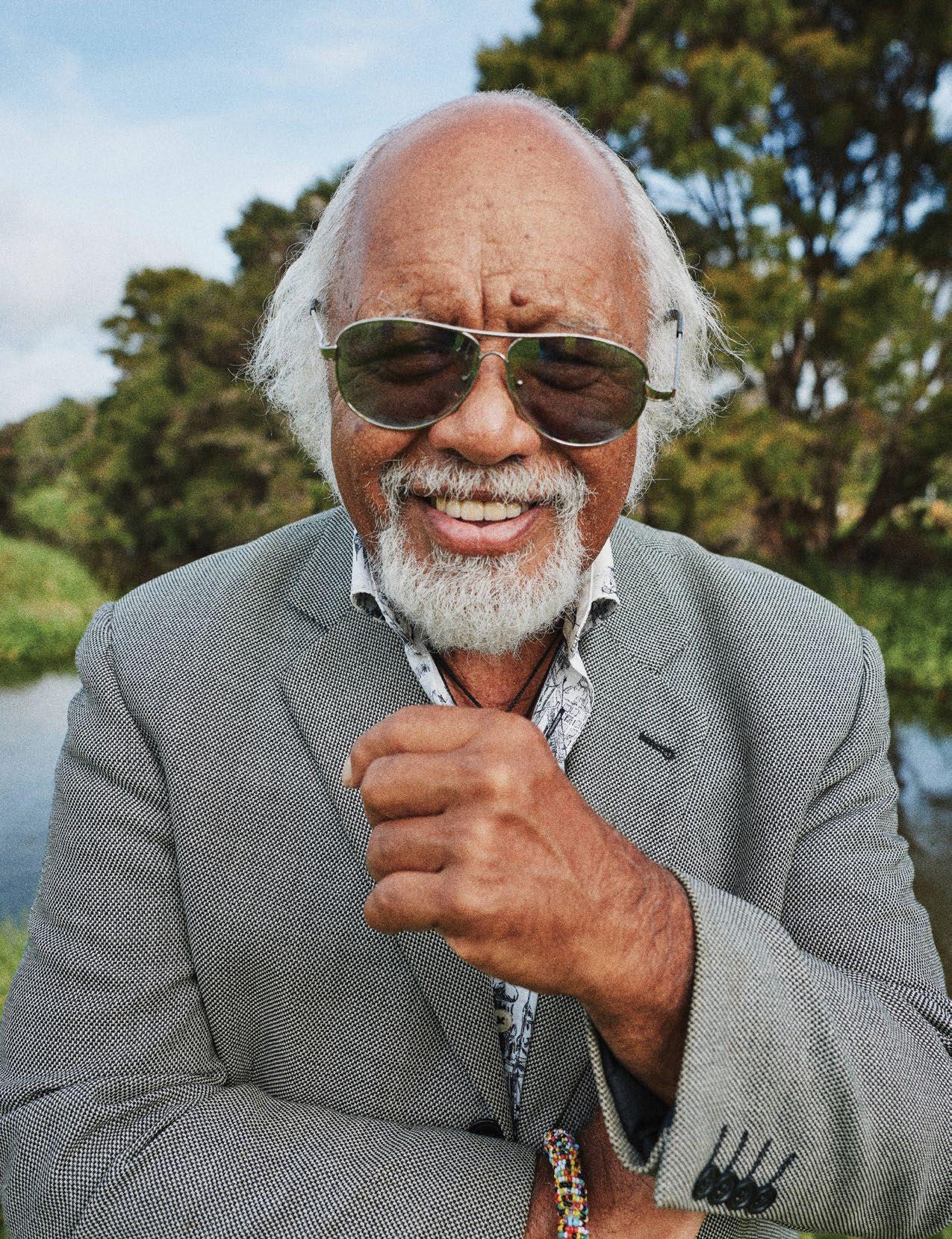
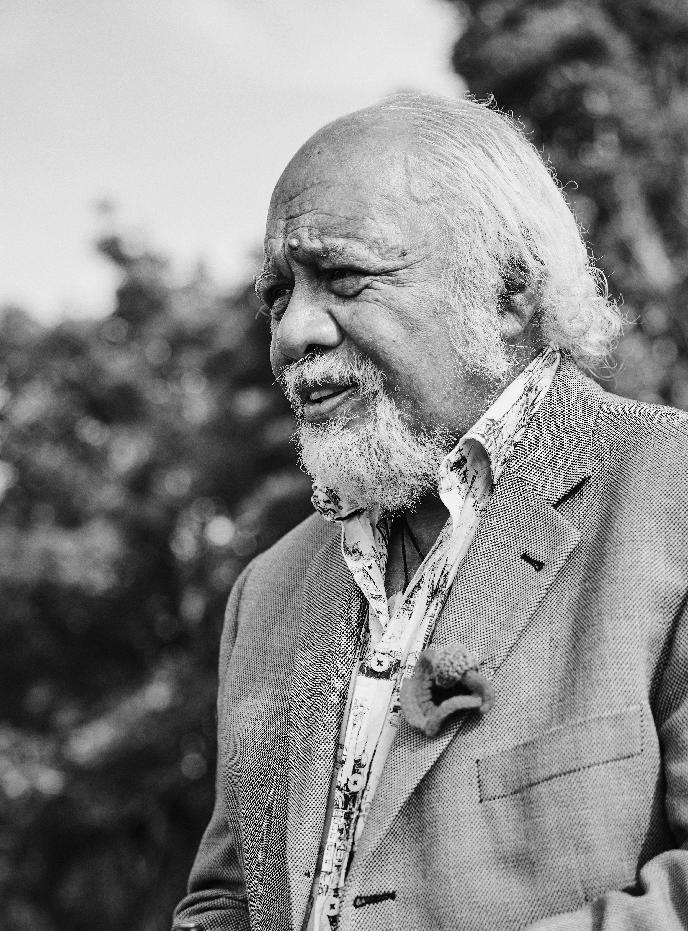
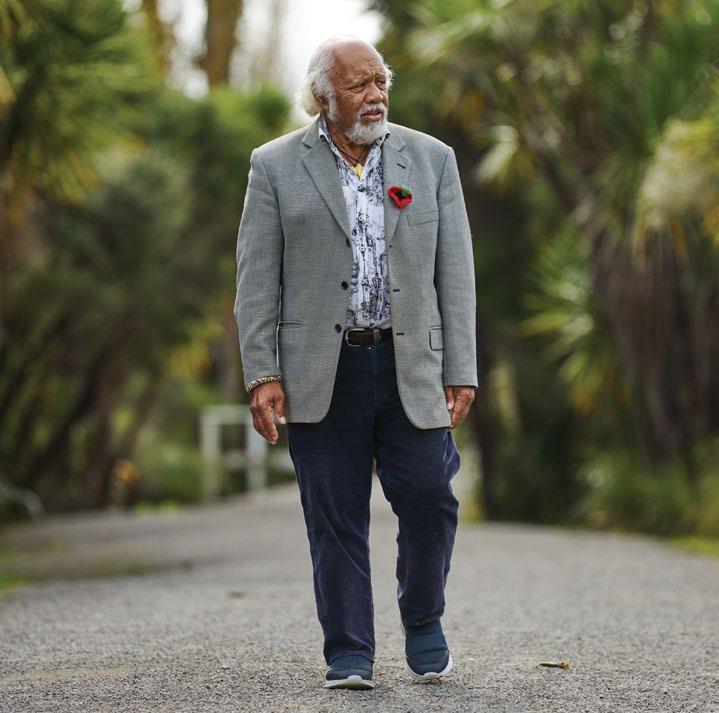
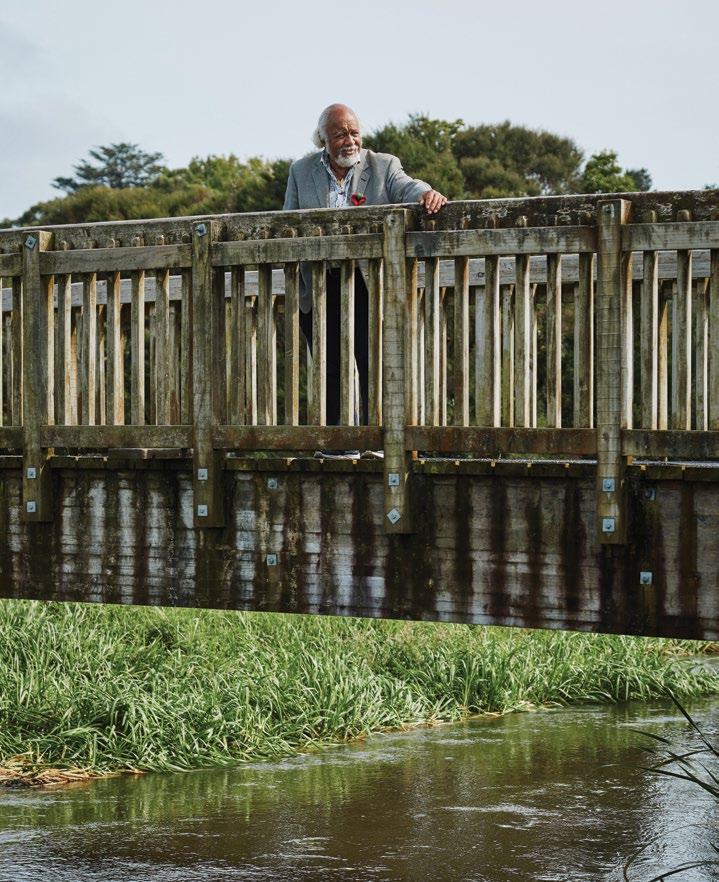
To be able to write this story, Buddy has invited Our Place magazine to his weekly Rotary Tauranga Sunrise group breakfast. It was the only time he could fit us into his busy schedule. He is dressed in a patterned button-up
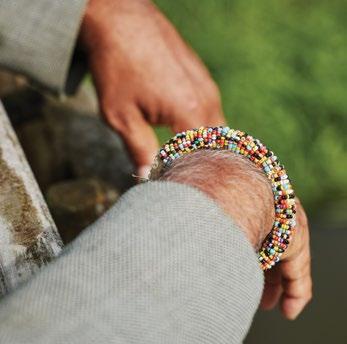
with a crocheted poppy pinned to the lapel, blue corduroy pants, two taonga around his neck and a Nigerian rainbow beaded bracelet. He had two, but gifted the other to a Mexican uber driver in Florida. At 75 years old, most people are well into retirement. Not Buddy. His schedule is packed more than ever. He sits on six non-profit boards, is an active kaumatua for his iwi Ngāi Tamarāwaho, is a historian for Tauranga City Council, koro
to six mokopuna, runs two environmental consultancies, and… “Are you keeping up?,” he laughs as we speed-run through his eclectic journey that has landed us at breakfast. His tūpuna (ancestors) moved from Tauranga to Coromandel in the 1820s to help in the Musket Wars. The local iwi were so grateful, they were invited to stay. His great-grandparents lived in Coromandel, as did his parents. The latter would walk to
↑ Buddy wearing a patterned button-up with a crocheted poppy, and a Nigerian rainbow beaded bracelet.
Thames for work and pleasure.
“They were lucky to survive,” he says. “They didn’t have much. I could show you the caves they stayed in along the way.”
His immediate whānau moved around a lot, with his father and brothers working in different factories, often leaving due to racial inequalities.
“At one sawmill there was a hierarchy. Single men’s huts, and duplexes, and family homes. It was my father’s turn to get a home [for the whole family], but it went to some man who recently emigrated. Mum was furious and that settled it, we were out of there.”
The whānau ended up in Mount Maunganui where his father worked on the wharf and Buddy wagged high school to work on the wharf too, as a “seagull” or casual worker. At 17, Buddy decided it was time to leave home.
“I grabbed my surfboard and my jandals, and I was gone”. He ended up in Wellington, where he trained as a radio operator and did a spell on the Chatham Islands before settling in Lyall Bay “for the great surf”. His unique skill of touch typing (140 words a minute) landed him jobs in the parliament press gallery, rubbing shoulders with politicians he would later deal with as Director of Waitangi Tribunal.
Buddy’s willingness to say “yes” as opportunities arose has helped his career. At one point he visited a mate in Christchurch’s Paparua Prison and left with a job.
“I visited him and he asked if I wanted a job. I ended up teaching basic Māori language night classes once a week.
“People were dying to get in the class, mostly because of the choccy biscuits I brought in.”
This encouraged him into
researching Māori hītori (history), and led to the publication of three books. His most recent, Victory at Gate Pā? published in 2024, examines the historic Battle of Pukehinahina, and the subsequent Battle of Te Ranga which saw 50,000 acres of land confiscated and tangata whenua driven into poverty and despair.
While racism has been the cornerstone of much of New Zealand’s history, Buddy is “reasonably optimistic”.
“There’s still a lot of work to be done. But I think we’re going somewhere.”
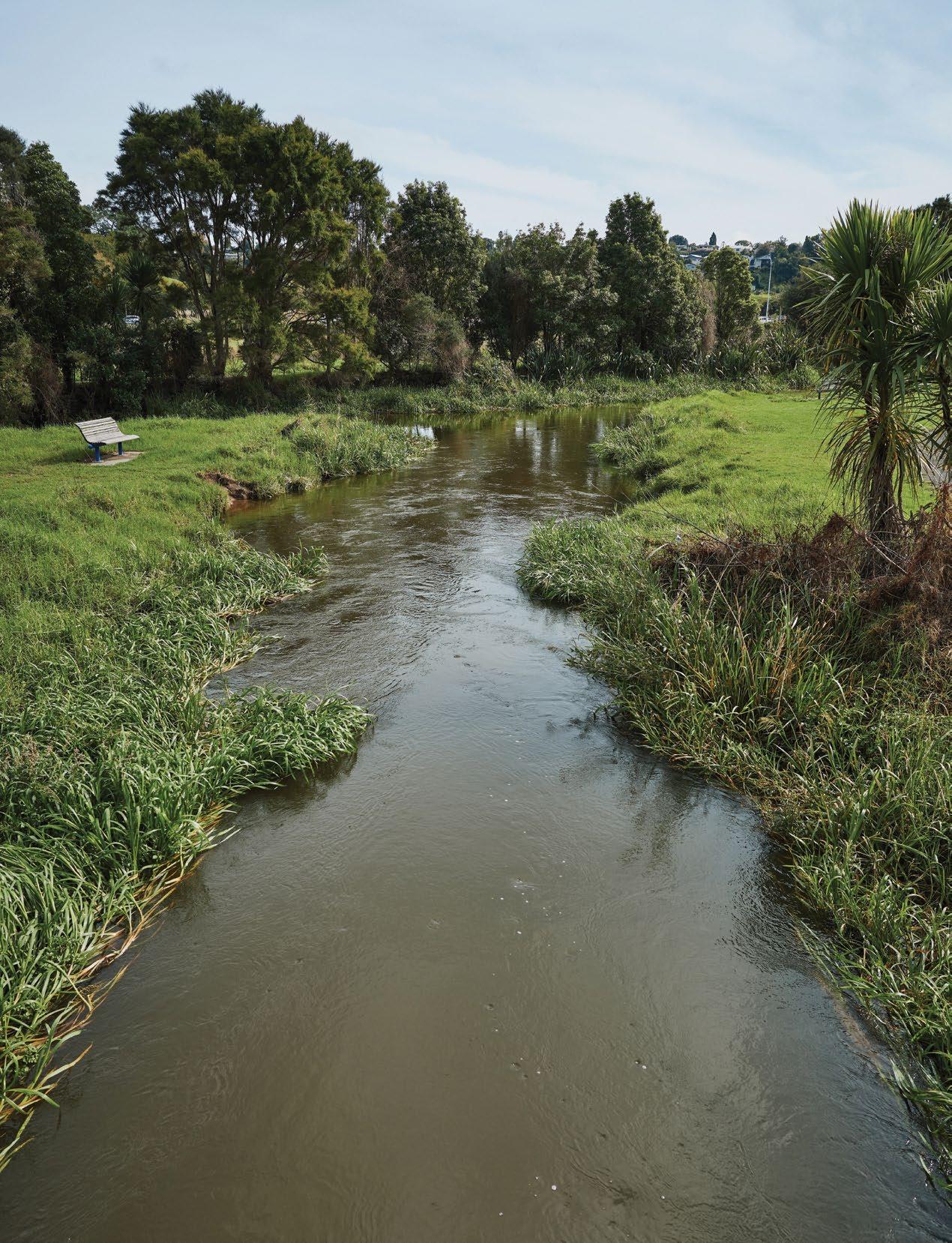
He’s been back in the Central North Island a while now, living between Gate Pā and the Coromandel, just as his tūpuna did. His interests have recently collided with Ngāi Tamarāwaho, Rotaries and the Tauranga City Council working together on the largest enhanced wetland area
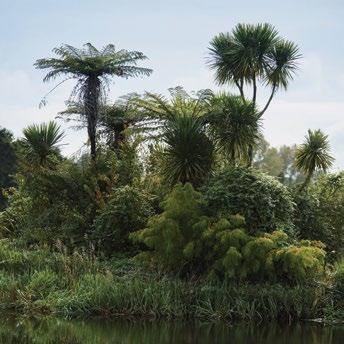
The KŌpūrererua Valley Reserve waterways.
“I’m keen to ensure the good health and environment of the Kaimai Range and its ecosystems remain.”
in the southern hemisphere – the Kōpūrererua Valley Reserve.
We leave the Rotary breakfast for a photoshoot at this very reserve, which spreads from Judea to Tauriko.
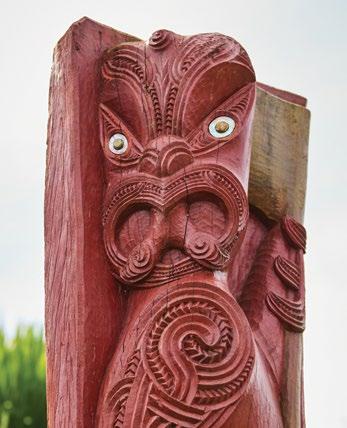
We walk through the Faulkner Street entrance and pass two pou – one represents his tūpuna Parāone Te Rauhea Koikoi, and one for Ranginui (the Sky Father). He greets his tūpuna alone before we continue.
Restoration of this whenua began some 20 years ago, and today the Kōpūrererua stream
has been almost completely re-established to its original flow path through the valley, becoming a working wetland to help prevent flooding in the area.
It’s a special place as the remains of the Puketoromiro Pā and other Ngāi Tamarāwaho sites of significance are preserved throughout the valley.
He now sits on the Manaaki Kaimai Mamaku Trust (MKMT) board where he helps shape collaborative iwi-led restoration mahi in the Waikato and Bay of Plenty.
MKMT is a co-governed non-profit, which leads the Kaimai Mamaku Restoration Project, a collaborative effort to restore the mauri of the Kaimai Mamaku – the headwaters of Kōpūrererua.
“I’m keen to ensure the good health and environment of the Kaimai Range and its ecosystems remain,” he says.
So, what’s next for Buddy? Retire?
“I can’t see it. There’s too much to do.”
mkm.org.nz
A Lifetime of Stories
Words by Zoe Hunter
Photography by Erin Cave
Christine Clement is a historian, genealogist, and international pet sitter. It’s a lifestyle that perfectly complements the freedom she has at The Bayview.
When it comes to history and genealogy, Christine Clement believes you are never just a number on a page. You’re a person with a story worth telling.
With more than four decades of experience as a genealogist and historian, Christine has dedicated her life to uncovering those stories.
Over the years, she has researched countless family lineages, contributed to major databases, published more than 20 books and worked for one of the world’s leading ancestry platforms.
It’s a passion she has been able to continue into her retirement.
Moving into The Bayview Retirement Village with her husband Barry a few months ago, Christine has already introduced a genealogy group and book club to her new friends.
Although, when we catch up with Christine, she isn’t sitting in her modern Bayview apartment, with views of Mauao, she is dog sitting in Te Puke.
Pet sitting is another of her long-time pursuits, which has taken Christine and Barry across New Zealand and as far afield as Britain over the past decade.
It’s a lifestyle that perfectly complements the freedom she enjoys at The Bayview.
Christine’s journey into genealogy began at
just 23 years old, sparked by curiosity about her own family history.
“We have a very small family in New Zealand. We used to laugh that our entire family would fit into two cars.”
She was living in Britain when a mystery emerged. An aunty came across a marriage certificate from the 1860s bearing their maiden names, Ward, but no one knew who the man was.
“My job was to try and find out who he was.”
That search led her to the Mormon Family History Library near London’s Albert Hall, where she uncovered a long-lost branch of her family tree.
“Lo and behold there was my family.”
Despite her mother’s Scottish roots, she had discovered a strong Scandinavian lineage woven into her ancestry.
More importantly, the fragments of her family story had begun to come together.
“If you haven’t done it, it is so worth it,” says Christine, who suddenly found that things started to make sense.
One such moment of clarity came through her grandfather’s story – originally a blacksmith who, after losing his thumb as a child, went on to become a teacher.
“If you think of any historical timeline, there are always people involved. To me, you’re not just a number, you’re a person.”
↑ Christine Clement started The Bayview book club. Right: Sales manager Catherine Weedon and Christine.
“Subsequently I have quite a lot of teachers in my family. It is quite funny how some family traits come through.”
Christine’s research has also uncovered the less-polished truths of history, including themes of illegitimacy in earlier generations and the humble, often agricultural roots of many families.
“A lot of my female ancestors were dairy maids,” says Christine, who encourages people to embrace these discoveries.
Over the years, her expertise has contributed to a wide range of historical databases, including records of drownings, air disaster victims and influenza outbreaks.
She’s also an active contributor to the global Find a Grave website, documenting burial sites and
preserving histories that might otherwise have been forgotten.
Christine also writes a regular column for a genealogy magazine titled ‘Famous New Zealanders You’ve Probably Never Heard Of’, shining a light on overlooked figures of Aotearoa.
“If you think of any historical timeline, there are always people involved. To me, you’re not just a number, you’re a person.”
Today, life at The Bayview enables her to continue this work while enjoying a rich and active social environment.
Drawn by its welcoming atmosphere and convenient location close to town, Christine and Barry quickly found themselves immersed in village life after moving in last September.
“It’s lock and leave. We are in an apartment, so we don’t have to do anything when we go away.”
That freedom became quickly apparent. Just five days after moving in, the couple were off on another overseas pet-sitting adventure – something that speaks to the true ease of living at The Bayview. It’s a lifestyle giving residents the confidence to travel, knowing their home is secure.
That peace of mind was made even easier thanks to a seamless moving package with The Bayview and Sort My House. Their new apartment was fully unpacked and organised before they even had the chance to think about it.
“They folded the towels so neatly I didn’t want to use them,” she says with a laugh. “Everything was exactly where I would have put it.”
That support was worth its weight in gold, and without it, Christine admits the unpacking might still have been waiting for them upon their return.
Their decision to move to The Bayview came naturally after meeting sales manager Catherine Weedon and then attending an open home –discovering a community that felt open, inclusive and refreshingly down-to-earth.
“The lifestyle at The Bayview works for Barry and I so well,” Christine says.
Christine and husband Barry have embraced the social side of the village with equal enthusiasm.
Life at The Bayview has proven to be as vibrant as it is convenient.
Christine has quickly become part of the fabric of the community. She serves on the residents’ committee and has established a popular book club, bringing people together over a shared love of reading.
Barry, meanwhile, has embraced the social side of the village with equal enthusiasm.
A keen bowls player, he competes in the twilight bowls team, enjoys regular card games within the village, and stays actively involved in local clubs – something The Bayview encourages through its strong community ties.
“The hardest part is fitting everything into our social calendar,” Christine says with a laugh.
For both of them, the move has delivered far more than just a beautiful home. It’s the freedom to come and go, the ease of everyday life and a community that makes coming home just as enjoyable as heading away.
“It’s so close to town. We love it here. We’re really enjoying it.”
thebayviewvillage.co.nz
The Bayview Village, 159 Waihi Rd, Tauranga
Host your next event with us at The Village
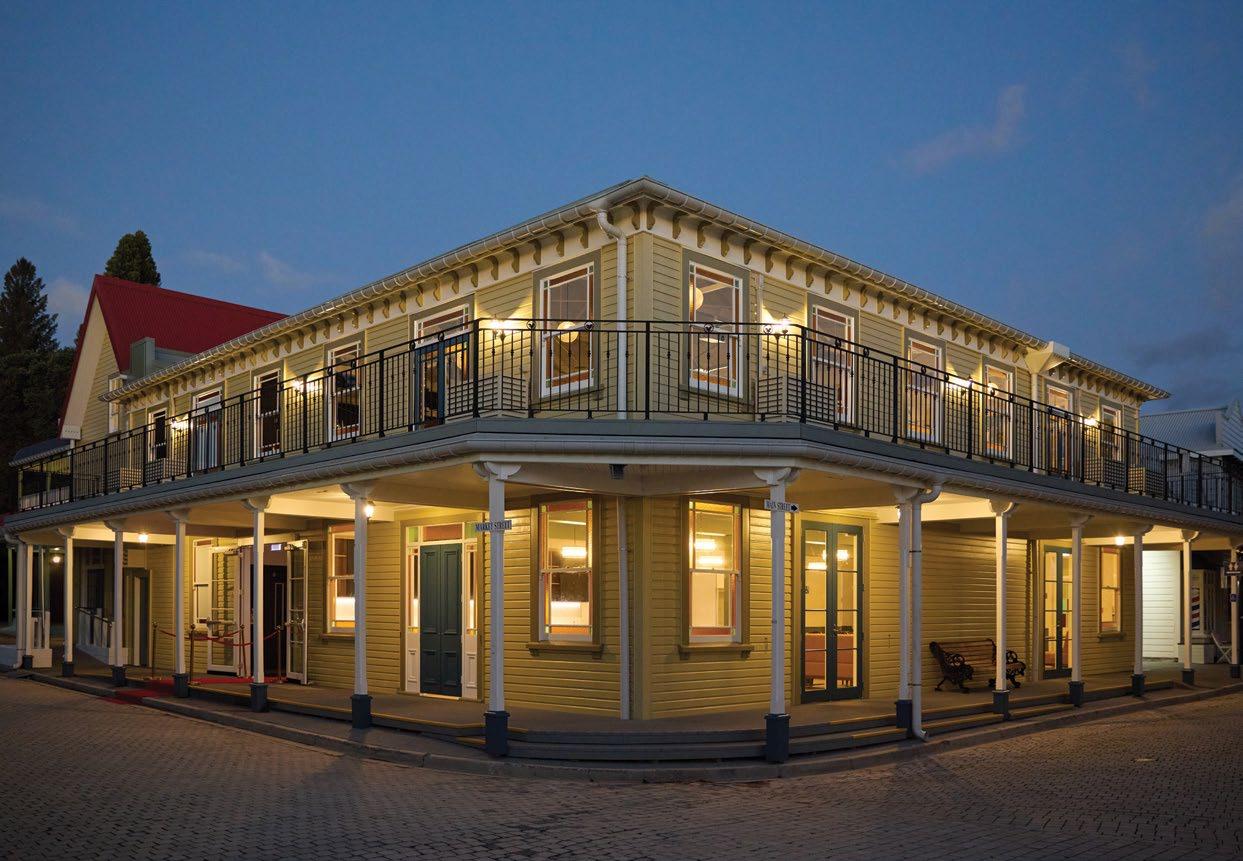
Unique to Tauranga, The Historic Village is one of the city’s most distinctive, character-filled destinations and is centrally located, just minutes from the city centre.
From breakfast conversations to after-hours celebrations, The Historic Village provides a vibrant setting where business intersects with creativity, culture, and community.
The Village is home to over 60 boutique shops, eateries, creative studios, galleries, and community organisations.
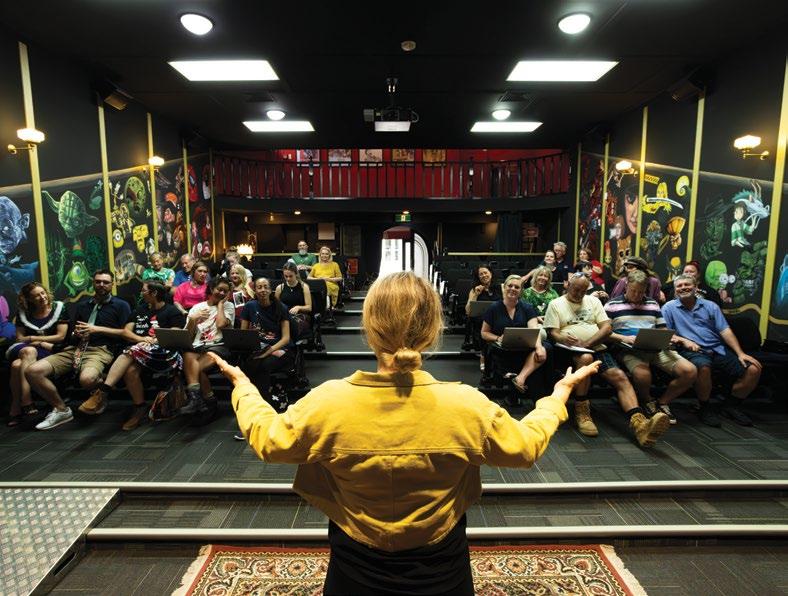
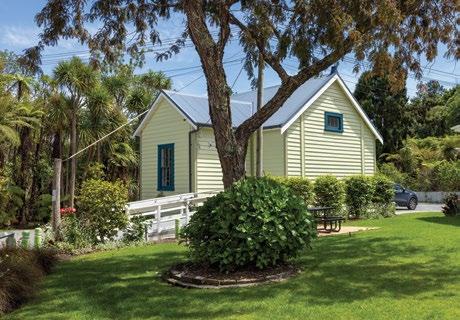
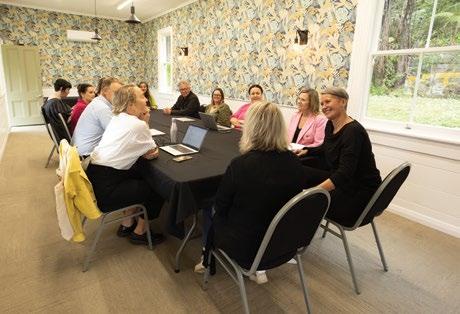
With six indoor venues for hire, four outdoor spaces and expansive festival-ready grounds, The Village is the place to explore, connect, celebrate, and be inspired.
Each venue brings its own charm and atmosphere, allowing you to choose a setting that best reflects your event style, whether you’re after something intimate and character-rich or open-air and relaxed.
Quality on-site catering and licensed bar services, with custom menu options are
available, along with reliable AV, wifi, and on the ground support staff to assist with setup, logistics and smooth delivery.
At The Historic Village, you’re not just booking a venue, you’re partnering with a team that genuinely cares about delivering high-quality, personalised experiences. historicvillage.co.nz/venue-hire
Punching Above His Weight
Words by Laura Boucher
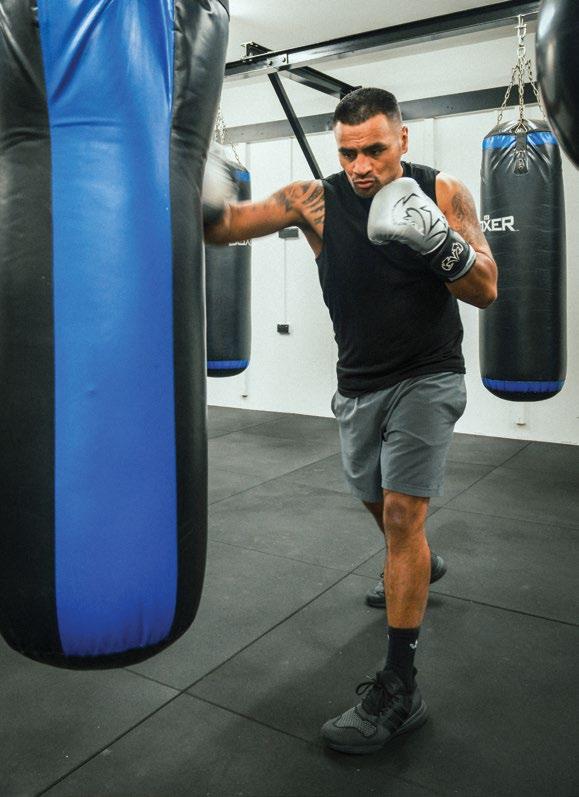
Gunnar Jackson’s goal was always to run his own gym. He wanted to grow a community of likeminded people. Now, Bay Boxfit is exactly that. So, who is the man behind the gloves?
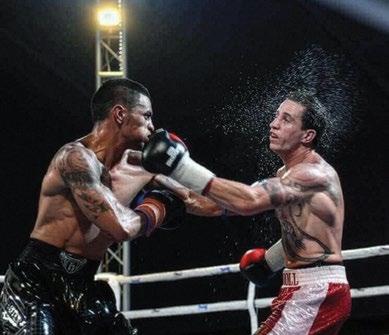
They say boxers always remember their first and last fight. For Gunnar Jackson, that couldn’t be truer. His first amateur bout, back in 2001, is still etched into his memory – the nerves bubbling up before the bell, the roar of the crowd pressing in, and the moment everything went quiet at the sound of the bell.
“I was nervous as before the first round,” the 39-year-old recalls. “But once those punches started throwing, the nerves were gone. I just got stuck into it and had fun.”
That feeling of fear giving way to focus would become familiar over the next 18 years in the ring. It was also a sign, whether he knew it then or not, that boxing was going to be part of his life for a long time.
Like a lot of things that matter most to him, Gunnar’s path into boxing started with whānau. Growing up in Wellington, he watched his older brother box, taking in four amateur fights and planting a quiet seed of interest.
When Gunnar’s family moved north to Tauranga, his dad wanted him to learn self-defence and boxing seemed like the natural fit. He began working with his first trainer, Chris Walker, in 2001 and, in his trademark understated way, Gunnar says “I just carried on right through until I retired in 2019. Eighteen years of fighting.”
Like most boxers, Gunnar paid his dues in the amateurs first, competing in more than 50 fights. The transition to the professional ranks brought
Gunnar says his greatest strength and number one attribute was his fitness.
bigger stages and tougher opponents. By the time he retired, Gunnar had amassed 46 professional fights, with 13 losses and four draws.
He’d also held the New Zealand Professional Boxing Association (NZPBA) super middleweight title from 2012 to 2013, the NZPBA middleweight title in 2013, and the World Boxing Organisation (WBO) Oriental middleweight title twice between 2013 and 2015. His most notable fights were against Anthony Mundine and Olympic gold medalist Ryota Murata in Las Vegas. Ask him what his greatest strength was and the answer comes without hesitation.
“My fitness. That was my number one attribute. I never really had the power to knock people out with one shot, so I had to make up for it in other places. I had bunches of punches!”
It’s a phrase he still laughs about, but it sums up his approach perfectly: Pressure, pace and heart. Fighters knew they were in for a long night when they stepped into the ring with him.
Gunnar’s final fight came in 2019 against a top Russian-New Zealand boxer from Auckland. It ended in a points loss after a full 10 rounds of tough, honest work – and once it was over, Gunnar knew what he had to do.
“I knew straight after the last bell rang that I was going to retire,” he says.
As the crowd buzzed and the ring lights shone
down, Gunnar called his wife over into the ring. She knew instantly. Moments later, his family climbed into the ring beside him, and he announced his retirement then and there.
“I just knew I didn’t have the time to dedicate myself to the craft anymore,” he says simply.
“Something had to give.”
Walking away on his own terms is something he feels grateful for.
“Some people don’t get a choice; they get forced into retirement. I was fortunate I could walk away unscathed, with business goals, and make that choice to focus on my family.”
Alongside his wife and two daughters, that family focus extended naturally into Bay Boxfit – a place Gunnar considers part of his wider whānau.
In 2017, two years before he retired, Gunnar had already begun shaping the community boxing gym. It was a lifelong dream between him and his best friend that started with two classes a week at a local soccer club and grew organically from there.
“My goal was always to run a gym,” he says.
What motivated him was simple: “Helping people. Getting people fit, sharing boxing knowledge and growing a community.”
Today, Bay Boxfit is exactly that, from kids throwing their first punches on pads to adults looking for confidence, discipline and connection.
“Some people don’t get a choice; they get forced into retirement. I was fortunate I could walk away unscathed, with business goals, and make that choice to focus on my family.”
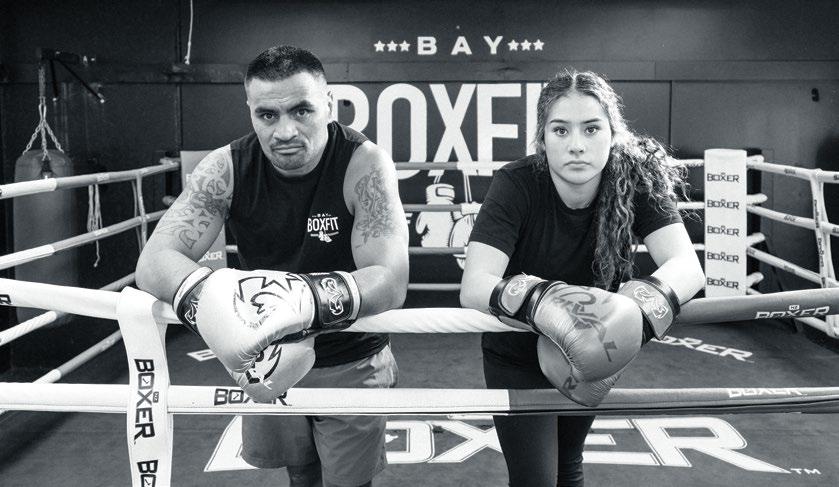
Clockwise from left: Gunnar Jackson in the ring with his daughter Charlie. Gunnar in a professional match with Nathan Carroll.
“Discipline is probably one of the main things you get from boxing. I’ve seen people grow from not having confidence, to six or eight weeks down the track where they’re completely different.”
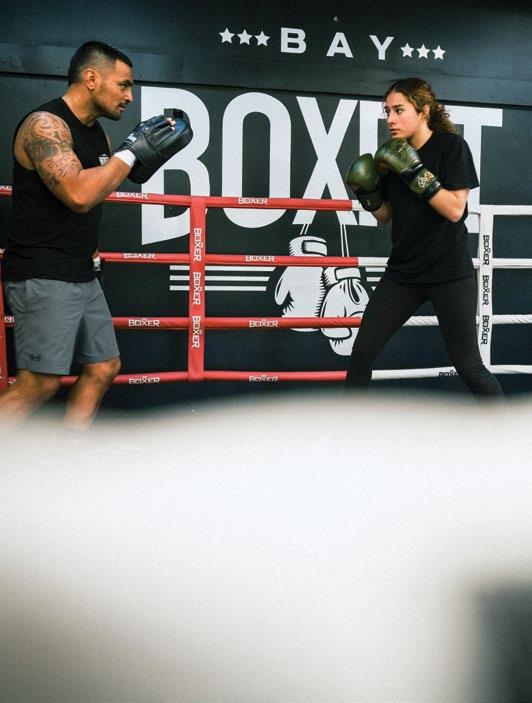
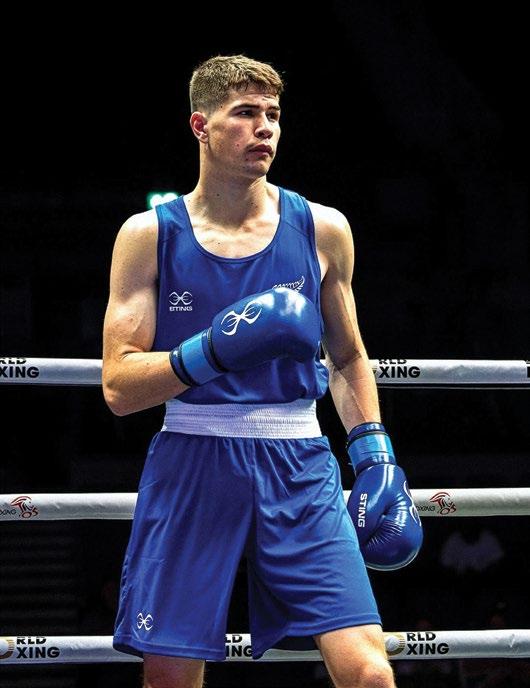
Gunnar is also coaching competitive fighters, including a standout amateur, Wesley Cameron, who has already won a youth national title, a Golden Gloves title and earned selection to the New Zealand team. “He’s only just turned 20,” Gunnar says proudly. “He’s got a bright future.”
For Gunnar, boxing has always been about more than what happens in the ring. It’s about what people take with them when they leave.
“Discipline is probably one of the main things you get from boxing,” he says. “I’ve seen people grow from not having confidence, to six or eight weeks down the track where they’re completely different.”
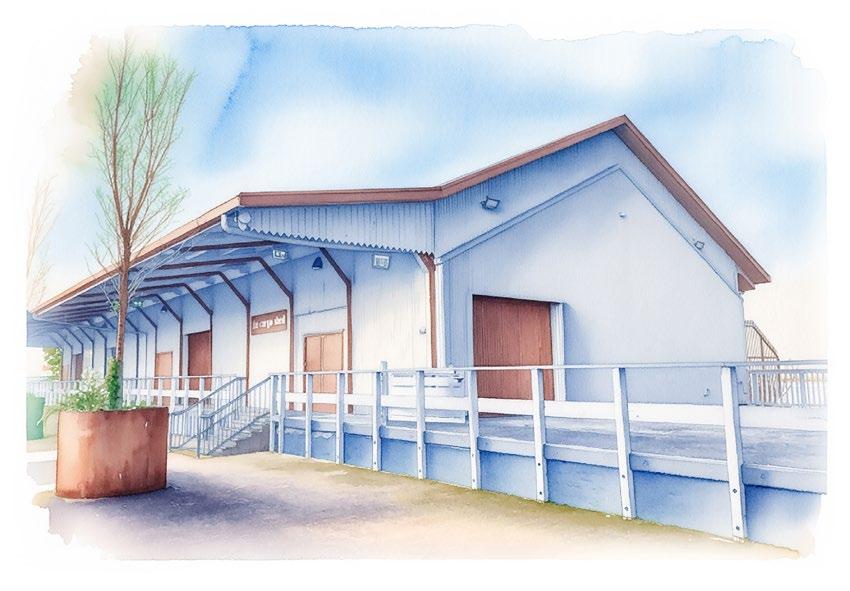
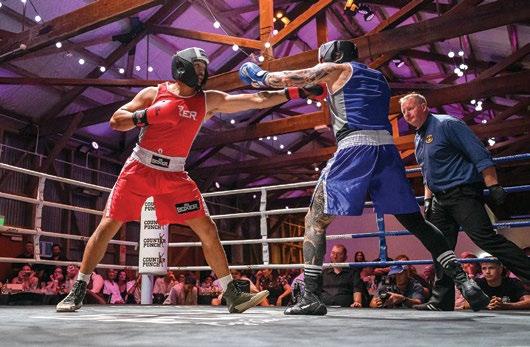
Supporting people to grow, both in and out of the ring, is what drove Gunnar to start his community boxing events – from the long-running Battle of the Trades to the newer Boxing on the Dock, held in the atmospheric Cargo Shed by the Tauranga waterfront.
For these events, everyday people sign up for a two-month training bootcamp that culminates in them stepping into the ring against a fellow boxing beginner.
It gives Gunnar immense pride and satisfaction to see these competitors step up to the challenge, saying, “It’s quite a feat to put yourself out of your comfort zone and challenge yourself, and every year it’s cool to see how everyone progresses through the
training.” While he’s got many good stories from over the years, one of his most memorable competitors is Colin Hunter, a 62-year-old fighter who demonstrates an incredible growth mindset.
“His discipline and focus are unreal,” Gunnar says. “He’s someone I want to grow old to be like.”
In many ways, Gunnar’s life in boxing has come full circle. He got into the sport because of family –and now, his own family is part of it. His daughter has already claimed a youth national title, and another has stepped into the ring too. “I never pushed them into it,” he says. “They came to me – but of course I was really stoked about it and couldn’t be prouder of their work ethic and achievements!”
Still, family extends far beyond bloodlines and at Bay Boxfit, the atmosphere is unmistakably collective. “It’s very community focused,” Gunnar says. “We are a whānau. Everyone gets along. The trainers are always giving a bit of banter – especially me!” And while on the face of it boxing can seem intimidating, the majority of our classes are noncontact and for fitness. Bay Boxfit is a place where people show up for each other, work hard together, and walk out stronger than they came in – in body, mind and spirit.
bayboxfit.co.nz bay_boxfit
Gunnar also coaches multiple competitive fighters, including standout amateur, Wesley Cameron (right).
40 Years of Kale Print
Kale Print is a legacy in the making. This year, the family-owned national print supplier celebrates 40 years in business. They are marking the milestone by moving into a brand new premises.
Photography by Wayne Tait
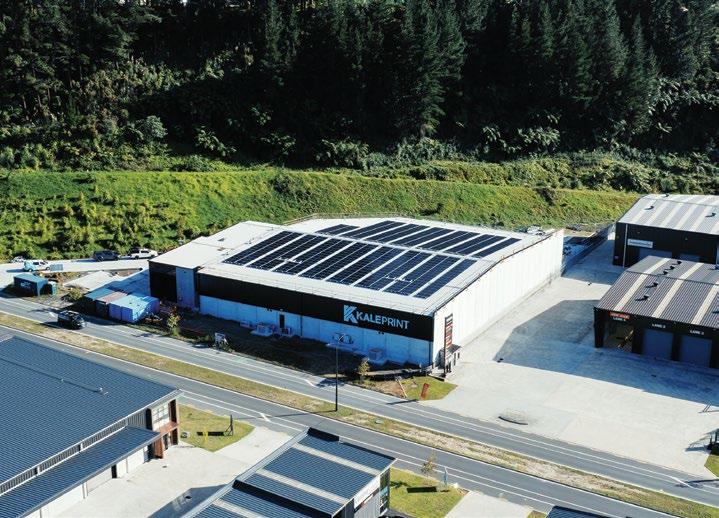
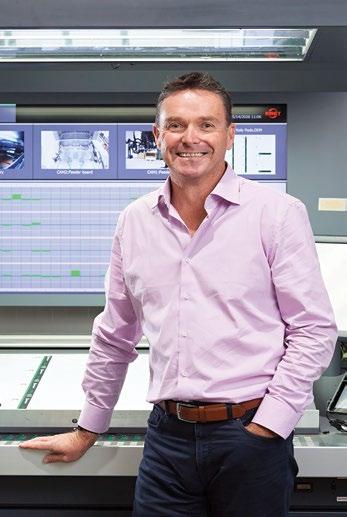
Opener: Brent, Stephen and Gavin Kale. Below: A total 432 solar panels have been installed on the roof. → GM Peter Lloyd.
When Stephen and Jill Kale started Kale Print, it wasn’t just a business. It was a legacy in the making.
This year, the family-owned national print supplier celebrates 40 years in business – and it is marking the milestone by moving into a brand new premises.
Kale Print has been long-time residents in Tauranga’s CBD. However, the team has been operating from two sites since outgrowing its head offices on Cameron Rd many years ago.
With its larger finishing equipment and paper store in the Judea industrial estate, the team were frequently travelling back and forth several times a day.
Now, the company has made a significant and well-planned move that brings its local operation together for the first time. Kale Print now owns and occupies a single, purpose-built facility in the Tauriko Business Estate.
General manager Peter Lloyd says the new 3100 square metre facility on Kaweroa Dr has allowed the company to make its production more efficient.
“By bringing everything together under one roof we can support any size organisation from owner-operators and corporates, as well as trade support for other printers.
“We have the reach, the capability, and now the physical space to continue investing in new technology, including advanced wide-format printing that allows us to expand our signage offering.
“For customers, that means fewer handovers, greater consistency, and a partner that can scale alongside them.”
Kale Print is a true full-service print provider offering digital and offset printing, wide-format signage, graphic design and finishing, along with packaging, labels, merchandise and more.
“An extensive process of mapping out where each machine would go on the factory floor to maximise print flow has seen significant improvements in the manufacturing processes,” Peter says.
Along with its investment in facilities and technology, Kale Print’s commitment to sustainability sets it apart.
The company has been carbon zero for four years. It’s taken another step towards its vision of reducing CO2 emissions beyond neutrality with its new solar investment.
With 432 solar panels installed on the roof the site generates 106 per cent of its energy requirements with surplus power exported back to the grid during the summer months.
The company saves 42 tonnes of CO2 annually, the equivalent to planting 7500 trees.
“All print manufacturing for our clients is now powered 100 per cent by renewable energy,” Peter says.
“For businesses under increasing pressure to meet environmental targets, choosing Kale Print means our clients can meet their environmental commitments.”
“Our team of 50 is passionate and engaged, and this is reflected in our exemplary staff retention rate and our hands-on quality service.”
Printing quite literally runs in the family.
Stephen’s father was a printer and his sons, Brent and Gavin, are now heavily involved in the company as operations and production manager respectively. Daughter, Rochelle, is a graphic designer, and now even the grandchildren help out during school holidays.
“It is those family roots that continue to shape our culture. We’re a family-values business,” Stephen says.
“Our team of 50 is passionate and engaged, and this is reflected in our exemplary staff retention rate and our hands-on quality service.”
The move into the new premises has also prompted a refreshed brand designed to reflect Kale Print’s evolution and future direction.
Developed using customer feedback, including why clients choose Kale Print and keep coming back, the new byline ‘Creating Better, Together’ captures a key strength of the business.
It speaks to Kale Print’s solutions-driven, collaborative approach, its commitment to people
and planet, and its reputation for tackling complex jobs with care, expertise and follow-through.
Completing the build marks the end of an impressively smooth 12-month project.
“We worked closely with New Zealand Commercial Construction Limited (NZCCL) and a wide range of subcontractors and suppliers, from electrical and IT through to interior design,” Peter says.
“Everyone brought their expertise to the table, including our own internal team, to make this happen.”
The result is a space that mirrors the business itself: thoughtful, practical and future-focused.
With a design that brings the outside in, and a cohesive green-and-black palette throughout, clients arriving at Kale Print’s new reception experience a business confident in where it has come from and clear about where it’s going next.
kaleprint.co.nz
@kaleprint
17 SEPT- 3 OCT 2026
GET YOUR TICKETS VIA:
BASED ON THE NOVEL BY
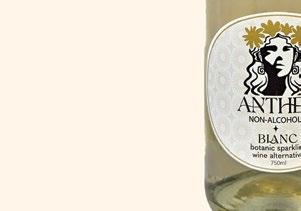
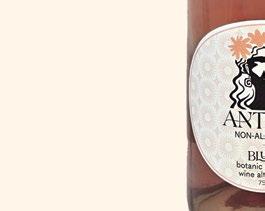
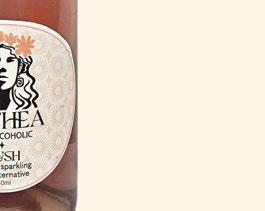
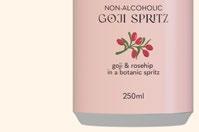
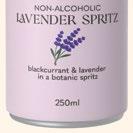
There is a particular kind of social pressure that arrives uninvited at every gathering, hovering near the chilly bin. It’s the unspoken expectation to drink, and for ages, the only credible alternative was Adam’s ale. Anthea on the other hand is a New Zealandmade botanic spritz that takes its name from the ancient Greek goddess of love, flowers, and nature — who sounded like a hottie! I approached it with an open mind, and the quiet hope that it might o set at least half a century of questionable life choices.
Anthea Blanc Non-Alcoholic Botanic Spritz
The Blanc Non-Alcoholic Botanic Spritz is essentially a wellness retreat in a bottle, not the water drained from the private spa. Opening with a genuinely persuasive bouquet of peach and apple up front, with floral and honey notes trailing behind like a shadow. There is a moment, somewhere between the pour and the first sip, where I found myself wondering whether I had accidentally picked up something alcoholic, which is either a huge compliment to the craft or a mild indictment of my own expectations. It is fresh, with a crisp finish and dry enough to maintain my dignity at any social occasion that I may have managed to get myself invited to. Botanically, it draws on honeybush, thyme, lemon balm, and chamomile – a line-up that sounds like the homeschooled kids at the skatepark. It actually delivers something genuinely worth drinking. The lively acidity makes it an honest companion to gravlax, turducken, or even a komplet lepinja, and it holds its own on the table without requiring an explanation or an apology. Altogether, a convincing argument that giving up alcohol doesn’t have to feel like a punishment.
Anthea Blush Non-Alcoholic Botanic Spritz
There are people who distrust pink bubbles on principle, and those people are wrong! The Blush Botanic Spritz arrives with a vibrant bouquet of strawberries and cream that somehow manages to feel like we’re celebrating a big win at the TAB, underpinned by savoury complexity that keeps things honest. Schisandra berry, rosemary, lemon balm, and thyme is all in there and sounds unlikely but delivers a round, balanced body with a finish that actually satisfies rather than simply disappearing. It pairs well with an oyster taco, pastas of all varieties, and salads, which covers everything from a surprise after dinner treat to an occasion you have gone to the trouble of ironing a shirt for.
Anthea Spritz Range
If the Blanc and Blush sparkling wine alternatives are Anthea’s opening arguments, the canned Spritz range is where things get properly interesting. Three variants, each built on the same botanic spritz base but pulling in distinctly di erent directions, which makes for a genuinely enjoyable tasting experience – assuming you have the self-discipline to pace yourself accordingly. The goji and rosehip is the most visually striking of the range, arriving in a vibrant pink can that sets expectations it then quietly exceeds. Goji brings the big berry energy up front, while rosehip softens everything underneath with a velvety depth. The finish is crisp and dry, which stops it from becoming the kind of drink you feel obligated to describe as fun. The blackcurrant and lavender arrives bold and unapologetic. You know the type: strong convictions, persistent about promoting their viewpoint, usually at the expense of everyone else in the room. But the blackcurrant leads with a confidence you cannot help but admire, while lavender keeps things from getting out of hand. The result is textural, rounded, and fruity without tipping into sweetness. It is the most assertive of the three and is none the worse for it. The passion and elderflower is the most elegant of the three. It maintains a calm, collected demeanour and imagine would walk into any party with some serious drip. An elevated floral bouquet of passionfruit and elderflower gives way to ripe, fleshy fruit and a clean minerality on the finish. It is the one you open when you want people to think you have your life together. Collectively, the Spritz range makes a compelling case for botanical drinking done properly.
drinkanthea
I Love Being Māori
Words & Photography by Kristin Macfarlane
Whether it’s on a netball court, or through his clothing brand, 16-year-old Nixon Mohi is building something big – a brand, a pathway and a sense of pride.
By the time Nixon Mohi was 15, he had twice been named to represent New Zealand in netball, was running his own business and had become a strong advocate for cultural pride.
Balancing the pressures of elite sport, while juggling business ownership, school commitments and staying true to his cultural identity is a demanding schedule that many well beyond his years would find difficult to navigate – but Nixon does it all with ease.
However, he says he wouldn’t be able to do it all without the support of his whānau.
Nixon is a young netballer who has been selected in the New Zealand Under 17s men’s netball team for the past two years.
Having turned 16 in April, Nixon will be eligible for the NZ U17s team in 2027, before progressing through the pathway.
What makes this feat even more impressive is that Nixon really only discovered the sport three years ago and it was almost by accident.
Despite this, he is quickly becoming an exciting rising talent in the men’s game – all while building a Māori clothing brand he started to help him cover the costs of his netball career.
His clothing brand, I Love Being Māori, was born from necessity as much as it was creativity.
Like many young athletes in New Zealand, Nixon needed to come up with ways to deal with the financial reality of representative sport.
“It is really expensive,” Nixon says. “Netball being self-funded, that was a big thing for us.”
Representative campaigns, tournaments and travel can cost anywhere from $5000 to $10,000 a year. Instead of relying solely on fundraising, Nixon and his whānau decided to try something different.
“Me and mum were talking about netball and how much I was doing,” he says. “And then it was like, why don’t we be different and make clothes?”
The idea clicked instantly. He remembered a logo he had earlier created and been sitting on, unsure of what he wanted to do with it, and believed it would be perfect for the brand.
Now, that once-forgotten logo is turning up on shirts, quarter-zips, hats, stickers and keychains worn by supporters across the community and the brand has steadily evolved into something tangible that promotes identity, pride and connection.
“I like wearing my clothes as a statement,” Nixon says.
Nixon’s connection to culture is important to him. His brand is about more than fashion, it is about helping people reconnect with who they are.
“There was one lady who was really interested in finding out who she was.”
He says she bought a sticker, which prompted her to look into her Māori heritage.
“It’s like, ‘Whoa, my little sticker made you want to reconnect’.”
Nixon says he wants the brand to feel accessible to anyone on their cultural journey.
“You don’t have to be fluent,” he says. “As long as you’re trying to connect back… doing your part.”
That same grounded mindset carries over onto the netball court.
Nixon’s first taste of netball came in 2023 after tagging along to watch a friend’s training session. He says the coach asked if he wanted to play and he figured he’d give it a go.
“I was literally just there to watch my friend at school.”
He has barely stopped since and says that first coach, Chrissie Ellis, helped him to find the sport he loves so much today.
Chrissie says she was elated when Nixon finally decided to play netball at Te Kura o Matapihi.
She says seeing him grow in confidence, skill and patience has been something impressive to watch and describes Nixon as someone who is always hungry to learn and better himself.
“He’s super talented and I always knew he had huge potential,” Chrissie says.
In such a short time Nixon has progressed from school netball into elite representative pathways, having earned New Zealand selection and opportunities to travel abroad.
Opposite: Nixon Mohi, 16, and his parents Bex and Frankie. ↑ Nixon created ‘I Love Being Māori’ clothing.
“Last year was my first time out of the country for representative netball. I loved the competitive difference.”
“Last year was my first time out of the country for representative netball. I loved the competitive difference.”
Nixon says he would have been one of the youngest in his NZ U17 team last year and while there were moments in elite sport that have been intimidating, the team environment was positive and supportive.
“I love being challenged,” he says. “At school, you stand out pretty easily. But at that level, there’s always something to work on.”
He’s competitive, understands the importance of progress and is confident of his ability and direction.
Behind the confidence, though, is a teenager deeply aware of the people helping him succeed.
“I’m really grateful,” he says of his parents, describing them as his biggest supporters in everything he does.
He says his parents work tirelessly to help him achieve his goals, also acknowledging his dad’s
advice when it comes to his mental development when it comes to sport.
He also credits coaches who have pushed his development both mentally and physically, helping him learn to control frustration and grow under pressure.
This year alone, Nixon’s calendar is packed with tournaments, representative programmes and potential international campaigns. His long-term dream is clear: reach the top level of men’s netball in New Zealand.
But alongside all the ambition, he says staying grounded is what matters most.
Whether it is on court or through his clothing brand, Nixon is building something big – a brand, a pathway and a sense of pride others can see themselves in.
And being so young, there’s still so much more to see from Nixon.
@ilovebeingmaori
↑ Nixon is a young netballer who has been selected in the NZ Under 17s men’s netball team twice.
Threads of Connection
Words by Zoe Hunter
Photography by Erin Cave
Threads of Connection explores the visible and unseen ties that bind people, stories and creativity. Meet the artists exhibiting in Ōmokoroa this Matariki.
For Darcy Nicholas, the picturesque coastal peninsula of Ōmokoroa is more than just a backdrop. It is an anchor.
It is where generations of the Nicholas whānau were raised.
“Ōmokoroa is home. It is a special place to me,” says Darcy (Ngāti Ranginui, Ngāi Te Rangi, Kāhui Maunga, Te Āti Awa, Ngāti Ruanui, Ngāti Hauā).
This June, Darcy’s presence will be felt in the seaside suburb once again.
While he won’t be there in person, his artwork will be exhibited at The Old Library Ōmokoroa (TOLO) for the very first time.
The inaugural ‘Threads of Connection’ Matariki Exhibition will be held at The Old Library Ōmokoroa throughout June.
Exhibiting alongside Darcy will be local contemporary Māori artists including, Quinton Bidois, Arohanoa Mathews, Alie Henderson, Alison Badger,
and former Western Bay of Plenty mayor Garry Webber. Waitara-born Darcy has helped shape the contemporary Māori art movement since the 1960s. His work has been exhibited widely, including in Europe, North America and Africa.
Now, the acclaimed painter and sculptor’s work will be seen in a more humble showing at a place he calls “home”.
“My family comes from Ōmokoroa. We are a big family and we have been there for a long time,” he shares.
Twenty-six tamariki of the Nicholas family were raised on the several-acre farm, including Darcy’s father James Nicholas.
“We called it the Nicholas Farm,” says Darcy, the 11th of 12 grandchildren.
A black and white inked portrait of his father will be among his artwork in the ‘Threads of Connection’ exhibition. It will be one of six pieces he
Photographs by James Nicholas
plans to exhibit.
After the passing of Darcy’s grandfather William Nicholas in 1954, the Nicholas whānau moved from Taranaki to Tauranga for James to run the 400-hectare farm.
Darcy would often walk barefoot from the wharenui on the farm’s marae to Ōmokoroa No.1 School every weekday.
“Every day we would have to come home and feed the calves, milk the cows, and check the sheep,” he remembers.
Nearly five years later, the whānau returned to Taranaki leaving one of the “uncles” to run the farm.
“But, it has always been my home.”
Now living in Wellington, Darcy returns to the farm every chance he gets to reconnect and remember the whānau who have been buried at the urupa.
“Always, always I will return home to pay my respects.”
Darcy’s art is driven by a simple but powerful belief: Earth is our shared mother and the sky is our father.
There are themes that continue to shape his work. At the core, is the idea that humanity shares a collective responsibility to each other and to the future generations, regardless of race or colour.
“That is my message to the world.”
It’s a message he believes resonates universally, which helps explain why his work has found such a strong audience overseas.
“We are all indigenous to Planet Earth. Our role is to develop a good future for all the children to come.
“So, all of my works are based on protecting the Planet Earth and keeping the sky and atmosphere so life can continue well beyond us.”
His worldview is deeply rooted in the way he was raised, living from the land, sea and rivers.
“Because we are such a large family, we grew all of our own food.
“Fish from the sea, eels from the river. I learned to love the land.”
Without electricity, television or radio, storytelling became the foundation of his upbringing. Knowledge was passed down orally, often by the women in his community.
“We grew up with a strong identity. That has had a massive impact on how I see the world.”
He reflects on the generations before him with a sense of continuity.
“If my dad was alive today, he would be 125 years old. My grandfather would be 160.”
He was raised by people who carried deep
Opener: Darcy Nicholas will be exhibiting at The Old Library Ōmokoroa. ↑ Some of his artwork.
“So, all of my works are based on protecting the Planet Earth and keeping the sky and atmosphere so life can continue well beyond us.”
oral histories, passing them on exactly as they had received them.
“They told it to me as it was. They are all gone now. I am now them.”
It is those experiences, histories and responsibilities that Darcy ultimately expresses through his art.
Darcy was a featured artist in the late 2025 reopening of the newly-refurbished Toi Tauranga Art Gallery.
His exhibition titled ‘Land of my Ancestors’ was a deeply personal retrospective honouring his whakapapa (family heritage), life journey and enduring legacy in Māori art.
Presented for the first time in Tauranga Moana, Darcy’s exhibition drew together a curated selection of drawings, paintings, jewellery and carvings spanning nearly six decades of his practice.
“I was blown away,” says Alison Badger, who was inspired to host a Matariki exhibition at The Old Library after visiting Toi Tauranga Art Gallery with her granddaughter.
“It was almost a physical connection. As soon as I went into that space, I was just drawn to it.”
After learning of Darcy’s connection to Ōmokoroa, the seaside suburb she also now calls home, Alison felt instantly connected to the talented artist.
“He is a man of global importance in the art world,” says Alison, who extended an invitation to Darcy to join her Matariki exhibition.
The Old Library has operated from the former Ōmokoroa library for the last five years.
The not-for-profit organisation is a vibrant community co-operative that hosts monthly exhibitions and installations presented by its dedicated volunteer staff.
This June, the space will host its first-ever Matariki exhibition.
“It is so important to me to make sure this is authentic,” Alison says.
“I am not an artist, but I have always appreciated art. I believe in the power of art reaching other people.
“The more you can expose different people to different art, you are strengthening people’s understanding towards art as a whole.”
For Creative Bay of Plenty’s Ngā Toi Māori
Alison Badger was inspired to host a Matariki exhibition at The Old Library after admiring Darcy’s work.
Navigator, Arohanoa Mathews, exhibiting her work next to Darcy’s will be a dream come true.
Arohanoa and Darcy whakapapa to the Faulkner whānau.
She was 21 years old when she first met him. Arohanoa later wrote her thesis about Darcy’s work in her final year of a Visual Arts Communications Design Degree in Auckland.
“He is one of the most well-known contemporary Māori artists. It is huge to have his level and status exhibiting at a grassroots community event. It is just amazing.”
She later went on to teach art in Auckland before becoming head of art at a secondary school in Perth, Australia for nearly a decade.
“So, this is very personal to me,” she says.
Arohanoa will be exhibiting items from her most recent creative venture – the HONO Collection, which is a collection of one-of-a-kind upcycled suit jackets, known as koti, created from
pre-loved garments.
Admittedly, she is nervous to be exhibiting alongside one of her art heroes.
“It is a once in a lifetime experience. I would have never in my life thought this would ever happen. He is one of my biggest influences.
“It is an honour in itself. To have your work in the same room as him is surreal.”
Darcy has been her inspiration, drawing from historic stories and whakapapa.
“Darcy is definitely the ‘who’. He is our artist model from way back. He has always been so forward thinking.”
What: ‘Threads of Connection’ Matariki Exhibition. Where: The Old Library Ōmokoroa (TOLO) When: May 30th - 28th June 2026, 10am-4pm (closed Mondays) tolo.org.nz
Garry Webber and Arohanoa Mathews will be showing some of their art as part of the Matariki exhibition.
Matariki Te Tauranga o ngā Waka 2026
Matariki is a time to pause and reflect. It invites us to celebrate our shared history and look ahead with intention, as well as to acknowledge our traditions, language and culture. Nau mai – come and explore ways to celebrate and connect this Matariki. Visit mymatariki.co.nz to find out what’s on.
Ngahiraka Mai Tawhiti entering Te Whanganui ā Tara (Wellington Harbour) for the Waka Odyssey event in 2019. Opposite: Te kāhui whetū o Matariki (The Matariki star cluster). Photo taken from Mount Maunganui main beach. Pae Korokī, Te Ao Mārama.
Matariki Herenga Waka - For Everyone
Matariki is a time to pause and reflect. It invites us to celebrate our shared history and look ahead with intention. It is also a moment to acknowledge our traditions, our language, and our culture. Together, these shape our sense of identity and belonging.
This year, our region embraces Ururangi for inspiration. As one of the nine stars of Matariki, Ururangi is closely linked to the winds.
It is said to predict their movements, a connection reflected in its position as the highest star in the cluster.
In Māori narratives, Tāwhirimātea is the atua (guardian) who governs the winds and weather, often remembered for their immense and sometimes destructive force.
Yet these winds are not only agents of upheaval. They also remind us of the importance of returning home, whether that is physically, spiritually, or emotionally.
The winds of Tāwhirimātea guide us forward, clear what no longer serves us, and make space for renewal. This theme sits alongside the national focus for Matariki this year: Matariki Herenga Waka – For Everyone. It is a reminder that this season is shared by all, and speaks to the connections that bring us together.
How to find Matariki
Guided by Jack Thatcher, Master Celestial Navigator, whose deep knowledge of Māori astronomy brings these traditions vividly to life, many are reconnecting with the stars and the stories they carry.
His work invites people to engage not only with the night sky, but with the whenua (land) and the cultural heritage of Aotearoa.
Matariki can be found low on the northeastern horizon, just before dawn.
The best time to look is between 5.30am and 6.30am, when the sky begins to soften with first light. On a clear morning, elevated spots offer a particularly good vantage point.
Kindly provided by Te Puna I Rangiriri Trust. Image credit: Te Kawa
1. Begin by locating Tautoru, which is well known as the bottom three stars of ‘the pot’ or Orion’s Belt.
2. From there, look to the left for the bright orange star known as Taumata-kuku, also called Aldebaran, or locate the cluster it sits within, which forms a distinctive upside-down V shape.
3. Next, trace an imaginary line from Tautoru across to Taumata-kuku. Continue in that same direction, and you will come across a small cluster of stars.
4. That cluster is Matariki. If the sky is clear and your eyes have adjusted to the darkness, you may be able to pick out individual stars. If it appears soft or blurred at first, try shifting your gaze slightly above or below the cluster. Often, the stars will come into sharper focus.
In this quiet, early hour, the experience becomes more than observation. It is a chance to connect to something enduring, to reflect on where we have come from, and to carry those insights with us into the year ahead.
Matariki: Te Tauranga o Ngā Waka
Across Tauranga and the Western Bay of Plenty, the
Matariki: Te Tauranga o Ngā Waka event series brings communities together in celebration.
From Waiororo near Athenree in the north, to Ōtamarākau near Maketū in the south, the programme spans the region with a wide range of experiences.
Throughout the season, there is a wide range of performances, exhibitions, workshops and family events creating moments to gather, learn and share. As our region embraces Ururangi, this event series is about connection. You will find a range of events that celebrate and acknowledge Ururangi and its representation of wind in our environment and our lives, celebrating who we are and creating space to reflect and look ahead.
Matariki: Te Tauranga o Ngā Waka runs from June 16th to July 16th 2026, marking a full month of activity across our region.
It is a chance to experience the season in different ways, whether that is through storytelling, creativity, learning or simply spending time with others.
Nau mai. Come and discover ways to celebrate, connect and be part of Matariki: Te Tauranga o Ngā Waka 2026. To explore what is on and plan your own Matariki experience, visit mymatariki.co.nz for the full programme of events.
Pumpkin & Pecans
Words by Madeleine Hughes Photography by Erin Cave
Pumpkin has arguably got to be one of the best winter veggies out! Chef Madeleine Hughes has put together a recipe for the versatile and nutritious veg, followed by a pecan dessert.
We are in the thick of winter now, which means hibernating at home with some warming, comforting food. I’ve created two seasonal recipes that are both as delicious as the other.
Pumpkin, Feta & Pistachio Pies
SERVES 6
1/2 pumpkin, seeds and skin removed, cut into dice-sized cubes
1 can of chickpeas, drained
1 red onion, roughly chopped
1 tsp each: Cumin seeds, smoked paprika, sumac
1/2 tsp chilli
3 cloves garlic, roughly chopped
1 Tbsp honey
1 tsp salt
2 Tbsp olive oil
200g feta
Handful of coriander, roughly chopped
1 egg
1/2 cup pistachios, toasted and roughly chopped
Filo pastry
Method
Preheat the oven to 180°C. Add the first nine ingredients to a baking tray, toss to combine, and roast for 30 to 40 minutes, until golden. Allow to cool, then mix with the remaining ingredients (except the filo pastry).
Clear a clean workspace. Lay one sheet of filo on the bench and lightly brush with olive oil. Place a second sheet on top and brush again. Fold in half to create a rectangle four layers thick.
Spoon about 1 cup of the pumpkin filling into the centre and fold up like a burrito to enclose. Repeat with the remaining filling. You should have 4 to 8 pies, depending on how full you make them.
Place on a lined baking tray and bake for 20 to 40 minutes, until deep golden.
Eat This
These two recipes are perfect for sharing with family or neighbours, or someone you know who needs a little extra love. Food is the best love language of them all!
Apple, Pecan & Brown Sugar Upside Down Cake
SERVES 8-12
150g butter, softened
200g brown sugar
2 eggs
1 tsp vanilla
1/2 cup milk
70g pecans, toasted then blitzed to a coarse flour
150g flour
1/2 tsp of each: Ground ginger, nutmeg, cardamom, baking powder, baking soda
1 tsp each: Cinnamon & salt
3 apples, peeled, cored & sliced finely
1 Tbsp brown sugar, for finishing
Method
Preheat the oven to 170°C fan bake.
Using a stand mixer fitted with the paddle attachment, beat the butter and brown sugar until pale and fluffy. Add the eggs one at a time, beating well after each addition, then mix in the vanilla.
In a separate bowl, whisk together the dry ingredients. Add to the wet ingredients and mix until just combined. Stir in the milk, being careful not to overmix.
Line a cake tin with baking paper and sprinkle the brown sugar evenly over the base. Arrange the apple slices on top, overlapping generously to fit them all in.
Spoon the batter over the apples and smooth the surface.
Bake for 30 to 45 minutes, or until a skewer inserted into the centre comes out clean.
Cool in the tin for 10 minutes, then turn out onto a wire rack. Serve warm with softly whipped cream.
long days out there
In many ways, this follow up from my debut as a crystal-gazing non-conformist feels like trying to release a second album, navigating expectations without bowing to commercial selfsabotage. There’s also a saying in my underground astrological scene: you have your whole life to write your first dope horoscope, but only a month to write your second. Regardless, I’m going to light up one of my biggest frangipani insect repellers and give it a go.
Aries (March 21 – April 19)
Your infatuation with bird watching is in danger of taking a dark turn next week, when a member of the public reports you for hiding in the bushes. It will be considerably easier to explain yourself if you simply pursue your recreational activity fully clothed. If you are wondering why you have a sudden urge to invest heavily in synthetic knit fabrics this month, you can blame your own constellation. There is a reason you are the ram of the Golden Fleece, you know. Mars also appears keen on entering your financial sector and, as uncomfortable as that sounds, it is only going to make you irrationally confident with your cash.
Taurus (April 20 – May 20)
Your desire for comfort is becoming less of a personality trait and more of a medically concerning dependency. Perhaps try something that doesn’t involve any volatile flammable liquids, I’ve heard talking to inanimate objects can help. Financially, things remain unstable, so you might find yourself staring at your account, but remember, it’s just how your brain manages overwhelming stimuli. A person with suspiciously white teeth will try to sell you a lifechanging opportunity. It’s either a pyramid scheme or some sort of wellness-based entrepreneurial journey involving powders, chakra alignment and emotional manipulation. Potentially all three.
Gemini (May 21 – June 20)
Your dual nature continues to confuse those around you, swinging between extremes that are both rational and irrational, but spiritually, you’re evolving. Unfortunately, the form you are evolving into appears to be someone who says things like, “no worries” and, “it is what it is” in everyday conversation. Mercury’s movement suggests communication issues ahead too. I suggest you start from the top, move from left to right, and use consistent, continuous strokes.
Cancer (June 21 – July 22)
As a deeply emotional water sign, you are once again absorbing the energy of everyone around you like a damp kitchen cloth left festering beside the sink. This week, you will become unreasonably attached to an object that should have been thrown away years ago. It might be a T-shirt, an expired condiment, or perhaps even a friendship. Your ruling planet is influencing your digestive system, which means your lower colon will react aggressively to a completely normal amount of takeaways. Emotionally, you are searching for stability, but the stars suggest you are currently trying to build self-worth entirely through doom scrolling, pretending that screaming into your pillow counts as emotional processing, and clapping whenever you finish even the smallest task as a form of self-care. It’s simply not sustainable.
Dope
Leo (July 23 – August 22)
The sun remains your ruling force, which perfectly explains your exhausting need to turn every casual conversation into an unsolicited motivational speech. This week, you’ll dramatically overestimate just how interested people are in your recent holiday. Expect some domestic friction after insisting you can make a smash burger better than a bought one. You can’t. A strange energy also surrounds your midsection, though it’s likely less cosmic alignment and more poor diet and zero exercise.
Virgo (August 23 – September 22)
Ruled by Mercury, Virgos are famously analytical, intelligent, and impeccably organised. However, expect a massive disruption in the force this month, because you will be a complete shambles. On the bright side, your lucky colour is still beige. If that boring prospect makes you irritable, then it’s a great sign that this challenging phase is already correcting itself.
Libra (September 23 – October 22)
Balance is important to you, though your current interpretation seems to involve alternating between self-improvement podcasts during the day and family-sized bags of salt-and-vinegar chips with a sixpack at night. Venus is pushing you toward romance, but unfortunately your version of flirting has devolved to anyone who manages to smile at you. By the weekend, you will become convinced your life would improve dramatically if you just bought a hybrid vehicle. It won’t. A decision you have been avoiding will continue hovering around you like a particularly bad smell. Deal with it before it escalates, and certainly before anyone else enters the room.
Scorpio (October 23 – November 21)
Your energy remains strong, though increasingly others are interpreting it as passive aggression compounded by poor communication skills. You are also entering a phase of intense self-reflection, which mostly involves standing in front of the bathroom mirror feeling somewhat disappointed at the sack of skin staring back at you. Financially, things are looking uncertain, so you will briefly consider monetising your hobby of ferret legging, and to your credit, you will acknowledge that there is simply no viable way to make any kind of money from keeping a live ferret inside your pants.
Sagittarius (November 22 – December 21)
Your desire for freedom and adventure is peaking again, despite the fact that you currently cannot afford a full tank of diesel. Jupiter is also encouraging exploration, so naturally you will convince yourself that a spontaneous road trip to Hamilton, regardless of the cost, counts as finding yourself. Worth noting that three days is generally considered too early for an accurate chlamydia test. Expect to corner at least three people at your next social event with unsolicited facts about mushroom cultivation. Physically, you are fine. Spiritually, you are held together by avoidance.
Capricorn (December 22 – January 19)
Your work ethic continues to dominate your personality to the point where friends and family now describe you using terms usually reserved for farming equipment. Saturn’s influence means you will complete an impressive amount of admin this week too, well done, but there is a term for all of this and it’s called overcompensating. The stars do suggest however that you practise some serious selfcompassion, but keep that firmly within the privacy of your own home.
Aquarius (January 20 – February 18)
As the humanitarian of the zodiac, you naturally believe in systems, process, and stakeholder engagement, which is why the universe has spiritually aligned you with a middle-management role at council. And while you remain intellectually ahead of your time, it is by roughly the same margin as the man shouting at passing cars outside the Woolworths. This week, Mercury encourages you to share your more progressive ideas with colleagues. They will be received warmly, and then completely ignored as you are quietly managed out into a new department.
Pisces (February 19 – March 20)
You continue to move through life next month like the odour seeping from the local waste water treatment plant, taking on everyone else’s problems while ignoring the alarming mildew forming within yourself. Neptune is clouding your judgement too, and you’ll confuse being emotionally intelligent with simply crying in your car while listening to old Bon Iver tracks. Financially, the stars suggest restraint, which boils down to you being a miserable tight-arse.
Just Why?
Words & Photography by Peter Hlinka
In the small town of Mount Maunganui, better known for surf culture, adventure photographer and videographer Peter Hlinka found a community shaped in the days when there were no waves.
“As people learned to skate, they would just skate,” said local skate legend Cale Tolley, whose parents bought a house across the road from the Mount’s vert ramp.
Nearly 30 years on, Peter found Cale shredding the newer, bigger version of the ramp alongside many other skating comrades of all ages.
Peter, who was born and raised in Slovakia, found the mix of generations to be one of the special essences of the Mount.
He believes finding a connection through sharing the same subculture shapes their growth and different aspects of seeing the question: ‘Why?’.
So, he began the ‘Justwhyclub’ – a journey of looking for the ‘why?’ of remarkable people and places that are all around us, to learn and inspire.
This particular project features a short film about Mount Maunganui, with three skaters – George, 8, Bodhi, 16 and Cale, 50 – connected through the same passion.
The short film titled ‘Nothing Matters’ represents the beautiful connections that skateboarding brings. It’s not just about the act of the sport itself, it’s about the friendship, community, and culture that connect it.
Who is Peter Hlinka outside of the lens, and what initially drew you from Europe to live in a coastal town like Mount Maunganui?
I grew up near the mountains in Slovakia – a small country, in the middle of Europe. My grandparents were mountain hut keepers, so from a young age I was pulled into those places.
My sister was doing freestyle sports and I think I drew a lot of inspiration from her without really knowing it. I started rollerblading first, because it felt closer to skiing, but there were no bladers around anymore so I switched to skating at age 10, then snowboarding.
Opener: Peter Hlinka. ↑ The Justwhyclub captures a short film about three Mount Maunganui skaters.
From that point, I’ve been living within that subculture, with many breaks, but always coming back to it.
I was always drawn to board culture, and my dream was to learn to surf. Slovakia is landlocked, so waves felt like this distant, almost mythical thing.
My first time standing on a ‘big foamy’ was in Portugal, then I had a chance to photograph surf camps in France. New Zealand felt like the perfect combination – beautiful nature and mountains blending with the ocean.
Before ‘Justwhyclub’, what was the personal spark? Was it the surf culture, or were you looking for a specific kind of creative isolation?
Definitely surfing at first, but then it became more about the people and the way of life, which is really specific compared to what I was used to in Europe.
It took time to get used to it, to blend in. And honestly, I wasn’t even thinking about skateboarding when we arrived. But, I think it was the first day, I saw
this beautiful big skatepark and a huge U-ramp. Right away, I got really excited.
What was the specific moment that triggered this need to look past the what and into the why of people?
It started with my master thesis. I made a ‘zine’ about street snowboarding, a subculture I grew up around. That winter, I spent a few sessions with friends out on the streets after work, late at night, shoveling snow before hitting some obstacle that was never meant to be ridden.
That same winter, pro riders from the Vans team came to my hometown, and I started wondering, ‘Why are these people doing this?’. What I found was a really interesting bunch of reasons that aren’t visible at first glance.
That little spark draws people, it shapes their whole life. My friend Ryan Glover called it ‘Ikigai’ – a Japanese concept translating to ‘a reason for being’. You slowly build it through good times and bad, and it becomes this ongoing project.
↑ Local surf shaper and true universal artist, Ryan Glover, helped shape the video series.
“I wish everyone will find their own thing in it. But, if it inspires just one person who thinks they’re too old, or they can’t do something, to try it anyway, that’s enough. It doesn’t have to be skateboarding.”
Almost a nerdy thing. Actually, a very nerdy thing. When you film these characters, you really have to work to shape the story, because the depth of it doesn’t always translate easily to a wider audience.
But that’s exactly what I want to do, destroy some stigmas about these subcultures and show it to a wider audience.
The whole video series really grew in the Mount, through our friend Ryan, a local surf shaper and a true universal artist. Spending time with him planted the idea of building a series around remarkable people. The first film came from that.
How does your personal relationship with subcultures influence the way you filmed Nothing Matters?
A lot in everything I film I put a bit of myself in. With Nothing Matters, I came back to my childhood. I saw how many kids were skating in the Mount, but I also saw older guys skating right alongside them. That was something I’d never experienced. My parents supported me in skateboarding, but never tried it themselves. So watching dads start skating with their kids hit differently.
I never saw a ramp that big growing up. We had a grind box and one rail. The setup in the Mount is this excellent blend of everything. So, I was curious and started taking photos of skaters at the ramp. I got to know the whole crew and found their special connection to that place. Then I saw it… this story of generations connecting over a piece of wood.
When people finish watching the film, what do you hope they take away about human connection?
I wish everyone will find their own thing in it. But, if it inspires just one person who thinks they’re too old, or they can’t do something, to try it anyway, that’s enough. It doesn’t have to be skateboarding. For me skating is a beautiful act of art, it builds resilience, it finds you friends for life, it teaches you to sacrifice. What I really want people to take from this is simpler: Keep your special thing. That thing you do just for yourself, where you feel totally free. Don’t let it go just because you’re busy, or older, or life got heavy. Just keep pushing.
↑ For Peter, skating is a beautiful act of art.
Where is the ‘Justwhyclub’ journey taking you next?
I have a long list of names and places I want to get into. Some are focused on specific characters, others are about finding a new place and doing a deep dive researching artists, athletes, makers.
I’m working on a whole project together with my girlfriend Marianna, which is really nice to share that spark of curiosity with someone. The next series will continue with a lot of artists. I also want to explore more remote places where skateboarding isn’t popular yet.
petohli.com
@petohli
Nature Calls
Words by Laura Boucher
Have you ever stopped and listened to a waterfall? Thought about where the water is coming from, or where it’s going? Or listened closely enough to hear birdsong echo through still air and the rustle of leaves underfoot, or feel the cool touch of autumn in the air?
Too often, we’re racing through life and even when we head into nature, it’s usually to do something: To walk further, to climb higher, to see the view.
We rarely give ourselves permission to slow down, to sit, to simply be.
Forest bathing is a practice built around doing exactly that.
Also known as shinrinyoku, forest bathing is a Japanese practice of intentional immersion in nature, aimed at reducing stress and improving wellbeing.
As our certified forest bathing guide Dr Chantal Pagel reassures us in her introduction, forest bathing doesn’t involve taking our clothes off. Instead, she explains, it’s “simply about slowing down and connecting with the forest through your senses.”
With clothes happily confirmed to be staying on this brisk autumn day, our small group soon begins quietly walking into a forest trail on the edge of Lake Ōkataina, and the process of engaging all five senses to connect with what’s around us will soon begin.
Before we start our journey, Chantal acknowledges the land with a karakia. She speaks softly of Papatūānuku, of mountains that stand as guardians, of rivers that carry stories.
Sometimes, she says, she also likes to give a hongi to the forest, as a greeting and exchanging of breath to recognise we’re entering into a relationship
with this place.
“My role today isn’t to lead,” she tells us. “It’s to guide. I’ll offer invitations, but there’s no right or wrong way to respond.”
The experience will take a couple of hours along the Te Auheke track, a 1.8 kilometre track that would normally take around 40 minutes. But today, this walk isn’t about distance; it’s about depth.
As someone who usually shows up to the bush with purpose, the concept immediately feels unfamiliar.
As we meander toward our first pause point, my body wants to move faster and my mind drifts to everything except the present moment.
But after our first sequence – something Chantal calls Pleasures of Presence – I notice a shift.
The world outside the forest boundaries begins to fade. Suddenly, my senses feel amplified.
When you’re truly listening and really looking, it’s amazing what reveals itself. The way sunlight filters and shifts through the canopy. The softened sound of footsteps on leaf litter.
Early morning birdsong rising, overlapping, and dissolving again.
“We’re so disconnected from nature,” Chantal says. “We tend to go into forests to do things. Forest bathing invites us simply to be.”
Dr Chantal Pagel sometimes likes to give a hongi to a tree before entering a forest bathing journey.
After our first invitation, we move deeper into the forest. While I’m reluctant to disturb the calm, curiosity gets the better of me and I ask what drew Chantal to this practice.
Forest bathing, it turns out, had been quietly calling to her for some time. Growing up in Germany, surrounded by forests, spending time among trees was instinctive and somewhere to retreat when life felt overwhelming.
“I remember coming back from forest walks with my mum and half-joking that I should just quit everything and become a forest bathing guide,” she tells me. “It sounded so peaceful.”
That running joke slowly evolved into something more serious. After moving from Pāpāmoa to Lake Rotomā last year, Chantal began exploring her new neighbourhood and regularly walked the Te Auheke track.
“I remember thinking, ‘This is the perfect trail for forest bathing’,” she says. “It’s gentle, it has water and these incredible natural features. I felt really drawn to it.
“Eventually, I realised I wanted to offer this experience to others because of how much this place was already offering me.”
Last year, she committed to a six-month training programme with the international Association of Nature and Forest Therapy (ANFT).
The course was largely selfguided, delivered through an online platform, and supported by weekly live calls with a global cohort.
Alongside complementary reading, participants completed reflective assessments, which included mapping potential trails, designing their own ‘partnership invitations’, and gradually building confidence as guides.
“It was a very individual and creative journey,” Chantal explains. “One of my favourite assessments was mapping the trail and really thinking about how people might move through it.”
One of the most daunting moments came early on: The first guided walk. “It felt impossible at the time,” she laughs.
For Chantal, choosing ANFT was also about credibility. With a science background and a career in conservation, she wanted a programme grounded in evidence and rigour.
“You can just go out and guide people,” she says, “but without training you’re unlikely to offer a knowledgeable guide or a truly meaningful experience.”
Upon completing the six-month programme, Chantal became a certified forest bathing guide. Graduates then have two years to complete a four-day in-person immersion, a chance to refine practice and connect face-to-face with trainers and fellow guides. Chantal chose British Columbia, Canada, for hers.
“I think it’s the most beautiful place on earth,” she smiles. “But there are options in Costa Rica, Japan, Thailand, and the United States as well.”
by Zoe Hunter
Photograph
“I remember coming back from forest walks with my mum and half-joking that I should just quit everything and become a forest bathing guide.”
We pause at a moss-covered tree, split across two halves of the path. It marks the beginning of our second practice – a slow stroll of less than 100m over 15 minutes, designed to take in all the forest has to offer.
The destination-driven hiker in me strides ahead instinctively, before mentally tugging on the reins and returning to a gentle saunter.
For someone who spends a lot of time in the bush, there’s still something so surprising about walking purely to relax.
Colours deepen. Small details sharpen — like, where is the breeze that is moving that leaf? The sense of physical and mental unwinding intensifies.
After we’re gently called back with Chantal’s iconic pīwakawaka whistle, we continue along the trail to the jewel of the experience: The Cascades.
A towering, multitiered waterfall rises before us. Here, we’re invited to sit and observe. I find a rock that feels as though it’s been shaped for this very purpose and settle in.
Sitting there, I feel like a child at the feet of an old guardian, listening carefully to stories it has been telling for centuries. Water spills from every moss-covered crevice, sparkling like diamonds where the sunlight catches it.
I find myself drawn to a slightly twisted, scragglylooking ponga.
It’s prickly, a little strange and not the most obvious choice. But here it plays an essential role of anchoring the forest floor, sheltering life, carrying its own quiet history.
Once again, we’re slowly brought back by the gentle whistle. After sharing reflections, we begin the walk back to the beginning – slow, silent, unhurried.
For our final invitation, we take part in what Chantal describes as a classic forest bathing practice: Sitting with a tree.
We’re invited to choose one that speaks to us.
The experience ends with a simple tea ceremony. Warm kawakawa tea is poured, alongside peppermint for a pregnant woman in our group. Cups are cradled between hands as we reflect.
We arrived for different reasons –curiosity, a love of nature, a need to slow down –and, Chantal reminds us, the forest is no different.
“This place shows up differently every time,” she says. “Different times of day, different seasons. I take cues from the forest about where the practice goes.
“You can plan things,” she adds with a smile. “But nature always has the final say.”
As we leave, nothing tangible has changed and yet something has shifted. The forest hasn’t asked anything of me today, and I haven’t asked anything of myself either.
We both showed
up to simply be – to listen, to notice, and, for me, to remember what it feels like to slow down.
Perhaps that is the quiet gift of forest bathing: Not an escape from life, but a reconnection to it – one moment of stillness at a time.
When someone said you’d get paid to travel and eat your way around Italy, Pepper & Me’s Cherie Metcalfe was all in! She shares her top plates and places of her ‘dream come true’ foodie tour...
Words & Photography by Cherie
↑ One of the coolest things about Italian food is how vastly different it is in each region, says Cherie. Opposite: The tour visited the famous wine windows of Florence.
I’m five hours off the plane home from Italy.
Bravely, I ended up coming through Dubai, and I’m happy to report the travel through there was as smooth as it could be.
Returning on a three-quarter-empty Emirates plane was also quite luxurious. So, it seems only right to tell you about my travels for this month’s column.
The purpose of my trip this year was to host the ‘Ciao Bella Food Tour, which has to be somewhat of a dream come true.
You mean I get paid to go to Italy, stay in lush accommodation with a bunch of epic ladies, and eat my way around the regions? Umm, yes please.
We started our foodie journey in the grand city of Rome.
I find one of the coolest things about Italian food is how vastly different it is in each region. So we were able to see how simple ingredients, varied slightly, form the basis of so many much-loved dishes.
The four Roman pastas are a great example of this. The key ingredients are pecorino (a hard, salty sheep’s milk cheese) and guanciale (cured pork cheek).
To make a carbonara, you simply add eggs to this combo. If you want pasta all’Amatriciana, you add tomato – and the famous cacio e pepe is simply pecorino and pepper. The sauces are formed by adding pasta water, no cream in sight!
One of my highlights of Roman street food was the trapizzino. It’s pizza dough baked into a beautiful fluffy square, then cut in half into a triangle and filled with various delights – beef ragu, stracciatella cheese, or lovely hot polpette (meatballs).
I think this may have been my favourite bite of the whole trip – definitely on the list to recreate ASAP.
The coolest experience we had was truffle hunting, high up in the mountains a few hours north of Rome.
We took the dogs into the forest and watched them work their magic, finding huge truffle after huge truffle.
It was absolute magic to see the process – the clever dogs sniffing them out and gently digging them up and bringing them back to us.
The slobber and dirt-covered nuggets, worth hundreds of dollars, were just fascinating.
We were then treated to an eight-course truffle
dinner in a countryside home – an absolute must-do experience for anyone planning a Euro trip anytime soon.
We then moved on to beautiful Florence and kicked off with a tour of the famous wine windows of Florence — called buchette del vino (little wine holes).
These date back to the Renaissance and are one of the city’s most unusual historical traditions.
The windows are small arched openings built into the walls or heavy wooden doors of aristocratic palaces.
Wealthy Florentine families used them to sell wine directly from their Tuscan countryside estates to everyday people.
The windows are just large enough to pass through a bottle or glass of wine, and they’ve recently had a massive resurgence because, during the Covid-19 pandemic in 2020, several Florentine bars and wine shops reopened their wine windows to serve drinks safely outdoors.
A very cool little novelty for us tourists to see, even if we did have to drink our Aperol spritzes on the roadside instead of sitting inside comfortably!
I got to live out a lifelong dream of mine and spent the morning shopping at the Mercato Centrale for fresh food to take back to our Tuscan villa in the countryside to feed the ladies for the next few days.
I cooked the famous Florentine steak (a T-bone from a specific type of cattle – an absolute must-try), ricotta gnudi, which is like a little spinach dumpling pan-fried in crispy sage butter, grilled asparagus over the fire with burrata and toasted hazelnuts,
radicchio with melon and prosciutto, and so many varieties of fresh tomatoes.
I also baked fresh focaccia to enjoy with breakfast and lapped up the absolute wholesomeness of life in the Italian countryside.
Our last stop was the land of lemons –Sorrento and the Amalfi Coast.
Funnily enough, it was actually still super cold for mid-May and rained most days –weather I was certainly not prepared for!
I guess that’s the joy of visiting in the shoulder season, although it was just as packed as mid-summer.
The small villages of Positano, with its narrow cobbled streets, and the island of Capri both felt pretty chocka.
We did an amazing pasta-making class tucked into the cliffs of Positano and learnt to make classic pasta al limone, beautiful ravioli, and the most authentic way to make tiramisu (once again – no cream!).
Being by the coast, we saw so much more seafood, with delicious spaghetti vongole featuring heavily on the menus, and lemon sorbets piled high inside hollowed-out lemons.
It was a whirlwind trip for me this time, just in and out to host the tour, but an absolute dream experience.
I’m already dreaming up the next one… Spain, I reckon! Keep your eyes peeled for details!
@cheries_chat
FLORAL DESIGN
THOUGHTFUL FLORALS FOR WEDDINGS, CELEBRATIONS, AND EVERYDAY MAGIC
weddings | bouquets | events
Remember, Restore & Rise
Words by Charlie Rahiri Photography by Sam Kelway
Charlie Rahiri knows Mauao is our beacon of strength and hope. It is nature’s cathedral. We sat down with the newly-appointed Tauranga City Council recovery manager about how the mountain will be remembered, restored and can rise again.
What does your role as recovery manager entail?
The role is city wide. The January weather event wreaked havoc throughout the city, not just here at Mauao but Mangatawa & Pāpāmoa. So, there is a lot of remedial work that needs to be done throughout the city.
I have adopted the catchphrase, ‘remember, restore and rise’ or e hika tū ake.
My role is basically to lead that recovery. It’s navigating the conversations that need to be had. In terms of the restoration of Mauao, it’s a lot more complicated than people think.
Obviously there are the physical restorations, which involve understanding the complexities and volume of the earth that has moved, the velocity of some of the slips and the height they have fallen from.
On both Mauao and Mangatawa, one of the complexities is they are both Māori-owned land. Those conversations have to be carefully navigated and respected.
As an iwi leader, I can comfortably walk in both worlds. I think this role needed somebody like that
given the nature and sensitivities around it, as well as someone who understands death.
As a Rātana minister (āpotoro), I have seen things you can’t unsee and you have an empathy for the needs of people and what emotion brings and how different people deal with grief.
What is your connection to Mauao?
I grew up here in Tauranga Moana. My son wrote a poem, and at the end line of the poem is: ‘Now I’m clear, now I see, I am my mountain and my mountain is me’.
That is how I feel. There are large parts of the community who have a spiritual connection to Mauao, it’s not only Māori. For a lot of people, the mountain is nature’s cathedral.
My affinity started when I was born. In our tikanga, we were born to this land and to this sea. I am a child of Tauranga Moana like many of us. This is our connection and no matter where we go to live and work, we are always drawn back to our ūkaipō (homeland).
I love Tauranga. I feel the privilege,
↑ Charlie says there are large parts of the community who have a spiritual connection to Mauao.
responsibility and obligation and duty to our people of Tauranga.
What do you think Mauao means to the community?
This mountain means so much to everyone. The business community sees it as an economic driver, others see it as the pinnacle of lifestyle choices. Many come to reflect, to restore and to exercise. It is also the mauri (life force) of the city.
That is what we need to take with us on this journey to recovery and resilience.
How do we heal our maunga?
The spiritual journey of healing has begun. That means a lot to a large part of the community. The physical healing of the mountain is going to take time, but we have started.
We have begun to remedy the summit track.
If it is decided Mauao re-opens, there will be some element of responsibility for the community to protect the mountain.
Access points to the base track are limited so it may be a staged and slow process and we are just asking the community for patience as we do that. Coupled with that is a need to drive foot traffic so these businesses can survive and thrive.
What are the realities of work facing
Tauranga City Council, iwi (Ngāi Te Rangi, Ngāti Ranginui, and Ngāti Pūkenga) and Mauao Trust to reopen our maunga?
It will look different. The slips of 2017 taught us about how we can restore the mountain and keep the landscape largely untouched. Having seen the slips, I am not sure we can do that. So, there might be things that look and feel different in the mountain. It may be a progressive approach.
“Remembering the families who lost their loved ones is always at the front of my mind,” says Charlie.
The main thing is gaining access to the ocean side, which is difficult when there are severe slips at the entry points. We are talking about 42 slips, of which we have started to repair four on the summit track. Opening the boat ramp at the base of Mauao is a step towards bringing the area back to some sense of normality.
What does the future of the campground and hot pools look like?
One of the commitments I made two weeks in is that we would increase our communications and engagement with the community.
We are curating a number of drop-in sessions as well, including at The Little Big Markets, local farmers markets, connecting with local schools and being based in libraries where people can come and talk to us about what they see as the future for this area.
The community needs to have their say.
What is your message to the surrounding businesses who say they have been majorly impacted by the closure of Mauao?
We hear them, we understand their frustrations. We will do everything we can to reintroduce activities to return the foot traffic. We are not going to return the one million people a year that were previously visiting.
I would like to see us centre community events around here. I know there is the ultimate quick fix
which is money, but we simply don’t have it. However, I am talking with some of the city’s bigger businesses as to how we can come together to help.
Are there plans to build a permanent memorial for people to remember the landslide victims?
Remembering the families who lost their loved ones is always at the front of my mind. The conversations for a permanent memorial haven’t started.
It is important we do have some sort of memorial. It is part of remembering and reflecting on the tragic events that happened on January 22.
What does the future look like for Mauao?
I would like to see more room for the community to be able to access areas. I would like to see us walking around and up the mountain again. Our poor mountain is lonely. I do think we can do things better, what that looks like I don’t know.
Those are some of the conversations we need to have. How do we rise?
There are still a lot of people who are scared to return. I used to climb Mauao at least once a week and always had a coffee and breakfast at one of the local cafes and I miss it.
We must remember, Mount Maunganui is open. Even a walk along the beach does a lot for your wellness.
Come and have a kai, support these businesses. They need the community’s support.
Flavours of Nepal
Words by Zoe Hunter
The taste of traditional Nepalese momo is famous in Kabir Gurung’s home country. Now, he is bringing the authentic flavours of Nepal to Tauranga’s market scene.
Photography by Chelsea Cookson
Every time Kabir Gurung folds, fills and shapes a batch of traditional Nepalese dumplings, he is transported back to the place he calls home.
The aroma of freshly made Himalayan pepper chutney regularly fills his kitchen as he prepares to share the authentic flavours of Nepal with the Tauranga community at local markets.
Kabir and his wife, Pramila, moved from Nepal to Tauranga seven years ago in search of new opportunities and a better future.
“We saw New Zealand as a really good place to live,” Kabir says.
After arriving, Kabir enrolled in culinary studies at Toi Ohomai Institute of Technology before securing a part-time chef role at Mount Maunganui’s Japanese-Māori fusion restaurant, Izakai.
But it was a visit to The Little Big Markets that sparked an idea.
“We always wanted to do something of our own,” Kabir says. “I always had a desire to own my own business.”
Drawing on his culinary training and family traditions, Kabir developed a momo (traditional Nepalese dumpling) recipe inspired by the flavours he grew up with in Nepal.
Pramila and Kabir in their traditional Nepalese Gurung dress.
“Momo are very famous in our country,” he says. “We wanted to bring the flavours of our home to local communities in New Zealand.”
In 2023, Kabir and Pramila launched Solti Momo, introducing their handmade Nepalese dumplings to Tauranga’s market scene.
“We started from scratch,” Kabir recalls.
He credits his employer and mentor, Izakai owner Liam Millard, with helping make the dream possible by allowing him to refine his recipes in the restaurant kitchen.
“He’s the reason I was able to start my business,” Kabir says.
Every momo is made from scratch, from the hand-rolled dough to the signature Himalayan pepper chutney.
“That’s the best part of our momo,” he says. “We wanted to stay true to the authentic flavour, and I think that’s what makes us unique.”
For Kabir and Pramila, local markets provided the perfect opportunity to introduce Nepalese cuisine to a new audience.
“We were nervous at first because the flavours and spices are quite different,” Kabir says. “But people have really embraced our food.”
“We can express ourselves through the markets, meet new people, hear their stories and share our own. That’s what we really love about it.”
Seeing customers enjoy their dumplings has been one of the most rewarding parts of the journey.
“It’s so wholesome,” Kabir says. “When we see people’s reactions and hear their feedback, it feels amazing.”
“We feel very proud,” adds Pramila.
The couple prepares around 2,000 pieces of momo each week — sometimes double that during busy periods — offering chicken, pork and vegan varieties.
From the beginning, authenticity has been at the heart of the business.
“We never wanted to create a fusion version,” Kabir says. “We wanted people to experience food from another country exactly as it is.”
The couple see Solti Momo as a way of sharing Nepalese culture with their adopted community.
“We wanted to make sure we were representing Nepal,” Kabir says. “If someone visits Nepal after trying our food, they’ll find the same flavours there.”
Their love of New Zealand extends beyond business. Kabir says the similarities between the two
countries made it feel like home.
“Nepal and New Zealand have a long history,” he says. “We knew about New Zealand because of Sir Edmund Hillary, and that connection has always been special.
“The landscapes, the climate and the people feel familiar. People here are incredibly supportive and always willing to help.”
The flexibility of market life has also allowed the couple to balance growing their business while raising their young daughter, Ellie.
“It’s a big juggle and it’s not always easy,” Kabir says with a laugh. “But we’re managing.”
For him, the greatest reward is being able to spend more time with family while building something meaningful.
“The most important thing for me has been having time with my family,” he says.
“We can express ourselves through the markets, meet new people, hear their stories and share our own. That’s what we really love about it.”
@solti_momo
Kabir is bringing flavours of his home country, Nepal, to the local market community.
Fresh, seasonal catering for weddings, corporate events, and private occasions across the Bay of Plenty. For low fuss, high flavour catering at your next event, get in touch.
Fresh, seasonal catering for weddings, corporate events, and private occasions across the Bay of Plenty. For low fuss, high flavour catering at your next event, get in touch.
@HOMESLICECATERINGCO
We don’t just clean homes… we give you your time back. From weekly cleans to full home presentations and Airbnb services, our professional team delivers a consistently high standard every time.
0508 DUSTED hireahousewife.co.nz
Our Place Events Guide
Sat Tauranga Farmers Market
7.45am–12pm, Tauranga Primary School, 5th Ave, Tauranga June 2O26
6. Te Puke Festival of Cultures
12-8pm, Te Puke War Memorial Hall, 130 Jellicoe St, Te Puke
10. Pubble - Escape Room meets Pub Quiz
7-9pm, The Mill House Bar, 2 Taurikura Dr, Tauranga
11– ACG Tauranga presents 1969, A Moon
12. Landing
Various times, Baycourt X Space eventfinda.co.nz
12. Papamoa Comedy Club
8pm, Luxe Cinema, 4 Golden Sands Dr, Papamoa, eventfinda.co.nz
14. Young Stars of Jazz
3-4.15pm, Baycourt X Space eventfinda.co.nz
15. Kapu & Kōrero: Matariki 2026 10am-12pm, Toi Tauranga Art Gallery
16– Te Kete-ā-Rohe (Cultural Connections)
17. 9am-2pm, Coronation Park, Mount Maunganui
17. Stand-up Comedy Open Mic
7.30pm, The Hop House, 12 Wharf St, Tauranga eventfinda.co.nz
matARiki Sculpture Trail
Masonic Park and Wharf St, Tauranga City
Centre & Te Papa o Ngā Manu Porotakataka, Mount Maunganui
18. Paint and Wine Night - Van Gogh's Iris Flowers
7-9pm, Cornerstone Bar & Eatery, 107 The Strand, Tauranga, Buy tickets – 0226473990
Fairy Day at The Village 10am-1pm, The Historic Village, Tauranga
20. The Little Big Markets 9am-2pm, Coronation Park, Mount Maunganui