Open daily 10am to 4pm 108 Willow St, Tauranga artgallery.org.nz
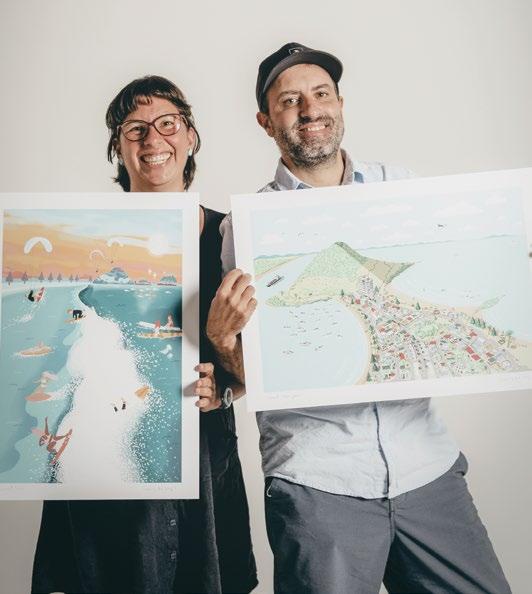
by Brydie
Photography
Thompson
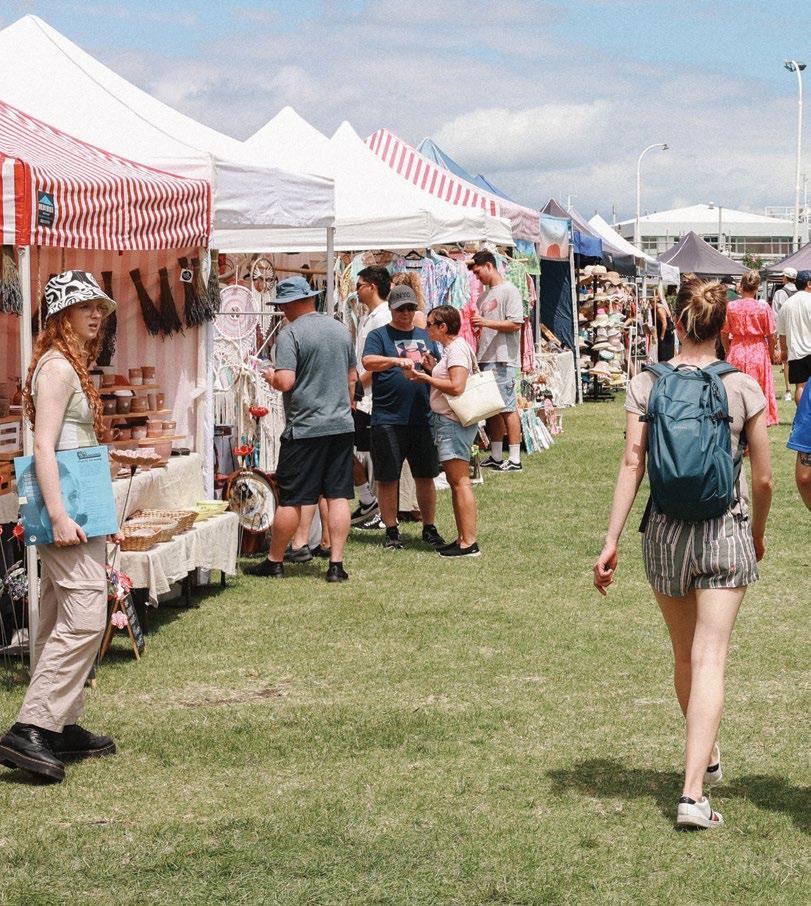
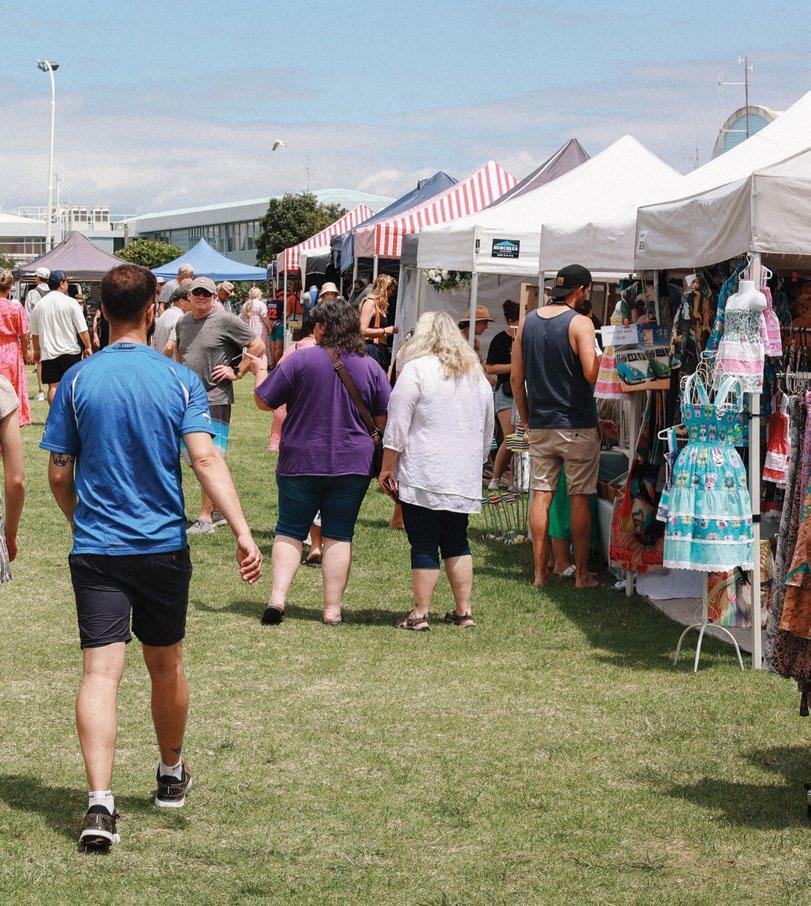
Coronation Park 9am—2pm
Saturday 24 05 26
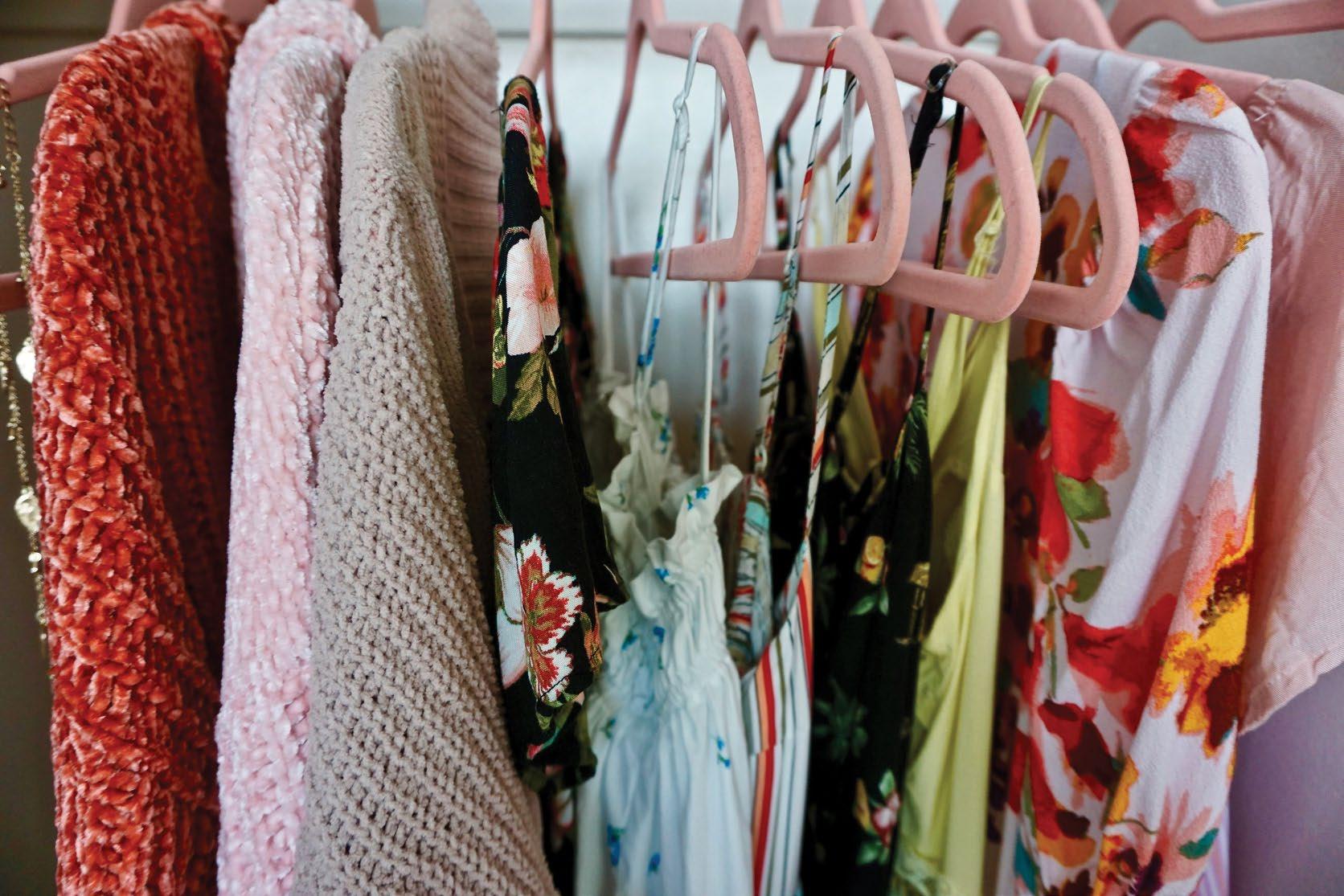
Discover timeless treasures at Thrifted Finds, your go-to vintage and second-hand market for unique, sustainable fashion and decor.
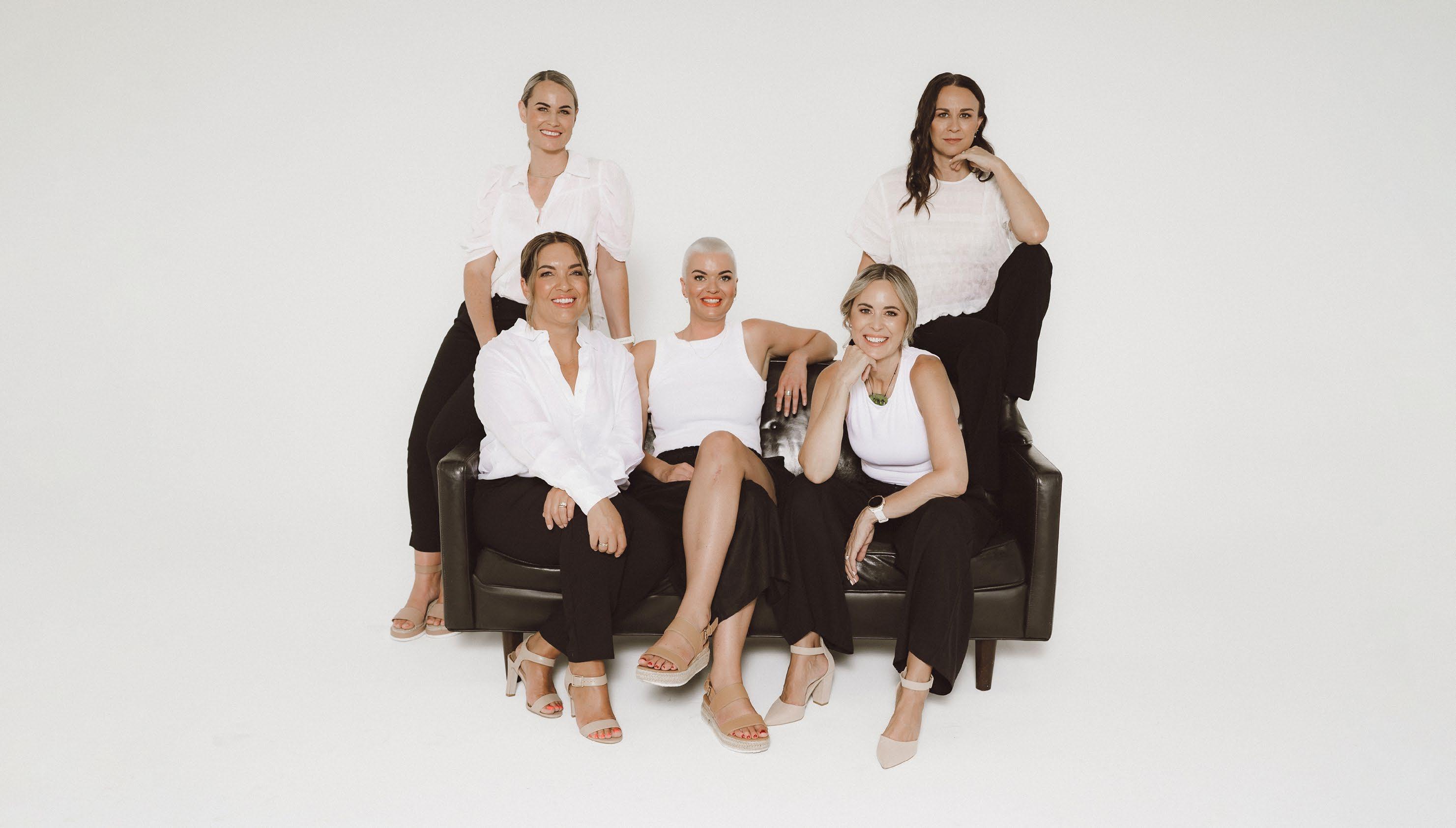
COSMETIC INJECTABLES & CORRECTIVE SKIN TREATMENTS
GENUINE CONNECTION. GENUINE CARE. REAL RESULTS
LAND DEVELOPMENT | CIVIL ENGINEERING | SURVEYING
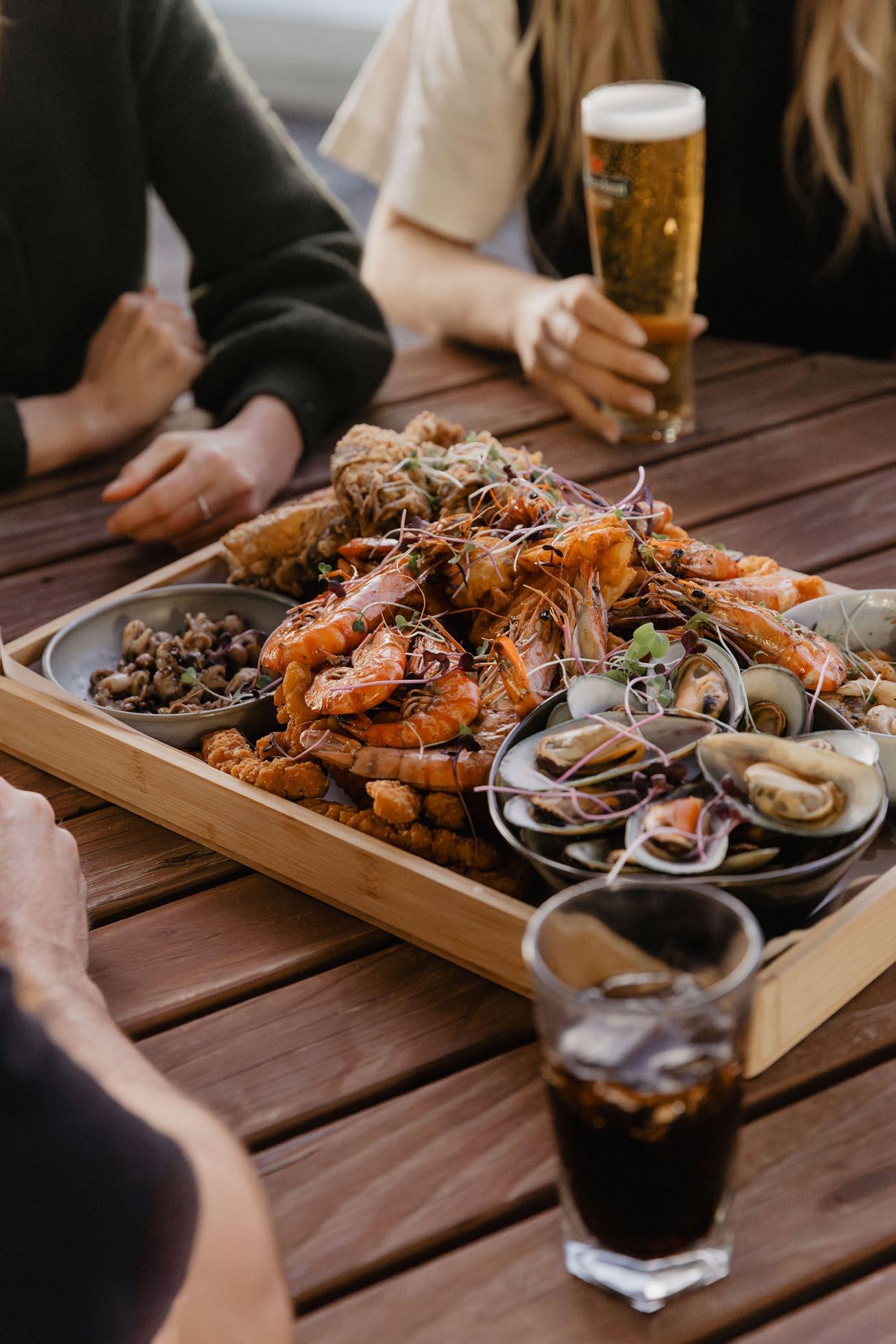
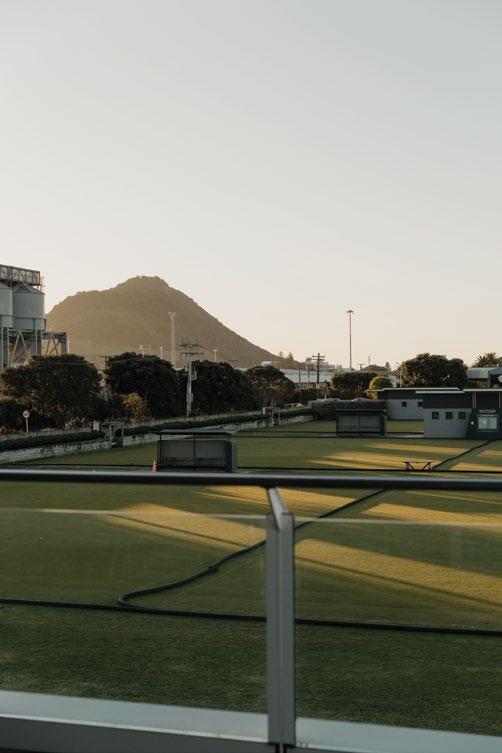
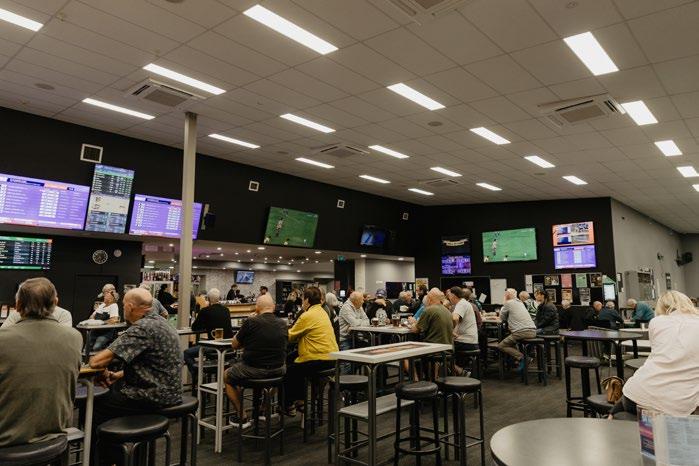
Step inside Club Mount Maunganui and you’ll find more than great facilities — you’ll find friends, fun, and a place where everyone feels at home. Whether you’re here for bowls on the green, a quiet pint, a game of pool, family meals, quiz nights, or live music, there’s always something happening. A sports bar with heart, a restaurant with flavour, and a calendar full of ways to connect — this is your club, your way.
Full membership is just $45 per year and comes with plenty of benefits. Members enjoy discounts and loyalty points, access to the sports bar, TAB, gaming lounge, eight ball, darts, and function hire, as well as a wide range of activities including bowls, pétanque, croquet, indoor bowls, fishing, and punters’ groups. With regular membership draws, raffles, a club van for group outings, and accompanying guests always welcome, Club Mount Maunganui is a place to belong.
New faces always welcome. Come join the fold.
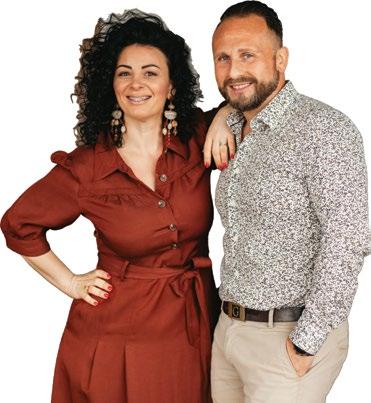
Founders Rachelle & Christopher Du y
Creative director Christopher Du y
Editor Zoe Hunter zoe@ourplacemagazine.co.nz
Social manager Millie Guest social@ourplacemagazine.co.nz
Advertising inquiries
Rachelle Du y 021 032 7873 rachelle@ourplacemagazine.co.nz
Contributors
Zoe Hunter, Christopher Du y, Rebecca Lee, Kristin Macfarlane, Stuart Whitaker, Laura Boucher, Kate Wyse, Madeleine Hughes, Cherie Metcalfe, Mitchell Handcock, Bethany Millar, Julie Torrey
Photographers
Naera Ohia, Erin Cave, Jane Keam, Dot Agency, Christopher Du y, Ross Campbell
Pick up your copy from The Little Big Markets, plus at selected cafes, restaurants, shops and businesses.
Want to receive regular copies of Our Place for your business to distribute? Email rachelle@ourplacemagazine.co.nz
To tell us about anything happening in your area right now, email zoe@ourplacemagazine.co.nz
Cover & contents
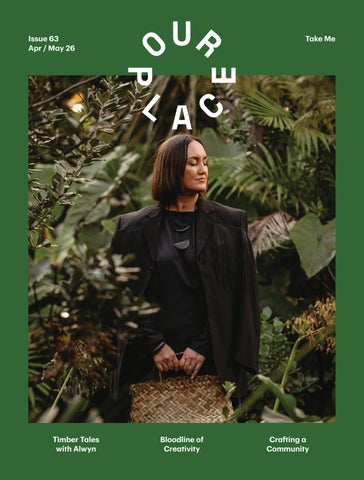
Cover photography: Arohanoa Mathews by Naera Ohia (page 23). Contents photography: Ben Whitaker plays the pūoro for his toddler by Jane Keam (page 76).
Follow us @ourplacemagazine ourplacemagazine.co.nz
As we settle into the crisp rhythms of the season, this issue gathers stories that warm and inspire our community.
Our cover story shares wahine Māori artist Arohanoa Mathews’ bloodline of creativity (23). Turn the pages and radio host Takiri Butler tells writer Kristin Macfarlane why being Māori shapes every aspect of her life in our Kōrero feature (40).
In Timber Tales, Alwyn Vickers speaks to Stu Whitaker about the inspiration behind his fine furniture company (69), while Laura Boucher finds out how Robyn’s Cottage is crafting a community (82).
Read on and our creative director Christopher Duffy dusts off his crystal ball and predicts our destinies in his new segment Dope Horoscope (88).
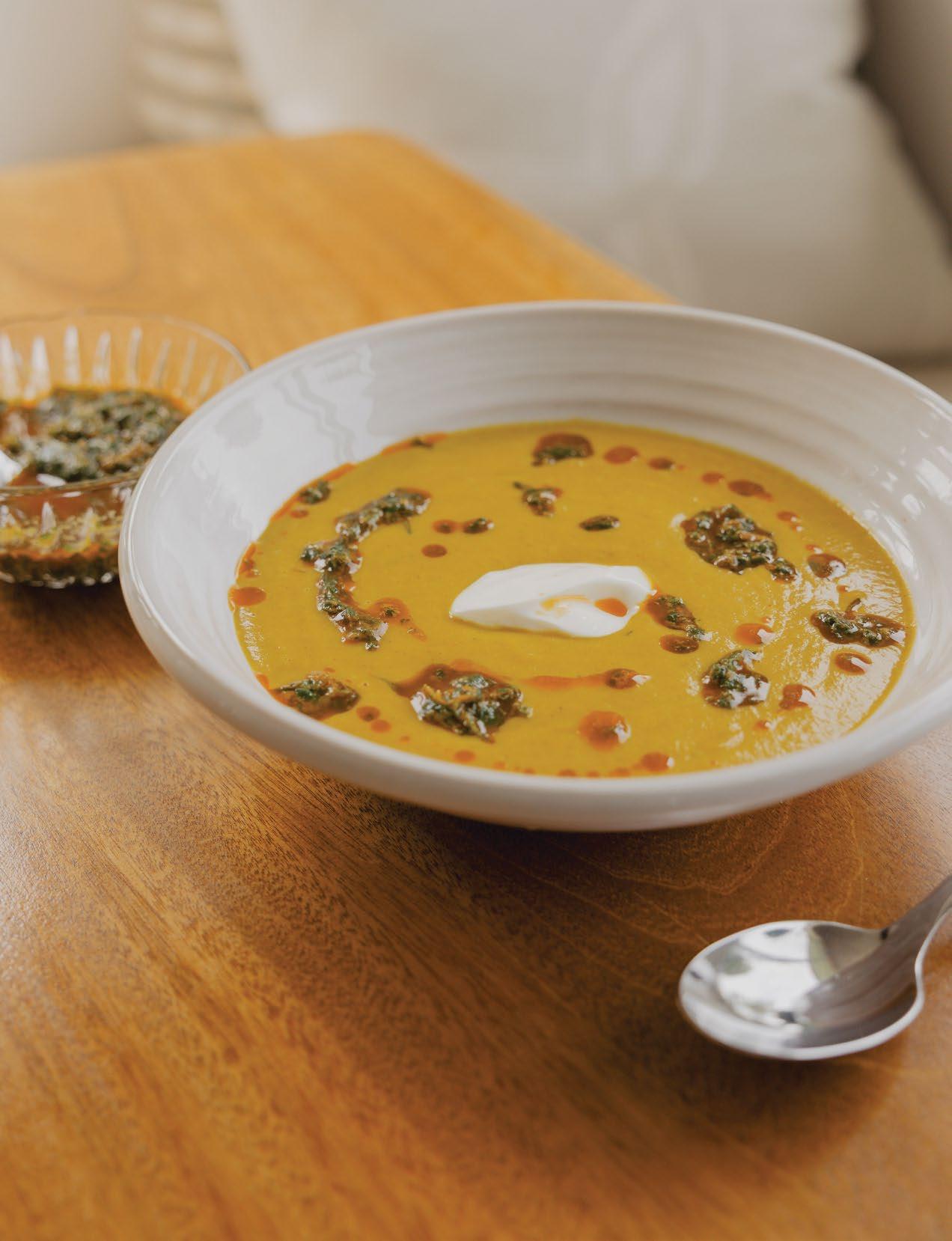
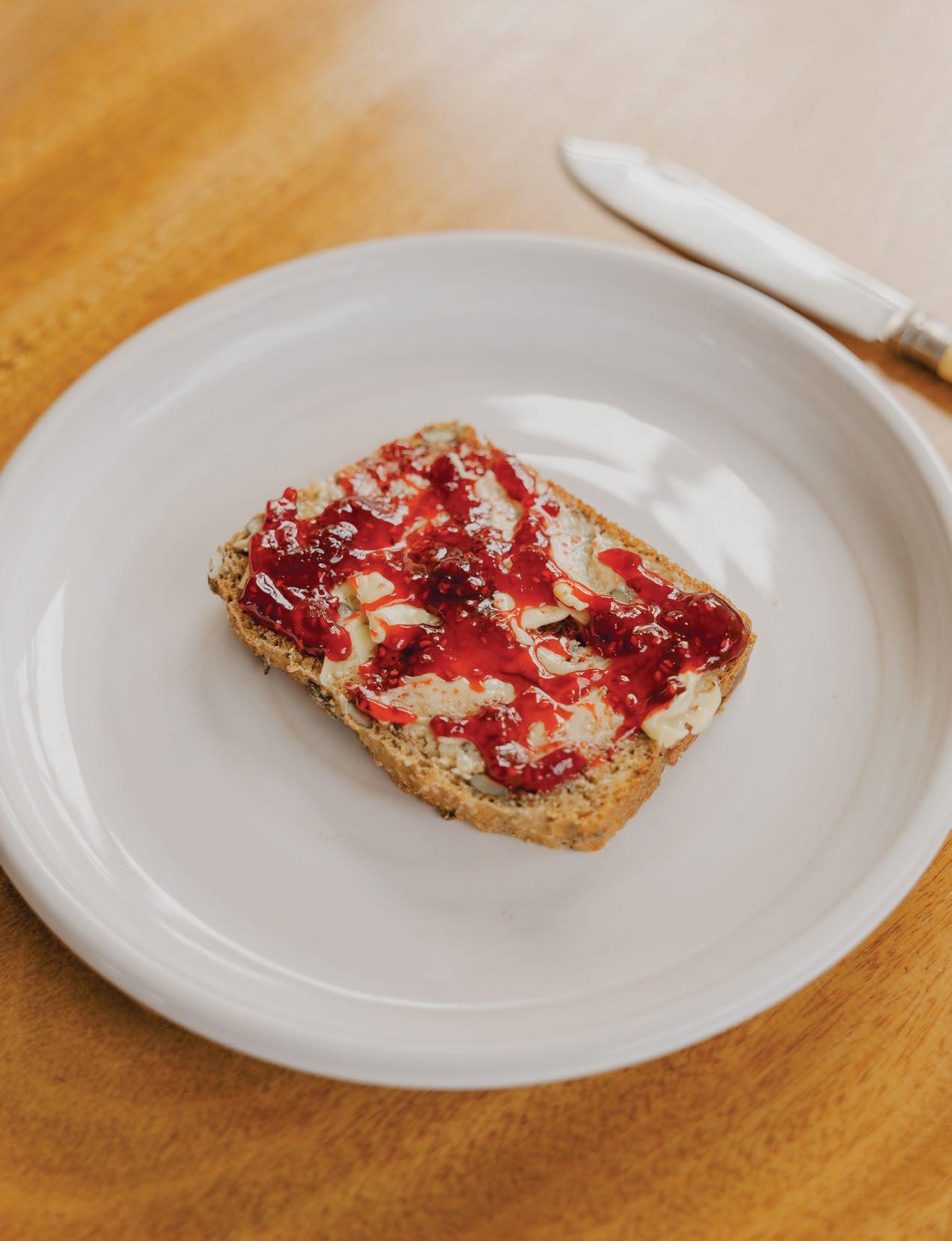
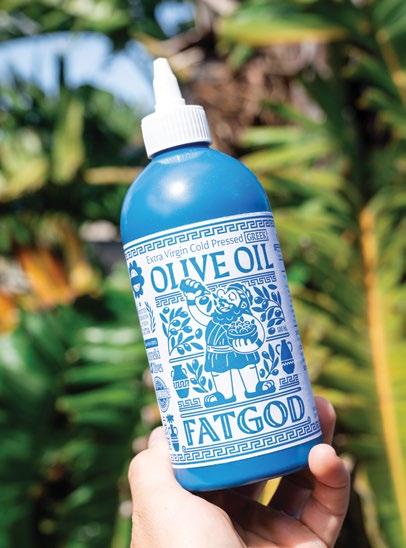
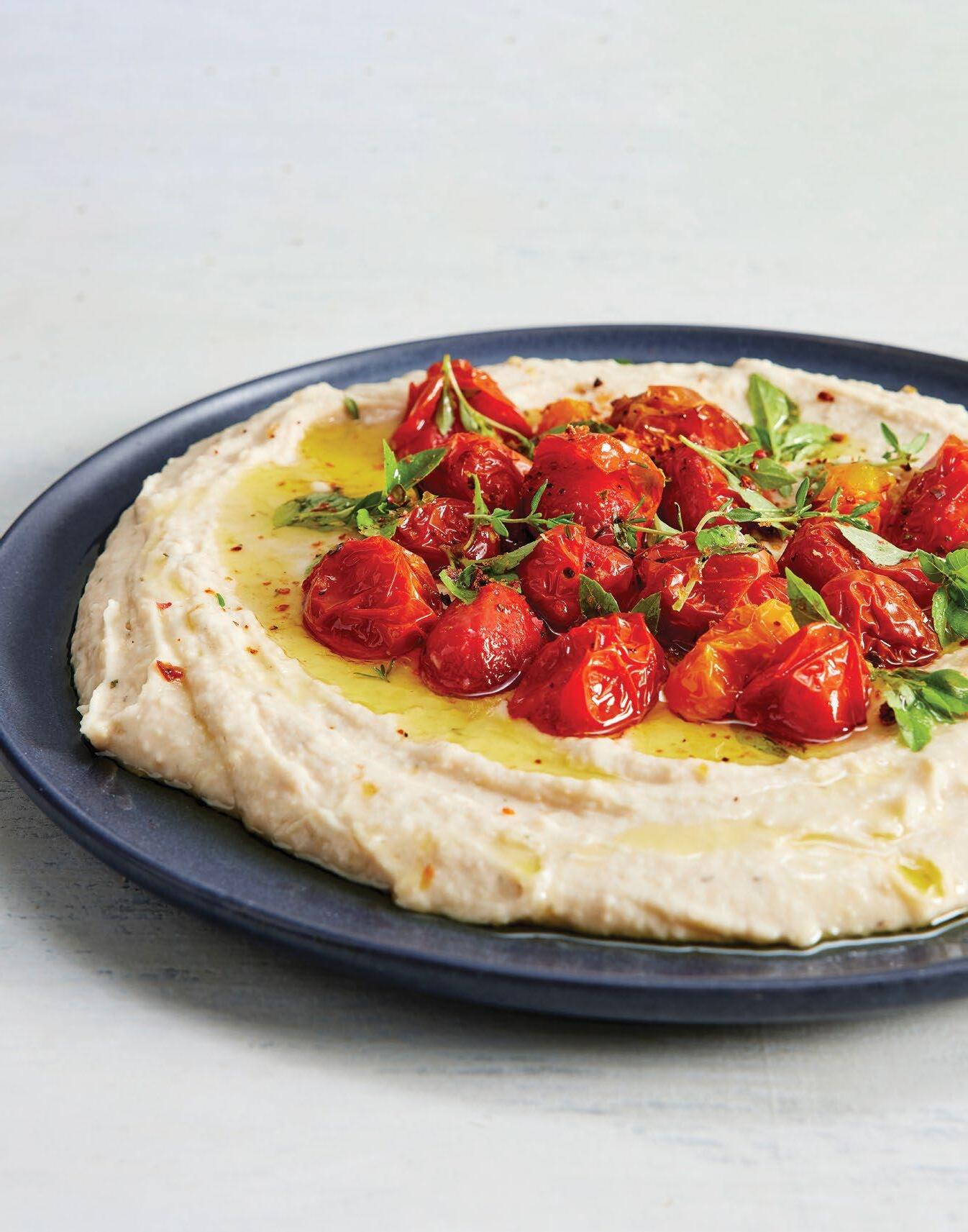
Chef Madeleine Hughes serves up a delicious coconut, carrot & red lentil soup, with a side of old fashioned molasses bread in our Eat This feature (91). While Pepper & Me’s Cherie Metcalfe gives us a sneaky peak at one of her recipes from her new cookbook ‘Potluck’ using her newly-launched Fat God olive oil (97).
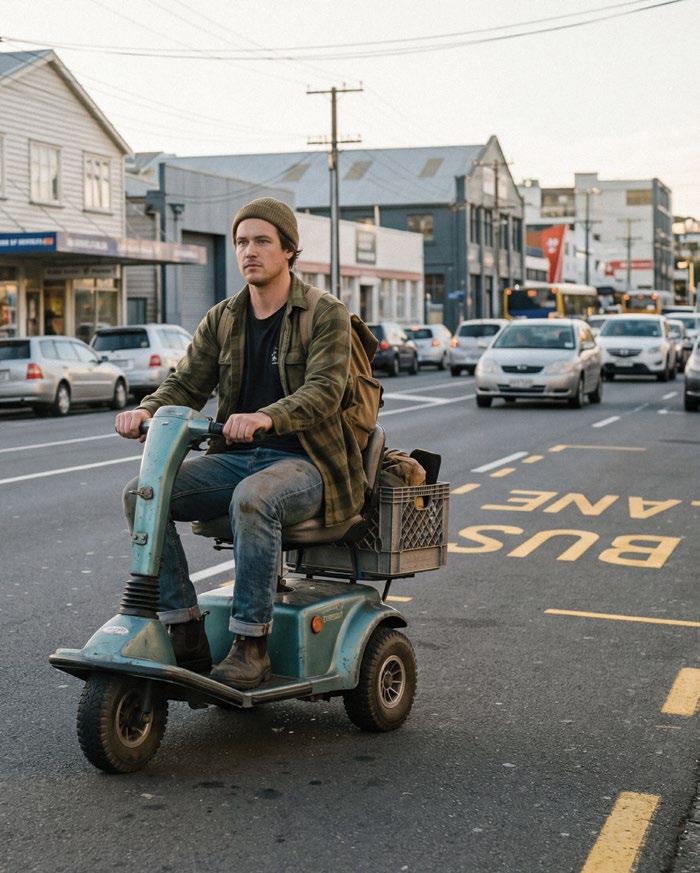
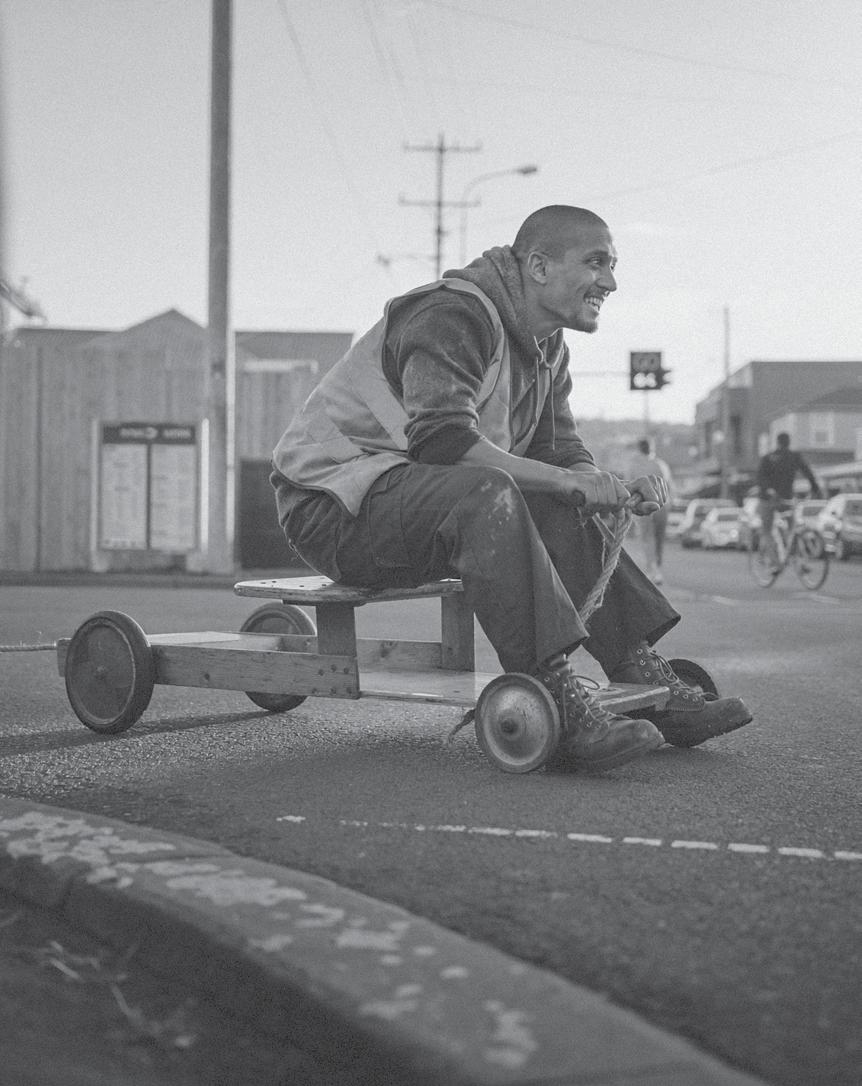
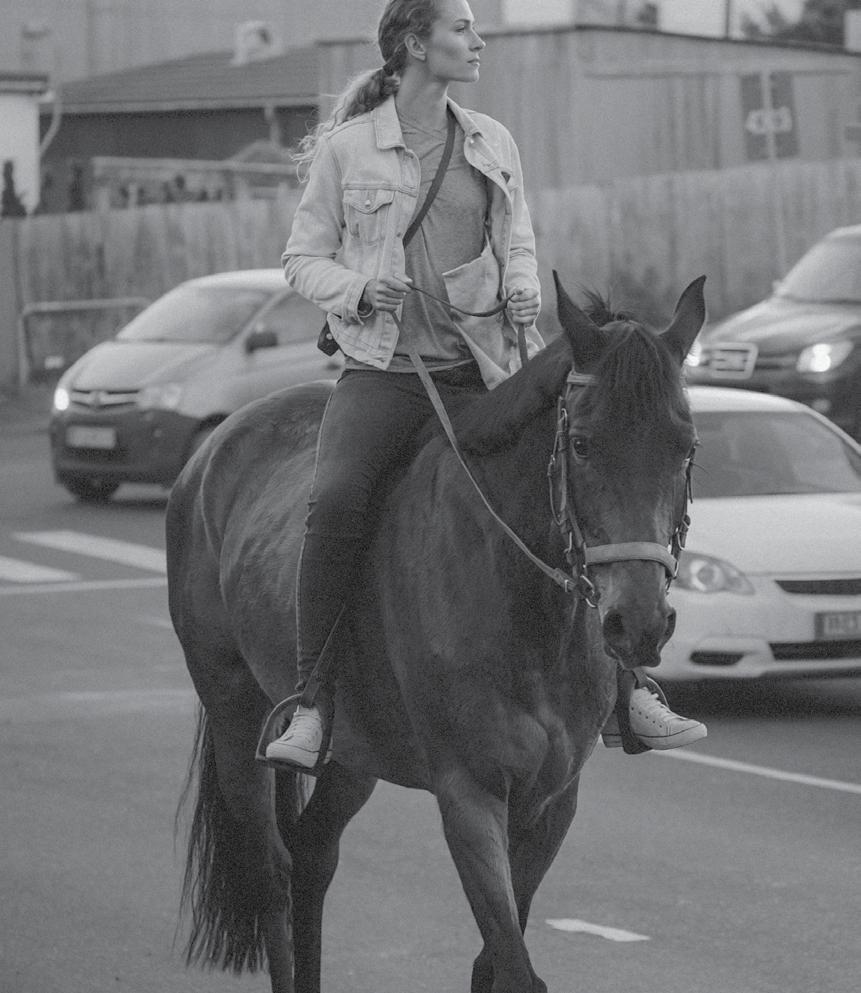
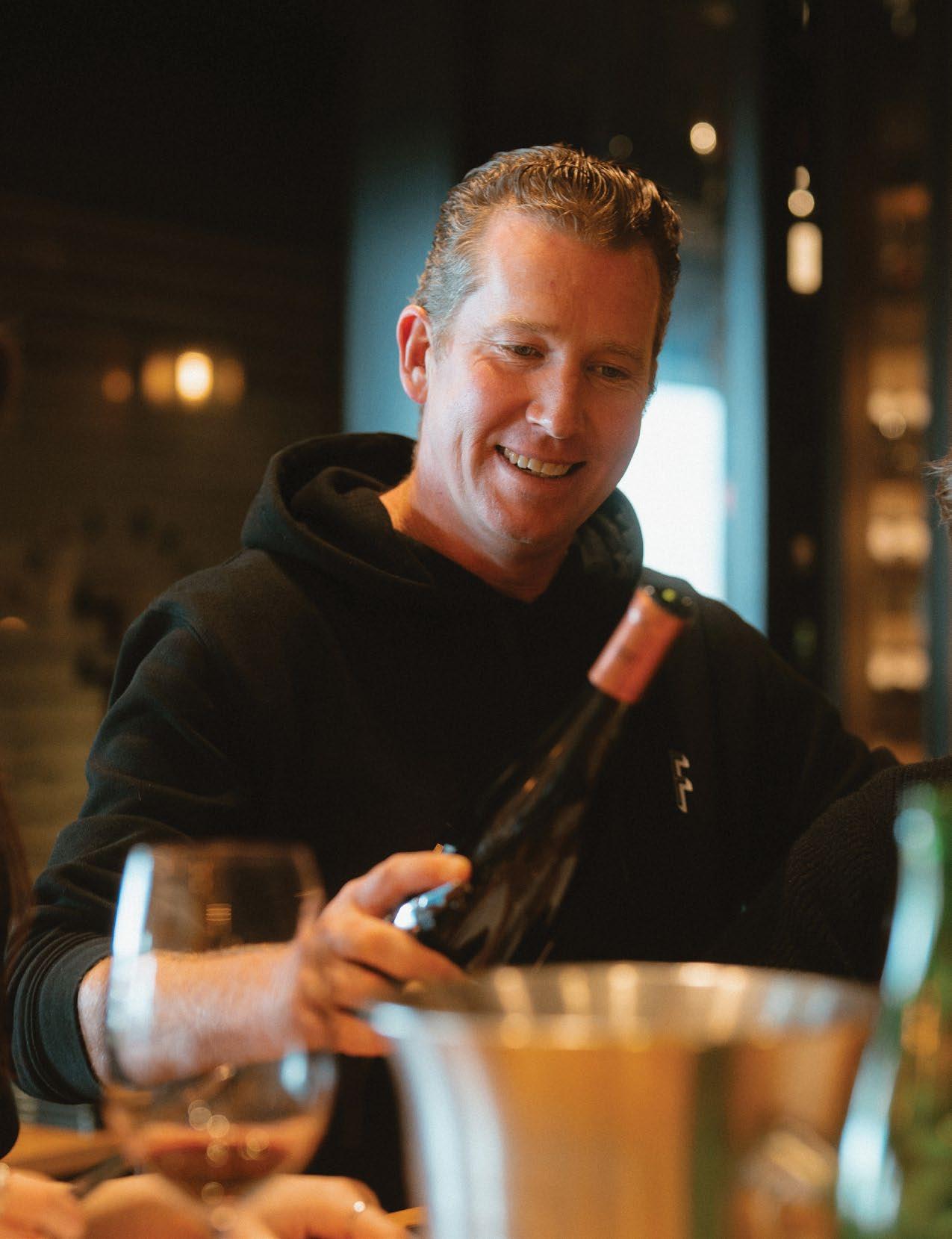
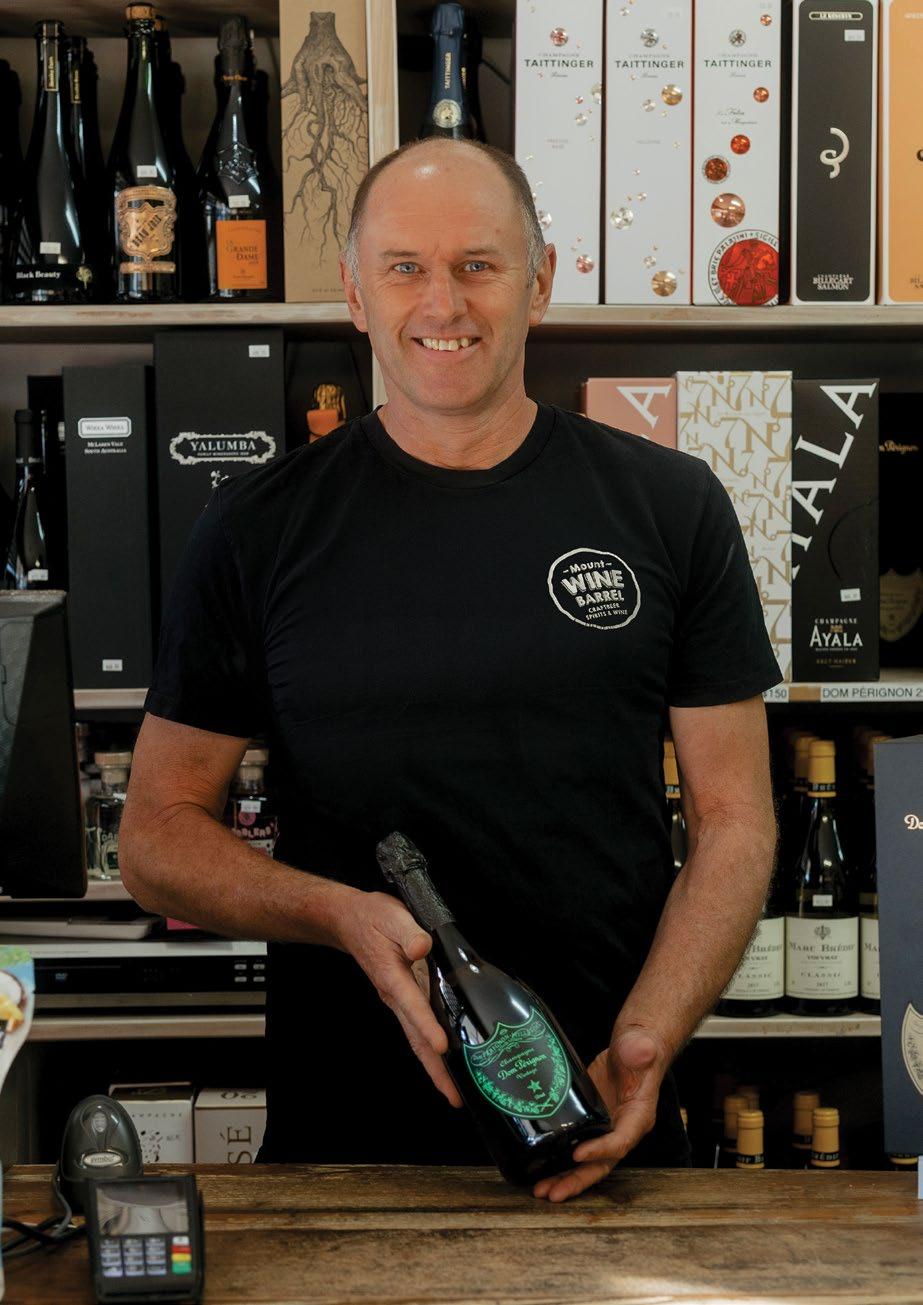
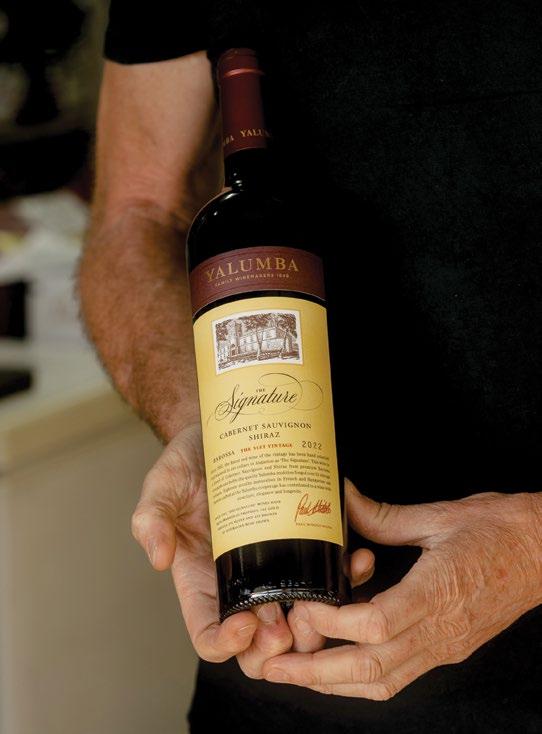
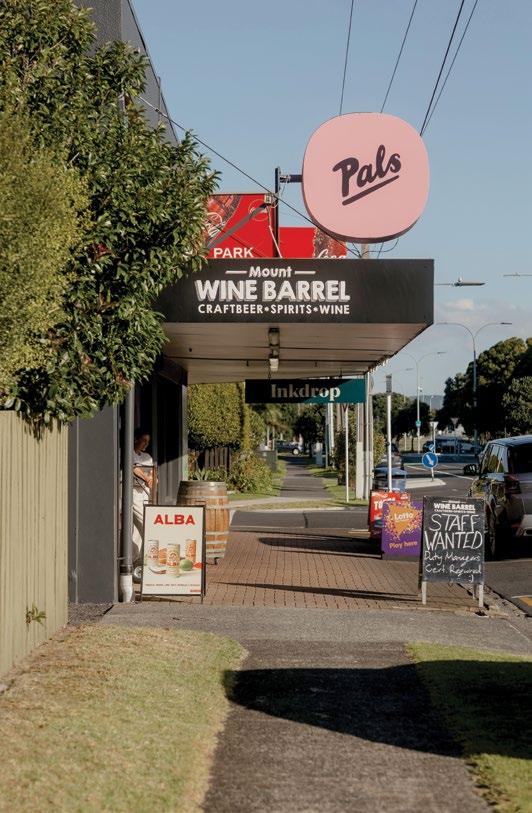
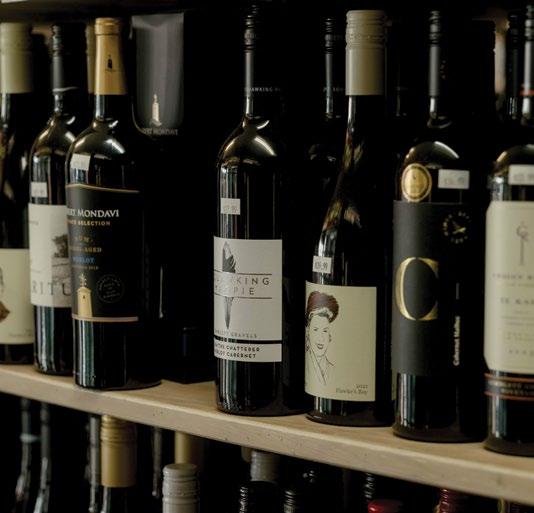
Plus, we go Behind the Counter with Dave Carr from Mount Wine Barrel (108). Our Photo Essay explores alternative routes as we imagine new ways of getting to work, with rising fuel costs pushing everyday routines into question (57).
Here’s to another issue of creativity, community, character and connection.
Regards, The Our Place team
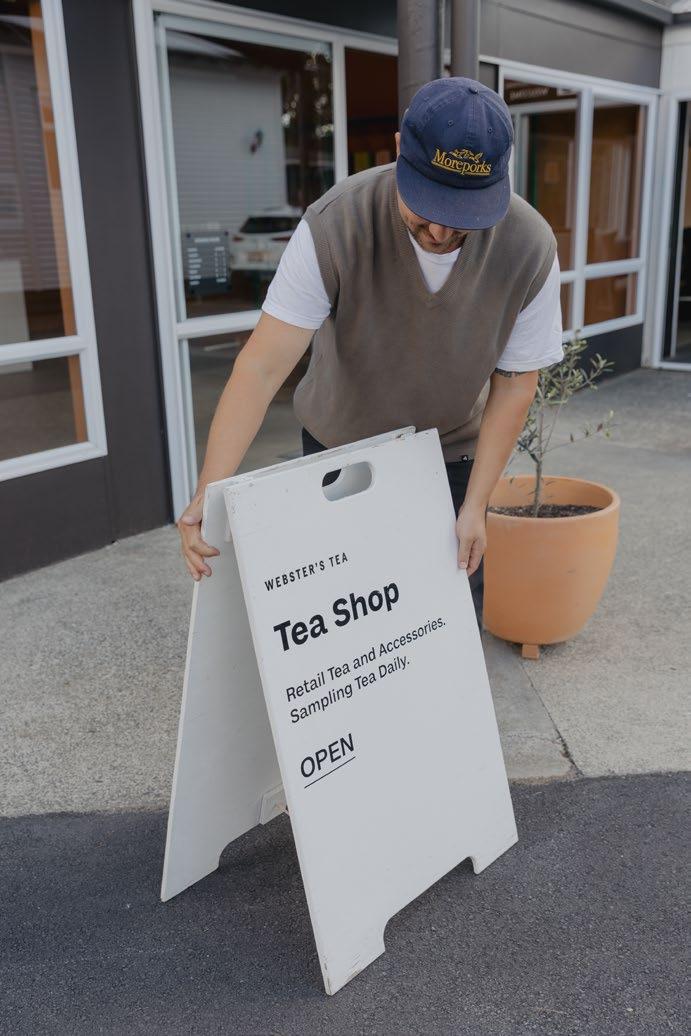
WEBSTER’S TEA
Sample our premium tea, explore the pantry, and find a thoughtful gift or piece for your home. Located on-site with Clarke Rd Kitchen, we’re the perfect destination for a mid-week escape or a relaxed Saturday morning out.
7 Clarke Rd, Te Puna Open Tuesday – Saturday 9am – 3pm websterstea.co.nz
What’s Up
Of The Earth
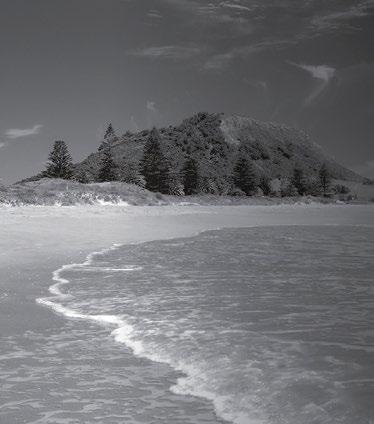
Te Ara o Mauao
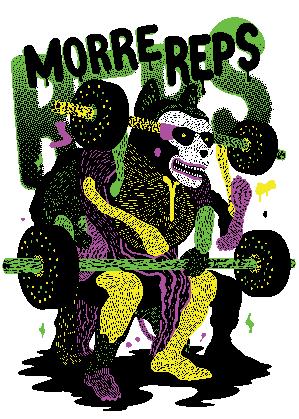
Explore the new Te Ara o Mauao Gallery at Toi Ohomai Institute of Technology. The gallery takes its name from Mauao, the maunga that sobbed for love and through this journey was caught by the light. The gallery is a purpose-built space for creative research excellence, guided by values of kotahitanga, whanaungatanga, manaakitanga and toitūtanga, that are woven into every exhibition, partnership, and learning opportunity. This kaupapa shapes the Bachelor of Creative Industries programme at Toi Ohomai in Tauranga, where students are reminded that their journey, like Mauao at dawn, is full of promise and potential. The ‘Alumni Ngāti 2026’ exhibition and ‘Alf Rendell Photography Scholarship Exhibition’ both run from April 20th to May 15th. The ‘Morre Reps’ exhibition runs from May 25th to June 12th. Te Ara o Mauao Gallery is open Monday to Friday 9am to 3pm in M block at the Windermere Campus at Toi Ohomai.
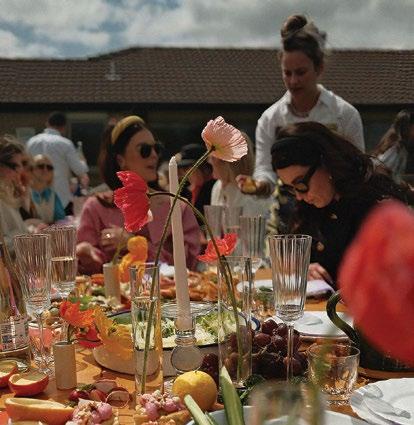
Rose’s Dining Table and Our Place magazine invite you to explore the connection between the land and the food we eat, with a three-course conceptual dining feast. Part of this year’s Flavours of Plenty Festival, ‘Of The Earth’ welcomes guests to dine from a communal table, with Rose Kennedy’s signature ‘food and art’ style. Participants will also learn about the soil and earth the harvested food comes from. Tickets include a three-course conceptual dining feast, free non-alcoholic drinks and a take home goodie bag. Vegan and vegetarian dietary requirements can be catered for, but due to the communal style of dining, it is not suitable for severe allergies. Alcoholic beverages will be available to purchase on the day. What: ‘Of The Earth’. When: May 2nd, from 1pm-4pm. Where: Ōmanu Community Gardens. → flavoursofplentyfestival.com/flavour-event/of-the-earth/
Stand Up For Aroha
A powerful new community performance event is set to light up Tauranga this April. Presented by Tuatara Collective in proud partnership with Baycourt Community & Arts Centre, ‘Stand Up For Aroha’ is a bold and joyful performance extravaganza celebrating identity, pride, whakapapa and collective power. Across Aotearoa and globally, Māori, Pasifika and other communities of colour, alongside rainbow communities and people of diverse faiths and cultural backgrounds, continue to experience discrimination, intimidation and harm. ‘Stand Up For Aroha’ is both a creative celebration and a unified response, standing against racism, homophobia, transphobia and all forms of hate. What: Stand Up For Aroha. When: April 11th, 7.30pm. Where: Baycourt Community & Arts Centre. Tickets: $20-$40.
→ tuataracollective.com
Brighten and whiten your smile with a professional Hygiene clean:
∙ A low price of $199 for new and existing clients
∙ In and out within 1 hour
∙ Helps improve health and prevent disease
∙ Caring and gentle
Cherry Siesta
What’s Up
Mount Maunganui based indie-rock band, Cherry Siesta, has released its debut self-titled EP. The band is made up of Jordan Cranshaw (vocals), Finn Lloyd (lead guitar) and Jacob Gerritsen (drums). For live performances, Spencer Price (rhythm) and Eden Exelby (bass) join to amplify their sound. Formed in January 2025 over a shared love of music, bringing existing friendships into a shared passion project, Cherry Siesta is quickly forming a distinct sound within the indie-rock genre. The Cherry vibe is an amalgamation of classic rock, 2010s/20s New Zealand/Australia indie-rock, and early 2000s pop punk. March 2026 saw the release of their debut EP, ‘Cherry Siesta’. The release consists of songs including ‘Stranger Luck’, ‘Low Fruit’, ‘Another Long Day’, ‘Elvis’ (new) and ‘Stop Beeping Now’ (new). Work has already begun on a debut album, which the band hopes to release in summer 2026/2027, preceded by singles in spring 2026.
@cherrysiesta
Mauao Landslide Fundraiser
For the Fallen
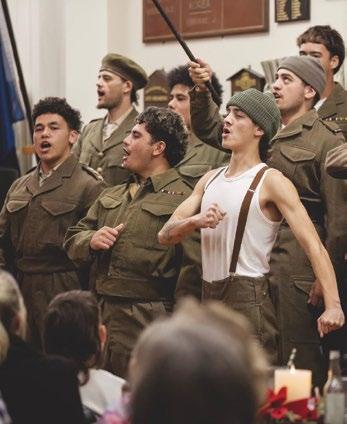
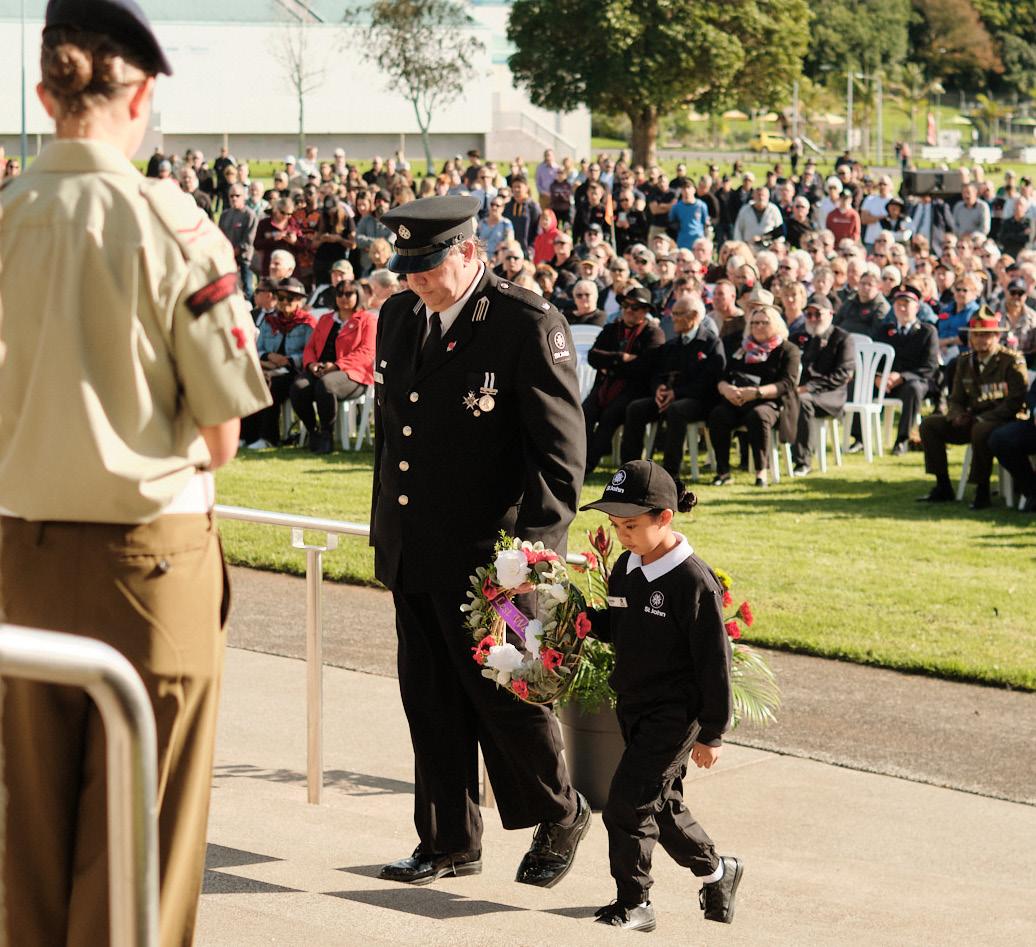
Tuatara Collective invites you to a moving and powerful tribute to commemorate Anzac Day this April. For the Fallen 2026 is a rangatahiinspired community engagement project inviting local youth to investigate conversations with other young people who went to war in the Māori Battalion. Six-day workshops see up to 30 rangatahi, aged 13-to-21, research, explore and develop the kaupapa and content through performing and visual art forms. Running parallel to this mahi is Tuatara Collective’s unique Rātā Initiative, an innovative high-quality arts practice collaborating with health professionals to support mental health and wellness in the creative industries. The wānanga programme culminates with a performance tour to RSA’s around the Western Bay of Plenty and Waikato. For the Fallen 2026 is on at various locations from April 15th to 25th. Tickets: $15-$35.
→ tuataracollective.com/forthefallen or phone 0212222859.
The Mount Maunganui community is coming together in a powerful show of unity this April, with a landmark fundraising concert for families affected by the tragic Mauao landslide. The event, hosted at Totara Street in Mount Maunganui, will run from 12pm to 11pm on Sunday, April 26th. Spanning two live stages and a DJ courtyard, the event features more than 25 local artists and acts, with headliner Tiki Taane leading a bill that includes Darz Music featuring Frances Phoenix, The John Michaelz Band, The Gunsmiths, Stella Riley, Sonorous, K Holla, No Reply, Red Street, and many more. Every ticket purchased and donation made goes directly to the Tauranga Mayoral Relief Fund.
A Companion Rock and Roll Warm Ups show at Totara Street on Friday 24 April will also raise funds for the Mayoral Relief Fund.
→ Tickets: totara.flicket.co.nz Supervised event. Under 18s must be accompanied by a parent.
Bloodline of Creativity
Words by Kristin Macfarlane
Photography by Naera Ohia
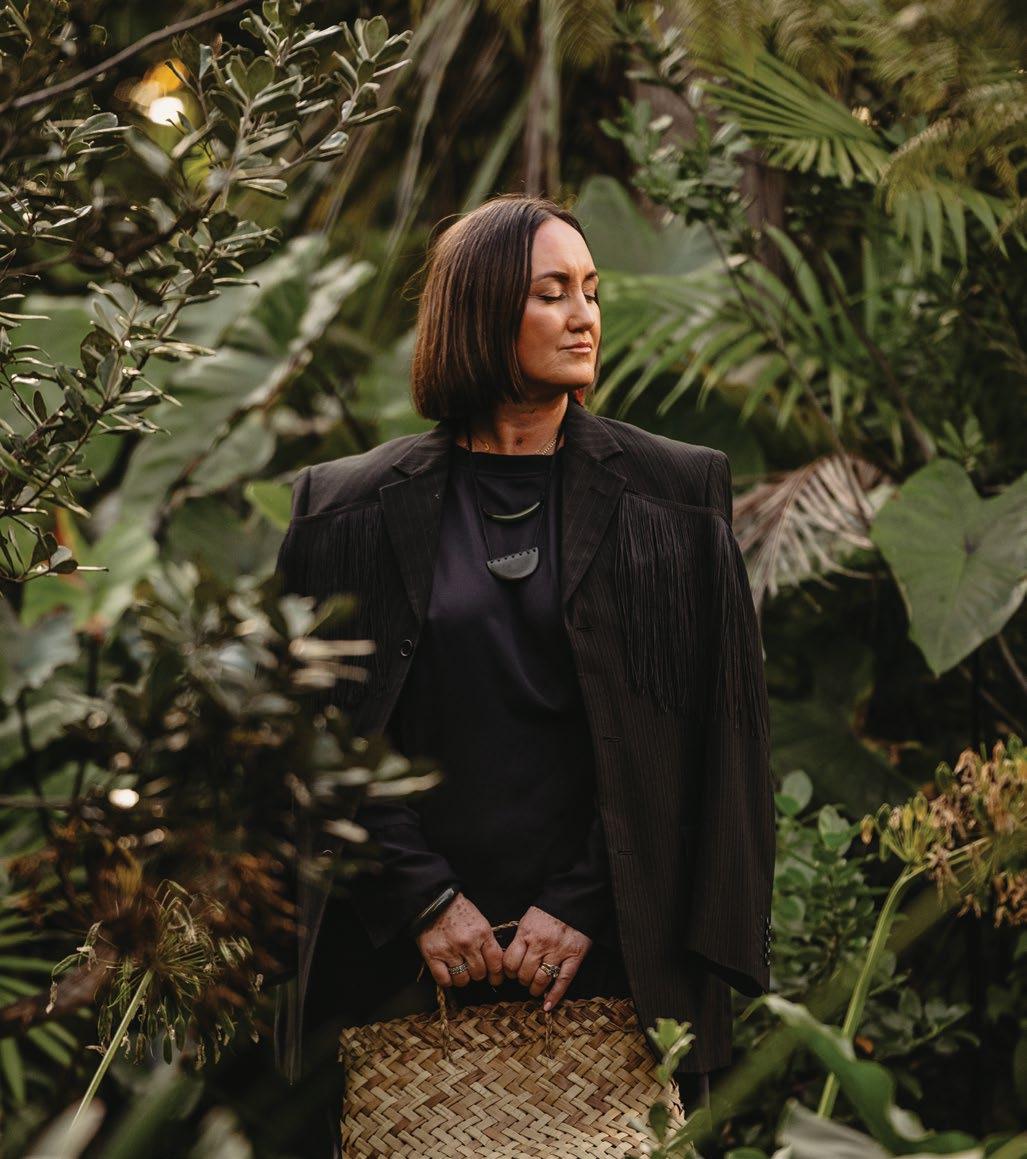
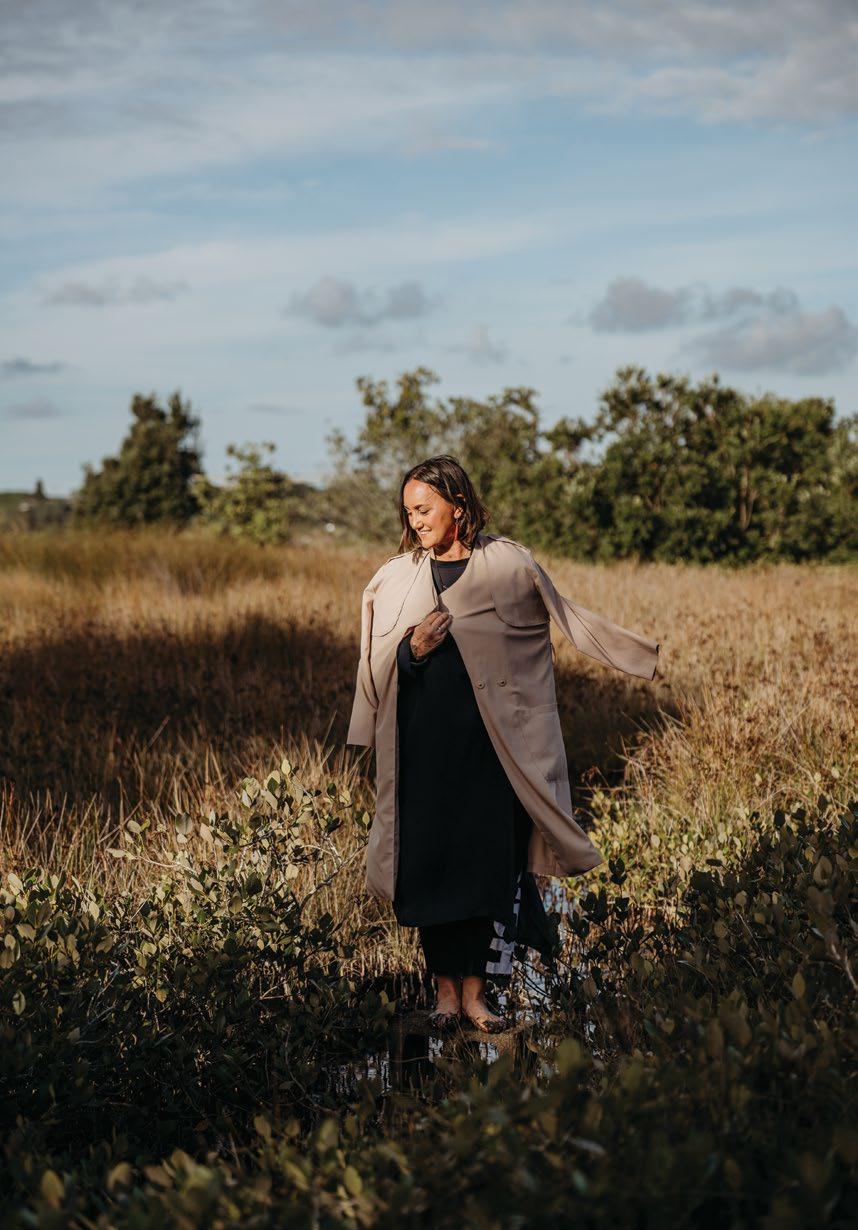
Creativity runs in Arohanoa Mathews’ whānau. Art has never been separate from life for this wāhine Māori artist and designer. Instead, it is how she processes the world around her.
Today, Te Ao Māori is the foundation of Arohanoa’s art and creativity practice.
As a child, Arohanoa Mathews was unknowingly surrounded by creativity, conscious fashion and values of Te Ao Māori.
For her, it was simply just normal life. Slow fashion, sustainability and similar labels weren’t discussed. It was just how things were done in Arohanoa’s whānau, so it’s no surprise these quiet influences have helped shape the artist, designer and advocate she has become.
“Creativity and resourcefulness were just part of everyday life. Mum would sew and make all of our clothes, matching outfits… and she patched socks and shirts for dad. Nothing was ever discarded,” Arohanoa says.
“Growing up with Māori values, caring for the environment was simply part of everyday life. Those ideas come through our whakapapa and the way we are raised to respect what surrounds us.”
Being the youngest in her whānau meant
Arohanoa often inherited hand-me-downs. Instead of feeling as though she missed out on something new, Arohanoa learned something more valuable, which was “to see the potential in what was passed on and to make it new again”.
Today, as an artist, this remains at the core of her creative practice.
Arohanoa was born in Whakatāne and grew up in Brisbane, and was always surrounded by creativity. She can’t pinpoint one single moment when she decided art would be the career path she would pursue.
“Creativity has always been part of who I am. From a young age I was always drawing, making, and experimenting with materials, and over time that naturally grew into painting and design and completing my Visual Arts Communications Design Degree in Auckland, and later into teaching and working in the arts,” she says.
“Growing up with Māori values, caring for the environment was simply part of everyday life. Those ideas come through our whakapapa and the way we are raised to respect what surrounds us.”
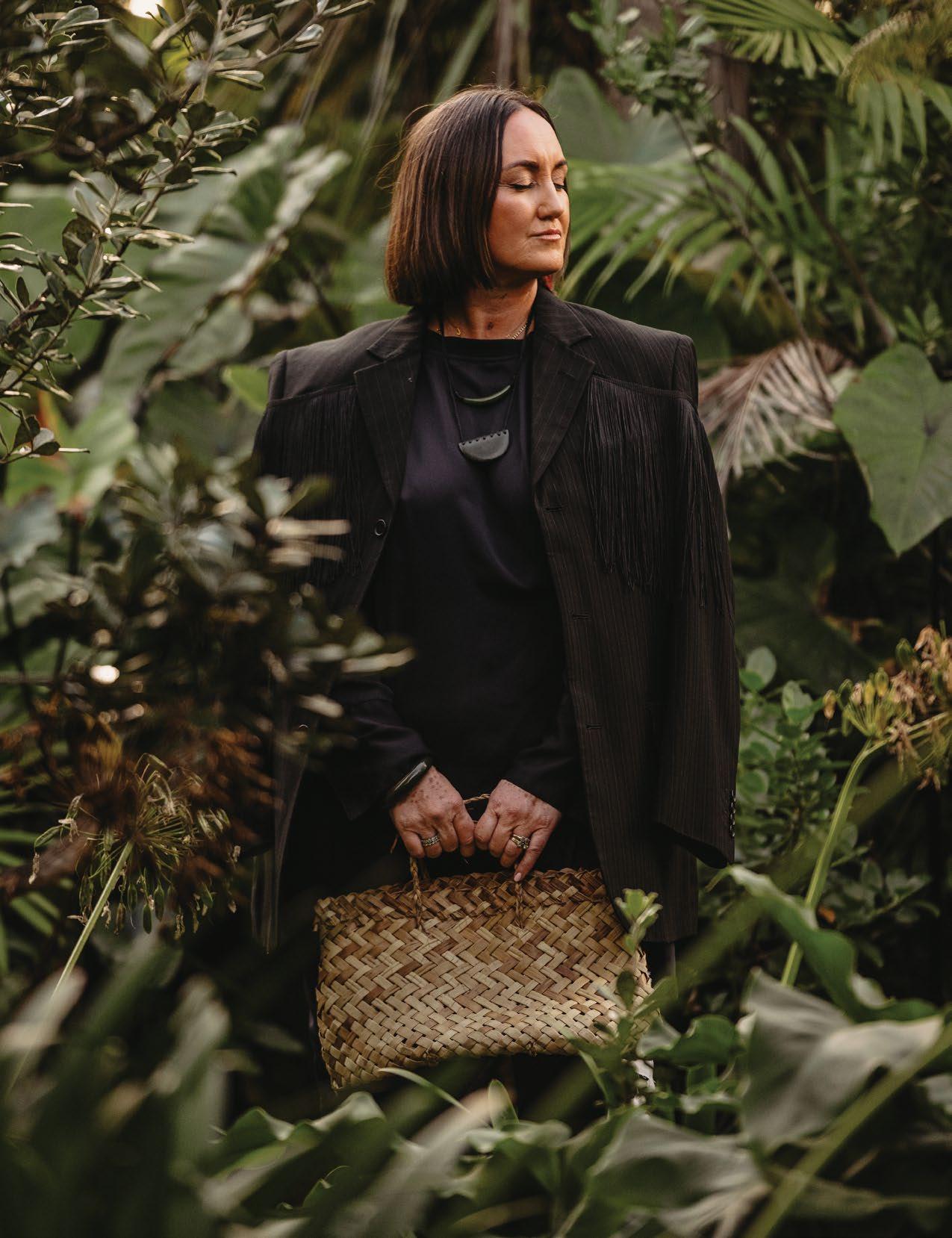
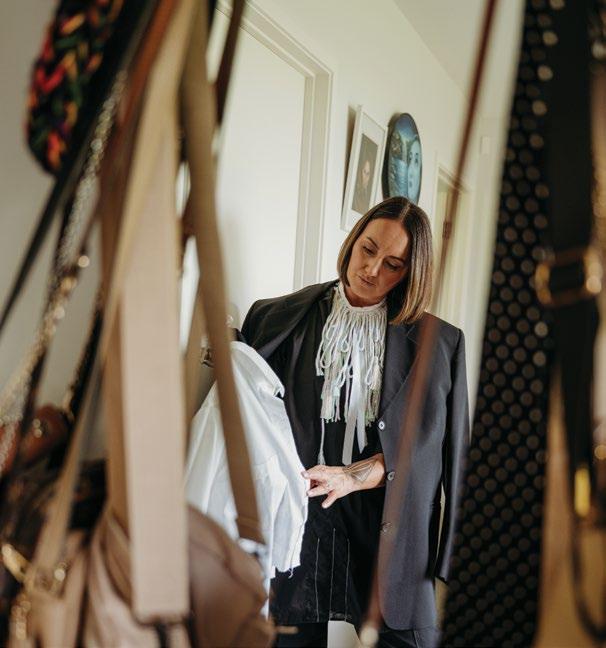
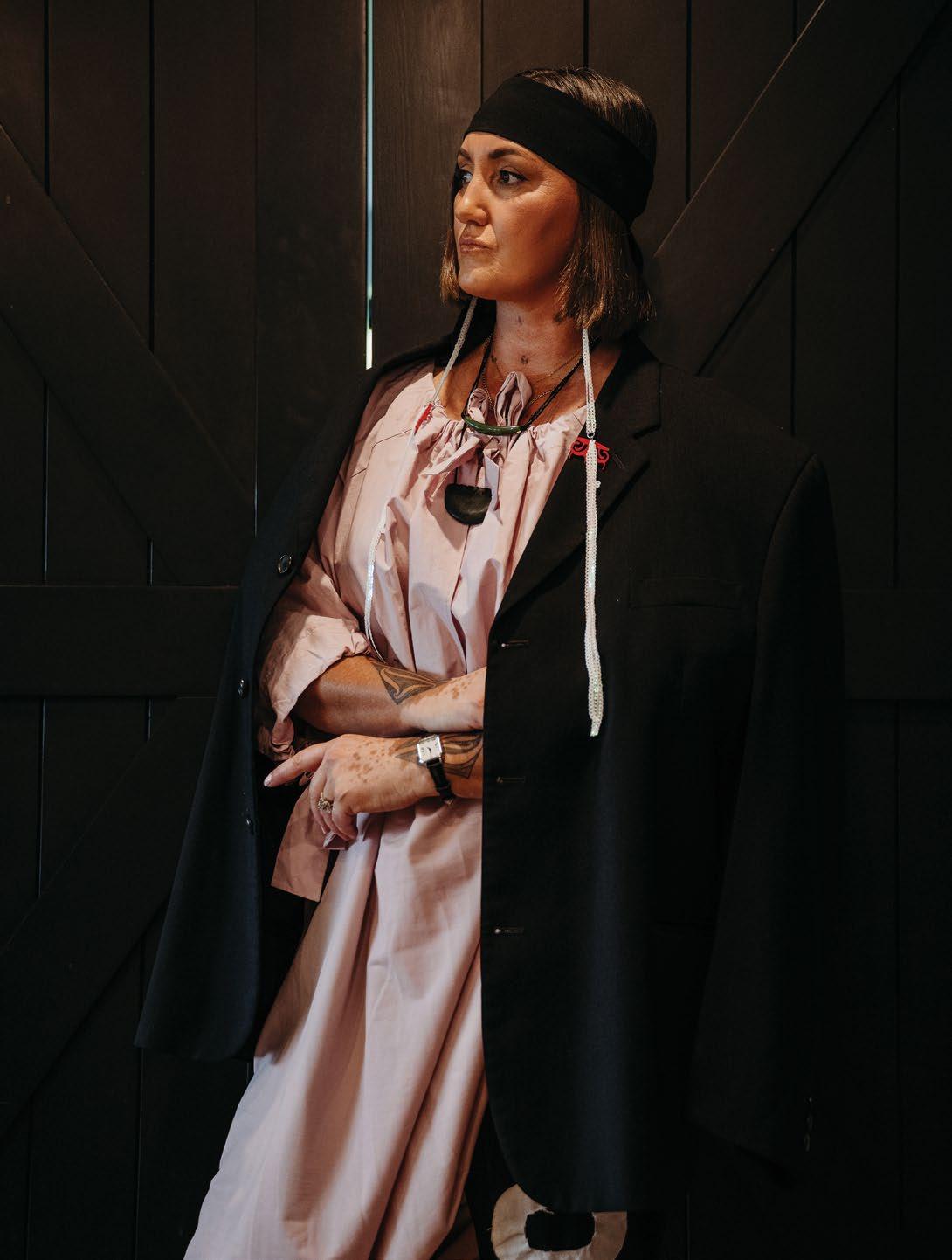
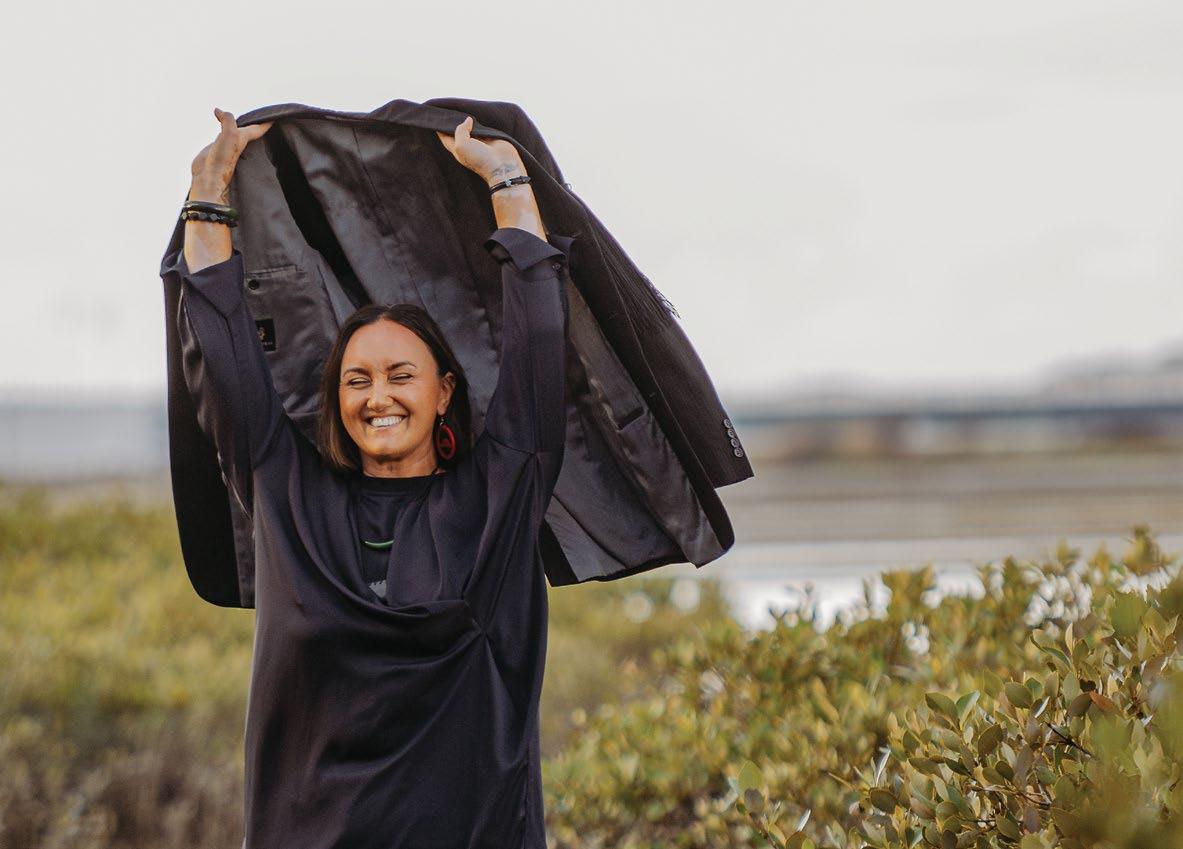
HONO is a collection of one-of-a-kind upcycled suit jackets, known as koti.
“Creativity also runs through our whānau. Both of my parents are creative, my siblings are creative, and my grandmother on my dad’s side was too. Many of my cousins are artists and makers as well. Sometimes I think it’s just in the genes.”
That early passion eventually led her to study visual arts and communications design in Auckland, a step that would deepen both her technical skills and creative direction.
Arohanoa’s journey into the arts hasn’t all been focused into her own creativity. Much of her professional life has been spent helping others discover their own artistry.
For nearly a decade, she worked as head of art at a secondary school in Perth, after earlier teaching art in Auckland.
Education became a central thread in her career, allowing her to remain connected to her own creative practice while inspiring a new generation of artists.
“Teaching allowed me to stay connected to my own practice while helping others explore their creativity. It also reinforced for me how important it is that people see creativity as something accessible, not something reserved only for galleries,” Arohanoa says.
Later, she returned to Aotearoa and spent five years as education manager at Te Rūnanga o Ngāi Te Rangi, balancing leadership in the cultural sector with raising two sons alongside her husband.
No matter where life took Arohanoa and what kept her busy, she never stopped creating.
“In my mind, I was always a full-time artist,” she says. “Late nights, weekends, holidays… all of that time was spent creating, experimenting, learning and building projects.
“Even while doing those jobs, I was still creating in the late hours after work and on weekends. In my mind, I was always a full time artist.”
Art has never been separate from life for Arohanoa. Instead, it’s how she processes the world around her.
“I didn’t just see creativity as something that belonged in a gallery, I saw it as a way of living, a way of being resourceful, and a way of caring for the world around us. Art has always been how I process ideas, culture, and connection. It’s how I make sense of the world.”
Over time, another important influence began to take a more intentional role in her work: Her connection to whakapapa and the worldview of Te Ao Māori.
“Te Ao Māori has always been there, but like many people, my understanding of it has deepened over time.”
Earlier in her career, her work was primarily focused on visual exploration through painting and design. As she grew older and spent more time reconnecting with her whakapapa those cultural foundations became central to her creative purpose.
“I didn’t just see creativity as something that belonged in a gallery, I saw it as a way of living, a way of being resourceful, and a way of caring for the world around us.”
“As a child, I did not necessarily name it. But as I began reconnecting with my whakapapa, especially in Matapihi, I realised how deeply my work is tied to those values. That is why it is so important. I am not just making art. I am grounding the work in who I am and where I come from.
“I also carry the same resourcefulness from my upbringing, especially from my mum, into every piece I create.”
Today, Te Ao Māori is the foundation of her practice.
“It’s not something I add on top of the work,” she says. “It’s the foundation. It guides how I think about materials, process and the responsibility we have to honour the knowledge passed down from our tūpuna.”
That thinking is particularly evident in her most recent creative venture – the HONO Collection.
The idea began with something she knew very well – resourcefulness.
Arohanoa had noticed a growing presence of Māori design within fashion, often centred around heat-pressed graphics or newly produced garments. While she recognised the importance of these practices, she wanted to explore something different.
The result was HONO, which is a collection of one-of-a-kind upcycled suit jackets, known as koti, created from pre-loved garments.
Rather than producing new textiles, Arohanoa sources existing pieces, often made from natural fibres like wool and cotton, and reworks them into statement garments. The process blends her background in painting, design and textiles, transforming everyday clothing into wearable artworks.
“By reworking these garments, they are given another life rather than being discarded.”
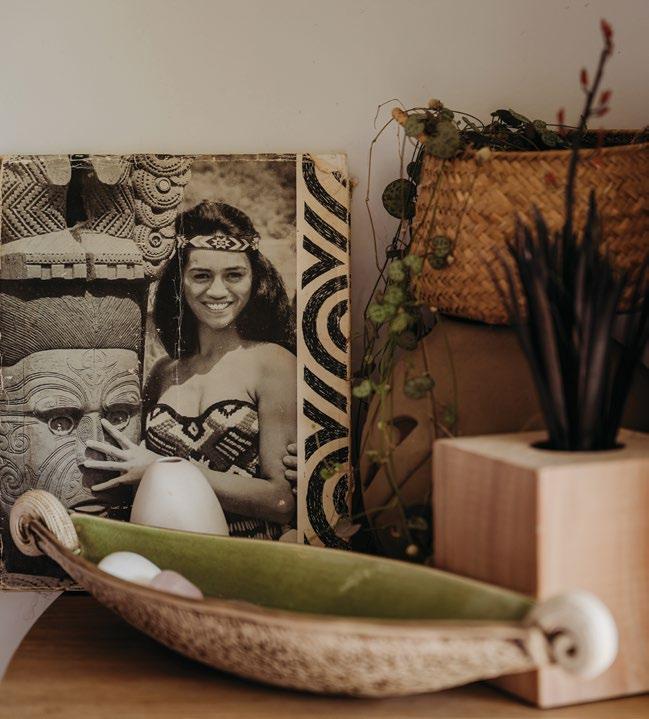
The concept also connects to a deeper lineage within her whānau. Her grandmother, Hurihia, was a kai raranga, or a traditional Māori weaver.
In many ways, HONO is a continuation of that legacy.
The name itself holds a powerful meaning. In te reo Māori, hono means to connect or bind together – an idea that threads through every piece in the collection.
For Arohanoa, the garments connect past and present, traditional thinking and modern materials, whakapapa and contemporary fashion.
Each piece is created slowly, with intention.
“I hope people see the work as thoughtful and intentional. These pieces are not mass produced.
“HONO pieces are designed to be long lasting. They are not something to wear once and move on from. They are pieces that can be held onto, invested in, and eventually handed down.”
In that sense, the garments become more than clothing. They carry stories.
“Māori artists have always been creating powerful work, but historically those voices haven’t always been supported or visible within the wider arts landscape.”
They also reflect a commitment to kaitiakitanga – the Māori principle of environmental guardianship.
“Growing up with Māori values, caring for the environment was simply part of everyday life. Those ideas come through our whakapapa and the way we are raised to respect what surrounds us.
“For me it is about respecting what already exists and giving materials another life, rather than contributing to more waste.”
Working with reclaimed materials has become one way she honours that responsibility, reducing waste while celebrating the potential of what already exists.
But HONO also carries a social dimension.
Mathews envisions the collection as something that empowers wāhine Māori in Tauranga Moana, particularly those who hold leadership roles within their whānau and communities.
“I want them to wear something that allows them to stand tall and proud, something that reflects who they are and the responsibility they carry.”
Garments in Arohanoa’s HONO Collection are more than just clothing. They carry stories.
The collection is also evolving, with plans to expand into designs suitable for both wāhine and tāne.
Inspiration for newer pieces comes directly from the whenua surrounding her home in Matapihi. There, a familiar visitor often appears along the water’s edge: the kōtuku, or grey heron.
“You’ll see it standing quietly on our land near Waipu, looking out to Mauao for hours, completely still,” she says.
“There’s something powerful in that stillness and presence.”
That image has inspired a new direction within the collection known as the Kōtuku Series.
Beyond her personal practice, Mathews also works to support the wider creative community. As Ngā Toi Māori Navigator at Creative Bay of Plenty, she helps advocate for Māori artists across the region, strengthening pathways for collaboration and visibility.
“Representation matters,” she says. “Māori artists have always been creating powerful work,
but historically those voices haven’t always been supported or visible within the wider arts landscape.” Through her work she hopes to open doors for the next generation of creatives, ensuring their stories are not only told but valued.
After more than three decades as a practising artist, Mathews says the thing she’s most proud of is that the work continues to evolve.
“I’m still learning, still exploring new ideas and still pushing myself creatively,” she says. “That curiosity keeps the work alive.”
It’s a mindset that continues to shape everything she does – from murals and jewellery to upcycled fashion collections.
And in many ways, it all circles back to those early lessons learned at home: Make use of what you have, care for the world around you, and never underestimate the potential in something that already exists.
@honocollection
@arohanoa_artistry
When Future Arrives Quietly
Words by Mitchell Handcock of Lexus Tauranga
On the surface, the new RZ 550e F Sport is Lexus’ most powerful battery electric vehicle yet. But beneath, the sculpted bodywork lies something more interesting.
There are moments in the automotive world when something genuinely new arrives.
Not a facelift, not a bigger screen, not another incremental improvement, but something genuinely new.
The new Lexus RZ 550e F Sport is one of those moments.
On the surface, it’s Lexus’ most powerful battery electric vehicle yet. A sleek, all-electric luxury SUV that combines performance, refinement and the meticulous craftsmanship Lexus has become known for.
But beneath the sculpted bodywork lies something far more interesting: A technology that may fundamentally change the way we drive.
For the first time in the New Zealand market, Lexus has introduced steer-by-wire technology paired with an aircraft-inspired “yoke” steering wheel.
It’s the kind of innovation that makes people stop, look twice, and ask: “Wait, how does that work?”.
And once you experience it, you begin to realise it might just be the future of driving.
The shift toward electric vehicles has been gathering momentum for years, but recently the conversation has taken on a new urgency.
Global tensions continue to ripple through energy markets. Conflict in the Middle East has once again reminded the world how fragile oil supply chains can be.
Lexus of Tauranga Promotion
↑ The yoke design of the new Lexus RZ 550e F Sport changes the way the interior feels. Without the top section of a traditional steering wheel, the driver enjoys a completely unobstructed view of the display.
Closer to home, New Zealand motorists are feeling it at the pump. Petrol prices have surged again across the country, so for families and commuters alike, the numbers quickly add up.
For some drivers, this reality has accelerated a decision they were already considering, moving to a battery electric vehicle.
Electric vehicles aren’t simply about environmental responsibility anymore.
Increasingly, they are about energy independence, cost stability, and future-proofing the way we travel.
Lexus has never been a brand that rushes technology to market. The company famously spends years refining systems before releasing them to customers.
When Lexus launched its first hybrid vehicle in New Zealand in 2006, many considered electrification a niche idea. Two decades later, hybrid technology has become the standard for luxury efficiency.
Now Lexus is introducing a new chapter.
A Steering Wheel Unlike Any Other
Open the door of the RZ 550e F Sport and one feature immediately grabs your attention.
Instead of the traditional circular steering wheel, the driver is greeted by something that looks more at home in a Formula 1 car: A “yoke”.
Inspired by aviation controls and racing influence, the Lexus yoke steering wheel has a flattened top and bottom, creating a futuristic shape that instantly transforms the driver’s environment.
At first glance, it feels unconventional. But that’s because it works differently.
Traditional steering systems rely on a mechanical connection between the steering wheel and the front wheels. When you turn the wheel, a shaft physically rotates the steering rack.
In the RZ 550e F Sport, that connection disappears. Instead, the car uses steer-by-wire technology.
Sensors detect the driver’s steering input and send electronic signals to actuators that control the front wheels. Sophisticated software calculates the optimal steering response hundreds of times per second.
The result? A system that feels incredibly precise, responsive, and natural. In a conventional vehicle, tight manoeuvres require the driver to rotate the wheel multiple turns, often needing to cross their arms or perform the familiar “hand-over-hand” steering motion.
With the Lexus system, that simply doesn’t happen. The yoke only turns about 200 degrees from lock to lock.
That means the driver can complete a full corner or parking manoeuvre without ever taking their hands off the wheel.
It feels different at first, but within minutes it becomes intuitive.
Low-speed manoeuvering becomes effortless, while at higher speeds the system adjusts the ratio for stability and control. It’s a subtle but transformative shift in the driving experience.
Designed for the Driver
The yoke design also changes the way the interior feels. Without the top section of a traditional steering wheel, the driver enjoys a completely unobstructed view of the digital instrument display. Information sits perfectly within the driver’s line of sight.
It creates an almost fighter-jet-like driving position – focused, clean and modern.
Combined with Lexus’ signature Takumi craftsmanship, the cabin becomes a place that feels both futuristic and unmistakably luxurious. It’s the kind of interior you don’t just sit in, you experience it.
Experiencing the Future
For many drivers, the idea of a yoke steering wheel and steer-by-wire technology may seem unfamiliar. But that’s exactly what makes the RZ 550e F Sport so compelling.
It represents the moment when driving begins to change. The future rarely arrives with a roar, sometimes, it arrives quietly.
Sometimes the best way to understand the future isn’t by reading about it, it’s by taking the driver’s seat and experiencing it.
For those curious to see what this new era of driving feels like, the Lexus RZ 550e F Sport is now available to experience at Lexus of Tauranga.
lexusoftauranga.co.nz
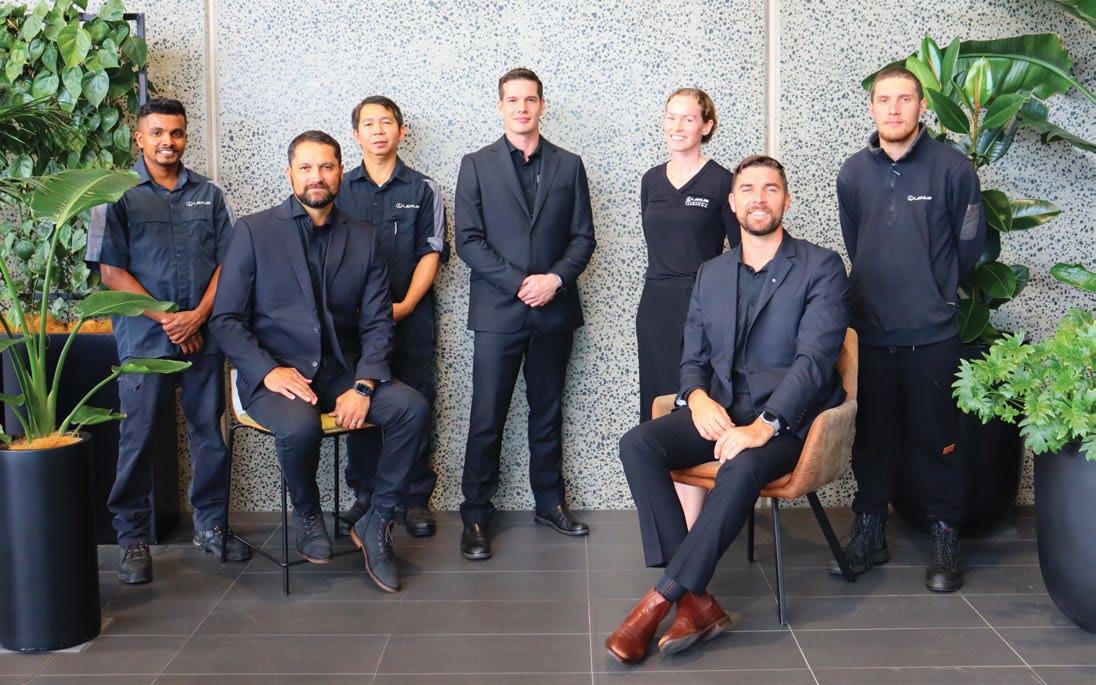
↑ The team at Lexus of Tauranga. Branch manager, Mitchell Handcock, (pictured far right, seated) and his team are ready to answer any questions about the RZ 550e F Sport.
LEVEL UP YOUR FITNESS
Discover Your Strength at Bay Boxfit, Mount Maunganui
Whether you're lacing up gloves for the first time or you're an experienced athlete, Bay Boxfit is in your corner.
We've built a fun, friendly, and supportive community dedicated to helping you smash your goals and discover a fitness you never knew you had.
• Trainer led box fitness, functional & tech classes
• Full cardio & weights gym with after-hours access
• Youth programs
• Corporate group training
• 1-on-1 personal training
Ready to see what you’re made of?
Whatever the Weather
Words by Bethany Millar
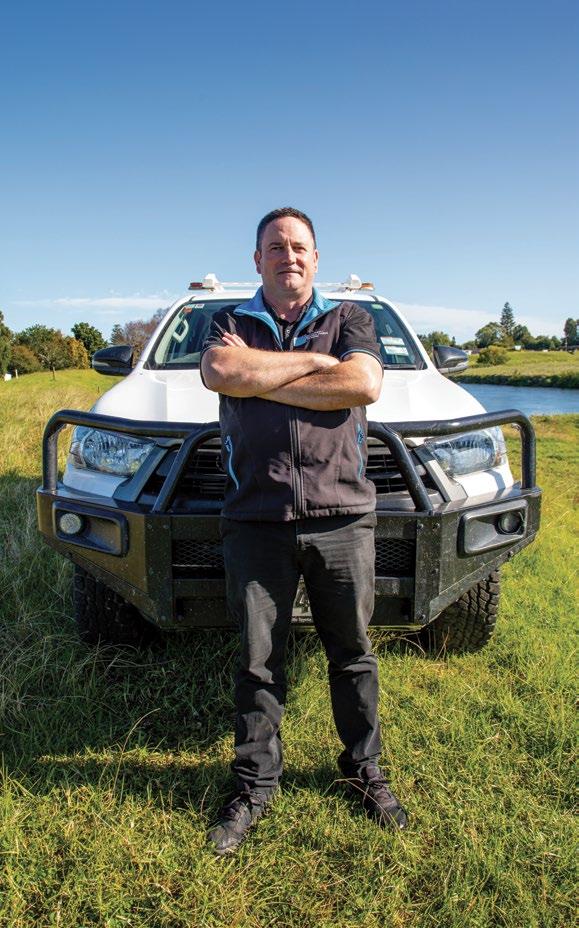
They are the engine room behind the maintenance of the Bay of Plenty’s flood protection network. Dan Batten and his team get stuck into their mahi rain, hail or shine.
Photography by Ross Campbell
When the rain starts to fall, most people head for cover, but Dan Batten and his team get stuck into their mahi.
They’re the engine room behind the maintenance of the Bay of Plenty’s flood protection network: A crew of long-serving, hardworking problemsolvers, who know every bend of the region’s major rivers and many of the landowners along their banks. In rain, shine and everything in between, Dan leads the people who make sure our flood defences, such as stopbanks, floodgates and pump stations, perform when we need them most.
As the rivers and drainage operations manager at the Bay of Plenty Regional Council, Dan oversees the maintenance and management of its five major rivers and drainage schemes, along with over 30 minor pumping schemes.
“It’s a massive job when you start explaining it to people. We have more than 141 kilometres of stopbanks and 370km of drains and canals in the Rangitāiki Plains alone. “From operating cutter paddle boats on the canals, desilting drains, repairing flood damaged infrastructure and now adapting to new technology like drones – it’s a lot to get through.”
the five major rivers and drainage schemes where regional council maintains and upgrades flood defences, manages riverbank erosion risks and does drain maintenance. Since then, he hasn’t looked back. As a Maketū local, he was proud to have ‘boots-on-the-ground’ for the scheme – doing the work that he knew was helping to protect his neighbours, friends and family.
Dan’s journey at the regional council is like many of his rivers and drainage colleagues. In his mid-20s, he was working as an earthworks contractor before accepting a permanent role as a machine operator in the Kaituna Control Scheme – one of
“The Kaituna scheme is basically my people. It’s rewarding working for the community that you live in.”
Over the next decade, Dan worked his way through the ranks of the rivers and drainage operations team, trying his hand as a works foreman and works coordinator before accepting the manager role in 2022.
For some, leading the team responsible for maintaining our flood protection network might seem like a daunting task. However, the huge depth of institutional knowledge within his team is what keeps Dan grounded.
“We have guys here ranging from myself, as one of the newer ones at 15 years, through to one staff member coming up 50 years of service.
“We know the land, we know the landowners, we know the schemes.
“This team has seen it all before and no doubt we’ll see it again. We know how to respond and be in the right place at the right time.”
One of the biggest challenges Dan faces is managing what needs to be done with what’s practical. With more than 54,000 ratepayers relying
on the rivers and drainage operations team, the work never slows down.
“On a sunny day, when we’re out in the field working on boats and diggers, there can be a bit of envy,” he says.
“But when the weather changes, the pressure does come on. There’s pressure all day, every day, to accomplish things in a short timeframe between the weather, fish spawning, bird nesting season and everything else.”
On top of that, it’s up to Dan and his team to balance what’s safe, necessary and affordable when it comes to how best to manage the maintenance of our flood defence infrastructure.
“We do take everyone’s views into consideration. But the infrastructure is here for a reason and we need to make sure it’s up to scratch so it can provide that level of service.
“So, when we’re saying no to certain operations near our infrastructure or asking someone to move their stock off the stopbank, it’s not us being pushy, we’re just ensuring our flood defences don’t incur unnecessary damage and can perform to the design standard when required.”
Despite the challenges, working with the community remains one of the most rewarding parts of the job. “We’ve been working closely
with landowners, iwi, hapū and other community members on environmental enhancement work to improve fish passage, inanga spawning and water quality. It’s good chicken soup for the soul to be able to provide that service.”
For Dan, the real strength of the Bay’s flood protection network lies not just in the infrastructure, but in the people who care for it and the communities it helps protect. With a changing climate and new technology reshaping the way the team works, he knows their role will only continue to grow. But what gives him confidence is the depth of knowledge, dedication and genuine care within his crew.
“I’ve seen these guys in some pretty highpressure situations. Up and on the job at 2am in the pouring rain. Working with this group has just been an absolute privilege and a pleasure over so many years.”
Whether they’re responding to a storm, repairing damaged assets, carrying out maintenance tasks or working alongside landowners, iwi and hapū to enhance waterways, Dan says that sense of purpose never changes.
“At the end of the day, it all comes back to people. That’s what drives us every day – no matter the weather.”
boprc.govt.nz
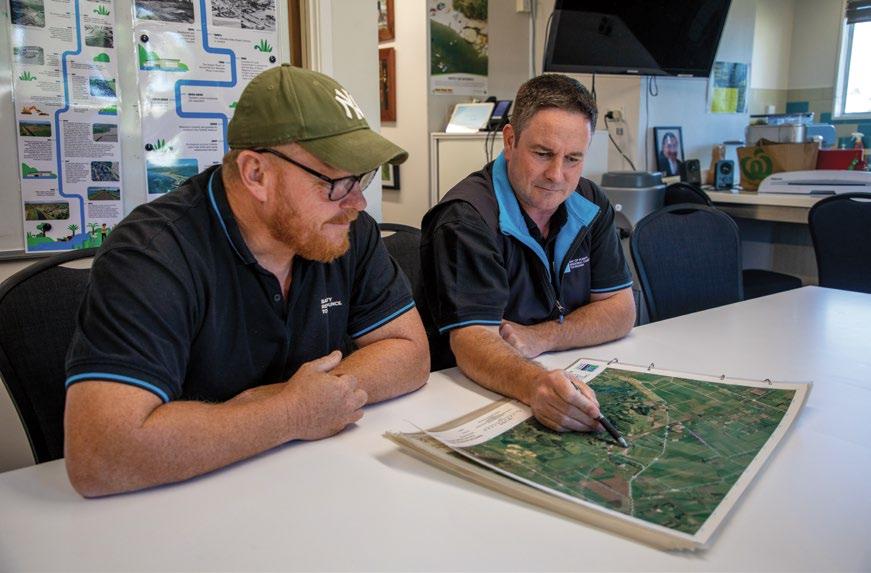
Dan Batten (pictured right) showing Kerry Smith a map of the Kaituna Control Scheme.
Forever Māori
Words
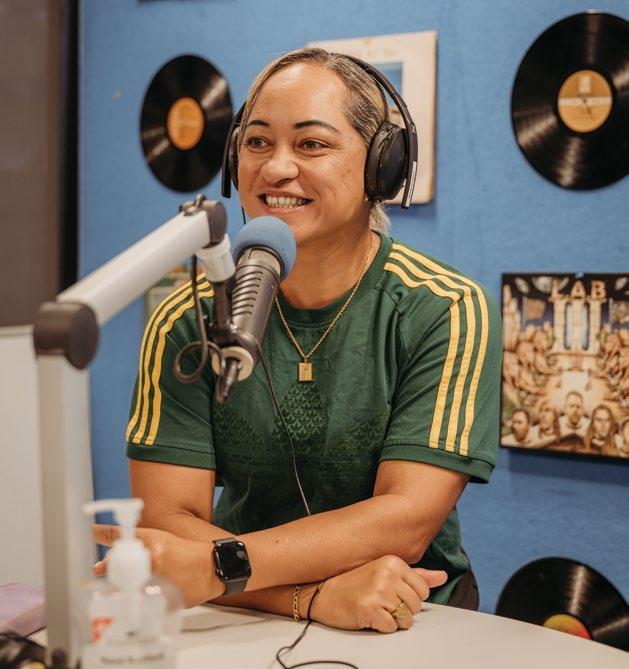
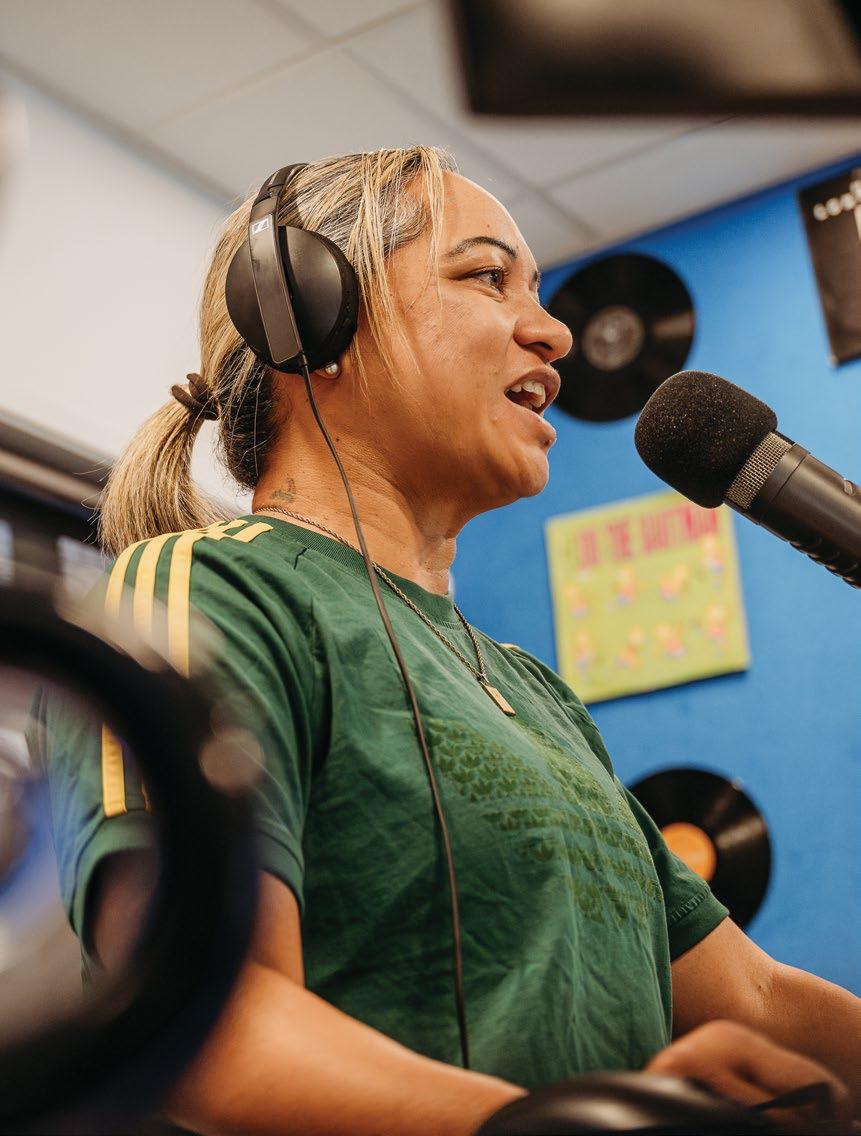
By day, Takiri Butler is a radio host, journalist and content creator. By night, she DJs and works on major music events. In between, she coaches sports teams. The glue to it all is being proudly Māori.
by Kristin Macfarlane
Photography by Naera Ohia
Being Māori shapes every aspect of Takiri Butler’s life. It’s not just part of her life, it defines it – ”all day, every day”.
She was born and raised in Arataki and is staunch about where she’s from. Her fierce connection to Tauranga Moana and Māori is evident in everything she does.
“I was born and raised here, this place shaped me,” Takiri says.
Takiri is everywhere. By day, she is general manager of Moana Radio, as well as the Breakfast Show host, social media manager, journalist and content creator. By night, she’s often still working –editing, planning, reporting.
In between, she’s coaching youth sports teams, DJing, attending governance meetings, is an artist liaison for many of the major music events held in Tauranga and beyond; is a member of the Mauao Trust, and she is the Ngāi te Rangi representative for Ngā Poutiriao o Mauao, which is a joint administration board set up under a memorandum of understanding between Tauranga City Council and the Mauao Trust covering Ngāi te Rangi, Ngāti Ranginui, Ngāti Pukenga and Waitaha.
Somehow, in between all of her commitments
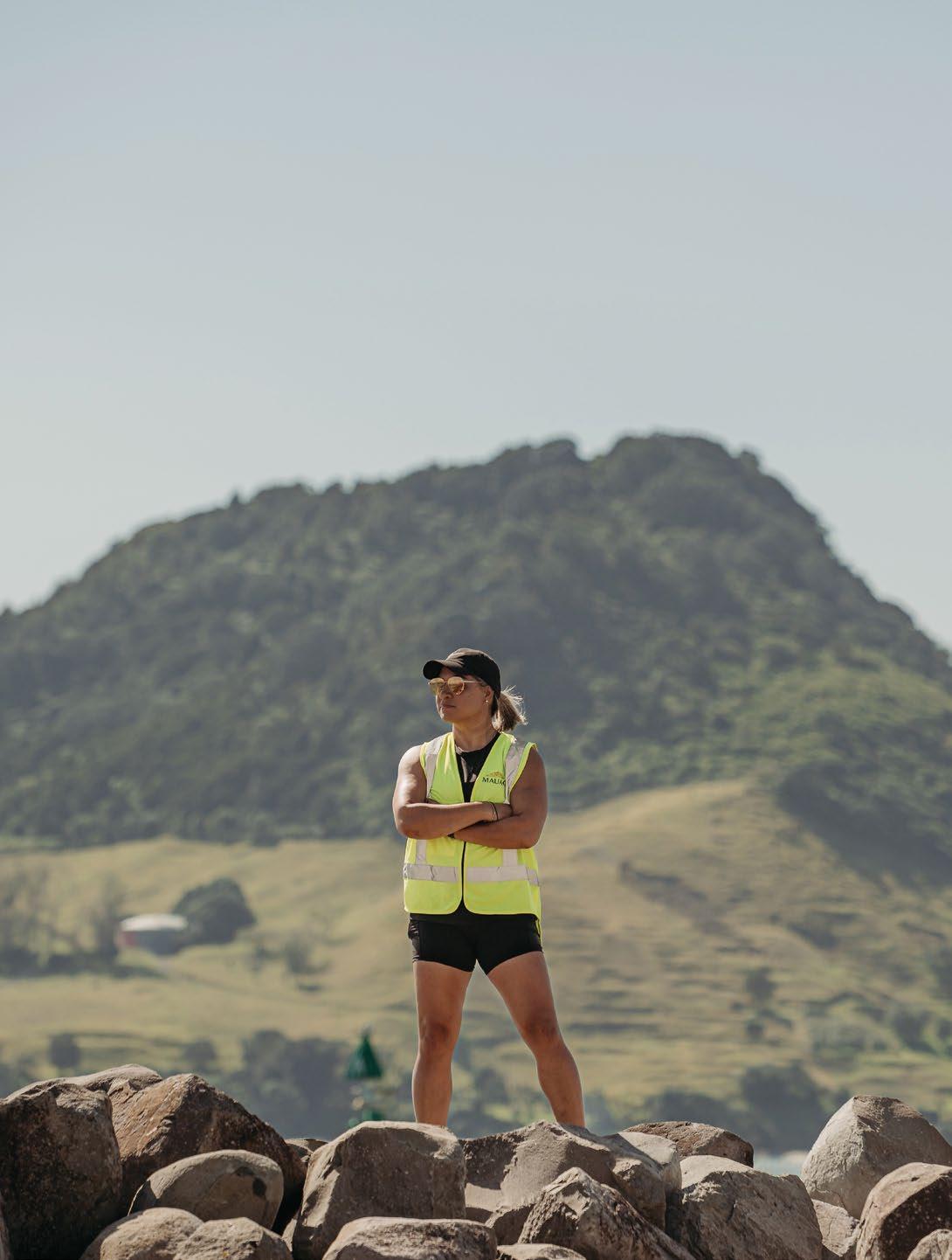
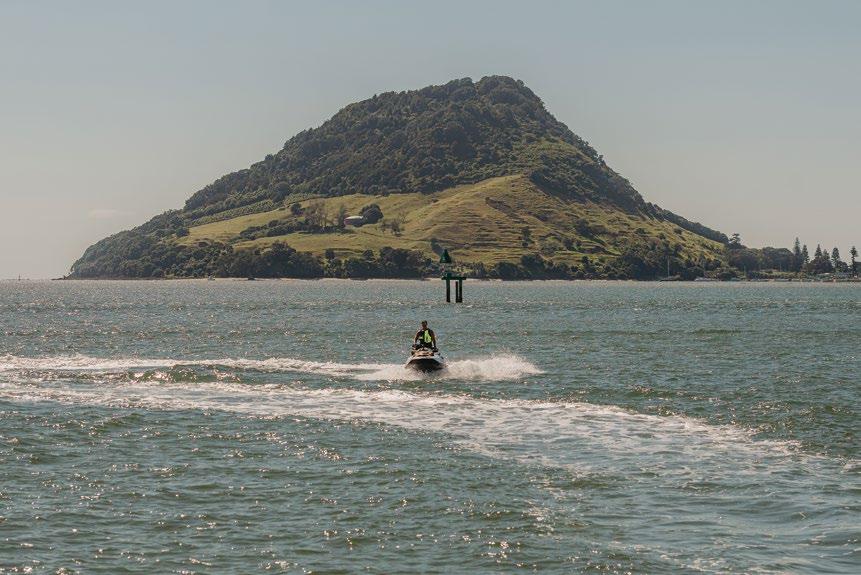
she carves out some time for her own training schedule that includes boxing, tennis, padel and squash across the week, and some time out for her own version of rest, which usually means she’s out on her jetski on the moana diving for kaimoana, doing hikes or embarking on solo travel.
When Our Place caught up with Takiri, she had just returned from the National Touch Championships in Wellington, where she played for the first time in the Masters division for Waikato, with a bronze medal. It was her 10th time competing at nationals and her seventh medal but her first bronze – the rest were gold medals earned while representing the Bay of Plenty Open Mixed and Waikato Open Women divisions.
There’s no doubt Takiri is a busy woman but to understand her drive, you have to understand where it comes from.
“When you whakapapa to an area, you feel not just a connection, but a responsibility to that area and its people,” she says. “It’s the main reason why I do what I do.”
That sense of responsibility has never been more visible than in her recent work surrounding Mauao. Following the devastating landslide in January,
“When you whakapapa to an area, you feel not just a connection, but a responsibility to that area and its people, it’s the main reason why I do what I do.”
Takiri is the general manager of Moana Radio, as well as the Breakfast Show host and content creator.
“We treat Mauao as a person, all Māori do. He’s broken, has broken limbs and scars and missing pieces. If you treat him as a person, you wouldn’t even think about opening him up to the public.”
Takiri found herself at the centre of an ongoing cultural, environmental and political response.
Days blurred into nights as she moved between roles – supporting trust work on the ground, attending back-to-back governance meetings, and continuing her duties in media.
She would spend hours at Mauao, leave briefly to coach her niece’s touch team, return to late-night planning, then head into the studio to broadcast. She was running on little more than determination.
“It was just repeat. Over and over again.”
At the heart of the issue is a fundamental difference in worldview. For Takiri and many Māori, Mauao is not just land – it is an ancestor, a living entity. Injured. In need of care.
“We treat Mauao as a person, all Māori do. He’s broken, has broken limbs and scars and missing pieces.”
She says if you treat him as a person, “you wouldn’t even think about opening him up to the public”.
That perspective hasn’t always aligned with the wider community, but Takiri aims to help bridge that gap, using her platform to share Māori perspectives with a wider audience. The response, she says, has been overwhelming.
Millions engaged with the daily updates she
and her team produced – many from outside the Māori community.
“There’s a hunger for it. People want to understand.”
It’s Takiri’s ability to translate, to lead, to hold space across worlds that defines her influence.
And yet, sport remains her foundation.
Long before the boardrooms and broadcast studio, Takiri was leading on the field. A former New Zealand touch representative and world champion before the age of 21, she built her identity in highperformance environments, often juggling multiple teams, codes and leadership roles at once.
Looking back, she credits sport with the building bricks to who she is today.
“So I really believe that my sport life has transferred into work life.”
She has represented the Bay of Plenty in touch, sevens, 15s rugby and held coaching and captain roles in those teams too.
“I look back at those times and I’m like, how the hell did I do that? The juggling of the different roles I played at sport and the hours that you put in in all those roles for sport and the training that you have to put in,” she says.
“I’m just used to being in those leadership roles in sports, and carrying those responsibilities, even
Takiri loves being out on her jetski on the Tauranga Moana.
Bay level and it kind of helps the different hats I wear now. She also juggled those sports with netball, with a highlight being coached by Dame Noelene Taurua, as well as individual sports such as squash and tennis.
She excelled in all but the team sports were her favourites because got to travel and compete, making lifelong friendships along the way.
Now, Takiri’s focus has shifted toward the next generation.
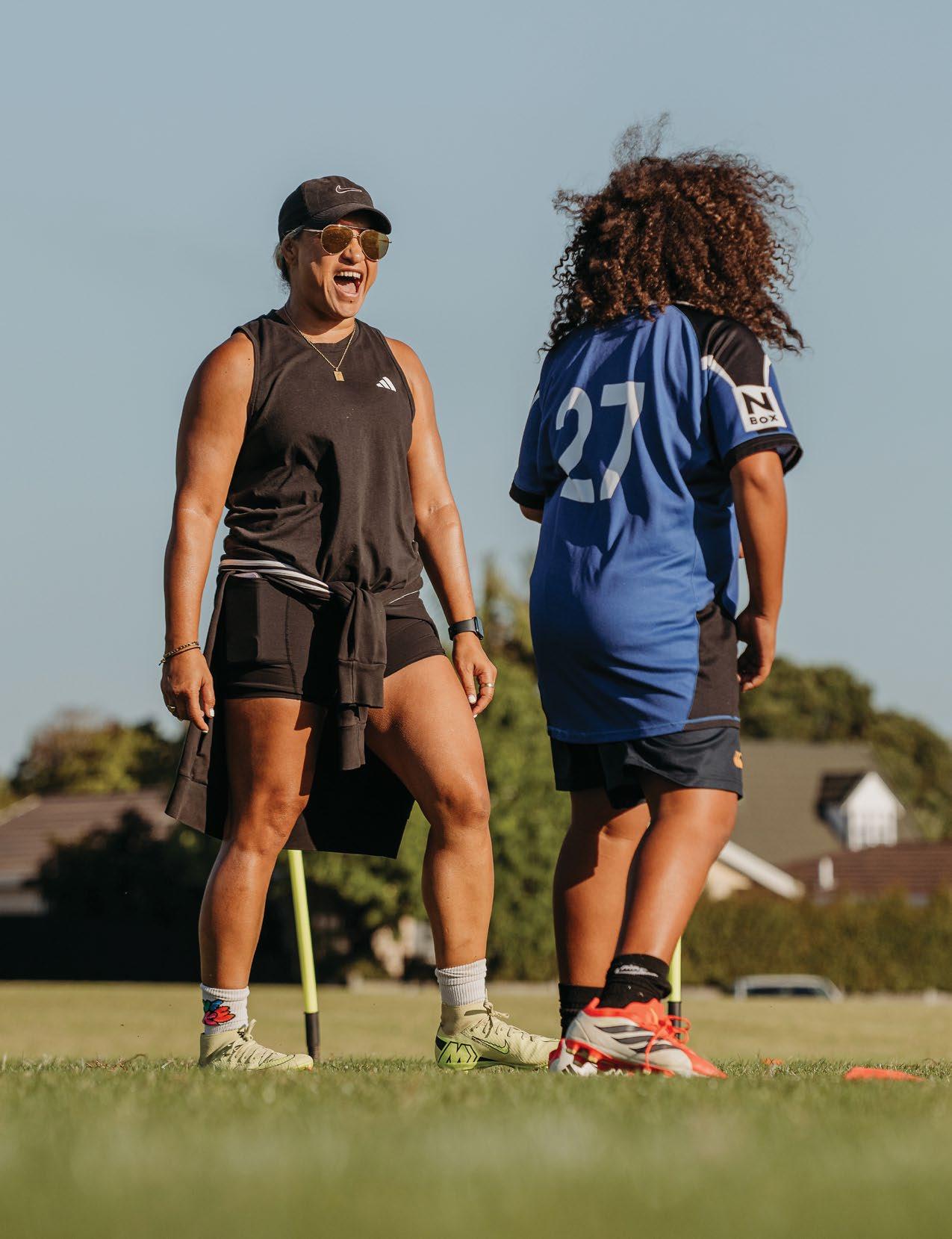
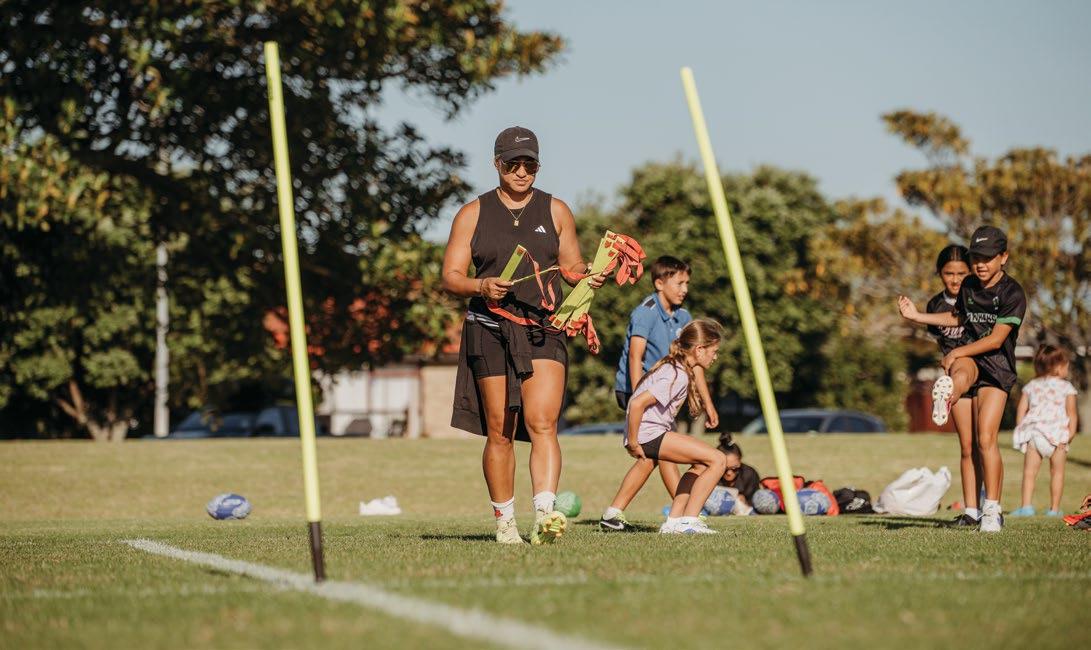
She coaches under-11 teams touch and rugby league teams and runs open training sessions for local kids whenever she can. Her approach is less about elite pathways and more about access, confidence and connection.
“I just want them to enjoy it,” she says.
Her own nieces and nephews are among those she mentors, but her reach extends far beyond family. She’s built a network of former teammates who are now elite athletes, who she calls on to inspire the kids she coaches.
Those connections aren’t just professional, they’re proof of what can be achieved.
At the centre of it all is identity.
Being Māori, she says, isn’t something she switches on or off. It’s present in every space she moves in.
From the way she leads her team, to how she hosts artists, to the stories she chooses to tell.
“I’m Māori, all day every day.”
That includes her work in media, where she’s helped mentor rangatahi into broadcasting, helping to create pathways she didn’t always see growing up.
Watching them step confidently into those roles, she says, is one of her proudest achievements.
“My job’s done when they can do it themselves.”
Still, even with everything she carries, Takiri finds moments to return to what grounds her – taiao. The ocean. Fishing. Diving. Time alone.
Recently, she’s started taking solo trips, which she loves. It allows her a short moment of silence where she has no responsibilities or schedule. For Takiri, it’s a small act of balance.
Because when she returns home, she also returns to giving back to her people and her home. As busy as she is, the work she does is meaningful. That’s what she knows and loves.
When she’s not at work, Takiri is coaching youth sports teams.
CREATIVE BAY OF PLENTY
CONNECT WITH THE BAY OF PLENTY’S CREATIVE COMMUNITY
Creative Bay of Plenty is here to bring creatives together – sparking ideas, building relationships, and strengthening creative networks.
We’re excited to introduce something new at the next Kapu & Kōrero: Meet the Makers! This mini expo is a chance for creatives to connect with local businesses and services that support the creative sector.
If you’re a visual artist, musician, writer, performer or designer, this is the place to discover services, build new connections, and explore future creative partnerships.
Businesses taking part will be on hand to showcase their services and answer any questions you may have.
To register for this free event, go to our website: creativebop.org.nz
Kapu & Kōrero: Meet the Makers Wednesday 6 May 2026, 4.00pm - 5.30pm The Kollective, 145 17 Avenue, Tauranga th Free event | Registration essential
People. Always People.
Words by Kate Wyse Photography by Erin Cave
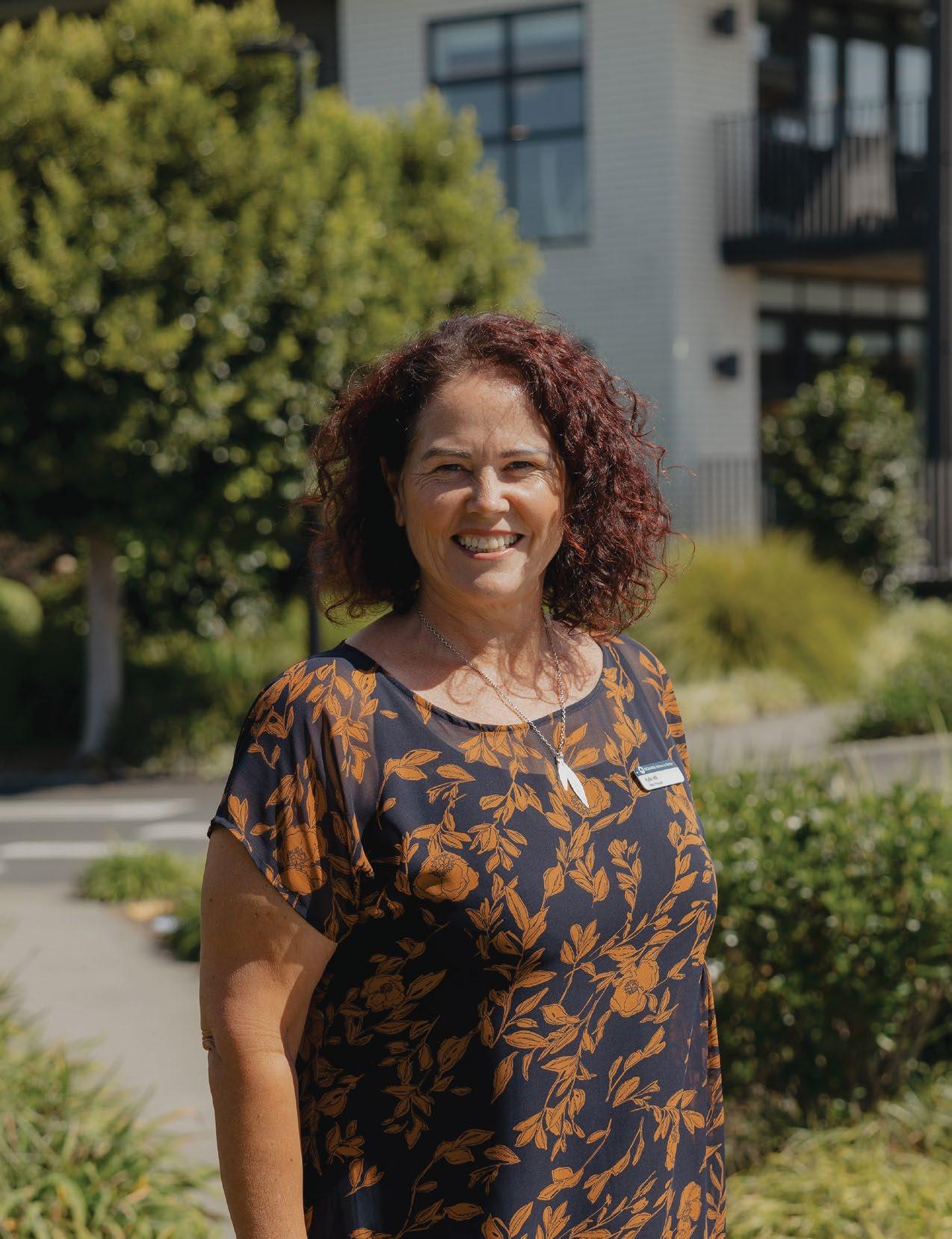
There’s a new face at The Bayview. Kylie Hill has arrived at the village and is fitting in seamlessly as village manager. We sit down to meet her.
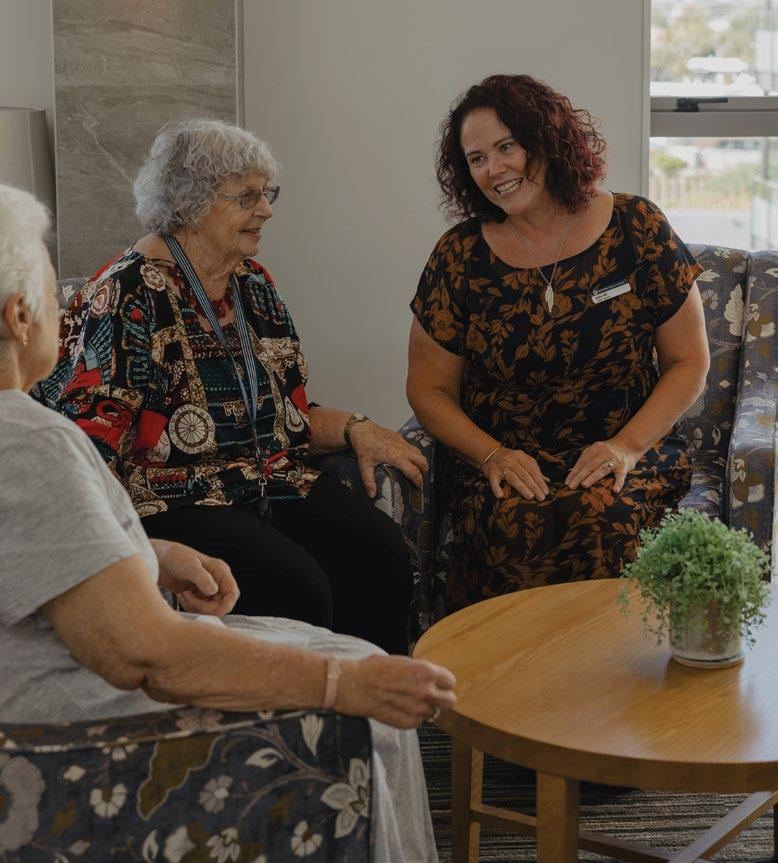
The Bayview’s new village manager, Kylie Hill, building connections with the residents.
If you spend even a few minutes with Kylie Hill, one thing becomes clear very quickly.
She likes people – in the genuine, curious, pull-up-a-chair-and-hear-your-story kind of way.
It’s the first thing she mentions when we talk about her new role as village manager at The Bayview retirement village in Tauranga. “People,” she says simply. “That’s always been
the draw for me.”
Set above Tauranga Harbour and just minutes from the coast, The Bayview has the easy rhythm of a place where neighbours know each other by name and small moments – a chat in the hallway, a shared walk, a spontaneous catch-up over coffee – become part of everyday life.
For Kylie, stepping into the role here feels less
like a change of direction and more like a natural continuation of work she’s loved for years.
“I’ve worked within the retirement sector for a long time,” she says. “And I just love it. Every day you meet someone new, hear their story and learn what matters to them.”
She pauses for a moment.
“You become part of their lives in a small way –and that’s incredibly special.”
It’s that sense of connection that continues to draw her back to village life.
“One of the first things I notice in a village is how people interact,” she says.
“Are they stopping to talk? Are they looking out for each other?
“Those little things tell you a lot.”
Creating the right environment for staff is just as important as creating a welcoming place for residents.
“When the team feels supported and happy, the whole village benefits.”
From its harbour outlook to its easy access to the coast, The Bayview offers residents a lifestyle that encourages people to stay active, connected and engaged with the world around them.
For Kylie, the next step is simply getting to know the people who call it home.
“I’m really looking forward to getting to know everyone properly and becoming part of everyday life here.”
After many years working in the sector, the role still hasn’t lost its meaning for her.
“Watching someone arrive a bit unsure… and then seeing them a few months later. They’ve found their people. They’ve got routines. They’re out walking together or meeting for coffee. You can actually see the difference in them.”
At The Bayview, she’s already noticed the signs.
“The village has a really lovely feel to it. You can tell people care about the place and about each other.”
What she enjoys most about the role, though, is seeing how residents settle into life in a new environment.
“Watching someone arrive a bit unsure… and then seeing them a few months later. They’ve found their people. They’ve got routines. They’re out walking together or meeting for coffee. You can actually see the difference in them.”
That transformation, she says, is what makes the work worthwhile.
“That’s the good bit.”
As village manager, Kylie sees leadership as something practical rather than distant.
“If something needs doing, I’ll jump in,” she says. “I’m not someone who sits behind a desk all day.”
“It never really feels like just work, a job,” she says.
“Yes, there’s responsibility. But there’s also laughter, conversations and those little moments that make up people’s days.
“You can’t do this role without heart.”
She pauses, then adds with quiet certainty:
“And I genuinely love what I do.”
Spend time talking with Kylie and it’s clear she approaches her work with a steady optimism and a straightforward sense of purpose. She takes the responsibility seriously – but not herself.
And if you ask her what matters most? She doesn’t hesitate.
“People,” she says.
Always people.
thebayviewvillage.co.nz
The Bayview Village, 159 Waihi Rd, Tauranga
Thoughtfully curated home staging to compliment and elevate your home.
Jo Baker. 022 600 7334
info@propertypropsbop.co.nz propertyprops.co.nz
| SOCIAL | FITNESS
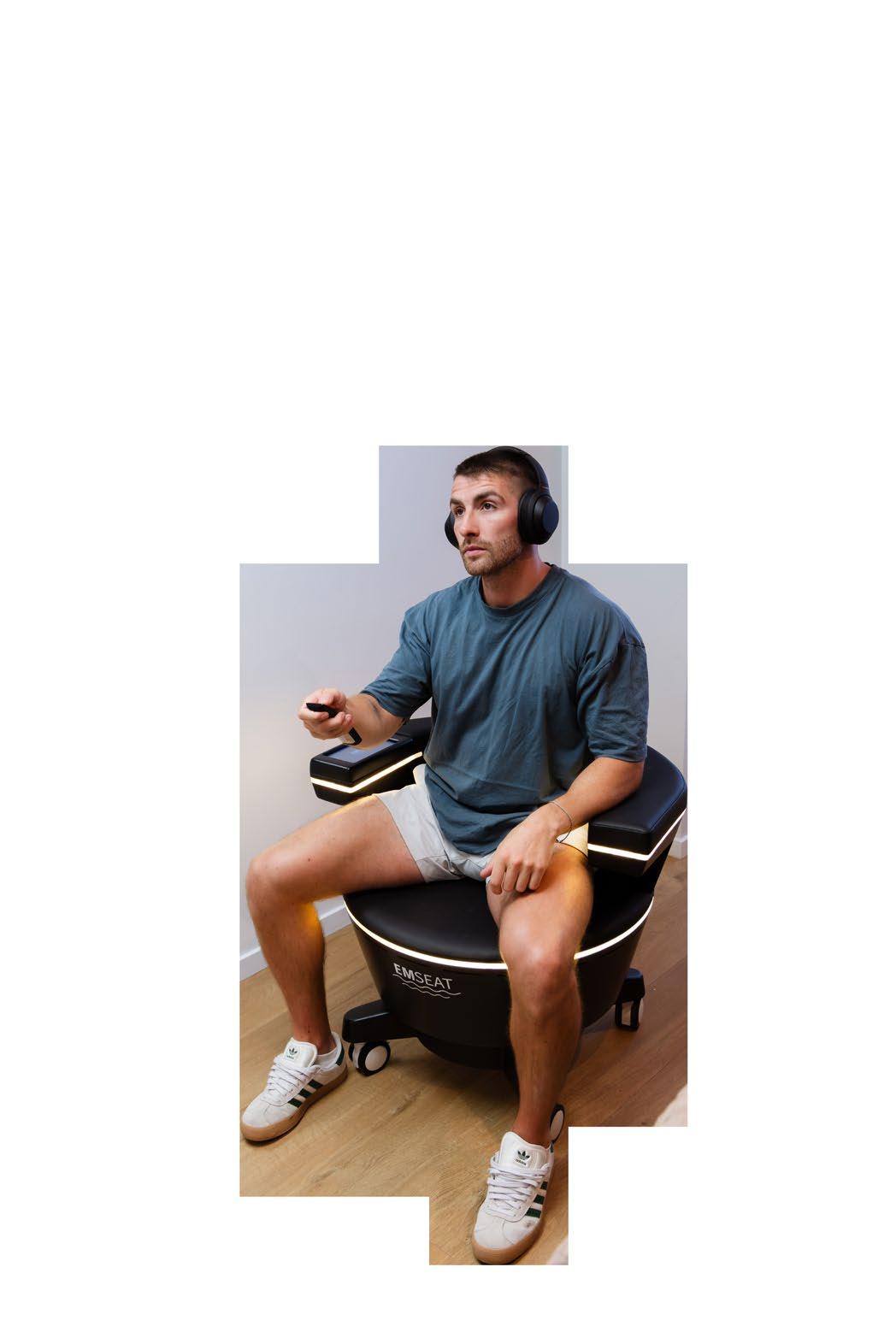
EMSEAT™
Pelvic Floor Sculpting for Women & Men
The most advanced pelvic floor therapy chair on the market.
Harnessing powerful HIFEM technology, EMSEAT™ delivers over 11,000 deep contractions in one session — rebuilding strength, tone, and control effortlessly.
EMSEAT™
Effortless Pelvic Floor Strengthening
EMSEAT™ is a non-invasive treatment that strengthens the pelvic floor while you sit fully clothed and relaxed. The chair delivers powerful muscle contractions that feel like an intense pelvic workout — without any effort or downtime.
Each 30-minute session fits easily into your day, with a recommended course of six sessions over three weeks. Suitable for both women and men, EMSEAT™ supports bladder control, core strength, sexual wellness, and mild to moderate pelvic organ prolapse. Safe post-birth or post-surgery once medically cleared.
Benefits
• Strengthens pelvic floor & core muscles
• Supports bladder control & postnatal recovery
• Enhances sexual wellness & circulation
• Improves stability, posture & pelvic support
• Comfortable, fully clothed, and non-invasive
Alternate Routes
The world feels a little off-balance right now. So, in the spirit of meeting the moment, we turned to AI, an unusual tool for an unusual time, to imagine new ways of getting to work. With the rising cost of fuel pushing everyday routines into question, what came back is a series of alternative transport ideas, some practical, some not, that reflect the absurdity of the moment as much as the possibility of change.
Fife Labs
Words by Zoe Hunter Photography by Dot Agency
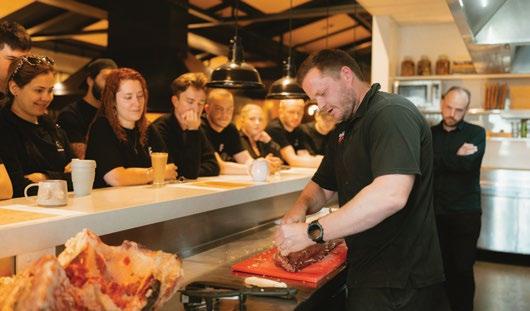
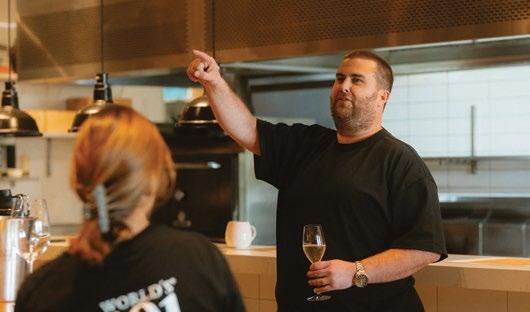
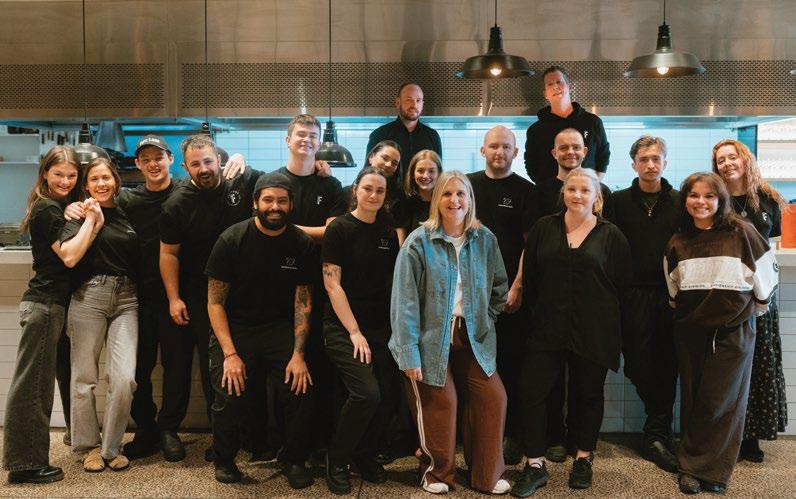
Welcome to the Fife Labs. Born from an employee-led discussion, the sessions focus on building craft, strengthening communication and nurturing a united, high-performing team culture.
Apart from their award-winning steaks, continued learning is at the heart of what sets Fife Lane apart.
Born from an employee-led discussion, ‘Fife Labs’ are a new training and development initiative designed to bring together the entire Fife Lane team.
The kitchen, front-of-house, and administration team come together quarterly for in-house training with external industry experts at the contemporary dining restaurant, in the coastal hotspot of Mount Maunganui.
The Saturday sessions focus on building craft, strengthening communication across departments and nurturing a united, high-performing team culture.
The Fife Labs encourage team bonding through collaborative learning and allow them to deepen their practical knowledge across kitchen for front-of-house roles.
They will introduce specialist skills and industry insights, enhance service quality, food knowledge
and product understanding, as well as create a consistent rhythm of upskilling and engagement.
Long term, the goal of the Fife Labs is to build a culture of continuous improvement, create internal leaders through peer facilitation and elevate guest experience through deeper team knowledge. Learnings will also be documented for onboarding and training use.
“We wanted to find a new way to learn skills as a team,” Fife Lane co-owner Kat Dippie said.
The first Fife Lab last September – named Carve & Decant – was led by Ben Taylor from Bethlehem Butchery and Tim Hern from EuroVintage.
“We reached out to Ben as we’re committed to excellence in every detail, from our ingredients to our service, and we believe continued learning is at the heart of what sets us apart,” Dippie said.
“Our team was eager to deepen their understanding of butchery, and there’s no one better
↑ Learning is at the heart of Fife Lane and ‘Fife Labs’ are all about team culture and learning a new craft.
← The team has learned from Ben Taylor of Bethlehem Butchery and Tim Hern of EuroVintage.
to lead them through that than Ben.”
While Tim Hern is Fife Lane’s wine rep from Auckland-based wine and spirits distributor, EuroVintage.
“Tim is an amazing guy with a huge wealth of knowledge and a great sense of humour.”
This session led to Fife Lane creating a spot on the Meat Locker for Bethlehem Butchery, which is a rotation cut of dry aged 28-plus days from what Taylor has deemed the best from what he has sourced.
It has turned into one of Fife’s best selling cuts.
Tim from EuroVintage said what Fife was doing was genuinely impressive, bringing together experts from different parts of the industry to share knowledge, challenge ideas and create a collaborative learning environment for their team.
“From a supplier perspective, it’s rare to see a business invest so intentionally in education and culture,” he said.
“The conversations are always engaging and insightful, and I often find I learn just as much from the experience as I hope the team does.”
The second Fife Lab was held last November with East Rock Fisheries from Gisborne on the East Coast.
This two-hour session discussed sustainable fishing practices and gave the Fife team a deeper understanding of sustainable fisheries, product
handling, and sourcing decisions in New Zealand hospitality.
East Rock is passionate about delivering premium, traceable and sustainable produce from New Zealand to your plate. Every fish can be traced back to the boat it was caught on, and the area it was caught in.
East Rock owners, Bart and Salvadore Zame, along with their production manager Kim Semmens gave a filleting demonstration on local fish species and highlighted the differences in anatomy, yield, and technique.
The Fife team learned how to handle the fish with care post-harvest and what was best practice for restaurant kitchens. They were also given industry insight into New Zealand’s commercial fisheries, sustainability in practice and how East Rock approaches traceability and responsible fishing. The session was followed by a short Q&A.
Upcoming Fife Labs planned to encompass financial literacy within business, including working towards business goals and open book management, as well as a mental health First Aid course hosted by St John Hato Hone.
Continued learning will allow the team to ‘Get curious, get sharp and get Fife’d’ while exploring the craft of hospitality.
fifelane.co.nz
Timber Tales
Words by Stuart Whitaker
Photography by Christopher Duffy
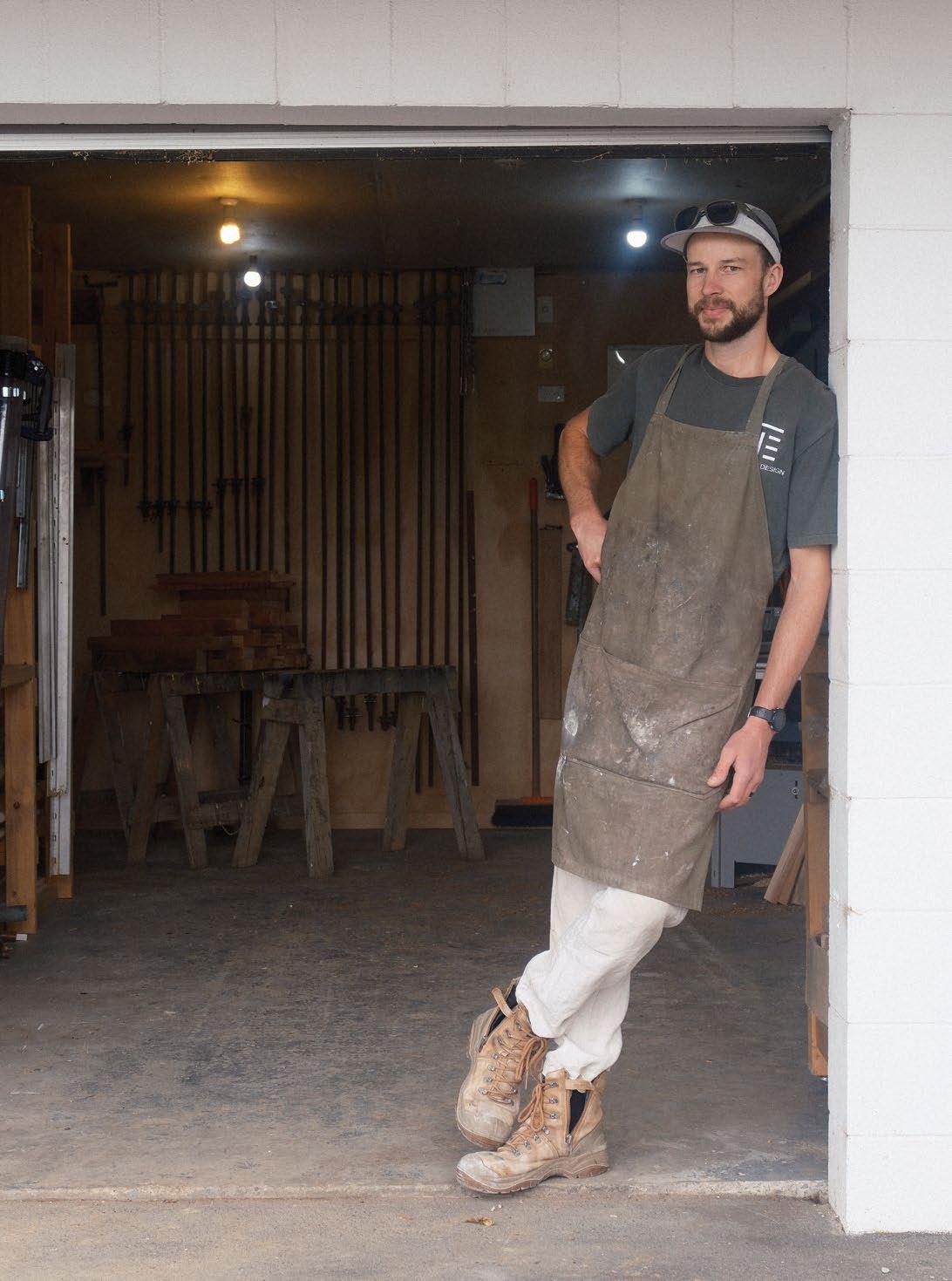
As a youngster, Alwyn Vickers recalls being fascinated by his grandfather’s workshop and tools. Some would say he was destined to work with wood. Now, he owns his own fine furniture company.
It was almost pre-ordained that Alwyn Vickers had a future that involved working with wood.
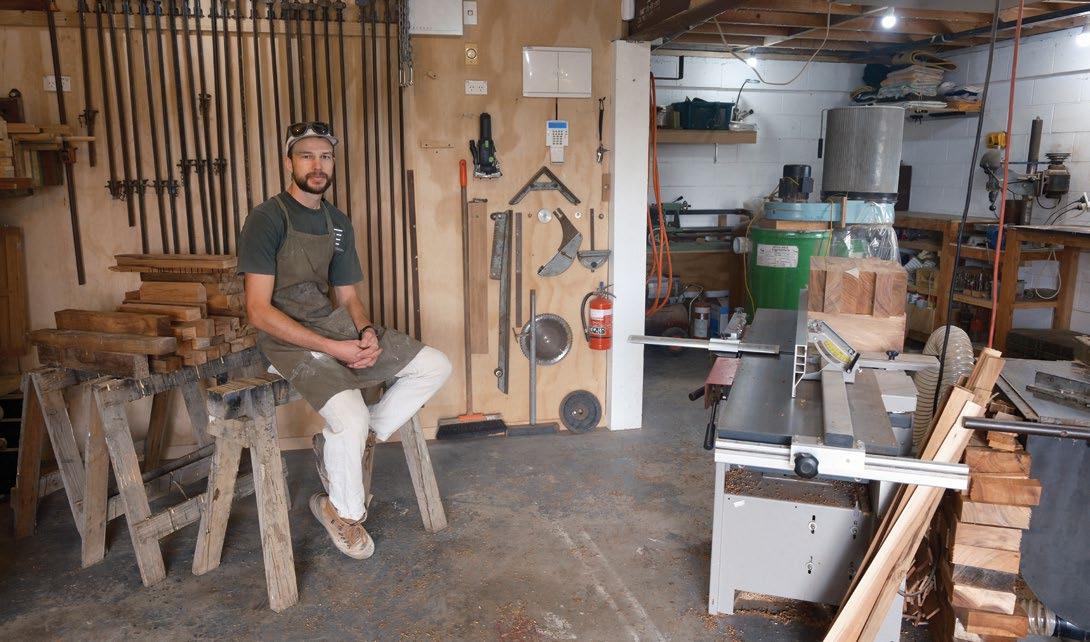
After serving a building apprenticeship and working in the trade for eight years, the 30-year-old now owns True Edge Design, crafting fine furniture in his Gate Pa workshop.
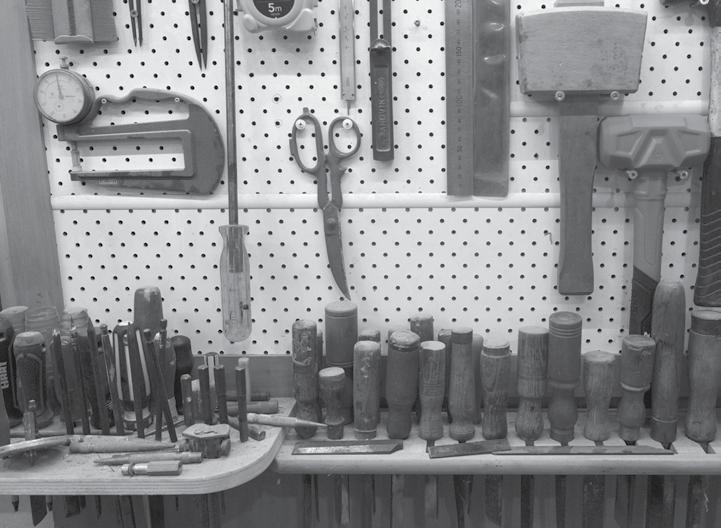
Alwyn recalls, when little more than a toddler, being fascinated by the workshop and tools of his grandfather Lawrence Vickers.
“There are photos of me, probably three years old, hitting bits of wood together, pretending to make something – so it was probably pre-destined.”
He was eight years old and being home schooled when Lawrence offered to tutor him as part of his education.
“He was a pattern maker by trade, so essentially precision woodworking, and he said, ‘I’ll give you woodworking lessons’. So that’s kind of where it started,” says Alwyn.
“I’d always been fascinated by his workshop and he’d given me little things to do, just playing around. But that was the first time he openly tutored me and I loved it.”
His other grandfather has also had an influence, although it was less direct.
“Some of the tools you see around are Lawrence’s, but a lot of them are actually from my grandfather on my mum’s side, Arthur Marbeck.
“He was a coachbuilder, building horse-drawn wagons and that sort of thing when he got his start.”
Born in Auckland, Alwyn spent his childhood in Katikati. Mostly home schooled, he went to Katikati College for his NCEA qualifications.
After school, he went straight into a building apprenticeship, “much to the dismay of a few of my teachers”.
“I didn’t want to go to uni because I didn’t know what I’d study. I liked working with wood and the closest thing I could get to that in ‘Kati’ was building.”
He was a finalist in the Bay of Plenty Registered Master Builders Apprentice of the Year in 2015 and in 2016 came second in the same competition.
“Word got out more and more that I had the skillset and people started hitting me up saying,‘Hey,can you make this bed? Or can you do this?’.”
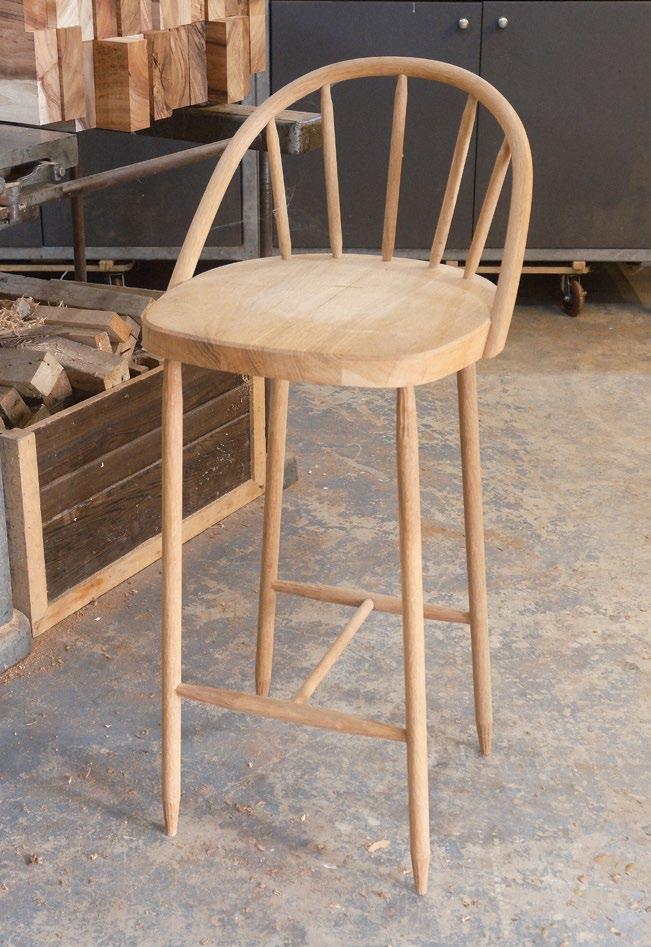
↖ Opposite: Alwyn Vickers in his workshop. ↑ The business has been built on one-off beds, tables, coffee and bedside tables, and bar stools like this one pictured.
There is certainly art to making furniture, Alwyn says. He enjoys creating shapes and things that haven’t been done before in furniture.
He finished his apprenticeship and moved to Mount Maunganui, chasing his dream to work on high end homes.
But there was a major shift in his story arc on the horizon, one that became a catalyst for the formation of True Edge Design.
“By 2020, I felt I’d gone as far as I could working in the building industry without starting a company. So I decided to take a year off and study Christian ministry. I was convinced I was going to be a pastor, but no, that was not to be.”
However, people were hearing about his woodworking talents.
“Word got out more and more that I had the skillset and people started hitting me up saying, ‘Hey, can you make this bed? Or can you do this?’.
“So I came into 2021 with a whole bunch of people I could make furniture for.”
He was building again, but cut down his working week to two days so he could meet demand. A lull in building work was filled with more commissions and, until very recently, he never returned.
With the pandemic affecting much of life, it wasn’t a great time to be starting a new business.
“A lot of people were prompted to make big life changes, but I’d already made the big life change because I’d decided to take that year off and study.”
The business has largely been built on one-offs – beds, tables, coffee tables, bedside tables, and bar stools.
Last year, Alwyn built a centrepiece, farm-style dining table for Summerhill Charitable Trust in the Pāpāmoa Hills, using New Zealand grown Tasmanian blackwood.
“It’s 3m long by 1m wide and weighs over 100 kilos. I also made all the cupboard fronts and some trestle tables out of their own timber.”
The trust has created Summerhill Base, a place for community and recreational gatherings, schools, kindergartens and corporate groups. It is projects with such a story that can be the most gratifying.
“That was really cool to be part of launching the community base, but also the material I was using has a story. It was grown on the property, so it feels like you are part of the story.”
There were similar sentiments from a project using native timber removed from a house about to be demolished that had been sitting under his client’s home.
“They said, ‘Can you make a bed out of it?’
So even before it’s been made into something, it’s got some meaning to them and that makes the end product that bit more valuable for myself in the process, but to them as well.”
“There’s certainly art to what I do. But it’s a bit more of a challenge to lean into that way of thinking rather than a tradie way of thinking.”
He says working with an irreplaceable piece of timber doesn’t add stress to the work.
“Obviously there’s no going to the shop to buy another piece if you get it wrong, but the pressure doesn’t seem to get to me.”
The ideal commission is one where he is given the freedom to design and make what he wants.
“That’s my sweet spot, especially if they like what I design.”
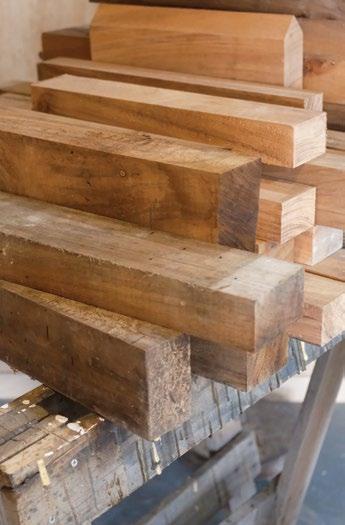
Alwyn’s favourite native wood to work with is recycled totara. His number one imported timber is American black walnut, with American white ash a close second.
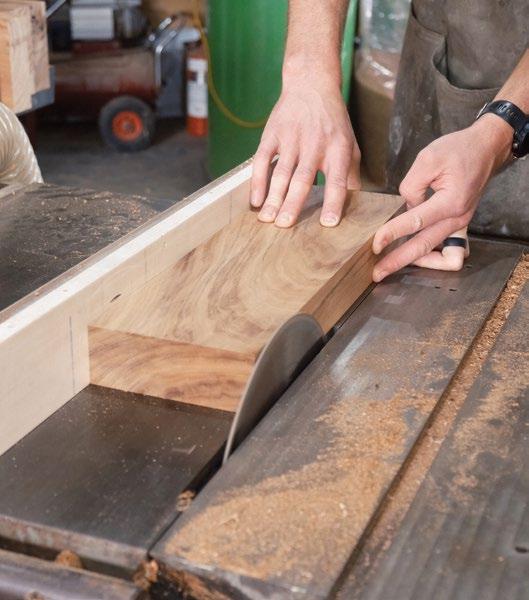
“The walnut tests you more when you are working with it. It tends to have a mind of its own and bend in ways you don’t want it to. But looks-wise, it’s just stunning.
“The ash is just so good to work with. It cuts straight and stays straight. But all wood can humble you. We do our best to predict how it will move and design accordingly, but there’s many times when it’s
caught me out. Nothing that can’t be overcome, you’ve just got to take more time with it.”
As for future plans, the vision from day one was for Alwyn to make his own designs.
“It was always about designing furniture as much as it was about making furniture.
“Perhaps ultimately there’s a different road to go down, which is much more specialised and very hard to break into, and that’s doing one-off commissions for clients at a very high dollar rate based on how much they consider you to be an artist.
“There’s certainly art to what I do, making furniture, but it’s a bit more of a challenge to lean into that way of thinking rather than a tradie way of thinking.
“I always design around the function. So it’s a struggle to go completely artistic and throw function out the window. But I really enjoying creating shapes and things that haven’t been seen before in furniture.”
@true.edge.design
Turning to the Future
Words by Rebecca Lee of Manaaki Kaimai Mamaku Trust
A
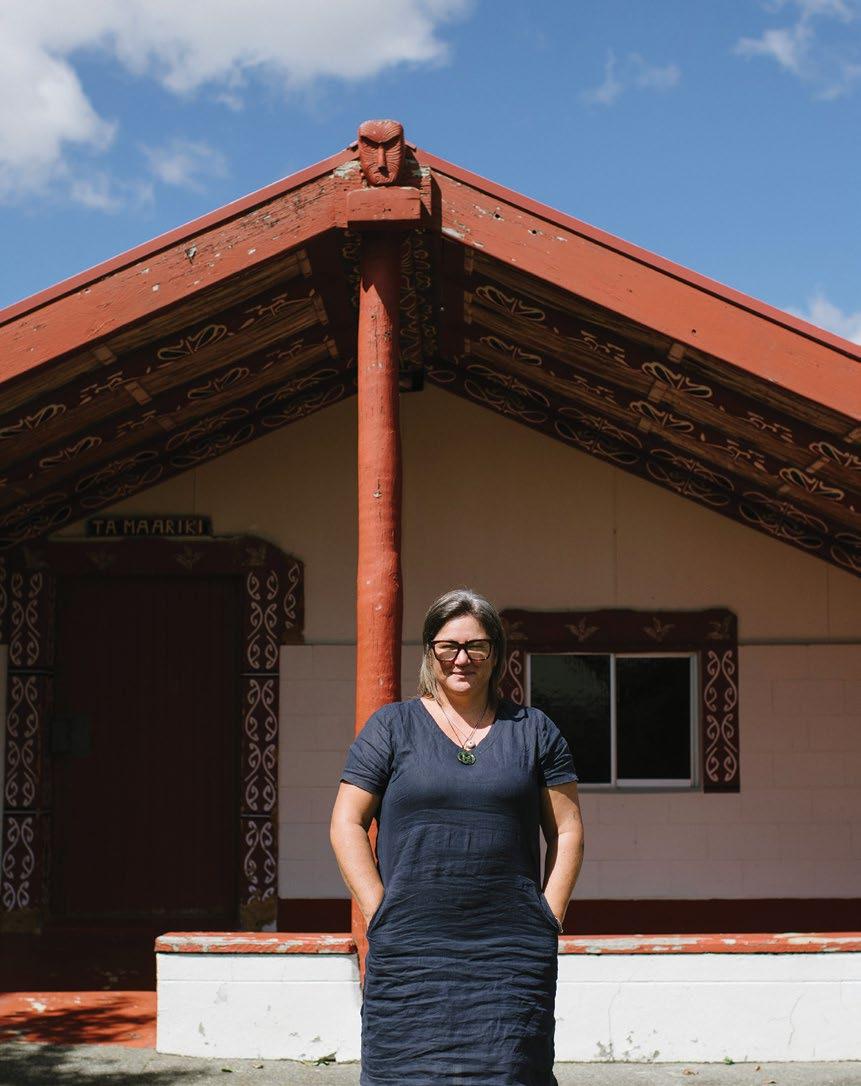
resilient leader, manager of Ngāti Tumutumu Trust and a breast cancer survivor, Jill Taylor has helped carry the mana whenua of Te Aroha forward.
Living in Tāmaki Makaurau away from tribal lands of Te Aroha, Jill Taylor’s family home was like the marae.
She recalls her siblings never having specific bedrooms as aunties, uncles, friends and whānau would always be there.
“My mother Gayle was the nurturing one. Although we lived in Auckland, our home was the marae. Our door was always open to those that needed it.”
On the other hand, her father, Ray Bianchi, was described as a “militant” unionist.
Jill is a mix of the two. While a nurturing mother-of-four, Jill is also a resilient leader, kaiwhakahaere (manager) of Ngāti Tumtumu Trust and a breast cancer survivor.
Ngāti Rāhiri Tumutumu are the mana whenua of Te Aroha and the surrounding lands of the Waihou Valley.
Nestled under the Kaimai Range, Te Aroha is about an hour’s
drive from Tauranga. The range connects Bay of Plenty, Waikato and Hauraki geographically and culturally.
Mana whenua would take refuge in the Kaimai during war, and hike across for love and trade. To local tribes, the range formed a great waka (canoe) – its stern at Moehau, near the tip of the peninsula, and its bow at Te Aroha.
Despite growing up in the city, Jill always served the iwi. She was elected as a Tumutumu Marae trustee in her early 20s and nominated iwi representative on the Hauraki Māori Trust Board.
She credits kaumatua Toko Renata, Kemara Tukukino, Harry Mikaere and John Linstead for her leadership style.
“I am who I am today because of them. I learnt by watching and listening. The responsibility to our people is central to how I work. It’s not about me. It’s about us.”
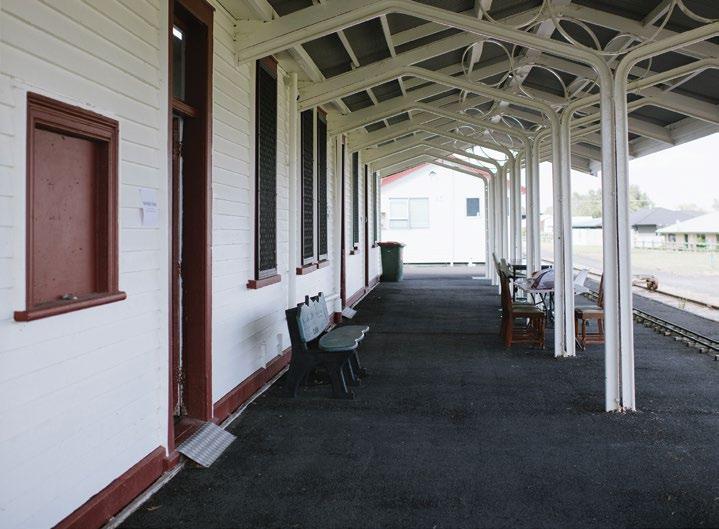
We find Jill in the office at the retired Te Aroha Railway Station,
tapping away at her laptop under a collection of taonga.
Among the taonga are her own raranga (weaving), works by wood carvers Michael Wickliffe and Ben Whitaker, depicting Mahuika – the māori goddess of fire symbolising energy and strength – and framed ‘Treaty of Waitangi settlement apologies’.
Jill, and co-negotiator Nicki Scott, worked on the final stages of the Ngāti Rahiri Tumutumu Settlement Bill. A Deed of Settlement, including financial and commercial redress of $5.5 million and the return of 17 culturally significant sites, was signed late last year. It concluded 15 years of negotiations with Ngāti Rāhiri Tumutumu.
While proud of their work, Jill says it was a long and painful journey.
“The settlement process was not easy. The path was marked with deep pain, we were forced to fight for our maunga and our urupā.
Photography by Jane Keam
Jill Taylor says she continued to fight for the next generation to be able to know who they are and that they belong here.
“Our kids have endured their mum in incredibly tough times. It wasn’t easy to explain to them what we’re doing and what all of it meant. But this is what this mum has carried on behalf of Ngāti Rāhiri Tumutumu.”
For the bones of our tūpuna.”
At the height of negotiations two years ago, Jill found lumps in her breasts. She visited a breast cancer screening truck and was almost sent away but, always the activist, she pushed to get checked and was later diagnosed with breast cancer. She had a lumpectomy and radiation therapy.
“If it wasn’t for my cancer, we would have signed our deed on the top of our maunga, Mt Te Aroha, in 2023.”
Sick but stoic, Jill continued fighting for the next generations.
“The kaupapa is bigger than me and my sickness. I need to do this for my kids and the kids of Ngāti Tumutumu, to know who they are and
be able to stand tūturu (strong) on their whenua, in their rohe. To know they belong here.
“Our kids have endured their mum in incredibly tough times. It wasn’t easy to explain to them what we’re doing and what all of it meant.
But this is what this mum has carried on behalf of Ngāti Rāhiri Tumutumu.”
As well as an office, the Railway Station is an iwi-led community space with weekly free doctors visits, wananga and workshops – teaching others how to weave, carve and speak te reo. There’s also an alternative education programme to help children return to traditional schooling.
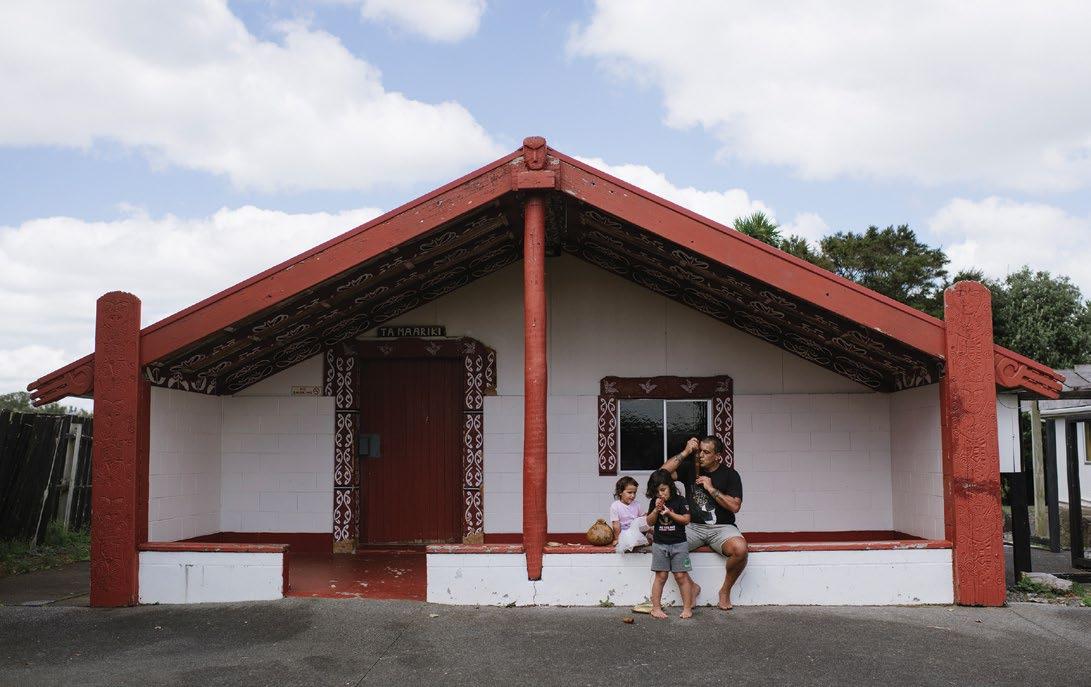
Tūi Pa, the papakainga (Māori land) at the entrance to Te Aroha, homes the only marae in the area. As we reach Tumutumu Marae, a nguru (nose flute) and the giggles of tamariki echo. Ben Whitaker is sitting at the entrance of the wharenui, expertly playing taonga pūoro (instruments) that he’s carved while his toddlers, Orongonui and Hinewai, run around the ātea (courtyard in front of the wharenui) and climb trees.
“This is what I prefer,” Jill says as we watch Ben and his kids playing.
“Creating opportunities to allow this time, us coming together. It’s where I thrive the most. This feels meaningful.”
Opener: Manager of Ngāti Tumutumu Trust, Jill Taylor. ↑ Ben Whitaker plays pūoro for his toddlers.
“The chance to have a lasting impact on the ngahere is not lost on us and we want to be able to create something sustainable for all our future generations.”
The marae hosts regular wananga for people of Ngāti Rāhiri Tumutumu to understand their whakapapa.
Tumutumu Marae had a slew of renovations in 2009, thanks to the popular TV show Marae DIY, and now hosts regular wananga for the people of Ngāti Rāhiri Tumutumu to understand their whakapapa.
Next, Jill takes us somewhere special – to Mt Te Aroha’s summit.
At the base of Mt Te Aroha, Tumutumu Kaitiaki Taiao, the environmental arm of Ngāti Tumutumu Trust, are controlling 500plus hectares of invasive pest plant species, and regenerating native bush through eco-sourced tree plantings. Originally started with Jobs for
Nature funding, managed by Manaaki Kaimai Mamaku Trust, the project is now mostly funded through one-off grants and more putea (money) is needed to ensure it continues.
Providing an opportunity for whānau to return home to work on the maunga is an important goal of the iwi.
“The chance to have a lasting impact on the ngahere is not lost on us and we want to be able to create something sustainable for all our future generations,” Jill says.
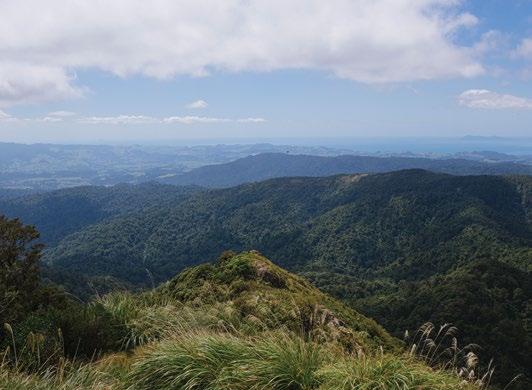
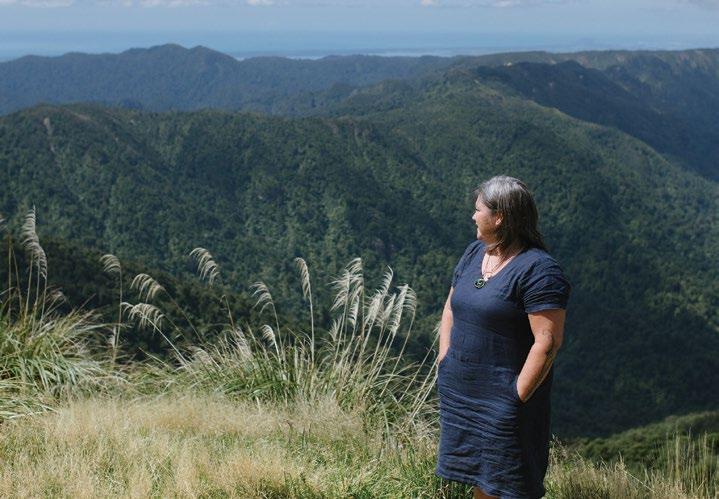
Standing 952m above sea level, at the highest point of the Kaimai Range, overlooking the Bay of Plenty,
Jill says it’s tapu. Like Mauao, Mt Te Aroha is a tūpuna.
Gesturing toward the ridges and valleys, Jill says:
“As we finalise this settlement journey, we turn our eyes to the future. I see a thriving whānau on their whenua, in their rohe, on their maunga. That brings a smile to my face. Not the past. The future.”
Learn more about Ngāti Tumutumu with a guided walk of lower Mt Te Aroha.
kaimai-mamaku.org.nz/ ngati-tumutumu
Crafting a Community
Step through the doors of Robyn’s Cottage and you’ll immediately feel like home. From handmade treasures to photographs of family memories, it’s homely, warm and inviting. Let’s take a look inside...
Words by Laura Boucher
Photography by Erin Cave
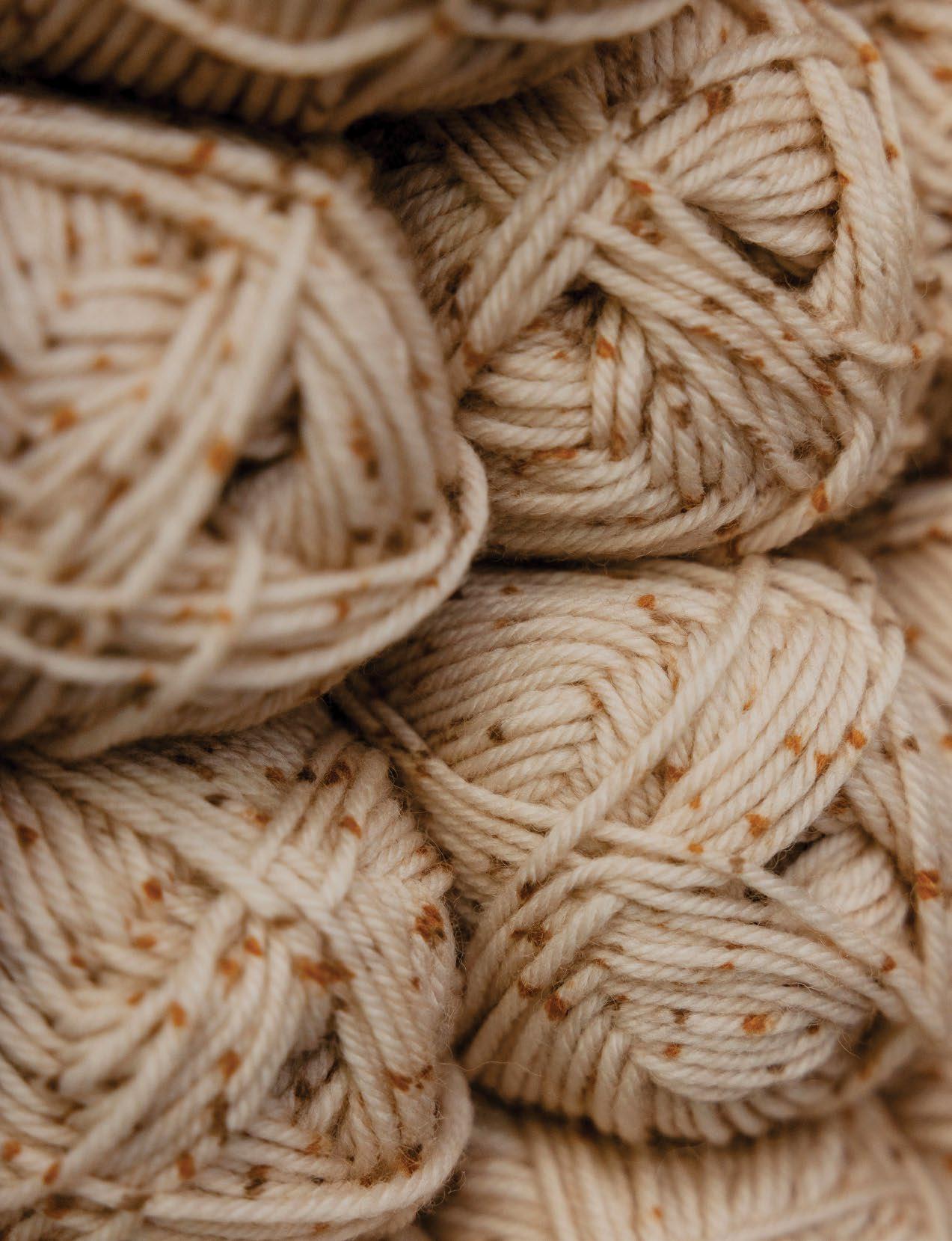
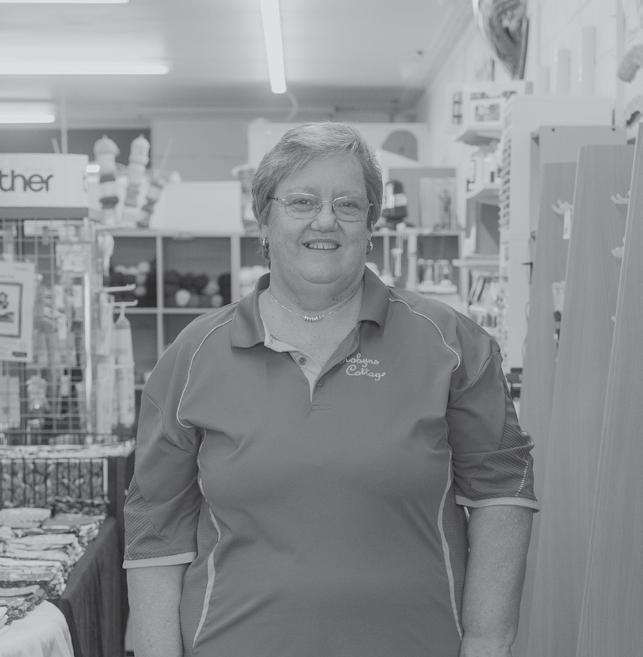
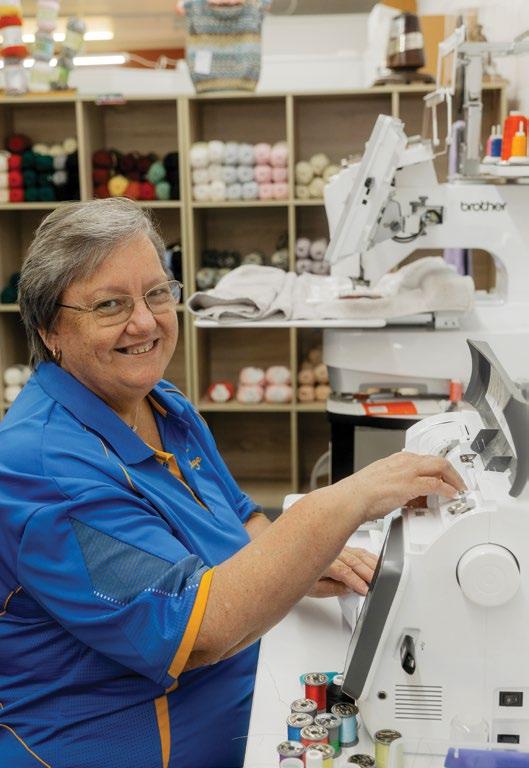
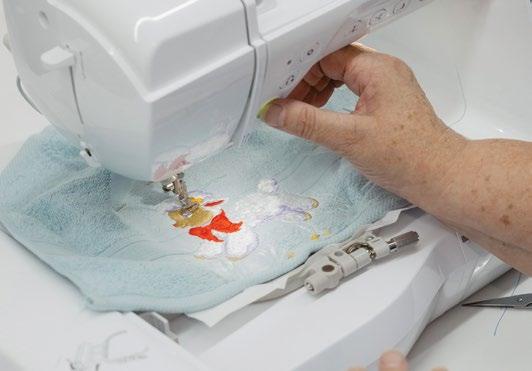
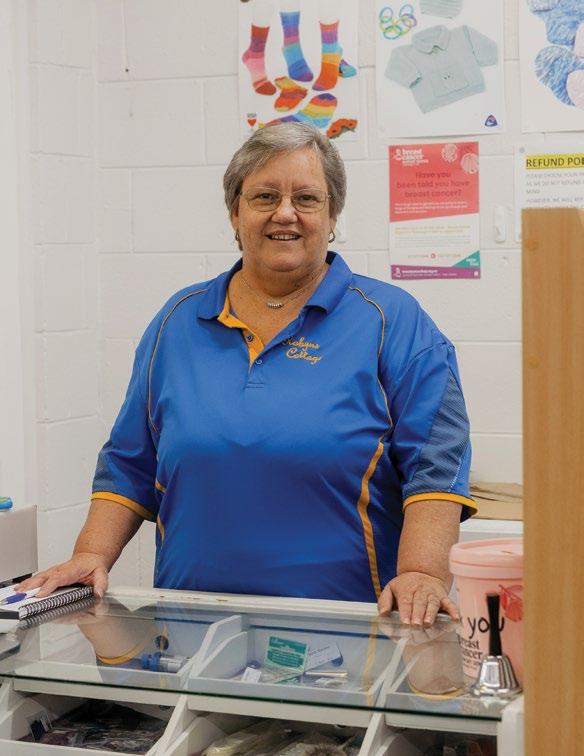
Stepping into Robyn’s Cottage feels less like walking into a retail store and more like crossing the threshold of a loved one’s home. Every corner is filled with something to touch, admire or smile at. There are vibrant threads, baskets of yarn, fabrics in every colour imaginable, handstitched creations, and treasures made lovingly by Robyn Parker herself.
Then there are the pictures that adorn the walls of this crafty corner – photos of children and grandchildren, snapshots of milestones, memories, and moments that shape the soul of the space. It feels lived-in, in the best possible way: Homely, warm, inviting.
When Robyn greets you, it’s as though you’ve known her for years. The 63-year-old has a gentle, familiar presence that makes you feel instantly at ease.
This cosy shop – a home away from home – is the product of a dream Robyn has held for a lifetime.
“I’ve always wanted a craft
shop,” she says, describing it fondly as the “hobby that got out of control”.
A passionate knitter, Robyn was a regular at craft shows across the country. She recalls the early days of working her 9-to-5 job, then staying up late into the evenings to create her crafts.
Through the shows she discovered her love of connecting with fellow crafters, hearing their stories, sharing tips, lingering in conversation. However, the crowded, fast-paced stalls were often overwhelming.
So, she was spurred to make the shop dream a reality. A place where she could converse with people for hours over stitches and sewing patterns. A place that felt like her.
The dream first took form 10 years ago inside a “very tiny shop” in Tauranga’s Historic Village. Initially part-time, Robyn kept her job at a local bank while her daughter-in-law and another helper managed the day-to-day.
As interest grew, the little
shop soon became too small and they moved into a bigger building within the Village.
But something was calling her home.
“I’m Greerton born and bred,” she explains. “My parents have been here since 1954.”
As fate would have it, Robyn would soon be guided back into the perfect place. One day, her young grandson spotted a ‘For Lease’ sign in a Greerton shop window while on a school trip.
“He made the teacher stop and get the phone number,” she laughs. That simple moment led her to the shop she occupies today, right in the heart of the community that raised her.
Although the shop “looked quite empty” at first, it didn’t stay that way for long and a few months later, Robyn made the brave decision to focus on Robyn’s Cottage full-time.
“I left my job and came into the shop. [It was the] Best thing I ever did.”
What began with knitwear
“My daughter would say, ‘Mum, the kids need something for daycare,’ and I’d think, ‘If you need it for your kids, how many other kids need it too?’”
What began with knitwear has blossomed into a vibrant, ever-evolving cottage overflowing with creativity. A decade on, Robyn’s Cottage is more than just a craft shop.
has blossomed into a vibrant, ever-evolving cottage overflowing with creativity. Robyn is endlessly curious – always listening, learning, and adapting, taking cues from family, customers, and the world around her.
“I’m always doing product development,” she says.
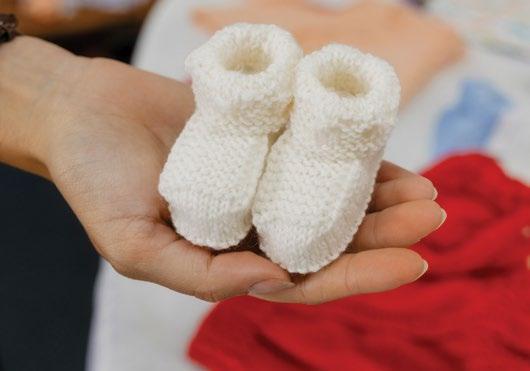
From reusable cloths, hooded bath towels, and heat packs made with gluten-free rice to children’s dresses and handmade baby garments, the ideas just keep coming – often inspired by the needs of her own family.
“My daughter would say, ‘Mum, the kids need something for daycare,’ and I’d think, ‘If you need it for your kids, how many other kids need it too?’”
The community shapes the store as well. Young people come in wanting to mend their jeans. Older men are rediscovering knitting. Parents look for sustainable, affordable baby gifts.
Each trend, each story becomes part of the ongoing evolution of Robyn’s Cottage.
“We’re forever changing,” Robyn says.
But running the store hasn’t been without its challenges. Like many small business owners, Robyn faced the unimaginable when Covid-19 lockdowns forced her to close her doors.
“We literally packed up the whole shop and moved it home in six hours.”
They worked late into the night, clearing shelves, packing wool, fabric, and machines. She truly believed it might be the end.
But then came a lifeline – daily check-ins from a local business advisor and a gentle
→ When Robyn Parker greets you, it’s as if you’ve known her for years.
push from a business psychologist who reminded business owners, “We’ve all got to learn to pivot”.
Slowly, but surely, Robyn persevered. She applied for support to create a website and, after being turned down twice, her third application succeeded — thanks to one simple statement: face masks.
“Yes,” she told them, “I’ve made 500 face masks.”
That was all it took. Two weeks later, the website was live, and it helped keep Robyn’s Cottage afloat.
“That was a frightening time,” she admits.
Then, two years after Covid-19, another challenge arrived.
“I was diagnosed with stage three breast cancer on December 14,” she shares. “I had my surgery a week later, right before Christmas.”
For months, she couldn’t work. Chemo, radiation, and a long recovery followed. But Robyn’s Cottage never closed.
Her family stepped in – her husband, her daughter, friends, and even her grandchildren helping where they could.
“They got the shop through for me,” she says.
And when she could do nothing else, she knitted. Slowly, carefully, designs formed, patterns grew, and stitch by stitch, her hope stayed alive.
“There were times I said, ‘Just close the shop’. But they kept saying, ‘No, you’re going to keep it open’.”
Today, cancer-free and continuing her craft, Robyn and her Cottage continue to evolve. But through all the change, one thing remains unwavering: Her commitment to Greerton, the place that shaped her and
continues to hold her close.
“As a kid, Greerton was a safe place,” she says. “There are still people around here that knew me when I was little.”
She laughs at the thought of leaving.
“If I had to move out of Greerton, I’d probably close.”
After a decade of resilience, reinvention, and deep community connection, Robyn’s Cottage is more than a craft shop. It’s a home to her, to her family, and to the many people who step inside and instantly feel at ease.
She sums it up simply:
“Crafting is my baby. It’s what gets me out of bed in the mornings. And I’m very grateful for those who support local so I can keep doing what I’m doing, for me and my family.”
robynscottage.co.nz
Robyn’s Cottage | Tauranga
I have a natural distrust of fortune tellers. I find incense nauseating, and anyone called Madame Zita is getting a wide berth from me. But horoscopes? Now that’s something I can really sink my teeth into. Mapping out the future based on celestial influences and the zodiacal placement of the sun at the time of your birth seems completely legit. Although, to be fair, no scientific studies have shown any support for the accuracy of my horoscopes.
Aries
(March 21 – April 19)
You will feel an overwhelming urge to achieve something physical this week, but you shouldn’t go to the gym. Instead, find a large discarded appliance, perhaps a chest freezer, and attempt to move it using nothing but your grievance with the world. The stars also suggest that your true potential is currently being stifled by a man named Gary, who might work at Bunnings, or possibly Mitre 10. I’m not entirely sure. Either way, he has a secret that could change your life. Spend this weekend staring at a brick wall until you begin to see the individual pores in the clay. Don’t hate the messenger; it’s just what the stars are telling me.
Taurus
(April 20 – May 20)
The moon is shifting into your house this week, which in this economy means you will have an extra drain on your already inadequate budget. You are also known for being stubborn, but this week try to apply that rigidity to your ambivalence. It might not help your circumstances, but it will provide some interesting viewing for your peers. If you see anyone wearing a lavender-coloured shirt, then your boss is going to ask to have a chat. Good luck. Also, accept this. The life of a flat-topped piece of furniture with cupboards and drawers is far more stable than the one you are currently leading. Maybe do something about that.
Gemini (May 21 – June
20)
You have two personalities, and currently both of them lack good chat. Mercury is in retrograde, which means your phone will likely run out of battery much sooner than expected. Midweek, you will encounter someone who knows your search history, and you will more than likely have to take a hard look at yourself. You also need to diversify your social circle. Try joining the Cloud Appreciation Society, or maybe the magnet fishing club.
Cancer (June 21 – July 22)
As a water sign, you are prone to deep emotions, but this week your emotions will be less like a vast ocean and more like a small puddle of bin juice. You will feel a sudden, crushing nostalgia for 90s TV. This is a sign from the universe that you are incredibly bored. In your domestic life, the stars suggest you should stop trying to find yourself and start trying to find ways of bringing more money into the household. On Friday, a total stranger will hand you something. You should keep it. You have probably paid for it. The stranger may just be a retail assistant. My vision is a little cloudy.
Leo (July 23 – August 22)
This Wednesday, you will have a moment of discovery while looking at the mess you have just made of the
toilet, realising that your unique destiny is actually to stay well away from legumes and any sort of spice that contributes to making Southeast Asian cuisine taste so good. Avoid the urge to launch a bitter and abusive attack on your neighbours just because they started playing drum n’ bass at 3am. You are a chaotic mess, and you will need to borrow their lawnmower in the next couple of weeks anyway.
Virgo
(August 23 – September 22)
Your obsession with detail is reaching a point of crisis. Resist the urge to alphabetise your spice rack, because the universe just is not ready for that level of anal retentiveness. By Friday, you will achieve a significantly higher standard of disappointment by attempting to fold a fitted sheet. You will need to accept it is a form of geometry from a very dark place. You have the equilibrium of a three-legged table, so focus this week on trying not to please everyone and getting your balance back.
Libra (September
23 – October 22)
By the weekend, your activity will loosely involve a connected series of movements between your sofa, your phone, the fridge, and the toilet. Well done. You will internally rationalise this as downtime, though no actual restoration will occur. Your screen time will also rise exponentially, and you will probably double it by the following week.
Scorpio (October
23 – November 21)
As a Scorpio, you are naturally mysterious, but this week your aura will resemble something closer to a soggy loaf of bread than a dark, magnetic force. You may experience sudden bursts of clarity followed by shame, mostly about how many emails you are composing through ChatGPT. Romance is in the air, though mostly the kind you experience on your own in the shower. Financially, the stars suggest you should make more money somehow. On Wednesday, someone will compliment you on something about you. Smile and nod. They are probably lying, but it will make you feel slightly better, which is the point.
Sagittarius
(November 22 – December 21)
Your thirst for adventure is currently being met by a walk to the dairy, and you are calling it a trek. Expand your horizons and at least do it in activewear. Jupiter covers a wide area, which means your waistline and your list of unfinished jobs are both
going to grow by around 15 per cent this week. You will feel the urge to sell all your belongings and move to a yurt in Oropi. Maybe do not do this. You are too dependent on high-speed internet and the fish n’ chip shop down the road. Instead, pack your bags to give yourself the sensation of being ready to leave without the logistical nightmare of actually doing it.
Capricorn
(December 22 – January 19)
You are the mountain goat of the zodiac, which means you are very good at climbing things but usually only find actual goat excrement at the top. This week, your ambition to impress your boss will lead you to some aggressive spreadsheeting, but fixing a problem-ridden Excel file within eight hours will not get you the raise you are after, mainly because you do not deserve it. Money is the concern for you, as the planet Saturn is sitting on your EFTPOS card. To attract wealth, place a stone in your shoe. It will not make you rich, but the constant stabbing sensation in your heel will remind you of the inherent pain of capitalism. It is called grounding.
Aquarius
(January 20 – February 18)
You are a visionary, which is jargon for having ideas that make people back away from you at social events. This week, you will develop a new yoga position that at first seems difficult but not impossible, until a simple Google search proves it has been around for ages. You will want to gargle afterwards though. You will be asked to participate in a team-building exercise. Before jumping to conclusions, it involves falling backward into the arms of people you work with who secretly dislike you. Do not do it. Your social life will improve once you stop trying to convince your friends that they are living in a simulation.
Pisces
(February 19 – March 20)
You are a sentimentalist, often seen drifting through life like sea foam caught in a council drain pipe. Sorry, but it is true. Neptune is stirring your subconscious, which means you will have a vivid dream about a past lover. Do not act on any impulses, but definitely put those sheets in the wash. You will start to feel a profound connection to all living things, especially plants, and you will be disappointed to learn that you cannot synthesise nutrients through photosynthesis. Let’s be honest, this could probably be attributed to the mushroom chocolate you are getting through most weekends.
Sip, Slurp & Season!
Words by Madeleine Hughes Photography by Erin Cave
As the days get cooler, what better way to warm up than with a delicious, hearty soup? Chef Madeleine Hughes has whipped up some tasty and nutritious soups to feed the soul this Autumn.
This soup couldn’t be easier, cheaper, more nutritious or delicious if it tried. I think where people go wrong with soups is not thinking enough about seasoning and consistency. If soup is under seasoned it can taste unbelievably boring. Salt is your friend! Maybe a pinch more sugar? A squeeze of lime? When it comes to consistency, soup that’s too thin feels like a waste of time, and if it’s too thick it’s reminiscent of baby food. Both of these are such simple solutions to fix. Add more liquid if it’s too thick, or let it cook away with the lid off if it’s too thin. It’ll slowly reduce to the consistency you want it to be, smooth and creamy.
Coconut, Carrot & Red Lentil Soup, with Lime & Coriander Oil
SERVES 6
1 leek, roughly sliced & rinsed thoroughly
3 large carrots, roughly chopped
3 cloves garlic, peeled
1 thumb sized piece of ginger, peeled & roughly chopped
1 tsp of each: Garam masala, turmeric, chilli flakes
1/2 cup split red lentils
1 litre vegetable stock
2 tsp salt
1 Tbsp sugar
1 can coconut cream
Lime & Coriander Oil: (to serve)
Coriander – a big handful
1 heaped Tbsp Indian lime pickle
1/2 cup good olive oil
Method
Heat a large, heavy-bottomed pot over medium heat and add a generous glug of olive oil. Add the leeks, carrots, garlic, and ginger, and cook for about five minutes, stirring occasionally, until they begin to soften. Add the spices and cook for another minute, allowing them to become fragrant. Pour in the stock, then add the lentils, sugar, and salt. Bring the mixture to a gentle simmer, cover the pot, and cook for 30 to 60 minutes, or until the vegetables are very soft. Carefully blend the soup with the coconut cream until smooth, using either a blender or a stick blender. If using a standard blender, you may need to work in batches. Taste the soup and adjust the seasoning if needed. Serve topped with lime and coriander oil and a spoonful of unsweetened coconut yoghurt.
For Lime & Coriander Oil: Finely chop coriander and lime pickle, add to a bowl with olive oil and mix.
Eat This
This bread is the best trick you can have up your sleeve. Nothing impresses people more than a loaf of homemade bread, and this is the simplest type of bread you can make.
Old Fashioned Molasses Bread
SERVES 6-10
3 cups wholemeal flour
1.5 tsp salt
3/4 cup seeds (a mix of any you have is great: pumpkin, sunflower, flax, sesame, poppy…)
1 Tbsp molasses
1 Tbsp honey
1 Tbsp yeast (make sure this is well within the expiry date)
1 Tbsp olive oil
1.5 cup lukewarm water
Method
In a large bowl, whisk together the wet ingredients until combined. Add the dry ingredients and mix with a wooden spoon until just combined. Cover with plastic wrap and let rest for 30 minutes, or until the dough has started to rise. (If it hasn’t, check that your yeast is not expired.) Punch down the dough to release the air, then transfer it to a lined loaf tin and smooth the top. Loosely cover with plastic wrap and let rise again for 30-to-45 minutes. Meanwhile, preheat the oven to 220°C. Remove the plastic wrap and bake for 10 minutes. Reduce the temperature to 180°C and bake for a further 20 minutes. Cool for at least 15 minutes before slicing.
Fat God
I had the pleasure of soaking up the sun in Greece last year. I escaped New Zealand’s wintery June to spend a month around Europe, eating my way through Barcelona, Provence and Athens.
I wrote all about it in the August September 2025 issue of Our Place magazine.
Somewhere between the long lunches, Aperol Spritz, stony swims – and that magical moment when the saganaki (pan-seared Greek cheese appetiser) hits the table – I completely fell in love with olive oil.
Words by Pepper & Me’s Cherie Metcalfe
No, not the average supermarket stuff. I’m talking about the proper, proper, proper stuff. The kind that’s been cold-pressed within hours of picking, tastes pure and peppery, and is absolutely appropriate to be poured over everything.
I wanted to bring that feeling back home.
When I got back to New Zealand, I couldn’t shake the idea. I already live and breathe flavour with Pepper & Me, but this was different.
Olive oil in Greece feels sacred, like a ritual. So I gathered my brother Lorne, my tech genius, number-one problem solver, and designer Cam Attwood, who I knew would make the whole thing look incredible.
After many brainstorming sessions and taste tests, we decided to follow in the viral footsteps of Spanish olive oil company ‘Graza’, which uses plastic squeeze bottles that are very on trend.
Squeezy bottles are so handy and create space to make the oil bottle the most lovely decor accessory in your kitchen.
There you have it, that’s how Pepper & Me’s very
own ‘Fat God’ oil came to life. It’s a premium finishing oil made from single-origin Koroneiki olives grown on the Greek island of Crete, cold-pressed within hours of harvest.
Nothing blended, nothing watered down – just the same oil Greek families have been sipping, drizzling, and worshipping for about 4000 years.
With its vibrant blue bottle and hand-drawn design by our very own Cam, you’ll spot ‘Fat God’ straight away.
It’s loud, bright, and a little cheeky – exactly how great olive oil should be.
But, this olive oil is not for cooking. This is the oil you finish with.
Drizzle it over salads, pasta, grilled meat, warm bread – basically anything that deserves to taste next-level.
We’re launching Pepper & Me’s brand new ‘Fat God’ oil this April, and bottles will be available online, with stockists to be announced very soon.
Sadly, I haven’t booked any plane tickets to the Greek islands this winter. So instead, I’m bringing the Greek islands to all of us!
It’s been such a buzz to build something that feels like Greece bottled up. Its flavour is so powerful, and so complex all within one single ingredient product.
It’s the complete opposite of Pepper & Me, although just as exciting.
It’s the oil for real foodies. I can’t wait to share ‘Fat God’ with you!
pepperandme.co.nz @pepperandme
Here’s a sneak peak at one of the recipes featured in Cherie’s new cookbook ‘Potluck’ out this August!
Confit Tomatoes on a Silky White Bean Dip featuring Fat God olive oil
INGREDIENTS
1 can cannellini beans (drained, rinsed)
2 cloves garlic
Juice of ½ lemon (to taste)
2 Tbsp tahini
3-4 Tbsp Fat God olive oil (plus extra to finish)
2–5 Tbsp warm water
Man Grind (or salt and pepper) to taste
Roast Tomatoes
250g cherry tomatoes
3 sprigs fresh thyme
1 Tbsp Fat God olive oil
Man Grind
Method
Pre-heat oven to 180°C. Toss cherry tomatoes with olive oil, thyme, and Man Grind. Roast for 20-to-25 minutes until blistered and jammy.
Add beans, garlic, lemon juice, tahini, olive oil, and a good pinch of Man Grind to a blender. Blend, adding warm water gradually until super smooth, pale, and fluffy. Taste and adjust – more lemon for brightness, more Man Grind if it needs lift.
Spread onto a plate, creating some swoops and divots for the olive oil to pool in. Spoon over the warm tomatoes and their juices.
Finish with a heavy drizzle of Fat God olive oil, cracked black pepper and extra thyme to garnish.
Experience Aotearoa New Zealand's native forest like never before.
Your forest bathing experience in the heart of the Bay of Plenty.
Marco Fuchser is seizing the opportunity to create a full-circle dining experience during this year’s Flavours of Plenty Festival. Think unique and memorable food that pushes the palate of diners.
Ask any foodie expert, and they’ll usually agree the source of an ingredient is the key to its essence, and dishes taste best when they help to build connection and community.
With that in mind, Toi Ohomai Institute of Technology tutor Marco Fuchser is seizing the opportunity to create a ‘full-circle experience’ during this year’s Flavours of Plenty Festival, from April 16th to May 3rd.
He and his colleagues have been busy training their food and beverage, cookery, and bakery students to create five multi-sensory courses for ‘Dishrupted: An Interactive Culinary Experience’.
Each course will be offered in a different location within the Tauranga campus hospitality department during the April 30th event.
One of the most unpredictable elements will be the ingredients, many of which will be unused food items rescued and donated by the tertiary provider’s student support partners, Good Neighbour, shortly before the event. Ticket profits will then be gifted back to the community charity, completing a regenerative circle.
“The intention is that guests will enjoy a unique and memorable dinner, ākonga (students) will gain hands-on learning opportunities, and the wider community will benefit from the extra support for food rescue initiatives,” Marco says.
“It gives ākonga a real-world platform to stretch their creativity. By working with what’s available, especially food that might otherwise go to waste, it teaches respect for ingredients and showcases what’s possible when you approach food with an open mind.
“Our students aren’t just learning to follow recipes; they are learning to adapt, innovate, problem solve, and collaborate under real-world pressure. Events like this allow them to experience the realities of hospitality work, from concept development and menu design to service flow and customer interaction.
“We’re helping to grow creative thinkers and people who can push the industry forward and contribute to a more sustainable and imaginative food culture.”
Toi Ohomai has been a key supporter of the Flavours of Plenty collective since it was launched five years ago.
Marco knows the annual award-winning foodie festival has set the bar high, and ‘Dish-rupted’ ticket holders will expect to be impressed.
“We’re offering a multi-course, multi-location dining experience that blends storytelling, sensory
theatre, and culinary craftsmanship. It will be a movable feast.”
Each course will be served in a different space on the campus, with intentionally curated environments designed to heighten curiosity and delight.
“Movement changes perception, and food is inherently multi-sensory. The theme of this year’s festival is to ‘Push the Palate’. If we’re going to do that, I want us to also push the environment, the mood, and the entire experience of eating.
“Taste, texture, aroma, sound, setting, and social connection all shape the way we engage with a meal. The event’s design encourages diners to be aware of these layers and to lean into the unusual,” says Marco.
The ambitious event embodies the ethos of the annual Flavours of Plenty Festival: celebrating local people, their stories, and the diversity of food experiences across the Coastal Bay of Plenty.
It was the region’s horticultural provenance that first inspired Tourism Bay of Plenty to establish the Flavours of Plenty collective and organise its foodie festival every autumn.
“Food is an integral part of every travel
↑ Clockwise from left: Marco Fuchser; Shane Yardley and Giancarlos Burrows; this recipe won Judge’s Choice at the Battle of the Snack 2025. ← Student chefs are preparing for this year’s Dish-rupted event.
experience, and our horticultural abundance, innovative food and beverage producers, and creative culinary flair deserve to be savoured and celebrated,” says Tourism Bay of Plenty general manager Oscar Nathan.
“We’ve always been very intentional about working with Toi Ohomai, across all our Flavours of Plenty projects.
“We’re keen to highlight the exceptional, dedicated expertise we already have in our local culinary and hospitality sector, while also supporting the vital next generation of innovative chefs who are coming through.”
The first event in this year’s Flavours of Plenty Festival, the Battle of the Snack on April 16th, exemplifies this intention. Toi Ohomai tutor Shane Yardley will join three other experienced local chefs to mentor four culinary protégés, including Toi Ohomai student Giancarlos Burrows, to produce 12 snack platters as they vie for votes.
Toi Ohomai will also host the festival’s Kiwi Kids Bake Off Fair on May 2nd, celebrating the region’s youngest budding bakers.
“More than 50 unique foodie events will be happening during this year’s festival right across our
coastal region. It’s the fifth time we’ve offered this festival, and it’s the biggest and boldest one yet,” says Oscar.
“The action-packed 18-day programme is a great way to draw visitors to experience everything our awesome region has to offer. But the festival has a much wider and longer-lasting impact than that.
“It shines a spotlight on our distinctive food and beverage producers and all our best hospitality venues. This exposure is helping to drive additional year-round patronage for these businesses, which supports our local economy.
“The festival also offers unique opportunities to celebrate and connect local communities.”
Collaborative events like Of the Earth –Conceptual Dining Event, at the Ōmanu Community Garden on May 2nd, encourage guests to slow down and reconnect with the land, with seasonal ingredients, and with each other.
It’s a picnic-style three-course immersive dining event organised by Rose’s Dining Table and Our Place magazine.
See the full 2026 Flavours of Plenty Festival programme at flavoursofplentyfestival.com
Pouring the Wine
Words by Stuart Whitaker
by Erin Cave
Love a good drop of red, or white? So does David Carr! He’s been running his destination wine and liquor store for 17 years. His point of difference is what he chooses to put on the shelves.
David Carr may have owned the business for 17 years, but that’s just a drop in the ocean as far as Mount Wine Barrel is concerned.
Now found across the road from the McDonald’s in Mount Maunganui, Mount Wine Barrel has existed for over 60 years and was previously a mainstay of the Mount’s town centre.
David’s iteration is characterised by an intuitive business model.
A typical day starts with a bit of paperwork and stock ordering and, in between the bread and butter of serving customers, chatting with reps and restocking shelves.
“I don’t run a stock list, I run a bit by the seat of my pants,” he says. “I don’t push a button on my computer that says ‘you sold one of these, you need to order another’. I run by what’s new and exciting.”
It’s a proud boast that being independent makes the shop responsive to trends and customers.
It reflects today’s world – and is something David uses to guide what’s on the shelves.
“I might run out of things, or sell through things, and replace them with something else that I feel will capture people’s attention and create interest.
“I think people are in such a fast moving society that, to keep them interested, products have to be changing regularly, especially with craft beers.
“There are a lot of new innovations coming up the whole time and you’ve got to keep up with them – and people are expecting that as well. They’re not just drinking the same thing, day in, day out, year in, year out. They are looking for the next thing, whether it’s low in sugar, low in calories, ultra-low carbs and things like that.”
A qualified panel beater who then moved on to car sales, buying the shop was a change of lifestyle fuelled by the desire to be his own boss.
Retail wasn’t an aspiration, but when the opportunity presented itself, he took it, despite no experience or background in liquor sales.
A friend, Nat Thompson, who did have knowledge of the industry, offered his advice and that gave David the confidence to make the leap of faith.
David’s own favourite tipple is chardonnay and, when the occasion calls for it, champagne the first few years saw a stronger focus on wine.
He has grown into the role of friendly shop keeper and wine lover.
Photography
“Basically I run the shop by what customers are looking for. But I also run it by my palette as well. I can taste 12 different wines that come from a winery or a supplier, and I may only pick six out of them because I just think the others are not good value for money, or I feel they are not quite right for my clientele base.”
“Basically I run the shop by what customers are looking for. But I also run it by my palette as well. I can taste 12 different wines that come from a winery or a supplier, and I may only pick six out of them because I just think the others are not good value for money, or I feel they are not quite right for my clientele base.”
It also gives authenticity to his personal recommendations.
He says the best part of running the shop is being part of a community of customers.
“We have been a destination shop since focusing on wine and having a point of difference
with the wine selection, and that gives us a wide catchment area.”
Leaving aside the temptation of the stock, he says the hardest part is trying to be everything to everyone.
“There’s so many breweries now, so many wineries, lots of little distilleries, so many gins and things like that, but someone can walk in and say, ‘You should try such and such, it’s absolutely amazing’. But I’ve not heard of it.”
He says, despite being extremely well stocked, he gets unusual requests all the time.
“People come in, they’ve been to a mum and
dad vineyard in Europe where they make just enough to sell every year, they have a picture of it and say, ‘Can you get this?’.”
David says he doesn’t see himself ever wanting to do anything else.
“It takes time to build a business and gain those relationships with customers and suppliers. I enjoy the community I’ve created for the shop, it makes it enjoyable to come to work.
The character of the shop, and David’s philosophy, mean regular customers are a certainty.
“Probably the most interesting regulars are the old ‘Mounties’ who tell you stories of when they grew up, or about the shop. They remember the shop and how the Mount used to be with donkeys on the beach, and tell you about where businesses used to be, and where cafes are now.
“Then you get other interesting customers who have great wine knowledge and love to share their experiences and their travels and their journey with wine.”
“It takes time to build a business and gain those relationships with customers and suppliers. I enjoy the community I’ve created for the shop, it makes it enjoyable to come to work.”
It’s something David also does when he gets away and he recently visited Australia’s Barossa Valley, touring wineries.
“I’ve been to Italy and gone around a lot of vineyards there, and I like to immerse myself in central Otago’s many vineyards as well. I’ve picked out some little vineyards whose wine I stock to keep the shop’s point of difference.”
He wonders if owners rub their hands together when they learn his occupation.
“Sometimes, maybe! But they are always excited to show you around, and show you what’s new or what their vintage is like for the year.”
While it may be a busman’s holiday of sorts, he says it is also good to get to the vineyards and “see what they do, and try the wine, because it definitely does taste different when you are there”.
mountwinebarrel.co.nz
The Mount Wine Barrel has been a destination shop for years and is defined by the handcrafted selection of red and white drops that are on its shelves.
Timeless elegance for the discerning home.
Tauranga's multi purpose event centre
Full AV & staging — Sound, Lighting & Video
In-house Catering and Bar service
Up to 400 guests across two flexible spaces
Meetings from $60/hr · Functions from $250
Book your event totarastreet.co.nz jay@totarastreet.co.nz
@latibule nz | latibule co nz
HIRE THE VENUE
Cacio & Pepe
Pizza Tradizionale, Pasta Autentica & Dolci Deliziosi
Takeaway open Fridays, 4-9pm. 62a Grace Road Tauranga. cacioandpepe_nz cacioandpepe.co.nz
Our dream is simple: to bring the original flavour of Rome to New Zealand, served with generosity, authenticity, & love Daniela & Daniele.
Win Your Winter Season!
Words by Zoe Hunter
Our very own Rachelle and Chris Duffy are dedicated to supporting grassroots artisanal enterprises. That’s why they’ve launched a thoughtful campaign to help give a welcome winter boost to businesses.
Supporting small, local businesses has always been at the heart of The Little Big Markets. In fact, it is one of the main reasons why Our Place directors Chris and Rachelle Duffy started the markets almost 18 years ago during the Global Financial Crisis.
Initially a personal project, this coming together of like-minded people has established itself
as an integral event for the local community.
“At the markets, we believe in the power of community,” Rachelle said. “Our markets serve as a vibrant hub where locals have been coming together, fostering connections and building relationships since 2009.”
Rachelle and Chris are dedicated to supporting and showcasing grassroots businesses. Now, they are stepping in to help small businesses battling with rising costs ahead of winter. The husband-and-wife duo have unveiled an initiative designed to provide financial relief during one of the toughest trading periods of the year.
The Winter Season Heroes campaign will give stallholders the chance to win their entire winter season bookings for free. Every booking made during April will count as an entry into the draw, with one participating business set to receive a full winter support package. The campaign also invites the public to vote for their favourite vendors, with those
“It’s a celebration of local talent, creativity and culture. Our events create shared experiences that bring people together, enriching the lives of everyone in the community. “
The Little Big Markets Winter Dates
→ Coronation Park, Mount Maunganui
May 3, 10, 16, & 30
June 6 & 20
July 4, 10, 18 & 25
August 1, 15 & 22
September 5 & 19
→ Tauranga CBD, Waterfront
May 2
June 14
July 19
August 9
September 13
↑ Marcela Diaz and Lea Baud from Drawing the Way have been market vendors since way back.
taking part going into a separate prize draw. Rachelle said the initiative comes in response to mounting pressures on small businesses, including increased fuel prices, making it harder for many to stay afloat.
“Supporting small, local businesses has always been at the heart of our markets. It’s why we started it almost 18 years ago during the Global Financial Crisis. This campaign is an extension of that mission at a time when it’s needed the most.”
After a successful summer season, Rachelle said their team was now focused on supporting businesses through the winter season.
“Winter is when it matters most. It’s the season where the people behind the stalls keep showing up, bringing the same energy, creativity and commitment. This campaign is about backing them.
“We are dedicated to supporting and showcasing grassroots businesses. By providing a platform for local entrepreneurs, we help them grow and thrive, contributing to the economic and social fabric of our community.”
Rachelle said The Little Big Markets is more than just a market.
“It’s a celebration of local talent, creativity and
culture. Our events create shared experiences that bring people together, enriching the lives of everyone in the community. Because this isn’t just about the markets, it’s about the community who make it possible.”
Marcela Diaz from Kiwi art print business, Drawing the Way, said she and her partner Lea Baud love attending the markets as often as they can.
“It is our way we can interact with the community. It is the time of the week where we meet with our customers and connect.”
Helen Cantwell has been a vendor since 2023 and said being part of the markets had been a great experience for her small homemade candle business, Eleventh Hour Collection.
“It’s a wonderful platform to put my brand out there and connect with new customers while selling my handmade candles, home fragrances and trinkets. The atmosphere is always welcoming, supportive, and full of people who appreciate small, local makers. The Little Big Markets creates such a vibrant community for both vendors and visitors, and I’m really grateful to be a part of it.” thelittlebigmarkets.co.nz
COME FROM AWAY
Musical 15 MAY 24 APR TO 2 MAY
2:30pm & 7:30pm
Addison Theatre
Reserved seating
Tickets from $50.00
An uplifting true story of community and kindness as a small town welcomes stranded travellers. Set to vibrant music, this celebrated musical shares the power of humanity coming together in extraordinary times and is one not to miss.
BANFF MOUNTAIN FILM FESTIVAL WORLD TOUR 7pm
Addison Theatre
Film
Reserved seating
Tickets from $25.59
Dive into the world’s boldest mountain adventures as the Banff Mountain Film Festival returns to Baycourt. From epic climbs to wild expeditions, experience heart‑pounding films that celebrate courage, culture, and the call of the outdoors.
BALLOON DOG
28 & 29
MAY
7pm
Addison Theatre
Theatre Reserved seating
Tickets from $27.11
A tender, funny and moving tale as a young girl’s friendship with a migrant worker unravels hidden truths within her family. Indian Ink brings this beloved story to life with heart, music, humour and theatrical magic.
THOUGHTFUL FLORALS FOR WEDDINGS, CELEBRATIONS & EVERYDAY MAGIC