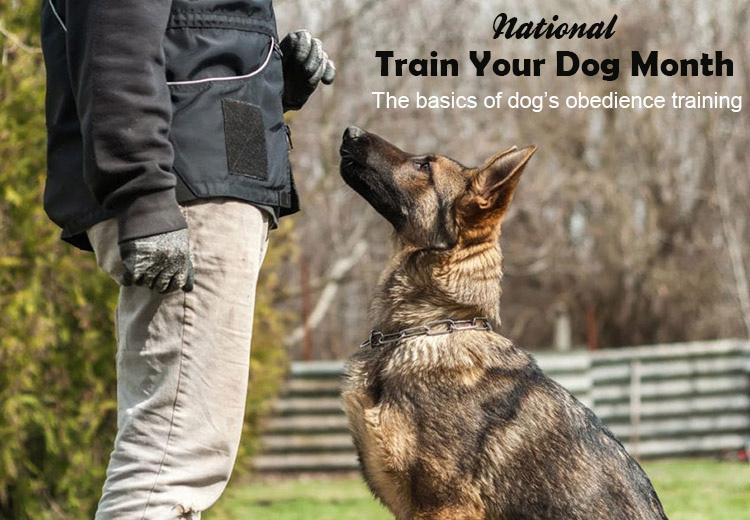

Training your dog is an important and rewarding aspect of dog ownership. Not only does it strengthen the bond between you and your dog, but it also helps your dog to learn important obedience skills and good manners. This month, take the time to invest in your dog's training and watch as they learn and grow. With patience, consistency, and positive reinforcement, you can teach your dog new skills and behaviours and help them become a well-behaved and happy companion. So, let's take a look at some tips and techniques for training your dog effectively.
www.ourpetwarehouse.com
Basic obedience training is an important foundation for any dog, as it helps to establish a clear line of communication between the dog and its owner. This type of training typically focuses on teaching the dog basic commands such as "sit," "stay," "come," and "down," as well as good manners and socialization skills.

1. Basic obedience training
The two basic steps to begin your dog’s training are below:
The two important things to start with are location and command.
First, choose a location that is distraction free for your dogs such as your room or an enclosed outdoor space.
Next decide on the common you want to teach your dog, make sure to teach one command at a time and move on to the next command only after it learns the first one.
www.ourpetwarehouse.com
Use positive reinforcement: Reward your dog with treats, praise, or toys when they exhibit good behavior. This will encourage them to repeat such behavior in the future.
Follow the tips below to practice positive reinforcement in your dog’s training: www.ourpetwarehouse.com
Choose rewards that your dog loves: Different dogs have different preferences, so it's important to choose rewards that your dog will find motivating. This could be treats, praise, toys, or a combination of these things.
Be generous with rewards: It's important to reward your dog frequently and generously when they are learning a new behaviour. This will motivate them to learn more.
Fade out rewards over time: As your dog becomes more proficient at behaviour, you can gradually reduce the frequency of rewards. This will gradually make him follow your commands without any rewards.
Avoid punishing your dog: Positive reinforcement training is based on rewarding good behaviour, rather than punishing bad action.
Avoid using punishment, such as scolding or physical punishment, as it can create fear and mistrust and may actually make your dog's behaviour worse.
Consistency is important in training your dog because it helps your dog learn what is expected of them and what acceptable behaviour is.
Consistency is also important in enforcing rules and boundaries. If you allow your dog to do something one day but not the next, they may become confused and may not understand what acceptable behaviour is.
www.ourpetwarehouse.com
Use the same words and hand signals for each command: Choose specific words or phrases to use for each command, and use the same hand signals every time. This will help your dog understand what you want them to do.
Reward or correct your dog consistently: Whenever your dog exhibits the desired behaviour, be sure to reward them consistently. Similarly, if your dog exhibits undesired behaviour, be sure to correct them consistently. This will help your dog understand what is expected of them.
Consider your training goals: Think about what you hope to achieve through training, and look for a trainer who specialises in those areas. For example, if you want to train your dog for competition obedience, look for a trainer who has experience and success in that field.
Overall, training your dog can be a fun and rewarding activity for both you and your dog, helping to strengthen the bond between you and providing an enjoyable and meaningful way to spend time with your dog. www.ourpetwarehouse.com