As soon as they sprout leaves you can see for yourselves and know that summer is already near. So also, when you see these things taking place, you know that the kingdom of God is near.
Luke 21:30-31
RELIGIOUS EDUCATION
In the first half term, we will be looking at St. Peter’s response to the resurrection and his role in building the Church. Through his story, we will look at the role of the Pope as St. Peter’s successor and will begin to understand the structure of the Church and why it is called “apostolic”. We will spend some of our time looking at Mary in the month of May and why she is such an important figure in the Church. After half term, we will look at St. Paul’s commitment to announcing the gospel to the world. We will learn about why different liturgical traditions arose in different parts of the world and how Christians can work together for the benefit of the whole Church community. We will also be learning about the five pillars of Islam and why they are an important part of the faith for British Muslims today.
RSHE
ln RSHE in the summer term, the children will continue to learn about how we are created and loved by God. They will explore the understanding that we are all individual but that we are made in the image and likeness of God. The children will develop an understanding of the importance of valuing themselves as the basis for personal development. They will learn to reflect on changing feelings and emotions, including thinking about the impact that hormones have on mood. During the second part of the term, the children will learn about how they have been created to live in community. They will explore their relationship with the wider world and how they are called to love others in the wider community through service and through working for the Common Good.
ENGLISH
ln English, the children will begin a new class text, 'The Wild Robot'. Through this text, the children will reflect on the author’s choices of language and sentence structure to bring a descriptive writing to life. The children will take inspiration from the text as a basis for writing newspaper reports about artificial intelligence. The children will develop their own narrative writing skills through drama and role play and by considering their choice of vocabulary when writing character and setting descriptions to create impact. The children will develop an understanding of the importance of relationships in narratives through the use of inverted commas for speech. They will considering the impact of describing feelings and emotions when writing recounts in the role of a character.
MATHS
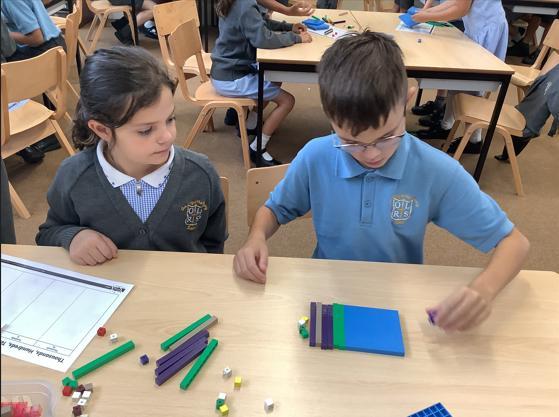
This term, the children will have the opportunity to further develop their understanding of decimals. The children will compare and order decimals, learn how decimals are used to represent halves and quarters and be able to round decimals. During our unit on money, the children will learn to order and estimate money and solve problems using their knowledge of the four operations. They will learn to tell the time to the nearest minute on both analogue and digital clocks. In our geometry unit, the children will build on their understanding of angles and properties of shapes as well as developing an understanding of position and direction on a grid. Throughout all topics, concrete and pictorial resources will be used to support all children's learning.
SCIENCE
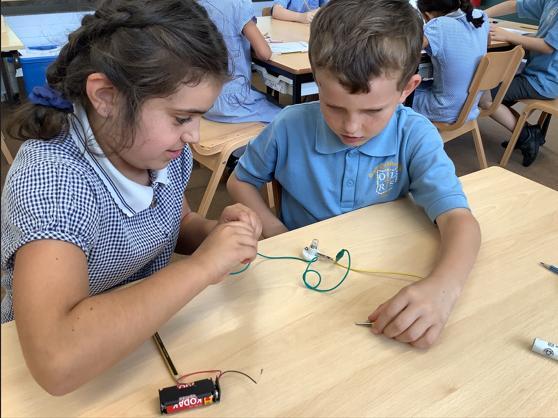
During science this term, the children will cover the topic "Animals including Humans". During this topic, they will focus on the human digestive system where they will learn about the different parts of the digestive system, the roles they play in breaking down food and how they help the body to absorb nutrients. The children will examine human and animal teeth, observing and comparing similarities and differences to help them to identify and group animals based on what they eat. The children will make links to their previous learning about classification and food chains. The second topic of the term is Living things and their habitats. Children will explore different was to group and classify animals, using classification keys to support this. They will also look into environmental change, considering the impact of human activity on ecosystems.
HISTORY
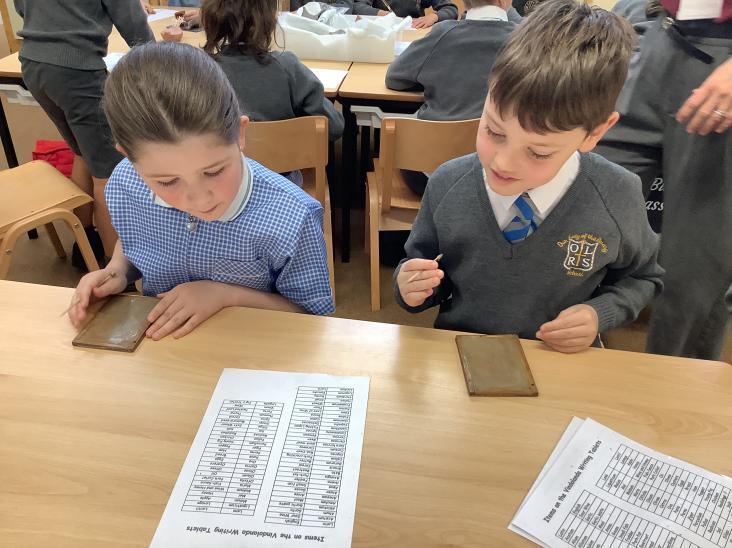
During the summer term, the children will be learning about the Romans. They will begin by looking at the time line of the Romans through history, including how the Roman empire spread, when they first invaded England and took over from the Celts, through to the dissolution of the Roman empire. We will have a workshop from Chertsey Museum this term, where the children will learn about what Staines was like in Roman times and view Roman artefacts to find out more about the Roman way of life and how they shaped our nation. The children will explore the legacy left behind by the Romans, including how the Romans traded and enforced taxes, Latin, the official Roman language that still forms the roots of many of our words, and how their developments of roads, buildings and infrastructure help to make the Romans such a successful civilisation.
ART/DT
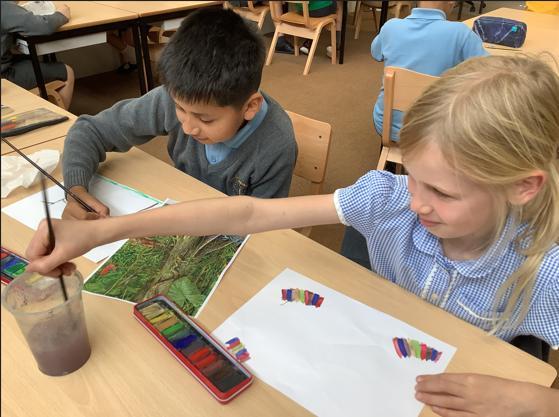
The focus in art this term is landscape painting. ln Year 4, the children will be given the opportunity to explore the painting styles and techniques used by Duncanson and Turner before reproducing a painting by either artist. The children will draw and paint their own landscape painting, putting in to practise what they have learned about perspective, horizon and painting techniques. The children will complete the term with a peer gallery where they will be given the opportunity to review each other's work.
In Design and Technology, children will be making their own pillows by sewing pieces of recycled fabric together. They will be looking at different techniques to decorate these, thinking about which is most effective for their designs.
MUSIC
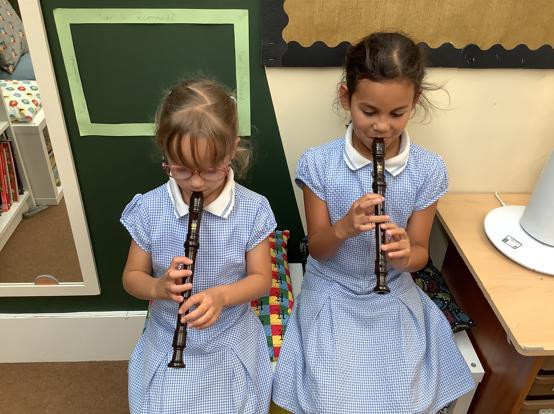
During the summer term, children will be learning about Opera, focussing on the story of Hansel and Gretel. Children will look at the process of putting on an opera and they key elements involved. They will play and perform in solo and ensemble contexts, using their voices with increasing accuracy, fluency, control and expression. They will also learn to listen with attention to detail and recall sounds with increasing aural memory.
MFL
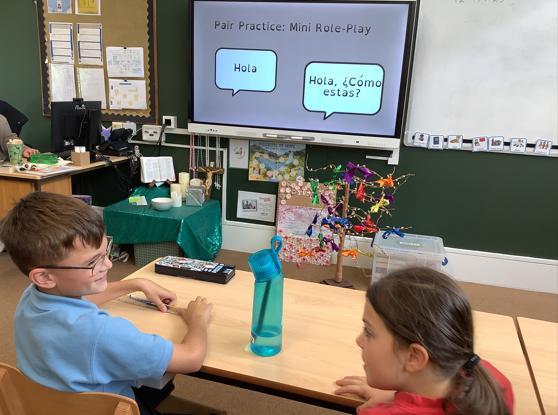
In Spanish this term, Year 4 will be learning the names for their different family members, practising these both orally and through their writing. Once secure, they will build upon this knowledge, learning adjectives for describing personality and some physical characteristics to describe their relatives. They will continue to learn songs in Spanish to support their learning.
P.E.
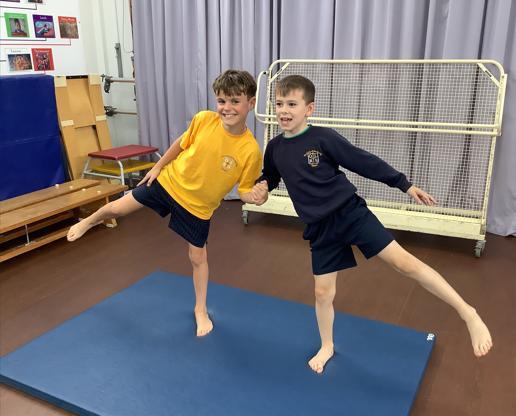
Within our 'Real PE' Scheme of work, the children will be focusing on the Personal and Health and Fitness themes of our programme. This will be carried out through practising the skills of agility, reaction and response, static balances, stances, floor work and ball chasing. The children will learn to explain why we need to warm-up and cool down before and after exercise and describe how and why our bodies changes during and after exercise. The children will learnt to comment and respond to where they are with their own learning and begin to challenge themselves. The outdoor PE session will focus on the skills required to play netball and basket ball, including throwing and catching, passing, shooting, footwork and dribbling before moving on to the skill required to play tennis and compete in the various sports day events.
COMPUTING
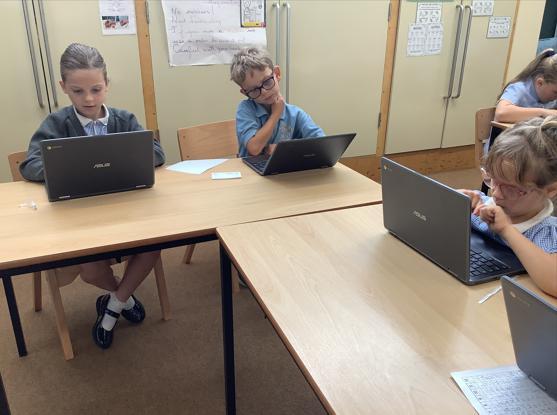
This term, Year 4 will be learning about some of the different types of online communication. They will be exploring issues around privacy and information security and using their knowledge to keep themselves safe when using these methods of communication.
After half term, the class will be focused on using desktop publishers to create their own magazine templates. An important part of this process is children learning the importance of text and images, considering font size, colour and type. They will experiment with different layouts, and begin to understand the role of a editorial designer.