
SECOND EDITION Series Consultant: Thomas Christiansen Helen Sorenson Alexander Blanksby Echo Gu Jennifer Nolan Melanie Koetsveld Sonja Stambulic Robert Bell 7 MATHS OXFORD VICTORIAN CURRICULUM VERSION 2.0 POWERED BY
sample is provided for inspection purposes.
learn more about the print and digital resources that support the series, visit: oup.com.au/ oxford-maths-vic
This
To
UNCORRECTED SAMPLE CHAPTER
Angles 7 and shapes DRAFT
No part of this publication may be reproduced, stored in a retrieval system or transmitted in any form or by any means.
Lessons
7.1 Classifying angles and lines
7.2 Angles at a point
7.3 Angles and parallel lines
7.4 Triangles
7.5 Quadrilaterals
7.6 Polygons
Prerequisite skills
Diagnostic pre-test
Take the diagnostic pre-test to assess your knowledge of the prerequisite skills listed below.
Interactive skillsheets
After completing the diagnostic pre-test, brush up on your knowledge of the prerequisite skills by using the interactive skillsheets.
✔ Comparing angles less than 180°
✔ Classifying shapes
✔ Substitution
DRAFT
✔ Solving equations using inverse operations
Curriculum links
• Identify corresponding, alternate and co-interior relationships between angles formed when parallel lines are crossed by a transversal; use them to solve problems and explain reasons (VC2M7M04)
• Demonstrate that the interior angle sum of a triangle in the plane is 180° and apply this to determine the interior angle sum of other shapes and the size of unknown angles (VC2M7M05)
• Classify triangles, quadrilaterals and other polygons according to their side and angle properties; identify and reason about relationships (VC2M7SP02)
© VCAA
Materials
✔ Protractor
✔ Compass
✔ Ruler
✔ Calculator
No part of this publication may be reproduced, stored in a retrieval system or transmitted in any form or by any means.
7.1 Classifying angles and lines
Learning intentions
By the end of this lesson you will be able to … ✔ identify, measure and classify angles and lines.
Points and lines
Object Definition
Inter-year links
Support Understanding angles Year 8 8.1 Angles
Key content video
Classifying angles and lines
Example
Point A location in space that has no length or width. Points are represented using a dot labelled with a capital letter. A
Line segment A line joining two points. Line segments are named using a bar and the two end point labels.
Ray A line that starts at a point and continues to infinity. Rays are named using an arrow, which indicates the direction of the ray.
Line A line that continues to infinity in both directions. Lines are named using a double-headed arrow.
Perpendicular lines
Parallel lines
Two lines that meet to form a right angle. Right angles are labelled with a small box where the lines meet. The symbol ⊥ means ‘is perpendicular to’.
Two lines that are always the same distance apart so that they never meet. Parallel lines are labelled with matching arrowheads. The symbol ∥ means ‘is parallel to’.
Angles
• When two lines or rays meet, they form an angle
→ Angles are marked using a portion of a circle called an arc
→ The two lines or rays are called the arms of the angle.
→ The point at which the two lines meet is called the vertex.
• Angles can be named using:
→ a pronumeral, letter or symbol that stands in for a number. In the following example the pronumeral b is standing in for the size of the angle.
→ an angle symbol, ∠, followed by a capital letter representing a point on one of the arms of the angle, followed by a capital letter representing the vertex, followed by a capital letter representing a point on the other arm of the angle.
OXFORD UNIVERSITY PRESS 286 — OXFORD MATHS 7 VICTORIAN CURRICULUM 2E
A B Name: AB
A B Name:
AB
⟶
A B
Name: ⟷ AB
A B C AB ⊥ BC
A B C D AB ∥ CD
Lesson 7.1
DRAFT No part of this publication may be reproduced, stored in a retrieval system or transmitted in any form or by any means.
For example, in the diagram below b = ∠ABC = 60°
• Angles are classified according to their size.
Classification
Acute angle Between 0° and 90°
Right angle 90°
Obtuse angle Between 90° and 180°
Straight angle 180°
Reflex angle Between 180° and 360°
Measuring angles using a protractor
• Angles are commonly measured in degrees°.
For example, there are 360° in a revolution.
• To measure an angle using a protractor:
1 Place the centre cross of the protractor over the vertex of the angle.
2 Place the zero line, that reads 0°, on one arm of the angle.
3 Read the scale from 0° to the other arm of the angle.
For example, this angle is 60°. This measurement is taken from the inner scale because the horizontal arm of the angle is on the right-hand side.
b A arms angle vertex B C
Definition Example
Revolution 360°
OXFORD UNIVERSITY PRESS MODULE 7 ANGLES AND SHAPES — 287 180 0 10 20 30 40 50 60 70 80 100 110 120 130 140 150 160 170 180 170 160 150 140130120110 100 90 80 70 60 50 40 30 20 10 0 DRAFT No part of this publication may be reproduced, stored in a retrieval system or transmitted in any form or by any means.
Worked example 7.1A Naming angles and lines
Name the objects below using standard mathematical notation. a Q P b A
THINK
a Identify the object. The line extends from point P to infinity, so this is a ray. Rays are denoted by an arrow symbol. The arrow symbol should indicate that the line extends from point P in the direction of Q
b Identify the object. The circular marker at the vertex, O, indicates that this is an angle. Angles are denoted using an angle symbol, ∠
The vertex label, O, must be placed in the middle of the name.
Worked example 7.1B Measuring and classifying angles
Measure and classify this angle.
THINK
1 Measure the angle using a protractor. Because the horizontal arm of the angle is on the lefthand side, use the scale that begins from 0° on the left-hand side of the protractor.
DRAFT
2 Classify the angle. As 135° is greater than 90° but less than 180°, this is an obtuse angle.
The angle is 135°. This is an obtuse angle.
OXFORD UNIVERSITY PRESS 288 — OXFORD MATHS 7 VICTORIAN CURRICULUM 2E
B O
WRITE a ⟶ PQ b ∠AOB
∠BOA)
(or
WRITE 180 0 10 20 30 40 50 60 70 80 100 110 120 130 140 150 160 170 180 170 160 150 140130120110 100 90 80 70 60 50 40 30 20 10 0
No part of this publication may be reproduced, stored in a retrieval system or transmitted in any form or by any means.
Worked example 7.1C Drawing acute angles using a protractor
Use a protractor to draw an angle of 60°.
THINK
1 Begin by drawing a horizontal line segment.
2 Place the protractor over the segment so that the centre cross aligns with one end of the segment, and the segment lies under either the protractor’s left- or right-hand zero line.
3 Draw a point at the 60° mark on your protractor. Because the segment is aligned with the right-hand zero line, use the inner scale to measure 60°. If the segment is aligned with the left-hand zero line, the outer scale should be used.
4 Using a ruler, join the end of the horizontal segment with the dot, and label the angle.
WRITE
Worked example 7.1D Drawing reflex angles using a protractor
Use a protractor to draw an angle of 240°.
THINK
1 A reflex angle cannot be drawn directly using a 180° protractor as shown in Example 7A.3. First determine the size of the acute or obtuse angle inside the reflex angle by subtracting the reflex angle from a full revolution, 360°.
reflex angle
inner angle inner angle + reflex angle = 360°
2 Use a protractor to draw the inner angle.
3 Mark the reflex angle on the underside of the obtuse angle.
WRITE inner angle = 360° 240° = 120°
OXFORD UNIVERSITY PRESS MODULE 7 ANGLES AND SHAPES — 289
180 0 10 20 30 40 50 60 70 80 100 110 120 130 140 150 160 170 180 170 160 150 140130120110 100 90 80 70 60 50 40 30 20 10 0 180 0 10 20 30 40 50 60 70 80 100 110 120 130 140 150 160 170 180 170 160 150 140130120110 100 90 80 70 60 50 40 30 20 10 0 60º 120° 240°
No part of this publication may be reproduced, stored in a retrieval system or transmitted in any form or by any means.
DRAFT
✔ When reading a protractor, remember to read from 0° and use the correct scale – the outer or inner scale. To ensure you use the correct scale, it can be helpful to visually determine whether an angle is acute, obtuse or reflex before measuring it with a protractor.
✔ When drawing angles, think carefully about which side of the line you should place the arc on – incorrect placement of the arc can turn an acute or obtuse angle into a reflex angle and vice versa!
✔ When labelling an angle, it can be helpful to indicate if the angle is a reflex angle. For example, write ‘the reflex angle ∠AOB’ to distinguish from the indicated obtuse angle ∠AOB in Worked example 7.1Ab.
Learning pathways
1–5, 6(a–c), 7–9, 10(a–c), 11(a, b), 12(a, c), 14(a–c)
1–5, 6(b, d, e), 7–9, 10(b–e), 11–12(c, d), 15–17
Exercise 7.1A: Understanding and fluency
1 Name the objects below using standard mathematical notation.
1–4, 6(d–f), 7(c, d), 9–12(c, d), 16–18
2 Use mathematical notation to describe these diagrams.
3 Use mathematical terms to describe these diagrams in words.
DRAFT
4 Draw a diagram of the following arrangements. Use standard mathematical symbols to illustrate the relationship between the lines in each diagram.
a two parallel rays b a ray perpendicular to a segment c five rays that radiate out from the same point d two parallel lines with a line perpendicular to them
OXFORD UNIVERSITY PRESS 290 — OXFORD MATHS 7 VICTORIAN CURRICULUM 2E
Helpful hints
ANS p519 WE 7.1A a A B b A B O c C D d X Y Z e S T f O K g Q P O h L N M
a P Q R S b Z Y X
a b c
No part of this publication may be reproduced, stored in a retrieval system or transmitted in any form or by any means.
5 Consider the following angles.
a By visual inspection, order each angle from largest to smallest.
b Match each angle to one of the following descriptions: 90°, 180°, 360°, between 0° and 90°, between 90° and 180°, between 180° and 360°.
c Classify each angle.
6 Measure and classify each of the angles below.
DRAFT
OXFORD UNIVERSITY PRESS MODULE 7 ANGLES AND SHAPES — 291
i ii iii iv v vi
a b WE 7.1B c d e f
No part of this publication may be reproduced, stored in a retrieval system or transmitted in any form or by any means.
7 Name and classify the shaded angle in each of the following diag rams.
8 Consider the diagram below. You should read from the inner scale because the hor izontal arm of the angle is aligned with the right-hand zero line, ∠AOF = 150°
a What is the size of ∠EOF?
b What is the size of ∠DOF?
c Classify ∠COF
d Name all the acute angles.
e Name all the obtuse angles.
9 Consider the following angles.
a
i Without a protractor, use a r uler to draw an estimate of each of the angles listed below.
ii Now use a protractor to measure each of your drawings. Write the actual size of each angle next to each drawing. How many of your estimates were within 10° of the actual measurement?
10 Use a protractor to draw the following angles
DRAFT
OXFORD UNIVERSITY PRESS 292 — OXFORD MATHS 7 VICTORIAN CURRICULUM 2E
80° b 42° c 173° d 10°
a 45° b 120° c 165° d 9° e 94° f 112° WE 7.1C 180 0 10 20 30 40 50 60 70 80 100 110 120 130 140 150 160 170 180 170 160 150 140130120110 100 90 80 70 60 50 40 30 20 10 0 A B C D E F O
a A B C O b O X W Y Z c A B C D O d P R U S O Q T
No part of this publication may be reproduced, stored in a retrieval system or transmitted in any form or by any means.
11 Find the size of the reflex angle by fir st measuring the acute or obtuse angle.
Exercise 7.1B: Problem solving and reasoning
12 Use a protractor to draw the following angles.
a 270° b 200° c 335° d 185°
13 Over 3000 years ago, Babylonian astronomers estimated that there were 360 days in a year and so they divided circles into 360 degrees (360°). We still use this system today.
a How many right angles make up a straight angle?
b How many right angles make up a revolution?
c How many straight angles make up a revolution?
14 Classify the angles produced by adding together the following pairs of angles.
a two right angles
b two straight angles
c a right angle and a straight angle
d two obtuse angles
15 A distracted student measures the angle below as ∠ABC = 74°. What mistake did they make and what is the actual size of the angle?
DRAFT
OXFORD UNIVERSITY PRESS MODULE 7 ANGLES AND SHAPES — 293
A B
WE 7.1D
C
a a b b c c d d 360°
No part of this publication may be reproduced, stored in a retrieval system or transmitted in any form or by any means.
16 Determine the size of ∠XYZ without taking any further measurements.
17 Angles are also used to measure the amount of turn when a person or object changes direction. A plane is flying from Adelaide to Broome. When it is halfway there, bad weather forces it to change direction and land in Perth. Use your protractor to measure the acute angle the plane must turn through to fly towards Perth.
Exercise 7.1C: Challenge
18 Pool players make use of angles when planning their shots. They know that when a ball bounces off the side of a table it rebounds at the same angle.
The ball on the pool table shown on the right hits the side of the table at an angle of 45° and bounces off at an angle of 45°.
Use your knowledge of drawing angles to show which pocket the white ball will end up in in each of the scenarios below.
DRAFT
OXFORD UNIVERSITY PRESS 294 — OXFORD MATHS 7 VICTORIAN CURRICULUM 2E
45° 45° Y Z X 180 0 10 20 30 40 50 60 70 80 100 110 120 130 140 150 160 170 180 170 160 150 140130120 110 100 90 80 70 60 50 40 30 20 10 0 Perth Darwin Brisbane Sydney Melbourne Hobart Adelaide Canberra Broome Online resources: Interactive skillsheet Classifying angles Investigation Mini-golf challenge Investigation Constructing parallel and perpendicular lines Quick quiz 7.1
a b
No part of this publication may be reproduced, stored in a retrieval system or transmitted in any form or by any means.
7.2 Angles at a point
Learning intentions
By the end of this lesson you will be able to … ✔ identify and find angles at a point.
Pairs of angles
Inter-year links
Support Understanding angles
Year 8 8.1 Angles
• Adjacent angles share a common arm and a common vertex, but do not overlap.
For example, angles a and b are adjacent in each of the diagrams shown.
• Complementary angles are two angles that form a right angle or add to 90°.
a is the complement of b because a + b = 90°.
• Supplementary angles are two angles that form a straight angle or add to 180°.
a is the supplement of b because a + b = 180°
Key content video Angles at a point
• Complementary and supplementary angles do not need to be adjacent to each other.
Angles at a point
• Angles at a point that form a right angle add to 90°.
For example, a + b + c = 90°.
• Angles at a point that form a straight angle add to 180°.
For example, a + b + c + d = 180°.
• Angles at a point that form a revolution add to 360°.
For example, a + b + c = 360°
• Where two or more straight lines intersect, they form vertically opposite angles, or ‘X’ angles, that are equal in size.
For example, a = c and b = d.
OXFORD UNIVERSITY PRESS MODULE 7 ANGLES AND SHAPES — 295
b a common arm common vertex b c a b d c a a b c a c b d
b a Lesson 7.2
No part of this publication may be reproduced, stored in a retrieval system or transmitted in any form or by any means.
DRAFT
Worked example 7.2A Finding complementary and supplementary angles
Find the size of the unknown angle in each of the diagrams below.
a a 30° b b 45°
THINK
a 1 Identify the relationship between the unknown and known angles. a and 30° form a right angle.
2 Calculate the size of the unknown angle. Angles that form a right angle add to 90°, so a = 90° 30°.
b 1 Identify the relationship between the angles. b and 45° form a straight angle.
2 Calculate the size of the unknown angle. Angles that form a straight angle add to 180°, so b = 180° 45°.
WRITE
a a = 90° − 30° = 60°
b b = 180° − 45° = 135°
Worked example 7.2B Finding the complement and the supplement
Complementary angles add to 90° and supplementary angles add to 180°.
a Find the complement of 42°.
THINK
b Find the supplement of 42°.
WRITE
a Subtract 42° from 90° to find the complement of 42°.
b Subtract 42° from 180° to find the supplement of 42°.
a 90° − 42° = 48°
48° is the complement of 42°.
b 180° − 42° = 138°
138° is the supplement of 42°.
Worked example 7.2C Finding unknown angles at a point
Find the size of the unknown angle in each of the diagrams below.
a 50° x b y 235°
THINK
DRAFT
a Identify the relationship between the unknown and known angles. x is vertically opposite to 50° and vertically opposite angles are equal in size.
b Identify the relationship between the angles. Angles around a point add to 360°. Subtract 235° from 360°.
WRITE a x = 50°
b y = 360° 235° = 125°
OXFORD UNIVERSITY PRESS 296 — OXFORD MATHS 7 VICTORIAN CURRICULUM 2E
No part of this publication may be reproduced, stored in a retrieval system or transmitted in any form or by any means.
Worked example 7.2D Finding multiple unknown angles at a point
Find the size of each of the unknown angles in the diagrams below. a x y z 121° b
THINK
a Identify any relationships between unknown and known angles.
1 y is vertically opposite to 121° and vertically opposite angles are equal in size.
2 x and 121° are supplementary angles, so subtract 121° from 180° to calculate x
3 z and x are vertically opposite and vertically opposite angles are equal in size.
b Identify any relationships between the angles.
1 b is vertically opposite to 60°, d is vertically opposite to 70° and vertically opposite angles are equal in size.
2 70°, a and 60° form a straight angle, 180°. Subtract 70° and 60° from 180° to calculate a.
WRITE a y = 121°
x = 180° 121° = 59°
z = 59° b
b = 60° d = 70°
3 c is vertically opposite to a and vertically opposite angles are equal in size.
a = 180° 70° 60° = 50°
c = 50°
Helpful hints
✔ Try not to confuse complementary and supplementary angles. Complementary angles add to 90° and supplementary angles add to 180°.
✔ Complementary and supplementary angles do not have to be adjacent – they are just pairs of angles that add up to 90° and 180°, respectively.
DRAFT
✔ Vertically opposite angles are angles that sit opposite each other where two lines meet; they do not have to be arranged vertically!
OXFORD UNIVERSITY PRESS MODULE 7 ANGLES AND SHAPES — 297
c
d 70° 60°
b a
a 70° 60°
No part of this publication may be reproduced, stored in a retrieval system or transmitted in any form or by any means.
Learning pathways
1–4, 6–8, 9(a–c), 10, 11(a, b), 15
1(d–f), 2(b, d), 3, 5, 6(c–f), 8, 9(c–e), 10–13, 16
Exercise 7.2A: Understanding and fluency
1 Find the size of the unknown angle in each of the diagrams below.
1(e, f), 2(c, d), 5, 6(d, e, h), 8(e, f), 9(d–f), 11, 14, 16, 17
2 Calculate the size of the angle named in brackets in each of the diagrams below.
a (∠YOZ)
3 Name the two pair s of adjacent angles in each of the diagrams in question 2
4 Complementary angles add to 90° and supplementary angles add to 180°.
a Find the complement of these angles. i 23° ii 77° iii
b Find the supplement of these angles. i 158° ii
5 For each angle listed below, find the angle that is its: i complement ii supplement. a
OXFORD UNIVERSITY PRESS 298 — OXFORD MATHS 7 VICTORIAN CURRICULUM 2E a a 50° b b 23° c c 81°
WE 7.2A d d 71° e e 114° f f 6°
W X Y Z O 29° 31° b (∠COD) O A D C B 104° 55° c (∠QOR) O P Q R S 13° 35° d (∠KOL) O K L M J 11° 42°
88°
9°
iv
iii 100° iv 97°
21°
46°
12° c 85° d 27° WE 7.2B
b
ANS p520
No part of this publication may be reproduced, stored in a retrieval system or transmitted in any form or by any means.
DRAFT
6 Find the size of the unknown angle in each of the diagrams below.
7 Are the pairs of angles in each diag ram in question 6e–h adjacent? Explain your answer.
8 Find the size of each of the unknown angles in the diagrams below.
OXFORD UNIVERSITY PRESS MODULE 7 ANGLES AND SHAPES — 299
WE 7.2C a a 100° b b 27° c c 38° 142° 142° d d 133° 47° 47° e 145° a f 60° b g c h e 340°
WE 7.2D a r 118° 95° b d e f 160° c y x z 44° d c e c b a d 80° 50° f h g 120° 60° 60°
No part of this publication may be reproduced, stored in a retrieval system or transmitted in any form or by any means.
DRAFT
9 Name and determine the size of each of the shaded angles in the diag rams below.
Exercise 7.2B: Problem solving and reasoning
10 For each of the turns described below:
i find the size of the remaining angle each person needs to turn through
ii state whether the pairs of angles are complementary, supplementary or add to make a full revolution.
a Peter turns 56° in his car in an attempt to make a right-hand turn.
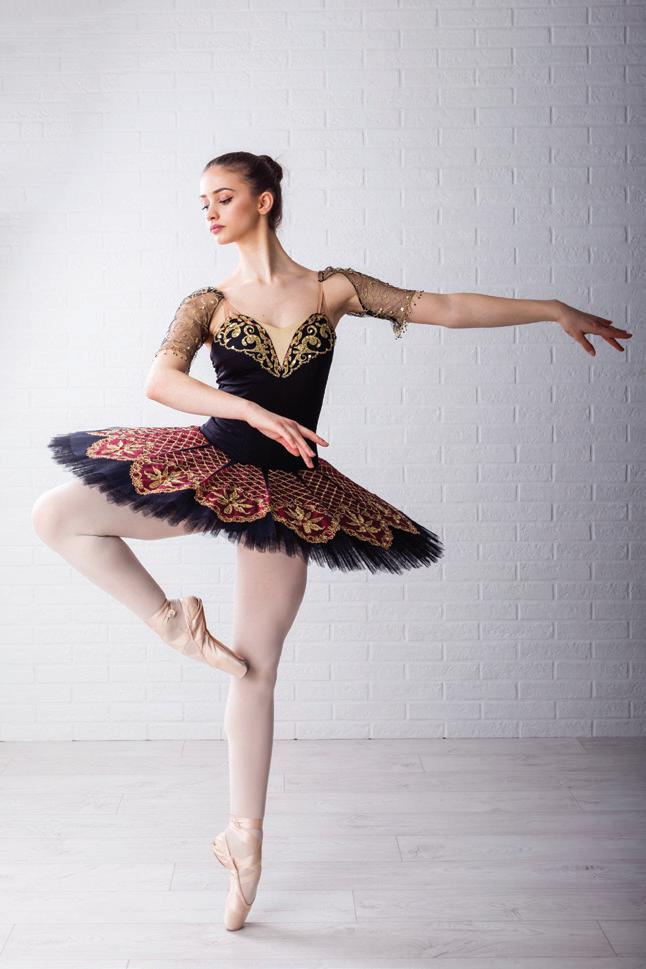
b Michelle completes 146° of a pirouette.
c Leigh completes 2 3 of a left-hand turn on his bicycle.
11 Chelsea, Kane and Sara are sharing a large round pizza. Chelsea eats one piece, Kane eats four pieces and Sara eats three pieces.
a How many pieces do they need to cut the pizza into?
b If every piece is equal in size, what is the smallest angle in each piece of pizza?
The next weekend Chelsea’s friend Ben joins them for dinner, so they decide to order two pizzas. This time Chelsea eats one piece, Kane eats four pieces, Sara eats two pieces and Ben eats three pieces. All the pizza is eaten.
DRAFT
c How many pieces is this in total?
d What is the angle size of each piece of pizza? Remember that there are two pizzas to share and every piece is equal in size.
OXFORD UNIVERSITY PRESS 300 — OXFORD MATHS 7 VICTORIAN CURRICULUM 2E
a X O Y Z 260° 70° b O Q P S R 45° 38° c D E F G O 53° d K L M O J 43° e O P Q R S T U 22° 70° f A C O 71° D E B
No part of this publication may be reproduced, stored in a retrieval system or transmitted in any form or by any means.
12 Adjacent angles share a common side and a common ver tex, but do not overlap. Explain why a and b are not adjacent angles in each of the diagrams below.
13 An aerial freestyle skier launches herself into the air but is knocked off balance by a gust of wind. She estimates that she has already turned through 415°. To land safely she needs to have turned through a multiple of 180°. How much further does she need to rotate if she is to land safely?
14 Skateboarding, snowboarding and wakeboarding tricks often involve rotation through the air. A ‘180 aerial’ means the rider spins through 180° and then lands with the board facing the opposite direction.
direction of rotation
Show the start and end position of a rider’s board after the following aerial rotations. a 360° b 540° c 720°
15 Consider the diagram on the r ight. Determine whether the following statements are true or false. Give a reason for your answer.
a ∠BOC = 90°
b ∠AOB and ∠DOE are complementary
c ∠EOA is the supplement of ∠COD
d ∠AOB + ∠BOC + ∠COD + ∠DOE + ∠EOA = 360°
16 Can two acute angles be supplementary? Explain.
Exercise 7.2C: Challenge
17 Use the diagram below and your knowledge of supplementary angles to explain why vertically opposite angles must be equal in size.
OXFORD UNIVERSITY PRESS MODULE 7 ANGLES AND SHAPES — 301
a
a b b a b c a b
B A E D 138° 35° 42° 55° C O Online resources: Interactive skillsheet Angles at a point Investigation Sharing the poles Quick quiz 7.2
B A C D O
No part of this publication may be reproduced, stored in a retrieval system or transmitted in any form or by any means.
DRAFT
7.3 Angles and parallel lines
Learning intentions
By the end of this lesson you will be able to … ✔ identify and find angles on parallel lines ✔ determine if two lines are parallel.
Transversals
Inter-year links
Support Understanding angles Year 8 8.1 Angles
• A transversal is a straight line that crosses two or more lines. Transversals create a number of angles when they cross a set of lines.
→ Alternate angles, or ‘Z’ angles, are on alternate, or opposite, sides of the transversal.
→ Corresponding angles, or ‘F’ angles, are on the same side of the transversal and are both either above or below each of the crossed lines.
Key content video Angles and parallel lines
transversal
→ Co-interior angles, or ‘C’ angles, are on the same side of the transversal between the crossed lines.
alternate angles corresponding angles co-interior angles
Transversals and parallel lines
• When a transversal crosses a pair of parallel lines:
→ alternate angles, or ‘Z’ angles, are equal in size
→ corresponding angles, or ‘F’ angles, are equal in size
→ co-interior angles, or ‘C’ angles, are supplementary; that is, they add to 180°. a b
alternate angles corresponding angles co-interior angles a + b = 180°
DRAFT
• These pairs of angles can be measured to determine if two lines are parallel – if any of the relationships listed above are true, then the lines crossed by the transversal are parallel.
OXFORD UNIVERSITY PRESS 302 — OXFORD MATHS 7 VICTORIAN CURRICULUM 2E
Lesson 7.3
No part of this publication may be reproduced, stored in a retrieval system or transmitted in any form or by any means.
• Transversals can form acute, obtuse or right angles with parallel lines.
Worked example 7.3A Identifying alternate, corresponding and co-interior angles
Consider the diagram below and identify the:
a transversal
b angle that is alternate to ∠AOF
c angle that corresponds to ∠CPE
THINK
a A transversal is a straight line that crosses two or more lines.
b Alternate angles are on opposite sides of the transversal and lie inside the two angles made by the letter ‘Z’. Draw a ‘Z’ that incorporates ∠AOF. The other angle inside this ‘Z’ is ∠EPD, so ∠AOF and ∠EPD are alternate angles.
DRAFT
c Corresponding angles are on the same side of the transversal and lie inside the two angles made by the letter ‘F’. Note that the F is upside down and reversed. Draw an ‘F’ that encloses ∠CPE. The other angle inside this ‘F’ is ∠AOE, so ∠CPE and ∠AOE are corresponding angles.
EF is the transversal.
EPD is alternate to ∠AOF
AOE is corresponding to ∠CPE
OXFORD UNIVERSITY PRESS MODULE 7 ANGLES AND SHAPES — 303
O E F A C B D P
WRITE
b O E F A C B D P ∠
c O E F A C B D P ∠
a
No part of this publication may be reproduced, stored in a retrieval system or transmitted in any form or by any means.
Worked example 7.3B Finding unknown alternate, corresponding and co-interior angles
For each of the following diagrams:
i name the relationship between the unknown and known angles ii find the size of the unknown angle.
THINK
a i Identify the relationship between the unknown and known angles. x and 64° lie inside the two angles of the letter ‘F’, so they are corresponding angles.
ii Corresponding angles formed by parallel lines are equal in size.
a i x and 64° are corresponding angles.
b i Identify the relationship between the unknown and known angles. y and 37° lie inside the two angles of the letter ‘C’, so they are co-interior angles.
ii Co-interior angles formed by parallel lines are supplementary, that is, they add to 180°, so y = 180° 37°
ii x = 64° b i y and 37° are co-interior angles.
ii y = 180° 37° = 143°
Worked example 7.3C Determining if two lines are parallel using alternate, corresponding and co-interior angles
Decide whether the two blue lines in each of the diagrams below are parallel. Explain your reasoning.
OXFORD UNIVERSITY PRESS 304 — OXFORD MATHS 7 VICTORIAN CURRICULUM 2E
37°
a 64° x b
y
WRITE
64°
x
37° y
85° 85°
No part of this publication may be reproduced, stored in a retrieval system or transmitted in any form or by any means.
DRAFT
THINK
1 Identify the relationship between the labelled angles. The labelled angles lie inside the two angles of the letter ‘Z’, so they are alternate angles.
2 Determine whether the relationship between the angles holds. Alternate angles formed by parallel lines are equal in size. The alternate angles are equal in size, so the blue lines are parallel.
3 Write the answer and provide an explanation.
WRITE 85° 85°
The blue lines are parallel because the alternate angles are both 85°.
Worked example 7.3D Finding unknown alternate, corresponding and co-interior angles in complex diagrams
Find the size of the unknown angle below. Explain how you obtained your answer. a 35°
THINK
1 Identify and highlight any parallel and transversal lines in the diagram.
2 Identify the relationship between the unknown and known angles. a and 35° lie inside the angles of the letter ‘Z’, so they are alternate angles.
3 Write the answer and provide an explanation.
WRITE a 35° a and 35° are alternate angles.
DRAFT
a = 35° because alternate angles formed by parallel lines are equal in size.
Helpful hints
✔ Remember to look for the letter to determine which pair of angles you might be dealing with.
➝ Alternate angles form a ‘Z’.
➝ Corresponding angles form an ‘F’.
➝ Co-interior angles form a ‘C’.
✔ Take care to identify the nature of the relationship between a pair of angles – when two lines are parallel, alternate and corresponding angles are equal in size, while co-interior angles are supplementary!
OXFORD UNIVERSITY PRESS MODULE 7 ANGLES AND SHAPES — 305
No part of this publication may be reproduced, stored in a retrieval system or transmitted in any form or by any means.
Learning pathways
1–3, 5, 6, 7(a–d), 8(a–c), 9(b, e, g), 10
1(e–i), 2, 3(a, e, f), 4(a, b), 5(c, d), 6(f–i), 7(d–g), 8(b, d, e), 9(d–g), 11, 13
Exercise 7.3A: Understanding and fluency
3, 4, 5(a), 6(f–i), 7(f–h), 8(d–f), 9(d–h), 12, 14
1 Identify each pair of angles as alternate, corresponding or co-interior in each of the diagrams below.
2 Use your knowledge of angles and parallel lines to state whether the pairs of angles in question 1 are equal in size or supplementary.
3 Consider the diagram below right and identify the:
a transversal
b angle that corresponds to ∠EOB
c angle that is alternate to ∠CPE
d angle that corresponds to ∠AOE
e angle that is co-interior to ∠AOF
f angle that is co-interior to ∠EPD
g angle that is alternate to ∠BOF
4 In the diagram on the r ight, identify and name:
a the transversal
b all the pairs of alternate angles
c all the pairs of co-interior angles
d all the pairs of corresponding angles.
5 Use the diagram g iven in question 3 to identify an angle that is:
a vertically opposite to ∠AOF
c vertically opposite to ∠EPD
b supplementary to ∠FPD
d supplementary to ∠CPE.
OXFORD UNIVERSITY PRESS 306 — OXFORD MATHS 7 VICTORIAN CURRICULUM 2E
7.3A X P S R T U Q Y
WE
a b c d e f g h i O E F A C B D P
ANS p521
No part of this publication may be reproduced, stored in a retrieval system or transmitted in any form or by any means.
DRAFT
6 For each of the following diagrams:
i name the relationship between the unknown and known angles ii find the size of the unknown angle.
7 Decide whether the blue lines in each of the diagrams below are parallel. Explain your reasoning by referring to the relationship between the angles in the diagram.
OXFORD UNIVERSITY PRESS MODULE 7 ANGLES AND SHAPES — 307
WE 7.3C a 125° a b 70° b c 131° c d 60° d e 150° e f 42° f g g 75° h h i 84° i a 71° 71° b 117° 119° c 71° 119°
WE 7.3B d 96° 84° e 125° 120° f 77° 66° g 79° 79° h 69° 111° DRAFT No part of this publication may be reproduced, stored in a retrieval system or transmitted in any form or by any means.
Exercise 7.3B: Problem solving and reasoning
8 For each of the following diagrams:
i name the relationship between the unknown and known angles ii find the size of the unknown angle.
9 Find the size of each of the unknown angles. Explain how you obtained your answers.
DRAFT
OXFORD UNIVERSITY PRESS 308 — OXFORD MATHS 7 VICTORIAN CURRICULUM 2E
WE 7.3D
a 55° a b 125° b c 71° c d 71° d e 67° e f 123° f a a 71° b 58° b c 65° c d 115° d e 35° e f 121° f g 133° g h 160° h
No part of this publication may be reproduced, stored in a retrieval system or transmitted in any form or by any means.
10 Cameron is standing on top of the escalator s, looking down at Sarah. If Cameron is looking down at an angle of 35° below the horizontal, at what angle is Sarah looking up at him?
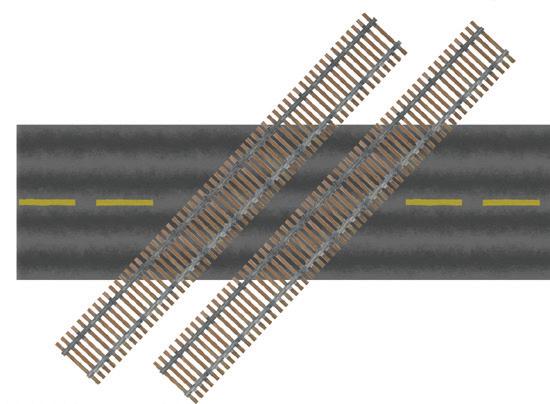
11 A road crosses a pair of railway lines as shown in the diagram. If a driver approaches the railway lines at an angle of 47° as shown, at what angle does the car leave the tracks?
12 Amal is putting up some paintings over a straight crack in the wall. She knows that the top painting is parallel with the edge of the ceiling.
a Find the size of the angles marked a, b and c for the paintings to be parallel with one another.
b Amal measures angle c and finds that it is 66°. Are the paintings parallel with one another? Explain your reasoning.
c By how much will she have to move the bottom painting in order to make it parallel to the top one?
13 A student draws the diag ram below right and makes the following measurements with their protractor:
∠AOF = 81° ∠FPD = 99°
a Assuming the student’s measurements are accurate, are the two blue lines in the diagram parallel? Use the student’s measurements to justify your answer.
b For the two blue lines to be parallel, ∠AOF = ∠EPD. This relationship is referred to as a condition that must be satisfied for the two blue lines to be parallel. Write two more conditions that could be used to show the two blue lines are parallel.
Exercise 7.3C: Challenge
14 A mathematical proof is an argument that shows or proves that a statement is true. For example, the proof below shows that alternate angles formed by a transversal crossing parallel lines are equal in size.
∠FOB and ∠CPE are alternate angles.
∠AOE = ∠FOB since vertically opposite angles are equal in size.
∠AOE = ∠CPE since corresponding angles on parallel lines are equal in size. Therefore,
a Use the diagram to prove that co-interior angles are supplementary.
b Use the diagram to show that when a transversal runs through a pair of parallel lines:
i all the acute angles formed by the transversal are equal in size
ii all the obtuse angles formed by the transversal above are equal in size
iii if any one of the angles formed by the transversal is a right angle, then all other angles formed must be right angles.
DRAFT
OXFORD UNIVERSITY PRESS MODULE 7 ANGLES AND SHAPES — 309
35° x 47° x c a b 116° E O B D P F C A E O B D P F C A Online resources: Interactive skillsheet Angles and parallel lines Investigation The streets of New York Desmos activity Transversals and parallel lines Quick quiz 7.3
∠FOB = ∠CPE
No part of this publication may be reproduced, stored in a retrieval system or transmitted in any form or by any means.
1 Match the following labels to the corresponding diagram.
a acute b obtuse c reflex d right e straight f revolution 7.1
I III
Checkpoint quiz
Take the checkpoint quiz to check your knowledge of the first part of this module.
2 Identify and name the following objects using standard mathematical notation. 7.1
3 State the size of the following angles.
4 Decide if the following angles add to form:
5 Calculate the complement and supplement of the following angles. a 19° b 37° c 89° 7.2 7.2
A a right angle B a straight angle C a revolution
D a reflex angle E an obtuse angle.
a 33° and 147° b 160° and 200° c 55°, 92° and 43° d 21°, 37° and 32°
OXFORD UNIVERSITY PRESS 310 — OXFORD MATHS 7 VICTORIAN CURRICULUM 2E
ANS p522
Checkpoint
a P b H J c Y B d S W K
a 180 0 10 20 30 40 50 60 70 80 100 110 120 130 140 150 160 170 180 170 160 150 140130120 110 100 90 80 70 60 50 40 30 20 10 0 b 180 0 10 20 30 40 50 60 70 80 100 110 120 130 140 150 160 170 180 170 160 150 140130120 110 100 90 80 70 60 50 40 30 20 10 0 7.1 II
IV V VI
No part of this publication may be reproduced, stored in a retrieval system or transmitted in any form or by any means.
DRAFT
6 If ∠AHD = 37°, ∠HIJ = 70° and ∠EJH = 106° in the diagram on the right, determine the size of the following angles.
a ∠AHJ b ∠IJC c ∠FIB
7 Determine whether the following statements are true or false.
a Two angles that form a straight angle are supplementary.
b Vertically opposite angles are equal in size.
c A transversal is a straight line that crosses two or more other lines.
d Corresponding angles are supplementary.
e Co-interior angles add to 90°.
8 State whether the angle pairs are alternate, corresponding, co-interior or vertically opposite in the diagram on the right.
a ∠FOB and ∠EPD b ∠AOF and ∠EPD
c ∠AOE and ∠FOB d ∠CPF and ∠AOF
9 Determine the values of the pronumerals in each of the diagrams below.
10 Decide if the blue lines in each of the diagrams below are parallel. Give a reason for your answers.
OXFORD UNIVERSITY PRESS MODULE 7 ANGLES AND SHAPES — 311
a h 87° b u 34° c 99° n 7.2 7.3 7.3 7.3 B C E J H I F D A E O B D P F C A
7.3 a 150° 30° b 57° 113° c 132° 132° d 100° 100° DRAFT No part of this publication may be reproduced, stored in a retrieval system or transmitted in any form or by any means.
7.4 Triangles
Learning intentions
By the end of this lesson you will be able to …
✔ identify and classify triangles
✔ find unknown angles in triangles.
Triangles
Inter-year links
Year 8 8.2 Triangles
• A triangle is a two-dimensional (2D) shape with three straight sides.
• The interior or internal angles in a triangle add to 180°.
a + b + c = 180°
• Triangles are named using a triangle symbol, followed by capital letters placed at each vertex or corner of the triangle. For example, △ ABC
Classifying triangles
Key content video Classifying triangles
• Triangles can be classified by their side lengths and interior angles. In geometric diagrams:
→ sides of equal length are marked using the same number of hatch marks or dashes
→ angles of equal size are marked using the same number of arcs.
• All triangles can be classified into one of three categories:
Type of triangle Properties
Equilateral triangle
• three sides of equal length
• three identical internal angles of 60°
Isosceles triangle
• two sides of equal length
• two internal angles that are equal in size
Example
Scalene triangle
DRAFT
• three sides of three different lengths
• three different internal angles
OXFORD UNIVERSITY PRESS 312 — OXFORD MATHS 7 VICTORIAN CURRICULUM 2E
60° 60°
60°
a b c C B A Lesson 7.4
No part of this publication may be reproduced, stored in a retrieval system or transmitted in any form or by any means.
• Triangles can be classified further by considering their internal angle sizes:
Type of triangle Properties
Right-angled triangle • one right angle, 90°
Example
Acute triangle • three acute angles
Obtuse triangle • one obtuse and two acute angles
• To fully classify a triangle, classify it by both its side lengths and angles. For example, a triangle may be an isosceles acute triangle.
Worked example 7.4A Classifying triangles
Fully classify this triangle.
THINK
1 Examine the sides of the triangle to determine how many are equal in length. Two sides of this triangle are equal in length, so it is an isosceles triangle.
2 Examine the internal angles of the tr iangle. One internal angle is obtuse, so this is an isosceles obtuse triangle. WRITE Isosceles obtuse triangle
Worked example 7.4B Finding an unknown angle in a triangle
Find the size of the unknown angle in this triangle.
DRAFT
THINK
The internal angles in a triangle add to 180°. Subtract each of the known angles from 180° to calculate size of the third angle, a.
OXFORD UNIVERSITY PRESS MODULE 7 ANGLES AND SHAPES — 313
WRITE a = 180° 78° 34° = 68° 78° 34° a
No part of this publication may be reproduced, stored in a retrieval system or transmitted in any form or by any means.
Helpful hints
✔ Try not to confuse the values of common angles – the sum of all internal angles in a triangle is 180°, not 360°!
Learning pathways
1–4, 5(a, b), 7, 10, 14(a)
1(a, c, d, e, g), 2(b, d, f), 3(c–f), 4, 5, 6(a, b), 7, 8, 11, 12(a, b, e, f), 14(a–c)
Exercise 7.4A: Understanding and fluency
1 Fully classify each of the triangles below.
1(e–i), 3, 4, 5, 6(c, d), 7, 9, 11, 12(c, e ,f), 13, 14(d–f), 15
2 Find the size of the unknown angle in each of the triangles below. WE 7.4B
DRAFT
3 Fully classify each of the following tr iangles by first finding the sizes of the unknown angles.
OXFORD UNIVERSITY PRESS 314 — OXFORD MATHS 7 VICTORIAN CURRICULUM 2E
WE 7.4A a b c d e f g h i a 70° 30° a b 55° 43° b c 67° 22° c d 110° 20° d e 80° 33° e f 76° 71° f
a a 36° 115° b 84° 48° b c c 60° 60°
ANS p522
No part of this publication may be reproduced, stored in a retrieval system or transmitted in any form or by any means.
Exercise 7.4B: Problem solving and reasoning
4 Use your knowledge of the properties of a triangle to find the size of each labelled unknown angle.
5 Use your knowledge of triangle properties to find the size of each labelled unknown side length.
6 Draw a sketch of the following triangles, labelling all the internal angles. Include letter labels and hatch marks where appropriate. You are not required to draw the angles using a protractor.
DRAFT
a △ ABC, where ∠ABC = 145° and ∠ACB = 25°
b △ PQR, where ∠PQR = 60° and ∠PRQ = 60°
c △ XYZ, where ∠XYZ = 23° and ∠YXZ = 67°
d △ JKL, where ∠KJL = 50° and ∠JLK = 50°
OXFORD UNIVERSITY PRESS MODULE 7 ANGLES AND SHAPES — 315
d d 70° 40° e 51° 44° e f 47° 43° f a 37° a b a b c c a b 34° d a b e a b 25° f a b 60° 10 cm 10 cm a 60° 1.5 cm 1.5 cm x 60° 60° b 5 cm 10 cm a 73° 73° c 70° 55° q 25 cm 23 cm d 45° 3 cm b 3√2 cm
No part of this publication may be reproduced, stored in a retrieval system or transmitted in any form or by any means.
7 The interior angles of a triangle add to 180°.
a Decide whether it is possible to draw a tr iangle with each of the following sets of interior angles. i 90°, 60°, 30° ii 100°, 35°, 35° iii 60°, 60°, 60° iv 5°, 10°, 165° v 90°, 90°, 20° vi 13°, 13°, 154°
b Classify the triangles that can be drawn.
8 Is it possible for a right-angled tr iangle to also be an isosceles triangle? Justify your answer.
9 Which of the three types of triangle (equilateral, isosceles or scalene) can have an obtuse angle? Explain your reasoning.
10 The number of sides of equal length and the number of internal angles that are equal in size in a triangle are related.
a Complete the table below
Type of triangle
Equilateral Isosceles
Scalene
Number of sides of equal length
Number of internal angles that are equal in size
b Using the table from part a, describe the relationship between the number of sides of equal length and number of angles of equal size in a triangle.
11 The triangle on the right has had one of its sides extended and an exterior angle marked in.
a Why do you think this angle is called an ‘exterior’ angle?
b Use your knowledge about the sum of angles on a straight line to find the size of the exterior angle.
c Add the two opposite interior angles together (shown in orange). What do you find?
d Copy the triangle and extend the other two sides in the anticlockwise direction in order to mark in the other two exterior angles.
e Determine the size of the other two exterior angles.
f For each of these exterior angles, find the sum of the ‘opposite’ two interior angles. How do these relate to the size of each exterior angle?
g Write a sentence to describe the relationship between an exterior angle and the two interior angles opposite that exterior angle. Explain this relationship with reference to your knowledge of supplementary angles.
12 Use your findings from question 11 to calculate the size of angle x for these triangles.
OXFORD UNIVERSITY PRESS 316 — OXFORD MATHS 7 VICTORIAN CURRICULUM 2E
a 75° 60° 45° x b 70° 50° x c 60° 55° x d 100° 140° x e 30° 125° x f 115° x 50° exterior angle 70° 60° DRAFT No part of this publication may be reproduced, stored in a retrieval system or transmitted in any form or by any means.
Exercise 7.4C: Challenge
13 Look at the triangle in question 11.
a What is the sum of the exterior angles of this triangle?
b Select two more triangles from question 12 and determine: i the size of each of the exterior angles ii the sum of the exterior angles.
c Write a sentence describing your findings regarding the sum of the exterior angles of a triangle.
14 Use your knowledge of triangle properties and solving algebraic equations to find the value of the pronumerals in these triangles.
15 Consider the diagram below in which PQ is parallel to the base, AC.
a Recall the relationships between angles created by transversals in lesson 7.3 and classify the following pairs of angles as alternate, corresponding or co-interior.
i ∠PBA and ∠BAC
ii ∠QBC and ∠ACB
b Use your answers from part a to explain why
∠BAC + ∠ABC+ ∠ACB = 180° Online resources:
DRAFT
OXFORD UNIVERSITY PRESS MODULE 7 ANGLES AND SHAPES — 317
a x 2x 3x b 4x 6x 80° c 10x x 7x d 6x 2x + 10 9x e 2x + 5 3x + 25 f 3x + 10 4x + 5 x + 5
A C BQ P
Interactive skillsheet Triangle properties Investigation Mosaic triangles Investigation Constructing triangles Quick quiz 7.4
No part of this publication may be reproduced, stored in a retrieval system or transmitted in any form or by any means.
7.5 Quadrilaterals
Learning intentions
By the end of this lesson you will be able to …
✔ identify and classify quadrilaterals
✔ find unknown angles in quadrilaterals.
Quadrilaterals
Inter-year links
Year 8 8.8 Quadrilaterals
• A quadrilateral is a two-dimensional (2D) shape with four straight sides.
• The interior or internal angles in a quadrilateral add to 360°.
Key content video
Classifying quadrilaterals
• Quadrilaterals can be named by listing their vertices in order. The vertices should be listed in either clockwise or anticlockwise order. For example, the quadrilateral below right can be named either ABCD or ADCB.
Classifying quadrilaterals
• Quadrilaterals can be classified by their side lengths and interior angles.
Type of quadrilateral
Irregular quadrilateral
Properties
• four different interior angles
• no parallel sides
Kite
• two pairs of sides that are equal in length
• one pair of opposite angles that are equal in size
• no parallel sides
Trapezium
DRAFT
• at least one pair of parallel sides
Example
OXFORD UNIVERSITY PRESS 318 — OXFORD MATHS 7 VICTORIAN CURRICULUM 2E
a c b d a + b + c + d = 360° A B C D
Lesson 7.5
No part of this publication may be reproduced, stored in a retrieval system or transmitted in any form or by any means.
• A parallelogram is a special type of trapezium.
Type of quadrilateral Properties
Parallelogram
• two pairs of parallel sides
• two pairs of opposite angles that are equal in size
• opposite sides are of equal length
• Three special types of parallelogram are:
Rhombus
All parallelogram features plus:
• four sides of equal length
Example
Rectangle
All parallelogram features plus:
• four right angles
Square
All parallelogram features plus:
• four sides of equal length
• four right angles
Convex and non-convex quadrilaterals
• A convex quadrilateral has four interior angles less than 180°. A non-convex quadrilateral (or concave quadrilateral) has one interior reflex angle (an angle greater than 180°).
Non-convex quadrilateral
DRAFT
Convex quadrilateral
OXFORD UNIVERSITY PRESS MODULE 7 ANGLES AND SHAPES — 319
No part of this publication may be reproduced, stored in a retrieval system or transmitted in any form or by any means.
Worked example 7.5A Classifying quadrilaterals
Classify the quadrilateral on the right.
THINK
Examine the sides and angles of the quadrilateral to identify its special properties. The quadrilateral has one pair of parallel sides, so it is a trapezium.
WRITE Trapezium
Worked example 7.5B Finding an unknown angle in a quadrilateral
Find the size of the unknown angle in the quadrilateral on the right.
THINK
The internal angles in a quadrilateral add to 360°. Subtract each of the known angles from 360° to calculate the fourth angle, x
✔ Take care when reading diagram notation. Remember:
➝ Sides of equal length are marked using the same number of hatch marks.
➝ Parallel sides are marked using the same number of arrowheads.
➝ Angles of equal size are marked using the same number of arcs.
Learning pathways
1–5, 6(a–c), 8(a, b, f, h), 9, 10, 13–15
1–3, 4–6(b–e), 8(b–g), 11, 12(a, b), 13, 17, 18(a–e), 19(a–c)
Exercise 7.5A: Understanding and fluency
1 Classify each of these quadrilaterals.
Helpful hints
1, 2, 4(b, e, f), 6–7(d–f), 8(g–i), 12(c), 13, 16, 18–20
OXFORD UNIVERSITY PRESS 320 — OXFORD MATHS 7 VICTORIAN CURRICULUM 2E
WRITE x = 360° 115° 115° 95° = 35°
WE 7.5A a b c 95° 115° 115° x
ANS p523 DRAFT No part of this publication may be reproduced, stored in a retrieval system or transmitted in any form or by any means.
2 Match each of the following descriptions to one of the quadrilateral types.
a All sides are equal in length, two pairs of opposite angles are equal in size.
b At least one pair of opposite sides is parallel.
c Two pairs of opposite sides are parallel and equal in length; all internal angles are 90°.
d Two pairs of opposite sides are parallel and equal in length; two pairs of opposite angles are equal in size.
e All sides are equal in length; all angles are 90°.
f Two pairs of adjacent sides are equal in length; one pair of opposite angles is equal.
3 Decide whether each statement is tr ue or false.
a A rhombus has exactly four sides that are equal in length.
b A kite has two pairs of opposite angles that are equal in size.
c A trapezium has at least one pair of parallel sides.
d Irregular quadrilaterals have exactly four sides that are of different lengths.
4 Find the size of the unknown angle in each of the quadrilaterals below.
DRAFT
5 Classify the quadrilaterals in question 4 as either convex or non-convex.
OXFORD UNIVERSITY PRESS MODULE 7 ANGLES AND SHAPES — 321
WE 7.5B g h i a a 68° 68° 112° b b 96° 96° 33° c c 76° 52° d d 31° 19° 57° e e 59° 121° 121° f f 92° 72° 117° d e f
No part of this publication may be reproduced, stored in a retrieval system or transmitted in any form or by any means.
6 Classify each of the following quadr ilaterals, and then find the unknown angles.
7 Classify the quadrilaterals in question 6 as either convex or non-convex.
Exercise 7.5B: Problem solving and reasoning
8 Use your knowledge of quadrilateral properties to find the size of each labelled unknown angle.
DRAFT
OXFORD UNIVERSITY PRESS 322 — OXFORD MATHS 7 VICTORIAN CURRICULUM 2E
a 70° 80° 140° a b 53° 127° 127° b c 50° 130° 145° c d 100° 25° d a 130° 40° e d b 100° c c 30° x z y d 135° 135° k e m n f f 45° g w x 56° 82° h e g f i 62° 62° st e 15° 255° 25° e f 75° 75° f f
No part of this publication may be reproduced, stored in a retrieval system or transmitted in any form or by any means.
9 Identify and list the different types of quadrilaterals in this grid. Your list should include any larger, composite shapes, like the rectangle outlined below.
10 These shapes are commonly referred to as ‘diamonds’. Classify each shape using their mathematical names. a b
11 The Singh family is renovating their backyard. The backyard is rectangular, and their plans for the backyard involve a variety of quadrilaterals. Identify which type of quadrilateral each area of the plan makes, giving the most specific name possible.
12 Each of the following diag rams contains at least one mistake. Identify the mistakes and explain why the diagrams are incorrect.
Rhombus
OXFORD UNIVERSITY PRESS MODULE 7 ANGLES AND SHAPES — 323
Rose garden
Pool area Spa
Barbecue
Jungle gym
Sand pit Lawn Veranda Washing line Dining area
a
131° 59° b Kite 45° 100° 170° 45° c 48° 132° Irregular quadrilateral 128° 52°
No part of this publication may be reproduced, stored in a retrieval system or transmitted in any form or by any means.
DRAFT
13 The following descriptions could be referring to more than one type of quadrilateral. List all the types of quadrilaterals that fit each description.
a All interior angles are right angles.
c Two pairs of sides are equal in length.
e Two pairs of opposite sides are equal in length.
b All sides are equal in length.
d At least one pair of sides are parallel.
14 Some of the special quadrilaterals are related. Answer the following questions and explain your answer by referring to the special features of each type of quadrilateral.
a Is a square a rectangle?
c Is a rectangle a parallelogram?
b Is a rectangle a square?
d Is a square a rhombus?
15 Which of the following could also be a name for quadr ilateral PQRS?
A PRQS
B PSRQ
C PSQR
D PRSQ
E PQSR
16 Which types of quadrilaterals can be non-convex?
17 A convex quadrilateral has four angles less than 180° and a non-convex quadrilateral has an angle greater than 180° (a reflex angle). Explain why a quadrilateral cannot have an angle of 180°.
18 Every quadrilateral can be divided into two triangles by joining two of the vertices.
a Draw a rectangle in your workbook and draw a diagonal line joining two opposite corners of the rectangle. How many triangles have you formed?
b What is the sum of the angles in a triangle?
c Complete the following statement:
The sum of angles in a rectangle = 2 × _____° = _____°
d A friend adds another diagonal line to the rectangle as shown below. This forms four triangles. Explain why it is not correct to say that the angle sum of a rectangle is 4 × 180° = 720°.
e How can the calculation in part d be corrected to show the true sum of angles in a rectangle?
Another way to demonstrate the angle sum of a quadrilateral is to arrange the internal angles of a quadrilateral as shown in the diagrams below.
f What type of angle is formed by rearranging the internal angles of a quadrilateral as shown above?
g How many degrees are in this type of angle? Does this match the angle sum you found in part c?
OXFORD UNIVERSITY PRESS 324 — OXFORD MATHS 7 VICTORIAN CURRICULUM 2E
S Q P R
a a d d c c b b
No part of this publication may be reproduced, stored in a retrieval system or transmitted in any form or by any means.
DRAFT
Exercise 7.5C: Challenge
19 Use your knowledge of quadrilateral properties and basic algebra to find the value of the pronumerals in these quadrilaterals.
20 Exterior angles can be found for quadrilaterals as well as triangles.
a Calculate the four exterior angles of the above parallelogram.
b Add these angles together. What do you find? How does this compare to the sum of exterior angles for a triangle?
c Repeat the activity for at least two different types of quadrilaterals. Write a sentence about what you find.
DRAFT
OXFORD UNIVERSITY PRESS MODULE 7 ANGLES AND SHAPES — 325
a 2x 70° b x +
c 8x 120° d 2x − 9 2x − 10 3x + 53x + 4 e 7x + 6 3x + 4 f 5x + 10° 11x + 8° 6x + 3°
10
Exterior angle 110° 70°
Online resources: Interactive skillsheet Quadrilateral properties Investigation Quadrilaterals everywhere Quick quiz 7.5
No part of this publication may be reproduced, stored in a retrieval system or transmitted in any form or by any means.
7.6 Polygons
Learning intentions
By the end of this lesson you will be able to … ✔ classify, describe and name polygons.
Polygons
Inter-year links
Support 2.4 Polygons
Key content video Polygons
• A polygon is a closed shape with straight sides. Polygons Non-polygons
• Polygons are named according to how many sides or interior angles they have.
prefix
→ Triangles (three sides) and quadrilaterals (four sides) are also polygons.
• Regular polygons have all sides equal in length and all angles equal in size. If a polygon is not regular, then it is an irregular polygon.
• Concave polygons have at least one interior reflex angle (greater than 180°). Convex polygons have all interior angles less than 180°. All regular polygons are convex polygons.
Regular, convex hexagon Irregular, convex hexagon Irregular, concave hexagon
OXFORD UNIVERSITY PRESS 326 — OXFORD MATHS 7 VICTORIAN CURRICULUM 2E
Greek/Latin
Number of sides Name of shape penta- 5 pentagon hexa- 6 hexagon hepta- 7 heptagon octa- 8 octagon nona- 9 nonagon deca- 10 decagon dodeca- 12 dodecagon poly- Many
polygon
Lesson 7.6
DRAFT No part of this publication may be reproduced, stored in a retrieval system or transmitted in any form or by any means.
2D shapes
polygons straight, closed edges all sides and angles equal sides and/or angles of different sizes
all angles less than 180° one or more angles greater than 180° others (including with curved edges) regular convex concave irregular non-polygons
Worked example 7.6A Describing polygons
Decide if this polygon is:
a regular or irregular b convex or concave.
THINK
a Examine the sides and angles. The angles are not equal in size, so the polygon is irregular.
b Examine the internal angles. There are no internal angles larger than 180º, so the polygon is convex.
Worked example 7.6B Naming polygons
Describe and name this shape.
WRITE a This polygon is irregular.
b This polygon is convex.
THINK
1 Examine the sides of the shape. All sides are straight, so it is a polygon. It has seven sides, so it is a heptagon.
2 All sides are not equal in length, so it is ir regular.
3 Examine the angles of the shape. There is a reflex angle, so it is concave.
WRITE The shape is an irregular, concave heptagon.
OXFORD UNIVERSITY PRESS MODULE 7 ANGLES AND SHAPES — 327
No part of this publication may be reproduced, stored in a retrieval system or transmitted in any form or by any means.
DRAFT
✔ For a shape to be a polygon all sides must be straight! Some common shapes, such as circles, are not polygons.
✔ An equilateral triangle is a regular polygon as all angles are equal in size and all side lengths are the same length.
Learning pathways
1–4, 5(a, b, d), 6, 7
1(b, e, f, i), 2(d–f), 3(d–f), 5, 6, 7, 8(a, b), 9
Exercise 7.6A: Understanding and fluency
1 Identify whether each shape is a polygon or a non-polygon.
1(b, e, f, i), 2(d–f), 3(e, f), 5(d–f), 7, 8, 10(c, d), 11
2 Decide if each polygon is: i regular or irregular
DRAFT
OXFORD UNIVERSITY PRESS 328 — OXFORD MATHS 7 VICTORIAN CURRICULUM 2E
Helpful hints
a b c d e f g h i
a WE 7.6A b c
ii convex or concave.
ANS p548
No part of this publication may be reproduced, stored in a retrieval system or transmitted in any form or by any means.
3 Describe and name each shape.
4 Consider each polygon only in question 1
i State if the polygon is regular or irregular.
ii Write the number of sides the polygon has.
iii Does the polygon have an internal reflex angle?
iv Give the polygon a name using your answers to parts i, ii and iii.
5 Use your knowledge of describing polygons to name each of the following shapes.
DRAFT
OXFORD UNIVERSITY PRESS MODULE 7 ANGLES AND SHAPES — 329 d e f
a WE 7.6B b c d e f
b c d e f
a
No part of this publication may be reproduced, stored in a retrieval system or transmitted in any form or by any means.
Exercise 7.6B: Problem solving and reasoning
6 A familiar type of concave polygon is the star. The star on the right can be called either a five-pointed star or a concave decagon.
a Explain both methods for naming the star.
b Name the following star shapes according to each method. i ii iii
c What relationship can you see between the two methods for naming stars?
7 To calculate the interior angle sum of any polygon, divide the shape into triangles as shown in the decagon on the right.
a What property of triangles makes it useful to do this?
b How many sides does a decagon have?
c How many triangles are in the decagon?
d Use your answer from part c to calculate the interior angle sum in a decagon.
8 Consider each shape below and use the tr iangle method from question 7 to find:
i the number of triangles each shape can be divided into ii the interior angle sum in each shape.
a a pentagon b a hexagon c a heptagon d a nonagon
9 Are triangles and quadrilaterals considered to be polygons? Explain your answer.
Exercise 7.6C: Challenge
10 Use your findings from question 7 to find the size of an individual internal angle in each of these shapes if they are regular polygons.
a pentagon b hexagon c heptagon d nonagon
11 Find the size of each unknown angle in these ir regular polygons.
DRAFT
OXFORD UNIVERSITY PRESS 330 — OXFORD MATHS 7 VICTORIAN CURRICULUM 2E
a 152° 78° 81° 109° a b 268° 77° 125° 111° 98° b c 128° 139° 142° 162° 131° 119° 113° c Online resources: Interactive skillsheet Polygons Investigation Constructing regular polygons Quick quiz 7.6
No part of this publication may be reproduced, stored in a retrieval system or transmitted in any form or by any means.
Review: Angles and shapes
Module summary
Lines
Triangles
Quadrilaterals
Polygons
OXFORD UNIVERSITY PRESS MODULE 7 ANGLES AND SHAPES — 331
Lesson 7.7
line segment AB point ray AB line AB perpendicular lines parallel lines
Angles around
point Angles
A A B A B A B b a common arm common vertex b a a c b d a b c a b complementary a + b = 90º supplementary a + b = 180º a + b
d
360º alternate ‘Z ’corresponding ‘F ’co-interior ‘C ’ a + b = 180º irregular quadrilateral Number of sides 5 6 7 8 9 10 12 pentagon hexagon heptagon octagon nonagon decagon dodecagon Name trapezium kite rhombus squarerectangle parallelogram vertically opposite revolution a + b + c = 360º
a
and parallel lines
+ c +
=
a + b
c = 180º 60°60° 60° equilateral right-angled isosceles a b d c scalene acute scalene
polygons straight,
regular
DRAFT No part of this publication may be reproduced, stored in a retrieval system or transmitted in any form or by any means.
+
obtuse
closed edges all sides and angles equal sides and/or angles of different sizes all angles less than 180° one or more angles greater than 180° others (including with curved edges)
convex concave irregular non-polygons 2D shapes
Review questions 7.7A: Mathematical literacy review
The following key terms are used in this module:
• acute angle
• acute triangle
• adjacent angles
• alternate angles
• angle
• arc
• arms
• co-interior angles
• complementary angles
• concave polygon
• convex polygon
• convex quadrilateral
• corresponding angles
• degrees
• equilateral triangle
• interior angles
• internal angles
• irregular polygon
• irregular quadrilateral
• isosceles triangle
• kite
• line
• line segment
• non-convex quadrilateral
1 Which unit are angles commonly measured in?
2 Which type of triangle has two sides of equal length?
Review quiz
Take the review quiz to assess your knowledge of this module.
• obtuse angle
• obtuse triangle
• parallel lines
• parallelogram
• perpendicular lines
• point
• polygon
• quadrilateral
• ray
• rectangle
• reflex angle
• regular polygon
• revolution
3 Which type of quadrilateral has at least one pair of parallel sides?
4 Explain the difference between complementar y angles and supplementary angles.
5 Identify the key terms being referenced in each of these definitions
a a line joining two points
Test your knowledge of this module by working individually or in teams.
• rhombus
• right angle
• scalene triangle
• right-angled triangle
• square
• straight angle
• supplementary angles
• transversal
• trapezium
• triangle
• vertex
• vertically opposite angles
b a quadrilateral with two pairs of opposite sides that are parallel and equal in length, and four angles of 90°
c a closed shape with straight sides
6 Using an example, provide a definition in your own words for the following key terms.
a transversal
b right angle
c vertically opposite angles
7 Complete the following sentences using words from the key term list.
a When two lines or _____ meet, they form an _____.
b _____ share a common arm and a common _____, but do not overlap.
Review questions 7.7B: Multiple choice
1 In which of the following lists are the types of angles listed in order of decreasing size?
A revolution, obtuse, right
B right, straight, revolution
C reflex, obtuse, straight
D acute, obtuse, reflex
2 The diagram on the right is best described as:
A a ray parallel to a line segment.
B two parallel rays.
C a line segment perpendicular to a ray.
D two perpendicular line segments.
OXFORD UNIVERSITY PRESS 332 — OXFORD MATHS 7 VICTORIAN CURRICULUM 2E
ANS p526
7.1 7.1
No part of this publication may be reproduced, stored in a retrieval system or transmitted in any form or by any means.
DRAFT
3 In the diagram on the right which of the following angles is not marked with an arc?
A ∠ABC
B ∠DBA
C ∠CBA
D ∠DBE
E ∠ABD
4 Two angles that add to 90° are called:
A supplementary angles
B right angles.
C perpendicular angles.
D complementary angles
5 What is the size of angle x in the diagram on the right?
A 42°
B 68°
C 122°
D 292°
6 The angles marked in the diagram on the right are:
A co-interior and supplementary.
B corresponding and complementary.
C co-interior and complementary.
D corresponding and supplementary.
7 The value of x in the diagram on the right is:
A 1°
B 89°
C 91°
D 101°
8 Based only on the information in the diagram on the right, the lines are parallel because:
A the alternate angles are supplementary.
B the corresponding angles are equal.
C the co-interior angles are equal.
D the alternate angles are equal.
9 The triangle on the right is:
A a scalene acute triangle.
B an isosceles acute triangle.
C an equilateral acute triangle.
D an equilateral right-angled triangle.
10 In the diagram on the right, ∠QRP is equal to:
A 17°
B 139°
C 41°
D 24°
11 The quadrilateral on the right is:
A a kite.
B a parallelogram.
C a rhombus.
D a rectangle.
OXFORD UNIVERSITY PRESS MODULE 7 ANGLES AND SHAPES — 333
7.1 A D B E C 7.2 7.2 234° 58° x 7.3 7.3 89° x 7.3 115° 115° 7.4 7.4 R Q P 24° 17° 7.5 65° 65° x x
No part of this publication may be reproduced, stored in a retrieval system or transmitted in any form or by any means.
DRAFT
12 Which shape is not a polygon? A A
13 Which shape is a pentagon?
Review questions 7.7C: Short answer
1 Measure and classify the angles below as acute, right, obtuse, straight, reflex or a revolution. a b c d
2 Draw each of the following angles using a protractor. a 40° b 115° c 200°
3 Identify and name all of the objects in the following diagrams.
4 Complementary angles add to 90° and supplementary angles add to 180°.
a Find the complementary angle to: i 23° ii 79°.
b Find the supplementary angle to: i 9° ii 127°.
5 Find the size of the unknown angles in each of the diagrams below.
OXFORD UNIVERSITY PRESS 334 — OXFORD MATHS 7 VICTORIAN CURRICULUM 2E Use
A B C D
figures A–E to answer questions 12 and 13.
B B C C D D
A A B B C C D D
a D J G b A B C
7.6 7.6 7.1 7.1 7.1 7.2 a 40° a b 35° b c 155° 155° 25° c d 57° d f e e g h 88° 66° f i j 28°
7.2
No part of this publication may be reproduced, stored in a retrieval system or transmitted in any form or by any means.
DRAFT
6 Use this diagram to find:
a the angle corresponding to c b the alternate angle to e c the co-interior angle to f d If f = 77°, find: i b ii d iii a.
7 Decide whether the blue lines in each diagram are parallel. Explain your reasoning.
8 Fully classify each of the triangles below and hence find the value of x
9 Classify each of the quadrilaterals below and hence find the value of x
10 Find the value of the pronumerals in each diagram below.
DRAFT
OXFORD UNIVERSITY PRESS MODULE 7 ANGLES AND SHAPES — 335
a 122° 122° b 73° 117°
a x 80° 70° b x 130° c x d x 7.3 a b c d e f g h 7.3 7.4
a b c d 7.5 92° 40° 142° x 67° x 58° 80° x 121° x
a x 56° 63° 105° b 117° d 104° c 79° 117° 16° m
7.5
No part of this publication may be reproduced, stored in a retrieval system or transmitted in any form or by any means.
b Classify the quadrilateral WXYZ. 7.5
11 Consider the diagram on the right where ∠WXZ = 37°, ∠WZX = 37°, ∠OZY = 55° and ∠OYX = 35°.
a Find the size of the following angles.
i ∠XWZ ii ∠YOZ
iii ∠OYZ iv ∠XOY
12 Consider each of the following polygons.
i State whether it is regular or irregular.
ii Write the number of sides it has.
iii Does it have an internal reflex angle? a b c d
13 Give each of the polygons in question 12 a name using your answer to parts i, ii and iii
Review questions 7.7D: Mathematical modelling
1 The irregular pentagon below has been broken into two different quadrilaterals and a triangle. Find the value of all the pronumerals.
DRAFT
OXFORD UNIVERSITY PRESS 336 — OXFORD MATHS 7 VICTORIAN CURRICULUM 2E W X Y Z 37° 55° 90° 37° 35° O
t g 53° 104° 40° q w z n d a k 7.6 7.6
No part of this publication may be reproduced, stored in a retrieval system or transmitted in any form or by any means.
2 Identify and name the parallel lines in the diagram below.
Checklist
Now that you have completed this module, reflect on your ability to do the following.
I can do this I need to review this
Identify and name line segments, rays, lines, parallel lines and perpendicular lines
Measure and draw angles using a protractor
Identify and classify angles
Identify complementary, supplementary and vertically opposite angles
Find unknown angles using complementary and supplementary relationships
Find unknown angles at a point
Identify alternate, corresponding and co-interior angles
Find unknown angles by identifying alternate, corresponding and co-interior angles
Determine if two lines are parallel using alternate, corresponding and co-interior angles
Identify and classify triangles using side lengths and angle sizes
Find unknown angles using the sum of angles in a triangle
Identify and classify squares, rectangles, rhombuses, parallelograms, kites and trapeziums
Find unknown angles using the sum of angles in a quadrilateral
Classify polygons as regular or irregular
Classify polygons as convex or concave
Describe and name polygons
Go back to Lesson 7.1
Classifying angles and lines
DRAFT
Go back to Lesson 7.2
Angles at a point
Go back to Lesson 7.3
Angles and parallel lines
Go back to Lesson 7.4
Triangles
Go back to Lesson 7.5
Quadrilaterals
Go back to Lesson 7.6
Polygons
OXFORD UNIVERSITY PRESS MODULE 7 ANGLES AND SHAPES — 337
A B D F K G E U I H L J 101° 88° 79° 82° 102° 102° 102° 98° 78°
No part of this publication may be reproduced, stored in a retrieval system or transmitted in any form or by any means.
Northern Territory
Melissa Wearne
E: melissa.wearne@oup.com
M: 0447 557 931
Queensland
Chris Lowcock
E: christopher.lowcock@oup.com
M: 0428 949 935
Melissa Wearne
E: melissa.wearne@oup.com
M: 0447 557 931
Adam Jovanou
E: adam.jovanou@oup.com
M: 0437 997 146
South Australia
Renee Kennedy
E: renee.kennedy@oup.com
M: 0418 857 546
Alicia Giaquinta
E: alicia.giaquinta@oup.com
M: 0411 759 611
Caitlin Hansford
E: caitlin.hansford@oup.com
M: 0411 759 659
Paul McCallum
E: paul.mccallum@oup.com
M: 0423 241 455
New South Wales
Caly James
E: caly.james@oup.com
M: 0413 745 855
Sue Dowd
E: sue.dowd@oup.com
M: 0411 759 608
Tasmania
Caitlin Hansford
E: caitlin.hansford@oup.com
M: 0411 759 659
Australian Capital Territory
Caly James
E: caly.james@oup.com
M: 0413 745 855

Contact us For more information about this series please contact a secondary education consultant in your state or territory: Our Privacy Policy sets out how Oxford University Press handles your personal information, and your rights to object to your personal information being used for marketing to you or being processed as part of our business activities. To view our Privacy Policy go to oup.com.au/privacy oup.com.au @OxfordAustraliaNZ facebook.com/oupanz linkedin.com/showcase/oxforduniversity-press-australia-new-zealand Visit us at oup.com.au or contact customer support at oup.com.au/help
Victoria
Western Australia