
Modern History 11-12 Syllabus (2024) Implementation Guide
This guide has been produced by the expert team of History teachers, authors, and learning designers at Oxford University Press Australia. It contains a clear, concise summary of the key changes to structure and content of the Modern History 11–12 Syllabus (2024) and is designed to save you time and help you plan and implement the new syllabus with confidence.
Why is the syllabus changing?
MODERN HISTORY 11–12 SYLLABUS (2024):
Investigating modern history
The Modern History syllabus has been updated from the 2017 version as part of the NSW Curriculum Reform—the first major overhaul in over 30 years.
The reform is designed to provide clearer guidance to teachers about what to teach, with more time to focus on deep deeper understanding of core concepts, and clearer pathways to show how learning progresses. The new syllabus strengthens the focus on essential knowledge and disciplinary skills, foregrounds the disciplinary expertise of the teacher, and improves alignment between content, outcomes and assessment.
YEAR 11
The shaping of the modern world
HISTORICAL CONCEPTS
Causation
Continuity and change
Perspectives
Significance
Contestability
Democracy and dictatorship 1919–1939
Historical investigation
HISTORICAL SKILLS
Analysis and use of sources
Historical interpretation
Historical investigation and research
Explanation and communication
National studies Peace and conflict
YEAR 12
Change in the modern world
What are the key structural changes to the Modern History 11–12 Syllabus?
GENERAL OBSERVATIONS:
• The term ‘focus area’ is now used to mean topics within the syllabus.
• There have been limited adjustments in structure, and the syllabus continues to prioritise geographic and thematic case studies, supporting students to develop deep knowledge of times and places.
• The course structure for both Year 11 and Year 12 remains the same in terms of indicative hours and number of focus areas.
SPECIFIC CHANGES:
• The study of Cuba has moved from the list of Year 11 case studies to the list of Year 12 national studies with an expansion of the period under inquiry from the events of the Cuban Revolution to the history of Cuba, 1940–1991.
• In the Year 12 syllabus, under National Studies, India 1942-1984 has been removed as a non-European/Western option.
• In the Year 11 syllabus, Investigating Modern History – the nature of Modern History, the focus area options have been reduced from 5 to 4 options with the removal of History and Memory.

How is the content changing?
GENERAL OBSERVATIONS
There has been a refinement of content across the syllabus to clarify exactly what students need to know and do. Teachers should read the syllabus carefully for slight changes in terminology, emphasis, and indicative examples of content.
Outcomes have clarified to ensure a clear progression of conceptual understanding and historical skill development from History 7–10. Teachers should note the changes to some command terms across Year 11 and Year 12 outcomes.
The syllabus content continues to lend itself to chronological sequencing, supporting a coherent narrative that enables students to develop a deeper understanding of the past.
SPECIFIC CHANGES
• The term ‘survey’ has been replaced with the term ‘context’ in the Year 12 course.
• The name of the Year 12 Core Study has been changed to ‘Democracy and dictatorship, 1919–1939’
• Content in the Core Study has been changed.
– The entire content group ‘The search for peace and security in the world’ has been removed.
– There is an additional content group addressing Weimar Germany.
– The source analysis element of the Core Study is now focused only on content of the Nazi regime in power, titled, ‘interpreting the evidence for the Nazi regime in power 1933-1939’.
– The role of prominent individuals in the Nazi state has been removed as a content point.
– The ‘cult of personality’ has been removed as a content point under ‘methods of control’.
• In the Year 11 course, Case studies List A, the rise of Environmental movement has been renamed The Rise of the American Environmental Movement.
• In the Year 11 course, The Shaping of the Modern World, ‘The End of Empire’ option has been renamed, ‘The Age of Decolonisation’ with slight changes to some of the content points, including new requirements to examine ‘the impact of the Cold War’ on decolonisation, ‘the role of the United Nations in supporting decolonisation and self-determination, ‘the impact of decolonisation on the global balance of power’, ‘the problems of decolonisation’, and an expanded case study list to include Angola, India, Rwanda, Suriname, Vietnam.
• In Year 12, there have been changes to the date ranges in some Peace and Conflict options.
– Arab Israeli conflict dates have been extended to 1948-2000.
– The Conflict in the Gulf option has been extended to 1980-2017.
– The Conflict in Indo China option has been reduced to 1954-1976 with a name change to Conflict in Vietnam, Cambodia and Laos.

What else has changed?
How is the HSC Modern History Examination changing?
GENERAL POINTS:
• NESA has released guidance around planning, programming and assessing, including HSC Modern History –annotated sample examination materials which reflect the layout of a formatted HSC examination paper. Schools should be aware of all updates from NESA.
• There is an increased emphasis on examination via structured, multipart questions as opposed to single extended responses with student selection from 2 alternative questions. Questions in Section III Peace and Conflict now contain two or three parts, rather than one essay question with one part worth 10 to 15 marks.
• There is now 10 minutes reading time.
When do I need to begin teaching the new syllabus at my school?
NESA has released guidance around familiarisation and implementation of the new syllabus, including changes to the HSC Modern History Examination. Schools should be aware of updates from NESA.
The new Modern History Modern History 11–12 Syllabus (2024) will be taught in all NSW high schools from 2027 and examined in the HSC from 2028.
Staggered implementation of Year 11 in Term 1 2027 followed by Year 12 in Term 4 2027 will ensure conformity with the HSC course and examination requirements.
Plan and prepare to teach the new syllabus.
Start teaching the new syllabus for Year 11.
Start implementing the new Year 11 school-based assessment requirements
Continue to teach the Modern History Stage 6 Syllabus (2017) for Year 12.

Start teaching the new syllabus for Year 12.
Start implementing the new Year 12 school-based assessment requirements.

First HSC examination for the new syllabus.

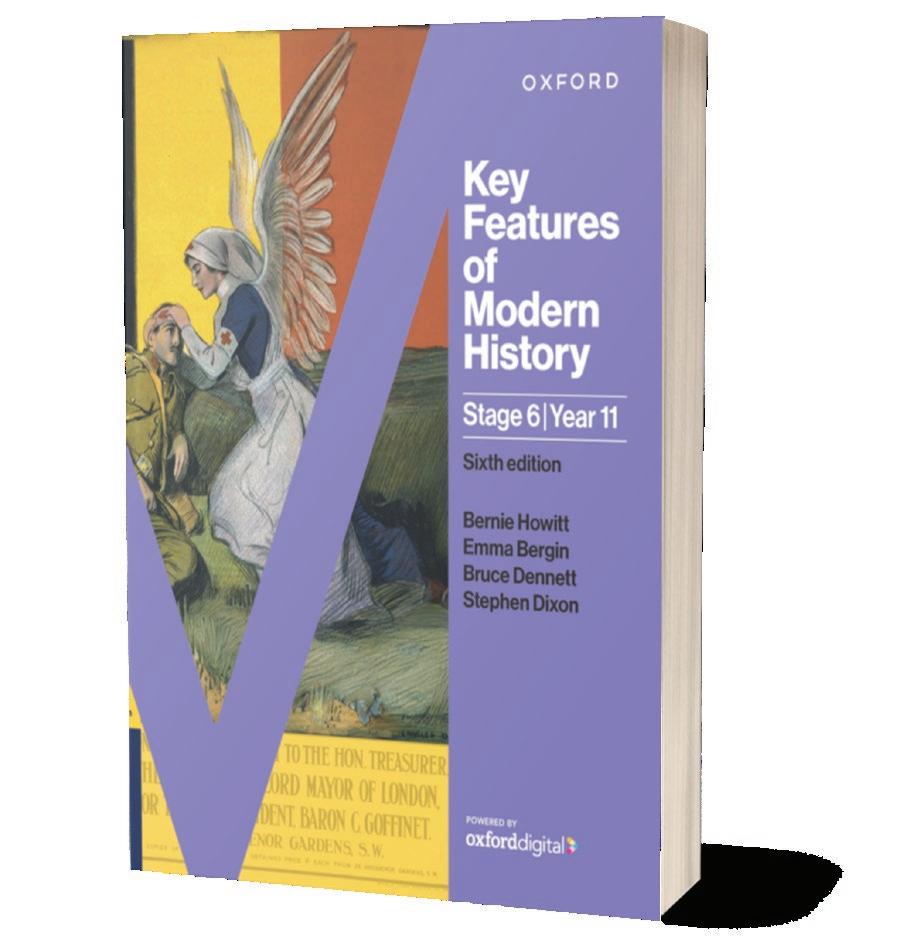
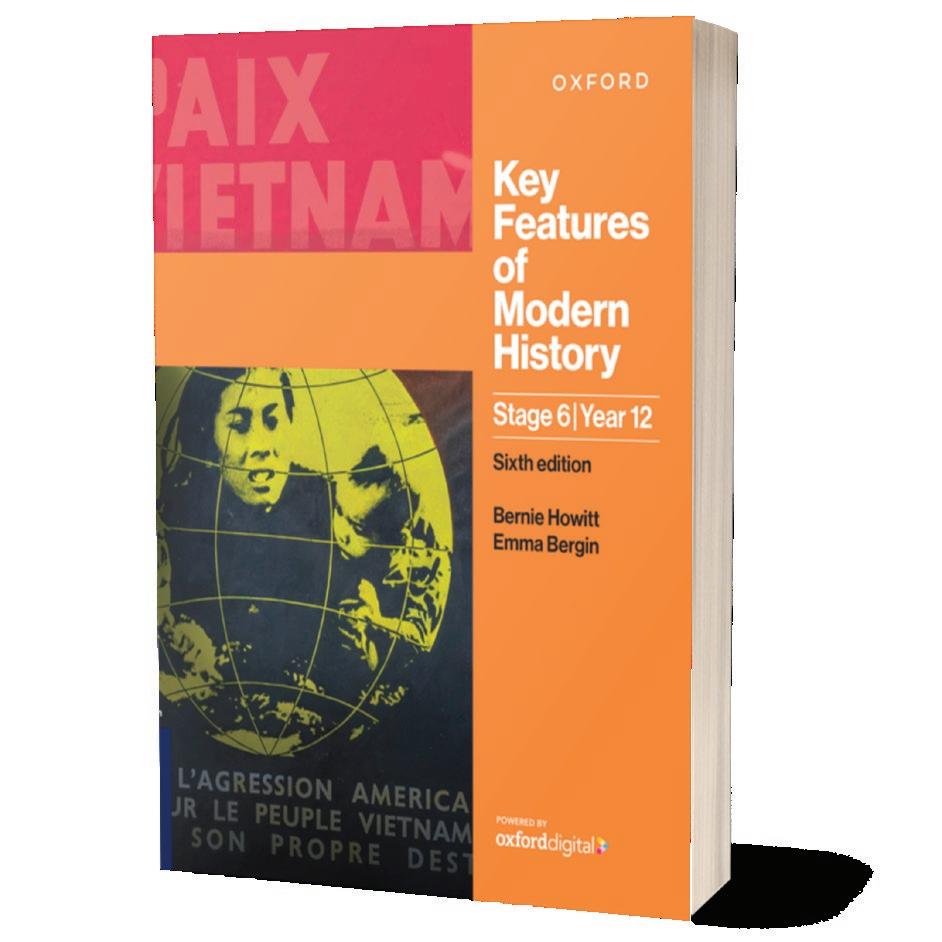
The Modern History Years 11–12 Syllabus will be supported by a comprehensive suite of digital resources available through Oxford Digital, including videos, interactive activities, quizzes, assessments, and the AI student tutor, Finch*. These resources are designed to engage students of all abilities while saving teachers valuable time in lesson planning and delivery.
* Finch available through Oxford Digital Premium.
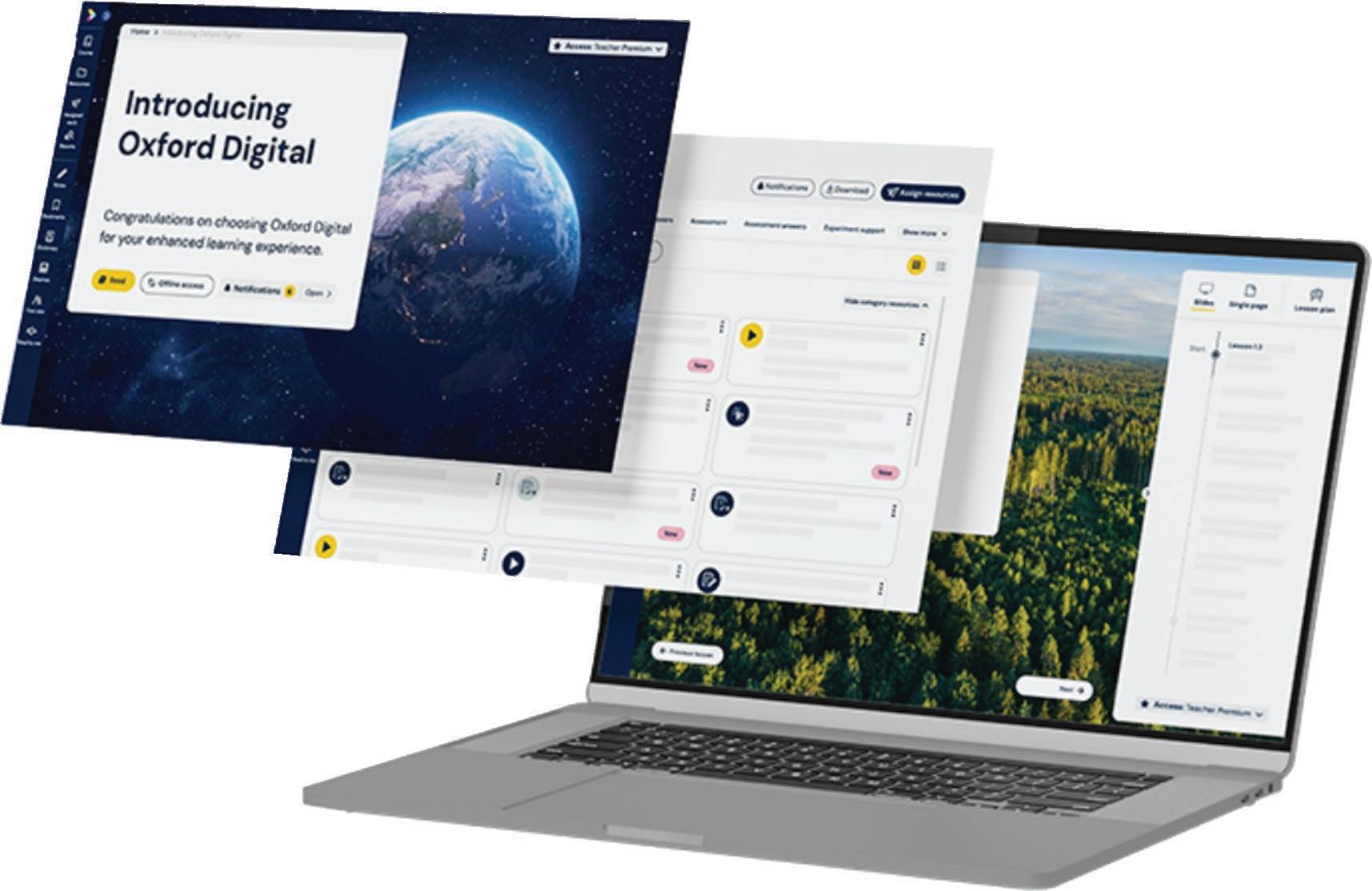
Making learning work for everyone, everywhere.
Designed with teachers around Australia, Oxford Digital has been updated to improve usability and accessibility. Engage students of all abilities and save time in planning and delivering lessons.