
History 7-10 Syllabus (2024) Implementation Guide

This guide has been produced by the expert team of teachers, authors, and learning designers at Oxford University Press Australia. It contains a clear, concise summary of the key changes to structure and content of the History 7–10 Syllabus (2024) and is designed to clarify modifications that need to be made to help you plan and implement the new syllabus with confidence.
Why is the syllabus changing?
HISTORY 7–10 SYLLABUS (2024):
Historical contexts (core)
The ancient past
S4
The medieval world
The era of colonisation
The making of the modern world
The modern world
The syllabus was last updated in 2012. The new syllabus seeks to integrate feedback that has been gathered, in addition to developments in historiography that facilitate the sharing of more accurate and representative Australian histories. Many of the changes made aim to simplify and reduce the content that needs to be taught, facilitating the ability to investigate some areas in greater depth. The changes also provide greater uniformity in the structure and nature of each Context study and Depth study.
Historical concepts
Depth studies (core)
Depth studies (options)
Depth study (select at least 2 from 16 options)
Aboriginal Peoples’ experiences of colonisation
Australia: making a nation (from Federation to WWI)
Australia at war (WWII)
Human rights and freedoms
Historical skills
Depth study (select at least 1 from 10 options)
What are the key changes to the History 7–10 Syllabus?
GENERAL OBSERVATIONS:
• Many of the topics and the general division of history have remained consistent, continuing to follow a chronological approach from the ancient world to the modern day. However, there have been changes to titles, the structure of each topic and the introduction of new mandatory units, and a reduction in the Depth study options that can be taught (a minimum of one and maximum of three Depth study options per stage).
• The four ‘Overviews’ have been replaced by five ‘Historical context studies’.
• Not only does a ‘Site Study’ need to be taught in each stage (as was the case in the 2012 syllabus), but the 2024 syllabus has also introduced a ‘Case Study’ for each stage. This provides teachers with flexibility and the option to delve deeply into a specific area of history relevant to the Depth studies and capitalising on student and teacher interest. This is intended to support the development of students’ historical inquiry skills. Note that five hours has been allocated for each Site Study and Case Study.
• The number of non-western options that must be taught has been reduced, as only one across both stages must be selected. The non-western options have been identified with an * in the tables below.
• The number of mandatory core units has increased from three to four. One remains the same (Human rights and freedoms), one has been divided into two (Australia: making a nation – from Federation to WWI and Australia at war – WWII) and the other has been replaced (from Investigating the Ancient Past to Aboriginal Peoples’ experiences of colonisation).
STAGE 4
2012 SYLLABUS
The Ancient World Overview merged
Depth Study 1: Investigating the Ancient Past
Depth Study 2: The Mediterranean World merged
Depth Study 3: The Asian World
The Ancient to the Modern World Overview
Depth Study 5: The Asia-Pacific World
Depth Study 6: Expanding Contacts
merged
Depth Study 6: Aboriginal and Indigenous Peoples, Colonisation and Contact History now mandatory and divided
2012 SYLLABUS
The Making of the Modern World Overview
Depth Study 2: Australia and Asia
Depth Study 3: Australians at War
STAGE 5
merged and divided into
The Modern World Overview
Depth Study 4: Rights and Freedoms
Depth Study 1: Making a Better World?
Depth Study 5: The Globalising World
Depth Study 6: School-Developed Topic
merged
2024 SYLLABUS
Historical context 1: The ancient past
Depth study: The ancient past
Choose one option from Ancient Egypt, Ancient India*, Ancient China*, Ancient Greece, Ancient Rome
Historical context 2: The medieval world
Depth study: The medieval world
Choose one option from Medieval Europe, Expansion of Islam*, Polynesian expansion across the Pacific*, The Vikings, The Angkor/Khmer Empire*, Japan under the Shoguns*, Mongol expansion*, The Ottoman Empire*, The Black Death in Asia, Europe and North Africa*, Renaissance Italy, The Spanish conquest of the Americas
Historical context 3: The era of colonisation
Depth study: Aboriginal Peoples’ experiences of colonisation in Australia
2024 SYLLABUS
Historical context 4: The making of the modern world
Depth study: Australia: making a nation – from Federation to WWI
Depth study: Australia at war - WWII
Historical context 5: The modern world
Depth study: Human rights and freedoms
Depth study: The modern world
Choose one of the following options: The Industrial Revolution, The movement of peoples, Imperialism in Asia, Key ideas and movements, The Holocaust, Rights and Freedoms of Australian women, Migration experiences, Popular culture in Australia, The environmental movement, School-developed option
The orange text indicates a new depth study option or that a specific syllabus has been provided in the 2024 edition.
How is the content changing?
GENERAL OBSERVATIONS
• The historical concepts and skills remain the same, and are to be embedded throughout all content. However, ‘empathetic understanding’ has been removed as both a concept and skill.
• The outcomes have been reduced from ten to eight. Notably the ‘objectives’ that divided these outcomes into three categories have been removed. The outcomes have thus been simplified. It is important to note that ‘explaining Aboriginal Peoples’ experiences’ has become an outcome.
• Descriptions of the Overviews have been removed and a separate ‘teaching document’ provides examples and suggested strategies, as well as further explanation to help contextualise the purpose of each Context study or Depth study.
• As with the 2012 syllabus, relevant outcomes are aligned to each Context study or Depth study. The 2024 syllabus also frames each Depth Study with the following points that highlight the
importance of integrating historical concepts and skills and teaching through a framework of historical inquiry:
– Use relevant historical concepts and skills
– Engage in historical inquiry, using information from a range of sources as evidence where appropriate
– Create written texts to explain historical concepts (this point is not in the Context studies, suggesting that less time and depth is to be spent on these units)
• While much of the content remains similar in the Depth studies that have been retained, the content has been streamlined and in each is divided into the same three sections:
– Background and origins
– Significant groups, individuals, ideas, beliefs, practices or events
– Impact and legacies
• These headings offer uniformity between Depth studies and a clear insight into the focus on the core concepts and skills, such as significance, cause and effect, and continuity and change. It is therefore important to note that chronology is not always the focus in the organisation of the syllabus points.
• In the 2024 syllabus, there are no directive verbs attached to each syllabus dot point. This aligns with the structure of senior History syllabuses, and means that students must be familiar with a range of directive verbs, and have the adaptability and flexibility to apply these to various syllabus dot points.
SPECIFIC CHANGES
What follows is a brief description of some of the key changes in the mandatory (core) Context studies. Note that this is not a comprehensive analysis of each change that has been made.
HISTORICAL CONTEXTS
Historical context 1: The ancient past
This Context study merges The Ancient World Overview (2012) and Investigating the Ancient Past (2012), identifying the theories of the migration of humans, key sources of evidence for societies, the use of science and technology in the practice of historical inquiry, concepts of time and the conservation and preservation of the past. Notably, exploring key features of the practice of archaeology and history has been removed, as has exploration of the key features of ancient societies, and the framing of historical inquiry as an investigation into mysteries. New ideas such as the foundations of citizenship, non-western traditions of historical inquiry and the debate regarding repatriation of cultural artefacts have been added.
Historical context 2: The medieval world
Historical context 3: The era of colonisation
This Context study has increased, with the syllabus dot point about the ‘key features of the medieval world’ being broken down, requiring deeper investigation into sources that provide insight into social hierarchies, the dominance of religion, the significance of the Magna Carta, the expansion of Islam and the Crusades.
This new Context study aims to frame the core topic ‘Aboriginal People’s experiences of colonisation’ by highlighting the nature of European exploration from the 15th century and the impact of the Doctrine of Discovery in validating these ventures. It provides an opportunity to investigate an Indigenous community beyond Australia that will aid in developing a broader understanding of the theme of colonisation globally and provides an alternate lens through which to understand the nature and impact of colonisation in Australia.
Historical context 4:
The making of the modern world
This Context study has a similar focus on the international consequences of the Industrial Revolution. It reframes the movement of peoples to focus on the way imperialism shaped this movement and seeks to highlight the development of modern-day ideas such as human rights and democracy that developed during this period. This Context study focuses on the rise of nation-states rather than the emergence of new ideas in the period. Prior to exploring the interwar period (with a new focus on political ideologies during this time), the new Context study requires an investigation of the causes of the First World War and the consequences of the Paris Peace Conference.
Historical context 5:
The modern world
This new Context study focuses on the United Nations rather than all post-war efforts to achieve peace and security after WWII. The exploration of the UDHR and the purpose of the UN has moved into the Context study from the 2012 Depth study. While there continues to be a focus on the Cold War, it is now in relation to popular culture (rather than Australia’s involvement or the rising influence of Asian nations since this conflict). It does not explicitly explore independence movements in relation to movements for rights during this period. An investigation of the role of migrants in Australia post-World War II is now required. There is no longer a focus on health when considering developments during this period.
SPECIFIC CHANGES
What follows is a brief description of some of the key changes in the mandatory (core) Depth studies. Note that this is not a comprehensive analysis of each change that has been made.
DEPTH STUDIES (CORE)
Aboriginal People’s experiences of colonisation
This Depth study has significant overlap with the previously optional Depth study ‘Aboriginal and Indigenous Peoples, Colonisation and Contact History’. Notable differences include a stronger focus on the Frontier Wars, investigation into some specifically identified conflicts and massacres, and focus on understanding different perspectives including in relation to key terms such as ‘invasion’. It emphasises the role of the Aborigines Protection Board and religious organisations more than the prior syllabus. Additionally, the 2024 syllabus does not require a comparison with the experiences of First Nations Peoples from another nation. This Depth study sets up key ideas and histories foundational to best understanding the content covered in the ‘Human rights and freedoms’ Depth study.
Australia: making a nation – from Federation to WWI
This topic merges some of the key ideas from the 2012 optional Depth study ‘Making a Nation’ and the World War I component of the previous ‘Australians at War’ unit. There is no longer a focus on the living and working conditions or experiences of non-Europeans in Australia before Federation. The focus is on the development of democracy and the key features and immediate impacts of Federation. The structure of the content in relation to World War I is quite different, and while some similar themes are evident (such as battles in which Australia fought, perspectives of the Anzac legend and conscription debates), the intention is to demonstrate democracy in action, drawing a link between the development of democracy during Federation and a new Australian identity then expressed in World War I.
Australia at war – WWII
Much of the content in considering World War II is the same, with a continued focus on Australia’s involvement in the war, both overseas and the effect on the home front. It identifies deeper consideration of the Holocaust, with a focus on the Jewish experience during the Holocaust and for those who survived and migrated to Australia. There is also a syllabus dot point that requires investigation into the significance of the Nuremberg trials and the Genocide Convention, which helps to open the investigation back to the global stage by the end of the unit and sets the scene for the development of the notion of human rights which frames the final core Depth study.
Human rights and freedoms
While this Depth study is entitled ‘Human rights and freedoms’, it is very much an investigation of these concepts in relation to Australia. There continues to be the need to investigate the US Civil Rights Movement and its influence on Australia, but the discussion of the UN and the UDHR has been moved into Context study 5. As with the 2012 syllabus, this Depth study is an exploration of the struggle for rights and freedoms of Aboriginal Peoples during the 1900s to c. 2017, including considering the role of government policies and the experiences of the Stolen Generations. The syllabus provides greater flexibility in identifying examples of events, methods or activists that made change, but continues to specify the 1965 Freedom Ride, the 1967 Referendum and the Commonwealth Native Title Act 1993 . The idea of Aboriginal sovereignty is a new concept, as is the discussion of the importance of ‘reclaiming’ Languages, Cultures and identities by Aboriginal Peoples. The unit continues to provide the option to investigate another group in Australia or globally that struggled during this time for rights and freedoms.
When do I need to begin teaching the new syllabus at my school?
NESA has released guidance around familiarisation and implementation of the new syllabus, that will replace the History K-10 Syllabus (2012). Schools should be aware of updates from NESA.
Plan and prepare to teach the new syllabus.
Start teaching the new syllabus.




The History Years 7–10 Syllabus will be supported by a comprehensive suite of digital resources available through Oxford Digital, including videos, interactive activities, quizzes, assessments, and the AI student tutor, Finch*. These resources are designed to engage students of all abilities while saving teachers valuable time in lesson planning and delivery.
* Finch available through Oxford Digital Premium.
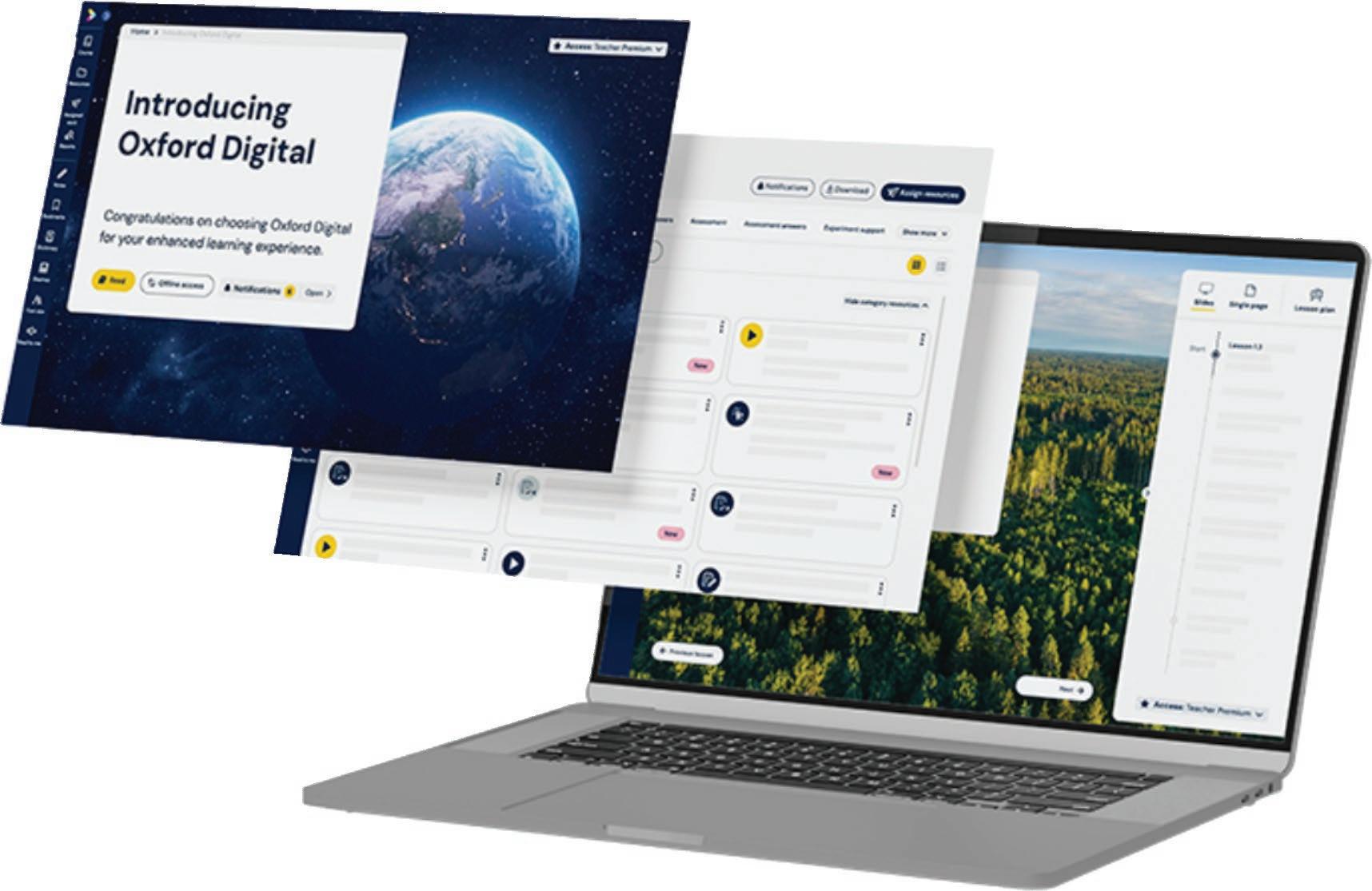
Making learning work for everyone, everywhere.
Designed with teachers around Australia, Oxford Digital has been updated to improve usability and accessibility. Engage students of all abilities and save time in planning and delivering lessons.