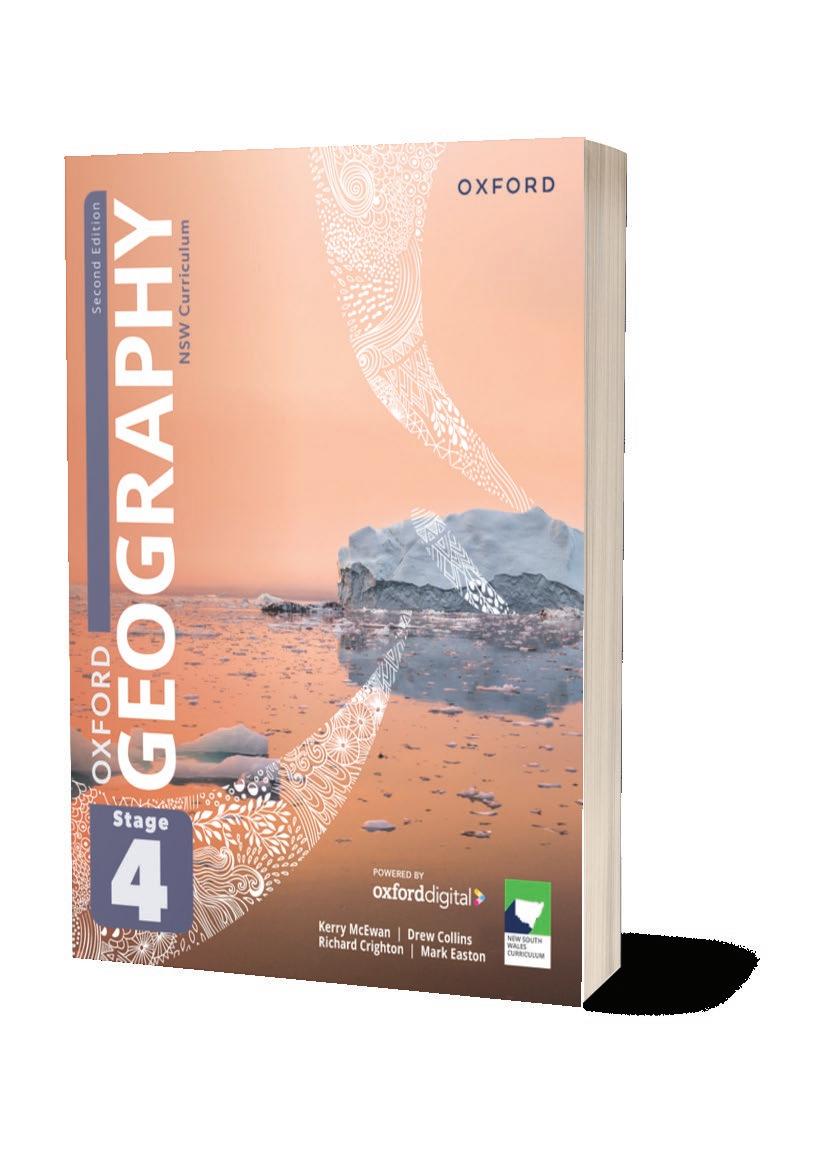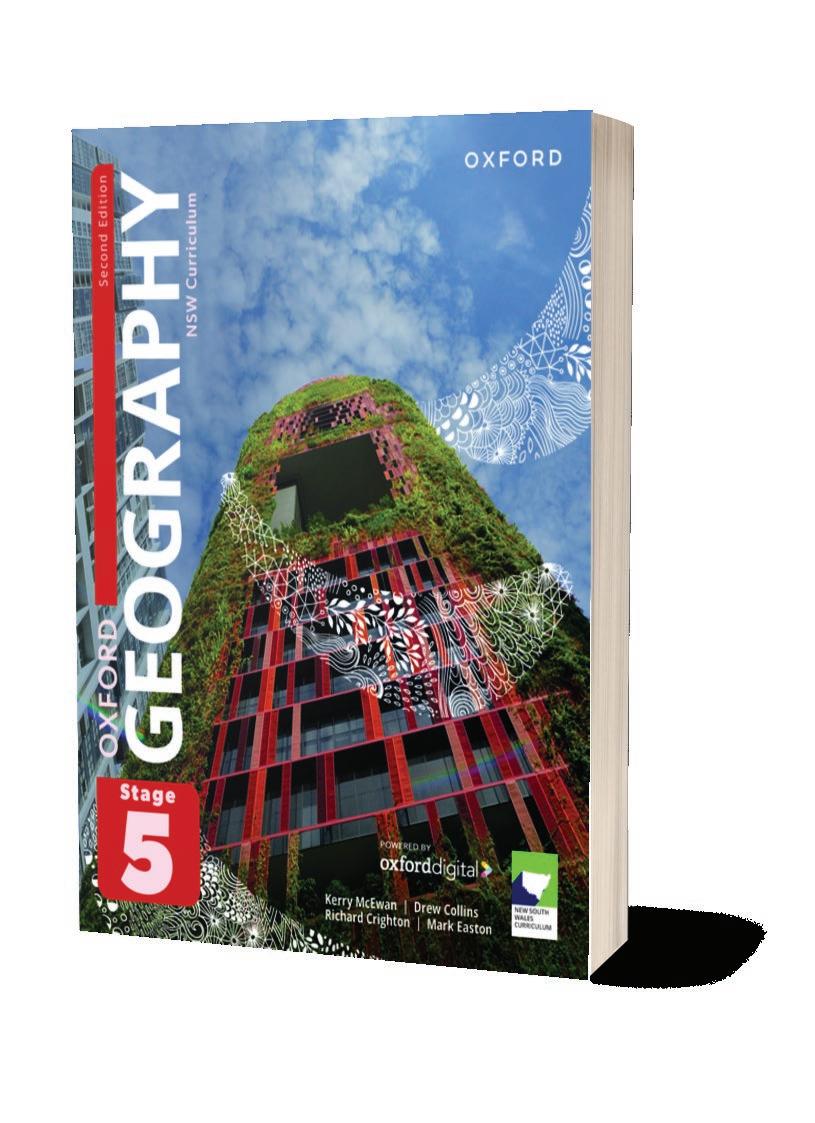
Geography 7-10 Syllabus (2024) Implementation Guide

This guide has been produced by the expert team of Geography teachers, authors, and learning designers at Oxford University Press Australia. It contains a clear, concise summary of the key changes to structure and content of the Geography 7–10 Syllabus (2024) and is designed to save you time and help you plan and implement the new syllabus with confidence.
Why is the syllabus changing?
The syllabus was last updated in 2015. This new 2024 syllabus aims to give students opportunities for in depth learning and to support teachers with essential content for evidence-based explicit teaching. In essence, there is more mandated content, but it is presented in clear, concise language and sequenced to both support subject progression and build knowledge. In addition, extensive teaching advice has been included to reinforce understanding of syllabus content and to support teachers to make informed pedagogical decisions. Suggested fieldwork applications, tools and techniques are included for each focus area.
GEOGRAPHY 7–10
SYLLABUS (2024):
Landscapes and landforms
Geographical concepts
Place, space, environment, interconnection, scale, sustainability, change
Thinking and working geographically
Geographical inquiry skills
Acquiring, processing and communicating geographical information
Geographical tools
Maps, fieldwork, data and graphs, spatial technologies, additional geographical representations
Knowledge, understanding and skills
What are the key changes to the Geography 7–10 Syllabus?
A new structure lesson by lesson
That builds on geographical conceptual understanding across all outcomes, making clear the essential knowledge, skills and understandings for geography.
Thinking and working geographically
Students use embedded concepts and content to apply knowledge through a process of inquiry. Students use and apply prescribed geographical tools, for each stage, in all focus areas.
Clear, concise language
Improved clarity in focus area names. Explicit content with real world examples.
Creating written texts to support learning
Geography has particular and specific writing demands that require explicit opportunities to practise the process of creating written texts to develop and communicate knowledge, understanding and ideas.
Inclusion of Aboriginal Cultures and Histories content
Aboriginal Cultures and Histories content supports students to learn about custodianship, care and management of Country. Students examine sustainable practices and Knowledge Systems that have been developed and implemented over millennia.
How is the content changing?
A reorganisation of focus areas with improved clarity and sequence to facilitate building deeper knowledge. Each of the 8 focus areas has four content points. The first one is always Thinking and working geographically so consideration can be made to identify the geographical concepts, inquiry skills and tools that will be integrated with the content delivery. This both simplifies and expedites the programming of each focus area.
GENERAL OBSERVATIONS
• Content is clearer and has been streamlined.
• Geographical tools are a prescriptive list
• Content descriptions include real world examples.
• New outcomes and content to build knowledge of Aboriginal Cultures and Histories.
SPECIFIC CHANGES
The following tables provides a high-level summary of specific content changes in each of Geography Stage 4 and Geography Stage 5. Content that has been added or removed is included.
GEOGRAPHY STAGE 4
What’s been added?
• Suggestions for 10 hours of mandatory fieldwork.
• Updated geographical tools to build and communicate information embedded onto each focus area, with greater alignment to Science and Mathematics.
• Two new outcomes GE4-MAN-01 explains the management and protection of places and environment.
GE4-APC-01 explains Aboriginal Peoples’ Custodianship, care and management of Country.
• Outcomes GE4-2 and GE4-3 have been combined. Now, GE4-PRI-01 explains the processes and interactions that change people, places and environments.
• Supply chain case study to Interconnections and Trade.
• ATSI connections to local, national and international economies.
What else has changed?
What’s been removed?
• Key inquiry questions (these now appear in the teaching advice).
• Use of the directive term ‘analyse’ (now only in stage 5).
• Outcome GE4–6 explains differences in human wellbeing.
• Aesthetic and spiritual values of landscapes and landforms (replaced by environmental and recreational values).
• Changing Landscapes (now in Dynamic landscapes and landforms).
• Directive term in outcomes has been upgraded to ‘explain’ rather than ‘describe’ in most instances
• Clarity has improved in the names of the focus areas. Place and Liveability is now called Liveability of places and Interconnections is now called Interconnections and trade.

GEOGRAPHY STAGE 5
What’s been added?
• Suggestions for 10 hours of mandatory fieldwork.
• New outcome GE5-APC-01 analyses how Aboriginal Peoples’ Custodianship of Country supports environmental management and enhances Community wellbeing.
• Updated geographical tools embedded into each focus area, with greater alignment to Science and Mathematics.
• Climate change impacts, environmental and global challenges.
• Sustainable ATSI environmental management practices.
• Case study of management of population change in ONE Australian city.
What else has changed?
What’s been removed?
• Key inquiry questions (these now appear in the teaching advice).
• GE5-6 analyses differences in human wellbeing and ways to improve human wellbeing.
• Directive term in outcome has been upgraded from ‘explain’ to ‘analyse’
• Focus areas have been realigned into 4 topics with outcomes updated significantly in Changing places, Environmental change and management and Human wellbeing
When do I need to begin teaching the new syllabus at my school?
NESA has released guidance around familiarisation and implementation of the new syllabus. Schools should be aware of updates from NESA.
2026
Geography Stage 4 & 5
Planning and programming
KEY CHANGES AT A GLANCE
• There is an increased emphasis on the importance and integration of thinking and working geographically with the syllabus organised through 3 key components central to the study of geography:
1. Geographical concepts
2. Geographical inquiry skills
3. Geographical tools
2027 2028
Start teaching to Years 7 & 9
Start teaching to Years 8 & 10
• New outcomes and content to build knowledge of Aboriginal Culture and Histories.
• A requirement of ten hours of mandatory fieldwork and prescribed geographical skills and tools for each stage.
• The Geography 7–10 syllabus (2024) is a live document available via NESA’s digital platform. NESA will continue to add teaching advice and support materials throughout the implementation process.



The Geography Years 7–10 Syllabus will be supported by a comprehensive suite of digital resources available through Oxford Digital, including videos, interactive activities, quizzes, assessments, and the AI student tutor, Finch*. These resources are designed to engage students of all abilities while saving teachers valuable time in lesson planning and delivery.
* Finch available through Oxford Digital Premium.
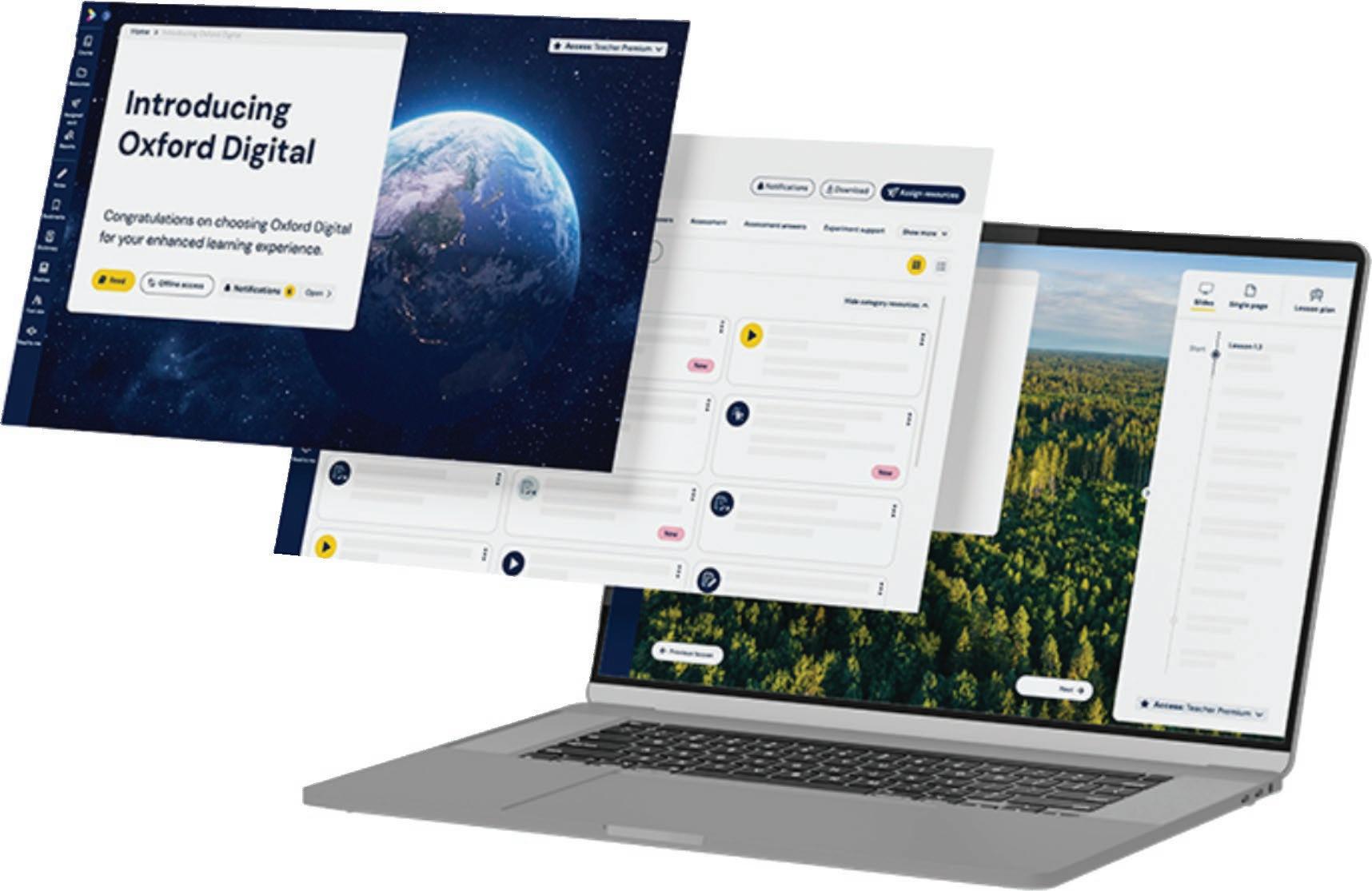
Making learning work for everyone, everywhere.
Designed with teachers around Australia, Oxford Digital has been updated to improve usability and accessibility. Engage students of all abilities and save time in planning and delivering lessons.