Ancient History 11-12 Syllabus (2024) Implementation Guide

This guide has been produced by the expert team of teachers, authors, and learning designers at Oxford University Press Australia. It contains a clear, concise summary of the key changes to structure and content of the Ancient History 11–12 Syllabus (2024) and is designed to clarify modifications that need to be made to help you plan and implement the new syllabus with confidence.
Why is the syllabus changing?
ANCIENT HISTORY 11–12 SYLLABUS (2024):
Investigating ancient history
The Ancient History syllabus was last updated by NESA in 2017 to incorporate aspects of a national curriculum framework developed by the Australian Curriculum Assessment and Reporting Authority (ACARA).
In 2018–2020, an extensive curriculum review was undertaken in NSW, and the 2024 syllabuses were developed to address the major findings of the review. Those particularly pertinent to Ancient History 11–12 include the need to:
• reduce the amount of content to encourage deeper learning
• focus on essential knowledge, both substantive and disciplinary
• emphasise skills development, especially in inquiry and critical analysis
• allow time for students to learn and apply skills in a range of contexts.
Features of ancient societies Historical investigation
HISTORICAL CONCEPTS
Causation
Continuity and change
Perspectives
Significance
Contestability
YEAR 11 YEAR 12
HISTORICAL SKILLS
Analysis and use of sources
Historical interpretation
Historical investigation and research
Explanation and communication
What aspects of the Ancient History 11–12 Syllabus remain
the same?
The 2024 Ancient History syllabus is a modification of the 2017 syllabus – not a complete replacement.
• It retains the organisation into 7 focus areas, 3 for Year 11, and 4 for Year 12.
• Most of the familiar topics, subtopics and options of the previous syllabus have been retained.
• The historical concepts and skills remain the same.
• The integration of historical concepts and skills within teaching and learning activities remains central to the study of the ancient past.
• Most outcomes remain the same or very similar, with some merged or refined. The overall number of outcomes has been reduced.
• Historical inquiry and historical analysis are maintained throughout the focus areas and as mandated requirements for school-based assessment.
• Historiography continues to be integrated into most focus areas, in outcomes and in content such as ‘differing interpretations and representations’ and ‘relevant historiographical issues’.
• The pattern of study and indicative hours for focus areas in Year 11 and Year 12 remain the same.
• The maximum time of 3 hours to be spent on the ‘Context’ content in Year 12 focus areas (‘Survey’ in the 2017 syllabus) remains.
• The 2024 Ancient History 11–12 Syllabus aligns with the new 2024 Ancient History Life Skills 11–12 Syllabus to continue to provide opportunities for integrated delivery.
What are the key changes to the Ancient History 11–12 syllabus?
1 The amount of content has been reduced.
The reduction of content is designed to encourage a move away from surface learning of a broad range of content to allow time for deeper and more critical learning of a reduced range of content. The reduction of content is more evident in Year 12 than in Year 11.
YEAR 11
In Year 11 focus areas there has been some modification and reorganisation of content but very little overall reduction.
Investigating ancient history –the nature of ancient history
• The previous ‘Historical Authentication and Reliability’ has been removed as a separate topic for investigation, but has been included in the first study, ‘The investigation of ancient sites and sources’ as a content point: ‘Problems of authenticity and methods of authentication’.
• The previous ‘Preservation, Conservation and/or Reconstruction of Ancient Sites’ has been changed to ‘Conservation and reconstruction of ancient sites’.
• In Option B Case Studies, ‘The emergence of early societies’ has been replaced by a new option: ‘Civilisations of the river – Mesopotamia and the Indus Valley’.
Features of ancient societies
Content groups for this focus area have been modified.
• For all features, a new first content point emphasises the importance of source analysis: ‘The nature, range and limitations of sources about … ‘
• ‘Evidence of continuity and/or change’ has been removed from all options.
• Some features have been reworded and some have new content points.
• The feature ‘Art and architecture’ has been modified to include non-elites: ‘Representation and use of art and architecture by various groups including non-elites’ .
• ‘Death and funerary customs’ has an additional content point: ‘ A study of at least ONE significant site and source relating to death and funerary practices’ .
• ‘Trade and cultural contact’ also has an additional content point. ‘A study of at least ONE significant site relating to trade, such as a shipwreck or port’ .
New options have been added to the lists of ‘Other possible case studies’.
List A List B
• The Etruscans
• The impact and expansion of Rome
• Tiberius Gracchus
• Carthage
• Hannibal and the Punic Wars
• The Moche
As in the 2017 syllabus, teachers may develop their own case studies following the geographical division indicated in List A and List B – and the content framework provided.
Historical Investigation
In the Historical Investigation there have been minor modifications to content, suggested topic areas and the process of historical investigation. Teachers are advised to check these before revising their programs.
The Historical Investigation now identifies 4 outcomes to be addressed in this focus area: AH11-05, AH11-06, AH11- 07 and AH11-08.
YEAR 12
Cities of Vesuvius: Pompeii and Herculaneum
The ‘Survey’ content has been replaced by reduced ‘Context’ content, requiring only
– The geographical setting and natural features of Campania, and
– The impact of the eruption of 79CE on Pompeii and Herculaneum.
• The time frame has been reduced by removing pre-20th century content, such as:
– early discoveries and the changing nature of excavations, and
– representations of Pompeii and Herculaneum over time.
• Further content removal includes:
– the influence of Greek and Egyptian cultures: art and architecture
– foreign cults and religions
• The former ‘Reconstructing and conserving the past’ has been replaced by ‘Archaeology at Pompeii and Herculaneum’, which includes most of the former content – although not ‘Italian and international contributions and responsibilities’.
Core study Year 12: Cities of Vesuvius – Pompeii and Herculaneum
What’s been removed?
• Early discoveries and the changing nature of excavations in the 19th century
• Representations of Pompeii and Herculaneum over time
• The influence of Greek and Egyptian cultures: art and architecture
• Foreign cults and religions
What’s been added?
Source analysis: interpreting the evidence for life in Pompeii and Herculaneum
• The nature, range, value and limitations of sources about Pompeii and Herculaneum, including art, buildings, organic remains and writing
• Features and functions of houses
Ancient societies
• The former ‘Survey’ content has been replaced by ‘Context’ content throughout:
– Significance of the geographical setting, natural features and resources of the society
– The nature and range of sources for this period.
• A new heading ‘Evaluation’ emphasises source analysis and historiography:
– Issues of ancient sources in understanding this society, and
– Differing modern interpretations of a feature of this society.
• Some former content related to social and political organisation, economic activities and religion (now called ‘Religious ideology and practice’) has been modified.
• The new content for ‘Cultural life’ is much reduced. Everyday life and leisure activities have been removed and for some societies, culture has been limited to writing and literature, although art and architecture are also included for others.
Historical personalities
Some former content has been removed, and some has been modified and reorganised.
• ‘The Near East – Sennacherib’ and ‘Rome – Tiberius Gracchus’ have been removed.
• The ‘Context’ and ‘Background’ content for all Personalities has been reduced.
• ‘Impact of his/her personality on career’ has been removed.
• ‘Evaluation’ includes impact and influence – but not legacy.
• The source study for the Personalities is now introduced as ‘problems of evidence’, otherwise it is very similar to that in the former syllabus.
Historical periods
Adjustments have been made to the time frame of some historical periods to improve consistency in content load across the options.
• The Ancient Levant – First Temple Period has been reduced by a century from the former time frame of c. 970–586 BCE to 869–586 BCE.
• The historical period 4th Century Greece to the death of Phillip II now has a specific starting point, 404 BCE, the end of the Peloponnesian War. It is now Greece from 404 BCE to the death of Phillip II.
• The Fall of the Roman Republic now has a new time frame, 78–42 BCE. This means the topic ends at the Battles of Phillipi and no longer includes the rivalry between Mark Antony and Octavian, the role of Cleopatra VII and the Battle of Actium.
• The Julio-Claudians topic now ends at 68 CE with the death of Nero. It no longer includes events relating to 69 CE, the Year of the Four Emperors.
While much content has been retained, some details have been removed and some modified and regrouped under new headings for many historical periods. Teachers need to compare these with the 2017 syllabus when refreshing their programs.
2 Outcomes have been refined and the overall number reduced.
• Fewer outcomes are identified for Year 11 focus areas, for example:
– Investigating ancient history – The Nature of ancient history, from 4 to 3.
– Case Studies, from 8 to 6.
– Features of ancient societies, from 9 to 5.
– Historical investigation, from 10 to 4.
The reduction in the number of outcomes to be addressed should result in more focussed teaching and learning and more realistic assessment practices.
Outcomes Year 11
2017 2024
AH11-1: describes the nature of continuity and change in the ancient world
AH11-2: proposes ideas about varying causes and effects of events and developments of individuals and groups in their historical context
AH11-3: analyses the role of historical features, individuals and groups in shaping the past
AH11-4: accounts for the different perspectives of individuals and groups
AH11-5: examines the significance of historical features, people, places, events and developments of the ancient world
AH11-6: analyses and interprets different types of sources for evidence to support an historical account or argument
AH11-7: discusses and evaluates differing interpretations and representations of the past
AH11-8: plans and conducts historical investigations and presents reasoned conclusions, using relevant evidence from a range of sources
AH11-9: communicates historical understanding, using historical knowledge, concepts and terms, in appropriate and well-structured forms
AH11-10: discusses contemporary methods and issues involved in the investigation of ancient history
AH-11-01: explains continuity and change in the ancient world
AH-11-02: proposes ideas about the varying causes and effects of events and developments
AH-11-03: explains the role and significance of forces, features, events, individuals and groups in shaping the past
AH-11-04: accounts for the different perspectives of individuals and groups in their historical context
AH-11-05: analyses different types of sources for evidence to support a historical account or argument
AH-11-06: explains differing interpretations and representations of the past
AH-11-07: communicates historical understanding, applying historical knowledge, terms and concepts
AH-11-08: plans and conducts historical investigations and presents conclusions, using evidence from a range of sources
Outcomes Year 12
2017 2024
AH12-1: accounts for the nature of continuity and change in the ancient world
AH12-2 :proposes arguments about the varying causes and effects of events and developments
AH12-3 :evaluates the role of historical features, individuals and groups in shaping the past
AH12-4 :analyses the different perspectives of individuals and groups in their historical context
AH12-5 :assesses the significance of historical features, people, places, events and developments of the ancient world
AH12-6: analyses and interprets different types of sources for evidence to support an historical account or argument
AH12-7: discusses and evaluates differing interpretations and representations of the past
AH12-8: plans and conducts historical investigations and presents reasoned conclusions, using relevant evidence from a range of sources
AH12-9: communicates historical understanding, using historical knowledge, concepts and terms, in appropriate and wellstructured forms
AH12-10: analyses issues relating to the ownership, custodianship and conservation of the ancient past
AH-12-01: analyses continuity and change in the ancient world
AH-12-02: proposes arguments about the varying causes and effects of events and developments
AH-12-03: assesses the role and significance of forces, features, events, individuals and groups in shaping the past
AH-12-04: analyses the different perspectives of individuals and groups in their historical context
AH-12-05: evaluates different types of sources for evidence to support a historical account or argument
AH-12-06: evaluates differing interpretations and representations of the past
AH-12-07: communicates historical understanding, integrating historical knowledge, terms and concepts
3 Increased inclusion of ancient Australia in Year 11.
In Year 11 there are more opportunities to teach about ancient Australia.
• Representation of the ancient past has been modified to include ancient Australia.
– The various ways a person, site, society or event from the ancient past, including ancient Australia , has been represented over time.
• The Treatment and display of human remains
– The ethical issues relevant to the treatment, display, ownership and repatriation of the remains, including Aboriginal remains.
• List B Ancient Australia has been reorganised and some new content included under the heading ‘The archaeology of ancient Australia’.
– Dating technologies used on the site(s) and the conclusions drawn
– The cultural and spiritual significance of the site(s) for Aboriginal Peoples
– Differing views on conservation relating to the site(s)
– The principles of Indigenous Cultural and Intellectual Property (ICIP) relevant to the site(s)
– Differing interpretations and representations of ancient Australia.
4 Syllabus format has been streamlined.
• Topic numbering or lettering has been removed, except for List A and List B Case studies in Year 11.
• All references to the Australian Curriculum, including Cross-curriculum priorities, General capabilities and Other learning across the curriculum have been removed. All icons and related coding links have been removed from the syllabus making it easier to read and interpret.
• Illustrative examples have been included in separate boxes rather than included within the list of content points.
When do I need to begin teaching the new syllabus at my school?
NESA has released guidance around familiarisation and implementation of the new syllabus. Schools should be aware of updates from NESA.
Term 1
Plan and prepare to teach the new syllabus.
Start teaching new Year 11 syllabus.
Continue teaching old Year 12 syllabus.
Term 4
Start teaching new Year 12 syllabus.
First HSC examination for the new syllabus.




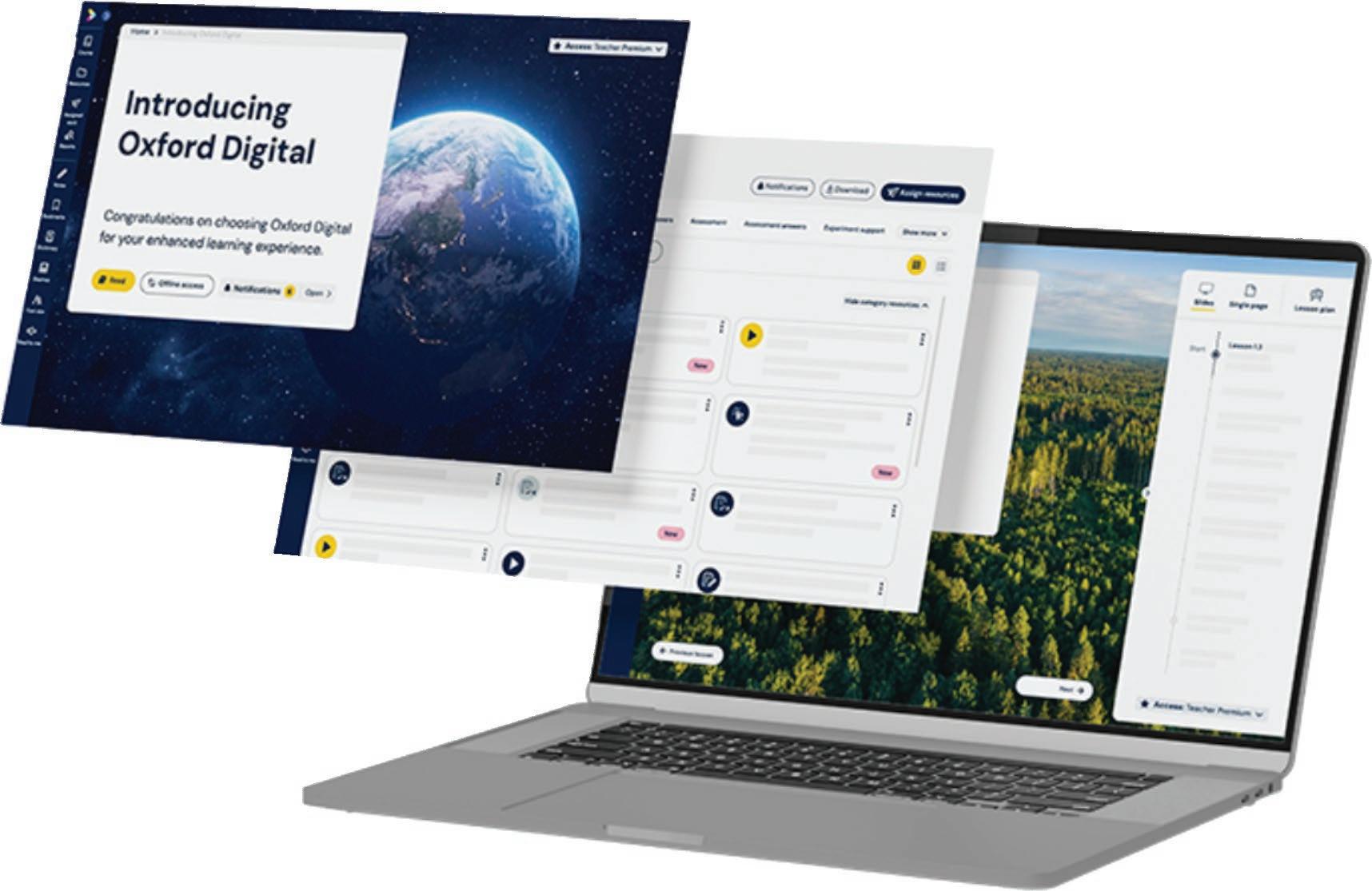
The Ancient History Years 11–12 Syllabus will be supported by a comprehensive suite of digital resources available through Oxford Digital, including videos, interactive activities, quizzes, assessments, and the AI student tutor, Finch*. These resources are designed to engage students of all abilities while saving teachers valuable time in lesson planning and delivery.
* Finch available through Oxford Digital Premium.
Making learning work for everyone, everywhere.
Designed with teachers around Australia, Oxford Digital has been updated to improve usability and accessibility. Engage students of all abilities and save time in planning and delivering lessons.