
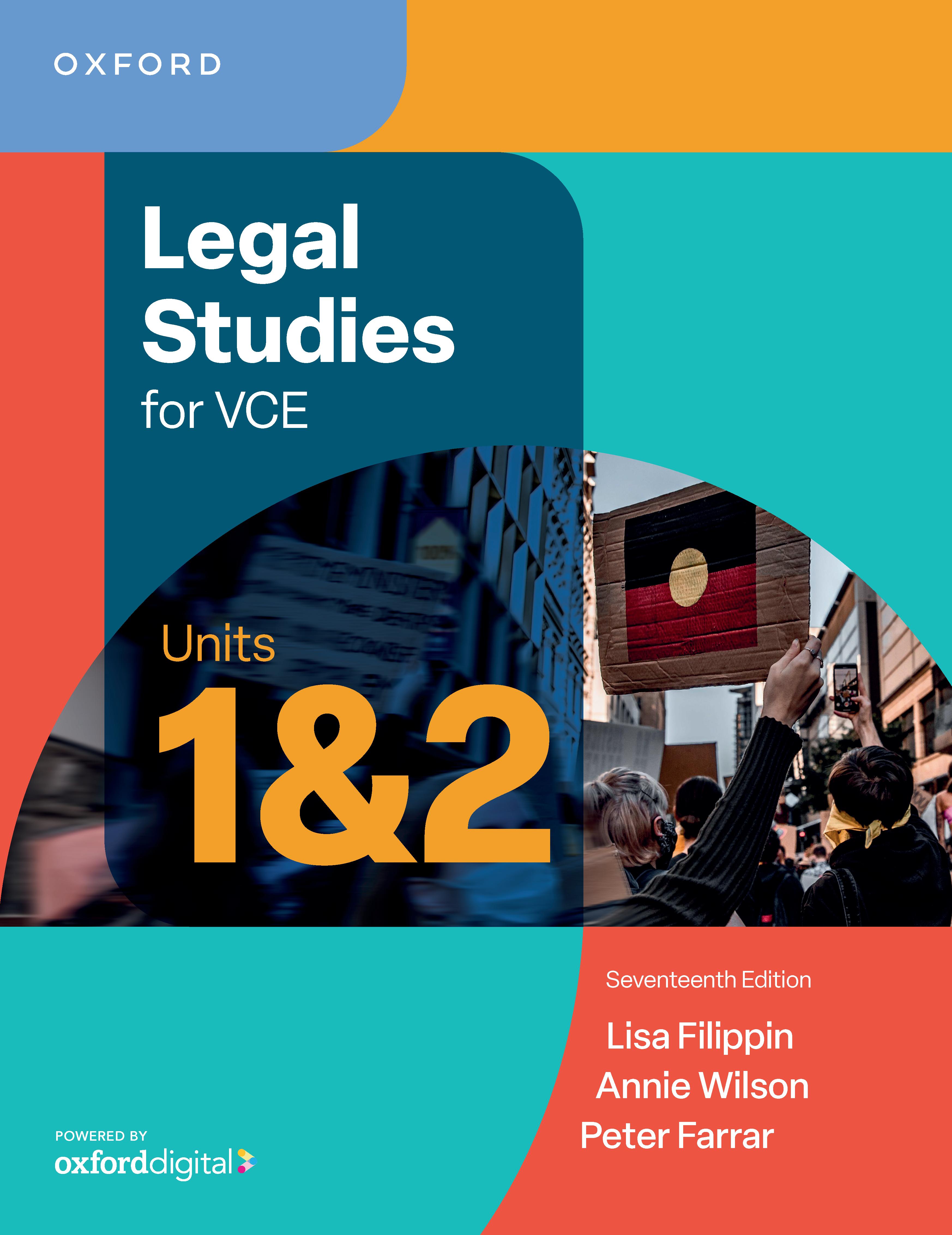
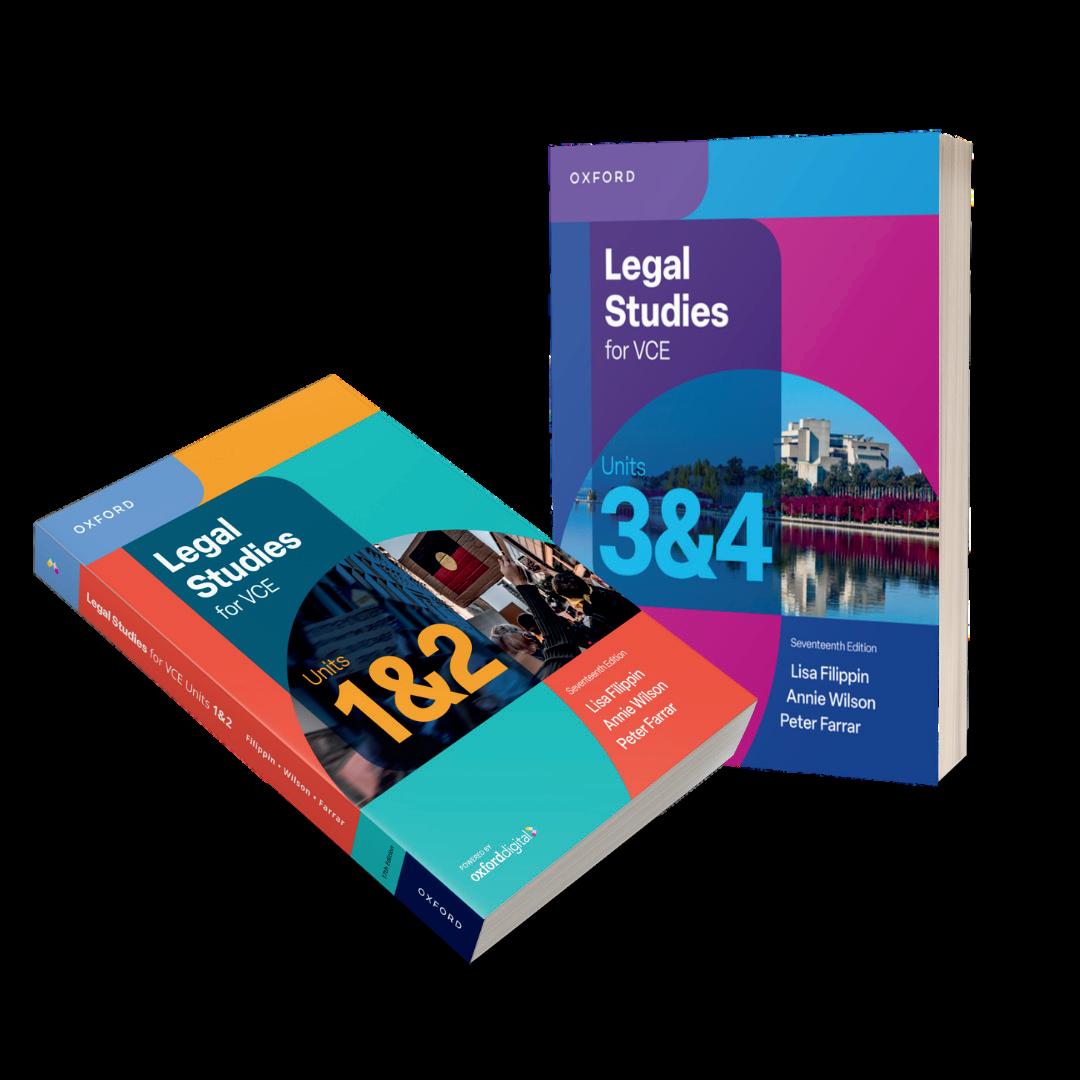
The only complete print & digital learning package for VCE Legal Studies.


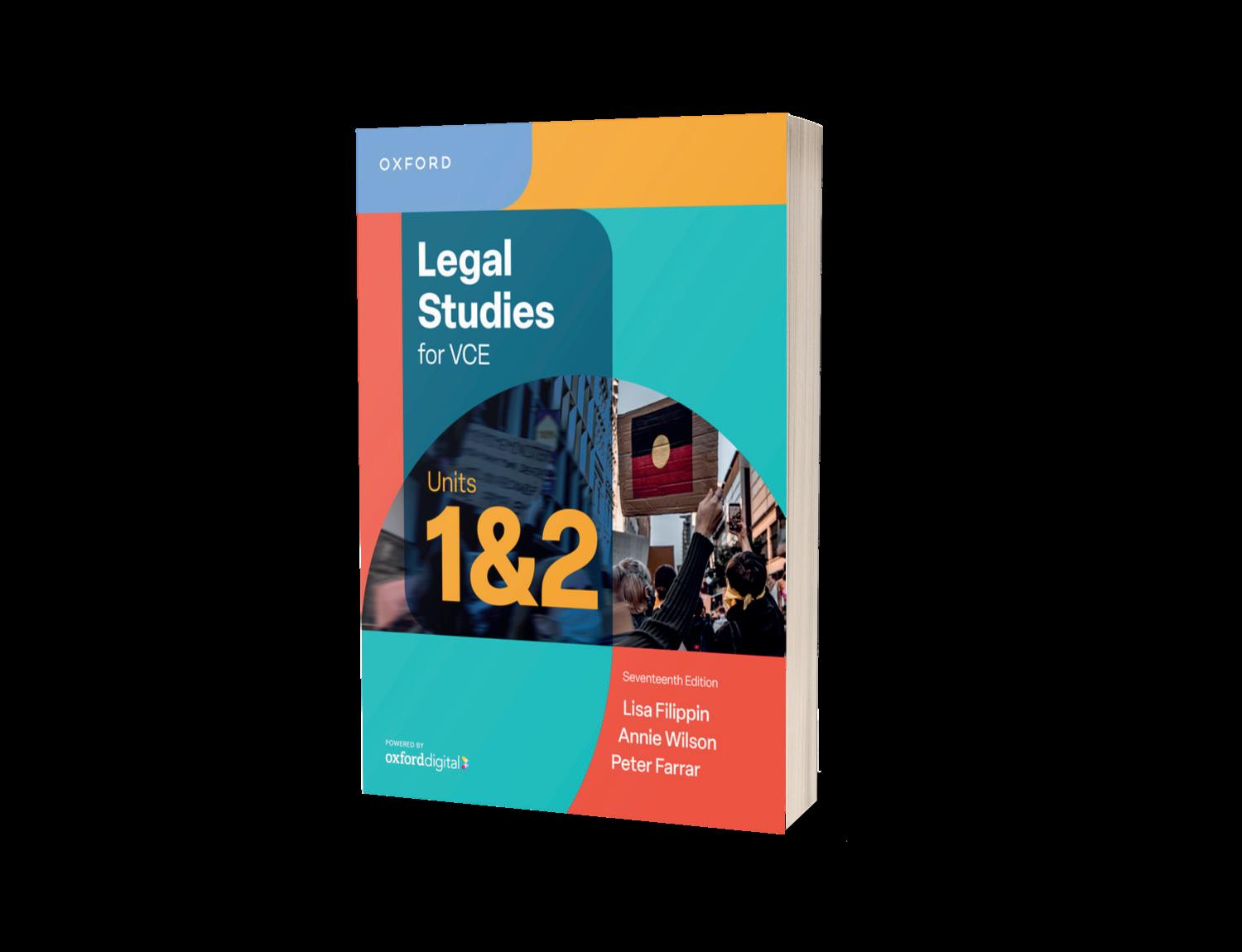
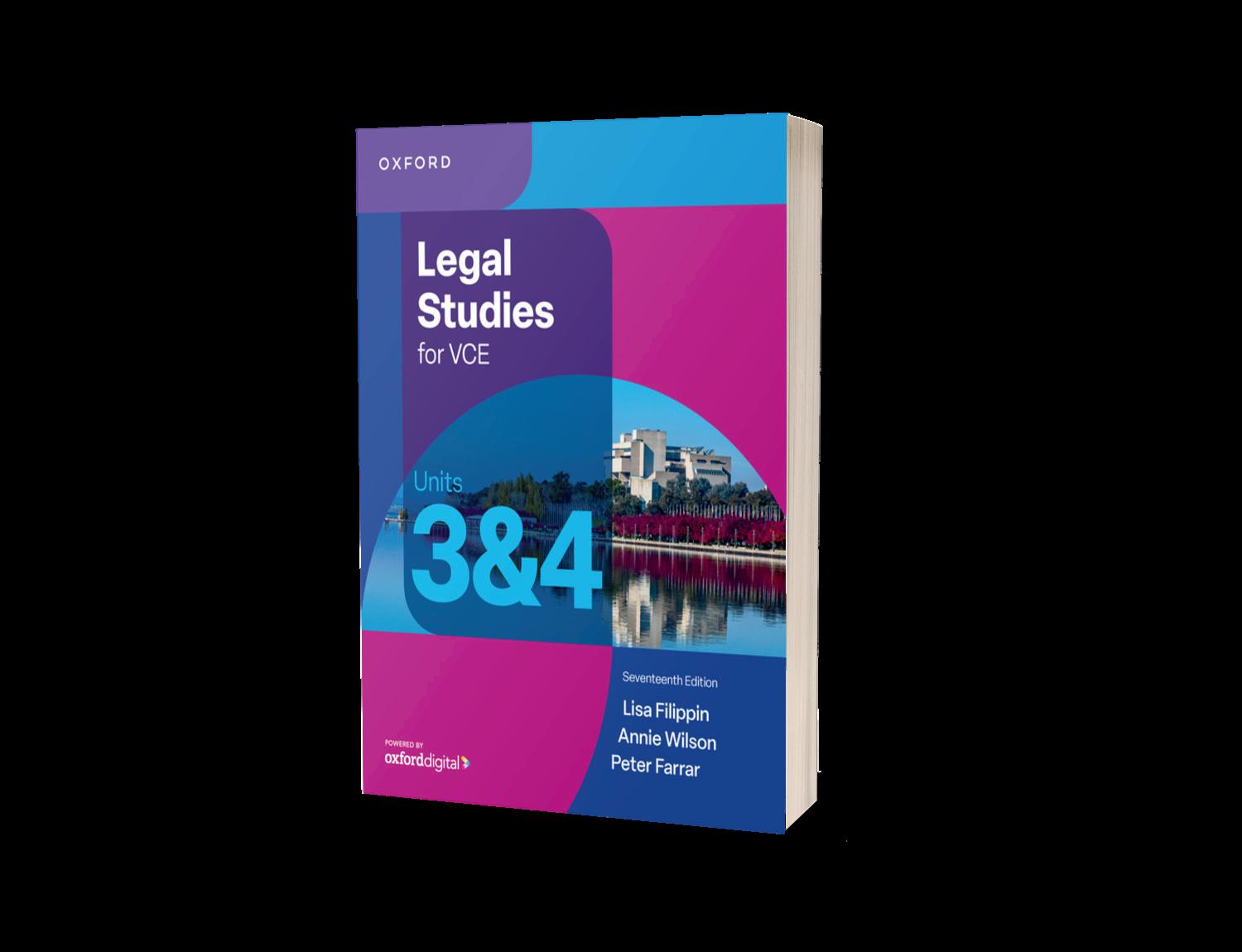
Developed by our team of expert authors and publishers, the Seventeenth Edition of Victoria’s most widely used Legal Studies series features new, high-interest case studies and an enhanced digital learning experience powered by the new Oxford Digital, to support and engage students of all abilities while saving teachers’ time with our market-leading assessment, tracking and reporting functionality.
Bite-sized content videos that cover key knowledge points
New case studies, including R v Patterson (Sentence) [2025]
Explicit assessment support, paving a path to success for all learners
Scan to learn more!
Table of contents
Module 1: The legal toolkit
1.1 The VCE Legal Studies course
1.2 Tips for success in VCE Legal Studies
1.3 Tips for success in assessment tasks
1.4 Mastering legal citation
1.5 Legal institutions and bodies
1.6 Careers in the law
Module 2: Introduction to Unit 1 –The presumption of innocence
2.1 Laws and the Australian legal system
2.2 Parliaments and courts
2.3 The rule of law
Module 3: Legal foundations
3.1 Social cohesion and rights
3.2 The principles of justice
3.3 Characteristics of an effective law
3.4 Parliament
3.5 Courts
3.6 Relationship between parliament and the courts
3.7 Criminal law and civil law Review: Legal foundations
Module 4: Proving guilt
4.1 Criminal law
4.2 The presumption of innocence
4.3 Key concepts of criminal law
4.4 Types of crime
4.5 Summary offences and indictable offences
4.6 Possible participants in a crime Review: Proving guilt
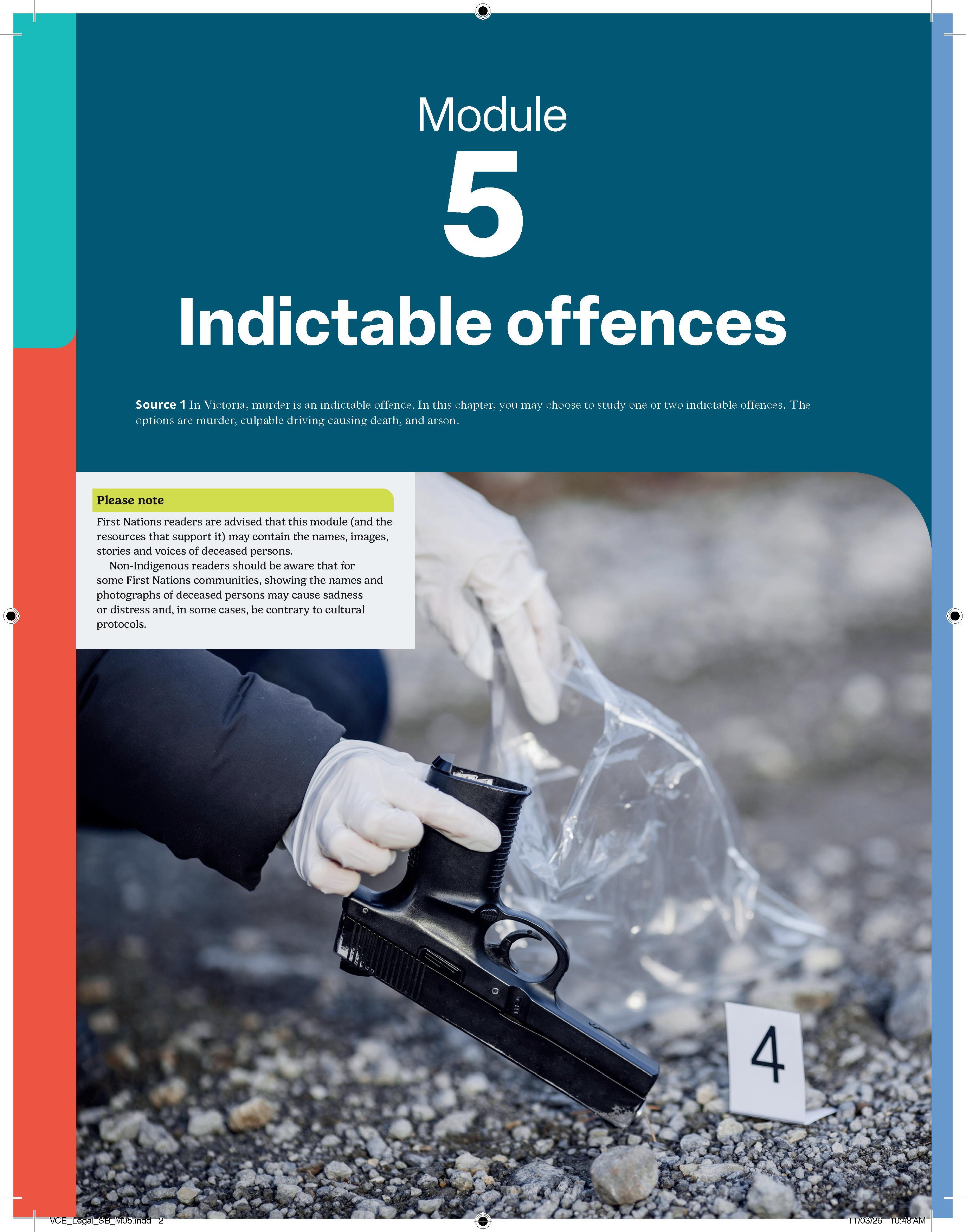
Module 5: Indictable offences
5.1 General defences to crime
5.2 Murder
5.3 Culpable driving causing death
5.4 Arson Review: Indictable offences
Module 6: Summary offences
6.1 General defences to crime
6.2 Assault
6.3 Minor theft
6.4 Offensive behaviour Review: Summary offences
Module 7: Sanctions
7.1 Introduction to sanctions
7.2 The principles of justice
7.3 Institutions that enforce criminal law
7.4 Powers and rights
7.5 The Victorian courts
Module 7: Sanctions (continued)
7.6 The jury
7.7 Difficulties in the criminal justice system
7.8 The purposes of sanctions
7.9 Types of sanctions
7.10 Sentencing factors
7.11 Alternative sentencing approaches
7.12 Sentencing in the Northern Territory Review: Sanctions
Module 8: Introduction to Unit 2 – Wrongs and rights
8.1 The purposes and sources of law
8.2 An overview of criminal law
8.3 The relationship between criminal law and civil law
Module 9: Civil liability
9.1 Purposes and types of civil law
9.2 Key concepts of civil law
9.3 Possible parties to a civil dispute Review: Civil liability
Module 10: Tort law
10.1 Negligence
10.2 Defamation
10.3 Nuisance Review: Tort law
Module 11: Other areas of civil law
11.1 Discrimination
11.2 Consumer rights
11.3 Workplace pay and conditions Review: Other areas of civil law
Module 12: Remedies
12.1 Introduction to remedies
12.2 The principles of justice
12.3 Dispute resolution methods
12.4 Tribunals
12.5 Ombudsmen
12.6 Complaints bodies
12.7 The Victorian courts
12.8 The jury
12.9 Difficulties faced in the civil justice system
12.10 Remedies Review: Remedies
Module 13: Human rights
13.1 The meaning and development of human rights
13.2 Rights protection: statute law and the Victorian Charter
13.3 Rights protection: common law
13.4 Rights protection: the Australian Constitution
13.5 The right to vote
13.6 The right to freedom of religion
13.7 The rights of First Nations people Review: Human rights
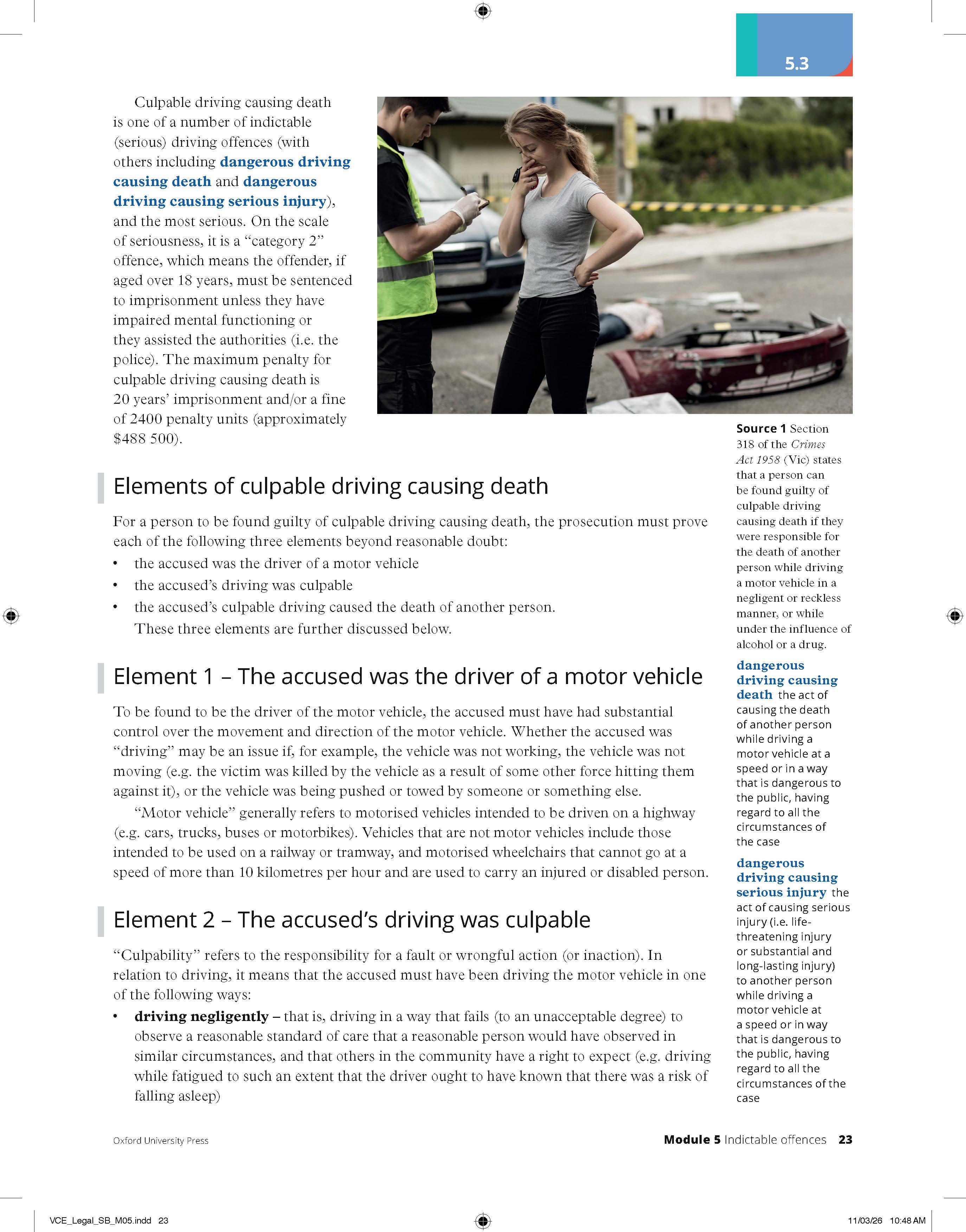
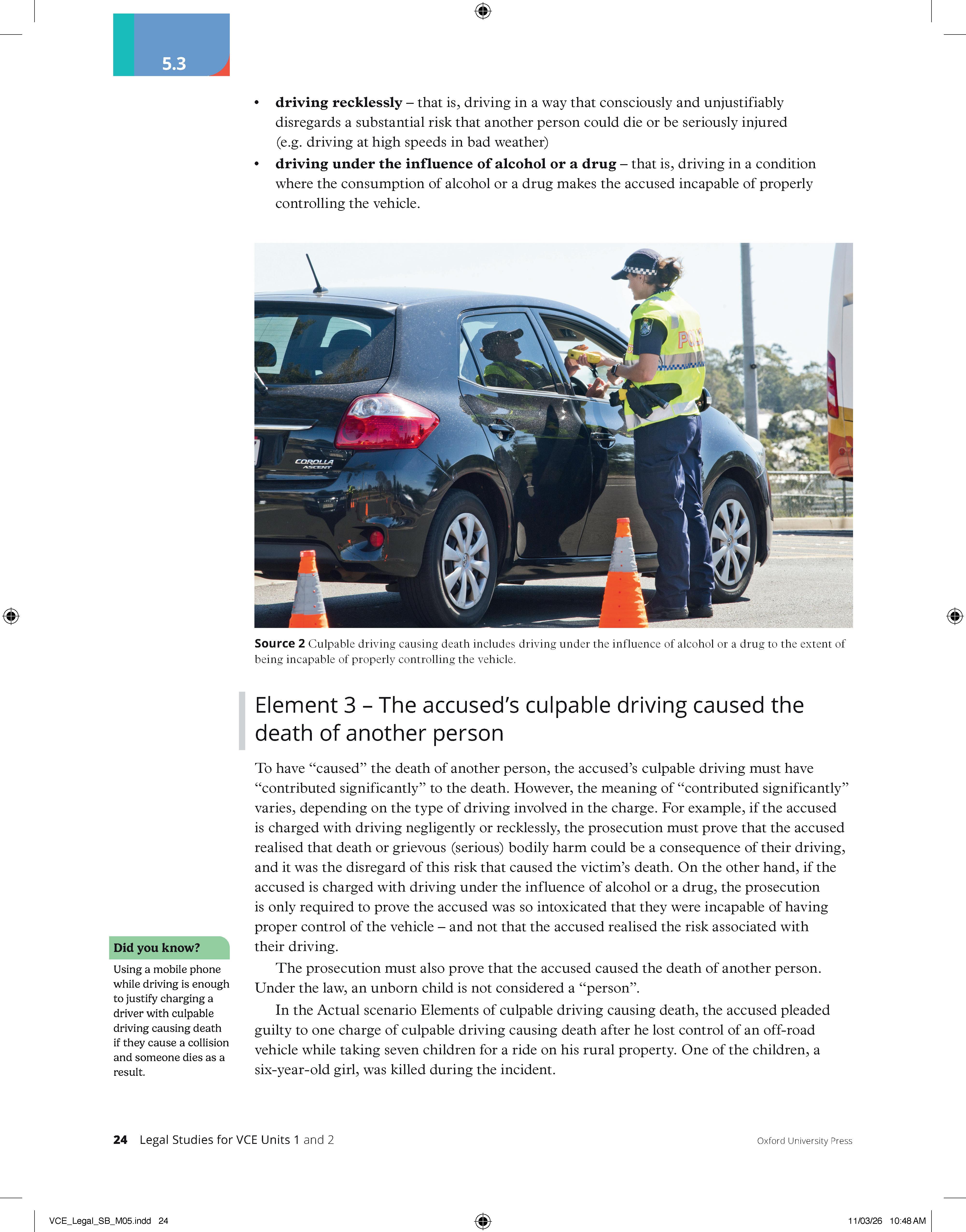

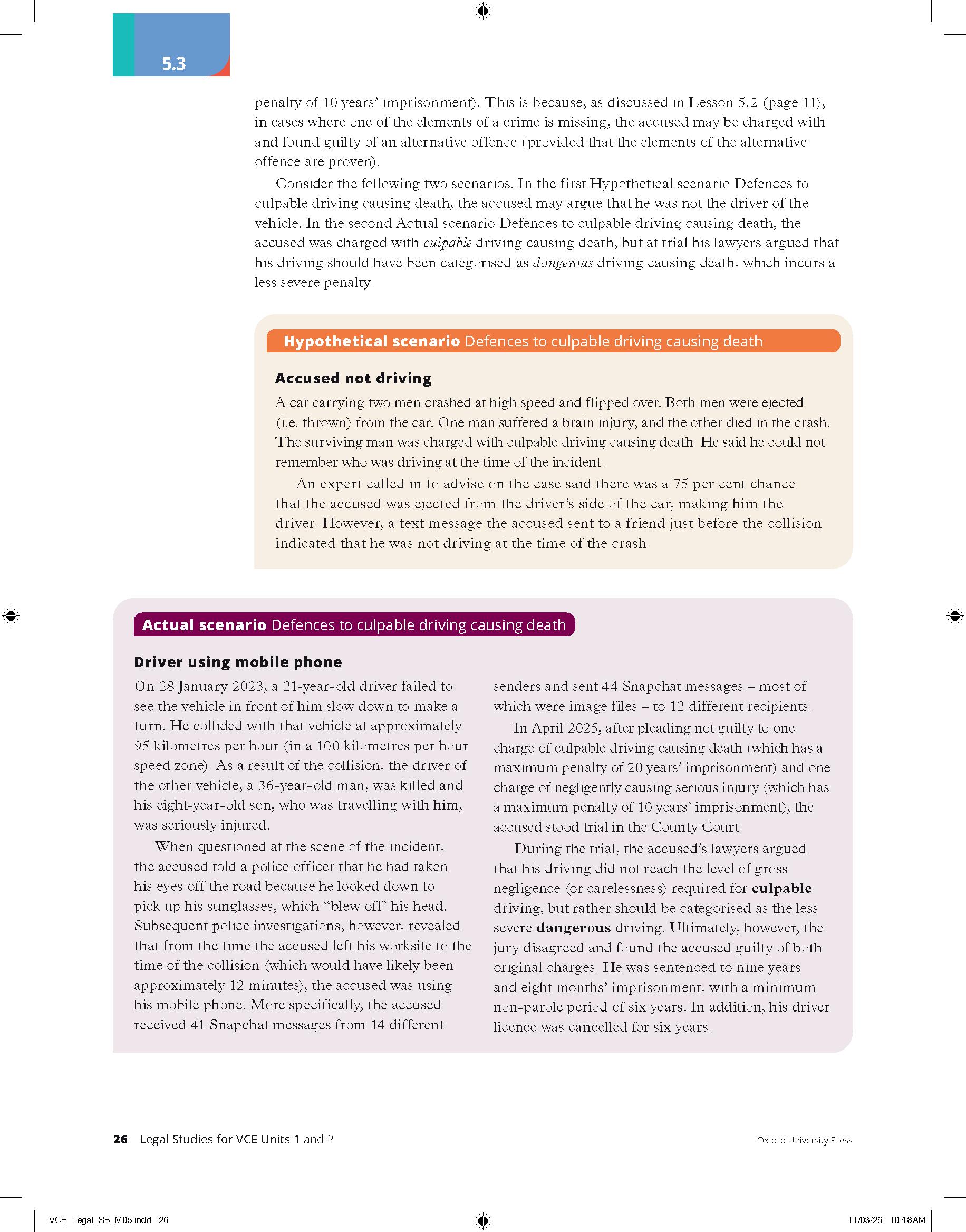
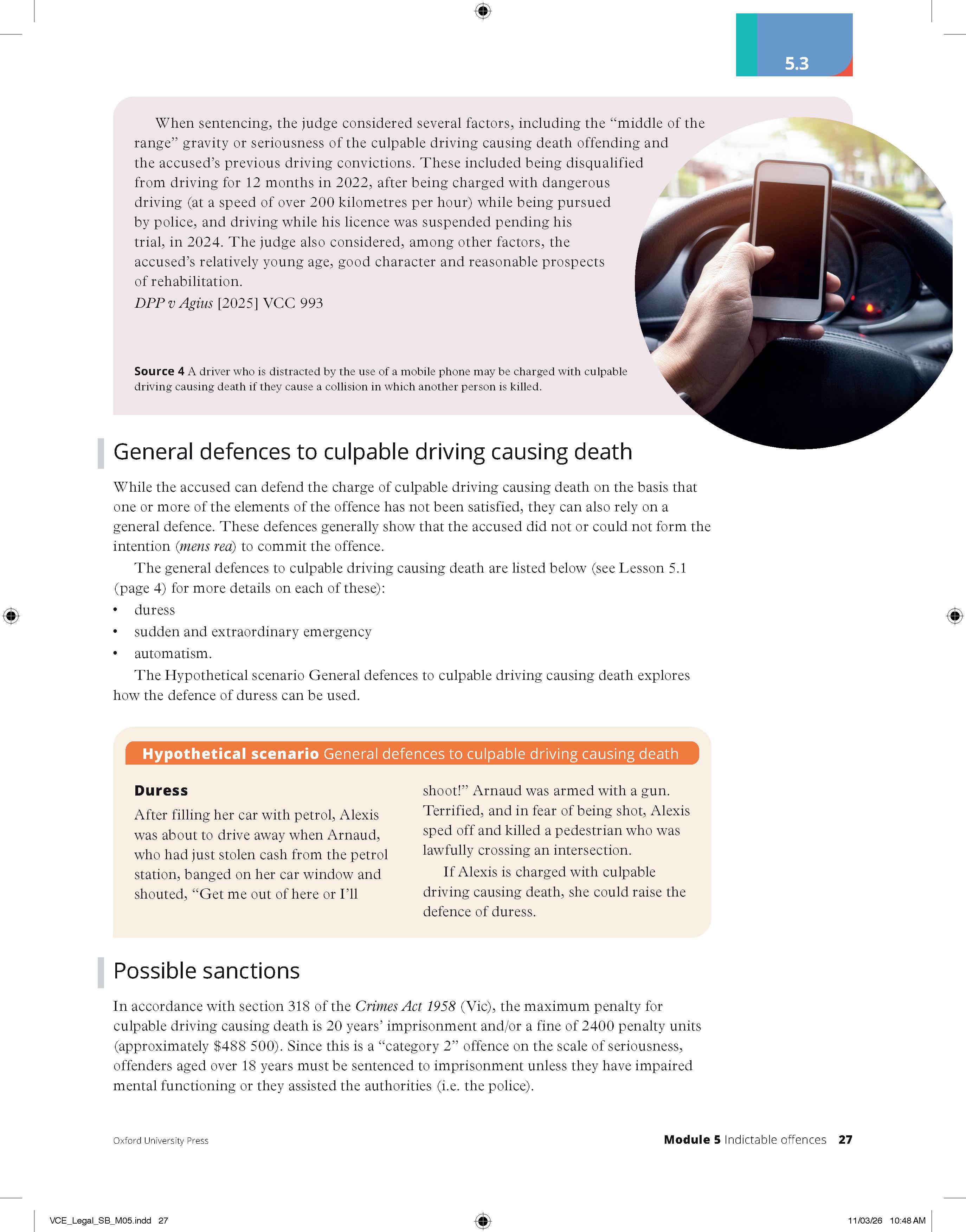
Legal Studies for VCE. Now powered by the new Oxford Digital.

Our updated platform has been designed with teachers around Australia, ushering in a new era of interactive teaching and personalised learning.
A fully accessible, web-based experience with ‘read to me’ functionality and a range of additional accessibility features to support all learners.
Supportive online digital resources, including auto-marked assessments and lesson plans that can be transformed into a fully interactive live lesson.*
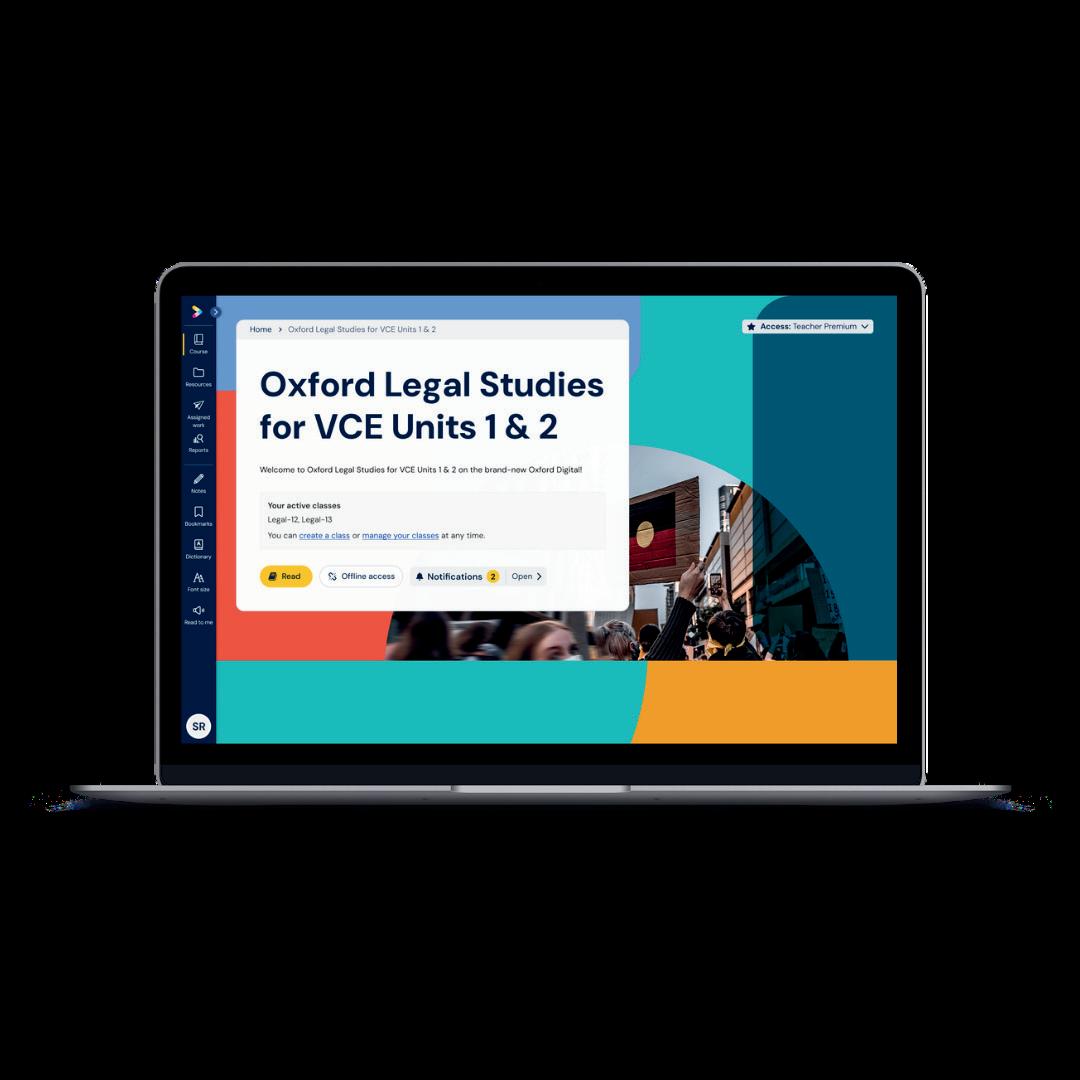
In-built assessment tracking & reporting functionality to assess student performance against key knowledge points from the 2024 Study Design.
*Some features, such as Live Lesson Mode, are exclusive to Premium Access.
Try a free digital sample of Oxford’s new Legal Studies for VCE (Seventeenth Edition)!
Experience the new Oxford Digital first-hand with a free, fourweek digital sample trial. Scan the QR code to learn more.
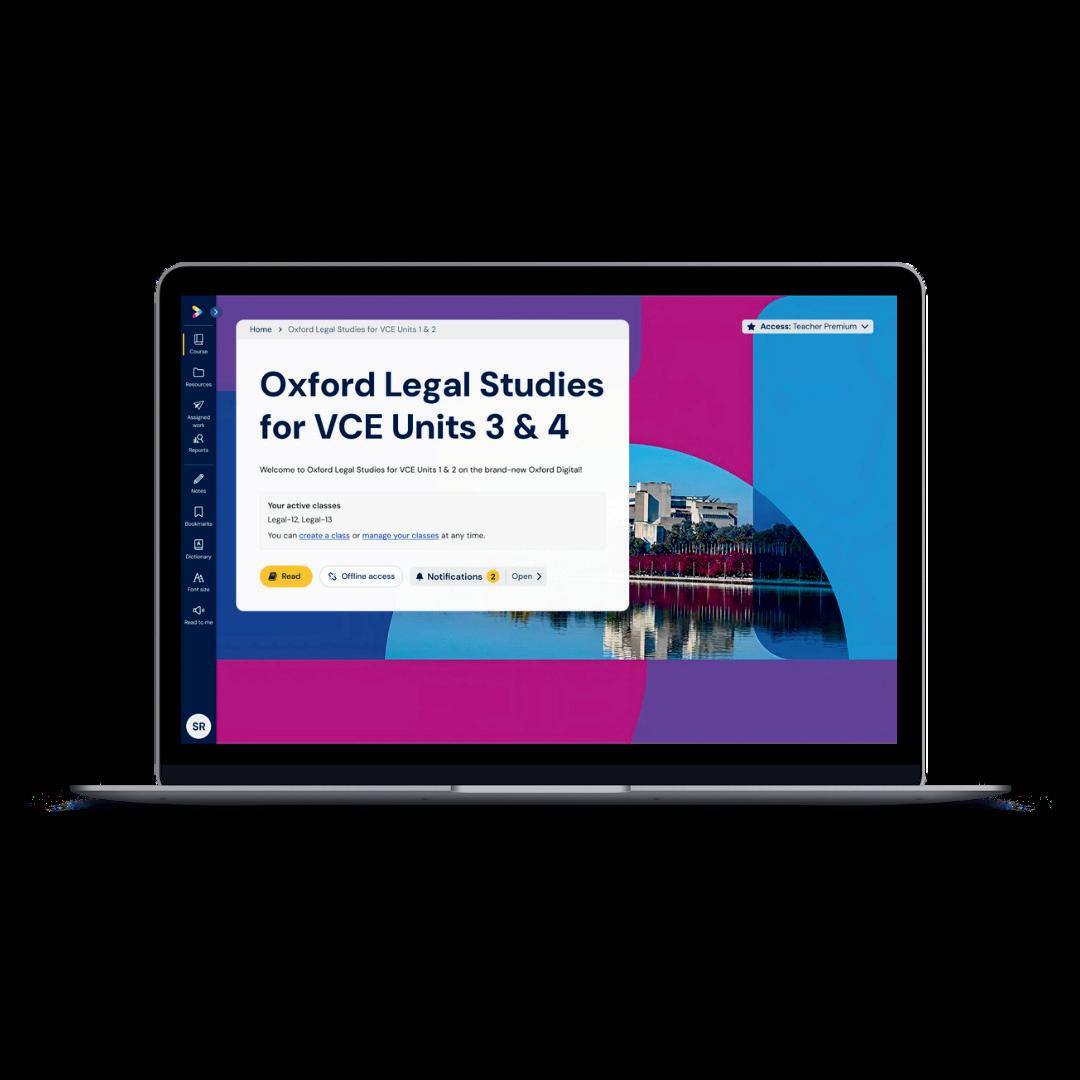

There are two options for your digital subscription: Essential and Premium. While both experiences offer fully accessible, reflowable course content, hundreds of digital resources, integrated lesson plans and more, Premium gives you access to a range of powerful extra features: Interactive Live Lesson mode Advanced reporting with real-time insights, and Finch, Oxford’s AI Student Tutor!

In Victoria, the right to protest peacefully is protected under the Charter of Human Rights and Responsibilities Act 2006. Every year in Australia thousands of people march on January 26th, which is a day of mourning for many First Nations peoples and their allies. The first Day of Mourning protest took place in Sydney in 1938.
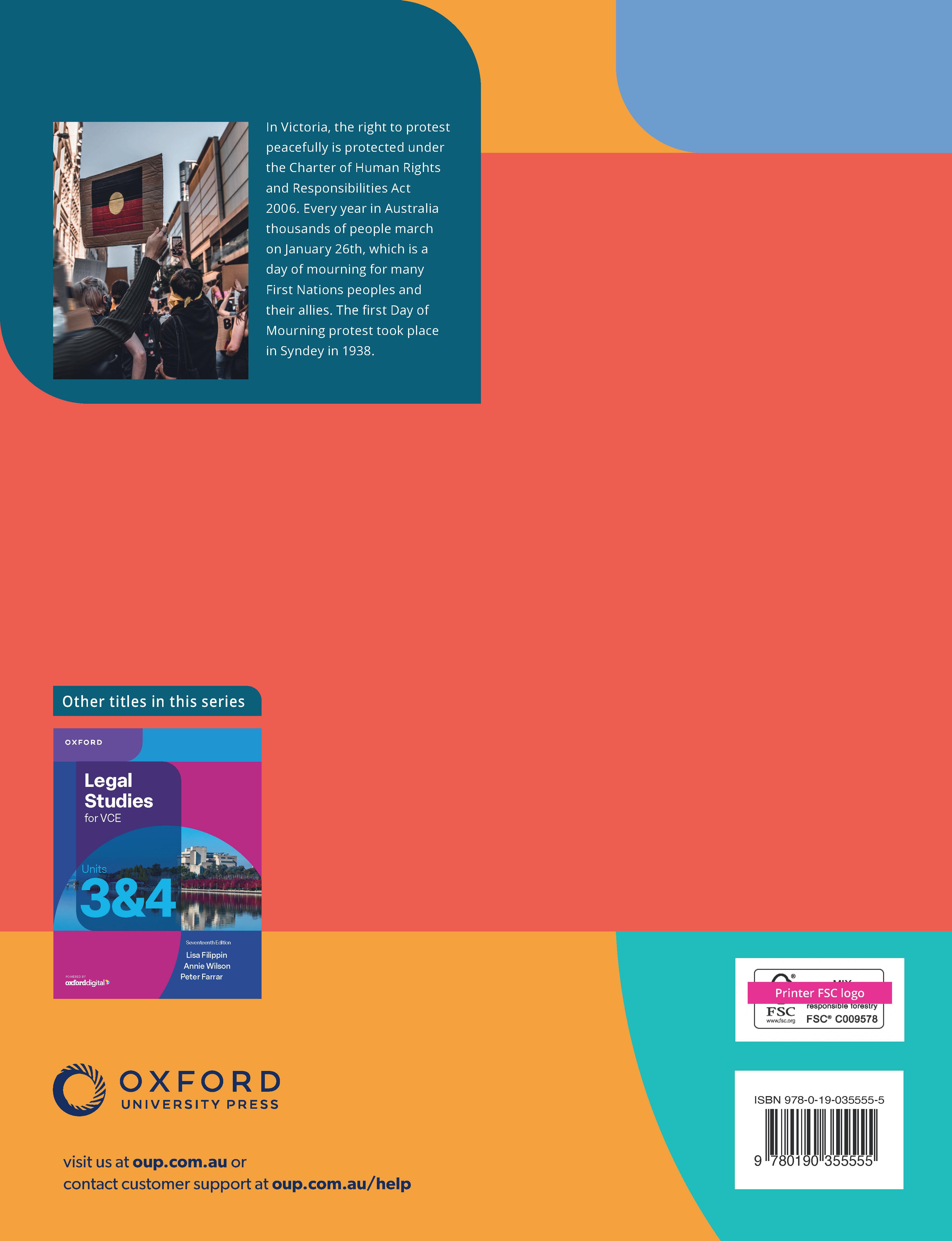
Other titles in this series
Scan here to learn more
Contact your local Education Consultant to discuss print and digital options at oup.com.au/contact