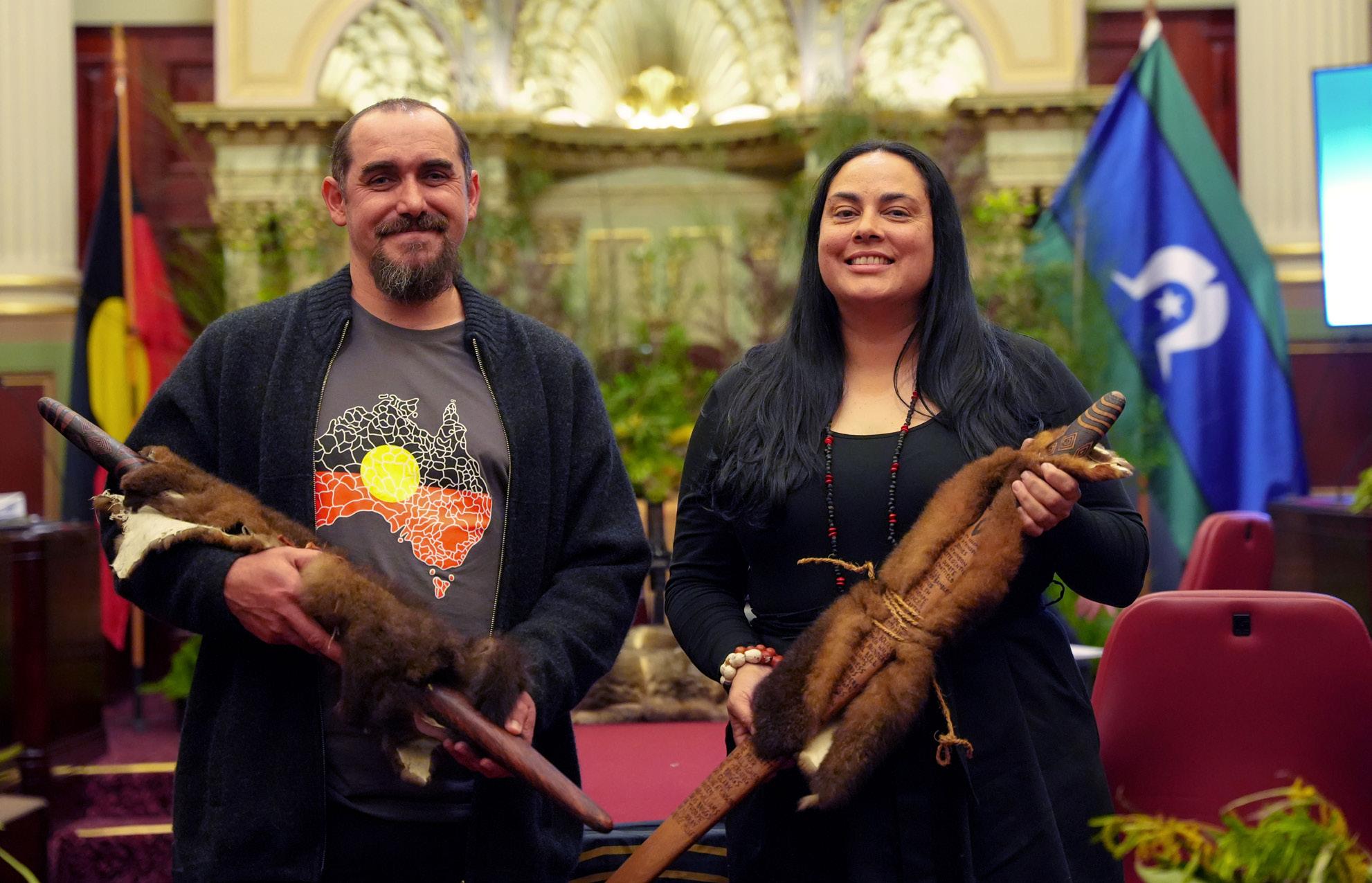
This letter was written by Ngarra Murray after she decided not to continue in her role as Co-chair of the First Peoples’ Assembly of Victoria. She was Co-chair with Rueben Berg when Australia’s first Treaty between First Peoples in Victoria and the Victorian Government became law.
Dear Community,
When I first began the role as elected Co-chair of the First Peoples’ Assembly of Victoria alongside Rueben Berg, we carried a vision that many said was impossible.
Today, that vision stands as a reality with the first Treaty in Australia signed. With the Statewide Treaty negotiated and built on a strong foundation and mandate, we can take pride in this nation-leading work to date. Through Treaty, we can use our local knowledge to come up with and deliver solutions for our Communities. This means we can get better outcomes because Aboriginal people know what does and doesn’t work for us.
Treaties are about practical change that improves the livelihoods of our people and strengthens the health, well-being and prosperity of our Communities.
Treaty is now part of Victoria’s story. But more importantly, it is part of our future.
SAMPLE
The Assembly is our meeting place. Assembly Members representing Nations and Communities from all across the state come together to listen to each other, speak on behalf of their Communities and find common ground and a way forward.
Treaty has shifted the ground and reflects a State mature enough to confront its history, courageous enough to take action to reshape its future, and committed to walking a new path grounded in respect, strong relationships, Treaties, truth-telling and self-determination for First Peoples.
Treaty is our north star, and it will continue to guide us toward a more just and truthful future for generations to come.
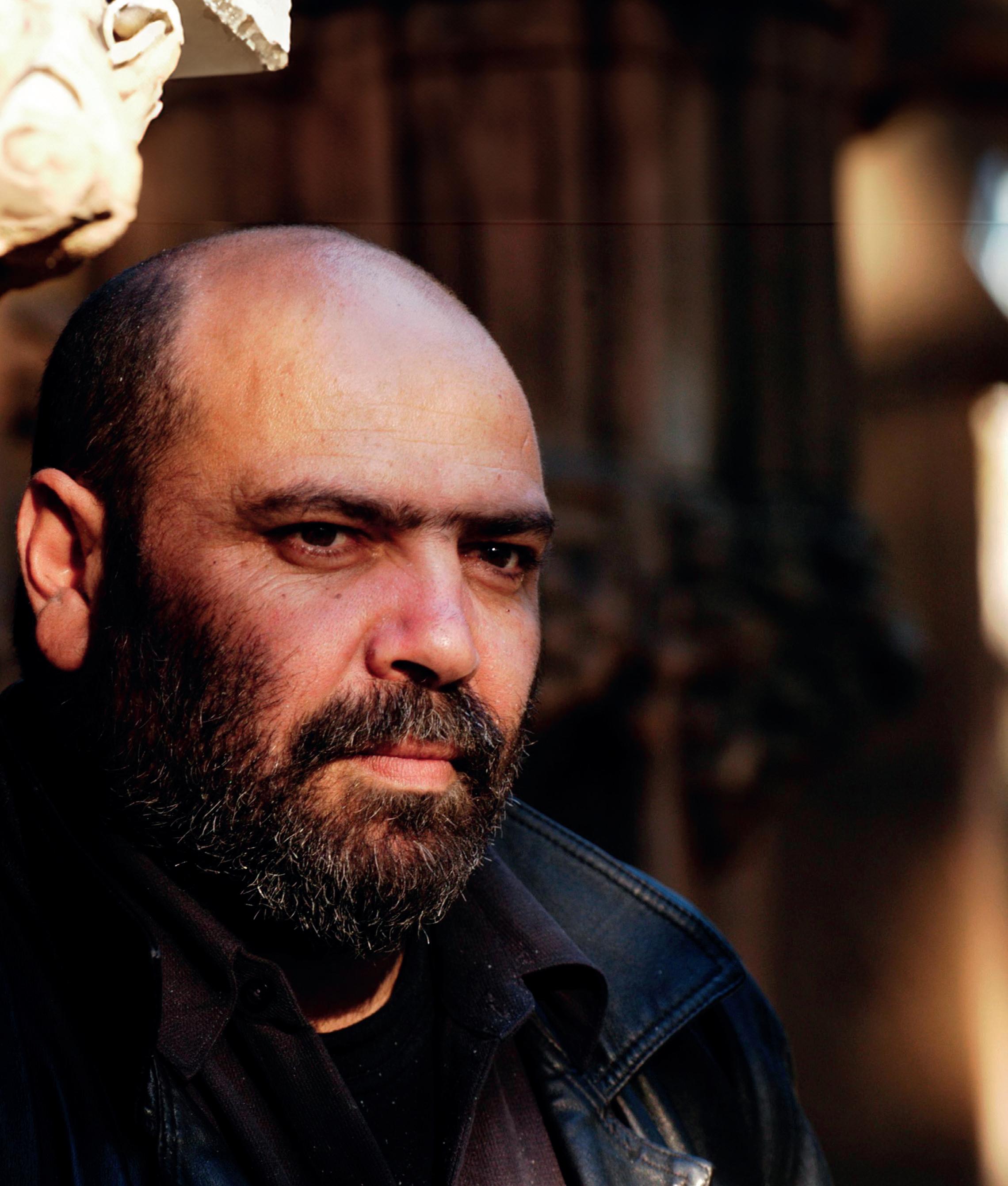
Ngarra Murray and Rueben Berg: Co-chairs of the First Peoples’ Assembly of Victoria.
Our work has not only shaped Victoria’s path to Treaty, but it has also set a benchmark for Indigenous-led Treaty-making nationally and internationally.
I have been incredibly fortunate to meet and share dialogue with First Nations leaders from right across the globe in this work; from Leaders in British Columbia in Canada, to Delegations of Māori groups visiting from Aotearoa, to connecting with those in East Timor, and respected Native Americans from the United States of America.
The Assembly as leaders and experts in the modern Treaty era are architects of contemporary governance and new relationships, holding the legal, cultural, and political expertise to negotiate Treaties that are sophisticated, future-focused and grounded in ancient lore.
In a time of deep political division, the Assembly is a principled democratic practice from which mainstream politics can learn.
When so many of our Elders were denied the right to vote and had decisions about their lives made on their behalf, we all have a responsibility to get involved to make sure Treaty delivers for First Peoples.
Ngarra Murray
Proud Wamba Wamba, Yorta Yorta, Dhudhuroa and Dja Dja Wurrung woman Co-chair of the First Peoples’ Assembly of Victoria
Paul Keating’s Redfern speech
The speech below was given by the then Prime Minister of Australia, Paul Keating, on 10 December 1992 at Redfern Park in Sydney. Redfern is an inner-city suburb of Sydney with a historically large Aboriginal population.
Ladies and gentlemen,
I am very pleased to be here today at the launch of Australia’s celebration of the 1993 International Year of the World’s Indigenous People.
It will be a year of great significance for Australia.
It comes at a time when we have committed ourselves to succeeding in the test which so far we have always failed.
Because, in truth, we cannot confidently say that we have succeeded as we would like to have succeeded if we have not managed to extend opportunity and care, dignity and hope to the Indigenous people of Australia – the Aboriginal and Torres Strait Island people.
This is a fundamental test of our social goals and our national will: our ability to say to ourselves and the rest of the world that Australia is a first rate social democracy, that we are what we should be – truly the land of the fair go and the better chance.
There is no more basic test of how seriously we mean these things.
It is a test of our self-knowledge. Of how well we know the land we live in. How well we know our history. How well we recognise the fact that, complex as our contemporary identity is, it cannot be separated from Aboriginal Australia. How well we know what Aboriginal Australians know about Australia.
Redfern is a good place to contemplate these things.
Just a mile or two from the place where the first European settlers landed, in too many ways it tells us that their failure to bring much more than devastation and demoralisation to Aboriginal Australia continues to be our failure.
More I think than most Australians recognise, the plight of Aboriginal Australians affects us all. In Redfern it might be tempting to think that the reality Aboriginal Australians face is somehow
contained here, and that the rest of us are insulated from it. But of course, while all the dilemmas may exist here, they are far from contained. We know the same dilemmas and more are faced all over Australia.
That is perhaps the point of this Year of the World’s Indigenous People: to bring the dispossessed out of the shadows, to recognise that they are part of us, and that we cannot give Indigenous Australians up without giving up many of our own most deeply held values, much of our own identity – and our own humanity.
Nowhere in the world, I would venture, is the message more stark than it is in Australia. We simply cannot sweep injustice aside. Even if our own conscience allowed us to, I am sure, that in due course, the world and the people of our region would not. There should be no mistake about this – our success in resolving these issues will have a significant bearing on our standing in the world.
However intractable the problems seem, we cannot resign ourselves to failure – any more than we can hide behind the contemporary version of Social Darwinism which says that to reach back for the poor and dispossessed is to risk being dragged down.
That seems to me not only morally indefensible, but bad history.
We non-Aboriginal Australians should perhaps remind ourselves that Australia once reached out for us. Didn’t Australia provide opportunity and care for the dispossessed Irish? The poor of Britain? The refugees
from war and famine and persecution in the countries of Europe and Asia? Isn’t it reasonable to say that if we can build a prosperous and remarkably harmonious multicultural society in Australia, surely we can find just solutions to the problems which beset the first Australians – the people to whom the most injustice has been done.
And, as I say, that starting point might be to recognise that the problem starts with us non-Aboriginal Australians.
It begins, I think, with that act of recognition. Recognition that it was we who did the dispossessing. We took the traditional lands and smashed the traditional way of life. We brought the diseases. The alcohol. We committed the murders. We took the children from their mothers. We practised discrimination and exclusion.
It was our ignorance and our prejudice. And our failure to imagine these things being done to us. With some noble exceptions, we failed to make the most basic human response and enter into their hearts and minds. We failed to ask – how would I feel if this were done to me?
As a consequence, we failed to see that what we were doing degraded all of us.
If we needed a reminder of this, we received it this year. The Report of the Royal Commission into Aboriginal Deaths in Custody showed with devastating clarity that the past lives on in inequality, racism and injustice. In the prejudice and ignorance of non-Aboriginal Australians, and in
Being there
Larissa Behrendt , a Euahlayi and Gamilaraay person, was at Redfern Park the day that Paul Keating gave his speech. These are her memories of the day.
I remember the day very clearly, even though at the time I didn’t know I was witnessing history. I was in Redfern in December 1992 when we heard that the Prime Minister, Paul Keating, was coming to speak at Redfern Park. As a Euahlayi and Gamilaraay person, I spent a lot of time in Redfern while my dad attended lots of meetings and rallies there so I had a sense of the place as a close-knit community with lots of Aunties and Uncles. But I also knew Redfern was not the kind of place where important politicians usually gave speeches back then. In fact, it was a place many people avoided. Taxi drivers often refused to stop there. Newspapers talked about Redfern as a “troubled” area, not as a community full of families, history and strength like I knew it to be.
SAMPLE
So, when I heard the Prime Minister was coming, I was curious. I went along without really knowing what to expect. I didn’t think, this will be written about in history books. I just knew something unusual was happening.
Redfern Park was full of people. This was not an audience that could be easily pleased. People in Redfern were honest. Many were at the front line of the civil rights movements
of the 1960s and 1970s. They were fighters. If they didn’t agree, they would say so. If you came to speak to this community, you had to mean every word. Looking back now, I am still amazed and impressed by the courage it took for a Prime Minister to choose this place to speak so openly.
At that time, I had just finished law school. I was planning to study overseas.
Like many Aboriginal children, I had gone through a school system that taught Australian history as if it began in 1788. There was very little mention of Aboriginal people, and almost nothing about what had happened to our families. We didn’t have NAIDOC celebrations at school. There were no Acknowledgements of Country at assemblies. The idea of the Stolen Generations was not something most of my classmates had ever heard of.
But it was part of my family’s story.
My grandmother had been removed from her family from Dungalear Station just outside of Walgett as a young girl under government policies that assumed Aboriginal children would be better off taken away and raised elsewhere. This caused enormous pain and loss that was
felt not just by her, but by generations after her. It was something we lived with quietly because for a long time Australia did not want to listen.
Then, standing in Redfern Park, I heard the Prime Minister say words that even as I heard them, I knew were important. He spoke honestly about Australia’s past. He said, “We brought the disasters. The alcohol. We committed the murders. We took the children from their mothers. We practised discrimination and exclusion. It was our ignorance and our prejudice.”
No Australian Prime Minister had ever spoken like that before.
As I listened, I felt something I had never felt from a political speech. I felt seen. I felt that my grandmother’s story, and the stories of so many Aboriginal families, were finally being recognised out loud, in public, by the leader of the country. It was as if someone had finally broken a long silence.
For the first time, it felt like Australia was ready to tell the truth about itself. I remember feeling hopeful. I thought, maybe things really are changing. Maybe this is the start of something better.
Of course, change is never simple. In the years that followed, there was backlash. Some people said the Prime Minister had gone too far. Others didn’t want to hear about the past at all. I learned that progress often comes in waves, at moments of great courage followed by resistance.
But that doesn’t take away from what that day meant.
When I look back now, I still think about how it felt to stand in Redfern Park and hear those words spoken so clearly and bravely. For me, it was a moment when my family’s history and my community’s experiences were no longer invisible. It showed what leadership can look like when it is honest and brave.
That is why the Redfern Park speech still matters today. It reminds us that telling the truth is powerful. It reminds us that listening is important. And it reminds us that recognising the past is a necessary step towards building a fairer future for everyone.
Searching for shadows
Richard J. Frankland
worked as a field officer to the Royal Commission into Aboriginal Deaths in Custody (1987-1991). This Royal Commission studied and reported on the high level of deaths of Aboriginal people while in custody after being arrested or convicted of committing crimes.
Richard wrote several films and plays about his work with the commission. He also wrote many poems, two of which you can read on pages 26 and 27.
Richard says:
I was very young during the Royal Commission. Of course being Aboriginal I had already seen my share of death, sorrow and the pain that goes with it. I don’t think anything could have prepared me for what I was to see and learn with the Royal Commission into Aboriginal Deaths in Custody (RCIADIC). All of us at the office were a bit lost, young. I don’t think that the scars it left in me, in all of us, will ever go away. Why did we do it? Why did we open ourselves up to that depth of pain and sorrow? In some ways we searched for justice, searched for a fair go, perhaps we thought we could find an individual that was the cause of it all. In reality we only stumbled from one hurting point to another.
I wrote most of the deaths in custody poems in one sitting about eighteen months after I finished my role with the RCIADIC. I had spent a long time trying to get over both the volume of work and the incredible sadness that one sees in such a job.
When you investigate a death in custody, you know how much a person weighs when they are born, you know their traditional lands and the traditional lands of their parents, you know their school marks, primary and secondary and you know secrets that even their closest friends and family probably don’t know. You will have seen almost everything society has written about them. You know things which I don’t believe anyone should know of another person unless that person gives it freely. You know things which out of respect you will carry to your own death. You will tell no one.
By doing this job you open yourself up to carry a heavy burden which is both culturally and legally moral. You will carry it for all time.
All of these poems are about how I see the world as an Indigenous Australian. I am Gunditjmara, I am from the oldest living culture in the world, I am not a victim, I am a survivor and these words that I share with you reflect what I have seen and what I feel. Minorities are made not born.
Tears Sunday 3 May 2020
Richard J. Frankland a Gunditjmara man
Thirty years after the Royal Commission, in 2020, Richard wrote this poem.
“What an honour to share your tears”, he said, and I cried all the more
“Rivers on your cheeks”, he mused, as I was lost in the murky waters of my grief And they fell and then ran down my face, and my face was turned inward so my eyes could only see my pain
And my ears could hear nothing but my sobbing echoing off the loneliness and anguish of my soul
A whistle, perhaps singing, interrupted the comfort of my trauma, and for a moment my eyes flicked toward a light
“My friend”, I heard “there is much to see and much to hear.
But you will be forever blind and interminably deaf if you only know your own pain”
My sobbing halted briefly as I was tempted and perhaps enthralled by his words and like a moth to a flame I flitted closer
“Perhaps” he said, “you can hear the wailing of the world, others lost in pain and destitution”
I looked up briefly and heard that he was right and I felt welcomed in some strange collective grief
“Look here” he said “scars on another’s soul. Are any here like yours?”
I listened as my personal tears began to fade
And I saw scars much larger than mine, deeper oh so deep, immeasurable pain
And I felt my tears change direction
Then I sobbed out loud as the pain of others echoed in my soul
And the tears streamed down my face
And I listened and I heard the courage throughout the world as we overcame the scars on our souls and my mind became clearer with the more pain that I felt, for others and not so much for me
and my own scars on my soul were humbled and soothed as I heard courageous singing from those in such pain
And I learnt to sing alongside, not up front but as one, with those who cried like me
And our victory over pain became songs of celebration
As we discovered love in each other’s tears
Let’s talk about reconciliation
In 1991 the Australian Commonwealth Parliament set up the Council for Aboriginal Reconciliation. The parliament hoped this would begin a process of reconciliation and understanding between First Nations people and the wider Australian community.
The Council for Aboriginal Reconciliation spent many years consulting with the community, working to come up with a plan. On Saturday, 27 May 2000, at a gathering of leaders called Corroboree 2000 the Council presented two documents to the government:
• The Roadmap for Reconciliation. This document listed ways that all Australians could move towards reconciliation.
• The Australian Declaration towards Reconciliation.
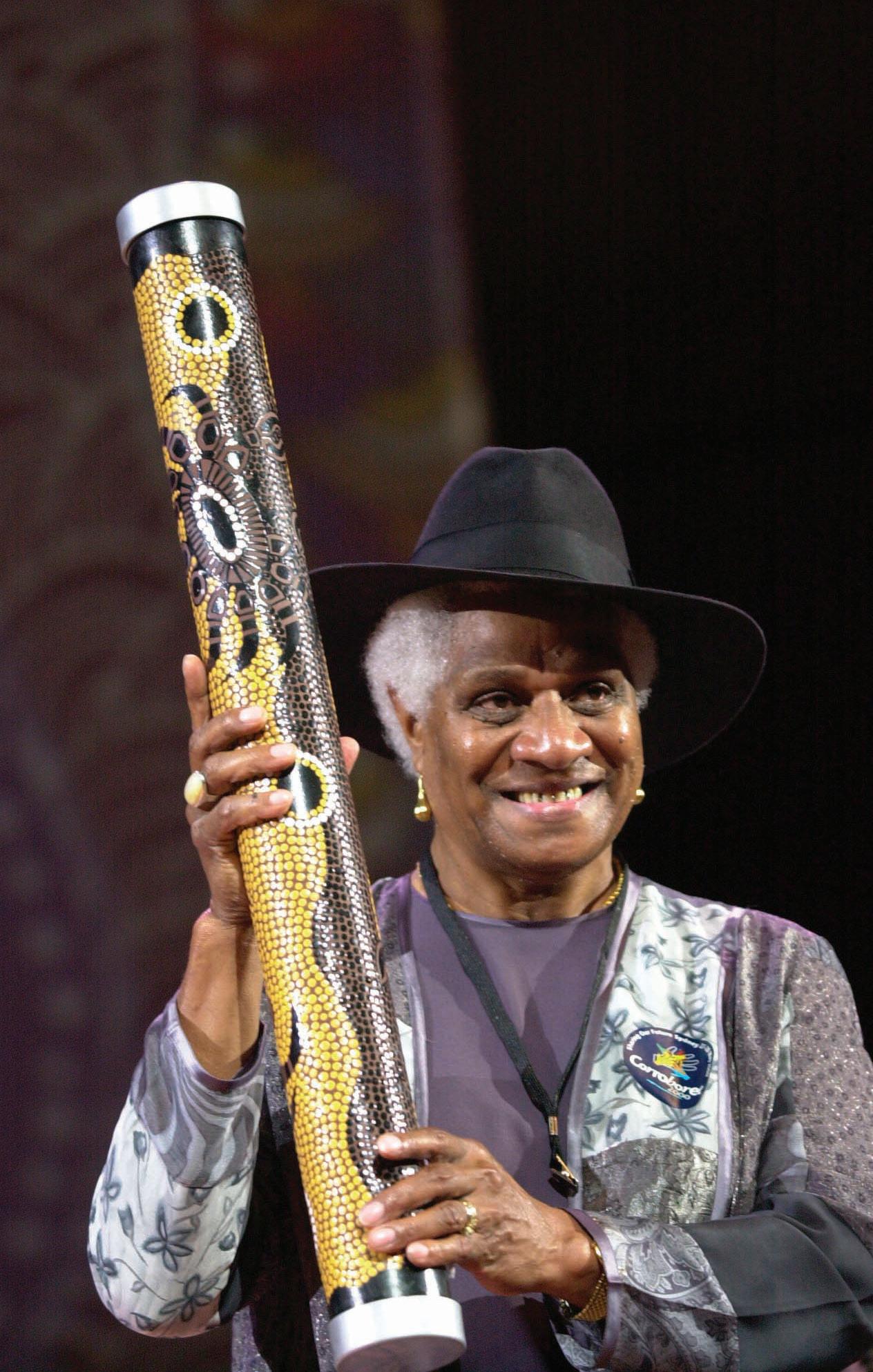
Dr Evelyn Scott, the Chairperson of the Council for Aboriginal Reconciliation, receives the Declaration towards Reconciliation to be passed on to all Australians.
Black ANZAC
This poem was written by Uncle Cecil Fisher, a First Nations man from south-east Queensland, who served in the Korean War (1950 - 1953).
He joined the Australian army at 18 years old. Black ANZAC reflects on the experiences of the First Nations servicemen of Australia.
They have forgotten him, need him no more
He who fought for his land in nearly every war
Tribal fights before his country was taken by Captain Cook
Then went overseas to fight at Gallipoli and Tobruk.
World War One-Two black Anzacs were there
France, Europe’s desert, New Guinea’s jungles, did his share
Korea, Malaya, Vietnam again black soldier enlisted
Fight for democracy was his duty he insisted.
Back home went his own way not looking for praise
Like when he was a warrior in the forgotten days
Down on the Gold Coast a monument in the Bora Ring
Recognition at last his praises they are starting to sing.
This black soldier who never marches on ANZAC Day
Living in his Gunya doesn’t have much to say
Thinks of his friends who fought some returned some died
SAMPLE
If only one day they could march together side by side.
His medals he keeps hidden away from prying eyes
No one knows, no one sees the tears in his old black eyes
He’s been outcast just left by himself to die
Recognition at last black ANZAC hold your head high.
Every year at Gold Coast’s Yugambeh Bora Ring site
Black ANZAC in uniform and medals a magnificent sight
The rock with Aboriginal tribal totems paintings inset
The Kombumerri people’s inscription of LEST WE FORGET.
Serving our Country
The First World War (1914-1918)
Over 500 Aboriginal Australians served in the First World War. And yet at that time Aboriginal people were not even classified as Australian citizens. The Constitution of Australia, established in 1901, not only denied them citizenship but by law they could not vote, drink alcohol, buy property or marry non-Aboriginal people.
These young Aboriginal men were Aboriginal boys, some as young as 16 years old. They put up with racist slurs and attitudes almost daily back home, and no doubt many non-Aboriginal diggers had negative stereotypical ideas about Aboriginal people when they joined up. But these ideas quickly disappeared when they were living, eating, laughing and dying together. To their mates in the trenches they were just Mick, Ben and Harry.
Despite having lived on equal terms with their non-Aboriginal soldier mates in wartime, when Aboriginal soldiers returned home they were treated with the same prejudice and discrimination as before.
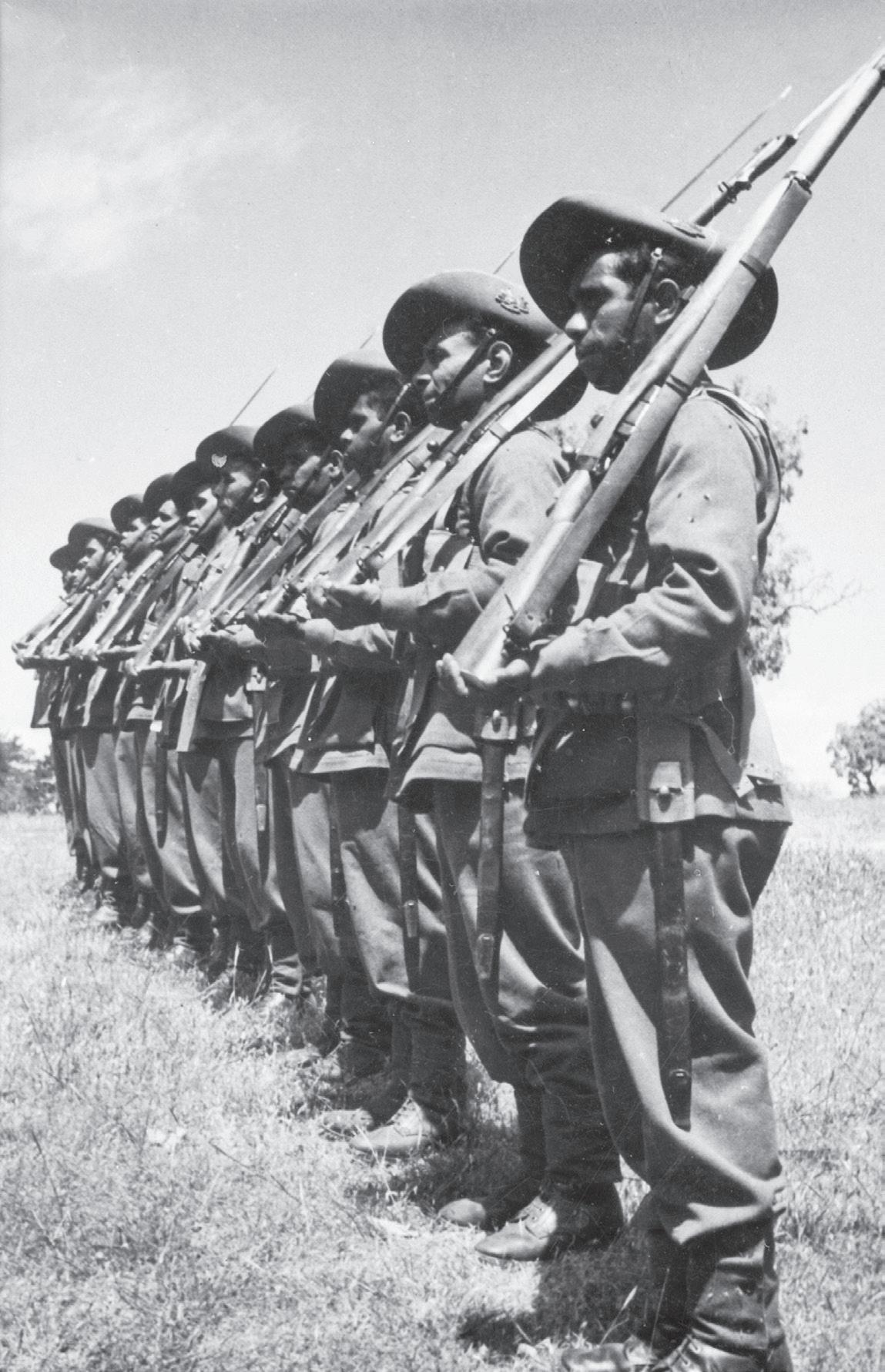
These Aboriginal soldiers were from a special platoon at Number 9 camp in Wangaratta, Victoria. This was the only Aboriginal squad in the Australian Military Forces.