
Supporting multi-year classrooms with
Mathematics and Statistics for Aotearoa New Zealand Years 0–8 (Second edition)
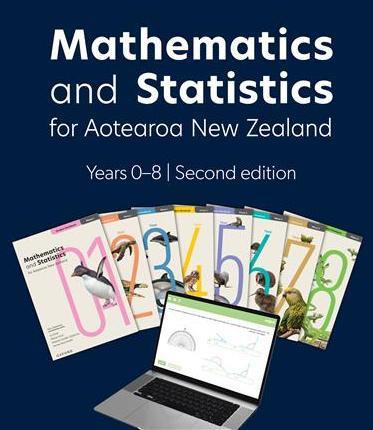
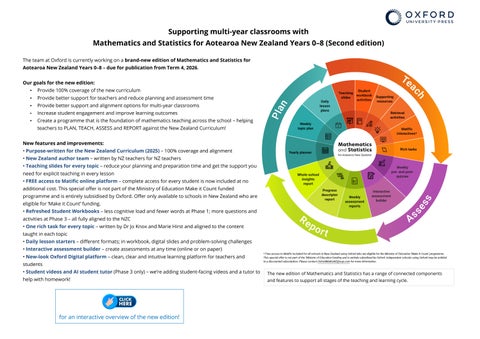
The team at Oxford is currently working on a brand-new edition of Mathematics and Statistics for Aotearoa New Zealand Years 0–8 – due for publication from Term 4, 2026.
Our goals for the new edition:
• Provide 100% coverage of the new curriculum
• Provide better support for teachers and reduce planning and assessment time
• Provide better support and alignment options for multi-year classrooms
• Increase student engagement and improve learning outcomes
• Create a programme that is the foundation of mathematics teaching across the school – helping teachers to PLAN, TEACH, ASSESS and REPORT against the New Zealand Curriculum!
New features and improvements:
• Purpose-written for the New Zealand Curriculum (2025) – 100% coverage and alignment
• New Zealand author team – written by NZ teachers for NZ teachers
• Teaching slides for every topic – reduce your planning and preparation time and get the support you need for explicit teaching in every lesson
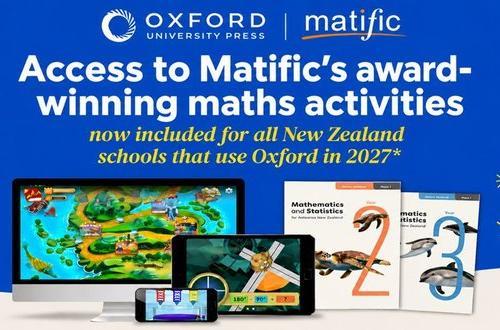
• FREE access to Matific online platform – complete access for every student is now included at no additional cost This special offer is not part of the Ministry of Education Make it Count funded programme and is entirely subsidised by Oxford. Offer only available to schools in New Zealand who are eligible for ‘Make it Count’ funding.
• Refreshed Student Workbooks – less cognitive load and fewer words at Phase 1; more questions and activities at Phase 3 – all fully aligned to the NZC
• One rich task for every topic – written by Dr Jo Knox and Marie Hirst and aligned to the content taught in each topic
• Daily lesson starters – different formats; in workbook, digital slides and problem-solving challenges
• Interactive assessment builder – create assessments at any time (online or on paper)
• New-look Oxford Digital platform – clean, clear and intuitive learning platform for teachers and students
• Student videos and AI student tutor (Phase 3 only) – we’re adding student-facing videos and a tutor to help with homework!

for an interactive overview of the new edition!
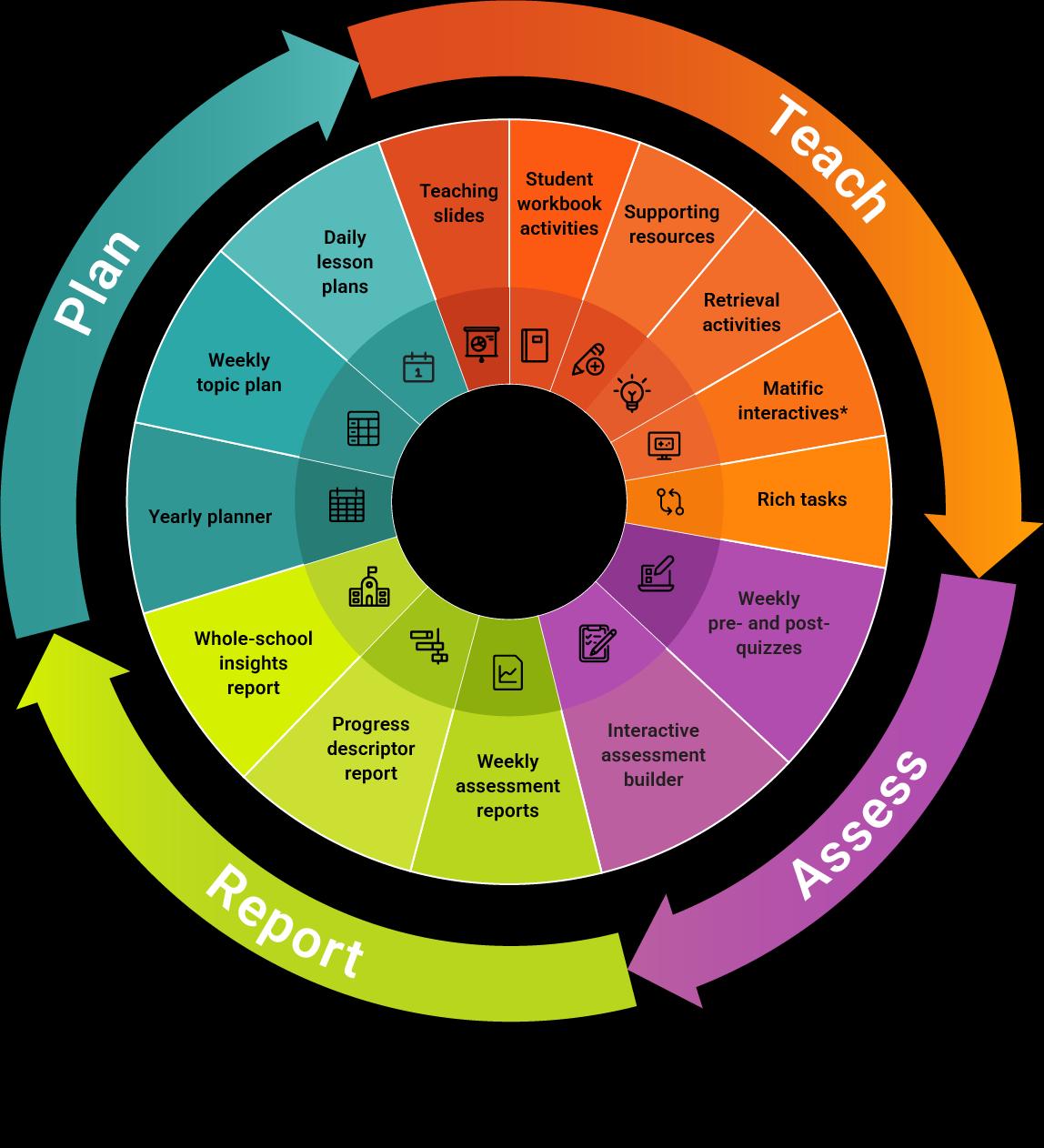
The new edition of Mathematics and Statistics has a range of connected components and features to support all stages of the teaching and learning cycle.
How the Oxford programme supports multi-year classrooms
The new edition has been designed to work effectively in composite classrooms and provide improved planning support and alignment. Both 2- and 3-year composite year planners have been developed to align topics across year levels as closely as possible, resulting in approximately 80% alignment throughout the year. Where there is variation is a result of the clear year-by-year progression of the curriculum, meaning the number and timing of topics within each strand are not always identical across year levels.
To support implementation, suggested weekly planners have been created to help teachers make the most of their teaching time across the year levels within their class. All resources required to teach multi-year level classes are provided and organised into a suggested weekly sequence, showing teachers which starter, lesson, teaching slides, and workbook pages to use throughout the week. This provides a clear and manageable structure while still allowing flexibility for teachers to adapt the programme to meet the needs of their learners and school context.
One such adaptation may be teachers opting for whole-class teaching where applicable. While the refreshed NZ Curriculum provides a clear year-by-year progression and specifies the knowledge and skills to be taught at each year level, there will naturally be areas of overlap between adjacent year levels. Where learning outcomes align, concepts and contexts may be taught to the whole class, with follow-up workbook tasks differentiated to meet the needs of each year level. This allows teachers to maintain the integrity of the curriculum progression, while also making effective use of shared learning opportunities.
An example of where whole-class teaching could be employed is:
We are learning to use short division to solve division problems
• Year 4 NZC Practice: Dividing up to a three-digit whole number by a one-digit divisor, with no remainder
• Year 5 NZC Practice: Dividing up to four-digit whole numbers by a one-digit divisor, with a remainder
• Year 6 NZC Practice: Dividing up to five-digit whole numbers by a one-digit divisor, with a remainder
Whole-class teaching could be used to introduce the short division process before students move into year-level-specific practice involving larger dividends and the inclusion of remainders.
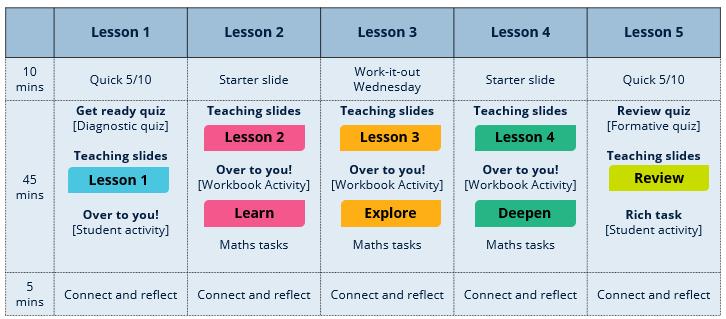
An example of a typical teaching week using the Oxford programme.
Example of a 2-year composite planner
Suggested topic implementation for composite classes
Notes for teachers:
• In this example: Year A= Year 5; Year B = Year 6
• Order of Year A and B could be reversed in the following week
Some key features and terms:
Get ready quiz
Starters
With teacher INTRODUCE Over to you!
With teacher
LEARN / EXPLORE / DEEPEN
Workbook pages
LEARN / EXPLORE / DEEPEN
Maths tasks
Connect and reflect
Review quiz
Rich task
A topic pre-quiz that includes questions relating to the NZC practices that the students will be learning about in the week’s topic.
• Starter slide - A slide that has a mix of questions that revisit previously taught content – allowing students to recap and practice different strategies and skills.
• Quick 10 - The back of the workbook contains a large bank of ten-question number knowledge checks, based on practices from the previous year level.
• Work-it-out Wednesday – A range of problem-solving style challenges to choose from, accessed via the teacher dashboard
To start the week, the teaching slides can be used to hook the students, introduce the topic and to discuss the Learning intentions and Success criteria. An ‘Over to you!’ task is also provided – aimed to engage and also prepare students for the learning ahead.
Explicit teaching of the NZC practices. Teacher meets with a group of students and uses the provided ‘I do, We do, You do’ teaching slides. The slides alongside the lesson plan, allow teachers to guide and scaffold students through their learning. There are slides and lessons provided for each; Learn, Explore and Deepen.
Students then have time to independently practice. The workbook pages directly relate to what they were learning about in their lesson with the teacher. The workbook pages are grouped into ‘Learn, Explore, Deepen’, which aligns directly with the teaching slides.
These are supplied tasks designed to revisit previously taught content. Available to assign to students via the student dashboard, or printables, related Matific work, or hand-on resources from the classroom.
A reflection prompt is provided to help students connect with and reflect on the key learning from the lesson. It is also a great way to promote mathematical discussion in the classroom.
A topic post-quiz that includes questions relating to the NZC practices that students learnt about in that week’s topic. If completed digitally, the results are automatically generated, allowing teachers to help students revise identified gaps.
An open-ended style maths task, related directly to the topic. Teaching notes, answers, and ‘what to notice and look for’ prompts are also provided.
Suggested topic implementation for composite classes
Three year-level teaching approach
NOTES FOR TEACHERS:
• E.g. Year A= Year 4; Year B = Year 5; Year C = Year 6
• *Starter slides will be available for students to access via Student dashboard
Some key features and terms:
Get ready quiz
Starters
A topic pre-quiz that includes questions relating to the NZC practices that the students will be learning about in the week’s topic.
• Starter slide - A slide that has a mix of questions that revisit previously taught content – allowing students to recap and practice different strategies and skills.
• Quick 10 - The back of the workbook contains a large bank of ten-question number knowledge checks, based on practices from the previous year level.
• Work-it-out Wednesday – A range of problem-solving style challenges to choose from, accessed via the teacher dashboard With teacher INTRODUCE Over to you!
With teacher
LEARN / EXPLORE / DEEPEN
Workbook pages
LEARN / EXPLORE / DEEPEN
Maths tasks
Connect and reflect
Review quiz
Rich task
To start the week, the teaching slides can be used to hook the students, introduce the topic and to discuss the Learning intentions and Success criteria. An ‘Over to you!’ task is also provided – aimed to engage and also prepare students for the learning ahead.
Explicit teaching of the NZC practices. Teacher meets with a group of students and uses the provided ‘I do, We do, You do’ teaching slides. The slides alongside the lesson plan, allow teachers to guide and scaffold students through their learning. There are slides and lessons provided for each; Learn, Explore and Deepen.
Students then have time to independently practice. The workbook pages directly relate to what they were learning about in their lesson with the teacher. The workbook pages are grouped into ‘Learn, Explore, Deepen’, which aligns directly with the teaching slides.
These are supplied tasks designed to revisit previously taught content. Available to assign to students via the student dashboard, or printables, related Matific work, or hand-on resources from the classroom.
A reflection prompt is provided to help students connect with and reflect on the key learning from the lesson. It is also a great way to promote mathematical discussion in the classroom.
A topic post-quiz that includes questions relating to the NZC practices that students learnt about in that week’s topic. If completed digitally, the results are automatically generated, allowing teachers to help students revise identified gaps.
An open-ended style maths task, related directly to the topic. Teaching notes, answers, and ‘what to notice and look for’ prompts are also provided.
Want to find out more about the Oxford
programme?
The easiest way to find out about the 2027 Edition is to come along to one of our workshops or webinars! To do that, just click the link below, select a date that suits you, and book a spot. All workshops are free of charge and open to all teachers:

Come to a live workshop or webinar
To join one of our free in-person workshops or online webinars, click here.
If you’re not able to attend a live event, feel free to click one of the links below:
Watch a recording of a webinar
To watch a recording of a webinar hosted by Programme Consultant and author Erin Doleman from 15 June 2026, click here.

Erin Doleman
Deputy Principal; St Joseph's Cathedral School, Dunedin
Programme Consultant and author for the 2027 Edition
View ‘A brief overview of Mathematics and Statistics’
To view a quick PowerPoint with a summary of the key changes for 2027, click here.
View a sample of our teaching slides
To view a sample of our teaching slides from Year 5 Topic 3.2 Area, click here.

Visit our website
To view samples of the 2027 edition and find out more, click here.
Learn more about the FREE Matific offer
To view samples of Matific and find out more, click here.
If you have questions or would like any additional information, please feel free to contact me directly!

Daniel Aspinall National Education Manager
Aotearoa New
Zealand