Kidnapping: Residents In Fear As Bandits, Kidnappers Strike On Oyo/Ogbomoso Expressway
•‘FG, Nigerians Please Help Us’ — Abducted Oyo School Principal Speaks From Captivity
•Reports Of Siege On Expressway Untrue - Oyo Govt
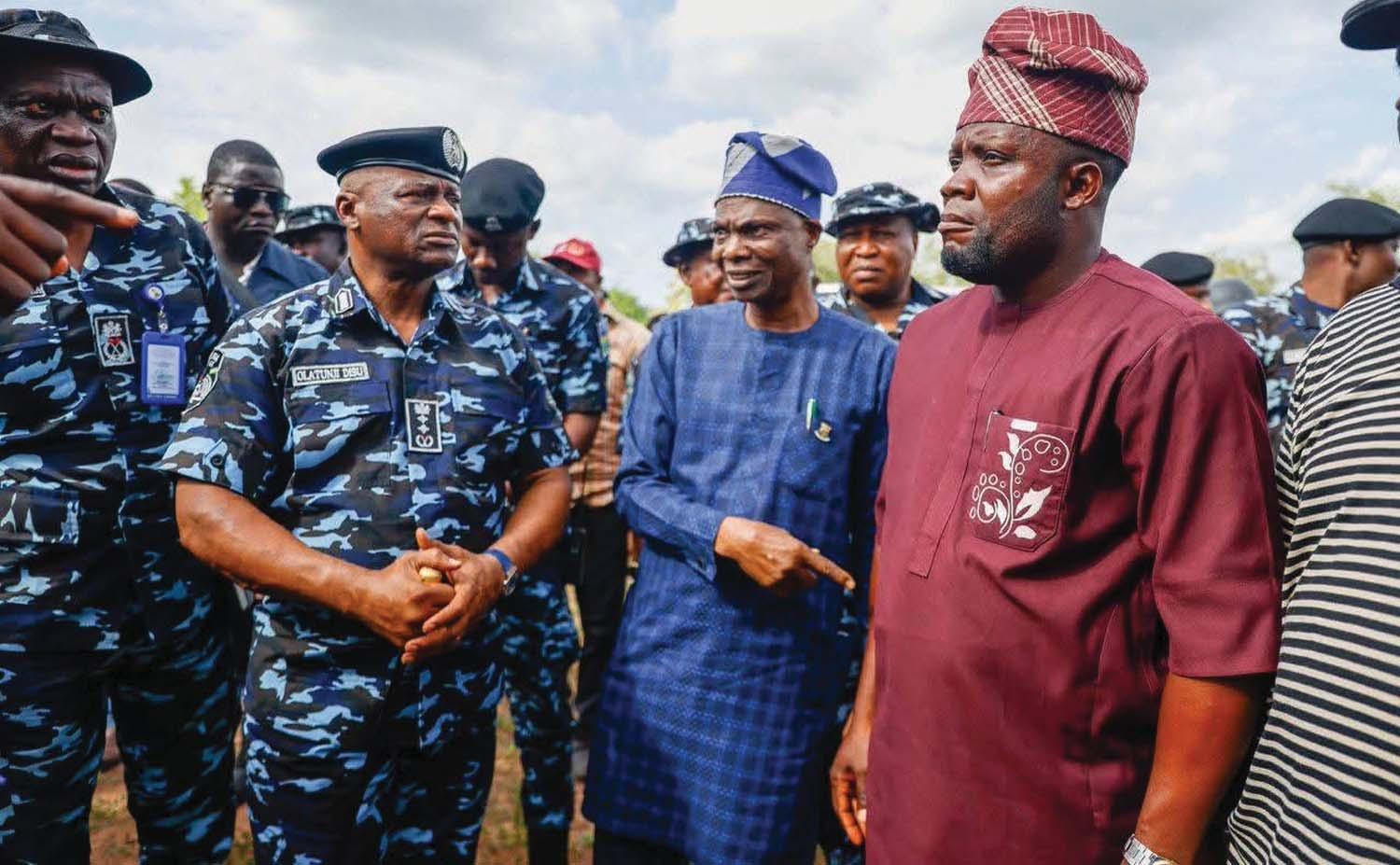
•Inspector General of Police, Olatunji Disu, in a meeting with some local leaders after Friday’s attack on schools in Oriire local government area of Oyo State
Our Reporter
FEAR and anxiety have con nued to spread among commuters and residents along the Oyo/ Ogbomoso Expressway following renewed reports of armed robbery a acks and kidnappings allegedly carried out by heavily armed bandits opera ng around the Oriire Local Government axis of Oyo State.
Travellers, commercial drivers and residents who spoke with OSUN DEFENDER described the once-busy highway as increasingly unsafe, with many motorists
now avoiding night journeys over fears of abduc on and violent attacks.
OSUN DEFENDER reports that the growing panic comes amid the disturbing wave of insecurity linked to recent kidnapping incidents in Oriire local Government Area, par cularly the a ack on schools in Ahoro-Esinle community where gunmen abducted pupils, teachers and school officials a er invading the area.
Eyewitness accounts indicate that the a ack was coordinated across at least three schools in the area, including Com-
munity High School Esiele, Bap st Nursery and Primary School Yawota, and L.A. Primary School.
According to detailed field report, about 45 to 48 pupils and staff were abducted in total, with vic ms taken from mul ple classrooms and staff quarters during the raid.
The situa on took a more emo onal dimension a er one of the abducted school principals reportedly appealed for help from cap vity, pleading with both the Federal Government and Nigerians to intervene urgently for their rescue.
According to local sources, the abductors have con nued to mount pressure on families and communi es, heightening tension across affected areas.
Commuters, Travellers In Fear
Security concerns escalated further a er reports emerged that armed men had allegedly mounted and ambushed travellers along sec ons of the Oyo/ Ogbomoso corridor, dispossessing vic ms of valuables before whisking some away into nearby forests.
Residents alleged that the a ackers of-
ten exploit dense forest routes linking Oyo, Kwara and Niger states, making it difficult for security opera ves to effec vely track their movements.
A commercial driver who regularly plies the Ibadan-Ogbomoso route told OSUN DEFENDER that many transport operators had become increasingly apprehensive about using the expressway a er dusk.
“People are genuinely afraid now. Once it starts ge ng late, many drivers prefer to stop and con nue their journey the following morning. The fear is everywhere because these criminals a ack suddenly and disappear into the forest,” he said.
Another commuter described the atmosphere around the Oriire axis as tense following repeated reports of kidnappings and a acks within surrounding communi es.
“The school a ack shocked everybody because nobody expected such a thing in that part of Oyo State. Since then, rumours of a acks on the expressway have increased panic among travellers,” the resident stated.
The growing insecurity has reignited concerns about the expanding opera ons of armed criminal groups in parts of the South-West previously considered relavely secure.
Last week, gunmen reportedly a acked Bap st Nursery and Pri-
mary School, Yawota, alongside Community Grammar School and L.A. Primary School in Ahoro-Esinle, abduc ng several pupils and staff members.
The a ack reportedly le at least two persons dead, including a teacher and a motorcycle rider, while the assailants allegedly escaped through forest routes a er se ng a vehicle ablaze.
‘FG, Nigerians Please Help Us’— Abducted Oyo School Principal
The principal of Community High School Esiele, Mrs. Alamu F.R, has cried out for help from cap vity following the abduc on of students and staff members of the school by suspected kidnappers in Oyo State.
In a video uploaded on X by dammiedammie35, and obtained by OSUN DEFENDER yesterday, the visibly distressed principal appealed to the Federal Government, the Oyo State Government, and well-meaning Nigerians to intervene and secure their release before lives are lost.
Speaking in the video, Mrs. Alamu said the attack occurred on Friday at about 9:30 a.m. when armed men invaded the school premises in Esiele, located in Oriire Local Government Area of Oyo State.
“I am Mrs Alamu F.R, I am the principal of Community High School Esiele in Oriire local gov-
Tension As Adeleke’s Relative Allegedly Collects N200m To Favour Osun Accord Senatorial Aspirant
TENSIONS are rising within the Accord Party in Osun East over allega ons that a rela ve of Governor Ademola Adeleke, collected ₦200 million from a senatorial aspirant to secure undue advantage ahead of the party’s primaries.
Sources who spoke with OSUN DEFENDER, on condi on of anonymity on Friday, said the development has triggered unease among aspirants and grassroots members in Osun East Senatorial District, with fears that the dispute could weaken the party’s cohesion ahead of the August 15 gubernatorial elec on in the state.
The sources alleged that the money was allegedly paid to influence the selec on process in favour of one aspirant against others contes ng for the same cket.
“The situa on is already causing problems within the party. If not handled properly, it could affect the governor’s reelec on bid,” one senior party source told OSUN DEFENDER.
The source claimed that the governor’s relave, whose name was not men oned, has been interfering in party affairs despite not holding any official posi on in the Accord Party structure.
“We are warning that this person should stay
clear of party affairs in Osun East. The party belongs to all of us, not to one family,” the source added.
Another source said the alleged ac on undermines internal democracy, adding that, “It is unfair for someone to collect money and try to impose a candidate. That is not how we build a party. We want the process to be free and fair”.
The sources urged the leadership of the Accord Party and Governor Adeleke to intervene quickly and ensure that all aspirants are given a level playing field.
“They also called on the party to allow the best candidate to emerge regardless of the zone they comefrom, stressing that merit should override zoning or external influence.
“Let the best candidate emerge. Whether they come from Ilesa, Ife, or anywhere in Osun East, what ma ers is who can win and represent the people well,” one of the sources said.
“If we allow money and family influence to decide who gets the cket, we will lose credibility before the voters. People are watching,” he added.
Efforts to get reac on proved abor ve as calls to the spokesperson to Governor Adeleke were not connec ng at the me of filing this report.
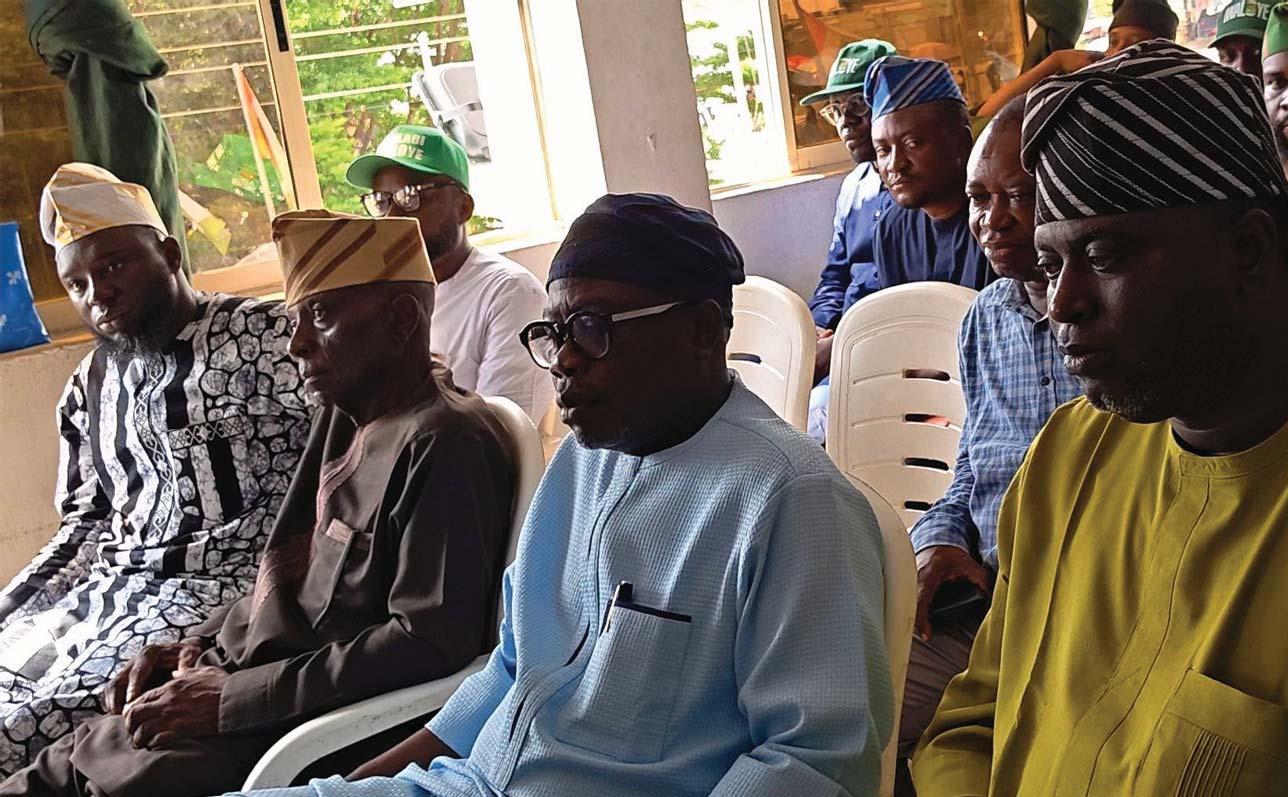

•Some aspirants of the African Democratic Congress (ADC) in Osun State, at the screening exercise held at the Oranmiyan House, Osogbo, yesterday
Reactions As Osun APC LG Chairman Vows To Rig Election
THE Chairman of Oriade Local Government Area in Osun State, Olubunmi Obeisun, has drawn reac ons over comments he made about the 2027 elec on in ObokunOriade federal cons tuency. In a video circula ng online, Obeisun who was seen addressing members of the All Progressives Congress (APC), claim he was ready to rig an elec on.
The LG chairman who spoke in Yoruba, said, “The Ijebu-Jesa people worked against us and now they
SERAP Urges INEC To Probe Alleged N800bn FAAC Diversion For Campaign Funding
THE Socio-Economic Rights and Accountability Project (SERAP) has urged the Chairman of the Independent Na onal Electoral Commission (INEC), Professor Joash Amupitan, to immediately commence an independent inves ga on into allega ons that governors elected on the pla orm of the All Progressives Congress (APC) diverted about ₦800 billion for poli cal and campaign purposes.
SERAP made the call in a le er dated May 16, 2026, signed by its Deputy Director, Kolawole Oluwadare, and shared on its X handle on Sunday.
The organisa on asked INEC to conduct a swi , transparent and impar al probe into the allega ons, describing them as a serious threat to electoral integrity and transparency in poli cal financing.
It also urged the electoral body to compel the APC and the affected governors to fully disclose any alleged campaign dona ons, including the iden es of donors
and the legi mate sources of the funds, while making the informa on public.
SERAP further called on INEC to work with an -corrup on and law enforcement agencies to ensure accountability, stressing that anyone found culpable should face sanc ons, including prosecuon, fines and forfeiture.
The group also demanded a broader review of compliance with Sec on 91 of the Electoral Act, par cularly concerning poli cal dona ons, campaign funding sources and spending limits by poli cal par es and candidates.
According to SERAP, “these allega ons raise serious concerns about poli cal finance transparency, electoral fairness, and the cons tu onal right of Nigerians to par cipate freely in their own government.”
The organisa on warned that the alleged misuse of public funds for poli cal acvi es could weaken democra c values and erode public confidence in the electoral process.
“The abuse of state resources for electoral advantage undermines democra c integrity and public trust,” the statement added.
SERAP maintained that Nigerians deserve transparency in poli cal financing, no ng that “opaque poli cal financing remains a major entry point for corrup on and a threat to democra c legi macy.”
It also argued that INEC has cons tu onal and statutory powers to enforce compliance with electoral laws.
“Sec on 91 of the Electoral Act empowers INEC to set limits on poli cal donaons, demand disclosure of contribu ons and sources of funds, and enforce sancons against viola ons,” the organisa on stated.
SERAP warned that failure to address the allegaons could undermine confidence in the 2027 general elec ons.
“The allega ons of diversion or opaque use of public funds pose a grave risk to the integrity of the 2027 general elec ons,” it added.
want to contest an elecon but we will also work against them. You can quote me anywhere, I, Ezekiel Olubunmi Obeisun. If they win, I will rig it,” he said.
Reac ng to the post, the spokesperson for the campaign council of Ademola Adeleke, Pelumi Olajengbesi, described the statement as “andemocra c.”
“I am very ashamed because, to start with, the name Obeisun is reputable, noble, and honourable in Osun State and Nigeria at large, and from my own hometown. I know the Obeisuns are
not known for such characteris cs. It is therefore regre able that this ever happened. Even if we pardon it, what will history say? That one Chief Olubunmi Ezekiel Obeisun brought such a presgious name in Ijebu Jesa into disrepute?
“This is another confirma on of the fact that the Osun State APC is very certain of its coming failure on August 15, 2026, and is desperately looking for a back door to power.
“While we call the atten on of the public, security agencies, INEC, civil society organisa ons,
elec on observers, and all lovers of democracy to this reckless and an -democra c statement by a chieftain of the APC in Oriade Local Government, I will only advise Chief Olubunmi Obeisun to prepare to deal with the legal consequences of his threats.”
But Adeniyi Olekan supported the chairman’s claim, no ng “That is the reality on ground, he stood for his people then.. For him to express his opinion. Don’t see him as enemy, poli cs is a game of interest. Your friend today can be your enemy tomorrow, it is a game of personal interest.”
Kidnapping: Residents In Fear As Bandits, Kidnappers...
ernment of Oyo state. On Friday, around 9:30 we were a acked by certain group of people and a good number of us were abducted. The staff and students as well and we have been here since Friday,” she said.
The principal further pleaded with authori es and religious bodies to urgently come to their rescue through peaceful means.
“I am making this video to ask for help from everyone star ng from Federal Government of Nigeria, and Oyo State government under Engr Seyi Makinde, the Chris an Associa on of Nigeria and all well-meaning Nigerians that they should come to our help and se le this people peacefully so that our lives will not be lost,” she added.
The incident has reportedly thrown the community into panic as residents and parents
await official updates on the condi on and possible rescue of the vicms.
Following the incident, the Oyo State Government ordered the temporary closure of schools across Oriire, Olorunsogo, Surulere and Oyo East local government areas in a bid to prevent further attacks and allow security agencies stabilise affected communi es.
Reports Of Siege On Expressway UntrueOyo Govt
However, amid widespread reports and rumours sugges ng that bandits had taken over parts of the Oyo/Ogbomoso Expressway, the Oyo State Government dismissed claims that the highway was under siege.
Also, the Inspector General of Police, Olatunji Disu, visited the affected communi es over the weekend, promising to capture the criminals
in no distant me. Government officials maintained that although there had been isolated security breaches and criminal incidents, security agencies remained firmly in control of the area.
The state government also assured residents and travellers that tac cal opera ons had been intensified across vulnerable communi es and major road corridors.
Meanwhile, security presence has reportedly been strengthened along sec ons of the expressway, with taccal police units, military personnel and local vigilantes increasing patrols in vulnerable areas.
The Oyo State Police Command had confirmed that tac cal teams and intelligence assets were deployed following the school attacks, while rescue efforts for abducted vicms remain ongoing.
WHEN China’s leader warned this week of the “Thucydides Trap” during talks with the President of the United States, he was speaking about far more than a conven onal rivalry between great powers. The same fear of displacement and loss of dominance that fuels tensions among global powers may also explain the deepening poli cal instability and security anxie es confron ng Nigeria today.
The concept of the Trap is not confined to interna onal rela ons at a me of precarious global uncertainty marked by kine c warfare, trade disputes and strategic compe on. It also speaks to the internal disintegra on within na on-states, a condi on that o en triggers wider regional instability and cross-border conflicts. Across several regions surrounding Nigeria, the signs are already evident, and the consequences are increasingly spilling across Nigeria’s borders and into its domes c reality.
This week alone witnessed the commendable elimina on of a notorious terrorist commander, reportedly the deputy leader of ISIS in West Africa, during a joint opera on involving the United States and gallant officers of the Nigerian military. The opera on deserves praise, par cularly given the growing sophis ca on of terror networks opera ng within the Sahel and across West Africa.
Yet the opera on also raises important ques ons regarding the precise role of the United States in Nigeria’s counterterrorism efforts. Are the Americans ac ng merely as advisers, intelligence partners and logiscal supporters, or are they now directly involved as combatants in Nigeria’s domesc war against terror? Clarity is required. Nevertheless, the episode underlines the extent to which modern conflicts have become deeply interconnected, thereby reinforcing the relevance of the Thucydides Trap in the contemporary world.
The boundaries between domes c insecurity and interna onal strategic rivalry have become increasingly blurred. Terrorism, arms trafficking, ideological extremism and organised crime now operate through transna onal networks that no na on can confront in isola on. This is precisely why local instability in one country can rapidly evolve into a regional crisis.
To demonstrate how deeply rooted and interconnected the security crisis has become, there remains widespread confusion surrounding the reported a ack on a school in Oyo State by armed bandits. Oyo State has never tradi onally been viewed as part of Nigeria’s frontline in the war against terrorism and insurgency. Yet the disturbing reality is that no part of the country can now be regarded as en rely insulated from violence.
Reports indicate that over forty students remain missing following the a ack, alongside the disappearance of the school principal. One vice-principal was reportedly killed, while another was abducted.
“Power ought to be an instrument for governance, national cohesion and development, not merely an object to be grabbed, retained and defended at all costs. Unfortunately, contemporary politics increasingly suggests that the struggle for power has become detached from any serious commitment to public purpose”

Understanding The Trap: International Relations Interwoven With Domestic Conflicts

Whether every aspect of the incident has been accurately reported or not, the broader implica on remains deeply troubling: insecurity is gradually expanding into territories once considered rela vely safe.
This creeping normalisa on of fear reflects a larger na onal dilemma. As insecurity spreads, the state becomes increasingly consumed by the struggle for control, while poli cal actors simultaneously intensify their own ba les for dominance and survival. It is within this context that the Thucydides Trap acquires profound significance.
But how exactly does the Thucydides Trap relate to Nigeria’s present circumstances?
Let us begin with the widely accepted defini on of the concept. According to Wikipedia:
“The Thucydides Trap is a concept originated by Herman Wouk, the novelist and World War II veteran, who used it in his Admiral Raymond A. Spruance lecture delivered on April 16, 1980, at the U.S. Naval War College. Wouk compared the U.S.-Soviet Cold War to the ‘cold war’ that developed between Athens and Sparta once they had defeated Persia, their common enemy. Decades later, the term was popularised by American poli cal scien st Graham Allison to describe an apparent tendency toward war when an emerging power threatens to displace an exis ng great power as a regional or interna onal hegemon.”
The defini on, while useful, only scratches the surface. To obtain greater intellectual clarity, we sought the interpreta on of the cerebral Dr. James Ashipa, a longstanding friend of this column. Dr. Ashipa observed succinctly that:
“The Thucydides Trap repeats itself at every point in the history of mankind.”
We further requested that he relate the concept to Nigeria’s current poli cal reality. Once again, his reflec ons were illumina ng.
According to Dr. Ashipa: “The Thucydides Trap repeats itself at every point in
the history of mankind, and we hope that Trump will heed the advice given by Xi and halt his current destruc ve and self-righteous trajectory.
While the above scenario exists at the interna onal level, the Thucydides Trap can also be used to analyse poli cal behaviour within na on-states. In Nigeria, many who wield power have repeatedly fallen into this psychological weakness and consequently triggered avoidable self-destruc on.
The moment a leader becomes afraid of losing dominance and grip on power, he becomes enslaved by ego and begins a journey towards poli cal oblivion.”
His historical references are par cularly instruc ve.
Dr. Ashipa recalled how General Yakubu Gowon accelerated his poli cal downfall a er announcing in 1974 that the promised return to civil rule in 1976 was no longer realis c. Likewise, General Ibrahim Babangida became trapped by his prolonged manipula on of Nigeria’s transi on programme, eventually being forced to “step aside” in 1993 a er repeatedly shi ing the handover date.
General Sani Abacha similarly succumbed to the tempta on of perpetua ng
himself in office by seeking transforma on from military ruler to civilian president. At the me, all five registered poli cal par es notoriously adopted him as their sole presiden al candidate, promp ng the late Bola Ige to famously describe them as “the five fingers of a leprous hand”.
Even under civilian rule, the tempta on has remained persistent. Former President Olusegun Obasanjo narrowly escaped becoming consumed by the Trap during the failed third-term agenda that dominated na onal discourse before the eventual transfer of power to Umaru Musa Yar’Adua.
Today, similar tendencies con nue to manifest themselves across Nigeria’s polical landscape. Governors nearing the comple on of their cons tu onally permi ed tenure rou nely posi on themselves for Senate seats or other strategic offices, not necessarily out of ideological convic on or public service, but o en from fear of polical irrelevance once execu ve power slips away.
The poli cal climate has consequently become one dominated less by governance and more by survival.
Dr. Ashipa also pointed to growing accusa ons that the ruling APC seeks to weaken opposi on par es in pursuit of an effec ve one-party state. Although the party strongly denies such allega ons, the percep on persists within large sec ons of the poli cal class and civil society.
Yet one reality remains immutable: power is transient.
No administra on, no poli cal coalion and no individual can permanently monopolise authority. History repeatedly demonstrates that a empts to cling excessively to power o en end in instability, backlash and decline.
Nigeria’s tragedy, however, lies in the fact that these elite struggles for polical dominance are unfolding at a me when the na on faces grave existen al threats. Terrorism, banditry, kidnapping, economic hardship and social fragmenta on con nue to deepen, while governance increasingly appears secondary to poli cal calcula ons ahead of future elec ons.
The country urgently requires a recalibra on of priori es.
Security opera ons must become more technologically driven, intelligenceled and transparent. Defence procurement processes require greater scru ny and accountability. Border security must be strengthened, while collabora on with neighbouring countries should become more strategic and ins tu onalised.
Above all, poli cal leadership must rediscover the purpose of power itself.
OSUN DEFENDER
Power ought to be an instrument for governance, na onal cohesion and development, not merely an object to be grabbed, retained and defended at all costs. Unfortunately, contemporary poli cs increasingly suggests that the struggle for power has become detached from any serious commitment to public purpose.
Telephone : 0809-301-9152
Website : www.osundefender.com/index.php e-mail : osundefenderhq@gmail.com osundefenderbank@gmail.com All correspondence to the above email addresses.
As Dr. Ashipa rightly implied, many poli cal actors appear less concerned with what they intend to achieve with power than with possessing it in the first place.
That, perhaps, is Nigeria’s most dangerous Trap of all.
Analysing What’s On The Front Burner What’s On The Front Burner

MONDAY, MAY 18, 2026 VOL. 21 NO 39 www.osundefender.com, email: osundefenderbank@gmail.com
MR. Timothy Omo-bare was deputy Inspector General of Police when he a ended the Aburi Peace mee ng held in Ghana on 4th and 5th January, 1967. The mee ng was designed to bring peace to Nigeria and prevent a possible Civil war in the country. Other senior officers that a ended the Aburi mee ng were the then Head of State, Lt-Colonel Yakubu Gowon, Colonel Adeyinka Adebayo, Lt-Colonel Odumegwu Ojukwu, Lt-Colonel David Ejoor, LtColonel Hassan Katsina, Commodore J.E.A. Wey, Major Mobolaji Johnson, Alhaji Kam Salem and Mr. T. Omo-Bare.
The Secretaries who a ended the mee ng were Mr. S.I.A. Akenzua (Permanent Under-Secretary, Federal Cabinet Office, Mr. P.T. Odumosu, Secretary to the Military Government, West, Mr. N.U. Akpan, Secretary to the Military Government, East, Mr. D.P. Lawani, Under-Secretary, Military Governor’s Office, MidWest and Alhaji Ali Akilu, Secretary to the Military Government, North.
Senior Military Officers with extremist views including Major Murtala Mohammed and Captain T.Y. Danjuma were excluded from the Aburi mee ng which was called by the Ghanian Head of State, General Joseph Arthur Ankrah (18 August 1915 – 25 November 1992).
On the second day of the mee ng, there was a serious deadlock with Mr. Omo-bare, playing the role of a peacemaker. Mr. Timothy Omo-bare was born in January 26, 1913 in Uzebba in Edo state. He had his educa on at St. Peter’s School, Benin City, Government School, Kwale and St. Peter’s Training College, Benin. He joined the Police Force in 1933, became the Commissioner of Police between 1964 and 1966, deputy Inspector General of Police, 1966-1968 and a Federal Commissioner for Rehabilita on between 1968 and 1970.
Mr. Omo-Bare told the deadlocked mee ng on that day “We cannot sit here and divide up Nigeria, because the way things are now moving is towards regionaliza on of everything, and I do not think it is safe or that we are right to divide up Nigeria at this table”. But it had appeared that Mr. Omo-bare’s appeal fell on deaf ears and in few months later, those military officers came back home to fight a senseless civil war, the scars that are s ll with us today.
I think Mr. Omo-bare’s words of wisdom are be er directed to Nigeria’s poli cal class today. It appears there is
“A system that gives power to the ruling party a winner takes all approach will definitely bring chaos. When we adopted the Presidential System of government, we thought it would be participatory but as it looks now, it is winner takes all kind of government”
PERSPECTIVE BY ERIC TENIOLA
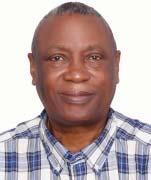
Crossing The Red Line By The Opposition And Government
despera on in the air. Both the opposion and the ruling party, have crossed the redline. Each is determined to finish the other by all means. They need to be reminded that they have no right to break up this great country because of the coming elec on. They need also to be reminded that there is no safe haven for them if Nigeria breaks up and that there is no country on earth where they will enjoy their loot like Nigeria.
A red line is more than just a phrase; it embodies boundaries and limits that, once crossed, signal unacceptable behaviour or ac ons. Imagine you’re in a nego a on—perhaps over something as significant as peace talks or even personal rela onships. The term red line serves as an ul matum: cross this boundary, and there will be consequences.
WHistorically rooted in various contexts, the concept of a red line has evolved into both metaphorical and literal interpreta ons. In diploma c discussion, leaders o en establish these lines to signify non-nego able terms. For instance, when one party states they cannot accept certain condi ons because it crosses their red line, they are drawing a firm boundary around what they deem acceptable.
In everyday life, we encounter our own personal lines too—-whether it’s tolera ng disrespect from friends or colleagues or se ng boundaries within family dynamics. These limits help us maintain our values and protect our well-being.
Ul mately, whether we’re discussing interna onal diplomacy or individual rights at home, understanding
•Adekoya is an author, academic, public affairs analyst and a Journalist.
E are all living witnesses to the monumental challenges that Nigeria and Nigerians face today. Therefore, rather than list or lament about them, let us rethink our a tude to them. The one prevalent a tude that will yield no result is the belief that a messiah is coming to help us out.
No messiah is coming. Full stop. What next?
The understanding that no messiah is coming, either in the form of a President by elec on or coup d’état, should be a sobering call to duty for every enlightened ci zen to rethink our situa on in all ramifica ons, and to act.
For one, we have a compound problem with poverty and ignorance among majority of Nigerians, even among so-called ‘educated’ ci zens who merely went to school but had li le or no educa on. Secondly and accordingly, very few can resist material and financial inducement when approached with senseless op ons or evil errands despite their conscience. Thirdly, we are stuck at best with 3 or 4 poli cal par es with capaci es (2 being the most capable) and whosoever they choose for us is what we are stranded with and called upon to vote for (President, Senators, Federal Representa ves, Governors, State Lawmakers, Council Chairpersons); and they rarely ever choose the best as all kinds of considera ons determine their choices other than capability to solve Nigeria’s problems.
Fully apprecia ng the above scenario as we approach a season of general elec ons, in an atmosphere of grave security chal-
what cons tutes a red line’ helps clarify expecta ons and responsibili es among par es involved.
Presiden al elec on in Nigeria is always awaited with much anxiety but this coming one, looks more deadly than the previous ones.
I remember with Nostalgia, the 1959 general elec on, it was held on December 12, 1959. The Governor General, Sir James Wilson Robertson (27 October 1899 – 23 September 1983) issued a declara on on October 8, 1959. I was then a student at Methodist School Otapete, Ilesha, along with Olu Malomo, Bola Olojo, Bisi Fatunwase, then Miss Bolanle Jegede, late Shiyan Malomo and others.
Our interest in poli cs grew then, because the first Na onal Vice President of the NCN, Sir Odeleye Fadahunsi’s house was at the back of our school. And because of the ac vi es in his house, we took special interests in party poli cs. My guardian and teacher at that me was late Mr. Fatunwase while our Head master was one, Mr. Esan.
Elec ons were to be held in 312 single member cons tuencies throughout the country (elec on for 8 seats for Southern Cameroons representa ves was suspended pending the outcome of the plebiscite on the future of the Territory to be held before March, 1961) of which 174 were in Northern Nigeria, 62 were in Western Nigeria, 73 were in Eastern Nigeria and 3 were in Lagos.
•Read full article on www.osundefender.com
•Teniola is a former Director at the Presidency
Waiting For The Messiah
lenges and deep-seated sec onal agitaons, is a call to ac vism by all enlightened and patrio c ci zens. They have a duty to assume leadership responsibili es within their various social, cultural, religious, community, trade, professional associa ons; to talk to, convince and mobilise large members therein, for the needful.
The need for the survival of our country and its stunted democracy should be our first priority with robust, dispassionate discussions on our current predicament, the root causes and the most sensible soluons – bo om up, followership to leadership. Secondly, whereas the key solu ons will take years of efforts, what are the choices available presently based on our understanding of the candidates across all poli cal par es being showcased, irrespecve of religion, ethnic background?
Then, we face the main task of engaging the candidates with sa sfactory backgrounds and recognized commitments to clearly stated agenda! A erwards, ini ate the process of organisa onally commitng those candidates to certain short-term policies that will, at least, allow the state or na on to escape suffoca on and live again. For instances, why should we not be able to refine our crude oil and harvest all the ensuing benefits, including solu ons to power genera on? Why should cost of running government be more than what governance delivers? Why have we failed consistently to explore mechanised agriculture
to engage millions of youth for jobs, even if we cannot do anything about Ajaokuta iron and steel, and why not? Why are we failing to publicly and promptly punish crimes and corrup on commi ed in full public glare, confessed and confirmed, and to deliver jus ce? Why should we not be able to devolve power, and if not write a new cons tu on but amend it profoundly to allow states and local governments take control of all they need to take control of? Knowing the value of educa on, why should we not place premium on it, any strategy whatsoever, in this knowledge-age of Informa on and Communica on Technology and veer our youths’ proficiency therein from crime and fraud into a harvest of prosperity for all? There are endless possibili es in our capacity, even in a four-year term.
We know the background and disposion of all the major contestants, and no sweet lies nor material, monetary inducement should dissuade us from mobilising sensibly: for commi al of the best individuals across par es, and mobilisa on for their emergence. Finally is engaging them daily for the next four years on those commitments, backed throughout with loud applauses and firm protests as need be.
We can thereby be our own messiahs, perhaps in no distant future, we can have a democracy that is no longer a demonstraon of craze, and a society in which there is hope for tomorrow, instead of unending “sorrow, tears and blood.”
OSUN DEFENDER is published by Moremi Publishing House Limited, Behind Oranmiyan Building, Gbodofon, Off Gbongan Road, Osogbo, Osun State. All correspondence to the Deputy Editor, MICHAEL BAMIGBOLA, Telephone: 0809-301-9152. ISSN: 0794-8050. Website: www.osundefender.com Email: osundefenderbank@gmail.com, osundefenderhq@gmail.com