
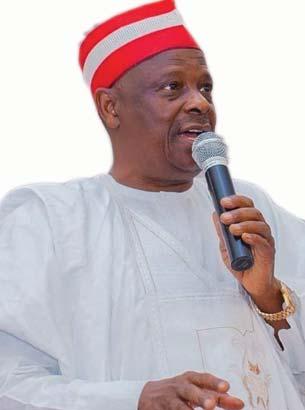
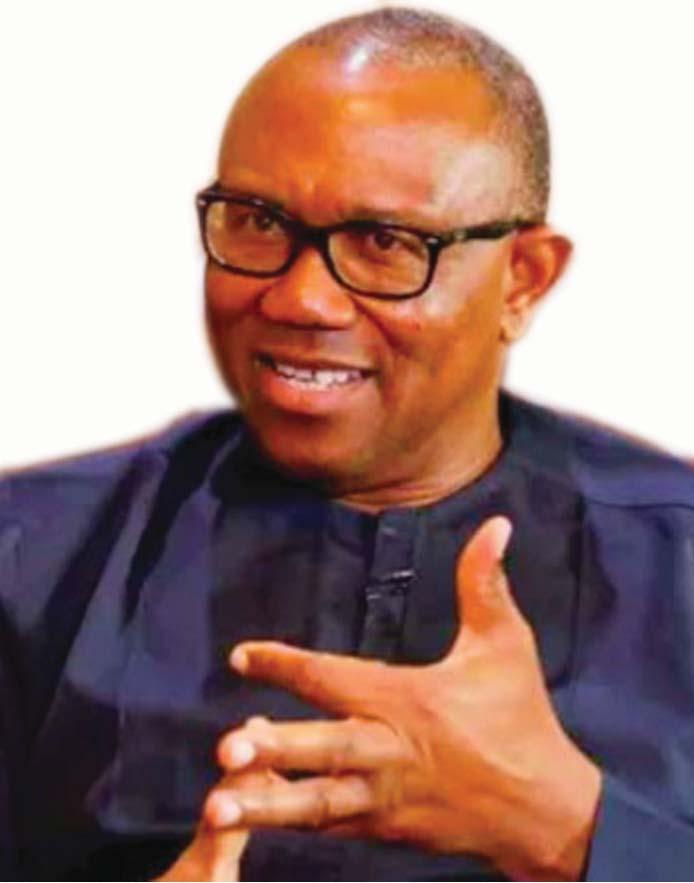
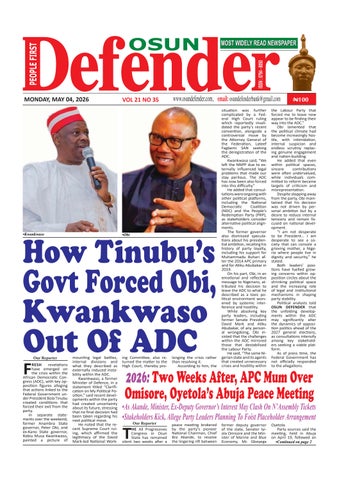
FRESH revela ons have emerged on the crisis within the African Democra c Congress (ADC), with key opposi on figures alleging that ac ons linked to the Federal Government under President Bola Tinubu created condi ons that forced their exit from the party. In separate statements over the weekend, former Anambra State governor, Peter Obi, and ex-Kano State governor, Rabiu Musa Kwankwaso, painted a picture of
moun ng legal ba les, internal divisions and what they described as externally induced instability within the ADC.
Kwankwaso, a former Minister of Defence, in a statement tled “Clarifica on on My Poli cal Posi on,” said recent developments within the party had created uncertainty about its future, stressing that no final decision had been taken regarding his next poli cal move.
He noted that the recent Supreme Court ruling, which affirmed the legi macy of the David Mark-led Na onal Work-
ing Commi ee, also returned the ma er to the High Court, thereby pro-
longing the crisis rather than resolving it. According to him, the
situa on was further complicated by a Federal High Court ruling which reportedly invalidated the party’s recent conven on, alongside a controversial move by the A orney General of the Federa on, Lateef Fagbemi SAN seeking the deregistra on of the ADC.
Kwankwaso said, “We le the NNPP due to externally influenced legal problems that made our stay perilous. The ADC has now been also forced into this difficulty.”
He added that consulta ons were ongoing with other poli cal pla orms, including the Na onal Democra c Coali on (NDC) and the People’s Redemp on Party (PRP), as stakeholders consider alterna ve poli cal alignments.
The former governor also dismissed speculaons about his presidenal ambi on, recalling his history of party loyalty, including his support for Muhammadu Buhari after the 2014 APC primary and for A ku Abubakar in 2019.
On his part, Obi, in an emo onal and reflec ve message to Nigerians, attributed his decision to leave the ADC to what he described as a toxic poli cal environment worsened by systemic interference and hos lity.
While absolving key party leaders, including former Senate President David Mark and A ku Abubakar, of any personal wrongdoing, Obi insisted that the challenges within the ADC mirrored those that destabilised the Labour Party.
He said, “The same Nigerian state and its agents that created unnecessary crises and hos lity within
the Labour Party that forced me to leave now appear to be finding their way into the ADC.” Obi lamented that the poli cal climate had become increasingly hosle, with in mida on, internal suspicion and endless scru ny replacing genuine engagement and na on-building.
He added that even within poli cal spaces, sincere contribu ons were o en undervalued, while individuals commi ed to reform became targets of cri cism and misrepresenta on.
Despite stepping away from the party, Obi maintained that his decision was not driven by personal ambi on but by a desire to reduce internal tensions and remain focused on na onal development.
“I am not desperate to be President… I am desperate to see a society that can console a grieving mother, a Nigeria where people live in dignity and security,” he stated.
Both leaders’ posions have fuelled growing concerns within opposi on circles about the shrinking poli cal space and the increasing role of legal and ins tu onal mechanisms in shaping party stability.
Poli cal analysts told OSUN DEFENDER that the unfolding developments within the ADC may significantly alter the dynamics of opposion poli cs ahead of the 2027 general elec ons, as consulta ons intensify among key stakeholders seeking a viable platform.
As of press me, the Federal Government has not officially responded to the allega ons.
peace mee ng brokered by the party’s pioneer Na onal Chairman, Chief Bisi Akande, to resolve the lingering ri between
former deputy governor of the state, Senator Iyiola Omisore and the Minister of Marine and Blue Economy, Mr. Gboyega
Oyetola.
Party sources said the mee ng, held in Abuja on April 19, followed an
MONDAY, MAY 04, 2026
•Continued from page 1
earlier mee ng between Omisore and leaders of the Osun APC Elders Council in Ile-Ife, where certain demands were reportedly presented to the party by the former senator.
The mee ng was convened to address the deepening feud that followed the primary elecon, which produced Mr. Bola Oyebamiji as the party’s governorship candidate a er the screening commi ee disqualified Omisore and six other aspirants.
Omisore had described the disqualificaon as the “biggest joke of the year” and a “poli cally mo vated move,” alleging “intense pressure from powerful interests” to sideline leading aspirants for a preferred candidate.
OSUN DEFENDER reports that Omisore also dragged the party and the Independent Na onal Electoral Commission before an Osogbo Federal High Court over the APC governorship primary in Osun State.
According to court documents, Omisore in suit no FHC/OS/CS/261/2025, asked the court to determine whether the APC, as the 1st defendant, has the power to impose nomina on qualifica on, or disqualifica on criteria, measures, or condions on any aspirant for its primary elec on in its cons tu on, guidelines, or rules for the nominaon of candidates.
The former deputy governor, however, discon nued the suit following interven ons by prominent party leaders, including President Bola Tinubu and Chief Bisi Akande, according to the Director-General of the Omisore Campaign Organisa on, Ajibola Famurewa.
OSUN DEFENDER also observed that Omisore has not been physically present at party events since his disqualifica on, with people from his camp no ng that the IleIfe-born poli cian is yet to disclose his poli cal direc on.
Following the Abuja mee ng, the former deputy governor’s campaign organisa on said current efforts to facilitate a reconcilia on mee ng between the Minister of Marine and Blue Economy, Adegboyega Oyetola, and Omisore have been allowed to drag on for too long.
The spokesperson of the Iyiola Omisore Cam-
paign Organisa on, Jamiu Olawumi, while speaking with a journalist, said, “We are aware there was going to be a meeting, and as a campaign organisa on within the party and an organisa on peopled by patrio c party members, we iden fy with our principal, Senator Iyiola Omisore, and we also trust the na onal leader of the party, Chief Bisi Akande, for his effort to bring about peace and tranquillity that will move the party forward.
“We have not been briefed by our principal, but for the op cs, when we saw the three of them together, we must be happy that there will be peace, even though the current effort is too belated. It has been allowed to drag.”
He added, “For five months, we were surprised that the leadership of the party and all the par es concerned would allow the misunderstanding to fester for five months in an elecon year. We thank Baba Akande for his resilience and commitment to bringing peace to the party.”
Sources said the APC remained silent on the outcome of the mee ng because the party leaders were unable to resolve their differences, no ng that the situa on might worsen a er the primary elec on for the 2027 general elec ons.
A source, who does not want his name in print because he was not authorised to speak on the ma er, said the Na onal and State Assembly ckets might further deepen the fractured rela onship between the former deputy governor and the Minister.
The source noted that Omisore has posi oned some of his loyalists to secure the assembly ckets, while the Minister may prefer other aspirants.
“I can tell you that the primary elec on for the 2027 general elec ons might make or break the party. There is a lot of internal rumbling due to what we are hearing about who will get what. Omisore’s camp is ready to field aspirants and they want the party to compensate the former deputy governor, but it seems the Minister is not in tune with that and he has his own people,” the source noted.
Akande, Oyetola, Omisore’s Interests May Clash Over Senatorial Tickets
Meanwhile, OSUN DEFENDER reliably gathered
that the interest of the party’s na onal leader, Chief Akande, may clash with that of the Marine Minister on the candidate to represent Osun Central at the Red Chamber.
The same scenario might play out for the Osun East Senatorial District, where Omisore is said to be backing an aspirant against the choice of the Minister.
According to sources, the Minister’s preferred candidate for Osun Central Senatorial District is Mr. Kunle Adegoke (SAN), while Baba Akande is reportedly backing the current lawmaker representing the district, Senator Olubiyi Fadeyi, who hails from Ila Orangun.
Party sources said Oyetola wants to compensate Adegoke, who was one of those disqualified from the governorship race, with the cket, a situa on that might not sit well with the na onal leader of the party.
However, the entry of the Minister’s son, Femi Oyetola, into the Osun Central Senatorial District race might change the dynamics of things.
Femi Oyetola was on Sunday presented the nomina on and expression of interest forms for Osun Central Senatorial District by commi ee of friends.
Reac ng to the news, a chie ain of the party in Osun Central who preferred anonymity, said the Minister’s son will likely not get the cket.
The APC chie ain noted that development may further cause division within the party.
“I heard the news this a ernoon and I was amused. I don’t think it will work especially in Osun Central. Oyetola cannot singlehandedly give his son a senatorial cket. He might only be informed about it and I feel the move is to launch the young man into Osun poli cs,” the APC chieftain noted.
A party source said, “It is true that our principal, Mr. Oyetola, is looking at Adegoke’s direc on. He sees Adegoke as someone who can win the district and he also feels it would compensate for his efforts in growing the party.
“However, the issue is that Baba Akande is reportedly backing Ajagunla, who is from the same town as him. Baba wants the lawmaker to return in order to complete the projects he has started.”
Also, OSUN DEFENDER gathered that the Minis-
ter might be backing the current Senator represen ng Osun East, Francis Fadahunsi, to return to the Na onal Assembly.
However, Omisore’s camp is said to be ready to fight it out, as the Director-General of the Omisore Campaign Organisa on, Ajibola Famurewa, has already obtained his nomina on and expression of interest form for Osun East Senatorial District.
Fadahunsi, who defected to the APC from the Peoples Democra c Party in 2025, has also obtained his form and reportedly has the backing of the IleriOluwa camp of the APC.
APC Leaders Planning To Foist Placeholder Arrangement
Beyond Osun East and Central Senatorial Districts, the internal crisis which may soon engulf the party has also found its way to the federal cons tuency level, with many stakeholders alleging the Minister who is also the leader of the party in the state of moves to singlehandedly handpick all candidates for the forthcoming general elec ons.
A source who spoke with OSUN DEFENDER on Saturday noted that the move, which is fast gaining trac on among stakeholders, may come through a ‘placeholder’ arrangement reportedly planned by the Minister.
According to the source, Oyetola being mindful of the crisis that may stem from the primaries is considering picking some candidates as ‘placeholders,’ with a mo ve to select the fi-
nal candidates a er the August 15 governorship elec on.
“The party may soon go into a more serious crisis. Beyond the Omisore/ Akande fiasco, more issues are s ll coming up. We are hearing our apex leader (Oyetola) wants to foist his preferred aspirants on the party as candidates.
“In fact, his ini al plan was to ensure that no aspirant could purchase nomina on forms from the Na onal Secretariat. Unable to achieve this, he then se led to ensure that most of his candidates emerge for every elec ve posi on. But he is going to be resisted, as many members, leaders and stakeholders want aspirants to go for the primaries,” the source noted.
Also, a group Ifelodun/Boripe/Odo-Otin (IBO) Federal Cons tuency Youths Vanguard has urged leaders of the party in the area to uphold fairness and equity in the selec on of the party’s House of Representa ves candidate for the 2027 general elec ons.
In a statement jointly signed by its Chairman, Adebayo Asimiyu, and Secretary, Tijani Morufu, the group called on party leaders and elders within the cons tuency to adopt a transparent and inclusive process that reflects the collec ve will of party members, par cularly the younger genera on.
According to the group, the moment demands a shi towards youth inclusion, no ng that the cons tuency deserves a candidate with
proven capacity, grassroots appeal, and a clear commitment to represen ng the interests of young people at the Naonal Assembly.
“We are at a crossroads where the old ways of poli cal imposi on can no longer sustain us. The APC must embrace a candidate who is not only young but also possesses a strengthened will to be the authen c voice of the youth at the Naonal Assembly. We need a representa ve who breathes the same air as the people, not one who is distant from our daily struggles.
“Leadership is about foresight. We have seen the likes of the PDP select individuals like Adewale Egbedun from Odo-O n, who rose to become the Speaker of the State House of Assembly. This was possible because they dared to trust the youth. If the APC fails to provide a similar pla orm for its vibrant young members, it risks becoming a relic of the past.
“We are aware of the clandes ne moves by certain party elders to influence the selec on process through a placeholder arrangement. We wish to state categorically that such an arrangement will not work. It is an insult to the intelligence of the electorate and a recipe for internal crisis. We demand a candidate who stands on their own merit, not a shadow for someone else’s interests.”
Efforts to get the reac on of the APC on the ma er proved abor ve as of the me of filing this report.
THE African Democratic Congress has commenced its door-todoor campaign in Osogbo Local Government as part of intensified grassroots mobilisa on ahead of the 2026 governorship elec on in Osun State.
The campaign was formally launched at a rally on Saturday, which a racted a large turnout of party members and supporters, signalling the party’s push to consolidate its presence at the grassroots.
Among party leaders in a endance were Baba Sakariyahu Uthman Oyedeji (Mabrow), Mrs. Sewande Agbaje, the Osun Central Campaign Chairman for Najeem Folasayo Salaam, Hon. Abdulakeem Olaoye Otaoroju, Hon. Bamidele Kamarudeen Olusola
(Dekam), Hon. Jasuyi Moses (Moscow), Alhaji Isa Idowu Moruf (Hadji Murphy), Baba Atanda Rauf (Akins), and Hon. Aresa Kehinde Adeniyi.
Also present were party execu ves led by Hon. Azeez Adekunle (Adex), alongside several aspirants seeking elec ve posi ons under the party’s pla orm.
Speaking at the event, Hon. Akeem Otaoroju urged members to remain commi ed and intensify the door-to-door campaign strategy to ensure victory for the party in Osogbo and across the state.
In an interview, Tiamiyu Idris Akanbi, an aspirant for the Osogbo State Cons tuency in the Osun State House of Assembly, welcomed the recent Supreme Court judgement affirming
the party’s authen c naonal leadership. He described the verdict as a major boost for the ADC and used the opportunity to canvass support for Salaam’s governorship ambi on.
“The one competent and reliable candidate out of the major contenders is our party candidate, Dr. Najeem Folasayo Salaam. He is well learned, experienced in leadership, and ready to restore good governance in Osun State,” he said.
Akanbi further called on residents of Osogbo to rally behind the ADC, expressing confidence in the party’s capacity to deliver dividends of democracy.
The launch of the doorto-door campaign underscores the ADC’s strategy to strengthen grassroots engagement and expand its support base as poli cal acvi es gather momentum ahead of the 2026 elec on.
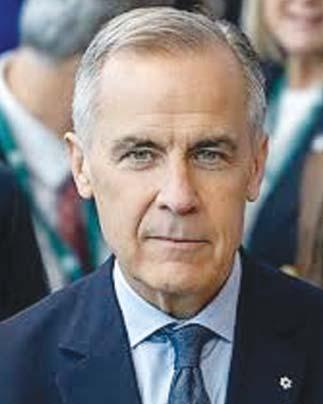
MARK Carney, Canada’s Prime Minister, comes to office with considerable experience. He has served as Governor of the central bank in his na ve Canada and, notably, as the first non-Bri sh Governor of the Bank of England. That background shows in the decisions now being taken.
As Bob Dylan put it in the early 1960s, you do not need a weatherman to know which way the wind is blowing. The global economy is entering a period of uncertainty. The next decade will not resemble the last. Those who prepare will have an advantage; those who do not will struggle.
Last week, Carney announced the crea on of an 18 billion Canadian dollar, government-backed investment fund. The move is deliberate. Canada’s economic relaonship with the United States has become less predictable, and the fund is intended to serve as both a buffer and a stabilising instrument. It is a precau on, not a reac on.
There is an obvious lesson here for Nigeria. The country has long lacked pa ent capital. Instead, there has been an overreliance on short-term por olio inflows— money that comes quickly and leaves just as quickly. Such capital does not build industries. It does not support long-term planning. It does not create durable

growth.
What is required is a na onal investment framework that can support development over me. That, however, demands discipline and a willingness to
postpone immediate gains. It is precisely this restraint that has o en been missing in Nigeria’s economic management.
The consequences are clear. Since the disrup on caused by the Structural Adjustment Programme of the 1980s, Nigeria has struggled to rebuild its industrial base. The result has been growth without depth—an expansion that has not translated into meaningful development. Alongside this has come rising social strain, increasing criminality and a gradual weakening of state authority.
Other countries have taken a different route. Brazil is a useful example. Since 1952, through the establishment of the Brazilian Development Bank (BNDES), successive governments have consistently set aside a por on of naonal income to fund long-term
“There is still time to correct course. A properly structured national investment fund would provide the longterm capital needed for industrial growth and economic stability. It would also reduce the country’s dependence on the uncertain search for foreign investment”
development. Over me, this has produced one of the largest development banks in the world, capable of financing projects over several decades.
Nigeria had a similar opportunity. The Bank of Industry, established in 1964, could have evolved into a comparable ins tu on. It did not. The gap remains. There is s ll me to correct course. A properly structured na onal investment fund would provide the long-term capital needed for industrial growth and economic stability. It would also reduce the country’s dependence on the uncertain search for foreign investment.
Canada has acted with foresight. The example is there. Whether Nigeria follows it is another ma er.
HE use of the police in civil disputes is at odds with the principles of a democra c society. It is a prac ce that must end.
Recent developments around consumer rights and protecon have sparked widespread concern. These are not minor issues; they affect the safety, welfare and daily lives of ordinary ci zens. It is therefore troubling that some officers within the Nigeria Police Force appear willing to involve themselves in ma ers that are clearly civil, o en at the promp ng of vested interests seeking to silence complaints.
The police should not be
“The
Nigeria Police Force must address the conduct of officers who allow themselves to be drawn into these matters. Those found to have acted improperly should be identified and disciplined. Professional standards must be upheld”
used as a tool of in mida on in disputes between consumers and manufacturers. Where this happens, it undermines public trust and weakens already fragile ins tu ons.
There is also a growing pattern of substandard manufacturers a emp ng to bully consumers into submission. Individuals who complain about defec ve or harmful products are increasingly met with threats, including allega ons such as cyberstalking. This is an abuse of process and should not be tolerated. Regulatory agencies and the Police Service Commission must step in to define clear boundaries and enforce proper standards of conduct.
No country can build a compe ve economy while tolera ng the produc on of poor-quality goods. It is equally unrealis c to aspire to an export-driven economy when products fail to meet basic standards. Consumer protec on is not only a ma er of fairness; it is essen al to economic growth and credibility.
There are lessons to be
drawn from elsewhere. In 1965, the publica on of Unsafe at Any Speed by Ralph Nader exposed serious safety flaws in the automobile industry. The resul ng public outcry led to reforms, including the introduc on of seat belts and improved safety standards. These measures have saved millions of lives. It shows what can be achieved when consumer concerns are taken seriously.
The complaints currently being raised are jus fied. It cannot
be acceptable, for instance, for young children to be exposed to content involving cruelty to animals. In countries with strong regulatory systems, such material would a ract swi legal consequences. The same applies to the sale of unsafe or adulterated food products. There must be accountability.
The Nigeria Police Force must address the conduct of officers who allow themselves to be drawn into these ma ers. Those found to have acted improperly should be iden fied and disciplined. Professional standards must be upheld.
OSUN DEFENDER is published by Moremi Publishing House Limited, Behind Oranmiyan Building, Gbodofon, Off Gbongan Road, Osogbo, Osun State.
ISSN : 0794-8050
Telephone : 0809-301-9152
Website : www.osundefender.com/index.php e-mail : osundefenderhq@gmail.com osundefenderbank@gmail.com
All correspondence to the above email addresses.
Protec ng consumers is, in the end, about protec ng society. Ci zens must be free to raise concerns without fear of harassment, and ins tu ons must act fairly and within the law. Without this, neither jus ce nor economic progress can be sustained.

MONDAY, MAY 04, 2026 VOL. 21 NO 35 www.osundefender.com, email: osundefenderbank@gmail.com
THERE are moments in the life of a people when difficult ques ons must be asked—not for provocaon, but for the preserva on of conscience. This is one of such moments.
Across Nigeria today, there is a growing percep on—fair or unfair— that the Yoruba, once regarded as a stabilizing moral force in the na onal equa on, are retrea ng into a posture that appears insular, defensive, and at mes indifferent to the concerns of others. In poli cs and na on-building, percep on—if le unchallenged—often hardens into reality.
It is painful to admit this. Historically, the Yoruba earned respect not merely for their achievements, but for their values: fairness, jus ce, equity, and the courage to speak truth to power—even when it was inconvenient, even when it came at great personal cost. From the struggle for independence, through the turbulence of the First Republic, to resistance against military dictatorship, our voice was never defined by who held power, but by what was right.
Today, that voice risks being muffled.
Across the country, one senses a subtle but troubling shi . The bridges we once took pride in building— between the South-West and other regions—are showing signs of strain. Old suspicions are resurfacing. Historical grievances, par cularly with the Igbo, which we hoped me and shared struggles had so ened, are finding new expression. Even our longstanding engagements with the North seem less firmly anchored.
Na ons are not broken in a day. They unravel slowly—through silence, compromise, selec ve outrage, and the quiet normaliza on of what we once rejected.
A few months ago, an elderly friend called me. His tone was calm, but his message was firm. He urged me to temper my cri cism of the government, describing it as “our own.” He added that he and a prominent lawyer had discussed me at length and agreed that someone needed to speak to me.
I listened—as one must listen to elders. But I also responded—as conscience demands.
I told him that if there is no Yoruba man willing to call a en on to what is going wrong, then we must deliberately create one. A people who find their voice only when those in power
“The task before us is not to retreat into defensiveness, but to return to first principles—to speak when it is difficult, to question when it is unpopular, and to stand for justice not because it is convenient, but because it is necessary”
are not from among them lose the right to be taken seriously when they eventually speak.
Today will pass, and those who wield power now will become yesterday, just as those before them have receded into history. In me, a new genera on will rise to judge them, just as today’s actors sit in judgment over the past.
Is it not, therefore, both wise and necessary that some voices speak now—so that when tomorrow’s powers seek to trample the rights of today, distort their deeds, or condemn them unjustly, there will remain a record, a conscience, and a defence against the tyranny of hindsight?
History is unkind to selec ve outrage.
What we excuse today, we legimize for tomorrow. I am not unaware that the “ídì bẹbẹrẹ” and “àwa lọkàn” chorus will rise in response. But does it ma er?
The point is simple: when human
rights are bent or broken and we look away, we create a future where such abuses become normal. When corrupon deepens and we ra onalize it because “our own” is in charge, we erode the very moral ground we once stood upon. When nepo sm and exclusion creep into the system and we remain silent, we become complicit—ac vely or passively—in the erosion of jus ce.
And when the de inevitably turns, we may find that our protests carry no weight. We would have spent our credibility.
This is not opposi on for its own sake. Nor is it disloyalty to one’s ethnic group or poli cal affilia on. It is something deeper—fidelity to principles that transcend the accidents of iden ty and the flee ng nature of power.
The Yoruba have never been defined by tribal triumphalism. At our best, we are defined by intellectual honesty, moral courage, and a cosmopolitan outlook that sees beyond
•Adekoya is an author, academic, public affairs analyst and a Journalist.
“ THE one place where a man ought to get a square deal is in a courtroom.” – A cus Finch, To Kill a Mockingbird
A cus Finch also reminded us: “Thomas Jefferson once said that all men are created equal… but there is one way in this country in which all men are created equal—there is one human instu on that makes a pauper the equal of a Rockefeller… That ins tu on, gentlemen, is a court.” Together, these words underscore a meless truth: the courtroom is meant to be the great leveler, the one place where jus ce does not bow to wealth, privilege, or power.
Yet in Nigeria today, many ci zens no longer believe this is true. The legal profession, once revered as the guardian of jus ce, increasingly struggles under the weight of corrup on, indiscipline, and impunity within its own ranks. At the heart of this problem lies the failure to hold lawyers accountable for misconduct.
A growing menace is the filing of frivolous cases—claims brought not for jus ce but to harass opponents or delay outcomes. These cases clog the dockets of judges, consuming scarce judicial me and resources that could otherwise
narrow boundaries. That is the legacy we inherited. That is the standard we must uphold.
To defend what is right when it is inconvenient is not betrayal—it is leadership.
To ques on power, even when it is “our own,” is not sabotage—it is responsibility.
To insist on fairness, even when it costs us influence, is not weakness—it is strength.
We must resist the tempta on to reduce governance to ethnic possession. Power is not an inheritance to be defended blindly; it is a trust to be exercised justly. When we collapse that dis nc on, we endanger not only others, but ul mately ourselves.
The warning signs are already visible. A people that loses its moral voice gradually loses its influence. A people that abandons fairness invites reciprocal treatment when circumstances change. A people that chooses silence today may find itself unheard tomorrow.
This is why the moment calls for introspec on.
We must ask ourselves: Who are we becoming? And at what cost?
The task before us is not to retreat into defensiveness, but to return to first principles—to speak when it is difficult, to ques on when it is unpopular, and to stand for jus ce not because it is convenient, but because it is necessary.
If we fail to do this, the consequences may not be immediate—but they will be enduring.
And history, as always, will record—not only what we did, but what we refused to say.
When the record of this moment is wri en, may it not be said that we were present—but mute.
•Ojudu, a former Senator and Veteran Journalist, is a former Political Adviser to the President
serve genuine li gants. Closely ed to this abuse is the reckless resort to ex parte orders, o en obtained under dubious circumstances and weaponized to achieve what the law would not ordinarily allow. Such tac cs undermine judicial integrity and erode public faith in the courts.
Many mes judges get pilloried for delivering conflic ng judgments, especially at the appellate level; however, the lawyers who argue these some mes-absurd posi ons of law are not subjected to equal scorn, and neither are they ques oned by the Nigerian Bar Associaon. Worse s ll, the NBA itself has been reduced to a body that bites only when the lawyer in breach is deemed inconsequen al, but somehow becomes toothless when the lawyer is a man of repute and means in the profession. This selecve discipline reinforces the sense that the rules are nego able for the powerful, while the weak bear the full weight of regula on.
The situa on is worsened by the conduct of “big wigs” of the Bar who, shielded by rank and poli cal connec ons,
rou nely flout the rules of professional prac ce with impunity. When senior lawyers treat the rules as sugges ons rather than obliga ons, they set a damaging precedent for younger prac oners and signal that corrup on pays. For the ordinary Nigerian, these patterns are devasta ng. A common man who steps into court with hope o en meets endless adjournments, compromised processes, and a percep on that jus ce is for sale. The sense that “the system is rigged” discourages ci zens from seeking redress in lawful ways, pushing disputes into the streets rather than the courtroom.
Discipline, therefore, is not a luxury for the legal profession—it is its lifeline. The Bar must show that no lawyer, no ma er how senior, is above the rules. Reviving strict oversight, punishing abuse of court processes, and holding praconers to account are essen al steps if the courts are to remain places where the poor and powerful alike can expect a square deal. A society where the interest of the common man is secured is a society des ned for greatness.