Deadline: Adeleke’s Appointees Who Will Resign To Contest 2027 Elections
•Why Governor Is Yet To Issue Directive - Sources
AS poli cal par es in Nigeria gear up for the primary elec ons to elect those who will represent them in various elecve posi ons, Osun State Governor Ademola Adeleke has yet to issue a direc ve on the day his appointees seeking elec ve posi ons should resign, OSUN DEFENDER reports.
OSUN DEFENDER reports that President Bola Tinubu and most state governors have directed their poli cal appointees seeking to contest the 2027 general elec ons to resign between March 30 and 31.
The direc ves are pursuant to the provisions of Sec on 88(1) of the Electoral Act, 2026, as well as the metable issued by the Independent Na onal Electoral Commission (INEC) for party primaries ahead of the 2027 general elec ons.
According to the INEC metable, primaries to pick candidates for the January and February elec ons must be held between April 23 and May 30.
Government sources who spoke with OSUN DEFENDER said Governor Adeleke would issue the direc ve before the deadline prescribed by INEC, adding that poli cal appointees eyeing elec ve posi ons would resign as expected.
The sources noted that the Governor has already spoken with some of the appointees who wanted to contest with a view to finding the best way to handle things.
Meanwhile, OSUN DEFENDER gathered that, even though the appointees have yet to resign, grassroots consulta ons have intensified, with campaign posters and banners already circula ng across the state.
Among those who have declared their ambi ons are the chairman of the Osun State Basic Educa on Board (SUBEB), Mr Ibukun Fadipe, Commissioner for
Agriculture and Food Security, Mr Tola Faseru and the Commissioner for Rural Development and Community Affairs, Mr Gani Olaoluwa.
Others are the Special Adviser to the governor on Agriculture and Food Security, Mr Akanfe A dade and the Board Chairman of the Osun State Broadcas ng Corpora on (OSBC) Engr. Mayowa Oloso.
Both Fadipe and Faseru have shown interest in contes ng the senatorial cket for Osun East under the Accord Party with billboards and campaign posters of the two poli cal appointees already circulated across the state.
Whoever wins the cket will likely be contesting against the incumbent Senator represen ng the district, Francis Fadahunsi.
OSUN DEFENDER reports that Fadahunsi who was elected in 2023, under the Peoples Democra c Party, in 2025, defected to the All Progressives Congress, ci ng the issues affec ng the party at the naonal level.
Fadahunsi, alongside Osun Central Senator, Olubiyi Fadeyi, the federal lawmakers represen ng Ijesa South, Ijesa North and Ife federal cons tuencies respec vely - Hon. Sanya Omirin, Hon. Wole Oke and Hon. Taofeek Ajilesoro were formally inaugurated into the APC fold on February 14, 2026, during an event held at Freedom Park, Osogbo.
OSUN DEFENDER reliably gathered that Senator Fadahunsi has the best chance of ge ng a return cket among the PDP federal lawmakers who defected to the APC.
Gani Olaoluwa, popularly called Asejere has shown interest in contesting for the Osun Central Senatorial cket under the Accord Party.
Olaoluwa, a former Execu ve Chairman of Olorunda Local Government
and former state chairman of the PDP in Osun State contested the senatorial seat in 2019 under the PDP against the incumbent na onal secretary of the APC, Senator Ajibola Basiru and lost with about 26,042 votes. He also contested the 2022 primary but lost out to the incumbent Senator Olubiyi Fadeyi. Olaoluwa, would, however, hope to get the cket again and go
one step forward by winning the senatorial seat.
OSUN DEFENDER gathered that the incumbent Senator represen ng Osun Central, Olubiyi Fadeyi, might not get the return cket as sources within the APC said there were moves by the leadership of the party to give it to a former gubernatorial aspirant, Kunle Adegoke (SAN).
For Ijesa South federal cons tuency, Engr. Oloso would hope to secure the cket at the primary this me around. He contested the 2022 primary under the
Peoples Democra c Party but lost out to the eventual winner, Hon Sanya Omirin.
It is s ll unclear whether Omirin will be given the return cket by the APC leadership as sources said the lawmaker might be among the defectors who won’t be considered for return ckets.
Another appointee who has declared interest in contes ng the 2027 elec on is Adeleke’s Special Adviser on Agriculture, Hon. Niran A dade. Hon. A dade who was
at the Osun State House of Assembly represen ng Ede South between 2019 and 2023 has declared that he would love to return to the assembly in 2027. He would be contesting the cket against the incumbent lawmaker, Hon. Taofeek Olayiwola.
OSUN DEFENDER reliably gathered that the stakes are high and the poli cal atmosphere is ge ng charged as residents await governor Adeleke’s direcves on appointees seeking to contest the 2027 general elec ons.
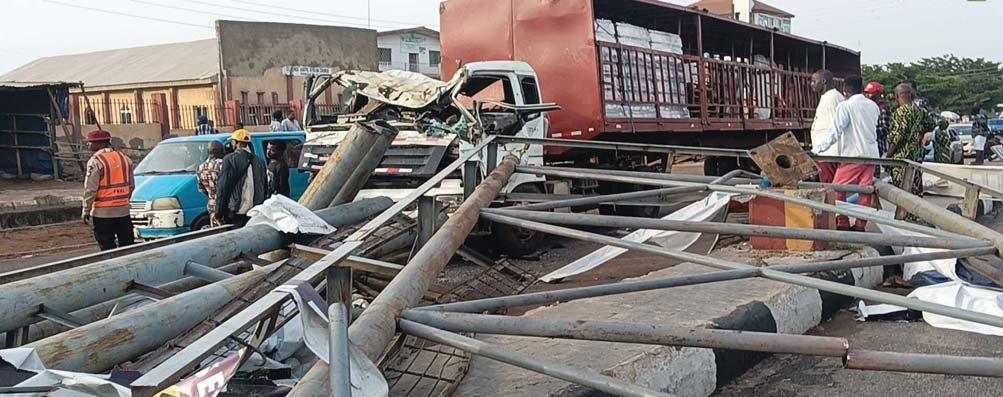
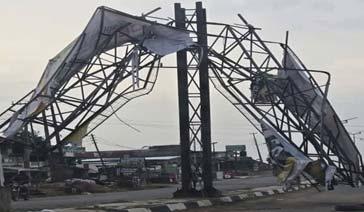
•Some of the property destroyed as a result of Saturday’s rainstorm in Osogbo, the
Viral Open Letter By Cuban Woman
Sparks Global Debate Over US Blockade
Astrongly worded open le er purportedly wri en by an ordinary Cuban woman has gone viral online, drawing interna onal a en on to the long-standing economic sanc ons imposed on Cuba by the United States.
The le er, widely circulated across social media pla orms, presents an emo onal account of alleged humanitarian challenges in Cuba, a ribu ng shortages of food, medicine and essen al supplies to the decades-long US embargo. In the message addressed to “humanity” and global ins tu ons, the
writer claims that elderly ci zens are dying due to limited access to cri cal medica ons, while children face life-threatening condions in hospitals lacking adequate equipment and fuel. The le er also alleges that food scarcity on the island is not incidental but the result of deliberate economic restric ons.
The author further accuses the United States government of enforcing policies that prevent interna onal companies from trading freely with Cuba, thereby exacerba ng hardship for ordinary ci zens. The claims extend to the healthcare sector, where
shortages of medical supplies and equipment are said to be affec ng service delivery.
The le er also highlights Cuba’s domes c efforts, including the development of COVID-19 vaccines, while arguing that external restric ons con nue to undermine the country’s capacity to meet basic needs.
Framed as a “denunciaon,” the message calls on governments, interna onal organisa ons and media ins tu ons to recognise the impact of the embargo and take a stand against it. It urges readers worldwide to amplify the message and
raise awareness.
The US embargo on Cuba, first imposed in the early 1960s, remains one of the most enduring foreign policy measures in modern history. While US officials have consistently defended the sanc ons as a tool to promote democra c reforms and human rights, cri cs—including the Cuban government and several interna onal bodies—argue that the embargo has contributed significantly to economic hardship on the island.
The viral le er has reignited debate on the humanitarian implica ons of
•Continued on page 2
Osun State capital
MONDAY, MARCH 30, 2026
Alumni, Mentees Celebrate Doyen Of Marketing, Kareem Tejumola
Sodiq Yusuf
FRIENDS, family, mentees, associates and the alumni of Research and Marke ng Services Limited on Saturday converged on the Lagos Country Club, Ikeja to celebrate a doyen of marke ng research, Mr. Kareem Akande Tejumola.
The event, which marked the reunion of the alumni of Research and Marke ng Service Limited was a forum for those who have crossed paths with Mr. Tejumola in business, work and private life.
In their several speeches of commenda on, Ms. Funmi Omitoju, Mrs Stella Obanla, Mr Kunle Arofin, Mr. Emmanuel Maduka, Ms Joke Silva, Taiwo Obileye, among others described the honouree as a resilient, courageous, bold and astute leader who through his hardwork and dedica on has shaped many lives and genera ons in the marketing industry.
They also saluted his strong work ethic, relentless passion for excellence and strong commitment to the ideals of professionalism with which he built RMS to the leading Marketing Research brand in Nigeria.
“Uncle TEJ is one man in many parts. He is a leader, a builder and a strong believer in the strong work ethics of professionalism, courage and determina-
•Uncle Tej Is Deserving Of A National Honour - Aregbesola
•His Leadership, Mentorship Has Birthed 28 Leading Marketing Brands In Nigeria - Mentees
on. His dexterous ways of managing people and his clients paved a way for him to become an icon, pathfinder and role model in the industry.
“You have shaped the industry. You have shaped marke ng in not just Nigeria but Africa as a whole. You have also worked through life as an uncommon achiever. Those attributes define you and that’s why we are all glad to celebrate you today,” the speakers noted.
They also stressed that Tej’s impact in their lives has birthed the establishment of more than 28 thriving marke ng research companies in Nigeria, today.
Addressing the gathering, Na onal Secretary of the African Democra c Congress (ADC), Ogbeni Rauf Aregbesola saluted the legacy of Mr. Tejumola, which, according to him, has been momentous, inspiring and visionary.
Recalling his journey of companionship with the honouree da ng back to over six decades, Aregbesola called on his protégés to further preserve his achievements by nominating him for Na onal Hon-
ours, which is deserving of his legacy and imprints in the world of marke ng.
The former Governor of Osun stated that, “Whatever is said about Uncle Tej today didn’t start in adulthood. It is what has shaped his existence and humanity as a young man. I am proud to say I am one of those he inspired and shaped his future.
“With him, everything is fun. My own gain from him is that he has always supported my poli cal aspira ons and has never discouraged me. For someone who built people who have built over 28 of such leading marke ng companies in Nigeria, he deserves a Na onal recogni on and I know that with all of your support and concerted efforts will be achievable,” the former Minister of Inte-
rior said.
Responding, the honouree, Mr. Tejumola fondly called Uncle Tej described the honour as a mark of fulfilment.
Expressing gra tude to the RMS Alumni and others who celebrated him, he urged them to con nue to live a life of legacy, impact and transforma ve leadership.
His words, “I feel excited, I feel fulfilled. Not too
many people stay alive to witness such an honour, so it is a legacy and I feel very happy about it.
“I feel like a proud father looking at his children. What I see before me is doubts turned into greatness. I challenge you all to con nuously make impact and transform the world. I am happy to see that you all have become brand leaders in your field. Please do more. Doing more will make me more fulfilled,” Tejumola noted. The event featured presenta on of awards and gi s to the honouree, among others.
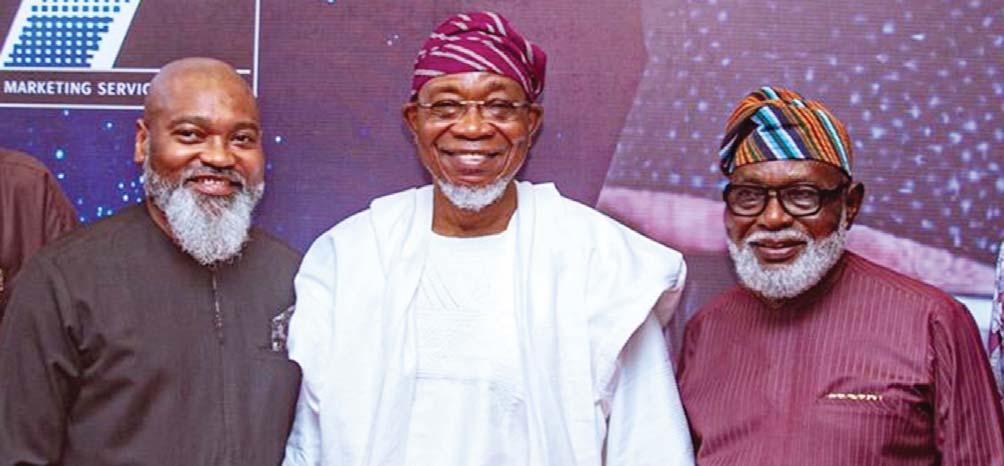
•L-R: Mr. Deola Tejumola, son of the
Rauf Aregbesola
ices Limited
on Saturday
Mr.
One Dead, Many Displaced, As Rainstorm Leaves Osogbo Residents In Ruins
Aheavy downpour which lasted more than one hour in Osogbo and its environs on Saturday, caused havoc in some areas with vic ms s ll counting their losses.
One of the vic ms was an uniden fied Coca-Cola truck driver who was reportedly trapped for about an hour a er a billboard fell on his vehicle during the heavy downpour.
It was gathered that the truck was coming from the Gbongan–Ibadan road around 8 p.m. when a billboard in front of Chicken Republic, Aregbe, collapsed onto it
An eyewitness, who iden fied himself as Sola, said it took the combined efforts of people in the area to rescue the trapped driver.
“I believe only God saved his life,” he added.
Residents described the incident as one of the most severe in recent mes, with many families temporarily
•Driver Trapped As Billboard Falls On Truck
•ADC Guber Candidate Sympathises With Victims
displaced and economic ac vi es disrupted in several parts of the city.
Reac ng to the development, Osun State Governor, Ademola Adeleke expressed deep concern over the widespread damage caused by the storm.
He sympathised with vic ms and assured that the state government would assess the situaon and provide necessary support.
The governor also called for calm, urging residents to cooperate with relevant emergency agencies as efforts are made to evaluate the extent of the dam-
age. Meanwhile, the gubernatorial candidate of the African Democra c Congress in Osun State, Dr Najeem Salam, has sympathised with the vic ms of the heavy rainfall in Osogbo.
Salam in a post on his X account, wrote, “I extend my hear elt concern and solidarity to all residents of Osogbo who have been affected by the recent heavy downpour that has caused disrup on across parts of our city. These are difficult moments, and I deeply empathise with families whose homes, proper es, and liveli-
Viral Open Letter By Cuban Woman...
•Continued from page 1
the policy, with supporters viewing it as a powerful tesmony of lived experience, while others cau on that such narra ves may reflect one-sided perspec ves in a complex geopoli cal issue.
As discussions con nue, the le er underscores the enduring global divide over the impact and jus fica on of the US-Cuba embargo, bringing renewed a en on to the human dimension of the decades-long standoff
hoods have been impacted.
“At mes like this, our strength lies in our unity and compassion for one another. I urge everyone to remain calm, stay safe, and support neighbours who may be in distress, especially the elderly, children, and the vulnerable among us.”
Meanwhile, the state government delega on, led by the Deputy Governor, on Sunday, visited some areas to ascertain the level of damage.
Part of the areas already visited as at the me of this update was Sabo area in Osogbo, where proper es were destroyed and one life was lost in the disaster.
In a video shared by one of the aides to governor Adeleke, a man who was seen briefing the delega on on what happened in the area, said a tree fell on the vic m, adding that he has been buried.
Abuja Fake Lawyer, Sam Nwadigo
On The Run After Swindling Tenants
Aself-acclaimed legal prac oner, Sam Nwadigo, is allegedly on the run a er failing to refund some tenants he represented in a legal dispute since 2021.
Findings by OSUN DEFENDER revealed that Nwadigo, who has failed to either authen cate his conduct as a lawyer or provide the details of the case, pending at the FCT High Court and the Court of Appeal, has not held any physical mee ngs with his clients for over 5 years and have been running away from the an -gra agencies.
It was gathered that 4 out of the 16 tenants at the Richygold Homes and Estates, Apo, Abuja, paid the sum of N990,000 each to Mr. Nwadigo, when the landlord of the apartment increased the rent to N2.4 million within four months of entry to the apartment in 2021.
A former tenant of the estate, who lived at the estate between 2021 and June 2023, Brighto told OSUN DEFENDER that trouble started when Nwadigo failed to explain what happened to the monies paid to his personal account. Bright in a telephone interview with the medium on
Saturday noted that efforts to get the said amount and other fees paid to the acclaimed lawyer proved abor ve. His words, “When the issue started, we (the tenants) held several mee ngs where we decided to start a legal ac on on the decision of the landlord to increase the rent 4 months a er our entry. They had promised not to increase the rent in 5 years, when we were nego a ng.
“We held several meetings with Barr. Sam who promised to fight for us and return our monies back to us. He said there was an injuncon that we should pay the old rent for compliance with the court order, and that he is going to refund us, which 4 of us did. He promised we will be refunded immediately we get the verdict at the appeal court.
“I am insis ng on Barr. Sam refunding the 4 people that paid. I am saying that he should discon nue the case. All of us have packed out. We should discon nue the case and get our monies back. That is what Barr. Sam is not wanting to do. We have sought a physical mee ng with him but he is not obliging us for a physical mee ng.”
honouree (1st left), Former Minister of Interior, Ogbeni
(Middle),
Kareem Tejumola (3rd left), Founder, Research Marketing Serv-
(MRS), at an event organised in Tejumola’s honour, held at the Lagos Country Club, Ikeja,
Our Reporter
WE are in firm agreement with the resolu on of the United Na ons affirming that repara ons should be paid for the heinous crime of slavery. This posi on ought not to be conten ous. Alongside the Holocaust, the transatlan c slave trade stands as one of the most grievous crimes against humanity in recorded history, both in scale and in its enduring consequences.
Predictably, the United States and Israel voted against the resolu on. More telling, however, was the stance of United Kingdom, o en historically described as perfidious Albion. Its absten on not only raises moral ques ons but also exposes a contradic on in its own legal and historical record. The irony is not lost, as it renders recent diploma c engagements, including the Nigerian President’s state visit to the UK, somewhat hollow. This posture stands in stark contrast to the landmark ruling in the Mau Mau Uprising case, where a Bri sh court acknowledged colonial abuses and awarded compensa on to vic ms’ families.
It is worth recalling that the late Moshood Kashimawo Olawale Abiola was among the earliest global voices to place repara ons squarely on the interna onal agenda. His advocacy reignited what had been a flickering cause, and history con nues to vindicate his foresight. Any a empt to downplay the enormity of slavery, its causes, mechanisms, and enduring effects, must be firmly resisted. Silence or indifference in the face of such injus ce amounts to complicity.
The legacy of slavery remains deeply embedded in Africa’s socio economic reali es. It disrupted indigenous systems, fractured communi es, and stalled organic, sustainable development. Despite its vast natural and human resources, the con nent con nues to grapple with structural dependency, trapped in cycles of neo colonial influence and externally driven economic control. The human cost is incalculable and con nues to reverberate across genera ons.

The Call For Reparations
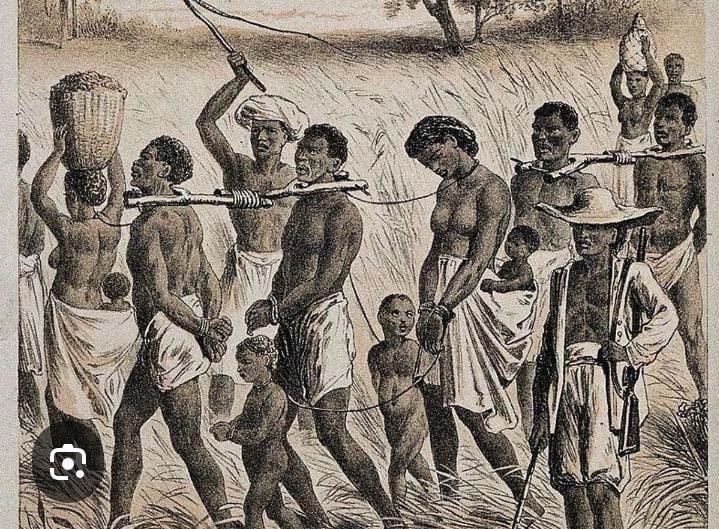
Nigeria, given its demographic weight and historical significance, ought to be at the forefront of this renewed global push for repara ons. That this leadership role appears to have shi ed to countries such as Ghana is both telling and troubling. It reflects a broader absence of strategic clarity in Nigeria’s foreign policy posture. Leadership on this issue is not merely symbolic; it is a moral and diploma c impera ve.
Africa must return to the trenches, drawing inspira on from the methods of agita on and mobilisa on that characterised the an colonial move-
...Briefly: A Bad Saturday
THE rains wrought significant havoc in Osogbo last Saturday, leaving in their wake destruc on, displacement, and distress. Homes were damaged, businesses disrupted, and livelihoods threatened in a manner that underscores the growing intensity of extreme weather events. What occurred is not an isolated incident, but part of a troubling pa ern that demands urgent a en on.
It is increasingly evident that warnings about climate change must be taken far more seriously. The frequency and severity of such incidents point to a shi ing environmental reality that can no longer be ignored or treated with complacency. Preparedness must replace reac on as the guiding principle of governance in this era.
Governments at all levels must therefore adopt a proac ve and ancipatory framework, working closely with meteorological services and disaster management agencies. Ins tuons such as Nigerian Meteorological Agency and Na onal Emergency Management Agency must be strength-
ened, properly funded, and equipped with modern tools to deliver mely forecasts and coordinate rapid responses. This is no longer merely an environmental concern but a ma er of public safety and na onal security, as disorder and opportunis c criminal ac vity can arise in the a ermath of disasters.
Our hearts go out to all those affected in any way by last Saturday’s events. We urge the government to provide immediate succour and to take decisive steps to prevent a recurrence. The lessons from this incident must not be lost. Instead, they should serve as a catalyst for meaningful acon and a renewed commitment to safeguarding lives and property.
ments and the global struggle against apartheid in South Africa. Today, however, the tools have evolved. Digital pla orms, transna onal advocacy networks, and data driven campaigns offer unprecedented opportuni es to amplify the call for jus ce and res tu on.
Economic diplomacy must also become a central pillar of this effort. Trade nego a ons, par cularly those involving the extrac on of Africa’s mineral wealth, should incorporate clauses that recognise and support repara ve jusce. The African Union must take the lead in formula ng a binding charter, one that ensures a unified African posi on in all interna onal engagements. Repara ons should not be treated as an abstract moral appeal but as a concrete nego a ng framework.
There must be no illusion about the magnitude of the task ahead. Entrenched interests, both within and outside the con nent, will resist fiercely, seeking to preserve the status quo. Yet history shows that sustained, coor-
“Equally important is the need for internal accountability. African governments must demonstrate that any reparative gains will be transparently managed and channelled towards genuine development, including education, healthcare, infrastructure, and historical restitution projects”
dinated pressure can yield transformave outcomes.
Civil society will play a decisive role in this regard. By forging alliances across con nents, grassroots movements can build and sustain the momentum required to compel ac on. The example of interna onal trade unions during the an apartheid struggle, refusing to handle South African goods and thereby exer ng economic pressure, remains instruc ve. Such principled solidarity disrupted the apartheid regime’s economic stability and hastened its demise. This is the template for contemporary advocacy.
Furthermore, the intellectual and moral framing of repara ons must be strengthened. Universi es, think tanks, and policy ins tutes across Africa and the diaspora should collaborate to produce rigorous research that quan fies the economic losses of slavery and colonial exploita on. A well documented eviden ary base will not only strengthen Africa’s case but also counter attempts to dismiss repara ons as merely symbolic or imprac cal.
Equally important is the need for internal accountability. African governments must demonstrate that any repara ve gains will be transparently managed and channelled towards genuine development, including educa on, healthcare, infrastructure, and historical res tu on projects. Without credible governance structures, the moral force of the repara ons argument risks being undermined.
Finally, the diaspora must be fully integrated into this movement. Descendants of enslaved Africans across the Americas and Europe represent a powerful cons tuency whose voices can influence public opinion and policy in their respec ve countries. A coordinated global African front, spanning the con nent and its diaspora, would significantly enhance the legi macy and reach of the campaign.
OSUN DEFENDER
ISSN : 0794-8050
Telephone : 0809-301-9152
Website : www.osundefender.com/index.php e-mail : osundefenderhq@gmail.com osundefenderbank@gmail.com
All correspondence to the above email addresses.
The French philosopher Victor Hugo once observed that all the armies of the world cannot withstand the force of an idea whose me has come. The call for repara ons is such an idea. It must now be pursued with clarity, unity, and unwavering resolve, and linked strategically to broader demands such as debt relief and economic jus ce. The Nigerian government, in par cular, must awaken from its iner a and assume its rightful place at the forefront of this historic struggle.

MONDAY, MARCH 30, 2026 VOL. 21 NO 25 www.osundefender.com, email: osundefenderbank@gmail.com
THE non inclusion of State Police in the Cons tu on was an error. It was a grave omission. The lapse occurred in 1976, forty-six years ago.
No one could have imagined forty-six years ago that our security challenges would become so grave to this level, that we now live in perpetual fear at the mercy of terrorists, kidnappers, Boko Haram, ISWAP, poli cal thugs, armed robbers and the rest.
Who could have imagined that our country will be so mismanaged like this, to the extent that we are experiencing depression and bewilderment of crippling fear like a nagging hound of hell pursuing our every footstep, certainly no one.
Instead of emo onal lamenta on, bewailing or grieving, if we really wanted State Police, we could have had it. No need crying over spilled milk. There is no use stressing out over things that have already happened.
But if we have really wanted State Police, that blunder should have been corrected by now. And perhaps our security apparatus would have improved. For some of us who grew up in this country before independence and even during the first Republic, we experienced the services of regional police and local government na ve police called AKODA.
If you look at Sec on 106(4) of the 1963 Cons tu on, the establishment of regional police was recognized. The Sec on states that “Subject to the provisions of subsec on (3) of this sec on, the Commissioner of Police of a Region shall comply with the direc ons of the Premier of the Region or such other Minister of the Government of the Region as may be authorized in that behalf by the Premier with respect to the maintaining and securing of public safety and public order within the Region or cause them to be complied with:”
When we have issues like the crea on of State Police, we have no choice than to trace how the Presiden al Cons tuon was made with par cular reference to the founding fathers no ma er how o en we make that reference. They are the framers of our cons tu on. Moreso, when our Presiden al Cons tu on did not pass through a referendum, plebiscite, ini a ve or mandate.
General Johnson Thomas Umunnakwe Aguiyi-Ironsi MVO, MBE (3 March 1924 – 29 July 1966), the first Military Head of State of Nigeria, on assuming power on January 1, 1966, suspended
“The issue of possible conflict between the State and Central government on the control of police operations, especially where the state government concerned is from a party which is not a the same as the party in control of the central government was raised”
PERSPECTIVE
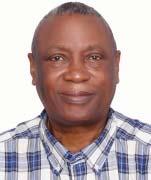
BY ERIC TENIOLA
The Blunder In Not Having State Police
the 1963 Cons tu on and with it, the Regional Police. General Ironsi promulgated the Cons tu on (Suspension and Modifica on Decree 1966) , Decree 1 dated January 17, 1966 but not published in the official gaze e un l March 4, 1966. The decree pronounced the death of Regional Police.
Even in his speech at the Lugard Hall in Kaduna on April 19, 1967, at a mee ng with Emirs and Chiefs, the then Military Governor of the Northern Region, Lt-Colonel Hassan Usman Katsina (31 March 1933 – 24 July 1995) emphasized that Regional Police and na ve authority had become a thing of the past. He said on that day that “one of the main features of the Panel’s recommenda ons was a closer control of the na ve courts of the Government. The taking over of the nave courts by the Government was in fact accepted in principle by the civilian Government and judging from some of the legisla on it had passed since 1958 there is no doubt that it was working towards the goal” he declared. Throughout the tenure of General Yakubu Gowon (87) GCFR from 1966-1975, there was no men on on the need to create State Police.
It was against this background that the Cons tu onal Dra ing Commi ee was announced by the then Head of State in 1975, General Ramat Murtala Mohammed (8 November 1938 – 13 February 1976) on October 1, 1975 in his broadcast. The commi ee was headed by Chief Frederick Ro mi Alade Williams, QC, SAN (16 December 1920 – 26 March 2005). The commi ee then established seven sub commi ees. The subcommi ee on Public Services including the Armed forces and the Police was headed by Dr. Obi Wali (February 27, 1932-26 April, 1993). Other members of the subcommi ee were Alhaji Ahmed Talib, Colonel M. Pedro Mar ns, Dr. O. Idris, Mr. A. Makele, Alhaji Mamman Daura and Chief Ekanem Ita.
Alhaji Ahmed Talib was the Chairman of New Nigerian Development Bank and the former deputy governor of Central Bank of Nigeria.
Chief Ekanem Ita, who died on Thursday, 03 September, 2009, was a former Registrar and Secretary to Council of the University of Ibadan (1982 – 1994). High Chief Ekanem-Ita a ended the University College, Ibadan, from (1960 – 1963); Columbia University, New York, U.S.A.(1972-1973) and University of London Ins tute of Educa on, (1989). He obtained a B.A. (Hons) History (Ibadan), a Masters Degree (Columbia), a Cer ficate in University Administra on (Lon-
don) and was honoured with a Doctor of Literature degree by the University of Calabar. High Chief Ekanem-Ita was a Government, a Rockefeller Founda on and a Bri sh Council Scholar. He joined the services of the University of Ibadan as a Graduate Assistant/Administra ve Officer in 1963, was promoted Assistant/ Senior Assistant Registrar (1968 -1975), became a Deputy/Senior Deputy Registrar (1975-1982) and was the Registrar and Secretary to Council, Senate, Congrega on and Convoca on from 1982 to 1994. The late High Chief Ekanem-Ita was a member of the American Associaon for Higher Educa on, Washington; Associa on of Commonwealth Universies; Interna onal Associa on of World Universi es and the Interna onal Commi ee of University Administrators. He was a member of the FG/NUC Panels on University Administra on Review; a ProChancellor and Chairman of Governing Councils of Nnamdi Azikiwe University, Awka (1997-2000) and Cross River State University of Technology (2000 – 2003). Some other na onal assignments included membership of the Cons tuon Dra ing Commi ee (1975-76); and membership of the Visita on Panel to Rivers State University of Science and Technology (1995-1996 and 2005-2006). A tradi onal tle holder, late High Chief Ekanem-Ita was the Ada-idaha-ke-Eburutu; Etonwed Efik Eburutu; Mkpisong Ukara Ekondo Efik; Ikpamfum Calabar and Ntufam of Qua Na on, Calabar. High Chief Ekanem-Ita who was nick-named ‘Registrar Emeritus’, held the record of being the longest serving Registrar in any Nigerian University, a posi on he held for twelve years!
Dr. Tajudeen Olawale Ayinla Idris(1940-2018) later served as Commissioner of Educa on in Lagos State. He was born in Epe in Lagos State. He had his educa on at the Na ve Authority School, Epe, 1947-1948, Catholic School, Lekki, 1949-1952, Ansar-Ud-Deen School, Epe, 1953-1954, Ahmadiyya College, Agegeg, 1955-1959, Northwestern Polytechnic, London, 1961-1962, London School of Economics and Poli cal Science, University of London, 1962-1966, Nigerian Law School, Lagos, 1966-1967, called to the Bar, Lagos, enrolled Solicitor, Supreme Court of Nigeria, 1967; Clerk, office of the Prime Minister, Lagos, 1960; Clerk, Standard Bank of West Africa, 1960-1961, research fellow, Nigerian Ins tute of Interna onal Affairs, Lagos, 1968-1972, legal officer, Nigerian Oil Corpora on, 1972-1976, in private prac ce, Lagos, 1976-1979, Commissioner for Educaon, Lagos State, 1979-1983, arrested in
January 1984, sentenced to life imprisonment, 1985, sentence reduced to 15 years, 1986; member, Nigeria Bar Associa on, member, Bri sh Bar Associa on; member, Nigeria Cons tu on Dra ing Commi ee, 1975-1976, former member, Electoral Law Commi ee, member, Nigerian Society of Interna onal Law, fellow, Nigerian Ins tute of Interna onal Affairs, Lagos, 1968.
Monsignor (Colonel) Pedro Ayodele Mar ns (1910-2014) was the first Lagosian to be ordained a Catholic priest, first Catholic chaplain for the Nigerian Army, and first director of the Nigerian Army Chaplain Services (Catholic). A er military service, he served as vicar-general to the Catholic Archbishop of Lagos, Olubunmi (as he then was) Okogie.
Monsignor Mar ns carried out the task with his accustomed fairness.
Born in Lagos in 1910, he was the grandson of a Brazilian slaver. His paternal grandmother was an ethnic Hausa. He grew up in a household that observed Chris an and Moslem tradi ons. This background would seem to explain his approach to his work as a priest, soldier, and public servant, indeed his en re life.
He was religious without being dogma c or doctrinaire.
Alhaji Mamman Ali Makele was born on August 20, 1940, Agbaja, Kwara State; Educa on: Secondary School, Okene, 1954-59, King’s College, Lagos, 1960-61, University of Ibadan, 1962-65, Graduate School of Public and Interna onal Affairs, University of Pi sburgh, USA, 1969-70, University of Wisconsin, USA, 1970, University of Kent, Canterbury, 1985-86, University of London, 198687; Assistant Execu ve Officer, Ministry of Establishment, Lagos, January —September, 1962;Assistant Execu ve Officer, Cabinet Office, Lagos, June — September, 1963; Assistant Execu ve Officer, Parliament, Lagos, June — September 1964; Assistant Secretary, Federal Ministry of Economic Development, Lagos, July —October, 1965; Administra ve Officer, University of Lagos, 1965-67; Assistant Registrar/Principal Assistant Registrar, Unilag, 1967-76; Director, Nigerian Ports Authority, 1971-75; Commissioner for Economic Development, Kwara State, 1975-77; member, Cons tu on Dra ing Commi ee, 1976-77; Deputy Registrar, University of Lagos, 1976-80; Chairman, Leven s Group of Companies Scholarship Commi ee, 1976-80; Chairman, Public Accounts Commi ee, Kwara State, 1977-79; Director and Chair man, Chase Merchant Bank Nigeria Limited, 1977-80; Ac ng Cabinet Minister, Department of Steel Development, Office of the President of Nigeria, 1980-81; Cabinet Minister for Steel Development, 1981-83; Poli cal Par es: member, defunct Northern Peoples Congress Students’ Wing, University of Ibadan, 1963-65; member, Na onal Execu ve Commi ee, banned Na onal Party of Nigeria, 1978-83; member, Kwara State Economic Planning Board, 1972-75.
Alhaji Mamman Daura, was born on the 9th November, 1939 in Daura, in the present day Katsina State. He started his educa on at the Daura Elementary School, 1946-1949, Katsina Middle Secondary School, 1949-1954, Bournemouth College of Technology, England, 1958-
•Read full article on www.osundefender.com
•Teniola is a former Director at the Presidency, wrote from Lagos.
OSUN DEFENDER is published by Moremi Publishing House Limited, Behind Oranmiyan Building, Gbodofon, Off Gbongan Road, Osogbo, Osun State. All correspondence to the Deputy Editor, MICHAEL BAMIGBOLA, Telephone: 0809-301-9152. ISSN: 0794-8050. Website: www.osundefender.com Email: osundefenderbank@gmail.com, osundefenderhq@gmail.com