
NIGERIANS DRAG ADELABU ON SOCIAL MEDIA AS CRISIS BITES HARDER
•We Can No Longer Cope Under ‘Minister of Darkness’ - Netizens
Embarrassment. Shame Kunya
Ayisha Osori being aware of having done something wrong or foolish Like leaving a fly unbu oned or realizing hours a er a meal that you have food debris stuck between your front teeth
These are a few of the words used to describe the feelings that many Nigerians had a er watching Daniel Bwala on Mehdi Hasan’s Head to Head (youtu be/ygdNgnTzl6A) on Aljazeera that aired March 6 2026.
Kunya – is the Hausa word for shame i e , a distasteful emo on that comes from
None of these examples capture the scale of deep, personal embarrassment that I had from being part of that conversa on. Within minutes, I felt a chill. Then I felt hot Then back to cold and the swings in sensa on came
some mes with the bursts of laughter from the audience and I felt hundreds of pinprick-like sensa ons over my body and felt as I listened, a semi hallucinatory haze upon me Honestly, I have, un l now, never felt such shame in my life; maybe I have lived a fairly sheltered one for which I am grateful. This experience made me realize that despite what I say about Nigeria, in private and public, I s ll love Nigeria. That can be the only
explana on for how terrible I felt at the an cs and u erances of Bwala, Special Adviser to the President on Policy Communica on.
As Nigerians pour over the 40-minute video, write, and create the usual memes, I feel compelled to share my thoughts.
It is not only about how Bwala trivialised the insecurity that has cost many lives, or downplayed the breath-

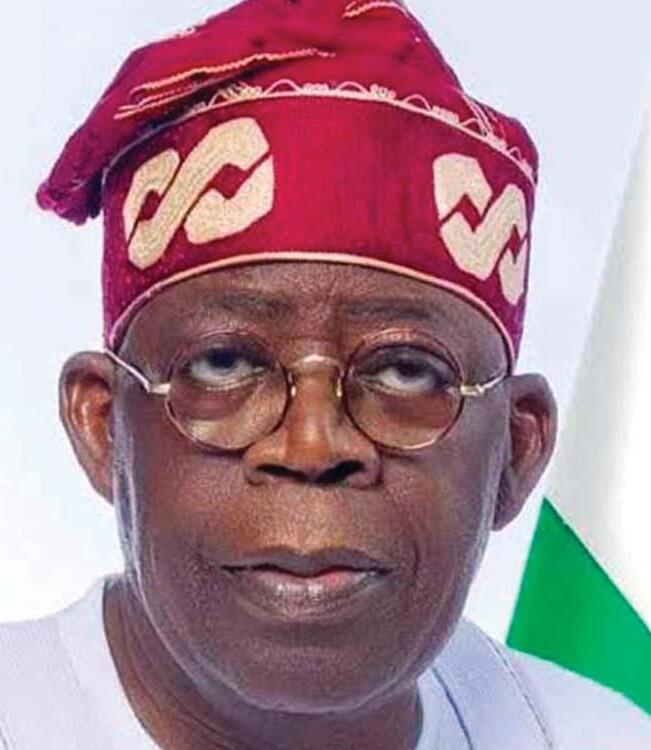
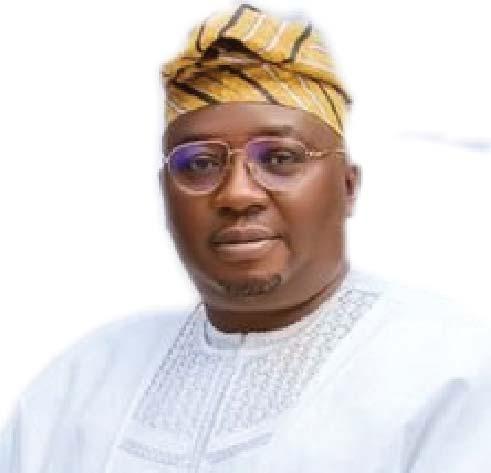
NI G E R I A’ S Minister of Power, Adebayo Adelabu, is facing renewed backlash across social media pla orms, par cularly X (formerly Twi er), as Nigerians vent frustra on over persistent electricity outages and the con nued fragility of the na onal grid.
OSUN DEFENDER reports that the cri cism intensified following recurring blackout across the country and controversial comments previously made by the minister regarding electricity consump on in Nigeria
Nigeria’s power sector has struggled for decades with weak infrastructure, limited genera on capacity and repeated grid disturbances
At several forums and pressers, the minister has over me admi ed that the na onal grid, some parts of which are over 50 years old, remains vulnerable to collapse due to aging equipment and inadequate investment.
But for many Nigerians online, those explana ons have done li le to ease anger
Social media backlash
On X, ci zens have responded with sarcasm, ridicule and outright condemna on
One user, @truetalk2024, wrote: “Oga minister sir This is why every house should have a prepaid meter so that you pay according to use Abroad people leave their AC and fridge on too. Stop comparing Nigeria with abroad please.”
Another user, @Nature nurtured, mocked the minister’s policies: “Don’t worry Years later when you re re and start paying the electricity hike you proposed, you will understand how it feels.”
Other reac ons circula ng on X include: @official lola_t “I am sure the Na onal Grid has fallen again But shame won’t allow Adelabu admit it.”
@Ozzmanic “ The moment Adelabu was pos ng mansion pictures during a na onal grid collapse I knew we were in trouble.”
According to @Chidi EnergyWatch, “Nigeria has over 200 million people and we s ll struggle to generate barely 5,000MW. What exactly is the Minister of Power doing?”
@ N a i j a P olicyGuy wrote: “Adelabu says grid collapse is inevitable be-
cause infrastructure is old
That means government has accepted failure as policy ”
@IAmTosinWrites said, “Electricity tariffs keep rising but supply keeps falling. Someone needs to explain the logic.”
“Imagine paying Band A tariff and s ll sleeping with generator noise every night,” noted. @AdaezeReports
@KayceeAnalyst also said “Nigeria’s grid collapsing mul ple mes in a year would be a na onal scandal anywhere else.”
Viral sa re
Beyond cri cism, Nigerians have also turned the situa on to sa re.
One widely circulated message mockingly crowned the minister with exaggerated tradi onal tles in Yoruba: “His Royal Highness, The Olokunkun of Okunkunland… Wiwo ni Na onal Grid ma n wo Eyan Powerbank… Alase Ekeji Solar Panel, Ore mo mo Generator.”
The phrase loosely translates into a bi ng jab sugges ng the minister merely “watches the naonal grid collapse” while ordinary Nigerians survive using power banks, solar panels and generators.
OSUN DEFENDER gathered that the worsening power situa on across the country has con nued to cripple business, shutdown cri cal manufacturing industries amidst other socio-economic cum poli cal implica ons.
During the outgone week, some residents of Osogbo visited the Osogbo Business District Office of the Ibadan Electricity Distribu on Company (IBEDC) to register their displeasure over the epilep c power situa on in the town.
The Chairman of the communi es under the umbrella of United Communi es, Mr Sulaiman Buruji, led residents to the IBEDC office to submit the communiqué.
The affected communies include Owo-Eba, Garage Ilesa, Tara, Oke-Bale axis, OSBC area, Uniosun axis, Air Force Base, Army Depot, Boredun, Coker, Odu and Omu.
In the communiqué, the communi es asked IBEDC to restore them to Band A.
They stated that since the reclassifica on of the communi es from Band A to C, they have been subjected to grossly inad-
MONDAY, MARCH 09, 2026
Insecurity: How Osun Community Paid N70m To Bandits Within 50 Days To Secure Kidnap Victims
ORA Igbomina, a community on the OsunKwara boundary in Ifedayo Local Government Area of Osun State, is currently deserted following the recent kidnapping cases that rocked the agrarian community.
OSUN DEFENDER reports that three people were kidnapped in the town between December 2025 and February, 2026, a situa on sources said has caused panic among residents of the area.
The first incident happened on December 15, 2025, when gunmen a acked the community and abducted a re red Customs officer, Emmanuel Owolabi.
The vic m’s wife, Ti layo, stated that the incident occurred in front of Owolabi’s house on Akisa Road, Ora, a few minutes before 7 p.m.
Ti layo, while narra ng the incident, said her husband had visited her shop shortly a er she closed for the day.
“While he headed to another loca on in the town, I returned home to prepare dinner,” the wife said.
She added that she heard gunshots at the entrance to their compound, while waiting for her husband a er finishing the meal.
“When I got home, I cooked and was about to serve my children when I heard a gunshot. I ini ally thought the shots were from hunters who some mes come around, but the gunshots became sporadic. Later, I heard my husband’s voice outside our fence.
“I didn’t know he was being held by bandits. I went out to check what was happening. One of the gunmen jumped over the fence into our compound. Those I saw were young boys. I knelt down and spoke Hausa to him because they were speaking Hausa. Instead of responding, he started bea ng me.
“He asked me for money. While all these were going
•As Residents Desert Town Over Attacks
release them.
They were released on March 03, a er the gunmen collected millions in ransom.
OSUN DEFENDER reliably gathered that the community paid over N70 million naira to secure the release of the three vic ms.
In the first case, OSUN DEFENDER gathered from impeccable sources that the community paid the sum of N26.5 million to secure the release of Mr Owolabi from the kidnapper’s den.
told OSUN DEFENDER.
Another source said over N40 million was paid to the bandits who abducted Adeyeye and Adewumi before their release on March 03.
The source said apart from the money, the bandits also collected a new motorcycle and mobile phones as part of the ransom.
According to him, the bandits ini ally requested N100 million to release the vic ms. He said the community first paid the sum of N34 million a er which another sum in excess of N10 million was paid to the kidnappers.
•Continued from page 1
equate power supply.
The communiqué noted that, contrary to the Electricity Distribu on Service Reflec ve Tariff framework, which s pulates a minimum of 12 to 16 hours of daily supply for Band C, the communi es receive barely four hours of electricity per day.
It added that, in some instances, an en re day may pass without electricity supply.
According to the communiqué, the impact of the epilep c power supply has been devasta ng, with residents experiencing severe hardship and small-scale businesses on the verge of collapse.
“Corporate ins tu ons
on, they were firing shots. The next thing I heard was the sound of a motorcycle conveying my husband towards the bush.”
“Yes, the community rallied around and thanks to Asiwaju of Ora-Igbomina, we were able to pay the money. The kidnappers had demanded more than that before but later reduced the ransom.
Two weeks a er Owolabi’s release, the bandits on February 1, again, abducted two other residents of the town – Tayese Adeyeye and Sunday Adewumi.
Owolabi was however, released on January 13, in Oro Ago, a community in the Ifelodun Local Government Area of Kwara State a er the payment of ransom.
•Continued from front page
taking brutality with which Nigerians are frequently attacked like the massacre (premiumtimesng.com/news…) of between 120 - 160 people in Kaiama, Kwara state that happened just days before the interview with Mehdi was recorded. It is not his inability to give any clear answers, nor is it about the evasiveness of his responses and his theatrical a empts at deflec on; as a friend put it, ‘This guy has never done anything other than exude buffoonery’. It is also not merely about how he has disgraced the government he represents - showing clearly what the Tinubu administra on thinks of Nigerians and our collec ve efforts at accountability.
As I sat there listening to Bwala’s deflec ons and denials about the reality of Nige-
The vic ms were reportedly seized by the assailants during an a ack on a private residence along Aran-Orin Road in the Papa area of the town.
Following the abduc on, the kidnappers reached out to the vic m’s family and demanded N100 million to
“They first collected N20 million a er which they demanded another N10 million and an iPhone. But a er much begging, they collected an addi onal N6.5 million to make the money N26.5 million naira,” one of the sources
‘Because Y Has Two Heads And A Long Tail’, Daniel Bwala Responds To Mehdi Hassan
rians and his past statements and comments about Tinubu, all I could think is…what type of person is Tinubu to appoint this man as his spokesperson? That was the thought that raced through my mind and the possible answers added to the instant fever that gripped me. Faced with the knowledge of all the very public indictments Bwala has made about Tinubu’s character and an cs, why, out of over 200 million Nigerians (if you believe our popula on esmates) did Tinubu think: here is a man that can represent me and speak for the Federal Republic of Nigeria?
This a presiden al spokesperson who said at one point as Hasan pushed him on a ques on, asking ‘why’, ‘why’ ‘why’? Bwala responded with: ‘because Y has a long tail and two branches”. I wanted to
Electricity Woes: Nigerians Turn Social Media On...
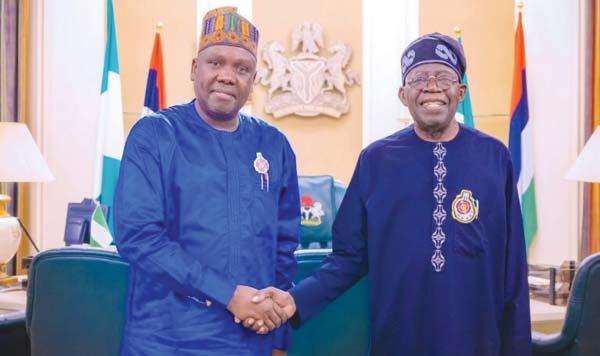
•Tinubu with Buala are also significantly affected.
“For instance, the Osun State Broadcas ng Corpora on has reportedly been constrained to transmi ng for less than six hours daily due to inadequate electricity supply,” the communiqué stated.
The communi es demanded to be restored to Band A classifica on within seven days, urging IBEDC management to urgently rec fy the supply deficit in line with the s pulated minimum hours of electricity per band.
The communiqué stated that failure by IBEDC to comply with their demand within the stated meframe would compel the communi es to take lawful and col-
lec ve ac ons, including reconsidering the opera onal access of IBEDC personnel within the communi es.
Moun ng pressure on government
For cri cs, the ongoing electricity crisis has become a symbol of broader governance challenges under the administra on of Bola Ahmed Tinubu.
With businesses increasingly relying on generators and households spending heavily on alterna ve power sources, public frustra on con nues to mount.
And on social media, the verdict from many Nigerians is blunt and un l the lights stay on, no explana on from the minister or the government will silence the outrage.
enter the ground. For an audience that had been cackling all evening, the room fell into uneasy silence. This has been cut from the final edit, but I share so those of us who suffer kunya on other people’s behalf can know just how bad it was. This nonsensical response that we used as children should have no place where a government official is discussing the insecurity that has claimed so many lives in Nigeria.
So, why is Bwala in this posi on?
The first considera on is that Tinubu is a person who enjoys, immensely, the power that he can have over man and his behavior. It is why he can bring into government men who have said awful things about him, albeit things that are in the public, and make them eat their words. Tinubu can command them to swallow their vomit in the same public and they do so gladly. This solves the mystery of the Fani Kayodes, and Omokris in this administra on. Some of us think ea ng our words in such a way is the ul mate humilia on…but we could be wrong. Bwala obviously does not consider his ou ng on Head-to-Head a disgrace. He has shared links to the video on social media with his considerable following of over one hundred thousand followers. We, ordinary Nigerians, are not his audience. His audience is for the person who appointed him. ‘See. See how I dance naked, without a care in the world. Oh, what wouldn’t I do for you’.
Which brings me to the second considera on of ‘why’ which is what Tinubu rewards and according to stories flying around, the fi-
nancial perks are allegedly immense. Our lives are only part of a game that Tinubu and those he surrounds himself with play. He is a man that demands loyalty and obeisance and that ma ers more than ap tude or integrity; ma ers more than how the common wealth is being looted or how power is being abused by his appointees. It maybe that persons with integrity cannot really be loyal in the way that he demands. This explains those around him, the ever-growing group of deplorables: the Wikes, Akpabios, Umahis, Bagudus, Matawalles et al.
Finally, the third considera on is that Tinubu too has no shame. If he did, he would not appoint into office, as spokespersons, ambassadors etc. people who are on record as having characterized him as a person unfit for public office. Definitely not fit for the highest office in the country. He does not care that by pulling them into his orbit of power for perpetual humilia on he con nues to reinforce the things his appointees have said about him, keeping those insults in the public –like Bwala’s, ‘even if you give Tinubu 30 years nothing will work’. Everything is poli cs to these people; at the cost of our lives, our well-being, and the progress of our society. And if everything can be sacrificed on the altar of poli cs then Shame is the first to die.
So yes, lets laugh (or cry) about Bwala, accept (or reject) his shame (or the lack thereof) but the real quesons, the hard ones, about the future of Nigeria should really be about Tinubu.
He said, “The bandits collected over N40 million before they released Oyekanmi and Busayo. A er they were kidnapped, they called their families and demanded N100m.
“The community first paid the sum of N34 million. A er that, we begged the bandits to reduce the money which they did and requested addi onal N20 million and a motorcycle.
“Although I was not sure the community paid the addi onal N20 million in full, I know they paid more than N10 million in addi on to the first N34 million and gave the bandits a new motorcycle and mobile phones before the vic ms were released.”
Speaking on the mood of the community, the sources said people are leaving the community over fear of being the next vic ms, adding that some farmers no longer go to their farms while those who go do not stay long.
“It is a serious situa on. People now live in fear and some have even le the community. The past months have been hell. The community is being deserted and I wouldn’t blame those leaving the community. What if the people who helped in securing the release of the kidnapped vic ms were not there for them, maybe we would be talking about another thing today.”
Meanwhile, the Asiwaju of Ora-Igbomina, Dr. Yemi Farounbi, has appealed to the governments of Osun, Kwara and Eki States to establish a strategic security alliance aimed at strengthening internal security.
He made the appeal in a statement announcing the release of Adeyeye and Adewumi.
Farounbi also confirmed that “several millions of naira were paid as ransom, along with a motorcycle and mobile phones, we give thanks to God that they are alive and back with us safely.”
He equally called on the Federal Government of Nigeria to urgently deploy more soldiers and police personnel to the boundary areas with Kwara and Eki , no ng that criminal elements o en exploit these routes to carry out a acks.
THE recent nomina on of Mr Taiwo Oyedele for a ministerial appointment has once again drawn atten on to the increasingly predictable process of confirma on in the Nigerian Senate. The familiar ritual of “take a bow and go” has become so entrenched that few now expect any meaningful scru ny of nominees. What ought to be a rigorous legisla ve exercise involving careful examina on and cross examina on to ascertain competence and suitability has gradually turned into a ceremonial exercise. This derelic on of duty carries consequences for governance, yet it has regre ably become the opera ng norm.
Mr Taiwo Oyedele arrives with creden als that stand out in Nigeria’s public policy landscape. Over the years he has built a strong reputa on in the front ranks of interna onal professional services, demonstra ng exper se that goes beyond the confines of local prac ce. In recent years he has also played a significant role in placing the ques on of Nigeria’s tax system firmly in the centre of na onal debate. By doing so he has helped elevate a conversa on that Nigeria can no longer postpone.
The discussions around tax reforms have inevitably generated controversy. Yet beneath the disagreements lies an emerging consensus that Nigeria must gradually move away from a parasi c system of socio economic rela onships that relies heavily on rent extrac on rather than produc vity. The new direc on being contemplated is one anchored on produc on where economic output generates sustainable revenue streams capable of suppor ng development. In such a framework higher revenues translate into shared prosperity which in turn forms the founda on of a stable and enduring democra c order.
Within this evolving policy environment an important ques on arises. What precisely will be the role of Mr Oyedele as Minister of State for Finance. Given both his professional strengths and the difficult fiscal situa on confron ng Nigeria clarity about his remit is essen al. His appointment should not merely add another layer to the bureaucra c hierarchy. Rather it should serve as an opportunity to rethink and restructure the opera onal architecture of the Ministry of Finance itself.
One op on worth serious considera on is the revival, at least in func onal terms, of the role once known as the Financial Secretary to the Government. Though not cons tu onally mandated such a posi on could provide the structural clarity needed for effec ve financial governance. Several influen al roles in modern governments are not cons tu onally defined yet remain central to administra on. The office of Chief of Staff in the United States is one such example. A designa on similar to Financial Secretary would therefore help clarify responsibili es, elevate ins tu onal focus and signal a serious commitment to fiscal discipline.
Historically the posi on of Financial
“Ultimately the significance of Mr Oyedele’s appointment lies not only in the individual but in the structure that will define his responsibilities. Appointments without institutional clarity often waste talent rather than harness it”

Taiwo Oyedele’s Appointment: Beyond The Title, Structure Matters
Financial

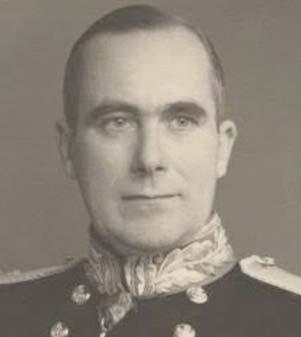
Secretary played a crucial role during the colonial period, par cularly before the establishment of a central Minister of Finance. The office func oned as the nerve centre of public finance overseeing government spending, ensuring internal controls and enforcing due process in public expenditure. The last occupant of this office in Nigeria was Hugh Foot, later Lord Caradon, a member of the dis nguished Foot family in Britain. His rela ves included Sir Dingle Foot who served as counsel during the 1962 treasonable felony trial of Chief Obafemi Awolowo, and Michael Foot who later led the Bri sh Labour Party and served as Leader of the Opposi on in the House of Commons. The significance of this reference lies not in nostalgia but in understanding how pivotal the office once was in shaping fiscal discipline.
Even the United Kingdom has retained a version of this structure in the modern era. The Financial Secretary to the Treasury remains a junior ministerial role within government assis ng the Chancellor of the Exchequer with financial management, tax policy and public administra on. The posi on o en attends cabinet mee ngs and func ons as an important coordina ng figure within the Treasury system. Such a framework illustrates how careful ins tu onal de-
sign can strengthen fiscal governance and ensure coherence in financial policy.
In Nigeria’s context a modern equivalent of this role could become the engine room for revenue mobilisa on and fiscal discipline. The remit of the person func oning, if not in name but in effect, as the Financial Secretary would not only be to bring in and aggregate revenues but also to streamline the process of public spending. The country must move away from the present fraud propelled system and replace it with a Performance Planning Budget System. Such a model was briefly a empted during the final months of the Shehu Shagari administra on when the late Omowale Kaye served as Director of the Budget. Unfortunately the military interven on that followed abruptly terminated the ini a ve. The idea deserves serious reconsidera on today.
Nigeria’s budget process is currently hampered by a structural imbalance.
HIGHLIGHTS
•The appointment of Taiwo Oyedele should be used as an opportunity to undertake a structural reform of Nigeria’s public finance system.
• A new framework should signal a clear shift in thinking. Nigeria must move away from the debilitating rentier state towards a proper federal system anchored on production as the primary driver of revenue and economic growth.
• Taiwo Oyedele possesses the necessary curriculum vitae and professional competence. However, the country must avoid turning the appointment into another round of musical chairs in government. It must not become another “cometh the man” narrative. Rather, it should form part of a deliberate redefinition of the operating model of the nation’s public finances.
Revenue genera on remains inadequate to sustain even modest capital expenditure targets. This is incompa ble with any ra onal development strategy. If Nigeria is to create millions of sustainable jobs and address its expanding demographic pressures capital spending must grow significantly. Such expansion however cannot occur without a robust system for genera ng and managing revenue. A revitalised financial coordina on structure led by a figure with the competence and vision of Mr Oyedele could play an important role in achieving this objec ve.
Encouragingly Nigeria appears to be moving, however slowly, towards a new economic orienta on. There is a growing recogni on that the ren er model built on the distribu on of oil revenues is no longer sustainable. The shi towards a produc on driven economy supported by improved revenue frameworks and ins tu onal reforms offers the possibility of shared prosperity and long term democra c stability. This broader shi is also reflected in other structural debates including the increasing acceptance of the need to devolve elements of the internal security framework in order to improve effec veness and accountability.
OSUN DEFENDER
Publisher – Moremi Publishing House Ltd.
Deputy Editor – Michael Bamigbola
Asst. News Editor – Yusuf Oketola
Deputy Photo Editor – Shola Aderinto
Deputy Graphics Manager – Zainab Olalere
Produc on Controller – Petkola Taiwo Ibitowa
OSUN DEFENDER is published by Moremi Publishing House Limited, Behind Oranmiyan Building, Gbodofon, Off Gbongan Road, Osogbo, Osun State.
ISSN : 0794-8050
Telephone : 0809-301-9152
Website : www.osundefender.com/index.php e-mail : osundefenderhq@gmail.com osundefenderbank@gmail.com
Ul mately the significance of Mr Oyedele’s appointment lies not only in the individual but in the structure that will define his responsibili es. Appointments without ins tuonal clarity o en waste talent rather than harness it. If Nigeria is serious about fiscal reform and economic transforma on it must ensure that capable individuals are supported by well designed ins tu onal frameworks. The challenge before government therefore is not simply to confirm the nominee but to define the structure through which his experse can be fully deployed in the service of na onal development.
All correspondence to the above email addresses.
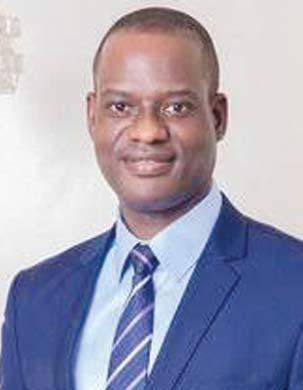
•Taiwo Oyedele
•Office of the Financial Secretary during the colonial era in Nigeria, Marina, Lagos
•Hugh Foot (Lord Caradon),
Secretary to the Colonial Government in Nigeria

MONDAY, MARCH 09, 2026 VOL. 21 NO 19 www.osundefender.com, email: osundefenderbank@gmail.com
EVERY year on March 8, millions of people around the world commemorate Interna onal Women’s Day (IWD), a global event dedicated to celebra ng the social, economic, cultural and poli cal achievements of women while renewing the call for gender equality and women’s empowerment.
Over the years, the day has evolved into a powerful interna onal movement that brings together governments, civil society organisa ons, advocacy groups and individuals to reflect on progress made in advancing women’s rights and to highlight the work that s ll lies ahead.
As the world mark the Interna onal Women’s Day in 2026, the occasion once again provides an opportunity not only to celebrate women’s achievements but also to reaffirm the collec ve commitment to building a more inclusive and equitable society.
The observance of Interna onal Women’s Day date back to the early 20th century when women in Europe and North America began organising protests and campaigns to demand fair wages, improved working condi ons and the right to vote.
These early movements laid the founda on for a broader global struggle for women’s rights. Over the decades, the observance gained increasing interna onal recogni on as a symbol of advocacy for gender equality.
In 1975, the United Na ons officially began observing Interna onal Women’s Day, further eleva ng its global significance. Since then, the organisa on has used the annual event as a pla orm to mobilise atten on around key issues affec ng women and girls, including access to educa on, healthcare, economic opportuni es and protec on from gender-based violence.
Across con nents, women have con nued to shape socie es through leadership, innova on and resilience. From grassroots community organizers to world leaders, women are influencing policies, driving economic growth and strengthening democra c ins tu ons. In many countries, women are increasingly occupying posions once dominated by men, including roles in government, corporate leadership and the media.
Despite these gains, gender inequality remains a major global concern. Many women and girls s ll face barriers such as unequal access to educa on, limited economic opportuni es, gender-based violence and underrepresenta on in decisionmaking spaces. Interna onal Women’s Day therefore serves not only as a celebra on but also as a call to ac on for governments, ins tu ons and individuals to address these challenges.
“Despite significant progress in recent decades, millions of women still face barriers such as discriminatory laws, economic disparities, gender-based violence and limited access to justice. By focusing on rights, justice and action, the UN is calling on governments, policymakers and institutions to adopt and implement policies that protect women from violence, promote equal opportunities and ensure fair representation in decision-making processes”
PERSPECTIVE BY OLUFUNMILAYO ADEBOMI OJO, PHD
International Women’s Day: Advancing Women’s Rights Through Collective Action
In Nigeria, women have made significant contribu ons to na onal growth and community development. From entrepreneurs building successful businesses to professionals leading innova ons in various sectors, Nigerian women are steadily breaking barriers and redefining possibilies.
Female journalists, academics and civil society advocates are also helping to amplify important conversa ons around accountability, governance and social jus ce, while inspiring younger genera ons to pursue leadership roles.
Today, the day is celebrated in many countries through conferences, policy dialogues, media campaigns, public lectures and community ini a ves designed to honour women’s achievements and promote gender equality.
The 2026 Interna onal Women’s
For more than two decades, Borno has transformed into a State of pains, tribula ons and misery but it had not always been so. It used to host one of the best University Teaching Hospitals in Nigeria and, in ancient mes, one of the grandest African civilisa ons in the Kanem-Borno Empire. Its biggest bequest to contemporary Nigerian poli cs, perhaps, is not the most disturbing Boko Haram experience but “poli cs without bi erness” exemplified by the great Kanuri, Alhaji Waziri Ibrahim; founder and leader of one of the poli cal par es that par cipated in the 1979 Presiden al Elecon – the Great Nigerian People’s Party (GNPP), a new party then that did not metamorphose from any that existed in the First Republic.
Any set of ac vi es that is targeted at decision-making and invariably determines resource alloca on, status, powerrela ons and so on in any given group or community is nothing other than poli cs. This takes place right from the smallest human unit, the family, up ll the na on and the world community as a whole, which is why – believe it or not, like it or not – every man or woman is a poli cal animal except he/she is an outcast, as explicitly stated by Aristotle.
Democracy in general, especially in Nigeria, involves poli cal ac vi es that lead to cons tu on of government: poli cal party forma on, registra on, internal elec ons, elec on of candidates and contest against candidates of other poli cal par es in general elec ons at the three ers of government – Local, State and Federal. Ordinarily, the ul mate end
Day observance carries strong messages through two major themes promoted by global organisa ons and advocacy groups.
The Global IWD campaign theme, “Give to Gain,” encourages individuals, ins tuons and communi es to support women through mentorship, opportuni es and access to resources. The concept behind the theme is simple but powerful: when society invests in the growth and success of women, the benefits extend far beyond individuals to families, communi es and na onal development.
Similarly, the United Na ons theme for the year, “Rights. Jus ce. Ac on. for All Women and Girls,” emphasises the need for concrete steps to ensure that women and girls enjoy equal rights, access to jusce and meaningful par cipa on in social, poli cal and economic life.
Together, the themes highlight a shared
message that achieving gender equality requires deliberate ac on, collabora on and sustained commitment from governments, ins tu ons and individuals.
Advocates say the “Give to Gain” theme underscores the importance of prac cal support for women in different spheres of life. Mentorship programmes for young women, increased access to educa on, encouragement for female entrepreneurship and the promo on of women in leadership roles are some of the ways socie es can drive meaningful change.
The theme also recognises the role of men as allies in the pursuit of gender equality, stressing that las ng transforma on can only occur when everyone par cipates in the effort to break down barriers that limit opportuni es for women and girls.
The United Na ons theme places emphasis on policy reforms and ins tu onal support needed to address persistent inequali es affec ng women globally.
Despite significant progress in recent decades, millions of women s ll face barriers such as discriminatory laws, economic dispari es, gender-based violence and limited access to jus ce.
By focusing on rights, jus ce and acon, the UN is calling on governments, policymakers and ins tu ons to adopt and implement policies that protect women from violence, promote equal opportunies and ensure fair representa on in decision-making processes.
•Read full article on www.osundefender.com
•Olufunmilayo Adebomi Ojo is a Doctor of Philosophy in Mass Communication. A practicing Journalist. Member of ACSPN, NIPR, NUJ and NAWOJ
Politics Without Bitterness
of these ac vi es should be the common good – services rendered by those elected (and appointed) that lead to the be erment of the society, at whatever sacrifices of self demanded. The passion and desire to serve the people should, therefore, never become a do-or-die affair, and is not something that can only be done when in government. Being in government, for men and women of excep onal ideas and capaci es only makes them serve be er.
In Nigeria, a mul tude of aberraons in the last six decades have largely turned the concept of public service upside down, exactly to its opposite – self service at the ruinous expense of society: the most culpable of which is long years of military rule that completely ended our being a republic and a federa on. It gave birth to military mentality, arbitrariness, nepo sm and corrup on, while promoting foreign culture, religions, economic and poli cal models and lack of self-esteem, value and beliefs.
In that climate of concentrated (unitary) power, considera ons for fellow humans is lost, much else service to community and society. Service became mere lip-service, a cosme c façade for a aining public posi ons for self-interest. How then will the struggle for good poli cal loca on not become cu hroat?
The greatness of Waziri Ibrahim and a few excep onal poli cians like him was their commitment and powerful examples to returning poli cs to its original
objec ve – service to the people. If the primary mo va on for poli cal engagement is genuine interest to serve the community, opposi ons are not enemies but simply fellow compe tors in the quest to serve, whosoever’s ideas, programmes, ar cula on and charisma catches the people’s fancies the most wins the most votes (even if he/she is not the best), and begins to serve, while being monitored, cri cised and challenged by the opposion – in view of the public interest and the next elec on contest. It is an Olympic in which par cipa on is what is vital, and sportsmanship the glory.
Let us not accept that “gone are those days,” just as we should not accept that in Nigeria, there are many mes more people outside wai ng their turn to steal than the people currently stealing, fainting, and offing the mic. The contemporary “soro-soke” and “not-too-young-torun” genera on, if sincere and not just a smokescreen for freedom of fraud and violent crime, must reenergise themselves with the best examples of poli cal engagements from our local history, and from global best experience and realise that there is no escaping poli cs as the ul mate engagement for social transforma on – be it an end to police brutality, reform of the Police or #EndEveryBadThingInNigeria. A new year is around the corner. There is no be er me to begin any good thing than right away and as they say “the sooner begun, the sooner done.”
OSUN DEFENDER is published by Moremi Publishing House Limited, Behind Oranmiyan Building, Gbodofon, Off Gbongan Road, Osogbo, Osun State. All correspondence to the Deputy Editor, MICHAEL BAMIGBOLA, Telephone: 0809-301-9152. ISSN: 0794-8050. Website: www.osundefender.com Email: osundefenderbank@gmail.com, osundefenderhq@gmail.com
STRIKER Striker is not the opinion of the Columnist featured above