‘Fake’ Presidency Agency: Pressure Mounts For Probe As IMF, Budget Controversy Deepen Credibility Concerns
•Opposition Leaders Fault Alleged Off-Budget Spending, Demand Accountability
•FG Denies Spending ₦8tn Outside Approved Budget
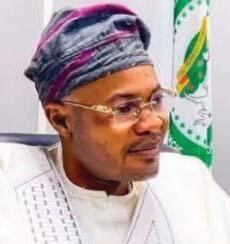
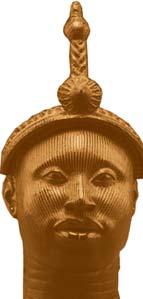
PRESSURE mounted on the Federal Government yesterday as opposi on leaders, legal experts and governance advocates demanded a thorough inves ga on into the controversy surrounding the alleged Presidenal Foreign Interven on Promo on Council, while fresh concerns emerged over the Interna onal Monetary Fund’s disclosure that billions of naira in government expenditure were undertaken outside the approved budget framework.
OSUN DEFENDER gathered that the controversy, which has dominated public discourse in recent days, centres on conflic ng claims over the existence
of the council.
While the Presidency has maintained that no such agency exists and accused one Adeniyi Adeyemi of forgery and impersona on, documents circula ng in the public domain reportedly indicate that the body appeared in the 2026 Appropria on Act with a budgetary alloca on running into billions of naira.
The development has raised ques ons over transparency in public administra on and the effec veness of ins tu onal oversight, with many Nigerians asking how an agency now described as non-existent allegedly found its way into official government records.
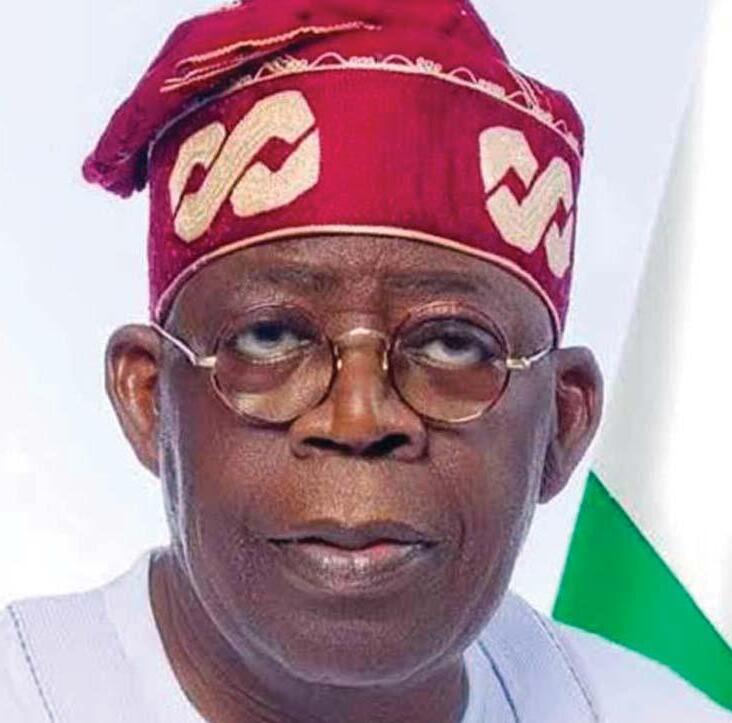
The debate intensified following comments by the IMF that Nigeria had recorded public expenditure equivalent to about two per cent of its Gross Domes c Product outside official budget documents, a development the Fund said obscured the country’s actual financing needs and weakened fiscal transparency.
Speaking in Lagos, the IMF Resident Representave in Nigeria, Chris an Ebeke, said about two per cent of GDP in government expenditure had not been reported in the budget, crea ng sta s cal discrepancies that complicated fiscal management.
According to the Fund, the expenditure was linked
to major infrastructure projects executed outside the formal budget framework, although it acknowledged that the Federal Government had begun taking steps to improve budget repor ng and transparency.
Opposi on Leaders Fault Alleged Off-Budget Spending, Demand Accountability
Reac ng to the IMF’s disclosure, the presidenal candidate of the Nigeria Democra c Congress (NDC) for the 2027 elecon, Peter Obi, accused the Tinubu administra on of entrenching what he described as “grand corrup on.”
In a statement posted on his X handle on Sun-
day, Obi alleged that about N8.83tn spent in 2025 was not reflected in the na onal budget.
“The recent report from the IMF consulta on further raises concerns about the scale of grand corrupon under the Tinubu government.
“The IMF now reveals that about N8.83tn in expenditure undertaken in 2025 is not reflected in the budget. This expenditure is not budgeted and is therefore not under legisla ve oversight or administra ve scru ny. This is horrible,” Obi said.
The former Anambra State governor argued that the amount represented more than 35 per cent of the 2025 capital budget
and exceeded the combined alloca ons to educaon and health.
“If such an amount is properly used and accounted for, it could transform Nigeria’s public health and educa on sectors,” he said, adding that the reported expenditure reflected “a pa ern of grand corrupon” under the current administra on.
Obi renewed his call for President Bola Tinubu to resign, arguing that the administra on had failed to demonstrate sufficient commitment to accountability, welfare and na onal security.
Former Vice President A ku Abubakar also demanded an independent
•Continued on page 2
JULY
‘No
Household In Osun Failed To Benefit From Positive Impacts Of Our Administration’ — Aregbesola
Hafsoh Isiaq
THE Na onal Secretary of the African Democra c Congress (ADC) and former Governor of Osun State, Ogbeni Rauf Aregbesola, has defended the legacy of his administra on, declaring that every household in the state benefited from the programmes and policies implemented during his eight years in office.
Aregbesola made the remarks on Saturday while speaking at Ipadàbọ Orànmíyàn, a free medical outreach organised for ADC leaders at the Enuwa Town Hall in Ile-Ife.
Reflec ng on his tenure as governor, the
immediate past Minister of Interior said his administra on laid the founda on for good governance in Osun and ensured that its developmental programmes reached residents across the state, irrespec ve of poli cal affilia on.
“I am not supposed to say this, but when we get to some juncture, we have to say things. Sixteen years ago, good governance commenced in Osun. We used eight solid years to deliver good governance. We made people understand the difference between God-led governance and governance imposed by force,” he said.
The former gover-
nor maintained that the impact of his administra on was felt in every
home in the state.
“In summary, there was no household or
family in Osun State that did not benefit from the posi ve impact of our eight-year administra on, including friends, foes and even our cri cs,”Aregbesola stated.
Adeleke Campaign Council Demands Release Of Full Video, Confessional Statements In Alleged Plot Against Wole Oke
THE Imole Campaign Council, TICC, a group leading the re-elecon campaign of Osun State Governor, Ademola Adeleke, has demanded the immediate release of the complete, unedited video recordings and confessional statements of the suspect arrested over an alleged assassina on a empt on the lawmaker representing Obokun/Oriade Federal Cons tuency of Osun State, Hon. Wole Oke.
OSUN DEFENDER reports that Oke, who is the Director-General of the All Progressives Congress Campaign Council, had in a statement claimed that he was allegedly targeted for assassina on by some political hoodlums in Ipetu Ijesa on Tuesday, June 30, 2026.
Following his claims, the state Police Command, on Thursday, paraded three suspects in connec on with the incident.
Addressing journalists at the command headquarters, the Commissioner of Police, Osun State Command, CP Ibrahim Gotan, represented by the Police Public Rela ons Officer, DSP Abiodun Ojelabi, iden fied the suspects as 24-year-old Olamilekan Oriyomi, 44year-old Ayotunde Ikupola Ojo and 31-year-old Fakinleye Femi.
The command said inves ga ons were ongoing and that all those found culpable would be prosecuted.
According to the police, “the incident occurred on Tuesday, 30 June 2026, when Oke and other members of his poli cal party paid homage to the Ajalaye of Ipetu-Ijesa, Oba Agunbiade Oke, before proceeding to the town hall for a meeting with party supporters.”
The police said that “shortly a er the meeting, a group of individuals suspected to be poli cal thugs and members of the Eiye Confraternity allegedly blocked the exit route of Oke’s entourage.”
The Command alleged that Oriyomi produced an English Bere a pistol loaded with four rounds of live ammuni on and was about to point it at Oke before the Divisional Police Officer intervened and subdued him, an ac on that reportedly caused panic at the venue.
The Command said intelligence-led opera ons by its Violent Crime Response Unit, VCRU, later resulted in the arrest of Ayotunde Ikupola Ojo and Fakinleye Femi on July 1, 2026, at Ipetu-Ijesa.
According to the police, “Oriyomi confessed during interroga on that he obtained the firearm from one Busuyi Akinwole Ikupola , also known as Omo-Akin, who remains at large.”
But the Imole Campaign Council, in a statement signed by its spokesperson, Pelumi Olajengbesi, on Sunday, said a video evidence now in the public domain has contradicted the narrave presented by the Osun State Police Command during the parade of the suspects and raised fundamental ques ons about the integrity of the inves gaon.
The statement accused the state Commissioner of Police, Ibrahim Gotan, of selec ve disclosure designed to achieve poli cal objecves.
“The video raises fundamental ques ons about the integrity of the inves gaon conducted by the Osun State Police Command. It
•Accuses Osun CP Of Selective Disclosure, Seeks IG’s Intervention
contradicts the public claims made during the parade of the suspects and further strengthens our long-held posi on that innocent people and leaders of the Accord were deliberately targeted for poli cal reasons,” the statement said.
The Council asked the Commissioner of Police to make public all video recordings obtained from the suspect from the point of arrest to the conclusion of interroga on.
It also queried why the police publicly claimed that influen al individuals were men oned in the alleged plot while withholding the actual confessional statements.
“This selec ve disclosure has seriously undermined public confidence in the neutrality and professionalism of the police,” TICC stated.
The Campaign Council warned that failure to release the materials would leave Nigerians with no choice but to conclude that the Osun CP has allowed himself to be used for a poli cally mo vated smear campaign.
It called on the Inspector-General of Police, Mr Olatunji Disu, and the Police Service Commission to immediately intervene and order an independent review of the inves ga on.
It also demanded that any officer found to have compromised the integrity of the Force be held accountable.
TICC further urged the police to charge the suspect to court without delay if there is credible evidence against him.
According to the Council, informa on available to it indicates that Hon. Wole
Oke is allegedly moun ng pressure on the police to grant the suspect administra ve bail in order to prevent the truth from emerging in open court.
“If the police have credible evidence against the suspect, there is no jus fica on for shielding the matter from judicial scru ny. The only credible and lawful course of ac on is to arraign the suspect before a competent court,” it said.
The Council said it remains commi ed to peaceful and issue-based poli cs and will resist any a empt to weaponise state ins tuons against poli cal opponents.
“With this video evidence of the confessional statement of the purported suspect in police custody, made available by spirited and conscien ous Nigerians, the truth has begun to emerge, and we will resist any manipula ve efforts to suppress it,” the statement concluded.
Meanwhile, in a video obtained by OSUN DEFENDER, one of the alleged suspects, Oriyomi, said he was a member of the APC, adding that he was at the event to provide security for Oke.
Efforts to get the reacon of the command proved abor ve at the me of this report.
Highligh ng one of the flagship programmes of his administra on, he pointed to the administra on’s school feeding ini ave, no ng that many of its beneficiaries are now adults.
“To the elementary school pupils who benefited from our school feeding programme, the oldest among them is 24 years old today,” he added.
His remarks came at a me the ADC is intensifying consultaons and grassroots mobilisa on ahead of the August 15, 2026, Osun State governorship elec on, in which the party hopes to challenge for power.
‘Fake’ Presidency Agency: Pressure Mounts For Probe As IMF...
•Continued from page 1
inves ga on into the alleged ghost agency, saying the controversy raised fundamental ques ons about transparency in the Presidency. He reportedly gave the Federal Government a seven-day ul matum to provide sa sfactory explana ons and ensure a credible probe.
Similarly, the African Democra c Congress (ADC) called for the establishment of an independent judicial panel to inves gate the ma er, insis ng that every official connected with the controversy should be subjected to scru ny regardless of poli cal status.
Human rights lawyer Femi Falana, SAN, also ques oned the Presidency’s handling of the controversy, urging that the ma er be independently inves gated to restore public confidence.
The twin controversies have generated widespread reac ons across social media, with many Nigerians expressing disbelief that an allegedly fic ous agency could reportedly have offices, personnel and budgetary alloca ons before being declared non-existent. Others ques oned the effec veness of the Na onal Assembly’s oversight func on, arguing that lawmakers should have detected any irregulari es during the appropria on process.
FG Denies Spending ₦8tn Outside Approved
Budget
Responding, the Federal Government in a statement by the Minister of Finance and Coordina ng Minister of the Economy, Taiwo Oyedele. dismissed reports alleging that it spent more than ₦8 trillion outside the 2026 budget, insis ng that the claims misrepresent the
Interna onal Monetary Fund’s (IMF) 2026 Ar cle IV Consulta on Report and do not reflect Nigeria’s fiscal reality.
The government said the allega ons wrongly interpreted the IMF’s observa ons to suggest that about two per cent of Nigeria’s Gross Domes c Product (GDP) was spent outside the approved budget, describing the claim as false and misleading.
The minister explained that Sec ons 80 to 83 and 162 of the 1999 Cons tuon permit the withdrawal and expenditure of public funds only in accordance with the Cons tu on and laws enacted by the Naonal Assembly.
He said all Federal Government spending is carried out through duly enacted Appropria on Acts, Supplementary Appropriaon Acts and other statutory approvals granted by the Na onal Assembly.
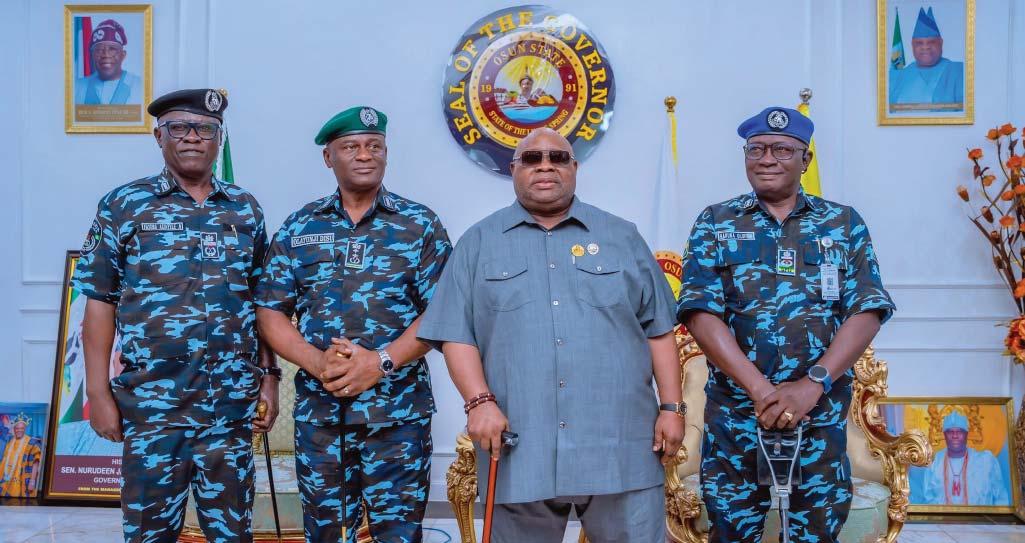
•Governor Ademola Adeleke flanked by the Inspector General of Police, Olatunji Disu, alongside other senior officers of the force, during the latter’a visit to Osun State, last Friday
AT cri cal moments in the life of a na on, one ques on inevitably demands an urgent answer: What is to be done? The quality of that response o en determines whether a country overcomes its challenges or sinks deeper into crisis. Failure to respond decisively can imperil not only a government but the very fabric of the state.
Nigeria appears to have reached one of those defining moments.
The events of the past week have taken the country from tragedy into farce. Were they not so damaging, they would make the perfect script for a poli cal sa re. An enterprising filmmaker could produce an epic blockbuster worthy of interna onal acclaim. The tragedy, however, is that such episodes con nue to diminish Nigeria’s standing before the world, reinforcing long-held stereotypes about Africa’s capacity for accountable and effec ve self-government.
Reality, it seems, has become stranger than fic on.
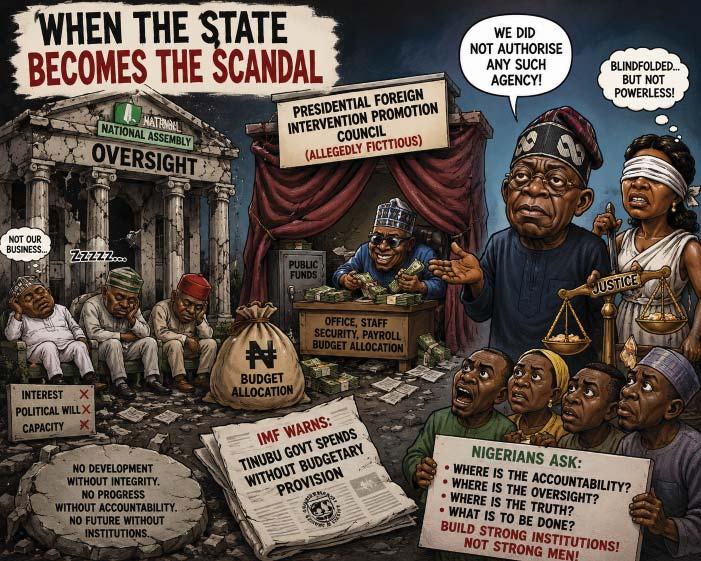
The controversy involving the Presidency, Chief of Staff Femi Gbajabiamila and Adeniyi Adeyemi over the alleged Presiden al Foreign Interven on Promo on Council has le Nigerians bewildered. While the Presidency insists the council never existed and has accused Adeyemi of forgery and impersona on, documents circula ng in the public domain reportedly indicate that the same body appeared in the 2026 Appropria on Act with a budgetary alloca on. Whether the allega ons eventually establish fraud, administra ve failure or something even more troubling, the ques ons raised are too serious to be dismissed by mere official denials.
This is not simply another polical quarrel. It is a test of the credibility of the Nigerian state.
If an ins tu on now described as fic ous could allegedly operate with offices, staff, security personnel, official correspondence and budgetary provisions, then Nigerians deserve a comprehensive explana on. The issue goes beyond determining who is guilty or innocent. It strikes at the heart of transparency, record keeping and accountability within government itself.
Equally disturbing are recent concerns a ributed to the Internaonal Monetary Fund over government expenditure allegedly incurred outside approved budgetary provisions. Budgets are not ceremonial documents. They are cons tu onal instruments through which elected

When The State Becomes The Scandal
representa ves authorise public spending. Any percep on that government can rou nely bypass that process weakens fiscal discipline, legisla ve oversight and public confidence.
These developments come at a par cularly delicate me. President Bola Tinubu’s administra on has defended painful economic reforms, including fuel subsidy removal and foreign exchange liberalisa on, on the grounds that they were necessary to restore fiscal stability and rebuild the economy. Nigerians have endured infla on, rising living costs and declining purchasing power in the expecta on that government would exercise greater prudence and accountability.
Those sacrifices require moral authority.
Unfortunately, since 2023, the administra on has repeatedly found itself responding to allega ons involving ques onable appointments, procurement controversies, opaque public spending, budget irregularies and accusa ons of favouri sm. Allega ons are not convic ons, and no individual should be judged with-
“Unfortunately, since 2023, the administration has repeatedly found itself responding to allegations involving questionable appointments, procurement controversies, opaque public spending, budget irregularities and accusations of favouritism. Allegations are not convictions, and no individual should be judged without due process”
out due process. Nevertheless, the recurring nature of these controversies has created a credibility problem that cannot simply be dismissed as opposi on poli cs.
Experience also breeds scepcism. Too o en, scandals dominate na onal conversa on for a few days before disappearing without meaningful conclusions. Invesga ons lose momentum, committees quietly fade away and public a en on shi s elsewhere. Those responsible are rarely iden fied, while ins tu onal weaknesses remain untouched.
Nigeria cannot afford another cycle of outrage followed by collecve amnesia.
The present controversy must therefore be inves gated thoroughly, independently and transparently. Every individual who cre-
ated, facilitated or benefited from any fraudulent arrangement must be iden fied and held accountable, irrespec ve of office or poli cal affilia on. Equally, if innocent persons have been falsely accused, that too must be established through a credible inves ga ve process.
Yet this episode exposes an even deeper ins tu onal failure.
Once again, it has highlighted the grotesque incapacity of the Naonal Assembly to perform even the most basic oversight func ons. Parliament is cons tu onally empowered to scru nise government expenditure and hold the Execu ve accountable. If a disputed agency could allegedly find its way into official government processes without a rac ng serious legisla ve scruny, then fundamental ques ons must be asked about the effec veness of oversight. The interest, poli cal will and technical capacity required for robust parliamentary supervision appear increasingly absent.
This ins tu onal weakness extends far beyond one controversy. Nigeria’s an -corrup on challenge has never been the absence of laws. It has always been the inconsistent enforcement of those laws and the weakness of ins tu ons entrusted with safeguarding the public interest.
Strong na ons are not built on strong individuals. They are built on strong ins tu ons.
Individuals come and go, governments rise and fall, but ins tuons endure. Un l Nigeria learns to place its faith in independent instu ons rather than powerful personali es, it will con nue moving from one scandal to another, from one embarrassment to the next, while becoming less compe ve in an increasingly demanding global economy.
The ques on, then, remains: what is to be done?
The answer is neither mysterious nor una ainable. The Presidency must embrace transparency rather than defensiveness. The Naonal Assembly must reclaim its cons tu onal oversight role. Ancorrup on agencies must invesgate without fear or favour. Budgetary processes must become more transparent, while every public officer must understand that accountability is not op onal but an essenal obliga on of democra c governance.
Telephone : 0809-301-9152
Website : www.osundefender.com/index.php e-mail : osundefenderhq@gmail.com osundefenderbank@gmail.com All correspondence to the above email addresses.
Nigeria cannot con nue to govern on assurances alone. Credibility is earned through openness, discipline and ins tu ons that func on regardless of who occupies public office.
Anything less would amount to a costly betrayal of the public trust.

MONDAY, JULY 06, 2026 VOL. 21 NO 52 www.osundefender.com, email: osundefenderbank@gmail.com
IF we assume that kidnapping, insurgency and other security problems are poli cally mo vated, then the solu on is poli cal not military and we must tackle these challenges through dialogue.
As Sir Winston Churchill, the former Bri sh Prime Minister once said, “to jawjaw is always be er than to war-war”. The phrase simply means that it is always better to nego ate and talk things out than to result to conflict. But then the ini a ve must come from the government itself especially the President.
I am not referring to dialogue between the people and the kidnappers, the terrorists and the militants, I am referring to a dialogue between the government and the opposi on leaders.
Every effort must be made by our leaders to bring about peace in this country. Like every other society, we need peace and our leaders must show example that they too want peace.
At present we have three bodies that must be encouraged to bring about the desired peace. We have the Nigeria Inter-Religious Council (NIREC), the Na onal Peace Commi ee (NPC) and the Na onal Council of State (NCS).
The Na onal Council of State is an organ created by the Cons tu on. Its func ons include advising the execu ve on policy making. The Council has no execu ve power, however plays an important advice and consent role in government opera ons.
The idea of the Na onal Council of State was first introduced by General Murtala Muhammed GCFR (8 November 1938 – 13 February 1976) on 30 July 1975 in a broadcast to the na on a er deposing General Yakubu Gowon GCFR (92):
“The structure of government has been re-organised. There will now be three organs of Government, at the Federal level namely: The Supreme Military Council, The Na onal Council of State, and the Federal Execu ve Council.”
The council has responsibili es in advising the President in the exercise of his/ her powers with respect to the following: na onal popula on census and compilaon, publica on and keeping of records, preroga ve of mercy, awarding of na onal honours, the appointment of members of the Independent Na onal Electoral Commission, the appointment of members of the Na onal Judicial Council (other than ex-officio members of that Council), and the appointment of members of the Naonal Popula on Commission.
It also advises the President whenever requested to do so on the maintenance of public order within the Federa on or any
“ I look forward to the time when the power to love will replace the love of power in this country. If we want peace in Nigeria, we must search for peace. Establishing a lasting peace should the main concern of our leaders at this hour. We must device a system in which peace is more rewarding than war. Nigeria is a beautiful country and all of us must play our part in bring about the deserved peace in our fatherland”
PERSPECTIVE
BY ERIC TENIOLA
Insecurity, The Possible Way Out
part thereof and on such other ma ers as the President may direct.
The most recent Na onal Council of State (NCS) mee ng was held on October 9, last year presided over by President Bola Tinubu GCFR. It was the second council mee ng since he assumed office in May 2023.
The members of the council at present are—President Bola Tinubu GCFR, Alhaji Kashim She ma GCON, Chief Lateef Olasunkanmi Fagbemi (SAN), the A orney General of the Federa on, Chief Godswill Akpabio GCON, Honourable Tajudeen Abbas GCON, Chief Jus ce of the Federa on, Honourable Jus ce Kudirat Motonmori Olatokunbo KEKERE-EKUN GCON, former President Goodluck Jonathan GCFR, former President Olusegun Obasanjo GCFR, former head of state, General (rtd.) Abdulsalami Abubakar GCFR, former head of state, General (rtd.) Ibrahim Badamosi Babangida GCFR and former head of state, General (rtd.) Yakubu Gowon GCFR. Other members of the Council are all former Chief Jus ces of the Federa on and all the Governors of the 36 states of the Federa on.
The Na onal Peace Commi ee (NPC) is a non-governmental ini a ve conceptualized in 2014 in response to emerging threats occasioned by the 2015 general elec ons. It is an ini a ve made up of eminent elder statesmen who undertake efforts to support free, fair and credible elecons as well as intervene in cri cal issues of na onal concern through high-level mediated and alterna ve dispute resolu on mechanisms. At incep on, the NPC had an urgent, broad-based mandate to make modest contribu ons towards a smooth and peaceful conduct of the 2015 elecons, devoid of any breakdown of law and order before, during and a er the elec oneering process.
Members of the commi ee are Gen. Abdulsalami A. Abubakar (rtd), GCFR –Chairman, Commodore Ebitu Ukiwe(rtd.)— Vice Chairman, His Eminence, Alhaji Muhammadu Sa’ad Abubakar III - The Sultan of Sokoto, John Cardinal Onaiyekan, Alhaji Aliko Dangote, Mr. Sam Amuka Pemu, Dame Priscilla Kuye, Prof. Ameze Guobadia, Prof. Ibrahim A. Gambari, Alhaji Mahmud Yayale Ahmed, Honourable Jus ce Roseline Ukeje (rtd.), Mr John Momoh, Dr. Kabiru Adamu, Bishop Ma hew Hassan Kukah - NPC Convener, Ms Idayat Hassan, Prof. Mahmood Yakubu, Gen. Mar ns Agwai (rtd), Fr A a Barkindo - Head, NPC Secretariat and Mr Femi Otedola.
Members of the Commi ee met last in Ado-Eki for the last gubernatorial elec on in Eki state.
The third body is the inter-religious council. The Nigeria Inter-Religious Council (NIREC) is a voluntary Associa on that was made up of fi y (50) Members, (25 Chris-
ans and 25 Muslims) formed by the representa ves of the two principal Religions – that is Chris anity and Islam in Nigeria, on the 11th day of September, 1999. This figure was however reviewed in March 2019 to give room to accommodate more women and youth. The membership now stands at thirty (30) Chris ans and thirty (30) Muslims, making a total number of sixty (60).
The establishment of NIREC was occasioned by the incessant ethno-religious crisis which punctuated the sociopoli cal landscape of Nigeria as a country. NIREC, also known as a Council, is a permanent and independent Body established to provide Religious Leaders and Tradi onal Rulers with a variable forum to promote greater interac on and understanding among the leadership and their followers as well as lay founda ons for sustainable peace and religious harmony in the country.
The council was co-ordinated by the then Secretary to the Government of the Federa on, Chief Ufo Ekae e (17 April 1939- September 25, 2019), my then boss. Till today, the council is under the office of the SGF. I remember in August1999, when we had communica on problem, Chief Ekae e instructed me to fly to Sokoto to meet with the late Sultan, Alhaji Muhammad Maccido Abubakar III (20 April 1928 –29 October 2006, CFR, with a le er, on the details of the establishment of the council.
The Council from incep on was CoChaired by their Eminences, Alhaji Muhammadu Maccido, CFR, and the then President General, Nigerian Supreme Council for Islamic Affairs (NSCIA) and Dr. Sunday Mbang, CON, the then Primate of Methodist Church of Nigeria/Archbishop J. Akinola, CON, who were one- me Presidents of Chris an Associa on of Nigeria (CAN) respec vely.
Supported and encouraged by President Olusegun Obasanjo GCFR, who saw the Body as a wonderful Project emana ng from the Leadership of both major Faiths. NIREC was inaugurated on the September 29, 1999 by President Olusegun Obasanjo GCFR. The founda on Na onal Coordinator/Execu ve Secretary of the Council was the then Villa Chaplain, Rev. Professor Yusuf A. Obaje.
The Federal Government under the leadership of the then President, late Umaru Musa Yar’Adua GCFR and later President Goodluck Ebele Jonathan GCFR, like their predecessor con nued with the policy of support for NIREC since 2007. Under that dispensa on, NIREC was ini ally CoChaired by His Eminence, Alhaji Muhammadu Sa’ad Abubakar, CFR, mni, the Sultan of Sokoto and President-General, NSCIA, and His Grace, Dr. John Onaiyekan, CON, Catholic Archbishop of Abuja and Na onal President, CAN. Professor Is-haq Oloyede,
the then Vice Chancellor of University of Ilorin, became the Na onal Coordinator/ Execu ve Secretary. His grace, Pastor Ayo Oritsejafor, CFR a former CAN President was a Co-Chair of the Council from: January, 2011 to 2016 while His Eminence Rev. Dr. Samson Olasupo A. Ayokunle CON was President from 2016 to June 2022.
At present His Eminence, Alhaji Muhammadu Sa’ad Abubakar, CFR, mni, the Sultan of Sokoto and President General NSCIA and His Eminence Archbishop Daniel Okoh Na onal President CAN Co-Chair the mee ng, while Fr. Prof Cornelius Afebu Omonokhua is the Execu ve Secretary.
All the mee ngs of the Council from incep on were held in Abuja. However, when the present Council was recons tuted in 2007, members resolved that the mee ngs of the Council should rotate in the Six GeoPoli cal Zones of the country on quarterly basis to impart posi vely among adherence of the two Principal Religions to further promote religious tolerance, peaceful co-existence, ethical values and good governance in the country.
At such mee ngs, all Tradi onal Rulers/Religious Leaders as well as the Governors and Opinion Leaders in the Zone were expected to a end the Formal Opening Ceremony and interac ve session with the Council. The Host Governor normally sends invita on to invite the above leaders as well as his colleagues, Honorable Ministers and Members of the Na onal Assembly from the Zone.
In inaugura ng the council, President Obasanjo said “It is regre able that in spite of our religiosity, Nigerian society is highly prone to unacceptable behaviours of various shaded and coloura on In other words, our religiosity is devoid of genuine spirituality. Nigeria, indeed, is a country of diversity not only of religion but also of culture and even of natural resources.
However, this diversity is not and should not be a disservice but one that can be judiciously explored and exploited to promote na onal harmony, progress and prosperity. Our religious diversity, in par cular, is not a curse; rather, it is a blessing if we are determined to make it one. Neither Chris anity nor Islam preaches anything other than belief in one God and love of fellow human beings. The mutual co-existence of these two principal faith in Nigeria is, therefore, not only a theore cal nut also a prac cal reality.
Government will be coun ng at all mes on your wisdom and rich experience to provide posi ve leadership to the adherents of your respec ve religious faiths, a leadership which will enhance societal harmony and promote high standards of behaviour and civic responsibility among the people.
Nigeria must not only be a haven of peace and progress but also a society of hardworking, honest, fair-minded and patrio c ci zens. Let this country be a land of love, discipline, mutual respect, hope and fulfilment for all its ci zens”.
Inspite of the establishments of the three bodies, there is nothing stopping the President from calling for a mee ng with all Presiden al candidates and their running mates before or a er the coming elecon. A erwards, all of them are friends. The proposed mee ng will reduce tension. No price is too high to be paid for peace in the country.
•Read full article on www.osundefender.com
• Teniola, a veteran journalist and columnist is a former Director at the Presidency
OSUN DEFENDER is published by Moremi Publishing House Limited, Behind Oranmiyan Building, Gbodofon, Off Gbongan Road, Osogbo, Osun State. All correspondence to the Deputy Editor, MICHAEL BAMIGBOLA, Telephone: 0809-301-9152. ISSN: 0794-8050. Website: www.osundefender.com Email: osundefenderbank@gmail.com, osundefenderhq@gmail.com