FOur Reporter
RESH concerns have emerged over alleged execu ve interference in Nigeria’s judiciary, with mul ple sources claiming that the Presidency is moun ng pressure on jus ces of the Supreme Court of Nigeria ahead of cri cal rulings linked to the leadership crisis rocking the African Democra c Congress (ADC).
OSUN DEFENDER gath-
ered that the development has heightened anxiety within poli cal circles, as stakeholders warn that the outcome of pending cases could significantly influence the balance of power ahead of the 2027 general elec ons.
Sources who spoke to the medium in Abuja over the weekend specifically pointed to a pa ern of controversial rulings allegedly linked to judges such as Emeka Nwite, James Omotosho, Donatus Oko-
rowo Lifu, Mohammed Liman and Joyce Abdulmalik, whom they accused of delivering decisions perceived to favour the ruling All Progressives Congress, a claim yet to be independently verified.
The controversy has also drawn a en on to recent poli cal developments, including a viral video involving the Chief of Staff to the President, Femi Gbajabiamila, which cri cs say suggests attempts to destabilise
opposi on par es from within.
In the footage, Gbajabiamila was allegedly heard urging Leke Abejide to remain within the ADC and “sca er the party,” a remark that has since sparked outrage among opposi on figures and civil society groups.
Last Wednesday, the apex court on reserved judgment in the leadership crisis rocking the ADC.
A five-member panel
of the apex court, headed by Jus ce Mohammed Garba, reserved the matter for judgment a er hearing from all par es.
OSUN DEFENDER reports that the appeal, marked SC/CV/180/2026, was filed by Senator David Mark.
The appellant seeks to set aside a March 12 Court of Appeal judgment, which he said was against the interest of jus ce.
He argued that the appellate court exceeded its
jurisdic on by ordering maintenance of the status quo ante bellum in a suit filed by aggrieved party members led by NafiuBala Gombe.
Mark contended that the dispute involves a poli cal party’s domes c affairs, in which courts lack jurisdic on to intervene.
Other respondents in the appeal include ADC Na onal Secretary Rauf Aregbesola, the Indepen-
•Continued on page 2
MONDAY, APRIL 27, 2026
OPPOSITION polical par es on Saturday demanded the removal of the Chairman of the Independent Na onal Electoral Commission, Prof. Joash Amupitan, ci ng alleged bias and loss of public confidence ahead of the 2027 general elec ons.
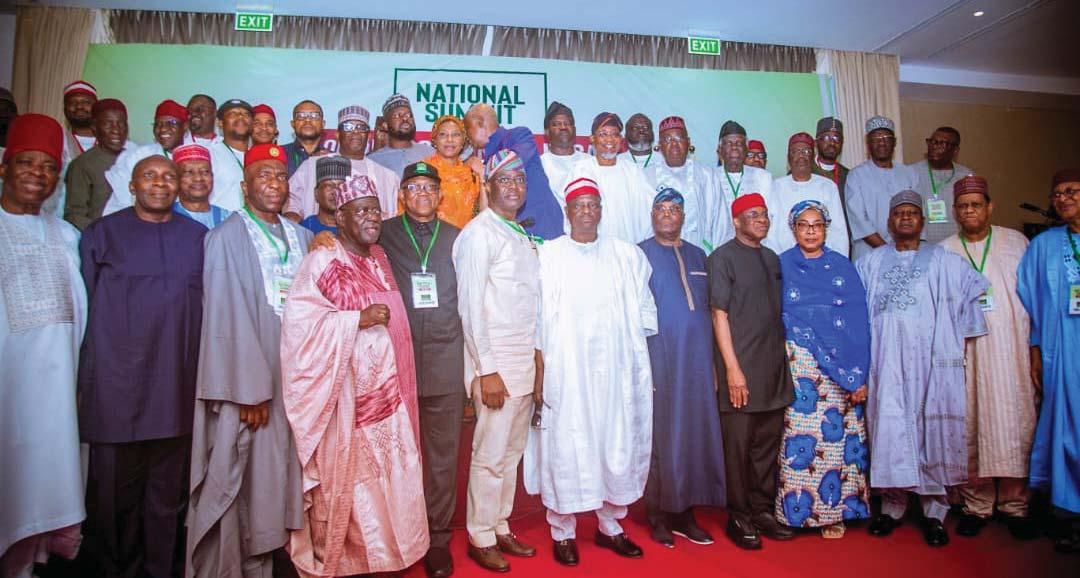
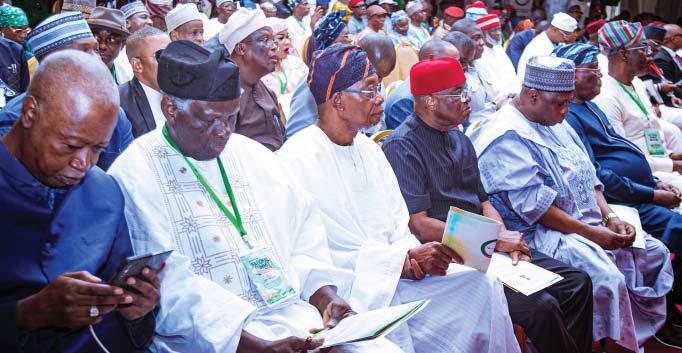
The demand formed part of resolu ons reached at a Na onal Summit of opposi on par es held in Ibadan, Oyo State, where leaders warned of what they described as growing threats to Nigeria’s mulparty democracy.
In a communiqué issued at the end of the mee ng, the par es accused the ruling All Progressives Congress of a emp ng to foist a one-party state on the country, vowing to resist any such move.
They also declared their readiness to par cipate fully in the 2027 elec ons, dismissing claims that the poli cal space was being narrowed to favour President Bola Tinubu.
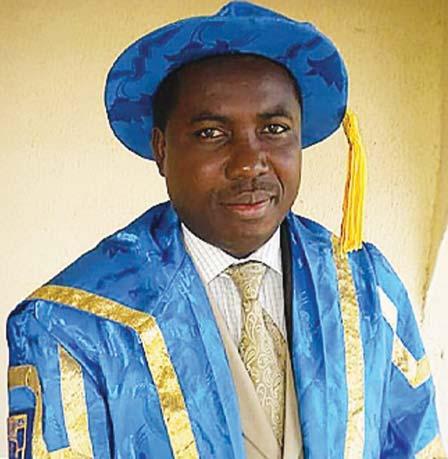
“That the INEC Chairman, Prof. Joash Ojo Amupitan, having shown bias and par sanship in favour of the ruling APC, should not conduct the 2027 general elec ons.
“Nigerians across board have lost confidence in him and his capacity to guarantee the required neutrality to deliver free, fair, transparent and credible elecons. His con nuous stay in office is vexa ous and capable of triggering widespread crisis in our na on,” the communiqué read by PDP Na onal Chairman,
Tanimu Turaki noted.
The summit further resolved to explore the possibility of presen ng a unified presiden al candidate, in a bid to strengthen the opposi on’s chances and rescue the na on from what they termed state capture.
The opposi on leaders also called on the Na onal Assembly to urgently review the Electoral Act, 2026, to expunge provisions they said threaten the integrity of the electoral process and contradict cons tu onal safeguards.
They further demanded the immediate release of poli cians allegedly detained or harassed over bailable offences, insis ng that such ac ons undermine inclusivity and democra c par cipa on.
“That all leading policians that are being de-
•Amupitan
tained or harassed on bailable offences be released with immediate effect and allowed to exercise their
fundamental rights,” the par es stated.
The summit cri cised recent guidelines issued by INEC, describing them as deliberate obstacles designed to constrain opposi on par es, and called for an extension of the deadline for party primaries to the end of July 2026.
“That we consider the recent guidelines released
by INEC as obstacles, deliberately engineered to impose condi ons and deadlines on the opposion par es,” the communiqué added.
The par es commended Nigerians for their resilience and support, pledging to con nue mobilising ci zens towards what they described as a collec ve effort to safeguard democracy.
THE Director-General of Governor Ademola Adeleke’s campaign organisaon, Lere Oyewumi, has called on poli cal actors in Osun State to adhere strictly to democra c
Sodiq Yusuf
Apolicy advocacy group, The Narrave Force, has accused the administra on of President Bola Tinubu of misleading Nigerians on key economic and social reforms, alleging that several flagship policies have worsened living condi ons rather than improved them.
In a detailed statement signed by its Director-General, Aare Amerijoye Dotb, the group said the government’s reform agenda amounted to a catalogue of mis-
representa on, insis ng that official claims of progress were at variance with reali es on the ground.
The group argued that while the government has repeatedly highlighted macroeconomic indicators such as GDP growth, the impact of its policies has translated into rising poverty, infla on and declining purchasing power for ordinary Nigerians.
According to the statement, the unifica on of the foreign exchange market triggered a sharp deprecia-
on of the naira, which it said eroded savings, increased import costs and destabilised businesses across sectors.
It further cri cised the removal of fuel subsidy, describing the move as “premature and poorly managed,” no ng that it led to an immediate spike in transport fares and the collapse of small businesses without adequate social protec on measures.
On social intervenons, the group faulted the government’s cash transfer programme, alleging that it was riddled
•Continued from page 1
dent Na onal Electoral Commission (INEC), and the immediate past naonal chairman of the party, Chief Ralph Nwosu.
Mark sought, among other reliefs, an order restraining INEC from recognizing anyone other than him and the current na onal officers, pending determina on of the appeal.
He also requested orders barring INEC from altering the party’s leadership structure as currently cons tuted and staying proceedings in Suit No. FHC/ABJ/CS/1819/2025 before Jus ce Emeka Nwite at the Federal High Court, Abuja, un l the appeal is heard.
While adop ng their brief of argument, Mark’s legal team, led by Mr. Jubril Okutepa, SAN, insisted the dispute is a non-jusciable internal party matter, as previously held by the Supreme Court.
Although INEC did not file any process to either support or counter the
appeal, however, all the other respondents urged the apex court to dismiss it for want of merit.
They maintained that the trial court was properly seized of facts of the case that is s ll pending before it.
Reac ng to the development, a prominent Second Republic poli cian, Usman Yakubu Wushshi, accused President Bola Tinubu of orchestra ng a coordinated effort involving both the judiciary and key poli cal actors to undermine opposi on pares.
“The instruc ons were handed down to one of the judges to rule against opposi on par es in pending cases,” Wushshi alleged.
He further claimed that several jus ces were under intense pressure to deliver judgments favourable to the Federal Government, warning that such ac ons could permanently damage the integrity of the judiciary.
“Several of the judges are under pressure to bend
the law and please the Federal Government, although a few are resis ng because they understand the damage it could do to their reputa on,” he said.
It was learnt that the controversy is further compounded by the role of the Independent Na onal Electoral Commission, which has been accused of unlawfully tampering with the leadership structure of the ADC by removing the names of key figures from its official portal.
“What INEC did by removing ADC leadership names was against the law. The Chairman acted under duress to carry out an acon he does not have the power to execute,” Wushshi added.
Legal luminaries, including Femi Falana and Itse Sagay, have also cricised the electoral body’s ac on, describing it as uncons tu onal and a dangerous precedent.
Observers said the unfolding developments have a racted both local and interna onal a en on,
amid fears that Nigeria’s democra c ins tu ons are facing moun ng pressure ahead of the next general elec on cycle.
Wushshi also alleged that the crisis within the ADC was being fuelled externally, stressing that Nafiu Bala, was being manipulated to destabilise the party.
He warned that the combina on of judicial pressure, poli cal interference and internal destabilisa on of opposi on par es could erode public trust and threaten the credibility of the 2027 elec ons.
“The President’s interference has led to conflicting judgments in recent years and has significantly eroded public trust in the judiciary. Many Nigerians have already lost hope, and the interna onal community is watching closely,” he added.
Efforts to obtain official reac ons from the Presidency, the apex court and INEC were unsuccessful as of the me of filing this report.
with inconsistencies and failed to reach the majority of vulnerable Nigerians.
The statement also dismissed claims of progress in the educaon sector, arguing that the student loan scheme merely transferred financial burden to students without addressing structural challenges in public universi es.
“Food infla on exceeded 40 per cent, the worst in Nigeria’s recorded history, while farmers abandoned their lands due to insecurity. If agricultural policy had worked, prices would not have risen to these levels.
“The na onal grid collapsed repeatedly to near-zero, yet electricity tariffs were increased, effec vely pricing many Nigerians out of access to power despite claims of sector reforms.
“Nigeria’s debt service-to-revenue ra o has exceeded 100 per cent in recent periods, meaning the government is effec vely borrowing to survive, with li le le for cri cal infrastructure and social services.
“The most honest indicator of youth empowerment today is the mass exodus of young Nigerians seeking opportuni es abroad, reflec ng declining confidence in the country’s economic future.
“There is no renewed hope in these numbers. What Nigerians are experiencing is renewed hardship, and the gap between government claims and lived reality con nues to widen,” it added.
rules and avoid inflammatory rhetoric ahead of the 2026 governorship elec on.
Oyewumi gave the advice in Ileogbo during an empowerment programme facilitated by the lawmaker representing Ayedire State Cons tuency, Elisha Oderinwale where over 400 cons tuents benefited from tools, equipment and cash grants.
He stressed that elecons should be decided by performance rather than propaganda, warning that abuse and polical tension could undermine the state’s stability.
“Poli cians should play by the rules. No amount of abuse can win votes. If your product is good, it will sell. Osun needs peace to con nue on the path of development,” he said.
Oyewumi also commended Adeleke for crea ng an enabling environment for lawmakers to deliver cons tuency projects, describing the empowerment ini a ve as a reflec on of peoplecentred governance.
The state parliamentarian said the programme fulfilled his campaign promise to improve livelihoods, no ng that beneficiaries were carefully selected to ensure impact.
Residents described the interven on as unprecedented, expressing support for the lawmaker’s second-term ambion.
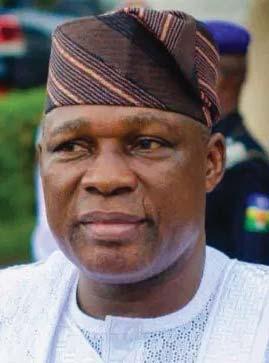
•Oyewumi
THE French philosopher Victor Hugo got it right when he observed that, “All of the armies of the world marching in unison cannot defeat an idea whose me has come.” In Nigeria, the me is long overdue for all those who want to defend the con nuity of our democra c system to take a stand. The declara on made by opposi on leaders in Ibadan this past Saturday must be heavily applauded. It holds profound historical significance, signaling a resolute fight back against the stealthy dismantling of our democratic ins tu ons.
Ibadan has always been a key element in Nigeria’s political evolu on, making it highly appropriate that this declara on was birthed there. Believers in democracy can finally heave a sigh of relief, but they must not become complacent. It is not yet Uhuru; we are s ll far from the finish line.
Indeed, the choice of Ibadan evokes powerful memories of past struggles for emancipa on and poli cal equity in Nigeria. From the tumultuous days of the Western Region crises to the fierce pro-democracy agita ons of the 1990s, this city has consistently served as the crucible where democra c resistance is forged. By returning to this historic poli cal bedrock, the opposi on has invoked a powerful legacy of defiance against tyranny, reminding the ruling class that the spirit of the people cannot be easily subdued.
The construc on of an authoritarian state in Nigeria must be checkmated with great urgency and determina on. The consolida on of
“ However, for this Popular Front to truly succeed, it must expand its borders beyond career politicians and party stalwarts. True democratic salvation requires an unbreakable alliance with civil society organizations, trade unions, student bodies and the independent press. These groups have historically been the vanguard of democratic protection in Nigeria, and their active inclusion will lend grassroots credibility and unyielding momentum to the movement”

•The
authoritarianism is en rely predictable; it is always predicated on the subordina on of state ins tu ons to an individual, or to vested interests and cabals. This alarming reality is unfolding in Nigeria right now, as the fundamental separa on of powers is acvely being dismantled.
There is no longer any pretense regarding the independence of our ins tu ons; it is widely accepted as a grim reality that they have been compromised. The word “Independent” in the tle of the electoral body, INEC, is now understandably treated as sarcasm, and correctly so. Across the board, vital democra c ins tu ons are systema cally being undermined to serve par san interests.
It is profoundly disturbing that we are not just talking about the subversion of the independence of state instu ons; we are also observing the coordinated implosion of the voters’ right to choose from a variety of poli cal pares. This is not surprising. The establishment knows, from its own internal assessments and private polls, that it does not have the genuine support required to win an elec on, no ma er how heavily flawed the process might be.
This ins tu onal decay and poli cal manipula on are not merely abstract issues; they
have direct, devasta ng consequences for the everyday Nigerian. The erosion of democra c checks and balances has paved the way for unchecked economic mismanagement, crippling infla on, and widespread insecurity. When those in power are insulated from accountability by a compromised electoral system, the welfare of the ci zenry inevitably becomes an a erthought. The resulting hardship is exactly why this unified opposi on must priori ze the economic libera on of the masses.
This is precisely why we have con nually advocated for the forma on of a unified forum encompassing the enre opposi on, and we are thrilled to see it finally taking
shape. A united Popular Front will defeat totalitarian ambions and pave the way for the establishment of a pro-people government driven by Popular Unity. This is the only viable way forward for our na on. However, for this Popular Front to truly succeed, it must expand its borders beyond career poli cians and party stalwarts. True democra c salvaon requires an unbreakable alliance with civil society organiza ons, trade unions, student bodies, and the independent press. These groups have historically been the vanguard of democra c protec on in Nigeria, and their ac ve inclusion will lend grassroots credibility and unyielding momentum to the movement.
Furthermore, the coali on faces the monumental task of reawakening a disillusioned electorate. Decades of broken promises and blatantly manipulated elec ons have bred a dangerous level of voter apathy across the country. The opposi on must convince Nigerians that their votes can s ll count, demonstra ng that mass par cipa on is the ulmate an dote to electoral fraud. A mobilized, vigilant populace is far more powerful than any rigged system.
Moving forward, mere rhetoric and condemna on of the ruling class will not suffice. The newly formed alliance must swi ly ar culate a coherent, ac onable blueprint for governance—a shadow manifesto that clearly outlines how they intend to rescue the economy, secure the na on, and restore the rule of law. Nigerians need a clear vision of what this alterna ve government represents, beyond simply being the an -establishment choice.
Publisher – Moremi Publishing House Ltd.
Deputy Editor – Michael Bamigbola
Asst. News Editor – Yusuf Oketola
Deputy Photo Editor – Shola Aderinto
Deputy Graphics Manager – Zainab Olalere
Produc on Controller – Petkola Taiwo Ibitowa
OSUN DEFENDER is published by Moremi Publishing House Limited, Behind Oranmiyan Building, Gbodofon, Off Gbongan Road, Osogbo, Osun State.
ISSN : 0794-8050
Telephone : 0809-301-9152
Website : www.osundefender.com/index.php e-mail : osundefenderhq@gmail.com osundefenderbank@gmail.com
All correspondence to the above email addresses.
We congratulate all the patriots who par cipated in the Ibadan summit on Saturday. However, we issue a strong call for immediate consolida on and extreme vigilance. The an -democrats will inevitably fight back, employing fi h columnists, state machinery, and agents provocateurs to sow discord. The opposion must remain resolute, united, and intensely focused on the ulmate prize: the reclama on of Nigeria’s democracy.
MONDAY, APRIL 27, 2026 VOL. 21 NO 33 www.osundefender.com, email: osundefenderbank@gmail.com
ON May 27, 1967, the then Head of State, General Yakubu Dan-Yumma Gowon (91) GCFR, said “the main obstacle to future stability in this country is the present structural imbalance in the Nigeria Federa on”. No doubt, the General’s statement is as true today as at when he made the broadcast. It was in the broadcast that he created twelve states out of the four regions in existence at that me. The instability keeps on widening daily in the country. And it depends on which area it has effect on you.
The main focus now is on the coming general elec ons and all other issues are secondary. In fact, the only job in town now, is party poli cs. There are no factories, there are no industries. To survive in the present-day Nigeria is to be a polician and that is why sycophancy and party fana cism have become rampart.
Governance seems suspended. Inspite of fla ering words of hope by government, nothing has changed. No improvement, the poor ci zens are s ll lamen ng. Life generally, is becoming unbearable. The killings s ll con nue on innocent ones and nobody knows when it will end.
We have carried democracy to the extreme to the extent that it has more or less crippled the country.
But the issue of restructuring and the crea on of new states with other issues will not go away. They will be addressed a er the elec on. President Bola Tinubu GCFR or anyone to be elected President, in the next year’s Presiden al elec on will have no other choice but to address these outstanding issues.
The issue before us is the crea on of states.
Between 1960 and 1966, Nigeria s ll operated the regional arrangement. However, between 1967 and 1996, the country had to be split into thirty-six States. The first state crea on exercise was undertaken by the regime of General Yakubu Gowon GCFR in 1967. Prior to General Gowon’s ascension to power, General Aguiyi Ironsi GCFR was Nigeria’s first military Head of State but following his assassinaon in July 1966, General Gowon became the new military ruler of the country. He dissolved the four regions in the country and subsequently created twelve States on May 5, 1967. Six States were carved out from the former northern region. These were: the North-Western State, the North-Eastern State, Kano State, North Central State, Benue-Plateau State and Kwara State. The former western region was split into two States: the Western State and Lagos State. The former mid-
“There are some areas that should have become states by now judging by their past history. I have in mind Ijebu, Ogoja, Anioma, Ghari, Tiga, Okura, Lautai, Ngaba, Katagum and several areas. Tiga state should have composed of Bebeji, Gwarzo, Rano, Tudun-Wada and Rogo, all in Kano state, while Ghari state should have composed of Kazaure, Bichi and Dambatta also in Kano state.”
western region became the Mid-Western State, while the former eastern region had three new States carved out from it. These were the East Central State, Rivers State and the South-Eastern State. Another state crea on exercise took place in 1976 following the ouster of General Yakubu Gowon in a military coup led by General Murtala Mohammed.
On assump on of office, he (General Murtala Mohammed) created the following States: Anambra, Bauchi, Benue, Imo, Niger, Ogun and Ondo, bringing the total number of States to nineteen, from the original twelve States created by General Yakubu Gowon. It took another eleven years (1987) for State crea on exercise to be undertaken in the country. That was under the regime of General Ibrahim Babangida GCFR (1985 – 1993).
In 1987, General Ibrahim Babangida created two States namely, Akwa Ibom and Katsina. He also created nine addional States in 1991. These were: Abia, Enugu, Delta, Jigawa, Kebbi, Osun, Kogi, Taraba and Yobe. It is instruc ve to note that Akwa Ibom State was carved out from Cross River State, while Katsina State was created from Kaduna State. Similarly, Adamawa and Taraba States were carved out from the former Gongola State, and Enugu State out of Anambra State, while Edo and Delta States replaced the old Bendel State. Also, Yobe State was created from Borno State, and Jigawa out of Kano State, while Kebbi and Osun States were carved out from Sokoto and Oyo States respec vely. Kogi State came from Kwara and Benue States. Altogether, there were thirty (30) States by 1991.
General Sani Abacha GCFR (20 September 1943 – 8 June 1998) became Nigeria’s next military Head of State in 1993 after ous ng the Chief Ernest Shonekan-led Interim Na onal Government (ING). Due to stringent agita ons for more States, General Sani Abacha set up the Na onal Cons tu onal Conference (NCC) which recommended, among other things, the crea on of new States. Thus, on October 1, 1996, he created six addi onal States namely, Ebonyi (from Abia and Enugu States), Bayelsa (from Rivers State), Nasarawa (from Plateau State), Gombe (from Bauchi), and Eki (from Ondo).
The movements for the crea on of states in Nigeria can be traced back to 1937 when Dr. Nnamdi Azikiwe (born November 16, 1904, Zungeru, Nigeria—died May 11, 1996, Enugu) advocated in his book THE POLITICAL BLUEPRINT OF NIGERIA, a federal form government for the country and the division of the country into eight cons tuent units based on geographical configura on. Dr. Azikiwe was
later joined by Chief Obafemi Awolowo (6 March 1909 – 9 May 1987) who, in a book, PATH TO NIGERIA FREEDOM published in 1947, proposed a redivision of Nigeria into Ten Federa ng units with ethnic, linguis c and cultural affinity as the basis of division. However, Chief Obafemi Awolowo wri ng in 1966 seemed to have modified his stand when he shi ed ground and advocated a redivision of the country into eighteen states---nine in the North and nine in the South based on linguis c and cultural affinity as well as economic viability of States in the Federa on.
Chief Awolowo’s submission at that me was that the COR state with the popula on of 717,000 Ibibio; 435,000 Annang; 428,000 Ibo; 251,000 Ijaw; Ogoni 156,000 and Efik 75,000. He alerted that the genuine cause of the minori es in the then Eastern Region should be created.
Chief Awolowo re-echoed this demand on May 1, 1967 in Ibadan at a mee ng of Western Region Leaders of Thought on the need for the crea on of more states especially COR state meaning Calabar, Ogoja and Rivers states. He told the meeting on that day “We have been told that an act of secession on the part of the East would be a signal in the first instance for the crea on of the COR state by decree which would be backed, if need be, by use of force”.
In 1963 as a result of the 1962 Western Region Crisis the pressure for the state crea on which resulted in subsequent declara on of a state of emergency in the former Western Region, the Mid-West Region (now Edo and Delta states), was created out of the then Western Region. The crea on of the new Region tended to have intensified and encouraged the demands for the crea on of more new states in other parts of the country as we have witnessed over the years.
Further in his May 27, 1967 broadcast, General Gowon declared “this is why the first item in the poli cal and administrave programme adopted by the Supreme Military Council last month is the crea on of states for stability. This must be done first so as to remove the fear of dominaon. Representa ves drawn from the new states will be more able to work out the future cons tu on for this country which can contain provisions to protect power of the states to the fullest extent desired by the Nigerian people”.
Although there is no magic formula for determining the op mum number of states in any Federa on, certain specific criteria must be spelt out if the en re exercise of State-Crea on is to be conducted in a ra onale and fair manner.
Any meaningful exercise in State-Cre-
a on has to be guided by specific and welldefined poli cal considera on. First, there is the need to maintain and strengthen our federal system of government which must con nuously reduce suppression and discord in every new step taken. In our earnest a empt to redraw the poli cal map of Nigeria and sa sfy the legi mate yearnings and aspira ons of the generality of our people, we must guard against the prolifera on of States which will not only reduce states to glorified local governments, but more importantly enable the Federal Government to become stronger and stronger, through which process the country may inadvertently revert to a unitary system of government.
Although the Crea on of New States would bring states government closer to the people thereby making government par cularly at the state level, more accountable and more efficient each new state must be in a posi on to func on effec vely in a Federal Structure where the cons tuent units are usually coordinated and mutually independent.
In applying this poli cal considera on to the present exercise in States Crea on however, we must remember that the United States of America with fi y States and Switzerland with twenty-five cantons have adhered strictly to the principles of Federalism. What is more, both the Cons tu on and revenue alloca on systems have clearly defined the structural, funconal and rela onships between the various levels of government in Nigeria.
Secondly, there is the need to promote peace and poli cal stability in the country. Today, the issue of State crea on is so crucial and fundamental that peace and stability cannot be guaranteed without some ac on taken about it. Apart from the everincreasing desire to a ract more revenue, poli cal and other appointments and patronage from the Federal establishments, the State crea on promoters are vigorously envisaging the successful emergence of a poli cal structure that shall perpetually disallow any ethnic group to hold a posion which can enable it to dominate all the others put together.
State crea on exercise must be sufficiently related to the needs and aspiraons of the various groupings in Nigeria. The con nued agita ons for crea on of more States is a direct result from bad government---leadership and discriminatory policies of the various state governments. Indeed, even if the Na onal Assembly was to make every hamlet in this country, there would con nue to be demands for State Crea on so long as there is a corrupt, autocra c and purposeless government or government or governments par cularly at the state level.
The basic mo va on in the demands for States Crea on is the promo on of accelerated and balanced economic development. States Crea on, it is o en argued, makes for the greatest possible diffusion of economic power which in itself guarantees even development. It is also o en asserted that some State Crea on demands are masterminded by few selfish individuals with the hope of becoming big fish in small waters if and when the New State is created. Be that as it may, certain specific dimensions of economic viability cons tute relevant considera ons in any sensible exercise in State-Crea on.
•Read full article on www.osundefender.com
OSUN DEFENDER is published by Moremi Publishing House Limited, Behind Oranmiyan Building, Gbodofon, Off Gbongan Road, Osogbo, Osun State. All correspondence to the Deputy Editor, MICHAEL BAMIGBOLA, Telephone: 0809-301-9152. ISSN: 0794-8050. Website: www.osundefender.com Email: osundefenderbank@gmail.com, osundefenderhq@gmail.com