OS T EO PAT H Y AUS T R A L I A M AG A ZI N E
AU T UM N 202 2
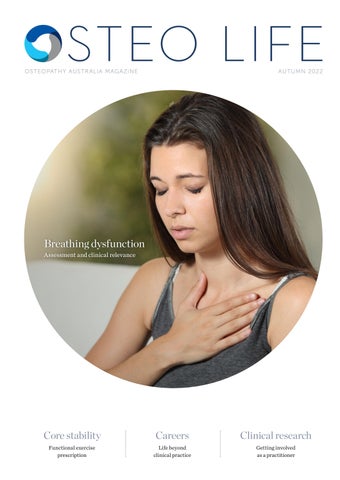
Breathing dysfunction Assessment and clinical relevance
Core stability
Careers
Clinical research
Functional exercise prescription
Life beyond clinical practice
Getting involved as a practitioner
Be part of something bigger. There’s safety in numbers. And with safety comes confidence; the confidence to fly high and reach new heights, especially in your career. At Guild, we’ve dedicated the last 58 years to building a network of professionals to provide the support to help you reach those heights.
We’ve partnered with Osteopathy Australia for over 19 years, working with them to grow the network that’s dedicated to protecting you and safeguarding the future of the osteopathy profession. Whatever journey you decide to take, and whatever stage of your career you’re at, we’re here so that
you don’t have to face challenges alone. We may not be front of mind, but we’ve got your back when you need us most. Because when you’re a part of Guild, you’re part of something bigger. Find out more and get a quote today by visiting guildne.ws/osteopath or calling 1800 810 213.
1800 810 213 guildinsurance.com.au
Don’t go it alone Insurance issued by Guild Insurance Limited ABN 55 004 538 863, AFS Licence No. 233791 and subject to terms, conditions and exclusions. Guild Insurance supports Osteopathy Australia’s ongoing projects, lobbying and research through the payment of referral fees. Please refer to the Policy Disclosure Statement (PDS) and Target Market Determination (TMD) available at guildinsurance.com.au/docs to see if this product is right for you. For more information call 1800 810 213. OST185450 Osteo Life Ad 09/2021
WELCOME
3
PRESIDENT’S MESSAGE
An association built on teamwork and collaboration
I
hope you have all had a great start to 2022. Each year, I fly up to Sydney to Osteopathy Australia HQ and spend the day with the team. This year, feeling thankful for the ease of travel, I headed up in mid-February. My day in the office is spent catching up with each team member individually and asking them, “What are you excited about in the coming year?” As President of Osteopathy Australia, I like to think I have a pretty high-level understanding of what the team are working on, but spending time with each team member opens my eyes to the individual efforts and hard work that is being done at HQ for the betterment of our profession. This year, I had the pleasure of meeting two of our newest recruits, Shamona Eaves, Senior Research and Projects Officer, and Kylie Monro, Senior Policy and Advocacy Advisor.
These positions were created after great collaboration with Antony and the Board in 2021 to meet some key goals in our strategic plan. The strategic plan guides the Board at Osteopathy Australia on the needs of the profession and project development, and we use it to prioritise and target our efforts while collaborating with stakeholders to build the profession’s standing in primary healthcare. In particular, we are extremely grateful to all the members and osteopaths who volunteer their time to work with the team at HQ to this very end. So, what exciting projects do we have coming up? O ur new consumer website to help promote osteopathy and help Australians understand what we do and why they should seek treatment from an osteopath;
F ace-to-face symposiums! Learning together again, and the drinks that follow! A dvocacy in the disability, aged care and workplace sectors; R efining and improving on how we can help our members at every stage of their career, from being a student to eLearning and business support. These are just a few of the things that are ticking along at HQ. I always walk away from my time in the Osteopathy Australia office buzzing and optimistic about the future of our profession and our association. We have much to achieve and look forward to, and I’m very grateful for the dedicated and passionate team working for us to bring the Board’s vision to fruition. Michelle Funder, President Osteopathy Australia
Osteopathy Australia T (02) 9410 0099 F (02) 9410 1699 E info@osteopathy.org.au W www.osteopathy.org.au osteopathyaustralia
osteoaust
osteopathyaustralia
osteopathyau
OSTEO LIFE is the quarterly magazine for Osteopathy Australia members. For enquiries, feedback, or to contribute, contact Communications on 02 9410 0099 or comms@osteopathy.org.au
Editorial and Education Advisory Group Claire Richardson (Chair), Casey Beaumont, Melissa McDougall, Sally Tran, Heath Williams Editor Kavita Bowry Chief Executive Antony Nicholas Sub Editor Adam Scroggy Designer Yang Zhou Advertising info@osteopathy.org.au Printed by Megacolour OSTEO LIFE is published by Citrus Media www.citrusmedia.com.au Osteopathy Australia does not accept responsibility for any loss, damage, cost or expense incurred by reason of any person using or relying on the information contained in this magazine. The opinions expressed are those of the author and not Osteopathy Australia. All advertisements in this issue are paid advertisements. By registering with any company or affiliation mentioned in advertisements you will be sharing your personal information with the advertiser – please check their privacy policy. Osteopathy Australia takes no responsibility for the way personal information is used.
WWW.OSTEOPATHY.ORG. AU
In this issue... News 4 Osteopathy Australia news 8 Obituary 11 O pportunities for osteopaths in the aged care sector
Practice Management 30 L ife beyond clinical practice. NICK EFTHIMIOU
34 H ow to get going in research. KATHRYN REFSHAUGE
36 D ata analysis. Part 2. How to make sure your numbers stack up. SHAMONA EAVES
Clinical 18 D ysfunctional breathing – a consideration in osteopathic practice. ROSALBA COURTNEY
24 C ore to functional exercise prescription: an osteopathic approach. EYAL LEDERMAN
HR Service 39 Workplace policies and procedures in a new COVID-normal world
Advertorial 42 Deciding how much to charge your patients
OSTEOPATHY AUSTRALIA
4
NEWS
Osteopathy Australia news OSTEOPATHY AUSTRALIA AIMS TO SUPPORT, ENHANCE AND PROMOTE THE PROFESSION. HERE’S A QUICK RECAP OF EVERYTHING OSTEO FROM THE PAST FEW MONTHS.
Osteopathy Australia’s pre-budget submission As preparations for the Federal election heat up, Kylie Monro, Senior Policy and Advocacy Adviser at Osteopathy Australia, explains the process for pre-budget submissions and highlights the key issues in Osteopathy Australia’s pre-budget submission. These issues will continue to be priorities in our lobbying efforts with politicians from the major parties.
E
ach year, around November or December, the Federal Government invites pre-budget submissions from individuals, businesses, organisations and community groups to share their views on priorities for the budget for the next financial year. The closing date for submissions is usually around the end of January to allow time for submissions to be considered in a timely manner ahead of the delivery of the budget, which is typically in May. This year, the Government has brought forward the date for delivery of the budget to 29 March 2022, very much aware that a Federal election needs to be held by 21 May 2022. Despite the earlier delivery of the budget, the dates for making pre-budget submissions were not adjusted, and submissions closed on 28 January 2022. Members may be justified in questioning just how seriously the Government will take any of these submissions, given how late in the process opinions are being sought from the public. By the time submissions closed, portfolio budget submissions would most likely have already been prepared, so there would have been little scope for submissions from the public to influence Government departments to seek additional funding for new policy proposals or programs.
OSTEOPATHY AUSTRALIA
Nevertheless, Osteopathy Australia lodged its 2022-23 Pre-Budget Submission to the Federal Government calling for various budget measures to support greater access to osteopathic services and allied health more broadly. Given the circumstances, we are not optimistic that there will be any significant new funding for osteopathy, but we felt it was important to ensure that the Government is held to account for commitments already made to support equity in the health sector and improve access to allied health. We reminded the Federal Government that in recent years it has pledged to increase allied health involvement in the delivery of primary healthcare, chronic disease management, aged care and disability support, but without providing the necessary funding to deliver on these commitments. We therefore urged the Government to introduce appropriate budget measures to support greater access to allied health services. Some key issues covered in our submission were: D igital health. We asked the Government to provide funding support to enable allied health professionals to obtain full access to My Health Record prior to the end of 2022;
osteopathyaustralia
osteoaust
M edicare reform and Chronic Disease Management (CDM). We reminded the Government of the urgent need for funding reform to address existing access and equity issues in the fee-for-service approach, particularly regarding management of chronic diseases; we also asked the Government to expand referral rights for osteopaths to improve efficiencies; Primary care research. We sought more funding for allied health research, with a focus on primary care and musculoskeletal conditions; R ural and remote access to osteopathy and allied health. We sought equity for allied health professionals in schemes to address workforce shortages in rural and remote areas; R eforms in the care and support sector (veterans’ affairs, aged care, NDIS). We asked the Government to support reforms that would allow osteopaths to work to their full scope of practice in the care and support sector; C ontinued economic support for small businesses in the wake of COVID-19. We asked the Government to extend economic support as COVID continues to impact on osteopathic practices. As always, fairer access to allied health services for all Australians and advocating for a better deal for members remains at the heart of Osteopathy Australia’s policy work. Read the full Osteopathy Australia 2022-2023 Pre-Budget Submission at bit.ly/36keqrb Stay up-to-date with all our policy and advocacy updates at bit.ly/36sliTg
osteopathyaustralia
osteopathyau
NEWS
5
“Almost two-thirds of consumers with pain or injuries don’t seek professional help, so the potential growth market is huge”
Notes from the Association ANTONY NICHOLAS, CHIEF EXECUTIVE, OSTEOPATHY AUSTRALIA
A
fter two years of starting many of these editorials with “hopefully by the time you’re reading this” COVID statements, I’m not going to jinx myself or bother! Just as with the Spanish Flu pandemic 100 years ago, hopefully COVID is fading out after two years. Many individuals and businesses will have suffered their worst financial quarter of the past two years over January to March 2022 – the key factor being all COVID-positive patients and practitioners forced into isolation as close contacts, combined with increased PPE and RAT costs, all with no government support. Gradually, we have seen more states and territories roll out reduced restrictions and increased freedoms as we attempt
to live with COVID. In several states and territories around Australia, the latest Omicron spread was the first significant impact of COVID many practices had experienced over a longer period. As always, we have been here working alongside you to help interpret the mass of information. Let’s all hope that soon we will be focusing on rebuilding and moving forward. Two exciting and positive projects I’d like to focus on are our new consumer website (separate to the member website) and an in-depth consumer sentiment research project we have been undertaking to finesse brand osteopathy. This has been the first time we have great information on what non-osteo users think about the profession, what you do or how you might be able to help them. We have also tested certain phrases, key points of interest or aspects of care to identify the right ‘hook’. For instance, to most consumers a word like ‘holistic’ actually has a negative impact, yet if you change it to ‘whole person’ or ‘whole-person approach’ it suddenly has a very positive impact. You’ll be seeing the outcomes of both projects soon, and we will provide training for members to ensure all osteopaths understand how they can change the language or simple descriptors they use to be most appealing to consumers who have
never used osteopathy. Shockingly, almost two-thirds of consumers with pain or injuries don’t seek professional help, so the potential growth market is huge. It will be exciting to focus on positive and engaging new projects that will demonstrate to the broader community that osteopathy is an important partner in healthcare.
A huge number of people experiencing pain do not seek treatment, says Antony
Federal Election 2022: get involved
I
n preparation for the 2022 Federal Election in May, Osteopathy Australia has released an Election Statement highlighting key federal issues affecting osteopaths. Much of these align with those raised by the Allied Health Professions Australia (AHPA) in its ‘Fair Access to Allied Health for All’ campaign, which Osteopathy Australia supports. We urge members to get involved to make sure the voice of osteopathy is heard. To keep you informed of key developments in the lead-up to the 2022
WWW.OSTEOPATHY.ORG. AU
Federal Election, we have created a web page that we will be regularly updating, to include an advocacy guide and resources as well as ‘report cards’ on the major political parties to help you raise awareness of the issues impacting on osteopaths. Visit the web page at bit.ly/3tb87yC
Read the election statement at bit.ly/3wKElCW
OSTEOPATHY AUSTRALIA
6
NEWS
Osteo Life eLearning Webinars Podcasts
OsteoBrain
Osteopathy Australia CPD: focus on clinical content Osteopathy Australia is making it a key priority to focus on clinical content in its Learning and Development program. Recently, we: Established Osteo Talk, a podcast that delivers clinically relevant education for osteopaths; Created over 30 clinical eLearning modules that cover key areas of practice; Revamped Osteo Life to ensure that each issue included more in-depth clinical articles; Set up the Editorial and Education Advisory Group to help support the development of high-quality clinical education content for osteopaths. This year: We will restart our face-to-face education program. We understand that hands-on learning and networking is a critical component in professional development; We have decided to move partner webinars to an OnDemand format only, ensuring we have more opportunities for live clinical webinars. If you’d like to present a clinical webinar, appear as a guest on Osteo Talk, or create any other clinical education resources, contact Peter Tzanis via email cpd@osteopathy.org.au to find out more.
OSTEOPATHY AUSTRALIA
Osteopath wins prestigious national business award
A
TUNE integrated medical centre, the brainchild of osteopath Simon Ashley, has been awarded this year’s Champion Professional Medical Service at the Australian Small Business Champion Awards. The purpose-built centre, which includes 18 health disciplines and 100 staff working from one venue, was launched in August 2020, but the business started in the front room of Simon’s house 15 years ago and has grown consistently ever since to create Australia’s most innovative healthcare model. Speaking about his vision and motivation for setting up the multi-million dollar centre, Simon says, “I recognised that working in isolation was not always effective and that as an osteopath I could not assist everyone.” On winning the award, Simon commented, “I’m delighted and honoured to receive this award. It represents wider recognition of our incredible team at ATUNE and their commitment to our vision of transforming healthcare in our nation.” Read more about Simon’s journey and ATUNE’s approach to healthcare in his article in the Autumn 2021 issue of Osteo Life (pages 12-13).
Simon and team at the Australian Small Business Champion Awards
Osteopathy Australia Member Survey
O
steopathy Australia regularly carries out a Member Survey to ensure we provide the services and products our members want, need and expect. The insights provided by this survey are important to make sure we continue to support members, innovate and develop the association as the profession grows, so we’d urge every member to take part to have their say. The survey is available online, so keep a look out for it via all our digital channels.
osteopathyaustralia
osteoaust
osteopathyaustralia
osteopathyau
NEWS
7
New members join the Osteopathy Australia Editorial and Education Advisory Group
W
e are delighted to welcome four new members to the Osteopathy Australia Editorial and Education Advisory Group. Toby Barker, Amy Lawton, Adam Nicholson and Jade Scott join Casey Beaumont, Melissa McDougall, Sally Tran and Heath Williams to lead and support the development of clinical and business content for Osteopathy Australia’s educational and communications portfolios.
Toby Barker
Amy Lawton
Adam Nicholson
Jade Scott
Find out more about the Advisory Group’s remit and its Terms of Reference at bit.ly/3uwGKhV Find out more about all of the members of the Advisory Group at bit.ly/3vQ2STo
Thank you to the Advisory Group’s outgoing Chair As we welcome in new members to our Editorial and Education Advisory Group, we also say a fond farewell to Claire Richardson, the outgoing Chair of the Group. Claire, who has chaired the Group over the past year, as well as the Communications Committee that preceded it for many years, has made an immense and valuable contribution to our work at Osteopathy Australia. We are very grateful to Claire for the instrumental role she has played to guide, support and grow our content for members. Thank you, Claire, for volunteering your time with such generosity and commitment. Know that your work has been very much appreciated by everyone on the team.
WWW.OSTEOPATHY.ORG. AU
DRY NEEDLING COURSES Level 1 Courses Available in
Melbourne Singapore
Sydney Kuala Lumpur
Register Today & Receive Instant Access to Online Learning + See our website for course dates & futher details about our Early Bird Rates! Level 1, Advanced, Podiatry, OT, & RMT/Myo courses
Operating in line with current Aus. Govt. safety regulations Early Bird Rates
Experienced Instructors
Money Back Guarantee
Extensive Practicals
Fully Catered Courses
Pre-course Online Theory
Comprehensive Manual
Membership Program
Accredited Program
Use VIP code OSTEO for a further 5% off Early Bird rates Already completed a course elsewhere? Visit www.gemtinfo.com.au/offers for an amazing incentive
Osteopathy Aust. Endorsed Courses
LEARN MORE & REGISTER ONLINE WWW.GEMTINFO.COM.AU OSTEOPATHY AUSTRALIA
8
OBITUARY
VALE ROSEMARY ANNA LATTO, 31 DECEMBER 2021 A tribute to the life and work of Rosemary Anna Latto
Rosemary Latto, osteopath, age 79, chose the time of her passing by Voluntary Assisted Dying, in the company of her loved ones. Rosemary was born on the 13 September 1942 at Southend on Sea, England, to Dr Gordon and Dr Barbara Latto. Rosemary was the third of five children, with two older brothers, David and Peter, and two younger brothers, James and Chris. Her parents were medical doctors who were also very keen on more natural approaches to healthcare, and Rosemary was brought up with this philosophy. Rosemary initially enrolled to study occupational therapy in Oxford but did not enjoy it. A friend persuaded her to check out osteopathy because ‘there will be lots of nice men there’! She enrolled at the British School of Osteopathy and graduated in 1965 having really enjoyed her training. After graduating, Rosemary practised with Arno Sollmann in Munich for a year, followed by a six-month locum placement with Virginia Farnum in Melbourne. She subsequently hitchhiked around Australia and New Zealand. Returning to England, she worked with her father and Vaughan McDermott in Birmingham. Rosemary had her first child, Ian, in 1972 and then went on to marry John
OSTEOPATHY AUSTRALIA
O’Brien in Queensland with whom she had two more children, Alisa and Ben. She divorced John and moved to Perth, Western Australia, in 1980, where her brother, Dr James Latto, had migrated after completing his medical degree. Although intending to only stay for a few months, Perth became her home for over 40 years. There were very few practising osteopaths in Western Australia and no legislative, health fund or WorkCover recognition. Rosemary was able to build a very busy and successful practice at the Tara Centre and at home, while raising three children. Rosemary was diagnosed with a rare genetic disease called Marfan Syndrome, which can lead to, among other things, aortic dissection. Her eldest son, Ian, was also diagnosed with the condition and sadly died in 2009, aged 36. Rosemary had open heart surgery in 2005, as did Alisa and Ben. Her family featured in an ABC Australian Story program on Marfan Syndrome. Alisa now runs 123 Nourish Me, making organic products mainly for children. Ben completed extensive studies in acupuncture, nutrition and Chinese herbal medicine, and worked with Rosemary from 2014 to 2021, and now runs his own practice in Subiaco, Perth. For over 40 years, Rosemary made a significant contribution to osteopathy in Western Australia. Initially, she was part of a small group of osteopaths, called the WA Register of Osteopaths, who were seeking recognition for the profession in WA. Her home was frequently offered up for meetings and friendly get-togethers. Eventually this group became the WA Branch of the Australian Osteopathic Association (AOA) of which Rosemary became State President. Over several years, she was active in seeking recognition and statutory registration, involved in meeting the WA Minister for Health, Members of Parliament, Lobbyists, Health Department and Legislative Bureaucrats, the Australian Medical Association, physiotherapists, chiropractors and masseurs (it was necessary to achieve support from the other professions regarding the definition of osteopathy in the Osteopaths Bill). The Osteopaths Act 1997 was achieved with only about 25 practising osteopaths in WA.
osteopathyaustralia
osteoaust
During this time, Rosemary was actively practising, interviewing potential osteopathy students for RMIT in Melbourne, attending graduation evenings and supporting new graduates. In addition, at least four times a year, she attended AOA Federal Council meetings in the Eastern states and subsequently reported back to member meetings in WA. On proclamation of the Osteopaths Act 1997, Rosemary was appointed by the Minister to the Osteopaths Registration Board and was involved in setting up the Board. This included numerous meetings, contributing to the Board’s rules and regulations, assisting in the preparation of a ‘Code of Practice’ and conducting registration examinations. Rosemary took no fee as the Board had very little funding in the early stages. She regularly attended and actively contributed to the Board until the end of her terms. In 2019, in recognition of Rosemary’s contribution to osteopathy, she was given Honorary Life Membership of Osteopathy Australia. Rosemary loved classical music and this was often played at home. Her favourite songs included Sailing by Rod Stewart and Going Home by Dvorak, which was played at her service. She also loved Leonard Cohen. Rosemary often spoke about the importance of kindness, being kind to others (among other things, she actively tithed) and especially kindness in a partner. She believed in being honest and always to act ethically, even if patients did not want to hear it. This style may have offended some over the years, but assisted many thousands. Ben, her youngest son, heard her say hundreds of times that the guiding principle of osteopathy was to ‘find it, fix it and leave it alone’. Rosemary was a wonderful and passionate osteopath who lived by osteopathic principles! Rosemary will be very much missed by her family, friends, colleagues and patients. As one colleague said, “I can’t believe Rosemary has died. She seemed eternal.” Rosemary will not be forgotten. Acknowledgement Thank you to Alisa and Ben for their permission to publish this article and for sharing their mother’s story. Our heartfelt condolences to the family at this sad time.
osteopathyaustralia
osteopathyau
THE MOST CLINICALLY PROVEN SHOCKWAVE THERAPY SYSTEM IN THE WORLD THE ONLY SHOCKWAVE THERAPY PARTNER OF
BACKED BY 23 YEARS OF RESEARCH
“As a registered osteopath of 21 years, I would happily say that implementing EMS DolorClast® Radial Shockwave Therapy (RSWT) treatment into my clinic was, and still is, an absolute game changer. The therapeutic changes from shockwave, which are primarily pain relief, healing and mobility, are essential to being an effective practitioner, regardless of modality. The most important thing to consider if you are thinking of purchasing a shockwave device is that not all shockwave devices create cavitation. The saying ‘you get what you pay for’ applies here to cheaper versions, which essentially are no different to handheld massage devices. The evidence doesn’t lie, so if I am going to invest money and put my reputation on the line, I will only use trusted technology [EMS DolorClast®]” Dr Tina Maio, Osteopath Coburg Osteopathy & Health Services, Coburg VIC
YOU CAN OWN A DOLORCLAST® FROM AS LITTLE AS $19 A DAY!*
3
YEAR FINANCE AVAILABLE FROM
$30.00 per day
4
YEAR FINANCE AVAILABLE FROM
$23.00
5
YEAR FINANCE AVAILABLE FROM
.00 $19 per day
per day
AFFORDABLE & FLEXIBLE PAYMENT PLANS TO SUIT EVERYONE
CONTACT EMS FOR A FREE LIVE TREATMENT & FEEL THE EMS DIFFERENCE (02) 9313 4392
MAKE ME SMILE.
https://ems-dolorclast.com.au/radial
*This pricing is valid for the new EMS Radial DolorClast as pictured. Please ask us about our finance offers for other models of DolorClast . This finance offer is in partnership with Credabl Pty Ltd. In relation to any promotions or offers by, relating to or referencing Credabl Pty Ltd (ACN 615 968 100) or any of its related bodies corporate (Credabl) that are contained in this document (Credabl Promotion), this document is a guide only and does not constitute any recommendation on behalf of Credabl. The information in this document is general in nature and Credabl has not taken into account your personal objectives or financial circumstances or needs when preparing it. Before acting on this information you should consider if it is suitable for your personal circumstances. Credabl is not offering financial, tax or legal advice. You should obtain independent financial, tax and legal advice as appropriate. Credabl reserves the right to cease offering these products at any time without notice. The Credabl Promotion is subject to Credabl’s terms and conditions, fees and charges and eligibility criteria. ®
®
Support the Brand That Supports Your Practice Metagenics is committed to delivering high quality Natural Medicine for over 30 years, and industry lead education so that Osteopaths can achieve optimal patient outcomes alongside manual therapies.
Open a Metagenics account and receive 10% off your first order!* Open an Account Now *Offer valid for new Metagenics account holders and for one use only.
Get started by viewing our new products to help break the cycle of pain:
New!
• For the relief of nerve pain, neuralgia, and compression neuropathy.
• For neuromuscular pain, such as shoulder and back pain, head and neck pain, sciatic pain and fibromyalgia pain.
Upgraded!
• Contains highly bioavailable Levagen+™ PEA, affron® Saffron and vitamin B1.
• Contains highly bioavailable Levagen+™ PEA and Meta Mag® Magnesium.
Learn More
Learn More
Total Absorption (AUC) 0-4hr pmol/mL
Palmitoylethanolamide (PEA) is neuroprotective, anti-inflammatory, and analgesic4 due to its endocannabinoid (eCB) action.5 2000 1500 1000 500 0
Levagen+™ PEA
Standard PEA
Briskey D, Mallard AR, Rao A. Increased absorption of palmitoylethanolamide using a novel dispersion technology system (LipiSperse®). J Nut Food Sci. 2020 May;5(2):1-6.
Levagen+™ PEA vs Standard PEA Always read the label. Follow the directions for use. If symptoms persist consult your healthcare professional. References available upon request. Levagen+™ is owned by Gencor Pacific Limited. affron® is a registered trademark of Pharmactive Biotech Products, S.L.
Learn more about these products by viewing our complimentary on-demand webinar:
Learn More
Find out more about Metagenics by calling our Customer Service team on 1800 777 648 or visiting our websites.
metagenics.com.au metagenicsinstitute.com.au
MET7270 - 02/22
Advances in Chronic Pain: New Solutions to Break Through Resistant Pain
INDUSTRY UPDATE
11
Opportunities for osteopaths in the aged care sector The Commonwealth Government’s Royal Commission into the aged care sector is set to bring wide-ranging changes in the next few years, with the prospect of new funding shifting the focus of the sector to reablement and rehabilitation. A rapidly growing ageing population brings professional, financial and personal opportunities for osteopaths to use their unique skillsets to improve the overall health and wellbeing of older Australians to keep them mobile and independent for longer. LEO DI GIORGIO ROYAL COMMISSION Scandals involving neglect and abuse in residential aged care facilities and some home care providers prompted the Commonwealth Government to initiate a Royal Commission into Aged Care Quality and Safety. The two Commissioners appointed held public hearings, investigated the current system and its shortcomings and proposed solutions to the most pressing problems identified. Some of the solutions refer to the allied health sector and the opportunity to enhance older Australians’ lives through greater investment in allied healthcare.
THE CURRENT SYSTEM The current system for aged care is a federal responsibility and consists of three broad services: Commonwealth Home Support Program (CHSP). This is usually thought of as ‘help around the home’ (e.g., cleaning, gardening etc.); H ome Care Package (HCP) Program. Coordinated by a service provider to address what a person needs to safely remain in their own home; how the money is spent is more flexible than in CHSP; Residential Aged Care (RAC). Including permanent and respite care. These programs are some of the largest and most expensive that the Commonwealth runs, caring for over 1.2 million older Australians through
WWW.OSTEOPATHY.ORG. AU
Leo Di Giorgio studied osteopathy and graduated from Victoria University in 2017 after a career as an economist and researcher. He has experience in private practice in both Melbourne and Brisbane. He is currently working at Empower Healthcare as an osteopath in the Residential Aged Care division, providing allied health clinical advice to facility operators and pain management care to residents.
3,000 service providers. The largest is the CHSP but the most expensive is RAC. In the 2018-19 financial year (used by the Royal Commission as a base year unaffected by COVID), aged care funding totalled $27 billion, with $21.2 billion provided by the Government and the balance by the user of these services. At the time of the Royal Commission, the Parliamentary Budget Office forecast real aged care expenditure would grow by 4% per annum (that is, not counting inflation) over the next decade.1
IMPACT OF AN AGEING POPULATION Significant growth in costs is due to the rapid increase in the number of older Australians. The table below compares the number of Australians older than 65 with those older than 85 and it can be seen that, while both numbers have grown (and continue to grow) rapidly, a larger and larger portion of the aged in Australia are in the 85+ age group. Those aged 85+ years are considered ‘extremely old Australians’, most prone
to frailty and co-morbidities that impact their independence and wellbeing. Activities of daily living for this group can become increasingly difficult to perform without assistance or supervision for safety. This group includes the key consumers of aged care services – either in the home or in residential facilities. The forecast average growth of this population is an average of almost 6% per annum between 2020 and 2066.2
OLDER AND FRAIL AGED AUSTRALIANS 1970 TO 2066 (PROJECTED) 1970
1995
2020
2066
85+
63,200
190,400
528,000
2,200,000
65+
1,000,000
2,100,000
4,200,000
10,200,000
6.3%
9.1%
12.6%
21.6%
85+ as %
OSTEOPATHY AUSTRALIA
12
INDUSTRY UPDATE
etc.5). This is of concern because these packages are meant to help people remain in their home as they age. The Commissioners also found that funding arrangements drive the provision of allied health services rather than clinical need. The Commissioners argued that reablement and rehabilitation should be a central focus of aged care6 and the Commissioners describe the crucial role allied health has played in maintaining mobility and functionality and restorative care in response to acute events.
CHANGES TO FUNDING AGED CARE
SUBSTANDARD CARE AND THE NEED FOR ALLIED HEALTH SERVICES The rapid growth for aged care services and the constrained growth in government funding has resulted in substandard outcomes for some. While instances of abuse were unfortunately common, more prevalent was substandard levels of complex and routine care for older people. While discussing levels of care provided, the Commissioners were critical of the limited access to allied health professionals and the reactive nature of aged care providers. They refer to the importance of maintaining and improving mobility for older Australians’ wellbeing: ‘Poor mobility increases the risk of falls and falls-related injuries due to de-conditioning and reduced muscle strength’.3 They also found providers are not ‘geared towards people’s enablement and do not maximise the maintenance and improvement of people’s health’.4 The Commissioners noted in 2018-19 that, while 29% of people in the CHSP received some sort of allied health service, more than half received fewer than five services a year. Also, only 2% of HCP funding was spent on allied health services of all types (e.g. dietitians, podiatrists, oral health, physiotherapy, osteopathy,
OSTEOPATHY AUSTRALIA
RAC The new Australian National Aged Care Classification (AN-ACC) funding model will replace the Aged Care Funding Instrument (ACFI) on 1 October 2022 for RAC. AN-ACC aims to better match funding to residents’ needs for care. There have been independent assessments undertaken this year to classify residents according to AN-ACC. This will determine residents’ needs for care and the funds to be provided to the RAC facility. Facilities that can improve their residents’ mobility and independence are expected to be able to keep savings from the reduced cost of care. It is expected that this will incentivise RAC providers to improve their residents’ wellbeing. Historically, increases in funding through the ACFI model did not necessarily increase the amount of care provided to residents in RAC. Services such as physiotherapy, occupational therapy or osteopathy are mainly provided through a highly proscriptive pain management program that requires certain therapies (e.g. soft tissue massage) be delivered individually to each resident. This tried to ensure that residents get the benefit of this funding. While this addresses funding issues, the specified allied health treatments are not necessarily the most clinically appropriate or effective approaches for each resident. AN-ACC classifies residents into one of 13 groups. It is not prescriptive of the
care to be provided – it only identifies the level of funding to be given to RAC facilities. Facilities still need to develop an individual care plan, which should reflect each individual’s needs and preferences. This should ensure that osteopaths and other allied health professionals working within residential aged care can deliver the care that best supports the resident. However, Osteopathy Australia, along with other allied health colleagues, is concerned that the $189 million budget to implement AN-ACC does not include specific funding for allied health. This is despite the Government’s ‘in principle’ acceptance of the Royal Commission recommendation that aged care providers be funded to engage allied health professionals to ensure a level of allied healthcare appropriate to each person’s needs (see ‘Osteopathy Australia’s view on the role of osteopaths in aged care’ in the box on page 13). RAC providers will have a mandated minimum average of 200 minutes of care per day per resident from 1 October 2023. There will be a requirement for time with a Registered Nurse to make up 40 minutes per resident of this minimum, with the balance to be made up of enrolled nursing and personal care assistance. Many allied health professional groups would have liked to see a mandated minimum average minutes of allied healthcare per day built into the funding model. The risk is that some RAC providers may not see allied healthcare as the means to improve resident mobility and independence, and so eliminate these roles from their costs. On the other hand, providers will also be more closely scrutinised as they will have to report monies spent on salaries by profession (e.g. nurses, allied health, care workers, etc.) and for certain basic expenses (e.g. food). In this way, a lack of allied healthcare for residents will be obvious. CHSP, HCP and respite care A new residential respite care funding model will also be introduced from 1 October 2022, which will operate
“The Department of Health estimates that one million aged care workers will be needed by 2050” osteopathyaustralia
osteoaust
osteopathyaustralia
osteopathyau
INDUSTRY UPDATE
in a similar way and use aspects of the AN-ACC model. It is intended to ensure that aged care providers have sufficient funding to provide quality respite care and to support senior Australians to stay in their homes for as long as possible, while being able to access residential respite care when needed. Aged care support for those wishing to stay in their homes is also undergoing major changes over the next two years. From July 2023, a single ‘Support at Home Program’ will replace the CHSP, the HCP Program, the Short-Term Restorative Care (STRC) Program, and residential respite programs. A new aged care assessment model incorporating a new assessment tool and process is being developed as part of the new Support at Home Program. A ‘Living Lab’ trial to test and improve the assessment model will occur in the first half of 2022.
THE RIGHT WORKFORCE TO DELIVER THE CARE? The Commissioners identified that the aged care system is understaffed, and that the skills mix of the workforce also does not match the needs of the older population.7 The 2020 National Aged Care Workforce Census and Survey reports that 75% of those engaged in care in the aged care sector are personal care workers.8 Nursing staff account for less than 20% of the workforce. Seven per cent of the workforce is classified as an allied health professional, with approximately 4,600 physiotherapists employed (1.4% of the total care workforce). The full-time equivalent size of this workforce is 2,085 physiotherapists. This equates to 583 people in aged care per practitioner. Osteopaths are not separately identified. Clearly, the system provides for limited resources for mobility, rehabilitation and pain management. The Department of Health estimates that one million aged care workers will be needed by 2050.9 That is a tripling of the workforce in 30 years. The workforce needed to keep these older Australians mobile and high-functioning combined with a greater expected focus on improving older Australians’ wellbeing provides an opportunity for osteopaths to use their skillset in this area of healthcare.
WWW.OSTEOPATHY.ORG. AU
13
Osteopathy Australia’s view on the role of osteopaths in aged care Osteopathy Australia is excited about the potential for broadening osteopathy’s role in the aged care sector. It fits into the Osteopathy 2030 Strategic Plan by adding to the career pathways open to osteopaths, which will strengthen and diversify the profession across the healthcare landscape, allowing complimentary skillsets to develop among practitioners. Osteopathy Australia is supportive of independent funding assessments being separated from the provision of care, as this should improve transparency, accountability and efficiency in the allocation of funding. However, Osteopathy Australia has some concerns about the risk that care planning done by RAC providers after funding has been allocated may still result in the provision of allied health services by in-house or known providers. Therefore, it is vital that osteopaths seeking to work in aged care are proactive about building relationships with RAC providers. There are several other significant reforms planned in aged care, and Osteopathy Australia will continue to monitor developments and inform members of how these reforms may impact on their work, all while advocating for better opportunities for osteopaths to work in the sector. Working with Allied Health Professions Australia (AHPA), Osteopathy Australia has asked the Government to: Specify how it will ensure that adequate funding will be provided for the delivery of the full range of quality allied health services required to meet the needs of aged care clients; Support all allied health professions to work to their full scope of practice in aged care settings; Provide appropriate funding and professional development opportunities to encourage more allied health professionals to work in the sector. For more information on residential aged care funding reform work, including the AN-ACC, visit bit.ly/3JM85Tx or scan the QR code right. For more information on reforms to in-home aged care, visit bit.ly/35jK1Zu or scan the QR code right.
OSTEOPATHY AUSTRALIA
What makes Oasis different?
Oasis is pleased to offer all Osteopathy Australia members up to 50% off the Serenity mattress
Contact us today: E: info@oasissleep.com.au PH: (03) 97033 0235
www.oasissleep.com.au
INDUSTRY UPDATE
WHAT OSTEOPATHS CAN PROVIDE IN AGED CARE Aged care is not a highly visible sector of Australian society. Therefore, it can be hard to imagine what osteopaths can contribute to this area of healthcare.
Allied health responsibilities in aged care Mobility assessments RAC providers regularly monitor the mobility of residents for their safety and assess their ability to complete activities of daily living. This includes assessing their dexterity and grip strength, standing and sitting balance, their gait and ambulation and evaluating whether various aids will help their independence (e.g. four-wheel frames, etc.). These are usually performed every three months to ensure any deterioration in the resident’s independence is not missed. Hospital stays frequently result in de-conditioning of older Australians and so posthospital mobility assessments are crucial for their safety. Care plans The Aged Care Act and regulations require RAC providers to develop and regularly review the care plans for their residents. This plan is comprehensive and should include wound care, medication management, etc., as well as mobility and the individualised support needed from staff for each resident. For example, does a resident require one or two assistants with moving from bed to shower? Should care staff use a lifting aid to assist with transfer from toilet to a chair – and, if so, which one? When identifying the mobility assistance needed, allied health professionals need to strike a balance between the resident’s safety and maintaining their independence. Using mobility recommendations as de facto physical restraints is frowned upon by the regulator.
WWW.OSTEOPATHY.ORG. AU
15
Older Australians require assistance with mobility, pain and cognition to either continue to live independently in their own home or comfortably in supported accommodation. It is rare for osteopaths to be used in home care
Pain management The pain management program was introduced to ensure residents received regular one-on-one time with an AHPRA-registered therapist to address a chronic pain condition. Unfortunately, the program is very proscriptive about what can be provided, and hands-on treatment is mandatory. However, this does not prevent creative practitioners from simultaneously providing pain education, exercises and so on to be performed by the resident in their own time. Falls prevention Falls are a leading cause of old age morbidity and mortality. Great effort goes into identifying the risk factors for each resident and how they can be mitigated. This entails understanding the resident and their living environment. Solutions can be as simple as better shoes and better-fitting clothing, improved layout of their room or interventions like educating them on their use of mobility aids or installing devices such as chair and bed sensors. Risk management Aged-care providers can be highly risk averse. Care teams can therefore err on the side of caution and want to remove as much independence from residents as possible. This can be self-defeating as this often leads to increased frailty of the resident and therefore increased risks of falls. It is a delicate balancing act, and the allied health professional often must be the advocate for the resident to ensure the right balance is struck. In addition, allied health providers can be asked to provide manual handling training to care staff for both the safe handling of residents and to protect the occupational health of the worker.
roles. Traditionally, osteopaths have been used in RAC for pain management programs due to the regulatory requirement for hands-on treatment and their extensive skills with soft tissue manipulation. However, this is not the full extent of their possible contribution. Osteopaths are skilled in rehabilitation, exercise prescription, counselling, ergonomics and pain education. These skills can address issues in pain, mobility or cognition. In addition, RAC providers require professional advice on issues such as mobility assessments, care plans, pain management, falls prevention and risk management (see box on the left). The osteopathic skillset can make a valuable contribution to addressing these issues. This also provides a variety of tasks for the typical workday. It is also important to realise that treatment is being provided in the home of the consumer, even if it is RAC. Also, most of the limitations they experience are chronic issues. A person-centred approach to treatment, that many osteopaths provide, is more suitable for these conditions than an acute care hospital approach that many other allied health professions provide by default.
OSTEOPATHY AUSTRALIA
16
INDUSTRY UPDATE
Osteopathy making a positive impact in aged care Elderly patients may present with multiple co-morbidities that are often chronic. Their symptoms or complaints are complicated and may originate from various conditions. It is therefore important to able to understand these co-morbidities and how they could lead to functional limitations and pain. Osteopathy’s whole-person approach to assessment to identify impairments and establish appropriate treatment to target these impairments in order to improve function and pain are key skills in an osteopath’s toolkit. This approach enables older individuals to provide relevant history and other information in order to complete a well-structured and meaningful assessment, which helps establish an optimal treatment program. Osteopaths have the skills to provide expert hands-on treatment as well as educate their patients and prescribe exercises and other interventions based on the findings of their assessment. We have seen our osteopaths adapt to work in residential aged care, as well as home care, very well. They are regarded as an essential part of the clinical care team by our clients. Empower Healthcare engages osteopaths to complete assessments, provide treatment and recommendations, and help establish effective care plans for some of the most vulnerable in society. The osteopathic approach is a very specific and highly effective method, which we have seen make a positive difference in the clinical outcomes in the elderly population. Osteopathy has its own place in providing clinical care to the elderly as it does for the younger population, and it brings a new and effective perspective to allied health services in aged care. Ozkan ‘Oz’ Ertugrul is Operations Manager of Residential Aged Care Department at Empower Healthcare. He is a physiotherapist with 14 years’ experience and has been working in the aged care industry for the past eight years. He holds a Diploma of Osteopathy.
OSTEOPATHY AUSTRALIA
osteopathyaustralia
osteoaust
osteopathyaustralia
osteopathyau
INDUSTRY UPDATE
17
BENEFITS FOR OSTEOPATHS IN THE AGED CARE SECTOR Contributing to the aged care sector can provide a range of benefits for osteopaths: O steopaths have training in multiple facets of clinical care. Having these skills recognised in this setting can be personally rewarding; A s primary healthcare practitioners, osteopaths are experienced in assessing and identifying co-morbidities that affect pain, mobility and function. These skills are valuable in promoting the wellbeing of older Australians; W orking in an interdisciplinary team with nurses, care workers, doctors and physiotherapists enhances professional recognition and professional development; O steopaths are trained to use a biopsychosocial approach with patients suffering from chronic conditions. This experience makes their contributions unique as most other health professions are trained to work ‘in silos’; W orking regularly with the same clients also provides a sense of continuity and an ability to monitor their progress. This is something lacking in private practice when patients often do not return after a few sessions. Anecdotally, one reason allied health is a small part of the aged care workforce seems to be that allied health wages have been less vulnerable to downward pressure and so their services have been rationed in the sector. This is reassuring for osteopaths, particularly in Victoria, who may have felt financial insecurity over the past two to five years.
The bulk of allied healthcare in the aged care sector has been provided by third party contractors and agencies and this (also anecdotally) seems to create widely differing experiences of work in aged care. Some suggest that their work in aged care is viewed as ‘massage therapy’ by their employer. There is no basis for this. Osteopaths are well-qualified to undertake the wide variety of tasks and clinical roles usually considered ‘physiotherapy’ in this sector and the profession needs to be involved as this sector grows.
References 1. Royal Commission into Aged Care Quality and Safety, ‘Final Report: Care, Dignity and Respect’, Vol.1, 2021, p.63 2. Australian Bureau of Statistics, Population Projections, Australia 2017 (base) - 2066 Royal Commission into Aged Care Quality and Safety, op. cit., 2021: • 3. p.70 • 4. p.76 • 5. p.66 • 6. p.101 • 7. p.76 8. Department of Health, 2020 Aged Care Workforce Census Report, Canberra, 2020, calculations by author 9. Department of Health, Respect, care, dignity: A generational plan for aged care in Australia, Canberra, 2021, p.16
What osteopaths working in aged care say... “In my time working in RAC, I’d say I’ve worked with a lot of residents with Parkinson’s, post-hip fracture rehab, post-stroke rehab, osteoarthritis pain and crush fracture associated with osteoporosis. I’d also say large parts of my time are spent trying to reassure residents with dementia.”
“RAC clients respond very well with very tiny improvements that are celebrated like they won a big prize. Listening is super important and some days residents just want to have a chat and do no therapy at all. I would then do a bit more the next day, obviously. I doubt that a client in private practice would find this OK.”
“The main difference that I have found in RAC versus private practice (treatment) would be trying to lighten up a person’s day so the focus is not about their chronic arthritic pain but about what improvement in their function they can achieve in a given week.”
“Most residents have osteoarthritic pain so I usually provide common therapy involving heat packs, passive assisted range of motion or strengthening work with a TheraBand and have regular chats with the Registered Nurse to ensure they are getting the right analgesia.”
WWW.OSTEOPATHY.ORG. AU
OSTEOPATHY AUSTRALIA
18
CLINICAL
Dysfunctional breathing – a consideration in osteopathic practice Up to 10% of the general population experiences dysfunctional breathing, which can disrupt the maintenance of homeostasis within the body. As breathing is a key movement performed by the musculoskeletal system, osteopaths are ideally placed to assess and treat affected individuals. This article defines and categorises dysfunctional breathing and introduces a number of different assessment tools. It also highlights how resolving dysfunctional breathing can help in the successful treatment of a range of other conditions.
OSTEOPATHY AUSTRALIA
1970). In recent years, there has been a growing public awareness and interest in the use of breathing as a self-help and therapeutic modality. Research into the effectiveness of breathing training and therapy for a wide range of conditions has also been slowly increasing. As a result, many other allied health professions, including physiotherapists, speech and language pathologists,
DIMENSIONS OF DYSFUNCTIONAL BREATHING
Biochemical
Biomechanical breathing pattern disorder
hypocapnia bicarbonate pH disturbance
HYPERINFLATION rib cage restriction respiratory muscle
tension
HYPERVENTILATION
Psychophysiological
INTEROCEPTION se n s e o f c o n t ro l
HRV
emotions
Osteopathy has traditionally been concerned with the way the musculoskeletal system affects the health and function of all other body systems. Many modern osteopathic practices focus primarily on the treatment of musculoskeletal disorders, but this is not the entire scope of osteopathic practice (WHO, 2010). The osteopathic paradigm, as originally presented by A.T. Still in his book, Research and Practice in Osteopathic Medicine, described an approach to addressing a diverse range of healthcare issues (Still, 1910; Comeaux, 2018). At the core of this paradigm was consideration of the interrelationship between structure and function. Breathing, the key movement performed by the musculoskeletal system to sustain life, represents a prime example of a structure-function interrelationship that has relevance for optimising patient care in the clinical setting. Osteopaths have long recognised the role of breathing in maintaining homeostasis of the respiratory, circulatory, lymphatic and nervous systems, and with their broad focus and understanding of systems thinking, they are uniquely placed to work with breathing in clinical practice (Zink,
Rosalba Courtney is an osteopath with over 45 years’ experience as a practitioner, teacher, researcher and writer. She holds a PhD in breathing and has a deep interest in how breathing and airway function can affect health. She was a founding chairperson of the Buteyko Practitioners Association and trained practitioners in this method in Australia, the USA and UK. This led to a broad interest in breathing therapy. She is internationally recognised for her work in this field, and is widely published on this topic. She is actively involved in research, and practices in Sydney, Australia.
CO2
STRUCTURE AND FUNCTION
ROSALBA COURTNEY
VA G A L T O N E conditioned behaviours
© Dr. Rosalba Courtney 2017
Figure 1: The three dimensions of dysfunctional breathing and their impact on homeostasis
osteopathyaustralia
osteoaust
osteopathyaustralia
osteopathyau
CLINICAL
psychologists, exercise physiologists and dental health professionals, are including breathing assessment and treatment in their professional disciplines. This multidisciplinary interest in breathing has brought diverse perspectives to the field and helped to create depth, scope and sophistication in the understanding of how breathing affects multiple body systems and conditions. A number of recent publications advancing breathing as a structured and disciplined field of clinical practice have focused on defining terms and categorising types of dysfunctional breathing (Boulding et al, 2016; Courtney, 2016; Henry and Wells, 2021). An understanding of these terms and definitions is helpful for any clinician wanting to understand and assess breathing disorders in a precise manner.
WHAT IS DYSFUNCTIONAL BREATHING? Dysfunctional breathing (DB) is a multidimensional disorder with biomechanical, biochemical and psychophysiological dimensions (Courtney, 2018). Each of these dimensions of breathing can be a driver of dysfunction that perpetuates symptoms and disrupts the body’s ability to restore homeostasis (see Figure 1).
Types of DB DB is sometimes categorised as thoracic or extrathoracic breathing pattern disorders, abnormal breathing habits, hyperventilation or as unexplained breathing symptoms (see Table 1).
HOW COMMON IS DB? DB is one of the most common disturbances of function presenting in clinical practice and can affect up to 10% of the general population (Folgering, 1999; Courtney, 2011). Patients with respiratory conditions such as asthma
19
and chronic obstructive pulmonary disease (COPD), cardiovascular disease, psychological conditions such as anxiety, post-traumatic stress disorder and panic disorder, stress, exhaustion, burnout and other chronic and complex conditions associated with general disruption of homeostasis are particularly prone to DB, with somewhere between 30% and 75% of patients with these conditions affected (Courtney, 2011) (see box below). DB is also common in patients with musculoskeletal pain and movement dysfunction (Bradley and Esformes,
Why does breathing go awry? Breathing often becomes dysfunctional in response to pathology or other conditions that overload or disrupt feedback and feed-forward processes that normally maintain the homeostasis of breathing control. A patient’s history will sometimes reveal a background of obstructed lower or upper airways in childhood. They may also have a history of anxiety, overload, stress, trauma or chronic pain. Conditions such as heart disease, asthma and COPD are common triggers for DB. It is not uncommon for people to develop DB after a viral illness, chest infection or pneumonia, with a recent study reporting that 88% of patients with long COVID suffer from DB (Mancini et al, 2021). Neuromuscular factors can also contribute to perpetuating breathing symptoms and abnormal breathing behaviours, largely because of the abnormal feedback provided to the respiratory control system by shortened, hypertonic and functional weak respiratory muscles.
TABLE 1: CATEGORISATION OF DYSFUNCTIONAL BREATHING TYPE OF BREATHING DYSFUNCTION
DETAILS
COMMON PRESENTATIONS
Thoracic breathing pattern disorders
Related to movement of the rib cage and abnormal function of the diaphragm and muscles of chest wall
Inappropriate/excessive upper thoracic and vertical breathing, excessively rapid or irregular breathing
Extrathoracic breathing pattern disorders
Related to the larynx, pharynx and upper airway
Paradoxical vocal fold motion, exerciseinduced laryngeal obstruction, supraglottic and subglottic laryngeal dysfunction
Abnormal breathing habits
Conditioned and learned breathing behaviours
Mouth breathing, aerophagia, excessive sighing, yawning and gasping during speech, over-control of breathing
Hyperventilation
Can be acute, chronic or intermittent. Often related to increased central and peripheral chemoreceptor sensitivity and pH disturbance
Breathing in excess of metabolic requirements leading to depletion of arterial and end-tidal carbon dioxide
Unexplained breathing symptoms
Can exist when lungs and heart are healthy but can also occur in patients with respiratory or cardiovascular disease. Symptoms are inadequately explained or disproportionate and not responsive to usual medication
Dyspnoea and breathing discomfort
WWW.OSTEOPATHY.ORG. AU
OSTEOPATHY AUSTRALIA
20
CLINICAL
2014), particularly those who are unresponsive to standard manual therapy and exercise rehabilitation treatment (McLaughlin et al, 2011). DB in children Certain types of DB are more common in children. For example, around 50% of children present with mouth breathing (Abreu and others, 2008). This is an abnormal breathing behaviour which impacts on sleep, attention, mood and learning, as well as on craniofacial
and postural development (Courtney, 2013). However, mouth breathing is often the tip of the iceberg of breathing dysfunction in children and more general types of breathing pattern disorders are also common and typically go undiagnosed (Barker et al, 2016). It has been reported that hyperventilation occurs in 18.6% of children without asthma and 55% of those with asthma (Henry and Wells, 2021). The extrathoracic breathing dysfunction exercise-induced laryngeal obstruction
(EILO) is highly prevalent in teenage girls in particular and is reported to affect up to 10% of this group (Røksund et al, 2015).
ASSESSMENT OF DB The following are common and easily observed signs of DB: R apid breathing; E xcessively irregular breathing with frequent sighing; M outh breathing; U pper rib-cage-dominant breathing;
TABLE 2: THE NIJMEGEN QUESTIONNAIRE Please indicate which column reflects how often you suffer from the symptoms listed below Never (score 0)
Rare (score 1)
Sometimes (score 2)
Often (score 3)
Very often (score 4)
Chest pain Feeling tense Blurred vision Dizzy spells Feeling confused Faster and deeper breathing Short of breath Tight feelings in the chest Bloated feelings in the stomach Tingling fingers Unable to breathe deeply Stiff fingers or arms Tight feelings around mouth Cold hands or feet Palpitations Feelings of anxiety Subtotals TOTAL
OSTEOPATHY AUSTRALIA
osteopathyaustralia
osteoaust
osteopathyaustralia
osteopathyau
CLINICAL
urried speech with breaths taken H mid-sentence; T hroat clearing and unproductive cough. A proper assessment of DB should be multidimensional and requires more than one assessment tool (Courtney et al, 2011; Paramasivan et al, 2019). Breathing assessment tools used in multidimensional assessments include: T he Nijmegen Questionnaire (NQ) (see Table 2); T he Self Evaluation of Breathing Questionnaire (SEBQ) (see Table 3); T he Breathing Pattern Assessment Tool; T he Manual Assessment of Respiratory Motion; Breath holding time; C apnometry. These tools are most useful when practitioners are trained in understanding their context and correct interpretation to help guide individualised and precise breathing training. Scoring breathing symptoms Even if practitioners have not received training, symptom measures such as the NQ and SEBQ are still useful as screening tools and for tracking symptoms over
WWW.OSTEOPATHY.ORG. AU
time. An NQ score of more than 20 is suggestive of DB. Cut-offs for the SEBQ have not been as clearly established, but clinical experience suggests that scores above 20 on this questionnaire indicate that the patient has a high number of respiratory symptoms.
IMPORTANCE OF TREATING DB In practical terms, the resolution of breathing dysfunction can be pivotal to the successful treatment of chronic back and neck pain, and to the rehabilitation of faulty patterns of movement and posture. Successful restoration of functional breathing can also be an important contributor to achieving best clinical outcomes for patients with cardiorespiratory conditions such as asthma, COPD, hypertension and heart disease,
21
gastrointestinal dysfunction, anxiety, speech disorders and chronic ill health – all situations in which dysregulation of fundamental homeostatic mechanisms prevents the healing response from proceeding optimally. Correction of poor breathing habits is also an essential component in ensuring health and correct structural and postural development of children. Manual therapy to mobilise the rib cage, release the diaphragm and relax and lengthen respiratory muscles does have a role to play in treating patients with DB. However, it is often necessary to combine manual therapy with breathing retraining. The correction of DB can be challenging and requires persistent and regular practice. It also needs to be individualised as no single type of breathing retraining suits all patients or all types of DB.
“The resolution of breathing dysfunction can be pivotal to the successful treatment of chronic back and neck pain” OSTEOPATHY AUSTRALIA
22
CLINICAL
TABLE 3: THE SELF EVALUATION OF BREATHING QUESTIONNAIRE Scoring: (0) never/not true at all; (1) occasionally/a bit true; (2) frequently/mostly true; (3) very frequently/very true 0
1
2
3
1. I get easily breathless out of proportion to my fitness 2. I notice myself breathing shallowly 3. I get short of breath reading and talking 4. I notice myself sighing 5. I notice myself yawning 6. I feel I cannot get a deep or satisfying breath 7. I notice that I am breathing irregularly 8. My breathing feels stuck or restricted 9. My rib cage feels tight and cannot expand 10. I notice myself breathing quickly 11. I get breathless when I’m anxious 12. I find myself holding my breath 13. I feel breathless in association with other physical symptoms 14. I have trouble coordinating my breathing when I am speaking 15. I can’t catch my breath 16. I feel that the air is stuffy, as if there is not enough air in the room 17. I get breathless even when I am resting 18. My breath feels like it does not go in all the way 19. My breath feels like it does not go out all the way 20. My breathing is heavy 21. I feel that I am breathing more 22. My breathing requires work 23. My breathing requires effort 24. I find myself breathing through my mouth during the day 25. I breathe through my mouth at night while I sleep Subtotals TOTAL
OSTEOPATHY AUSTRALIA
osteopathyaustralia
osteoaust
osteopathyaustralia
osteopathyau
CLINICAL
For example, patients with hyperventilation need to learn to breathe more slowly, reduce minute volume and restructure their relationship to dyspnoea. Patients with dynamic hyperinflation need to breathe in ways that help to maintain end expiratory lung volumes closer to normal functional residual capacity. Patients whose breathing dysfunction is associated with nasal, laryngeal and upper airway dysfunction often need localised motor and sensory training. There is also the issue of identifying and, if possible, resolving causes and factors perpetuating DB. A full discussion of all these issues is outside the scope of this article and needs to be undertaken in structured training programs. Nevertheless, simple advice to try to maintain nasal breathing and to breathe more slowly into the abdomen and lower rib cage is often a useful starting place. Practitioners can motivate patients to work regularly and persistently with these simple instructions by explaining the importance of correct breathing and its relationship to their complaints. There is a small but growing number of osteopaths who have undertaken advanced professional training in breathing therapy and breathing dysfunction, including some who have completed my six-month training in Integrative Breathing Therapy, to whom more complex or difficult patients can be referred.
References Abreu, R.R., Rocha, R.L., Lamounier, J.A. & Guerra, A.F. (2008) Etiology, clinical manifestations and concurrent findings in mouth-breathing children. Journal de Pediatria (Rio J) 84(6), 529–535. DOI: 10.2223/JPED.1844 Barker, N.J., Elphick, H. & Everard, M.L. (2016) The impact of a dedicated physiotherapist clinic for children with dysfunctional breathing. ERJ Open Research 2(3), 00103-2015. DOI: 10.1183/23120541.00103-2015 Boulding, R., Stacey, R., Niven, R. & Fowler, S.J. (2016) Dysfunctional breathing: a review of the literature and proposal for classification. European Respiratory Review 25(141), 287–294. DOI: 10.1183/16000617.0088-2015 Bradley, H. & Esformes, J. (2014) Breathing pattern disorders and functional movement. International Journal of Sports Physical Therapy 9(1), 28–39 Comeaux, Z. (2018) Osteopathy – the first 50 years. In: Textbook of Osteopathic Medicine. J. Mayer, C. Standen, eds. Urban and Fischer/Elsevier Courtney, R. (2011) Dysfunctional breathing: its parameters, measurement and clinical relevance. In: School Health Sciences. Royal Melbourne Institute of Technology. P 317
WWW.OSTEOPATHY.ORG. AU
23
Interested in learning more? For those who are interested in further training, the author is running a six-month online Integrative Breathing Therapy practitioner training course in 2022, starting in June. For more information, see www.rosalbacourtney.com
Courtney, R.C. (2013) The importance of correct breathing for raising healthy good looking children. Journal of the Australian Traditional Medicine Society 19(1), 20–26 Courtney, R. (2016) A multi-dimensional model of dysfunctional breathing and integrative breathing therapy – commentary on the functions of breathing and its dysfunctions and their relationship to breathing therapy. Journal of Yoga & Physical Therapy 6(4). DOI: 10.4172/2157-7595.1000257 Courtney, R. (2018) Management of respiratory dysfunction. In: Textbook of Osteopathic Medicine. J. Mayer, C. Standen, eds. Urban and Fischer/Elsevier Courtney, R., Greenwood, K.M. & Cohen, M. (2011) Relationships between measures of dysfunctional breathing in a population with concerns about their breathing. Journal of Bodywork and Movement Therapies 15(1): 24–34. DOI: 10.1016/j. jbmt.2010.06.004 Folgering, H. (1999) The pathophysiology of hyper ventilation syndrome. Monaldi Archives for Chest Disease 54(4), 365–372 Henry, H. & Wells, C. (2021) Identification and management of dysfunctional breathing in primary care. Practice Nursing 32(12): 474–479. DOI: 10.12968/ pnur.2021.32.12.474 Mancini, D.M., Brunjes, D.L., Lala, A., Trivieri, M.G.,
Contreras, J.P. & Natelson, B.H. (2021) Use of cardiopulmonary stress testing for patients with unexplained dyspnea post–coronavirus disease. JACC: Heart Failure 9(12), 927–937. DOI: 10.1016/j.jchf.2021.10.002 McLaughlin, L., Goldsmith, C.H. & Coleman, K. (2011) Breathing evaluation and retraining as an adjunct to manual therapy. Manual Therapy 16(1), 51–52. DOI: 10.1016/j.math.2010.08.006 Paramasivan, C., Knolle, M., Gore, R., Owen, C. & Fuld, J. (2019) P217 Multi-dimensional assessment and outcomes of dysfunctional breathing (DFB) in a specialist physiotherapy intervention. Thorax 74(Suppl 2), A206–A207. DOI: 10.1136/thorax-2019-BTSabstracts2019.360 Røksund, O.D., Heimdal, J-H., Olofsson, J., Maat, R.C. & Halvorsen, T. (2015) Larynx during exercise: the unexplored bottleneck of the airways. European Archives of Oto-Rhino-Laryngology 272(9), 2101–2109. DOI: 10.1007/s00405-014-3159-3 Still, A. T. (1910) Osteopathy, Research and Practice World Health Organization (2010) Benchmarks for Training in Osteopathy. www.who.int/medicines/areas/ traditional/BenchmarksforTraininginOsteopathy.pdf, accessed 3 February 2022 Zink, J.G. (1970) The osteopathic holistic approach to homeostasis: 1969 academy lecture. In: 1970 AAO Year Book. American Academy of Osteopathy
OSTEOPATHY AUSTRALIA
24
CLINICAL
Core to functional exercise prescription: an osteopathic approach Core training is often promoted as an exercise approach to prevent and treat spinal-related pain, in particular, low back pain. It is also frequently endorsed as a training method for movement rehabilitation and enhancing movement performance. However, the principles of this approach are not necessarily supported by scientific evidence and core training has been shown to be no better than functional daily activities for managing back pain. It has also failed to demonstrate any benefits in supporting recovery or enhancing movement performance. An alternative functional exercise prescription will be presented in this article – a science-based approach that is suitable for managing a wide range of musculoskeletal and pain conditions in osteopathic practice. DEFINING CORE TRAINING AND EXERCISE Core training is a popular exercise trend in the remedial field and in recreational and sports activities. Such training can be defined as an approach that aims to enhance the performance of a functional task through the practice of auxiliary exercises that target specific trunk muscles, recruitment patterns and/or capacity (endurance and strength). Hence, ‘core strength training’ or ‘core stability training’ would be a branch of core training. To understand the limitations of core training, it is necessary to clarify what constitutes ‘an exercise’. In doing so, the first question that comes to mind is, which human physical activity is not an exercise? From a rational point of view all human physical activities provide some form of physiological, physical and psychological challenges to the body or person. What we consider to be an exercise and different from daily activity is more about mindset and context than a true physiological or physical difference. From the body’s perspective, lifting a basket of washing could provide similar physical
OSTEOPATHY AUSTRALIA
challenges to lifting a dumbbell in the gym. What forms an exercise may also depend on how incapacitated a person is. A seemingly unchallenging daily task such as rolling out of bed can be an exhausting exercise if the patient is very old or has been bedridden for several weeks. Similarly, getting in and out of a chair or walking would be a demanding challenge to a person who is recovering from lower limb surgery. From a musculoskeletal rehabilitation perspective, therefore, it seems that all physical activities can be used to maintain, recover or enhance movement performance as well as providing wider health benefits. These considerations form the basis for a broad definition of exercise: The behaviour a person adopts in order to maintain or enhance their physical performance or health. In turn, remedial exercise can be defined as:
EYAL LEDERMAN Eyal Lederman graduated from the British School of Osteopathy and has been in practice since 1986. He is the director of CPDO, an international centre providing continuing professional development for manual and physical therapists. He holds a PhD for research into the neurophysiology of manual therapy. His research interests include osteopathic harmonic technique, functional movement rehabilitation and functional stretching. He is a widely published author and regularly teaches osteopathy and manual therapy in the UK and overseas.
The behaviour a person adopts in order to recover their physical performance or health (Lederman, 2022). This is the basis of a functional exercise prescription where daily activities are attenuated or amplified according to the patient’s condition (see Figure 1). Newly prescribed exercises that are outside the individual’s experience are termed ‘extra-functional’ or ‘auxiliary’ exercise (Lederman, 2022). Core training is an example of an extra-functional approach. The next question to consider is, which human physical activities do
“The choice of activity can be left to the patient instead of imposing a complex exercise regime on them” osteopathyaustralia
osteoaust
osteopathyaustralia
osteopathyau
CLINICAL
not engage the abdominal (‘core’) and spinal muscles? Changing bed sheets, vacuuming, carrying shopping, playing tennis, football, golf, swimming, gardening, etc.? In reality, it is very difficult to exclude the trunk, with its musculoskeletal and neuromuscular components, from any physical activity. Hence, all physical activities can be used to rehabilitate the trunk (Lederman, 2022). The choice of activity can be left to the patient rather than imposing a complex exercise regime on them.
EFFECT OF EXERCISE ON BACK PAIN From a back injury perspective, say acute disc/facet irritation, all exercises are likely to support the biological aspect of tissue repair (Lederman, 2022). Hence, recovery can be supported by both maintaining the functional range of daily activities and using extra-functional exercise. In chronic low back pain (LBP), the effects of exercise seem to be primarily on the central pain-experiencing system (central sensitisation) (Woolf, 2011) rather than on the biomechanical or structural
pathologies in musculoskeletal tissues (Valat et al, 1997; Lederman, 2011; Nijs et al, 2012). This implies that all exercise, whether functional or extra-functional (core), will affect this central mechanism with similar outcomes – a conclusion that has been reached by several systematic reviews (Rackwitz et al, 2006; May & Johnson, 2008; Macedo et al, 2009; Kriese et al, 2010; Smith et al, 2014; Saragiotto et al, 2016). It has also been demonstrated that a 30-minute daily walk is as effective as any back-specific exercise in alleviating persistent LBP (van Middelkoop et al, 2010; Shnayderman & Katz-Leurer, 2013). However, from a compliance and adherence perspective, functional management is more accessible and familiar and does not require any form of training, unlike the highly complex core training. Additionally, most patients tend to forget 40-80% of the information given to them by their practitioner after the first appointment (McGuire, 1996). Of the information remembered, 50% will be recalled incorrectly and only around 48% of patients will actually engage in
Extra-functional Functional repertoire
Shared activities
Unique activities
Sit-to-stand
Stairs
Figure 1: A person’s functional repertoire represents their total movement experiences – activities that they are familiar with. It contains a range of shared and unique activities. Activities outside the individual’s movement experience are extra-functional. In functional rehabilitation, remedial exercises are constructed from a person’s movement repertoire. Reproduced with permission from Lederman 2022 (in press) Functional Exercise Prescription: Supporting Rehabilitation in Movement and Sport. Handspring Publishing.
WWW.OSTEOPATHY.ORG. AU
the exercise prescribed (Anderson et al, 1979; Rhodes & de Bruijn, 2013). So, keeping the exercise simple, accessible and familiar is far more manageable for the patient (and therapist). This holds for both acute and chronic LBP. Core training (and for that matter the myriad of ‘back-specific’ exercises) is superfluous for supporting recovery in these two forms of back conditions.
The message to the patient is...
‘You can walk off back pain’
PREVENTATIVE ROLE? Core training is unlikely to prevent all forms of LBP. This is largely due to the lack of association between back pain and biomechanics, posture, movement behaviour, flexibility or the strength, endurance and recruitment timing of the trunk muscles (Fast et al, 1990; Hamberg-van Reenen et al, 2006; Lederman, 2011). Hence, core training that targets these factors has not been shown to reduce the prevalence of back pain or protect individuals from future back-related injuries (Helewa et al, 1999; Nadler et al, 2002; Sung, 2003; Childs et al, 2010; Vasseljen et al, 2012). Perhaps the therapeutic drive should be more about what to do with the condition once the person has it, rather than preventing it in the future.
MOVEMENT PERFORMANCE
Playing tennis
Walking
25
From its inception, the core training model has been in conflict with several principles in motor control sciences, namely, the specificity of training and the organisation of movement around external goals. Specificity of training To learn a new skill, enhance performance in a particular activity, or recover control of movement, the body has to undergo a process of adaptation. This change is a multisystem phenomenon that prepares us physiologically, physically and mentally to perform optimally when we encounter a similar event in the future. One particular training principle that supports optimal adaptation is training
OSTEOPATHY AUSTRALIA
26
CLINICAL
specificity. It states that training gains in one activity are unique to it and do not carry over (transfer) to a dissimilar activity (Lederman, 2010a). Imagine that you have decided to take up a new recreational activity such as running. As you train, your body will undergo a dramatic multisystem adaptation. This is so profound that in, say, six months you would be a different person altogether – changes would be observed in every system in your body. These changes are specific adaptations to support you optimally when you are running. Now imagine that after this period of six months you decide to switch to weight training. For the next six months your
body will undergo a specific multisystem adaptation to support the weight-training performance, and if after six months you decide to switch to yoga, again a whole-person metamorphosis will take place – you’ll perform differently, feel differently and look differently. However, and importantly, there is generally no transfer of training gains between these activities (see Figure 2); that is, the improvements are unique to each form of training (Stanton et al, 2004; Tse et al, 2005; MacDonald et al, 2006; Shamsi et al, 2017; Wirth et al, 2017; Lederman, 2010, 2022). This implies, therefore, that practising core exercises in a recumbent position
or on all fours will be unlikely to transfer training gains to improve performance in standing or walking, or for that matter, any other activity. Hence, core training, focused on abdominal muscle control/ coordination, fails to improve sports performance (Parkhouse & Ball, 2010; Okada et al, 2011; Reed et al, 2012; Wirth et al, 2017). Core training only improves core performance (Hibbs et al, 2008; Parkhouse & Ball, 2010), which may give the clinical illusion that progress has been made. From a remedial perspective, if the therapeutic goal is to improve standing, then standing should be the practice; equally, walking is improved by walking,
Transfer of training gains
Unique motor, physiological, and tissue adaptation
Unique motor, physiological, and tissue adaptation
Unique motor, physiological, and tissue adaptation
Figure 2: Training specificity. Adaptation to exercise is a total-body phenomenon. It supports the person optimally when encountering similar activities in the future. Generally, the training gains in one activity do not transfer to a dissimilar activity. Reproduced with permission from Lederman 2022 (in press) Functional Exercise Prescription: Supporting Rehabilitation in Movement and Sport. Handspring Publishing.
OSTEOPATHY AUSTRALIA
osteopathyaustralia
osteoaust
osteopathyaustralia
osteopathyau
CLINICAL
tennis by tennis, and so on (see Figure 3). There is no single universal exercise that can enhance the learning or performance of all human activities. This holy grail of rehabilitation and training has never been realised but has been frequently promoted, for example, by core training.
The message to the individual/ athlete is... ‘Only
practise what you aim to improve or recover’
Whole and goal movement Traditionally, movement rehabilitation uses exercises that target a specific muscle group(s), chain(s) or part of the whole movement, such as focusing on strengthening the core muscles. From a motor control perspective, movement is organised as a whole and there is no single, group-specific or subsystem muscle recruitment; hence, there is no dedicated group of core muscles – that is, an anatomical and functional fantasy. Additionally, the motor system does not have a recruitment hierarchy; no single muscle is more important than any other. Muscles are all organised to optimally support a task. Even muscles that are silent are part of this overall recruitment pattern. Importantly, it is the task that determines the muscle recruitment pattern (Hore et al, 1990; Decker et al, 2003; Carpenter et al, 2008). All the hand muscles participate in writing, knitting or rolling dough, but none of these muscles is specific to any of these particular activities. Equally, there are no specific trunk muscle ‘stabilisers’, ‘prime movers’ or ‘postural muscles’ (Andersson et al, 1996; Kavcic et al, 2004). When a person stands, the activity of their trunk muscles will be very different from when they bend forward. Task-determined recruitment and whole-person movement organisation have important implications for exercise prescription. Often, muscle- or jointspecific exercises are given with the aim of improving the whole movement and hence the task. However, this kind of fragmentation is a training misconception. To begin with, no matter how far the movement is broken down it will always involve whole-body
WWW.OSTEOPATHY.ORG. AU
27
Training/practice
Transfer-reliant
Transfer-free
Goal of training
Figure 3: The reliance on transfer in extra-functional activities can be abolished by simply practising the goal activity. Reproduced with permission from Lederman 2022 (in press) Functional Exercise Prescription: Supporting Rehabilitation in Movement and Sport. Handspring Publishing.
recruitment. It is nearly impossible to single out a particular muscle or muscle group, such as the abdominal muscles (Wirth et al, 2017). So, what happens when we prescribe a trunk-strengthening exercise such as abdominal curls to improve, say, a tennis serve? As far as the brain is concerned, its master, the person, is ordering it to learn a new activity called abdominal curls – a new task, with a new title and a completely new whole-body muscle recruitment pattern. However, while these recruitment patterns will be great for abdominal curls they will not be very helpful for achieving the goal of an explosive tennis serve or lunging for the ball. This relates to the specificity of training where performance gains are not transferable between dissimilar activities (as explained above). In a fragmented form of rehabilitation (see box right), we would end up with a succession of new tasks, formed around these particular movement fragments, which do not carry over any substantial benefits to the goal task.
Beware of the ‘Frankensteinian rehabilitation’ In essence, an entire task cannot be recovered by ‘reverse engineering’, using muscle-by-muscle, joint-by-joint rehabilitation (e.g. strengthen this muscle, stretch the other, etc.). Such traditional training approaches can be likened to the creation of Frankenstein – an attempt to reanimate a whole person by assembling a collection of different body parts. If Aristotle were still alive, he would surely remark that, “The task is greater than the sum of its muscles.”
In short, practising the task as a whole, with a goal, is faithful to the motor control processes underlying learning,
OSTEOPATHY AUSTRALIA
28
CLINICAL
Goal of movement
Goal of movement
Cognitive phase Posture... Hand hold... Arm position... Knee angle... Foot position... Get ball into basket
Get ball into basket
Autonomous phase
Novice Continuously monitoring movement in relation to goal (Internal focus of attention)
Expert Continuously monitoring the goal (External focus of attention)
Practice
Figure 4: During motor learning there is a transition from the cognitive-novice to an autonomous-expert phase. In the early phase the individual is internally focused on their body, position and principles of the task in relation to the goal. In the autonomous phase the body ‘vanishes’ as the individual becomes externally focused on the goal. Reproduced with permission from Lederman 2022 (in press) Functional Exercise Prescription: Supporting Rehabilitation in Movement and Sport. Handspring Publishing.
recovery of movement control and enhancing skill performance.
The message to the patient is...
‘Focus on the task and let the body organise the rest’ FOCUS OF ATTENTION
Another area where core training is in conflict with motor control is in relation to focus of attention. When learning an activity from scratch, say a tennis serve, it initially requires an internal focus of attention (Beilock et al, 2002). At this stage the person is learning the basic principles of the task – how to hold the racquet, how to serve, the stance and a host of other aspects of the movement. Once the person acquires the basic principles of the movement they tend to shift towards an external focus of attention, say, to land the ball on a specific part of their opponent’s court (Wulf et al, 2002). At that point, the individual becomes goalorientated and largely unaware of the workings of their body (see Figure 4).
OSTEOPATHY AUSTRALIA
The shift from internal to external focus is universal to all skill-learning processes. However, and importantly, it doesn’t work in reverse. When an expert is instructed to focus internally and re-examine their movement, their performance tends to degrade in terms of learning, accuracy and movement economy. In a study of basketball free throws, participants were given an internal focus (their wrist motion) and an external focus (the basket) (Zachry et al, 2005). Throws performed with an external focus resulted in greater accuracy and lower electromyograph activity indicating optimal economy of movement. In a study of trunk-muscle recruitment, conscious tensing of the trunk muscles (internal focus) has been shown to degrade postural control, in comparison to an external focus where subjects were instructed to ‘just resist the movement’ (Brown et al, 2006). In athletes, previous injuries can sustain an internal focus of attention on the affected area, which degrades their sports performance long after recovery (Gray, 2015). So, advising people to focus internally and ‘engage their core’ during daily and sporting activities is totally unnecessary and counterproductive to skilled
osteopathyaustralia
osteoaust
performance (Lederman 2010b). The focus should be on the goal/outcome of activities.
The message to the athlete and patient is... ‘Keep
your eyes on the goal not the core’ SUMMARY Introducing core training to back pain management has no additional benefit over any other forms of exercise or functional activities. In fact, all physical activities, including daily activities, can be used to support recovery in back pain conditions. Nor does core training have any discernible value in movement rehabilitation and enhancing movement performance. Instead, movement performance can be enhanced by training that is specific (similar) to the goal task and practised as a whole rather than broken down into a succession of activities. Management that focuses on functional daily activities engages the individual in an accessible, uncomplicated and familiar form of exercise.
osteopathyaustralia
osteopathyau
CLINICAL
References Anderson, J.L., Dodman, S., Kopelman, M., Fleming, A. (1979) Patient information recall in a rheumatology clinic. Rheumatology and Rehabilitation 18, 245–255 DOI: 10.1093/rheumatology/18.1.18 Andersson, E.A., Oddsson, L.I.E., Grundström, H., Nilsson, J., Thorstensson, A. (1996) EMG activities of the quadratus lumborum and erector spinae muscles during flexion-relaxation and other motor tasks. Clinical Biomechanics (Bristol, Avon) 11, 392–400 DOI: 10.1016/0268-0033(96)00033-2 Beilock, S.L., Carr, T.H., MacMahon, C., Starkes, J.L. (2002) When paying attention becomes counterproductive: impact of divided versus skill-focused attention on novice and experienced performance of sensorimotor skills. Journal of Experimental Psychology: Applied 8(1), 6–16 DOI: 10.1037//1076898x.8.1.6 Brown, S.H., Vera-Garcia, F.J., McGill, S.M. (2006) Effects of abdominal muscle coactivation on the externally preloaded trunk: variations in motor control and its effect on spine stability. Spine 31(13), E387–393 DOI: 10.1097/01.brs.0000220221.57213.25 Carpenter, M.G., Tokuno, C.D., Thorstensson, A., Cresswell, A.G. (2008) Differential control of abdominal muscles during multi-directional support-surface translations in man. Experimental Brain Research 188(3), 445 DOI: 10.1007/s00221008-1377-x Childs, J.D., Teyhen, D.S., Casey, P.R., McCoy-Singh, K.A., Feldtmann, A.W., Wright, A.C., Dugan, J.L., Wu, S.S., George, S.Z. (2010) Effects of traditional sit-up training versus core stabilization exercises on short-term musculoskeletal injuries in US Army soldiers: a cluster randomized trial. Physical Therapy 90(10), 1404–1412 DOI: 10.2522/ptj.20090389 Decker, M.J., Tokish, J.M., Ellis, H.B., Torry, M.R., Hawkins, R.J. (2003) Subscapularis muscle activity during selected rehabilitation exercises. American Journal of Sports Medicine 31(1), 126–134 DOI: 10.1177/03635465030310010601 Fast, A., Weiss, L., Ducommun, E.J., Medina, E., Butler, J.G. (1990) Low-back pain in pregnancy. Abdominal muscles, sit-up performance, and back pain. Spine 15(1), 28–30 DOI: 10.1097/00007632199001000-00008 Ferreira, P.H., Ferreira, M.L., Maher, C.G., Herbert, R.D., Refshauge, K. (2006) Specific stabilisation exercise for spinal and pelvic pain: a systematic review. Australian Journal of Physiotherapy 52, 79–88 DOI: 10.1016/s0004-9514(06)70043-5 Gray, R. (2015) Differences in attentional focus associated with recovery from sports injury: does injury induce an internal focus? Journal of Sport & Exercise Psychology 37(6), 607–616 DOI: 10.1123/ jsep.2015-0156 Hamberg-van Reenen, H.H., Ariëns, G.A., Blatter, B.M., van der Beek, A.J., Twisk, J.W., van Mechelen, W., Bongers, P.M. (2006) Is an imbalance between physical capacity and exposure to work-related physical factors associated with low-back, neck or shoulder pain? Scandinavian Journal of Work, Environment & Health 32(3), 190–197 DOI: 10.5271/ sjweh.998 Helewa, A., Goldsmith, C.H., Lee, P., Smythe, H.A., Forwell, L. (1999) Does strengthening the abdominal muscles prevent low back pain—a randomized controlled trial. Journal of Rheumatology 26(8), 1808–1815 Hibbs, A.E., Thompson, K.G., French, D., Wrigley, A., Spears, I. (2008) Optimizing performance by improving core stability and core strength. Sports Medicine (Auckland NZ) 38(12), 995–1008 DOI: 10.2165/00007256-200838120-00004
WWW.OSTEOPATHY.ORG. AU
Hore, J., McCloskey, D.I., Taylor, J.L. (1990) Taskdependent changes in gain of the reflex response to imperceptible perturbations of joint position in man. Journal of Physiology 429, 309–321 DOI: 10.1113/ jphysiol.1990.sp018258 Kavcic, N., Grenier, S., McGill, S.M. (2004) Determining the stabilizing role of individual torso muscles during rehabilitation exercises. Spine 29(11), 1254–1265 DOI: 10.1097/00007632-20040601000016 Kriese, M., Clijsen, R., Taeymans, J., Cabri, J. (2010) [Segmental stabilization in low back pain: a systematic review.] Sportverletz Sportschaden 24(1), 17–25 DOI: 10.1055/s-0030-1251512 [in German] Lederman, E. (2022) Functional Exercise Prescription: Supporting Rehabilitation in Movement and Sport. Handspring Publishing (in press) Lederman, E. (2011) The fall of the posturalstructural-biomechanical model in manual and physical therapies: exemplified by lower back pain. Journal of Bodywork and Movement Therapies 15(2), 131–138 DOI: 10.1016/j.jbmt.2011.01.011 Lederman, E. (2010a) Neuromuscular Rehabilitation in Manual and Physical Therapies: Principles to Practice. Churchill Livingstone/Elsevier Lederman, E. (2010b) The myth of core stability. Journal of Bodywork and Movement Therapies 14(1), 84–98 DOI: 10.1016/j.jbmt.2009.08.001 MacDonald, D.A., Moseley, G.L., Hodges, P.W. (2006) The lumbar multifidus: does the evidence support clinical beliefs? Manual Therapy 11(4), 254–263 DOI: 10.1016/j.math.2006.02.004 Macedo, L.G., Maher, C.G., Latimer, J., McAuley, J.H. (2009) Motor control exercise for persistent, nonspecific low back pain: a systematic review. Physical Therapy 89(1), 9–25 DOI: 10.2522/ptj.20080103 May, S., Johnson, R. (2008) Stabilisation exercises for low back pain: a systematic review. Physiotherapy 94(3),179–189 DOI: 10.1016/j.physio.2007.08.010 McGuire, L.C. (1996) Remembering what the doctor said: organization and older adults’ memory for medical information. Experimental Aging Research 22, 403–428 DOI: 10.1080/03610739608254020 Nadler, S.F., Malanga, G.A., Bartoli, L.A., Feinberg, J.H., Prybicien, M., DePrince, M. (2002) Hip muscle imbalance and low back pain in athletes: influence of core strengthening. Medicine & Science in Sports & Exercise 34(1), 9–16 DOI: 10.1097/00005768200201000-00003 Nijs, J., Kosek, E., Van Oosterwijck, J., Meeus, M. (2012) Dysfunctional endogenous analgesia during exercise in patients with chronic pain: to exercise or not to exercise? Pain Physician 15(3 Suppl), ES205– ES213 Okada, T., Huxel, K.C., Nesser, T.W. (2011) Relationship between core stability, functional movement, and performance. Journal of Strength and Conditioning Research 25(1), 252–261 DOI: 10.1519/ JSC.0b013e3181b22b3e Parkhouse, K.L., Ball, N. (2010) Influence of dynamic versus static core exercises on performance in field based fitness tests. Journal of Bodywork and Movement Therapies 15(4), 517–524 DOI: 10.1016/j. jbmt.2010.12.001 Rackwitz, B., de Bie, R., Limm, H., von Garnier, K., Ewert, T., Stucki, G. (2006) Segmental stabilizing exercises and low back pain. What is the evidence? A systematic review of randomized controlled trials. Clinical Rehabilitation 20(7), 553–567 DOI: 10.1191/0269215506cr977oa Reed, C.A., Ford, K.R., Myer, G.D., Hewett, T.E. (2012) The effects of isolated and integrated ‘core stability’ training on athletic performance measures: a systematic review. Sports Medicine (Auckland NZ)
29
42(8), 697–706 DOI: 10.2165/11633450-00000000000000 Rhodes, R.E., de Bruijn, G.J. (2013) How big is the physical activity intention-behaviour gap? A meta-analysis using the action control framework. British Journal of Health Psychology 18, 296–309 DOI: 10.1111/bjhp.12032 Saragiotto, B.T., Maher, C.G., Yamato, T.P., Costa, L.O., Menezes Costa, L.C., Ostelo, R.W., Macedo, L.G. (2016) Motor control exercise for chronic non-specific low-back pain. Cochrane Database of Systematic Reviews 1, CD012004 DOI: 10.1002/14651858.CD012004 Shamsi, M.B., Sarrafzadeh, J., Jamshidi, A., Arjmand, N., Ghezelbash, F. (2017) Comparison of spinal stability following motor control and general exercises in nonspecific chronic low back pain patients. Clinical Biomechanics (Bristol, Avon) 48, 42–48 DOI: 10.1016/j.clinbiomech.2017.07.006 Shnayderman, I., Katz-Leurer, M. (2013) An aerobic walking programme versus muscle strengthening programme for chronic low back pain: a randomized controlled trial. Clinical Rehabilitation 27(3), 207–214 DOI: 10.1177/0269215512453353 Smith, B.E., Littlewood, C., May, S. (2014) An update of stabilisation exercises for low back pain: a systematic review with meta-analysis. BMC Musculoskeletal Disorders 15(1),1–21 DOI: 10.1186/1471-2474-15-416 Stanton, R., Reaburn, P.R., Humphries, B. (2004) The effect of short-term Swiss ball training on core stability and running economy. Journal of Strength and Conditioning Research 18(3), 522–528 DOI: 10.1519/1533-4287(2004)18<522:TEOSSB>2.0.CO;2 Sung, P.S. (2003) Multifidi muscles median frequency before and after spinal stabilization exercises. Archives of Physical Medicine and Rehabilitation 84(9), 1313–1318 DOI: 10.1016/s0003-9993(03)00139-4 Tse, M.A., McManus, A.M., Masters, R.S. (2005) Development and validation of a core endurance intervention program: implications for performance in college-age rowers. Journal of Strength and Conditioning Research 19(3), 547–552 DOI: 10.1519/15424.1 Valat, J.P., Goupille, P., Védere, V. (1997) Low back pain: risk factors for chronicity. Revue du rhumatisme (English ed.) 64(3), 189–194 van Middelkoop, M., Rubinstein, S.M., Verhagen, A.P., Ostelo, R.W., Koes B.W., van Tulder, M.W. (2010) Exercise therapy for chronic nonspecific low-back pain. Best Practice & Research: Clinical Rheumatology 24, 193–204 DOI: 10.1016/j. berh.2010.01.002 Vasseljen, O., Unsgaard-Tøndel, M., Westad, C., Mork, P.J. (2012) Effect of core stability exercises on feed-forward activation of deep abdominal muscles in chronic low back pain: a randomized controlled trial. Spine 37(13), 1101–1108 DOI: 10.1097/ BRS.0b013e318241377c Wirth, K., Hartmann, H., Mickel, C., Szilvas, E., Keiner, M., Sander, A. (2017) Core stability in athletes: a critical analysis of current guidelines. Sports Medicine 47(3), 401–414 DOI: 10.1007/ s40279-016-0597-7 Woolf, C.J. (2011) Central sensitization: implications for the diagnosis and treatment of pain. Pain 152(3 Suppl), S2–15 DOI: 10.1016/j.pain.2010.09.030 Wulf, G., McConnel, N., Gärtner, M., Schwarz, A. (2002) Enhancing the learning of sport skills through external-focus feedback. Journal of Motor Behavior 34(2), 171–182 DOI: 10.1080/00222890209601939 Zachry, T., Wulf, G., Mercer, J., Bezodis, N. (2005) Increased movement accuracy and reduced EMG activity as the result of adopting an external focus of attention. Brain Research Bulletin 67(4), 304–309 DOI: 10.1016/j.brainresbull.2005.06.035
OSTEOPATHY AUSTRALIA
30
PRACTICE MANAGEMENT
Life beyond clinical practice An education in osteopathy gives you much more than the skills for clinical practice. It gives you a blend of specific and general skills which you can use to leverage what suits you, your personality and your needs. There are abundant opportunities for osteopaths to find meaningful work beyond traditional clinical practice. The key to career success starts with knowing what you don’t want, which will help you define what you actually do want. People, and by extension, careers, evolve over time. In this article, Nick Efthimiou shares his personal story to encourage others in the profession to identify their unique skill stack and develop a mental model for planning a career change. SEEKING PROFESSIONAL CHANGE I never intended to be an osteopath. In fact, I didn’t even know what an osteopath was until I was out of high school and halfway through my first year of university. It may come as no surprise then to read that I had never intended to work in the medical technology industry, and that I didn’t even know what neuromodulation was until a few months before I started working in the field. Some of you may think this comes across as being indecisive or directionless, and may consider these as negative attributes. Personally, I think of myself as inquisitive, open-minded and eternally curious, and think these are overwhelmingly positive attributes. So how did I end up in medical technology? Where does my future lie? What do I think of the current state of osteopathy and osteopathic education?
sessional teaching, running workshops and even doing some occasional personal training and online coaching. The thing is, I never felt like I was too busy. I was young, unmarried and without children, and had plenty of energy to channel into my interests and work, which had a large amount of overlap. So what was it? I’ve reflected on this a lot, and the best answer I can give is that it was a combination of frustration and lack of fulfilment.
NICK EFTHIMIOU Nick Efthimiou is a territory manager for a leading global medical technology company. He graduated with a BSc (Clinical Science)/MHSc (Osteopathy) from Victoria University in 2011. Prior to his current role he worked in private practice, and as a sessional teacher at Victoria University. He also developed and delivered continuing education workshops and seminars for allied health professionals. Recently, he coauthored a textbook chapter on Exercise for Chronic Pain, which is currently awaiting publication.
BURNOUT, OR SOMETHING ELSE? It is common for many early career osteopaths to experience what they later reflect on as burnout. This can be physical, emotional, psychological or, most likely, a combination of all three. At the time I started thinking about life beyond clinical practice, I thought I may be experiencing some form of burnout too. Unsurprising, as I had spent the last few years working across two clinics (one where I was self-employed), doing
OSTEOPATHY AUSTRALIA
Sitting down with a coffee and a blank piece of paper was Nick’s first step in planning a change
osteopathyaustralia
osteoaust
osteopathyaustralia
osteopathyau
PRACTICE MANAGEMENT
The frustration was at the system in which osteopaths have to work, from funding to public perception, as well as the clinical environment (completely adjacent to the Australian healthcare system, for better and worse). The lack of fulfilment was to do with my perception of not being able to optimally practice within this environment. I have no doubt that I made a positive impact on my patients’ lives, but more and more I was finishing the work day feeling frustrated instead of fulfilled. And while it might be a huge privilege to consider fulfilment a key metric of career success, in osteopathy, I think it is very important, as the work is so personal.
PLANNING A CHANGE In order to address these issues, something had to change. In my case, it was likely the nature of my work was a big factor (although not the only one), which was contributing to my malaise. Because work is such a large and dominant part of most of our lives, I didn’t take the task of changing lightly. Firstly, I identified what I wanted from work. I did this in a very simple way: sitting down with a pen and a blank sheet of paper (and a strong coffee), and writing my thoughts and feelings down until consistent themes began
“The lack of fulfilment was to do with my perception of not being able to optimally practice within this environment” to emerge. Here are some of the key considerations I made: Income. I wanted to be able to earn a high income, and ideally one that was leveraged (i.e. not a pure time-for-money transaction); G rowth. I wanted something that would give me potential to grow through learning new things, continued and progressive challenges and internal or external career progression; O pportunity. I wanted something that would lead to, or create more, opportunity for me in the future, not less; F lexibility. I wanted something that allowed me some degree of flexibility with time and location (this was pre-pandemic when work from home was not a primary consideration or mainstream option); S ecurity. I wanted to work in an industry and for an organisation that provided me with current and future job security (again, this was pre-pandemic, and I’m glad I made the choice I did); S kill requirements. Although I was not opposed to further education, and I even applied (and was accepted) for a few postgraduate degrees, I preferred something that didn’t require further investment of time and money to get started. My next step was to identify my unique ‘talent stack’. A talent stack is a concept I read about in the book How to Fail at Almost Everything and Still Win Big by Scott Adams (creator of the Dilbert comic). In this book, Adams says ‘Most people can – with practice – develop a variety of skills that work well together. I call this idea the talent stack.’ He goes on to add that there are two paths to success: ‘Become the best at one specific thing. Become very good (top 25%) at two or more things.’ It was clear that I was not the best at any one thing I had done in life. If you’re wondering if you are the best at anything, you’re not. When you’re the
WWW.OSTEOPATHY.ORG. AU
31
best at something, people will tell you, you will be recognised for your ability, and you’ll naturally find opportunities in that domain. I had always been very good at a number of things, but never the best at any one thing. So the idea was to harness the intersection of my knowledge, skills and general abilities. So how did I identify my talent stack? Similar to when I was working out what I wanted from my career, I started with a pen and paper (as much as I love technology, I find that for anything creative, like brainstorming, the oldschool method is much better), and then I wrote down a few columns (they weren’t organised into columns at the time): What I like doing; What I’m good at doing; Specific knowledge/skills; General knowledge/skills. After creating my lists, I reached out to some close friends/colleagues and asked their opinions on the categories that were relevant. By cross-referencing my own lists with theirs, I was able to reconcile my self-perception with that of others. The areas with the strongest overlap were likely to be my strongest strengths, forming my talent stack. I was fortunate to have done some business and personal development workshops that had exposed me to this process.
PURSUING A CHANGE Reading this, it might seem as though the process was organised, structured and linear. As with most things in life, it was far from any of those things. The first step in pursuing a change was deciding to change. This was emotionally challenging, as the sunk cost fallacy alone can make you feel as though you wasted a lot of time and effort for nothing. From there, it was a matter of increasing my flexibility. I elected to not renew the lease on my clinic room, moving to work as an independent contractor only. This would allow me time and energy to pursue other options. Then it was an
OSTEOPATHY AUSTRALIA
32
PRACTICE MANAGEMENT
Nick says that those with an education in osteopathy have a wide variety of options career-wise
ongoing process of researching jobs, ideas and businesses, applying for roles, interviewing and networking, and doing new things, like running events. For perspective, this process took about two years in total from deciding to being offered a new role. Within those two years I was offered a few roles that I ended up turning down and, as mentioned, I was accepted for a postgraduate degree course, which I also declined. One lesson here is that, sometimes, you don’t know if you want something until you have it. You might like the idea of something, but until you have to put skin in the game and give up something, you won’t know if you really do want it.
LANDING IN MEDICAL TECHNOLOGY I landed my current role through a recruiter, after seeing an advertisement for a Clinical Specialist in Neuromodulation on Seek. Looking at the role, it seemed perfect for my talent stack, and ticked most, if not all of the boxes from my career considerations list. After nearly two years, it felt like this was it!
OSTEOPATHY AUSTRALIA
I had an informal interview with a manager at one company, but he didn’t feel I was a good fit for the organisation. The recruiter said there was another option, with a different company, but it was based in Sydney (I was living in my hometown of Melbourne at the time). After discussing this with my partner, we decided it was worth pursuing, as the potential upside was great enough to change our lives for the better. After an initial interview via Skype, I ended up being flown to Sydney for an in-person interview. Unfortunately, I was not the first-choice candidate; however, as luck would have it, the first-choice candidate resigned after a few days of orientation, as the role wasn’t what they expected. So for all that planning and preparation, my life-changing career move came down to some good luck! My luck continued when it became clear I had joined an organisation with an excellent training program, and values that were highly aligned with my own. Moving from working as an osteopath, either self-employed or as an independent contractor, into a large corporation was quite a change.
osteopathyaustralia
osteoaust
Some of the biggest changes were adapting to a hierarchy, getting my head around all the policies (especially in a highly regulated industry like med tech) and understanding the roles and functions of each department. And that was not including the specific training around my actual role. I was learning every day, and although it was overwhelming at times, it felt good. My role involved learning about the product, understanding the surgical procedure and then providing intra-operative technical support to physicians using the product, along with post-operative patient management. I was enthusiastic and, as mentioned, this was a natural fit for my talent stack. So much so, that after 15 months I was offered a promotion. Again, this vindicated my decision, as I was already experiencing growth.
OSTEOPATHY CREATES OPTIONS Many view an education in osteopathy solely as training to be a clinician. While that is the primary purpose, when you study osteopathy you learn
osteopathyaustralia
osteopathyau
PRACTICE MANAGEMENT
highly valuable skills – some that I use in my role daily – including: C ritical thinking; E ffective communication; P roblem solving; S ystems thinking. When I made the initial transition to a clinical specialist role, I found some direct benefits from my osteopathy career. For example, an understanding of anatomy and physiology meant learning about the product and surgical procedure was easier and faster. Having clinical experience dealing with patients in a clinical setting also enabled me to seamlessly transition into patient management in a medical setting. And being familiar with healthcare, outcome measures and pain management was a huge advantage when it came to communication with doctors and nurses. Since my promotion to a role that now includes more business development and account management, I’ve found some of those general attributes to be even more valuable, and the ability to build a list, manage patients and generate an income for yourself is highly transferable. The final consideration to remember is that an osteopathic education always gives you the option to return to practice. As in the bestselling book The Alchemist, sometimes what we are looking for is right under our noses all along.
33
MAKING THE RIGHT CHOICE FOR YOU It is OK to seek professional change if you are feeling as though clinical practice is not meeting your needs. There are many reasons why you might feel like a career change is the right choice for you. Med tech is a common consideration for allied health practitioners looking to make a career change, and it has worked out well for me so far, but just like treating patients has no ‘one technique fixes all’, your career path is also highly personal and depends on many factors. I explored alternatives including, but not limited to, academic work (was offered a lecturer role, declined), postgraduate study (was accepted for an MPH, declined), technology (software) sales (offered role, declined). Once I found the right role, I pursued it, and made the necessary sacrifices to land it. Whether you’re happy in clinical practice or seeking change, there are many opportunities for those with an osteopathic education. The key to finding the right one for you is a blend of self-awareness, strategic planning, trial and error, and luck.
Nick in practice
Further reading So Good They Can’t Ignore You: Why Skills Trump Passion in the Quest for Work You Love. Cal Newport How To Fail at Almost Everything and Still Win Big. Scott Adams Anything You Want: 40 Lessons for a New Kind of Entrepreneur. Derek Sivers The Alchemist. Paulo Coelho Grit: The Power of Passion and Perseverance. Angela Duckworth Range: Why Generalists Triumph in a Specialized World. David Epstein
CONNECT WITH THE AUTHOR
www.linkedin.com/in/nickefthimiou/ @NickEfthimiou
Academic work is another avenue for osteopaths to explore, says Nick
WWW.OSTEOPATHY.ORG. AU
OSTEOPATHY AUSTRALIA
34
PRACTICE MANAGEMENT
How to get going in research Although most health professionals appreciate that research is important for the very survival of their profession, not many clinicians understand that they can get involved in the research endeavours of their own profession. Often, clinicians want to engage in research, but don’t know how. Taking that first step can feel overwhelming and insurmountable when you’re running a busy practice. This article suggests some simple ways for practitioners to dip their toe in the water to get involved in research, experience the joy of discovery, and become an even better clinician! WHY RESEARCH IS IMPORTANT No one can escape the need to prove our value in healthcare. We also can’t escape the call by funders for ‘greater efficacy, safety, economy, and sustainability in healthcare [resulting in] an evidence-based movement worldwide’ (Osteopathy Australia Strategic Plan, page 29). This Strategic Plan further states that: ‘Evidence establishes a scientific basis for the profession, influencing government and third-party funding, education, stakeholder engagement, and ultimately consumer choice. After a history of relying on evidence from related healthcare professions, osteopathy must establish a specialised body of knowledge with direct relevance to its practices and philosophies.’ Furthermore, research underpins the practice of every health profession. Clinicians rely on evidence showing which treatment approaches are most effective for a particular problem and which are harmful.
RESEARCH STRATEGIES Everyone can get involved in research in some way to help build and implement the evidence base for the osteopathy profession. It is common to be fearful of the prospect of carrying out research for the first time. There are very real time pressures, but also a lack of knowledge about what it actually entails, and sometimes even a lack of
OSTEOPATHY AUSTRALIA
interest driven by the misunderstanding that research is not relevant to being an excellent clinician. In fact, there are now many clinician-scientists in recognition of the critical role they play in constantly improving health outcomes for patients. Here are a few strategies to get you started. These range from those demanding very little time and cognitive load through to becoming fully immersed in research. These options also include ideas for joining a team or for engaging in scholarly work in your own practice with whatever time you have available.
Research approaches In-practice research. It is often easiest and simplest to research the kind of conditions and patients that you see in your own practice. Added to the advantages in terms of time and relevance, both you and your patients will benefit directly. Answering big health questions. Research about big health questions is rarely conducted by a single profession or university. Most funding bodies now fund large trials that involve multidisciplinary teams and many universities or institutions.
osteopathyaustralia
osteoaust
KATHRYN REFSHAUGE Kathryn Refshauge is a physiotherapist and currently Professor of Allied Health (Strategic Partnerships), University of Sydney, and immediate past Dean of Health Sciences. She has previously held many executive and leadership roles in the health sector, but admits that she is, first and foremost, a researcher and educator, trying to solve the ‘wicked’ problems in health, such as chronic pain. She is a member of the Osteopathy Australia Board, and sits on the Osteopathy Australia research committee.
Dip your toe in the water You can become involved in research without being an expert in either research design and statistics or in the hypothesis the researchers are exploring, by: R ecruiting participants for a clinical trial; P roviding treatment for a clinical trial.
Engage in your own scholarly work in practice When you are running a busy practice, you can engage in research in a number of ways: E ach patient is a small research trial! If you use reliable and valid measurement tools, structure your intervention, and accurately record the whole clinical process, you can successfully measure your outcomes for each patient. This allows you to build a database for the conditions you commonly treat, and evaluate your assessment and the intervention.
osteopathyaustralia
osteopathyau
PRACTICE MANAGEMENT
35
R ead current research. Be prepared for your beliefs to be challenged and to sometimes sit uncomfortably as new knowledge is created and you change your daily practice! A pproach your own practice in a scholarly way. Many researchers first become interested in engaging in research when they audit their own clinical notes. It is interesting to explore outcomes in your practice and compare these with other osteopaths and with research. Conducting such audits often leads clinicians to think about whether there are better ways to approach their interventions.
Engage substantially If you are enthusiastic about becoming more involved in research but are quite time-poor, you will need to accept that this will require greater engagement and you must be willing to learn more about research methods. You can do this by: J oining a team of researchers. Researchers are always happy to include clinicians in their team. Clinicians bring realism to the research with their understanding of the value of the question posed and the practicality of any interventions proposed. These researchers are not necessarily osteopaths. In fact, most research teams are multidisciplinary, so you would bring a welcome and different perspective and knowledge base to the team; H elping to supervise honours students in your practice. Researchers also value clinicians as associate supervisors for honours students. Many research questions require access to a patient cohort, and so clinicians are essential to such research. Note to supervise a research student, you need to have a degree at least at the same level as that in which the student is enrolled; E ngaging in a systematic review. You can do this with a researcher on a topic of interest to you or your practice.
Immerse yourself and become a researcher The ultimate research experience is to immerse yourself in research. This involves engaging in research education by enrolling to undertake a PhD. For real enthusiasts, enrolling in a research degree is the ultimate opportunity! It is
WWW.OSTEOPATHY.ORG. AU
Getting started in research while studying As a student, it can feel quite daunting to try to engage in research. But remember, most researchers appreciate the energy, new knowledge and different way of thinking that students bring to a team, and they always appreciate the extra pair of hands! Here are a few ways students can get involved in research: J oin a team of researchers as a Research Assistant (paid or volunteer); S tart (or join) a journal club; A sk if you could attend the meetings of a research group; I nvite a researcher to present their work to a group of interested students. Early Career Researchers (someone who has just finished a PhD from any relevant health profession) would be delighted to receive an invitation to present to a group of enthusiastic students. They could talk about their research findings and/or their research journey (e.g. what piqued their interest, how did they start, what obstacles did they face, etc.).
a privilege to be able to fully engage in research and to provide pioneering knowledge for the profession. Through a PhD, you can demonstrate the value of your profession, or discover new knowledge, or test a new treatment, or design a critical measurement tool.
THE VALUE OF A MULTIDISCIPLINARY APPROACH The profession is faced with two important questions: is it that we want osteopaths to engage in research, or that the research has to be about osteopathy? Both questions are valid and can coexist and contribute to the reputation and knowledge base of the profession, as well as highlight the value of osteopathy. As more osteopaths engage in research and more of them go on to enrol in a research degree, the need for more research supervisors will increase. However, other professions have
supervisors from different backgrounds because the most important questions in health require multidisciplinary teams to answer them. Today, multidisciplinary approaches are highly valued. In some contexts, it is useful to establish a large study in which many clinicians could be involved by collecting data. Such a study could be led by an experienced osteopath researcher. There are several examples of this, such as the 1000 Genomes Project (The 1000 Genomes Project Consortium, 2015) and the 1000 Norms Project (McKay et al, 2016), both of which have made significant contributions to knowledge.
References and further reading The 1000 Genomes Project Consortium (2015) A global reference for human genetic variation. Nature 526, 68-74 McKay et al (2016) 1000 Norms Project: protocol of a cross-sectional study cataloging human variation. Physiotherapy 102, 50-56
OSTEOPATHY AUSTRALIA
36
PRACTICE MANAGEMENT
Data analysis. Part 2. How to make sure your numbers stack up For researchers, statistics are a key aspect in analysing, interpreting and presenting research findings. For clinicians, understanding statistics enhances the ability to interpret research studies for their relevance and significance in practice. Whether you are a clinician or researcher, statistics can play an essential role in evidence-based practice/research and, as such, it is important to understand the variety of analytic techniques available and when they may be used. In this article, Shamona Eaves, Osteopathy Australia’s Senior Research and Project Officer, continues to walk us through data analysis basics, this time discussing commonly used statistical tests. DESCRIPTIVE AND INFERENTIAL STATISTICS Descriptive statistics summarise the general characteristics of a data set and are geared towards ‘what’ information is available rather than ‘how’ or ‘why’ something has happened. Data for descriptive statistics may also be collected qualitatively but analysed quantitatively. Analysis usually uses measures of central tendency, spread and variability. Commonly used descriptive statistics include frequencies, percentages, averages and standard deviations. In contrast, with inferential statistics, data is analysed from a sample in order to make inferences to test a hypothesis.
“The choice of which statistical test is used will depend on the research question, study design and data characteristics”
Commonly used statistical tests Standard statistical tests can generally be grouped as comparison (assess group differences), regression (assess cause-and-effect relationships) and correlation (assess relationships between variables) tests and can be either parametric or non-parametric. The choice of which statistical test is used will depend on the research question, study design and data characteristics.
Parametric statistical tests Parametric tests make strong inferences about a population based on the data available, but to use them, particular
OSTEOPATHY AUSTRALIA
osteopathyaustralia
osteoaust
osteopathyaustralia
osteopathyau
PRACTICE MANAGEMENT
assumptions must be met (e.g. assumptions of normality), and only some types of variables can be used. Generally, if your data violate any of the assumptions set for parametric analysis, you can often use alternative nonparametric tests instead. As mentioned, the three common groups of statistical tests used in research are comparisons, regressions and correlations.
Comparison tests
Comparison tests are used to compare group means. For instance, they can compare the means of different groups within a sample (e.g. a treatment and control group) or the means of one sample group taken at different times (e.g. pre-test and post-test scores). Examples of parametric comparison tests include: T-tests. Commonly used when comparing data for one to two groups. T-tests may be dependent (paired) or independent (unpaired). Dependent sample t-tests are used to assess within-group differences (e.g. before and after an intervention). In contrast,
an independent sample t-test is used to compare two separate groups. Choosing between a one or two-tailed test is also something to consider. Select a one-tailed test if you expect the difference to go in a specific direction. Select a two-tailed test if you don’t have any expectations for the direction of the difference; A NOVA (analysis of variance). Commonly used to determine differences between three or more groups. It is important to note that an ANOVA can tell you that groups or populations are different but do not tell you which specific groups differed from each other. For this, you will need to run post-hoc tests such as Tukey’s honestly significant difference (HSD) test. It is also possible to run a one-way ANOVA if you have one independent variable or a two-way ANOVA for two independent variables and so on (although three- and four-way ANOVA are uncommon). Additionally, when incorporating a covariate, an ANCOVA can be used; M ANOVA (multivariate analysis of variance) and MANCOVA (multivariate analysis of covariance). Used to determine between group differences for three or more groups. MANOVAs are identical to ANOVAs but have two or more dependant variables. Likewise, MANCOVAs are the variation that accounts for covariates. Again, these tests can tell you that groups are different but do not tell you which specific groups differ from each other. Note that ANOVAs/MANOVAs can also have repeated measure options, which can be used to assess the same population over time/between treatments, etc.
Regressions
Regressions show the extent to which changes in a predictor variable (independent variable) result in changes in an outcome variable (dependent variable). Examples include: S imple linear regressions that consist of one predictor variable and one outcome variable; M ultiple regressions that include two or more predictor variables and one outcome variable; L ogistic regressions (e.g. binomial, and multinomial). Binary logistic
WWW.OSTEOPATHY.ORG. AU
37
regressions assume that the outcome variable is dichotomous, while multinomial regressions allow more than two categories for the outcome variable.
Correlation analysis
Correlation analysis is used to determine the direction and strength of an association between two variables. Note that correlations assume a linear relationship between variables. An example is: P earson’s correlation, which is the frequently used parametric measure of the association between variables. A partial Pearson’s correlation test can also be used to determine associations between variables while controlling for covariates.
Non-parametric statistical tests When one or more of the statistical assumptions for parametric analysis are violated, non-parametric statistical tests can be used as an alternative as they don’t make as many assumptions about the data. However, it’s important to remember that the inferences they make aren’t as strong as parametric tests. Common non-parametric assessments (and their parametric alternatives) include: K ruskal-Wallis Test (instead of an ANOVA); S pearman’s correlation analysis (instead of Pearson’s correlation); M ann-Whitney U test (instead of an independent sample t-test); W ilcoxon signed-rank test (instead of a dependent sample t-test).
Further reading
EAVES, S. (2022) Data analysis. Part 1. What’s in a number? Osteo Life pp 28-29
OSTEOPATHY AUSTRALIA
HR SERVICE
Workplace policies and procedures in a new COVID-normal world
39
HR
As Australia attempts to live with COVID-19 rather than eradicate it, workplaces across the country are facing challenges unlike any they have faced before. This has been exacerbated by the spread of the Omicron variant, with high community transmission forcing businesses to remain agile to avoid crippling disruption. From a staffing perspective, one of the key challenges is, and likely will continue to be, the management of day-to-day disruptions caused by COVIDrelated staff absences. While there is no magic formula to help businesses overcome this challenge, workplace policies and procedures have never been more important. ENSURING CONSISTENCY AND A LEVEL OF CERTAINTY Policies and procedures ensure consistency and a level of certainty when dealing with the everyday happenings of a workplace. During a crisis like the one we are experiencing
now with COVID-19, consistency and certainty are critical. When a staffing issue arises, workplaces need to act quickly to ensure there is as little disruption as possible. This is achieved through the degree of certainty a policy and/or procedure provides.
For example, a staff member contracts COVID-19 on their day off and is unable to come to work the next day. With a clearly defined personal/carer’s leave policy, the employee knows who to notify (e.g. their manager), how soon they need to notify that person (e.g. as soon as possible before their next shift) and any other information they have to provide to that person (e.g. how long they expect to be absent, evidence requirements, etc.). In addition, it is vital that the issue is dealt with in the same way that previous instances of the same or a similar nature were dealt with. This will help avoid feelings of frustration or even favouritism among staff members, as the situation is always managed according to the same procedure (regardless of who is affected). In essence, having a relevant policy and procedure will automate the response to a particular issue, which, in turn, saves time and helps a business get on with business. EFFECTIVE DEVELOPMENT AND MAINTENANCE OF POLICIES AND PROCEDURES To ensure policies and procedures continue to achieve their intended purpose, it is important to regularly review and (if required) update them. Regular monitoring and maintenance of policies and procedures allows them to remain relevant in a volatile market/ world, and also ensures any outdated or unhelpful practices are removed.
WWW.OSTEOPATHY.ORG. AU
OSTEOPATHY AUSTRALIA
Graduate Guide Your transition into practice
Scan her
e
AVAILABLE ONLINE AT BIT.LY/3ZCATJC OR SCAN HERE TO ACCESS
HR SERVICE
Remember, policies and procedures are all about creating consistency and certainty to keep a business running effectively. If a policy or procedure is still relying on practices that are outdated, it will likely not achieve what it was designed to achieve. Once a policy/procedure has been developed, or updated, it is vital to train all staff members about the policy/procedure. Policies and procedures are useless if staff don’t know they exist or are unsure how they apply. Regular training will remove this ambiguity. Finally, workplace policies and procedures should be kept in two separate manuals: A Human Resources Policies and Procedures Manual; A Work (Occupational) Health and Safety Manual. These manuals should be easily accessible to all staff members (whether in hard or soft copy). KEY POLICIES AND PROCEDURES L eave policies (including personal/ carer’s leave and annual leave);
41
“Having a relevant policy or procedure will automate the response to a particular issue” R elevant work (occupational) health and safety policies (including a COVID safety plan); W orking from home/remote working policy; C OVID-19 vaccination policy (if applicable).
There is no secret tonic to guide workplaces through this new phase of the COVID-19 pandemic, but being consistent through the use of strong and relevant workplace policies and procedures will help.
Further information For more information about this article, please contact the Osteopathy Australia HR Service on 1300 143 602, or via email at HRHotline@osteopathy.org. au. Alternatively, a suite of dedicated resources, including sample policies and procedures, is also available for members at www.osteopathy.org.au 24 hours a day, 7 days a week. Disclaimer The material contained in this publication is general comment and is not intended as advice on any particular matter. No reader should act or fail to act on the basis of any material contained herein. The material contained in this publication should not be relied on as a substitute for legal or professional advice on any particular matter. Wentworth Advantage Pty Ltd, expressly disclaim all and any liability to any persons whatsoever in respect of anything done or omitted to be done by any such person in reliance whether in whole or in part upon any of the contents of this publication. Without limiting the generality of this disclaimer, no author or editor shall have any responsibility for any other author or editor. For further information please contact Wentworth Advantage Pty Ltd. © Wentworth Advantage Pty Ltd 2022
TM
Flexible Active Pain Relief
Choose FlexEze Heat Wraps Clinically Proven Back Pain Relief
10% discount when ordered via OPC Health
a il U s Em
Free Sample Pack info@flexeze.com.au
NEW LOOK
PACKAGING
Partner of:
TGA Registered Medical Device ARTG #209075
WWW.OSTEOPATHY.ORG. AU
www.flexeze.com.au OSTEOPATHY AUSTRALIA
42
ADVERTORIAL
ADVERTORIAL
Deciding how much to charge your patients
W
hether your practice is new or well-established, pricing correctly is important because you need to know whether you’re generating sustainable profit. This article shares a framework to help you work out if you’re pricing correctly. With a clearer understanding of whether your pricing covers your costs, you’ll be able to make better decisions for your business and patients.
Reverse engineer your prices
What should you include in your consultation pricing and how does that breakdown? The practice pyramid below is a benchmark to guide you through your finances so you can be more confident that you’re covering your operational costs. The ratios vary depending on how mature
your business is and whether you’re in a growth or platform phase; however, these elements are a good broad guideline: ●4 0% of wages. Including tax and superannuation contribution for you or the team member who conducts the consult. This is your ‘cost of delivery’; ●1 3% of support team costs. Your essential team that does not generate revenue (e.g., your receptionists, practice managers, and bookkeepers); ●7 % of rent. ●2 0% of business running costs. The necessary costs for running your business (e.g. electricity, insurance, practice management software, toilet paper); ●2 0% of net profit. Half of this should be cash flow for paying bills, and the other half is profit for reinvesting into your business.
13 %
7%
20
%
Practice % Pyramid NET PROFIT RENT SUPPORT SALARIES
Set your prices correctly
Increasing prices may not always be the whole solution. If your overall practice profit is currently less than 20% of your overall revenue, and particularly if it is less than 10%, you should ask yourself two questions: ● Does my consultation price accurately reflect the value I am providing to clients? ● Am I paying too much for my business running costs? If the answer is yes to both of these questions or you’re still not close to 20% as your net profit, the best way to increase your margin percentage is to reduce the amount you’re spending on business costs. It’s a lot easier to save what you already have than it is to earn more. Let’s look at an example. If your clinic has a profit margin of 5%, you’d have to generate $4000 of additional revenue (more patients) just to gain an extra $200 of profit. Or, you could simply save that $200 by shopping around for a better deal for your internet broadband solution, for example. Anything you can save will help, because increasing your margin by just a percent or two can make a big difference in the long term.
Declaration
Blake Sergeant specialises in coaching ‘best practice’ to healthcare professionals. He has been a business coach with The Hive since 2015 (hivepractice.com).
% 20 % 40 WARNING!
If you’re not charging enough money for your consultations, you may find you’re paying to run your business out of your own pocket.
OTHER COSTS PRACTITIONER SALARIES Max 40% including all associated costs.
Read the full article at cliniko.com/blog
These are broad guidelines and is a benchmark, rather than a solid goal to aim for.
OSTEOPATHY AUSTRALIA
osteopathyaustralia
osteoaust
osteopathyaustralia
osteopathyau
Support for your patient’s unique gut health needs BioCeuticals Clinical offers a comprehensive probiotic range tailored to support your patient’s specific gut health. From products that offer support for Irritable Bowel Syndrome (IBS), to maintenance of beneficial gut flora during and after antibiotic use, and formulas that provide support for healthy immune system function. BioCeuticals Clinical range offers premium formulations exclusively for clinicians. Discover our tailored solutions to support you, your clinic and your patients by speaking to your Practitioner Sales Consultant today. For more information or to apply for access to the range please call 1300 650 455 Always read the label. Follow the directions for use. If symptoms persist talk to your health professional.
www.bioceuticals.com.au
partner of:
FREE SHIPPING with all online orders
Account customers only. Visit us online at:
opchealth.com.au
or call 1300 672 937 to register. Terms & Conditions apply.
1300 OPC YES (1300 672 937) www.opchealth.com.au
Head Office: sales@opchealth.com.au NSW: salesnsw@opchealth.com.au SA: salessa@opchealth.com.au