EXEMPLARY UNDERGRADUATE WRITING ACROSS THE CURRICULUM
VOLUME 34 | 2025 – 2026
MISSION STATEMENT
The mission of The George Mason Review is to capture Mason’s spirit, where “innovation is tradition,” through the publication of diverse works from across the curriculum. The George Mason Review, a publication for undergraduates by undergraduates, seeks scholarship that demonstrates creativity and critical thought. In its print and virtual form, this cross-disciplinary and interdisciplinary journal features exemplary academic work and welcomes submissions that challenge the boundaries of how scholarship has traditionally been defined.
HOW TO SUBMIT YOUR WORK
The George Mason Review accepts submissions year round. We accept research writing, literary critiques or analyses and all other forms of scholarship. Find submission guidelines online at gmreview.gmu.edu. Submit your work via georgemasonreview. submittable.com/submit
PEER REVIEW PROCESS
Submissions underwent a two-tiered peer review process. Peer reviewers evaluated papers on the categories of “Quality of Writing,” “Clarity of Writing,” “Knowledge/ Depth of Field,” and “Interest/Applicability of Topic.” These peer reviewers, all from different majors, were looking for papers that were both the best in their fields and understandable to people from other fields. The Managing Editor and Editor-in-Chief reviewed all papers that made it to the second round in order to select the papers that you see published here.
This volume would not have been possible without the extraordinary efforts of the following people:
EXECUTIVE BOARD
Saahiti Kiran Chamala
Kai Sharpless
Gabriela Lee
Editor-In-Chief
Managing Editor
Design and Media Editor
PEER REVIEWERS
Angelina Govan
Katherine Misero
Claudia Nguyen
Christina Tran
Diya Chordia
Linh Quach
K. Alena Idrisova
Sahara Pinelli
ILLUSTRATORS
Grace Tongnobhakun
Nivia Timlick
FACULTY ADVISOR
Jason Hartsel
ACKNOWLEDGMENTS
Special thanks to Kathryn Mangus, David Carroll, Emily Gomez-Adames, Tiffany Boggs and the Office of Student Media.
Annekke van Gelder
Megan Rodak
NOTE FROM THE EDITOR
“Judge a man by his questions rather than by his answers.”
— Voltaire
I didn’t step into this role with a perfectly mapped vision of what this journal would become. I stepped into it with questions, about what it means to lead, to represent a publication that carries both tradition and expectation, and to do justice to the voices that trust us with their work.
Somewhere between those questions and now, I realized something: this journal is not just about publishing finished ideas. It’s about the process of becoming better writers, sharper thinkers, more intentional readers.
When I first got involved with The George Mason Review, I was drawn to the storytelling behind the scholarship. Not just what people were writing, but why they were writing it. The urgency behind a legal argument. The curiosity driving a research question. The quiet persistence it takes to revise something again and again until it finally says exactly what it needs to say.
As Editor-in-Chief, that perspective only deepened.
This year, I found myself less interested in simply selecting the “best” pieces and more invested in making sure every piece had the opportunity to become its best. That meant slowing down. Creating space for discussion. Letting reviewers challenge each other, disagree, and ultimately arrive at decisions together.
Because scholarship is not about certainty. It’s about engagement.
And in many ways, this role has mirrored my own journey.
As a student navigating spaces between business, law, media, and writing, I’ve often felt like I exist at intersections, constantly translating ideas from one world into another. This journal became a place where those intersections made sense. Where analytical thinking meets creativity. Where precision meets voice. Where being multidimensional is not just accepted, but necessary.
That is what you’ll find in this issue.
Writers who are not afraid to ask difficult questions. Who sit with uncertainty long enough to produce something meaningful. Who understand that research is not just about answers, it’s about perspective.
So as you read, I want you to do something simple: pay attention to what stays with you.
Not everything will resonate the same way, and that’s the point. The value of a journal like this isn’t in agreement, it’s in exposure. To new arguments, new frameworks, new ways of thinking that might challenge or refine your own.
And if, somewhere in these pages, you find yourself thinking, I have something to say, hold onto that.
Because this journal is not just a reflection of where we are. It’s an invitation to where we can go next.
I am endlessly grateful to our writers for their trust, to my editorial team for their thoughtfulness and dedication, and to everyone who continues to support and engage with this publication. This work is never done alone, and it is better because of that.
Saahiti Kiran Chamala Editor-in-Chief
The George Mason Review
GUEST ESSAY
GUEST ESSAY
TO DEFEND THE CONSTITUTION, KNOW YOUR HISTORY
MICHAEL R. PENCE
Vice President of the United States
Distinguished Professor of Practice, Schar School of Policy and Government
GREGORY F. JACOB
Adjunct Professor
This semester, our class on “The Character of the American Constitution” has dug deep into the liberty-protecting design the Framers of our Constitution brilliantly gifted us. The structures that the Founding Fathers debated and agreed to in the summer of 1787, and that were ratified by the “We the People” through state conventions in 1788, have made America the freest and most prosperous nation known to history. To preserve liberty and America’s enduring promise, this generation, like others before it, must go back to the well of the Founding. And there can be no
better time to inculcate those principles and practices than as a vital component of an undergraduate education.
To keep alive the promise of our Constitution, and the ideals of the Declaration of Independence that preceded it, we must be committed to understanding and defending it. The words of the Constitution are not playthings for judges, legislators, or Presidents to use to remake the world in their own preferred image. The Constitution has fixed and discernible meaning, with which it was imbued by those who gave its carefully chosen words the force of law through our democratically agreed processes. To superimpose any other meaning on the text of the Constitution usurps the democratically established lawmaking process, with no more legitimacy or moral force than an authoritarian dictator like a Putin or a Xi.
The late, great Justice Antonin Scalia, whose name George Mason’s school of law now bears, contended that to grasp the true meaning of the Constitution requires earnest and rigorous historical inquiry. Our class on “The Character of the American Constitution” accordingly delved deep into primary sources as the essential lens for understanding the Constitution. But many stones of historical context remain to be turned, and new research regularly contributes to a fuller and more refined comprehension of the Constitution’s words and meaning. Indeed, our most recent constitutional amendment, the 27th, was spurred by an undergraduate paper from the University of Texas at Austin. That a single student’s research could shape constitutional law demonstrates that serious scholarly engagement by undergraduates with the ideas of the Founding is not merely necessary preparation for civic life, it may even meaningfully contribute to it.
Our great experiment in self-government depends on a citizenry that has absorbed the principles that undergird the Constitution and is committed to preserving them as the bulwark of its freedom—even when the Constitution’s limitations and requirements are momentarily inconvenient or frustrating. The Framers had no illusion that individual people or popular majorities could be trusted to exercise power fairly and with restraint. As James Madison wrote in Federalist No. 51, “If men were angels, no government would be necessary. If angels were to govern men, neither external nor internal controls on government would be necessary. In framing a government which is to be administered by men over men, the great difficulty lies in this: you must first enable the government to control the governed; and in the next place oblige it to control itself.”
To safeguard liberty and to cool the ardor of overweening majorities, the Framers separated the governmental powers into independent legislative, executive, and judicial branches, and established an intricate set of checks and balances both within and between them. They knew this design would make it more difficult to harness and bring to bear the power and force of the government. But convinced by their own experience and by their reading of history that the tendency of mankind is to abuse power, they not only accepted the tradeoff, they embraced it as essential to the survival of the Republic they were creating.
For the nearly 240 years since the Constitution was ratified and became effective, frustrated factions and individuals prioritizing power have sought to evade the strictures built into its design. The Constitution has held because men and women of character have defended it time and again, placing the principles and procedures that are the Constitution’s lifeblood ahead of their own passions and preferences. But if the line is to continue to hold, each generation must steep itself anew in the Constitution’s enduring principles, and recommit itself to respecting the time-tested constraints on the exercise of power that were part of the Framers’ genius design.
The wise King Solomon wrote in Ecclesiastes that “there is nothing new under the sun,” and that is true as well of the dark and more poisonous side of our current politics. Today, the siren song of populism unmoored from principle has found common ground with the extreme redistributionist left, both of them willing to ignore the Constitution’s established restraints in the name of immediate policy wins. “Victory” has a powerful allure, while devotion to principle and procedure can feel comparatively quaint.
But the desire to win at all costs, and to wield the levers of governmental power without the inconvenience of compromise or procedural restraint, has strained against the constitutional leash from our country’s very beginning. In his 1796 “Farewell Address,” George Washington warned that the “ill-concerted and incongruous projects of faction” might become “potent engines, by which cunning, ambitious, and unprincipled men will be enabled to subvert the power of the people and to usurp the reins of government.” When South Carolina sparked a national crisis in 1832 by asserting a right to nullify duly enacted federal laws, Andrew Jackson decried “the madness of party or personal ambition,” warning its people that they had been “deluded by men who are either deceived themselves or wish to deceive you” and were “rushing to a certain ruin.” Jackson defused the 1832 crisis, but just one generation later South Carolina’s secessionist faction would lead the way into Civil War.
Washington, Jackson, and Lincoln all pointed to devotion to the Constitution as the indispensable mainstay of liberty. Washington admonished that the Constitution is “sacredly obligatory upon all,” because liberty’s “surest guardian” in “a government with powers properly distributed and adjusted.” Jackson insisted the Constitution is and must always be “the object of our reverence, the bond of our Union, our defense in danger, the source of our prosperity in peace.” In Lincoln’s First Inaugural Address, delivered on the stormy brink of civil war, he observed that all federal officers are obliged to support “the whole Constitution” — not just the parts they like — and pledged that as President he would not exercise any governmental power that “the old Constitution unimpaired” did not confer on him.
It is healthy to debate whether these three men, or any other Presidents, fully lived up to the Founding ideals. What is not reasonably debatable, however, is that to love the Constitution and the unprecedently prosperous nation to which it gave birth requires that we not merely accept but embrace the checks, limits, and separations that the Constitution imposes on the exercise of government power. Corrosive and unprincipled faction, and the practice of deception in pursuit of power unconstrained by principle, are nothing new. But happily, neither is the antidote: the Constitution itself.
We encourage all who read this essay, just as we encourage the students who take our class: Buy a copy of the Constitution. Read it. Revere it as the great defender of your liberty. And commit yourself in advance, before the time of testing comes, that you will support and defend it. Even when it hurts.
STUDENT WORKS
FIRST PLACE
FORGING A NEW PATH FOR TREATMENT OF DEPRESSION: KETAMINE’S ROLE AS AN ANTIDEPRESSANT
DIYA CHORDIA
Major: Neuroscience Class of 2027
ABSTRACT:
Major depressive disorder (MDD) is a common and debilitating psychiatric illness, which induces negative thoughts and actions, leading to attempted and completed suicides. Recent studies have indicated that esketamine can be employed as treatment to provide relief from treatment-resistant depression. An (S)-Ketamine nasal spray has been approved for use in the United Sates and Europe; however, concerns with respect to the side-effects, mainly hallucinations and distortions, remain. [1] Ketamine is a powerful molecule that behaves as an anesthetic, pain reliever and an anti- depressant. Recent research has shed light on ketamine’s mechanism of action in treating treatmentresistant depression and provides an insight into the disruption in the brain’s primary excitatory signaling system that uses the neurotransmitter glutamate, which is implicated in the underlying causes and development of depression. Further research is ongoing to determine the molecular mechanisms of the anti-depressant action of ketamine and its enantiomers, and whether the side-effects of this drug can be reduced. This review discusses the findings with regard to the anti-depressant effects of ketamine and considers the theorized underlying mechanisms of the drug, focusing on its ability to block N-Methyl-D-Aspartate (NMDA) receptors, or proteins that respond to chemical signals and are involved in neural communication. Following this, the safety of the drug is also discussed.
INTRODUCTION:
Depression is a complex and poorly understood disorder with evidence for dysfunction of multiple brain circuits and alterations in the brain’s ability to adapt and form new neural connection. [2] According to the World Health Organization (2022), about 280 million people worldwide suffered from depression. [3] It is more common among women than among men. In the United States, an estimated 21 million adults had at least one major episode and it was found that the prevalence of depressive episodes was highest among individuals aged 18-25. [3] The definition of a major depressive episode is based on the fifth edition of the Diagnostic and Statistical Manual of Mental Disorders (DSM-5) and is defined as, “a period of at least two weeks when a person experienced a depressed mood or loss of interest or pleasure in daily activities, and had a majority of problems with sleep, eating, energy, concentration or self-worth.”
Selective serotonin reuptake inhibitors (SSRIs) and selective nor adrenaline reuptake inhibitors (SNRIs) are classes of anti-depressants that increase levels of mood-related neurotransmitters in the brain, but they exhibit a significant delay of several weeks to months before the anti-depressant effects of the drug become apparent, potentially resulting in considerable morbidity. The development of rapidacting anti-depressants proved to be imperative to relieve the symptoms of depression and erase suicidal tendencies in patients diagnosed with MDD. Ketamine has been used as an anesthetic agent since the 1970s and recent studies have demonstrated its effectiveness in treating treatment-resistance depression (TRD) rapidly. Ketamine’s anti-depressant effects have been shown to be felt within hours of receiving treatment and sustained for several days. In 2019, the Food and Drug Administration (FDA) approved a new medication, esketamine, a specific conformation of ketamine known as the S-enantiomer, which targetsTRD.
Treatment-resistance depression (TRD) is defined as an insufficient response to at least two adequate treatment trials, each with different medications. [4] MDD is understood as a malfunction of neurotransmissionor communication between neurons and brain circuits, regulating mood, pleasure, reward or function. Glutamate-a neurotransmitter that increases activity between neurons, known as an “excitatory neurotransmitter” and glutamatergic systems which aret he networks in the brain that use glutamate for signaling, are speculated to be abnormally regulated in MDD. Neurotransmitters are chemical messengers that relay signals between neurons. Preclinical trials with animal models of MDD have reinforced the involvement of
glutamatergic system in mood disorders by demonstrating the anti-depressant effects of NMDA receptors. These findings link excessive release of glutamatetoexcito toxicity, a process in which excessive neural stimulation damages neurons. [6] In clinical trials conducted with human participants, the glutamatergic modulators, lamotrigine and riluzole, which inhibit the release of glutamate, have demonstrated antidepressant properties [10,12-13]. Further, the anti-depressant effect of ketamine, as discussed in this review, confirms the role of glutamate in TRD. Ketamineis best known to work in association with the glutamatergic signaling pathway, by blocking the NMDA receptors — the primary receptor for glutamate. In the light of these new findings, a paradigm shift from the focus on monoamine neurotransmitters, such as, serotonin and dopamine, to glutamatergic neurotransmission is underway, forging a new path to understand and unravel the complex neurocircuitries involved in MDD. [28]
CHEMISTRY OF KETAMINE:
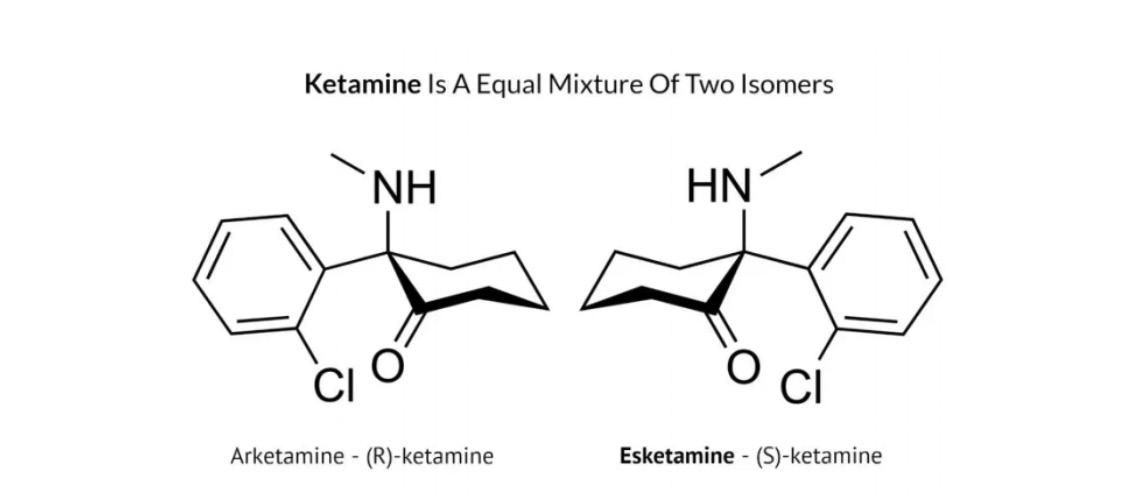
Ketamine is a dissociative anesthetic that belongs to the chemical class of arylcyclohexylamines with one chiral carbon resulting in two enantiomers. [7] A chiral carbon consists of four different groups of atoms attached to the central carbon atom, and enantiomers are two mirror image forms of the same molecule. Chiral forms of a drug have the same number and type of chemical groups but differ in arrangements in space. Pairs of enantiomers differ in their optical activity or their ability to rotate plane polarized light to either the left (-, or levorotatory) or to the right (+, or dextrorotatory). [6]
Ketamineis a racemicor 50:50 mixture comprising equal amounts of its enantiomers, (R)-Ketamine and (S)-Ketamine. It is a non-competitive, N-methyl-Daspartate (NMDA) receptor antagonist and works by causing a dissociation between the brain and the body, leading to a trance-like state that provides pain relief and sedation. A non-competitive antagonist is a substance that reduces the effect of another molecule-known as an agonist-that normally activates a receptor, by binding to a different site onthe receptor other than where the agonist binds.
As seen in animal models of depression, (R)-Ketamine has a longer lasting antidepressant effect along with fewer side effects, than (S)-Ketamine, however, (S)Ketamine is more powerful than (R)-Ketamine. The drug shows a rapid and sustained anti-depressant effect, in contrast to traditional anti-depressants.
CLINICAL TRIALS:
In 2000, Berman et al.(2000) [9] conducted the first clinical trial to investigate the effects of (R,S)-Ketamine using a dose of 0.5 mg/kg administered through the veins, or intravenously. This was the first placebo-controlled, double-blind test in which seven participants with MDD completed two test days which included intravenous administration of ketamine hydrochloride or saline solution, the placebo, a substance with no active drug effect used for comparison, under randomized, double-blind settings, which is a study design where neither participants nor researchers know who receives the treatment to reduce bias. The results derived from the test evidenced an improvement of depressive symptoms that lasted at least 72 hours after ketamine treatment but not the placebo-infusion. This goes to prove that a low dose of ketamine is associated with a significant decrease in depressive symptoms emerging progressively within three days. [9] It resulted in a rapid increase in the anti-depressant effect, within hours of administration. In 2006, Zarate et al. (2006) replicated this study with patients suffering from TRD. The results of this experiment showed that patients receiving ketamine experienced a significant improvement in depression within 110 minutes of administration and remained significant throughout the week. [10] The study concludes that a single intravenous dose of ketamine produces robust and rapid anti-depressant effects, with onset occurring two hours after administration and lasting significantly for one week.
Repeated ketamine therapy of six infusions over 12 days was reported safe and well-tolerated in patients with TRD. [23,27] This was reinforced by a study done by Murrough et al., 2013b, which found that repeated ketamine therapy demonstrated
Figure 1. The enantiomers of Ketamine[8]
clinically meaningful improvement in symptoms in 70.8% of participants, leading to an overall response rate of 70.8% with a median relapse time of 18 days. [24,27] When comparing the findings from the aforementioned studies, the average time before symptoms reappeared increased from 7 days to 18 days, which represents a notable improvement in the duration of the effects of treatment. To compensate for the dissociative properties of ketamine, Murrough et al., 2013a, used midazolam, a psychoactive placebo in place of saline in a large double-blind study to blind the patient to treatment. [25,27] Ketamine infusions are also shown to rapidly decrease suicidal thoughts in patients with MDD within 24 hours. [26,27]
Further, human neuro imaging studies in patients with MDD show increased connectivity and activity in the prefrontal cortex and other areas related to moodregulation when treated with ketamine. In 2023, Kopelman et al. designed a study for patients with a MADRS score of >25 which indicates severe to moderate depression and who have failed at least one, adequate trial of an FDA approved anti-depressant medication. [15] Similar to the previous studies, this was a double-blind, randomized trial where patients received either ketamine or placebo in a 2:1 ratio — for every one participant who received the placebo, two participants received ketamine. The primary method of assessment was diffusion tensor imaging (DTI), an MRI-based technique that tracks the movement of water molecules in brain tissue to map the structure and integrity of white matter pathways. DTI was performed at baseline and 24-hours post-infusion. The mean diffusivity (MD), which reflects the average extent to which water can move within tissue and is often used as an indicator of structural changes in the brain,was measured in the left and right Brodmann Area 10 (BA10), amygdala, hippocampus and ventral anterior cingulate cortex to evaluate changes in neuroplasticity. These regions were selected because they are involved in emotional regulation, memory and cognitive control, all of which are commonly affected in MDD. Participants who received ketamine showed greater decreases in MD scores in the left BA10 and left amygdala, which correlates with larger reductions in depressive symptoms. These results suggest that ketamine’s rapid anti-depressant effects are linked to acute changes in neuroplasticity. Further, this highlights the potential mechanisms by which ketamine exerts its anti-depressant effects, adding to the growing body of evidence supporting the use of ketamine in TRD.
MECHANISM OF KETAMINE AS AN ANTIDEPRESSANT:
Neuroplasticity is defined as the brain’s ability to rewire itself and form new synaptic connections in response to learning, memory or following injury. In simpler
words, it is the brain’s ability to change and adapt in response to experience. In depression, neuroplasticity impairment is symbolized by reduced synaptogenesis [16] or the formation of new connections between neurons, decreased dendritic spines [17] which are small protrusions on neurons where connections form, lower Brainderived Neurotrophic Factor (BDNF) levels, [18] a protein required for neuronal survival and growth, impaired glutamate signaling [19]and hippo campal shrinkage or atrophy [20] Anti-depressants improve the mechanisms of neuroplasticity by working to repair the damaged neural circuits, strengthening synaptic connections or connections between neurons in the brain and normalizing glutamate levels. [21] Ketamine has been found to normalize brain connectivity in altered brain regions, increasing neuroplasticity and synaptic strength in MDD as discussed herein. An important distinction: “synaptic” or “synapse” refers to the junction between neurons, acting as a critical site for transmitting signals in the nervous system.
N-methyl-D-aspartate (NMDA) and a-amino-3-hydroxy-5-methyl-4-isoxazolepropionic acid (AMPA) receptors have been proved to be responsible for the modulation of mood that is impaired in depression and are involved in the glutamatergic pathway. These receptors play essential roles in synaptic plasticity, a specific mechanism within neuroplasticity referring to the strengthening or weakening of individuals connections between neurons, and mood regulation [19], transmitting fast excitatory signals in the brain. Glutamate, the main excitatory neurotransmitter in thecentral nervoussystem (CNS), acts on these receptors, which are found to be co-localized. The mechanism of action of ketamine then follows a complex sequence of events: ketamine functions as a non- competitive NMDA receptor antagonist and demonstrates a preferential affinity for NMDA receptors located on inhibitory g-aminobutyric acid (GABA) interneurons [17], which are inhibitory specialized neurons in the CNS. Under normal conditions, these interneurons suppressor inhibit excitation of downstream glutamatergic pyramidal neurons, the primary excitatory neurons. Due to NMDA antagonism, ketamine prevents the activation of GABA interneurons leading to the disinhibition of glutamatergic neurons, resulting in atransient increase inthe levels of glutamate outside the neurons, or extracellular glutamate levels. This glutamate surgeinitiates the activation of AMPA receptors, which in turn increases the activity of BDNF and Mammalian Target of Rapamycin (mTOR) signaling pathways. [6] These pathways result in increased synaptic plasticity and strength.
There are two proteins involved in making the synaptic connections stronger: BDNF is a growth protein involved in supporting the survival of existing neurons and promotes newsynaptic connections. mTOR is a protein that regulates important
cellular processes such as cell proliferation, autophagyor “recycling” of cell components, and apoptosisor programmed cell death. The latter is known to contribute to the fastacting anti-depressant effects of ketamine. Ketamine increases BDNF levels allowing for increased neuroplasticity and synaptic connections to disconnect and reconnect in other areas of the brain, thereby increasing the strength of such connections. Elevated BDNF levels support the formation of new neuronal connections and restoration of weakened neural circuits. Activation of the mTOR pathway leads to rapid production of synaptic proteins, increasing dendritic spine density, which allows for a greater number of connections between neurons, and enhances synaptic efficacy or the efficiency of communication between them. [17,27]
Collectively, these mechanisms help explain ketamine’s rapid anti-depressant effects. By enhancing AMPA receptor signaling, increasing BDNF levels, and activating mTOR-dependent synaptic remodeling, ketamine rapidly reverses synaptic deficits associated with depression. This mechanism contrasts with conventional antidepressants, which typically require weeks of administration to exert indirect effects on neuroplasticity through systems that rely on neurotransmitters such as serotonin, dopamine and norepinephrine. [19] On the other hand, ketamine represents a shift in how depression is understood and treated, highlighting the importance of glutamatergic neurotransmission and synaptic plasticity in regulating mood.
SAFETY OF KETAMINE AS AN ANTIDEPRESSANT AND FUTURE DIRECTIONS:
A study conducted in collaboration between the National Institute for Health and Care Research (NIHR) Maudsley Biomedical Research Center and NIHR Oxford Health Biomedical Research Center explores the views of people divided into four categories: people considering ketamine, patients who have used the drug, people with experience of illegal drug use/addiction, and patient advocates and carers. An online survey captured the view of the people in these groups and analyses were conducted. The majority of people who participated in the study felt the need of careful monitoring of ketamine usage to gain more insight into its side effects as well asensure its safe administration. There were concerns raised about the risk of selfadministration and lack of understanding of the drug due to the stigma of ketamine as a “party drug.” Overall, the participants felt that the potential benefits outweighed the risks of the drug. [22]
The use of ketamine to treat MDD, particularly TRD, has been met with
enthusiasm particularly by virtue of studies having produced positive results. However, the widespread use of ketamine is restricted by its abuse potential and dissociative properties it causes distortion, a detachment from reality. Additionally, repeated doses of ketamine can cause a variety of side effects such as cognitive impairment and psychomimetic symptoms, mimicking aspects of psychosis, such as hallucinations or distortions. This makes long-term use challenging, thereby necessitating further research. Clinical trials of multiple doses of ketamine and follow up to assess the long-term safety of regular use is recommended. Additionally, preclinical and clinical studies have highlighted differences in antidepressant efficacy and side effects between the sexes, adding to the complexity to evaluate the drug. [29]
In summary, ketamine treatment for patients suffering from TRD has been proved beneficial in controlled dosages and in supervised settings by several research studies that have proven the short-term and efficacy of ketamine. However, the use of ketamine should be a last resort and only to treat extreme forms of MDD and TRD. Further research must be conducted to find ways to minimize the adverse sideeffects of the psychedelic drug, in order to ensure a safer treatment experience and gain insight on the long-term usage of ketamine.
CONCLUSION:
In the US alone, depression remains the second biggest contributor to years lived with disability, and fifth leading contributor to disability-adjusted life years (DALYs). [27] Ketamine’s anti-depressant effects can occur rapidly, often within hours, which is significantly faster than traditional antidepressants that can take weeks to become effective. This rapid onset of action makes ketamine a valuable option for patients with TRD.
Preclinical and clinical studies consistently demonstrate that ketamine exerts its anti-depressant effects through mechanisms distinct from traditional monoaminergic drugs, primarily by modulating glutamatergic neurotransmission and enhancing neuroplasticity. By blocking NMDA receptors and promoting downstream AMPA receptor activation, ketamine increases BDNF signaling and activates the mTOR pathway, leading to rapid synaptic remodeling and restoration of dysfunctional neural circuits. These neurobiological changes are believed to underlie the sustained anti-depressant effects observed following a single or repeated ketamine administration. Collectively, these findings suggest that ketamine has reshaped the understanding of depression from a disorder defined primarily by
neurotransmitter imbalance to one rooted in impaired synaptic connectivity and neuroplasticity.
However, the clinical use of ketamine is not without limitations. Its dissociative and psychotomimetic side effects, as well as its potential for abuse, necessitate careful monitoring and administration in controlled clinical settings. Long-term safety data remain limited, emphasizing the need for extended follow-up studies and the development of alternative compounds that retain ketamine’s therapeutic efficacy while minimizing adverse effects.
Ketamine represents a significant advancement in the treatment of treatmentresistant depression and has reshaped current understanding of the neurobiology of mood disorders. While it should not replace first-line antidepressant therapies, ketamine offers avaluable last-line option for individuals with severe and refractory depression. Continued research into its mechanisms, long-term safety, and optimized delivery methods will be essential to fully harness its therapeutic potential and guide future antidepressant drug development.
FUN FACT
We are one among over 30,000 peer-reviewed journals currently in publication worldwide.
SECOND PLACE (TIE)
GLOBAL TALENT FLOWS AND THE U.S. LABOR MARKET
SOYEON PARK
Major: Global Affairs
Class of 2025
INTRODUCTION
This paper argues that the OPT and STEM OPT programs are not merely temporary student work opportunities but essential policy instruments that sustain the U.S. innovation economy. In the current era of globalization and knowledge-based economies, the competition for the most skilled workers is viewed as a major component of the national economic strategy. The United States has been the destination of choice for international students for a long time. More than a million students come to the United States every year to attend its universities. These students not only improve the academic and cultural life of American colleges and universities, but they are also a very important source of new ideas, businesses, and skilled workers. The Optional Practical Training (OPT) and STEM OPT extensions are now the most important ways that international education is linked to the U.S. job market. These programs are the main link between higher education and work because they let graduates work for up to three years after they finish their degrees. They provide important human capital to industries that need more workers in science, technology, engineering, and math (STEM).
OPT and STEM OPT have become topics of political and economic debate, as critics say they could take jobs away from Americans or let students stay in the country longer than they were supposed to. Also, the growing uncertainty around visas, the small number of H1B visas, and the lack of a clear path to permanent residency have made people worry that the US won’t be able to keep the best talent from around the world. Canada, the UK, and Australia, which are all competing countries, have made
their post-graduation work and immigration systems more predictable. This has made the global competition for skilled graduates even stronger and put pressure on U.S. policymakers to act. This paper examines how OPT and STEM OPT shape labor market outcomes in the United States and how they influence global talent flows in comparison with competitor countries. Specifically, it addresses three central research questions:
1. How do OPT/STEM OPT programs shape labor market outcomes in the U.S.?
2. How do international students contribute to the U.S. labor market, both during their studies and after graduation?
3. How effective are programs like OPT and the H-1B visa in retaining international students as part of the U.S. workforce?
LITERATURE REVIEW
Amuedo-Dorantes, Furtado, and Xu (2019) examine the impact of modifications in U.S. immigration policy, particularly the 2008 Optional Practical Training (OPT) extension for STEM graduates, on the educational and employment decisions of international students. The authors employ data from the National Survey of College Graduates (2003–2015) and a difference in differences methodology to ascertain the impact of the extended work authorization period on students’ major selection. After the policy change, they discovered that foreign-born students who initially arrived in the U.S. on F-1 visas were 18% more inclined to major in STEM fields compared to similar foreign-born graduates on alternative visa types (Amuedo-Dorantes et al., 2019, 3). This change means that the OPT extension made it more likely that STEM graduates would stay in the U.S. job market after graduation and that there would be more of them. The authors contend that an extended OPT duration enabled employers to assess prospective H-1B candidates over several years, thereby enhancing companies’ readiness to employ and sponsor foreign workers (Amuedo-Dorantes et al., 2019, 2). They also say that the policy “made STEM degrees more appealing to international students thinking about studying in the United States” by making it easier for them to find work after they graduate (Amuedo-Dorantes et al., 2019, 4). These findings are directly pertinent to the research inquiries of the present study, demonstrating that OPT and STEM OPT programs affect labor market outcomes by steering international students towards high-demand sectors and improving their retention within the U.S. workforce. The research provides compelling empirical evidence that targeted immigration policies can effectively manage global talent flows and improve the U.S. position in the international competition for skilled labor.
Beine, Peri, and Raux (2022) analyze how international students contribute to the U.S. skilled labor supply, focusing on short-run transitions from university graduation to employment through the Optional Practical Training (OPT) program. Using a newly constructed dataset merging the Integrated Postsecondary Education Data System (IPEDS) with OPT authorization records from 2003 to 2017, they estimate how one additional international student affects the number of skilled workers entering the U.S. labor market. Their results show that each additional international master’s graduate increases local skilled employment by approximately 0.23 workers, while each bachelor’s graduate increases it by about 0.11 workers (Beine et al., 2022, 18). These findings highlight a significant short-term contribution of international students to the U.S. labor force. Notably, the study finds strong heterogeneity by field: STEM graduates exhibit transition rates of 0.25 (master’s) and 0.16 (bachelor’s), while nonSTEM fields show no statistically significant effect (Beine et al., 2022, 20). The authors say that this difference is because of the 2008 STEM OPT reform, which gave STEM graduates work permits for 12 to 29 months. This made it about eight percentage points more likely that they would stay in the U.S. labor market (Beine et al., 2022, 21). Their use of an instrumental variable isolates quasi random changes in tuition fees to deal with endogeneity in students’ choices of where to live, which makes causal inference stronger. Beine et al. (2022) demonstrate that international students are crucial for fulfilling the U.S. demand for highly skilled workers. This supports the idea that OPT and STEM OPT programs bring talented people from all over the world and make the job market more competitive.
The 2024 Gusto Immigrant Entrepreneurs Report explains that immigrants aren’t coming here for the American dream, they’re actually building it from scratch. Data has shown that immigrants started almost one in five new businesses in the U.S. last year, a significant margin. Gusto is not a doctored statistic, as it has collected data from over 300,000 small businesses across the country. Immigrant-owned businesses provide jobs for about 1.3 million people across the country. While the report doesn’t exactly tell how many founders came through OPT or STEM OPT, many of the founders mention that they started as international students, went to college, obtained temporary work visas such as OPT or H-1B, and then stayed with the company and started their own businesses. These work visas are the gateway to entrepreneurship. Fast-growing startups in technology and professional services are much more likely to attract immigrants to STEM degrees. These fields desperately need smart, leading talent, and international graduates are filling that gap. This data supports what many people already know: International students are not just here to get their diplomas, and their ripple effects have significant implications for the U.S. economy. The Gusto
Report is not another tedious statistical waste. In fact, temporary work visas are not meant to fill short-term needs. They are like a starting point for long-term business growth, bringing international talent deep into the fabric of the American workforce.
Kerr (2020) provides a thorough investigation of the effects of high-skilled migration and education-related visa programs on the U.S. labor market and its position in the global talent race. According to Kerr, 29% of all college-educated STEM workers are immigrants, and more than half of the U.S. doctorate holders are foreigners. This is a clear indication of the vital role that global talent plays in the U.S. innovation ecosystem (Kerr, 2020). Kerr emphasizes that U.S. universities and firms act as dual gatekeepers for talent: universities attract global students via F-1 visas and transition them into the workforce through OPT, while firms then determine who continues under H-1B sponsorship (Kerr, 2020, 9). This institutional pathway links directly to the research question of how international students contribute to the labor market both during and after their studies. The study also critiques the inefficiencies in the U.S. visa system, noting that only 140,000 green cards are allocated annually for employment-based migration, compared with much higher proportions in Canada and Australia (Kerr, 2020). These restrictions create uncertainty for international graduates, undermining the U.S.’s ability to retain talent in the long run. Kerr highlights that while the OPT program effectively bridges education and employment, it remains “strained by the mismatch between universities’ capacity to admit foreign students and the limited number of H-1B visas available” (Kerr, 2020, 9). He says that the way things are now in the U.S. could mean that the best graduates leave for countries with more certain paths after school, like Canada and the UK. Kerr (2020) makes the case that immigration policy design is key to keeping the U.S. competitive in the global talent race by stressing how OPT and H-1B are connected.
Kerr, Kerr, Özden, and Parsons (2016) present a thorough global analysis of highskilled labor migration, establishing a conceptual framework for comprehending the impact of talent flows on national labor markets and innovation systems. The authors say that the number of migrants with higher education rose by almost 130% from 1990 to 2010, while the number of low-skilled migrants rose by only 40% (Kerr et al., 2016, 2). They say that this sudden rise in skilled migration has caused a “highly asymmetric” global distribution of talent, with most of it going to four Anglo-Saxon countries: the US, the UK, Canada, and Australia. These four countries together host almost 70% of high-skilled migrants to OECD countries (Kerr et al., 2016, 4). The U.S. alone hosts nearly 11.4 million skilled migrants, or about 41% of all high-skilled workers in the OECD (Kerr et al., 2016, 4), positioning it as the central hub of global human capital.
The research links this concentration directly to the policies and institutional structures that enable countries to attract and retain talent, including university systems and employment-based immigration programs such as the OPT and H-1B visas. Kerr and researchers (2016) note that tertiary and graduate education abroad is linked to future job opportunities in other countries (Kerr et al., 2016), underscoring the importance of programs like OPT in facilitating educational-to-employment transitions for global talent. They further argue that high-skilled immigrants are essential to innovation clusters such as Silicon Valley, where over half of technology workers and entrepreneurs are foreign-born (Kerr et al., 2016). This concentration of international talent produces strong agglomeration effects, meaning that as more skilled immigrants cluster in key industries and regions, they raise the productivity and wages of both native and foreign workers. Finally, the authors contrast U.S. immigration policies with pointsbased systems in Canada and Australia, concluding that the U.S. “employer-driven approach,” while flexible, may limit long-term retention of foreign graduates due to visa uncertainty (Kerr et al., 2016, 13–14). Their findings directly inform this study’s research questions by showing how educational migration channels, such as OPT and H-1B programs, reinforce the United States’ position in global talent competition. The paper situates these mechanisms within a broader context of brain drain versus brain circulation, suggesting that global human capital mobility benefits both sending and receiving countries when managed effectively.
Khoo (2025) argues that one of the most detailed empirical analyses of how the 2008 STEM OPT extension influenced international students’ academic choices and degree outcomes in U.S. higher education. The research utilizing difference-indifferences and event-study methodology to ascertain the causal impact of extending the OPT work authorization period for STEM graduates by using administrative data from all public universities in Ohio spanning 2004 to 2015. The results indicate that the policy markedly enhanced the probability of international students enrolling in OPT-eligible STEM majors—by 19% for bachelor’s students and 45% for master’s students—subsequent to the 2008 reform (Khoo, 2025, 2). Moreover, Khoo (2025) finds that the OPT extension led to a 33% increase in degree completion rates for bachelor’s students and a 50% increase for master’s students (Khoo, 2025, 11). These improvements indicate that prolonged work authorization enhances academic motivation and reduces uncertainty about post-graduation employment, reinforcing the link between education and labor market integration. The paper also reports modest gains in academic quality, with small positive changes in GPA among STEM students after the policy implementation (Khoo, 2025, 9). The study finds no evidence that domestic students were crowded out of STEM fields, implying that increased
international participation expanded rather than displaced the overall supply of skilled labor (Khoo, 2025, 12). Khoo’s research provides strong evidence for the argument that OPT and STEM OPT programs not only facilitate smoother transitions from education to employment but also shape the composition and quality of the U.S. labor force. By showing that post-study work rights can steer global talent toward priority fields like engineering and computer science, the study directly supports this paper’s central research question on how OPT/STEM OPT programs shape labor market outcomes and enhance the U.S.’s competitiveness in global talent retention.
She and Wotherspoon (2013) provide a comparative analysis of how international student policies in the United States, Canada, and the United Kingdom function as strategic tools in managing highly skilled migration. Drawing on secondary data and a political economy framework, the authors argue that international student mobility (ISM) has become an integral component of national strategies to address demographic decline and labor shortages in advanced economies (She and Wotherspoon, 2013, 1). They emphasize that international students are viewed not only as consumers of education but also as a potential pool of highly skilled migrant workers who are more easily integrated into local labor markets due to their education and social connections in the host country (She and Wotherspoon, 2013, 2). The study identifies distinct national models: Canada prioritizes openness and retention through work-permit pathways and permanent residency programs, the United Kingdom emphasizes controlled entry and limited post-study stay, while the United States combines selective recruitment with employment-based retention through programs such as OPT and H-1B (She and Wotherspoon, 2013, 4). These differences reflect contrasting national approaches to Canada’s nation-building model, the U.K.’s temporary migration regime, and the U.S.’s employment-based selection system. The authors observe that up to 90% of foreign workers receiving U.S. employment-based immigrant visas had previously entered on student visas, typically transitioning from F-1 to OPT to H-1B before permanent residency (She and Wotherspoon, 2013, 11). This underscores OPT’s importance as a bridge between education and long-term employment. Further, She and Wotherspoon (2013) demonstrate that while all three nations promote student mobility, the United States’ “reactive” policy orientation, which is tightened after 9/11, has constrained its ability to attract and retain global talent relative to competitors like Canada and Australia (She and Wotherspoon, 2013, 11–12). Their findings directly relate to this paper’s research questions by highlighting how policy frameworks determine international students’ contributions to national labor markets and their retention as long-term workers. The U.S. model, reliant on OPT and H-1B transitions, exemplifies how post-study work programs shape labor
market outcomes and global talent competition in advanced economies.
Clemens, Neufeld, and Nice (2025) present one of the most comprehensive analyses of how restrictions on international student work programs, particularly Optional Practical Training (OPT) and STEM OPT, affect the U.S. labor market and economic growth. Commissioned by the National Academies of Sciences, Engineering, and Medicine, their report uses simulation modeling and administrative data to estimate the macroeconomic consequences of changes in post-study visa policy. The authors find that eliminating OPT would lead to a 59.9% reduction in foreign STEM graduates entering the U.S. workforce immediately after graduation and a 6–7% long-term decline in the total U.S. STEM labor supply (Clemens et al., 2025, 22). Their analysis attributes this sharp drop to the role of OPT as the primary bridge from education to employment, enabling international graduates to obtain professional experience and transition to longer-term work visas such as the H-1B. The report also highlights that 65% of international STEM graduates participate in OPT, and roughly 40% of them later transition to H-1B status (Clemens et al., 2025, 12), demonstrating OPT’s effectiveness as a retention mechanism within the broader U.S. immigration system. These findings directly support this study’s research questions, showing that OPT and STEM OPT programs substantially shape labor market outcomes by sustaining the high-skilled workforce pipeline. Moreover, Clemens and researchers (2025) estimate that restricting or removing OPT would reduce U.S. productivity growth by 3–6% per year, resulting in an annual economic loss between $220 and $439 billion after a decade (Clemens et al., 2025, 28). The authors conclude that higher education and immigration policy together constitute America’s “front-door pipeline” for global STEM talent, accounting for 77.8% of foreign STEM graduates entering the U.S. workforce through the F-1 ->OPT -> H-1B pathway (16). Their findings underscore that maintaining OPT and STEM OPT is not only vital for individual labor outcomes but also for preserving the United States’ comparative advantage in the global competition for high-skilled workers.
METHODS
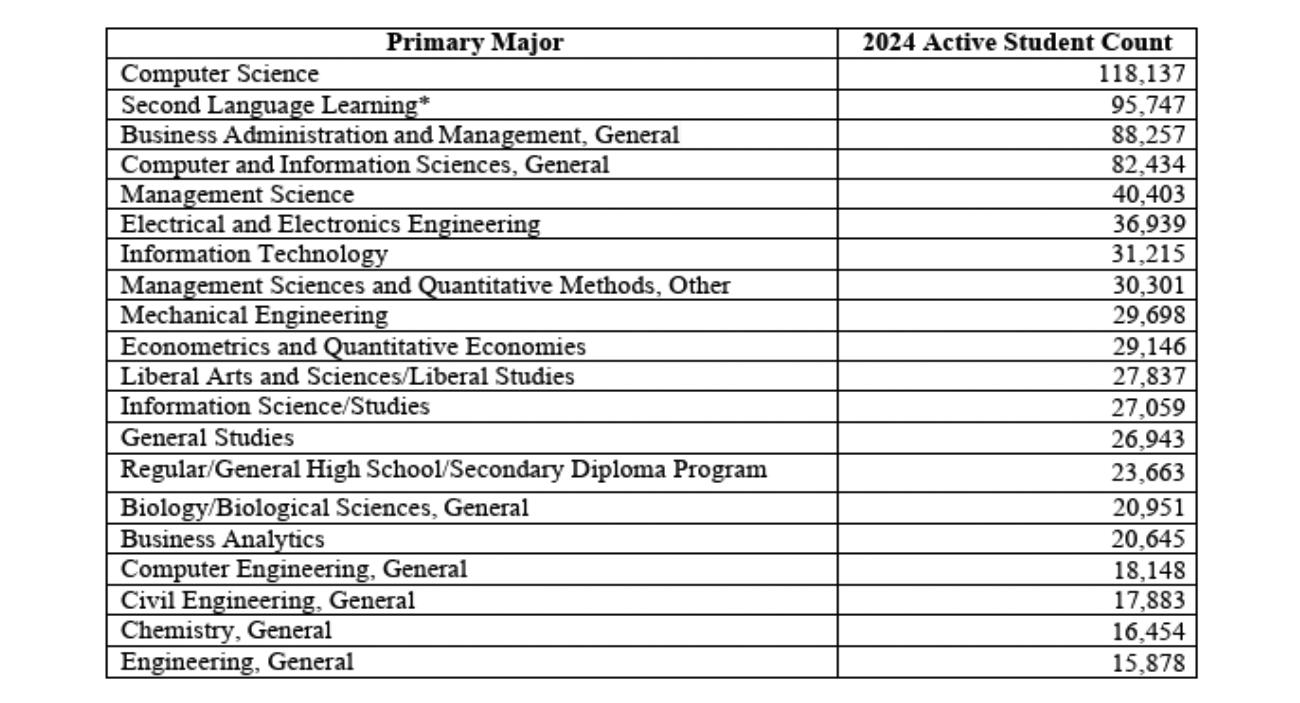
The study utilized visitor information system data managed by the Immigration and Customs Enforcement Administration under the U.S. Department of Homeland Security. The data is a report titled “2024 SEVIS by the Numbers” that contains information about international students in the U.S. For example, we report specific figures on the number of international students in the U.S., the distribution of students by major, and finally the size of participants in the Optional Practical Training (OPT)
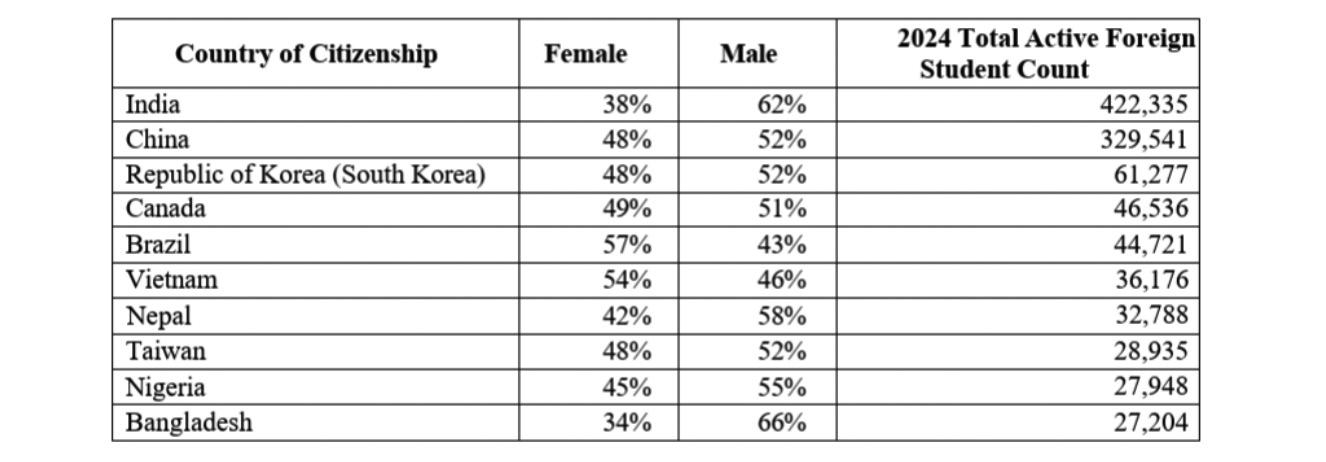
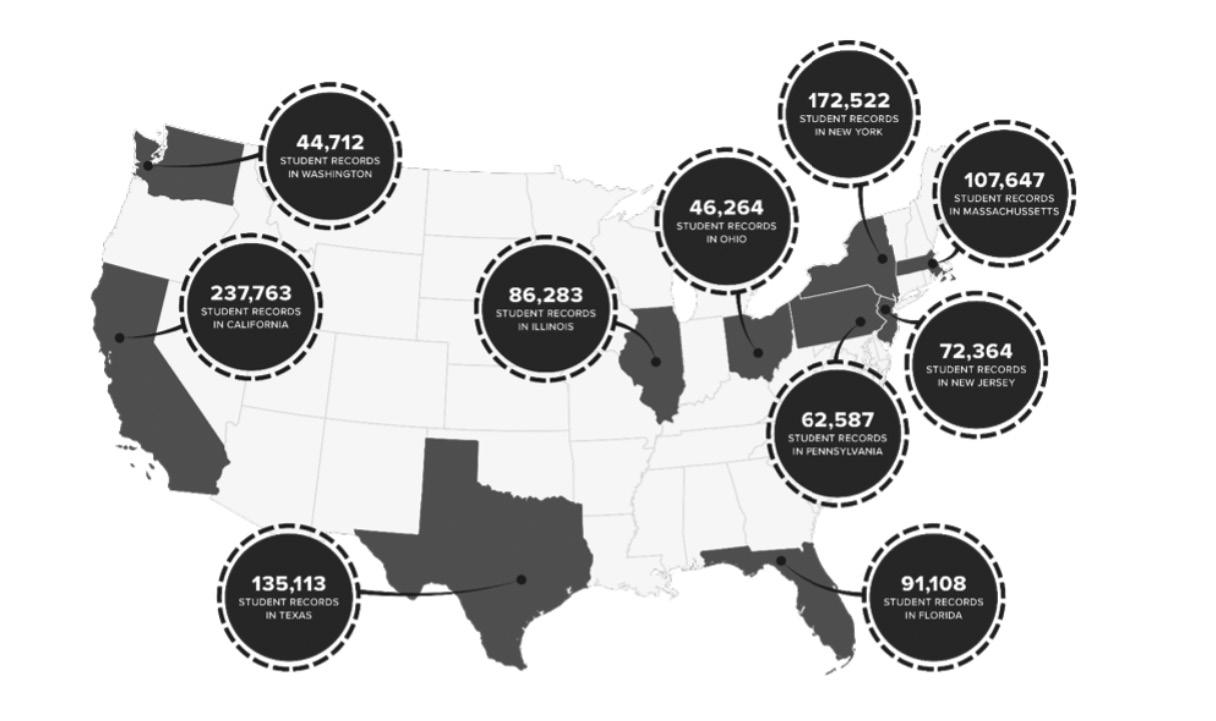
and STEM OPT. Since these administrative data provide much more comprehensive and accurate data than sample surveys, they are evaluated as the most reliable primary data for analyzing the actual conditions of international students. Using this data, this study aims to explore the structural link between the U.S. labor market and higher education, focusing on the characteristics of international students by academic field and their participation in employment practice. According to the report, as of the end of 2024, a total of 1,210,937 international students were reported in the U.S. (F-1 and M-1). Of these, STEM majors account for 628,000 or about 52% of the total, especially those in science and computer engineering (US Immigration and Customs Enforcement 2025, 6; see Appendix Table 1). Descriptive statistical analysis was performed based on the collected SEVIS data. Since the goal of this study is to clearly present the structural characteristics of international students that can be confirmed through SEVIS data and their participation in OPT/STEM OPT programs, technical analysis methods that reveal actual conditions are more appropriate than causal models such as regression analysis. In the first step of the analysis, the proportion of the system on the supply of high-skilled personnel in the United States was evaluated by comparing the total number of F-1 students and the number of students participating in OPT/STEM OPT as of 2024 (U.S. Immigration and Customs Enforcement 2025, 2). Next, we looked at the changes in the number of students by major sending countries (India, China, etc.), which helps to understand the direction of global talent movement and the competitiveness of the US study market (see Appendix Table 2). Finally, the regional concentration of international students was visually analyzed using SEVIS’ distribution data by state. In particular, California, New York, and Texas are regions where STEM-centered industries have developed, and the participation rate of international students in OPT is also high (U.S. Immigration and Customs Enforcement 2025, 12; see Appendix Figure 1).
FINDINGS
Through the results of this analysis, this study tried to empirically confirm that the OPT and STEM OPT systems are structural mechanisms connecting higher education and the labor market in the United States. Thanks to the STEM OPT expansion system, the participation rate of students in computer engineering, IT, and engineering has steadily increased. Compared to 2016, the number of STEM OPT participants has increased by about 1.6 times, which is not just an extension of stay, but a result of reflecting demand in the U.S. labor market. Considering that about 40% of STEM OPT participants are converted to H-1B visas (Clemens et al, 2025, 14), OPT is not a short-term stay program, but rather a path for long-term work and settlement
in the United States. This trend shows that OPT acts as a link between the education system and the labor market. Overall, OPT and STEM OPT are not simply systems that extend international student stays, but serve as practical bridges between higher education in the United States and the labor market. In the SEVIS data, the fact that the ratio of STEM majors reaches 52% and the OPT participation rate reaches 18% means that the United States has already systematically established a structure to inflow high-skilled talent through universities and connect it to industrial sites. These results are also consistent with the existing literature. Amuedo-Dorantes et al. (2019) analyzed that the OPT extension policy increased the STEM major selection rate by 18%, and Clemens et al. (2025) estimated that if STEM OPT were abolished, about 6-7% of the US STEM workforce would decrease. My analysis also shows the same direction. In other words, it was empirically confirmed that OPT and STEM OPT are not just student visas, but human resources supply mechanisms that maintain the innovation competitiveness of the United States.
This study empirically analyzed how the Optional Practical Training (OPT) and STEM OPT programs in the United States have a structural impact on the international talent movement and the U.S. labor market. As a result of confirming through SEVIS data, OPT and STEM OPT were not just extended student stays, but were acting as key institutional mechanisms connecting higher education in the United States and industrial sites. About 52% of all international students were STEM majors as of 2024, and about 18% of them were actually entering the U.S. labor market through the OPT or STEM OPT programs. This structure shows that the United States is using universities as not just educational institutions, but as a gateway to the influx of international talent and as a strategic channel leading to industrial sites. In addition, the fact that about 40% of STEM OPT participants are converted to H-1B visas means that the system is functioning as a pathway to long-term employment and settlement rather than a short-term stay. In other words, OPT and STEM OPT are not an extension of international students’ stay, but are part of the talent supply system in the U.S. economy, and play a direct role in the growth and productivity improvement of the STEM industry. This shows that international students do not simply leave after obtaining a degree in the United States but are also producing new skills and knowledge within the U.S. innovation ecosystem and contributing to economic growth. Furthermore, these results suggest that OPT/STEM OPT is working as a global competitive strategy at the national level beyond simply expanding individual opportunities. Currently, major competitors such as Canada, the United Kingdom, and Australia are making efforts to secure excellent human resources in the long term by flexibly designing employment and permanent residency systems after graduation.
Under these circumstances, it is essential for the United States to maintain stable OPT/STEM OPT systems and strengthen links with H-1B and permanent residency systems in order to maintain leadership in the global talent competition. If the system is unstable or contracted, there is a risk that the supply of high-quality human resources in STEM will weaken, and the U.S. innovation and technological competitiveness will decline. Therefore, the study emphasizes that the OPT and STEM OPT systems are one of the key growth engines of the U.S. economy and are simply a matter of national competitiveness beyond the scope of the international student visa system. The answer to the question “Why should we care?” is clear. OPT and STEM OPT are strategic tools for the United States to attract talented people from all over the world and integrate them into its industrial structure and innovation system. This system alleviates the problem of shortage of technical manpower, connects higher education directly to industry, and functions as a key device for the United States to maintain a competitive advantage in the global talent market. In the end, this study empirically demonstrated that the sustainability and expansion of the OPT/STEM OPT system is not just a policy for international students, but that the United States is a strategic choice to maintain leadership in the knowledge-based economy of the 21st century.
APPENDIX
Table 1: Foreign Students by Major
Table 2: Foreign Students by Country
Figure 1: States for Foreign Students
FUN FACT
Mason’s research funding has nearly doubled in five years - George Mason brought in $282 million in total research expenditures in 2024, a growth of nearly 30% over the past five years. The National Science Foundation ranks Mason 10th among U.S. public universities in research growth over the past decade.
SECOND PLACE (TIE)
APPLICATIONS OF SENSORS
IN REMOTE SENSING SATELLITES WITHIN THE AEROSPACE
INDUSTRY
JUSTIN D. HAGEN
Major: Dept. of Electrical and Computer Engineering Class of 2026
ABSTRACT
Sensors have been widely used across the aerospace industry for collecting data relevant to the Earth’s climate at a global scale. Many different types of sensors have been leveraged in an Earth sensing application including the active ATLAS sensor aboard NASA’s ICESat-2 mission, and the passive optical sensing technologies onboard the Indonesian LAPAN-A4 mission. The primary functions of these sensors vary due to their differing operating principles as passive or active sensors. The ATLAS instrument actively emits and observes a 532 nm laser to collect data, while the CCD detectors on the LAPAN-A4 mission passively collect light from the Earth. These sensing technologies are versatile in their data collection capabilities, but also multivariate in external impacts. The employment of remote-sensing technologies in satellite applications implements extensive job creation but imposes a tax burden on the civilian population funding the public sector mission development. These impacts also directly expand into the environmental sector due to pollution caused by sensor development, and indirectly influence climate change mitigation efforts brought about by the data from these missions. Not isolated from political controversy, remote sensing finds itself central to international discussion related to how countries use these sensors for international intelligence collection.
INTRODUCTION
The widespread use of sensing technologies in the aerospace industry has enabled remote data collection to a scope infeasible by human-sponsored data collection campaigns. These sensors operate as humanity’s set of eyes from outer space and provide data related to the Earth’s climate efficiently. Such efficiency represents the importance of remote sensors in serving climate research objectives, however, this benefit comes at the expense of tax burdens placed on the general population and political tensions surrounding remote sensing technologies for international intelligence-gathering campaigns.
The roots of remote sensing technologies are found in early wartime intelligence gathering. The field has since expanded from its grassroots origin with the aerospace industry utilizing sensors aboard remote sensing satellites to collect climate data. This shift from intelligence gathering to data collection represents a fundamental change in the purpose of the remote sensing industry. These data points are accumulated via numerous types of sensors with various operating principles, the key distinction being the sensor’s classification as a passive or active sensor.
Outside of the technical differences in sensor technology design, various impacts of remote sensing boil over into non-technical fields. These impacts are widespread from tax burdens placed on constituents within a nation, to political tensions related to how nations fundamentally operate their satellite constellations. These satellites also provide data that is used to productively fuel climate change research endeavors, and simultaneously help smaller nations remain culturally independent from Western influence, as is the case with the agriculture industry in Indonesia.
BACKGROUND
The application of remote sensing technologies within the aerospace industry finds its roots in old military surveillance techniques. During World War II (WWII), numerous countries resorted to aerial photography as a common source of international reconnaissance. [1] The original remote sensing technique involved strapping a small camera with a pneumatic actuator to a pigeon to collect regularly spaced images of the ground along the pigeon’s flight path. [1] This original system was extremely primitive, with the earliest cameras having a limited resolution, and the control of the camera limited to the flight path of the pigeon. [1] Despite the rudimentary design of the original technique, it marked the first instance of autonomous remote data collection.
Over time, remote sensing cameras became more advanced and were integrated into more precise control systems, allowing the camera’s location to be accurately controlled.
These improvements were ultimately reached using airplanes with carefully designed flight paths, integrated with larger camera sensors of 230x230mm.[1] By plotting the flight path against a known route, the images taken from the airplane could be pinpointed to the specific locations they show on the ground. [1] This advanced the field of remote sensing by allowing a flight path to be designed which overlooked many key surface targets and further allowed the images to be backtracked to a physical location. Additionally, larger format sensors enabled increased area coverage per individual image. [1] As camera sensor size increases, a larger area can be successfully photographed in one exposure. The development of larger sensors allowed photographic coverage of broader land areas, limited only by the range of the host plane.
The final major development which has pulled remote sensing into the modern age is the integration of sensing technologies with satellite bus architectures. The first successful implementation of this was the Vanguard 2 satellite launched by the United States, which was the first orbital satellite capable of photographing the Earth. [1] The Vanguard 2 could collect limited optical data with constrained scientific merit. [1] The most recent developments in the field of remote sensing include the integration of more advanced sensing technologies aboard a satellite mission. The United States led ICESat-2 mission is one such example which actively probes the Earth with a laser beam, and records changes in the laser beam [2] the Advanced Topographic Laser Altimeter System (ATLAS). This satellite showcases the transition in the remote sensing industry to active sensing where energy is emitted from the satellite bus and the return energy is probed for changes. [3] This major development enabled scientists to not only observe the ground appearance through passive camera imaging, but actively characterize surface features by measuring the disturbances introduced to the system’s return energy.
TECHNICAL OVERVIEW
According to an engineering team at the National Aeronautics and Space Administration (NASA), there are three main groups of sensing technologies used for Earth focused observation missions: Active remote sensors such as light detection and ranging (LIDAR) and radio detection and ranging (RADAR) measurement devices, Passive remote sensors such as optical measurement devices, and lastly In-Situ sensing technologies. [3] Critically, while In-Situ sensors are a valid Earth data collection
method, they are not a remote sensing technology due to their need to be stationed within their study environment. [3] The first two classes of sensing technologies, active and passive remote sensors, are based external to the study environment and therefore fit the classification of remote sensing technologies as classically defined. [3] Both sensor types are widely used across various areas of the aerospace industry, with different missions leveraging either sensor architecture type to best support the mission’s data collection needs. One example of an active remote sensing instrument is the advanced topographic laser altimeter system (ATLAS) device developed by NASA, and a passive instrument such as the charge-coupled device (CCD) detectors used onboard the LAPAN-A4 mission developed by the Indonesian government [2] the Advanced Topographic Laser Altimeter System (ATLAS). [4]
The ATLAS instrument was originally launched onboard the ICESat-2 mission developed by NASA, and represents a classic example of an active remote sensing device stationed in orbit [2] the Advanced Topographic Laser Altimeter System (ATLAS). The underlying performance of this instrument is centered around a LIDAR measurement device [2] the Advanced Topographic Laser Altimeter System (ATLAS). LIDAR instruments in terrestrial applications are typically used for distance sensing from the transmitter device to the object in front of the sensor. Following the same operating principle, the LIDAR sensor composing the backbone of the ATLAS instrument is
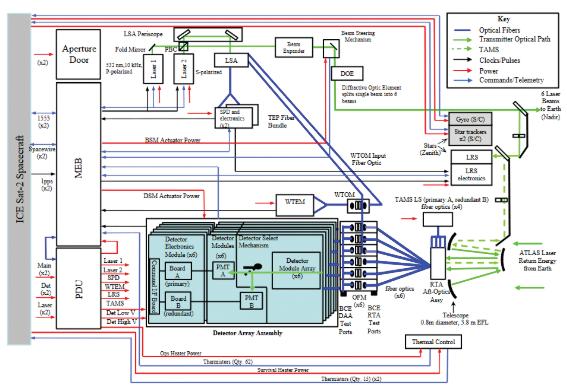
Fig 1. Engineering block diagram of the ATLAS instruments key subsystems [2]
utilized to topologically map out the Earth’s surface by measuring the displacement between the sensor on the satellite and the Earth’s surface below [2] the Advanced Topographic Laser Altimeter System (ATLAS).
The beginning of the optical train used in the ATLAS instrument starts with a 532 nm wavelength laser, which is fired at a rate of 10kHz with variable energy ranging from 250 to 1400 μJ, with each “on” pulse having a duration of 1.3ns [2] the Advanced Topographic Laser Altimeter System (ATLAS). These lasers are shown as “LASER 1” and “LASER 2” respectively (See Fig. 1) with the additional laser being included in the system to provide redundancy in the case of a system fault [2] the Advanced Topographic Laser Altimeter System (ATLAS). The laser wavelength configuration allows the ATLAS instrument to be specifically tuned to measure only the 532 nm light signature. Additionally, the regular pulse width and frequency of the laser pulses provides a solid control for which light changes can be measured, and subsequently correlated to Earth surface conditions [2] the Advanced Topographic Laser Altimeter System (ATLAS). The redundant nature of satellite-based sensing technologies, such as the dual laser source configuration, is a common theme present throughout the aerospace industry since satellites cannot be serviced in the event of a system failure. This means additional components are required on key systems to compensate for faulty equipment.
The remaining optics along the output chain are used to process the light from the lasers into a usable state. The major components of this optical chain are a beam expander used to widen the aperture of the output laser beam, and a diffractive element to generate 6 separate laser beams [2] the Advanced Topographic Laser Altimeter System (ATLAS). Also included on this chain is a beam steering mirror, used to correct the optical path of the light, minimizing noise introduced into the system by mechanical vibrations from the satellite bus [2] the Advanced Topographic Laser Altimeter System (ATLAS). The inclusion of the beam steering optics in the construction of the ATLAS instrument highlights that noise is particularly detrimental to the performance of active optical instruments. Increased complexity in instrument construction is required not only in how energy is produced and sampled by the instrument, but also how external influences, such as vibrations, are mitigated. Leaving the system, these six beams illuminate a rectangular pattern on the Earth’s surface; comparing the differences across each of the six beams using the return optical path provides insight into various characteristics of the Earth’s surface such as terrain type and height [2] the Advanced Topographic Laser Altimeter System (ATLAS).
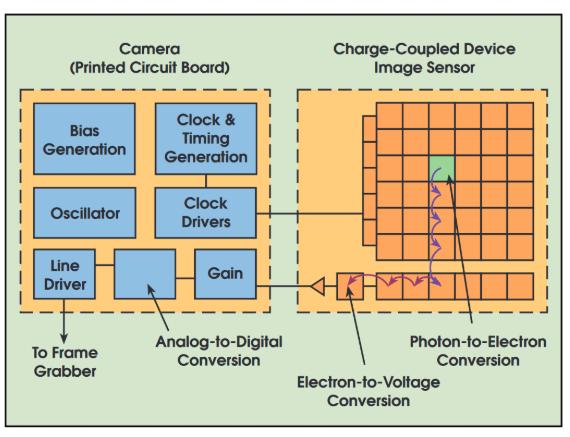
Fig 2. Image of block diagram highlighting the individual subsystems present in a CCD-based imaging system. [5]
The return optical path for the laser signals is centered around 6 identical photon counters, in conjunction with a series of corrective optics used to focus the returning laser light [2] the Advanced Topographic Laser Altimeter System (ATLAS). These photon counters provide high fidelity information related to the time duration and intensity of the returned laser light, as well as how the laser light is centered on the detector [2] the Advanced Topographic Laser Altimeter System (ATLAS). By comparing each of the properties across the six photon detectors, the data can shed insight into key characteristics of the Earth’s surface such as elevation, angle, and material classification.
Diverting from the active LIDAR sensor used onboard the ATLAS instrument, the Indonesian funded LAPAN-A4 has a multispectral medium resolution imager (MRI) instrument which uses passive CCD sensing technology. [4] This technology varies from the LIDAR sensor used for the ATLAS instrument since there is no active emission of energy from the sensor, rather just collection of light from the Earth’s surface. [5] CCD sensors are based on metal-oxide semiconductors, which are subdivided into a microgrid array, with each cell representing a pixel in the final output image. [5] When taking an image, the CCD detector is exposed to light and charge accumulates on each individual cell of the microgrid array. [5] These charge levels are stored as packets, which are transferred off the detector device to external circuitry for further
processing to complete image formation. [5] The CCD detector can be shown as a passive device since the charge accumulation occurs due to the light emissions from the Earth’s surface and not from a separate emitted light source.
Following the charge packet transfer, a charge to electron converter is used to convert the raw charge information from each individual pixel, into an electrical signal which can be processed by traditional circuitry. [5] Comparing CCD technology to the competitive complementary metal oxide semiconductor (CMOS) technology, CCD detectors see the charge to electron conversion handled outside the individual pixels, whereas CMOS sensors process the charge to electron conversions directly at each pixel itself. [5] The isolated nature of the charge to electron conversion in a CCD detector reduces the complexity of these imaging sensors compared to a CMOS sensor. This benefit yields smaller CCD pixels, allowing for more pixels to be fit into the same format sensor type and increasing the resolution of the final image. [5] This advantage is distinctly appreciable from an aerospace industry perspective, since the vantage point of images taken from the satellite is miles above the Earth’s surface. The higher resolution images offered by the CCD sensors allow for the output images to capture more fine details present on the Earth’s surface when compared to their CMOS counterparts.
Another key feature of CCD detectors is their ability to measure light only within a specific wavelength range. The LAPAN-A4 mission flew the MRI instrument, which was a collection of four CCD detectors focused on different portions of the electromagnetic spectrum. [4] By integrating multiple-tuned spectral images together in such an instrument like the MRI, the LAPAN-A4 mission was able to integrate the narrow band images from each individual detector to collectively produce one super image which spanned four regions of the electromagnetic spectrum. [4]
Comparing the broad spectral view of the passive MRI instrument to the narrow band spectral view of the active ATLAS instrument highlights differences in the dynamic range of the two sensor architectures. Since the ATLAS instrument actively emits a 532nm laser, the measurement optics are tuned to isolate just that specific optical signature. Comparatively, since passive sensors are not limited to searching for their own emitted energy, these sensors can possess a wider dynamic range like the MRI instrument. Thus, while passive sensor technologies cannot make the same resolute surface characterizations like the active ATLAS instrument can, the optical independence of the CCD detectors allows them to cover a broader region of the electromagnetic spectrum with relative ease [2]the Advanced Topographic Laser Altimeter System (ATLAS). [4]
IMPACTS OF REMOTE SENSING TECHNOLOGY
A technology as monumental as space-based Earth observing sensors are not without serious implications to areas outside of purely technical design and the aerospace industry. The utilization of sensors in a space-based application has economic, social, and environmental impacts, in addition to the impacts that play out on an international stage.
ECONOMIC IMPLICATIONS
The most direct implication of utilizing sensing technologies in a space-based application is the cost on taxpayers for developing and launching such sensing technologies. A direct example of this is the NASA sponsored ICES at-2 mission which was developed utilizing funding provided from the United States government. [6] As published by a NASA internal report in 2019, the ICES at-2 mission faced significant cost overruns and ultimately went over its initial schedule and had a modulated budget of 1.044 billion dollars USD [7] Cloud, and Land Elevation Satellite ICES at. Considering the population of the United States at the time of the launch of ICES at-2 satellite was 328 million people, the ICES at-2 mission had a tax burden of $3.18 per person. This tax burden placed on civilians highlights how remote sensing mission spending is directly transposed to civilian taxpayers.
Beyond the tax burden placed on the civilian population, the remote sensing operations of NASA generates mass economic output from the data supplied by these remote sensing missions and the engineering innovations made during mission development. To match the metric from the previous section, with a general tax burden of $3.18 per person, NASA’s operations are able to generate $213.14 in economic output per tax payer. [6] Together, these figures underscore the return on investment (ROI) of this industry. These figures demonstrate that the initial costs for developing and launching a remote sensing mission are steep, but generally can create positive economic impact from a sheer revenue perspective.
Beyond surface level cost considerations, the remote sensing industry generates many jobs to support economic growth. Typical government funded satellite missions operate under the auspice of having the central agency drive the overall direction of the mission, while contracting with companies to complete some of the technical work related to the mission. [6] To this end, NASA has generated almost 340 thousand jobs in purely public sector positions, with countless other positions being supported by
the agencies contracts with the private sector. [6] These reported figures highlight the many jobs created by remote sensing operations within the aerospace industry, and economic contributions outside of a pure revenue perspective.
SOCIAL IMPACTS
Social impacts of remote sensing technologies are primarily rooted in how the data collected from these sensors contributes to the overall cultural workflow of the societies which fund the mission. One example of this is the data collected from the LAPAN-A4 mission, which strives to contribute towards improving the agricultural productiveness of Indonesian farmers [4]. The optical data collected by the LAPAN-A4 mission sheds insight into different land types across not only Indonesia but also globally, allowing for advanced insight as to how crops need to be propagated to produce the most productive agricultural output [4]. While this improved agricultural effectiveness does represent an economic benefit of utilizing remote sensors in space, the social impact lies in the fact that Indonesia has a culture widely based on agriculture which is supported by the data collected by these missions.
Indonesian culture has widely relied on agriculture not only as a source of provision but as a cultural point around which the nation has a common heritage [8]. Throughout globalization, Indonesia has found itself facing increasing pressure to adopt the economic practices of western nations [8]. Taking these factors into account, the LAPAN-A4 mission represents a vessel of Indonesian autonomy in a culturally significant economic sector. This represents a significant social outlook of remote based sensing technology, in that the data collected by these missions can allow smaller nations to preserve traditional environmental practices which western ideology may sometimes jeopardize.
ENVIRONMENTAL IMPACTS
The production of remote-based sensing technologies directly impacts the environment through the harmful emissions from the silicon refining industry. Silicon is one of the most common materials utilized to create semiconductor reliant sensing technologies on remote sensing missions. Refining silicon is a power intensive process, and results in carbon emissions as the impurities in the silicon are ultimately burned off. [9] This process represents a direct environmental impact of the production of silicon-based sensors, as the refining process produces excess carbon emissions which have classically been shown to accelerate climate change within the Earth. As a
greenhouse gas, carbon emissions hold on to heat within the Earth’s atmosphere and accelerate the warming of the climate. Research is pushing the field of silicon refining to more efficient production procedures, but the status quo remains highly inefficient and unsustainable. [9]
An indirect, positive impact that remote-based sensors have on the environment is the benefits that they provide by yielding high resolution climate data. This climate data augments scientific understanding of how the climate is changing and where correction efforts need to be focused. For example, the ATLAS instrument aboard the ICES at-2 mission sheds insight in to how the distribution of ice on Earth is changing, as well as global plant coverage [2] the Advanced Topographic Laser Altimeter System (ATLAS). This kind of data provides unprecedented insight into how climate change has impacted the distribution of Earth’s vital ice and vegetation resources, providing climate scientists with the data needed to identify where climate change is impacting the Earth the most. These remote sensing data points provide insight into the current status of many of the planets key environmental parameters, and will form a historical record to be analyzed as climate research progresses. [3]
GLOBAL IMPACTS
The impacts of remote sensing technologies can be felt on a global scale via international tensions regarding the use of remote sensors for intelligence gathering purposes. One common use of remote sensing technologies during the cold war was monitoring for intercontinental ballistic missiles (ICBMs). [10] This self-defense usage of satellites was deemed acceptable practice but demonstrated that space faring nations had a defense interest in outer space. To address this, the United Nations (UN) produced a “space treaty” which banned international military offensive operations from occurring in outer space. [10] The stipulations of this “space treaty” highlight that nations with remote sensing satellites in outer space were vying to claim dominance within outer space and maintain an extraterrestrial political presence. This represents a critical global impact of the use of remote sensing satellites as they inherently include nations willing to exploit the technology for national gain. This continues the historical precedents set by the initial stages of remote sensing during WWII, where countries utilized remote sensing satellites for political and military gain, and not solely for data collection.
Another global impact of the usage of remote based sensors on satellites is a growing disparity between developed and underdeveloped nations. As of 2009, there were 150
nations who had a presence of remote sensing satellites in orbit through either direct or indirect involvement on the mission [10]. The disparity in satellite usage drives a wedge between countries with the income necessary to support a satellite mission and countries whose public spending is fed back into the civilian population. This disparity arises due to increased knowledge/climate data that developed nations with a space presence can leverage to further develop their own nation (i.e. Indonesian LAPAN-A4 mission), while nations without this same presence are distinctly disadvantaged by their comparative lack of data.
FUTURE OF REMOTE SENSING
Future improvements can be implemented to advance remote sensing technologies and support more sustainable development of the field. Primarily, the remote sensing industry is severely lacking in developments related to the improved silicon refinement practices, and reducing international inequalities brought between nations with unequal access to orbital remote sensing.
One area of development within the remote sensing industry is reducing the environmental toll brought about by the production of sensing technologies, and specifically the purification of the silicon materials needed for the sensors. The refining process for silicon is an energy intensive process that results in heightened carbon emissions from both a production plant perspective and also as a byproduct of the purification process. [9] This environmental toll is contradictory to the overarching goal of remote sensing missions, such as the ICES at-2 mission, in collecting climate data to be used to help fight climate change [2] the Advanced Topographic Laser Altimeter System (ATLAS). In the future, the purification processes for the silicon materials that make up the backbone of remote sensing technologies should be made cleaner in order to better align with the overarching climate science mission objectives of a remote sensing missions and reduce the carbon footprint of this industry.
Beyond the environmental impacts of the purification techniques utilized to manufacture silicon, reducing the development cost of these processes is essential for allowing more countries to participate in remote sensing missions. In the current state of the remote sensing industry, there are 150 countries currently present in satellite missions in some capacity. [10] While this magnitude of 150 countries represents the progress the remote sensing industry has made in gaining international traction, numerous countries still miss out on that engagement. Part of the reason for this is the incredible costs incurred by a nation when developing a satellite remote sensing
mission. [1] These costs price out many developing nations where economic resources are limited and are prioritized on civilian development and not engineering projects. [1] To address this discrepancy, the costs of both developing and launching a remote sensing satellite into orbit need to be reduced. By reducing the economic burden in the remote sensing industry, more countries could actively participate in orbital data collection and research, allowing smaller nations to address their own individual needs via remote sensing satellites.
CONCLUSION
Remote sensing technologies have been a monumental, but simultaneously controversial advancement in the world of Earth science data collection. The diverse implementation of sensor technology use for remote-sensing satellites is based on the difference between active and passive sensors. The fundamental differences between the design of these sensors allows the mission designer various benefits. For example, the NASA sponsored ATLAS instrument is designed with active architecture that can inherently collect extremely resolved data on the topography of the Earth and ice distribution by actively probing the Earth’s surface with a laser pulse. In contrast, the CCD detectors on the Indonesian sponsored LAPAN-A4 mission will collect data on land type by purely passive collection of light from the Earth’s surface with no external pulse. The differing approaches utilized between both missions with respect to the instrumentation built into the satellite underscores fundamental differences in how active and passive sensors are leveraged to collect data. While the ATLAS instrument’s active probing allows extremely precise data to be collected, the dynamic range is limited solely to the laser that is being emitted from the satellite. Conversely, the passive CCD detectors on the LAPAN-A4 mission can be used to collect broadband optical data of the Earth’s surface, since there is not an emitted wavelength that the satellite data is centered around.
Outside of the technical influence of remote sensing technologies in satellite development, numerous external effects are observed. One of the most prevalent issues is international political tensions surrounding the use of the technologies, historically used for international intelligence gathering campaigns. A specific example of this tension is present in UN legislation which specifically bars the usage of satellites in an orbital flight path from being used to expand territorial dominance of a nation. Another global impact rooted from the international processes of various nations in outer space is a growing disparity between developed nations with the capital needed to support a space-based mission when compared to a nation whose internal funds are
directed towards more developmental programs for their civilians. These disparities can be fixed via future developments in the field of remote sensing technologies such as reducing the costs of the sensor technologies themselves and lowering the overhead needed to develop and launch a satellite bus payload. However, despite these growing areas for development, the current status of remote sensing technologies has resulted in a monumental data collection outlet to support climate science research objectives.
Mason research has led to real medical breakthroughs: Cutting-edge research conducted at George Mason has produced groundbreaking advances in cancer detection, Lyme disease treatment, concussion protocols, and COVID-19 early detection, work with direct impact on patients and communities.
THIRD PLACE
UNEARTHING HISTORY IN RED DEAD REDEMPTION II’S FRONTIERS OF REALISM
To What Extent Does Historical Realism Play a Role in the Narrative of Red Dead Redemption II, Especially Regarding Native American Populations and the Industrialization of the United States?
JUMMANA ALZAHRANI
Major: CEC Undeclared Class of 2028
“You Can’t Fight Nature, Captain. You Can’t Fight Change” – Red Dead Redemption II
INTRODUCTION
Set during the years 1899-1907, in a fictional American West, Red Dead Redemption II is a video game of intricate detail that captures the essence of a transformative period in American history. This captivating game transports players back in time to a transitional period between the conventional American West and the industrialization of a growing nation and invites them to experience these events through a unique and immersive lens. The game’s story follows Arthur Morgan and the Van Der Linde gang as they attempt to thrive in a world that is rapidly changing around them. The game’s attention to historical detail and accuracy is remarkable, with the developer, Rockstar, taking great care to ensure that everything from the clothing worn by the characters to the dialogue they speak is true to the period (Rockstar, 1998). However, Computer Games Professors Iain Donald and Andrew Reid argue that the game is a product
of a post-truth era in which the boundaries between reality and fiction are blurred. The authors caution against using the game as a primary source for historical research but note that it can be a valuable starting point for further inquiry (Donald & Reid, 2020). Despite that warning, the game provides many accurate historical references and representation for marginalized communities. Historical realism is a factor that plays a significant role in the narrative of Red Dead Redemption II by authentically depicting the injustices faced by Native Americans and showcasing the socio-cultural impact of industrialization during the historical period in which the game is set. Some players and critics have argued that the game’s commitment to realism can come at the expense of gameplay. For example, Red Dead Redemption II features an intricate simulation of the real world, with a detailed weather system, realistic animal behavior, and a variety of survival mechanics such as hunting and crafting. While these features add to the game’s realism, they can also make the game feel slow or tedious at times, especially for players who prefer faster-paced gameplay (IGN, 2018). This essay will investigate to what extent does historical realism play a role in the narrative of Red Dead Redemption II, especially regarding Native American populations and the Industrialization of the United States. Red Dead Redemption II effectively achieves historical accuracy in its portrayal of Native American experiences and the impact of industrialization, displaying a meticulous commitment by Rockstar to authentically this era of the American West.
One of the most fascinating aspects of Red Dead Redemption II is the way in which it explores the spread of industrialization in the West. As the game unfolds, we witness the transformative effect of the late 19th-century expansion of settled society, technology, and culture on the western landscape. The Van der Linde gang represents a form of resistance to the encroachment of civilization on the frontier which they see as a threat to their “freedom” and “independence.” Robbing, stealing, and killing have fallen out of fashion compared to the past, and the Wild West is no longer as wild. In the game, just as in real life, railroads are being built, towns are being established, and the old ways of the West are slowly disappearing (Heikkinen & Reunanen, 2015). This creates a sense of tension and conflict that is at the heart of the game’s story, with the gang members being forced to confront the changes that are happening around them. This narrative not only serves as a captivating storyline but also highlights Red Dead Redemption II’s commitment to realism by authentically portraying the clash between traditional Western values and the unwavering demand for progress.
To analyze Red Dead Redemption II as a text, this essay’s methodology analyzes the game as a work of literature. Much like any history novel, the game makes use of
elements such as language and text to convey its narrative. The game is set in a time when the West was still largely untamed and when the forces of industrialization were beginning to take hold. Using dialogue and slang that might be considered obsolete, the game’s scriptwriters have managed to recreate the language of the time in a way that is both believable and immersive. The game’s characters speak in a way that is true to their background and social class, with cowboys, miners, and railroad workers all having their own unique way of speaking. This attention to detail helps to create a world that feels alive and vibrant, with each character feeling like a real person rather than a caricature. Crowley, Silk, and Crowley, state that the game’s virtual ecology can serve as a tool for environmental education, as it allows players to interact with and learn about the game’s flora and fauna. The game also encourages players to take on the role of a hunter-gatherer, which can foster a deeper appreciation for the intricate balance of nature and instills a sense of responsibility toward it. This mirrors the challenges and consequences brought about by the societal changes through industrialization. In this way, the game’s commitment to environmental realism becomes a powerful narrative device, intertwining the virtual world with the broader themes of industrialization and its effects on the natural environment. The analysis will involve close reading of the game’s script, dialogues, and visual elements to reveal the ways in how historical realism play a role in the narrative of Red Dead Redemption II, regarding Native American populations and the Industrialization of the United States. The analysis will also consider the historical context in which the game is set and explore the ways in which the game reflects or diverges from actual historical events. The goal of this analysis is to gain a deeper understanding of the game as a work of art and to explore the ways in which it illuminates our understanding of the past.
I. CIVILIZATION, INDUSTRIALIZATION, & NATIVE AMERICANS
A. HISTORICAL REALISM THROUGH CIVILIZATION/INDUSTRIALIZATION
Red Dead Redemption II vividly portrays the process of “civilization” as a doubleedged sword, bringing new opportunities and advancements while simultaneously disrupting traditional ways of life and leading to the displacement and exploitation of marginalized communities, such as Native Americans and rural farmers. As Bagnoli (2019) notes, the game “reflects a discourse about another era.” that is informed by romanticized ideas of rugged individualism, Manifest Destiny, and the triumph of civilization over savagery. However, the game also subverts some of these tropes by depicting the severe consequences of colonialism and the violence that underpinned
it. The game features Native American characters who are not merely props for the white protagonist’s journey but have their own agency and perspectives. On the one hand, the game’s narrative represents progress and modernization, with modern technologies and opportunities for economic growth and yet it is also associated with exploitation, greed, and the erosion of traditional ways of life. Throughout the game, we see the tension between the forces of civilization and the resistance to it (Locke & Mackay, 2021).
B. PORTRAYAL OF NATIVE AMERICAN CHARACTERS
Red Dead Redemption II stands out in its portrayal of Native American characters, offering a nuanced perspective on their experiences and struggles during this period of American history. While many other media forms have often relegated Native Americans to stereotypical roles, the game goes beyond these stereotypes to depict them as complex individuals with their own agency and stories. Through the game’s narrative, players witness the cultural clash between Western civilization and the traditional ways of life of the Native Americans. The game depicts how the Native Americans are treated unfairly and subjected to discrimination by the American government and its citizens. The character of Charles Smith, a member of the Van der Linde gang and a half-Native American, serves as a representation of this conflict. Charles struggles with his identity and the treatment of his people, leading to several powerful moments in the game’s story. He serves as a bridge between two worlds, grappling with his identity and the injustices faced by his people. Throughout the game, players witness Charles’ struggle to find his place in a society that often views Native Americans as inferior. The narrative explores the cultural clash between Western civilization, represented by the American government and its citizens, and the traditional ways of life of the Native Americans. Charles becomes a clear symbol of this conflict, embodying the unwavering resilience of his heritage while facing the harsh realities of prejudice and discrimination.
Red Dead Redemption II depicts the devastating effects of civilization on Native American populations specifically through the stories of characters such as Eagle Flies and Rains Fall. Eagle Flies is a young Native American man who becomes involved in a resistance movement against the US government’s expansion into Native territory. His father, Rains Fall is a wise and respected elder who advocates for peaceful coexistence between the Native Americans and the settlers. Eagle Flies represents the younger generation’s frustration and desire to resist the encroachment of the American government and industrialization on their lands. His character embodies the conflict between preserving tradition and fighting for survival in a changing world.
C. EFFECTS OF CIVILIZATION ON INDIGENOUS POPULATION
Throughout the game, players witness the brutal consequences of the US government’s actions, as they forcibly remove the Native Americans from their lands and disrupt their traditional ways of life. The Wapiti Indian Reservation, where Eagle Flies and Rains Fall reside, is a victim of this struggle, as the government attempts to seize the land and resources from the Native Americans. The government’s greed and disregard for the lives of the Indigenous people are palpable, as players witness the destruction of their homes and their livelihoods. Through the government’s encroachment upon Native societies, the game portrays the tension between the benefits of civilization and its cost to Indigenous communities. The spread of railroads and towns brings modern technologies and economic growth, but it also displaces Native Americans. The characters of Eagle Flies and Rains Fall embody the need to recognize the past and present injustices and work towards a more equitable future for marginalized communities. Rains Fall demonstrates the importance of preserving cultural heritage and passing it down to future generations, even in the face of adversity. Esther Wright (2021) highlights the lack of a younger generation in the Wapiti Camp, mentioning that “the Wapiti Reservation is a game space that largely only includes the old and infirm.” She mentions a direct quote from a conversation between the player, Rain Falls and his son which entails the removal of the young Indigenous children and their mothers, “All the young have been taken from our Reservation, shipped off to reform schools. Many women too” (Rockstar Games, 2018a). The establishment of Indian boarding schools and reform schools was often authorized by federal and state governments through various laws and policies, as seen in the game. These schools were part of a broader effort to assimilate Native American children into Euro-American culture. This portion of the gameplay has roots in the historical reality of laws such as the Indian Removal Act of 1830. It primarily focused on the forced relocation of Native American tribes from their ancestral lands in the southeastern United States to territories west of the Mississippi River. However, it set a precedent for the government’s involvement in the relocation of Indigenous peoples. Historian and professor Alfred A. Cave stated, “The Indian Removal Act passed by Congress in 1830 neither authorized the unilateral abrogation of treaties guaranteeing Native American land rights within the states, nor the forced relocation of the eastern Indians. Yet both occurred, on a massive scale, during Andrew Jacksons Administration and were the result, not of an explicit congressional mandate, but of an abuse of presidential power” (Cave, 2003).
The General Allotment Act of 1887, also known as the Dawes Act, allowed the division
of tribal lands into individual allotments, with the goal of breaking up communal land ownership and encouraging assimilation. In volume 57 of Agricultural History, Stanford University’s Leonard Carlson emphasizes that, “The General Allotment (Dawes) Act of 1887 was an attempt to satisfy both sets of demands. This act empowered the President of the United States to divide existing reservations into 160-acre allotments, assign one to each family, and open the remaining lands to white settlers. Indian allotments were originally placed in a 25-year trust period during which time the land could neither be leased nor sold” (Carlson, 1983). These policies were driven by the belief that the cultural practices and languages of Indigenous peoples were inferior and needed to be replaced with European-American values and lifestyles as well as the economic benefit of colonizing Native land. Players witness the government’s use of force to evict Native Americans from their lands, as seen in the mission “American Fathers,” where the gang helps the Wapiti people fight against the U.S. Army’s attempts to take their land by infiltrating an oil company location. Rains Fall’s character serves as a representation of the historical reality faced by Native American leaders who advocated for peaceful coexistence and cultural preservation during a time of encroachment by settlers and government policies. His narrative arc in the game directly reflects the challenges posed by policies like the Dawes Act, as he grapples with the loss of land, the displacement of his people, and the erosion of their traditional practices.
II. AMERICAN EXPANSION & GOVERNMENT
A. DEPICTION OF THE AMERICAN EXPANSION AND DEVELOPMENT
Players are forced to confront the cost of progress and the legacy of colonialism, and to consider the ongoing struggles of marginalized communities. Through it all, the game invites us to reflect on the importance of preserving cultural heritage and respecting the rights of all people, even as we strive to build a better future. For them, the spread of railroads, towns, and other signs of progress represents a loss of the wild, untamed West that they love (Razzi, 2021; Wright, 2021). At the same time, the game also portrays the benefits of civilization. Players can explore bustling towns with thriving economies, such as Saint Denis, and engage with modern technologies such as the telegraph and photography. These elements are often juxtaposed with the harsh realities of life for those living on the frontier, highlighting the advantages and drawbacks of civilization. The frontier, as historian Patricia Nelson Limerick describes it, is “a place of opportunity, escape, and reinvention” (Pietsch, 2022, p. 273).
As the game progresses, players witness the transformation of the western landscape as cities, transportation networks, and industrialization begin to emerge. For instance, the player will see the small, rural town of Valentine gradually become a bustling city as the game progresses. This growth of civilization marks the expansion of EuropeanAmerican values, laws, and customs, which are gradually replacing traditional ways of life, cultural identity, and land rights.
B. GOVERNMENT AGENCIES & THE FBI
Figure 1: A wanted poster from the Pinkertons for the leader of the Van Der Linde gang, Dutch Van Der Linde.
The game also portrays the American government’s efforts to establish laws and order in the West, such as the introduction of the Pinkerton National Detective Agency, a private security firm employed by the government to combat crime and enforce the law. Robert P. Weiss’s Private Detective Agencies and Labour Discipline in the United States, 1855-1946 details the history of private security groups such as the Pinkertons. He delves into the similarities between the Pinkertons and the FBI (Weiss, 1986). In Red Dead Redemption II, players can witness how the Pinkertons employ tactics reminiscent of modern law enforcement agencies including surveillance and the use of undercover agents. Players may find themselves drawing parallels between the Pinkertons’ methods and those employed by the FBI in their own investigations. This comparison can lead to interesting discussions about the evolution of law enforcement techniques and the ethical considerations surrounding the pursuit of criminals, whether in the Old West or the modern era. The Pinkertons are a recurring enemy in the game, and players will encounter them in various missions, such as “The Battle of Shady Belle,” where the gang is confronted by the Pinkertons at their camp and forced to relocate. As shown in Figure 1, Dutch Van Der Linde, the leader of the Van Der Linde Gang, is wanted by the Pinkertons for a range of crimes, including robbery, murder, and conspiracy. This constant pursuit by the Pinkertons adds a thrilling element to the game’s storyline, as players have various confrontations with the Pinkertons.
III. RACISM & HATE GROUPS ADDRESSING
A. RACISM IN RED DEAD REDEMPTION II
Red Dead Redemption II does not shy away from addressing the issue of racism during the historical period it portrays. Characters like Lenny Summers and Tilly Jackson, who are Black members of the Van der Linde gang, experience racism firsthand. The game features encounter with the Ku Klux Klan, an infamous true-to-life white supremacist organization that existed during the late 19th and early 20th centuries. In Autumn Brower’s essay on hate groups and fear she states, “The Ku Klux Klan is made up of many chapters that promote a movement towards ‘racial segregation and white supremacy’… Originally, the KKK focused on being anti-African American, but that has changed to include aggressive hatred towards homosexuals, select Christians, immigrants, and Jews, as well (Brower, 2009).” In the game encounter, the player stumbles upon a group of KKK members gathered in a remote location, dressed in their signature white robes and hoods as they are recruiting a new member. As shown in Figure 2, the KKK members clumsily attempt to set up a cross to burn, a symbol of their real hatred and racial intimidation. Their dialogue during this scene is riddled with racist rhetoric and bigotry, going as far as saying “It is imperative that we (the KKK) re-establish sanity and supremacy before it is too late!” (Red Dead Redemption II). While watching this disturbing display, the game provides the player with the option to intervene and disrupt their activities.
The game also explores the issue of racism through the “Lemoyne Raiders.” This confederate gang in the game drew inspiration from the real-life Quantrill Raiders, a notorious group led by William Quantrill during the Civil War era. In “Why the Confederacy Lost” by Robert L. Kerby, professor of history at Notre Dame from 1972 to 1998, he explores the factors that contributed to the defeat of the Confederate States of America during the American Civil War. While Kerby primarily focuses
Figure 2: KKK member being lit on fire.
on economic disadvantages, military challenges, and it’s important to note that the Civil War era was marked by a turbulent social climate as well. William Quantrill, the leader of the Quantrill Raiders, was known for his violent and racist actions during the war, and further exemplifies the societal dynamics of the time. As Kerby describes, “only in style, then Quantrill emerges as both an able combat commander and as an effective agent for the implementation of the Confederacy’s political goals in his theater of operations” (Kerby, 1973, p.336). This group’s activities, characterized by guerrilla warfare and ruthless tactics, reflect the nature of the Confederacy’s struggle. They were part of a broader pattern of unconventional warfare that challenged the traditional model of the Civil War, highlighting the need to consider guerrilla operations when evaluating the Confederacy’s fight for existence. The Lemoyne Raiders, like their historical counterparts, are set in a post-civil war period, yet they still embody the deeply entrenched racism and barbaric tactics. They are depicted as a faction with strong white supremacist beliefs, and their actions often involve acts of racial discrimination, harassment, and violence towards African Americans, Natives, and other minority groups led by Lindsey Wofford. Figure 3 shows the wanted posters for Lindsey Wofford, and the real-life William Quantrill side by side which further solidifies the game’s realism. Players encounter numerous instances where Lemoyne Raiders engage in brutal acts of racism, such as intimidating or attacking African American characters. In the mission “Preaching Forgiveness as He Went,” Lenny
Figure 3: William Quantrill (Quantrill Raiders Leader) and Lindsay Wofford (Lemoyne Raiders Leaders) wanted posters.
informs Arthur about the Lemoyne Raiders, a group of delusional ex-Confederates who aim to fund their operations by stockpiling weapons at Shady Belle, a manor deep in the woods. Arthur agrees to investigate the manor with Lenny, hoping to acquire weapons and money. “There’s a gang of fools holed up in the swamps east of here, who think they war ain’t never ended.” “The Civil War?” Arthur scoffs. “Apparently it’s still raging in these fools’ minds 30 years later!” Lenny replies (Rockstar Games, 2018a). As the horses carry them further south, Arthur and Lenny candidly discuss the stark contrast between their experiences “out West” and the hostility they encounter in this region (Lemoyne). As Lenny rides with Arthur, he notes that he may be treated differently if he’s seen riding with him, jokingly saying “Might call you a (redacted) lover, they see us riding like this” (Rockstar Games, 2018a). Their conversation serves as a poignant commentary on the deeply entrenched racism and discrimination that characterized the era. It paints a vivid picture of the challenges faced by individuals who dared to challenge the status quo and the courage required to confront systemic injustices head-on.
B. ROLE OF HISTORICAL REALISM IN CONFRONTING RACISM
The inclusion of racism in Red Dead Redemption II serves as an example of how historical realism in video games can be a powerful tool for addressing multifaceted and unavoidable issues from the past. Rockstar’s decision to include these elements in the game reflects a commitment to historical accuracy and a willingness to confront uncomfortable truths about the past. By depicting racism and discrimination, the game acknowledges the harsh realities faced by marginalized communities’ post-civil war. Additionally, it provides players with opportunities to challenge and combat these ideologies, aligning with more progressive and inclusive values as well as reinforcing a clear message against racism and promoting a deeper understanding of the historical context within which the game is set.
By presenting racism as a historical reality, the game encourages players to reflect on the persistence of these issues in contemporary society. It prompts discussions about the legacy of racism, its enduring impact on marginalized communities, and the ongoing struggle for equality and justice. Historical realism, in this context, can be seen as a means of education and awareness. It allows players to engage with the past in a way that is immersive and stimulating way. The game’s depiction of racism encourages players to face the unsettling realities of the past and consider how those events continue to shape the present.
CONCLUSION
The role of historical realism in the narrative of Red Dead Redemption II is undeniably significant, particularly concerning Native American populations, African Americans an Industrialization of the United States. The game’s meticulous attention to historical detail and its commitment to portraying this transformative era makes it a powerful and profound experience. Through the lens of historical realism, the game effortlessly captures the tension of the battle between the forces of industrialization and the preservation of traditional ways of life, emphasizing the impact of progress and modernity on the frontier. Red Dead Redemption II confronts the issue of racism headon, portraying the harsh realities faced by marginalized communities. Through these elements, the game encourages players to reflect on the persistence of these issues in contemporary society and fosters discussions about the legacy of racism and the ongoing fight for equality and justice. In summary, Red Dead Redemption II’s historical realism enriches its narrative by authentically depicting the challenges of a pivotal period in American history. It serves as a testament to the enduring power of video games as a medium for exploring and understanding the past while encouraging players to engage critically with the issues it raises. While not a substitute for academic research, the game offers a valuable starting point for further inquiry and discussion, making it a notable contribution to both gaming and historical storytelling.
Mason holds the highest research classification in the country - George Mason carries the R1 designation from the Carnegie Classification of Institutions of Higher Education, reserved for doctoral universities with “ very high research activity.” Mason earned this classification in 2016.
RACIALIZED MASS INCARCERATION: AN ANALYTIC REFLECTION
AUGUST CLARK
Major: Criminology
Class of 2027
ABSTRACT
The genesis of this work stems from an investigation into the “Great Expansion,” a pivotal era where the American prison population surged from 330,000 in 1980 to over 1.2 million by 1995. This reflection interrogates the policy problem of racialized sentencing disparities, specifically focusing on how mandatory minimums fueled the mass incarceration of marginalized populations. To analyze these outcomes, the work incorporates field specific theories such as testimonial injustice, which highlights a credibility deficit applied to Black defendants that causes their legal testimonies to be dismissed more frequently. This is synthesized with social construction theory, which illustrates how policy design is often dictated by the social reputation of target populations rather than objective need. The principles and methods center on a legislative analysis of the Anti-Drug Abuse Act of 1986. This act established mandatory minimums that stripped judges of their discretion, replacing it with a 100-to-1 sentencing ratio between crack and powder cocaine. While crack cocaine was heavily policed in Black urban neighborhoods, powder cocaine, typically used by those with more social power, was largely ignored by the legal system. This work remains accessible to all disciplinesby defining mass incarceration as a rate of imprisonment markedly above historical norms. It explains how the law used “neutral” drug-based triggers to maintain racial hierarchies. Ultimately, it re-visions scholarship by challenging the colorblind narrative that views incarceration as a neutral consequence, demonstrating instead that these disparities are the direct result of policy instruments built on biased social constructions.
POLICY PROBLEM
The policy problem at the center of the American criminal justice system is the racialized disparity in prison sentencing. This occurs when the legal system produces uneven incarceration rates for marginalized Americans, specifically the Black population,compared to white Americans for similar offenses. Mass incarceration can be defined as a rate of imprisonment that is markedly above the historical and comparative norm (Garland, 2001). According to the Bureau of Justice Statistics, Black Americans make upapproximately 13% of the U.S. population, but they account for nearly 38% of the federal prison population (Bureau of Justice Statistics, 2023). The rate of incarcerated Black men is nearly doubled in state prisons, and they are more susceptible to receiving harsher punishments, like life-without-parole, for nonviolent crimes (Prison Policy Initiative, 2024 and NCSL, 2022).
This trend accelerated during the Great Expansion of the 1980s and 1990s, where the prison population went from 330,000 in 1980 to over 1.2 million by 1995 (The Sentencing Project, 2024). Despite recent legislative efforts like the Fair Sentencing Act of 2010 and the First Step Act of 2018, the extent of the problem still exists. Black men still experience incarceration rates five times the rate of white men and Hispanic men2.5 times more (The Sentencing Project, 2023 & 2024). This problem creates a long lasting inequity that persists across state and federal jurisdictions, primarily targeting poor marginalized communities.
THEORETICAL FRAMING
Using the framing of social construction, we can begin to understand where these discrepancies come from. According to Schneider and Ingram (1993), policy design is frequently dictated by the social reputation of target populations (Schneider & Ingram, 1993). During the 70s and 80s, someone who used crack cocaine was often viewed as adelinquent. However, those who used powder cocaineweremostly ignored. It was disregarded because powder cocaine is a drug that is more expensive and used by those who hold more social power (Schneider & Ingram, 1993). This construction is further complicated by testimonial injustice, where the legal system put a credibility deficit to black defendants (Fricker, 2007). This deficit was a racial prejudice that made Black defendant’s testimonies doubted and dismissed more frequently, which lead to them as less trustworthy and more likely to be viewed as guilty (Fricker, 2007). Along with this punitive restraint, mandatory minimums, created by the War on Drugs effort, were instatedand instilled in courts as well (The Sentencing Project, 2023).
These minimums were used in court and created disproportionate sentencing for drug users and often overlooked the defendant’s background. Their lived experiences with over policing and/or systemic poverty were often dismissed by a colorblind judicial narrative that views incarceration as a neutral consequence of individual choice. This reflects Collins’ concepts of power, where the matrix of domination uses policing and surveillance to reinforce the status quo, punishing those with the least social capital(marginalized populations) while protecting those in power (white population) (D’Ignazio and Klein, 2020).
POLICY INSTRUMENT OR ACTION
The primary policy instrument that drives this disparity is the Anti-Drug Abuse Act of 1986, which established mandatory minimums (Public Law 99-570, 1986, 100 Stat. 3207). This federal statute removed judicial discretion, which traditionally gave judgesthe ability to consider a defendant’s background or role in crime, and replaced it with rigid, weight based sentencing triggers (Public Law 99-570, 1986, 100 Stat. 3207).
Most notably, the Act created a 100-1 ratio, which mandated a five-year minimum sentence for trafficking 5 grams of crack cocaine, but required 500 grams of powder cocaine to trigger the same penalty. Crack cocaine is much more prevalent and heavily policed in black urban neighborhoods. This specific mandated policy functioned as a tool for race-based policing and powered the mass incarceration of Black men for decades (Alexander, 2012). Even though the Fair Sentencing Act of 2010 reduced this ratio to 18-1, the nature of these laws continues to strip the judiciary of the nuance required for equitable justice (Alexander, 2018).
RHETORICAL FRAMING
The rhetorical framing of these policies utilized the SILENT mnemonic to mask the racial intent by using language like public safety. The primary use of language (L) and tone (T) from the era focused on “super predators” and “War on Drugs,” creating a sense of urgency that favored the punitive measures of these crimes rather than rehabilitation. The nature of the problem (N) was framed as a moral failing of specific communities rather than a public health or socioeconomic crisis.
CONCLUSION
By naming the drug rather than the race, the 1986 Act maintained a shield, allowing the status quo of racial hierarchy to be maintained through seemingly neutral legislation. In reflection, these policies demonstrate that disparities are not accidental inthesystem, rather, they are the direct result of policy instruments designed around biased social constructions and historical power imbalances.
DEALING IN DEEPFAKES & DECEPTION: AN ANALYSIS OF DEEPFAKES AND THE DISTRIBUTION OF SOCIAL POWER
ANNEKKE VAN GELDER
Major: Computer Science
Class of 2025
ABSTRACT
Technology has long played a role in the ways we associate, interact, and exert influence over one another. Recent developments in the realm of AI have given rise to deepfake technology, a highly convincing form of digital visual and auditory manipulation. The increasing accessibility of this technology raises questions about its impact on the structure and distribution of social power. The proliferation of deepfakes enable new forms of deception, persuasion, and manipulation that represent a shift in the center of social power, which dictates how we influence the behaviors of others. While there is abundant existing literature on the epistemic and ethical harms of deepfakes and several theories on social power, there is little to no research on how the two systems interact. This project will examine that interaction and address whether accessible deepfake technology contributes to the consolidation or democratization of influence in digital spaces. By applying existing theories of power to contemporary case studies on election interference, deepfake pornography, and cybercrime, this project ultimately argues that deepfakes represent both a democratization of social power by broadening participation in the manipulation of narratives and beliefs and a consolidation of social power because it reinforces existing social power dynamics by making influential technology more accessible. These shifts in power distribution carry significant implications for existing power imbalances, the epistemic authority of visual and auditory media, and the integrity of the information ecosystem. This research contributes to a broader understanding of the role emerging technology has in evolving social power dynamics, how deepfakes are used as a tool for social influence, and how its democratization results in a consolidation of social power that will continue to affect our online and information ecosystems.
INTRODUCTION
Leaps and bounds have been made in the field of artificial intelligence since its conception in the 1950s with the work of Alan Turing. We have developed systems that can defeat chess grandmasters, chatbots that respond in real-time, text generation and prediction models, and image generators that can create detailed artworks with nothing but a prompt. These generative models can produce unique text, image, videos, and audio and have become so adept at what they do that it can be difficult for a human to discern between what is real and what is fabricated. Such forgery has earned the name deepfakes for the highly complex systems that have gone into developing them — deep learning — and the false nature of their content. Deepfakes are highly realistic artificially intelligent-fabricated images, videos, and audio convincing enough to depict people doing or saying things that never happened. Past efforts to realistically portray humans have often landed us in the uncanny valley, where we find ourselves unsettled by something just west of being human. Modern developments in the field of artificial intelligence have pulled us from the valley and dragged us through the deepfake desert where we struggle to distinguish between the real and the fake – the oasis and the mirage.
The growing challenge of distinguishing real from fake poses threats to our information ecosystem and the way we associate with one another in digital spaces. We often look to visual media as proof of something’s authenticity, and when deepfakes make it possible to convincingly fake that, it disrupts our understanding of truth in the media. The ability to create realistic forgery also poses threats to privacy, autonomy, and truth. Accessible technology allows cybercriminals, or even those without malicious intentions, to create images and recordings that depict things that people never said or did, contributing to the disinformation polluting our online spaces. Furthermore, we have the ability to manipulate and exert power over one another in new ways through new means of deception and impersonation enabled by deepfake technology. This paper will evaluate the extent to which deepfakes effect existing power relations and how we associate with one another.
SOCIAL POWER & TECHNOLOGY
A relationship between two or more individuals or groups — henceforth referred to as “agents” — does not exist without some form of power dynamic, even if it is not constant or intentional. Power is the ability of one agent to influence change in another, including changes in behavior, opinions, attitudes, goals, needs, and values
(French & Raven, 1959) complex, and often disguised in our society. Accordingly one finds in political science, in sociology, and in social psychology a variety of distinctions among different types of social power or among qualitatively different processes of social influence (1, 7, 14, 20, 23, 29, 30, 38, 40). When referring to the ability of agents to influence one another by way of their social dynamics or relationships, we use the term ‘social power’. In the literature, there is a number of ways of understanding the kinds of power that exist within these relationships. Social psychologists John R.P. French and Bertram Raven identify five bases of power, or types of relationships between two agents that dictate how one might hold power over another. These five bases are reward power, coercive power, legitimate power, referent power, and expert power (French & Raven, 1959) complex, and often disguised in our society. Accordingly one finds in political science, in sociology, and in social psychology a variety of distinctions among different types of social power or among qualitatively different processes of social influence (1, 7, 14, 20, 23, 29, 30, 38, 40). In each of these relationships, one agent sees another as holding some particular type of power. For instance, reward power is founded on the idea that one agent perceives another to have the ability to reward him. Coercive power, on the other hand, is the ability to punish. Later scholars have introduced other sets of ways to describe how social power may manifest. In their 1970 book Power and Poverty: Theory and Practice, authors Peter Bachrach and Morton Baratz argue that there are five ways in which power is exercised over others: force, coercion, manipulation, authority (or leadership), and influence (Bachrach & Baratz, 1970). While these two sets of power relations have some overlap in terminology, they are distinctly different in how they describe power. French and Raven’s types of power describe existing relationships that serve as the source for a particular type of power, with one agent viewing another as holding a particular kind of power over them. Bachrach and Baratz name specific ways in which power may be exercised, independent of the actual relationship that may exist between two agents.
The advancement of technology, and particularly the advent of the Internet has had a massive impact on how we associate with one another, giving rise to new social dynamics and ways of exercising power. In fact, scholars argue that technology is the primary way in which power is exercised today (Brey, 2008). While existing social and power relations are often amplified by technology, the structure of the Internet permits almost anyone to exert some sort of power over another, regardless of whether there was an existing relationship between them. For this reason, we neglect further discussion of French and Raven’s bases of social power and instead utilize Bachrach and Baratz’s set of power relations as well as Brey’s understanding of social power to analyze how they are affected by technology, and eventually deepfakes.
Social power is understood to be social outcome power, or the power to influence the behavior of others (Brey, 2008) . Examples of this include the use of nuclear weapons as coercion over another group of people and spyware as a form of manipulation to acquire information. Technology can create new powers or increase the efficiency, effectiveness, reliability and ease by which existing powers are exercised (Brey, 2008). The most prominent finding in Brey’s paper is that technology contributes to differential empowerment. Differential empowerment is the idea that certain agents have more self-determination and social power than others, leading to the existence of those with power (power holders) and those they exert power over (power endurers) (Brey, 2008) . Brey argues that technology exacerbates existing differences in power, specifically mentioning the digital divide. He states, “differences in empowerment can be lessened by technology, but often they are only enlarged” (Brey, 2008) . In a study focused on how companies like Meta influence social power on a mass scale, scholars Amanda Greene and Sam Gilbert seem to disagree. They argue that this type of technology “empowers each by way of empowering all”, thus constituting “mass empowerment” (Greene & Gilbert, 2024) . Because of Meta’s ability to empower (or disempower) users, they describe it has having “empowering power, or the ability of individuals to influence the behavior of others” (Greene & Gilbert, 2024) . The important distinction between the power enabled by this sort of technology — digital power — and that of other sorts of technology is its availability. Greene and Gilbert reference cars as an example — they are heavily limited, controlled, and regulated whereas products like Meta are free and easy to use. Thus, cars merely enable while Meta empowers (Greene & Gilbert, 2024). This represents a fundamental shift in how emerging technologies are affecting social power and the ways in which we can influence one another.
DEEPFAKES & THE INFORMATION ECOSYSTEM
Fake news, or perhaps more accurately referred to as misinformation, is no new concept. Fake news became widespread in the 1900s as propaganda during the World Wars and proliferated with the introduction of the Internet at the end of the 20th century (Botha & Pieterse, 2020) often referred to as junk news or pseudo-news, is a form of yellow journalism or propaganda created with the purpose of distributing deliberate disinformation or false news using traditional print or online social media. Fake news has become a significant problem globally in the past few years. It has become common to find popular individuals and even members of the state using misinformation to influence individuals’ actions whether consciously or subconsciously. The latest trend is using Artificial Intelligence (AI). The Internet has made information
and its various false cousins more accessible than ever, allowing just about anyone to see just about anything posted by someone else. We find today’s information ecosystem to be absolutely inundated with information, and it can be hard to tell fact from fiction. Deepfakes, with the ability to convincingly represent visual or audio “proof” of events that never happened, are just another new feature of modern technology that can facilitate the creation and dissemination of false information. It is important to acknowledge two types of false information: misinformation which is wrong but not necessarily intentional, and disinformation, which is intended to deceive. Deepfakes, by way of their intentional nature, fall into the realm of disinformation.
The importance of information and its ability to empower cannot be overstated in today’s society since “the social and political empowerment of groups is often strongly dependent on their access to modern information, communication, and transportation technologies.” (Brey, 2008) The democratization of technology, thus, would empower greater numbers of people. Furthermore, Jeroen van den Hoven argues that access to information is now so important that it is one of our primary social goods, along with things like wealth, income, rights, and liberties (van den Hoven, 1995). Information has therefore been established as vital in modern society. When the integrity of our information is in jeopardy, so is our power.
Just like misinformation and disinformation in textual form can undermine trust in information we may find online, so too does the existence of deepfakes. What makes deepfakes different is that they are visual and activate emotive pathways within our brains (Joffe, 2008), making them more persuasive. Furthermore, images, video, and audio recordings have historically been used as evidence and proof for what we read. To use Regina Rini’s term, recordings serve as an “epistemic backstop” (Rini, 2020) and when their credibility is called into question because of the possibility they may be deepfake, we lose the ability to put faith in visual media the way we used to. Mateusz Łabuz and Christopher Nehring agree, positing that deepfakes have the potential to further the “disruption of the epistemic value of media” (Łabuz & Nehring, 2024) and pollute the information ecosystem.
DEEPFAKES AS A TOOL FOR EXERCISING POWER
The democratization of deepfakes, or the increased availability of the technology to an unlimited audience for little cost, has enabled all people with the necessary resources (namely, an Internet connection) the ability to create believable false imagery for whatever reasons they desire. This can have serious implications in a society that
places so much epistemic value on visual media. The largest concerns regarding deepfakes and the ways in which they might be used to manipulate or control others are through deepfake pornography, cybercrime, and politics. It is important to note that, frequently, public perceptions of deepfakes exacerbate the current effect they are having within society. There is a “fear of what could happen” that may lead to excessive demonization of AI (Łabuz & Nehring, 2024) , so it is important to strike a balance between what is actually happening and what might reasonably happen in the future without falling into pitfall of worrying about everything that could happen.
The origin of deepfakes trace back to Reddit user u/deepfake who digitally swapped faces in pornography. This eventually led to the creation of the subreddit r/deepfakes in November of 2017 as a place for people to share deepfake pornography, frequently depicting female celebrities. Since then, deepfakes have seen a number of new uses, some of them altruistic, but deepfake pornography continues to make up the majority of deepfakes available online. The number of deepfakes online roughly double every six months (Sensity, 2024) with 98% of them being deepfake pornography (Security Hero, 2025). Unsurprisingly, 96% of deepfake pornography is non-consensual (van der Nagel, 2020) and 99% of it depicts women, the majority of whom work in the entertainment industry (Andrada & Ramirez, 2025). Such violation of women’s privacy strips them of their autonomy and represents a loss of agency over one’s own body. Deepfake pornography can be created quite easily as one in three deepfake platforms permit the production of pornography (Andrada & Ramirez, 2025). All it takes is as little as 8 minutes and a clear image of a person’s face. AI can also be used to create “stripped” images, which digitally removes the clothing from a person’s image (Taylor, 2024). These violations “represent a loss of control of women’s image” (Jacobsen & and Simpson, 2024) and perpetuate patriarchal values and attitudes by objectifying and commodifying women’s bodies. These sorts of images and videos can be used to publicly shame or extort a victim. This produces a silencing effect, where women feel discouraged from participating online out of fear of being exploited by this technology (Taylor, 2024; Compton, 2021). Deepfake pornography has been shown to hold power over women in the way that it discourages them from participating online, generates fear around the possibility that available images may be used to violate their autonomy, and perpetuates a culture of control and objectification (Chapman, 2024).
Deepfakes may also be used by fraudsters to trick people or companies into giving them money or revealing assets. For instance, in early 2024 an employee at Arup, a UK engineering firm made a transfer of millions of dollars in response to a video call with senior management, only for it to be uncovered that the video was a deepfake (Elliott,
2025). A similar case occurred in 2019 to the CEO of a British energy company, using a deepfake audio recording of the parent company’s CEO (Popescu, 2021) . These are examples of impersonation scams, but deepfakes can also be used to fake incriminating evidence, manipulate communications, and for espionage. Furthermore, deepfakes amplify the threats of cybercrime due to their automated nature, “which supports the hypothetical increase and adds to scale and speed” (Ruff, 2021) . In these ways, deepfakes pose a threat to security and to integrity when they can so easily be utilized by tricksters to take on the guise of authority to coerce and manipulate victims for nefarious purposes.
Perhaps the most prominent perceived use for deepfakes is for election interference. In the electoral process, deepfakes can be used to promote or discredit specific candidates and to undermine trust in the process itself (Łabuz & Nehring, 2024) . Some examples of discreditation from the 2024 US election include an AI generated video portraying the consequences of re-electing Joe Biden and a video of Donald Trump dancing with a 13-year old girl (Łabuz & Nehring, 2024) . Deepfakes can also be used to evoke positive associations for political candidates, such as the French candidate who had AI beautify her election poster and deepfake videos of the prime minister of India singing popular songs in a variety of Indian languages in order to reach more communities (Łabuz & Nehring, 2024) . While many of these deepfakes amass large audiences, their impact is far less significant than one might anticipate. However, this does not mean there is no effect. Liar’s dividend — the leverage people hold to call things deepfakes in order to challenge their credibility (Łabuz & Nehring, 2024) — threatens the reliability of political media because anything can, feasibly, be claimed to be forgery. While deepfakes themselves may not have explicit power over others, the existence of the technology and the fears it perpetuates are nough to influence the thoughts and behaviors of the public and affects our ability to navigate an information ecosystem that is inundated with the potential for disinformation.
ANALYSIS
The invention and subsequent dissemination of deepfakes have no doubt lead to a plethora of societal challenges, including threats to our election processes, the credibility of visual media, and individual autonomy. The relative availability of deepfake technology permits us to conclude that it has been democratized — anyone, regardless of social status and as long as they have the necessary equipment, has the ability to amplify their voice through the creation of a realistic false image or video. With a little bit of skill, a regular person can impersonate a CEO and trick someone into
transferring company assets. This is an example of the democratization of authoritative social power. Deepfakes are masks anyone can put on to ‘steal’ someone’s authority as a means to an end. Deepfakes also enable people to influence the beliefs of others to align with their own. This can present itself in the use of deepfake technology to create videos of political candidates meant to discredit them. The epistemic value we have historically put into recordings make them grounds ripe for manipulation. While deepfakes have not yet significantly swayed an election, the technology and potential still exists, as does the general erosion of our trust in visual media. The increasing accessibility of deepfake technology democratizes social power by giving people the means to impersonate, manipulate, and influence others while contributing to the pollution of the information ecosystem, which threatens our democratic processes and the epistemic value of the media.
The increased availability of deepfake technology and ability to provide deceptive authoritative power to the masses leads us to believe that social power is thus democratized. In some ways, however, we see that deepfake technology reinforces existing social power dynamics. We refer to this as consolidation, meaning that social structures currently in place are strengthened or enhanced by the existence of deepfakes. We can examine this idea under Brey’s theory on differential empowerment, which defines the existence of power holders and power endurers in some power relationship. When social power is consolidated, the advantage power holders hold over power endurers is amplified and reinforced. Deepfake technology puts more power into the hands of the holders and gives them new ways to exert it over the endurers. People of high social status, such as political candidates, can use deepfakes to discredit their opponents and reinforce their own standing and credibility. Most poignantly, deepfake technology provides people with a new capacity to exploit and harm women. Nonconsensual deepfake pornography strips women of their autonomy and produces a silencing effect that discourages their participation in online spaces. In a society that has historically commodified women’s bodies, deepfakes continue to promote patriarchal views and attitudes. Furthermore, deepfakes offer perpetrators anonymity — the same grace is not extended to victims. This can make victims more reluctant to speak up while allowing more offenders to go undetected. People who already held or exerted power over others now have new ways to do it, and thanks to deepfakes, the effects have been expedited and multiplied.
CONCLUSION
What we have seen so far on the introduction of deepfakes to online media spaces is just the beginning of what’s to come. As deepfake technology becomes more advanced, it will become more difficult to distinguish between real and fake audio and visual recordings. The information ecosystem will continue to be polluted, contributing to the erosion in the credibility of visual media. This will also undermine our trust in our traditional centers of authority, including political figures. The power of the liar’s dividend, our ability to reason that anything might feasibly be a deepfake, will grow and we will struggle to put our faith into what we see and hear from these authoritative figures. Non-consensual pornography is currently the primary good produced by deepfake technology, and the numbers are not expected to drop anytime soon. This will exacerbate trends identified throughout this paper, including the silencing effect, exploitation of women’s bodies, a theft of autonomy, and the perpetuation of patriarchal values. While the employment of deepfakes to commit financial crimes is not a massive contemporary issue, we have seen the writing on the wall for what’s to come. As deepfakes become more democratized, businesses face greater threats unless the capability to detect deepfakes and verify identities advances just as fast, if not faster, than deepfake technology itself. The way we navigate online spaces faces the potential for significant change at the hands of deepfakes because it facilitates widespread deception and disinformation, which threaten the transmission of one of our primary social goods — information.
As outlined previously, the implications of this research are far-reaching and have damaging potential to those who already fall under the classification of power endurers and to the media ecosystem. The democratization of deepfake technology has enabled more people to exert social power in new and easier ways, but with a disproportionate amount of that power going to people who already hold it. This results in an imbalance — power holders are provided new ways to exert influence over power endurers. This represents a consolidation of social power. Democratization can be a good thing, but when the widespread availability of a product unjustly enables certain groups to exert more, and oftentimes harmful, power over others, there are some important considerations to make. This technology calls for clear reforms and policies to protect public interest. Proposed regulations may include restrictions by deepfake software on creating pornography and legal action against those who do so non-consensually. False information, both intentional and not, can be difficult to regulate in our online spaces. Social media platforms may produce their own policies regarding deepfake content, or technology can continue to be developed to identify false imagery. Other
reforms, outside of legal regulation, may include increased efforts to educate people in media literacy to reduce the dissemination of disinformation and bolster our ability to critically evaluate the content we see.
Disinformation has long posed an epistemic threat to our media ecosystems. Deepfakes have intensified this problem by uprooting our epistemic backstop characterized by audio, videos, and images, and have democratized and consolidated social power in different ways. In these ways, deepfakes have not only changed our relationship with information, but also with each other. This shift in social power dynamics represents how emerging technologies influence our social structures and our behaviors in response to one another. The distribution of social power remains in flux as people develop new ways to take on authority, to deceive and manipulate others, and to influence their behavior. The democratization of a good does not guarantee a democratization of its use. Technology frequently favors the fortunate, while leaving the less fortunate behind. Are deepfakes weapons? Or can we turn them into tools?
RIGHTS OF NATURE IN AN EXTRACTIVE ECONOMY: CORRUPTION
AND CORPORATE INFLUENCE IN ECUADORIAN ENVIRONMENTAL GOVERNANCE
MEGAN RODAK
Major: Global Affairs
Class of 2025
ABSTRACT
In 2008, Ecuador became a global pioneer in environmental governance by enshrining the Rights of Nature in its Constitution, granting ecosystems the legal right to exist, regenerate, and be restored (República del Ecuador 2008). Despite this progressive framework, Ecuador’s economy remains deeply reliant on extractive industries, creating a complex dynamic between environmental protections, corporate interests, and governance. This research explores how corruption and corporate influence shape environmental governance in Ecuador, focusing on the intersection of constitutional protections and the nation’s economic dependency on resource extraction. This study analyzes: judicial rulings, policy implementation, and agency briefs through a content and policy analysis to answer three key questions: (1) What role do Ecuador’s legal frameworks and institutional weaknesses play in enabling actors to circumvent or undermine court rulings on environmental protections? (2) How does the relationship between the executive, judiciary, and corporations impact the independence of the judiciary and its ability to enforce environmental protections? (3) How have corporate interests undermined or delayed the enforcement of court rulings on environmental protections as it relates to the Rights of Nature amendment?
This analysis aims to investigate how the economic relationships that exist contribute to the rulings and regulations within the nation of Ecuador. Findings contribute
to understanding how actors disregard rulings to deflect responsibility and advance extractive agendas, often at the expense of indigenous communities and ecological integrity. This circumvention by executive agencies occurs because of a broader issue within Ecuador’s system: a lack of an enforcement agency that would ensure effective compliance of the court’s decision. By illuminating the systemic corruption and structural challenges undermining Ecuador’s environmental protections, this study aims to inform global discussions on sustainable governance and the practical enforcement of environmental rights.
INTRODUCTION
In 2008 Ecuador pledged to apply the principle of sumak kawsay1 through granting legal personhood to nature. Following this principle means changing our relationship to nature to be one that is living in harmony with nature, rather than believing nature is something that we can use for our own benefit (Viteri, 2002). Despite this constitutional milestone, two decades later Ecuador still remains economically dependent on resource extraction, particularly oil and mining, with an expected 42 billion dollar increase in investments through 2029 (Benalcazar, Orozco, and Kamiński 2019; Reuters 2025). The recently re-elected Noboa administration has prioritized expanding production to bolster economic independence. This occurs through initiatives like expanding oil blocks, modernizing refineries and making deals with international corporations (US Department of State, n.d.). The nation’s continued reliance on the industry situates the amendment in direct contradiction with the actions of the country. This raises a key central question to my research: how can a nation claim to protect nature while actively enabling its destruction?
In 2020 Ecuador signed onto the Extractive Industries Transparency Initiative (EITI) to improve the views of governance when it comes to the state-owned extractive companies. Despite this commitment, in the 2025 assessment of Ecuador’s implementation initiatives, EITI deemed the nation to have a score of 69, which is considered a “fairly low” score on the index (EITI, 2025). This is largely due to three main areas: the lack of state participation in the initiative, as state-owned enterprises were not included in the scope of the report, little submitted data on the environmental impacts, and poor reporting on revenue collection (EITI, 2025). As for the broad scale corruption within the country, as of 2024 Ecuador has a ranking of 32 out of 100 on the Transparency International corruption index, meaning there is a significant amount of perceived corruption within the country, which mostly relates to environmental crimes as there are weak institutions and little transparency within the country (Transparency
International, 2025). This institutional instability also lends itself to quick turnovers within executive agencies, with the Ministry of the Environment, Water and Ecological Transition having six different ministers in the past two years, making it difficult to have effective environmental governance (Central Intelligence Agency, n.d.). Ecuador continues to make surface level attempts to solve foundational issues within the governance of the nation, which in some cases exacerbates the ongoing harms.
This research examines how Ecuador’s extractive economy and embedded corruption intersect to undermine the enforcement of environmental protections, namely the Rights of Nature amendment. I explore how state and corporate actors coopt this indigenous cosmology to legitimize development projects, delay enforcement, and sidestep judicial rulings. Although courts have been ruling in favor of nature in more recent decisions, weak institutions, political interference, and the absence of robust enforcement mechanisms have rendered many of these decisions obsolete. Drawing on two cases that went to the Constitutional Court and examining specific policies and decisions that came out of the Ministry of the Environment, Water, and Ecological Transition (MAATE); this paper examines the mechanism through which constitutional rights are diluted or ignored in practice. I argue that lack of enforcement in Constitutional Court decisions is due to the systemic institutional corruption that is shown through executive agencies and (two) judges’ desires to maintain a strong path towards economic growth of the nation. Circumvention is not due to the judiciary, but rather a broader issue within the system: the lack of a check on the powers of agencies which allows for non-compliance to occur. This works to address the gaps in understanding how these progressive frameworks can be coopted and largely ignored. Through situating Ecuador’s environmental governance within the broader context of corruption and economic dependency, this paper shows the systemic challenges that undermine transformative environmental justice paradigms.
LITERATURE REVIEW
ECONOMIC DEPENDENCIES
Ecuador, one of the world’s richest countries in natural resources, is driven by a neo- extractivist 2 economy that seeks continued economic development through the extraction of oil and minerals, which are primarily located within the Ecuadorian Amazon Basin (Alarcón, 2022; Lessmann et al., 2016) . The discovery of oil in Ecuador in the 1960s created a rush to capitalize on the resource. Several international companies like The Anglo Ecuadorian Oil Fields Ltd. (a subsidiary of British Petroleum), the
Leonard Exploration Company (a subsidiary of Standard Oil), the Anglo-Saxon Petroleum Company Ltd. (associated with the Royal Dutch Shell), and Texaco (now Chevron) rushed to invest in the exploration and exploitation of these oil fields (Benalcazar, Orozco, and Kamiński, 2019; Buccina, Chene, and Gramlich, 2013) . Of these companies, Texaco caused severe environmental problems including dumping toxic waste into rivers, burning waste, dumping waste into landfills, spreading waste on local roads, and constructing a faulty pipeline that leaked large amounts of oil into the environment which all leadto the increase of diseases, with higher rates of cancer in particular. Alongside theseenvironmental harms, marginalized indigenous communities in Cofán and Huaorani were displaced from their land (Akchurin, 2015). This was largely overlooked by governmental organizations until the late 90s when a class action lawsuit was filed, which did not produce economic reparations until 20 years later in 2011 (Buccina, Chene, and Gramlich, 2013) . Despite these problems, Ecuador remains a country with low economic diversification and remains dependent on its natural resources for economic stability (Benalcazar, Orozco, and Kamiński, 2019) . Scholars argue that past attempts to diversify Ecuador’s economy has failed because the country’s economic structure prioritizes resource extraction as an essential activity that must be pursued at all costs (Alarcón, 2022; Arsel, Hogenboom, and Pellegrini, 2016; Cori and Monni, 2015) . This structural dependence on extractives perpetuates a cycle of dependency and stifles efforts to transition into a more diversified and sustainable economy.
This dependency situates the oil industry in a great deal of power over the state, as the state is reliant on the industry for developmental goals, which allows oil lobbyists, extractive corporations, and government actors to manipulate this power dynamic for their own gain (Lyall, 2018; Robertson and Watson, 2004). The manipulation of economic power dynamics is often facilitated by systemic corruption, with elites in both the public and private sectors benefiting from extractive projects while local indigenous communities bear the brunt of environmental and social costs. This is a clear example of the creation of zones of sacrifice within Ecuador. Following Lerner’s conclusions, sacrifice zones are places where environmental harms are disproportionately concentrated in relation to environmental benefits (Lerner, 2010).
Corporations will often frame discussions of environmental degradation in ways that abide by Ecuador’s principle of sumak kawsay, which is embraced in article 10 of the Ecuadorian Constitution that guarantees rights to nature, including the right to exist, persist, regenerate, and be respected (Pain and Pepper, 2021; República del Ecuador, 2008). On the surface, this constitutional commitment to the Rights of
Nature positions Ecuador as a global leader in environmental legislation, however this amendment frequently gets coopted by corporations to legitimize environmentally harmful practices under the guise of sustainable development.
Economic development also creates a barrier to accessing environmental justice. Ecuador is currently dependent on foreign investments to fund its economic ventures, which makes it difficult to harden environmental regulations. The extraction industry funds different development projects across the country, which creates a difficult environment for deciphering what matters most, whether it be the protection of the environment or the development of a nation (Kauffman and Martin, 2017) Ecuador became the world’s first country to include rights of Nature (RoN). The cooption of the amendments creates tension between the neoliberal economic model and the indigenous cosmologies that the government hope to include within their legislative frameworks. While the Rights of Nature framework aspires to create a shift in environmental governance, it is undermined by political interference due to the dominance of the extractive industry. I draw on past literature from this topic area to examine the relationship between corruption and the judiciary in order to understand the relationships that drive extraction projects.
INDIGENOUS ROOTS
The roots of sumak kawsay also referred to as ‘buen vivir’ (good living), stem from indigenous perspectives on living. Sumak kawsay is the creation and living of a harmonious life between individuals and the natural world, or Pachamama (Mother Earth) (Viteri, 2002; Altmann, 2014; 2020). The integration of sumak kawsay into Ecuador’s constitution reflects an important recognition of indigenous perspectives in Ecuador. It seeks to encompass a worldview that challenges dominant neoliberal narratives to foster a more holistic understanding of our connection with nature. However, its implementation has been criticized as superficial, particularly as corporations co-opt this discourse to justify and continue environmentally harmful practices. Etchart (2011) and Becker (2022) explore the notion that the incorporation of sumak kawsay within the constitution was a political ploy to garner support from indigenous organizations in the country who carry weight in civil society.
Scholars frequently connect notions of indigeneity with nature because indigenous communities do not follow the neoliberal anthropocentric ways of life but rather adopt a holistic view of the world where we are guided by the spirituality of the Earth so we must protect and maintain its functions (Altmann, 2020; Viteri, 2002). The discourse
utilized by indigenous movements within Ecuador often gets coopted in order to justify continued economic expansion into the Amazon. By framing extraction through the lens of sumak kawsay, corporations not only conceal the ecological harms caused by said activities but also undermine the potential of environmental governance.
The extractive industries in Ecuador take a disproportionate toll on its indigenous communities, destroying ancestral lands that have belonged to the population for centuries, thus creating zones of sacrifice (Valladares and Boelens, 2019) calls for farreaching power strategies. Nature was entitled to rights by Ecuador’s Constitution at about the same time that the Government began promoting mining as central to Ecuador’s future. Building this equivalence to make ‘mining mean nature’, and materialize large-scale mining in the Quimsacocha páramo wetlands, the State and its institutions tested new tactics to manage territory, coined new imaginaries and subjectivities, and limited indigenous/rural political participation. In response, communities started to dispute these governmentality strategies through political practices that framed new meanings of territory and identity. They use formal political and legal arenas but, above all, their day-to-day practices. This article analyzes forms of power and counter-power in the Quimsacocha páramo mining conflict, through the four different, inter-related ‘arts of government’ (Foucault, 2008. These are areas where disadvantaged communities and land are disproportionately harmed in the name of growth and capital accumulation (Scott and Smith, 2017). In Ecuador this takes place through the expansion of the extractive industries on indigenous land. In addition to destroying indigenous land, the oil elites would also push out any indigenous owned companies by characterizing them as being “morally corrupt” and “subversive” (Lyall, 2018). There is also a great deal of support for these corporations which led to the creation of Ecuador Estratégico, or Strategic Ecuador (Valladares and Boelens, 2017). This initiative created ‘Millennium Communities’ where the local populations would be relocated away from the affected areas that are in the Amazon petroleum zones (Valladares and Boelens, 2017). The moving of communities is one of the ways that companies say they are embodying the spirit of good living, as they are “allowing” indigenous communities who are being impacted to move to areas that are not impacts to as to live a better life; all while taking the ancestral lands of communities.
The proliferation of projects forces indigenous communities to accept mining in their territories, as the government in the past has rarely held these companies accountable due to their significant influence over the economy. Additionally, the extractive industry, alongside the government, will leverage this power and say it is for the greater good of the country, despite rendering specific lands and people as a
sacrifice for that growth. This is seen when Alberto Acosta, the former Minister of Energy and Mines of Ecuador, said in an interview that the extractive industry is one that is harmful to the environment, but it is something that the nation cannot get out of because they are so dependent on it (Laastad, 2020).
While several studies examine the relationship between indigenous cosmologies and governmentality, there is a lack of research in the areas of oil corporations coopting indigenous tools for growth (Becker, 2011; Baud, de Castro, and Hogenboom, 2011; Peck et al., 2024; Altmann 2014; 2020). While the framing of environmental degradation often draws from indigenous cosmologies, the judiciary’s inconsistent interpretation of the Rights of Nature highlights how systemic corruption undermines these principles; and thus I examine the dissents of two judges to analyze this process.
CONSTITUTIONAL COURT
The incorporation of literature based in governmental and judicial structures serves the purpose of filling in the gaps in other areas as well as providing contextual relevance to the topics being discussed. Multiple authors point out that corruption is a key feature in the failure of lawsuits in the Constitutional Court that come from rights of nature (Tănăsescu et al., 2024; Whittenmore, 2011). While the integration of the amendment into Ecuador’s Constitution lends the country to be considered a pioneer in environmental governance, instead any effective application is crushed by both political and economic interests. Some scholars argue that the inconsistency between decisions is based off political loyalties rather than judicial merit, with former judges accepting bribes to adjust the adjudication and timeline of decisions (Basabe- Serrano, 2022; Whittenmore, 2011). Basabe-Serrano (2022) explores the judicial sphere from 2008-2018 and shows how the lack of an accountability mechanism within the court combined with institutional corruption produces a marketplace of a court that makes ruling based on monetary incentives rather than law. There are several cases that can be traced to the Correa administration (2007–2017) where political officials would enter the Court, rearrange the order in which cases would be heard, and then speak to the president of the CCE (Constitutional Court of Ecuador) to tell him how the case was to be decided per the former president. Decisions would be decided not by the law, but by those in charge of the government.
Tănăsescu et al. (2024) offers a different approach, articulating that the corruption in the constitutional courts today is indicative of a desire for judges to make a name for themselves on an international stage. If a case is likely to get international attention,
judges are more likely to rule in favor of nature as they believe it will come with recognition (Tănăsescu et al., 2024). This, however, is still a system that is neither reliant nor fair because the judges are only handing out decisions to boost their prestige rather than interpreting the law. It is a system that is driven by self-interest and opportunism that continues cycles of corruption within the judicial sphere. As a result of this, corruption continues, and cases are selectively enforced which undermines the potential of the incorporation of a Rights of Nature framework.
The integration of indigenous principles into a neo-extractivist economy is an inherently contradictory move. Etchart (2022) argues that the global allure of the Rights of Nature amendment often masks the practical difficulties that are faced by nations, as their judicial systems are often fraught with corruption and a great amount of political interference. I aim to build on this previous research and determine how the judiciary is complicit in these systems.
While the rights of nature amendment set the stage for a paradigmatic shift in environmentalism and economic dependency on extraction, the general consensus among scholars is that it could work but it requires a move away from the current economic structures (Kauffman and Martin, 2017; Tănăsescu et al., 2024; Whittenmore, 2011; Valladares and Boelens, 2017) Ecuador became the world’s first country to include rights of Nature RoN. Absent that shift, the government will still maintain their right to extract and produce an oil and mineral economy (Etchart, 2022).
METHODS
DESIGN
To effectively answer the above listed questions, I employ a multi-method approach that combines a content analysis, alongside a broad policy analysis to examine the role of corporate influence in the enforcement of the Rights of Nature amendment in Ecuador.
To answer the first question on legal frameworks and institutional weaknesses, I examined two court cases, Los Cedros (2021) and A’I Cofan Sinangoe (2022), where actors have influenced the implementation of environmental rulings. These two cases were chosen due to the available data as well as the recency in decisions. Sources include judicial rulings (including the district rulings, appeals, dissents, as well as the full constitutional court case), news articles from Amazon Frontlines, regulations and rulings from MAATE as well as data from the EITI. The second research question
on judicial relationships was primarily answered through analyzing the dissents of Constitutional Judges Ponce and Martínez. The dissents were examined looking for instances of deferral to economic interests and actors within the executive. I chose to focus on the dissents of the judges to understand why and examine how they framed their dissents. As for the third question relating to corporate interests, I have conducted an analysis of the country’s legal and regulatory structures. Data sources include Ecuadorian constitutional and environmental laws, judicial reports, and international assessments of Ecuador’s legal system. The research will identify loopholes in legal frameworks, gaps in enforcement mechanisms, and moments that show corporate circumvention of environmental protection.
MATERIALS
All documents that have been collected have been organized through Zotero as it provides efficient storage, categorization, and retrieval of sources which allows for organization of judicial rulings, policy documents, and academic literature. Additionally, Zotero’s tagging and annotation features supported the analysis through the ability to identify key patterns and trends in the collected data.
PROCEDURE
Data analysis includes qualitative content analysis of policy documents and judicial records to track changes in environmental governance linked to corporate interests. After the documents were collected, they were organized using Zotero and organized based on thematic areas: judicial independence, corporate influence, noncompliance, and enforcement mechanisms. Next, a content analysis was done in order to identify patterns in judicial decision making and identify any language that would indicate economic interests of judges. This also involved looking at reports coming out of MAATE, as they are the organization who are primarily tasked with ensuring proper enforcement. I looked at both reports and regulations passed as well as their news tab to contextualize current events, this is when I looked at the specific policies in place and their implementation measures. Examining implementation led me to the read articles within the scope of the research from Amazon Frontlines, as they would explain the enforcement (or lack thereof) and how that occurred on indigenous territories. The reading of appeals and district court rulings was done to contextualize the constitutional court rulings as well as their dissents. The court rulings alongside the dissents were analyzed following the framework described in the first section. The final stage was synthesizing findings to examine the level of influence that the economy has on Ecuador’s judiciary and environmental protections.
ETHICS
Ethical considerations were prioritized throughout the research process. All data sources will be publicly available or obtained through official records to ensure transparency. Efforts have been made to cross-verify sources and ensure an unbiased approach to data collection and analysis. While I have a basic proficiency in Spanish, data collected got translated through reputable sources (DeepL Translate and then checked again in Google Translate) to ensure proper analysis. I come to this research with no personal connections to the nation of Ecuador, ensuring an impartial (as one can be) perspective in the study. This separation helps mitigate potential conflicts of interest and enhances the objectivity of the findings.
FINDINGS
OVERVIEW
The findings are separated into two key sections that can answer all research questions due to the overlapping nature of them. The first section focuses on the relationships and independence of the judiciary seen through the dissents of two judges, which answers the second research question. The second section focuses on the legal frameworks and enforcement paradigms within Ecuador. It answers the first and third research questions, showing the institutional weaknesses within the country as well as how those can be exploited by third-party interests.
RELATIONSHIPS OF THE JUDICIARY
Contrary to the hypothesis behind the research, it is not the relationship between private corporations but rather state-based corporations that are influencing the decisions of judges. The research indicates that there are two constitutional court judges, Constitutional Judge Teresa Nuques Martínez and Constitutional Judge Carmen Corral Ponce, who defer to economic interests over protecting nature. This was seen through their dissenting opinions in the Los Cedros case The following two sections will include discussion of the findings from each of the two judges which was done through a content analysis of the Los Cedros decision that looked for language that indicates a relation to economic interests. These cases were selected as they are recent decisions (Los Cedros being in 2021 and A’I Cofán Sinangoe in 2022).
JUDGE MARTÍNEZ
1. “…I believe that judges have the duty to limit their actions to the current constitutional framework and to the purpose of the jurisdictional guarantee that is specifically activated.” (Constitutional Court of Ecuador 2021, Judgement No. 1149-19-JP/20)
In the beginning of their articulation of the dissent, Martínez says that judges should limit their actions to be within a certain scope and should not rule outside their framework. This is referring to the belief that this case should not have made use of the precautionary principle, which says that in the absence of scientific evidence it is better not to assume risks, which in the case of Los Cedros refers to the mining activity that occurred in the cloud forest. This judge does not believe that the risks were questionable in any manner and later refers to the fact that there is a bias within the court that extractive measures are harmful based on no scientific evidence.
2. “That is, the majority judgment does not assume that the precautionary principle essentially rests on the notion of risk and not of affectation, generating tensions with the object of the origin process (protection action) whose object is precisely the affectation of constitutional rights, and accepting that it is possible to grant a protection action against a risk; with which I expressly disagree since it is incompatible with the current constitutional design.” (ibid.)
Like the above explanation, this is where Martínez firmly states that they disagree with the notion of the principle, as it causes friction with the design of the constitution grounding it in “risk” rather than “affectation.” Martínez argues that this approach can create legal tension by treating uncertain threats as sufficient ground for judicial intervention, despite the absence of affectation. This interpretation reflects the dissent’s larger concern with preserving legal authority when adjudicating environmental rights.
3. “I consider that extractive activity by itself does not generate destruction of nature (species, ecosystems) nor does it violate the rights of nature. Firstly, for extraction activities to exist as such, they must comply with various phases and studies that are fully regulated so that mining activities are carried out with environmental responsibility. Therefore, this Agency has recognized that, in accordance with article 27 of the Mining Law, the expression “mining exploitation” must be understood as the execution of activities that have observed the following sequential order: “(i) prospecting, (ii) exploration, (iii) exploitation, (iv)
beneficiation, (v) smelting, (vi) refining, (vii) marketing and (viii) mineclosure” and only by carrying out these activities in a sequential manner, the objectives pursued by developing mining activities with environmental responsibility could be achieved. This must be understood in compliance with the exceptions recognized in the constitutional text, regarding the prohibition of all types of metal mining in any of its phases, in protected areas.” (ibid.)
Despite the numerous reports of the mining industry causing consequential damage to ecosystems, this judge maintains that extractive activities do not cause any destruction within ecosystems and can even be done responsibly (Peck et al., 2024). Martínez believes that the current protections are adequate to prevent harms, despite the past record of extreme ecological damage. This shows an unwillingness to weigh ecological destruction of the past and the precedent that exists to show that extractive activities are incredibly harmful. Instead, Martínez believes that status quo regulations are satisfactory and thus do not require involvement of the Court.
4. “…Thus, in my opinion, extractive activities are being conditioned by the “uncertainty” of the effects that they could cause and causing an indeterminacy regarding the territories in which extractive activities could be carried out. This, I consider, goes to the detriment of the same state and exclusive powers19 to delimit protected areas or intangible zones, because their differentiation from the rest of the territory is diluted; and, in addition, it conditions the development of a strategic sector as the regulated exploitation of the State’s natural resources, which are also its property, and the consequent participation of the State in the benefits of the use of these resources, which are recognized and standardized constitutionally.” (ibid.)
Here, we see that the judge has concerns that an extensive use of environmental protection can jeopardize economic growth and the state’s “strategic sectors” of natural resource exploitation. This reaction shows the institutional pressure to subordinate environmental rights to economic imperatives, despite the constitution recognizing Rights of Nature.
5. “On the other hand, although I agree with the protection of the rights of nature, water or a healthy environment, that these are justifiable and in its progressive development through regulations, jurisprudence and public policies, it is not feasible to grant these rights an all-encompassing, absolute or prevailing character over other rights or constitutional norms to the point of excluding all extractive
activity; even more so, when the constitutional norm expressly recognizes limitations. In this case, the same article 407 of the Constitution recognizes that the constitutional prohibition of extractive activities in protected areas has an exception for the sake of the national interest, since it is feasible to promote a mechanism of direct democracy such as popular consultation and intervention by the Executive and the Assembly to carry out extractive activities in such areas.” (ibid.)
While this judge ultimately agrees that Rights of Nature is a net-positive, they also believe that there are limitations to the amendment. If activities are in the “national interest” than they should be allowed regardless of location. This is an important finding as it shows that not only do judges believe that mining is warranted and safe, but it is also welcome in protected areas such as the Los Cedros cloud forest if it furthers the economic development of the nation.
Ultimately, Judge Martínez believes that the Court should not have the power to veto the extractive industries as the Rights of Nature amendment should not have supreme power over all other constitutional rights. If mining is within the “national interest” then it should be acceptable, as it is furthering the necessary development of the country.
JUDGE PONCE
1. “Therefore, it is not a question of establishing the preeminence of nature over human beings, nor vice versa; since this incorrectly leads to a reductionist binary concept of one or the other position. There must be a balance between environmental protection, which proceeds according to the procedures and rules provided for in the legal system, and the development of anthropic activities in a rational, sustainable and sustainable manner. Thus, just as it is important to protect the natural environment when an ecosystem is at risk, it is also important to promote the development and equitable distribution of wealth generated by the responsible management of natural resources.” (Constitutional Court of Ecuador 2021, Judgement No. 1149-19-JP/20).
While Ponce agrees there should be some level of environmental protection, they also make note that it is just as important to promote economic development within the nation that can be created through the extraction or “management” of natural resources. This points to the belief that protecting nature should not always be the
priority, especially when wealth could be generated.
2. “On the other hand, it cannot be ignored, as the judgment does, that in the present case the respective permits have been issued, which have been recorded in application of the principle of prevention, since the exercise of mining work is not a recently discovered activity about which there is no extensive record of its effects; therefore it is clear that the judgment does not start — as it should — from the premise of the existence of a prevention environmental information given by the concrete information on the impacts of the authorized mining projects, to instead give way to a misunderstanding caution alleging lack of specific information, which is inadmissible.” (ibid.)
Similar to Martínez, he believes that the precautionary principle should not have been exercised, as there is no “extensive record” of the harms of mining work. It is based on preconceived notions that mining has negative effects on the environment which forces biases onto the authorization of projects and court decisions. This is another blatant show of economic interests as there have been past studies on mining projects that have shown the destruction of ecosystems (Peck et al., 2024).
3. “In this sense, certainty may be limited to the existence of potential risks and the impact on species, but this does not mean that the execution of activities, works or projects should be prohibited in all cases, since this is where the prevention principle comes into play to mitigate or eliminate the environmentally harmful consequences of the activity. The way in which the judgment in examine is formulated gives the impression that it is enough for a risk to exist for an activity to be prohibited, which may generate the erroneous perception that our model of constitutional justice contemplates a formula for absolute restriction of possible environmental risks, even being able to empty of content the exemption contained in article 407 of the CRE.” (ibid.)
Here, Ponce articulates how the existence of potential risks should not mean an automatic termination of activities, instead the prevention principle should guide efforts to mitigate any consequences. This pushes a loose interpretation on environmental risk assessments in the court which would lead to increased allowances of extractive activities.
4. “The above are transcendental issues that have not gone unnoticed in our Supreme Charter. We must not lose sight of the fact that it was the constituent himself
who, in Article 407 of the Constitution of the Republic (“CRE”), contemplated the possibility of exceptionally authorizing “via declaration of national interest” the exercise of extractive activities of non-renewable natural resources within the national system of protected areas (ecosystems more fragile than protective forests); therefore, it is evident that the Ecuadorian constitutional paradigm poses a fair balance between the framework of protection of the rights of nature and the promotion of productive activities by the State, as an ideal means to achieve an effective promotion of rights (e.g., education, health, housing, employment), as well as the achievement of the objectives of the development regime.” (ibid.)
Within this quote we see how Ponce argues that the majority’s interpretation adopts a strong eco-centric stance that could prohibit any modification to the environment. The dissent references Article 407 of the Constitution, which permits extractive activities in protected areas if there is a declaration of national interest. From the perspective of Ponce, environmental protection should not come at the cost of development.
5. “For this reason, in the present case where concessions have been granted, investments have been made, permits have been conferred and legal situations have been consolidated, the most appropriate thing is not to establish an absolute prohibition of the activities, but to apply the prevention principle so that within a reasonable period of time the managers of the activity can present serious studies or environmental impact assessments that determine whether it is feasible or not to continue with the development of other phases of mining activity, without having to subvert the regulatory order contemplated in current legislation. The undersigned judge emphasizes that there must be due harmony between the principles of precaution and environmental prevention, without the former ending up displacing the latter, requiring, as in this case, a scientific rigor that may be predictable, but not exact or invariable.” (ibid.)
Here, Ponce continues the argument that environmental regulations should not be complete prohibitions but allow for mitigation activities and evaluations to occur. Companies should be given an allotted amount of time to conduct environmental impact assessments to determine if continuance is possible. While this sounds like an allowance for science to dictate decisions, the final point made is that it should be practical and adaptable rather than certain, which is not true in environmental science. He believes that science should adapt to the needs of the country to allow for possible projects to continue, even if there is not complete certainty.
This judge is against the Rights of Nature amendment, as he believes that there are already rules and regulations in place to prevent harms against nature, so the amendment is redundant. He also says that we need to consider the amount of wealth that could be accumulated by natural resources within nature, which shows a deferral to corporate interests.
Not only do the dissents support the conclusion that the judiciary is not entirely independent, but it also supports the idea that the Ecuadorian institutional frameworks further the zones of sacrifice that exist, continuing environmental degradation and harming the indigenous communities that face several health and cultural harms from extraction. This is because both judges point that the development of the nation and its interest should be put ahead of nature, despite indigenous communities being harmed as well. Although the full dissenting opinions were unavailable in the A’I Cofán Sinangoe case, the two above judges, Ponce and Martínez are both listed as two of the dissenting judges (Constitutional Court of Ecuador 2022, Judgement No. 21333 - 2018-00266).
LEGAL FRAMEWORKS AND ENFORCEMENT PARADIGMS
EMBEDDED CORRUPTION
As stated earlier in this paper, Ecuador has a “fairly low” score on the EITI’s transparency index due to the state’s lack of participation in the initiative (EITI, 2025). With the state not submitting data on the environmental impacts as well of the revenue collected in relation to state-owned enterprises, the conclusions of this research: the government is partial to the economic development of the country, even if it comes at the cost of the environment (ibid.). Lack of reporting in those areas also supports the argument that state-based corporations are able to take advantage of the systems that exist, with little to no repercussions in the status quo despite sweeping changes being made.
As for the corruption within the country, as of 2024 Ecuador has a ranking of 32 out of 100 on the Transparency International corruption index, meaning there is a significant amount of perceived corruption within the country, which mostly relates to environmental crimes as there are weak institutions and little transparency within the country (Transparency International, 2025). This lays the bed for agencies and stateowned enterprises to not cooperate with judicial decisions. These above-mentioned environmental crimes are seen after the A’I Cofán Sinangoe decision, with more illegal mining sites emerging on the formerly legal sites, as no one is enforcing or stopping this
from occurring (Amazon Frontlines, 2024). These sites are generally run by criminal groups within South America as a method to launder money from drug trafficking; shell companies will buy ore from the criminal organizations and then send the ore to processing plants to get melted into ingots and then to be exported (Torres and Collyns, 2024). The weak institutions are also seen in the A’I Cofan Sinangoe case, through the protests of the Sinangoe community in Quito. Protests started in the capital of the country because the Ministry of the Environment had not had any compliance with the court decisions, so the community protested and presented a non-compliance action to the Constitutional Court after the protests (Amazon Frontlines, 2023).
This problem enforcement can be understood through the historical trend of institutionalized corruption within Ecuador. Due to this deep-seeded corruption, there was never a checks and balance system established to hold part of the government accountable, which leads to a lack of enforcement in today’s environmental rulings. This leads both companies (public and private) and the government agencies failing to comply with court order because there is no accountability nor an enforcement body to ensure compliance.
NONCOMPLIANCE
In the case of Los Cedros, MAATE is largely absent from implementation efforts of the mandated Management Plan that is required, instead the burden of implementation has largely been placed on the Los Cedros Scientific Station which has significantly less resources available (de Bona and Rodríguez-Garavito, 2024). Despite MAATE passing four resolutions to increase funding for conservation and protection, this would occur through grants rather than direct state involvement (Ministerio del Ambiente, Agua y Transición Ecológica, n.d.). There is also no information available on whether MAATE created new legal regulations to protect the area, so it is inconclusive if they are compliant. However, as of September 2024, MAATE sponsored and taught a course to forty community members of the Intag-Manduriacos Valley that taught monitoring tools, environmental regulations, and field implements that are used in conservation (Vásquez, 2024). This was done as part of the Management Plan that was mandated by the court and although compliant it was done three years after the court decision came out. This extreme time delay shows a lack of compliance with the decision.
In A’I Cofán Sinangoe case, there has been little to no compliance with the decision of the court. The Constitutional Court ruled that the decision of the lower court would stand, meaning that all 52 mining sites must be suspended, as well as ensuring prior
and binding consultation with indigenous communities who may be affected by new mining sites (Constitutional Court of Ecuador 2018, Judgement No. 21333 - 201800266). Despite suspending the 52 mining concessions, there has been an increase in illegal mining popping up with no state infrastructure to end it, despite the court ordering the state to protect the site from extractive activities (Amazon Frontlines, 2024). There is also no available data on the state repairing any damages that had been caused, this is supported by protests held by the community of Sinangoe in Quito, demanding that the state repair that harms they have caused, as well as the filing of a non-compliance action (EFE, 2023). Additionally, as of March 17, 2025, MAATE posted a public apology on their website in regards to the non-compliance of the 2018 decision, reaffirming their “commitment” to working to restore and protect the environment. (Ministerio del Ambiente, Agua y Transición Ecológica, 2025).
Through a detailed analysis of both legal and regulatory structures within Ecuador alongside a policy analysis, I find that because there is no enforcement, government agencies such as the Ministry of Environment, Water and Ecological Transition (MAATE) have not taken action to properly enforce the rulings that come out of the Constitutional Court. This is largely attributed to competing economic priorities, and with no separate body for enforcement government agencies face no consequences for failure of implementation. In the cases examined, MAATE diluted enforcement, and shifted responsibilities onto under-resourced local actors this prioritizing national development over compliance with a constitutional mandate. This systemic noncompliance not only perpetuates ecological harms but also reflects a larger problem with the institutions within Ecuador: corruption and economic dependency that creates long-lasting barriers to the effective implementation of rights. Lack of enforcement is not just a procedural gap, but also one of deep patterns of institutional fragility within Ecuadorian governance.
DISCUSSION
WIDER IMPLICATIONS
This research is located within the works of environmental governance and works to address gaps in understanding how these progressive frameworks are able to be coopted and largely ignored seen through the lack of enforcement by the Ministry of the Environment. Situated within the field of the political economy, this paper contributes to understanding how power relations undermine environmental protection and judicial independence. This paper shows how legal, cultural, and environmental issues are expressions of powerful economic forces and systemic corruption. Even when laws
and amendments get passed, that does not guarantee any enforcement. Instead, it becomes the responsibility of the judiciary and other agencies to ensure effective action when necessary. While in these two cases the roles of judges become secondary to that of the executive agencies, their decisions are pivotal in governance. If judges are partial or susceptible to bribes, then effective implementation becomes moot, as it will never reach the stage where implementation is necessary. This research also demonstrates the importance of having an unbiased court with multiple opinions, as even though Judge Martínez and Judge Ponce rule in favor of economic interests, there are seven other judges on the court who ruled to follow the Rights of Nature amendment and protect the environment and the indigenous communities who live within those affected areas. Through focusing on the dissenting opinions, I was able to determine that they were framed in ways that gave preferential treatment to the economy of the country rather than ruling in favor of nature.
This research also contributes to broader debates on the cooption of Indigenous epistemologies within environmental governance. The case of Ecuador demonstrates that the incorporation of indigenous concepts such as sumak kawsay into legal frameworks, absent a structural change, enables the extraction of indigenous cosmologies to legitimize industries that are harmful to both the environment and indigenous populations. Rather than enabling a paradigm shift in governance, Rights of Nature can instead become a symbolic tool that conceals patterns of dispossession and ecological degradation. This is not an issue that is unique to Ecuador but instead reflects a global trend where indigenous worldviews are selectively used to reinforce colonialist and capitalist modes of development rather than dismantle them. It also continues the ever-growing sacrificial zones that are created by fossil fuel initiatives that continuously harm not only indigenous people, but also their ancestral lands.
For Rights of Nature to be truly effective, they must be included within broader projects that create institutional reform and economic diversification. Otherwise, Ecuador’s experience may be replicated, where the promise of effective environmental justice remains aspirational rather than actionable. On an international scale, this research offers lessons to countries who are considering adopting Rights of Nature legislation or other progressive frameworks in environmental governance, as it demonstrates the importance of ensuring that these policies are safeguarded against cooption by both private and public actors.
PAST RESEARCH
Past research on the subject is largely outdated, as most analyses of the Rights of
Nature amendment came out within the first five years following its adoption, so there has not been a lot of updated information on the effectiveness of the policy. Early studies emphasized the amendment’s symbolic significance and explored tensions between the ideal and reality. More recent scholars have identified corruption as being a central obstacle to the material application of environmental protection; however, the focus has been primarily on private sector influence.
This study building on existing research by offering an updated analysis of how statebased actors, rather than private ones, exert influence over environmental governance in Ecuador. By examining the dissents and MAATE’s actions, this project shows the importance of how economic dependence continues to shape enforcement practices. By doing so, it addresses the gap in the literature surrounding cooption, institutional weaknesses, and the failure of implementation when it comes to Rights of Nature.
PRACTICAL APPLICATION
This research has broader implications for studies done on developing countries, particularly in resource-dependent economics. By analyzing the relationships between the judiciary and other government structures, it highlights the structural vulnerabilities within governance that enable corruption and the exploitation of legal frameworks. Globally, this research offers lessons to countries who are considering adopting Rights of Nature or similar legislation as it demonstrates the importance of ensuring that policies are safeguarded against corruption and cooption.
The findings of this project are consistent with previous research done on corruption; it shows that policies are unlikely to be successful when placed in environments where there is no enforcement mechanism nor strong government institutions. This project creates a deeper understanding of the inspections of corporate power, environmental governance, and indigenous rights. The research contributes to the growing discourse on government accountability and sustainable development through the findings. Understanding these power dynamics between existing institutions serves to strengthen environmental and indigenous movements by providing insights into the structural barriers at play. This study also shows the important role of the courts safeguarding policies and brings greater attention to the vulnerabilities in Constitutional Courts. Additionally, this research provides greater support for ongoing litigation and spreads awareness to benefit the plaintiffs in each case and the organizations that are fighting for change.
FUTURE RESEARCH
Future research should examine ways to create institutional models that can strengthen the enforcement of environmental protections, particularly in nations with weak institutions like Ecuador. Additionally, more work should explore strategies for economic diversification within Ecuador to break from the dependency of the extractive industry, as that is what is driving ecological destruction. Future research must be mindful of the dominant neoliberal system that currently exists, as it operates in a motion towards capitalist accumulation which often furthers notions of settler coloniality. This is especially true within Ecuador, with companies and the state continuing to degrade indigenous land while ignoring the people who are directly impacted. Research should be done in a manner to acknowledge these international systems while attempting to create changes that would not continue the harms of the status quo.
CONCLUSION
This research demonstrates that despite promises of legal intervention, environmental protections in Ecuador remain symbolic and will likely continue down that path absent any structural economic and institutional reform. Ecuador’s dependency on the extractive industries undermines the effectiveness of the Rights of Nature amendment, as economic growth is routinely put in front of constitutional guarantees. This is seen through the dissents of Martínez and Ponce when they continue to say that one constitutional guarantee cannot be put over the growth and development of the nation. However, this development is one that favors those who are already in control and continues to push out and harm the indigenous communities who are being impacted by this development. In this paper this is seen by the Ministry of Environment ignoring the community of Cofán and the dissenting judges disregarding the issues that have been created in said community; thus continuing the perpetuation of sacrificial zones. Combined with systemic corruption and a lack of enforcement capacity, judicial victories for nature and indigenous communities cannot alone produce material change.
This study shows that influence from state-based actors operates in ways to sidestep judicial rulings to continue oil and mining operations. While the judiciary is a largely independent body, it is not immune to such dynamics with two judges showing they weigh national economic interests over nature. Ecuador shows that even when progressive frameworks are put into place, they cannot achieve their impact unless
structural reforms are made. Without a fundamental shift in enforcement capacity, institutional integrity, and economic priorities, the Rights of Nature amendment will not be able to reach its full potential and remain effective only in some instances. While some of the work done above may be understood as a negativist critique of the amendment itself, it is rather an assessment of the institutions that exist within Ecuador that cause the uneven distribution of the amendment. The case of Ecuador should serve as a cautionary example around the world for countries or movements who are seeking a rights-based approach to environmental governance within resource dependent economies, as it has the power to be a transformational tool when applied correctly.
NOTES
1. Sumak kawsay is also referred to as alli káusai or súmac káusai in the Kichwa language.
2. Neo-extractivism refers to state-led extraction with aims of promoting development and addressing social inequality by using resource-based revenue for social programs and infrastructure development. While “extractivisism” is traditionally led by private companies with minimal state intervention.
CRITICAL ANALYSIS OF JUDICIAL MODELS IN STATE DEBT COLLECTION REFORM: ENHANCING FAIRNESS
JIVAN SHALI
Major: Governement/International Relations Class of 2027
“It is fundamental that justice should be the same, in substance and availability, without regard to economic status”
- Justice Lewis F. Powell Jr
ABSTRACT
Debt collection litigation has consumed the civil docket, emphasizing concerns about fairness for consumers.1 This paper argues that fairness in debt collection is dependent on the judicial model each state has adopted, especially regarding evidence requirements, notices to consumers and procedural protections. Maryland, Texas, and Washington demonstrate how weak verification rules, high default rates and outdated practices undermine fairness. In contrast, reforms seen in California, New York, Minnesota and the District of Columbia show that heightened evidence requirements, notice standards and policies tailored to consumer protection to reduce abuses, improve court outcomes and overall fairness. This paper compares these judicial models and ends with policy recommendations, such as representation programs for pro-se litigants, verification checklists and higher evidence requirements for default judgments to enhance fairness in state judicial models, specifically regarding the debt collection courts.
Debt is the one thing that most Americans share regardless of race, gender, religion or political affiliation. In fact, in 2019, 77% of American households reported accruing
1 Pew Charitable Trusts, “How Debt Collectors Are Transforming the Business of State Courts,”1.
some form of debt.2 When a debt goes uncollected for a period, a debt collector can purchase your account and loan and pursue litigation. When these debts get purchased by a collector and litigation is ignited, abusive practices are used by these collectors to make a profit. Some abusive tactics used are the use of insufficient evidence of debt, collecting time-barred debt, and most importantly, the reliance on default judgments to win.3 In fact, debt collection has been proven to disproportionately affect certain communities such as low-income workers or Black families. Debt collection litigation has dramatically risen over the years and is increasingly in favor of plaintiffs by relying on default judgments.4 A default judgment is an automatic win for the plaintiff because the defendant simply has not shown up in court, raising obvious concerns over fairness. Many state courts have implemented reforms to help increase fairness in the debt collection litigation process like California, New York, Minnesota, and the District of Columbia, as seen in their past reforms and enhanced requirements for debt litigation. However, many states, such as Texas, Maryland, and Washington State are still lagging.
To understand how judicial models shape fairness, it’s necessary to first examine the rise of debt-collection litigation. Debt collection litigation has been dramatically rising in America and is increasingly taking up civil dockets in the US.5 There has been a whirlwind of detrimental financial events that have increased debts for Americans including the Great Recession and the Covid-19 pandemic. This increase in unpaid debt has paved the way for the parasitic debt buyingand litigation system to thrive. In fact, the debt collection industry in the US is valued at $15 billion annually. These firms make their profits by preying off America’s most vulnerable communities. For example, one study proved that 1 in 14 workers were having their paychecks garnished due to debt collection, when these workers were making $25,000-$39,0006 annually already placing them within the federal poverty level,7 raising the concern of how these workers were to pay for their livelihoods. Another study proved that debt collection and default judgments disproportionately target Black and minority debtors.8 As previously stated, the plaintiffs in a debt collection lawsuit (debt buyer) disproportionately rely on default
2 Abhay Aneja et al., Debt Documentation Requirements in State Courts and Access to Credit (2024)2https://www. federalreserve.gov/publications/files/scf20.pdf.
3 Lynn Stif ler et al., “Debt in the Courts: The Scourge of Abusive Debt Collection Litigation and Possible Policy Solutions,” Harvard Law & Policy Review 11 (2017): 92–93.
4 The Pew Charitable Trusts, “How Debt Collectors Are Transforming the Business of State Courts,” 14.
5 Lisa Bird and Chris Chiappetta, “Debt Collection Lawsuits Surge to Pre-Pandemic Highs,” The Pew Charitable Trusts, September 2, 2025, https://www.pew.org/en/research-and-analysis/articles/2025/09/02/debt-collection-lawsuits-surge-to-prepandemic-highs
6 ADP Research Institute, The U.S. Wage Garnishment Landscape: Through the Lens of the Employer (2020), https://www. adpresearch.com/wp-content/uploads/2020/08/The-U.S.-Wage-Garnishment Landscape-Through-the-Lens-of-the-EmployerFull-Report.pdf
8 Jessica LaVoice and Domonkos F. Vamossy, “Racial Disparities in Debt Collection,” Journal of Banking & Finance 164 (July 2024): 107208, https://doi.org/10.1016/j.jbankfin.2024.107208
judgments, which is when the plaintiff wins because the defendant (debtor) did not show up. This is unfair for a myriad of reasons. First, litigation is usually one sided as less than 10% of defendants in debt collection have legal counsel while nearly all plaintiffs have legal representation,9 creating an obvious power imbalance. Second, most cases end in default judgments because defendants aren’t able to respond to defend their cases in court because of its complications leading to more default judgments, and unequal access to the process that is intended to provide a resolution.10 For example, a comparative study of 4 states found that, when a defendant has legal representation there is a 91.9% decrease in a defendant’s likelihood of receiving a default judgment.11 Third, the collection of time-barred debts, which are debts beyond the statute of limitations for collection, can be revived by individuals making a payment on the time-barred debt, which is in violation of the Fair Debt Collection Practices Act.12 Finally, the most abusive tactic is the lack of credible evidence in the debt collection process as the formal rules of evidence, do not apply in small claims court, letting debt buyers admit hearsay into evidence.13 However, these abuses can be curtailed by states adopting legislative reforms to improve fairness in debt collection litigation for all Americans as seen in California, New York, Minnesota and DC but are absent in Maryland, Texas and Washington state strengthening their lack of fairness in debt collection litigation.
The states that protect fairness the most in debt collection litigation through their states judicial models are California and New York. California has among the best state court policies for debt litigation as it requires specific information regarding the debt to ensure the information is accurate by requiring affidavits, requires that plaintiffs in small claims court must not be a third-party buyer (debt collector), requires that plaintiffs cannot be represented and there is a limit on the number of actions for a single judgment.14 One can prove that California is upholding fairness for its residents in consumer debt litigation as there was an initial decrease in default judgments, but debt collectors were able to find loopholes around the new requirements and
9 Pew Charitable Trusts, How Debt Collectors Are Transforming, 6.
10 University of Illinois Chicago School of Law et al., Lessons from Civil Docket Data in California Debt Collection Lawsuits (2023), 6, https://debtcollectionlab.org/docs/OneSidedLitigation.pdf
11 Frederick F. Wherry and Henry Hill, How State Policies Affect Court Judgments in Debt Collection Lawsuits: A Comparative Study Across Four States (Debt Collection Lab, 2024), 3, https://debtcollectionlab.org/docs/Wherry-Hill-DefaultJudgments-Comparative-Study.pdf
12 Jacob D. Fish, “‘Unfair or Unconscionable’: A New Approach to Time-Barred Debt Collection under the FDCPA,”
13 Peter A. Holland, “The One Hundred Billion Dollar Problem in Small Claims Court: Robo-Signing and Lack of Proof in Debt Buyer Cases,”
Journal of Business & Technology Law 6 (2011): 263.
14 Dara Baumle and the Center for Public Health Law Research, State Laws Governing Debt Collection Lawsuits (2024), https://phlr.org/sites/default/files/uploaded_images/PEW%20Debt%20Collection%20Policy%20Brief_Feb2024.pdf
default judgments returned to previous levels.15 Another state that has made inspiring moves towards protecting the fairness of their residents can be seen in New York’s court policies. New York’s step forward towards fairness can be seen in the authority given to court Clerks as they are given authority to process defaults by reviewing documents creating an extra check from authority, affidavits be filed in support of a default judgment application with specific information and supporting evidence and an affirmation is required by counsel affirming the collection is not for a time-barred debt.16 Additionally in 2021, New York enacted the Consumer Credit Fairness Act in 2021 which amended New Yorks Civil Practice Law and Rules, so that protections would apply to all consumer debt actions and to curb the most abusive tactics used by debt collectors during the legal process.17
Maryland, Texas and Washington state are embarrassingly failing their residents by allowing abuses to perpetuate in the debt-collection realm. The average Marylander owed $80,000 in debt in 2024,18 raising the hopeful assumption that with an average debt amount that high there would be a protective judicial model for debt collection. However, this is not remotely the case in Maryland. In just three counties (Prince George, Baltimore and Baltimore City), 46,719 debt collection cases were filed.19 Not only is this an egregiously large number, Prince George, Baltimore and Baltimore City are the top 5 counties with the largest Black population20, raising concerns about racial disparities. Furthermore, the most concerning failure is that Maryland explicitly exempts itself from the statute of limitations,21 which is to serve as a protection for consumers from stale claims created by debt collectors.22 Another failure in terms of fairness is the outdated practice of issuing arrest warrants for an outstanding debt,23 which is requested by the creditor24 and can end in detention25 which is granted
15 Baumle and Center for Public Health Law Research, State Laws Governing Debt Collection Lawsuits, 4.
16 Jessica Dickler et al., Preventing Whack-a-Mole Management of Consumer Debt Cases: A Proposal for a Coherent and Comprehensive Approach for State Courts (n.d.), 13, https://iaals.du.edu/sites/default/files/documents/publications/ management_of_consumer_debt_cases.pdf
17 Naomi L. Oishi, “Judging Debt: How Judges’ Practices in Consumer-Credit Court Undermine Procedural Justice,” Yale Law Journal Forum, November 22, 2023, https://yalelawjournal.org/forum/judging-debt-how-judges-practices-inconsumer-credit-court-undermine-procedural-justice
18 USAFacts, “How Much Debt Does the Average Person in Maryland Owe?” (2024), https://usafacts.org/answers/how-muchdebt-does-the-average-american-owe/state/maryland/
19 Robyn Dorsey and Marceline White, No Exit: How Maryland’s Debt Collection Practices Deepen Poverty & Widen the Racial Wealth Gap (Maryland Consumer Rights Coalition, 2022), 5, https://econaction.org/wp-content/uploads/2022/10/MCRC 75BoundAsPreviousorderbwNoExitReport.pdf
20 HD Pulse Data Portal, “Social, Economic & Cultural Environment: Maryland,” https://usafacts.org/answers/how-muchdebt-does-the-average-american-owe/state/maryland
21 Dorsey and White, No Exit, 5.
22 Fish, “‘Unfair or Unconscionable,’” 1949.
23 Dorsey and White, No Exit, 6.
24 Neil L. Sobol, “Charging the Poor: Criminal Justice Debt & Modern-Day Debtors’ Prisons,” Maryland Law Review 75, no. 2 (2016), https://digitalcommons.law.umaryland.edu/mlr/vol75/iss2/3/
25 National Association of Consumer Advocates, “Seeking Due Process for Consumers in Maryland: Protecting Debtors’ Body
without fail. Additionally, this practice is a clear violation of Maryland’s constitution which states: “No person shall be imprisoned for debt” (MD Const art III § 38) While Maryland has clear evidence of racial disparities and outdated procedures that undermine fairness, Texas’s structural weaknesses highlight how the states judicial model can become even more unfair. Texas allows debt collectors to file debt claims in the states Justice Courts where rules of evidence do not apply, and judges are not lawyers,26 allowing for abuses to spread. The unfairness of the state’s judicial system surrounding debt collection is emphasized by the fact that 147,000 cases were filed in Texas Trial Courts in 2013 and 57% of those cases were filed as debt claim cases in justice courts.27 Additionally, The Texas Supreme Court appointed a task force to develop a set of rules for consideration. Of these rules the task force proposed many rules that mirrored many states approaches, including North Carolina’s ban on collecting timebarred debts and California’s increased burden of evidence for filing debt claims.28 Most of these rules were rejected including the provision that would have required 3rd party collectors (debt buyers) to plead compliance with the Texas Finance Codes bonding requirement29 and the recommendation that proof of an underlying debt be accompanied by a sworn statement from the original creditor.30 Spector and Baddour’s analysis of CFPB data emphasizes the extent of Texas’s failure to ensure fairness as they found that 29% of the complaints came from Texas, and 26% of the complaints were that there were continued attempted to collect a debt that consumers claimed was not theirs.31 However, Washington State stands in starkly contrast from Maryland and Texas in its abusive practices by allowing its pocket-service model to continue operating within the state’s judicial system. The pocket-service involves a summons being delivered before the case is even filed, where the individual served only has 20 days to respond, or they will be hit with a default judgment before the case is even filed.32 The Center for Responsible Lending found that in Washington State, 80% of debt collection cases were won by the debt buyer through a default judgment and in cases where the outcome was a default judgment, defendants were represented by an attorney 0.4% of the time.33 Maryland, Texas and Washington state are remarkably
Attachments,” May 25, 2018, https://www.consumeradvocates.org/blog/seeking-due-process-for-consumers-marylandprotecting-debtors-body-attachments/
26 Mary Spector and Ann Baddour, “Collection Texas-Style: An Analysis of Consumer Collection Practices in and out of the Courts,” Hastings Law Journal 67, no. 5 (2016): 1430, https://repository.uclawsf.edu/hastings_law_journal/vol67/iss5/9/
27 Spector and Baddour, “Collection Texas-Style,” 1430.
28 Spector and Baddour, “Collection Texas-Style,” 1436
30 Spector and Baddour, “Collection Texas-Style,” 1438.
31 Spector and Baddour, “Collection Texas-Style,” 1440.
32 Tom Feltner, Julia Barnard, and Lisa Stifler, Debt by Default: Debt Collection Practices in Washington 2012-2016 (Center for Responsible Lending, 2019), 5, https://www.responsiblelending.org/sites/default/files/nodes/files/research-publication/crlwashington-debt-by-default-15mar2019.pdf
33 Feltner, Barnard, and Stifler, Debt by Default, 4.
failing their residents by allowing malicious and abusive tactics to plague their state’s court debt collection system.
Despite the failures emphasized by Maryland, Texas and Washington’s state judicial system there have been notable reforms, as seen in California, New York, Minnesota and D.C., that have increased fairness in the states debt collection process. In 2021, the California State Legislature amended the Fair Debt Buying Practices Act (FDBPA), to require debt collectors to provide the court and consumers with documentation substantiating their claims.34 This reform heightened evidentiary requirement weeds out meritless claims filed by debt buyers who have inadequate evidence and thereby reduces default judgments. Barnard’s analysis of California after the FDBPA found that total case filings and filings by top debt buyers declined in the years after the passage of the CFDBPA,35 highlighting its success in increasing fairness. Another reform enacted by California that increased fairness in the state’s debt collection process was the establishment of the Department of Financial Protection and Innovation. This department serves as the state’s CFPB, whose main purpose is to provide protection to consumers and services to businesses engaged in financial transactions,36 which can decrease the number of unfair debts being collected as there are more protections for consumers. In fact, in 2023 the DFPI issued enforcement actions against at least 15 entities for unfair, deceptive, or abusive acts or practices and ordered the subjects to pay penalties for each of the actions, totaling over $87,500.37 Finally, California’s Senate Bill No. 908 protects consumers from debt collectors unfair or deceptive acts or practices in the collection of consumer debts.38 Most notably under the bill, it requires debt collectors who apply for a license to sign the application under a penalty of perjury,39 thereby increasing the risks for a debt buyer to attempt to collect a debt with incorrect information.
Joining California in successfully reforming the debt collection system to increase fairness is New Yorks states reform to 23 NYCRR § 1.2. Enacted in 2023, the reform offers protection of garnishment from social security, unemployment, disability
35 Julia Barnard, Kiran Sidhu, Peter Smith, and Lisa Stifler, The State of Debt Collection in California after the Fair Debt Buyer Protection Act (Center for Responsible Lending, October 2020), 24, https://www.responsiblelending.org/sites/default/files/ nodes/files/research-publication/crl-california-debt-oct2020.pdf
36 California, Department of Consumer Affairs, “About Us,” https://www.dca.ca.gov/about_us/index.shtml
37 California Department of Financial Protection and Innovation, Annual Report of Activity Under the California Consumer Financial Protection Law 2023 (April 2024), 11, https://dfpi.ca.gov/wp-content/uploads/sites/337/2024/04/DFPICCFPL-2023-annual-report.pdf
38 California, Senate Bill 908 (2019–2020), “Debt Collectors: Licensing and Regulation: Debt Collection Licensing Act,” https://leginfo.legislature.ca.gov/faces/billTextClient.xhtml?bill_id=201920200SB908
39 Cal. Sen. Bill 908, § 90018.1.
benefits, and 90% of wages earned in the last 60 days.40 Additionally, the reform requires heightened evidence to be provided to the consumer within 5 days of initial communication, such as the name of the original creditor and itemized accounting of the debt and explicitly prohibits debt collectors and buyers to attempt to collect a timebarred debt.41 The next state to join California and New York regarding reforms that increased fairness in the state’s debt collection system is Minnesota. With the passage of Statute 332.365, Minnesota requires that collection agencies must provide contact information of a nonprofit organization to provide credit counseling services and help debtors understand their rights and responsibilities while working with debtors’ creditors and collection agencies to satisfy their debts. Additionally, to help consumers with limited proficiency in English understand what is expected of them, the contact information provided to them must be offered in languages other than English, including Spanish, Somali, Hmong, Vietnamese and Chinese.42 The reform passed by Minnesota actively reduces default rates as residents are more aware of their rights and what is expected of them. In fact, debt lawsuits ending in default judgments signals that many people do not respond to these complaints simply because consumers do not understand what is expected of them.43 However, with a reform like Minnesota’s 332.365, an organization clearly explaining consumers the next steps required from them can lower default rates and increase fairness in the states judicial system. Finally, the District of Columbia is next to join California, New York and Minnesota for enacting reforms that increase fairness in the debt collection system. The Protecting Consumers from Unjust Debt Collection Practices Amendment Act of 2022, prohibits deceptive behavior, the jailing for failure to pay consumer debt, prohibits blackmailing consumers to tell others of their debt in a way that would harm their reputation and increased the requirement a debt collector or buyer must have in a lawsuit complaint, and provide it to the court and consumer.44 The tightening of evidence requirement weeds out meritless cases based off false or inaccurate information that is being used in cases against consumers to collect debt. Additionally, the act should lead to a decrease in default judgments because additional information is given to the consumer, and more evidence is needed to file the case in court. In fact, based off data from 2023, only 9.6% of small claims court cases ended in default judgments,45 emphasizing
40 New York, N.Y. Comp. Codes R. & Regs. tit. 23, § 1.2 (2014), “Required initial disclosures by debt collectors,” https://www. law.cornell.edu/regulations/new-york/23-NYCRR-1.2
41 New York State Department of Financial Services, Proposed Regulation 23 A1—Debt Collection Licensing & Regulatory Framework (Dec. 15, 2021), https://www.dfs.ny.gov/system/files/documents/2021/12/rp23a1_text_20211215_0.pdf
43 Pew Charitable Trusts, How Debt Collectors Are Transforming the Business of State Courts, 26
44 District of Columbia, D.C. Law 24-154 (2022), Protecting Consumers from Unjust Debt Collection Practices Amendment Act of 2021, https://code.dccouncil.gov/us/dc/council/laws/24-154
45
D.C.’s success in implementing reforms that increase fairness. California, New York, Minnesota, and D.C. serve as leading models for successfully implementing judicialpolicy reforms to increase fairness in the debt collection process.
However, hope is not lost for states that currently lack reforms to enhance fairness in their states’ judicial model regarding debt collection. The first recommendation is to adopt a “Lawyer for a Day” program. As seen in Philadelphia’s Landlord Tenant Court, this program provides pro-se defendants with limited representation,46 which can help lower default rates in consumer debt court. This program is essential to increasing fairness because consumers with legal representation in a debt claim are more likely to win their case.47 Additional reforms seen in the Philadelphia Court system that could increase fairness in other state judicial systems while lowering default rates are fact sheets provided for consumers on their rights and what is expected from them, informational videos highlighting the next steps, courtroom navigators, and pre court notices to remind consumers of their court appearance.48 Additionally, other lowcost reforms can increase fairness and reduce default rates include forms written in comprehensible language free of jargon, accessible hearings at more diverse locations, virtual hearings to accommodate those with non-flexible work schedules. A low-cost reform that will lower default rates is compliance checklists for judicial clerks to verify credit complaints and affidavits when processing default judgments,49 which has already been implemented in California’s judicial system.50 Another simple reform that has been implemented in New York and substantially decreased default rates by 26% are text message reminders for consumers to alert them of their court appearance.51 Finally, the last recommendation is for states to simply increase the evidence requirement to be provided by debt buyers/collectors when filing debt collection lawsuits and before receiving default judgments, as they usually cannot prove the basic facts of the debt.52
These simple yet effective reforms can increase fairness in any state’s judicial system regarding debt collection.
46 District of Columbia Courts, Statistical Summary, CY 2023 (2024), 15, https://www.dccourts.gov/sites/default/files/mattersdocs/CY2023_Statistical_Summary.pdf
47 Pew Charitable Trusts, How Debt Collectors Are Transforming the Business of State Courts, 6.
48 Emily Erwin, Jonathan Fedors, and Grace Venit, Enhancing Due Process in Consumer Debt Proceedings (Temple University Law School Access to Justice Project, December 30, 2020), 6, https://law.temple.edu/csj/wp-content/uploads/ sites/3/2022/04/Enhancing-Due-Process-in-Consumer-Debt-Proceedings.pdf.
49 National Center for State Courts, “Putting Consumer Debt Reforms into Practice,” July 10, 2025, https://www.ncsc.org/ resources-courts/putting-consumer-debt-reforms-practice
50 San Diego Superior Court, Form CIV198: Answer — Limited Civil Case (Counter-Claim Optional) (2023), https://www. sdcourt.ca.gov/sites/default/files/sdcourt/generalinformation/forms/civilforms/civ198.pdf
51 Abdul Latif Jameel Poverty Action Lab (J-PAL), “Text Message Reminders Decreased Failure to Appear in Court in New York City,” https://www.povertyactionlab.org/evaluation/text-message-reminders-decreased-failure-appear-court-new-york-city
52 Debt Collection Lab, Multi-State Documentation Evaluation White Paper (2024), 2, https://debtcollectionlab.org/docs/ multi-state-doc-eval-whitepaper.pdf
Fairness in debt collection litigation is completely dependent on the state’s judicial models. States such as Maryland, Texas and Washington show how outdated practices, weak evidence rules and high default rates directly undermine fairness. However, California, New York, Minnesota, and the District of Columbia show that targeted reforms can increase fairness for consumers. The recommendations provided are realistic and have already seen success where implemented. Where states fail to adopt these reforms, millions of Americans who are affected by debt and debt collection continue to lose their perception of fairness in the justice system that this nation prides itself.
SOURCES
FORGING A NEW PATH FOR TREATMENT OF DEPRESSION: KETAMINE’S ROLE AS AN ANTIDEPRESSANT
DIYA CHORDIA
1. Jelen, L. A., Young, A. H., & Stone, J. M. (2021). Ketamine: a tale of two enantiomers. Journal of Psychopharmacology, 35 (2), 109-123.
2. Tyler, M. W., Yourish, H. B., Ionescu, D. F., & Haggarty, S. J. (2017). Classics in chemical neuroscience: ketamine. ACS chemical neuroscience, 8 (6), 1122-1134.
3. US Department of Health and Human Services. (2022). Major depression. National Institute of Mental Health.
4. Demyttenaere K. (2019). What is treatment resistance in psychiatry: official journal of the World Psychiatric Association (WPA), 18(3). 354-355.).
5. Khoodoruth, M. A. S., Estudillo-Guerra, M. A., Pacheco-Barrios, K., Nyundo, A., Chapa-Koloffon, G., & Ouanes, S. (2022). Glutamatergic system in depression and its role in neuromodulatory techniques optimization. Frontiers in Psychiatry, 13, 886918
6. Matveychuk, D., Thomas, R. K., Swainson, J., Khullar, A., MacKay, M. A., Baker, G. B., & Dursun, S. M. (2020). Ketamine as an antidepressant: overview of its mechanisms of action and potential predictive biomarkers. Therapeutic advances in psychopharmacology, 10, 2045125320916657.
7. Marshall W. Tyler, Harmony B. Yourish, Dawn F. Ionescu, and Stephen J. Haggarty ACS Chemical Neuroscience 2017 8 (6), 1122-1134,DOI: 10.1021/acschemneuro.7b00074
8. Close monitoring to ensure safety of ketamine for depression. Department of Psychiatry. (2019, July 30). https://www. psych.ox.ac.uk/news/close-monitoring-essential-to-ensure-safety-of-ketamine-for-depression
9. Berman, R. M., Cappiello, A., Anand, A., Oren, D. A., Heninger, G. R., Charney, D. S., & Krystal, J. H. (2000). Antidepressant effects of ketamine in depressed patients. Biological psychiatry, 47(4), 351-354.
10. Zarate, C. A., Singh, J. B., Carlson, P. J., Brutsche, N. E., Ameli, R., Luckenbaugh, D. A., ... & Manji, H.K. (2006). A randomized trial of an N-methyl-D-aspartate antagonist in treatment resistant major depression. Archives of general psychiatry, 63 (8), 856-864
11. Vitor Silva Pereira, SâmiaR.L. Joca, Gregers Wegener, PS142. Ketamine is effective in an animal model of treatment resistant depression, International Journal of Neuropsychopharmacology, Volume 19, Issue Suppl_1, June 2016, Pages 48–49, https://doi.org/10.1093/ijnp/pyw043.142
12. Zarate Jr, C. A., Payne, J. L., Quiroz, J., Sporn, J., Denicoff, K. K., Luckenbaugh, D., ... & Manji, H. K. (2004). An open-label trial of riluzole in patients with treatment-resistant major depression. American Journal of Psychiatry, 161 (1) , 171-174.
13. Calabrese, J. R., Bowden, C. L., Sachs, G. S., Ascher, J. A., Monaghan, E., & Rudd, G. D. (1999). A double-blind placebocontrolled study of lamotrigine monotherapy in outpatients with bipolar I depression. Journal of Clinical Psychiatry , 60(2), 79-88.
14. Yilmaz, A., Schulz, D., Aksoy, A., & Canbeyli, R. (2002). Prolonged effect of an anesthetic dose of ketamine on behavioral despair. Pharmacology Biochemistry and Behavior, 71 (1-2), 341-344.
15. Kopelman, J., Keller, T.A., Panny, B.et al. Rapid neuroplasticity changes and response to intravenous ketamine: a randomized controlled trial in treatment-resistant depression. Transl Psychiatry 13, 159 (2023). https://doi.org/10.1038/s41398-02302451-0
16. Pittenger, C., & Duman, R. S. (2008). Stress, depression, and neuroplasticity: a convergence of mechanisms Neuropsychopharmacology, 33 (1), 88-109.
17. Duman, R. S., Aghajanian, G. K., Sanacora, G., & Krystal, J. H. (2016). Synaptic plasticity and depression: New insights from stress and rapid-acting antidepressants.Nature Medicine, 22 (3), 238-249.
18. Martinowich, K., Manji, H., & Lu, B. (2007). New insights into BDNF function in depression and anxiety. Nature Neuroscience, 10 (9), 1089-1093.
19. Sanacora, G., Zarate, C. A., Krystal, J. H., & Manji, H. K. (2008). Targeting the glutamatergic system to develop novel, improved therapeutics for mood disorders. Nature Reviews Drug Discovery, 7 (5), 426-437.
20. Campbell, S., Marriott, M., Nahmias, C., & MacQueen, G. M. (2004). Lower hippocampal volume in patients suffering from depression: a meta-analysis. American Journal of Psychiatry, 161 (4), 598-607.
21. Rădulescu, I., Drăgoi, A. M., Trifu, S. C., & Cristea, M. B. (2021). Neuroplasticity and depression: Rewiring the brain’s networks through pharmacological therapy. Experimental and therapeutic medicine, 22(4), 1-8.
22. Jilka, S., Murray, C., Wieczorek, A., Griffiths, H., Wykes, T., & McShane, R. (2019). Exploring patients’ and carers’ views about the clinical use of ketamine to inform policy and practical decisions: mixed-methods study. BJPsych Open, 5(5). https://doi.org/10.1192/bjo.2019.52
23. Aan Het Rot, M., Collins, K. A., Murrough, J. W., Perez, A. M., Reich, D. L., Charney, D. S., et al. (2010). Safety and efficacy of repeated-dose intravenous ketamine for treatment- resistant depression. Biol. Psychiatry 67, 139–145. doi: 10.1016/j. biopsych.2009.08.038
24. Murrough, J. W., Perez, A. M., Pillemer, S., Stern, J., Parides, M. K., Aan Het Rot, M., et al. (2013b). Rapid and longer-term antidepressant effects of repeated ketamine infusions in treatment-resistant major depression. Biol. Psychiatry 74, 250–256. doi: 10.1016/j.biopsych.2012.06.022
25. Murrough, J. W., Iosifescu, D. V., Chang, L. C., Al Jurdi, R. K., Green, C. E., Perez, A. M., et al. (2013a). Antidepressant efficacy of ketamine in treatment-resistant major depression: a two-site randomized controlled trial. Am. J. Psychiatry 170, 1134–1142. doi: 10.1176/appi.ajp.2013.13030392
26. Price, R. B., Nock, M. K., Charney, D. S., and Mathew, S. J. (2009). Effects of intravenous ketamine on explicit and implicit measures of suicidality in treatment-resistant depression. Biol. Psychiatry 66, 522–526. doi: 10.1016/j.biopsych.2009.04.029
27. Scheuing, L., Chiu, C. T., Liao, H. M., & Chuang, D. M. (2015). Antidepressant mechanism of ketamine: perspective from preclinical studies. Frontiers in neuroscience, 9, 249
28. Das, J. (2020). Repurposing of drugs–the ketamine story. Journal of Medicinal Chemistry, 63 (22), 13514-13525.
29. Yavi, M., Lee, H., Henter, I. D., Park, L. T., & Zarate Jr, C. A. (2022). Ketamine treatment for depression: a review. Discover mental health, 2 (1), (9)
GLOBAL TALENT FLOWS AND THE U.S. LABOR MARKET
SOYEON PARK
1. Amuedo-Dorantes, C., Furtado, D., & Xu, H. (2019). OPT policy changes and foreign-born STEM talent in the U.S. Institute for the Study of Labor (IZA) Discussion Paper No.11548. https://www.iza.org/publications/dp/11548
2. Beine, M., Peri, G., & Raux, M. (2022). International College Students’ Impact on the US Skilled Labor Supply. https://doi. org/10.3386/w30431
3. Clemens, M., Neufeld, J., & Nice, A. (2025). Brain freeze: How restrictions on international students shape the STEM workforce and economic growth in the United States. Commissioned paper for the National Academies of Sciences, Engineering, and Medicine.
4. Gusto. (2024, May). Immigrants started nearly 1 in 5 new businesses in 2023. Gusto Insights. https://gusto.com/resources/ gusto-insights/2024-immigrant-entrepreneur-report
5. Immigration and Customs Enforcement. (2025, June). 2024 SEVIS by the numbers. ICE. https://www.ice.gov/doclib/sevis/ btn/25_0605_2024-sevis-btn.pdf
6. Kerr, W. R. (2020). Global talent and U.S. immigration policy (Working Paper No. 20-107). Harvard Business https://www. hbs.edu/ris/Publication%20Files/20-107_0967f1ab-1d23- 4d54-b5a1-c884234d9b31.pdf
7. Kerr, S. P., Kerr, W. R., Özden, Ç., & Parsons, C. (2016). Global talent flows (NBER Working Paper No. 22715). National Bureau of Economic Research. https://www.nber.org/papers/w22715
8. Khoo, P. (2025). If you extend it, they will come: The effects of the STEM OPT extension. Applied Economics. Advance online publication. https://doi.org/10.1080/00036846.2025.2551288
9. She, Q., & Wotherspoon, T. (2013). International student mobility and highly skilled migration: A comparative study of Canada, the United States, and the United Kingdom. SpringerPlus, 2(1), 132. https://doi.org/10.1186/2193-1801-2-132
APPLICATIONS OF SENSORS IN REMOTE SENSING SATELLITES WITHIN THE AEROSPACE INDUSTRY
JUSTIN D. HAGEN
1 A. P. Cracknell, “The development of remote sensing in the last 40 years,” Int. J. Remote Sens., vol. 39, no. 23,pp. 8387–8427, Dec. 2018, doi: 10.1080/01431161.2018.1550919.
2 A. J. Martino et al., “ICESat-2/ATLAS at 4 years: instrument performance and projected life,” in Advanced Photon Counting Techniques XVII, M. A. Itzler, K. A. McIntosh, and J. C. Bienfang, Eds., Orlando, United States: SPIE, Jun. 2023, p. 17. doi: 10.1117/12.2665113.
3 J. M. Neff, “NASA Lascr Remote Sensing Technology Needs for Earth Science in the Next Decade and Beyond,” NASA Tech Briefs, Sep. 2007.
4 M. A. Saifudin, A. Karim, and Mujtahid, “LAPAN-A4 Concept and Design for Earth Observation and Maritime Monitoring Missions,” in 2018 IEEE International Conference on Aerospace Electronics and Remote Sensing Technology (ICARES), Sep. 2018, pp. 1–5. doi: 10.1109/ICARES.2018.8547143.
5 D. Litwiller, “CCD vs. CMOS: Facts and Fiction,” Photonics Spectra, vol. 35, no. 1, pp. 154–158, 2001.
6 M. Whittington, “How much does NASA return to the American economy?,” The Hill. Accessed: Oct. 15, 2024.[Online]. Available: https://thehill.com/opinion/technology/3721375-how-much-does-nasa-return-to-the-american-economy/
7 J. Krygiel, “Continuously Improving Parametric Modeling with Historical Data on the ICESat-2 Mission,”in 2019 IEEE Aerospace Conference, Big Sky, MT, USA: IEEE, Mar. 2019, pp. 1–14. doi:10.1109/AERO.2019.8742191.
8 C. Geertz, “Culture and Social Change: The Indonesian Case,” Man, vol. 19, no. 4, pp. 511–532, 1984, doi:10.2307/2802324.
9 J. Furgal and C. Lenora, “Green routes to silicon-based materials and their environmental implications,” Phys. Sci. Rev., vol. 5, Oct. 2019, doi: 10.1515/psr-2019-0024.
10 C. NEAGU, “Political and Legal Issues on SatelliteRemote Sensing. Use of Artificial Satellites in Remote Sensing,” Lex Sci., vol. XVI, no. 2, pp. 50–89, 2009.
UNEARTHING HISTORY IN RED DEAD REDEMPTION II’S FRONTIERS OF REALISM
JUMMANA ALZAHRANI
1. Bagnoli, N. (2019). How video games reflect a discourse about another era? The case of Red Dead Redemption II. (Unpublished master’s thesis). Université de Liège, Liège, Belgique. Retrieved from https://matheo.uliege.be/ handle/2268.2/7719
2. Brower, A. (2009). HATE GROUPS AND FEAR. ETC: A Review of General Semantics, 66(2), 138–141.
3. Carlson, L. A. (1983). Federal Policy and Indian Land: Economic Interests and the Sale of Indian Allotments, 1900-1934. Agricultural History, 57(1), 33–45. http://www.jstor.org/stable/3742657
4. Cave, A. A. (2003). Abuse of Power: Andrew Jackson and the Indian Removal Act of 1830. The Historian, 65(6), 1330–1353.
5. Crowley, E. J., Silk, M. J., & Crowley, S. L. (2021). The educational value of virtual ecologies in Red Dead Redemption II. People and Nature, 3(6), 1229-1243.
6. Donald, I., & Reid, A. (2020). The Wild West: Accuracy, Authenticity and Gameplay in Red Dead Redemption II. Media Education Journal, (66), 15-23.
7. GamesRadar. (2018, December 12). Red Dead Redemption II & Roger Clark on how he created a performance for the ages.
8. Heikkinen, T., & Reunanen, M. (2015). Once upon a time on the screen–wild West in computer and video games. WiderScreen/Widescreen, 1(2).
9. Kerby, R. L. (1973). Why the Confederacy Lost. The Review of Politics, 35(3), 326–345.
10. Locke, H., & Mackay, T. (2021). “You Are a True Progressive”: Red Dead Redemption II and the Depiction and Reception of Progressive Era Politics. The Journal of the Gilded Age and Progressive Era, 20 (1), 174-193. doi:10.1017 S153778142000064X
11. Pietsch, S. M. (2022). Landscape as Frontier—Experiencing the Wild West in Red Dead Redemption II (2018). In The Social Construction of Landscapes in Games (pp. 273-288). Wiesbaden: Springer Fachmedien Wiesbaden.
12. Razzi, F. (2021). Re-enacting the American Frontier in Contemporary Popular Culture: The Western Fantasy of “Red Dead Redemption II.” Iperstoria, (18).
13. Rockstar Games. (2010). Red dead redemption. New York: Rockstar Games
14. Rockstar Games. (2018a). Red Dead Redemption II. New York: Rockstar Games
15. Rockstar Games. (2018b). Wanted CAPTURED DEAD or ALIVE Dutch Van Der Linde https://pbs.twimg.com/media/ DmXMogwXoAA7XJL?format=jpg&name=900x900. Red Dead Redemption II
16. Stapleton, D. (2018, December 24). How historically accurate is Red Dead Redemption II? IGN.
17. Weiss, R. P. (1986). Private Detective Agencies and Labour Discipline in the United States, 1855-1946. The Historical Journal, 29 (1), 87–107.
18. Wood, A. (2018, November 8). Red Dead Redemption II: Lead cast members share their inspirations and favorite moments. GamesRadar.
19. Wright, E. (2022). Rockstar Games and American History: Promotional Materials and the Construction of Authenticity Berlin, Boston: De Gruyter Oldenbourg.
20. Wright, E. (2021). Rockstar Games, Red Dead Redemption, and Narratives of “Progress.” European journal of American studies, 16 (16-3).
RACIALIZED MASS INCARCERATION: AN ANALYTIC REFLECTION
AUGUST CLARK
1. Ghandnoosh, N., Dr. (2023, December 7). One in Five: Racial Disparity in Imprisonment — Causes and Remedies. The Sentencing Project. https://www.sentencingproject.org/reports/one-in-five-racial-disparity-in- imprisonmentcauses-andremedies/
2. Wang, L. (2024, April 1). Updated charts show the magnitude of prison and jail racial disparities, pretrial populations, correctional control, and more. Prison Policy Initiative. https://www.prisonpolicy.org/blog/2024/04/01/ updatedcharts/#:~:text=Racial%20disparities%20in%20incarceration,rate%20in%20every%20single %20state
4. Alexander, M. (2012).New Jim Crow-Mass Incarceration in the Age of Colorblindness. Department of Justice: Office of Justice Programs. https://www.ojp.gov/ncjrs/virtual-library/abstracts/new-jim-crow-mass-incarceration-agecolorblindness
5. (2025). Prisoners in 2023 — Statistical Tables. Bureau of Justice Statistics. https://bjs.ojp.gov/library/publications/ prisoners-2023 statistical-tables
6. D’Ignazio, C., & Klein, L. F. (2020). Data feminism. MIT Press.
7. Fricker, M. (2007). Epistemic injustice: Power and the ethics of knowing. Oxford University Press.
8. Garland, D. (2001). The culture of control: Crime and social order in contemporary society. University of Chicago Press.
9. Public Law 99-570. (1986). Anti-Drug Abuse Act of 1986. 100 Stat. 3207. Schneider, A., & Ingram, H. (1993). Social construction of target populations:
10. Implications for politics and policy. American Political Science Review, 87 (2), 334–347.
11. (2024, May 21). Mass Incarceration Trends.The Sentencing Project. https://www.sentencingproject.org/reports/massincarceration-trends/
12. (2022, May 24). Racial and Ethnic Disparities in the Criminal Justice System. National Conference of State Legislatures. https://www.ncsl.org/civil-and- criminaljustice/racial-and-ethnic-disparities-in-the-criminal- justicesystem#:~:text=An%20 October%202021%20report%20from%20The%20Sentencing,rate%20 of%20more%20than%209%20to%201
DEALING IN DEEPFAKES & DECEPTION: AN ANALYSIS OF DEEPFAKES AND THE DISTRIBUTION OF SOCIAL POWER
ANNEKKE VAN GELDER
1. Andrada, C., & Ramirez, D. (2025, January 29). 70 Deepfake Statistics You Need to Know (2024). Spiralytics. https://www. spiralytics.com/blog/deepfake-statistics/
2. Bachrach, P., & Baratz, M. S. (1970). Power and Poverty: Theory and Practice. Oxford University Press.
3. Botha, J., & Pieterse, H. (2020). Fake News and Deepfakes: A Dangerous Threat for 21st Century Information Security. In B. K. Payne & H. Wu (Eds.), PROCEEDINGS OF THE 15TH INTERNATIONAL CONFERENCE ON CYBER WARFARE AND SECURITY (ICCWS 2020) (pp. 57–66). Acad Conferences Ltd. https://doi.org/10.34190/ ICCWS.20.085
4. Brey, P. (2008). The Technological Construction of Social Power. Social Epistemology, 22, 71–95. https://doi. org/10.1080/02691720701773551
5. Compton, S. (2021, March 15). More Women Are Facing The Scary Reality of Deepfakes, And They’re Ruining Lives. British Vogue. https://www.vogue.co.uk/news/article/stop-deepfakes-campaign
6. Elliott, D. (2025, February 4). Cybercrime: Lessons learned from a $25m deepfake attack. World Economic Forum. https:// www.weforum.org/stories/2025/02/deepfake-ai-cybercrime-arup/
7. French, J. R., & Raven, B. (1959). The bases of social power. https://www.semanticscholar.org/paper/The-bases-of-socialpower.-French- Raven/d0c0bccc2b4820310260ffbcb9a347fc54feee7a
8. Greene, A. R., & Gilbert, S. (2024). Social Media and Mass Empowerment: Towards a Theory of Digital Legitimacy. Journal of Moral Philosophy, 21(5–6), 537–570. https://doi.org/10.1163/17455243-20244078
9. Jacobsen, B. N., & and Simpson, J. (2024). The tensions of deepfakes. Information, Communication & Society, 27(6), 1095–1109. https://doi.org/10.1080/1369118X.2023.2234980
10. Joffe, H. (2008). The Power of Visual Material: Persuasion, Emotion and Identification. Diogenes, 55(1), 84–93. https://doi. org/10.1177/0392192107087919
11. Łabuz, M., & Nehring, C. (2024). On the way to deep fake democracy? Deep fakes in election campaigns in 2023. European Political Science, 23(4), 454–473. https://doi.org/10.1057/s41304-024-00482-9
12. Popescu, M. M. (2021). Disinformation Deconstructed- Cognition Security and Digital Control. Bulletin of the Transilvania University of Braşov. Series VII: Social Sciences • Law, 123–134. https://doi.org/10.31926/but.ssl.2021.14.63.1.12
13. Rini, R. (2020). Deepfakes and the Epistemic Backstop. Philosophers’ Imprint, 20 (24),1–16.
14. Ruff, J. C. (2021). The Federal Rules of Evidence Are Prepared for Deepfakes. Are You? The Review of Litigation, 41(1), 103–126.
15. Sensity. (2024, December 20). How to detect a deepfake online: Image forensics and analysis of Deepfake Videos - sensity AI. https://sensity.ai/blog/how-to-detect-a-deepfake/
16. Taylor, A. (2024, March 26). Student blog series: Deepfake pornography: How ai has added to the power imbalances of the porn industry. The Institute to Address Commercial Sexual Exploitation. https://cseinstitute.org/deepfake-pornography-how-aihas-added-to-the-power-imbalances-of-the-porn-industry/
17. Throneberry, S. (2023, February 14). What are deepfakes and how are they changing the way we look at content? MuseNews. https://blog.richmond.edu/lawlibrary/?p=6320
18. van der Nagel, E. (2020). Verifying images: Deepfakes, control, and consent. Porn Studies, 7(4), 424–429. https://doi.org/1 0.1080/23268743.2020.1741434
19. van den Hoven, J. (1995). Equal access and social justice: information as a primary good. Proceedings of ETHICOMP95, an international conference on the ethical issues of using information technology.
20. 2023 state of deepfakes: Realities, threats, and impact. (n.d.). Security Hero. Retrieved April 21, 2025, from https://www. securityhero.io/state-of-deepfakes/
RIGHTS OF NATURE IN AN EXTRACTIVE ECONOMY: CORRUPTION AND CORPORATE INFLUENCE IN ECUADORIAN ENVIRONMENTAL GOVERNANCE
MEGAN RODAK
1. Akchurin, Maria. 2015. “Constructing the Rights of Nature: Constitutional Reform, Mobilization, and Environmental Protection in Ecuador.” Law & Social Inquiry 40 (4): 937–68.
2. Alarcón, Pedro. 2022. “Dependency Revisited: Ecuador’s (Re)Insertions into the International Division of Nature.” Latin American Perspectives 49 (2): 207–26. https://doi.org/10.1177/0094582X211070831.
3. Altmann, Philipp. 2014. “Good Life As a Social Movement Proposal for Natural Resource Use: The Indigenous Movement in Ecuador.” Consilience, no. 12, 82–94.
4. 2020. “Ecologists by Default? How the Indigenous Movement in Ecuador Became Protector of Nature.” Innovation: The European Journal of Social Science Research 33 (2): 160–72. https://doi.org/10.1080/13511610.2019.1700102.
5. Amazon Frontlines. 2023. “The Sinangoe Precedent: An Instrument of Protection for Indigenous Rights and Lands - The Sinangoe Precedent: An Instrument of Protection for Indigenous Rights and Lands.” Amazon Frontlines. February 4, 2023. https://amazonfrontlines.org/chronicles/the-sinangoe-precedent-an-instrument-of-protection/.
6. 2024. “‘Leave the Gold in the Ground’: Ecuador’s Forest Guardians Mobilise against Illegal Mining in Amazon.” Amazon Frontlines. February 1, 2024. https://amazonfrontlines.org/chronicles/leave-the-gold-in-the-ground-ecuadors-forestguardians-mobilise-against-illegal-mining-in-amazon/.
7. Arsel, Murat, Barbara Hogenboom, and Lorenzo Pellegrini. 2016. “The Extractive Imperative and the Boom in Environmental Conflicts at the End of the Progressive Cycle in Latin America.” The Extractive Industries and Society 3 (4): 877–79.https:/ doi.org/10.1016/j.exis.2016.10.013.
8. Basabe-Serrano, Santiago. 2022. “Judicial Corruption: The Constitutional Court of Ecuador in Comparative Perspective.” In The Limits of Judicialization, edited by Sandra Botero, Daniel M. Brinks, and Ezequiel A. Gonzalez-Ocantos, 1st ed., 217–41. Cambridge University Press. https://doi.org/10.1017/9781009093859.009.
9. Baud, Michiel, Fabio de Castro, and Barbara Hogenboom. 2011. “Environmental Governance in Latin America: Towards an Integrative Research Agenda.” Revista Europea de Estudios Latinoamericanos y Del Caribe / European Review of Latin American and Caribbean Studies, no. 90, 79–88.
10. Becker, Marc. 2011. “Correa, Indigenous Movements, and the Writing of a New Constitution in Ecuador.” Latin American Perspectives 38 (1): 47–62. https://doi.org/10.1177/0094582X10384209.
11. Benalcazar, Pablo, Luis Felipe Orozco, and Jacek Kamiński. 2019. “Resource Dependence in Ecuador: An Extractives Dependence Index Analysis.” Gospodarka Surowcami Mineralnymi - Mineral Resources Management; 2019; Vol. 35; No 3; 4962. https://journals.pan.pl/dlibra/publication/128533/edition/112128.
12. Buccina, Stacie, Douglas Chene, and Jeffrey Gramlich. 2013. “Accounting for the Environmental Impacts of Texaco’s Operations in Ecuador: Chevron’s Contingent Environmental Liability Disclosures.” Accounting Forum 37 (2): 110–23. https://doi.org/10.1016/j.accfor.2013.04.003.
13. Central Intelligence Agency. n.d. “Historical Data - World Leaders.” CIA.gov. Accessed March 31, 2025. https://www.cia. gov/resources/world-leaders/historical-data/.
14. Constitutional Court of Ecuador. 2018. No. 21333 - 2018-00266 Jorge Enrique Sacancela Cusi. Provincial Court of Sucumbíos.
15. 2021. No. 1149-19-JP/20 Agustín Grijalva. Corte Constitucional del Ecuador [Constitutional Court of Ecuador].
16. 022. No. 273-19-JP/22 Karla Andrade Quevedo. Corte Constitucional del Ecuador [Constitutional Court of Ecuador].
17. Cori, Andrea, and Salvatore Monni. 2015. “Neo-Extractivism and the Resource Curse Hypothesis: Evidence from Ecuador.” Development 58 (4): 594–607. https://doi.org/10.1057/s41301-016-0053-x.
18. EFE, Agencia. 2023. “Indigenous Community Demands Compensation for Damage Caused by Mining in EcuadorEFE.” EFE Noticias. November 1, 2023. https://efe.com/en/latest- news/2023-11-01/indigenous-community-demands compensation-for-damage-caused-by- mining-in-ecuador/.
19. EITI. 2025. “Ecuador Has Achieved a Fairly Low Score in Implementing the 2019 EITI Standard.” EITI. March 13, 2025. https://eiti.org/board-decision/2025-04.
20. Etchart, Linda. 2022. “Indigenous Peoples and International Law in the Ecuadorian Amazon.” Laws 11 (4): 55. https://doi. org/10.3390/laws11040055.
21. Kauffman, Craig M., and Pamela L. Martin. 2017. “Can Rights of Nature Make Development More Sustainable? Why Some Ecuadorian Lawsuits Succeed and Others Fail.” World Development 92 (April):130–42. https://doi.org/10.1016/j. worlddev.2016.11.017.
22. Laastad, Synneva Geithus. 2020. “Nature as a Subject of Rights? National Discourses on Ecuador’s Constitutional Rights of Nature.” Forum for Development Studies 47 (3): 401–25. https://doi.org/10.1080/08039410.2019.1654544.
23. Lerner, Steve. 2010. Sacrifice Zones: The Front Lines of Toxic Chemical Exposure in the United States. MIT Press. https://direct. mit.edu/books/book/3300/Sacrifice-ZonesThe-Front-Lines-of-Toxic-Chemical.
24. Lessmann, Janeth, Javier Fajardo, Jesús Muñoz, and Elisa Bonaccorso. 2016. “Large Expansion of Oil Industry in the Ecuadorian Amazon: Biodiversity Vulnerability and Conservation Alternatives.” Ecology and Evolution 6 (14): 4997–5012. https://doi.org/10.1002/ece3.2099.
25. Lyall, Angus. 2018. “A Moral Economy of Oil: Corruption Narratives and Oil Elites in Ecuador.” Culture, Theory and Critique 59 (4): 380–99. https://doi.org/10.1080/14735784.2018.1507752.
26. Melina de Bona and César Rodríguez-Garavito. 2024. “Are Rights of Nature Working? The Impact of the Los Cedros Ruling in Ecuador.” OpenGlobalRights. November 1, 2024. https://www.openglobalrights.org/are-rights-of-natureworking-the-impact-of-the-los- cedros-ruling-in-ecuador/.
27. Ministerio del Ambiente, Agua y Transición Ecológica. 2025. “Publicación de Sentencias y Disculpas Públicas – Ministerio Del Ambiente, Agua y Transición Ecológica.” Publicación de Sentencias y Disculpas Públicas. March 17, 2025. https:// www.ambiente.gob.ec/disculpas-publicas/.
28. “Biblioteca - Ministerio Del Ambiente, Agua y Transición Ecológica.” Biblioteca. Accessed March 31, 2025. https://www. ambiente.gob.ec/biblioteca/#search.
29. Pain, Nicola, and Rachel Pepper. 2021. “CAN PERSONHOOD PROTECT THE ENVIRONMENT? AFFORDING LEGAL RIGHTS TO NATURE.” Fordham International Law Journal 45 (2): 315–78.
30. Peck, M. R., M. Desselas, S. Bonilla-Bedoya, G. Redín, and J. Durango-Cordero. 2024. “The Conflict between Rights of Nature and Mining in Ecuador: Implications of the Los Cedros Cloud Forest Case for Biodiversity Conservation.” People and Nature 6 (3): (2024): 1096-1115. https://doi.org/10.1002/pan3.10615. https://doi.org/10.1002/pan3.10615.
31. República del Ecuador. 2008. “Constitución de la República del Ecuador.” República del Ecuador.
32. Reuters. 2025. “Ecuador Eyes $42 Bln in Oil Sector Investments through 2029,” January 22, 2025, sec. Energy. https:// www.reuters.com/business/energy/ecuador-eyes-42-bln-oil- sector-investments-through-2029-2025-01-22/.
33. Robertson, Christopher J., and Andrew Watson. 2004. “Corruption and Change: The Impact of Foreign Direct Investment.” Strategic Management Journal 25 (4): 385–96.
34. Scott, Dayna Nadine, and Adrian A Smith. 2017. “‘Sacrifice Zones’ in the Green Energy Economy: Toward an Environmental Justice Framework.” McGill Law Journal 62 (3).
35. Tănăsescu, Mihnea, Elizabeth Macpherson, David Jefferson, and Julia Torres Ventura. 2024. “Rights of Nature and Rivers in Ecuador’s Constitutional Court.” The International Journal of Human Rights 0 (0): 1–23. https://doi.org/10.1080/1364298 7.2024.2314536.
36. Torres, Arturo, and Dan Collyns. 2024. “In Ecuador, Booming Profits in Small-Scale Gold Mining Reveal a Tainted Industry – Investigation.” Pulitzer Center. October 3, 2024. https://pulitzercenter.org/stories/ecuador-booming-profitssmall-scale-gold-mining- reveal-tainted-industry-investigation.
37. Transparency International. 2025. “CPI 2024 for the Americas: Corruption Fuels Environmental Crime and Impunity across the Region.” Transparency.Org. February 11, 2025. https://www.transparency.org/en/news/cpi-2024-americascorruption-fuels- environmental-crime-impunity-across-region.
38. US Department of State. n.d. “2024 Investment Climate Statements: Ecuador.” Accessed May 1, 2025. https://www.state. gov/reports/2024-investment-climate-statements/ecuador/.
39. Valladares, Carolina, and Rutgerd Boelens. 2017. “Extractivism and the Rights of Nature: Governmentality, ‘Convenient Communities’ and Epistemic Pacts in Ecuador.” Environmental Politics 26 (6): 1015–34. https://doi.org/10.1080/0964401 6.2017.1338384.
40. 2019. “Mining for Mother Earth. Governmentalities, Sacred Waters and Nature’s Rights in Ecuador.” Geoforum 100 (March):68–79. https://doi.org/10.1016/j.geoforum.2019.02.009.
41. Vásquez, Monserratte. 2024. “ACUSMIT Developed a Training Course for ‘Honorific Inspectors’ at the Los Cedros Scientific Station - Los Cedros.” October 9, 2024. https://reservaloscedros.org/2024/10/09/acus-mit-developed-a-trainingcourse-for-honorific-inspectors-at-the-los-cedros-scientific-station/.
42. Viteri, Carlos. 2002. “Visión indígena del desarrollo en la Amazonía.” Polis Revista de la Universidad Bolivariana 1 (3). https://www.redalyc.org/articulo.oa?id=30510310.
43. Whittenmore, Mary Elizabeth. 2011. “The Problem of Enforcing Nature’s Rights under Ecuador’s Constitution: Why the 2008 Environmental Amendments Have No Bite.” Washington International Law Journal 20 (3): 658–91.
CRITICAL ANALYSIS OF JUDICIAL MODELS IN STATE DEBT COLLECTION REFORM: ENHANCING FAIRNESS
JIVAN SHALI
1. ADP Research Institute. The U.S. Wage Garnishment Landscape: Through the Lens of the Employer. 2020. https://www.adpresearch. com/wp-content/uploads/2020/08/The-U.S.-Wage-Garnishment-Landscape-Through-the-Lens-of-the-Employer-FullReport.pdf.
2. Aneja, Abhay, et al. Debt Documentation Requirements in State Courts and Access to Credit. 2024. https://www.federalreserve.gov publications/files/scf20.pdf.
3. Barnard, Julia, Kiran Sidhu, Peter Smith, and Lisa Stifler. The State of Debt Collection in California after the Fair Debt Buyer Protection Act. Center for Responsible Lending, October 2020. https://www.responsiblelending.org/sites/default/files/nodes/files/ research-publication/crl-california-debt-oct2020.pdf.
4. Baumle, Dara, and the Center for Public Health Law Research. State Laws Governing Debt Collection Lawsuits. February 2024.
5. Bird, Lisa, and Chris Chiappetta. “Debt Collection Lawsuits Surge to Pre-Pandemic Highs.” The Pew Charitable Trusts. September 2, 2025. https://www.pew.org/en/research-and- analysis/articles/2025/09/02/debt-collection-lawsuits-surgeto-pre-pandemic-highs.
7. California Department of Consumer Affairs. “About Us.” https://www.dca.ca.gov/about_us/index.shtml.
8. California Department of Financial Protection and Innovation. Annual Report of Activity Under the California Consumer Financial Protection Law 2023. April 2024. https://dfpi.ca.gov/wp-content/uploads/sites/337/2024/04/DFPI-CCFPL-2023-annualreport.pdf.
9. California Senate Bill 908 (2019–2020). “Debt Collectors: Licensing and Regulation: Debt Collection Licensing Act.” https:// leginfo.legislature.ca.gov/faces/billTextClient.xhtml?bill_id=201920200SB908.
11. Dickler, Jessica, et al. Preventing Whack-a-Mole Management of Consumer Debt Cases: A Proposal for a Coherent and Comprehensive Approach for State Courts. IAALS. https://iaals.du.edu/sites/default/files/documents/publications/management_of_ consumer_debt_cases.pdf.
12. District of Columbia. Protecting Consumers from Unjust Debt Collection Practices Amendment Act of 2022. https://code.dccouncil. gov/us/dc/council/laws/24-154.
13. District of Columbia Courts. Statistical Summary, CY 2023. 2024. https://www.dccourts.gov/sites/default/files/mattersdocs/CY2023_Statistical_Summary.pdf. Dorsey, Robyn, and Marceline White. No Exit: How Maryland’s Debt Collection Practices Deepen Poverty & Widen the Racial Wealth Gap. Maryland Consumer Rights Coalition, 2022. https://econaction. org/wp- content/uploads/2022/10/MCRC75BoundAsPreviousorderbwNoExitReport.pdf.
14. Erwin, Emily, Jonathan Fedors, and Grace Venit. Enhancing Due Process in Consumer Debt Proceedings. Temple University Law School Access to Justice Project, December 30, 2020. https://law.temple.edu/csj/wp-content/uploads/sites/3/2022/04/ Enhancing-Due-Process-in-Consumer-Debt-Proceedings.pdf.
15. Feltner, Tom, Julia Barnard, and Lisa Stifler. Debt by Default: Debt Collection Practices in Washington 2012–2016. Center for Responsible Lending, 2019. https://www.responsiblelending.org/sites/default/files/nodes/files/research-publication/crlwashington-debt-by-default-15mar2019.pdf.
16. Fish, Jacob D. “‘Unfair or Unconscionable’: A New Approach to Time-Barred Debt Collection under the FDCPA.” Maryland Law Review. HealthCare.gov. “Federal Poverty Level (FPL) – Glossary.” https://www.healthcare.gov/glossary/ federal-poverty-level-fpl/.
17. Holland, Peter A. “The One Hundred Billion Dollar Problem in Small Claims Court: Robo-Signing and Lack of Proof in Debt Buyer Cases.” Journal of Business & Technology Law 6 (2011): 263–298. J-PAL (Abdul Latif Jameel Poverty Action Lab). “Text Message Reminders Decreased Failure to Appear in Court in New York City.” https://www.povertyactionlab.org/ evaluation/text- message-reminders-decreased-failure-appear-court-new-york-city.
18. LaVoice, Jessica, and Domonkos F. Vamossy. “Racial Disparities in Debt Collection.” Journal of Banking & Finance 164 (2024). https://doi.org/10.1016/j.jbankfin.2024.107208.
19. National Association of Consumer Advocates. “Seeking Due Process for Consumers in Maryland: Protecting Debtors’ Body Attachments.” May 25, 2018. https://www.consumeradvocates.org/blog/seeking-due-process-for-consumersmaryland- protecting-debtors-body-attachments/.
20. National Center for State Courts. “Putting Consumer Debt Reforms into Practice.” July 10, 2025. https://www.ncsc.org/ resources-courts/putting-consumer-debt-reforms-practice.
21. New York. N.Y. Comp. Codes R. & Regs. tit. 23, § 1.2 (2014). “Required Initial Disclosures by Debt Collectors.” https:// www.law.cornell.edu/regulations/new-york/23-NYCRR-1.2.
22. New York State Department of Financial Services. Proposed Regulation 23 A1—Debt Collection Licensing & Regulatory Framework. December 15, 2021. https://www.dfs.ny.gov/system/files/documents/2021/12/rp23a1_text_20211215_0.pdf.
23. Oishi, Naomi L. “Judging Debt: How Judges’ Practices in Consumer-Credit Court Undermine Procedural Justice.” Yale Law Journal Forum. November 22, 2023. https://yalelawjournal.org/forum/judging-debt-how-judges-practices-in-consumercredit-court- undermine-procedural-justice.
24. Pew Charitable Trusts. How Debt Collectors Are Transforming the Business of State Courts. https://www.pewtrusts.org.
25. San Diego Superior Court. Form CIV-198: Answer — Limited Civil Case (Counter-Claim Optional). 2023. https://www.sdcourt. ca.gov/sites/default/files/sdcourt/generalinformation/forms/civilforms/civ19 8.pdf.
26. Spector, Mary, and Ann Baddour. “Collection Texas-Style: An Analysis of Consumer Collection Practices in and out of the Courts.” Hastings Law Journal 67, no. 5 (2016): 1427–1476. https://repository.uclawsf.edu/hastings_law_journal/vol67/iss5/9/.
27. Sobol, Neil L. “Charging the Poor: Criminal Justice Debt & Modern-Day Debtors’ Prisons.” Maryland Law Review 75, no. 2 (2016). https://digitalcommons.law.umaryland.edu/mlr/vol75/iss2/3/.
28. USAFacts. “How Much Debt Does the Average Person in Maryland Owe?” 2024. https://usafacts.org/answers/how-muchdebt-does-the-average-american-owe/state/maryland/.
29. University of Illinois Chicago School of Law, et al. Lessons from Civil Docket Data in California Debt Collection Lawsuits. 2023. https://debtcollectionlab.org/docs/OneSidedLitigation.pdf.
30. Wherry, Frederick F., and Henry Hill. How State Policies Affect Court Judgments in Debt Collection Lawsuits: A Comparative Study Across Four States. Debt Collection Lab, 2024. https://debtcollectionlab.org/docs/Wherry-Hill-Default-JudgmentsComparative-Study.pdf.
Thank you for reading.
The George Mason Review will return!
FACULTY GUIDE
GMR IN THE CLASSROOM
The George Mason Review (GMR) provides prime examples of undergraduate scholarship that can be used to teach students about the characteristics of good research writing, inspire them to explore new ideas, and provide a sense of personal confidence that results from publishing their work for a campus-wide audience of peers and professors. Exposing students to the work of their counterparts can act as a mirror, reflecting undiscovered personal potential. Incorporating GMR into your classroom can take many forms: develop a lesson plan around analyzing one of our published works; utilize the concepts and ideas contained in these pages as a brainstorming tool for students unsure of what topic to explore; offer extra credit to students who submit their work for publication; or come up with your own innovative application.
MAKE GMR THE ASSIGNMENT
Some professors have found success in raising student achievement by making submission to GMR a course requirement. Students who write with a wide and diverse potential audience in mind tend to put more thought into their work, leading to improved academic outcomes and higher levels of critical thinking. This is a valuable exercise in producing a paper that is accessible to those from varying backgrounds without comprising academic integrity. Knowledge that your work will be publicly available can be a powerful motivator, and publication in an academic journal is a great addition to any résumé or portfolio.
GETTING STARTED
Mason’s INTO program, the English Department, and UNIV 100 classes have used GMR in a variety of ways. We would be happy to make a brief presentation to your class or meet with you one-on-one to create a tailored approach that complements your curriculum.
GMR is always available online: www.gmreview.gmu.edu To request physical copies, email: gmreveiw@gmu.edu
NOTE FROM THE ADVISOR
The George Mason Review (GMR) began life as “an annual collection of English 101 and undergraduate writing” in 1992, publishing under the name GMU Freshman Review. That first edition’s introduction reveals the motivations of its creators as they sought to “create a sense of community by publishing work that reflects the cultural and academic quality of GMU’s undergraduate population.” Their clear intent was to present “models of writing” that could serve as a “learning tool that crosses the curriculum” for both faculty and students:
“We want this anthology to help undergraduate writers with what seems to be one of their biggest difficulties — generating ideas and just getting started… When students know their work is being taken seriously beyond the classroom, they may very well aspire to a whole new set of standards and, with purpose and focus, aim at the highest quality possible in their writing… Instructors can find in the collection a sense of what to prepare themselves for and what kind of standards they should set for themselves and their classes… We hope that the essays are useful — whether you are ‘stuck’ [on an assignment] or an instructor looking to show your students how a research paper ‘works.’”
Over 30 years later, our mission remains the same: seek out and publish exemplary undergraduate writing across the curriculum with the conviction that students grow as scholars by publishing their work for a campus-wide audience and faculty members gain a valuable classroom tool that can help improve academic outcomes.
Since those early days as a freshman English anthology, GMR has evolved into a modern, peer-reviewed, undergraduate research journal that accepts scholarly submissions from all years and all majors. By exploring and challenging the boundaries separating disciplines from one other — the humanities from the sciences, the academic from the creative — The George Mason Review exists as a unique platform where scholarship, creativity, and critical thought can co-exist.
Mason has experienced rapid evolution as an institution over the past several decades, but the lodestar that has guided us through each step (or leap) along the way is our shared commitment to academic excellence, meaningful innovation, and cuttingedge research. The George Mason Review embodies each of these noble pursuits while providing all Mason undergrads with opportunities and experiences that pave the way for greatness in the classroom and prepare them for successful careers in the future.
I am extremely proud to serve the Mason community as the faculty advisor for GMR and continue the rich traditions established by that first cohort of educators who recognized the need for this type of forum and made it a reality. Participation is vital to our continued growth as an academic journal, so I strongly encourage all students to submit original work for publication and all faculty members to consider integrating GMR into their curriculum.
Please feel free to reach out directly to me (jhartsel@gmu.edu) with any questions you may have, requests for extra copies of GMR, or to share examples of how you have utilized our publication in your classroom.
Reflecting on the history and evolution of this journal has only strengthened my belief in its value and purpose. I look forward to collaborating with the outstanding students, faculty, and staff of George Mason University to share the amazing things we accomplish together with the world.