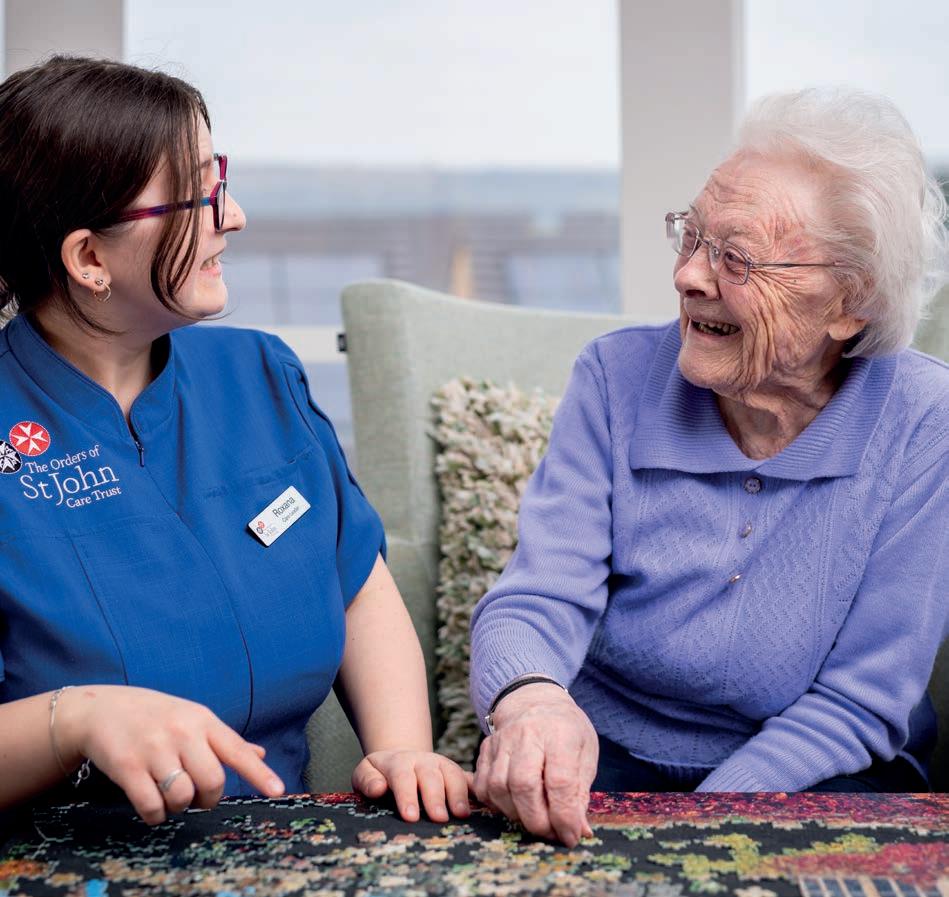
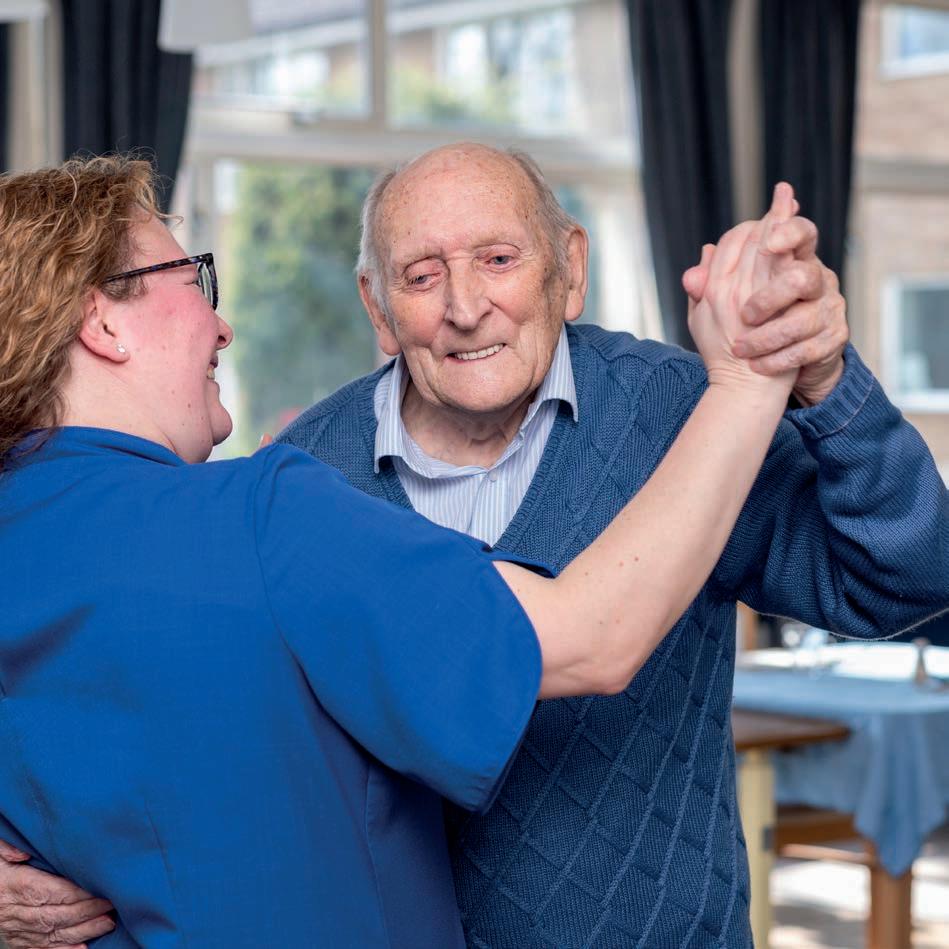
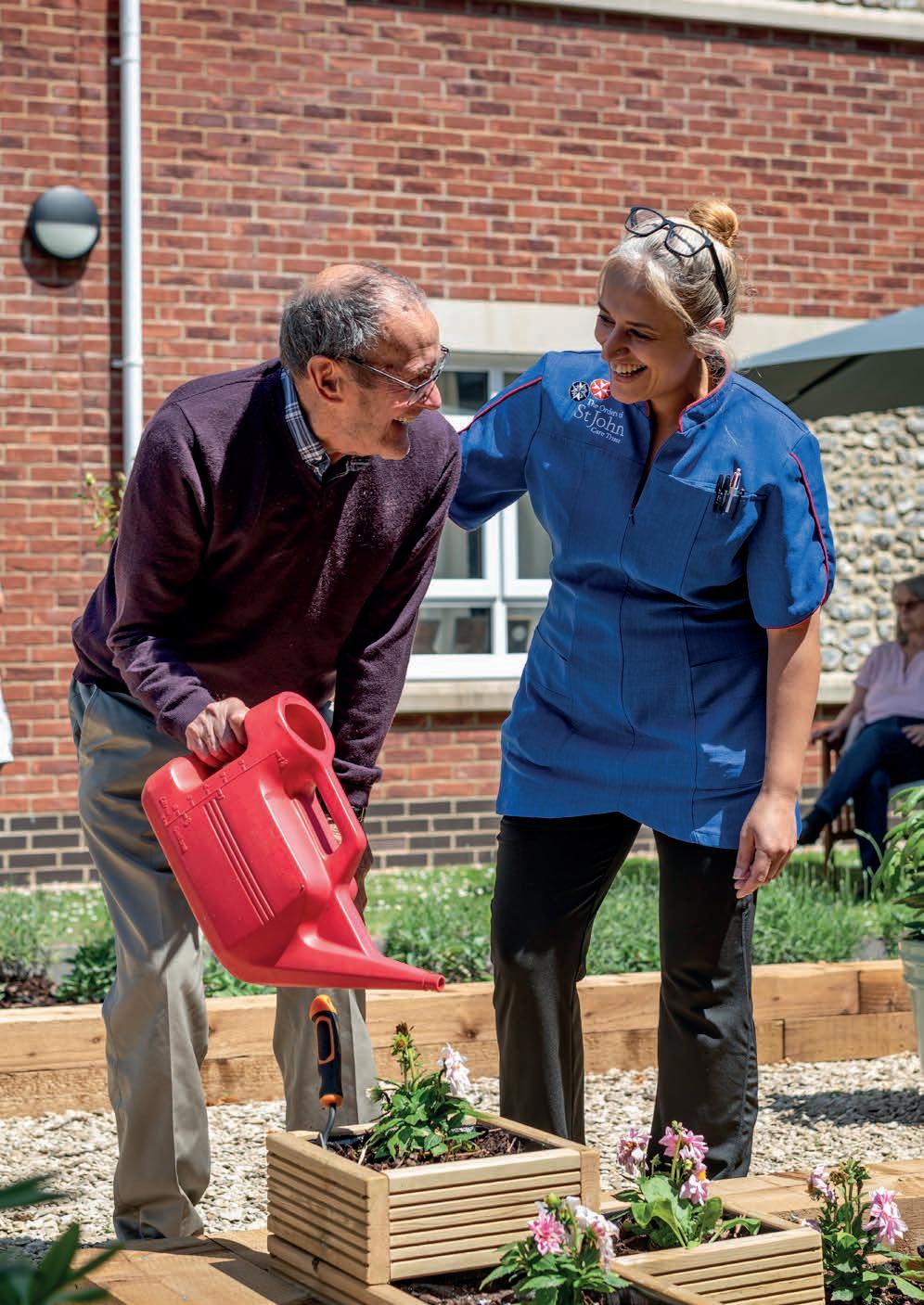
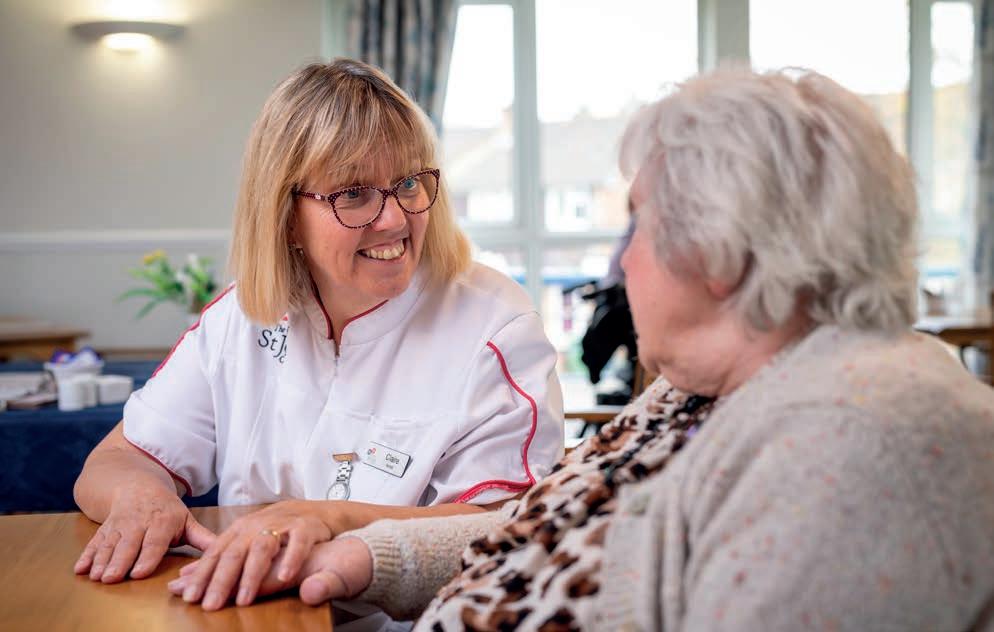
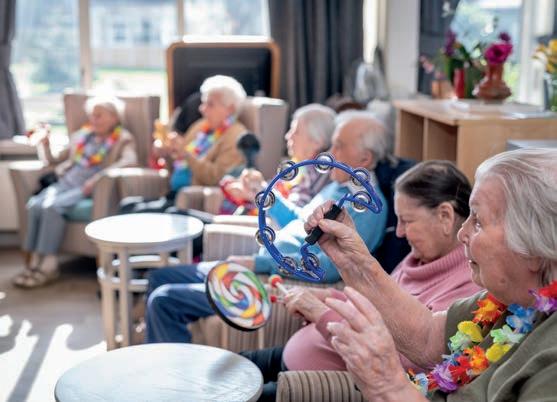
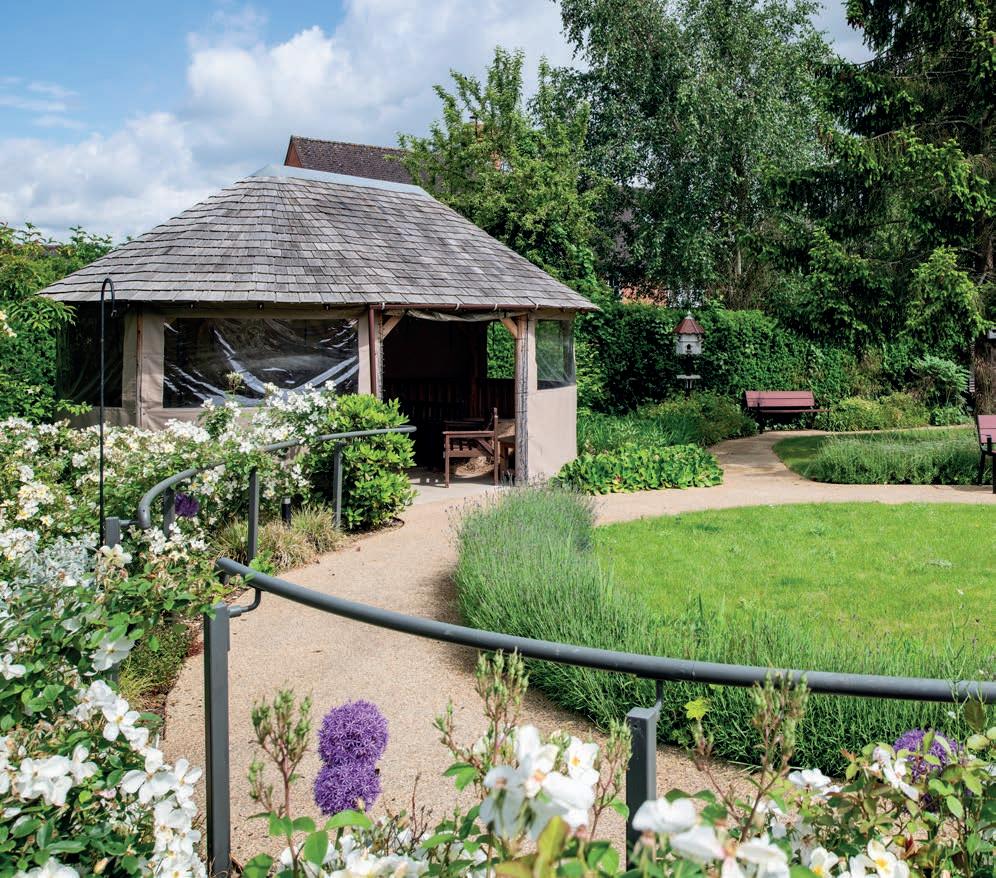
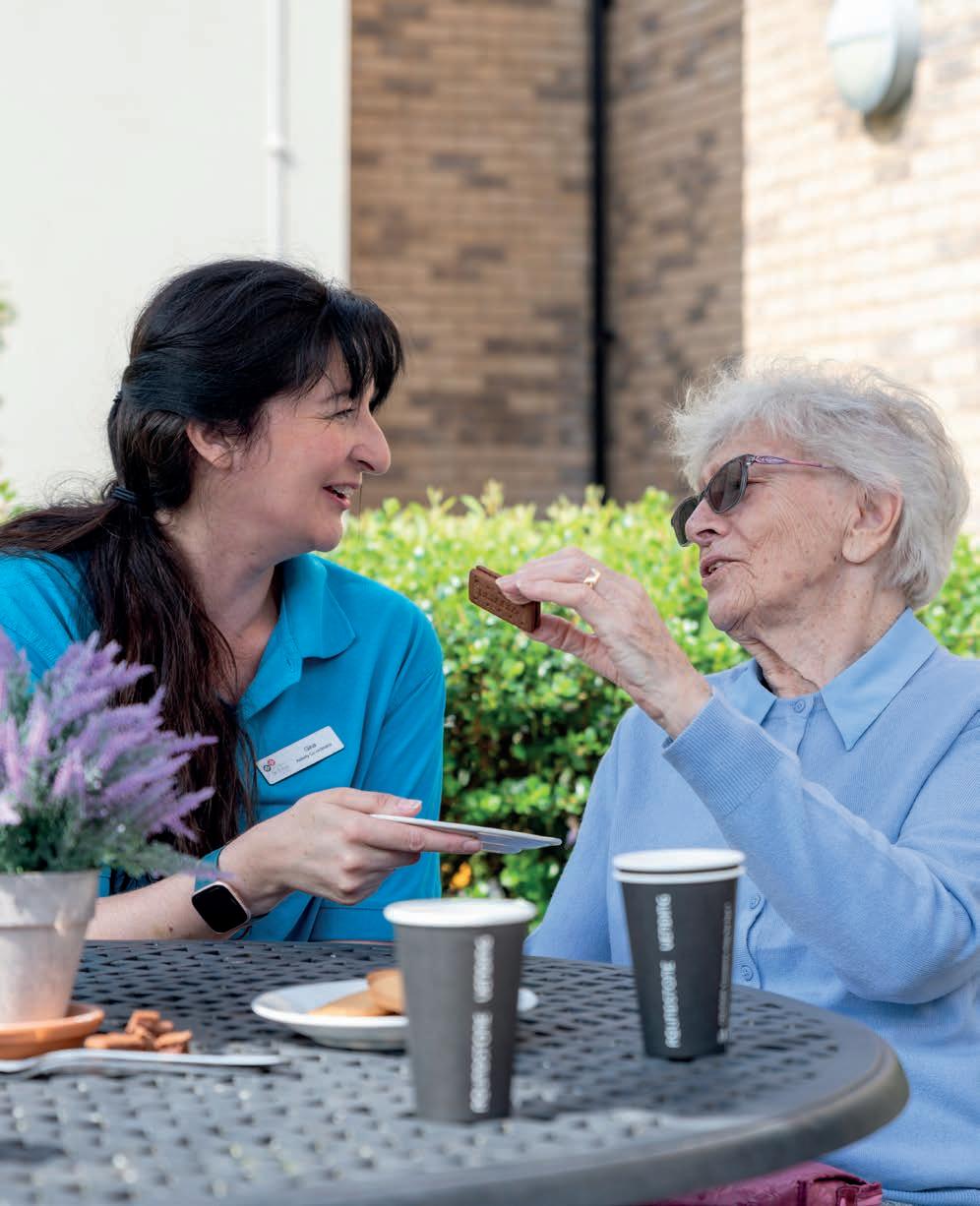
The Orders of St John Care Trust is proud to offer state‑of‑the‑art Acoustic Monitoring, a non‑in trusive technology that enhances safety, dignity and independence for our residents. This intelligent system uses sound‑based alerts to notify our care team the moment movement or potential issues occur, enabling faster responses and reducing the need for disruptive nightly checks.
Residents enjoy more restful sleep, greater privacy, and a calmer environment, while our employees can focus on delivering truly person‑centred care.
Proven to reduce falls and improve overall wellbeing, Acoustic Monitoring helps us provide a safer, more supportive home where residents feel secure and well‑cared‑for.
Welcome from Dan, our Chief Executive
This 50th issue of Trust in Care celebrates the many ways we continue to support people of all ages to learn from and inspire one another. To mark the occasion, we have introduced a new look, with an even greater focus on the people and stories at the heart of our services.
This edition starts with Judith’s deeply moving guest feature, reflecting on loss, creativity and finding renewed purpose through writing (page 8). Her experience is a powerful reminder that new chapters can begin at any stage of life, often in unexpected and meaningful ways.
We feature stories that span the generations, from Margaret’s long career in nursing to Eryn, who is just beginning her journey in the profession (page 12). We also meet veteran Terry and student Anthony, whose volunteering is creating new opportunities for residents (page 14), alongside Phil who is passing on practical knowledge through farming with young people (page 36).
From royal recognition (page 17) and outstanding CQC achievements (page 24) to the vital role your feedback plays in shaping our high standards of care (page 26), this issue reflects our ongoing commitment to creating places to live and work where people feel valued, supported and able to thrive.
We also share the everyday momentsfrom mealtimes with friends and family (page 48) to conversations in the garden (page 54). While these may seem like simple occasions, they are often the moments that matter most. Whenever I visit our services, spending time chatting with residents and colleagues is always the part I enjoy most, and I’m constantly reminded of the importance of kindness, listening and taking time for one another.
DAN HAYES OBE Chief Executive
Proud partners of The Orders of St John Care Trust
For 25+ years, carehome.co.uk has been helping families navigate the often difficult journey of finding the right care home for a loved one. Each year, millions of people turn to us for guidance, support, and reassurance at a time when it matters most.
We’re here to help families understand their care home options, explore what is available, build a shortlist, and arrange viewings with homes that truly match their individual needs.
In this issue
Meet our guest writer, Judith
y name’s Judith and I live in Monkscroft Care Centre, Cheltenham. I’ve been here six years. It’s a learning curve I didn’t anticipate!
I wasn’t going to get old, was I! Be honest, who is?
Time has conspired against me but, praise be, I’m fairly independent. And I do mean praise be, because one of the hardest things for me, is asking for help. We are not used to askingwe were the ones who answered with a make-it-better kiss on a grazed knee; soothed a bad dream; made the panacea cup of tea; tucked an arm through an arm and walked by the sea; leapt in with a word when a loved one’s memory failed and anger erupted. We were their shield. Now, asking is hard and, sometimes, wordless.
Initially, I came for respite; the home manager says I’m the only resident who has ever self-referred! Respite morphed into residential and here I am. With help, I have achieved such a lot since being here.
So, dear reader, if you’re curious enough to read on, go and make coffee and come back to pages 8-11.
“There is a homely feel and the people who work and live here are always happy and friendly.”
FEEDBACK
After caring for her husband through advancing dementia and experiencing profound personal loss during the pandemic, writer Judith Green found herself rebuilding her life in unexpected ways. What followed was a remarkable creative journey - from founding Monkscroft Care Centre’s Poetry Club to speaking at the Cheltenham Literature Festival.
In this deeply personal and moving guest feature, Judith reflects on grief, creativity, friendship and rediscovering purpose in later life.
I never thought….
Iwould live in care. I arrived at Monkscroft in 2020. I had been looking after my husband with advancing dementia for five years and had finally admitted defeat and allowed him to come into care.
I say ‘admitted defeat’ because that is what it felt like.
However hard you’ve tried, you always wonder if you could have tried that little bit harder…
In 2020, my own health issues had also been declining and I booked respite at Monkscroft Care Centre, to be with my husband.
Shortly after, covid broke out. Peter died of covid.
It’s a blur now - the uprooting coming here, the utter fear attached to covid, watching Peter’s funeral on a web cam…
‘Settling in’ was not in my vocabulary. I don’t know how long it was before I desperately needed to find myself again. I wasn’t even sure I wanted to.
I am a writer and a creative writing teacher and I hadn’t stopped writing; it seemed the direction to reach out. I asked if I could start a Poetry Club. There was already a reading and listening to favourite poems group but I wanted to establish a writing group. The Activities Co-ordinator, Sarah, organised it and we ran our first session in 2021.
I started with good intentions but no experience of ‘teaching’ people who have memory problems. The first session, I presented the group with a box of interesting shells – “What do they look like?” I asked, meaning ‘be creative’ - they look like … a small volcano, an abstract painting, a daisy… And…
I take my box of shells, select a few - the less fragile - and present them on a tray: my pièce de resistance, I think, like a magician producing doves and coloured flags from a top hat. The little group touch them as a cat might bat a coil of sleeping snake. My aim - how teacherly! - is to work through the five senses: I ask them what they look like. Shells, they tell me, holding one to either ear.
Lesson 1. They lead, I listen.
And we still meet each week, take a theme, reminisce, discuss and gather ideas, play with rhymes and lines and write poems. We have a Poetry Board that anyone can read.
After a while, we had enough work for an Anthology.
In 2024, with the interest and great support from our Divisional Director for the region, the Poetry Club published
their own book. We held a book launch (Prosecco-ed) at Monkscroft and we all had such a sense of achievement.
I felt as if I was getting myself backencouraging people to create with words and producing something they were proud of. Initially, most of the group’s reaction was to turn pale and cry, “No, I can’t write poetry!” Now they had their own book in their hands.
The icing on the cake came the same year when Cheltenham Festival of Literature was asking for ‘local voices’ to talk about their writing at one of the events. We were selected! It was an evening to remember - two of the group came to represent the poets and Sarah and I talked about how we manage our writing sessions and I read a few of our poems.
It was a double bonus for me, personally, as I was invited to read some of my own work as well, from the book I had published the same year.
Throughout the years I had been caring for my husband I had been writing poems as a sort of therapy. When I came to Monkscroft I started to edit and collate and, again with the brilliant skills of Sarah to present them in a publishable format and the invaluable support again from our Divisional Director, ‘Slip’ was given wings.
Reading at the Literature Festival renewed my confidence in my work and to see and hear the audience reaction was validation. Of all the poems I’ve written in my lifetime, those mean the most to me. I have dedicated the collection to Peter.
And I never thought I would get a degree.
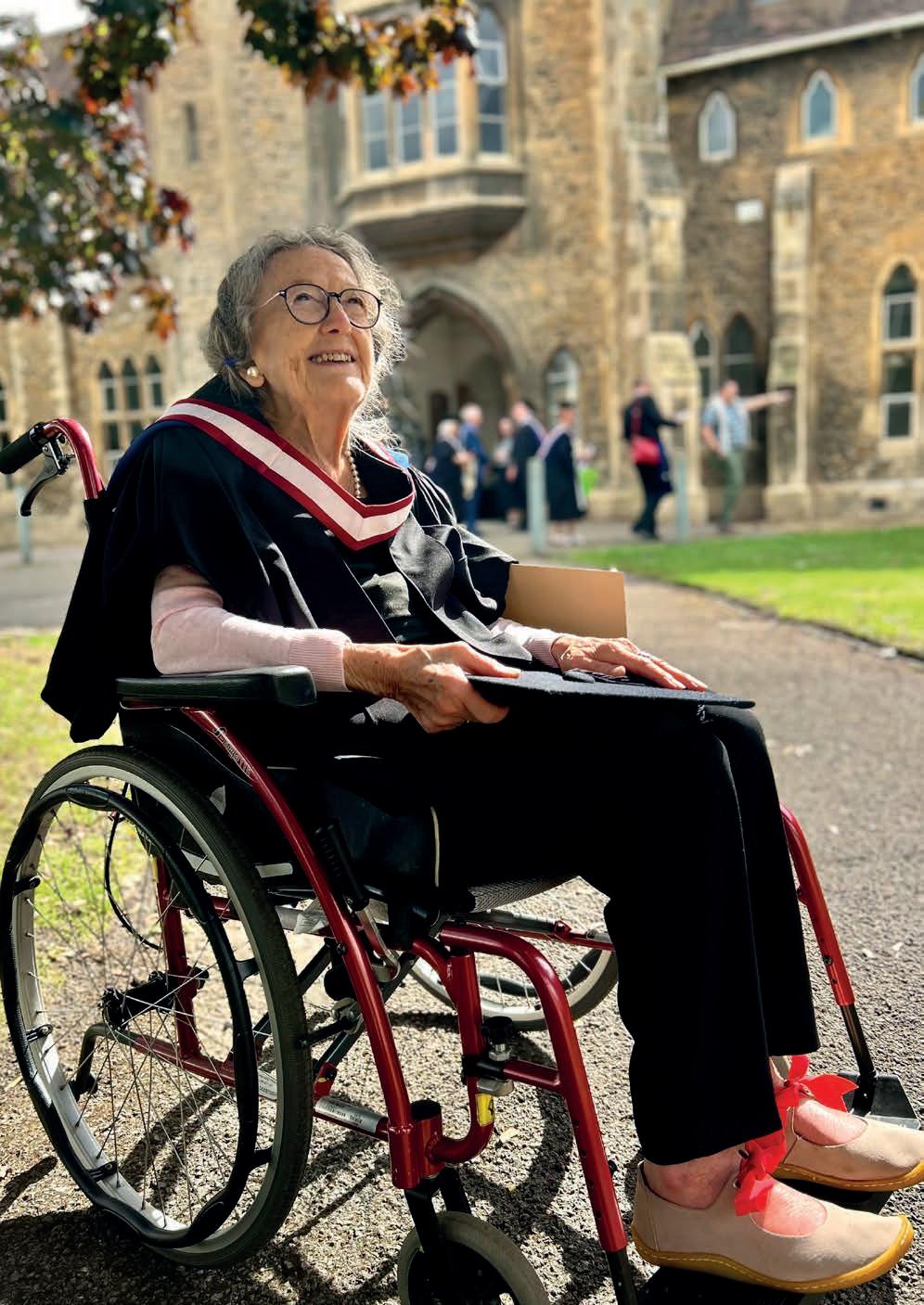
Last year, it was sheer coincidence that one of our volunteers told me that the University of Gloucestershire was awarding Honorary Degrees to alumni who had teacher trained there, in recognition of their service to education.
We would now have honorary B.Eds. She and I were eligible.
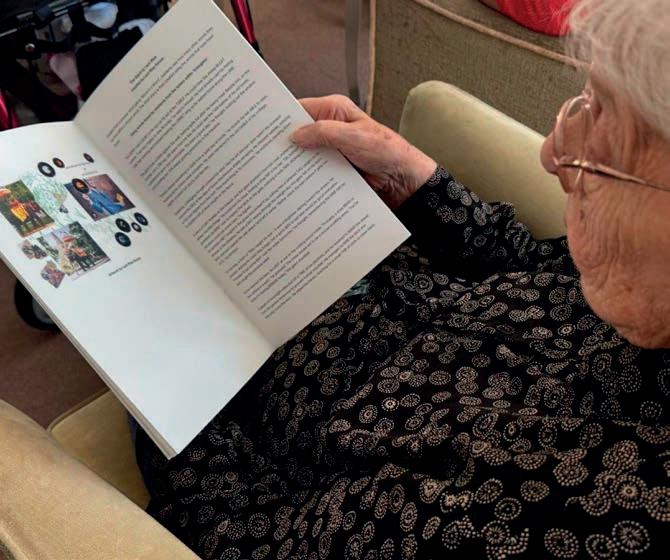
A cover mock-up designed during an activity session to celebrate residents’ talents
I decided to do it all in style - I hired the cap and gown and it was the most perfect autumn day.
I was even taken on a shopping trip by Helen, Regional Marketing Manager, and Rachel, Activities Co-ordinator, to buy a graduation outfit.
On the day I was supported throughout by Rachel, who shared my emotions like a friend. We have lovely photos.
I had never considered my contribution to education but listening to the Chancellor in the beautiful old chapel on the university campus, I was so proud to be part of the tradition.
A few months later, probably on a creative high, I won the Gloucestershire Writers’ Network poetry prize. Another appearance at the Literature Festival. This time, an evening outing, and Nina, one of our carers came to support me and try to quell my nerves. I think the wheelchair ramp with a gradient approaching K2 that poor Nina had to push me up, shocked my stage fright into submission. As well as the prize money, I received a bronze hare that’s become a tradition to pass on to next year’s winner.
Are you bored yet?
Just let me tell you about our film première…
Our Deputy Manager Lynne had the idea that we could produce a film with residents in the leading roles … and would I like to have a go at writing the script …
“I never dreamt I’d write a film script and it was tremendously rewarding to see the result with residents, staff, friends and relations invited. It was only when I heard the applause that was for us, the cast, that I was sure we’d pulled it off.”
Since moving to Monkscroft, Judith has spoken at the Cheltenham
One rainy couple of days with no chance of sitting outside, I started writing The Thursday Club and Agatha Crispie, Hercule Barrow, Harry Holmes, the tipsy Miss Marbles, Nancy Smythe-Drew and Burt, the cat, took shape.
And we, The Afta Bafta Actas, had so much fun - Rachel was a hard taskmaster! We did take after take, incredibly all on a phone, until it was right, ad-libbing when we forgot our lines, in spite of Sarah’s endless patience as prompter. It took about eight weeks to film, meeting once or twice a week. In May last year, we held our film première with Prosecco, red carpet and starry professional photographs.
I never dreamt I’d write a film script and it was tremendously rewarding to see the result with residents, staff, friends and relations invited. It was only when I heard the applause that was for us, the cast, that I was sure we’d pulled it off.
Of course, like all good mysteries there’s a twist at the end, “What’s happened to Burt (the cat)?” It was a question everyone asked afterwards.
So, in November, we started filming the Christmas sequel, a sort of pantomime that never gets past rehearsals! This one has more staff taking parts, including five men dancing the can-can wearing dresses, wigs, make-up and judiciously placed balloons. Yes, Burt’s in it too.
That’s the highlights; my daily pleasure is my windowsill garden. I have established my green space along four windowsills in the long corridor. I have flower pots, mini tools, a watering can and compost in my room, a notice on my door, The Potting Shed, and I’ve worked out how to repot and take cuttings without getting too much soil everywhere! I know every plant.
I feel connected with my roots. And that’s important.
SCAN THIS QR CODE TO WATCH THE THURSDAY CLUB, WRITTEN BY AND STARRING JUDITH, ALONGSIDE FOUR FELLOW RESIDENTS
The red-carpet première for The Thursday Club featured all the excitement of a Hollywood launch
Literature Festival twice
From resident Margaret to rising
Founded by two orders of chivalry with a shared history of caring for others – the Order of Malta and the Order of St John – OSJCT is proud of its heritage and continues to support and inspire those working in the nursing profession. In this article, retired nurse and OSJCT resident Margaret Rawden, alongside nursing student Eryn Blackman, reflect on their careers.
Lifelong links with our services
Margaret, who lives at Hartsholme House in Lincoln, has enjoyed lifelong connections with the Orders, having dedicated her own life to caring for others. She joined St John Ambulance – part of the wider Order of St John – as a cadet at the age of 10 before beginning her nurse training at 18.
After a challenging childhood, moving into nursing quarters was a turning point for Margaret. She believes that the structure it gave her helped her settle into Hartsholme House easily, as the home felt familiar. “Everything was provided for me,” she explains, “much like it is here.”
Nursing offered her safety, friendship and fellowship.
Margaret had big dreams from an early age and progressed from staff nurse to running an A&E department. “It was my ambition to run an A&E department,” she said. “I never thought of another career.”
Reflecting on the impact that nurses and care professionals can have on those they support, she said: “People remember your face, voice and how you treated them and their family. I used to have people come up to me in the street who recognised me.”
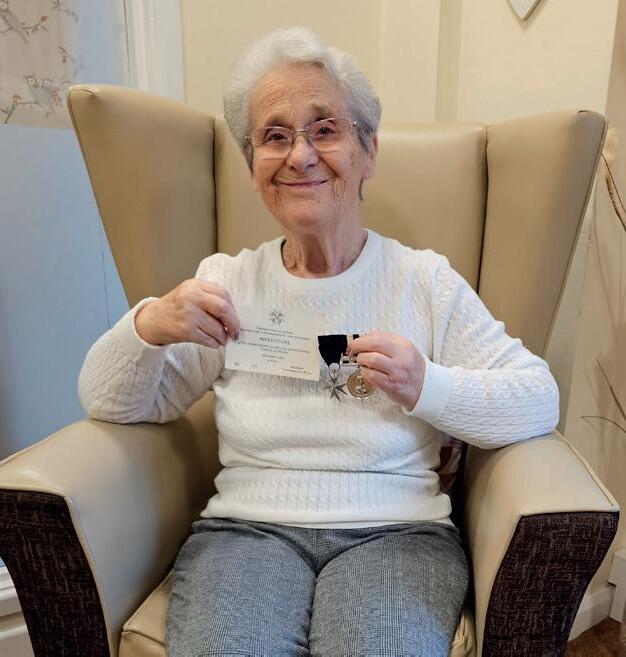
Margaret went on to become a county staff officer for St John Ambulance and Sister of the Order of St John. Her long-standing contribution to care was formally recognised when she received a prestigious long service award from the Order of St John. She is immensely proud to share her achievements and show her medals to fellow residents.
“It was my ambition to run an A&E department. I never thought of another career.”
Margaret’s invitation to an investiture into the Order of St John, when she received an award for her service to care
Margaret with her medals at Hartsholme House
star Eryn: nursing career journeys
Rising star gets our support
At the start of her nursing journey is Eryn Blackman, who has been supported by OSJCT through work experience at Bemerton Lodge in Salisbury.
Eryn, who begins her nursing studies at university this September, not only developed essential skills in care and patient support but also formed a meaningful friendship with one of the home’s residents. Even after completing her placement, she continues to visit, demonstrating the strong connections that can develop between residents and young people exploring careers in care. “I absolutely loved my time at Bemerton Lodge and getting to know the staff and residents,” said Eryn. “Bemerton really welcomed me in and I learned a great deal from them.”
Speaking about Eryn’s contribution, Home Manager Rebecca Kilgour said: “We are delighted to see Eryn taking the next step in her journey to become a nurse. Her time with us not only helped her gain hands-on experience in a care environment but also showed the mutual benefits of intergenerational relationships. Residents loved having her around, and the friendships she has formed will last a lifetime.”
Nursing matters
Nurses and carers are at the heart of our services and have a positive impact on our residents and their families every day. These relationships are mutually beneficial, offering valuable learning, growth and connection for those living and working in our services.
“I absolutely loved my time at Bemerton Lodge and getting to know the staff and residents.”
Eryn gained hands-on experience ahead of starting her nursing studies, during a work placement with OSJCT
Meet our volunteers Terry and Anthony: two generations, one shared purpose
At OSJCT, volunteering is about connection. Although from different generations, volunteers like Terry Lindop, a retired veteran, and 14-year-old Anthony, share a common purpose: to help residents stay close to the memories, experiences and communities that have shaped their lives.
Across our homes, volunteers share their lived experience, interests and skills in ways that enrich everyday life. Each brings something unique and, alongside our care teams, helps residents feel connected to what matters most. We are proud to showcase some of the powerful ways volunteers support residents through understanding, creativity and shared experience.
A shared understanding
Volunteer Terry Lindop has played a pivotal role in helping Monkscroft Care Centre in Cheltenham to achieve Veteran Friendly Framework (VFF) accreditation, using his own experience as a veteran to make a lasting difference to former members of the Armed Forces living at the care home.
Terry’s shared background has helped create an immediate sense of understanding and trust with veteran residents. Through regular one-to-one time, conversation and companionship, he has supported individuals to reflect on their service, share their stories and build meaningful connections with others around them.
His impact has gone beyond companionship. Terry was instrumental in guiding Monkscroft through the VFF accreditation process, working closely with the care team to ensure the needs and experiences of veterans were properly recognised and understood. His insight helped shape a more informed and thoughtful
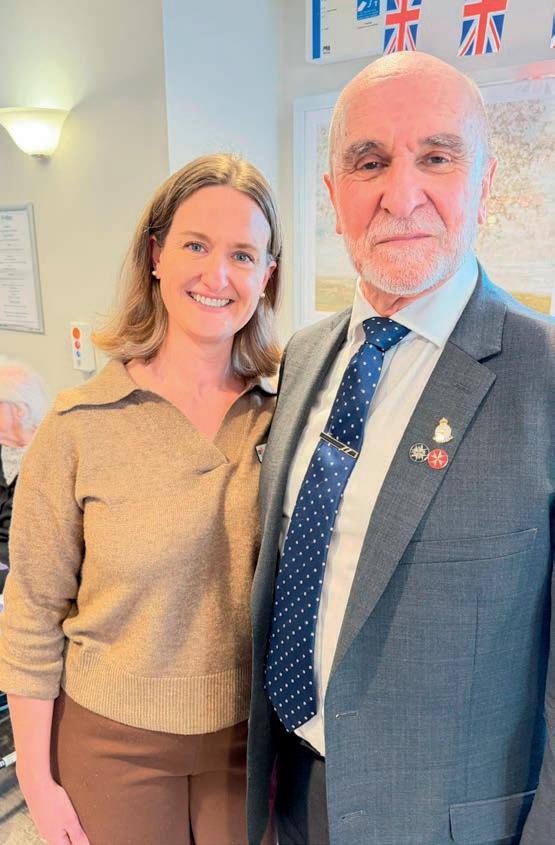
Harriet pictured with Terry receiving his badge
approach to care, rooted in lived experience.
“As a veteran myself,” said Terry, “it has been a real privilege to support fellow veterans living at Monkscroft. Achieving Veteran Friendly Framework accreditation means that their service is recognised, and that they feel respected, understood and valued. The positive impact has been remarkable, from new friendships forming to residents sharing their life stories. I’m incredibly proud to be part of a team that is so committed to supporting the veteran community.”
Volunteer Manager Harriet Thaneja highlights just how significant Terry’s contribution has been. “Thanks to Terry, we were able to seek and achieve this ac-
creditation,” she said. “The time he has given to it has been tremendous, and alongside the one-to-one time he’s spent with residents, it has made an enormous difference. We can’t thank him enough.
“Terry’s contribution shows perfectly that volunteering at OSJCT is much more than simply giving time. It is about sharing lived experience, helping residents connect with memories, shared past lives and the things that are important to them.”
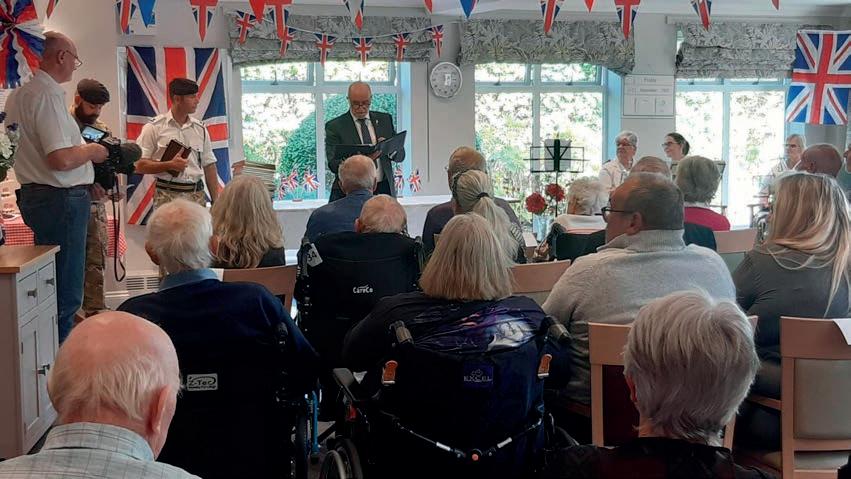
Monkscroft hosted a special ceremony to honour the service of its veterans and their spouses and celebrate the accreditation. The event brought together residents, employees, other volunteers, members of the local community and
“Thanks to the support of dedicated volunteers like Terry, we are able to achieve so much more for our residents.”
Armed Forces representatives including members of the Military Provost Guard Service and serving personnel from 14 Squadron Gurkha Allied Rapid Reaction Corps Support Battalion. Veterans and their spouses were presented with a certificate recognising their service and contribution.
At the event, Terry spoke about the importance of recognising service, both past and present. He paid tribute to those who have served, those currently in conflict and the families who support them, while also encouraging other care homes to follow Monkscroft’s lead.
During the celebration, Harriet also presented Terry with a special OSJCT volunteer badge - a small but meaningful addition to his already impressive medal collection.
Home Manager Doreen Paisley added, “Thanks to the support of dedicated volunteers like Terry, we are able to achieve so much more for our residents. This accreditation recognises our collective commitment to creating an inclusive, supportive environment where everyone is valued, respected and well cared for.”
Veteran ceremony at Monkscroft
Making memories matter
At just 14 years old, Anthony has proven that age is no barrier to helping others.
Wanting to do something meaningful as part of his Duke of Edinburgh Award, Anthony looked for a way to support residents at OSJCT. As young people under 16 are not able to volunteer directly in our homes unless as part of family volunteering or supported school groups, he chose to take on the Memory Maker role - finding a creative way to connect with residents from afar.
Anthony created two reminiscence boxes for residents at Henry Cornish Care Centre in Chipping Norton, carefully tailoring one for male residents and one
for female residents. He dedicated time and care to selecting items that would spark memories, encourage conversation and bring comfort.
Each box is filled with keepsakes, trinkets and small thoughtful touches such as stationery and treats. Anthony even used his own money to ensure every detail felt personal and special, showing a level of commitment well beyond what was expected. His work has already had a meaningful impact, helping residents reminisce, share stories and connect with those around them through familiar objects and memories.
Home Manager Laura Beadle said, “We are incredibly grateful to Anthony
“We are incredibly grateful to Anthony for his kindness, generosity and thoughtfulness. His contribution has already brought joy to residents and sparked many different conversations.”
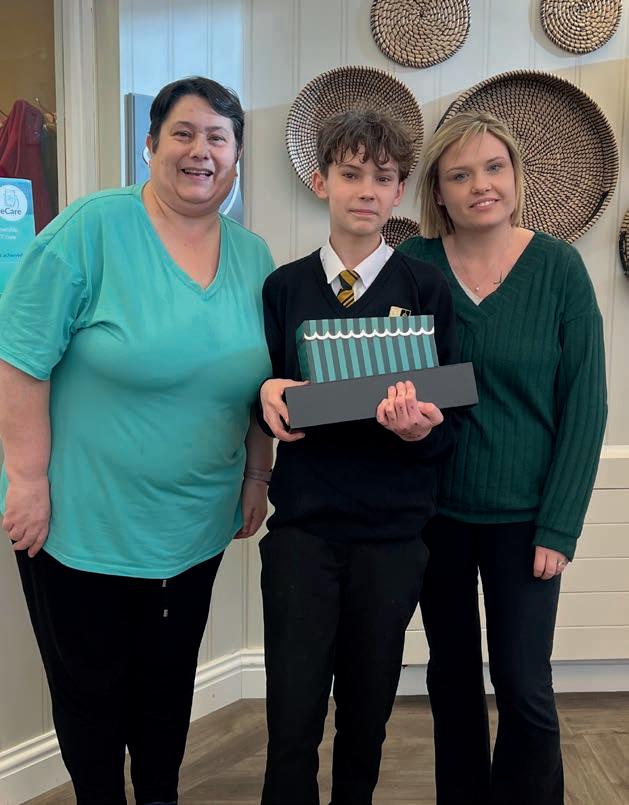
At Henry Cornish, volunteer Anthony presents the reminiscence boxes he created to Activities Co-ordinator Christina Brain (left) and Home Manager Laura Beadle (right)
for his kindness, generosity and thoughtfulness. His contribution has already brought joy to residents and sparked many different conversations.”
Seeing the impact of his efforts has inspired Anthony to continue his volunteering journey. Together with his mother, he is now planning to get involved in person through OSJCT’s family volunteering programme.
OSJCT is proud to welcome volunteers of all ages. If this article has inspired you, or someone you know, to volunteer, we would love to hear from you. Please contact volunteer@osjct.co.uk or apply online at volunteer.osjct.co.uk.
OSJCT colleagues recognised at Royal reception for carers
Two colleagues from The Orders of St John Care Trust were among those recently recognised at a special Royal reception at Windsor Castle celebrating the contribution of carers across the UK.
The annual event, hosted by His Majesty King Charles III and other members of the Royal Family, brings together professional and unpaid carers to acknowledge the essential role they play in supporting individuals and communities. The Trust has a long-standing historic connection with the monarch, who serves as Sovereign Head of the Order of St John.
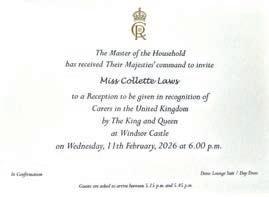
Representing OSJCT at the reception were Colette Laws, Day Care Leader at Chestnut Court in Quedgeley and Jade Wise, Activities Co-ordinator at Larkrise Care Centre in Banbury. Both were nominated in recognition of their commitment to residents and the wider care profession.
During the event, Colette and Jade met with The King, Queen, and Sophie, the Duchess of Edinburgh. They
joined other guests from charities and community groups, all gathered to acknowledge the vital role carers play within communities nationwide.
In a message to guests at the reception, The King expressed: “Whether through professional commitment or through the quiet, unheralded devotion of family and friendship, you represent something profoundly valuable not just within our communities, but for humanity as a whole.”
Speaking about the occasion, Jade said: “It was a real honour to be nominated to attend the reception and to represent OSJCT. It was wonderful to be surrounded by so many people who are passionate about care and about making a positive difference. Meeting Sophie, the Duchess of Edinburgh, was a particular highlight – she was genuinely interested in hearing about the activities and care
we provide, and how we help residents to enjoy life.”
Royal receptions provide a unique opportunity to recognise the skill, professionalism and dedication of the care workforce. Across OSJCT’s homes and services, thousands of colleagues support residents every day, and the attendance of Colette and Jade reflects the contribution made by teams throughout the organisation.
Colette Laws and Jade Wise met The King at Windsor Castle
“Staff always go above and beyond. They work hard to build positive relationships and know all the residents really well, which means they are able to anticipate their needs and respond in a timely and effective way.”
As a not-for-profit charity, we care with compassion and kindness, proudly continuing the legacy of the Orders of Malta and St John. Pioneers in medical and humanitarian aid, our sponsoring Orders continue to provide care around the world today, including through St John Ambulance
Excellence you can trust: how OSJCT recognises outstanding care
Behind every Accreditation of Excellence at The Orders of St John Care Trust is a rigorous process designed to ensure that outstanding care is delivered, consistently. In this article, Quality Improvement Lead Dawn Elmore explains how the Trust’s accreditation programme recognises services that truly go above and beyond for the people they support.
When choosing a care environment for someone you love, reassurance matters. Families and friends want to know that standards are high, that care is safe and compassionate, and that quality is not simply promised but proven.
At OSJCT, our Accreditations of Excellence are one of the ways we demonstrate exactly that. Developed in 2011, the Accreditations were created to provide the Trust with its own internal recognition of excellence - going beyond external regulation to celebrate services that truly excel across key areas of care. They remain a cornerstone of our commitment to delivering the highest possible standards for the people who live with us.
What does “excellence” mean?
In the context of care, excellence is not a vague aspiration. It is clearly defined. To achieve Accreditation, a service must demonstrate 100% compliance against a detailed internal Quality Improvement Tool. This means meeting every element of Trust policy, government guidance and regulatory requirements, and being able to evidence it in practice.
Excellence means aligning and evidencing Trust values, meeting the criteria set by our policies and procedures, government guidance and regulatory standards, and achieving that 100% is a huge accomplishment. It’s made up of many different elements coming together consistently.
Every question within the audit tool sets out clearly what evidence is required, ensuring that expectations are transparent and consistent across all services.
Going beyond inspection
All services are inspected by the Care Quality Commission (CQC), an independent regulator; our Accreditations of Excellence are designed to complement, not duplicate, these external inspections. Services use the Trust’s internal audit tool to self-audit every four months
three months of embedded practice, providing evidence that standards are consistently maintained, not simply prepared for on the day. Unannounced visits take place within a three-month window, reinforcing the importance of sustained excellence. This rigorous approach ensures that accreditation reflects real, lived standards within the service.
A robust and meaningful process
Accreditation is far from a ‘tick-box exercise’.
“For colleagues, this recognition brings a real sense of pride, reinforcing the importance of delivering care exactly as it should be, consistently and with compassion”
The Quality Improvement Tool is reviewed annually in collaboration between Care Quality and Operations teams to ensure it aligns with government guidance, Trust values and regulatory expectations.
Evidence gathering goes beyond paperwork. It includes:
• Conversations with residents
• Discussions with families and friends
• Feedback from professionals
• Demonstrations from colleagues showing understanding of policies and procedures
• Three months of evidence showing processes in action
This holistic approach ensures that what is written in policy is truly reflected in daily life.
(with Dining Experience and Wellbeing & Dementia assessed separately). This regular cycle of review ensures quality is constantly monitored rather than reviewed only at inspection time.
Importantly, accreditation is not automatically awarded. Not every visit results in success. Services must demonstrate
If a service does not initially meet the required standard, accreditation status is not awarded. The expectation of 100% compliance sets a clear and consistent benchmark.
What accreditation means for residents and families
For residents, accreditation supports safe, thoughtful and responsive care.
For families, it provides confidence. Achieving accreditation often inspires services to think creatively and strengthen good practice, particularly in areas
such as medicines management, dementia care and wellbeing.
The process encourages services to think outside the box and continuously improve. During the covid-19 pandemic, homes strengthened infection control processes significantly. Many of those enhanced standards have been main-
THE ACCREDITATIONS AT A GLANCE
Services can achieve accreditation across the following key areas:
• Medicines Management (all services)
• Infection Prevention & Control (all services)
• Wellbeing & Dementia (Care homes)
• Wellbeing Accreditation (Domiciliary services)
• Dining Experience (Care homes)
• Health & Safety (all services)
• Human Resources
tained, demonstrating how learning is embedded for the long term.
Accreditation also reinforces resident involvement and engagement, ensuring that people living in our services - and their families - remain central to decision-making and daily life. It shows that we have a robust process. Achieving 100% gives a very clear indication of how the service is supporting the people in our care.
Teamwork, pride and professionalism
Working towards accreditation is a wholeteam effort.
In larger services, friendly competition sometimes develops between households, encouraging collaboration and shared responsibility for achieving success. Managers play a vital role in ensuring teams understand the audit tool and its expectations, embedding the standards
into everyday practice. The result is often increased teamwork, stronger communication and a shared sense of purpose.
When services achieve accreditation status, their success is formally recognised. They receive a certificate, are acknowledged in the Trust’s e-newsletter for employees and celebrated through the Trust’s Recognition Awards.
For colleagues, this recognition brings a real sense of pride, reinforcing the importance of delivering care exactly as it should be - consistently and with compassion. The process also supports professional development, encouraging colleagues to align closely with policies, procedures and best practice standards.
Each accreditation focuses on a different aspect of life within our homes and is assessed by specialist teams across the Trust. For example, dementia and wellbeing are reviewed by our Admiral Nurse team, dining standards are assessed by our Catering team, and other areas are supported by colleagues in Care Quality, Health & Safety and Human Resources.
While each accreditation is evaluated by experts in their field, together they form a comprehensive framework that helps ensure high standards are consistently maintained across every part of the resident experience - from clinical safety and wellbeing to everyday comfort and enjoyment.
By bringing together these different areas of expertise, the programme supports our wider commitment to delivering safe, compassionate and high-
THE
FOLLOWING SERVICES ACHIEVED AN ACCREDITATION IN 2025/26*:
Health & Safety
• Avon Court
• Bourne House
• Centurion House
• Chilterns Court Care Centre
• Gregory House
• Isis Court
• Mayott House
• Moorside Place
• Orchard Meadows
• Ridgeway House
• Shotover View
• Wellford Gardens
• Westgate House
quality care for everyone who lives in our homes.
A culture of continuous improvement
Accreditation is valid for one year and services must continue to demonstrate excellence to retain it. The audit tool itself is reviewed annually to ensure it reflects evolving guidance, sector learning and Trust priorities.
At its heart, the programme is about culture. Accreditation is a really good
Wellbeing & Dementia
• Bemerton Lodge
• Old Station House
Medicines Management
• Centurion House
• Isis House
• Mayott House
• Old Station House
Infection Prevention & Control
• Longlands
*As of 12 June 2026
indicator of teamwork, communication and a desire to excel in all of the areas that matter.
For families exploring care options, our Accreditations of Excellence offer something tangible - visible evidence of robust standards, consistent monitoring and a genuine commitment to going beyond what is required.
Excellence is not just something we achieve once - it’s a commitment we keep every day for the people we care for.
Paul Mitchinson, a resident at The Cedars, Purton, and Dawn Elmore share a friendly chat together during an accreditation visit
Grace Care Centre achieves Outstanding CQC rating
Grace Care Centre in Thornbury has achieved the highest possible rating from the Care Quality Commission (CQC), placing the home among the highest performing care services in England.
People-centred culture
Inspectors recognised an exceptionally person-centred culture, where people are supported to live with independence, dignity and choice, and are empowered to pursue their goals and maintain meaningful lifestyles. The report highlighted a deeply embedded commitment to understanding each person’s life story, strengths and preferences, enabling care that is truly personalised.
The home was commended for its warm, inclusive environment, strong leadership and collaborative culture, where residents, families and colleagues work together to shape both individual care and the overall service. A welcoming bistro sits at the heart of the home,
Understanding Care Quality Commission ratings:
what they mean for you and your loved one
The Care Quality Commission (CQC) is the independent regulator of health and social care services in England. Here we explain how families can use CQC ratings to make informed decisions about care with confidence.
providing a social hub where people come together throughout the day, reflecting the strong sense of community observed by inspectors.
Exceptional feedback
Residents and families provided exceptionally positive feedback, describing care as compassionate, kind and beyond expectations. Inspectors noted that residents felt safe, listened to and encouraged to maintain independence through positive risk-taking, meaningful activities and strong relationships with employees. Resident Ambassador Tony Salisbury, who is pictured celebrating with the team, commented, “The team don’t just look after you - they really know you. They
The CQC ensures that organisations like The Orders of St John Care Trust provide people with safe, effective, compassionate and high-quality care, encouraging improvement wherever needed. For anyone considering care, CQC ratings offer a clear and transparent snapshot of how a service is performing.
What does the CQC look at?
When the CQC inspects a service, such as OSJCT care homes, it assesses five key areas. Inspectors ask:
• Is the service safe?
• Is it effective?
• Is it caring?
• Is it responsive to people’s needs?
• Is it well-led?
To answer these questions, inspectors speak directly with residents, families and employees. They observe care being delivered, review records and policies, and examine how the home is managed.
support you to keep your independence and continue enjoying life in the way that suits you. It feels welcoming, respectful and comfortable.”
Divisional Director Louise Axtell added, “Achieving Outstanding across all 34 quality statements is a remarkable achievement. It reflects a deeply embedded culture of kindness, inclusion and continuous improvement. The team at Grace demonstrate what outstanding care looks like in practice, every single day.”
Inspectors also highlighted the service’s strong links with the local community and its role as a welcoming hub where people can access support, advice and social connection. Robust governance systems ensure quality is continuously reviewed and strengthened, supporting consistently high standards of care.
Grace Care Centre is OSJCT’s fourth home to be rated Outstanding by the regulator. With over 6% of our portfolio now holding the highest possible rating, this performance is significantly above sector norms and provides families with the reassurance that OSJCT is delivering a consistent high standard of care.
Following an inspection, the CQC publishes a detailed report and awards one of four ratings: Outstanding, Good, Requires Improvement, or Inadequate.
Why CQC ratings matter
CQC ratings provide independent oversight. They ensure care homes are accountable to national standards and transparent about their performance. For residents and families, a strong CQC rating reflects:
• Safe and well-maintained environments
• Compassionate and respectful care
• Effective leadership and governance
• A culture focused on wellbeing Importantly, inspections are not just about compliance. They are about ensuring that people living in care homes are supported to live fulfilling, dignified lives.
Our 2025 inspection overview
At OSJCT, we take inspections and ratings extremely seriously. They are not seen as isolated events, but as part of our ongoing commitment to quality. In 2025, CQC completed twelve inspections of our services, with one report rated ‘Outstanding’, nine rated ‘Good’, and two rated ‘Requires Improvement’. There have been four inspections so far this year: ‘Good’, ‘Requires Improvement’ and two yet to be published.
Overall, 87% of our homes (including Elmfield Care) are currently rated Outstanding or Good.
We are proud of these results - and committed to learning wherever improvements are identified. When a service is rated Requires Improvement, clear and robust action plans are put in place immediately. Progress is closely monitored to ensure that changes are meaningful and sustained.
What families say
One of the most reassuring aspects of CQC reports is that they include feedback from residents and relatives.
Across our Good and Outstanding reports, common themes include:
• “Staff are kind, caring and treat people with dignity.”
• “My relative feels safe and well looked after.”
• “The home feels welcoming and well managed.”
These independent comments reflect the everyday experiences of people who live in and visit our homes and they matter deeply to us.
How we use inspections to improve
CQC inspections provide valuable insight and opportunities to strengthen practice, reinforce training and enhance leadership. Positive feedback is shared and celebrated across the Trust. Where
areas for improvement are identified, we respond swiftly and constructively.
Alongside CQC regulation, we also operate our own internal quality assurance and accreditation processes. Together, these ensure both independent oversight and continuous internal review. This dual approach means quality is monitored consistently, not just when a CQC inspection is due.
Transparency and trust
We understand that moving into care is one of the most important decisions a family can make. Transparency is therefore essential. CQC reports are freely available online, and we actively encourage families to read them, ask questions and speak openly with service managers about inspection outcomes.
Our aim is simple: to provide care that families can trust - supported by independent regulation and a clear commitment to improvement.
Resident Ambassador Tony Salisbury, together with the team and senior leaders, celebrates Grace Care Centre’s Outstanding rating
Feedback fuels improvements
Delivering high-quality care is not just about meeting standards — it is about listening, learning and continually improving the experience of everyone at OSJCT. Satisfaction plays a vital role in this. It helps us understand what daily life really feels like for residents, how supported families feel, and whether colleagues have what they need to provide the best possible care.
Feedback gives us insight that policies and processes alone cannot. It highlights the small details that make a difference — the things that are working well, and the areas where we can do better. By creating clear and consistent ways for people to share their views, we can ensure those voices are heard and, importantly, acted upon.
agree or strongly agree that they feel safe and have the support that they need to make the best decisions
The numbers that tell our story
We measure satisfaction through independent surveys of our residents and their family members. These stats matter. They tell us where the Trust is strong, and they show us where we still have work to do.
Here we share some our most recent results.
agree or strongly agree that they are treated with respect and dignity
agree or strongly agree that information is provided in a timely manner in a format that meets their needs
believe that the management team are approachable and open to feedback or suggestions for improvement
Employee suggestion scheme
Our employee suggestion scheme has been running since 2022. Since then, 275 suggestions have been received and considered. Several of these have been integrated into larger Trust-wide projects,
feel that information is provided in a timely manner in a format that meets their needs
for example prompting changes to our eLearning and training provision, improvements to eCare and the introduction of digital solutions across HR and finance.
Many employee suggestions have also been implemented at home level to
feel they are encouraged to share their feedback and ideas
benefit our residents. Examples of these include introducing a new style of name badges which are easier for residents to read, and making magnifying sheets available so that residents can read the small print in lighter books.
Resident and family feedback ensures care continues to meet individual needs and preferences
Colleagues share ideas through the employee suggestion scheme, helping to shape improvements across services and support continuous development
Wellford Gardens sets the gold standard for carehome.co.uk reviews
When families search for the right care home for a loved one, they are looking for the reassurance that they are making the right decision. Increasingly, that means turning to trusted review platforms to hear directly from residents and families who have experienced care first-hand.
Residents and their families have once again ranked The Orders of St John Care Trust among the UK’s top 20 care home groups in the 2026 awards by independent consumer website carehome. co.uk. With more than 2,000 care home groups operating nationwide, this achievement highlights the Trust’s ongoing commitment to delivering compassionate, person-centred care across its homes.
Among OSJCT’s homes, Wellford Gardens in Wheatley, Oxfordshire, stands out as a shining example of what outstanding feedback looks like in practice.
A perfect score from residents and families
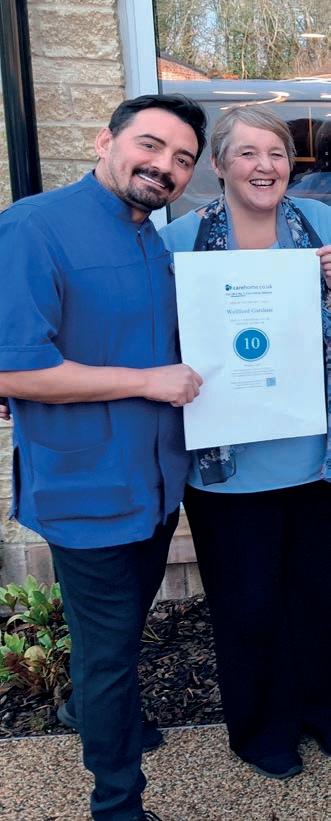
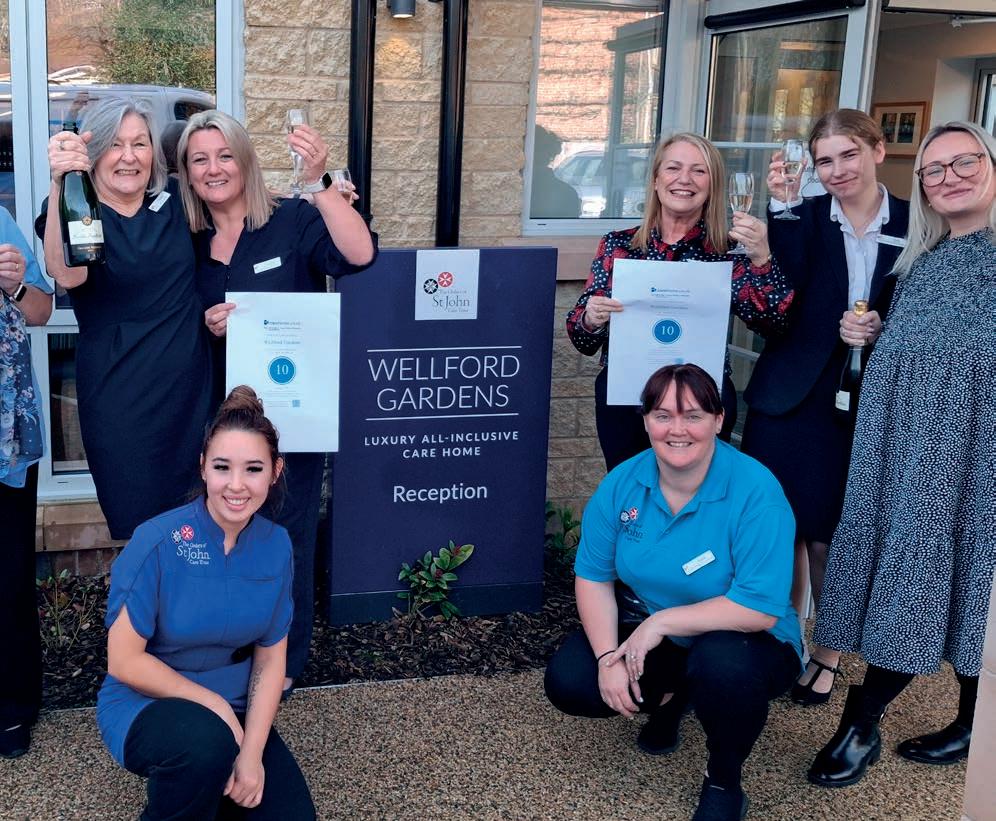
Wellford Gardens has achieved something truly special - a perfect 10 out of 10 review score on carehome.co.uk*, reflecting consistently excellent feedback from residents, families and visitors.
The reviews highlight everything from the warmth of the team and the welcoming environment to the vibrant activities and high standards of care that residents experience every day. For many families, the home quickly becomes a place of reassurance and comfort. One reviewer wrote: “After just one visit to Wellford Gardens I knew it was the right place. The staff go above and beyond to ensure residents’ wellbeing. I had not seen my nan so happy in a very long time.”
Another family member shared how the kindness and attentiveness of the team have made a real difference to their loved one’s quality of life. They said: “Wellford Gardens is an impressive modern care home with lovely bedrooms, great food and beautiful gardens. But more importantly, the staff are wonderful. Under their attentive care and kindness, our mother is thriving.”
the welcoming and inclusive atmosphere within the home. Wellford Gardens regularly opens its doors to families, friends and the wider community, creating opportunities for connection and shared experiences.
“Excellent service and a beautifully cooked meal.
A truly special occasion.”
These heartfelt comments reflect the culture that colleagues at Wellford Gardens work hard to create every day - a place where residents feel respected, valued and truly at home.
A welcoming community Reviewers often comment not just on the care residents receive, but also on
One visitor described their experience attending a special event at the home: “Excellent service and a beautifully cooked meal. A truly special occasion. Wellford Gardens is so good at welcoming the local community.”
Moments like these help foster the sense of belonging that residents and families consistently praise in their reviews.
Recognition that truly matters
The carehome.co.uk awards are widely respected because they are based entirely on independent feedback from people with direct experience of care homes.
The website lists nearly 17,000 care homes across the UK, helping families explore options, read verified reviews and make informed choices about care. For OSJCT, the recognition is particularly meaningful because it reflects the real experiences of residents and those closest to them.
Dan Hayes OBE, Chief Executive at OSJCT, said: “We are incredibly proud
to be recognised once again among the Top 20 Care Home Groups by carehome. co.uk. As this award is based entirely on independent reviews from residents and their families, it highlights the trust placed in us and provides meaningful recognition of our teams’ unwavering commitment to delivering compassionate, loving care every day.”
Leading by example
While the Top 20 recognition celebrates the work of the Trust as a whole, homes like Wellford Gardens demonstrate how that commitment comes to life every day.
From meaningful activities and strong relationships to a warm and supportive environment, the feedback from residents and families tells a powerful story of care delivered with compassion and pride. And with a perfect review score, Wellford Gardens is not only making a difference to the people who live there; it is also setting the standard for what great care looks like.
Visit carehome.co.uk to read more reviews from our residents and families. *All reviews were accurate at the time of publication
The team at Wellford Gardens celebrates a perfect 10
Caring for people with dementia: how leadership, teams and living space make the difference
With nearly a million people in Britain living with dementia — and numbers rising — care needs are becoming increasingly complex. Angie Williams, Lead Admiral Nurse at OSJCT, shares her perspective on what it really takes to deliver good dementia care. Drawing on years of supporting residents, families and colleagues, she explains why quality care goes beyond policy – and depends on steady leadership, specialist expertise, confident teams and environments designed to help people live well.
Currently, almost a million people are living with dementia in Britain - a figure projected to rise to 1.4 million by 2040. As more people live longer with complex needs, those needing care, and those providing the care, are facing new challenges. While policies and procedures help shape best practice in care, they do not, on their own, deliver good care. It
is shaped through leadership choices, workforce culture, and environments designed to support people living with dementia.
Dementia care leadership as a daily practice
Dementia care doesn’t come with easy answers. That’s something I’ve learned time and time again in my fifteen years at
OSJCT, leading our team of award-winning Admiral Nurses supported by Dementia UK. For us, leadership in this field isn’t about having all the answers - it’s about cultivating the conditions where your teams feel confident and emotionally resilient, equipping them with the tools and habits to do their best work with compassion and skill. Leadership in dementia care is not defined by a job title. It’s about being
“Our Dementia Care Framework guides every part of our homes, from housekeeping to management. It’s designed not just to teach skills, but to build a culture of care where relationships come first.”
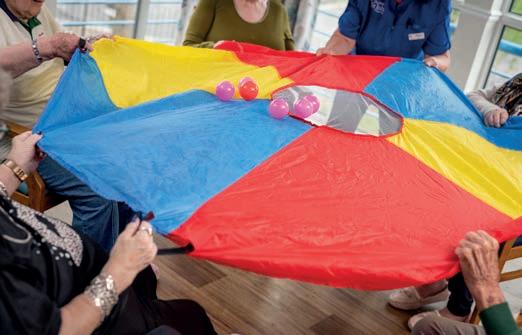
Meaningful occupation helps people living with dementia by stimulating minds and encouraging interaction
present, calm and available. True leadership shows up in micro -moments such as how we listen to a colleague who has just supported a resident through a challenging moment, how we respond if something goes wrong and how we remain steady when emotions are running high. These behaviours are not innatethey need to be modelled and reinforced every day.
Our Dementia Care Framework guides every part of our homes, from housekeeping to management. It’s designed not just to teach skills, but to build a culture of care where relationships come first. By supporting colleagues to act with respect, compassion and understanding, we make sure residents, families and team members all experience consistent, thoughtful dementia care.
Specialist expertise embedded in daily care
While dementia specialists are often called in during a crisis, our Admiral
Nurse team are part of everyday care. In my experience, real progress comes when that expertise is embedded - available not just in the hard moments, but in the quiet ones where confidence is shaped, language is modelled and teams feel supported to pause and think.
According to Dementia UK, there are around 483 Admiral Nurses working across the UK, with the majority supporting people living with dementia and their families in community and health settings. However, within social care settings, in-house dementia specialist nursing remains limited. Across the care home sector, there are just seventeen Admiral Nurses employed within care home provider organisations. Five of those specialists work at OSJCT, making us one of only ten care providers in the UK to have developed a dedicated Admiral Nurse team.
From our experience, having specialist dementia leadership brings a consistent clinical perspective into decision-making, helping teams and leaders
navigate complexity with greater confidence. Our Admiral Nurses are woven into the day-to-day rhythms of care, supporting our teams to stay up to date with best practices, reflect on those practices, and understand how future responses might better support individuals on their dementia care journey. This collaborative approach has helped enhance the overall wellbeing and quality of life for those who live and work in our homes.
Building
confidence through training and reflection
Care teams cannot rely on policy alone. At OSJCT, our Dementia Training Pathway supports employees across all roles and levels to build knowledge and confidence in their work. The training uses real-life situations, open conversations about emotions, and peer learning, helping colleagues apply what they learn in meaningful ways.
We also focus on language. Subtle shifts in phrasing can change how care is approached and who feels responsible for wellbeing. Moving from task-focused language towards language that reflects “doing with” someone rather than “doing to” them reinforces personhood and agency. Similarly, we’ve reframed activities as ‘meaningful occupation and engagement’, which has shifted responsibility across the whole team, recognising that wellbeing is shaped by every interaction, not just those led by a single role.
We also make time for meaningful conversations. Something as simple as asking someone how they are can be as impactful as any formal intervention, especially in a sector where emotional support makes a real difference.
Living space as an active part of care
In dementia care, the space people live in is more than a backdrop - it actively shapes how people feel, behave and connect. People living with dementia require surroundings that reduce confusion, support independence and encourage freedom of movement, including access to outdoor areas.
What matters most is not how new or stylish a setting is, but whether it enables the person to live with dignity and independence. We’ve found that smaller household settings that reduce noise and overstimulation, have clear sightlines and effective use of colour contrast, and which provide meaningful visual cues all
Angie Williams Lead Admiral Nurse
contribute to a sense of safety and familiarity. Access to outdoor space is equally important. Being able to go outside freely supports mood, reduces distress and restores a sense of control, particularly for those who have always valued time outdoors.
Excellence in dementia care comes when leadership, workforce culture, and environment work together. Employees who feel supported can provide calm, consistent care; spaces that are thoughtfully designed can support independence; and reflective leadership ensures everything stays aligned. When all these elements come together, residents and families experience care that is not just safe, but genuinely compassionate.
Dementia-friendly gardens at OSJCT provide a safe, calming and sensory-rich space that supports independence and wellbeing
“Across the care home sector, there are just seventeen Admiral Nurses employed within care home provider organisations. Five of those specialists work at OSJCT, making us one of only ten care providers in the UK to have developed a dedicated Admiral Nurse team.”
“I am happy here, I have reunited with friends from my school past and new friends.”
FEEDBACK FROM OUR INDEPENDENT RESIDENT SURVEY
Farm
visits bring generations together at Marden Court
New friendships are flourishing at Marden Court in Calne thanks to a growing partnership with Jamie’s Farm, a charity in Bath.
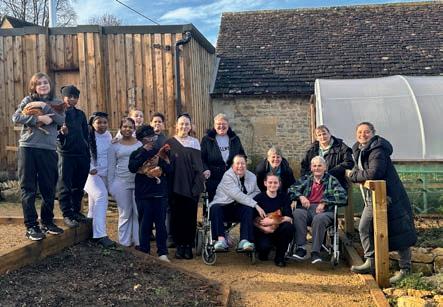
Every fortnight, residents visit the farm to spend time with young people supported by the charity. Together, they take part in practical activities, from planting and growing to helping out around the site, followed by a shared lunch.
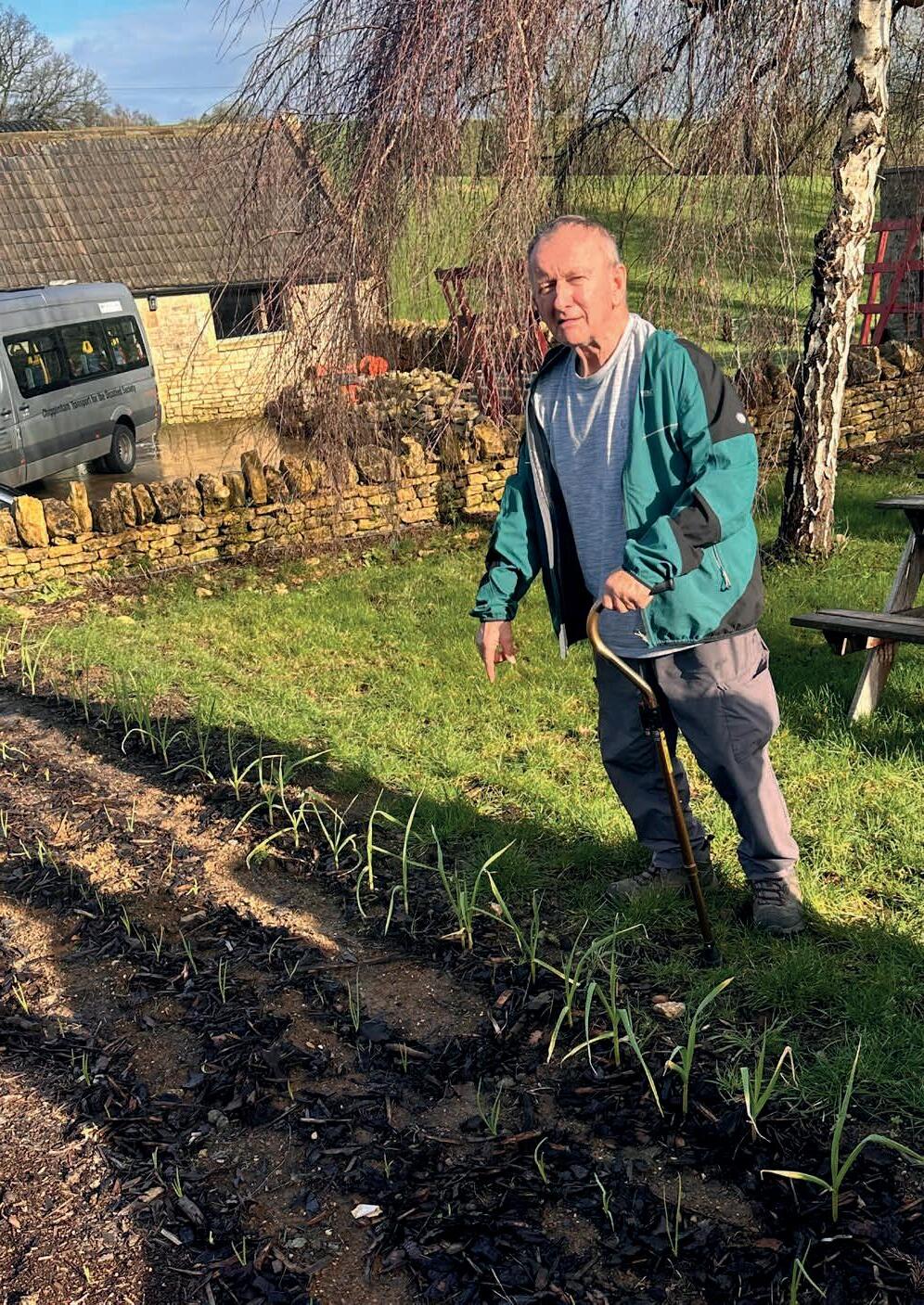
For some residents, it’s also a chance to reconnect with lifelong interests. One recent visit saw keen gardener Phil Mitchell take pride in planting winter onions alongside the young people, sharing knowledge and stories as they worked side by side.
What began as a one-off visit has quickly grown into a regular part of life at Marden Court, shaped by how much everyone involved has taken from the experience. The sessions offer a sense of purpose, routine and belonging, along with opportunities to get outdoors and meet new people.
The wider Marden Court community has also got involved, with residents, families and
employees supporting Jamie’s Farm through fundraising, including a recent cake sale that raised over £170.
Jamie’s Farm is a national charity that supports young people facing challenges through immersive, farm-based programmes, helping them develop confidence, resilience, and emotional wellbeing while improving engagement with education and life skills. Jake Curtis, Co-CEO at Jamie’s Farm, said: “Bringing different generations together is something we really believe in. Spending time side by side on the farm creates natural opportunities to connect, learn and build confidence. It’s been fantastic to see residents from Marden Court and young people getting so much from these visits.”
With more visits planned, the partnership is becoming a valued part of life at the home, offering residents meaningful experiences and something to look forward to.
Phil Mitchell proudly shows off a crop he helped grow at the local farm
Dancers dazzle at first
‘Strictly’ spectacular
Residents from Spencer Court, Henry Cornish Care Centre and Moorside Place in Oxfordshire stepped into the spotlight for their very own Strictly-style dance event.
After weeks of practice, residents performed two routines - a waltz and a cha cha - in front of friends and a judging panel comprising senior leaders at OSJCT. For many, it was a chance to revisit a lifelong love of dance or try something new.
At Henry Cornish, Mary, a former ballroom dancer, and Joyce, whose parents taught ballroom, enjoyed reconnecting with familiar steps. At Moorside Place, Jill, who has been dancing since the age of four, teamed up with Mitch and Mark to perfect her routine. Meanwhile, residents at Spencer Court brought energy and personality to rehearsals in the lead-up to the big day.
On the day itself, residents and colleagues dressed up for the occasion and took to the floor,
creating a lively and supportive atmosphere.
Jim said: “Absolutely brilliant! Had the best time and can’t wait for next year already.”
Jill added: “It was lovely to go back to my dancing roots. 10/10 for today!”
After the performances, the dancefloor opened up to everyone, with residents and team members joining in group favourites like the conga and the Macarena.
Dance teacher Hannah Jones, who supported residents in the run-up to the event, said: “Music and dance can bring so much out in people. It’s a great way to stay active, connect with others and revisit something that’s been part of someone’s life for years.”
Plans are already underway to “keep dancing” and make the event even bigger next year.
Hollie Arrowsmith meets professional footballer Matt Lench following a match, enjoying the chance to chat
Matchday thrill at Chesham United
Residents from Chesham Supported Living service in Buckinghamshire recently spent an afternoon at Chesham United, soaking up the atmosphere as the team played Maidstone United. For many, it was a chance to try something new and be part of a live match, from the build-up in the stands to the action on the pitch. The group
watched from the Directors’ Box, where they were warmly welcomed and well looked after throughout.
A real highlight was meeting players from both teams. Residents had time to chat, take photos and collect autographs, making the experience feel personal and memorable.
Days like this offer more than just a change of scene. They help residents
build confidence, spend time together and feel part of the wider community.
Lucy Goodman, Service Manager, said: “We’re so grateful to Chesham United for looking after our residents so well. Opportunities like this really matter in helping people try new things, connect with others and feel included. It was a brilliant day for everyone.”
Sponsored wax gives back
Colleagues from across OSJCT took part in a sponsored leg wax to raise money for Gregory House in Grantham. Despite the fundraiser taking place on April Fools’ Day, their efforts were no joke as they raised £568 between them, all of which will go towards the Gregory House residents’ amenities fund to support forthcoming events including a resident party and BBQ. The residents’ amenities fund helps support entertainment, special events, and memorable trips out for residents. From live music afternoons and themed celebrations to garden centre outings, the fund helps create meaningful experiences.
“We are always looking for new and fun ways to support our residents,” explained Marie Young, Home Manager at Gregory House. “The amenities fund makes such a difference to daily life here, it helps us go beyond care and create real experiences. If a little temporary discomfort on our part can help bring lasting smiles to our residents, it’s more than worth it.”
Speaking about his involvement, Gregory House Handyman Andy said, “It was very painful and I could not do both legs, the hairs are only just starting to grow back! That said, it was all for a good cause and the residents loved it. They still talk about it now.”
Six colleagues put their best foot forward in a leg wax challenge to raise funds for residents at Gregory House (left to right): Senior Regional Maintenance Manager Gavin Risborough, Group Operations Director Mike Stredder, Assistant Divisional Director Bogumil Cwiklak, Night Carer Dominic Blagg, Handyman Andy Smith, and Housekeeper Alex Andrew
A wild day out for Evelyn and Pat
Evelyn Smith and Pat Baxter met one of their favourite animals during a day trip to the Cotswold Wildlife Park & Gardens - George the Aldabra Giant Tortoise.
The pair were among residents from The Lakes Care Centre near Cirencester who enjoyed a day out at the popular wildlife park, taking in the stunning scenery on the journey and spending time together exploring the wide variety of animals and attractions.
The group visited many of the park’s best-loved animals, including giraffes and penguins, before meeting George and getting up close to playful lemurs in their walkthrough enclosure. Evelyn said: “Walking through the lemur garden was wonderful, especially when one of them was at the foot of my wheelchair.”
The park’s gardens brought back fond memories, with many residents reminiscing about their own gardens and sharing stories of past family outings with their children and grandchildren.
During the visit, residents also came across fellow tortoise fan, 10-year-old George Andrews, who was racing his 90-year-old namesake in a unique Rubik’s Cube challenge in aid of the Midlands Air Ambulance charity. The Giant Tortoise was keen to tuck into his edible Rubik’s Cube, made especially for the challenge by the park’s team, finishing the treat in just under five minutes. George managed to beat his namesake, completing the challenge in an impressive 66 seconds. Everyone enjoyed cheering both “Georges” on, adding to the fun and lively atmosphere around the park.
Giant smiles at the wildlife park
“My parents are thriving and are being well cared for.”
FEEDBACK FROM OUR INDEPENDENT RESIDENT SURVEY
Turning pages, sharing stories: how OSJCT nurtures a love of reading and writing
Whether through poetry, memoir, readings, or short stories sparked by a simple object in a shoebox, a shared love of reading and writing across The Orders of St John Care Trust is helping residents live well — supporting hobbies, sparking new interests, and bringing people together in creative, meaningful, and lasting ways.
From collaborative storytelling sessions to professionally produced publications, it is never too late for residents to tell their stories and have their voices heard.
One of the most powerful examples of this is the Trust’s innovative Shoebox Stories initiative in Buckinghamshire. Residents chose an everyday object from a shoebox — such as a key, scarf or toy — as a prompt to spark ideas and storytel-
ling. With gentle support from care teams, residents developed their ideas into pieces of writing and art, which were brought together in a professionally produced book.
For residents living with dementia, this type of activity is particularly meaningful, with familiar objects helping to unlock memories, encourage conversation, and strengthen confidence and wellbeing. Angie Williams, Lead Admiral
Nurse at The Orders of St John Care Trust, explains: “Storytelling can be a powerful way of enhancing wellbeing for people living with dementia. It helps them connect with others and with their own past, while supporting a sense of identity, something that is incredibly important. We can sometimes underestimate the creativity of people living with dementia
“Storytelling can be a powerful way of enhancing wellbeing for people living with dementia. When we help someone return to a place where they feel comfortable, confident, and content, it can unlock remarkable creativity. That’s when the most wonderful stories begin to emerge.”
Grace Care Centre brought their own creative twist to Alice in Wonderland, reimagining and retelling the classic story in their own unique way
Shoebox Stories is a collection of short stories written by residents in Buckinghamshire
because of how the condition affects the brain. But when we help someone return to a place where they feel comfortable, confident, and content, it can unlock remarkable creativity. That’s when the most wonderful stories begin to emerge.”
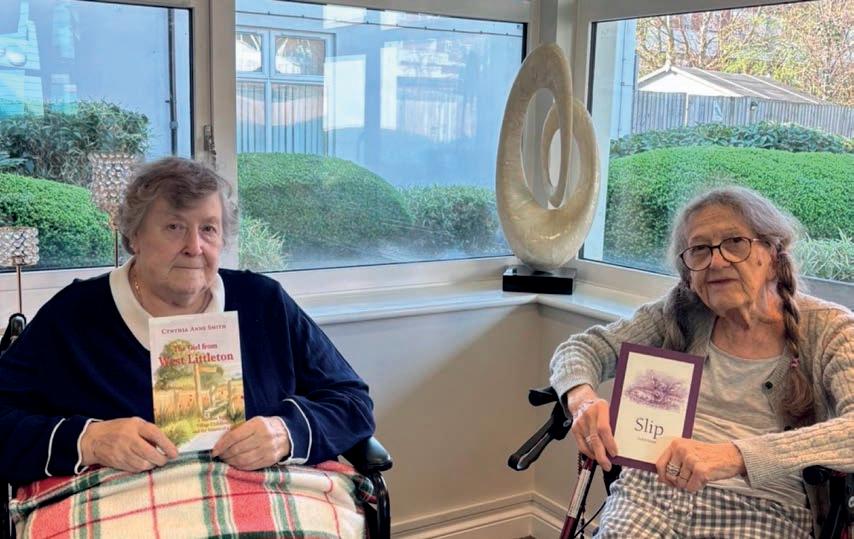
Many residents living at OSJCT are also pursuing their own writing journeys. Among them, Judith Green and Cynthia “Anne” Smith, recently sat down together at Monkscroft Care Centre in Cheltenham to reflect on their work and interview one another.
said. “I didn’t think it would ever be published.”
As they interviewed each other, the pair discovered surprising similarities in their lives despite their different writing paths. At one point, Judith asked, “Do you think you’re ever too old to write a book?” Both laughed before agreeing: “No.”
“Lots of people said to me… you ought to write a book, so I thought, okay, let’s have a go!”
Judith, author of Slip and guest contributor in this issue, shared how her poetry collection was shaped over many years, with many poems written while her husband was living with dementia. “I started writing as therapy really,” she said. “In a way it needed to be written and it’s a sort of tribute to him how I feel. I didn’t think about publishing until I came to Monkscroft.”
Anne spoke about her memoir, The Girl from West Littleton, which reflects on her childhood in a rural village during the war and charts eight decades of change in the English countryside. “Lots of people said to me… you ought to write a book, so I thought, okay, let’s have a go,” Anne
These personal stories highlight how writing can give purpose and pride while also creating opportunities for connection, whether through conversation, shared readings, or simply the experience of being heard.
Creativity also flourishes through fun and collaborative events. At Grace Care Centre in Thornbury, residents re-interpreted Alice in Wonderland, using props, characters and group discussion to build an original tale together. Supported by team members, families and professional performers, the activity encouraged imagination and teamwork, while helping to spark positive memories and social interaction.
Meanwhile, Lent Rise House in Slough welcomed pupils from Lent Rise School and Burnham Grammar School for a special literacy-focused session as
Anne (left) and Judith pictured with their books, sharing a love of writing
part of the home’s ongoing intergenerational programme.
The programme celebrates the value of bringing generations together, recognising the social, emotional and educational benefits that emerge when younger and older people share experiences and learn from one another.
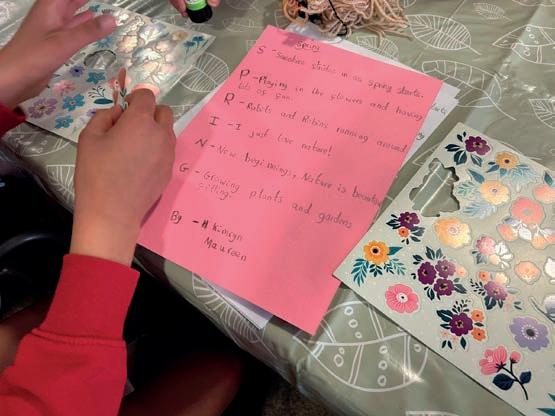
Centred around the theme of spring flowers, the session encouraged collaboration and creative writing. Residents and students first teamed up for a picture quiz, testing their knowledge of seasonal blooms, gardening and nature. The group then took part in a collaborative poetry workshop, with residents and students working side by side to craft their own verses, sharing ideas, memories and observations to create original poems together. The activity encouraged imagination, self-expression and communication, while helping pupils develop confidence in their writing.
What unites all of these experiences is OSJCT’s belief that high-quality care goes beyond meeting physical needs. By creating opportunities for residents to read, write and share their stories, the Trust nurtures wellbeing, confidence and a strong sense of identity.
Top: Creativity was in full bloom at Lent Rise House when Lent Rise School and Burnham Grammar School pupils visited for an afternoon of games and poetry
Bottom: Acrostic poems, like this one from an intergenerational poetry workshop at Lent Rise House, offer plenty of creative freedom for all ages
A place at the table
Creating space to dine together with family and friends
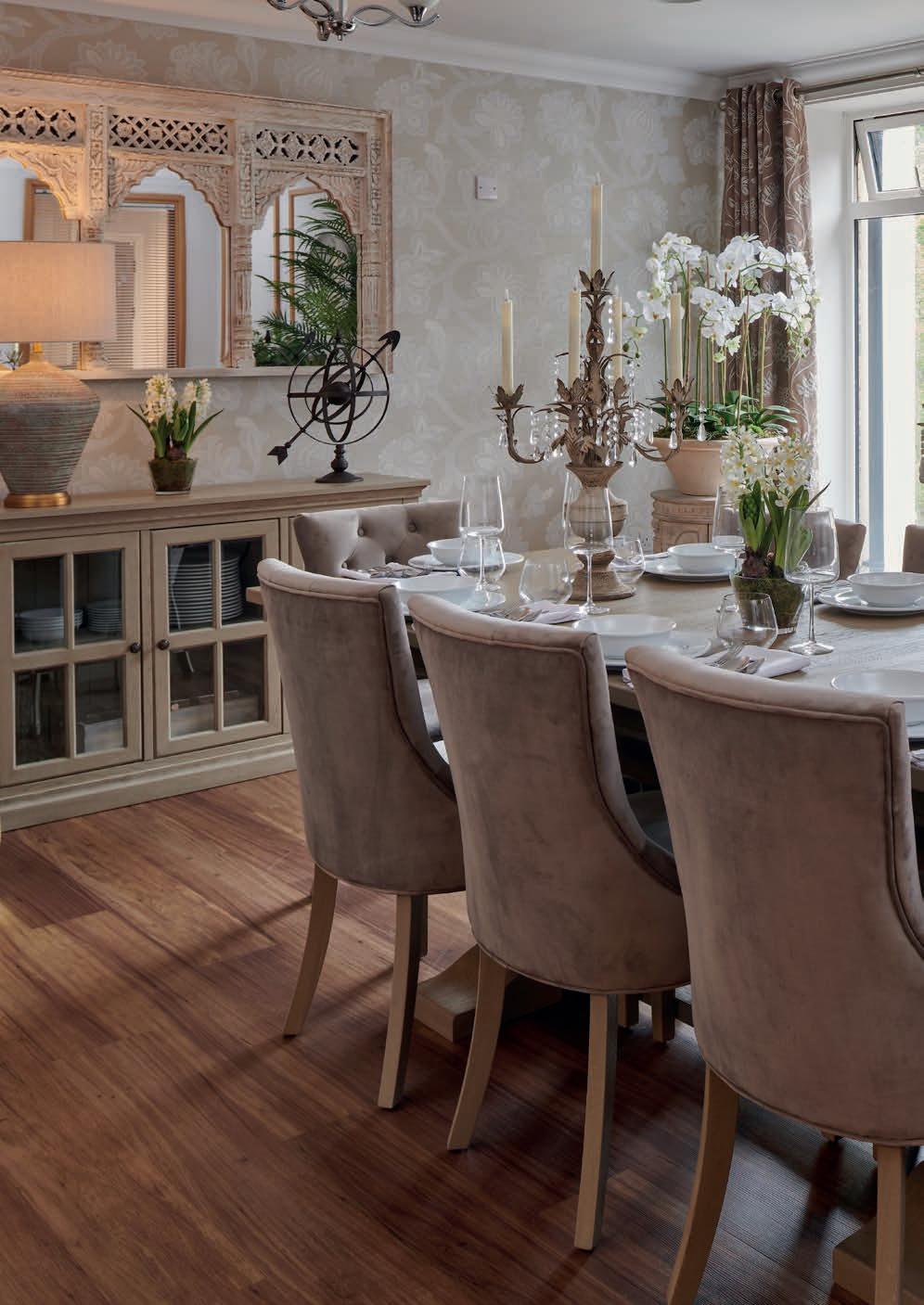
AAcross our homes, mealtimes continue to play an important role in daily life. They are moments to connect, welcome visitors and enjoy familiar routines. Alongside shared dining rooms, many homes also offer smaller dining spaces, giving residents the option to spend time with family and friends in a setting that feels more personal when the occasion calls for it.
These rooms are used in many different ways. For some families, they provide somewhere calm to share regular visits over coffee or lunch. For others, they offer the opportunity to mark important occasions together in surroundings that feel comfortable, accessible and welcoming.
Being able to gather within the home can make planning occasions easier, particularly when travelling to an external venue may feel complicated or tiring. Having the option to come together in familiar surroundings can help everyone feel more relaxed and included.
Louise Axtell, Divisional Director, explains, “For many families, organising a celebration outside the home can feel daunting, particularly when thinking about accessibility, travel or the level of support someone might need. Having the option to gather here removes many of those worries. It allows mum or dad to remain at the centre of the occasion, often continuing their role as host, which can be incredibly meaningful.”
Across the Trust, these spaces support a wide variety of experiences. Some families choose something informal, such as soup and sandwiches, coffee and cake or a favourite takeaway enjoyed together. Others choose to work with the home’s chef to create menus that reflect favourite meals, family traditions or special memories.
At Edwardstow Court, Home Manager Matt Peach has seen how meaningful these occasions can be: “We offer families the opportunity to enjoy a special dining experience together, and many choose to collaborate with our chef to create menus that reflect favourite dishes or shared memories. Often, it allows mum or dad to take on the role of host again, which can bring a real sense of familiarity and enjoyment to the occasion.”
Families often tell us that having the opportunity to celebrate within the home allows occasions to feel possible that might otherwise feel difficult to arrange. One family member whose mother celebrated her birthday in Edwardstow’s private dining room shared, “We never thought we would be able to take mum out again for a special birthday meal, but with this facility we could, and it was such an amazing experience.”
Experiences range from relaxed gatherings to more traditional celebrations. Some families choose a three-course meal, while others prefer afternoon tea or a simple lunch together. The flexibility of the space allows the setting to suit the occasion, whether informal or more celebratory.
“It meant so much to be able to celebrate together. The team helped create a memorable day.”
At Wellford Gardens, families have described the experience of celebrating important milestones together: “We celebrated our mother’s 93rd birthday in the private dining room. The food and service were excellent, and everything felt thoughtfully prepared for the occasion.”
Another family celebrating an 89th birthday described how small touches made the day feel special: “We pre-ordered a three-course meal which was served in the private dining room. The kitchen even provided a birthday cake without prompting, which was a lovely surprise.”
The setting itself often contributes to the overall experience. Tables may be laid more formally for special occasions or kept simple and relaxed for everyday visits. Some homes offer welcome drinks, flowers, or personalised details that reflect the significance of the gathering.
One family described the experience of celebrating a birthday with several relatives: “We were welcomed with a glass of prosecco and the room looked lovely with flowers and cards. It felt like a really special occasion, but also very comfortable.”
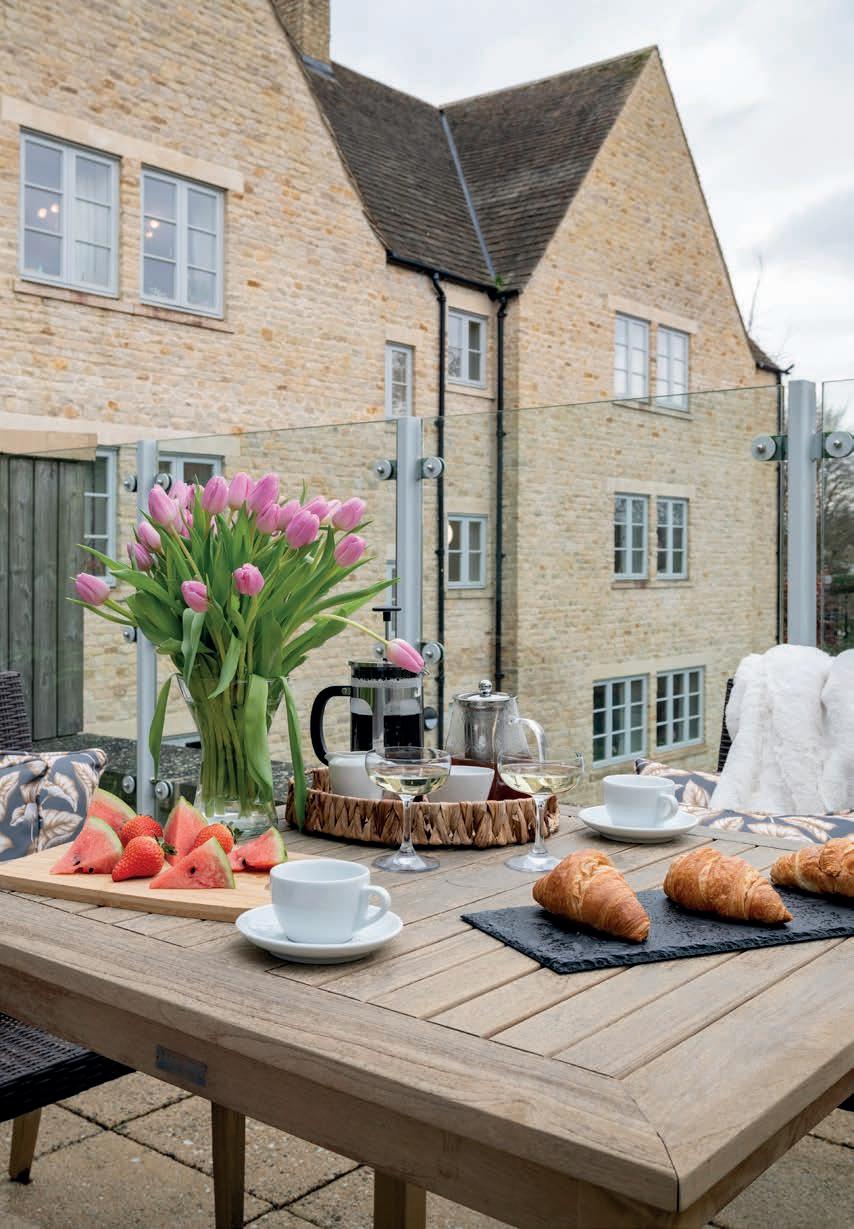
For residents, the opportunity to enjoy time with loved ones in a familiar environment can make celebrations feel more natural and less rushed. At Edwardstow, one resident described the simple pleasure of a quieter morning gathering: “Having breakfast on the balcony just outside the dining room feels magical - it makes you feel like you’re on holiday.”
In some homes, private dining spaces are also used to bring people together who may not have met before. One group attending a special Sunday lunch described the atmosphere as welcoming and sociable: “We arrived as strangers but left feeling part of a real community. The setting made the whole experience feel relaxed and enjoyable.”
Jackie Wright, Area Operations Manager, highlights the importance of creating spaces that feel flexible and welcoming: “We want these rooms to feel adaptable so they can suit different occasions. Sometimes that means creating a setting that feels a little more special, and sometimes it simply means ensuring the space feels calm and comfortable for
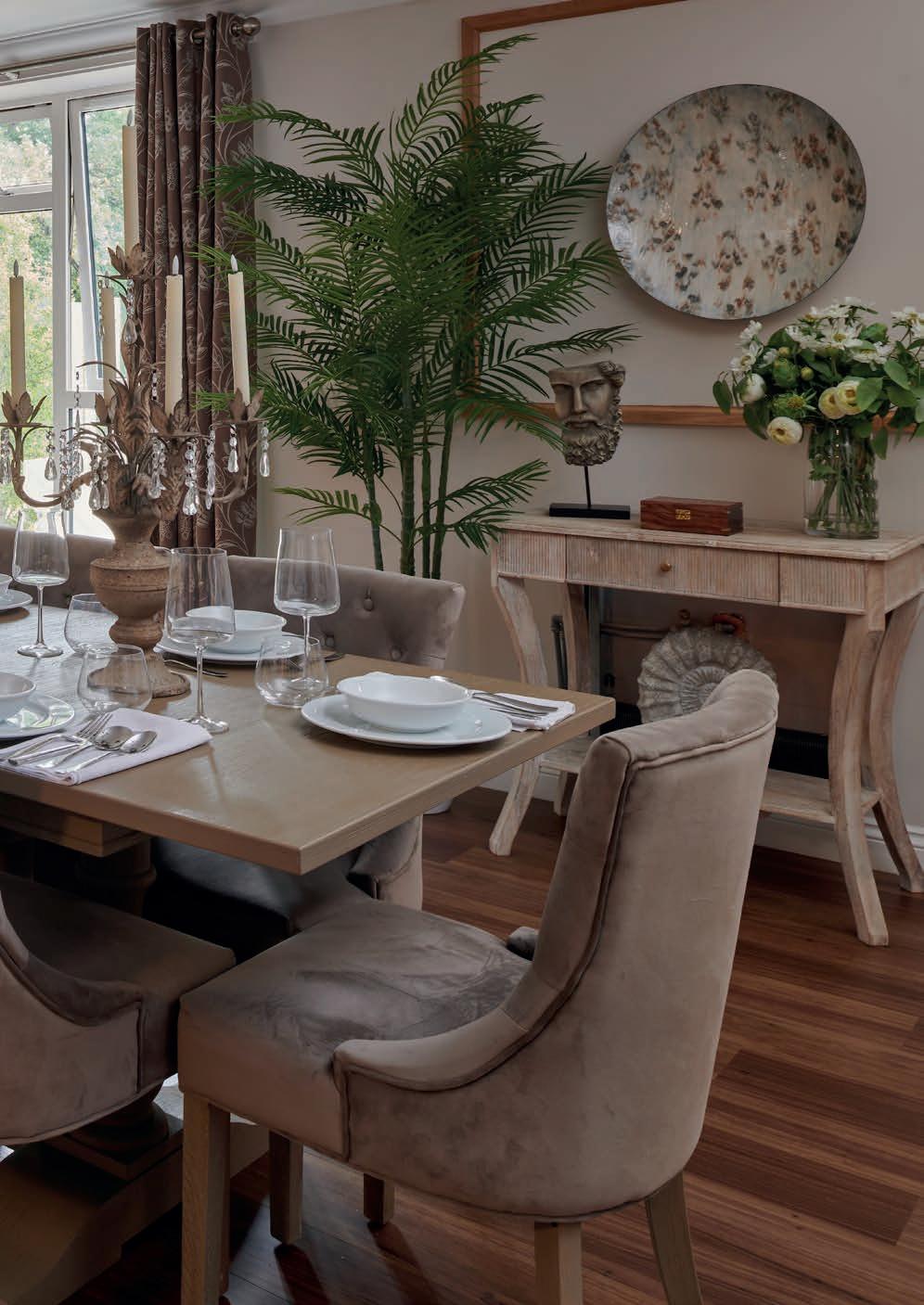
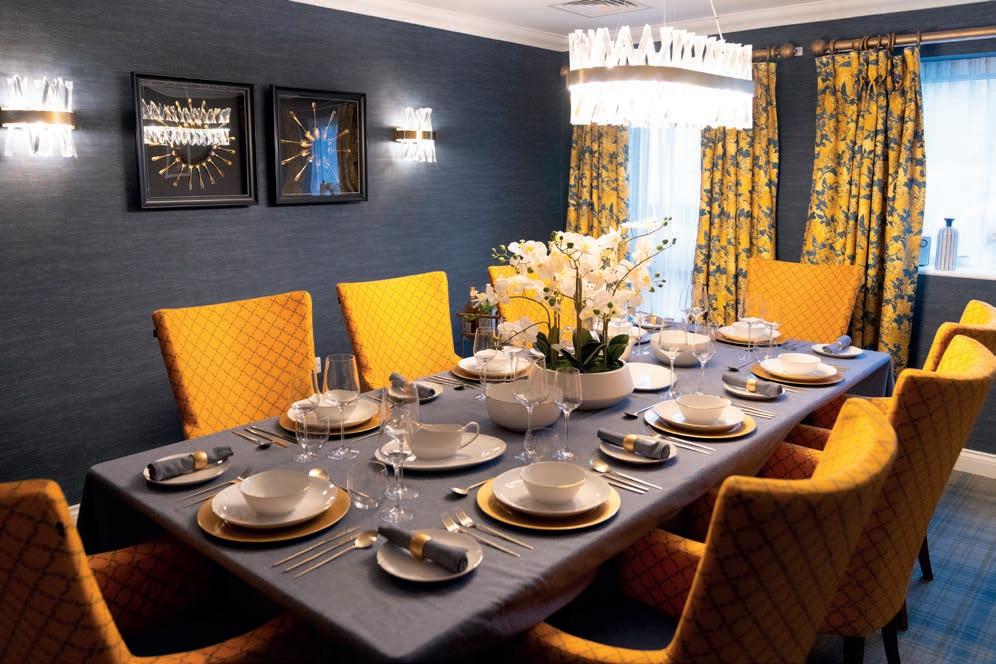
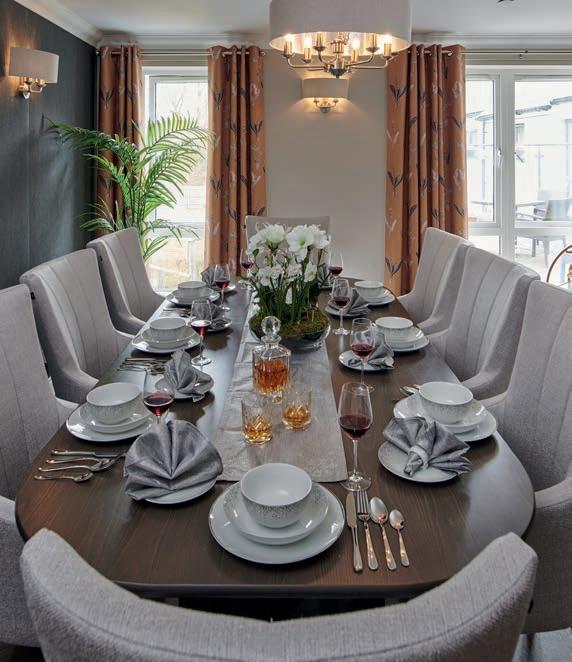
private dining spaces provide an inviting setting where residents and their loved ones can enjoy beautifully prepared meals, as pictured here, celebrate special occasions, and spend precious time together
OSJCT’s
Wellford Gardens, fine dining room
One of the terraces at Edwardstow Court, Stow-on-the-Wold
conversation. It’s about supporting the experience families want to create.”
While shared dining rooms remain an important part of life in our homes, having access to a smaller dining space provides additional choice for residents and families. Some may prefer the atmosphere of a lively dining room, while others value having a quieter setting for particular occasions.
Families celebrating a 99th birthday at Wellford Gardens reflected on the importance of being able to spend time together in one place: “It meant so much to be able to celebrate together. The team helped create a memorable day with thoughtful touches including balloons, flowers and a beautifully prepared meal.”
Whether the occasion is a birthday, anniversary, Sunday lunch or simply time together over tea, these moments help maintain connections with the people and traditions that matter most. As Louise Axtell reflects: “Every family has their own idea of what makes an occasion feel special. For some, it might be a traditional roast or afternoon tea, for others something more celebratory. The important thing is giving people the choice and support to continue sharing these moments together.”
Across our homes, mealtimes continue to bring people together in ways that feel familiar, reassuring and personal. Having the option of a smaller dining space simply provides another way for residents to enjoy time with family and friends, in surroundings that feel comfortable and welcoming.
PRIVATE DINING SPACES
CAN SUPPORT
• Three-course fine dining experiences
• Sunday lunch traditions
• Afternoon tea with family
• Birthday and anniversary celebrations
• Kitchen table style informal meals and coffee visits
• A place to enjoy a takeaway!
The fine dining room at The Lakes in Cirencester
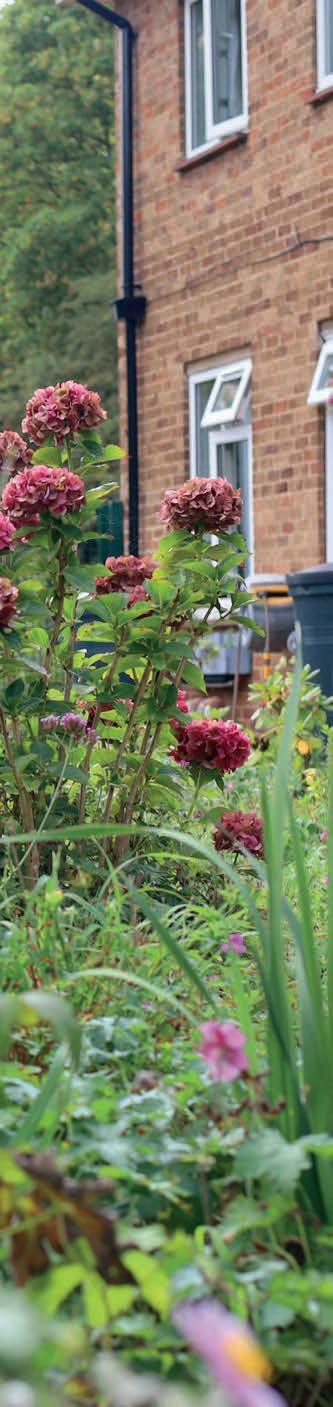
Hartsholme House’s overall winning garden in 2025 featured elements shaped by resident feedback and a “happy chaos” philosophy inspired by the Royal Horticultural Society
Trust in Bloom: cultivating wellbeing through gardening
Through our annual Trust in Bloom gardening competition, OSJCT is championing the role of nature in enhancing care and boosting social life.
Awell-established initiative across OSJCT, Trust in Bloom reflects the growing body of evidence linking access to green space with improved health outcomes. This year’s theme, ‘Friendship’, focuses on how engagement with green spaces can reduce loneliness and encourage interaction, in addition to supporting physical and mental wellbeing and meaningful activities.
The benefits of access to nature are widely evidenced. Research, including from UK government adviser Natural England, shows that regular time spent in green spaces can improve mental
wellbeing, reduce stress levels, and contribute to better physical health outcomes, including lower demand on healthcare services. In addition, care sector insight reveals that 74% of people searching for care consider access to a garden a key deciding factor.*
Studies also show that the impact of gardens can be especially profound for residents living with dementia or limited mobility. Sensory experiences — the scent of lavender, the sight of bright petals, the sound of birdsong, the touch of leaves — can evoke memories and encourage engagement.
Colourful planters painted by local children from St Peter’s Primary School showcased strong community links in Buckinghamshire’s 2025 winning entry from Sir Aubrey Ward House
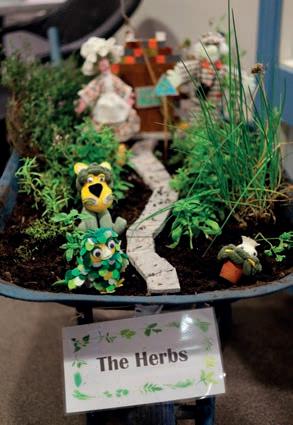
Homegrown vegetables and herbs were a standout feature of Edwardstow Court’s winning entry last year. Grown in wheelchair-accessible raised beds and a wheelbarrow that could be brought to residents with reduced mobility, the produce was then used by the home’s chefs in meal preparation
Care sector insight shows that 74% of care seekers say garden access is a key deciding factor
“My mother was a keen gardener. She
took half an orchard and filled it with vegetables.
When I garden here, I think of her.”
planting, and ongoing care of Lake
Cheryl Gilderdale, Home Manager at Hartsholme House in Lincoln, reflected on winning last year’s competition: “Winning is a fantastic achievement. I’m so proud of our team and everyone who helped transform the gardens. For residents living with dementia, communication can be difficult — but the joy on their faces when they see the flowers and wildlife says it all.”
For Sue, a resident who moved to Lake House in Adderbury with her husband early in 2025, gardening at the care home evokes fond memories of growing up on a farm. She said: “I was always outside — fresh air, happy, Wellington boots grotty and untidy, but that didn’t matter. Just being out is nice. My mother was a keen
gardener. She took half an orchard and filled it with vegetables. When I garden here, I think of her.”
As entries for 2026 take shape, participants can compete across several categories, including resident-led gardens, individual efforts, and collaborative projects involving families, volunteers and local organisations. All entries will be judged by senior leaders, including Chief Judge Dan Hayes, with every participating service recognised for their contribution.
For more information about Trust in Bloom, visit: osjct.co.uk/trust-bloom
TOP 5 REASONS OUR SERVICES ENTER TRUST IN BLOOM…
1. Our residents and community enjoy it
2. We take part every year
3. Gardens make our homes look more attractive
4. The competition brings people together
5. It’s fun!
*Sources: Growing together – how community-led green infrastructure delivers health and climate benefits –Natural England. Care Home Data | Care Seeker Statistics 2024 | Lottie
Sue (right), pictured with Home Manager Alex Grindle, contributed to the planning,
House’s winning Oxfordshire garden
Just for fun
Do you love a weekly wordsearch or prefer a sophisticated sudoku? Perhaps you are a fan of the classic crossword? Whatever your puzzle preference we hope you will enjoy this page. Why not challenge your friends or family to complete them too. Answers are shown overleaf - no peeking. Did you know that completing a variety of puzzles regularly offers a wide range of cognitive, emotional and social benefits, essentially acting as a “workout” for your brain.
1. Adversary (8)
5. Fate (4)
9. Untrammelled (4)
10. Exposes (8)
11. Clear (5)
12. Spring (7)
13. Uncommonly (13)
18. Par (8)
19. Ridicule (4)
20. Teaching (7)
21. Deplete (5)
22. Eat (4)
23. Drink (8)
2. Puzzle (7)
3. Former (7)
4. Passivity (13)
6. Comprehensive (7)
7. Enigma (7)
8. Realm (6)
13. Built (7)
14. Wariness (7)
15. Wan (6)
16. Fan (7)
17. Deficient (7)
Find these words relating to airports in the grid. Words can run forwards, backwards, up, down and diagonally.
AIRLINE
AISLE
BAGGAGE
CABIN
CHECK IN COCKPIT
CUSTOMS
DEPARTURE
DUTY FREE ENGINE
LOUNGE
PASSPORT CONTROL
RUNWAY
SAFETY DEMO
SEAT
SECURITY
SHUTTLE
TAIL
VISA WING
Fill in all the squares in the grid so that every row, column and each of the nine 3x3 boxes contain all of the digits from 1 to 9.
LOOKING FOR YOUR NEXT CHALLENGE?
From puzzles and engagement boxes to day trips and community
OSJCT offers a wide range of opportunities to have fun, stay active, learn something new or meet others. Speak with your care team or Activities Co-ordinator to find out more.
Lottie is a free service that helps families and retirees find the UK’s best care homes and retirement living communities.
Found is the UK’s leading cloud based CRM built for the care sector and helps providers better manage their day to day operations through intuitive tools, insights, and workflows.