Oscar Bianchi ZAMĀN
for contralto and orchestra score

for contralto and orchestra score
for contralto and orchestra
Lyrics by Oscar Bianchi, based on the diary of his great-aunt (1943) and excerpts from Thomas Mann’s Der Zauberberg commissioned by Basel Sinfonietta, and Wittener Tage für Neue Kammermusik
With the support of the Swiss Arts Council Pro Helvetia
score
First performance: March 29, 2026
Casino Basel, Switzerland
First german performance: April 25, 2026
Wittener Tage für neue Kammermusik
Basel Sinfonietta
Noa Frenkel, contralto
Titus Engel, conductor
© 2026 Oscar Bianchi
Tous droits réservés pour tous pays
All rights reserved
Version: 17 April 2026
OB 71

2 Flutes, 1st and 2nd also Piccolo and Bass Flute
2 Oboes
2 Bb Clarinets, 2nd also Bb Bass Clarinet and Bb Contrabass Clarinet
2 Bassoons, 2nd also Contrabassoon
2 Horns in F
2 Trumpets in C
2 Trombones. Accessories: two duck calls
1 Tuba, also Slap Stick, and duck call
2 Percussions (detailed list on the following page)
1 Harp, also a second harp tuned a quarter tone higher. Accessories: soft timpani sticks, steel guitar slide (metal bottleneck), superball mallets, Baking paper, plectrum, velvet cloth to dampen the highest octave, and triangle-shaped rulers.
1 Piano, also Celesta, accessories: plectrum, small drinking glass, steel guitar slide (metal bottleneck), baking paper, crini or nylon loop (alt. Synth with ‘’bowed pad’’ sound), nylon/polyester webbing strap, bike tube to slide over strings, E-bow.
Contralto
8 Violins I
6 Violins II
5 Viole
4 Celli
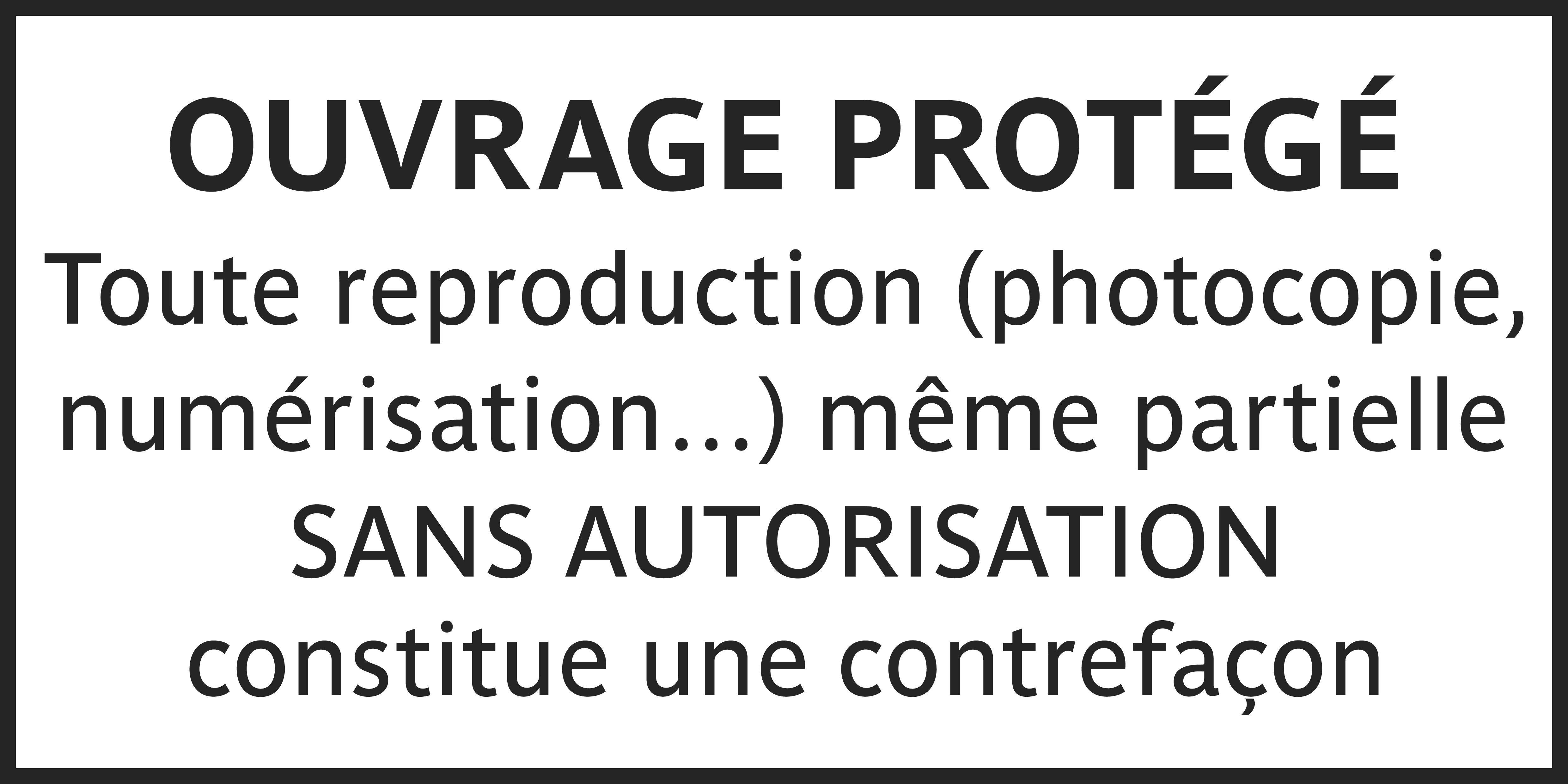
3 Double basses: 1st and 2nd with five strings (5th strings detuned to sounding F#0, see score). Accessories: baking paper
Amplification: Contralto, Contrabasses, Contrabass Clarinet, Contrabassoon, and Bass Flutes.
the score is in C (not transposed)
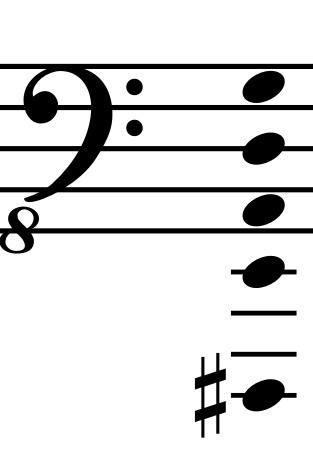
Piccolo and Celesta sound one octave higher than notated; Glockenspiel and Crotales, two octaves higher; Contrabassoon and Contrabasses, one octave lower. Cautionary octave clefs are added to remind real sounding octaves.
Duration: circa 25 minutes
Percussion 1: Symphonic Bass Drum, Lion Roar, Cuíca, Marimba (C2–C5), Vibraphone, Crotales, 3 Bell Plates and very low bell plates or sim. (F#1, A1, Bb1, A2, B2), Gongs (F3, E4, F4, F5, F#5), Almglocken (B4, F4), Suspended Cymbals (Crash, Small and Tiny splash 6”–8”), Bongos, two table Slap sticks, Waterphone MegaBass 16" diameter (40 cm), Steel Drums, Plexiglass (ca. 70–80 × 50 cm, 2–3 mm), Snare Drum. Remo Spring Drum SP-0410-1A, Tibetan bowls, Rain Stick, Car Springs (over polystyrene or sim.) Accessories: superball mallets, glass marbles (with thin fabric pouch), bows (for crotales, cymbals, vibraphone), soft / medium / hard mallets, wooden sticks, metal beaters, damping materials (felt, fabric).
Percussion 2: Timpani, Symphonic Bass Drum, Marimba (C2–C5), Vibraphone, Tubular Bells (D4, F4, F#4, G#4 Crotales, 3 Bell Plates, Almglocken (D3, E4 G#4, A#4), Gongs (E3, G3, A3, D4, D#4, E4, F4, G4, E5), Bongos, Slapstick, Steel Drums, Plexiglass (ca. 70–80 × 50 cm, 2–3 mm), Suspended Cymbals (Medium-Small, Very Small), Accessories: superball mallets, glass marbles (with thin fabric pouch), bows (for crotales, cymbals, vibraphone), soft / medium / hard mallets, wooden sticks, metal beaters, damping materials (felt, fabric).
La mia casa.
Non mi sono voltata. Sono partita.
E cominciò l’esilio. L’esilio. E non mi voltai.
Eravamo inermi.
Sotto voce parlavamo, a frammenti.
Ci guardavamo negli occhi per capire cosa dire, cosa fare.
Eravamo inermi. Eravamo i vermi. Eravamo inermi.
In cinque.
Siamo soltanto in cinque.
Miracoli non attendo. Segni non aspetto.
Fuori la voce. Non ti abbandono.
Fuori, la paura. Fuori, la voce.
* Che cos’è la vita.
Il prodotto calorico di una sostanza sostenitrice di forme. *
Siamo vivi. Siamo ancora. Avevamo ancora la pelle.
Mein Zuhause. Ich habe mich nicht umgedreht. Ich bin gegangen.
Und das Exil begann. Das Exil.
Und ich habe mich nicht umgedreht.
Wir waren wehrlos.
Wir sprachen leise, in Bruchstücken. Wir schauten uns in die Augen, um zu verstehen, was wir sagen, was wir tun sollten.
Wir waren hilflos. Wir waren Würmer. Wir waren hilflos.
Zu fünft.
Wir sind nur zu fünft.
Ich erwarte keine Wunder. Ich warte nicht auf Zeichen.
Raus mit der Stimme. Ich lasse dich nicht im Stich.
Raus mit der Angst. Raus mit der Stimme.
* Was ist das Leben?
Der Kaloriengehalt einer Substanz, die Formen stützt. *
Wir sind am Leben. Wir sind noch da. Wir hatten noch unsere Haut.
My home. I didn't turn around. I left.
And so began the exile. The exile. And I didn't turn around.
We were defenseless.
We spoke in whispers, in fragments. We looked into each other's eyes to understand what to say, what to do.
We were defenseless. We were worms. We were defenseless.
Five of us. There are only five of us.
I don't expect miracles. I don't wait for signs.
Out with your voice. I won't abandon you.
Out with your fear. Out with your voice.
* What is life?
The caloric product of a substance that sustains forms. *
We are alive. We are still. We still had skin.
Restammo fermi. Nessuno parlò. Guardavamo, osservavamo, nell’ansia.
Sotto voce parlavamo, a frammenti.
Ci guardavamo per capire cosa dire, cosa fare.
Pensieri che tornano. Pensieri ricorrenti. Un timore inarrestabile.
Facevamo. Rifacemmo. Provavamo. Riprovavamo.
Provavamo a non fermarci. Senza voltarci indietro.
Qui ci muovevamo. Un passo dopo l’altro.
Provavamo a non fermarci, senza voltarci indietro.
Wir blieben stehen. Niemand sprach. Wir schauten, beobachteten, voller Angst.
Wir sprachen leise, in Bruchstücken. Wir schauten uns an, um zu verstehen, was wir sagen und was wir tun sollten.
Gedanken, die wiederkehren.
Wiederkehrende Gedanken. Eine unaufhaltsame Angst.
Wir taten es.
Wir taten es erneut. Wir versuchten es. Wir versuchten es erneut.
Wir versuchten, nicht stehen zu bleiben.
Ohne zurückzuschauen.
Hier bewegten wir uns. Ein Schritt nach dem anderen.
Wir versuchten, nicht stehen zu bleiben, ohne zurückzuschauen.
We stood still. No one spoke. We watched, we observed, anxiously.
We spoke in whispers, in fragments.
We looked at each other to understand what to say, what to do.
Thoughts that come back. Recurring thoughts. An unstoppable fear.
We did it. We did it again. We tried. We tried again.
We tried not to stop. Without looking back.
Here we moved. One step after another. We tried not to stop, without looking back.
Non siamo più inermi. Non più. Non più.
Ora mordiamo. (interludio)
Non è una storia sola. È una storia che ritorna.
Wir sind nicht mehr wehrlos. Nicht mehr. Nicht mehr.
Jetzt beißen wir zu.
(Zwischenspiel)
Es ist nicht nur eine Geschichte. Es ist eine Geschichte, die wiederkehrt.
We are no longer helpless. No more. No more.
Now we bite.
(interlude)
It's not just one story. It's a story that keeps coming back.
Text based on:
Dora Polacco — Diary (1943, unpublished family document)
* Thomas Mann — Der Zauberberg (1924, Roman) (Italian adaptation / retranslation from the German original)
• Tempi can be reduced by up to 20%, but proportions must be maintained.
• Accidentals are always valid until the end of the measure and exclusively for the specific pitch (not on other octaves).
• Altered pitches might be sometimes respelled within the measure for cautionary purposes.
• Trills: unless differently specified the auxiliary note is always a step above the main note, see example:
Realization
Quarter tone higher, sharp, three-quarter tones higher.
Quarter tone lower, flat, three-quarter tones lower
Attention: Quarter-tone sharps or flat are often intended as a slight deviation from ordinary tuning, with the sole purpose of enhancing beating between voices (often between the first and second parts). Adjust or slightly reduce the quarter-tone interval if necessary to maximise interference patterns.
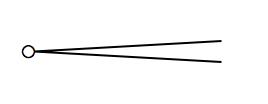
crescendo dal niente
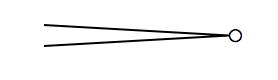
decrescendo dal niente
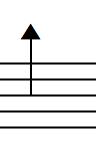
highest pitch available
Winds: inhale exhale fully close embouchure with mouth
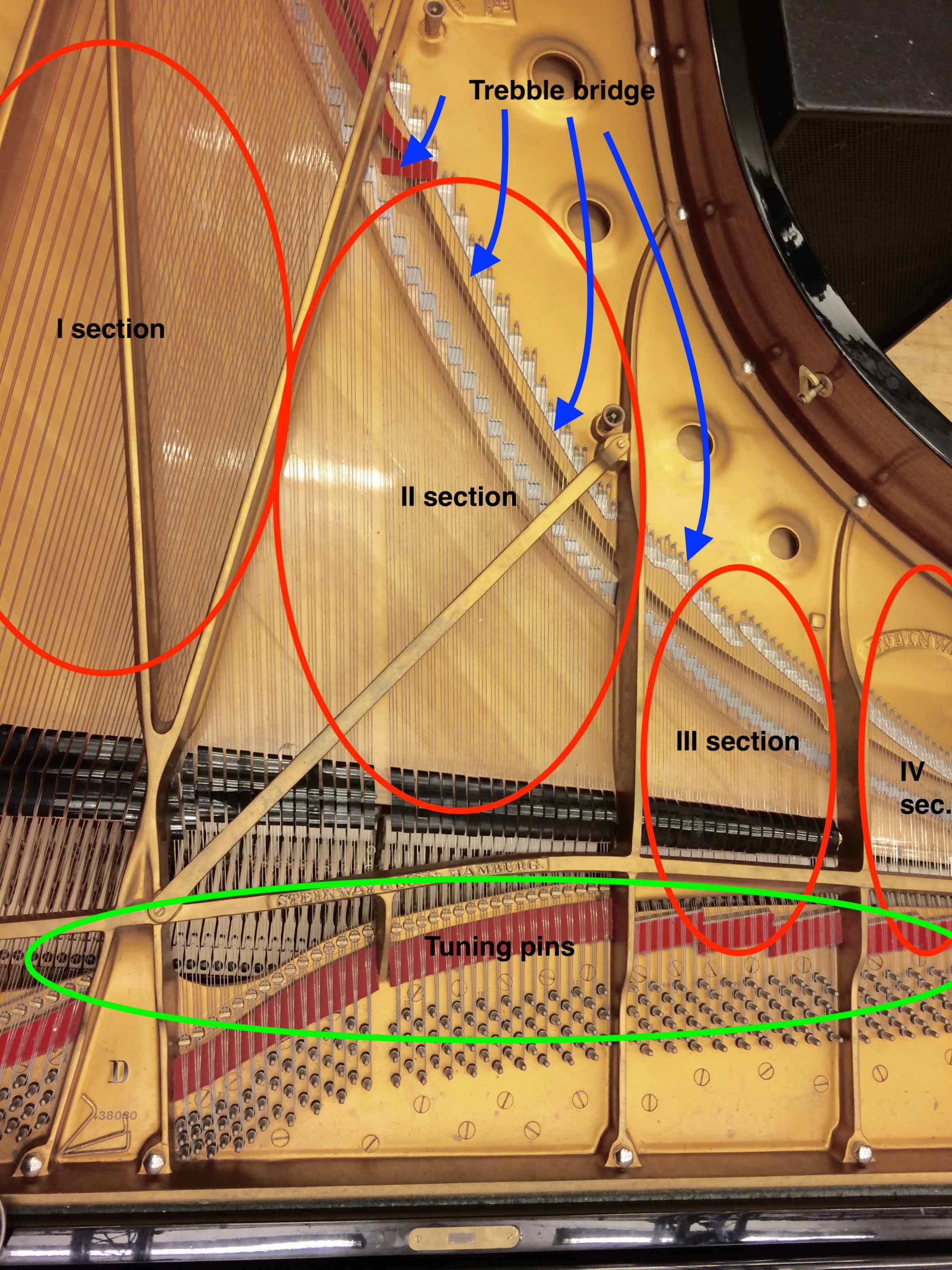
Piano:
• The use of a Steinway D piano is recommended
• board terminology:
• Harmonics:
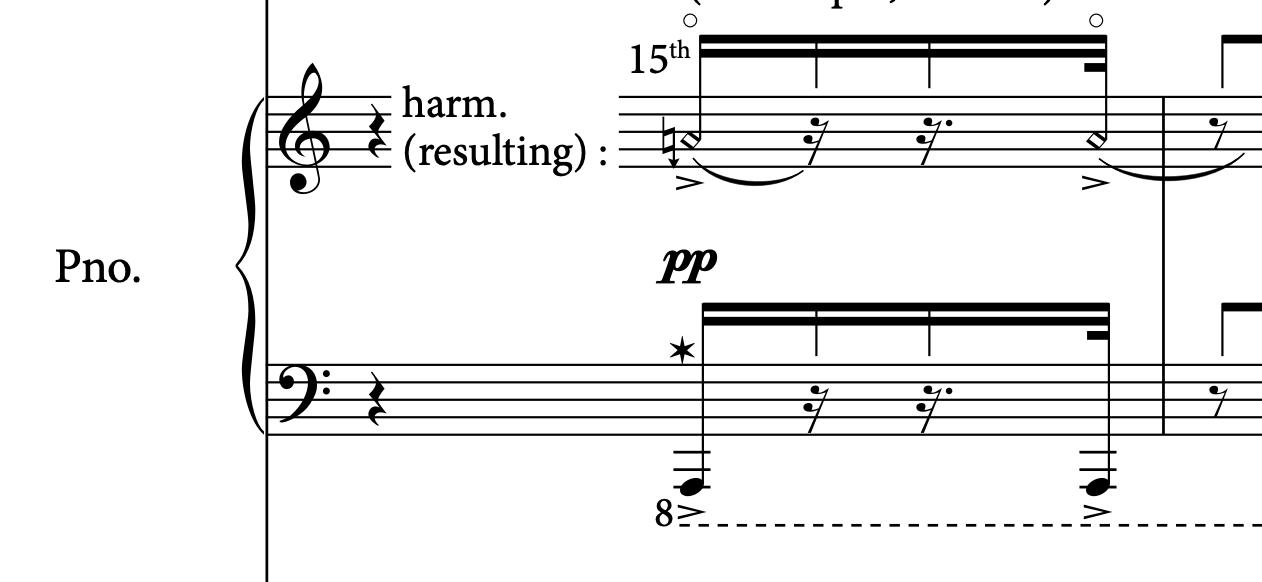
(✶) Key struck normally; string lightly damped at the nodal point to isolate the indicated partial.
Loose horsehair bowing (crine)
• Use a small bundle of horsehair (similar to bow hair, but loose and handheld), and apply many raisins to it.
• Place the hair underneath the string at the indicated position.
• Apply light upward tension so that the hair makes contact with the string.
• Produce sound by pulling upward, allowing the string to resonate.
• Alternate hands (L/R) to sustain the sound continuously.
• Each stroke should be unidirectional; avoid producing sound on the return.
• If the crine sound is not sufficiently loud or stable, play ordinario while lightly muting the string with a continuously moving finger (right hand), in order to activate harmonics and subtle formant changes.
Two Re-tune to D-natural.
strings
s.p. = sul ponticello
Restrained but expressive. Five fragments of an extended melodic line thread through the orchestral textures. line is always in motion drawn out of and disappearing into silence.
s.t. = sul tasto
m.s.p. = molto sul ponticello
a.s.t. = alto sul tasto
c.l.b. = col legno battuto
c.l.t. = col legno tratto
x.v. = extreme vibrato (very wide vibrato, minimum fifth wide)
w.n. « white noise » : tonelos, bow right over the bridge
Te overall e fect creates a quasi-static multiphonic. Double, triple quadruple chords combine open strings, open-string/harmonic trills and stopped tones. Fast string crossings - explore with varying bow pressure and changing bow strokes, avoiding cliché arpeggios I-IV-I.
p.r. « press ricochet » : press the bow into the string and get as many bounces possible (similar to percussion’s press roll or multiple bounce roll technique)
Varying degrees of sul pont creates additional layers of overtones. Open-string/harmonic trills immediately as fast as possible, and remain very fast, continous and regular. Build up playing all three strings. Bring out the harmonics more than the open strings. Noteheads in brackets add last and play less often.
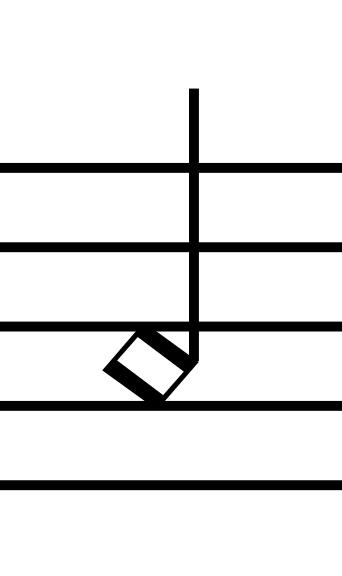
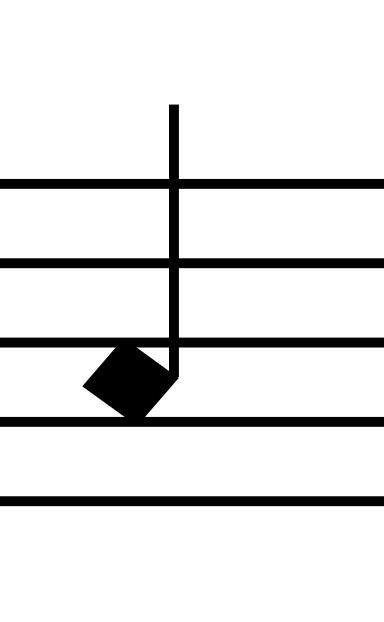
• harmonic fingering (half pressed): no matter weather over a harmonic node or not
Natural harmonics:
• Natural harmonics (reference Violin 4th string):
8 &
s m a r i m ba - li ke s o u n d s pr o d u c e d by a f a s t t r e m o lo wi t h b o t h p a lm s D a mp e n i m m e d i a te y a
c o n l a g r a n c a s s a 2 m a r i m ba s o u n d ✶ ( ✶ ) o n t he lo we s t s e c t i o n o f t he b o a r d a n e bu lo u s m a r i m ba - l ke s o u n d i s pr o d u c e d
n e r vo s
m o i nte n s o T mp
n i n e r vo s i s s i m o i nte n s o & n e r vo s s s i m o i nte n s o ( a te r n a te ha n d s a s f a s t a s p o s s i ble ) t r e m m o lto tto s e n z a a c c e e r a n d o 8
> e n a r m o n i c t r e m o lo
8< > > o r d n e r vo s i s s i m o i nte n s o & ( q+ q) , & tu tt i ( c o l l a vo c e ) , s e n z a vi br a to g i s s i nte n s o c o n p e s o ✶ ( ✶ ) g li s s a n d i s ho u ld n o t b e t r e a te d a s o r d i n a r y s li d e s bu t c o n c e i ve d a s p o r t a m e nt wi t h m o s t

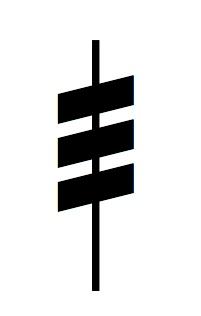
c r n e o r S ynt h ( bo we d p a d ) ✶ ✶ pi z z le c o r d e c o n e u n g h i e o r d P i a n o 8 ( lo c o ) & > 5 ( ✶ ) a s o o k i f p tc h e m e r g e s s li g ht ly l a te r
( ✶ ✶ ) I f S ynt h s u s e d i nte r pr e t d e c a y a s a g r a d
c r n e o r S ynt h ( bo we d p a d ) ✶ ✶ ( p e d a d li b