DRIVING IMPROVEMENT WITH OPERATIONAL RESEARCH AND DECISION ANALYTICS
‘GUT FEEL’, QUANTIFIED
Assessing UK Space Capabilities
2025 STAFFORD BEER MEDAL
Wearable Internet of Things for Neurogenic Bladder Patients
DEMOCRATISING FORECASTING FOR SOCIAL GOOD
The impactful Work of Professor Bahman Rostami-Tabar
EFFECTIVE OR/ML INTEGRATION
Platelet Inventory Management in a Hospital Blood Bank
EDITORIAL
As we package this new issue, ARTEMIS II, the rst crewed mission to our moon in over 50 years, has just happened. e four-person crew successfully completed a 10-day journey around the Moon and made it back safely to Earth. Our cover story couldn’t have possibly been more timely! e article, by omas Hudson, presents a quantitative approach to assessing UK space capabilities, grounded in Decision Conferencing. One that makes sense of ‘gut feel’ to inform the development of viable roadmaps for each capability.
e l rouge of this issue, built through interweaving of real case studies of OR adoption, is an investigation on the many roles that Arti cial Intelligence (AI) may take on as a key component of ‘the OR approach’. e AI/OR ‘blend’ has already shaped our work as operational researchers, and signs suggest this is just the start of a long journey. Events such as the recent ‘sandpit’ presented in the article by Christine Currie and colleagues help us to understand where to go next.
As this is a Spring Issue, you will also nd accounts of the work behind some of the most prestigious awards given in our eld in 2025: the Lyn omas Impact Medal (interview with Professor Bahman Rostami-Tabar), the OR Society’s Doctoral Award (article by Joe Farrington), and the Sta ord Beer Medal (2026 is Beer’s centenary!), awarded to a Machine Learning-augmented wearable Internet of ings device to continuously monitor bladder levels in patients with neurological bladder dysfunction.
e issue also features many examples of impactful student projects at both the Master’s and doctoral levels (on diabetes, credit risk, blood banks), columns from Geo Royston and Tom Murarik, and much, much more. Enjoy!
Maurizio Tomasella
Alan Robinson
The OR Society is the trading name of the Operational Research Society, which is a registered charity and a company limited by guarantee.
Seymour House, 12 Edward Street, Birmingham, B1 2RX, UK
Published by Taylor & Francis, an Informa business
All Taylor and Francis Group journals are printed on paper from renewable sources by accredited partners.
OPERATIONAL RESEARCH AND DECISION ANALYTICS
Operational Research (OR) is the discipline of applying appropriate analytical methods to help those who run organisations make better decisions. It’s a ‘real world’ discipline with a focus on improving the complex systems and processes that underpin everyone’s daily life – OR is an improvement science. For over 80 years, OR has focussed on supporting decision making in a wide range of organisations. It is a major contributor to the development of decision analytics, which has come to prominence because of the availability of big data. Work under the OR label continues, though some prefer names such as business analysis, decision analysis, analytics or management science. Whatever the name, OR analysts seek to work in partnership with managers and decision makers to achieve desirable outcomes that are informed and evidence-based. As the world has become more complex, problems tougher to solve using gut-feel alone, and computers become increasingly powerful, OR continues to develop new techniques to guide decision-making. e methods used are typically quantitative, tempered with problem structuring methods to resolve problems that have multiple stakeholders and con icting objectives.
Impact aims to encourage further use of OR by demonstrating the value of these techniques in every kind of organisation –large and small, private and public, for-pro t and not-for-pro t. To nd out more about how decision analytics could help your organisation make more informed decisions see https://www.theorsociety.com/ORS/About-OR/OR-in-Business.aspx. e OR Society is the home to the science + art of problem solving.
CONTENTS
7
12
QUANTIFYING ‘GUT FEEL’: A DECISION-SCIENCE APPROACH TO ASSESSING UK SPACE CAPABILITIES
Thomas Hudson and Joanna Hart show us how to turn ‘gut feel’ into a clear foundation for dialogue in areas, such as space, where evidence is incomplete and choices are complex.
EFFECTIVE INTEGRATION OF OR AND MACHINE LEARNING AT A HOSPITAL BLOOD BANK
ORS 2025 Doctoral Award recipient Joseph Farrington discusses his hybrid OR/ML work on a platelet waste reduction problem at University College London Hospitals Foundation Trust.
16
COMPLEX PROBLEMS, BETTER DECISIONS: WHERE AI AND OR MEET
This article by Christine Currie, Burak Buke, Georgui Mihaylov, Jacco Thijssen, Collin Bleak, and ORS Executive Director Colette Fletcher shares major insights from a recent sandpit event that brought together representatives from government, funding councils, academia and industry to discuss ways to further align OR and AI in tackling complex real-world problems.
19 2025 LYN THOMAS IMPACT MEDAL: PROFESSOR BAHMAN ROSTAMI-TABAR
In conversation with Professor Bahman Rostami-Tabar, we look at his impactful work on ‘democratising forecasting, for social good’, in collaboration with partners from the global health supply chain.
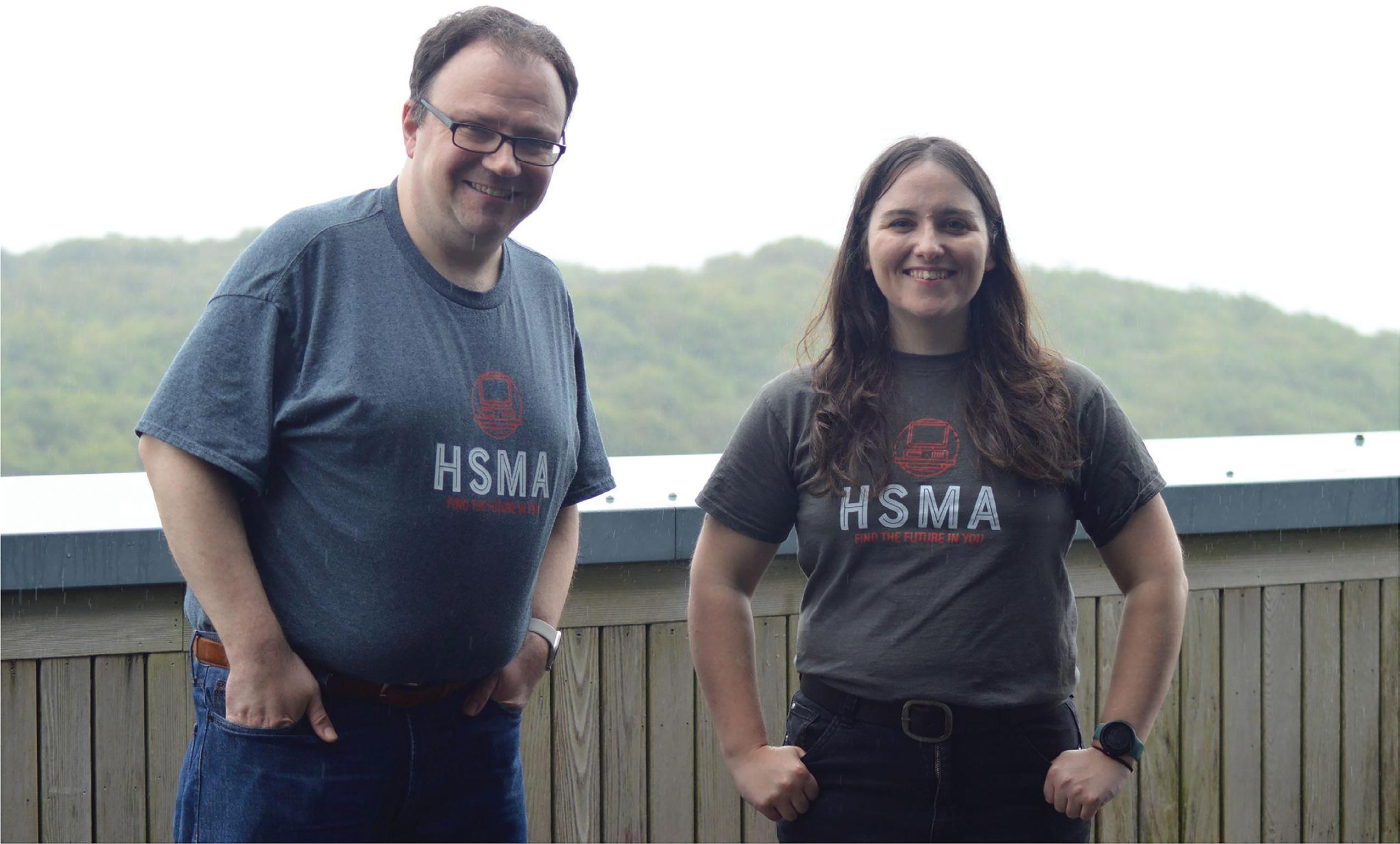
23 THE HEALTH SERVICE MODELLING ASSOCIATES (HSMA) PROGRAMME: WHERE WE’RE GOING, WE DON’T NEED EXCEL
Daniel Chalk and Sammi Rosser tell us about their OR online training programme for health and social care professionals in England, its lifetime support features, and their growing community of associates.
5 Seen Elsewhere Analytics making an Impact
30 Scaling’s Kuhnian Crisis: The OR lesson LLMs are ignoring In his column, Tom Murarik argues for the Large Language Models industry to adopt a most timely paradigm shift, following in the footsteps of OR
56 Universities making an impact Brief report on a student project from the London School of Economics and Political Science
57 Complexity, Causality and Catastrophe Geoff Royston’s column helps us to make sense of the ‘unaccountability machine’ we are all faced with on a daily basis
DISCLAIMER
The Operational Research Society and our publisher Informa UK Limited, trading as Taylor & Francis Group (“T&F”), make every effort to ensure the accuracy of all the information (the “Content”) contained in our publications. However, the Operational Research Society and our publisher T&F, our agents, and our licensors make no representations or warranties whatsoever as to the accuracy, completeness, or suitability for any purpose of the Content. Any opinions and views expressed in this publication are the opinions and views of the authors, and are not the views of or endorsed by the Operational Research Society or our publisher T&F. The accuracy of the Content should not be relied upon and should be independently verified with primary sources of information and any reliance on the Content is at your own risk. The Operational Research Society and our publisher T&F make no representations, warranties or guarantees, whether express or implied, that the Content is accurate, complete or up to date. The Operational Research Society and our publisher T&F, shall not be liable for any losses, actions, claims, proceedings, demands, costs, expenses, damages, and other liabilities whatsoever or howsoever caused arising directly or indirectly in connection with, in relation to or arising out of the use of the Content. Full Terms & Conditions of access and use can be found at http://www.tandfonline.com/page/terms-and-conditions.
Reusing Articles in this Magazine
All content is published under a Creative Commons Attribution-NonCommercial-NoDerivatives License which permits noncommercial re-use, distribution, and reproduction in any medium, provided the original work is properly cited, and is not altered, transformed, or built upon in any way.
KEEPING THE TRAINS RUNNING
Brian Clegg takes us into the world of British heritage railways, focusing on the staff rostering work of Bismark Singh and Nikila Suresh (University of Southampton) at Swanage Railway in Devon.
33 PUBLIC HEALTH INTERVENTIONS FOR IMPROVING DIABETES TREATMENT OUTCOMES: WHAT WORKS AND WHAT DOES NOT
Eunice Twumwaa Adwubi (Newcastle University), Itamar Megiddo (University of York), Robert van der Meer (Strathclyde University), and Justice Nonvignon (University of Ghana) use simulation to address policy recommendations for diabetes control in Ghana.
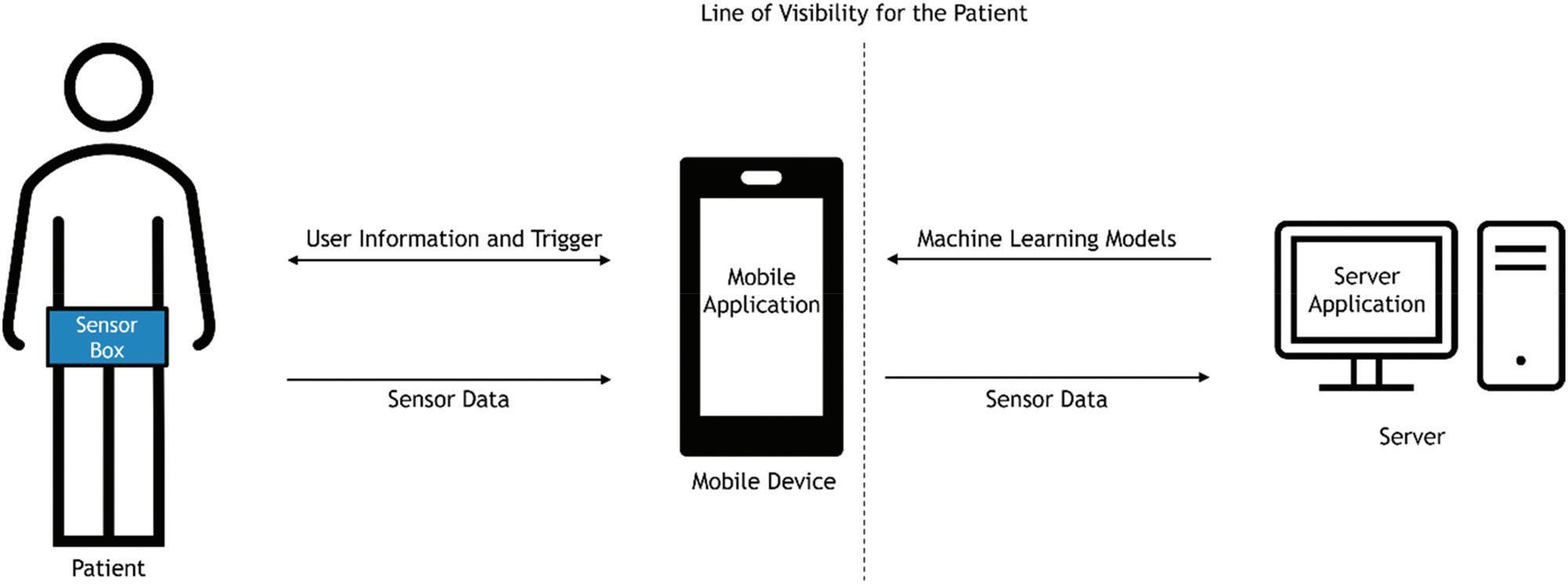
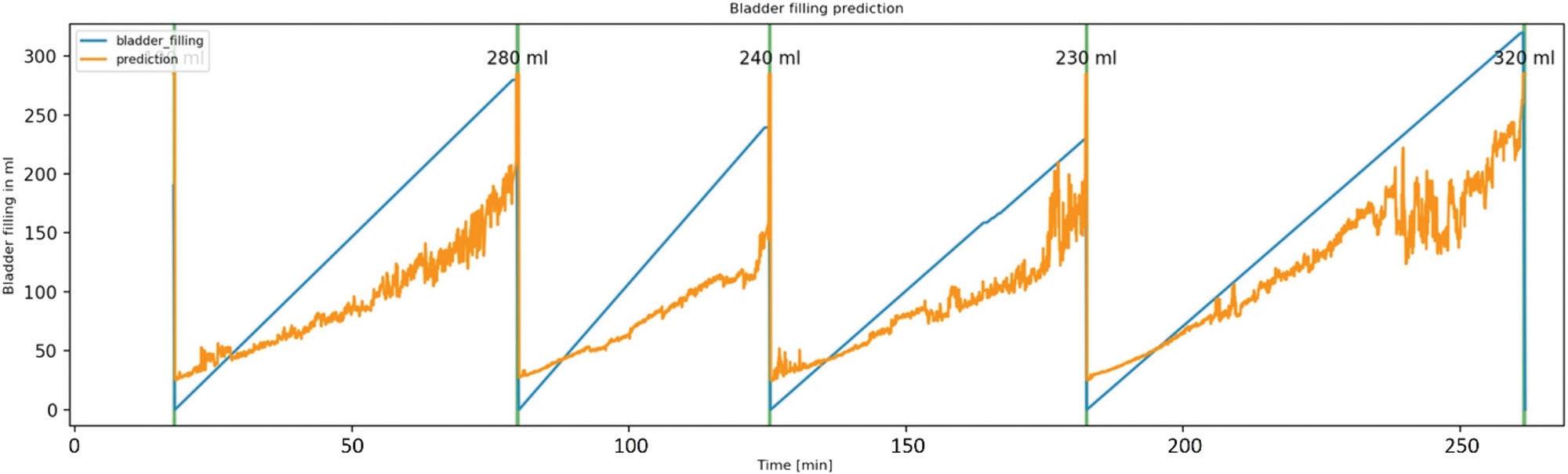
37 IOT SYSTEM FOR CONTINUOUS BLADDER LEVEL MONITORING IN NEUROLOGICAL BLADDER DYSFUNCTION
2025 Stafford Beer Medal recipients Claudius Jonas, Jannik Lockl, Maximilian Röglinger and Robin Weidlich present their Machine Learning-augmented wearable Internet of Things device to support the life of patients with neurological bladder dysfunction.
42 COME TO THE WINTER SIMULATION CONFERENCE 2026 IN GLASGOW: BE A PART OF HISTORY!
In their advertorial, Nav Mustafee, Stephan Onggo, Cathal Heavey, Simon J. E. Taylor, Bernd Wurth and Tillal Eldabi invite us all to be part of this generational event!
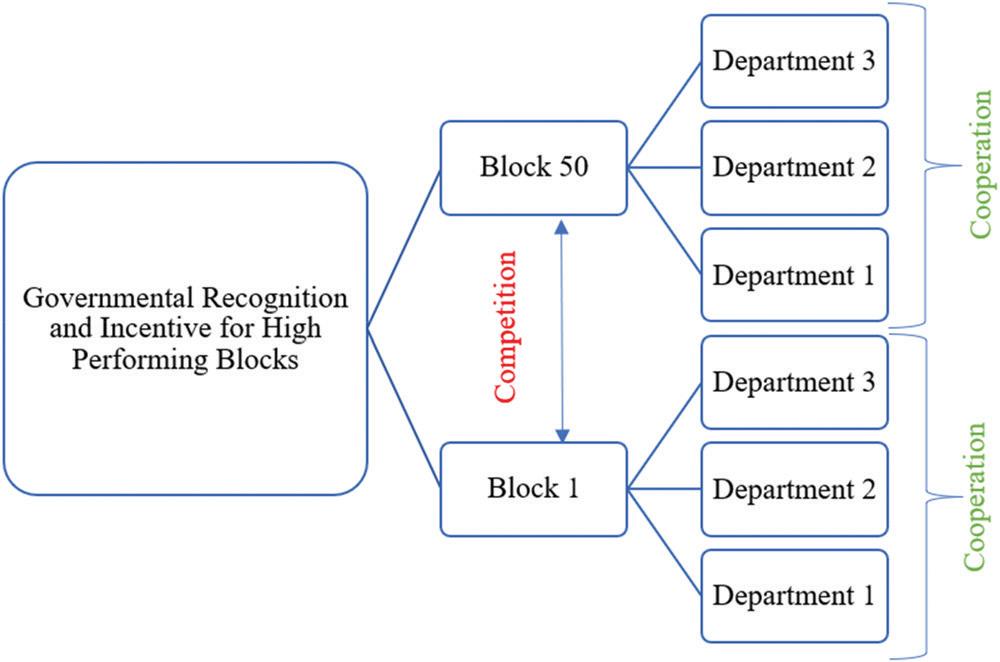
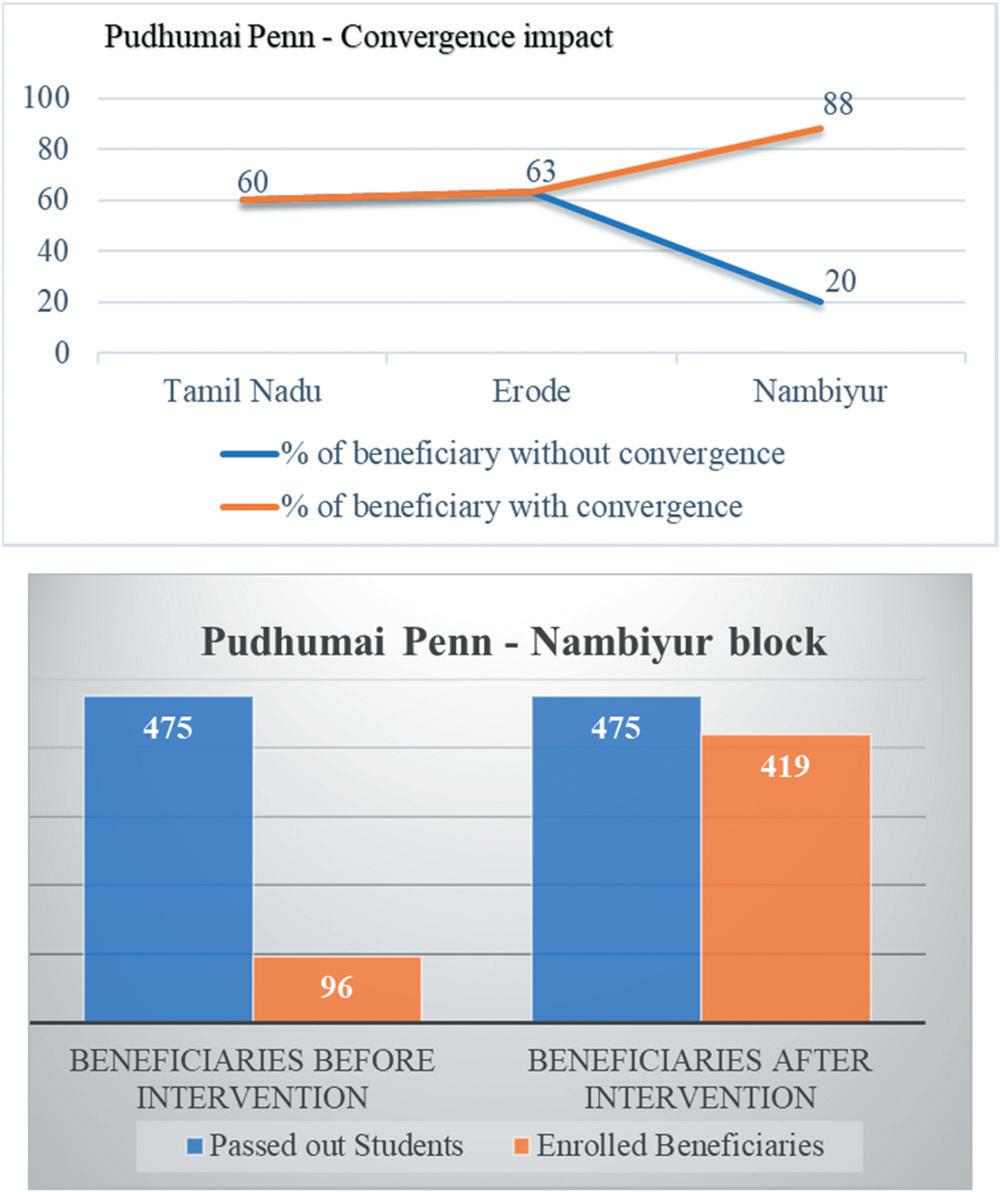
46 INCENTIVISING CONVERGENCE AT THE DISTRICT LEVEL FOR ENHANCED POLICY IMPLEMENTATION
This article by J. Muthu Kumar, Vinothini Jagadeesan, S. Sivanandhams and S. Srivatsa Srinivas tells the story of a successful OR intervention in India, which looked at bridging the gender gap and enhancing inclusivity at all levels of education.
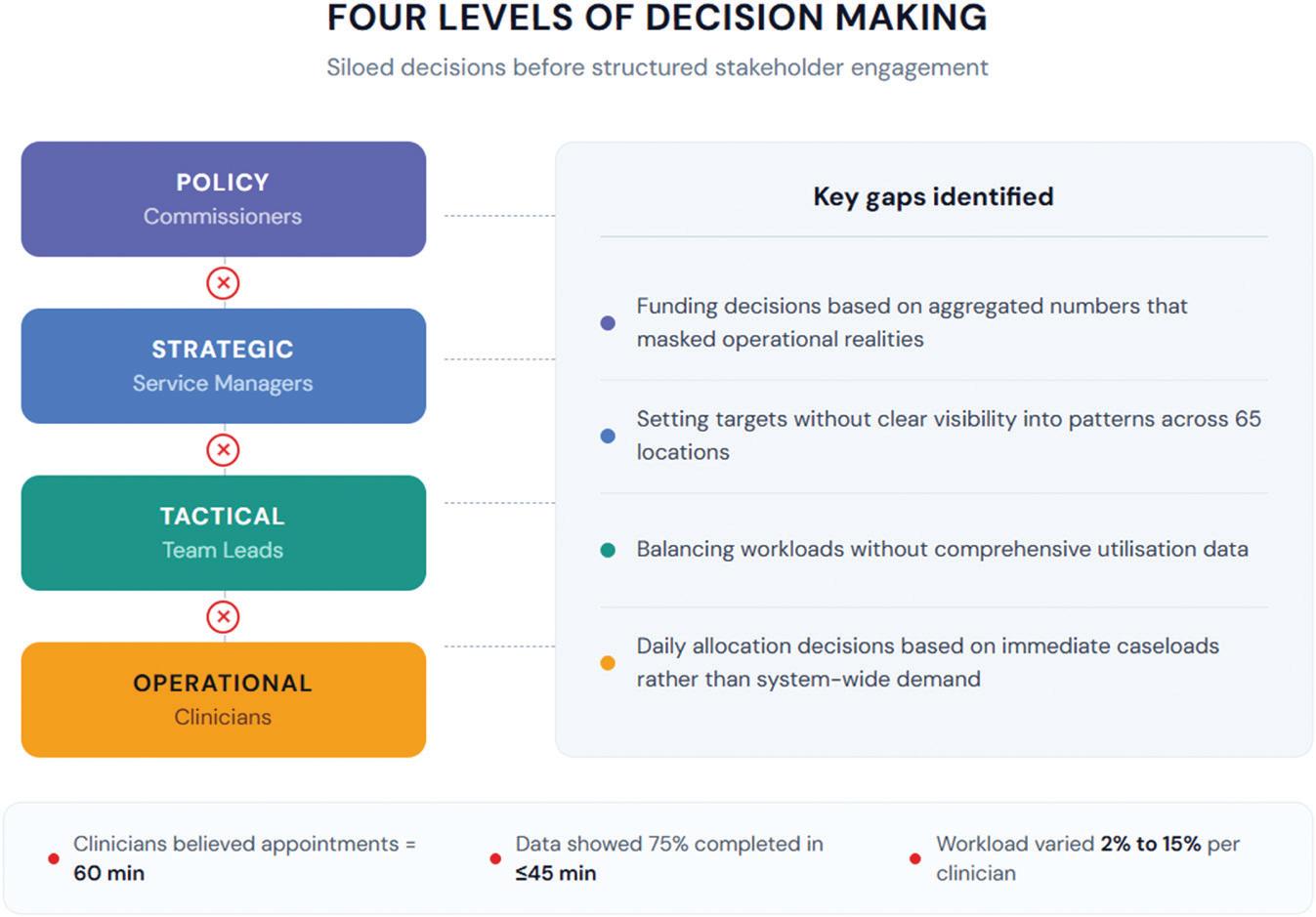
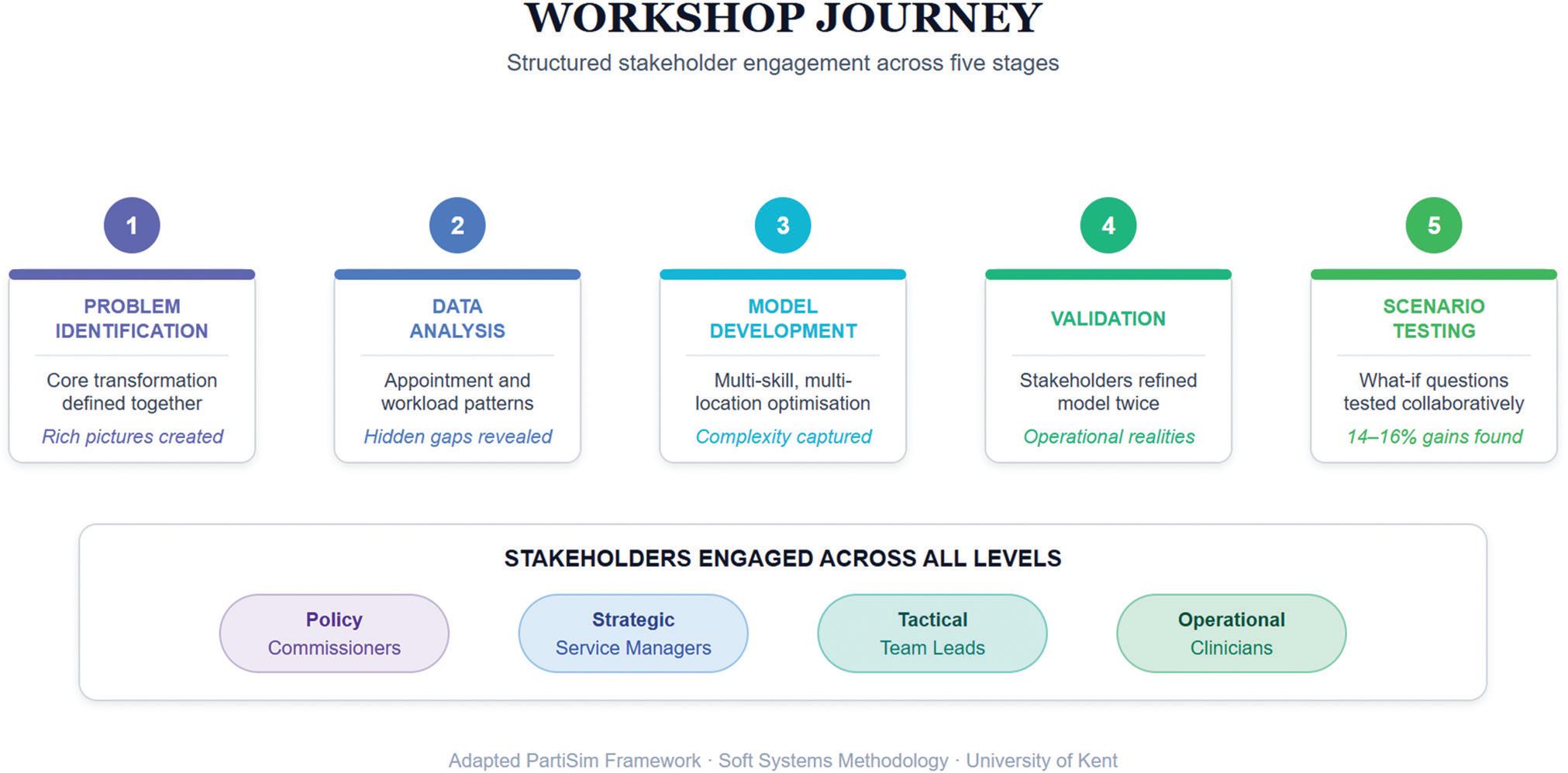
50 UNLOCKING HIDDEN CAPACITY
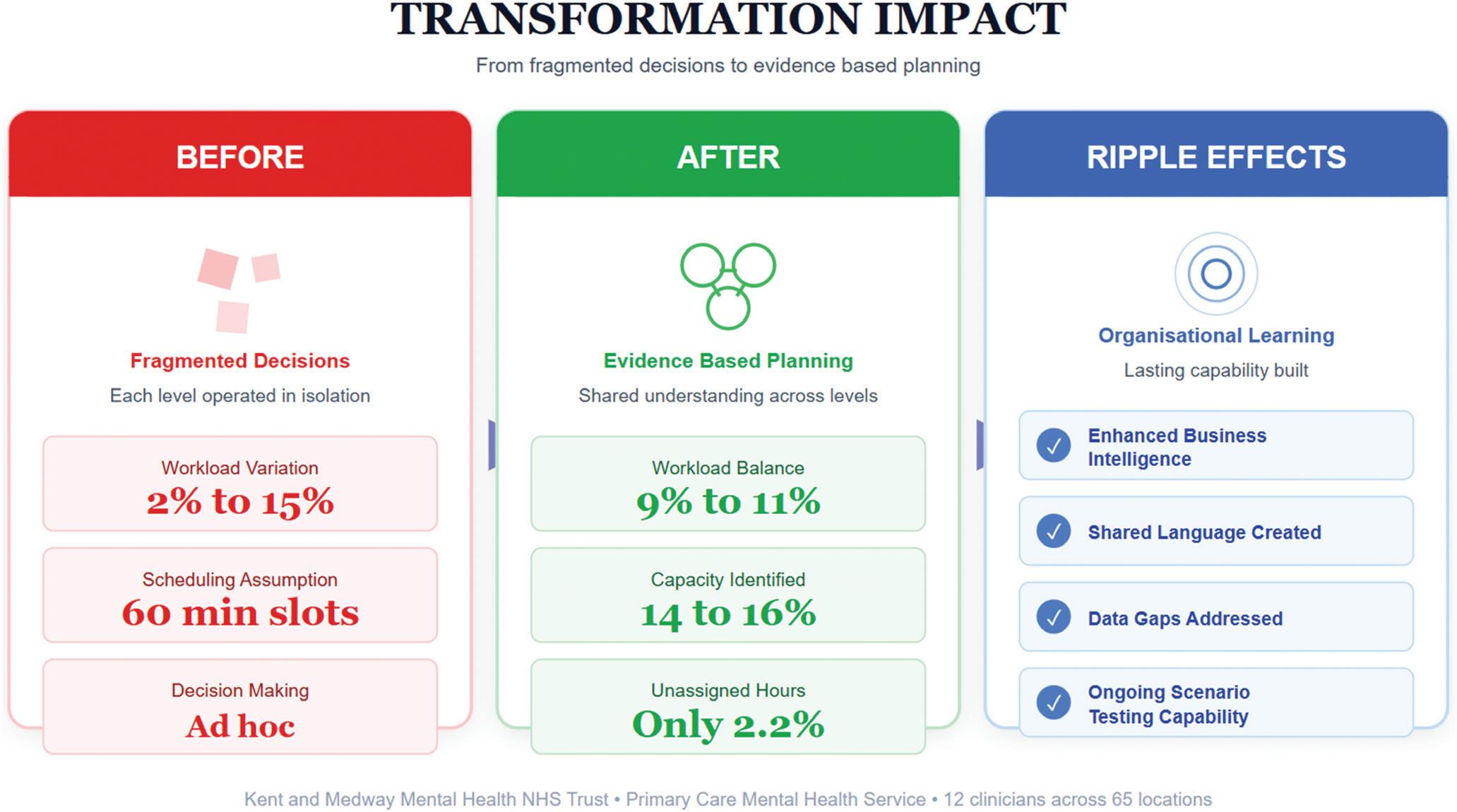
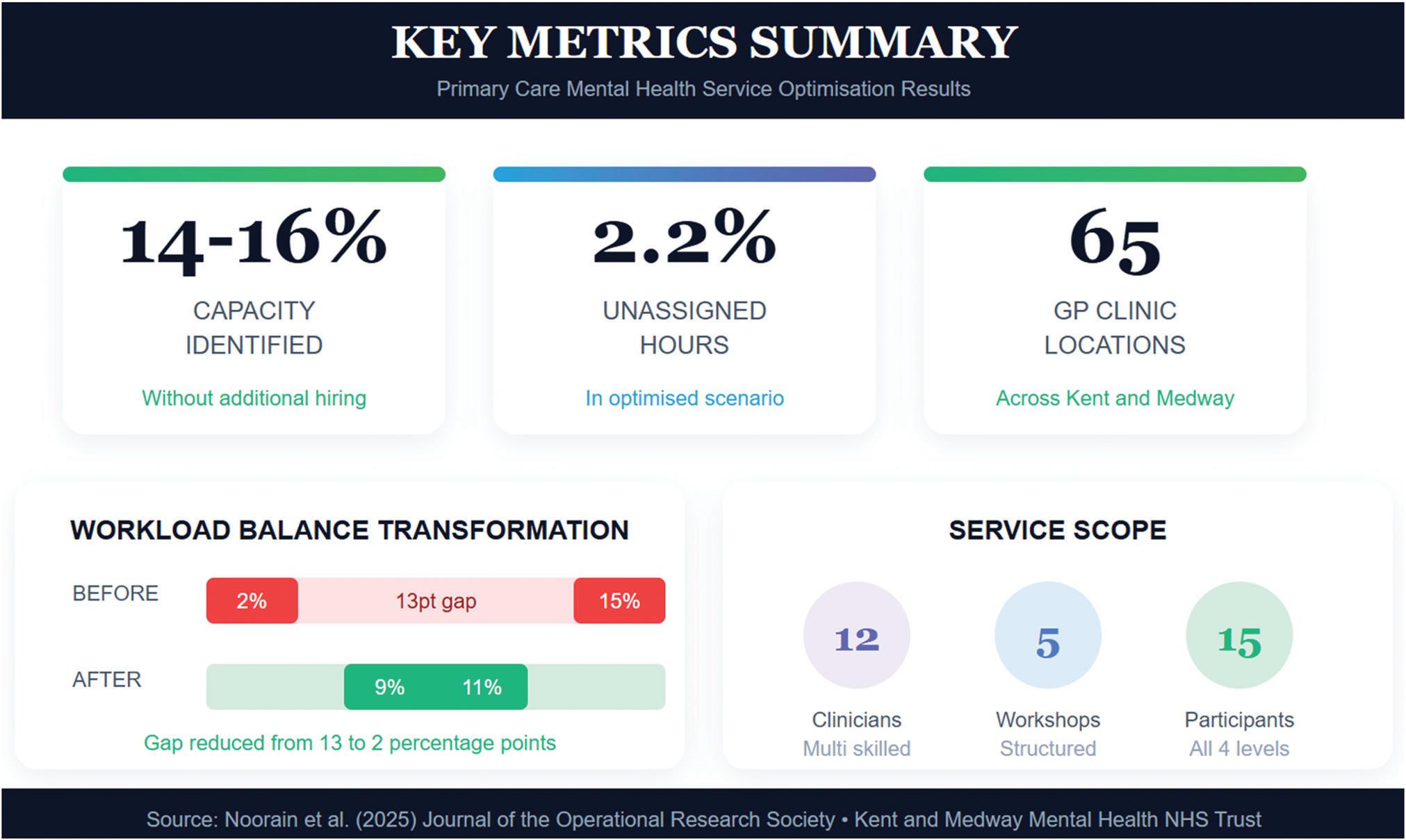
Sheema Noorain, Maria Paola Scaparra, Kathy Kotiadis and Emily Musara tell us about how a participatory, workshopbased OR approach has recently helped to improve mental health service planning in the South East of England.
SEEN ELSEWHERE
THE CARROT AND, OF COURSE, THE STICK
Jacco Thijssen wrote in the Autumn 25 issue of Impact about ‘Value for Taxpayer’s Money in Public Infrastructure’ (https:// bit.ly/Thijssen25). A recent article in JORS covered the related topic of how best to let and manage significant contracts that are intended to implement such infrastructure projects. This is ‘Ex ante incentives versus ex post penalties in partner selection under commitment uncertainty: a strategic perspective’ by Anirban Chatterjee, Subhadip Mukherjee, Prasenjit Mandal and Sunil Tiwari (https://bit.ly/JORS_ex-ante_expost).
In outline, the authors take a strategic look at alternative ways of approaching the implementation of capital-intensive projects by formulating and assessing mathematical treatments using a game-theoretic model. Their models pay particular attention to the criteria for partner selection as having the right delivery partner is critical to the success of capital-intensive projects. Equally, the models address the pros and cons of penalty-based mechanisms when contrasted with more incentivebased approaches. The former, which are often currently adopted, tend to be used in a reactive way to penalise – or preemptively deter – partners who may renege on their pledged
contributions due, for example, to external factors such as market volatility. Typically, such penalties can take the form of liquidated damages, legal recourse, or blacklisting. However, the successful implementation of any penalties can be problematic, for example, due to the impact of any delays (either on cost or political grounds) or where enforcement is challenging. On the other hand, the incentives offered in the latter typically offer incentives that reward high-commitment and successful delivery. One of the key related concepts explored is that of commitment uncertainty as a way of capturing how likely – and under what circumstances – the delivery organisation is to ‘stay the course’.
In analysing their models, the authors characterise conditions under which incentivising high-commitment partners yields higher expected payoffs for the contracting organisation than reactive penalties. They establish that when the pool of high-commitment candidates is limited, a penalty-based mechanism becomes infeasible beyond a critical default probability, while incentive-based mechanisms remain profitable. The analysis also reveals that the advantage of an incentivebased approach diminishes as the availability of high-commitment partners increases, in particular once it exceeds a certain threshold. Partner ‘reliability’ is therefore assessed by the authors to be at least as important as the technical capability of the delivery organisation.
In summary, the results and analysis highlight the strategic value of proactive partner selection and provide analytically-based guidance for designing selection mechanisms in particular in
higher-risk, capital-intensive environments. Overall, the paper offers some useful food for thought when thinking about the delivery of major infrastructure projects, such as those envisaged by Thijssen!
BEYOND THE HYPE: DEFINING A NEW MODEL FOR ENTERPRISE AI
The Aston-Capgemini Centre of Excellence for Enterprise AI (https:// bit.ly/Aston-Capgemini-Centre) is a pioneering ‘socio-technical’ model designed to solve the critical organisational barriers to artificial intelligence adoption. While many academic institutions focus on the technical development of AI models, this industry-led partnership addresses the ‘last mile’ challenges that prevent businesses from realising tangible value. Key such challenges are, for example, in areas like governance, ethics, trust, and strategy, which all significantly impact the ability to roll out AI solutions effectively and at pace.
The Centre is led by a joint executive team, including Academic Director, Professor Alexeis Garcia Perez and Industry Co-Chairs, Gareth Wilson and Sudhir Pai, Executive Vice Presidents at Capgemini, thereby fostering alignment between academic rigour and industrial reality. The Centre has three high-level objectives:
1. Build a collaborative AI ecosystem – a dynamic ecosystem, rooted in Birmingham whilst having a global reach, bringing together businesses, researchers and policymakers to co-create and deploy responsible AI solutions that benefit both enterprise and society.
2. Develop future-ready AI talent – by equipping individuals and organisations with the essential AI skills and knowledge needed to thrive in an AI-driven world; achieved by providing advanced training, executive education and targeted upskilling programmes.
3. Accelerate enterprise AI impact – driving actual adoption and scaling of AI solutions within enterprises to deliver demonstrable, measurable business outcomes.
The Centre currently works primarily with Banking and FinTech, Insurance, Healthcare and Manufacturing organisations, although its work is much more widely applicable (read further about the ‘balanced approach’ advocated by the Centre here: https://bit.ly/AI_ disruption-to-democratisation).
In future issues of Impact, we’re hoping to feature some of the specific case studies from this Centre as well as other AI-related initiatives in place that could revolutionise the way that OR works with this ‘new kid on the block’. If you are involved in such an initiative, we’d love to hear from you! Just let our editorial team know (ImpactMagEditorial@theorsociety. com).
AI GOVERNANCE CAN’T BE AN AFTERTHOUGHT
KPMG recently laid out (https://bit. ly/42yzofo) their recommended approach to harnessing the benefits of AI in a more effective fashion, arguing that AI governance and control is often significantly lagging adoption. They assert that effective governance, risk management and validation must be at the heart of the evolution of traditional governance approaches so as to meet new AI challenges and risks. KPMG particularly cite the challenges of issues such as bias, lack of explainability and model hallucinations, which traditional risk frameworks do not consider.
The paper argues that AI governance should balance innovation with oversight by using a proportionate and risk-based approach, as not every AI deployment carries the same risk. This echoes the risk-based approach to validation and assurance recommended in the UK Government’s Aqua book (https://bit.ly/The_AQuA_Book), as covered in the Autumn 25 issue of Impact.
The KPMG article presents a practical framework for validating AI models in decision making, particularly where customer and regulatory impacts are likely to be significant. It does this by exploring the AI-led journey of a UK banking use case. Within an overall framework, this identifies some of the specific challenges – and potential mitigations – likely to be encountered. For example, in the area of bias and fairness auditing, the paper demonstrates how AI models can unintentionally learn and amplify historical inequalities in their training data, resulting in unfair treatment of specific demographics, postcodes or income groups. Unlike more traditional methods, AI may in fact be detecting hidden correlations such as income or location that act as proxies for protected characteristics,
complicating fairness detection and correction. So, for example, models trained on income thresholds may inadvertently deprioritise applicants from certain postcodes where socioeconomic disadvantage is concentrated, even without explicit intent. This is not because of the postcode itself, but the structural inequalities it reflects, such as limited access to quality education, employment and housing. Potential mitigations for such inadvertent biases are also discussed, including via the use of challenger models or simulation environments, or by enhanced transparency of the AI solutions so as to more readily identify where intervention is needed.
Importantly, the article also addresses the need for ongoing AI model maintenance. AI models are not static ‘fire-and-forget’ assets. Even initially high-performing AI models will degrade or drift over time, for example in the banking use case as borrower behaviour evolves, macroeconomic conditions shift, and data pipelines change. Suitable mitigations include ongoing checks, human-in-the-loop oversight and embedded drift controls to ensure the models remain trustworthy post deployment.
We’re hoping to feature more specific OR case studies and success stories related to the adoption of AI-led or AI-supported approaches in future issues of Impact. If you run, work with or are aware of examples that would be of interest to our readers just let the editorial team know (ImpactMagEditorial@theorsociety.com)!
QUANTIFYING ‘GUT FEEL’ A DECISION‑SCIENCE APPROACH TO ASSESSING UK SPACE CAPABILITIES
THOMAS HUDSON AND JOANNA HART
INTRODUCTION
How do you turn ‘gut feel’ into evidence to support decisions in a sector as complex as space? Decisions in this domain carry enormous weight. They influence national security, technological innovation, and economic growth. For the UK, space is far more than satellites: it underpins services that, in 2022/23, supported industrial activity worth 18% of UK GDP (£454 billion) [1]. Yet, because
boundaries blur across industries and technologies, space policy often involves navigating uncertainty where expert views play a critical role. This is where collaboration becomes critical, specifically bringing diverse perspectives together to shape evidence-based decisions. To help realise the ambitions of the National Space Strategy [2], the Space Partnership was established in 2023, bringing together industry, academia,
and government around shared priorities to accelerate progress.
When decisions rely solely on expert instinct, they can be hard to justify or compare.
BACKGROUND: THE CHALLENGE
The Department for Science, Innovation and Technology (DSIT) oversees space policy. Policymaking in space faces distinct challenges: unclear sector boundaries, outdated industry classifications, and limited data for strategic planning (especially in emerging markets). When decisions rely solely on expert instinct, they can be hard to justify or compare. Other innovation-intensive sectors – such as quantum and artificial intelligence, also overseen by DSIT – face similar challenges.
To understand the UK space sector’s collective view for the outlook for different space capabilities, in 2023 the
Space Partnership brought together representatives from across industry, academia and the public sector. In total, 235 representatives from 110 organisations produced 22 capability roadmaps.
These co-designed roadmaps provide a useful input to inform developing government policy on capabilities. For example, they were one of the many inputs to the 2024 Space Industrial Plan [3], building on the National Space Strategy (published in 2021).
Each Space Partnership roadmap is short (2 pages), so they are necessarily top level. As a result, it is not possible to directly quantify benefits and feasibility of each one. However, the UK space sector holds deep expertise that can provide informed views on each of these measures. To turn this ‘gut feel’ into something that can be tested, shared, and examined alongside more robust evidence, the Space
Partnership opted to use a Decision Conference process.
WHY DECISION CONFERENCING (MCDA)?
When faced with complex choices and limited data, traditional decisionmaking can lean heavily on instinct. In the UK space sector, that instinct reflects deep expertise, which is often hard to capture, share, or test. Decision Conferencing, which consists of facilitated workshops underpinned by Multi-Criteria Decision Analysis (MCDA), offers a structured way to do just that. By scoring options against agreed criteria, participants’ intuitive judgements become structured, comparable evidence. MCDA is a trusted government method for tackling complex choices when evidence is scarce and opinions differ.
The HM Treasury Green Book [4] outlines how government can use
structured, transparent methods – such as MCDA – to compare options and make evidence-informed judgements. While this project was not an investment appraisal, the Green Book provides useful principles for handling uncertainty and systematically assessing expert views.
this approach offered a systematic way to examine each capability roadmap
The benefits of this method include capturing multiple viewpoints without forcing consensus. It also provides a practical, repeatable way to frame conversations around complex choices in an inclusive, rigorous setting. Rather than making final decisions, the aim is to develop a shared understanding and common sense of purpose [5]. By scoring options against agreed benefit and deliverability criteria, participants can visualise trade-offs and explore assumptions openly. This transforms ‘gut feel’ into a transparent evidence base, helping stakeholders see where views align and where they differ.
For the Space Partnership, this approach offered a systematic way to
examine each capability roadmap, ensuring dialogue was grounded in shared understanding and supported by structured analysis.
METHOD: RUNNING THE DECISION CONFERENCES
To explore future capability plans in a structured way, the Space Partnership commissioned Space4Sight to design and facilitate two Decision Conferences. These were held inperson at the Harwell Science and Innovation Campus, bringing together 52 participants from across the space sector. Individual expert judgements were captured anonymously, with all participants weighted equally.
On the day, the process began with a briefing on the workshop aims, evaluation criteria, and scoring system. Each capability roadmap was introduced prior to scoring, to ensure a shared understanding. Participants used an online tool to assess 22 roadmaps against 13 agreed criteria, grouped into two categories (see Table 1).
Scoring followed a simple 0 to 100 scale, broken into bands of 10 where 1 to
10 meant ‘Virtually not’ and 91 to 100 indicated ‘greatest extent’. Descriptors for each band, such as ‘moderate extent’ (61 to 70) and ‘small extent’ (31 to 40), helped participants calibrate responses without complex calculations.
Voting speed improved significantly through the conferences, from around nine minutes per roadmap at the start to under two minutes by the end, reflecting growing familiarity with the process. In total, the conferences generated over 14,000 data points (52 participants, 22 roadmaps, 13 criteria). These were aggregated to visualise trade-offs between benefits and deliverability, providing a transparent evidence base for discussion.
RESULTS: INTERPRETING THE ‘GUT FEEL’
When the 14,000 data points were aggregated, clear patterns emerged. These revealed areas of consensus, uncertainty, and trade-offs between ambition and deliverability. This approach made complex judgements accessible, enabling stakeholders to see where confidence was high and where further analysis is needed.
TABLE 1 BENEFIT AND DELIVERABILITY CRITERIA, SCORED ON A 0 TO 100 SCALE – SPACE PARTNERSHIP DECISION CONFERENCES
Benefit criteria: to what extent will investment in this roadmap…
1. …enhance UK national security through greater space capabilities
2. …mitigate UK national risks through greater space capabilities
3. …deliver wider societal benefits to UK citizens
4. …enhance UK’s geo political influence beyond the space sector
5. …increase the number of UK technological developments up to & including proofs of concept
6. …enhance UK space academic and scientific reputation worldwide
7. …enhance industry engagement with academia
8. …increase net investment attracted into the UK space sector
9. …increase jobs in the space and supporting sectors in the UK
10. …increase the overall space sector contribution to UK GDP
Deliverability criteria: to what extent will investment in this Roadmap…
A. …draw on existing technology and infrastructure
B. …not require undue political support
C. …be deliverable within existing resources
these outputs provided a transparent foundation to improve discussion
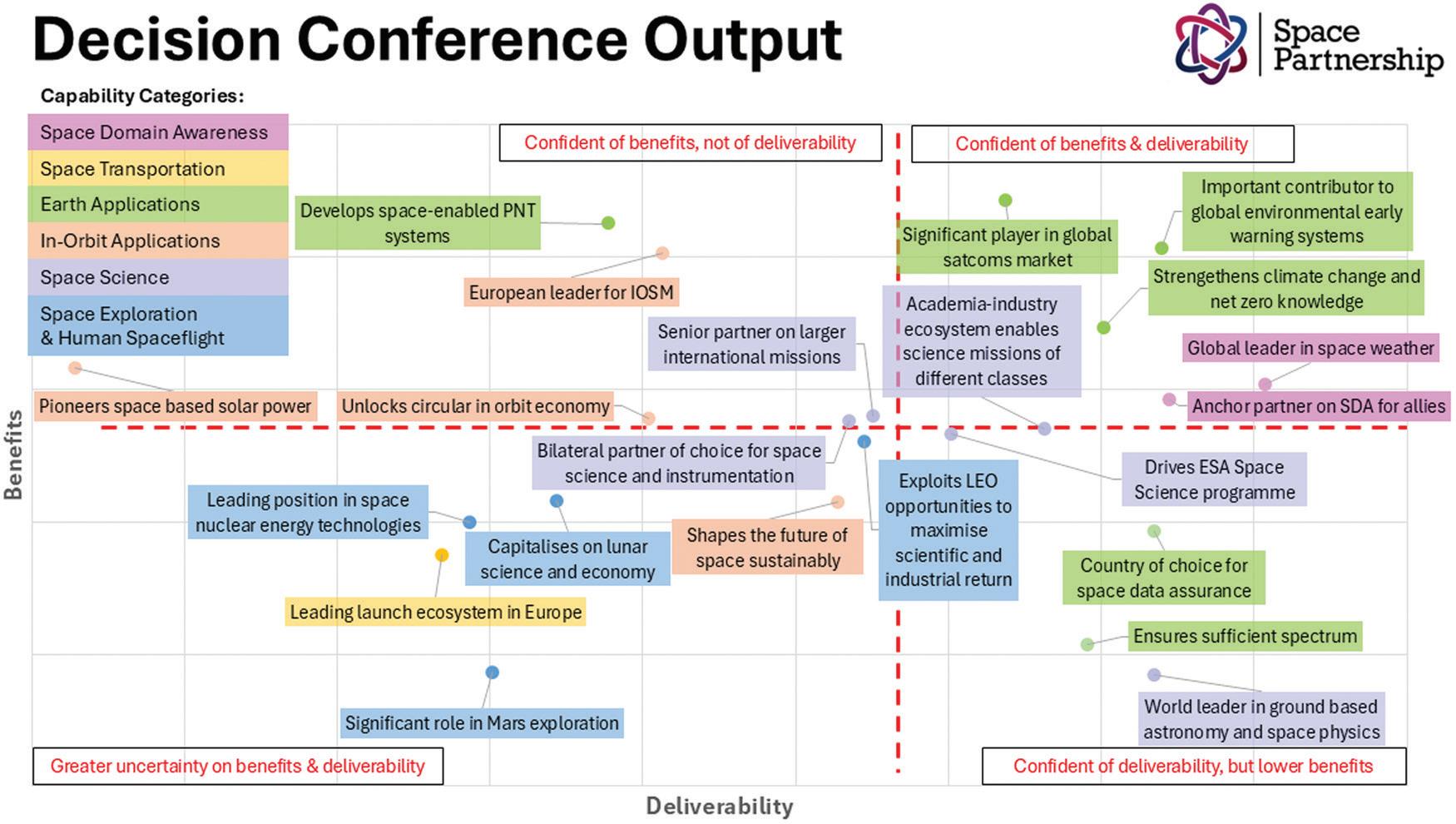
Some high-level insights that can be drawn from Figure 1:
• Top right quadrant: Highlights the areas that the UK space sector is confident in the potential benefits and ability to deliver. These are generally areas where the UK is already actively delivering capability.
• Bottom left quadrant: Highlights areas of greater uncertainty, although potentially still contains some higher reward areas. This is not necessarily a consensus view; it was often because they are the areas where there is the greatest difference of opinion.
• Space Science: Clustered in the middle, reflecting indirect benefits and challenges in university funding despite strong research capability.
• Space Exploration: Recognised for intangible benefits (e.g., inspiring the nation). Direct benefits were higher for low Earth orbit exploration due to links with In-Orbit Servicing, Assembly and Manufacturing (ISAM,
previously IOSM), a technology area focused on repairing, upgrading, or building assets in-orbit.
The process exposed underlying assumptions and clarified areas of agreement and contention. Rather than prescribing decisions, these outputs provided a transparent foundation to improve discussion, helping participants explore trade-offs and identify where further analysis or investment might be needed.
DISCUSSION: LIMITATIONS AND LESSONS
The Decision Conferences turned informed opinion into structured data and provided a shared evidence base that helped participants see where views aligned and where they diverged. This transparency supported more informed conversations and strengthened collaboration through the Space Partnership. Several lessons were identified:
• Criteria clarity matters: Earlier approval and clearer definitions would have improved confidence.
• Representation needs careful balancing: Participation was varied but not proportionally representative; weighting could help reduce bias.
• Sequence randomisation reduces bias: Adjusting the order of criteria in the second conference helped avoid pattern effects.
• Participants valued the process: 87% wanted to take part again, and 79% expressed confidence their vote would be listened to and mattered.
The approach aligns with key Green Book principles for handling uncertainty and structuring judgements, although it is not a full MCDA implementation because swing weighting was not included. Swing weighting assesses how much each criterion matters by comparing its full range of impact. As such, while the method supports evidence-based discussion, further refinement would be needed for full alignment with government standards.
This case study demonstrates the broader value of Decision Conferencing to analysing expert judgement
FIGURE 1. CHART
There were several limitations of the approach:
• Captures opinions: Results depend heavily on the choice of criteria and the diversity of participants.
• Polarised views: Average scores can mask wide variations, revealing ‘marmite’ issues (topics that polarise views).
• Policy alignment: Capability roadmaps are an input into government policy but have diverged since their formation. Although, the upcoming Space Publication may be an opportunity to realign insights with official priorities.
The outputs should therefore be seen as a starting point for discussion rather than a substitute for detailed analysis. This first application of Decision Conferencing in the UK Space sector was informative. With further improvements (refined criteria, including swing weighting, and integrating cost data), it would be more useful. For now, it helps to provide a basis for discussion.
CONCLUSION: IMPACT AND NEXT STEPS
This case study demonstrates the broader value of Decision Conferencing to analysing expert judgement. By transforming intuition into structured inputs, this Operational Research technique provides a clear foundation for dialogue in areas where evidence is
incomplete and choices are complex, helping decision-makers navigate uncertainty with greater confidence. The insights generated through the Space Partnership exercise are not intended to replace formal policy decisions. Rather, they provide a transparent reference point to inform decisions and enrich wider discussions on the UK space sector.
Looking ahead, the potential for these techniques extends well beyond space. Structured approaches to capturing and visualising expert opinion could support decision-making in other domains facing uncertainty and competing objectives, from emerging technologies to public service innovation. For DSIT and the Space Partnership, this work provides a
References
springboard for deeper collaboration and more refined analysis. It reinforces that rigorous, inclusive methods can turn ‘gut feel’ into evidence, helping decision-makers navigate complexity with greater confidence.
Dr Joanna Hart is the Director of the Space Partnership, which brings together industry, academia and government to deliver on the UK’s space ambition. Joanna is a particle physicist turned investment banker, with over 12 years working across the UK space sector.
Thomas Hudson is a Lead Analyst at UK Space Agency, applying Operational Research to support UK space policy with clear evidence and actionable analysis. He is currently completing an MSc in Systems Thinking at the University of Exeter.
[1] UK Space Agency. (2025). Size and Health of the UK Space Industry 2024. Available at: https://www.gov.uk/government/publications/ size-and-health-of-the-uk-space-industry-2024/size-and-health-ofthe-uk-space-industry-2024
[2] HM Government. (2021). National Space Strategy. Available at: https://www.gov.uk/government/publications/national-spacestrategy
[3] Department for Science, Innovation and Technology. (2024). Space Industrial Plan. Available at: https://www.gov.uk/government/publi cations/space-industrial-plan
[4] HM Treasury. (2022). The Green Book: Central Government Guidance on Appraisal and Evaluation. London: HM Treasury. Available at: https://www.gov.uk/government/publications/the-green-bookappraisal-and-evaluation-in-central-government
[5] Phillips, L.D. (2007). Decision Conferencing. In Advances in Decision Analysis. Cambridge University Press. 375–399. https://doi.org/10.1017/ CBO9780511611308.020.
EFFECTIVE INTEGRATION OF OR AND MACHINE LEARNING AT A HOSPITAL BLOOD BANK
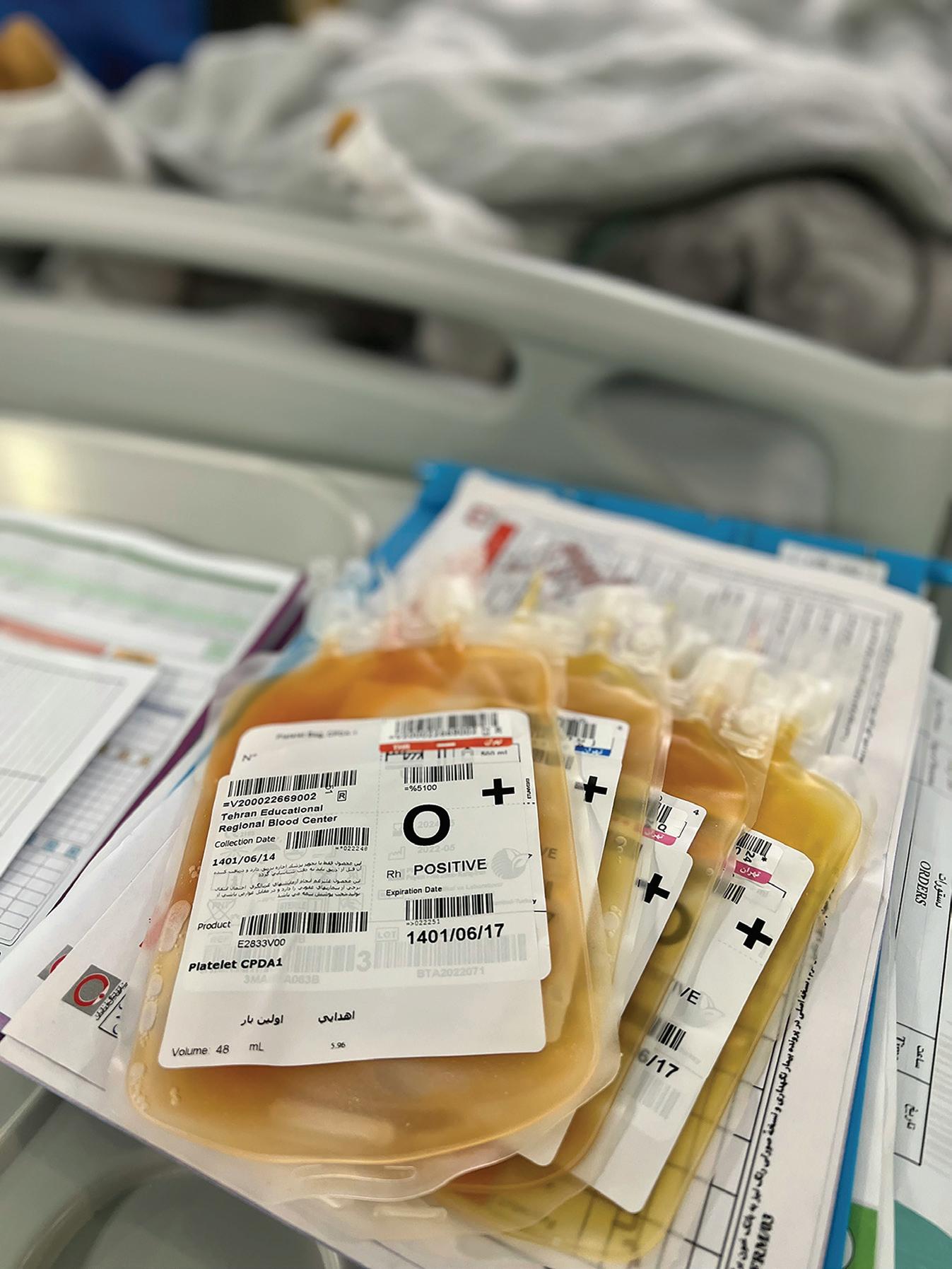
Hospital blood banks order, test, store, and issue blood components – red blood cells, plasma, and platelets – for patients who need a transfusion. They are key to ensuring the safe and timely availability of blood products to support treatments including emergency care, surgery, and chemotherapy. Due to the perishable nature of blood products, they must keep sufficient stocks to serve patients while minimising wastage. In many ways, this decision-making problem is one of perishable inventory control, a ‘classic’ in OR! Our interest in this area
started with discussions with staff at the blood bank at University College London Hospitals NHS Foundation Trust, who were keen to understand whether data and computational methods could be used to reduce platelet wastage. Platelets are a blood component required for clotting, transfused to patients to stop or prevent bleeding. Each day, hospital blood bank staff face a balancing act when deciding how many platelet units to order. They need to prevent shortages that could put patients at risk while minimising wastage.
JOSEPH FARRINGTON
Their ordering decision is challenging due to the short shelf life of platelet units, five days at most when they arrive at the hospital, the variations in the age of the units on arrival, and the potential for substitution depending on the blood types of the donor and the patient. These difficulties contribute to the high wastage rates of 10-20% that are commonly reported in the literature [1]. Working to reduce this wastage is not just about saving money, but also about acting as a good steward of altruistically donated blood and preventing future donors from being discouraged.
Blood bank staff often rely on expert judgement or simple inventory heuristics, such as placing the same order every day or ordering up to a target stock level. These approaches, which don’t take the age-profile of the stock into account, are unlikely to be optimal given the short shelf life of platelets and variable demand.
We modelled their replenishment problems as a Markov decision process (MDP). MDPs are used to represent sequential decision-making problems where the decision taken now (e.g. the number of platelets ordered this morning) can affect both future
observations and the best actions to take in the future. For example, the platelet units ordered this morning may be in stock for several days depending on demand and their expiration dates. Each morning, the hospital blood bank staff observe their inventory, including the remaining shelf life of each unit, and decide how many units to order.
To solve the problem we need to find a policy, a rule for how many units to order given the current stock, that minimises the long-term operating costs of ordering, storage, shortages and wastage.
Framing the problem this way enables us, in principle, to find the exact solution using dynamic programming methods such as value iteration. In practice, we face the famous ‘curse of dimensionality.’ These exact methods require repeated operations on every possible state of the system: every distinct combination of inventory levels and remaining shelf lives. The number of possible states, and so the computational effort required, grows exponentially with the maximum shelf life and the number of products considered. This has led to a common belief that exact dynamic programming approaches become infeasible even for shelf lives of three
periods [2,3]. Incorporating features important for blood products, such as substitution between multiple products, further increases the state space and computational challenge.
Given the perceived infeasibility of exact methods for supporting platelet ordering decisions we turned to a type of approximate dynamic programming, deep reinforcement learning (Deep RL), as an alternative. Instead of repeatedly calculating an updated value for every possible state, Deep RL methods learn policies through trial-and-error interactions with a simulator. By using deep neural networks to learn patterns between states, Deep RL methods can generalise from their experience to situations they have never encountered and perform well on problems with millions or billions of states.
Using Deep RL, we found policies that achieved low wastage rates and high service levels in a simulation of the hospital blood bank’s workflow. While this was encouraging, it was difficult to know whether this performance was close to optimal, and whether this gap might change with the size and complexity of the problem. To answer these questions, we decided to investigate whether the common belief about the limits of exact methods remained true.
Expanding the range of problems for which the optimal policy could be computed would be useful not only to solve the problem at hand, but also to support benchmarking to understand how approximate methods behave as scenarios become larger and more complex.
This led us to consider developments in a neighbouring field: Machine Learning (ML). One of the main drivers of the impressive recent advances in ML has been the use of graphics processing units (GPUs). Compared to traditional CPUs, GPUs are built for parallel processing with
thousands of cores designed to apply the same operation to different inputs at the same time. This is well suited to value iteration for our perishable inventory problem: in each iteration we need to perform the same operation independently for every single state. Running these updates in parallel doesn’t change the algorithm but cuts the time needed to find a solution, in turn making it practical to solve much larger problems.
Despite this natural fit, very few operational research studies have used GPUs for exact dynamic programming. This may be a legacy from the recent
past, when getting good performance from GPUs on new tasks required specialist low-level programming skills and knowledge of the hardware. Software developed within the machine learning community now provides interfaces that hide much of this complexity. We used JAX [4], a Python library developed for the ML community which allows algorithms to be written in relatively high-level code and automatically converted into lower-level code that runs efficiently on one or more GPUs. This made it possible for us to scale exact dynamic programming methods to much larger
problems without deep expertise in GPU programming.
Using JAX to implement value iteration on GPUs, we were able to compute exact solutions for our own local platelet inventory problem, and for several perishable inventory problems that other research teams had recently described as computationally infeasible or impractical [5]. This included scenarios with substitution between two products, and a realistic platelet inventory model from a Canadian hospital with a maximum shelf life of five days [3,6,7].
The practical benefits of this for other researchers and practitioners can be illustrated with a direct comparison to a conventional approach. One scenario from a recent paper, with approximately 16.8 million possible states and substitution between two products, was reported to be unsolvable within a week using a MATLAB implementation running on a CPU [6]. We solved the same problem in under 3.5 hours by taking advantage of GPUs with JAX. Perhaps most importantly, this speedup didn’t depend on very expensive software or hardware. JAX is open source software, and we used a consumergrade GPU costing around £400 to run our experiments. Similar performance could be achieved without purchasing any hardware using free cloud services such as Google Colaboratory.
While we concentrated on perishable inventory, MDPs can be used to represent many problems of interest to operational researchers, including patient–bed assignment, workforce scheduling, and vehicle dispatching. To make it easier for others to get started with these techniques, we converted our research code into an open-source Python library, MDPax [8]. The library includes JAX-based implementations of exact dynamic programming
methods for solving MDPs, along with guidance to help users implement the custom logic to describe their own problems.
The potential OR use cases of accessible software for working with GPUs extend well beyond dynamic programming. In our own work, we also used JAX to accelerate simulation optimisation, enabling a larger number of simulation runs and a wider exploration of model parameters [5]. Towards the end of 2025, GPU designer and manufacturer NVIDIA released cuOpt [9], an open-source library for GPU-accelerated linear and mixedinteger linear programming. This was a longstanding challenge, and demonstrates investment from a major company in both getting core OR methods to run more efficiently on modern hardware and making the results accessible to the wider community.
Our results suggest that the received wisdom regarding the limits of exact solutions, in perishable inventory and potentially well beyond, should be updated. Advances in both hardware and software mean that problems previously considered infeasible or
impractical to solve exactly can be solved without rare expertise and large budgets. By adopting these
For Further Reading
developments and making them part of our toolkit, the OR community can push back long-standing computational limitations to support decision makers facing complex, large-scale challenges.
This work was supported by UKRI Training Grant No. EP/S021612/1, the Centre for Doctoral Training in AI‐enabled Healthcare Systems, and the NIHR University College London Hospitals Biomedical Research Centre.
Joseph Farrington earned his PhD from University College London in 2025, focusing on optimising replenishment and issuing policies in a hospital blood bank.
Earlier in his career, Joseph qualified as a chartered accountant after completing a BA in Natural Sciences at the University of Cambridge.
[1] Flint, A.W., Z.K. McQuilten, G. Irwin, K. Rushford, H.E. Haysom and E.M. Wood. (2020). Is platelet expiring out of date? A systematic review. Transfusion Medicine Reviews 34: 42–50. doi: 10.1016/j.tmrv.2019.08.006.
[2] Nahmias, S. (1982). Perishable inventory theory: a review. Operations Research 30: 680–708. doi: 10.1287/opre.30.4.680.
[3] De Moor, B.J., J. Gijsbrechts and R.N. Boute. (2022). Reward shaping to improve the performance of deep reinforcement learning in perishable inventory management. European Journal of Operational Research 301: 535–545. doi: 10.1016/j.ejor.2021.10.045.
[4] Bradbury, J., et al. (2018). JAX: composable transformations of Python + NumPy programs http://github.com/google/jax
[5] Farrington, J., W. K. Wong, K. Li and M. Utley. (2025). Going faster to see further: graphics processing unit-accelerated value iteration and simulation for perishable inventory control using JAX. Annals of Operations Research 349: 1609–1638. doi: 10.1007/s10479-025-06551-6.
[6] Hendrix, E.M., C. Kortenhorst and G. Ortega. (2019). On computational procedures for Value Iteration in inventory control. IFAC-PapersOnLine 52: 1484–1489. doi: 10.1016/j.ifacol.2019.11.409.
[7] Abouee-Mehrizi, H., M. Mirjalili and V. Sarhangian. (2025). Platelet inventory management with approximate dynamic programming. INFORMS Journal on Computing. doi: 10.1287/ijoc.2023.0245.
[8] Farrington, J., W.K. Wong, K. Li and M. Utley. (2025). MDPax: GPUaccelerated MDP solvers in Python with JAX. Journal of Open Source Software 10: 8897. doi: 10.21105/joss.08897.
COMPLEX PROBLEMS, BETTER DECISIONS: WHERE AI AND OR MEET
Insights from the recent sandpit Optimal Decision-Making with AI, bringing OR and AI together to tackle complex real-world problems
CHRISTINE CURRIE, BURAK BUKE, GUEORGUI
MIHAYLOV, JACCO
THIJSSEN, COLLIN BLEAK, AND COLETTE FLETCHER
Artificial Intelligence (AI) has been significantly transforming the way organisations make use of big data and forecast the future. This reveals new opportunities for incorporating the powerful insights obtained by the high predictive capability of AI into effective strategic, tactical and operational decisions. Business, Industry and Government (BIG) organisations have always faced challenges involving complex systems, uncertainty and multiple competing
objectives. These are precisely the areas where OR has been developing impactful tools for many decades, and the availability of new AI tools and concepts provides researchers with new directions and opportunities to further strengthen them. At the recent sandpit event Optimal DecisionMaking with AI , practitioners and researchers came together to explore how OR and AI can join forces to address these complex real-world problems.
TURNING CHALLENGES INTO OPPORTUNITIES: THE SANDPIT PROCESS
This sandpit was supported through the Knowledge Exchange Hub for the Mathematical Sciences (the KE Hub) Sandpit Scheme, funded by the Engineering and Physical Sciences Research Council (EPSRC) as part of the AI and the Mathematical Sciences grant. The KE Hub sandpit scheme funds events designed to bring academics and BIG practitioners together to explore real-world challenges and identify opportunities for collaboration. Applications are accepted on a rolling basis, with the next deadline on 17 July 2026.
This sandpit focused on the challenges in decision-making faced
across BIG sectors with an emphasis on how newly emerging AI tools can help tackle these challenges. The organisers invited leading BIG organisations across the country to identify and propose key challenges they are currently facing and prominent OR researchers with the appropriate expertise from leading UK universities to participate in the event.
This sandpit focused on the challenges in decisionmaking faced across ‘BIG’ sectors with an emphasis on how newly emerging AI tools can help tackle these challenges.
The event started on the first day with participating organisations presenting concrete problems they have been facing and highlighting the key challenges and opportunities they are seeing where AI could be incorporated into decision-making processes. The second day followed with lightning talks by participating academics offering insights and novel perspectives on the recent advances at the intersection of OR and AI. Highlights of the sandpit were two small group discussions, with each group carefully balanced between practitioners and academics. In the first discussion, participants focused on
identifying common challenges in the presented practical problems. In the second discussion, they explored what novel tools and approaches are needed to address these challenges. The outcomes were presented in plenary sessions to highlight key takeaways and opportunities for collaboration. Representatives from the EPSRC, the KE Hub and the OR Society also participated by presenting the support available to make collaborations happen.
KEY TAKEAWAYS FOR PRACTICE
The presentations by BIG organisations highlighted a wide range of operational challenges with many sharing similar underlying properties. Participants emphasised that it is necessary to combine the high predictive power for newly emerging AI techniques with effective decisionmaking. AI models are particularly strong in forecasting, providing high-quality predictions that can inform decision-making. Beyond their forecasting capabilities, AI models can also be used as a tool to evaluate system behaviour, such as cancellations of court cases or airport traffic. For most challenges, predictive models seem likely to work better if integrated with more classical optimisation tools.
Another recurring theme was the need to extract reliable insights and responses from AI models and to be able to quantify their accuracy.
Participants emphasised the importance of ‘graceful refusal’, the ability of AI systems to recognise the limits of their capabilities and indicate related uncertainty rather than producing responses that could be misleading. An important example is where AI systems act as the first contact point for clients who are seeking help. For these systems, it is crucial for AI to recognise when it cannot suggest reasonable solutions and escalate the problem to a specialist. The participants stressed the importance of trust, explainability and human oversight when AI systems support decisions in sensitive domains such as healthcare, justice or public safety. Most of the problems discussed involved multiple competing objectives and trade-offs between efficiency, risk, fairness and operational constraints.
A clear message emerged from the discussions: many of the most challenging practical problems require combining the predictive power of AI and its ability to provide insights about complex systems with the powerful decision-making tools provided by OR. It is crucial to strengthen collaborations between practitioners and researchers to ensure advances in this field and to deploy efficient scalable solutions to complex problems.
DEVELOPING AI SKILLS ACROSS THE CAREER
PIPELINE: THE OR SOCIETY’S ROLE
Participants in the event were asked to consider the AI skills that would be needed in the future, and where in the education and career pipeline support to develop those skills should be provided. They were then asked which skills they felt the OR Society should
have a role in supporting, and which skills they would like to see the Society collaborating with others to develop.
Across all stages of the pipeline, participants thought the OR Society (ORS) should prioritise developing core competencies in critical thinking, articulating ideas independently of AI, and rigorously evaluating and qualityassuring AI outputs. As learners progress, participants felt that the ORS’s focus should increasingly shift toward applied skills such as problem structuring, optimisation, prompt engineering, and understanding where AI adds value versus where human judgement is essential. At more advanced stages, this extends to modelling, decision-making under uncertainty, and translating real-world problems into AI-enabled solutions, alongside a strong emphasis on ethical awareness, bias, and risk in AI deployment. In professional contexts, the ORS should particularly focus on bridging business needs with AI design, supporting effective use of AI as a “force multiplier”, and maintaining human oversight in increasingly automated systems.
[…] participants thought the ORS should prioritise developing core competencies in critical thinking, articulating ideas independently of AI, and rigorously evaluating and quality-assuring AI outputs
Participants were also keen to see the ORS collaborating with others, notably in the development of foundational mathematical skills such as linear algebra and in promoting lifelong learning ecosystems, ensuring that individuals can continuously adapt to the rapidly evolving AI landscape.
Christine Currie is Professor of OR at the University of Southampton. She was awarded the Companion of OR in 2024
and has previously chaired the OR Society’s Research Committee. Currently, she is the co-lead in charge of events for the KE Hub for the Mathematical Sciences.
Burak Buke is a Reader in the School of Mathematics at the University of Edinburgh. His research focuses on decision making under uncertainty. He serves as an Associate Editor for Queueing Systems and Mathematical Methods of Operations Research and is the co-director of EdCOR, the Edinburgh Centre for Operational Research.
Dr Gueorgui Mihaylov, Principal Data Scientist (Director) - Haleon, Visiting Research Fellow - King’s College London, Fellow of the Academy for the Mathematical Sciences, former member of the EPSRC Strategic Advisory Team for Mathematics, Super Champion and Chair of the Business Industry Government Forum – UK KE Hub for Mathematical Sciences.
Jacco Thijssen is Professor of Mathematical Finance at the University of York. His research interests include the theory of investment under uncertainty (“real options”) and its applications in OR. Jacco is a Board member of the Operational Research Society and Chair of its Education Committee.
Collin Bleak is Deputy Scientific Director of the KE Hub and Professor of Mathematics at the University of St Andrews, where he also serves as Director of Impact and Innovation. He works on strengthening links between mathematical research and external partners, has been involved in three startups and also consulted for Deutsche Bank.
Dr Colette Fletcher is the Executive Director of the OR Society. She was previously the Head of Governance at Advanced HE and Natural Resources Wales, Assistant Vice-Chancellor and Company Secretary at University of Winchester and Head of Policy at Bournemouth University.
2025 LYN THOMAS
IMPACT MEDAL: PROFESSOR BAHMAN ROSTAMI-TABAR
BAHMAN
ROSTAMI-TABAR
Hello Bahman,
First of all, congratulations on winning the Lyn Thomas Impact Medal 2025. Could you tell us a little about your journey into OR, and how your early life experiences shaped the way you think about ‘impact’?
I grew up Kurdish in a small village between Iraq and Iran during a period marked by war and instability. Uncertainty was part of everyday life, including education. In fact, in my final year of high school, as we were preparing for the national university entrance exam, we lost almost half of the academic year without teachers for key subjects such as mathematics, mechanics, and physics. Learning became something we largely did on our own, trying to fill gaps without guidance or support. My parents had never had the opportunity to go to school themselves, so there was no clear educational path laid out for me — education was something I had to actively pursue and protect. Those early experiences stayed with me. Long before I encountered uncertainty and constraints as technical concepts, I had lived them! Later, when I began my BSc in industrial engineering at Khajeh Nasir Toosi University of Technology in Tehran, I took my first course in OR. For the first time, I encountered a discipline that openly acknowledged constraints and asked how better decisions could be made despite limited
resources and imperfect information. That way of thinking resonated deeply with my background and followed me through my MSc, my PhD, and into my academic career. That background continues to shape how I think about impact. I believe OR matters most when it helps people make sense of uncertainty and make better decisions in settings where resources are limited and the consequences truly matter.
You describe your work broadly as ‘Forecasting for Social Good’, after the name of an initiative you launched. What motivated you to embark on this kind of engaged work?
What motivated me was a gap I kept encountering between forecasting in theory and decision-making in practice, especially in settings characterised by high uncertainty and limited resources. During field visits to health centres and global health supply chain organisations in countries such as Kenya, Ethiopia, Senegal, and Nigeria, I often saw planners relying on intuition or last-minute reactions. This was not due to a lack of commitment, but often to limited understanding of what forecasting is, how it connects to wider supply chain decisions, and how it can be used in environments with incomplete data and fragile systems. What struck me the most was that traditional forecasting approaches focused heavily on statistical accuracy,
whilst overlooking whether forecasts were usable, trusted, or even relevant to the decisions people faced on the ground. Since day one of the initiative, my aim has been to reposition forecasting as a practical decisionsupport tool that prioritises societal benefit. That means working with imperfect data, making uncertainty explicit, integrating local context knowledge, and investing in training — because even the best models have little impact if people cannot understand or apply them.
Long before I encountered uncertainty and constraints as technical concepts, I had lived them!
Your work focuses a lot on global health supply chains — from family planning to vaccines and essential medicines. What impact have you seen better ‘decision analytics’ have on real decision-making and people’s lives?
In many settings, the core challenge is not the absence of medicines but weaknesses in supply chain functioning and the inability to anticipate demand reliably — at the right time, in the right place, and at the required quality. When forecasting is weak, a familiar pattern emerges:
empty shelves in some locations and wasted stock in others, both of which undermine access to essential health products. By strengthening the forecasting process, we’ve helped organisations move from reactive firefighting to more proactive decision-making. In family planning and vaccine supply chains, better analytics supports more reliable stock allocation across regions and health system levels, reducing stockouts and improving coverage. In practical terms, this means fewer missed vaccinations, better continuity of reproductive health services, and more consistent access to essential
medicines. This work is closely linked to UN’s Sustainable Development Goal (SDG) 3.8: ‘to achieve universal health coverage’ and access to essential medicines and vaccines. Forecasting alone cannot deliver SDG 3.8, but without reliable forecasting it becomes extremely difficult to plan services, manage uncertainty, or use limited resources effectively. What has been most encouraging is seeing analytics used not as an abstract technical exercise, but as part of everyday decision-making — helping planners make transparent trade-offs and focus on access, equity, and resilience in systems where the stakes are very real.
Your work relies heavily on close collaboration with partners such as health ministries, non-governmental organisations (NGOs), local analysts and practitioners. In your opinion, what key characteristics should these kinds of partnerships possess to lead to meaningful and lasting impact?
From my experience, meaningful and lasting impact comes from partnerships built on trust, humility, and a genuine willingness to listen — and from a shared commitment to solving the challenges one’s partners face. In my applications of OR, most effective collaborations begin with the
Photo by EqualStock on
recognition that local partners, whether in ministries, NGOs, or frontline teams, understand their context, constraints, and realities far better than any external model ever could. When that knowledge is treated as secondary, impact is inevitably limited. Co-design is therefore critical. Solutions developed with partners, rather than delivered to them, are far more likely to be used, adapted, and sustained. This means aligning analytics with real decision needs, existing workflows, and the practical pressures people face every day. Simplicity also matters. Overly complex solutions may look impressive, but they rarely survive in practice. The simplest solution that works is usually the right one. In resource-constrained settings, approaches need to be transparent, adaptable, and robust to imperfect data.
Bahman … you are totally right on that! But … how do you decide what level of model complexity is the most appropriate to a specific, highuncertainty, low-resource application of forecasting?
Deciding on the right level of model complexity always starts with the decision, not the data or the method. I begin by asking a simple question: what decision is this model meant to support, and what information does the decision-maker
actually need? In high-uncertainty, low-resource settings, models have to earn their place by being useful, not by being sophisticated. Data quality, system maturity, and analytical capacity matter enormously. When data are incomplete or unreliable, adding complexity often makes models more fragile rather than more informative. In those situations, simpler approaches — sometimes combined with expert judgement — tend to be more robust, easier to explain, and more trusted by users. Sustainability is another key consideration. A model that depends on constant external support, advanced infrastructure, or highly specialised skills is unlikely to survive once a project ends. That’s why I prioritise approaches local teams can understand, adapt, and maintain themselves. Advanced methods certainly have their place, but complexity should always be justified by the decision it supports.
Co-design [in developing solutions with partners] is therefore critical. Simplicity [of solutions] also matters.
Another key initiative you launched in 2017 is ‘democratising forecasting’. What is that all about?
For me, democratising forecasting means widening both access to
forecasting tools and participation in forecasting decisions. Too often, forecasting — and OR more broadly — mainly benefits a small group of wellresourced organisations and technical specialists. Democratisation is about changing that, so that people in less developed settings can access these tools, understand them, question them, and use them with confidence. When I launched Democratising Forecasting, supported by the International Institute of Forecasters, the goal was simple: to deliver highquality, accessible forecasting training in developing economies where such opportunities are often limited or entirely absent. Since then, the initiative has delivered in-person workshops across more than 16 low- and lower-middleincome countries, alongside online programmes such as AFRICAST (an online programme), collectively training over 1,000 participants (analysts and practitioners) worldwide. At its core, democratising forecasting is about shifting the focus from models alone to people and decisions. By investing in education, openness, and capacity building, we can ensure that forecasting supports better, more inclusive decisionmaking in an increasingly uncertain world.
That looks like an impressive training achievement, Bahman! What have these experiences taught you, in exchange? What did you learn from the people you contributed to training?
These experiences have shown me that people learn forecasting best when it is clearly connected to decisions they care about. Technical details only become meaningful when learners understand why a forecast is needed, how it will be used, and what is at stake if it is wrong. Framing training around real problems, rather than abstract methods, builds both engagement and confidence. I’ve also learned that transparency matters enormously. Many participants work in their daily job with very limited data and under significant
pressure. These folks tend to gravitate toward approaches they can quickly understand and explain to others, adapt to multiple situations, and trust. Perhaps most importantly, training builds confidence. Many practitioners already have deep contextual knowledge but underestimate their analytical abilities. Hands-on learning and open resources help unlock that potential. When people realise they can build and question forecasts themselves, forecasting becomes a shared, evolving practice rather than a one-off technical exercise.
By investing in education, openness, and capacity building, we can ensure that forecasting supports better, more inclusive decisionmaking in an increasingly uncertain world.
Looking more broadly at OR, how do you think the field needs to evolve if impact and public good are placed at the centre, rather than efficiency or profit alone?
I believe OR needs to rethink how it defines ‘success’. Efficiency and profit will always matter, but they cannot be the only measures of value. OR must engage more directly with questions of equity, access, and resilience, particularly in systems that affect people’s life. This also requires looking beyond the immediate decision-maker. Many OR models shape outcomes for people who are never in the room when decisions are made. Making those indirect impacts visible — and taking responsibility for them — should be part of good modelling practice.
Methodologically, the field needs to value context as much as optimisation. Models that perform well in idealised settings often struggle in fragile or resource-constrained environments. I might be repeating myself a bit here, but I truly believe that ultimately impact does not come from models alone, but from how they are understood and used. If OR is to serve the public good, it must work more closely with practitioners, communities, and policymakers to support better, fairer decisions in the real world.
What does receiving the Lyn Thomas Impact Medal mean to you personally, given your background and the path you’ve taken to get here?
Receiving the Lyn Thomas Impact Medal is deeply meaningful to me, both personally and professionally. Given where I started, this recognition still feels almost surreal. My parents never had the opportunity to go to school, and I am the only person in my family’s generation to pursue higher education, let alone earn a PhD, become a professor, and build an academic career. Beyond its personal significance, I hope this recognition can serve as a source of encouragement for young students growing up in less privileged contexts. Many talented people never get the chance to see what is possible because of circumstances beyond their control. If my journey shows anything, it is that persistence, education, and support can open doors, even from very difficult starting points. Being associated with Lyn Thomas’s legacy is both humbling and motivating. It reinforces my sense of responsibility to use operational research in inclusive and ethical ways, and to ensure its benefits reach
communities and contexts that are too often overlooked.
Finally, what’s next for you? What kinds of impact do you hope your work — and the people you’ve trained — will continue to have in the years ahead?
Looking ahead, my work will focus even more on taking an interdisciplinary perspective — on how organisations can make better decisions in environments that are becoming more volatile, complex, and interconnected, and how those decisions shape possible futures. As I think I argued in this conversation today, addressing challenges in developing economies will remain central to my agenda. I will strive to enhance existing and building new collaborations (such as with various ministries of health, or the World Health Organization) in areas closely linked to UN’s SDGs, such as global health supply chains, food security, and sustainability. And I will continue to invest in capacity building so that local analysts and practitioners are empowered to lead this work themselves. Ultimately, my goal is to advance OR in ways that are both socially responsible and genuinely impactful.
Bahman Rostami-Tabar is Professor of Analytics and Decision Sciences at Cardiff Business School. He founded the Data Lab for Social Good and focuses on using forecasting, data science, and AI to improve decision-making in healthcare and humanitarian sectors. He also leads the ‘Uncertainty & the Future’ theme at Cardiff’s Digital Transformation Innovation Institute.
THE HEALTH SERVICE MODELLING ASSOCIATES (HSMA) PROGRAMME: WHERE WE’RE GOING, WE DON’T NEED EXCEL
OK, let’s start with a show of hands. Hands up who’s ever been on a training course that was really interesting? Great, lots of hands. Now, keep those hands up if you went back and used what was taught in your daily job. Fewer. Of those of you left, who got lifetime support to use the skills by the people who taught you? Ah. I didn’t even get to ask if that was all offered free of charge.
The Health Service Modelling Associates (HSMA) Programme has been running since 2016. Originally based on an idea from PenCHORD team founders Prof. Martin Pitt and the late Prof. Ken Stein, this online programme is offered free of charge to anyone working in health and social care anywhere in England. Associates are released from their usual role for a
DANIEL CHALK AND SAMMI ROSSER
day a week for 15 months to spend some time with us. In the first few weeks, we teach them how to code in Python – assuming no prior coding knowledge. Over the next six months, we teach them a slew of practical Operational Research (OR) and data science techniques – everything from Discrete Event Simulation and Geographic Modelling to Machine Learning and Natural Language Processing – all using entirely free and open source software to break down historical barriers to entry – and whilst showering them with an onslaught of 80s references and an embrace of “geek culture”. Associates work together in Peer Support Groups to collaborate, share ideas and support each other.
Once the associates have finished their training, they move into Phase 2 –the heart of the programme. Here, they take what they’ve learned in Phase 1 and apply these new skills (plus their newfound appreciation of 80s culture) to address real world problems of importance in their organisation. And we support them – we help them structure their projects, provide mentoring advice and guidance, offer technical support and signpost them to additional areas to explore. We come together regularly to allow associates to share progress, challenges, successes and ideas. At the end, they present their work at a national showcase event to an audience of hundreds of health and social care staff, academics and OR and data science practitioners. But that’s not the end of their journey. As members of the HSMA community, our associates have lifetime access to a community of other alumni, new students, and modelling and data science experts, and
“As well as providing a safe, high quality environment for our staff and adults with mental health needs who require a stay in hospital, the new ward will mean that more people can be treated close to home. We know that this is a very important factor in people’s recovery and it means that family and friends do not have the added burden of having to travel long distances to visit their loved one at what can be a very challenging time.” Melanie Walker, Chief Executive, Devon Partnership Trust
can continue working on new projects with HSMA support and guidance.
Associates have lifetime access to a community of other alumni, new students, and modelling and data science experts
In our pilot programme in 2016, we had six associates from Devon and Cornwall. Since that time, we have trained and supported nearly 500 associates from over 100 organisations all across England, including acute trusts, local authorities, general practices, charities, public health, hospices, NHS England and more. In our most recent intake in 2024, we welcomed almost 180 associates – our largest ever cohort. Demand for our programme continues to grow at an almost exponential rate, as word spreads of the potential of OR and data science to support operational decision making in the health service.
Our proudest achievement in all of this? It’s the impact that HSMA projects have had on real people and real organisations. Helping people to learn cool, fun stuff and then supporting them to translate that into differences felt by real patients.
One of our very first HSMA projects was led by Devon Partnership Trust who, at the time, were sending
“My HSMA journey has been a transformative experience, opening me up to new approaches to analytics in the NHS. I found the real-world problem-solving expertise and the community support invaluable. From an organisational perspective, it’s a strategic investment in operational service development and decision-making ability.” Lyndsey Allen, Senior Analytics Consultant, North of England Care System Support (NECS)
lots of patients in mental health crisis out of area – away from their support networks at a time when they needed them the most – because of a lack of inpatient beds. This was also costing a considerable amount of money (up to £3 million a year) and putting additional pressures – equivalent to around 47 beds – on an already strained urgent care system. The modelling identified the resourcing they’d need to reduce sending patients out of area, and the associate wrote a business case for NHS capital funding using this evidence for an £11.8 million new 16 bed mental health ward in Torbay, which opened its doors in 2022. The trust gained a 60% increase on previous bed capacity and more patients could be supported closer to home. The associate – now the Commercial and Operational Lead at the trust – has continued to use the skills and awareness he developed on the course, and even secured a 12 month secondment for a brand new data scientist role in the trust.
The trust gained a 60% increase on previous bed capacity and more patients could be supported closer to home
A GP came onto our course in 2020. He had no experience of programming in Python, modelling or data science, but when we taught him about modelling queues using Discrete Event Simulation (DES) he identified an opportunity to put his new skills into practice. Torridge Primary Care Network was being tasked – along with all other providers nationally – with
setting up mass vaccination services for the new COVID-19 vaccines that had just come online. Their network served 50,000 people, and they had already begun drawing up plans for how the vaccination clinics would operate. Our associate saw an opportunity to use his new skills in DES to model their proposed clinic and see how efficiently it might run. The model suggested that their plans would cause significant bottlenecks leading to overcrowding and social distancing issues 60% of the time – a particular problem, given they
were initially targeting their most vulnerable patients. He used the model to reconfigure their plans, including introducing an additional vaccination lane in the clinic. As a result, they were able to run their clinic with no social distancing issues and increase their throughput to vaccinate 100 patients an hour.
In 2022, University College London Hospital was failing to meet its performance targets for urgent care, leading to lengthy waits for patients to access the care they needed. One of our
“Since increasing the number of rooms available to UTC, as suggested from the demand and capacity modelling, we have seen an increase in performance. This is reflective of better care being delivered to patients and a better working environment for staff.” Victoria Banks, Deputy Divisional Manager of Emergency Services, University College London Hospital
associates from the trust developed a model of their urgent treatment centre and wider Emergency Department to explore what might happen if they increased the number of consultation rooms and adjusted staffing rotas. As a result of this work, they implemented changes recommended by the model (including relocating the urgent treatment centre to increase consultation room availability) and transformed their urgent care performance.
. . .demonstrated savings of over £1 million a year and improved patient outcomes
The impact from HSMA projects is – perhaps appropriately for our 80s theme – a never-ending story. Open the book, and an associate from Maidstone
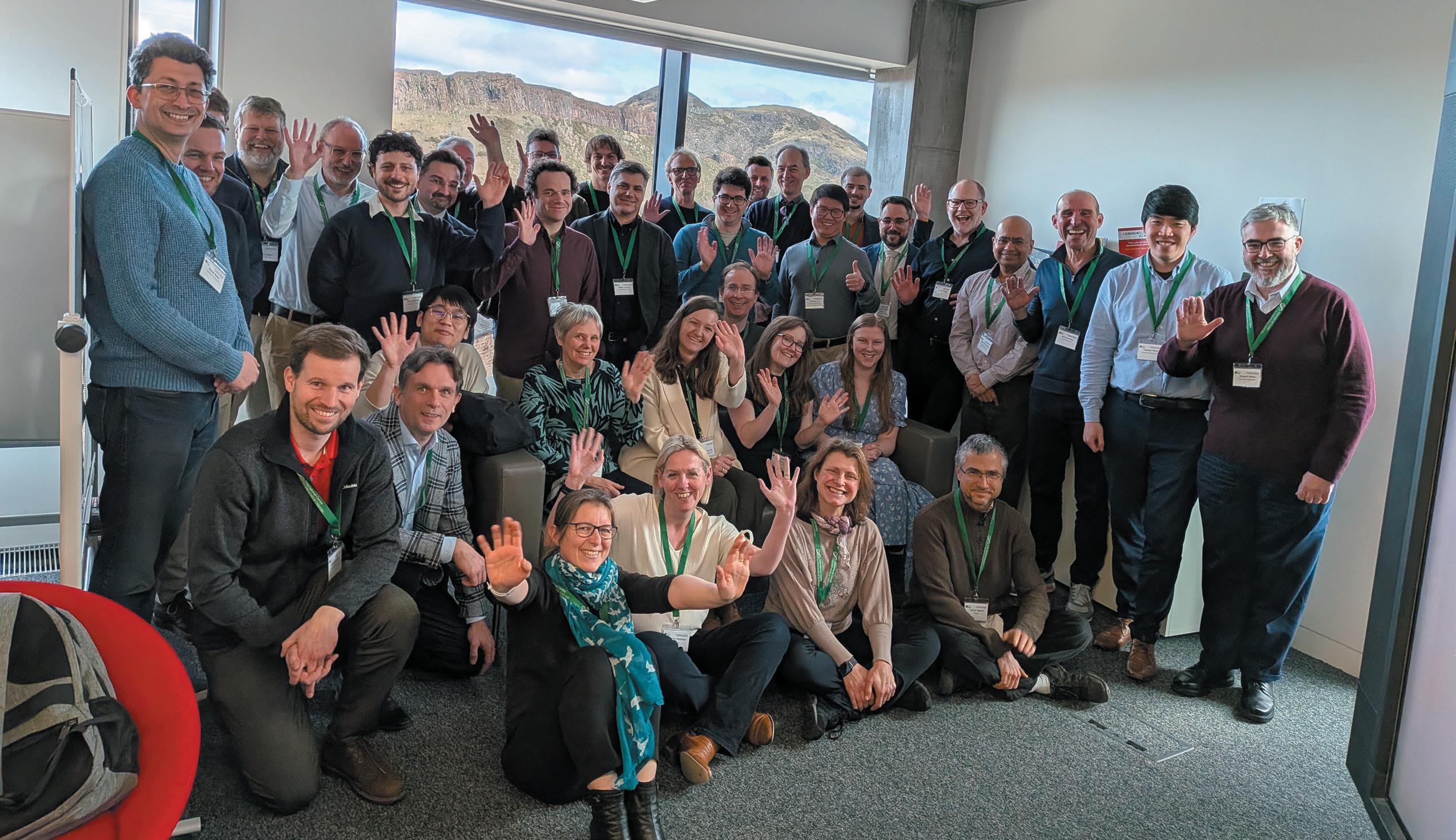
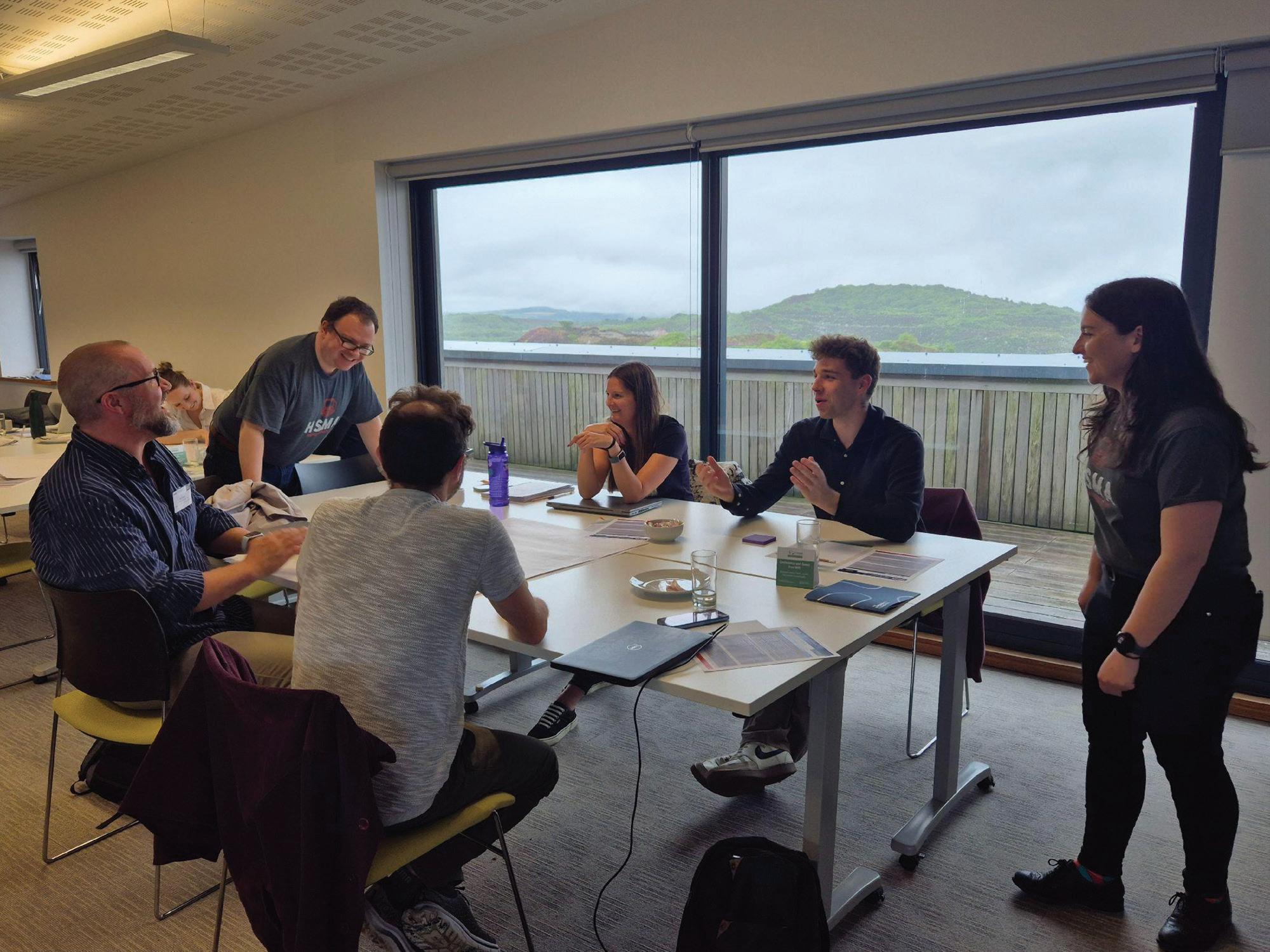
FIGURE 1 COLLABORATION IS AT THE HEART OF THE HSMA PROGRAMME. AND LAUGHTER.
and Tunbridge Wells NHS Trust has developed a model of their stroke pathway that has demonstrated savings of over £1 million a year and improved patient outcomes by extending CT Perfusion scanning availability and Same Day Emergency Care (SDEC) opening times, that’s now feeding into a business case. Turn the page, and an associate from Lancashire and South Cumbria NHS Foundation Trust has developed a model of their NHS Talking Therapies pathway and found that reallocating resource from assessment to treatment can radically improve waiting times for patients at no cost whilst ensuring patients are still assessed within the six week target.
Begin the next chapter, and a team of associates from North West Ambulance Service have used spatial modelling techniques to redraw ambulance dispatch boundaries for their trust, so they can speed up ambulance response times and improve patient outcomes. Skip ahead a few pages, and a urologist from Cheltenham General Hospital has developed an AI-based tool to predict how long prostate surgeries will take for
individual patients based on text in patient notes, to support better planning of surgeries and reduce cancellations. Think you’re nearly at the end of the story, and an associate from Liverpool University Hospital has developed a forecasting tool being used by the Emergency Department on a daily basis to better predict incoming urgent care activity, reducing waits by an average of 25 minutes compared to the previous year and facilitating better staff planning.
. . .anyone, anywhere in the world can access our learning without barriers
So what next for the HSMA story? We’re continuing to grow and improve the programme. We want to continue to develop our free and open source training tools – including our “teach yourself” multimedia ebooks and our YouTube channel – so that anyone, anywhere in the world can access our learning without barriers. We’re developing a new spin-off programme – HSMA-Lambda – targeted at senior leaders and decision makers to help
“John’s completion of the HSMA course… …has been pivotal in shaping innovation and approaches to data analytics. His standout achievement - the development of a simulation model - has already sparked significant interest within the Trust… …It marks a strong step forward in our use of data-driven insight” Victoria Williams, Lead Nurse for Stroke, Maidstone and Tunbridge Wells NHS Trust
“The structure of our dispatch sectors is the foundation all patient care is built upon within NWAS. The project team has been able to understand where our patients need us most, and their flow through the healthcare system, fundamentally changing the dispatch sectors, creating a more robust foundation for us to provide exceptional care” John Kelly, Head of Integrated Contact Centre, North West Ambulance Service
“HSMA is more than a training programme – it is a catalyst for cultural change, fostering collaboration between academic experts and NHS professionals, and creating a thriving community of practice across the UK. Its impact on service improvement, system understanding, and long-term capacity building is profound.”
Heath McDonald, Senior Business Intelligence Developer, Lancashire and South Cumbria NHS Foundation Trust
them understand the potential of OR and data science to tackle problems in their organisation. We want to bring in the patient voice more strongly into the programme, helping our associates –who typically aren’t patient facing – to really understand what it means to patients when you can reduce delays and improve access to care. We want to explore how we can make our programme even more inclusive and accessible, and ensure that everyone hears our mantra that anyone can do this with the right support.
Did we mention this was all free of charge?
For more information about the HSMA Programme, including more details of the examples in this article, visit https://hsma.co.uk/
FUNDING
This report is independent research supported by the National Institute for Health and Care Research Applied Research Collaboration South West. The views expressed in this publication are those of the author(s) and not necessarily those of the National Institute for Health and Care Research or the Department of Health and Social Care.
Dr Daniel Chalk is a Senior Research Fellow and Director of the HSMA Programme since its inception in 2016, based in the PenCHORD team of the NIHR Applied Research Collaboration South West (ARC South West). He has 15 years experience collaborating with the NHS to explore how Operational Research and data science can support improved service delivery. He is a passionate advocate of open science and the use of Free and Open Source solutions.
Sammi Rosser is a Postdoctoral Research Fellow and trainer on the HSMA Programme, joining the team in 2023. She has an MSc in Health Data Science and has experience working in a data science role in a mental health trust. She is passionate about empowering people to learn Python and apply it to healthcare problems.
KEEPING THE TRAINS RUNNING
BRIAN
Over 13 million visitors flock to heritage railways each year [1] to experience the magnificent machinery of another age, still in action nearly 60 years after steam disappeared from British Rail. But what is rarely realised is the complexity that these small organisations face in keeping over 200 such railways running. Ensuring that the impressive but ageing technology remains safely useable depends on the input of many volunteers working alongside relatively few paid employees. Any business with staff has to allocate them to the tasks that need fulfilling –but the ability to do this using a mathematical model is usually only available to larger organisations. However, Nikila Suresh and Bismark Singh took on a particular challenge faced by the Swanage Railway [2]. This line runs 9.5 miles (15.3 kilometres) between Swanage and Norden in Dorset,
with stops along the way at Herston Halt and the picturesque Corfe Castle. The railway has far more volunteers than paid staff, with around 450 volunteers, but just 25 full-time equivalent employees at the time of the study in 2023.
The Swanage Railway faced significant challenges as a result of the loss of revenue due to the COVID-19 pandemic
Like many heritage lines, the Swanage Railway faced significant challenges as a result of the loss of revenue that followed a collapse in visitor numbers due to the COVID-19 pandemic. Although passengers have returned in increasing numbers since, the railway made losses of approximately £200,000 in 2022 – a large sum for a small organisation. Suresh and Singh were asked for
guidance on ways to both improve the railway’s performance and to reduce the financial strain it faced.
Bismark Singh is Associate Professor in the Operational Research (OR) group at the University of Southampton and supervised business analyst Nikila Suresh in her thesis on Swanage Railway. Nikila originally studied Engineering before gaining a Master’s in Business Analytics and Management Science at the University of Southampton. She told us: ‘During my degree, I became increasingly interested in how analytical models can be used to support real operational decisions rather than just produce theoretical insights.
‘Following my degree, I began working as a Business Analyst within a Change and Transformation team in Bristol. In this role, I work closely with stakeholders to analyse processes, identify inefficiencies, and support strategic and operational improvements. What I particularly value is the structured
thinking that OR and analytics bring to complex organisational challenges –especially when balancing competing constraints, limited resources, and real-world uncertainty.’
The approach taken by Suresh and Singh was to develop a model using deterministic integer linear programming. ‘Linear’ here reflects variables with a relationship that does not involve mathematical powers. The details of their model are confidential, but the linear programming approach involves setting an objective function based on a number of constraints and maximising or minimising that function. For Swanage Railway, the objective was to minimise ‘employee workload deviation’, subject to constraints of weekday compliance, special task assignments, order restrictions and daily assignments. Let’s break that down.
Paid employees were facing a level of workload that resulted in an average of five hours of overtime each per week, significantly adding to costs for the railway. This ‘employee workload deviation’ objective function, involved minimising the difference between actual employee workload and a targeted average workload, intended to remove the need for expensive overtime, which was often the result of unbalanced distribution of tasks through a month.
Feeding into the system were details of the employees and volunteers available, the tasks they were presented with and the available working time. Employees were restricted to working no more than 7.5 hours per day, and to a maximum number of days per week. Tasks were categorised as urgent, non-urgent and routine maintenance. Of these, urgent tasks had to be fully completed before a locomotive could be used at all, while non-urgent tasks could be delayed, though this could result in reduced performance and potentially damage to rolling stock.
The model was developed using the open-source Python-based optimisation solver Pyomo coupled with the opensource GLPK (GNU Linear
Programming Kit) solver. It was fed with a subset of the actual data covering 31 days in August 2023 across a total of 41 tasks. Rather than provide a day-byday rostering schedule, which would be of limited use as the model would not be available to the railway after the study, the model was used to provide general recommendations that could then be implemented in the future.
Managing the balance between employees and volunteers was tricky
Managing the balance between employees and volunteers was tricky. Suresh commented: ‘Paid employees were modelled as core resources with contractual obligations, defined hours, and required certifications for safety-critical roles. Volunteers were treated separately, with more flexible and uncertain availability patterns. Although the volunteer base was large, detailed availability data was not consistently recorded. To address this, volunteers were grouped by role and skill level, and conservative average availability assumptions were made based on discussions with operational managers. We also tested different availability scenarios to ensure the model’s recommendations remained robust despite uncertainty.’
It was essential that volunteer labour was deployed effectively given both the much higher numbers of volunteers and the need to keep volunteers engaged with the railway. There is an unusually high motivation level amongst heritage railway volunteers, reflecting their enthusiasm for trains. It was noted in a 2002 survey of Swanage volunteers that the average distance travelled to the railway was a surprisingly large 59.2 miles – quite a commute [3], though this data reflected a significantly different set up at the railway, and it’s worth noting that only 16 volunteers took part in the survey, of whom 10 travelled less than 40 miles.
Dealing with daily operations is the meat and drink of such a model, but resilience is tested when an organisation faces emergencies. In the first of three
Bismark Singh
Nikila Suresh
scenarios, a ‘mild’ emergency task was added to the workload, requiring up to five hours per day of work – the model successfully reallocated employees so no overtime was required as would previously have been the case. With a more extreme scenario requiring 12 hours per day of work, the model was able to reduce employee overtime by 20%.
Some tasks are impossible for unqualified volunteers to carry out, but in the third scenario, it was assumed that volunteers could be involved in replacing the Train Protection and Warning System of a steam engine. This is an important piece of kit that reduces the risk of collision by automatically applying the brake if a train passes a red signal. By deploying volunteers effectively, the model reduced the weekly workload of paid employees involved from 30 to 22 hours a week. Such an enhancement would have been unlikely to have emerged with manual reallocation of staff.
Bearing in mind the financial difficulties that Swanage Railway faced in 2022, the team also recommended investigating moving employees from fixed annual salaries to hourly-paid work. When running the model with a new optimisation function of minimising staff costs, this showed a potential reduction of expenses of up to 35%. Suresh and Singh suggested this not only would benefit the railway, but
would improve employee satisfaction by offering flexible working hours, though it is arguable that many involved may prefer the stability of a fixed annual salary. There is no evidence of whether or not this suggestion was considered or implemented.
Suresh notes she had an informal conversation with one of the employees of Swanage Railway around one month after the study where she received positive feedback. Since the losses of 2022, Swanage Railway has seen an extremely positive financial improvement, making a £300,000 profit in 2023 and a £760,000 profit in 2024. [4] The model was not used beyond the study, but a better understanding of workforce allocation decisions may have contributed
References
alongside increased passenger numbers and donations.
The most important lesson for other practitioners was the need to become closely involved with the railway over a period of time
Models like that developed in this study have the potential to be beneficial not only for heritage railways, but also for other organisations where activities are divided between paid employees and volunteers, as is often the case, for instance in the charity and religious sectors. Perhaps the most important lesson for other practitioners was the need for Suresh and Singh to become closely involved with the railway over a period of time, as there tends not to be a ‘one size fits all’ solution to such organisations’ problems. This led to being able to generate general recommendations from the model, essential in a situation where continued use of a full-scale rostering package would not have been viable.
Brian Clegg is a science journalist and author and who runs the www.popularscience.co.uk and his own www.brianclegg.net websites. After graduating with a Lancaster University MA in Operational Research in 1977, Brian joined the OR Department at British Airways. He left BA in 1994 to set up a creativity training business. He is now primarily a science writer: his latest title Brainjacking looks at the science of influence and manipulation.
[1] The Heritage Rail Alliance. (2023). Heritage Rail APPG: Briefing on the Value of Heritage Railways
[2] Suresh, N. and Singh, B. ii (2025). Optimizing a Heritage Railway Provider’s Volunteer Workforce Allocation: The Case of Swanage Railways. INFORMS Journal on Applied Analytics 55: 375–382.
[3] Goddin, G. (2002). Whose heritage railway is it? a study of volunteer motivation. Japan Railway & Transport Review 32: 46–49. https:// www.ejrcf.or.jp/jrtr/jrtr32/pdf/f46_god.pdf
[4] Charities Commission financials for the Swanage Railway Trust. https://register-of-charities.charitycommission.gov.uk/en/charitysearch/-/charity-details/3981502/financial-history?_uk_gov_ccew_ onereg_charitydetails_web_portlet_CharityDetailsPortlet_ organisationNumber=3981502
The Operational Research community learned a crucial lesson decades ago: algorithmic insight beats computational brute force. When solving optimisation problems, algorithmic improvements delivered orders of magnitude more improvement than simply throwing more computing power at the problem [1,2]. Today’s LLM industry appears determined to learn this lesson the hard way, pouring unprecedented resources into scaling while the fundamental paradigm remains unproven.
THE PARADIGM SHIFT FRAMEWORK
In The Structure of Scientific Revolutions, Kuhn argues that science does not progress through steady, cumulative growth but through dramatic paradigm shifts. These shifts solve persistent problems, or anomalies in Kuhnian parlance, that the incumbent paradigm cannot solve despite repeated attempts and ever-greater resource allocation. As we’ve surmised, OR methods were able to gain such large speedups due to the lateral thinking of algorithmic researchers. These speed-ups were made that much faster by concomitant advances in hardware. This leads us to the questions: are LLMs approaching, or already at, a Kuhnian inflection point and if so why are we investing so much in compute when the paradigm is not established?
Examples of paradigm shifts include the invention of the steam engine, nuclear fission and the transistor. These were the cornerstones of the industrial and information eras; they addressed problems of energy, infrastructure and beyond. LLMs attempt to solve a different anomaly, that of the automation of intellectual labour. From what we have seen thus far, how have LLMs radically changed intellectual labour? Let’s examine some anomalies that have cropped up since OpenAI released ChatGPT.
MOUNTING ANOMALIES
Distribution shift remains perhaps the most troubling issue: these models provably cannot generalise to truly novel domains outside their training distribution [3]. Coding
agents do just fine when you ask them to create a blog website, but adding features to a complex codebase which encapsulates a complex (and unseen) business problem goes differently. No amount of scaling fixes this – hallucinations are inherent to the internal workings of LLMs, by the admission of OpenAI itself [4].
The AI 2027 scenario – a detailed forecast published by leading researchers predicting artificial general intelligence by 2027 – caused an uproar in scientific and policy circles. However, the lead author recently revised his timeline, now suggesting ‘around 2030, lots of uncertainty’ [5]. The scenario’s own data shows LLM agent capabilities trending toward slower growth than the superexponential acceleration initially predicted. When even the optimists are walking back their forecasts, it’s worth asking whether the paradigm is straining. Additionally, the return on investment is declining precipitously. GPT-4 reportedly cost roughly 100 times more to train than GPT-3, yet delivered improvements that, while notable, were not commensurate with the resource increase.
Benchmark saturation tells a similar story; models score impressively on standardised tests yet still struggle with real-world reliability and consistency. Statements such as ‘AI has PhD level intelligence’ are backed up with benchmarks, not real changes to the way we live and work. What about the real economy? How have industries and corporations been affected by LLMs and their prophesied impact? When the LLM investment boom began, CEOs of large tech majors stepped out in front of the US Congress and poured a lot of alarmist rhetoric on the LLM flame. A narrative of disrupted jobs, a society and economy that will have to make heavy adjustments. In the middle of 2025, an MIT paper spooked the markets, it was titled ‘State of AI in Business 2025 ′ and concluded that 95% of businesses surveyed found zero measurable return on their generative AI initiatives among other sobering statistics [6]. A far cry from the theatre that occurred in Congress some years ago.
Furthermore, we’ve seen many stories of large-scale layoffs justified by the advent of LLMs. An Oxford Economics study recently found that companies are framing layoffs as AI-driven ‘restructuring’ to convey innovation and forwardthinking to investors, rather than admitting to over-hiring or weak demand. The data indicates that current layoffs are largely cyclical, and finds that the aggregate economic productivity has actually fallen [7]. Perhaps most tellingly, OpenAI has been hiring ‘implementation consultants’ to help businesses understand how to derive value from their technology. This stands in stark contrast to OR’s offering; companies with complex scheduling, routing, or resource allocation problems immediately grasp the cost-savings that are at hand. If the economic value of LLMs was so self-
evident, to the extent of being a paradigm shift, would we need these implementation shepherds?
Finally, the environmental costs must be mentioned. Training runs now consume megawatts of power, with energy costs rising faster than performance improvements.
ECONOMIC LOCK-IN
So why does the scaling narrative persist despite these warning signs? The answer is largely economic. Data centre investment is projected to reach $1.6 trillion by 2030 [8] — commitments that create powerful incentives to continue down the current path. Scaling laws, whatever their
limitations, are predictable, and investors prize predictability. A research breakthrough in the fundamental theory of AI might yield dramatic gains, but it might also lead nowhere. Better to follow the safe, incremental path.
The race dynamics compound this problem. In a winnertake-all market, no company can afford to pause and reconsider its approach while competitors continue scaling. The firstmover advantage is too valuable, even if everyone is moving in a suboptimal direction. In a stark and shocking testament, the US GDP growth last year would be worth nothing without data centre investment [9]. And thus it is a tragedy: the capital and talent exist to pursue revolutionary alternatives, but economic forces channel them into incremental improvements within the existing paradigm. A Kuhnian inflection point writ large, funded at unprecedented scale.
THE ALTERNATIVE: DISCOVERY SCIENCE
What would an AI framework that heralds a paradigm shift look like? Gary Marcus has spent decades arguing for neurosymbolic approaches – hybrid systems that combine neural networks’ pattern recognition capabilities with symbolic systems’ logical reasoning and causal understanding [10]. The field has largely dismissed this approach, with massive funding flowing exclusively to pure neural network scaling. Marcus describes the state of the field as an
‘intellectual monoculture’ [11]. Recent developments suggest this dismissal may have been premature. OpenAI’s o3 and xAI’s Grok 4 have achieved notable performance gains not through pure scaling but by integrating symbolic tools – code execution, logical reasoning, structured knowledge bases [12]. The boost comes from architectural innovation, not just parameter counts. Marcus argues, with some vindication, that these systems are quietly implementing neurosymbolic principles even as their creators avoid the term.
DeepMind’s AlphaFold offers another instructive example. Rather than scaling up a general-purpose model, researchers built a domain-specific architecture tailored to protein folding’s unique constraints. The result solved a 50-year-old problem that pure scaling would likely never have addressed. These examples suggest that the next breakthroughs may come from understanding and exploiting the structure of intelligence itself – much as OR breakthroughs came from understanding the structure of optimisation problems rather than just building faster computers.
SHIFTING FORWARD
To be clear, LLMs have demonstrated genuine value in specific domains, most prominently when it comes to agentic coding.
REFERENCES
Coding assistants like Claude Code are capable of implementing complex features in pre-existing code, architecting new projects and being a sounding board for complex development ideas. Furthermore, content generation for marketing copy, first-draft writing, and data summarisation has found legitimate product-market fit. These successes share a common thread: they augment human judgment in welldefined, forgiving domains where errors are easily caught and the cost of hallucination is low. Can we extrapolate these wins to an era-defining paradigm shift?
The LLM field stands at a similar crossroads. The scaling paradigm has delivered some remarkable results, but the Kuhnian anomalies are accumulating. Whether the industry has the wisdom – and the economic freedom – to pursue the necessary paradigm shift remains to be seen. But the OR lesson is clear: when you’re hitting diminishing returns from brute force, it’s time to get smarter about the problem itself.
Tom Murarik is a Senior Data Scientist at Ocado Logistics, where he builds end-to-end decision systems that optimise real-world logistics. With a focus on combinatorial optimisation problems and time-series forecasting, Tom is interested in leveraging LLMs and agents to make better decisions. For more, see tmurarik.dev (url: https://tmurarik.dev/).
[1] Bixby, R. E. (2002). Solving real-world linear programs: A decade and more of progress. Operations Research 50: 3–15.
[2] Koch, T., T. Berthold, J. Pedersen and C. Vanaret. (2022). Progress in mathematical programming solvers from 2001 to 2020. EURO Journal on Computational Optimization 10: 100031.
[3] Chopra, T., et al. (2024). ‘View from above: A framework for evaluating distribution shifts in model behavior.’ arXiv:2407.00948. Available at: https://arxiv.org/abs/2407.00948
[4] Xu, Z., S. Jain and M. Kankanhalli. (2024). ‘Hallucination is inevitable: An innate limitation of large language models.’ arXiv:2401.11817. Available at: https://arxiv.org/abs/2401.11817
[5] AI 2027 Project. (2025). ‘Timelines forecast update.’ Available at: https://ai-2027.com/research/timelinesforecast
[6] Challapally, A., C. Pease, R. Raskar and P. Chari. (2025). ‘The GenAI divide: State of AI in business 2025.’ MIT NANDA. Available at: https://mlq.ai/media/quarterly_decks/v0.1_State_of_AI_in_Business_2025_Report. pdf
[7] (2026). ‘AI layoffs are a convenient corporate fiction—true or false? New study has the answer.’ Fortune, January 7. Available at: https://fortune.com/2026/01/07/ai-layoffs-convenient-corporate-fiction-true-falseoxford-economics-productivity/
[8] Data Center Dynamics. (2024). ‘Data center investment likely to hit $1.6 trillion by 2030, report.’ Available at: https://www.datacenterdynamics.com/en/news/data-center-investment-likely-to-hit-16-trillion-by-2030report/
[9] (2025). ‘Without data centers, US GDP growth in first half of 2025 would be zero, says Harvard economist Jason Furman.’ Fortune, October 7. Available at: https://fortune.com/2025/10/07/data-centers-gdp-growthzero-first-half-2025-jason-furman-harvard-economist/
[10] Marcus, G. (2020). ‘The next decade in AI: Four steps towards robust Artificial Intelligence.’ arXiv:2002.06177.
[11] Marcus, G. (2025). ‘How o3 and Grok 4 accidentally vindicated neurosymbolic AI’ Marcus on AI Substack, July 13, 2025.
[12] Ibid.
PUBLIC HEALTH
INTERVENTIONS FOR IMPROVING DIABETES TREATMENT OUTCOMES: WHAT WORKS AND WHAT DOES NOT
GHANA’S DIABETES PROBLEM
Diabetes is becoming a growing health challenge in Ghana and worldwide. In 2021, around 320,000 adults in Ghana were living with the condition, and this number is expected to more than double by 2045. Although Ghana’s National Health Insurance Scheme (NHIS) covers diabetes care, many people still struggle to get the
medicines they need, not everyone is fully covered by insurance and sticking to treatment plans can be difficult. As a result, more than half of patients struggle to keep their blood sugar levels under control – especially those living in rural areas or without insurance. Rising obesity rates and a lack of resources for managing long-term illnesses in public hospitals make the situation even harder.
A key part of managing diabetes is how well patients take care of themselves – known as selfmanagement. This includes attending appointments, taking medicines regularly, and making lifestyle changes. However, evidence used to plan services rarely fully account for how personal behaviours interact with system-level issues. For example, uninsured patients may skip appointments because they can’t afford them, and without seeing a doctor, they may not get prescriptions –leading to poor blood sugar control and even hospital admissions. These problems are especially common in low-resource settings.
To improve outcomes, it’s essential to understand how patients’ behaviours interact with the healthcare delivery system – and to use tools that can model these complex relationships. This will help identify better policy options and support more effective diabetes care for those who need it most.
The model takes into account both individual behaviours and wider system issues
To help tackle these challenges, we developed a computer-based simulation model that represents how Ghanaians manage type 2 diabetes in real life. The model combines insights from health behaviour theories, national treatment
guidelines, and the experiences of healthcare providers, along with published research. It focuses on the everyday barriers that people face – like not having access to medicines, no insurance coverage, and lifestyle factors that make it hard to stick to treatment plans. We use the model to test different public health ideas, such as insurance coverage for all patients, making medicine more available, and taxing sugar-sweetened beverages, to see how they might improve blood sugar control across the population. Importantly, the model takes into account both individual behaviours and wider system issues, helping us understand what works best for improving diabetes care in communities that are often underserved.
WHAT WE MODEL: PATIENT POPULATION AND SYSTEM
We built an agent-based simulation model to explore how people with type 2 diabetes in rural and urban areas manage their condition within Ghana’s public healthcare system. The model helps us understand how personal choices – like taking medication, eating healthily, and going to medical appointments – interact with challenges in the health system, such as limited access to medicines or insurance coverage. By testing different policy
ideas, we can see how changes in the system or in patient behaviour might improve blood sugar control across the population.
In the model, we follow a group of virtual patients over time. Each patient makes decisions about 1) taking medicines based on whether medicines are available in their neighbourhood and if they can afford them through insurance or out-of-pocket payment, 2) eating healthily and exercising adequately (lifestyle) based on trends in their neighbourhood and 3) attending hospital appointments and outpatient services. These decisions –medicine adherence, lifestyle and health service use – determine blood glucose control, as shown in Figure 1. For example, having health insurance affects how often patients can attend appointments, important for getting prescriptions and monitoring their condition, and whether they can afford their medicines. Medicine availability also varies between rural and urban areas, which affects access. All these factors combine to influence how well patients manage their blood sugar and whether they need further medical care.
Patients’ Behaviour
We use insights from the ‘Health Belief Model’ and the ‘Theory of Planned Behaviour’ as well as insights from published studies and provider
FIGURE 1 HOW DO PATIENTS AND SERVICE PROVIDERS IN OUR MODEL MAKE DECISIONS?
interviews to guide how we programme patients to behave.
Lifestyle decisions
Patients’ choices around diet and exercise are shaped by their social environment. They tend to follow the lifestyle of friends and family. During hospital stays, patients fear poor outcomes and, therefore, are keen to follow a recommended healthy lifestyle.
Medication intake
Taking medication depends on several practical factors. Patients need a valid prescription, must be able to afford the medicine (either through insurance coverage or by paying directly, depending on how wealthy they are), and the medicine must be available. Those with insurance or in middle to high wealth quintiles are more likely to afford treatment. If any of these steps fail – such as a stockout or lack of funds – outpatients may skip their medication, even if they intend to take it.
Healthcare seeking
Patients decide whether to attend appointments or seek care based on how serious they think their condition is. Those with symptoms and poor blood sugar control are more likely to seek help immediately. Others may skip scheduled appointments if they feel fine, showing how perceived risk affects engagement with care.
Health state transitions
Patients move between good, moderate, and poor blood sugar control based on their lifestyle and medication adherence. Those who consistently take their medicine and maintain a healthy lifestyle tend to stay in good control. Poor habits lead to worse outcomes, while mixed behaviours result in moderate control. We also account for ageing and death in the model, allowing patients to exit the simulation naturally.
Service Providers’ Behaviour
Our simulation follows the current diabetes care practices used in Ghana’s public health system, based on national diabetes treatment guidelines and interviews with clinical diabetes service providers.
Clinical services
Hospitals provide both outpatient and inpatient care. During outpatient visits, providers check blood sugar levels and give prescriptions that last until the next appointment. If a patient’s blood sugar is under control, they return every 13 weeks. If it’s not, they’re scheduled for earlier follow-ups once their condition improves.
Patients with uncontrolled blood sugar and other health issues, like high blood pressure, are admitted to the hospital for closer monitoring. They stay for up to two weeks, receiving supervised treatment and lifestyle advice. Once stable, they are discharged with prescriptions and follow-up appointments.
Medicine access
Patients need a valid prescription to access medicines. Medicines are only given if they are available and the patient can afford them. Those with insurance receive medicines without paying directly, while uninsured patients must pay out of pocket.
WHAT PUBLIC HEALTH INTERVENTIONS COULD RESULT IN BETTER DIABETES CONTROL?
We tested four scenarios:
1. Medicine availability scenario: 10% increase in availability, making medicine more available in rural and urban areas.
2. Insurance coverage scenario: 10% annual increase in NHIS active coverage for five consecutive years.
4. Combined scenario: implementing both insurance expansion and sugar-sweetened beverage tax.
We chose these scenarios based on global and national health goals, including the WHO’s diabetes and obesity targets, Ghana’s SSB policies, and advice from NHIS officials. Some ideas – like expanding insurance coverage or improving medicine availability by 10% each year – may not be immediately realistic. However, they help show what kind of impact larger-scale changes could have, and offer insight into how smaller, more practical steps might still make a big difference. Figure 1 shows how each scenario affects blood sugar control in different ways.
We found that expanding health insurance coverage had the strongest effect
WHAT DID WE FIND ABOUT PUBLIC HEALTH INTERVENTIONS FOR CONTROLLING TYPE 2 DIABETES?
Direct Health Outcomes – Blood Glucose Control
We found that expanding health insurance coverage had the strongest effect on improving blood sugar control, more than increasing medicine availability or introducing an SSB tax. Combining insurance expansion with the SSB tax showed similar results, mainly because of the insurance component. In particular, expanding insurance led to a noticeable drop in the number of people with poor blood sugar control and an increase in those with good control. The other two scenarios – more medicine availability and the SSB tax alone – did not show significant improvements compared to the current system.
We found a similar pattern with medication adherence. The combined scenario led to a large increase in the number of people consistently taking their medicine and a drop in those who did not. Again, expanding insurance was the key driver of these improvements, while increasing medicine availability or taxing sugary drinks had little effect on how well people stuck to their treatment.
Service delivery effects
Our model showed that expanding health insurance led to fewer hospital admissions and more outpatient visits. This suggests a shift from emergency care to regular check-ups and
prevention. In contrast, increasing medicine availability or introducing a sugar tax didn’t reduce hospital admissions.
Equity implications
Even with expanded insurance, rural patients still had worse outcomes than urban ones. They were 15% less likely to have good blood sugar control and 22% less likely to take their medicine regularly. While insurance helped both groups – boosting outpatient visits and improving blood sugar control and medication adherence – it didn’t fully close the gap between rural and urban patients.
Our model showed that expanding health insurance led to fewer hospital admissions
KEY RECOMMENDATIONS FOR DIABETES CONTROL IN GHANA
Our results show that when more patients regularly attend outpatient appointments, fewer end up needing hospital care. This highlights the importance of consistent contact between patients and healthcare providers for managing diabetes and other long-term illnesses. In our model, outpatient visits help renew prescriptions and temporarily improve blood sugar levels in high-risk patients, which lowers the chance of hospital admissions.
While expanding health insurance and reducing local inequalities could improve care, Ghana’s NHIS already faces financial pressures. Delays in paying healthcare providers and misuse of services by some insured patients are straining the system. Increasing coverage would require more funding
to support clinical services. To guide future decisions, it’s important to assess whether the cost of expanding insurance is balanced by savings from fewer hospital admissions and better long-term health outcomes.
Going forward, the plan is to share the study methods and mature findings with the Ghana Health Service Public Health Department over the next few months.
Engagements to date indicate that they find the study and simulation modelling approach promising for public health intervention studies and that they are looking forward to considering the detailed findings.
Eunice Twumwaa Adwubi (Tagoe) is a research associate in the NIHR Policy Research Unit Behavioural and Social Science at Newcastle University. She is interested in incorporating health behaviour and economic evaluations into simulation modelling for optimising health systems and service delivery.
Itamar Megiddo is a Reader at the Centre for Health Economics, University of York. His research focus is on improving evidence-based decision-making and resource allocation in healthcare policy.
Robert van der Meer is Professor of Management Science at the University of Strathclyde. Robert leads research and knowledge exchange projects in the areas of Health Economics, Healthcare Analytics, Healthcare Operations Management, and Supply Chain Management & Strategy.
Justice Nonvignon is an Associate Professor of Health Economics at the School of Public Health, University of Ghana. His research interests include economic evaluation, health technology assessments, impact evaluation, and health financing.
IOT SYSTEM FOR CONTINUOUS BLADDER LEVEL MONITORING IN NEUROLOGICAL BLADDER DYSFUNCTION
JONAS, JANNIK LOCKL, MAXIMILIAN RÖGLINGER, AND ROBIN WEIDLICH
The increasing use of Internet of Things (IoT) systems in healthcare offers numerous opportunities to enhance medical information systems [1]. When combined with advanced data analysis methods, these systems enable the
collection and interpretation of large volumes of health data [2]. ‘Wearable IoT systems’ make it possible to monitor physiological parameters in real time. This is particularly important for patients who lack sensation in
CLAUDIUS
specific areas of their body, as is the case with neurological bladder dysfunctions. Such dysfunctions are caused by congenital or traumatic damage to the nervous system [3]. Affected patients no longer (properly) perceive the state of their bladder and are often unable to voluntarily and actively empty it. This leads to significant health and psychosocial challenges, as patients lack the natural trigger to sense a full bladder and subsequently initiate micturition [4].
The current gold standard for these patients is time-based bladder emptying. In cases of missing motor control, this is typically achieved through intermittent selfcatheterisation. However, time-based emptying is simply not equivalent to need-based emptying [5] (Vinod et al., 2019). Patients would greatly benefit from receiving information about their bladder filling level. By gaining access to this information, they regain the ability to void according to actual physiological need, at the appropriate time[4]. Continuous monitoring of physiological parameters through wearable IoT systems can therefore support patient health and well-being by integrating real-time bladder level monitoring into daily life [6].
To address the problem of neurological bladder dysfunction, we conducted an applied research project in collaboration with inContAlert (https://incontalert.de/en/home-en/) and developed a system for continuous bladder level monitoring. The project brought together complementary expertise from the Fraunhofer Institute, the University of Bayreuth, and inContAlert – a startup founded as part of the German EXIST programme and initially incubated in the university environment. This close partnership proved essential, as it allowed scientific development, engineering expertise, and patient needs to be aligned from the very beginning. Working directly
with a young venture embedded in the university’s innovation ecosystem created short feedback loops, enabled rapid prototyping, and helped to ensure that the solution evolved in direct response to real-world requirements.
The system consists of a sensor box that records bladder-related data and transmits it to a mobile device. As bladder level increases, the sensor box sends data via Bluetooth to the mobile device. Patients can view both their current bladder filling level and the estimated time until the next micturition on their mobile device. The mobile app contains machine learning models that analyse the sensor data and predict the current bladder volume. These models are trained on a server application and then transferred to the mobile device.
The system for continuous bladder level monitoring was designed to support patients with neurological bladder dysfunctions in carrying out precisely timed micturition. Therefore, the system includes a trigger that notifies patients when their bladder is nearly full. They receive a notification on their mobile device shortly before the bladder reaches a predefined critical level. The estimated time until the next micturition is displayed within the app. Patients can individually configure the notification threshold — i.e., the number of minutes before the predicted
next micturition at which they wish to be alerted. The sensor box is attached to the patient’s skin via an elastic strap or belt and can be removed at any time. Since both the sensor box and the mobile device are wearable, patients can monitor their bladder status anytime and anywhere, without relying on stationary diagnostic systems in clinics or physicians’ offices.
This close partnership proved essential, as it allowed scientific development, engineering expertise, and patient needs to be aligned from the very beginning.
Due to the large amount of data produced by the sensors and the variety of features extracted from this data, machine learning is used to analyse the sensor information. The machine learning models are trained on a server and then transferred to the mobile device. The sensor data required for training (i.e., infrared, acceleration, and temperature data) are stored on the sensor box and sent to the mobile device. From there, the data are forwarded to the server. Figure 1 shows the overall functionality of the bladder level monitoring system (BLMS). Figure 2 shows an example of the prediction values of the trained machine learning model for a selected individual.
DESIGN PRINCIPLES
To ensure that the IoT-based BLMS truly supports patients in everyday life, it must be designed around their specific needs and limitations. Throughout the development process with patients, clinicians, and technology partners, five core design principles emerged as crucial for the system’s real-world success. Beyond this specific application, these principles may also
provide practical guidance for designing future IoT-based health solutions that aim to move from technical feasibility to meaningful, everyday impact. They highlight what needs to be considered when wearable health technologies are expected to be accepted, trusted, and sustainably used in real-life settings.
Hybrid Trigger: Combining Physiological Data With a Motivating Cue
Patients with neurogenic bladder dysfunction cannot feel when their bladder is full. To help them act at the right moment, the system must offer a trigger that both informs and motivates. A simple timer is insufficient because it ignores the patient’s actual bladder state and does not rebuild their sense of control. A hybrid trigger therefore combines
physiological insight (The app notifies patients when their bladder reaches a critical level) with motivational prompting (Notifications are designed so they are noticeable, timely, and supportive for initiating micturition). This combination enables need-based, precisely timed emptying and empowers patients to regain autonomy over their bladder management.
Non-Invasiveness: Maximum Comfort and Minimal Disruption
Sustained use depends heavily on comfort. The monitoring solution must therefore operate entirely noninvasively, without any insertion into the body or medical intervention. The BLMS sensor box is worn externally on the skin and can be removed or repositioned at any time. This minimises interference with patients’
daily routines, which is essential for acceptance and long-term engagement.
Sensor Fusion: Robust Measurement Through Multiple Sensors
The bladder changes position constantly as patients move through daily activities. A single sensor cannot reliably track these dynamics. By combining several sensors – such as infrared, accelerometers, and temperature – the system can triangulate information and create a more stable, context-aware picture of bladder filling. Sensor fusion reduces false signals and significantly increases the accuracy of predictions.
[our solution] minimises interference with patients’ daily routines, which is essential for acceptance and long-term engagement.
FIGURE 1 OVERALL FUNCTIONALITY OF THE BLMS
FIGURE 2 EXEMPLARY PREDICTION RESULTS
Actionable information: data that support concrete decisions
Raw data are not enough. The system must provide information that patients can understand immediately and use to guide their actions – such as clear visual indicators or an estimate like ‘Micturition likely needed in 20 minutes’. The information must be intuitive, relevant in the moment, and easy to interpret so that patients can make timely decisions in their everyday environments.
Individuality:
Personalised Models that Adapt to Each Patient
Bladder shape, capacity, and filling patterns vary considerably across patients. A one-size-fits-all model would therefore deliver inaccurate estimates. The system needs to learn from each individual’s data and continuously refine its predictions. Over time, personalised machine learning models become increasingly precise, making the BLMS a reliable companion tailored to each patient’s physiology.
IMPACT
The real impact of the BLMS becomes visible when looking at how patients integrate it into their everyday routines. Across interviews with affected individuals and physicians, as well as through our two-week test phase, a clear picture emerged: continuous, non-invasive bladder monitoring fundamentally improves patients’ autonomy, confidence, and quality of life.
A central change reported by patients is the regained control over their bladder management. Many described that, before using the BLMS, the fear of unexpected bladder emptying or not finding a suitable place for catheterisation shaped their daily lives. With the BLMS, they can anticipate when catheterisation will be necessary. As one patient explained: ‘Especially when I’m out of the house,
through the trigger I can anticipate better when to catheterise and I don’t have to do it on a pre-defined schedule’. This ability to plan ahead reduces stress, anxiety, and the psychological burden associated with neurogenic bladder dysfunction.
The system also supports participation in social activities – an aspect that repeatedly surfaced as a major benefit. Patients highlighted that the BLMS lowers the threshold for engaging in events outside the home. As one interviewee put it: ‘You cannot catheterise everywhere, and you usually need to look for appropriate locations. With the trigger, I can calmly look for a place and don’t have to fear being too late’. This new flexibility helps combat social isolation, a common secondary effect of the condition.
[Thanks to the IoT solution] this ability [of the user] to plan ahead reduces stress, anxiety, and the psychological burden
associated with neurogenic bladder dysfunction.
Another relevant impact lies in reducing catheterisations and secondary health risks. By preventing the bladder from overfilling, patients catheterise based on real physiological need rather than rigid time intervals. Several participants reported a notable decrease in daily catheterisations. One patient stated: ‘Usually, I catheterise five to seven times a day. With the trigger, I can reduce this number to four or five times’. Fewer catheterisations mean lower risk of infections and less physical strain – an outcome physicians explicitly welcomed.
The non-invasive design of the BLMS was particularly valued. Patients emphasised that implanted or invasive solutions are not acceptable due to infection risks and the emotional burden associated with having foreign objects in the body. In contrast, the BLMS can be worn externally and removed at any time. As one
FOR FURTHER READING
[1] Brohman, K., S. Addas, J. Dixon and A. Pinsonneault. (2020). Cascading feedback: a longitudinal study of a feedback ecosystem for telemonitoring patients with chronic disease. MIS Quarterly 44: 421–450. doi: 10.25300/MISQ/2020/15089.
[2] Bardhan, I.R., H. Chen and E. Karahanna. (2020). Connecting systems, data, and people: A multidisciplinary research roadmap for chronic disease management. Management Information Systems Quarterly 44: 185–200.
[3] Manack, A., S.P. Motsko, C. Haag-Molkenteller, R.R. Dmochowski, E.L. Goehring, B.A. Nguyen-Khoa and J.K. Jones. (2011). Epidemiology and healthcare utilization of neurogenic bladder patients in a US claims database. Neurourology and Urodynamics 30: 395–401. doi: 10.1002/ nau.21003.
[4] Nseyo, U. and Y. Santiago-Lastra. (2017). Long-term complications of the neurogenic bladder. The Urologic Clinics of North America 44: 355–366. doi: 10.1016/j.ucl.2017.04.003.
[5] Vinod, N.N., A.S. Nagle, H.A. Naimi, H. Kolli, D. Sheen, N. Nandanan, L.R. Carucci, J.E. Speich and A.P. Klausner. (2019). Bladder volume correction factors measured with 3D ultrasound and BladderScan. The Canadian Journal of Urology 26: 9829–9834.
[6] Molavi, B., B. Shadgan, A.J. Macnab and G.A. Dumont. (2014). Noninvasive optical monitoring of bladder filling to capacity using a wireless near infrared spectroscopy device. IEEE Transactions on Biomedical Circuits and Systems 8: 325–333. doi: 10.1109/TBCAS.2013. 2272013.
participant remarked: ‘It is important that the sensor is not inserted into my body. Surgeries come with risks. Measuring bladder level non-invasively is much better for me’.
Taken together, these insights demonstrate that the BLMS does more than monitor physiological data – it empowers patients, supports healthier behaviour, and opens new possibilities for participation and independence in daily life.
Claudius Jonas (claudiusjonas@gmail. com) studied Industrial Engineering and Management (M.Sc.) at the University of Bayreuth. Claudius has been working as a Research Associate and Doctoral Candidate at the FIM Research Center and Branch Business & Information Systems Engineering of the Fraunhofer FIT from March 2020 to September 2024. Since
November 2024 he works as an executive assistant at the ERGO Group AG in the health insurance sector.
Jannik Lockl (jannik.lockl@gmail. com) studied Industrial Engineering and Management (M.Sc.) at the University of Bayreuth. Jannik has been working as a Research Associate and Post-doctoral Researcher at the FIM Research Center and Branch Business & Information Systems Engineering of the Fraunhofer FIT from 2018 to 2021, while he further holds a position as Research Associate at UCL CBT. Jannik worked as a consultant for companies like BMW and IBM and is founder of the AI-driven MedTech startup inContAlert GmbH.
Maximilian Röglinger (maximilian. roeglinger@fim-rc.de) holds the Chair of Information Systems and Business
Process Management at the University of Bayreuth and is Adjunct Professor in the School of Management at Queensland University of Technology. Maximilian also serves as Deputy Academic Director of the Research Center Finance & Information Management (FIM) as well as Deputy Director of Fraunhofer FIT.
Robin Weidlich (robin.weidlich@fim-rc. de) studied Industrial Engineering and Management (M.Sc.) at the University of Bayreuth. During his studies, he gained practical experience in internships in different fields of the automotive industry. Robin has been working as a Research Associate and Doctoral Candidate at the FIM Research Center and Branch Business & Information Systems Engineering of the Fraunhofer FIT since January 2022.
COME TO THE WINTER
SIMULATION CONFERENCE 2026 IN GLASGOW: BE A PART OF HISTORY!
A WARM INVITATION FROM THE WSC2026 ORGANISING COMMITTEE!
NAV
MUSTAFEE, STEPHAN ONGGO, CATHAL HEAVEY, SIMON J. E. TAYLOR, BERND WURTH AND TILLAL ELDABI
Want to find out about the latest research in Modelling & Simulation (M&S), Predictive Analytics, Digital Twins, Quantum Computing and novel AI-based decision making (and much, much more!)? Want the opportunity to attend a range of
fascinating panels, introductory and advanced tutorials, industrial case studies and research talks? Want to join a community of new and experienced, like-minded people from academia and industry that’s been growing for more than half a century? If you do, then
there’s a unique opportunity for youcome to the Winter Simulation Conference (WSC) 2026 in Glasgow!
For the first time in its 55+ year history, the WSC will be held in the United Kingdom! WSC2026 will take place in Glasgow, Scotland, 6–9 December, 2026. The conference will
take place at the Scottish Event Campus and Crowne Plaza. This year’s theme focuses on our planet and the urgent need to build climate resilience.
WSC is the premier international forum for disseminating recent advances in the field of computer modelling and simulation (M&S), with
the principal focus being discrete-event simulation and agent-based simulation, and, increasingly, the use of hybrid simulation methods, including AI/ML. In addition to an excellent technical programme, the conference is a meeting place for simulation researchers and practitioners, and vendors working in all disciplines and in the industrial, governmental, military, and academic sectors (https:// meetings.informs.org/wordpress/ wsc2026/history/). Every paper published at every WSC is free to access (https://informs-sim.org/)!
For many of the OR and M&S academics and practitioners in the UK and Ireland, this will be a generational event! While UK delegates have consistently been one of the most represented national communities throughout the history of the WSC, only three times so far the conference has taken place outside of the US (in Germany, Sweden and Singapore). And
while the OR Society runs its very successful biennial Simulation Workshops (its 12th Edition, the largest to date, took place in Exeter last year), hosting the WSC in the UK provides us with the unique opportunity to serve as the host to the World of M&S!
WSC2026 will focus on one of the most pressing challenges confronting humanity: building resilience in the face of climate change. Next to the traditional conference tracks such as analysis methodology, modelling methodology, hybrid simulation, simulation optimisation, healthcare, manufacturing, supply chain and logistics, the conference will feature a special conference theme track on ‘Simulation for Climate Resilience, Environment and Sustainability’. The track is dedicated to papers that explore innovative uses of simulation to understand, assess, and enhance the resilience of systems facing climaterelated challenges.
Our Conference Keynote is Professor Ralf Ludwig , Professor for Applied Physical Geography and Environmental Modelling at the Department of Geography, Ludwig Maximilian University of Munich. In addition, we will have two Titans of Simulation plenaries. The first Titan is Dr Kalyan Perumalla , President of Vipra Computing Labs and Ex-US Office of Science Program Manager & National Lab Distinguished Scientist, whose talk will focus on AI, Quantum Computing and network and algorithm design, characterised as ‘Tsunamis Hitting the Shores of Modelling and Simulation’. Our second Titan is Professor Susan Howick , Professor of Management Science at the University of Strathclyde, Glasgow. Her talk will be a reflection on the use of Hybrid M&S and how grand challenges such as climate change resilience needs interdisciplinary intersect.
New also to this year’s conference, the tracks on ‘Simulation and Quantum Computing’ and ‘System Dynamics’! The program will include a PhD Colloquium, introductory and advanced tutorials, our Simulation Challenge (a competition!), poster and professional development sessions, the ‘Simulation Around the World’ hybrid session, industry and vendor tracks and a warm General Reception at the Science Museum, and plenty of social events!
The conference will be a brilliant excuse to explore Scotland, with Glasgow as a perfect base. The city pairs a proud industrial heritage with a modern, technology-driven present, and we’ll build a little of that local flavour into the programme. Expect a traditional piper to help set the scene, plus optional whisky distillery tours for anyone keen to sample Scotland’s most famous export. Beyond that, there’s plenty to discover on your own time, from outstanding museums and galleries, great architecture and live music, to organised site visits, including trips to the Advanced Manufacturing Research Centre and other facilities, for those who want to see the region’s cutting-edge capabilities up close.
The conference organising committee consists of over 30 members with academics from UK and the Republic of Ireland (RoI) in leading roles, including General Chair (Nav Mustafee), Program Chair (Stephan Onggo), Business Chair (Cathal Heavey), Local Chair (Bernd Wurth), Proceedings (Masoud Fakhimi), Exhibit and Sponsorships (Simon Taylor), UK Publicity (Tillal Eldabi), PhD Colloquium (Alison Harper), Simulation Challenge (Martino Luis) and Registration (Anastasia Anagnostou). A further pool of UK and RoI representations come in the form of 15 co-track chairs (Hybrid Modelling and Simulation, System
Dynamics, Simulation for Climate Resilience, Environment and Sustainability, Simulation and Quantum Computing, Healthcare and Life Sciences, PhD Colloquium, Poster Session and Professional Development Session).
Please consider this short article as your personal invitation from the Committee to join us at our next stop in Glasgow, Scotland, UK, and to be a part of history!
For more information, including the call for papers and exhibit and sponsorship opportunities, please visit the conference website: https:// meetings.informs.org/wordpress/ wsc2026/
Nav Mustafee is a Professor of Analytics and Operations Management at the University of Exeter Business School. His contributions to the WSC include establishing the Hybrid Simulation track, which marked its 10-year anniversary in 2024, serving as a Proceedings Editor (2017–2019), Business Chair (2021) and Chair for Diversity and Inclusion (2025).
Stephan Onggo is a Professor of Business Analytics at the University of Southampton Business School. His research interests include simulation modelling methodology and its applications in digital twin and disaster management. He has served the WSC as Programme Chair (2026), Business Chair (2024), Proceedings Editor (WSC 2023), Agent-Based Simulation
Track Coordinator (2018–2022), and PC member in various tracks (since 2014).
Cathal Heavey is Emeritus Professor of Supply Chain at the University of Limerick, Ireland. His research interests include: simulation modelling of discrete-event systems; modelling and analysis of supply chains and manufacturing systems; process modelling; and decision support systems. He has served the WSC as Business Chair (2026), Joint Track Coordinator of the International Conference on Modelling and Analysis of Semiconductor Manufacturing (MASM, 2012 and 2018)
and Track Coordinator for Case Studies (2008).
Simon J. E. Taylor is a Professor at Brunel University London. He has worked in Modelling & Simulation and Digital Infrastructures for over 30 years. He was General Chair of the 2025 Winter Simulation Conference in Seattle and is a member of the Winter Simulation Conference Board of Directors.
Bernd Wurth is a Senior Lecturer at the University of Glasgow. His research applies complex systems approaches, including modelling and simulation to entrepre-
neurship and innovation. He founded a company bringing simulation-based decision support to entrepreneurs. He serves as Local Chair of the 2026 Winter Simulation Conference in Glasgow.
Tillal Eldabi is a Professor of Business Analytics at the School of Management of the University of Bradford. His research mostly focuses on developing frameworks for Hybrid Simulation for modelling complex systems with special emphasis on healthcare systems. He was a co-chair and co-founder of the Hybrid Simulation Track (2014–2019), and served as the UK Publicity rep (2026).
INCENTIVISING CONVERGENCE AT THE DISTRICT LEVEL FOR ENHANCED POLICY IMPLEMENTATION
J. MUTHU KUMAR, VINOTHINI JAGADEESAN, S. SIVANANDHAM, AND S. SRIVATSA SRINIVAS
BACKGROUND
The Government of the Indian State of Tamil Nadu introduced the Pudhumai Penn scheme in March 2022, focusing on increasing the enrolment ratio of girl students from the government schools in higher education (Pudhumai Penn, 2022). The scheme’s directed objectives are:
1. To increase Gross Enrolment Ratio of girl students in higher education
2. To reduce early marriage
3. To bridge the gender gap and bring inclusivity in all levels of education
The scheme envisions to attain these objectives by providing a monthly financial incentive of Rs.1000 (which amounts to approximately $49/£32 based on a purchasing power parity (PPP) conversion factor of 20.42) (PPP conversion factor, 2024). This is provided to all girl students who
TABLE 1 BENEFICIARY ENROLMENT IN PUDHUMAI PENN SCHEME IN THE NAMBIYUR BLOCK OF THE ERODE DISTRICT
studied in government schools from class 6 to 12 (ages 11 to 17), up to the uninterrupted completion of their undergraduate degree, diploma and ITI (Industrial Training Institute) courses. However, the effective implementation of this scheme requires the convergence and coordination of three different departments:
1. Social Welfare and Women Empowerment Department, which is the nodal agency to coordinate and oversee enrolment process.
2. School Education Department, which is responsible for the verification of enrolment in government schools from class 6 to 12 through EMIS (Educational Management Information System, a database of the School Education Department).
3. Higher Education Department, which is responsible for the coordination with nodal officers for enrolment of students in the scheme.
The effective implementation of this scheme requires the convergence and coordination of three different departments
As an example, in the case of Nambiyur block in the Erode district of Tamil Nadu as the implementation unit, it is apparent from Table 1 that a large number of eligible girl students in the Nambiyur block are not enrolled in the scheme, possibly due to lack of awareness emerging from the lack of convergence between the departments involved. The enrolment is around 20% in the Nambiyur block, against
63% in the Erode district and around 60% in Tamil Nadu overall.
FOCUS BLOCKS DEVELOPMENT PROGRAMME
Against this background, it is important to note that the Nambiyur block is one of 50 blocks considered under the Focus Blocks Development Programme from the Government of Tamil Nadu aimed at enhancing the grassroots governance and ensuring balanced development across the different regions (particularly at the block level) as announced in the Budget 2023-2024 (FBDP, 2023).
The Focus Blocks Development Programme, wherein each selected block is allocated Rs. 5 crores (which amounts to approximately $2.5/£1.7 million based on a PPP conversion factor of 20.42) for a period of 3 years (PPP conversion factor, 2024). This aims to strengthen block level administration by incentivising convergence and cooperation
between different departments at the block level. It also promotes competition between the selected 50 blocks on the performance of developmental indicators on health and nutrition, social welfare, education, skill development, agriculture and allied services, economic development, and infrastructure.
From a game-theoretic lens, the design of the Focus Blocks Development Programme can be seen to incentivise the selected blocks to enhance their developmental performance as explained in the timeline of the game (Figure 1). The governmental recognition and incentives for high performance incentivises the 50 blocks to compete with each other in order to become one among those high performing blocks. However, in turn, this can be attained only with the convergence of different schemes and their effective implementation which requires the cooperation of concerned departments to enhance performance. The Focus Blocks
FIGURE 1 GAME TIMELINE IN THE FOCUS BLOCKS DEVELOPMENT PROGRAMME
Development Programme is thus leveraged in the context of the Pudhumai Penn scheme to improve the enrolment of girl students in higher education by promoting cooperation between the three departments concerned, namely the Social Welfare and Women Empowerment Department, the School Education Department, and the Higher Education Department in the Nambiyur block in the quest for performing well on the developmental indicators mentioned in the programme against the competing blocks.
incentivises the 50 blocks to compete with each other [. . . whilst implementation] requires the cooperation of concerned departments
RESULT
The cooperation between the three departments is operationalised first through the convergence of data from
the Educational Management Information System (EMIS) database of the School Education Department, payment database of the Pudhumai Penn portal and the University Management Information System (UMIS) database of the Higher Education Department. The objective is to ensure the inclusion of non-enrolled, eligible girl students in the scheme by reaching out to them over phone calls which is possible due to the consolidation of databases. In addition to the convergence of databases, the coordination with the nodal officers from the Social Welfare and Women Empowerment Department is essential for administrative easing, faster resolution in appeal process, eligibility verification and bank-Aadhaar seeding (referring to the linking of the bank account with the Aadhaar number – a unique identity number for the residents of India).
Figure 2 shows that there is an apparent improvement in the
enrolment into the Pudhumai Penn scheme in the Nambiyur block from 20% to 88% of the 475 eligible beneficiaries. This is possible with the cooperation of the different, concerned departments within the Nambiyur block responsible for the implementation of the scheme, which in turn is a result of the potential incentives and recognition from the Government of Tamil Nadu in the competition against the remaining 49 blocks as a part of the Focus Blocks Development Programme.
improvement in the enrolment [. . .] from 20% to 88%
In the Focus Blocks Development Programme’s Best Practices Seminar in August 2025, this implementation model of the Pudhumai Penn scheme in the Nambiyur block of the Erode district was selected for presentation under the Social Welfare theme. It was one of the few best practices selected among the 38 districts of Tamil Nadu, mentioning remarkable growth in the Pudhumai Penn scheme in the Nambiyur block of the Erode district. The seminar is a platform for the districts of Tamil Nadu to present best practices and promote successful models with a potential to scale across the state. As a result, a proposal to integrate the three aforementioned databases at the state level under a single online portal is under development to achieve 100% beneficiary enrolment to promote the development of women through higher education.
J. Muthu Kumar is a Young Professional at the District Monitoring Unit, Special Programme Implementation Department, Government of Tamil Nadu, Erode involved in preparing policy briefs, analysing government schemes to identify gaps, and preparing analytical reports on the flagship schemes.
FIGURE 2 IMPROVEMENT IN THE PUDHUMAI PENN SCHEME IMPLEMENTATION AFTER THE FOCUS BLOCKS DEVELOPMENT PROGRAMME INTERVENTION
Vinothini Jagadeesan is a Focus Blocks Development Fellow of the Government of Tamil Nadu in the Erode district of Tamil Nadu. She is a University Rank Holder (22nd) in her Bachelor’s Programme in Civil Engineering at Anna University, Chennai. She has a keen interest in policy making.
S. Sivanandham is an Indian Administrative Service Officer of the 2022 batch, borne in Tamil Nadu cadre. He was awarded the prestigious Director’s Gold Medal in Public Administration in LBSNAA among a cohort of 180 IAS Officer Trainees He is currently serving as the Sub Collector of Gobichettipalayam in Erode District, Tamil Nadu. Along with his
administrative duties, he actively collaborates to utilise data analytics in grassroots governance and to improve public policy design and operations.
S. Srivatsa Srinivas is an Assistant Professor in the Centre for Mathematical and Computational Economics, School of
REFERENCES
Artificial Intelligence and Data Science at the Indian Institute of Technology Jodhpur. He works on the application of operational research and game theory to aid in policy analysis in the government, in addition to also analysing businesses through operational research and game theoretic lens.
FBDP. (2023). https://spc.tn.gov.in/focus-blocks-development-programme/ accessed August 15, 2025.
PPP conversion factor. (2024). https://data.worldbank.org/indicator/PA.NUS. PPP accessed January 27, 2026.
Pudhumai Penn. (2022). https://www.tnsocialwelfare.tn.gov.in/en/specilisa tionswoman-welfare/pudhumai-penn accessed August 15, 2025.
UNLOCKING HIDDEN CAPACITY
SHEEMA NOORAIN, MARIA PAOLA SCAPARRA, KATHY KOTIADIS, AND EMILY MUSARA
This is the successful story of how OR has helped in recent years to improve mental health service planning in the South East of England. When a mental health service needed to evaluate its performance and consider future expansion, combining optimisation with ‘structured engagement’ across organisational levels revealed capacity hiding in plain sight.
The Kent and Medway Mental Health NHS Trust’s Primary Care Mental Health service has been running for several years now, supporting people with mild to moderate mental health conditions across 65 GP clinic locations. With growing demand and persistent workforce challenges across the NHS,
the leadership team has been considering whether they needed to expand the clinical workforce.
Questions of immediate interest were: How is the service actually performing? Are we using our current capacity as effectively as we could be?
Might there be capacity hiding in plain sight that could be unlocked alongside any future expansion?
The urgency of this question reflected a broader and growing trend. NHS mental health referrals were rising sharply, while funding and workforce capacity failed to keep pace [1]. The service needed to understand its current state before making critical decisions about future direction.
What happened next challenged assumptions about how the service operated and revealed opportunities that had not been visible before.
THE NHS DATA PARADOX
The service was navigating the complex pressures facing mental healthcare across the NHS. Clinicians at the operational level were making daily allocation decisions based on their immediate caseloads. Team leads at the tactical level were balancing workloads without comprehensive utilisation data. Service managers at the strategic level were setting targets while lacking clear visibility into patterns across 65 locations. And commissioners at the policy level were making funding decisions based on aggregated numbers that masked operational realities.
Might there be capacity hiding in plain sight that could be unlocked alongside any future expansion?
The data existed. Electronic patient records captured every appointment, every referral, every clinician hour. But
the data sat in silos and there was a lack of a shared language to talk about what was actually happening across the system. Early analysis revealed striking patterns (Figure 1). One clinician was managing 11 patients across 8 different locations, frequently travelling to see just one patient at a site. Another location with 27 active referrals had four clinicians assigned, while a location with only 7 referrals also had four clinicians. When we looked at workload distribution, some clinicians in the same skill band were meeting 2% of demand while others were meeting 15%. But here is what struck us most: clinicians believed most appointments lasted over 60 minutes. The data showed something different, 75% of follow up appointments were completed in 45 minutes or less. The gap between perception and reality ran deep.
BRINGING PEOPLE TOGETHER
We began with a simple premise: the people closest to the problem know the most about it. But they each see only their piece. What if we could bring together stakeholders from all four
organisational levels such as policy, strategic, tactical, and operational, in structured workshops to build a shared understanding?
The workshops followed an adapted PartiSim approach [2,3]. PartiSim uses Soft Systems Methodology to engage stakeholders in discrete event simulation; we adapted the framework for optimisation modelling, known as PartiOpt [4–7]. We approached this not as consultation, but as co-creation designed for impact.
In the first of a series of facilitated workshops, we asked stakeholders to identify the service’s core transformation. We found it to be: ‘To provide the right intervention by the right professional at the right time and location.’ Simple words that everyone could align behind. Then we asked them to draw what they saw, quite literally. Rich pictures emerged showing how clinicians, managers, and commissioners each perceived the system differently.
Through the workshops, stakeholders began to see patterns that had been invisible when each level operated in isolation. Analysis of appointment data and workload distribution revealed unassigned hours that no one had recognised. Participants had assumed they were working at capacity until they saw the evidence alongside each other’s experiences.
These insights informed the development of a multi skill, multi location optimisation model [7]. The model captured the complexity of the service: 12 clinicians with different skill sets, 65 GP locations with varying demand, and constraints around travel time, working patterns, and appointment types. Through subsequent workshops, stakeholders validated and refined the model twice, ensuring it reflected operational realities rather than theoretical assumptions.
With the model in place, stakeholders systematically tested scenarios. Not through presentations or reports, but rather through
FIGURE 1 FRAGMENTED
collaborative problem solving. When we asked about appointment durations, clinicians initially defended their 60-minute estimates. Then we showed them their own historical data. The disconnect was clear: if 75% of follow up appointments were completed in 45 minutes or less, why was scheduling based on 60-minute assumptions?
The workshops (Figure 2) revealed the potential to direct clinicians to where demand was highest, using the optimisation model to identify which locations had the most referrals and calibrate resources accordingly. The insight was not new, but the shared visibility was. Stakeholders recognised the gap between practice and assumption. This challenged their view that service operations were organised to a satisfactory degree.
FROM INSIGHTS TO IMPACT
The numbers told a compelling story. By testing scenarios with stakeholders, we identified a 14 to 16% potential utilisation improvement, without hiring a single additional clinician [7]. In the most efficient scenario, the
service achieved only 2.2% unassigned hours across the entire workforce while meeting all appointment demand.
The optimisation model was the artefact. The transformation was the process.
But the real transformation went deeper than utilisation rates.
Before, workload distribution varied wildly, from 2% to 15% of total demand per clinician. After implementing standardised approaches informed by the workshops, clinicians in the same skill band handled 9 to 11% of demand each [7]. The 13-percentage point gap narrowed to just 2 percentage points.
Stakeholders acknowledged that the existing service fell short and expressed a need for standard operating procedures. The workshops created the space to develop those procedures together, with participants recognising the value of using this information to set benchmarks for monitoring performance against targets [4].
The engagement process revealed organisational learning that extended far beyond the immediate optimisation problem:
• Enhanced business intelligence: The service now had systematic tracking of clinician utilisation patterns, something that had not existed before.
• Data gaps identified: Stakeholders realised that critical operational information, like actual working patterns and location specific demand, simply was not being captured. They committed to fixing that.
• Shared language created: For the first time, commissioners, managers, team leads, and clinicians could talk about service performance using the same concepts and metrics.
• Ongoing scenario testing capability: The service could now systematically evaluate ‘what if’ questions before making operational changes
Stakeholders who co-create the model also co-own the solution (Figure 3).
FIGURE 2 THE STRUCTURED WORKSHOP JOURNEY FROM PROBLEM IDENTIFICATION TO SCENARIO TESTING
BEYOND MENTAL HEALTH
What makes this collaborative work transferable is the systemic engagement across organisational levels. The approach has clear applicability to any NHS service wrestling with similar challenges:
• Multi-site delivery with geographic dispersion.
• Constrained workforce with varied skill levels and employment patterns.
• Fragmented decision-making where each level operates with incomplete information.
• Gap between operational perceptions and data reality.
Community health services face remarkably similar patterns: distributed teams, multiple locations, varied patient needs, siloed operational knowledge. Integrated care systems grappling with workforce planning across organisational boundaries could adapt the four level engagement approach. Any service attempting to answer the
question ‘how do we do more with what we have?’ requires first answering ‘What is it we are actually doing?’
The methodology follows a clear progression: structured problem identification (what challenges do we face?), systematic translation of operational knowledge (what do we know that is not captured?), collaborative scenario testing (what if we tried this?), and validation with the people who will implement the changes. The tools such as rich pictures, performance measurement frameworks, systematic constraint identification, provide structure without imposing answers.
Stakeholders who co-create the model also co-own the solution.
The approach works because it builds on the operational knowledge practitioners already possess while making that knowledge visible and actionable across organisational levels. It provides structure for systematic
engagement while allowing services to define their own solutions based on their specific contexts and constraints (Figure 4).
Today, the service manager still interrogates the service performance data, but addressing different questions. The service still faces the pressures common across NHS mental healthcare. Demand continues to rise, workforce challenges persist, and the system is evolving rapidly. The NHS 10-Year Health Plan is shifting mental health services toward neighbourhood based community models with 24/7 access [8]. New Mental Health Act legislation emphasises increased community provision and support [9]. Digital transformation is accelerating, with AI powered chatbots like Limbic Access already demonstrating success in NHS Talking Therapies, streamlining triage, improving access for underrepresented groups by 29 to 179%, and reducing clinicians’ administrative time by an estimated 15 minutes per referral [10–12].
FIGURE 3 SUMMARY OF IMPACT
We continue collaborating with Kent and Medway Mental Health NHS Trust to explore how the optimisation approach can adapt to these transformations. How might the model accommodate the shift from primary care based services to integrated neighbourhood teams? Could AI powered triage tools be incorporated to handle initial referrals while clinicians focus on complex assessments? What does workforce optimisation look like when digital tools handle routine screening and humans provide the specialised care?
The capacity was there all along. It took bringing the right people into the same room to see it. Now, as the landscape shifts, the same collaborative approach can help services navigate what comes next.
Sheema Noorain is a lecturer in Data Science and Analytics at the University of Westminster. She completed her PhD at the University of Kent focusing on healthcare service optimisation through stakeholder engagement. This work was conducted under the supervision of Prof. Maria Paola Scaparra and Prof. Kathy Kotiadis at Kent Business School, in collaboration with Kent and Medway Mental Health NHS Trust.
Maria Paola Scaparra is Associate Dean for Research and Innovation at Kent Business School, University of Kent. Her research focuses on optimisation and analytics for real-world decision problems, working closely with stakeholders across sectors to develop and implement data-driven solutions.
Kathy Kotiadis is a Professor of Operational Research at the University of
Kent, with expertise in applying systems thinking and modelling to complex real-world challenges, particularly in healthcare. Her work focuses on bridging academic research with practical implementation, helping organisations design, evaluate, and improve decision-making. She is currently a co-director at the Centre for Advanced Diagnostic Development and Application (CADDA), supporting the development and commercialisation of diagnostic technologies through collaboration with startups, researchers, and industry partners.
Emily Musara is General Manager of the West Kent Directorate at Kent and Medway Mental Health NHS Trust. At the time of this study, she was the service manager for the Primary Care Mental Health service.
FIGURE 4 KEY METRICS FROM THE OPTIMISATION OF THE PRIMARY CARE MENTAL HEALTH SERVICE
REFERENCES
[1] British Medical Association. (2020). Mental Health Pressures Data Analysis. Available at: https://www.bma.org. uk/advice-and-support/nhs-delivery-and-workforce/pressures/mental-health-pressures-data-analysis.
[2] Tako, A.A and K. Kotiadis. (2015). PartiSim: A multi-methodology framework to support facilitated simulation modelling in healthcare. European Journal of Operational Research 244: 555–564.
[3] Kotiadis, K. and A.A. Tako. (2018). Facilitated post-model coding in discrete event simulation (DES): A case study in healthcare. European Journal of Operational Research 266: 1120–1133.
[4] Noorain, S., K. Kotiadis and M.P. Scaparra. (2019, December). Application of discrete-event simulation for planning and operations issues in mental healthcare [Paper presentation]. 2019 Winter Simulation Conference (Wsc) (1184–1195). IEEE.
[5] Noorain, S., K. Kotiadis and M.P. Scaparra. (2022). Mind the gap: A review of optimisation in mental healthcare service delivery. Health Systems 73: 2121–2144.
[6] Noorain, S. (2024). Towards facilitated optimisation [Doctoral dissertation]. University of Kent (United Kingdom).
[7] Noorain, S., M.P. Scaparra, K. Kotiadis and E. Musara. (2026). An integrated optimization and analytics approach for planning mental healthcare services. Journal of the Operational Research Society 77: 1150–1177.
[8] NHS Confederation. (2024). The state of integrated care systems 2024/25. Available at: https://www. nhsconfed.org/publications/state-integrated-care-systems-202425
[9] Department of Health and Social Care. (2025). NHS 10 Year Health Plan for England. https://www.gov.uk/ government/publications/nhs-10-year-health-plan.
[10] NHS Confederation. (2025). The Mental Health Act 2025 What you need to know. https://www.nhsconfed. org/publications/mental-health-act-2025-what-you-need-know.
[11] Rollwage, M., Juchems, K., Pisupati, S., Prichard, G., Balogh, A., McFadyen, J., … Harper, R. (2024, November 27). The Limbic Layer: Transforming Large Language Models (LLMs) into Clinical Mental Health Experts https://doi.org/10.31234/osf.io/9d7tp.
[12] Shaik, S., et al. (2025). Using conversational ai to facilitate mental health assessments and improve clinical efficiency within psychotherapy services: Real world observational study. JMIR Mental Health 12: e62987.
UNIVERSITIES MAKING AN IMPACT
CREDIT RISK MODELLING FOR CARIBBEAN DIGITAL LENDING
(Ta’Destiny Geiger, LSE, MSc Operations Research & Analytics)
The LSE Operations Research & Analytics Master’s programme has, since its inception, had as a key element (weighted double any other course) a summer-long final consultancy project. Here, students apply advanced analytics to live organisational problems in industry, government, and other sectors. The degree is mathematically orientated, and consultancy topics in optimisation, finance, and machine learning are favoured, but the projects are wide-ranging.
New clients partner with LSE every year, but we have a long-standing and valued relationship with Term Finance, which has hosted these projects over the last 9 years. Term Finance was founded by an LSE alum, Oliver Sagba. It has since become the Caribbean’s first fully web-based credit institution and now operates across Trinidad & Tobago, Barbados, Guyana, Jamaica, and St. Lucia, transforming SME lending through digital platforms.
In 2024, Term Finance acquired another digital lender and inherited a large set of loan applications and associated borrower records. Reviewing this volume manually was not feasible, so they wanted an evidence-based approach to support lending decisions at scale.
LSE student Ta’Destiny Geiger took on that challenge during her project with Term Finance.
Approving loans involves both quantitative analysis and risk assessment. But credit modelling isn’t a
pure data science exercise: it is shaped by regulation, funding constraints, operational processes, and the need for decisions that are explainable to non-specialists.
Technically, the project had two linked components. First, Ta’Destiny developed a database workflow (using VBA) to process disparate loan data into a form with consistent fields and labelling.
Second, she evaluated three binary classification models — logistic regression, random forest and support vector machines — under two modelling regimes: application-only data versus application plus repayment-history indicators. A further linear regression model was developed to support loan amount decisions after approval.
Model development followed a standard discipline, including addressing missing data via multiple imputation.
Another issue was imbalanced training data: loan denial/default cases are rare and thus a model always predicting ‘approve’ has high accuracy. The analysis addressed this, and proposed further work to address it comprehensively.
Overall, the project clarified where repayment-history information adds value, which learning models were best in each context, and how data capture can be streamlined.
Ta’Destiny said: ‘Developing a solution means more than applying algorithms: it requires understanding
the context. Any solution I developed needed to be accessible, straightforward, and simple to maintain without requiring substantial technical knowledge. … I am pleased that I managed to identify opportunities for improvement. [This experience] has reinforced my desire to pursue a career in finance’.
Term Finance hosted several LSE students last year. Christian Stone (CEO, Term Finance) said: ‘All the LSE students demonstrated strong communication and project planning. The outcome in all cases was very good and they all provided valuable contributions. Ta’Destiny stood out for her ability to combine technical rigour with practical judgement. She engaged deeply with the business and regulatory context, asked the right questions early, and produced work that was both analytically sound and genuinely usable within our lending operations. Her approach reflected the mindset of a consultant, not just a modeller’.
These projects develop and test the consultancy and project management skills taught in the MSc, as well as students’ technical ability. Students must absorb a problem’s corporate context and nuances, develop their own methodologies, work to deadlines, deal with imperfect data, and negotiate a novel corporate environment.
This is a challenge very different from academic study, and the result is a better rounded, more employable graduate.
COMPLEXITY, CAUSALITY AND CATASTROPHE
Geoff Royston
What connects the following:
• The musician and composer Brian Eno
• A former South American president
• The Operational Research Society?
We will be coming back to that (and the links with the book that stimulated this article) later.
Meantime, what is the same, and what is different, between: A clock? A fridge? A dog?
A key common characteristic is that they are all systems –things with many interacting components and which have ‘emergent’ properties – properties arising from the interplay of their parts (respectively: timekeeping; cooling; stickchasing etc.) that none of their components have on their own. Related differences are that a clock has regular and predictable behaviour, a fridge will adjust its own behaviour, in a predictable way, in response to the external environment, and a dog will likely exhibit a mix of predictable and unpredictable behaviour.
Such differences are driven by differences in system complexity – a clock is a fairly simple mechanical system, a fridge is a more complicated one (most crucially in that it has a control system involving feedback of the difference between its actual temperature and the target temperature), and a dog is a hugely complex system of systems at different levels of organisation, including multiple control, selforganising, self-sustaining and self-reproducing systems, interacting in myriads of ways with themselves and the environment.
What has this to do with management? A great deal; for example ensuring an organisation can respond appropriately to external changes is clearly part of the management function. Even relatively simple and adequately resourced systems can be tricky to manage when information flows are limited, inaccurate – or just delayed – think about the difficulty of adjusting the temperature of a shower quickly enough to avoid discomfort. (Some managers will be familiar
with the Beer Game which provides an illuminating introduction to the considerable difficulties of managing a simple supply chain when it is subject to informational feedback delay.) And if an organisation is a system of more animal-like complexity – and which large organisations are not? – that will certainly ensure that it is not easy to manage.
THE UNACCOUNTABILITY MACHINE
So, what managerially important behaviours are organisations likely to exhibit because of their complexity? They will include:
• Nonlinearity
• Unpredictability
• Unaccountability
Each of these properties (and others such as selforganisation and self-production) could easily be the subject for a whole article! So I will focus mainly on one of them; the difficulty of ascribing a single cause to the behaviour of a system of any complexity (and hence the need to take a holistic view of such systems). This is a central theme of the book that prompted this article ‘The Unaccountability Machine – Why Big Systems Make Terrible Decisions’ by Dan Davies.
This book caught my attention for several reasons: it considers a major organisational issue; it is unusual in being a book about the behaviour of complex systems, but written by an economist (who is dissatisfied with standard economic approaches to these); and it explicitly derives much of its argument from the work of one of OR’s most innovative, flamboyant and idiosyncratic luminaries, Stafford Beer (see inset) whose birth centenary is this year.
At this point I should stress that this article does not pretend to provide an introduction to systems thinking in the round; for that, other perspectives and approaches – system
dynamics, soft systems methods and so on – would also need to be considered (as in some of the books in the reading list at the end of this article, such as [1–4] and [5]). Rather it takes one systemic approach – management cybernetics, especially as championed by Stafford Beer, and considers some insights that this can provide.
THE ACCOUNTABILITY SINK
The featured book focuses on how large organisations are increasingly ‘industrialised’ – run by processes and systems operating on standardised sets of information rather than by individual human decision makers, and the dystopian behaviour that can result. Anyone who has faced a set of menu options on a form, none of which fit their case, or a junior employee who does not have discretion to bend or even query a rule that is clearly situationally inappropriate, will be familiar with this type of problem.
These systems embody what Davies terms an accountability sink to absorb unwanted information. This reduces their ability to respond to varying circumstances and inhibits feedback from users from affecting the operation of the system. This is not a mistake; without some accountability sinks many systems would not be able to function in the required way (e.g. economically). Further, actions and constraints are often sufficiently dispersed and
interconnected in systems that no one individual can be personally held to account for a bad decision. That too is likely not a mistake.
BEER AND BLACK BOXES
In searching for something that would help him understand the relationship between information, feedback, and accountability in organisations and social systems Davies came across the works of Stafford Beer (to whom he devotes a whole chapter). Back in the 1960s Beer argued that many everyday systems – such as brains or organisations (and one might add today, or at least tomorrow, AI systems) –effectively constitute a ‘black box’ (or arrangements of black boxes) whose inner workings are too complex to fully understand. As another key early figure in cybernetics, Ross Ashby, stated: “complex systems cannot be treated as an interlaced set of more or less independent feedback circuits, but only as a whole”. In such situations organisational responsibilities can be dispersed, causality and accountability elusive, and individualised blame for systemic errors unhelpful.
Stafford Beer (no connection to the Beer Game, which was devised by Jay Forrester, the founder of system dynamics) advocated respecting that complexity, noting that one could still usefully learn about it by observing the
Anthony Stafford Beer (1926–2002) was the founding father of what he termed management cybernetics* and a key early protagonist for systems thinking in the management of organisations.
*The name cybernetics, coined by Norbert Wiener, derives from the Greek for ‘steersman’ and the associated Latin for ‘governor’; which have clear relevance to managerial tasks –unlike the misderivations “cyberspace”, ‘cybercrime’, etc. –which unfortunately have become more commonplace.
Stafford Beer and his work influenced an astonishingly wide variety of people who were or are important in their own fields – ranging from the composer and musician Brian Eno to the socialist politician and overthrown president of Chile, Salvador Allende. As well as leading a variety of prominent analytical groups in industry and consultancy, he authored some ten books, including Decision and Control, Brain of the Firm, and The Heart of Enterprise, mostly about management science and systems thinking, and created an archetypal cybernetic model for organisations, the Viable System Model (VSM). He was President of the OR Society for 1970–71 and is commemorated with the Society’s Stafford Beer Medal.
Stafford Beer
Photo Credit: Liverpool John Moores University
system’s behaviour in response to its environment – ‘It is not necessary to enter the black box to understand the nature of the function it performs’.
(This is not to deny that there may also be simple organisations, or simpler sub-systems of more complex ones, that are what Beer termed ‘muddy’ boxes where useful insights can be gained from analysis of their innards and causality and accountabilities are more easily determined. And recent analytical approaches, such as agent-based modelling, have now made it possible to better simulate the behaviour of such boxes.)
Beer developed his ideas into a full-blown cybernetic model (the Viable System Model – see references [6] and [7]) that can be used to diagnose systemic problems in organisations and to indicate how they could be better designed (remembering the quote attributed to Deming: ‘every system is perfectly designed to get the results it gets’ – which are not necessarily the desires of its stakeholders). One of the concepts Beer introduced was of ‘variety attenuators’ whereby organisations control their exposure to demand variety: Davies’ ‘accountability sinks’ are an example of a variety attenuator – as was Henry Ford’s ‘any colour so long as it’s black’).
THE GREAT FIRE OF LONDON 1676
In his book Davies points out that the opacity and dispersed accountability of complex systems provides some explanation of why public enquiries into catastrophic failures, whether of buildings, in transport or with organisations, seem to be so unsatisfactory in determining causes, ascribing responsibility and preventing future repetitions.
You will know about the Great Fire of London of 1666, but did you know that in 1676 there was another major fire in London (Southwark), reckoned to have cost many more lives, despite there being tighter regulations for house building in London following the 1666 fire?
This was an early example of a depressing feature of catastrophic events; their regular reoccurrence despite attempts to learn from them. This is the subject of one of the many books helpfully referred to by Davies: Catastrophe and Systemic Change by Gill Kernick [8], a consultant on industrial hazards and a one-time resident of the ill-fated Grenfell Tower.
AN AWFUL SAMENESS
Kernick refers to ‘an awful sameness’ between Grenfell and a host of catastrophic events (building fires; air crashes; space flight disasters; bank collapses; healthcare, social service and policing failures; . . .) and associated enquiries. She identified some common underlying problems, notably: failure to
consider low-probability high-impact events; a lack of leadership (including those at the top not listening to those at the sharp end); and failure to take the systemic view required to manage effectively in a complex world. (Some related issues are discussed in another insightful book, The logic of failure by Dietrich Dörner [9]).
These three failings can be linked respectively to deficiencies I have already mentioned: limited ability of standardised systems to respond to an unstandardised environment; deficiencies of information flows and feedback to management from front line employees and system users; and problems related to system opacity, dispersed responsibilities and other holistic matters.
Improvement would require organisations making systemic changes to:
• have capability to provide a range of responses as extensive as the range of circumstances they need to handle currently or that may arise in future (including low-probability high-impact ones). Indeed this is the ‘Law of Requisite Variety’ formulated by Ross Ashby. However, generally there will be a trade-off between limiting the level of resources used by an organisation and its ability to respond in a more nuanced or proactive way to external demands. We may be prepared to do with less of the latter if the system is more economical to run. Whether this is a good deal or a Faustian bargain will depend on the extent and the type of trade-off and the stability of the external environment.
• have adequate information flows and feedback pathways to recognise and respond to important current and potential future changes in their external environment and also to ensure their internal operations are coordinated and coherent. This is not a purely technical matter; there has to be an understanding of what information is important, and an organisational appetite for reliable information about what is happening inside and outside it.
• pay due attention to ‘the conditions that are holding the problem in place’ – such as assumptions, beliefs and biases (conscious or unconscious) affecting behaviour. (As well as dealing piecemeal with specific problems with parts of the system). These conditions are often so much part of organisational (or societal) culture as to not be easy to spot – much as a fish is probably not aware of the water it is swimming in; so a key step is what the systems thinker Peter Senge described as ‘making the water visible’.
KNOW THY SYSTEM
Recognising the nature of the system being considered can make a huge difference in deciding appropriate managerial actions.
In her book Kernick discusses a simple construct for thinking about system types – the Cynefin framework (https://thecynefin.co/about-us/about-cynefin-framework/).
This provides a starting point for distinguishing between clear, complicated, complex and chaotic systems and considering the different types of analytical – and managerial – responses they require. See Figure 1.
Note that situations may involve a mix of sub-systems of different types, and, rather like beauty, the nature and complexity of a system is in the eye of the beholder – seen as a system an aeroplane looks very different from the varying perspectives of pilots, cabin crews or avionics engineers – and
considerably more complex to all of these than to the person simply checking its take-off weight.
Organisations can properly be seen from more than one systems perspective; but some views may be unhelpful or inappropriate. For example, ministers often say that they are concerned that they ‘pull the levers of the machinery of government’ but do not get the results they want. Of course they don’t – they are making a category error if they imagine that they can act as if they are dealing with something simply mechanical.
What is the most appropriate system perspective to take on your situation of concern? As something that you can safely regard as simple and mechanistic like a clock? Or maybe as one that, like a fridge, senses changes from a desired objective and uses feedback to self-regulate (or, conversely, features self-reinforcement like the melting of polar ice caps)? Or maybe as a highly complex system more like an animal, with life-like behaviour. Choosing well could be a key step in considering causality and accountability –maybe even in avoiding a catastrophe!
ACKNOWLEDGEMENTS
My thanks to David Lane, Yasmin Merali and Christina Phillips for helpful drafting comments.
Dr Geoff Royston is a former President of the OR Society and a former Chair of the UK Government Operational Research Service. He was Head of Strategic Analysis and Operational Research in the Department of Health for England, where for almost two decades he was the professional lead for a large group of health analysts.
FOR FURTHER READING
(These are all “manager friendly” books on systems)
[1] Carter, R., et al. (1984). Systems, Management and Change: A Graphic Guide. Paul Chapman Publishing Ltd, London.
[2] Meadows, D. (2009). Thinking in Systems: A Primer. Chelsea Green Publishing Co., Vermont.
[3] Sherwood, D. (2002). Seeing the Forest for the Trees: A Manager’s Guide to Applying Systems Thinking Nicholas Brealey International, London.
[4] Flood, R. and M. Jackson. (1991). Creative Problem Solving: Total Systems Intervention. John Wiley & Sons, Chichester.
[5] Senge, P. (1990). The Fifth Discipline: The Art and Practice of the Learning Organisation. Crown Currency, US.
[6] Hoverstadt, P. (2009). The Fractal Organisation: Creating Sustainable Organisations with the Viable System Model. John Wiley & Sons, Chichester.
[7] Beer, S. (1985). Diagnosing the System for Organisations. John Wiley & Sons, Chichester.
[8] Kernick, J. (2021). Catastrophe and Systemic Change: Learning from Grenfell. London Publishing Partnership, London.
[9] Dörner, D. (1996). The Logic of Failure: Recognising and Avoiding Error in Complex Situations. Basic Books, New York, NY.