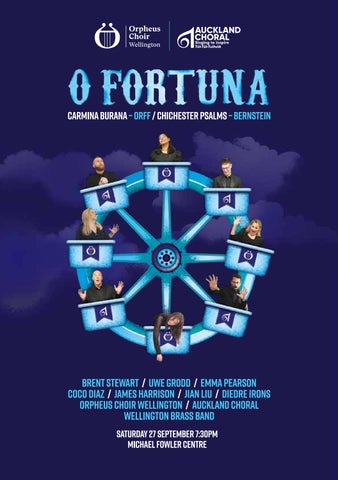
Carmina Burana – Orff / Chichester Psalms – Bernstein
Brent Stewart / Uwe Grodd / Emma Pearson
Coco Diaz / James Harrison / Jian Liu / Diedre Irons
Orpheus Choir WelLington / Auckland Choral
Wellington Brass Band
Saturday 27 September 7:30pm
Michael Fowler Centre
from the Chair
Good evening and welcome to this performance of two great choral masterworks of the 20th century.
Tonight’s unmissable concert is a celebration of collaboration.
For the first time in Wellington, Orpheus Choir Wellington is joined by Auckland Choral, together with the brilliant Wellington Brass, a children’s chorus, and five exceptional guest artists. It has been a joy to bring everyone together for this spectacular event.
Next week, on 5 October, the Mighty Orpheus travels to Auckland for a repeat performance at the Auckland Town Hall. If you have friends there, we would love you to spread the word.
Creating performances on this scale takes vision, commitment, and a huge team behind the scenes. To our supporters, sponsors, volunteers, and you, our audience, thank you. You make this possible. If you would like to be more involved, we would love to hear from you. Whether through sponsorship, a donation, volunteering, or helping us grow our audience, your support means the world to us.
We hope you will join us again on 13 December for Handel's Messiah with Orchestra Wellington, another unforgettable night in the making.
Enjoy the performance, and may fortune favour the bold!
DEBBIE GEE
CHAIR, ORPHEUS CHOIR WELLINGTON
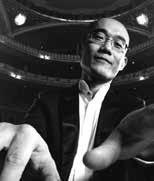
BRENT STEWART CONDUCTOR
UWE GRODD MUSIC DIRECTOR
AUCKLAND CHORAL
PROGRAMME
CHICHESTER PSALMS
LEONARD BERNSTEIN
INTERVAL
CARMINA BURANA
CARL ORFF
EMMA PEARSON SOPRANO
COCO DIAZ COUNTERTENOR
JAMES HARRISON
BARITONE
ORPHEUS CHOIR WELLINGTON
AUCKLAND CHORAL
WELLINGTON BRASS BAND
DIEDRE IRONS PIANO
JIAN LIU PIANO
CHICHESTER PSALMS
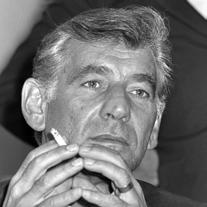
LEONARD BERNSTEIN (1918-1990 )
AMERICAN COMPOSER
and conductor Leonard
Bernstein is regarded as one of the foremost American musicians of the twentieth century.
As musical director of the New York Philharmonic orchestra from 1943, he was the first Americanborn conductor to lead a major American orchestra. Today, he is remembered for his Broadway musical West Side Story as well as pieces in a wide range of genres, including symphonic, orchestral music, ballet and film music.
At the end of 1963, the Dean of Chichester Cathedral, Rev Walter Hussey, asked Bernstein for a piece for the 1965 Chichester Festival. He suggested “a setting of the Psalm 2, or some part of it, either unaccompanied or accompanied by orchestra or organ, or both,”
adding: “Many of us would be very delighted if there was a hint of West Side Story about the music.”
Distracted by work on an eventually uncompleted musical, Bernstein did not start on Chichester Psalms until a year later.
The result is a small masterpiece. It is in three movements, each containing the setting of a complete psalm with extracts from another psalm. The piece uses a full choir, a soprano soloist, and a reduced orchestra of strings, brass, harps, and percussion.
Bernstein fulfilled the Dean’s wish for the music to be true to the
composer’s personal style by using music composed for his attempted musical plus a previously composed piece for West Side Story that had been cut from that show. The result is a piece that is jazzy, contemporary and accessible.
Bernstein wanted Chichester Psalms to be hopeful, life-affirming and consistent with his commitment to world peace. He combines vocal writing styles commonly associated with Christian church music with text sung in Hebrew to suggest a bridge between these cultures.
The work opens with a loud declamatory statement from the choir and instrumentalists. The choir sings an extract from Psalm 57 ‘Awake, psaltery and harp! I will arouse the dawn!’. The main body of the movement focuses on Psalm 100, presented in a jaunty 7/4 meter, animating the message to “make a joyful noise unto the Lord all ye lands.”
The second movement opens with the soprano singing Psalm 23 accompanied by harp. This psalm is David’s tribute to his Lord – ‘The Lord is my shepherd, I shall not want’. The serenity is maintained while the women’s voices join the melody.
Suddenly, this is interrupted by the men’s voices singing, roughly and harshly, Psalm 2 - ‘Why do the nations rage?’ The high voices come back to complete Psalm 23 and restore the tranquility, but the finale of the movement hints at the earlier
discord. Bernstein intended this flipping back and forth to reflect the tension between war and peace.
The third movement opens with an instrumental prelude. The music moves on to reflect on Psalms 131 and 133. ‘Lord, Lord, my heart is not haughty’ is presented in a rocking, gentle setting. The final words are Psalm 133 which closes the piece with a prayer for peace all too relevant in today's world: “Behold how good and how pleasant it is for brethren to dwell together in unity.”
CARMINA BURANA
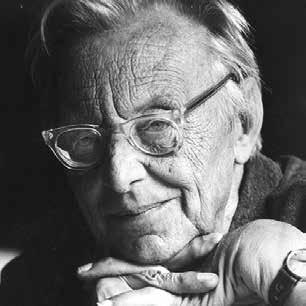
CARL ORFF (1895-1982)
THIRTY MILES SOUTH of Munich in the Bavarian Alps a collection of 200 13th-century poems was discovered in 1803in the abbey of Benediktbeuren.
Written by wandering scholars and monks, they give a vivid, earthy portrait of medieval life – attacking the defects of the Church, satirising manners and morals, and praising the sensual joys of food, drink and physical love. The poems were published in 1847 under the title, Carmina Burana (’Songs of Beuren‘).
German composer Carl Orff came across these poems in the 1930s and was immediately struck by their potential for the expression of his theories of music and theatre.
As a musical director and educator, Orff had formulated a concept he called elementare Musik (‘elemental music’) based on the unity of the arts, involving tone, dance, poetry, image, design, and theatrical
gesture. He wanted a simpler, more direct musical expression that could immediately affect listeners. In Carmina Burana he found the perfect elemental world and it inspired him to create a strikingly new musical language to match it. In the setting of Carmina Burana , Orff deliberately discards long, intricate melodies, counterpoint,
thematic development and the use of elaborate forms. Instead there is structural simplicity with the vocal parts written in unison, octaves, thirds, and sometimes fifths. The tunes are concise and of popular form.
Above all, a vigorous rhythm dominates. “The simpler and more reduced to essentials a statement is, the more immediate and profound its effect,” wrote Orff.
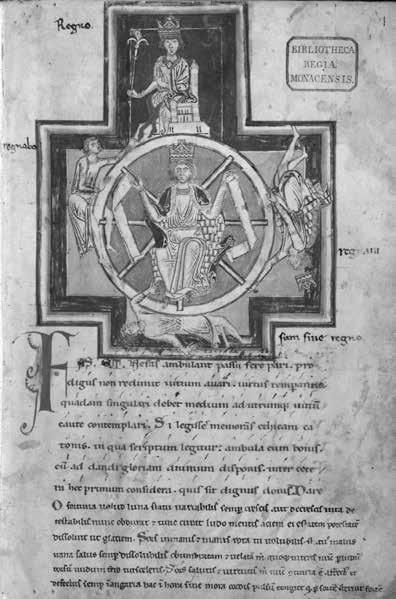
Above: The Wheel of Fortune from the manuscript of Carmina Burana.
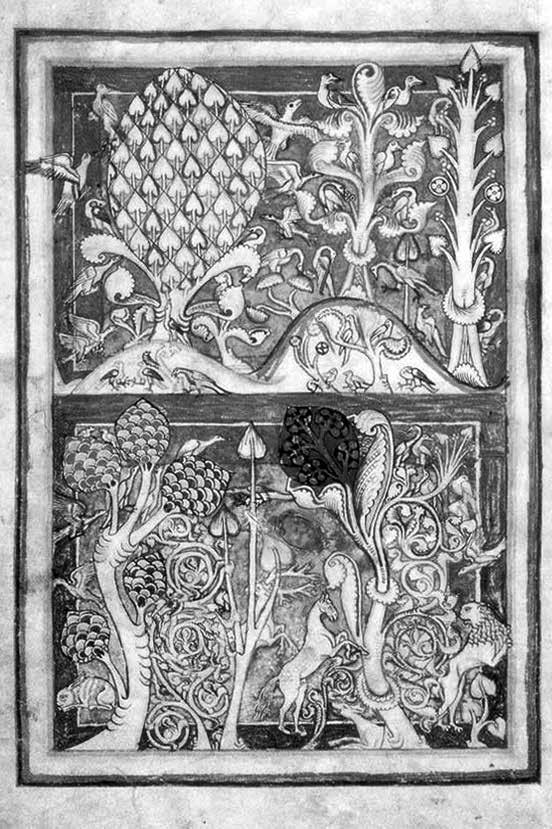
Opposite: The Forest, from the same work.
Carmina Burana is not easily to categorise. It is a set of ribald songs, but also a medieval morality play and even a philosophical tract. Most importantly, it is one of the most invigorating, entertaining and memorable musical creations of the 20th century.
ORFF CHOSE 24 poems from the Carmina Burana to include in his work. These he organises in three large sections, bracketed by a dramatic prologue and epilogue.
The prologue, ‘Fortuna Imperatrix Mundi’ (‘Fortune, Empress of the World’) sets the tone. It cautions that the turning of the wheel of fortune may bring sensual pleasure or riches but may also grind any joy to dust. It is this stark contrast of ideas coupled with Orff’s harmonically simple and rhythmically powerful music that gives Carmina Burana its theatricality.
The same contrast is expressed in the following ‘Fortune Plango Vulnera’ (‘I bemoan the wounds of fortune’) where the poet expresses rage at the injustice of his downfall while others, less worthy, are raised up.
The work then proceeds in three principal sections - ‘Primo Vere’ (‘Springtime’), ‘In Taberna’ (‘In the Tavern’) and ‘Cour
d’amours’ (‘Court of Love’).
‘Primo Vere’ is full of joyful dancelike music and words celebrating the coming of spring and banishing of winter. Its songs are filled with optimism and expectancy. However, disappointment (“Where is the lover I knew? He has ridden off!”) and deceit (“Make my cheeks red so young men love me against their will”) also lurk.
‘In Taberna’ is given over wholly to the men. The climax is a hearty drinking song but is preceded by two satirical stories – the roasting of a swan, told from the swan’s point of view,and the confession
of a self-styled Abbot who swindles and dupes his fellow gamblers. These songs exemplify the recklessness – whether through gambling, drinking or gluttony – that cause the wheel of fortune to turn unfavourably.
‘Cour d‘amours’ leaves behind the rowdy revels of the tavern to enter a refined, seductive world of sensual pleasure. The music is limpid, gentle and enticing, and marks the first appearance of the soprano soloist. The lovers’ urgent entreaties grow in ardour, with insistent encouragement from the chorus, until submission is won in the most rapturous moment in the score, ‘Dulcissime’ (‘Sweetest Boy’).
But just when the music is at its most celebratory (Blanziflor et Helena), it’s cut short by the intervention of imperious fate. The opening chorus (‘Fortuna’), like the turning of the great wheel, comes around once again to close the work.
Carmina Burana does not tell the story of an individual. Instead, it invokes primeval forces, such as the ever-turning wheel of fortune, the revivifying power of spring, the intoxicating effect of love, and those elements which prompt people to enjoy earthly pleasures. We are left with the sense that our destiny is shaped by forces stronger than ourselves.
ARTIST PROFILES
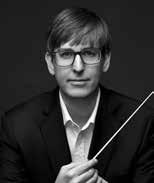
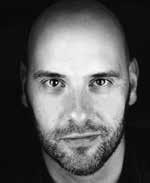
BRENT STEWART CONDUCTOR
Brent Stewart is a leading New Zealand conductor, percussionist, and pianist whose career spans orchestral, choral, operatic, and contemporary music. He is recognised for his versatility and artistry, from symphonic premieres and choral direction to education and production.
His 2025 conducting engagements include the New Zealand Symphony Orchestra, Auckland Philharmonia Orchestra, Orchestra Wellington, Christchurch Symphony Orchestra, Dunedin Symphony Orchestra, Opus Orchestra, and Manukau Symphony Orchestra.
A champion of New Zealand composers, Brent has premiered numerous works, including Lucy Mulgan’s Red! for New Zealand Opera, Gillian Whitehead’s Ngā Whetū o Matariki, Takerei Komene’s E Kiwi E, and Karlo Margetic’s Xylophone Concerto, which he also recorded as soloist with the New Zealand Symphony Orchestra.
Beyond the podium, Brent is the Music Director of Orpheus Choir Wellington, Section Principal Timpanist for Orchestra Wellington, and assistant director and pianist for the New Zealand Secondary Students’ Choir and is active as a producer and arranger.
His collaborations range from Synthony and Mana Moana to orchestral projects with Benee. He recently worked as an orchestral recording producer on Nickelodeon’s Saving Bikini Bottom: The Sandy Cheeks Movie and arranged music for the New Zealand feature film Tinā. He was recently appointed the 2025 Friedlander Foundation Associate Artist with New Zealand Opera.
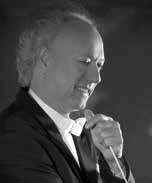
UWE GRODD MUSIC DIRECTOR, AUCKLAND CHORAL
Uwe Grodd’s contributions to classical music have earned him international acclaim. An Exclusive Artist with Naxos Records since 1997, he has made world-premiere recordings of more than 100 works. He gained global recognition in 2000 when awarded First Prize at the Cannes Classical Awards for Best 18th-Century Orchestral Recording with Hungary’s Nicolaus Esterházy Sinfonia.
Further honours include two Gramophone UK Editor’s Choice awards and the International Record Review Outstanding Award for his recordings of Ferdinand Ries’ complete works for piano and orchestra with orchestras including the Royal Liverpool Philharmonic, Bournemouth Symphony, Gävle Symphony, and the New Zealand
Symphony Orchestra. Performance highlights include eight concerts with the Mexico City Philharmonic and the Final Concerts of the 53rd and 54th Handel Festival in Halle, Germany, conducting 300 singers and the Philharmonisches Staatsorchester Halle. He also led sell-out performances of Handel’s rediscovered opera Imeneo, earning the Badge of Honour from the Handel Festival and the City of Halle.
A champion of contemporary music, Grodd has commissioned more than 50 works by New Zealand composers. In 2021 he conducted the premiere of Tim Finn’s opera Ihitai ’Avei’a – Star Navigator with the Manukau Symphony Orchestra, Auckland Choral, and the Graduate Choir, later reviving it with Orchestra Wellington.
Professor Emeritus at the University of Auckland, Grodd has directed the Manukau Symphony Orchestra since 1993 and Auckland Choral since 2008.
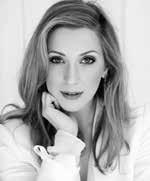
EMMA PEARSON SOPRANO
Emma Pearson is one of Australasia's leading international sopranos.
As principal artist at the Hessisches Staatstheater, Wiesbaden, Emma performed over 30 roles for the company, including the title roles in Lucia di Lammermoor, Lulu, La Calisto, Zerbinetta (Ariadne auf Naxos), Königin
der Nacht (Die Zauberflöte), Sophie (Der Rosenkavalier), and Adele (Die Fledermaus). On her departure she was awarded the title of ‘Kammersängerin’ by the State of Hessen.
She has also sung leading roles for Semperoper Dresden, Nationaltheater Mannheim, Theater St Gallen, West Australian Opera, State Opera South Australia, and Pinchgut Opera.
Emma has performed Comtesse Adele (Comte Ory), Fiordiligi (Cosi fan tutte), Semele (filmed by Greenstone), Countess (The Marriage of Figaro) and Gilda (Rigoletto) for New Zealand Opera; Violetta (La traviata) for Opera Queensland and Wellington Opera; Elettra (Idomeneo), Sophie, Queen of the Night and Contessa di Folleville (Il Viaggio a Reims) for Opera Australia.
Emma’s concert repertoire includes Beethoven’s 9th Symphony and Missa Solemnis, Brahms German Requiem, Mozart’s and Faure’s Requiem, Barber’s Knoxville: Summer of 1915, Schumann’s Scenes from Goethe’s Faust, Messiah, Les Illuminations (Britten), Schoenberg’s Pierrot Lunaire, Haydn The Seasons and Bach’s Christmas Oratorio and B Minor Mass
This year Emma’s engagements also include her role debut as Musetta (La Boheme) for New Zealand Opera, a national tour with the New Zealand Trio performing Strauss’ Four Last Songs, Opera in the Park, Nelson, and Messiah with Orpheus Choir Wellington.
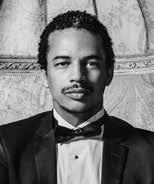
COCO DÍAZ COUNTERTENOR
South African-born countertenor
Coco Díaz began his musical journey singing choral music with the Auckland Youth, the New Zealand Youth, and the Auckland Chamber Choirs, while studying operatic vocal performance at the University of Auckland.
Coco was a Dame Malvina Major PWC Emerging Artist with New Zealand Opera for the 2011–2012 season. He was the runner-up in the Lexus Song Quest, winner of the New Zealand Aria competition, and recipient of the New Zealand Circle 100 scholarship. Over six years, he studied at the Auckland Opera Studio with Frances Wilson, while maintaining an active performance schedule in opera and concert repertoire across New Zealand.
Recent performances include: Athamas in New Zealand Opera’s Semele; David Hamilton’s Manukau Songs; Requiem pour L.,which toured extensively throughout Europe (2017-19); Bach Musica’s productions of Christmas Oratorio (2023) and Vergnügte Ruh (2025); Kūī kūī by Bramah/Kelly.
Now based in Spain, Coco continues his studies with Vivica Genaux and has performed sacred works with various ensembles across Andalusia and in Portugal including Carmina Burana (Almería) Spring Festival) and Vivaldi’s Gloria (OCAL’s Christmas Gala Concert).
JAMES HARRISON BARITONE
James Harrison studied at the Royal College of Music where he won the prestigious Lies Askonas Prize, then went on to the National Opera Studio.
James has appeared in concerts at the Royal Albert Hall, The Barbican, The Wigmore Hall and St John’s Smith Square with groups such as The Prince Consort, Grahame Johnson’s Young Songmakers and The Classical Opera Company. He made his debut for English National Opera in Between Worlds and sang at the Royal Opera House in Alice’s Adventures in Wonderland. Other roles include Conte Almaviva in Le Nozze di Figaro for Opera Sør and Pop-Up Opera in Norway; Escamillo in Carmen for Opera UpClose; Bello in La Fanciulla del West for Opera Holland Park.
Now back in New Zealand James has sung in Tosca, Candide, Trial By Jury and Carmen for New Zealand Opera and sang Germont in La Traviata for a Festival Opera.
James sings with orchestras and choirs throughout Aotearoa regularly and is in demand as a teacher and choral educator.
He has taught at the University of Waikato, coached the New Zealand Youth Choir and New Zealand Secondary Students’ Choir, worked with New Zealand Opera’s Studio Artists, and is working with top school choirs and young singers across the country.
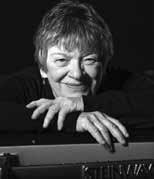
DIEDRE IRONS PIANO
Diedre Irons was born in Winnipeg, Canada. A child prodigy, at the age of 12
Diedre played the Schumann Piano
Concerto with the Winnipeg Symphony Orchestra and made her official debut with that orchestra at 18 years old.
Diedre studied at the Curtis Institute of Music in Philadelphia with Rudolf Serkin, joining the faculty following her graduation and teaching there for the next seven years, meanwhile touring Canada and the United States as a soloist and as a chamber music player. In 1977 she moved to New Zealand where she has made numerous appearances with the major orchestras, toured many times under the auspices of Chamber Music New Zealand, and appeared regularly on Radio and Television New Zealand.
She has continued to travel globally, playing concerts in 25 countries through IDRIART, an international organization engaged in the production of intercultural festivals.
Her many awards include an MBE for services to music in 1989, an OMZM in 2011, and a Doctorate of Music (honoris causa) in 2007 from Manitoba’s Brandon University ‘in recognition of outstanding contributions in the world of music through superlative achievement as a talented, dedicated and passionate pianist’.
JIAN LIU PIANO
Dr Jian Liu is an internationally acclaimed concert pianist and one of New Zealand’s leading artists. He has performed throughout
Europe, Asia, and North America, appearing in some of the world’s most prestigious venues, including Carnegie Hall and Lincoln Center. Dr Liu has released multiple solo and chamber music albums in both New Zealand and the United States.
A dedicated collaborator, Dr Liu regularly works with New Zealand’s foremost performing arts organizations, including the New Zealand Symphony Orchestra, Chamber Music New Zealand, the Royal New Zealand Ballet, and the New Zealand Arts Festival. He is also Deputy Head of School at the New Zealand School of Music— Te Kōkī, Victoria University of Wellington, and serves as a trustee of the New Zealand Music Trust.
A passionate advocate for New Zealand music, Dr Liu has premiered and recorded many works by New Zealand composers. In 2022, he edited and published New Zealand Piano Works in both English and Chinese – the first-ever publication of New Zealand music in China. His companion album, Where Fairburn Walked, won Best Classical Artist at the 2025 Aotearoa Music Awards. He studied with Professor Jin Zhang and Dr Caio Pagano and holds a Doctor of Musical Arts degree from the Yale School of Music, where he was a student and assistant of the legendary pianist Professor Claude Frank.
DEBBIE RAWSON
WELLINGTON BRASS BAND
DAVID BREMNER MUSIC DIRECTOR
Wellington Brass Band is the country's leading brass ensemble led by Music Director David Bremner. It has three active bands, from their education programme band to the internationally acclaimed premier band.
WBB works with some of New Zealand’s finest musicians in collaborations with the NZSO, Orpheus Choir Wellington and the city's contemporary artists.
SOPRANO CORNET
Matthew Stein
PRINCIPAL
SOLO CORNET
Brendan Agnew
SOLO CORNETS
David Maas
Andrew Weir
Daniel Dalgleish
Craig Stewart
REPIANO CORNET
Kodi Rasmussen
CORNETS
Sarah Wright
Mollie Cornfield
Hugo Carter Rosie Evans
FLUGEL HORN
Brad Mancer
SOLO HORN
Lachlan Spence
HORNS
Clynton Payne
Eleanor Grigg
FIRST BARITONE
Kate McGregor
2ND BARITONE
Ethan Mancer
WBB have also had many recording projects and work in film and television. They have commissioned numerous works by New Zealand composers, a collection of which has been recorded by SOUNZ - Toi te Arapūoro.
Exciting future ventures include competing at the World Brass Championships in Kerkrade, Netherlands in 2026.
PRINC. TROMBONE
Mark Davey
2ND TROMBONE
Clara Dujakovic
BASS TROMBONE
Shannon Pittaway
SOLO EUPHONIUM
David Bremner
2ND EUPHONIUM
Finlay van Lent
E-FLAT BASS
Chris Collings
Kerry Falloon
Ian Peters
B-FLAT BASS
James Sutherland
Mika Hayashi
PERCUSSION
Grant Myhill
Cameron Brizzle
Naoto Segawa
Yoshiko Tsuruta
Jack Bewley
Kodi Rasmussen
Daniel Dalgleish
TIMPANI
Larry Reese
ORPHEUS CHOIR WELLINGTON
BRENT STEWART MUSIC DIRECTOR
Formed in 1947, Orpheus Choir
Wellington is the largest symphonic choir in New Zealand with around 150 auditioned singers.
The choir brings dramatic, spectacular, emotionally charged performances of stunning choral music to a wide variety of audiences and events. These include the choir’s own sellout concerts, often recorded by
Radio New Zealand Concert, festivals and the occasional pop concert.
As custodian of some of the greatest music ever written we love to make it come alive for audiences of all ages and stages. Our varied and sometimes surprising repertoire ranges from the most loved choral works to the less known and more challenging, as well as Māori waiata.
The children's choir for this concert comprises talented young singers from
BASS 1
Tom Ackroyd
Andreas Benz
Osmond Borthwick
Sam Brown*
Tor Chiles
Billy Clemens
Stephen Clothier
Jono Cordwell
Andrew Davies
Hamish Dixon
Jonathan Douché
Trevor Henry
Alastair Hercus
Yang Liu
Hasil Maksud
David Marrison
Jackson McCarthy
Kyle Petersen
Stirling Smidt
Angus Stewart
Dan Tideman
Noah Walker
David Wansbrough
Mark Wilcox
BASS 2
Richard Armishaw
Bruce Asher
Chris Bell
Matt Benge
Richard Dean
Hemi Enright
Craig Fitton
Simon Harnden
Alastair Ker
Daniel Kibblewhite
Charle Rainey*
Ned Rainey
Russell Tregonning
Olly Wilcox
Roger Wilson
Leilani Woodmore*
St Mark’s School, Samuel Marsden Collegiate School and Scots College.
AUCKLAND CHORAL
PROFESSOR UWE GRODD MUSIC DIRECTOR
Auckland Choral is one of New Zealand’s most distinguished musical ensembles. Founded in 1855, it is the country’s oldest surviving arts organisation and Auckland’s only symphonic-scale choir.
With over 100 auditioned singers, the choir performs repertoire spanning centuries – from Renaissance masterworks to Romantic oratorios and contemporary New Zealand compositions.
Renowned for its cherished annual Christmas performance of Handel’s Messiah – a tradition begun in 1857 and interrupted only in 1918 and
SOPRANO
Avanthi Amuhengoda
+Anna Bassett
Monica Bayldon
Kate Blazey
Rosemarie Brown
+Kate Burson
Tracy Carter
+Lorraine Casey
Stephanie Cortesi
**Karen Dombroski
*Colleen Elliott
+Jane Gee
+Debbie Hardy
Linda Holdaway
Doris Jung
**Anna Kofoed
+Traude Leibbrand
Anna Leslie
+Setsuko Lichtnecker
+Sharron Meadows
Carolyn Middleton
*Cath Mitchell
+Isabel Morris
Anne O’Hanlon
Megan Owen
Emily Richardson
Shelley Robertson
+Sylvia Rosevear
Anna Wego
+Ann Whitehouse
Hua Wu
2021 – Auckland Choral also regularly performs other large choral works.
Recent highlights include Verdi’s Requiem, Elgar’s The Dream of Gerontius (with the Royal Melbourne Philharmonic Choir), and Tim Finn’s opera Ihitai ’Avei’a – Star Navigator, with Finn at the piano, the Manukau Symphony Orchestra, and the Graduate Choir under Uwe Grodd.
Since 2008, Grodd’s artistic leadership has shaped Auckland Choral’s distinctive sound, guiding performances that honour the great choral tradition while embracing ambitious contemporary works.
ALTO
*Margaret Anderson
Debbie Barber
**Sandy Bulmer
+Nicola Burton
+Jenny Corkill
Yvonne Costar
Helen Crompton
Rosemary Duncan
**Lisa Er
+Rachel Farrell
+Sylvia Hubbard
*Dorothy Kemeys
+Olive Leddy
+Michelle McKinlay
**Juliana Nijmeijer
+Patsy O’Sullivan
**Helen Preston Jones
Katy Renouf
Ingeborg Vanloon
Jenny Walker
+Morag White
Aria Zhang
TENOR
+Allan Bell
Brendan Griffiths
Peter Lamb
Greg Milner-White
*Warwick Mitchell
Ben Pollard
Cameron Rosie
Henry Sim
+Tim Stevenson
Albert Wilson
Neil Wright
BASS
Andrew Bolton
*Ian Boswell
*Don Currey
**Keith Guyan
**David Hamilton
*Joe Hancock
*+*Pat Henley
+John Mitchell
+Pedro Silva
Jay Smith
Richard Sorrenson
Garnet Tregonning
Hans van Zelst
+ 10 years‘ service
* 25 years‘ service
** 40 years‘ service
*+* 50 years‘ service
ORPHEUS CHOIR WELLINGTON
GIVE A GRATEFUL THANK YOU TO
THE DEANE ENDOWMENT TRUST .
THE ARMISHAW FAMILY . for their support of the Orpheus Choir Wellington Scholarship Programme 2025
JIM & CHRISTINE PEARCE for operation of surtitles for this concert
RICHARD BRAAE for the programme notes
ROGER JOYCE COMMUNICATIONS for programme editing and layout