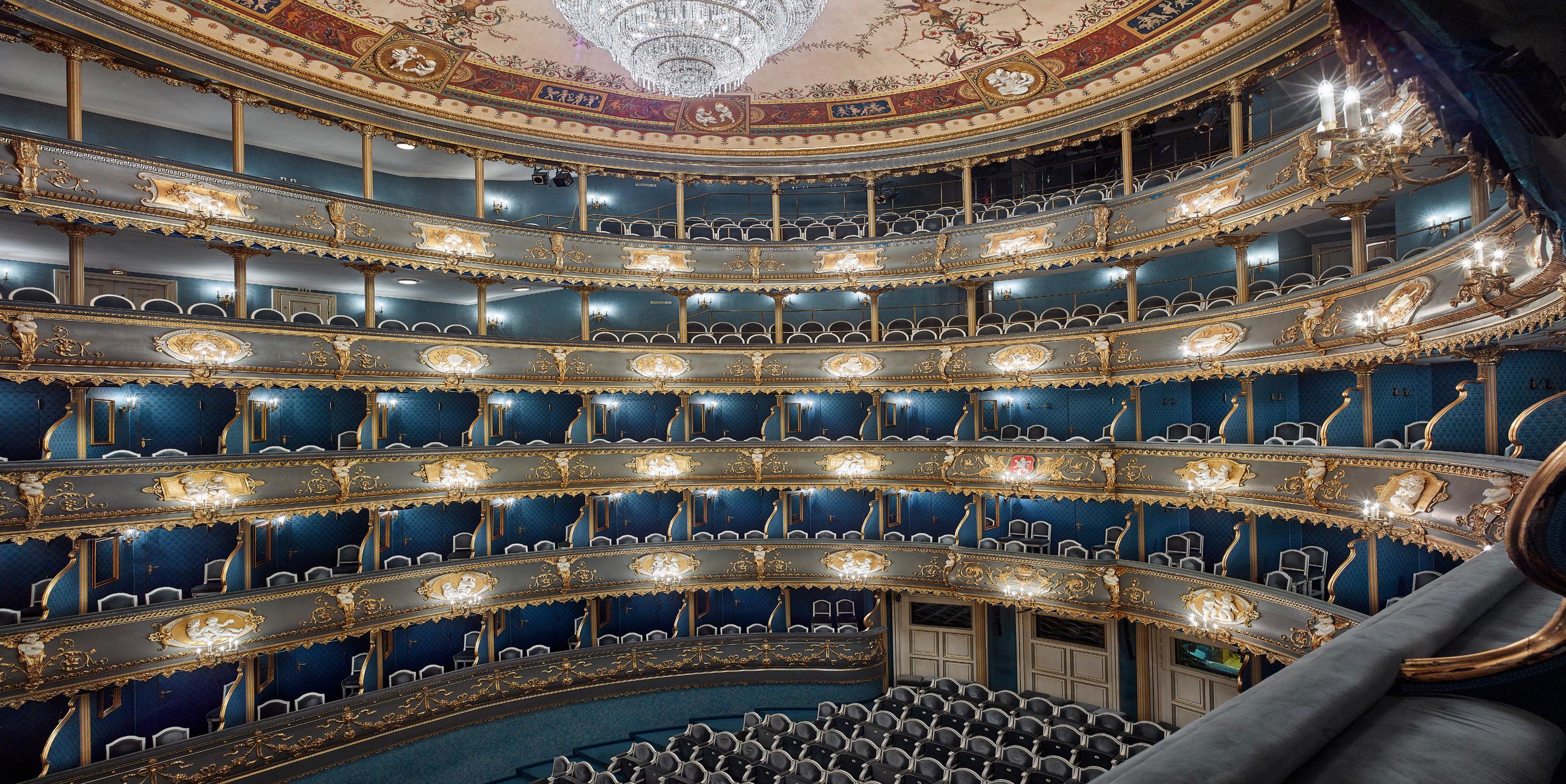
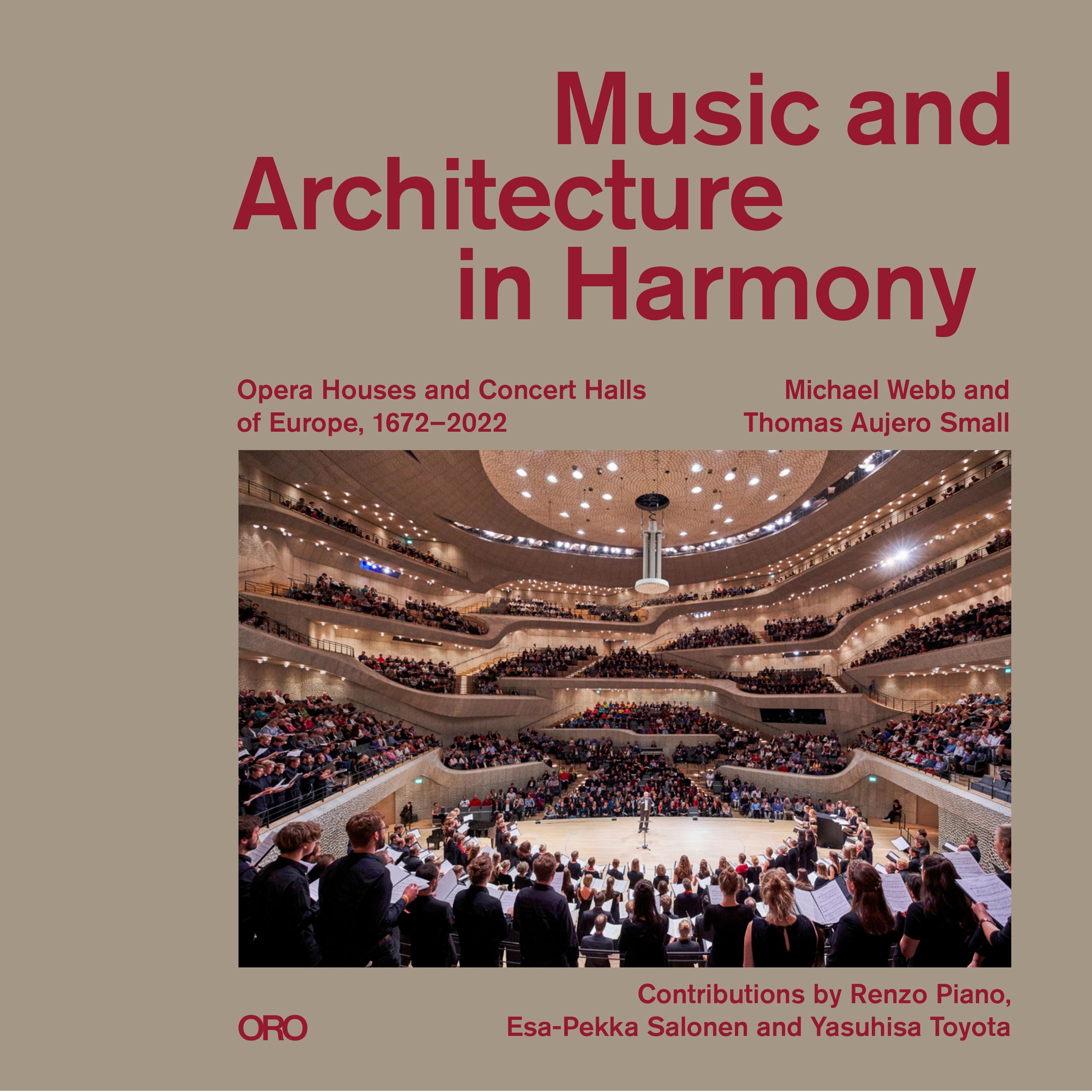
This selection of ninety halls traces their evolution from how architects and acousticians enrich the experience that support each other and of a glorious
Architectural writer Michael Webb and music impresario exploring theaters, talking to their artistic directors and or modest, which delight the eyes and the ears, while embodying Their account of the history, architecture and programming
The halls are featured chronologically, with break-out chapters Prague and London, as well as festivals and music academies. halls, offers his insights on acoustics. Renzo Piano
This is a perfect gift for opera-lovers, concertgoers, and and design, old or new. It will also serve as a guide to inspire summer festivals.
Authors
Michael Webb Hon. AIA/LA is the author of thirty books journals in Europe, the U.S. and Asia. Thomas Small School of Journalism and to the Sorbonne Nouvelle in Paris, Concertonet and other
Hardcover, 25cm square, ORO Editions, September, Discounts available on 10+ copies, please
from the baroque era to the latest innovations and explains experience of playing and listening. It’s a celebration of two arts glorious legacy that is constantly renewing itself.
impresario Thomas Aujero Small travelled all over Europe, attending performances. They chose exemplars, grand embodying a rich heritage or building a new audience. programming of each theater is illustrated with 190 vivid images. chapters on the musical capitals of Berlin, Vienna, Paris, academies. Yasuhisa Toyota, who worked on eight of the Piano and Esa-Pekka Salonen contributed forewords. and everyone who is captivated by great architecture inspire cultural tours of European cities, small towns and festivals. Authors books on architecture and design and writes for leading Small won musical fellowships to the Columbia Graduate Paris, and has written extensively for the French journal other publications. square, 302 pages, $60.00. September, 2026 please contact brooke@oroeditions.com
Contents
Foreword 8
Renzo Piano
Foreword 9
Esa-Pekka Salonen
Architecture in the Service of Music 12
Michael Webb
Performing for the Court 16
Haydnsaal, Eisenstadt, Austria 17
Markgräfliches Opernhaus, Bayreuth 19
Cuvilliéstheater, Munich 23
Drottningholms Slottsteater, Sweden 26
Neues Palais Theater, Potsdam 29
Opéra-Royal de Versailles 31
City of Music: Berlin 34
Staatsoper unter den linden 36
Deutsche Oper 39
Komische Oper 40
Konzerthaus 43
Berliner Philharmonie 46
Kammermusiksaal 50
Opera Goes Grand 54
Staatstheater, Meiningen 56
San Carlo, Naples 58
La Scala, Milan 61
Grand-Théâtre de Bordeaux 65
Opéra-Municipal de Marseille 70
La Fenice, Venice 72
Teatro Malibran, Venice 74
La Monnaie, Brussels 77
L’Opéra-Royal de Wallonie, Liège 80
Bayerische Staatsoper, Munich 80
Gran Theatre del Liceu, Barcelona 84
Opernhaus, Zürich 92
Hessisches Staatstheater, Wiesbaden 96
Royal Swedish Opera, Stockholm 100
Early Memories 102
Thomas Aujero Small
City of Music: Vienna 106
Wiener Staatsoper 107
Musikverein 109
Theater an der Wien 114
Volksoper 119
Wiener Konzerthaus 119
Symphonic Stages 122
Concertgebouw, Amsterdam 123
Muziekgebouw aan’t IJ 123
Palau de la Música Catalana, Barcelona 128
Die Glocke Konzerthaus, Bremen 133
Liederhalle, Stuttgart 133
Kulturpalast, Dresden 137
Brucknerhaus, Linz 142
Konzerthalle, Bamberg 144
City of Music: Paris 150
Palais Garnier 151
Opéra-Comique 154
Théâtre des Champs-Elysées 157
Radio-France Auditorium 160
Philharmonie de Paris 163
La Seine Musicale 163
Yasuhisa Toyota on Acoustics 168
Escape to a Festival 170
Goethe-Theater, Bad Lauchstädt, Germany 171
Festspielhaus, Bayreuth 173
Regentenbau, Bad Kissingen, Germany 175
Grosser Festspielhaus, Salzburg 175
Snape Maltings, U.K. 179
Angelika Kauffmann Saal, Schwartzenberg, Austria 182
Glyndebourne Theatre, Lewes, U.K. 184
Wolkenturm (Cloud Tower) Grafenegg, Austria 186
National Opera House, Wexford, Ireland 188
Festspielhaus, Erl, Austria 192
Auditorium Giovanni Arvédi, Cremona 196
City of Music: Prague 200
Stavovské divadlo (Estates Theater) 204
Národní divadlo (National Theater) 205
Státní Opera (State Opera) 209
Music Academies 212
Salle Cortot, Paris 213
IRCAM, Paris 214
Mumuth, Graz 215
Royal Academy of Music, London 216
Haus Marteau, Lichtenberg, Germany 218
Pierre Boulez Saal, Berlin 221
City of Music: London 224
Sinfonia Smith Square 226
Covent Garden 227
Royal Albert Hall 227
Wigmore Hall 229
Royal Festival Hall 230
Barbican Concert Hall 233
Reconceiving the Opera House 236
New Hamburg Opera House 237
Teatro Regio, Turin 239
Opéra National de Lyon 239
Musiktheater im Revier, Gelsenkirchen 241
Theater St. Gallen 243
Aalto-Theater, Essen 246
Oslo Opera House, Oslo 249
Stavros Niarchos Cultural Center, Athens 254
Contemporary Concert Halls 258
KKL, Lucerne 259
Casa da Musica, Porto 262
Parco della Musica, Rome 266
DR Koncerthuset, Copenhagen 270
Harpa Concert Hall, Reykjavik 272
Konzerthaus, Blaibach, Germany 276
Filharmonia, Szczecin, Poland 278
CKK Jordanki, Toruń, Poland 281
Elbphilharmonie, Hamburg 285
Photo credits 294
Acknowledgments 298
Contributors 299
Foreword
by Renzo Piano
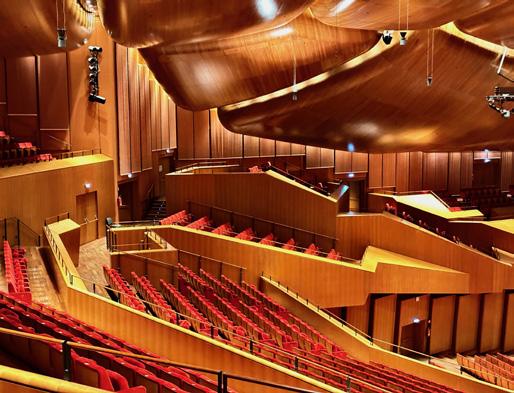
I have always loved to create spaces for music.
This is what architecture knows how to do.
It creates acoustic chambers so that music can be heard properly, whether they are concert halls, recording studios, or sound labs.
Just as a luthier crafts instruments to produce sound, architecture creates spaces so that music can be heard in the best possible conditions.
When designing spaces for music, there are measurable elements, such as sound intensity, clarity, and its distribution in space. But then, there is a kind of magic, and that is where collaboration with musicians becomes essential.
There are so many things that bring music and architecture closer together.
The same need for a geometric, sometimes mathematical, structure.
The same need for order, one that can be disrupted when necessary.
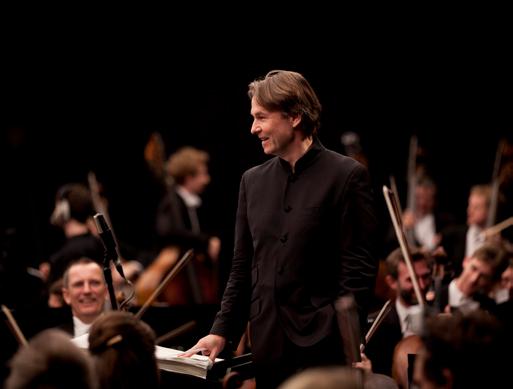
Foreword by Esa-Pekka Salonen
The field of acoustics is partly scientific and partly subjective, yet we can still describe in broad terms what makes a hall sound good. A symphony orchestra moves from the faintest whisper to overwhelming power, and the architecture of a hall must be able to carry that entire dynamic range. But there is another element—more subjective, yet just as important, if not more so: the vibe, the atmosphere of the space, its feeling and expressive character, which profoundly shapes the listening experience. The crucial moment comes when the audience first enters the hall. If the environment feels welcoming, expressive—perhaps even exciting—it prepares them for the music. This relaxation is not passive, not switching off, but a kind of openness: settling into the experience and becoming ready for what is about to unfold.
During the lockdown I realized how deeply I had missed the concert experience. When I finally returned to a hall and stood at the bar before the performance, I suddenly had the powerful sense that I was among “my people.” Many of them I did not know, yet we were bound together by our shared love of music and by the simple fact of being present in that space at that moment. What struck me was the quiet diversity of this tribe—certainly in age, but in many other ways as well. A concert hall gathers people who might otherwise never meet, and the entire experience, from arriving at the building to leaving after the final notes, feels subtly shaped and curated, preparing us to share something meaningful together.
Frank Gehry observed that in music the timeline is fixed: the composer and performers determine it, and the listener simply follows its unfolding from beginning to end. In architecture, by contrast, the visitor creates
their own timeline through movement in the space— returning, lingering, or changing direction. Music unfolds relentlessly; architecture allows time to be shaped by the individual experience. In a great concert hall, the two ideas meet: the musical timeline is fixed, but everything surrounding it—the journey into the hall, the gathering of the audience, the atmosphere of the space, the musical program itself—is thoughtfully shaped.
Frank and I agreed that the message of an ideal hall should be one of openness, excitement, and inclusivity—qualities not always associated with classical music. That, I think, is a mistake. Music needs a sense of play. Composers like Beethoven were not solemn priests of culture; their music is full of wit, energy, and surprise. A concert hall should invite that spirit. The experience should not feel reverential and glum, but alive—something shared with curiosity, openness, and joy.
Architecture in the Service of Music
by Michael Webb
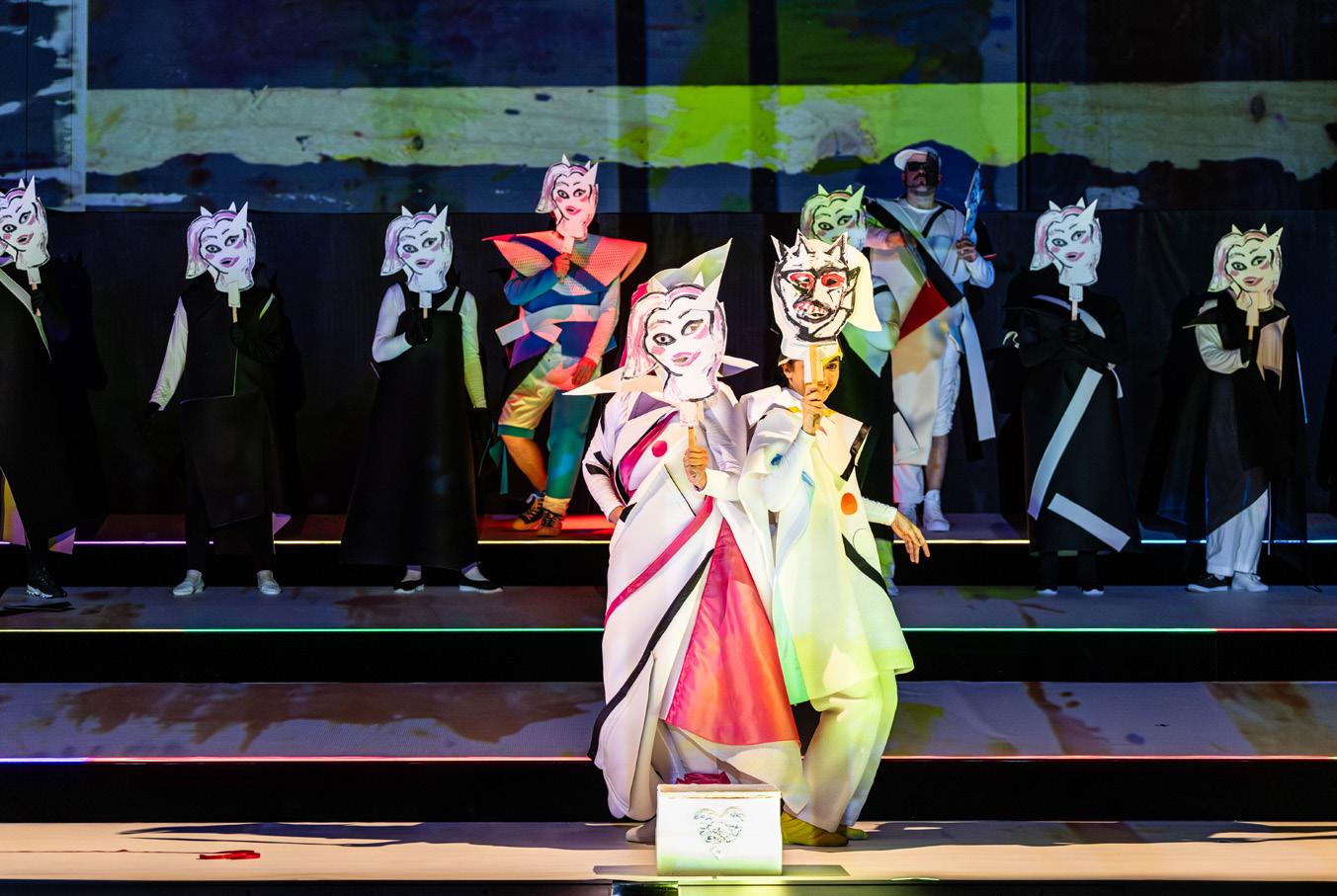
Architecture and music are universal languages, and fluent practitioners are at home wherever they go. These arts can also be tightly interwoven, each intensifying what the other has to offer.
“Architecture is like music: it is made to move and delight,” declared Jean Nouvel, who has designed several exemplary theaters. Frank Gehry was an architect whose passion for music produced some of the world’s best concert halls. As he explained in an interview with The Seattle Times in 2017,
“In music, you’re taking sounds and putting them together to create beauty and a feeling. When you do a building, you’re taking inert materials and putting them together to create beauty and a feeling. You make the space comfortable, interactive, and humane so that people feel together in the room and people feel together with the orchestra. The orchestra feels the relationship with the people. And it makes it better.”
In this survey the focus is on classical music—an imprecise term that embraces a host of forms and styles from medieval motets to contemporary experiments; compositions that challenge, delight, inspire, and stand the test of time. For centuries in Europe, religious institutions were the principal clients for artists and composers, and even agnostics like me can thrill to plainsong in a Romanesque abbey or a cantata of Johannes Sebastian Bach performed in the church of St. Thomas, Leipzig, where he served as music director 300 years ago. Bach created music to be heard in a soaring Gothic nave; other composers scaled
their work to an intimate salon or a grand public hall.
Music is a primal human expression and constantly evolving. Classical music emerged from domestic performances, steadily growing in scale and popularity, and generating an enduring repertoire. Great composers, from Handel and Bach to Haydn and Mozart, Beethoven and Wagner, Schoenberg and Stravinsky, pushed the bounds of the art, creating new sounds and structures. Opera evolved from the masques and entertainments staged to celebrate dynastic marriages. The first true operas, in which music carries the story, were composed in Florence in the late sixteenth century. Those scores have disappeared, but Monteverdi’s Orfeo, composed for the Gonzaga court in Mantua in 1607, is still revived along with later work by that master of the genre.
The joy of listening to great music superbly performed is enriched by the design of purposebuilt halls. When sight and sound are perfectly matched, all your senses are engaged, and you can have a sublime experience. Greek amphitheaters may be the oldest surviving structures purpose-designed for musical dramas, and variations on that model were constructed throughout the Roman empire. The Teatro Farnese in Parma and Palladio’s Teatro Olimpico in Vicenza show how Renaissance architects were inspired by antique models.
Private or public, large or small, plain or grandiose, each hall reflects the changing demands of composers, performers, and auditors over the past four centuries. A standard model quickly emerged. A rectilinear “shoebox” plan proved acoustically rewarding for concerts and the seats could be cleared when the flat floor was required for an event—such as the annual Vienna Philharmonic Ball in