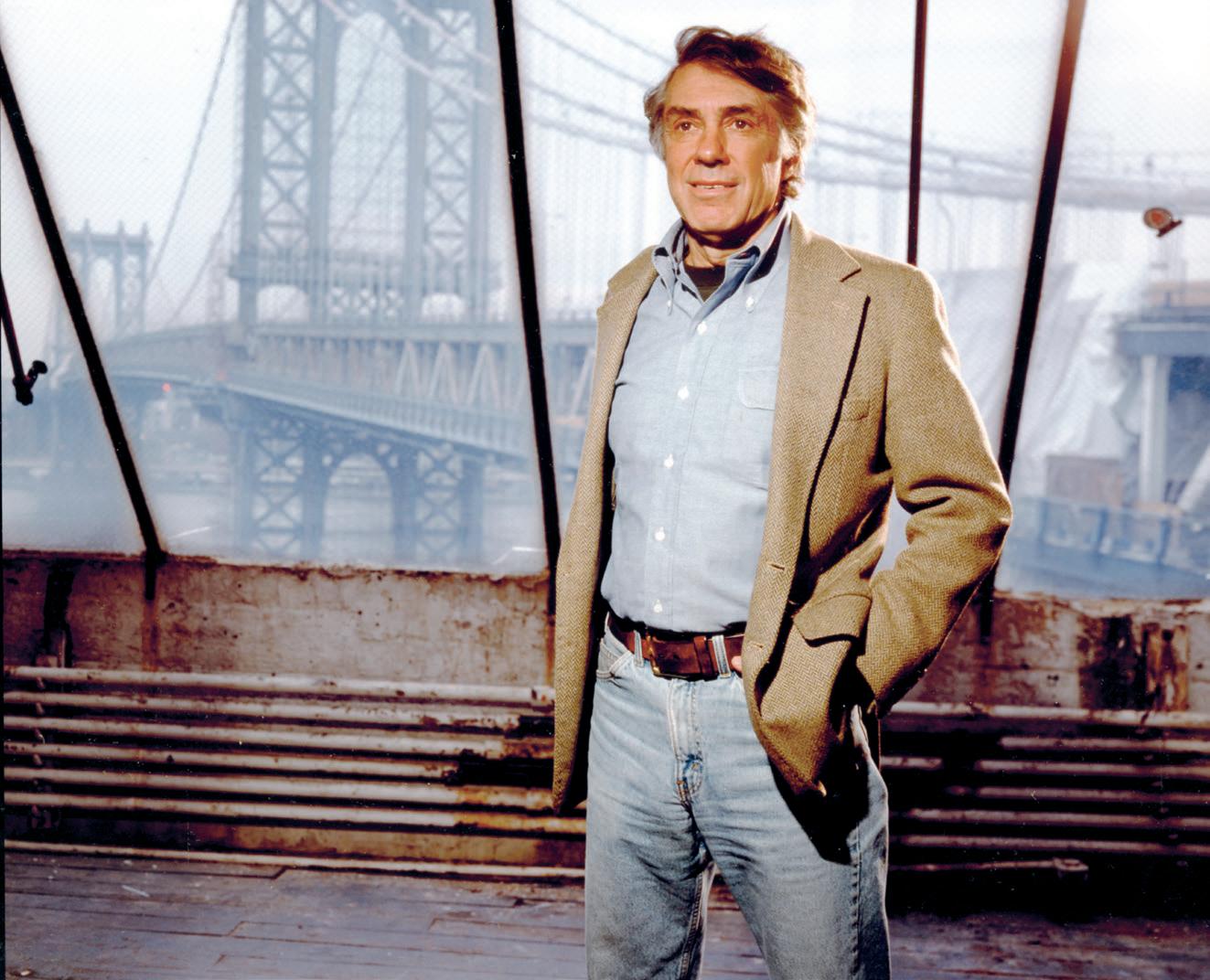
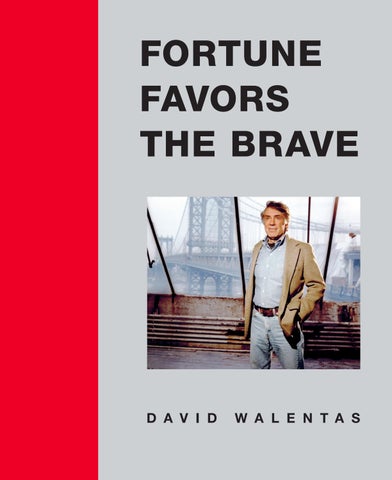
DAVID WALENTAS
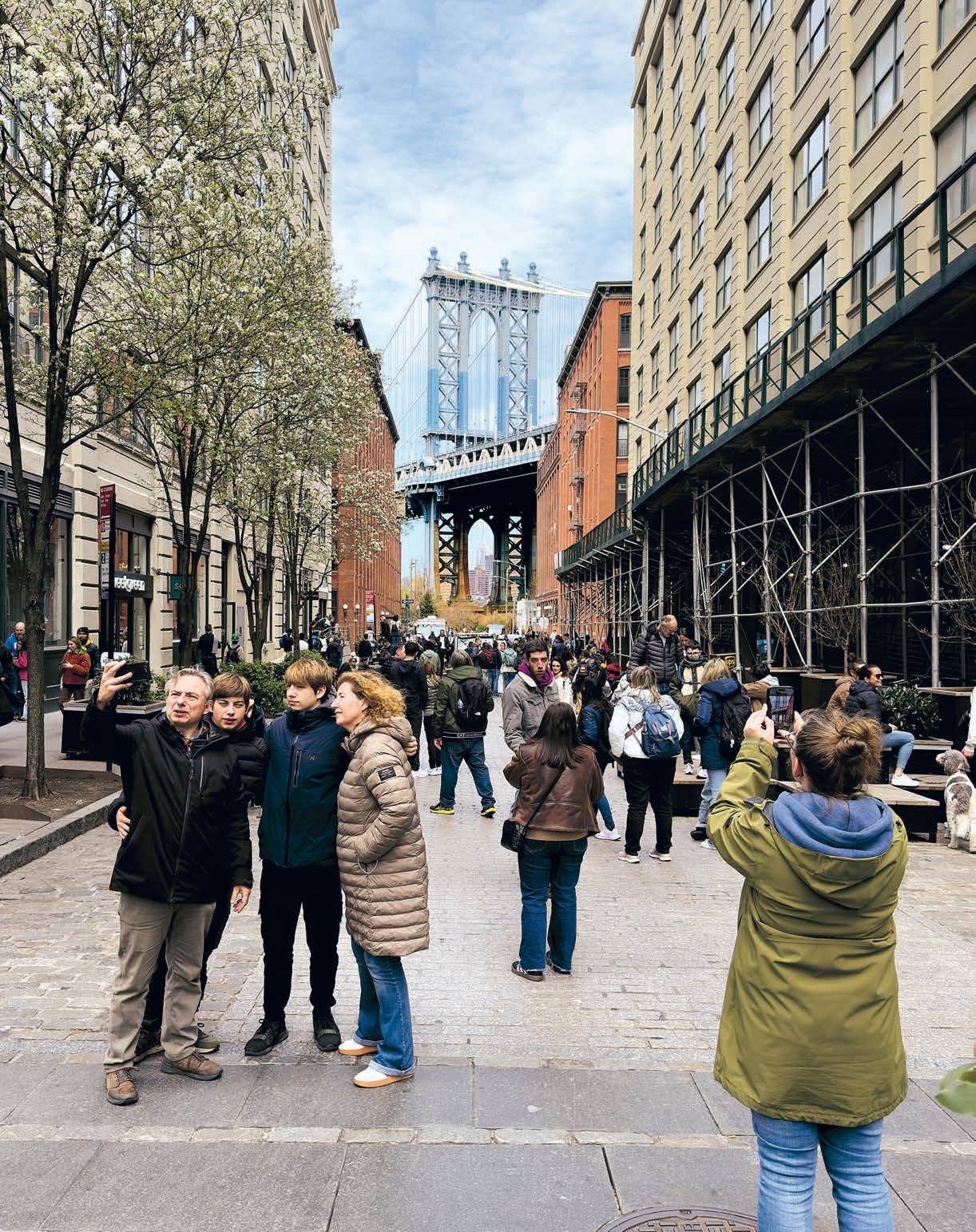
The corner of Washington and Water Streets in Brooklyn is the most photographed intersection in the world or, at least, in all of New York City.
People from everywhere on the planet jam the streets every hour of the day, no matter the weather or time of year. Tourists clutch selfie-sticks; smiling couples pose for engagement photos with professional photographers; toddlers are perched on the necks of their dads.
Everybody is angling for the same shot. They want to position themselves perfectly in the “legs” of the Manhattan Bridge so that the Empire State Building, across the East River, sits directly above them.
Millions of people capture the image so they can brag on Instagram that they were here in Dumbo, the neighborhood I created the neighborhood that changed not just Brooklyn, but all of New York City.
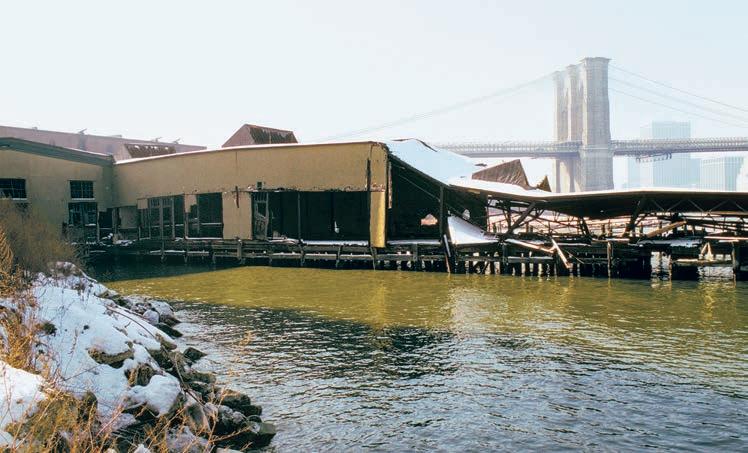
In the late 1970s, when I first stood at this corner, there wasn’t another person around. The air smelled like a strange mix of spices, coffee, cardboard, and chewing gum scents left over from long ago, when the factory buildings and bustling port had been engines of commerce, brimming with activity when this was the heartbeat of Brooklyn. Broken windows now blighted those buildings. The streets were lined with trash. Worn-out picnic tables along the sad waterfront were covered in dirt. No one had sat at them in years.
Someone described this as a good spot to dump a dead body. With all the trash on the ground, stumbling on a corpse sprawled on the street would not have been a surprise.
No one from Brooklyn, much less anyone from the other boroughs, would have thought of visiting here. Any tourist who walked over the Brooklyn Bridge if they even bothered to make it all the way to this side—probably turned right back around to Manhattan.
Brooklyn was something of a punchline. For many people, the word Brooklyn conjured up visuals of low-class TV goofballs like Ralph Kramden of The Honeymooners or the cast of the hit ’70s show Welcome Back, Kotter.
Even the Dodgers had packed up and left.
On that day long ago, standing by myself, I looked in every direction at the desolation, and my legs started to shake. I had just signed the paperwork that meant I owned every one of the huge derelict buildings around me historic buildings from a once industrious time, left for dead.
OPPOSITE
View down Washington Street, with the Empire State Building visible through the Manhattan Bridge, 2025
This discarded wasteland seemed to be waiting for me to find it and put my stake in the ground. For $12 million dollars, I had purchased two million square feet of real estate. Six dollars a square foot!
I felt like I’d stolen the entire neighborhood. In time, I’d buy even more of it. It seemed like such a no-brainer; minutes from Manhattan, between two of the most iconic bridges in the world. Here, you had the freedom not just to reconstruct a single building, like I’d been doing in SoHo with loft conversions. I could create an entire neighborhood. How was that even possible, especially in a crowded place like New York City? Whatever I did to one of the existing structures was sure to add value to everything around it.
The people who sold me those huge old buildings were happy and relieved to have them off their hands. They were positive they had found the only sucker in the entire New York metropolitan area willing to buy them. What the fuck do I do next? Where do I start?
I didn’t have the necessary millions, not even close. I had big ideas and little cash. To sign the purchase contract, I had borrowed the nonrefundable $500,000 down payment from Citibank—the same bank that a decade before had refused to loan me $10,000 to buy my first building.
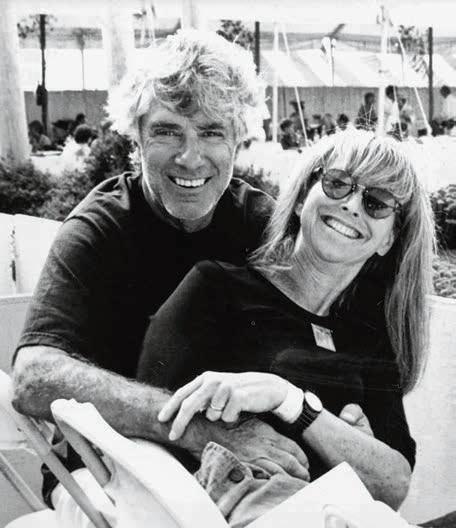
A twist in the deal involved my wife, Jane. She had the power to block the sale before it happened. But she believed in me, and the project.
I took a huge bite. And at any minute—for years and years, in fact—I could have choked.
What kept me going? I had a vision.
I knew it was the promised land. I forged ahead. I was relentless.
It took me, with Jane at my side—and, as he grew up, our son Jed—more than two decades and a lot of heartache to get other people to see what I knew the minute I laid eyes on these nearly abandoned buildings and deserted streets.
As we encountered one obstacle after another, as we waded through nightmares of politics and bureaucrats and zoning and people who generally hated me, I was worried practically nonstop that I might lose it all—that I might lose what I had built up so far—which already felt like a miracle for a kid who had grown up poor in upstate New York.
A handful of people helped us keep it together all those years while we waited. All that time, far more people thought of me as the “dumb in Dumbo.”
Dumbo?
“Down Under Manhattan Bridge Overpass.” That was what the artists living and working in the raw studio space in buildings here had named the neighborhood. Urban legend had it that they thought a silly name would deter real estate developers like me from taking over the area. I loved the name Dumbo, and nothing would have scared me off.
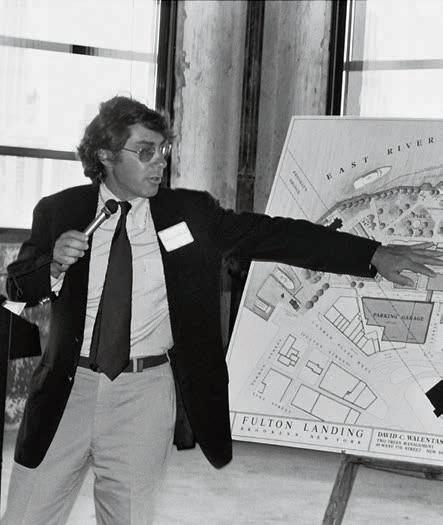
Officially, the city still referred to Dumbo as “Fulton Landing,” after steamship ferry inventor Robert Fulton and the waterfront stop that had connected Brooklyn with Manhattan long before the bridges and subways. This was also where, at night, under cover of fog, George Washington’s Continental Army had crossed the East River to Manhattan, escaping the British.
That crucial American history didn’t matter. Bankers, lawyers they all went blank when I told them about my discovery.
“You’re going to call the place after Disney’s flying elephant? Nobody’s going to go to a neighborhood with a stupid name like that.”
I used to invite mortgage brokers up to the fifteenth floor of the old Clocktower Building where I live now. They would purse their lips, stare blankly out at the sweeping view of the river and the bridges and lower Manhattan, unimpressed, and ask, “Where’s the grocery store?”
“Why would there be a grocery store here?” I would respond. “Nobody lives here, as you can see; there’s nobody here. Yet.”
“Opening a grocery store is easy,” I would tell them. “Look at these huge old structures poured-concrete, brick-and-heavy-timber buildings, bigger than the old schmatta factories we transformed in SoHo.”
“Look at the location,” I would say. “This is one of the only places on the waterfront where the Brookly n–Q ueens Expressway goes around the neighborhood, not through it.” You could literally stick your feet in the East River. The F train stopped near the Manhattan Bridge. Just to the south of the Brooklyn Bridge was Brooklyn Heights—the finest residential district in Brooklyn.
There wasn’t anything like Dumbo—anywhere.
How was it that no one could see the potential? I knew I was right. But there were times during those years while I was fighting that doubt would creep in. Was it possible I was wrong?
To reassure myself, I would ride along the FDR Drive in lower Manhattan and look across the river at my buildings, imagining how the neighborhood was going to look after we brought it to life. An active marina. A year-round farmer’s market. Tourists shopping at boutiques and art galleries, dining at contemporary restaurants and bars. Every room in the hotel I planned to build, fully booked. New Yorkers falling in love with the neighborhood so much they’d rush to buy the condos carved out of those old factories.
And I would think, “I own it! It’s going to be amazing someday.”
Someday? Try thousands and thousands and thousands of days—of politics and bureaucracy and heartache.
Then, after more than twenty years, Dumbo became the coolest place, seemingly overnight, and real estate in Brooklyn started to cost more than it did in Manhattan. And I was suddenly a fucking genius.
In 2014, a writer for Forbes magazine called my purchase of the neighborhood “one of the best New York real estate deals since Peter Minuit bought Manhattan for trinkets and beads.”
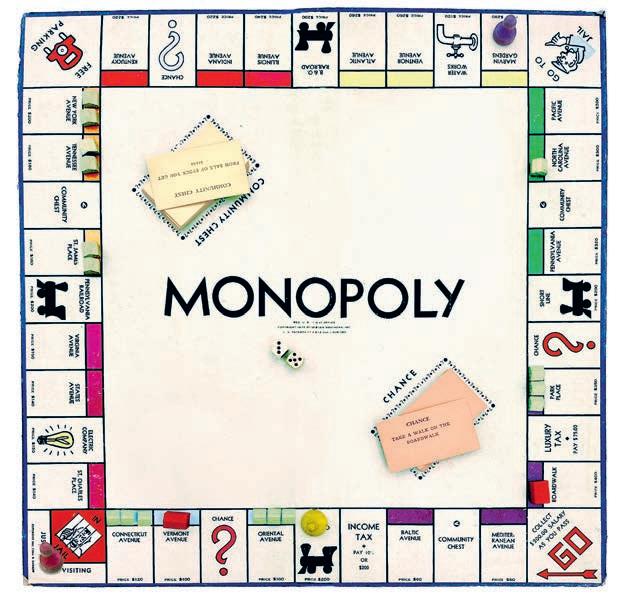
When I was a kid, I loved playing the board game Monopol y® I was great at it. I could name every property at every turn around the board without looking at it. The cards I wanted to get my hands on were the light blue ones—Oriental, Vermont, and Connecticut. The orange ones were good, too—St. James, Tennessee, and New York. Their prices were fair, and their locations were good. (When you rounded Go, there was a good chance of hitting those properties.) I also liked the railroads because they cost $200. And if you owned all four, the rent was $200 every time someone landed on one, instead of $50.
The idea of real estate was interesting to me, even then, but I didn’t know anything about it. There was no one to talk to. Mentors? There was no one to show me the ropes. Nobody to show me what “making it” looked like. No one ever grabbed me and said, “Look, to get there, you gotta do this.”
The most independent people I knew as a kid seemed to be the ones who ran the local grocery store or gas station. Everyone else punched the clock at some job and hoped to earn enough to get by.
None of my friends growing up had any idea what big success could mean. We didn’t talk about going to college, much less shop for the perfect school the way high school students do now. But I had ambition. I wanted to make my life something bigger. I honestly had no idea how, but I knew there had to be a better chance for that outside Rochester.
I felt a little guilty thinking that I had to leave. My mother used to comment that I thought the grass was always greener on the other side. That was true— the status quo was not for me. I knew the opportunities I was looking for were not going to happen in Rochester. I left, and over time, I figured it out. I had to decide what I wanted, and stay focused.
I learned pretty quickly that real estate isn’t that complicated—you don’t have to be a genius; you have to stack one brick on top of another and keep building.
ABOVE
My favorite board game as a kid, Monopoly ®
Vision. Focus. Luck. Timing. They all help. Plus, meeting the right people along the way, and making the right decisions about them.
Mostly, though, as an old Italian contractor in Rochester told me years ago— you have to have balls; you can buy everything else.
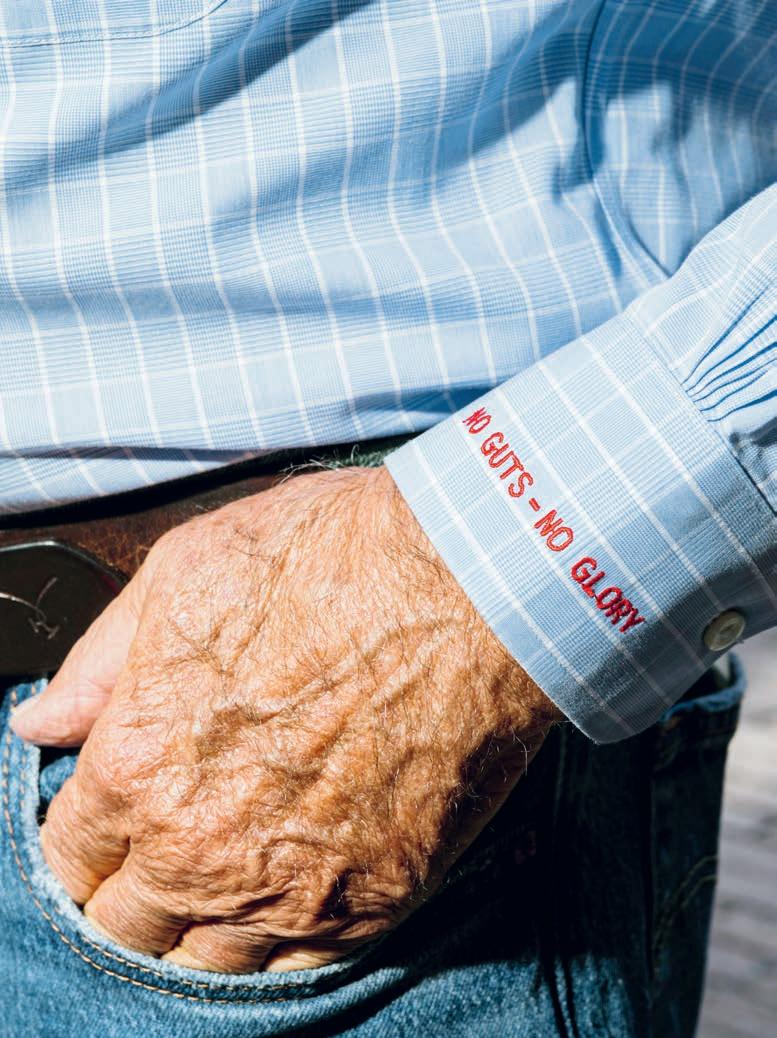
I believe these words so much that I’ve had them embroidered on the left cuff of every one of my dress shirts since the mid ’80s.
When I started in the real estate business, I thought I’d be lucky if I had a couple of buildings, collected some rent, and made a decent living. It never occurred to me that I might actually buy, develop, and sell property the way I h ave for the last sixty years—converting, upgrading, and building entire neighborhoods. Make a couple billion dollars? It still seems incomprehensible. When I was younger, never in my wildest dreams could I have predicted what eventually happened—to me, or to Dumbo. One day I woke up and realized, “Holy shit! I’m fucking rich!” It wasn’t easy, and it took a long time getting there.
But the story isn’t about how much money I made. It’s about where I came from, how I succeeded, and the fact that we created something that will matter in a hundred years—a neighborhood that helped transform an entire borough, an entire city.
And all the time we were doing it, Jane, Jed, and I had an amazing trip together.
How did it happen? This is how.
DW September 2025
OPPOSITE
“NO GUTS — NO GLORY” embroidered on my shirt cuff
I still remember it clearly: Tuesday afternoon, September 7, 1954. My friends and I are playing basketball in the alley behind my family’s house at 59 Herald Street. The basket is hung on a streetlight pole so we can play after dark—it’s a working-class neighborhood in Rochester, New York.
We’re all so focused on our game that we don’t hear the phone ringing. My mother shouts out the back door that she needs to talk to me.
When I step back outside, one of the guys asks if everything is okay.
I mutter, “My father just died.”
No one knows what to say. Especially me. I insist we keep playing.
I’m sixteen years old. My father, Peter, was forty-seven. For the past ten years, he has been paralyzed.
When I was five, my father suffered a stroke that left him unable to walk or speak clearly—let alone work. Of course, all my friends know that. None of my friends’ families had a lot in the way of money or material things, but for as long as I can remember, mine lacked something even they all had a father.
By that day, the day he died, the few memories I had of him as a healthy man had all but vanished. There was little evidence of him left around Herald Street, except the fireplace he and I had built in the backyard before the stroke. We built it together, out of bricks I helped carry, one by one, from a vacant lot down the street.
All these decades later, I have started to dig into my past to look at and understand better where I came from. Only now, after a lifetime, can I see how incredible my parents were and how much they shaped me. I did not, perhaps could not, understand this when I was younger.
Today, it’s crystal clear: The tenacity and ambition of my father. The amazing strength of my mother. How she kept our family together after my father could no longer provide. How their hopes for a better life came together in me.
The memories begin to flood back.
The time when I was playing in Little League and, during one game, I realized my father had somehow hobbled with his cane up to the ballfield to watch. How had he made his way there? How did I react? I don’t remember us talking. And then he just disappeared.
Another time, when I was thirteen or fourteen, he got so mad that he threw a butcher knife across the room at me. It landed right between my legs in the seat of the chair I was sitting on, piercing the fabric. He could have hit me in the balls.
PREVIOUS SPREAD
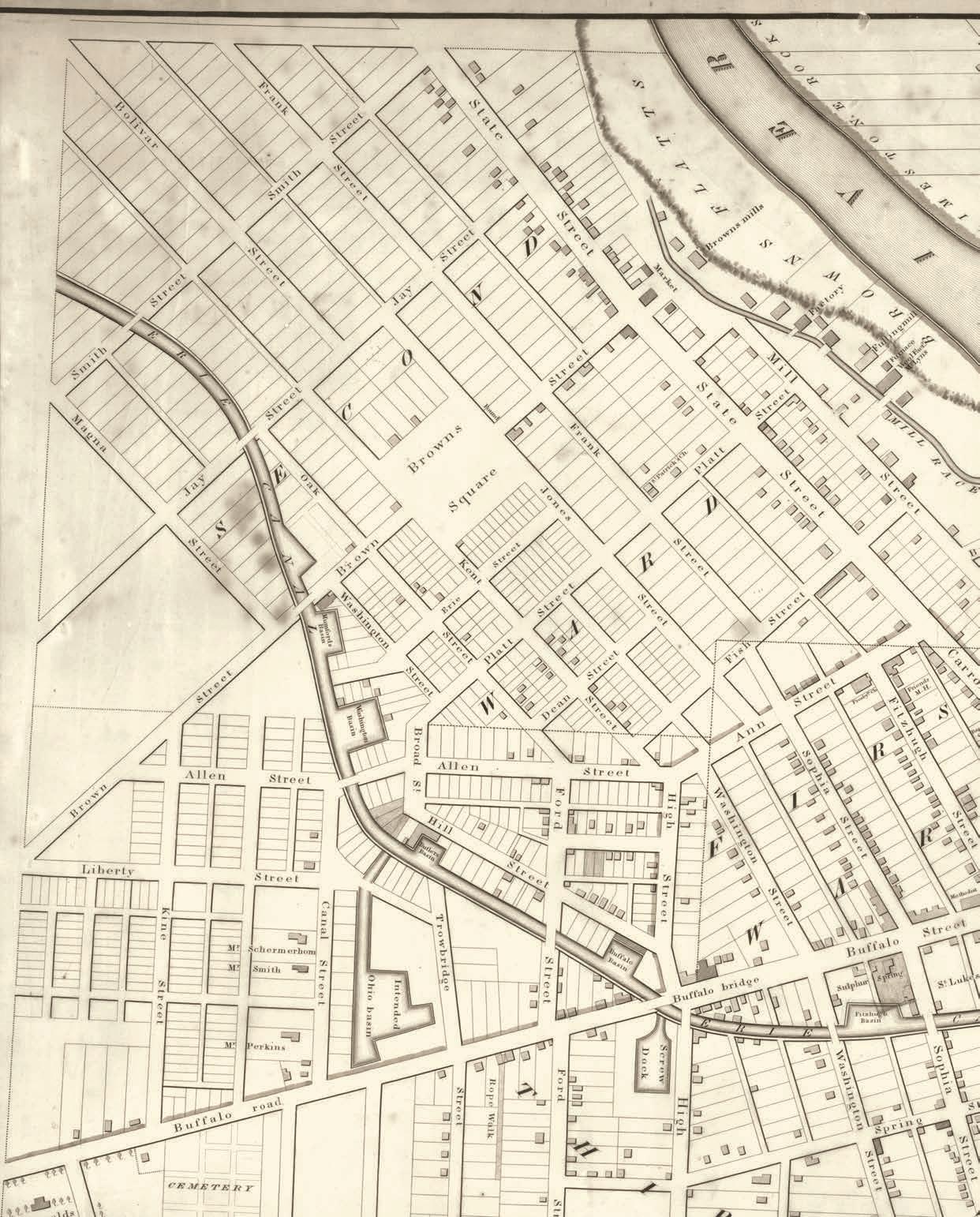
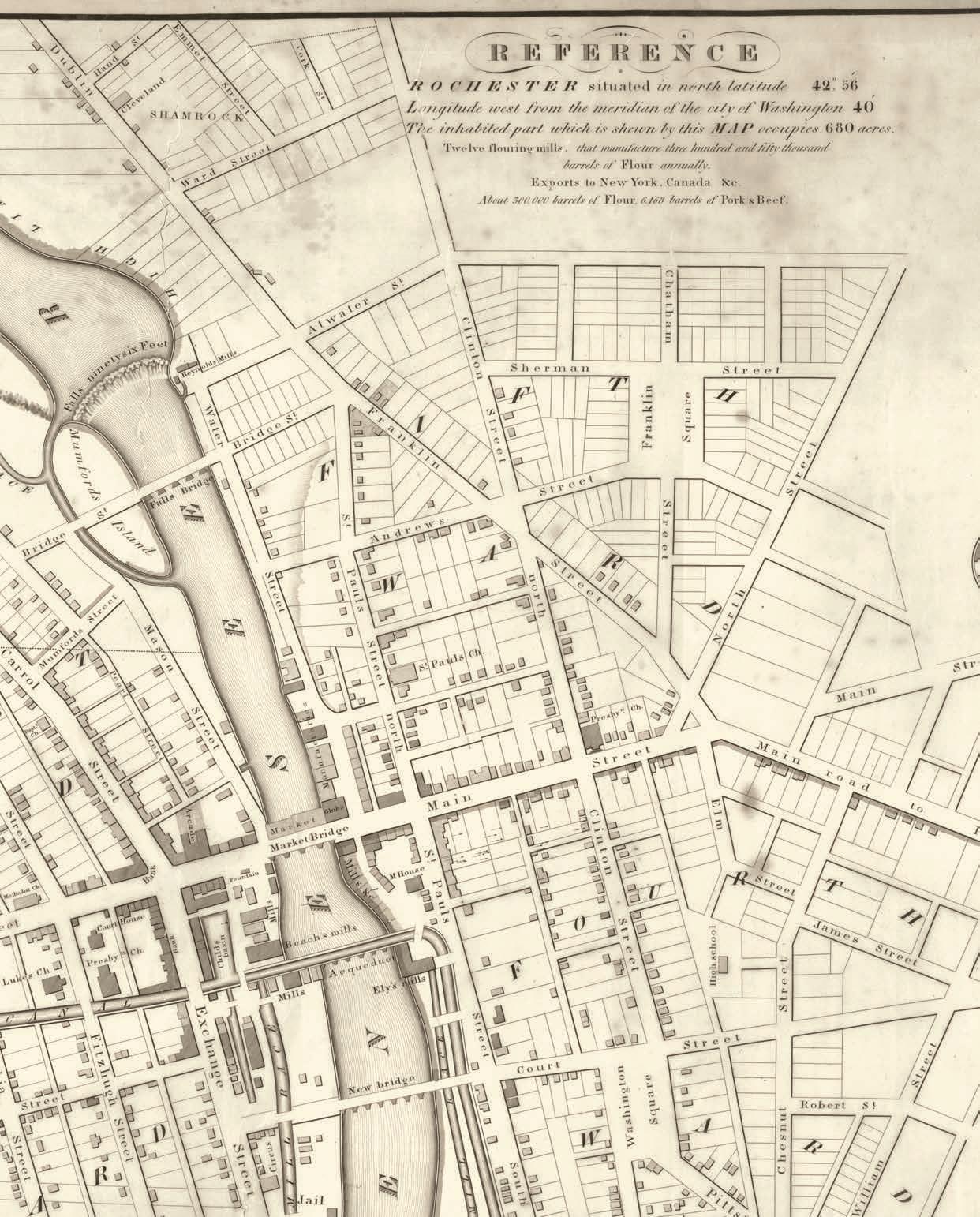
1832 map of Rochester (detail)
OPPOSITE
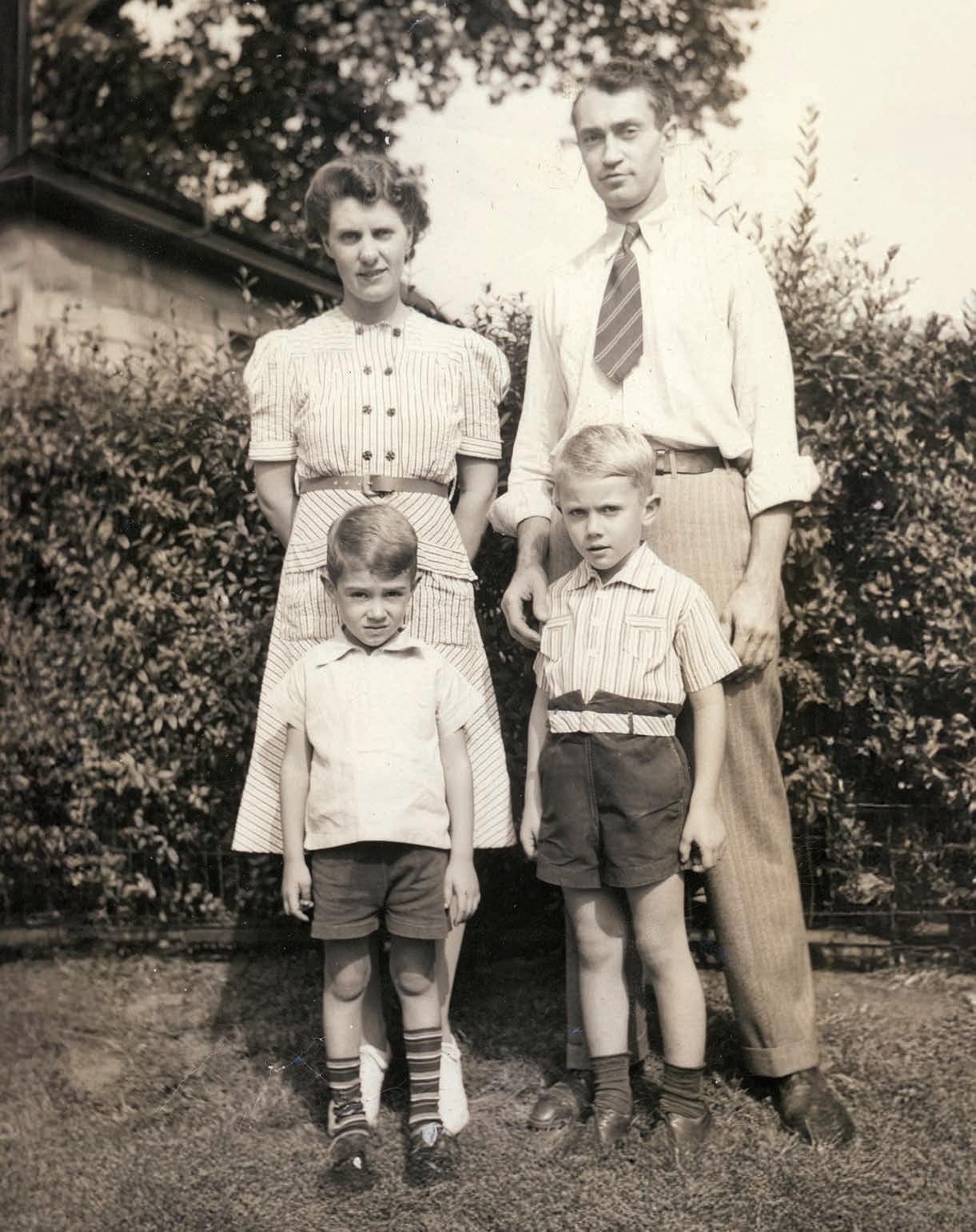
The Walentas family: Kay, Peter Sr., David, and Peter, circa 1944
Real estate is a very local business. You have to know a city— its neighborhoods, its local values, its politics. Working outside of New York taught me that I wanted to focus on being a big fish in the best pond there is—New York City.
Easier said than done. Most of the people who have succeeded in real estate in New York are from established families with a long history in the city. For a newcomer like me, with no family money, knowing essentially nothing, it was a different proposition. As an outsider, I gravitated naturally toward neighborhoods that were evolving. I was attracted to projects where you had to add value by improving the property or changing the zoning and uses. If I had inherited property, I might never have had the incentive to do that.
Now I see that I was far more ambitious than I realized, as well as focused and competitive. Those qualities made me wait in the freezing cold in February for three days as a teenager for a chance to buy a car for $9.99. That’s how I got my ROTC scholarship to UVA. That’s why I worked overseas to pay off my loans, then quit and came to New York. Something was always driving me to do better. And every time I accomplished something, I wanted to do more. One success was not enough. I just kept forging ahead.
DAVID WALENTAS, FOUNDER TWO TREES MANAGEMENT
You must publish this. Fortune Favors the Brave teaches one what it takes to progress, to make it, to “do good” as well as “do well.” What you’ve accomplished is mind‑boggling as well as truly inspirational. This should be the number one case study at Harvard Business School.
DAN LUFKIN, FOUNDING PARTNER DONALDSON, LUFKIN & JENRETTE