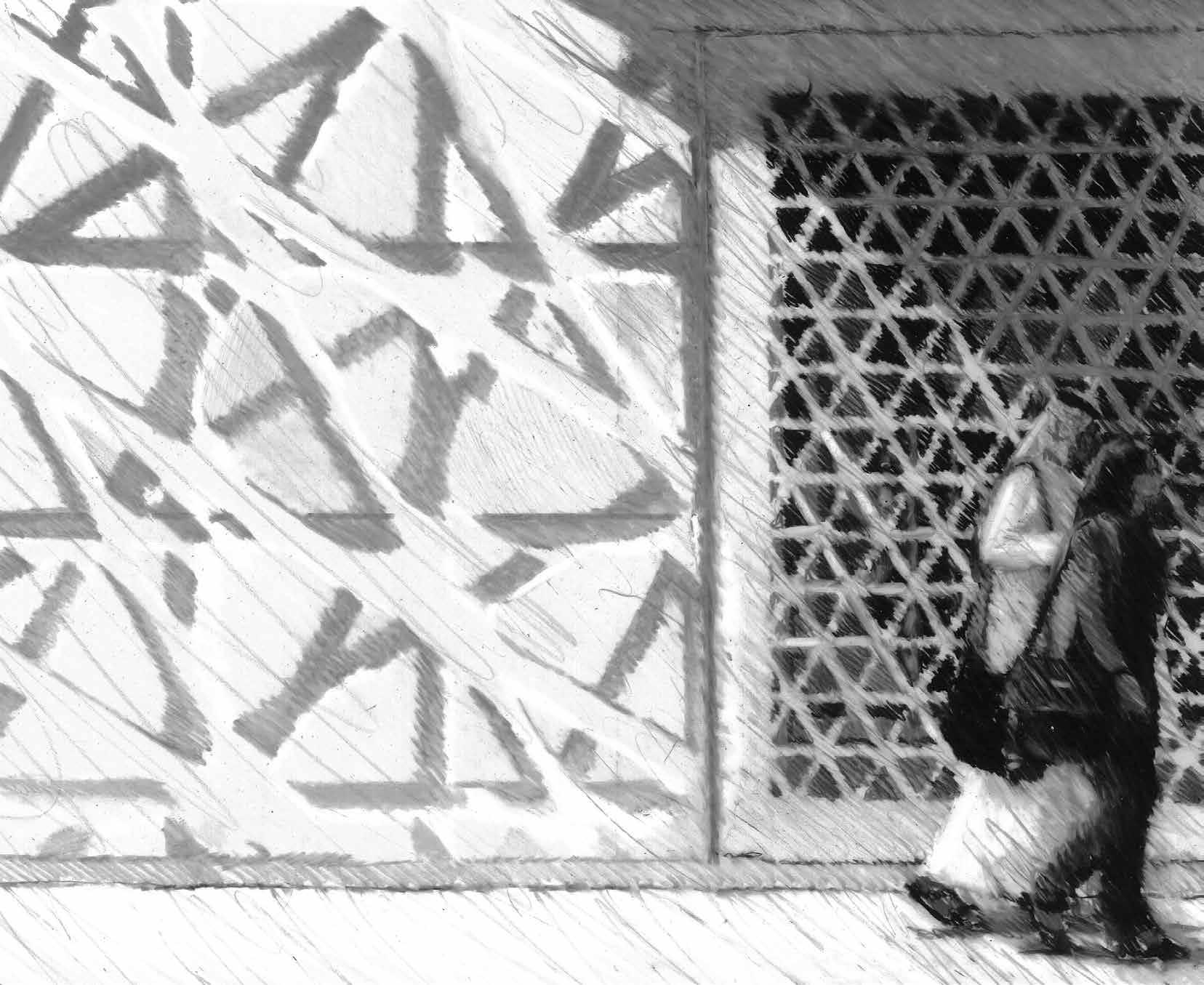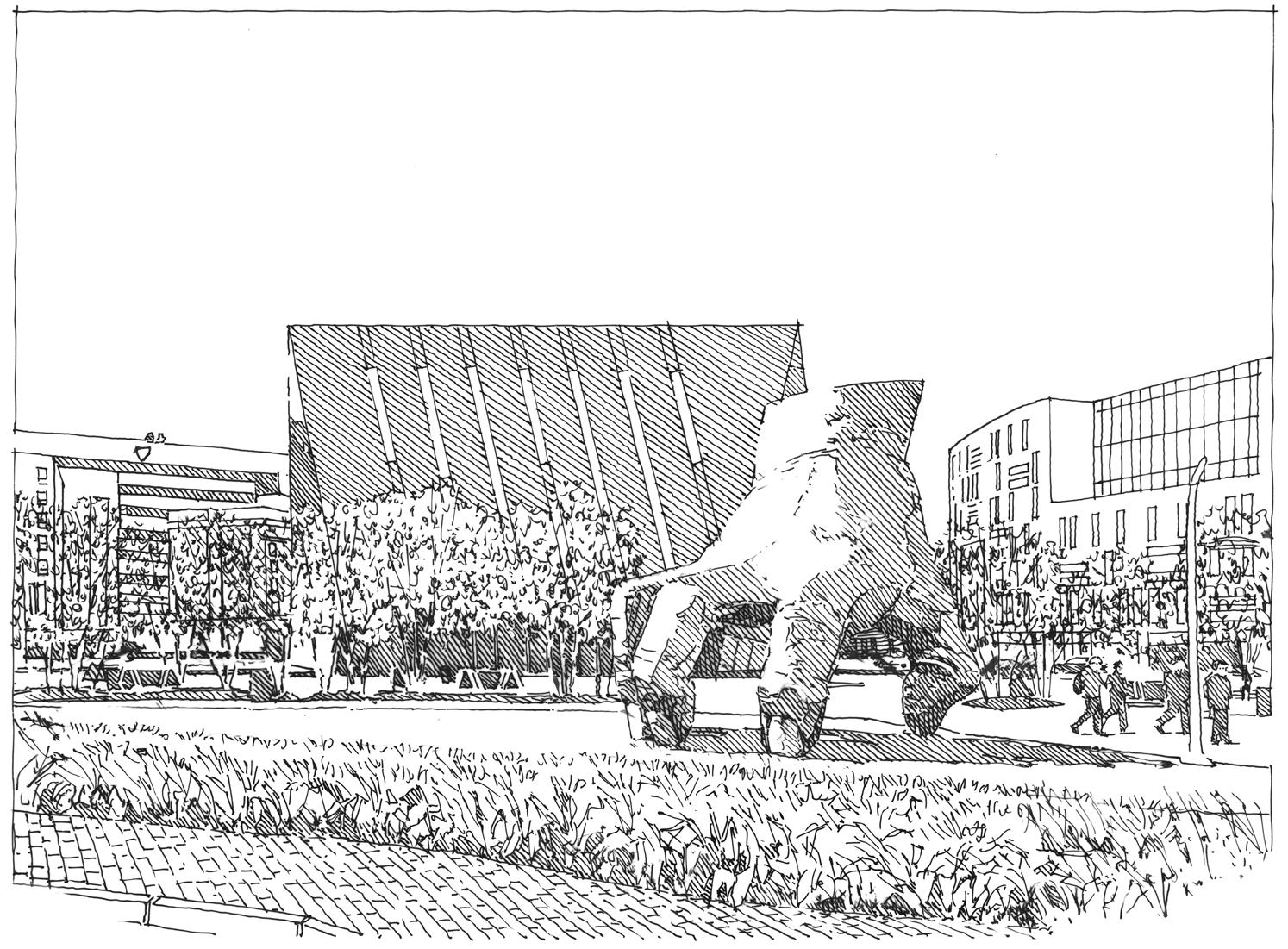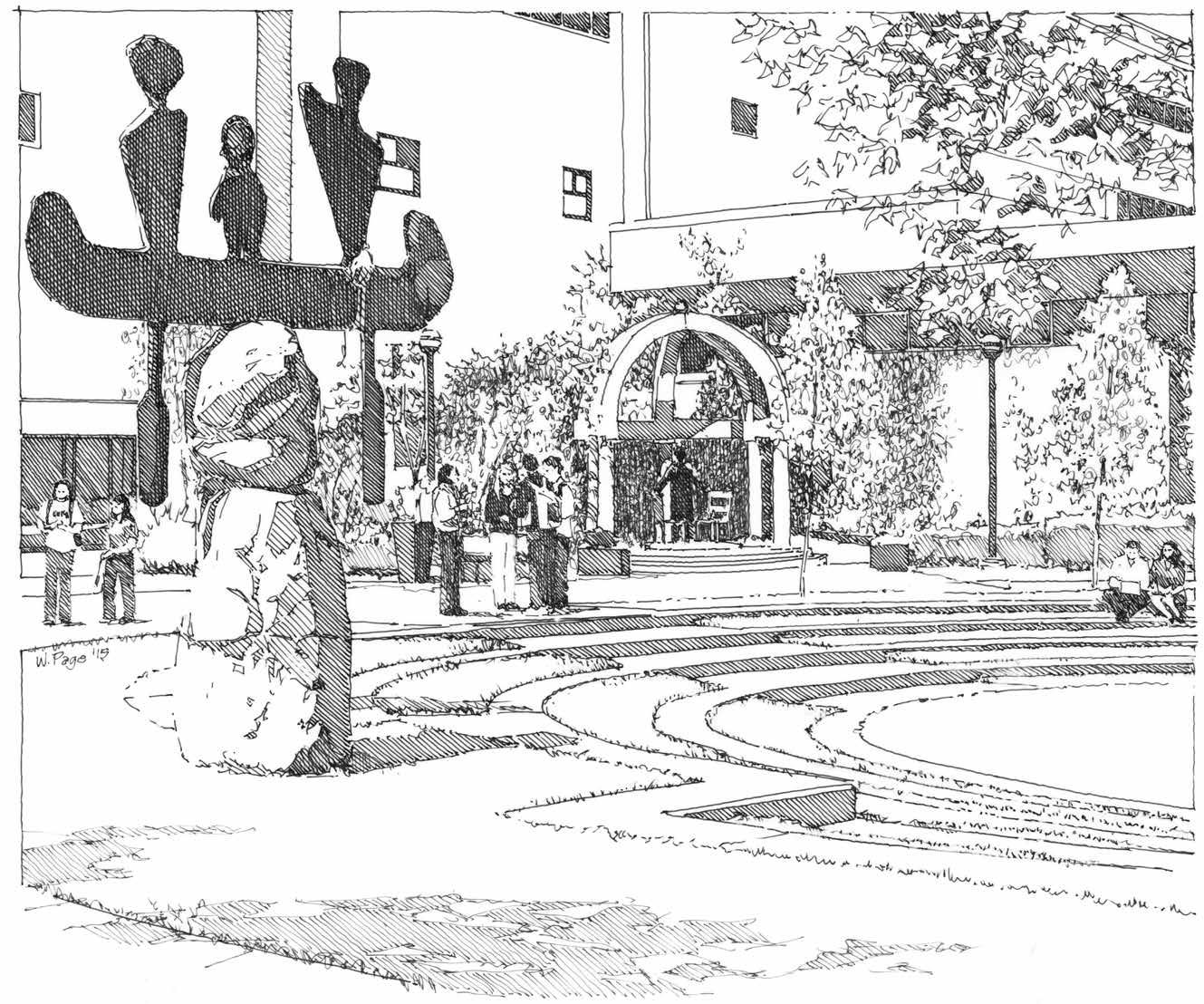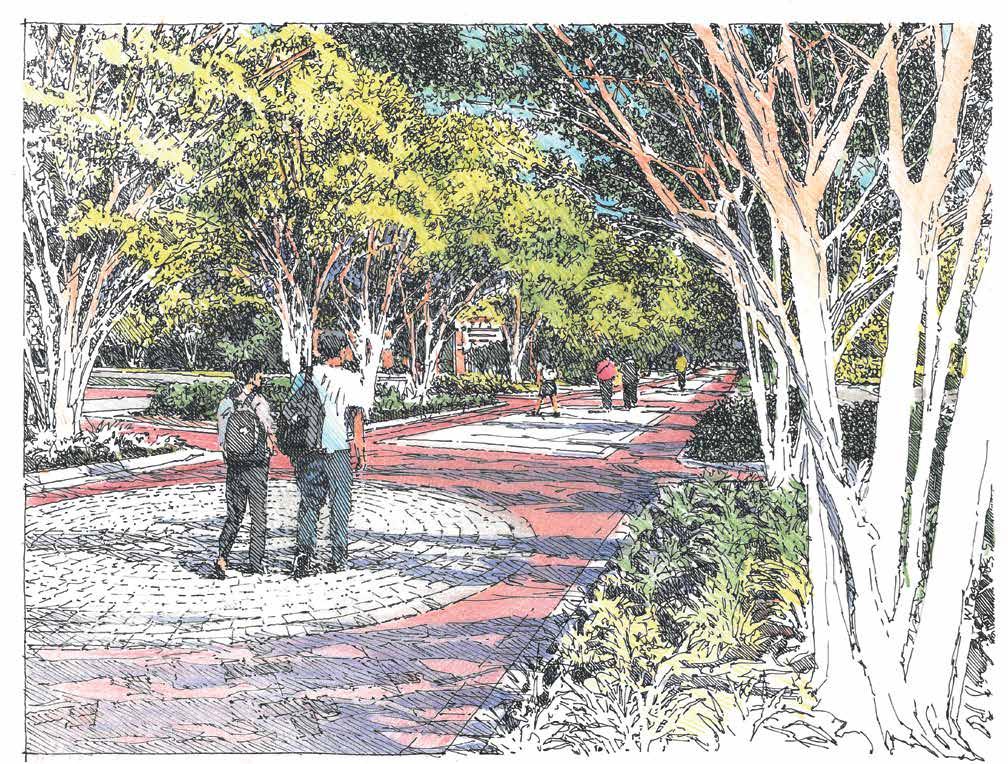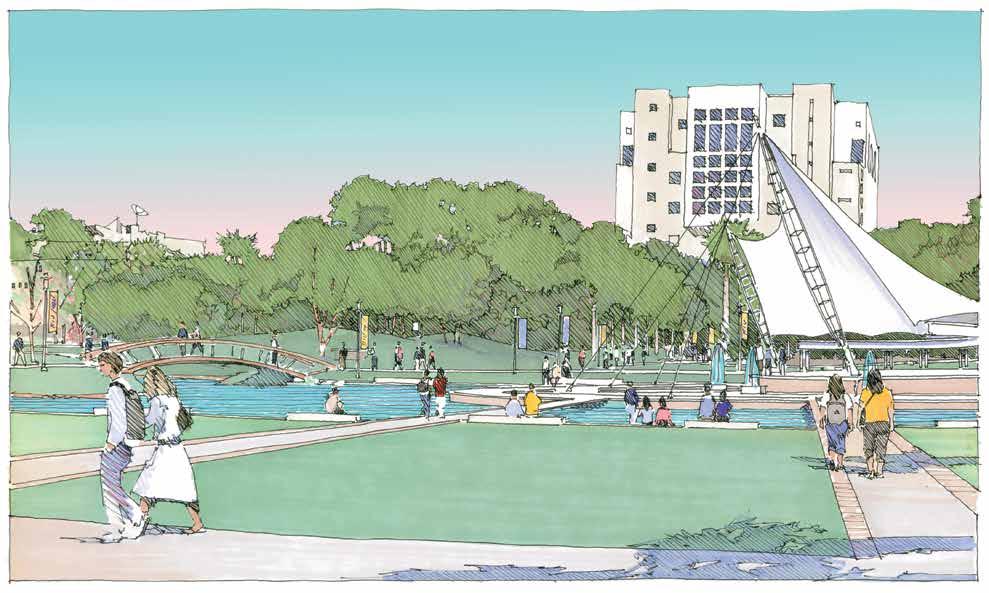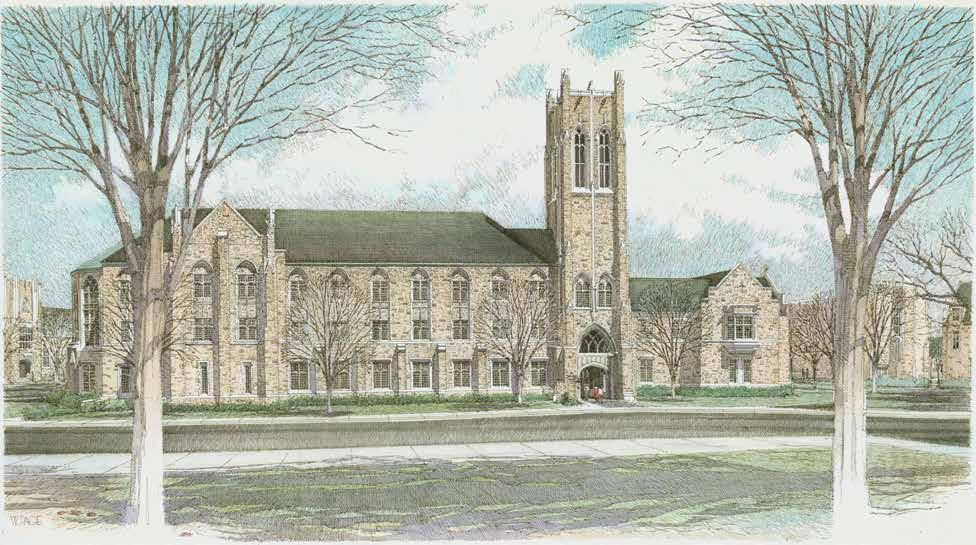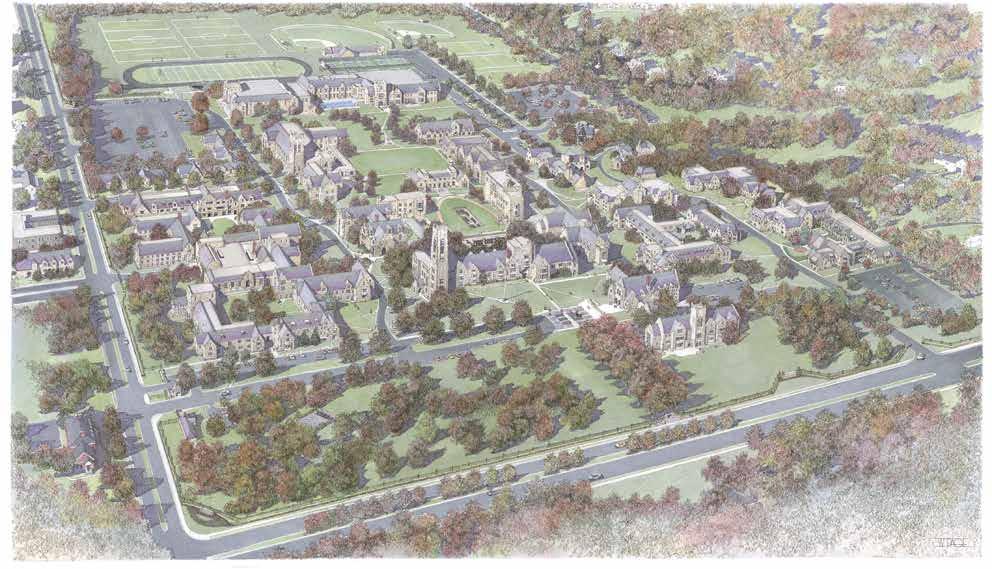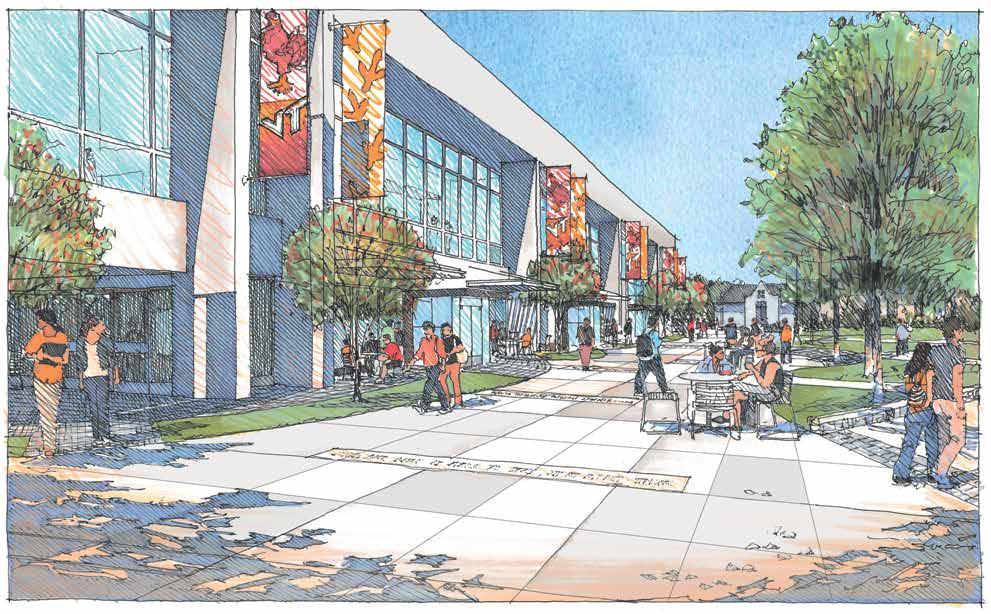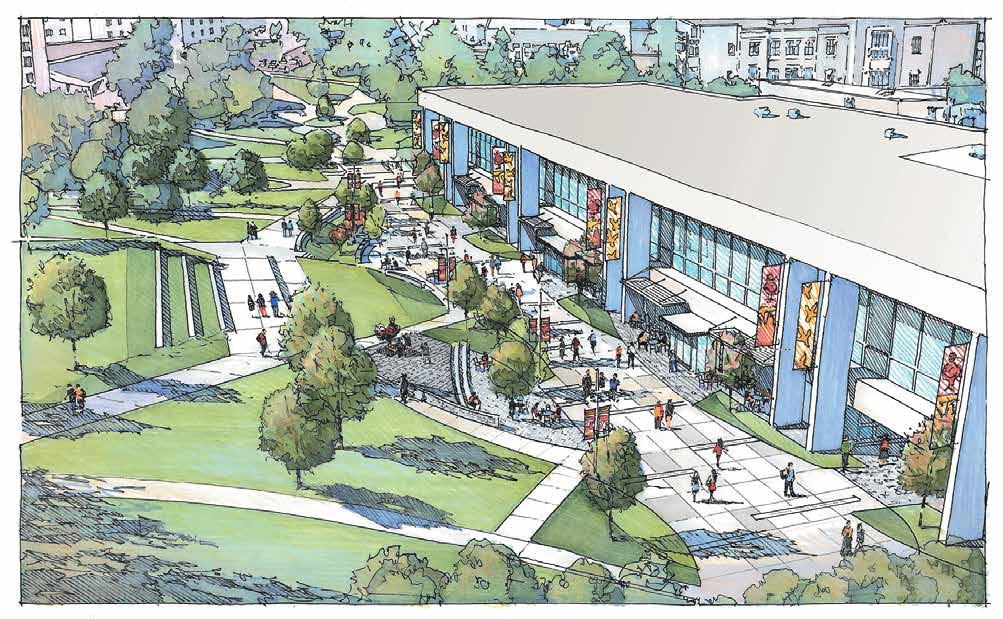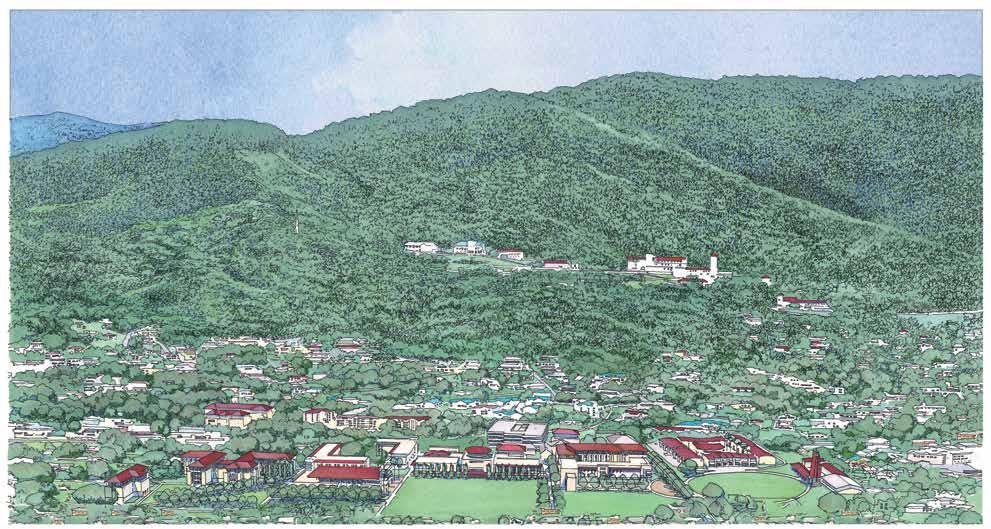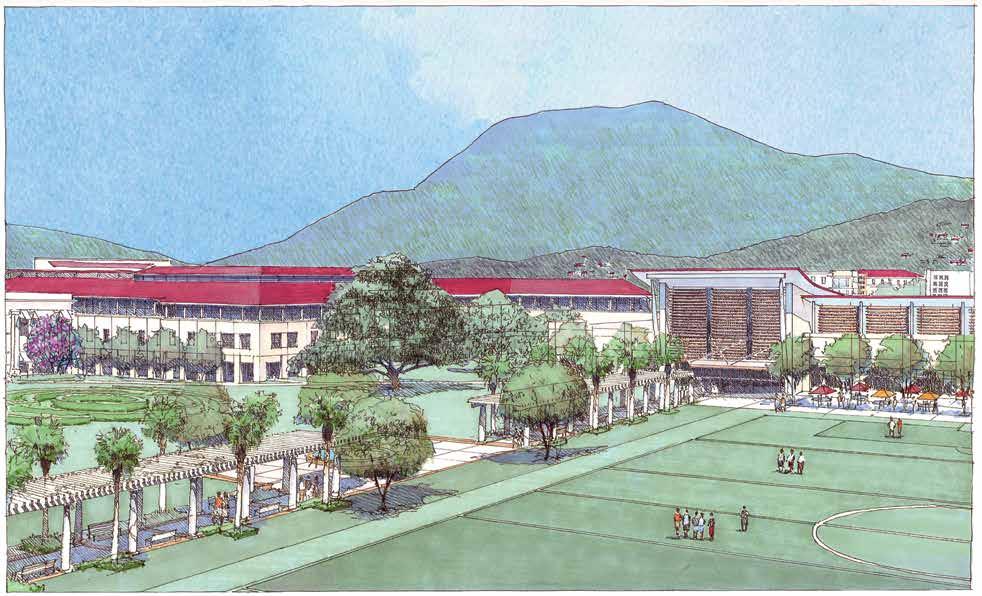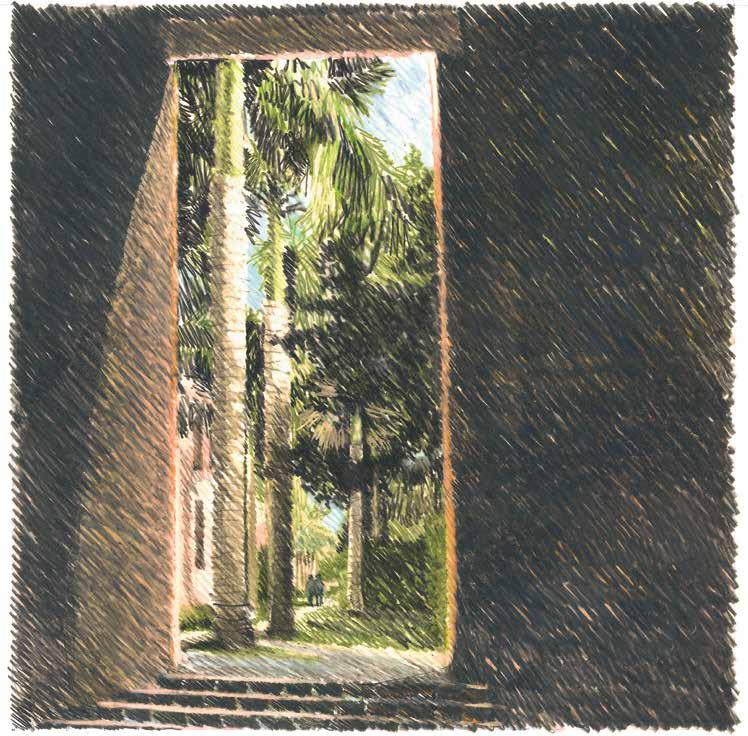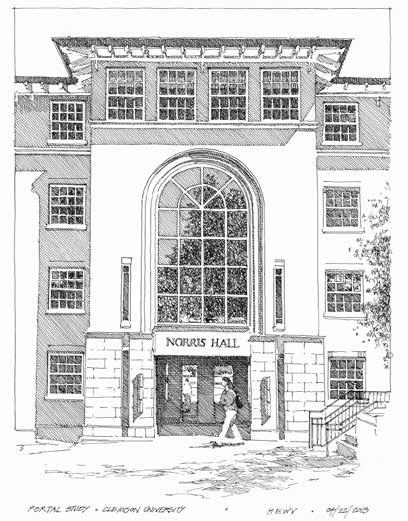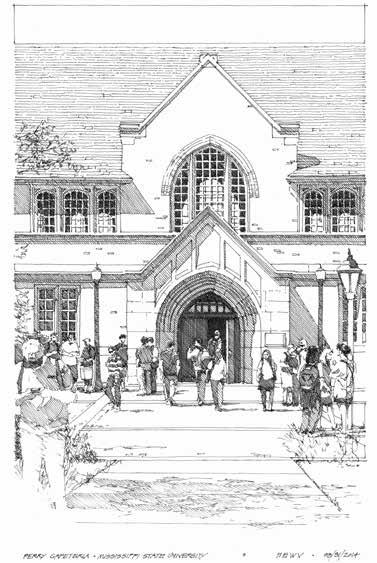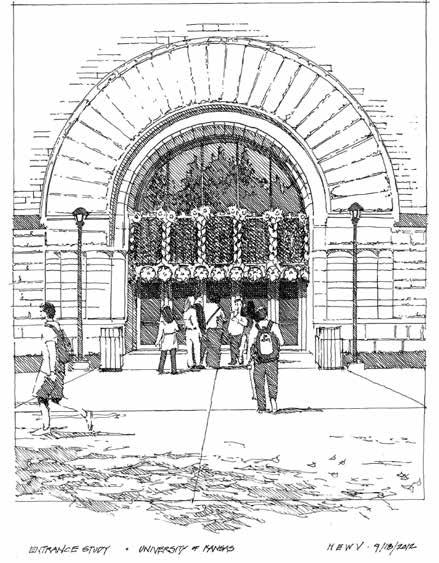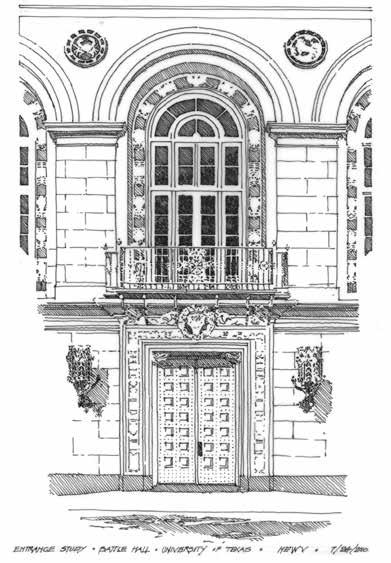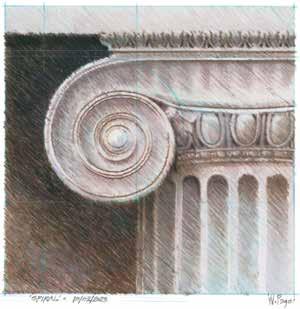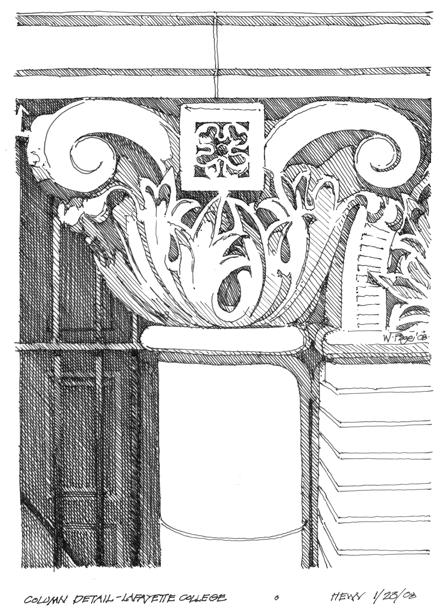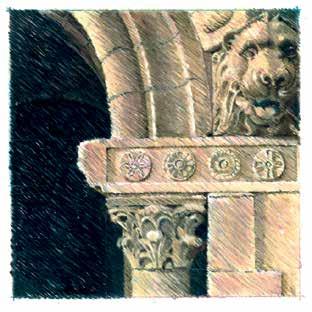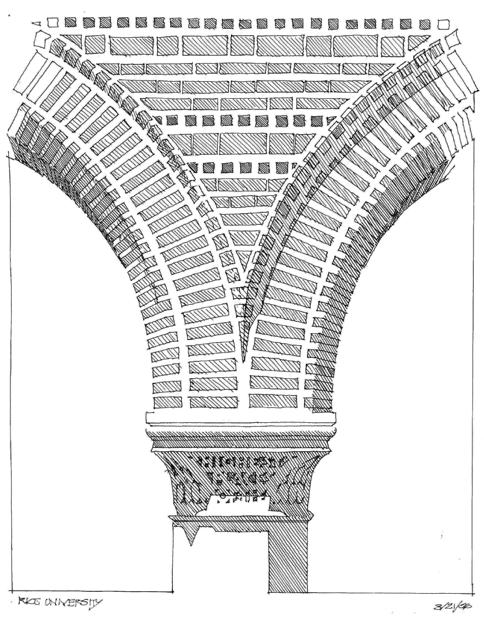
“Drawing is not what one sees but what one can make others see.”
– Edgar Degas
FOREWORD
Within the discipline of architecture, a remarkable tradition of pen and ink drawing has long helped to define the imaginative and visionary forms of intended built environments. The masters of this difficult medium for describing architecture, working in both recent and distant times, have had the profound effects of admiration and duplication by any architectural artist instinctively drawn to its most demanding methods.
From the durable influences of architects, including Giambattista Piranesi, Étienne-Louis Boullée, Eliel Saarinen, or Paul Rudolph to the etching influences of Albrecht Dürer or Gustave Doré to other near contemporary masters (and my own personal colleagues) such as Carlos Diniz and Helmut Jacoby, who were successful in their unique ink methods, my decades-long, skilled colleague Wesley Page has outlined his own style and mastery of this seldom correctable dark-line medium.
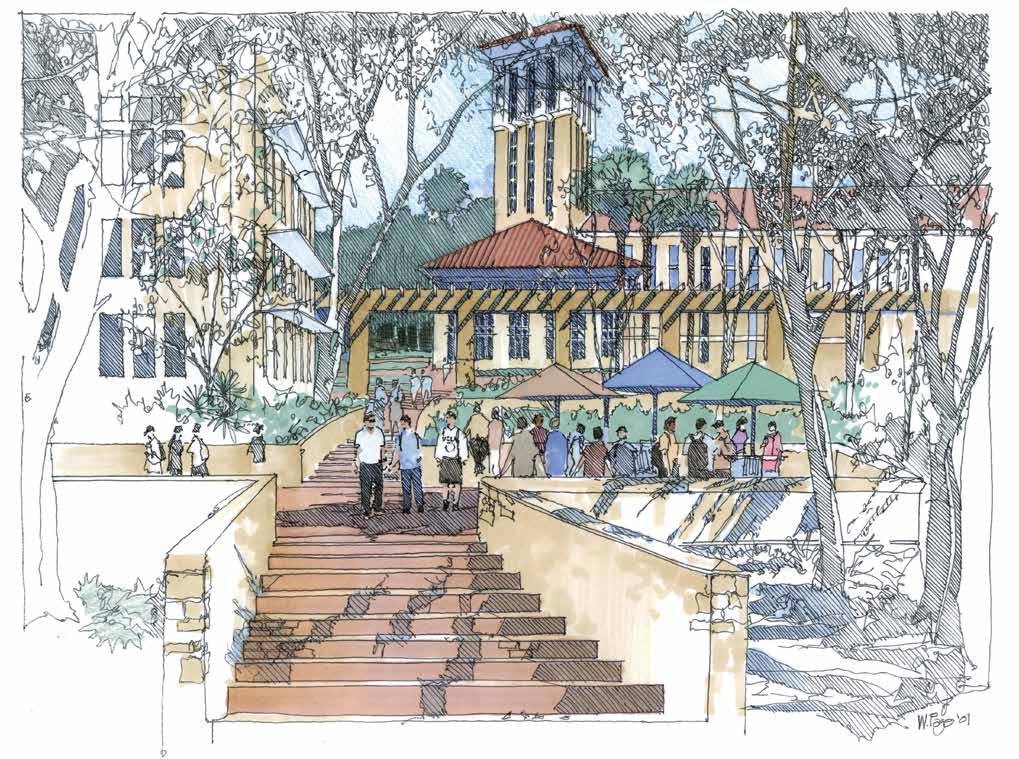
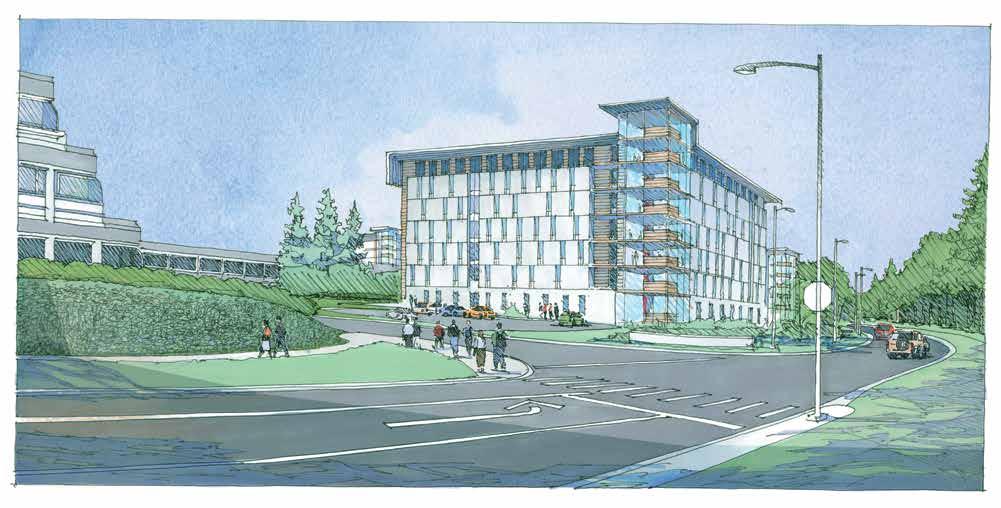
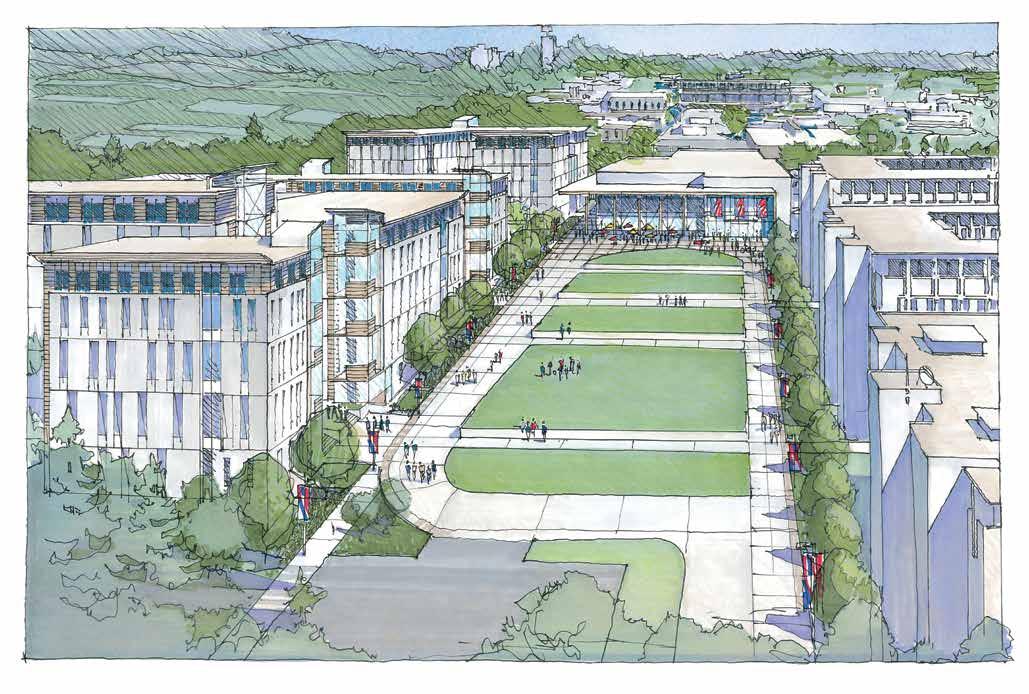
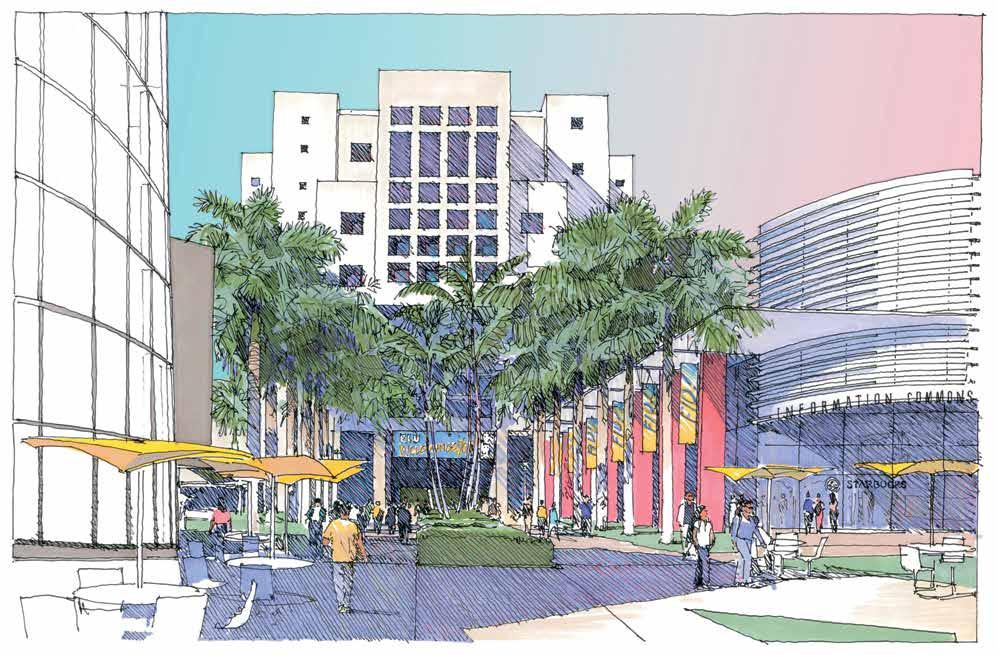
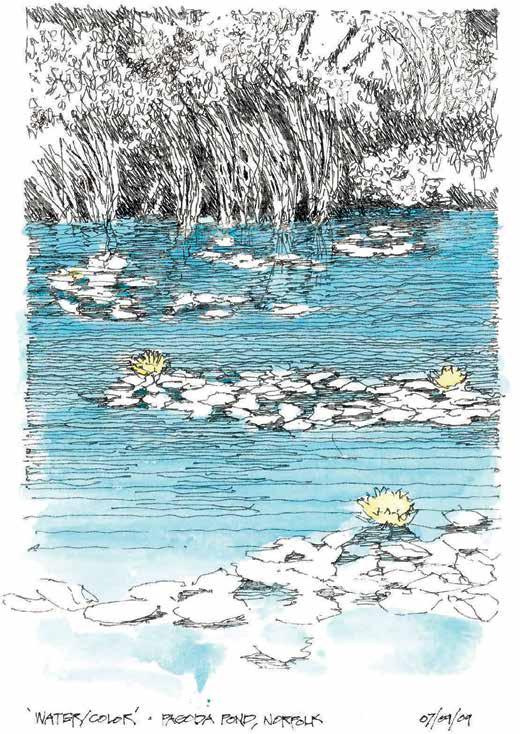
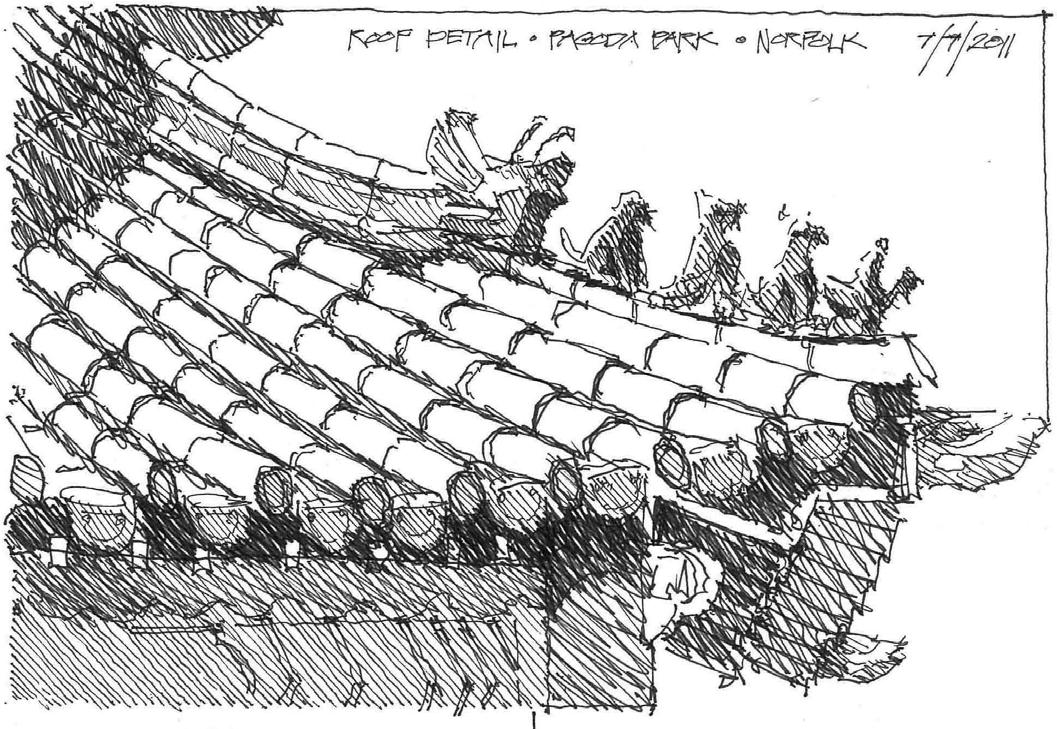
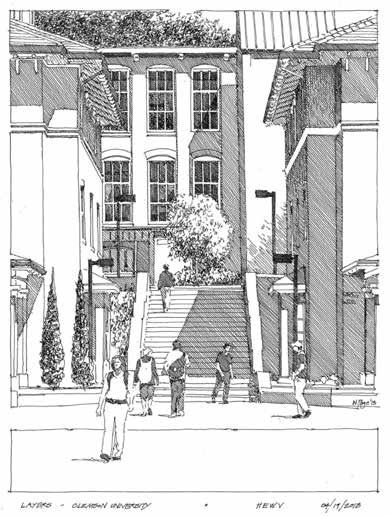
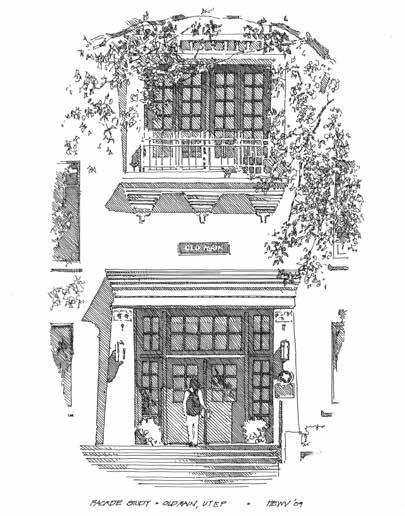
Over the course of a lengthy, productive career as an architect and illustrator, Wes has created deft, sensitive, rich, and evocative imagery for his firm and their clients’ projects. The varied, engaging, and flawless drawings in this volume attest to Wes’s superior capabilities in defining perspectives—as well as elevations and study sketches. With straight or loose line, varied weights and textures, perfectly supportive shadings, and an adroit use of limited color in some works, his rather extraordinary control and touch of multiple lines on paper convey that visual magic—a sleight of hand and eye—that has evolved from those decades of sustained practice.
To portray forms, materials, textures, space, depth, and the light of shade and shadow so convincingly in architecture is a complex, refined skill that Wes has so diligently mastered. An illustrator must address these multiple factors in framing (literally designing) the most descriptive perspective view(s) before even bringing a preferred medium to an image. Wes’s visual skill starts with his always dynamic point of view to effectively describe a proposed design. His drawing may encompass an informative vignette of a wall detail or an aerial view of a large complex—or both, or more—for any of his firm’s projects.
With sustained practice in such diligent drawing, Wes’s chosen medium of pen-and-ink line evolved to its present mastery by a combination of factors such as types of paper; types of pens (with varying ink quality, thicknesses, even brands names); types of mark-making; an innate sense of focus, balance, values, and textures; a selective use of color; and other finessed media elements that all come together to make his drawings so visually effective. The resulting beauty of his imagery comes not only from the framework of point of view, but interpretively from his delicacy of touch and the balancing of major and minor elements in his drawings—the beautiful, even-handed, left-handed stroking of lines, the thickness and thinness of lines, the effective balancing of complex values, textures, and color—descriptive elements that are always just right; and the engaging impact of a restrained hand—knowing when enough lines and textures have “told the story” and have been made into arresting art. An illustrator can ask no more of their work.
The varied award-winning imagery that has flowed from Wes’s hand over such a productive career is very much in evidence with every drawing in this lush retrospective book.
– Frank M. Costantino, FAIA, ASAI, FSAI, JARA
Co-founder, President Emeritus, American Society of Architectural Illustrators | Principal, FM Costantino, Cos.
FOREWORD
Undeniably, Every Picture Tells a Story is a beautiful compilation of what Wesley Page, FAIA, would call “traditional media” illustrations. Yet this collection is so much more than that. These illustrations are intertwined with Hanbury’s growth over the past 40 years, where Wes has been an architect and a partner, playing a vital role not only in the firm’s ascent, but also in his clients’ successes and in the development of his colleagues. Wes enabled clients to see and believe in their visions and provided colleagues with evocative, persuasive imagery that elevated our collective endeavors.
Visual narrative storytelling at Hanbury is at the heart of our work, and in many ways, a direct reflection of Wes’s singular contributions. Nowhere is this more evident than in the evolving nature of design at Hanbury, in many ways facilitated and shaped by Wes’s gift for visualization. His process often began with a visit to a campus or site, where he observed and documented moments that crystallized a place’s spirit and identity— an inimitable translation of “what is” to authentically inform “what could be.” Wes’s work serves as a visual prelude to unfolding stories, each drawing imbued with a kinetic quality, capturing a fleeting moment as it transitions through time.
What is it that makes Harvard University unmistakably “Harvard” or Rhodes College distinctly “Rhodes” or understated Oxford and Cambridge so highly identifiable? Sometimes enlightening, sometimes analytic, and sometimes simply for the sake of beauty, Wes conveyed at these places and many others how buildings, landscapes, vegetation, and even the elements of climate and weather combine to define a place. It was his unique translation that revealed the true essence—a romantic sensibility, unapologetic yet always viewed through the lens of authenticity and purpose.
Wes’s choice of media—ink, pencil, markers, oil paint—always serves the story, revealing his remarkable range and nimble creativity. His unique way of seeing the world is obvious, but what I find most endearing is his humility. Always quick to help, teach, and share, Wes has touched and enhanced the lives of so many through his spirit of generosity, a quality that radiates beyond his captivating visuals and thus the section of Every Picture that conveys process and technique. Wes would love for all of us to express ourselves through visual media.
When I interviewed for a job at Hanbury, Wes was among the first people I met as we all tried to build familiarity beyond our portfolios to determine whether there was a fit. As Wes and a colleague shared the firm’s latest design work, it quickly became clear that Wes’s hand was the vehicle for visualization—both in the design process and in finished imagery. His illustrations consistently conveyed vision, intent, and purpose: a story unfolding, whether in a heroic signature space or a pedestrian place made meaningful by capturing a moment and the experience of being there.
A single image can create a narrative, revealing emotions and memories that connect us to a place—or, more specifically, to a moment in that place. As acclaimed photojournalist Dorothea Lange said, “a picture takes an instant out of time, altering life by holding it still.” In that stillness, we are invited to examine, to search, to understand what speaks to us—the story is caught in that moment. Try looking at any of Wes’s drawings and resist the urge to know more. Beyond the story told, Wes invites us to make the story our own.
I’ve often reflected on how reassuring and uplifting it is when the talent I so deeply admire is paired with genuine goodness. Beyond the stunning graphics, so much more emanates from Wes’s work. Having worked side-by-side for over 20 years, I’ve seen how his approachable, open-minded nature has positioned him as a generous mentor, elevating the work of the firm and everyone around him. For many, this book will be a fond remembrance of seeing stories conceived and visually unfold at Hanbury every day. As you revel in Wes’s work, imagine these drawings being created by a gentle, humble spirit, seemingly able to observe and translate visually what he sees as naturally as breathing. I am certain Wes sees things differently than the rest of us; while his immense skill lies in capturing a vision, his true gift is perceiving, in the moment, the confluence of things. Every picture can tell a story. The premise is simple, and in Wes’s work, the story is rich and the evidence ever so compelling.
– Robert V. Reis, FAIA Principal and Design Director, Hanbury
“As technology advances at an alarming pace, the place of drawing remains as valid as ever in the creation of art and architecture.”
– Prince Charles, circa 2005 (but perhaps even more relevant today!)
“Every picture tells a story.” – Rod Stewart, 1971
CONTEXT
I wear two hats.
For the past 40 years at Hanbury, I’ve worn the hat of a storyteller. I craft stories about the built environment, about architecture, about place. Some are actual, some proposed, and some only imagined. Instead of using words, though, as an architectural illustrator I tell these stories in the visual realm with line, light, color, and imagination. At its core, architectural illustration is visual storytelling. I have always drawn by hand—and still do. That act is the foundation of this book.
My second hat has been that of a design principal, equally demanding creatively and equally satisfying. I wear these two hats simultaneously. Because of this, my day-to-day workload often found itself centered squarely in the fuzzy gray eddies where the two disciplines overlap. So, am I an illustrator or a designer? This question profoundly influenced how I’ve approached drawing—not thinking of drawing as simply “illustration,” but imagining ways it can be rethought, redirected, and maximized as a valuable tool to elevate the design process and product. I firmly believe that hand drawing is not nostalgia; it is an ever-relevant tool for thinking, exploring, explaining, and truly understanding the built environment, equal parts process and product. A tool for design thinking.
I’ve managed to comfortably navigate and thrive in this hybrid space, for the most part “embracing the ambiguity,” as Mike Evans, a mentor and business partner, often said. Over the years, I’ve constantly explored— and often stumbled into—ways for the two disciplines to more strongly influence and amplify each other. I’m a better designer because I draw. I’m a better illustrator because I design. If there is any magic in what I do, this is likely why.
This book then is not a “how to” book on drawing tips and techniques. Plenty of others have already covered that ground well. Nor is it simply a monograph of hand-drawn architectural imagery. It is an exploration of a way to think about drawing architecture, how understanding the overlap of drawing, design, and storytelling can profoundly influence the power and effectiveness of an architectural illustration. It is also a 40-year catalog demonstrating that thought process in action. Hopefully it presents evidence of the continued relevance of hand drawing in the practice of architecture.
Although my focus has shifted more toward illustration in the last few years, the advancement of design is still, and will always remain, an equal and critical driver and influence on my illustration work. Over time, the boundary between design and illustration seems to fade. Those fuzzy gray eddies, while becoming bigger, are also clearer, less fuzzy. I guess if I do this long enough, at some point any boundary between drawing and design will finally disappear—if it hasn’t already. I welcome that.
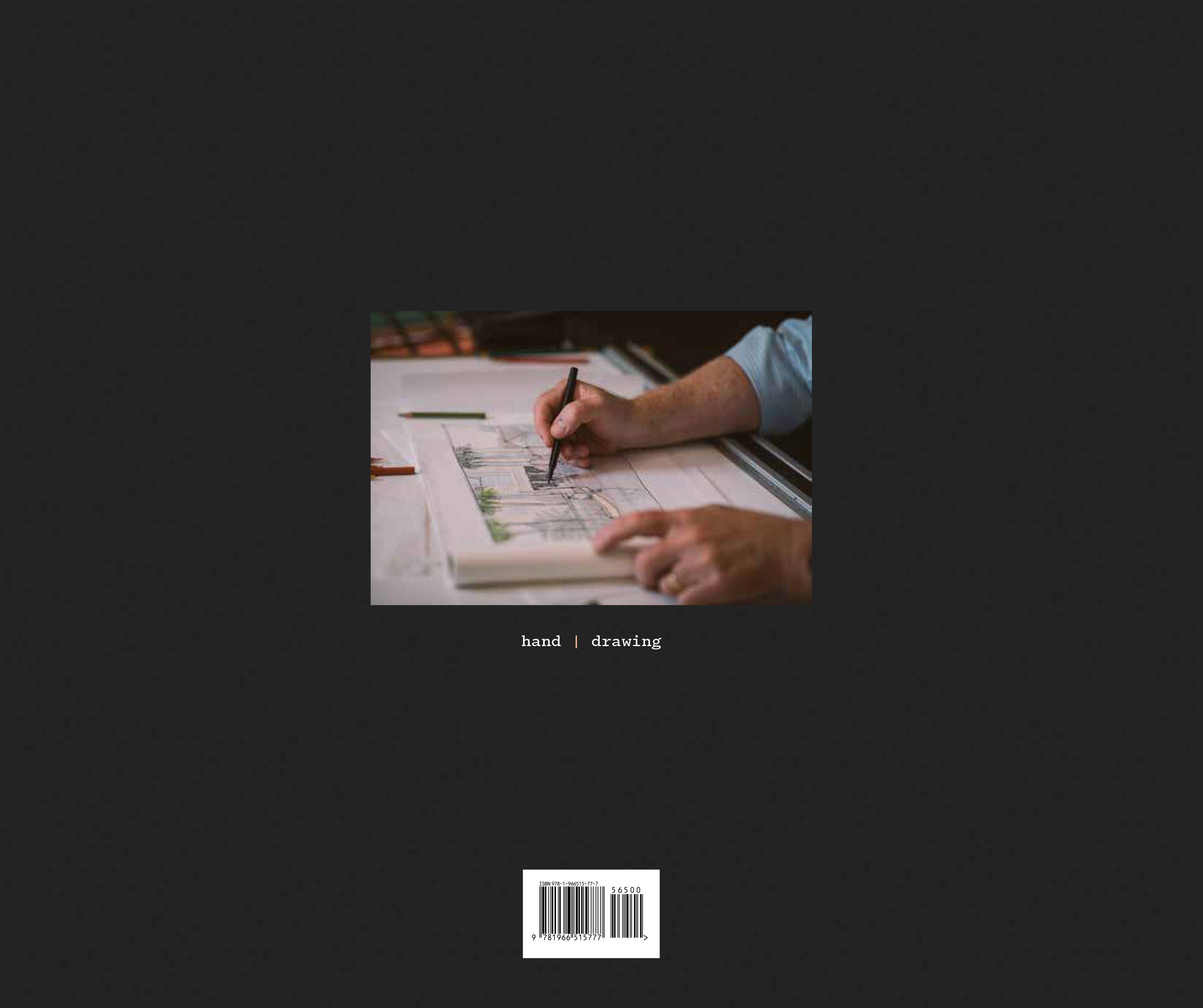
And I’ll still be here—pen in hand.