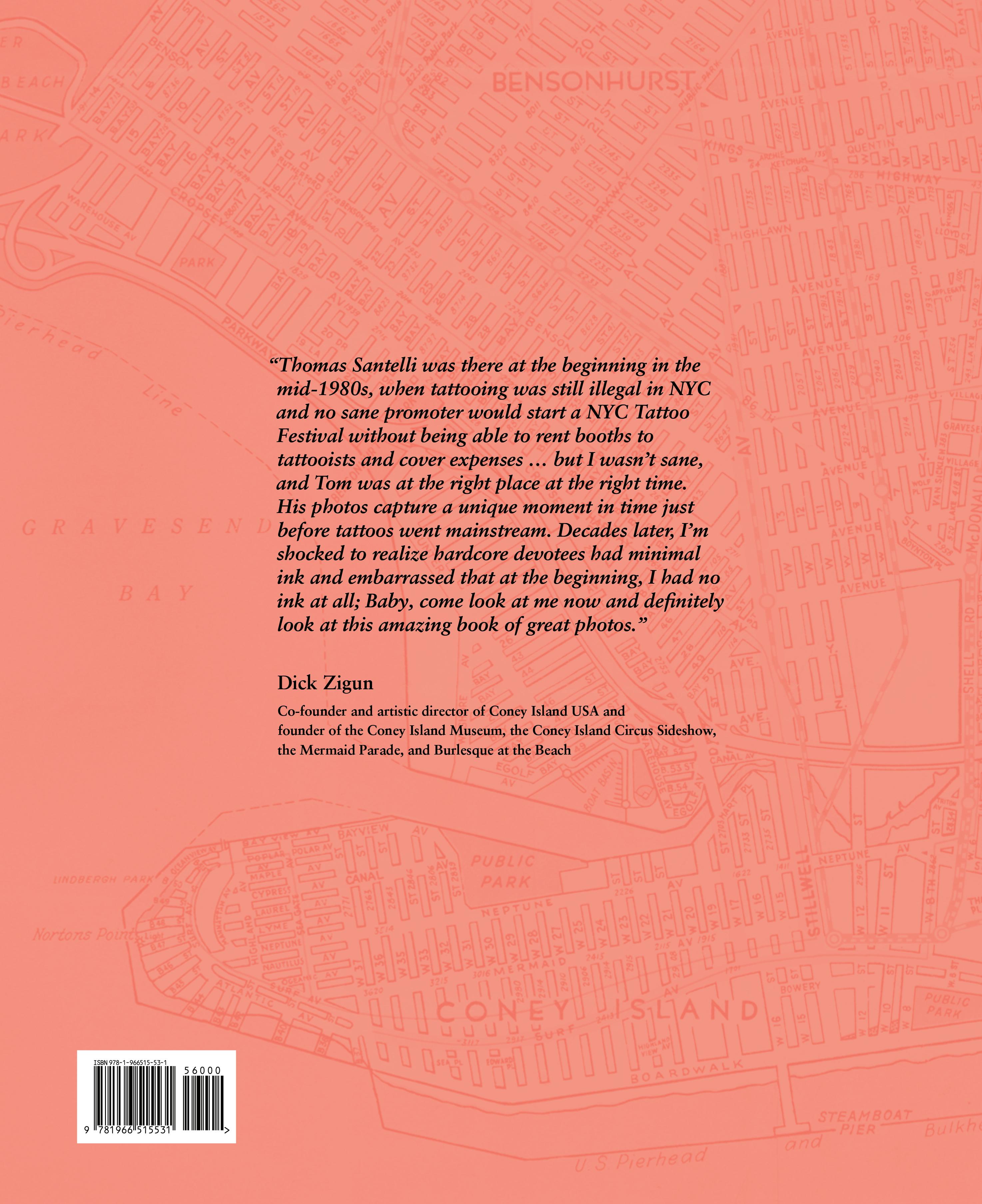
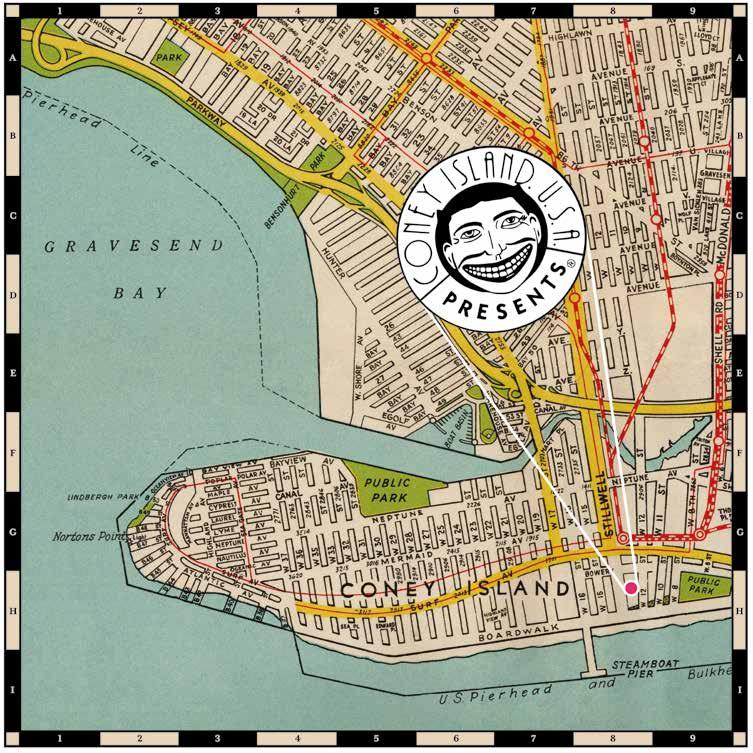
Detail of a street map, Brooklyn, New York. Hagstrom Map Company, NY, 1944.
“‘All of me is Illustrated. Look.’ He opened his hand. On his palm was a rose, freshly cut, with drops of crystal water among the soft pink petals. I put my hand out to touch it, but it was only an Illustration.
“As for the rest of him, I cannot say how I sat and stared, for he was a riot of rockets and fountains and people, in such intricate detail and color that you could hear the voices murmuring small and muted, from the crowds that inhabited his body.”
THE ILLUSTRATED MAN BY RAY BRADBURY
In my youth, I was a voracious consumer of science fiction and fantasy. Growing up in the ’50s and ’60s, the magical worlds in books, films, comics, and television shows like The Twilight Zone captured my imagination and fueled the creative impulses that would later inform my art. Ray Bradbury was a favorite, and one book in particular stuck with me: his classic collection The Illustrated Man, the central story of which features a roadside encounter with a strange man covered in tattoos. The tale’s narrator gazes in wonder from one tattoo to the next, as they each come alive and reveal their stories.
At this time, tattooing was not as mainstream as it has certainly become today and, to the best of my knowledge, none of my friends or family had tattoos. They were associated with people on the fringes of cultured and polite society, individuals with an air of danger.
I bought my first SLR film camera as a teenager in the late ’60s. I was working in my local camera store in the Bronx and had visions of becoming a fine art photographer. I enjoyed the process and solitude of darkroom photography, as well as its artistic challenges. More than that, I loved how the medium gave me the opportunity to meet interesting people—my favorite subject matter—and loved the energy of those intimate moments working in the studio with amazing individuals I might never have had the chance to meet otherwise.
It wasn’t until I was in my late twenties, a college graduate building a career as an artist, that I had the idea of photographing people with tattoos. However, I had no immediate access to willing and available subjects. At the time, tattooing was illegal in New York City thanks to a ban enacted in 1961, though there was still a thriving under-
ground community. Nevertheless, the desire to undertake this adventure, and the potential visual story I wished to explore and convey, continued to fascinate me and would not go away. I asked friends what they thought of my idea. Some said it sounded interesting. Others said I was asking for trouble—that it would be dangerous to be alone in a studio with the kind of stranger who would have tattoos. I was, admittedly, nervous myself, but I also felt that the camera could be my passport to this exotic and mysterious world.
When a friend said they knew someone who might be interested in sitting for me, I decided I had to take a chance. I got her number. Her name was Julie, and she lived and worked as a bartender on the Lower East Side of Manhattan. We set a date. The morning of the session, Julie called to ask if it would be all right if she brought her friend, Angela, along, as she also had tattoos and was interested in sitting for a portrait. When they appeared at the door of my two-room studio apartment in Kew Gardens, Queens, I escorted them into my makeshift photo studio—a living room/kitchen area that I converted by moving my sofa bed, tacking a backdrop on the wall, and setting up my light, umbrella, and tripod. They took several minutes to prepare for the session, and then I individually photographed their portraits. Julie and Angela had compelling tattoo-work and were a sheer delight to work with, and upon seeing those first negatives and chromes, I was hooked.
Thrilled and relieved by such a promising start, and with a newfound confidence, I placed an ad in The Village Voice seeking male and female models with interesting tattoos. Soon enough, I started receiving calls. In the days before email and video chatting, everything was based on trust. I
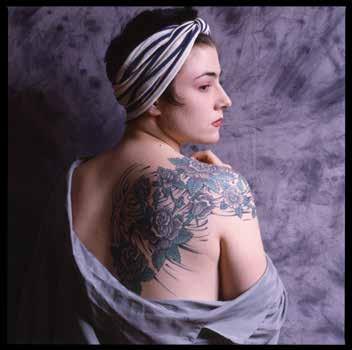
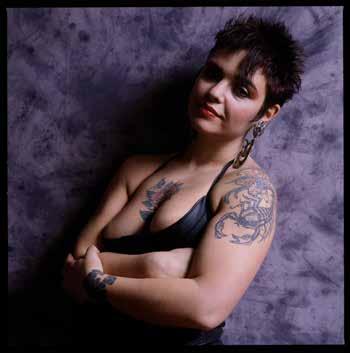
would meet my prospective models in a phone conversation, where they would describe their tattoo-work to me and ask questions. If all sounded good, they would travel to my apartment/studio for their portrait. It was a rewarding but slow process, and after several months, I had photographed fewer than a dozen portraits.
It was now the summer of 1986, and I was 33 years old. Skimming through The Village Voice one day, a curious ad caught my eye. It was for the first Coney Island Tattoo Festival, to be held in August at Sideshows by the Seashore on the Boardwalk at West 12th Street. Along with the ad was a name and a phone number. When I dialed the number, a woman with a friendly voice answered. Her name was Amy Krakow, and she was the Festival’s producer and director. I introduced myself and explained that I was a portrait photographer who was very interested in photographing individuals with tattoos. Would it be all right, I asked, if I came to the Festival and made some images? Her response was, “Sure, you can be our official photographer.”
And so, on what felt like the hottest day in August, I packed a 35mm SLR camera with a portable flash and rode the subway from Queens to the bottom of Brooklyn and the fairytale world of Coney Island, USA. Two friends came with me, and we made a day of it, as you simply had to when visiting “the People’s Playground.” While no longer the vibrant beachfront tourist destination it had once been, the place still held an enchanting glimmer of its original splendor and character. We ate hot dogs at Nathan’s Famous, strolled along the busy Boardwalk, and took a harrowing ride on the historic wooden Cyclone roller coaster in Luna Park. Once safely back on solid ground, we walked over to Sideshows by the Seashore.
By day, Sideshows by the Seashore encompassed both the Coney Island Museum and the Coney Island Circus Sideshow, a variety attraction venue in the style of the carnival freak shows of old. The long building, which sat right on the Boardwalk, was decorated with vibrant hand-painted signs promoting its stars: Satina the Snake Charmer, the King of Magic, the Sword-Swallower, the Human Blockhead, Madame Twisto, and the Illustrated Man. But on this particular evening, after a break in the performances, the space was being repurposed to house the Tattoo Festival.
Before the sun went down, my two friends hopped on the subway to head back home, leaving me alone with my anticipation, hopes, and camera.
The large performance space was uncluttered and fairly well lit, with hand-painted carnival sideshow banners on the walls and a prominent stage in the center of the room. The air inside grew sweltering as it slowly filled up with
tattooed bodies. The walls of the building were lined with police that first year, but I never felt unsafe at the Festival, and to my knowledge, there was never any trouble. I cautiously walked among the crowd, chatting and asking for photos. Most people eagerly said yes. They were there to display their tattoo-work, after all, and were delighted by my interest. By the end of the night, I had exposed several rolls of black-and-white film and was wishing I had brought more equipment: a larger-format camera, color film, lighting, a backdrop cloth.
Before leaving, I anxiously asked Amy, “Please keep me in the loop if this event happens again next summer.”
Fortunately, it did, and I was invited back—as I would be every year—this time with more equipment and a dedicated makeshift studio area right next to the stage. For the next several years, the Tattoo Festival became the highlight of my summers. The event grew as word spread; at
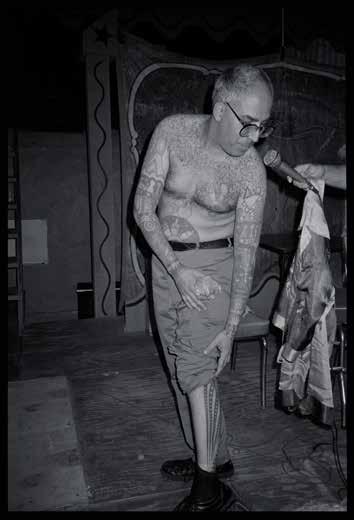
its peak, hundreds of people flocked to Coney Island from all across the country. Some attended to show off their tattoo-work, some were tattoo artists themselves, and some came simply because they were curious.
The crowds were an eclectic mix of humanity, ranging from well-dressed individuals with one small, discreet area of ink to the person featured in the Guinness Book of Records as the most heavily tattooed man on record. A roar like thunder through the humid air would signal the arrival of motorcycle gangs as they rode their bikes up onto the Boardwalk and parked in their designated spots—a separate area for each rival gang. The atmosphere was energized and boisterous, helped in part by the steady flow of beer throughout the night. A moderator stood onstage and invited attendees to step right up and share a story about one of their tattoos. For doing this, they would receive a free beer (and since many people were covered in tattoos,
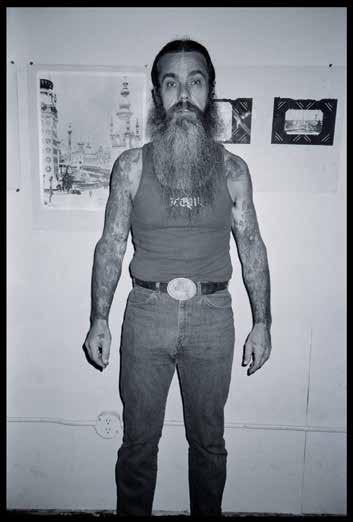
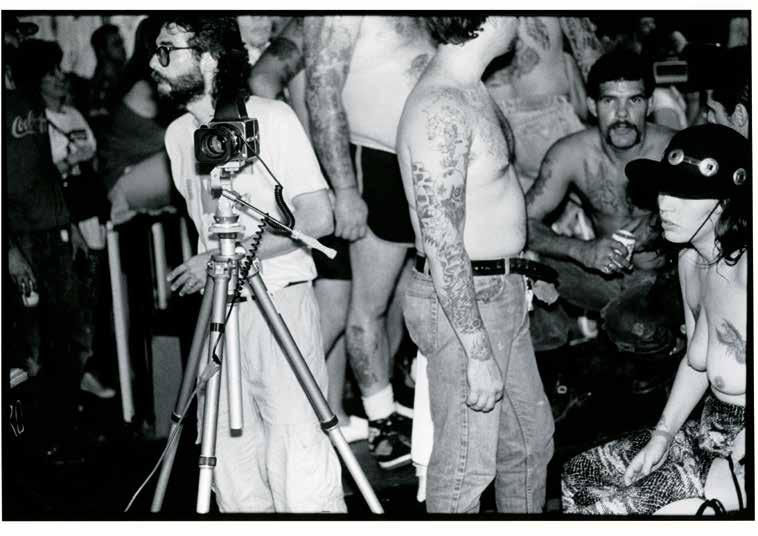
they could be rewarded with quite a few beers for this). Afterward, they would be directed to pass by my makeshift studio area to be photographed.
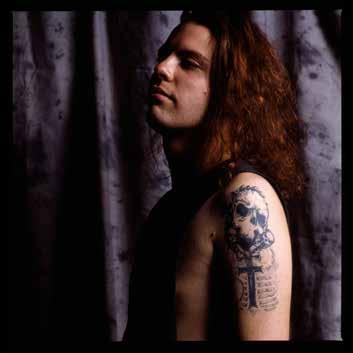
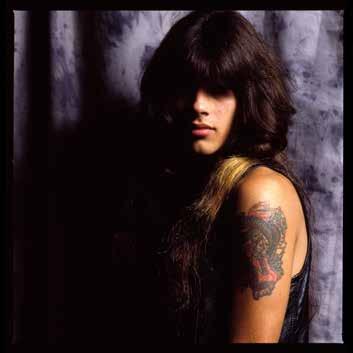
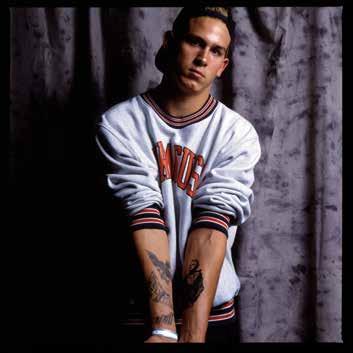
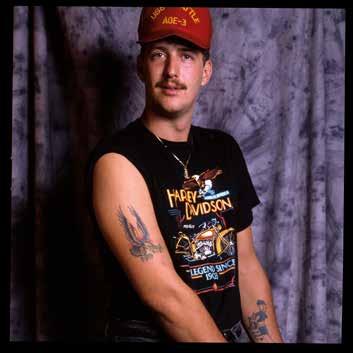
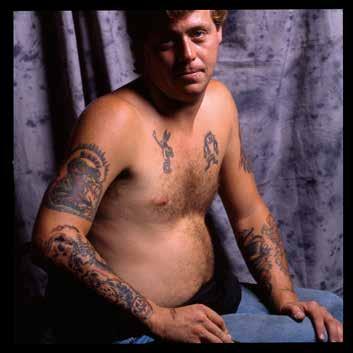
With my medium-format camera secured on a tripod at an appropriate distance for portraiture, and a single strobe light mounted on a stand that was taped to the floor for safety, my mobility and options for fine-tuning each portrait were limited. My hope was to expose one color and one black-and-white frame of each person—a juggling task that required me to switch film backs between exposures. My biggest challenge, however, was only having a few seconds to accomplish my goals.
Each person who stood in front of my camera brought an aspect of their raw, spontaneous, and authentic self because there was simply no time to direct, plan, or even think. They came off the stage, hopefully stood on the “X” I had marked on the floor, and then I shot an image or two. That was all the time we had in this chaotic
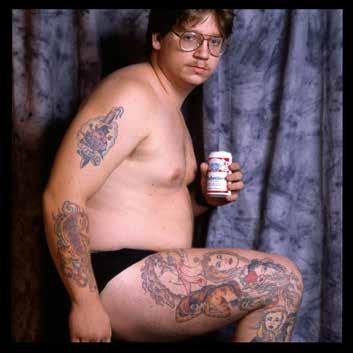
environment. Because of this, I feel I captured each person in a moment of pure honesty and genuine truth—which, I believe, makes each image very unique and personal. The natural facial expressions and the unconscious postures in these portraits display such a diverse range of in-themoment emotions—nervousness, bravado, joy, timidity, inebriation, pride, defiance, and more.
I made a point of returning to each new Festival with a large box of free prints to give to the people I had photographed the year before—a simple gesture, and another way of saying thank you. As the years went on, I got to know many of the regulars, who were always eager to show me their newest tattoos and to sit for another portrait.
My hope is that the portraits in this book serve as a celebration of everyone who graciously posed for me, and that this series of photographic work preserves a unique window of time in the culture, aesthetic, and evolution of tattooing as a form of personal expression. •
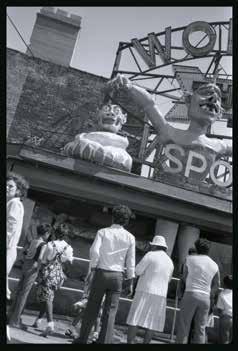
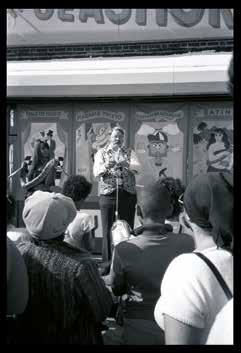
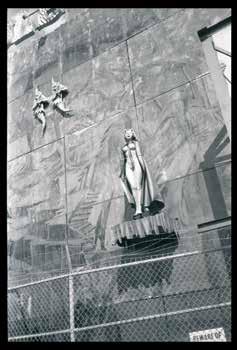
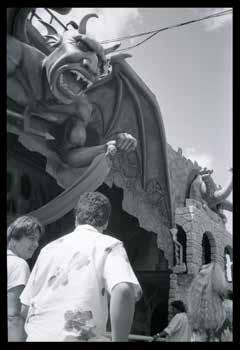
Photographs from Coney Island, 1986, the afternoon of the first Tattoo Festival. Clockwise from upper left: a portion of the front façade of the Spook-A-Rama “dark ride,” at one time Coney Island’s longest ride, located in Deno’s Wonder Wheel Park; Ruby Rodriguez (a.k.a. Satina the Snake Charmer) and “outside talker” John Bradshaw plying their trade in front of Sideshows by the Seashore on the Boardwalk; the ominous entrance to Dante’s Inferno, a maze-like “dark ride” on the midway of Astroland Park; a statue of a cloaked, nude, female minion of the Devil adorning the front exterior wall of the Hell Hole, a rotor amusement ride located on West 12th Street near Astroland Park.
BY AMY KRAKOW
Iwas hanging around before a board meeting for the Bond Street Theater Coalition, one of the last remaining street theater companies in the nation, a vestige of the ’60s, when I turned to its founders to offer a suggestion. It was 1984, Reagan was in the White House, I was working at The Village Voice, I had a background in festival producing, and I smelled change in the air. Hell, it was all over MTV.
“How about a tattoo festival? You should see all the rock ‘n’ rollers with tattoos! I’ll produce it … you’ll make the money. My way of making a contribution to Bond Street.”
The founders were speechless. Their expressions spoke volumes. They looked at me as if I were beyond crazy. They tactfully tap-danced around why they thought such an event would not be in keeping with the Mime Festival, Clown College, the Chinese Acrobats, and other respected street theater performances scheduled for that coming summer. And they continued to look at me as if, as if … I were tattooed.
Several months later, I broached the subject with Coney Island USA. I was a board member there too. “Let’s put on a tattoo festival,” I said, again. “Coney Island has an amazing history of tattooing, with tattoo shops up and down the Boardwalk before tattooing became illegal in NYC.”
“Great idea, Amy,” said Dick Zigun, founder of Coney Island USA and Sideshows by the Seashore, and Board President Costa Mantis. “You know how to do festivals! You put on those great festivals of street performers! Come on. Give us a tattoo festival.”
Never one to shirk from a challenge, I agreed.
In fact, it was reported that one of the reasons NYC outlawed tattooing in the early 1960s was because of an incident in Coney Island.
Paul Ortloff, by then the owner of Shooting Star Tattoos in Fleischmanns, New York, the man who actually organized tattooists well before anyone else, back in the early 1970s, and then staged the first tattoo convention, was the very same person involved in the incident in Coney Island that he claimed made tattooing in NYC a health code violation. He was a young teenager in Brooklyn and got a case of blood poisoning as he called it, but in reality it was Hepatitis B, from his Coney Island tattoo. His father, an attorney, was furious with his independent young son and sought vengeance. He received it in the form of the
health code violation against tattoos. According to Damon Root, writing in the March 8, 2014 Reason.com, “the story of New York City’s tattoo ban presents the classic case of government regulators using a bogus public health pretext to hound an unpopular activity out of existence. Pointing to a non-existent link between tattooing and a minor outbreak of Hepatitis B.” Actually, it wasn’t non-existent. It did happen, and it was because of the very strong political connections of the attorney father that “city officials went on the attack, declaring, ‘the tattoo industry from a public health point of view … [is] not regulatable.’ According to the government, only a total ban would save the citizenry.”
And so, in 1961, New York City (and several states) declared it “‘unlawful for any person to tattoo a human being,’ a prohibition that remained on the books for nearly four decades, until the city finally re-legalized the tattoo trade in 1997.”
So, a tattoo festival in Coney Island in 1984?
Little did I know what I’d be in for.
I had no tattoos myself and no idea where to get one. Well, I sort of had an idea. The legendary Spider Webb advertised on the back page of the Voice, and I had visited his studio in the early ’70s to get a tattoo before chickening out. But by 1984, tattooing was relatively underground in NYC. You couldn’t walk into a tattoo shop on St. Mark’s or 23rd Street or in Williamsburg, or anyplace else in the city, for that matter. You had to know who, what, where, have someone vouch for you, and then make an appointment.
To thumb his nose … and other body parts … at the authorities and the ban, Spider had tattooed Annie Sprinkle—porn star, performance artist, and founder of the Ecosex Movement—right on the steps of the Metropolitan Museum of Art and received oodles of press. So, I called Spider. I think I left three voicemails: “I’d like to meet with you … I’m planning on producing a tattoo festival in Coney Island.” I was naïve. I know now that there was no way Spider would return a phone call from someone who wasn’t even looking to get a tattoo.
But I was and am a woman of my word, and I was determined to do this festival. Coney Island USA needed money, and I really loved the new interest in tattoos that I was seeing on MTV… When I was a little girl, five years old-or-so, I delighted in looking at the flash in the windows of the tattoo shops on Flatbush Avenue near Atlantic—pre-
ban. The art community of which I was a part thought I was beyond crazy. “How dare you consider tattooing an art form?” was the message they were sending. So, I was on my own.
My parents lived in Fort Lee, New Jersey, and whenever I’d visit them, I’d drive past a tattoo shop in Cliffside Park—Lola’s Hot and Flying. I went to pay my respects to Lola. She listened intently when I explained my vision, offered her comments, and then gave me two telephone numbers of tattoo artists she thought I should talk to in NYC.
One was a young French woman named Cat who sported a black ear (black from ink) and had painted the murals at L’Acajou—a NYC Flatiron District bar and resto, now gone to make way for something much pricier. The other was Mike McCabe, who had a master’s degree in anthropology from Columbia University and was a working tattoo artist and teacher.
Cat and Mike shared my vision of tattooing as an art form, and they were great to me. They supplied me with the phone numbers of tattooists, tattooed people, magazines, and photographers both in NYC and across the country.
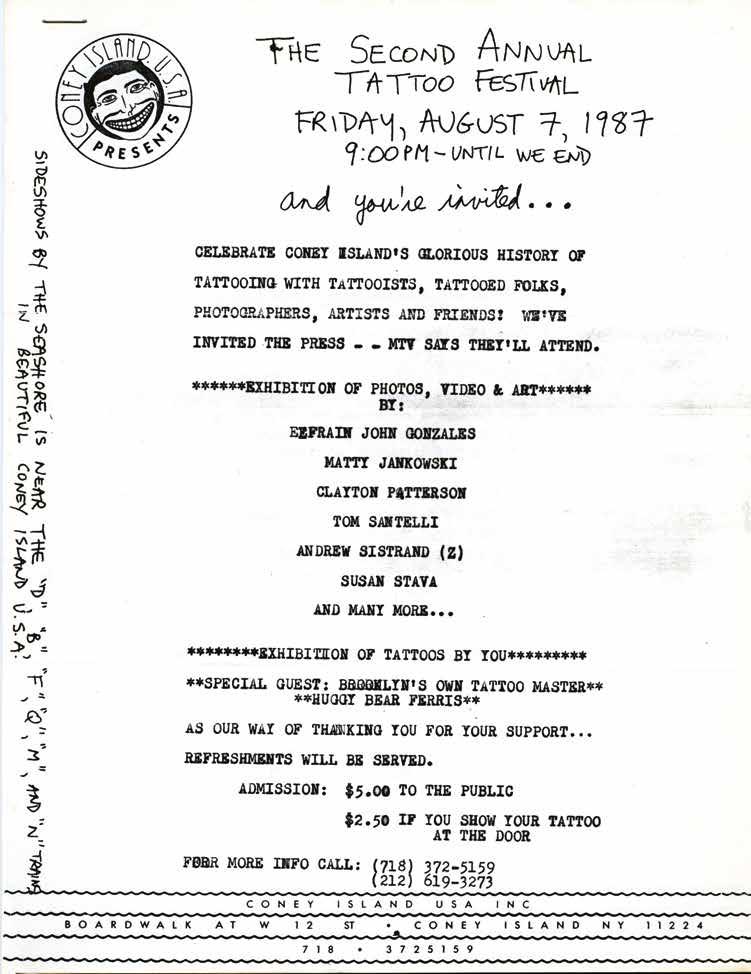
And so began the first year of the Coney Island Tattoo Festival. I’d personally call tattooists, invite them, and ask them to bring their clients. I’d call the old-school guys in Brooklyn, Staten Island, and Queens and ask them to be on a panel discussion. I’d see tattooed people on the street and ask them who did their work and could I have their phone number. I was shameless and obsessed. I’d ask photographers and videographers to bring slides and photos to exhibit at Sideshows by the Seashore on the Boardwalk at West 12th Street and to take photos at the event.
I had some truly inspired phone conversations with a photographer from Queens named Tom Santelli. I invited him to the Festival, and we talked about tattoos and tattooing. In addition to other styles, he shot square-format photos. That really knocked me out, and I asked him if he would be our official photographer. He said yes.
Three days before the event, though, I panicked. Bikers! We were going to have bikers at the Festival. The gangs in Coney Island might touch the bikes—and that could be trouble. I called the local police precinct, and they said, “No problem. We’ll send some plainclothesmen.”
The event, held on a Sunday afternoon, couldn’t have been more pleasant and laid-back. People undressed to show off their latest ink, tattooists called to the stage their clients so their work could be displayed, and the grand old-timers of New York—Coney Island Freddie, Philadelphia Eddie, and others—sat onstage and reminisced. Great tattoo photographers came, including Steve Bonge, who shot candid portraits of attendees and details of their
tattoo-work. Pulsating Paula showed up on the back of a motorcycle; she was tattooed, outrageous, and a dynamite photographer, and the magazines she shot for helped make my festival famous among tattooed people and tattooists across the US. Tom Santelli, the official photographer of the Coney Island Tattoo Festival, shot during that first Festival and for the next five-plus years, setting up a makeshift photography studio next to the stage complete with lights, umbrellas, and a backdrop to capture dramatic black-andwhite and color portraits of the participants.
At the end of the night, a guy came up to me. “Hey, whaddaya have all those plainclothes cops here for?” He was a member of the Mystic Warriors MC, a local Brooklyn club.
I explained my fears about the Coney Island gangs.
“Hey, we’ll do your security for you next year. This is a great event. Ya gotta keep doing it.”
I quickly calculated what it would mean to have a motorcycle club do security. More bikers. More tattooed people. More crowds. Motorcycles displayed on the Coney Island Boardwalk.
“Great idea,” I said. “Give me your card.”
And that, essentially, set the tone for the event. Each summer afterwards, for at least eight more years, I staged the Coney Island Tattoo Festival.
When the late Michael Wilson, the Illustrated Man, joined Dick Zigun’s sideshow at Coney Island USA, I explained to him that I didn’t want the Festival to be a freak show for the non-tattooed to come and stare and point. It was a tattooed person’s event before tattooed people made up 32% of Americans—the current number, according to a 2023 Pew Research study. It was more of a party than a typical tattoo convention due to the New York laws (no tattooing permitted on the premises … health code violation!), so tattooists would have a different kind of fun at the Festival. Spider Webb would entertain; his Electric Crutch Band was always a favorite.
My hosts for the event were Costa Mantis and Ari Roussimoff. Ari was a member of the tattooed tribe, a filmmaker, an artist, and a supernumerary at the Metropolitan Opera. He was also co-president of the Tattoo Society of New York alongside Clayton Patterson, a legend of the Lower East Side—an artist, author, videographer, and major supporter of the Festival. Even though I still wasn’t tattooed at that point, I became friends with bikers, with tattooists, and with tattooed people. I loved everyone and loved seeing them each year, and I loved promoting them and introducing them to the press … especially guys like Bernie Moeller, who held the Guinness World Record for the most tattoos in 1991. I remember Bernie holding court on the Boardwalk, explaining to an AP reporter how
he promised his family he wouldn’t get tattooed above the neck … but then he did it: got a tattoo on his tongue.
As the event grew, from maybe 150 attendees the first year to 500, 600, 800, up past 1,000, the most famous tattooists in the United States and Europe showed up. Shotsie Gorman, Jonathan Shaw, Jack Rudy, Winona Martin, Eddy Deutsche, Mick and Tom Beasley, Andy Capp, Alex Herman, Hanky Panky, Freddy and Tony P., Steve Ferguson, and their clients all attended. On display was tattoo-work by Jamie, by Ruth Marten and Cynthia Witkin, by Ed Hardy, Brian Everett, Madame Vyvyn Lazonga, Bob Roberts, and many others. I was honored that the leading lights, the great artists, would come … and why not? This was a great party, an art opening of sorts, where the community had a place … and a reason to get together. It also served as a fundraiser for Coney Island USA and Sideshows by the Seashore, an IRS 501 (c) (3) not-for-profit organization that began in 1980, and after a few years, tattooist Crazy Ace and I began producing T-shirts commemorating the event.
All were welcomed. Where else in the New York area could tattooed people enjoy each other without their clothes on and with no judgment … save for compliments on their work? Where else could people of all social classes be themselves without the stares, the pointing, the whispering?
But not everything was always pretty. I liked having photographs of piercings as well as tattoos projected on our big screen, and that caused a furor one year. Some attendees felt that an art event was no place for what they considered to be “sexual body markings”—piercings— rather than a pure art form—tattooing.
I listened, I learned.
Each year, I had my doubts about the Festival. It was a lot of work for little money. It took months to organize, get the word out, notify the listings press, and then choose one major media outlet to do a feature story. Then we had to design and make T-shirts, posters, and more, even though it looked as if it were put together within hours. And I always had that fear of Coney Island gangs coming after “my” audience, “my” people.
But each year, I’d do it again. And each year, before I contacted anyone else, I called Tom Santelli and said, “I’m doing the Festival again, even though I’m not sure I want to do it again!” And every year, Tom would respond: “It’s so much work! I’m not sure I want to come this year.”
But every year, I would produce and direct the event, and Tom would chronicle it.
Each year, the event grew, and each year, MTV would feature more and more videos with tattooed rock stars.
Sports stars began to get tattoos. Movie stars. Fashion designers would incorporate tattoo designs on pantyhose,
Madonna would flash her fake ink, and models would get press coverage in the fashion magazines when they got tattooed.
The crowds got so big that we outgrew Coney Island. We just didn’t have room for what had become 2,000 people coming and going, along with the motorcycles. Zigun asked me to keep the Festival there, but I needed a larger venue. The audience was too big … and tattooing was becoming too mainstream. Ultimately, I made the decision to hold the Festival at the Amazon Club on a pier on the Hudson River in Tribeca.
The final Coney Island Tattoo Festival but not in Coney Island, instead in Manhattan, was marked by a huge crowd: 1,200–1,500 people, a substantial increase from the 150-or-so at the first Festival just eight years earlier.
MTV featured the winner of the Festival (for the Manhattan-based Coney Island Tattoo Festival, we had judges who selected a winner), whose tattoo was done by Jonathan Shaw, founder of Fun City Tattoo, with artwork by Mary Fleener.
That year, Bill Cunningham covered the Festival for the “Sunday Style” section of The New York Times.
Warner Books signed me to write a book about tattooing, which was published in 1994.
In 1995, the South Street Seaport asked me to curate an exhibition on the history of tattooing, “The Devil’s Blue: American Tattoo Art and Practice Through the Port of New York (1840–1961),” for which we received a New York State Council on the Arts grant.
Today, tattooing is no longer a health code violation in NYC.
Some preachers still preach against tattooing.
Some parents still don’t want their kids to be tattooed. But some go off with their kids and get matching ink.
The Wall Street Journal every so often features a tattoo story on its front page.
Many of the legends are no longer with us. Lyle Tuttle, the elder statesman of tattooing, passed away after an amazing event to honor him was held at the Palace of Fine Arts in San Francisco. Shotsie Gorman lived in Sedona, Arizona and then California, until his death earlier in 2025.
Jonathan Shaw was in Brazil and is now back in NYC and Los Angeles. Ed Hardy has his name on a line of clothing, sold worldwide, featuring his tattoo designs.
And yes, I am now tattooed. •
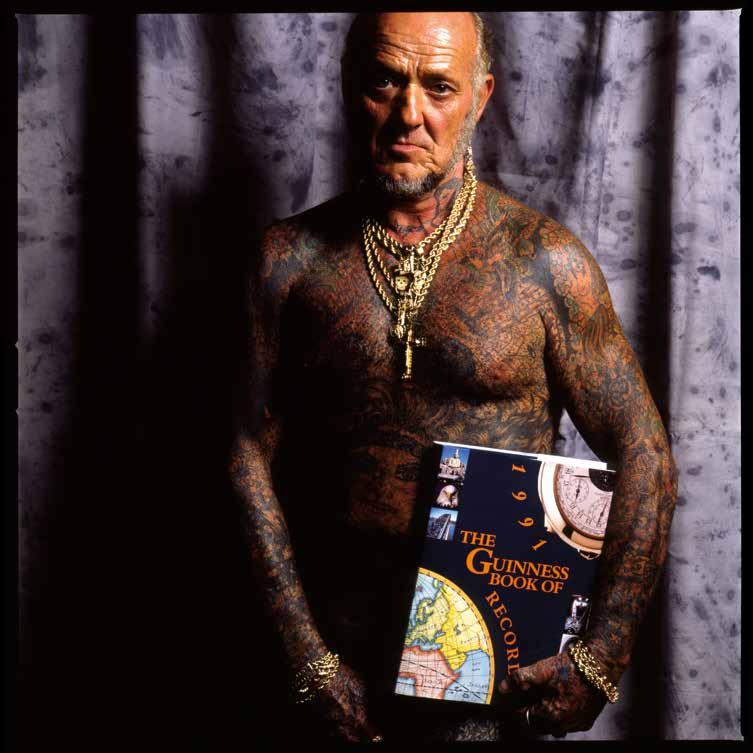
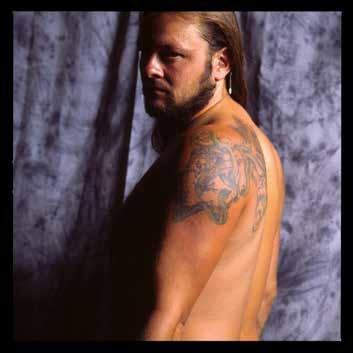
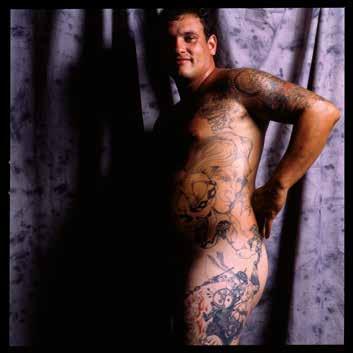
Although I had photographed him previously at the Tattoo Festival, I was asked to make this new portrait of Pennsylvania’s legendary tattoo artist Bernie Moeller to celebrate his inclusion in the 1991 Guinness Book of Records with the distinguished title of “Most Tattoos.” At that time, he had 9,860 tattoos covering nearly every inch of his body. Bernie was very comfortable with my suggestion that his portrait be nude and carefully posed.
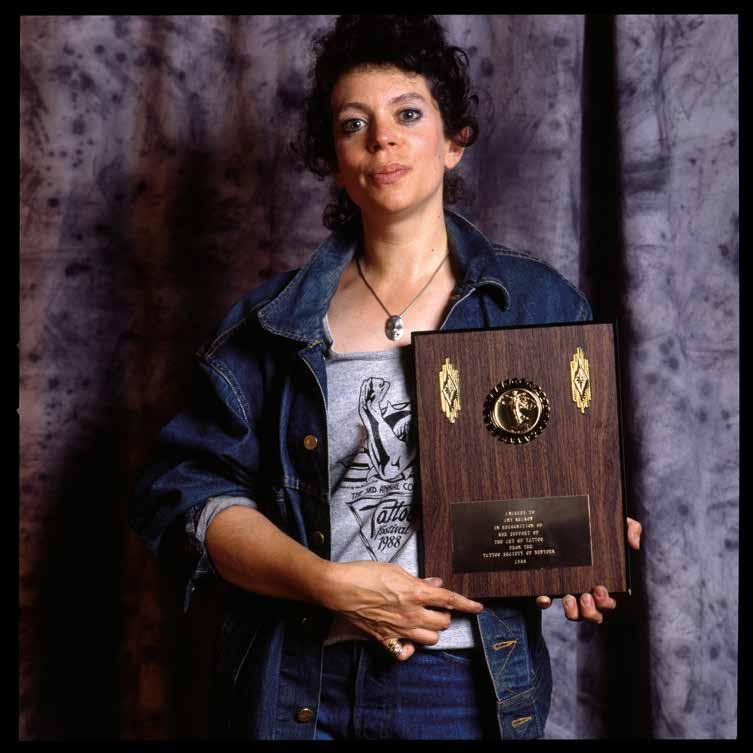
The consistently energetic and entrepreneurial Amy Krakow was, among so many of her other creative job titles, the innovator, producer, director, and promoter of the Coney Island Tattoo Festival. In 1988, as the third annual event was slowly thinking about winding down for the evening, I was asked to “officially” photograph her portrait holding the award she had received from the Tattoo Society of New York for her ongoing support of the art of tattooing.
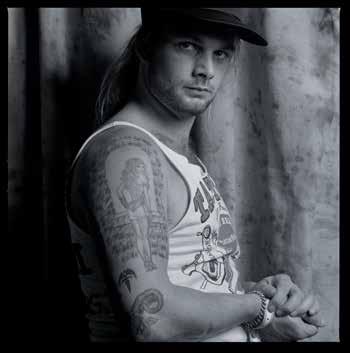
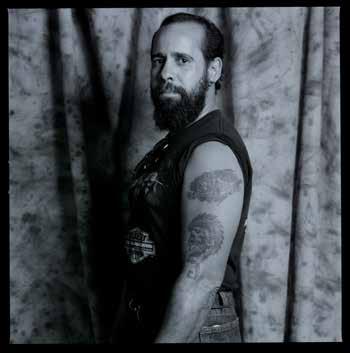
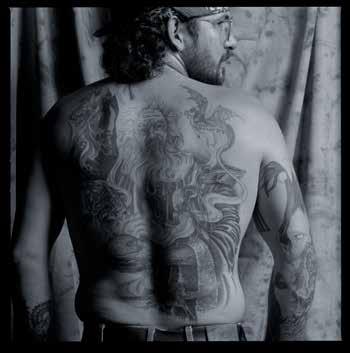
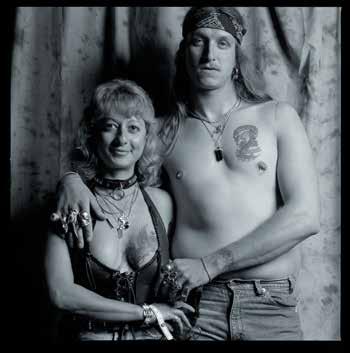
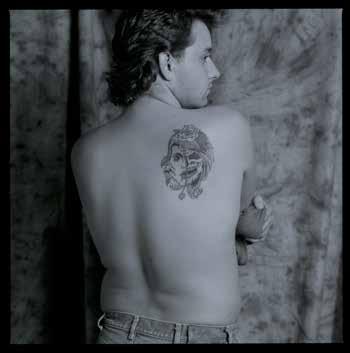
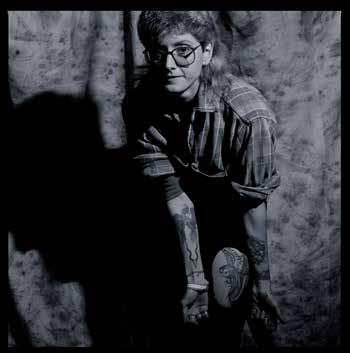
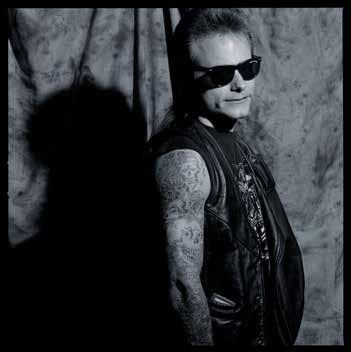
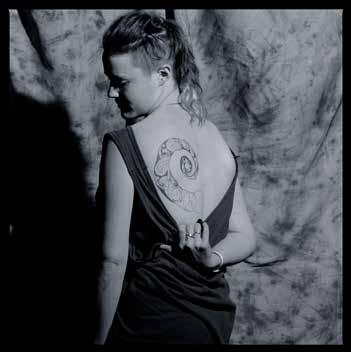
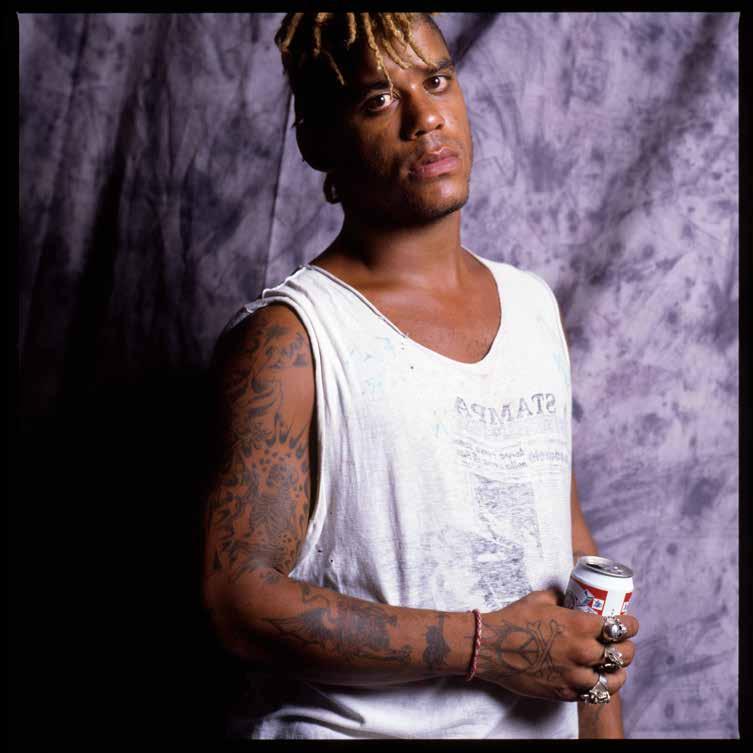
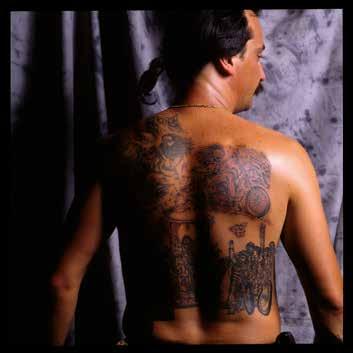
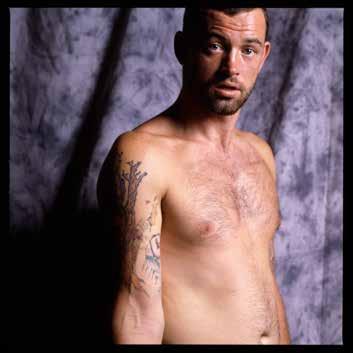
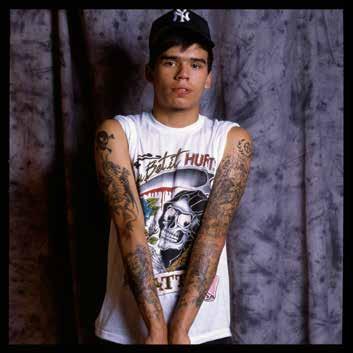
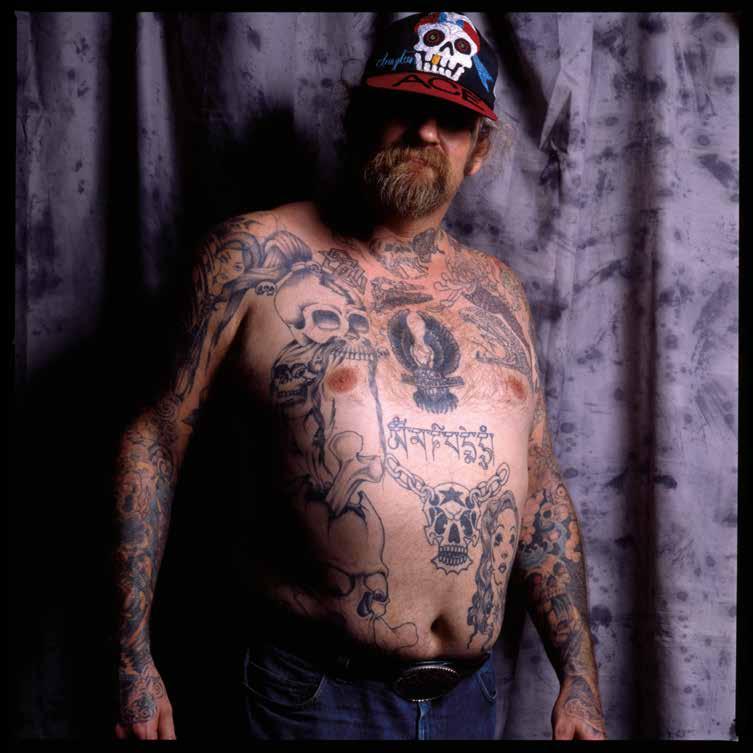
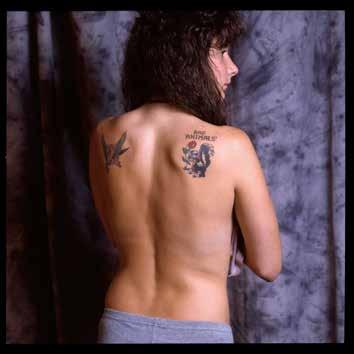
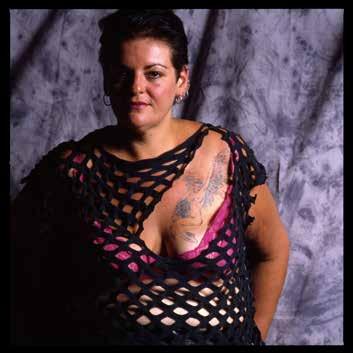
Working from Creative Designs in Richmond, Virginia, legendary Canadian old-school tattoo artist Crazy Ace was also an author, actor, and photographer. To expand the culture of tattooing, he co-promoted the Richmond Tattoo and Arts Convention with “Grandpa Groovy” in the late ’80s. One year, his daughter attended the Festival in Coney Island with him and also graciously posed for a tattoo portrait for me (the woman with the scorpion tattoo on page 43).
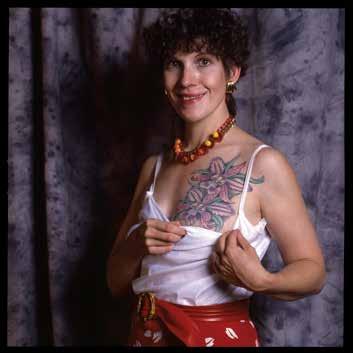
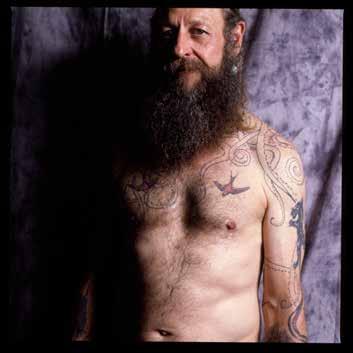
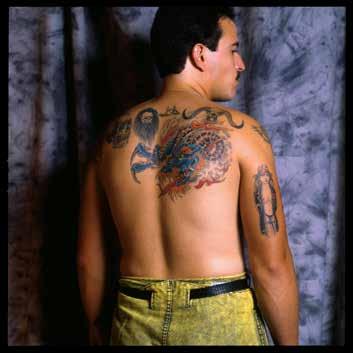
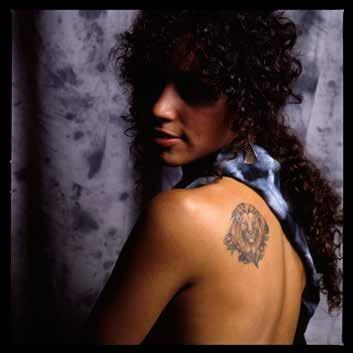
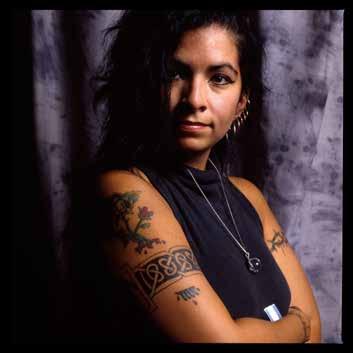
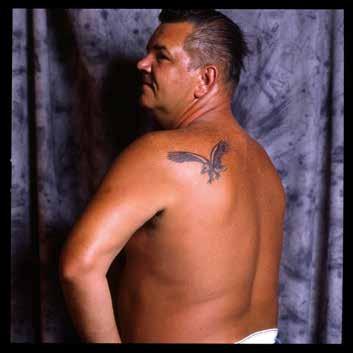
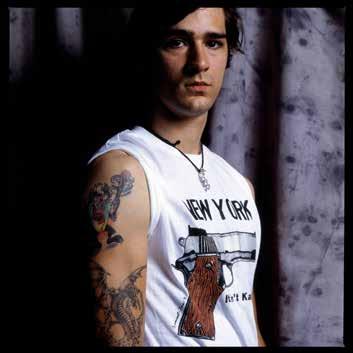
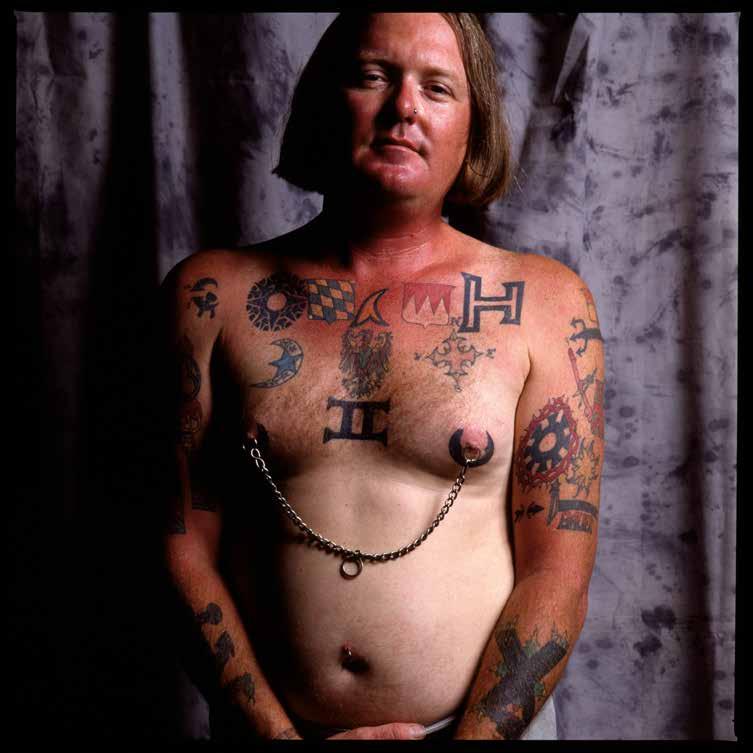
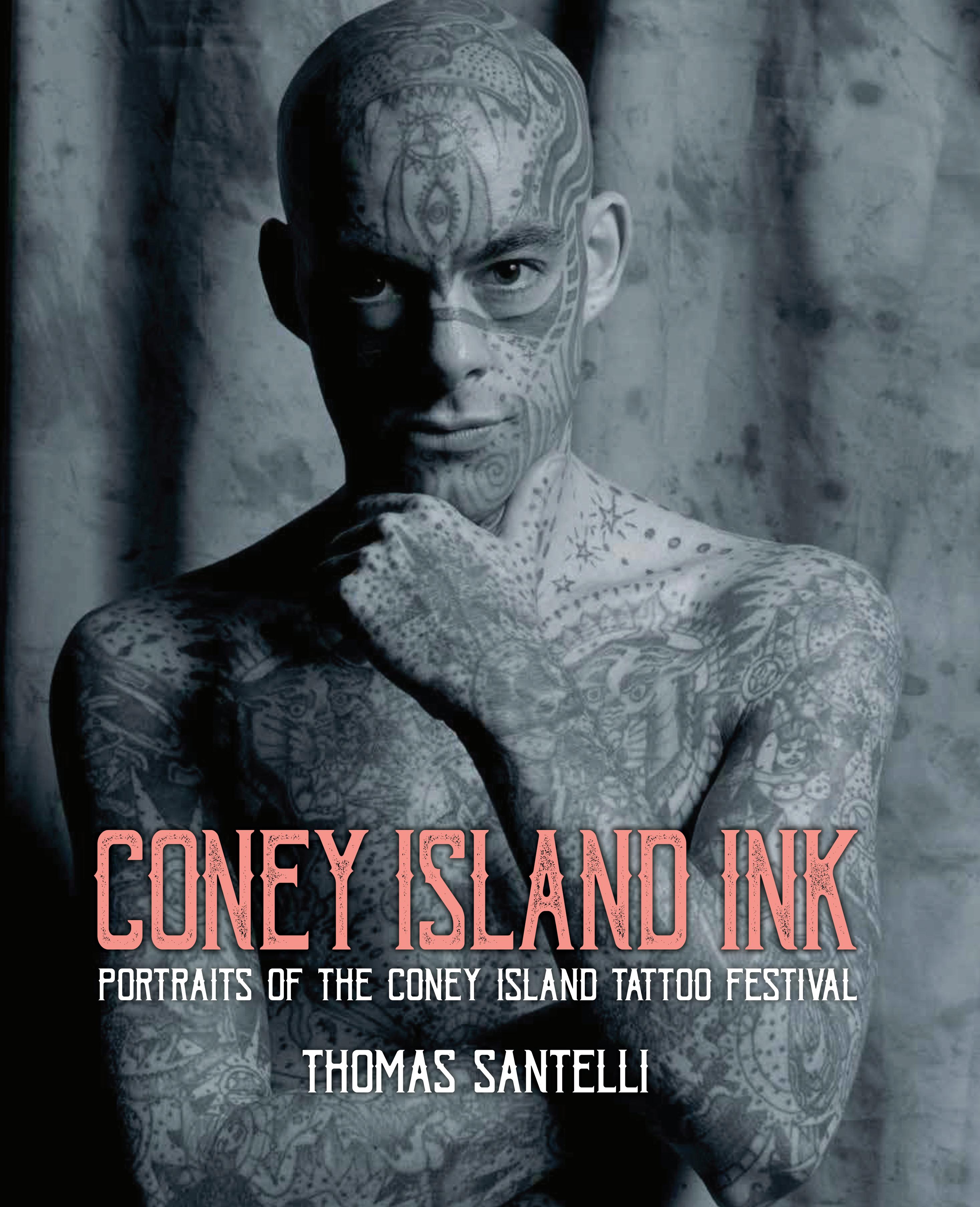
After much time and consideration, I decided to assemble this collection of images from the Coney Island Tattoo Festival to hopefully serve as a time capsule—a photographic record of a unique event held in a wondrous location—and to also preserve this work as a document of this amazing community of incredibly welcoming and creative individuals.
The tattoo-work in these portraits might appear to be somewhat simple compared to today’s standards. The culture and aesthetic of tattooing has deepened and grown since becoming mainstream in the 1990s, and the skill level of current tattoo artists is absolutely astounding, with more sophisticated equipment for inking skin and a universe of colors to work with allowing for fancier, slicker work. Many of the tattoo artists working in the 1970s and ’80s were students of the old-school, traditional approach to tattooing. Their tools were simple, and many didn’t have formal art training. Instead, they would study as apprentices, learning styles and techniques passed down from previous generations of tattoo artists, with a focus on preserving the traditions of this art form. The tattoos shown in this book exist at a crossroads between tattooing’s venerated past and its innovative future.
In the many years that followed my last trip to the Festival, I continued to pursue my passion for photographing tattooed people. Having long since graduated from my tiny, makeshift apartment studio, I made these new portraits in the photography studio at the college where I taught. I could work at a slower pace, allowing for more conversation, direction, and exposed frames—with both black-and-white and color film1—of each person sitting for me. This newer series of tattoo portraits has grown large over time and, although stylistically parallel to the Festival portraits, constitutes a separate body of work in my photographic portfolio. This later work, along with the rest of my photographs, can be viewed on my website: tomsantelliphotography.com.
—THOMAS SANTELLI, AUGUST 8, 2025
THOMAS SANTELLI is a portrait and fine art photographer.
He has also worked as a layout/mechanical artist, an illustrator, a graphic designer, an art director, a musician, and a college professor (Professor Emeritus of Art— retired). Santelli attended the High School of Art and Design in Manhattan, New York; earned his BFA from Pratt Institute in Brooklyn, New York; and received his MFA from Rochester Institute of Technology in Rochester, New York. His photography has been published in Photo Metro, The Total Tattoo Book (Amy Krakow, Warner Books), and Black and White Photography, Manifest Visions/An International Collection (James Luciana, Quarry Books/ Rockport Publishers).
Santelli’s fine art photography has been selected for numerous national and regional juried exhibitions, and he has work in many private collections. Permanent collections that contain his photographs include the Albany Institute of History and Art in Albany, New York; the Center for Photography in Woodstock, Kingston, New York; Wallace Memorial Library in Rochester, New York; and the Irish Museum of Modern Art (IMMA) in Dublin, Ireland.
Coney Island Ink is his first book.
1 Technical note: All of the photographs in this book were exposed on Kodak film. TX 5063 (Tri - X 400, 35mm), TXP 6049/6043 (Tri - X 400, 120), TMX 6052 (TMAX 100, 120), TMY 6053 (T - Max 400, 120), EPN 6012 (Ektachrome 100, 120).
AMY KRAKOW is an out-of-the-box thinker, marketing director, event producer, museum curator, founder and president of the public relations company Propaganda Marketing Communications, and the author of numerous magazine articles—including the “Brief Lives” column in New York Magazine—and books, including The Total Tattoo Book (Warner Books, 1994), the number one bestselling tattoo book ever written, and A Mouthful of the Denver Blues and Bones Festival (Mouthful Books Press and Select Books, 2002). She was also the ghostwriter of actor Elliott Gould’s unpublished autobiography, Husband Ms. Krakow curated the South Street Seaport Museum’s award-winning exhibition “The Devil’s Blue: A History of Tattooing Through the Port of New York,” which received a New York State Council on the Arts grant for folk culture and was featured on CNN and PBS, and served as a consultant for the American Museum of Natural History’s exhibition on body art. A prolific and highly sought-after event producer, Ms. Krakow produced the Off-Broadway Theater Awards (the Obies), as well as the annual Festival of Street Performers in New York (called “the Woodstock of the City” by The New York Times), which drew 50,000 attendees each year, plus similar festivals in Japan, Los Angeles, Canada, New Mexico, and Florida. Ms. Krakow also served as parade director for the famous Coney Island Mermaid Parade for one year, when Dick Zigun took a break, and produced several well-received events at Sideshows by the Seashore in Coney Island, including the Coney Island Tattoo Festival, which she created, produced, and ran for nearly ten years.
DR . MATT LODDER is a writer, curator, and broadcaster specializing in the history of tattooing in the Western world. He is currently Associate Professor of Art History and Interdisciplinary Studies at the University of Essex in the UK. He is the author of two monographs, Painted People (2022) and Tattoos: The Untold Story of a Modern Art (2024), and was lead curator on the major exhibition Tattoos: British Tattoo Art Revealed, which toured the UK between 2017 and 2020. With producer Thomas O’Mahony, he co-hosts the award-winning podcast Beneath the Skin. Matt also serves as a trustee of the Bishopsgate Institute in London, a major archive of vernacular and subcultural London history.
AMY SHEARN is the award-winning author of five novels, including The Mermaid of Brooklyn, a 2013 selection of Target’s Discover New Writers program; Unseen City, winner of the 2020 IPPY Gold Medal in Literary Fiction; and Animal Instinct, called a best book of 2025 by NPR, Oprah Daily, Vulture, and others. Amy’s other work has appeared in many publications, including The New York Times’ “Modern Love” column, The Wall Street Journal, Slate, Ms. Magazine, Poets & Writers, and the literary journals No Tokens, Joyland, Pigeon Pages, and elsewhere. She teaches creative writing at Sackett Street Writers’ Workshop, the Yale Writers’ Workshop, and Writing Co-Lab, an experimental cooperative she helped found. After stints in Chicago, Iowa, New Mexico, and Minneapolis, where she received her MFA from the University of Minnesota, Amy now lives in Brooklyn. She works with writers as a developmental editor, book coach, and retreat-leader. You can find her at amyshearnwrites.com.