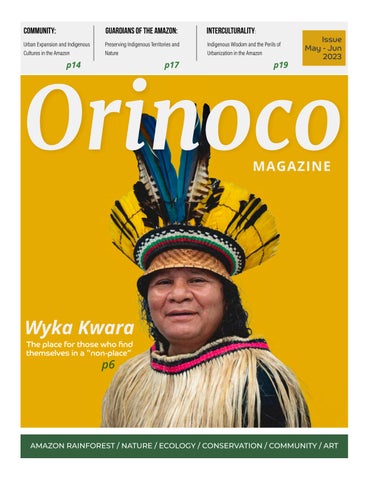
Wyka Kwara
The
AMAZON RAINFOREST / NATURE / ECOLOGY / CONSERVATION / COMMUNITY / ART Issue May - Jun 2023 MAGAZINE Community:
Orinoco
Expansion and Indigenous Cultures in the Amazon
Indigenous Territories and Nature Indigenous Wisdom and the Perils of Urbanization in the Amazon
of the Amazon: p14 p17
Interculturality:
place for those who find themselves in a “non-place” p6 Urban
Preserving
Guardians
p19
“
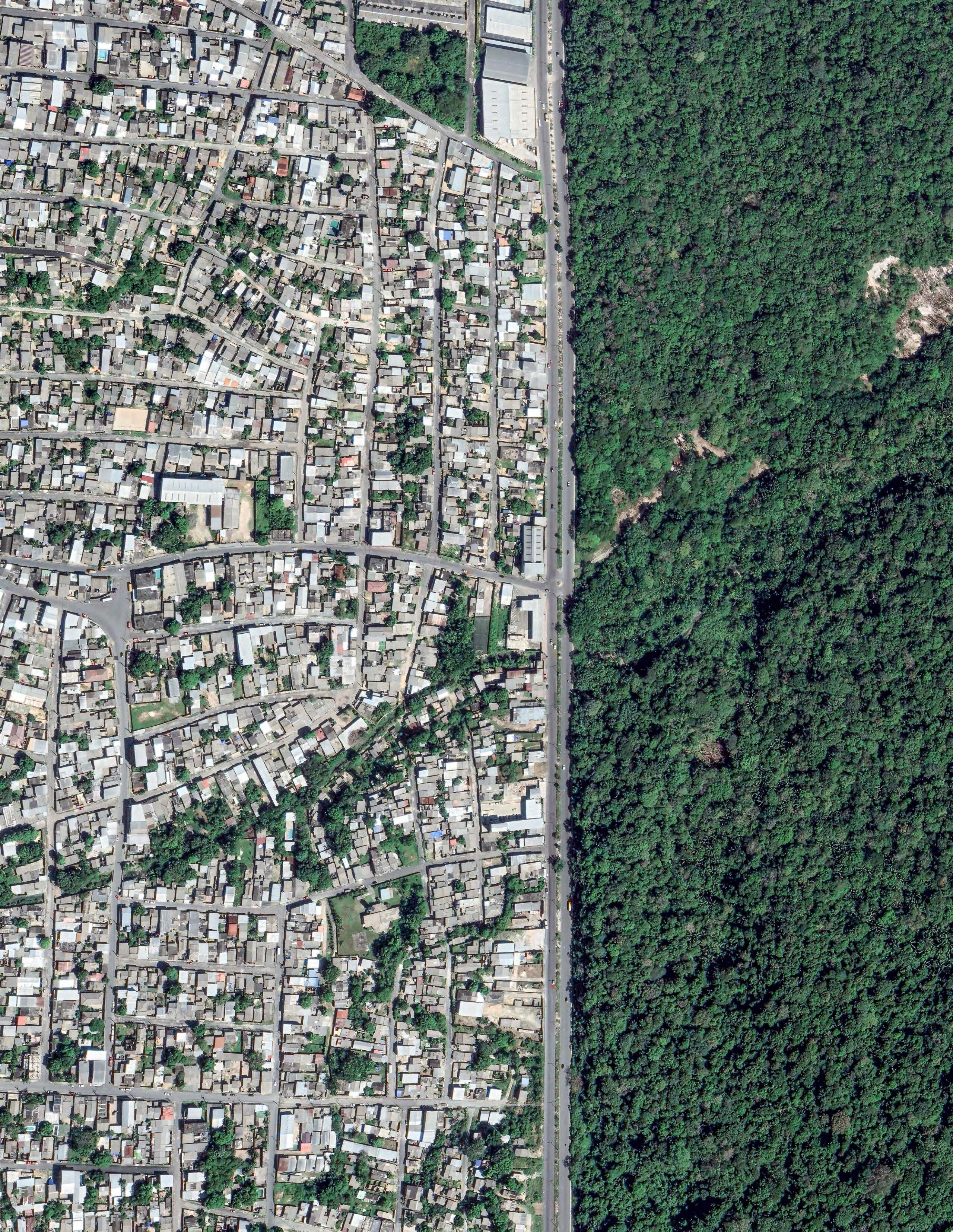
“Cities encroach, the Amazon weeps. Voracious growth threatens nature’s keep.”
Edson Acero
Orinoco Magazine 2
“Discover
What’s inside this issue
04 Editor’s Letter 05 Welcome ................................. ................................. 06 Wyka Kwara: is the place for those who find themselves in a “non-place” 14 The Clash of Worlds: Urban Expansion and Indigenous Cultures in the Amazon
The Amazon’s Lungs: A Vital Carbon Sink
Preserving Indigenous Territories and Nature: The Battle Against Brazil’s Temporal Framework 22 A World of Knowledge at Risk: Indigenous Wisdom and the Perils of Urbanization in the Amazon 10 Interculturality: A Conflictive Pendulum between Globalization, Colonization, and Indigenous Populations 24 Bringing Society Back to the Woods: The Glade 27 Climate Change and its Impact: A Global Crisis Calling for Collective Action 29 Global Visions: Navigating Sustainability and Ecology 30 Mindfulness Matters: Explore the Oasis of Mental Well-Being 32 Editor’s pick a space dedicated to inspiring discoveries.
Rainforest
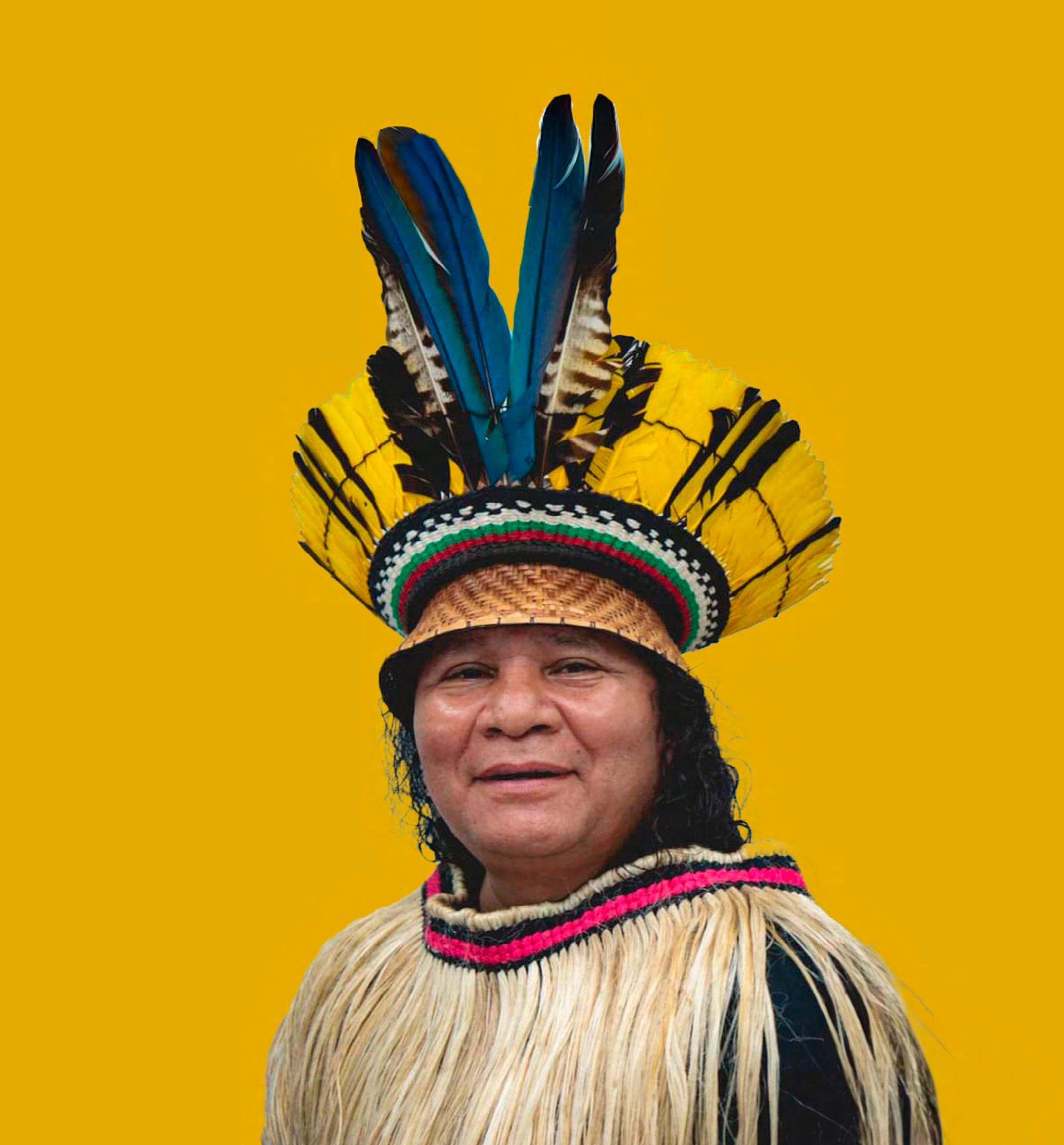
Cover Photo by: Wika Kwara
16
17
Amazon
World Well - Being
Extraordinary: Inspiring
Amazon.” Orinoco Magazine 3
the
Stories, Indigenous Wisdom, and the Transformative Power of Community in the Heart of the
Letter from the Editor Dear readers,
Welcome to the third issue of Orinoco Magazine, where we shed light on the pressing issue of urban expansion and its impact on the Amazon jungle and indigenous cultures. In this edition, we delve into the intricate relationship between cities and forests, exploring the challenges faced by indigenous communities in the face of rampant deforestation.
Throughout history, the encroachment of cities upon the Amazon has posed a significant threat to the existence of indigenous cultures. Our focus is on the remarkable resilience and unwavering spirit of these communities as they confront the relentless advance of urbanization. We aim to highlight their struggle to preserve their ancestral lands and traditional ways of life.
By examining their stories, we bring attention to the extraordinary power of unity and collective action. These indigenous communities have long understood the importance of working together to protect their territories and the invaluable knowledge they hold. From resource sharing to sustainable practices, they embody the principles of solidarity and cooperation, serving as a beacon of hope in the face of adversity. Their inspiring endeavors demonstrate the potential for cooperative models to foster positive change and ensure a more harmonious relationship between cities and forests. We extend our deepest gratitude to the indigenous communities of the Amazon for sharing their stories, wisdom, and indomitable spirit. Their voices remind us of the urgent need to halt the relentless encroachment of urban areas into the precious Amazon jungle and protect the cultural heritage it holds. Their struggles serve as a call to action, compelling
us to join forces in preserving the diversity of our planet.
Let this issue of Orinoco Magazine be a catalyst for change, motivating us to come together in solidarity and recognize the pivotal role we all play in safeguarding indigenous cultures and the vital ecosystems they inhabit. By working collectively, we can strive towards a future where the balance between cities and forests is restored, and the indigenous communities of the Amazon thrive.
Thank you for your unwavering support and for being an integral part of the Orinoco community.
Sincerely,
Edson Acero Editor, Orinoco Magazine
Stay in touch Website: www.edson-acero.com Instagram: @Orinoco_eMagazine @edson_acero Email: contact@edson-acero.com edsonacero@gmail.com Orinoco Magazine 4
Orinoco Magazine continues to evolve and inspire as we strive to create a conscientious, useful, and necessary platform. As we reflect on the months of March and April, we are filled with gratitude for the incredible journey we have embarked upon together and the collective effort that has made this magazine a reality.
Since its inception, Orinoco Magazine has been driven by the power of collaboration and shared purpose. We are immensely grateful to our dedicated team of writers, researchers, and contributors who have poured their passion and expertise into every page. It is their unwavering commitment that has allowed us to bring you insightful articles, captivating visuals, and thought-provoking content.
We extend our gratitude to our readers, who have been the driving force behind our mission. Your continued support, engagement, and feedback have been instrumental in shaping the magazine’s direction. It is through our shared vision that Orinoco Magazine has become a platform that seeks to inform, inspire, and foster a deeper understanding of the Amazon and its indigenous communities.
As you immerse yourself in the pages of this edition, we invite you to join us on a journey of discovery and awareness. Together, let us explore the multifaceted dimensions of the Amazon, its vibrant ecosystems, and the rich cultural heritage of its indigenous inhabitants.
Orinoco Magazine strives to be more than just a publication. It is a call to action, a platform for dialogue, and a catalyst for positive change. Through our shared commitment, we can elevate the voices of indigenous communities, shed light on pressing environmental issues, and advocate for sustainable practices that benefit both the Amazon and the planet as a whole.
We invite you to be an active participant in shaping the future of Orinoco Magazine. Your contributions, ideas, and support are invaluable as we continue to grow and evolve. Together, let us make this publication a resounding success and a powerful force for raising awareness and driving meaningful change.
Thank you for your unwavering dedication to Orinoco Magazine and for joining us on this transformative endeavor.
With heartfelt appreciation,
The Orinoco Magazine Team
Brought to you by ...
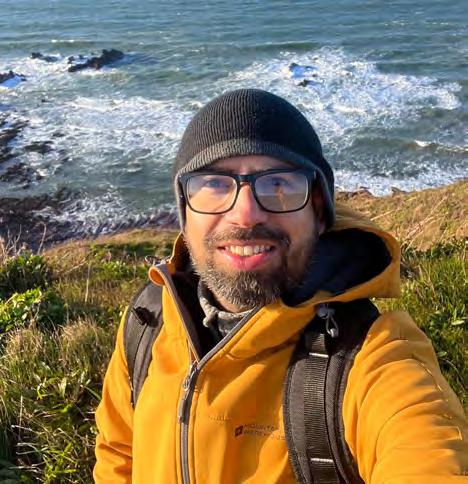
Edson Acero
Founder / Editor / Designer / Columnist / Researcher (Totnes, UK)
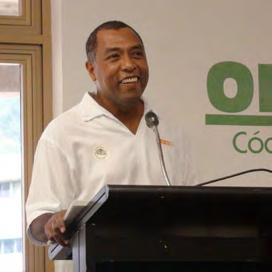
Fran Morales Yajö
Editorial Advisor / Columnist / Researcher (Venezuela)
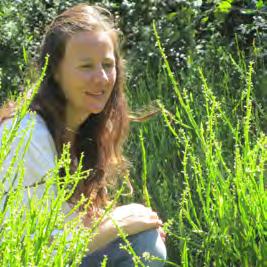
Fabiana A. Orreda
Editorial Advisor / Columnist / Researcher (Brazil)
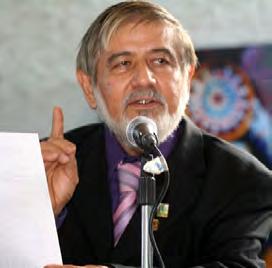
Ronny Velásquez
Anthropology Advisor / Columnist / Researcher (Honduras)
... ... ... ...
Orinoco Magazine 5
Wyka Kwara: is the place for those who find themselves in a “non-place”
Speaking about the origin of Wyka Kwara without telling a little bit of the mentor’s story is almost impossible because it is the reason for its existence, and one cannot exist without the other. So, here comes a lot of storytelling: It all started in his youth when various questions arose during his journey due to the provocation of the urban social environment in which the creator of Wyka Kwara found himself. At that time, many people around him looked at Miguel (his western name), who is the Kwarahy president of the Multiethnic Association Wyka Kwara, and asked: “Are you indigenous?” And others: “Are you Peruvian?” And so, questions about his identity became more intense: “Are you Japanese? Are you Bolivian?” And Kwarahy began to feel quite uncomfortable, which cause him to question his roots. Deep down, he knew that his ancestors had always lived in the forests, and even though he now lived in an urban context, he never fully adapted to that city life because he
carried with him many customs from his ancestors, both for acquiring food and for the production of utensils, whether for fishing, hunting, or everyday living, and that made him feel somewhat displaced. Time went by, and people continued to ask each other and ask Kwarahy the same questions. He would then look at himself in the mirror and see that face that so many found strange and questioned, and yet, for a long time, he continued identify himself as “pardo” (a term used in Brazil to describe a person of mixed race). Many strangenesses led him to question whether he was indeed “pardo” because the so-called “pardo” people also looked at him differently, often with discrimination and even a certain disdain, as if his striking phenotype made him different and inferior to others. The year 2000 arrived, and as he became involved in social and labor movements, engaging in political discussions within his context, he began to reflect and seek to understand the reasons behind social exclusion, the reasons behind the existence of slums, the
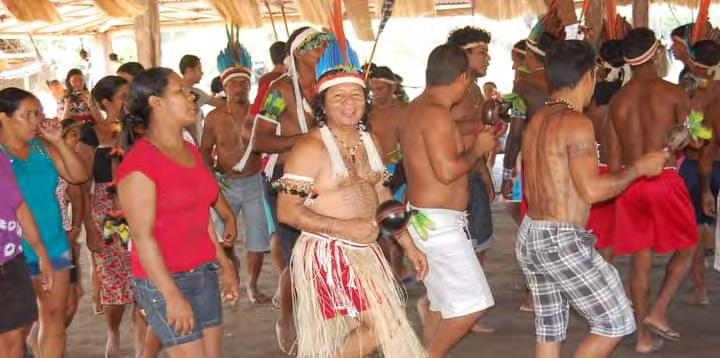
Amazon Rainforest
Orinoco Magazine 6
reasons behind the discrimination and prejudice that surrounded him so much. He started to realize that he had a fight to wage. During this period, as a healthcare professional, he became involved in the labor union politics of that field, a area that, in his view, “takes care of everyone, but no one takes care of it.”
Later, in 2005, before his grandfather died,
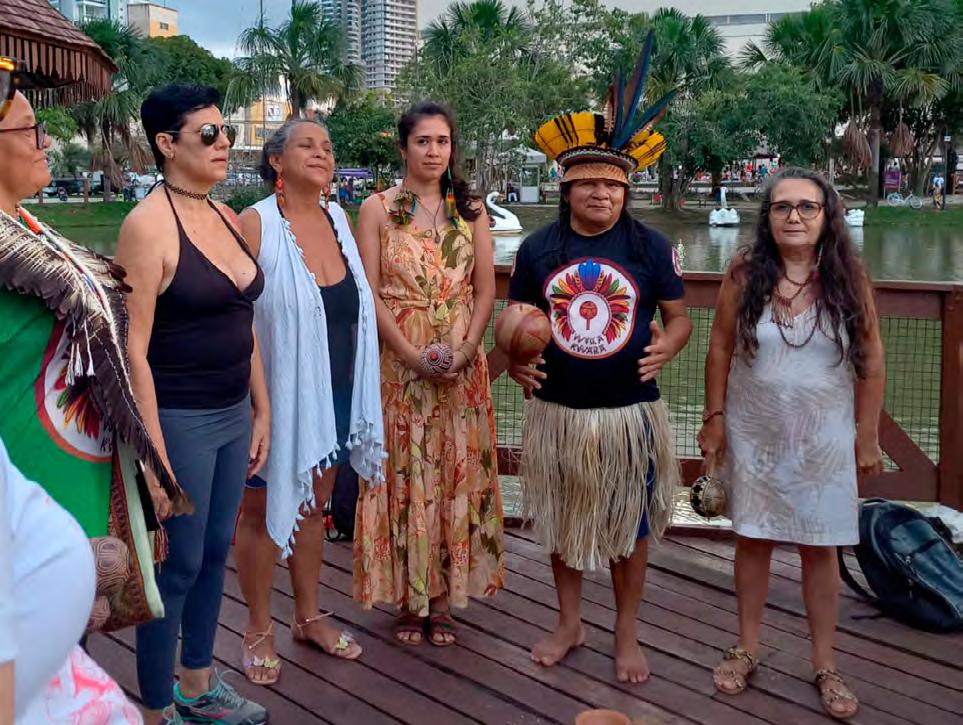
he told him their family history, affirming that they were Tembé, that the origin of their family was from Gurupi, from where they came to Piriá, where Kwarahy was born. From the forests of the Piriá River, Kwarahy’s grandparents and parents moved to Viseu in the state of Pará - PA, and later to VigiaPA, and his parents later moved to Belém-PA. Upon researching this history in more detail, Kwarahy began to understand the Tupi path, the Inca path, the formation of peoples, negotiations, trade, experiences, beliefs, and conflicts with European societies in all forms. He also sought to know and understand the coexistence with black people, relatives from Africa. With this information in hand, he realized that there were still missing pieces, so he went in search, to the indigenous lands of the Guamá River. He received an invitation to a Moqueado festival and took the opportunity to not only participate but also ask questions to someone who could tell the history of that people and help him fill in parts of the story he did not know.
When he arrived in Guamá, in the back of a car along with other people coming from Capitão Poço directly to the village, they got off together. The relatives looked at him, but he later learned that they made comments among themselves because they themselves admitted: “When you got off the car, we looked at you, we don’t know what you are, who you are. We don’t know where you come from, but we know you’re a relative.” And they said that because a relative knows another relative. However, the next day, others from the village asked more specific questions. And Kwarahy began to tell what he knew about his history, but some were very ironic and commented: “There’s always a story of ‘caught with a lasso’, there’s always a story of ‘caught a dog’, there’s always a story of persecution, and it’s always the story of a great-grandmother, a greatgrandfather, and nothing more than that.” At that time, Kwarahy had no answers to those comments. The whole time was filled with a sense of disdain, of discrimination, not believing that he could be discriminated against within the same group of people who suffer discrimination. So he decided to immediately return to the city. But transportation within the village is difficult, and Kwarahy ended up staying for the entire festival, waiting for the first opportunity to leave that territory. Although during this festival, he was also well received by other relatives, with whom he still maintains good relationships.
He returned home with all the questions asked by the relatives, but he also started to question himself more and began to find many answers. As he found some answers, he started to wonder: “Is there anyone in this world, in Brazil, in this state, in this city, even here in Belém? Here is Mairi... I found out all this later through research, listening, studying, learning, and I put it on social media: If you have an indigenous greatgrandmother, you are indigenous. I started asking questions like that.” Kwarahy provoked many questions in others: “The lands on which the cities are built are still indigenous lands. When did the
Amazon Rainforest
Orinoco Magazine 7
demarcation of indigenous territories begin? Because before, there was no demarcation. And how did the slums start? And why do indigenous people speak Portuguese? Why does everyone have knowledge, and only indigenous people don’t? Why do we need to learn the knowledge of the white people?” So there were questions, and all these answers came. There are answers to all these questions, some slightly different, but always in the same path.
That’s how Kwarahy came up with the idea of hosting a lunch at his house. He decided to make fish and invite those relatives who brought similar questions with them: “Whoever can come, can come.” On the day of that lunch, relatives from different peoples came: Kambeba, Caripuna, Xipaya, and even Tembé. After several lunches, they started making some plans and scheduling meetings. Our first external meeting was the one recorded in the photo on the twelfth, I believe, of January, there’s a photo from 2002. At that time, in that year, we didn’t have any organization, we didn’t have a CNPJ - National Registry of Legal Entities. We didn’t even think about creating an organization, but just about getting together to eat grilled fish, have acai, tell stories, and thereby strengthen friendships and expand the group. In these discussions, in these meetings, some legal demands started to arise, as well as scientific, academic, and even social demands, such as food and housing. And we started to establish connections with political parties, associations, universities, the Legislative Assembly, the Public Prosecutor’s Office, all in an attempt to find solutions to these problems.”
The result, says Kwarahy, is that they began to grow with the participation of more relatives: “And then we thought about creating an indigenous university there in Cotijuba, on land that is my mother’s inheritance, where we will build it. But when it came to funding, that’s where we encountered a problem. Many people wanted to help, but we needed a CNPJ to declare income tax, deduct donations from taxes, or do something like that, you know? To prove that they were supporting the social movement. So, we had to put the dream of the university on hold to create our association
and, through the association, continue working to acquire funds and be able to build our university. We stopped the idea of building the university to create the Association, and we made Wyka Kwara. It arises from the need for social organization because the social organization of the State says that we do not exist, and the peoples who are on the territory also say that we do not exist. But here in the city, we exist, we buy things, we pay taxes, we survive here.”
Kwarahy continues to explain how Wyka Kwara emerged: “That is why there was a need for us to organize. This denial from the peoples who had their lands invaded, taken by the cities, is the denial of the State. Today, the discussion around this reality is very intense. The State, on one side, and some relatives in the villages who do not agree with our existence, with our organization. But we understand that this climate is being extinguished. We are winning this battle because they are starting to realize that we don’t want anything from those who managed to maintain their territory, and we don’t want to compete in indigenous politics. We will make our policies, we will create our structure, we will establish our places, we will have our experiences, we will be, we will be again, right? We will be, and in reality, the peoples will need this work. They will need this organization for their struggles, even to vote for their own candidates, to support the struggles of their ministers, deputies, councilors, to support those struggles as well.”
Kwarahy concludes: “Wyka Kwara is born out of this need; it is born out of ethnic orphanhood, it is born out of cultural depression, it is born out of this non-place. Our territory is the territory of the city. And today, we have helped many people because many people have come to join our way of thinking and share the same stories, even in different contexts, different times, with different intensities, with different losses. But in general, the biggest loss is the loss of our people, losing social organization, leaving the land so that the state can somehow possess these lands to meet their own demands, which do not include those who left the land. That’s the objective, but when we come to the
Amazon Rainforest
Orinoco Magazine 8
city, we cannot change the social context, but we can remain organized in the city, even though we don’t have a territory. If we organize ourselves and strengthen ourselves, we will be so many that we will even change the form of government, change the way of governing, change the way of thinking about governing, so that we can continue to exist. Because to exist is a right, to have culture is a right. To have the right to affirm our ancestry, guaranteed and respected. To be indigenous is to be different, to be a true person, to be a person who has a different relationship with nature because we cannot live without it, no matter how much they have tried to take it away from us. Even though we have been threatened, with strength in our path, we continue to talk about this whole process of loss. One of the biggest losses, which brings us great damage, is not even the cultural or ritualistic aspect, it is not about territory, it is not about social organization. Understand that the biggest loss, for these times, is the loss of our people’s profile, our society’s profile. Today, it is the greatest loss because it is what is immediately seen, to say that there is no ‘profile’. Then no one sees you. But if you have that phenotype, then it immediately affirms that the person is not from Africa, not from Europe, so they are indigenous. The State remains silent. The peoples have a better understanding, but if you don’t have that phenotype, if you don’t have that stereotype, then you are denied, you know? You immediately enter another group, the erasure of being ‘pardo’, and you will suffer, you will suffer a lot, and we fight against that. We know very well the reasons why many lost their original profile
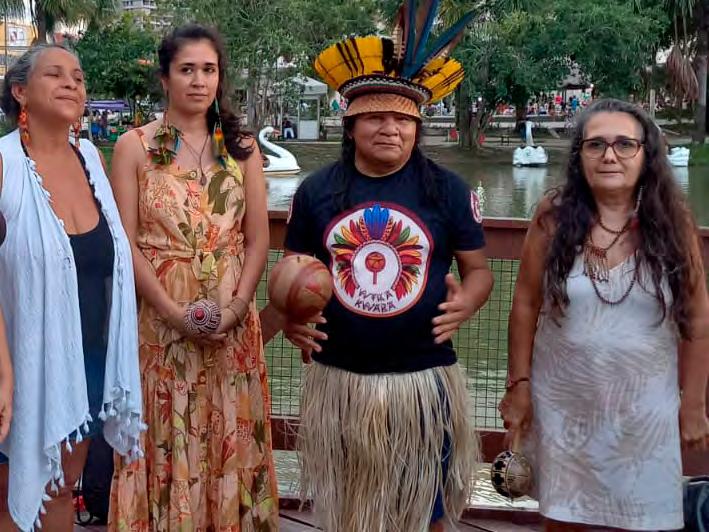
because people don’t have that stereotype or phenotype, and that is not important. It’s not about ‘phenotype’ and ‘stereotype’. Because for us, it is enough to be a human being to have your rights. It’s enough to be a tree, to be an animal, or anything else from another society, from another profile, from another context, from another situation. We have to respect everything we see and don’t see, everything we feel and don’t feel, everything we touch and what is abstract. That’s how we have come, and we are here, happily walking towards its results. And that’s how we will be.”
WYKA KWARA AS AN ASSOCIATION
Wyka Kwara is a Multiethnic Association founded and based in the Metropolitan Region of Belém, state of Pará, on Cotijuba Island. It has members throughout the Brazilian national territory and also has active members outside of Brazil. Officially established in 2020, the Association has been bringing together indigenous people born in the city since 2015, who still preserve aspects of their original cultural and spiritual traditions, even though they have been separated from their ancestral territories.
Wyka Kwara is the place for those who find themselves in a “non-place”, as it welcomes indigenous descendants who were recently expelled from their territories by invaders. It also provides a space for those who have experienced other types of violence, abuse, usurpation, and denial of their rights. It is a place of refuge where it becomes possible to connect with one’s own history, with their ancestral past and future.
Through studies, storytelling, oral tradition from elders, conversations, documentary research, welcoming rituals, Wyka Kwara becomes a space for reconnecting with ancestry. It also allows for the development of cartographic and iconographic productions, mapping historical processes, contextualizing conflicts and urbanization under indigenous protagonism. This involves analysis, research, surveys, critical reinterpretations, production of articles, dissertations, and academic theses, decolonizing history and thinking, and
Amazon Rainforest
Orinoco Magazine 9
providing self-affirmation and indigenous belonging in the city.
Wyka Kwara is a place that allows individuals to learn their history as it truly happened. By welcoming and sharing knowledge, it supports the process of decolonizing Eurocentric identity and reconnecting with the original identity: “Here, you are welcomed by us so that you can tell your silenced story, sharing knowledge and experiences. Welcoming for Wyka Kwara is this support for the process of decolonizing Eurocentric identity and reconnecting with the original identity of Abya Yala,” emphasizes Kwarahy.
Despite facing prejudice and racism, as indigenous people assert their distinct culture in urban environments, members of Wyka Kwara have also received support from territorialized peoples who ally themselves in the association’s struggles. In turn, Wyka Kwara has always been involved in defending the rights of people living in villages, who are constantly under attack. Most of
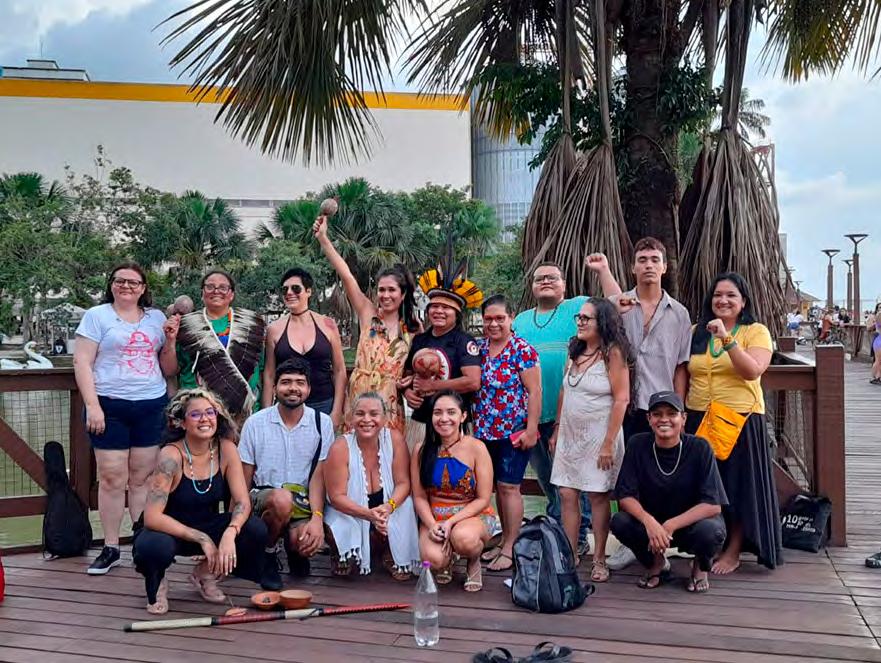
the time, this relationship with people in the villages is established through its members, who seek to maintain their connections with their original communities whenever possible.
WYKA KWARA: THE STRENGTH IN THE JOURNEY
On the way back home, Wyka Kwara is the strength in this journey. It is the place for indigenous peoples who have been made invisible by ethnocide throughout a very poorly told history. The truth is that their villages were invaded, violated, and suffocated under concrete. The colonizer’s plan was
to dominate their territories, proletarianize their bodies, and build cities over their forests. Anyone, whether non-indigenous or even indigenous living in villages, who has access to the true history and knowledge of the violent process of colonization, followed by the ethnocide projects of the Brazilian state, including the dictatorial period, knows very well what territorial and cultural dispossession means in practice. However, Wyka Kwara is here to say that this strategy of extinction did not succeed because it resists by preserving ancestral cultural traditions, even though they have been usurped, torn from their territories, and separated from their original peoples.
The indigenous people of Wyka Kwara have survived ethnocide, as well as the integration and assimilation imposed by the Brazilian state, which tried to subject their ancestors to Western Eurocentric culture, treating them as “relatively incapable” and creating the Indian Protection Service (SPI). The statement of then Minister of the Interior Maurício Rangel Reis (during the Ernesto Geisel government) in January 1976 summarizes the interests behind the creation of the SPI: “The indigenous people cannot hinder the progress (…) within 10 to 20 years, there will be no more indigenous people in Brazil” (National Truth Commission. Final Report. Text 5 - Violations of human rights of indigenous peoples. 2014, p. 203264). With the establishment of the SPI, a large part of the indigenous population, which at that time was living in villages, began to migrate to urban centers for various reasons. These include successive persecution and pressure from landowners and squatters, invasion by miners and loggers, land sales to individuals and corporations, including foreign entities, as well as the lack of physical infrastructure in the villages due to invasions. More recently, migration to urban centers has also been driven by the need for professional qualifications that would enable the development of projects for the villages, thus avoiding continued migration.
Despite suffering invisibility and silencing to this day, and surviving under the pain of a past ethnocide that remains present, denying their rights - the right to land, the right to their body-
Amazon Rainforest
Orinoco Magazine 10
territory, their ancestral memory, and their identity affirmation - the indigenous person in an urban context subsists, resists, and re-exists every day under the city that violently invaded their territory, but failed to overcome their ancestral strength, as it did not erase their essence and could not prevent them from being who they are. As a survivor in this sub-urban context, the indigenous person finds themselves naked, completely deterritorialized, proletarianized. However, the history that was told through oral tradition, the one that is not written in books, survived in the memories of their grandparents, albeit fragmented by so much pain. And today, like a tree that breaks through its roots under concrete, the indigenous person whose village was invaded by the city can also overcome it. Healing the painful wounds inflicted on their roots, they can rise again, affirming themselves daily, even though they are relegated to the margins of an excluding society that has no place for them.
The non-place that was reserved for them in the city is that of the invisible periphery, voiceless, without identity, and unable to even have their own history recognized, unable to take pride in their ancestral roots, condemned to the forgetting of their origins. They even tried to whiten them, to make them ashamed of their way of being, their customs, their knowledge, and their beliefs. However, their ancestral memory survived the invaders, and oral tradition kept their history alive and resistant in their cultural traditions. As remnants, carrying with them a part of their surviving culture - whether in their spirituality, prayers, healing practices, cuisine, cultivation of medicinal herbs, what the elders taught them, and their distinct customs - the indigenous person whose territory was invaded by the city managed to preserve their history in living memory, which needs to be told and retold always, so as not to succumb to the various threats that attempt to silence the voices of their ancestors.
The affirmation of their ancestry and origins - the ability to reconnect, ensure their sense of belonging, reclaim the recognition of their past, their history, and to reconnect with their memories - is a historical reparation to which
they are entitled, at the very least. This reality, which has persisted for over three centuries, to the detriment of generations of indigenous peoples, to the present day, needs to be historically addressed. However, state institutions, including the National Foundation for Indigenous Peoples (FUNAI), currently in charge, determine that, in addition to self-identification, the community to which the indigenous person claims to belong must recognize them and formalize their existence with the relevant institutions. Thus, if they do not know which indigenous community they belong to, their recognition as indigenous by the state becomes unfeasible.
However, the Brazilian state, through its official indigenous institution FUNAI, ignores the fact that many indigenous communities no longer live in villages precisely due to the persecution they have endured since the colonial invasion, followed by the dictatorship and the integrationist projects of the state itself. Evidence of this is that, until recently, invasions and attacks by landowners, miners, loggers, have had the consent of the Brazilian government itself, which declared, in violation of the 1988 Federal Constitution, that it would not demarcate a single centimeter of land for indigenous peoples. In addition to all the ongoing violence, such as the recent rapes of Yanomami women by invading miners. Rapes that have been romanticized throughout history in an attempt to justify violent miscegenation. Similarly, the Brazilian state cannot escape responsibility for having participated in the destruction of ancestral cultural traditions, for silencing and erasing indigenous oral tradition, and for being responsible, therefore, for the rupture and erasure of the cultural history of many indigenous descendants, condemning them to historical oblivion and legitimizing ethnocide.
Therefore, the official indigenous institution of the Brazilian state cannot be complicit in the romanticized narrative of violent processes of erasure, miscegenation, and silencing, imposing a certificate or “proof” of a community that was destroyed by the Brazilian state itself. Thus, in this process of identity affirmation, the remnants of the
Amazon Rainforest
Orinoco Magazine 11
indigenous people who resisted ethnocide, despite being violated, expelled from their territories, and having their lands invaded by cities, self-identify through indigenous consciousness and re-exist. Because of all this, Wyka Kwara is also aware that the Brazilian state fears that all indigenous descendants, children of rape, and survivors of this violent process of colonization, affirm their indigenous consciousness.
It is precisely indigenous consciousness that unites everyone in this urban context who seeks the path back home because this indigenous person is not alone; there are many others who are also conscious of their origins. And by listening to the voice of their ancestry, they become the voice of resistance for their people. Thus, Wyka Kwara reaffirms the collective commitment to the continuity and preservation of traditions, beliefs, and original culture that resisted ethnocide because indigenous people are not merely the 0.47% in statistics, as the state has attempted to make people believe. Their body-territories have not been usurped; they re-exist with ancestral memory against all attempts at erasure.
Wyka Kwara - the “strength in the journey”extends throughout Pindó Rama, bringing together those who affirm their identity and those who are awakening to this indigenous consciousness that has been silenced so many times but never erased. And as a collective that has developed through identity affirmations, in connection with their ancestors, it enables the reencounter and sense of belonging to what they truly are. After all, indigenous consciousness is determined by the feeling of belonging to their original people, with whom they have always maintained their ancestral ties.
By: Socorro Brasil

Orinoco Magazine 12
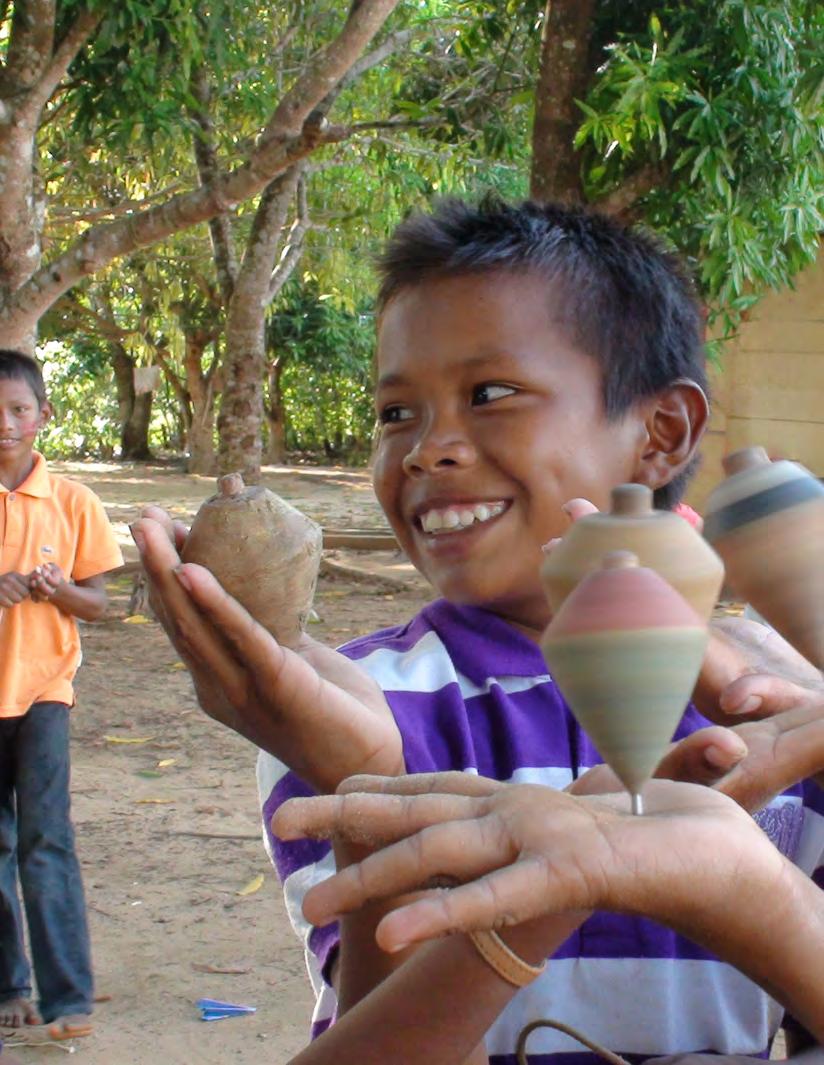
Assimilation Unveiled:
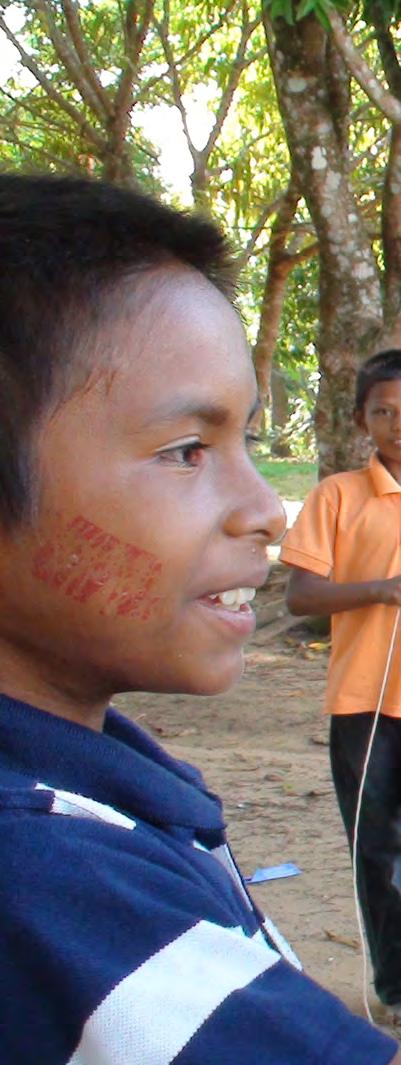
Indigenous Children Embrace Western Traditions. A poignant reminder of the challenges posed by cultural erosion and the need to safeguard indigenous heritage amidst urban context influences.
Magazine 13
Orinoco
The Clash of Worlds:
Urban Expansion and Indigenous Cultures in the Amazon
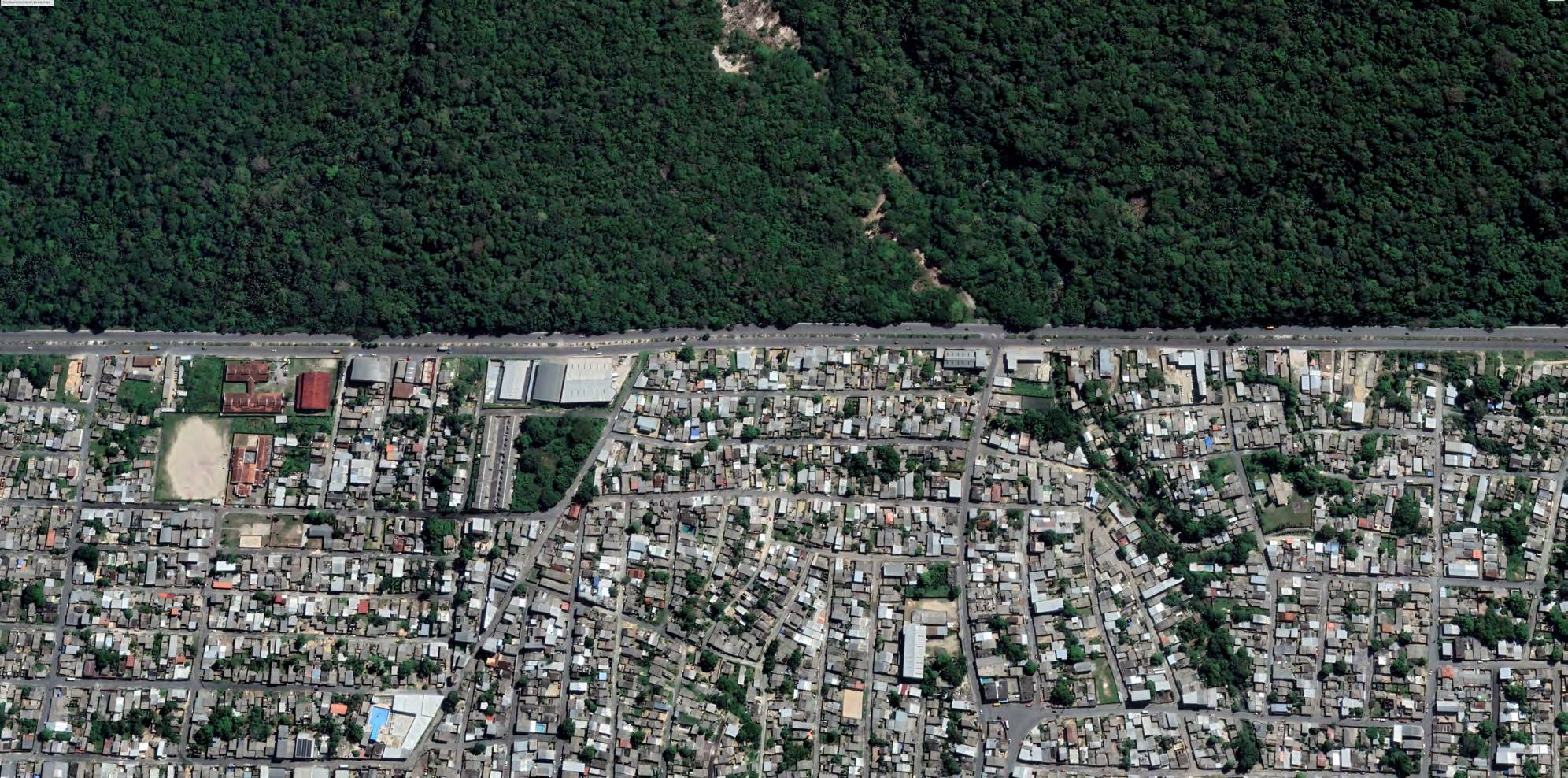
In the heart of the Amazon rainforest, an epic struggle unfolds as the towering concrete jungles of urban expansion encroach upon the ancient, lush greenery that indigenous cultures have called home for generations. The relentless quest for modern development, driven by population growth and economic interests, has brought about profound changes to the region. This article explores the intricate relationship between cities and forests, delving into the pressing issue of how urban expansion impacts the Amazon jungle and the indigenous communities that reside within its embrace. From the cultural heritage to the fragile ecosystems, the clash of worlds takes center stage.
The Diverse Tapestry of Indigenous Cultures:
The Amazon is not merely a vast expanse of greenery; it is a vibrant tapestry of diverse indigenous cultures, each with its own language, customs, and spiritual
beliefs. As urban sprawl encroaches upon their territories, these communities face profound challenges to their way of life. From the clash of belief systems to the erosion of traditional knowledge and practices, the very fabric of their existence is under threat. We delve into the stories of indigenous tribes, showcasing their resilience and determination to protect their heritage amidst a rapidly changing landscape.
Unraveling the Web of Deforestation:
Amazon Rainforest
Orinoco Magazine 14
Magazine
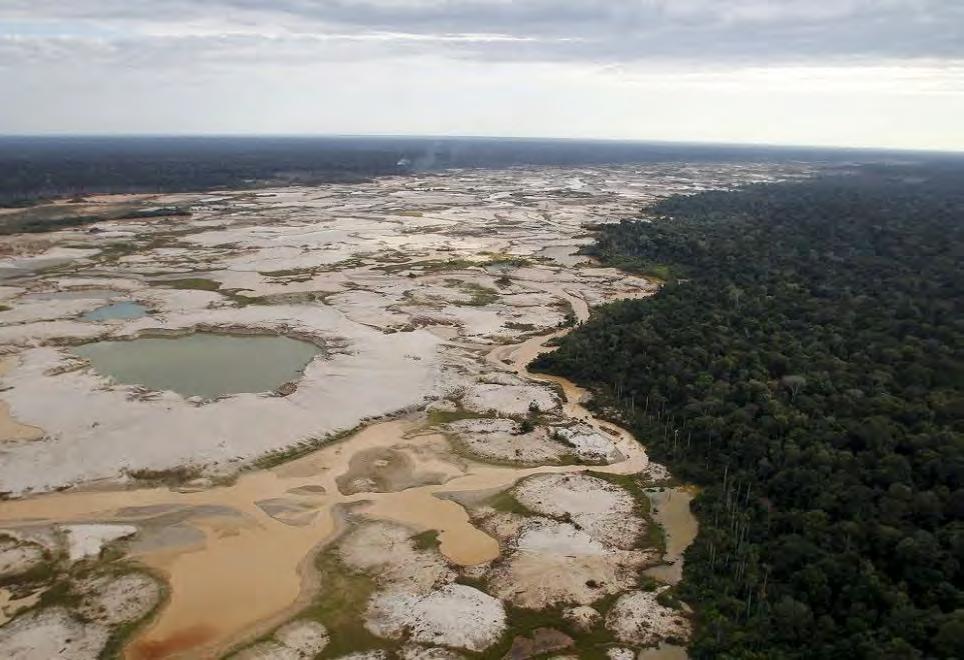
The insatiable appetite for resources and land has led to a surge in deforestation, clearing vast tracts of the Amazon rainforest. We investigate the drivers behind this destructive phenomenon, from illegal logging and mining to land speculation. The article reveals the far-reaching consequences of deforestation, such as habitat loss, loss of biodiversity, and climate change impacts, all of which disproportionately affect indigenous communities heavily reliant on the forest for sustenance and cultural identity.
Urbanization’s Reach: Threats to Indigenous Land Rights:
As cities expand, so does the pressure on land, often leading to conflicts with indigenous
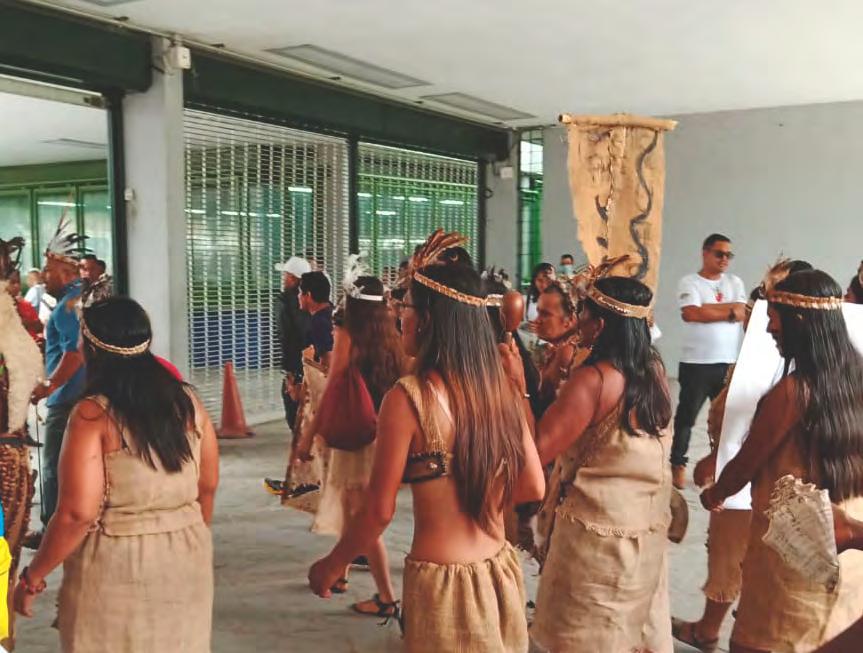
land rights. We delve into the legal complexities and loopholes that allow large corporations and developers to exploit these territories, leaving indigenous populations displaced and marginalized. Through firsthand accounts and expert analysis, we shed light on the struggle for land tenure and the importance of recognizing and respecting the rights of the indigenous people.
A World of Knowledge at Risk:
The Amazon rainforest is more than just a vast reservoir of biodiversity; it holds invaluable traditional knowledge accumulated over centuries by indigenous communities. This knowledge encompasses medicinal
plants, sustainable agricultural practices, and a profound understanding of ecological interdependencies. However, as urbanization severs the connection between indigenous people and their ancestral lands, this wealth of knowledge faces the threat of extinction. We explore the urgent need to preserve and promote this wisdom as a blueprint for sustainable living.
Embracing the Path of Coexistence:
Amidst the clash of worlds, glimmers of hope emerge as some urban areas recognize the importance of indigenous culture and forest preservation. We showcase successful examples of cities collaborating with indigenous communities to create sustainable development models that respect cultural heritage and environmental integrity. From ecotourism initiatives that benefit local populations to reforestation efforts led by indigenous guardians, these stories inspire a path of coexistence and harmony between urban expansion and the Amazon jungle.
The clash of worlds between urban expansion and the Amazon rainforest has profound implications for both the environment and the indigenous communities that call it home. As cities continue to grow, it is crucial to consider the impact of urbanization on the delicate balance between nature and culture. By acknowledging the rights and wisdom of the indigenous peoples and fostering collaboration between urban and forest-dwelling communities, we can hope for a future where sustainable development prevails, preserving the Amazon’s irreplaceable ecological heritage for generations to come.
By: Edson Acero

Amazon Rainforest
15
Orinoco
The Amazon’s Lungs
A Vital Carbon Sink
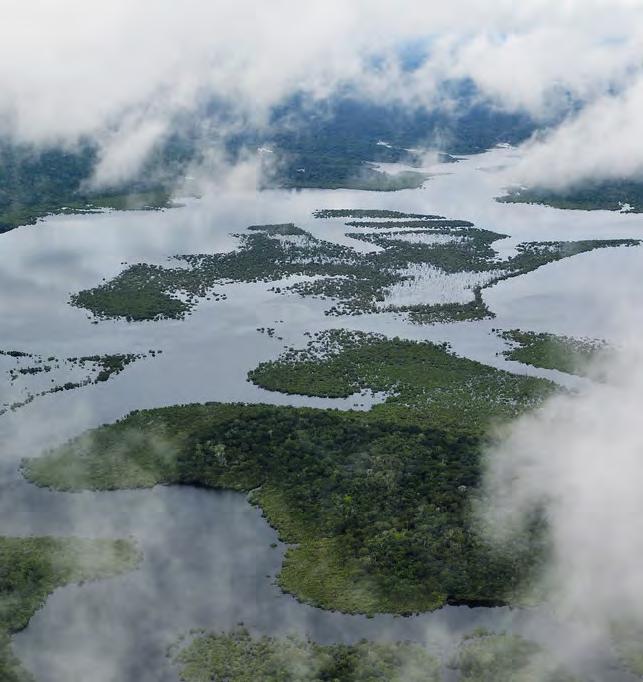
The Amazon rainforest stands as a global champion in mitigating climate change. Often referred to as “the lungs of the Earth,” this vast expanse of greenery acts as a crucial carbon sink, absorbing immense amounts of carbon dioxide from the atmosphere. Its dense vegetation and towering trees store carbon, helping to regulate the planet’s greenhouse gas levels and stabilize the global climate. The Amazon’s ability to sequester carbon is indispensable in the fight against climate change, emphasizing the urgent need for its preservation and protection.
Amazon Rainforest
Orinoco Magazine 16
Preserving Indigenous Territories and Nature:
The Battle Against Brazil’s Temporal Framework
The Legal Thesis of the “Temporal Framework: What Can Affect the Recognition and Demarcation of Indigenous Territories in Brazil?”
In Brazil, one of the most important demands of Indigenous Peoples is the guarantee of demarcation of their territories, essential spaces for the preservation of their communities’ lives, the evolution of their cultures and knowledge, their connection with Nature, and integral spirituality.
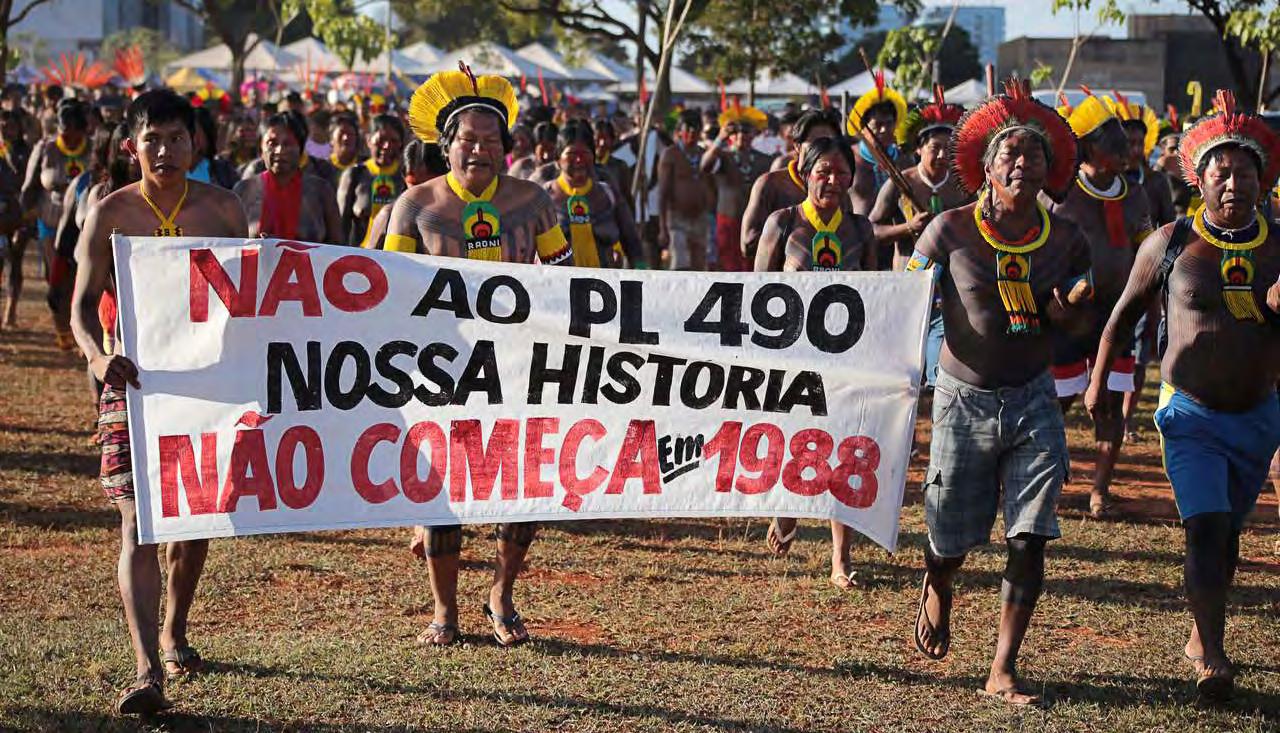
On May 30, 2023, the National Congress resumed discussions on this issue by approving the Temporal Framework thesis through Bill (PL) 490/2007.
The National Congress made the voting of PL 490/2007 a matter of urgency, which regulates the Temporal Framework thesis, a completely
unconstitutional measure that violates the rights of Indigenous Peoples. In essence, it argues that these original peoples would only have the right to claim their traditional territories if they were already occupying them on October 5, 1988, the day the Brazilian Federal Constitution was promulgated. The PL 490 has sparked widespread national debate and aims to amend the Federal Constitution, thereby diminishing the constitutional rights recognized by the Brazilian Magna Carta, without consulting Indigenous Peoples, who consider the Temporal Framework an act of genocide.
The text and implications of this approved project by the National Congress are now being reviewed in the Federal Senate as Bill 2903/2023 and are also being debated and judged as an
Amazon Rainforest
Photo By: @climacografia.
Orinoco Magazine 17
Extraordinary Appeal with general repercussions by the Supreme Federal Court since 2021.
The Temporal Framework thesis makes Indigenous land demarcations unfeasible, threatens demarcated territories, and deprives Indigenous populations of their constitutional rights. This article aims to shed light on how the Temporal Framework thesis not only affects Brazil’s Indigenous cultures but also impacts the entire planet.
What is the Temporal Framework, and what are the arguments for and against it?
Source: Agência Câmara de Notícias
Definition:
The Temporal Framework is a legal thesis according to which Indigenous Peoples have the right to occupy only the lands they were occupying or already claiming on October 5, 1988, the date of the Constitution’s promulgation. The thesis emerged in 2009 when it was used as a criterion for the demarcation of the Raposa-Serra do Sol reserve in Roraima in an opinion from the Attorney General’s Office.
Arguments in Favor:
Arguments Against:
Representatives of Indigenous Peoples claim that the Temporal Framework threatens the survival of many Indigenous communities and forests. They also argue that it will bring legal chaos to the country and lead to conflicts in already pacified areas by revising already demarcated reserves. Justice Edson Fachin is the rapporteur for the case in the Supreme Federal Court and was the first to vote against the Temporal Framework. He believes that the constitutional protection of Indigenous Peoples’ original rights to traditionally occupied lands does not depend on the existence of a Temporal Framework or the configuration of persistent dispossession. Fachin also stated that the Constitution recognizes Indigenous Peoples’ right to their traditionally occupied lands as an original right, predating the formation of the State. He emphasized that the demarcation process carried out by the State does not create Indigenous lands but merely recognizes them since demarcation is a declaratory act.
In 2021, Supreme Federal Court Justice Nunes Marques voted in favor of the Temporal Framework in the Santa Catarina case, stating that without this deadline, there would be “unlimited expansion” into areas “already incorporated into the real estate market” in the country. He also argued that without the Temporal Framework, “national sovereignty and independence” would be at risk. Marques emphasized the need to consider the Temporal Framework in the name of national legal certainty. He highlighted that traditional possession should not be confused with immemorial possession. Marques cited that the Constitution gave the Union five years to demarcate lands, demonstrating the intention to establish a precise Temporal Framework to define Indigenous areas. He also argued that the expansion of the Santa Catarina Indigenous land claimed by Funai is unwarranted, as it overlaps with an area of environmental protection.
Temporal Framework Under Review at the Supreme Federal Court:
On June 7, 2023, the plenary of the Supreme Federal Court (STF) resumed the judgment of the Extraordinary Appeal with General Repercussion (RE/RG) 1.017.365, which discusses the so-called Temporal Framework for the demarcation of Indigenous lands. The Extraordinary Appeal with General Repercussion, which is being considered by the STF, specifically concerns a request for repossession filed by the Environmental Institute of the State of Santa Catarina against Funai and the Indigenous Xokleng people, involving a claimed area of the Ibirama-Laklanõ Indigenous Land. The disputed territory was reduced during the 20th century, and the Indigenous people never stopped claiming it. The area has been identified by Funai’s anthropological studies and declared by the Ministry of Justice as part of their traditional land.
However, after only one vote, that of Justice Alexandre de Moraes, who opposed the Temporal Framework, the judgment was again suspended for
Amazon Rainforest
Orinoco Magazine 18
90 days at the request of Justice André Mendonça. Experts argue that these postponements aim to allow possible approval by the Federal Senate of PL 2903 and consequent amendment of the Federal Constitution. Therefore, this judgment is central to the present and future of Indigenous peoples in Brazil, as it will establish a reference thesis for all cases involving Indigenous lands in all Brazilian judiciary instances. By admitting General Repercussion, the STF recognizes the need for a definition on the subject.
There are many ongoing Indigenous land demarcation processes and possession disputes currently in litigation. Furthermore, many legislative measures seek to revoke or weaken Indigenous peoples’ constitutional rights.
The Voice of Indigenous Peoples on the Violation of Their Rights:
Since the beginning of this discussion, there has been a significant reaction from Brazilian Indigenous people, with ongoing protests throughout the country, especially in Brasília. The approval of PL 490 by the National Congress was met with protests from Indigenous Peoples, their political organizations, traditional leaders, such as Chief Raoni Metuktire of the Kayapó people, legal representatives, including Minister of Indigenous Peoples Sonia Guajajara, President of the National Indian Foundation (Funai) Joenia Wapichana, Federal Deputy Célia Xacriabá, and allies in the National Congress, as well as organizations defending Indigenous peoples’ rights. They continue to mobilize to halt this atrocious proposal to amend the Brazilian Constitution.
At the end of June of this year, a Public Hearing was held in the Federal Senate, promoted by the Human Rights Commission, to discuss the issue that will be voted on with a new identification of PL 2903/2023. This Public Hearing saw the participation of various Indigenous organization leaders, Indigenous cause supporters, senators, and representatives.
Eunice Kerexu, from the Guarani people of the Morro dos Cavalos Indigenous Land in the
state of Santa Catarina, occupies the position of Secretary of State for Environmental and Territorial Rights of the Ministry of Indigenous Peoples. During this debate in the Federal Senate, she stated:
“It is a historic moment to discuss the issue of Indigenous Peoples’ rights. We are being attacked in every way, whether within our territories, within the spaces where we work, on the streets, and even within this house where rights are constructed. In 2023, when we have several laws guaranteeing Indigenous Peoples rights, guaranteeing the right to land, guaranteeing the right to life, we are here as Indigenous Peoples participating in this discussion. For me, it is a reason for joy to occupy these spaces, but I also wish I didn’t have to occupy this place now to defend, I would like to occupy this space to build or produce something that would continue the issue of life. Regarding the topic we are discussing, PL 490, currently PL 2903, arises from questions about Indigenous Peoples’ original rights in the state of Santa Catarina, which is my state. For those who know Santa Catarina and the Southern Region, we have a reality that is different from other places. But when we come here to this space, it is surprising that most of the people in these positions end up supporting this Temporal Framework theory, taking away the rights of Indigenous Peoples. I wanted to bring a little bit within this speech how we Indigenous Peoples are talking about our rights today, but also combating all the crimes that are happening to us. Very little is said about the crimes committed against us, whether they are environmental crimes, climate crimes, or racism crimes that we Indigenous Peoples suffer greatly. We suffer racism in a different way, as it is not spoken about and not mentioned in policymaking, no matter what level. Within this racism, the denial of rights is placed: they say they cannot offer for Indigenous people in this way because they have their own rights to life. It seems that our rights are recognized, but on the other hand, when these rights are not delivered or offered within the policies, there is a withdrawal of these rights that are guaranteed, as we can see today in our territories with invasions by agribusiness, invasions by mining, and many other invasions, whether for hunting, logging, or illegal fishing. But we also have crimes
Amazon Rainforest
Orinoco Magazine 19
against humanity, against human beings, against women, children, and youth leaders. We need to start talking because I saw that during the voting of PL 490, several female deputies who spoke were judged and accused of violating ethics. What is happening in fact, these crimes being committed within the National Congress, brought here to the Senate to be discussed, concerns our lives. Several crimes are being committed. I heard that if there is land demarcation, there will be bloodshed within the territories. These threats are spoken within the spaces that should defend these rights. Nothing is done about these threats made by politicians. To talk about the issue of these crimes, it is also necessary to identify them through the way they are spoken and camouflaged, spoken in other ways. I would like to bring this relationship that we Indigenous Peoples have with the space where we live, but also with life, because as Senator Zenaide Maia, vice-president of this Human Rights Commission, said, Indigenous people defend vegetation, animals, and human life. We have a relationship that goes beyond that because we know who came first, why they came, who came second and why, and also why we came, we human beings. We have a relationship between beings, from stone beings, which are our crystals, to our forest, which is vegetation and also beings; we have a relationship with animals, which are living beings, and we have a human relationship. The issue of these rights that we always talk about is guaranteed in the Federal Constitution in the First Chapter, which brings fundamental principles. In this article, there is a whole history that helps us understand the issue of rights. We begin to understand this relationship that concerns the sovereignty and integrity of beings, and we also go through the occupation of spaces and mobilization in spaces. But we also mobilize the occupation of these spaces to also integrate into society in a political thought of defense, not only of people but of all beings.”
Eunice Kerexu goes on to say, “when we begin to retrace this history, in this place where decisions are made, where rights are created, when we go against what is guaranteed by law, and we see people defending their own interests, we warn that
our struggle has always been a collective struggle, never for personal interests. A collective struggle in defense of life. We fight to carry out the demarcation but also to remain within the territories. It is not only about the demarcation process but also about the exploitation of the territory, which concerns guaranteeing our exclusive use of our lands. To all the Senators committed to rights, we ask that they vote against this PL. We ask for consistency with the Federal Constitution, Article 231, which is specific to Indigenous Peoples because this PL 2903 is unconstitutional in every sense. The crime of genocide against Indigenous Peoples is something premeditated, driven by the exclusion and extermination of these peoples. We want to do justice correctly and defend the interests of all peoples.
This fundamental communication from Eunice Kerexu demonstrates the breadth of the issue of preserving Indigenous territories and the constitutional rights as a general defense of life that impacts everyone. These are combined with the topics that national Indigenous organizations highlight as critical points of PL 490: the unconstitutionality of the project, the hindrance of Indigenous land demarcation, the disregard for free, prior, and informed consent, and the divergence related to environmental protection efforts and climate change action.
The immeasurable time of Indigenous presence in territories according to the current Federal Constitution and various international laws, such as ILO Convention 169, to which Brazil is a signatory, guarantees communities’ rights to ancestral lands. Therefore, the Temporal Framework is an anti-thesis to the socio-environmental recognition of traditional territories, the rights of Indigenous Peoples, and Nature. Its legal, historical, anthropological, and cultural implications are related to the ancestral connection to the territory as a traditional space of Nature where the evolution of Indigenous cultures is made possible, even if many communities were forced to leave their original places due to extreme colonial atrocities that are often not reported through official means. Atrociously, the Temporal Framework is seen as
Amazon Rainforest
Orinoco Magazine 20
part of a strategy by ruralists and farmers to block the progress of Indigenous land demarcations in Brazil, using the counter-argument of legal certainty for already established or disputed rural properties.
Defending the right to Indigenous territories is the defense of life:
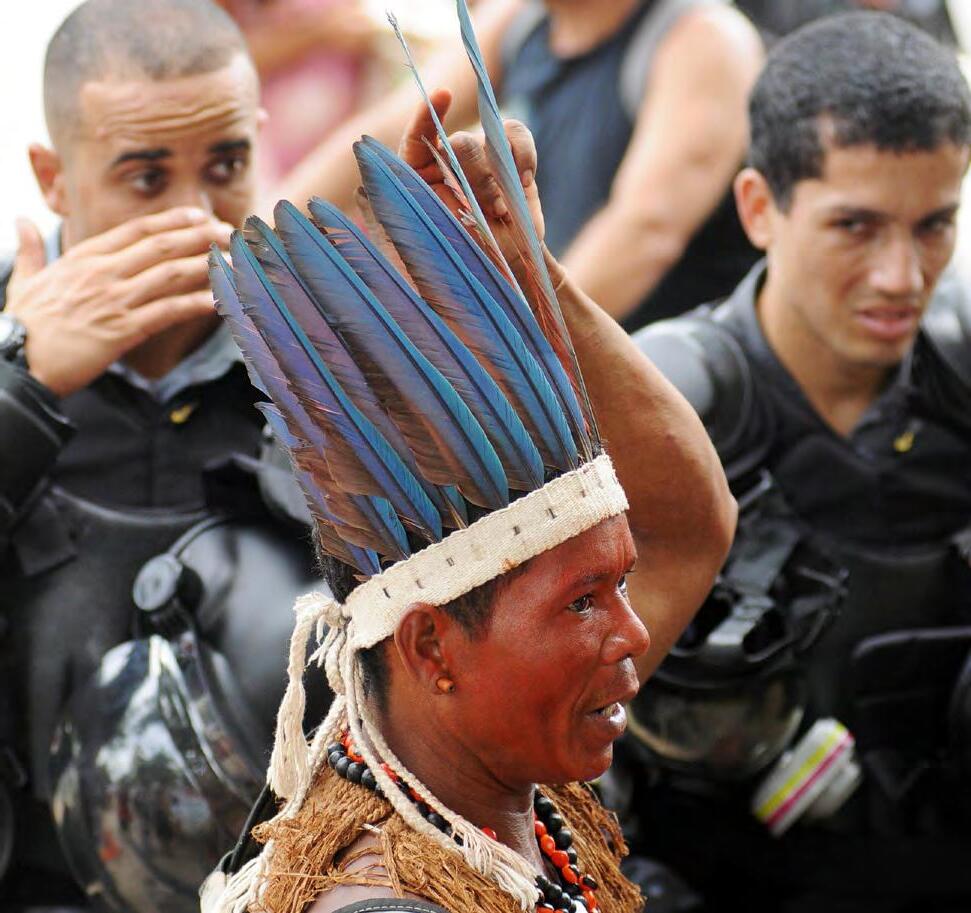
This issue has a significant impact in Brazil, with global interest because Indigenous Peoples are considered guardians of Nature and active in preserving forests, which is of global concern in times of climate change.
The demarcation of Indigenous territories in Brazil faces a slow process, with hundreds of demarcations pending in the Judiciary and violent disputes with farmers in various regions of the country.
Living in harmony and respecting all peoples who inhabit this region of the planet before the arrival of colonizing immigrants requires guarantees and international mobilization. The present time of expanding consciousness calls for understanding the urgency of effective projects of decolonization, reparations for violations in all aspects, and recognizing the identity matrix of the Brazilian people and guaranteeing their rights. Always inspiring are the integration and cultural exchanges that
Indigenous Peoples have practiced in these vital territories since ancient times, without borders.
The authenticity of fraternity among all beings, the preservation of ancestral wisdom, and the connection with Nature become possible within assured territories.
The relevance of the discussion on the legal thesis of the Temporal Framework goes beyond Brazil’s national borders, as it concerns not only Human Rights to life in Indigenous communities and their cultures but also Rights of Nature in these traditional territories. The Rights of Nature, such as mountains, springs, rivers, forests, animals, and all species and beings that make up the diversity of existence, must be protected by ancestral ways of life and laws that defend the collective interests of Indigenous Peoples and society as a whole.
The historical context and this entire discussion invite reinforcing one of Brazil’s characteristics as a place of solidarity, welcome, balanced coexistence that values interculturality and serves as an example of ensuring the rights of Indigenous Peoples and Nature without prevailing totalitarianism, nationalist disputes, economic interests of groups, abuses of power, extreme violence, and injustices that some minorities insist on defending and practicing, characterizing an archaic coloniality that is inconsistent with innovative
Author: Fabiana Orreda @fabianaorreda

Amazon Rainforest
Orinoco Magazine 21
A World of Knowledge at Risk:
Indigenous Wisdom and the Perils of Urbanization in the Amazon
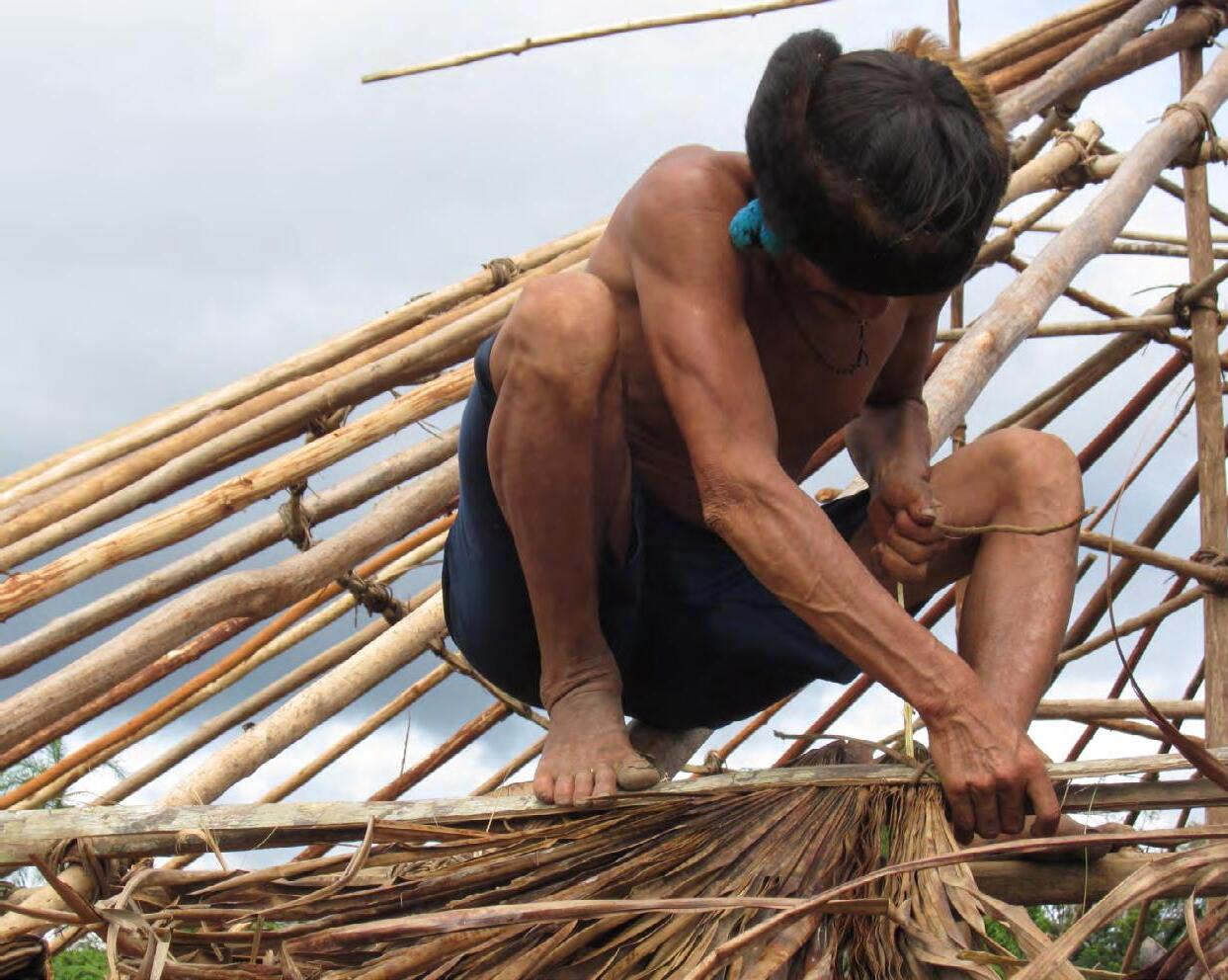
Deep within the heart of the Amazon rainforest lies an ancient world of wisdom, accumulated over centuries by indigenous communities. This treasure trove of traditional knowledge holds the key to sustainable living, medicinal cures, and an intimate understanding of the delicate ecological balance. However, as urbanization surges, encroaching upon the rainforest’s fringes, this invaluable world of knowledge faces grave risks. In this article, we delve into the unique wisdom held by indigenous cultures in the Amazon and the urgent need to protect it
from the pressures of rapid urban expansion.
The Legacy of Traditional Knowledge:
The indigenous communities of the Amazon have honed their knowledge over generations, passed down through oral traditions, storytelling, and experiential learning. From intricate plant medicine to sustainable agricultural practices, these teachings are deeply rooted in the profound connection between people and nature. We explore the diverse aspects of this traditional knowledge and how it has played a crucial role in preserving the rainforest’s
biodiversity and supporting indigenous societies.
Threats from Urbanization and Cultural Erosion:
As cities grow at an unprecedented pace, the fragile balance between urbanization and traditional knowledge is disrupted. The allure of modern lifestyles and external influences put indigenous cultures at risk of cultural erosion. Younger generations may face challenges in embracing their heritage, leading to the gradual loss of this vital repository of wisdom. Moreover, as urban expansion encroaches on indigenous territories, deforestation and resource exploitation further endanger traditional practices and the ecosystems they rely on.
Preserving Traditional Knowledge: A Race Against Time:
The urgency to safeguard indigenous wisdom becomes increasingly apparent as the Amazon faces escalating threats. We discuss the importance of empowering indigenous communities to retain and revitalize their traditional knowledge, encouraging the passing down of ancestral practices to the younger
Amazon Rainforest
Orinoco Magazine 22
Amazon Rainforest
generation. Collaborative efforts between indigenous leaders, researchers, and conservationists become critical in documenting and preserving this vast repository of wisdom.
The Promise of Indigenousled Conservation:
In this section, we highlight inspiring stories of indigenousled conservation initiatives. From community-based projects to partnerships with environmental organizations, we celebrate the efforts that incorporate traditional knowledge into modern conservation practices. By recognizing indigenous people as key stakeholders and decision-makers, these initiatives contribute to the protection of the Amazon’s biodiversity while simultaneously safeguarding cultural heritage.
Bridging Worlds: Urban–Indigenous Collaboration:
The preservation of traditional knowledge necessitates
harmonious coexistence between urban development and indigenous cultures. We explore ways in which cities can learn from indigenous practices, promoting sustainable approaches that prioritize environmental conservation and cultural respect. Mutual understanding and collaboration are essential in forging a future where modern urbanization and indigenous wisdom can thrive hand in hand.
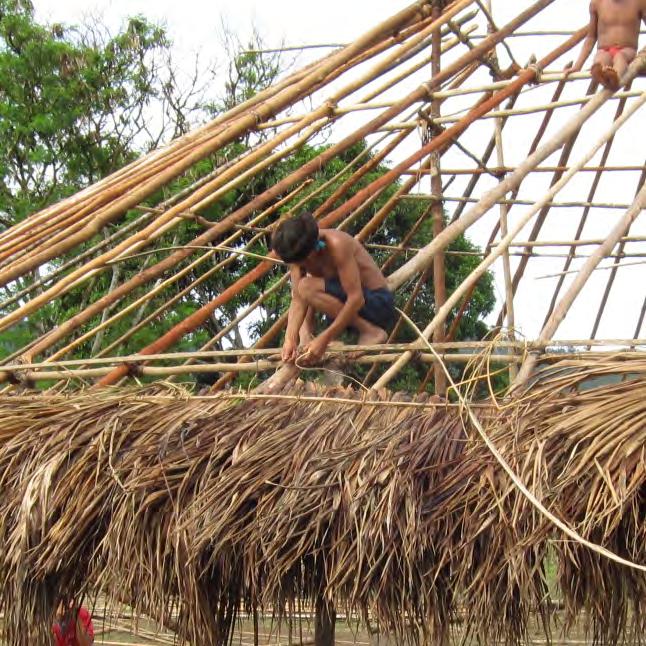
knowledge—a legacy of wisdom shaped by centuries of living in harmony with the rainforest. As urbanization encroaches upon their ancestral lands, this invaluable repository of traditional knowledge is at risk. Preserving the delicate interplay between traditional wisdom and urban expansion becomes not just an environmental concern but also a matter of cultural significance. By championing indigenousled conservation efforts, empowering local communities, and fostering collaborative relationships, we can protect this world of knowledge from fading into the shadows of modernity. In doing so, we ensure that the Amazon’s heart continues to beat to the rhythm of its ancient wisdom, resonating across generations and inspiring a sustainable future for all.
The Amazon’s indigenous communities hold a world of
“The indigenous knowledge of the Amazon holds the key to protecting our precious rainforest and its unparalleled biodiversity. It’s time to listen and learn from the wisdom of those who have lived in harmony with nature for generations, embracing their sustainable practices to safeguard the planet for future generations.”
Photos & Article by: Edson Acero
Orinoco Magazine 23
thewoodland.co Orinoco Magazine 24
Bringing Society Back to the Woods
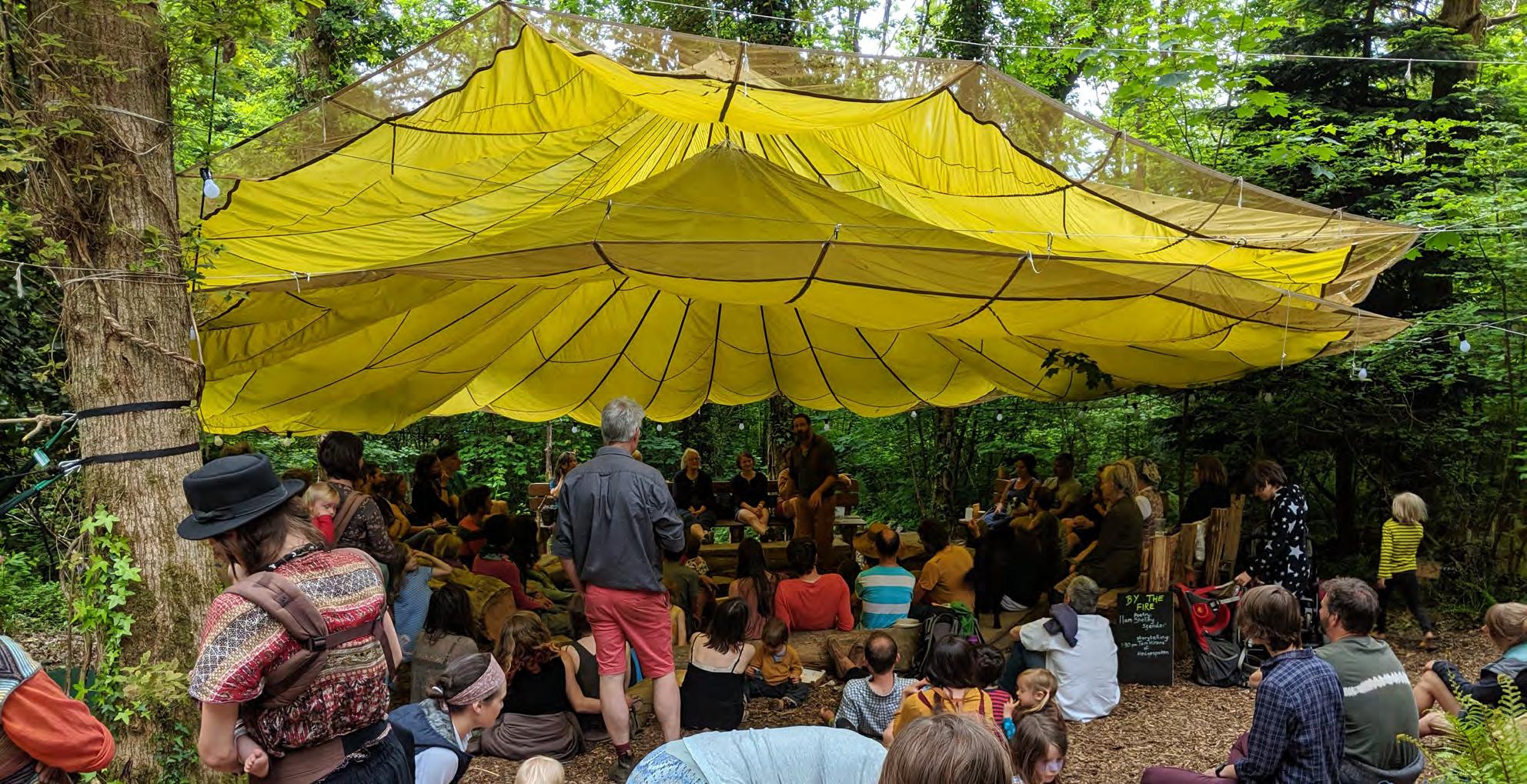
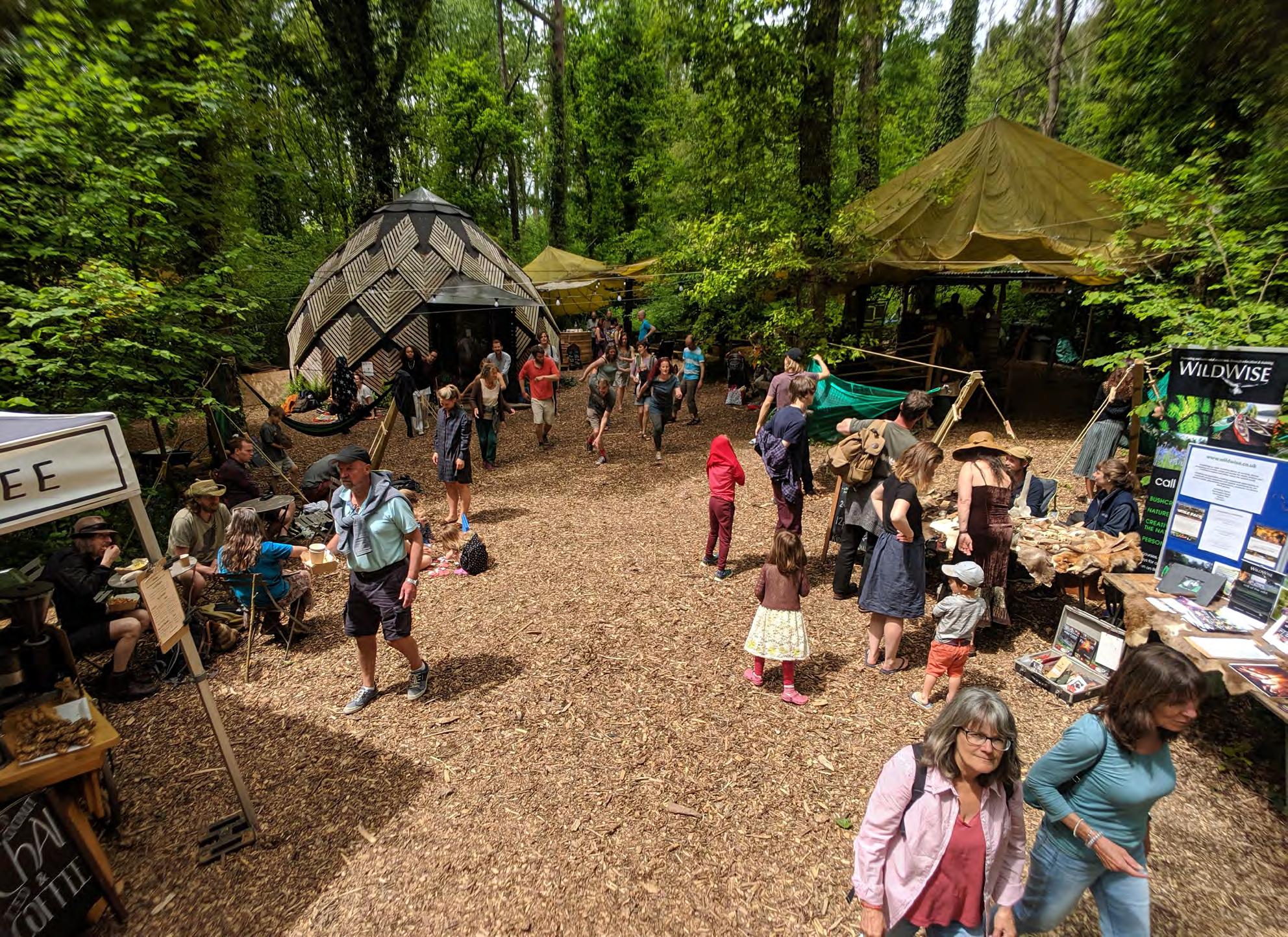
In a world where people are increasingly losing their connection with nature, a group of locals at Dartington had a visionary idea: to create a community woodland venue, The Glade. Nestled within the Dartington Estate, just on the edge of the North Woods, The Glade aims to reunite people with the enchanting beauty of their local woods and rekindle the age-old bond between communities and nature. This article delves into the concept behind The Glade, its ethos of sustainability, and its profound impact on reestablishing a sense of belonging to the woodlands.
A Place for All: Reconnecting with the Trees
The founders of The Glade sought to make the woods accessible to everyone in the community. They envisioned a space where people could gather, celebrate, and connect with nature, escaping the confines of indoor venues. Pop-up woodland cafes, ‘cinema’ nights, and family gatherings under the tree canopy became a reality, drawing people back to their roots and nurturing a deep connection with the surrounding woodlands.
Building Lightly: Harmony with Nature
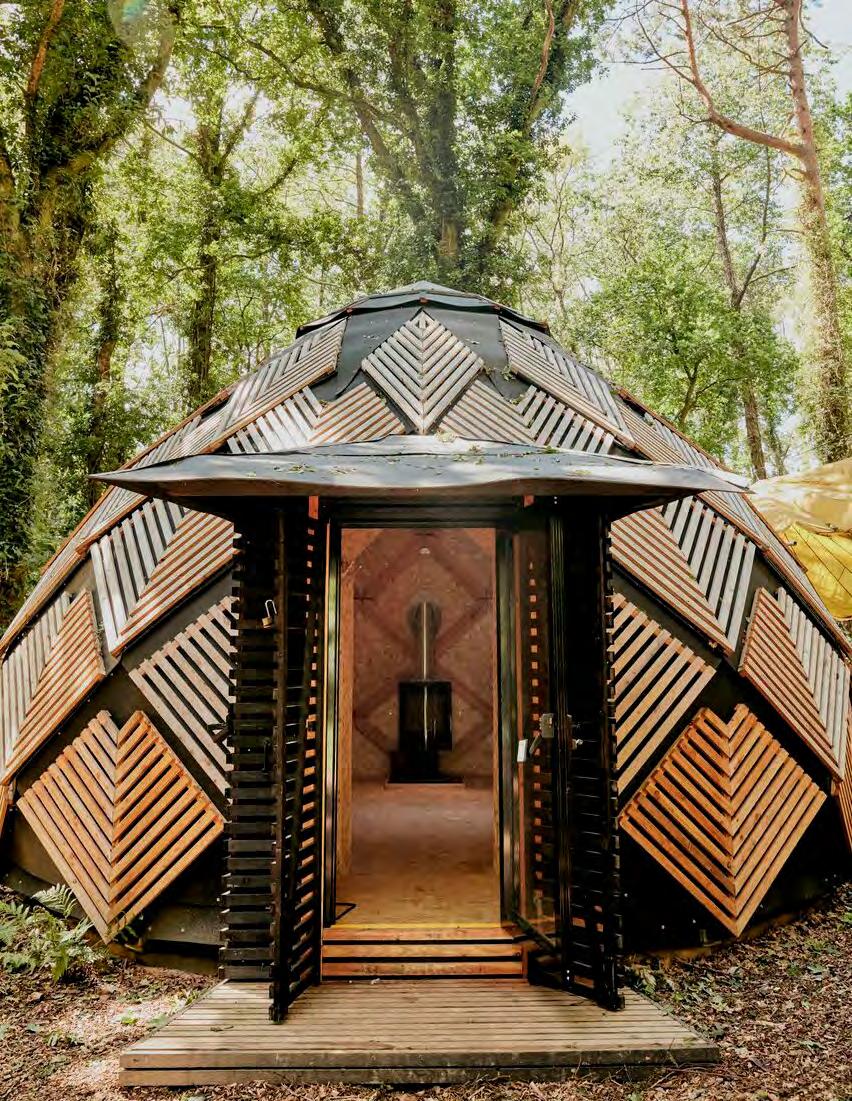
The Glade was designed with utmost sensitivity to its natural surroundings. Structures were constructed with no foundations, allowing the woodland to reclaim the space seamlessly should the need arise. The use of solar-powered lighting and composting toilets fed with woodchip from The Glade’s sister business, Woodlab, reflects a commitment to sustainability and leaving no trace on the environment. This harmonious approach ensures that The Glade thrives as an eco-conscious sanctuary.
A Venue for Transformation: Events and Wellness in the Woods
Since its establishment in 2017, The Glade has blossomed into a beloved venue hosting a diverse range of events and gatherings. From nature connection workshops and forest schools to music festivals and charity events, The Glade has become a place where memories are made, cherished, and revisited. Responding to the growing interest
World
Orinoco Magazine 25
in wellbeing, the venue also birthed Woods for Wellness, offering free wellness-focused activities that harness the natural healing power of the woodland setting.
A Vision for Expansion: Glades Across the Country
The Glade’s impact transcends its immediate location, inspiring a vision for replication across the country. Its founders envision similar community woodland venues, each unique and shaped by the activities and occasions cherished by their local communities. The essence remains consistent - inviting people to rediscover the abundance within their woodlands, form a deep connection with the outdoors, and watch as the seasons and years pass in harmony with nature.
The Glade at Dartington stands as a beacon of hope, beckoning people back to their woodlands and rekindling the profound connection between communities and nature. By providing a platform for communal gatherings and wellness activities, The Glade nurtures a collective sense of belonging to the earth and encourages reverence for the environment. This visionary community woodland venue is not just about hosting events; it is about fostering a cultural transformation, reminding us that our roots lie in the woods and encouraging us to build a more sustainable and harmonious future with nature.
thewoodland.co
World
Orinoco Magazine 26
Climate Change and its Impact: A
Global Crisis Calling for Collective Action
Climate change, driven predominantly by human activities, has emerged as one of the most critical challenges facing our planet today. The Earth’s climate is rapidly changing, leading to unprecedented shifts in weather patterns, rising sea levels, extreme weather events, and threatening ecosystems and livelihoods across the globe. In this article, we will delve into the causes and consequences of climate change and highlight the urgent need for collective action to combat this global crisis.
Understanding the Causes:
At the heart of climate change lies the escalation of greenhouse gas emissions, primarily carbon dioxide (CO2) and methane, resulting from human activities such as burning fossil fuels for energy, deforestation, industrial processes, and agriculture. These gases trap heat in the atmosphere, creating a greenhouse effect, leading to a steady rise in global temperatures. The widespread use of fossil fuels in transportation, energy production, and manufacturing remains a significant contributor to the problem.
Consequences on Weather Patterns:
Climate change is responsible for disrupting weather patterns worldwide, leading to more frequent and severe extreme weather events. Heatwaves, droughts, hurricanes, and intense rainfall are becoming more common, affecting both urban and rural communities. The increased intensity and frequency of storms are causing devastating impacts on coastal areas, displacing communities and threatening infrastructure.
Orinoco Magazine 27
Rising Sea Levels:
The warming of the planet has accelerated the melting of polar ice caps and glaciers, resulting in rising sea levels. Coastal regions and low-lying island nations face the imminent threat of inundation, leading to loss of land, freshwater sources, and displacement of millions of people.
Impact on Ecosystems and Biodiversity:
Climate change poses a significant risk to global biodiversity. Many species struggle to adapt to rapidly changing conditions, leading to altered migration patterns, disrupted food chains, and habitat loss. Iconic species, such as polar bears, are facing extinction as their natural habitats disintegrate due to melting ice.
for the elderly and those with respiratory conditions.
Urgent Need for Collective Action:
Addressing climate change requires a collaborative and
change and limiting global temperature rise.
Human Health and Agriculture:
The consequences of climate change extend to human health and agriculture. Rising temperatures and changing precipitation patterns can affect crop yields, leading to food insecurity in vulnerable regions. Additionally, heatwaves and worsening air quality are posing severe health risks, particularly
collective effort from governments, businesses, communities, and individuals worldwide. Transitioning to renewable energy sources, implementing energy-efficient technologies, and promoting sustainable practices are essential steps in reducing greenhouse gas emissions. International agreements, like the Paris Agreement, play a crucial role in encouraging countries to work together in curbing climate
Climate change is an urgent global crisis that demands immediate action and cooperation from all corners of society. The consequences of inaction are farreaching and threaten the very fabric of life on Earth. By acknowledging the scientific evidence and working together, we can mitigate the worst impacts of climate change and build a more sustainable and resilient future for generations to come. It is time for us to take bold steps, innovate, and embrace sustainable practices that will secure a better world for ourselves and future generations.
“Climate change is an urgent global crisis that demands immediate action and cooperation from all corners of society” “
 By: Edson Acero
Orinoco Magazine 28
Global Visions:
Navigating Sustainability and Ecology
1. Rising Tide of InnovationsEco-Friendly
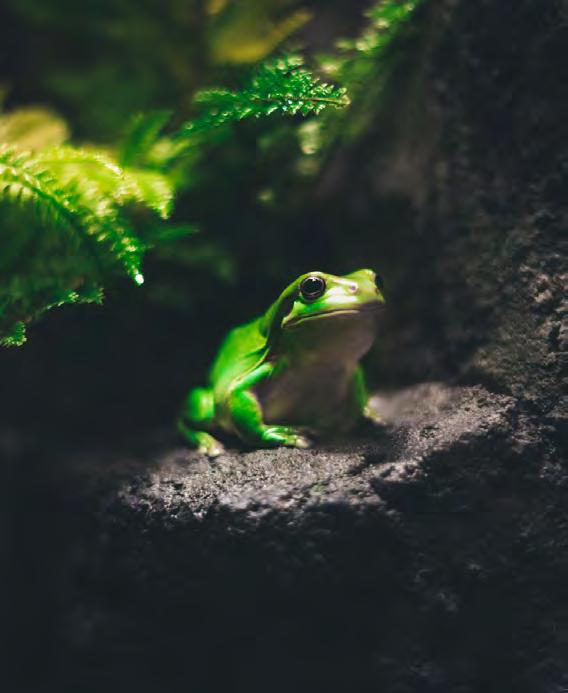
As the world grapples with pressing ecological challenges, innovators are stepping up to the plate with groundbreaking solutions. From renewable energy breakthroughs to zerowaste packaging designs, this capsule explores the latest innovations that are reshaping industries while prioritizing sustainability and a healthier planet.

4. Urban Sustainability: Green Cities for Tomorrow
2. Conservation Spotlight: Protecting Biodiversity Hotspots
In this capsule, we shine a spotlight on the critical efforts being made to protect biodiversity hotspots around the globe. Learn about conservation projects that are safeguarding endangered species, restoring ecosystems, and working hand-in-hand with local communities to create a harmonious balance between human activities and nature.
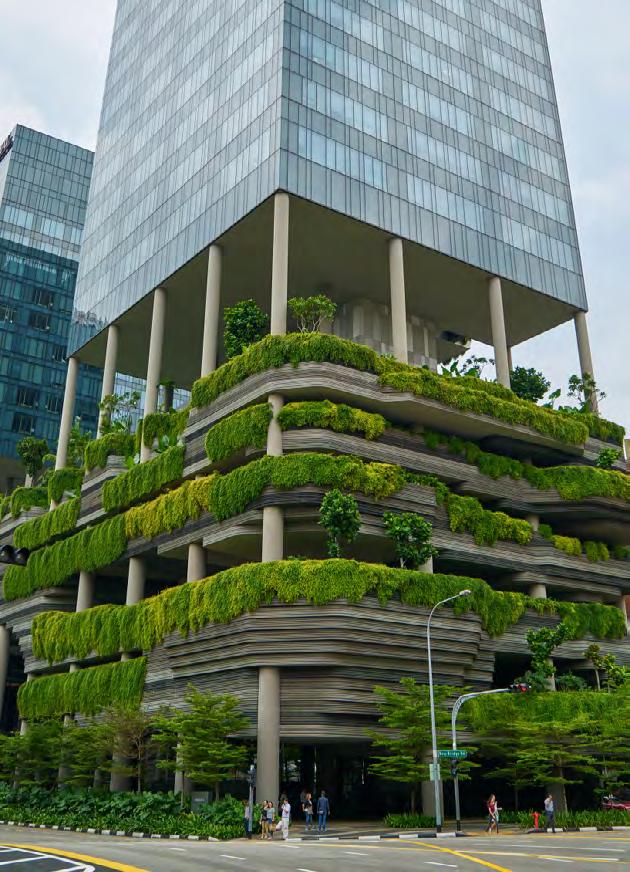
Cities are at the forefront of sustainable development efforts. Explore how urban planning, green infrastructure, and community initiatives are transforming urban centers into hubs of sustainability, where clean transportation, energy-efficient buildings, and green spaces thrive, improving quality of life for residents.
3. The Circular Economy Revolution
Embracing the principles of the circular economy has become a pivotal goal for businesses and communities. Discover how this innovative approach is transforming traditional linear production models into ones that prioritize recycling, reusing, and reducing waste, ultimately leading to more sustainable consumption patterns and resource management.

World
Orinoco Magazine 29
Mindfulness Matters
Explore the Oasis of Mental Well-Being
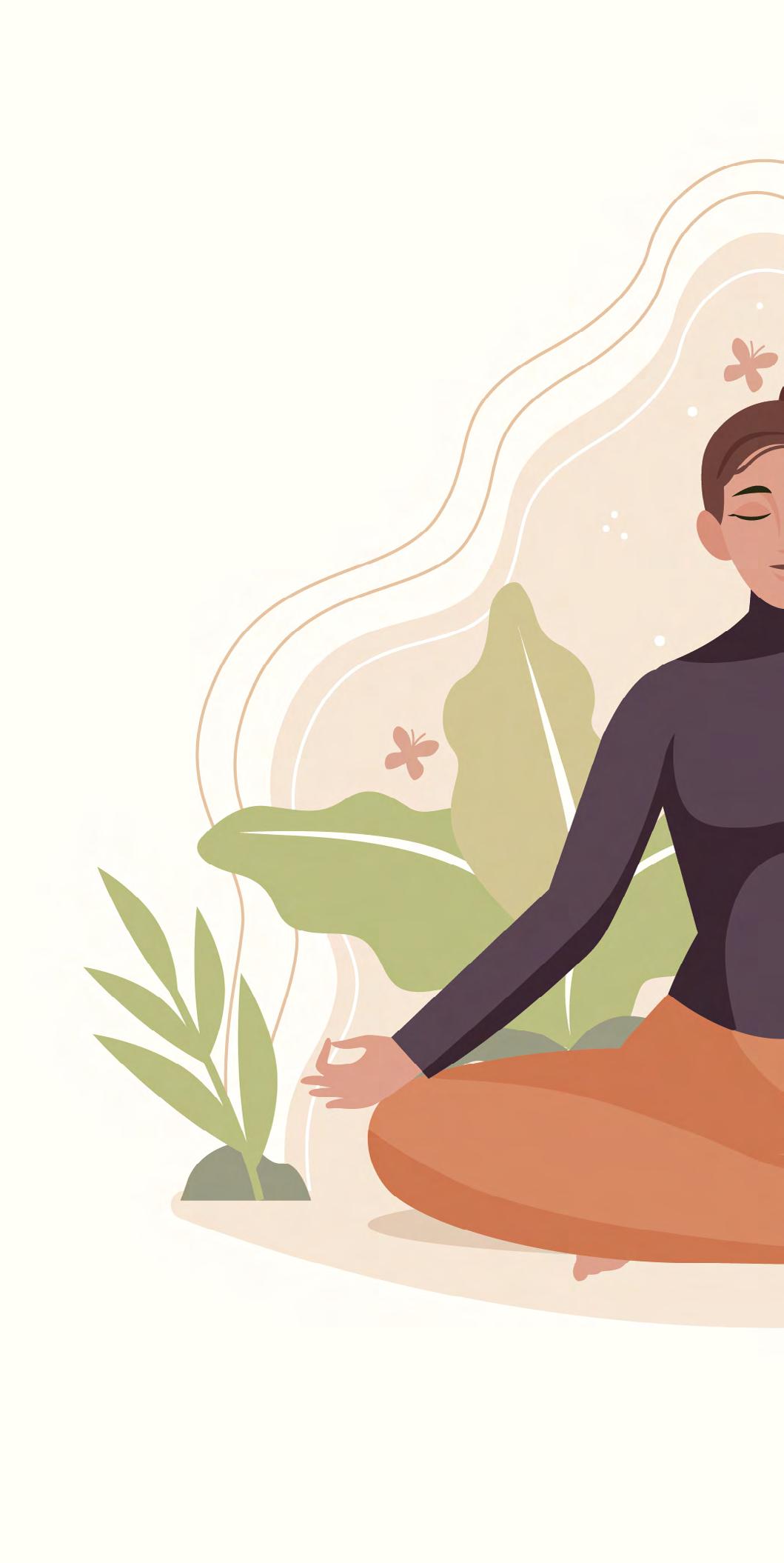
Picture this: You’re standing on the edge of a tranquil oasis, surrounded by lush greenery and the gentle melody of trickling water. Your mind, once racing like a frenzied whirlwind, now finds itself in sync with the rhythm of nature. Welcome to the realm of mindfulness—a sanctuary for your mental well-being.
In a world that seems to thrive on chaos, finding solace and mental clarity has become more essential than ever. Mindfulness, a practice rooted in ancient traditions, offers a refreshing oasis for modern minds. It’s not about magically silencing your thoughts, but rather about gently guiding your attention to the present moment. It’s like a mental spa day where your thoughts are invited to take a back seat, and you emerge rejuvenated.
The Art of Being Present:
Imagine savoring the taste of your morning coffee as if it were the elixir of life itself. Mindfulness thrives on such simple, yet profound, experiences. It encourages you to engage with the present fully—unplugging from the ceaseless demands of yesterday and the hypothetical scenarios of tomorrow. It’s a gentle reminder that life isn’t just a race; it’s a collection of moments waiting to be cherished.
Dancing with Your Thoughts:
Mindfulness doesn’t involve battling your thoughts into submission. Instead, it’s a dance—a graceful acknowledgment of the thoughts that arise. Picture your thoughts as passing clouds; you observe them, acknowledge their presence, and let them drift away. Through this dance, you become the observer of your thoughts rather than their captive.

Orinoco Magazine 30
Mindful Breathing: Your Anchor in Chaos:
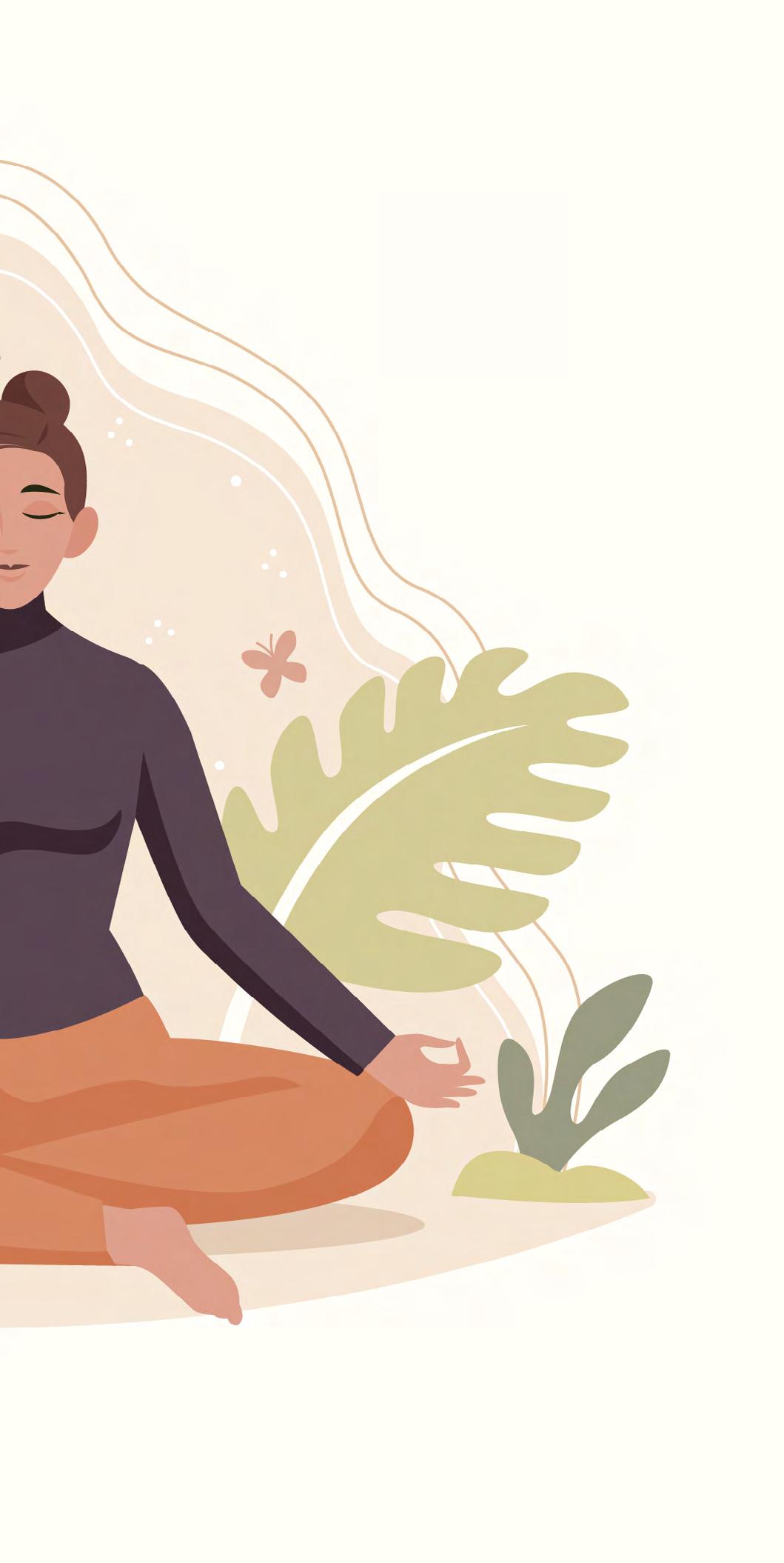
Let’s talk about your breath—an ever-present anchor amidst life’s storms. Mindful breathing is a gateway to mindfulness. Take a moment, close your eyes, and inhale deeply, feeling the air fill your lungs. As you exhale, let go of the tensions that may have clung to you like unwanted baggage. Repeat this simple act, and you’ll find yourself grounded in the here and now.
Embracing Imperfections:
In our quest for perfection, we often forget the beauty of imperfection. Mindfulness encourages you to accept things as they are, including yourself. It’s about embracing the quirks and curves that make you uniquely you. In a world that constantly demands more, mindfulness teaches you that you are enough, just as you are.
The Mindful Adventure:
Embarking on the journey of mindfulness is like discovering a hidden treasure within yourself. It’s not always easy—distractions and restive thoughts will try to steal the spotlight. But as you persist, you’ll find that moments of clarity, tranquility, and insight become more frequent.
So, whether you’re sitting cross-legged by a serene lake or standing in line at the grocery store, the oasis of mindfulness is always accessible. Let this ancient practice be your compass in the chaotic modern world. Embrace the present, dance with your thoughts, and breathe in the essence of now. Your mind will thank you for the oasis of calm you’ve created.
One mindful moment at a time

Orinoco Magazine 31
EDITOR’S PICK
A curated compilation of thought-provoking books, captivating films, enlightening documentaries, impactful organizations, and inspiring public figures. Here, we celebrate those who stand as guardians of our planet, champions of biodiversity, advocates for cultural diversity, and torchbearers of ancestral wisdom.
Earthrise Studio

We tell stories to transform climate, culture, and consciousness.
Stories for a new world, that turn radical imagination into reality.
WaterBear

WaterBear is the first interactive streaming platform dedicated to the future of our planet.
Association of Indigenous people who live, resist and accommodate parents in urbanized contexts
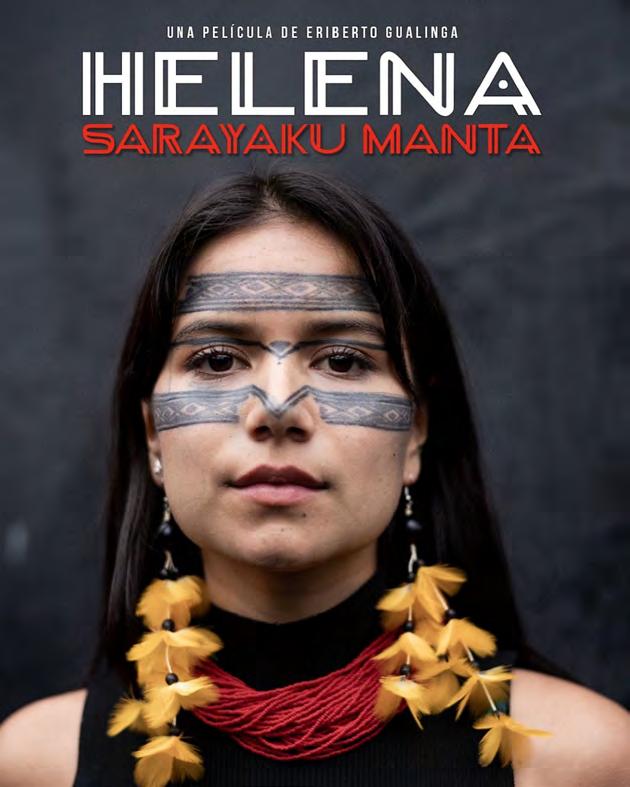
HELENA SARAYAKU MANTA
Film 2022
by Eriberto Gualinga
Traveling between her life in Finland and her mother’s homeland deep in the rainforests of Ecuador, 17-year-old Helena Gualinga yearns to protect her indigenous community from extractive development and the repercussions of climate change. Her story highlights the efforts of the Kichwa people of Sarayaku to recognize the Amazon rainforest as a “Kawsak Sacha – Living Jungle”. The “Living Jungle” is both a cultural philosophy and a proposal to governments that states the rainforest is not a resource to be used, rather it is a living and conscious entity in need of legal protection.
 Wika Hwara
Orinoco Magazine 32
Join us in preserving the Amazon
Become a sponsor or advertiser
Orinoco Magazine, a publication dedicated to exploring the Amazon Rainforest, indigenous cultures, nature, ecology, and conservation. We invite you to become a sponsor or advertiser and join us in our mission to preserve nature and protect indigenous cultures. By partnering with us, you’ll not only gain access to a passionate audience but also contribute to the important work of conservation.
Reach out to us to discuss how we can collaborate further.
Together, let’s make a difference.
Grateful for You: Our Readers, Collaborators, and Indigenous Guardians As we conclude another inspiring issue of Orinoco Magazine, we want to take a moment to express our deep gratitude.
our cherished readers, thank you for your curiosity and dedication to environmental awareness. Your support fuels our mission.
our collaborators, your passion and expertise elevate each page. Together, we amplify the message of sustainability.
to the indigenous communities, custodians of the Amazon jungle, your wisdom reminds us of nature’s true value.
heartfelt thanks, Stay in touch Website: www.edson-acero.com Instagram: @Orinoco_eMagazine @edson_acero Email: contact@edson-acero.com edsonacero@gmail.com Orinoco MAGAZINE Orinoco Magazine 33
To
To
And
With
AmAzon RAinfoRest
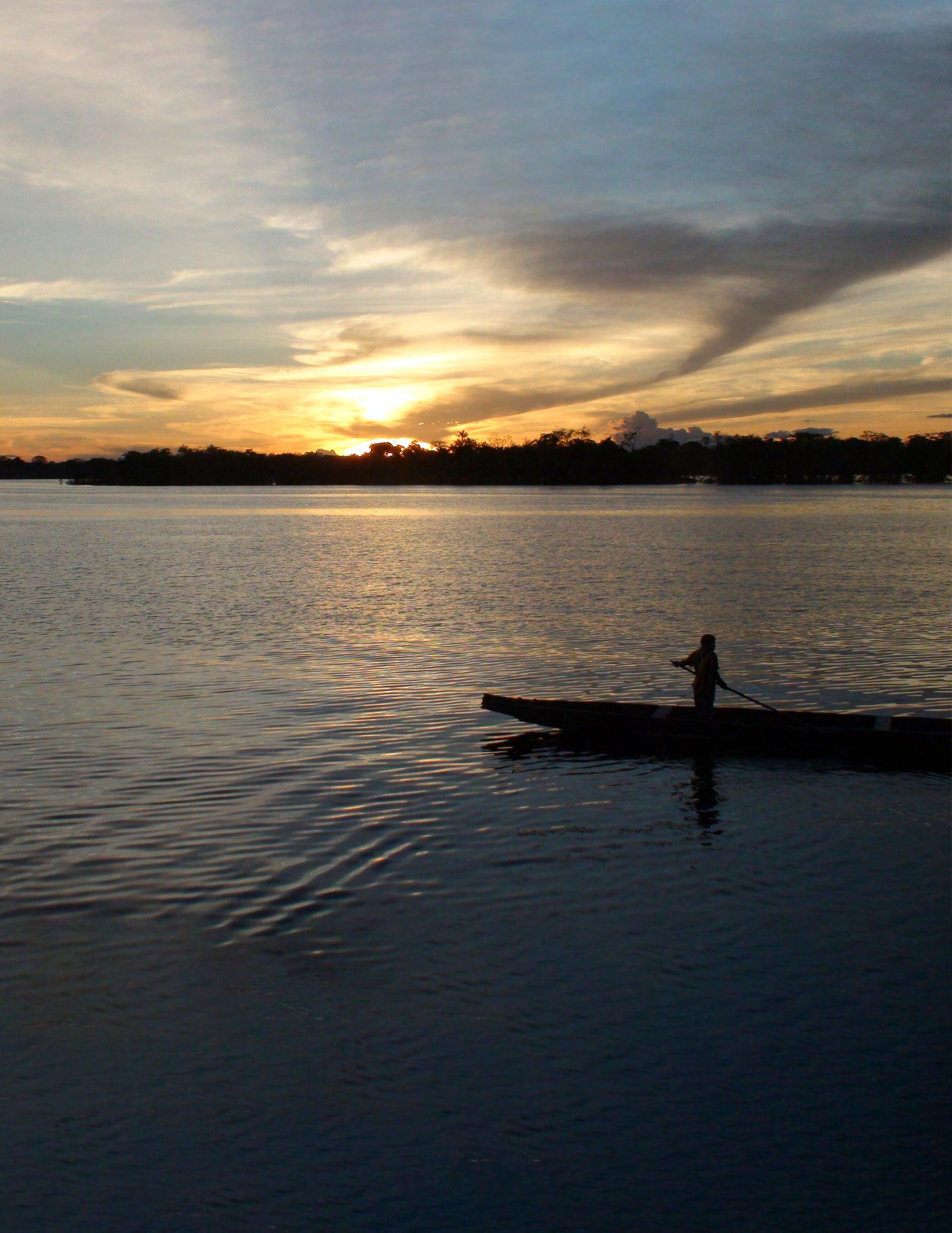
“In the jungle’s embrace, a tapestry of existence unfolds, gifting life’s essentials – sustenance, waters of vitality, the breath of Earth, curatives for body and spirit – to both local custodians and the global kinship of humanity.”
Quote and Photo by: Edson Acero
Orinoco Magazine 34