How Tourism & Hospitality Leaders Are Building Oregon’s Future Workforce
Advocacy Wins, Challenges and Federal Engagement
Strengthening Our Voice
Uniting Across Oregon Through Member-Driven Regional Teams
DMOs Unite to Support Local Economies
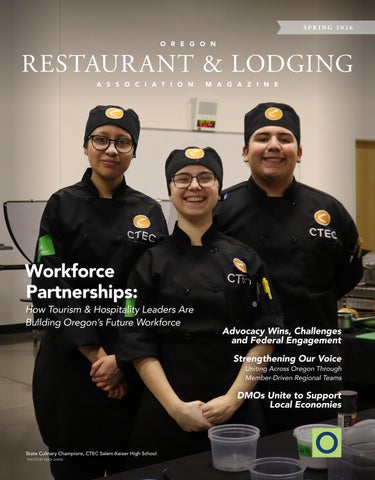
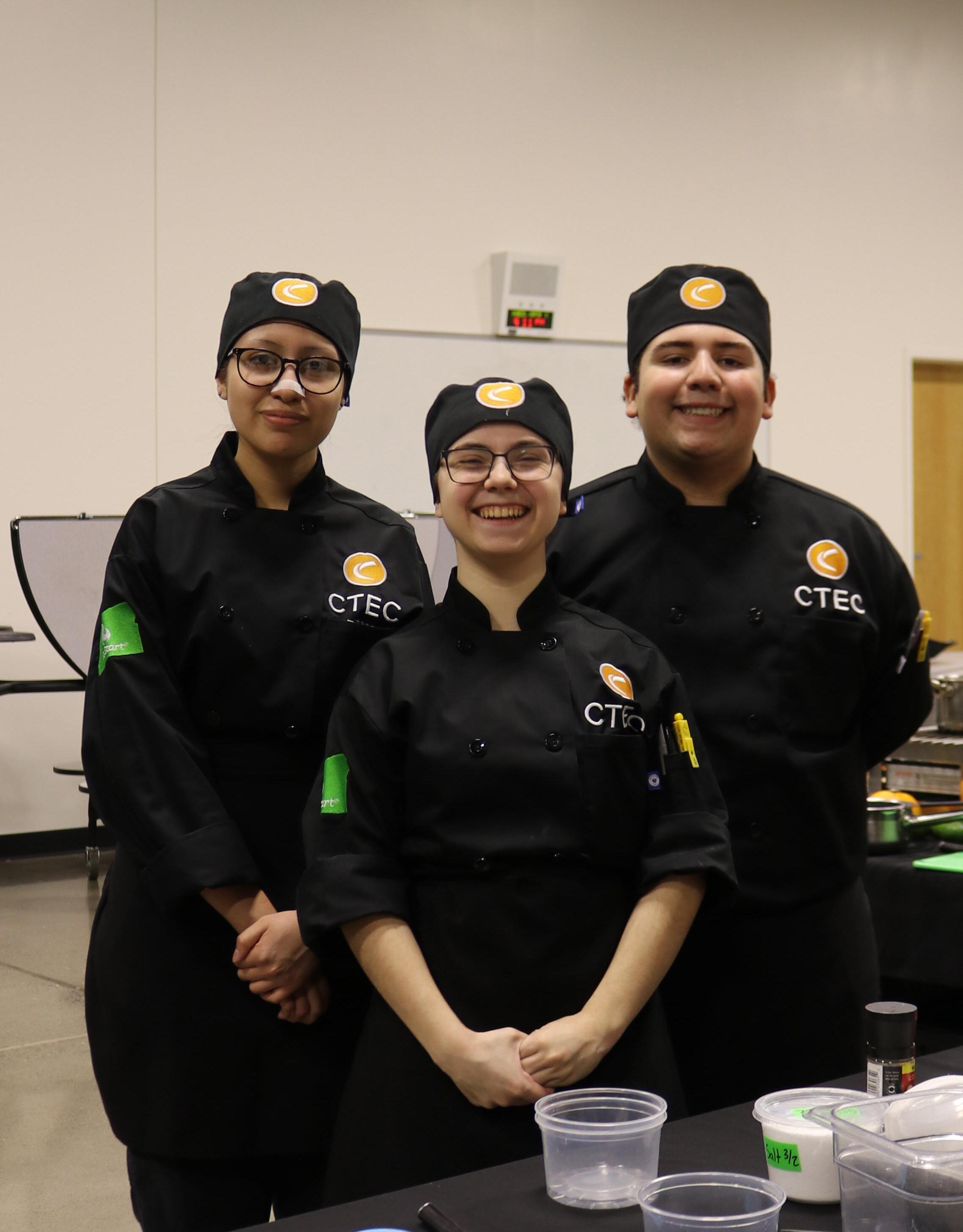
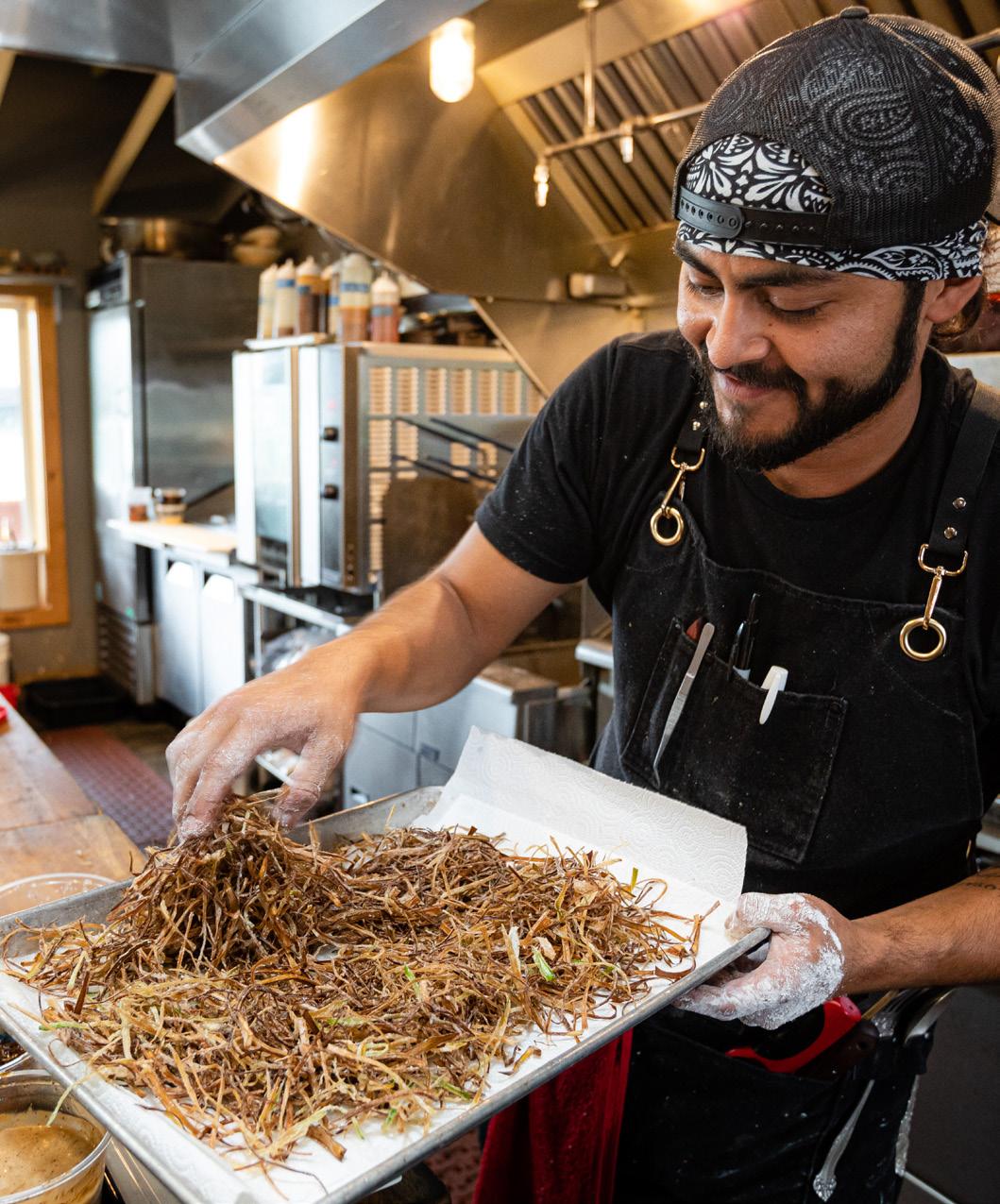
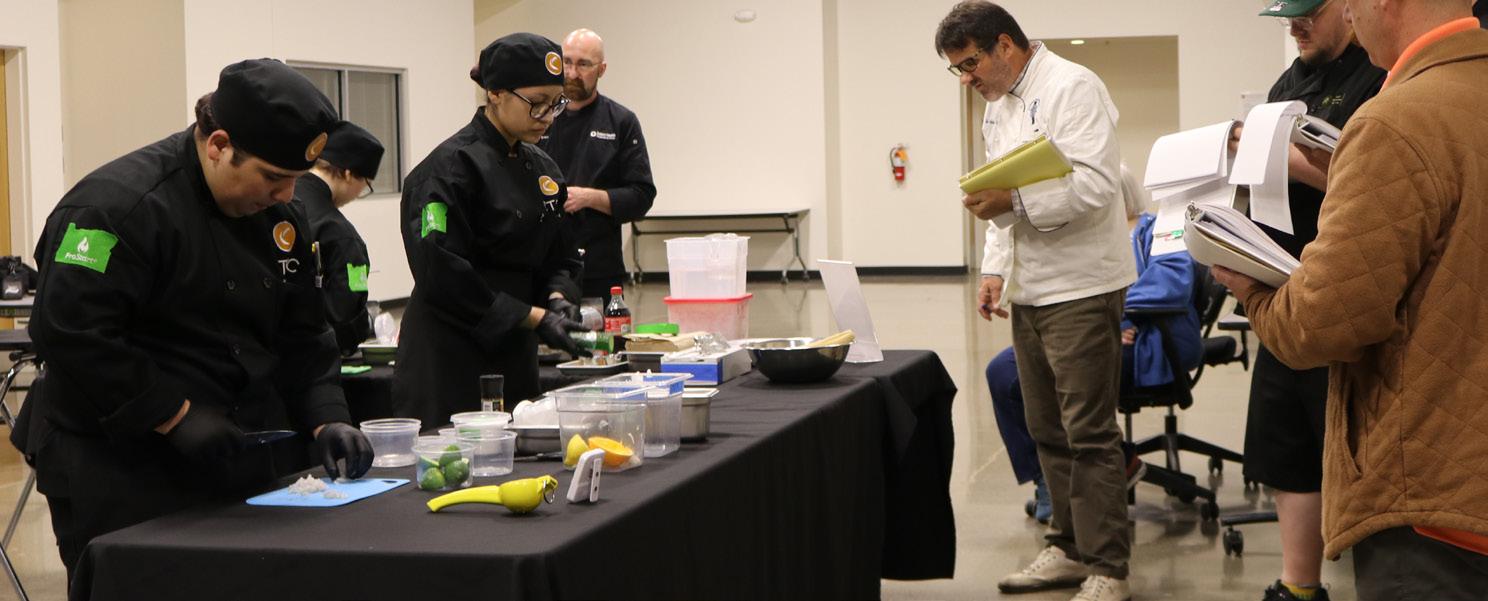
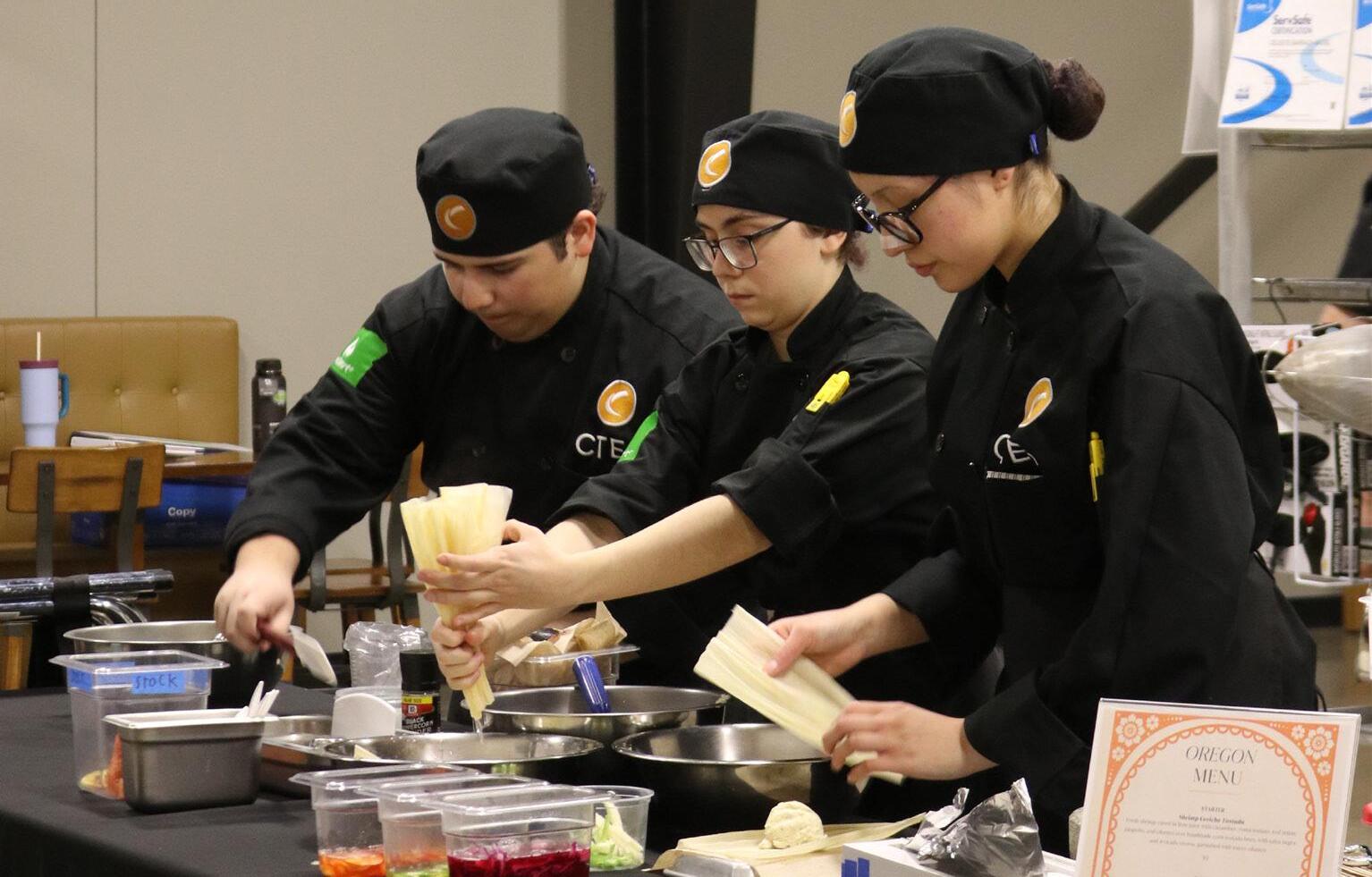
State Culinary Champions, CTEC Salem-Keizer High School
PHOTO BY HEIDI JANKE
second look. Take a
In the hospitality industry, it’s all too easy to face “death by a thousand cuts” — expenses piling up from every direction.
But you can take control over one of these line items. Your insurance.
Are you using these ORLA resources?
• Your ORLA membership comes with a complimentary insurance review. You get input on steps you can take to reduce your insurance-related expenses.
• ORLA also sponsors the Hospitality Insurance Program (HIP). HIP gives you large group purchasing power and coverage specifically tailored for the hospitality industry. Last year, ORLA members trimmed their insurance bills by an average of $3,650 with HIP.
Find out if you have coverage gaps. Schedule your free review today. Rob Hoover 503-820-3415 gethip@risk-strategies.com www.gethip.biz
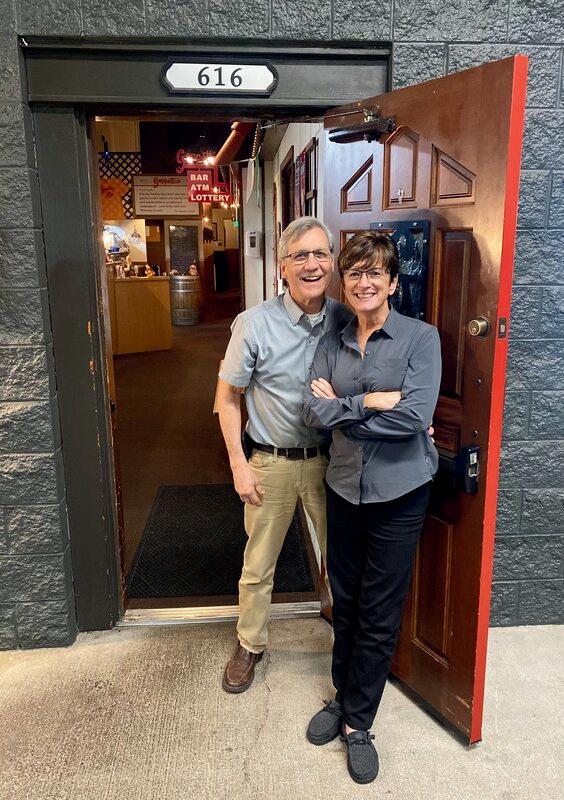
Geppetto’s has been a staple in the Salem community since 1974. Our little red door opened with Ma and Tom Barsotti’s family Italian recipes.
Before IMB, we had an in-house POS system that was becoming obsolete and couldn’t be upgraded. IMB came in, provided the equipment, and made the transition easy.
The best part? Real people answer the phone. They respond quickly, solve problems, and keep us running smoothly.
-Julie & Roger Hoy
When your kitchen runs nonstop, energy- saving upgrades help it keep up
Keep your kitchen running at its best with energy-efficient equipment that saves energy, lowers operating costs and minimizes downtime. From ovens to dishwashers, energy efficient upgrades help your team stay productive and your service uninterrupted. With cash incentives from Energy Trust of Oregon, making the switch is easy—and worth it.
Learn more at www.energytrust.org/foodservice
The Newbergundian Bistro Newberg, OR
Restaurant & Lodging is published four times a year by Oregon Restaurant & Lodging Association (ORLA), 8565 SW Salish Lane, Suite 120, Wilsonville, Oregon, 97070 503.682.4422 To learn more about ORLA visit us online at OregonRLA.org
PUBLISHER
JASON BRANDT / PRESIDENT & CEO JBrandt@OregonRLA.org
LORI LITTLE / EDITOR LLittle@OregonRLA.org
HEIDI JANKE / DESIGN HJanke@OregonRLA.org
MEMBERSHIP
To become a member of the Oregon Restaurant & Lodging Association, please contact us at info@OregonRLA.org or 503.682.4422.
ADVERTISING
Please support the advertisers herein; they have made this publication possible. For information on advertising opportunities, please contact Big Red M, serving on behalf of the Oregon Restaurant & Lodging Association (ORLA): Cathleen Corbin, Advertising Account Executive, Big Red M cathleen@bigredm.com or 303.550.4480
SUBSCRIPTIONS
To update your digital and print subscriptions to this publication and all ORLA communications visit OregonRLA.org.
2025-26 ORLA BOARD OF DIRECTORS
Komal (Tina) Patel, Chair, ALKO Hotels
Katie Poppe, Vice Chair, Blue Star Donuts
Liz Dahlager, Treasurer, Mereté Hotel Management
Gordon Feighner, Secretary, Jam on Hawthorne Patrick Nofield, Immediate Past Chair, Escape Lodging
Marin Arreola III, Advanced Economic Solutions (AES) Inc.
Jolee Bancroft, Mo's Restaurants
Terry Bichsel, Rivertide Suites Hotel
Joe Buck, Babica Hen / Lola's / Gubanc's
Gillian Duff, El Gaucho Portland
Justin Freeman, Bagel Sphere
Cheri Helt, Zydeco Kitchen & Cocktails
Kurt Huffman, ChefStable
Joe Lowry, Bandon Dunes Resort
Alkesh Patel, Evergreen Hospitality Development Group
Taran Patel, A-1 Hospitality Group
George Schweitzer, West Coast Hospitality LLC
Jerry Scott, Elmer's Restaurants Inc.
Natalie Sheild, Togather Restaurant Consulting
Jim Smith, Mountain Mike's Pizza, Cascades Coffee House
Rick Takach, Vesta Hospitality
Jake Vanderveen, McDonald Wholesale Co.
Scott Youngblood, CASCADA
Dhruti Amin, Ex Officio Board Member, ALKO Hotels
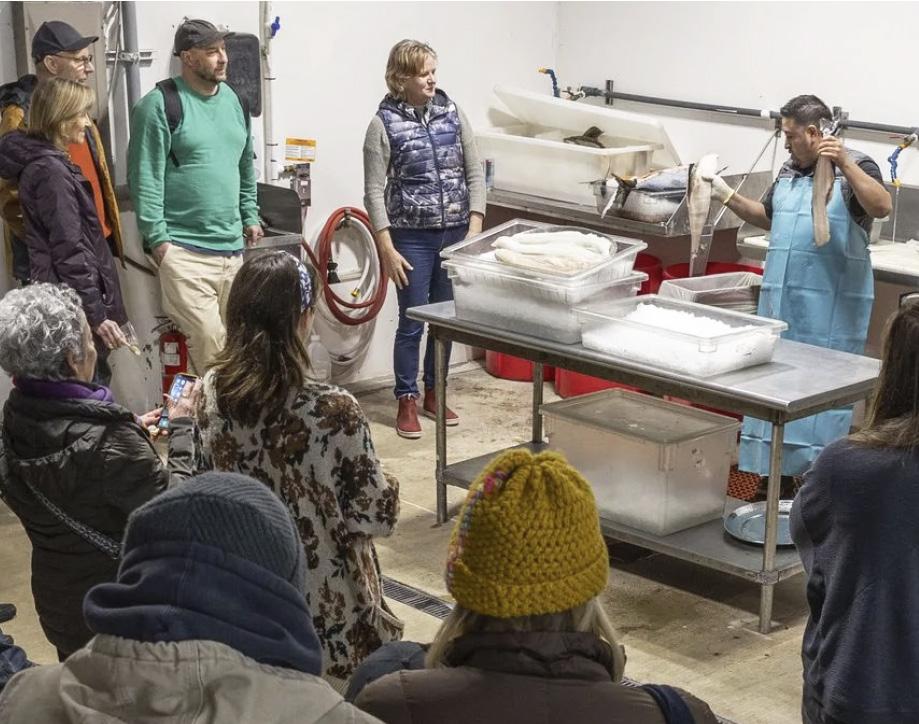
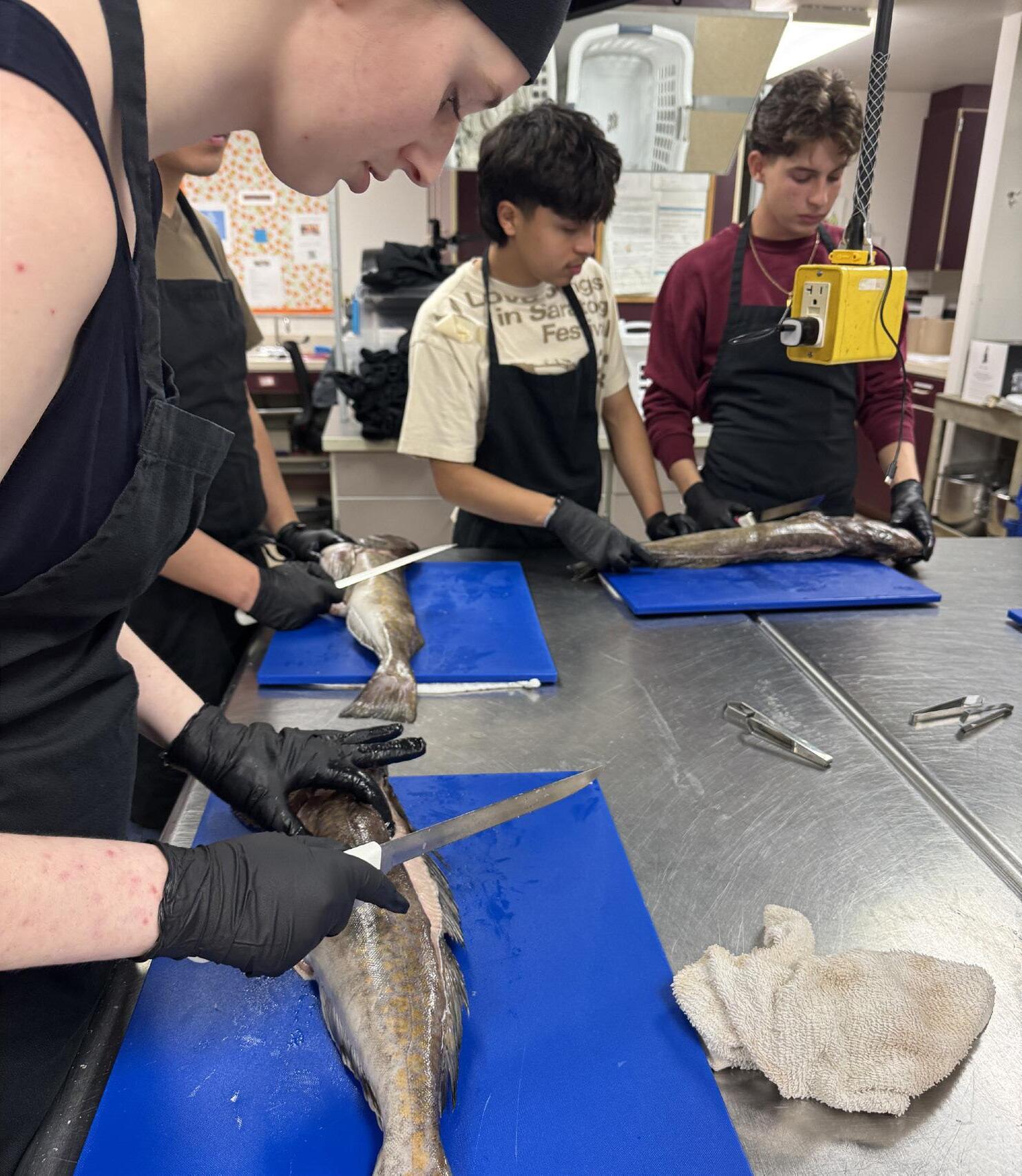
High School State Culinary Champions CTEC Salem-Keizer practice in front of industry professionals before heading to Nationals.
FROM THE CEO
Why ORLAPAC Matters Now More Than Ever
With the 2026 legislative session now behind us, Oregon’s hospitality industry is turning its focus toward what comes next. This year’s session produced policy changes that will have real and lasting impacts on our industry— from how communities invest in destination marketing to the introduction of new statewide taxes that shift the funding landscape for programs historically supported through other sources.
As we move from winter into spring and prepare for the busy tourism season ahead, our industry must remain engaged. Across Oregon, we are already seeing conversations begin about potential divestments in tourism promotion and destination marketing— investments that many local economies depend on.
The path forward will require strong collaboration between hospitality operators, local Chambers of Commerce, and Destination Marketing Organizations. Together, we must ensure the value of tourism promotion is understood and protected. These conversations will be most effective when they include the voices of the small and independent businesses that power Oregon’s hospitality economy.
That means engaging early and often with local elected officials and state legislators. Small business owners have a powerful perspective to share—one grounded in real business forecasts, workforce challenges, and the policies that will determine whether our industry can continue to grow and thrive. When we speak up about what it takes to sustain hospitality businesses for the long run, policymakers listen.
This is exactly why ORLAPAC exists.
A strong Political Action Committee is a cornerstone of ORLA’s government advocacy work. It allows our industry to support leaders who understand the importance of protecting, improving, and promoting Oregon’s hospitality economy.
And in an election year like this one, that work becomes even more critical.
In 2026, all 60 seats in the Oregon House of Representatives will be on the ballot, along with half of the Oregon State Senate seats and the governor’s race. The decisions made in these elections will shape the policy environment for our industry for years to come.
ORLAPAC helps ensure the hospitality industry has a seat at the table in those conversations.
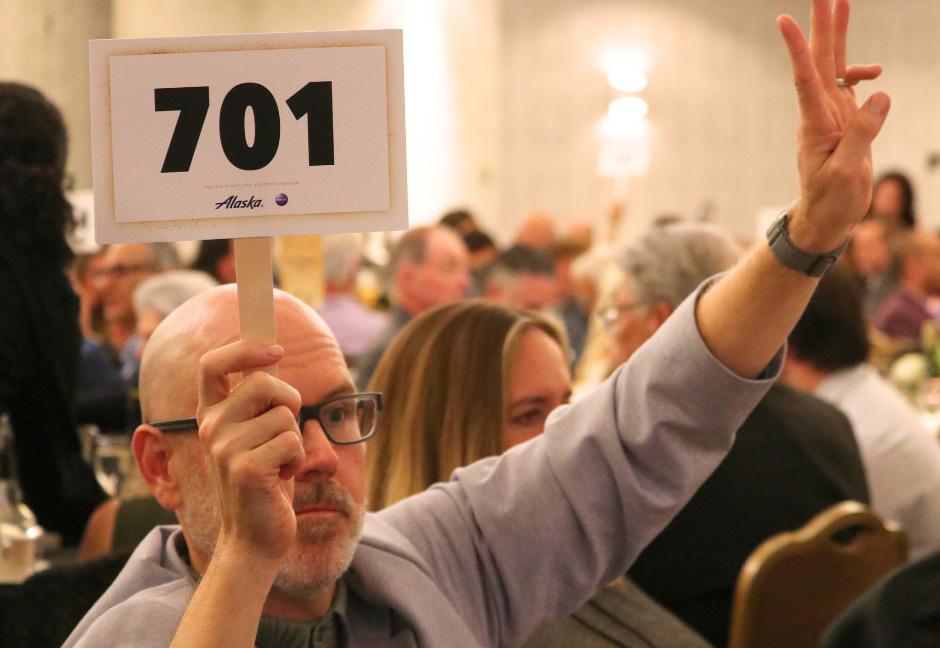
That’s why I encourage you to join us for ORLAPAC’s One Big Night, our largest PAC fundraiser of the year, on June 2 at The Allison Inn & Spa in Newberg. This event is more than a celebration of our industry—it’s an opportunity to invest in the advocacy work that protects our businesses and strengthens our voice in Salem.
With your support, ORLAPAC can continue to champion candidates who recognize the economic power of Oregon’s hospitality industry and who will partner with us to build policies that support small businesses and local communities.
Together, we can ensure that Oregon remains a place where hospitality businesses can succeed, communities can thrive, and tourism continues to drive economic opportunity across the state.
I hope to see you in Newberg on June 2 for One Big Night. JASON BRANDT, PRESIDENT & CEO, ORLA
ADVOCACY UPDATE
Key Wins, Ongoing Challenges, and Federal Engagement Shape Oregon Hospitality Advocacy
Legislative Session Recap
The 2026 Oregon Legislative Short Session moved quickly, shaped by tight deadlines, partisan politics, and complex policy debates. In less than 35 days, legislators passed bills raising Oregon’s statewide lodging tax and redirecting those funds to non-tourism related purposes, changing the percentages of local lodging tax distribution, disconnecting Oregon from select parts of the federal tax code, and shifting the date of the gas tax referendum from the November election to May.
Along the way, they also passed protections for recreational liability waivers, gave Oregon businesses the ability to round cash transactions to the nearest nickel and financed renovations to the Moda Center to help keep the Portland Trailblazers in the region.
There were also brief walkouts by Republicans in both the House and the Senate and deals were made on bills related to gun control and the Moda Center financing. The state budget was not as dire
as a situation as first thought but the next several years will challenge legislators and budget writers as they wrestle with fewer federal funds.
HB 4134 – Increase to the Statewide Transient Lodging Tax ORLA Position: Opposed | Result: Passed
HB 4134 was a bill that returned from the 2025 long session. At the time, it raised the statewide lodging tax by 1.25 percent, bringing the total statewide lodging tax to 2.75 percent. When layered on top of existing city and county lodging taxes, as well as additional assessments like tourism improvement districts, the increase places Portland’s total lodging tax rate second highest only to Seattle in the Western United States.
The bill diverts lodging tax dollars away from economic development, job creation and tourism promotion to other state agencies, including the Oregon Department of Fish and Wildlife and the Oregon Department of Justice, as well as funding wolf depredation compensation
for ranchers and farmers who lose livestock.
Despite fierce opposition by ORLA and other partners including Oregon Business and Industry, Oregon State Chamber of Commerce and Oregon Wine and Beer Distributors, the bill narrowly passed in the House and the Senate and now sits on the Governor’s desk. ORLA, along with our partners, filed a veto request with the Governor in the hopes she would see that increasing the statewide lodging tax and diverting the funds away from economic development and job creation at a time when Oregon needs both desperately is a bad policy decision, but she eventually signed the bill.
HB 4148 – Local Transient Lodging Tax Percentage Change ORLA Position: Opposed and then Neutral | Result: Passed
HB 4148, another bill from last session, resurfaced with a similar intent. In the 2025 session, it proposed changing state law to reduce the share of local lodging taxes (after July 2, 2003) dedicated to tourism–from 70
percent to 40 percent–while increasing the unrestricted portion available to cities and counties from 30 percent to 60 percent.
In the 2026 session, ORLA opposed that version. At the last minute, an amendment was offered to accept ORLA’s compromise of bringing any city or county who was below 50 percent unrestricted up to 50 percent with 50 percent going to tourism. Unfortunately, the amendment also included language establishing a “Business Resiliency Fund” grant program using dollars from the tourism portion. Although this was a new development, ORLA felt there was no choice but to accept the compromise and take a neutral position on the bill or risk the language reverting back to the 60/40 split.
Oregon’s Destination Management Organizations (DMO’s) rallied alongside ORLA and reached out to legislators about the damage this could do to their budgets, their employees and their communities. Despite tremendous efforts in opposition, the bill passed both the House and the Senate. A small bright spot: many legislators raised concerns about the business resiliency fund,
creating a potential path to revise or remove the language in the 2027 session.
SB 1517 – Recreational Liability
Waiver Reform
ORLA Position: Supported | Result: Passed
SB 1517 was a bill designed to help enforce recreational liability waivers for ski areas, outdoor recreation tour operations, gyms and other businesses who operate in the recreational space for the general public. Oregon has been an outlier in the U.S. after an Oregon Supreme Court decision ruled that recreational liability waivers were unenforceable. This led to lawsuits being brought against operators, insurance rates skyrocketing, and a dwindling number of insurance carriers willing to cover Oregon’s operators.
The bill releases operators from claims of ordinary negligence if participants sign a liability waiver but does not release them from claims of gross negligence. ORLA supported the bill in order to bring more certainty and clarity to recreational liability
waivers as well as help control costs and limit frivolous lawsuits against operators.
SB
1501 – Funding for the Moda Center
ORLA Position: Support | Result: Passed
SB 1501 enables a public-private financing model to renovate and sustain the Moda Center, Portland’s primary indoor sports and entertainment venue, using dedicated tax revenues tied to the arena rather than broad statewide funding. It establishes the Oregon Arena Fund, a dedicated account to receive contributions from the City of Portland, Multnomah County, and the State of Oregon to support arena-related costs, including renovations.
The bill includes a clause that no renovations will take place until a longterm lease commitment is signed by the Portland Trailblazers organization. The Oregon Arena Fund will primarily consist of income taxes generated by arena-related activity (e.g., workers, performers, and associated operations) redirected into the fund and away from current uses to support renovation and operations.
HB 4178 – Rounding Bill (or “Common Cents” Bill)
ORLA Position: Support | Result: Passed
HB 4178 creates a uniform, optional framework for cash rounding in Oregon transactions, helping businesses operate without pennies while maintaining transparency and fairness for consumers.
ORLA testified in support of the bill to help alleviate issues related to the Federal Government's decision to no longer produce one-cent pieces thereby limiting access to pennies for businesses and consumers.
The bill permits places of public accommodation (e.g., retailers, restaurants, hotels) and public bodies to round the final cash or mixed-payment total to the nearest $0.05. It establishes standardized rounding rules requiring rounding down for totals ending in 1, 2, 6, or 7 cents, and up for 3, 4, 8, or 9 cents. It applies to in-person transactions only and does not apply to online, mail, or phone transactions.
There are several consumer protections included in the bill as well with customers still having the ability to pay exact change to avoid rounding and with businesses required to apply policies consistently and post notice to customers.
The bill also includes legal protections for businesses such that rounding done in compliance with the law is not considered an unlawful trade practice or discrimination related to currency acceptance.
SB 1507 – Federal Tax Code Disconnect
ORLA Position: Opposed | Result: Passed
SB 1507 makes significant changes to Oregon’s tax policy by partially disconnecting the state tax code from recent federal tax changes included in HR 1 while adding targeted state tax credits.
Importantly, it decouples Oregon from select federal tax cuts, preventing those tax breaks from applying at the state level. This “disconnect” is intended to retain roughly $291 million in state revenue over the near
term for state government. The bill specifically rejects or modifies items including bonus depreciation for business investments, auto loan interest deductions for consumers and qualified small business stock exemptions.
It also expands tax relief for some groups including increasing the Earned Income Tax Credit (EITC) for low- and moderateincome households and creating a new tax credit for businesses that create jobs in Oregon.
HB 4147 – Medicaid “Shame” List
ORLA Position: Opposed | Result: Died
HB 4147 sought to increase transparency around how large employers’ workforce health coverage practices intersect with public health programs like the Oregon Health Plan, but there were considerable concerns raised about employer targeting.
The bill would have directed the Oregon Health Authority to produce an annual report on large employers whose workers rely on state-funded health care. Working
with other partners in the business community, ORLA negotiated changes to the original bill including removing specific company names in lieu of listing industries instead and including public agencies, such as state and local governments, in the bill.
The bill ultimately died and was not passed.
Oregon Voices at National Policy Conference
Led by ORLA’s Director of Government Affairs Greg Astley, a small group of ORLA members traveled to Washington, D.C. for the National Restaurant Association’s Public Affairs Conference—engaging directly on key issues including immigration reform, the Credit Card Competition Act, and the U.S.-Mexico-Canada (USMCA) trade
agreement. During the visit, the group met with the offices of every member of Oregon’s congressional delegation while also diving into emerging topics such as hemp beverages, MAHA regulations, tariffs, and taxes.
Credit card swipe fees are now the third highest cost center behind food and labor for many restaurants. With two companies holding a duopoly over credit card processing, ORLA, along with the NRA and our partners in other states are urging Congress to pass the Credit Card Competition Act to inject competition into the processing space and create more opportunities for other companies to compete for business with anyone accepting credit card payments. There is a bill currently in Congress to do just that.
Immigration reform is a huge issue and one which realistically will not be resolved immediately. Our purpose in raising the issue with members of Congress was to encourage them to seek some solutions to the issue and recognize that while it is unlikely a comprehensive solution will be amenable to everyone, steps toward some
progress need to be taken.
The USMCA is an important trade agreement to keep in place in order to help control costs for businesses as well as provide critical products for restaurants that are typically unavailable in the U.S. Items such as beef, tomatoes, bananas, coffee and avocadoes are not grown or raised in sufficient quantity here and the lack of availability is driving prices up. Having this agreement in place with our neighbors to the north and south helps ensure an adequate supply of products at reasonable prices for an industry still struggling.
One sobering data point shared with attendees at the Public Affairs Conference was that 42 percent of restaurants in the U.S. last year were not profitable.
With so many operators still struggling to remain profitable, these conversations in Washington, D.C. are critical to ensuring policymakers understand the real-world impacts of federal decisions and the urgent need for practical, pro-business solutions that support Oregon’s hospitality industry.
GREG ASTLEY, ORLA
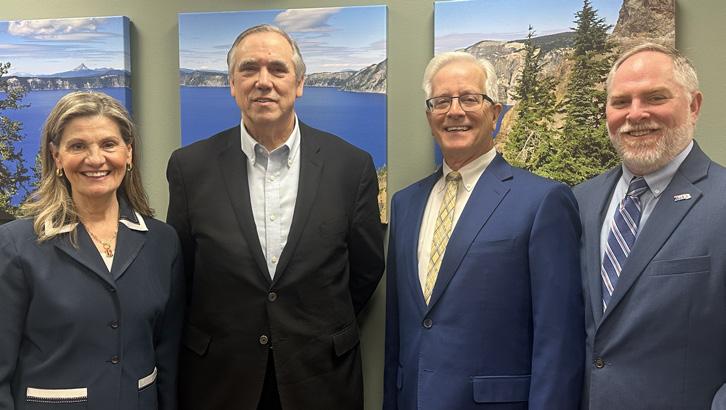
Senator Merkley with Janet & Jerry Scott and Greg Astley
MONDAY JULY20 2026 LANGDON FARMS AURORA
PRESENTED BY:
Hospitality
Independent
STRENGTHENING OUR VOICE
Uniting Voices Across Oregon Through Member-Driven Regional Teams
Now that the 2026 legislative session has ended, our industry has reached an important crossroads. We have worked tirelessly to show the hospitality sector's role as an economic driver for Oregon, but it has nonetheless become clear that our industry is being targeted. From aggressive pushes to increase the state transient lodging tax (TLT) to a series of regulatory hurdles, the government is looking for the hospitality industry to fill its budget shortfalls. Now, more than ever, we must remain united.
Our Regional Leadership Teams are a great opportunity for operators to provide a powerful, local voice in every corner of the state to ensure that the concerns of a hotelier in Seaside or a restaurateur in Bend are heard loud and clear in Salem.
Uniting Portland: The Formation of the PHA
One of the most significant shifts in our organizational structure is taking place in our largest market. For years, Portland’s advocacy was split between several distinct groups, including the Portland Lodging Alliance (PLA) and the Portland Kitchen Cabinet (PKC). To create a more cohesive approach, we have consolidated these groups into a single, unified body: the Portland Hospitality Alliance (PHA).
The PHA is already tackling the urgent issues facing downtown. A primary focus for the alliance was the renewal of funding for security officers within the downtown business district. Maintaining a safe, welcoming environment is essential for the recovery of Portland’s tourism and dining scene, and the PHA is leading the charge to ensure these vital services continue to protect our guests and employees.
Regional Frontlines: Issues Impacting the State
While Portland consolidates, our other Regional Leadership Teams are navigating local challenges around the state:
North Coast Leadership Team (Lodging Tax): The situation regarding TLT funds in Seaside remains a top priority. While the complexities of city budgets and state law make the recovery of these funds a long-term challenge, we are committed to maintaining a dialogue that emphasizes the legal and economic necessity of reinvesting these visitor-generated dollars back into the tourism industry that creates them.
Central
Oregon Leadership Team (Natural Gas): In Central Oregon, the focus has shifted toward energy reliability. Recent local discussions regarding restrictions and new fees on natural gas installations for commercial buildings, such as the "Net Lifetime Carbon" fee structures being debated in Bend, pose a significant threat to our members. Our team is actively engaged in these discussions to protect the operational needs of kitchens that rely on gas to function efficiently.
Central
Coast Leadership Team (ICE Activity): The Central Coast has seen a recent uptick in ICE activity and federal enforcement surges. This has naturally created concern regarding workforce stability and the safety of our communities. ORLA is staying informed on these developments, ensuring that our members have the support and awareness needed to navigate these sensitive situations with confidence and care for their teams.
The Road Ahead
The path forward is clear: unite and make our voice heard. By moving toward unified alliances like the PHA and maintaining regional engagement from the Coast to the Valley, we are better equipped to face any legislative headwind. Whether it’s defending the integrity of TLT funds or advocating for energy independence, your Regional Leadership Teams are your best defense. Stay involved, stay informed, and stay united. Learn more at OregonRLA.org/get-involved AIDAN EARLS, ORLA
HOW CAN WE SERVE YOU?
Reach out to our government affairs team with questions, share the issues impacting your business, and let us know how we can support you. We have your back.
ONE COAST, ONE STRATEGY
The Oregon Coast Hospitality Network Turns One!
There are a lot of resources on the Oregon coast that can help make it easier to run a hospitality business: workforce boards, regional marketing strategies, training programs. Most operators don’t know they exist, and even fewer know how to access them.
That’s the problem the Oregon Coast Hospitality Network (OCHN) was built to solve.
One year ago this April, the Oregon Hospitality Foundation (OHF) brought together Northwest Oregon Works, Lane Workforce Partnership, and Southwestern Oregon Workforce Investment Board to create something simple: a space where coastal hospitality operators could come together, share what’s working and what isn’t, and give their regional partners a clear direction for how to actually be useful.
Built by the Coast, for the Coast Workforce boards, educational institutions, and community-based organizations all want to support the hospitality industry. The problem is that well-intentioned initiatives built without operator input have a way of missing the mark. Operators end up on the receiving end of programs that don’t reflect how their businesses actually work or what their teams actually need.
OCHN flips that. Operators drive the agenda. Regional partners listen and respond. It’s a simple idea that turns out to be pretty rare in practice.
What We Built in Year One
The meetings themselves are the product. There’s no set agenda. Operators show up every month, share what’s on their minds, and the conversation goes where it needs to go. Getting people to commit to a recurring meeting with no fixed agenda is harder than it sounds. And yet every month, people show back up.
What’s come out of those conversations has been concrete. When operators identified training as a gap, we built a curated one-sheet linking them to vetted, affordable online courses organized around the skills they named: cost control, financial management, labor, leadership. Finding and vetting those resources took about fifteen hours. But that’s fifteen hours saved for every operator who would have had to do it themselves.
The group has also created space for conversations that operators needed to have but didn’t have a venue for. Earlier this year, we hosted a briefing with an immigration attorney, so operators understood their legal obligations during ICE interactions. It’s the kind of practical, timely information that’s hard to find on your own and that can have real consequences if you get it wrong.
This fall, we’re launching North Coast Certified, a one-day intensive covering core hospitality skills and local coastal knowledge. It’s designed to be replicable: once we build and test it on the North Coast, we move it south.
What Operators Are Telling Us
The best measure of whether this is working is who’s doing the talking. In the early days, I facilitated most of the conversation. Now I mostly listen. Operators are sharing
resources with each other, naming problems out loud, and telling their regional partners what they actually need. That shift didn’t happen because of an agenda. It happened because the space existed.
That operator input shapes everything we build. The decision to make North Coast Certified an in-person, off-site training day rather than an online course came directly from what operators told us: being sent to a training makes staff feel valued in a way that a digital course doesn’t. It signals investment. And on the coast, where turnover is expensive and teams are small, that signal translates directly to retention.
The conversations have also shifted how regional partners think about workforce strategy. On the coast, the available workforce doesn’t always look like it does in an urban market. Many coastal communities don’t have a large student population, which means a heavy focus on youth engagement can miss the mark entirely. The workforce showing up for jobs is often adults returning after retirement or a career gap. That requires a different approach to recruitment, training, and support, and it’s not something workforce boards always account for without direct operator input.
What’s Next
North Coast Certified launches this fall. The replication model moves south. Apprenticeship development continues as a longer-term pathway to credential the skills workers are already building on the job.
And we keep meeting. Last Tuesday of every month.
If you’re a coastal hospitality operator and you’re not at the table yet, you should be. Reach out to me at rdonley@oregonrla.org to get on the mailing list. REBECCA DONLEY, OREGON HOSPITALITY FOUNDATION
HOW CAN WE SERVE YOU?
The Oregon Hospitality Foundation (OHF) exists to strengthen our industry by focusing on workforce development, education, training, and community support. We are dedicated to helping ensure hospitality businesses have the skilled workforce and resources they need to succeed now and in the future. Reach out with questions or to get involved. We have your back.
Hospitality Foundation 971.224.1508 TLancaster@OregonRLA.org 2025-26 OHF BOARD OF DIRECTORS
• Jaime Eder, Chair, Travel Oregon
• Ryan Fahey, Vice Chair, Spirit Mountain Casino
• Allen Pike, Secretary / Treasurer, Mereté Hotel Management
• Ken Henson, Immediate Past Chair, Refettorio Consulting
• Jason Bender, Outback Steakhouse, Evergreen Restaurant Group
• Jason Brandt, Oregon Restaurant & Lodging Association
• Amanda Cavitt, Garibaldi Portside Bistro
• Julie Kirksey, Sysco - Pacific Northwest
• Ron Moore, Hoagland Properties, Inc.
• Brian Olson, Beachcomber Vacation Homes
• Joshua Willis, Sunriver Resort
SEPT 12-14, 2026
Riverhouse Lodge, Bend
Recharge and retool at this multi-day event for Oregon's hospitality professionls.
LODGING OPERATOR
AWARD SPONSOR:
RESTAURATEUR
AWARD SPONSOR: EMPLOYEE
AWARD SPONSOR:
TEAM LEADER AWARD SPONSOR:
WORKFORCE CHAMPION AWARD SPONSOR:
GENERAL SESSION SPONSOR
BREAK SPONSOR:
RECEPTION SPONSOR
LIBATIONS SPONSOR:
Connect. Learn. Lead.
Baker Tilly
• Advance Travel & Tourism
• Cloudbeds
• Dairy West
• Digiwest MSP
• Energy Trust of Oregon;
Existing Buildings
• Interstate Roofing
• Independent Merchant Brokers
• KCreative
• Northwest Mechanical Group
• Oracle
• Oregon Hospitality Foundation (OHF)
• Pacific Concepts
• Roto Rooter
• Restoration Management Company
• ServiceMaster of Salem, Corvallis, Lincoln City & Eugene
• Spectrum Business
• The Center for Wine Education at Linfield University
• Togather Restaurant Consulting
INDUSTRY CHAMPIONS UNITED FOR IMPACT
How Oregon’s DMOs And Industry Partners Rallied To Strengthen Local Economies
When the future of Oregon’s lodging tax framework came into question this session, Destination Management Organizations across the state didn’t hesitate—they leaned in early, stayed engaged, and worked handin-hand with ORLA’s government affairs team every step of the way. While the final outcome fell short of what we had hoped, the effort itself was nothing short of extraordinary. They mobilized regional partners, amplified a unified message, and collaborated closely with industry allies to ensure their voices carried weight in Salem. The result was more than a policy fight—it was a clear demonstration of what’s possible when our tourism and hospitality industry shows up together, prepared, aligned, and committed to the long game.
To better understand what this kind of advocacy looks like on the ground, we asked a handful of these DMO leaders to share their stories. From the strategies they deployed to the partnerships they built, their insights offer a behind-the-scenes look at what it took to show up, speak out, and make a difference when it mattered most.
Why was it important to speak up?
Mackenzie Ballard, Oregon Destination Association: Oregon Destination Association (ODA) believes that the grassroots, local connections of Destination Management Organizations (DMOs) with local and state legislators are essential to deliver facts about the value of tourism. Because DMOs work directly in and for the communities they serve, they bring real-
time insight into local priorities, challenges, and opportunities. They also partner with businesses of all sizes and, as revenuegenerating partners, play a critical role in ensuring lodging tax investments are reinvested effectively to support economic vitality. Speaking up was essential to ensure policymakers had an on-theground perspective about how tourism funding works and the role it plays in sustaining healthy, thriving communities across Oregon.
Tori Middelstadt, Willamette Valley Visitors Association: I view this work as service to the industry. Speaking up helps protect the economic engine that sustains our travel and hospitality partners. As a regional DMO that does not receive local transient lodging tax (TLT) funds, we are uniquely positioned to speak when some local DMOs cannot. In certain communities, political dynamics can discourage local advocacy due to concerns about retaliation. It was important to ensure that reality was clearly stated and part of the public record.
Samara Phelps, Travel Lane County:
TLT is designed as a tool to keep the economy vibrant and the fund sustainable. The successful implementation of this tool depends on good policy. Travel Lane County is the only entity dedicated to bringing the benefits of tourism to Lane County, and with that comes a responsibility to educate leaders on the realities of how TLT is working in our communities, the nuances of local TLT administration and the risks of poor policy.
Dan Gibson, Travel McMinnville:
It’s our responsibility to share how important tourism is to our local economy as well as the state as a whole. Especially for us in the Willamette Valley, tourism isn’t a “nice-to-have” or side source of revenue for this region, it’s essential to our economy. And while we’d like to believe Oregon sells itself (and once we get visitors here, it’s easy to count on them coming back) tourism relies on marketing as much as any consumer-focused business. Taking money away from our fellow DMOs means, unfortunately, that fewer visitors will come.
How did you mobilize partners?
Scott Larson, Visit Central Oregon:
We began our efforts for this session in July of last year, pretty much immediately after the end of last year's long session. It was important to work as proactively as possible on a solution, and this led to lots of outreach. I maintained a constant tune in my regional meetings of what we felt was going to be at stake in the 2026 session and how critical support would be from private sector businesses. I tried very hard to plant that seed early and often so that when it was time to rally, expectations had been properly set, and everyone was prepared to jump in and do what was needed.
In the fast-paced environment of Oregon’s legislative short session, ODA served as the central communications conduit for DMOs
statewide. Through a combination of direct outreach and digital communications, we provided real-time updates, clear guidance, and tools to help DMOs engage quickly and effectively. This mobilized ODA members at nearly 100 DMOs to show up in meaningful ways, through in-person, virtual and written testimony throughout the session.
Christina Rehklau, Visit Corvallis:
I focused on keeping things simple and reducing friction points that might prevent action. We provided clear, concise information about what was at stake and simplified the steps so partners could easily engage. For many, this was their first time connecting with state elected officials, so lowering the barrier helped ensure more voices were heard.
Dan Gibson, Travel McMinnville:
We try to think of this sort of advocacy as a central part of our mission. If we’re not telling our story, who will? Whether that’s creating and promoting events to help build our off-season business or working to improve river access for the community, DMOs are doing a lot more to benefit our communities than just running ads in magazines. We started with our board, keeping them updated about what was happening in Salem, and how they could advocate on our behalf. From there, we worked with our community economic development partners asking them to work their legislative connections.
How did partnership strengthen your impact?
Scott Larson, Visit Central Oregon:
I was really happy with the engagement and turnout that we had from our regional partners and our private sector partners in particular. So often, DMOs and Chambers do a good job of advocating, but the optics of that are that we are advocating to protect our funding rather than to protect our industry. Having so many private sector businesses who were ready to jump in and submit testimony this session was really impressive to see. Unfortunately, I'm not sure any of our politicians listened, but we did our best to make sure that our voices were heard and our impact was as strong as it could have been.
Tori Middelstadt, Willamette Valley Visitors Association:
As an association, we can speak to industry-wide impacts, but individual voices are essential. When business owners, employers, and frontline staff share real-world examples, it reinforces our message and makes it more compelling to decision-makers.
Christina Rehklau, Visit Corvallis:
Working alongside industry partners demonstrated that this issue extends beyond tourism promotion funding. It highlighted how tourism supports and connects with sectors such as arts and culture, media, and events. That broader perspective strengthened our collective voice and made the impact more visible.
Samara Phelps, Travel Lane County:
State-level leadership from ODA and ORLA was crucial to establish strategy, coordination, and understanding of what was happening in real time. As a destination organization and a fund recipient, Travel Lane County’s voice strikes a specific note. Increasing the diversity of partners engaged in advocacy was a strategic priority for us this year. Hearing from leaders of arts, sports, business and community organizations demonstrates to legislators the reach of tourism throughout our destination in an impactful way that the voice of the DMO alone cannot.
Bottom Line
What stood out most this session was the level of engagement, coordination, and leadership across Oregon’s DMO community. These industry champions showed up early, brought partners with them, and helped ensure a strong, unified voice for tourism at every step. Their efforts strengthened connections, elevated local perspectives, and reinforced the value of showing up together. It’s that kind of commitment that continues to move our industry forward.
LORI LITTLE, ORLA
• $18 Course and Practice Test
• Guidance Resources
• Stop and Start Anytime
• OLCC Approved
Workforce Partnerships: How Tourism & Hospitality Leaders Are Building Oregon’s Future Workforce
Tourism has long focused on attracting visitors by building compelling destination stories, investing in experiences, and encouraging travelers to explore Oregon’s coastlines, cities, and wine regions. But increasingly, hospitality and tourism operators across the state are confronting a different challenge entirely: ensuring the workforce exists to deliver those experiences in the first place.
Restaurants, hotels, wineries, attractions, and outdoor recreation businesses all depend on people. And while the industry has rebounded strongly since the disruptions
of the pandemic, the long-term strength of Oregon’s visitor economy rests on something less visible than marketing campaigns or infrastructure investments. It rests on workforce. The challenges are both practical and perceptual — finding and retaining talent while also contending with longstanding misconceptions about what a career in hospitality actually looks like.
My name is Rebecca Donley, and I am the Workforce Strategist at the Oregon Hospitality Foundation (OHF), the 503(c)3 arm of the Oregon Restaurant & Lodging Association. My work puts me at the
intersection of Oregon’s hospitality industry and its public workforce system – sitting in rooms with employers, workforce boards, community college partners, and education leaders, trying to connect the dots between what the industry needs and what the broader workforce ecosystem can offer.
Over the past several years, that work has grown into something I didn’t entirely anticipate: a statewide collaborative effort involving Travel Oregon, Oregon’s regional workforce investment boards, and a growing network of education and industry partners. The result is a collaboration that is still
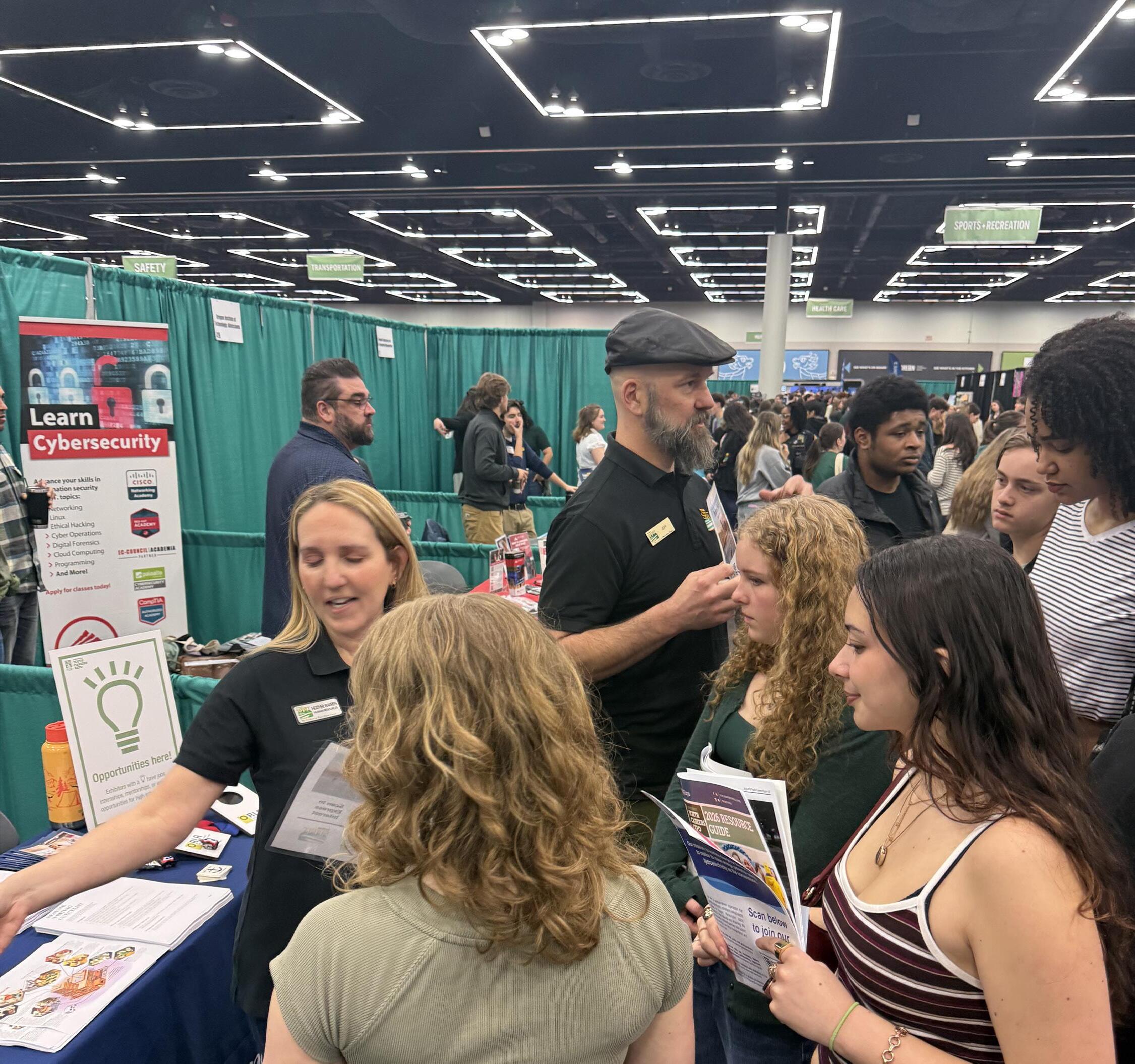
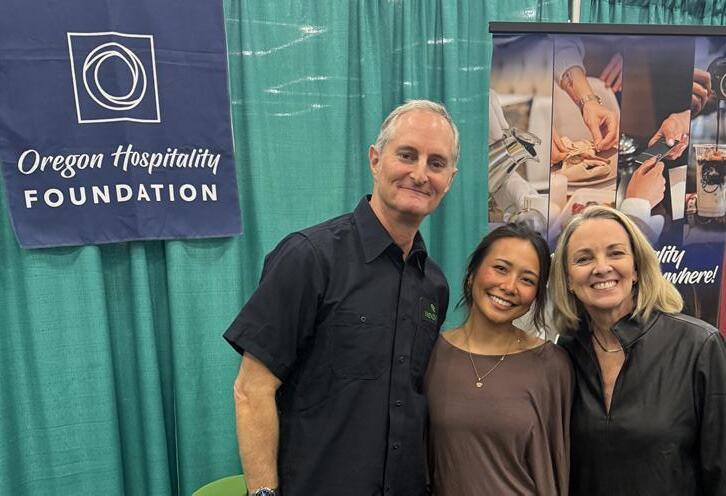
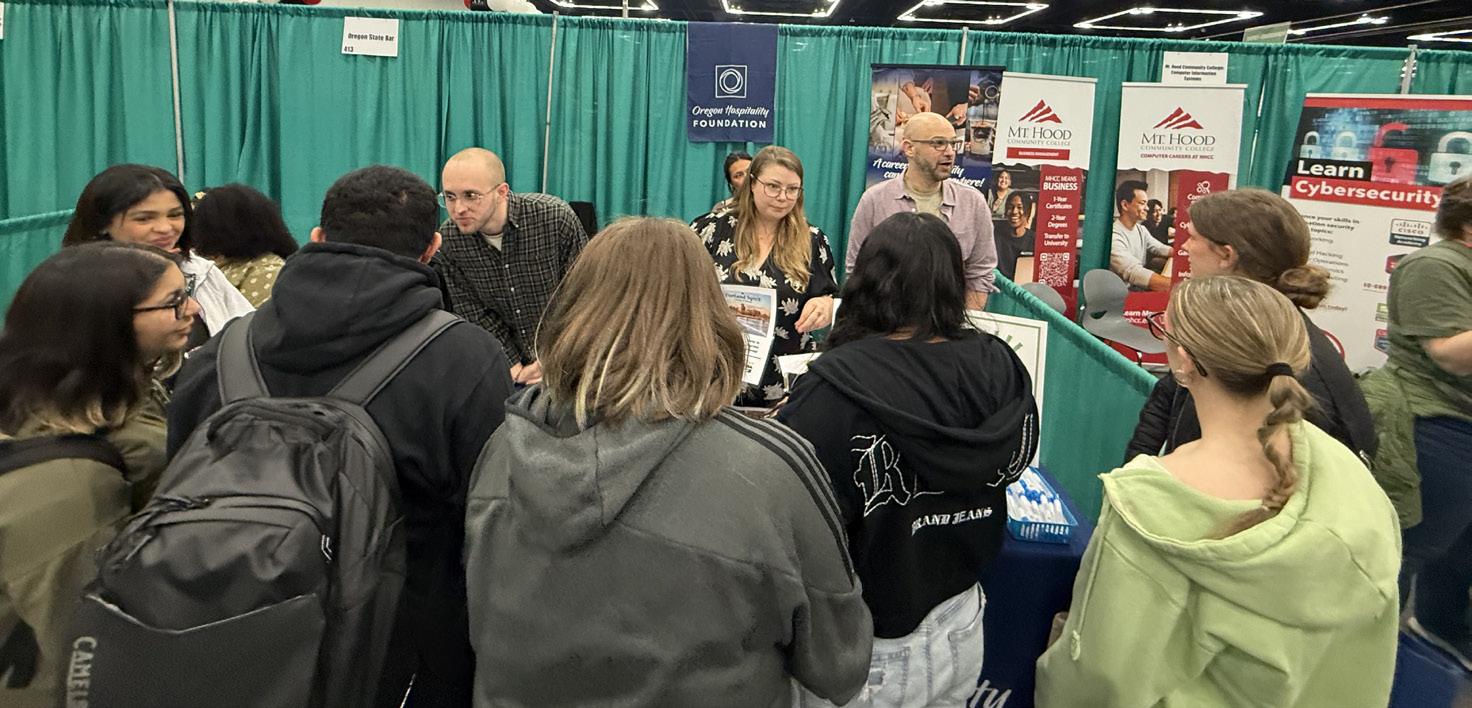
ABOVE: Oregon Hospitality Foundation and industry members exhibit at the 2026 NW Youth Expo. Industry members included Melissa Smith, Hilton; Joseph Hollcraft, IBA; Dugan Watts Stoller Wine Group; Heather Warren Portland Spirit RIGHT: Kent Lewis, Anvil Unlimited; Tina Lancaster, Oregon Hospitality Foundation; Melissa Smith, Hilton
evolving, sometimes messy, but genuinely working to move the needle on hospitality workforce development in Oregon.
Three people central to this work share their perspectives throughout this article: Jaime Eder and Kate Baumgartner of Travel Oregon bring the statewide tourism perspective, and Georgia Conrad of Oregon Workforce Partnership shares her insight into the public workforce system that underpins so much of what we’re trying to build.
Tourism Strategy Meets Workforce Reality
Travel Oregon’s interest in workforce development is rooted in a straightforward reality: destinations can’t thrive without the people who bring them to life.
Like many industries, tourism experienced significant disruption during the pandemic. Employment dropped, staffing pipelines collapsed, and longstanding challenges around workforce perception became impossible to ignore. Across Oregon, operators weren’t just reopening their doors, they were rebuilding their teams from the ground up.
Jaime Eder, who leads workforce development as the Industry Development Manager at Travel Oregon and who is currently Chair of the OHF board, told me that the post-pandemic rebound was the catalyst for Travel Oregon’s deeper commitment to this space. She explained that Travel Oregon's entry into workforce was a natural extension of its core mission. Marketing Oregon as a destination and ensuring Oregon delivers as a destination are two sides of the same coin. In tourism, the guest experiences with frontline staff are part of the product, so investing in the people who bring visitor experiences to life is just as important as investing in the marketing that draws visitors here.
“Tourism industry jobs are commonly viewed as low pay, high churn, temporary roles,” she said, “But the skills and critical
thinking you build in this industry, the communication, the customer service, being reliable and professional…those aren’t just hospitality skills. You can take those anywhere.”
Kate Baumgartner, External & Public Affairs Strategist for Travel Oregon, frames the organization’s role in workforce as one of strategic alignment rather than direct delivery. Travel Oregon is a state agency with broad reach, but that breadth comes with limitations when it comes to the kind of ground-level, relationship-driven work that workforce development really requires.
“The opportunity to work with the Hospitality Foundation is that you (the Foundation) have the ability to really meet people where they are,” said Kate. “We can come in on top of that and support it, but you’re the targeted messengers who are already in those communities, talking to those business owners, and know what their workforce needs are.”
That division of labor, with Travel Oregon providing dedicated funding and statewide strategic direction and OHF providing industry expertise and on-the-ground relationships, is the foundation of the partnership.
Turning Strategy Into Action
OHF works directly with hospitality employers, educators, and workforce partners to support industry-driven solutions. Programs like ProStart, the national culinary and restaurant management curriculum taught in many
Oregon high schools, introduce students to hospitality careers while building the foundational skills employers actually need.
Together, Courtney Smith and I staff OHF, working closely with Travel Oregon and a network of workforce and education partners across the state. But as Kate described it, what OHF provides isn't just additional headcount, but also proximity. She noted that OHF's deep community roots and industry relationships allow Travel Oregon to extend its reach into conversations and spaces that are harder to access from a state agency level.
From my vantage point, the most valuable part of this work often begins with something simple: listening. Across the state, hospitality operators share many of the same frustrations. They want to invest in their teams but lack the time to identify effective training programs. They want to connect with workforce boards and education partners but aren’t sure where to start or how those systems fit together.
A recent example: through our Oregon Coast Hospitality Network convenings, employers told us clearly that their frontline workers needed better financial literacy. They weren’t asking for a semester-long course, but a practical understanding of how P&L actually works. Sure, it took OHF staff fifteen hours to comb through available training resources, eliminate what didn’t work, and put together something useful. But those fifteen hours we spent meant that our operators didn’t have to spend fifteen hours each figuring it out on their own.
That’s the job: being the person in the room who has time to receive a problem and do something about it.
Jaime put it well when she described what OHF brings that Travel Oregon can’t provide alone: “It’s capacity, but it’s more than that. When the message comes from multiple sources and relationships are being fostered collectively, not just from one agency, the impact is broader and more meaningful.”
The Role of Workforce Boards
No conversation about hospitality workforce development in Oregon is complete without understanding the public workforce system. Georgia Conrad of Oregon Workforce Partnership knows how to say it best.
“Workforce boards are the economic engine driving the economy into the future” says Georgia. “If we don’t have people at work, we don’t have roads. We don’t have education. We don’t have childcare. Oregon’s general fund is 82 percent personal income tax. If we want to do anything, we have to have people working.”
Oregon’s workforce boards are the regional public infrastructure for workforce development, funded primarily through federal WIOA dollars that flow from the federal government through the state to boards operating across the state’s nine workforce regions. Each board is structured as a nonprofit, which allows them to blend and braid funding sources in ways a state agency cannot. Their governing boards are made up of 51 percent business representatives, which means the priorities they pursue are directly informed by local employer needs.
That regional structure is one of the workforce system’s greatest strengths. As Georgia explained, what works for hospitality in Portland or McMinnville looks very different from what’s needed in Brookings or Depot Bay. Boards aren’t delivering a one-size-fits-all program. Instead, they’re building local strategies shaped by local realities.
Perhaps the most important message Georgia shared was this: stop talking about the system. Talk about what it does. “The people who work at the workforce boards build good jobs for people. High-paying career paths for people who would otherwise be stuck in poverty permanently,” she said.
For hospitality operators, workforce boards can open the door to training resources, employer services, and incumbent worker training funds that many businesses don’t know exist. Navigating those systems isn’t always intuitive, and that’s where OHF’s relationships with boards across the state become genuinely useful.
Clean Energy
Construction
Early Care & Education
Heathcare
Manufacturing
Clean Energy
Construction
Early Care & Education
Heathcare
Manufacturing
Healthcare
Hospitality & Leisure
Manufacturing
Maritime
Construction
Healthcare
Hospitality & Leisure
Manufacturing
Construction Creatives
Early Care & Education
Heathcare
Hospitality & Leisure
Manufacturing Technology Transportation
Wood Products
Hospitality & Leisure Manufacturing Maritime
JACKSON
TARGETED SECTORS
Collaboration in Action
One of the clearest examples of what this collaboration looks like in practice is the Oregon Coast Hospitality Network, a Next Generation Industry Sector Partnership convened on the coast, which brings together employers, workforce boards, community organizations, and education partners to work through shared workforce challenges.
The network grew from a federally funded research project that produced the 2025 white paper, “Building a Stronger Coastal Hospitality Workforce.” That research could have ended there. Instead, it created traction. Additional funding followed. Other workforce boards took notice. The monthly coastal convening is still running, thanks to buy-in from our community peers.
Kate described the moment the research was presented at an ORLA conference as a turning point in how she thought about the Travel Oregon-OHF partnership. “You disseminated information to respected industry leaders based in data and research, then gave them the chance to ask questions, poke holes, and come to a common understanding,” she said.
Now the Next Generation Sector Partnership model is expanding. The Willamette Valley is preparing to launch its own hospitality sector partnership, with a formal kickoff planned for April. Jaime described these sector partnership launches as an important signal of increased recognition of the tourism and hospitality industry as a valuable sector for employment opportunities.
She also pointed to the regional DMO network as an underutilized asset in the ecosystem. Within Travel Oregon’s seven regional DMOs, there are people who are deeply embedded in local workforce conversations. Many sit on workforce board committees, attend regular meetings, and are intimately aware of their community’s specific workforce needs and challenges. She echoed Georgia’s earlier point that each region has unique and specific needs that might not work in another place. So regional knowledge, connected to statewide strategy, is where the ecosystem gets genuinely powerful.
Strengthening the Talent Pipeline
Education programs are another critical piece. ProStart introduces high school students to hospitality careers through hands-on culinary training, restaurant management curriculum, leadership development, and skill building. Courtney Smith at OHF has grown the program into something more valuable year over year, and the evidence is visible at the statewide competition events.
Kate attended her first ProStart competition recently and described the moment she walked in. She’d been in Salem listening to legislative hearings all day, and when she realized the event was still running, she popped in. The students she saw competing were from Alliance PPS, and she was awestruck watching them work well together. Seeing them plate with forty-five seconds left on the clock, she said, brought a tear to her eye. “What an incredible sense of accomplishment,” she told me.
This year, we also brought a workforce board partner to the ProStart event to run a resumebuilding workshop for students. Employers have long been able to trust that a prospective employee with ProStart skills on their resume was a qualified candidate, and we wanted to ensure that every student knew how to put their best foot forward on paper.
We are also thinking about career pipeline work that starts even earlier. Jaime talked about the importance of reaching students as early as middle school to not only help them consider first jobs and skills they might obtain but also foster the understanding that the hospitality industry can mean a broad range of career pathways.
The dream? For youth to see that careers like running a hotel or becoming a professional chef are just as achievable as the classic childhood dreams of astronaut, ballerina, or president. You can’t be what you can’t see.
Photo courtesy of Northwest Oregon Works
Changing the Narrative Around Hospitality Careers
Despite the industry’s economic impact, the perception problem persists. Hospitality jobs are still too often characterized as high churn, low-wage, and dead-end. That mischaracterization costs us – in the workforce boards that don’t prioritize our sector, in the families that steer young people away from hospitality careers, and in the policymakers who don’t fully understand our value.
The data tells a different story. Research from the US Travel Association shows that people who start in hospitality go on to earn more over time than those who start in other sectors, including those more traditionally prioritized by workforce
systems, like healthcare or manufacturing. Jaime pointed to this as critical context for conversations with workforce boards that see hospitality primarily as a place to put entry-level or re-entering job seekers. “It’s beneficial for immediate job placement,” she said, “but also for gaining employability skills that help on the next career jump.”
Kate noted that Travel Oregon is increasingly pushing into policy-focused spaces with this message. “There’s no shortage of need to create workforce pipelines in this state,” she said, “positioning tourism as economic development is a powerful way to show workforce development boards that this industry is essential to Oregon.”
Georgia offered a version of this argument from the workforce system’s side: the stakes
of getting people into good jobs go well beyond any individual employer or even any individual sector. “If we could say we did one thing well, it would be moving people permanently out of poverty through high-paying career paths,” she said. For the hospitality industry to be a part of that story, we have to show up credibly, with data, programs, and sector partnerships that show we are serious.
A Shared Responsibility
The collaboration between Travel Oregon, OHF, and Oregon’s regional workforce boards reflects something broader: a growing recognition that workforce challenges in hospitality can’t be solved by any single organization working alone. Meaningful progress requires coordination across destination organizations, education systems, workforce boards, and the industry itself.
Jaime put it plainly, “When the message comes from multiple sources and relationships are being fostered collectively, the impact is broader and more meaningful.” That’s true whether we’re talking about a sector partnership launch in the Willamette Valley, the Oregon ProStart Championships in Salem, or a table at the NW Youth Career Expo.
But collaboration only works when the industry participates. For workforce initiatives to succeed, hospitality operators have to engage with the systems designed to support them. That means showing up to the sector partnership meetings, connecting with your local workforce board, and taking seriously the idea that investing in employee development is not optional. It’s what sustains the business.
Oregon’s visitor economy is powered by people. Protecting it means protecting the pipeline that brings those people into the industry, gives them reasons to stay, and lets them build careers they can be proud of. That work is happening. And the more the industry leans into it, the further it will go. REBECCA DONLEY, OREGON HOSPITALITY FOUNDATION
Photo courtesy of Northwest Oregon Works
Smart energy control
Manage energy efficiently with PGE’s Energy Partner Smart Thermostat program. Join 1,000+ businesses already enrolled.
See if you qualify for a FREE smart thermostat plus professional installation ($400 value). Control your temperature from anywhere, anytime.
portlandgeneral.com/epstnow
PAYMENTS + MEMBERSHIP
A Smarter Solution for Oregon Restaurants
and Hospitality Businesses
Oregon restaurants and hospitality businesses face rising costs and staffing challenges. Exectras helps ORLA members support their teams with virtual primary care, prescription drug savings, and $10k free life insurance, plus payment processing savings and business services.
Exectras is your solution for payment processing, Fortune 500 business services and employee benefits featuring Exectras360health with pricing you won’t find anywhere else in the nation.
You can access these benefits for an average cost of $17/employee/month or FREE when you process payments with Exectras.
SUPPORTING BUSINESSES THROUGH PARTNERSHIP
Getting the ‘right ingredients’ to operate a business relies upon a web of partnerships. While we sometimes have to rely on one person to execute a certain task, no business is truly a one person show. Food suppliers, business services contractors, and even janitorial services are just some of the elemental partnerships a business relies upon to make their operations run.
On top of the logistical ingredients, hospitality businesses exist within communities where they depend upon municipal partnerships. Whether its water and sewer services or the fire department; businesses must work directly with municipal services to provide basic operational necessities.
Businesses should also know that the Oregon Liquor and Cannabis Commission (OLCC), is a part of that web of partnerships to help ensure your business or event goes smoothly. The OLCC works to support more than 16,000 alcohol businesses statewide. In fact, our commitment to partnership is reflected in our mission: “to protect public health and safety while supporting responsible businesses.”
But we’re not just saying “partnerships,” we’re actually out engaging in them as we did this past St. Patrick’s Day! In an effort to reduce impaired driving, the OLCC partnered with the Portland Police Bureau, and the Portland Bureau of Transportation (PBOT) to promote the Safe Ride Home program, which offers discounted taxi, Lyft, and Uber rides home from St. Patrick’s Day festivities. This is the first time the OLCC has engaged in a program that has proven to keep impaired drivers off the streets. At a joint press conference, the OLCC and its partners also asked that those celebrating to do so responsibly.
In preparation for St. Patrick’s Day, the OLCC worked directly with businesses to help expand their footprint to accommodate tented areas for patrons to enjoy music, dancing and other festivities. During these events, OLCC inspectors monitor for compliance and engage with staff and licensees to ensure that they are controlling their premises and not overserving patrons. When inspectors do notice violations, their first goal is to get the staff to address and correct the situation through education. This can include asking the staff to turn up the lights, cut off a patron, or limit the number of patrons they have in their establishment.
The celebration on St. Patrick’s Day is just one of the many events we support. Every year the OLCC works in partnership across Oregon on over 9,500 events from concerts to festivals. These events often celebrate Oregon’s breweries, wineries, cideries and distilleries and the rich culinary experiences that Oregon is renowned for.
As summer approaches, we encourage you to start planning ahead for any events you might be holding and reach out to us at: olcc.specialevents@oregon. gov. Whether you have questions about how to run a special event or you’d like to meet your inspector for some employee education, we’re ready to partner with you. It’s important to remember that events take time to plan and often require local approval. Oregon’s hospitality industry is a major cornerstone of Oregon’s identity and the OLCC wants to support your success so we can make sure that Oregon stays safe, smart, and spirited!
IT’S YOUR BUSINESS
Smart Partnerships with Safety and Health in Mind
Margins are tight. Turnover is real. And for many restaurant and lodging operators, finding and keeping reliable employees feels harder than ever. Yet one thing hasn’t changed: a safe, healthy, and supported workforce is still one of the strongest drivers of productivity, customer satisfaction, and longterm success. The good news? You don’t have to tackle these challenges alone. Across Oregon, trusted workforce partners offer tools, training, and resources that can help you protect your employees, strengthen your operations, and control costs—often at little or no cost.
Strong workforce partnerships help employers move from reacting to problems to preventing them. They support safety, health, compliance, and wellbeing while reinforcing
your role as a responsible employer in your community. Below are eight workforce partners ORLA members can lean on to support their teams and their bottom line.
SAIF Corporation
Workers’ compensation insurers are more than claims administrators—they’re safety and health partners. SAIF, or your workers’ compensation insurer, provides online training, ergonomic guidance, and injury prevention support focused on common risks like slips, falls, burns, and lifting injuries. They offer industry-specific resources, including housekeeping, mobile food service, and chemical safety. Many resources and services are available to employers through insurers or at saif.com.
Oregon OSHA – Consultation Services
Oregon OSHA’s consultation program helps employers improve safety without enforcement pressure. For chains or franchises, safety manuals developed in other states may fail to meet key Oregon requirements. Oregon OSHA consultations are free and confidential, helping reduce accidents and related costs by strengthening safety programs. Benefits include assistance in establishing or improving safety committees, answers to Oregon OSHA standards questions, and a 30 or 60-day deferral from a scheduled inspection. Learn more at osha.oregon.gov/consult.
Local Public Health Authorities
County health departments support both employee wellbeing and community safety. They provide guidance on food safety, sanitation, communicable disease prevention, and access to mental health and substanceuse resources. Many services are offered at low or no cost. Employers can connect by searching their county name plus “public health department” or by visiting oregon.gov/oha
Employee Assistance Program (EAP) Providers
EAPs provide confidential support for employees dealing with stress, mental health concerns, financial challenges, or substance issues that can directly affect attendance, performance, and retention. Employers also benefit from manager consultations and crisis support. EAPs are typically lowcost and often bundled with insurance benefits. Start by checking with your benefits broker or searching for Oregonbased EAP providers.
Community Health and Wellness Organizations
Hospitals, clinics, and nonprofit wellness organizations help support healthier workers through education, screenings, vaccinations, and referrals. These partnerships can reduce lost workdays and support recovery following injury or illness. Many programs are grantfunded or offered at little or no cost. Local hospital systems or community wellness coalitions are a good place to start.
Local Law Enforcement and Community Safety Coalitions
Community safety partners help protect employees and guests—especially during latenight or high-traffic operations. Many offer training on deescalation, robbery prevention, and situational awareness, along with coordination during emergencies. Outreach and training are often free. Employers can
contact local law enforcement community outreach units or search for regional community safety coalitions.
Workforce Boards and CommunityBased Organizations
Local workforce boards and nonprofit organizations often integrate safety, health, and job readiness into their training programs. These partners connect employers with prepared candidates, support employees facing barriers such as transportation or language, and improve retention through wraparound services. Many programs are subsidized or grantfunded. Learn more at oregonworkforcepartnership.org.
Oregon Bureau of Labor and Industries (BOLI)
BOLI helps employers understand and comply with employment laws while supporting fair and respectful workplaces. Training and guidance cover wage and hour laws, accommodations, discrimination prevention, and employee rights. In 2026, BOLI is offering three Employment Law Roadshows across Oregon. The twoday conference costs less than $300 and covers legislative updates, case law, compliance strategies, and realworld scenarios. Watch oregon.gov/boli for registration details.
Bringing It All Together
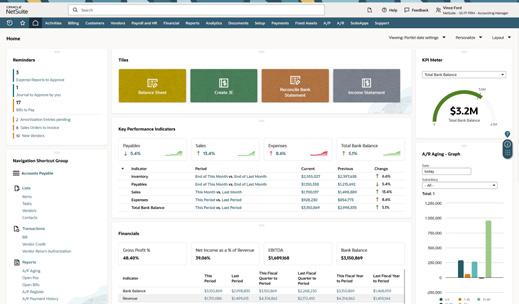
With our #1 cloud ERP, you gain visibility across financials, inventory, CRM, HR, and more. NetSuite brings you unparalleled AI-driven business insights and automation so you can make better decisions, faster.
Don’t forget, ORLA members get preferred pricing on NetSuite. Reach out to learn more!
Workforce partnerships aren’t about adding more to your plate — they’re about making your business stronger, safer, and more resilient. Whether you’re reducing injuries, supporting employee wellbeing, staying compliant, or building a positive workplace culture, these partners offer practical help when you need it. Investing time in the right partnerships can lead to fewer disruptions, stronger teams, and a business positioned to thrive. SAIF CORPORATION
Join the 43,000+ companies growing on NetSuite
WHEN THE GUEST ISN’T ALWAYS RIGHT
Employer Responsibilities for Managing Harassment in the Hospitality Industry
Employers in the hospitality industry face unique challenges because their businesses cater to serving the public. Employees must interact with guests, while having little to no control over who is coming and going. Hotels in particular have the added risk of a workplace that is often spread out and physically difficult to monitor, including secluded spaces that can create increased safety concerns.
While employers in the hospitality industry do not exercise much control over guests, they can nevertheless be held responsible for guests’ actions towards their employees. With an ever-increasing focus on accountability for sexual harassment, restaurants and hotels need to pay particular attention to the ways in which guests can create a hostile work environment for their employees and how to appropriately respond.
Employers’ Obligations Towards Employees
Generally, employers are responsible for ensuring that their employees work in a safe environment free from harassment and discrimination. If an employer knows or reasonably should know that an employee is being subjected to harassment and fails to take steps to address it, the employer can be held liable for sexual harassment even if the alleged harasser does not work for you.
For example, if your restaurant hostess or hotel cleaning staff are subjected to unwanted, sexually inappropriate behavior at work by a guest or vendor, as the employer, you have an obligation to take prompt and effective remedial action to address the conduct. This could include reinforcing expectations for guest behavior, granting an employee’s request to change shifts or job assignments, changing vendors, or even removing a guest. Importantly, employers should not make any changes to the victim’s terms or conditions as that may be seen as retaliatory. Businesses should discard the “customer is always right” mentality when it comes to allegations of harassment and discrimination.
Employers’ Obligations Towards Guests
On the flip side, if your employee harasses a guest, you or your employees may also be subject to sexual harassment liability even if the alleged victim of harassment does not work for you. Take for example, your restaurant hosts a catered event for Brand X company and one of your staff members subjects an employee of Brand X to sexual harassment. The employee may not only sue her own employer, Brand X, but may also sue your employee who engaged in the harassment, or even your manager who was on-site when the harassment occurred, as an “aider or abettor” to the harassment. Accordingly, any contractual protections should be reviewed for potential indemnity provisions to limit liability when you open up your business to another company. You should also have clear
employment policies that outline workplace expectations for your employees, including a zero-tolerance policy for harassment and discrimination towards other employees and guests.
Investigating Allegations of Harassment
How does an employer investigate harassment or discrimination when the alleged harasser is a guest and not subject to the control of the employer? While all the markings of a traditional workplace investigation may not be possible in the scenario where a guest is involved, the employer should still take reasonable steps to investigate the situation with the information available to it. This includes interviewing your own employee, interviewing any potential witness(es) to the incident(s), and reviewing any available surveillance video to try and determine any facts that occurred. Keep in mind that unionized employers must follow applicable policies or collective bargaining agreements when it comes to investigating an employee for alleged misconduct. You can always try to interview non-employees, but they can decline to participate. The most important thing is to document your process and attempt to gather relevant information and the steps you took to prevent any future harassment. At the end of the day, a court or jury will review what the company did and determine whether they think the steps taken were reasonable and effective to try and address the reported misconduct.
Tips and Takeaways
The following tips can help your business limit liability for allegations of harassment and discrimination.
Ensure you have clear anti-harassment and discrimination policies that apply to all employees, contractors, vendors, and guests. The policy should include clear expectations for employees that harassment and discrimination will not be tolerated, and any such behavior will be considered outside the course and scope of employment and not subject to defense and indemnity. Your policies should be readily available to your employees and on your website for any member of the public to find. Review your policies regularly to ensure they are updated with any legal changes. The Oregon Workplace Fairness Act requires employers to provide employees with a policy prohibiting discrimination and sexual assault. A model policy can be found on the Oregon Bureau of Labor and Industries website: https://www.oregon.gov/boli/workers/Pages/sexual-harassment.aspx.
Make sure you have a clear way to report harassment for employees and guests. Oregon employers are required to provide a copy of the harassment policy to an employee at the time they report harassment.
Conduct regular training for your staff that includes information on third-party harassment.
Consider adopting an event policy that requires any individuals or organizations that book group functions to abide by the discrimination and harassment policies and provides indemnity for wrongful acts committed by another organization’s employee.
LIANI REEVES AND CHRISTINE A. SLATTERY, MILLER NASH LLP
Liani Reeves is a partner with Miller Nash LLP. With over 20 years of experience across the public, private, and nonprofit sectors as both in-house general counsel and as outside counsel, Liani represents employers in a range of employment advice matters and litigation and often serves as an external investigator into sensitive and high-profile cases. Liani can be reached at liani.reeves@millernash.com or at 503.205.2575.
Christine A. Slattery is a partner with Miller Nash LLP. She is a seasoned employment attorney with particularly deep experience conducting independent workplace investigations related to harassment, discrimination, leave issues, retaliation, and corporate policy violations. Christine can be reached at christine.slattery@ millernash.com or at 503.205.2314.
BEYOND THE DRAMA:
Workplace drama happens everywhere: in meetings, in email threads, and even in casual hallway conversations. It often starts small: a misunderstanding, a missed deadline, or a difference in communication style. But when left unchecked, workplace drama can quietly chip away at team morale, trust, and productivity.
The good news? You can stop drama before it spreads. By understanding what causes it, and by learning how to respond instead of react, teams can create a positive work culture where collaboration replaces conflict and respect replaces resentment.
Understanding the Real Cost of Workplace Drama
Workplace drama isn’t always dramatic. It might sound like gossip, passive-aggressive comments, or finger-pointing when something goes wrong. These subtle behaviors can have big consequences. They distract teams from their goals, increase stress, and lower employee engagement.
When drama becomes part of the workplace routine, creativity drops and relationships suffer. That’s why strong communication and conflict resolution skills are essential for anyone who wants to build a healthy, high-performing team.
The Drama Triangle: Recognizing Unproductive Roles
A useful framework for understanding workplace drama is the Drama Triangle[i], which highlights three common roles people slip into during conflict:
• The Victim – feels powerless and stuck (“There’s nothing I can do”)
• The Persecutor – places blame or criticizes (“You’re the reason this failed”)
• The Rescuer – tries to fix everyone’s problems (“Let me handle it for you”)
These roles might feel natural in the moment, but they keep teams locked in a cycle of tension and misunderstanding.
Recognizing them is the first step toward healthier, more empowering conversations.
From Drama to Empowerment: Shifting Roles
The Empowerment Dynamic (TED)
[ii] offers a practical alternative to the Drama Triangle. Rather than staying stuck in reactive, unproductive roles, individuals can intentionally adopt roles that promote solutions, accountability, and collaboration:
• Creator (instead of Victim): The Creator role focuses on the outcome they want, takes responsibility for what they can influence, and actively seeks solutions. The Creator mindset moves the focus from problems to possibilities, reducing feelings of helplessness.
It’s not just about asking questions; it’s the consistent application of Creator, Challenger, and Coach behaviors that produces results. It leads to reduced conflict, stronger accountability, and a culture where everyone feels valued and capable of contributing. This is how workplace drama diminishes and collaboration flourishes.
• Challenger (instead of Persecutor): The Challenger role encourages growth, sets boundaries, and asks powerful questions that prompt others to think critically. Challengers hold others accountable without blaming, shifting energy from judgment to constructive guidance.
• Coach (instead of Rescuer): The Coach role supports others in finding their own solutions rather than taking control. The Coach asks questions, listens actively, and empowers team members to develop confidence and ownership over their actions.
How the shift happens:
• Self-awareness: Recognize when you are stepping into a drama role.
• Pause and reflect: Instead of reacting immediately, consider which Empowerment Dynamic role could serve the situation.
• Choose an intentional response: Apply Creator, Challenger, or Coach behaviors to guide the interaction toward solutions rather than blame.
• Reinforce consistently: Repeat these behaviors until they become habits, which rewires team interactions and reduces drama over time.
This shift transforms team communication. Instead of blaming, or rescuing, people begin asking questions like:
• “What outcome do we want?”
• “What can I do to move this forward?”
• “How can I support you in finding a solution?”
Building a Culture That Prevents Drama
Preventing drama doesn’t mean avoiding disagreement. In fact, healthy conflict, when managed respectfully, can lead to innovation and stronger relationships. The key is addressing tension early with empathy and clarity.
Teams that model open communication, curiosity, and shared accountability create a culture of trust. Over time, this leads to higher engagement, better problem-solving, and a stronger sense of belonging.
To help assess where a team stands and identify opportunities for improvement, Cascade members use our Drama Free Workplace Assessment. This practical tool allows individuals and teams to rate behaviors, spot patterns, and create actionable strategies to reduce drama while promoting collaboration.
Learn to Lead Beyond the Drama
By going beyond the drama, leaders and employees alike can build a culture of trust, communication, and collaboration, where people feel valued, respected, and motivated to bring their best selves to work every day. PLUMMER BAILOR, MA, LEADERSHIP DEVELOPMENT CONSULTANT, CASCADE EMPLOYERS ASSOCIATION
Plummer Bailor is a Leadership Development Consultant with Cascade Employers Association, where he designs and delivers practical leadership training that helps organizations build confident, high-performing teams. With more than 20 years of experience in organizational learning and executive coaching, Plummer brings a global perspective and an engaging, results-focused approach to developing today’s leaders.
[i] Karpman, S. (1968). Fairy tales and script drama analysis. Transactional Analysis Bulletin, 7(26), 39–43. Retrieved from https://karpmandramatriangle.com
[ii] Emerald, D. (2005). The Power of TED: The Empowerment Dynamic. Bainbridge Island, WA: Polaris Publishing. Retrieved from https://powerofted.com
EMPLOYMENT LAW TRENDS
Recent Events and Emerging Patterns to Forecast What Employers Can Expect to See in Their
Workplace
While it feels like January ended not too long ago, we’re now more than a quarter of the way through the calendar year, and it is not too early to highlight some of the emerging trends in employment law and litigation in 2026.
Federal Government Enforcement Priorities
Why not start at the top? President Trump has influenced the focus and teeth of federal agencies since he returned to the Oval Office in 2025. Less than four weeks into his term, President Trump fired the General Counsel of the National Labor Relations Board (NLRB) and one of the NLRB’s Democratic members. As a result, the NLRB was effectively paralyzed until just a few months ago, when the Senate confirmed two new NLRB members and a new General Counsel.
Along similar lines, President Trump terminated two of the three Democratic members of the Equal Employment Opportunity Commission (EEOC) on the same day that he terminated the NLRB members mentioned above. Because the EEOC requires a three-member quorum to issue new regulations and revoke old regulations, it was unable to meaningfully act until October of last year, when the Senate confirmed a third EEOC Commissioner.
While the NLRB and EEOC have only recently been able to formally act, we already have a sense of where federal agencies will be focusing their enforcement efforts in 2026: enhanced enforcement of immigration laws, critical reviews of existing visa programs, scrutiny of Diversity, Equity, and Inclusion (DEI) programs, and reverse discrimination claims.
To many, U.S. Immigration and Customs Enforcement (ICE) activity has been the most visible evidence of federal law enforcement in local areas. At times, these activities unfold in the workplace, and can be dangerous and scary, especially if no one knows what to do. Employers should ensure they are complying with obligations to complete, verify, and maintain Form I-9s for new employees and understand how to respond when faced with a Form I-9 audit, raid, or search for a specific individual.
Companies that employ workers in other countries, as well as those that rely on employees with H-1B visas, can expect continued contraction in the number of available visas, instances of revocation of existing visas, and enhanced screening of new visa applicants. These employers should continue to monitor federal guidance and anticipate additional changes to the pipelines for international citizens to legally work in the United States.
One additional pattern worth noting is the EEOC’s continued scrutiny of DEI programs, with the focus being on eliminating any hiring or promotional practice which gives a hiring preference to candidates belonging to certain protected categories. We are therefore seeing more cases where a white male plaintiff sues an employer over a hiring or promotion process where he feels he was disadvantaged because of his race or gender. Although an employer may still consider a candidate’s
life experiences, potentially including race or gender-related life experiences, employers should review their hiring and promotional practices to confirm that a candidate’s protected characteristics are not being improperly used as a factor in the decision-making process.
State Employment Law Enforcement Priorities
At the state level, the number of wage and hour and discrimination and harassment charges filed with the Bureau of Labor and Industries (BOLI) continues to increase year over year, and BOLI has received increased funding to hire additional investigators in an effort to eliminate the existing backlog of pending charges and shorten the average duration of its investigation process. As a reminder, BOLI somewhat recently implemented an alternative mediation program. If an employer receives a charge, they may have the option to postpone preparation of a position statement in favor of attending a (no cost) mediation with the claimant and a BOLI-provided mediator.
According to Portland Metro Chamber’s State of the Economy Report, Oregon’s economy is showing signs of a slowdown, with increased unemployment rates and only a few thousand more births than deaths in recent years. There were more mass layoffs in 2025 than in any year since the great recession and Oregon now has the third highest jobless rate of any state behind only California and Nevada. Regardless of how well the stock market performs, it is safe to assume that we will continue to see Oregon companies across industries forced to explore new and different ways of creating their products and delivering their services, which may involve restructuring their workforce and/ or group layoffs. Employers should consult with counsel when planning for these key events, as unique rules apply whenever
there is a group layoff or reduction in force, including the need to test to ensure the action does not have a disparate impact on individuals belonging to a specific protected category.
One final pattern to keep in mind is the increasing importance of understanding disability discrimination and disability accommodation law, specifically the duty to engage in the interactive process and the duty to provide reasonable accommodations. While employers may be familiar with this process in the context of physical impairments and disabilities, supervisors and human resources team
members often require additional training to understand how to accommodate mental impairments and disabilities, including ADHD, autism, anxiety, and PTSD. Relatedly, the scope of coverage and interplay between the Oregon Family Leave Act, Family Medical Leave Act, Paid Leave Oregon, and state and local sick time laws continues to evolve, and employers should review their systems on a recurring basis to ensure compliance with the laws, proper tracking of protected leave, and whether an employee who has exhausted protected sick and medical leave banks might be entitled to unpaid leave.
In sum, while the federal and state authorities have very different areas of focus, both are active in their enforcement efforts and employers are wise to reflect on their internal policies and practices to ensure they are prepared for these trends to appear on their doorstep.
ANDREW SCHPAK, BARRAN LIEBMAN LLP
Andrew Schpak is a Partner at Barran Liebman LLP where he represents employers on a wide range of employment issues. He can be reached at 503-276-2156 or aschpak@ barran.com.
NEWS BRIEFS
Happenings From Around the Industry
Connecting with Tomorrow’s Workforce
The Oregon Hospitality Foundation (OHF) connected with some of the 6,000+ high school students at the NW Youth Careers Expo in Portland, one of the region’s largest career exploration events. Alongside industry partners like Hilton, Portland Spirit, and Stoller Wine Group, OHF introduced students to career pathways in hospitality. The event brought together over 200 employers and educators, creating direct opportunities for students to engage with potential future careers. Through efforts like this, OHF continues to bridge the gap between industry employers and the next generation of talent. ORLA members are encouraged to get involved in future workforce initiatives to help build a strong pipeline for the industry. Contact Rebecca Donley, Workforce Strategist, at 714.483.6542.
Oregon Students Take on Nationals
Salem-Keizer CTEC swept both the culinary and management competitions at the Oregon ProStart® Championships in March. The high school teams now head to Baltimore to represent Oregon at the National ProStart Invitational, April 24–26, competing alongside top students from across the country. Events like these highlight how ProStart is building a strong pipeline of skilled, confident future hospitality professionals. Industry members can play a direct role in developing this next generation by sponsoring a school, donating, or mentoring ProStart students. Visit OregonRLA.org/Prostart.
Shine the Spotlight: Nominate Your Hospitality Stars
Help us celebrate the people who make Oregon’s hospitality industry exceptional. ORLA invites you to recognize outstanding employees and team members whose hard work, leadership, and dedication elevate your business and our industry as a whole. Submitting a nomination is a meaningful way to show appreciation—and ensure their impact doesn’t go unnoticed. Nominations for the Hospitality Industry Awards are open through June 8, 2026. Learn more and submit your nomination at OregonRLA.org/Awards.
Tax Reform Toolkit for Operators
The National Restaurant Association’s tax reform page offers a suite of practical resources to help operators understand and act on recent tax law changes. These include overviews of key provisions, sharable guides on policies like “No Tax on Tips” and overtime deductions, and checklists to support conversations with tax professionals. The tools are designed to help restaurants maximize savings, stay compliant, and reinvest in their businesses and workforce. Visit Restaurant.org/issues-and-advocacy/tax-reform.
HOW CAN WE SERVE YOU?
Membership in ORLA means being a part of the only organization in the state devoted to protecting and promoting the interests of the entire hospitality industry. Contact us for questions; let us know what issues are affecting your business and how we can help. We have your back!
ORLA Members receive a free audit of insurance and risk management programs and can save an average of 10-15%.
ORLA FINANCE CENTER
ORLA Members access huge savings with various tax credit programs and small business lending.
POINT OF SALE & PAYMENT PROCESSING
MEMBERSHIP CONTACTS:
STEVEN SCARDINA
Senior Regional Representative 503.718.1495
SScardina@OregonRLA.org
DARIAN HARPOLD
Regional Representative 971.224.1503
DHarpold@OregonRLA.org
MARLA McCOLLY
Director of Business Development 503.428.8694 MMcColly@OregonRLA.org
ORLA MEMBER SERVICES BOARD OF DIRECTORS
• Jim Hall, Chair, Independent Restaurant Concepts (IRC)
• Doug Bradley, Kensington Investment Group
• Jason Brandt, Oregon Restaurant & Lodging Association
• Ken Denfeld, Godfather's Pizza
• Chris Hein, Old Spaghetti Factory
• Allyx O’Connor, Bowline Hotel / Adrift Hospitality
• Willy So, A-1 Hospitality Group
OREGON RESTAURANT & LODGING ASSOCIATION MAIN OFFICE: 503.682.4422 • info@OregonRLA.org
HOSPITALITY PARTNERS
ORLA Members get exclusive pricing models and service discounts including a free 1-on-1 needs assessment and save an average of 25% on processing fees, ranging from $2,400 to $24,000 annually.
WORKERS’ COMP INSURANCE
ORLA’s group program with SAIF affords members an additional discount if they meet the eligibility requirements.
HEALTH & RETIREMENT
Offer health insurance and retirement plans that use tax-free dollars to pay all, or part of an employee's individual premium. Set a defined, tax-free contribution for predictable control over expenses.
AI DOCTOR
Available 24/7 and provides personalized health support and guidance, including diagnosing issues, creating treatment plans, providing talk therapy, and connecting users to a human doctor.
Advance Travel and Tourism - Deep savings on high impact marketing strategies
ASCAP - ORLA Members can save up to 20% off their first-year music license fees
BMI - ORLA Members can save up to 20% off their music licensing fees.
Garth T. Rouse & Associates - Comprehensive health insurance services for ORLA members
Pacific Concepts Group (DIRECTV) - ORLA Members can save 20% or more off retail DIRECTV rates
PenridgeGlobal - Progressive discounts on select custom window treatments for ORLA Members
RestaurantOwner.com - ORLA Members receive 15% off all monthly plans and 30% off all annual plans
RX Music - Members save up to 50% off normal pricing for curated music or music video programs
Stayntouch - ORLA Members save up to $5,000 property management systems and mobility solutions
WhirLocal Media Group - ORLA Members get 25% off the AI Hospitality Employee (save $600/year)
CONSULTING PARTNERS
ORLA’s network of Consulting Partners provide expert guidance and industry-specific support to help members navigate challenges, optimize operations, and grow their businesses.
Baker Tilly - Accounting
Barran Liebman - Employment Law
Jordan Ramis - Business Law
Cascade Employers Association - HR Support
KCreative - Digital Marketing
Refettorio Consulting - Consulting
Beardman Technology Group - Tech Services
ONLINE VENDOR DIRECTORY
ORLA works with close to 200 Allied Members who have joined your association in support of Oregon’s restaurant and lodging operators. To search for Allied Members' products and services visit the online Vendor Directory at OregonRLA.org.
NEW MEMBERS
ORLA Would Like To Welcome The Following New Members From December 2025 - February, 2026
• 6th Street Grill, Eugene
• Ace Parking, Portland
• Aloft Portland Airport at Cascade Station, Portland
• Comfort Inn & Suites, Lincoln City
• Extreme Hood Cleaning LLC, Portland
• Ickabod's Tavern, Beaverton
• Inn At Spanish Head Resort Hotel, Lincoln City
• The Klondike Tavern, St. Helens
• Lincoln Sands Oceanfront Resort, Lincoln City
• Luvaas Cobb, Eugene
• Motel 6, The Dalles
• Oakridge Inn & Suites, Oakridge
• Portland Expo Center, Portland
• Prado's LLC, Honolulu
• Qdoba Mexican Eats, Portland
• Qdoba Mexican Grill, Salem
LODGING PERFORMANCE
• Qdoba Mexican Grill, Beaverton
• Qdoba Mexican Grill, Hillsboro
• Restoration Management Co, Tualatin
• Saela Pest Control, Orem UT
• Scout Septic, Grease & Drain, Boring
• Spectrum Business, Stamford CT
• Trask Mountain Mechanical, Lafayette
• Westward Inn, Brookings
This chart represents the % recovery from Pre-Covid (2019), Statewide vs. Portland for 2025. Source: CoStar Group via partnership with Travel Oregon.
RESTAURANT INDUSTRY SNAPSHOT
The following illustrates the number of job postings based on experience level in Oregon as of March 24, 2026. Source: Data and insights for RestaurantsWork are provided by Lightcast, a leading labor market analytics firm, under contract with the National Restaurant Association and its Educational Foundation.