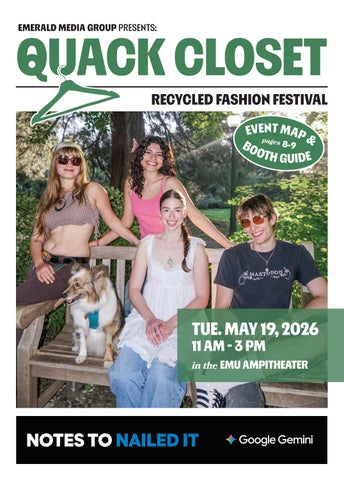
QUACK CLOSET
RECYCLED FASHION FESTIVAL


TUE. MAY 19, 2026 11 AM - 3 PM in the EMU AMPITHEATER

STAFF
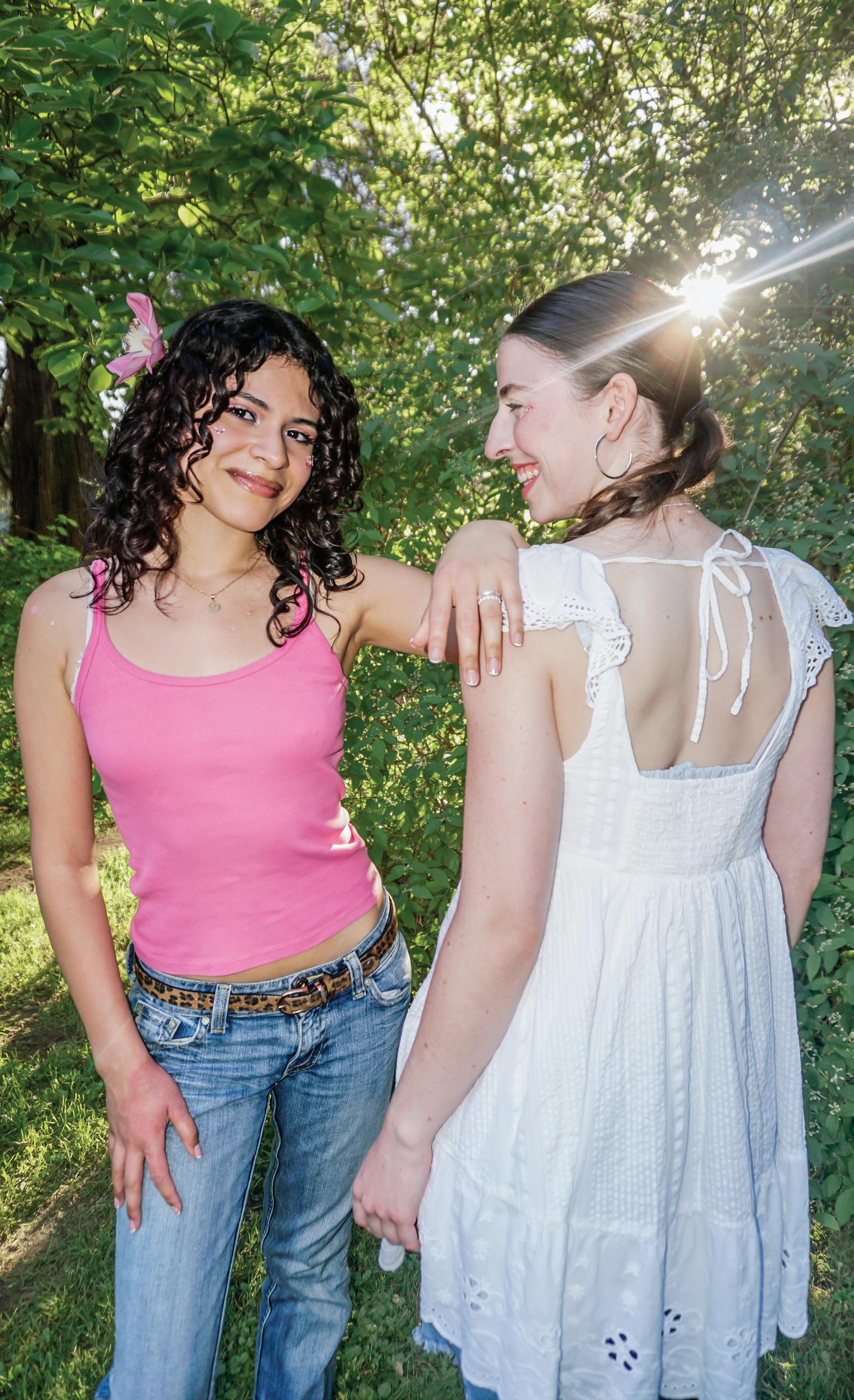
Cover & Masthead Photos
Magnolia Schnobrich
Cover Models
(From Left to Right)
Sydney Tall
Percy
Daisy Sophia Valencia
Peyton Gast
Charlie Donnell
Writers
Daisy Sophia Valencia
Fiona McMeekin
Taylor Ward
Photographers
Alyssa Garcia
Eva Kuo
Fiona McMeekin
Magnolia Schnobrich
Lead Designer
Asha Mohan
Designers
Adaleah Carmen
Asha Mohan
Dewni Mirihana
Eva Kuo
Magnolia Schnobrich
Account Managers
Camcole Pereira
Elliot Byrne
Maria Jimenez
Contributors
Arianna Rinaldi
Sydney Tall
Emerald Media Group, Inc. 395 University St., #302 Eugene, OR, 97403 541.346.5511 x327 dailyemerald.com
BUSINESS
Publisher & President
Eric Henry ehenry@dailyemerald.com
Director of Sales
Shelly Rondestvedt srondestvedt@dailyemerald.com
VP Operations
Kathy Carbone kcarbone@dailyemerald.com
Creative & Technical Dir.
Anna CK Smith creative@dailyemerald.com
Quack Closet Event Guide is published by Emerald Media Group, Inc., the independent nonprofit media company at the University of Oregon. Formerly the Oregon Daily Emerald; the news organization was founded in 1900.
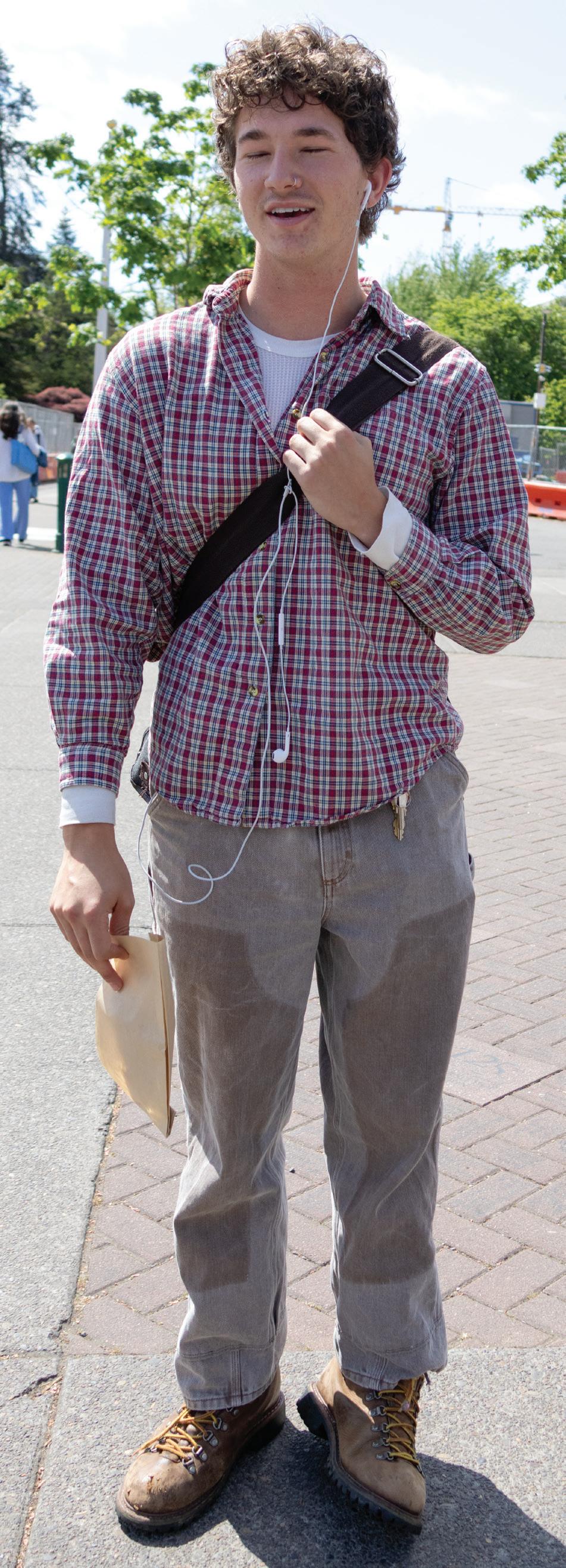
“WHAT’S YOUR FAVORITE PART OF YOUR OUTFIT, AND WHY?”
Written and Photographed by Taylor Ward \ Designed by Adaleah Carman
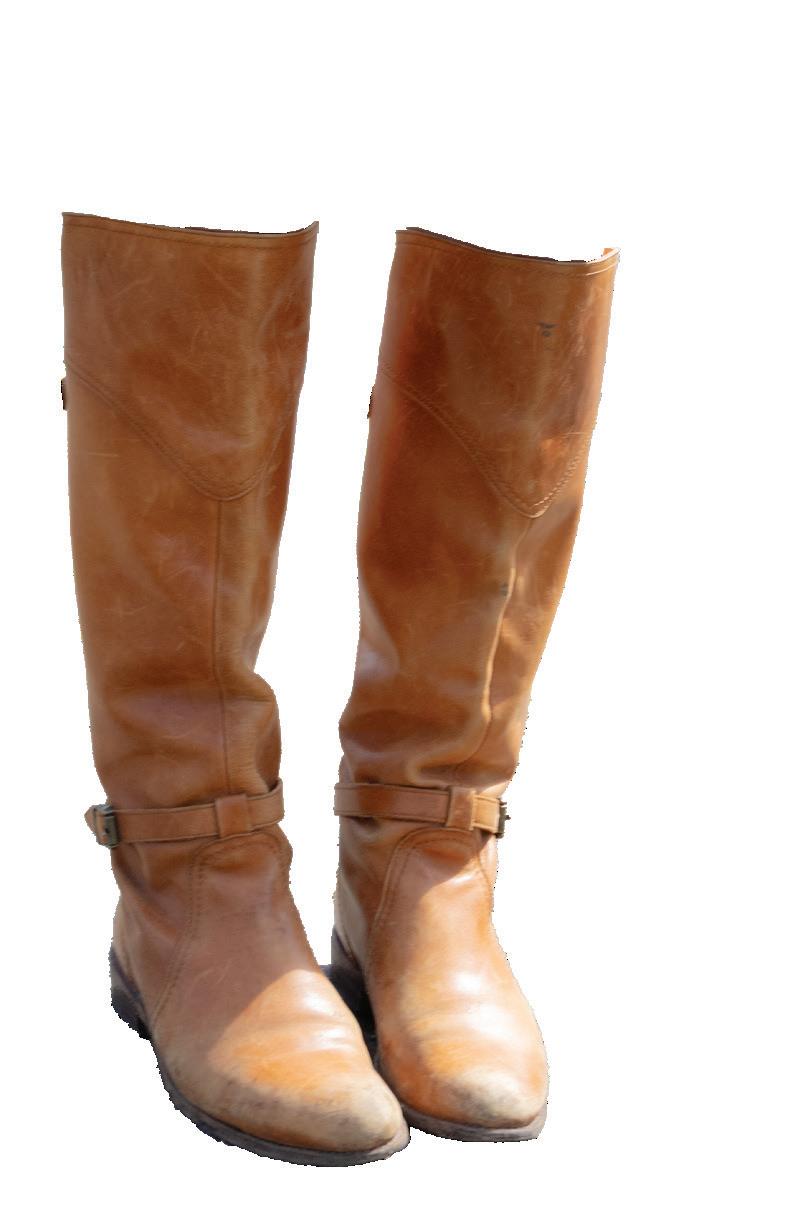
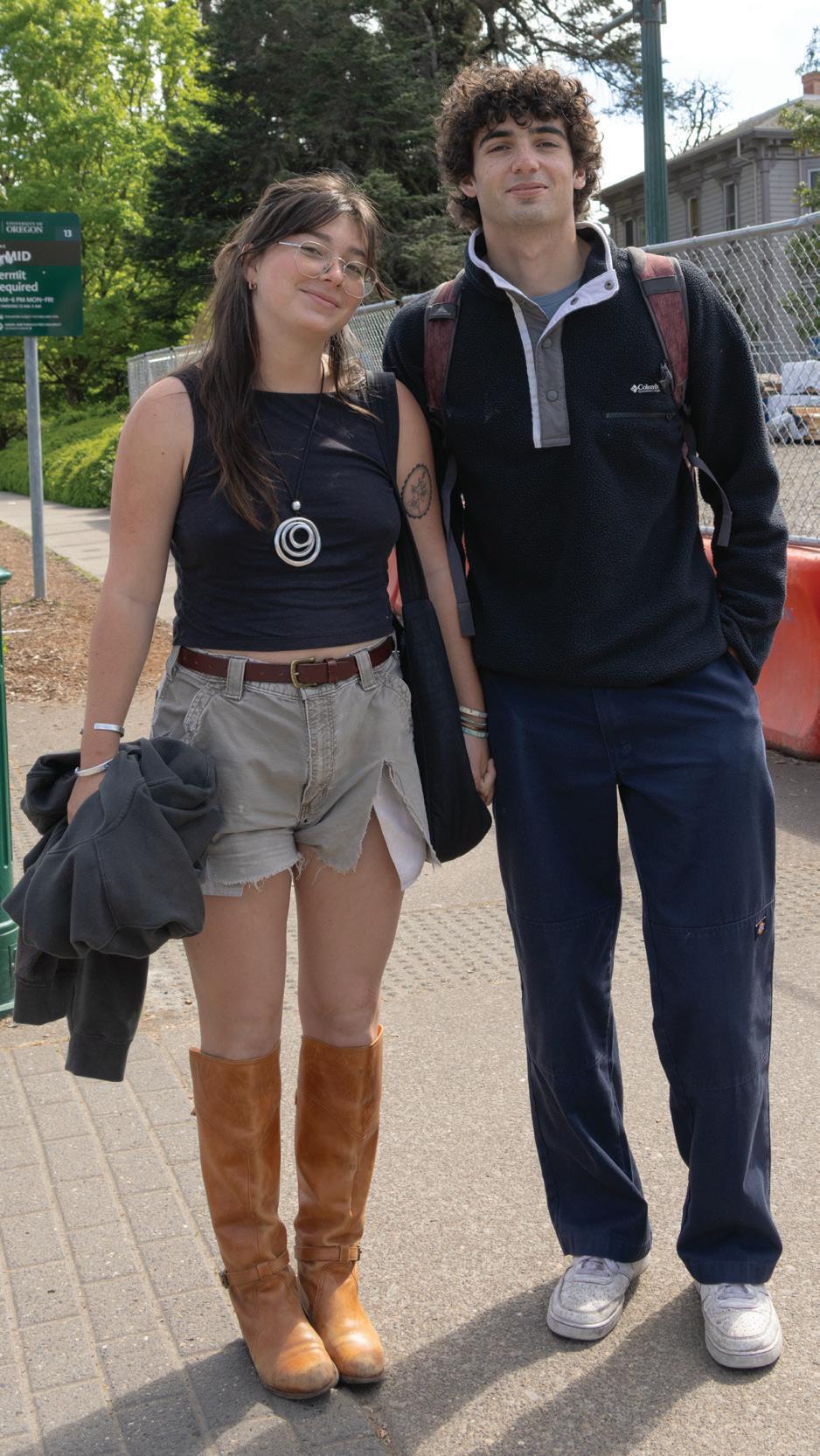
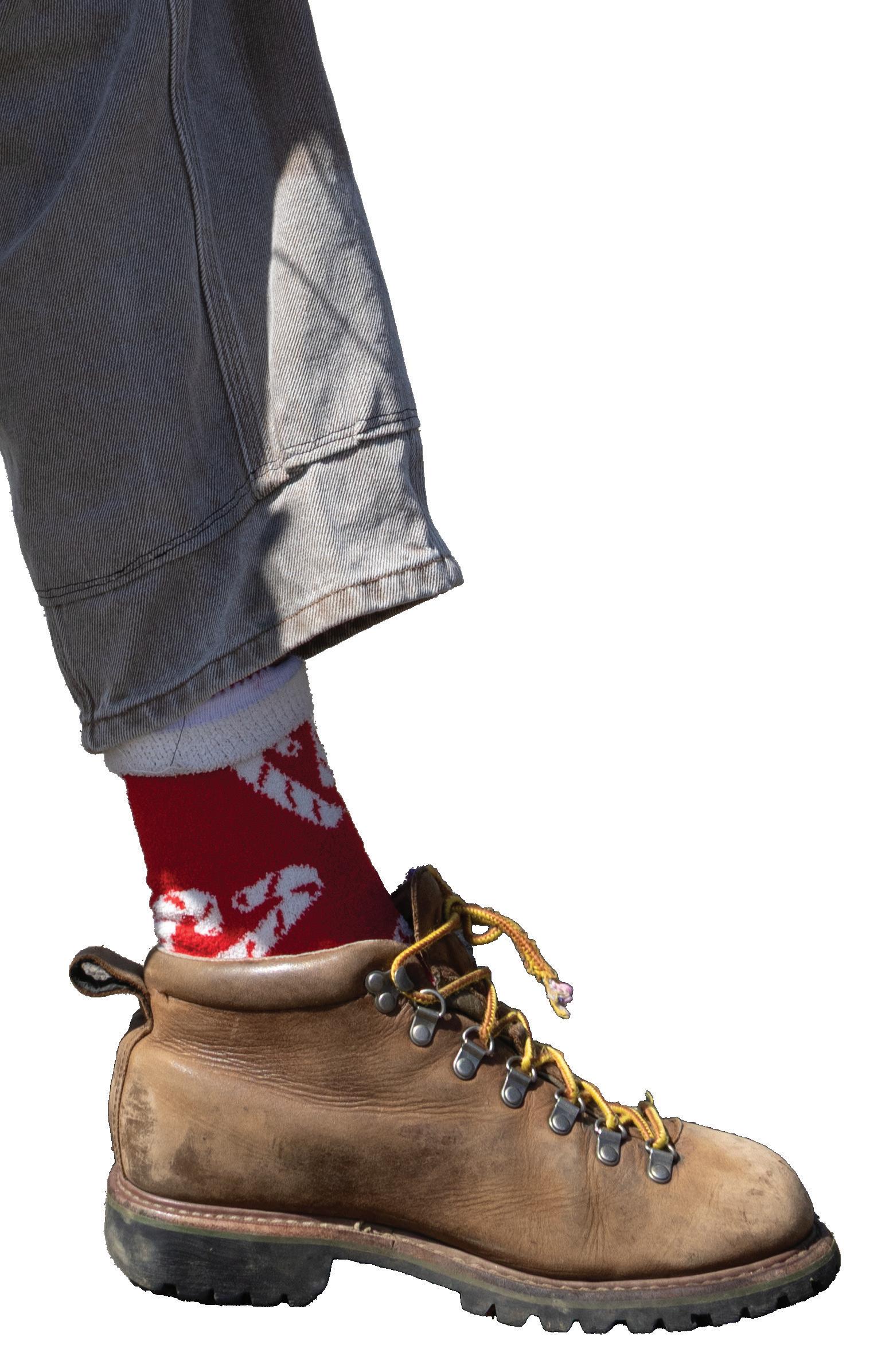
My boots! These Frye boots are normally so much retail. I was able to luckily get a great deal on them for less through Depop.
Lily Reese
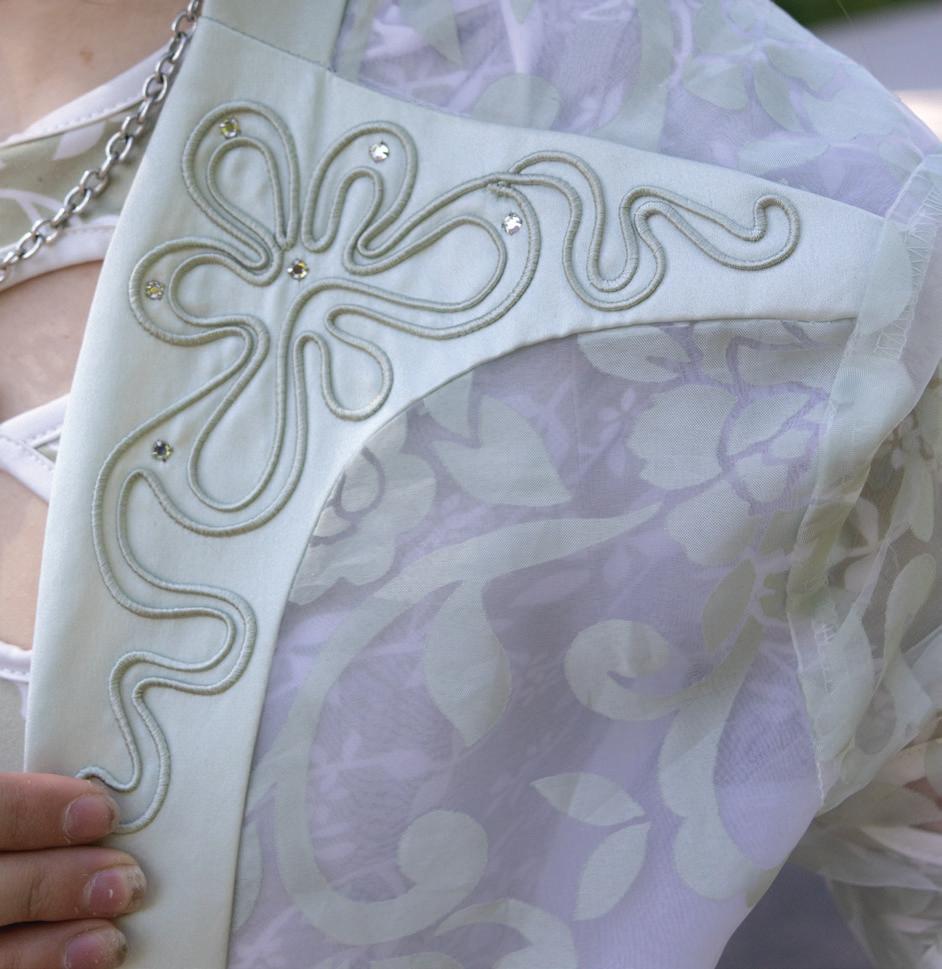
Julia Atkins “
I really like the jacket, I think the embroidery and the extra detail on it is great!
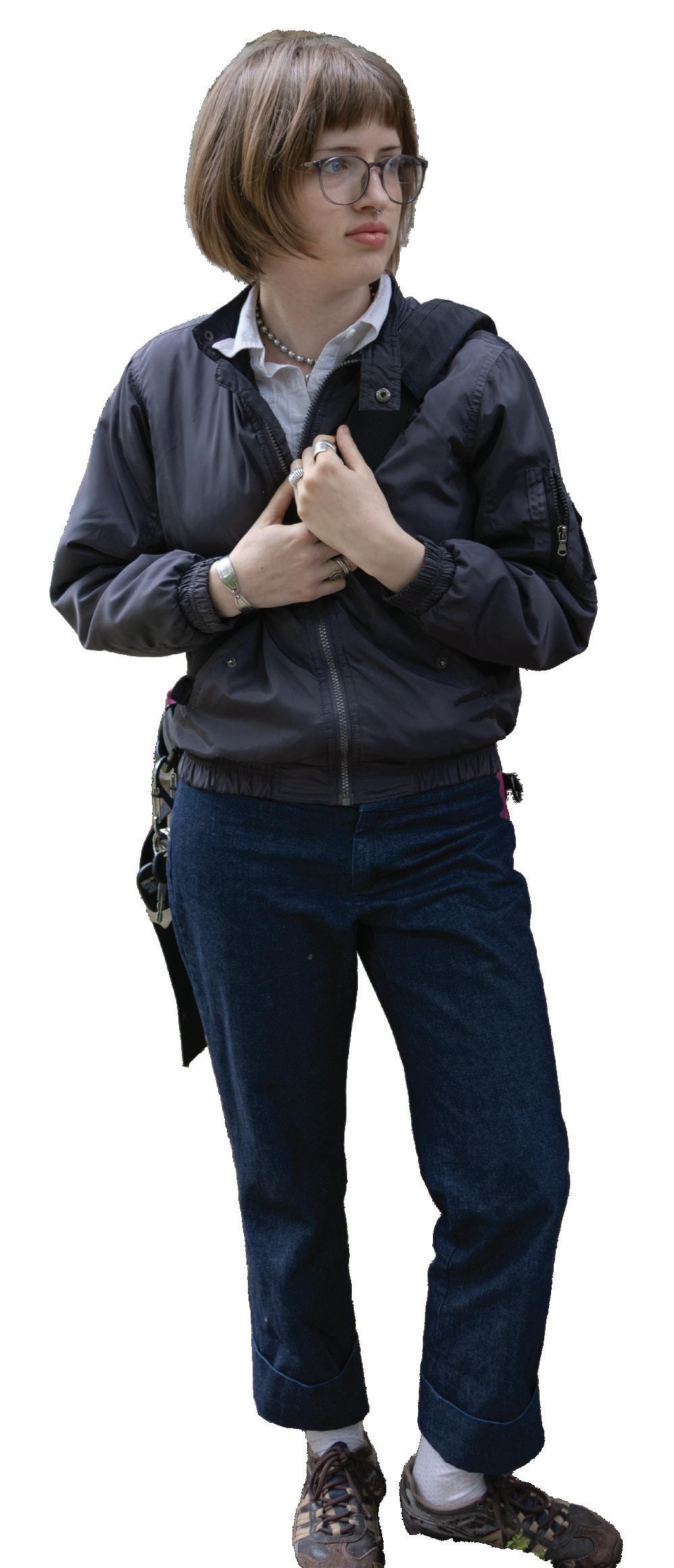
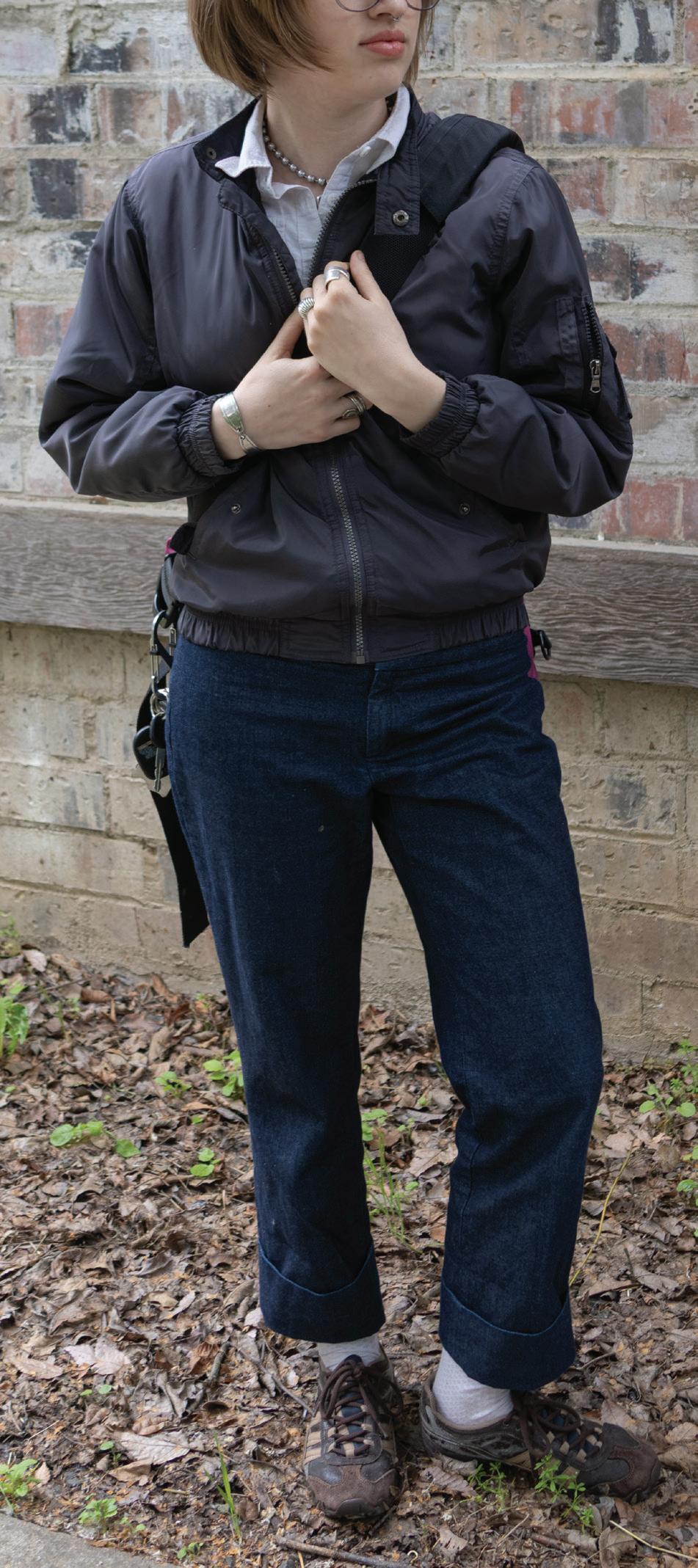
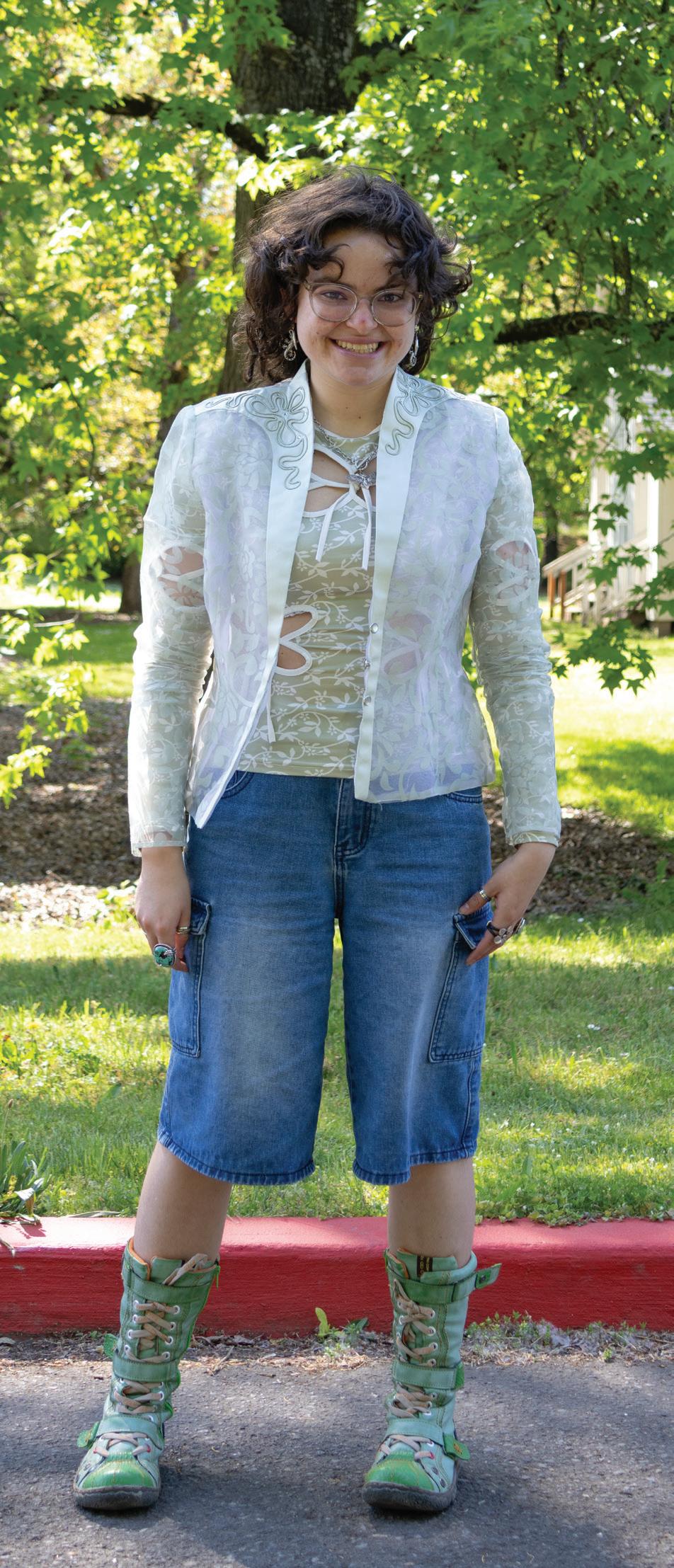
I’d say the jeans, mainly due to the fact that the day that I bought these and made it back home, my mom told me she had the exact same pair when she was the same age that I am right now.
Mira Kennelly
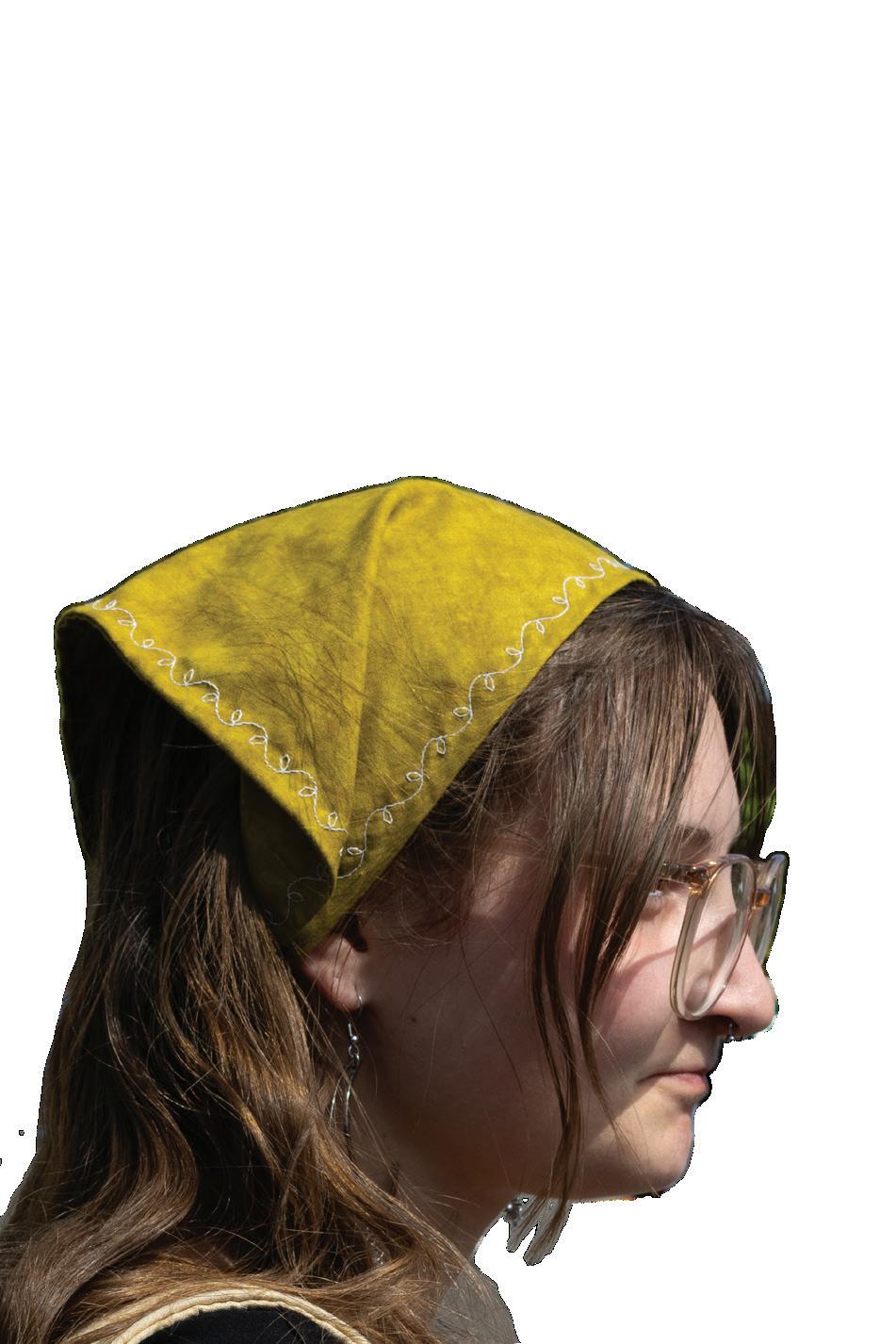
I like my headpiece, I think that’s the best part of my outfit.
Araeya Johnson
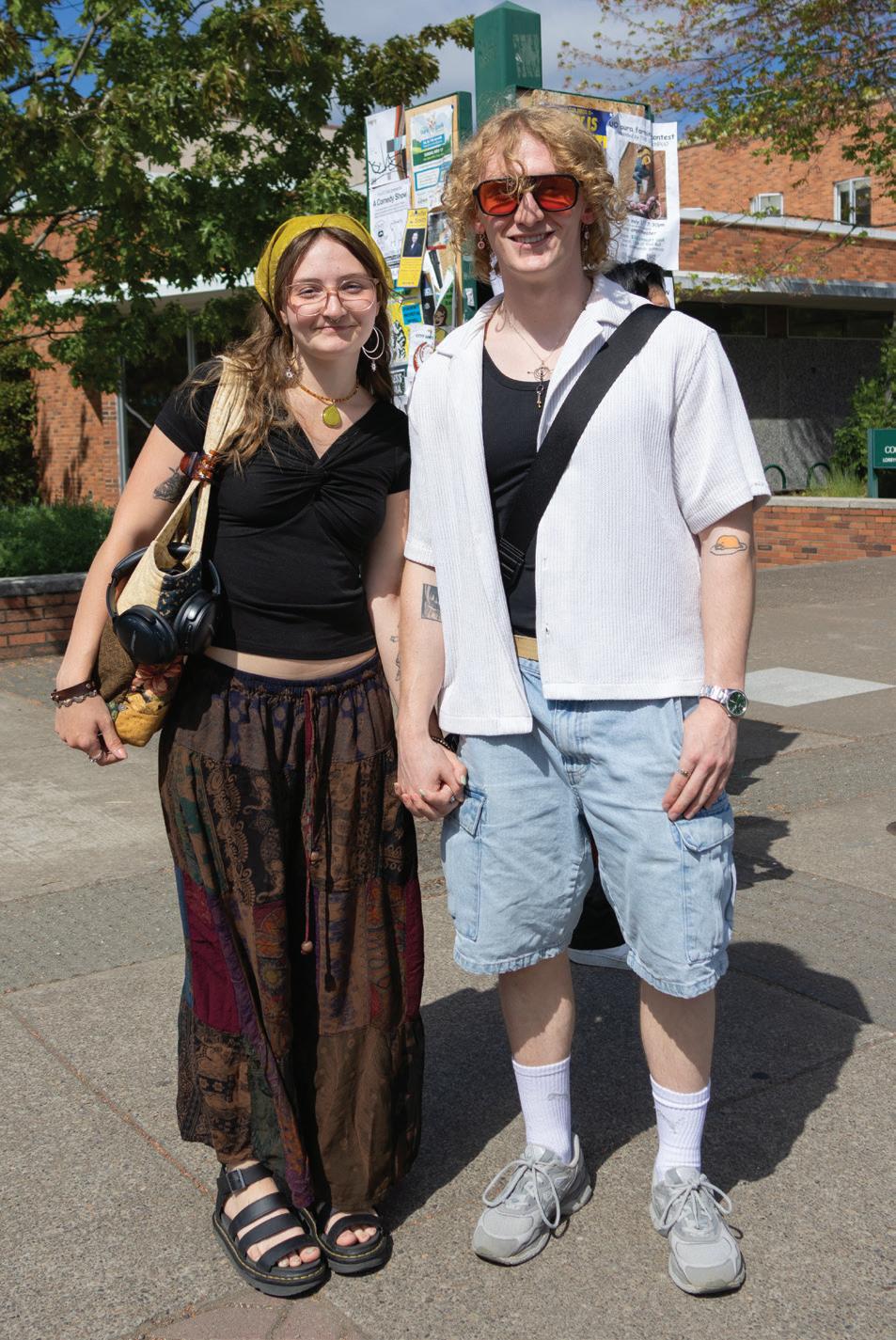
My shoes, I really like how comfortable they are.
Daegan Shenk
“
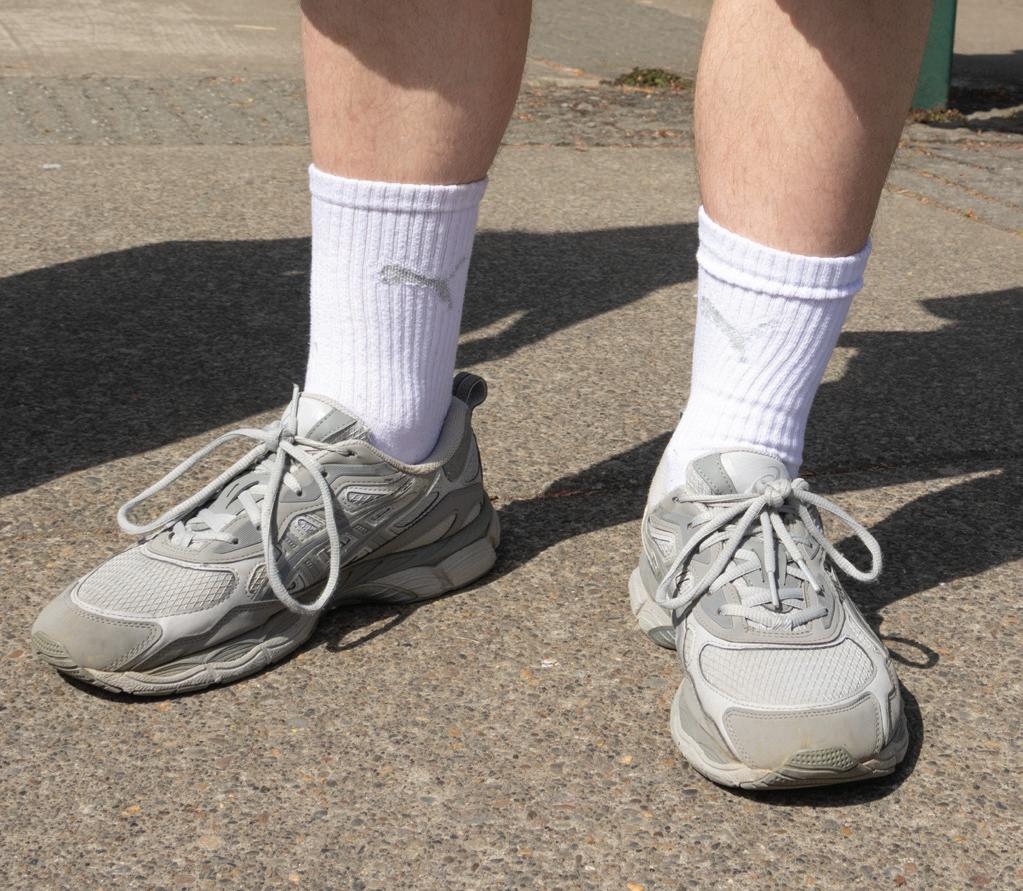
My socks for sure, I think they’re a nice part of the fit.
Jack Leininger
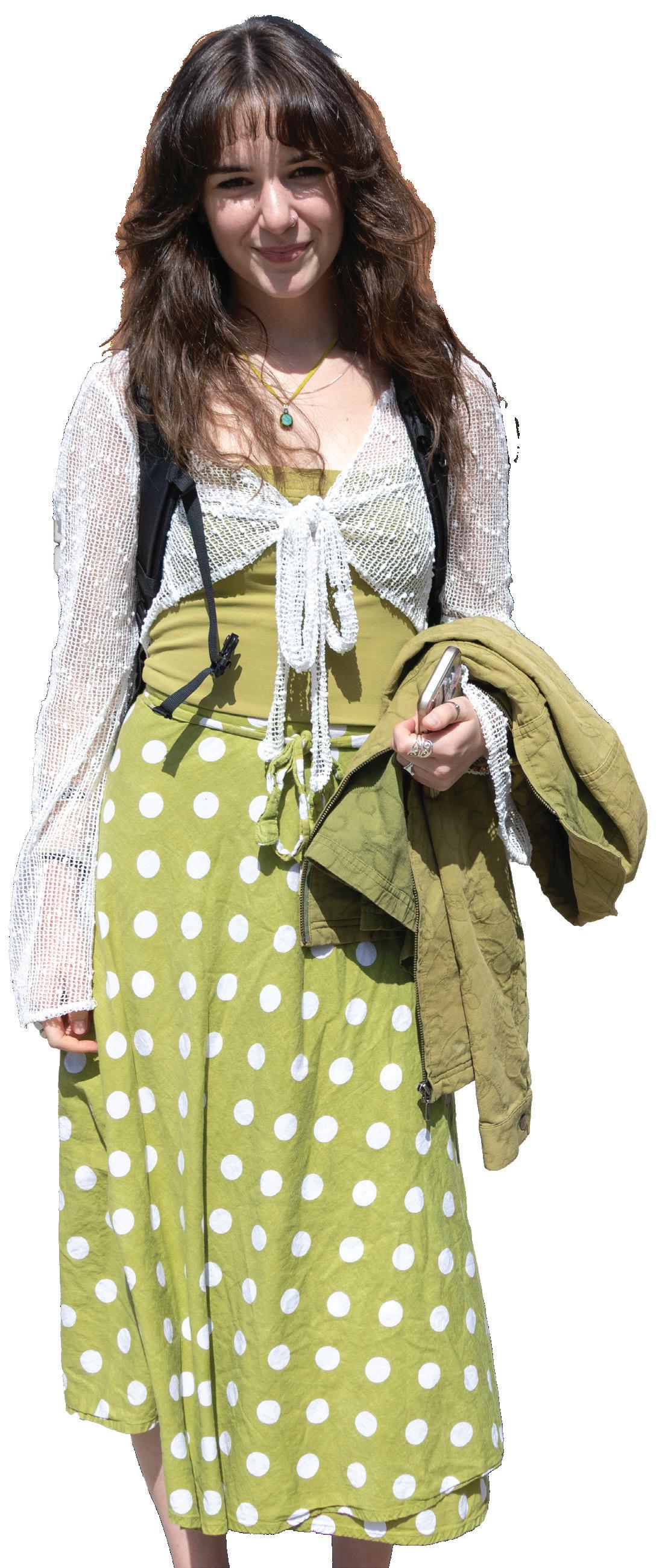
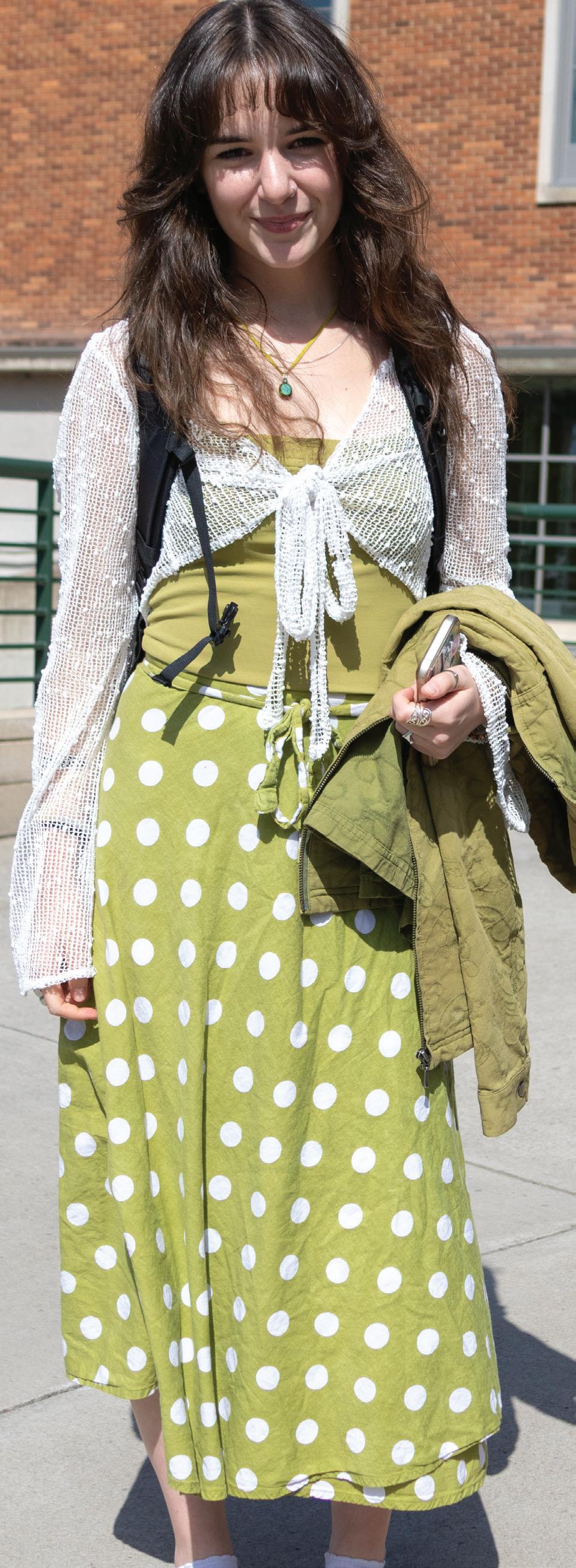
My skirt! It’s a nice day outside.
[Interviewer: I love the polka dots and how all your greens match.] Yeah, that was a big part as well, making sure things match.
Amanda Osborne


TIPS FOR STARTING YOUR OWN RESALE CLOTHING STORE
Written and Photographed by Daisy Sophia Valencia \ Designed by
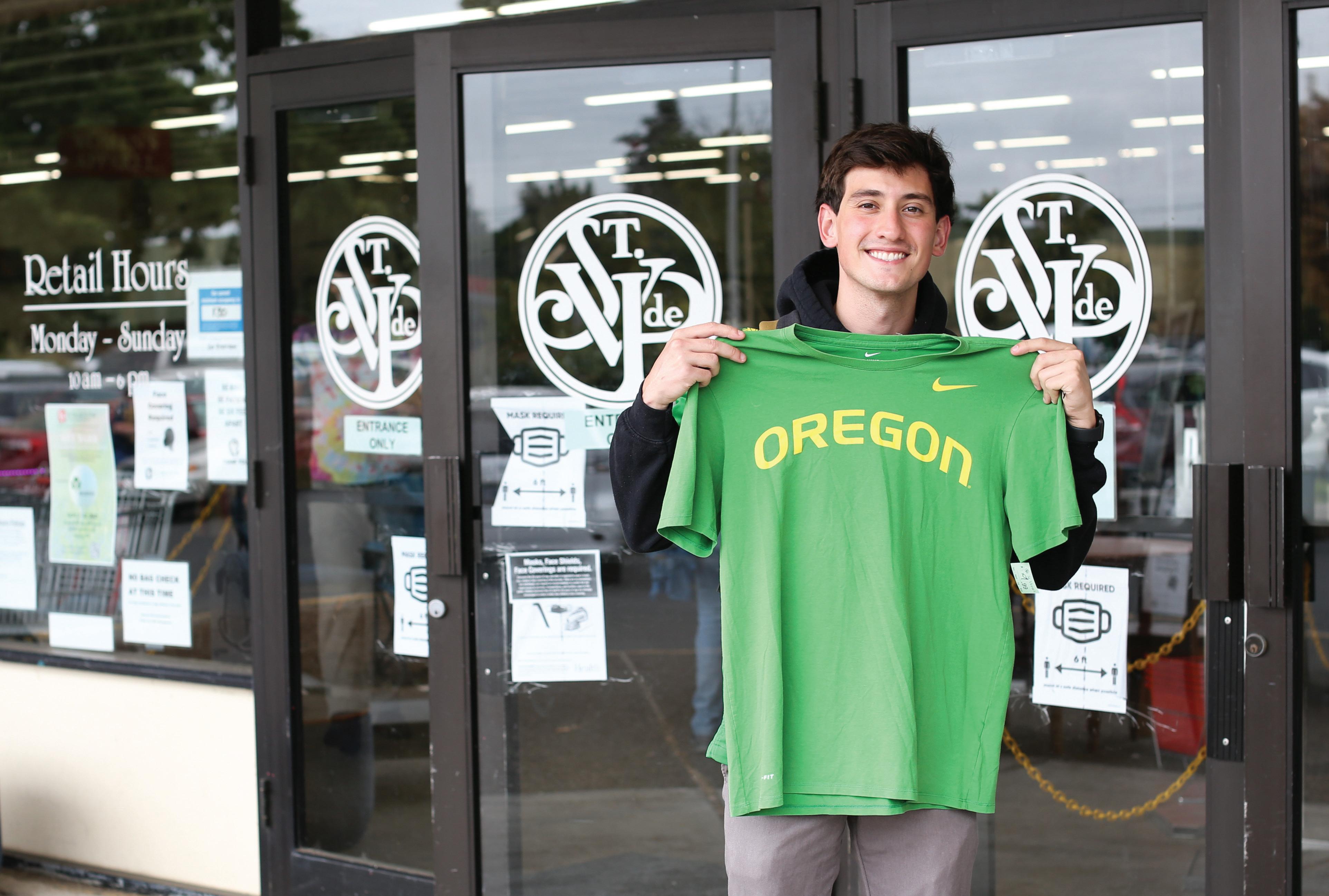
Throwaway culture is trending, and tons of clothes end up in landfills from consumers who are quick to part with items once a trend cycle is over. Even the clothes that get donated pile up fast. Clothes are donated in greater excess than they are bought, and the rest is shipped overseas in mass to accommodate for space. Charity, when it comes to getting rid of the old clothes in your closet, isn’t the miraculous fix it is generally seen as.
With the rise of reselling apps, listing your old clothes has become a great way to extend the lifespan of an item and make a few bucks. It can feel satisfying to know an item you passed on becomes a part of someone else’s life. These apps are incredibly accessible, so you don’t have to be particularly knowledgeable about business to succeed as a reseller. Here are tips to guide you to success.
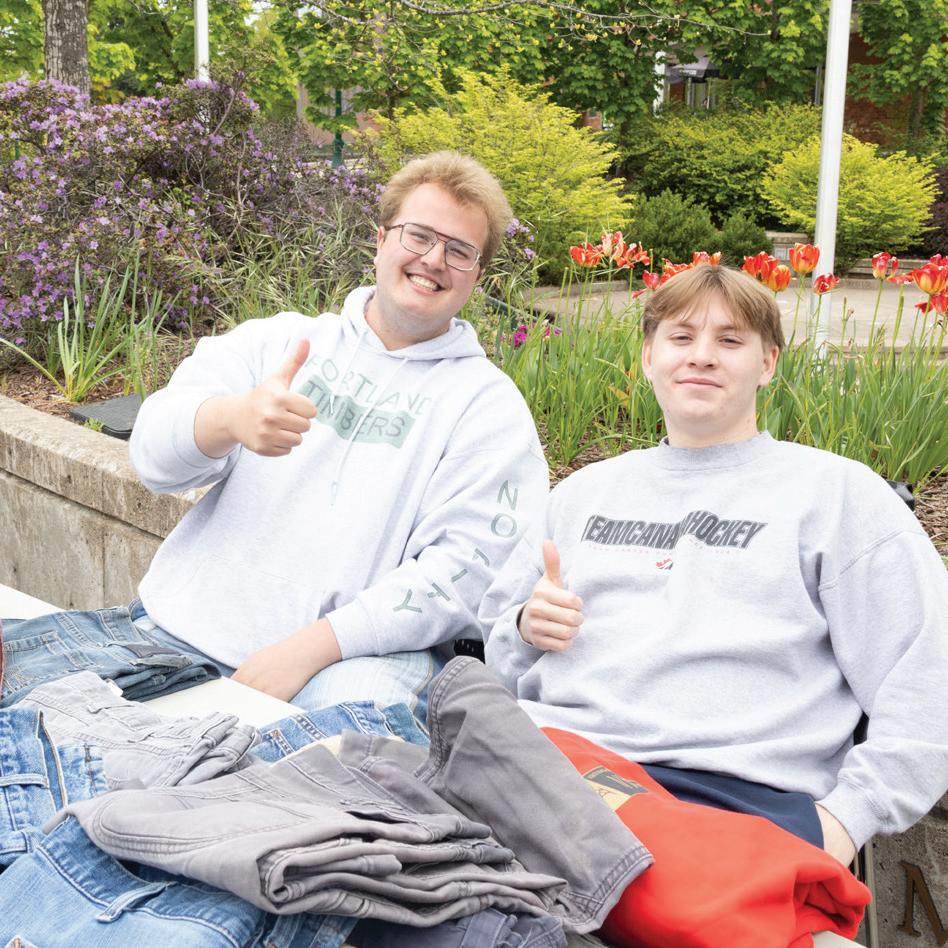
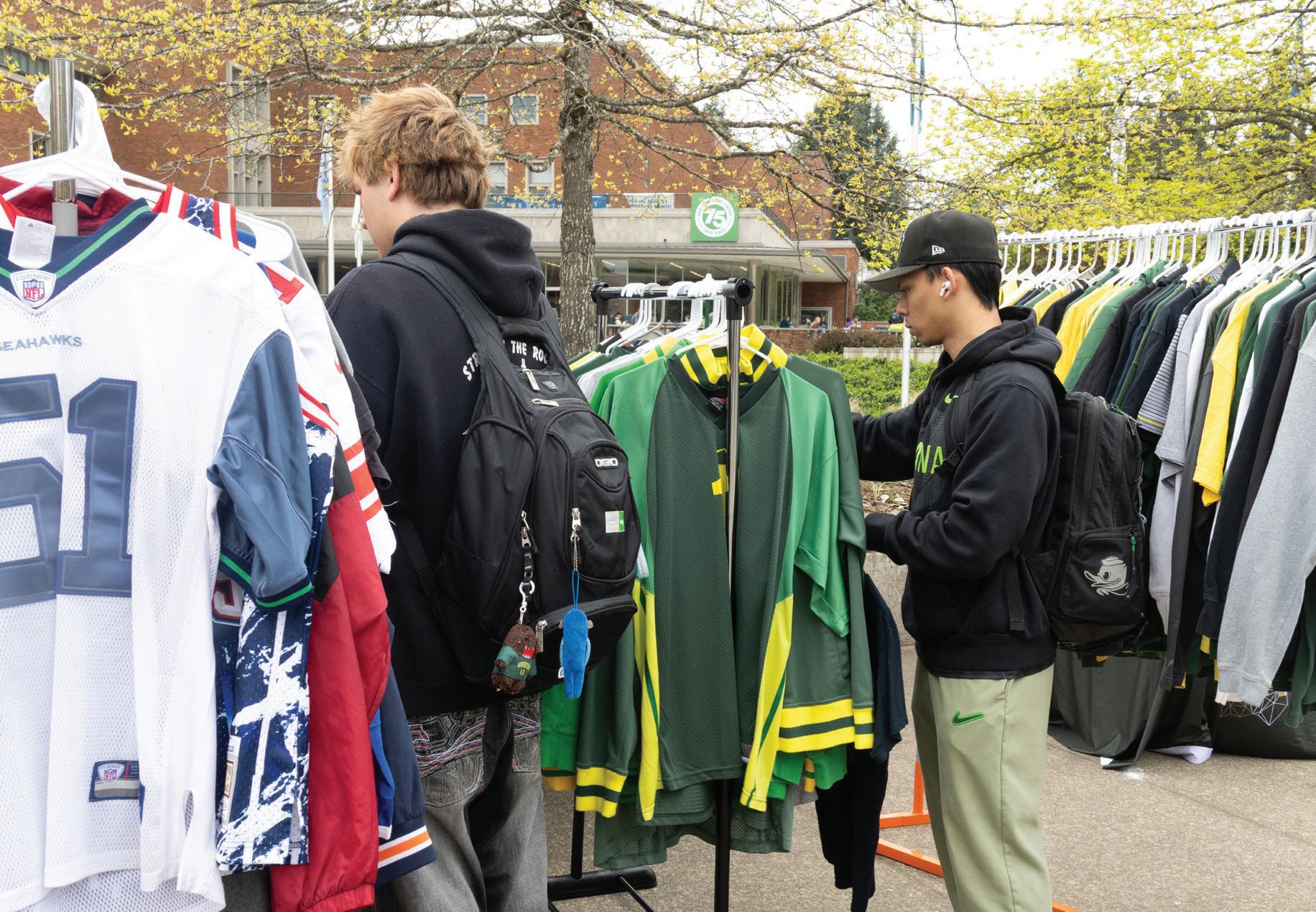
Riley Marshall, a seller of preloved sportswear and Ducks gear, sets up shop outside of the EMU. He uses the resale app Depop, but has recently favored selling in-person because it only takes a table and a few racks to attract customers. Marshall claims that the best way to go about reselling — either in-person or online — is finding a suitable niche.
He says, “Don’t try to sell everything. Focus on a type of brand, type of item that you know a lot about. You’ll know what people are willing to pay for things and how much you can get them for.”
As a reseller on Depop, it doesn’t have to take long between posting an item and making the sale. Understanding how to take the listing photo is everything. Even undesirable items with stains and rips are frequently sold because the mannequin or model is all dressed up and is even styled with accessories.
On sites where it’s possible to send offers, it’s likely that you’ll never be able to sell items for the full price you list them at. It can be profitable to overprice items rather than underprice them to ensure that you receive
offers you’re happy with. Pricing low can be valuable for those looking to make smaller profit margins but higher quantity sales. If you have a ton of inventory you’d like to get through and not much space for storage, pricing low is a valuable strategy to quickly push out inventory.
Reputation is everything when it comes to reselling. Anyone can make a post calling out your business over any minor dispute, so it’s worth it in the long run to put an emphasis on customer service and be completely transparent about condition and sizing. When packaging a skirt I once sold, I noticed a paint stain on the hem and I quickly brought it to the customer’s attention and offered a small discount. It’s best to play it safe when reviews are permanent and cautious buyers take notice of imperfect ratings.
Descriptions of items are key to ensuring quick sales. If buyers have to send messages asking about sizing or condition, it can discourage them from purchasing right away. Even if it’s tedious to take exact measurements of inseams or shirt length, it’ll save you from being accused of inaccurate sizing. Scam listings are becoming frequent, so it is important to include brand names because new, trendy and unbranded items can lead buyers into thinking you are getting inventory from Shein or other large fast-fashion companies. These companies are often associated with poor stitching and cheap materials, so it’s not a good look for your page if you don’t bother to properly tag and categorize your listings.
When social media continues to normalize the concept of swapping your closet out every trend cycle, resale is a way to slow the process down. It’s not perfect, but it’s a solid alternative to adding to growing donation piles of trash and donations, and it ensures the pieces you loved continue to be loved by others.

Find Your Niche
Focus on a brand and item you know a lot about, then you’ll know what it’s worth and how much people are willing to pay.

Take Good Photos
Listing photos are everything. Stained and ripped items are often sold because the model or mannequin is styled and dressed up with accessories! Don’t underestimate the power of a good photo.
Strategize Your Pricing
Overpricing = Receive offers you’re happy with, closer to original value
Underpricing = smaller profit margins but higher quanitity sales
Choose what makes the most sense for you!
Reputation Matters
Minor disputes can lead to negative reviews, so it’s worth it to emphasize customer service and transparency!Reviews are permanent, so stay on the safe side - the customer comes first!
Descriptions Are Key
The more detail you add ensures quicker sales and customers won’t be inconvinienced by messaging about sizing. To avoid looking like a scam listing, make sure to properly tag the brand names.
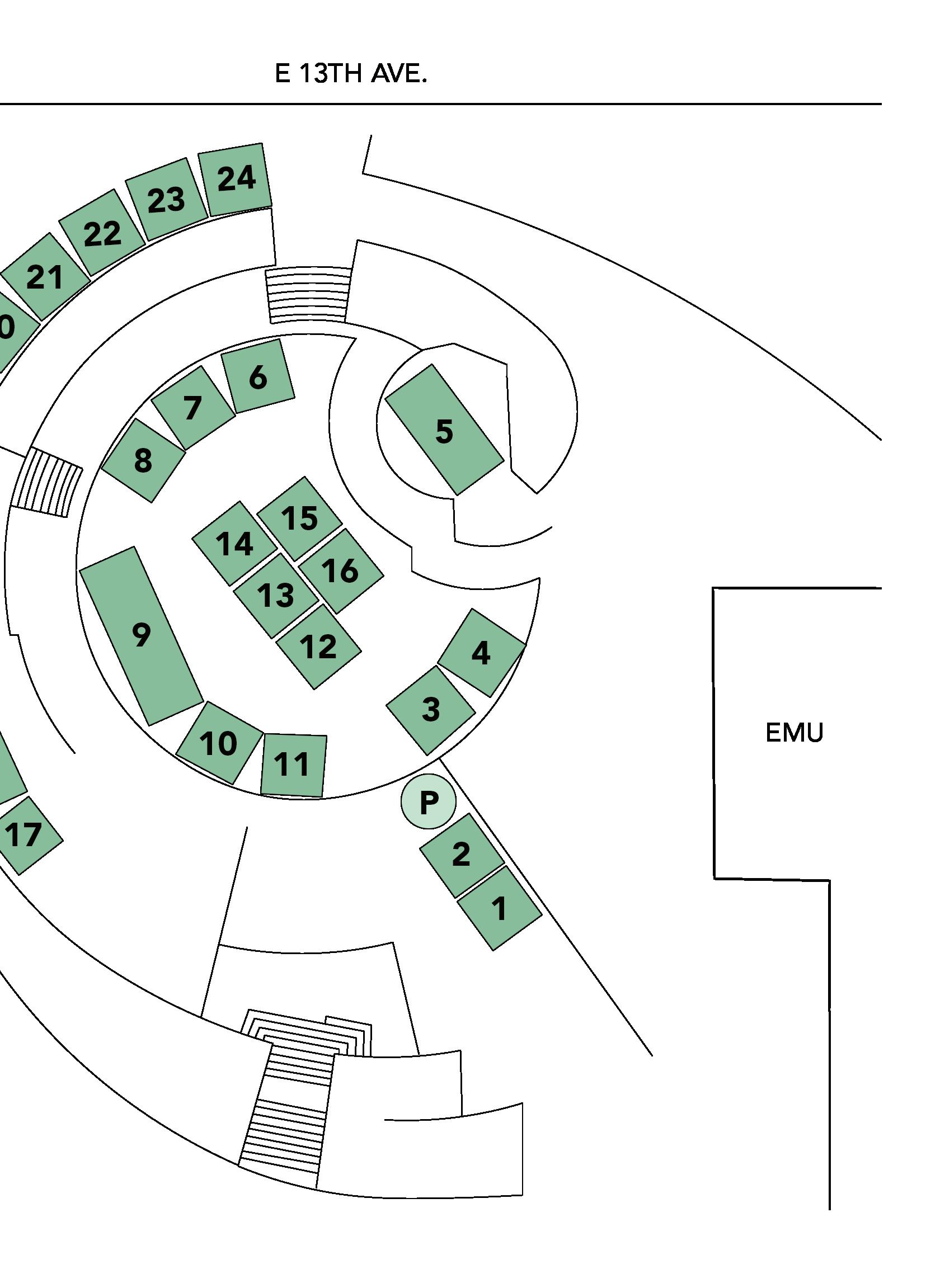
EVENT MAP & BOOTH GUIDE

Clementine J

FASHION AND SUSTAINABILITY
Written and Photographed by Alyssa Garcia | Designed by Dewni Mirihana
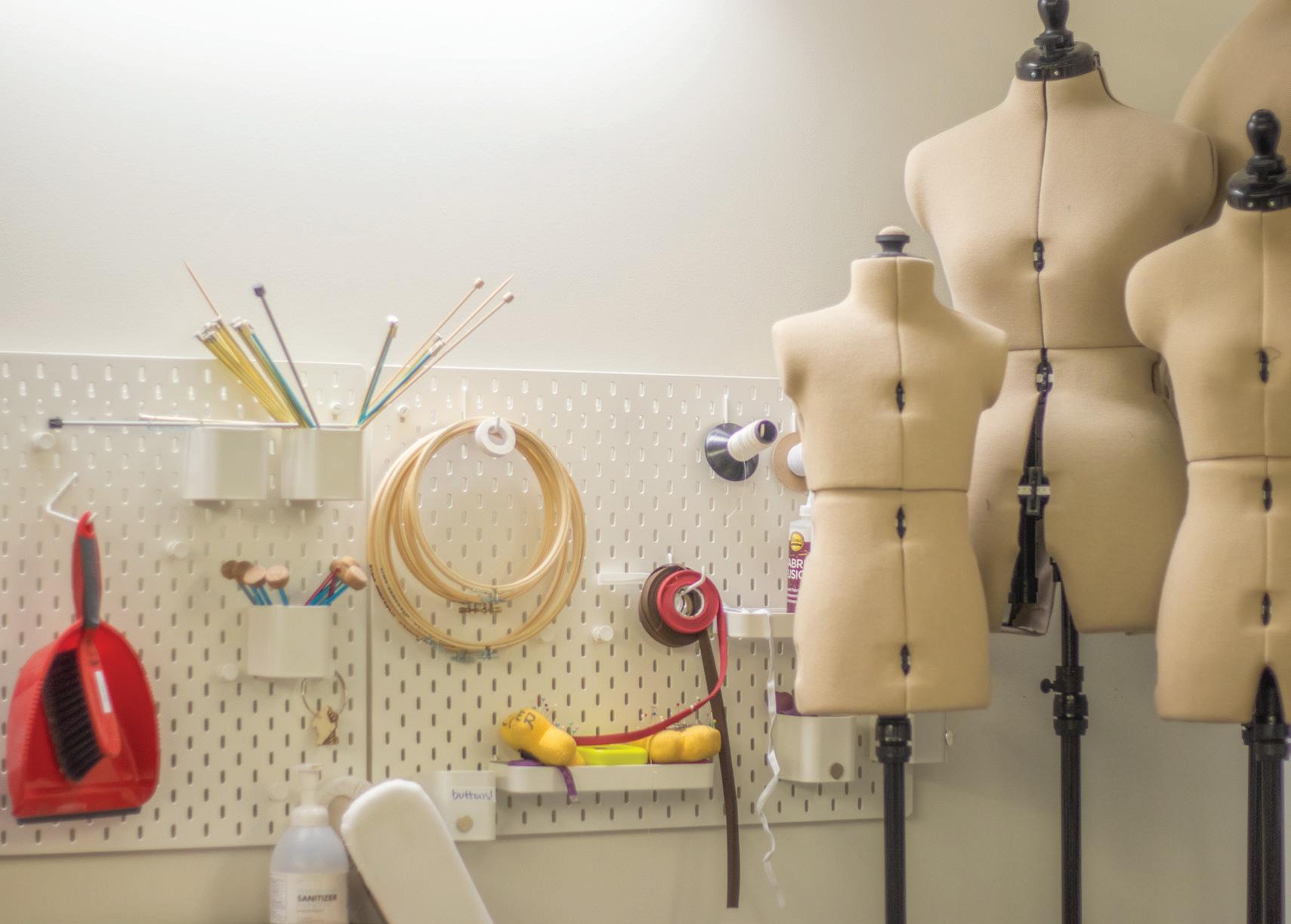
The Craft Center provides supplies to help students complete projects in the Fibers room. Supplies include dress forms, pins, measuring tapes, threads, and fabric glue. The Craft Center hosts weekly Mending Nights in collaboration with the Student Sustainability Center. Participants are able to bring their own clothing they want to upcycle and the Craft Center assists in teaching sewing and stitching skills.
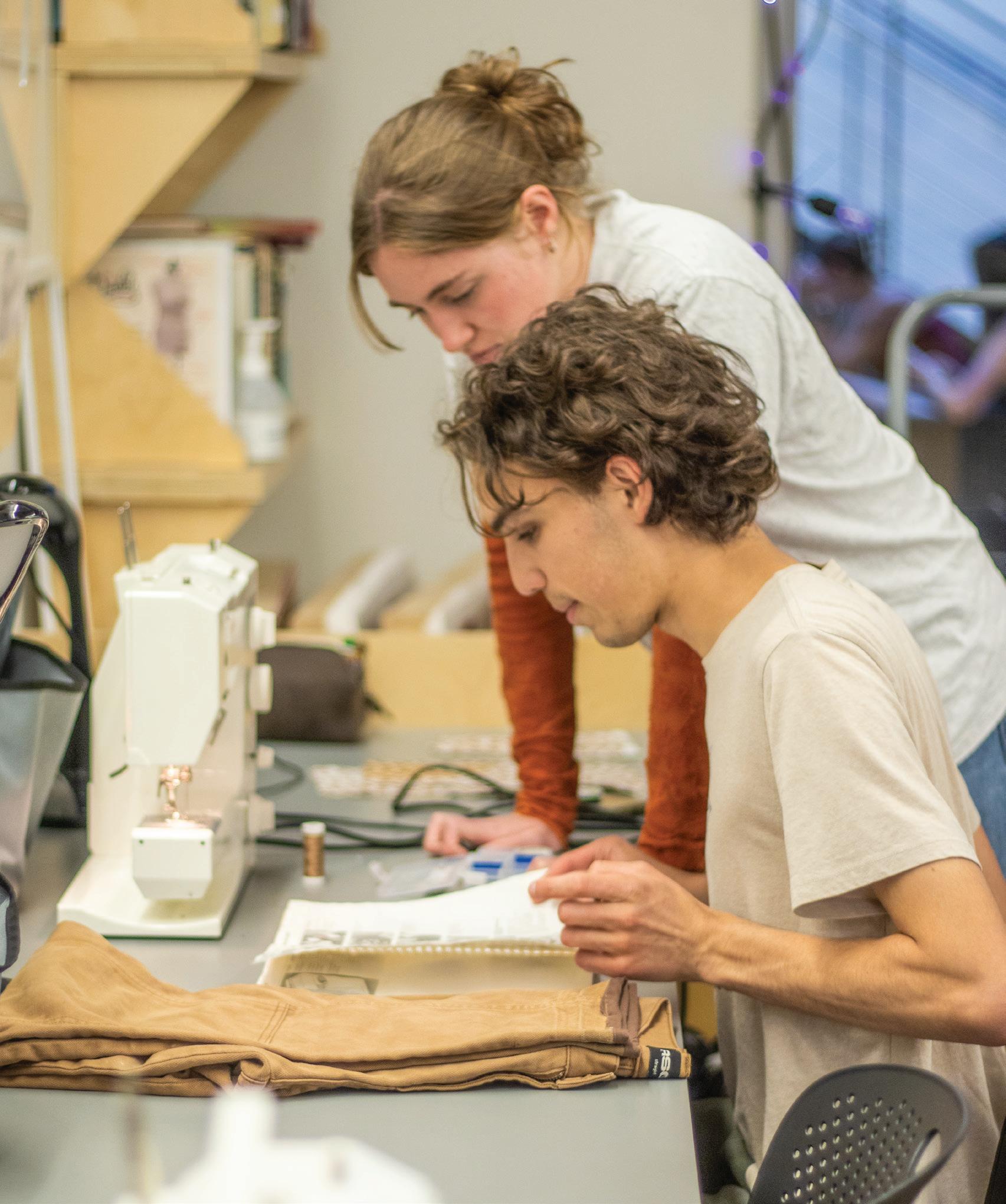
Libby Grogan, 21, a fourth-year Biology major assists Samuel Peters, 21, a third- year Biology major at the University of Oregon, in operating the sewing machine in the Craft Center in the Erb Memorial Union on the University of Oregon campus. Peters plans to add patterned fabrics to an old pair of pants.
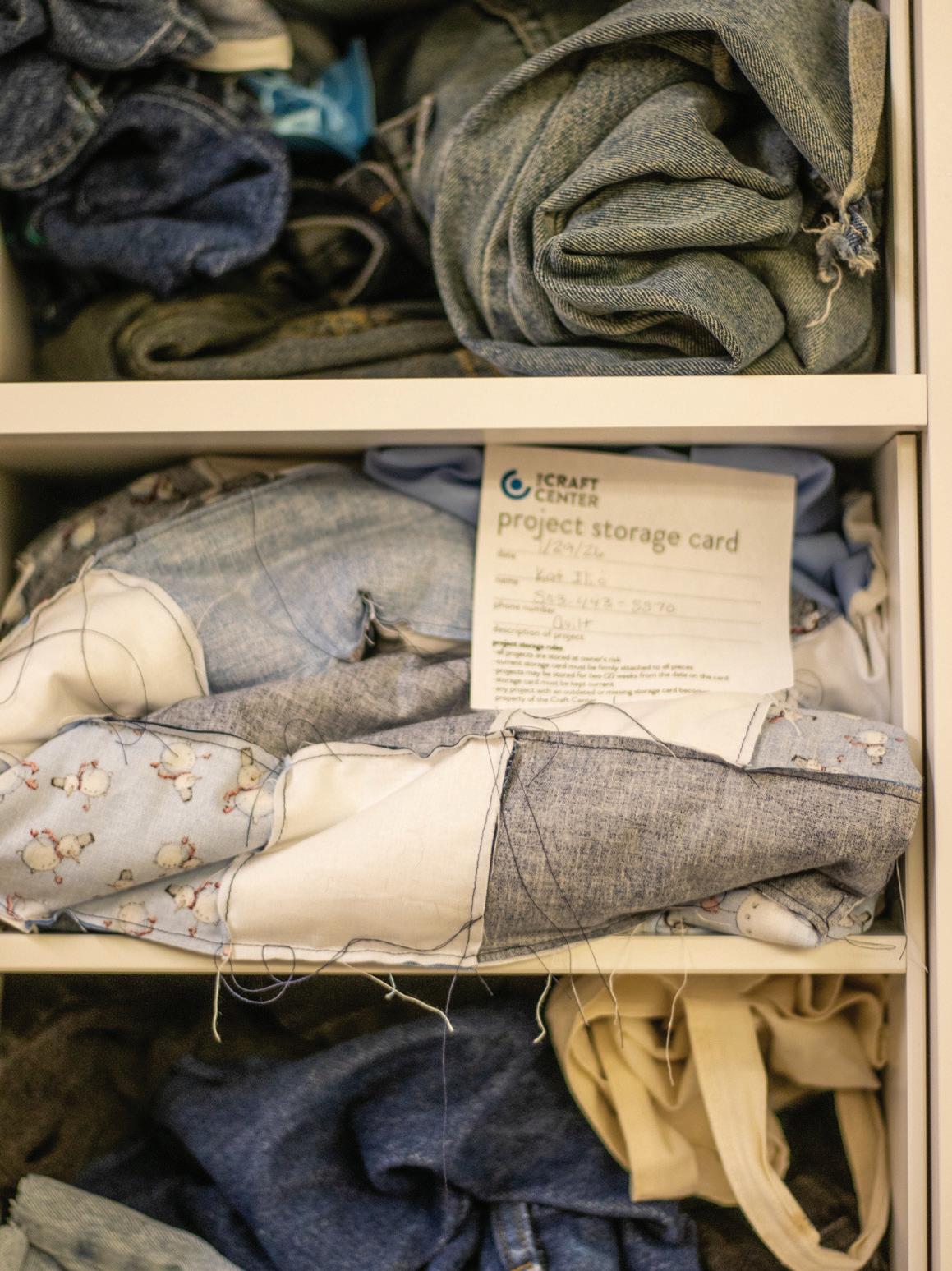


Various student projects are stored in room 030 in the Craft Center, including quilts and multiple denim pieces. The Craft Center utilizes project storage cards in the fibers room to keep track of student projects.

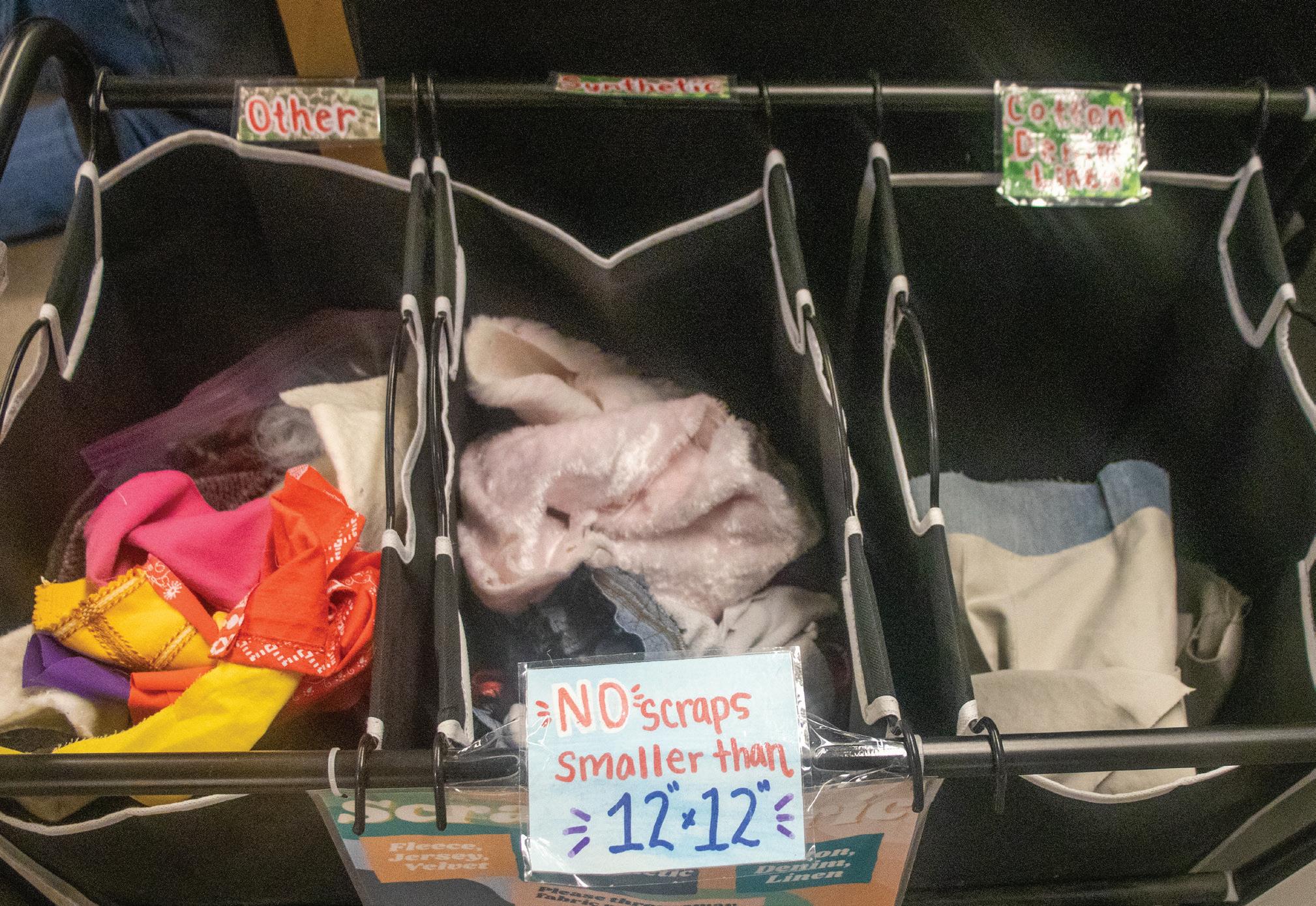
Bins in the fibers room collects the scraps of fabric from projects created in the room. Students are able to go through the bins to create new pieces, scraps include denim, linen, fleece, and cotton.
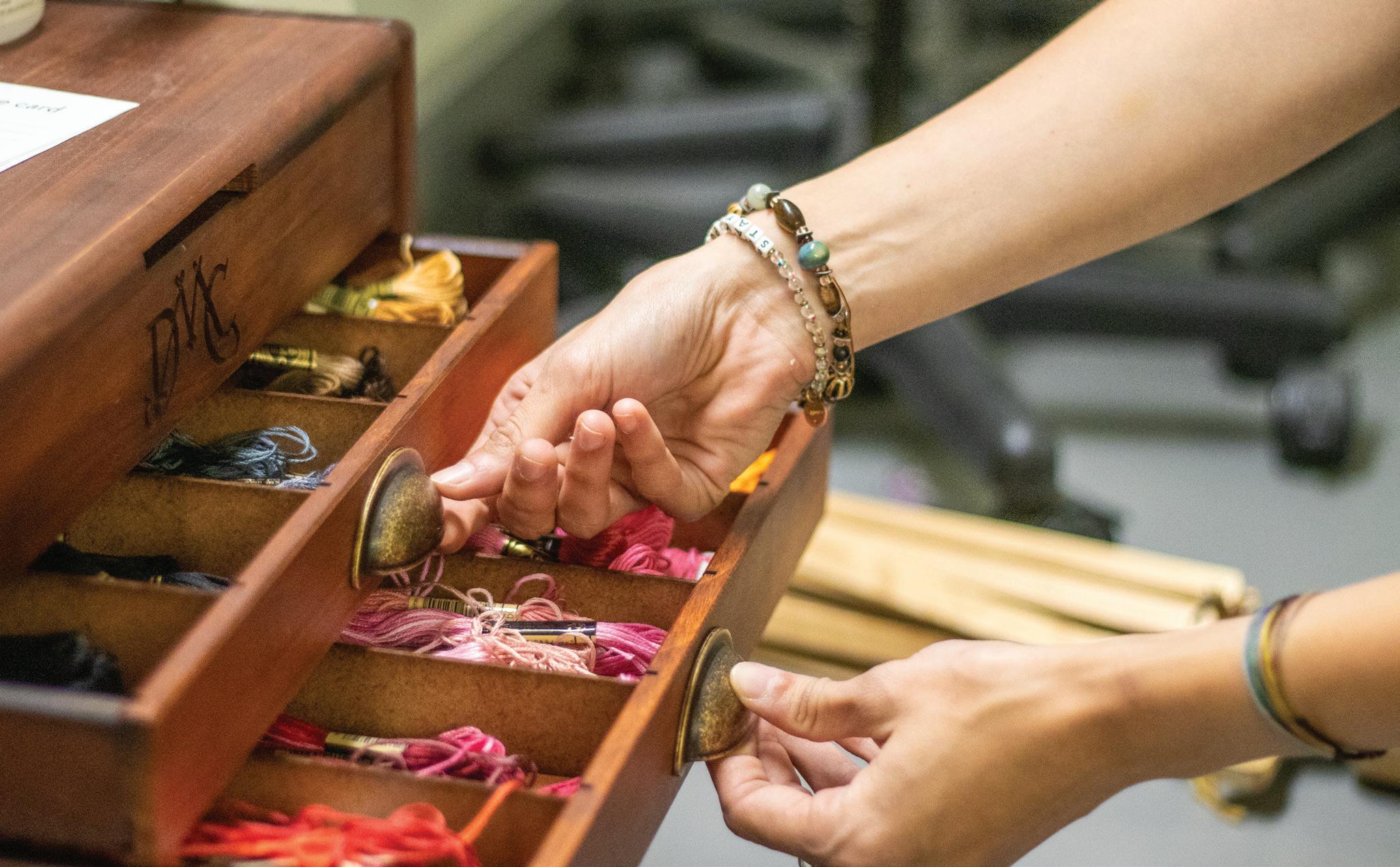
Lucie Gilde, 21, a third- year Neuroscience major at the University of Oregon searches through drawers of embroidery thread in the Craft Center.
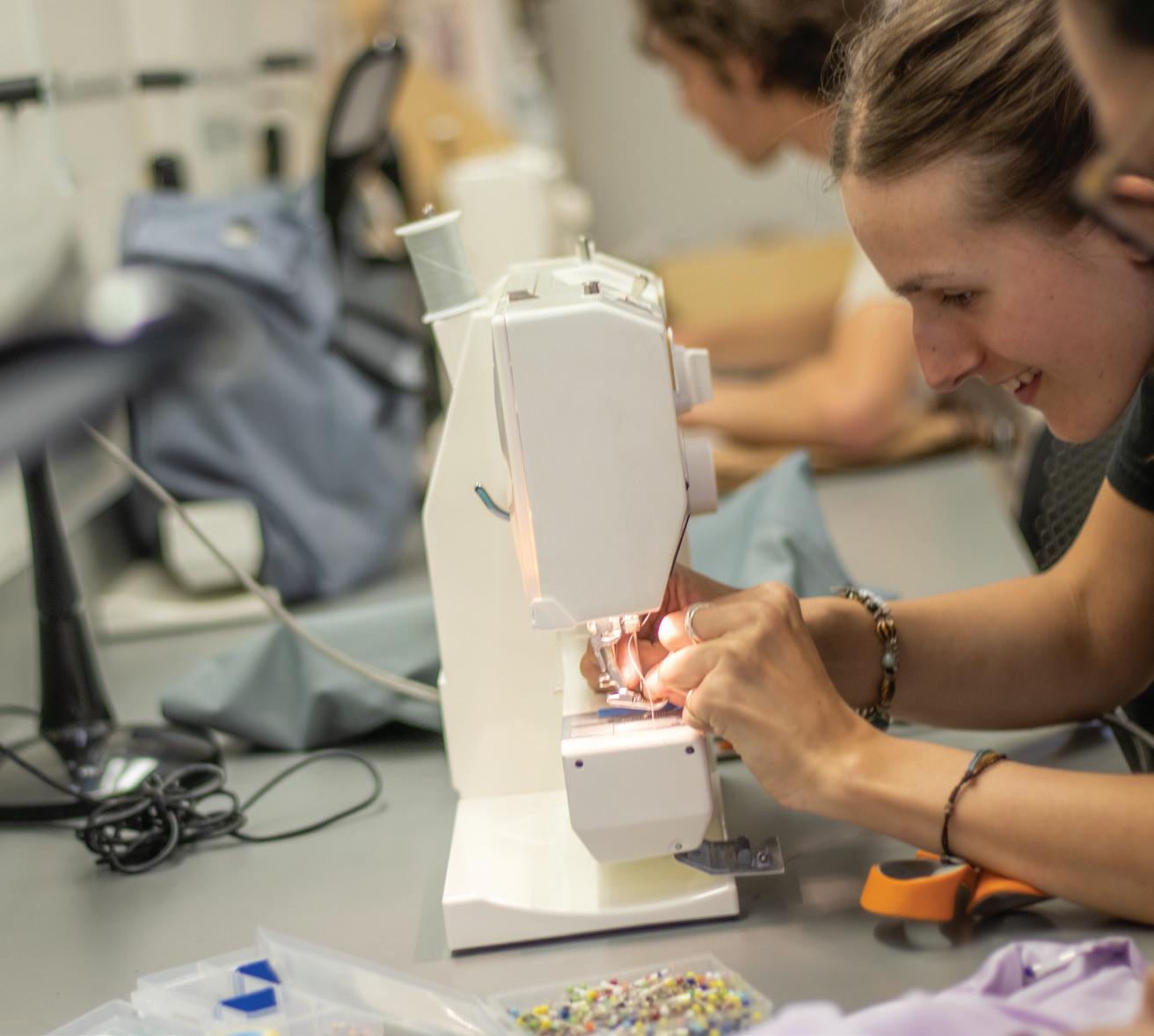
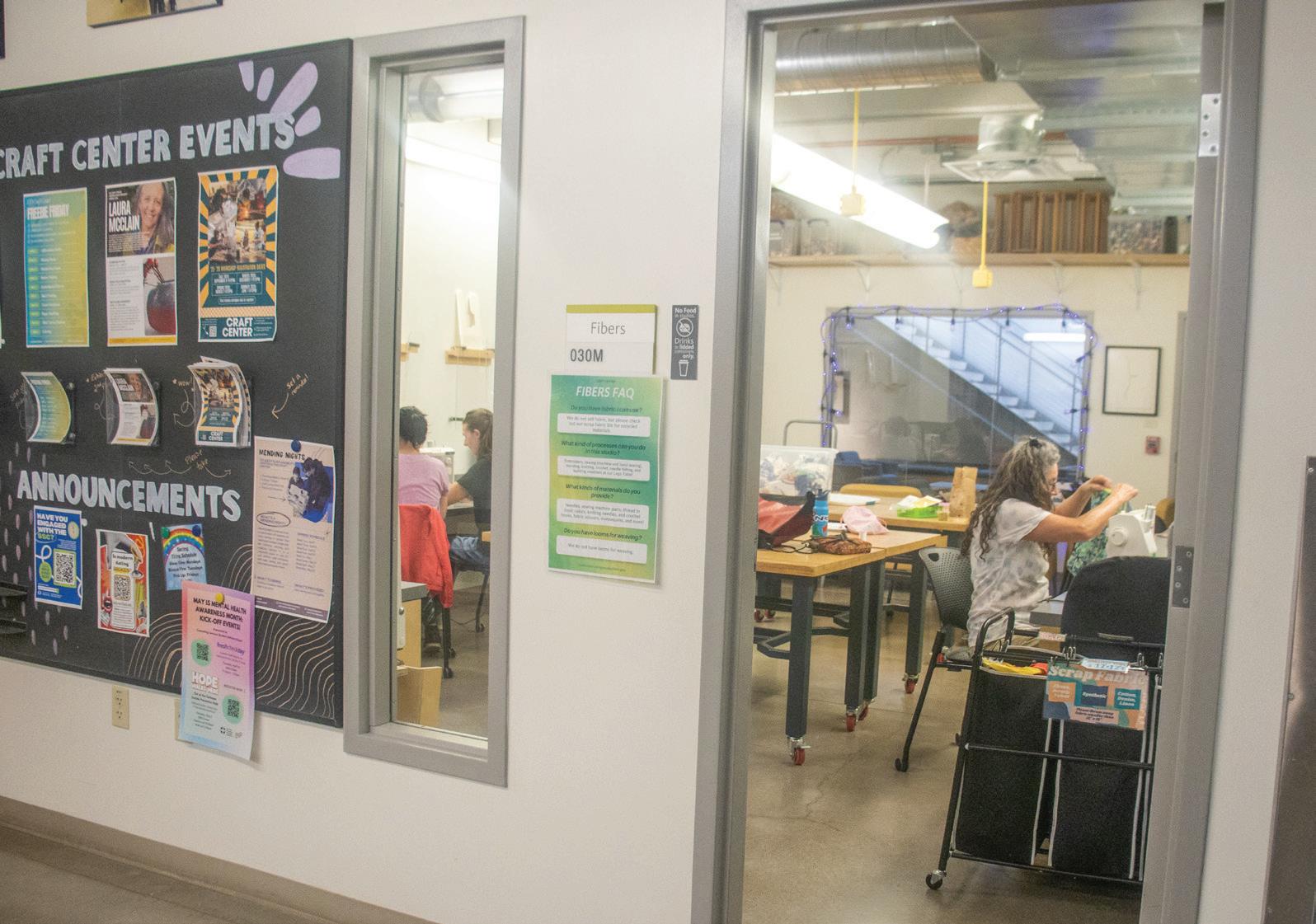
Room 030M in the Erb Memorial Union is the Fibers room in the Craft Center. Students are able to work on clothing and piece new fabrics.

ROMANTICISM OF HISTORY THROUGH FASHION
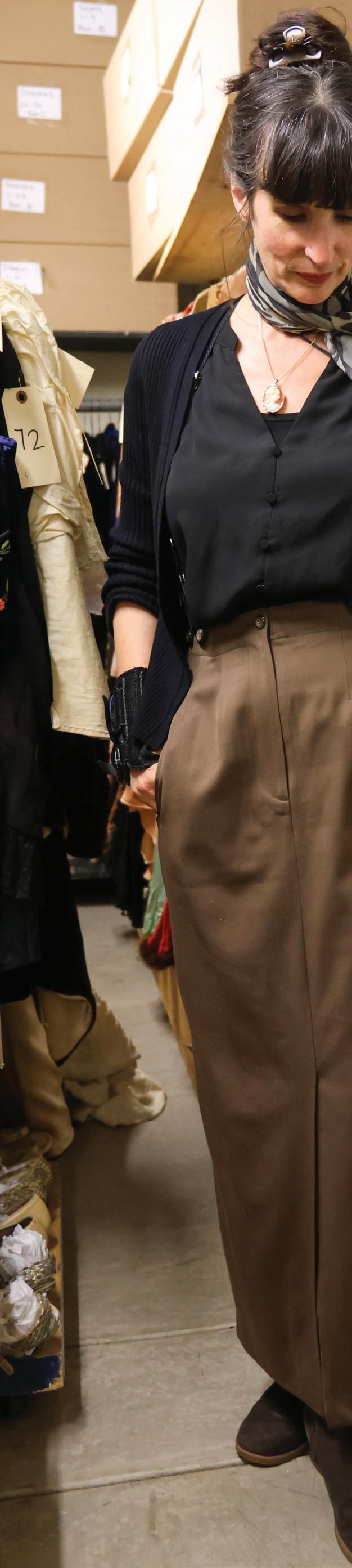
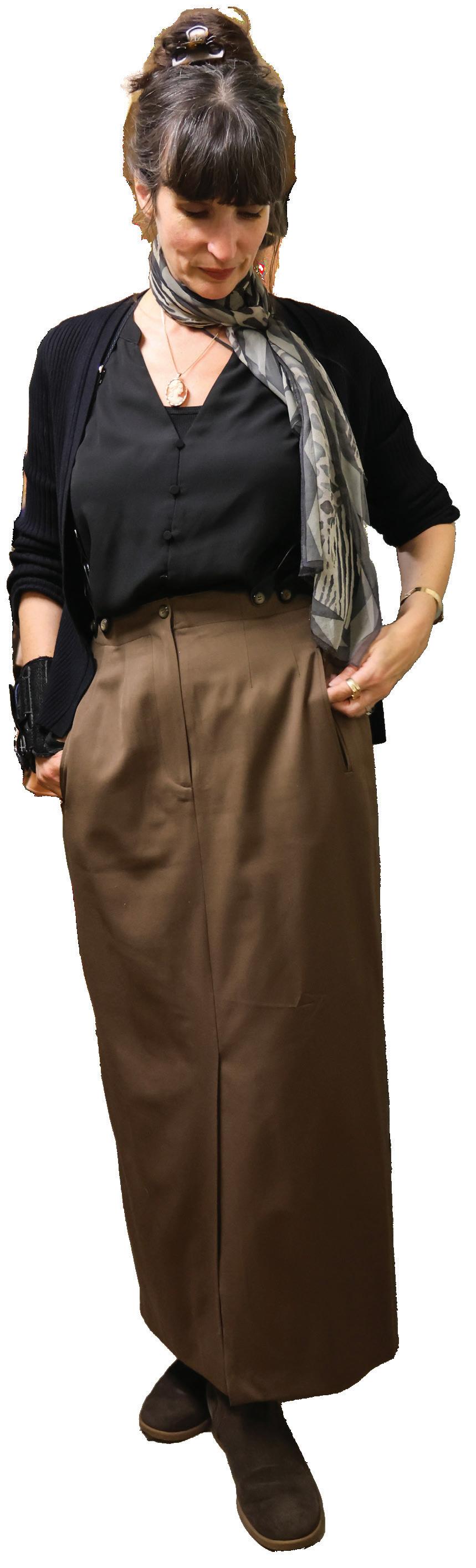
How our clothing choices sustain and reimagine stories of the past.
Written and Photographed by Fiona McMeekin | Designed by Asha Mohan
ecently, with the resurgence of period dramas like the newly released fourth season of “Bridgerton” and “Wuthering Heights,” historical fashion elements such as cameos and corsets have become popularized. Influences in film and media reflect interest in vintage fashion, which carries stories of the past into today’s culture. Examining the lineage and function of these garments reveals the stories they tell and why they continue to resonate today.
What does this return to historical fashion suggest about identity construction in a fastmoving internet era? Interviews with University of Oregon Costume Shop Manager Heather Bair and Art History Professor Victoria Ehrlich trace the history embodied in these trends. Fashion — as a function of identity and performance — continually reimagines the past in the present.
“You have to get far away enough from the strictures of that era to actually be able to enjoy the things that were part of it,” Bair said.
Fashion changes alongside culture, shifting garments from their original function.
Bair challenges the misconception that corsets are symbols of oppression. “They were just underwear,” originally designed to protect the body from the elaborate and expensive outer garment, which were rarely washed.
Bair points to Madonna wearing the Jean-Paul Gaultier cone bra in 1990 as a turning point in bringing undergarments into public view. A shift in women’s liberation moved away from hiding the body without sacrificing women’s respectability.
Cameos are another example of a vintage style resurfacing within a new generation. They were massproduced in the 60s and 70s during the flower-power era. Youth culture emphasized looser silhouettes and vintage style, including cameos, which offered a connection to the past.
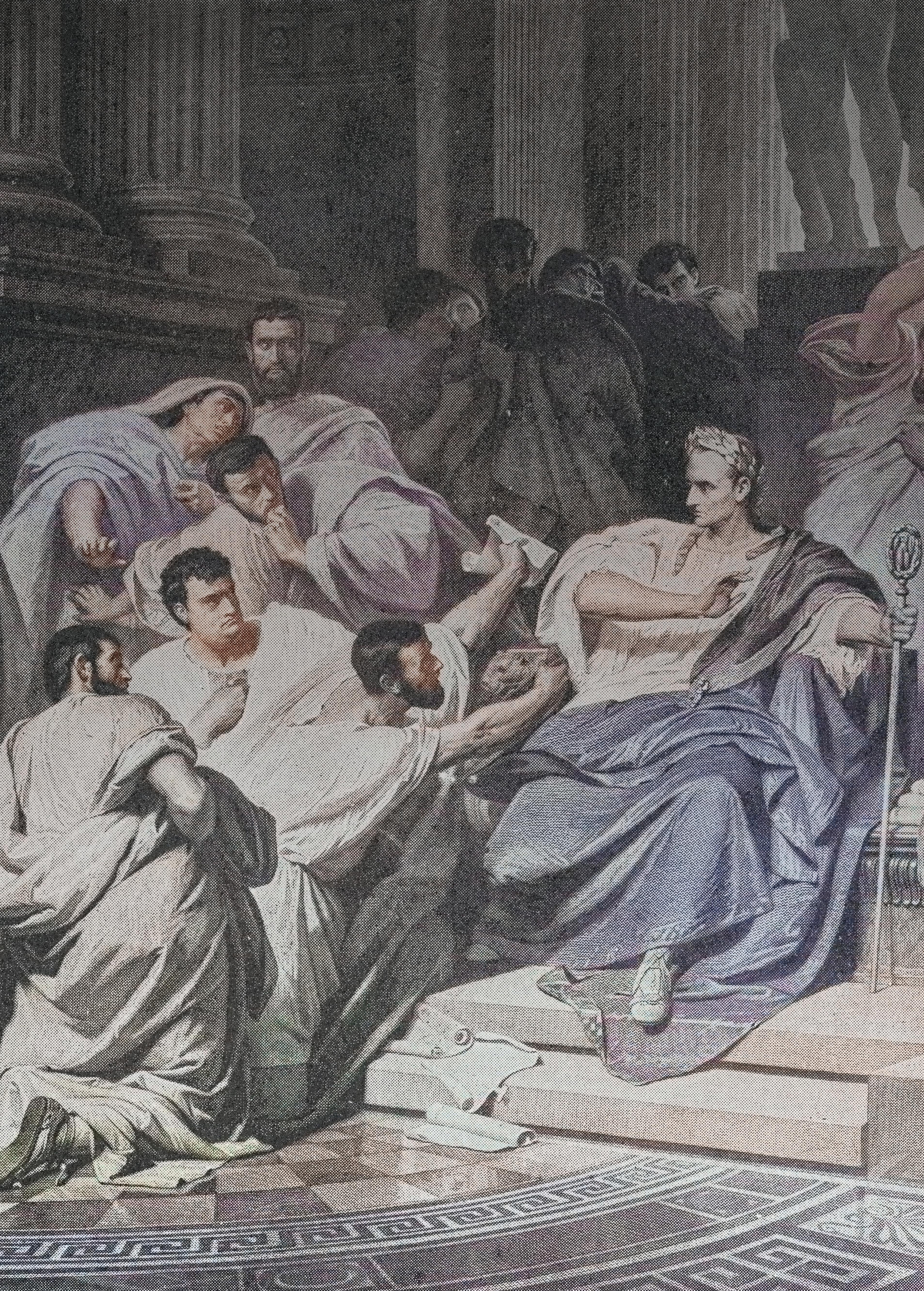
Looking further back to the 18th-century, the popularization of cameos began with pendants collected during the “Grand Tour,” when wealthy Europeans brought back renditions of famous artwork as souvenirs, signaling education and wealth.
Many cameos depict scenes from ancient Roman mythology. Though the Renaissance era was dominated by Christian values, these ancient myths were embraced for their moral lessons and for their role in shaping the social expectations of the current population.
The interest in Roman roots during the Renaissavnce stemmed from a change in Italy’s education system around the 15th century. Ehrlich said, “they’re being surrounded in their education by this epic poetry, these mythological heroes that often served as kind of moral exemplars... were now reimagining themselves as descendants and heirs of, you know, this flourishing moment of culture.”
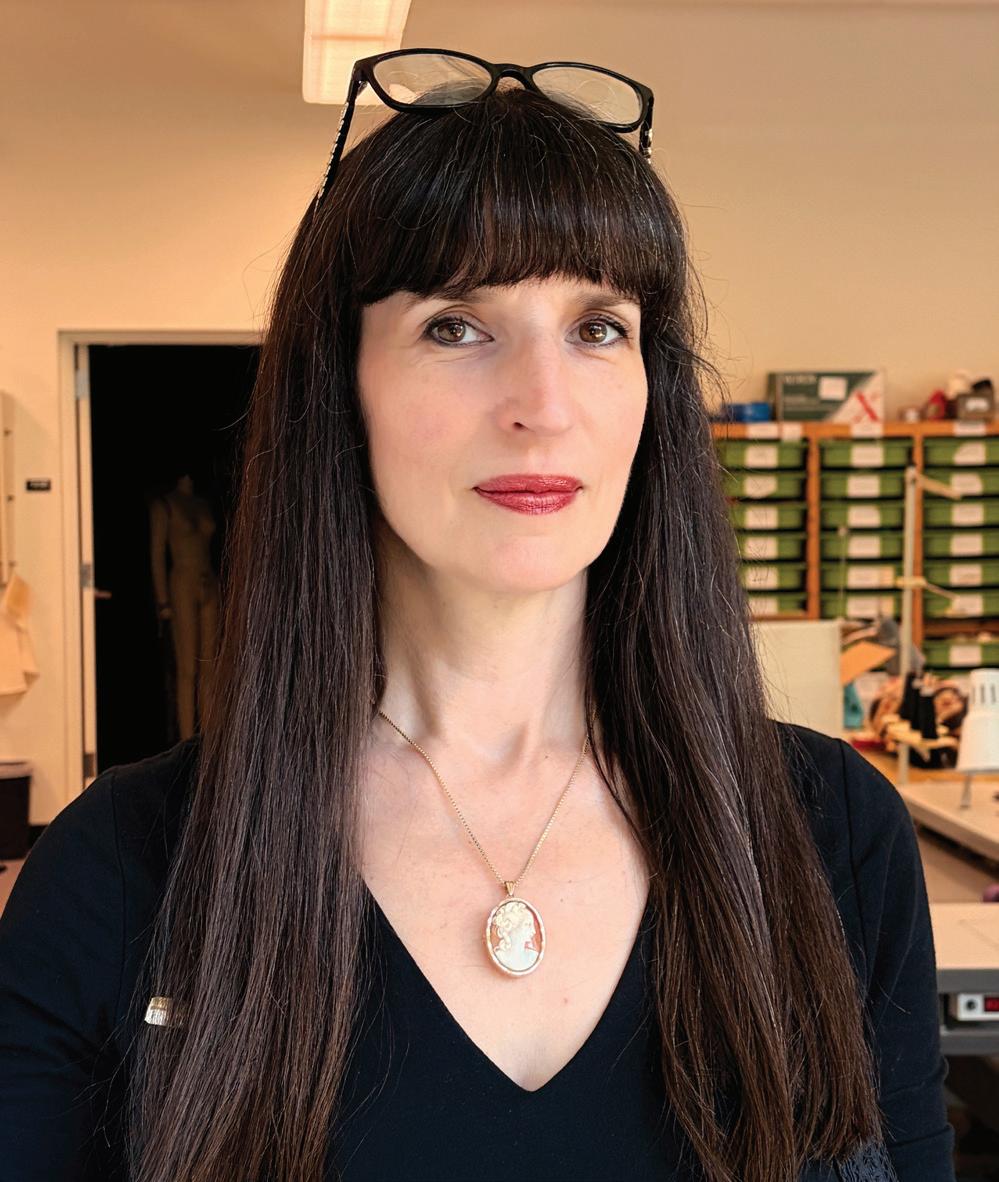
Connecting identity to those who came before us is nothing new. With endless access to visual media, today’s trend cycle has collapsed into a timeline where the past is constantly reinterpreted in the present.
Victoria Ehrlich Art History Professor “
“It’s people’s imaginations that are engaged, it’s why they want to wear these things, why they identify with them… taking what you think is beautiful from the past and bringing it forward,” said Bair.
There’s something about thinking about a past that you want to feel connected to that kind of helps you get through the modern moment. It is a bit of escapism.
Though clothing choices are always influenced by what is trending, they reflect a deeper desire of the times in history that these garments represent.
“There’s something about thinking about a past that you want to feel connected to that kind of helps you get through the modern moment,” said Ehrlich. “It is a bit of escapism.” Whether or not people’s clothing choices are historically accurate, fashion is a tool of self-expression, shaped by a fast-moving trend cycle yet rooted in a broader past. In reimagining history, garments facilitate world-building that helps forge a new connection to the past and, sometimes, allows us a break from the present.
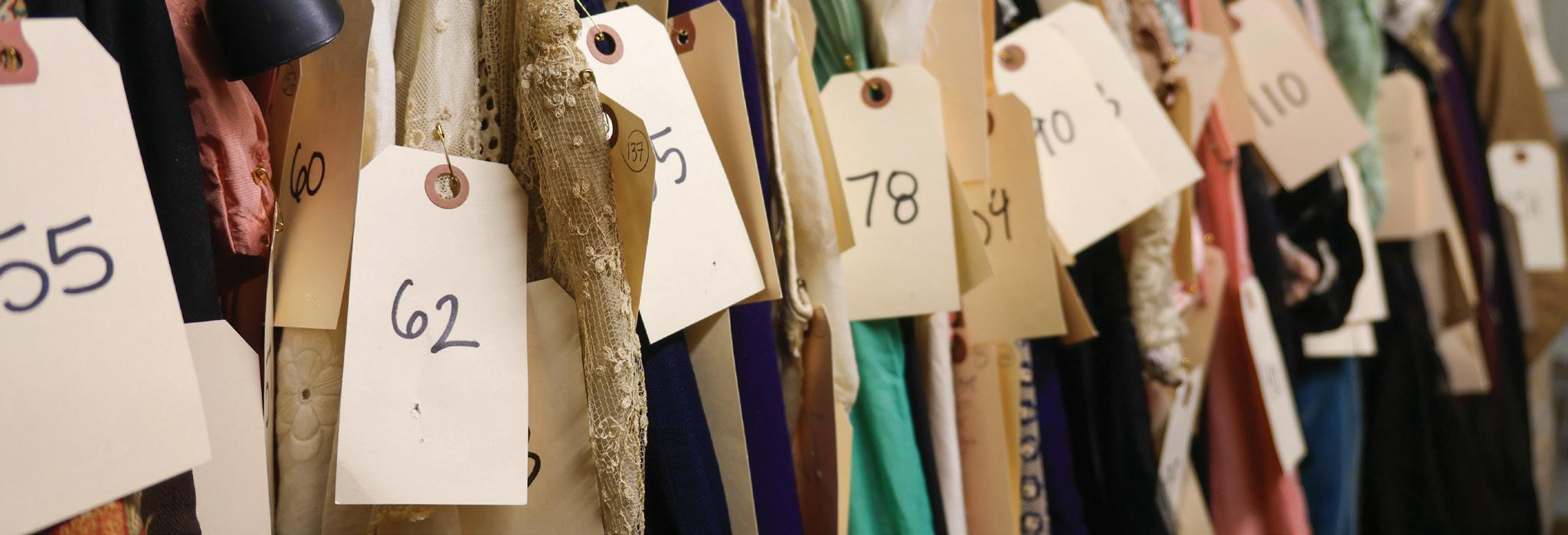
University of Oregon Costume Shop Manager Heather Bair said cameos, like the one she is wearing here, are an example of how fashion connects people to the past and engages their imaginations.
HOW TRENDS RECYCLE
The role of vintage clothes in today’s fashion.
Written, Styled, Photographed, and Designed by Magnolia Schnobrich | Model Lilly Harhay
As I dig through my closet, through the years of accumulated statement pieces, some of my grandma’s and mom’s old favorites, and some I hand-picked at second-hand stores and vintage markets, I can’t help but think about trends of the past and how they recycle. Styles of the ‘70s, ‘80s, ‘90s, ‘2000s, and 2010s are being repackaged, rebranded, and shipped to the next generation of consumers. In a society that praises fast fashion, my way of rebelling against the exploitative working conditions, toxic waste, and carbon footprint that go hand in hand is to go back to basics:
This 1970s inspired look features several thrifted items including an off white knitted shawl, white lace longsleeve, belt, sunglasses, earings and necklaces.
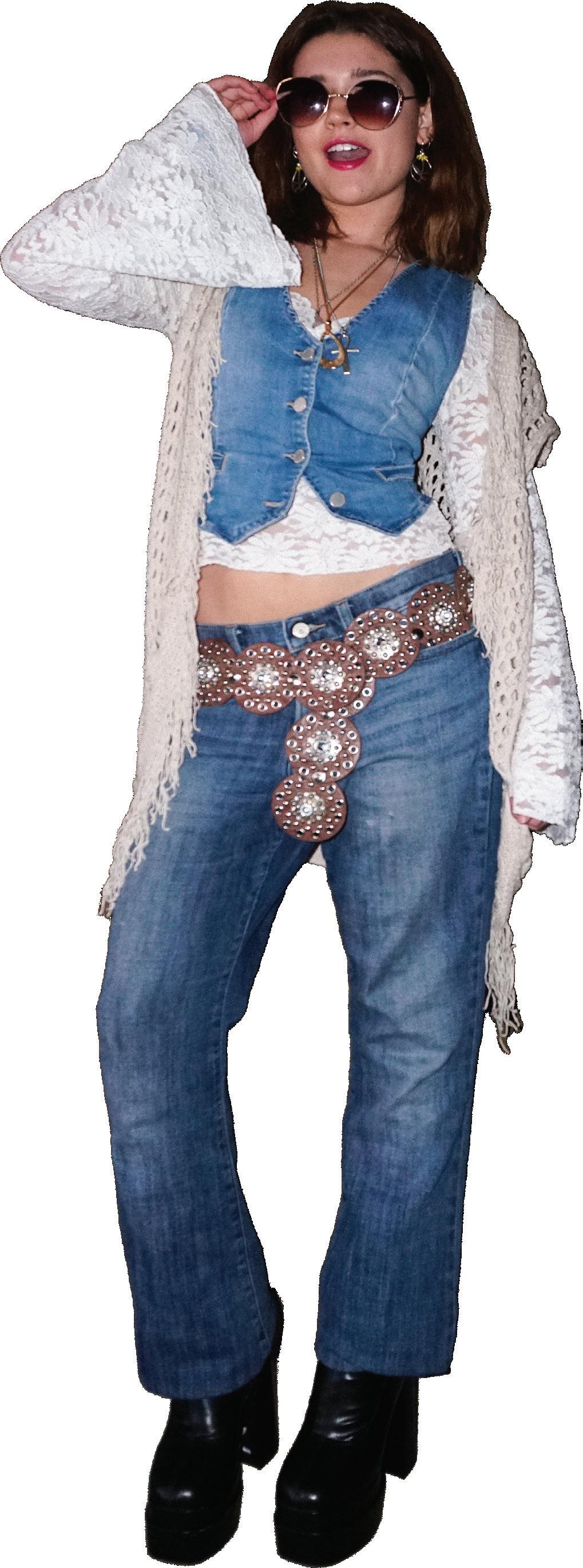
Reduce, Reuse, Recycle . Instead of searching on Amazon for “70’s boho Coachella outfit”, go to your local thrift store and find something that could be genuine vintage. Let that be your rebellion.
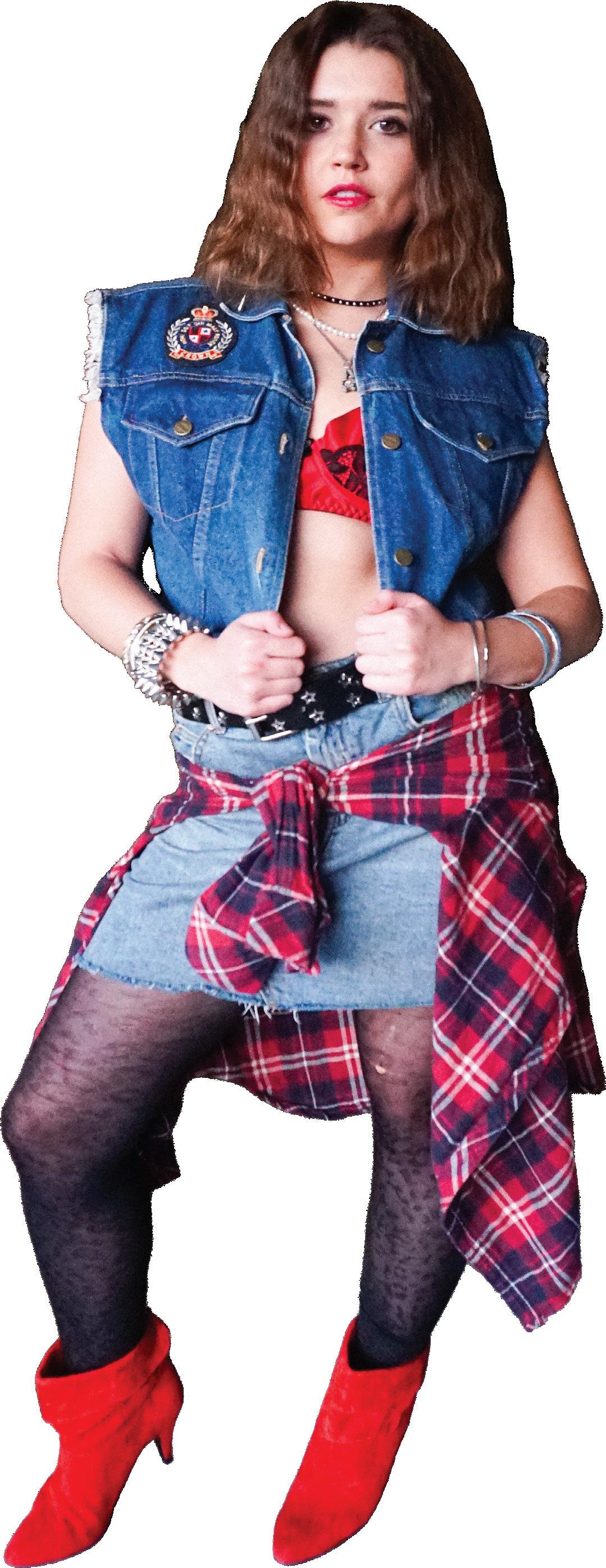
Pictured here is a 1980s grunge look with thrifted jean vest with a patch, bra, flannel and genuine vintage heels given to me from my grandma. Jewlery includes a necklace from my mom and bangles from my childhood.
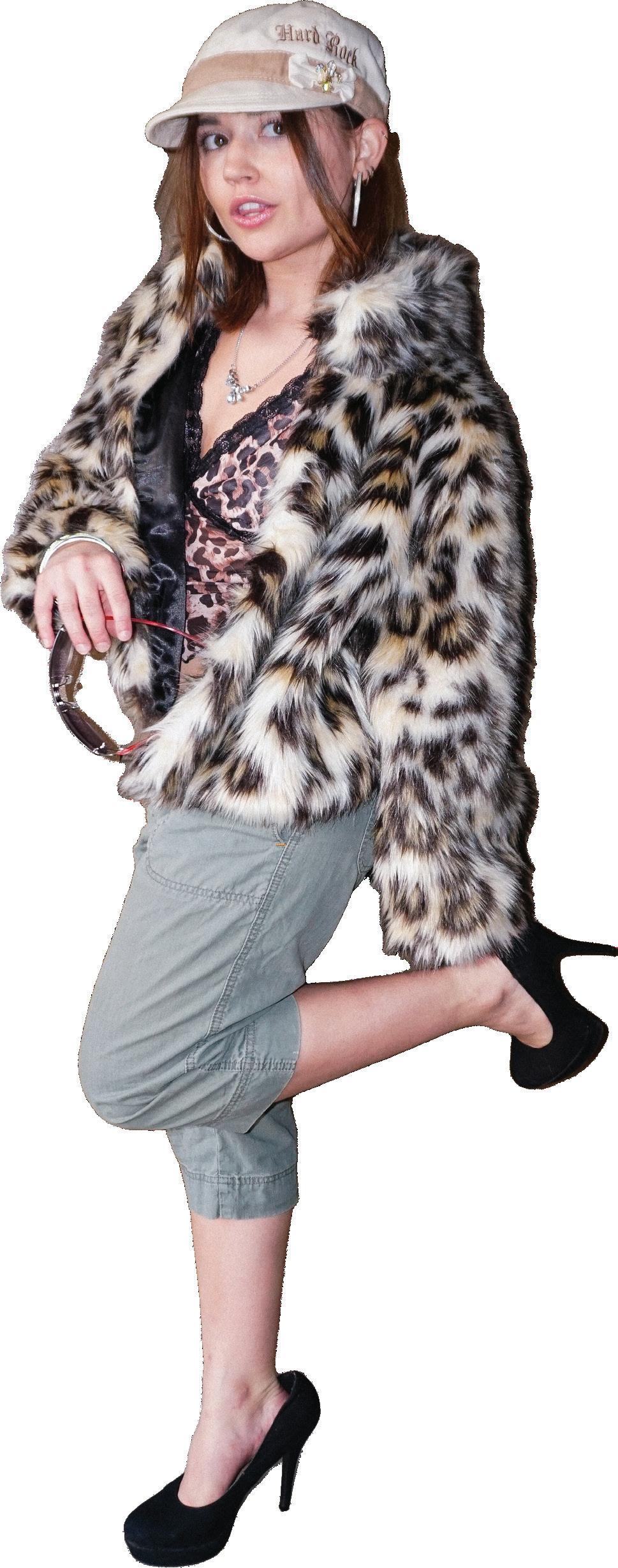
This outfit includes thrifted vintage Levi capris and sunglasses, a fur cheetah print jacket from an estate sale, black stilletos from my grandma and a hat from a vintage reseller. Jewlery includes a necklace and bangles from my childhood.
“
Don’t be into trends. Don’t make fashion own you, but you decide what you are, what you want to express by the way you dress and the way to live.
Gianni Versace Designer
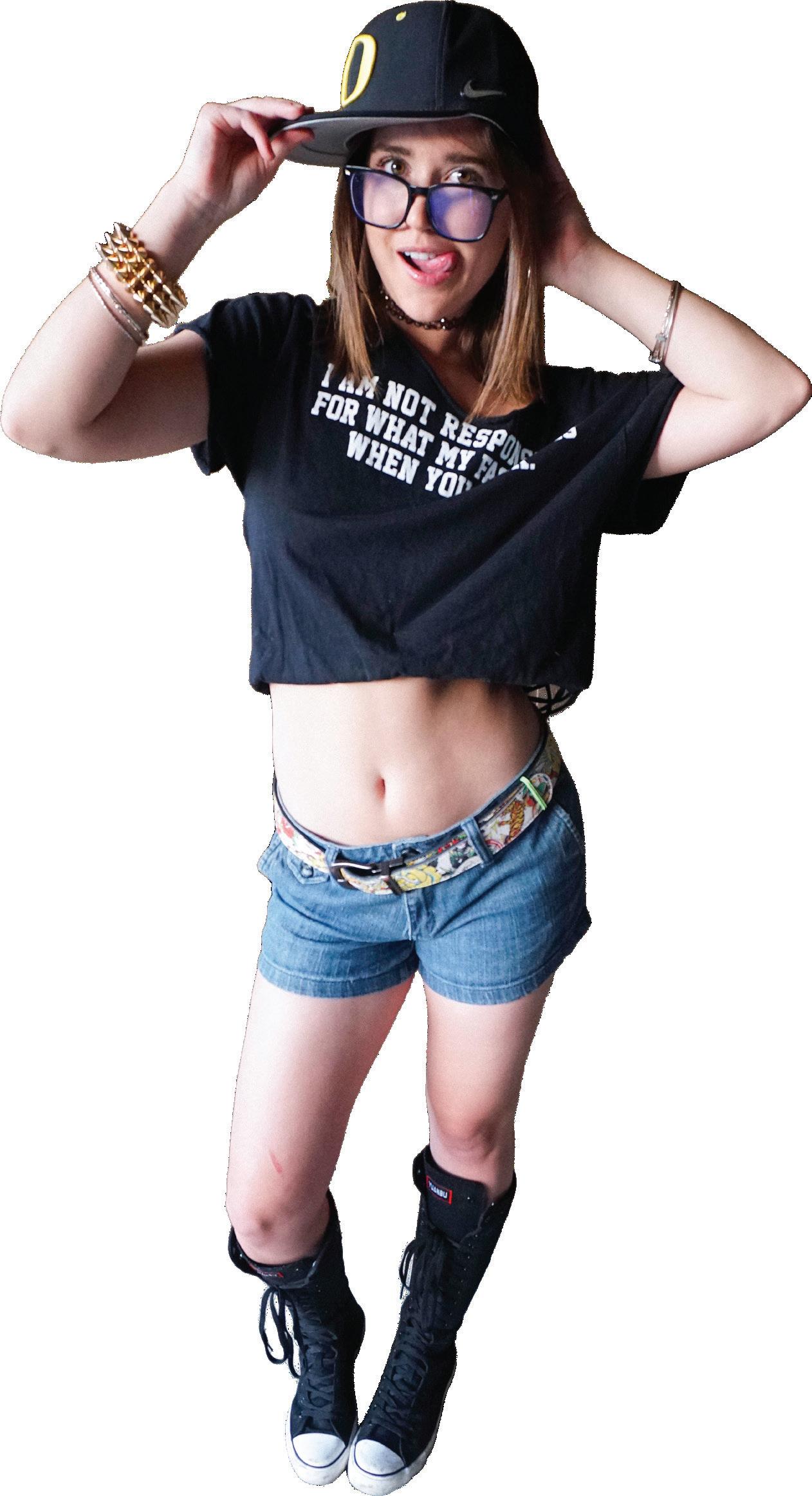
This 2010s inspired look includes a thrifted and upcycled graphic tee, micro shorts, and second-hand jewlery.
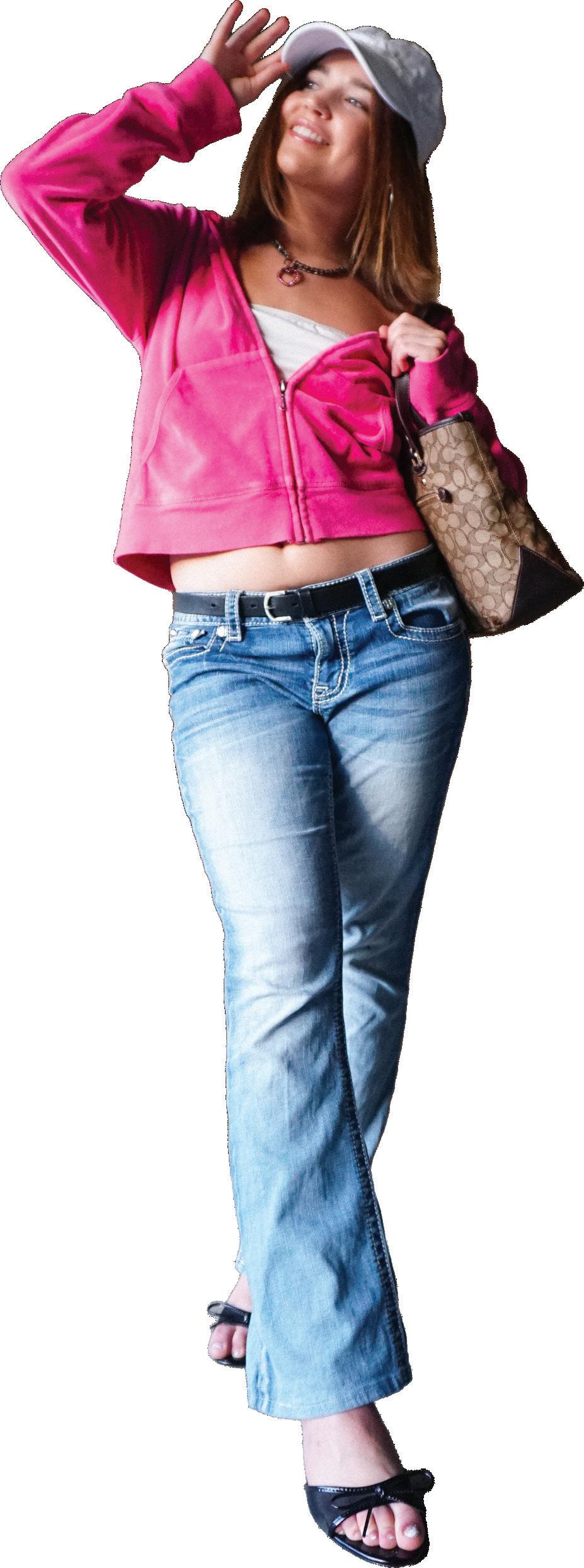
In this 2000s look, pictured are Miss Me Jeans from a vintage reseller, the top half of a thrifted bright pink Juicy Couture tracksuit, a thrifted Coach bag, a belt from my mom and a necklace from my childhood.