



• DISCOUNTS
• RAFFLES
• PRIZES
• VENDORS
• MUSIC
• GAMES


Happy 4/20 Friends!
I don’t know about you, but 4/20 is my fourth favorite holiday, behind my birthday, Christmas, and Halloween. It is a favorite for a number of reasons, like the increase in good vibes all around, the deals available, new cannabis products to try, and, of course, my intentional celebration of the holiday with a canna-buffet at home. Regardless of how you like to spend your 4/20, this edition of Green Eugene will only add to the fun.
The high holy day may be on a Monday, but that doesn’t mean it can’t still be a fun and food-filled holiday! Stock up on your munchies or place your order for delivery, make sure you have all the cannabis your heart desires for the day, and set the vibes with some good music or a great movie, and enjoy the stories and activities of the issue. I hope that the stories give you a little more cannabis history and pique your interest in Eugene-based cannabis-related businesses. Happy 4/20!
Be Blazed
Javay Frye-Nekrasova
Editor-in-Chief

Thank you for reading Green Eugene. Please note that our publication and site spotlights content about substances that are illegal under federal and state laws in certain places. We do not promote, advocate, or condone illicit drug use. All content produced by Green Eugene is for educational and entertainment purposes only for readers 21+.
Publisher & President
Eric Henry ehenry@dailyemerald.com
VP Operations
Kathy Carbone kcarbone@dailyemerald.com
Director of Sales
Shelly Rondestvedt srondestvedt@dailyemerald.com
Creative & Technical Director Anna CK Smith creative@dailyemerald.com

Editor-in-Chief
Javay Frye-Nekrasova
Lead Designer
Abigail Raike
Cover Photo
Alyssa Garcia
Writers
Annie Bostwick
Savannah Brown
Designers and Illustrators
Amanda Bell
Ryan Ehrhart
Eva Kuo
Sophia Leuthold
Asha Mohan
Gabe Vannelli
Photographers
Alyssa Garcia
Javay Frye-Nekrasova
Account Executives
Elliot Byrne
Torin Chevalier
Camcole Pereira
Ava Stephanian



















Written by Javay Frye-Nekrasova | Designed by Eva Kuo
recently learned that cannabis can impact how you hear music, which shouldn’t be shocking to me since I understand how cannabis heightens experiences, but I was shocked in terms of the ways that it impacts hearing music. I recently watched a TikTok video from Tessa420 that broke down the science behind how cannabis affects how you hear and feel music. Don’t worry, this is still a high rec and not a story on cannabis science, but it is a science experiment high rec.
When was the last time you truly felt the music you were listening to? If your answer is something along the lines of “a while ago,” then this science experiment can help change that. You’re going to discover which strains and music combos work best for you to feel the music. So, here’s what you’re going to do…

1.
Now I am not fully versed in the science of cannabis, so I don’t know if the method of consumption matters, but I would recommend smoking flower for the best results (based on my own experiments). Choose your favorite strains or truly get experimental and choose a strain based on the name that you think would vibe with the music you’re going to listen to.
2.
Once you have your flower, head back home to select your music. You can do whatever media format works for you (streaming, CD, vinyl, or even live). If you are struggling to choose music, I recommend exploring genres with more to them—think jazz, rock, or even Spanish guitar. I personally love jazz because it changes so much that it truly is an experience, but depending on your relationship with cannabis, that might be overwhelming for some people.
3.

Once you have the music selected and queued up, go ahead and enjoy your strain. I personally enjoy a good bong rip, but I have also had great experiences with joints and pipes. I recommend consuming your cannabis, and then, when you are done, turning on the music. Doing them simultaneously can create a distraction, which can dampen your experience of feeling the music.
4.
With your music playing and the high hitting, just relax and enjoy. Notice what new things you are hearing in the music and the way the music feels in your body. You can extend the session as needed by smoking more and switching up the music.
While running science experiments might not be the first thing you think of doing while high, I think it can be a fun way to really be intentional with enjoying art and not just being a passive consumer of music. This is also just a fun way to have a more embodied high. Connecting with the art of music can help you rediscover your love for a particular artist or genre, or even push you to explore new music, because you'll be hearing it in a completely different way.

Nestled in the Whit on 1st Avenue is a brown wooden building with bright-colored murals on the exterior—the home of Going Green Eugene. This may seem like any other dispensary, but it’s far from it. To start with, Going Green Eugene is familyowned and operated. In fact, if you’ve ever visited a Going Green store in Sweet Home, Grand Ronde, or Albany, you’ve experienced the family-owned dispensary brand of which the Eugene store is a part.
Going Green Eugene and Sweet Home are operated by Travis Pomeroy and his two brothers. Their cousins own the Grand Ronde and Albany locations. Going Green began at the Sweet Home location in the medical days and expanded to Eugene in 2020. Both locations still approach selling cannabis with a “medicinal first, recreational second” mindset, understanding that people are often shopping with both in mind. The family business aspect of Going Green doesn’t start with the brothers or their cousins; it starts in their childhood and youth, with a father who was heavily involved in cannabis culture, and a family member with cancer who explored cannabis to alleviate symptoms. “Cannabis has always been a part of our lives; we were raised with it being normal,” Pomeroy expressed.
The family and community oriented aspect of cannabis is foundational to Going Green Eugene. “In the ‘before times’ [before legalization], we came from a place where you were friendly, and you were compassionate,” Pomeroy explained. “That is something you had to have in order to establish and maintain these relationships, and that’s something that you have to have now.” Raised in the eighties and nineties, Travis and his brothers grew up in the

collective cannabis culture that was more than just a transaction—it was a shared experience. Your “dealer” was more like a friend than a stranger trying to sell you something. That’s what Going Green Eugene is.
“This culture has always been a wordof-mouth culture up until legalization,” Pomeroy explained, in context of how the culture of cannabis is baked into the training of its budtenders. Going Green Eugene’s staff is full of long-time employees; some, like Dee and Travis J. (yup, there are two Travises'), have been in the industry since the medical days. Another, Kris, has earned a spot on the Best of Eugene list every year since 2021. From Gen-Xers to post-Y2K budtenders like Jacob and Leah, the staff draw on decades of knowledge and diverse personal experience, while still regularly engaging with and learning from each other. “You learn this by doing it, and you learn this by being a part of it,” he
continued. As Travis and his staff train each other in this more relational and cultural way, they end up with a deeper understanding and, from my personal experiences at Going Green Eugene, sharper relational skills to help customers make choices beyond just the numbers and percentages of cannabis.
“I have found over the years, handing somebody a pamphlet that has the information on it and saying, ‘learn this,’ is probably the most ineffective way to actually have them learn it. So, you know, there’s a lot of dialogue, lots of that, and sometimes there is just enough information to force you to go look something up. It’s okay to say, ‘I don’t know, let’s find out together.’” For Travis, a budtender should be focused on meeting the needs of the individual, which is separate from customer service in the way it honors that old-school cannabis culture. “All of us are just passionate about the plant, and so [we]


are really passionate about learning new things,” he added. This desire to continually learn more about cannabis and the new products being made leads to budtenders who truly help their customers. “Helping people and helping them find what they need is also going to push you down these routes towards finding the information that you need for others.”
This approach to budtender training feels steeped in the pre-legalization era of cannabis culture. Conversations and compassion are at the center— recognizing that, while people need and want different things, everyone appreciates kindness (because let’s be real: no one was going back to the mean dealers in those days, unless they had no other choice). In an industry that is continually becoming more corporate and standardized, holding on to cannabis culture says a lot about budtenders
and dispensaries. And Going Green Eugene absolutely integrates the experience of cannabis culture into the environment itself.
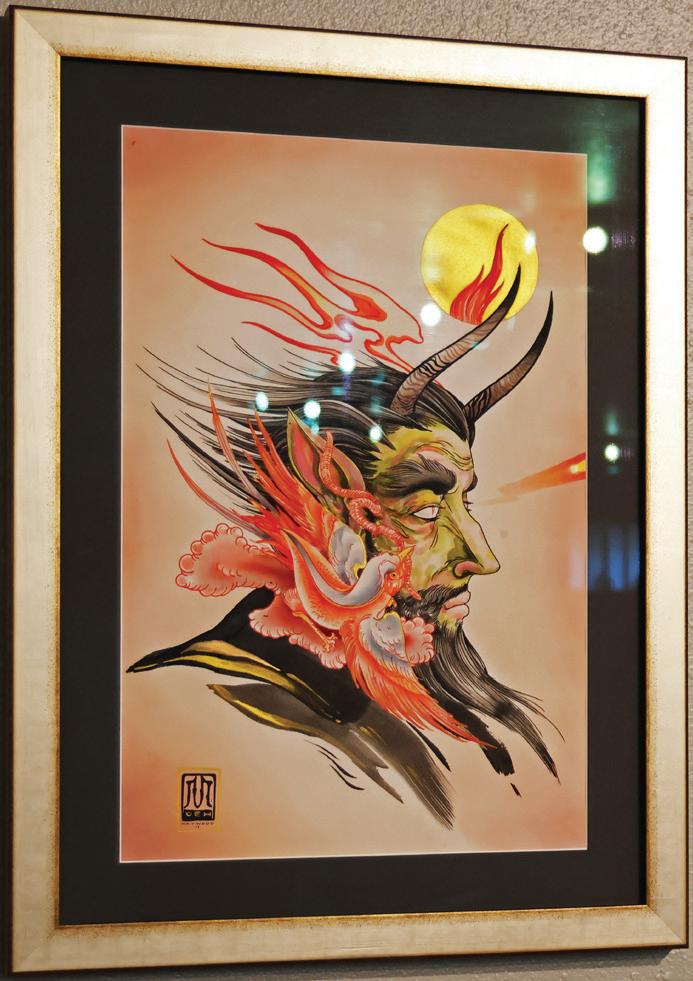
The dispensary’s exterior is adorned with murals, and the inside is equally filled with artwork, colorful and informative posters, and jars of beautiful flower on display. Travis and his spouse, Hayden, curate the décor and art on the walls, which is sourced from artists both local and from across the country. “Whenever I am out and about, I am hoping to find something that catches my eye or feels unique, just like the shop does to me,” explained Travis. The relationship between art and Cannabis can be seen across all parts of our culture and, while the pieces

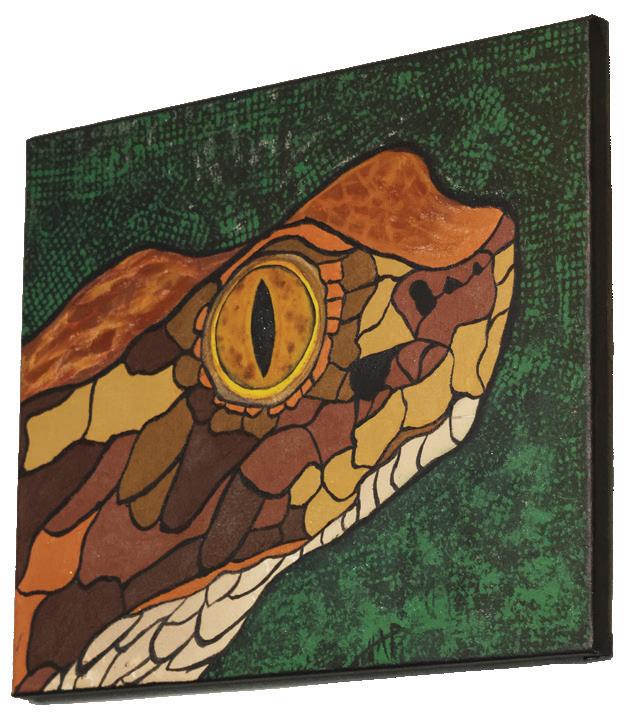
they curate for the dispensary differ immensely, the feel of the expansive art harks back to the collaged bedroom and basement walls often associated with “stoner” culture.
If you yearn for the cannabis culture of the olden days, before legalization, then you need to visit Going Green Eugene as well as the other locations. Cannabis culture is not immune to our ever-changing society, let alone the ways corporatization has impacted it, but there are still people and dispensaries that live in and celebrate it—Going Green Eugene is absolutely one of those places.
Written by Savannah Brown | Designed by Gabe Vannelli
In 1936, the anti-marijuana PSA film Reefer Madness hit the silver screen and depicted hordes of teenagers flinging themselves off of buildings and committing riotous acts of depraved sex and violence as a result of consuming cannabis — or as the movie called it, the “burning weed with its roots in hell.” In the 1980s, the DARE campaign blessed us with some political statements that cannabis makes you gay, and that famous PSA of a fried egg being equated to “your brain on drugs.”
Sensationalist anti-drug campaigns are as classic and all-American as your parents’ SUV, and with that, it’s important to keep in mind that millennials and Gen-Z also grew up with their fair share — with origins just as bizarre as all the rest.
We all remember back in the good ol’ days when we still had cable and were forced to watch commercials. In the mid-2000s, an ad that very much sticks out is the one with the waify white kid in his hoodie standing in a convenience store about to get up to some trouble. His voiceover goes, “They said meth would help me get through my exams,” as it shows him and his welted face pointing a gun at the cashier and everyone in the store, before the cops take him away. Text appears on a black screen that reads “they lied.”
Commercials with this format were everywhere in the mid 2000s, and if you don’t remember them, you’ve likely seen their pamphlet companions circulating online recently for how comedically intense they are.
These commercials all came from the Foundation for a Drug Free World (FDFW), a nonprofit founded in 2006 “that empowers youth and adults with factual information about drugs so they can make informed decisions and live drug-free,” according to its website. Along with PSAs, FDFW sells education packages to schools and other organizations. The packages include quizzes, documentaries, and worksheets.
Usually FDFW’s pamphlets, commercials and documentaries featured some teenager telling us how “they” (you never learn who) told him or her that certain drugs would make their life sunshine and rainbows before showing an image or montage of all of the depraved and terrifying actions that the drug caused them to do — ending the PSAs with the now
famous slogan “they lied.” For instance, there’s one with a basic 2000’s party girl saying, “they said if I did coke, I’d party all night. They lied.” Then, she dances on tables and crawls around on the bathroom floor. Another one is a preteen boy saying, “They said one hit wouldn’t hurt. They lied,” and then he just full-on dies. This is not dissimilar to the commercial with a teenage boy saying, “They said prescription painkillers were totally safe. They lied.” and then he dies. That one is important later.
For the marijuana PSA, “they said weed wouldn’t lead to harder drugs. They lied,” and I’m sure you could have guessed that it then slips into a viciously Y2K “you wouldn’t steal a car” piracy PSA-type montage, of a guy and his friends doing all sorts of vague drugs.
Though FDFW is still active today, it has come under fire for several reasons. Of course, the biased and fearmongering way of delivering misleading information without acknowledging or assisting with any of the socioeconomic circumstances that drive youth to drugs is a big critique it receives — but that’s the case with any antidrug propaganda.
The top reason why people shy away from FDFW is that it is run entirely by the Church of Scientology. That’s right, the religious group for which Tom Cruise is the poster-child, and has been riddled with controversies. For example, using donations as its own personal piggy-bank, being abusive towards its members and has a whole page on their website about how they are not a cult, is what is still telling preteens that coming down from a cocaine high “causes depression so severe that a person will do almost anything to get the drug—even commit murder.”
In many highly publicized instances throughout the aughts, schools that enacted FDFW posters and education angrily dropped them as soon as the institutions or parents alike found out about the Scientology ties.






The reason why all of this is of note is because, like everything, it all goes a lot deeper. Lucas Catton was the former president of Narconon, a drug rehabilitation center run by the Church of Scientology — though it positions itself as independent. After he left the church, Catton admitted in an interview that a large part of his job and the church’s mission is “categorizing all drugs as poisons. And making children become anti-medicine, anti-doctors, anti-psychiatrists.”
Having “a trusted source say that they shouldn’t ever take anything because it will kill you,” Catton says, is “all by design.”
Scientology believes that humans are spiritual beings called thetans, and that drugs, especially those prescribed by doctors, interfere with the spirit. Calling all drugs responsible for “the disintegration of the social fabric” and “the single most destructive element present in our culture,” The Church’s website also says, “The planet has hit a barrier which prevents any widespread social progress—drugs and other biochemical substances. These can put people into a condition which not only prohibits and destroys physical health but which can prevent any stable advancement in mental or spiritual well-being.”
It then goes on to say, “Psychiatry and psychology in particular treat Man as a ‘thing’ to be conditioned, not as a spiritual being who can yet find answers to life’s problems and who can improve enormously.” It concludes that “there is categorically no evidence that diseases such drugs claim to treat even exist — which is to say, it’s all an elaborate and deadly hoax. This is not ‘Scientology belief’ or ‘opinion.’ This is fact, and this is why Scientologists oppose “psychiatric abuse.”
At the same time, The Guardian did an investigation into Narconon, which found that employees subjected patients to drills similar to Scientology’s auditing process — which is essentially spiritual cleansing by way of rigorously
divulging and uncovering one’s deepest traumas. The Guardian writes that repetitive drills would go anywhere from five hours to several weeks, and “while in vulnerable states due to their mental health or prior drug use, that they would go into ‘hypnotic’ states, become paranoid or break down or suffer other extreme reactions.” These included patients leaving traumatized, suicidal, and their minds “shattered,” it continues.
So, in a wild turn of events, the viral PSAs we remember were about religious power and control all along.
The effectiveness of all media anti-drug campaigns is dubious at best. Studies show that “scaring people straight” with posters and commercials may have no effect at all in one direction or the other, and the correlation between drug and PSA consumers is difficult to prove. What we do know is that stigmatizing drugs does cause barriers for people who would otherwise seek treatment.
Despite this, anti-drug propaganda and campaigns are still alive and well, and so too is The Church of Scientology. Though the FDFW posters, booklets, and commercials have been rebirthed into genuinely hilarious short-form content and bizarre trips down memory lane, it does not make it less important to know and weigh the risks and benefits of any substance you may decide to put in your body.
In a similar vein, media literacy is the world’s last hope, and if these posters can teach or fearmonger anything, it should be the importance of staying diligent. Question your government, question your media, question the drugs you consume, do your research, and stay safe — and for the love of everything, don’t make any choices based on what Tom Cruise or L Ron Hubbard tells you to do. Because guess what? They lied.


by Amanda Bell
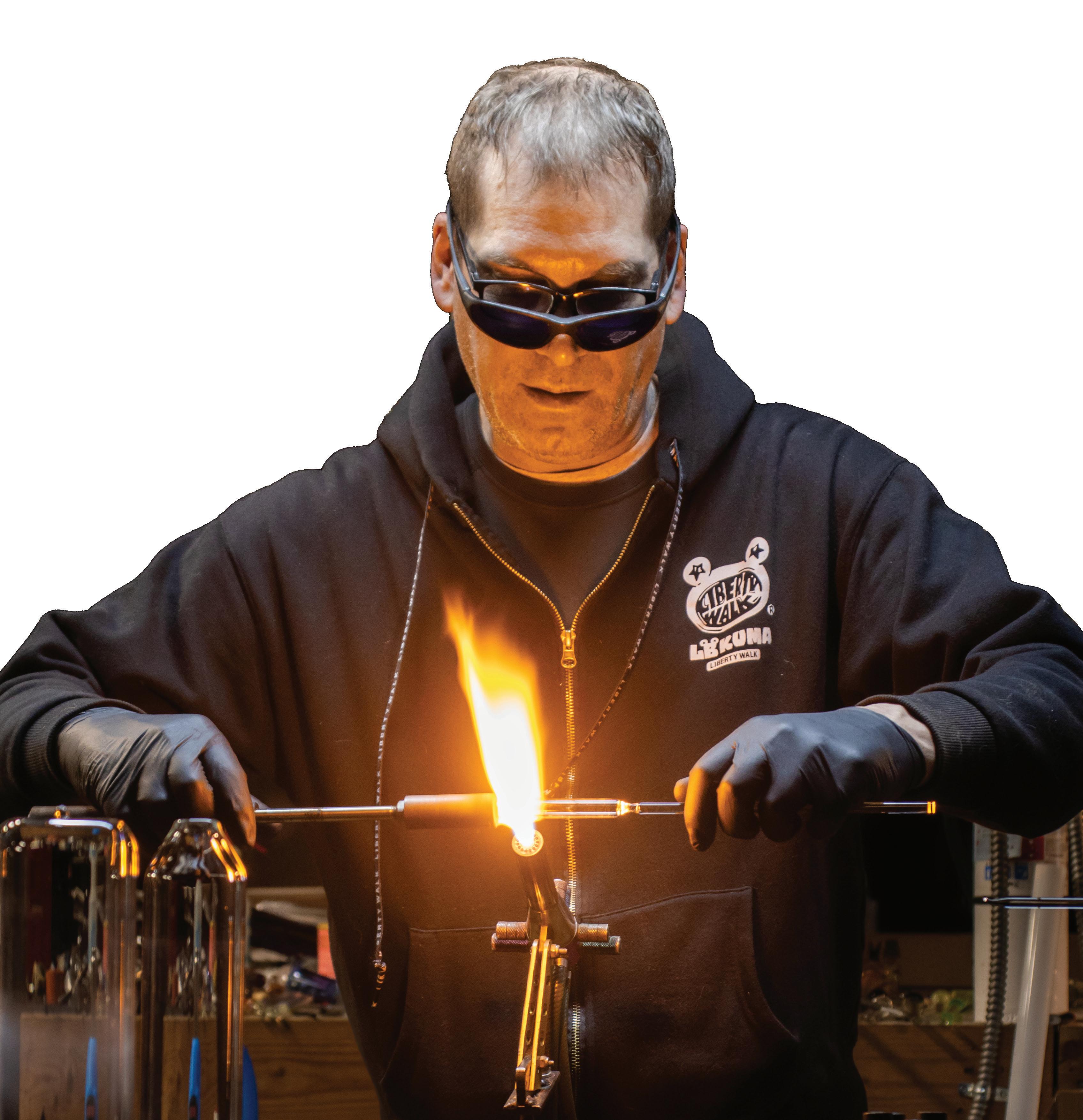
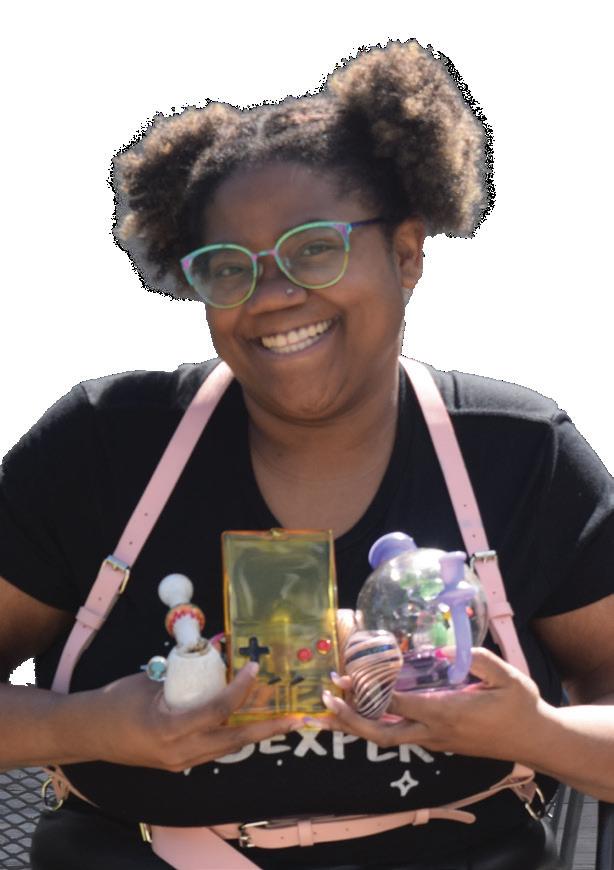
Written by Annie Bostwick | Photographed by Alyssa Garcia |
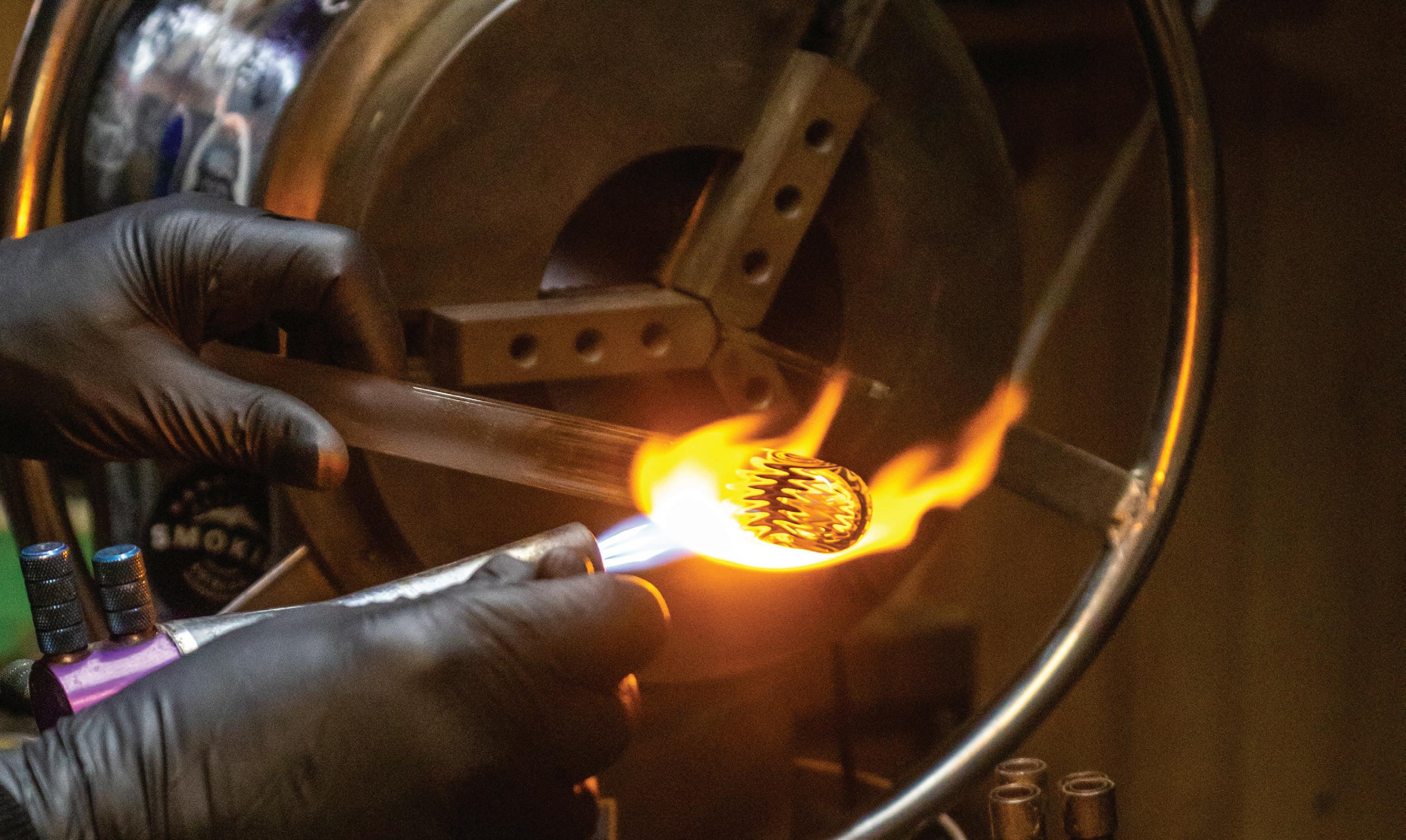
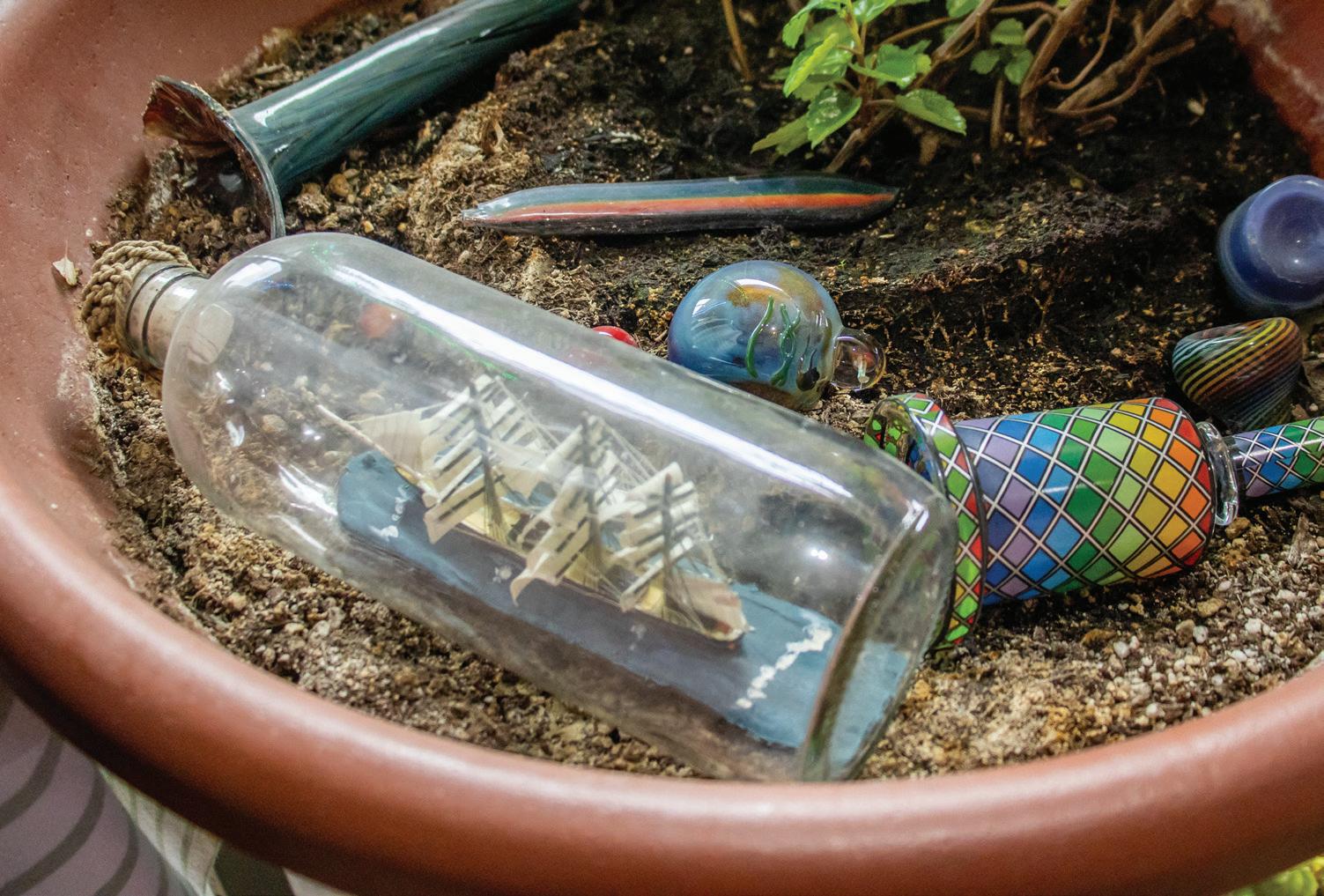
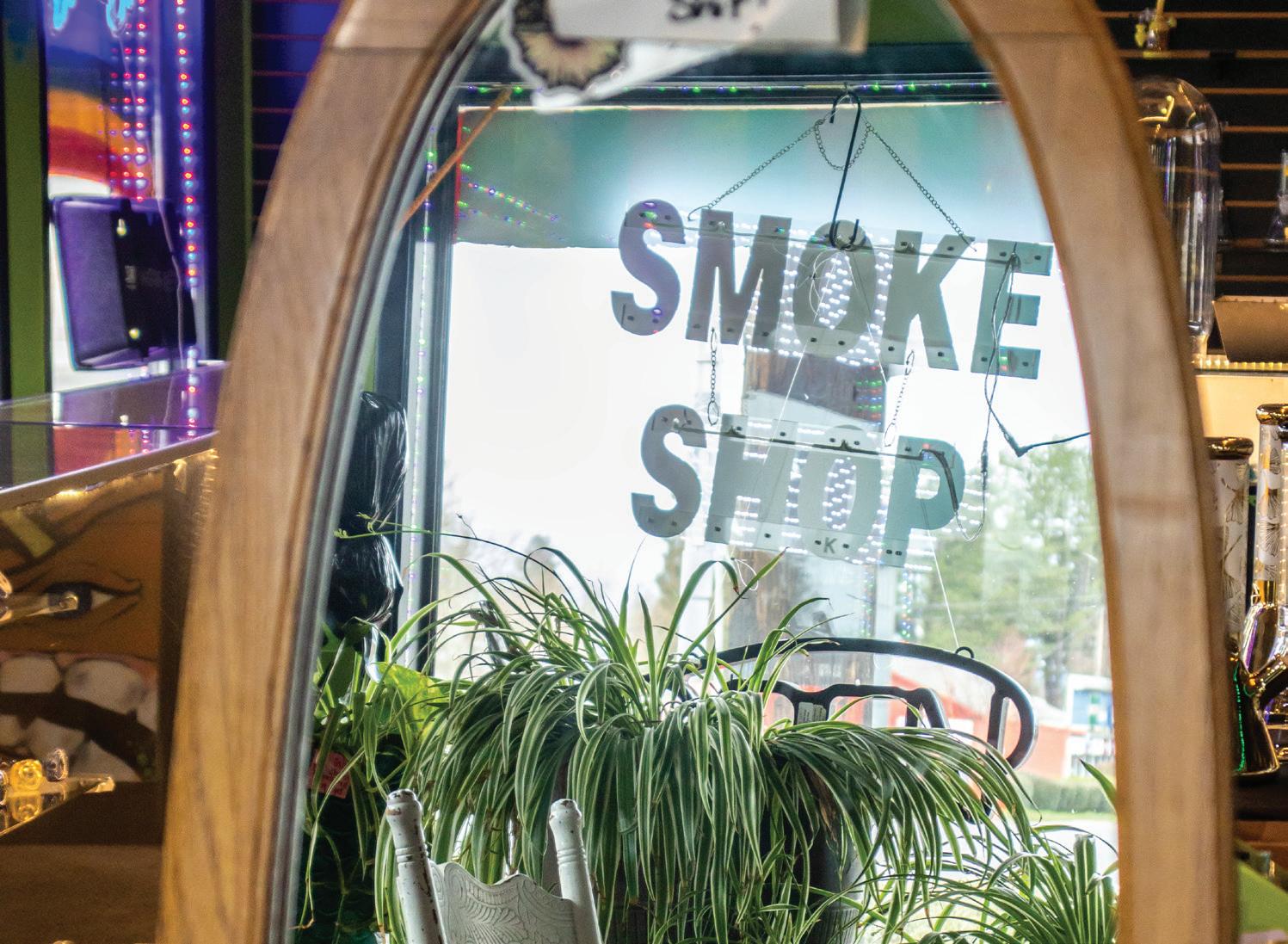
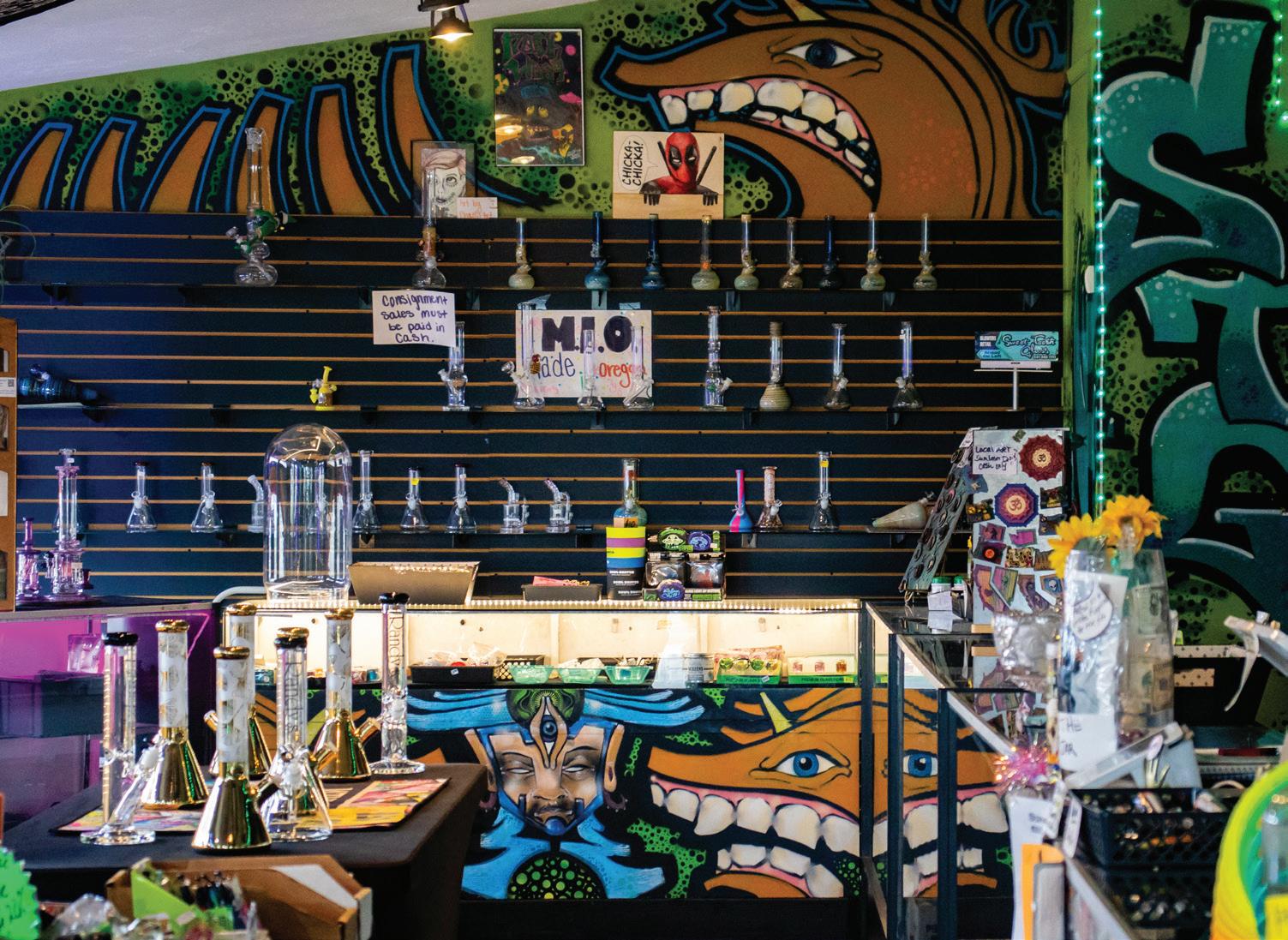
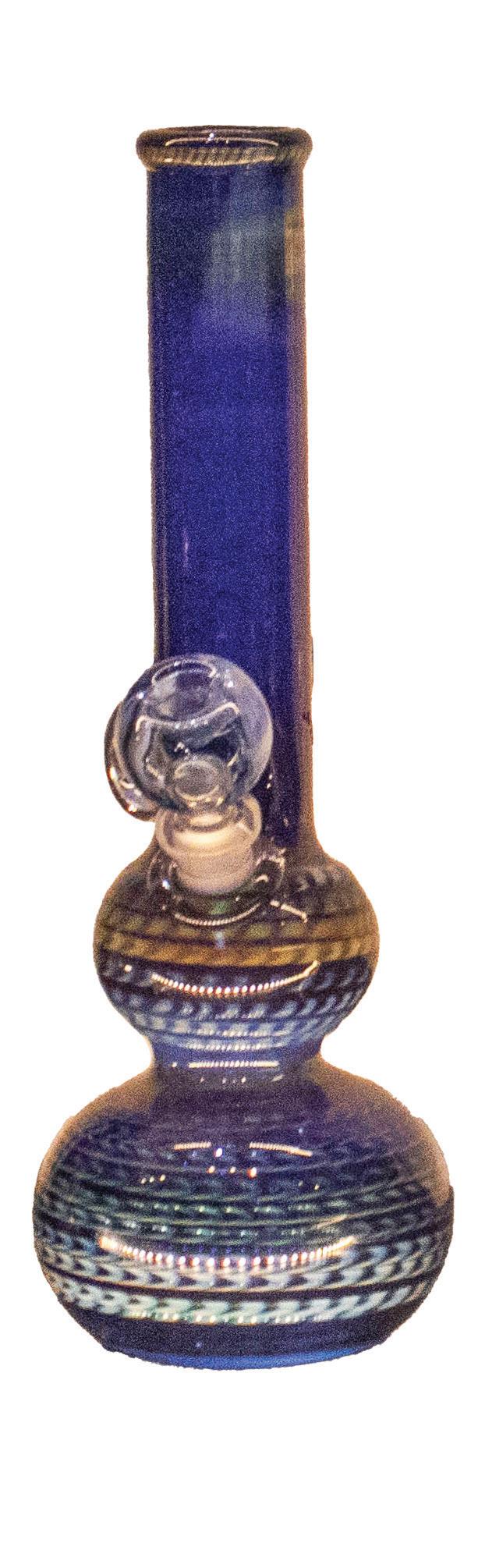
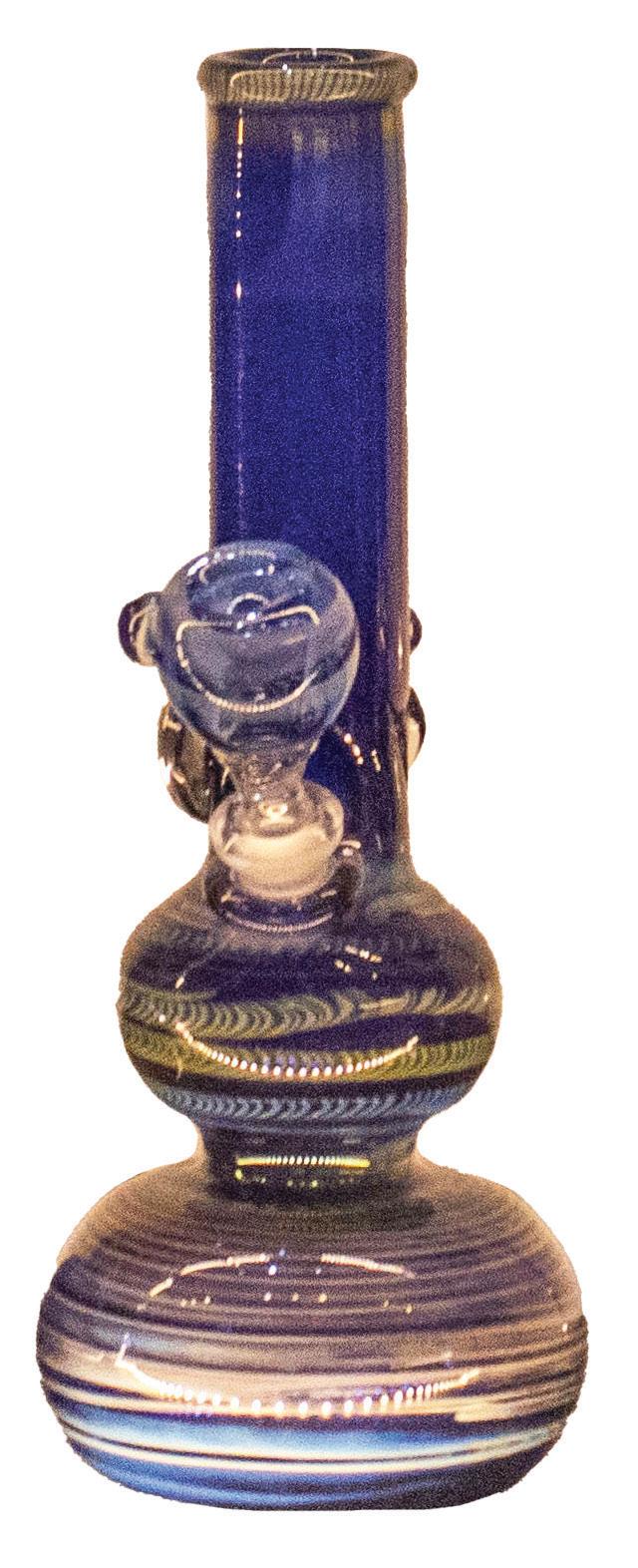
Anytime customers have walked into Sweet Tooth Glassworks, they can remember being greeted by an immediate atmosphere of comfort. Lush, green plants lined the windows, and an array of glass products glinted and glimmered behind the counter.
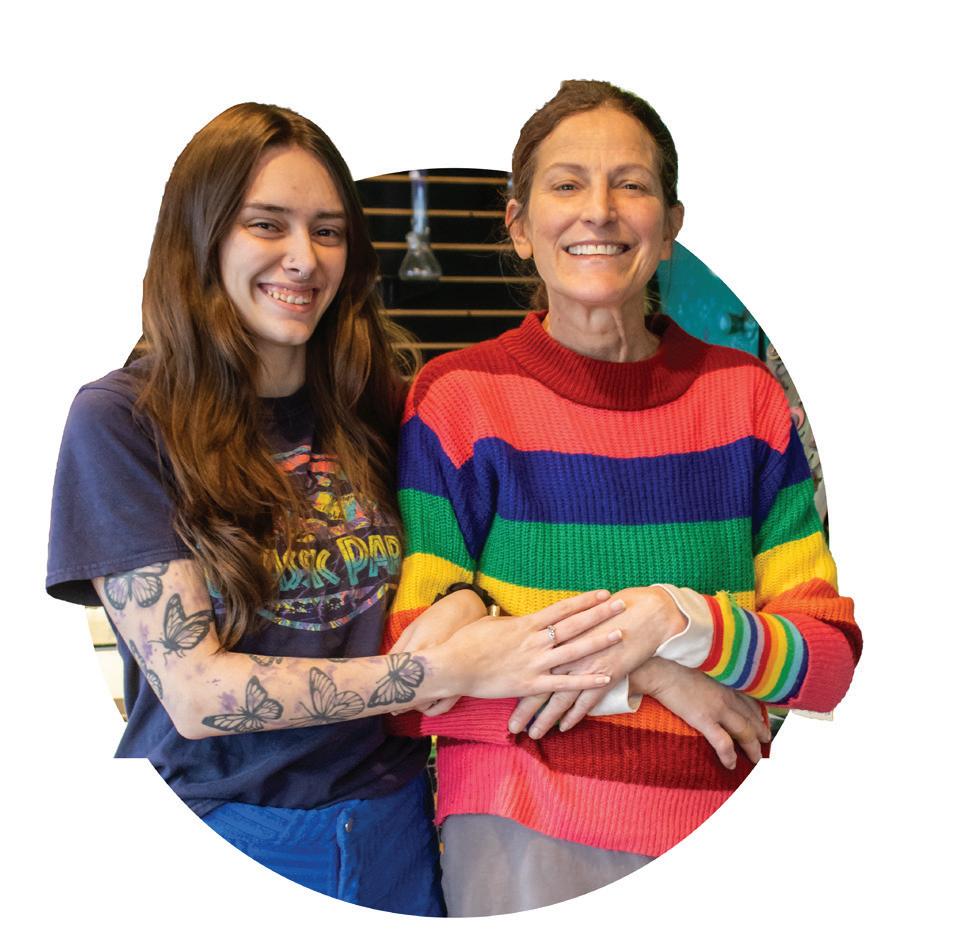
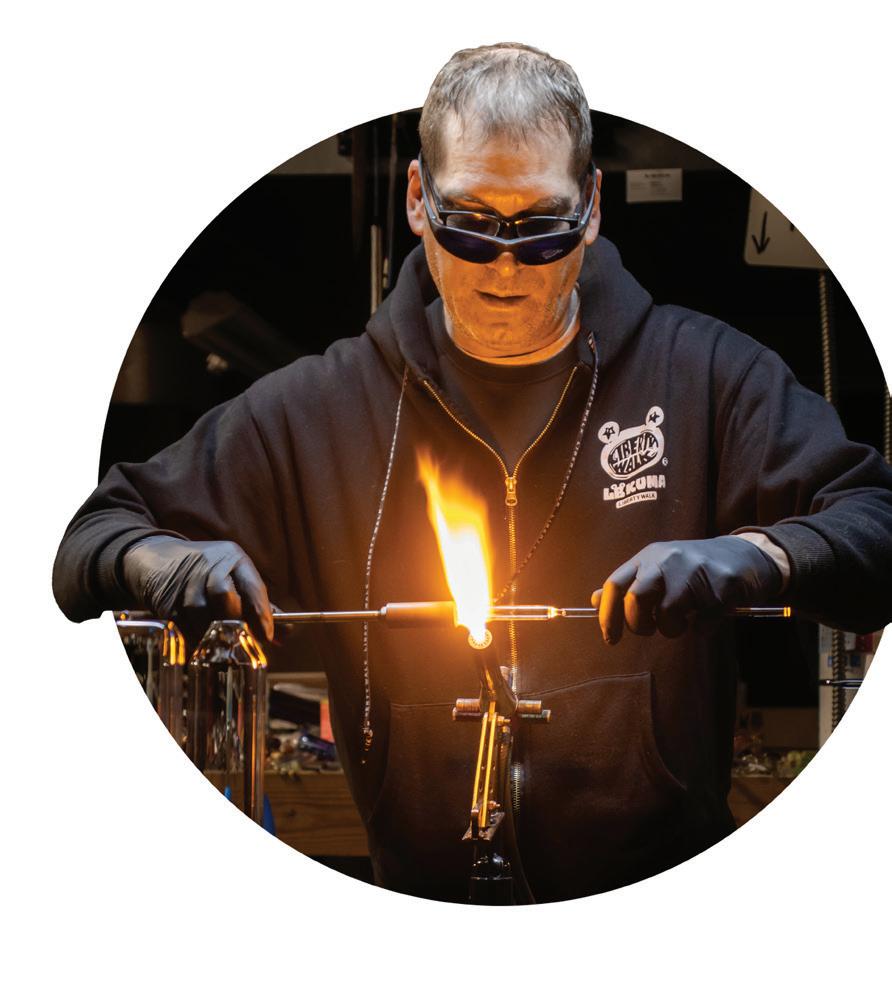
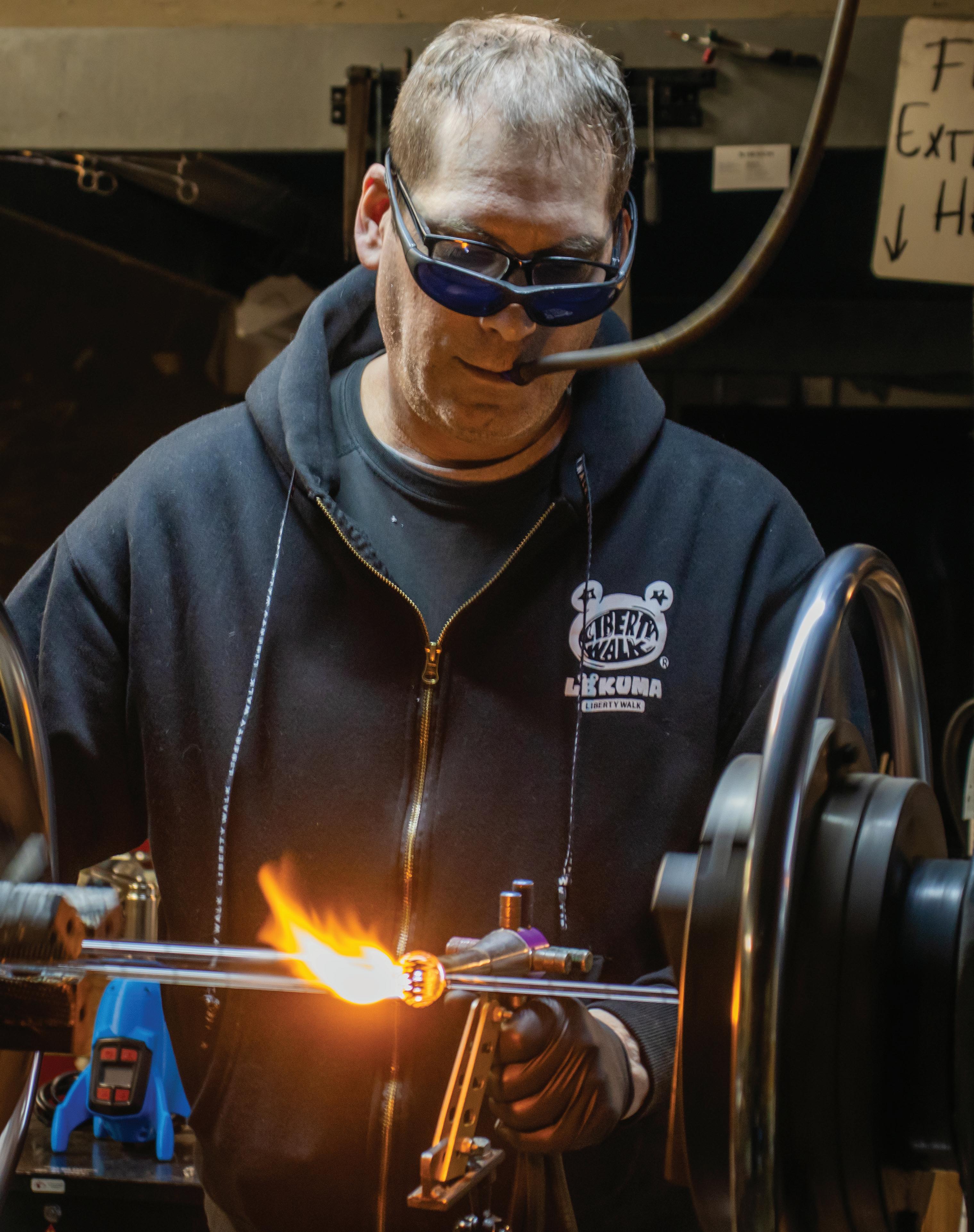
They might have met Tucker and Hazel, two golden-haired dogs that love to peek through the short gate dividing the back office from the storefront. They might have bought glassware from Jonathan Killman, an artist who has worked out of Sweet Tooth’s studio space for the last eight years, or they might have been drawn to the store by social media content made by Mia Madsen.
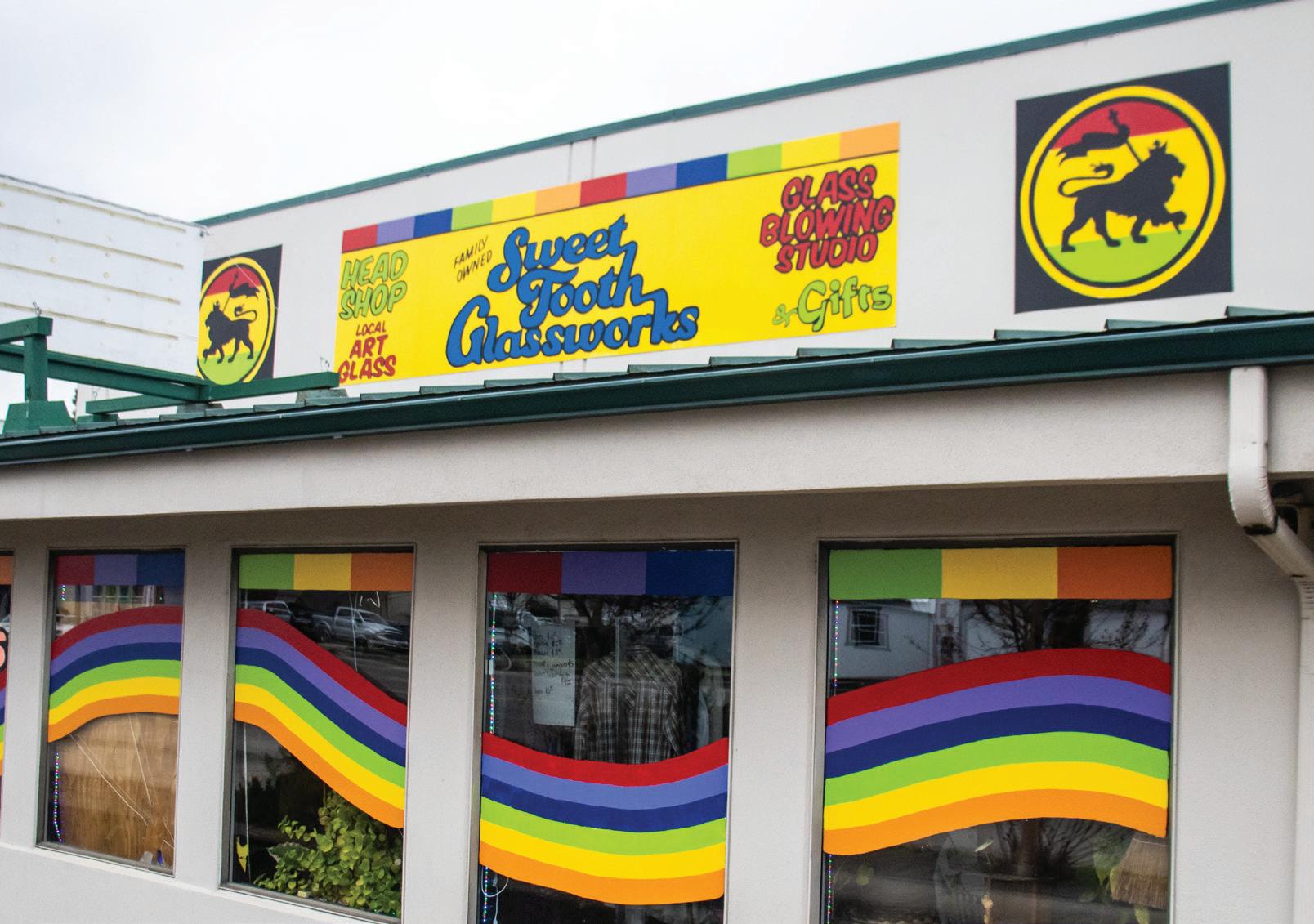
For over a decade, Sweet Tooth Glassworks in Eugene has built a different kind of legacy. In an age where it’s possible to have anything and everything delivered to your doorstep with the click of a button and in a few short days, Kathie Chapman, the force behind Sweet Tooth Glassworks, does not
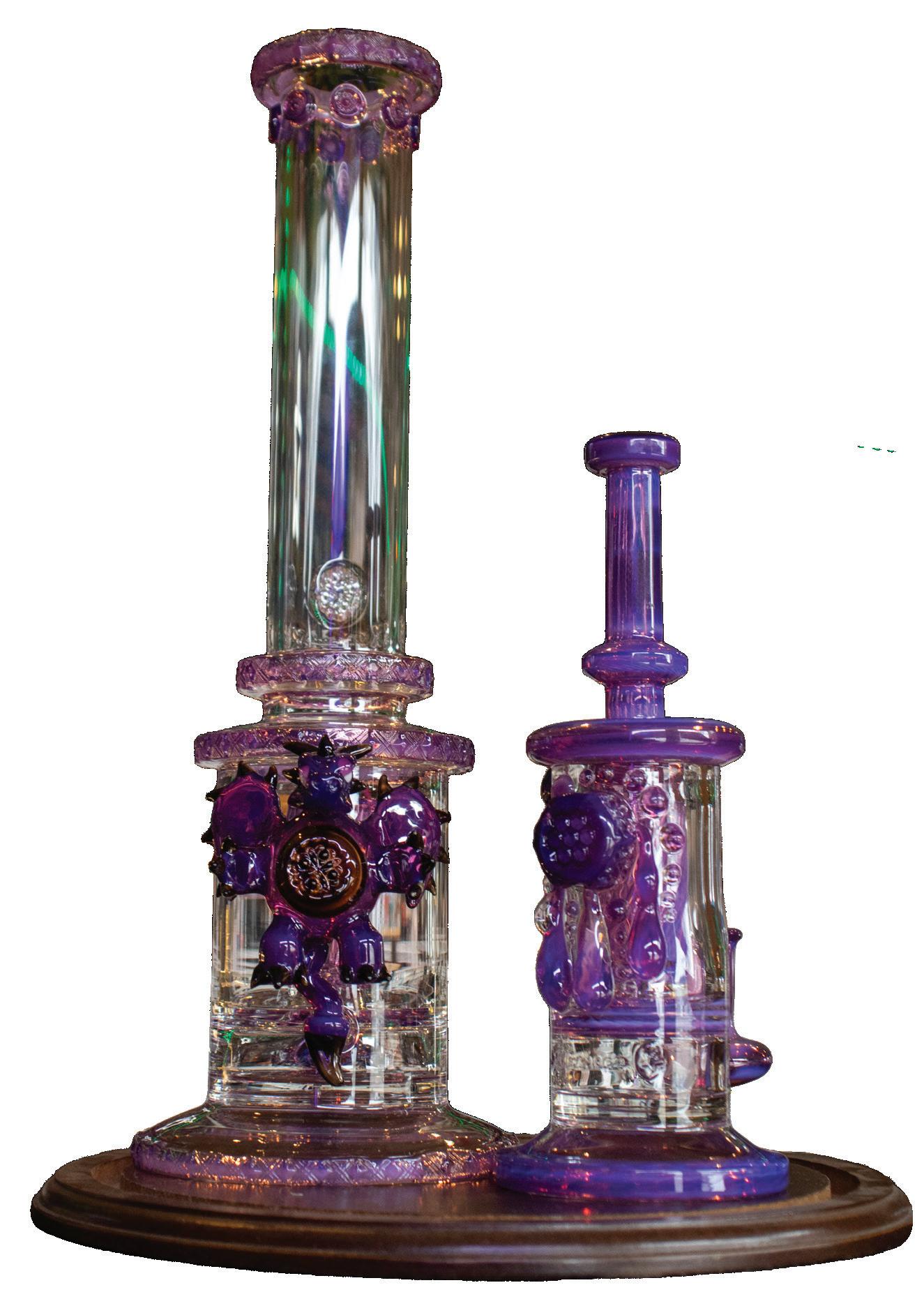
underestimate the effort and willpower it takes to operate a small business and creative minds.
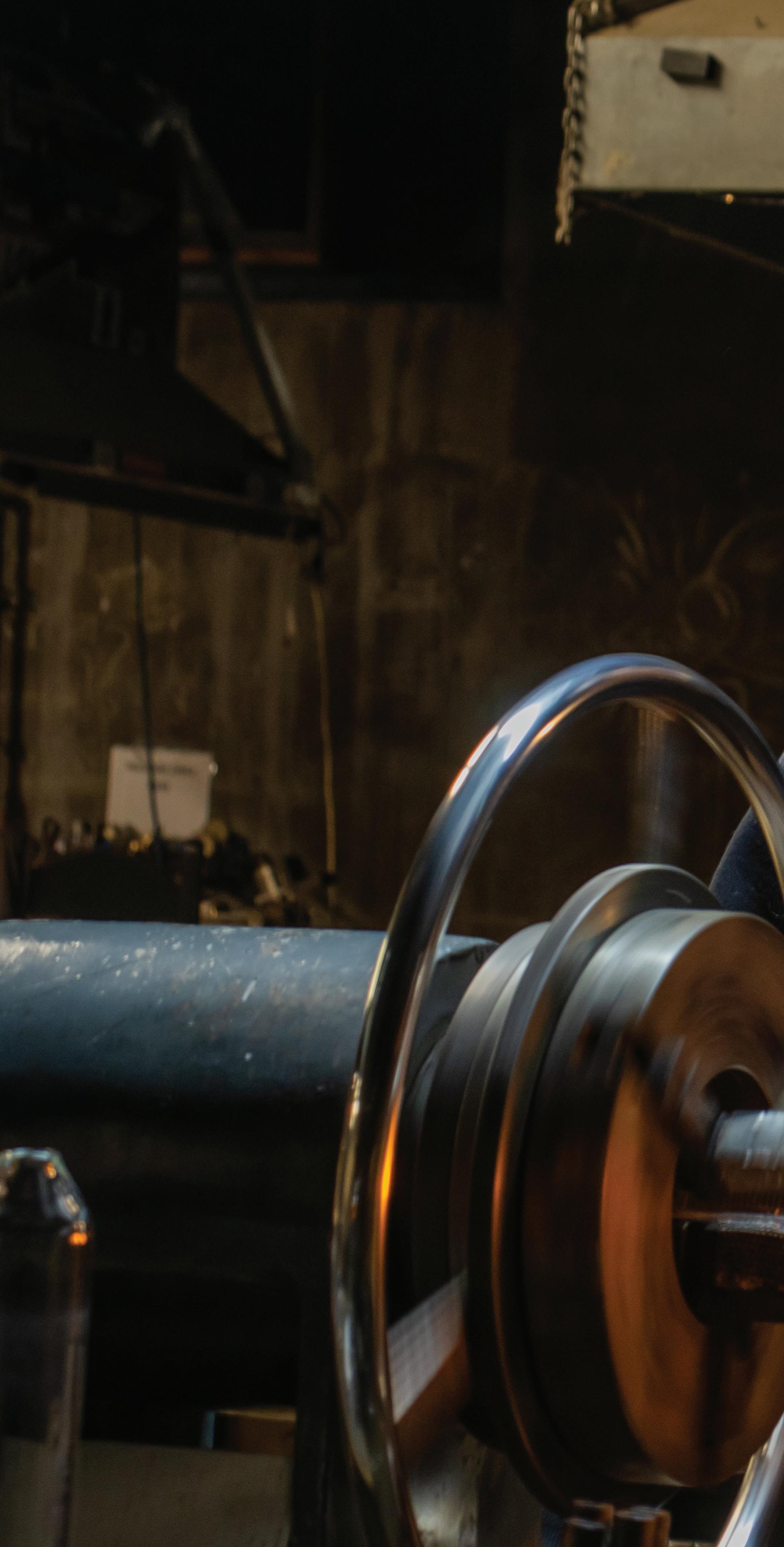
Sweet Tooth began in Cottage Grove, Oregon, when Chapman’s partner, Chris Baker, learned glassblowing from an old acquaintance and continued practicing his art in their garage. It wasn’t long before their business started to grow. They moved from the garage to a horse barn converted to a studio, and eventually found their home on W 11th in Eugene. At the end of April 2026, Sweet Tooth Glassworks will close its doors for the last time.
While this closure marks the end of an era for Sweet Tooth Glassworks, it is not an end to the connections that Chapman has forged amongst the glass-blowing community in Eugene.
“I guess I’m going into it just trying to be proud of myself and the community that I built and the connections that I made and the people that I connected together just from being in this building,” Chapman said.
“You know, it’s very much a family and a community I’ve always wanted to support.”
In 2015, Sweet Tooth Glassworks paused their production line and opened their studio space to independent glass artists for rent. Since Baker’s passing in 2021, Chapman has found other means of bringing artists and customers to her doors.
“That was a hard pivot, and then I started meeting other glass blowers and buying from them; we started renting spots,” Chapman said. “[It] just kind of evolved into something different.”
Chapman admitted she wasn’t particularly interested in the glass industry, but persisted anyway, inspired by the talent that surrounded her. “And this industry is kind of notoriously, um, not business-minded,” she said. Chapman has worked to bridge the gap between creativity and running a successful business.
When public gatherings started up again after the COVID-19 pandemic, Sweet Tooth Glassworks hosted outdoor vendor markets on Sundays. “It just became a place for people to commune, to sell stuff,” Chapman said.
The first market, hosted in April 2021, was a success according to Chapman. The years that followed proved more difficult. “I feel like we just always couldn't get that traction back after that,” she said. “Money stopped, and student loans were due again… people were like, ‘Well, I bought all this glass during Covid, so I don't need to buy any glass now. I'll just save my money.’”
Chapman has also found that there’s a misunderstanding between customers and industry professionals. Many walk through Sweet Tooth’s doors seeking a repair and expecting to pick it up the next day. “When I run out of something, I can't immediately buy it, you know… I'm not Walmart,” she said. “I'm just like one person, and that part is always hard to explain to customers, too.”
Even though Sweet Tooth Glassworks is closing its doors, they plan on making the most of this time and have no plans of abandoning the community they have forged beneath their roof. Chapman is considering attending community events in the future and will continue to support those in the glassblowing community. “I’m just so appreciative that people have frequented here enough to keep me in business for all this time,” she said.

Written by Javay Frye-Nekrasova | Designed by Asha Mohan
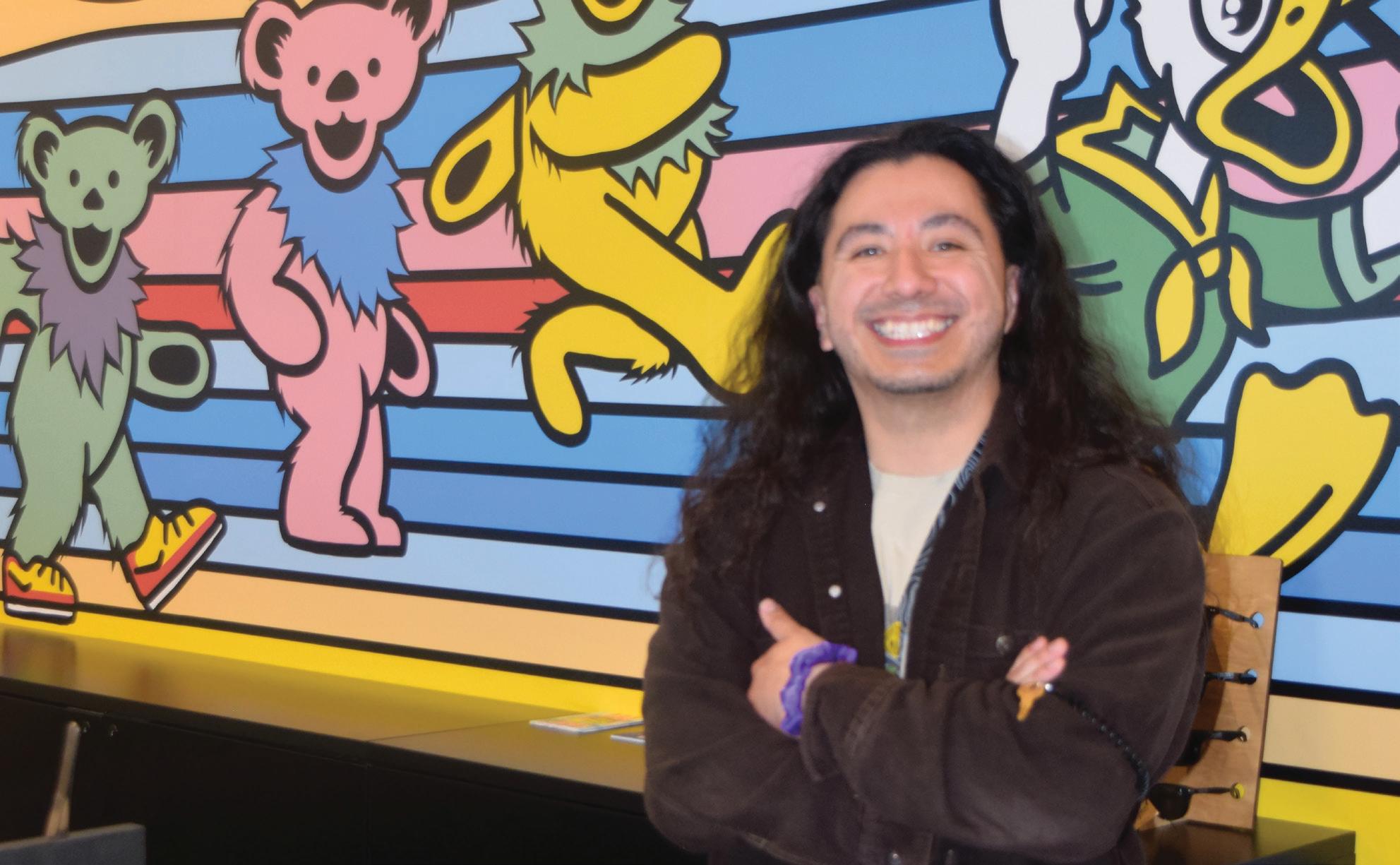
After a really crap day, I was about to drive home when I quickly remembered I needed more flower at home. I opted for the first dispensary I saw, which was Oregrown. I walked in, my mood quite low, but it was very quickly turned around by Patrick Briseno, the budtender working. Patrick was so calm and warm and didn’t do anything super miraculous, but his energy and vibe absolutely changed my entire demeanor, and honestly, isn’t that what we all hope for on a bad day? I knew right there that Patrick was going to be the budtender of the month.
How did you become a budtender?
I've been handling cannabis for longer than it's been legal, with a special interest in its medicinal elements. I've always been interested in the growing process with cannabis, along with the different methods of making hash/rosin. I felt budtending would give me an opportunity to learn, and since then it not only has done that, but also has let me meet amazing people that have the same interests.
What is your favorite thing about cannabis?
My favorite thing about cannabis is that it brings people together and can be enjoyed recreationally and medically; it makes us feel better mentally and physically.
I love my regulars and people that come back after enjoying their recommendation! I also feel that my team and I are personable and fun.
What is your favorite way to celebrate 420?
My favorite way to celebrate 420 is to surround myself with positive and caring people -- mostly my girlfriend Shannon and my dog, Charlie Brown.
Describe your ideal smoking sesh.
My ideal smoking sesh is outdoors in the wilderness. When we get the tent, campfire set up, and some music playing, it's time to pull out a joint...or the Puffco.
is in your dream smoking circle?
Robin Williams, Bernie Sanders, Bob Ross. I chose Robin Williams because of how kind and genuine he was. Making jokes and talking about life. We’d all be in high spirits! Bernie Sanders for great conversation and inspiration. I’m sure that man has some interesting stories to tell, and I’d love to hear about them! Bob Ross because he’s such a chill guy. He could also give me pointers on painting! A mix of smoking and painting is always a great vibe.
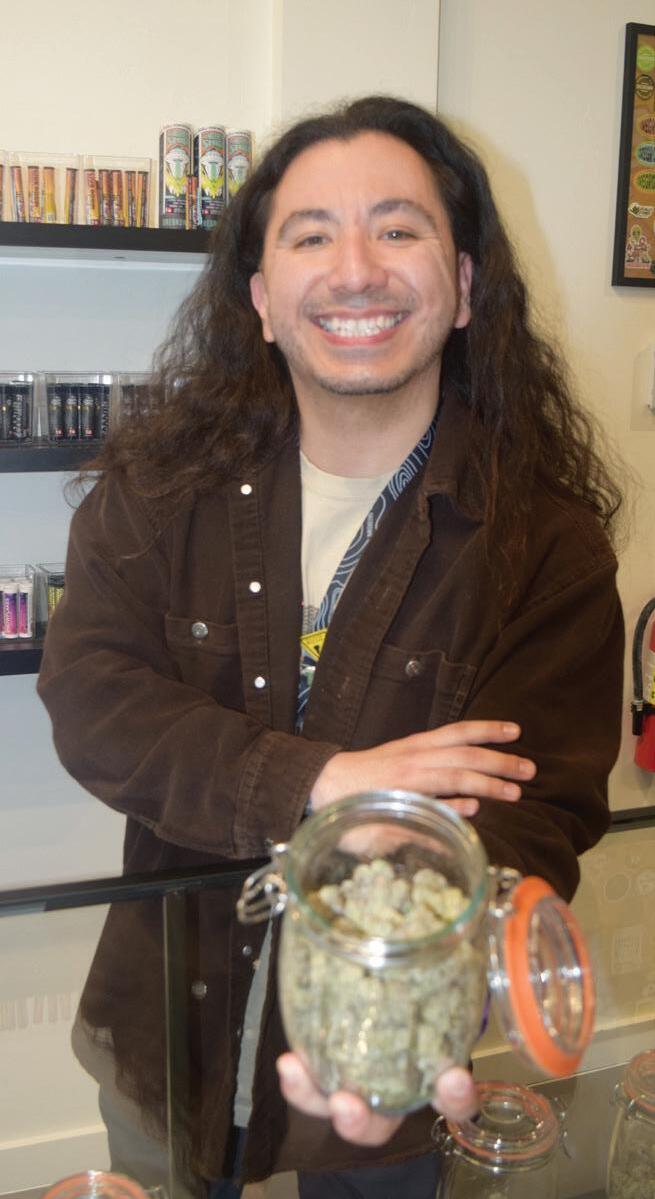
I felt budtending would give me an opportunity to learn, and since then it not only has done that, but also has let me meet amazing people that have the same interests.
- Patrick Briseno, Budtender
Favorite way to consume?
Dabbing. I love smoking flower and taking edibles as well, but I'd say dabbing would be my first choice!
What advice would you give to someone who is just getting started with cannabis?
Start off low and grow. You don't need to rush into things when trying something new. All depends on what your preference is, which will determine what direction would be best. I recommend trying a variety of different things, but one thing at a time.
What do you think makes a great budtender?
Having knowledge in the cannabis industry is great, but having tried what you recommend to people is key. I think being open-minded also makes a great budtender because not everyone consumes cannabis the same way -- different strokes for different folks.
211 West 6th Ave

Eugene, OR 97401
Anything else you want to share?
In the almost words of Remy from Ratatouille: "Anyone can smoke."







Written by Annie Bostwick | Designed by Sophia Leuthold Photographed by Javay Frye-Nekrasova
The sun is starting to melt away the typical overcast skies of winter, and everyone seems to be seeking the best way to celebrate the liveliness that returns to Eugene in the springtime. Students and locals alike fill the banks of the Willamette. They lounge on outdoor blankets, once again donning sunglasses and shorts. Others walk the streets with destinations in mind, and some simply wander, chasing the warmth of the sun. Music blares softly from several open windows, and tree branches that were bare a few weeks ago blossom with life once again.
It’s undeniable that even a taste of sunlight awakens the streets of this city. The shift in warm weather makes another thing undeniable: the time is right to find a strain that heightens the good vibes that spring ushers in.

Spring is perfect for new beginnings — new habits, new hobbies, and new strains. I’ll be the first to admit that when I pick out a new strain, the first thing I look at is the price. When I walked into Oregrown on W 6th Ave., I wasn’t looking for anything in particular. For a reasonable $8 per gram, Wolf’s Tooth caught my eye. It initially piqued my interest with its dense, frosty appearance. Upon further inspection, the subtle earthy aroma chased with hints of citrus and a slight diesel scent sealed the deal. Wolf’s Tooth is an indica with 24.36% THC, so this wolf can definitely bite.

The first hit of this strain packed a tangy punch that settled into a smooth, earthy finish. When it’s frigid and rainy outside, the last thing I want to do is linger outside once the sesh is finished. Usually, it's a quick retreat indoors for me, seeking artificial warmth from blankets and tea. This time, the renewed energy that accompanied a peculiarly warm late-winter day persuaded me to bask a little longer in the sun shining through the trees.


The murmurs of Eugene coming back to life mixed with the full-body experience of Wolf's Tooth will send you straight into relaxation mode without knocking you completely out. This strain will make you want to stretch out on a patch of grass and let your mind wander. After a few hits and a good dose of sunlight, it will leave you feeling calm and creative. As Eugene shakes off its winter blues and melts into another spring, you can let Wolf’s Tooth inspire you to take a moment or two for yourself.





D L R T J R U K U W E O N B W U Z D F H
Y T I K G H Y U S L O L V U H T N T QG
H O T B O X L V U R B G X F I W O J U D
H M X X W V A A B Y QL G F B K N QN O
X E C E Z O A R S A E N W E E M X U A U
X G M R N W P Y J L D T QI B A K E F X R R M J S H O S Z S P QZ H QT Z A D T
H N W O R P V H V X G G S C V U C T A E
QF C C X M L V C S N E QB B E A I F N
L H P L H E G I T A I R Z O Z I O Y T D
F H G G Z W J L F H O T C W E S E R O X N H G K V P N I C F J R I T W X E L Z Y R Y A U M S G N O E L O U D D E E J B T U U V B M D U E S K S S O E S T R D N H
G S QP L M B T J D Y D B I R M E I X P W C L R U A W R G A V O U Y W N O A R M
J T I I J O Z A U P H Z J A O J W A K E
T T G N O B N E Y V E F P T F C QZ F A D QS I E J P F D U T N S F N O X QX H
Z V Z C A K R QS I F M H Z U I H J C O
Munchies • Wake • Stoned • Spliff • Joint Bong • Toke • Blazed • Hotbox • Bake

Written by Javay Frye-Nekrasova
Designed & Illustrated by Amanda Bell

Igrew up in a very small town with two locally owned Mexican restaurants, two Chinese restaurants, and maybe four locally owned burger joints (two of which doubled as the only bars in town). After that, we just have one of each: McDonald’s, Subway, Dairy Queen, Taco Time, Pizza Hut, and Papa Murphy’s. That was it — it bewilders me now to live in a place with two (or more!) locations of the same fast food place in a single town (it’s so cool). Because of that, my palate has been very limited, and since moving to Eugene, very exploratory, like a bird exiting its cage.

I’ve heard a lot of people dog on Eugene’s food scene, but I have to say, we are full of so many extraordinary locally and family-owned food establishments here (Nelson’s in the Whit, and then Mama Myra’s Kitchen? Come on!). As someone who grew up with almost no options aside from the ones that had been there my whole life, Eugene truly has so much great local food if you’re really looking to seek it out.
Fitti’s Pizza is a family-owned and relatively new establishment that’s a bit of a drive out to West Eugene, and it’s the kind of hidden gem that is no stranger to having a line outside the door and selling out of food before the end of the weekend (the latter of which I unfortunately know from experience).
When I first ate Fitti’s, I had no idea about Detroit-style pizza, and wouldn’t have understood at all that it’s different from Chicago-style pizza.


And in the case of Fitti’s, that lack of knowledge was okay, seeing that Fitti’s prides itself on delivering Detroit-style pizza with a Pacific Northwest twist.


For those who don’t know, Detroitstyle is a deep rectangular pizza with a very thick crust. Cheese is baked around it and on top for a reversal of how we think pizza is supposed to work: cheese is on the bottom and the sauce is on top. While the cheese focuses on creating a good crunch with its caramelized border, the sauce on the top gets a rare moment of flavor spotlight while also protecting the crust.
At Fitti’s, this format is used only as a canvas, where they take their favorite parts of it and then mix in their own touches to make it completely their own. You’ll get a variety of fresh toppings galore with every piece, but the dough is light and airy. Where classic Detroit-style is quite dense, Fitti’s dough feels like you’re biting into a cloud full of flavor.
I’m going to note here that at Fitti’s, everything is handmade or sourced from a local farm. It’s only open during the weekend because during the week, the Fittipaldis come into prep. They’re cold-fermenting the dough and using the leftovers for garlic and cinnamon pull-aparts. They’re handmaking their ranch, their marinara, their honey jalapenos, and their buttercream frosting, and they’re barbecuing 40 pounds of chicken.

Libra, I love a menu that can whip up six sick items, so much more than one that makes me choose between 30 mediocre items. I personally had the Bay Bro when I went the first time. It’s currently the most expensive thing on the menu, but it was well worth it. It has sausage, cupped pepperoni, pineapple, honey jalapenos, basil, and red sauce, and it looked and tasted like a work of art. It was an explosion of flavor, and I could taste the freshness that was genuinely reminiscent of me growing up in my farm-heavy country town. I look forward to trying their barbecue chicken and caprese pizzas.


Currently, Fitti’s offers six classic pizza styles (with plenty of veggie options!), one changing seasonal pizza, and
There are a couple of downsides to Fitti’s for the moment, but none of them have to do with the food or service quality, and given they’ve only been open since October 2025, they have time to get that ironed out eventually. As I said above, it currently has very limited hours, typically open only on weekend evenings. Their seating is just as limited, with only two small tables, and because the pizza is so saucy and topping-heavy, it’s best to plan on either hoping there is a free table or picking it up and taking it home. Also, it’s quite hidden away in a West Eugene industrial plaza where it shares a space with Red Hen Kitchen on its off days.
But I cannot stress enough that the jaunt — and the wait throughout the week for it to be open — is worth it. The next time you’re craving pizza, munchies, or otherwise, Fitti’s is the place to go. Just make sure you get your order as soon as you can.