PROUDLY PRINTED BY Western Web • Eureka, California
for Mendocino County, California, as well as other counties in Oregon, California, Arizona, South Carolina and Hawaii. Copies of each 101 Things To Do® magazine are available free of charge in certain locations are online in their entirety at www.101Things.com; or are available by mail for a $5 shipping and handling fee per magazine. Mail to: 101 Things To Do® • PO Box 992, Jacksonville OR 97530
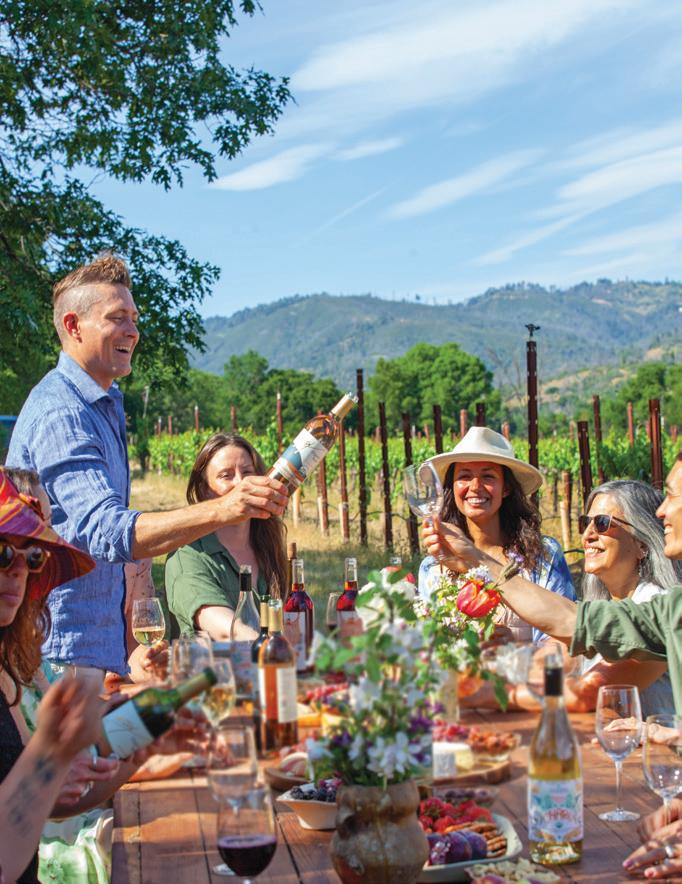
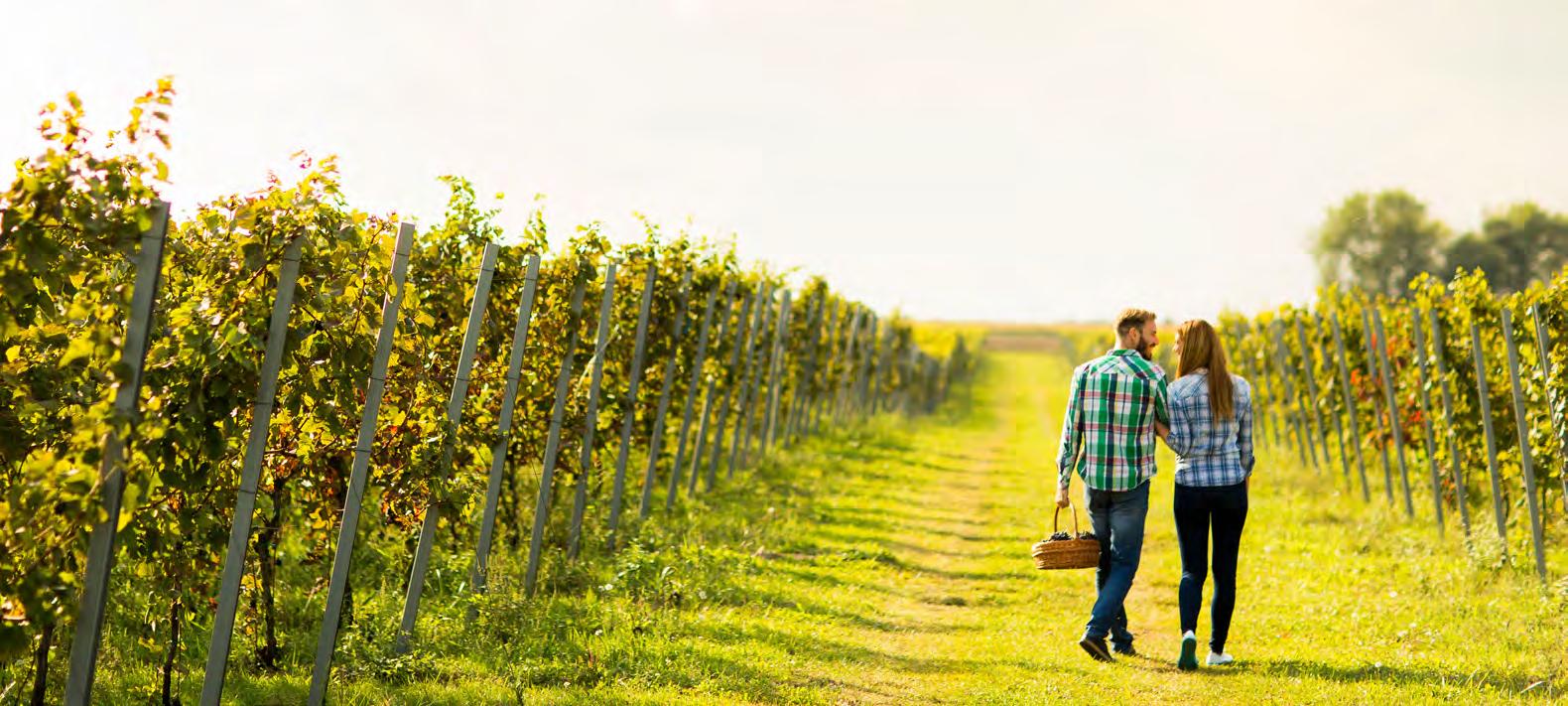
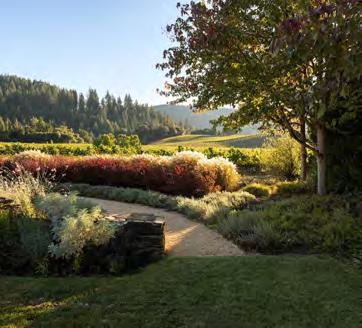
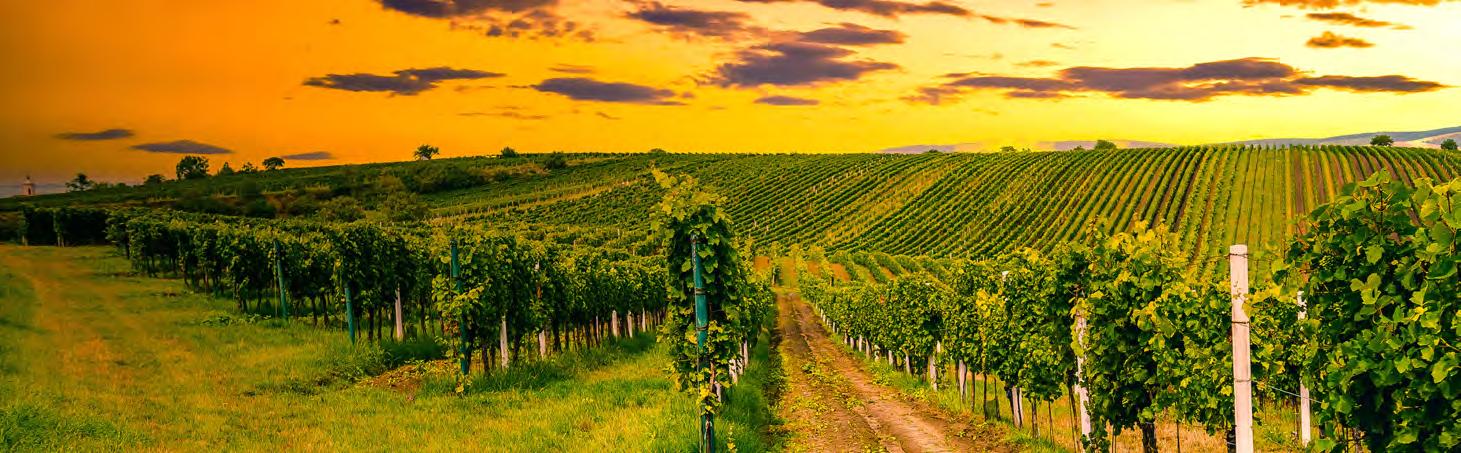
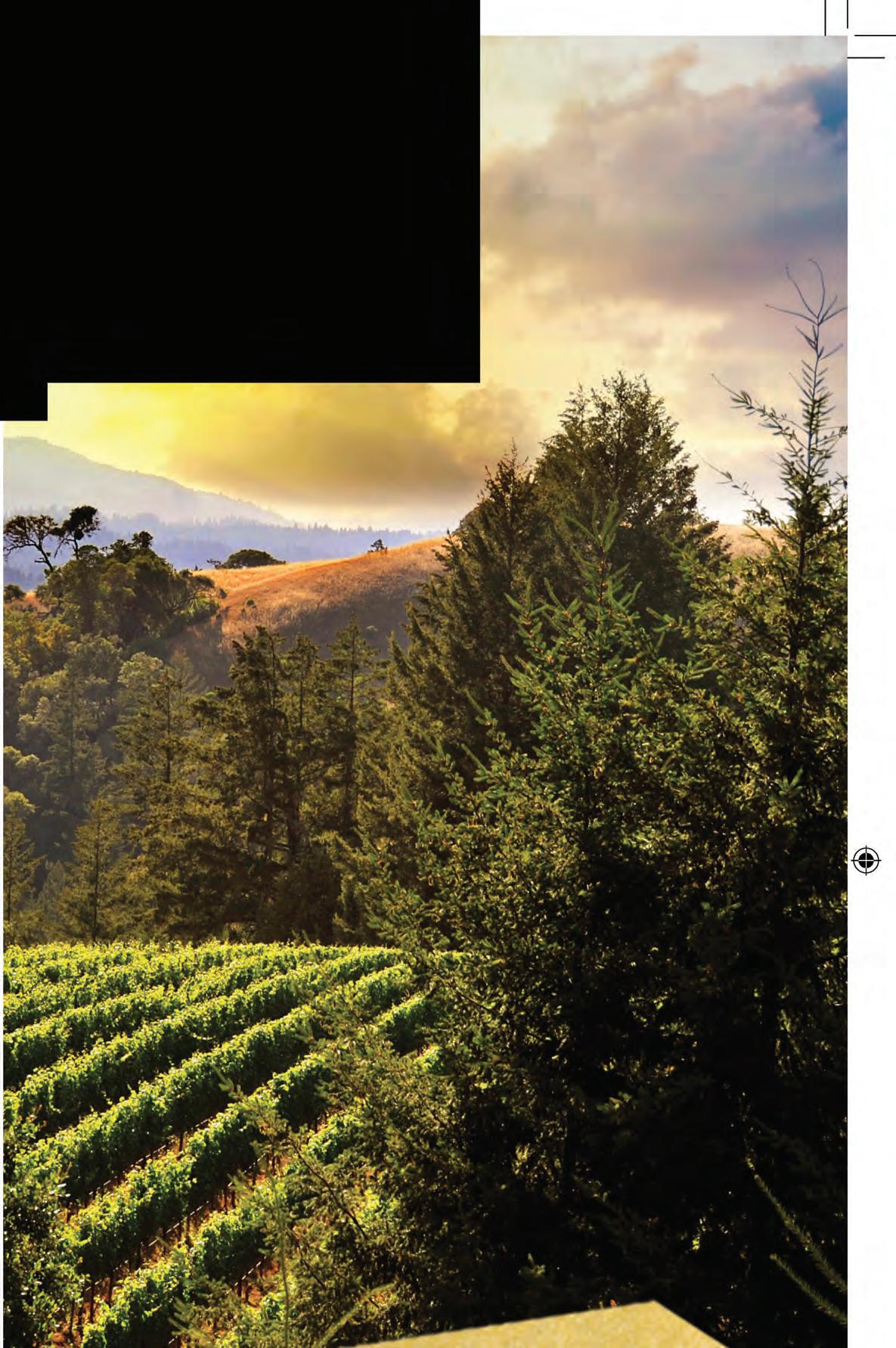
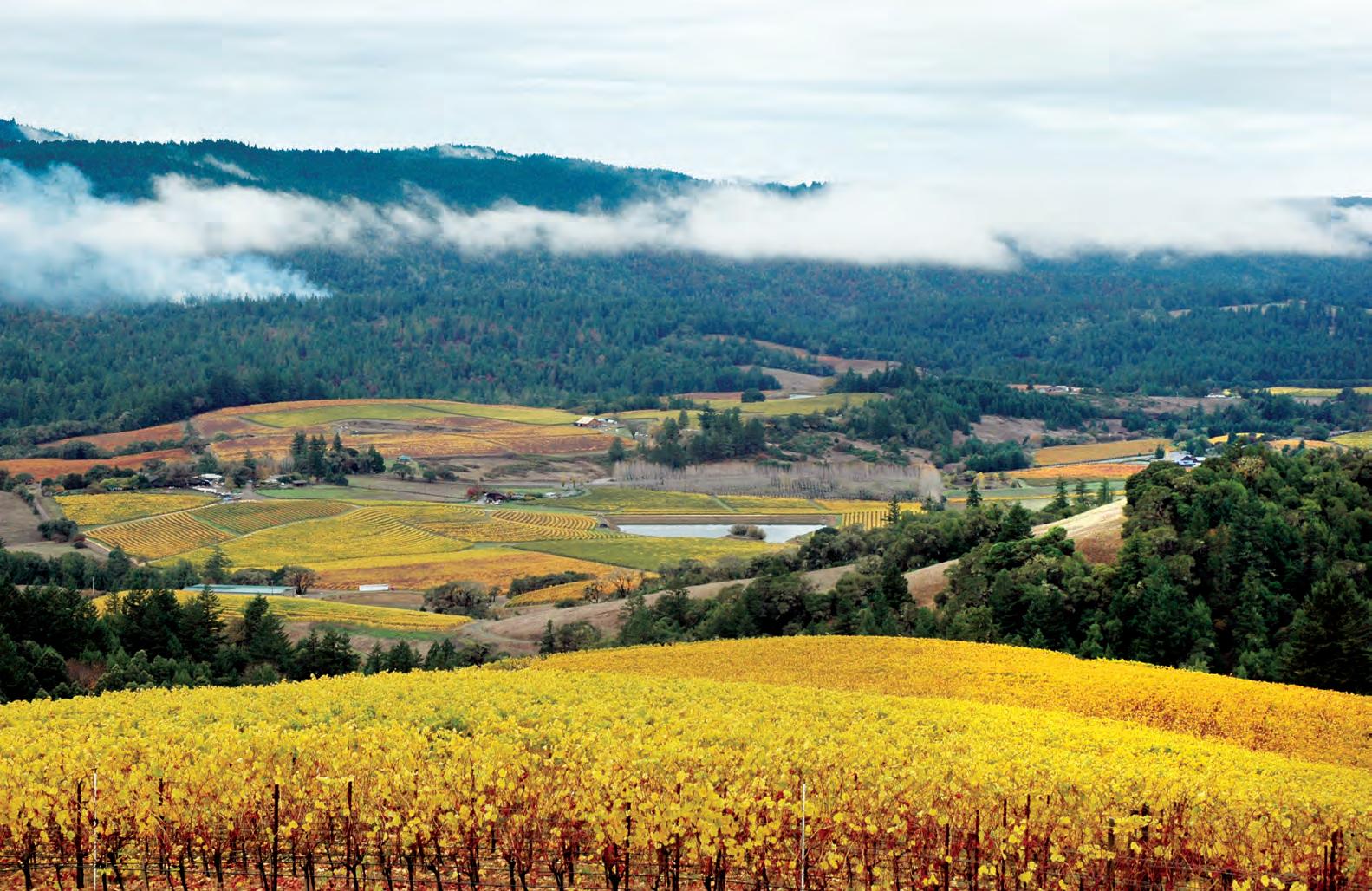
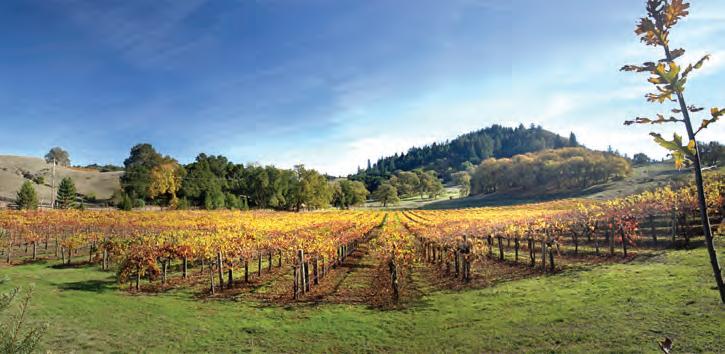
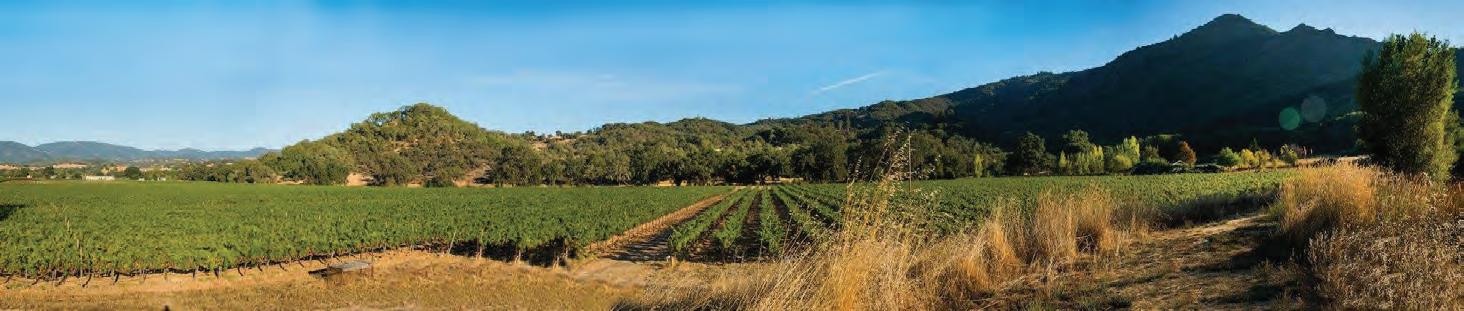
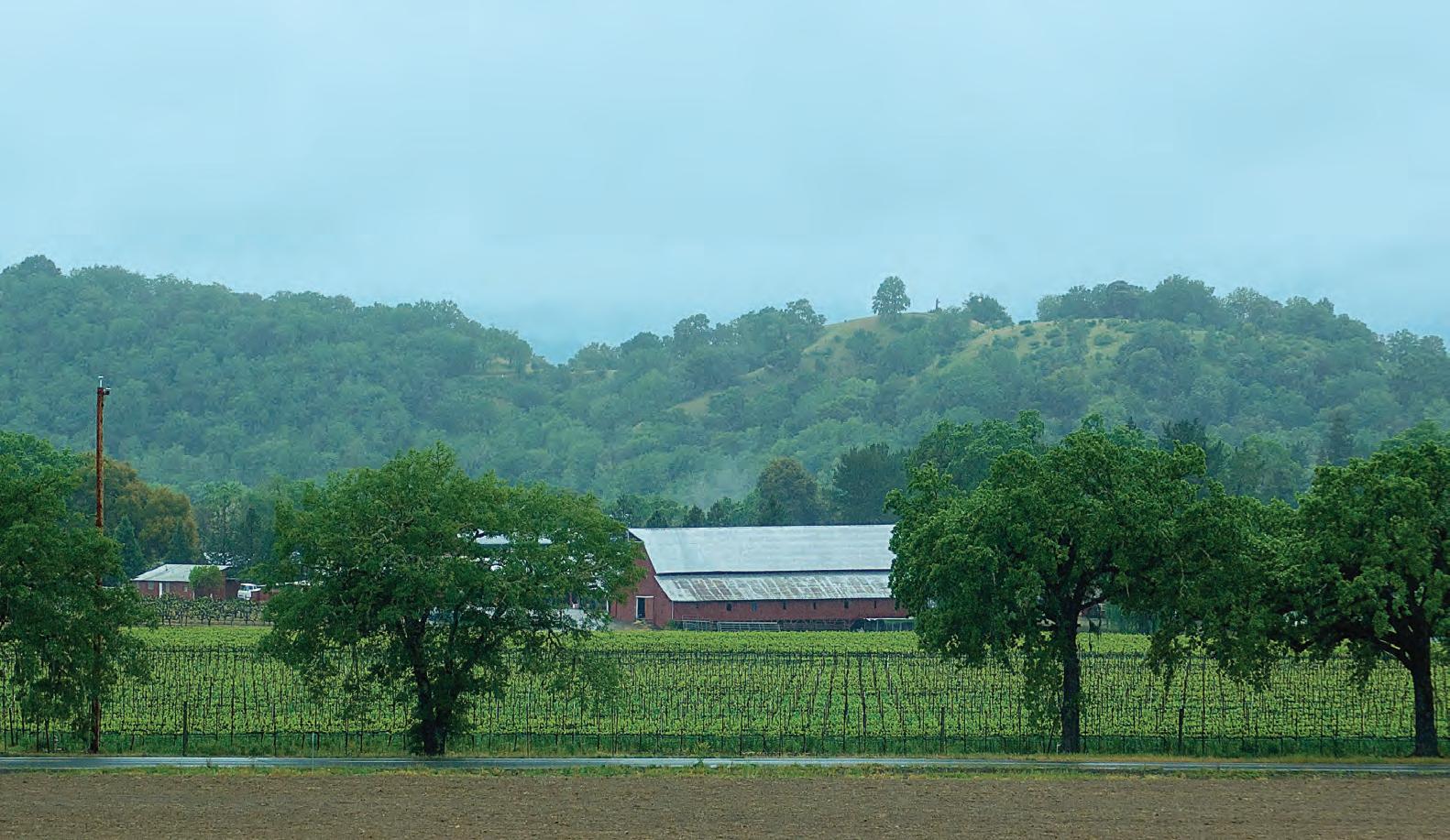
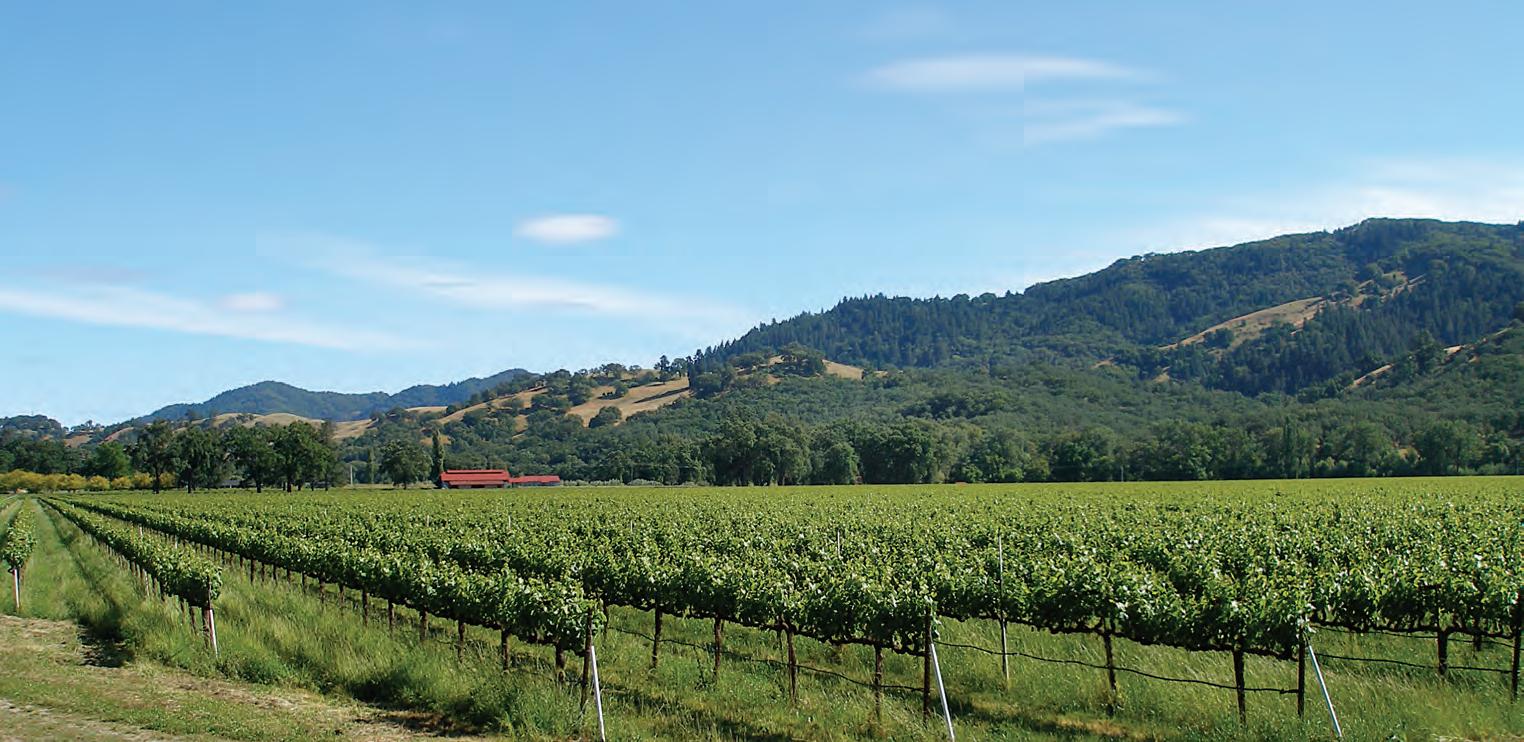
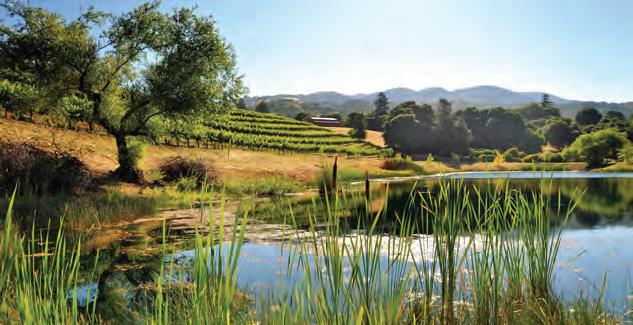
Across the inland valleys of Mendocino County, wine country is revealing a more expansive side of itself. From the welcoming tasting rooms around Ukiah to the vineyard-lined roads of Redwood Valley, Potter Valley, Yorkville, and the cool-climate stretches of Anderson Valley, the experience now reaches well beyond the glass. It’s a region where backroads connect small, distinct wine communities, each with its own pace and personality. The setting shifts from valley floors to rolling hills and shaded groves, giving each stop a slightly different feel.
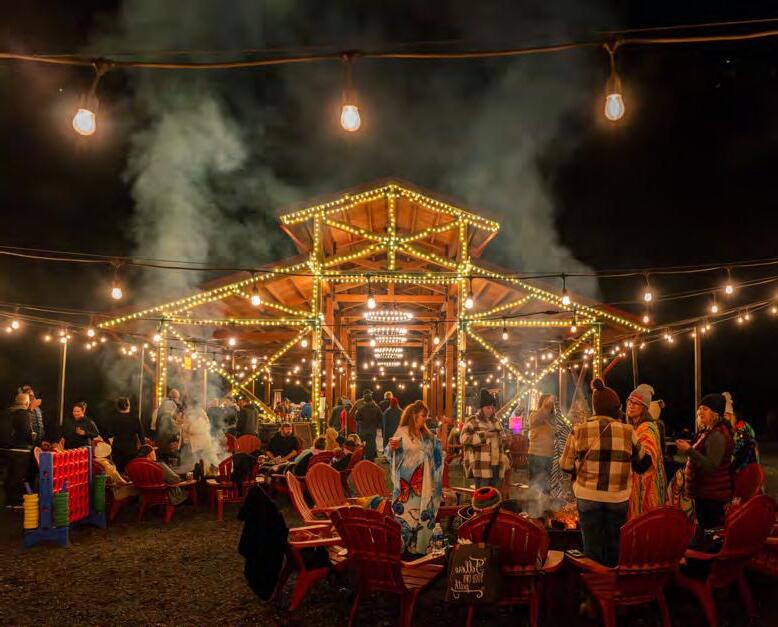
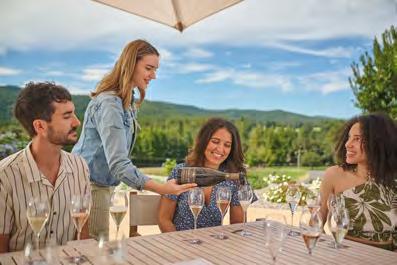
A tasting might begin with a walk through the vines or a relaxed flight on a sunlit patio, but it rarely ends there. Visitors can settle in with wood-fired pizza or small bites, catch live music on an outdoor stage, or time a visit around seasonal dinners that highlight local ingredients. Some wineries offer overnight options, from quiet campsites
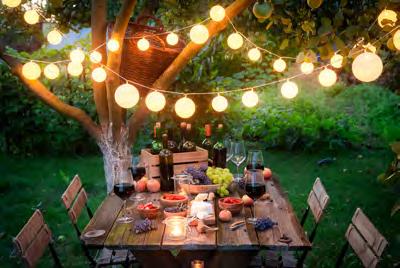
to simple glamping setups, while others invite guests to spread out with picnic areas, garden paths, and wide-open valley views. Many also rotate events and experiences throughout the year, making repeat visits feel fresh and unplanned. It’s easy to move at your own pace, whether that means lingering in one place or making a full day of multiple stops.
The pace here is unhurried and the atmosphere welcoming, with plenty of room to shape the day as you go. It’s a wine country built as much around what you do as what you taste—where one stop can easily turn into the next. Whether it’s a quick afternoon outing or a full day on the road, the experience tends to unfold naturally without much effort. Visitors often find that the best moments come between planned stops, when a view, a conversation, or a small discovery shifts the day in a new direction.
PlAn A Wine country Adventure
Exploring Mendocino wine country starts with knowing where to go—and realizing it offers more than a traditional tasting experience. This guide brings together the inland regions surrounding Ukiah, including Redwood Valley, Potter Valley, Yorkville, and Anderson Valley, offering a clear starting point for planning a day—or several—on the road. Whether you’re a longtime wine enthusiast, just getting started, or simply drawn to open landscapes, working vineyards, and time away from the usual routine, the region lends itself to a wide range of ways to explore.
The map on the following pages lays out the area in practical terms, helping visitors get their bearings and spot clusters of wineries that make sense to visit together. It’s just as useful for a loosely planned afternoon as it is for a full day of exploring, making it easy to follow the road and see where it leads.
Along the way, a quick-reference “101 Things To Know About Wine” glossary offers an easy introduction for those new to wine, without getting overly technical. You’ll also come across a handful of winery profiles—small glimpses into the people and places behind the scenes, and the kind of details that tend to stay with you long after the visit.
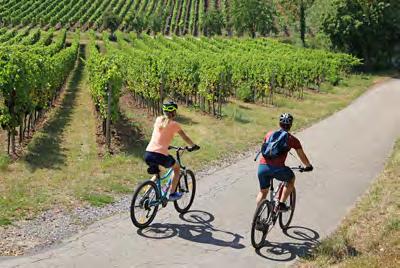
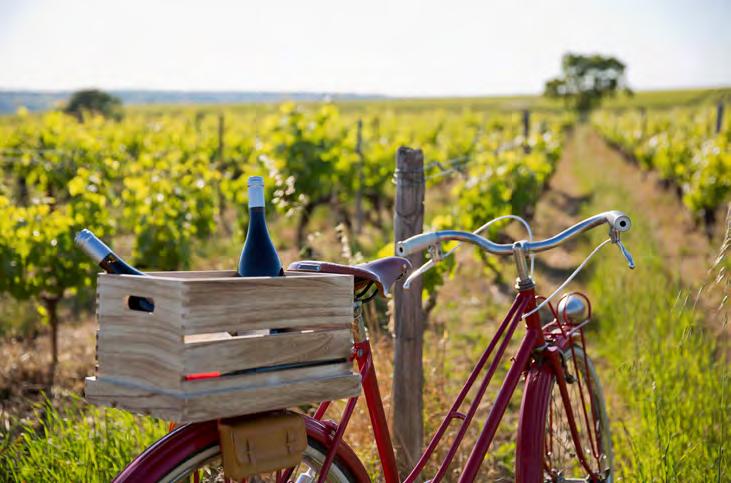
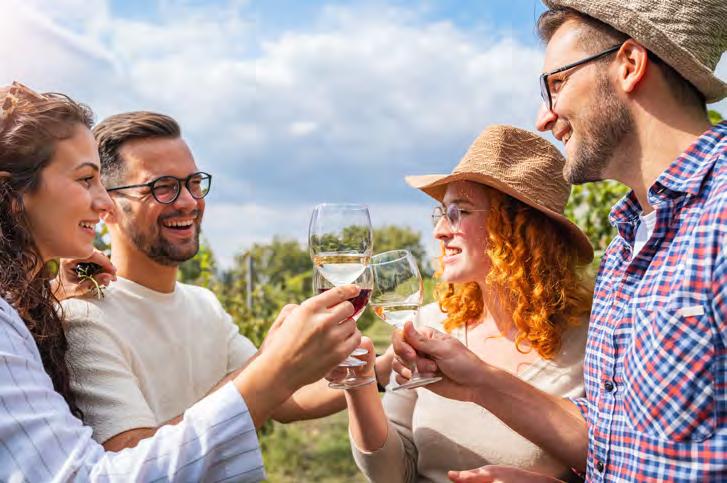
Vineyards offer more than just wine. Outings, adventures, picnics, and small-plate fare create a whole other reason to visit.
ROOMS
& BREWERY LEGEND
Subject to change, call for info Daily Weekends Plus (many include weekdays, Thurs, Fri and/or Mon)
By Appointment Call First Breweries Every effort has been made to assure the accuracy of this map and accompanying information at time of print. Discrepancies or omissions can be corrected by contacting Barb@101things. com or Courtney@101things.com
2026 Oregon 101Things To Do® LLC
BEYOND THE BOTTLE
THE FUTURE OF THE EARTH: Mendocino’s Leadership in Regenerative Viticulture
While many regions are just beginning to talk about sustainability, Mendocino County has long been the global heartbeat of the Regenerative Viticulture movement. Here, the goal isn’t just to “do no harm”—it is to actively heal the land. Local vintners are pioneers in a holistic approach that treats the vineyard as a living, breathing ecosystem. By utilizing carbon-sequestering cover crops, integrating livestock for natural pest control, and meticulously restoring soil microbiology, these wineries are pulling carbon from the atmosphere and locking it back into the earth. In Mendocino, every bottle produced under these standards represents a commitment to cooling the planet and ensuring a vibrant, resilient landscape for centuries to come.
ROEDERER
ESTATE: The Art of Champagne Tradition in the Heart of Mendocino
Behind the Label
THE EXPERIENCE: Elegance in the Redwoods
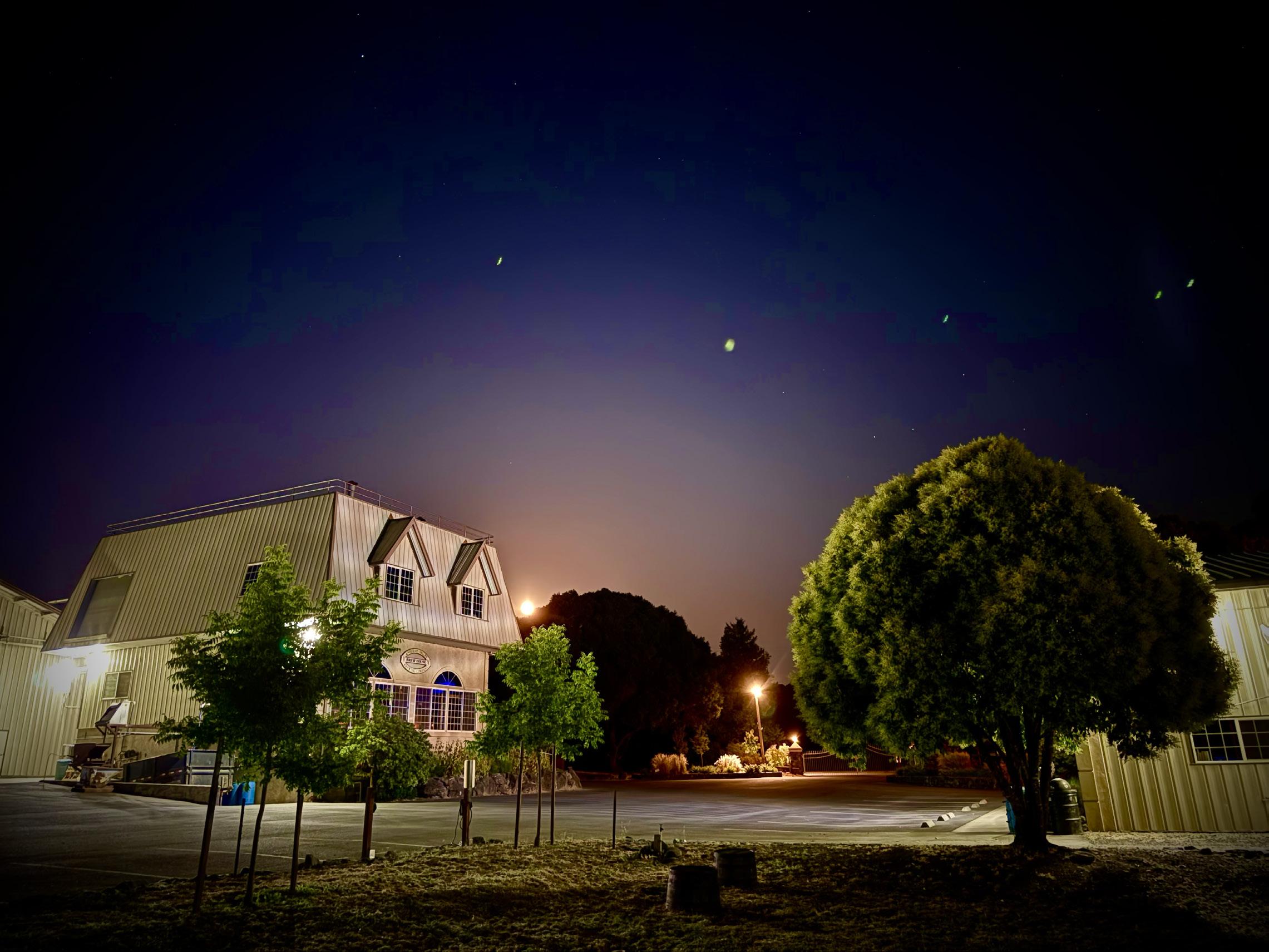
Visiting Roederer Estate is an invitation to slow down and savor the finer things. Perched along Highway 128 in Philo, the tasting room offers an elevated yet approachable atmosphere where French sophistication meets Mendocino’s relaxed charm.
When Jean-Claude Rouzaud, then-president of the worldrenowned Champagne Louis Roederer, set out to create a California sparkler in 1982, he didn’t look to the crowded valleys of Napa or Sonoma. Instead, he followed his intuition to the rugged, fog-shrouded hills of the Anderson Valley. He saw in this remote Mendocino corner a terroir that mirrored the cool-climate elegance of France, yet possessed a wild, coastal soul all its own.
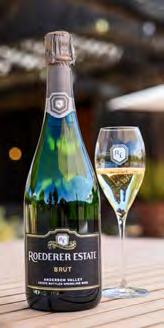
Today, Roederer Estate stands as a monument to that vision. As the California outpost of the house that produces the legendary Cristal, Roederer Estate is one of the few wineries in the world to use 100% estate-grown fruit for its sparkling wines. This total control—from the sandstone soils to the meticulous méthode traditionnelle winemaking—ensures that every bottle achieves the perfect balance of crisp acidity and creamy complexity. With a history of perfect 100-point scores and a winemaking team that has remained unchanged for decades, Roederer Estate has redefined what American sparkling wine can be.
• Estate Tastings: Sample a flight of world-class sparkling wines, including the prestigious L’Ermitage—often cited as the finest sparkling wine produced in the United States.
• A Sense of Place: Enjoy your glass while overlooking 620 acres of pristine, sustainably farmed vineyards framed by towering coastal redwoods.
• Reserve Library: Discover rare, aged library wines that showcase the incredible longevity and evolution of Anderson Valley fruit.
• The Perfect Pairing: Beyond the bubbles, explore local artisanal pairings that highlight the seasonal bounty of the valley.
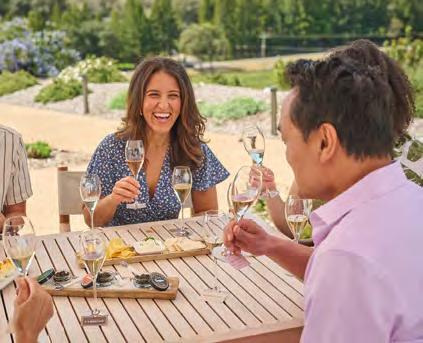
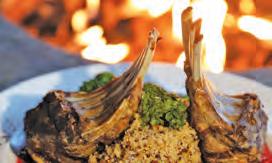
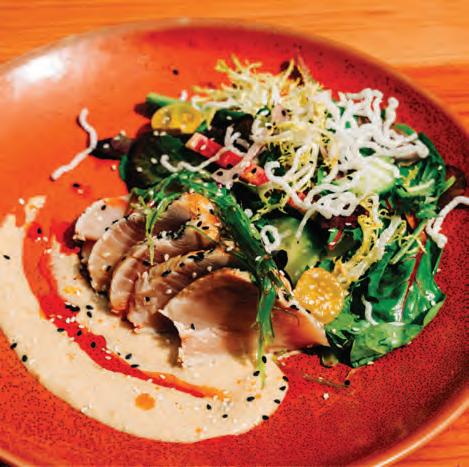
Tastings & small plates
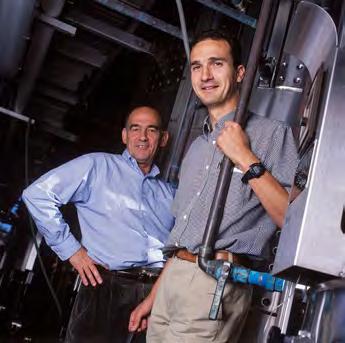
Vintners Michel & Arnaud
Mendocino Wine Stories
FREY VINEYARDS:
45 Years of Pioneering the Purity of the Grape
Behind the Label
THE EXPERIENCE: A Modern Hub for Community, FRIENDS, FAMILY, WINE
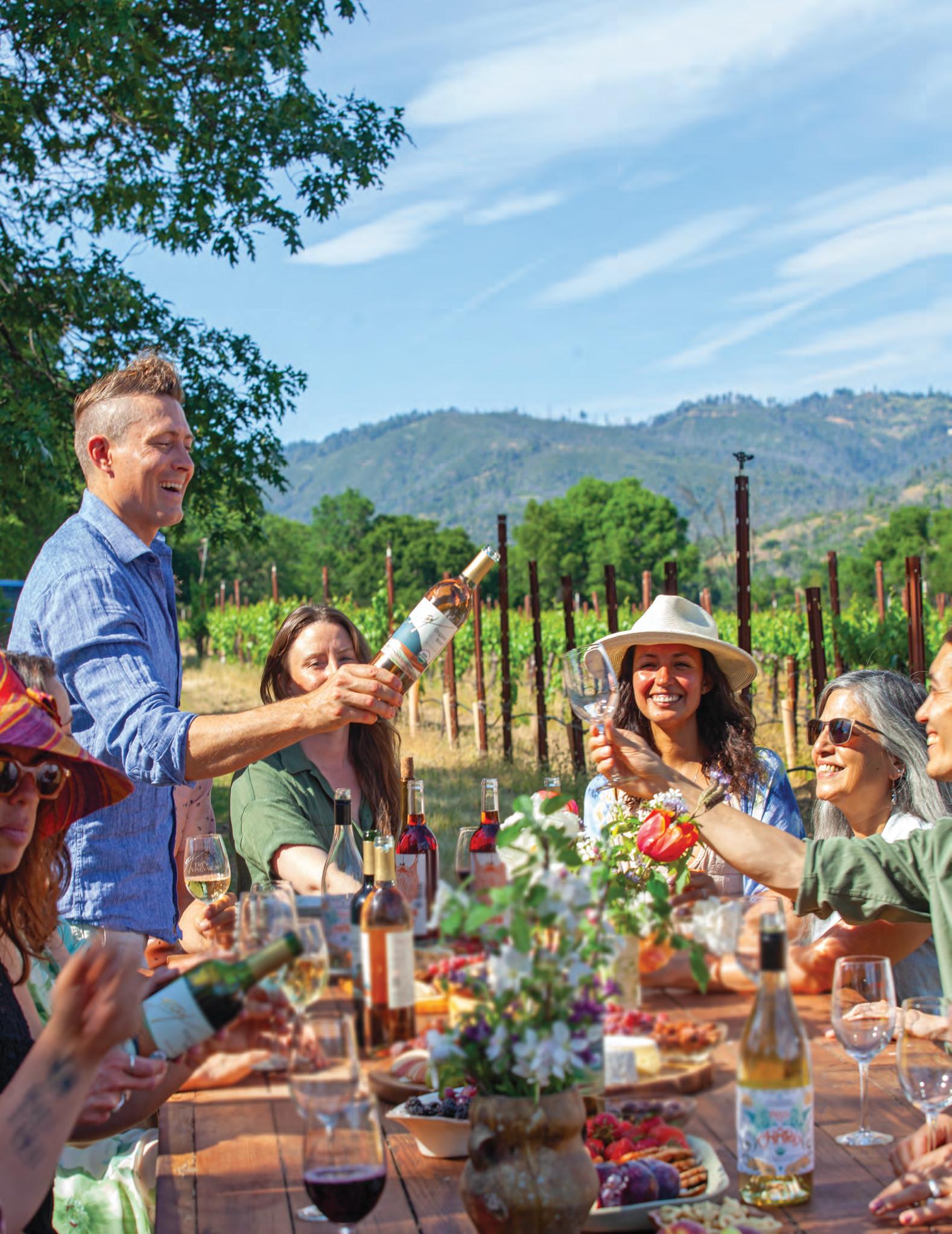
While the history is deep, the atmosphere at Frey is vibrantly modern and welcoming. Their brand-new tasting room—opened just in time for their 45th anniversary—serves as a premier destination for friends and families to gather.
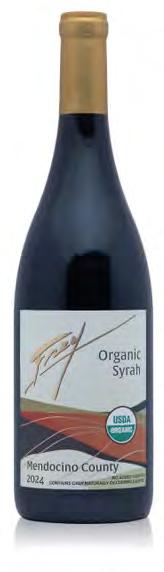
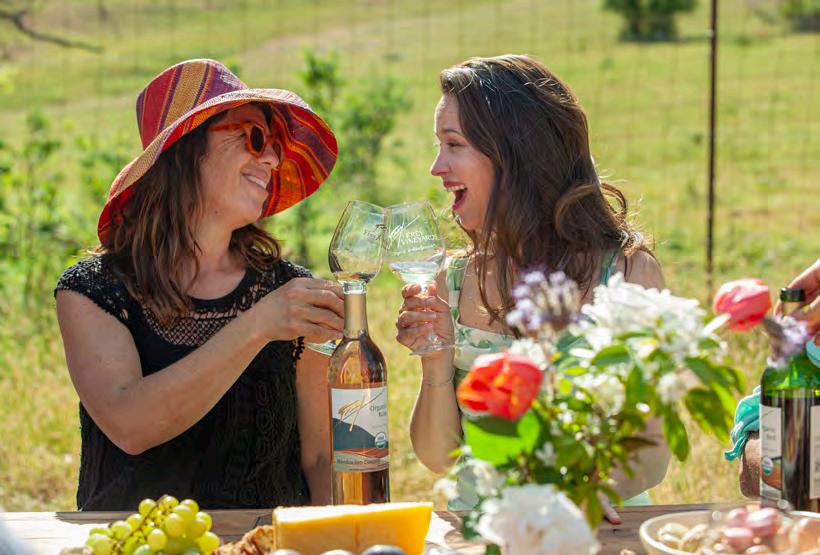
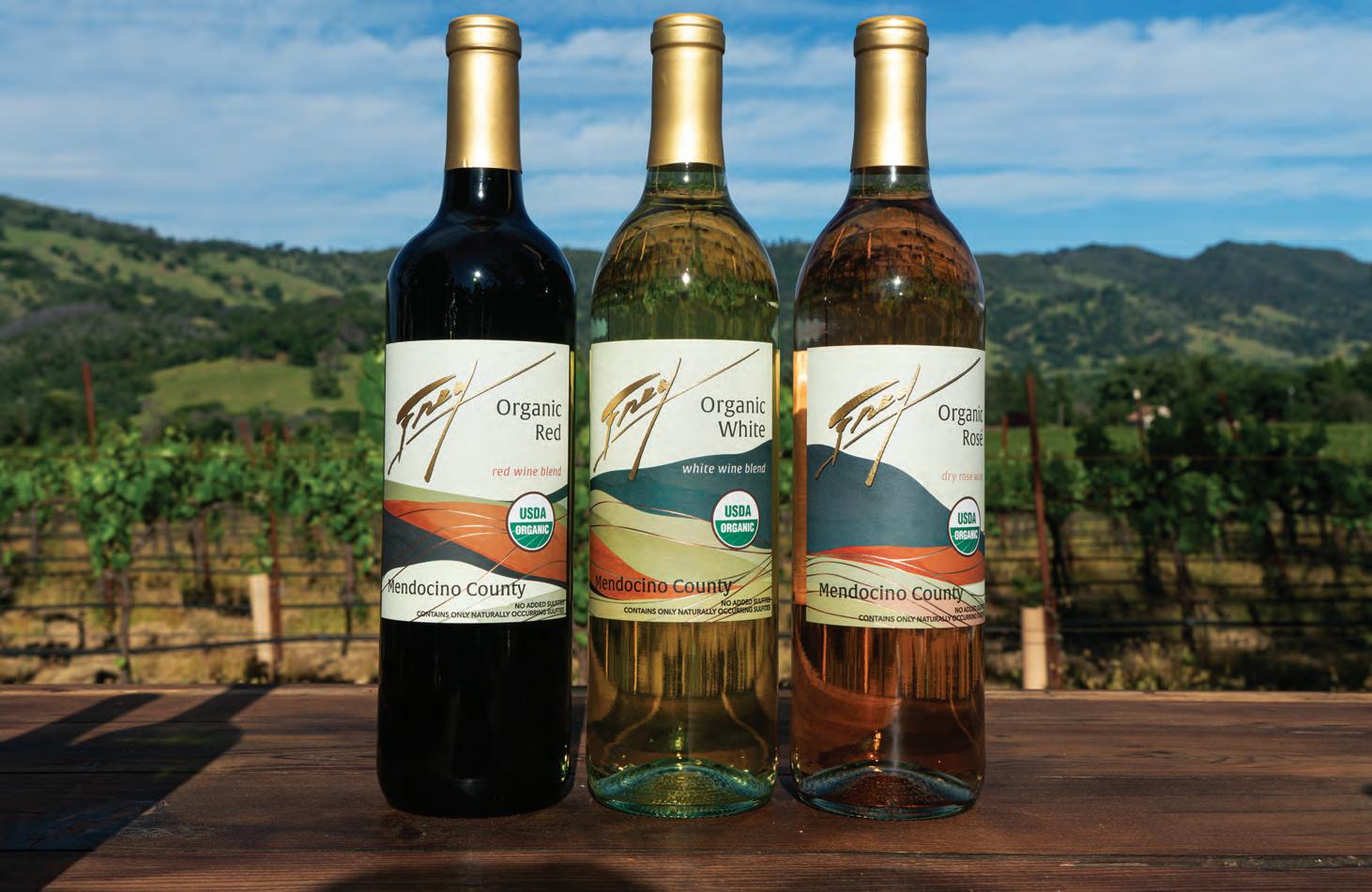
In the heart of Redwood Valley, the Frey family isn’t just making wine—they are honoring a multigenerational legacy of stewardship. Established in 1980, Frey Vineyards stands as a true American pioneer, holding the distinction of being the nation’s first certified organic winery. Long before “organic” was a household term, the Freys were already refining a philosophy centered on absolute purity: producing world-class wines with no added sulfites, allowing the authentic character of the Mendocino terroir to shine.
Today, as they celebrate 45 years of innovation, Frey remains a global leader in Biodynamic and regenerative farming. Their commitment to the land goes beyond the glass, from pioneering GMO-free legislation to installing state-ofthe-art “worm composting” systems to protect local watersheds. Every bottle is a testament to a deep respect for the natural environment and a family’s vision for a sustainable future.
• Daily Tastings: Explore a diverse portfolio of Organic and Biodynamic wines in a stunning new setting.
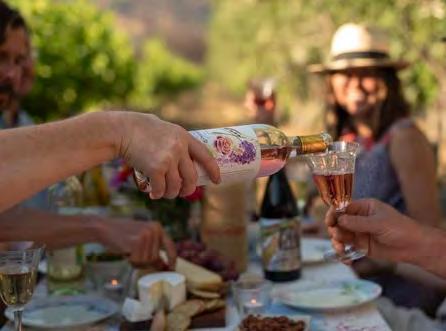
• Taps & Snacks: Relax during casual evening sessions featuring wine by the glass, local bites, and a social “neighborhood” vibe.
• Friday Nights: Kick off the weekend with extended hours, live music, and themed community events.
• Family & Group Friendly: Whether it’s a private tasting or a seasonal workshop, the ranch offers a relaxed, inclusive environment that celebrates the best of Mendocino living.
UNHURRIED. UNCROWDED. UNFORGETTABLE.
Mendocino County offers a wine experience that feels refreshingly unpolished—in the best possible way. Here, tasting rooms are unhurried, conversations are genuine, and the connection between land and glass is easy to see. From méthode champenoise sparkling wines at Roederer Estate to the pioneering organic and biodynamic practices at Frey Vineyards, each stop reveals a different perspective on what wine can be. Whether you’re a longtime enthusiast or simply along for the scenery, this is a place to slow down, explore, and discover that the experience—more than the bottle—is what stays with you.
Before You Go: Mendocino Wine
Choose your region first—Anderson Valley for cool-climate and sparkling, inland valleys for warmer, bolder reds.
Map loosely, not tightly—distances are real, but the best stops are often the unplanned ones.
Make one reservation anchor—then leave space to wander.
Start early, pace yourself, and don’t try to do too much in one day.
Ask questions—at places like Roederer Estate and Frey Vineyards, the story behind the wine is part of the experience.
Expect a different rhythm—tasting rooms are relaxed, personal, and often family-run.
Pay attention to farming—organic, biodynamic, and regenerative practices shape what’s in the glass.
Bring layers—coastal fog and inland sun can shift the day quickly.
Pair the experience picnic spots, farm stands, and small towns are part of the journey.
Take something home but remember, the place is what you’ll come back for.
Summer tastings
Iconic scenery
Frey Friends
Why Mendocino Feels Different
A Slower Pace Mendocino wine country invites visitors to linger. Scenic backroads, small tasting rooms and relaxed hospitality create an experience that feels more personal and less rushed.
Rooted in the Land
Many local wineries embrace organic, biodynamic and regenerative farming practices, reflecting a deep connection to the region’s forests, valleys and coastal climate.
Less Crowded, More Personal Instead of large crowds and busy tasting routes, visitors often find intimate experiences and genuine conversations with the people behind the wines.
More Than Wine
Redwood groves, coastal views, farm stands, art galleries and small towns make the journey just as memorable as the tasting itself.
BEYOND THE BOTTLE
WILD BY NATURE
Authentic Wine Country Beyond the Valley Floor
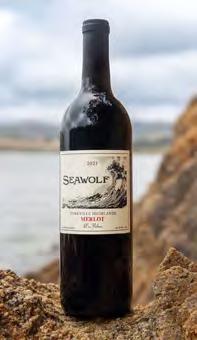
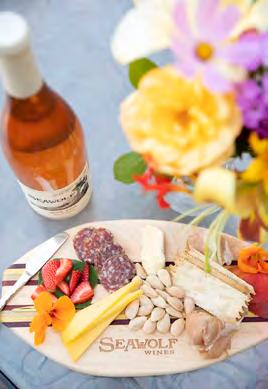
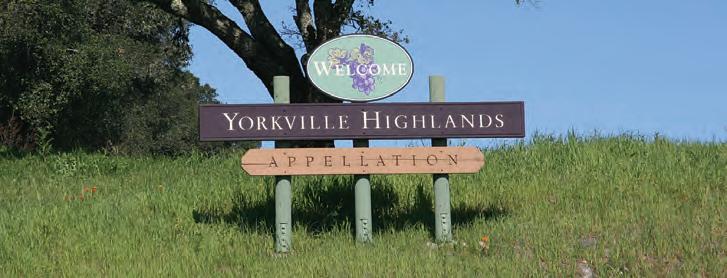
There’s something unmistakably different about wine country at elevation. The roads twist a little more, the forests feel closer, and the tasting rooms trade polish for personality. In the Yorkville Highlands, visitors discover a side of Mendocino wine culture that feels untamed in the best possible way—where mountain air, coastal influence, and fiercely independent winemakers shape every experience. SEAWOLF captures that spirit completely, turning wine tasting into something less formal and far more personal. Guests linger over panoramic ridge-top views, swap stories with the people who farm the vines, and settle into a slower, more grounded rhythm that feels deeply connected to the land itself.
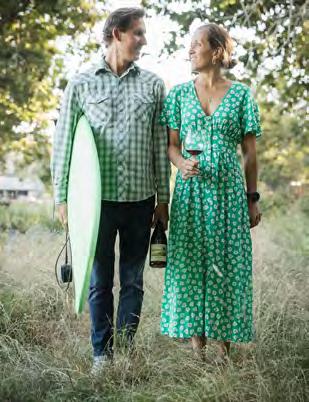
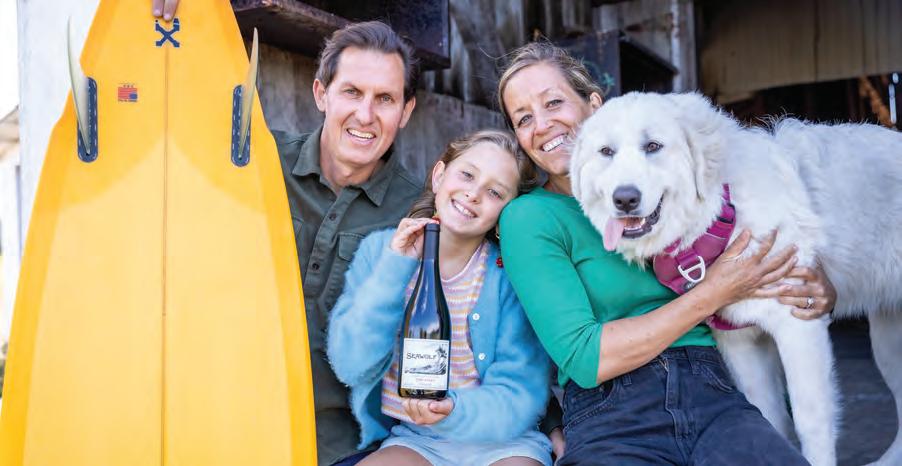
For Jesse Hall and Emma Kudritzki Hall, winemaking is an act of stewardship. Located at the literal summit of the Yorkville Highlands at 2,000 feet, SEAWOLF is the first winery you encounter as you cross from Sonoma into Mendocino. Here, the corporate “polish” of the valley floor disappears, replaced by the rugged, salt-aired reality of mountain viticulture.
Behind the Label
THE EXPERIENCE: Mountaintop Adventures
• The Vibe: An outdoor “Social Third Space” that captures the SEAWOLF surf-and-vineyard lifestyle. It’s rugged, welcoming, and unpretentious.
The Philosophy of the Ridge As 4th-generation organic winegrowers, Jesse and Emma don’t just “make” wine; they farm it. Their estate vineyard is entirely dry-farmed, forcing vines to dig deep into the rocky soil for moisture. This creates a natural concentration of flavor—a “soul” in the glass—that simply cannot be manufactured. “Sustainability isn’t a marketing term for us,” says Jesse. “It’s the foundation of every bottle.”
Minimalism as an Art Form Emma’s approach in the cellar is one of restraint. By using low-intervention, old-world techniques, she allows the high-elevation fruit to speak for itself. The result is a portfolio of small-production natural wines—Zinfandels, Pinots, and Merlots—that are vibrant, balanced, and unapologetically honest.
• The Hosting: Unlike larger tasting rooms, you are hosted by the winemakers themselves, Jesse and Emma, making you feel like part of the family.
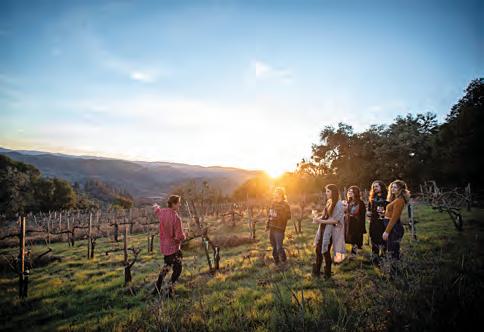
• The Views: Panoramic vistas overlooking the Yorkville Highlands, Anderson Valley, and Alexander Valley from a 2,000-foot ridge line.
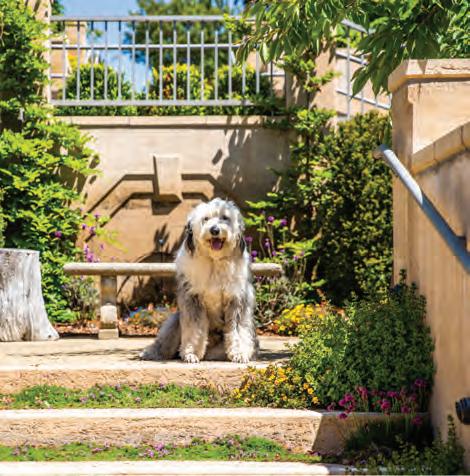
• Amenities: Family-friendly, kid-friendly, and dog-friendly. A perfect stop for the whole “pack.”
• Smugglers Cove: Ask about their wine club—the ultimate way to stay connected to the coastal lifestyle.
Charcuterie Plates
Vintners Jesse & Emma Stunning mountain vistas
Mendocino Wine Stories
COOL AND COASTAL
Where Fog, Forests and Vineyards Meet
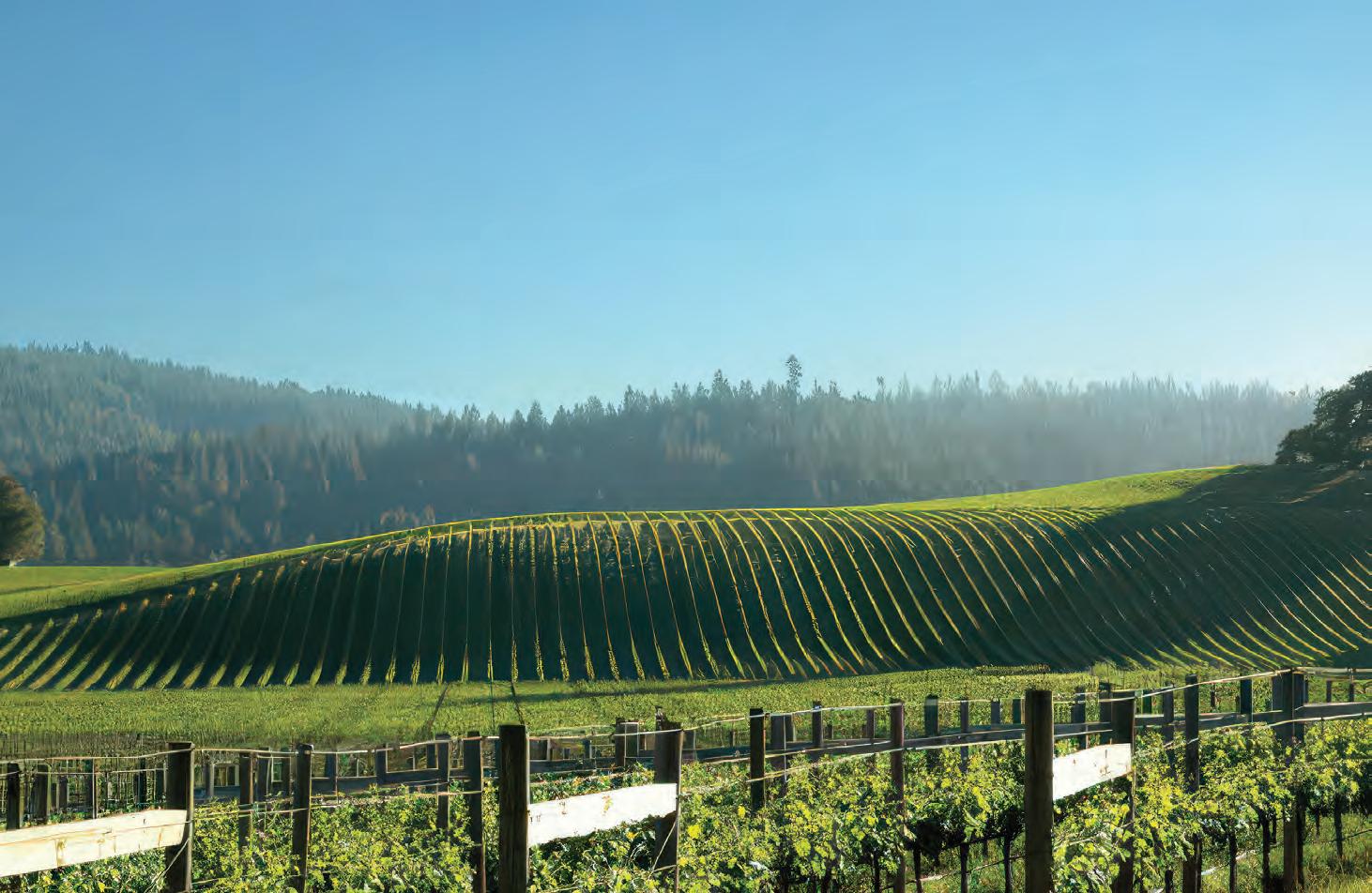
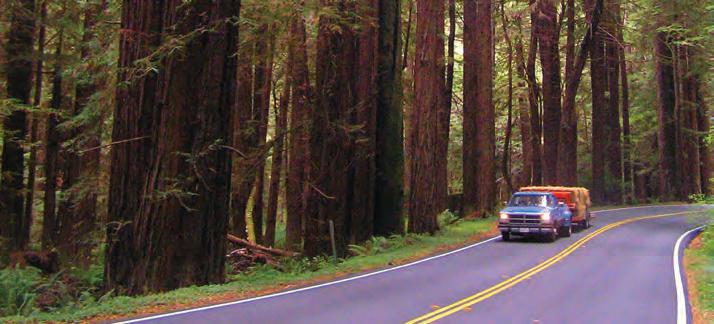
Where the fog clings to the redwoods and vineyards ripple across steep, emerald hillsides, Anderson Valley feels worlds away from California’s more crowded wine regions. Tucked into the rugged landscape of Mendocino County, this cool-climate valley is known for its Pinot Noir, towering forests, and laid-back sense of discovery. Here, winding country roads connect small tasting rooms, family farms, and dramatic vineyard estates shaped by ocean air and generations of careful stewardship. It’s a place where the pace slows, the scenery deepens, and every glass seems to reflect the wild beauty of Northern California.
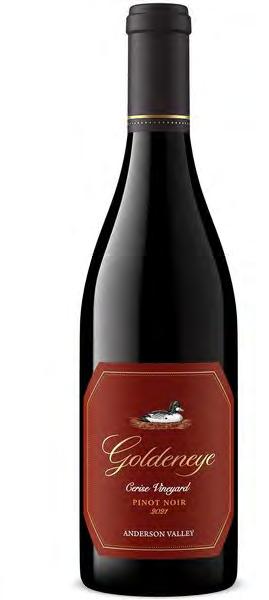
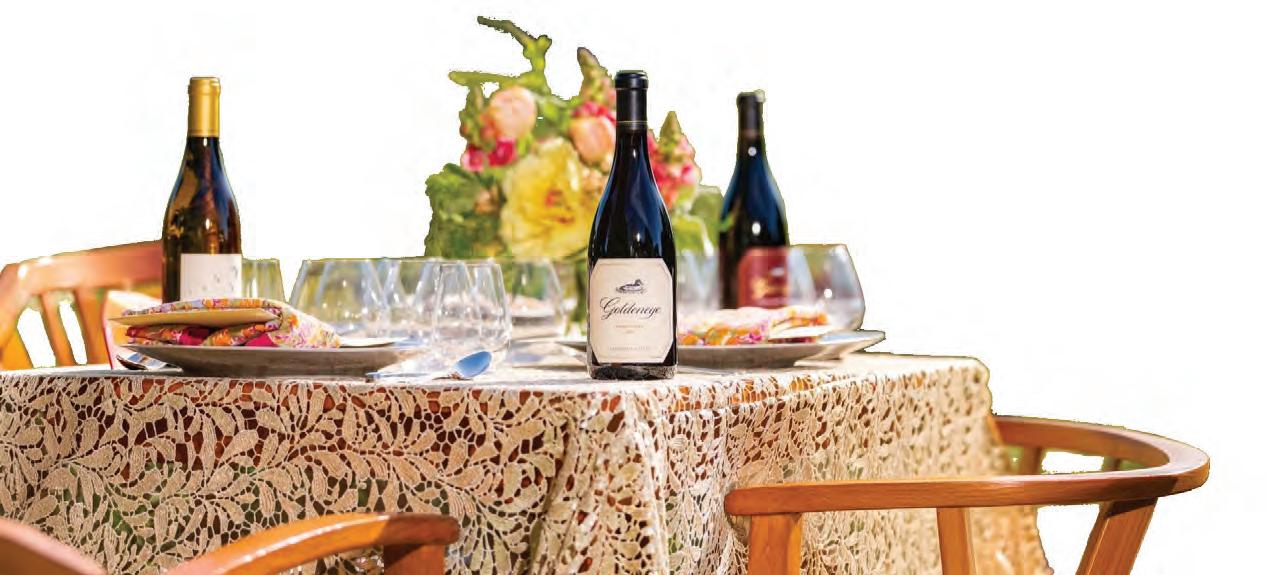
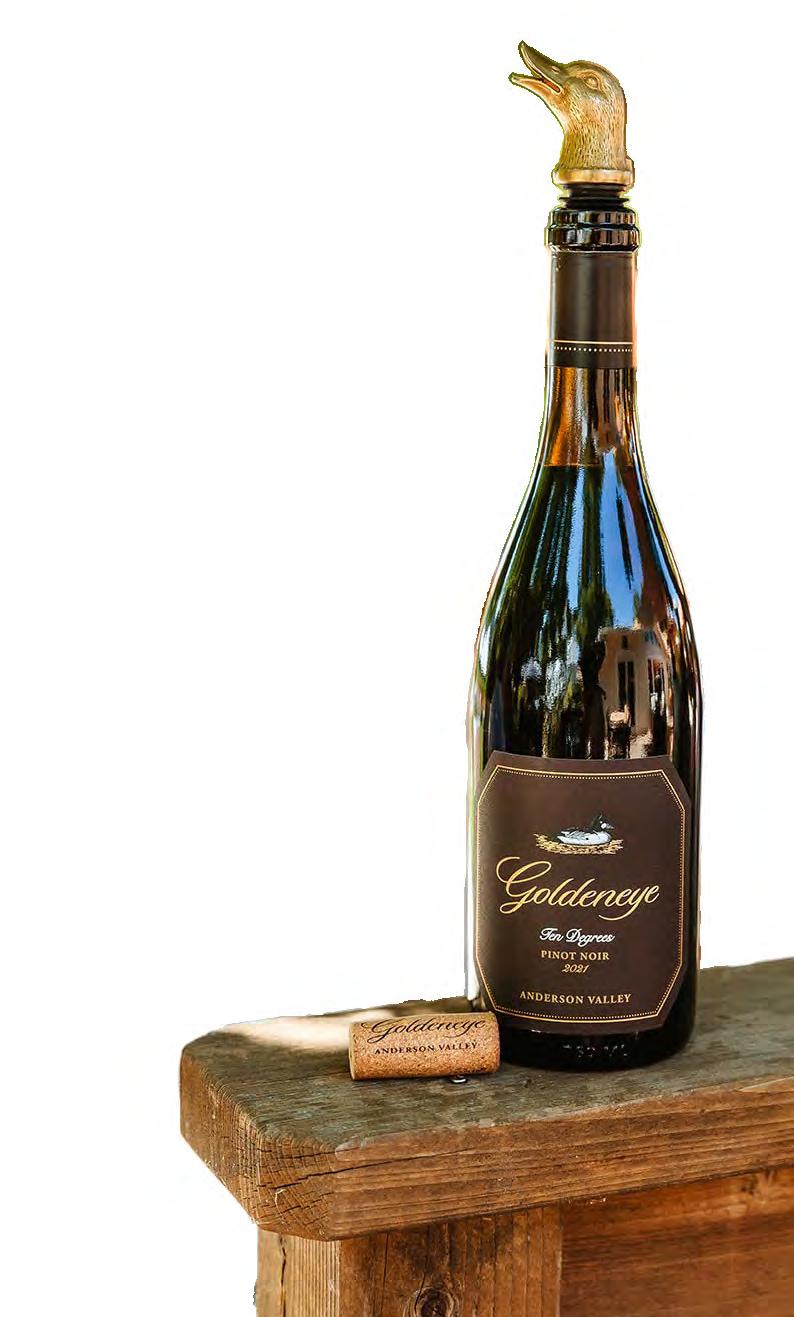
GOLDENEYE
WINERY: Elegant Pinot Noir from Anderson Valley’s Coastal Edge
Behind the Label
THE EXPERIENCE: Mountaintop Adventures
A Journey to the Anderson Valley: In 1996, after decades of defining Napa Valley Merlot, Dan and Margaret Duckhorn set out to find a cool-climate region capable of producing world-class Pinot Noir. Their search led them to Anderson Valley’s “Deep End,” where redwoods and marine fog create ideal conditions for elegant, cool-climate winemaking.
A Tapestry of Terroir: The soul of Goldeneye is found in three estate vineyards—Confluence, Gowan Creek and The Narrows—from which eight limited-production Pinot Noirs are crafted. By blending fruit from these diverse microclimates, Winemaker Kristen McMahan creates a sophisticated portrait of the valley. Their pinnacle Ten Degrees bottling showcases only the finest barrels from each vintage.
Commitment to the Land: Sustainability is a cornerstone of the Goldeneye story. In 2009, they became pioneers in the region by building Anderson Valley’s first LEED Gold-certified winery. Fish Friendly Farming and Certified Sustainable certifications underscore their dedication to preserving Mendocino County’s natural beauty and agricultural integrity. As Goldeneye celebrates its 30th anniversary this year, its roots within the Anderson Valley community remain steadfast.
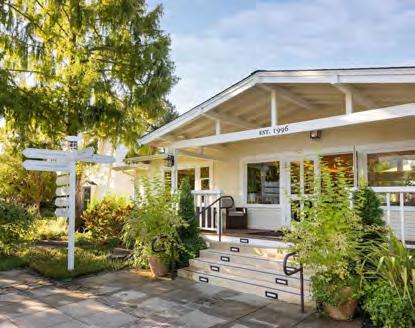
• Refined Valley Hospitality: A visit to the Goldeneye estate in Philo invites guests to slow down and enjoy the rhythm of Anderson Valley wine country. The tasting room overlooks Confluence Vineyard, offering a sophisticated, welcoming atmosphere. Seasonal events include the annual “Goldeneye Bubbles & Brunch” celebration each August, along with summer garden music performances.
• Elevated Tastings: Guests can explore Anderson Valley through curated tasting flights paired with local bites, whether enjoying a private seated experience or relaxing on the terrace.
• Great for: High-end Pinot Noir enthusiasts, sustainable winery design and vineyard views.
Why Anderson Valley Feels Different
Ocean-Cooled
Vineyards: Coastal fog and cool evening air help create elegant Pinot Noir and crisp sparkling wines with bright acidity and balance.
Scenic Backroads: Quiet country highways wind through redwood forests, rolling vineyards, orchards, and charming small towns.
Relaxed Tastings: Many wineries offer intimate, unhurried experiences that feel more personal than larger wine destinations.
Wild Northern California Beauty: Towering trees, misty mornings, and dramatic hillsides give the valley a distinctly rugged character.
Rooted in Stewardship: Family farms and sustainability-minded vineyards continue to shape the culture and landscape of Anderson Valley.
THINGS To Know About Wine
1. Plan ahead. Many wineries have limited hours. Appointments to taste and tour wineries are very easy to set up and, in many cases, can be pretty impromptu, so don’t hesitate to call ahead, even if it’s last minute.
2. Ask questions. Wine tasting is an opportunity to educate your palate and learn more about winemaking.
3. Designate a driver. This is the best way to go for a carefree day of tasting. Available local tour services are fun and incredibly affordable. It is illegal for a tasting room to serve wine to anyone who appears intoxicated, even if they have a designated driver -— so taste responsibly.
4. Feel free to use the dump buckets on the tasting bar for excess wine.
5. Limit yourself to no more than four wine tastes per winery.
6. Ask before you picnic at a winery, and never bring other alcoholic beverages to drink at a winery.
7. Children are welcome during nonevent weekends, but please keep an eye on them. Most wineries operate heavy equipment, so it is unsafe for unsupervised children. Remember, no one under the age of 21 may sample wine — not even your children.
8. Always taste from whites to reds. If you’ve already entered the red list and want to try a particular white again, try another day. If you’re on the cusp of whether or not to buy it, take your best guess or come back for another try later.
9. Try vertical/horizontal tasting. Vertical tasting involves sampling the same wine from different years. Horizontal tasting involves sampling the same vintage year and wine from other wineries.
10. Step away from the wine if you’re in a very busy winery at the tasting bar, and back away after receiving a tasting.
11. Don’t wear perfume, cologne, or lotions. The aromas of the wine mingle with strong scented cosmetics, which alter the taste perception and can ruin the experience for others.
12. Follow the winery’s advice on ordering a tasting. Winemakers’ styles differ, so trust each winery’s expert order.
13. Acidity: Since acid is present in all grapes, it’s also present in all wines. It is crucial in determining structure, shape, and lifespan and helps preserve wine for more extended aging. Good acid levels can make a wine crisp and refreshing, supporting the aftertaste.
14. Appellation: In the United States, an appellation is a grapegrowing area defined strictly by a geographic area. If a wine label cites an appellation, 75% of the grapes must be grown there. (For a more detailed explanation of Appellation, see 44, 45 and 46
15. Aroma: Refers to fragrances in the wine that are characteristic of the grapes. For instance, Chardonnay might be described as citrusy. Its aromas of lemon, lime, or grapefruit come from the grapes; they are not added. Also, see Bouquet or Nose.
16. Balance: An integration of the significant components of wine (fruit, acidity, tannins, alcohol, oak) so none outweighs the other. A balanced wine fills the mouth with flavors.
17. Barrel Fermented: Wine fermented in 55-gallon oak barrels contributes to increased complexity and flavor. The interaction with wood adds suggestions of spice and vanilla to wines.
18. Body: The feeling of a wine’s weight in the mouth, such as fullbodied, medium-bodied, or lightbodied.
19. Bouquet: The fragrances in the wine are introduced by the winemaking process, including the smell of the oak (vanilla) or the yeast in the wine.
20. Chewy: Describes full-bodied, sometimes tannic wines — rich enough to chew on.
21. Complexity: The interplay of a wine’s many characteristics. A wine can be at once rich and deep yet balanced and show finesse.
22. Corked: The term corked refers to wine that smells moldy and disagreeable due to a bad cork likely tainted with bacteria called TCA (trichloroanisole).
23. Dry: A wine with little or no perceptible sweetness.
24. Earthy: Wine, such as Pinot Noir, that has the smell or slight taste of fresh dirt.
25. Enology: The science of winemaking, also spelled oenology.
26. Estate Bottled: Indicates the winery owns or controls the grapes that produced the wine in the bottle.
27. Fermentation: The process by which yeast converts sugars into alcohol and carbon dioxide, turning grape juice into wine.
28. Field Blend: A common practice among the early grape growers in Mendocino County, where complementary grape varieties were interplanted in a vineyard. The grapes are harvested and fermented together, creating a field-blend wine.
29. Finish: The taste that remains in the mouth after the wine is swallowed. A long, lingering finish is considered desirable.
30. Fortified: Adding brandy or spirits to wine to increase alcohol content.
31. Grassy: An aroma or taste of grass or newly mowed hay — usually associated with Sauvignon Blanc.
32. Lees: Sediment and yeast found in a barrel or tank during and after fermentation. More winemakers are using the old technique of aging wine on the lees to increase complexities in aromas and flavors.
33. Legs: The drops of wine that slide down the sides of the glass when it is swirled, indicating the alcohol content in the wine.
34. Length: The amount of time a wine’s taste and aroma are evident after swallowing.
35. Made and Bottled By: The legal phrase used if a winery crushed, fermented, and bottled at the same location at least 10% of the wine in the bottle.
36. Nose: Refers to how the wine smells, similar to aroma and bouquet — as in, “This wine has a great nose.”
37. Oaky: Describes the aroma or taste character of a wine that has interacted with the oak of a wood barrel.
38. Oxidized: A loss of freshness from exposure to air. If a wine has been open for several days, it will oxidize.
Adobe Stock
THINGS To Know About Wine
39. Produced and Bottled By: A legal phrase that indicates the winery crushed, fermented, and bottled a minimum of 75% of the wine in the bottle.
40. Racking: The traditional practice of moving wine from one container to another. Essentially, it is decanting on a grand scale by moving wine from barrel to barrel to rid the wine of sediment.
41. Residual Sugar: The amount of unfermented grape sugar remaining in a wine. Dessert wines have a high residual sugar level, while dry table wines have little to no residual sugar.
42. Split: The term used for a sixounce bottle of wine, usually champagne.
43. Sulfites: A natural by-product of fermentation. Sulfites (in small quantities) may be added to wine to guard against spoilage.
44. Sur Lie: A term used for wines aged on the lees (also see Lees #32).
45. Table Wine: The legal term for wine that is less than 14% alcohol. Any wine over 14% alcohol must state the alcohol content on the front label and may not use the term “table wine” on the label.
46. Tannin: Chemicals found in the skins of many fruits, including grapes, which impart astringency. Tannin naturally preserves wine from oxidation and is a primary component in determining the wine’s structure and aging potential.
47. Tartrates: Natural, purely harmless crystals from the tartaric acids present in wines that often form in used casks, in wine sediment, and on used corks. Although they look like cut glass, they are completely safe and are a positive indication to experienced tasters that a wine has been appropriately processed.
48. Unfiltered: Some winemakers do not filter their wine because they believe filtering strips aromas and flavors from the wine. However, these wines can be clarified using a fining process.
49. Unfined: Wine that was not treated with any fining agents; however, it can be clarified using filtering. Some winemakers believe fining wine strips essential aromas and flavors from the wine.
50. Varietal: Term used to describe a wine produced from a particular type of grape. Cabernet Sauvignon, Merlot, Zinfandel, Chardonnay, Pinot Noir, Sauvignon Blanc, and others are examples of varietal wines.
51. Varietal Character: The aromas and flavors typical for a particular grape variety.
52. Variety: Term used to describe a type of grape. A wine made from a particular grape variety (e.g., Zinfandel) is referred to as a varietal.
53. Vintage: The year the grapes were grown and harvested.
54. Viticulture: The science of grape growing. When including the production of wine, the proper term is viniculture.
continues on page 16
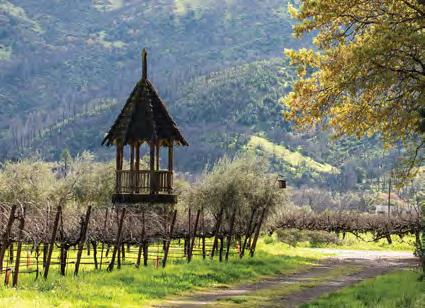
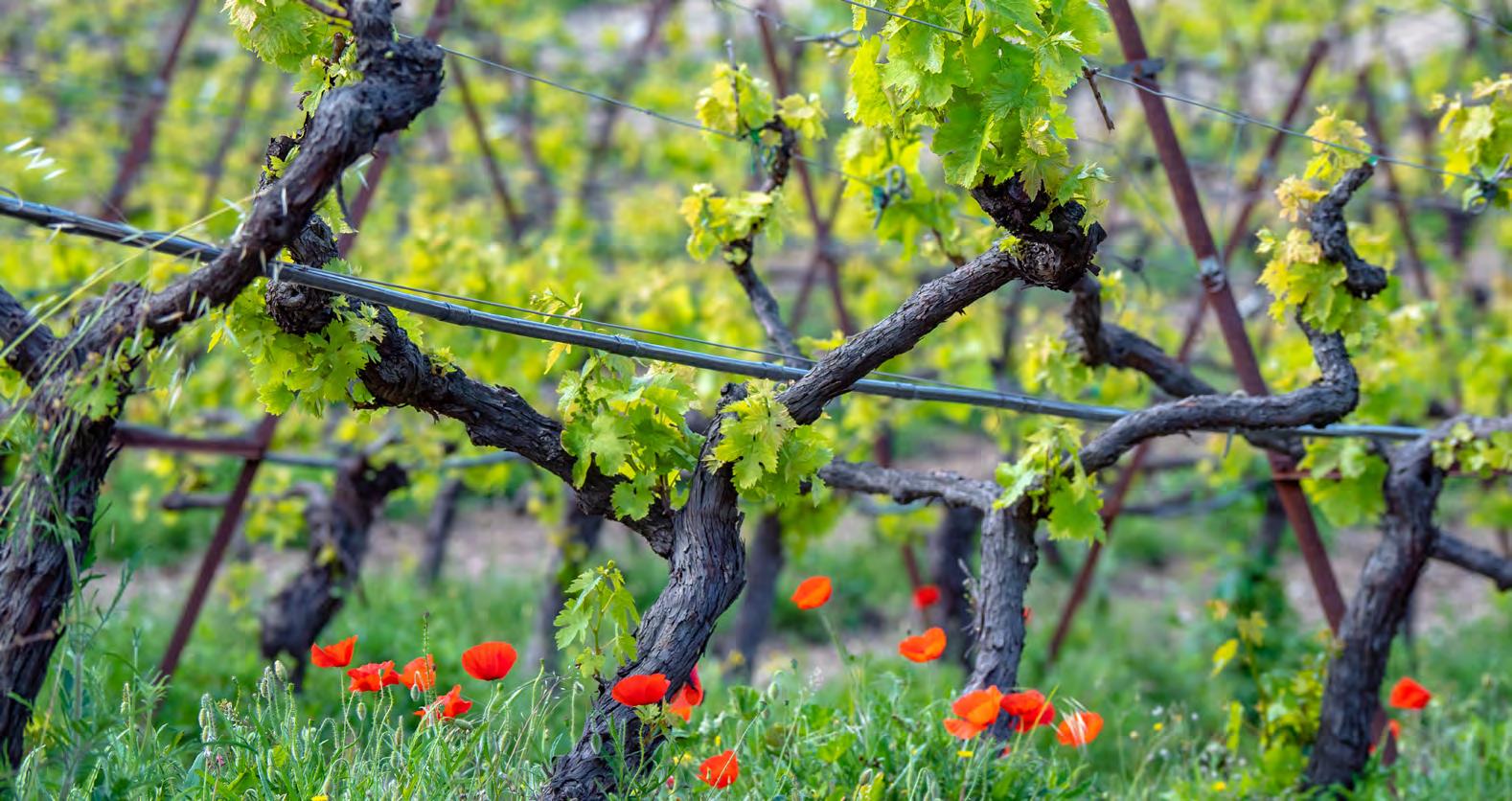
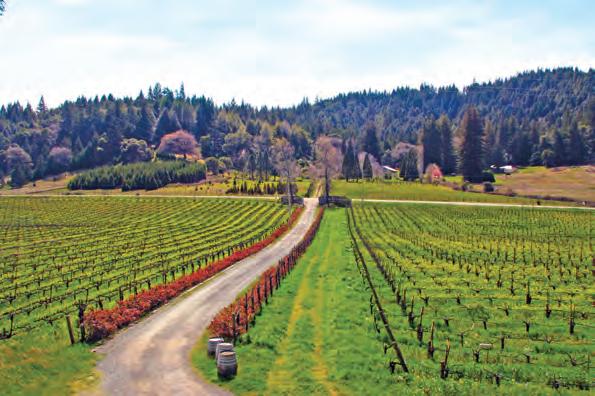
Spring vines.
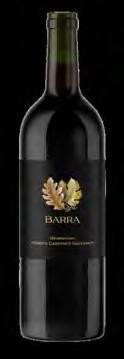
Photo by Sarah Lunceford, BarraOfMendocino.com
55. Wine Thief: A glass or plastic tube used to get a sample of wine from a barrel or other container.
56. Yeast: Important microorganisms that cause fermentation by converting sugar to alcohol.
57. Appellation: is a term used to define different grape growing regions. If “California” is on a wine label, the wine is made from grapes grown anywhere in California. If “Mendocino County” is on the label, then at least 75% of the grapes were grown in Mendocino County. Almost a dozen sub-appellations are within the Mendocino County appellation, including the Anderson Valley, Redwood Valley, and Mendocino Ridge.
58. Many appellation boundaries are easy to understand. Governmental boundaries define state and county appellations of origin, such as California and Mendocino County.
59. Sub-appellation boundaries are determined by similar climatic conditions, soil types, weather patterns, or what the French call “terroir.” Variations in terroir contribute to different flavors in the same grape variety grown in different regions. Mendocino County currently has 10 legally defined AVAs or American Viticultural Areas.
THINGS To Know About Wine
60. Alicante Bouschet: A cross between Petit Bouschet and Grenache, Alicante Bouschet’s red flesh and dark skin produce a wine with deep, intense color.
61. Barbera: Known for its rich color, low tannins, and high acid, this Italian grape came to California in the 1880s and today is part of the “Cal-Italia” varietal trend produced by several Mendocino County wineries.
62. Cabernet Franc: Wine produced from this grape can have the intensity of flavors of a Cabernet Sauvignon without the overpowering tannins, allowing it to be enjoyed without waiting years for the tannins to soften.
63. Cabernet Sauvignon: Described as the “King of Red Wines,” this small grape produces some of the world’s most magnificent and soughtafter wines. Through DNA testing, Cabernet Sauvignon was found to be a cross between Cabernet Franc (red grape) and Sauvignon Blanc (white grape).
64. Carignane (Carignan): Grown by early California wine pioneers, Carignane produces a fruit-driven, easy-to-drink wine used as a blending wine, as well as a single varietal wine.
65. Champagne is a term for sparkling wine made in the Champagne region of France.
66. Charbono: Thought to be a rela -
tive of Barbera or Dolcetto, or both varieties, that dates back to the 1880s in California. It is popular in the wine industry’s current “CalItalia” movement.
67. Chardonnay: The Queen to Cabernet Sauvignon’s King, this white grape variety produces the famous Champagne, Chablis, White Burgundy, and Maconnais wines from France and is the most popular white wine in the world. Chardonnay can range from rich, oaky, and buttery to fresh, crisp, and fruity as a varietal wine.
68. Chenin Blanc: Once a popular wine ranging in style from dry to semi-dry to sweet, Chenin Blanc is primarily used for blending. The fruity, well-balanced wine is more challenging to find as a single varietal, but it can be worth the hunt for white wine lovers.
69. Cinsaut (Cinsault): A Rhône varietal used to blend grapes or to produce an aromatic rosé, Cinsaut produces a soft, light-bodied red wine with perfume aromas and fruit-forward flavors.
70. Dolcetto: From the Piedmont region of Italy, Dolcetto is produced in two distinctly different styles: a soft, slightly sweet aperitif-styled wine or a robust, hearty rich wine. A classic Dolcetto exhibits citrus peel, almond, blueberry, and even licorice flavors.
71. French Colombard: Also known as Colombard, this white grape
variety once was the second most planted grape in California. Today, it is rarely found as a varietal wine, but with its fruit-forward flavors, it is used as a blending grape.
72. Fumé Blanc: A fanciful name for Sauvignon Blanc.
73. Gewürztraminer: Originally from the Alsace region of France, Gewürztraminer quietly gained fans for its intense floral aromas and classic lychee-nut and spicy flavors. This versatile, fruity white wine can be made semi-dry to bone dry as a late-harvest dessert wine.
74. Grenache: In France’s Rhône region, Grenache is used in the classic Châteauneuf-du-Pape. It is often used in delicious Rhône varietal blends or in Rosé in California.
75. Malbec: Often used in Bordeauxstyle blends and as a single varietal wine.
76. Marsanne: A white grape originating in the Rhône region of France. It is frequently blended with other Rhône varietals.
77. Meritage™: A trademark name developed by the Meritage Association to identify blends made from specific Bordeaux varietals. Association wineries’ Bordeaux must be produced from a blend of two or more of the following varieties to be called a Meritage: Cabernet Sauvignon, Merlot, Cabernet Franc, Malbec, Petit Verdot, St. Macaire, Gros Verdot, and Carmenere. No
THINGS To Know About Wine
single variety can be more than 90% of the blend. For a white wine Meritage, the wine must have two or more of the following varieties, and no single variety can be more than 90% of the blend: Sauvignon Blanc, Semillon, and Sauvignon Vert.
78. Merlot: A classic Bordeaux grape traditionally used for blending. In the early 1970s, Merlot gained popularity with wine drinkers seeking a softer, fruitier red wine.
79. Mourvèdre: Mourvèdre arrived in Northern California in the 1870s from the Mediterranean regions of Spain and France, where it was called Mataro. It often is blended with varietals, such as Grenache, to create a fruity, crisp Rosé.
80. Muscat: A versatile grape with perfumy aromas and fruit-forward flavors dating back to early civilizations. Muscat varieties include Muscat Blanc, Muscat of Alexandria, Muscat Hamburg (Black), and Orange Muscat.
81. Peloursin: An almost extinct French Rhône region variety that has been identified as having ties to Petite Sirah.
82. Petit Verdot: Used to blend with Cabernet Sauvignon or other Bordeaux varietals to add color, a spicy quality, and additional structure or backbone. This wine is rarely found as a single varietal.
83. Petite Sirah: DNA studies show Petite Sirah is the Rhône grape Durif, a cross between Peloursin and Syrah. Although called ‘petite,’ the wine is anything but — it offers robust flavors and plenty of tannins.
84. Pinot Gris: Pinot Grigio is a natural mutation of Pinot Noir that yields a soft, perfumy white wine.
85. Pinot Noir: Grown in the cooler regions of Mendocino County, this fog-loving grape is essential in producing some French Champagnes.
86. Port: This term describes the famous fortified sweet wine made in Portugal. Port-style wines are produced in the United States from a variety of grapes.
87. Riesling: Also known as Johannesburg Riesling or White Riesling, many California wineries once produced this classic German varietal. Now, it is rarely found on a winery’s tasting list. Generally, it is a flowery, fruity, dry wine with high acid and low alcohol. Some wineries also produce it in a semidry and late-harvest style.
88. Rosé: A pink or salmon-colored wine produced from red grapes. Because the juice has limited contact with the skins and seeds that give the wine structure and tannin, Rosé is a soft, easy-to-drink wine best served chilled.
89. Rousanne: A Rhône variety often blended with Marsanne and occasionally Syrah, Rousanne contributes good acidity and aromas of herbal tea and floral notes to the blends.
90. Sangiovese: Brought to Mendocino County by Italian immigrants, Sangiovese is produced as a varietal wine with possibly small amounts of other wines blended to add a layer of dimension or additional flavor components.
91. Sauvignon Blanc: Also known as Fumé Blanc, Sauvignon Blanc is a classic variety that is an alternative to Chardonnay. Its styles can vary from grassy and herbaceous to citrus qualities of lime and grapefruit to flint and mineral qualities with gooseberry flavors.
92. Semillon: Traditionally blended with Sauvignon Blanc to produce dry table wine or a sweet dessert wine, including the renowned dessert wines from Sauternes, France. Semillon displays aromas and flavors of figs and honey as a single varietal.
93. Shiraz: The Australian and South African name for the Syrah grape. See Syrah for additional info.
94. Sparkling Wine: Usually produced from Chardonnay, Pinot Noir, and Pinot Meunier, this wine bubbles when poured into a glass due to carbonation. Harvested early to capture the tangy flavors and high acids, a second fermenta -
tion in individual bottles starts with adding a small amount of sugar. Carbon dioxide, a natural by-product of fermentation, is trapped in the bottles and creates tiny bubbles when the sparkling wine is uncorked. This method of producing sparkling wine is called methode champenoise.
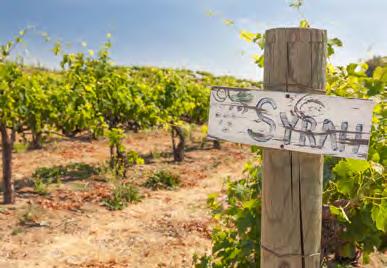
95. Syrah: Syrah is a warm climate wine with characteristics that include white pepper, leather, wild gamey, and dark berry flavors.
96. Tempranillo: Considered the Cabernet Sauvignon of Spain, Tempranillo has many names, including Tinto Fino, Tinta Roriz, Tinta del Pais, Aragonez, and Valdepañas. Tempranillo is generally blended with other varietals, similar to the use of Cabernet Sauvignon in Bordeaux.
97. Valdiguié: It was known as Napa Gamay or Gamay for years until DNA analysis correctly identified this variety as Valdiguié. This original French variety has all but disappeared as a varietal in France, just as it has gained in popularity in California.
98. Viognier: Originally from the Rhône region, Viognier wines have a distinctive fragrance, combining floral and fruity aromas and flavors. Sometimes, small amounts are blended with Syrah to tame and add elegance to the wine.
99. White Zinfandel (also see Rosé #88): This soft, easy-to-drink wine is produced in a similar style to a Rosé; White Zinfandel is made from Zinfandel grapes. As the grapes are crushed, the juice picks up some of the pigmentation from the skins, giving it a rose or pink color.
101. Late-Harvest: A term used to describe wine made from grapes picked after the normal harvest time, generally late fall. Such grapes have a much higher sugar content, or Brix, that can translate to a sweet wine high in alcohol, making them a perfect complement for afterdinner.
100. Zinfandel: Although how the first Zinfandel vines arrived in the United States is a mystery, DNA testing linked it to both the Italian Primitivo and the Croatian Crljenak Kasteljanski. Zinfandel was a standard variety found in field-blend wines produced by the Mendocino County wine pioneers. This robust wine has an enormous following among wine lovers.
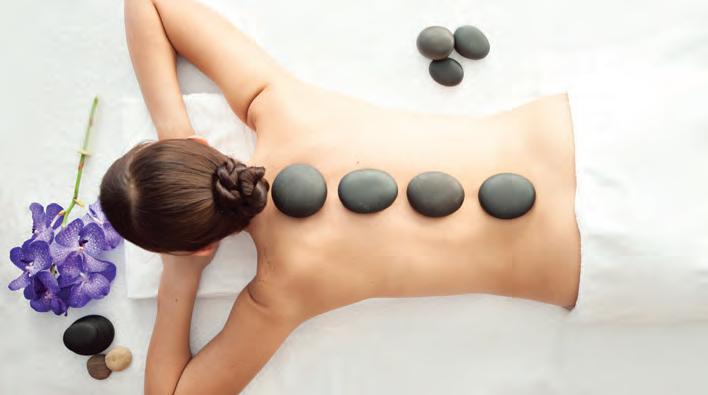
2 Spa Resorts
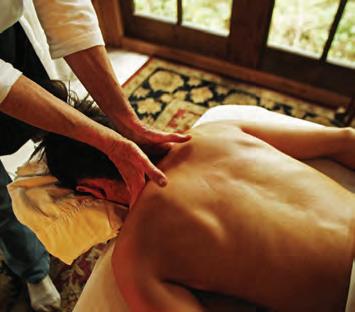
For more than a few people, a California vacation is only complete with a relaxing visit to a spa. From facials and massages to a hot cup of tea, Mendocino County’s many spas provide relief from stress.
• COAST INN AND SPA in Fort Bragg : Experience the serenity of the coast while practitioners release the stress and tension from your body. They offer massages, farinfrared saunas, and natural healing services. 707-964-2852, CoastInnAndSpa.com
• At NOYO HARBOR INN in Mendocino, guests are invited to indulge in a haven of spa services. Visitors can enjoy invigorating massages or revitalizing facials with breathtaking views of the harbor as a backdrop. 707-961-8000, NoyoHarborInn.com.
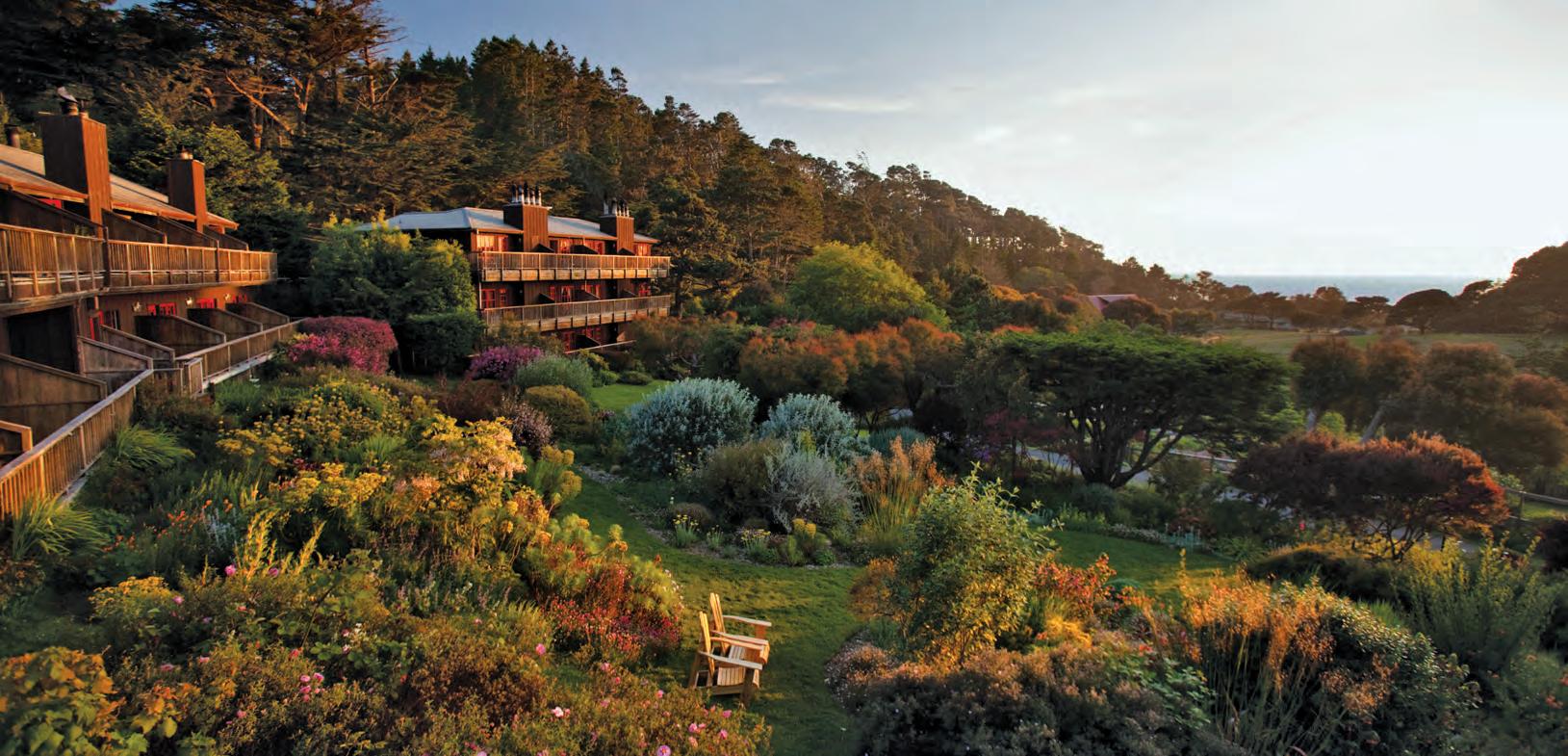
• Have a “massage in the forest” at STANFORD INN just south of Mendocino Village. Choose from Thai, hot-stone, neuromuscular, or Botanical Aromatherapy massages. Also available are facials, Ayurvedic treatment, and yoga. 800-331-8884, StanfordInn.com
• Third Court Salon and Day Spa in LITTLE RIVER INN — This family-owned destination resort is located on the coast, two miles south of Mendocino Village. They offer professional hair care, facials, massages, body treatments, and more. Spa services are available in-room. 707-937-5942, LittleRiverInn.com
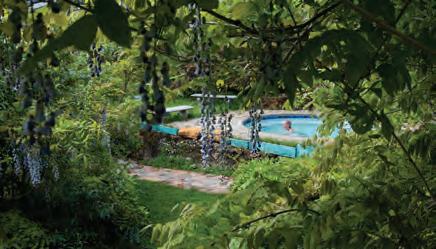
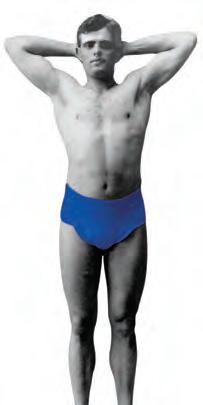
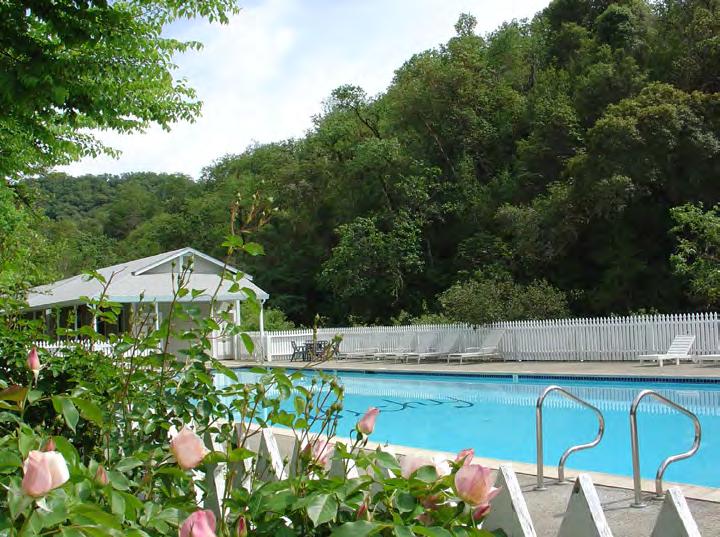
• VICHY SPRINGS RESORT AND COUNTRY INN in Ukiah — Relax in a naturally carbonated hot spring or be treated to several unique massages and spa treatments. 707-462-9515, VichySprings.com
3
Farmers Markets
Farmers markets are some of Men docino’s best kept secrets. They are where the locals go to socialize and connect. The markets are mostly made up of mom and popscale farms, ranches, creameries and more, most of which you won’t find represented in larger metropolitan markets. Meet the people who run the farm and do the work, and sample and stock up on great organic produce, humanely-raised meat, tasty honey, artisan cheeses, flowers and nursery stock, baked goods, prepared foods and more. MORE INFO: MCFarm.org for a listing of vendors, special events and other information. Check there also for current times and dates, which change periodically. The following Certified Farmers Markets (CFM) are part of the Mendocino County Farmers Market Association:
• Fort Bragg , Year-Round, Wednesdays: 2:30-5:30 pm -May to Oct., Nov. to April: 2:30-4:30 pm: Old Recreation Center Gym, Franklin & Laurel Street (Indoors)
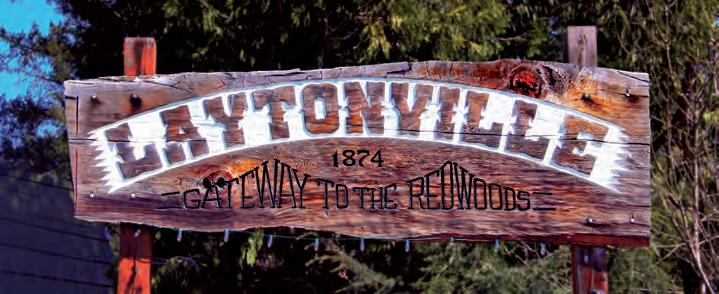
• Laytonville, Laytonville, Year-Round, Mondays, 2:30 - 5:30p.m. Harwood Hall
• Mendocino, Fridays, Noon-2:30 pm , May to Oct. 28, at Howard & Main Streets
• Redwood Valley, Sundays, 9am -Noon, June to Oct. at Lion’s Club Park, and Oct. 23 to Dec. 18 at Redwood Valley Grange Hall
• Ukiah, Year-Round, Saturdays: 10 am -12:30 (winter), 9-Noon summer) at Alex Thomas Plaza, School & Clay Sts
• Willits, Thursdays 3-5 pm (Dec-Mar.) indoors at 291 School St. Thursdays 3-6 pm (April-November), outdoors at West Mendocino Ave. between Muir and Main Sts
4 Casinos in Mendocino County
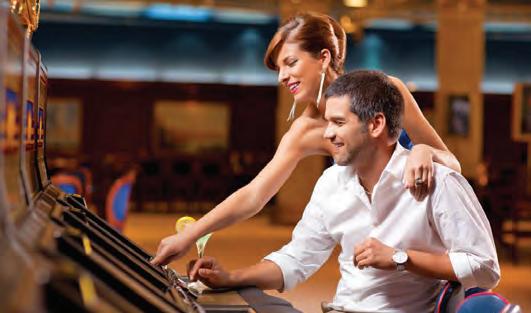
Think you can handle non-stop fun? Then try your luck at one of the many casinos in Mendocino County. These gaming establishments are known for their huge assortments of slot machines, exciting high- and low-stakes table games, and that perennial favorite, Bingo. You can also enjoy live music performed by the topnotch entertainers who frequent Mendocino County’s casinos. Additionally, there are restaurants in the casinos that serve some of the best food around, and in the most pleasant settings. When you can manage to pull yourself away from all the fun, be sure to stay a night to rest up for a whole new day of excitement.
• Coyote Valley Casino in Redwood Valley, 707-485-0700, CoyoteValleyCasino.com
• Garcia River Casino in Point Arena, 707-467-5300, TheGarciaRiverCasino.com
• Hidden Oaks Casino in Covelo, 707-983-6896, HiddenOaksCasino.com
• Sherwood Valley Casino in Willits, 707-459-7978, SVRCasino.com
5
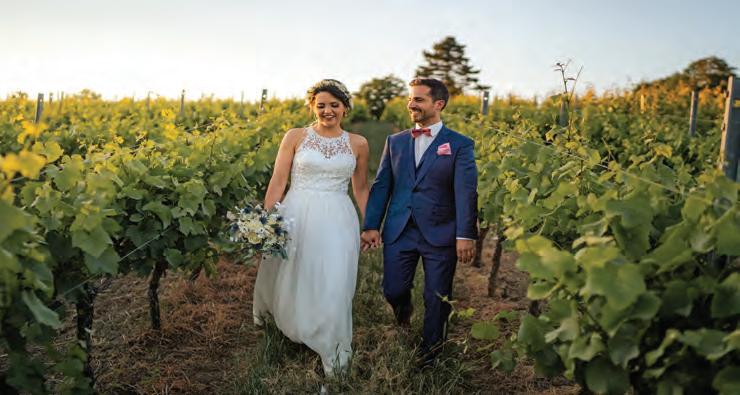
Elope!
Embark on an enchanting journey to Mendocino County, where couples can enjoy a romantic elopement with the help of renowned local stays like Little River Inn and Stanford Inn by the Sea. Perched along the dramatic coastline, these properties offer inviting accommodations and attentive service, ensuring every moment feels special.
Imagine exchanging vows amid sweeping ocean views, from cliffside gazebos to the lush gardens of Mendocino Coast Botanical Gardens or the serene Sea Ranch Chapel. Afterward, retreat to a private oceanfront suite or cozy cottage to unwind and celebrate in style.
With guidance from experienced wedding professionals, every detail—from floral design to farm-to-table cuisine—is thoughtfully arranged. Couples may work through select inns or choose a dedicated elopement specialist, enjoying a seamless, personalized experience.
Whether sharing the moment with a few loved ones or just each other, Mendocino County sets the stage for lasting memories. Beyond the ceremony, explore the charm of Mendocino and Fort Bragg, sip local wines, or wander among the redwoods of Mendocino Woodlands State Park—where romance lingers long after “I do.”
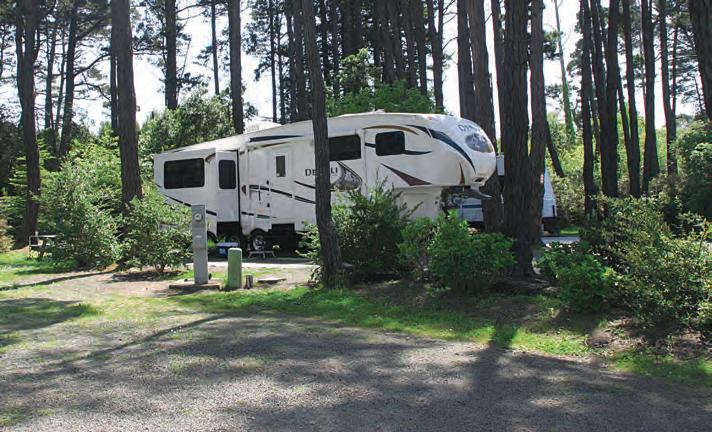
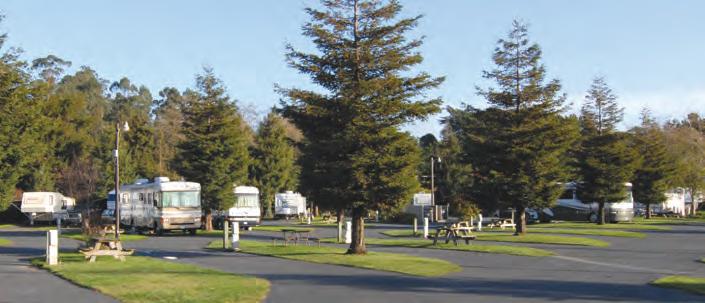
Campgrounds & rV parks
Area code 707 unless otherwise noted. Recommendations in bold.
Albion River Campground
33800 Albion River South Side Rd., Albion 937-0606, AlbionRiverCampground.com
Anchor Bay Campground 35400 Hwy 1, Gualala, 884-4222, ABCamp.com
Caspar Beach RV Park and Campground 14441 Pt. Cabrillo Dr., Mendocino 964-3306, CasparBeachRVPark.com
Cleone Campground 24400 N. Hwy 1, Fort Bragg 964-4589, CleoneCampground.com
Creekside Cabins & RV Resort
29801 N. Hwy 101, Willits, 459-2521
Dolphin Isle RV Park & Marina 32399 Basin St., Fort Bragg 964-4113, DolphinIsle.com
Fort Bragg Leisure Time RV Park 30801 Hwy 20, Fort Bragg 380-0344, FortBraggLTRVPark.com
Golden Rule RV Park 16100 N. Hwy 101, Willits 459-2958, GoldenRuleRVPark.com
Green Acres Campground 23600 N. Hwy 1, Fort Bragg, 964-1435
Gualala River Redwood Park 46001 Gualala Rd., Gualala 884-3533, GualalaPark.com
Harbor RV Park 1021 S. Main St., Fort Bragg, 961-1512
Hidden Pines RV Park & Campground 18701 N. Hwy 1, Fort Bragg, 961-5451 HiddenPinesCampground.blogspot.com
Jug Handle Creek Farm & Nature Center 15501 N. Hwy 1, Caspar 964-4630, JugHandleCreekFarm.com
Mendocino Grove Campground 9601 Hwy 1, Mendocino 880-7710, MendocinoGrove.com
Manchester KOA Kampground 44300 Kinney Rd., Manchester 882-2375, ManchesterBeachKOA.com Mendocino Redwoods RV Resort 1600 Hwy 20, Willits 459-6179, MendocinoRedwoods.com
Pomo RV Park & Campground 17999 Tregoning Ln., Fort Bragg 964-3373, PomoRV.com
Redwood Empire Fairgrounds, RV Park 1055 N. State St., Ukiah 462-3884, RedwoodEmpireFair.com
Schooner’s Landing RV Park & Marina 33621 Albion River N. Side Rd., Albion 937-5707
Sportsmans RV Park 32094 N. Harbor Dr., Fort Bragg 357-2208, SportsmansRVPark.com
Westport Beach RV Park & Campground
37700 N. Hwy 1, Westport 964-2964, WestportBeachRVPark.com
Wildwood Campground & RV Park 29700 Hwy 20, Fort Bragg 964-8297, Wildwoodside.com
Woodside RV Park & Campgrounds 17900 N. Hwy 1, Fort Bragg 964-3684, WoodsideRVPark.net
6
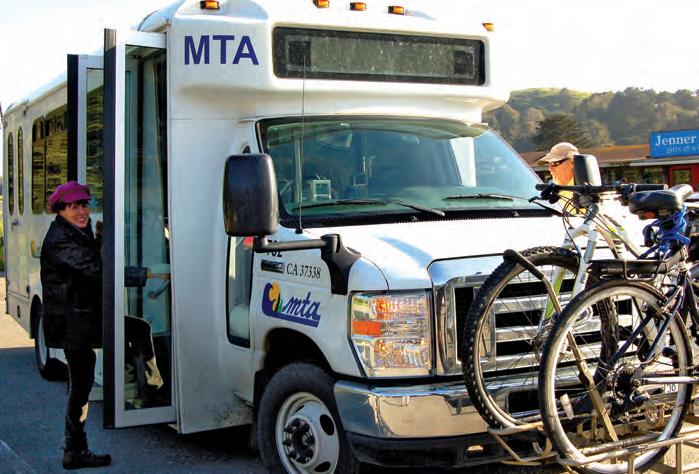
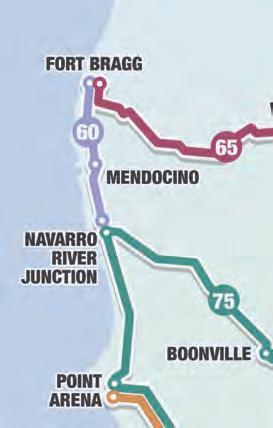
Six Great Hike & Bike Adventures Using the MTA Bus
You don’t need a car to experience some of Mendocino County’s most scenic places. MTA buses, many equipped with bike racks, make it easy to reach coastal trails, redwood groves and quiet backroads for day trips or weekend adventures. Featured outings include the North Coast Ride from Fort Bragg to MacKerricher State Park and Ten Mile Beach; South Coast Ocean Hikes near Gualala, Sea Ranch and Point Arena; camping and hiking beneath giant redwoods at Hendy Woods in Anderson Valley; the rugged Willits Backroads Adventure; and Ukiah’s vineyard-lined Old River Road ride. Along the way, travelers can enjoy ocean views, hidden beaches, redwood forests and some of the county’s most beautiful rural scenery — all while keeping their carbon footprint low.
MORE INFO: Check out the MTA Bus schedule to plan your adventure: bit.ly/MTAhome
7
Disc Golf Courses
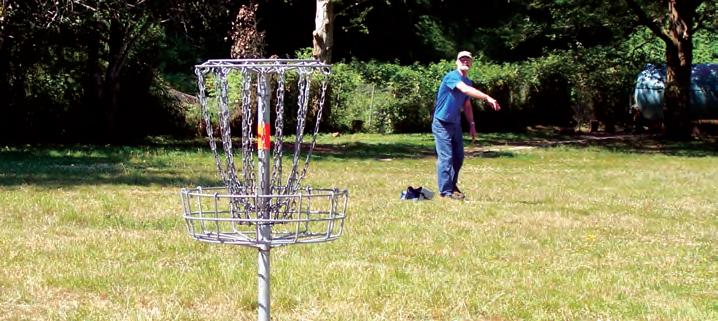
The discus throw was introduced at the Ancient Olympic Games in 708 B.C., and the modern game of golf dates back to the 15th century in Scotland. It was not until 1926, however, that we have any record of the two games being merged. That year schoolchildren in Canada developed “tin lid golf,” a game similar to golf played by throwing tin lids. Elsewhere and independently, other people tried playing golf with disc-like objects, including pie tins, from the 1930s through the 1960s, but it wasn’t until the late ’60s that the rules for modern disc golf were laid down and the game started to catch on in a big way.
As in traditional golf, a course usually consists of 18 holes. Unlike regular golf, most disc golf courses are located in public parks and are free to play, although some courses charge a nominal fee. The sport requires inexpensive discs instead of costly clubs and balls. The disc golf “hole” is a metal basket mounted on a pole. It’s become wildly popular, and seems to be America’s new favorite park game. It’s so easy to play that just about anyone of any age can enjoy it, yet at the same time it is very challenging to master. Courses can be found all over Mendocino County:
• Anderson Valley Brewing Company, Hwy 253 at Hwy 128 in Boonville, 707-895-2337
• College of the Redwoods, 1211 Del Mar Dr., Fort Bragg, 707-962-2663
• Mendocino High School, 10070 Ford St., Mendocino, 707-964-1601
• Mendocino College Disc Golf Course, 1000 Hensley Creek Rd., Ukiah, 707-468-3000
• Lake Mendocino, Overlook Day Use Area, 707-462-7581
• Manchester Beach KOA , 707-882-2375
photo by Suzanne Pletcher
MENDOCINO CANNABIS TRAIL
M endocino c ounty
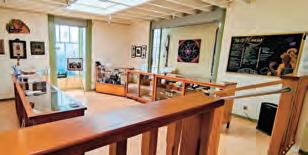
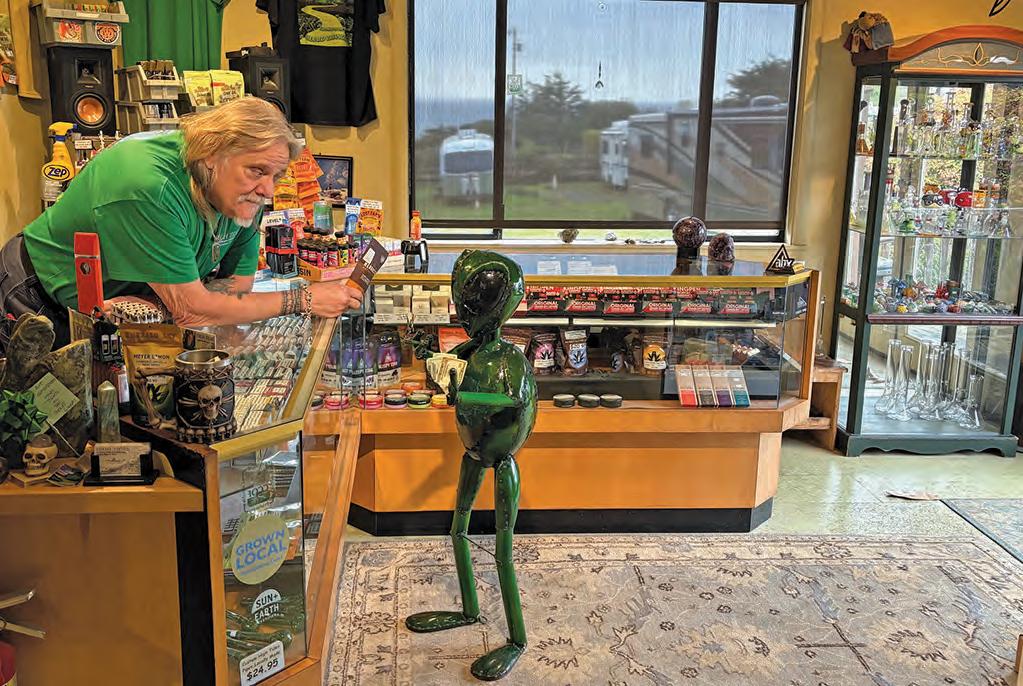
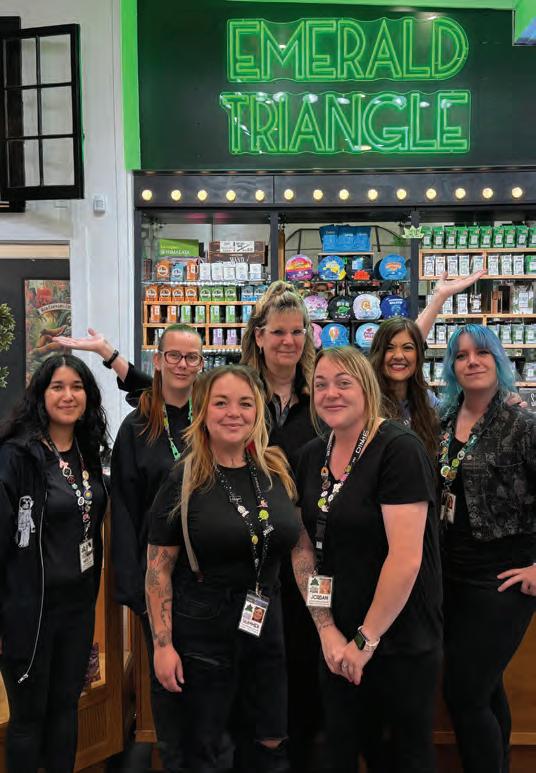
Wocated along the breathtaking Mendocino Coast in Fort Bragg, Emerald Triangle Cannabis Dispensary is more than just a pot shop—it’s a must-see destination for cannabis lovers. There’s no better place to experience this region’s legendary cannabis than in one of California’s most impressive dispensaries.
Emerald Triangle Cannabis Dispensary brings back that joyful feeling of being an adult/kid in a candy store. No matter what you’re craving, from mouthwatering edibles, and locally grown flower to potent concentrates, vapes and everything in between, this beautifully designed dispensary offers the most extensive selection in Northern California. Elevated by their budtenders that are as friendly as they are knowledgeable, Emerald Triangle Cannabis welcomes everyone, from canna-curious to seasoned “cannasseurs”. If you’re looking to take your day to a higher level, Emerald Triangle Cannabis adds the perfect spark to any coastal adventure.
Why is e M e RAL d
t R i A nGL e c A nn ABis L e GendAR y ?
It all starts with the land. The Emerald Triangle—Mendocino, Trinity and Humboldt counties—has been cultivating top-tier cannabis for generations. Blessed with the ideal climate, rich soil, clean mountain water, and passionate legacy farmers, this area is the most iconic cannabis-growing region in the U.S., if not the world. Their tradition is small-batch and sustainable, organic sungrown. The flower that comes from this region is flavorful, potent, and grown with love. Many of today’s most sought-after strains trace their roots to the Emerald Triangle, and you can taste that legacy in every puff.
Want to experience the real Emerald Triangle? Just head to the Emerald Triangle Cannabis Dispensary in Fort Bragg. It’s coastal, it’s colorful, and it’s packed with quality products from local farms and trusted brands. The team is friendly, funny, and knows their stuff. So whether you’re experienced or just want to chill, Emerald Triangle can show you a good time.
546 South Main Street in Fort Bragg, CA • 707-964-WEED
Must
Featuring the finest flower from small, local farms and quality cannabis products made by people dedicated to keeping the magic and the medicine in cannabis.
Our highly knowledgeable staff can assist you in finding the products that best serve your needs.
See our current menu at www.soldemendocino.com Stop by or order online for in-store pickup.
8
Visit a Top Cannabis Dispensary
In Mendocino County, cannabis culture is part of the landscape itself. As part of California’s famed Emerald Triangle, the region is known worldwide for craft cultivation, sustainable growing practices, and premium small-batch cannabis shaped by the rugged beauty of the North Coast.
The Emerald Triangle — Mendocino, Humboldt, and Trinity counties — has produced top-tier cannabis for generations thanks to rich soil, mountain water, ideal growing conditions, and passionate legacy farmers committed to sungrown, small-batch cultivation. Many of today’s most sought-after strains trace their roots back to this iconic region.
Throughout Mendocino County, dispensaries offer visitors the chance to explore locally grown flower, concentrates, edibles, vapes, and wellness products sourced from respected Northern California farms and brands. Friendly, knowledgeable budtenders help guide everyone from canna-curious newcomers to seasoned enthusiasts through the region’s celebrated cannabis culture.
Whether you’re seeking relaxation, inspiration, or simply a memorable North Coast experience, Mendocino County offers a cannabis experience unlike anywhere else. Check out our Cannabis Dispensary Map on page 21
Whether it’s communion with nature, creative expression, or physical and spiritual rejuvenation, people who come to Ukiah are seeking an escape from the usual. Two hours north of the San Francisco Bay Area, Ukiah charms you with its rich character, vineyards and natural surroundings. Named California’s best small town and the sixth best in the entire country, Ukiah beckons you to explore all that the valley has to offer amidst their 300 days of annual sunshine.
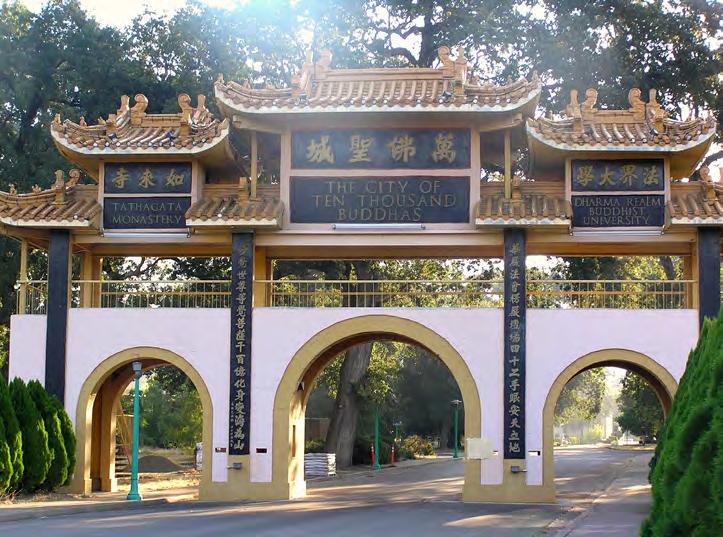
Ukiah is the heart of the greenest wine region in America and is home to industry pioneers like the nation’s first organic winery, the first carbon-neutral winery and renowned innovators in the microbrew industry. Plan your visit around one of the many year-round events and farm-to-table dinners that celebrate the local bounties of organic food and wine, artisan olive oils and more. For rest and relaxation, there are hot springs and statuesque redwood groves, an international Buddhist monastery with its jeweled hall of 10,000 Buddhas, and highly acclaimed fine dining.
Experience nature you can touch, wines that will amaze, food that you’ll remember. The hospitality is genuine, the pace unhurried. Ukiah is the place you didn’t know you needed to visit, but will be glad you did.
M endocino c oast s outh coast: Gualala
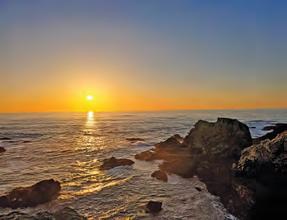
Gualala sits at the dramatic convergence of rolling coastal hills, the Pacific Ocean and the Gualala River. The southern coastal gateway to Mendocino County, Gualala is a delightful resort area and a favorite whale-watching spot. Its name comes from the Pomo Indian name for the river, “ah kha wa la lee,” which means “where the water flows down.” People from out of town usually call it GWA-la-la, but locals pronounce it wa-LA-la. Once a logging town, Gualala’s primary economic activity is now tourism. It also serves as a commercial center for the surrounding area. Gualala is an ideal spot for viewing the elusive “green flash” that can sometimes be seen for a second or two as the sun sinks into the ocean.
9
Gualala Point Regional Park
Open daily from dawn till dusk, Gualala Point Regional Park is popular with day hikers and picnickers, as well as overnight campers. This lovely park encompasses almost 200 acres of peaceful meadows, dramatic coastal forests, and delightful sandy beaches. The Gualala River runs lazily through it, and offers limited seasonal fishing (check the local regulations). The park has an intimate, well-maintained campground situated among the majestic redwood trees and adjacent to the river.
Gualala Point Regional Park offers 2.9 miles of coastal trail along bluffs, through meadows, and above the Gualala River. Gualala Point Beach is easily reached via a dirt trail or ADA accessible paved path, and in general the trails throughout the park are fairly flat. Dogs are permitted on leashes no longer than 6 feet in length, and must be licensed. There are picnic areas scattered throughout the park, some with barbecues, and restrooms with flush toilets. The park has an informative Visitors Center featuring exhibits that showcase the history of Northern California, turn-of-the-century logging, and Native American displays. There are also intricately hand-carved poles from Russia. WHERE: 1 mile south of Gualala on Hwy 1.
MORE INFO: 707-785-2377, camping reservations 707-565-2267, Monday through Friday 10 am to 3 pm , Sonoma-County.org/parks/pk_glala.htm
South Coast’s “Banana Belt”
Mendocino’s “banana belt” stretches south from Anchor Bay through Gualala and down to Sea Ranch, just across the county line in Sonoma County. Visitors to this area often enjoy warm and sunny weather while the rest of the coast is shrouded in chilly fog. The warmer weather and more frequent sunshine can be attributed to Point Arena: the protrusion of land into the ocean there, less than 20 miles north of Gualala, provides both fog-break and protective shelter for the coastline to the south.
Gualala Point Regional Park. Photo by Cyndi Phillips
Gualala Point Regional Park. Photo by Jason Sewall, Flickr.
Gualala
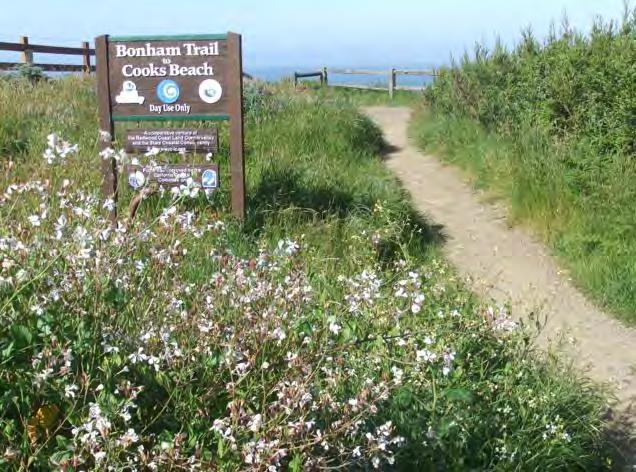
10 Bonham Trail to Cooks Beach
Sandy beaches are rare on the southern Mendocino Coast, which gives Cooks Beach special appeal. A bluff trail leads out to the Bonham Overlook, and the other offers a brief walk through bishop pine forest to access the beach. The short trail makes this an ideal spot to carry in a picnic lunch and enjoy the windprotected, large pocket beach. Leashed dogs are welcome here, and it is a great family beach. It makes a fantastic spot to watch the sun go down, and perhaps get a chance to see the elusive green flash at sunset. There are tidepools near the southern end of the beach that are accessible during low tides, and it is possible to view sea lions, seals, dolphins, and migrating whales (in season). Summer waves tend to be calm.
The trail is managed by the Redwood Coast Land Conservancy (RCLC). Caution should be taken in the water due to the presence of rip currents. Parking is limited. There is no cell reception at this location.
WHERE: About 2 miles north of Gualala on Hwy 1. Take County Road 526 and look for the sign saying Bonham Trail to Cooks Beach.
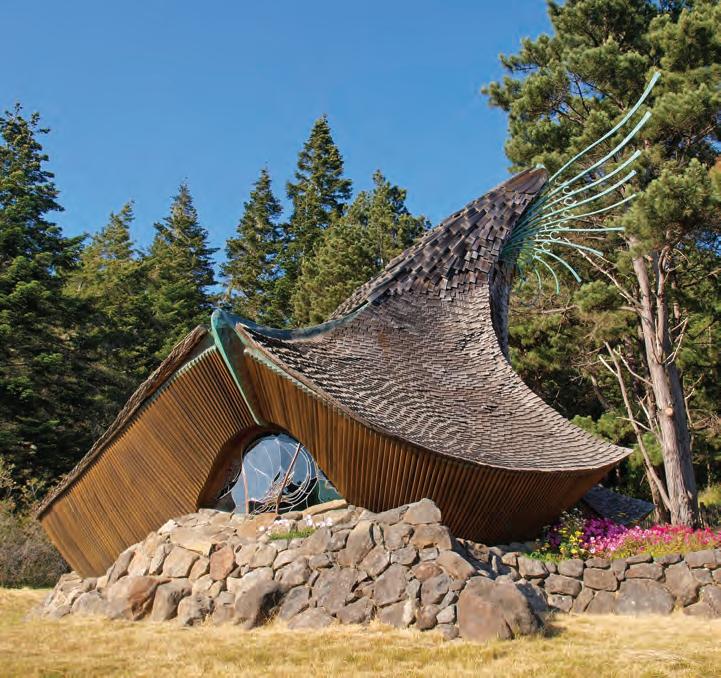
11 The Sea Ranch Chapel
Although it’s technically over the county line in Sonoma County, this architectural treasure is worthy of a few extra miles. Nestled along the rugged coastline near Gualala, the Sea Ranch Chapel stands as a serene sanctuary, both architecturally stunning and spiritually uplifting. Conceived in the 1980s by James T. Hubbell, a renowned architect and artist, the chapel embodies the essence of organic architecture, seamlessly blending into the surrounding landscape of windswept meadows and majestic cypress trees.
Its unique design, characterized by graceful curves and intricate wooden details, reflects Hubbell's vision of harmony between humanity and nature. Visitors are drawn to the chapel not only for its architectural brilliance but also for the sense of tranquility it offers. Whether seeking solace in quiet contemplation or marveling at the interplay of light and shadow filtering through stained glass windows, each visitor finds a personal connection within its walls.
Beyond its aesthetic appeal, the Sea Ranch Chapel holds a rich history of community collaboration and dedication. Built entirely by volunteers using local materials, it stands as a testament to the power of collective creativity and shared purpose. Today, it remains a cherished landmark along the Sonoma Coast, welcoming travelers from near and far to pause, reflect, and find beauty in simplicity. It is also a fantastic venue for weddings, memorials and other events.
WHERE: 40033 CA-1 at Sea Ranch, south of Gualala MORE INFO: TheSeaRanchChapel.org, Open 365 days a year
Sea Ranch Chapel Exterior. Photo by Ingrid Taylar, Wiki Commons
M endocino c oast
s outh coast: a nchor Bay
As you travel north from Gualala, you’ll find the beautiful and secluded village of Anchor Bay. It has a rich and colorful history. Prior to the mid-19th century, the Pomo indigenous people were the only inhabitants of the area. Settlers began trickling in after 1844, when the Mexican government made a large land grant to a man named Rafael Garcia. Garcia brought in cattle, and the area became used for ranching. Loggers came to the area in 1870, and a wharf was constructed and used for lumber products, fishing and occasionally rum-running during the Prohibition days.
Today, visitors enjoy Anchor Bay for its privacy and pristine beaches. Services available in Anchor Bay include a small shopping village, restaurants, lodging and a campground nestled amid red woods and ferns. Anchor Bay offers relaxation, natural beauty and a peaceful, tranquil environment for spending vacation time along Mendocino’s South Coast.
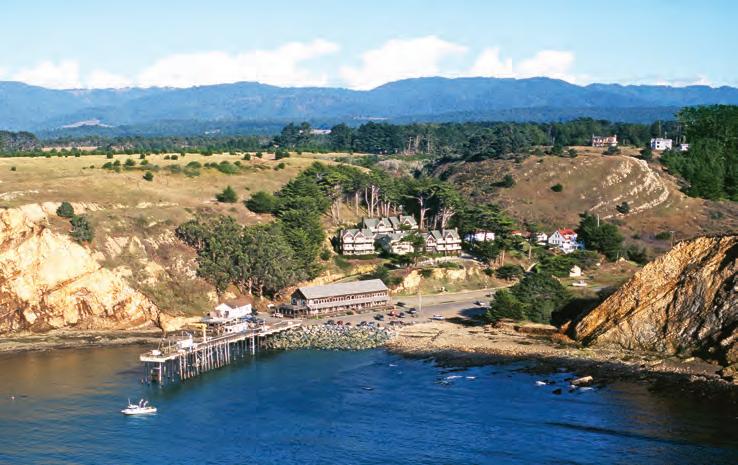
12 Anchor Bay & Fish Rock Beach
When Sunset magazine ran a feature called “Top 10 Beaches of the West” a few years ago, Anchor Bay came in at number 3, just behind ‘Aliomanu Beach in Kauai, Hawaii, and well ahead of beaches in Carmel, Santa Barbara and San Diego. Located in the heart of the Mendocino “banana belt,” the coastal village of Anchor Bay is warmer, with less fog and wind, than its surrounding areas. The seclusion of the bay, which is edged by the white sands of Fish Rock Beach and framed by majestic weathered bluffs, makes it popular with visitors and locals. Protected from the wind, the bay is a delightful place to fish, scuba dive, ocean kayak, surf, and boogie and skim board. It is also a great place for sea lion- and whale-watching, as well as beachcombing and tide-pooling.
13
Bowling Ball Beach
In the town of Anchor Bay, visitors will find an old-fashioned village market that specializes in natural foods, a complete wine and beer emporium, restaurants, and other businesses. Accommodations in Anchor Bay include individual vacation rental cottages and homes, pristine housekeeping cabins, bed and breakfast inns and a campground. WHERE: Between Gualala and Point Arena.
MORE INFO: Redwood Coast Chamber of Commerce, 707-884-1080/ 800-778-5252
Local lore has it that Schooner Gulch got its name back in the era of sailing ships when a mysterious schooner ran aground there at dusk one evening, only to have vanished without a trace by the following morning. Today, Schooner Gulch State Beach offers its visitors not only great fun and exciting activities, but also some of the most magnificent views anywhere. Spend the day here hiking, picnicking, fishing, sunbathing, surfing or windsurfing.
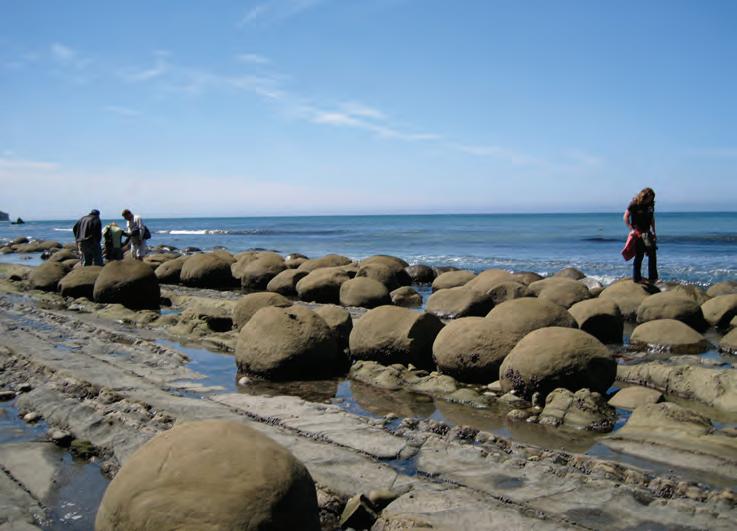
Just north of Schooner Gulch you’ll find Bowling Ball Beach, named after the numerous prehistoric spherical boulders that cover the beach and are visible only at low tide. Such formations grow in underwater environments when materials collect around a nucleus, and are shaped by water action as it moves them around.
WHERE: About 3 miles south of Point Arena, mile marker 11.41 (Schooner Gulch) offers the closest parking area. Look for a sign that says, “Park Facing South Only.” There are two trailheads, about 100 feet apart. The southern trailhead takes you through a dense forest for a short quarter-mile hike to Schooner Gulch Beach. The northern trail goes to Bowling Ball Beach, and gets somewhat steep. You’ll want to go at low tide, so be sure to check a tide table before setting out.
MORE INFO: 707-937-5804, www.parks.ca.gov/?page_id=446
14
Pelican Bluffs Preserve & Coastal Trail
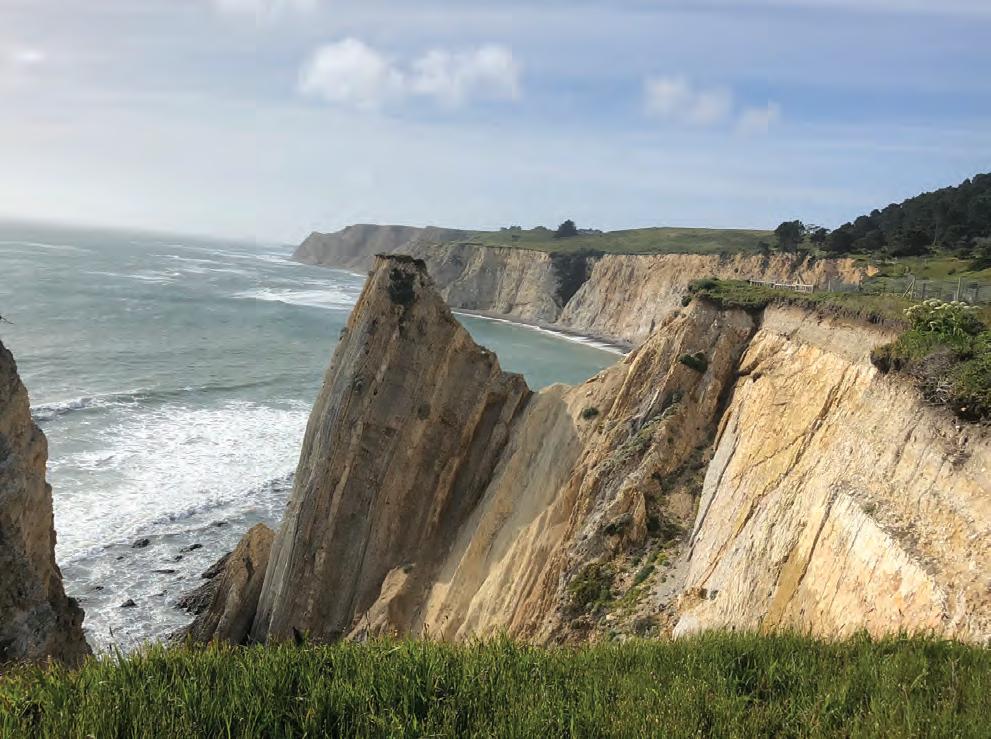
This trail was completed in 2017 by the Mendocino Land Trust. It showcases all aspects of a coastal area, especially the beautiful white cliffs. Home to endangered Point Arena Mountain Beaver, this preserve offers more than 2 miles of public trails. Covering 73 acres, the Preserve hosts a creek recovering from cattle grazing, Bishop pine forests, wetlands, and meadowlands. A scenic sampling of coastal overlooks that (seasonally) provide a great vantage point for whale watching. Steep cliffs provide stunning views, and also require hikers to stick to the trail for safety. Leashed dogs are welcome on the trail. Parking (somewhat limited) is available at the south end of the trail. WHERE: Located about 1 mile south of Point Arena, look for a Coastal Lookout sign. Highway 1 mile markers: 14.3 at the north end, and 13.5 at the south end.
MORE INFO: mendocinolandtrust.org/trails/southern-coastal-trails/pelican-bluffs-trail/
Anchor Bay. Photo by Scott Simpson, WestOfOne.com
Pelican Bluffs. Photo courtesy of Mendocino Land Trust Staff
M endocino c oast
s outh coast: point a rena
events & Festivals
• Ongoing: Point Arena Lighthouse Full Moon Nighttime Tours
• February-October: Blues on the Coast at Arena Theater
• April: Wind and Whale Celebration, Whale & Jazz Festival
• May: Almost Fringe Festival, Waves and Whales 5K Run
• July: Independence Day Weekend
L• August: September Studio Discovery Tour
• September: Harbor and Seafood Festival
• October: Halloween on Main Street
• November: Point Arena Mushroom Festival
• December: Point Arena Hometown Holidays
ocated on the coast of southern Mendocino County about 130 miles north of San Francisco, Point Arena is one of the smallest incorporated cities in the state of California, with a population under 500, and also one of the most beautiful.
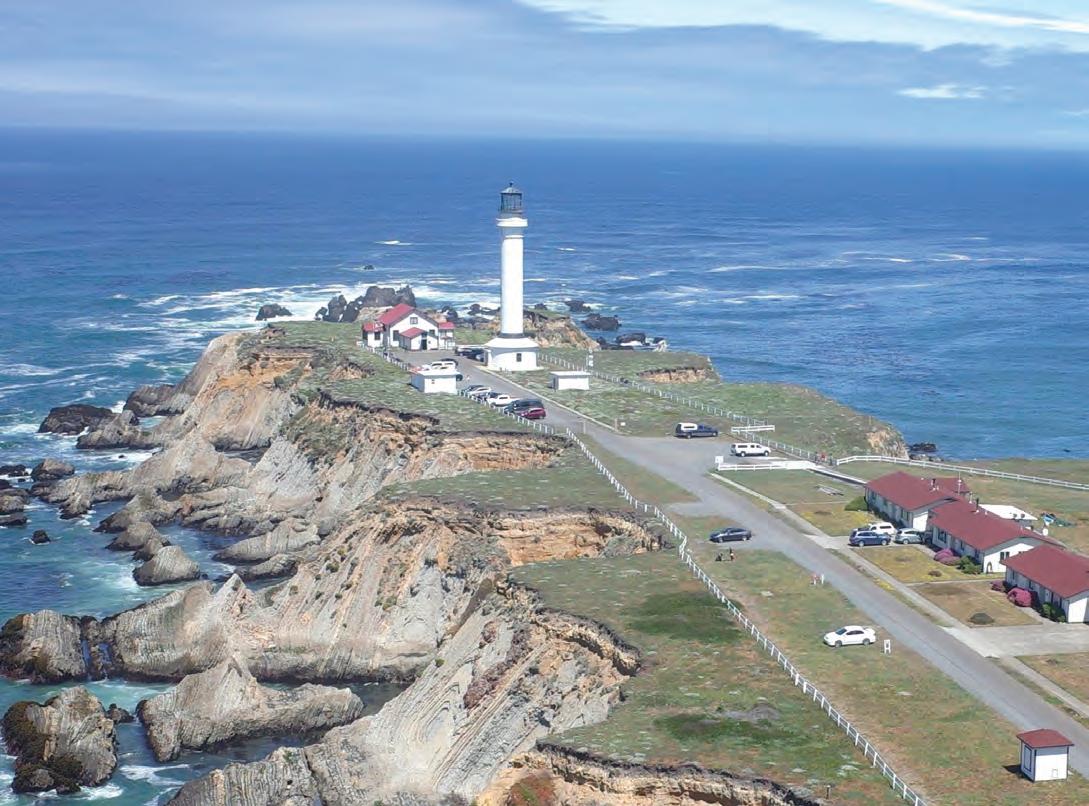
Surrounded by the Point Arena-Stornetta Public Lands, a unit of the California National Coastal Monument; the Point Arena Lighthouse, the tallest on the West Coast of the United States; and the Point Arena Public Fishing Pier in Point Arena Cove, the city and its surrounding area offer incredible natural beauty and a wide range of recreational activities. These latter include fishing, surfing, tide-pooling, whale-watching, sightseeing, fine dining and lodging, enjoying music and film, and taking jaunts to wellpreserved historical structures. The Point itself is a land mass jutting out into the ocean, and the spot closest to Hawaii in the contiguous 48 states.
For food, fun and live entertainment on the Mendocino Coast, the Garcia River Casino is a short scenic drive on Windy Hollow Road in Point Arena.
15 Point Arena Lighthouse
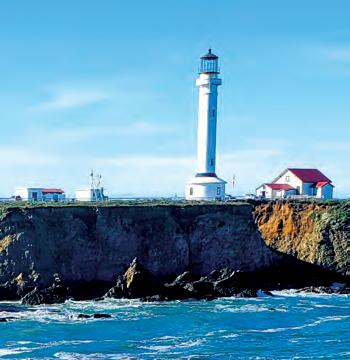
Set in some of the most spectacular yet peaceful surroundings on the northern California coast, and right next to the Point Arena-Stornetta Unit of the California Coastal National Monument, stands the Point Arena Lighthouse. It is the tallest lighthouse on the West Coast (115 ft.), and you can climb to the lantern room at its very top. The panoramic view from there is unforgettable.
The Point Arena Lighthouse was initially constructed in 1870, but suffered major damage in the 1906 San Francisco earthquake and had to be rebuilt. The current lighthouse began operation in 1908, nearly 27 months after the quake. The new tower featured a first-order Fresnel lens, the largest standard size made. It was 7 feet in diameter and weighed more than 4,700 pounds. The Fresnel lens was decommissioned in 1977 and a new rotating beacon was installed. During the restoration of the Tower and Fog Signal Building Museum between 2008 and 2010, the Fresnel lens, mercury bath and rive system were both moved to the Museum, where the are now on display.
Guided tours of the Indoor Museum and Tower as well as self-guided tours of the grounds are available daily, with nighttime tours when the moon is full. The Lighthouse Station Store features unique souvenirs and charming gifts. For those who want he unique experience of spending the night at a Lighthouse there are seven comfortable cottages and studios in the former Lighthouse Keepers’ houses, vacation rentals that are available year-round.
WHERE: 45500 Lighthouse Rd., Point Arena. MORE INFO: 877-725-4448 ext. 1 or 707-882-2809 ext. 1, PointArenaLighthouse.com
Photo courtesy of Point Arena Lighthouse
16
Point Arena Pier at Arena Cove
Point Arena Cove is a favorite destination for fishermen, surfers, whalewatchers, beachcombers and sightseers. Including the 330-foot Point Arena Pier, it offers something for nearly everyone. The cove has a rocky bottom ranging from 20 to 100 feet deep, while offshore lies the Mendocino Trench, home to some of the deepest waters in the world. Protected in part by Point Arena to the northwest, the cove is known for extraordinary fishing, considered by some the best pier fishing in California. Common catches include striped sea perch, greenling, cabezon, lingcod and salmon. The pier also offers cleaning tables, restrooms and a boat launch.
Whales often pass close to Point Arena and are sometimes spotted playing right in the cove. Bring binoculars to watch them and the many seabirds that frequent the area, including the famed Laysan albatross, or “goonie bird.”
The beaches around the cove are excellent for beachcombing, shell collecting and tide-pooling, while surfing and diving remain popular. Conditions can be dangerous, however, with hidden rocks and submerged hazards known mainly to locals. Lodging and dining are available nearby in Arena Cove and Point Arena. No fishing license is required on the pier, though dogs are not permitted.
WHERE: In the heart of Point Arena. From the south, turn left from Hwy 1 onto Iverson Avenue. This will turn into Port Road. Follow the road to the pier. From the north, turn right onto Port Road and follow it to the pier, mile marker MEN 14.85.
MORE INFO: Mendocino.com/?id=3423, PierFishing.com /point-arena-pier
1
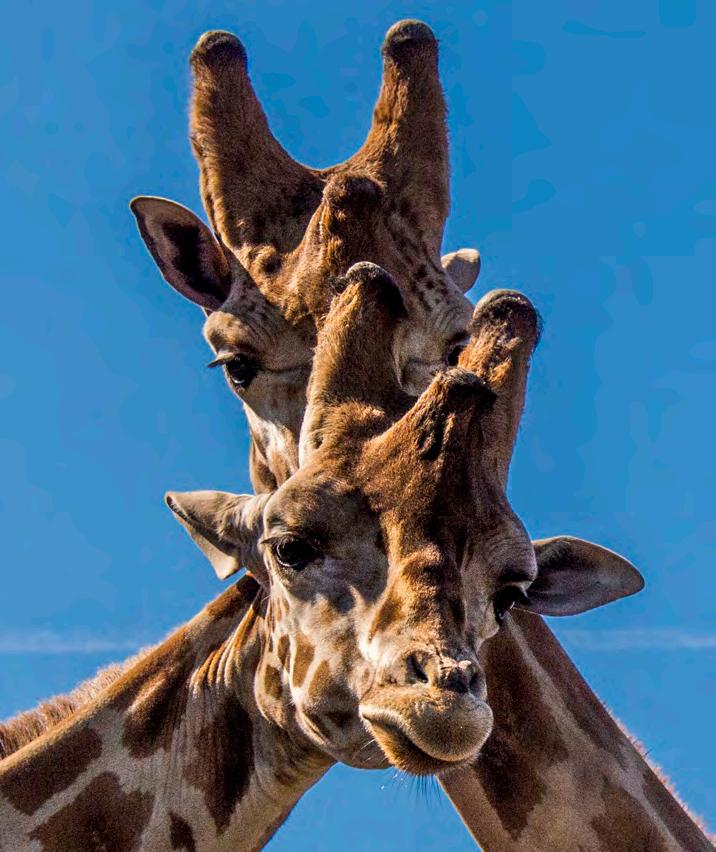
7 Get a Little Wild at B. Bryan Preserve
Experience an unforgettable African safari on the Mendocino Coast at B. Bryan Preserve. Located just outside Point Arena, this unique wildlife preserve is dedicated to the conservation of rare and endangered African hoof stock, including giraffes, zebras, and several species of antelope. Guided afternoon Land Rover tours or morning Self Driving tours offering an up-close look at these remarkable creatures and the preserve's ongoing conservation. Both tours end with guests getting to feed the giraffes.
Tours are available by reservation only. No drop ins and no outside animals allowed on property. For an even more memorable stay, guests can book one of the preserve's eco-friendly cottages overlooking the roaming animals.
WHERE: In Point Arena, 1 mile south of Gualala on Hwy 1.
MORE INFO: Book on line at bbryanpreserve.com, call 707-882-2297, or email at reservations@bbryanpreserve.com
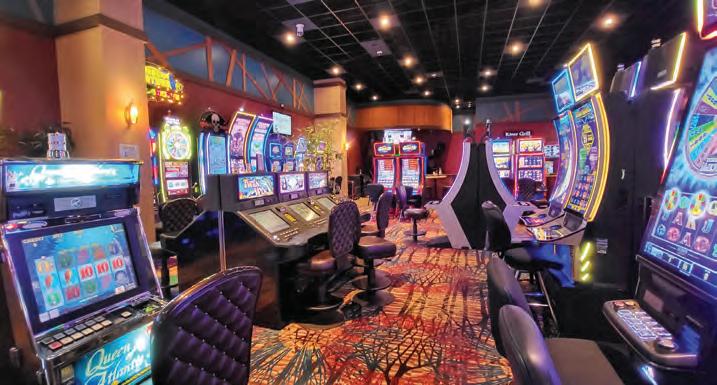
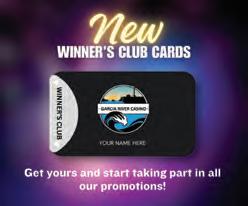
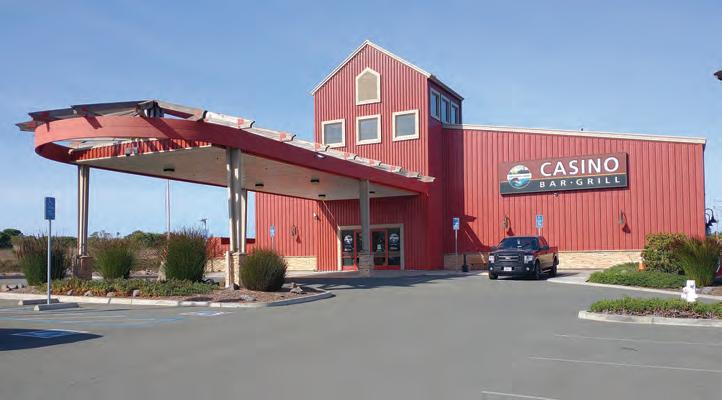
Located right off California Highway 1 just outside of Point Arena, the Garcia River Casino offers the latest and best in new and progressive slots, including top titles like Wheel of Fortune, Lightning Link, Buffalo Grand and Fort Knox. The River Grill serves Breakfast until 2 pm , as well as tasty lunches, nightly dinner specials and tantalizing desserts. Relax between games and watch your favorite sports event on their big screen TVs, and drop in on the First Thursday of every month at 7pm for Oldies Music & Trivia with The Casuals. Check the Garcia River Casino website for upcoming entertainment and special promotions. And don’t forget — seniors get 20% off at the Grill every Tuesday! WHERE: 22215 Windy Hollow Rd., Point Arena.
MORE INFO: thegarciarivercasino.com, 707-467-5300
TheGarciaRiverCasino.com. Photo by Carlton Nielsen
Garcia River Casino
Arena cove.
M endocino c oast
M anchester Beach & el K
The Village of Elk, previously known as Greenwood, is a charming stop along the Northern California Coast. In this little town you’ll encounter stunning views of the shoreline and Pacific Ocean in a mesmerizing meeting of land, sea and sky, punctuated by waves breaking against picturesque off-shore rock formations known as sea stacks. On a coast celebrated for its scenic beauty, Elk is truly exceptional.
In the 1800s trappers and hunters found their way to the region in search of game. Britton Greenwood, the son of the noted tracker-explorer Caleb Greenwood, was the first to establish a ranch there, which he named the Elk Ranch. A community grew up around the ranches and dairy farms, and soon small mills were established to process the spectacular old-growth redwood. In 1883 local businessman Lorenzo White purchased most of the land around Elk, establishing a large mill and building a railroad to support it. At one point Elk supported a population of almost 1,000. At the turn of the century Elk was alive with hotels, dance halls, saloons and general stores. Probably because of its vibrancy, Jack London found Elk a perfect place to write. According to local legend, in February of 1902 he wrote his masterpiece, The Call of the Wild, while staying in the old White boarding house, today known as the Hospital House, across from Li Foo Gulch. This claim has been questioned.
Manchester is a beautiful, tiny village with a population of about 200. Situated in an area of rich grazing land about 13 miles south of Elk, flocks of sheep and herds of cattle can be seen, adding a pastoral note to some of the most spectacular coastal scenery in the world. Nearby Manchester Beach State Park offers a beach, sand dunes, flat grasslands and 5 miles of shoreline.
19 Manchester State Park
Manchester State Park, with nearly 18,000 feet of ocean shoreline, offers a beach with an abundance of driftwood, sand dunes and rich grasslands. A beautiful sandy beach runs southward for about 5 miles towards Point Arena. Among its many attractions is the excellent steelhead fishing in its two streams, Brush Creek and Alder Creek. Please check with the Department of Fish and Wildlife at 530-225-2300 for seasonal closures and restrictions.
Manchester State Park is home to a wide variety of gorgeous coastal wildflowers and provides habitat for tundra swans and other wildlife. The San Andreas Fault runs into the ocean here. Much of the area is used for grazing sheep and cattle, lending a pastoral note to the local scenery. Temperatures tend to range between the low 50s and low 70s most of the time. It is usually windy and often rainy or foggy; wearing layered clothing is recommended. The park takes its name from the village of Manchester, located on Coast Hwy 1 about 7 miles north of Point Arena.
WHERE: The main park entrance is located at 44500 Kinney Ln. (off Hwy 1), 1⁄2 mile north of the town of Manchester.
MORE INFO: 707-882-2463, www.parks.ca.gov/?page_id=437
20 Cuffey’s Cove: A Coastal Ghost Town
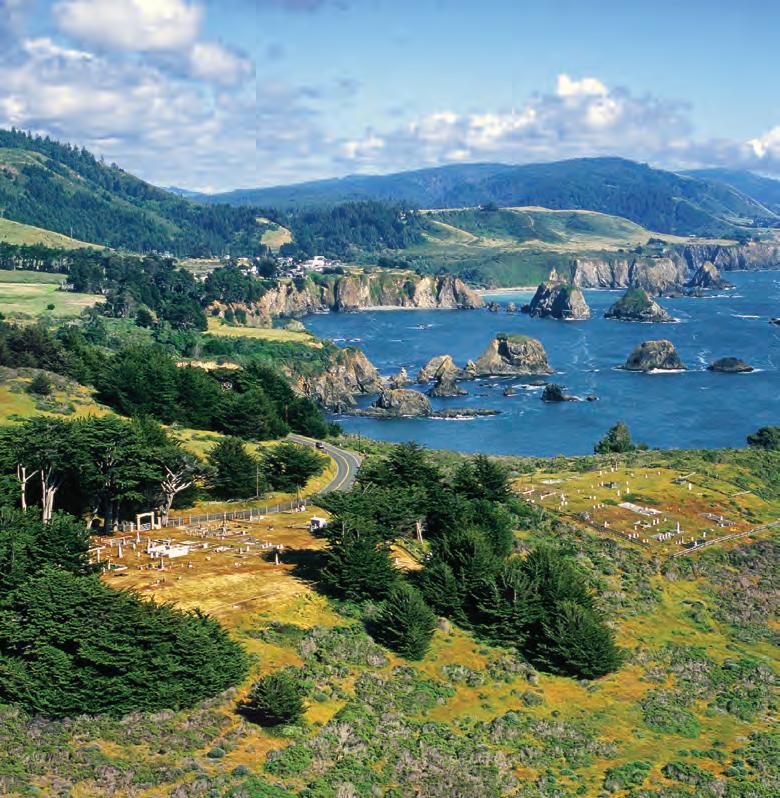
In the mid-1850s, about a mile north of Elk, sat Cuffey’s Cove. Resident James Kennedy built and operated a wharf and a purpose-built chute to move railroad ties and shingles down the steep bluffs to be loaded onto schooners moored below. At its height, the town hosted nearly 500 residents and included hotels, bars, and restaurants, supported by abundant local timber and a beloved variety of locally-grown red potatoes. A large steam sawmill was built a few miles away in Greenwood (Elk) in the 1870s; then fires in 1886, 1892, and again in the early 1900s destroyed the business district. By the 1920s, Cuffey’s Cove had largely disappeared. All that remains now are two fenced-in cemeteries, one Catholic and the other Protestant, building foundations, a few remnants of the lumber chute, and some weathered cypresses acting as sentinels. The proper spelling of Cuffey is disputed, as are the origins of the name itself. WHERE: Along Hwy 1 about a mile north of Elk, near the 35 mile marker post. Parking along Hwy 1 is limited, there is a pull-out just south of the cemetery, beyond the gate accessing the adjacent private property.
MORE INFO: https://www.mendorailhistory.org/1_towns/towns/cuffeys_cove.htm
thin G s to d o
MORE INFO: RedwoodCoastChamber.com
• Take a horseback ride through the forest, or along the beach
• Watch for migrating whales, dolphins and sea lions.
• Enjoy a picnic — fill a basket and head to Greenwood-Philo Road to the wineries first.
• Explore Elk’s history at the Museum.
• Spot wild elk and deer in and around town.
• Go kayaking, wind surfing and surf fishing.
• Visit the shops and cooperative art galleries for some one-of-a-kind local gifts.
Cuffey’s Cove cemeteries from above. Photo by Scott Simpson, WestOfOne.com
Elk Coast near Harbor House Inn.
Photo by Gregg Gardiner
& A L bion
L itt L e R ive R
Little River began life as a mill town. Its first lumber mill was built in 1864, and next to it arose the shipyard of Thomas Peterson, whose vessels won prizes for their design and craftsmanship, including first prize in San Francisco at the Fourth of July Regatta in 1876. On average, three prime trees were used to build each ship. The mill closed in 1893, then burned down in 1910.
Little River Cove offers one of the most popular beaches on the Mendocino Coast. The protected cove is a great place for water recreation.
The cove is also near the entrance to Van Damme State Park, one of the coasts mostloved parks. It offers beautiful hiking trails in the lush Fern Canyon trail system along the fern-carpeted floors of the Little River Canyon. You will feel like a giant in the Pygmy Forest with its mature cypress and pine trees that grow between 6 inches and 8 feet tall, or you might decide to follow your nose to skunk cabbage at the Cabbage Patch bog. Van Damme offers several camping options and year-round guided coastal kayak tours.
A L bion
In 1853 Captain W.A. Richardson built the first lumber mill in the town of Albion, on the river flats below the high wooden trestle bridge that spans the Albion River. Albion, an ancient name for England, was chosen for the town in memory of Sir Francis Drake landing in Northern California in 1579 and naming it “New Albion.”
Today the town features restaurants, lodging, a fully equipped grocery store and deli, and other amenities for the traveler. The area around Albion is rich with sheltered coves that are excellent for tide-pooling, hiking and exploring. Albion Ridge Road, which travels east of Hwy 1, affords the traveler panoramic views of the area’s rolling hills as they slope down to the ocean. It is an excellent place to watch red-tailed hawks, and in winter, the migratory tundra swans on their way to the Garcia River, south of Albion.
21
Golfing at Little River Inn
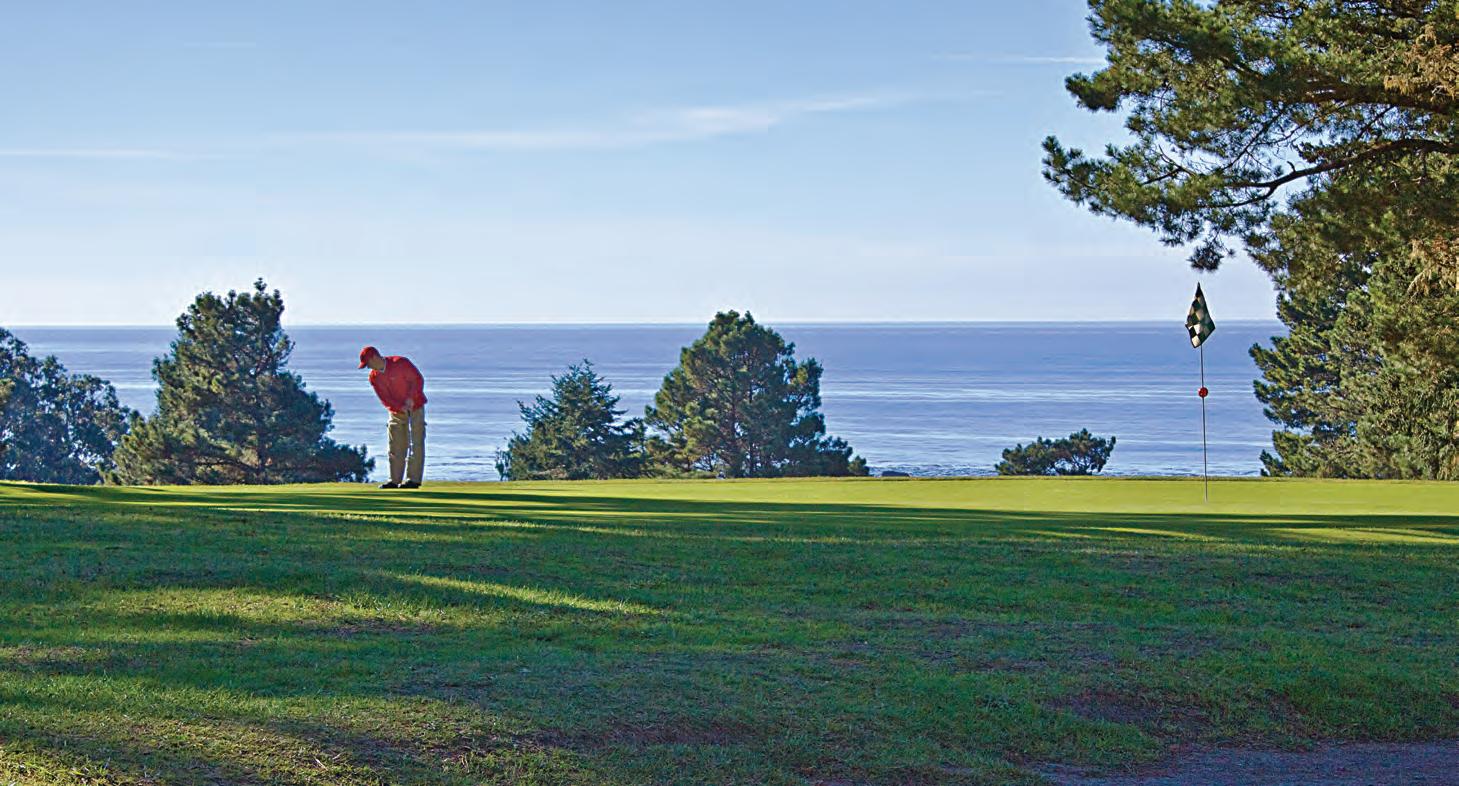
For a memorable coastal golfing experience, try the award-winning, USGArated regulation-length course at Little River Inn—uniquely designed with 11 holes that can be played as a traditional 9 or a full 18. Par is 35 for 9 holes and 71 for 18, with a total yardage of 5,409. The layout features three tee placements, including forward tees for beginners and junior golfers, and dual greens on holes 7 and 9 to create a dynamic 18-hole experience.
Tucked among coastal hills and redwoods, the course offers more than just a beautiful game—stunning ocean views compete with the occasional deer, raccoon, blue heron, or frog for your attention. As the only golf course on the Mendocino Coast and an Audubon-certified sanctuary, it provides a rare opportunity to experience nature and sport in perfect harmony.
The course is walkable and peaceful, but motorized and hand carts are also available. Amenities include a full driving range, practice putting green, and a well-stocked Pro Shop. Little River Inn also hosts an annual disc golf tournament, adding a fun twist to its offerings.
After your round, retreat to the inn’s comfortable ocean-view rooms or enjoy a meal at their renowned restaurant. Guests also receive complimentary access to two lighted championship tennis courts. The only uniform required is shoes with non-marking soles—diamond tennis bracelets are optional.
WHERE: 7901 N. Hwy 1, Little River
MORE INFO: 707-937-5667 (Pro Shop/Golf Course), 707-937-5942, 888-INN-LOVE, LittleRiverInn.com
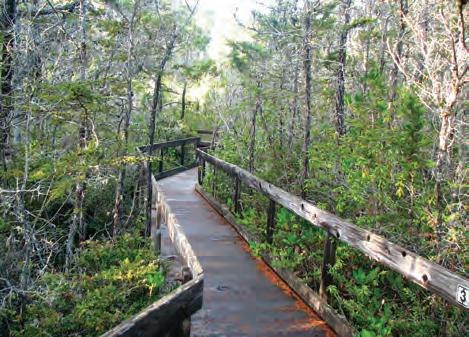
22 Pygmy Forest at Van Damme State Park
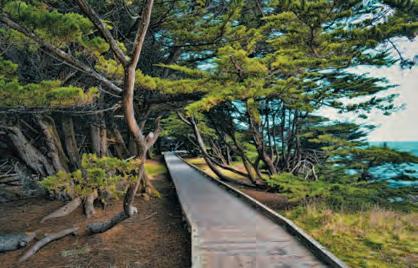
the Pygmy Forest.
Northern California is famous throughout the world for towering redwood trees that grow to be hundreds of feet tall. There are other trees in the area, however, that cannot grow to a height of even 8 feet, or a thickness greater than an inch wide. Indeed, there are mature, cone-bearing cypress and pine trees there that stand only 6 inches high! To experience this Lilliputian and Brobdingnagian contrast for yourself, take a trip to Van Damme State Park’s Pygmy Forest, located off Hwy 1, 3 miles south of Mendocino. Extremely acidic soil low in nutrients is believed to cause the stunted growth of these cypress and pine trees, found less than a mile away from huge redwoods. It’s amazing that these trees can manage to remain alive and grow at all under such adverse conditions. When some of these tiny trees have been cut down, more than 80 to 100 growth rings have been carefully counted. If you are in the area and have already been wowed by the remarkable redwood towers that soar into the heavens, you should also check out the Pygmy Forest and be astonished by the very existence of these tiny trees.
WHERE: In Van Damme State Park off Hwy 1, 3 miles south of Mendocino. MORE INFO: 707-937-5804, Mendocino.com/?id=510, www.parks. ca.gov/?page_id=433
Golf course at Little River Inn. LittleRiverInn.com
Boardwalk through
Photo by David Berry
23
Mendo Sauna
Tucked along the rugged Mendocino Coast, Mendo Sauna offers a uniquely Northern California wellness experience that blends wood-fired heat, cold-water immersion and coastal relaxation. Based in Albion, MendoSauna transforms vintage trailers into beautifully crafted mobile saunas built with locally sourced redwood and rustic materials, creating an atmosphere that feels both adventurous and restorative. Guests can book community sauna sessions at the Albion Field Station or reserve private rentals delivered throughout the Mendocino Coast.
25 Van Damme State Park
One of the most popular recreational destinations in the area, Van Damme State Park straddles Hwy 1 where Little River empties into a protected cove that is perfect for scuba diving and snorkeling. There is an outer reef that keeps out swells most of the time even when other locations are blown out. The surf there is usually calm enough to allow launching boats and sea kayaks from the beach. Hiking, camping and fishing are also very popular at Van Damme.
The experience centers around contrast therapy—alternating between the warmth of the sauna and invigorating cold plunges using freshwater tubs or even nearby river access. Community sessions create a relaxed, social atmosphere, while private rentals are popular for retreats, weddings and unforgettable coastal gatherings. Whether you’re warming up after a foggy beach walk or simply looking to unwind beneath the redwoods, MendoSauna offers a memorable way to slow down and reconnect with the wild beauty of Mendocino County.
WHERE: 34000 Albion St., Albion MORE INFO: mendosauna.com
24
Kayak Mendocino Sea Cave Nature Tours
How would you like to be a marine mammal for an hour and a half, and explore the Mendocino coast’s incredibly rich and diverse sea caves? It’s easier than you might think. For the marine part, just hop aboard a sit-on-top ocean kayak, and take one of Kayak Mendocino’s professionally guided sea cave tours in Van Damme State Park.
Here you will join harbor seals, giant anemones, kelp and other marine flora and fauna as you glide through the water safely and happily. Van Damme is a special place offering protection and easily navigated channels. You will stay within these areas to ensure an easy ride, while still being able to observe wave action on outer reefs.
No kayaking experience is necessary, and tours are safe and enjoyable for all ages. All instruction and equipment are provided. Walk-ups are welcome, but reservations are preferred because space is limited. Tours leave Van Damme State Park at 9am, 11:30am and 2pm, with reservations daily. e
WHERE: Van Damme State Park, 3 miles south of the town of Mendocino. MORE INFO: 707-813-7117, KayakMendocino.com
Daytime parking and picnicking at the beach are free. Most of the park’s 2000+ acres lie east of the highway, up verdant Fern Canyon. The park offers 74 beautiful and shady campsites, available on a first-come, first-served basis. A paved trail follows the Little River 2 1⁄2 miles up the lovely canyon, connecting with a dirt path that climbs to the Pygmy Forest. For the more adventuresome hiker, there is an extensive system of trails that meanders throughout the park over 10 breathtaking miles. Whether your stay is short or extended, chances are good you’ll find an unforgettable adventure at Van Damme State Park.
WHERE: 3 miles south of the town of Mendocino on Hwy 1.
MORE INFO: 707-937-5804, 707-937-0851, 707-937-4016, www.parks.ca.gov/?page_id=433; Campground reservations: ReserveCalifornia.com, 800-444-7275
Beach at Van Damme. Photo by Brendan McGuigan, LittleRiverInn.com
Sea Cave Tour. Photo by Chuck Graham, KayakMendocino.com
Experience sauna and cold plunges in Albion and elsewhere with Mendo Sauna.
M endocino vi LLAge
M endocino vi LLAge
A trip to Northern California would not be complete without a stop in the quaint, charming Village of Mendocino. This historic town, which sits on rugged bluffs overlooking the Pacific Ocean, features dozens of shops, art galleries and bed-and-breakfast inns, and is host to a number of special events every year. These include the Mendocino Whale Festival in March and the Mendocino Music Festival in July.
The beauty of the town is what first impresses visitors. The New England-style architecture is the influence of homesick pioneers who “came ’round the horn” in the mid19th century to be a part of the town’s lumber boom resulting from the Gold Rush. San Francisco was a booming city in need of building materials, and harvesting the coastal redwoods abundant around Mendocino provided a source of prosperity for people in the small town. Then after the Great San Francisco Earthquake of 1906, timber from the Mendocino area was shipped south to help rebuild the city. The area’s history is evident in its buildings, and the town of Mendocino has been designated a National Historic Preservation District.
• May: Mendocino Film Festival, MendocinoFilmFestival.org;
• July: Mendocino Music Festival, MendocinoMusic.org; 4th of July Parade & Events
• November: Mendocino Wine & Mushroom Festival, VisitMendocino.com E v E nts & F E stivals
Visitors will be delighted in and around this picturesque town. The area offers deepsea fishing, whale-watching, canoeing, kayaking, hiking, biking and horseback riding. Trails lead from the headlands down to beaches where visitors can search for seashells or explore the numerous tide pools. However, beachcombers and hikers should always keep an eye on the ocean. Large “sneaker waves” are common, and can sweep unsuspecting hikers off the rocks and out to sea.
The Mendocino Hotel on Main Street is an attractive inn that was built in 1878. It still serves the same function today that it did more than 100 years ago, and its rooms are furnished with antiques, fireplaces and historic memorabilia. The Kelley House Museum on Albion Street is another historic building popular with visitors. Built in 1861, the Kelley House has period artifacts and photographs, as well as a lovely pond and gardens.
Northern Californiaʼs
&
Mendocino Village. Adobe Stock Photo
M endocino Village
26 Annual Whale Migration Festivals
The annual migration of California gray whales takes them from their feeding grounds in the cold waters of the Bering Sea near Alaska to the warm waters off Baja California, Mexico, and back. Their young, called calves, are born in the protected lagoons of western Baja, and do not begin their trek northwards until they are about a month old. Unlike other whale species, California grays stay fairly close to the coast, often within a few hundred yards of shore. This means that twice a year (from November to February going south, and from February to June going north), visitors can observe whales from atop the Mendocino headlands.
To celebrate this happy occurrence, three festivals in honor of the confluence of whales and all things Mendocino have sprung up, typically on successive weekends in March: the Mendocino Whale Festival, Little River Whale Festival, Fort Bragg Whale Festival and Westport Whale Festival. In 2024, the Spring version of the Festival began on Saturday, March 2. Activities include food, beer and wine-tasting, art exhibits, a stroll through downtown, whale-related educational programs, historical overviews, nature walks, and whale-watching from the headlands, from chartered boats and from kayaks, plus lots more. Don’t miss the fun!
MORE INFO: Mendocino Whale Festivals, 707-961-6300, MendoWhale.com; 707-937-4700, MendoParks.org/whale-festival
27 Kelley House Museum
Perched just above the rugged Mendocino Headlands, the Kelley House Museum offers an engaging window into the town’s early days as a booming lumber community. Originally built in 1861 for a prosperous shipping agent, this preserved Victorian home reflects the lives, ambitions, and challenges of Mendocino’s earliest residents. Thoughtfully curated exhibits trace the region’s transformation—from dense redwood forests to a bustling mill town—while highlighting the people who shaped its character.
KELLEY HOUSE MUSEUM
Inside, period furnishings and interpretive displays bring the past to life, offering insight into daily routines, maritime trade, and the cultural influences that defined this remote coastal outpost. Beyond the house, visitors can explore additional exhibits and archives that deepen the story of Mendocino’s architectural and social heritage.
Open Friday through Monday from 11am to 3pm, the museum also serves as the starting point for guided Historic House and Building Tours offered on weekends at 11am. These 90-minute walks provide a broader look at the village’s distinctive architecture and storied past.
MORE INFO: Kelley House Museum, 45007 Albion St., Mendocino, 707-937-5791, KelleyHouseMuseum.org
28 Mendocino Art Center
With the decline of the lumber industry, Mendocino fell on hard times. Then, in 1957, a local mansion that appeared in the James Dean movie East of Eden burned down, and Bill Zacha acquired the grounds with a small deposit. With the help of friends, other artists and townspeople, by 1959 he and his wife Jennie had established the Art Center there, utilizing the still-standing carriage house and outbuildings.
During the ensuing years, the history of the Art Center and Mendocino village became closely entwined. The Art Center grew and became the focal point of a thriving art colony that revitalized the nearly abandoned town. Mendocino, along with the Art Center, has since become a world-renowned haven for artists.
Today the Art Center’s facilities include studios and classrooms that offer over 200 retreat-style classes each year in a wide range of media, and its galleries present monthly exhibits spotlighting the work of local and national artists. The Center hosts popular annual events on its beautiful campus as well as artists’ receptions the second Saturday of each month, and concerts periodically. Its Members’ Gallery offers exquisite locally produced artwork for purchase.
WHERE: 45200 Little Lake St., Mendocino
MORE INFO: 707-937-5818
Kelley House Museum
Photo by Larry R. Wagner
45280 Main St. Mendocino
Photo Adobe Stock
29
Ford House Museum
In 1851 Jerome Ford made his way overland to the Mendocino headlands, looking for salvage from the shipwrecked Frolic, which had met its fate off nearby Pt. Cabrillo the previous spring. He found no remains — local Pomo indigenous people had beaten him to them — but he did discover vast stands of coast redwoods instead, and soon partnered with an eastern entrepreneur to establish both the town of Mendocino and a booming mill yard.
Jerome Ford and his wife Martha built a house on Main Street of the new town in 1854; today it stands as the Ford House Museum. It serves as the visitor center for the Mendocino Headlands State Park, offering both historic and current information about the Mendocino area. Open every day from 11am to 4 pm , the Ford House Museum exhibits models of 19th century oceanic vessels, logging tools, photographs, Native American relics and an elaborate model of the town of Mendocino in 1890. It also offers a wide selection of brochures, books and cards, as well as free seasonal lectures on area wildlife and changing seasonal exhibits in its gallery.
WHERE: 45035 Main St., Mendocino
MORE INFO: 707-937-5397, MendoParks.org/visitor-centers
30 Mendocino Film Festival
Since 1916 the Mendocino coast has starred in 17 silent movies and over 40 “talkies.” Notable among these are East of Eden, The Russians Are Coming! The Russians are Coming!, The Dunwich Horror, The Uninvited, Summer of ’42, Forever Young and The Majestic, as well as the long-running TV series, Murder She Wrote. So what better place to host a film festival? The event’s relaxed and intimate feel offers visitors a great chance to interact with filmmakers from around the world while enjoying their work. Set in the natural splendor of the Mendocino coast, this gem of a film festival has become a favorite of the cognoscenti.
The 2024 festival is scheduled for May 30-June 2. Follow the updates on Facebook and the web page for updates, Mendocino film facts, and remote and in-person viewing opportunities.
The Mendocino Film Festival offers a wealth of cinema in a variety of genres. Check their website for more information, including venues, show times and ticket information. MORE INFO: 707-937-0171, MendocinoFilmFestival.org and on Facebook
31 Russian Gulch State Park
This is a gem of a park, offering almost a mile and a half of ocean frontage with great beaches and tide pools, plus more than 10 miles of lush, forested hiking trails and plenty of horseback riding trails. You’ll find a beautiful picnic area perched on a cliff overlooking a dramatic cove, spacious, well-laid out campgrounds with bathrooms and hot showers, a 3-mile long paved bicycle trail, and a 36-foot high waterfall that’s one of the park’s star attractions. Another highlight is the Devil’s Punchbowl, sometimes referred to as “the blowhole,” a partially collapsed sea cave 200 feet from the water’s edge that offers a stunning view of churning, surging waves 60 feet below you. The beach offers swimming, tide pool exploring, kayaking and rock fishing. Russian Gulch Creek Canyon is heavily forested. Altogether, Russian Gulch State Park’s 1,305 acres offer an ever-changing palette of natural beauty.
WHERE: 2 miles north of Mendocino on Hwy 1.
MORE INFO: 707-937-5804, 707-937-0497, www.parks.ca.gov/?page_id=432
32 Big River & Big River Haul Road
The Big River Unit of Mendocino Headlands State Park offers 7,400 wild acres for exploration. Acquired in 2002, it includes 1,500 acres of coastal estuary wetlands. You can swim, bike, canoe, jog, walk your dog (leashed) or hike along the beautiful Big River. The beaches along the river are perfect for swimming and sunbathing. Big River’s lower 6 to 8 miles provide a wonderful boating experience. Private canoes, sailboats, kayaks and rowboats can put in at the primitive boat ramp at the eastern edge of the sandy beach just below the trailhead. Along Big River’s northern bank, Big River Haul Road provides a flat, wide, scenic promenade leading to nearby Jackson Demonstration State Forest and Mendocino Woodlands State Park.
The trailhead is at the end of a dirt road that can be reached by turning east (inland) off Hwy 1 just north of the Big River Bridge. For a more serious walk, start in the village, cross the beach under the bridge and continue along the shore until you come to the gate at the trailhead. People are cautioned to stay on the main road; there are numerous dead-end logging roads and skid trails throughout the Big River Unit that make it easy to get disoriented and lost. You can also hike along the shore to find marsh and tidewater wildlife. The Big River protects, preserves and is home to great blue herons, osprey, wild ducks, river otters and over 27 endangered, threatened or special concern species of wildlife.
WHERE: Just south of the town of Mendocino.
MORE INFO: 707-937-5804, MendocinoFun.com/big-river
Photo by Cyndy Phillips
Annual 4th of July Parade. Photo by Keith Wyner
Photo by Nicholas Wilson, NWilsonPhoto.com KayakMendocino.com
When visiting the town of Mendocino, take some time to see Mendocino Headlands State Park. The park surrounds the town on three sides with delightful expanses of land perched atop stunning bluffs. From there you can enjoy whale-watching in the winter, wildflowers in the spring, nesting seabirds in the summer and vivid color throughout autumn. Three miles of trails wind along the cliffs, surprising the casual explorer with spectacular views of sea arches and hidden grottoes. The park has a beach that is accessible from Hwy 1 or by trails down the bluffs, and offers excellent fishing and scuba diving opportunities.
the stanford inn & resort
C ATCH A CANOE
and B icycles T oo mendocino coast
C ATCH A
The park has been in operation since 1974. The town’s south headlands, facing Main Street, remained in timber company ownership until 1972. The threat of development there spurred resident artist Emmy Lou Packard to start a movement in 1969 that led to the inclusion of the south headlands in the State Park. An outgrowth of this effort was the listing of Mendocino on the National Register of Historic Places in 1971, an essential step toward protecting Mendocino’s 19th-century flavor. Now the parkland provides Mendocino with a buffer zone that helps preserve the town’s historical presence, while providing a scenic backdrop of breathtaking beauty. Admission is free. Day use only.
WHERE: Surrounds the town of Mendocino on three sides.
MORE INFO: 707-937-5804, www.parks.ca.gov/?page_id=442
the stanford inn & resort 33 Mendocino Headlands State Park
CANOE
and B icycles T oo mendocino coast
the stanford inn & resort C ATCH A CANOE and B icycles T oo coast mendocino
Paddle or Pedal Mendocino’s Big River Estuary Redwood outrigger, canoe, kayak rentals. Mountain bike rentals, sales, and repair. Children & dogs welcome On Mendocino Bay at HWY 1 & South Big River Road 707.937.0273 | canoe@mcn.org | catchacanoe.com
34 Point Cabrillo Light Station State Historic Park
Construction of the Point Cabrillo Light Station began in 1908, and its lens, a Britishbuild 3rd order Fresnel lens, was illuminated for the first time in June of 1909. The station operated under the U.S. Lighthouse Service and then the Coast Guard before being acquired by the California State Coastal Conservancy in 1991.
Today the light station and its grounds, along with 270 acres of undeveloped coastal bluffs and prairie, are part of the California State Parks system. The light station has been completely restored, and the Fresnel lens, which was decommissioned in 1973, has been refurbished and remounted. Two of the beautiful lightkeeper’s houses and their auxiliary buildings are now vacation rentals for people visiting the Mendocino coastline. They are cozy and intimate, with ocean and headlands vistas all around. The third house is a museum, set up as the lightkeepers would have had it in the early 1900s.
The Point Cabrillo wildlife area has some of the most beautiful scenery on the West Coast. Deer roam the headlands, harbor seals play in the coves, black oystercatchers grace the rocky shorelines, while songbirds, squirrels, weasels and rabbits frolic along our bluffs. During the whale migration season you may even see some of the estimated 18,000 gray whales that migrate from Mexico to Alaska every spring.
Inside the lighthouse and fog signal building is a gift shop and museum. In 2023, the light station was damaged in an extreme winter storm which required some months to repair. Please visit their website to check Park and Gift Shop hours. The gift shop is staffed by volunteer docents. The park is open from Sunrise to Sunset.
WHERE: Midway between Mendocino and Fort Bragg, off Hwy 1 on Point Cabrillo Drive, follow the signs.
MORE INFO: 707-937-6123, PointCabrillo.org
35
The Stanford Inn’s Catch A Canoe & Bicycles Too!
Established in 1972, Catch a Canoe & Bicycles, Too! is the Mendocino Coast’s only full-service outdoor shop, providing year-round rentals, sales and service of a wide selection of redwood outriggers, kayaks, canoes, SUP’s and bicycles. The Big River Cruise is a professionally guided tour and departs daily during the summer aboard the Mendoléa Voyaging Canoe. This unique group voyaging canoe is equipped with downwind sails and a solar electric drive for an effortless cruise up beautiful Big River Estuary—be alert for harbor seals, river otters, birds and more.
Redwood Outriggers are their specialty and are made locally from reclaimed old growth. Several configurations are available for one to seven persons, and the Canine Series is made specifically for dogs and their humans. All outriggers are designed in house at Catch a Canoe and are ultra-stable, narrow and efficient, with foot rudder control for easy steering.
For those who prefer bicycles, the 8-mile-long Big River Trail is a close and easy ride. Catch a Canoe designs and distributes the definitive mountain bike trail map for this area, which can be used to explore the myriad of awesome trails in and around Mendocino.
Catch A Canoe & Bicycles Too! is open year-round, daily from 9am to 5 pm
WHERE: 1 S. Big River Rd., Mendocino, on the grounds of The Stanford Inn by the Sea. MORE INFO: 707-937-0273, CatchACanoe.com, canoe@mcn.org
Mendocino Headlands, photo by Rich Formica, FormicaPhoto.com
CatchACanoe.com
Point Cabrillo Lighthouse.
Mendocino Headlands. Photo by Rich Formica FormicaPhoto.com
36
Mendocino Music Festival
Established in 1986, the Mendocino Music Festival is a magical blend of fine music by outstanding performers in one of the most enchanting sites anywhere. Evenings include orchestra concerts, Big Band, chamber music ensembles, dance, blues, jazz, world, folk, bluegrass and popular contemporary music.
The next edition of the Mendocino Music Festival is slated for July 12-26, 2026. Follow their Facebook page or check their website to see the future plans for bringing live music back “to the edge of the world.”
WHERE: Main Street in the town of Mendocino. MORE INFO: 707-937-2044, MendocinoMusic.org
37
Caspar Headlands State Natural Reserve & State Beach
The title of “State Reserve” in California is only given to areas of land that have outstanding or unusual natural or scenic value. Caspar Headlands State Reserve certainly fits that description. Located about 4 miles north of Mendocino off Hwy 1, this 3-acre reserve is located just south of the town of Caspar, and sits atop one of California’s most strikingly beautiful coastal bluffs. The reserve is characterized by sculpted rock formations and spectacular cliffs that provide dazzling views. It is also home to a magnificent array of wildflowers.
In order to gain access to the reserve, you will have to obtain a free entry permit from the Mendocino Sector Office, located across from Russian Gulch State Park.
Nestled adjacent to Caspar Headlands State Reserve just north of Mendocino, this dramatic stretch of coast offers a beautiful beach with swimming, boating, fishing and other popular beach activities. From it you can enjoy panoramic views of the Pacific Ocean meeting the headlands’ rugged cliffs and coastal bluffs. If you happen to arrive between November and June, you might get to see some California gray whales as they migrate. The headlands are among the most beautiful and awe-inspiring locations on the West Coast, and are well worth the trip. The weather can change unexpectedly, so it’s a good idea to wear layered clothing. Open from sunrise to sunset.
WHERE: South on Point Cabrillo Drive, past the RV campground, turn right on Caspar Drive to Headlands Drive. Parking is outside the reserve on Caspar Drive. MORE INFO: 707-937-5804, www.parks.ca.gov/?page_id=444
38Jug Handle Ecological Staircase
It is likely that you will never experience anything else quite like the Jug Handle State Natural Reserve’s Ecological Staircase. The “staircase” is a land formation that stretches for 2.5 miles over five wave-cut terraces formed by glacier, sea and tectonic activity. Starting in the inter-tidal zone, it ascends through a series of areas that include prairie, pine forest and even a unique pygmy forest with knee-high trees. The nonprofit Jug Handle Creek Farm and Nature Center acts as a private gateway to the area, and offers environmental education programs that are packed with fun and entertaining activities. The Farm also offers hostel-style accommodations in an 1870s-era Victorian farmhouse as well as cabins and camping. An educational brochure is available to explain the changing environments as you travel the 5-mile trail up the slope. WHERE: In Caspar, located halfway between Fort Bragg and Mendocino on Hwy 1. MORE INFO: 707-937-5804, www.parks.ca.gov/?page_id=441 Jug Handle Creek Farm and Nature Center, 707-964-4630, JugHandleCreekFarm.org
Photo by David Kaftal
Jug Handle Beach. Photo by Ken Van Der Wende.
Little River, CA
Caspar area. Photo by Paula Schultz
M endocino c oast noyo H arbor
FISHING CHARTERS
Noyo Harbor indeed offers exceptional sportfishing opportunities. Local charters provide a range of options for anglers, including trips targeting rockfish, lingcod, halibut, and tuna. The harbor is particularly renowned for Chinook salmon fishing, making it one of the best spots on the West Coast for this species. Many charters also offer crabbing and whale-watching tours, adding to the variety of experiences available. Fishing from the Noyo Jetty remains a popular option, and as mentioned, no fishing license is required for this activity.
KAYAKING
Kayaking in Noyo Harbor continues to be a versatile activity suitable for all skill levels. Whether you bring your own kayak or rent one locally, the experience is immersive, offering opportunities to explore sea caves, observe marine wildlife, or even fish from your kayak. For beginners, paddling down the Noyo River and into the ocean provides scenic views, while more experienced kayakers might enjoy the challenge of navigating the harbor’s rugged coastline.
DINING & LODGING
The harbor area offers a variety of dining options, with many restaurants serving fresh seafood and offering views of the Pacific Ocean. Enjoy local Mendocino wines while watching the sunset, creating a perfect coastal dining experience. Lodging options in the area include ocean-view rental homes, cozy bed-and-breakfasts, and camping at Sportsmans RV Park near the mouth of the Noyo River. These accommodations allow visitors to wake up to stunning ocean views and make the most of their coastal stay.
Whale Watching
Whale-watching at Noyo Harbor is a must-do activity, especially during the gray whale migration season from December to April. During these months, several local charters, including All Aboard Adventures and Telstar Charters, offer tours that provide close encounters with these majestic creatures. The tours typically last 2 to 4 hours, allowing you to witness gray whales, humpback whales, orcas, sea lions, and various seabirds. The knowledgeable guides on these tours enrich the experience with insights into the local marine ecosystem. Some operators even offer combo tours that include fishing or sightseeing, making for a memorable day on the water
Photos courtesy of Noyo Harbor Inn
39
Noyo Harbor
One of the West Coast’s most scenic harbors, Noyo Harbor is the perfect place to start a day of adventure on land or the high seas. Highway 1 passes over the harbor along the Noyo Bridge; the harbor proper is located at the mouth of the Noyo River at the southern end of Fort Bragg. The towering redwoods sprawl to the continent’s edge, stopping short of spilling into the vast Pacific Ocean.
Gorgeous views and warm hospitality make Noyo Harbor a great place to meet the ocean from the land. The harbor is home to abundant wildlife, extraordinary fishing and whale-watching opportunities, and world-class lodging and dining. It is a must-experience destination for outdoor recreation.
Communing with nature is a way of life in Noyo Harbor. Harbor seals, sea lions, and even river otters bask in the sun, play, and poke their smooth-looking heads out of the water around the bay. Waterfowl, including osprey, cormorants, pelicans, and gulls, patrol the waters, looking for their next dining opportunity. Nature lovers have plenty to marvel at, with the wide variety of wildlife that calls the harbor home.
Annually, over 20,000 California Gray Whales travel south along the coast from Alaska to winter in their breeding grounds in Baja, Mexico. In the spring, they return north to begin the cycle again. Often, you can see these graceful giants from the shore, but chartering a boat from the harbor is an excellent way to meet them on their terms, in their world — so don’t forget your camera. A local professional guide can educate guests about the habits and history of these awe-inspiring creatures and increase the number of whales they are likely to see, even on a short visit. Many charter fishing outfits offer combination fishing and whalewatching trips during the whale migrations. In March, you can celebrate during the annual Fort Bragg Whale Festival, an experience the whole family can enjoy. Take part in guided whale-watching walking tours, sample clam chowders with the kids, and take a free trolley from the festival grounds to the Point Cabrillo Lighthouse. Adults can sample good beer and incredible BBQ at the microbrew and barbecue tasting. WHERE: at the South end of Fort Bragg, under the bridge. MORE INFO: mendocinocoast.com
Maker’s Spotlight
Elevated Craft Cocktails with Laura Spradlin, Cocktail Maven
Noyo Harbor Inn has quietly become the Mendocino Coast’s premier destination for a well-made drink and an unhurried evening. The Inn’s craft cocktail menu, curated by Cocktail Maven Laura Spradlin, features playful spins on Prohibition-era classics and inventive creations built around her house-made bitters. Crafted entirely by Laura, these bitters blend foraged and locally sourced ingredients into vibrant, versatile flavors like Candy Cap Mushroom, Hazelnut Cherry, Coffee & Pecan, Spicy Habanero, Black Currant, and Lilac. They star in many cocktails and are also available in the gift shop. The whiskey collection now spans more than 130 selections from around the world, with rare and vintage bottles alongside approachable everyday pours. Scotch and Bourbon lead the way, but the list covers every tradition and palate. A house whiskey, crafted by Master Distiller Crispin Cain of Mendocino Spirits, is available by the pour or by the bottle (in an extremely-limited 30 bottle run). Our staff-guided tasting flights are built around themes and paired with detailed tasting notes, so whether you’re a seasoned collector or just finding your way in, there’s a seat and a pour waiting for you.
Step outside to the gazebo cigar lounge, perched above Noyo Harbor, and the evening takes on a different pace. Choose from our curated cigar list, pair it with a whiskey or one of Laura’s cocktails, and settle in with the harbor lights on the water below. It’s the kind of night the coast was made for.
Old Haul Road (Ten Mile Trail)
Located on Northern California’s Mendocino Coast in MacKerricher State Park, and part of the vast California Coast Trail system, the Ten Mile Coastal Trail starts at the Pudding Creek Trestle. The Beachcomber Motel front desk staff provides visiting walkers with the Ten Mile Coastal Trail log book to sign their names and join the ranks of the hundreds of people who have walked this trail. The trail runs along the bed of an old logging haul road and railroad, north from the Fort Bragg city limits for 7 miles to the Ten Mile River. A multi-use trail for hikers, bicyclists and horse back riders, the asphalt paved trail traverses coastal bluffs to Ward Avenue, connecting to Hwy 1. An additional 3 miles north of Ward Avenue leads to the Ten Mile River through a sand dune complex. To the south the trail connects to the new Noyo Headlands trail, which runs without interruption all the way through Fort Bragg and south across the Noyo River Bridge to Pomo Bluffs Park. The combined trails will provide one of the longest unbroken whale-watching locations on the West Coast, along with such diverse activities as nature study, fresh and salt water fishing, tide-pooling, seal-watching and surfing.
MORE INFO: TheBeachcomberMotel.com
Maker’s Spotlight
Schaubelt Distillery’s Coastal Spirits
Located in scenic Noyo Harbor, Schnaubelt Distillery invites visitors to experience a full lineup of handcrafted spirits in a relaxed coastal setting. Standouts include its awardwinning Candy Cap Bourbon, known for its naturally rich maple notes, and its Smoked Salmon Vodka, a uniquely local creation that captures the flavor and character of the harbor. Guests can also enjoy a growing selection of canned cocktails, including Lemon Drop, Seabreeze, Mai Tai, and Orange Creamsicle, with new flavors coming soon. Tastings and expertly mixed drinks are available, along with free pinball and a fun, welcoming vibe. For a perfect pairing, the renowned fish and chips from Sea Pal Cove Restaurant can be delivered free directly to the distillery. Dog-friendly and full of personality, Schnaubelt Distillery offers a distinctly Noyo Harbor experience.highlighting standout Northern California producers and beyond.
Noyo Bay, photo by Molly Blakemore
Ten Mile Trail
M endocino c oast Fort bragg
Originally established as a military garrison overseeing the Mendocino Indian Reservation in 1857, by 1869 small lumber mills and ranches had become the area’s dominant features. The San Francisco earthquake of 1906, which leveled much of Fort Bragg, also brought prosperity to the town in its wake, as its mills provided much of the lumber used to rebuild San Francisco. Today, Fort Bragg is the largest city on the Mendocino Coast. Much of Fort Bragg’s history can be viewed at the Guest House Museum, located on the corner of Main (Hwy 1) and Laurel Streets. Built for the Fort
• Beaches are nearby for beachcombing, picnicking and surf fishing
• Explore Noyo Harbor and Noyo Headlands Park
• Kayak, paddleboard, charter a boat for whale-watching or fishing, or both
• Diving, snorkeling, spearfishing
• Witness antics of the famous local 4th of July Parade (in Mendocino Village)
• MacKerricher State Park — numerous campsites and day use areas including a raised wooden walkway that leads to a seal observation point overlooking a secluded cove. The walkway is wheelchair accessible. The park also features a small lake and miles of unspoiled coastline. Great tide pools.
• The Skunk Train — takes passengers on a scenic tour of the redwood forests east of Fort Bragg along the Noyo River, Railbike Excursions are also offered
• Mendocino Coast Botanical Gardens — 2 miles south of the center of Fort Bragg, contains 47 acres of flowers, trees and shrubs with winding trails throughout.
• C.V. Starr Community Center — swimming pool, Skate Park and more, 300 S. Lincoln St.
Bragg Redwood Company in the 19th Century, the building later became the Union Lumber Company guest house and now houses artifacts, photos and exhibits from the town’s early days.
Noyo Harbor, on the south end of town, is a working port with a commercial fishing fleet, charter boats, fish markets and processing plants, as well as several seafood restaurants. The harbor is also a haven for local seals and sea lions.
e vents & Festivals
• Year-Round: Symphony Orchestra concerts, Symphony of the Redwoods, 707-964-0898, SymphonyOfTheRedwoods.org
• January & February: Seafood & Sips Mendocino, various locations, Seafood.VisitMendocino.com
• June: Fort Bragg Quilt Show, OceanWaveQuilters.com. Annual Car Show, NorCoastRodders.com
• July: World’s Largest Salmon BBQ, SalmonRestoration.org; 4th of July Fireworks
• August 1 & 2, 2026: Art in the Gardens, Mendocino Coast Botanical Gardens, GardenByTheSea.org
• September: Paul Bunyan Days, PaulBunyanDays.com; CCPRA Rodeo, ShorelineRiders.com; Winesong Wine and Food Tasting and Charity Auction, Winesong.org
• November to December: Festival of Lights, Mendocino Coast Botanical Gardens, GardenByTheSea.org
• December: Holiday Lights Parade, NorCoastRodders.com MORE INFO: FortBragg.com, Mendocino.com/eventfestival.html
Pudding Creek Trestle, photo by Gregg Gardiner
41
Watch a Master Craftsman Create Art With Fire
Watching glass making in Fort Bragg has been a family tradition for close to 30 years. In the late 1980’s, a retired CHP officer named Myron Macneil started crafting glass in a small shop in the Train Depot Mall. Families from around the world would stop into the mall to watch glass come to life in a variety of forms, whether vessels or creatures there was nothing Macniel wouldn’t masterfully craft. Listening to the stories of those who met him you can tell; there is never a dull moment when the torch is on and the enchanting process of glassblowing takes center stage. Fast forward to the present day and a naturally born local, Ben “Tsunami” Lukas, couldn’t be more proud to continue the legacy of glass blowing downtown in the Train Depot Mall. Doing live glass blowing demonstrations could very well be one Ben’s favorite things as the glow of the glass in the flame brightens the room and ignites the curiosity of locals and travelers alike. Never be afraid to ask questions as glass tubes and rods get melted together to take the shape of a whimsical hummingbird or a friendly green tree frog. Ben is always so happy to share this craft with the next generation of traveling friends and family. While watching the hypnotic dance of glass in the flame, you will always be welcomed with warmth and a smile. Tsunami’s Glass Shop is part gallery, part gift shop and part workshop, and certainly has something for everyone.
WHERE: 401 N. Main Street
MORE INFO: instagram.com/tsunami_lukas or facebook.com/TsunamiLukasGlassworks
At Pacific Star Winery visitors are spellbound by the stunning views while
an extensive selection of uncommon varietals and signature blends from Mendocino County’s heritage vineyards. The winery sits atop an active fault officially called the “Pacific Star Fault” named after the winery by geologists upon its discovery in 2006. The winery’s cellar and tasting room sit over sea caves where the crashing waves below help to naturally filter the aging wine from its sediment. Because of its proximity to the ocean, salt from sea air gathers on oak barrels, and accelerates osmosis, creating unique wines. The atmosphere is casual, friendly and fun. Snacks are available if you decide to stay awhile, or you can pack your picnic basket and sit atop the cliffs as the waves crash and break on the rocks below; the winery’s spectacular site offers breathtaking coastal views. In the springtime this is the perfect place to see California gray whales pass by on their migration route.
Pacific Star has a comprehensive website where visitors can view photos of the winery and its beautiful location, learn more about its unique wine making process, seek out event planning, join the wine club for specials and discounts on wines you won’t find anywhere else, and check their tasting hours.
WHERE: 12 miles north of Fort Bragg at the 73.58 mile post on scenic Hwy 1 with easy RV parking.
MORE INFO: 707-972-0344, PacificStarWinery.com
Photos courtesy of Ben Lukas
& Museum
in the world dedicated to Tattoo History, this unique collection is fittingly housed in one of the town’s original Victorian storefronts. On display are striking, vintage exhibits of tattoo artifacts. Many cultures are represented including the Maori, Japanese, Native American, South Seas, European and American tattoos.
Art Pulse with
43 World Famous Triangle Tattoo & Museum
While wandering around the sleepy North Coast town of Fort Bragg, consider a permanent souvenir from the stellar artists Mr. G, Niki Needles, and Nicola at Triangle Tattoo & Museum on Main Street. Climb up the bright red stairway to the museum and you will feel enveloped by the spirit, history and excitement of Tattoo.
Mr. G & Madame Chinchilla are world-famous tattoo artists and historians quoted in the New York Times & other publications, and were featured in Discovery Channel’s 1st Tattoo documentary, “Tattoo, Beauty, Art and Pain.”
The Museum is free and open 7 days a week from 12 to 6 pm Children are welcome. Triangle hosts many world-recognized visiting artists from around the globe. Dr. Lars Krutak, anthropologist at Smithsonian National Museum of Natural History noted in his visit: “One of the few places in the United States where you can learn about the history of this ancient form of human cultural expression is at Fort Bragg’s very own Triangle Tattoo & Museum.” This is the place to meander and view for anyone curious about the art and history of tattooing. Educational video documentaries play daily… Be Art with a Pulse!
356-B North Main Street Fort Bragg • 814
Founded in 1986, Triangle Tattoo & Museum celebrates their 39th year of tattooing in Fort Bragg. One of only a few museums
WHERE: 356 B N. Main St., Fort Bragg MORE INFO: 707-964-8814, TriangleTattoo.com
44 Surfing the Mendocino Coast
Whether you are an experienced surfer or a beginner, you will find waves to suit you on the Mendocino coast. Many of the area’s more experienced surfers will be found at Point Arena Pier (35 miles south of Mendocino Village) and Virgin Beach, which is just north of Fort Bragg. Look for “overhead” and “double overhead” (literally higher than your head, or twice as high as your head) waves at these locations. Places more suited to intermediate-level surfers include Blues Beach (south of Westport); Pudding Creek (two blocks north of Elm Street in Fort Bragg) and Wages Beach (north of Westport). In Mendocino, Smuggler’s Cove (south of Big River Bridge) has waves that are bigger than they appear at first, and should not be attempted by beginning surfers. Caspar State Beach (on Point Cabrillo Drive off Hwy 1) is better suited for beginners. You’ll need a wetsuit, the water is in the low 50s year-round so you’ll probably also want a hood and booties. If you’re a beginner, learn surf etiquette by talking with local surfers. Surfboards, wetsuits and equipment are available to rent or buy at local surf shops and they can give you information you need, along with lessons, demos, trips and tours. And know your limitations, “Get swept away by the beauty, not by the waves!” MORE INFO: Mendocino.Surfrider.org
Pat Wallace surfing. Photo by Morgan Hall
Fort bragg
45 Noyo Center for Marine Science –Discovery Center
Visit the world’s largest killer whale skeleton on display at the Noyo Center’s Discovery Center in the heart of downtown Fort Bragg. The 26’ long orca skeleton is gracefully displayed in mid-dive, jaws wide open with massive teeth greeting all who enter. Learn his story, what he ate, how he died, and the incredible community science project he inspired in our local community. Explore the world of microscopic Rotifers in our exhibit in partnership with the Exploratorium. Check out the Ocean Immersion Dome and the Sea of Skulls or walk through a giant bull kelp forest. The Discovery Center store contains interesting marine-themed gifts, unique work by local artists, clothing, books, and guides. Be a part of the Noyo Center’s mission to advance ocean conservation through education, exploration, and experience. Fun for all ages!
Open 11am – 5 pm , Thursday – Monday (closed Tues. and Wed.). Call or go online for seasonal hours.
WHERE: 338 N. Main St., Fort Bragg MORE INFO: 707-733-NOYO (6696)• noyocenter.org
Noyo Center For Marine Science – The Crow’s Nest
Get an up-close look at a sea star and other intertidal creatures in the aquarium, look through whale baleen, zoom in on migrating whales using high-powered spotting scopes, and walk next to a life-sized terra-form blue whale. Those are just a few of the things you can do when you follow the Fort Bragg Coastal Trail to Crow’s Nest Interpretive Center, located along the southern part of the Coastal Trail, with the closest access through the Cypress Street entrance to the Noyo Headlands Park. Staffed by a dedicated group of volunteer ocean stewards, the Crow’s Nest is home to engaging, interactive, and dynamic exhibits telling the story of the Mendocino Coast and opportunities to learn more about what you can do to support ocean conservation. Fun for all ages!
Open 11am –3 pm , Thursday – Monday (closed Tues. and Wed.). Call or go online for seasonal hours. Admission is free.
WHERE: South Fort Bragg Coastal Trail near the Cypress Street entrance, or the trailhead at the western base of Alder Street from downtown Fort Bragg. MORE INFO: 707-733-NOYO (6696) • noyocenter.org
Noyo Center Marine Field Station
The Noyo Center Marine Field Station in Noyo Harbor is under development as a research hub, focusing on projects relevant to our core mission: advancing ocean conservation through education, exploration, and experience. Projects underway include launching our restorative purple urchin aquaculture project and participating in a collaborative abalone broodstock program to help create a vibrant Blue Economy on the Mendocino Coast. By appointment only.
WHERE: 32430 N Harbor Drive
Photos courtesy of Noyo Center
Skunk Train’s Glen Blair Bar
46
Grabbing a drink at your local bar? Overdone. You’re ready for something else entirely.
Tucked deep within the redwoods and accessible only by rail, the Glen Blair Bar is the Skunk Train’s hidden escape. On select Friday and Saturday nights, depart from Fort Bragg and follow the tracks along the Pudding Creek Estuary to a secluded forest clearing where the atmosphere feels equal parts secret and surreal. Firepits crackle beneath towering trees, live music drifts through the night air, and your favorite drinks flow from their full, on-site bar. Sip local beer, wine, and cocktails as you settle in with cozy heaters and backyard games. The Skunk Train’s Glen Blair Bar is your place to unwind, connect, and stay a while.
The journey is part of the magic, but what’s waiting at the end of the line is what you’ll be talking about long after the last call.
WHERE: (Depot) 100 W. Laurel St., Fort Bragg
MORE INFO: 707-964-6371
47
MacKerricher State Park
MacKerricher State Park offers miles of magnificent rocky coastline, beaches, dunes, bluffs and headlands that give way to forests, seasonal streams, grasslands, and a lake. Some of California’s richest tidepools form during low tide along the shore near Laguna Point, where offshore rocks attract black oystercatchers and provide a rookery for harbor seals.
The park encompasses nearly 2300 acres, over 450 of which are designated “underwater park,” preserving some of the best and most unique of California’s natural underwater ecosystems. Inglenook Fen, the last remaining coastal fen in California, supports salamanders, rare insects and shorebirds. Waterfowl and wading birds frequent Lake Cleone and Mill Creek; in fact, more than 100 bird species have been observed in MacKerricher State Park. A convenient boardwalk wanders past Lake Cleone, and another, the wheelchair-accessible Laguna Point Boardwalk along the beach, provides sweeping vistas of the coast and five overlook platforms for whale and harbor seal watching. The historic Haul Road runs through much of the park and is great for hiking and bicycling. Most of it is wheelchair-accessible as well. The park also offers opportunities for camping, horseback riding, fishing and abalone-diving, although some of the campgrounds are closed in the winter. Glass Beach, at the southern end of the park, is noted for brightly colored, wave-polished glass pebbles, remnants of broken glass dumped there between 1906 and 1967 (see page 34).
MORE INFO: www.parks.ca.gov/?page_id=436, 707-964-8898; Camping reservations,1-800-444-7275 or ReserveCalifornia.com
Nightlife at the Glen Blair Bar, SkunkTrain.com
Mackerricher State Park. Photo by Jade Eaves
Fort bragg
48
Adventure with a 4-Legged Friend
For dog lovers, a vacation without a furry friend can be lonely. Fortunately, the Mendocino Coast Humane Society has the solution to this problem: The BorrowA-Buddy Program! It’s a great way to give yourself and an adoptable dog an enriching adventure, and you might even fall in love and decide to make your day’s companion your partner for life. Whether you want an active adventure partner for exploring the wild and natural beauty of the Mendocino Coast or just a companion to hang out at the park for a few hours, we have you covered.
Fort Bragg has extensive dog-friendly dining, activities, and lodging. Start with a meal at one of the Mendocino Coast’s many dog-friendly restaurants, including Rhody’s Garden Cafe at the Botanical Gardens, North Coast Brewing, Mayan Fusion, and GoodLife Cafe and Bakery.
After lunch, check out outdoor spots such as MacKerricher State Park, the Haul Road, Jackson Demonstration State Forest, Glass Beach, Noyo Harbor Beach, Pomo Bluffs Park, Mendocino Botanical Gardens, the Mendocino Headlands, and Jug Handle State Natural Reserve. Dogs are also welcome on the Skunk Train and All Aboard Adventures!
Fort Bragg has no shortage of pet-friendly lodging options, ranging from national chains to boutique hotels. Closer to Mendocino, the Stanford Inn welcomes pets and so does the Little River Inn, which has a Puppy Love Package complete with meals and treats for human and dog guests.
The Mendocino Coast Humane Society provides the dog and the supplies, and you provide the fun! Be certain to pay attention to all the rules and requests of the places you and your dog visit, and keep your buddy on leash at all times. Nothing keeps things friendlier than good manners.
MORE INFO: Mendocino Coast Humane Society (707-964-7729), Dogtrekker.com; BringFido.com; HikeDogNorCal (707-813-4399).
49 Mendocino Coast Botanical Gardens
Mendocino Coast Botanical Gardens offers everything from colorful displays to thunderous waves. Open year-round, the mild maritime climate makes it a garden for all seasons. The Cliff House provides an indoor vantage for watching the winter and spring grey whale migration. Spring brings a profusion of bulbs and stunning rhododendrons. In summer, you will find a riot of color in the Dahlia Garden and a Display House overflowing with fuchsias, begonias, and hungry hummingbirds. In the fall, an abundance of mushrooms burst forth — a mycologist’s paradise! A birding hotspot, the Gardens provides habitat for more than 200 species that live in or visit the Gardens yearly. Bring the whole family and make a day of it. Dogs are welcome and enjoy free admission. Experience the rugged beauty of the Mendocino Coast mixed with the peaceful tranquility at this garden by the sea. Visit www.gardenbythesea.org for admissions information. The Garden Store and Nursery are open year-round; Rhody’s Garden Café is open April to Sept. There is no admission fee to shop or dine.
• Dog-Friendly • Retail Store & Nursery • Café with Wi-Fi • Events & Weddings
WHERE: 18220 N. Hwy 1, Fort Bragg
MORE INFO: For a listing of special events and workshops visit GardenByTheSea.org
Sauces, Pizza Dough & Bread Made Fresh
Homemade Pizza & Italian Dinners
Traditional Italian Favorites
Beer & Wine
Dine In or Take Out
Photo by Gregg Gardiner
Photo by Gregg Gardiner.
Dahlia Garden by Roxanne Perkins, GardenByTheSea.org
Glass Beach Treasures
At first you might think that the sea glass covering this beach has been there practically forever. Not so. For centuries it was a common practice of people who lived in seaside cities to dump their trash into the ocean, and from 1906 through 1967 it was true of people in Fort Bragg as well. In 1967 the practice came to a screeching halt, however, and the coastal dumps in Fort Bragg were cleaned up. Perhaps by way of thanks, the ocean responded by washing up beautiful multicolored pieces of wave-tumbled glass from those very dumps onto its beaches.
The most celebrated of these beaches of polished glass is located in MacKerricher State Park. It is very safe to walk on. All along its shore there are gem-like pieces of wave-tumbled glass in a rainbow of vivid colors glistening in the sun. There is now a stairway down to Glass Beach from the new Noyo Headlands Park.
Glass Beach is a fantastic place to bring the family to wander. There are also plenty of tide pools there to wade through and see crabs, mollusks and aquatic plants. However, please leave the glass where you find it. Much of the sea glass that was originally there is now gone, and at the rate it’s disappearing estimates are that the rest could be gone within 30 years. Plus, it’s a misdemeanor to remove any from state park property.
WHERE: You can find the beach at the end of Elm Street; signs on Main Street point the way to a parking area and paths leading to the beach.
MORE INFO: FortBragg.com/explore/glass-beach/
51 Mendocino Coast Model Railroad and Historical Society
The steam engine and the highly specialized logging railroad formed an integral part of the Mendocino coast’s rich history from the late 19th century through the 1930s. Though now long gone, they have not been forgotten. In a barn just behind the Skunk Train Depot in Fort Bragg, the Mendocino Coast Model Railroad and Historical Society has built a remarkable model logging railroad layout displaying miniature structures and equipment from logging operations that existed along the coast here in Mendocino County. The model is set in the 1900 to 1940 period, when steam was still king and diesel power was just entering the scene.
The layout is built in G (Garden) scale, meaning everything is approximately 1⁄24 of life size. There are about 1,800 feet of 2 1⁄4 -inch wide track, with seven model trains usually running on them at the same time. There is an incline, a switchback, tunnels, a re-creation of the existing downtown Fort Bragg depot and an engine house. Three of the five trestle bridges that existed between downtown Fort Bragg and Ten Mile River have also been re-created, and the club plans to add the other two to the layout as well. There are even scale models of the Point Arena and Point Cabrillo lighthouses, the latter with a working Fresnel lens and foghorn.
The model railroad is open in winter on Saturday and Sunday from 10 am to 2 pm . Admission is free with your Skunk Train ticket stub, or at
cost otherwise.
Glass Beach
Photo courtesy Mendocino Coast Model Railroad and Historical Society
Photo by Larry Wagner
52
C.V. Starr Community Center Pool & More
Much more than a swimming pool, fitness center, community center and outdoor activity area combined, the C.V. Starr Community Center offers people of all ages a wealth of wonderful, exciting things to do and magnificent facilities to do them in. The physical infrastructure is a 4-acre campus that hosts an off-leash dog park, a 10,000 square foot skate park, sun deck, two petanque (an ancient Roman game) courts, and a 43,000 square foot aquatics and fitness facility. Inside that facility they have a full waterpark-style pool complete with a 146 foot water slide, zero depth entry warm water leisure pool, lazy river, eight lane lap pool and a 1 meter diving board. In addition to the pools there are two group exercise studios, a wellness center with a full range of weight and cardio equipment, and multipurpose rooms for meetings and an incredible variety of enrichment classes for everyone from pre-schoolers to senior citizens. Visit their website for information on hours, fees and class schedules.
WHERE: 300 S. Lincoln St., Fort Bragg
MORE INFO: 707-964-9446, MendoCoastRec.org
53
Bird-Watching with the Audubon Society
There are hundreds of coastal birds that frequent Mendocino County, and the Mendocino Coast Audubon Society invites you to see them for yourself. Join the MCAS for endlessly fascinating walks and field trips at the Mendocino Coast Botanical Gardens, MacKerricher State Park, Van Damme State Park, Virgin Creek and elsewhere.
The walks at the Botanical Gardens are regularly scheduled for the first Saturday and third Wednesday of each month, with free admission for Botanical Garden members and special reduced rates for nonmembers. Generally the Saturday walks are designed with beginners in mind and the Wednesday walks for more experienced birders, but anyone is welcome to join in, regardless of experience. Also, binoculars are available for those who need them.
Field Trips are scheduled for the second Saturday of each month. The locations, local birding hot spots, are selected to take advantage of seasonal birding opportunities. Check the Mendocino Coast Audubon Society’s calendar on their website for times and information.
MORE INFO: MendocinoCoastAudubon.org, Audubon@mcn.org; GardenByTheSea.org
Fort Bragg’s 104-acre park is situated atop Fort Bragg’s bluffs overlooking a very dramatic coastline and ocean. The park includes 5.6 miles of multi-use trails with many stunning ocean views and dynamic views of the town and mountains beyond. Various stages of the park were opened between 2015 and 2018, and the park is now fully connected with access points at Cypress Street (south) and Elm Street (northern side of town). The park includes many community favorites such as the beautiful Otsuchi Point overlook, the stunning Johnson Point and Johnson Rock, Glass Beach, and the Crow’s Nest Interpretive Center, brought to you by the Noyo Center for Marine Science. The trail also connects to the North, across the Pudding Creek Trestle, to MacKerricher Park and south across the Noyo River Bridge to Pomo Bluffs Park: all together a distance of 7.5 miles. The multi-use trail provides the first public access to Fort Bragg’s rocky coast since the 1800s. Views are spectacular, and Noyo Headlands Park has already gained the enviable reputation of being one of the best places anywhere to view stunning sunsets. The park includes 18 unique hand crafted artist benches and five stunning murals. Dogs are allowed off leash in the dog park (near the Cypress Street parking lot), but otherwise must be kept on leash.
The park was reclaimed from an industrial mill site formerly owned by GeorgiaPacific. Before the restoration, much of the site was covered with asphalt, which was removed, and the entire area was restored to its natural state. You can still see remnants of the old Mill Site to the east of the park. The $12 million project was funded through a combination of Prop. 84 funds, California State Coastal Conservancy funding and ATP funds from Caltrans.
WHERE: Access to the park is via Elm Street at the north end and Cypress Street at the south. Parking and admission are free, and the park is open 24 hours a day. MORE INFO: city.fortbragg.com/666/Noyo-Headlands-Park; Noyo Center for Marine Science, 707-733-NOYO (6696), NoyoCenter.org
Guest House Museum
Resting atop a small knoll in Fort Bragg on the west side of Main Street lies an ancient storehouse of history, a three-story Victorian mansion known as the Guest House Museum. Built primarily of coast redwood, the building has served numerous functions over the years. Its first role was as the Fort Bragg Lumber Company’s guest house for out of town company senior officials from San Francisco and VIP guest visitors. The lumber company owning it subsequently changed hands, and the function of this architectural marvel also changed, from guest house to entertainment hub to part of a military post; at one point it even served as a specialty boutique for a department store. Finally in 1985 then-owner Georgia-Pacific Corporation donated the building to the City of Fort Bragg. Today it is a museum that documents 150 years of Mendocino history. Within the ornate mansion’s walls visitors will find a repository of artifacts that shed light on logging, fishing, steam trains, and wood and glass craftsmanship, along with fascinating photographs of the families who once resided in the bustling town of Fort Bragg. The Guest House Museum is run by the Fort Bragg-Mendocino Coast Historical Society. Hours vary seasonally.
WHERE: 343 N. Main St., Fort Bragg MORE INFO: 707-964-4251, FortBraggHistory.org
Photo by Stephen Lam
Photo by David Kaftal
56 Explore the Lost Coast by ATV with a Forest Expert
Deep in Northern California, where redwoods meet the sea and cell signals disap pear, a rare adventure awaits. Hosted by the Redwood Forest Foundation, this guided ATV tour offers an exhilarating way to experience the rugged beauty of the Lost Coast—one of the most remote and ecologically rich places in the state.
Ride in a shared vehicle from Fort Bragg and travel with a forest guide who brings the landscape to life with stories and insights into the ecological, cultural, and histori cal legacy of the Redwood Forest Foundation’s stewardship of Usal. Once deep in the forest, climb aboard an ATV and wind through towering redwoods, open meadows, and dramatic ridgelines overlooking the Pacific.
At midday, the trail leads to the beach, where a catered lunch is served against the backdrop of crashing surf and driftwood shores. It’s the kind of moment that lingers long after the ride is over.
This is more than an off-road thrill—it’s a deep dive into a living, breathing forest few people ever get to see.
WHERE: 90 W. Redwood Ave., Fort Bragg
MORE INFO: 707-409-5144, RedwoodForests.org
57 Jackson Demonstration State Forest
Sitting in the spray of a delightful waterfall on Chamberlain Creek Trail or staring out at the uninterrupted view from the top of Riley Ridge after a long hike through old redwood forests on the remote Volcano Point Trail, it’s easy to forget the bustling history of the land in Jackson State Forest.
A booming industrial logging center from 1862 until 1947, the land now serves as 50,000 acres of peaceful respite for visitors who come to see the forests. Maps and brochures available from the California Department of Forestry in Fort Bragg or online at the Visit Mendocino website (see below) show the location of trails where you can learn about the ecology, history and management of the forest or go mushroom hunting, hiking, biking or horseback riding. With your own bottled water and appropriate permits, overnight camping is available in rustic and equestrian campsites for a small fee. Leashed pets are welcome, and swimming is allowed in the rivers, although fishing is not.
WHERE: On Hwy 20 between Fort Bragg and Willits.
MORE INFO: 707-964-5674; VisitMendocino.com/listing/jackson-demonstration-state-forest
Photo by Gregg Gardiner
Photos courtesy of Redwood Forest Foundation
Where Every Sunset Paints a Masterpiece
•Oversized Windows & Balcony/Patio in Every Room
•Nestled on the blu s of the picturesque Mendocino Coast
The Skunk Train has carried passengers along the world-famous Redwood Route since 1885, where views remain much as they were over a century ago, thanks to visionary forest stewardship and a deep respect for the redwoods. Some trees along the route are more than 1,000 years old and soar over 300 feet tall, inspiring generations with their timeless grandeur.
The train departs from two distinct locations: the coastal town of Fort Bragg on the Mendocino Coast, and the inland hub of Willits, surrounded by rolling hills and towering forests. From Fort Bragg, journey along the Pudding Creek Estuary, where the first tracks were laid in the 1880s. This lush, wildlife-rich corridor is home to blue herons, ospreys, and egrets, offering a serene and scenic ride. Enjoy these views aboard the Pudding Creek Express, the seasonal Days of Steam, the Redwood Presidential Class experience, or Railbikes along Pudding Creek and Moonlight Railbikes.
No matter your departure point, you’ll connect with a living piece of history while experiencing the beauty of the California redwoods. With year-round service, seasonal events, and onboard refreshments, every journey is unforgettable.
WHERE: (Depot) 100 W. Laurel St., Fort Bragg
MORE INFO: 707-964-6371, SkunkTrain.com
The beautiful, laid-back village of Westport perches on bluffs 80 feet above sea level, approximately 28 miles west of Hwy 101 and 13 miles north of Fort Bragg. During the redwood lumber boom, for a while it was the fastest growing coastal town north of San Francisco. It served as a busy commercial shipping harbor, with two massive wharves loading lumber as well as wool, oats, anbark, shingles and railroad ties into schooners bound for San Francisco. At its peak Westport boasted 14 saloons.
Just south of Westport were two other bustling lumber towns, Newport and Kibesillah. They only existed for about 40 years, from 1867 to the early 1900s. During their heyday it was hard to imagine that their future would be anything but bright, but in the long run their harbors proved too difficult and dangerous to be viable. The beginning of the end for them came in 1885, when lumber operations moved to Fort Bragg. Today not even a ghost town remains to mark where they once stood.
These days, residents settle in the Westport area seeking a strong sense of community and an escape from the harried pace of city life. Visitors find a charming windswept seaside village with a bluff-top park suitable for picnics, volleyball games and weddings, where a bustling shipyard once sat.
59 Peter Douglas Trail/ Shady Dell
If you’ve ever wanted to walk part of the California Coastal Trail, the Peter Douglas Trail is a perfect sampling of everything it has to offer. This 2.3-mile extension on the southern end of the Lost Coast Trail is rugged, wild, and blends together forest and ocean topography. Ultimately, this portion of the trail connects to the Lost Coast Trail, which is mainly located in Humboldt County. A four-wheel drive vehicle is recommended for this outing, which is only accessible from June-October. Be aware that there is no cell reception in the area, so any maps or information should be downloaded before you get underway. Expansive views of the Mendocino coast, old-growth redwoods magically sculpted into candelabras, wildflower meadows, and 300 hand-built steps are only a few of the featured highlights of the trail. Roosevelt Elk and other wildlife are often seen near Usal Beach.
Shady Dell was part of a privately-owned property until 2011, and has not been accessible to the public for over a century. Restoration has healed and continues to bring back streams, trees, meadows, salmon, and forests damaged by logging and building roads.
WHERE: Follow Usal Road (narrow and rough). Call the Mendocino DOT at 707-463-4363 to verify road conditions beforehand.
Near Westport . Photo by ArtHouse Studio - Pexels
Shady Dell Trail. Photo by Stephen Leonardi
a nderson Valley
Anderson Valley’s Sparkling Destination
OPEN DAILY 10AM - 5PM
Settle into our artisan-crafted tasting room or take in the breathtaking vineyard views from our outdoor terrace as you sip and savor renowned sparkling wines.
4501 HIGHWAY 128 | PHILO, CA 95466 (707) 343-9449
Anderson Valley, located between Cloverdale and the Mendocino Coast, stretches along Hwy 128. Yorkville marks its eastern end, Boonville and Philo are located in its center, and Navarro sits at its western terminus. The main highway is busiest on the weekends as tourists head to and from Mendocino Village and Fort Bragg on the North Coast. The valley is sparsely populated on mostly large parcels, with Boonville leading Anderson Valley in activity and population. The town holds another distinction: it has its own language, called Boontling. Widely used in Boonville during the late 19th and early 20th centuries, there are still about 100 people who speak it fluently. An example: “harp a slib of the ling” (speak a little Boontling).
The Anderson Valley is filled with rolling hills, shaded with oak and madrone trees, and home to apple orchards, vineyards and colorful wildflowers. Some 1,000 acres of wine grapes are produced in the area, and many local wineries with tasting rooms are found there, primarily along Hwy 128. According to Food & Wine magazine, “Anderson Valley may be one of the best places in the country to grow Pinot Noir.”
e V ents & Fest IV als
MORE INFO: M EN d O c INO cOM/FE st I vals ht M l
• February: Anderson Valley White Wine Festival, 707-895-WINE (9463), AVWines.com
• March: Bike Monkey’s Fish Rock Bike Race, 707-560-1122, BikeMonkey.net/fishrock
• April: S. V. Muzzleloaders Rendezvous, Yorkville, 707-479-0112, 707-664-0511
• May: Boonville Beer Festival, Anderson Valley Brewing Co., 707-895-2337, AVBC.com; Anderson Valley Pinot Noir Festival, 707-895-9463 (WINE), AVWines.com; Anderson Valley Wildflower Show, 707-895-2609, MendoCountyFair.com
• May-June: Rock Sober, Boonville, Mendocino County Fairgrounds
• July: Old Time 4th of July Celebration, Boonville (no fireworks)
• September: Mendocino County Fair, Boonville, MendoCountyFair.com; California Wool and Fiber Festival, FiberFestival.com
For over thirty years, Anderson Valley Brewing Company has been hand-crafting authentic craft beer in Northern California’s famed Anderson Valley region and is now transforming its Tap Room and brewery property into a Beer Park experience. The Beer Park spans almost 30 acres throughout its Boonville brewery property and redefines the concept of a beer garden. The Beer Park includes a 9,000 square foot “lounge lawn” with outdoor seating and picnic area along with an 18-hole disc golf course. Indoor seating is available in the renovated tap room along with 20 taps of everything from classic flagship beers to innovative and tap-room-only beer offerings including the highly allocated beers from AVBC’s sister brewery the Healdsburg Beer Company. Visitors are free to grab a
nderson Valley Boon
61
Anderson Valley Museum
Intriguing artifacts from the area’s rich history await you at the Anderson Valley Historical Society’s museum. Located in a “little red schoolhouse” that was built in 1891, it is directly adjacent to Hwy 128 between Elk and Ukiah. Although the building is no longer used as a schoolhouse, as a museum it still teaches a great deal about the rich history of the Anderson Valley and Mendocino County. The museum showcases what life was like for those hardy pioneers who chose to settle here. Exhibits include a blacksmithing display, Pomo Indian baskets and basketmaking tools, historic timber equipment and fascinating photographs. Learn about “Boontling,” the whimsical local language once spoken widely throughout the valley. Bring your own lunch and enjoy an outdoor meal in the picnic area, sheltered in the shade of a redwood grove. The museum is open Saturdays and Sundays, 1 to 4 pM , from February through November. WHERE: 12340 Hwy 128, Boonville, in the Con Creek “Little Red Schoolhouse.” MORE INFO: 707-895-3207, AndersonValleyMuseum.org
62 Hendy Woods State Park
For an awe-inspiring experience, come experience redwood trees more than a thousand years old in Hendy Woods State Park. Located in the middle of the fantastic Anderson Valley Wine District, the park is noted for two breathtaking groves: the Big Hendy, which is 80 acres and includes a self-guided discovery trail, and the Little Hendy, which covers about 20 acres. The park’s Upper Loop trail, which winds through the center of the Big Hendy, is a particularly beautiful route that leads through a towering cathedral of old-growth redwoods. A day use area near the Big Hendy offers gorgeous views and picnic sites. There are picnic sites throughout Hendy Woods with access to the Navarro River, which runs through the entire length of the park.
The Navarro River is a popular destination of its own. Fishing is not allowed in the park, but permitted in the Navarro River watershed downriver from the bridge at the park entrance. In the late winter and spring, kayaking and canoeing are very popular because the park is less foggy than other redwood parks along the coast. Bikers and horseback riders enjoy the trails that meander throughout it. In the summer, Hendy Woods State Park offers great swimming in the river for a respite from the heat of the summer sun.
WHERE: Off Greenwood Road Scenic Byway outside of Elk.
MORE INFO: 1-800-444-7275, 707-895-3141 (seasonal), www.parks.ca.gov/?page_id=438
Hendy Woods State Park. Photo by Max Otto Forster
Con Creek School in Boonville. Photo by Frank Schulenburg, WIKI commons.
6 3
Yorkville Highlands Appellation
Nestled between the beautiful Alexander and Anderson Valleys near Yorkville, the Yorkville Highlands Appellation offers enchanting scenery and excellent wines. The area stretches nearly 16 miles on either side of Hwy 128, with approximately 40,000 acres of excellent wine grapes that range from Sauvignon Blanc and Semillon to Cabernet Sauvignon, Pinot Noir, Syrah and Merlot. Over 40 wines are made from grapes from the Yorkville Highlands region, known for the passion and quality of the growers and winemakers who call it home. The wineries are all family owned and managed. Most, if not all, of the wines are made in small lots. The highland scenery is well worth the trip. See the sights and taste the wines!
MORE INFO: YorkvilleHighlands.org, see winery section on pages 7-17.
6
4 Anderson Valley Wineries
The Anderson Valley Wine region, best known for its production of rich Pinot Noirs and smooth, dry, Alsatian-style Gewürztraminers, is the home of beautiful scenery as well as superb wines. The region is full of family-owned wineries that produce small batches of excellent handcrafted wines showing off the characteristic qualities that have made Anderson Valley a famous growing region. In this area you can even find méthode champenoise sparkling wines that originated in the Champagne region of France. The area has a wide variety of tasting room atmospheres that range from the rustic aura of a former chicken coop to an elegant, French-inspired experience. Wine, art and beautiful natural scenery blend seamlessly in this fascinating region of Mendocino County. There is an established driving route that takes you past all of the region’s many highlights. If you’re on a tight schedule, Hwy 128, which runs east of Elk, splits the region right down the middle. See our wine section on pages 7-17 for more on all Mendocino County wineries.
MORE INFO: Visit Mendocino County, 866-GO-MENDO (466-3636) or 707-964-9010; VisitMendocino.com, AVWines.com
6
5
Navarro Redwoods State Park
After following Hwy 128 through the Anderson Valley, just west of Navarro motorists will find themselves suddenly entering an 11-mile-long tunnel of redwood trees that takes them all the way to the ocean. Welcome to Navarro River Redwoods State Park. The park’s redwood groves are home to raccoons, black-tail deer and other wildlife, as well as belted kingfishers and other river-oriented birds. Visitors to the park can enjoy swimming, fishing, canoeing, kayaking and picnicking in and along the Navarro River. There are two campgrounds, although for the past four years the Paul M. Dimmick campground has been closed The Navarro Beach campground remains open, however. There are 10 primitive campsites available there on a first-come, first-served basis. Beach wheelchairs can be reserved at least a week in advance.
WHERE: On Hwy 128, 2 miles east of the junction with Hwy 1. MORE INFO: 707-882-2463, 707-937-5804, www.parks.ca.gov/?page_id=435
Of California’s North Coast And Celebrate A World Class Region For Wine & Cannabis
Nestled between sun-drenched vineyards, legacy cannabis farms, and redwood forest, The Madrones is a Mediterranean compound in the southernmost part of the Emerald Triangle, boasting two tasting rooms, elegant guest accommodations, as well as a cannabis apothecary & lounge, boutique gift shop and an intimate restaurant serving wood fired cuisine — all in the heart of bucolic Anderson Valley.
Navarro Redwoods State Park.
Photo by Cyndy Phillips
Yorkville.
Photo by Doug, WikiCommons
Yorkville Highlands Appellation. Photo by Gregg Gardiner
Although only a few blocks long, the town of Hopland packs a lot into its short length. Its primary attraction, however, is a host of great winery tasting rooms, with more just outside of town.
Hopland’s focus is wine, boasting the area’s top-awarded wineries. It is home to 18 wineries, and there are eight tasting rooms in downtown Hopland alone, with more along Old River Road and Hwy 101. You can also sample organic olive oils and wildflower honey. Local wines can be paired with delicious food made from the freshest, local ingredients. Visitors can share tapas-sized small plates or tasty pizzas and farm-to-table salads, or for that matter sample Mexican food from a taco truck.
Some local hotspots will waive the corkage fees on any wine bottle purchased from a Hopland wine tasting room. Several Hopland area winery tasting rooms offer special complementary food and wine pairings. Wineries in the greater Hopland area hold two great gatherings for wine and food lovers each year, a spring and a fall Hopland Passport event.
66
A Fur-Ever Home in Hopland
It all began with a call from MickaCoo, now Palomacy Bird & Pigeon Rescue, seeking help from Terra Sávia Winery and Olive Mill to save some King pigeons from certain death in Bay Area shelters. This marked the start of their unwavering commitment to providing a fanciful and wildlife-safe place for these intelligent, sweet and tame birds. Torino, the bull, was bottle-fed as a baby by their kind large animal veterinarian and found his fur-ever home on the farm. Shoggie, Nana, and eight more sheep came later, making it feel like Noah’s Ark!
The word got out that Terra Sávia was the place where abused, unwanted, or abandoned farm and domestic animals could find refuge. One of the most interesting arrivals was the four goats, two of whom were named after a couple of young lovers who interned with us for a Summer. When the goats were young, caretakers walked them in the 35-acre vineyard; a morning exercise quickly abandoned when the goata started walking their human companions!
Today, Terra Sávia is home to seven horses, two donkeys, ten sheep, and many chickens, each with their own unique personality. Their bombastic buff-laced Polish rooster, Ninja, is a prime example. When anyone enters his realm, they feel like cricket players who forgot their shin guards! These animals, with their distinct traits, serve as a constant reminder that kindness, compassion, and patience are virtues worth pursuing.
Terra Sávia’s passionate care and commitment to animals equals the continuous effort to produce the best Estate-grown and Certified organic award-winning wines and extra virgin olive oils. Visit their farm for an off-the-beaten-path experience in Hopland in Southern Mendocino County. Donations to Terra Savia’s Animal Sanctuary are always welcome!
WHERE: 14161 Mountain House Rd, Hopland, gps: 38.961075, -123.115391 MORE INFO: www.terrasavia.com or 707-744-1114 (office)
67 Hopland’s Wineries
When you pay a visit to the world-renowned wineries of the Hopland region, located in and around Hopland off Hwy 101, you will be treated to fantastic wines and delightful scenery. This region embodies everything that is the Mendocino wine experience. The Hopland wineries are famous for their award-winning Rhone, Burgundy and Bordeaux varietals, and offer elegant tasting rooms presenting a variety of unique wine-tasting experiences. You’ll find live music, bocce courts, barrel tasting and organic gardens awaiting you in the distinct Hopland wine region.
There are many different ways to experience the wineries and tasting rooms in Hopland. There is a convenient driving loop that you can enjoy at your own pace, and there is also a selection of more deluxe tours — something for every preference and price range. A trip to the Hopland Wine Region will leave you with delightful memories of picturesque hillsides and delicious wines.
MORE INFO: Mendocino Winegrowers Alliance, 707-901-7629, MendoWine.com
Family of Wines
Whether you are discovering us for the first time or are a longtime friend, we invite you to visit our Tasting Room, located right on U.S. 101 in the beautiful village of Hopland in southern Mendocino County.
Up to 25 different wines from classic Italian to unique old world varietals, all handcrafted with history, heritage and care.
68
Schoolhouse Plaza, Brutocao Cellars
In 1997 Brutocao Cellars purchased the old Hopland High School from the Fetzer family and built a 7.5-acre complex dedicated to wine and food. The Schoolhouse Plaza is a prominent and historic (circa 1920) landmark travelers pass as they drive through Hopland on Hwy 101. There are a tasting room, gift shop and six regulation bocce courts on its premises. Take the time to participate in a spirited game of bocce ball (Italian lawn bowling), a Brutocao family tradition. The tasting room staff can explain the rules as well as provide you with award-winning handcrafted wines. Hopland Brutocao Cellars tasting room is open daily from 10 a M to 5 pM
WHERE: 13500 S. Hwy 101, Hopland.
MORE INFO: 800-433-3689, 707-744-1664, BrutocaoCellars.com
Photo by Diane Davis, DianeDavisPhotography.com
Courtesy of Brutocao Cellars
Photo Will Cloney
Ukiah & U R eDwooD Valley
Ukiah is the Ukiah seat and its largest city. First settled about 5,000 years ago, people of European descent began to arrive there around 1845. It took the arrival of the railroad in 1889, however, for Ukiah to begin to really grow. Now its population is approximately 16,000, while that of the greater Ukiah area numbers about 35,000. Framed in a deep mountain valley (its name is derived from the word “yokayo,” which means either “deep valley” or “south valley” in the native Pomo tribal language), Ukiah is a beautiful destination that combines a wealth of natural resources with an independent character. Off the beaten path, Ukiah’s unique setting, spirit, and people inspire you to explore further.
For those seeking to escape urban angst and experience life in a more relaxed environment, Ukiah offers a getaway rich with activity, creativity, and small-town charm. With countless opportunities for outdoor recreation, good food and drink, year-round events, and cultural attractions, Ukiah has something for everyone. Just beyond town, the surrounding valleys—Redwood Valley, Potter Valley, Anderson Valley, and Yorkville Highlands—open into one of California’s most approachable wine landscapes. Here, family-run vineyards, organic and biodynamic pioneers, and relaxed tasting rooms invite visitors to slow down and connect with the land. Whether it’s a casual afternoon tasting, a vineyard tour, or a conversation with the people behind the bottle, the winery experience around Ukiah feels personal, unhurried, and refreshingly unpretentious. And, unlike any city named anything else, its name spelled backwards is “haiku.” In Ukiah, you can “Just Be U.”
Things To D o
69
Frey Vineyards Tasting Room & Event Center
For musical enjoyment, Ukiah offers Mendocino Ballet, Ukiah Civic Light Opera, Ukiah Community Concert Association, Ukiah Symphony and the Ukiah Players Theatre. Mendocino College Center Theater also has a 400-seat theater in its state-ofthe-art performing arts facility. BARRA of Mendocino Winery offers Grab A Bite Night in their garden with food, wine, and live music all summer long.
There are city parks within Ukiah with playgrounds, picnic areas and other services. Todd Grove Park, located on Park Boulevard, features a public swimming pool, playground and picnic areas amid tall redwoods.
Lake Mendocino is 5 miles north of Ukiah on Hwy 20, east of Hwy 101. Visitors to the lake enjoy wake boarding, water skiing, jet skiing, camping and fishing for bass, bluegill, crappie and catfish. Nearby recreational areas include Low Gap Regional County Park, Mill Creek County Park, Cow Mountain Recreation Area and Montgomery Woods State Reserve.
Nearly a decade in the making, 2026 marks the opening of the Frey Vineyards Tasting Room and Event Center in Redwood Valley. Frey Vineyards was the first certified organic winery in the U.S. and the first to achieve Demeter Biodynamic certification, crafting wines without added sulfites since 1980. This family-owned, multi-generational winery has long been a leader in organic winemaking and a dedicated steward of the land, helping expand organic vineyard production and reinforce Mendocino County’s reputation as one of America’s greenest wine regions. Frey continues to elevate the quality and purity of organic wine, earning international gold medals, 90+ ratings, and recognition as California Organic Winery of the Year in 2025.
Open seven days a week, the tasting room offers a relaxed experience in a beautiful natural setting. Tasting flights change monthly, ensuring there is always something new to discover, including selections from Frey’s environmentally friendly wine-on-tap program. Friday evenings bring Taps & Snacks with extended hours, wines by the glass, organic nibbles, and a fun assortment of games, while Fourth Frey-Days feature live music and rotating food trucks.
The new facility also welcomes weddings, reunions, and corporate gatherings, set among organic vineyards, a pollinator garden, and a tranquil pond.
MORE INFO: 11700 West Road, Redwood Valley, CA 95470, 800-760-3739, FreyWine.com. See the Frey Vineyards Wine Story on Page 11.
Photo by Tom Liden
Patrons enjoying a Tasting Event at Frey Vineyards
Photo by Shannon Riley, VisitUkiah.com
70 Corner Gallery/Art Center Ukiah
Corner Gallery/Art Center Ukiah opened in March 2008. Renovating a historic building just one block from the county courthouse, 24 local inland Mendocino County artists realized the dream of having a place to showcase their art. The Art Center Ukiah, a non-profit community gallery, features theme shows, lectures, and educational events for artists ranging from emerging young artists to adult professionals.
The active Corner Gallery members rotate their art frequently, and special guest artists are featured monthly. Visitors will find a refreshing selection of paintings in a variety of media and styles, ceramics, photography, fiber arts, wood crafts, jewelry, gifts, and cards. Corner Gallery/Art Center Ukiah has evolved as the hub of the monthly First Friday Art Walk, an event of music, refreshments, artists, and art. Local galleries and selected businesses are open until 8 pm
The gallery is open Tuesday to Saturday, 11am to 5pm, and until 8 pm on the First Friday of each month.
WHERE: 201 S. State St., Ukiah MORE INFO: 707-462-1400, CornerGalleryUkiah.com for detailed event information.
72
71
Vichy Hot Springs
Mendocino County boasts some of the best natural hot springs in the world. Particularly notable are the carbonated hot springs at Vichy Springs Resort and Country Inn, a unique 172-year-old historic hot springs resort only two hours north of downtown San Francisco. It has the only naturally warm and carbonated “Vichy” mineral baths in North America. Its soothing 90-degree sparkling waters have drawn famous names throughout the decades. Mark Twain, Jack London, Robert Louis Stevenson, Teddy Roosevelt and Ulysses S. Grant have all enjoyed the relaxing, therapeutic and healing properties of its unique “Vichy” waters.
Vichy Springs is the best of two worlds, a country inn and a hot springs resort open every day for day use or overnight stays. Included with overnight rooms and cottages are breakfast in the morning, full use of the naturally carbonated mineral baths and hot soaking pool at any time, Olympic size pool in season, and the 700-acre private reserve of hiking trails. Day use is available every day from 9am until 5 pm and includes the naturally carbonated mineral baths, hot soaking pool, Olympic size swimming pool and the property, just as if one were staying the night. Massage therapy is also available from 8 am to 8 pm for both overnight and day use guests.
WHERE: 2605 Vichy Springs Rd., Ukiah MORE INFO: 707-462-9515, VichySprings.com
City of 10,000 Buddhas
A gate of three arches located welcomes visitors to the City of 10,000 Buddhas. In the 1930s, this complex served as a state hospital and featured over seventy large buildings including three gymnasiums, a swimming pool, fire station, and incinerator with underground connections for electricity, water, and even air-conditioning. A severe drought in the 1970s forced a closure of the facility when all efforts to drill a well failed to find any water. After purchasing the facility, the Venerable Master Hua directed an effort to dig down more than 100 feet, and water was finally discovered. An elementary, secondary school and the Dharma Realm Buddhist University are now housed within the City. The Administration Building registers and welcomes visitors, and features an exhibition room, museum, and book and gift shops. Of all the treasures of the City, the most memorable is the Jewelled Hall of Ten Thousand Buddhas, which is where the assemblies of disciples gather to attend daily ceremonies. Although the hall was once an indoor basketball court, it now features a massive wooden Buddha with a thousand hands, and the walls are covered in compartments. These alcoves house 10,000 Buddhas, all created by Venerable Master Hua himself. Day visitors can enjoy the campus every day from 8 am to 6 pm; the restaurant from 11:30 am to 3:30 pm every day except Tuesday; and the gift shop and bookstore on Monday, Thursday and Friday from 1-5 pm WHERE: 2001 Talmage Rd., Ukiah MORE INFO: 707-462-0939, cttbusa.org/, cttbusa.org/visit_cttb/cttb. asp
photo by Gregg Gardiner
VichySprings.com
CENTRAL UKIAH
73
Grace Hudson Museum & Sun House
The Grace Hudson Museum features the best of the region’s art, history and anthropology. Exhibits in the museum range in subject matter from Native American culture and Northern California coast history to the works of contemporary artists. The primary focus of the museum is the work of Grace Carpenter Hudson, noted for her brilliant oil paintings of the Pomo Indians. The museum features over 30,000 related objects, including historical photographs and Pomo Indian artifacts. The building sits on a beautiful four-acre park with shaded picnic areas and a basket garden that grows all of the materials that the Pomo Indians used for their basket making. Also located on the grounds is Sun House, the former Hudson residence. It was originally designed by Grace Hudson and her husband, and is still furnished with their unique collection of furnishings and décor. Docent-led tours of the Sun House are held Wednesday to Sunday, noon to 3 pm , and depart from the museum. Admission fees are nominal, and entry is free on the first Friday of every month. There is also a delightful gift shop open during museum hours, Wednesday through Saturday 10a m to 4:30 pm and Sunday noon to 4:30 pm . Closed Mondays, Tuesdays and major holidays.
WHERE: 431 S. Main St., Ukiah
MORE INFO: 707-467-2836, GraceHudsonMuseum.org
MORE
• JUNE 26-28: NEW! Bacchanal Mendocino (3 Days of Wine, Community & Discovery). Scan QR code or visit bacchanalmendo.com to learn more.
• Year-Round: First Friday Art Walk, Downtown Ukiah, ArtWalkUkiah.org; Ukiah Farmers’ Market, Saturdays 9am -noon, MCFarm.org;
• Various Dates: Ukiah Symphony, 707-510-1793, UkiahSymphony.org
• January: Restaurant Week, Sparkling Wine Festival (Hopland), Seafood & Sips; Lantern Festival for Chinese New Year
• May: Lake Mendocino Festival of Light, Potter Valley Rodeo (PotterValleyRodeo.com) Low Rider Festival in Downtown Ukiah; Willits Car & Bike Show
74
Ukiah Speedway
Ukiah Speedway is a 1⁄4 -mile asphalt oval racetrack offering pulse-pounding excitement and high-velocity family fun. Come out and see bombers, modifieds, extreme asphalt outlaws, jammers, mini-stocks and more in action.
Typically a night of racing begins with a Trophy Dash, with the four to six fastest qualifiers in each division racing four to 6 laps and the winner receiving a trophy. The second set of races are the Heat Races; the field is divided into 2 or 3 groups that race between six and ten laps depending on division, earning money and points and allowing drivers to feel out how their cars are handling prior to the Main Event. As in the other races, cars in the Main Event run an inverted start, with the fastest cars in the back. This is the feature race, and it begins with qualifying semi-main events. The top four from those go on to the Main Event, where most of the points are earned and the largest part of the night’s purse is won.
Come visit Ukiah Speedway on the 4th of July and enjoy a fireworks show, too! WHERE: 1055 N. State St., Ukiah MORE INFO: 707-279-9577, UkiahSpeedway.com and on Facebook UkiahSpeedway.com
75 Sundays in the Park Free Concerts
• June-August: Sundays in the Park Free Concert Series, Todd Grove Park; First Friday Art Walk
• June: Sunday in the Park Kick Off, Downtown Ukiah
• July-September: Nelson Family Vineyards Live Music (NelsonFamilyVineyards.com/events/),
2026 marks the 36th season of Ukiah’s “Sundays In The Park” free concert series. Presenting performances by artists from a range of diverse genres, each of the summer’s six free concerts draws an average of over 3,000 music fans to beautiful Todd Grove Park. These shows feature artists from around the world and just down the road.
Highlights of past concert series included performances by Marcia Ball, McKenna Faith and Blues Hall of Fame veteran guitarist Elvin Bishop. Check the city of Ukiah’s website for this year’s lineup. Pack a picnic, or indulge yourself with great food from vendors offering everything from barbecue tri-tip to sushi. Bring a blanket and gather with family, friends and neighbors to enjoy top notch performers while being part of the greater Ukiah community. Pets and smoking are prohibited within the main event area. Bring lowback chairs only, and personal BBQs are only allowed at the picnic table areas. Concerts begin at 6 pm
WHERE: Todd Grove Park, 600 Live Oak Ave., Ukiah MORE INFO: 707-463-6231, CityOfUkiah.com/sundays-in-the-park
Grace Hudson Museum. Photo by Gregg Gardiner
76
Take a Stroll at Art Walk Ukiah on the First Friday of Every Month
Enjoy an enchanted evening at Art Walk Ukiah on the first Friday of every month from 5:00-8:00 PM in Historic Downtown Ukiah. Ukiah is a very walkable town with strong community connections and a wealth of local artists, artisans, and musicians. Art Walk attendees can stroll from one venue to the next, while viewing art exhibitions, meeting local artists, listening to live music, participating in crafts, shopping at local businesses and the library’s book sale, and enjoying tasty refreshments.
Art Walk is a free, family-friendly event, hosted by participating venues that include: the Grace Hudson Museum located at 431 S. Main St, MEDIUM Art Center at 518 E. Perkins St, The Lot on Main at 220 N. Main St, Corner Gallery/Art Center Ukiah at 201 S. State St, the Ukiah Branch Library at 105 N. Main St, Bona Marketplace at 116 W. Standley St, W Real Estate at 101 N. State St, and Mamas Medicinals at 28 N. State St. Ample free parking is available in the lot at Main and Standley on weekdays after 3:30 pm
WHERE: In Downtown Ukiah on State Street, Main Street, Perkins Street, and Standley Street.
MORE INFO: Contact artwalkukiah@gmail.com or (707) 463-4490. See artwalkukiah.org orfollow us on social media @ukiahartwalk.
77 Montgomery Woods State Natural Reserve
Probably the most remote of California’s 31 redwood parks, this jewel of a natural reserve is a beautiful fern forest that is home to five separate redwood groves that have never been logged. You can access them by walking along a 2-mile loop trail that follows Montgomery Creek. The really dramatic old-growth scenery begins about one third of a mile into the park.
The tallest known tree in the world from 1996 to 2000 grew in Montgomery Woods. Called the Mendocino, it has since been edged out by more recently discovered trees in Humboldt and Del Norte Counties, but remains in the top 10 of the world’s tallest known trees. Another redwood, the largest (by mass) known in Montgomery Woods, the Montgomery Giant, is one of the 20 tallest known trees in the world. Altogether there are 18 trees in Montgomery Woods that are more than 350 ft. in height.
One of the less well-known attractions of Montgomery Woods State Natural Reserve is its fern forest, a large expanse of 4- to 5-foot-tall giant chain ferns that grow along the Montgomery Woods trail.
Montgomery Woods State Natural Reserve is off the beaten track, but once you get there you will experience one of the world’s true natural wonders. Parts of the reserve are somewhat marshy, so it’s not a bad idea to bring along mosquito repellent if you’re visiting during the summer. The park is open for day use only, and there is no fee.
WHERE: Located about 13 miles west of Ukiah on Orr Springs Road. Allow 30 to 45 minutes for the drive along this picturesque but steep, winding road.
MORE INFO: 707-937-5804, parks.ca.gov/?page_id=434
11700 West RD, Redwood Valley OPEN 11-5pm EVERY DAY, OPEN UNTIL 8pm ON FRIDAYS
Stalking Wild Ferns at Montgomery Woods State Reserve.
Photo by Bob Doss, Flickr. Adjusted for web print.
78
Low Gap Regional Park
Low Gap Regional Park is a multi-use public park covering more than 80 acres. It is situated along Orr Creek, an important tributary of the Russian River and one of three major streams that run through the city of Ukiah. Because access to all of these streams is extremely limited, access to Orr Creek is one of the most noteworthy features of this park, along with its extensive recreational development.
The upper reaches of Low Gap Regional Park serve as a woodland preserve. Here you will find nature trails that allow you to explore and enjoy the beauty of the area in its natural state. One of the trails will take you past a vernal pool (a small seasonal wetland). You may observe the pool from the trail, but please stay out of it; it is a very fragile and special environment.
VisitUkiah.com
The developed part of the park includes tennis courts, playgrounds, an archery range, horseshoe pits, a disc golf course, a covered picnic area, and an amphitheater for small concerts, plays and other performances. There is also a oneacre community dog park, a fenced area designated for off-leash use by residents and visitors and their dogs. It offers shade, benches, water and disposal facilities for dog waste, and allows well-mannered canine citizens to exercise and play in a clean and safe environment without endangering or annoying people, property or wildlife.
WHERE: In the hills west of Ukiah, just across Low Gap Road from Ukiah High School.
79 Lake Mendocino
Set Set amid the scenic rolling hills of Coyote Valley, Lake Mendocino was created in 1958 with the construction of the Coyote Valley Dam on the Russian River. Today, this 1,900-acre lake is surrounded by oak groves, manzanita, and pine forests that provide a rich habitat for birds and wildlife—and intermittent shade for visitors.
Outdoor enthusiasts will find a wide range of recreational opportunities including boating, swimming, water-skiing, fishing, hiking, horseback riding, and camping. Thanks to a new self-serve rental station at the north boat ramp, visitors can now easily rent kayaks and stand-up paddleboards using the Rent.Fun app—making spontaneous paddling adventures more accessible than ever. Paddles and life jackets are included.
Anglers can cast for sunfish, largemouth and smallmouth bass, striped bass, crappie, perch, bluegill, and both white and channel catfish. Several miles of scenic trails loop around the lake, and the Lake Mendocino Disc Golf Course offers 18 holes split between north and south layouts. Families will find playgrounds at the Bushay and Chekaka campgrounds, and equestrians can make use of the horse staging area at the Kaweyo Trailhead.
WHERE: 8 miles northeast of Ukiah off Hwy 101 on Hwy 20 (Bushay) or 5 miles northeast of Ukiah off North State Street on Lake Mendocino Drive (Chekaka).
Lake Mendocino, VisitUkiah.com
Low Gap Regional Park,
Bacchanal Mendocino
Celebrate the flavors, creativity and joyful spirit of Mendocino County at Bacchanal Mendocino, a weekend-long festival for the senses in downtown Ukiah. Evolving from the Mendocino County Wine Competition and TASTE Mendocino, this lively event invites visitors to choose their own adventure through a weekend of wine, food, art, music and community connection. Inspired by ancient traditions of gathering and abundance, Bacchanal Mendocino brings together winemakers, chefs, artists, makers and guests for a shared celebration of local flavor and creative expression. Wine flows, food is prepared with care, and pleasure is embraced as part of the experience. The festival is supported by a wide range of local partners and sponsors, including Mendocino Winegrowers Inc., Visit Mendocino County, the City of Ukiah, Savings Bank of Mendocino County, and regional wineries and businesses that help showcase the best of inland Mendocino culture. Whether you come for a signature tasting, a festive evening downtown, or a full weekend of discovery, Bacchanal Mendocino offers a fresh way to experience the richness of inland Mendocino County. The 2026 festival takes place June 26–28 in Ukiah.
WHERE: Alex R. Thomas Plaza, 310 S. State St., Ukiah MORE INFO: bacchanalmendo.com
81 Ukiah Municipal Golf Course
Since 1931 the Ukiah Valley Golf Course has provided countless rounds of golf and numerous tournaments set amid the majestic hills and sloping terrain of Mendocino County. Ukiah is a regulation 18-hole municipal golf course with an “open to the public” policy. It also offers annual memberships, tournaments and instruction.
From the back tees it offers 5,850 yards of golf at a par 70. With many trees and criss-crossed by sparkling streams, this is a gem of a course. Its signature hole is the 192-yard, par three, third hole. This challenging tee shot dares you to hit the green, despite the bunkers that provide heavy protection and a gully on the right side of the fairway.
This is a wonderful golf course that will not disappoint. WHERE: 599 Park Blvd., Ukiah, (about a mile from the center of town).
MORE INFO: 707-467-2832, UkiahGolf.com
82
Cow Mountain Recreation Area
Comprised of 52,000-acres of rugged terrain with steep, chaparral-covered slopes and scattered stands of fir, pine and oak, Cow Mountain Recreation Area offers recreational opportunities as diverse as off-roading, hunting, camping and horseback riding. Elevations vary from 800 to 4,000 ft., affording spectacular views of Ukiah and Clear Lake. Cow Mountain, named for the wild longhorn cattle that once roamed there, is premium wildlife habitat, with over 30 miles of streams and 13 wildlife reservoirs. Upland species that inhabit the area include blacktail deer, black bear and wild turkey. Because Cow Mountain offers so many different types of recreational opportunities, it is divided into three management sections:
South Cow Mountain OHV Recreation Area emphasizes off-highway vehicle use. Over 90 miles of vehicle trails cross 23,000 acres, and offer challenges to motorcycle, ATV, and four-wheel drive enthusiasts. There are two developed campgrounds and two OHV staging areas. During the rainy season call ahead regarding closures.
North Cow Mountain Recreation Area is managed primarily for such non-motorized activities as hunting, hiking, camping, horseback riding and mountain bicycling. There is one developed campground, a rifle range and a 17-mile network of hiking trails. Sheldon Creek Recreation Site is a smaller, detached area offering primitive recreational opportunities. It has a small campground. As in other sections of Cow Mountain, campsites are available on a first-come, first-served basis. There are no fees and no running water, but there are portable restrooms.
WHERE: Sheldon Creek is located near Hopland. North and South Cow Mountain are closer to Ukiah, and are accessed off Talmage Road from Hwy 101 South. There are several entrances. The access roads going into all of these areas are narrow and winding, and travel trailers and large RVs are not recommended. Check with the local BLM field office for conditions and road closings.
MORE INFO: BLM field office, 707-468-4000; BLM.gov/visit/cow-mountain
83
Ukiah Valley Conference & California Welcome Center
The Ukiah Valley Conference Center is a great place for planning and hosting an upcoming event. The Center is a state-of-the-art meeting facility, offering a variety of spaces able to accommodate groups as small as five or as large as 600 people. Located in beautiful downtown Ukiah, this modern center has every amenity to make your next social or professional gathering a success. There is an on-site kitchen. The Center is conveniently located within walking distance of restaurants and specialty shops for dining and shopping needs. There are also several shops located directly on the premises, including a specialty marketplace for local foods, gifts baskets, unique gifts, garden accessories and a coffee bar. Adjacent to the center is the Alex R. Thomas Jr. Plaza, great for hosting outdoor ceremonies and special events.
The Event Coordinator can arrange planning and set-up for events from small meetings to large banquets. The Conference Center staff is trained to assist event needs from start to finish, at any level. This Conference Center can provide audio visual equipment, pull-down and freestanding projection screens, video and slide projectors, as well as tabletop or freestanding 40-watt amplified podiums. This equipment can be provided free of charge — just notify the Center of your special needs in advance. The newly designated CA Welcome Center and GUBTA offices are located in the front of the building. They offer Chamber of Commerce services, business information for the Ukiah Valley and surrounding areas from Hopland to Willits and Potter Valley. The CA Welcome Center offers visitor and community information including events, tips, and referrals.
WHERE: 200 S. School St., Ukiah.
MORE INFO: 707-463-6700, CityOfUkiah.com/uvcc; 707-467-5766, VisitUkiah.com (click on Groups & Meetings)
photo by Anil Bhula, VisitUkiah.com
Indulge in a festival of wine at Bacchanal Mendocino
Willits, the third largest town in Mendocino County, is located on Hwy 101, approximately 22 miles north of Ukiah. Willits calls itself “Heart of Mendocino County — Gateway to the Redwoods” and was incorporated in 1888. In 1911, tracks were extended from the California Western Railway’s Skunk Train to reach Willits. The former logging train connected Willits with Fort Bragg on the Mendocino coast until a collapse in the last decade. It is a favorite attraction for visitors to the area. Willits features excellent retail stores, restaurants, lodging, business and service establishments. Most of the businesses line Main Street, but a few can be found on quiet side streets. The town is set amid the beautiful rolling hills and forests of central Mendocino County.
84 Willits Frontier Days: The Year of the Sweethearts
Supported by the WILLITS CENTER FOR THE ARTS, the WILLITS CHAMBER OF COMMERCE , and generations of dedicated volunteers, Willits Frontier Days remains one of Mendocino County’s most treasured traditions. Celebrating its centennial in 2026, California’s longest-running rodeo has endured economic hardships, the Great Depression, and even a global pandemic, continuing to thrive through the strength and spirit of the Willits community.
Founded in 1926 by the American Legion as a fundraiser to help build a local hospital, the celebration has grown into a week-long Fourth of July tradition drawing visitors from across California and beyond. Centered around the California Cowboys Professional Rodeo Association (CCPRA) Rodeo, Willits Frontier Days delivers authentic rodeo excitement with bull riding, bronc riding, steer wrestling, barrel racing, team roping and more, showcasing some of California’s top cowboy talent. Live professional rodeo remains one of America’s great spectator sports, and in Willits, the spirit of the Old West is still alive and kicking.
The 2026 centennial celebration begins June 19 with Hometown Celebration events, followed by a June 20 concert by Ned LeDoux. Festivities continue with truck pulls, the parade and barbecue, cowboy breakfasts, carnival fun, western dancing, Bulls & Broncs, a Junior Rodeo and horse show events on July 26.
This year’s “Year of the Sweethearts” theme honors nine former rodeo sweethearts helping preserve the tradition for future generations. New for 2026, a large video board at the arena will give spectators a better view of the action while showcasing local sponsors and community partners.
Since 1950, the event has been operated by the nonprofit Willits Frontier Days Association, and remarkably, it still runs entirely through volunteer efforts. That hometown pride is part of what makes Frontier Days feel less like a tourist attraction and more like a genuine slice of smalltown California heritage.
MORE INFO: 707-459-6330, WillitsFrontierDays.com
Nine Sweethearts from previous Frontier Days. Photo by Maureen Jennison
Photo by Maureen Jennison
The Frontier Days parade on Main Street. Photo by Maureen Jennison
Photo by Steve Eberhard
85
Roots of Motive Power
87
Willits Skate Park
Take a trip back in time at Roots of Motive Power and learn about steam engines and the roots of the logging industry in northwestern California. California built its history on the backs of these rolling marvels, and at Roots of Motive Power, the past comes alive with physical history. Standing near these locomotives is like standing near huge, metal, fire-eating, and steam-breathing giants.
Roots is an all-volunteer organization founded in 1982 to preserve and restore steam and diesel-powered equipment used in the California north coast logging industry from the 1850s to the present. Anyone interested in helping out is encouraged to become a member and lend a hand on scheduled workdays, which generally take place on the first and third Sundays of each month. The organization also holds classes, such as Steam Engineer and Railroad Safety classes. It sponsors public events, including train rides and the Willits Frontier Days Steam-Up on the 4th of July.
Whether you want to join in the action or want to watch, this is a great way to connect with our collective past.
WHERE: 400 E. Commercial St., Willits
MORE INFO: RootsOfMotivePower.com
86 Willits Center for the Arts
The Willits Center for the Arts was created to support and showcase the local art scene in and around Willits, showcasing and supporting local and art-related activities. It holds locally-grown art shows monthly.
Work began in 1993 on renovating the historic 1926 Women’s Improvement Club building that would house the WCA, and by 2000, the Center was finally opened. The Center reached another milestone in 2008 with the opening of the upstairs “Great Room,” which increased available exhibit space and provided a venue for music, physical arts, dance classes, performances, meetings, and celebrations.
The Willits Center for the Arts is open from 11 a.m. to 5 p.m., Friday through Sunday. Its website has an updated listing of current shows and events, and you can also subscribe to its email newsletter.
WHERE: 71 E. Commercial St., Willits MORE INFO: 707-459-1726, WillitsCenterForTheArts.org
The Willits Skate Park was the first skate park in Mendocino County. What began when organizers approached the Willits City Council in 2000 finally became a reality at its grand opening in June 2005. The council initially declined to function as the lead agency, so the Willits Skate Park Association, an adult volunteer service group, was formed. It raised money, mobilized people, and got the ball rolling. The vast community effort that followed was a testament to what can be accomplished when enough people follow through on a big idea.
The finished product was an 18,500-square-foot concrete skate park, one of Northern California’s premier skate destinations. Over 6,000 person-hours of volunteered time and roughly $800,000 in grants and donated funds made it possible.
Go Skate or check out the action. The park welcomes anyone on a skateboard, roller skates, or rollerblades. Please note that helmets, elbow pads, and knee pads are required. Drugs and alcohol are strictly forbidden, as are fighting and other violent behavior, weapons, and tobacco use. The park is open from 8 a.m. to 5 p.m. during Pacific Standard Time; summer hours are 8 a.m. to 7 p.m. Pacific Daylight Time. It is closed during inclement weather.
WHERE: From South Main Street, turn east onto East Commercial Street. The park is about half a mile down the street on the left-hand side (north side).
MORE INFO: 707-459-4605, WillitsSkatePark.com
88 Willits Community Theatre
Live theatre is a transformative experience. People who appreciate it flock to the Willits Community Theatre from all over Mendocino County and beyond to see and hear actors live and up close, and immerse themselves in the magic that occurs when performers and an audience intersect.
Established in 1977, the WCT is proud to present an annual season of new and classic plays every year, as well as ongoing concerts, dance performances and community events. It also offers its stage on a rental basis, collaborating with schools and other groups, and providing a venue for artists to audio and video record their shows in front of an artistically sophisticated live local audience.
In 2024, WCT will present Rocky Horror Picture Show (Feb. 9-25), The Glass Menagerie (April 12-28), Mariachi Girl (May 31-June 9), Tooth of Crime (July 12-21), Steel Magnolias (Aug. 30-Sep. 15) and The Whisperer (Oct. 25-Nov. 10).
WHERE: 37 W. Van Ln., Willits
MORE INFO: 707-459-0895, WillitsTheatre.org
Willits Skate Park. Photo by Steve Eberhard
Roots of Motive Power. Photos by
Maureen Jennison, Willits Observer
Year-Round
THURSDAY FARMERS MARKET, May to October at W. Mendocino Ave, between Muir & Main St. 3–6pm and November to April at Little Lake Grange, 3–5:30pm, MCFarm.org
May
ANNUAL CAR & BIKE SHOW, Main St.
June
SUMMER HOMETOWN CELEBRATION
July
WILLITS FRONTIER DAYS: THE YEAR OF THE SWEETHEARTS week-long 4th of July Celebration with Rodeo, Carnival, Parade, BBQ, Cowboy Breakfast willitsfrontierdays.com
SHERWOOD VALLEY BIG TIME EVENT (Native American Festival), 707-459-9690
September ROOTS OF MOTIVE POWER ANNUAL STEAM UP, RootsOfMotivePower.com
October
HARVEST MOON HOMETOWN CELEBRATION
December Roots of Motive Power Holiday Express Train, RootsOfMotivePower.com
89 Mendocino County Museum
The Mendocino County Museum opens a window into the past of the people and places that shape Mendocino County. Rotating exhibits change regularly—check online or call ahead to see what’s on view. Recent exhibitions have highlighted botany and botanists, with sketches, photographs, specimens, and insights into Native American uses of local plant life. Be sure to explore favorite ongoing exhibits as well, including an authentic 1960s “hippie” van, historic stagecoaches, a recreated creamery, Pomo and other Indigenous basketry, artifacts from the ill-fated clipper ship Frolic, and an excellent museum shop featuring locally made goods. Next door, Roots of Motive Power showcases steam-powered trains and machinery.
Open 11 a.m. to 5 p.m., Wednesday through Sunday. Admission is free on the first Saturday of each month and for Mendocino County Library cardholders on the first Wednesday. Admission is free for children under 5, $7 for adults, and $2.75 for ages 6–17. WHERE: 400 E. Commercial St., Willits, Recreation Grove Park and the Willits Rodeo Grounds.
MORE INFO: 707-459-2736, Mendocinocounty.gov/departments/museum
90 Skunk Train in Willits
The Skunk Train has carried passengers along the world-famous Redwood Route since 1885, where views remain much as they were over a century ago, thanks to visionary forest stewardship and a deep respect for the redwoods. Some trees along the route are more than 1,000 years old and soar over 300 feet tall, inspiring generations with their timeless grandeur. This year, the Skunk Train in Willits offers NEW unique experiences for all!
Meet the Railcoaster - a pulse-pounding 15-mile roundtrip Railbike journey that turns the rails into your amusement park. Power down steep grades, race across rugged terrain, and blast through a century-old tunnel before emerging into towering redwoods. A picnic lunch and souvenir t-shirt are included.
In fall, the Willits train takes a magical turn. From September 11-27, guests ride deep into the forest to a vintage circus tent hidden among the redwoods, where Flynn Creek Circus hosts an unforgettable live performance. This is a historic first you won’t want to miss!
Willits journeys climb to the line’s summit, wind deep into the Noyo River Canyon, and pause at Crowley beneath the iconic Wolf Tree. These unforgettable sights can be enjoyed aboard the Wolf Tree Turn, Highball Express, or the Noyo Presidential Class experience.
No matter the experience, guests enjoy a unique connection to living history and a one-of-a-kind journey through California’s majestic redwoods.
WHERE: (Depot) 299 E. Commercial St., Willits
MORE INFO: 707-964-6371, SkunkTrain.com
91 Willits’ Family-Friendly City Parks
Recreation Grove Park , the largest park in Willits, sits at the corner of Commercial and South Lenore Streets. It includes a stage, arena, covered picnic tables, restrooms, barbecues, a food service building and a playground.
Bud Snider City Park is downtown across from City Hall. Under a canopy of trees you’ll find a playground and the Centennial Monument, the latter dedicated in 1988 in celebration of Willits’ 100 years as an incorporated city. This park is also the location for the weekly Farmers’ Market during summer.
Babcock Park , the smallest park in Willits, is off South Main Street adjacent to the Adventist Health Memorial Hospital. There you can stretch your legs under the trees by the fountain, and, should you wish, enjoy a picnic lunch.
Frank Grasse Dog Park , located on East Commercial Street next to the Willits Skate Park, is a free, off-leash dog park. It is fully fenced, open from dawn until dusk, and offers shade and water.
MORE INFO: 707-459-4601, Willits.org
M endocino c ounty Parks & c a MPgrounds
BUREAU OF LAND MANAGEMENT
Ukiah Field Office
2550 N. State St., Ukiah, CA 95482 468-4000 • BLM.gov/office/ukiah-field-office
Access roads into the following areas are narrow and winding. Travel trailers and large RVs not recommended. Before you go, obtain a free map at the BLM office in Ukiah. Campsites first-come, firstserved; no potable water at most campsites.
North Cow Mountain Recreation Area — 17 mi. of foot trails, off-highway vehicles (OHVs) prohibited.
Goat Rock – 2 units, tables, fire grates/BBQ, water for animals.
South Cow Mountain OHV Recreation Area 125 mi. of OHV trails and roads. Area subject to closure during periods of wet weather. For current conditions call 24-hours a day, 468-4000.
Red Mountain Campground – 10 units, toilets, BBQs, tables. Staging area for S. Cow Mtn. OHVs. Buckhorn – 4 units, tables, fire grates/BBQs, toilets. Sheldon Creek – 6 units, toilets, tables, fire grates/ BBQs.
Point Arena-Stornetta Unit of the California Coastal National Monument — next to Point Arena Lighthouse. Day use only, hiking, picnicking.
MENDOCINO NATIONAL FOREST
Covelo Ranger Station
78150 Covelo Rd., Covelo CA 95428, 983-6118
Campsites are first-come, first-served. Get directions and map from Ranger Station. Call for current camping fees and dates campgrounds are open.
Developed Camps
Eel River – 15 campsites, tables, stoves, toilets, fire rings, potable water, river access, no hookups. Hammerhorn Lake – 9 campsites, tables, fire rings, stoves, water, toilets, boat ramp, no hookups, no trash. Little Doe – 13 campsites, tables, fire rings, stoves, toilets. No water, no hookups, no trash.
Dispersed Camps – “Dispersed” campsites are not as developed as regular campgrounds; unimproved roads, no parking areas or water
Atchison – 3 campsites, a pit toilet, fire rings.
Howard Lake – 5 tent sites, 5 RV sites, fire rings, fishing, vault toilet, no other facilities. Road unimproved, 4 wd recommended.
Surveyors – 3 campsites, tables, primitive, no fee.
LAKE MENDOCINO
U.S. Army Corps of Engineers 1160 Lake Mendocino Dr., Ukiah, CA 95482 462-7581, Facilities on Lake Mendocino include visitor center with weekend campfire programs, group and individual campsites, day use areas, boat ramps, fishing, wild life viewing and equestrian access. Fees vary. Golden Age and Golden Access discounts accepted. Annual passes.
Kyen & Bushay Campgrounds – Take Hwy 20 E. from Hwy 101, 5 mi. N. of Ukiah. Marina Dr. exit will take you to boat ramp, marina and Kyen Campground. For Bushay Campground, go past Marina Dr., turn left after bridge, continue along river and up hill. Open AprSept., Bushay subject to closure when lake is high. Chekaka Campground – 2 mi. N. of Ukiah off Hwy 101, take Lake Mendocino exit and follow signs. Boat ramp, camping, dam overlook and day use area. Open May-Sept.
STATE PARKS
Admiral William Standley SRA – 14 mi. W. of Laytonville on Branscomb Rd., 247-3318. 45 acres of redwoods, hiking, picnicking. Near headwaters of South Fork of the Eel River.
Big River State Beach – Just S. of Mendocino, Beach, estuary, watershed and hiking trails, 962-0470 or 9375804.
Caspar Headlands State Beach – 2 mi. N. of Russian Gulch on Point Cabrillo Dr., 937-5804. Beach access, boating, surfing, wind-surfing, snorkeling, scuba diving, whale-watching, fishing.
Greenwood State Beach – 15 mi. N. of Point Arena on Hwy 1, 937-5804. Beach access, visitor center. Park open March-Nov., Wednesday-Sunday, 10 am -4 pm
Hendy Woods – 1⁄2 mi. S. of Hwy 128 on PhiloGreenwood Rd., 895-3537, 895-3141 (seasonal). Virgin redwood groves, Navarro River, hiking, picnicking, camping, swimming, canoeing and kayaking.
Jug Handle SNR –1 mi. N. of Caspar on Hwy 1, 937-5804. Beach access, 2.5-mi. nature trail, pygmy forest.
MacKerricher SP – 3 mi. N. of Fort Bragg on Hwy 1, 964-9112. Beach access, hiking, biking, horseback riding, fishing, wildlife and whale-watching, wheelchairaccessible nature trail, tide pools, Ten Mile Dunes area.
Mailliard Redwoods SNR – East of Yorkville/Hwy 128 on Fish Rock Rd. Picnic area, along Garcia River in redwood forest.
Manchester State Beach – At Manchester on Hwy 1, 882-2463. Day use only, beach access, wildlife watching, hiking, boating, fishing, wind surfing. San Andreas Fault runs into the sea here.
Mendocino Headlands State Park– Surrounds town of Mendocino off Hwy 1, 937-5804. Day use area, whale watching, trails, beach access. Ford House Museum has interpretive displays, seasonal exhibits, guided walks, visitor information; call for hours.
Montgomery Woods State Natural Reserve – 15 mi. E. of Comptche off Orr Springs Rd., 937-5804. Redwood groves, trails, picnic area and day use.
Navarro River Redwoods State Park – Hwy 128, 6 mi. E. of Hwy 1 Junction, 937-5804. Redwoods, picnicking, swimming, fishing, canoeing and kayaking. Inland portion of park is day use only. Beach camping is seasonal and first-come, first-served.
Point Cabrillo Light Station – Pt. Cabrillo Dr. N. of Mendocino, 937-6123, www.pointcabrillo.org. Lighthouse, gift shop and museum, aquarium, guided walks Sundays, 11am from May-Sept.
Reynolds Wayside “Campground” – 4 mi. N. of Leggett on Hwy 101, 445-6547. Day use only, river access in old-growth redwood and Douglas fir forest. Russian Gulch State Park – 2 mi. N. of Mendocino on Hwy 1, 937-5804. Reservations, call 800-444-7275 or ReserveCalifornia.com. Camping, beach access, swimming, tidepooling, skin diving, rock fishing, hiking trails, paved bike trail, “Devil’s Punch Bowl” sea cave. Schooner Gulch State Beach – 3 mi. S. of Point Area on Hwy 1, 937-5804. Beach and headlands, fishing, picnicking, surfing, boating.
Sinkyone Wilderness State Park – 36 mi. SW. of Garberville (Humboldt Co.) on Briceland Rd. (last 9 mi. unpaved, may be impassable in wet weather). Rugged, remote wilderness known as “Lost Coast,” first-come first-served camping & backpacking. 247-3318
Smithe Redwoods SNR – 4 mi. N. of Leggett on Hwy 101, 247-3318. Picnic area, hiking, 60-ft. waterfall, fishing and swimming in South Fork of the Eel River. Standish-Hickey SRA – 1.5 mi. N. of Leggett on Hwy 101, 925-6482. Redwood groves, picnicking, hiking, fishing, swimming on South Fork of the Eel River, year-round camping.
Van Damme State Park – 3 mi. S. of Mendocino on Hwy 1, 937-5804. Fern Canyon scenic trail, Pygmy Forest, “Cabbage Patch” bog, camping, beach access, paved bike path, kayak tours.
Westport-Union Landing State Beach – 19 mi. N. of Fort Bragg (2 mi. N. of Westport) on Hwy 1, 937-5804. First-come, first-served camping, hiking, beach access and smelt fishing.
COUNTY/REGIONAL PARKS
GUALALA
Bower Park (Mendocino Co.) 463-4441, 884-1136, 38040 Old Stage Rd. Picnic area, BBQ, horseshoe pits, baseball field, basketball courts, tennis courts, playground, outdoor stage, community room.
Gualala Point Regional Park (Sonoma Co.) 785-2377, 1 mi. S. of Gualala on Hwy 1, Beach access, visitors center, picnic tables, BBQs, campground, showers, dump station, but no RV hookups.
PH ILO / BOONVILLE 463-4441
Indian Creek County Park – Hwy 128, 1 mi. E. of Philo, 5 mi. W. of Boonville, on Indian Creek. Firstcome, first-served seasonal camping.
UKIAH VICINITY 463-4441
Low Gap Park – Near Ukiah High School, on Low Gap Rd. Trails, amphitheater, disc golf, tennis courts.
Mill Creek County Park – E. of Ukiah, take Talmage Rd. E. to Eastside Rd., turn right and go to Mill Creek Rd. Picnicking, BBQ pits, trails, playground.
McKee County Park – Located by Russian River along the road connecting Potter Valley with Hwy 20, hiking, wading and fishing at your own risk.
Ascenic turn off Hwy 101 northeast onto Route 162 will bring you to one of California’s prettiest pockets of nature. The drive takes you along the old Northwestern Pacific Railroad and the ancient waters of the Eel River into a land that Native Americans venerate to this day. Covelo and the Round Valley, with its breathtaking mountains, the majestic Eel River, and groves of conifers and valley oaks, offer a rare glimpse of the wilderness to share and remember. The air is fresh, crisp and clean, and the view is literally panoramic.
The oldest known inhabitants of Round Valley were members of the Native American Yuki tribe, who lived there for thousands of years. Tragically, in the late 1850s they were driven onto a small remnant of their land that had been designated an Indian reservation, and eventually seven other California tribes were forcibly relocated there as well. Over the past century, the area around the reservation became populated with small settlements. Industry did pass through briefly, but today the natural beauty of the landscape is essentially unscathed, as over time many of the scars slowly healed. Even the old railroad line with its turn-of-the-century designed trestles and tunnels now seems almost a natural work of art. Today the little town of Covelo at the middle of Round Valley is a unique cultural enclave set in the heart of the natural world. Close to half of its population are Native Americans. The town has a vibrant artistic community and a Community Radio Station, KYBU 96.9 FM. With a large number of talented artists who specialize in many different media including ceramics, basket-making, drumming, photography, painting, Japanese textiles, quilting and sculpture, Covelo is one of the most culturally rich and artistically exciting towns in Mendocino County. It is an exceptional place to stop for gallery-browsing and purchasing unique local items.
92
Scenic Drive to Covelo
Ten miles north of Willits, State Route 162 runs east from Hwy 101. Known at that point as Covelo Road, it meanders through the Mendocino National Forest all the way to Glenn County and Willows. It is one the most beautiful back roads in California. A 45-minute drive over its first 30 miles will take you from Hwy 101 through Dos Rios and on to Covelo. You will travel back to the past and into the heart of unspoiled nature. Your odyssey will follow the tracks of the historic Northwestern Pacific Railroad with its majestic tunnels, trestles and tracks cutting through the hills and river canyons. Opened in 1914, with its final run in the 1990s, the NWP railroad that once ran the length of the Eel River from Willits to Eureka is itself a man-made wonder. Built by hard-working, mostly immigrant labor at the turn of the century, it is a remarkable sight. The remaining glory of the railroad invokes a sense of history and nostalgia for a time no longer here. Covelo Road will transport you through mixed conifer forests, oak woodlands, grass glades, canyons and wet meadows. In fall and winter, the forests and the majestic Eel River are the stars of the journey. The road follows the course of both the main branch of the Eel and its middle fork for a time. See a wild, natural waterway in motion, waxing and waning through the seasons, perpetually refreshing. In spring and summer, California poppies, penstemon, shooting stars, wild iris, Indian paintbrush, dogwood, wild lilac and several varieties of lupine steal the show with breathtaking explosions of color. Go for it — head for Covelo and an outdoor experience you’ll never forget!
Scenic drive to Covelo.
Photo by Danny Lopiano
93 California State Historical Marker #674
The Round Valley State Historic Landmark, situated in the heart of Mendocino County, offers an enriching look back in time while immersing visitors in the scenic tranquility of the surrounding vista. To reach this hidden gem, adventurers can embark on a scenic drive along Highway 162, which winds through picturesque valleys and towering redwood forests. As travelers approach Covelo, they’ll find themselves drawn to the allure of Round Valley.
Upon arrival, visitors are greeted by the sprawling expanse of Round Valley, a testament to the resilience and heritage of the indigenous peoples who once called this land home. The landmark encompasses ancient village sites, burial grounds, and cultural artifacts, offering a glimpse into the turmoil and grit of Native American history in Northern California.
Interpretive signs provide insights into the customs, ceremonies, and survival strategies of the Pomo and Yuki tribes, allowing visitors to understand this land on a deeper level. For photography enthusiasts, Round Valley State Historic Landmark offers sweeping views of the valley as well as close-up shots of intricate petroglyphs; every corner of this historic site is a potential masterpiece waiting to be framed. WHERE: The landmark is located on the east side of the highway on a tight hairpin turn 5 miles south of Covelo MORE INFO: noehill.com/mendocino/cal0674.asp
94 The Round Valley Blackberry Festival
The 41st annual Round Valley Blackberry Festival is scheduled for Saturday and Sunday, August 16 and 17, 2025, at the Blackberry Festival grounds in Covelo. Organized by a committee of the Friends of the Round Valley Public Library and sponsored by more than a dozen local businesses and groups of volunteers, the festival features arts and crafts booths, kids’ activities, blackberry delicacies, a car show, Mendocino wine tasting, and live music both days. Admission is free.
The grounds include a large wisteriacovered, semi-circular arbor with a bandstand in the middle, both originally built for the first festival in 1983. The wisteria arbor was renewed in 2018 thanks to generous donations of redwood lumber. Inspired by the delicious blackberries that grow all around Round Valley, the event was begun in order to provide an outlet for local citizens to sell their handiwork, to boost the Round Valley economy by promoting tourism, and to unite the people of Round Valley in a common cause.
WHERE: Festival grounds are located at the corner of Main and Grange Streets, in the park of the historic Round Valley Flour Mill in Covelo.
l aytonv I lle
Named after Frank B. Layton, a blacksmith who settled there in 1875, Laytonville sits at 1,670 feet above sea level, giving it the highest elevation of any town along Hwy 101 in Mendocino County. Small yet lively, it is a federally designated Frontier Community and has a warm and friendly “Old West” feel to it. Home to the “Best Lil’ Rodeo Around,” the area also hosts the annual Gaia Festival at a ranch 5 miles north of town. At one time a center of both the logging and ranching industries, today Laytonville’s economy relies primarily on service occupations and educational, community service and arts employment, along with some remaining ranching and agriculture.
Surrounded by beautiful mountains, dramatic redwood forests and rich prairie land graced with beautiful, gnarled valley oaks and canyon live oaks dripping California Spanish moss, this is a sleepy little hideaway where the frantic pace of modern city life gives way to the measured cadences of nature.
95 Laytonville Farmers’ Market
Year round on Mondays from 2:30 to 5:30 p.m. inside Harwood Hall, local Farmers set up shop in Laytonville. They bring glorious offerings of the best in local fresh fruits and vegetables, artisan goat cheeses, ranch meats, eggs, garden bouquets, handcrafted clothing and much more. They also come to share their ideas and visions for future projects in their community. This is the Laytonville Certified Farmers’ Market (LCFM), in the heart of Mendocino County.
The Laytonville Certified Farmers’ Market provides opportunities for people in rural Mendocino County to develop new businesses, and gives everyone a chance to visit with friends, enjoy local musicians, and purchase delicious, healthy food while supporting local farms. MORE INFO: MCFarm.org and see Farmers’ Markets listings on page 7.
Photo by Maureen Jennings
96
Laytonville Rodeo
Cowboy up! Since 1975, Laytonville has been holding the rootin’ tootin’est rodeo around. In 2025, the Rodeo busted out at the beginning of June. The first day showcases the California Cowboys Professional Rodeo Association. The second day is the junior rodeo, featuring all the favorite competitions and events.
You’ll get to see kids competing in categories from “Pee Wee” (5 and under) all the way up through “Jr/Sr” (ages 14-18). The littlest ones compete at lead line barrels and goat ribbon untying, while events for older participants include barrel racing, pole bending, goat tying, breakaway roping, calf, sheep and steer riding and more.
The pro rodeo (CCPRA) offers all the rodeo classics: roping (team, steer and tie-down), steer wrestling, bronc riding, bull riding, barrel racing and more. Competitors travel all over California, brushing up dust and causing nostrils to flare.
Spectator admission is remarkably affordable, and kids 5 and under get in for free. So come on down, and cheer on the pros and then come back to encourage the kids! WHERE: Hwy 101 to Laytonville, follow the signs to the Laytonville Rodeo Grounds at Harwood Park, 44400 Willis Ave.
MORE INFO: Call Regina at 707-354-1630, laytonvillerodeo.org
woven rugs imported from Afghanistan, jewelry, beads by design and gemstones, specializing in emeralds, sapphires, rubys, tanzanites, aquamarines, tourmalines, lapis lazuli, quartz, jade, shungite, moldavite and many more variety gem quality gemstones from around the world.
Photo by David Kaftal
Photo by Gregg Gardiner
Photo by Kaye Kuykendall
Finest hand
Laytonville
97 Standish-Hickey State Recreation Area
Here at the “gateway to the tall trees country,” weary travelers can refresh themselves with a dip in the South Fork of the Eel River, a quiet picnic, or a stroll through the beautiful redwoods. One of the last remaining stands of virgin, old-growth redwood in the area can be found on the Grove Trail.
There is great fishing here, too. Standish-Hickey also offers three campgrounds, with over 150 campsites available on a first-come, first-served basis.
Standish-Hickey State Recreation Area began as a Save the Redwoods League campground in 1922, and, in the 1950s, 500 additional acres were donated by descendants of Miles Standish, one of the original pilgrims. The 1,200-year-old Captain Miles Standish Tree named after him is one of the park’s premier attractions. Additional acreage was acquired over the years, and now the park is over 1,000 acres. The second part of the park’s name was chosen in memory of Edward Ritter Hickey, the son of a local lumberman, who died of the Spanish influenza in 1918 while caring for victims of the pandemic. His family also donated some of the land.
WHERE: 1.5 miles north of Leggett on Hwy 101.
MORE INFO: 707-925-6482, www.parks.ca.gov/?page_id=423
98
Confusion Hill
Just north of Leggett, you’ll find Campbell Bros. World Famous Confusion Hill, the most exciting roadside attraction in northern Mendocino County. Listed as a California Point of Historical Interest, and featured on Ripley’s Believe It or Not, this is definitely a one-of-a-kind attraction. It has been the home of mystery and fun since 1949. When you step into the Gravity House, your body will seem to defy the laws of nature. You will experience contradictory optical and physical sensations that will make you ask yourself, IS SEEING BELIEVING? There are no right or wrong answers at Confusion Hill.
Be sure to check out the Redwood Shoe House. There is also the unique, miniature Mountain Train Ride that will take you on a 30-minute ride up the hill and back down. Along the way you will learn about the Redwood Forest and see historical logging equipment on the side of the track. Confusion Hill is also the home of the World’s Tallest Free Standing Redwood Chainsaw Carving, and has been listed in Ripley’s Believe It or Not. While at Confusion Hill, take a few minutes to pay your respects at the Twin Towers Memorial Trees. There is also a gift shop, snack bar and playground for the kids. Please note that the Train Ride and Snack Bar are seasonal and are open Memorial Day to Labor Day only.
WHERE: Along Hwy 101, 15 miles south of Garberville (exit left) and 7 miles north of Leggett (exit right).
MORE INFO: 707-925-6456, ConfusionHill.com
99 Smithe Redwoods State Reserve
Traveling north from San Francisco along the Redwood Highway (U.S. 101), the first old-growth redwoods you’ll encounter are in Smithe Redwoods State Natural Reserve. Here you’ll find the beautiful Frank and Bess Smithe Grove of redwoods, as well as Dora Creek Falls, a lovely 60-foot waterfall. Because Smithe Redwoods is a natural reserve, the park is managed to minimize human impact, so there are no developed campgrounds or trails, or even a parking lot. There is, however, a paved pullout near it on Hwy 101 where you can pull over and park, and within the reserve you’ll find a picnic area and easy access to the South Fork of the Eel River for fishing and swimming. From about 1920 until the early 1960s it was a popular tourist resort called Lane’s Redwood Flat, owned by George W. Lane, one of the builders of the Redwood Highway. It was then purchased by the Save the Redwoods League, which deeded it to the State of California.
WHERE: 4 miles north of Leggett on Hwy 101.
MORE INFO: 707-247-3318, www.parks.ca.gov/?page_id=427
Standish-Hickey
Photos by Carolyne Cathey,
100 The Peg House
On Hwy 101 north of Leggett is one of the most beloved roadside stops along the Redwood Highway. The Peg House is featured in Sunset magazine’s Top Road Food Spots in the West: “One of the 25 Absolutely Best Places to Eat Along Western Highways.” Across from Standish-Hickey State Recreation Area, the ‘Peg House’ features a gourmet deli, espresso bar, gift shop, general store complete with picnic and camping supplies and an outdoor organic grill. Owners Diana and Gary Ballard-Doll have it all — right in the middle of nowhere and on the way to everywhere. Their espresso bar features some of the best mud north of San Francisco. Signature Coffee, roasted in Redway and freshly ground on site, goes into an old Rancilio espresso machine that has been building up steam for decades. The espresso that comes out has an aroma and crema thick enough to make a city barista cry.
The delicatessen features fantastic sandwiches (turkey roasted there) and other delights. The Grill is outside, in back, where you can sit in a garden. The grill features Tri-Tip sandwiches, Humboldt Grass-Fed Beef burgers and fresh, sweet Arcata Bay oysters. A beautiful redwood stage creates a venue for summer music, movies, and other events. Diana’s award-winning jams, jellies, salad dressings, candies, brownies and cookies make a simple coffee break an event. Try the “Mendo Mookie” — a cross between an oatmeal muffin and a cookie. The Peg House has some of the coolest gifts on the road. More collector items than tourist fodder, it features unique postcards, books, signs, locally-made designer jewelry and other classy gifts and gear. Open from 7am ’til sunset, hours varying with the seasons. Remember, “Never Don’t Stop” at The Peg House.
WHERE: 2 miles north of Leggett on Hwy 101. MORE INFO: 707-925-6444, ThePegHouse.com
101 Julia Morgan’s Redwood Grove
Just on the Humboldt side of the county line, visitors will find Humboldt’s Hidden Gem…In 1926, San Francisco Hotel heiress, Margaret Stewart, commissioned renowned architect Julia Morgan to build this country estate called Redwood Grove. The Estate was part of the Benbow family’s planned 1,290-acre resort community.
Julia Morgan, best known for her work on Hearst Castle in San Simeon, CA, is California’s first licensed female architect and designed more than 700 buildings in California during her life work. She was an early innovator in using reinforced concrete for structural design, which helped launch her successful career. The “Redwood Grove” is a stunning example of combined Craftsman & Tudor styles which embrace her trademark references to nature through details such as gabled roofs, elegant stonework, stately wooden beams, and smaller details showcasing birds, stag, rosettes, and leaves featured throughout the home.
Redwood Grove offers private historical tours of the grounds and residences by reservation only. Tours provide an intimate opportunity to walk about the Estate through the gardens and interiors of the historic buildings. Your tour guide will offer a brief history of the area and the Estate, some background information on the amazing Julia Morgan, and showcase the historical details of Julia’s architectural impact on the property as you traverse the grounds and stairs while embracing the magic.
The privately owned 3-acre Estate boasts a year-round cutting garden perfectly sculpted to host a celebration, whether it be a wedding, family reunion, company party, or fund-raising event. Limited lodging on the property is also available for honeymoons, anniversary celebrations, vacations, and short-term stays.
WHERE: Just 3 miles South of Garberville in Benbow. Parking is available at Benbow State Recreation Area and Day Park. A short walk over the stone bridge and along the gated road will lead you to the 2nd gate entrance for 255 Benbow Dam Rd, Garberville, CA 95542. A gate code is required for entrance to the property.
MORE INFO: www.juliamorganredwoodgrove.com, 707.272.8668
Humboldt County
Humboldt County is a haven for travelers and residents alike. It boasts half of all remaining old growth redwoods, including the world’s tallest trees, 160 miles of unspoiled beaches, many of them along the fabled Lost Coast, and bustling seaports, quaint farming communities and historic fishing villages. Everywhere in the county, travelers will find exceptional accommodations, fine restaurants, a multitude of shopping opportunities and numerous campgrounds.
The county is situated on the Northern California coast and begins about 50 miles south of the Oregon border. The largest towns are adjacent to Hwy 101. The southern end of the county lies about 200 miles north of San Francisco.
Humboldt County has a variety of climates and terrain. Coastal Humboldt is wild, mostly rocky, and cool in the summer. Inland, Humboldt has small communities that get quite warm in the summer. Many sit next to scenic rivers such as the Eel, Trinity and Klamath. In northern Humboldt, Orick is the gateway to Redwood National Park, home of many of the world’s tallest trees. Many notable redwoods grow along the Newton B. Drury Parkway, a short stretch of old Hwy 101. Twenty miles south of the park is the fishing village of Trinidad, which overlooks a beautiful sheltered harbor. Another 10 miles further south along
Hwy 101, McKinleyville has the California Redwood Coast - Humboldt County Airport, the county’s only commercial airport. A few miles south of there is Arcata, home to Humboldt State University and a unique marsh and wildlife area that serves as a natural wastewater treatment system. Arcata is a vibrant university town, with many businesses clustered around its historic central plaza.
East of Arcata along Hwy 299 is the charming, sunny town of Blue Lake, home of the Blue Lake Rancheria Indian tribe. Curiously enough, there is no lake in Blue Lake. Further east is Willow Creek, known for outdoor recreation along the Trinity River, including whitewater rafting, and the site of many purported Bigfoot sightings.
Eight miles south of Arcata is the Victorian seaport of Eureka. It’s situated on Humboldt Bay, which offers kayaking, fishing and wildlife-watching. There are harbor tours aboard the M.V. Madaket, and the Woodley Island Marina is a great spot to enjoy a panoramic view of the waterfront.
Eureka is the county seat and contains many fine examples of Victorian architecture, particularly along the waterfront in Old Town. Most noteworthy of these is the ornate Carson Mansion, perhaps the most photographed Victorian in the United States. Eureka’s population of nearly 28,000 makes it the largest coastal city between San Francisco and the Oregon border.
Eureka has many excellent restaurants, cafes, specialty shops and lodging facilities. The city is also known for its large and active arts community. In fact, Humboldt County has the distinction of having more artists per capita than any other of the state’s 58 counties.
Further south and 5 miles west of Hwy 101 is the Victorian village of Ferndale. The entire downtown has been named a State Historical Landmark (No. 883) because of its outstanding preservation of its buildings.
Eight miles east of Ferndale is the sunny inland town of Fortuna, known as the Friendly City. Right along Hwy 101, it has many newer hotels and an attractive community lodge overlooking the Eel River. East of Fortuna along State Hwy 36 is Grizzly Creek State Park, a favorite for hiking, camping and summer sun.
South of Fortuna on Hwy 101 is Scotia, a historic lumber mill town just recently transitioned from “company town” to independent community.
In southern Humboldt, Hwy 101 and nearby roads pass near some of the finest specimens of old-growth redwoods in the world. From Redcrest south to Phillipsville, motorists can detour along the renowned Avenue of the Giants, a 31-mile stretch of two-lane road that parallels Hwy 101 and winds through stands of huge redwoods along the Eel River.
Humboldt Redwoods State Park, located along the Avenue of the Giants, covers more than 51,000 acres. The park includes the Rockefeller Forest, the largest single stand of virgin redwoods. After leaving the avenue, the traveler will once again be on Hwy 101.
A jaunt west on side roads that exit Hwy 101 will lead travelers to the King Range National Conservation Area and the legendary Lost Coast. This adventure leads to several colorful hamlets and ultimately the picturesque resort town of Shelter Cove.
Near the southern county line, 9 miles south of Garberville, Richardson Grove State Park is a magnificent 2,000 acres of redwoods. The state acquired the area in the early 1920s, making it one of the oldest state parks in California.
MORE INFO: Humboldt County Convention & Visitors Bureau, 1034 2nd St., Eureka, 707443-5097, Redwoods.info; VisitRedwoods.com
Eureka Waterfront. Photo by Steve Jackson
Extended Stays with Kitchenettes
Newly Renovated On The Redwood Coast
Conveniently located on Broadway, near Del Norte Pier Dog Park and Sequoia Park Zoo Redwood Skywalk. Explore Humboldt Bay, less than 5 miles away, or conquer the Samoa Dunes Recreation Area within 9 miles. After a day of adventure, unwind in our modern rooms with free Wi-Fi. (707) 445-9631 • 1934 Broadway St, Eureka, CA 95501
A newly renovated property located right off of the 101 North, just 1.5 miles from the beach and walking distance to Old Town. Enjoy free Wi-Fi in all guest rooms.
and
s out H ern oregon & r edwood CoA st
California’s northernmost coastal county, Del Norte, contains miles of unspoiled beaches and rivers famous for salmon and steelhead. Most of the communities in the county are situated along coastal Hwy 101.
Del Norte County is located roughly halfway between San Francisco and Portland via Hwy 101, Hwy 199 and I-5. Towering redwood forests can be seen there in Redwood National Park, Jedediah Smith State Park and Del Norte Coast Redwoods State Park.
The town of Klamath is the southern-most in Del Norte County. It is a favorite getaway for campers, hikers, boaters and fishermen. Klamath River Jet Boat Tours, one of the area’s most popular attractions, takes people on exciting, scenic trips down the Klamath River aboard their jet propelled boats. Another popular attraction, Trees of Mystery, offers tours through a pristine redwood forest. Its Skytram takes visitors on an aerial tour through the lofty canopy of an
ancient redwood grove. Klamath’s newest attraction is the beautiful Redwood Hotel Casino. Crescent City is the county seat and Del Norte’s largest city. The Redwood National and State Parks Visitor Center is located at 1111 2nd St. Attractions include Battery Point Lighthouse, Crescent City Harbor, scenic drives, public fishing piers, a museum and the Elk Valley Casino. The city also has a wide variety of stores, restaurants, RV parks and lodging facilities. Nearby the majestic Smith River flows to the ocean and offers a host of recreational activities, including rafting, inner tubing, kayaking, fishing and more.
When in the Crescent City area, tour Ocean World for an exciting family adventure. This is one of the best privately-owned small aquariums in the United States. It has an abundance of marine life including sharks, seals, sea lions, rays and wolf eels, and features shark petting, an interactive tide pool and high-flying sea lion performances.
Traveling north from Crescent City you‘ll come to the tiny agricultural community of Smith River, where the river of that name enters the Pacific. Continue further north, and you will find yourself in Oregon.
The Southern Oregon coast offers visitors dazzling ocean vistas and lush green forests, sand dunes and sea lions, water sports and sailing adventures. Inland Southern Oregon offers warmer summertime temperatures, wintertime skiing, whitewater excitement, wineries and Shakespeare performances. From beautiful coastal communities like Gold Beach, Brookings Harbor and Florence to the inland cities of Ashland and Medford, to the gorgeous Willamette Valley and everything in between, Oregon is a delight.
Whether you prefer river rafting, shopping, taking chances or taking it easy, there’s an adventure in Oregon for you.
At the crossroads of Hwy 101 and County Road 595 in Gold Beach, many travelers zipping along don’t realize what making that turnoff could mean for them. County 595 becomes Agness Road after about 20 miles, and leads to the small town of its namesake, Agness. The world famous Rogue River runs right through the center of town. Located where the Rogue National Wild and Scenic River area and the Illinois Wild and Scenic River area connect, the 35-mile drive is slow-going, but full of beauty. Travelers can stop many times along the way. Lodges like Singing Springs Resort in Agness offer Rogue River visitors hospitality, fine food, tranquil overnight accommodations and an escape from the hustle and grind of everyday life.
Along Hwy 101, the Oregon Dunes National Recreation Area spans three counties. Beginning near North Bend and extending more than 40 miles north to Florence, this area of gigantic sand dunes extends as far as 3 miles inland in some places. A series of inland freshwater lakes, created when the dunes dammed up small streams, provide excellent places to fish, sail or swim. There are national, state, county and private campgrounds throughout the area.
While in the Florence area spend some time exploring Sea Lion Caves. An elevator takes visitors down 208 ft. into the heart of the cave to see these fun-loving creatures in their natural habitat.
Whatever direction you choose to go in Southern Oregon, hiking, whitewater rafting, kayaking, fishing and spectacular natural beauty await you.
™ Family Owned & Operated Since 1946
Photo courtesy Jacksonville, Oregon Chamber of Commerce