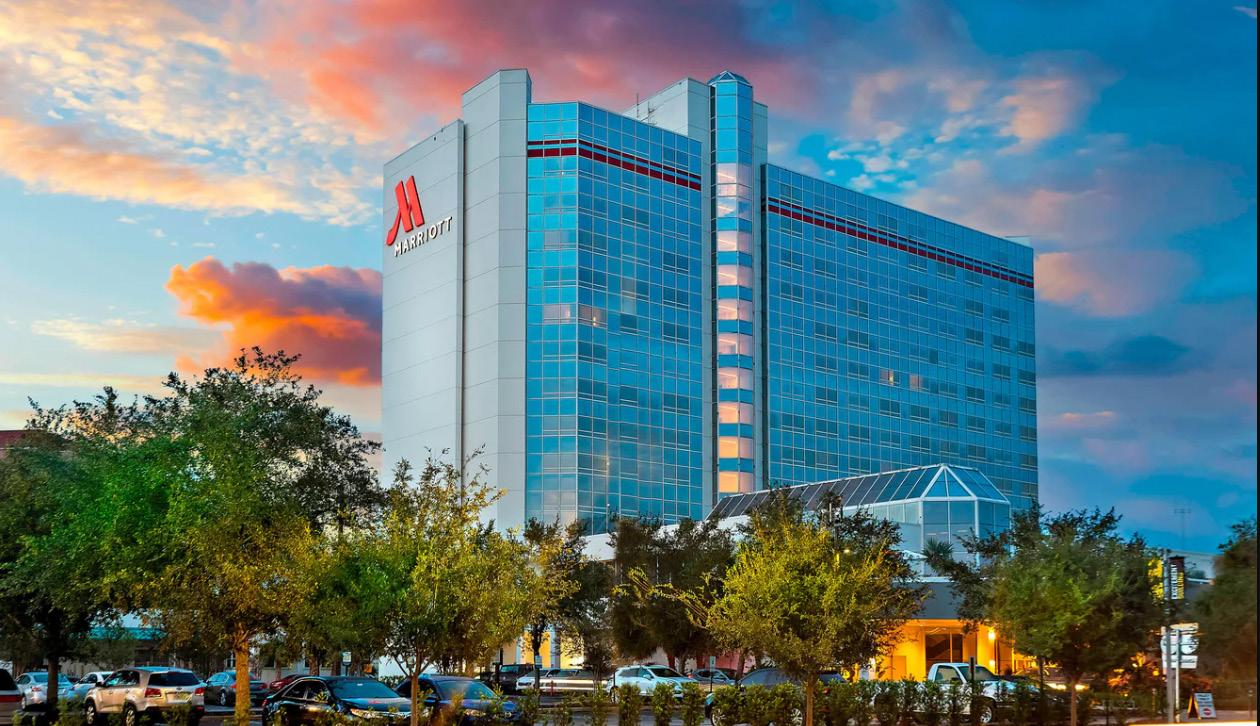
Thursday, August 20, 11�30am–1pm at Marriott Orlando Downtown 400 W. Livingston St., Orlando, FL 32801
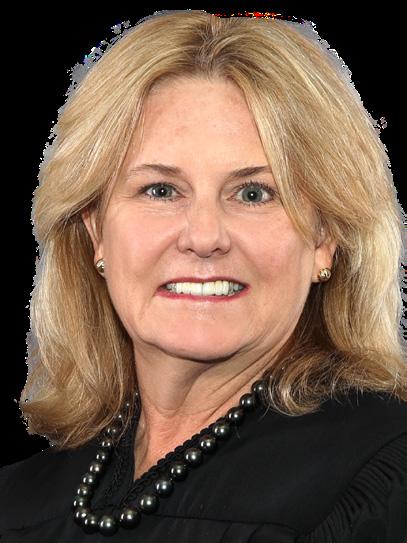
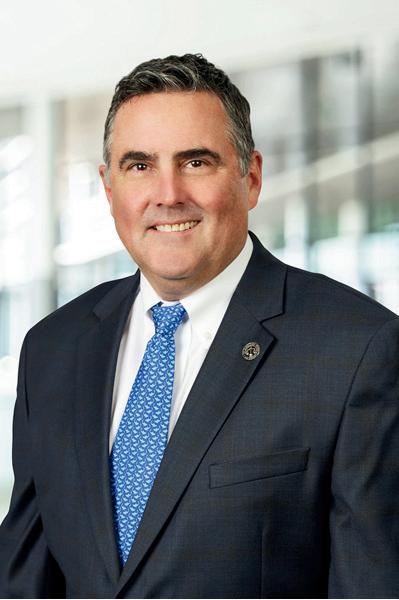
Join us for our August Luncheon featuring Florida Bar President Michael Orr. Hear updates from Bar leadership, connect with colleagues, and be part of an engaging discussion on issues impacting Florida’s legal profession.
RSVP by Monday, August 17, 2026
Ashley Velez ashleyv@ocbanet.org | orangecountybar.org/store RSVPs and cancellations will not be accepted after August 17, 2026.
TITLE SPONSOR
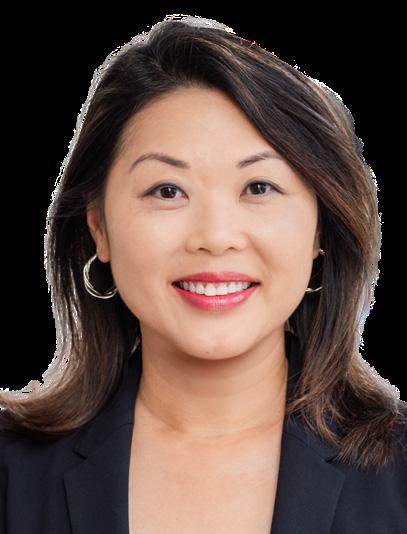
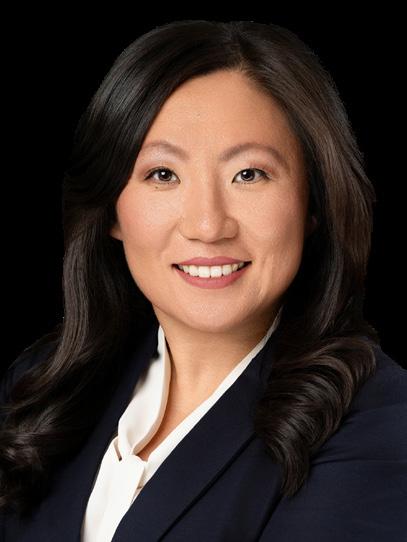
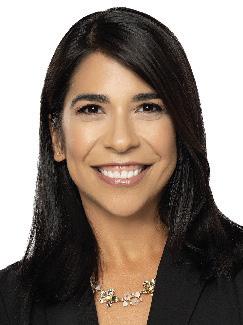
Lisa Gong Guerrero, Esq., , is a Board-Certified Specialist in Criminal Trial Law with 20 years of experience in criminal law. She is the founder of Gong Guerrero Law, PLLC, where she focuses her practice on criminal defense.
GROWTH HAPPENS OUTSIDE OUR COMFORT ZONE
One of the things I’ve learned throughout my career is that growth rarely happens when life feels comfortable.
Looking back, some of the biggest moments of growth in my life started with uncertainty. Coming to this country as a young child. Leaving a career in business and technology consulting to go to law school. Trying my first criminal jury trial. Accepting leadership roles that felt intimidating at the time. Leaving a career of nearly two decades as a prosecutor. Pursuing opportunities that challenged me in new ways. Starting my own law firm. And now, serving as President of the Orange County Bar Association.
None of those decisions felt easy in the moment. In fact, most of them were uncomfortable. But each one challenged me to become a better lawyer, a better leader, and a better person.
I think that’s true for many of us.
As legal professionals, we spend much of our careers helping others navigate uncertainty while trying to project confidence ourselves. We become comfortable in our routines, our roles, and our day-to-day responsibilities. There is nothing wrong with that. But if we’re honest, real growth often begins when we’re willing to say “yes” to something that stretches us.
For some, that may mean trying their first jury trial. For others, it may mean taking the bench for the first time, arguing their first motion, starting a new job, launching a new practice, returning to school, or simply taking on a challenge they’ve been avoiding. It may mean mentoring a young lawyer, speaking at a CLE, chairing a committee, volunteering in the community, attending an event alone, or simply introducing yourself to someone new at an OCBA event.
Growth doesn’t always come from the big milestones. More often, it comes from consistently saying “yes” to opportunities that make us a little uncomfortable. Sometimes growth changes our careers. Sometimes it changes our perspective. And sometimes it simply reminds us that we’re capable of more than we thought.
That is one of the reasons I value the OCBA so much.
This organization has always been more than a place to earn CLE credits or expand your professional network. It is a place where careers grow, friendships grow, and leaders grow.
I’ve watched law students become young lawyers, young lawyers become leaders in their firms, courtrooms, and organizations, committee members become committee chairs, and committee chairs become leaders throughout our legal community. I’ve seen friendships develop into mentorships and mentorships become lifelong professional relationships.
The OCBA creates opportunities that help all of us become better legal professionals, better leaders, and better colleagues.
As President, one of my goals this year is to continue creating those opportunities. I want every member to feel encouraged to get involved, take on a leadership role, join a committee, attend a program, volunteer in the community, or simply meet someone new. You never know which conversation, committee meeting, or volunteer project might change the course of your career.
Growth also requires us to invest in one another.
Every one of us can remember someone who gave us our first opportunity, answered a question without judgment, introduced us to another attorney, or simply encouraged us when we needed it most. We all have the opportunity to be that person for someone else.
As our profession continues to evolve, the OCBA will continue to grow as well. We will embrace new ideas, new technologies, and new ways to serve our members while remaining grounded in what has always made this organization special: our members.
I encourage each of you to challenge yourself this year. Step outside your comfort zone. Raise your hand. Get involved. Mentor someone. Learn something new. Sit with someone new at a luncheon. Introduce yourself to someone you’ve never met.
You may discover, as I have throughout my career, that the greatest growth often begins with one simple step outside your comfort zone.
I encourage each of you to challenge yourself this year.
SERVING BEYOND THE COURTROOM
Strengthening Community Through Service, Education, and Outreach.
Public service has always been at the heart of the work we do at the Orange County Clerk of Courts. While our office is widely recognized for the critical responsibilities we carry out within the judicial system, our commitment to the community extends far beyond the courtroom and daily operations of the Clerk’s Office. This year our employees are again demonstrating a strong dedication to serving the residents of Orange County through volunteerism, education, outreach initiatives, and charitable giving efforts that positively impacted countless lives across our community.
One of the most meaningful service initiatives completed recently was our partnership with The Mustard Seed of Central Florida, a nonprofit organization dedicated to restoring dignity and hope to families and individuals who have experienced hardship, disaster, homelessness, or personal tragedy. The organization serves the community through its clothing and furniture bank, helping individuals rebuild their lives during some of their most difficult moments.
More than 35 volunteers from the Clerk’s Office participated in the service project, assisting at the organization’s Seed Boutique, Community Shop, and Furniture Bank. Volunteers helped organize donated items, sort clothing, prepare household furnishings for distribution, and support daily operational needs.
The event represented more than simply completing a volunteer project. It reflected our office’s continued commitment to compassion, community engagement, and service to others. Our employees consistently step forward to support causes that strengthen Central Florida, and this partnership with The Mustard Seed provided another opportunity for our team to directly assist families working to recover and rebuild their lives.
In addition to volunteer service efforts, the Clerk’s Office continued its commitment to public education through its free “Legal Matters” community forums. Recently, we shifted from virtual to in-person events designed to connect residents with legal information, community resources, and access to professionals within the legal community. The forums also highlighted the importance of collaboration between the Clerk’s Office, members of the judiciary, attorneys, and community partners in helping residents better understand the legal system.
One of the most impactful forums held this year focused on “Leaving a Legacy – Probate: Wills, Trusts, & Estate Planning.” Probate and estate planning matters can often be overwhelming for families, particularly during periods of grief following the loss of a loved one. Many individuals are unfamiliar with the probate process or unaware of the importance of advance directives, wills, trusts, and estate planning documents until faced with a personal crisis.
Through these forums, attendees received valuable educational information regarding probate proceedings, estate planning tools, and resources available within our community. The forums helped answer questions and provided guidance intended to help residents make informed decisions about protecting their families and planning for the future.
These forums continued to demonstrate the important role the legal community plays in public outreach and civic education.
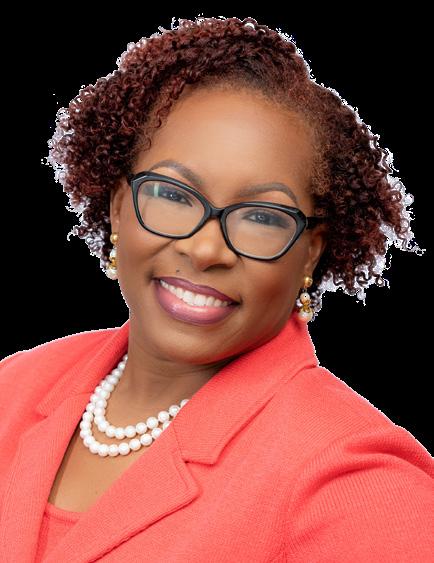
The Honorable Ti any Moore Russell, Esq., Orange County Clerk of Courts, has been a member of the OCBA since 2004.
The Clerk’s Office also launched its 2026 Heart of Florida United Way fundraising campaign, continuing a longstanding tradition of charitable giving and employee engagement. Our office has proudly supported United Way initiatives for many years, recognizing the significant impact these programs have on individuals and families throughout Central Florida.
Last year, through the generosity of our employees and the success of numerous fundraising events and campaigns, the Clerk’s Office raised more than $41�000 for the Heart of Florida United Way — the highest fundraising total in our office’s history.
While United Way supports a wide range of programs and organizations, the Clerk’s Office has remained especially focused on initiatives connected to mental health services, domestic violence prevention and recovery, and access to justice programs. These priorities closely align with the work we perform every day and reflect many of the challenges faced by individuals who interact with the court system and our office.
None of these accomplishments would have been possible without the dedication and generosity of our employees, volunteers, community partners, members of the legal community, and their families. Whether through volunteer service projects, educational outreach efforts, fundraising campaigns, or community partnerships, their commitment to public service continues to make a meaningful difference throughout Orange County.
As public servants, we have a responsibility not only to serve the community through our professional roles, but also to invest in the well-being and future of the people we represent. I remain incredibly proud of the work accomplished by our team and grateful for the continued partnership and support of our legal community.
Until next time,
Tiffany Moore Russell Orange County Clerk of Courts
Preferred Vendors
These vendors support the OCBA by o ering special discounts to members. We encourage you to use their services to grow your practice. For more information, visit orangecountybar.org/page/Preferred-Vendors
LEGAL SUPPORT SERVICES
Florida Lawyers Mutual Insurance Company. The Florida Bar’s professional liability insurance to help protect Florida lawyers and their clients. 800-633-6458
Optimize My Firm. Full digital marketing suite for law firms including website design, content development, local search, Google ads, and SEO. optimizemyfirm.com
PRACTICE MANAGEMENT SYSTEMS
CaseFox. Includes time tracking, AI document generation and analysis, invoicing, and full LEDES and UTBMS billing compliance. Equipped with Integrated with Quickbooks, LawPay, Xero, and more.
Clio. The most widely used cloud-based practice management system in the world. Members receive 10% on lifetime monthly subscription. clio.com/OCBA
LEAP. Cloud-based productivity solution combining practice management, accounting, document management, and legal publishing. leap.us/florida / 844-702-LEAP
MatterSuite. AI-powered legal matter management software designed for in-house legal teams, law firms, and corporate counsel.
HOTEL SAVINGS
The Residence Inn by Mariott. Discounted rates include complimentary self-parking, complimentary breakfast bu et, wireless HSIA. 680 N Orange Ave. / 407-482-1500
DISCOUNT SERVICES & MERCHANDISE
OCBA Merchandise. Shop o icial OCBA apparel and accessories! Shirts, hats, visors, totes, water bottles and more. All sales go directly to the OCBA Foundation. ustore.net/group/orange-county-bar-association
OCBA Marketplace. National Purchasing Partners (NPP) helps OCBA members reduce costs with exclusive pricing for a variety of popular brands including 1-800-Flowers, AmEx, Harry & David, HP, Omaha Steaks, Sherwin-Williams, Staples, Verizon, and more. Enroll for FREE at bit.ly/OCBASavingClub
To become a Preferred Vendor, contact our Advertising & Sponsorship Department.
The businesses listed herein (the“Vendors”) are not a iliated with the Orange County Bar Association (OCBA) and shall not under any circumstances be deemed to have any authority to act on behalf of the OCBA. The OCBA does not make, and expressly disclaims, any warranty, representation, responsibility, or guarantee as to (a) the quality or suitability of the Vendors, their products, or services, and (b) the duration or validity of any discount or other promotion o ered by any of the Vendors.
The Honorable Lisa T. Munyon Chief Judge Ninth Judicial Circuit Court
A GROWING CIRCUIT
When one thinks of the judicial branch, growth as a descriptor doesn’t typically come to mind. Permanence does. So does precedence, dependability, and formality. Yet, despite the fact that none of these are its antithesis, growth somehow doesn’t seem apt despite the fact that it does indeed apply.
There’s been a lot of growth at the Ninth over the first half of this year, most notably in the number of judgeships. The number of judicial seats is finally starting to catch up with the increasing caseload that accompanies a perpetually growing population. Three new judgeships were certified by the Supreme Court, enacted into State Bill 2508, and funded effective July 1, 2025: Two circuit seats and one Osceola County seat. All three were appointed by Governor DeSantis in April, 2026.
Looking beyond numbers, there has been growth on the bench this year that signifies something far less tangible but equally as important when it comes to the administration of justice. What I am referring to is personal growth; the opportunity for seated judges to grow in their judicial careers and for lawyers to begin a journey of growth on the bench. Two of our Orange County judges – Judge Andrew Bain and Judge Mark Skipper – were elevated to the new circuit seats. And two lawyers were newly appointed to the bench, filling the vacancies left by the retirement of Bob Egan and the resignation of Elizabeth Gibson. For those of you who aren’t trial lawyers, and for those of you who are trials lawyers but haven’t had a case in front of our newest judges, I’d like to take a moment to briefly introduce them.
HONORABLE
SONIA MCDOWELL – CIRCUIT JUDGE
Judge McDowell served as an assistant state attorney before spending over a decade in civil litigation, most recently working at The Grosshans Group. She earned her bachelor’s degree from Rutgers University and her juris doctor from Barry University. She fills the judicial vacancy created by the resignation of Judge Gibson and is currently assigned to circuit criminal.
HONORABLE THERESE SAVONA– CIRCUIT JUDGE
Judge Savona was a partner at Cole, Scott, & Kissane P.A. practicing civil litigation and appellate law before her appointment. Prior, she worked as chief appellate counsel for the Florida Department of Health. She earned her bachelor’s degree from the University of Miami and her juris doctor from St. Thomas University. Savona fills the judicial vacancy created by the retirement of Judge Egan and is currently assigned to domestic relations.
HONORABLE DAVID PETERS – OSCEOLA COUNTY JUDGE
Judge Peters joins us from The Grosshans Group. Prior, he served as the general counsel for Rapha House International, a nonprofit dedicated to ending human trafficking. He earned his bachelor’s degree from Florida Christian College and his juris doctor from the University of Florida. He fills the vacancy created by Senate Bill 2508 and is currently assigned to Osceola County civil.
Growth at the Ninth, both in numbers and opportunities, doesn’t stop here. The Ninth has again been certified for additional seats on the bench, and as I write this in May, we are
hopeful for the enactment and funding of a Senate Bill establishing those judgeships. There are also a number of you who are candidates in the upcoming elections, hoping to start a journey of growth as a judge. Regardless of how one gets to the bench, each new judge brings a depth of talent and an understanding of the law that gives the circuit as a whole a chance to grow and enhance the administration of justice. Whether it’s a newly created judgeship, a vacancy, or an election, there are always opportunities. If you’ve considered the bench, make a commitment to your own growth. Maybe you’ll be the next judge to enhance the Ninth’s commitment to justice.
New Members
ATTORNEY
Brian Boelens
Jennifer M. Busby
Patricia Dullaghan
James Kelly
Timothy Alan Magill
Tucker Pryor
Benjamin Sigman
Joseph Sutter
Maria Fernanda
Valladares
David Zissman
PARALEGAL STUDENT
Victoria Michelle Grajeda
AFFILIATE
Anna Arceneaux
Kwin Chavis
Suzzette De Jesus
Liana Marrero
Nallita Sepulveda
Carole Steele
LAW STUDENT
Steven Abreu
Halee Bishop
Medaline Pascal
Jessica Perea
Simon Andrew Pfeifer
Lindsey Hunter Taylor
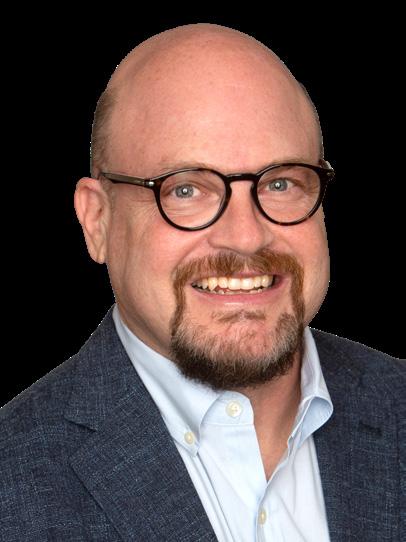
Lawrence Kolin, Esq. is a panel neutral of Upchurch Watson White & Max Mediation Group for the past dozen years. Lawrence founded the Orange County Bar ADR Committee and is an Emeritus Member of the Florida Bar ADR Section Executive Council.
NONBINDING ARBITRATION
Clarifying Confusion in a Useful Form of ADR.
Nonbinding arbitration can help parties with a qualified neutral’s impression of the dispute at hand. In Orange County, the process is available to litigants under administrative order no. 2020-2602 pursuant to § 44�103, Fla. Stat. (2025), which provides statutory authority for courts to refer civil actions to nonbinding arbitration, and for the promulgation of ever-changing rules of civil procedure. Currently, Fla. R. Civ. P. 1�820 provides that once an action has been referred to nonbinding arbitration and the arbitration hearing is concluded, the parties are notified in writing of the arbitrator’s nonbinding decision, which is sealed and filed with the clerk along with the original transcripts of the proceeding, if any. The parties may still decide to proceed to trial, as they have a statutory right to request a “trial de novo,” but at present, must give notice they reject the arbitration decision. A nonbinding arbitration decision is sealed because, if a timely request for such trial de novo is made, the arbitration decision is not to be considered or used as evidence at the subsequent trial. Alternatively, the parties can accept the arbitrator’s decision and ask the referring court to enter a judgment.
FLOURISHING METHOD OF DISPOSING CASES
1. See https://ninthcircuit.org/ sites/default/files/AO202026-02.pdf
Utilized consistently by judges of the 20th judicial circuit for many years in southwest Florida, nonbinding arbitration is evolving elsewhere around the state as an effective form of ADR, given the continued backlog of cases and high cost of
information, enhancing direct communication between the parties about their claims and supporting evidence. The appointed arbitrator provides a nonbinding decision on the merits of the case that can serve as an early reality check for clients and lawyers alike. The process helps to identify and clarify the central issues in dispute, while the right to trial is fully preserved. The nonbinding arbitration decision is not shared with the trial court unless no one requests a trial de novo. Otherwise, with a notice of rejection the case remains in litigation, but likely with the litigants better informed as to the risks, amount of work still necessary and what remains while continuing toward trial.
litigation. As mentioned, the Ninth Judicial Circuit is receptive and has already implemented an amended administrative order.1 This process puts the neutral in the role of decider, conducting an informal process mainly consisting of presentations similar to opening statements and an exchange of factual
Changes to the statute passed last year in the legislative session and signed into law eliminated antiquated caps on compensation of arbitrators. Still, there is no reason to treat this as a full-blown arbitration, nor should it be nearly as expensive as one conducted through a national provider like AAA or JAMS. Though some hearings may go longer, most last under a half-day and may involve subsequent submissions before a decision is timely issued 10 days after final adjournment. A decision is then served which can
operate in the manner of a proposal for settlement if not accepted based upon the § 44�103 (6), fee shifting provisions.
RULES CHANGES CONTINUE
The ADR Section of The Florida Bar is opposing proposed Civil Rules Committee amendments to Rule 1�700 regarding arbitration generally that default to in-person participation and appear to narrow the use of electronic communication technology to audio-video participation in arbitrations when the parties or the court have approved the use of electronic communication technology. To be clear, under the amendment, communication technology must include both audio and video unless all parties stipulate or the judge finds cause. This could be due to the fact that many parties of late claim they don’t have functioning cameras, and some representatives appear with black screens on Zoom. The proposed amendments would essentially require parties at a mediation or arbitration via remote technology must fully appear online at the proceeding, perhaps affecting
a combination of in-person and communication technology which seems to be unduly inflexible.2
More proposed revisions by the standing Civil Rules Committee of The Florida Bar to Rule 1�820 regarding nonbinding arbitration delete the requirement that the arbitrator file under seal with the clerk of the court the original decision (and any original transcripts) at the time the arbitrator notifies the parties of the decision, but remain silent on how such transcripts are to be filed. The reasoning behind sealing the written decision and transcripts of the proceeding is that a trial de novo entitles the parties to a trial outside the scope of what transpired during the arbitration proceeding.3 This approach makes sense because nonbinding arbitration proceedings differ from trial proceedings in the following respects: (1) the decisions are advisory only; and (2) strict conformity with formal trial procedures and the Florida Rules of Evidence is absent. See § 44�103 (5), Fla. Stat. (2025). The arbitration decision “shall
not be made known to the judge who may preside over the case unless no request for trial de novo is made as herein provided or unless otherwise provided by law.” Id. However, it would leave a potential procedural gap with no mechanism in place to notify the court when to begin counting the time period for a party to request a trial de novo. The ADR Section would rather arbitrators be required to file with the clerk of court a new, dedicated form entitled, “Notice of Service of the Arbitration Award/ Decision,” so there is no dispute when the arbitration decision was served, the manner it was served, and on whom it was served. More about this in the final section below. Even without an official form, arbitrators may still wish to file such notice to make everyone involved aware.
WHAT ABOUT A RECORD?
Though it is rare that a court reporter is engaged or a Zoom hearing is recorded, the ADR Section prefers in the event a record is created of the nonbinding arbitration proceeding, and there is a
transcript or other agreedupon transcription, the parties in possession of the original transcription and exhibits used or copies thereof, should retain them in a confidential manner, and they may not be filed with the clerk of the court, until such time as the arbitration decision is filed with the clerk of the court as set forth in Rule 1�820(h) or Rule 1�820(i). This would ensure privacy of the proceeding is preserved and provide a directive as to how to handle any transcripts. The ADR Section believes that solution would serve best in lieu of filing under seal. It remains for the Civil Procedure Rules and Florida Supreme Court to accept these recommendations or adopt other methods.
In any event, if no requests for trial de novo are timely filed, then a party seeking judgment to be rendered in connection with the arbitration decision must file with the clerk of the court, the arbitration decision. Therefore, the written arbitration decision only needs to be filed by the parties after expiration of the time period to seek
2. In Re: Amendments to Florida Rule of Civil Procedure 1.700, Case No. SC2025-2041 (Any comments to be filed with the Florida Supreme Court on or before May 1, 2026). https://acis.flcourts.gov/portal/court/68f021c4-6a44-4735-9a76-5360b2e8af13/case/2E0F1CC0-DB67-4591-92E4- 4B2DF7C5AC55. See also, Florida Rules of General Practice and General Administration 2.530 defines “communication technology” as audio communication technology or audio-video communication technology.
3. Florida Bar News Notices July 18, 2025 https://www.floridabar.org/the-florida-bar-news/amendments-to-florida-rules-of-civil-procedure1-080-1-090-1-200-1-202-1-280-1-490-1-630-1-700-1-820/ and March 11, 2026 https://www.floridabar.org/the-florida-bar-news/proposed-amendments-to-rule-of-civil-procedure1-820-hearing- procedures-for-non-binding-arbitration-2/
Practice law more efficiently
���� Seamless case management
Automated FLSSI probate & guardianship forms
� Advanced document automation
� Robust legal accounting & billing
Award-winning legal AI
Learn more at leap.us
4. People’s Trust Ins. Co. v Hernandez, 412 So. 3d 127 (Fla. 4th DCA 2025)
5. In Re: Amendments to Florida Rule of Civil Procedure 1.820, Case No. SC2026-0040 (Any comments to be filed with the Florida Supreme Court on or before May 1, 2026).
a trial de novo in order for the presiding judge to “enter such orders and judgments as may be required to carry out the terms of the decision as provided by § 44�103(5), Fla. Stat. (2025).”
See Rule 1�820(h)(4). In the latest proposal, the ADR Section agrees with alleviating the arbitrator from the responsibility of filing the arbitration decision directly with the Court and that such responsibility should vest with the parties.
TIMING AND TECHNICALITIES
Rule 1�820 subsections (h) (1) and (h)(2), concern the 20-day time period to file a request for trial de novo by a party subjected to the arbitration decision and the provisions on the time period for any party having a third-party claim. Presently, Rule 1�820(h) addresses the issue of a third-party claimant filing a request for trial de novo and provides a third party with a claim at issue 10 days from service of the first notice of rejection of the arbitration decision and request for trial to file their own notice of rejection of the arbitration decision and request for trial. However, if the first notice is filed on the 20th day of service, this 10-day period should extend the time for third party claimants to file until 30 days after service of the decision. Elsewhere, the
rules state there is only a 20-day period to file a written request for trial de novo. As such, it is suggested that the 20-days language in Rule 1�820(h) and (i) be clarified as well, if amendments are adopted.
TRAPS FOR THE UNWARY
Last year, case law surrounding attempted rejection of a decision resulted in a strict interpretation despite the intent of the party.4 While the prior Rule 1�820(h) was still in effect, the parties completed the nonbinding arbitration, but the arbitrator issued the nonbinding arbitration decision one week after amended Rule 1�820(h) became effective. That same day, the plaintiff homeowners filed a “Motion for Trial De Novo” pursuant to Florida Rule of Civil Procedure 1�820(h). Nowhere in the motion did they include a “notice of rejection of the arbitration decision” as amended rule 1�820(h) now requires since July 1, 2024. After 20 days had passed since the arbitrator had served the arbitration decision on the parties, the insurer filed a motion to enforce the nonbinding arbitration decision. The defendant insurer argued the “Motion for Trial De Novo” was deficient under amended rule 1�820(h), because the homeowners’ motion did
not also include a “notice of rejection of the arbitration decision.” The circuit court denied the insurer’s motion, but the appeals court granted the insurer’s petition for writ of mandamus, quashing the circuit court’s order denying enforcement of the nonbinding arbitration and applied a supremacy-of-text principle under an obligation to enforce statutes and rules as written and for predictability or consistency. Perhaps in light of this decision, the proposed revised rules do away with the notice altogether in favor of a just a request for trial. Suffice it to say, there are many technical aspects to this process, so be sure to stay aware of the nonbinding arbitration rule changes.
As of spring 2026, the standing Civil Rules Committee of The Florida Bar now formally seeks to amend Florida Rule of Civil Procedure 1�820 (Hearing Procedures for Non-Binding Arbitration) after confusion arising from the recent case law interpreting nonbinding arbitration notice language as requiring a party to state both that it was “rejecting” the arbitration decision and that it was “requesting a trial” in the written filing. Because the party filed a request for trial de novo, the request did not include language
that the party was “rejecting” the arbitration award. As mentioned, a court found the request for trial de novo did not strictly comply with Rule 1�820 (h) and was therefore ineffective. When the Civil Rules Committee last proposed amending Rule 1�820, it was not their intention to create a requirement to use “magic words” to reject an arbitration award-- it was to create a requirement that a request for trial de novo be accomplished by a written filing.
Members of the committee now agree that it is duplicative and
unnecessary for a party to say both that the arbitration award is being rejected and that a trial de novo is being requested. Rather, it is implicit that a request for a trial de novo is a rejection of the arbitration award.
There was also a concern that Article I, Section 22, Florida Constitution states, “[t]he right of trial by jury shall be secure to all and remain inviolate” and a procedural rule should not invade that right by creating a trap for the unwary. To address this decision’s interpretation, the Civil Rules Committee proposes amending
subdivision (h) to clarify that only a written request for trial need be filed; the filing does not have to be a “notice of rejection of the arbitration decision and request for trial.” The new language would, among other things, require an arbitrator to file with a court a notice of service of the arbitration decision, but not the actual arbitration decision itself. This might eliminate filing under seal which can be difficult for neutrals, depending on the clerk procedures in each county. The party entitled to a judgment if no request for trial de novo is made, or
after a trial de novo is conducted, would be required to file the arbitration decision with the court. The proposed amendments would also require that a party file only a written request for trial to reject an arbitrator’s decision, and that a timely request for trial “be construed so as to do substantial justice.” As of the time of submission of this article, any nonbinding arbitration rule amendments are still under consideration by The Supreme Court of Florida in petitions brought by the standing Civil Rules Committee.5
OUR COMMITMENT TO SERVICE
Leadership, Service, and the Ongoing Impact of the Paralegal Profession.
The Paralegal Section of the Orange County Bar Association plays an important role in strengthening, supporting, and advancing the paralegal profession throughout our legal community. Through education, mentorship, service, leadership, and professional connection, the Section provides a meaningful home for paralegals who want to grow in their careers, serve others, and help shape the future of the profession.
networking, the Board’s work helps build a stronger and more connected paralegal community.
At the heart of this work is a commitment to service.
Our mission is clear: The mission of the Paralegal Section of the Orange County Bar Association is to provide leadership, promote the professionalism and certification of paralegals, encourage and acknowledge professional development, promote global affiliations with other professional associations, and provide enriching networking opportunities.
That mission is more than a statement. It is reflected in the work carried out year after year by the OCBA Paralegal Section Board, its Executive Council, committee members, volunteers, and Section participants who give their time, talent, and experience to benefit others. Their collective efforts
make possible a wide range of educational programs, continuing legal education opportunities, networking events, community service projects, and professional development initiatives designed to support paralegals at every stage of their careers.
The Section’s strength comes from the people who choose to get involved. The OCBA Paralegal Section Board helps guide the Section’s programming, outreach, and service initiatives, ensuring that members have opportunities to learn, lead, connect, and contribute. Whether planning events, supporting CLE programming, welcoming new members, encouraging certification, or creating spaces for professional
The Paralegal Section recognizes that paralegals are essential members of the legal team whose skill, judgment, and professionalism have a direct impact on the administration of justice. Today’s paralegals work across many practice areas and in many settings, including litigation, transactional law, government, corporate legal departments, nonprofit organizations, and public service. Their contributions require adaptability, diligence, legal knowledge, and a continued commitment to professional growth.
Within our own Section, that spirit of leadership and service is reflected in the work of Paul Pelton, FRP, a dedicated board member and respected member of the paralegal community. Paul is a Senior Litigation Paralegal with more than 30 years of experience in complex civil litigation, including medical malpractice, product liability, nursing home claims, and high-exposure personal injury matters. His career has included work in both plaintiff and defense representation, in state and federal courts, and in arbitration and mediation.
Leesa Badley is a Florida Registered Paralegal with Milne Law Group, P.A.
Paul’s professional background reflects the depth and versatility of the modern paralegal profession. With education and experience in medical science and paralegal studies, he has worked across all phases of civil trial practice. He has also contributed to the profession as a published author and national CLE presenter, sharing his knowledge with legal professionals beyond our local community.
Just as important as his professional accomplishments is Paul’s dedication to service. For the past 10 years, Paul has served the OCBA Paralegal Section with commitment, professionalism, and heart. Through his leadership within the Section, including his service as President and his continued work on the Board of Directors, Paul has helped mentor newer paralegals, support meaningful programming, and promote opportunities for professional development.
As Paul has decided to move on from his service with the OCBA Paralegal Section, he does so leaving behind a meaningful legacy and opening the opportunity for another dedicated professional to serve, lead, and contribute to the continued growth of the Section. We would like to take a moment to sincerely thank Paul for all
he has done for the Paralegal Section, the OCBA, and the paralegal profession as a whole.
Paul’s service has also extended statewide through his appointment by the Supreme Court of Florida to The Florida Bar’s Standing Committee on the Unlicensed Practice of Law, where he also served as Vice Chair. In addition, his involvement in supporting paralegal education at Valencia College reflects his commitment to helping future paralegals enter the profession prepared, informed, and inspired.
Paul’s work is one example of the broader impact made by those who serve the OCBA Paralegal Section. His dedication, mentorship, and passion for professional growth have helped strengthen the Section and inspire those around him. As the Section moves forward, we will continue to honor his commitment by carrying on his will to grow the profession, encourage leadership, and create opportunities for paralegals to thrive.
The Section is built on the efforts of individuals who understand that leadership is not limited to a title. It is found in mentorship, volunteerism, professional excellence, and the willingness to help others succeed. The members of
the OCBA Paralegal Section Board and the many volunteers who support the Section continue to carry that legacy forward through their dedication to education, service, and community.
For new members and paralegals considering whether to become involved, the Paralegal Section offers more than meetings and events. It offers a place to build relationships, strengthen skills, gain leadership experience, learn from seasoned professionals, and contribute to something larger than one’s own career. Participation in the Section can open doors to mentorship, certification support, professional recognition, public service opportunities, and lasting connections within the Orange County legal community.
The future of the paralegal profession depends on engaged professionals who are willing to lead, learn, and serve. Whether you are an experienced paralegal, newly entering the field, a student preparing for your career, or a legal professional looking for ways to connect with the paralegal community, the OCBA Paralegal Section welcomes your involvement.
By continuing to promote leadership, professionalism, certification, development, affiliation,
and networking, the Paralegal Section remains committed to advancing the paralegal profession and supporting the people who make it strong. The work of the Section is ongoing, and its impact grows with every member who chooses to participate, volunteer, mentor, and lead.
Paul, thank you for your many years of service to the OCBA Paralegal Section, the OCBA, and the paralegal profession. Your leadership, mentorship, and dedication have left a lasting impact, and we are grateful for all you have done. As we continue the work you helped strengthen, we will carry your example forward and make you proud.
XiXi Li, Esq. is an attorney at Sasso and Sasso, P.A., where she practices complex commercial litigation, construction litigation, and election law. Ms. Li currently serves as the Chair of the Professionalism Committee, Governor for the Ninth Judicial Circuit of the Florida Bar Young Lawyers Division, and Programs Director of CFAWL.
THE FIRST BIG MISTAKE
How to Survive It.
There is a particular feeling every new lawyer eventually learns. It usually arrives late in the day. You look at your task list, or your calendar, or the three emails you have been avoiding, and your stomach drops. You have promised more than you can deliver, and the bill is coming due.
catastrophically urgent, which is exactly the state in which you make bad triage decisions. Before reacting, get clear on what is actually due, what is genuinely at stake, and what merely feels loud. More often than not, the real list is shorter than the anxious one. Occasionally it is longer, but at least then you are working from facts instead of dread.
The mistake is rarely dramatic. There is no missed statute of limitations, no sanctions hearing. It is quieter and, for that reason, far more common: the young attorney who says yes too often. A partner asks if you can turn something around by Friday, and you say yes before honestly looking at what is already on your plate. A colleague needs help, and you want to be the person who helps. Each individual “yes” feels like diligence. Stacked together, they become a backlog of internal deadlines that cannot be met, and a steadily rising sense of being underwater.
The danger of this kind of mistake is that it does not look like a mistake. It looks like ambition. It looks like a young lawyer who is eager and reliable, right up until the moment she misses three soft deadlines
and is now scrambling, the work suffering for it. If that scene feels familiar, here is what is worth understanding early. The mistake itself rarely defines a young lawyer’s career. The response to it does. Face it fast. The instinct, when you are behind, is to go quiet and hope to catch up before anyone notices. Resist it. A delayed project is a problem you can manage; a delayed project that you conceal until the eleventh hour is a problem that costs you trust. The damage from the error is almost always smaller than the damage from the cover-up. Admitting that you are overcommitted is far less painful than the days spent dreading the admission. Assess before you spiral. Panic distorts scale. When you are overwhelmed, everything feels equally and
Disclose up the chain, with a plan in hand. Tell your supervising attorney early, and do not just deliver the problem. Bring a proposed solution: here is what slipped, here is what can realistically be delivered and when, here is what needs to be reprioritized. Supervisors forgive the honest recalibration far more readily than the silent disappearance. Most of them, you will discover, have been exactly where you are.
This is also where professional obligations can come into play. Depending on the matter, a missed internal deadline can shade into something with real consequences for the client, and our duties of competence and communication are not suggestions. If a slip ever touches a client deadline or a matter’s outcome, treat the relevant Rules of Professional Conduct as part of the recovery checklist, not an afterthought.
Fix what is fixable, then fix the system. Putting out the immediate fire is only half the job. The recovery is not complete until something has changed so that the same fire cannot start again. Often that means a humbling but liberating habit: not answering “Can you get to this by Friday?” in the moment. Look at your actual commitments first, and give an honest answer, even when the honest answer is “I can start it Friday, but you will have it Tuesday.” Underpromising and overdelivering is not a lack of ambition. It is how you
build a reputation people can rely on.
Separate the mistake from your identity. The most corrosive habit is turning a logistical failure into a verdict on your worth. “I fell behind on this project” quietly becomes “I am not cut out for this.” Those are not the same statement, and conflating them helps no one, least of all the client. You are allowed to make a mistake without it meaning something permanent about you.
The inadvertent disclosure of privileged information to the other side can be fixed, as long as you tell
someone about it! Hiding it only makes it worse and prevents your partners and more experienced attorneys from helping to solve the problem.
The lawyers we most admire are not the ones who never erred. They are the ones with a quiet graveyard of early missteps behind them, the difference being that they metabolized each one into a better habit, a sturdier system, and a more honest way of working.
So, when your stomach drops, and it will, remember that this is not the end of your reputation. It is
the beginning of the part where you build it. The “yes” you should have said no to is not a referendum on your future. It is simply the first thing you learn to say no to next time.
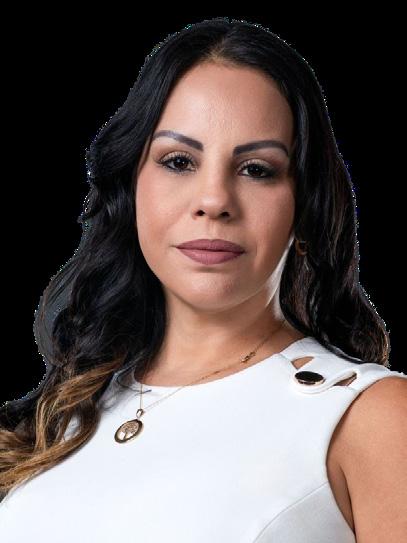
Yadirah Rodriguez, Esq.
Serves as Guardian ad Litem attorney for the Legal Aid Society of the OCBA, handling cases related to dependency and advocating for the child’s best interest.
For more information or to take a GAL case, please contact Yadirah Rodriguez, Esq., at yrodriguez@ legalaidocba.org. For more information on how to become a financial donor or to help with our fundraising efforts, please contact Donna Haynes, Manager of Development, at dhaynes@ legalaidocba.org or by calling (407) 515-1850.
GAL’S GUIDE FOR CONFIDENCE
Essential Tips for Every GAL.
Have you ever considered volunteering as a guardian ad litem (GAL)? The path to becoming a GAL often begins with a simple introductionperhaps a colleague’s story or a mention at a bar event. Whether in the process of contemplating this decision or having already committed to it, it is natural to feel apprehensive about navigating an entirely new area of the law that differs significantly from one’s practice. This article aims to elucidate the general expectations associated with undertaking a GAL case on a pro bono basis.
1. § 39.01(32) Fla. Stat. (2025).
2. Id.
3. § 39.810 Fla. Stat. (2025)
4. § 39.01(32) Fla. Stat. (2025)
A guardian ad Litem (GAL) is defined as a person or an entity that is a fiduciary appointed by the court to represent a child in any civil, criminal, or administrative proceeding to which the child is party.1 In the realm of dependency law, the GAL fulfills a distinctive role, acting as the eyes and ears of the court to ensure that abused, abandoned or neglected children receive appropriate care and protection while under the court’s jurisdiction.
It is essential for a GAL to become well-versed in Chapter 39 of the Florida Statutes and the Rules of Juvenile Procedure, as these cover all relevant guidelines related to dependency law. The GAL
uses the best interest standard for decision making and advocacy.2 Hence, the best interests of the child must remain paramount through all dependency proceedings. In instances where a Petition for Termination of Parental Rights is filed, the court is required to consider the manifest best interests of the child, which are listed in Fla Stat. 39�810.3 During a termination of parental rights trial and/or manifest best interest hearing, the GAL must evaluate all relevant factors and provide a recommendation to the court through sworn testimony and/or a report.
The GAL participates in Judicial Review hearings which are scheduled at least every 6 months while
the court has jurisdiction. The purpose of these hearings is for the court to review the child’s status, the parents’ compliance with their case plans, and to determine if the court approved permanency goal is on track to being met. Typically, a General Magistrate presides over these hearings and subsequently submits a report and recommendation to the presiding Judge for approval, which is then formalized as an order. During a Judicial Review, the GAL’s role is to inform the court of any pertinent updates or concerns regarding the child(ren). In instances where a party to the case requests a change of goal, placement or visitation, either orally or through written motion, the GAL may articulate their position to the court since the guardian ad litem is a party to the judicial proceeding as a representative of the child.4
To adequately prepare for the Judicial Review hearing, the GAL should thoroughly review the Judicial Review Report, which is prepared by case management and filed by the attorney for the Department of Children and Families (Department), as this document contains critical information regarding the status of the case. It includes
recommendations from the Department, serving as a preview of the issues that will be discussed during the hearing. Further, the Judicial Review Report is a valuable resource, providing the names and contact information of all key participants involved in the case, such as the DCF attorney currently assigned to it, the DCF case manager and their supervisor, the attorneys representing the parents, and, in specific instances, the Attorney ad Litem. The Judicial Review also presents a significant opportunity for the GAL to request specific services for the child(ren). Another valuable resource that the GAL should review is the Comprehensive Behavioral Health Assessment (CBHA), which is a Medicaid-funded evaluation of the child(ren), designed to act as a roadmap that provides recommended services for the children. Some of the recommended services we see include therapy, further medical or mental health evaluations, educational interventions and services, and participation in extra-curricular activities. A CBHA is ordered to be completed during a shelter hearing and once the final report is obtained by the Department, the child’s case
manager is responsible for making the necessary referrals to ensure the recommended services are implemented.
To ensure that the court receives the requisite information, the GAL must conduct visits with the children, interview caregivers, and engage with the children’s service providers. Additionally, the GAL should maintain communication with the DCF attorney, the attorney for the parents and case management. Case management conducts regular staffing meetings, which the GAL should attend, as these meetings present an excellent opportunity to acquire up-to-date information regarding the child(ren) and the progress of the case.
The role of a GAL is centered on the gathering and analysis of information that ultimately informs crucial decisions with lasting implications for families. Thus, it is vital for the GAL to take an active part in gathering this information. Lastly, akin to other areas of law, it is advisable for the GAL to participate in seminars to remain informed about recent developments in Dependency law. Here at the Legal Aid Society of the Orange County Bar Association, Inc., we offer monthly lunch and learn
is proud to announce
Meredith Stephens will be joining our panel of neutrals on August 1st
Meredith has spent 19 years as a civil trial lawyer handling a broad range of complex matters and will focus exclusively on mediation. She is rated AV Preeminent by Martindale-Hubbell, has been regularly recognized as a Best Lawyer in America and a Florida Super Lawyer, and is known for her calm presence and practical style. Meredith’s experience includes premises liability, personal injury, medical malpractice, legal malpractice, insurance coverage disputes, products liability, and motor vehicle accidents. As a mediator she will listen to all sides, and understand not only the legal and factual issues at play, but also the pressures, risks, and human dynamics that drive decision-making.
Meredith’s calendar is available now to schedule matters starting August 1st adrsource.com
888.741.2224
Solving the world’s problems…one case at a time
trainings designed to educate participants involved in dependency cases. The GAL’s role and participation in these proceedings is pivotal in ensuring the best interests of the children are met.
The role of a GAL is centered on the gathering and analysis of information that ultimately informs crucial decisions with lasting implications for families.
YLS on the Move
YLS kicked off the new bar year in style, gathering on June 26 for its first luncheon of the 2026–2027 season. The room was full of familiar faces and new ones, and the energy made one thing clear: this section is ready for a great year. Members reconnected over lunch, welcomed those joining YLS for the first time, and got a preview of the service projects, socials, and professional development opportunities on the horizon. Coming off an outstanding 2025–2026 year, the June Luncheon set the tone for everything ahead — connection, momentum, and a shared commitment to showing up for one another and for Central Florida.
June Luncheon
If the June Luncheon was any indication, this year is going to be one to remember. YLS has a full calendar lined up, and there is something for everyone — whether you are looking to give back, grow professionally, or simply spend time with fellow young lawyers.
WHO’S WHO
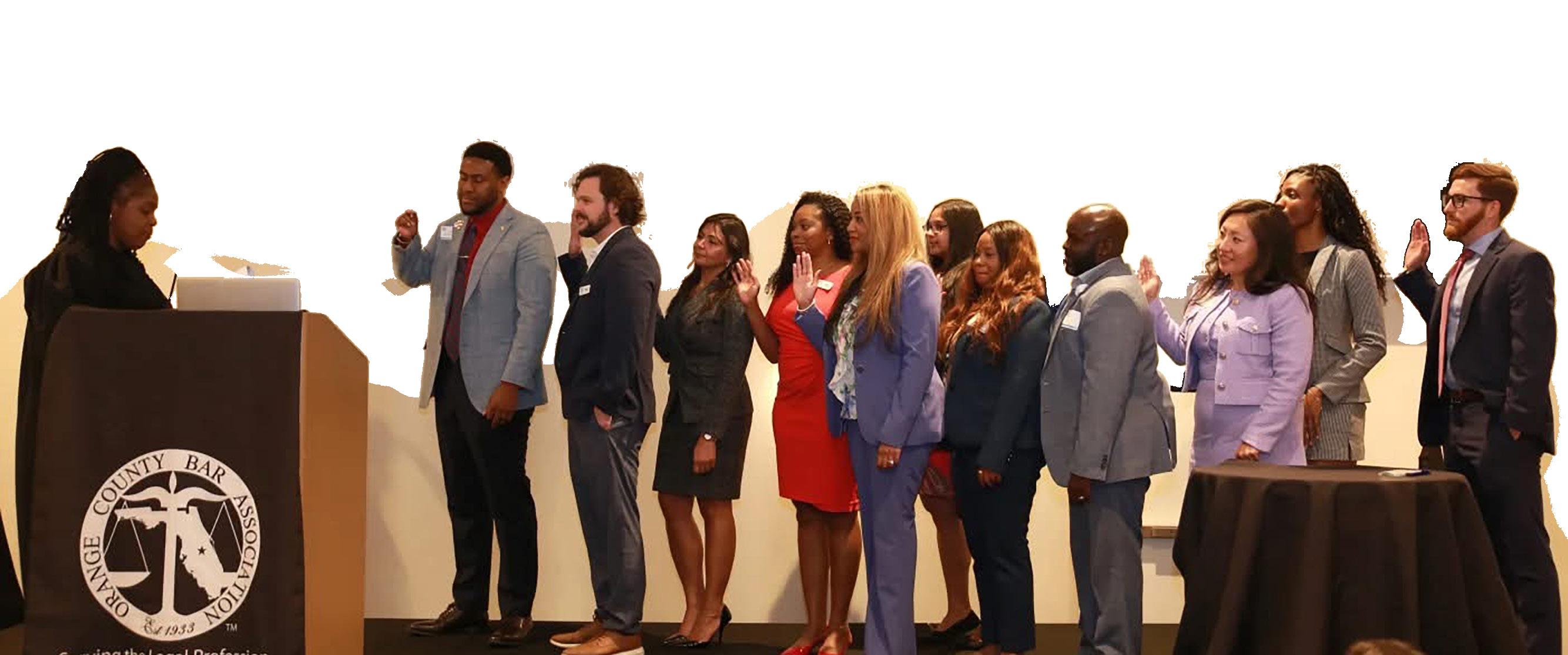
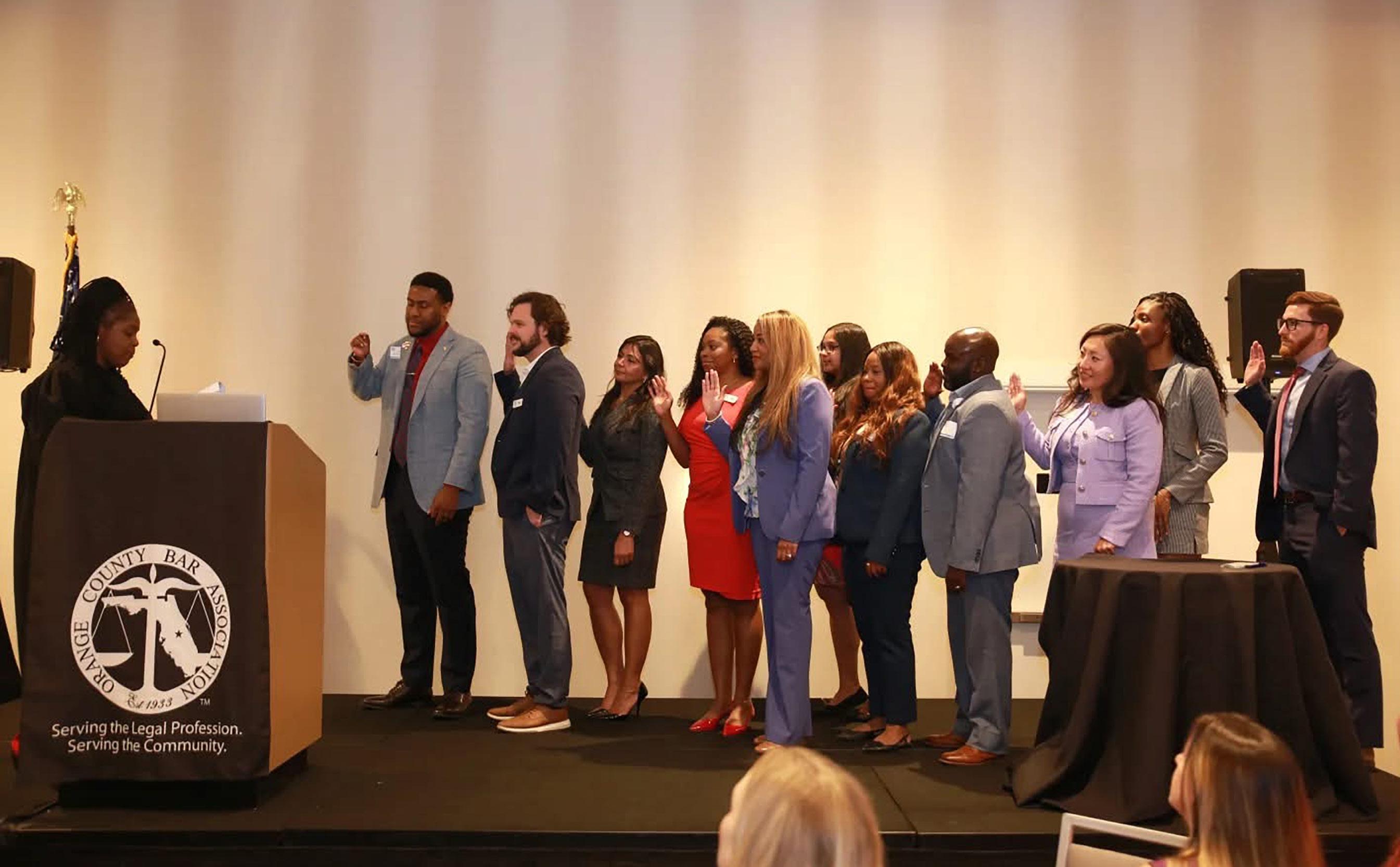
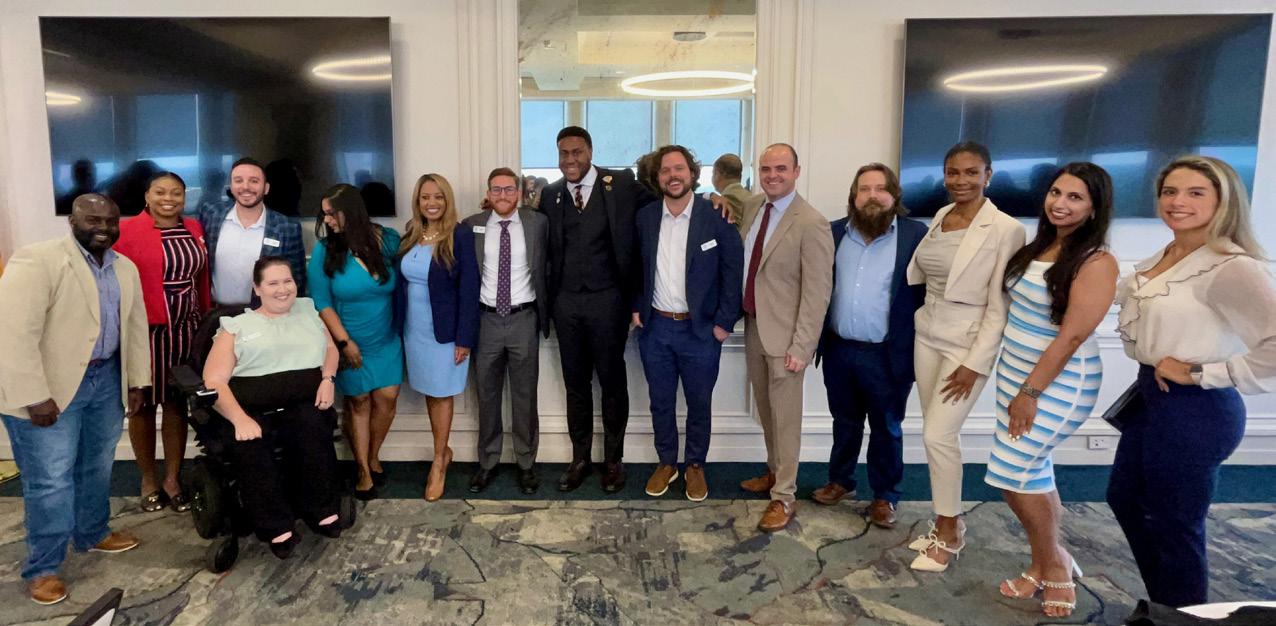
1 YLS Board Installation.
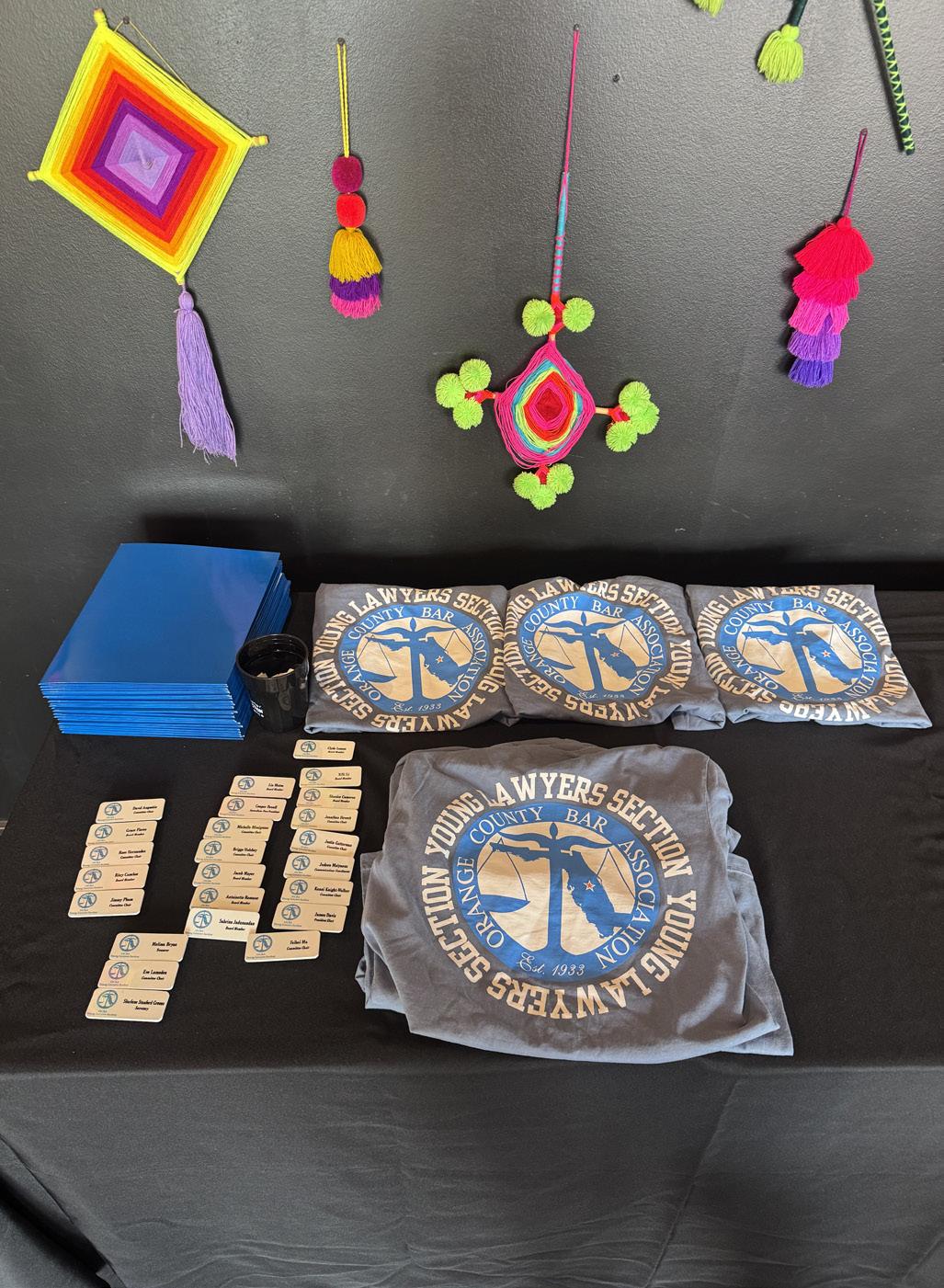
2 Set up from the YLS Board Retreat.
3 YLS Board Photo from pass the Gavel Ceremony.
4 Book Fair at Mollie Ray Elementary.
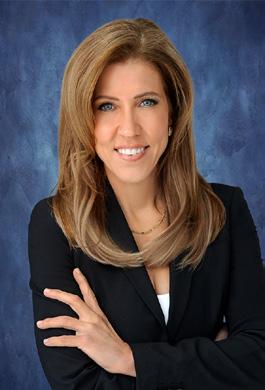
Judeen Molyneux, Esq., State Attorney’s O ice in and for the Ninth Judicial Circuit of Florida.
Law Clerks Reception
The summer alone offers plenty of ways to get involved. YLS will return to the Citrus Club for its July Luncheon on July 10, celebrate the next generation of legal talent at the Law Clerks Reception at Eola View on July 15, and head downtown for a Morning at the State Courthouse in late July. The section is also planning a return to Washington Shores Elementary for another Book Fair — a longtime favorite that brings new books and big smiles to local students.
Annual Golf Tournament
Looking further out, two of the section's signature events anchor the back half of the year. The YLS Annual Golf Tournament tees off at Eagle Creek on October 23, and the year wraps up in celebration at the YLS Holiday Party at the Alfond Inn on December 3. Mark your calendars now — these events fill up fast and are always among the most popular of the year.
UPCOMING YLS EVENTS
TBD / Book Fair at Washington Shores Elementary
07/10/2026 / YLS Luncheon at the Citrus Club
07/15/2026 / Law Clerks Reception – Eola View
LATE JULY / Morning at the State Courthouse
10/23/2026 / YLS Annual Golf Tournament – Eagle Creek
12/3/2026 / YLS Holiday Party – Alfond Inn
100 Club
Firms with two or more attorneys who are all members can belong! If your firm is eligible, call the Membership Department (407-422-4551 x225)
20+ MEMBERS
Rumberger, Kirk & Caldwell
Shutts & Bowen
Wicker, Smith, O’Hara, et al.
Winderweedle, Haines, et al.
10-19 MEMBERS
Colling Gilbert Wright
Fisher Rushmer
McDonald Toole
Richman & Correnti, P.A
Stovash, Case, Shay & Pearce
2-9 MEMBERS
The Aikin Family Law Group
Anderson & Ferrin
The Arnold Law Group
Artemis Family Law
Barrister Law Firm
Carr Law Firm
Compass Law
Davey Law Group
DeCiccio & Johnson
Dellecker Wilson King
McKenna Ruffier & Sos
Divine & Estes
The Draves Law Firm
The Elder Law Center of Kirson & Fuller
Fassett, Anthony & Taylor
Frank Family Law
Practice
The Fighter Law Firm
GoodBlatt – Leo
Haliczer Pettis & Schwamm
Harris Harris
Bauerle Lopez
Hilyard, Bogan & Palmer
Jill S. Schwartz & Assocs.
Keating & Schlitt
King, Blackwell, Zehnder & Wermuth
Korshak & Assoc.
Kosto & Rotella
Law Off ices of Brent C. Miller
Lebron Law
Marcus & Myers
The Marks Law Firm
McMichen, Cinami & Demps
McShane & McShane
Murphy & Berglund
N. Diane Holmes P.A.
O’Mara Law Group
Orange Blossom Law
Page & Eichenblatt
Perez LaSure
Sawyer & Sawyer
Shannin Law Firm
Stovash, Case, Shay & Pearce, P.A.
Tangel-Rodriguez & Assoc.
Warner & Warner
West Family Law
Group
Wieland & DeLattre
Wilson McCoy
Wooten Kimbrough
Yergey & Yergey
VOLUNTARY BARS
As we settle into summer, the Florida heat isn’t the only thing heating up. Our volunteer bar associations have been busy this summer keeping us connected, supported, and engaged. Whether through networking, mentorship, community service, or simply reconnecting with colleagues, these organizations help strengthen both our profession and the relationships that make it meaningful.
Special Luncheon
Central Florida Association for Women Lawyers (CFAWL)
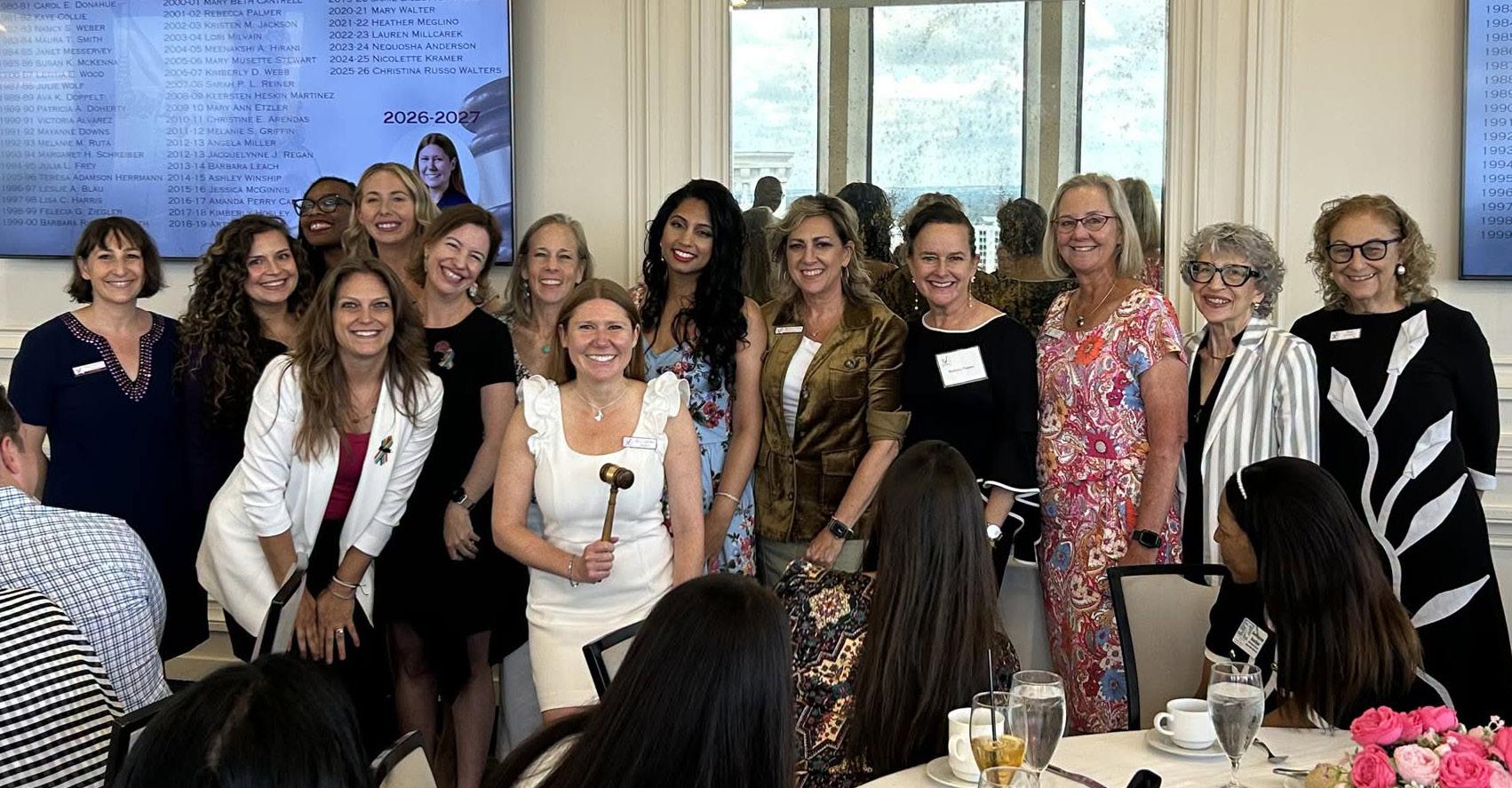
ON JUNE 12, 2026 / the Central Florida Association for Women Lawyers celebrated the passing of the gavel between outgoing president Christina Russo Walters and incoming president Allison Imber. This special luncheon featured past CFAWL presidents who shared their words of wisdom to help Allison as she transitions to lead the organization. CFAWL wishes to thank everyone who served on the board and leadership team under Christina Russo Walters and wishes the incoming board and leadership team the very best under the leadership of Allison Imber.
ON JUNE 24, 2026 / CFAWL book club members met at Digress Wine Bar in College Park to discuss “Judge Stone” written by Viola Davis and James Patterson.
2
OTHER VOLUNTARY BAR EVENTS
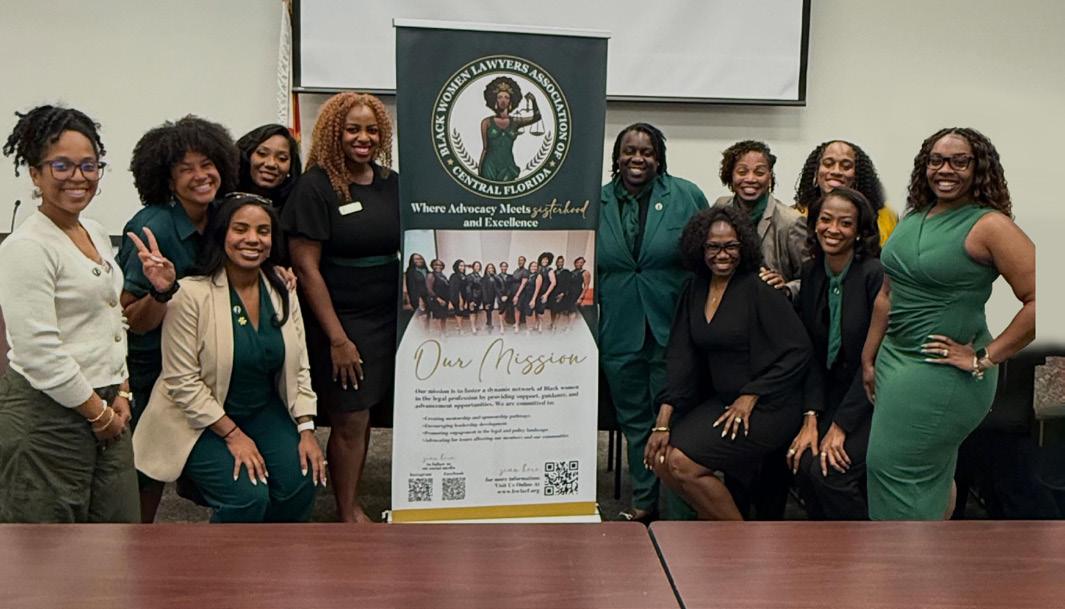
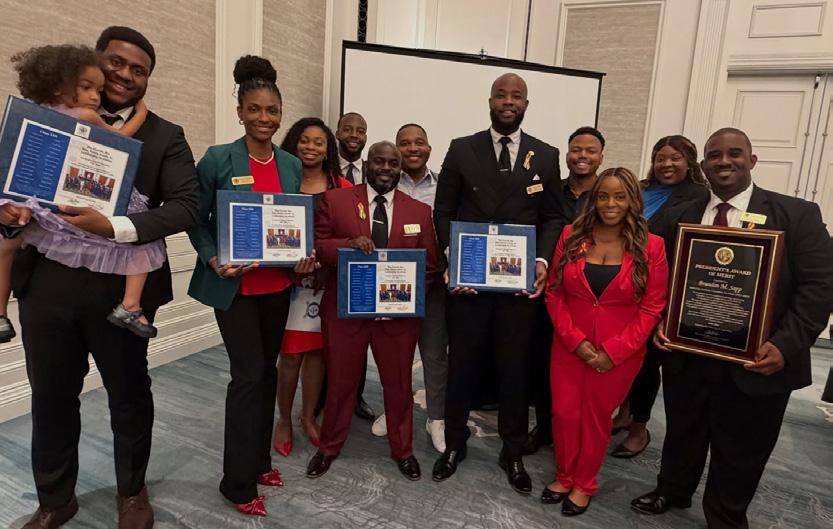
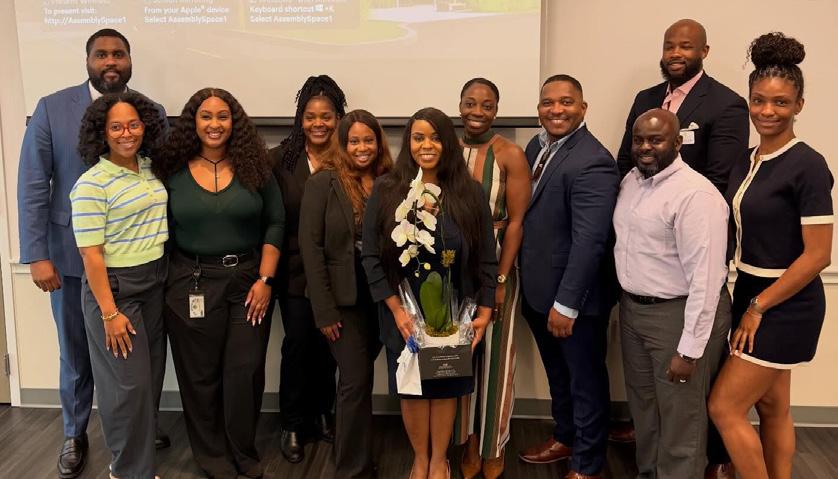
ON JUNE 6, 2026 / the Black Women Lawyers Association of Central Florida (BWLACF) hosted “The Summit Power in the Profession” which is curated for women in law and adjacent fields who want to succeed as legal experts and leaders.
ON JUNE 17, 2026 / the Paul C. Perkins Bar Association (PCPBA) celebrated the installation of its 2026-27 executive board. A special congratulations to Orlando Sheppard who was installed PCPBA’s president. PCPBA wishes to thank Annie Blanc and the 2025-26 board for an amazing year and wishes Orlando Sheppard and the 2026-27 board the very best!
3
Alena V. Baker, Esq., of Alena Baker Criminal Defense, P.A., is a solo practitioner who practices primarily in the area of criminal law throughout Central Florida. She has been a member of the OCBA since 2011 and is a board member of the Criminal Law Committee of the OCBA.
4
WHO’S WHO
1 CFAWL passing of the gavel.
2 BWLACF May Power luncheon.
3 PCPBA at this year’s Florida Bar event.
4 PCPBA General Body Meeting Recap.
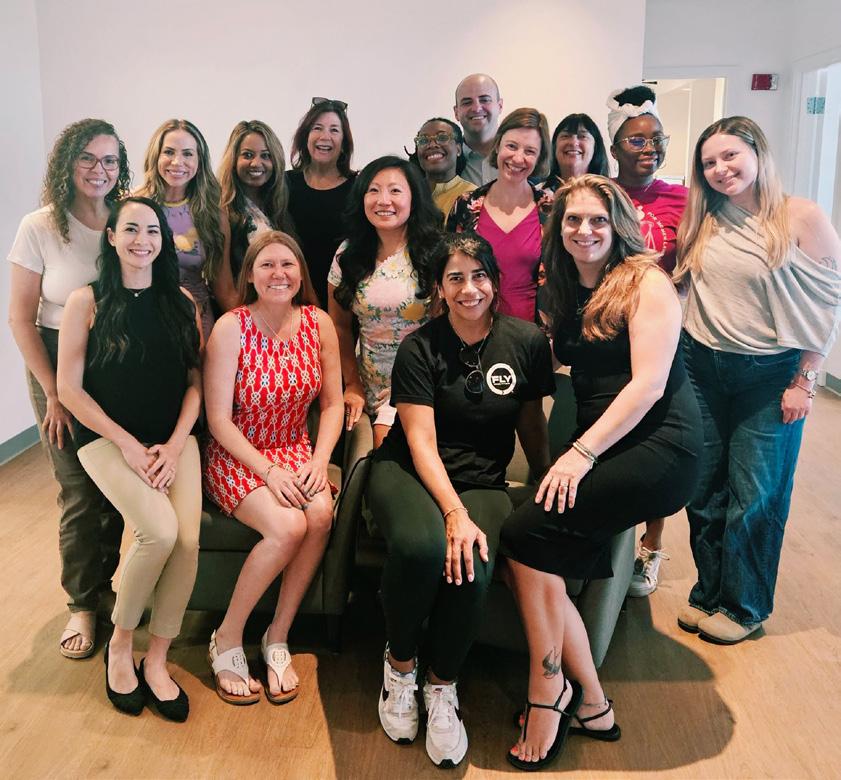
5 CFAWL Board President Allison Imber hosted the annual retreat.