Thursday, May 21, 11�30am–1pm at Marriott Orlando Downtown 400 W. Livingston St., Orlando, FL 32801
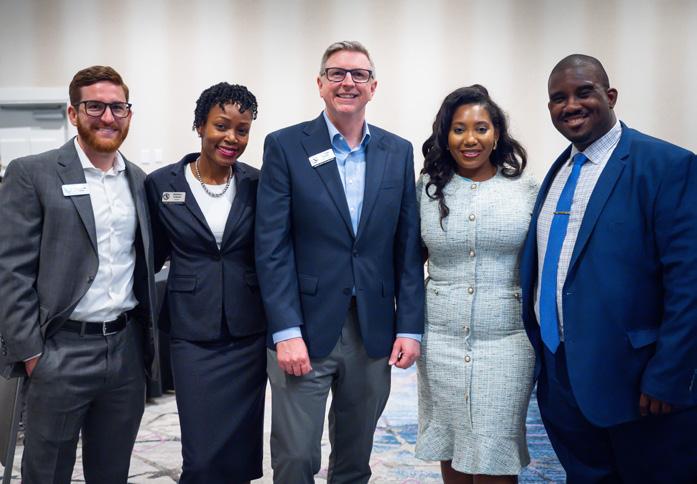
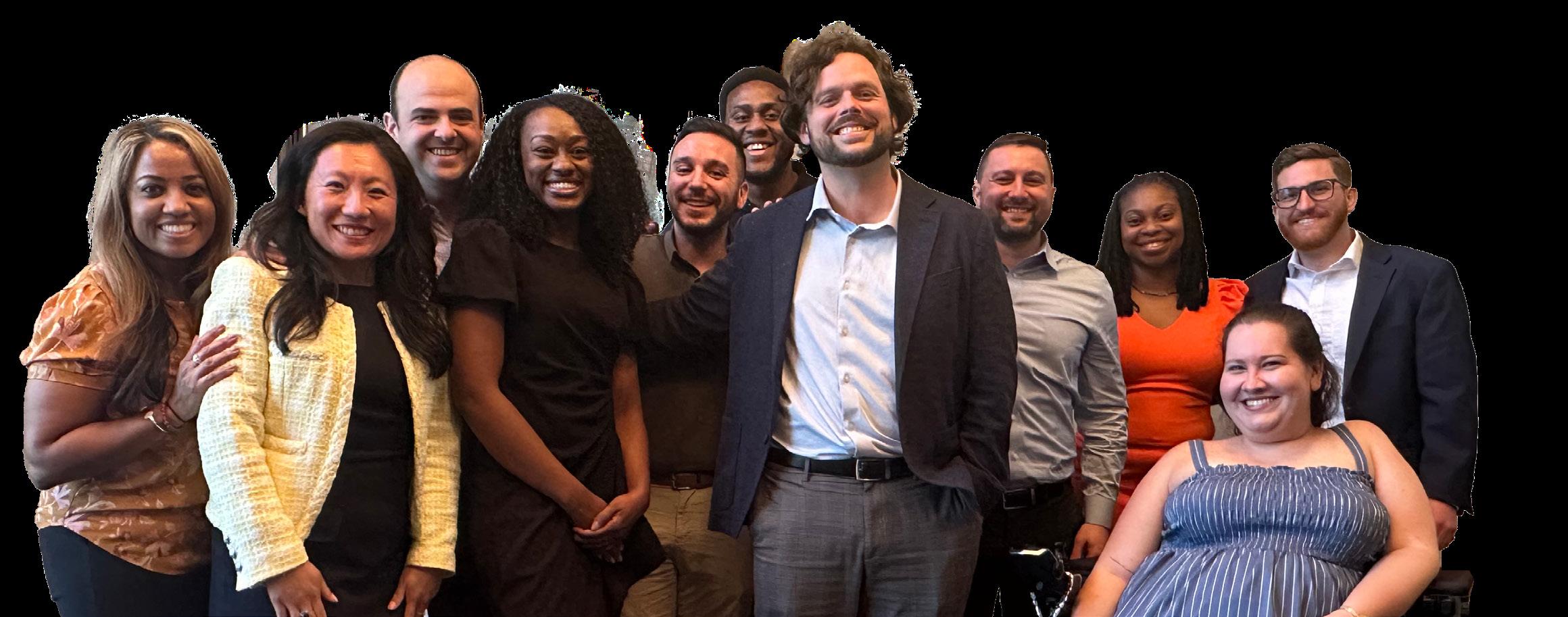
Celebrate the installation of the new boards of the Legal Aid Society of Orange County Bar Association, OCBA Foundation, OCBA Paralegal, OCBA YLS, and OCBA Executive Council at our prestigious Installation Luncheon.
RSVP by Monday, May 18, 2026
Ashley Velez ashleyv@ocbanet.org | orangecountybar.org/store RSVPs and cancellations will not be accepted after May 18, 2026.
TITLE SPONSOR
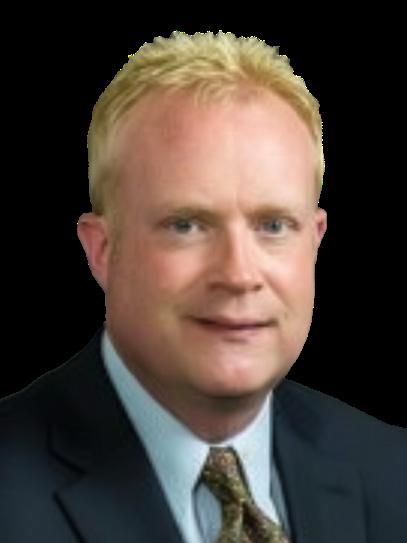
Keshara D. Cowans, Esq., serves as a Sta Attorney, EEO and Equity O icer, and District Title IX Coordinator in the O ice of Legal Services for Orange County Public Schools (“OCPS”), the fourth-largest school district in Florida and the eighth-largest in the nation. Ms. Cowans has practiced law for over 17 years. Her primary practice areas include labor and employment, employment discrimination, and Title IX compliance. She also serves as the legal advisor for the OCPS District Police Department.
A YEAR THAT COULDN’T LOSE
Honoring a Legacy of Leadership.
When I began this journey as your President, I shared a simple rallying cry borrowed from one of my favorite television shows, Friday Night Lights: Clear Eyes, Full Hearts, Can’t Lose.
I chose those words deliberately because I believed that if we approached this year with clarity of vision, genuine passion for our mission, and an unshakable commitment to one another, there was nothing we could not accomplish together. As I reflect on this past year, I am proud to say we lived up to every word.
CLEAR EYES.
We kept our focus on what matters most: serving our members, strengthening the legal profession, and advancing justice in our community.
FULL HEARTS.
We showed up for each other. The energy, the dedication, and the spirit of this bar association never ceased to inspire me. This is a community that genuinely cares about the law, about each other, and about the people we serve.
CAN’T LOSE.
None of what we accomplished this year happened by accident. It happened because of the extraordinary people who gave their time, their talent, and their hearts to this organization.
To our Executive Council, thank you. Your counsel, your candor, and your commitment made me a better president. Every decision we faced, we faced together, and I am deeply grateful for your partnership and trust throughout this year.
To our Committee Chairs, thank you. You are the engine of this organization. The
programs you built, the conversations you sparked, and the members you engaged represent the very best of what the OCBA can be. Your leadership does not go unnoticed or unappreciated.
And to our remarkable OCBA staff, the team that makes everything possible, my deepest gratitude:
• Candice Disorbo, Executive Director, your steady leadership and unwavering dedication are the backbone of the OCBA. Your guidance ensures the organization will continue to grow and thrive.
• Mildred Rivera-Artau, Director of Accounting and Administration, for keeping us grounded, fiscally sound, and running smoothly behind the scenes.
• Xiomara Isanoa, Director of Public Programs, for your creativity and commitment to serving the public with meaningful, impactful programming.
• Ashley Velez, Events & Seminars Manager, for bringing every event to life with professionalism and grace.
• Reatha Cruz-Johnson, Marketing & Communications Manager, for ensuring our voice was heard, our story was told, and our brand was displayed brightly.
• Carolyn Cochrane, Membership Manager, for your genuine care for our members and your tireless work to make every one of them feel valued and welcomed.
• Amanda Dalchan, Administrative Assistant, for being the quiet force that keeps everything organized and moving forward.
• Carmen Davila and Ezequiel Rodriguez, Referral Counselors, for connecting members of the public to the legal help they need and fulfilling our mission one call at a time.
• Ursla Gallagher, Business Development Manager, for expanding our reach and
building the partnerships that strengthen our future.
• Mayra Sassano, Lead Lawyer Referral & Mediation Coordinator, for your expertise and dedication to one of our most essential community services.
To our members, thank you for your trust. Serving as your President has been one of the greatest honors of my professional life. I leave this role with a full heart and complete confidence in the future of this organization. Clear eyes. Full hearts. Can’t lose….And we didn’t!
Keshara D. Cowans, Esq. OCBA President 2025-2026
• Arbitrators • Special Magistrates
•
JEWE T T • JAY KNIGHT • CHRISTOPHER KNOPIK
RICH ARD LORD • DEBORAH MOSKOWITZ • MICHELLE ROTH
NEAL ROTH • WILLI AM ZEI • TARA ZIMMERM AN
SCOT T BAUGH AN • VITO CARCIOPPOLO • M AUREEN DESKINS
DON FANN • JEFFREY FLEMING
ANDY H AMENT • BOB HENRY
SKIP
Mediators
2026 REPORT TO THE CITIZENS OF ORANGE COUNTY
I am pleased to announce the release of the Orange County Clerk of Courts 2026 Report to the Citizens, a comprehensive review of our office’s work and key milestones over the past year. This report provides an in-depth look at our operational performance, strategic priorities, and the collaborative efforts that support the administration of justice in Orange County.
Inside, you will find essential data on case filings, court operations, and financial stewardship, along with updates on initiatives designed to enhance service delivery and strengthen court support functions. Our strategic framework continues to focus on three core areas: Customer Experience, Operational Excellence, and Employee Experience—priorities that directly impact the efficiency, accessibility, and integrity of the court system.
This past year included several notable developments. I concluded my tenure as President of the Florida Court Clerks & Comptrollers Association, where I had the opportunity to advocate for Clerks statewide and introduce the first-ever State of the Clerks address, underscoring the critical role Clerks play in Florida’s justice system and the importance of stable and sustainable funding.
Locally, my office, along with the judiciary, opened a new state-of-the-art courthouse in Winter Park expanding capacity and enhancing service delivery for court users. We also broadened Self-Help services at that location, complementing the continued impact of the Lydia Gardner Self-Help Center, which marked its 10-year anniversary this past year. These efforts remain central to improving access to justice while supporting the effective functioning of our courts.
Our continued partnership with the Orange County Bar Association and the judiciary remains vital. Through collaborative initiatives, including free legal forums and community engagement events, we work together to enhance public understanding of the legal system and connect residents with reliable resources.
I invite you to review the full 2026 Report to the Citizens at www.myorangeclerk.com/ annualreport. I hope it provides valuable insight into the operational work that supports your practice and our shared mission of ensuring fair, efficient, and accessible justice.
Thank you for your continued partnership and commitment to serving our community.
Warm regards,
Tiffany Moore Russell Orange County Clerk of Courts
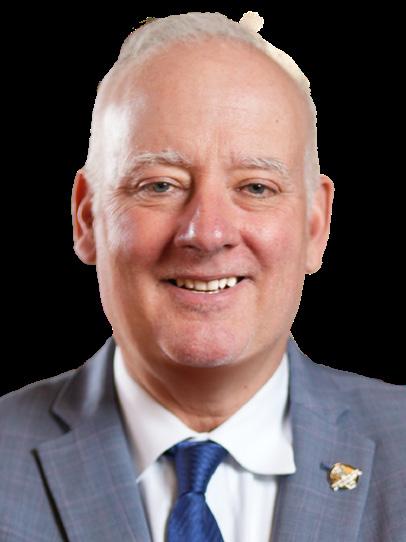
The Honorable Ti any Moore Russell, Esq., Orange County Clerk of Courts, has been a member of the OCBA since 2004.
The Honorable Alicia L. Latimore Circuit Judge Ninth Judicial Circuit Court
A CODE OF WELLNESS
As thousands of recent graduates await the results of the Florida Bar Exam, they stand in a place every lawyer remembers well. The weeks leading up to the exam are marked by exhaustion, uncertainty, and relentless pressure. We recall not only bar preparation, but the long road that led there — endless reading, late-night outlines, major life transitions, and financial strain. Sleep was scarce, and the pressure to succeed felt constant.
Then relief arrived. We passed and were sworn in, proud to enter one of the most respected professions, with all the responsibility and promise the title “Attorney at Law” carries. But once the celebration fades, the realities of practice emerge.
The practice of law brings stressors unlike those encountered in school. Billable hour requirements create constant time pressure. Adversarial proceedings demand intellectual sharpness and emotional resilience. Some lawyers advocate for the vulnerable, children, victims of violence or exploitation, or families in crisis, often absorbing traumatic stories along the way. Others manage high-stakes litigation, complex transactions, or civil matters where livelihoods hang in the balance. The long hours continue. Vacations are interrupted. Deadlines do not pause for special occasions. Emails are answered late at night.
Over time, this stress accumulates. For some, it manifests as anxiety or depression; others experience vicarious trauma or physical effects such as hypertension or insomnia. These responses are not weaknesses; they are human reactions to sustained pressure. Yet when left unaddressed, stress affects how lawyers think, communicate, and manage life. At that point, wellness is no longer personal, it becomes professional.
WELLNESS AS AN ETHICAL OBLIGATION
Consider that wellness in the legal profession is not aspirational but instead is intertwined with a lawyer’s ethical duties under the Rules
Regulating The Florida Bar requiring attorneys to provide competent, diligent, and civil representation. Implicit in these duties is the ability to function with mental clarity, sound judgment, and emotional stability.
Ethical violations are frequently rooted not in deliberate misconduct, but in unmanaged stress and declining well-being. Chronic exhaustion, untreated mental or physical health conditions, and substance misuse can erode judgment, impair decision-making, and diminish professional performance. In this way, wellness serves as the foundation upon which the ethical standards every attorney swears to uphold may ultimately depend.
Over the years, both The Florida Bar and the Orange County Bar Association have expanded efforts to promote attorney well-being through the establishment of mental health and wellness committees, continuing legal education, mental health initiatives, and confidential assistance programs. Supporting attorneys ultimately benefits the bar and the clients it serves, while strengthening public confidence in the profession.
A HOLISTIC APPROACH TO SUSTAINABLE PRACTICE
Viewing wellness as an ethical responsibility is not about blame, it is about prevention. Sustained excellence in law requires sustained care of the lawyer. Recognition is only the beginning; intentional action must follow. Here are some suggestions on what a holistic approach might entail:
Mental and Emotional Health. Therapy, peer support, mentorship, and mindfulness provide space to process stress and trauma. Early intervention can prevent more serious consequences.
Physical Health. Sleep, exercise, and proper nutrition are professional tools. Cognitive clarity and emotional regulation depend on physical well-being. Small, consistent habits make a measurable difference.
Relational Health. Strong relationships protect against isolation and remind us that our identity extends beyond our profession.
Professional Boundaries. Setting realistic caseload limits, delegating appropriately, and communicating expectations reduces burnout and promotes sustainable practice.
AVOID CODE BLUE
The good news is that our profession is evolving. Courts, firms, and Bar associations increasingly recognize that lawyer well-being is foundational to ethical practice. When leaders model balance and transparency, stigma diminishes and compliance improves.
For new lawyers entering the profession, the message is simple: The stress you survived in law school and Bar preparation built resilience, but long-term success requires intention. Endurance alone is not enough.
For seasoned attorneys, the message is equally important. Years of practice can normalize long hours and quiet sacrifice. What was once believed to be temporary can become routine. Be reminded that longevity in this profession is not achieved through stamina alone, it is sustained through balance, reflection, and deliberate care.
Wellness undergirds competence. It supports diligence. It safeguards judgment. Any lawyer who invests in well-being should be better equipped to serve clients and avoid ethical shortfalls that can lead to discipline or even disbarment.
Hold onto the joy you felt when you were sworn in. Protect it. Cultivate habits that will sustain not only your career but also your health and relationships. In doing so, you honor both your journey and the code you have sworn to uphold.
Wellness undergirds competence. It supports diligence. It safeguards judgment.
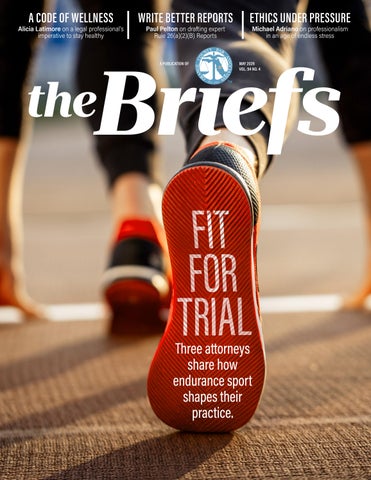
FIT FOR TRIAL
Three attorneys share how competing at the highest levels of endurance sport shapes their practice.
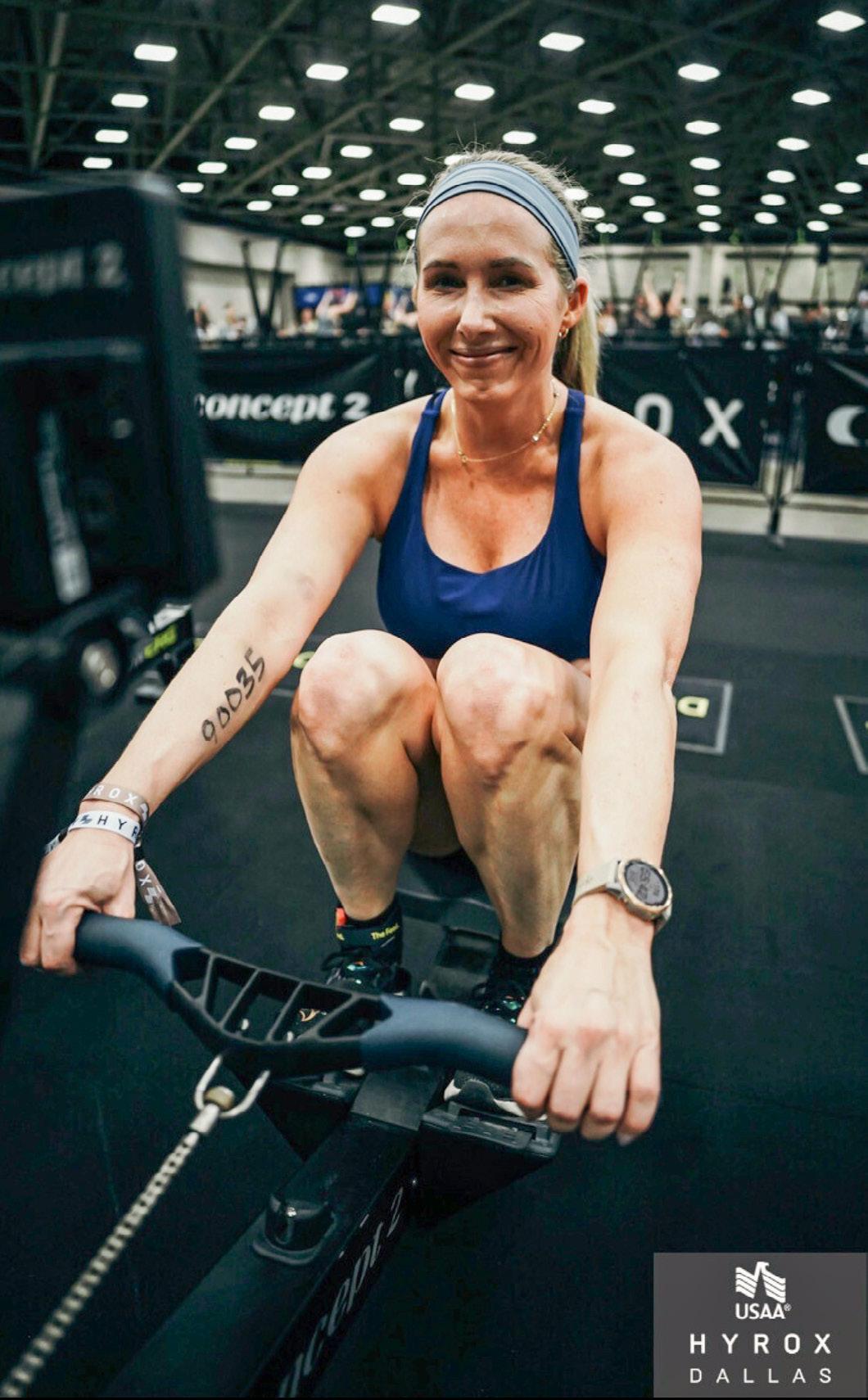
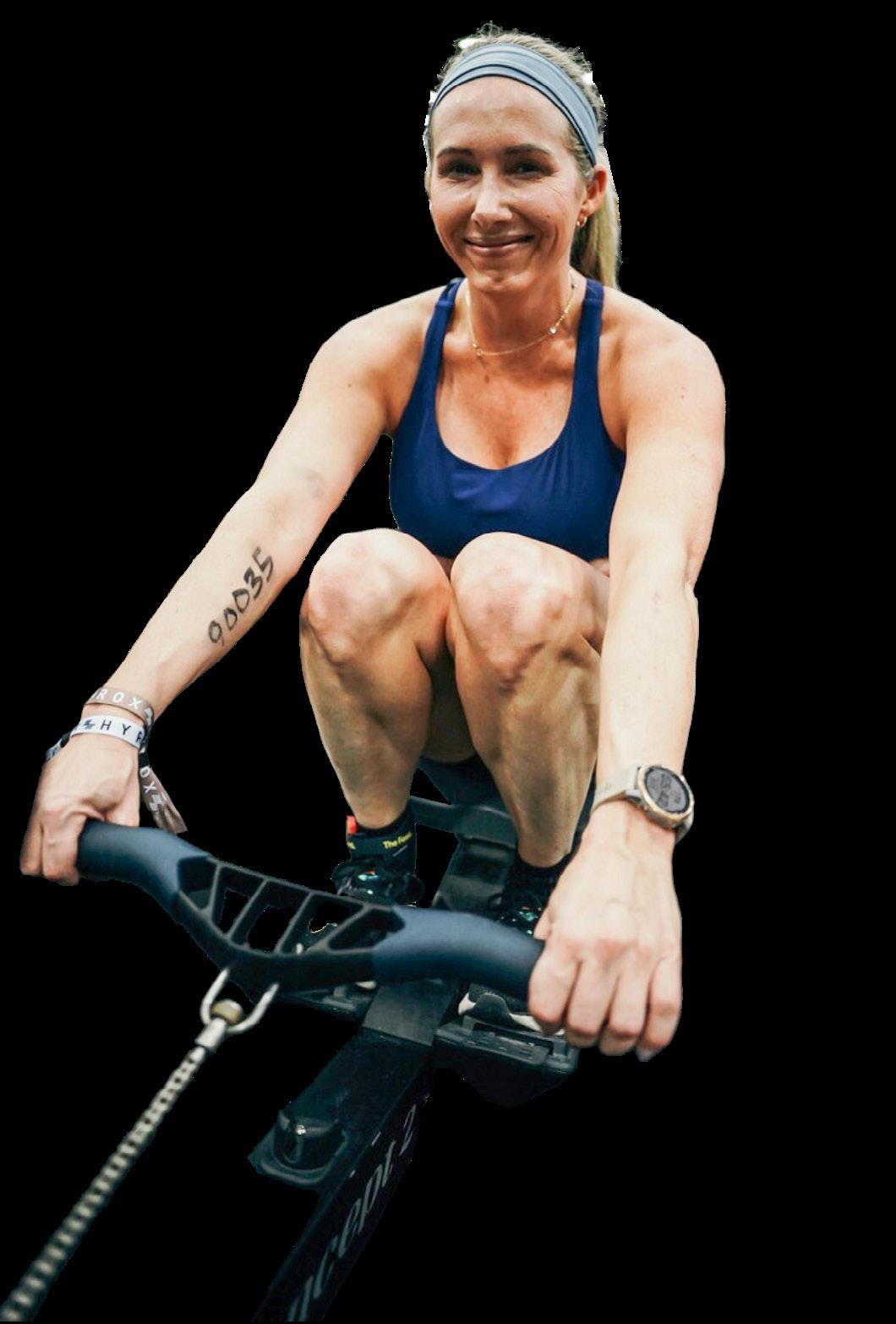
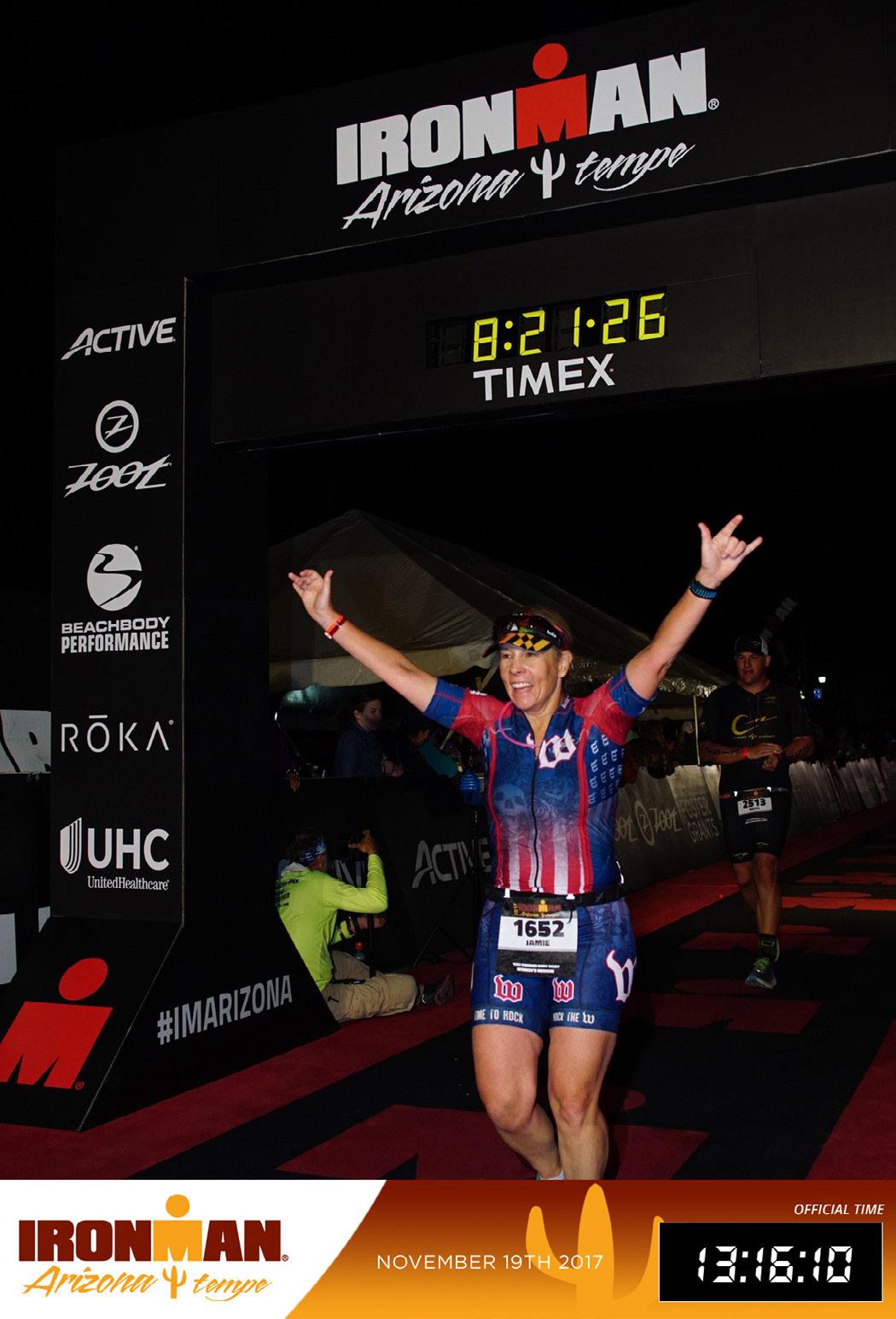
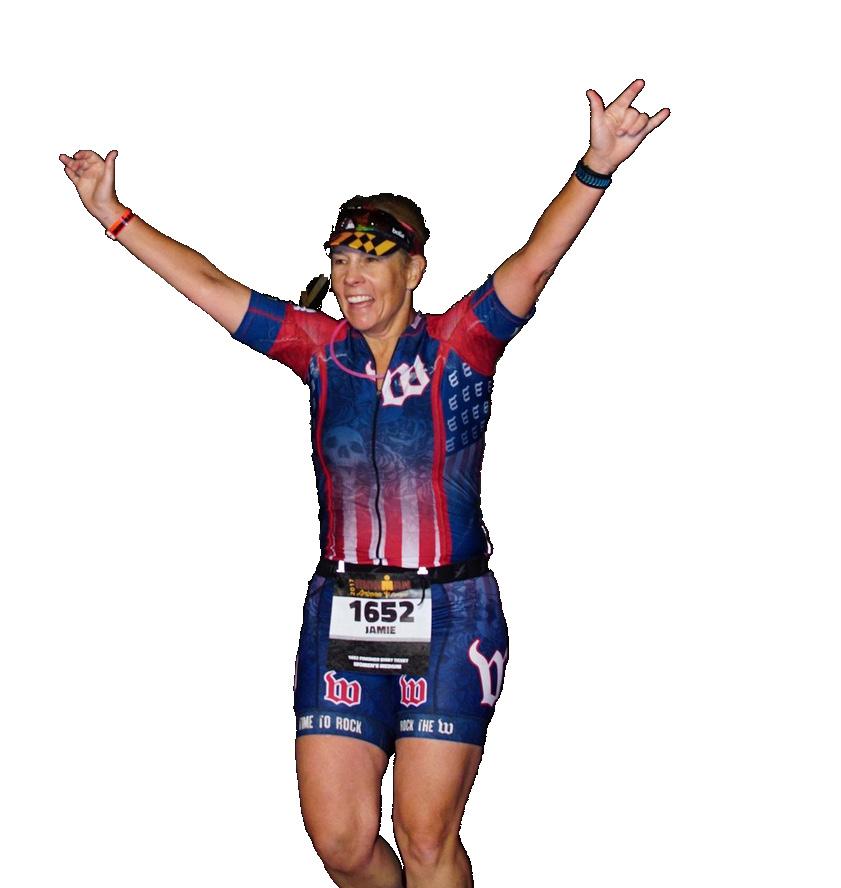
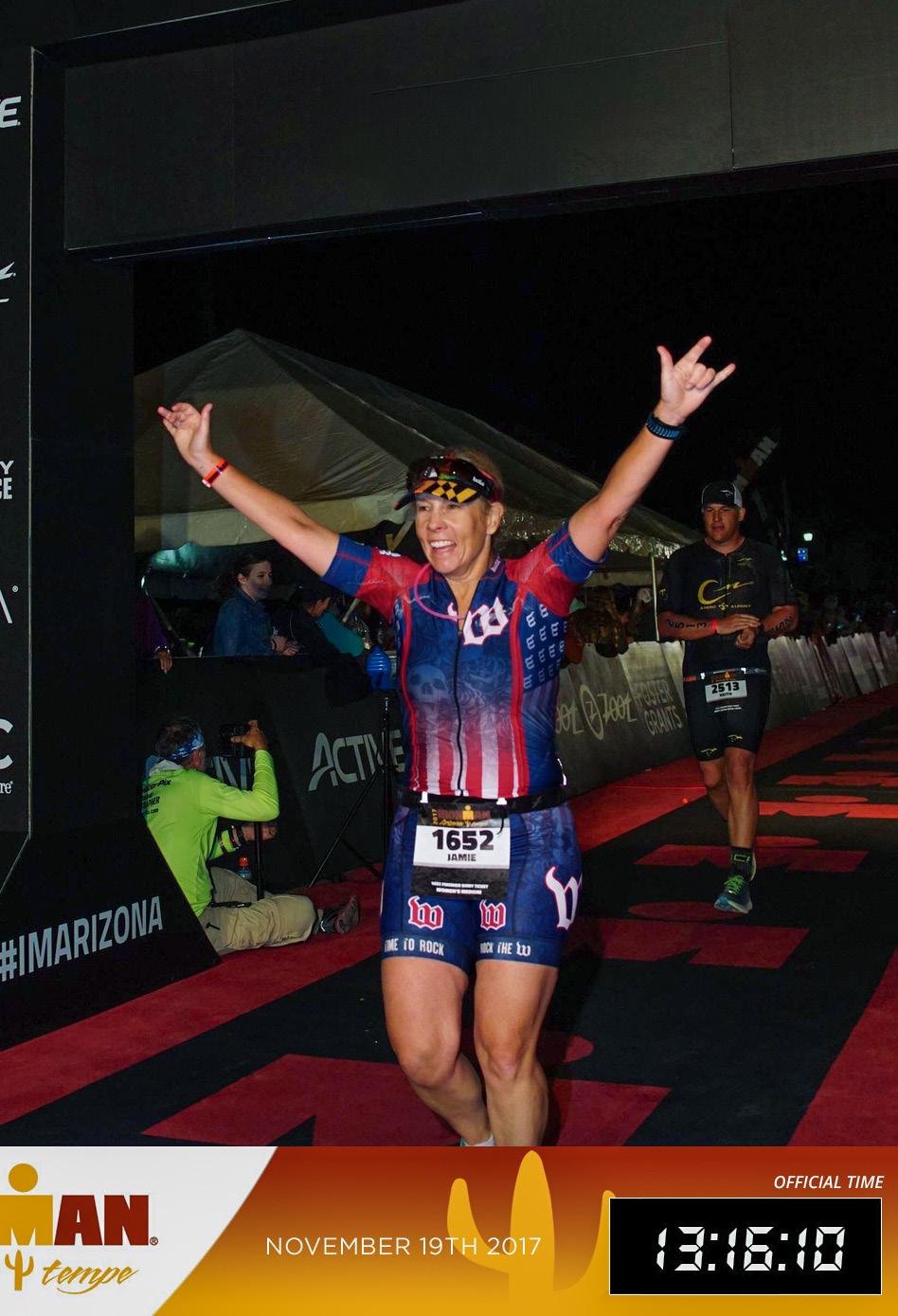
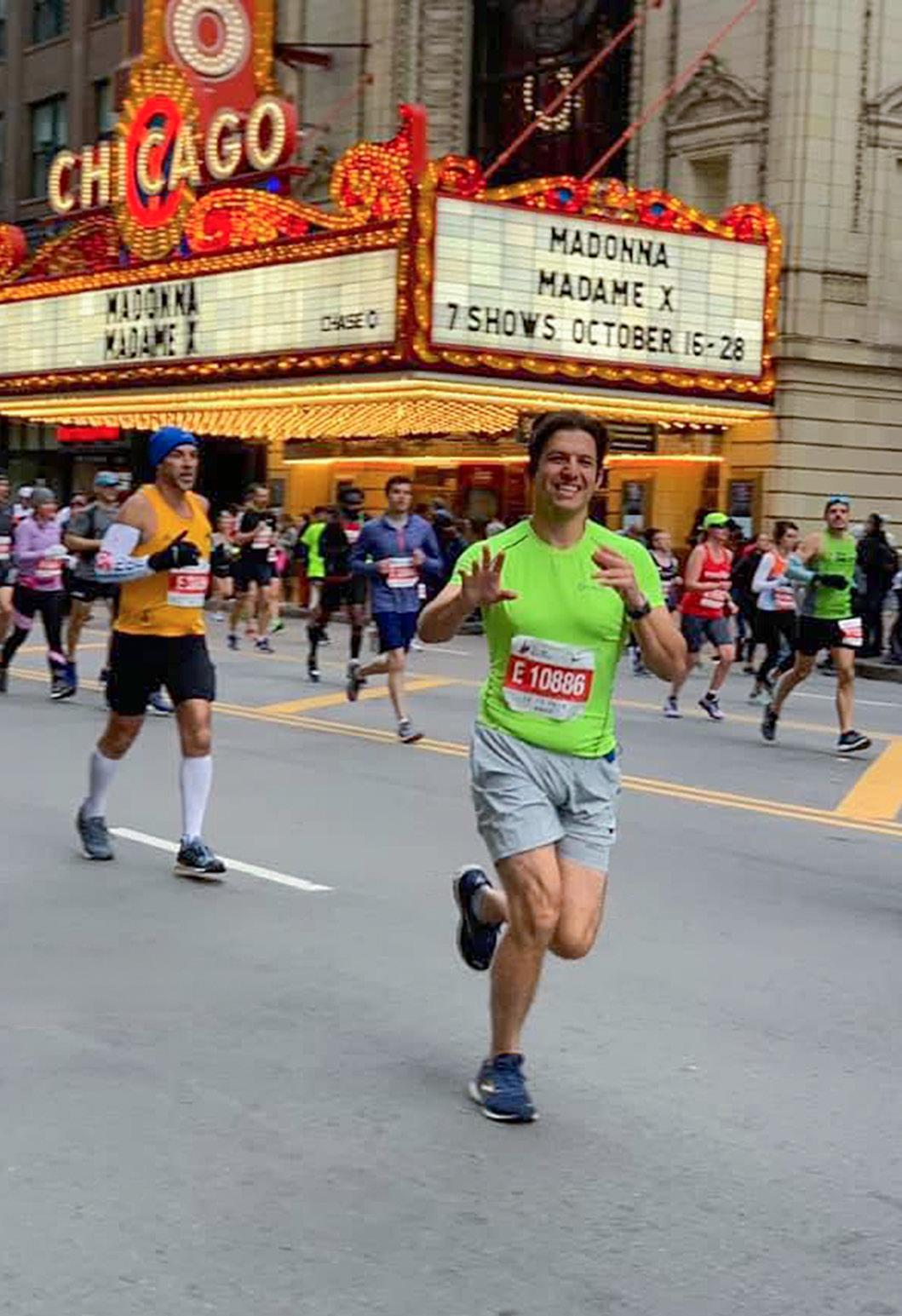
What does it take to cross a finish line and win a case? For these three attorneys, the answer is the same: relentless preparation, unwavering consistency, and an unshakeable commitment to the process. We sat down with Heather Meglino, Corporate Counsel at Everstory Partners and HYROX competitor; Jamie Moses, a veteran litigator and Ironman triathlete; and Rafael Rodriguez, a trial attorney and marathon runner, to explore the surprising parallels between endurance sports and the practice of law.
How did you first get involved in endurance sports?
HEATHER MEGLINO: HYROX came to Orlando in 2021 while I was competing in obstacle course racing, and the idea of moving from unpredictable, muddy outdoor courses to a consistent indoor environment was very appealing!
JAMIE MOSES: I was a newly divorced mother of two who had to work out at the YMCA to have childcare while working out. I was taking a spin class and the instructor asked who would like to try a women-only triathlon. I said “why not?” That was 25 years ago!
RAFAEL RODRIGUEZ: I’ve been running since high
“My workouts happen first thing in the morning— non-negotiable.”
—Heather Meglino
school, where I competed in cross country and track. But I didn’t fall in love with long-distance running until about ten years ago, when I joined Track
marathon groups. Being surrounded by people of all levels who simply love the sport was what really drew me into distance running, and I’ve never looked back.
How do you balance the intense time demands of your legal practice with the training schedule required for your sport?
HM: Everything is scheduled. My workouts happen first thing in the morning— non-negotiable. That way they’re done before the day can interfere. If I fit in a second workout, usually a treadmill run in the evening, it feels like a bonus. Weekends follow the same structure: train early and build the rest of the day around it.
Shack’s Marathonfest program. Their local running community is incredible—offering programs for everyone from couchto-5K beginners to elite
JM: Ironman training is crazy. At its peak, it’s about 20 hours a week. It’s like a second job. Training for shorter distances is manageable, but Ironman training takes a level of commitment like no other. That’s why I didn’t do my first Half Ironman until my oldest got her driver’s license. When one commits to do an Ironman, you basically have to give up everything in your life except your job and your family. Socializing is virtually impossible. There’s no time for television. Your priorities besides your job and family become working out, eating, and
sleeping—to be able to do it all again the next day!
RR: With four kids, my wife and I are intentional about protecting our family time. That means getting our workouts done before the sun comes up—usually before the kids are awake. I truly believe everyone needs some form of fitness routine that lets them disconnect from work, stress, and responsibilities. For me, running is that escape. It resets me and makes me a better husband, father, lawyer, and person overall.
The practice of law is mentally exhausting; endurance training is physically exhausting. How do you recharge or prevent burnout from combining both worlds?
HM: Sleep and recovery are essential. Sleep is critical for anyone, but even more so when balancing law and endurance training. Recovery includes hydration, mobility work, quality nutrition, and prioritizing rest after long or intense workouts. Without those elements, neither performance nor focus is sustainable.
JM: I may be odd, but I love Ironman training. I have always said I am at my best when training for an Ironman. There’s a level of focus that comes with such a commitment that it bleeds into other areas of your life. I am actually more focused
“When one commits to do an Ironman, you basically have to give up everything in your life except your job and your family.”
—Jamie Moses
and perform better in my work life when I have training goals and commitments. When I lose that focus, I
Running gives me space to detach from whatever is weighing on me at work— whether it’s a difficult email, a complex motion, or an upcoming trial. Stepping away and getting in a good workout clears my head. I often come back with a fresh perspective, renewed focus, and the energy I need to tackle the next challenge.
What
habits from endurance training have carried over most directly into your legal practice, and how have they benefitted you as an attorney?
HM: Planning ahead is everything. I map out my week in advance to stay ahead of deadlines and commitments. Before I say yes to anything, I look at my schedule to ensure I can maintain my training, nutrition, and responsibilities. The weeks aren’t perfect, but being intentional keeps me disciplined and consistent.
lose it in all facets of my life—not just triathlon.
RR: For me, physical fitness is the recharge.
JM: First of all, I have a triathlon coach. I do what my coach says. I am not arrogant enough to think I could get ready on my own. I don’t have the expertise. That’s the same with my professional life—I stay in my lane and know what I don’t know. Second, Ironman training keeps me honest, which I feel is critical in our profession. I can’t bluff my way through
Ironman training and definitely not the actual Ironman. I must do the work—all the work. That’s the same with my job. Third, focus is critical. Training for an Ironman requires focus with every workout, just as my job requires my focus on all tasks.
RR: The biggest one is consistency. In endurance sports, the athletes who show up day after day—on the good days and the tough ones—are the ones who improve. The same is true in the practice of law. If you consistently look for ways to grow—through CLEs, mentorship, networking, or simply refining your craft—you give yourself the best chance to become a better lawyer and to elevate your practice over time.
What parallels do you see between preparing for a big race and preparing for a major case or trial?
HM: Both require a non-negotiable commitment to preparation. We would never walk into a hearing or trial unprepared—it’s simply not an option. I take the same approach to training. That hour dedicated to fitness is an investment in performance, resilience, and overall well-being, all of which are carried directly into our practice.
“In endurance sports, the athletes who show up day after day—on the good days and the tough ones— are the ones who improve.”
—Rafael Rodriguez
JM: Training for an Ironman is a lot like getting ready for trial or handling an appeal. It takes months of focused preparation. Yet, no matter how prepared you are, something will happen at trial, oral argument, or the race that will require you to adapt and recalibrate. The key to being able to do so is
preparation, preparation, preparation. You have to know you can handle anything.
RR: My high school cross-country coach drilled the “Five Ps” into us: Proper Preparation Prevents Poor Performance. That’s true in racing, and it’s equally true in the courtroom. When you prepare intentionally and thoroughly, you put yourself in the best position to rise to the occasion. Whether it’s the starting line or a trial date, confidence comes from the work you’ve already put in.
Endurance athletes talk a lot about “process over outcome.” How does that mindset translate to your legal work?
HM: As lawyers, we can’t control outcomes. We can prepare thoroughly, advocate passionately, and still not get the result we want. Endurance training reinforces the value of focusing on what you can control—the preparation, the consistency, the daily effort. When you commit to the process, results often follow, but even when they don’t, you know you’ve done the work.
JM: I am much more gentle on myself with my triathlon outcomes because I have a stressful job and a life outside of triathlon. I
don’t expect to win races or qualify for Kona—the Super Bowl of triathlon. With my job, however, I want to win. My clients want me to win. But we all know you won’t win all the time. And that’s where “process over outcome” comes into play. If I’ve done my professional best and made it possible to win, then the outcome is what it is.
RR: It’s never just about the finish line—it’s about the work that gets you there. In the legal world, trial attorneys love to talk about their big wins, but I’ve learned just as much—if not more—from the losses. Those moments shape how I prepare, how I strategize, and how I approach the next case. Focusing on the process ensures long-term growth, regardless of individual outcomes.
What is one piece of advice you have for someone who is struggling to incorporate a new exercise regimen into their life as a busy lawyer?
HM: Create a plan. Decide when and where you’ll train, choose realistic time slots, and make it convenient—whether that’s home equipment or a gym near the office. When it’s scheduled and accessible, it becomes part of your routine, not just another to-do.
JM: I always tell people to make it EASY. E = Equipment: make sure you have good gear—spend the money for good running shoes, a sports bra, or a bike. A = Accountability: put it out there, let people know your goals, get a workout partner, sign up for a race with a friend.
S = Schedule: if you are really serious about this becoming a part of your life, your workouts need to be on your calendar just like a haircut or doctor’s appointment. Y = Yes!: have a good attitude. It’s going to be tough at first, but I promise it will get easier—and may even feel good!
RR: Find something you genuinely love. People often tell me they hate running and can’t imagine training for marathons— and I always tell them they don’t have to run. But they do have to move. If you dread your workout every time, the routine won’t stick. Choose something that excites you—cycling, swimming, strength training, group classes, anything. Motivation becomes a lot easier when you actually enjoy what you’re doing.
Whether they’re miles from the finish line or moments from a verdict, these attorneys know: the race is won long before race day.
CELEBRATING EXCELLENCE IN PROFESSIONALISM
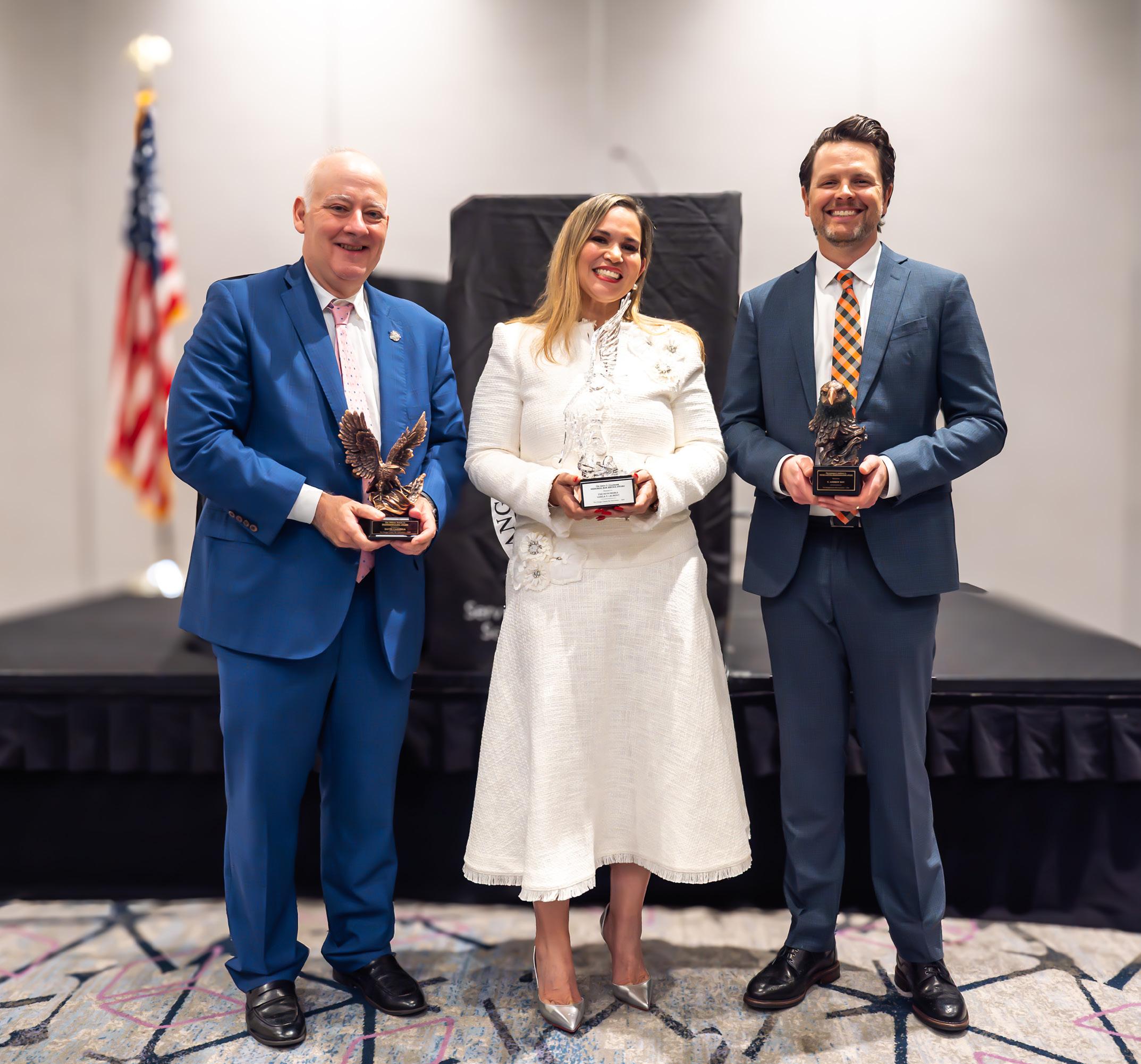
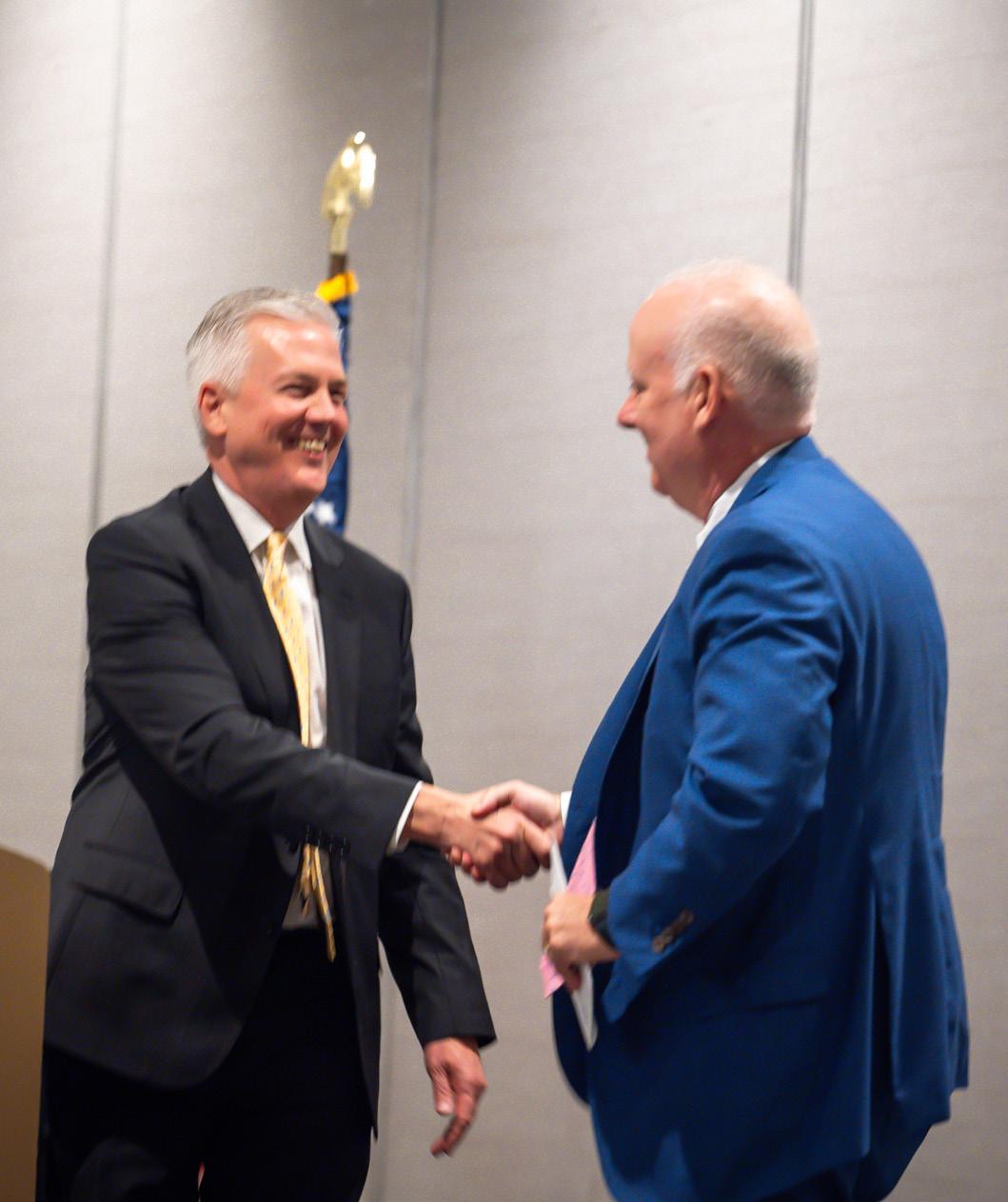
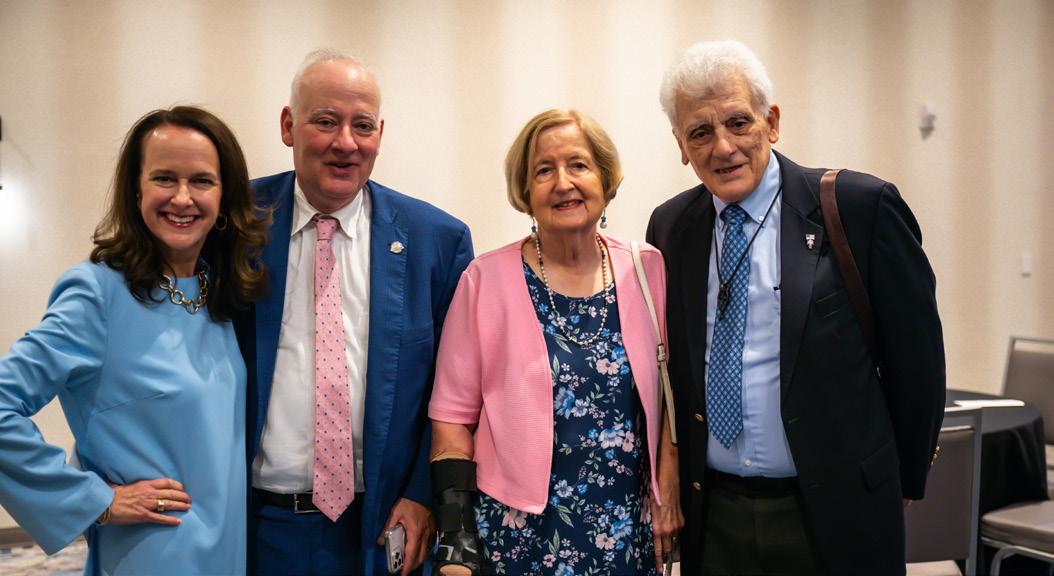
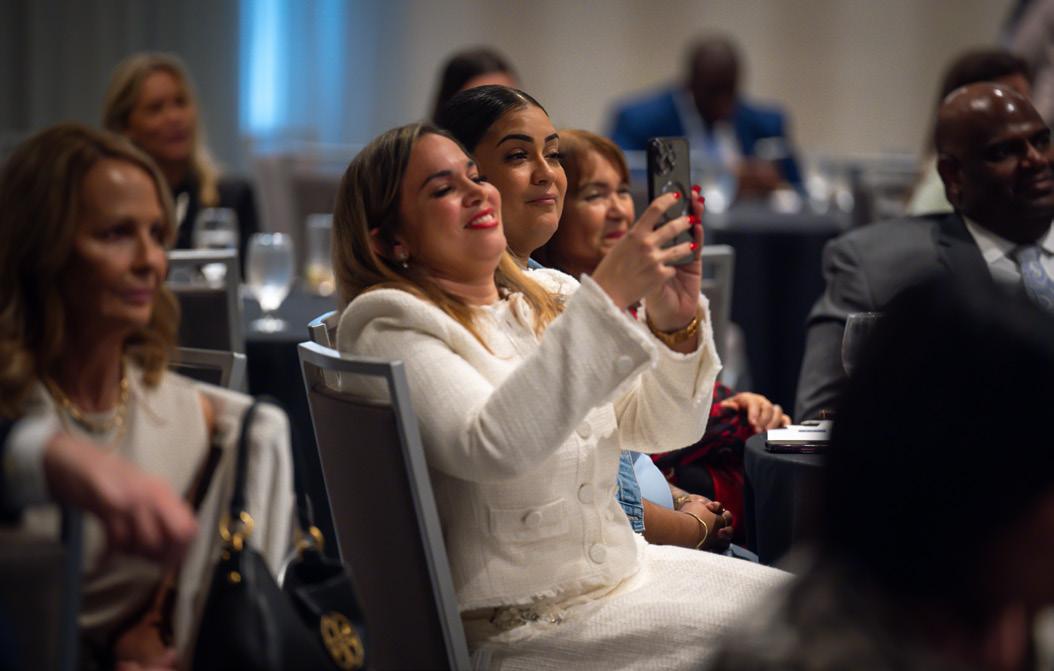
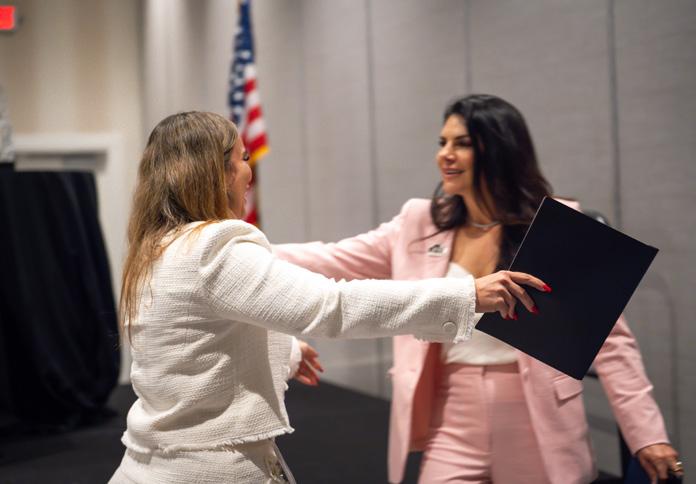
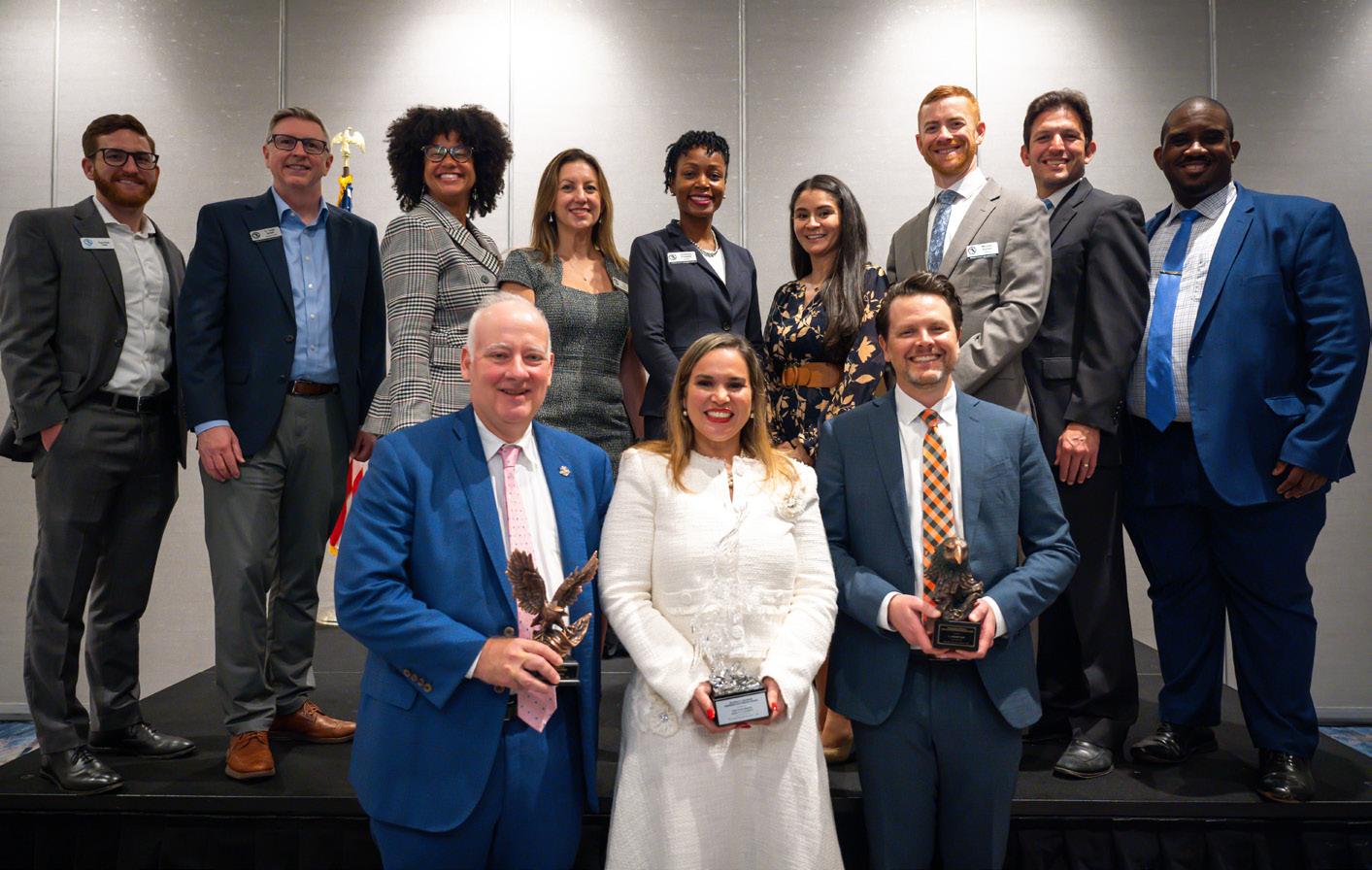
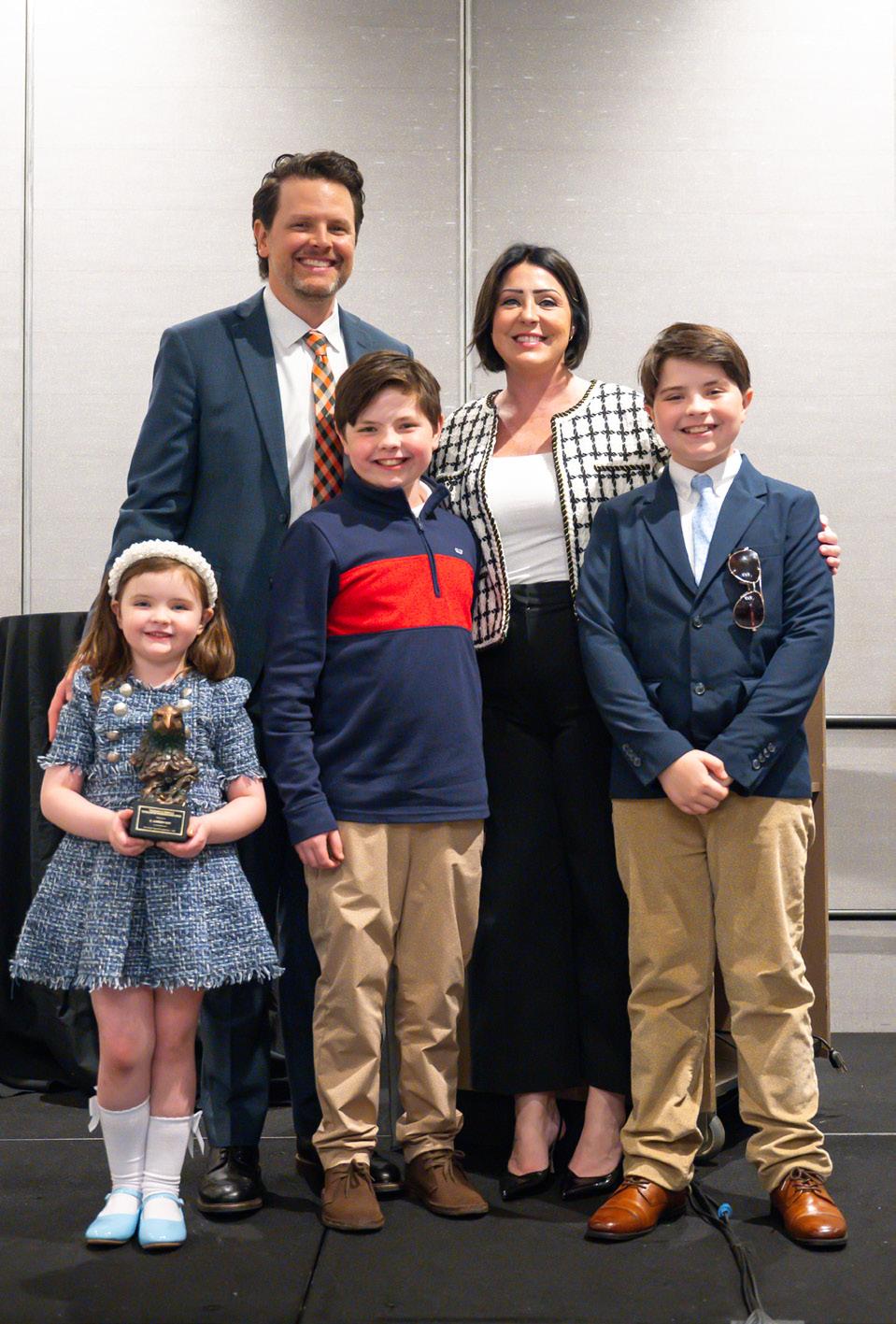
The Orange County Bar Association was proud to recognize the 2026 Professionalism Award recipients—individuals who exemplify integrity, leadership, and service within our legal community. Each honoree represents the values that continue to shape and strengthen our profession. The evening served as a meaningful reminder of the impact we can make when professionalism remains at the forefront of our work. Thank you to all who joined us in celebrating these outstanding individuals and the standard they set for us all.
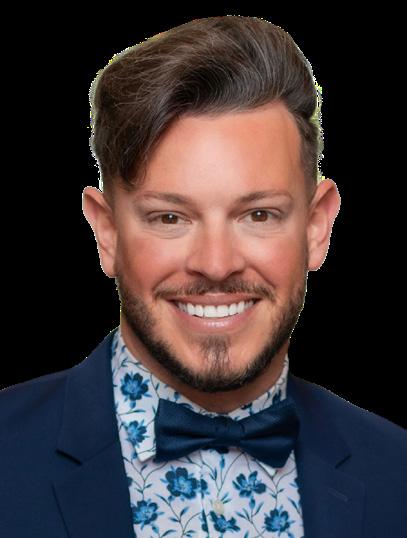
LEFT TO RIGHT: David Cannella:William Trickel, Jr. Professionalism Award, Gisela T. Laurent: James G. Glazebrook Memorial Bar Service Award, C. Andrew Roy: Lawrence G. Mathews, Jr. Young Lawyer Professionalism Award
Paul Pelton, FRP is a Senior Litigation Paralegal at PAUL TRIAL GROUP, PLLC in Winter Park, FL and focuses his practice in the area of medical malpractice litigation. Mr. Pelton has been a member of the OCBA since 2015, and serves in various capacities at the OCBA, The Florida Bar, and Valencia College Paralegal Program Advisory Committee.
PRACTICAL TIPS FOR DRAFTING EXPERT REPORTS
Under Fed. R. Civ. P. 26(a)(2)(B)
Since 1993, Federal Rule of Civil Procedure 26 has evolved into a detailed, strictly enforced framework requiring expert reports to be complete, self-contained, and timely to avoid exclusion under Rule 37(c)(1) as the sanction for noncompliance. To avoid having an expert stricken, it is essential to understand when a report under Rule 26(a)(2)(B) is required, to satisfy the content requirement of the report, and avoid ghostwritten reports that espouse attorney opinions rather than those of the expert. Here, we will look at the required elements and some practical tips to help guide your discussion with your expert(s) and draft the required report(s). Although my area of specialty is medical malpractice litigation on behalf of plaintiffs, these tips can be adapted to other types of civil cases where experts are utilized in federal court.
WHEN A FULL RULE 26(A)(2) (B) REPORT IS REQUIRED
A full report is required if the witness is “retained or specially employed to provide expert testimony in the case”, or when the party’s employee whose duties as an employee “regularly involve giving expert testimony.” A summary disclosure pursuant to Rule 26(a)(2)(C) creates a less demanding disclosure for non-retained experts such as a patient’s treating physician, an in-house engineer or an accountant – witnesses who testify from time to time as part of their regular work – and
the disclosure is limited to observations and opinions formed in that role. In that instance, the disclosure must state the subject matter on which the expert is expected to present evidence along with a summary of the facts and opinions to which he or she is expected to testify.
MANDATORY CONTENTS OF A RULE 26(A)(2)(B) EXPERT REPORT
The Rule sets forth what is, essentially, a checklist for an expert report which includes the following:
• A complete statement of all opinions the witness
will express and the basis and reasons for them;
• The facts or data considered by the witness in forming [the opinion(s)];
• Any exhibits that will be used to summarize or support [the opinion(s)];
• The witness’s qualifications including a list of all publications authored in the previous 10 years;
• A list of all other cases in which, during the previous 4 years, the witness testified as an expert at trial or by deposition; and
• A statement of the compensation to be paid for the study and testimony of the case.
PRACTICAL TIPS FOR DRAFTING OF A RULE
26(A)(2)(B)
EXPERT REPORT
When drafting a full report, as a practical matter, I present the data in a different order to create a more linear flow, and I have never had a court reject a report for doing so. I also provide detailed information in the report and treat the report as an exclusive universe of opinions the expert will offer to avoid supplementation under Rule 26(e) whenever possible. My
outline with practical tips is as follows:
• Statement of Qualifications: In this section, give the specialty of the expert and any board certification(s) held; give a description of the expert’s educational attainment identifying all institutions attended and degrees received; provide a recitation of the expert’s relevant academic appointments; and identify the state(s) in which the expert holds current licensure.
• Materials relied upon: Before providing an itemized list of materials, I include the following language: “In reaching my opinions and in preparation of this report, I have relied on my education, training and experience as well as a review of the following materials:” This statement is followed by the list of materials reviewed which, for example, may include medical records identified by name of the provider, medical practice or hospital with dates of service; imaging studies identified by provider name along with the imaging modality (x-ray; CT; MRI; etc.) and date of service; pertinent affidavits, giving the name of the affiant and the date of the document; any deposition transcripts reviewed, giving the name of the deponent and the date
the deposition was given; reports from other experts in the case, giving an identifier such as “Expert Report of John Doe, M.D.” with the date of the document; and a description of any additional items reviewed by the expert identifying the proper name of the item with the relevant date(s) of each item. If the list of materials reviewed is long, a separate list can be attached to the Report as an exhibit and incorporated in this section by reference.
• Testimonial history: Most experts, but not all, will have a list of cases in which they have testified by deposition or at trial during the prior four years. This list should include the name of the case, the venue, who the expert was employed by (plaintiff or defendant; petitioner or respondent; etc.) when rendering the testimony; and whether the testimony was given by deposition or at trial, or both. If your expert has never testified by deposition or at trial, state that in the Rule 26 Report. The Testimony List can also be attached to the Rule 26 Report as a separate exhibit and incorporated in this section by reference.
• Compensation: Most experts, but not all, will have a fee schedule which
can be attached to the Rule 26 Report as a separate exhibit. If the expert has no such schedule, identify clearly what the expert charges for review of materials on an hourly basis or flat rate; the amount charged for preparation of written reports; the amount charged for examination of an item or services such as examination of an accident scene or for accident reconstruction services; the amount of any retainer required; the charges for testifying by deposition and at trial; the expert’s expectation of payment or reimbursement of travel accommodations such as transportation (ground or air), hotel, meals, and transfers; the charges for time spent waiting to testify; whether travel charges are “portal to portal” or a flat rate; the charges for fullday and half-day at trial; and when and how the expert expects to be paid (e.g., payment by check 30 days before trial), including what amounts or percentages are refundable upon cancellation or rescheduling, and the expert’s notice requirements of cancellation for full or partial refunds.
• Factual Background: With guidance from your expert, give a detailed description of the salient
facts and circumstances of the case giving rise to the cause of action. As a practical matter, I believe it is compelling to pull quotations directly from the medical records or other relevant documents whenever possible which support (or defend against) the issues of negligence, causation and/ or damages. This segues nicely when presenting your expert’s analysis and opinions in the next section of the Rule 26 Report.
• Analysis and Opinions: 1. First, I have the expert educate the reader on the relevant anatomy and physiology involved in the case (e.g., discussion of the organ structure(s) involved as well as location and function); the relevant disorders of the organ structure; the diagnostic pathway, including relevant testing or imaging modalities; medical and surgical treatment methodologies; an explanation of what constitutes objective evidence of injury (or lack thereof) together with data from the medical record that supports the expert’s opinion(s) on each issue. These topics are broken down into separate sections with a definitive heading and provided in a narrative format.
2. Second, the expert’s opinions are clearly stated as to each defendant with a subparagraph devoted to each defendant: “It is my opinion that [party] breached (or met) the prevailing standard of care for [specialty such as cardiologists, etc.] and was (or was not) negligent by:” The expert then outlines in detail the allegations of negligence in bullet-point format along with the basis for each opinion. In a medical malpractice context, the relevant medical documentation, laboratory data, imaging
findings, or other objective medical testing results which support the theory of negligence (or lack thereof) will serve as a basis for the expert’s opinions along with his or her education, training and experience in that field of medical specialty.
3. Third, after identifying the breach(es) of the standard of care and the basis for the expert’s opinion, the issue of causation should be addressed by the expert (or by a separate causation expert, if necessary, depending on the qualifications/specialty of your
standard-of-care expert) and should clearly define what injury(ies) or condition(s) was/ were caused by negligence and the effect of each upon the claimant. In a defense context, the expert should state that there was no harm caused and articulate the basis(es) for that opinion.
4. Last, I include a paragraph wherein the expert reserves the right to supplement or alter his or her opinions as new or additional information becomes available. This is a helpful reservation to have in place if, for example,
some issue or alternate theory is raised by opposing counsel during the expert’s deposition which could not have been anticipated beforehand.
Treating the Rule’s text as a checklist is the safest way to avoid having an expert stricken. To that end, work with your expert to draft a thorough and logically reasoned Rule 26 Report that satisfies every enumerated requirement, serve it on time, and resist the temptation to rely on later testimony or informal “supplements” to fill gaps absent special circumstances.
First Round Draft Picks
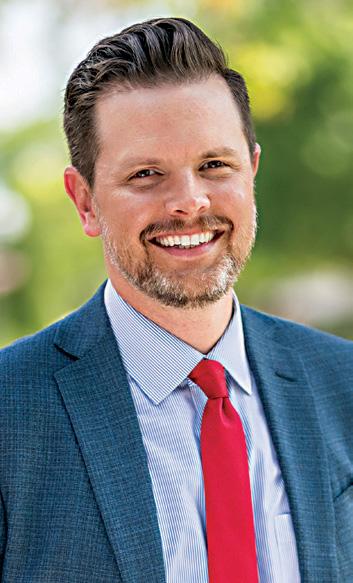
Michael Andriano, Esq., is currently an appellate lawyer at Cole, Scott & Kissane, P.A. He previously served as a Law Clerk to the Honorable Judge Keith White on the Sixth District Court of Appeal, the Honorable Mary Alice Nardella during her time at the Fifth District Court of Appeal, and to several circuit judges at the Ninth Judicial Circuit. Michael has also served as a Visiting Professor at FAMU Law teaching Legal Research & Writing and as an adjunct in UCF’s legal studies program. He has been a member of the Orange County Bar Association since 2018 and is a past president of the Orange County Bar Association Foundation.
PROFESSIONALISM UNDER PRESSURE
Health, Wellness, and the Ethical Practice of Law in an Age of Relentless Stress.
The legal profession has always had a complicated relationship with endurance. Long hours, adversarial conflict, emotional suppression, and personal sacrifice have been framed for generations as rites of passage—you know, the “proof” that you belong here—rather than as warning signs that something might be off. In that narrative, professionalism quietly becomes synonymous with stoicism: take the hit, carry the weight, keep moving, don’t let it show. For a long time, that posture was treated as not just admirable, but necessary. We now have enough distance and enough data though to admit that this model is not just outdated, but actively harmful both to the people doing the work and to the profession and people that depend on them.
emails, how we respond to opposing counsel, how we speak to clients, how we carry ourselves in court, and how we interact at professional events.
What makes this moment different is not just that law is hard because law has always been hard. It is that the background conditions in which we practice have shifted in ways that compound stress at every turn. Polarization has crept into almost every area of practice, turning ordinary disputes into proxy battles over identity and ideology. Public trust in institutions, including courts and lawyers, has significantly eroded during the past decade. Economic pressure is constant, whether from student debt, shrinking margins,
billing demands, or client expectations to do more for less. Technology has eliminated any meaningful off-switch, so conflict follows us home and the nervous system rarely gets a chance to stand down. Indeed, we have all fallen prey to laying in bed at night checking work emails on our phone that either were leftover from the day or that keep coming. And layered on top of all of that is the quiet, cumulative impact of absorbing other people’s trauma for a living. None of this is theoretical. It shows up in how we write
In that environment, it is hard to take conversations about professionalism seriously when they are disconnected from conversations about health and wellness. This is not about yoga mats in conference rooms or platitudes about “self-care.” It is about the reality that a profession built on judgment, restraint, and competence cannot function well if the people doing the work are chronically depleted and thus unwell mentally and physically. The Rules Regulating the Florida Bar are written with the assumption that lawyers can think clearly, regulate their responses, and carry out their responsibilities with care. Competence, diligence, and ethical restraint all presuppose a baseline level of functioning that chronic burnout steadily erodes.
We often talk about professionalism as if it were primarily about manners— being civil, being punctual, dressing the part, using the right tone. Those things matter, but they are surface indicators, not the substance of professionalism itself. Professionalism
lives in moments of pressure: when a hearing goes sideways, when opposing counsel is difficult, when a client is unreasonable, when a judge is impatient, when you are tired and still expected to exercise good judgment. The Rules governing competence, fairness, and conduct prejudicial to the administration of justice are, at bottom, about how lawyers function under stress. They assume a capacity for proportion, perspective, and restraint that becomes harder to access when stress is no longer episodic, but chronic. When lawyers are stretched too thin for too long, professionalism does not erode because people suddenly stop caring about ethics. It erodes because human beings under sustained strain lose bandwidth. Small irritations turn into sharp exchanges. Judgment narrows. Curiosity gives way to rigidity. Burnout shows up as disengagement or reactivity. What we label as “unprofessional behavior” is often the visible symptom of invisible overload, something living inside of us that bubbles to the surface because we are mentally and/or physically depleted. The profession’s instinct to treat these moments as individual character flaws misses the
larger picture and, in doing so, misses the opportunity for meaningful prevention. Pressure and volume do not excuse lapses in professionalism; if anything, they heighten the need for care and diligence.
The practice environment has changed in ways that make this dynamic more acute. Many disputes now carry ideological overtones that make it harder to keep conflict professional rather than personal. Technology ensures that the workday rarely ends, and the body never quite gets the signal that it is safe to power down. Economic pressures compress time for reflection (including one’s own self-reflection), mentorship, and recovery. At the same time, lawyers across practice areas are absorbing extraordinary emotional material from clients—stories of violence, loss, family breakdown, immigration trauma, and financial ruin. When that exposure goes unprocessed, it tends to surface either as emotional numbing, heightened reactivity, and/or substance abuse, all of which are incompatible with sound professional judgment.
Burnout, in this context, is not a personal weakness or a generational quirk. It is a predictable occupational phenomenon
that has been studied, measured, and defined. Burnout correlates with outcomes that go directly to the heart of professionalism: increased disciplinary complaints, impaired decision-making, diminished empathy for clients, and more frequent conflict with opposing counsel and the court. These are not private consequences. They shape the quality of representation and, by extension, the administration of justice. None of this is to say that burnout excuses misconduct. It doesn’t. But it does mean that pretending burnout is a personal inconvenience rather than a systemic risk is a professional blind spot. A lawyer who is exhausted, reactive, disengaged, and dependent on substances is more likely to miss deadlines, escalate conflict, and abandon creative problem-solving. Those are not just lifestyle issues; they are competence issues.
One of the quiet gaps in legal training is emotional regulation. We train lawyers to analyze, argue, and anticipate counterarguments. But we rarely train them to notice when their own nervous system is driving (or failing to drive) the interaction. Yet professionalism often turns on that capacity: the ability to receive criticism
without retaliation, to advocate forcefully without personalizing conflict, to de-escalate rather than inflame. Chronic stress narrows that capacity, and neuroscience has made clear what most practitioners recognize intuitively—prolonged stress impairs executive function and impulse control. In real-world terms, stress makes overreaction more likely. Learning to pause, recalibrate, and choose a response is not about being softer; it is about being more effective. Having the skill to emotionally regulate yourself, and then to be vulnerable when appropriate, is not a weakness, it is a superpower. Bar associations, including The Florida Bar, have invested significant energy in promoting civility through professionalism pledges, aspirational codes, and courtesy guidelines. These efforts matter. They also tend to assume that if lawyers are reminded of how they should behave, better behavior will follow. That assumption underestimates the role of depletion. Civility draws on internal resources— patience, perspective, restraint—that are finite. When those resources are chronically drained, reminders alone do not get us very far.
If the profession is serious about improving professionalism in practice, it must take seriously the conditions that make lapses predictable. That means looking honestly at workload expectations, judicial management of high-conflict litigation, firm cultures that reward overextension as dedication, and mentoring structures that treat struggle as weakness rather than as a normal part of demanding work. Professionalism is shaped as much by environment as by enforcement. The Florida Bar has begun to treat lawyer wellness not as a private concern, but as a professional one. That shift is overdue. A lawyer who is impaired, whether by substance use, untreated mental health conditions, or extreme burnout, may not have the perspective to recognize the extent of that impairment. Waiting until misconduct occurs is the most expensive form of intervention, both for the lawyer and for the system, including our clients. Ethical practice requires earlier self-assessment and, where needed, earlier support. There is also collective responsibility here. Individual lawyers have an obligation to pay attention to their own limits and to take corrective action when their health begins
to interfere with their professional obligations. But firm leadership, supervising attorneys, judges, and bar organizations shape the conditions in which those limits are tested. Systems that reward constant availability, normalize exhaustion, and stigmatize vulnerability make impairment more likely, not less.
not failing the profession because the profession fails when it offers no safe way to acknowledge struggle and seek support. Wellness is therefore not optional because it is as foundational to competent practice as legal knowledge itself.
At some point, this conversation must move beyond insight and into
A serious conversation about professionalism and wellness requires some uncomfortable honesty: overwork is not a virtue.
A serious conversation about professionalism and wellness requires some uncomfortable honesty: overwork is not a virtue. The glorification of exhaustion is not neutral, it is corrosive. Hostility is not advocacy, and aggression dressed up as zealous representation ultimately undermines credibility with courts and clients alike. Silence is not strength. Lawyers who are struggling are
action. That means individual lawyers must take stock of sleep, stress, and reactivity before they hit crisis. It means firms measuring productivity without equating it to constant availability. It means leaders being trained to recognize burnout and secondary trauma and creating confidential pathways to support that do not carry professional stigma. It means judges and bar leaders modeling a
version of professionalism that includes humanity, not just enforcement. Professionalism in modern practice cannot be sustained by endurance alone. The world has changed, and the pressures facing lawyers are real. Ignoring those pressures does not preserve professionalism; it quietly erodes it. A profession committed to justice has to be equally committed to the health of the people charged with administering it. That is realism, not sentimentality. It’s realism. The strongest lawyers are not the ones who feel nothing. They are the ones who can carry the weight of the work without letting it distort their judgment, their ethics, or their humanity. And how can they do that? By being mindful of their pressures, their nervous system, and emotional regulation, and being vulnerable and open to accepting assistance when their limits are reached. In turn, employes, judges, bar leaders, and the other players in our system must be receptive and open to helping our fellow colleagues when they ask. We’re all in this together.
Even Very Good Lawyers Get Sued.
MORE THAN THE LAW
A Life Grounded in Professionalism, Gratitude, and Character
Iam honored to receive the 2026 William Trickel Professionalism Award. There are many lawyers who deserve this recognition. I thank the Professionalism Committee of the Orange County Bar Association for recognizing me.
Holland & Knight after I left. On my first day back, Bill Wilson came down the hall and said “the Prodigal Son has returned.” I’m no Bible scholar, but I know the Prodigal Son is not the hero of that parable. The hero is the father who welcomes the son back. My Maguire alumni and my Holland & Knight colleagues have been so very kind, generous and patient with me.
The first thing I did when I learned about this recognition was to look up the names of the past recipients, read their remarks and learn about Bill Trickel. I was blown away. What could I say about professionalism that the past recipients have not already said better.
So I want to focus on the concept of gratitude and what we as lawyers can control.
I’ve been blessed by my faith, family and friends. I would not be here without the love and support of my wife Rebecca Palmer. She and our children Jessica and Dylan have been extraordinarily supportive, loving and patient with me. The highest honor I have is as Rebecca’s husband and my children’s Dad.
Rebecca and I met 30 years ago when we
were young lawyers at the George C. Young Inn Court, where I learned professionalism from the best judges and lawyers in our community. I’m especially indebted to the Inn, and so are our children.
I literally would not be here without my parents, Sal and Kathleen Cannella. For 20 years, Dad flew the F-4 Phantom in the Air Force. Mom and Dad taught high school for decades. We moved a lot during my first 16 years. It was hard, but it was also great.
I guess the Air Force brat stuck. I transferred myself and moved a few times in my legal career. I had fantastic mentors at Maguire, Voorhis & Wells, Cabaniss McDonald and Carlton Fields and I am thankful for them and to them.
But Holland & Knight is my home. Maguire Voorhis & Wells became part of
I especially want to recognize my legal assistant Kelly Wilson and my paralegal Renee Kemper, who both demonstrate abundant patience with me daily. Renee and I have worked together for over 24 years. Only my parents and my wife have had to deal with me longer than Renee.
Practicing law is notoriously demanding and can distract us from what’s important.
Supreme Court Justice Joseph Story is credited with the phrase “the law is a jealous mistress.” Respectfully, that idiom is grossly outdated.
I like to say “the law is a needy puppy.” It will demand all your attention if you let it. It will wake you up at night. It will interrupt meals. It will leave messes that you need to clean up. And despite our best efforts to train it, it won’t always do what you want it to do.
David Cannella is the recipient of the 2026 William Trickel, Jr. Professionalism award.
I love the law. But sometimes, I have to put it in the crate. Step away. Come back better.
Stoic philosophy teaches that the key to happiness is to focus on those things that we can control:
• our character,
• how we treat others, and
• how we react to situations.
Professionalism aligns perfectly with this.
CHARACTER.
Rule 4-1�1 requires competence: knowledge, skill, thoroughness, and diligence.
As lawyers, we can’t “just boil water.”
Let me explain. When I was 19, I bragged to my grandma that I cooked a great spaghetti dinner for my college roommates.
Grandma Cannella—who cooked everything from scratch—had some questions: “Did you make your own pasta?” No. “Did you make your own sauce?” No.
Grandma’s verdict: “You just boiled water.”
In law, it’s tempting to “just boil water.” Today, we can use Artificial Intelligence to fully draft a motion in minutes. But we’ve seen stories about lawyers being sanctioned for citing cases hallucinated by AI. AI is a useful tool. We need to understand it. But AI is not a substitute for
doing the work anymore than boiling water is substitute for cooking. If we are not doing the work, then we are just “boiling water.”
HOW WE TREAT OTHERS IS IN OUR CONTROL.
Our Professional Rules demand that we treat opposing parties, unrepresented people, witnesses, and opposing counsel with fairness. We must treat the Court fairly with candor. We should be fair to people who work with us.
Pro bono service is about treating people fairly. Our Legal Aid Society has provided civil legal services to the working poor since 1961, which is two years before Gideon v. Wainwright enshrined the right to a public defender in criminal cases.
HOW WE REACT TO SITUATIONS IS IN OUR CONTROL.
We’re not going to win every case. We won’t please every client. Sometimes, we must tell clients what they don’t want to hear. If a client asks us to do something unethical, we say “no”—even to our biggest client, even if that client is the government.
ABA President Chesterfield Smith defended this principle during Watergate in 1973, when he wrote “No man is above the law.”
I’m told we live in unprecedented,
challenging times. That’s true.
But every moment is unprecedented and presents challenges. Time and again, Orange County lawyers have met challenges and made our profession better.
Our Bar Association was founded in 1933, during the Great Depression. Paul C. Perkins, Sr. established his law practice in 1951 as one of the first African-American lawyers in Orlando, when segregation was both the law of the land and an accepted way of life in Orlando.
Judge George C. Young, who my beloved Inn of Court is named after and who our federal courthouse is named for, entered the order desegregating Orange County Public Schools in 1970— despite receiving death threats.
Those were unprecedented, challenging times.
Fast forward to March 2020-everyone remembers where they were 6 years ago: sheltered in place, flattening the curve. How were we going to continue? Serve our clients? Serve the community? We adapted. We showed extraordinary resilience.
Today, the practice of law is better in every way since I started in 1993. Our bench, bar and law firms are more representative
and stronger than ever. Most of the credit for that goes to women lawyers and lawyers who didn’t have the same privilege that lawyers like I have who soldiered on valiantly despite challenges.
We can handle challenging unprecedented times.
When Judge Gary Formet swore me in as a lawyer, he recommended I frame my Oath of Attorney. The Oath hangs above the light switch in my office. I’ve laid eyes on it almost every day for over 32 years. The Oath has no footnotes, no asterisks. It applies in every situation—whether opposing counsel is uncivil, our client desperately needs the win, or how the stock market is doing.
Our institutions depend on us fulfilling our Oath, always. Our institutions cannot defend themselves. It is up to us to do it.
I know that I am far from perfect. Professionalism isn’t about perfection. It’s about fidelity to character, treating people fairly, and doing so regardless of the circumstances.
My Pastor says that as we age, pride is replaced by gratitude. He’s right. I am blessed and highly favored. I accept this honor with gratitude, humility, and a renewed commitment to the values it represents.
BEYOND THE BILLABLE HOUR
The Wellness Advantage of Running Your Own Practice.
The legal profession has never been shy about its expectations. Long hours, billable quotas, and the pressure to always be available have been part of the culture for decades. For many lawyers, those expectations become so normalized that we stop questioning whether they actually support a healthy and sustainable career.
from school. I can attend their events. I can volunteer as a chaperone on a field trip without feeling like I am asking permission from someone else to be present in my own life. Those moments matter. And having the ability to prioritize them is one of the greatest wellness benefits of owning a practice.
practical solutions for families navigating di icult transitions. Grace is active in the Orange County Bar Association and local voluntary bar organizations.
For me, that perspective changed dramatically after the COVID-19 pandemic.
Like many people, I came out of that period looking at my life a little differently. The world slowed down in a way none of us expected. The economy shifted. Courtrooms went virtual. And despite all the uncertainty, life kept moving forward. That experience forced me to ask myself a question that many lawyers rarely pause long enough to consider: What kind of life do I actually want to build?
The answer led me to open my own firm. That decision was not just about entrepreneurship or professional independence. It was about wellness. It was about designing a career that allowed me to be a lawyer
without sacrificing the other parts of my life that matter just as much.
FLEXIBILITY AS A FORM OF WELLNESS
One of the greatest advantages of running a small practice is flexibility. That flexibility is often discussed in terms of business decisions, but its impact on personal wellbeing is just as significant.
When you run your own firm, you control your calendar.
That might sound simple, but for lawyers who spent years working within rigid structures, it is transformative. Being able to schedule my day intentionally has changed how I experience both work and family life.
As a parent, that flexibility is especially meaningful. I can pick up my kids
Of course, flexibility does not mean fewer responsibilities. In many ways, the responsibility increases when you are the one running the business. But the difference is that you are the one deciding when and how the work gets done.
AUTONOMY AND MENTAL HEALTH
Another wellness advantage of running your own firm is autonomy.
For many attorneys, the traditional law firm structure revolves around billable hour requirements and performance metrics that leave little room for personal balance. Chasing quotas and meeting mandatory overtime expectations can take a significant toll on mental health.
That model simply was not sustainable for me.
Opening my own practice allowed me to rethink how I wanted to work. Instead of structuring my days around billable targets alone, I began focusing on building a
Grace Flores, Grace Law, P.A., is the founder of Grace Law, P.A., where she focuses her practice on family law and personal injury matters in Central Florida. She is passionate about building a clientcentered practice that balances strong advocacy with
practice that aligned with my values, my energy, and my long term goals.
Autonomy creates a different relationship with work. When you are responsible for your own firm, you are not simply completing assignments. You are building something. You are shaping the culture, the pace, and the priorities of the practice.
That sense of ownership can be incredibly empowering. It shifts the focus from surviving the workload to designing a professional life that is both productive and fulfilling.
REDEFINING BALANCE
One misconception about running your own firm is that it automatically means working less. In reality, that is rarely the case.
The truth is that owning a practice often requires working just as hard, if not harder, especially in the early stages. There are cases to manage, clients to serve, systems to build, and a business to grow.
But the difference lies in how that work fits into your life.
Some nights, I am working after my kids go to sleep. I might review pleadings at the kitchen table or respond to emails later in the evening. That tradeoff is real.
Yet the balance feels very different because
those hours are chosen, not imposed.
I am working during those times because earlier in the day I was able to pick up my kids from school or spend time with them that I would have otherwise missed. That shift in control changes how the work feels. It becomes part of a deliberate balance rather than an endless obligation.
For many lawyers, wellness is not about eliminating work. It is about integrating work into a life that feels meaningful.
DESIGNING A PRACTICE THAT SUPPORTS WELLBEING
Running a small firm also gives lawyers the opportunity to design systems that support both professional success and personal wellbeing.
Technology plays a major role in that process.
Practice management systems, automation tools, and digital workflows allow solo and small firm lawyers to operate efficiently without creating unnecessary administrative stress.
But wellness in a law practice is not only about technology. It is also about boundaries.
When you run your own firm, you have the ability to decide how accessible you will be, how you communicate with clients, and how you structure your
workload. Those decisions shape the daily experience of practicing law.
For example, setting clear expectations with clients about response times or scheduling can significantly reduce the constant pressure many attorneys feel to be available every minute of the day.
Small firm lawyers also have the ability to choose the type of work they want to pursue and the kind of clients they want to represent. That level of control helps create a practice that is both sustainable and aligned with personal values.
A DIFFERENT DEFINITION OF SUCCESS
Opening my own firm was not just a career move. It was a decision about how I wanted to live my life.
After the pandemic, I became relentless about building a life that felt fulfilling. I realized that we are on this earth to do more than simply work nonstop and chase the next deadline.
Being a lawyer is an important part of who I am. But it is not the only part.
Running my own practice has allowed me to redefine success in a way that includes both professional achievement and personal presence. I can build a thriving practice while also being present
for my family and the moments that matter most.
That balance is not perfect. No career path is.
But the wellness advantage of running your own practice is that you have the ability to shape that balance intentionally.
For many lawyers, that level of control may be the most powerful wellness tool our profession has to offer.
FINDING HEALTH, WELLNESS, AND BALANCE
Health and Wellness Means Something More Than Everything.
Health and wellness, health and wellbeing, health and healing are phrases bandied about in the legal profession. They are fungible and seem almost tangible, save for the fact they are supposed to have a deeper meaning … and yet we cannot quite put our collective fingers on its subtle vibrations. It should come as no surprise we live in turbulent times. Artificial intelligence has taken the world and the American economy by storm. We have been cautioned by the creators of AI that a white-collar job-pocalypse is on the horizon, if not almost to our doorsteps. There are global conflicts and conflagrations creating a sense of unease and uncertainty.
Politics has torn personal and professional relationship asunder in the United States. These impetuses provide something incredible for our profession. It is hard to remember a time when the law has enjoyed more relevance and importance in society. Team all of the above with societal undercurrents and we have a recipe for stress. While controlling cortisol levels or offering literal prescriptions or recommending the perfect exercise regimen may not be possible herein, it is essential we discuss
health and wellness in our daily lives. I am here to offer a personal anecdote and extrapolate some kernels of wisdom to share with colleagues. Lest we remember (sounds almost Potterian) health and wellness is at a minimum a two-front battle, mental and physical, and the twain shall always meet. It is not hard to imagine that these are lean times for small and solo law firms. Generic New Year’s resolution? Toughen up, be bolder, more assertive, less afflicted by negativity.
Fair enough, seems like a lawyerly goal to aspire to. The intellectual rigors of lawyering cannot be overstated and yet the general public is often guilty of understatements. How can we match our psychological goals and aspects of our jobs with a matching physical component? Enough dancing around the subject, here is a personal anecdote. Losing weight has multiple components, none of which are particularly enjoyable. The factors listed above are a recipe for stress eating. Radical shifts in dieting are rare, though not impossible with the right willpower. Taking the mantra of strengthening one’s resolve can be applied to health and wellness. Recently, I decided to walk further and farther. For variety, I choose different locales with different scenery for every morning walk. Some locations are literally an uphill battle, while others are more serene and beatific to calm the mind. The commonality with each walk is listening to podcasts (headphones or air buds are optional though recommended for privacy). No, dear readers, colleagues mine, your writer is not recommending caustic political podcasts, quite the contrary. There are thousands of incredible
Jonathan Jacobs, Esq. of Jacobs Law Firm is a family lawyer practicing primarily in Orange and Lake County.
weekly podcasts available on a host of platforms (namely Apple and Spotify). Podcasts about love and relationships, sports (football, baseball, basketball, hockey), traveling, wrestling (don’t judge!), and more. Not only do those podcasts help the walks seem fuller and shorter, they are also enriching. What about television as a means of calming the nerves and taking a break from the breakneck pace of the action? So glad you asked! While maintaining a no prescriptions policy, it is easy to envision the benefits of having a streaming platform to enjoy your old favorite shows and explore some new favorites yet to become classics. As a former film reviewer, circa 2014 it became abundantly clear to many in the industry that times they were a changin’. Television became the refuge for mid-level actors struggling to find profitable film roles. As streaming platforms began to emerge, opportunities in television and streaming shows grew exponentially. This is a huge benefit for health and wellness! More to consume, more to enjoy, more to take our minds off the daily grind and daily stresses. Even better is the fact that so many incredible performers have
entered this realm and that offers each of us a treasure trove of choices. Immersing oneself in a show during lunch, during a workout, or during downtime at night can take the edge off.
The takeaway about addressing one’s health and wellness is it is an all-of-the-above approach. There may be no one panacea, but a combination of treatments may well reduce your stress and help you find some balance in your life. The business of lawyering is an endless struggle where intellectual curiosity meets evolution of thought. Our businesses are changing in ways that we never expected. When stress compounds and our health and wellness are in doubt, take solace in the byproduct of all those changes: outlets for our stress can be the best. Cure-all? Perhaps not. Cure-some? Let’s start there.
Preferred Vendors
These vendors support the OCBA by o ering special discounts to members. We encourage you to use their services to grow your practice. For more information, visit orangecountybar.org/page/Preferred-Vendors
LEGAL SUPPORT SERVICES
Florida Lawyers Mutual Insurance Company. The Florida Bar’s professional liability insurance to help protect Florida lawyers and their clients. 800-633-6458
Optimize My Firm. Full digital marketing suite for law firms including website design, content development, local search, Google ads, and SEO. optimizemyfirm.com
PRACTICE MANAGEMENT SYSTEMS
CaseFox. Includes time tracking, AI document generation and analysis, invoicing, and full LEDES and UTBMS billing compliance. Equipped with Integrated with Quickbooks, LawPay, Xero, and more.
Clio. The most widely used cloud-based practice management system in the world. Members receive 10% on lifetime monthly subscription. clio.com/OCBA
LEAP. Cloud-based productivity solution combining practice management, accounting, document management, and legal publishing. leap.us/florida / 844-702-LEAP
MatterSuite. AI-powered legal matter management software designed for in-house legal teams, law firms, and corporate counsel.
HOTEL SAVINGS
The Residence Inn by Mariott. Discounted rates include complimentary self-parking, complimentary breakfast bu et, wireless HSIA. 680 N Orange Ave. / 407-482-1500
DISCOUNT SERVICES & MERCHANDISE
OCBA Merchandise. Shop o icial OCBA apparel and accessories! Shirts, hats, visors, totes, water bottles and more. All sales go directly to the OCBA Foundation. ustore.net/group/orange-county-bar-association
OCBA Marketplace. National Purchasing Partners (NPP) helps OCBA members reduce costs with exclusive pricing for a variety of popular brands including 1-800-Flowers, AmEx, Harry & David, HP, Omaha Steaks, Sherwin-Williams, Staples, Verizon, and more. Enroll for FREE at bit.ly/OCBASavingClub
To become a Preferred Vendor, contact our Advertising & Sponsorship Department.
The businesses listed herein (the“Vendors”) are not a iliated with the Orange County Bar Association (OCBA) and shall not under any circumstances be deemed to have any authority to act on behalf of the OCBA. The OCBA does not make, and expressly disclaims, any warranty, representation, responsibility, or guarantee as to (a) the quality or suitability of the Vendors, their products, or services, and (b) the duration or validity of any discount or other promotion o ered by any of the Vendors.
FROM COLLECTION CRISIS TO FINANCIAL RESET
Consumer Advocacy at Legal Aid Society.
For more information, please contact Zachary Hamill, Esq., at zhamill@legalaidocba.org. For more information on how to become a financial donor or help with our fundraising efforts, please contact Donna Haynes, Manager of Development, dhaynes@ legalaidocba.org or by calling (407) 515-1850.
When Maria first walked into Legal Aid Society (Legal Aid), she was exhausted and visibly overwhelmed. Just months earlier, her husband unexpectedly passed away. His Social Security retirement benefits had been a significant portion of the household income, and without them, Maria quickly fell behind on several credit card accounts. Two collection lawsuits had already been filed against her, and additional creditors were calling daily and threatening to sue. What began as grief compounded into financial crisis. Maria was not simply worried about money—she was fearful of losing stability at the very moment she was trying to rebuild her life. Consumer debt crises often begin this way. A sudden loss of income—whether from death, illness, or job loss—can transform manageable accounts into active litigation in a matter of months. For many clients, the first tangible sign of trouble is a summons at the door. At Legal Aid, the work begins by stabilizing the situation and then identifying the path that leads not just to temporary relief, but to lasting resolution.
INTAKE AND FINANCIAL ASSESSMENT
When a client presents with active collection lawsuits, Legal Aid conducts a structured review. First, we evaluate whether the claims are legally valid and whether any procedural or substantive defenses exist. Second, we assess the client’s overall financial condition to determine
issues—none were apparent here. More significantly, Maria’s income consisted solely of Social Security survivor benefits. She owned no non-exempt assets and had no meaningful savings. Beyond the two pending lawsuits, several additional accounts were already in collections and escalating toward litigation. The question was no longer whether one case could be defended, but whether Maria could sustain piecemeal resolutions at all.
RESPONDING TO THE LAWSUITS
what resolution is realistic. In Maria’s case, the debts were legitimate credit card accounts in her name. The balances appeared accurate, and there were no statute of limitations or standing defects. While Legal Aid always evaluates potential defenses—such as improper documentation, accounting discrepancies, or service
Even when liability appears clear, timely responses are essential. Legal Aid filed answers in both pending cases to prevent default judgments and preserve leverage. A default judgment can create unnecessary stress, post-judgment discovery obligations, and ongoing anxiety—even where income is ultimately exempt. Once the immediate procedural risk was addressed, Legal Aid initiated settlement discussions. Because Maria’s income was limited to Social Security benefits, which are protected from garnishment under federal law, we assessed whether she was effectively collection proof. In one case, after reviewing
Zachary Hamill OCBA Member Since 2025
Maria’s financial affidavit, the creditor agreed to voluntarily dismiss the lawsuit, recognizing that further litigation would likely yield no recovery. This mutual walk-away provided immediate relief in that matter. However, the second creditor declined dismissal and indicated an intent to pursue judgment. At the same time, other creditors were preparing to file additional suits. Although Maria had achieved one favorable resolution, the broader pattern of debt remained unresolved, and litigation fatigue was setting in.
WHEN BANKRUPTCY BECOMES
THE APPROPRIATE TOOL Legal Aid recently expanded its consumer practice to include in-house Chapter 7 bankruptcy representation. For clients facing multiple unsecured debts and permanent income reduction, Chapter 7 offers a comprehensive solution rather than a case-by-case defense. In Maria’s situation, bankruptcy would immediately impose an automatic stay, halting the remaining lawsuit and preventing new actions from being filed. It would allow discharge of unsecured credit card debts while protecting her Social Security income and exempt property,
including her homestead. After reviewing eligibility requirements and discussing long-term consequences, Maria made the decision to move forward. Rather than reacting to each new collection threat, she chose a structured reset.
A RENEWED SENSE OF STABILITY
Maria has now begun the Chapter 7 process with Legal Aid. While the legal work is ongoing, the shift in her outlook has been immediate. The constant calls have stopped. The pending lawsuit is stayed. Instead of bracing for the next summons, Maria is preparing financial documents and meeting with her attorney to complete the filing process. What once felt like an endless spiral of stress has been replaced with a defined path forward. She recently described the experience as “finally being able to breathe again.” Consumer advocacy often begins in moments of acute vulnerability. Clients come to Legal Aid feeling embarrassed, anxious, and unsure whether anything can be done. Maria’s story illustrates that even when debts are valid and defenses are limited, meaningful relief is still possible. With the addition of in-house
4 Ways
1. Take Cases as needed by the Legal Aid Society in Family Law, Consumer Law, Housing Law, Immigration Law, Veterans, Sealing and Expunction, or other areas.
2. Be a Guardian ad Litem (GAL) and take cases as needed by the Legal Aid Society in Dependency, Transitions, Appeals, Delinquency, or Child Victim/Witness Cases.
3. Participate in Projects as needed in Bankruptcy, Citizen’s Dispute Settlement, Family Mediation, Community Education, Tax, Teen Court, Teen/Parent Education, Housing Advice Clinics, or others.
4. Contribute Financially. Donate $350 in lieu of service and help ensure Legal Aid can provide services to the disadvantaged in our community.
Chapter 7 services, Legal Aid is now able to provide comprehensive consumer representation under one roof—litigation defense, negotiated resolutions, collection-proof analysis, and bankruptcy relief when appropriate. For clients like Maria, that means more than legal assistance; it means stability, dignity, and the opportunity to begin again.
A VOICE FOR CHILDREN THROUGH PRO BONO WORK
MFor more information on GAL advocacy or to take a case, please contact: Tasha L. Vazquez Santiago, Esq., at, tvazquez@legalaidocba. org or (407) 841-8310. For more information on how to become a financial donor or to help with our fundraising efforts, please contact Donna Haynes, Manager of Development, dhaynes@ legalaidocba.org or by calling (407) 515-1850.
ary Ann Etzler was not always the polished and hardworking attorney you see zealously advocating for her client in the courtroom. She dedicated 15 years in law enforcement working in her local community before embarking on her journey to become a licensed attorney of the Florida Bar. Mary Ann has been a practicing attorney for approximately 30 years. From 1995 through 2001, she began her legal career as an assistant state attorney practicing criminal law and criminal appellate law.
her colleagues at the Legal Aid Society.
When asked if she received adequate training and resources to be successful as a GAL, Mary Ann highlighted her positive training experiences with the Guardian ad Litem Program. She explained how any time she has had a question, issue, concern, or needed assistance with a pleading, the GAL staff has always been available to help. Mary Ann also emphatically added how she has also taken advantage of the Legal Aid Society’s monthly trainings to improve her knowledge and skills.
Today, Attorney Etzler is the shareholder and owner of Etzler Law, P.A., in Orlando, Florida, where she practices general civil litigation, Guardian ad Litem (GAL) work in dependency and domestic relations cases, contract work, both litigation and transactional, limited real estate work, and limited probate work. Mary Ann works as a Circuit Civil Mediator, Florida Approved Arbitrator, and a FINRA Arbitrator. She also finds time to serve as President of the George C. Young American Inns of Court of Central Florida.
Even with her busy schedule, Mary Ann has dedicated herself to assisting those in need of legal services. In 2019, Mary
Ann received the Legal Aid Society of the Orange County Bar Association, Inc.’s highest award, the Jake Stone Award, for her pro bono work. In 2020, she received the Tobias Simon Pro Bono Service Award, the highest statewide pro bono award in the state of Florida.
Mary Ann has dedicated countless pro bono hours serving as a GAL for the Legal Aid Society of the Orange County Bar Association, Inc. When asked about what drew her to becoming a GAL, Mary Ann disclosed that it was due to seeing children in the criminal system as victims and/ or witnesses, and hearing about the substantial need for dependency GALs from
Mary Ann described her work as a GAL as both rewarding and heartbreaking. She explained how she has been able to help, and even saved, several children and families from what could have been certain death. Mary Ann went on to explain how serving as a GAL has allowed her to put her legal skills to good use by preparing motions when she deemed them necessary to protect a child and she emphasized how GALs have a unique position in dependency court of making recommendations for the best placement of a child. She also added how serving as a GAL has been a great way for her to keep improving her litigation skills as an attorney.
Tasha L. Vazquez Santiago OCBA Member since 2024
When asked if she’s had a dependency case that impacted her as a person or her practice of law, her response: “Several, actually.” Mary Ann explained how in one of her dependency cases, a child sustained physical injuries who, but for her advocacy for certain medical intervention, might never have walked. She recalled another dependency case involving a child who suffered from untreated mental health issues, who after Mary Ann’s strong advocacy for more specific medical care, was able to not only grow and overcome those issues, but also was able to return to mainstream school with a new adoptive family. Mary Ann explained, “What we do matters! Children in dependency are desperate for a voice to speak for them, and to communicate their needs, desires, and help find the best possible path for a positive future. Each of these cases helped me develop stronger litigation and advocacy skills, but also has given me more confidence to speak out for the vulnerable who cannot speak for themselves.”
When asked about her favorite part of serving as a GAL, Mary Ann responded: “The personal growth I have accomplished by helping others is unparallelled in actually being
able to help others. I am a servant at heart so being able to give back to society or others in need, that is what makes me happy.” She discussed how serving as a GAL has allowed her to use her advocacy and litigations skills to protect the most vulnerable in society, our children. She explained, “Being able to protect children from unnecessary cross-examination in trial or deposition, being able to help teens better understand how they can turn their situation into a positive, spending time playing games or teaching kids in a foster placement new skills or helping them find ways to maintain their sense of self….these are the rewards that keep me taking on new cases, because I know I am making a difference for children who are in very tough situations.”
When asked what advice she would give an attorney who is interested in serving as a GAL in a dependency matter but is hesitant or afraid, Mary Ann responded: “For those who have never done GAL work, there is a place for you and your skills! You don’t need any special training as Legal Aid gives you stepby-step assistance.” She went on to explain how a GAL needs to be an individual with a caring heart to focus on the needs of
children and someone who enjoys spending time with children. Mary Ann advised how she will create age-appropriate projects for her children involved in dependency matters. She also emphasized how important it is for a GAL to consider tasks to be included in a parent’s case plan to ensure the child returns to a safe home that does not repeat the same abuse, abandonment, or neglect. Finally, Mary Ann explained how a GAL attorney has to be willing to investigate the circumstances of a case and interview people to gather information to assist in making recommendations to the Court as it relates to a child.
We want to thank Mary Ann for all her years of dedication in serving as a Guardian ad Litem. We can attest to the amazing work she has done that has positively impacted the lives of many children throughout Orange County, Florida! As a Guardian ad Litem in dependency court, you serve as the eyes and ears of the Court by informing the Court about a child and advocating for what is in the child’s best interest. The role of a Guardian ad Litem is critical in a dependency case and we are grateful to have pro bono attorneys like Mary Ann advocating for our children in the courtroom.
Children in dependency are desperate for a voice to speak for them, and to communicate their needs, desires, and help find the best possible path for a positive future.
SIDEBAR
YLS on the Move
YLS is heading into May with momentum, purpose, and plenty to look forward to. As spring winds down, we remain focused on building community, creating meaningful opportunities for our members, and keeping the year’s energy moving forward. With exciting events and initiatives ahead, we’re looking forward to all that’s next. First, here’s a quick look at some recent YLS events and successes.
March Luncheon
At a joint YLS and CFAWL luncheon, Judge Michael Deen and attorney Sarah Donini Rodriguez shared thoughtful perspectives on the ongoing challenge of balancing career, family, and life in the legal profession. From redefining what it means to “have it all” to understanding how priorities shift during different seasons of life, the discussion was candid, practical, and impactful, and it left attendees encouraged and inspired for Spring 2026. We are grateful to CFAWL for helping make this excellent luncheon possible, and we sincerely thank Judge Deen and Sarah Donini Rodriguez for generously sharing their time and experiences.
Great Oaks Village Field Day
YLS had a wonderful time at this year’s Great Oaks Village Field Day, where volunteers spent the day connecting with the children and helping create a fun, memorable experience for everyone involved. The event was filled with energy and excitement, from outdoor activities to the slide, and it was especially rewarding to see the kids receive new shoes and enjoy such a special day together. Great Oaks Village Field Day was another meaningful opportunity for YLS to give back, support local youth, and share in a day centered on community and fun.
Michael B. Stone, Esq., Partner at Jordan Dougherty Stone LLP, specializes in commercial litigation, first-party property, general liability, and personal injury claims. OCBA Member Since 2020.
FOLLOW US! @OCBAYLS #TogetherWeGoFar
Time In The Park
This spring, OCBA YLS embraced both wellness and service through Mindful Yoga in the Park and our community park clean up initiatives. On a beautiful, clear day, members gathered outdoors to recharge, connect with colleagues, and enjoy a relaxing yoga session at Blue Jacket Park, led by Sabrina Jeyanandan. YLS also joined community partners for two different events, park clean ups at La Costa Urban Wetlands and Lake Ivanhoe, giving back in a meaningful way while enjoying time together in the fresh air. These events were a great reminder of the value of stepping away from the office, supporting our community, and prioritizing wellbeing. Thank you to our Chairs, Jay Lazarovich and Joey Webster, and the rest of our Health and Wellness Committee for helping make these outstanding events possible.
Wills for Heros
This year’s Wills for Heroes program was another meaningful example of YLS’s commitment to service. Through the efforts of dedicated volunteer attorneys and paralegals, local heroes were provided with free estate planning assistance, including Last Wills and Testaments, Durable Powers of Attorney, and Health Care Advance Directives. The program offered participants the opportunity to get their legal affairs in order and plan for the future, while allowing YLS members to give back in a direct and impactful way. Wills for Heroes continues to be a rewarding initiative that reflects the profession’s dedication to supporting those who serve our community.
April Luncheon
The YLS Professionalism Luncheon on April 10 at the Citrus Club was a meaningful and well-attended event that brought members together for an engaging discussion on what it means to pursue the profession with purpose. YLS’ Past President, C. Andrew Roy of Winderweedle, Haines, Ward & Woodman, P.A., shared thoughtful insight on professionalism, service, and the importance of striving for something greater than yourself in the practice of law. He shared personal stories from his own journey and offered thoughtful insight into how a sense of purpose beyond yourself can meaningfully shape both your career and the relationships you build along the way. The conversation was both timely and inspiring, leaving attendees with a renewed appreciation for the values that strengthen both our profession and our legal community.
UPCOMING YLS EVENTS
5/6 / Book Fair at Mollie Ray Elementary School
5/8 / Luncheon: Pass the Gavel to Sean Méndez-Catlin
Firms with two or more attorneys who are all members can belong! If your firm is eligible, call the Membership Department (407-422-4551 x225)
20+ MEMBERS
Rumberger, Kirk & Caldwell
Shutts & Bowen
Wicker, Smith, O’Hara, et al.
Winderweedle, Haines, et al.
10-19 MEMBERS
Colling Gilbert Wright
Fisher Rushmer
McDonald Toole
Richman & Correnti, P.A
Stovash, Case, Shay & Pearce
2-9 MEMBERS
The Aikin Family Law Group
Anderson & Ferrin
The Arnold Law Group
Artemis Family Law
Barrister Law Firm
Carr Law Firm
Compass Law
Davey Law Group
DeCiccio & Johnson
Dellecker Wilson King
McKenna Ruffier & Sos
Divine & Estes
WHO’S WHO
1 YLS Board Members with newly elected President-Elect James Davis.
2 YLS Board Members and volunteers at the YLS park cleanup.
3 Pictured left to right ( Micah George Baxter-Miller, YLS President Cooper Powell, Ryan White-Boyd, Cameron Perkins, Reginald “Reggie” Penn, Sean Mendez-Catlin, Briggs Holshey, Brandon Sapp
The Draves Law Firm
The Elder Law Center of Kirson & Fuller
Fassett, Anthony & Taylor
Frank Family Law
Practice
The Fighter Law Firm
GoodBlatt – Leo
Haliczer Pettis & Schwamm
Harris Harris
Bauerle Lopez
Hilyard, Bogan & Palmer
Jill S. Schwartz & Assocs.
Keating & Schlitt
King, Blackwell, Zehnder & Wermuth
Korshak & Assoc.
Kosto & Rotella
Law Offices of Brent C. Miller
Lebron Law
Marcus & Myers
The Marks Law Firm
McMichen, Cinami & Demps
McShane & McShane
Murphy & Berglund
N. Diane Holmes P.A.
O’Mara Law Group
Orange Blossom Law
Page & Eichenblatt
Perez LaSure
Sawyer & Sawyer
Shannin Law Firm
Stovash, Case, Shay & Pearce, P.A.
Tangel-Rodriguez & Assoc.
Warner & Warner
West Family Law
Group
Wieland & DeLattre
Wilson McCoy
Wooten Kimbrough
Yergey & Yergey
VOLUNTARY BARS
The Second Chance
Black Women Lawyers Association of Central Florida
The Black Women Lawyers Association of Central Florida (BWLACF) emphasized collaboration and community engagement through a series of joint events. On March 4, 2026, the organization co-hosted “The President’s Parlor” with the Seminole County Florida Association for Women Lawyers. Later that month, BWLACF partnered with the Hispanic Bar Association of Central Florida for a Women’s History Month luncheon.
APRIL 25, 2026 / BWLACF participated in the City of Longwood’s Walk for Autism Awareness and Inclusion, continuing its commitment to community service.
Spring Calendar
Central Florida Association for Women Lawyers
The Central Florida Association for Women Lawyers' (CFAWL) spring calendar was filled with meaningful connection and celebration. The organization kicked off with a March Madness–themed Table for Eight on March 21,2026, followed by its Book Club gathering on March 25, 2026, at Digress Wine.
IN APRIL / CFAWL hosted its luncheon, “The Power of Community: Why Connection Matters,” featuring Carla Cox at the Citrus Club. Members also enjoyed a unique dance fitness class hosted by Alena Baker Criminal Defense, P.A. at Fly Dance Fitness. The CFAWL Book Club reconvened on April 29, 2026, to discuss The Correspondent by Virginia Evans.
CFAWL closed out the month in style with its Sapphire Soirée on April 28, 2026, at the Winter Park Racquet Club, celebrating 45 years of impact in the legal community.
OTHER VOLUNTARY BAR EVENTS
APRIL 2026 / The Hispanic Bar Association of Central Florida (HBACF) celebrated Administrative Professionals Day on April 22, 2026, at Eola Lounge and hosted its April Luncheon on April 29, 2026 at the Orange County Bar Association.
MARCH-APRIL 2026 / The Paul C. Perkins Bar Association (PCPBA) hosted two dynamic General Body Meetings this spring. On March 26, 2026, members attended “Commanding Authority: Owning Your Influence,” featuring Senator LaVon Bracy Davis. Then on April 23, 2026, the organization presented “Legacy, Property and the Great Wealth Transfer,” with guest speaker Alexa Rosario.
APRIL / The Greater Orlando Asian American Bar Association (GOAABA) balanced social and professional engagement this spring, hosting a lively Karaoke Night at Kaya Patio on April 2, 2026, followed by a “Co ee with the Court” session at the Orange County Courthouse on April 30, 2026.
MARCH 2026 / The Central Florida Association of Criminal Defense Lawyers (CFACDL) o ered a strong lineup of programming, beginning with a Gideon’s Day Happy Hour on March 18, 2026, followed by a Behind the Robe program featuring the Honorable Alicia L. Latimore on March 24, 2026.
APRIL 2026 / CFACDL also hosted a free CLE on Data Forensics on March 30th and continued its Behind the Robe series on April 22, 2026, with the Honorable John Beamer at the Public Defender’s O ice.
Alena V. Baker, Esq., of Alena Baker Criminal Defense, P.A., is a solo practitioner who practices primarily in the area of criminal law throughout Central Florida. She has been a member of the OCBA since 2011 and is a board member of the Criminal Law Committee of the OCBA.
SAVE THE DATE / The Federal Bar Association Orlando Chapter, in partnership with the Association of Corporate Counsel Central Florida Chapter, will host Bench and Bar Perspectives on Federal Court for In-House and Outside Counsel on May 5, 2026, from 12:00 p.m. to 1:30 p.m. at the George C. Young Federal Annex Courthouse.
Congratulations to the Central Florida Trial Lawyers Association’s 2026 Board of Directors, led by President Jonathan Gilbert, along with Vice President Deborah Warner, Treasurer Dan Smith, Secretary Laura Lee Shields, and Immediate Past President Coretta Anthony-Smith. Additional congratulations to Directors William D. Umansky, Scott Alpizar, Robin Trento, Fay Pappas, Matthew Mokwa, Trakina Graham Williams, Andrew Irvin, and Glenn M. Klausman.
WHO’S WHO
1 Members of the Black Women Lawyers Association of Central Florida (BWLACF) served as pro bono attorneys for the Second Chance: Sealing & Expungement Clinic.
2 Alena Baker representing CFAWL at the recent Barry University Dwayne O. Andreas School of Law organizational fair.