
Why Theme Speed Isn’t Just a Niceto-Have — It’s a Revenue Lever
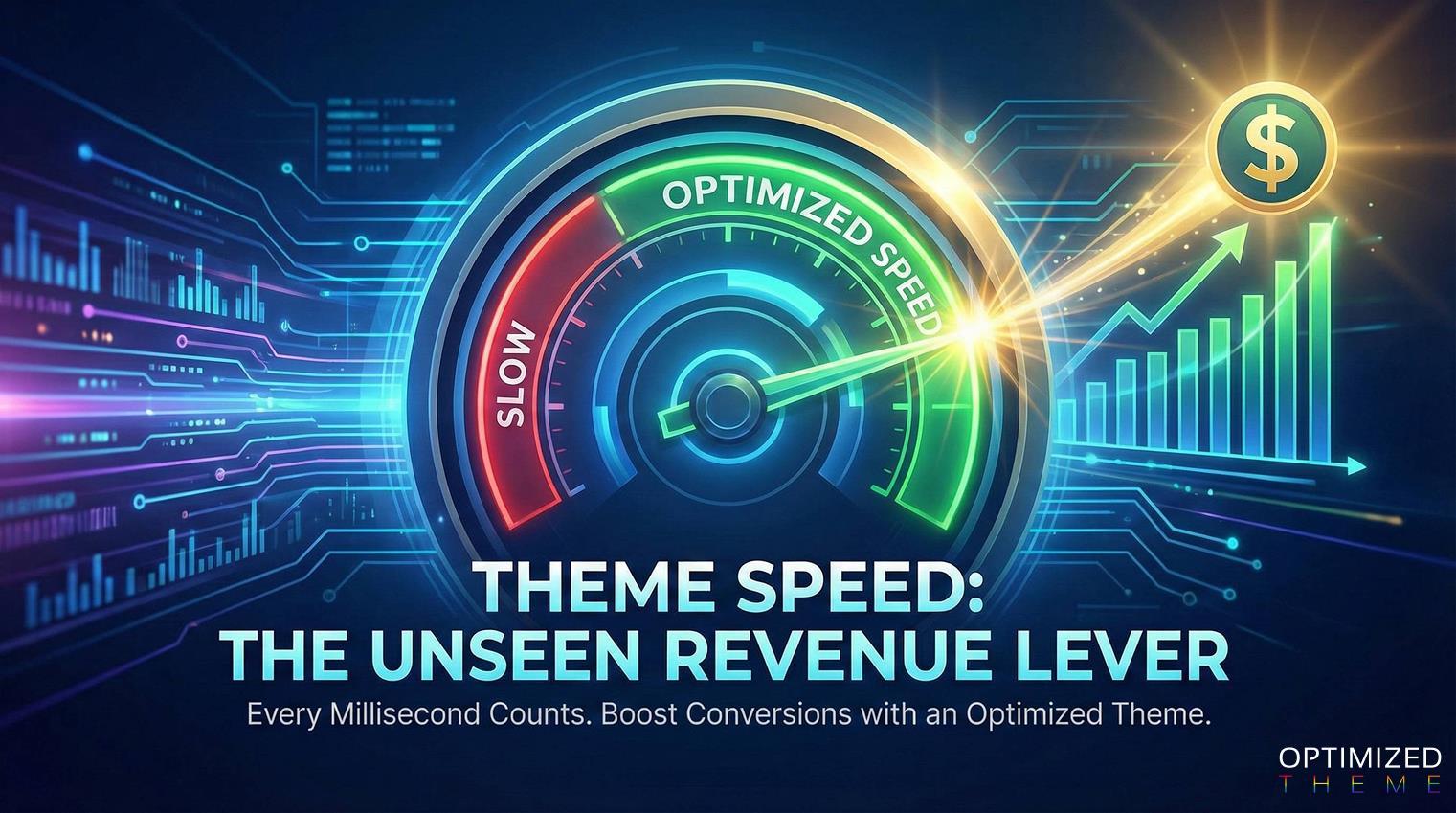
When you're running a Shopify store, every millisecond counts. A slowloading theme isn't just frustrating for users it kills conversion rates, spikes bounce rates, and drains your hard-earned traffic. Choosing a theme that’s built for speed is one of the most effective, scalable ways to boost sales.
Optimized Theme, according to its website, promises “built for high conversion and fast loading speed.” That’s not marketing fluff the architecture, features, and design are all tuned to minimize load time.
Here’s why this matters:
1. User patience is short: Research shows that even a 1-second delay in page load time can reduce conversions significantly.
2. Bounce rates soar: Slow sites drive people away before they even see your product.
3. SEO & rankings: Google’s Core Web Vitals favor fast sites better performance means better search visibility.
4. Sales funnel friction: Slow checkouts = more abandoned carts. Speed reduces friction and keeps customers moving toward purchase.
What Makes Optimized Theme So Fast?
From its homepage and feature list, some of the key design and technical choices of the Optimized Theme make speed a priority:
• Lightweight codebase with no unnecessary bloat.
• Lazy loading of images / media, so assets only load when needed.
• Clean, SEO-friendly HTML structure, meaning faster rendering.
• Built-in conversion tools (upsells, cross-sells, urgency banners) minimize the need for third-party apps fewer apps = less overhead.
• Slide-in cart drawer + quick view: improves user experience without adding heavy page weight.
• Fully responsive design, optimized for mobile, tablet, and desktop.
• Regular updates + dedicated support ensures performance doesn’t degrade with time.
Speed → Business Impact: A Comparison
To make this more concrete, let’s compare Optimized Theme with a “typical” Shopify theme (i.e., one not specifically built for extreme speed). I’m using public data around speed impact + business metrics, combined with what Optimized Theme claims to offer.
Quantifying the Revenue Impact
Here’s how speed improvements (like those delivered by a theme like Optimized Theme) can translate into actual money:
• A 1-second improvement in load time can increase conversions by up to 20% (industry benchmark).
• Suppose your store gets 10,000 visits/month, with a baseline conversion rate of 2%, and your average order value (AOV) is $50. Without speed:
10,000 * 2% = 200 sales → 200 * $50 = $10,000
With 1-second speed improvement (20% more conversions):
200 * 1.20 = 240 sales → 240 * $50 = $12,000
That’s $2,000 extra/month, purely from speed optimization.
Over a year, that’s $24,000 more revenue not justifying the cost of a premium yet fast-loading theme. And this doesn’t even count:
Reduced cart abandonment because of smoother checkout
Better Google rankings bringing more organic traffic
Improved user experience leading to higher customer LTV (lifetime value)
Real-World Scenario: Speed + Conversion Playbook
Here’s a breakdown of how a brand could deploy Optimized Theme and leverage its speed to maximize sales.
Setup & Migration
Install Optimized Theme (it supports 1-click install per their site)
Configure hero section, sliders, announcement bar, etc. in a speed-optimized way (minimize heavy videos, use web-friendly images).
Set up the slide-in cart drawer and quick-view to improve checkout UX.
Optimize Content
Use lazy loading for images so that only the visible images load first.
Compress and convert images to modern formats (e.g., WebP) to reduce weight.
Ensure third-party scripts (like analytics or apps) are limited or deferred.
Use the built-in announcement bar for limited-time offers, reducing the need for extra apps.
Test
& Monitor
Baseline performance using Google Lighthouse, GTMetrix, or PageSpeed Insights.
Track Core Web Vitals (LCP, CLS, INP) regularly.
Monitor conversion funnel metrics and bounce rates to correlate speed improvements with revenue.
Iterate for Growth
After initial setup, run A/B tests: e.g., variant A with heavy hero image vs variant B with optimized lighter image + lazy load.
Remove or replace any installed app that significantly increases HTTP requests or slows load time.
Regularly review performance after updates because even small changes in theme or content can impact speed.
Evidence from Industry: Why Speed Wins
Even beyond the Optimized Theme, the broader e-commerce and web performance industry backs this up:
• Slow websites lose ~7% of conversions for every 1-second delay.
• Websites optimized for speed consistently show lower bounce rates and higher retention, leading to more repeat purchases.
• For Shopify specifically, fewer and leaner apps + efficient themes are the top levers for performance.
Risks of Not Optimizing for Speed
If you skip speed not just in theme selection but in optimization here are the risks:
• Revenue loss: Even small load delaysscale up to big money losses.
• Poor SEO: Lower Core Web Vitals = worse Google rankings = less organic traffic.
• Bad UX = bad brand perception: Customers equate slow sites with low professionalism.
• High cart abandonment: Each step of friction (slow load, delayed buttons) kills the funnel.
Why Optimized Theme Is a Strategic Investment, Not Just a Theme Cost
• At $199 (as listed on optimizedtheme.com), the price is moderate compared to many premium Shopify themes, making it a competitive option among the best Shopify themes for businesses looking for a balance between affordability and advanced features.
• The speed optimizations built in (light code, lazy loading, minimal external overhead) make this a long-term revenue play, not a one-time purchase.
• Because some conversion tools (upsells, cross-sells, announcement bars) are built into the theme, you may save on expensive third-party apps that might slow down your store.
• Dedicated support + lifetime updates means the theme will remain performant as Shopify evolves your speed edge is future-proofed.
Conclusion: Speed + Theme = Sales Power
Choosing the Optimized Theme isn’t just about aesthetics it’s a conversion-first, speed-first strategy that can materially boost your bottom line. When speed is baked into the very architecture of your store, you're not just creating a beautiful storefront you're building a high-performance sales engine.
Every second you shave off load time is a chance to gain more conversions, reduce bounces, and improve customer trust. In the cutthroat world of ecommerce, speed is profit.
If you want help benchmarking your current theme speed vs what you could achieve with Optimized Theme I can walk you through a speed audit + conversion projection. Do you want me to set that up?