EduFinance Market Knowledge
UNLOCKING VALUE IN TVET FINANCE: BARRIERS, LEVERS, AND INVESTMENT POTENTIAL IN KENYA
Key Market Insights (Private TVET Institutions)
Sector size and instituitonal profile
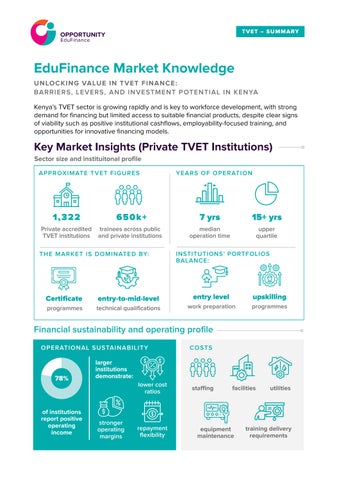
APPROXIMATE TVET FIGURES
THE MARKET IS DOMINATED BY: INSTITUTIONS’ PORTFOLIOS BALANCE: YEARS OF OPERATION
1,322 650k+ 7 yrs 15+ yrs
Private accredited TVET institutions trainees across public and private institutions median operation time upper quartile programmes technical qualifications work preparation programmes
Certificate entry-to-mid-level entry level upskilling
Kenya’s TVET sector is growing rapidly and is key to workforce development, with strong demand for financing but limited access to suitable financial products, despite clear signs of viability such as positive institutional cashflows, employability-focused training, and opportunities for innovative financing models of institutions report positive operating income lower cost ratios staffing facilities utilities equipment maintenance training delivery requirements repayment flexibility
COSTS OPERATIONAL SUSTAINABILITY
Financial sustainability and operating profile larger institutions demonstrate: stronger operating margins
of institutions interested in borrowing
FINANCING CATEGORY
Key financing barriers Financing demand
AREAS OF DEMAND DEMAND
Classrooms
Estimated total demand have borrowed before
Dormitories
Land acquisition
Borrowing experience
Limited but established
affordability and repyament cashflow alignment
collateral
Median historical loan size
PRODUCT MISMATCH
Repayment schedules do not align with tuition cycles
Loan repayments begin before projects generate income
Collateral requirements remain difficult to meet
AREAS IDENTIFIED FOR MORE FLEXIBLE COLLATERAL APPROACHES:
Personal guarantors
Relationshipbased lending SACCO guarantees
Receivablesbased structures
TVET Student Financing Market
Student profile and affordability dynamics
The student component of the study covered:
STUDENTS:
Prospective
Current Graduated*
*across both public and private TVET
Employment
ASPIRATIONS
Finding employment is the dominant aspiration across nearly all sectors
Specialized Trades students demonstrate particularly strong entrepreneurial orientation
AFFORDABILITY THRESHOLD
Median household incomes fall below the affordability threshold indicating a significant market share falls within affordable private education
EMPLOYMENT CONFIDENCE after training completion confidence in employability outcomes
1–3 months moderateto-high
EMPLOYERS INTERVIEWED SAY:
Continued demand for TVET graduates Graduates described as practical, adabtable and workready
EMPLOYERS WILLING TO SUPPORT: employer-linked financing models employment guarantees
internships payroll deduction arrangements
Student affordability pressures Student finance demand
TVET participation represents a meaningful financial burden for many households regardless of type of institution attended
Prior borrowing exposure is relatively widespread: DIGITAL LENDERS DOMINATE, SUGGESTING:
Familiarity with digital credit
Potential for digitallyenabled student finance models
Strategic Implications for Financial Institutions
The findings suggest that Kenya’s TVET market presents a potentially viable but underserved financing opportunity requiring more tailored product design approaches.
Key implications include:
MARKET FINDING
Positive institutional cashflows
Collateral constraints
Tuition cycle variability
Significant non-tuition costs
Employer willingness to support graduates
Strong transaction flows
Positive institutional cashflows
Build relationship banking opportunities of students have previously borrowed
Strategic implication
Develop longer-tenor construction products
Potential for cashflow-linked underwriting
Explore guarantor and receivables-based lending
Align repayments to intake cycles
Expand financing beyond tuition fees
Pilot employer-linked repayment structures
ADDRESS
Level 18, 100 Bishopsgate London EC2M 1GT
Visit us at edufinance.org