
Key Insight
SPECIAL EDUCATIONAL NEEDS AND DISABILITY
INCLUSION IN TANZANIA: A COMPARATIVE CASE STUDY FROM FIVE AFFORDABLE NON-STATE SCHOOLS
May 2026
Introduction
Inclusive education is an important priority within education systems because it ensures all learners, including those with Special Educational Needs and Disabilities (SEND), can access school, participate to the full extent of their abilities, and progress meaningfully alongside their peers. Children with disabilities are among the most marginalized learners worldwide. Globally, children with disabilities are 47 percent more likely to be out-of-school (primary), and 42 percent less likely to have foundational reading and numeracy skills, reflecting persistent and widening gaps in access and participation.1,2 Evidence from Tanzania shows that learners with disabilities continue to face barriers not only in access, but also in participation, support, and progression within school settings.3
This report presents findings from a qualitative case study of SEND inclusion in five affordable non-state schools in Tanzania. Each of the schools have different realities, some with more established structures and longer experience working with learners with disabilities, while others are still developing their approaches. Using a comparative case study design, this report documents how SEND inclusion is being interpreted and practiced in different affordable non-state school settings, and identifies challenges, promising practices, and lessons learned for future programming:
Globally, children with disabilities are 47 percent more likely to be out-of-school and 42 percent less likely to have foundational reading and numeracy skills
– UNICEF
1 Global Education Monitoring Report (2025). SDG 4 Scorecard and latest model updates
2 UNICEF (2021), Seen,Counted,Included:Usingdatatoshedlightonthewell-beingofchildrenwith disabilities,UNICEF,NewYork,2021 https://data.unicef.org/resources/children-with-disabilities-report-2021
3 UNICEF Tanzania. (2021). Children and Young People with Disabilities:A Situation Analysis. Available at: https://www.unicef.org/tanzania/reports/children-and-young-people-disabilities-tanzania
Context
In Tanzania, three national policies and strategies guide government practice and coordination regarding inclusive education:
The Persons with Disabilities Act, 20104
The Education and Training Policy 2014, 2023 Edition5
The National Strategy for Inclusive Education, 20216
These frameworks emphasize equitable access to education, participation in learning, and the need for more inclusive school environments supported by teachers, school systems, and wider coordination mechanisms. These national frameworks are also relevant to non-state schools, which operate under the national registration and quality assurance system. In practice, however, the level of implementation support available to affordable non-state schools is often less than what is available in government school settings. Tanzania also treats teaching as a regulated profession. Under the Tanzania Teachers’ Professional Board framework, a person may not teach in any school (including non-state schools) unless registered, provisionally or temporarily registered, or teaching under the direct supervision of a registered teacher, and the legal definition of a teacher is tied to approved teacher training in a teachers’ college or university.7 Teachers in affordable non-state schools in Tanzania are therefore fully certified and have received the training and official qualifications deemed necessary through their teachers’ college. However, national policy documents still identify an inadequate number of teachers with competencies to manage inclusive classes and inadequate training on inclusive education at different levels of the system. This means that while teachers do have general qualifications, they may lack stronger SEND specialization. Further, national policy implementation differs across contexts. Despite these frameworks in place, evidence from Tanzania points to continued gaps in infrastructure, uneven school readiness, stigma, and limited access to specialized services and support systems for children with SEND.8
These challenges become particularly pronounced in affordable non-state school settings, where schools are expected to comply with government regulations on infrastructure to pass inspections and meet regulatory requirements, yet often lack the comparable resources and external support available to some public schools. This learning brief provides a practical view of how SEND inclusion is taking shape in affordable non-state schools, and what this means for education programming and wider efforts to strengthen support for learners with SEND in Tanzania.
4 Office of the Attorney General. (The Persons with Disabilities Act [Cap. 183 R.E. 2023]). Available at: https://oagmis.oag.go.tz/portal/acts/revised/568/download
5 Ministry of Education, Science and Technology. (2023). Education and Training Policy 2014, 2023 Edition. Available at: https://www.moe.go.tz/sw/nyaraka/education-and-training-policy-2014-2023-edition
6 Ministry of Education, Science and Technology. (2021). National Strategy for Inclusive Education.Available at: https://www.moe.go.tz/file/1891/download?token=essoxRor
7 United Republic of Tanzania. (2018). The Tanzania Teachers’ Professional Board Act, 2018, and Tanzania Teachers’ Professional Board (General) Regulations, 2020
8 Jaslika Consulting. Creating Impact at the Local Level for Girls’ Education in East Africa: Learning from Girls’ Education Interventions in Kenya, Tanzania and Uganda (Full Report / Summary Report downloads page). Available at: https://jaslika.com/creating-impact-at-the-local-level-for-girls-downloads
Profiles of Case Study Schools9
Kinondoni School A
Kinondoni, Dar es Salaam
Founded 1998
• Differentiated support
• Parent engagement
• Specialized training
• External support / referrals
• Leadership commitment
Morogoro School A
Morogoro Municipal Council, Morogoro
• Resources and materials No. of SEND learners 78 Years supporting SEND learners 4
• Teacher capacity
• Infrastructure
Founded 2001
• Differentiated support
• Parent engagement
• Leadership commitment
• Teacher capacity
• Specialized training
• Infrastructure
• External support / referrals No. of SEND learners 30 Years supporting SEND learners 25
• Resources and materials
9 Note: School names have been anonymized to protect confidentiality in publicized reporting and to avoid disclosure of sensitive school-level information.
Kigamboni School A
Kigamboni Municipal Council, Dar es Salaam
Founded 2023
Morogoro School B
Mvomero District, Morogoro
Founded 1992
• Differentiated support
• Leadership commitment
• Teacher capacity
• Infrastructure
• Resources and materials
• External support / referrals
• Parent engagement
• Specialized training
• Differentiated support
• Parent engagement
• Specialized training
• External support / referrals
• Leadership commitment
• Teacher capacity
• Resources and materials
• Infrastructure
Kigamboni School B
Kigamboni Municipal Council, Dar es Salaam
Founded 2018
No. of SEND learners 10 Years supporting SEND learners 7
• Differentiated support
• Leadership commitment
• Teacher capacity
• Resources and materials
• Infrastructure
• Parent engagement
• Specialized training
• External support / referrals
Key Finding 1: School leadership commitment emerged as one of the strongest factors shaping SEND inclusion across the five schools, with all schools demonstrating commitment and understanding, but varying in how this is articulated and formalized.
Across the five schools, leadership commitment was a clear enabling factor for SEND inclusion. School leaders generally demonstrated that supporting learners with SEND is part of the school’s responsibility and not an optional or separate activity. This commitment was reflected through efforts to keep learners with SEND enrolled, encourage teachers to adapt instruction, engage parents, and promote a school culture where learners with different needs can participate alongside their peers.
However, the level of formalization varied across the schools. Kinondoni School A and Morogoro School B show the strongest institutional commitment in this regard. In these schools, leadership commitment was embedded in school systems, through clear internal coordination, hiring specialized staff, or use of individualized learner planning tools and documentation. In the three other cases, leadership was expressed more through school values, founder motivation, teacher encouragement, and practical day-to-day responsiveness. For example, at Morogoro School A, leadership commitment is strong, but it is shaped more by the school leader’s personal experience with a child with a hearing impairment. This suggests that leadership commitment is already a strong foundation, but further support is needed to translate that commitment into clearer school-wide systems, documentation, and accountability.
“When leadership supports inclusion, teachers are more confident to implement it.” – Teacher, Morogoro School B
Key Finding 2: Teacher capacity and classroom practices are strong, with all five schools applying differentiated instruction to meet SEND learner needs. However, two out of five schools rely primarily on strong existing teacher experience rather than formal training.
Teacher commitment and classroom adaptation are among the strongest areas of SEND inclusion across the five schools. Learners with SEND are generally supported within mainstream classroom environments rather than separated by default, with teachers adjusting methods so that learners can remain with their peers as much as possible. Teachers modify their teaching by simplifying explanations, using repetition, breaking activities into smaller steps, providing one-to-one support, adjusting seating arrangements, using communication support where available, applying play-based methods, and giving learners additional time and attention. At Kigamboni School B and Kinondoni School A, learners with sensory needs are sometimes brought to separate, quieter rooms with focused materials, but with the clear intention that this is for additional support, and not because of the idea that SEND learners should be taught separately from other learners. These practices show that SEND inclusion is being implemented in daily classroom routines, not only discussed at leadership level.
Across the five schools, the teachers interviewed had completed formal pre-service teacher training and entered the profession through Tanzania’s regulated teacher training and registration framework, but not all were specialized in SEND. This early preparation helps explain why teacher capacity is already moderately strong across the schools, especially in pedagogy, classroom management, and differentiated instruction. At the same time, stronger SEND specialization is not evenly distributed, and in most of the schools it appears to be concentrated in one or a few teachers rather than across the full workforce.10
At the same time, teacher training remains uneven. Kinondoni School A and Morogoro School B, employ specialized teachers with formal training in inclusive education and practical field experience to work most closely with SEND learners and train other teachers. At Morogoro School A, teachers also receive training in sign language, but teacher interviews suggest more training is still needed. Morogoro School A, Kigamboni School B, and Kigamboni School A rely more heavily on practical adaptation, peer support, and day-to-day experience in the classroom rather than structured SEND training. This means that while classroom practice is active and promising, stronger professional development, coaching, and practical guidance would help make teacher support more consistent and sustainable.
“We use spoken language and sign language together in class so that other learners follow by listening while learners with hearing impairment follow visually. In some cases, learners who know sign language also help reinforce communication in class.” When leadership supports inclusion, teachers are more confident to implement it.” – Teacher, Morogoro School B
10 MoEST, 2021; MoEST, 2021/22–2025/26
Key Finding 3: School infrastructure emerged as one of the weakest areas across the five schools. While schools are making efforts to include learners in classroom teaching, the physical environment often limits how fully learners with SEND can participate.
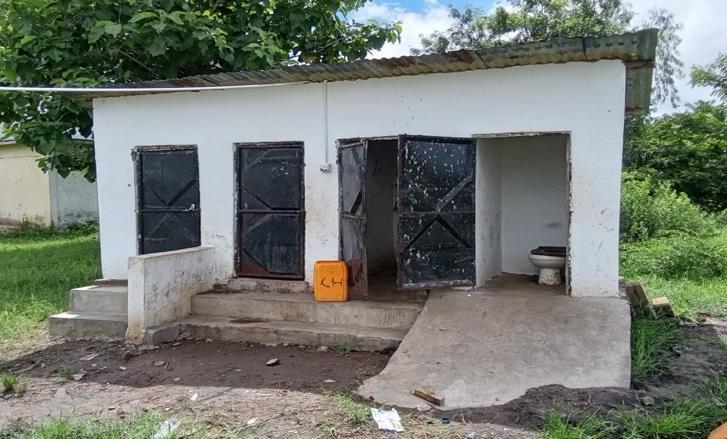
Infrastructure remains one of the clearest cross-school barriers to SEND inclusion. Although schools are making efforts to include learners with SEND in classrooms and wider school life, the physical environment often limits participation, especially for learners with physical disabilities. At Morogoro School A and Kigamboni School A in particular, barriers such as limited ramps, uneven pathways, inadequate toilet arrangements, aging buildings, and incomplete accessibility features affect learners’ safety, independence, dignity, and ability to move freely within the school environment. Likewise, while Morogoro School B and Kinondoni School A have more accessibility features in place, the infrastructure is aging and in need of renovation. Lastly, Kigamboni School B’s environment is more supportive for developmental and learning needs than for physical disabilities and this reflects the fact that the school does not currently have learners with physical disabilities enrolled and therefore does not have the corresponding accessibility accommodations in place.
This finding shows that classroom inclusion alone is not enough if learners cannot safely and independently access the wider school setting. Even where teachers and school leaders are committed, physical barriers can still restrict participation. Targeted improvements such as ramps, safer pathways, adapted toilets, and accessible classroom layouts would therefore make a visible difference in strengthening SEND inclusion.
“The environment is still a challenge, especially for learners who need ramps or accessible toilets.” – Teacher, Morogoro
School A
Key Finding 4: Early identification of SEND learners is well established through reliable teacher observation, but referral pathways for learners with more complex needs varies: only two out of five schools had direct, permanent links to external support entities
All five schools have some way of identifying learners who may require additional support, and teacher observation is the most common method. Teachers and school leaders identify learner needs by observing classroom behaviour, communication patterns, learning pace, attention, mobility, self-care routines, and participation in daily activities. This is especially important in early childhood and lower primary settings, where developmental delays or learning difficulties may first become visible through everyday school interaction. However, the strength of follow-up and referral pathways varies. While early identification is present across all schools, only Morogoro School B and Kinondoni School A had direct, permanent links to external support entities. Morogoro School B works with Comprehensive Community Based Rehabilitation Tanzania, a Tanzanian non-governmental
organization providing specialized healthcare services including specialized disability and rehabilitation services, and has a broader Community Based Rehabilitation outreach team Kinondoni School A also demonstrates stronger system linkages, as it is licensed to operate as an Educational Support Resource and Assessment Centre (ESRAC) and has regular interaction with School Quality Assurance Officers
In the other three cases, referral and specialist support depended more on school leader personal connections, parental initiative, occasional specialist contacts, or ad hoc phone consultations. At Morogoro School A, the school has received occasional support in sign language training from the non-governmental organization, SAWA Wanawake Tanzania, but this is primarily due to school leader connections rather than embedded in the system. Likewise, Kigamboni School A refers learners with complex physical needs to the Inuka Rehabilitation Hospital via phone consultation on an ad hoc basis, while Kigamboni School B occasionally employs occupational therapists for learners with autism. However, these connections are infrequent and largely driven by personal contacts or ad hoc for special circumstances. This means schools are often able to recognize learner needs, but may not always be able to secure timely specialist assessment, therapy, assistive devices, or rehabilitation support for learners with more complex needs.
“We receive so many children, so we observe them for some time, and then contact Inuka Rehabilitation Hospital in Njombe for guidance through phone consultation and video sharing. Some children are referred there, while in other cases we advise parents to take the child to hospital for further support.” – School
Leader, Kigamboni School A
Key Finding 5: Evidence of a written inclusive education policy was limited across all five schools. While three schools reported to have a written policy or guidance, all were unclear or unavailable when a tangible copy was requested.
School-level policy development and documentation remain weak across the five schools. Although three schools reported having an inclusive education policy or related guidance, tangible evidence was often limited, unclear, or unavailable when requested. In some cases, what was described as policy appeared to refer more to school values, mission statements, verbal guidance, or shared commitments rather than a structured written document that clearly defines roles, procedures, responsibilities, referral steps, documentation expectations, and implementation arrangements.
This gap matters because SEND inclusion is currently stronger in practice than in formal systems. Where written policy and documentation are weak, inclusion depends more heavily on individual teachers, school leaders, and informal school culture. This makes progress vulnerable if staff change, resources become limited, or leadership priorities shift. Strengthening school-level policy documentation would help move SEND inclusion from committed but informal practice toward more consistent, accountable, and sustainable implementation.
Table 1: Inclusive Education Policy and Documentation Status Across Participating Schools
School Inclusive Education Policy reported?
Written evidence available? Analytical interpretation
Kinondoni School A Yes Not confirmed
Morogoro School A Yes Not confirmed
Strong commitment and practice, but documentation remains unclear.
Policy awareness present, but written evidence not available.
Kigamboni School A No formal policy No
Inclusion is practice based rather than policy driven.
Morogoro School B Yes Not confirmed
Kigamboni School B General statements only No
Key Findings Cross-School Synthesis
Stronger formal alignment, though documentation may still need strengthening.
Inclusion guided by practice, values, and school culture.
Table 2 and Figure 1 together show that SEND inclusion across the five schools is developing unevenly but meaningfully. The strongest areas are leadership commitment, classroom practice, and emerging school-level efforts to identify and support learners, while infrastructure, formal systems, and external support linkages remain weaker and less consistent. This pattern reinforces a central message of the study: schools are already advancing inclusion through commitment and practical adaptation, but stronger systems, targeted investment, and wider support are needed to help these efforts become more consistent, structured, and sustainable over time.
At our school, inclusive education is not just a program but a core value; every child is welcomed equally, regardless of condition, and given the support needed to learn, participate, and succeed.” – School Leader, Kinondoni School A
Table 2: Key Findings Synthesis
Analytical Theme
Leadership understanding and commitment
Teacher capacity and classroom practices
School environment and infrastructure
Identification, referral pathways, and external linkages
School policy development and documentation
Overall Pattern Across the Five Schools Interpretation
Strong
Strong
Weak
Weak
Leadership commitment is visible in most schools, though institutionalization varies.
Present in all schools, but more structured in some than others.
Physical accessibility remains a major barrier.
Access to support exists but is inconsistent and often informal.
Formal policy and documentation remain limited, uneven, or unavailable across the five schools
1: Relative Strength of SEND Inclusion Themes Across the Five Schools
Relative Strength of SEND Inclusion Practices Across Five Schools
School policy development and documentation
External systems and referral linkages
School environment and infrastructure
Classroom practices and differentiation
Teacher capacity and professional development
Identification and support of learners
Understanding of inclusive education
Leadership and institutional commitment
Relative Strength (1=Weak, 5=Strong)
Figure
Promising Practices
Despite the challenges identified, the case studies reveal several practices that appear particularly promising. Taken together, the promising practices across the five schools show that SEND inclusion can be strengthened through practical, low-cost, and context-responsive approaches. The strongest examples are those that combine daily teacher adaptation, leadership support, learner-specific attention, and a school culture that normalizes participation of learners with SEND.
Table 3: Promising Practices
Promising Practice
Individualized learner support
Integration of learners within mainstream classrooms
Play based and interactive teaching approaches
Strong teacher commitment and adaptation
Leadership driven support for inclusion
Schools Where Observed Why It Matters
All five schools
Parent engagement and follow up
All five schools
4/5 schools: Kigamboni School A, Kigamboni School B, Morogoro School B, Morogoro School A
All five schools
4/5 schools: Kinondoni School A, Morogoro School B, Morogoro School A, Kigamboni School B
4/5 schools: Kinondoni School A, Morogoro School A, Kigamboni School B, and Kigamboni School A
Helps learners participate and progress according to need.
Reduces exclusion and supports social participation.
Improves attention, engagement, and understanding.
Sustains inclusion even where systems are limited.
Helps sustain inclusive culture and coordination.
Strengthens continuity between school and home.
Early identification through observation
All five schools
Enables earlier response to learner needs.

Challenges and Recommended Follow-Up
No.
1 Weak school-level policy integration
2 Infrastructure and physical accessibility constraints
Strengthen follow-up on written inclusive education policies, verify whether schools have developed and retained usable policy documents, and ensure additional funding is dedicated to follow-up and school visits.
Facilitate access to school improvement loans for accessibility improvements and renovation, including ramps, pathways, adapted toilets, and classroom adjustments. Integrate SEND accessibility into financial institution technical assistance.
Actors
EduQuality team, funders
3 Limited access to specialized personnel and services
4 Gaps in teacher training and
Support stronger school-community and parent engagement so families can better understand learner needs and connect with external services where needed. Funders may also support access to specialized services such as sign language, occupational therapy, assessment, and assistive support.
Deepen teacher support on SEND inclusion through practical training, coaching, and follow-up focused on early identification,
EduQuality team, Education Finance Products (EFP) team, financial institution partners, funders, schools
EduQuality team, schools, parents and community actors, funders
EduQuality team, funders, schools
Figure 1 (above left): Example of sanitation and physical accessibility constraints affecting independent participation in school environments
Figure 2 (above right): Sign language support materials
professional development classroom differentiation, communication strategies, and learner-specific support.
5 Limited availability of teaching and learning materials
6 Variability in parental awareness and engagement
7 Financial constraints affecting implementation
Build a practical resource bank for low-cost adapted learning materials, sensory resources, sign language aids, visual supports, and classroom tools that can be locally produced, reused, or adapted.
Support stronger parent communication and school-home continuity around learner needs, home routines, progress monitoring, referral follow-up, and practical support beyond the classroom.
EduQuality team, schools, funders
EduQuality team, schools, parents and community actors
Encourage targeted donor support and school finance linkages to reduce cost barriers that prevent schools from improving accessibility, acquiring assistive devices, accessing specialist support, and sustaining follow-up. Funders, financial institution partners, EduQuality team, EFP team
Despite challenges, the case studies show that meaningful SEND inclusion is already being implemented across the five schools, even where resources, infrastructure, and formal systems remain limited. The most promising practices are not necessarily the most expensive or the most formalized. Rather, learners with SEND are being identified, supported, and included through daily teaching, leadership commitment, practical school-level adaptation, and building a more supportive culture around difference.
At the same time, progress remains uneven and constrained by persistent barriers, especially infrastructure and resource limitations, gaps in teacher training, limited access to specialized services, and policy gaps. The experiences of these five schools show that meaningful progress is possible in low-resource contexts, and illustrate realistic pathways for strengthening SEND inclusion in similar school settings.
Methodology
This key insight is based on a qualitative comparative case study of five affordable non-state schools in Tanzania with experience supporting at least one learner with SEND. The schools were selected via purposive sampling by the Opportunity EduFinance EduQuality team to provide variation in school type, location, level of institutional development, and approach to SEND inclusion.
The primary evidence came from ten key informant interviews, with one school leader and one teacher in each school. Interviews were conducted face-to-face in Swahili, recorded, transcribed, and translated for analysis. The interview guides followed a thematic framework
covering school experience with SEND, leadership commitment, teacher practices, identification and support, school environment, external linkages, challenges, and promising practices
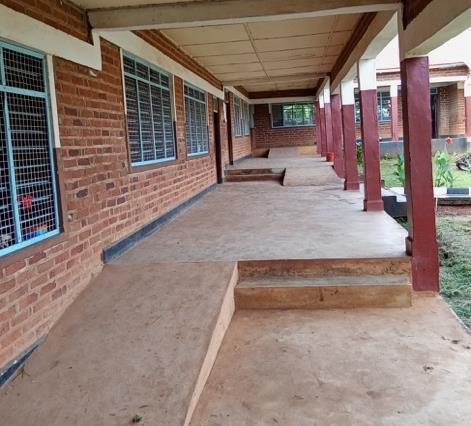
The study also used checklists including observation, document review, and selected quantitative data for triangulation. Observation focused on physical accessibility, classroom arrangements, learner support materials, communication supports, and environmental barriers. Document review focused on whether schools could produce written SEND inclusion policies or related guidance. Qualitative analysis was conducted using a thematic framework in Excel, with 180 interview excerpts coded across themes and sub-themes.
Acknowledgments – Opportunity EduFinance would like to sincerely thank the school leaders and teachers from the five case study schools for generous participation in this study. Their openness, time and willingness to share their experiences made this research possible and provided an important contribution to understanding how inclusive education is being interpreted and practiced in affordable non-state school settings in Tanzania.
ADDRESS
Level 18, 100 Bishopsgate

1GT
Figure 3: Accessibility infrastructure features