







Kampala, Uganda: September 10-12, 2025
The Building Pathways conference brought together key stakeholders to address a critical challenge in financial inclusion and poverty reduction: bringing capital and other financial services like insurance to financially excluded populations through village-level savings and loans groups (Savings Groups, SGs). These groups, in which women mobilize their own resources, have provided a vital source of investment and cash flow to people excluded from the formal financial system, especially rural women in Africa. SG borrowers account for 20% of all borrowers, more than those borrowing from formal institutions (14%) or from mobile money operators (11%) (See World Bank FINDEX data, 2025). But, with access to formal finance, SGs can deliver larger loans to help enterprises grow and provide all members with financing at the same time, particularly during planting season to enable investment in agriculture.
The Building Pathways’ structure coupled succinct presentations, panel discussions and trade fairs in the mornings that shared current good practice with action-oriented stakeholder discussions in the afternoons to devise strategies for scale-up. Topics covered included:
• Goals and potential impact of SG linkages to formal finance
• Understanding diverse stakeholder perspectives
• Business models for SG linkages
• Designing tailored, sustainable financial products for SGs
• Supportive government policy and regulation
• Digitization: the promise and reality, the user experience, digital tools, group member readiness, infrastructure and the enabling environment, and responsible data access and flow
The potential for viable SG linkages to formal finance has expanded exponentially in recent years due to expanding demand from mature and stable SGs, the penetration of mobile money, and technology applications that are transforming how SGs do business and how financial service providers (FSPs) can serve them by leveraging digitized SG accounts. In several initiatives, diverse stakeholders are coming together to deliver services required for SG linkages to work – NGOs training SGs, technology firms delivering tools for digitization to SGs and FSPs that serve them, mobile network operators establishing cell phone connectivity and positioning adequate cash-in and cash-out services, regulators enabling simple SG registration and enforcing appropriate client protection, and funders providing the money to launch these systems and reducing risk through guarantees. The Building Pathways conference brought 160 of these stakeholders together to assess and share the state of practice and articulate a vision for how to scale-up these linkages in order to substantially advance financial inclusion, financial health, and economic prosperity for rural communities, by linking women-led SGs to formal finance. The active engagement of such a diverse group of stakeholders affirms the high potential value and impact they see in linkages for this market.
There has been sufficient research on the impact of savings groups to conclude that they typically help women save more money and allow women to borrow money at lower interest rates than informal money lenders. SGs also boost women’s income generating activities and enhance their decision-making power in the household and around business investment. However, there have been only two studies of SG linkage work. One in Uganda in 2020 concluded that external funds were used to enable more members to borrow, rather than to increase the value of loans, but the linkages were not sustained. Another in India in 2017 concluded that linkages freed women from reliance on money-lenders, strengthened community relationships and women’s decision-making power, and enhanced their economic security. IPA, World Vision and VisionFund are currently collaborating on an impact study on linkages both with and without digitization as well as studying the impact of digitization without linkagesi.
Presented by Anthony Kamwesige, IPA
Call to Action: More rigorous research on the impact of SG linkages on members, SGs, and FSPs.
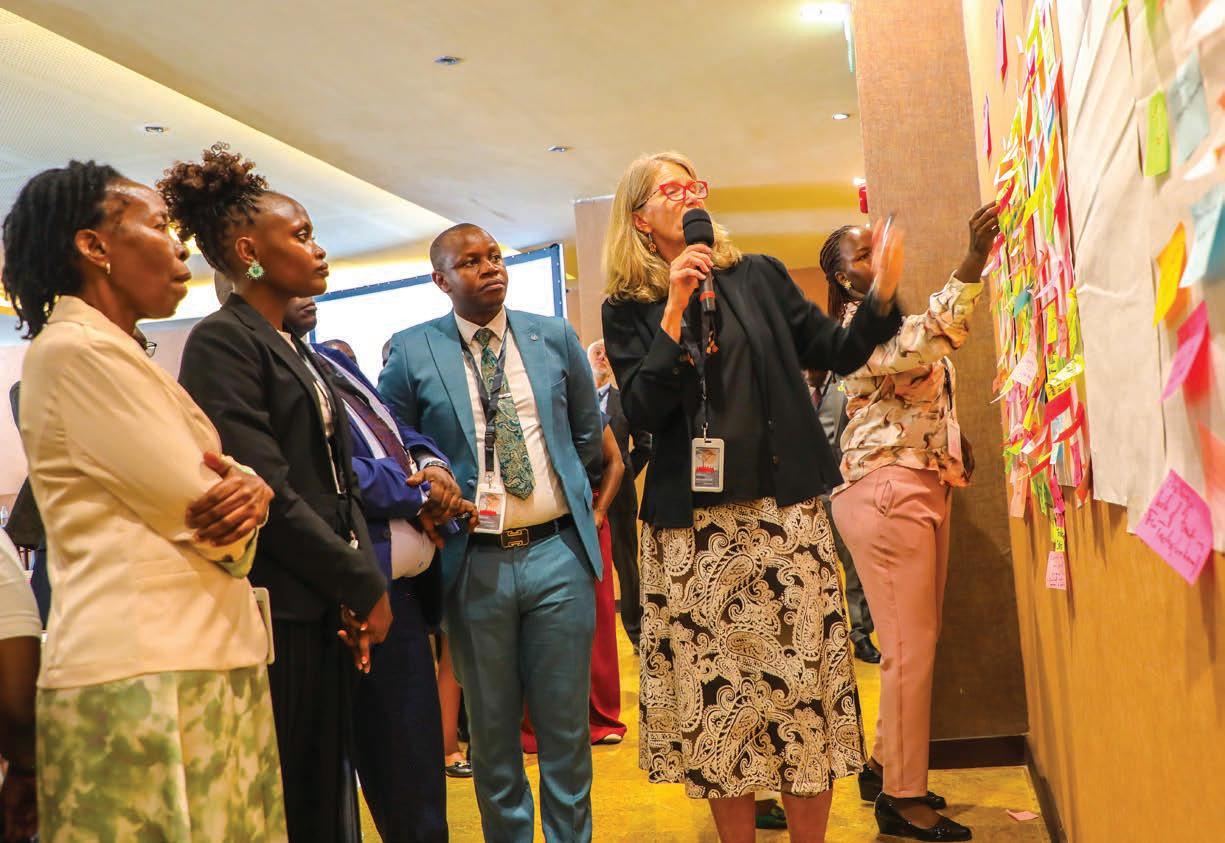
The first interactive session of the conference was a listening exercise designed to allow participants from different stakeholder groups to help each other understand the opportunities driving their engagement in SG linkages and the challenges they face in scaling up their work. While there are some key differences in perspective, commonalities are more numerous.
The opportunities envisioned from SG linkages include: improved and more sustainable revenue for SGs, members, and all private sector stakeholders as well as enhanced impact on income and economic security as well as women’s empowerment. Stakeholders also recognize the opportunity presented by digital data – increased efficiency, improved accuracy, and cost savings in finance service consumption and delivery, and the ability to analyze, track, and better support the sector. Challenges include SG and member readiness for finance and social barriers to women using technology; literacy, language, and trust barriers between SGs and FSPs/digitization providers; data privacy and security concerns; navigating different data systems; the cost and time it takes to implement regulations and licensing; and the cost of technology development on the one hand, and in-person engagement on the other. The rest of the conference addressed these key challenges.
Vidhya Sriram, Director, Global VSLA Team CARE
“The other thing I saw in that room was fintechs, banks, and governments eager to enter the space that CARE and others have fostered through savings groups. They recognize the power of the informal economy that our members have created and that is ripe for investment. VSLAs are already shaping local economies, shifting perceptions about markets, and obliterating notions of what it means to be a “participant.” Our members are not participants in programs – they are the future of economic growth. And it was evident to all of us who came from the North that we are here to support their success or get left behind. That is exactly the kind of bandwagon I am happy to ride.”
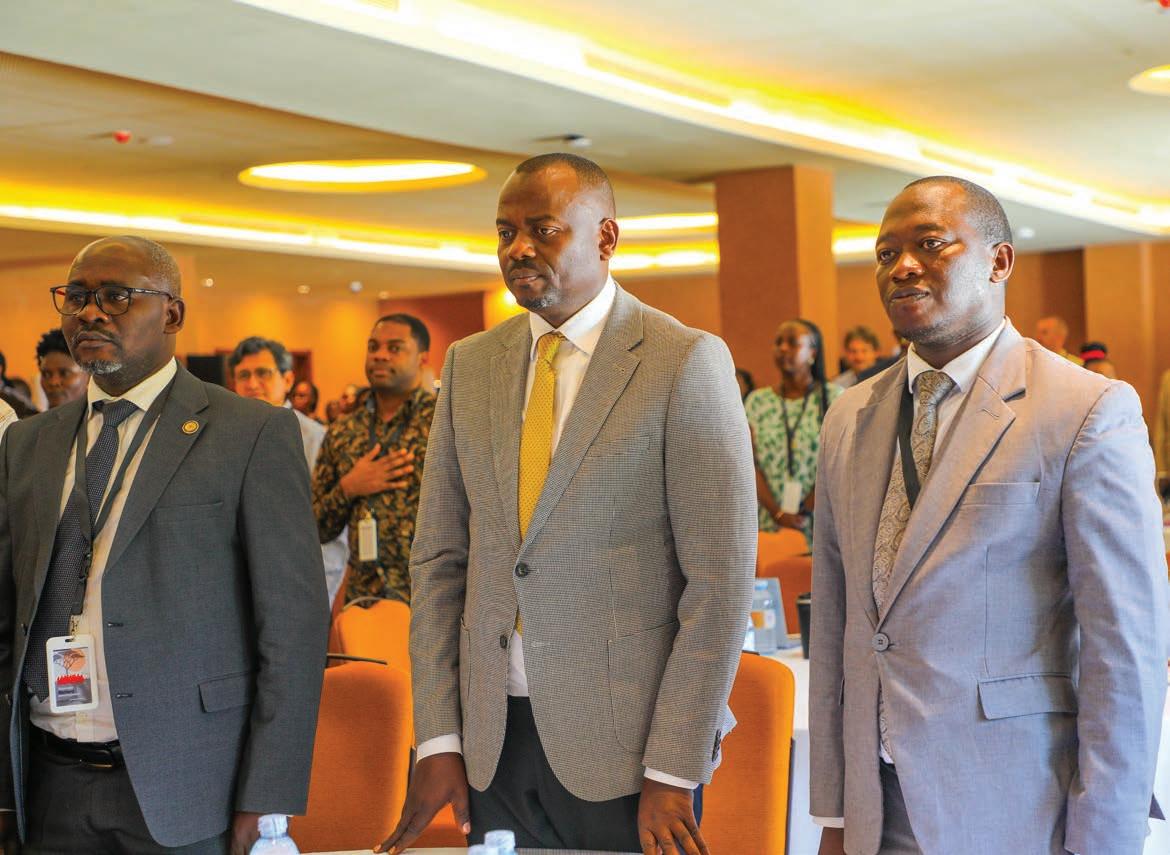
One key stakeholder in the savings group linkage ecosystem is the government. Supportive government regulations and policy can empower and enable savings groups as powerful platforms for financial inclusion and development. This conference brought together different regulators and policy makers from Central Banks of Tanzania, Ethiopia, Burundi and Uganda, Ministries of finance from Uganda and Rwanda and representatives from Nigeria: the Bauchi Agency for Sustainable Microfinance and the World Bank supported initiative the Nigeria for Women Project which supports governments in developing the policies and programs to leverage savings groups—Women’s Affinity Groups (WAGs) in the project—to empower women economically and socially. Representatives from the World Bank and partner governments shared their experience at the conference.
Stefan Staschen, representing the Gates Foundation, shared his research into several country regulatory frameworks. The overall goal of his research was to create a light touch regulatory framework for savings groups (SGs) enabling them to connect to the broader financial sector for borrowing and growth. He raised important questions about the cost and value of regulation of savings groups, emphasizing the importance of clarifying the goals of regulation and ensuring that the approach taken is appropriate for the goal and level of risk. His comparative research identified 3 main levels or approaches to regulation: 1) registration, 2) monitoring and oversight, and 3) full regulation and supervision. These approaches not only differ in purpose but also in implementation and enforcement. Registration is the lightest touch and often voluntary or little enforced. Monitoring and oversight might require periodic reporting, but it is often delegated to federations. Regulation and supervision require on-site visits and enforcement.
After reviewing the experiences of Tanzania, Kenya, Uganda and India, he proposed the following principles to help governments get the balance right.
Align regulatory approach with capacity to supervise and enforce
Harness potential of digitization
Incentivize rather than mandate
Do not undermine the strength of informality
Remove any unnecessary regulatory barriers
Delegate and federate where it makes sense
Measure the impact of regulation and adjust over time in line with market development
More often than not simple registration (with unique ID) and periodic reporting might do
Set up central database with digital reporting; report to credit reference system, digitize transactions (unlikely to be regulatory requirements)
Mandate hard to enforce; clear advantages of being registered (e.g. legal status; access to resources); clarify tax status
Regulatory impact assessment around this. Risk of being overly prescriptive.
Rules such as lending to non-corporate entities, KYC rules
Delegate registration and possibly reporting to local government; use federations to support compliance
Clarity of objectives; measure achievements; adjust
The regulation and policy break-out group engaged in constructive discussion and dialogue around some of the key challenges with regulation, sharing experiences among those governments that are more advanced in engaging with savings groups and those that are just beginning.
Abraham Fekadu, Principal Financial Inclusion Coordinator, Financial Inclusion Secretariat, National Bank of Ethiopia
“The insights and knowledge gained during the sessions were truly enlightening. It shifted my perspective on SGs and helped me understand how they really need to be taken seriously to have an inclusive financial environment.”
Their discussions centered on two main issues: registration and data collection/reporting. In both cases, participants emphasized the importance of ensuring these processes are realistic and generate value. In the case of registration, savings groups have existed for decades without being registered. It is important to ensure that there is value for savings groups in registering and to communicate this value well. It’s also important to ensure that groups do not incur taxation as a result of registration or face inconsistent and onerous fees or reporting requirements. This will serve as a disincentive working against registration. Some possibilities to incentivize registration are better access to government programs and services as well as better access to financial services.
Closely linked to registration is the collection, management and use of data collected during registration and reporting processes. In many cases, governments lack clear processes for data collection or for using the data. All data collected needs to be rationally aligned with uses that create value both for the government and the reporting groups. In many cases, there is confusion about how and what to report. For both registration and reporting, there are significant challenges with communicating to groups the need to register—especially for groups that are not being supported by an NGO. There needs to be a clear, easy to explain process that groups can follow; awareness raising; and training of local government agents who will do the registration as well as of technical staff at the regulator level who will supervise the groups. The group noted that investing in a digital data center to handle registration and reporting can help with both the challenges with registration and the challenges with data collection and usage.
Additionally, participants recognized that there is a need to look at data and consumer protection in the process. As regulators are digitizing their reporting systems, Savings Groups are giving personal (or group) data that needs to be protected. There is a need to prevent misleading information, fraud or misconduct as well as for the groups, their members, the Savings groups practitioners and Government institutions to understand how data will be used and how it should be protected. Most of the countries in the conference have policies on data and consumer protection, it will be important to revisit them, understand them and simplify them for better understanding and more effective application to this segment and use case.
Finally, it was clear from the session that partnership is central. Countries such as Rwanda, Uganda, Tanzania, Nigeria have coordination and partnership mechanisms that policy makers and regulators engage in policy development, or any other matter related to savings groups. Such mechanisms are at different levels of implementation, but it is important to reinforce them to be able to develop policies, registration and data collections systems and supervision mechanisms that adapt to the realities of Savings Groups. For example, Uganda showed the process they used to design their Savings Groups coordination strategy and sought feedback from the participants to the conference to improve it and be more inclusive.
Key action proposals from the group include:
• Standardize and rationalize minimum data required
• Digitize quality assurance and format
• Share/ publish experience from countries who have advanced in the process of regulating SGsthrough an online platform in which all information can be kept (e.g.: DSG hub).
• Organise learning sessions to exchange on quick wins, longer-term process and share on existing policies, using platforms such as the Regulatory knowledge exchange at the Cambridge Centre for collaborative finance, WEE learning hub being launched by the Nigeria for Women Initiative.
• Policy makers and regulators, with support from practitioners, will need to tackle/pay more attention on data protection and consumer protection for the groups’ members.
• Engage with spaces where regulators meet and develop solutions on financial inclusion, such as the Alliance for Financial Inclusion or the Toronto Centre, for them to be an ally in supporting governments on the process through co-creation, learning and capacity building for the decision makers.
This session analyzed successful products for savings groups to identify key features, operational processes and design approaches that ensure a good fit with both SGs and FSPs. The session featured 3 loan products, 3 savings products, and 1 insurance product.
• Design together with SGs
• Design around the unique features of SGs
• Iterate with SG input until you get it right
• Educate SGs to access and utilize new types of products
• Engage trusted trainers/advisors to guide SGs
• Bundle services to keep costs down
• Make insurance responsive to the risks clients perceive
• Offer group and individual products
• Use reliable digital tools to increase efficiency
• Follow-up with reminder messages for both savings and insurance
• Ensure fees are transparent and low
The group identified several challenges to product and linkage sustainability. From the FSP perspective, some FSPs still consider SG loans as too risky because of the lack of collateral or not worthwhile because of the small loan sizes and savings balances relative to the level of effort required to gather information about the groups and members. Additionally, current business models require a minimum density of savings groups in a particular geography, which isn’t always there. Additionally, it can be difficult for FSPs to locate and make contact with SGs.
VisionFund brokers and delivers insurance coverage for the highest impact risks faced by SG members in a given context, usually health crises and death, but may also include crop failure, weather or accidents. The insurance is bundled with the loan with a standard benefit and premium per member. The premium is deducted from the loan amount and is active from disbursement.
Bank in Tanzania offers a Kikunda group savings account with 3-PIN authentication, customizable to different group rules. It comes with funeral insurance coverage. NMB also offers mobile wallets linked to individual savings accounts.
Women Save has worked with financial service providers to offer individual commitment savings accounts with reminders, transacted via mobile money.
The Savings at the Frontier project also shared 2 case examples—one of an individual digital savings product in Ghana and the other a group savings product customized for how savings groups operate with TCB in Tanzania.
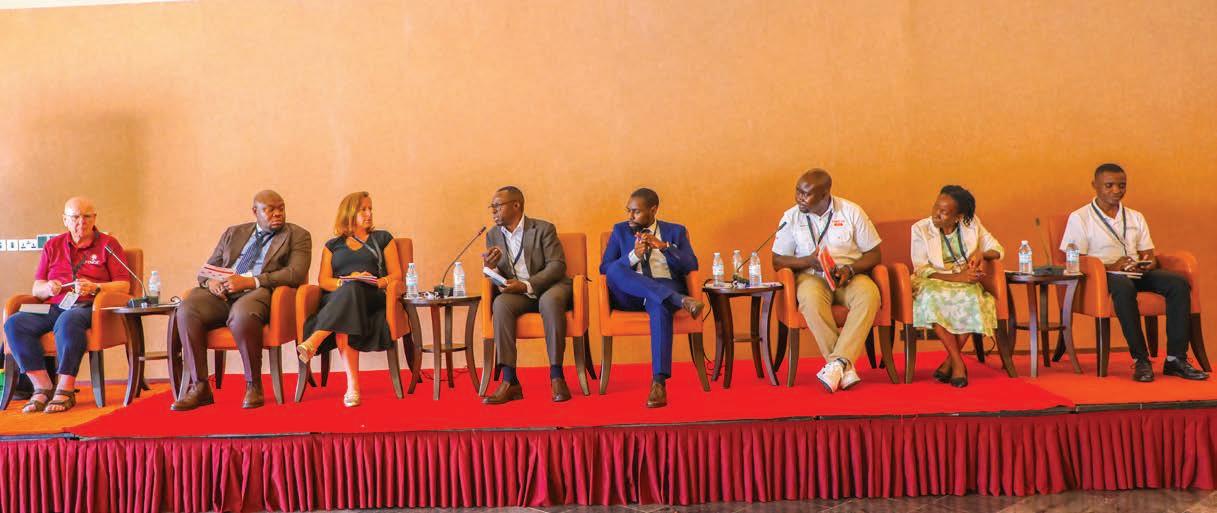
From an SG perspective, cost is a limiting factor. Formal financial services are perceived as expensive, with a high interest rate and high mobile money transaction fees. Although SGs may charge higher interest to their members, members benefit from a high return on their savings, rather than paying interest to an FSP. Because using digital channels is essential for making serving savings groups viable for FSPs, access to mobile phones—particularly smart phones—is a critical challenge. Ensuring women’s access and control of phones along with building their comfort handling the technology are also key challenges to turning the opportunity for linkage into meaningful access for women. Additionally, low financial literacy and problems with mobile money systems going off-line or agents not having enough cash at hand can cause negative experiences and broken trust, leading groups to stop using digital services and therefore formal finance.
The group identified several opportunities including the digitization of credit evaluation to lower costs, using share-out cash to invest in building SACCOs and other member-owned institutions, and building capacity among group members through a training of trainers approach.
Key action proposals from the group include:
CARE and Ensibuuko developed digital loan products that leverage the credit scores generated by VSLA transactions recorded on the Chomoka app to speed up loan evaluation and reduce the need for collateral. The loans can be to groups or individuals and are transacted via mobile money.
VisionFund offers the FAST (Finance Accelerating Savings group Transformation) loan product. Loans are to the group for on-lending, with qualification based on group performance, determined via digitized or manual records.
OBUL offers agricultural loans tailored to specific crop cycles with payments due during harvest time. In one program targeting young farmers, OBUL combines individual loans –guaranteed by SGs - with a matched savings account.
• Collectively invest in and share market research to better understand the SG market and member needs and priorities holistically.
• Create a knowledge repository where practitioners can share information and collaborate.
• Find ways to break down barriers to collaboration and learning that arise from FSP competition as the potential market of SGs is huge.
• Change the way we communicate about SGs. Instead of communicating about SGs as a solution for the “unbankable,” position SGs as a first stage of financial inclusion.
• Co-design products and services with savings groups.
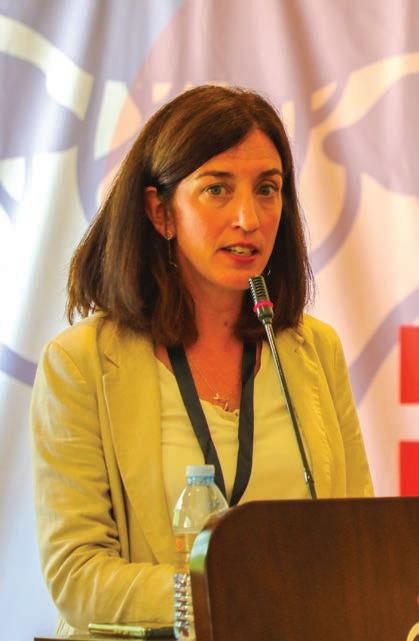
Sara Murray, Consultant for CGAP
“It was an honor to immerse myself in the community that has evolved savings group work for decades. So much progress and even more potential ahead. I am excited about the group of providers in Uganda who have pledged to work together to engage governments and explore shared infrastructure. The days together offered a much appreciated boost of energy and connection during a difficult year.”
Through research conducted by CGAP and in an interactive exercise during the conference, participants were able to learn from the following organizations who operate promising business models for SG linkages:
• DSS Platform, Ghana
• Tanzania Commercial Bank
• VisionFund FAST, Global
• FINCA Uganda / Ensibuuko
• Opportunity Bank of Uganda, Ltd.
• National Microfinance Bank, Tanzania
• Clecam Ejo Heza, Rwanda
One key question for achieving scale in linking SGs to formal finance is: What are the business models, particularly but not exclusively for FSPs, that need to be in place to support sustainable linkages? At the conference, participants heard about recent research conducted by CGAP on business models that show promise for sustainability and scale. They explored the business models of some leading FSPs in the region, and they advanced thinking around the key success factors and some unresolved challenges with these business models.
Sara Murray presented research conducted on behalf of CGAP that examined FSPs with some evidence of business viability in serving SGs. One success factor is external – market readiness, which includes having a high density of linkage-ready SGs, regulatory clarity around the legal status of groups and group accounts, and sufficient infrastructure to support efficient delivery – infrastructure like mobile network coverage, mobile money agent networks, and even accessible roads. Another success factor is the development of appropriate products for groups. The FSPs studied partnered with NGOs to identify markets, but then hired female, community-based agents for outreach, and they leverage group data to assess SG readiness. More successful FSPs tend to rely on at least three critical KPIs: high repayment rate or low portfolio at risk (PAR), repeat and increased value of borrowing and saving from the groups, and stable group membership with growing group savings and share-out. In some business models, FSPs offer individual financial services, but these are delivered in a way that seeks to preserve the integrity of groups because the groups are a significant market a nd can be the source of additional individual customers. They also generate additional social benefits.
Participants brainstormed solutions to key challenges that present barriers for sustainable, scalable business models in the categories of incentives for FSPs, group readiness, and digitization. These are presented in in the table below. Some emerging themes include: reducing risk with capacity building for FSPs and SGs, offering combined human and technology solutions in order to build trust while also streamlining operations, ensuring availability of adequate connectivity and mobile money services for digitization and linkages, and working together in consortium with different stakeholders to coordinate services and among similar stakeholders to share experience. In addition, participants raised the key unanswered question of who will carry out the subsidized elements of the business model (for example SG formation and training or a common data hub), and how they will be paid for in the long run.
FSP Incentives
• Risk: of weak KYC and of groups disintegrating, no collateral for relatively large group loans
• Cost: reaching remote groups, training
• Capacity: appropriate product design, staff capacity
• Group reluctance: high interest and transaction costs, low trust in FSPs
• Many groups with inactive accounts
• Some FSP-NGO-digital firm partnerships piloting solutions
• Low financial literacy, low awareness of data sharing risks and data protection measures
• Low trust in formal (faceless) institutions
• Inadequate infrastructure and legal protections
• Training curricula exists and many NGOs are training, but weaker in data protection
• Many NGOs shy away from infrastructure and policy issues as too big to tackle
• Some governments are addressing these issues, with NGO engagement
• Low application of digital accounting systems
• Low connectivity for backingup digital data
• Inadequate or costly money transfer, or cash-in/cash-out services
• Reluctance and low trust of digital solutions; cultural barriers, lack of role models
• Disperse digitization solutions
• Low assessment of connectivity and mobile money cash points/agents in advance of digitization
• Hardly anyone addresses the trust issues, and cultural issues around digitization/linkages
• FSP capacity building
• Dedicated, appropriate staff, products, and lending criteria to lower risk
• Digitization to streamline costs
• Consortiums of FSPs, NGOs, digitization firms to facilitate linkages
• FSPs, digitization, mobile money firms should put in place strong client data protection and keep a human in the mix
• NGOs should provide more training around linkages, digitization, and data protection
• NGOs should engage in dialogue around infrastructure/ policy
• Central data hub for FSPs to access data
• Digitization training that addresses culture/trust
• Adequate connectivity, MM cash-points to be assessed in advance of tech introduction –and advocated for
• Share experience to avoid reinventing the wheel
• Develop a long-term solution for who provides training and central data hub
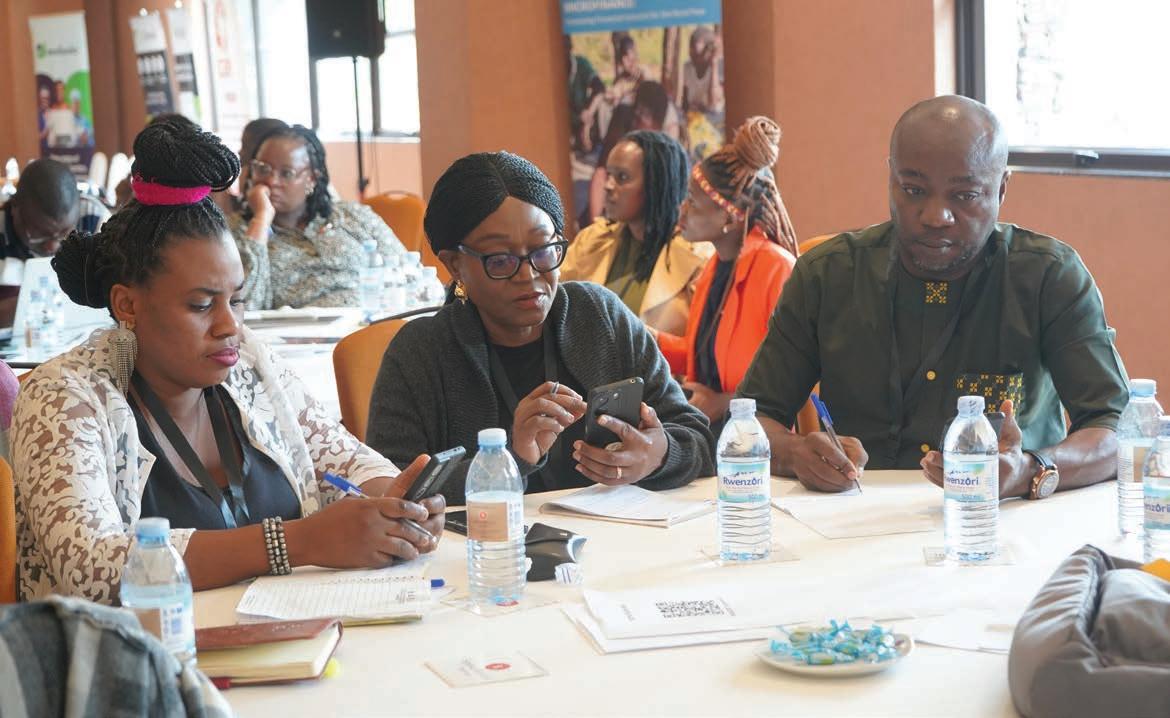
A key aspect of SG linkages that sets the current era apart from efforts in the 2010s is the efficiency generated by “digitization” – using digital solutions to record SG transactions and account balances, giving FSPs access to this data to facilitate loan appraisal and monitoring. Combined with the use of mobile money, which has exponentially expanded, digitization can dramatically streamline SG linkages, unlocking potential scale and sustainability impossible with in-person, analog engagement. Realizing this potential requires overcoming challenges at the SG, FPS, and ecosystem levels. The conference dedicated an entire day to this complex prospect. It included two plenary discussions, demonstrations of digital solutions, and three in-depth participant discussions.
For many stakeholders, digitization holds the key to sustainable SG linkages at scale. For SGs themselves, digitization promises to significantly reduce the time required to keep records and improve the accuracy of group records, enhancing trust and increasing savings. Meetings are also more meaningful, which increases attendance and engagement – all in addition to the prospect of accessing more capital by linking to formal finance. Ideally, FSPs can use data from these digital records to locate areas with high SG density, select SGs ready for finance and, with some solutions, use an SG credit score as part of the appraisal process. Once loans are issued, FSPs can use digital data to monitor borrowers. Digitization can substantially reduce the cost of delivering formal finance such that FSPs previously resistant to SG finance can now realistically consider it.
Amon Ariyo, WomenSave Uganda Country Director
“We shouldn’t look at technology as a savior but an enabler and in this case we should leverage digital platforms, emphasize mindset change, strengthen financial literacy and Savings Groups governance.”
Another critical component to successful digital linkages is mobile money and mobile banking platforms. These services enable SGs and FSPs to conduct most business without expensive travel and in-person engagement. Digitization also enables NGO support organizations to monitor SG performance, to identify SGs ready for formal finance, to focus support on struggling SGs, to learn and improve support to SGs, and to efficiently and accurately report performance.
Finally, digitization creates the possibility of an industry-wide view of the SG industry, and a central database of SGs, at the national level. The industry-wide view can help governments and support organizations to track progress, channel resources to under-served areas, and point FSPs to market-ready and high-density areas. A central database could serve multiple purposes including enabling multiple FSPs to access SG data and allowing SGs to access multiple FSPs. It could act as a kind of clearing house, ensuring that SGs accessing formal finance are registered, members properly identified, and that leaders and groups have no bad debts.
Client protection is a concern as more and more data is digital and centralized. To support client protection, government regulators could ensure that SG members have given informed consent for their data to be shared with FSPs and/or other interested parties and for the group to open accounts and/or take loans. Such a database could also enable research and strategy to advance the industry.
Despite the high potential to employ digital solutions to facilitate sustainable financial access, there are inherent challenges to digitization that stakeholders are experiencing or that they anticipate. First, there are challenges with access to and familiarity with digital tools. These include: gender barriers to women accessing phones, lack of familiarity with and the cost of smartphones, low literacy and confidence in the use of technology, limited understanding of safe data sharing practices (leading to unintentional data sharing and/or fear of or actually being victim to scams and fraud), low data quality, and lack of trust in anonymous institutions like FSPs.
Second, it can be challenging to establish responsible data flows between SGs, FSPs and mobile network operators (MNOs). Digital solutions to capture and share SG data have only recently begun being tested with FSPs and digitization firms, and FSPs are still learning. Also, the prospect of multiple digitization firms providing data in different formats only makes the FSP capacity challenge greater.
Generally, there are inadequate safeguards in place – from industry groups and/or the government - to ensure that FSPs and MNOs gather informed consent and adequately protect SG and member data. FSPs, especially fintechs, are increasingly interested in using mobile money transactions and other “alternative data” for credit application scoring, but responsible MNO data sharing arrangements are not widely in place. However, it is unclear if MNOs have an incentive to share this data or what would incentivize them to do so.
Finally, a major challenge for more remote SGs is the availability of adequate cell phone connectivity to enable SGs to use digital solutions in or close to their locations. Most digital solutions allow for data entry off-line, but that data needs to be backed up at some point in order to ensure the security of the SG records and to share their data. The other necessary and sometimes missing “infrastructure” component is nearby mobile money agents with adequate cash handling capabilities, as well as affordable mobile money fees.
Five technology companies with slightly different offerings hosted information tables where participants circulated to learn more about digital solutions related to SG linkages.
• DreamStart Labs: Offers the DreamSave app to SGs to digitize their records, and an Insights page, where SGs back-up their data and where it can be seen by supporting NGOs for monitoring, reporting, and research purposes.
• Ensibuuko: Offers Mobis (or Chomoka) for SGs, linked to formal or mobile money accounts, and for lenders to digitize their operations. CARE helped to establish the app (under the name Chomoka), which was later taken over by Ensibuuko.
• Commonlands: Offers an app through which individuals can register their land and their creditworthiness, building a data system that lender can access and use to assess potential clients. An NGO, Commonlands offers open access to member information.
• Viamo: Offers phone-based information through interactive voice recorded messaging and artificial intelligence systems.
• Farm Concern International: Offers NGOs and companies working with small-scale farmers the eTHRIVE app providing 10 functionalities ranging from farmer data capture to mapping communities and agencies to e-training and support for crop aggregation and marketing. Farmers can also use the app to connect with buyers and negotiate prices.
• Farmerline: Offers the Mergdata platform which connects stakeholders across the supply chain.
A final governance challenge is putting in place an adequate and accessible SG registration process so that SGs can be legally recognized, MNOs can issue SIM card to groups, and FSPs can reliably and legally finance SGs. Underpinning all of these challenges is the need for stakeholder coordination to put all the necessary elements of digitization in place.
William Derban, Head, Programs and Partnerships, Digital Innovation Group, Opportunity International “The conference was very timely, as we are at a crucial point where new technology and rising interest from governments and financial service providers offer a great chance to improve savings group linkages. It brought together the right people to discuss and debate the challenges faced by savings groups. At Opportunity International, we not only shared our experience in digitising savings groups but also learned from various models and experiences in linking savings groups.”
Stakeholders of all types are working toward solutions to these challenges, and during the conference, additional solutions were brainstormed and recommended. The first set of solutions centers on group adoption of digitization, as separate from readiness for formal finance. A seven-country evaluation of SG adoption of the DreamSave digitization app, conducted by Opportunity International, concluded that digitization was, overall, positive and easy for SGs. For most groups, digitization generated expected benefits – less time spent on onerous book-keeping, more accurate records, fewer disputes and greater leadership accountability, and enhanced trust in the groups. This experience was confirmed by user and front-line-staff testimony at the workshop, with additional indications that SGs were more stable and members saving more as a result. Some challenges with digitization were avoided in the evaluated programs because, for example, the technology was introduced by trusted community advisors as a tool to improve group management, and was not specifically linked to accessing formal finance from a distant institution. Gender barriers to the group owning a phone were not raised in the operating contexts, but may arise in other contexts and/or if individuals seek to own phones. CARE shared experience in engaging men and community leaders in discussions to reduce the stereotype of women with phones as “loose” women, and to highlight the benefits of phone ownership for business, education, and safety. Several challenges were nevertheless apparent in this evaluation and continued to be raised by participants, including lack of connectivity for backing up group records in some locations and inability to afford a smartphone and/or confusion around how the groups should manage their smartphone.
Participant discussions generated several key recommendations for introducing digitization to SGs:
1. Ensure– or lobby for –sufficient connectivity and appropriate phones with adequate storage.
2. Introduce digitization at the beginning of the loan cycle, helping groups to plan for costs.
3. Consider phone financing and collaboration to reduce the cost of phones.
4. Orient all SG members – address benefits, fears, informed consent, and data protection.
5. Provide on-going technical support.
6. Consider introducing digitization as a separate step from mobile money and access to finance.
The second area of solutions and recommendations centers around data flows and responsible access. Regarding consumer protection, while everyone agrees that it is important to educate SG members about protecting their data and themselves as financial service consumers, stakeholders also recognize that SG members cannot bear that burden alone. The digital solutions shared by DreamStart Labs and Ensibuuko are designed to channel data from SGs to FSPs in order to link SGs to formal finance, and both incorporate user consent processes into their technology. In addition, DreamStart Labs conducts due diligence on FSPs seeking to use the platform, part of which includes assessing FSP data protection policies and practices and consumer protection protocols. Many governments also have data protection laws in place, but these may need to be adapted and applied to the SG linkage context. In some settings, trade associations may also play a role in establishing standards for SG linkage practices.
With regard to enhancing the flow of data from SGs, and possibly MNOs, to FSPs, participants proposed solutions along a spectrum from tight, private sector partnerships to open, comprehensive, national databases managed by government. On one end of the spectrum, FINCA Uganda described their partnership with an MNO and Ensibuuko in which FINCA was able to negotiate down the price of mobile money for SGs accessing formal finance, using the Ensibuuko app to digitize SGs. With financing for additional SG training, as well as appropriate regulations for SGs and linkages, this type of comprehensive partnership can be scaled up. On the other end of the spectrum, some participants envision a centralized, national, constantly updated database of SGs and their transactions, managed by the government. In this scenario, digitization firms (and possibly MNOs) would –
with consumer consent – share transaction data in a standard format. FSPs could then access this data to plan outreach, design products, assess and monitor individual SGs, and report in loan defaults so that the database forms a detailed credit bureau for SGs. Some expressed skepticism that such a database would be manageable, and/or that the governments have the capacity for it, instead suggesting that the private sector would better operate such a system. In the middle is a model in which a limited set of data on each SG is shared and housed centrally – perhaps registration, location, and digitization partner. At the same time, the SG linkage industry could devise a common set of terms and indicators so that it would be easier for FSPs to accept and use SG transaction data from diverse digitization apps, and MNOs could agree to appropriate pricing and transaction sharing for SGs.
Potentially, different systems will emerge in different settings, depending on the strength of the government and private sector, but there is consensus that safer, more coordinated and efficient ecosystems are needed, and that all stakeholders have a role to play in developing these systems.
In terms of infrastructure – cell phone connectivity and affordable, appropriate mobile money services –participants also emphasized the need for ecosystem-wide developments.
Call to action:
• To address low connectivity, key stakeholders should join planning and advocacy efforts to extend MNO services to ever wider areas.
• To enhance mobile money services, coordinate SG access to formal financial accounts with mobile money providers and the FSPs that handle agent accounts, so that agents can be better prepared to accept and deliver SG cash transactions and negotiate reasonable prices for SG transactions. Also, NGOs supporting SGs should work with area businesses to encourage mobile money use, strengthening the demand for mobile money and reducing the need for cash. MNOs should consider shared digital infrastructure such as agent platforms that could enhance efficiency and reduce costs.
• To accelerate these solutions, stakeholders should establish national working groups and an international platform, for advancing and sharing digital solutions at the SG, partnership, and ecosystem levels.
The majority of the third and final day of the conference was dedicated to reviewing the action proposals and challenges that came out of the previous two days’ working sessions, prioritizing them, and organizing working groups to move them forward. The following key topics were chosen for further exploration and development.
Savings group capacity-building: With the goal of achieving a high density of good quality, well performing groups that constitute a strong, viable market for FPSs, how to strengthen savings groups’ capacity and readiness for linkages and digitization most cost-effectively. What are the minimum standards for SG capacity building and readiness for linkages, who should do this work, and how will it be paid for in the long run?
Business models: how to accelerate sustainable business models and thus potential to scale. What is the role of competition among FSPs and digitization firms in stimulating innovation and market penetration, and what is the role of collaboration and coordination among these stakeholders to advance financial inclusion?
Data aggregation: what should the scope be, how to do it, who should do it, who wants and can use what kind of data, how can consumers be protected and give informed consent, and what are mechanisms and conditions of access? Enabling regulation and policy for SG linkages and consumer protection: what should the policies be, and how can government actors coordinate in-country, and learn internationally?
Blended finance: What are the opportunities to mix grant, concessional and commercial finance to scale up linkages, and how can the SG linkage movement mobilize funders?
Stakeholder collaboration: Creating national and an international convening body or other mechanisms for knowledge sharing, coordination, collaboration, research, and awareness creation or advocacy for additional funding.
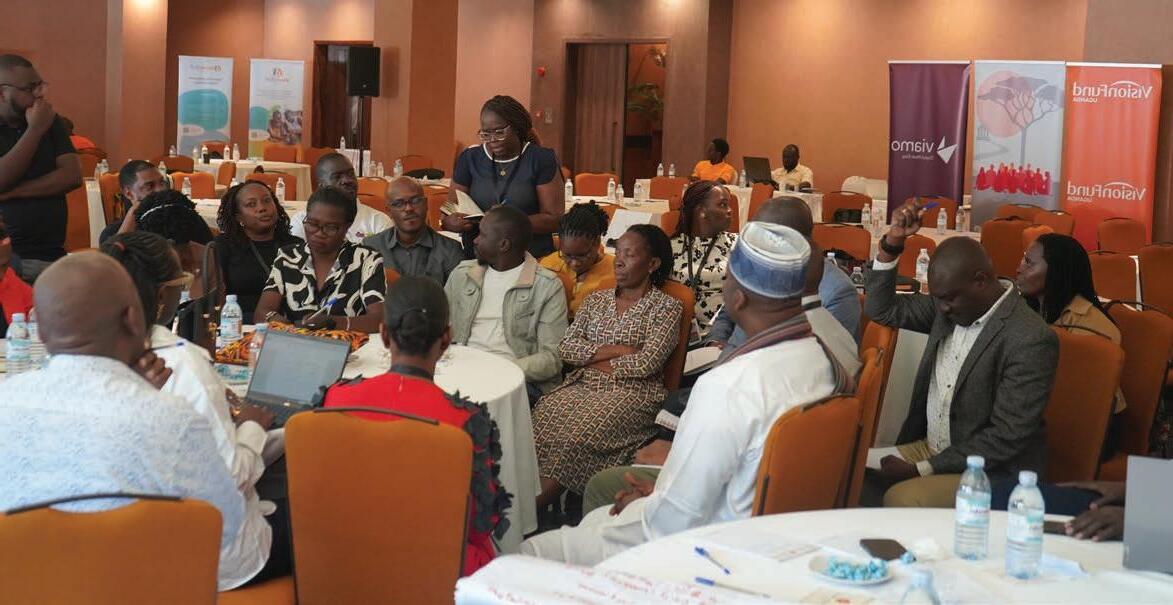
The global Savings Group Linkage Working Group plans to expand to support and engage these thematic working groups in the coming months while simultaneously seeking funding to support the expansion of the platform for collaboration and resource-sharing.
This group was formed largely by NGOs that support savings groups. Their focus is on creating a core set of standards and training materials/approaches for capacity-building of savings groups and determining SG readiness for linkages. The goal of this is to support the development of SGs of a consistent quality and operations so that FSPs can engage with them with more confidence.
This group has agreed to take the following steps:
• Create a WhatsApp group, discuss how to work together, develop a terms of reference. Hold online meetings to continue planning and engagement. Work toward a gathering.
• Determine what is the core DNA of SGs? Align terms, goals, etc.
• Collect, review existing resources (training materials, standards), including historic resources.
• Consider cost-effectiveness measures, such as: open source training, SG agent/replicator training tools and networks, training of trainer materials and standards.
• Engage and get buy-in from governments and FSPs (some have materials and accreditation).
The focus of this group is how stakeholders, especially FSPs, digitization firms, and MNOs, can work together to drive down costs and innovate for more sustainable business models.
They agreed to:
• Meet monthly to exchange information and develop a strategy.
• Document, share, and advance a diverse of business models from advocating to large, formal banks to serve SGs, to socially-minded FSPs innovating to reach scale, to encouraging SG member-owned FSPs that emerge from SGs and SACCOs.
• Identify opportunities to share infrastructure, particularly in frontier markets.
• Jointly engage governments to embed linkages in their financial inclusion strategies and support infrastructure investments
Additionally, there is interest in getting a Uganda-specific working group and pilot going which would look to embed linkages in the national financial inclusion strategy and open channels for regulator engagement among regulators, policymakers and financial sector.
The goal of this group is to study and develop a model to aggregate data and help it flow responsibly, in usable form, to different stakeholders who can use it to enhance financial inclusion and SG access to formal finance.
They agreed to begin by working on the following:
• Set up a working group with clear goals, coordination plan, and workplan.
• Use the Digital Savings Group Hub as a forum to collaborate.
• Establish how SGs and their members would benefit from data aggregation, and what kind.
• Identify stakeholders in the ecosystem, legal provisions around the data, how to track and monitor data usage, how SGs and members would provide informed consent and be protected.
• Seek to understand the data needs of different stakeholders in the ecosystem—what data they need, in what form, with what frequency, etc. Determine options for the scope of the database.
• Explore the question of who would operate such a database, and how it would be paid for.
This working group was comprised mainly of regulators, NGO policy experts and the Toronto Centre. The goal of this working group is to facilitate knowledge sharing so that governments can learn together, study effectiveness and build capacity for effective, enabling regulation together.
The next action steps proposed were:
• Determine how to share existing documentation around regulations/policy and how to work together, under which existing platforms: the DSG Hub; existing communities where regulators and policy makers exchange ideas around financial inclusion, and/or the Alliance for Financial Inclusion (AFI).
• Plan and garner resources to research the effectiveness of different regulations and policies.
• Leverage the Toronto Centre programs to build capacity of government staff.
This group included a mix of funders, NGOs, FSPs and others. They aim to research and learn more about how blended finance is currently being used, studying existing models and current trends to determine what might be the best model for supporting savings groups.
They agreed to:
• Set-up monthly meetings and a shared google drive or other platform to share documents.
• Ensure alignment around the definition of blended finance and the objectives of the research.
• Research and produce a working paper on blended finance.
• Target to propose a framework for a blended finance model for SG linkages in about one year.
This working group was attended by a diverse mix of stakeholders, and considered both national and international mechanisms for collaboration and collective action.
The group determined to:
• Build on the global Savings Group Linkage Working Group as a coordinating body for on-going learning, information exchange, collaboration, and collective action. Expand this network. Try to leverage the DSG hub as a platform to support the working group.
• Support the above working groups and their plans.
• At the national level, to establish, or join existing, networks or stakeholder groups, to advance SG linkages.
The Building Pathways conference took place in a climate of dramatic cuts in human and financial resources. Just as we encourage rural women to come together with what little they have, pool resources, and work together, conference participants and their organizations are doing the same. The working group plans commit us to action steps we can take with current resources, but they also position the industry for funding and investment to support our collaborative and independent plans. We invite interested stakeholders of all types to join the global Savings Group Linkage working group. Together we can scale-up SG linkages in order to place significantly more capital in the hands of rural women, to advance their livelihoods, economic security, and autonomy.
Zainab Omotola Sanni, Marketing and Communications Manager, Dream Start Labs
“The SG Linkage Conference stands as a defining moment for our industry, a convening where vision meets practice, and where the future of financial inclusion is written in dialogue and partnership. It affirmed not only the importance of connecting savings groups to formal institutions, but also the deeper truth that access, dignity, and agency remain at the heart of sustainable development… These days in Kampala were both a summons and a charge. A call to partnership, responsibility, and vision. They invite us into a renaissance for the SG sector, where collaboration fuels innovation, and where the collective strength of our partners and the incredible people within those organizations…become a force that shapes not only financial inclusion, but the broader future of our communities.”
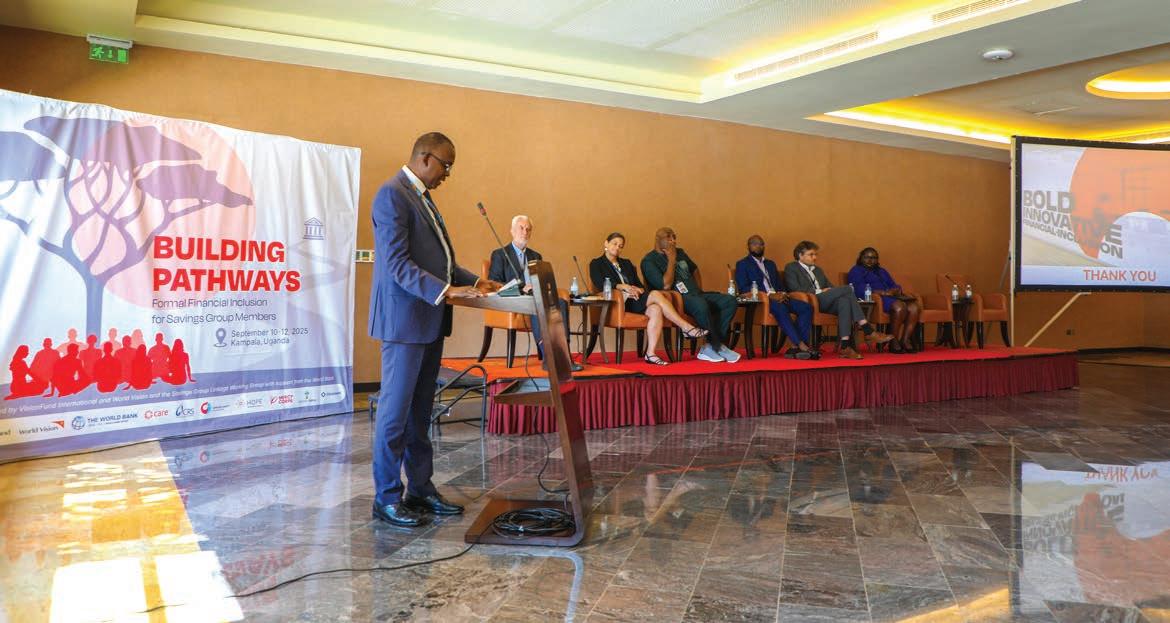
Mercy Sande Ainomugisha, CEO, VisionFund Uganda
“The Savings Group model continues to prove that true financial inclusion begins at the community level-where trust, resilience, and shared purpose thrive. This conference reaffirmed that empowering smallholder families, women, and youth through savings-led finance is not just an economic solution, but a catalyst for lasting transformation. The stories shared in Munyonyo were a powerful reminder that when financial institutions, development partners, the Government and communities work together, we can unlock opportunity and restore dignity for millions. At VisionFund Uganda, we remain committed to scaling innovative, sustainable financial solutions that help families build brighter futures”.
Eric Kaduru, Senior Technical Advisor, CARE

“It’s been five years since the SEEP Network dissolved, and even longer since this community has been in the same virtual or in-person meeting room together. When the global savings group community finally gathered again this week, it felt less like a meeting (though there was no shortage of fascinating presentations) and more like an invitation to step into each other’s work, to test ideas on each other, and to ask hard questions about the future.”
Darius Golkar, Founder and CEO, Commonlands
“The conversations this week in Uganda underscored just how much potential lies in strengthening collaboration across the Savings Group sector. It’s energizing to see so many diverse stakeholders aligned around the same goal of building sustainable, people-centered financial systems. I’m grateful to have been part of it and excited to see how these connections evolve into action.”
Vidhya Sriram, Director, Global VSLA Team CARE
“What I saw in Kampala was not a swan song but a phoenix rising. A gathering of over one hundred people from twenty-five countries, not looking back, but looking ahead, with the recognition that VSLAs were never about aid being delivered to women in communities. VSLAs by their very construction are the same first responders that come to the aid of communities in every crisis –women themselves. Taking their lives into their own hands and making it better for themselves, their families, and their communities.”
Sandra Kembabazi, Marketing and Communications Lead, VisionFund Uganda
“Imagine a room buzzing with over 25 nationalities: practitioners, policymakers, and innovators from every corner of the world. At the heart of our discussions was a shared mission: building pathways to formal financial inclusion for Savings Groups—a huge part of our communities that remain unbanked or underserved yet play a vital role in local economies… Being in such rooms because of VisionFund Uganda, an organization I’m proud to be part of, made it all the more meaningful. We are passionate about sustainable financial inclusion, especially for underserved communities, and events like this affirm the impact of our mission.”