CELLAR 214 NEWFOUNDLAND
Order by February 11, 2013
Champagne, Chablis, Côte d’Or, Bordeaux, Southern Rhône, Southern Hemisphere wines from Paul Sapin and Malt Scotch Whisky
ORDERING MADE EASY! WHAT TO ORDER Read the description or use the profile chart for each wine to help you make your selections. The profile chart features a variety of symbols; consult the legend below to discover which symbols best suit your palate. THERE ARE FIVE WAYS TO ORDER • Order online. Go to opim.ca , sign in and select Show Details or Quick Order. • Email opim@opim.ca with your selection. • Call 1-800-361-9421. • Fax your order to 514-481-9699. • Mail your order in the envelope provided. THERE ARE TWO WAYS TO REDEEM YOUR COUPON From the same Cellar Offering… • Order a case of wine and choose your free case from the coupon wines listed on the back cover. OR • Order two cases of wine and receive $75 off your order. Restrictions: Coupons are non-transferrable and cannot be exchanged for cash. See coupon for full details Exclusions: Opimian Select and Founders’ Choice Programs. DELIVERY It takes time! The wines on this Cellar Offering are not yet in Canada. When the wine arrives at your local liquor store or distribution center, you will receive a Pick Up Notice with the specified date (the Release Date) and your pick up location. You can follow the status of your shipment at opim.ca.
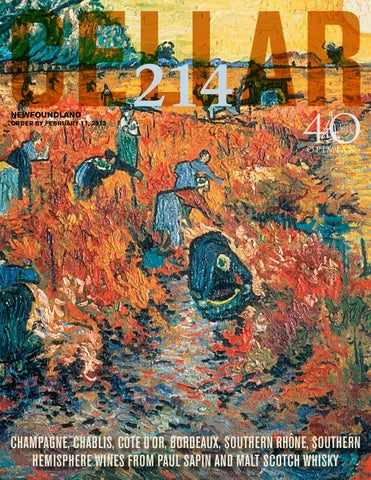
Red Vineyards at Arles, 1888 (oil on canvas), Van Gogh, Vincent (185390): In his lifetime, Vincent Van Gogh managed to sell only one picture – Red Vineyards at Arles - depicting harvesters at work near Arles in Provence, where he lived for 15 months and where he found the inspiration to paint more than 200 canvases. Goblet vines trained up poles, horse-drawn carts, wooden baskets and hand-harvesting are illustrated with rain hinted on the road and between the vines. Judging from his painting, it is presumed that in 1888, harvest in Arles was affected by rain and took place very late. It is supposed that since Grenache and Carignan ripen very late, these are the varieties Van Gogh painted.
Expected arrival at a Canadian Port is End of June, 2013. Release dates are dependent upon actual arrival dates, distance from port of entry to liquor board, and processing time required by each liquor board. LET US HELP YOU! Contact us at 1-800-361-9421 or email us at opim@opim.ca CONDITIONS OF PURCHASE • Methods of Payment: Credit Card (Visa, MasterCard, American Express) or by cheque payable to Opimian. • Prices include all applicable federal and provincial mark ups and taxes, including GST/HST #105 233 217 and QST #1000640430. • A valid 2013 membership card is required to order and pick up. • Bottle prices are for reference only. All orders are by the case, with no minimum required. • Last day to order from this Cellar Offering: February 11, 2013
LEGEND Members’ Choice
White
Aroma
Drink this year
Red
Taste
Enjoyable now; will develop
Rosé
Serving temperature
6 months-2 years
Opimian Suggests Wine meant for laying down
Ideal with
Sparkling
Bottle size Great concentration Heavy oak
Number of bottles in case Medium concentration
Light in body
Medium oak
Light oak
Less than 100 cases available Very limited quantities
Extremely limited quantities Limited quantities
Degrees of Maturity (M) (Scale of 1-10) 1 = lay down 10 = fully mature Degrees of Drinkability (D) (Scale of 1-10) 1 = needs time 10 = ready to drink
2
OPIMIAN CELLAR OFFERING 214 209
Medal Winner
This symbol denotes wines most ordered by Opimian members. These are consistently popular with our membership at large.
To help novice members, this symbol is a guide to wines that are suitable for starting a cellar, and/or for drinking within two years of delivery.
Sweetness scale gms/litre 00 0-3 01 4-6 02 7 - 12 03 13 - 20 04 21 - 34 05 35 - 50 06 51 - 74 07 75 - 100 08 101 - 139 09 140 - 179 10 180 >
Examples Chardonnay, Sauvignon Blanc, many reds Some New World varietals, some reds Champagne, Sparklers, Rosés, few reds Mosel, some Alsace, Anjou Semi-sweet Bordeaux, some sherry Kabinett German, Late Harvest, Alsace Spätlese German, Sweet Loire, Port, Dessert Muscat Auslese, Beerenauslese Icewines, Sauternes, Barsac, dessert wines, Port Icewines, Sauternes, Barsac, dessert wines, Port Speciality sweet wines, Trockenbeerenauslese
CELLAR OFFERING 214
Champagne, Chablis, Côte d’Or, Bordeaux, Southern Rhône, Southern Hemisphere wines from Paul Sapin and Malt Scotch Whisky
Opimian’s Wine Consultant Jane Masters MW is a graduate of Bordeaux’s famous Institut d’Oenologie and was elected to the Institute of Masters of Wine in 1997. Fluent in French and English, Jane is currently a member of the Council of the Institute of Masters of Wine, regularly speaks at industry seminars and is a Panel Chair for the International Wine Challenge.
For this cellar offering we include two of France’s most prestigious and most northerly regions – Champagne and Chablis. Despite making fundamentally different wine styles, the two have much in common. Lying in the far north, they both often suffer long, cold, harsh winters (I know, I know you will say conditions pale into insignificance compared to large parts of Canada!), with late spring frosts a real threat to crops. Both are dominated by chalky limestone soils and have viticultural histories dating back centuries. Gardet features a selection of quality Champagnes, and it is only fitting that Lamblin Fils, who has supplied wines to Opimian since the early days when Jacques Lamblin met Kenneth Christie in the old cellars in Marigny in 1973, have produced a celebratory wine for the 40th Anniversary – Premier Cru Fourchaumes 2011. This special cuvée is named after Jacques Lamblin, father to Michel and Didier, grandfather to Alexandre and Clément, and first Lamblin to work with Opimian in its early days. Michel and Didier have also searched the archives and the original wine label which was used on the first bottles of Premier Cru Fourchaumes shipped to Opimian, will be used for the 40th Anniversary commemorative wine. Our friends at Château de Sours, Martin Krajewski and winemaker Valérie Valmy, have done it again; the wines just get better and better. Valérie, who is passionate about sparkling wine, has produced a special cuvée to mark Opimian’s entrance into the naughty forties! And why not try some of the larger formats for an extra sense of theatre and occasion; the Château de Sours Rosé 2012 is available in both magnums and one double magnum wooden cases! Finally, this cellar offering is rounded off with Paul Sapin’s great value wines from the Southern Hemisphere, a new selection of wines from the southern Rhône brought to us by Bernard Perrin, and malt Scotch whisky from Pràban na Linne on the Isle of Skye. Paul Sapin p. 18 Lamblin Fils p. 7
Bernard Perrin p. 15
Pràban na Linne p. 22
Château de Sours p. 13
Champagne Gardet p. 4
NEWFOUNDLAND
3
Champagne
4
OPIMIAN CELLAR OFFERING 214
Champagne Gardet Chigny-Les-Roses The ultimate in sparkling wines for celebrations or a simple pick me up, no place in the world makes sparkling wines like Champagne, despite the efforts made by many regions to duplicate it. Many come close, however nowhere quite hits the mark. It must be the combination of chalky soils, climate (its latitude is one of the furthest north in wine production) and knowhow. Gardet was a family owned business originally founded in 1895 in Épernay by shopkeeper Charles Gardet. The tradition and excellence for which the Gardet family was known continues with the new owner, the Prieux family. Based in the Premier Cru village of Chigny-Les-Roses since the 1930s, Gardet continues to make high quality, yet affordable Champagnes. Champagne Gardet was recently selected as a supplier to the House of Commons in the UK as well as the Paris city council.
CHAMPAGNE CHAMPAGNE GARDET >>
The “foudres” or large oak barrels are used for ageing Gardet’s Brut Réserve and Brut Selected Réserve Champagnes
Champagne Gardet Brut Tradition, Chigny-Les-Roses A gold medal winner at the Decanter World Wine Awards in 2012, this is model non-vintage brut Champagne. The art of blending is highly prized in the region and is part of what goes into making great Champagne. The grapes for the Brut Tradition came from throughout the Champagne region with 45% Pinot Noir, 45% Pinot Meunier and 10% Chardonnay. Winemaker Stéphanie Sucheyre blended base wines from several vintages. The cuvée then underwent second fermentation in bottle, followed by ageing on the yeast lees for a minimum of three years, producing consistent quality Champagne.
6906
6907
6908
$50.67
$28.33
$105.33
$304.00
$340.00
$316.00
6909 $52.50
$315.00
Champagne Gardet Brut Premier Cru, ChignyLes-Roses Each vineyard in Champagne is classified from 80 to 100% according to the quality potential of the land, with Premier Crus ranging between 90 and 100%. The grapes for the Gardet Brut Premier Cru came from Hautvillers, the birthplace of Champagne, located on the southern flank of the Montagne de Reims renowned for the quality of the black Pinot Noir and Pinot Meunier grapes grown there. The village itself is famous as the location of the Benedictine Abbey which was home to Dom Perignon, where he was cellar master for 47 years and where he remains buried at the foot of the altar. Although there are many myths surrounding the monk and his contribution to winemaking in the region, he most certainly did not invent the Champagne method, but surely had a great influence on improving wine quality in the late 17th century.
CHAMPAGNE CHAMPAGNE GARDET >>
Pinot Noir, Pinot Meunier, Chardonnay Stone fruits, chalky Fine mousse, fresh, balanced, [02] 8° C 2013-2014 Aperitif
Pinot Noir, Pinot Meunier Complex fruits, yeasty Structured, racy, [02] 8° C 2013-2015 Jabugo ham, foie gras
NEWFOUNDLAND
5
6910 $61.50
$369.00
6911
Blanc de Blanc Champagne, literally meaning white from white, is made from 100% Chardonnay grapes; in this case all cultivated on Premier Crus sites. Grape production and winemaking is regulated in the region so that grapes are pressed in four ton lots and only a prescribed amount of juice from each lot can be used. The juices are fermented to produce base wines which are blended in January/February following harvest. The blend or “cuvée” then undergoes second fermentation in bottle and maturation for a number of years.
Champagne Gardet Brut Rosé, Chigny-Les-Roses
Chardonnay Light, fresh, citrus, bready notes Well-balanced, long limey finish, [02] 8° C 2013-2015 Turkey breast filet with blue cheese sauce
Pinot Noir, Pinot Meunier, Chardonnay
Rosé Champagne, once regarded as niche, has been growing in popularity over the last decade or so, with the British, the Americans and the Japanese being the greatest consumers. So much so that the proportion of Rosé shipments of total Champagne is at its highest level ever and most traditional houses are now producing Rosé. Gardet has a tradition of producing Rosé. The cuvée is made by blending about 15% of still red wine from the Champagne region to white base wines 45% Pinot Noir, 45% Pinot Meunier and 10% Chardonnay.
Strawberries, raspberries
The image of the blue rose is used for the Premier Cru Champagne and symbolizes the historical connection between rose bushes and vines, the village of Chigny-Les-Roses and the Prieux family’s passion for horticulture
The “pupitre” is a tool used in the traditional Champagne method of riddling which is done by hand in order to consolidate the sediment at the mouth of the bottle prior to disgorgement
$62.67
$376.00
6
Champagne Gardet Brut Blanc de Blancs, Chigny-Les-Roses
OPIMIAN CELLAR OFFERING 214
Fruity, weight, long spicy finish, [02] 8° C 2013-2014 Tandoori chicken
CHAMPAGNE CHAMPAGNE GARDET
The viticultural history of the Chablis region dates back far beyond that of the lamblin fils Lamblin family, which itself dates back to 1690. There are traces of a Neolithic the Romans were here, as well as Cistercian and Benedictine monks. Over the years Chablis has known periods of feast and famine. It lies on the Maligny-par-Chablis village; 48th parallel at the northern limit of viticulture, with all that this entails; harsh,
Chablis & the Côte d’Or
long cold winters and late spring frost. The company based in Maligny is run by Michel and Didier Lamblin, together with their sons Alexandre and Clément representing the 12th generation. Kenneth Christie MW first worked with Michel and Didier’s father Jacques in 1973, when the company was based in the old cellars close to the church in the centre of the village, and when the office was in their grandmother’s house.
The 12th generation is represented by Didier’s son Clément (left), who joined the family-owned winery in 2003 after completing his studies in viticulture and oenology in Beaune, and Michel’s son Alexandre who joined in 2005
CHABLIS & THE CÔTE D’OR LAMBLIN FILS >>
NEWFOUNDLAND
7
6912
Chablis Premier Cru, Fourchaumes, Cuvée Spéciale Jacques Lamblin, Premier Cru Contrôlée, 2011 Specially selected to commemorate Opimian’s 40th Anniversary
$31.67
$190.00
Fourchaumes was the first Premier Cru Chablis imported by Opimian from Lamblin and here we replicate the original label in celebration of 40 years of collaboration and sharing fine wines. All the Chablis Premier Cru and Grand Cru vineyards are on Kimmeridgian clay soils which provide a distinctively mineral, flinty note to the wines. The Premier Cru vineyards cover 750 hectares on slopes scattered across 15 communes, all with good exposures. The best and most reputed are next to the Grand Crus vineyards on the north bank of the River Serein such as Fourchaumes to the west.
6913
Folies Parisiennes, L’Héritage Français, Le Blanc des Héritiers Lamblin, Vin de Pays
$11.92
This cuvée is produced by Lamblin Fils exclusively for Opimian as a good value, every day drinking wine. Sourced from the Languedoc region in the south, it is a blend of grape varieties; Chasan, Grenache, Semillon and Chardonnay. Perfect on its own, add a dash of crème de cassis or crème de mûre for extra pep.
$143.00
Chardonnay Fresh apples Balanced, long green apple flavour, good acidity, [00] 8° C 2013-2018, M6 D7 Poularde en demi-deuil with truffle velouté
Chasan, Grenache, Semillon, Chardonnay Floral, exotic fruits Fruity and fresh, [00] 8° C 2013, M9 D9 Grilled langoustines with olive oil
Using a hydrometer, Didier measures the density of the must to monitor the progress of the fermentation process
8
OPIMIAN CELLAR OFFERING 214
CHABLIS & THE CÔTE D’OR LAMBLIN FILS >>
6914
Folies Parisiennes, L’Héritage Français, Le Rouge des Héritiers Lamblin, Vin de Pays
$11.58
Light-bodied and fruity with light tannins, the Folies Parisiennes rouge is simple and easy to drink. It is the sort of wine one would happily sip in a Parisian brasserie, having ordered a “ballon de rouge”, whiling away the time people watching. Based on a blend of Grenache, Cinsault, and Syrah, this red is sourced from the south.
$139.00
6915 $23.50
$141.00
6916 $26.00
$156.00
6917 $31.33
$188.00
Grenache, Cinsault, Syrah Red fruits Light-bodied, fresh red fruits 16° C 2013, M9 D9 Cannelloni with ricotta
petit Chablis, AOC, 2011 The Petit Chablis appellation lies dotted intermittently around the edges of its bigger brother Chablis on either side of the Serein River. The majority of Petit Chablis vineyards are planted on younger Portlandian soils, producing lighter fresher wines for earlier drinking. Lamblin’s Petit Chablis grapes were grown on higher portions of the slopes at between 230 and 280 meters. Although this 2011 was still a little closed when tasted, with attractive fruit on the finish, it will open up. Winner of a gold medal in Mâcon, it should be drinking well upon arrival in Canada.
Chablis, AOC, 2011 The Chablis region is the northernmost wine area of Burgundy on the 48th parallel. It is at the northern extremes of viable viticulture. Its continental climate produces hot summers and harsh, long cold winters. Spring frosts up until early May are a real risk and a preoccupation for many growers. Frost can seriously damage the sprouting buds and young shoots, eliminating an entire year’s production. Hence the reason you will see sprinklers, wind mills and burners in the vineyards. In 2011 the season started dry and quite cool, and flowering was early. Summer rains caused concern in June and July, but were followed by sunshine in August and September in time for harvest. The vintage turned out well with less of the racy acidity found in the 2010s. Lamblin’s Chablis 2011 won a silver medal at the Decanter World Wine Awards.
Chablis Premier Cru, Mont de Milieu, Premier Cru Contrôlée, 2010 The Lamblin 2010 Mont de Milieu was also a medal winner at the International Wine Challenge. Mont de Milieu lies on the north bank of the river Serein close to the Grand Cru hillside with south south-east exposition. Michel recalls planting this vineyard with his grandfather when he was 17 years old. Translated Mont de Milieu, meaning mountain in the middle, refers to the boundary between Chablis and the Champagne region, and in fact, at the top of the hill there is a stone which marks the separation of the two duchies. As is typically the case, the grapes were fermented in stainless steel tanks in order to retain the maximum typicity of this great terroir. The altitude and exposure have produced a wine with good balance and poise. It is a little more closed at this stage than the Vaillon.
CHABLIS & THE CÔTE D’OR LAMBLIN FILS >>
Chardonnay Subtle, white fruits Light to medium-bodied, pleasant white fruit finish, [00] 8° C 2013-2014, M9 D9 Gougères au comté with curly endive salad
Chardonnay Fresh green apples Mineral, balanced, [00] 8° C 2013-2015, M8 D9 Salmon tartare with cream of watercress and straw potatoes
Chardonnay Flinty Concentrated, structured, lemon and lime finish, [00] 8° C 2013-2016, M7 D8 Veal scaloppini with lemon cream sauce
NEWFOUNDLAND
9
6918
Chablis Premier Cru, Vaillon, Premier Cru Contrôlée, 2010
$185.00
2010 was a great vintage in Chablis despite very changeable conditions throughout the growing season. The Lamblin Premier Cru Vaillon was awarded a gold medal at the International Wine Challenge in 2012. The 2010 Chablis’ are precise, structured and concentrated due to the low yields, and they have the potential for cellaring. There is a clear hierarchy in the Chablis vineyards. The best vineyards are on Kimmeridgian clay, a mixture of limestone, clay and fossilized oyster shells dating back over 150 million years to the upper Jurassic age. Situated south west of the town of Chablis, the Vaillon Premier Cru vineyard sits on slopes facing south east and south west.
6919
Saint-Bris Sauvignon, AOC, 2011
$30.83
$18.00
$108.00
Sauvignon Blanc from Burgundy?! It remains an oddity in that only 100 hectares of Sauvignon Blanc are planted in Burgundian vineyards south of Auxerre and west of Chablis. The region was only granted Appellation d’Origine Contrôlée status as recently as 2001. Pale in colour, the wine has a distinct herbal, grassy, mineral characteristic combined with the aroma of magnolia blossom. The herbal zesty tang makes it an ideal combination with strong, tangy goat cheese.
Chardonnay Honey, almonds, mineral Structured, lemon juice, passion fruit, [00] 8° C 2013-2016, M7 D8 Pan-fried scallops with mango and rosemary vinaigrette
Sauvignon Blanc Herbal, grassy, magnolia blossom Herbal, nettle, green apples, [00] 8° C 2013-2014, M9 D9 Goat cheese and dill potato salad From left to right – Alexandre, Michel, Clément and Didier in the Chablis Premier Cru Vaillon vineyard. In the background are the village of Chablis and the Chablis Grand Cru area just beyond the village
10
OPIMIAN CELLAR OFFERING 214
CHABLIS & THE CÔTE D’OR LAMBLIN FILS >>
6920 $19.67
$118.00
6921 $20.33
$122.00
6922 $18.17
$109.00
6923 $22.33
$134.00
Bourgogne Aligoté, AOC, 2011, Fruits d’Été The vigorous Aligoté vine is Burgundy’s “other” white grape variety. It can often be very tart and neutral in flavour and was often the base for the region’s aperitif of choice, Kir. This drink, originally known as blanc-cassis, is a blend of crème de cassis and white wine. It was subsequently named after Félix Kir, mayor of Dijon, who popularized it by offering it at receptions to international visitors after the Second World War. Lamblin’s Bourgogne Aligoté 2011 has nice fresh green apple aromas with a soft broad structure. It is perfect on its own or with a dash of cassis.
Bourgogne Chardonnay, AOC, 2011, Fleurs de Printemps While the Bourgogne appellation covers the entire Burgundy region, including vineyards much further south, the pure structure and depth of this wine belie its origins in the far north around Auxerre. Grapes were grown on Jurassic limestone with Kimmeridgian and Portlandian clays. Pale in colour, it has the structure and flavour of Chablis, albeit in a more simple approachable form.
Bourgogne Passetoutgrains, AOC, 2010, Raisins d’Automne The Lamblin Passetoutgrains is produced from 70% Pinot Noir and 30% Gamay. With red berries and a hint of tobacco on the nose, it is light-bodied, soft and easy to drink. The term Passetoutgrains literally means using all grapes and refers to the combination of grape varieties rather than most red Burgundy which is 100% Pinot Noir. In order to qualify for the appellation the blend must contain a minimum of 30% Pinot Noir, more than 15% Gamay and can contain up to 15% Chardonnay, Pinot Blanc and Pinot Gris.
Bourgogne Pinot Noir, AOC, 2011, Saveurs d’Hiver Pinot Noir grapes for this Lamblin Bourgogne red are cultivated close to Auxerre, on lower slopes with welldrained stony, rocky limestone soils, and clay and marl. The wine is bright ruby in colour with ripe cassis notes on the nose. On the palate it is light to medium-bodied with firm acidity and soft ripe tannins.
Aligoté Fresh apples Broad soft structure, fresh green apples, [00] 9° C 2013-2014, M9 D9 Chicken bruschetta with romaine and tomato, Charolais
Chardonnay Closed, mineral Pure Chablis style, long fresh acidity, [00] 8° C 2013-2014, M9 D9 Wild mushroom risotto
Pinot Noir, Gamay Red berries, hint of tobacco Light-bodied, soft tannins 14 - 16° C 2013-2014, M9 D9 Charcuterie, pot-au-feu
Pinot Noir Cassis Light to medium-bodied, firm acidity 16° C 2013-2015, M8 D9 Beef bourguignon
CHABLIS & THE CÔTE D’OR LAMBLIN FILS >>
NEWFOUNDLAND
11
Harvesting is done both by hand and by machine
6924 $28.50
$171.00
6925 $51.33
$308.00
6926 $51.33
$308.00
12
Côte de Beaune-Villages, AOC, 2011 The grapes for the Côte de Beaune-Villages came from the hills behind and above the villages of Aloxe-Corton, Beaune, Pommard and Volnay. The wine has typical wild strawberry and earthy notes. Light to medium-bodied, it is supple with good fruit flavours, making it an excellent and affordable quaffing Burgundy ready for drinking. The vines are cultivated on limestone clay soils from the Bathonian age, (named after the British spa town of Bath where this soil type was first identified) 164 million years ago in the Middle Jurassic era.
Gevrey-Chambertin, AOC, 2011 Gevrey-Chambertin is a village that lies at the foot of the Côte d’Or escarpment, to the south of Dijon. To the east are the large fields of the plain of the wide Saône Valley. Archaeological digs in and around Gevrey-Chambertin have found vines dating back to the 1st century BC. This may have been the very first spot in Burgundy to have been selected by the Romans to plant vines. No doubt the wines produced today are very different in style and flavour. Ruby in colour, the 2011 has dark plum fruits with a hint of leather, and will benefit from some time in bottle to mellow.
Nuits-Saint-Georges, AOC, 2010 Still very young and tight when tasted, the Nuits-SaintGeorges 2010 merits some time in bottle before trying. Nuits-Saint-Georges is the main wine producing town of the Côte de Nuits, giving it its name. With soils that are predominantly limestone, it lies 30 miles south of Dijon. The wines are robust and elegant with a fragrant bouquet. The grapes were traditionally vinified and aged in French oak.
OPIMIAN CELLAR OFFERING 214
Lamblin Fils have been bringing their wines to Opimian since 1973
Pinot Noir Wild strawberries, earthy Red forest fruits, light to medium-bodied 16° C 2013-2016, M7 D8 Braised rabbit with pappardelle
Pinot Noir Plum skins, leather Quite firm structure, bitter cherry finish 16° C 2014-2021, M6 D6 Herbed gigot d’agneau
Pinot Noir Hint of red fruits, vanilla Structured with balance 16° C 2014-2020, M6 D6 Roasted pheasant with truffles
CHABLIS & THE CÔTE D’OR LAMBLIN FILS
Bordeaux
CHÂTEAU DE SOURS Saint Quentin
BORDEAUX CHÂTEAU DE SOURS >>
The Réserve de Sours Brut Sparkling Rosé - a perfect match for red wine cake with poached strawberries
This year I was not only fortunate enough to receive Martin’s updates on the 2012 harvest, but to visit Château de Sours in September while harvest was in full flow. Actually this year I was in the Bordeaux region in January, April, May, September and October, and with the exception of the trip in May, I spent time at Château de Sours on each of my trips. I have witnessed first-hand the full cycle in the vineyard from dormant vines in January to healthy mature grapes at the end of the season. Winemaker Valérie Valmy joined Château de Sours in 2009 and has a passion for sparkling wines which was put to good use to produce the special cuvée Réserve de Sours Brut for Opimian’s 40th Anniversary. Large format bottles create a sense of specialness and occasion and Opimians have been requesting more. We are very pleased to offer both magnums and one double magnum wooden cases of the Château de Sours Rosé 2012 this year.
NEWFOUNDLAND
13
6928
Réserve de Sours Brut, Sparkling Rosé, 2009, Opimian 40th Anniversary Cuvée Specially selected to commemorate Opimian’s 40th Anniversary
$26.17
$157.00
Fresh fruits, rosehips
This wine was produced as a special tribute to celebrate and mark Opimian’s 40th Anniversary. It originates from the 2009 vintage, a year which started with good rainfall and above average temperatures, but then suffered a series of violent hailstorms. A blend of 50% Merlot and 50% Cabernet Sauvignon coming from one two hectare plot, all the grapes were harvested by hand on September 7th. After fermentation in tank, the cuvée was blended and bottle fermented, and stayed on lees in bottle until September 2012 when the final dosage was agreed upon, working together with Valérie Valmy and Martin Krajewski. Pale salmon pink in colour, aromas of rosehips combine with red fruits. On the palate it is dry with a fine mousse and balanced fresh acidity.
Château de Sours, AOC Bordeaux Rosé, 2012 Pale baby pink in colour, the Château de Sours Rosé is a blend of 70% Merlot with 30% Cabernet Franc. The Merlot grapes were picked under warm temperatures (up to 33˚C) in the second week of September followed by the Cabernet Franc. The grapes were chilled and gently crushed in the pneumatic press under a blanket of nitrogen to protect against oxidation, all very important given the warm outside temperature. The juice was fermented at low temperature for an extended 25 days followed by ageing on lees and battonage to add more structure. Lively red berry fruit aromas with strawberries and cream on the palate make this a fun wine. Why not create a sense of occasion and go for a larger format bottle, available in magnums and double magnums.
6929
6930
6931
$21.42
$47.00
$131.00
$257.00
$141.00
$131.00
6932 $31.67
$190.00
14
La Source du Château de Sours, AOC Bordeaux Rosé, 2011 It is difficult to quantify, but it seems that more experimentation with barrel fermentation of Rosé wines is happening in many regions. Domaine Ott in Provence has been ageing its Rosés in oak for years, and more recently Sacha Alexis Lichine at Château d’Esclans produces his top cuvée in oak. In my opinion La Source is on a par with, if not better than, any of these wines and it is only a fraction of the price! The use of oak gives complexity and mellow spice to the red fruits. Furthermore, it adds texture and brings it closer to a white Burgundy than most other Rosé wines. Produced in small quantity, the grapes came from a special selection of the best blocks, with 80% Merlot and 20% Cabernet Franc. All were harvested by hand with fermentation in 30% new oak, and 20% in second year oak. The wine was aged on lees for 10 months.
OPIMIAN CELLAR OFFERING 214
Merlot, Cabernet Sauvignon
Fine mousse, balanced fruit and acidity, [02] 8° C 2013-2014, M9 D9 Canapés, smoked salmon
Merlot, Cabernet Franc Red fruits, herbs Fresh palate, well-balanced, [00] 8° C 2013-2014, M9 D9 Prawn, chorizo and tomato kebabs
Merlot, Cabernet Franc Complex, vanilla, nutmeg, spicy fruits Textured, elegant, balanced, [00] 8° C 2013-2015, M8 D9 Grilled lobster with parsley and basil butter
BORDEAUX CHÂTEAU DE SOURS
Southern Rhône
The village of Sablet is located in the southern Rhône Valley, 18 km to the east of the town of Orange. The area is characterized by sandy soil types that give the village and the appellation their names
Bernard Perrin Ternand Négociant en vins Despite having a pretty hectic time harvesting his own grapes in Beaujolais, Bernard set out on a mission to source wines from the southern Rhône. This area has some great bargains ranging from simple country wines such as the IGP Pays des Maures to appellations such as Valréas and Sablet.
SOUTHERN RHÔNE BERNARD PERRIN >>
NEWFOUNDLAND
15
6933 $13.42
$161.00
6934 $13.42
$161.00
6935 $13.42
Les Roches Bleues Blanc, IGP Pays des Maures, 2012 In 2010, the IGP or Indication Géographique Protégée designation was introduced in France to replace the previous Vin de Pays wines in a revamp of the French classification system. IGP Pays des Maures consists of 42 communes in the “département du Var” in the heart of Provence. It is a simple fruity wine with a broad structure. Sauvignon Blanc vines are cultivated on schist soils in the foothills of the Montagne Noire. The grapes underwent some skin contact prior to pressing.
Les Roches Bleues Rosé, IGP Pays des Maures, 2012 The IGP Pays des Maures lies in the heart of Provence, the true home of Rosé, where the Mediterranean climate calls for refreshment. Reaching a height of 789M, the Maures are also known in local dialect as the black mountains due to the brown colour of the rocks and dense forests. The vineyards of Cinsault, Grenache and Syrah are situated on schist soils at the foot of these mountains.
$13.58
$163.00
16
Ripe white fruits White fruits, balanced, [00] 6° C 2013-2014, M9 D9 Cheese and olive stuffed chicken breast
Cinsault, Grenache, Syrah Fresh red apples Soft, light, fruity, [00] 8° C 2013-2014, M9 D9 Marinated mozzarella, cherry tomato and basil salad
Les Roches Bleues Rouge, IGP Pays des Maures, 2012
Merlot, Syrah, Cinsault
Merlot, Syrah and Cinsault grapes were picked and left to soak on skins prior to fermentation. The juice was subsequently fermented at 26 to 28˚C. The result is a soft and juicy wine, good for everyday drinking.
Juicy palate, nice fruit finish
Black fruits
14° C 2013-2014, M9 D9
$161.00
6936
Sauvignon Blanc
Portobello mushroom stroganoff
Les Hauts de Ciane, IGP Pays des Alpilles, 2011 The IGP Pays des Alpilles, in the north of the Bouchesdu-Rhône department, is named after the small rocky mountain range 20 km south of Avignon, between the Rhône and Durance rivers. Although not high, the range stands out as it rises dramatically from the plain of the Rhône Valley. Inspiration for Vincent Van Gogh who used them as a subject in many paintings, this is also where the French Resistance started during the Second World War. Deep in colour, the wine has good juicy fruits with fine chewy tannins.
OPIMIAN CELLAR OFFERING 214
Merlot Red berries, dark fruits Juicy palate, chewy tannins on the finish 14° C 2013-2015, M8 D9 Herb-grilled pork chops
SOUTHERN RHÔNE BERNARD PERRIN >>
The Vin de Pays des Maures vineyards of the Massif des Maures hills are right on the Mediterranean coast of southern France. Located in the Var department, the area forms a mountainous island within the Côtes de Provence.
6937 $15.25
$183.00
6938 $15.67
$188.00
Coeur d’Epis, Valréas, AOP Côtes du Rhône Villages, 2011 This wine is produced from the fruit of a 50 hectare vineyard located between Visan and Valréas in the centre of what is known as the Enclave des Papes. Surrounded by the Drôme, this enclave belongs to the Vaucluse department and dates back to Pope John XXII in 1317. It is said that during a visit to Valréas, the Pope felt unwell and was offered wine from the region. He liked it so much that he purchased the town to guarantee supply!
Coeur d’Epis, Sablet, AOP Côtes du Rhône Villages, 2012 Sablet is one of the communes within the Côtes du Rhône Villages appellation permitted to append its name in recognition of its quality. The 16 hectare vineyard is planted on gravelly sandy soils with Grenache and Syrah older than 40 years. The varieties are harvested by hand and are carefully sorted before destemming. The use of a special destemming machine, which spews out the stems to one side with only the grapes making their way through for fermentation, increases finesse and adds to the quality of the wine. After fermentation separately over 20 days, the Grenache and Syrah are blended at the end of malolactic.
SOUTHERN RHÔNE BERNARD PERRIN
Grenache, Syrah, Mourvèdre Chocolate, red and black fruits Light to medium-bodied, soft finish 16° C 2013-2015, M8 D9 Slow-roasted shoulder of lamb with braised summer vegetables
Grenache, Syrah Cherries, red fruits Concentrated, long finish 17° C 2013-2015, M8 D9 Seared duck breast with cherries and port sauce
NEWFOUNDLAND
17
Paul sapin La Chapellede-Guinchay
2012 is perhaps the Southern Hemisphere’s year. Harvests throughout Europe have been small, which will result in inevitable pressure on wine prices. The Southern Hemisphere has fared much better. Chile leads the way with a 20% increase in production and the largest crop ever to date. Paul Sapin has worked directly with producers from the new world to offer a range of affordable and delicious wines.
Southern Hemisphere
The brilliant colours of the Pinotage vine leaf in autumn, in the South African region of Wellington
18
OPIMIAN CELLAR OFFERING 214
SOUTHERN HEMISPHERE PAUL SAPIN >>
Australia
6942 $13.08
$157.00
6943 $13.25
$159.00
Semillon Chardonnay, On the Billabong, Riverina, 2012 The 2012 vintage in Australia was a success; the volumes were up and above average quality was generally the result across the country. This is good news as there are not many countries in the northern hemisphere, apart from California, that can say the same this year. This wine expresses the typical ‘sunshine in a glass’ Aussie style. It has good intensity, spices and tropical fruit, and a rich palate with flavours of passion fruit. It is an all-round crowd pleaser.
Shiraz Cabernet, On the Billabong, Riverina, 2012 A Billabong is an oxbow lake, formed when the path of a creek or river changes. These are common in Australia due to the arid climate. They are dry for most of the year, only filling up seasonally. It is aptly named, as things in Riverina were not quite as rosy for red wines in 2012. Heavy rains and some floods hit towards the end of the red grape harvest, filling a few billabongs!
Semillon, Chardonnay Spicy vanilla Passion fruit, ripe fruits, [02] 8° C 2013-2014, M9 D9 Thai pineapple chicken curry
Shiraz, Cabernet Sauvignon Forest fruits, spice Medium-bodied, fresh finish 18° C 2013-2014, M9 D9 Portobello mushroom and sausage pizza
New Zealand
6944 $17.83
$214.00
Sauvignon Blanc, Mount Vernon, Marlborough, 2012 Situated in the north eastern corner of the South Island, Marlborough has more than 60 per cent of all New Zealand grapevines and represents nearly 90% of all Sauvignon Blanc planted in the country. Crop levels in this, New Zealand’s most famous region, were severely affected by poor weather conditions during flowering, but quality is good. Highly aromatic with gooseberries, herbs and lime, the palate is balanced with good acidity.
Netted Sauvignon Blanc vines in the Wairau Valley, Marlborough, New Zealand
SOUTHERN HEMISPHERE PAUL SAPIN >>
Sauvignon Blanc Gooseberries, herbs, limes Fresh limey flavours, balanced acidity, [01] 8° C 2013-2014, M9 D9 Asparagus salad with shrimp
Shiraz vineyard in the Riverina, New South Wales, Australia
NEWFOUNDLAND
19
South Africa
6945
Chenin Blanc, Kloof-en-Berg, W.O. Western Cape, 2012
6940
Free case choice for this Cellar Offering
$11.67
$140.00
Chenin Blanc is the most widely planted grape variety in South Africa’s Cape and when it is on song it produces tremendously appealing, fruity wines. In 2012 growing conditions were ideal, with a long, cool harvest period without rain or prolonged heat. This fine example has aromas of fresh apples and pear drops. The touch of sweetness is perfectly balanced by the acidity, and long lemon and grapefruit flavours on the finish.
Merlot vines in Wellington, South Africa. The house shown in the background is built in the Cape Dutch Architectural style.
Chenin Blanc Fresh apples, pear drops Lemon, grapefruit, [00] 8° C 2013-2014, M9 D9 Grilled lemon trout
COUPON
6946
Merlot Ruby Cabernet, Kloof-en-Berg, W.O. Western Cape, 2012
6941
Free case choice for this Cellar Offering
$12.25
$147.00
The vines are based at the foot of the majestic Drakenstein Mountain range between the towns of Wellington and Ceres. The scenery here is breath-taking, with wild and natural flora. Typically South African in style, this wine is big and rustic with lots of spice and chewy tannins on the finish.
Merlot, Ruby Cabernet Red cherries, spice Firm chewy tannins 18° C 2013-2015, M8 D9 Braised BBQ beef sandwich
COUPON
20
OPIMIAN CELLAR OFFERING 214
SOUTHERN HEMISPHERE PAUL SAPIN >>
Chile
6947 $12.67
$152.00
Sauvignon Blanc, Paulita, Central Valley, 2012 Chile had a bumper crop in 2012; in fact the largest in history, so there are some bargains to be had. This is one of them. Pale lime yellow in colour, the wine has delicious gooseberry, herbal notes with green chillies and a squeeze of lime. Refreshing on the palate, it has a limey zesty flavour and mineral finish.
Sauvignon Blanc Herbal, gooseberries, green chillies Lime zest, mineral finish, [00] 8° C 2013-2014, M9 D9 Smoked salmon and goat cheese toasts
6948 $12.92
$155.00
Cabernet Sauvignon, Paulita, Central Valley, 2012 Cabernet Sauvignon is the most widely planted varietal in Chile representing over 33% of the total volume of wine produced. The grapes were grown in the Central Valley where vineyards extend along the Teno River as it descends to the coast. Chile has a unique geography; this narrow country is bordered by the Andes Mountains to the east, the Pacific Ocean to the west, the Atacama Desert to the north and the Patagonian ice fields to the south. These natural barriers serve to protect the vineyards against pests and disease.
Cabernet Sauvignon Herbal, dark fruit Medium-bodied with some grip 18° C 2013-2015, M8 D9 Baked ribs with spicy blackberry sauce
Cabernet Sauvignon vines thrive in Chile’s Central Valley
SOUTHERN HEMISPHERE PAUL SAPIN
NEWFOUNDLAND
21
Scots Malt Whisky Pràban na Linne Isle of Skye, Scotland
A panoramic view of the Pràban na Linne offices located on the Isle of Skye
The Isle of Skye is the largest and most northerly island in the Inner Hebrides off the west coast of Scotland. Linked to the mainland by the Skye Bridge over Loch Alsh, Skye is renowned for its picturesque harbour at Portree, agriculture, fishing, and of course whisky distillation. Pràban na Linne was established in 1976 by Sir Iain Noble, a champion of the Gaelic language. A banker and entrepreneur, he made Skye his home and invested in projects to promote Gaelic culture and encourage economic development of the community. Sadly Sir Iain died at the end of 2010, but was involved in running the company until not long before his death. His main goal was to have a distillery based on the island and this is still very much part of the company’s plans.
22
OPIMIAN CELLAR OFFERING 214
6949 $45.17
$271.00
An Lamraig Blended Scotch Whisky This fuller flavoured blended Scotch contains a high proportion, around 40%, of single malt whiskies blended with grain whiskies from various distilleries around Scotland, predominantly in the Highlands and Islands. Only British grain is used for distillation. The blend is rich and full-bodied, with smooth creamy vanilla and toffee flavours.
SCOTS MALT WHISKY Pràban na Linne >>
6950 $61.67
$370.00
Cùl na Creagan, 12 Year Old Malt Scotch Whisky Malt Scotch whisky is made exclusively from malted barley, water and yeast. By law it must be distilled using a copper pot still and aged a minimum of three years in oak casks. But, Scotland’s whisky producing regions are as diverse as the wine regions of France. There can be large differences in flavours and styles attributable to the level of malting of the barley, the burning of peat during the drying process, the water used at various stages in the process, the type of oak used for maturation and the length of time the whisky stays in barrel. The Cùl na Creagan 12 Year Old is a blend of three single malt whiskies, mainly from the Western Highlands, giving smooth floral notes, and the Islands contributing smoky characteristics. The single malts were each aged in sherry casks for between 12 to 15 years.
SCOTS MALT WHISKY Pràban na Linne
6951 $112.17
$673.00
Cùl na Creagan, 21 Year Old Malt Scotch Whisky Darker in colour, with the intense smoky peaty and maritime aromas characteristic of the Islands, peat is burnt as the malted barley is heated during the drying process, absorbing the unique smoky flavour. The 21 Year Old Cùl na Creagan is a combination of four single malt whiskies, all aged for a minimum of 21 years in sherry casks. As with all the whiskies produced by Pràban na Linne, the 21 year old is bottled un-chillfiltered in order to preserve the natural proteins present and to give the whisky a softer, smoother finish on the palate, with a lingering smoky flavour.
NEWFOUNDLAND
23
OUR COUPON PROGRAMS
Refer a new member, and upon
joining, both you and the new member will receive a coupon for one of two great rewards
YOUR COUPON GIVES YOU OPTIONS! 1. Order a case of wine & choose your free case from the free case choices for this Cellar Offering: Lot 6940 (See Lot 6945 on page 20) Lot 6941 (See Lot 6946 on page 20)
OUR WINE PROGRAMS OPIMIAN SELECT Taste the World!
Only Opimian gives you access to exclusive cellars from around the world. A successful innovation catered to New Members and those who are still uncertain of what to order, the Opimian Select program allows you to try a minimum of 24 wines – from every day sippers to a gourmet dinner partner – at a fixed price of $112. Sign up for Opimian Select and receive a mixed case from every Cellar Offering regardless of whether you are away, on holidays or simply forgot to place your order. Develop your palate, taste the classics from each region, discover new varietals and experience what our suppliers have to offer! Application forms are available for download at opim.ca under “Downloads”. THE SELECTION Opimian Select includes a case (6 bottles) of three to six different wines from a featured supplier on each Cellar Offering. Mostly reds with the occasional white or rosé, these wines showcase the variety of styles available through Opimian - if you happen to find a favourite wine, make note of the supplier for future Cellar Offerings! To browse past selections and tasting notes, sign in at opim.ca and click on “Opimian Select” in the left hand column. View details by clicking on each wine name or supplier.
“Opimian Select is an educational experience and, as any wine lover knows, it is essential and fun to continuously try new things.”
~ David Lawrason, Toronto Life
OR 2. Order two cases of wine & receive $75 off your order
opim.ca OR
800-361-9421
“Opimian’s philosophy is to create bonds between people through wine.”
~ Roberto Echeverría, Opimian Supplier
FOUNDERS’ CHOICE Cherish the Experience! The premium wine experience – only with Opimian!
Established in recognition of Opimian’s founders, this program offers premium wines from our most cherished suppliers – at a fixed price of $205. Each wine is specifically selected to dedicate to the spirit of Opimian. Some are hidden jewels discovered in a cellar by our Master of Wine; others are specially crafted by our suppliers with the Founders’ Choice program in mind. Application forms are available for download at opim.ca under “Downloads”. THE WINES Sign up for Founders’ Choice and receive a case (6 bottles) of premium wine from every Cellar Offering that is ready to drink and has great cellaring ability. Each wine comes with a dedicated backlabel and a personal message from the supplier detailing why they chose to share with us this one-of-a-kind wine. These wines are not, and will never be, on any Cellar Offering and can only be received by signing up for this program. To browse past selections and tasting notes, sign in at opim.ca and click on “Founders’ Choice” in the left hand column. Lamblin Fils is the Founders’ Choice feature supplier on this Cellar Offering. #420 - 5165 Sherbrooke West, Montreal, QC, H4A 1T6 T: 514-483-5551 or 800-361-9421 F: 514-481-9699 opim@opim.ca www.opim.ca