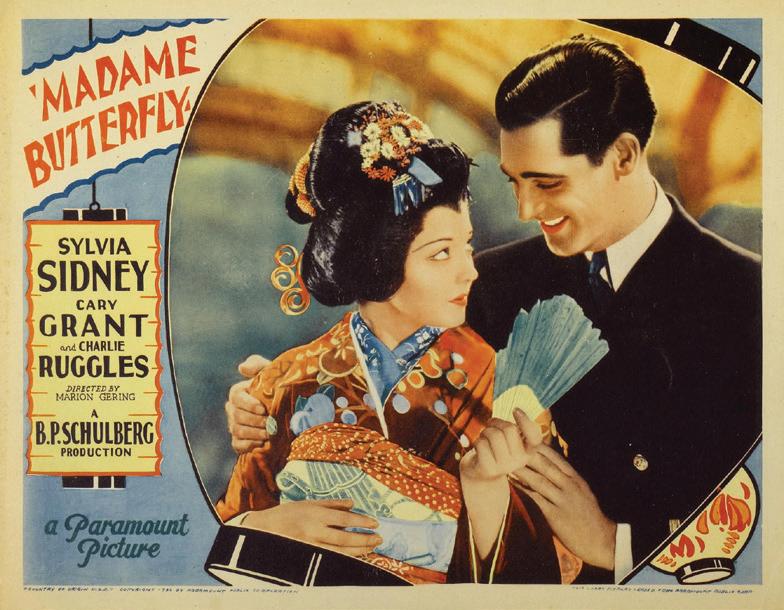
The opera opens moments before a wedding. An American Navy Lieutenant enters the stage.
This man, named Pinkerton, has just paid for an arranged marriage with a fifteen-year-old girl, Cio-Cio-San, known as Madame Butterfly.
He speaks to another man, US consul Sharpless. Sharpless has some concerns about the marriage: He is convinced that the marriage means more to Butterfly than it does to Pinkerton. He fears that Pinkerton will destroy the young girl. Pinkerton tells him not to worry about the marriage. One day, he says, he will make a ‘genuine’ marriage to an American woman.
Meanwhile, Butterfly prepares for the wedding. She is charming and well- mannered but clearly very young. She is from a noble family that has been forced into poverty. She discusses her poor circumstances, revealing that her father committed suicide at the request of the emperor. As a result of all this misfortune, Butterfly has had to earn a living entertaining men with song and dance as a geisha.
The wedding is a brief civil ceremony. As the guests celebrate and toast to the new couple, the voice of The Bonze is heard. He is a
FIRST PERFORMED
February 17, 1904
THEMES love exoticism family death
Buddhist monk and Butterfly’s uncle. He reveals to Butterfly’s family that she has converted to Christianity, forsaking their traditions and their ancestors. He and the other Japanese guests renounce her and disperse.
Pinkerton tries to comfort Butterfly. Suzuki, her faithful servant, prepares her for the night. The newly-weds are left alone. Darkness has fallen, the sky is full of stars.
Act Two: Three years later.
Butterfly and Suzuki are on the verge of complete poverty yet again. Soon after he married Butterfly, Pinkerton had left Nagasaki, promising that he would return in the spring ‘when the robins nest’. It is now three years later, and Suzuki tries to make Butterfly see that Pinkerton will not return. Butterfly is certain he will come back and determined to wait for him.
Sharpless visits with a letter from Pinkerton. Before he can read it to her, the wealthy prince Yamadori arrives. He knows that Butterfly has been abandoned by her husband and wishes to take her as his bride. She rejects his offer, saying her husband will be back soon.
The prince leaves and Sharpless resumes his attempt to read the letter. He tries gently to reveal
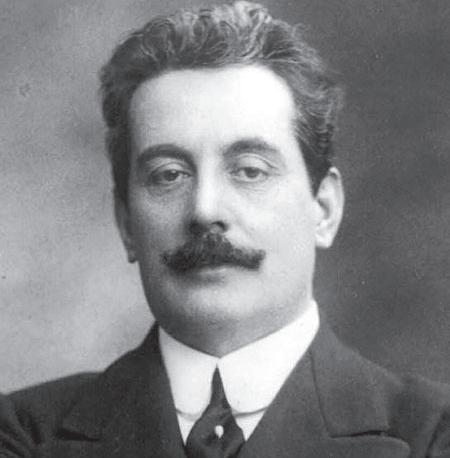
Giacomo Puccini was born on December 22, 1858 in Italy and came from a musical family. His father was a choirmaster and organist, and Puccini’s musical journey started when he was six years old. He discovered a love for operas and went to the Milan Conservatory to learn composition. He wrote 12 operas before his death in 1924.
the truth—that Pinkerton will never return to her— but he struggles to admit it, finally blurting out that she should marry Yamadori. Butterfly tells him that her husband must return because she has given birth to his son. Sharpless promises to give this news to Pinkerton.
A cannon-shot is heard from the harbor. Pinkerton’s ship has returned.
Butterfly waits up all night for her husband’s arrival, but he does not appear until the early morning, when she is finally asleep. He and Sharpless find Suzuki alone, and Pinkerton reveals that he has a new American wife named Kate. They want to take Butterfly’s son back to America with them, where Kate will raise him as her own.
Pinkerton cannot bear the guilt that the sight of the little house, decorated for his arrival, causes him. When Butterfly awakens, she looks for him, only to find Kate. Sharpless, Kate, and Suzuki, reveal the state of affairs. In anguish and despair, Butterfly tells her son that she must leave him so that he can go to America without worrying about his mother.
As the mournful opera comes to a close, the heartbroken Butterfly ends her life.
Listening Guide
Written by Lily Kass, Scholar in Residence
“America forever!”
This piece starts with a musical quotation of the “Star Spangled Banner” sung by Pinkerton and then Sharpless to the English words “America forever,” a toast that the two make to celebrate Pinkerton’s good fortune that as an American naval officer he is essentially allowed to rent a wife in Japan. Pinkerton then sings of his infatuation with Butterfly, comparing her to blown glass, a painted screen, and finally a butterfly. His singing is passionate, but his words demonstrate that he sees her as an object to be owned rather than as a person with whom to share a life.
la sera
The evening comes
Butterfly and Pinkerton are left alone after their wedding. They make awkward conversation and observe one another as they get ready for bed. Despite moments of playfulness and passion, the music and the text both foreshadow the opera’s tragic end. For example, right after Butterfly admits that she loved Pinkerton from the first moment she saw him, the orchestra loudly repeats the music that in the previous scene had accompanied Butterfly’s relatives cursing her for renouncing her religion and her people.
Ecco. Son giunte... Here. They have arrived
Butterfly travels to her wedding escorted by female companions. We in the audience share our perspective with Pinkerton and Sharpless—we hear the women, coming closer and closer to us, well before we see them. When Butterfly sings that she is the “happiest girl in Japan, or rather the world” because of her approaching marriage, we may be left wondering if that’s what she says or merely what Pinkerton hears. The music contains a quotation from the Japanese folksong “Echigojishi,” and other elements that emphasize Butterfly’s cultural heritage.
“Un bel dì vedremo”
“One beautiful day, we will see”
This is the most famous aria from the opera. It encapsulates Butterfly’s unwavering belief that Pinkerton will return to her. She imagines his return in great detail, allowing Suzuki and the audience to experience along with her the overwhelming joy she will feel. The sweeping violins that support Butterfly’s soaring vocal line envelop us in this feeling, making us more vulnerable to the tragedy that will follow when Pinkerton’s return ends up being an occasion for sorrow.
MADAME BUTTERFLY
1.
2.
Viene
3.
4.
CHARACTERS
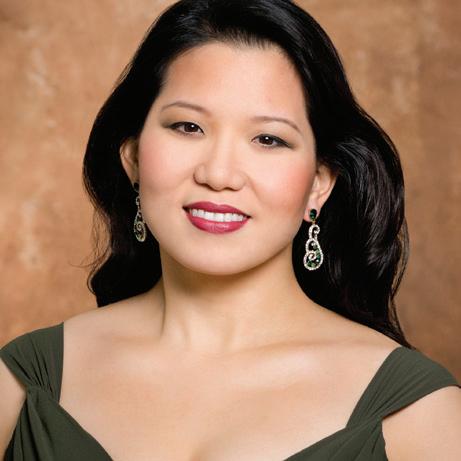
Karen Chia-ling Ho as Cio Cio San/Butterfly (soprano), young geisha in Nagasaki
Anthony Ciaramitaro as Lt. Pinkerton (tenor), lieutenant in the US Navy stationed at Nagasaki
Anthony Clark Evans as Sharpless (baritone), US Consul at Nagasaki
Kristen Choi as Suzuki (mezzo), Maid to Cio-Cio-San
Una nave da guerra
A war ship
Butterfly finally sees Pinkerton’s ship coming into the harbor. As she gasps in joy and surprise, the orchestra plays the main melody from her aria “Un bel dì,” which tells us that Butterfly thinks her elaborate dream is coming true. She feels vindicated in her constancy to her husband and to her adopted American homeland, singing “Love triumphs! My faith triumphs” to the tune of “The Star Spangled Banner.”
This scene is Pinkerton’s moment of reckoning. We look on with Sharpless as Pinkerton begins to realize how much harm he has caused Butterfly. He sees the house he briefly lived in with his Japanese wife, and his happy memories there are clouded by the overwhelming signs that Butterfly has barely managed to afford to stay there while she waited in vain for three years for his return. The music starts out peaceful and calm as Pinkerton remembers the house, but becomes increasingly agitated as he ultimately comes to terms with his cowardice and runs away without seeing Butterfly.
This chorus is famous for not having any words. The whole piece is hummed, creating an air of mystery and expectancy as Butterfly, Suzuki, and their entire household wait up the whole night for Pinkerton to return from his three-year absence. The 1980 musical Les Misérables quoted much of the melody from this humming chorus in the character Jean Valjean’s musical number “Bring Him Home,” a title which also makes sense in the context of this scene in Madame Butterfly
Con amor muore With love [she] dies
This is the final, heartbreaking scene in the opera. Butterfly decides to end her own life and sings a last goodbye to her young son. She explains that she is dying so that he can go and live his life (presumably with Pinkerton and his American wife Kate in the United States). She tells the child to look at her once more so that he will remember her, and then she sends him off to play while she ends her life. The music swells with the intensity of Butterfly’s feelings, as she realizes that although her dreams for herself have been crushed, she can still hope for better for her son.
Coro a bocca chiusa The Humming Chorus
Spotlight
Tell us about why you started working in light design.
It began way back in junior high school when I landed a role in a student production of “The Sound of Music,” but it turned out that I had horrible stage fright! So I shifted my love of theatre to backstage when I went to high school, and I had the great luck of discovering lighting as my passion and profession. I love how lighting can contribute to storytelling and can guide an audience to a particular feeling or conclusion, but the audience might not even realize how much the lighting has impacted them!
What excites you about Opera Philadelphia’s production of Madame Butterfly?
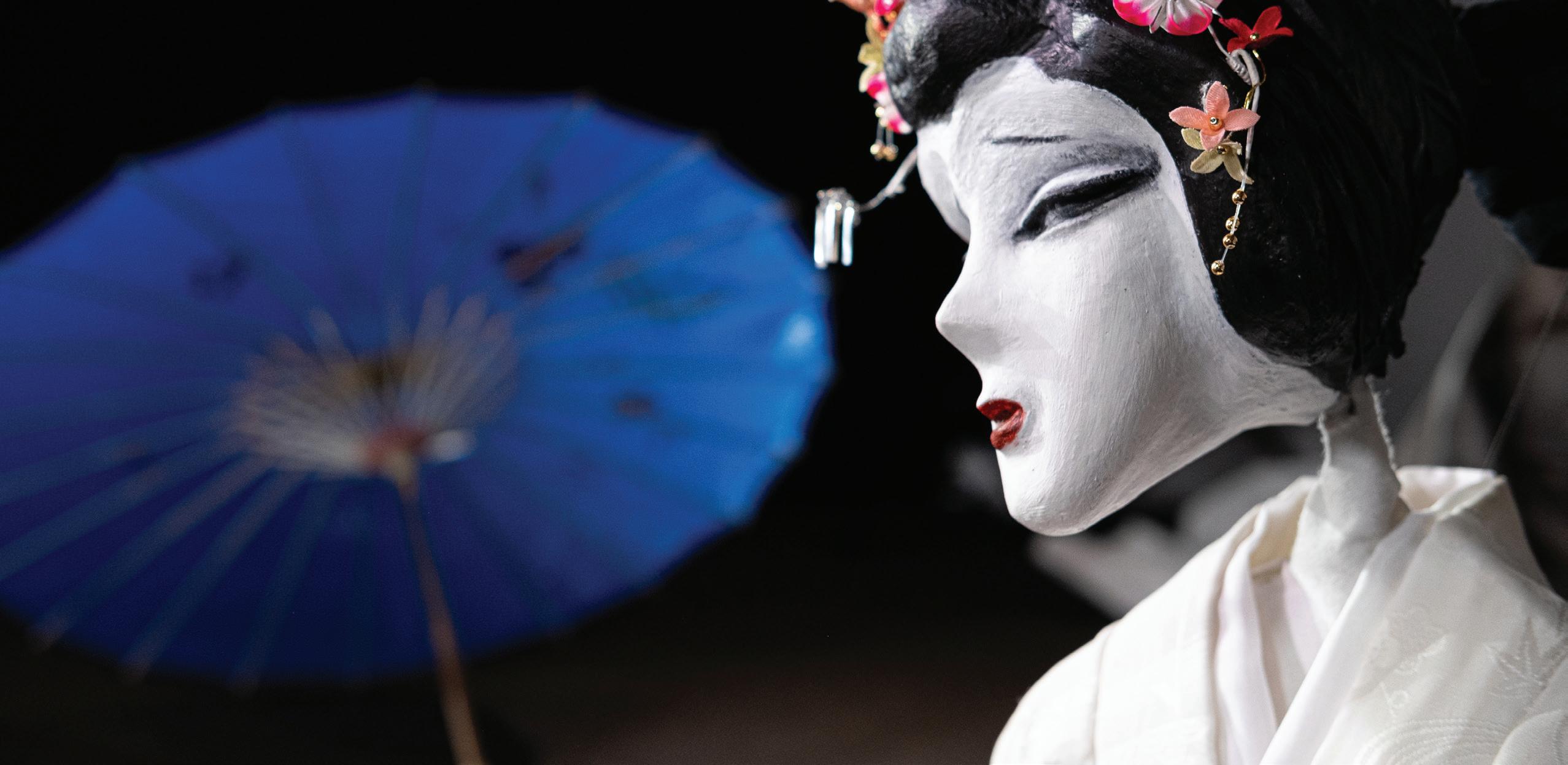
This will be either the sixth or seventh time I’ve worked on this opera with most interpretations being quite “traditional.” For Opera Philly’s version, I’m very excited how we will be asking the audience to examine the piece for its
Connie Yun Lighting Design
performativity, historically and currently, and how we will be using puppetry to illustrate this. As an Asian-American woman, I have had difficulty in squaring my love for the music with the problematic depiction of Asian culture and specifically of Asian women. But I believe we must be in continued dialogue with the past to find our way in the present and understand where we could go in the future. I hope this production helps us move forward!
What
is the hardest part of your job?
Time! Where many of the other design elements, such as scenery and costumes, can be prepared well in advance and off-site, lighting really only happens once we are in the theatre, so it always feels like I’m racing the clock! But on opening night, when the houselights dim and the audience quiets down in anticipation of what’s to come, I am always deeply appreciative to be part of the great collaboration that brings this unique and fleeting experience to life.
Exoticism
By Rob Buscher, member of the Community Advisory Committee and President of the Japanese American Citizens League Philadelphia Chapter
Exoticism is a social phenomenon where the dominant culture within a society perceives people outside of their own ethnic or racial community as charming or interesting because of their perceived differences. People who are exoticized as ethnically, racially, or culturally “other” are often shown in contrast to the majority culture, fostering unity among members of the dominant group and further ostracizing those who are labeled “exotic” as not belonging within the society.
Exoticism relies on stereotypes created by often incorrect assumptions made by members of the majority culture, ignoring the lived experiences and daily realities of the people in minority groups. Excluding authentic perspectives of minority groups can lead to factually inaccurate and negative ideas being portrayed in popular culture that often propagate racism, xenophobia, and other forms of bias.